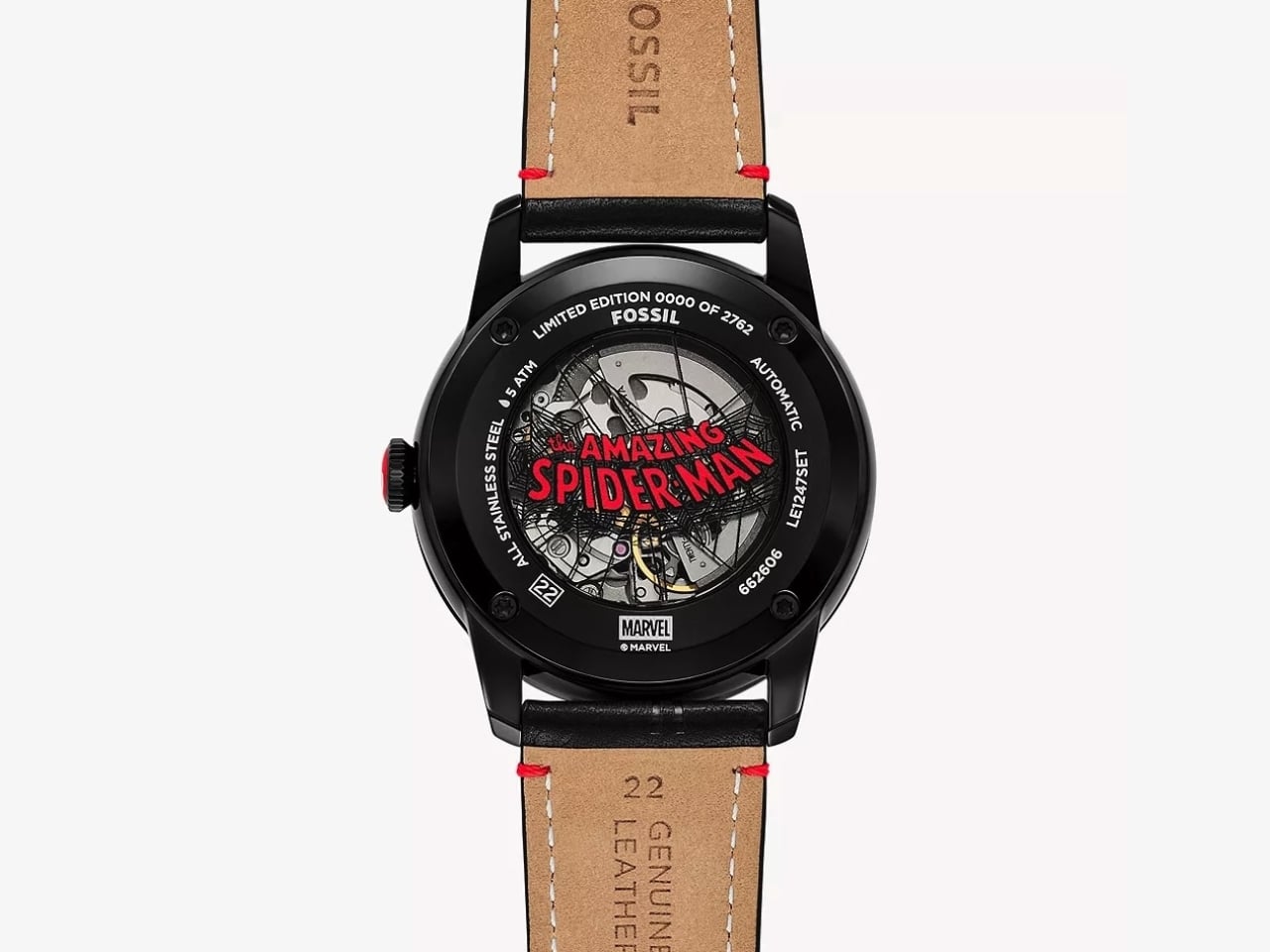
Anicorn x PlayStation’s $780 Mechanical Watch Is The Wildest 30th Anniversary Flex Yet

Anicorn and Sony just dropped a fully mechanical PlayStation watch, and the fact that it exists at all feels like a minor miracle in a market drowning in lazy licensed quartz. Limited to 300 numbered pieces and priced at $780, the PlayStation 30th Anniversary watch launches December 19th with a Miyota automatic movement, a custom rotor, and enough thoughtful design touches to justify the “limited edition” label beyond artificial scarcity. The caseback alone, with its exhibition window and engraved numbering, shows more restraint and craft than most gaming collabs bother with.

What makes this interesting beyond the usual merch cycle is how seriously they treated the design language. The △○×□ symbols sit at 12, 3, 6, and 9 o’clock as three-dimensional applied elements, not flat prints. The PlayStation logo occupies a raised central medallion, and the hands are modeled after the original controller’s Start and Select buttons, which is the kind of nerdy detail that separates fan service from actual design work. The case mirrors the faceted geometry of the 1994 console hardware, finished in that unmistakable matte grey, and the rubber strap carries the button symbols all the way down. It feels like someone actually cared about making this coherent as an object of sheer nostalgia, not just profitable as a limited drop.

Designer: Anicorn

Miyota movements get dismissed sometimes by the Swiss snob crowd, but here’s the thing: they’re reliable, serviceable by basically any competent watchmaker, and when decorated properly, they do the job without drama. The rotor visible through the exhibition caseback gets custom perforation work that echoes disc drive aesthetics, which is a subtle touch that could have easily been skipped in favor of a plain rotor with a logo slapped on. That kind of restraint shows up throughout the design, actually. The dial could have been a chaotic mess of branding and colors, but instead it uses that soft grey finish with selective pops of color on the applied symbols. Legibility takes a backseat to theme, sure, but you buy a watch shaped like a PS1 controller for the vibe, not to check train schedules.

Pay special attention to the case shape. Those faceted, near-octagonal edges are a direct reference to the original PlayStation’s industrial design language, which was all hard angles and serious electronics aesthetics back when consoles still tried to look like they belonged in an A/V rack. Anicorn could have gone with a standard round case and called it a day, but the geometric approach makes the whole thing feel intentional rather than opportunistic. The integrated strap design, with that all-over micro-print of controller symbols, reinforces the “this is a device” impression rather than trying to split the difference between jewelry and gadget. You wear this and people either get it immediately or think you’re wearing some kind of fitness tracker. There’s no middle ground, which is exactly how it should be.

Three hundred pieces worldwide means this will sell out in minutes, probably to a mix of serious PlayStation collectors who still keep mint PS1 longboxes and watch nerds who appreciate limited mechanical releases with actual design thought behind them. The memory card-shaped authenticity cards included in the packaging are pure fan service, but they work because they commit to the bit completely. At $780, you’re paying for scarcity, licensing, and that Miyota movement wrapped in very specific nostalgia. I can almost hear the PS booting sound as I look at this watch! Don’t lie, I’m sure you can too.

The post Anicorn x PlayStation’s $780 Mechanical Watch Is The Wildest 30th Anniversary Flex Yet first appeared on Yanko Design.
F.P. Journe Turns 86 Carats of Rubies Into One Watch

Most gem-set watches treat stones as decoration. F.P. Journe’s Tourbillon Souverain Vertical Joaillerie Rubis treats them as the entire point. This unique piece took eight years to build because finding 93 rubies that match perfectly in color, then cutting 61 carats of material away to achieve that uniformity, requires a timeline most manufacturers would never approve. The result is 25 carats of baguette rubies wrapped around a platinum case that was engineered specifically to hold them.

Designer: F.P. Journe

Jeweled complicated watches have drawn serious collectors since Geneva’s golden era of the late twentieth century. Brands including Patek Philippe and Piaget established the category, and demand has only intensified over the past decade as colored stones moved from novelty to centerpiece. But what F.P. Journe delivered here operates on a different scale entirely. This is closer to a wearable ruby sculpture than a watch that happens to feature gems.

Image source: watchesbysjx.com

The arithmetic tells you everything. Eighty-six carats of rough ruby entered the workshop. Twenty-five carats survived. The remaining 61 carats were ground away in pursuit of identical size, clarity, and saturation across every stone. That ratio of loss would kill most projects before they started. F.P. Journe spent nearly a decade sourcing and recutting until the math worked.

The Case as Canvas

Every exterior metal surface carries rubies. Forty baguette-cut stones sit channel-set in the bezel, forming an unbroken red circuit around the dial. The lug hoods hold another 16 baguettes arranged in a fanned configuration that draws the eye outward and exaggerates the watch’s footprint on the wrist. The case band wraps the mid-section with 37 stones, the largest in the entire build.

Image source: watchesbysjx.com

F.P. Journe describes those 37 case-band rubies as the largest baguette-cut stones ever set in a watch. The claim matters because ruby’s natural crystal structure favors oval or cushion cuts. Producing elongated baguettes from material that resists that shape required sourcing oval-cut rubies of appropriate dimensions, then recutting them to fit the Tourbillon Vertical geometry. The case itself grew 2mm wider than the standard model specifically to receive stones of this size without leaving visible gaps between settings.

Image source: watchesbysjx.com

What you notice immediately is the seamlessness. No color variation breaks the surface. No pink tone drifts into orange. The 93 stones read as a single continuous shell rather than a patchwork of individual gems. Achieving that uniformity across bezel, lugs, and band demanded precise color matching at a level most jewelers would consider impractical.

That precision explains the eight-year development cycle. One stone that skews slightly warm or slightly cool would fracture the visual coherence of the entire case. Patience was not optional here.

Why Average Stone Weight Matters

Numbers put this in perspective. Each ruby on this watch averages 0.269 carats. Typical melee diamonds used in gem-set watches weigh under 0.02 carats and cost almost nothing because they trade as bulk commodities.

Image source: watchesbysjx.com

Patek Philippe’s fully set Grandmaster Chime carries 30.16 carats of baguette diamonds distributed across 392 stones, averaging 0.077 carats each. F.P. Journe’s diamond version of this same case averages 0.242 carats per stone. The ruby variant exceeds even that figure because ruby carries roughly 1.14 times the density of diamond: identical physical dimensions yield higher carat weight.

Image source: watchesbysjx.com

A Dial Built From Stone

The dial shifts the ruby theme into different territory. Instead of faceted gems, F.P. Journe selected cœur de rubis, a mineral combining red corundum growths with green zoisite matrix. The surface reads as ruby embedded in raw rock, textured and organic rather than polished to clarity.

Visually, the contrast works. The mottled dial recedes behind the geometric precision of the baguette case setting rather than competing with it. Thematically, the choice keeps everything on the watch connected to ruby in some form.

Image source: watchesbysjx.com

Machining corundum presents real difficulty. The material sits at 9 on the Mohs scale, just below diamond, and its brittleness makes drilling apertures for hands and the tourbillon window a high-risk operation. Scrap rates on dials like this run steep, adding another dimension of rarity to an already singular object.

F.P. Journe used ruby heart dials on the final 20-piece run of the Tourbillon Nouveau, so this represents continuation rather than experiment.

The Movement Behind the Gems

Caliber 1519 sits beneath the ruby exterior. This hand-wound movement carries one of F.P. Journe’s signature complications: a constant-force device built around a titanium blade-spring remontoir that François-Paul Journe designed in 1983 at the request of collector Eugene Gschwind.

Image source: watchesbysjx.com

The constant-force mechanism produces what the brand calls natural jumping seconds. The seconds hand advances in discrete one-second increments without requiring a separate dead-beat module. You see the hand step crisply rather than sweep, which provides immediate visual confirmation that the remontoir is functioning and makes accuracy checks against a reference signal straightforward.

Image source: watchesbysjx.com

The tourbillon departs from convention by rotating 90 degrees from the standard orientation, linked through a crown gear. This vertical positioning keeps the balance wheel perpendicular to most watch movements, theoretically reducing rate variation between dial-up, dial-down, and crown positions. Whether that translates to measurable real-world accuracy gains depends on wearing habits, but the engineering ambition registers clearly. Total power reserve runs 80 hours, with a guaranteed 42-hour chronometric window during which the constant-force system operates at full effectiveness.

Image source: watchesbysjx.com

Positioning the Piece

The crocodile strap intentionally recedes, letting the case dominate. The platinum folding clasp does not: it carries 18 additional baguette-cut rubies, extending the red-on-platinum language to every visible metal surface including the underside of the wrist.

Water resistance registers at 30 meters, a specification that signals jewelry-object status rather than any expectation of practical use. This watch exists for controlled environments, not daily wear.

F.P. Journe has not published pricing, listing availability only through boutiques with figures disclosed upon application. Given the material costs, the eight-year timeline, and the unique-piece designation, the number will occupy territory where inquiring about it implies you probably cannot reach it. More relevant than the price is what this watch demonstrates: how far an independent maker will push when schedules, budgets, and conventional production logic become secondary to a singular creative vision.

F.P. Journe Tourbillon Souverain Vertical Joaillerie Rubis

  • Case: 44mm × 13.76mm, platinum
  • Crystal: Sapphire
  • Water Resistance: 30m
  • Movement: Cal. 1519, manual wind
  • Functions: Hours, minutes, natural jumping seconds, power reserve, constant force device, tourbillon
  • Frequency: 21,600 vph (3 Hz)
  • Power Reserve: 80 hours total, 42 hours chronometric
  • Strap: Crocodile with ruby-set folding clasp (18 baguette-cut rubies)
  • Availability: Unique piece, F.P. Journe boutiques only
  • Price: Upon application

The post F.P. Journe Turns 86 Carats of Rubies Into One Watch first appeared on Yanko Design.
Marc Newson reimagines Ressence Type 3 into most intriguing $54k conversation starter ever

You can easily recognize Ressence, an independent watchmaker, from the crowd with its uncanny watches that make time telling unique, detailed, and exceptionally designed. For its latest iteration, the Type 3 MN, Ressence founder Benoît Mintiens has collaborated with Australian design genius, Marc Newson (a name we know from the first Apple Watch), and the result is easily the most intriguing watch in the industry.

The Type 3 MN is referenced as a result of “meeting of two design icons.” It’s a rare collective where two designers choose “to work together on one product.” Mintiens notes, “In my eyes, one plus one can become more than the sum of its parts.” And that reflects in the Type 3 Marc Newson edition, which is a true representation of the original Type 3 with nuances to behold.

Designer: Ressence

The Apple reflection

Of course, Type 3 MN is a Ressence, but unlike the Type 8 with handwoven Indigo-dyed silk dial or its sibling with geometric display and a joyful palette, it has Newson’s design approach reflected in it. Marc Newson was inducted into Apple by the good old Jony Ive. Both are known for their amazing projects at the Cupertino company, including the first Apple Watch. The duo has now co-founded a creative collective called LoveFrom.

The Newson-design Type 3 has an elliptical design, a striking color palette, domed sapphire, and graphic hands all echoing Apple’s design language, which is paired with Ressence’s own oil-filled chamber dial and the ROCS-driven rotating Grade 5 titanium discs. It has a unique time-telling experience: the mechanism allows the accessory discs to revolve around the dial on multiple axis, instead of the usual hand movement.

The floating time

According to Ressence, the Type 3 MN features magnets to drive the movement of the discs. The watch separates the dial and the movement chambers, with the upper one filled with 3.57 ml of silicone oil, and the lower chamber (that holds the movement) is filled with air. Owing to oil’s capability to remove the refraction of light inside the watch, the time on the rotating disc appears closer to the domed sapphire glass, making the time appear to be floating on the dial.

The crown-less watch, Mintiens say’s is designed to connect with “those for whom purity of form, quality of material, and complex engineering” are a priority. The watch display depicts a celadon green and vibrant yellow accents under its soft elliptical silhouette, which highlights this combination watch that’s a reflection of Newson’s industrial design approach and Ressence unique time display. The Type 3 MN comes paired to a light grey silicone strap to match its dial and is limited to strictly 80 examples, going for $54,500 each.


The post Marc Newson reimagines Ressence Type 3 into most intriguing $54k conversation starter ever first appeared on Yanko Design.
Hiroshi Fujiwara’s TAG Heuer Carrera Chronograph Is Minimalism With Purpose

What happens when a Swiss racing watch is redesigned by the godfather of Japanese street culture? TAG Heuer answers that question with the Carrera Chronograph x Fragment Limited Edition, a collaboration with Hiroshi Fujiwara that transforms the brand’s flagship racing chronograph into something that looks more at home paired with Japanese selvedge denim and minimalist sneakers than pit-lane timing equipment.

Designer: TAG Heuer + Hiroshi Fujiwara

This is TAG Heuer’s third partnership with Fujiwara’s Fragment label, following earlier Carrera and Autavia projects, and it represents the most thorough application of his design philosophy to date. Fujiwara built Fragment into a cult streetwear imprint over decades of work in Tokyo’s fashion underground, and his aesthetic has always favored reduction over addition. The result is a chronograph that reads as much like a gallery piece as a timing instrument.

From Tool Watch to Tuxedo

The visual transformation begins with the glassbox crystal, a boxed sapphire design that gives the watch a more polished, architectural presence than traditional tool-watch bezels allow. Underneath sits a matte black opaline dial paired with a chalk-white raised flange carrying a silver tachymeter scale. The combination is loosely reminiscent of a tuxedo dial, formal and restrained where most chronographs lean into busy, information-dense layouts.

Fujiwara’s most striking intervention is the near-total elimination of numerals. The subdials lose their snailing texture and numeric markers entirely, replaced by pure graphic dashes: 12 on the small seconds, 30 on the minute counter, 24 on the hour totalizer. These read as abstract timing scales rather than conventional registers, turning functional displays into visual rhythm.

The standard baton hour markers disappear as well, replaced by tiny raised white pyramidal dots finished with gray Super-LumiNova. Even the lume dots that typically run along the seconds track are gone, leaving the dial remarkably clean.

Where the standard glassbox Carrera reads as a refined sports watch, the Fragment edition presents itself as something closer to wearable industrial design. The dial still reads unmistakably as a Carrera: the proportions, the subdial layout, the tachymeter flange all telegraph the model’s identity. But the calm, logo-light execution feels gallery-ready in a way few limited editions achieve. This is minimalism with purpose, not minimalism as marketing shorthand.

Hidden Graphics: The Fragment Easter Eggs

Fragment collaborations have always rewarded close looking, and this watch continues that tradition through subtle logo placement. Previous Fragment x TAG pieces positioned the double-bolt Fragment logo at 12 o’clock, but the glassbox Carrera places its date window at that position. Rather than abandon the signature branding, Fujiwara moves it into the date wheel itself: on the first of each month, a single lightning bolt appears in the date window, and on the 11th, the full Fragment double-bolt logo takes its place. The calendar becomes a hidden Easter egg, a detail that only reveals itself twice monthly and rewards those who know to look.

Fragment’s name appears as printed text at 6 o’clock on the dial, while the full double-bolt-in-circle logo occupies the sapphire exhibition caseback. The center links of the seven-link steel bracelet receive black PVD coating, echoing the blacked-out aesthetic that Fragment fans recognize from countless sneaker and apparel collaborations.

The fun here is not in loud colors or obvious branding but in discovering these almost-secret cues over time. Wearing the watch becomes an ongoing conversation with its design, a quality that aligns perfectly with Fragment’s approach to product collaborations across fashion, footwear, and now horology.

Serious Watch, Playful Surface

Beneath the minimalist aesthetic sits genuine horological engineering. The TH20-00 automatic movement features a column wheel and vertical clutch, representing TAG Heuer’s modern approach to chronograph mechanics. The 4 Hz beat rate enables smooth seconds-hand sweep, while the 80-hour power reserve means the watch can sit unworn over a long weekend and still keep time when picked up Monday morning. The 39 mm stainless steel case hits a sweet spot for contemporary tastes: large enough to read clearly but compact enough to slide under a shirt cuff. Water resistance reaches 100 meters, positioning this as a genuine daily-wear chronograph rather than a display-only collectible.

The engineering backbone matters because it anchors the aesthetic story. This is not a fashion watch with movement as afterthought, but a serious chronograph that happens to wear a limited-edition design collaboration on its surface.

Context for Design Enthusiasts

Compared to past Fragment x TAG pieces, this edition pushes furthest into reduction. Earlier collaborations applied Fragment’s aesthetic to vintage-inspired designs, but the glassbox Carrera is already a contemporary reinterpretation, and Fujiwara’s work here strips it even further. Where other Japanese-inspired limited editions in watchmaking have experimented with color, texture, or material contrasts, this one commits to graphic restraint as its central idea.

Limited to 500 pieces at $9,050, with pre-orders opening December 3 at 6:00 AM, the Carrera Chronograph x Fragment Limited Edition arrives individually numbered on the caseback ring. Each comes on the steel seven-link bracelet with butterfly clasp, no strap alternatives offered.

The watch poses a question worth considering: Is this the future of high-end collaborations? Fashion designers have traditionally brought color palettes and material experiments to watch partnerships. Fujiwara instead quietly rewrites the visual language of an iconic object, keeping its proportions, its engineering, and its heritage while fundamentally shifting how it communicates.

The post Hiroshi Fujiwara’s TAG Heuer Carrera Chronograph Is Minimalism With Purpose first appeared on Yanko Design.
Every MoonSwatch Cold Moon Has a One-of-a-Kind Laser-Engraved Snowflake

Swatch looked at December and thought: what if a watch could feel like the quiet before snowfall? The MoonSwatch Mission to Earthphase Moonshine Gold “Cold Moon” drops the navy-and-white palette of its predecessor for something bolder in its restraint. Pure white Bioceramic. White crown. White pushers. White strap. The effect is startling, almost clinical, until you notice the blue hands catching light like ice crystals at dawn.

Designer: Swatch

The moonphase disc carries two Moonshine Gold moons, and this is where the Cold Moon earns its place in the MoonSwatch lineup. One wears Snoopy’s face (the beagle’s NASA credentials run deep). The other? A laser-engraved snowflake. And here is the trick: every single snowflake pattern is unique. Swatch somehow turned quartz mass-production into something resembling one-of-a-kind craft. Your Cold Moon is literally not like anyone else’s.

The earth phase complication at 9 o’clock shows our planet as seen from the lunar surface. It cycles backward compared to a traditional moonphase, which is the kind of detail that rewards the people who actually think about what they’re wearing. Below it, Snoopy and Woodstock in winter gear watch Earth spin. Playful? Yes. But also weirdly poetic for a $450 watch.

Blue printing appears throughout the design: tachymeter text, dial markings, the “dot over ninety” detail Speedmaster collectors obsess over. Against all that white, the blue reads like ink on fresh paper. Grade A Super-LumiNova on the hour markers glows green in darkness, adding functional contrast to the monochromatic scheme.

There is also a UV-reactive hidden detail somewhere on the dial. Swatch is not saying what or where, which is exactly the kind of Easter egg that turns casual owners into obsessive hunters. You will need a black light and some curiosity.

The theatrics extend to availability. It launches December 4, 2025 (the actual Cold Full Moon) and stays in stores until the last day of winter. But after launch day, it only goes on sale when snow is falling in Switzerland. Social media will absolutely lose its mind tracking Swiss weather forecasts. Swatch knows exactly what it is doing.

The Design Read

Seasonal watch releases usually fail because they treat “theme” as decoration. Slap some snowflakes on the dial, call it winter, move on. The Cold Moon succeeds because the design team inverted an entire color system. The white Bioceramic case (a plant-derived ceramic-plastic composite with a matte, almost powdery texture) becomes the dominant material story. Everything else, the blue accents, the gold moons, the starry moonphase backdrop, exists in service to that white.

The 42mm case at 13.75mm thick carries the familiar Speedmaster asymmetry. The biosourced crystal has a box shape with an etched “S” at center. None of this is new to MoonSwatch. What is new is how different these familiar elements feel when the entire palette shifts to winter.

It is still a quartz chronograph. It still costs a fraction of the Omega original. But this one might actually be the most considered design the collaboration has produced.

Spec Detail
Case 42mm x 13.75mm, white Bioceramic
Lug-to-lug 47.30mm
Movement Quartz chronograph, earth phase, moon phase
Crystal Biosourced plastic, box-shaped
Water resistance 3 bar
Strap White rubber, Velcro closure

The post Every MoonSwatch Cold Moon Has a One-of-a-Kind Laser-Engraved Snowflake first appeared on Yanko Design.
The Vanguart Black Hole Tourbillon Replaces the Crown with a Joystick


Most luxury watches treat time adjustment like an afterthought. You twist a tiny crown, feel the mechanical resistance, and hope you land on the right minute. Vanguart looked at this centuries-old interface and asked a simple question: what if setting time could be as engaging as reading it?

Designer: Vanguart

The Black Hole Tourbillon answers with a joystick. Not a crown dressed up to look modern, but an actual ergonomic joystick system that lets you push time forward or pull it backward with the slightest pressure. It’s the kind of design choice that makes you wonder why every other watchmaker is still using miniature knobs.

The Levitating Tourbillon That Defines the Dial

The center of the Black Hole dial presents what appears to be a floating tourbillon, hovering above three concentric tiers of titanium. Vanguart calls it a “levitating flying tourbillon,” and the visual effect lives up to that description. The caliber T-1701 mechanism creates the illusion of weightlessness while maintaining the precision you’d expect from 775 hand-assembled components.

Time displays through a linear system where hours and minutes each occupy their own concentric ring, bordering the tourbillon rather than competing with it. The dial doesn’t just show time. It orchestrates a three-tier mechanical ballet where every element serves both function and visual narrative.

What makes this approach work is the restraint. Instead of packing the dial with complications and sub-dials, Vanguart gave the tourbillon space to breathe. The titanium tiers create depth without clutter, and the hand-painted indications provide just enough contrast to remain legible without disrupting the futuristic aesthetic.

Design Without Visible Fasteners

The case architecture follows a principle rarely executed this cleanly: no visible screws, no exposed pins, nothing that breaks the flowing geometry. The exoskeleton and fuselage are microblasted with polished bevels that catch light across complex curves. Grade 5 titanium in the base model keeps the weight at 80 grams. The rose and white gold versions climb to 173 grams, but the visual language remains identical across all three limited editions.

This seamless approach extends to how the case integrates with the joystick system. Traditional crown guards would have interrupted the organic lines. Instead, the joystick emerges as part of the case architecture, positioned where your fingers naturally rest. The design team coordinated every surface element with the mechanical layout inside, treating the case as an extension of the movement rather than a container for it.

The Interaction Design Philosophy

Vanguart positions this as “emotional engineering,” which sounds like marketing speak until you consider what they’re actually doing. The joystick time-setting system changes how you physically interact with the watch. Push forward to advance time, pull back to reverse it. The resistance feels deliberate, the feedback immediate. It transforms a functional task into something tactile and engaging.

This matters because luxury watchmaking often prioritizes technical complexity over user experience. You get incredible movements trapped behind interfaces designed 300 years ago. The Black Hole Tourbillon rethinks that equation. The 42-hour power reserve indicator runs vertically along the case, giving you an instant visual gauge without adding dial clutter. Every interaction point receives the same consideration.

The result is a watch that respects your time while asking you to slow down and appreciate the mechanics. You’re not just checking the hour. You’re engaging with 775 components working in coordination, visible through the architectural dial design.

Limited Production and Material Choices

Eight pieces per material configuration. Titanium for the weight-conscious, rose gold for warmth, white gold for understated luxury. Each version uses the same titanium dial with silver or anthracite PVD coating, maintaining visual consistency across the collection. The movements receive gold or silver PVD treatment depending on the case material, creating subtle coordination between exterior and interior finishes.

The rubber straps make sense for watches this technically focused. Leather would feel too traditional, metal bracelets would add weight and cost. The anthracite strap on titanium and white versions on gold cases complement without competing. These are considered design decisions, not default choices.

What This Watch Represents for Independent Watchmaking

Vanguart launched in 2017 with serious credentials. CEO Axel Leuenberger came from APRP’s R&D department, Chief Technical Officer Jeremy Frelechox spent 15 years at APRP, Chief Creative Officer Thierry Fischer designed for major established brands. They’re not outsiders disrupting tradition. They’re insiders asking what tradition might look like if you started fresh.

The Black Hole Tourbillon demonstrates this approach. It uses high-complication watchmaking techniques in service of an interface philosophy borrowed from product design and user experience. The joystick isn’t a gimmick. It’s a genuine rethinking of how we interact with mechanical time.

Whether this approach influences broader watchmaking remains to be seen. But for now, the Black Hole Tourbillon stands as evidence that even centuries-old categories can evolve when designers ask fundamental questions about form, function, and human interaction.

Limited to 8 pieces per configuration (titanium, rose gold, white gold). Available through Vanguart at info@vanguart.com.

The post The Vanguart Black Hole Tourbillon Replaces the Crown with a Joystick first appeared on Yanko Design.
No Hour Hand, No Minute Hand: The $299 Triarch Watch Tells Time With Magnets

Time is usually measured in straight lines and sweeping hands, but Triarch bends that rule into a triangle. Instead of conventional hands, its custom movement drives a rotating minute dial while a tiny ball traces a precise triangular path. Every glance becomes a small discovery, as the orbiting ball and shifting dial transform timekeeping into a kinetic sculpture on the wrist.

The design leans fully into the symbolism of the triangle, a shape long associated with stability, harmony, and eternity. From ancient pyramids to sacred geometry, the triangle has stood for structure and balance, and Triarch pulls that mythology straight onto the dial. The result is a watch that does not just show the time; it frames time inside a geometric icon that feels both timeless and futuristic.

Designer: Ken

Click Here to Buy Now: $299 Hurry! Only limited units left.

Reading the Triarch takes a second to learn but makes sense quickly. Hours are tracked on a rotating outer dial marked from 1 to 12, spinning continuously beneath a fixed reference point. Meanwhile, the minutes are indicated by a small ball that travels along a triangular track, moving in sync with the passage of time. At the center sits an exposed golden gear, visible through a triangular window, acting as the mechanical heart that drives the entire system. This gear does not just function; it performs, turning the dial into a stage where mechanics and motion are always on display.

Triarch exists in two distinct variants, each interpreting the core concept differently. Triarch I is the more refined, dress-oriented expression. It features the original mechanical rotating dial with the triangle window prominently framing the golden gear and the hour module. The dial designs lean toward classical watchmaking aesthetics, with radiating guilloché-style patterns that catch light beautifully. Available in three colors, including teal, grey-black, and blue, Triarch I pairs its mechanical theater with a premium Italian leather strap and a polished stainless steel case. It is aimed at collectors who appreciate mechanical artistry wrapped in a quieter, more sophisticated package.

Triarch II takes the same foundation and pushes it into bolder, more experimental territory. This upgraded version adds an extra layer to the dial structure, creating more visual depth and making the internal architecture more visible. The most significant upgrade is the magnetic minute hand innovation. Instead of a traditional pointer, the minute indication on Triarch II jumps with magnetic force, creating a floating, almost sci-fi effect that sets it apart from conventional watches and even from Triarch I. Lume coverage is significantly expanded on Triarch II, with larger areas of Swiss Super-LumiNova applied across the dial, making it far brighter and more legible in the dark. Available in six colorways, including black with orange accents, teal, lime green, and others, Triarch II leans hard into a modern, almost cyberpunk vibe. It ships with a rugged Crazy Horse leather strap, a material known for its matte finish and ability to develop character over time.

Both models share the same mechanical platform and case architecture. The movement is a Miyota 9039 automatic, a 24-jewel Japanese caliber running at 28,800 beats per hour with a 36-hour power reserve and accuracy rated to around plus or minus 10 seconds per day. Mounted on top is the in-house rotating hour module, the complication that makes the entire display possible. The case is 316L stainless steel, measuring 42mm wide and 14.16mm thick, with a double-domed sapphire crystal up front treated with multi-layer anti-reflective coating. The caseback is also sapphire, offering a view of the Miyota movement and parts of the custom module. Water resistance is rated to 5 ATM, or 50 meters, suitable for daily wear but not serious water sports. Both versions use 20mm lugs with quick-release spring bars, making strap swaps effortless.

Triarch positions itself somewhere between horology and wearable art, offering a genuinely different way to interact with time. The $299 Triarch I appeals to those who want mechanical poetry in a relatively subdued form, while the $359 Triarch II targets enthusiasts chasing visual boldness and technical novelty. Either way, the triangle is not just decoration here; it is the entire logic of the watch. Both the Triarch I and Triarch II ship free globally, with an extra strap included in the box.

Click Here to Buy Now: $299 Hurry! Only limited units left.

The post No Hour Hand, No Minute Hand: The $299 Triarch Watch Tells Time With Magnets first appeared on Yanko Design.
Audemars Piguet AI-powered watch box simplifies one of watchmaking’s most intricate complications

Beating calibers and the perpetually ticking hands of a watch have been symbols of fine craftsmanship and engineering, two dimensions that artificial intelligence is inching to chime with. If you were, like me, watching from the sidelines, believing there was time before a bigger name delved into AI, you wouldn’t have seen this coming.

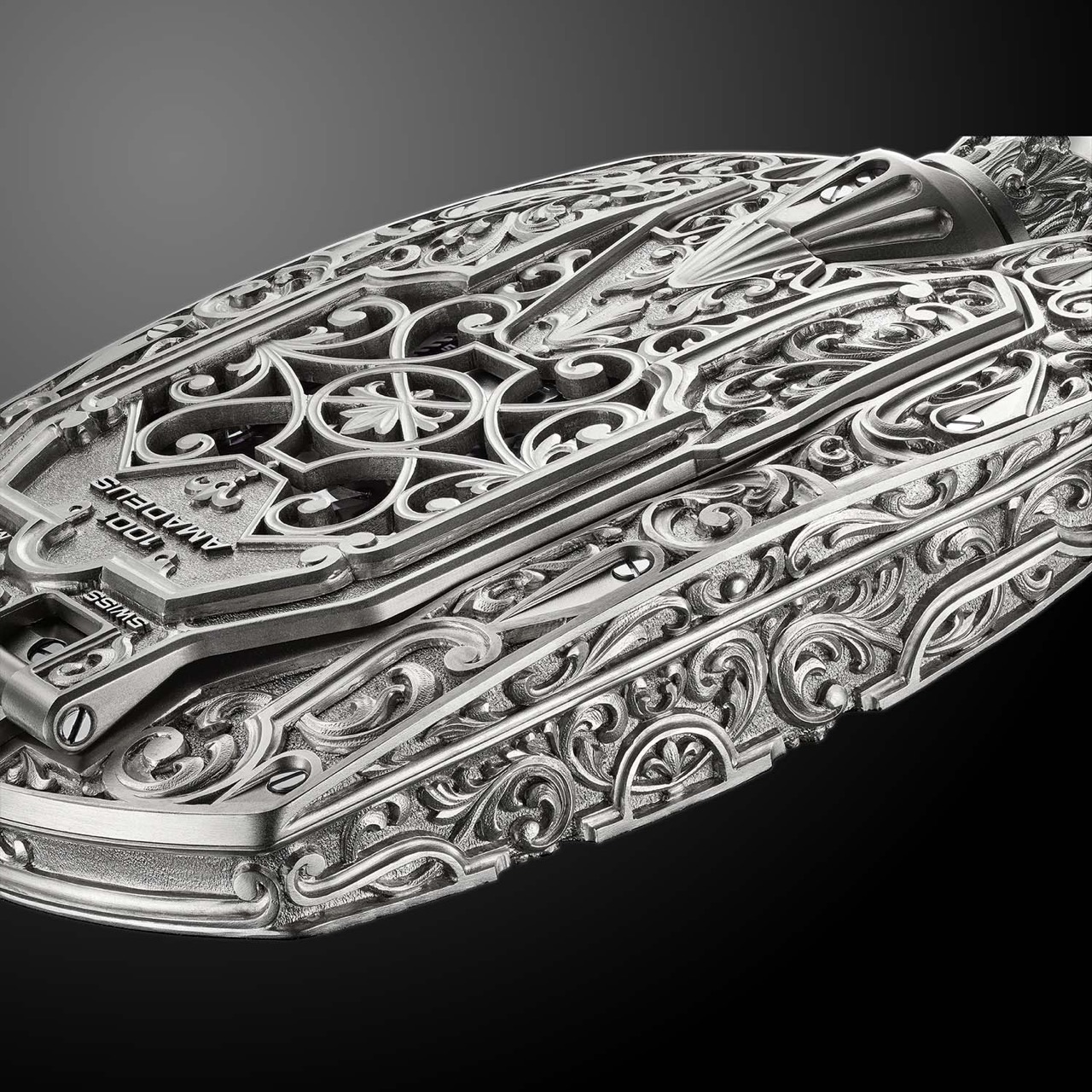
On the flip side, those who believe Audemars Piguet (AP) has the mettle to give us remarkable timepieces and accessories ahead of their time: this is the moment to savor. The watchmaker has raised the bar for watch boxes with its concept that’s more than a winder. The new Audemars Piguet AI-powered watch box is a setting device that tunes a perpetual calendar in just five minutes.

Designer: Audemars Piguet

After the amazing Marvel-themed Royal Oak Concept and the Royal Oak Concept Tourbillon “Companion”, AP is now changing the watchmaking industry with the latest innovation that goes beyond the wrist. The setting box designed to adjust the company’s 41mm Royal Oak Perpetual Calendar is a robotic system, which uses AI to read and interpret the watch and set its functions like a human, without actually using human intervention.

Perpetual Calendar watches are fascinating to say the least. But their complicated mechanism, which automatically sets the date right throughout the year, taking into account the varying lengths of the month is more complicated to set right if it faulters, than the word complicated itself. Instead of the special corrections that this precise adjustment requires, the AP box can set it right in minutes automatically. Box upon placing the perpetual calendar timepiece in it uses a “camera to capture the dial configuration and analyse which calendar indications require adjustment.” And then using a combination of “robotics, computer vision, and AI” completes the setting operation in approximately five minutes.

The exciting watch box offers a quick and effective solution to the long-time barrier that has kept perpetual calendars from becoming collectors’ favorites. The AP’s intelligent setting device is a fruit of two years of partnership between the watchmaker and Dubai Future Foundation (DFF). The device meant to automatically set and wind its latest 41 mm Royal Oak Perpetual Calendar wristwatches was presented recently, for the first time, during the Dubai Watch Week.

The box is powered by a rechargeable lithium-ion battery, and has a clean design packed in a 20 x 12 x 15 cm dimensions, weighing only two kgs. It has been specially created to automatically adjust and wind 41mm Audemars Piguet perpetual calendar powered by the caliber 7138. The box is currently available to Ref. 26674ST.OO.1320ST.01 and 26674SG.OO.1320SG.01 owners, which are the two 2025 Royal Oak Perpetual Calendars, can auto-correct via the “all-in-one” crown and now benefit from the setting box, offering services to automate one of watchmaking’s most intricate complications.

The post Audemars Piguet AI-powered watch box simplifies one of watchmaking’s most intricate complications first appeared on Yanko Design.
Urwerk and Ulysse Nardin’s $122K UR-Freak Watch Might Be The Most Interesting Collab Of 2025

The Ulysse Nardin Freak has always been more of a horological platform than a static model. Since its debut, it has served as a canvas for the brand’s most forward-thinking ideas, from pioneering silicon components to its signature “movement as the hand” display. It was the watch that proved a piece of high watchmaking could look and function like nothing that came before it. Now, for the first time, Ulysse Nardin has opened that platform to an outside collaborator.

It is fitting that the partner is Urwerk, another independent force that has consistently challenged the conventions of time display. Instead of a simple cosmetic update, the two brands co-developed a new caliber that integrates Urwerk’s wandering hour satellites into the Freak’s rotating carousel. The watch is still fundamentally a Freak, using its entire movement to indicate the time, but the language it speaks is now filtered through Urwerk’s sci-fi, dashboard-inspired lens.

Designers: Urwerk & Ulysse Nardin

What makes this partnership click is the deep mechanical fusion they achieved. The purpose-built UN-241 caliber is proof of this, a movement born from over 150 new components designed to get these two very different systems to play nice. You can see Ulysse Nardin’s massive silicon oscillator beating right in the middle, the technical heart of the machine. But orbiting around it is an assembly that is pure Urwerk. The three satellite arms, each carrying a rotating hour block, are mounted directly onto the Freak’s carousel, creating a layered, kinetic sculpture. You are looking at a Ulysse Nardin movement carrying an Urwerk complication like a backpack, all rotating as one cohesive unit.

Even with all that movement, reading the time is surprisingly straightforward. Your eye is drawn to the right side of the watch, where a single active satellite points a bright yellow arrow toward a linear minute track. The number on the corresponding hour block gives you the hour. It is an intuitive system, a classic Urwerk touch, but it’s made more dynamic by the constant, slow rotation of the Freak platform underneath. It feels like Urwerk’s dashboard display has been mounted on a revolving space station.

The 44 mm silhouette is clearly from the Freak ONE, with its crownless architecture and smooth, sandblasted titanium. But you can see Urwerk’s influence in the fluted, notched sections of the bezel, which add an industrial texture that feels different from the Freak’s usually sleek profile. You still set the time by rotating this bezel, secured by a locking tab at six o’clock that now reads “UR-FREAK.” It is a clear signal that this is a Freak that has been properly Urwerk-ified. The electric yellow strap, Urwerk’s calling card, drives the point home, a splash of aggressive color against the muted gray case.

Getting one will not be easy, or cheap. The UR-Freak is a limited run of just 100 pieces, and with a price tag of around 122,200 USD, it is aimed squarely at serious collectors in the independent scene. For those looking to acquire one, inquiries will have to be made directly to either brand. The UR-Freak is the kind of watch that makes you wonder why it did not happen sooner, and at the same time, be amazed that it happened at all.

The post Urwerk and Ulysse Nardin’s $122K UR-Freak Watch Might Be The Most Interesting Collab Of 2025 first appeared on Yanko Design.
OMEGA’s Ceramic Gambit: How the Seamaster Planet Ocean Challenges Rolex’s Design Dominance

Twenty years after launching the Planet Ocean, OMEGA just made the boldest design move in luxury dive watches: bringing back orange ceramic at full production scale. Not as a limited edition. Not as a boutique exclusive. As a core offering that positions this collection directly alongside Rolex’s Submariner in the everyday luxury category.

Designer: OMEGA

This is the design story of how OMEGA spent years perfecting a single color, reworked an entire case architecture, and created three distinct visual personalities that finally give the Planet Ocean the design refinement it always deserved.

The Orange Ceramic Challenge

Let’s address the headline design achievement first. OMEGA’s new orange ceramic bezel represents years of Swiss atelier development to perfect a hue that most brands avoid entirely. The reason? Orange ceramic is notoriously difficult to execute without looking like cheap plastic film.

The chemistry of ceramic materials resists certain wavelengths. Getting that specific orange tone, the one that references the 1957 Seamaster 300 heritage pieces, requires precise control over sintering temperatures and material composition. OMEGA clearly cracked the formula. The result hits like a flare on the wrist: bold, bright, and unmistakably intentional.

The orange accents aren’t arbitrary nostalgia. The 1957 Seamaster 300 pieces carried orange through the hands, indices, and bezel. Those cues resurfaced in the very first Planet Ocean models in 2005, giving the watch its early cult status. Twenty years later, OMEGA had the confidence to bring that color back at impressive scale.

This represents thoughtful heritage integration. Rather than creating a vintage reissue or limited anniversary piece, OMEGA wove that 1957 DNA into a thoroughly modern design. The matte dial finish, the arrowhead hands, the white enamel bezel scales: these are pure Planet Ocean signatures, simply executed with contemporary precision.
What makes this move significant isn’t just the technical achievement. It’s the scale. Bringing this level of material complexity to a core production model, not a limited run, signals confidence in the design direction. OMEGA is betting that luxury watch buyers want personality and heritage, not just another black bezel diver.
Three Personalities, One Refined Architecture

The collection splits into three distinct visual identities, each serving different aesthetic preferences while sharing the same dramatically reworked case.

The black variant is the purist’s pick. Matte black dial, rhodium-plated numerals, white enamel bezel scale. This feels closest to the original professional dive watch brief, the option for someone who thinks color belongs in galleries rather than on expensive timepieces. It’s the no-nonsense tool watch executed with Swiss precision.

The blue edition becomes the everyday option, what I’d call The Bond Watch. That ceramic bezel catches light differently than the matte black version, creating visual interest that works equally well at Bondi brunch or a business dinner. Paired with the steel bracelet, it has that elevated everyday look. Swap to the blue rubber strap, and it transforms into something more pragmatic yet still effortlessly appealing.

Then there’s the orange variant, designed for people who want their Planet Ocean to make a statement while keeping it classy. This is where that years-long ceramic development pays off aesthetically. The bezel doesn’t just add color; it fundamentally changes the watch’s visual weight and presence. Doxa pioneered orange bezels in the 20th century for pure underwater legibility. OMEGA’s move here is for aesthetics, and it’s paid off completely.

The Case Evolution

Beneath those three color personalities sits a more subtle but equally important design refinement: the case architecture itself.

The new Planet Ocean case is sharper and more angular than the outgoing generation. You can see it in the lug transitions and the crown guard geometry. But here’s where OMEGA’s design team showed restraint: they made the watch sit flatter on the wrist by reworking the sapphire crystal profile.

That’s a crucial detail. Dive watches often suffer from excessive height, creating awkward wrist presence and limited shirt-cuff clearance. By addressing the crystal geometry, OMEGA created the most refined Planet Ocean silhouette to date. The 42mm diameter stays manageable, but the flatter profile changes how the watch wears entirely.

The Grade 5 titanium caseback contributes to this refinement. Titanium is NASA’s preferred material for a reason: exceptional strength-to-weight ratio and resistance to environmental extremes. For a watch rated to 600 meters, that caseback choice represents functional design thinking, not just material showcase.

Why This Design Matters

Glen Powell wearing the orange variant and Aaron Taylor-Johnson stepping into the blue and black references signals OMEGA’s positioning strategy. These aren’t just ambassador choices; they’re design communication. Powell can sell a high-visibility ceramic bezel with charm. Taylor-Johnson, as a 007 frontrunner, anchors the collection with leading-man polish.

The message? This Planet Ocean generation positions directly against Rolex’s Submariner in design sophistication, material innovation, and everyday luxury appeal. Not through imitation, but through distinct visual personality. Where the Submariner trades on timeless restraint, the Planet Ocean offers choice. Three distinct design directions, bold material decisions, and heritage integration that feels earned rather than borrowed.

For a brand of OMEGA’s scale to bring back orange ceramic as a core offering, not a boutique exclusive or limited run, reveals where luxury dive watch design is heading. Buyers want options beyond black and blue. They want material innovation that’s visible and meaningful. They want heritage that informs design rather than constraining it.

This Planet Ocean looks tougher. It wears better. It feels more resolved. The sharper case, the flatter profile, the perfected orange ceramic: these represent two decades of learning what worked and what needed refinement.

OMEGA didn’t just update the Planet Ocean. They gave it three distinct personalities, perfected a notoriously difficult material, and created the design refinement this collection always deserved. Twenty years after launch, this is the Planet Ocean that challenges Rolex’s design dominance with confidence and craft.

The post OMEGA’s Ceramic Gambit: How the Seamaster Planet Ocean Challenges Rolex’s Design Dominance first appeared on Yanko Design.