Apple and A24 are developing a Sam Bankman-Fried movie written by Lena Dunham

Apple and art house film company A24 are in early development on a film about convicted crypto scammer Sam Bankman-Fried with a script written by Lena Dunham, Variety reported. The project will be based on the Michael Lewis book Going Infinite: The Rise and Fall of a New Tycoon that many critics found overly deferential to Bankman-Fried. 

The book describes the dizzying rise and equally vertiginous fall of Bankman-Fried and his FTX crypto exchange and Alameda hedge fund. However, it paints the FTX founder as a benevolent prodigy and glosses over the fact that he embezzled billions of dollars from customers and spent it on things like celebrity endorsements, political donations and high-end real-estate purchases.  

FTX was worth billions at its peak, but the exchange eventually collapsed and Bankman-Fried was convicted of fraud and sentenced to 25 years in prison. Most FTX customers will get their original investments back, plus interest, but that's based on a bitcoin price of around $17,000 — and the current price is nearly five times that.

Basing the film on Lewis's fawning hagiography isn't a promising start. Hopefully, Dunham or other writers will also draw on far better books (like Numbers Go Up by Zeke Faux) that show the dark, scammy side of crypto promoters like Bankman-Fried and the entire industry in general.

Apple Original Films and A24 have announced other collaborations recently, including the Spike Lee and Denzel Washington film High and Low. Other scripted FTX projects are also in the works, including a limited Amazon Prime series from the Russo brothers based on the 2022 FTX collapse. 

This article originally appeared on Engadget at https://www.engadget.com/entertainment/streaming/apple-and-a24-are-developing-a-sam-bankman-fried-movie-written-by-lena-dunham-133022680.html?src=rss

Rode’s tiny $149 Wireless Micro kit is designed for smartphone users

Rode has announced the Wireless Micro, a two-mic kit with a smartphone receiver and charging case that costs just $149. The idea is to help TikTok and other creators capture much better-quality audio than their smartphone's microphone can offer. 

The receiver unit connects to the bottom of your smartphone via a USB-C or lightning port. Meanwhile, the microphones (aka transmitters) attach to the subject via integrated clips or magnetic attachments, then capture what Rode calls "pristine" quality sound. Specifically, they offer a 20-20 kHz frequency range and 73 dB signal-to-noise ratio, with a transmission range around 330 feet.

Rode's tiny $149 Wireless Micro kit is designed for smartphone users
Rode

To use it, simply connect the receiver to your iOS or Android device and it will take over as the system microphone. From there, everything is automatic, as the transmitter mics are automatically paired to the receiver and sound will be captured to your camera app of choice. Levels are automatically controlled with the company's GainAssist technology. 

The omnidirectional transmitters weigh just 12 grams (0.42 ounces) and are tiny enough to be discreet when clipped onto your subject. The built-in microphones use what Rode calls "acoustic chambers" with a patent-pending design. That supposedly lets you capture clear and intelligible audio while reducing wind noise, though a pair of windmuffs is also included in the kit. 

Rode's tiny $149 Wireless Micro kit is designed for smartphone users
Rode

The Wireless Micro also includes a charging case that delivers two full recharges for up to 18 hours of battery life, while giving you a secure place to store everything. 

There are a few things missing, though. You can't connect an external mic to the transmitters, unlike with other Rode wireless mics or the DJI Mic 2. There's no smartphone Bluetooth capability, and it doesn't offer a 3.5mm connection for cameras — a feature that will supposedly exist on the rumored DJI Mic Mini. Still, this looks like a great option for creators who primarily use smartphones. It's now available in a two mic kit with a receiver and charging case for $150. 

This article originally appeared on Engadget at https://www.engadget.com/audio/rodes-tiny-149-wireless-micro-kit-is-designed-for-smartphone-users-150040695.html?src=rss

Fujifilm is developing a 102MP medium format cinema camera

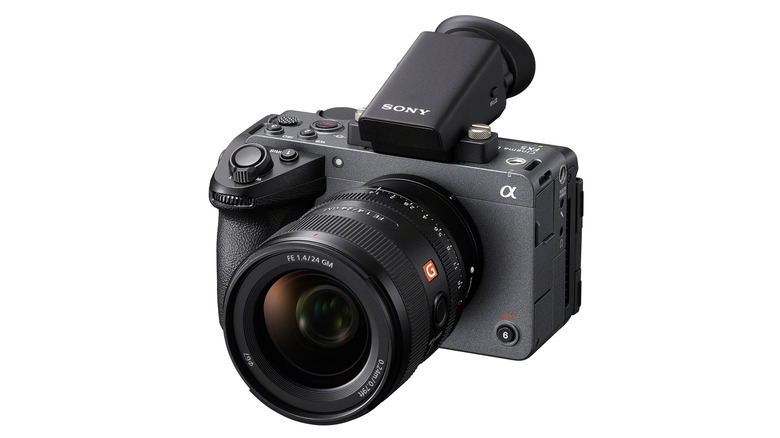
Fujifilm is developing a medium-format, 102-megapixel cinema camera, the company said in a surprise announcement. Due next year, the GFX Eterna will carry a boxy, modular design reminiscent of Sony's FX6 or the new Blackmagic Pyxis and will likely be launched with a top handle, electronic viewfinder and other optional accessories.

The new camera will have a medium format GFX 102-megapixel (MP) CMOS II HS sensor, the same one used on the GFX100 II. That sensor is 43.8mm x 32.9 mm in size, or 1.7 times larger than the full-frame sensor found on the aforementioned FX or Pyxis. That will be one of the largest cinema camera sensors available, even bigger than RED's V-Raptor XL sensor.

The benefits will be extra dynamic range, potentially high resolution and a very shallow depth of field that should allow for cinematic shots when paired with the right lens. That does bring up the fact that Fujifilm currently has no GFX glass designed specifically for film production. However, the company said it's developing a 32-90mm power zoom lens (24-70mm full-frame equivalent) and will have a mount adapter for GFX to PL lenses, which are widely used in cinema. 

One other concern might be rolling shutter distortion. RED's V-Raptor XL uses a global shutter that has zero distortion, but the sensor Fujifilm will employ has a fair bit of it . In addition, the GFX100 II captures 8K with a 1.53x crop, negating many of the benefits of a medium format sensor — so, hopefully Fujifilm will resolve those issues with its cinema camera. 

Fujifilm will show off the GFX Eterna starting tomorrow at the InterBEE 2024 media exhibition in Chiba City, Japan. It's set to be released sometime in 2025, with an exact date and pricing yet to be announced.

This article originally appeared on Engadget at https://www.engadget.com/cameras/fujifilm-is-developing-a-102mp-medium-format-cinema-camera-130027537.html?src=rss

Nintendo will show off ‘Donkey Kong Country’ theme park expansion at live event today

Nintendo is set to show off the Donkey Kong Country expansion of its Super Nintendo World theme park today (Monday, November 11) at 5PM ET, the company revealed in a post on X. That means the new Universal Studios Japan area might finally open soon, after being delayed from the previously announced launch window of Spring 2024. 

The new park attraction featuring Mario's barrel-throwing nemesis was first revealed in 2021. The centerpiece is a ride called Mine Cart Madness, named after the best level in the 1994 SNES game Donkey Kong Country. After being blasted out of a barrel cannon, you'll take a mine cart ride through the jungle that includes a "leap across a collapsed track" as Nintendo showed in a render earlier this year.  

The direct livestream appears to be focused on Donkey Kong world alone, and Nintendo specifically pointed out that "no game information will be featured" — so don't expect any news on the next-gen Switch 2 console either. 

Donkey Kong Country will expand the park size by up to 70 percent, Nintendo said when it was announced. Current attractions at the Japan park are the Mario Kart: Kuppa's Challenge rollercoaster and Yoshi Adventure. Nintendo recently announced that it would open a Super Nintendo World attraction at Universal Studios Orlando on May 22nd, 2025 with the same attractions as the park in Osaka. 

This article originally appeared on Engadget at https://www.engadget.com/gaming/nintendo/nintendo-will-show-off-donkey-kong-country-theme-park-expansion-at-live-event-today-130015655.html?src=rss

DJI Neo drone firmware update adds more speed and vertical video

DJI's Neo is shockingly capable for a tiny drone, but it did have a couple of weaknesses — namely, the lack of vertical video and relatively slow flying speeds in tracking mode. The company has now addressed both of those issues with a new firmware update, adding vertical video and increasing the Neo's tracking speeds, among other things

Considering that the Neo is designed and priced for creators, the lack of vertical video was a big miss. It can now handle that, albeit it only at 1080p 60 fps 9:16 and not 4K. That lower resolution is due to the fact that the camera gimbal doesn't actually rotate 90 degrees like on the Mini 4 Pro; instead, it shoots 4K horizontal resolution then crops off the sides. 

DJI Neo drone firmware update adds more speed and vertical video
DJI

Speed-wise, the Neo can now hit up to 20 mph in tracking mode, up from around 12 mph before. That's actually faster than the 18 mph sport mode top speed, though still a lot slower than the Neo's maximum 36 mph speed in the full manual setting (which requires the FPV remote controller 3). Nevertheless, it's now up to the job of tracking slow moving vehicles, particularly bicycles.

Other new features include Goggles N3 support, liveview stabilization with Goggles N3 or Goggles 3 and improved noise reduction with the Mic 2. Unfortunately, there's not much DJI can do about the annoying propeller noise. To get the update, you'll need to connect your Neo to DJI's Fly app on Android or iOS, then update both the drone and the app.  

This article originally appeared on Engadget at https://www.engadget.com/cameras/dji-neo-drone-firmware-update-adds-more-speed-and-vertical-video-130037149.html?src=rss

DJI Neo drone firmware update adds more speed and vertical video

DJI's Neo is shockingly capable for a tiny drone, but it did have a couple of weaknesses — namely, the lack of vertical video and relatively slow flying speeds in tracking mode. The company has now addressed both of those issues with a new firmware update, adding vertical video and increasing the Neo's tracking speeds, among other things

Considering that the Neo is designed and priced for creators, the lack of vertical video was a big miss. It can now handle that, albeit it only at 1080p 60 fps 9:16 and not 4K. That lower resolution is due to the fact that the camera gimbal doesn't actually rotate 90 degrees like on the Mini 4 Pro; instead, it shoots 4K horizontal resolution then crops off the sides. 

DJI Neo drone firmware update adds more speed and vertical video
DJI

Speed-wise, the Neo can now hit up to 20 mph in tracking mode, up from around 12 mph before. That's actually faster than the 18 mph sport mode top speed, though still a lot slower than the Neo's maximum 36 mph speed in the full manual setting (which requires the FPV remote controller 3). Nevertheless, it's now up to the job of tracking slow moving vehicles, particularly bicycles.

Other new features include Goggles N3 support, liveview stabilization with Goggles N3 or Goggles 3 and improved noise reduction with the Mic 2. Unfortunately, there's not much DJI can do about the annoying propeller noise. To get the update, you'll need to connect your Neo to DJI's Fly app on Android or iOS, then update both the drone and the app.  

This article originally appeared on Engadget at https://www.engadget.com/cameras/dji-neo-drone-firmware-update-adds-more-speed-and-vertical-video-130037149.html?src=rss

Sony has sold 65 million PS5s

Just after launching the PlayStation 5 Pro, Sony revealed that it has sold 65.5 million PlayStation 5s as of the end of Q2 2024. While sales of the console dropped 1.1 million units from the same period last year (and are down 2 million units total in 2024), this was more than offset by game sales of 77.7 million units, up 14.9 percent from Q2 2023. Sony's monthly active PlayStation Network users remained at 116 million despite a big price bump late last year.

The net result? Revenue climbed by 9 percent and operating profit rose by a stellar 73 percent to 445.1 billion yen ($2.91 billion). Given those profits and the fact that the company has a new, more expensive (and probably more profitable) console ready for Christmas, Sony was bullish on the rest of its year, boosting its revenue forecast slightly.

A big part of Sony's game sales story is the success of the action RPG Black Myth: Wukong, which reportedly sold 20 million units in Q2 (including the PC version). Another high performer was the first party Astro Bot title, showing the power of hit games to sway sales. 

Sony still has two quarters left in its fiscal year, which ends March 31. Upcoming first party titles expected prior to that include Assassin's Creed Shadow and Monster Hunter Wilds, both set for February 2025. However, Sony's fiscal 2025 starting in April could be a blockbuster with highly anticipated games like Ghost of Yotei, Death Stranding 2, DOOM: The Dark Ages and Grand Theft Auto VI arriving later next year. 

This article originally appeared on Engadget at https://www.engadget.com/gaming/playstation/sony-has-sold-65-million-ps5s-140019860.html?src=rss

Sony has sold 65 million PS5s

Just after launching the PlayStation 5 Pro, Sony revealed that it has sold 65.5 million PlayStation 5s as of the end of Q2 2024. While sales of the console dropped 1.1 million units from the same period last year (and are down 2 million units total in 2024), this was more than offset by game sales of 77.7 million units, up 14.9 percent from Q2 2023. Sony's monthly active PlayStation Network users remained at 116 million despite a big price bump late last year.

The net result? Revenue climbed by 9 percent and operating profit rose by a stellar 73 percent to 445.1 billion yen ($2.91 billion). Given those profits and the fact that the company has a new, more expensive (and probably more profitable) console ready for Christmas, Sony was bullish on the rest of its year, boosting its revenue forecast slightly.

A big part of Sony's game sales story is the success of the action RPG Black Myth: Wukong, which reportedly sold 20 million units in Q2 (including the PC version). Another high performer was the first party Astro Bot title, showing the power of hit games to sway sales. 

Sony still has two quarters left in its fiscal year, which ends March 31. Upcoming first party titles expected prior to that include Assassin's Creed Shadow and Monster Hunter Wilds, both set for February 2025. However, Sony's fiscal 2025 starting in April could be a blockbuster with highly anticipated games like Ghost of Yotei, Death Stranding 2, DOOM: The Dark Ages and Grand Theft Auto VI arriving later next year. 

This article originally appeared on Engadget at https://www.engadget.com/gaming/playstation/sony-has-sold-65-million-ps5s-140019860.html?src=rss

Researcher’s ‘unfollow everything’ lawsuit against Meta gets dismissed

A lawsuit from a researcher who tried to develop a browser extension for Facebook called “Unfollow Everything 2.0" has been dismissed for now, The New York Times reported. Ethan Zuckerman from the Knight First Amendment Institute at Columbia University attempted to use the Section 230 tech shield law in a novel way to force Meta to allow him to develop the tool that would wipe a Facebook user's feed clean. 

For background, Zuckerman was inspired by a 2021 project called "Unfollow Everything" that would have allowed people to use Facebook without the News Feed, or curate it to only show posts from specific people. However, Facebook sued the UK man who created that extension and permanently disabled his account. 

To avoid a similar fate, Zuckerman turned to Section 230 of the 1996 Communications Decency Act. While that's mostly designed as a shield to protect tech platforms from illegal user activity, there's a separate clause protecting developers of third-party tools "that allow people to... block content they consider objectionable." He asked the court to recognize that clause and allow him to create the Unfollow Everything 2.0 browser extension without repercussions from Meta.

However, the court granted Meta's filing to dismiss the lawsuit, adding that the researcher could file it at a later date. "We’re disappointed the court believes Professor Zuckerman needs to code the tool before the court resolves the case," Zuckerman's lawyer said. "We continue to believe that Section 230 protects user-empowering tools, and look forward to the court considering that argument at a later time." A Meta spokesperson said the lawsuit was "baseless." 

Meta has shut down researchers before, disabling the Facebook accounts of an NYU team trying to study political ad targeting in 2021. Conversely, in 2022 Meta helped itself to 48 million science papers to train an AI system called Galactica, which was shut down after just two days for spewing misinformation. 

This article originally appeared on Engadget at https://www.engadget.com/social-media/researchers-unfollow-everything-lawsuit-against-meta-gets-dismissed-133051131.html?src=rss

Researcher’s ‘unfollow everything’ lawsuit against Meta gets dismissed

A lawsuit from a researcher who tried to develop a browser extension for Facebook called “Unfollow Everything 2.0" has been dismissed for now, The New York Times reported. Ethan Zuckerman from the Knight First Amendment Institute at Columbia University attempted to use the Section 230 tech shield law in a novel way to force Meta to allow him to develop the tool that would wipe a Facebook user's feed clean. 

For background, Zuckerman was inspired by a 2021 project called "Unfollow Everything" that would have allowed people to use Facebook without the News Feed, or curate it to only show posts from specific people. However, Facebook sued the UK man who created that extension and permanently disabled his account. 

To avoid a similar fate, Zuckerman turned to Section 230 of the 1996 Communications Decency Act. While that's mostly designed as a shield to protect tech platforms from illegal user activity, there's a separate clause protecting developers of third-party tools "that allow people to... block content they consider objectionable." He asked the court to recognize that clause and allow him to create the Unfollow Everything 2.0 browser extension without repercussions from Meta.

However, the court granted Meta's filing to dismiss the lawsuit, adding that the researcher could file it at a later date. "We’re disappointed the court believes Professor Zuckerman needs to code the tool before the court resolves the case," Zuckerman's lawyer said. "We continue to believe that Section 230 protects user-empowering tools, and look forward to the court considering that argument at a later time." A Meta spokesperson said the lawsuit was "baseless." 

Meta has shut down researchers before, disabling the Facebook accounts of an NYU team trying to study political ad targeting in 2021. Conversely, in 2022 Meta helped itself to 48 million science papers to train an AI system called Galactica, which was shut down after just two days for spewing misinformation. 

This article originally appeared on Engadget at https://www.engadget.com/social-media/researchers-unfollow-everything-lawsuit-against-meta-gets-dismissed-133051131.html?src=rss