Ford Racing's Mustang Cobra Jet 2200 just ran a quarter mile in 6.87 seconds at 221 mph at an NHRA event in Charlotte, setting a new world record for an EV. The run smashed Ford's own previous EV record of 7.62 seconds, set by the Cobra Jet 1800 last September, by an impressive 0.75 seconds.
As the name suggests, Ford's Cobra Jet 2200 puts a massive 2,200 horsepower to the wheels thanks to a newly designed electric motor and inverter combo. Ford elected to use two motors and inverters instead of four of each as before to reduce complexity and boost efficiency to 98 percent. Overall power is up by 600 horsepower, but the motors and inverters weigh half as much as before. Everything runs on a 900-volt architecture and 32 kWh battery that charges in 20 minutes, easily enough for the NHRA's 45-minute turnaround rule.
It's official: The Ford Racing Mustang Cobra Jet 2200 has clocked a new record time of 6.87 at 221 mph - now the quickest electric car on the planet.#FordRacingpic.twitter.com/drmvH2XRp6
The car has some unusual features for an EV like a clutch that lets the driver dump all the power to the road instantly for maximum acceleration. It also uses a multi-speed transmission that allows the car to run in its ideal power band through the duration of the run — reducing the quarter-mile time by up to a second, according to Ford. The battery design also allowed the team to tune weight distribution for optimal traction. Another racing touch is a pyrotechnic circuit breaker that can instantly break the high-voltage connection via a small explosive charge to align with NHRA safety rules.
Some of this tech, like the high-efficiency motors and 900 volt system, could conceivably trickle down to consumer vehicles. Unfortunately, Ford and other US automakers have significantly reduced their investment in BEV technology of late. Ford recently announced that it would reboot the F-150 Lightning as an EREV with a gas generator, while last week GM delayed its next-gen full-size EV pickups and SUVs — all in the face of rapidly rising gasoline prices.
This article originally appeared on Engadget at https://www.engadget.com/transportation/evs/fords-mustang-cobra-jet-sets-a-new-ev-quarter-mile-record-at-687-seconds-112259793.html?src=rss
Tesla completely ended its free lifetime Supercharging offer way back in 2018, but it has given customers the perk for certain promotions since then. It brought back free Supercharging for Model S and X a couple of times in 2019, for instance. The automaker’s latest offer is for new purchases for a Model 3 Premium or Performance vehicle in North America. On its website, Tesla has announced that it’s including one year of free supercharging with a Model 3 Premium or Performance, though the offer is “subject to change or end at any time.”
As Electrek notes, this is a nice freebie to have but most likely not a deciding factor for people who charge at home. For those who don’t have access to a home charger, however, this could represent significant savings.
The free Supercharging offer starts at delivery and cannot be postponed or redeemed for cash. Owners will also still have to pay certain fees, such as congestions fees that the automaker adds if a vehicle remains plugged into a Supercharger after its battery reaches 80 percent when a site is busy. The offer doesn’t apply to vehicles used for commercial purposes, such as ridesharing, taxi and delivery services, as well. As for those who traded in their gas vehicles to get the 2,000-mile Supercharging incentive, they can enjoy this freebie first and redeem those miles after their first year of ownership.
This article originally appeared on Engadget at https://www.engadget.com/transportation/evs/tesla-is-giving-away-one-year-free-supercharging-with-model-3-premium-and-performance-purchases-144431817.html?src=rss
Tesla completely ended its free lifetime Supercharging offer way back in 2018, but it has given customers the perk for certain promotions since then. It brought back free Supercharging for Model S and X a couple of times in 2019, for instance. The automaker’s latest offer is for new purchases for a Model 3 Premium or Performance vehicle in North America. On its website, Tesla has announced that it’s including one year of free supercharging with a Model 3 Premium or Performance, though the offer is “subject to change or end at any time.”
As Electrek notes, this is a nice freebie to have but most likely not a deciding factor for people who charge at home. For those who don’t have access to a home charger, however, this could represent significant savings.
The free Supercharging offer starts at delivery and cannot be postponed or redeemed for cash. Owners will also still have to pay certain fees, such as congestions fees that the automaker adds if a vehicle remains plugged into a Supercharger after its battery reaches 80 percent when a site is busy. The offer doesn’t apply to vehicles used for commercial purposes, such as ridesharing, taxi and delivery services, as well. As for those who traded in their gas vehicles to get the 2,000-mile Supercharging incentive, they can enjoy this freebie first and redeem those miles after their first year of ownership.
This article originally appeared on Engadget at https://www.engadget.com/transportation/evs/tesla-is-giving-away-one-year-free-supercharging-with-model-3-premium-and-performance-purchases-144431817.html?src=rss
Porsche has announced an electric version of its popular Cayenne Coupé and it could be the company's most powerful vehicle ever — either ICE or electric. Mechanically, the Cayenne Coupé Electric is nearly identical to the Cayenne Electric but the body is substantially sleeker for improved range and performance.
While the front end of the Coupé looks much the same as the Cayenne Electric, the back is giving off BMW X-series vibes in a big way. Porsche says that bulbous rear makes the new model more aerodynamic and thus efficient, with a drag coefficient of just 0.23. It also sits nearly an inch lower than the standard SUV for a more race-ready look. It can haul four adults and comes with a 3.2 cubic foot frunk.
Porsche
There are three versions: the Cayenne Coupé Electric, Cayenne S Coupé Electric and Cayenne Turbo Coupé Electric. All use the same 800-volt architecture that allows charging speeds up to 400 kW, for a 10-80 percent recharge in 16 minutes under ideal conditions. With a 113 kWh battery, range is estimated at 415 miles in the WLTP cycle, which equates to about 350 miles under EPA conditions.
The main difference between the models is power. The base Cayenne Electric model produces a mere 408 hp (442 hp with overboost), while the Cayenne S takes that up to 544 hp (666 hp with overboost). However, the Cayenne Turbo Electric cranks things up to deranged with 857 hp (1,156 hp overboosted), letting you bring three guests and their cargo from 0-60 mph in just 2.5 seconds and hit a top speed of 162 mph.
Porsche
The interior is bound to have a bit less room than the regular Cayenne Electric due to the sloping roofline, but Porsche made things comfortable and high-tech. It comes with an optional electrochromic panoramic roof with adjustable tint and power operated doors, along with a choice of trims including leather upholstery. Physical controls are married with digital interfaces and a screen that stretches from the left edge of the middle console to the passenger side vent. As with other recent lux vehicles, it offers customizable graphics, an AR heads-up display and personalized app integration.
Debuting at this year's Beijing Auto Show, the Cayenne Coupé Electric starts at $113,800 (minus the $2,350 delivery fee), while the base Cayenne S Coupe Electric is $131,200 and the Cayenne Turbo Coupe Electric costs $168,000. For a luxury sport electric SUV with 350 miles of range and 1,156 hp, that's actually... not bad? After all, you can easily pay six figures for a kitted-out Ford F-150 these days.
This article originally appeared on Engadget at https://www.engadget.com/transportation/evs/porsches-new-cayenne-turbo-coupe-electric-can-do-0-60-mph-in-25-seconds-091925467.html?src=rss
Big, fancy executive sedans are a dying breed, especially when it comes to EVs. With the Tesla Model S and Mercedes' EQ line on their way out, pickings are slim. Aside from the upcoming S-Class, there's the Lucid Air, Cadillac Celestiq and maybe the Porsche Taycan, depending on how far you're willing to stretch the definition. But as the market leader in luxury sedans, BMW isn't giving up yet. With the arrival of the new 7-series, the company has made a car — with a complete range of gas, hybrid and fully electric options — that truly embraces modern gadgetry.
Overview
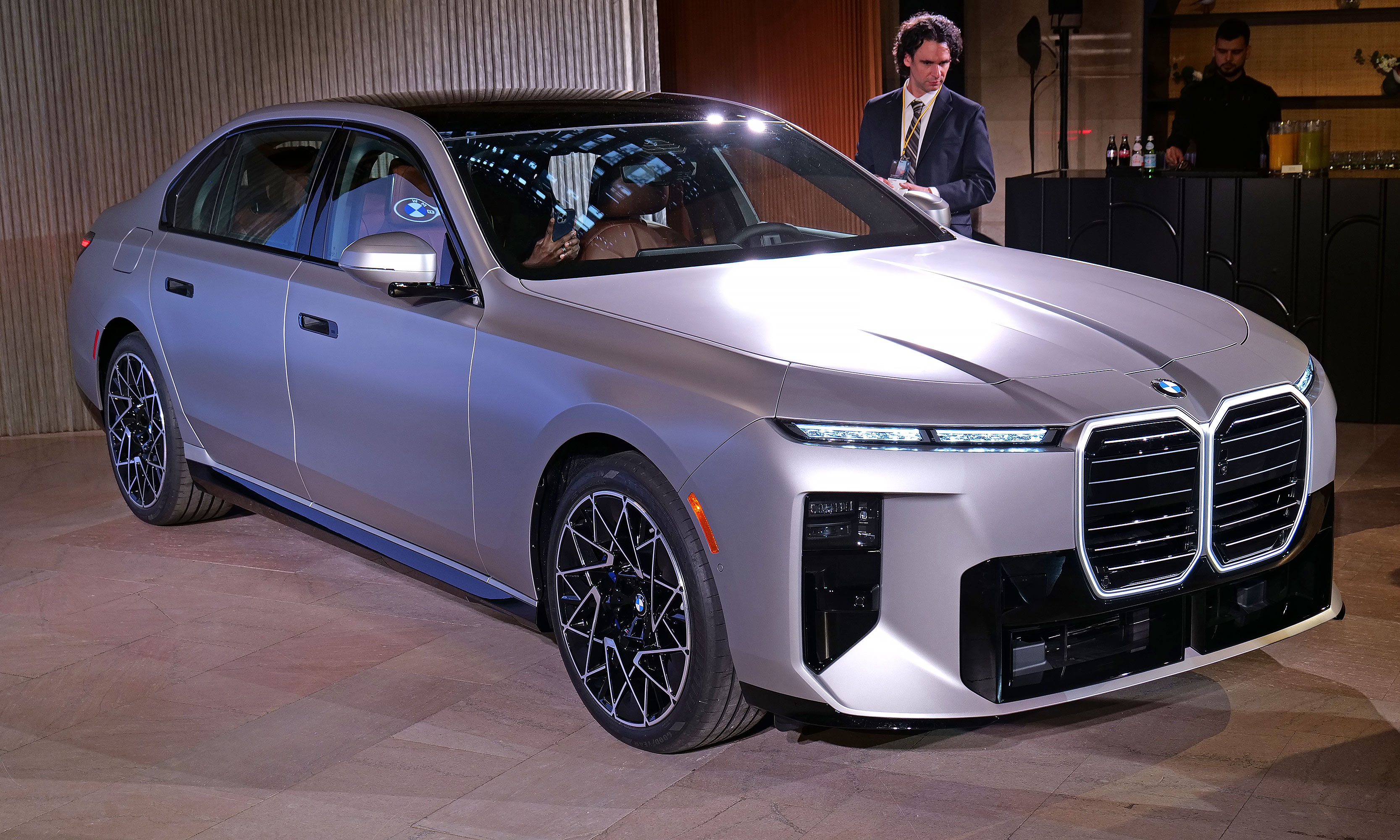
Because we're EV enthusiasts here at Engadget, we're primarily going to talk about the new i7, which is the battery-powered version of the new 7 series. Unfortunately, due to building regulations at Grand Central Station in NYC where BMW's reveal was held, the company was only allowed to showcase a gas-powered car, so this story features photos of the 740. However, company representatives told me that there are mostly only minor cosmetic differences between the ICE and EV models (powertrains aside), so feel free to compare my shots with the official press images to see if you can spot any changes.
Between things like its grille and recessed door handles, the new 7-series looks more like an EV than a gas car.
Sam Rutherford for Engadget
As for the i7 itself, it will be available in three main trims: the i750 xDrive, the i760 xDrive and the i7 M70 xDrive, the latter of which is the fastest and most powerful of the bunch. Pricing starts at $105,750 for the i750 and $126,250 for the i760, both of which will be available at launch sometime later this year. The i7 M70 will come later, most likely in 2027, with pricing still TBD.
Every model will come standard with a dual-motor AWD drivetrain with the base i750 offering 455 horsepower or 544hp on the i760, before going all the way up to a whopping 680hp on the i7 M70. Compared to the outgoing models, the new 2027 i7 also features a significantly larger power pack (112.4kWh, up from 105.7kWh) composed of BMW's new sixth-gen battery cells. This helps support faster charging speeds of 250kW (up from 195kW) along with a native NACS port and a 400-volt architecture, which is good enough to take the car from 10 to 80 percent in around 28 minutes. The upgraded batteries should also translate into longer range, with BMW claiming the i760 will deliver more than 350 miles on a single charge, based on internal metrics using EPA testing procedures.
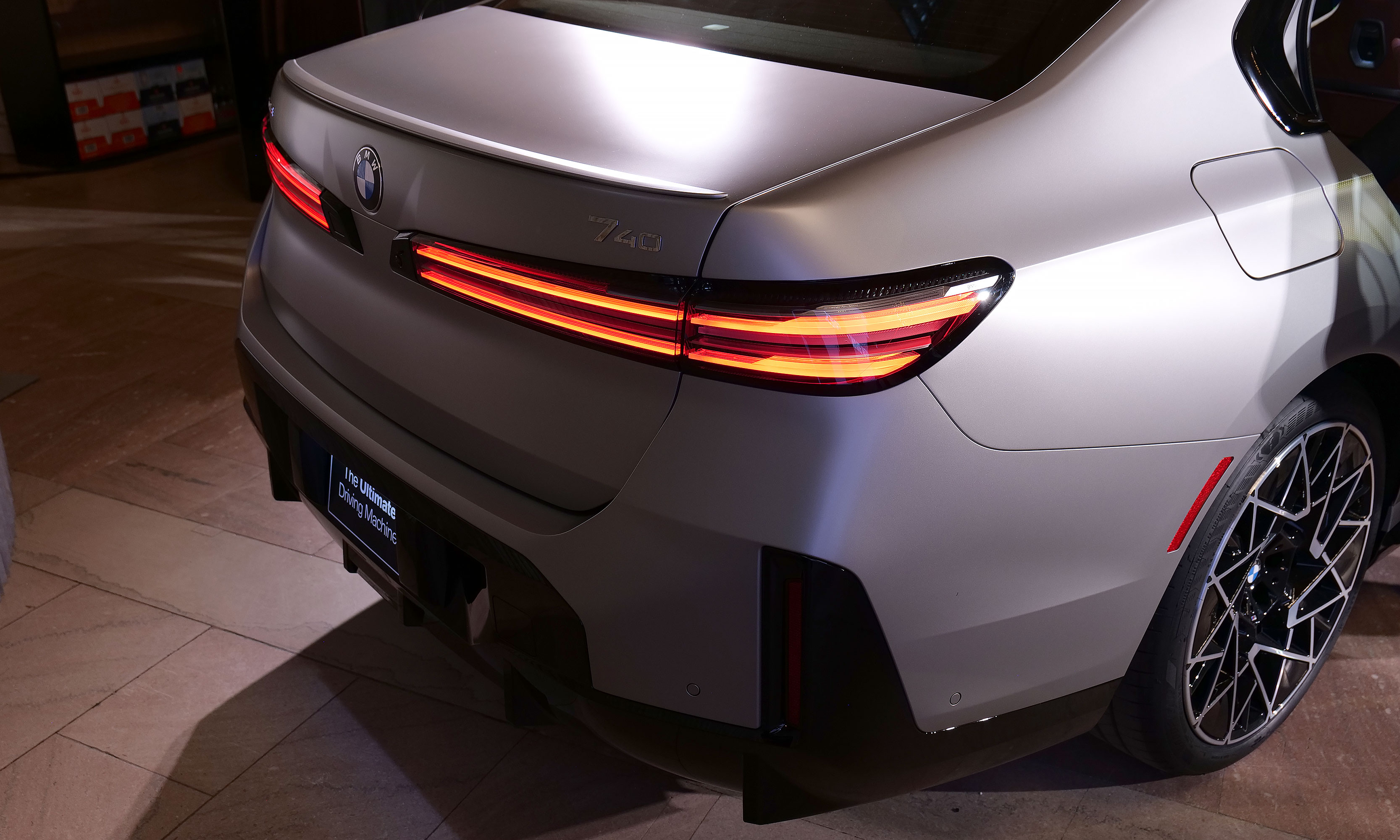
On the new 2027 models, BMW extended the 7-series' taillights to give its rear a more distinctive appearance.
Sam Rutherford for Engadget
Finally, as we're still waiting for the iX3 to make its official debut in the US market, the new 7-series is also BMW's first car for the States to feature the company's Neue Klasse design language, which features a massively upgraded collection of tech on the inside. More on that when we get to the interior.
Exterior
One of the most interesting things about the new 7-series is that it was designed to have essentially the same exterior regardless of which powertrain each individual model has. BMW claims this not only makes it easier for customers to choose if they want a gas, hybrid or electric car, it also presents a more unified look across the family. That said, there are a number of features like the grille and recessed door handles that make BMW's latest luxury sedan look more like an electric car than a traditional ICE vehicle. I even noticed that on the gas-powered 740 BMW had on display, its tail pipes were pointed down and hidden away behind the car's rear bumper, which plays into the various models' shared identity. That said, on M Sport models and the M Performance variant due out next year, things like tailpipes will be much more prominent to help assuage the kind of enthusiasts who aren't ready for the transition to electrification.
Up front, BMW ditched the stacked headlights found on the previous model in favor of a new razor-thin design that features 24 crystal LEDs that create a neat gem-like appearance. Meanwhile, the company's signature kidney-shaped grille has been given a thoroughly futuristic update, complete with built-in lighting (including programmable Welcome and Goodbye patterns) and active aero. Around back, the 7-series' taillights have been extended to nearly the entire width of the vehicle, creating a more distinctive look.
Interior
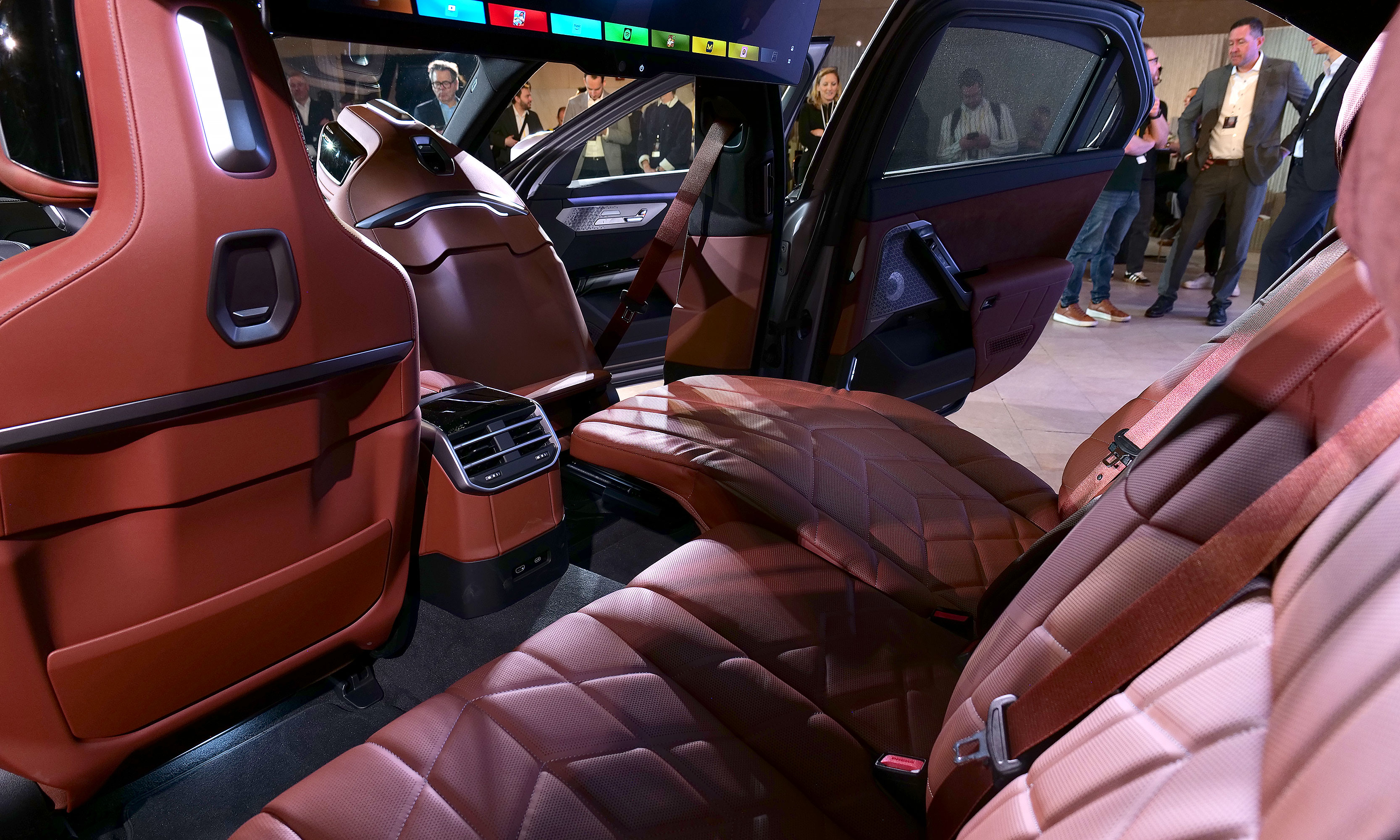
For tech enthusiasts, the inside of the new 7-series is a real marvel of engineering and gadgetry, headlined by BMW's Neue Klasse design language. Depending on how you're counting, there are between five and seven different displays. In the center, there's the 17.9-inch main screen (which supports both Android Auto and CarPlay), plus the company's Panoramic Vision (which is actually a projector) that adds another thin display across the entire bottom of the windshield. Panoramic Vision also provides a more traditional 3D HUD for things like turn-by-turn navigation while driving.
For the driver, BMW also updated the i7's steering wheel with what the company is calling "shy tech." This means controls are only illuminated when a specific feature is available, while also providing haptic feedback for additional tactile response. And although I didn't get to drive the car myself, BMW reps told me that the car's assisted driving tech has been updated so that it's more accommodating to small, manual adjustments. On other cars, this might disable hands-free driving entirely or force you to wrestle with a robo-controlled steering wheel.
For the first time on any of its vehicles, BMW is including a 14.6-inch Passenger Screen that can be used to stream movies, music and more, completely independent of what's on the main display. Then there are two small panels mounted on the doors for rear seat passengers to control things like climate settings and more. And with a Bowers and Wilkins sound system comprising 36 speakers and 4,000 watts of output, audio certainly hasn't been neglected.
However, the real showpiece of the entire vehicle is arguably the optional 31-inch 8K Theater Screen, which BMW claims is the largest display in any production car today. It's mounted on a motorized frame that lowers itself down from the ceiling and it's simply massive. Gadget nerds will appreciate that it comes with an onboard webcam, so you can use it for video calls. And when you're not working, you can even pair accessories like Bluetooth controllers with the screen to play games. There are even woofers mounted below the rear seat to provide what BMW says is a 4D sound experience.
My favorite part of this ensemble is the full-size HDMI jack that’s located next to the USB-C port on the back of the center console. This will allow you to hook up pretty much anything you want and enjoy it on that huge 31-inch display. And similar to previous 7-series models, the i7 still features BMW's executive seating mode, which pushes the front passenger seat up an extra 20cm while reclining the rear, providing a truly luxurious way to enjoy a car ride (there's even a little built-in footrest). Another small thing that potential buyers will surely appreciate is that BMW is also providing four years of data and access to its Digital Premium service as standard on every vehicle.
Initial thoughts
The lap of luxury.
Sam Rutherford for Engadget
With all of these changes, BMW is calling this the new 7-series, but it's actually closer to a mid-cycle refresh following a total overhaul back in 2023. For people who can never get enough screen space, the i7 and its gas-powered siblings are practically overflowing with displays. Plus, I really love BMW's attention to detail that allows users to pair peripherals like game controllers to the onboard displays or plug in external devices via HDMI. As someone who likes the more futuristic, streamlined exterior you see on a lot of EVs, I think BMW has done a great job of striking a middle ground that works for both gas and electric powertrains.
Even the i7’s base specs have gotten some big bumps, both in terms of range and charging speeds, though at some point, BMW will need to upgrade its 400-volt architecture to something beefier. In a lot of ways, i7's starting price of $105,750 is its biggest hurdle, because for tech lovers, it feels like BMW has covered all the bases and then some. On the bright side, if you can afford one, you can probably also afford to hire a driver every now and then so you can take advantage of the 7-series' executive seating mode.
This article originally appeared on Engadget at https://www.engadget.com/transportation/evs/2027-bmw-i7-first-look-a-fantastically-techy-car-for-the-1-percent-123000364.html?src=rss
BMW just announced its 7-series lineup for 2027 promising "the most extensive model update ever undertaken" by the Bavarian automaker. The series includes a pair of i7 EVs, a plug-in hybrid, two ICE models and a V8-powered M model — all running on BMW's "Neue Klasse" technology and flaunting all-new design language.
BMW describes its updated luxury segment design language as "monolithic," touting the minimalist crystal headlights and (divisive) light-up kidney Iconic Glow grille. The body form includes a new "character line" that lends an almost "boat-tail-like" aesthetic to the three-quarter view, according to the company. BMW also hyped its new "Individual Dual-Finish" paint that pairs a matte finish in the lower area of the vehicle with a manually-applied metallic finish in the upper section for a "discrete but supremely elegant look."
The 7-series offers some shiny new interior tech as well, with an extensive upgrade for its 31.3-inch 8K BMW Theater Screen that gives back seat passengers 8K streaming, gaming and Zoom calls. If you get BMW's Digital Premium package (which includes 5G data), you'll also gain access to a TiVo powered video app, select games and the BMW Drive Recorder that gathers exterior footage in case of an accident. Naturally, it includes Apple CarPlay and Android Auto integration as standard.
The new lineup also offers special welcome and goodbye animations for when you approach and walk away from the vehicles, in Relaxed, Balanced and Excited modes. Part of that animation is the "Ceremonial Light Carpet" that projects a dynamic graphic light pattern onto the ground near the door.
With two new i7 electric sedans — the i7 50 xDrive and i7 60 xDrive — BMW has far from given up on EVs. Both promise reduced sound levels thanks to their sound-isolated electric motors, along with "instantaneous" power delivery, passenger comfort and a luxurious ambience.
BMW's new 7 series (the gas powered version) at Grand Central. The electric version were not allowed inside the terminal,.
Sam Rutherford
Both come with all-new cylindrical battery packs with 20 percent higher energy density and capacities up to 112.5 kWh. Combined with increased drive system efficiency, they'll power the BMW i7 60 xDrive up to an EPA-estimated 350 miles on a charge. You'll also be able to charge them quicker thanks to the higher 250 kW charging rate. The company claims they'll go from 10 to 80 percent in just 28 minutes with a compatible charger.
The i7 50 xDrive's dual motors offer up to 449 hp and 487 lb-ft of torque, allowing acceleration from 0 to 60 mph in 5.3 seconds with a 130 mph top speed. The i7 60 xDrive, meanwhile, packs 536 hp and 549 lb-ft of torque for a 0 to 60 mph time of just 4.6 seconds and a top speed (electronically limited) of 149 mph.
They'll also feature a new "adaptive recuperation" system that takes traffic lights into account and can automatically brake. Drivers can choose from high, medium or low brake energy recuperation, with the "high" setting offering a one-pedal feeling. BMW also introduced AI-powered "charging optimized route planning" to include charging stops if a destination is outside the vehicle's range. It can even precondition the battery to an ideal temperature to increase the charging rate as soon as the vehicle is plugged in.
The i7 50 xDrive and i7 60 xDrive are debuting today at Auto China 2026 in Beijing and at a special New York City event at Grand Central Terminal. Production begins in July 2026 and they'll be priced starting at $106,200 and $124,700 (plus $1,550 destination and handling) respectively.
BMW is also introducing the 750e xDrive PHEV arriving in 2027, which pairs a 308 hp six cylinder inline engine with a 194 hp electric motor for a combined peak 483 hp and 516 lb-ft of torque. No electric-only range was specified, but the top speed on all-electric power will be limited to 87 mph. That model will start production in Q4 2026, with no price yet announced.
Finally, BMW's 740 and 740 xDrive ICE vehicles will offer up to 394 hp and 398 lb-ft of torque, offering sub-five second 0 to 60 mph sprint times and 155 mph top speeds. They'll arrive later this year at $99,800 and $102,800 respectively. All of the new 7-series models and drivetrain variants, including EVs, will be built on a single production line at BMW's Group Plant in Dingolfing.
This article originally appeared on Engadget at https://www.engadget.com/transportation/evs/bmws-new-i7-xdrive-evs-will-offer-longer-range-and-faster-charging-131059423.html?src=rss
Before you take your electric G-Wagon for its next off-roading excursion, you may want to stop by an authorized dealer. The German automaker issued a recall for every Mercedes-Benz G580 with EQ technology with the 2025 model year, as first spotted by InsideEVs. According to the recall on the National Highway Traffic Safety Administration's website, the current wheel bolts could "allow a wheel to loosen or detach from the vehicle," potentially affecting 3,734 models on the road.
The recall report explained that the electric G580's wheel bolts were "not adapted to the increased vehicle mass and higher torque loads associated with the electric variant." According to the NHTSA report, Mercedes-Benz used the same wheel assembly and bolts as its other G-Class vehicles for the electric model, but conducted an analysis from September 2024 to January 2025 that confirmed these wheel bolts could loosen from repeated rough driving and wheel changes, specifically with the 2025 Mercedes-Benz G580 with EQ technology models. In the end, Mercedes-Benz concluded in the report that it couldn't rule out the risk, even though the wheel bolt loosening was "unlikely to occur under real-world operating scenarios."
To get it fixed, owners have to bring their affected G580s to a Mercedes-Benz authorized dealer, who will replace the bolts for free. Owners of the electric G580s, whose 2025 model year started at around $160,000, will get mail notices starting in late May. Besides this luxury SUV model, Mercedes-Benz had to issue another recall for another EV in 2021. The automaker recalled a couple hundred EQS EV and S-Class sedans that allowed for video playback on the dashboard even while the car was moving.
This article originally appeared on Engadget at https://www.engadget.com/transportation/evs/mercedes-benz-recalls-some-g-wagon-evs-due-to-risk-of-wheels-falling-off-150939361.html?src=rss
With gas prices rising across the country, consumers are turning to electric vehicles as a way to save money on their commute. And while there weren’t a ton of all-new EVs on display at the 2026 New York International Auto Show, we did see some notable debuts from automakers including Subaru, Kia, Hyundai and more. So here’s a look at some of the most interesting upcoming EV models on display today, including a handful of previously announced vehicles that we haven’t had a chance to see in person before.
Subaru Getaway
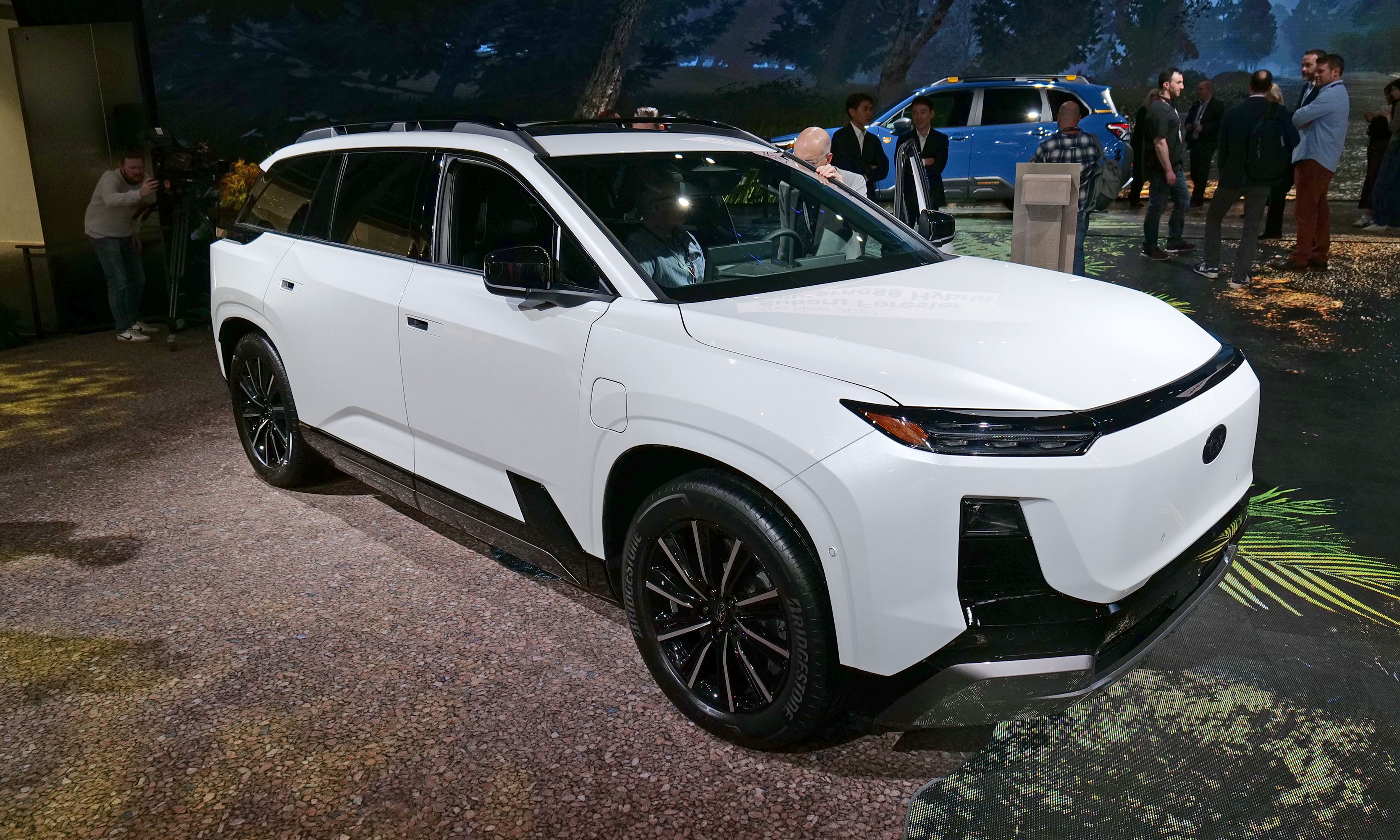
Sadly, Toyota didn't bring the Highlander EV to the NY Auto Show, so I couldn't make a direct comparison to Subaru's new three-row EV SUV.
Sam Rutherford for Engadget
Built on the same platform as Toyota’s Highlander EV, the Getaway isn’t just Subaru’s first three-row EV SUV, it’s also its most powerful with up to 420 horsepower. Naturally, the car comes standard with the company’s signature Symmetrical all-wheel drive tech while the 95.8kWh battery on the long-range model delivers more than 300 miles. Sadly, with a lackluster expected charging speed of 150kW, the Getaway will need about 30 minutes to bring its battery from 20 to 80 percent. The Getaway is expected to arrive sometime in late 2026, and while Subaru has yet to reveal official pricing, it’s also planning on releasing a more affordable standard range model with a 77kWh power pack in the first half of 2027.
Hyundai Boulder Concept
Hyundai's SangYup Lee on stage to show off the new Boulder SUV concept.
Sam Rutherford for Engadget
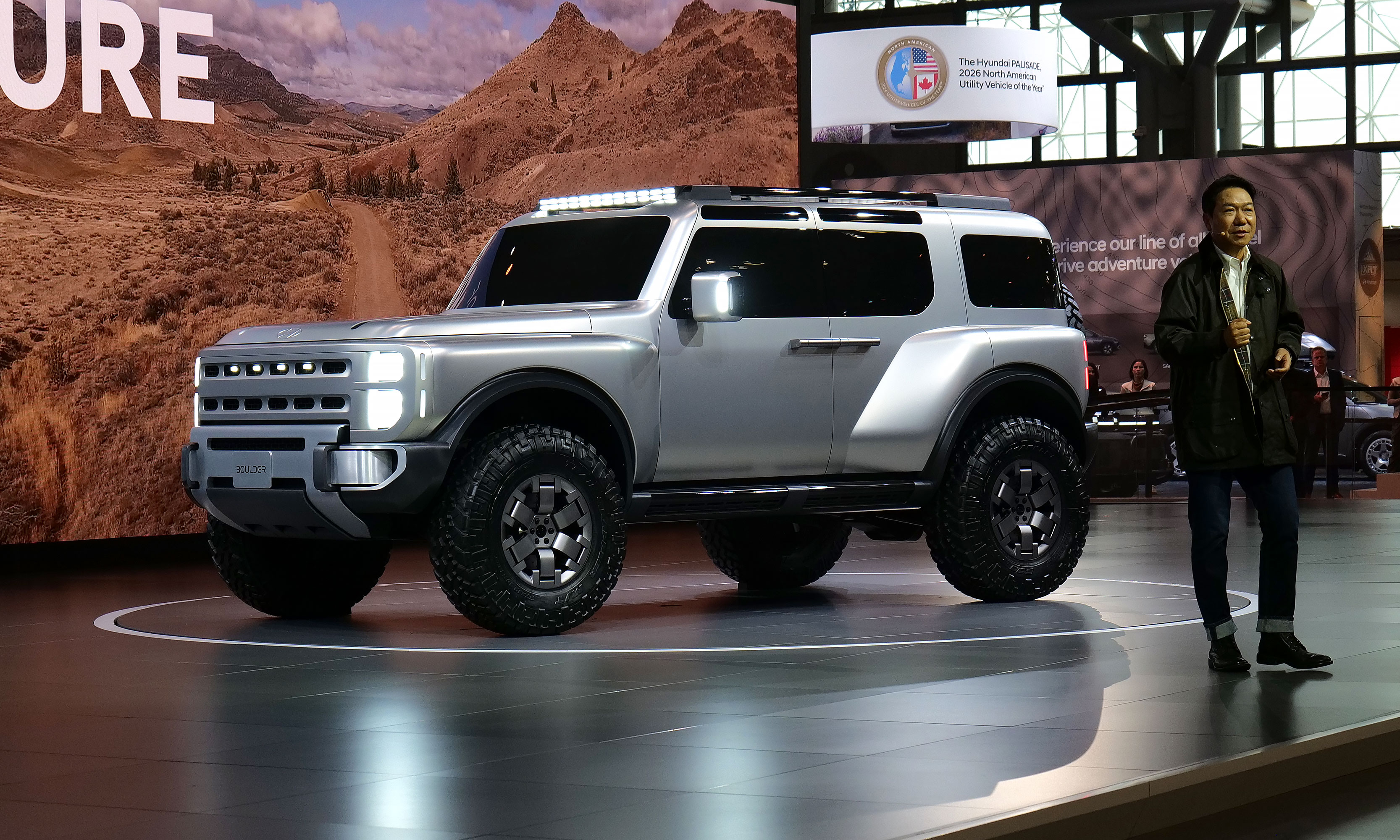
2026 marks the 40th anniversary of Hyundai’s entrance into the US auto market. To help celebrate the occasion, the company showed off a new concept car called the Boulder. While concrete details are sparse, the prominent grille and body on frame construction strongly suggest that it won’t be a full BEV (battery EV). We’re looking at a hybrid or range-extended EV at best. That said, the Boulder showcases what Hyundai is calling its “Art of Steel” design philosophy which looks to emphasize the strength, flexibility and beauty of its metal exterior while looking a lot more approachable than a Tesla Cybertruck. Notably, while there’s no guarantee that the Boulder will look this big and brawny if it ever reaches production, Hyundai says this platform will underpin a future midsize pickup slated to arrive sometime in 2030.
Kia EV3
After going on sale in Europe in late 2024, the Kia EV3 is finally coming to the US.
Sam Rutherford for Engadget
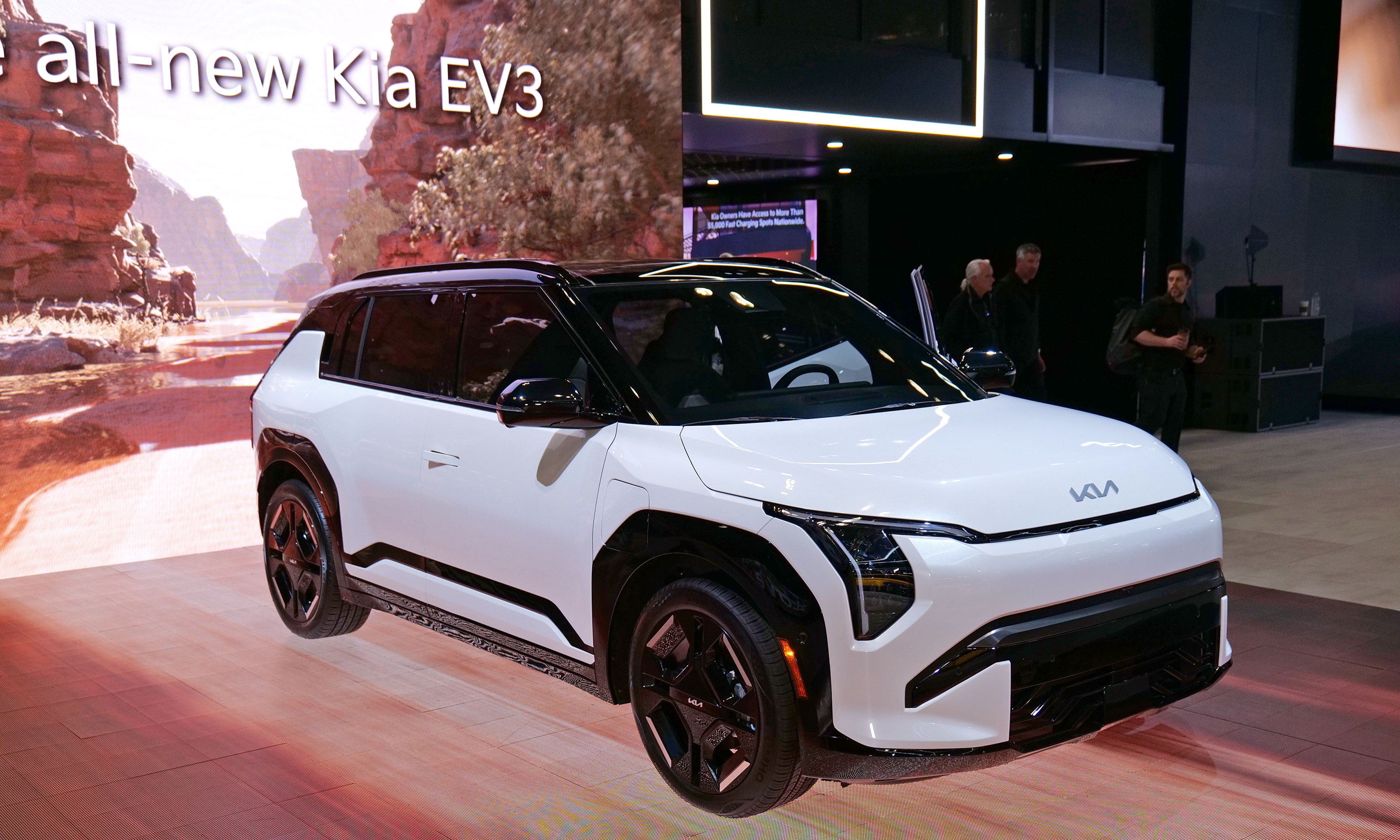
The EV3 has been on sale in Europe for about a year and a half, but today at the New York International Auto Show, Kia debuted the new 2027 model of EV3 that will go on sale here in the US sometime before the end of the year. As the smaller sibling to the EV9, the EV3 features a similar design that combines the chunky body of an SUV with clean, futuristic lines, but in a more compact vehicle similar in size to the Sportage. While Kia hasn’t released official pricing, the EV3 is expected to arrive in two main configurations: a standard-range model with a 58.3kWh battery and up to 220 miles of range that could start as low as $35,000, or a more premium long-range variant that promises 320 miles of range. Sadly, its 400-volt architecture means it won’t charge quite as quickly as some of Kia’s more premium EVs. But as a nice bonus, the company says the EV3 will come with vehicle-to-load technology, so you can use the car’s battery to power other devices like tools, lights or your home.
Genesis GV60 Magma
The GV60 Magma is drop dead gorgeous and a more luxurious take on the Ioniq 5.
Sam Rutherford for Engadget
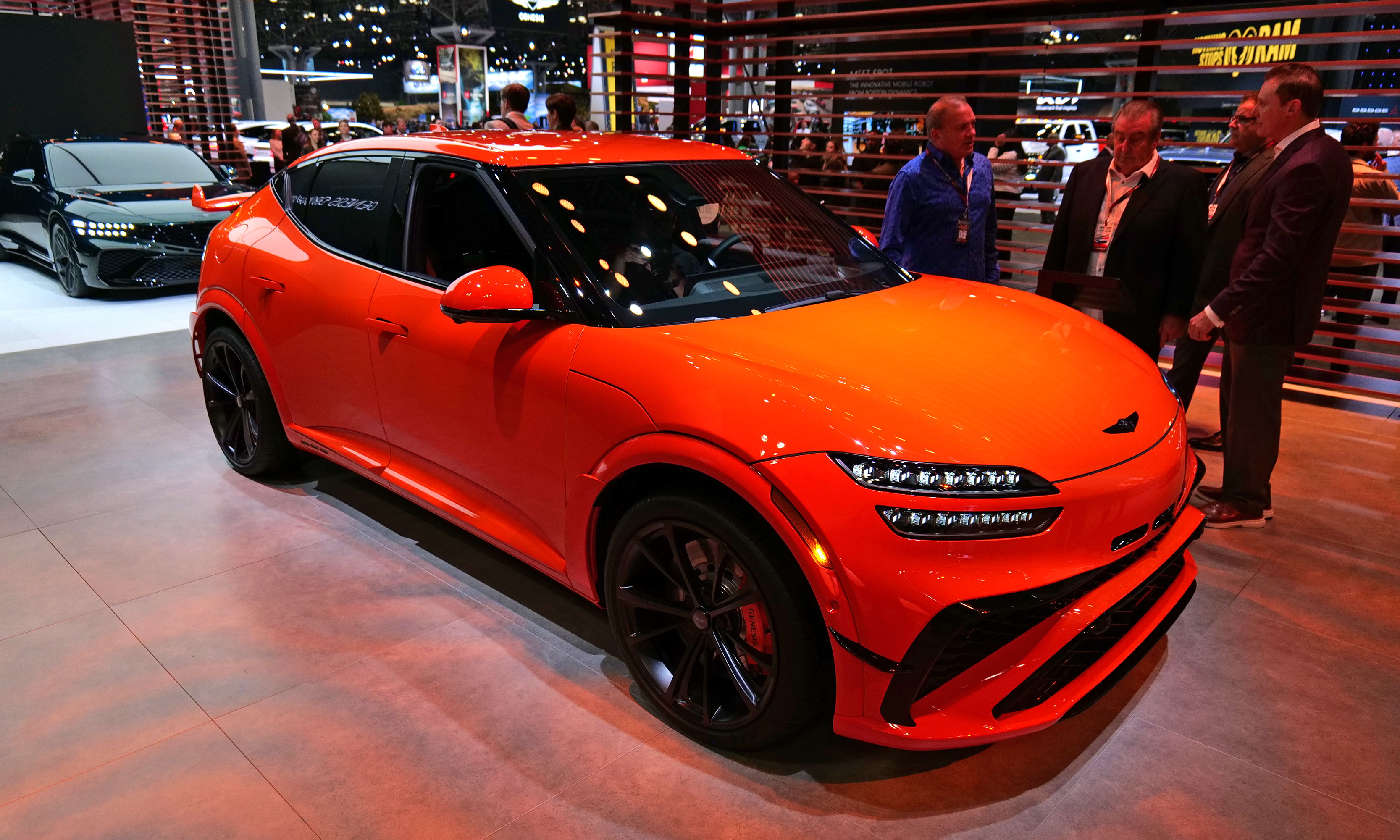
While it shares the same chassis and platform as Hyundai's Ioniq 5N, the Genesis GV60 Magma looks to deliver a more luxurious take on what an electric hot hatch can be. And it looks damn good, especially with its molten orange paint job. Compared to the regular GV60, the Magma features exclusive 21-inch wheels along with streamlined canards, a much larger rear wing and a redesigned bumper that delivers better airflow. But the best part is that while it might seem like a custom creation designed solely to get attention at car shows, Genesis is actually going to put this thing into production with an expected release some time in mid to late 2026.
Polestar 4 Arctic Circle Edition
Even away from the frozen north, the Polestar 4 Arctic Circle Edition looks fantastic.
Sam Rutherford for Engadget
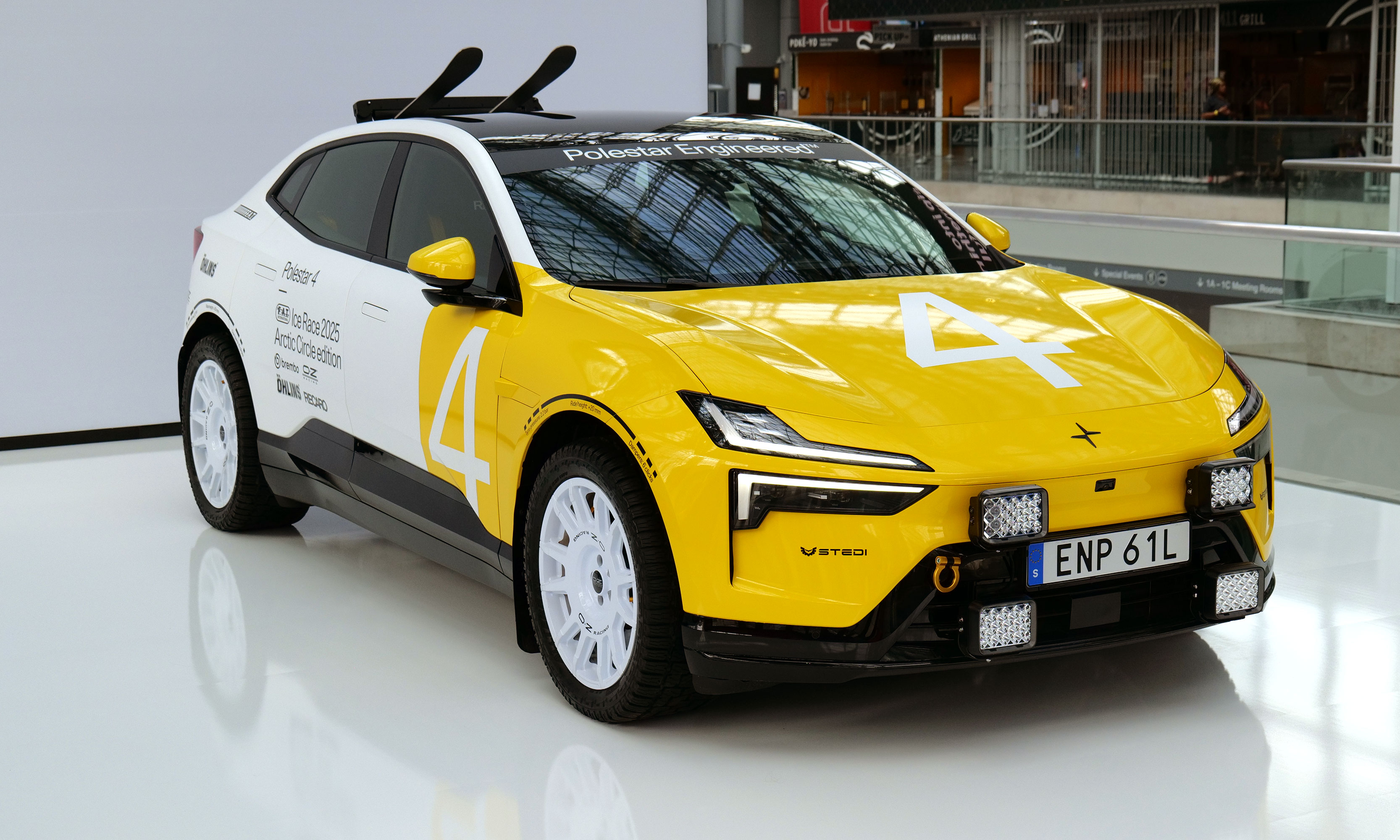
Yellow isn’t my favorite color, but between its striking paint job and new cold-weather augments, the Arctic Circle version of the Polestar 4 looks absolutely fantastic. It also features 20-inch wheels from OZ Racing, a bunch of extra exterior lights and a rack for skis. And because the Polestar 4 relies on rear-facing cameras and a display built into its rearview mirror, you can still see out the back without anything getting in the way. Unfortunately, because this is a one-off model built for the F.A.T. International Ice Race, you won’t be able to buy one for yourself.
Hyundai Ioniq 5 XRT
The Ioniq 5 XRT is basically a do-everything EV hot hatch.
Sam Rutherford for Engadget
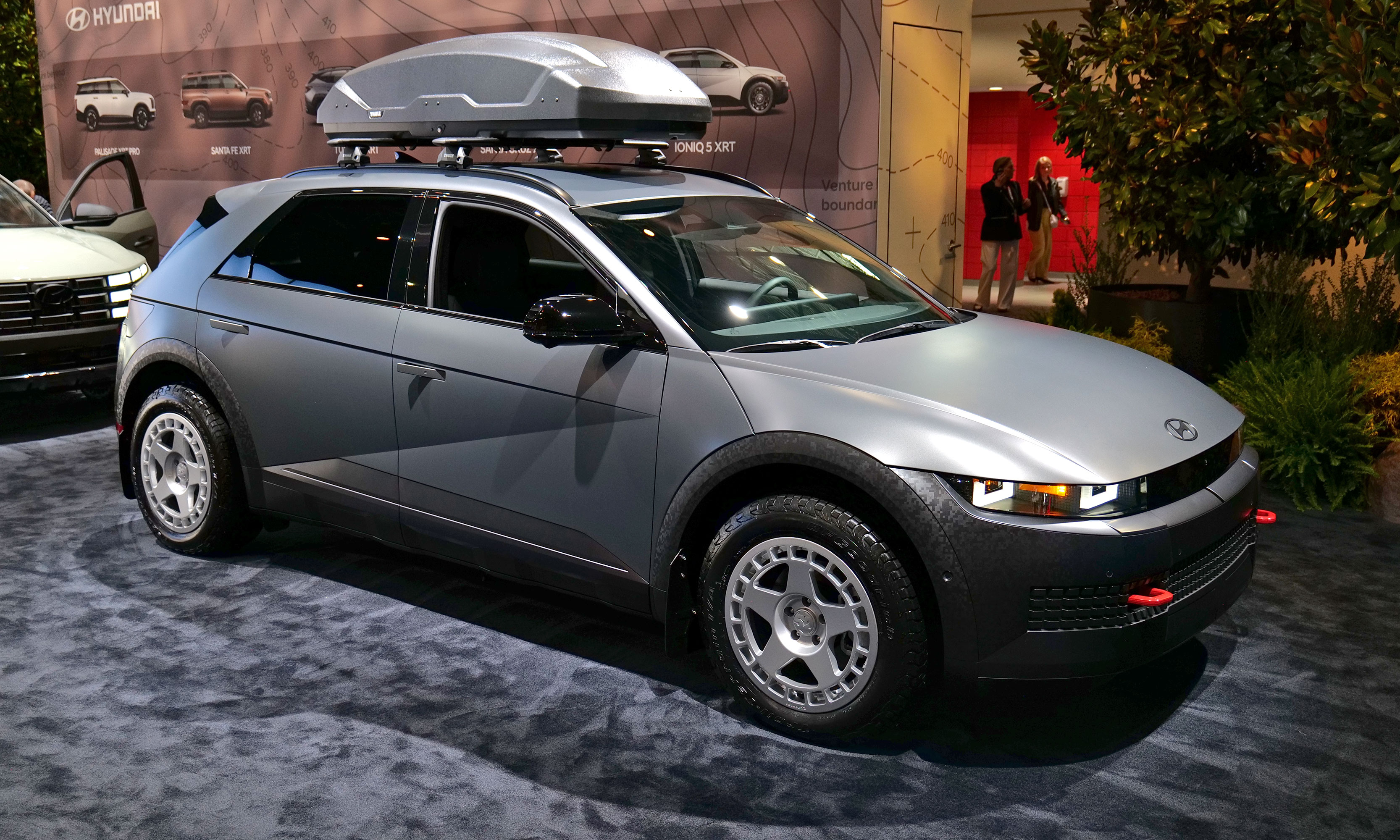
A year and a half ago when I was in the market for a car, the Ioniq 5 was high on my short list. While I eventually went with a Mach-E, if this XRT edition had been available back then, it might have tipped the scales in Hyundai’s favor. This model combines the Ioniq 5’s signature pixelated good looks with some nice off-road touches to create a well-equipped midsize EV that can handle practically any situation. I especially like the addition of bright orange tow hooks that serve as a nice contrast to the subtle digital camo print on the XRT’s front bumper. And while its chunkier tires result in range that’s a touch lower than what you get from an equivalent Limited model (259 vs 269 miles), the XRT makes up for that by including Hyundai’s HTRAC All Wheel Drive system by default without a huge jump in price.
Corvette CX Concept
The CX Concept is meant to be a peek at what future Corvettes could be.
Sam Rutherford for Engadget
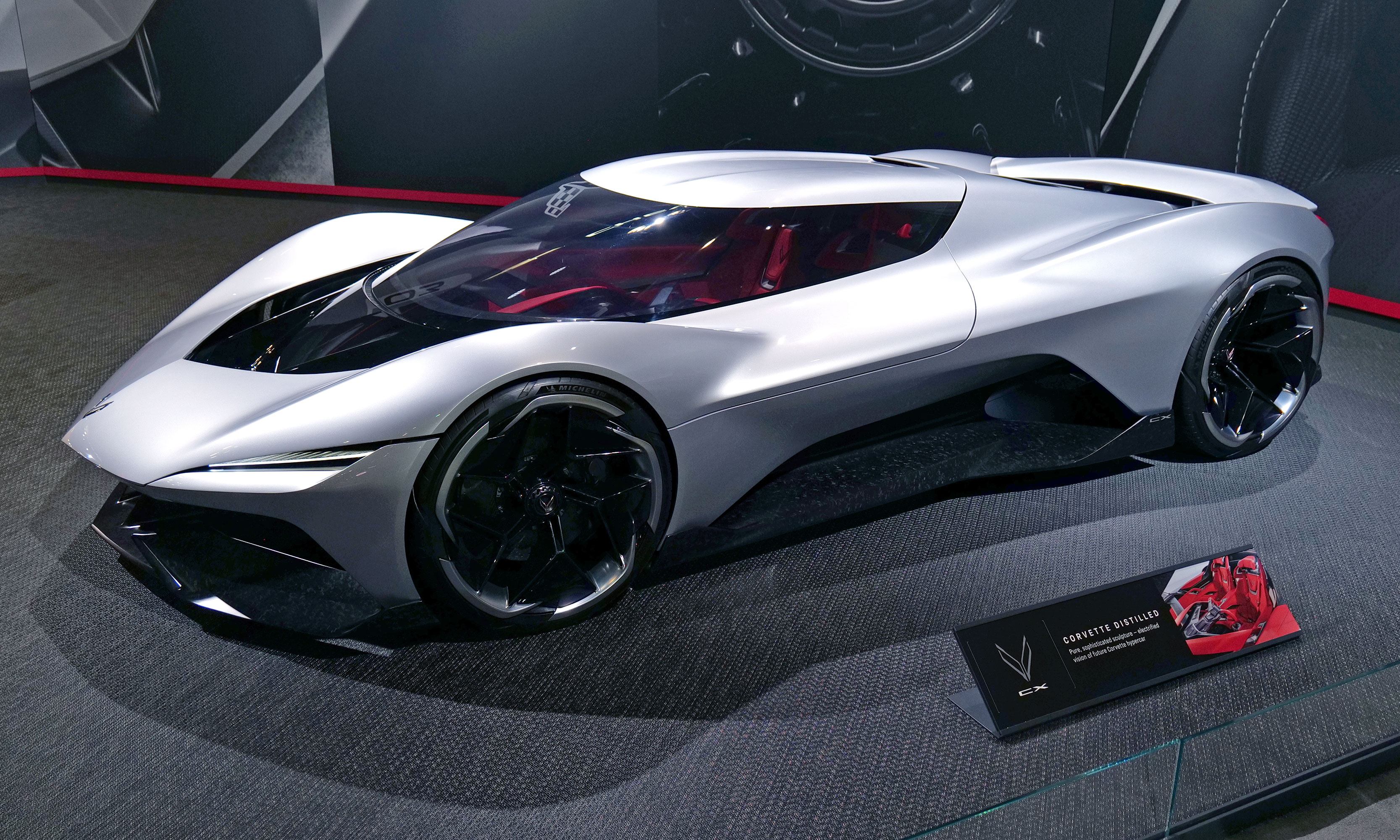
With the 2026 Chevrolet Corvette ZR1X already boasting more than 1,200 horsepower, it’s kind of scary to think what the Corvette CX Concept could bring if it ever reaches production. Described as the vision of the future, the CX is Chevy’s take on an electrified hypercar while also serving as a template for future Corvettes as a whole. And while its proportions and styling are so extreme that it's hard to believe they will make it onto a consumer vehicle, this thing sure is nice to look at.
Rolls Royce Spectre
If I had infinite money, the Spectre would definitely be in my dream three-car garage.
Sam Rutherford for Engadget
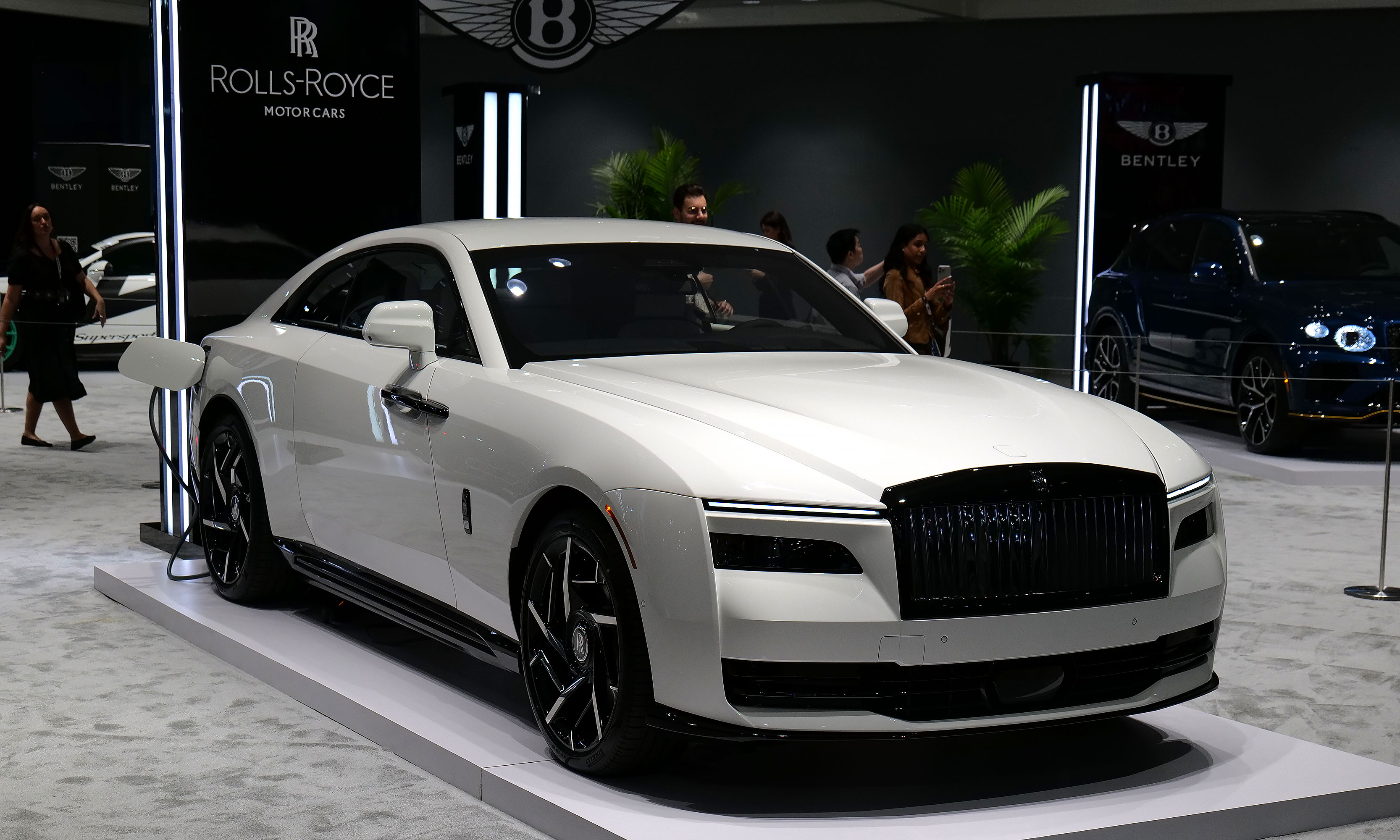
For a brand as old and steeped in tradition as Rolls Royce, it’s easy to forget that the luxury automaker began its transition to the EV era back in 2022. And while the company wasn’t officially in attendance at the New York Auto Show, Manhattan Motorcars was nice enough to bring a Spectre to the show floor for plebs like us to gawk at. In many ways, this car is an ideal showcase of the advantages of electrification, as the Spectre offers ample power (up to 650hp for the Black Badge variant) and massive torque, but without all the commotion you get from an internal combustion engine. Despite weighing around 6,500 pounds (making it one of the heaviest passenger cars on the market), it still delivers more than respectable range, with up to 277 miles depending on the specific config. Although, it’s not like any Spectre owners are actually going to take this thing on a cross-country road trip.
This article originally appeared on Engadget at https://www.engadget.com/transportation/evs/the-hottest-evs-from-the-2026-new-york-auto-show-plus-one-brawny-concept-120000557.html?src=rss
Lucid Motors has recalled over 4,000 Gravity SUVs after discovering a problem with seat belts. The company told the National Highway Traffic Safety Administration (NHTSA) that some of the anchors for the second-row seat belts weren't welded properly. This means that there's a chance they won't actually hold passengers during a collision.
The company blames the issue on a seat supplier changing its manufacturing process "without notice to or approval by Lucid." It says it has reverted to the original design and that newer models aren't impacted by the recall. Vehicles manufactured after February 14, 2026 are good to go.
Lucid will have to inspect each and every Gravity SUV affected by the recall and potentially install a new bracket or a whole new seat. Owners will receive instructions to bring their vehicles to service centers. The company hasn't reported any injuries related to the defect, which is good news.
4,000 may not sound like a particularly high number, but this isn't Toyota or Ford. The number accounts for nearly every Gravity SUV manufactured since it launched last year, according to The Tech Buzz. It's been reported that the company sold around 15,800 vehicles in 2025, but that accounts for every model in the lineup.
NEWS: Lucid's CEO says he replaced the company's entire software leadership team following the extremely buggy launch of their Gravity SUV.
"We're working through this. We will be over the hump by end of January, latest, latest, end of March." https://t.co/D9ARNVwA5Q
This isn't the first issue that has popped up regarding Lucid's Gravity SUV. The company had to recall many vehicles due to an issue with the airbags at the tail-end of last year. The model has also been plagued by software issues, though numerous patches seem to have cleared that up. The three-row electric SUV starts at $80,000.
The company has been burning through cash without too much to show for it, according to Autoblog. This would doom other manufacturers, but Lucid has an extremely wealthy benefactor. The majority stakeholder is The Saudi Public Investment Fund, which has invested billions in the company. Lucid's VP of Communications, Nick Twork, says the country "stands behind us as a long-term partner."
This article originally appeared on Engadget at https://www.engadget.com/transportation/evs/lucid-motors-recalls-over-4000-gravity-suvs-over-seat-belt-defect-155321460.html?src=rss
Toyota is teaming up with Daimler and Volvo to work on fuel cell technology. The Japanese company is signing on to the joint venture cellcentric that Volvo and Daimler launched back in 2020. Once it officially joins, Toyota and cellcentric will collaborate on managing the development and production of fuel cell unit cells.
"We are deeply grateful for the opportunity to soon be joining Daimler Truck and Volvo Group as partners in building a hydrogen society," Toyota President and CEO Koji Sato said. "cellcentric which possess deep expertise in commercial fields together with Toyota ‘s over 30 years of fuel-cell development in the passenger car sector, can combine their strengths to deliver one of the world-leading fuel cell systems for heavy commercial vehicles."
It's a move that runs counter to where the auto industry has been trending. Last year, Stellantis announced that it would end its hydrogen fuel cell development program. That's the company that owns brands including Chrysler, Citroen, Fiat, Jeep and Peugeot. GM also gave up on hydrogen in 2025. Even Toyota had rethought some of its commitment to hydrogen last year, pivoting to emphasize industrial applications rather than commercial ones.
This article originally appeared on Engadget at https://www.engadget.com/transportation/toyotas-still-trying-to-make-hydrogen-fuel-cells-happen-202237728.html?src=rss