PlayStation 5 Pro preview: I don’t need it, but I want it

You do not need a PS5 Pro. The Pro is Sony’s latest version of the PS5, offering more power and storage, faster Wi-Fi, and expanded support for tricks like advanced ray tracing, all for the audacious price of $700. That’s nice, but if you already have a PS5, you do not need to rush out and snag the new console. The PS5 Pro is similar to the Steam Deck OLED in this way: It’s a noticeable upgrade, but its existence doesn’t diminish the appeal of the original model. The PS5 you’ve had for years remains very cool and impressive, and if you’re content with it — or if you don’t have the cash to spare — maybe just stop reading right here and go play Astro Bot with your bliss intact.

Now that it’s just us, let’s really get into it. If you regularly play PS5 games and can afford to waste (at least) $700 on a more powerful console with extra gills, you absolutely should get a PS5 Pro.

The PS5 Pro will ship on November 7 with a 2TB SSD, Wi-Fi 7, faster memory, improved rendering capabilities, and support for VRR, advanced ray-tracing and “8K gaming.” With the Pro, Sony has introduced a proprietary upscaling system called PlayStation Spectral Super Resolution, which fills out details at the pixel level using machine-learning technology in a similar fashion to NVIDIA’s DLSS. There’s also PS5 Pro Game Boost, an enhancement suite that can apply to backward compatible PS4 games, stabilizing or upgrading their performance on the fresh hardware. Sony says this can also improve the performance of supported PS5 titles.

These upgrades theoretically mean players no longer have to choose between a premium resolution and high, consistent framerates, so long as the game you’re playing is updated to take full advantage of the console. On the standard and Digital Edition PS5s, players generally pick between Performance mode, which activates 60 fps or 120 fps at a lower resolution, or Fidelity mode, which offers crisp resolution at 30 fps. The Pro, thanks to the increased power and upscaling system, can easily handle simultaneous 4K output and 60 fps, and then some.

In action, this means games look and feel exceptional on the PS5 Pro. I played a handful of titles on the Pro over two hours at Sony’s San Mateo studio, and many of the setups included a second screen with the game running on existing PS5 hardware, for comparison’s sake. Overall, the standard PS5 games never looked bad, but the Pro screens definitely looked better.

More than anything though, the Pro games felt better. Hopping from 30 fps on the standard PS5 to 60 fps on PS5 Pro — at the same or an even higher perceivable resolution — was all the convincing I personally needed. The Last of Us Part II Remastered offered a poignant demonstration of this difference: I played for a minute in Fidelity mode at 4K/30, and then swapped over to the Pro at 4K/60, and the shift instantly felt right. I questioned how or why I’d ever played a game at 30 fps in my life. Why choose between image quality and framerate when you can have both, you know?

Each developer approached the Pro’s power from a bespoke angle. With Spider-Man 2, for instance, Insomniac was focused on improving draw distance and upgrading the resolution of far-away objects in expansive cityscapes. The result is a crisply detailed web-slinging experience around downtown Manhattan with none of the slight fuzziness that the standard version offers. Hogwarts Legacy developers at Avalanche Software wanted to improve the game’s lighting and reflections, and they did: The Pro version presents a castle filled with slick stones and vibrant stained glass rainbows that ripple realistically as the player moves. 

F1 24, meanwhile, can now handle ray-tracing at 4K/60 during races, and the team at Codemasters built new fences and implemented more realistic, auto-generated reflections on the tracks. The difference between ray-tracing and none is stark, and the game’s Performance mode can hit 4K at 120 fps on the Pro, rather than maxing out at 1440p on current models. A new Resolution mode outputs in 8K/60, but to experience that one, you’ll first have to get your hands on an 8K TV.

As with the last generation of upgraded consoles — the Xbox One X and PS4 Pro — a lot of the responsibility for making the PS5 Pro worthwhile lands at the feet of publishers and developers. At yesterday’s State of Play event, Sony announced a second batch of titles that will be upgraded for PS5 Pro, including Stellar Blade, Alan Wake 2, Resident Evil Village and Dragon Age: Veilguard. That's a solid start, but anyone spending $700 on a console will rightfully expect many more upgrades over time.

Talking with all of the developers at the event, there was a shared sentiment: This is an exciting era of experimentation and customization, and the Pro represents a chance for studios to create the definitive console versions of their games. We’ve only seen the tip of the iceberg when it comes to Pro improvements — and, therefore, the future of console experiences in general.

Designwise, the Pro is big, but then again, so is every version of the PS5. It looks enormous next to the updated Slim PS5, but side on and standing vertically, the Pro is the same height as the launch PS5 and it’s only as wide as the current Slim version. This makes for an elongated, skyscraper kind of aesthetic that only highlights how intrusive the console truly is, but if you’re a PS5 player, this is nothing new. The black gills slicing through the top half of the Pro do little to dispel the visual heft, but on top of providing necessary ventilation, they nicely mirror the look of the wider PS5 line.

PlayStation 5 and 5 Pro
Jessica Conditt for Engadget

The stand that allows the Pro to be positioned vertically is sold separately and costs $30. There’s also an option to add an Ultra HD Blu-ray disc drive to the new console, just like the Digital Edition, and that costs $80. So if you’re in the market for the full Pro package, you’ll have to throw down $810.

It’s a beastly price tag for a beastly console, but thankfully that descriptor applies to performance as well as appearance.

Sony is mining a niche market with the Pro, targeting dedicated PS5 players who happen to have money to burn. It’s not for everyone, and Sony will need to convince lots of developers to support this small audience. But for the type of console player who doesn’t balk at dropping $200 on a controller or $700 on a console — me, for instance — it feels like a worthwhile upgrade.

This article originally appeared on Engadget at https://www.engadget.com/gaming/playstation/ps5-pro-preview-i-dont-need-it-but-i-want-it-150042508.html?src=rss

PlayStation 5 Pro preview: I don’t need it, but I want it

You do not need a PS5 Pro. The Pro is Sony’s latest version of the PS5, offering more power and storage, faster Wi-Fi, and expanded support for tricks like advanced ray tracing, all for the audacious price of $700. That’s nice, but if you already have a PS5, you do not need to rush out and snag the new console. The PS5 Pro is similar to the Steam Deck OLED in this way: It’s a noticeable upgrade, but its existence doesn’t diminish the appeal of the original model. The PS5 you’ve had for years remains very cool and impressive, and if you’re content with it — or if you don’t have the cash to spare — maybe just stop reading right here and go play Astro Bot with your bliss intact.

Now that it’s just us, let’s really get into it. If you regularly play PS5 games and can afford to waste (at least) $700 on a more powerful console with extra gills, you absolutely should get a PS5 Pro.

The PS5 Pro will ship on November 7 with a 2TB SSD, Wi-Fi 7, faster memory, improved rendering capabilities, and support for VRR, advanced ray-tracing and “8K gaming.” With the Pro, Sony has introduced a proprietary upscaling system called PlayStation Spectral Super Resolution, which fills out details at the pixel level using machine-learning technology in a similar fashion to NVIDIA’s DLSS. There’s also PS5 Pro Game Boost, an enhancement suite that can apply to backward compatible PS4 games, stabilizing or upgrading their performance on the fresh hardware. Sony says this can also improve the performance of supported PS5 titles.

These upgrades theoretically mean players no longer have to choose between a premium resolution and high, consistent framerates, so long as the game you’re playing is updated to take full advantage of the console. On the standard and Digital Edition PS5s, players generally pick between Performance mode, which activates 60 fps or 120 fps at a lower resolution, or Fidelity mode, which offers crisp resolution at 30 fps. The Pro, thanks to the increased power and upscaling system, can easily handle simultaneous 4K output and 60 fps, and then some.

In action, this means games look and feel exceptional on the PS5 Pro. I played a handful of titles on the Pro over two hours at Sony’s San Mateo studio, and many of the setups included a second screen with the game running on existing PS5 hardware, for comparison’s sake. Overall, the standard PS5 games never looked bad, but the Pro screens definitely looked better.

More than anything though, the Pro games felt better. Hopping from 30 fps on the standard PS5 to 60 fps on PS5 Pro — at the same or an even higher perceivable resolution — was all the convincing I personally needed. The Last of Us Part II Remastered offered a poignant demonstration of this difference: I played for a minute in Fidelity mode at 4K/30, and then swapped over to the Pro at 4K/60, and the shift instantly felt right. I questioned how or why I’d ever played a game at 30 fps in my life. Why choose between image quality and framerate when you can have both, you know?

Each developer approached the Pro’s power from a bespoke angle. With Spider-Man 2, for instance, Insomniac was focused on improving draw distance and upgrading the resolution of far-away objects in expansive cityscapes. The result is a crisply detailed web-slinging experience around downtown Manhattan with none of the slight fuzziness that the standard version offers. Hogwarts Legacy developers at Avalanche Software wanted to improve the game’s lighting and reflections, and they did: The Pro version presents a castle filled with slick stones and vibrant stained glass rainbows that ripple realistically as the player moves. 

F1 24, meanwhile, can now handle ray-tracing at 4K/60 during races, and the team at Codemasters built new fences and implemented more realistic, auto-generated reflections on the tracks. The difference between ray-tracing and none is stark, and the game’s Performance mode can hit 4K at 120 fps on the Pro, rather than maxing out at 1440p on current models. A new Resolution mode outputs in 8K/60, but to experience that one, you’ll first have to get your hands on an 8K TV.

As with the last generation of upgraded consoles — the Xbox One X and PS4 Pro — a lot of the responsibility for making the PS5 Pro worthwhile lands at the feet of publishers and developers. At yesterday’s State of Play event, Sony announced a second batch of titles that will be upgraded for PS5 Pro, including Stellar Blade, Alan Wake 2, Resident Evil Village and Dragon Age: Veilguard. That's a solid start, but anyone spending $700 on a console will rightfully expect many more upgrades over time.

Talking with all of the developers at the event, there was a shared sentiment: This is an exciting era of experimentation and customization, and the Pro represents a chance for studios to create the definitive console versions of their games. We’ve only seen the tip of the iceberg when it comes to Pro improvements — and, therefore, the future of console experiences in general.

Designwise, the Pro is big, but then again, so is every version of the PS5. It looks enormous next to the updated Slim PS5, but side on and standing vertically, the Pro is the same height as the launch PS5 and it’s only as wide as the current Slim version. This makes for an elongated, skyscraper kind of aesthetic that only highlights how intrusive the console truly is, but if you’re a PS5 player, this is nothing new. The black gills slicing through the top half of the Pro do little to dispel the visual heft, but on top of providing necessary ventilation, they nicely mirror the look of the wider PS5 line.

PlayStation 5 and 5 Pro
Jessica Conditt for Engadget

The stand that allows the Pro to be positioned vertically is sold separately and costs $30. There’s also an option to add an Ultra HD Blu-ray disc drive to the new console, just like the Digital Edition, and that costs $80. So if you’re in the market for the full Pro package, you’ll have to throw down $810.

It’s a beastly price tag for a beastly console, but thankfully that descriptor applies to performance as well as appearance.

Sony is mining a niche market with the Pro, targeting dedicated PS5 players who happen to have money to burn. It’s not for everyone, and Sony will need to convince lots of developers to support this small audience. But for the type of console player who doesn’t balk at dropping $200 on a controller or $700 on a console — me, for instance — it feels like a worthwhile upgrade.

This article originally appeared on Engadget at https://www.engadget.com/gaming/playstation/ps5-pro-preview-i-dont-need-it-but-i-want-it-150042508.html?src=rss

Ghost of Yōtei is a Tsushima sequel coming to PS5 in 2025

The 2020 PlayStation hit Ghost of Tsushima is getting a sequel featuring a new protagonist, era and landscape. Ghost of Yōtei is heading to PlayStation 5 in 2025.

Ghost of Yōtei stars a new Ghost, Atsu, who's journeying through the lands at the base of Mount Yōtei in Ezo — modern-day Hokkaido — in 1603. This means the sequel is set 300 years after the events of Tsushima, which focused on the Mongol invasion of that region. In 1603, Yōtei was not under Japanese rule, and the debut trailer shows vast, untouched grasslands, snowy forests and sun-drenched ridges dotted with wildflowers, a strong breeze blowing through each scene. There's a distinct cowboy twang to the music in the trailer, particularly as Atsu interacts with wild horses. She also meets a wolf, which is neat.

On the PlayStation Blog, Sucker Punch noted that Yōtei wasn't home to organized samurai clans like those in Tsushima, and said this formed the basis of the sequel's new, original story.

This is the first game that Sucker Punch has built from the ground-up for PS5.

"We have massive sightlines that let you look far across the environment, whole new skies featuring twinkling stars and auroras, even more believable movement from wind on grass and vegetation, and more improvements we’ll share in the future," Sucker Punch communications manager Andrew Goldfarb said. "Our new setting also gives us the opportunity to introduce new mechanics, gameplay improvements, and even new weapons."

This article originally appeared on Engadget at https://www.engadget.com/gaming/playstation/ghost-of-yotei-is-a-tsushima-sequel-coming-to-ps5-in-2025-231306124.html?src=rss

Ghost of Yōtei is a Tsushima sequel coming to PS5 in 2025

The 2020 PlayStation hit Ghost of Tsushima is getting a sequel featuring a new protagonist, era and landscape. Ghost of Yōtei is heading to PlayStation 5 in 2025.

Ghost of Yōtei stars a new Ghost, Atsu, who's journeying through the lands at the base of Mount Yōtei in Ezo — modern-day Hokkaido — in 1603. This means the sequel is set 300 years after the events of Tsushima, which focused on the Mongol invasion of that region. In 1603, Yōtei was not under Japanese rule, and the debut trailer shows vast, untouched grasslands, snowy forests and sun-drenched ridges dotted with wildflowers, a strong breeze blowing through each scene. There's a distinct cowboy twang to the music in the trailer, particularly as Atsu interacts with wild horses. She also meets a wolf, which is neat.

On the PlayStation Blog, Sucker Punch noted that Yōtei wasn't home to organized samurai clans like those in Tsushima, and said this formed the basis of the sequel's new, original story.

This is the first game that Sucker Punch has built from the ground-up for PS5.

"We have massive sightlines that let you look far across the environment, whole new skies featuring twinkling stars and auroras, even more believable movement from wind on grass and vegetation, and more improvements we’ll share in the future," Sucker Punch communications manager Andrew Goldfarb said. "Our new setting also gives us the opportunity to introduce new mechanics, gameplay improvements, and even new weapons."

This article originally appeared on Engadget at https://www.engadget.com/gaming/playstation/ghost-of-yotei-is-a-tsushima-sequel-coming-to-ps5-in-2025-231306124.html?src=rss

Kind Words 2 takes cozy letter-writing to the city on October 7

Kind Words 2 (lofi city pop), a game where you send real letters to real people and then wander around a cozy town, is due to hit Steam on October 7.

It’s the sequel to Kind Words (lo-fi chill beats to write to), an award-winning 2019 game from independent Boston studio Popcannibal. Players in the original game had a single bedroom where, backdropped by a sweet lo-fi soundtrack, they wrote and responded to letters from other players. There were small bits of room customization and sticker collection in the game, but it was truly just about connecting with strangers in a warm and nice way. This was a prescient idea: Just six months after Kind Words came out, the coronavirus pandemic locked down the globe. Connecting with people safely and from a distance suddenly became a top priority, and Kind Words carried this responsibility well. In the five years since launch, hundreds of thousands of players have sent more than 6 million messages in-game.

Kind Words 2 imports your letters, room changes and stickers from the first game, and it allows you to leave the bedroom and explore a small town of shops, cafes and parks. On top of the standard letter-writing loop, you can customize your avatar with new clothes, scream (in written form) into the void, wish on a star, perform poetry and interact with other players in public spaces. The endlessly chill soundtrack comes from Slay the Spire and Kind Words composer Clark Aboud. It all looks — and sounds — incredibly adorable.

In terms of game design, Popcannibal faces a unique and impossible-sounding challenge with the Kind Words series. Instead of having to build innovative environments or ultra-responsive controls, developers have to create a world that encourages anonymous online strangers to be nice to each other. The original game excelled in this regard, using visuals, mechanics, mood and music to foster friendly conversations among thousands of anonymous players worldwide. Kind Words 2 is bigger, but the vibe seems just as snuggly, and this time around Popcannibal has years of experience moderating and vibe-curating under its belt. If anyone can create a troll-free anonymous social network, it’s these folks.

Kind Words 2 was announced in a Day of the Devs stream in December 2023, and it's available to wishlist on Steam right now.

This article originally appeared on Engadget at https://www.engadget.com/gaming/pc/kind-words-2-takes-cozy-letter-writing-to-the-city-on-october-7-215127953.html?src=rss

iPhone 16 Pro has a DSLR-like camera button and a slightly bigger display

Say hello to the iPhone 16 Pro and Pro Max. Apple’s latest high-end models may look familiar, but they have slightly larger displays than the iPhone 15 Pros: The screen on the iPhone 16 Pro is 6.3 inches and the Pro Max is 6.9 inches, an increase of 0.2 inches in both cases. This means the bezels on the 16 Pros are ultra slim.

Largest iPhone screen display.
Apple

Really, it’s all about the camera button this time around. Both of the new Pro models have a dedicated button just for snapping photos and filming video, professional style. It’s touch-sensitive, too: A light press opens up additional tools that are controlled by swiping along the button, such as setting the zoom, exposure and aperture. A long hold on the Camera Control button swaps between still photo and video modes. Apple plans to update the button with a two-state focus feature later this year, allowing a half press to activate the focus and a full press to actually snap a picture.

The Camera Control button feels like a natural evolution for Apple, as part of the company’s long-standing mission to position the iPhone as an all-inclusive filmmaking machine. The button is also built into the non-Pro iPhone 16 models.

Internally, the camera is getting a little boost. The telephoto lens is capable of 5x optical zoom — that’s an increase specifically for the smaller Pro, which previously maxed out at 3x zoom. The ultra-wide-angle camera has been upgraded from 12 megapixels to 48 megapixels in both Pro models. The new phones support customizable Photographic Styles, and users are able to change their chosen style after a photo is taken, which is a useful improvement.

The iPhone 16 Pro can shoot video in 4K at 120 fps, and after shooting, you're able to select frames to be played in slow motion if that's your jam. It also supports spatial audio capture in videos. With Audio Mix, you can isolate the voices of people on camera, make the shot sound like it was recorded inside a studio, or pull in environmental noise with speaking voices highlighted, resulting in a more cinematic feel.

iPhone 16 Pro features
Apple

The iPhone 16 Pros have a larger battery, delivering us another classic line during Apple's live event: This is the "best iPhone battery life ever," apparently. The new phones run on the A18 Pro chip, which is an upgraded version of the A18 found in the regular iPhone. It has a 16-core neutral engine, and Apple says its AI features will run up to 20 percent faster than on the iPhone 15 Pro.

The iPhone 16 Pro and Pro Max have built-in support for Apple Intelligence, as do the non-Pro models this time around. Apple Intelligence is an AI system that touches every aspect of the new phones, improving Siri, the Writing Tools feature, phone call summaries and other apps. This includes a new Visual Intelligence feature, which functions a lot like Google Lens — using the new camera button, users are able to take photos of signs and objects to instantly receive information about those places and things.

Four new finishes in the iPhone 16 Pro.
Apple

The newest Pros come in gold (Apple calls it "desert") titanium, or the standard white, black or natural titanium colorways that we’ve grown accustomed to. The gold titanium replaces last year’s blue titanium case for the iPhone 15 Pro.

The iPhone 16 Pro starts at $999 and the Pro Max starts at $1,199. They come in 128GB, 256GB, 512GB and 1TB sizes. This is a show of consistency from Apple — The iPhone 15 Pro was priced at $999 with 128GB of storage, while the 15 Pro Max was $1,199 with 256GB of storage.

Catch up on all the news from Apple’s iPhone 16 event!

This article originally appeared on Engadget at https://www.engadget.com/mobile/smartphones/iphone-16-pro-has-a-dslr-like-camera-button-and-a-slightly-bigger-display-181605027.html?src=rss

Astro Bot PS5 review: One of the best games Sony has ever made

Astro Bot is not just for kids. Team Asobi clearly designed it for players of all skill levels, and that includes children and newbies, but at its core Astro Bot feels purpose-built for video game fans. It’s a skill-driven celebration of everything that makes the format so memorable and joyful, and at the same time, it’s an excellent introduction to the language of games. With precise and responsive controls, adorable characters, and an exciting variety of mechanics and environments, Astro Bot is easily one of the best games that Sony has ever produced.

Astro Bot is technically the fifth entry in the Astro universe, though it’s the series’ first fully fledged — and fully priced — installment. It follows The Playroom (a 2013 mini-game collection for PS4), The Playroom VR (a 2016 PlayStation VR jam), Astro Bot Rescue Mission (a 2018 PS VR platformer starring just the bots), and Astro’s Playroom (a 2020 DualSense demo that’s pre-loaded on every PS5). Astro Bot takes ideas from these earlier titles and compiles them into a focused 3D platformer with dozens of main worlds, a bevy of additional unlockable planets and a wide range of satisfying mechanics. On top of this, the robot protagonists are super cute in every situation. The fact that some of the characters and settings in Astro Bot are recognizable from popular video games only makes the whole thing sweeter.

Astro Bot
Sony Interactive Entertainment

Players are on a mission to rescue all 300 of their robot friends after an alien intercepted their spaceship, a super-charged PS5, and scattered the crew across six dangerous galaxies. Perched atop a lone DualSense, Astro scours 50 total planets and collects other bots by punching or kicking them — you know, in a friendly way — and then storing them inside the touchpad of the on-screen controller before dumping everyone on a secure world. At the same time, Astro is searching for the missing parts of the PS5 spaceship, which are being guarded by bosses in each galaxy.

The hub world, where the ship and rescued bots live, has customization portals for the DualSense and Astro, a gatcha machine with items that bring your bots to life, and a safari zone where you can take pictures with animals you find. There are also small regions to fix up with extra puzzles for Astro and his friends. Outside of the hub planet, the game’s baseline loop involves collecting coins, puzzle pieces and bots by completing platforming challenges and surviving Koopa-like enemies, but new dangers and even-trickier environments appear at every turn.

Astro Bot
Sony Interactive Entertainment

Many of the planets that Astro lands on introduce new mechanics, such as spring-loaded boxing gloves that look like frog faces, an octopus that blows Astro up like a balloon, a mouse backpack that shrinks him at will, a penguin-propelled swimming booster, and a stopwatch that freezes time for a short while. Stages are designed around these unique mechanics and the diversity on display is impressive, from a spooky castle filled with toxic-green ghosts and invisible platforms, to a deconstructed space station in a delectable cosmic setting, and an entire planet built out of giant, neon-lit casino props.

Even before picking up any cool new toys, Astro has a laser-propelled hover ability that lets him destroy enemies while jumping over them, plus a standard punch and a chargeable spin move. These three abilities, plus whatever tool he picks up, are the entirety of Astro’s arsenal. This mechanical focus allowed Team Asobi to perfect each move and then apply them all in a thousand different ways, and the result is a rewarding and robust platformer. All the cuteness is just an added bonus.

Astro Bot
Sony Interactive Entertainment

Astro Bot is not punishing, but it’s not easy either. Plenty of stages require patience, awareness and a high degree of platforming skill, though resets are generous and failure doesn't cost anything other than your time. Completionists will have a great time with this one — there are so many secret passages and hidden bots to find, most of them cleverly tucked away and easily missed unless you’re actively looking for them. On the flipside, speedrunners should enjoy Astro Bot as well, since it offers planets of platforming challenges with incredibly responsive controls.

There are 300 bots to find, and many are pulled from the wider world of gaming. Plenty of the branded bots originate outside of Sony’s stable, with big hitters from Capcom, Konami and Sega represented well — a few of them definitely made my partner yell in excitement, which was adorable in its own right. Some of the more memorable levels stem from popular Sony franchises like God of War, with Astro wielding Kratos’ ax on one planet. Team Asobi really mined Sony’s vaults, far beyond simple Crash Bandicoot callbacks, and into weird and wonderful games like LocoRoco and Vib-Ribbon.

Astro Bot
Sony Interactive Entertainment

And now, allow me to really gush. Astro Bot is beautiful, and not just in a cartoony kind of way. Its landscapes are sharp and alive with interactive details, and it seems like every pixel has been polished to perfection. But it’s the game’s physics that energize everything — when Astro lands on top of a giant inflatable daisy, the material buckles under his little feet, indenting with each step and sway, and making the entire scene look utterly squeezable. 

When skating in the snowy levels, Astro picks up speed and pivots on a dime, and the DualSense responds with the sounds and vibrations of a sharp knife slicing through thick ice. (Side note: I could happily play an entire game of just ice skating… as long as it’s not called Astro Glide.) Piles of tactile objects like sprinkles, dice, skulls and glass stars are scattered around the levels, and running through them is not only gratifying in an ASMR sense, but it sometimes uncovers a new secret. When rain hits Astro’s transparent umbrella hat, the sound is mirrored perfectly on the DualSense, along with the feeling of raindrops on the grips. Each stage has background music to match, funky or big band or synth-y, and always with a catchy hook. Astro Bot’s sound effects, haptics, graphics and physics harmonize flawlessly, transforming every surface into a playground. It’s magical.

Astro Bot
Sony Interactive Entertainment

On the cute side of things, Astro reacts to his environments with endearing animations like shivering in the cold, quivering in fear and tapping his tiny metal feet in excitement, and his bot friends are similarly expressive. When Astro boops his head on an impassable ceiling, he makes the sweetest little flinching motion. The bots turn around and shake their booties at Astro right before he punches them into the DualSense. On the pause screen, you can flick all of your collected bots out of the digital controller and they flail in mid-air before landing safely back inside the touchpad. Pretty much everything the bots do is charming.

Astro Bot highlights the importance of play. It’s Super Mario Bros. for a new generation of video game fanatics, at once an introduction to common mechanics and also a significant challenge for seasoned players. In both cases, Astro Bot radiates joy. If this, alongside new titles like Lego Horizon Adventures, signals a new and less stuffy direction for Sony, then I’m excited to see what the future holds. For now though, you’ll find me trying to 100-percent Astro Bot, cursing and laughing the whole way through.


Psst: Astro Bot has now joined the hallowed ranks of our favorite PS5 games guide. You can view all of our picks — 21 at the time of writing — at The best PS5 games for 2024.

This article originally appeared on Engadget at https://www.engadget.com/gaming/playstation/astro-bot-ps5-review-one-of-the-best-games-sony-has-ever-made-120014494.html?src=rss

Razer’s first controller with Hall effect joysticks is the $200 Wolverine V3 Pro for Xbox and PC

Razer is trying something new — actually, two things. The Wolverine V3 Pro introduces Hall effect joysticks for the first time in a Razer gamepad, and it’s also the company’s first fully wireless controller for Xbox consoles. The Wolverine V3 Pro was designed with esports and high-skill competitive play in mind, and it’s currently available for $200. The Pro and the Wolverine V3 Tournament Edition, a $100 wired version of the new gamepad, are compatible with Xbox and PC. Though the V3 Pro is on the market right now, the V3 Tournament Edition is coming soon.

The Wolverine V3 Pro features extra bumpers for claw-grip players, an eight-way floating D-pad and Viper mouse switches in its four back paddles. The rear paddles have been reimagined since Razer’s Wolverine V2 gamepads — they’re now horizontal bars that curve around the grips, two per side, rather than vertical buttons clustered near the center of the body. The face buttons on the Wolverine V3 are microswitches in a rubberized membrane and they have a 0.65mm actuation distance, just like the V2. 

Also like Razer’s previous gamepad line, the V3 Pro communicates with your console or PC via a USB dongle over a 2.4GHz wireless connection. Wired, it has a Tournament Mode that nets a 1000Hz polling rate, and this can be toggled on or off at will. The whole gamepad can be customized in the Razer Controller App, with options including thumbstick sensitivity, button remapping, haptic strength and profile creation. The triggers on the V3 controllers have a physical switch with two settings: full pull or mouse click.

Razer Wolverine V3 Pro
Razer

As the top-tier option in this new line, the V3 Pro has rubberized grips, RGB lights on the front Razer logo, and it comes with a carrying case and accessories. These include a 10-foot braided cable (USB to USB-C) and two swappable thumbstick caps — one tall and concave, the other short and domed. The standard thumbsticks are short and concave. But the big news here is still the Hall effect joysticks, a feature that should prevent drift and enable more precise aiming.

Hall effect sensors are the emerging standard in anti-drift gamepads, though the technology isn’t ubiquitous quite yet. Sony, Xbox and Nintendo have yet to release first-party gamepads with Hall effect joysticks, though they’ve all received criticism for stick drift this generation. Even the $180 Xbox Elite Wireless Controller Series 2 doesn’t have Hall effect thumbsticks. The most accessible storefront for drift-immune controllers is 8BitDo, which offers a range of wireless and wired gamepads for Xbox, PlayStation, Switch, PC and Android, plenty of which use Hall effect tech. These controllers generally cost between $30 and $70, and the 8BitDo product page has a helpful little logo on all of its Hall effect products.

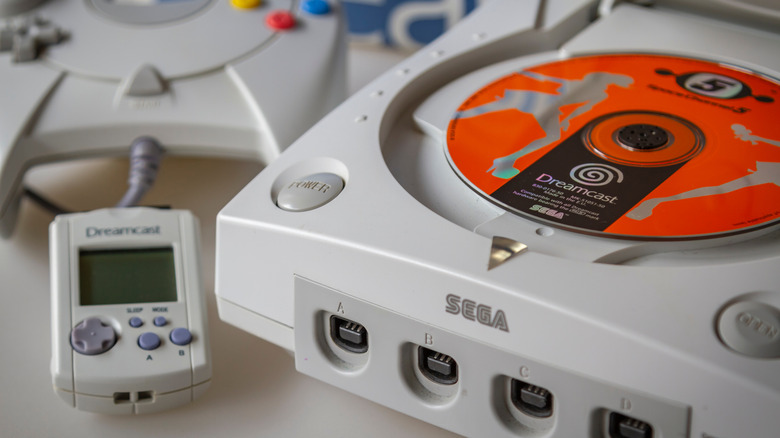
Side story: The original gamepad for the Sega Dreamcast used Hall effect sensors in its sticks way back in 1998. While the idea has been widely implemented in modern triggers, the industry is just now applying this upgrade to joysticks on a mass scale.

Of course, Razer’s Wolverine V3 Pro — which costs $200 — is a premium gamepad with lots of upgraded parts and customization options, not just the sexy thumbsticks. I spent a few days with the V3 Pro, mainly playing rounds of Overwatch 2 on Xbox Series S, and I found the controller to be snappy and surprisingly compact, even for my very tiny hands. The face buttons and mouse-click triggers sound great and feel crisp, while the joysticks are precise — they require a little more force than the wireless Forza Horizon 5 Xbox controller I generally use, but they’re nice and accurate. Everything on the V3 Pro is within reach at any given time: My left thumb can literally fall straight from the stick to the D-pad, and the face buttons are snuggled up next to the right stick. The rear paddles are infinitely clicky, and even without mapping them to anything, I enjoy pressing them just for the sound. I wonder if some players may find the paddles intrusive, since they’re literally part of the grip, but I appreciate their placement because it makes them incredibly easy to use.

Razer Wolverine V3 Pro
Razer

And yes, the V3 Pro does have RGB detailing, but it’s subtle for Razer. There are no long lines of customizable lights wrapping around the gamepad — instead, only the small RAZER logo lights up. As a fan of pretty lights on my gaming accessories, I dig it.

The $100 V3 Tournament Edition features the same button layout and internals as the Pro, but it’s wired, it has a textured plastic grip, it doesn’t have RGB details and it doesn’t include a carrying case or additional thumbsticks. It’s also for Xbox and PC, and it should hit the market in "Q3 2024" — so, by the end of September.

This article originally appeared on Engadget at https://www.engadget.com/gaming/xbox/razers-first-controller-with-hall-effect-joysticks-is-the-200-wolverine-v3-pro-for-xbox-and-pc-150021455.html?src=rss

How The Crush House turns procedural generation into social manipulation

This is a story about serendipity and probability.

Nicole He met Arnaud De Bock while waiting in line for the bathroom at a GDC developer party in 2019. She was giving a talk on voice technology in art and games based on her work as a creative technologist, her portfolio filled with interactive projects like the True Love Tinder Robot, Garden Friends, ENHANCE.COMPUTER and Soylent Dick. De Bock was working on the Reigns series and Card Shark for Nerial, and finishing up Pikuniku on the side.

Technically, He wasn’t invited to this particular party, but Ape Out co-creator Maxi Boch snuck her in.

“There in the bathroom line, I met Arnaud,” He told Engadget. “We started chatting, and we were sort of mutual fans of each other's work, and we talked about potentially collaborating on something. A few months later, we were trying to work on this other idea that he had with his collaborator Rémi [Forcadell] from Pikuniku. That idea never really worked out into anything. But at the same time, Arnaud and I were both obsessed with this reality show called Terrace House.”

The Crush House
Devolver Digital

Terrace House was a Japanese reality series that aired from 2012 to 2020, featuring a rotating cast of six strangers, mainly young professionals, as they lived together for months at a time. Episodes followed the participants as they navigated work and relationships, and the entire thing had a soothing, quiet kind of vibe, even during explosive arguments about eating someone else’s steak. Though cast members often ended up dating each other, you could call Terrace House very demure and very mindful — especially in comparison to Western reality shows like Love Island or Too Hot to Handle, which are built around the themes of bikinis, lust, betrayal and neon-lit product placement.

Inspired by Terrace House and 1990s reality shows like The Real World and Room Raiders, He and De Bock started creating a game called The Crush House. Nerial jumped on board: The studio was finishing up Card Shark and co-founder Francois Alliot saw this reality TV project as an opportunity for his team to flex their narrative muscles.

“At some point, we made a major pivot as far as the writing goes, just ramping it up from this chill Terrace House style, slice-of-life relaxed thing, to be trashy, essentially,” He said. “Like, the dialogue needs to be a lot more engaging. It needs to be funnier and raunchier, more over the top.”

The Crush House
Devolver Digital

That’s when shows like Love Island and The Ultimatum entered the production conversation. In its final form, The Crush House falls in the space between Terrace House and Love Island. It’s set in a bright seaside mansion (with an infinity pool, of course) and it stars four characters at a time as they form strategic friendships, have fiery arguments and make out with each other between ad breaks. 

The Crush House is set in 1999, before smartphones enabled a call-and-response relationship with viewers, but the audience still plays a critical role. Players are the on-site producer and videographer, and they have to respond in real-time to demands from different categories of viewers, like drama queens, foodies, fish freaks, divorced dads and butt guys, while also appeasing advertisers and the mysterious network overlords. Capturing the correct footage, playing ads at the right time and placating the suits makes for a surprisingly intense gameplay loop. There’s a sprint button here for a reason.

One of the most intriguing aspects of The Crush House is its replayability. There are 12 cast members to choose from at the start of every run, and they have distinct personality traits that play off of each other in unique ways. There are classic reality-TV archetypes, like the himbo, the naive girl and the pretentious one, and their interactions are driven by procedural generation.

“Everything that you see on the screen, the dialogues, are generated,” Alliot said. “We have a system called rigmarole, which is a system that matches the traits of a character with what we call sagas, which are like models of stories. For example, if you got a love triangle, you have a number one, number two, number three, they will have different traits that we will match to the characters. If we have a match, we play that story and then it unfolds like that, with possible outcomes that may be different depending on the character that you picked. And this system allows us to have a very broad or very narrow type of narrative.”

He and the developers at Nerial wrote about 50,000 lines of dialogue for the Crush House rigmarole system. With 12 characters to choose from and four characters in each playthrough, there are 495 total possible cast combinations in the game. Essentially, The Crush House had to be procedurally generated.

“We have things that are logical, but it's never 100 percent super structured,” Alliot said. “It's a bit loose, a loose narrative that fits very well with reality TV. And so you can play the game basically forever, matching different characters, and it will still surprise you.”

The Crush House was a jumble of random dialogue and code for a long time before its procedural generation systems had enough information to produce a rational, powerful experience, He said. Alliot warned her this would be the case, and encouraged her to be patient and watch out for the moment when everything would snap into place. Eventually, that’s exactly what happened.

The Crush House
Devolver Digital

“It's kind of a mess for a long time,” He said. “But when we reached the point where actually it all came together — we had enough writing, we had the technical stuff working out, and the animations playing and all this stuff happening. It's like there's something that clicks and it kind of becomes magical.”

The Crush House still surprises He, even after years of studying its code and iterating on its outputs.

“I had this experience even yesterday playing the game, where there was a very sweet, romantic scene between Veer and Alex, and then the next scene, Veer says something that's really cruel to him,” He said. “And I was struck by that. I mean, I can see through the veil of it, I know how everything works, but it's really awesome to have that effect.”

The Crush House is available on Steam for PC, developed by Nerial and published by Devolver Digital.

This article originally appeared on Engadget at https://www.engadget.com/gaming/pc/how-the-crush-house-turns-procedural-generation-into-social-manipulation-160020111.html?src=rss

Indiana Jones and the Great Circle has a Nazi-slapping mechanic

Indiana Jones and the Great Circle is set in 1937, in the space between Raiders of the Lost Ark and The Last Crusade, and it’s being developed by MachineGames, the studio behind the most recent Wolfenstein installments. So, of course the game’s main enemies are Nazis, and obviously it has a robust range of Nazi-punching mechanics. What makes The Great Circle intriguing, even after just a 30-minute hands-off preview, is its lighthearted interpretation of classic Indiana Jones tropes, leaning into the series’ humorous tone and adding twists like open-handed Nazi slapping to Indy’s repertoire.

When it comes to combat, Indiana has a whip, a revolver and his fists (or palms). His whip appears to be the most useful tool on his belt, allowing him to swing across gaps, activate levers, and pull in enemies nice and close for a one-two punch. Hitting a Nazi with the whip briefly incapacitates them while they’re reeled in, setting up an advantageous close-quarters melee situation. Hand-to-hand combat requires precise timing in order to land knockout combos or finishing moves, and on top of throwing punches and slaps, Indy is able to block and defensively parry. In fistfights, the game’s first-person perspective crops in extra tight, filling the screen with punchable Nazi surfaces and enhancing the tension behind each blow and dodge. He can also pick up objects and hit enemies with them, and in pre-recorded gameplay footage, it all looks supremely satisfying.

Indiana Jones and the Great Circle
MachineGames

Indiana Jones and the Great Circle isn’t just an action game, though. Many of its encounters can be approached with stealth mechanics, where players sneak past guards and perform silent takedowns without fisticuffs or gunfire at all. The revolver is really a last-ditch option in each scenario, game director Jerk Gustafsson and creative director Axel Torvenius said. Otherwise, puzzles are a pivotal component of gameplay.

Indiana is joined on his adventures by Gina, an Italian journalist who’s searching for her sister, and together they encounter a variety of logic and spatial puzzles. Some are quick, like finding an alternative entrance to a sealed room, and others are more involved, requiring a few minutes of focus to fully understand.

The preview focused on Giza, Egypt, showcasing bustling outdoor marketplaces, a depressing Nazi meeting room and a vibrant temple hidden beneath the sands of the Great Sphinx. Here, Indy and Gina had to catch the sunlight with a series of ancient mirrors, lining them up one by one until the beam bounced to the proper place. This particular puzzle room seemed straightforward and slightly clever (though maybe that’s just because The Mummy is one of my favorite childhood movies), but there are apparently more challenging riddles in the game, too. The most complex puzzles are hidden, requiring some light exploration in various regions, and they’re not necessary in order to complete the main storyline. These bonus riddles are just some of the many secrets to find around the game’s world.

Indiana Jones and the Great Circle
MachineGames

“I don’t really like too difficult puzzles myself,” Gustafsson said. “I like to just enjoy the experience and not be so challenged by them. That said, we do have a mix [of puzzle difficulties] because I like a lot of variation. It’s not like we have some unique puzzle mechanic that goes across the entire game. We tried to create every puzzle in a different, unique way.”

There are also difficulty options for the puzzles overall, allowing players to choose how complex they’ll be throughout the entire game.

Indiana has a notebook that fills up with evidence, objectives and photos that he takes while investigating various relics around the globe. The camera is an essential tool in The Great Circle, and each snapped pic can unlock new clues and trails to follow. Indy also carries a lighter, which functions as a flashlight and can set stationary torches ablaze. His play style is customizable, with dozens of upgrades available as the game progresses. One potential upgrade is True Grit, an ability that allows him to recover from a fatal blow by crawling toward and grabbing his fedora within a certain amount of time. You know, classic Indiana Jones stuff.

Indiana Jones and the Great Circle
MachineGames

I’ve seen some angry chatter online from people who don’t like the first-person perspective in The Great Circle, citing a desire to actually see Indiana as he does all this cool stuff, just like in the movies. I don’t think these people have much to worry about — not only are there plenty of cutscenes featuring Troy Baker’s utterly impressive 1980s Harrison Ford impression, but parts of the game are in third-person after all.

“When it comes to a character like Indiana Jones, I want to play the character and I want to be the character, I want to look through and explore the world through his eyes,” Gustafsson said. “To me that’s a very important part of what we do here. For me, it was a very easy choice. But also, we do mix in some third-person elements here. We have very much come back to our own history with games like Riddick and The Darkness where we also did this mix between first-person and third-person perspective. We do that for this game, too. Everything is not first-person, even though the core experience is in first-person.”

Torvenius added, “There’s a great opportunity here as well for us because we do have a large section of the game that is mystery, it’s solving puzzles, being up front and close to ancient relics and ruins and scriptures. So it adds an intimacy to the adventure to some aspect, that you can get really up and close and can really inspect things, which is actually pretty nice how it plays out in the game.”

Indiana Jones and the Great Circle
MachineGames

Even in first-person scenes, Indiana Jones and the Great Circle looks, sounds and feels right so far. Baker’s Indiana Jones is nearly indistinguishable from the early film versions, his voice drawling and gravelly with a sarcastic bite. There’s a dry humor built into his interactions, as is fitting. In one scene, he’s introducing himself to a woman who has an intricately designed eye patch; she seems to be indigenous to the jungle they’re sitting in.

“I’m an archaeologist,” Indiana says.

“Another one,” she replies, clearly unimpressed.

It’s a quick moment from a short preview, but it sets a solid tone for the game as a whole: dry, lighthearted, and a little punch-drunk in between all the actual punching. Or you could say, a bit slap-happy amid all the slapping. Either way, these Nazis won't know what hit them.

Indiana Jones and the Great Circle is coming to Xbox Series X/S and PC on December 9. It'll be available on Game Pass Ultimate, and it's also coming to PlayStation 5 in spring 2025.

This article originally appeared on Engadget at https://www.engadget.com/gaming/xbox/indiana-jones-and-the-great-circle-has-a-nazi-slapping-mechanic-200052110.html?src=rss