Anthropic says it won’t bring ads to Claude, unlike rival ChatGPT

Anthropic has announced that its chatbot Claude will remain ad-free. This is in direct contrast to rival company OpenAI, which recently brought ads to ChatGPT for many users.

The company says that "including ads in conversations with Claude would be incompatible" with the chatbot becoming a "genuinely helpful assistant for work and for deep thinking." The reasoning here is rather simple. People tend to share personal details with chatbots, for better or for worse, and getting ads based on that stuff would be creepy. Imagine asking for mental health advice and getting an ad for St. John's wort or something.

Anthropic notes that other conversations "involve complex software engineering tasks, deep work or thinking through difficult problems. The appearance of ads in these contexts would feel incongruous—and, in many cases, inappropriate."

The company said that integrating advertising would "work against" the Claude Constitution, which counts "being generally helpful" as a core principle. "Introducing advertising incentives at this stage would add another level of complexity. Our understanding of how models translate the goals we set them into specific behaviors is still developing; an ad-based system could therefore have unpredictable results," it writes in a blog post.

There are some real world concerns here. AI companies gobble up all money in sight and the returns haven't exactly been stellar. Ads are an easy way to recoup some of that investment, which is likely why OpenAI went that route. Engadget reached out to Anthropic to inquire about any kind of forthcoming financial hurdles that could force it to change course. A representative pointed to today's blog post and said it's "all the information we have to share at this time."

We do know that Anthropic remains committed to commerce-based agentic AI. It said it will "continue to build features that enable our users to find, compare or buy products, connect with businesses and more."

This article originally appeared on Engadget at https://www.engadget.com/ai/anthropic-says-it-wont-bring-ads-to-claude-unlike-rival-chatgpt-171243642.html?src=rss

Obsidian has no plans to make The Outer Worlds 3, likely due to poor sales

Developer Obsidian recently announced that it currently has no plans to make The Outer Worlds 3, according to a report by Bloomberg. Company head Fergus Urquhart didn't give a reason as to why Obsidian won't be working on a sequel, but he did note that the performance of The Outer Worlds 2 was "disappointing" and that it needs to "think a lot about how much we put into the games, how much we spend on them and how long they take."

Urquhart also said that Avowed was something of a miss for the company, but that it remains committed to the franchise. Obsidian plans to "keep making games in the Avowed universe," but that doesn't necessarily mean a legitimate sequel. Avowed is, after all, set in the same world as Pillars of Eternity.

Obsidian is still working on DLC for The Outer Worlds 2, so fans have that to look forward to. Urquhart also confirmed the company is making some DLC for Grounded 2, which was actually a hit. It released three games last year, which Urquhart said was a bad move for support teams.

“Spacing those releases helps the company manage its resources and not burn everybody out. It’s not good to release three games in the same year. It’s the result of things going wrong," he said.

The developer is also making some entirely new games, of which we know nothing about. As for Avowed, it's coming to PS5 on February 17. All versions are getting an anniversary update that includes a New Game Plus mode, new races, new weapon types and more. It's a good game and well worth the time of PlayStation fans, especially those who have dabbled with The Elder Scrolls franchise.

This article originally appeared on Engadget at https://www.engadget.com/gaming/obsidian-has-no-plans-to-make-the-outer-worlds-3-likely-due-to-poor-sales-192756351.html?src=rss

Grab our favorite wireless headphones while they’re on sale for an all-time-low price

Sony's wireless WH-1000XM6 headphones are on sale for $398 via Amazon. This is a record-low price, as it drops $62 from the price tag. The sale applies to all three colorways.

These easily topped our list of the best wireless headphones. They are, in a word, fantastic. The headphones are packed with premium features, like advanced ANC. There are a whopping 12 ANC microphones throughout and a brand-new chip to power the feature. The end result? It successfully blocks background noise at medium and high frequencies, including the human voice.

The sound quality is extremely pleasing to the ears, thanks to new audio drivers and a team of mastering engineers that assisted with tuning. There are perforations in the driver's voice coil, which extends high frequency reproduction.

The design has been upgraded from the previous iteration and we found them extremely comfortable to wear for long periods of time, which is important with headphones. The battery gets around 30 hours, which is a fairly standard metric for this type of thing. 

The only real major nitpick here is the original asking price. It's tough to recommend any pair of headphones for $460, but a bit easier at under $400.

Follow @EngadgetDeals on X for the latest tech deals and buying advice.

This article originally appeared on Engadget at https://www.engadget.com/deals/grab-our-favorite-wireless-headphones-while-theyre-on-sale-for-an-all-time-low-price-175038719.html?src=rss

The Dyson PencilVac is finally available and costs $600

The Dyson PencilVac stick vacuum is finally available for purchase in the US after being revealed

. It costs $600. The company says this is the "world's slimmest vacuum cleaner." We haven't broken out any rulers to confirm that statement, but it's certainly a ridiculously thin stick vac.

It achieves this thinness by using a motor inspired by the company's

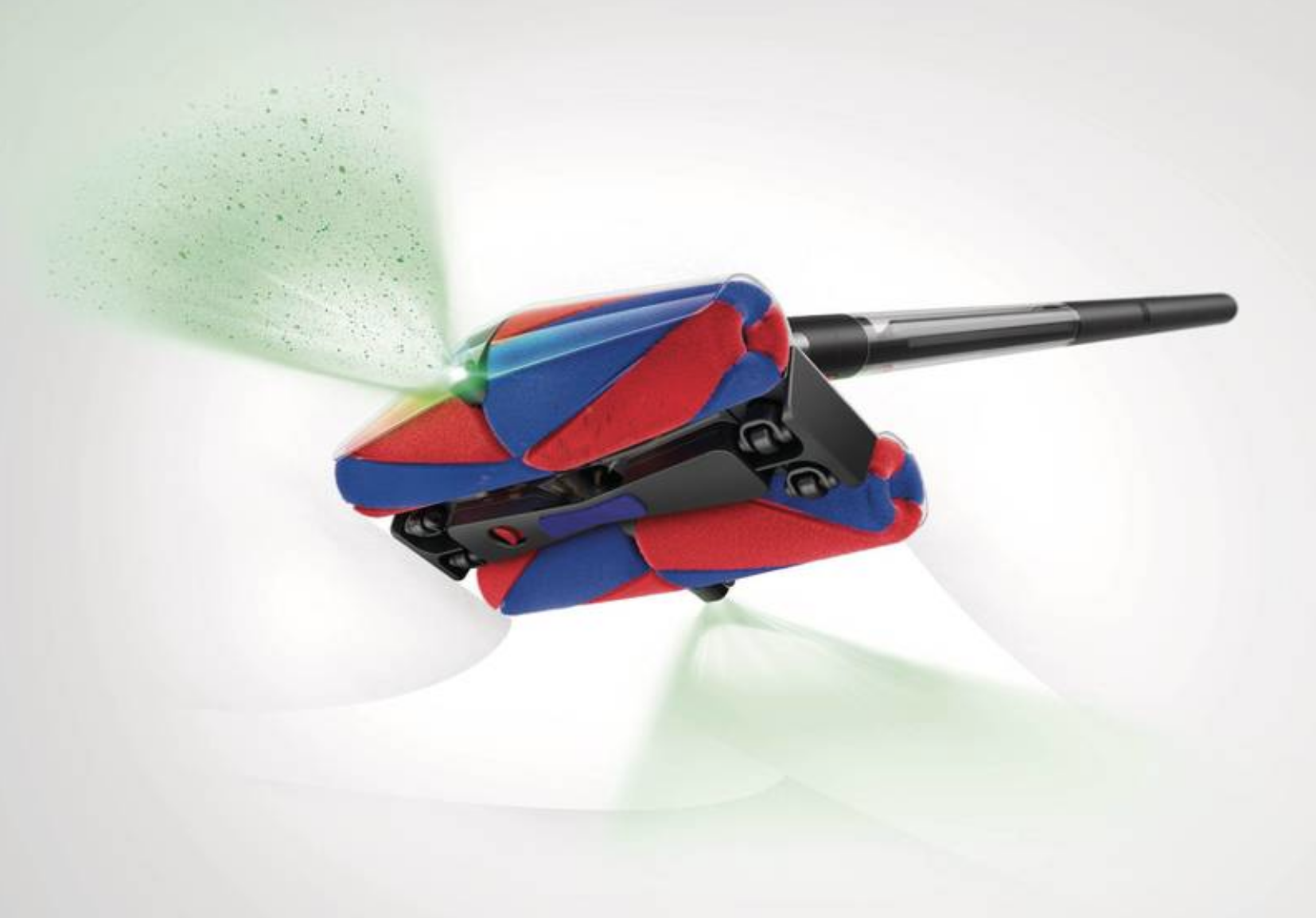
. This is a small motor that can actually rest in the shaft, so there's not a noticeable bulge where the components have been placed. This stick vacuum is actually, well, a stick. Just take a look at it.

A vacuum being emptied.
Dyson

It does come with attachments that increase the size a bit. For instance, the conical brush bar cleaner head makes it resemble a traditional stick vacuum. However, everything else is in the long cylinder. This includes the bin, filter and motor.

Other attachments include something called the "Fluffycones" cleaner head. This has four cones in two brush bars that rotate in opposite directions to "strip and eject even long hair, preventing hair tangling around the brush bar." There are also lights at both ends to help illuminate any lingering dust particles.

A cleaning head.
A cleaning head.
Dyson

It weighs nearly four pounds and features the same diameter throughout. This makes it easy to grip anywhere along the body, which can help with overhead cleaning. It ships with a swappable battery pack that lasts for around an hour and there's a magnetic charging dock to get things juiced up.

The vacuum works with the MyDyson app, which lets users check on battery life and adjust settings. Some of this information is also displayed on the LCD screen at the top of the handle.

We got a chance to try it out last year and came away impressed. The motor is plenty powerful, despite the diminished size, and the device was easy to maneuver. If you have $600 to spare and a dirty home, this could be a good purchase.

This article originally appeared on Engadget at https://www.engadget.com/home/the-dyson-pencilvac-is-finally-available-and-costs-600-160059016.html?src=rss

Sony’s flagship WF-1000XM6 earbuds have been leaked on a retail site

Sony's long-anticipated flagship WF-1000XM6 earbuds have leaked online, according to a report by The Walkman Blog and posts on Reddit. The retailer Power Buy posted a listing for the earbuds, complete with multiple photos and some specs.

Let's get to the specs. We don't know a lot, but the listing does suggest the earbuds will boast an IPX4 water-resistance rating and ANC/transparency modes. None of this is all that surprising, though we don't have any details regarding the audio drivers or anything like that.

Earbuds and a case.
The Walkman Blog / Power Buy / Sony

We do know what they look like, assuming the listing is accurate. There are two colorways, black and white, with a pill-shaped design that differs from the previous iterations. The case looks like a standard earbud case.

One interesting design aspect is that the eartips are slightly bigger than with previous models. This could indicate a larger air channel, which would translate to an increased bass response. Earbuds tend to struggle with bass, so this could be a nifty little upgrade.

However, that's conjecture and we won't know more until Sony does its own official drop. It's been well over two years since the company released the WF-1000XM5 earbuds, so the refresh is long overdue.

This article originally appeared on Engadget at https://www.engadget.com/audio/headphones/sonys-flagship-wf-1000xm6-earbuds-have-been-leaked-on-a-retail-site-194146960.html?src=rss

ASUS ROG made a gaming headset for audiophile nerds

ASUS ROG just announced the Kithara gaming headset, which is a device intended to bring "audiophile-grade sound" to gaming. It was developed in conjunction with manufacturer HiFiMan, a company that specializes in high-end audio devices.

The Kithara is the company's first open-back planar magnetic gaming headset. ROG says it was designed to please gamers who "demand absolute clarity, precision and realism." The headphones feature 100mm planar magnetic drivers that have been "tuned specifically for gaming."

The company says this results in a wide frequency response, low distortion and a "level of detail that reveals subtle positional cues such as footsteps, reloads and distance movement." ROG boasts that these audio cues remain distinct even during moments of chaotic gameplay, potentially making the headphones a great choice for competitive gamers.

The open-back design allows for clear separation across bass, mids and treble, which should also make the headphones great for listening to music. It features a full-band boom microphone with a high signal-to-noise ratio. There are separate signal paths for audio and microphone inputs, which significantly reduces crosstalk.

The stuff that comes in the box.
ASUS ROG

The headphones have been built for maximum versatility, so there's a balanced headphone cable with swappable plugs. They support various connection types, including 3.5mm, 4.4mm and 6.3mm. They also ship with a USB-C to dual 3.5mm adapter.

These are gaming headphones, so comfort is also a priority. The metal frame features an adjustable fit and there's a multi-layer padded headband and two sets of interchangeable ear cushions. The ROG Kithara headphones are available now and cost $300.

This article originally appeared on Engadget at https://www.engadget.com/audio/headphones/asus-rog-made-a-gaming-headset-for-audiophile-nerds-184737555.html?src=rss

Grok, which maybe stopped undressing women without their consent, still undresses men

It looks like Grok is still being gross. Elon Musk says his chatbot stopped making sexualized images without a person's consent, but The Verge recently discovered this is not entirely true. It maybe (and I say maybe) stopped undressing women without their consent, but this doesn't seem to apply to men.

A reporter with the organization ran some tests with Grok and found that the bot "readily undresses men and is still churning out intimate images on demand." He confirmed this with images of himself, asking Grok to remove clothing from uploaded photos. It performed this task for free on the Grok app, via the chatbot interface on X and via the standalone website. The website didn't even require an account to digitally alter images.

The company recently said it has taken steps to "prevent the Grok account from allowing the editing of images of real people in revealing clothing such as bikinis." However, the reporter had no problem getting the chatbot to put him in "a variety of bikinis." It also generated images of the subject in fetish gear and in a "parade of provocative sexual positions." It even generated a "naked companion" for the reporter to, uh, interact with.

He suggested that Grok took the initiative to generate genitalia, which was not asked for and was visible through mesh underwear. The reporter said that "Grok rarely resisted" any prompts, though requests were sometimes censored with a blurred-out image.

This controversy started several weeks ago when it was discovered that Grok had generated millions of sexualized images over a period of 11 days. This includes many nonconsensual deepfakes of actual people and over 23,000 sexualized images of children. This led to investigations in both California and Europe. X was actually banned in both Indonesia and Malaysia, though the former has since lifted that ban.

X claimed it has "implemented technological measures" to stop this sort of thing, but these safeguards have proven to be flimsy. In other words, the adjustments do stop some of the more obvious ways to get Grok to create deepfakes, but there are still methods to get around this via creative prompting.

It's also worth noting that journalists asking for a comment on the matter get slapped with an autoreply that reads "legacy media lies." Going with the fake news thing in 2026? Yikes.

This article originally appeared on Engadget at https://www.engadget.com/ai/grok-which-maybe-stopped-undressing-women-without-their-consent-still-undresses-men-170750752.html?src=rss

Music publishers sue Anthropic for $3 billion over ‘flagrant piracy’

A group of music publishers led by Concord Music Group and Universal Music Group are suing Anthropic, according to a report by Reuters. The suit accuses the AI company of illegally downloading more than 20,000 copyrighted songs, including sheet music, lyrics and compositions.

These songs were then allegedly fed into the chatbot Claude for training purposes. There are some iconic tunes named by Universal in the suit, including tracks by The Rolling Stones, Neil Diamond and Elton John, among many others. Concord is an independent publisher that handles artists like Common, Killer Mike and Korn.

The publishers issued a statement saying that the damages could amount to more than $3 billion. This would make it one of the largest non-class action copyright cases in US history.

"While Anthropic misleadingly claims to be an AI 'safety and research' company, its record of illegal torrenting of copyrighted works makes clear that its multibillion-dollar business empire has in fact been built on piracy," the lawsuit says.

The suit was filed by the same legal team as last year's Bartz v. Anthropic case. The music publishers say they found that Anthropic had been illegally downloading thousands of songs during the discovery process of that suit.

For the unfamiliar, the Bartz v. Anthropic case ended with an award of $1.5 billion to impacted writers after it was found that the company had illegally downloaded their published works for similar training purposes. The terms of that agreement dictated that the 500,000 authors involved in the case would get $3,000 per work. The $1.5 billion looks like a big number, but not so much when broken down like that. Also, Anthropic is worth around $350 billion.

In the Bartz case, Judge William Alsup ruled that it was legal for Anthropic to train its models on copyrighted content but not legal to acquire that content via piracy. We'll have to wait and see how this new suit shakes out. The legal precedent here seems to suggest that if Anthropic would have just spent a buck on each copyrighted song, then they'd be in the clear. That's an odd distinction when it comes to building an entire company around snatching up copyrighted content, but whatever.

This article originally appeared on Engadget at https://www.engadget.com/ai/music-publishers-sue-anthropic-for-3-billion-over-flagrant-piracy-185459358.html?src=rss

DJI launches the lightweight RS 5 camera gimbal for video creators

DJI just revealed the RS 5 camera gimbal, a new entry in its long-standing Ronan Series. The RS 5 is lightweight, at around three pounds, with a maximum payload of nearly seven pounds.

This gimbal offers what DJI calls "enhanced intelligent subject tracking." The tracking was already impressive with some of the company's older offerings, so any improvement will be icing on the cake. A new tracking module lets videographers frame live footage and follow subjects directly from an included touchscreen, all without having to fiddle with the actual camera.

A gimbal.
DJI

The tracking module also offers the ability to follow more than people. It can track pets, vehicles or just about any other object. It can also help maintain a locked focus on a human subject up to 10 meters away.

The RS 5 includes the company's latest stabilization algorithm, which DJI says lets videographers "effortlessly achieve complicated camera movements, such as surround shots, reverse tracking or single-person fixed-camera tracking." It's also great for when the cameraperson is capturing footage while walking or running.

It's been designed to carry a wide range of mainstream mirrorless cameras and lens combinations and can switch to vertical shooting without additional accessories. There's a nifty little briefcase handle for capturing footage from above or below.

The RS 5 delivers up to 14 hours of use per charge and can be fully charged in just an hour. Video shoots can take forever, so this is a welcome bit of news. For true marathons, there's a separate enhanced battery grip accessory that extends the runtime to 30 hours.

Two cars and a gimbal.
DJI

The standard DJI RS 5 includes the gimbal, a quick-open tripod, quick-release plates, a regular battery grip and some other useful accessories. That pack costs around $680. The combo pack includes all of the above, plus the enhanced tracking module, a carrying case and an electronic briefcase handle. That costs around $859.

Now for the bad news. We don't have a US release date or even any information as to if it will be available here. Engadget has reached out to DJI for more information. The company's drones were recently banned from being imported to the US. This only impacts newly-released models and shouldn't impact gimbals or anything like that.

This article originally appeared on Engadget at https://www.engadget.com/cameras/dji-launches-the-lightweight-rs-5-camera-gimbal-for-video-creators-120056173.html?src=rss

Native Instruments enters into insolvency proceedings, leaving its future uncertain

Music hardware and software manufacturer Native Instruments has entered into preliminary insolvency proceedings, according to a report by Create Digital Music. This is the company behind iconic software like Massive, Traktor and Kontakt and hardware like Maschine+. Native Instruments also owns the brands iZotope, Brainworx and Plugin Alliance.

We don't have many specifics as to what this entails and what the future of the company will look like. We do know that an administrator has been appointed to handle restructuring and, potentially, to sell off existing assets. Native Instruments employs hundreds of people and their fates also remain uncertain.

A private equity firm called Francisco Partners owns a majority stake in the company. It also owns majority stakes in entities like GoodRX and Verifone, among others. This isn't the first time Native Instruments has been forced into major restructuring. The company experienced plenty of layoffs and uncertainty between 2019 and 2020 before being purchased by private equity.

Again, we have no idea how this will shake out. It's possible that new investors will jump on board and it goes back to business as usual. It's also possible everything will be scrapped for parts and sold to the highest bidder.

We do know that subsidiary Plugin Alliance seems to be unaffected. It issued a statement on Facebook saying that it isn't involved with the proceedings and that operations will continue as normal. This means new plugins will be released, along with updates for current software.

Everything else is still up in the air. This is troubling for those who have heavily invested in the company's ecosystem of products. I'm one of them. Any hope I had for a hardware refresh of the Maschine+ just went out the window.

If the company's robust line of software goes up for sale, Akai is likely the best bet. It has already begun incorporating Native Instruments software into MPC machines.

This article originally appeared on Engadget at https://www.engadget.com/audio/native-instruments-enters-into-insolvency-proceedings-leaving-its-future-uncertain-183206826.html?src=rss