Goudveer F1 manual and electric portable coffee grinder offers 100 levels of adjustment

Goudveer F1 coffee grinder

Coffee connoisseurs looking for a combination coffee grinder, the Goudveer F1 Coffee Grinder is a companion that understands the art of coffee making. Whether you’re cozy in your kitchen or exploring the great outdoors, this grinder is designed to bring out the best in your beans, ensuring that every sip is a testament to your […]

The post Goudveer F1 manual and electric portable coffee grinder offers 100 levels of adjustment appeared first on Geeky Gadgets.

Smarter public transit comes at the cost of rider anonymity

Security experts were skeptical about the New York MTA’s switch to an OMNY tap-and-go system when it was first announced years ago. Then, in August, a 404 Media investigation revealed riders were right to be concerned. As it turned out, the ability to check trip history could be used by nearly anyone to follow specific riders' location patterns. MTA disabled the feature, but it pointed to a deeper problem that exists across modern public transit systems: they make it harder to opt out of having our sensitive data collected,

“You're building a better system, but you're also really stepping into a dangerous cybersecurity minefield,” said Brendan Saltaformaggio, associate professor specializing in cybersecurity at the Georgia Institute of Technology.

Payment information, location data and trip patterns can all be attached to our ridership data. Agencies say they use it to better understand how riders use the services and make improvements. But the flip side is transit agencies selling user data to advertisers like a lot of private companies do, or sharing it with law enforcement. We submitted Freedom of Information Act requests to several large police departments across the country — including in New York City, Baltimore and Chicago — for more information on requests they had made to local transit agencies for data over the past decade.

But even if the data just sits there, it’s increasingly vulnerable to a breach without secure infrastructure in place to protect it. Most ransomware gangs are motivated by money. So while your data could be at risk, the hackers are actually looking to threaten the public transit agencies into paying up to avoid a data leak or being locked out of their systems. It happened to the Washington Metropolitan Area Transit Authority in Washington, DC earlier this year, and in March a ransomware attack disrupted the Washington state bus system. That said, personal data can still be compromised in the process. Hackers leaked personal data after accessing San Francisco’s Bay Area Rapid Transit at the beginning of this year.

“These are organizations that run on shoestring budgets, usually heavily supported by taxpayers, who are probably not going to be very excited to see all of this money being spent purely on cybersecurity with hopes of not having an incident in mind,” Saltaformaggio said.

What exactly each agency does to protect your sensitive information varies widely. The Federal Transit Administration and the American Public Transportation Association both provide guidelines for agencies on how to handle the matter. But experts warn that agencies across the country are still vulnerable to attack, and struggle to keep the data they have access to secure.

Digitizing public transit payments makes sense. But while the public is leaning into going cashless, paper money will always be here to stay. “If an agency tried to get rid of cash payments, they might face some serious backlash because a significant portion of people still use cash to ride transit,” said Joshua Schank, managing principal at transportation and financial advisory firm InfraStrategies. Still, options to pay via an RFID-powered card, an app or even a digital wallet all became popular ways to pay — especially because adoption of these newer methods often comes with perks like allowing riders free transfers between stations or services. Some credit card companies even offer incentives like discounts on rides by partnering with the transit agencies on non-cash payment options.

Using exact cash to ride public transit is still possible in many places, but it means you lose out on the aforementioned perks. There are options to purchase a card with cash and still get those perks, but it's often much less convenient. To get a ConnectCard in Pittsburgh, I have to go to a third-party location in my neighborhood, buy a card for $1 and have cash out to reload it at that third-party location whenever it's empty. It costs $2.75 to ride the bus, so that card fare only adds up to about one-third of a ride.In New York, a physical OMNY card costs $5, or one ride on the subway plus most of your next trip. (It’s worth noting that OMNY currently has a deal selling cards for $1 at all OMNY vending machines, but that’s for a limited time only.)

Agencies stack on burdens for the consumer, incentivizing them to switch to data-collecting apps and RFID smart cards, almost punishing people trying to stick to cash — either because they value their privacy, or because they're among those without consistent access to banking. It shouldn't have to be more annoying, more expensive, or both just to maintain some anonymity while commuting to work.

There’s not much you can do about it, either. Like most data privacy issues, experts say we need federal regulation to put guidelines in place around how public transit agencies collect and use our data. Until then, it’s just another way we’re stuck exchanging our personal information for marginal convenience gains.

This article originally appeared on Engadget at https://www.engadget.com/smarter-public-transit-comes-at-the-cost-of-rider-anonymity-143054155.html?src=rss

New MediaTek Dimensity 8300 mobile processor unveiled

MediaTek Dimensity 8300

MediaTek has launched its latest mobile processor, the new MediaTek Dimensity 8300 which gets a range of upgrades over the previous generation processor. The new processor comes with a 20% faster CPU and it offers 30% peak gains in power efficiency. According to the press release, the new Dimensity 8300 offers 60% greater performance and […]

The post New MediaTek Dimensity 8300 mobile processor unveiled appeared first on Geeky Gadgets.

Space-saving perching seat encourages you to linger but not stay for long

We all need to catch our breaths sometimes, whether to pause after a long walk or to give our arms a rest after carrying a lot of stuff. Sometimes, we might also want to sit a bit while waiting for someone or for some event but the area doesn’t have chairs or even enough space for such furniture. In these scenarios, sitting down might bring a bit of relief, but getting back up again can turn out to be more trouble than it’s worth. The ideal solution would be something that lets you rest your body just a little bit without actually going into a deeper resting state, something that perching seats are made for. This particular design, however, takes that idea even further by offering the bare minimum in style and comfort without taking up too much space and effort to use.

Designer: Addi

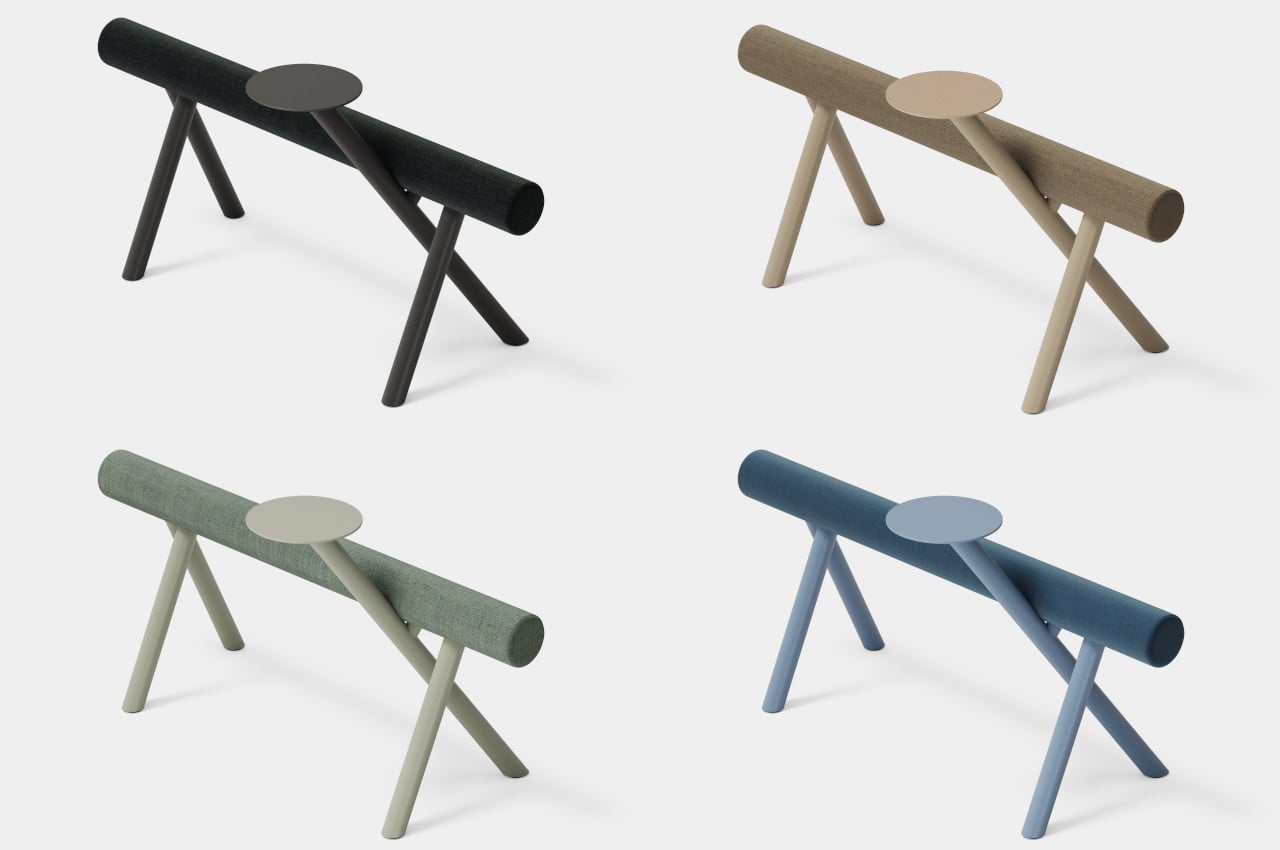
Chairs are designed to provide stability and comfort, taking you into their embrace so that you might not even want to get up anymore. That’s great if you’re at home or in a lounge and have plenty of time to really relax, not so much if you’re waiting for an appointment or taking a brief reprieve from a meeting. This specific need calls for a seat that encourages both rest and movement at the same time, a dichotomy that Lumber fully embraces in its similarly contrasting design elements, like a fallen tree trunk in a forest that you briefly sit on before the next leg of your journey.

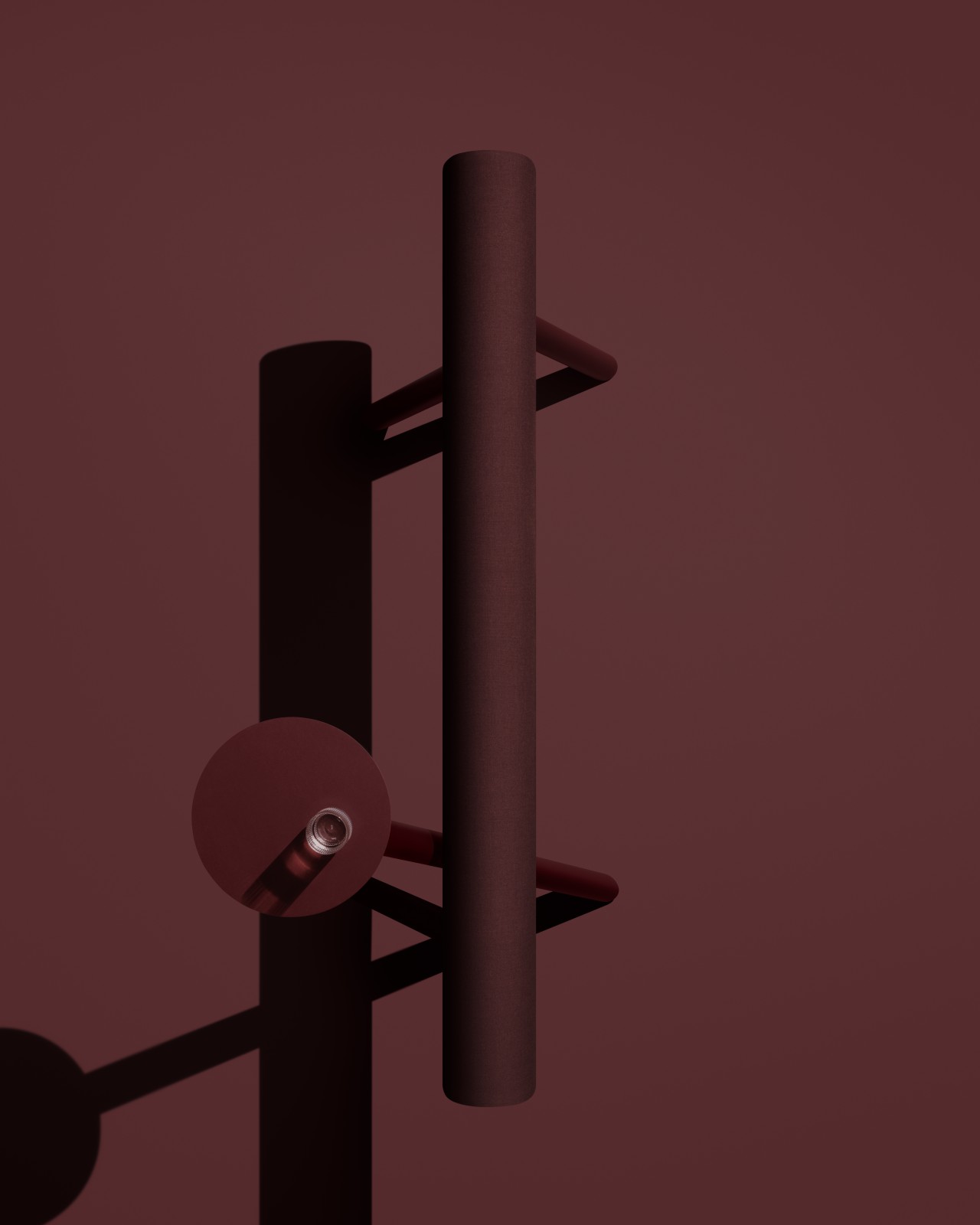
At first glance, you might not even think that Lumber would be something you should sit on, much less comfortable to use. It is, however, truly designed for comfort and convenience, especially with its flame-proof wool upholstery that can be easily removed for cleaning, replacing, or exchanging. Each Lumber perching seat is color-matched, with powder-coated metal legs in deep burgundy, latte, forest green, dusty blue, and black. A side table rises from one leg on one side, a place for your stuff, vases, drinkware, and more.

Despite its comfortable materials and stable structure, Lumber’s form suggests movement and activity. That’s no surprise, really, considering its design is inspired by a woodworker’s sawhorse, which is also the reason behind its name. Just like that piece of work furniture, Lumber is pretty barebones, which makes it take up less space. You can try fitting quite a number of these in a room and still have plenty of space to move around. Or you can opt for the Lumber Wall design that can be mounted on a wall to free up even more floor space.

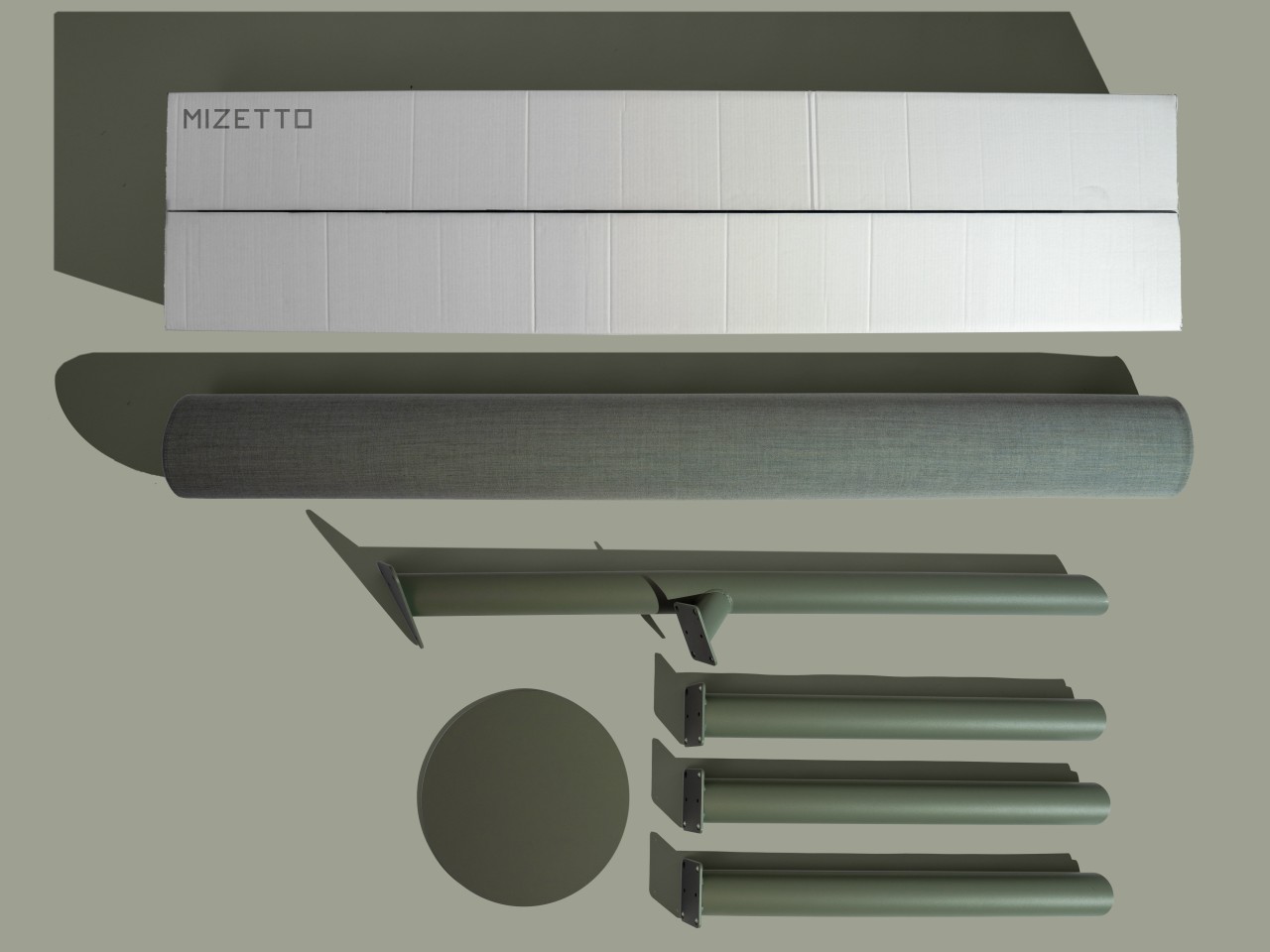
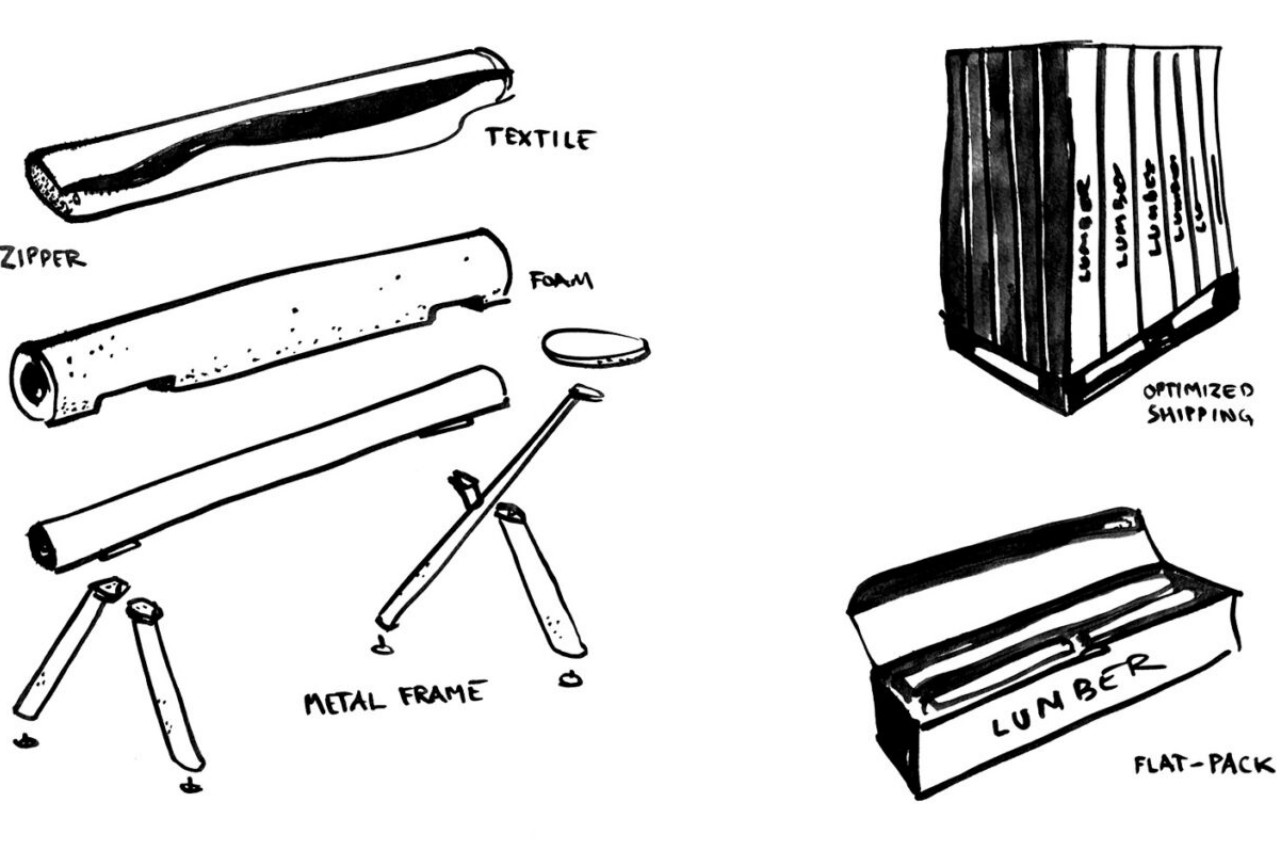
Lumber was designed for lingering and loitering, encouraging you to sit for a while without committing to resting completely. It also makes for an interesting artsy piece that inspires both conversation as well as playful interactions. All these while minimizing not just its physical footprint but also material and packaging, thanks to a design that is inherently both restful yet also dynamic, embracing a spirit of journey even in its manufacturing and product lifecycle.

The post Space-saving perching seat encourages you to linger but not stay for long first appeared on Yanko Design.

OpenRock S open-ear wireless sports earbuds

OpenRock S open-ear sport earbuds

OpenRock S open-ear sport earbuds are designed to be the ultimate workout partner, delivering an audio experience that keeps pace with your active lifestyle. OpenRock has meticulously engineered these earbuds to provide not only exceptional sound quality but also the comfort and durability you need to stay focused on your fitness goals. At the core […]

The post OpenRock S open-ear wireless sports earbuds appeared first on Geeky Gadgets.

Chase Bliss and Goodhertz’s Lossy is a pedal that makes your guitar sound like a crappy MP3

If you've read any of my music gear reviews on Engadget, then you probably know that I love all things broken and lo-fi sounding. And you might also know that Chase Bliss is one of the best out there when it comes to making your instruments sound like they're coughing up digital dust after crawling out of a decades long hibernation. The company's latest pedal, Lossy, is a collaboration with Goodhertz, a top notch plugin maker that has an incredible lo-fi pedigree all its own. In fact, it's based on the company's VST effect of the same name

Lossy takes whatever you feed it, and makes it sound like a crappy MP3 from the late '90s. It's a realtime digital degradation machine that introduces artifacts, resonance and crunch that will bring back warm memories (or chilly nightmares) of waiting hours for a single bootleg to finish downloading from Napster. 

The heart of the pedal is the Loss control which has three different modes and determines the overall character of the sound. It can deliver the familiar sound of a low bit-rate MP3 (Standard), play only those frequencies stripped out by compression for an especially tinny tone (Inverse), or spit out washes of out of unsteady glitches (Phase Jitter). 

Of course, there's lots of variety within those three modes depending on how high you have the Loss and Global knobs turned. While Loss determines the total amount of the effect, Global is a macro that sets the intensity of the effect. These two things combined shape the core sound, but the Packets switch is also vitally important. When off you just get the core Lossy sound, but you can turn on Packet Loss for dropouts reminiscent of a bad cellular connection, or switch it to Packet Repeat which fills those spaces with frozen audio for something more akin to a skipping CD. The Speed knob determines how often the effect interrupts your playing.

There's also a dedicated Freeze function, which is unlike any other I've seen on a pedal before. Rather than simply grabbing the last fraction of a second of audio and repeating it ad nauseam, it actually evolves over time. It stretches out notes, changing as you play to create ambient pads, drones and shifting soundscapes. 

Rounding out Lossy is a filter and reverb section to help glue everything together. Plus there is a hidden limiter and auto gain function that brings all the nuances your playing to the fore and ensures the tiny details of the Loss effect aren't, well, lost.

Last year Chase Bliss shifted to a direct to consumer model so, the only place you can pickup a Lossy is straight from the company's website. It's available now, however, for $399 and buying a pedal gets you 50-percent off the Goodhertz Lossy plugin that inspired it, which is normally $79.

This article originally appeared on Engadget at https://www.engadget.com/chase-bliss-and-goodhertzs-lossy-is-a-pedal-that-makes-your-guitar-sound-like-a-crappy-mp3-141611147.html?src=rss

ZimaCube personal NAS cloud storage offers up to 164TB and Thunderbolt 4

ZimaCube personal cloud storage

ZimaCube has been specifically designed to provide users with a personal NAS cloud storage solution where your digital life—photos, videos, important documents, and more—is stored securely in one place, accessible from anywhere, and protected against the unexpected. Welcome to the world of ZimaCube, a robust personal cloud storage solution designed to keep your data safe, […]

The post ZimaCube personal NAS cloud storage offers up to 164TB and Thunderbolt 4 appeared first on Geeky Gadgets.

How to Personalize Communication with ChatGPT: Tailoring AI Responses to Specific Needs and Preferences

personalize ChatGPT

This guide is designed to show you how to personalize communication with ChatGPT. In the realm of artificial intelligence, ChatGPT stands out as a groundbreaking conversational AI model, capable of engaging in open-ended, informative, and comprehensive dialogues. Its ability to generate human-quality text and adapt to diverse conversational styles has opened up a plethora of […]

The post How to Personalize Communication with ChatGPT: Tailoring AI Responses to Specific Needs and Preferences appeared first on Geeky Gadgets.

Posted in Uncategorized | Tagged

The best outdoor gifts for 2023

The great outdoors can be enjoyed all year round, so we’ve compiled a list of the best gifts for the backyard lounger, patio napper or woodland hiker on your list this holiday season. We even offer help with items to improve your tailgate or next beach trip. With everything from grilling gadgets to drinkware and hammocks to splash-proof speakers, there’s something for everyone – no matter how long or how often they venture outside. What’s more, you don’t have to break the bank.

BrüMate Hopsulator Trio

Ultimate Ears Wonderboom 3

Stanley IceFlow Straw Tumbler

Thermacell EL55

Solo Stove Ranger 2.0

Meater+ thermometer

ThermoWorks Thermapen One

MiiR Aero Flask

Wise Owl Outfitters Hammock

RTIC Soft Pack Cooler

Solo Stove Pi Prime

Traeger Flat Top Grill Essentials

Shibumi Shade

This article originally appeared on Engadget at https://www.engadget.com/best-outdoor-gifts-140004525.html?src=rss

How to use DallE 3 to create seamless patterns

generating seamless patterns with DallE 3

Over the past 12 months the world of digital art creation has exploded. One recent AI tool that has been making waves in this field is DallE 3 launched by OpenAI. But is it capable of creating seamless patterns like other AI art generator such as Stable Diffusion and Midjourney. This guide takes a deep […]

The post How to use DallE 3 to create seamless patterns appeared first on Geeky Gadgets.