Step up your smartphone game with the Galaxy A35 5G! Stunning display, powerful camera, and top-notch security make it a must-have for tech enthusiasts.
The post Get Ready for Next-Gen Fun: Galaxy A35 5G Unveiled! first appeared on Trendy Gadget.
Step up your smartphone game with the Galaxy A35 5G! Stunning display, powerful camera, and top-notch security make it a must-have for tech enthusiasts.
The post Get Ready for Next-Gen Fun: Galaxy A35 5G Unveiled! first appeared on Trendy Gadget.
Starbucks is pulling the plug on Odyssey, its Web3 rewards program that gave members access to collectible NFTs. The company updated its FAQ on Friday to let members know that the beta program is closing on March 31, and they have a little over a week left to complete any remaining activities (called journeys). Those will shut down March 25. Users won’t lose their Stamps (Starbucks’ NFTs), which are hosted on Nifty Gateway, but they’ll have to sign up for Nifty using their Starbucks Rewards email to access them there, if they haven’t already.
Starbucks was late to the NFT game with Odyssey, which launched in beta in late 2022 — well after interest in the digital collectibles peaked. Unlike some other NFT ventures from major brands, though, it seemed to be aiming for more than a quick cash grab. It gamified the rewards system, offering activities and coffee-related mini-games that encouraged members’ ongoing participation.
In a conversation with TechCrunch published just last month, Odyssey community lead Steve Kaczynski emphasized the community element, saying, “I’ve seen that people who live in California in the Starbucks Odyssey community are really good friends with people in Chicago and they have met up in real life at times. This never would have happened if not for Web3.” But it’s 2024, and brands and consumers alike have long since moved on from NFTs. (Naturally, Forum3, which worked with Starbucks on Odyssey, seems to have pivoted to AI).
Starbucks says the Odyssey marketplace, where members could buy and sell their stamps, will move over to the Nifty marketplace. They can also withdraw their Stamps to trade them on other platforms.
This article originally appeared on Engadget at https://www.engadget.com/it-took-starbucks-a-little-too-long-to-realize-coffee-nfts-arent-it-170132305.html?src=rssStarbucks is pulling the plug on Odyssey, its Web3 rewards program that gave members access to collectible NFTs. The company updated its FAQ on Friday to let members know that the beta program is closing on March 31, and they have a little over a week left to complete any remaining activities (called journeys). Those will shut down March 25. Users won’t lose their Stamps (Starbucks’ NFTs), which are hosted on Nifty Gateway, but they’ll have to sign up for Nifty using their Starbucks Rewards email to access them there, if they haven’t already.
Starbucks was late to the NFT game with Odyssey, which launched in beta in late 2022 — well after interest in the digital collectibles peaked. Unlike some other NFT ventures from major brands, though, it seemed to be aiming for more than a quick cash grab. It gamified the rewards system, offering activities and coffee-related mini-games that encouraged members’ ongoing participation.
In a conversation with TechCrunch published just last month, Odyssey community lead Steve Kaczynski emphasized the community element, saying, “I’ve seen that people who live in California in the Starbucks Odyssey community are really good friends with people in Chicago and they have met up in real life at times. This never would have happened if not for Web3.” But it’s 2024, and brands and consumers alike have long since moved on from NFTs. (Naturally, Forum3, which worked with Starbucks on Odyssey, seems to have pivoted to AI).
Starbucks says the Odyssey marketplace, where members could buy and sell their stamps, will move over to the Nifty marketplace. They can also withdraw their Stamps to trade them on other platforms.
This article originally appeared on Engadget at https://www.engadget.com/it-took-starbucks-a-little-too-long-to-realize-coffee-nfts-arent-it-170132305.html?src=rssSay hello to the Galaxy A55 5G! Packed with epic camera upgrades, stunning display, and top-notch security features. It's your ultimate mobile companion!
The post Galaxy A55 5G: A Closer Look at Samsung’s Latest Innovation first appeared on Trendy Gadget.

Amidst growing anticipation and excitement, technology enthusiasts and Apple aficionados are on the edge of their seats, eagerly awaiting the unveiling of iOS 18. This highly anticipated release is rumored to make its first appearance around the time of WWDC 2024. Fueling the fire of speculation, a recent exposé from iDeviceHelp has illuminated what are […]
The post Apple’s iOS 18 New Features Leaked appeared first on Geeky Gadgets.
A budding startup called Interlune is trying to become the first private company to mine the moon’s natural resources and sell them back on Earth. Interlune will initially focus on helium-3 — a helium isotope created by the sun through the process of fusion — which is abundant on the moon. In an interview with Ars Technica, Rob Meyerson, one of Interlune’s founders and former Blue Origin president, said the company hopes to fly its harvester with one of the upcoming commercial moon missions backed by NASA. The plan is to have a pilot plant on the moon by 2028 and begin operations by 2030, Meyerson said.
Interlune announced this week that it’s raised $18 million in funding, including $15 million in its most recent round led by Seven Seven Six, the venture firm started by Reddit co-founder Alexis Ohanian. The resource it’s targeting, helium-3, could be used on Earth for applications like quantum computing, medical imaging and, perhaps some day down the line, as fuel for fusion reactors. Helium-3 is carried to the moon by solar winds and is thought to remain on the surface trapped in the soil, whereas when it reaches Earth, it’s blocked by the magnetosphere.
Interlune aims to excavate huge amounts of the lunar soil (or regolith), process it and extract the helium-3 gas, which it would then ship back to Earth. Alongside its proprietary lunar harvester, Interlune is planning a robotic lander mission to assess the concentration of helium-3 at the selected location on the surface.
“For the first time in history,” Meyerson said in a statement, “harvesting natural resources from the Moon is technologically and economically feasible.” The founding team includes Meyerson and former Blue Origin Chief Architect Gary Lai, Apollo 17 astronaut Harrison H. Schmitt, former Rocket Lab exec Indra Hornsby and James Antifaev, who worked for Alphabet’s high-altitude balloon project, Loon.
This article originally appeared on Engadget at https://www.engadget.com/moon-mining-startup-interlune-wants-to-start-digging-for-helium-3-by-2030-152216803.html?src=rssA budding startup called Interlune is trying to become the first private company to mine the moon’s natural resources and sell them back on Earth. Interlune will initially focus on helium-3 — a helium isotope created by the sun through the process of fusion — which is abundant on the moon. In an interview with Ars Technica, Rob Meyerson, one of Interlune’s founders and former Blue Origin president, said the company hopes to fly its harvester with one of the upcoming commercial moon missions backed by NASA. The plan is to have a pilot plant on the moon by 2028 and begin operations by 2030, Meyerson said.
Interlune announced this week that it’s raised $18 million in funding, including $15 million in its most recent round led by Seven Seven Six, the venture firm started by Reddit co-founder Alexis Ohanian. The resource it’s targeting, helium-3, could be used on Earth for applications like quantum computing, medical imaging and, perhaps some day down the line, as fuel for fusion reactors. Helium-3 is carried to the moon by solar winds and is thought to remain on the surface trapped in the soil, whereas when it reaches Earth, it’s blocked by the magnetosphere.
Interlune aims to excavate huge amounts of the lunar soil (or regolith), process it and extract the helium-3 gas, which it would then ship back to Earth. Alongside its proprietary lunar harvester, Interlune is planning a robotic lander mission to assess the concentration of helium-3 at the selected location on the surface.
“For the first time in history,” Meyerson said in a statement, “harvesting natural resources from the Moon is technologically and economically feasible.” The founding team includes Meyerson and former Blue Origin Chief Architect Gary Lai, Apollo 17 astronaut Harrison H. Schmitt, former Rocket Lab exec Indra Hornsby and James Antifaev, who worked for Alphabet’s high-altitude balloon project, Loon.
This article originally appeared on Engadget at https://www.engadget.com/moon-mining-startup-interlune-wants-to-start-digging-for-helium-3-by-2030-152216803.html?src=rssThe biggest story this week was TikTok and the US government going at it again, with the house voting in favor of a bill that could force TikTok's parent company to sell to a US owner or face getting banned outright. Don't worry, though; your elected officials didn't waste the chance to embarrass themselves, as usual. Meanwhile, Mike Tyson comes out of retirement to box for Netflix. He'll face-off against Jake Paul, which I feel is best represented by this Punch-Out! tweet.
✅🕣⛔️ House passes bill that could ban TikTok
🥊🥊😵 The real fight isn't Tyson vs. Paul — it's Netflix vs. its livestreaming infrastructure
📹🏨 Airbnb to hosts: please stop filming the guests
To celebrate this website's 20th anniversary, we're looking back at the products and services that have changed the industry since Engadget's inception on March 2, 2004. I've also been here for over half of its existence. Horrifying. I'd share my not-great first hands-on video for the site, but the footage only lives on through Russian content scrapers. What a shame.
All of the stories live here, but I suggest starting with our stories on how streaming video changed the internet and the game-changer that was (and is) Bluetooth audio.
This article originally appeared on Engadget at https://www.engadget.com/the-morning-after-tiktok-bans-and-airbnb-cams-150046760.html?src=rssThe biggest story this week was TikTok and the US government going at it again, with the house voting in favor of a bill that could force TikTok's parent company to sell to a US owner or face getting banned outright. Don't worry, though; your elected officials didn't waste the chance to embarrass themselves, as usual. Meanwhile, Mike Tyson comes out of retirement to box for Netflix. He'll face-off against Jake Paul, which I feel is best represented by this Punch-Out! tweet.
✅🕣⛔️ House passes bill that could ban TikTok
🥊🥊😵 The real fight isn't Tyson vs. Paul — it's Netflix vs. its livestreaming infrastructure
📹🏨 Airbnb to hosts: please stop filming the guests
To celebrate this website's 20th anniversary, we're looking back at the products and services that have changed the industry since Engadget's inception on March 2, 2004. I've also been here for over half of its existence. Horrifying. I'd share my not-great first hands-on video for the site, but the footage only lives on through Russian content scrapers. What a shame.
All of the stories live here, but I suggest starting with our stories on how streaming video changed the internet and the game-changer that was (and is) Bluetooth audio.
This article originally appeared on Engadget at https://www.engadget.com/the-morning-after-tiktok-bans-and-airbnb-cams-150046760.html?src=rss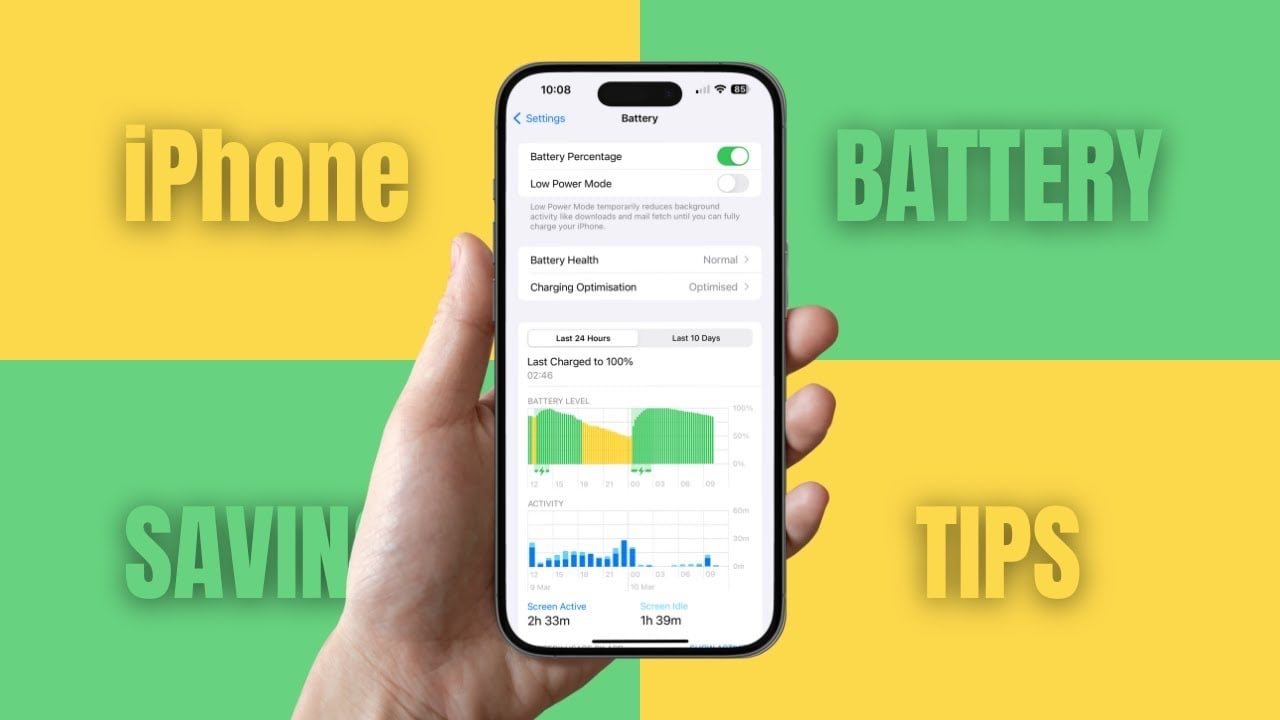
Maximizing your iPhone’s battery life is an art, especially for those wielding the powerful iPhone 15 Pro Max. With advances in technology, our smartphones are increasingly integral to our daily routines, yet their battery life remains a finite resource we all wrestle with. Fortunately, there are ways to extend your iPhone’s stamina, ensuring it keeps […]
The post Amazing iPhone Battery Saving Tips appeared first on Geeky Gadgets.