Ahead of its acquisition by Paramount Skydance, Warner Bros. dominated the 2026 Oscars with 11 wins primarily for Ryan Coogler's Sinners and Paul Thomas Anderson's One Battle After Another. Netflix also put in a strong showing with seven Academy Awards, including two for KPop Demon Hunters and three for Guillermo Del Toro's Frankenstein.
All told, dedicated streaming services chalked up eight awards, but were shut out of the major prizes. Frankenstein took the trophies for for Best Production Design, Best Costume Design and Best Makeup and Hairstyling, while KPop Demon Hunters took Best Animated Feature and Best original Song. Netflix also took prizes for All The Empty Rooms (Best Documentary Short Film) and The Singers (Best Live Action Short Film). Apple TV garnered the other streaming service Oscar for F1 (Best Sound).
Warner Bros. dominated the more prestigious awards. The studio took its first Oscar for Best Picture (One Battle After Another) since Argo won in 2012, while also winning Anderson the prizes for Best Director and Best Adapted Screenplay, and giving Sean Penn the Best Supporting Actor Oscar. Sinners, meanwhile, won for Best Cinematography, giving Autumn Durald Arkapaw the first ever win for a woman and woman of color in that category. Michael B. Jordan took the Best Actor prize for that film, while Director Ryan Coogler won for Best Original Screenplay.
Other notable acting prizes were won by Jessie Buckley (Best Actress, Hamnet) and Amy Madigan (Best Support Actress, Weapons).
Host Conan O'Brien joked that it was the "first time in a theater" for Netflix CEO Ted Sarandos. It remains to be seen, however, whether Netflix losing out to Paramount Skydance on the Warner Bros. acquisition will be to the film industry's benefit or detriment. One clear loser of late is broadcast television as the 2026 Oscars will be the third-to-last aired by Walt Disney's ABC, with YouTube set to stream the ceremony exclusively starting in 2029.
This article originally appeared on Engadget at https://www.engadget.com/entertainment/warner-bros-dominates-oscars-with-11-wins-ahead-of-its-acquisition-by-paramount-093916527.html?src=rss
A month after Seedance 2.0's launch in China sparked cease-and-desist letters from Disneyand Paramount Skydance over its use of copyrighted materials, its developer ByteDance has reportedly hit pause on the release of the AI video tool in other regions. According to The Information, which spoke to two anonymous sources with knowledge of the matter, ByteDance has suspended Seedance 2.0's global rollout. Engadget has reached out to ByteDance for comment and will update this story if we hear back with more information.
Seedance 2.0 caught heat from Hollywood studios almost immediately upon its release, after user-generated videos including a viral AI clip of Brad Pitt fighting Tom Cruise sparked concerns that copyrighted works were used in training the model. In February, ByteDance told the BBC that it is "taking steps to strengthen current safeguards as we work to prevent the unauthorised use of intellectual property and likeness by users." It's unclear when exactly ByteDance planned to release the tool more widely.
This article originally appeared on Engadget at https://www.engadget.com/ai/bytedance-has-reportedly-suspended-the-global-rollout-of-its-new-ai-video-generator-212326112.html?src=rss
You're responsible for your own Spotify algorithm now. On stage at SXSW, Spotify's co-CEO, Gustav Söderström, announced the Taste Profile feature, which allows users to personally customize exactly what they want to listen to, whether it's music, audiobooks or podcasts. This AI-powered feature is still in beta, and it will be available to Premium users in New Zealand in the coming weeks.
From its short video demo, Spotify's Taste Profile feature will show you a summary of your listening habits and offer a "Tell us more" prompt at the bottom. With the new prompt, users can inform the AI what they want to see more of or if they want to get rid of a genre that keeps popping up in their algorithm. Spotify said that the Taste Profile will take into consideration more ambiguous prompts, too, like if you're training for a marathon and want upbeat music or want to listen to news podcasts during your commute to work. Spotify added that Taste Profile is an optional feature, and unwilling users can "leave it and enjoy Spotify as usual."
With Taste Profile, Spotify is continuing its momentum of offering AI features, like the Prompted Playlist feature that was made available last month. Unlike the existing AI Playlist feature, Prompted Playlist lets you put in specific requests to generate a playlist, like only including songs from a specific TV show. Like Taste Profile, the Prompted Playlist feature saw beta testing in New Zealand first, before expanding to US and Canadian users a month later.
This article originally appeared on Engadget at https://www.engadget.com/entertainment/music/spotifys-new-taste-profile-feature-lets-users-fine-tune-their-algorithms-recommendations-191104626.html?src=rss
You're responsible for your own Spotify algorithm now. On stage at SXSW, Spotify's co-CEO, Gustav Söderström, announced the Taste Profile feature, which allows users to personally customize exactly what they want to listen to, whether it's music, audiobooks or podcasts. This AI-powered feature is still in beta, and it will be available to Premium users in New Zealand in the coming weeks.
From its short video demo, Spotify's Taste Profile feature will show you a summary of your listening habits and offer a "Tell us more" prompt at the bottom. With the new prompt, users can inform the AI what they want to see more of or if they want to get rid of a genre that keeps popping up in their algorithm. Spotify said that the Taste Profile will take into consideration more ambiguous prompts, too, like if you're training for a marathon and want upbeat music or want to listen to news podcasts during your commute to work. Spotify added that Taste Profile is an optional feature, and unwilling users can "leave it and enjoy Spotify as usual."
With Taste Profile, Spotify is continuing its momentum of offering AI features, like the Prompted Playlist feature that was made available last month. Unlike the existing AI Playlist feature, Prompted Playlist lets you put in specific requests to generate a playlist, like only including songs from a specific TV show. Like Taste Profile, the Prompted Playlist feature saw beta testing in New Zealand first, before expanding to US and Canadian users a month later.
This article originally appeared on Engadget at https://www.engadget.com/entertainment/music/spotifys-new-taste-profile-feature-lets-users-fine-tune-their-algorithms-recommendations-191104626.html?src=rss
Many of us remember the halcyon days of being a kid in the ‘90s, spending a weekend afternoon with remote control in hand and a seemingly endless well of stuff to watch on TV. Now you can relive the experience thanks to the appropriately named Channel Surfer web app. It's essentially a YouTube discovery tool that surfaces interesting videos, but presented in a retro homage to the cable channel screen.
Channel Surfer is the work of developer Steven Irby. He has 40 channels on the app right now, mostly grouping content by theme. There are channels for typical cable fare like news and sports, but also music, movies and a number of more tailored tech subjects like AI, gaming, gadgets and space.
"I built Channel Surfer because I’m tired of the algorithms and indecision fatigue," he told TechCrunch, which is where we discovered the app. "I miss channel surfing and not having to decide what to watch. I want to just sit and tune into what’s on and not think about what to watch next."
It seems Irby isn't alone, because he posted on X that the number of views he's getting for Channel Surfer already broke 10,000 on its first day.
This article originally appeared on Engadget at https://www.engadget.com/entertainment/youtube/this-web-app-lets-you-channel-surf-youtube-like-a-90s-kid-watching-cable-220651107.html?src=rss
KPop Demon Hunters is getting a sequel, Netflix and Sony have announced. Sony Pictures Animation handed the rights to the film to Netflix in 2021 as part of a larger licensing deal, but neither company could have expected how much of a hit it would ultimately become. Besides being Netflix's "most-watched movie of all time,"KPop Demon Hunters is also nominated for Best Animated Feature and Best Original Song at the 98th Academy Awards, and stands a good chance of winning.
Maggie Kang and Chris Appelhans, the directors of the first film, are returning to direct the sequel. The project will be the first in the duo's new "exclusive multiyear writing and directing partnership" with Netflix, which is focused on animation. "I feel immense pride as a Korean filmmaker that the audience wants more from this Korean story and our Korean characters," Kang said in a statement. "There's so much more to this world we have built, and I'm excited to show you. This is only the beginning."
IT'S OFFICIAL HUNTERS 💫 KPOP DEMON HUNTERS will return for a sequel written and directed by Maggie Kang and Chris Appelhans.
“I feel immense pride as a Korean filmmaker that the audience wants more from this Korean story and our Korean characters. There’s so much more to this… pic.twitter.com/QjxD9CV4Hw
"These characters are like family to us, their world has become our second home," Appelhans said. "We're excited to write their next chapter, challenge them, and watch them evolve — and continue pushing the boundaries of how music, animation, and story can come together."
To put KPop Demon Hunters popularity into perspective, the film had such a wide reach that Netflix was willing to set aside its aversion to theatrical releases and put it in theaters after it premiered on streaming. KPop Demon Huntersreportedly made over $19 million during its initial two-day theatrical run in August 2025, and Netflix has brought it back to theaters multiple times since then. That's on top of the more than 500 million views the film racked up on Netflix itself. Not making a sequel would essentially be leaving money on the table.
According to Puck, the structure of Netflix's deal with Sony means it will likely be the only company directly profiting off a KPop Demon Hunters follow-up, however. "While Sony has the contractual right to produce any sequels or spinoffs," Puck reports, "it will make no additional money from the runaway success of the first film." Sweetening that deal could be one reason Netflix and Sony Pictures expanded their film licensing partnership in January, a deal that reportedly cost the streaming service over $7 billion to secure.
This article originally appeared on Engadget at https://www.engadget.com/entertainment/streaming/kpop-demon-hunters-is-officially-getting-a-sequel-195038954.html?src=rss
European regulators are continuing to crack down on loot boxes and gaming features it classifies as "interactive risk categories." The Pan-European Game Information, better known as PEGI, is rolling out new rules that will apply age ratings based on the presence of loot boxes and other in-game purchases or systems that could be tied to gambling or addictive behavior. The exact policies are as follows:
Purchases of in-game content: games with time-limited or quantity-limited offers will be classified with a PEGI 12, games with NFTs or blockchain-related mechanisms will be PEGI 18.
Paid random items: the default rating will be PEGI 16 if the game contains paid random items (and in some cases they can be a PEGI 18).
Play-by-appointment: mechanisms that reward returning to the game (e.g. daily quests) will get a PEGI 7. If these mechanisms punish players for not returning (e.g. by losing content or reducing progress) they will become PEGI 12.
Safe online gameplay: if games contain entirely unrestricted communication features (e.g. no blocking or reporting), they will be PEGI 18.
These changes will apply to newly submitted games beginning in June 2026. The messaging from the ratings body is that these rules are aimed at helping parents direct their children's online safety. "With the updated set of age rating criteria, PEGI aims to make parents aware that certain features in games should be carefully assessed, and that parental tools can be a very helpful assistant when doing that," PEGI Council Chair Beate Våje said.
Many titles may see an impact from the new policy, some more drastic than others. Online shooters might seen a bump from PEGI 12 to PEGI 16, but a franchise like EA Sports FC would leap to at least PEGI 16 from its current installment’s rating of PEGI 3.
Loot boxes have a history of causing strife among regulators. In 2018, Belgium determined that loot boxes were a form of gambling and made them illegal. Other nations have taken similar measures to restrict or prohibit this game mechanic, which has already led some game studios to limit access to their titles. For instance, Blizzard's free-to-play Diablo Immortaldidn't launch in Belgium or the Netherlands due to their laws connecting loot boxes and gambling. Stateside, there has been a renewed push against the concept, with the New York attorney general suing Valve over loot boxes.
This article originally appeared on Engadget at https://www.engadget.com/gaming/pegi-ratings-for-game-releases-in-europe-will-be-age-restricted-if-they-contain-loot-boxes-184325819.html?src=rss
It’s not just the major social platforms that know how effective an endless scroll of short videos is at hijacking your dopamine system. Disney+ is adding Verts, a selection of short vertical clips you can scroll through to keep your brain chemistry happy when you are in the bathroom so inclined. The company says it’s a “dynamic feed” to help users “quickly find their next favorite watch,” letting you jump straight in to see the full movie or TV show the clip hails from. Not to mention the side benefit of elbowing out those social platforms, many of which use cut-down clips of Disney-owned content anyway.
Disney said it would be adding vertical video to its premiere streaming platform back in January, and it also launched Verts on the ESPN app last year. Today, it said the addition of vertical clips drove “additional engagement,” but neglected to mention by how much. It's worth noting Disney's not an outlier here — Netflix announced a similar pivot back in January as well.
The company does say, however, that its recommendation engine has an “advanced algorithm” to ensure the clips are relevant to each user. Naturally, Disney is happy to lean on the century or more of content in its library, but also said Verts could broaden out to include “content from creators that reflects our fandoms.” Which you could (and should) take as a plan to at least try to put a tank or two on YouTube’s front lawn.
This article originally appeared on Engadget at https://www.engadget.com/entertainment/streaming/disney-gets-its-own-time-sucking-vertical-video-section-133308487.html?src=rss
The first season of a TV show is a tricky thing. It has to convince people to watch it and justify the show’s existence to the network (or streaming service) execs. It has to deal with actors and writers who may not have fully dialed into the characters and world yet. There are some shows with absolutely stellar first seasons — Stranger Things, Veronica Mars and Ted Lasso are a few — but many other hit shows stumbled out of the gate, like The Office and Supernatural.
Star Trek is not immune to this phenomenon. The Original Series had a decent first season, with classic episodes like “The City on the Edge of Forever.” But the next four shows all have rather weak beginnings, with even fan-favorite The Next Generation stumbling badly with episodes like “Code of Honor.” That show picked up in season three, beginning a trend called “Growing the Beard,” in reference to how Commander Riker’s new beard coincided with the uptick in quality.
This trend unfortunately continued into the current era, with 2017’s Star Trek: Discovery delivering a first season with an overwhelmingly dour tone and a lot of franchise changes that didn’t sit well with fans. The show made some tweaks in season two (including a change in setting that involved traveling 900 years into the future), and showed a lot of improvement with season three. Picard also floundered horribly, with an uneven first season that killed off some fan-favorite characters and also turned the title character into an android.
Things started looking up after that, with shows like Strange New Worlds all posting strong outings with their first go-arounds. While episodes like “A Quality of Mercy” and “Lift Us Where Suffering Cannot Reach” may not make the list of all-time classics, there are no outright stinkers. It seemed like the franchise as a whole was finally finding its footing in this new streaming era.
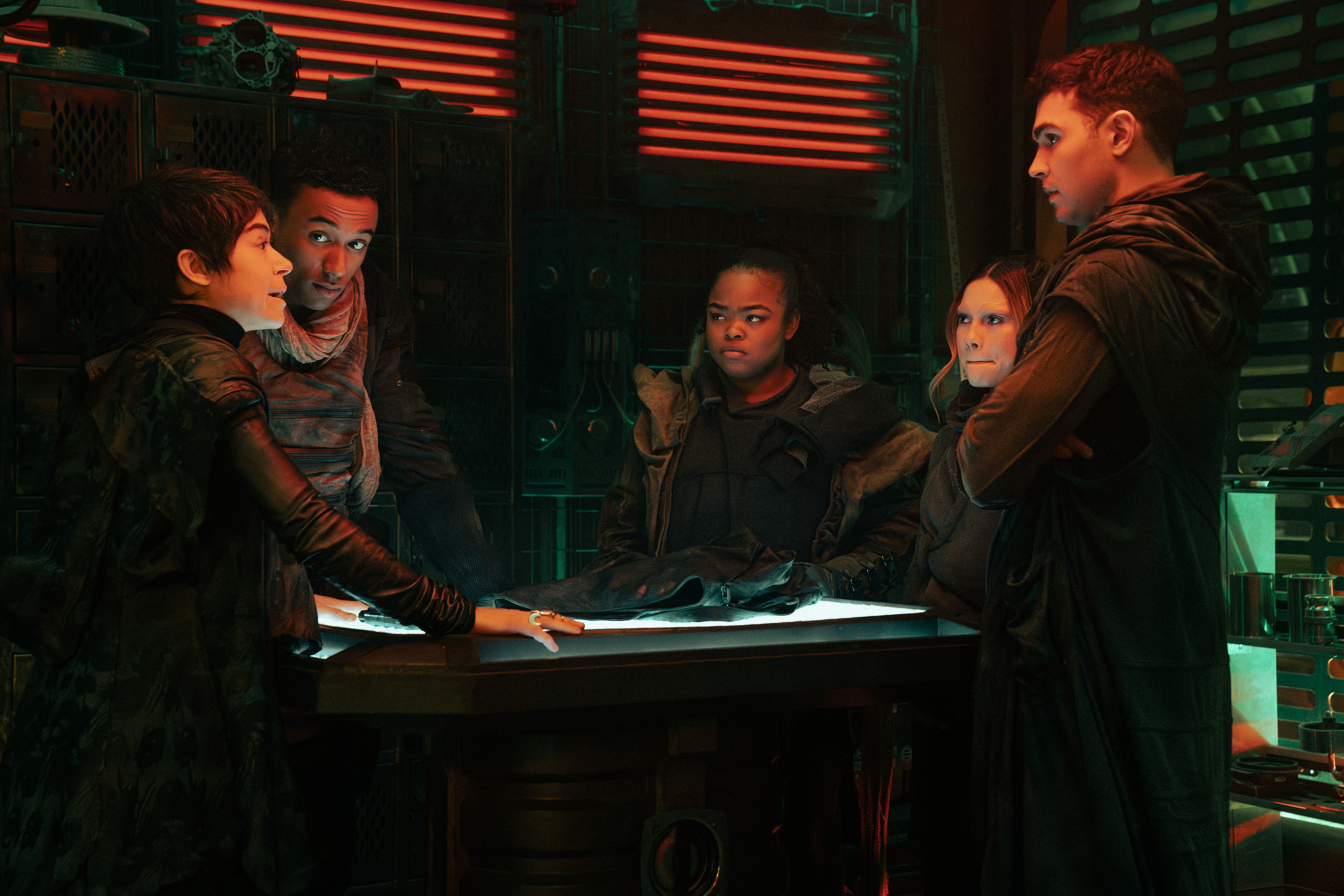
L-R: Tatiana Maslany as Anisha, Sandro Rosta as Caleb, Kerrice Brooks as SAM, Bella Shepard as Genesis, and George Hawkins as Darem in season 1, episode 9, of Star Trek: Starfleet Academy streaming on Paramount+.
Michael Gibson/Paramount+
That leads us to Starfleet Academy, which debuted in January on Paramount+. Prior to its premiere, the internet was full of people deriding it as “CW Trek” and declaring that they don’t want to watch a show about “teenyboppers” that wasn’t “real” Star Trek. Now that the show has finished its first season… the internet is still full of people complaining. But many folks who were wary of it at the beginning have been pleasantly surprised — every day there seems to be multiple posts on various Star Trek subreddits along the lines of “Starfleet Academy is actually good?!?” I personally didn’t enjoy the first episode, but episode two turned me around rather quickly, and it seemed that every week brought new converts.
Granted, 10 episodes is a short amount of time to make an impact, but Starfleet Academy did a lot with that number. Four of the episodes are dedicated to the ongoing villainy of Nus Braka, a murderous pirate played with scene-chewing delight by Paul Giamatti. These have all been pretty straightforward adventure stories, which also did a good job of fleshing out not only Braka, but cadet Caleb Mir, whose mother went to prison because of Braka.
The emphasis on Caleb in the first episode made it seem like the show would focus on him, much in the way Discovery focused on Michael Burnham, but he took a back seat as the show explored the other characters as well as its setting. Episode two, “Beta Test,” focused on diplomacy, a long-standing theme of Star Trek, and even shook up the status quo by moving the Federation headquarters from Earth to Betazed.
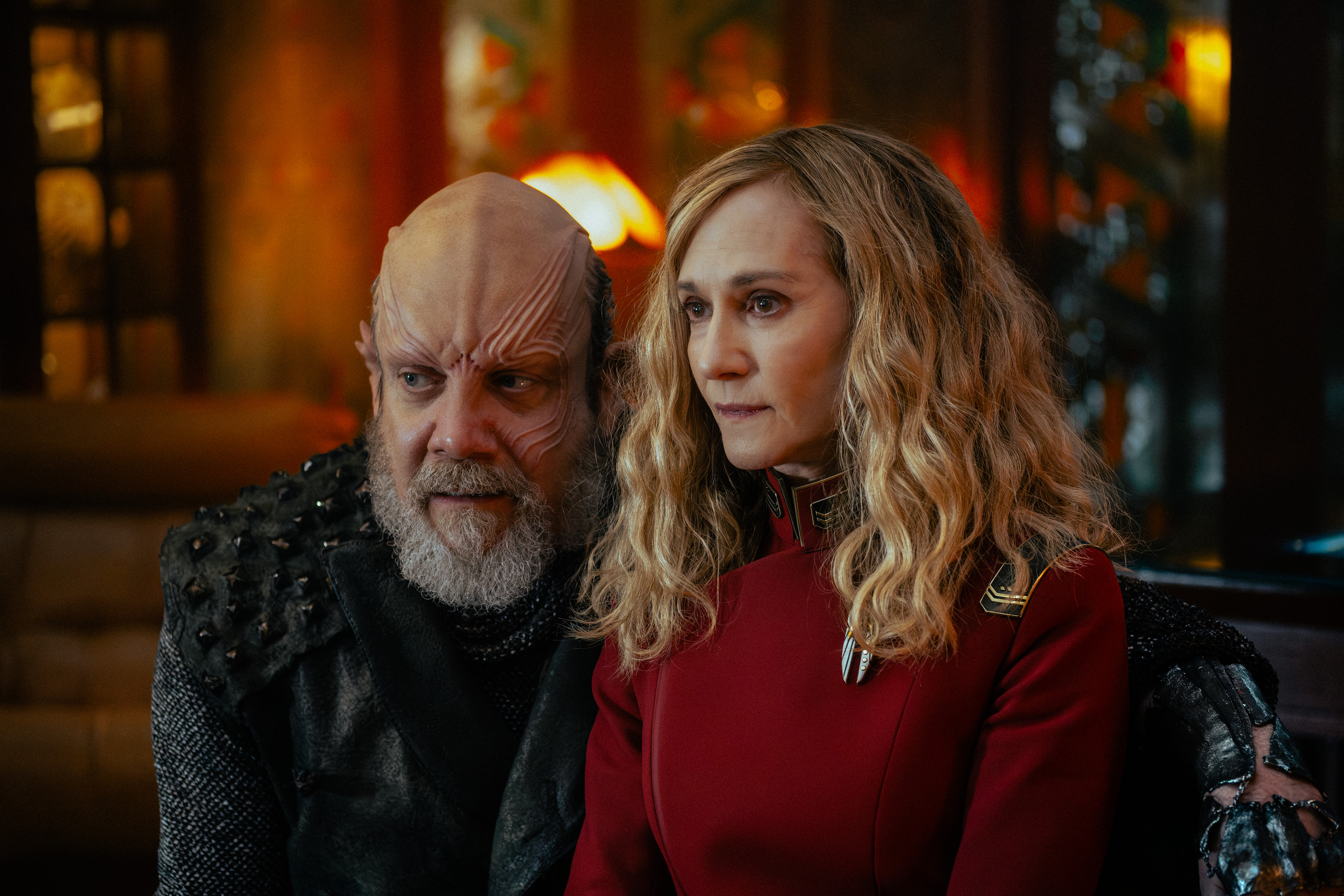
Paul Giamatti as Nus Braka and Holly Hunter as Captain Nahla Ake in season 1, episode 6, of Star Trek: Starfleet Academy streaming on Paramount+.
Brooke Palmer/Paramount+
Episodes four and five were more personal stories, with “Vox in Excelso” focusing on soft boy Klingon character Jay-Den as well as the fate of his race in general after hundreds of years, while “Series Acclimation Mil” also gave us characterization of photonic being Sam along with some heartfelt fan service for the Deep Space Nine fandom. Sam would also shine once more in “The Life of the Stars,” an episode that dealt with trauma, but also (again) delivered fan service in a way that didn’t feel like pandering because of how it was used to develop not just Sam, but also the Doctor, a legacy character from Voyager.
It’s not that every episode in season one of Starfleet Academy is a masterpiece – “Vitus Reflux” and “Ko’Zeine” are somewhat weak – but none of them are outright bad, making the batting average of the season rather high. That bodes well for word-of-mouth, as it's easier to recommend a show when you don't have to couch it with excuses about how it gets good “eventually.”
It will need that word-of-mouth if it wants to get through a complete four seasons of schooling; season two just finished filming so we're guaranteed at least that, but there's a lot up in the air for not just the show, but the entire franchise. Strange New Worlds season four will debut later this year, and then we have an abbreviated season five to look forward to. But past that, nothing firm is on the horizon: Starfleet Academy hasn't been renewed yet, and projects like the Tawny Newsome-helmed comedy show are still in development with nothing tangible revealed yet.
Newsome played Beckett Mariner on Lower Decks and worked in the writers room for Starfleet Academy — she's an example of how Paramount has been building up a roster of talent behind the scenes for the franchise who, even when a show is new, understand the universe and, more importantly, how to work together to make good TV. And that's going to be important in the next year or so, as Paramount makes decisions about the future of the franchise in the shadow of the recent Skydance merger and the upcoming Warner Bros. purchase. Star Trek has an uphill battle ahead of it, but at least Starfleet Academy’s first season has made it an easier climb.
This article originally appeared on Engadget at https://www.engadget.com/entertainment/starfleet-academy-is-the-best-first-season-of-a-star-trek-show-ever-133000945.html?src=rss
TikTok will soon let you stream full songs in its app via a new integration with Apple Music. The company's new Play Full Song feature makes it possible to link your Apple Music account toTikTok, and play any song that strikes your fancy directly in the app while you're scrolling.
Starting a song is as simple as tapping a button in the Sound Details page or your For You page. Assuming you pay for Apple Music, TikTok will then open up a streamlined version of Apple's music player, which you can use to listen to the song, save it for later or add it to a playlist.
TikTok says that Play Full Song is built using Apple's MusicKit APIs, which let developers surface elements of the Apple Music streaming service in their apps. TikTok has previously offered integration with multiple music streaming services through a feature it calls Add to Music App, which made it possible to save songs you heard on TikTok to your streaming library. What's particularly interesting about this new integration is that because it's using Apple's APIs, songs streamed with Play Full Song count as normal streams for the artists in Apple Music, so they don't lose out on any money.
Alongside the new feature, TikTok and Apple are also introducing a way for fans to listen to music live with their favorite artists. TikTok's Listening Party feature creates a live "shared environment" where people can listen to music and interact with artists directly, in what effectively sounds like an audio-only livestream. TikTok livestreams are a whole ecosystem in their own right, and Listening Party seems like a way to leverage some of the same technology for a more controlled, music promotion-focused end.
TikTok is already a popular tool for music discovery and launching the career of new artists, and the platform also briefly dabbled in offering a streaming service of its own in 2023. The company abandoned those plans in 2024, but under new owners, TikTok's ambitions could ultimately be bigger than just offering nice integrations with existing streaming services.
TikTok says Play Full Song and Listening Party are rolling out worldwide “in the weeks ahead,” so if you don’t see either feature now, you may soon.
This article originally appeared on Engadget at https://www.engadget.com/apps/tiktok-will-let-you-stream-full-songs-in-its-app-if-youre-an-apple-music-subscriber-183333143.html?src=rss