Leaked Samsung Galaxy Watch Ultra 2 Price Hits €749 Euros

Leaked Samsung Galaxy Watch Ultra 2 Price Hits €749 Euros Close up of the Samsung Galaxy Watch 9 displaying a digital watch face.

Samsung’s upcoming Galaxy Watch 9 series and Galaxy Watch Ultra 2 are set to deliver notable advancements, but they come with a catch: higher prices. According to leaks highlighted by TechAvid, European pricing for these smartwatches reveals increases ranging from 30 to 50 euros, depending on the model. For instance, the Galaxy Watch Ultra 2 […]

The post Leaked Samsung Galaxy Watch Ultra 2 Price Hits €749 Euros appeared first on Geeky Gadgets.

Posted in Uncategorized

iOS 27 Beta 3 Adds the Quick Adaptive Audio Control Fans Have Demanded for Years

iOS 27 Beta 3 Adds the Quick Adaptive Audio Control Fans Have Demanded for Years The new Adaptive Audio slider in the iOS 27 Beta 3 settings menu for AirPods.

The release of iOS 27 Beta 3 introduces a range of updates for AirPods, focusing on enhancing audio personalization, improving connectivity, and boosting user convenience. These updates include a customizable equalizer, advancements in adaptive audio mode, and expanded Siri integration. While these features aim to refine your listening experience, certain limitations, such as restricted firmware […]

The post iOS 27 Beta 3 Adds the Quick Adaptive Audio Control Fans Have Demanded for Years appeared first on Geeky Gadgets.

Posted in Uncategorized

Beatbot Wants To Sell a Better Pool Experience, Not Just a Better Robot

At CES, the annual spectacle of technological progress, most companies come to show you a new feature. At CES 2026, Beatbot arrived to propose a new feeling. The introduction of its flagship AquaSense X system was deliberately paired with a full brand evolution, a signal that the company’s ambitions had scaled up. The hardware, with its advanced AI and automated cleaning station, was impressive, but it was also evidence for a much larger argument the brand was making about itself and its category.

That argument is centered on the idea of “perfecting pool living.” This is a deliberate shift in vocabulary, moving the conversation from mechanical chores to an elevated, frictionless lifestyle. The new identity, the award-winning industrial design, and the underlying software intelligence all work in service of this one goal. Beatbot is building a world where the owner’s relationship with their pool is defined by enjoyment and aesthetics, while the complex work of robotics recedes so far into the background it becomes ambient.

Designer: Beatbot

Click Here to Know More

Siler Wang, who spent over a decade in home robotics before founding Beatbot in 2022, identified the backyard pool as the category where the consumer had been most thoroughly failed by design. Pool equipment had evolved in increments, each generation marginally more efficient than the last, but the fundamental experience of ownership had remained unchanged: loud, fiddly, and thoroughly unglamorous. Wang’s bet was that a company structured around deep R&D, with over 500 patents and 70% of its team in engineering and product development, could build something the category had never seen, a premium tier where performance and aesthetic intention existed on equal footing.

Before – After

In the mid-1990s, computer scientists Mark Weiser and John Seely Brown at Xerox PARC coined the term “Calm Technology” to describe systems that serve human needs by retreating from consciousness rather than demanding it. The idea was counterintuitive in a tech industry built on features and interfaces: the best technology, they argued, moves between the periphery and center of attention only as needed, never more. Beatbot has adopted this as a foundational design principle, and applied to a pool robot, it is unusually coherent. The goal of a pool-cleaning system is precisely to make itself invisible. Success is measured by the owner forgetting it is there at all.

Beatbot AquaSense 2 Ultra

Beatbot’s AquaSense 2 Ultra, which won the iF Design Award 2025, takes its form cue from a turtle’s shell, a fluid, nature-inspired geometry that reduces water resistance while giving the device a visual lightness unusual in pool equipment. The AquaSense X, unveiled at CES 2026, extends this design language with smooth contours and clean lines, and pairs with the AstroRinse cleaning station, an automated dock that empties and rinses the robot’s filter without user intervention. The system cleans the pool; the station services the system. The owner does nothing except, as the brand puts it, enjoy.

Beatbot Sora 30 Robotic Pool Cleaner

Of course, any company can call itself design-driven. The real test is whether the professional design world agrees, and Beatbot has the receipts. Winning a single award can be a fluke; winning the prestigious iF Design Award in two consecutive years, first for the AquaSense 2 Ultra and then for the Sora 30 in 2026, suggests a consistent, embedded culture of design. When you add in recognition from Red Dot, a Platinum A’ Design Award, and a sweep of eight different press awards at CES 2026, the claim to design leadership starts to feel less like marketing and more like a statement of fact.

This brings us back to the timing of the rebrand. It was not an arbitrary refresh; it was a strategic signal. The new identity was unveiled just after Beatbot made a significant European push at IFA Berlin and as IDC forecasts show the pool robotics market is set for major growth. With a reported 85 percent share of the premium market segment, the rebrand acts as a unifying flag for a company that is moving from a successful product launch into a global brand proposition. It is a declaration that Beatbot is no longer just competing in the category; it intends to define it.

Click Here to Know More

The post Beatbot Wants To Sell a Better Pool Experience, Not Just a Better Robot first appeared on Yanko Design.

The 8 Best Kitchen Tools for Summer 2026 So Well-Made They Make Cooking Feel Like an Art Form

Japanese summer cooking has a quality that’s hard to name but easy to feel. Less rush, more presence. The kind of prep where you’re not trying to get dinner onto the table but genuinely inhabiting the act of making it. These eight tools are built for that pace. Each carries design decisions that reward attention, and together they make a summer kitchen feel less like a production and more like a practice.

What connects all eight is a commitment to material honesty. No chemical coatings, no plastic handles, no surfaces that approximate what they should be rather than simply being it. Carbon graphite that has never touched a coating. High-carbon steel forged at extreme temperatures and cooled to minus 196 degrees. Hinoki cypress that builds character through use. These tools don’t promise convenience. They promise that the effort you bring to them will be worth every minute.

1. Iron Frying Plate

Western plating separates cooking from eating with an extra step nobody examines. Food leaves the pan, sits on a plate, and temperature and texture leave with it. The JIU Iron Frying Plate removes that step entirely. Made from rust-resistant mill scale steel with a detachable wooden handle, it moves from burner to table as a single object. You cook in it, you eat from it, and food arrives the way it was always meant to.

That might sound like a shortcut, but the effect is closer to a revelation. Eggs arrive still sizzling. Fish comes off the heat and stays at temperature while you decide what to pour over it. The uncoated surface develops natural non-stick properties through regular cooking, meaning it gets better the more you use it. The wooden handle attaches and detaches with one hand, and the transition becomes so fluid that going back to a separate plate feels like a small, unnecessary loss.

Click Here to Buy Now: $69.00

What We Like

  • The cook-and-serve design preserves the temperature and texture that are lost the moment food transfers to a separate plate
  • The uncoated mill scale steel develops natural non-stick properties through use, improving with every session rather than degrading like coated alternatives

What We Dislike

  • The iron construction retains heat well past the point of serving, which requires careful handling at the table
  • Heavier than a standard serving dish, which takes some adjustment if you’re accustomed to lightweight ceramics

2. ANAORI Kakugama

Carbon graphite is not a material you encounter in a kitchen, which is precisely why the ANAORI Kakugama stops you the moment you look at it. Crafted from solid carbon graphite in Japan, its matte black surface distributes heat with an evenness that coated pans cannot match, reducing the risk of scorching while preserving the natural flavors of whatever is being prepared. It steams, poaches, simmers, grills, and fries without complaint, the kind of vessel that earns a permanent position rather than a seasonal one.

The detail that elevates it from impressive to irreplaceable is the Japanese cypress lid. As it heats, hinoki releases a faint, earthy aroma that no synthetic lid can replicate. This is cookware that approaches the act of cooking with genuine respect for the ingredient. The carbon graphite body develops no off-flavors, imparts nothing to the food, and responds to heat with a consistency that makes it worth learning to cook around.

What We Like

  • Carbon graphite distributes heat with an evenness that coated pans cannot replicate, making scorching a near non-issue across every cooking method
  • The Japanese cypress lid releases a faint hinoki aroma during cooking, adding a sensory dimension that no synthetic material produces

What We Dislike

  • The premium material and craft place this vessel at a price point considerably above conventional cookware
  • Carbon graphite requires more attentive handling and storage than standard kitchen materials

3. JIA Inc. Rolling Mortar

The mortar and pestle has been functionally unchanged for roughly 35,000 years. JIA Inc., a Taiwan-based design brand, chose to examine that assumption rather than honour it. Their Rolling Mortar replaces the vertical pounding motion with a rolling one: a stone sphere moves across a curved ceramic base, grinding herbs and spices through rotation rather than force. The gesture is more intuitive, considerably less tiring, and far more interesting to watch from across the kitchen.

Pesto comes out smoother. Spices release their oils more completely. The method produces results that standard crushing does not, because shearing and rolling extract differently from the same ingredient than pressure alone does. On the counter, the sphere and base form a sculptural composition that earns its space whether in use or not. It cleans easily, stores without cases or drawer space, and sits somewhere between a useful tool and a gallery object that happens to make excellent pesto.

What We Like

  • The rolling mechanism shears rather than crushes, extracting oils and flavors from herbs and spices in a way that traditional pounding cannot replicate
  • The sphere-and-base composition is sculptural enough to justify permanent counter display without looking out of place

What We Dislike

  • The rolling action is slower than a food processor for coarse or particularly hard spices, and requires patience
  • The sphere needs adequate clearance to move freely during use, demanding more counter space than a standard mortar

4. Sakura Petal Grater

There is a specific moment in Japanese cooking that changes what you think condiments are. It arrives the first time you grate fresh wasabi at the table and realize that the paste in the tube and the root you’ve just reduced to a pale green cloud are, functionally, different ingredients. The Sakura Petal Grater is built around that realization. Its circular stainless steel surface is designed for tableside use, turning fresh ginger, daikon, and wasabi from prep tasks into part of the meal itself.

The form deserves attention separately from the function. The sakura petal shape is considered rather than merely decorative, a compact round that fits naturally at a table setting without crowding adjacent plates. The anti-slip silicone base stabilizes the grater during use and doubles as a protective cover during storage. The circular grating motion has a quality that other tools don’t offer. Once you’ve grated fresh ginger over miso soup this way, the action becomes something you look for reasons to repeat.

Click Here to Buy Now: $45

What We Like

  • Tableside grating turns fresh garnish preparation into part of the dining ritual rather than kitchen prep done in advance and left to oxidize
  • The compact sakura petal form sits naturally at a table setting, and the silicone base doubles as a protective cover when stored away

What We Dislike

  • The small surface area makes this a garnish tool rather than a volume grater; larger quantities require a different piece of equipment
  • The circular design works best with firm roots and vegetables and is not suited to soft produce

5. Hesslebach Dutch Oven

Most Dutch ovens are either functional objects that have no business being visible, or expensive pieces of cookware that work beautifully and look exactly like every other expensive Dutch oven on the market. HK Kim’s Hesslebach is neither. The design treats the vessel as an object worth placing rather than simply setting down. Its form communicates something deliberate about the kitchen it occupies, a quality that genuinely few pieces of cookware achieve regardless of price.

It retains and distributes heat in the way a good Dutch oven should. Braises develop deeper flavor, bread develops a crust that rivals a professional deck oven, and summer soups reach a depth that lighter pots cannot match over the same time. What makes it fit summer cooking specifically is the cook-to-table quality it enables. It moves from the hob to the dining table without looking like it traveled, and left out between sessions, it functions as an anchor for the kitchen around it.

What We Like

  • Heat retention and distribution deliver results that lighter cookware cannot approach, regardless of the recipe or technique
  • A form confident enough to move from stovetop to dining table without apology, functioning as a serving piece as much as a cooking one

What We Dislike

  • The weight and material density demand more deliberate handling than lighter everyday cookware, particularly when the pot is full
  • The investment required places it firmly above casual kitchen upgrade territory

6. BALMUDA The Kettle

Tokyo-based BALMUDA makes objects that look like they were designed by someone who could not tolerate the gap between how a thing functions and how it should look while doing it. The Kettle is the clearest expression of that position. A wide base tapers to a narrow gooseneck spout engineered for controlled, targeted pouring, and the proportions at every point feel considered rather than arrived at by convention. It handles the temperature precision that Japanese cooking requires with the same authority it handles the counter.

For summer cooking specifically, precise water temperature matters in ways that general-purpose kettles don’t accommodate. The difference between green tea brewed at 70 degrees and 90 degrees is the difference between something delicate and something sharp. The BALMUDA The Kettle gives you that control with a visual design that makes it worth leaving on the counter permanently. At the price it carries, it is an object that asks to be bought once and never thought about again.

What We Like

  • The precision gooseneck spout allows the controlled, targeted pour that dashi preparation and temperature-sensitive tea brewing both require
  • BALMUDA’s build quality and proportions make it as worthy of permanent counter display as it is of daily use

What We Dislike

  • The premium brand carries a price considerably higher than functional alternatives with comparable temperature control
  • Some users may want more granular degree-specific settings than the kettle’s temperature range provides out of the box

7. Hinoki Essence Cutting Board

Most cutting boards argue for one virtue at the expense of another. Plastic is easy to clean and destroys knife edges. Bamboo is harder than it should be. Soft wood is forgiving but turns into a bacterial harbor within a month of regular use. Hinoki cypress is the material Japanese knife makers recommend because it sits at the right point on the hardness scale: firm enough to hold ingredient position cleanly, soft enough to absorb rather than blunt the cutting edge.

The Hinoki Essence Cutting Board adds a water-resistant silicone treatment that penetrates the wood fibers rather than sealing the surface, preserving the material’s natural aroma and feel. Hinoki has a clean, resinous scent that rises faintly during prep and turns the act of cutting into something more sensory than mechanical. The integrated handle facilitates hanging storage, keeping air circulating the board and preventing the trapped moisture that shortens the life of most wooden surfaces.

Click Here to Buy Now: $75.00

What We Like

  • Hinoki’s position on the hardness scale protects knife edges while delivering cutting feedback that plastic and bamboo cannot replicate
  • The silicone treatment penetrates rather than coats the wood, preserving its natural aroma and texture through regular use

What We Dislike

  • Wood requires more care than plastic, including thorough drying after washing and occasional oiling to prevent surface cracking
  • The premium cypress material commands a higher price than most cutting boards at this size

8. Yin Mo Star Kui Chef Knives

Most kitchen knives make a quiet case for themselves. The Yin Mo Star Kui make a loud one. Designed by Beijing Wang Mazi Technology and awarded the A’ Design Award, this set is built from high-carbon steel using a hot and cold forging method that few manufacturers attempt. The steel is heated to 1,040 degrees Celsius, then cooled to minus 196 degrees. Hot forging eliminates internal imperfections and improves toughness; the cold treatment reorganizes the crystal structure to increase resistance to deformation.

The texture is where the design earns its place in this article. The upper half of each blade carries a deliberately cratered surface, a visual decision that is as practical as it is dramatic. The rough texture creates micro air pockets that prevent starchy or sticky foods from adhering to the blade during slicing. Below the cratered zone, the surface transitions into a clean, polished cutting edge. Each knife comes with a display holder that exposes the cratered surface rather than concealing it, treating the blade’s most distinctive feature as exactly what it is.

What We Like

  • The dual hot-cold forging process produces edge retention that standard manufacturing methods cannot replicate at this visual design level
  • The cratered surface creates air pockets that release sticky and starchy foods cleanly from the blade during slicing

What We Dislike

  • The textured upper blade requires more deliberate cleaning than a smooth surface, as residue can collect in the deeper craters over time
  • The display holder does not conceal the cutting edge, which requires careful handling when accessing the knives

The Kitchen Is Already Enough

The tools above don’t share a common category. A carbon graphite pot, a flat iron plate, a kettle built like a sculpture, a grater shaped like a flower petal. What they share is design intelligence that reveals itself the moment you use them rather than the moment you look at them. Each was made with the understanding that the person cooking would notice, and that the noticing would change how the kitchen feels from one session to the next.

Summer is a good season to pay more attention in the kitchen. The ingredients ask for it: fresh fish that needs a clean blade, rice that deserves even heat, ginger best grated at the table rather than hours before. These tools create the conditions for that attention to become habitual, not through effort or instruction, but through objects designed well enough to make you want to keep returning to them.

The post The 8 Best Kitchen Tools for Summer 2026 So Well-Made They Make Cooking Feel Like an Art Form first appeared on Yanko Design.
The Tent That Packs Down to One Bag, Bed Included

The camping tent hasn’t had a genuine rethink in decades. You still buy poles, you still wrestle with fiberglass or aluminum sleeves in the dark, and you still forget to pack the footprint. It’s a ritual we’ve accepted as part of the experience, which is either charming or maddening depending on the day. Puffer, a small outdoor brand out of Utah, is betting on maddening.

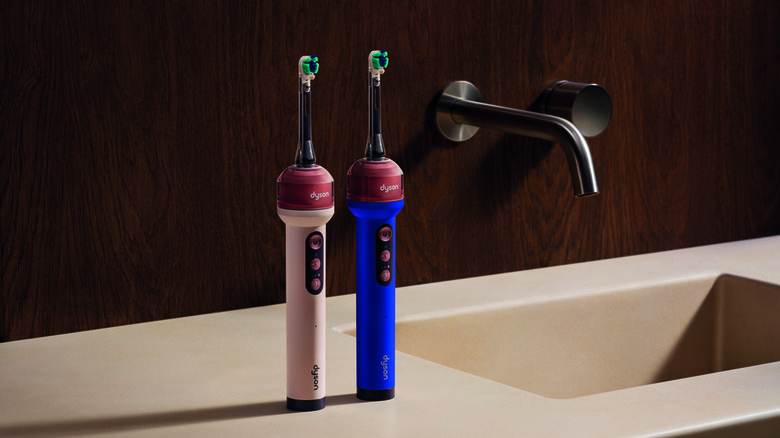
The Puffer tent is an inflatable A-frame that forgoes metal poles entirely in favor of pressurized air chambers, and it works exactly the way you’d hope it would. The setup is three steps: drop it, unroll it, inflate it. An included electric pump handles the airframe and the integrated air base, stops automatically when it hits the right pressure, and the whole thing is done in about two minutes. That’s not a marketing promise. That’s just physics.

Designer: Puffer

The design sits somewhere between a classic A-frame and a tunnel tent, with curved air arches that give it a silhouette unlike anything you’d typically find at a campsite. Visually, it reads more like something you’d see at a boutique glamping retreat than a standard campground. It’s sleek, matte black, and low to the ground in a way that feels considered. The brand’s roots are in skateboarding, snowboarding, and motocross, and that sensibility comes through. It doesn’t look like traditional camping gear. It looks like something someone actually cared about designing.

Interior dimensions are 84.6 inches long and 42 inches wide, with a peak height of 42 inches. It comfortably sleeps two, and the floor is the tent’s most interesting element: a fully integrated air mattress built directly into the base. You’re not rolling out a pad separately or inflating a separate sleeping surface. It’s all one system, and you can even adjust the firmness based on preference, from soft to firm to hard. The idea that you’d arrive at a campsite with a single bag containing both your shelter and your bed is a small thing in theory and a very large thing in practice.

Total packed size is 10 x 25 x 10 inches, which is genuinely compact for what you’re getting. The weight, at 18.2 pounds for the tent alone (around 22 pounds with the full kit), is not featherlight. This isn’t a backpacking tent and Puffer doesn’t pretend it is. The target is car camping, overlanding, and festival use, and for those contexts, the trade-off is entirely reasonable. You’re saving setup time and sleeping better; a few extra pounds in the back of a vehicle is not a real sacrifice.

Founder Sam Peery spent five years prototyping the design, with his wife Bree helping sew and heat-seal the early versions through what the brand describes as a lot of sleepless nights and physical burns from the sealer. That kind of origin story matters, not because it makes the product work better, but because it explains why the details feel intentional. The valve placement, the pressure labels printed right where you need them, the way the pump connects and disconnects cleanly. These aren’t the details of a brand that licensed a factory spec and slapped a logo on it.

The price is $649.99, with the electric pump included. Is that expensive? Compared to a $40 tent from a big box store, yes. Compared to a quality backpacking tent from a premium brand, it’s actually competitive, and you’re getting a mattress included. The more useful comparison might be against a rooftop tent setup, which can run thousands of dollars and requires a vehicle with a rack. The Puffer works on the ground, anywhere, without any of that infrastructure.

The outdoor gear market is crowded, and tent innovation has been slow. Inflatable tents have existed in the premium glamping space for years, but they’ve largely been expensive, bulky, and targeted at a very specific buyer. Puffer’s approach is different: take a genuinely clever engineering idea, strip it down to the essentials, and make it accessible. Whether or not it replaces every tent you own, it makes a strong case that it could.

The post The Tent That Packs Down to One Bag, Bed Included first appeared on Yanko Design.

Vienna’s Weirdest Street Objects Are Secretly Genius

wim

The first thing you notice is the red. A thick, corrugated red hose loops and curls its way through the Hirschstetten neighborhood of Vienna like something that escaped from a construction site and decided to stay. It pools on the ground. It arcs overhead. It feeds into wooden towers and snakes between them, connecting whoever happens to be on either end. That hose is the heart of The Outsiders, a set of mobile urban objects designed by collective Moradavaga for ROOMING INN’s neighborhood Living Lab, and it’s a smarter piece of design thinking than it initially looks.

The objects themselves are built from pale, knot-studded pine, cut into wide slatted panels and assembled into structures that sit somewhere between a flatpack bookshelf and a scaffolding tower. The tallest units reach well above head height, with ladders built into their frames and enough structural openness to feel climbable and explorable. These are not delicate objects. They’re chunky, honest, and built to be handled. The wheels at their base, red-rimmed and pneumatic, reinforce that utility. Nothing here is trying to look expensive.

Designer: Moradavaga for Rooming Inn

The circular openings punched into the wooden panels are where the design gets genuinely interesting. Each unit features two or three large black-rimmed circles, set at different heights, designed to accept the ends of those red corrugated tubes. From a distance, they give the structures an almost face-like quality, a pair of eyes staring out from a slatted wooden body. Up close, they’re speaking and listening ports, the endpoints of an acoustic communication system that requires no electricity, no app, no screen. You put the tube to your mouth and talk. Someone at the other end hears you. It’s as low-tech as design gets, and precisely because of that, it works on everyone instantly.

The corrugated hose itself deserves more attention than it typically gets. It’s a standard drainage pipe, the kind you’d find buried in a road trench, and that material choice is a deliberate design statement. Moradavaga didn’t reach for something beautiful or engineered-looking. They reached for something recognizable and repurposable, something that reads as industrial but behaves as playful. When the tube is stretched across a courtyard, held at arm’s length by one person while another crouches at the opposite end, it becomes a choreographic object, shaping how bodies move and position themselves in space.

Each unit in the collection has a different scale and configuration. The lower, table-like structure with its speaking horns angled upward operates differently from the tall tower with its ladder and elevated panels. Set together, they create a small temporary landscape. Separated, each one holds its own presence in a street or park. The modularity isn’t just functional. It’s part of the visual language of the project, the sense that these objects are always mid-arrangement, never quite finished, always open to being moved somewhere new.

That mobility is embedded in the design from the ground up, literally. The red-wheeled casters aren’t an afterthought. They signal that these objects are not meant to settle. They belong to the ROOMING INN Living Lab, based in a former kindergarten, but the design brief was always for them to travel through the surrounding Hirschstetten neighborhood, showing up at workshops, events, and public squares. A piece of street furniture on wheels is a small act of formal rebellion against the logic of permanence that governs most urban infrastructure, and I think that’s worth appreciating on its own terms, separate from any community design agenda.

Moradavaga describes their goal as bringing “a little bit of surprise into people’s everyday life, making them look at space from different perspectives.” The Outsiders achieves this through form before it achieves it through function. The pale wood, the red tube, the circular eyes, the wheels at the feet: the objects read as characters before they read as furniture. They look like they arrived somewhere and are still deciding whether to stay. That tension, between object and presence, between furniture and installation, is exactly where the most interesting design tends to live.

The post Vienna’s Weirdest Street Objects Are Secretly Genius first appeared on Yanko Design.

Airstream’s $64K World Traveler 17RB is a budget-friendly RV first-time campers have been waiting for

Known once for its high-end, expensive silver-bodied trailers, Airstream has now unveiled its most affordable 17-foot travel trailer ever. The World Traveler 17RB undercuts Airstream’s previously attainable 16-foot Bambi trailer by a good $4,500 at $64,400. Airstream has already started the production of the new trailer, and its first deliveries are slated to happen later this year.

Even though the entry-level 17RB is designed for first-time buyers seeking a worthy entry point to start their family camping adventures, it is an equally compelling option for seasoned RV enthusiasts, since the trailer retains Airstream’s signature style and body despite the price.

Designer: Airstream

Airstream lifestyle has never been more affordable. With the entry-level World Traveler line, the new Airstream lineup for beginners, Airstream is making the lifestyle attainable, but without compromising its market position. The World Traveler 17RB is therefore built to exude the same style on the outside, while certain cost-limiting tweaks on the inside are what we shall get to in a bit.

Last year, Airstream launched a 22-foot model, which was lightweight enough to be towed by a wide range of vehicles. The 17RB, with its GVWR (gross vehicle weight rating) of 3,500 lbs, is as lightweight as it can get. It follows the same approach of being easily towable by an SUV or even a smaller pickup truck like the Toyota Tacoma and Ford Maverick.

While the basics of the signature riveted aluminum body remain unperturbed on the outside, the new Airstream has its wrap-around windows on the back and front replaced with smaller, rectangular dual-pane acrylic windows. A manual awning attached to the 17RB’s body extends the living space slightly outside when needed. For other times, the interior of course, is well equipped.

The trailer’s Scandinavian-inspired interior is provided with white aluminum walls complemented by a choice of Sagebrush or Shoreline upholstery. The kitchen is the mainstay of the World Traveler 17RB travel trailer. Starting out it seems small, but to extend the space, it features an expandable countertop. On it, you get a two-burner gas stove and a sink. A 2.1-cubic-foot refrigerator is neatly tucked under the cabinetry. Airstream also provides an option to include a microwave in the setup.

Airstream has outfitted the 17RB with a 24-inch Smart TV and a JBL audio system for entertainment. It has a Truma Combi Eco Plus System for heating and hot water, while the air conditioner is located underneath, hiding the cooling with the use of ducts. A dinette located in the front section of the trailer can be converted into a bed for additional sleeping space. The main bedroom area, however, is placed in the rear where a fixed mattress is provided for a couple to sleep. Even though Airstream doesn’t market it as such, the 17RB travel trailer can be prepared for off-grid adventures with the inclusion of a 200W solar panel and an optional 2.5 kWh lithium battery pack.

The post Airstream’s $64K World Traveler 17RB is a budget-friendly RV first-time campers have been waiting for first appeared on Yanko Design.

Airstream’s $64K World Traveler 17RB is a budget-friendly RV first-time campers have been waiting for

Known once for its high-end, expensive silver-bodied trailers, Airstream has now unveiled its most affordable 17-foot travel trailer ever. The World Traveler 17RB undercuts Airstream’s previously attainable 16-foot Bambi trailer by a good $4,500 at $64,400. Airstream has already started the production of the new trailer, and its first deliveries are slated to happen later this year.

Even though the entry-level 17RB is designed for first-time buyers seeking a worthy entry point to start their family camping adventures, it is an equally compelling option for seasoned RV enthusiasts, since the trailer retains Airstream’s signature style and body despite the price.

Designer: Airstream

Airstream lifestyle has never been more affordable. With the entry-level World Traveler line, the new Airstream lineup for beginners, Airstream is making the lifestyle attainable, but without compromising its market position. The World Traveler 17RB is therefore built to exude the same style on the outside, while certain cost-limiting tweaks on the inside are what we shall get to in a bit.

Last year, Airstream launched a 22-foot model, which was lightweight enough to be towed by a wide range of vehicles. The 17RB, with its GVWR (gross vehicle weight rating) of 3,500 lbs, is as lightweight as it can get. It follows the same approach of being easily towable by an SUV or even a smaller pickup truck like the Toyota Tacoma and Ford Maverick.

While the basics of the signature riveted aluminum body remain unperturbed on the outside, the new Airstream has its wrap-around windows on the back and front replaced with smaller, rectangular dual-pane acrylic windows. A manual awning attached to the 17RB’s body extends the living space slightly outside when needed. For other times, the interior of course, is well equipped.

The trailer’s Scandinavian-inspired interior is provided with white aluminum walls complemented by a choice of Sagebrush or Shoreline upholstery. The kitchen is the mainstay of the World Traveler 17RB travel trailer. Starting out it seems small, but to extend the space, it features an expandable countertop. On it, you get a two-burner gas stove and a sink. A 2.1-cubic-foot refrigerator is neatly tucked under the cabinetry. Airstream also provides an option to include a microwave in the setup.

Airstream has outfitted the 17RB with a 24-inch Smart TV and a JBL audio system for entertainment. It has a Truma Combi Eco Plus System for heating and hot water, while the air conditioner is located underneath, hiding the cooling with the use of ducts. A dinette located in the front section of the trailer can be converted into a bed for additional sleeping space. The main bedroom area, however, is placed in the rear where a fixed mattress is provided for a couple to sleep. Even though Airstream doesn’t market it as such, the 17RB travel trailer can be prepared for off-grid adventures with the inclusion of a 200W solar panel and an optional 2.5 kWh lithium battery pack.

The post Airstream’s $64K World Traveler 17RB is a budget-friendly RV first-time campers have been waiting for first appeared on Yanko Design.