Google TV’s new Gemini features range from useful to unnecessary

I met up with a few people from Google at the Encore Villas during CES (which is just 2,500 feet from my hotel but took 28 minutes to walk to, thanks to Vegas’s pedestrian-averse design [also I got lost]). Once there, I saw what “more Gemini” will mean for people with a Google TV.

The AI integration ranged from useful to probably unnecessary. The most useful bit, for me at least, came at the end. It’s admittedly a boring, but now you an adjust your TV’s settings just by talking. In the demo, Salahuddin Choudhary, Google’s Gemini for Android product lead said, “Can you boost the dialogue?” and Gemini changed the mode accordingly, without leaving the golf game he was watching. I asked if it could turn off motion smoothing, the first thing I adjust on a new TV (and sometimes other people’s). Yes, it can.

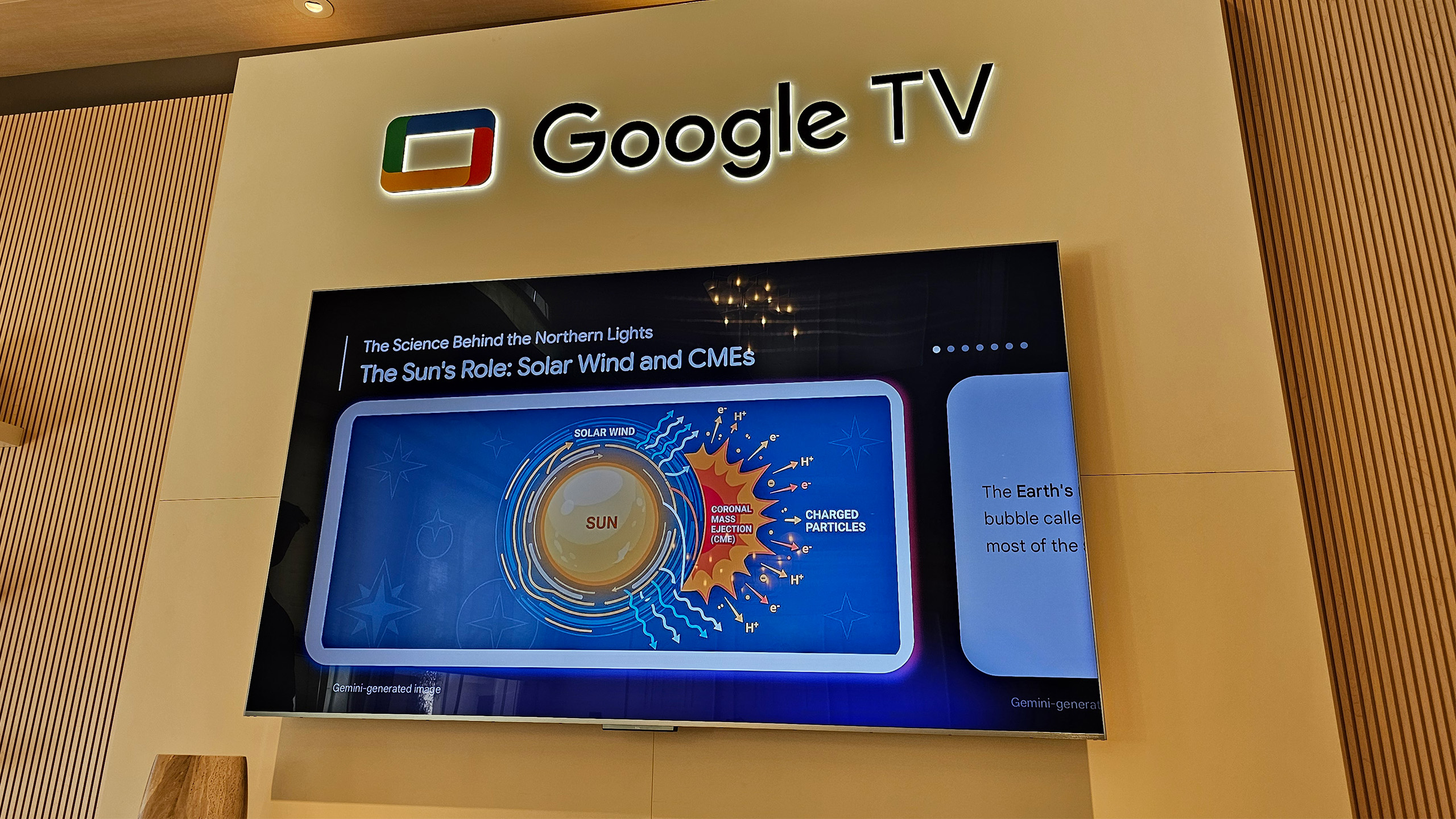
The “deep dive” Gemini feature could prove fairly useful, too. With it, asking for general information turns into a mini lesson on the subject, complete with generated images and narration. When Choudhary asked Gemini to “explain the Northern Lights to [his] eighth grader,” the screen filled with the standard Gemini answer: a brief definition and images and video tiles for further exploration. But a small Dive deeper button on the screen led to a narrated and illustrated tour of the science behind the phenomenon. My kid is at the age where he asks me questions I can’t answer about the fundamental makeup of the universe — maybe this could help.

The Google TV demo at CES showed an answer on the science behind how the northern lights are created
Amy Skorheim for Engadget

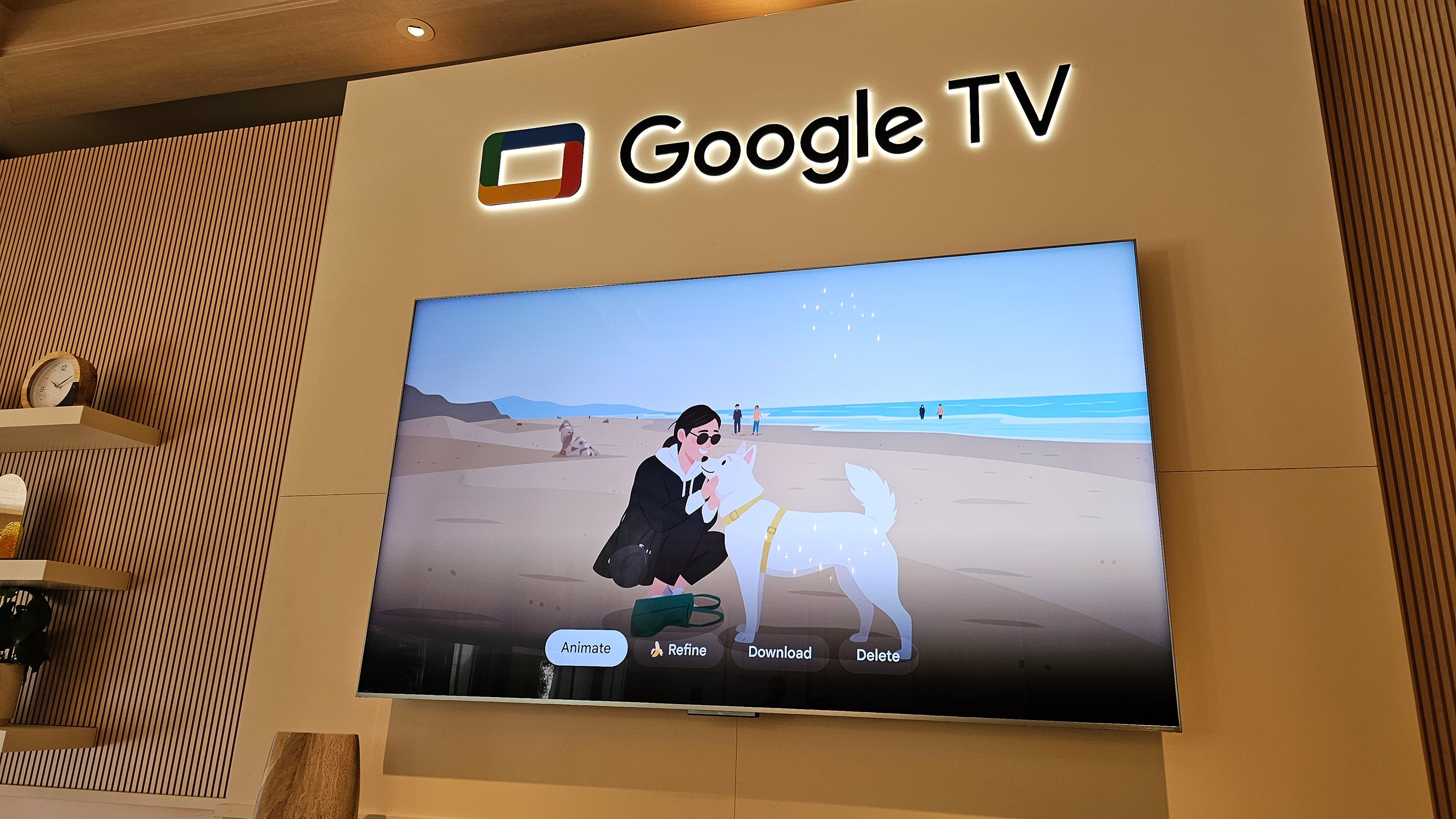
Google Photos is getting a much deeper integration with Google TVs, too. Choudhary asked for pics from a trip to the beach and snapshots of happy people amongst the sea and sand popped up on the screen. One particular shot would make a nice screen saver, I was told, and he asked Gemini to give the photo an oil painting makeover using the Remix feature.

However, if you want your photo recast in a way not offered with Remix, you can use Nano Banana. Choudhary turned one of the personal photos into a cartoon just by asking. Using Veo turned the same image into an short (if slightly glitchy) animation of a person playing fetch with the dog in the photo.

Google TV used Neo to recast a picture as a cartoon.
Amy Skorheim for Engadget

Your ability to generate video will depend on your Gemini subscription tier, but I was told a purchase of a Google TV device would include most of the other AI capabilities that I saw demonstrated.

I’d classify the photo manipulation and video generation as decidedly less useful that the other features, but my kid would probably get a kick out of messing with them for a while. For people who use Gemini a lot, being able to do so on the biggest screen in the house may appeal. Ditto for those who like seeing your Google Photos in a giant format. Some folks will appreciate the AI image manipulation and generation, I’m sure, but I’m mostly excited about the admittedly boring part of not having to leave a show to boost the brightness of a scene.

This article originally appeared on Engadget at https://www.engadget.com/home/home-theater/google-tvs-new-gemini-features-range-from-useful-to-unnecessary-222900001.html?src=rss

Fraimic is an E Ink display that turns your ideas into AI art

It's not the first of its kind, but a few key differences set Fraimic apart from other E Ink art displays. Aura, Switchbot and others have something similar. But unlike other versions, this one requires no subscription, lets you swap out the surrounding frame and doesn’t require an app to upload the art. Instead, a built-in mic picks up your idea, sends it to OpenAI and creates an image that pops up in a few moments on the screen. The on-board accelerometer even knows whether the device is in landscape or portrait orientation, and applies the correct format.

A purchase of the Fraimic comes with 100 free AI creations per year, and if that’s not enough, you can buy more. But if, like me, you don’t consider the images a machine’s brain smashes together to actually be art, the Fraimic also allows you to upload your own images via the brand’s website. And should that website ever go away, your device isn’t obsolete, as it can also handle local uploads.

The Fraimic canvas
The Fraimic canvas
Fraimic

The other qualities that make E Ink displays intriguing are all here. These screens are similar to what you get with a color ereader or E Ink tablet and, like those devices, only require power when changing what’s displayed. This one has enough juice to last for years — even if you swap out the image once per day.

It uses a 13-inch Spectra 6 E Ink display, which has a resolution of about 200 dots per inch. If you’ve seen a color epaper tablet or ereader, you’ll have an idea of what the image looks like. It’s not high-definition and the colors aren’t super vibrant, but the effect is pleasantly subdued and, for the right images, looks properly arty.

Even under the always-too-bright glare of the CES show floor lights, the images managed to look lush and saturated. With the right (human-generated) art, I’d be happy to hang this in my living room.

The standard-sized display will run you $399, which is $100 cheaper than Aura’s similarly sized device and $50 more than SwitchBot’s. Pre-orders for Fraimic are open now and units are expected to ship in spring of this year.

This article originally appeared on Engadget at https://www.engadget.com/home/smart-home/fraimic-is-an-e-ink-display-that-turns-your-ideas-into-ai-art-120000454.html?src=rss

Lockin’s everlasting vein-recognizing smart lock doorbell cam combo is peak CES

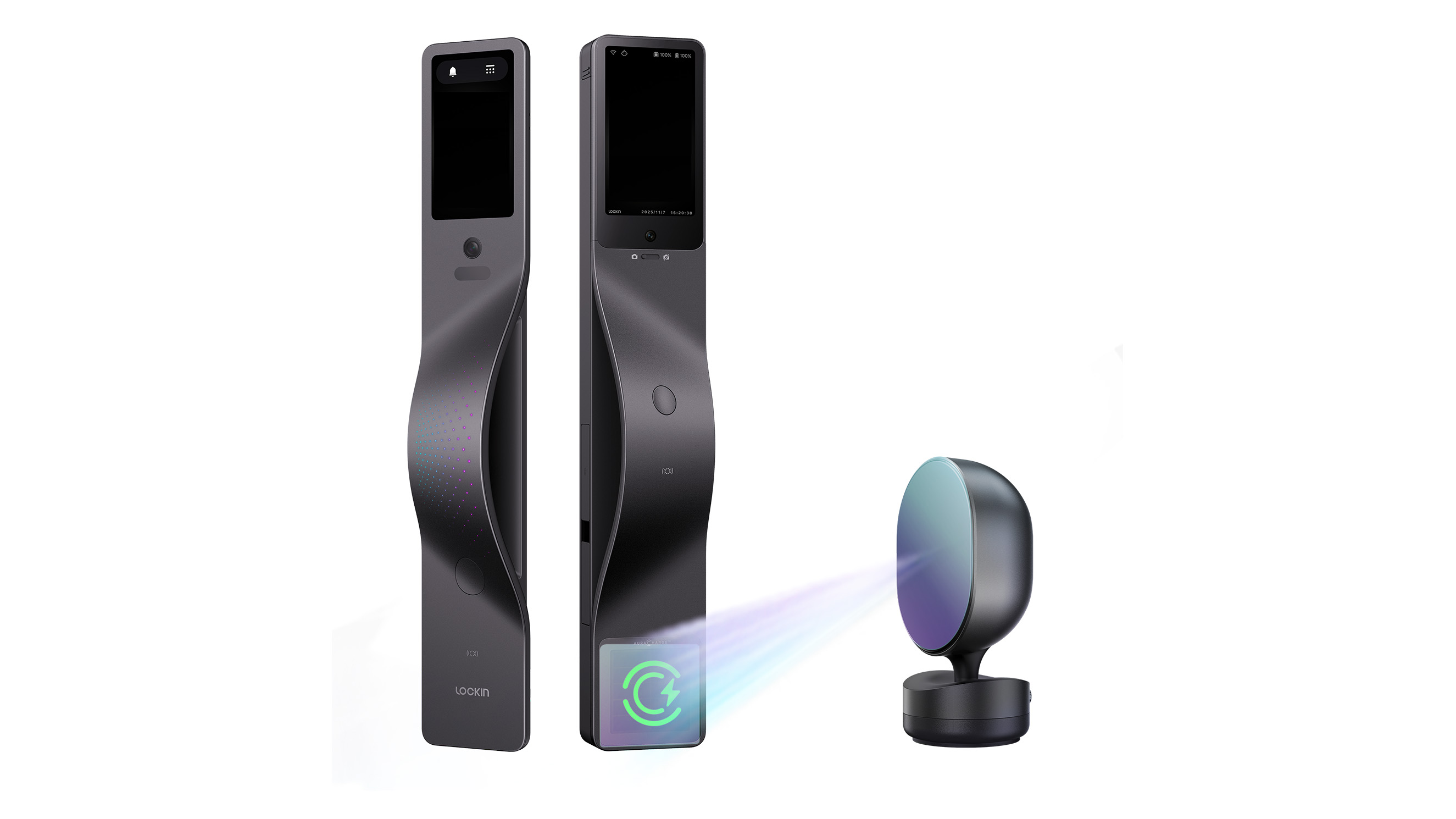
Smart locks have a notable inconvenience: running out of power. Lockin, maker of vein-recognition locks, debuted its newest model on the CES floor. It charges wirelessly via an optical infrared beam with a four-meter range. A small device, connected to a standard outlet inside the house, shoots a beam at the lock, which has a small receptor panel that turns the light into power, sort of like a plug-in sun beaming at a tiny solar array. The tech carries certifications from two independent organizations, and won’t harm eyeballs or bodies that get in the way of the beam (though if the beam is interrupted, charging stops).

The lock itself is a mortise lock that will likely require a pro to install, as it’s not just a standard deadbolt replacer. It’s not a standard lock in other ways too, with video and speaker capabilites, AI recognition as well as touchscreen features and vein recognition.

The tall black rectangle looked sleek (if huge) in person with a pocket-style grip and a rather sizable display on the interior panel. The outer panel has a touchscreen along with two cameras allowing it to act as a doorbell video camera. You can unlock the door via palm, finger vein or 3D facial recognition.

Lockin V7 Max smart lock
Lockin

It’ll feed the video to any of the major smart home eco systems, including those from Google, Apple, Amazon and Samsung. But for general setup and advanced AI features, such as recognizing a package delivery and speaking a canned request to the driver, you’d use Lockin’s own app.

I can’t imagine this high-end do-everything lock will be cheap, and indeed the price is currently undisclosed, but units should start shipping in July or August of this year. There’s a cheaper version of the lock, with the same wireless charging capability but without the video features, that’ll sell for $350 and will be available in April.

This article originally appeared on Engadget at https://www.engadget.com/home/smart-home/lockins-everlasting-vein-recognizing-smart-lock-doorbell-cam-combo-is-peak-ces-013431113.html?src=rss

Narwal’s first mattress vacuum heats, taps, UV-blasts and sucks up all the ick living in your bed

Narwal brought new cleaning robots with it to CES this year, including the Narwal Flow 2, it’s latest flagship robo mop-vac, and the Narwal U50, an automatic mattress vac designed for “deep mite removal.”

While I’d hoped the latter vac was an automatic crawler that could navigate your mattress top, the U50 is a handheld device. Still, no one likes to think about what filters down into their mattress as they sleep — and there are lots of opinions on how and why to remove those dead skin cells, dust, oils and the mites that arrive to dine on those things.

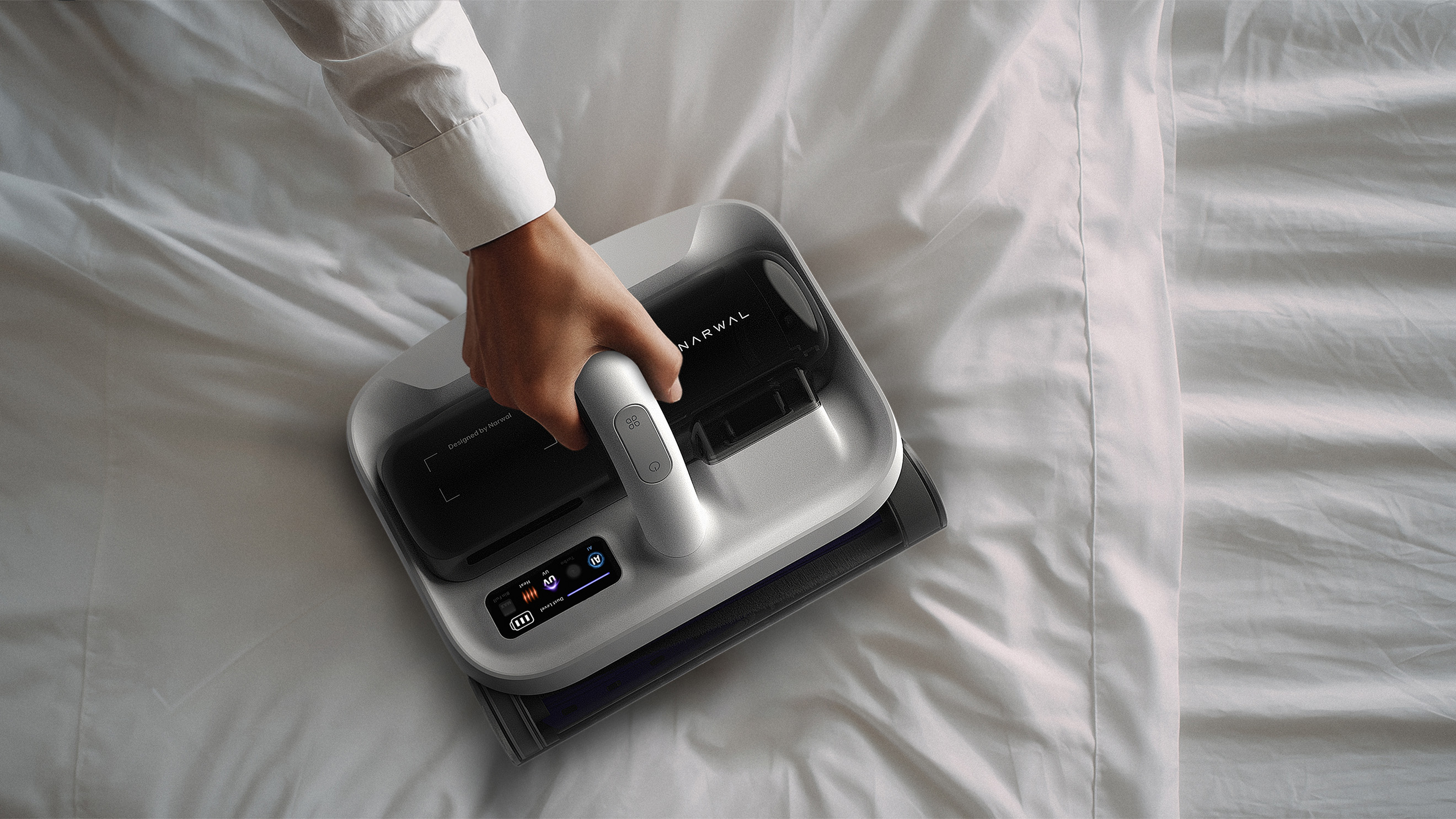
Narwal’s mattress vacuum cleaner not only sucks up all that ick, it heats up to 137 degrees and shines a UV light for sterilization. Then it uses high-speed tapping to dislodge what’s living in your bed before sucking it up with 16.000 Pa of suction power. The dust bag seals itself so all the bad stuff stays put before you throw it away.

The Narwal mattress vac uses heat and UV light to clean your bed.
Narwal

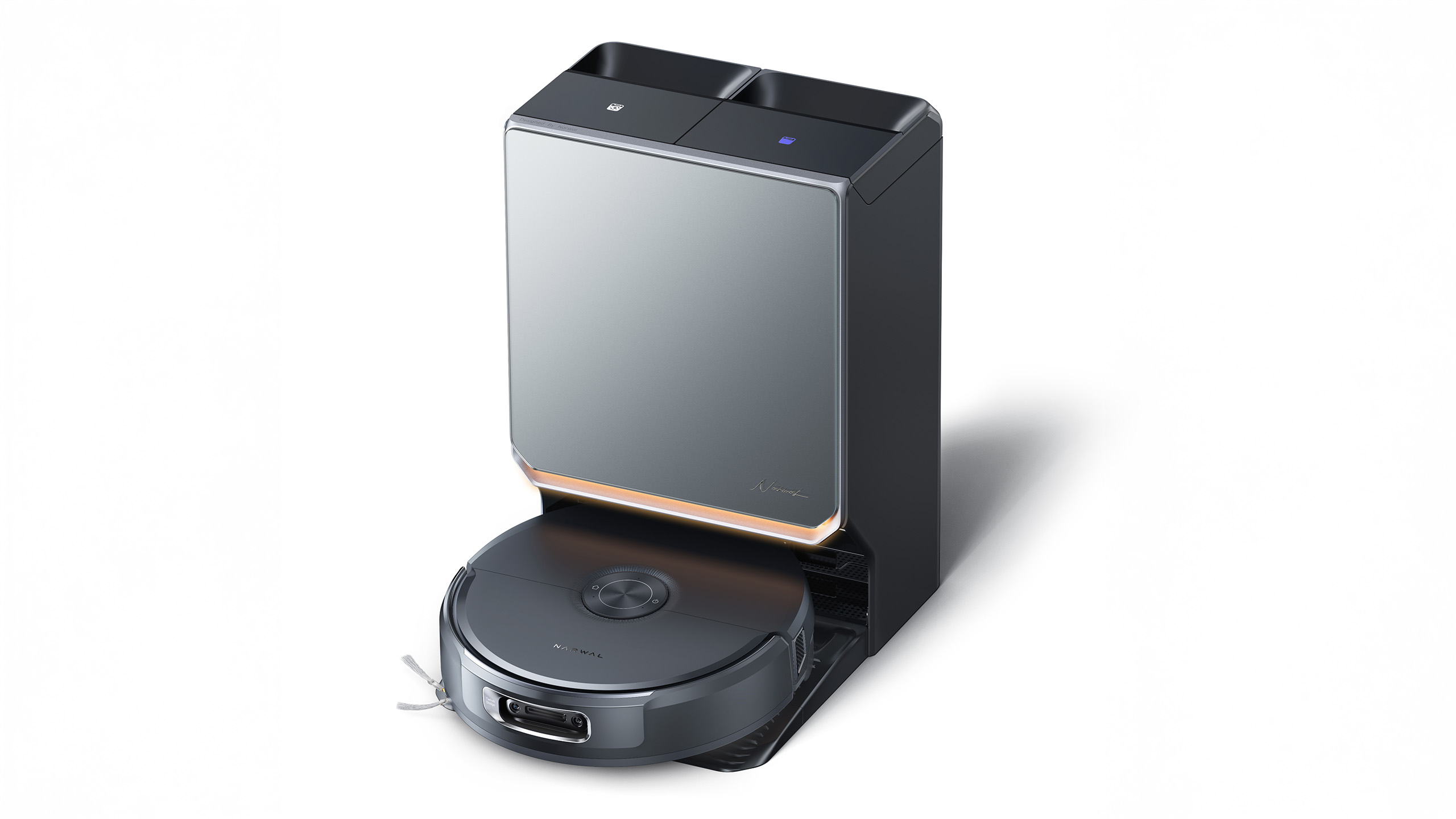
The new flagship is the Flow 2, powered by a new “autonomous system” that incorporates dual cameras and an AI vision-language model for object recognition. Not only will the bot vacuum around any obstacles it sees, it can let you know they’re there. It also has different modes, including the intriguing PetCare Mode, that not only focuses on “pet zones” (places your dog or cat hangs out), it can also find your pet. Say you’re not home and don’t see Sparky lying on her usual spot on the couch. Just ask your Flow 2 to locate your dog and it goes off on a special mission, beaming video of your girl sleeping in a sun puddle. Then if you decide to talk, the vacuum will oblige, complete with video and a speaker that lets you talk to your fur baby.

Of course, the vacuum’s real job is cleaning stuff up and this one uses a track-mop design that keeps infusing the mop with (now hotter) water along with downward pressure to clean up messes. The automatic hot-air drying feature makes sure there’s not too much wetness left behind when its done. The auto-empty base now comes with an upgraded reusable dust bag and washable debris filter, so you throw less stuff away. The collection capacity is rated at 120 days, so you only have to empty the machine once every few months at most.

The vacuums should be available in Spring of this year.

The new Narwal Flow 2 vac mop
Narwal

This article originally appeared on Engadget at https://www.engadget.com/home/smart-home/narwals-first-mattress-vacuum-heats-taps-uv-blasts-and-sucks-up-all-the-ick-living-in-your-bed-004929304.html?src=rss

In 2025, quitting social media felt easier than ever

For a tech writer, being very offline is sort of like being a marathon coach who doesn’t run. So in 2025, I tried to reverse years of studied avoidance towards the most ubiquitous technological phenomenon on earth — I got back on social media. The change was short-lived. 

My first exodus from the feeds took some work — disabling notifications, removing apps from my homescreen and then deleting accounts entirely. This time, the phone put itself down. The whole thing has simply lost its luster.

I started with Instagram. Every experience went like this: I’d see a single post from one of the rare family members or IRL friends who are active on the platform. Next, I was fed a sponsored post, followed by suggestions to follow randos. After that, a series of influencer videos that, admittedly, appeal to my taste (funny/absurdist women and dissertations on urban planning). That was followed up with more sponsored posts, mostly from brands I’d looked up for work. Then it’d circle back to the influencers. My eyes glazed over and I tossed the phone aside.  

Years back, the platform gave off a jolt of quasi-social connection that I’d spend hours sucking up. I fed on pointless thoughts from an ex-coworker, vacation reels from a college roommate, a half-baked loaf of bread that an old friend dropped on the floor but took a picture of anyway. Now it’s a bare sliver of that stuff, shoehorned between towers of sponsored content and posts from people who make or promote their living on Instagram. The real people have left. The connection is gone. The FOMO is no more.   

I experienced some variation of the same disappointment on every platform I rejoined. When I got back on TikTok a few months after the ban, it felt like a frenzied shopping mall. Every video seems to be about four seconds long and most are promotional and/or shoppable. YouTube Shorts is drowning in AI-generated videos, and I don’t hit up social media to watch fake footage of desperate wild animal babies clambering onto the boats of helpful humans. My life has no need for simulated toddlers admonishing their pets. Occasionally, I’d hit on something compelling: a clip from late night TV, a stupidly decadent dessert recipe, people from other countries explaining cultural subtleties. 

But for me, these social media platforms are no longer velcro for the eyes. I remember losing focus, spending long hours on YouTube Shorts and IG. I’d look up bleary-eyed and shame-faced after hours scrolling TikTok’s For You Page. Now, after a few minutes, a bored ickiness sets in. I feel like I’m trapped in a carnival of bots hawking shampoo at me and I just want to go home. 

It’s not a mystery how or why things feel different; The answer is always money. These billion- and trillion-dollar companies have shareholders who prize year-over-year performance over anything else. So we get more sponsored posts on Instagram. TikTok purposefully, enthusiastically overloads itself with shoppable content (which isn’t going to change no matter who owns it). YouTube is obsessed with engagement so it ends up rewarding people who flood the platform with AI slop. These platforms aren’t about human connections and the spread of creativity — the stuff that used to draw me in — they’re thinly varnished ecommerce sites sprinkled with brute-forced AI oddities.   

I’d be sadder about the whole thing if I thought it could be any different. These companies are among the most valuable in the world. The fact that I can’t connect with my fellow common people using their services is not surprising. The change isn’t even driving everyone away. Instagram reported more users than ever this year, to the tune of 35 percent of the planet. Billions of users still scroll TikTok and watch YouTube Shorts. So maybe it’s just a me thing.  

And I have options. Over-monetization may have made me not want to engage with a few social media behemoths, but things aren’t so dire everywhere. Bluesky reminds me of Twitter before X. I take comfort in seeing posts that prove most people are as dismayed as I am over a government and wider economic system that are nakedly uninterested in serving the public. The hot takes aren’t quite as funny as they were on Twitter years back — maybe it’s just all been said before or perhaps things have gotten too dire for levity. I still don’t end up spending a lot of time on the platform, however. It’s not as weird as it was before the defection and I get tired of the stream of news headlines contextualized with tut-tutting and handwringing — I’m perfectly capable of doing that myself.  

It’d be easy to say that social media just isn’t my thing, but that’s not true because I can’t quit Reddit — the shining exception to my social media ennui. It feels filled with actual people. Ads exist, but in a subdued, manageable way. And every contributor, commenter and moderator I’ve come across on the app is militantly vigilant against the onslaught of artificially generated content. I also like the organizational structure. I know my Home tab will only expose me to my chosen subs and I derive great joy from happy cows, greeble-chasing cats, enigmatic night feelings and freaky abandoned spaces. I use my local subreddit r/Albuquerque daily to answer questions and keep tabs on the world (directly) around me. 

Sadly, Reddit is an outlier, a misfit exception to the rule, and now that it’s gone public, it may follow a similar monetization push. Bluesky is tiny, new and not yet profitable, so who knows where its financial journey will lead it (though the “world without Caesars” shirt gives us some hope). 

There’s something lamentable about the loss of the connections we gleaned from platforms that were once compelling, engrossing and rife with the creativity of our fellow humans. Ultimately, any public-facing company that prioritizes profits over everything else has no incentive to look out for its users. So I don’t expect any of the larger social platforms to pull back on their monetization marches. For now, I’ve decided I’m comfortable with my admittedly narrow interaction with the world of social media. As a Gen-Xer, online-first wasn’t how my relationship to the world started out. And I’m pretty confident I know enough about other tech-related stuff to be useful to my editors and readers without a black belt in social. (Ed. note: She is.) Besides, Karissa’s got us covered. 

This article originally appeared on Engadget at https://www.engadget.com/social-media/in-2025-quitting-social-media-felt-easier-than-ever-140000374.html?src=rss

Cyber Monday deals under $50 that you can still shop today: Apple AirTags, Legos, Ugreen chargers, Roku sticks and more

Cyber Monday has ended; The deals party is over. But like any party, there are still a few stragglers not ready to go home just yet. This list once housed over 75 stellar Black Friday deals under $50 each. Today, we've found around 30 or so that are still within a couple bucks of their sales event low. You can get wall chargers, Roku streaming sticks, stocking-stuffer Lego sets, Bluetooth trackers and a couple of small speakers at a discount. This is still stuff Engadget has tested and recommend in our guides — yes, these are late-stage deals but the devices are still solid. Here are the best extended Cyber Monday deals you can still get for under $50.

Paramount+ Essential or Premium (2 months) for $6 ($20 or $10 off): This deal applies to either the Premium or Essential tier — both are just $6 for two months of service (or $3 monthly). The Premium plan is the better deal as it’s usually $13 per month, doesn’t have ads, includes Showtime and allows downloads for offline viewing. Of course, whichever tier you choose will hop back up to the full price after two months unless you cancel (which is $13 per month for Premium and $8 per month for ad-supported Essential).

Audible (3 months) for $3 ($42 off): As it does every sales event, Amazon is offering a near-free intro deal for its audiobook subscription. With the plan, you get one audiobook of your choice each month, which includes new and bestseller titles. You can also listen to an unlimited number of titles from a narrower library. A membership also grants access to a daily discounted title and other member-only discounts. With this deal, the plan will auto-renew at a dollar per month for three months, then default to the standard $15 monthly. So set a reminder to cancel before then if you don’t want to pay full-price. The offer ends December 16.

Starz (one year) for $12 ($50 off): Pay upfront for one year and you can get more than $50 off a Starz annual subscription. There's a month-to-month option too, which costs $3 per month for the first three months if you don't want to commit to the full year. Either option gives you access to the entire Starz TV and movie library with offline viewing and no ads. Also available as a Hulu add-on.

UGreen Uno Nexode Charger Block (65W, 3-Port) for $35 ($15 off with Prime) at Amazon: There are other ways to charge your devices, but few are this cute. That’s why we named it one of the best stocking stuffers you can buy. You get three ports in its head and outlet prongs hidden in its removable magnetic feet. Its 65 watts are enough to charge multiple devices at once. Also available directly from UGreen and at Walmart. It went as low as $33 during the sale. 

Philips Fabric Shaver for $13 ($7 off) at Amazon: Did you know you needed a fabric shaver? You need a fabric shaver. Our editor grabbed this one (at full price) and loves it. It keeps blankets, sweaters and joggers pill free and looking fresh for just $13. 

Roku Streaming Stick HD for $16 ($14 off) at Amazon: After testing most of the smart TV interfaces out there, Roku’s is still my favorite. I like the colorful Roku City that shows up after a long pause and the navigation is intuitive. This stick will grant streaming abilities to a basic TV. There’s no 4K or other fancy video support, but if all you need is a way to stream, this will do. 

Lego Creator 3 in 1 Retro Camera Toy for $16 ($4 off) at Amazon: This three-in-one set builds a retro camera complete with pressable buttons, a wrist strap and loadable (Lego) film. It can also be built as a retro TV set or a camcorder. For ages eight and up.

Glocusent Tri-head Clip On Book Light for $16 ($10 off) at Glocusent: My family vies for this handy device each night. It’s ideal for reading a book in bed with a light that lets you adjust the warmth, angle and spread of the beam. It’s also great for shining some light on a desk as you can use its clip like a stand.

Samsung SmartTags 2 Bluetooth tracker for $16 ($13 off) at Amazon: If you’ve got a Samsung phone, the brand’s own trackers will serve you well. They’re one of the best-looking fobs we tested. It hooks up with Samsung’s own finding network, which is surprisingly robust, and was able to locate lost stuff nearly as quickly as AirTags in our tests.

LEGO Botanicals Happy Plants for $18 ($5 off) at Amazon: Here’s an ideal Secret Santa gift — everyone loves Legos and these cheery little guys will keep your giftee company at their desk or on their windowsill, and are the lowest-maintenance plants around. Also at Target and Walmart.

Apple AirTag Bluetooth tracker for $18 ($11 off) at Amazon: An updated version of Apple’s little finding discs is almost certainly on the horizon. For now, an AirTag is our pick for the best Bluetooth tracker for iPhone users. It’s a little quieter than third party tags like Chipolo, but when it comes to trackers, this is what most people think of. Also at Walmart

Kasa Outdoor Smart Plug (dual socket) for $19 ($8 off) at Amazon: Tired of turning off your outdoor holiday lights manually each night? Get one of these and schedule the controls. Or better yet, let Alexa, Siri or the Google Assistant turn them off with just a command. This is the one we recommend in our guide to smart plugs — and the one that faithfully controlled my Halloween lights last month. It’s gone as low as $17 in the past.

TP-Link AC1200 WiFi extender for $19 (37 percent off) at Amazon: If you’ve got some dead spots in your home’s internet coverage and aren’t quite ready for a mesh setup, a Wi-Fi extender can help. This is our favorite budget option in our guide to these plug-in devices thanks to its easy setup and user-friendly app.

Roku Streaming Stick 4K Plus for $20 ($20 off) at Amazon: I called this streaming stick perfect for travel in my review. It powers itself from your TV so you don’t have to hunt for a wall outlet in your hotel room. Plus you can bring all your streaming subscriptions with you — or just enjoy Roku’s dizzying amount of free content.

Kasa Smart Plug Matter Compatible KP125M (2-pack) for $23 ($12 off) at Amazon: If you want to control your lamps, humidifiers and other simple appliances just by talking to your home assistant of choice, a smart plug will let you do so. We deemed this the top pick for a Matter-enabled plug in our smart plug guide. Set-up is seamless and it supports Siri, Alexa, the Google Assistant and more.

LEGO Creator 3-in-1 Retro Telephone for kids for $24 ($6 off) at Amazon: One of our top picks for the best tech toys for kids is on sale for Cyber Monday. This cute-as-a-button retro telephone is rated for kids eight and older and is a three-in-one set that can be rebuilt into three different configurations: A rotary phone, cordless phone and an early-days cell phone/flip phone combo.

Chipolo Pop Bluetooth tracker for $23 ($6 off) at Amazon: After testing all the Bluetooth trackers I could get my hands on, I think this is the best finding fob out there. Yes, even better than an AirTag; It's louder, can ring your phone and works on the same massive Find My network as AirTags do. And for Android users, it'll work with Google's Find Hub. Check out Engadget’s guide to Bluetooth trackers for more thoughts. Also available directly from Chipolo.

Jisulife Life 7 handheld fan for $25 ($4 off): This handy little fan is a must-have if you live in a warm climate or have a tropical vacation planned anytime soon. It can be used as a table or handheld fan and even be worn around the neck so you don't have to hold it at all. Its 5,000 mAh battery allows it to last hours on a single charge, and the small display in the middle of the fan's blades shows its remaining battery level. This is a dollar more than it sold for during the sale. 

Anker Soundcore 2 Portable Bluetooth Speaker for $30 ($15 off) at Amazon with Prime: Share your good taste in music with Anker’s portable sound box. It’s Bluetooth connected, goes for 24 hours on a charge and can handle a dunk in water with no ill effects to its 12 watts of sound. Soundcore makes a few of the picks on our list of the best speakers — this is a more affordable model. This is two dollars more than it sold for during the sale. 

JBL Go 3 Mini Bluetooth Speaker for $30 ($10 off) at Amazon: For about two dollars more than the all-time low, you can grab this pocket-sized speaker from JBL. It’s the previous model of a pick from our guide to Bluetooth speakers. It goes for 5 hours on a charge and is cheaper than the Go 4.

Govee Smart LED Light Bars for $33 ($17 off) at Amazon: Another of our stocking stuffer picks are these smart LED light bars from Govee. They can stand up or lie flat so they can go just about anywhere and are infinitely adjustable via the app. You can even set them to light up in sync with your music. Alexa and the Google Assistant will let you control them with just your voice (and a smart speaker). It was $3 cheaper during the sale. 


Baseus Picogo magnetic portable charger with stand (5K mAh, Qi2 15W) for $30 ($20 off) at Amazon: This little guy gave a solid 43 percent bump to our tester iPhone 15 in 42 minutes, ultimately charging it to 91 percent. It earned a mention in our guide to MagSafe batteries thanks to those speeds, its compact size and the handy (and sturdy) little stand on the back.

Thermacell E-Series Rechargeable Mosquito Repeller for $30 ($20 off) at Amazon: As winter hits, the mosquitos give up the war to claim the backyard for themselves. But they’ll be back. This is a variant of the mosquito repeller we recommend in our guide to outdoor gear. This one has a 20-foot coverage area and sports a built-in light.

Amazon Echo Dot Kids for $32 ($28 off) at Amazon: The difference between the kids model and the standard Echo Dot is the cute cover (this one looks like an inverted planetarium) and a free year of access to Amazon Kids+, which includes audio books, games and other content for kids aged three to twelve. Just note, you’ll get more out of the subscription with an Amazon device with a screen and the subscription will automatically renew (at $6 monthly) after a year unless you cancel.

UGreen Uno Nexode Charger Block (65W, 3-Port) for $35 ($15 off with Prime) at Amazon: There are other ways to charge your devices, but few are this cute. That’s why we named it one of the best stocking stuffers you can buy. You get three ports in its head and outlet prongs hidden in its removable magnetic feet. Its 65 watts are enough to charge multiple devices at once. This is $2 more than it sold for during Black Friday. 

Samsung Evo Select (512GB) for $35 ($12 off) at Samsung: We recommend the Evo Select in our microSD card buying guide for those on a tight budget. It has mediocre write speeds, so it’s not ideal for a camera, but it should be serviceable for most people just looking to add space to an Android tablet or original Nintendo Switch on the cheap. (Note that this is a standard UHS-I card, not a newer microSD Express model.) This deal is a few dollars more than during Cyber Monday.

Zagg Glass Elite Screen Protector for iPhone 17 for $35 ($5 off) at Amazon: You’re thinking of saying yes to the new iPhone 17. You probably won’t be disappointed. Just make sure you protect it. We like Zagg’s shields and said so in our guide to iPhone accessories. Also available at Best Buy.

Leebein Electric Spin Scrubber for $36 ($34 off with Prime) at Amazon: Shower scrubbing is no one’s favorite activity (I’m assuming here, but I’m pretty sure I’m right). This makes the job so very much easier. Discovered by our editor who abhors the task, the Leebein runs on a USB-C rechargeable battery and has swappable brushes. The course brush combined with the higher speed is no match for any shower scum.

JBL Go 4 Waterproof Bluetooth Speaker for $40 ($10 off) at Amazon: Our guide to the best Bluetooth speakers ranks the Go 4 as one of the winners. It’s super compact at less than half a pound — so don’t expect top-end sound — but it outputs good volume for its size and even has a handy carry loop. Also available directly from JBL and at Walmart.

Sharge AeroMag Magsafe Power Bank (Qi2 15W, 5K mAh) for $40 ($24 off with Prime) at Amazon: To recharge a dying iPhone (12 and later) in the most unobtrusive way possible, go for a MagSafe power bank. It’s not as fast as a wired connection, but super convenient. After testing Sharge’s AeroMag, it earned a runner-up spot in our guide.

This article originally appeared on Engadget at https://www.engadget.com/deals/cyber-monday-deals-under-50-that-you-can-still-shop-today-apple-airtags-legos-ugreen-chargers-roku-sticks-and-more-210050744.html?src=rss
Apple Cyber Monday deals you can still get include discounts on Apple Watches and AirPods 4

The sales have officially ended. Cyber Monday and Black Friday are behind us and most deals have slipped back in to their deal caves to hibernate until the next sale event. But! There are still a few deals that haven't packed it in yet. And there are still a few discounts left on Apple gear. The standout is the new Apple Watch Series 11 that's still down to the all-time low it hit during the sales. That's $70 off and the best price on the wearable so far. The AirPods 4 without ANC are $80, which is more than the all-time low, but still nearly a $50 discount. If you still have a few Apple devices on your wish list, here are the Apple deals from Cyber Monday that still remain. 

AirPods 4 (with ANC) for $99 ($80 off) at Amazon: If you just need moderate noise cancellation and prefer an open-wear fit (where nothing goes in your ear canal), you may prefer the new AirPods 4. They don’t have heart rate sensing or the hearing features the Pro models have. But we found the sound quality to be pretty good and appreciated Pro-level features like live translation. Also at Walmart and at Best Buy

EarPods for $17 ($2 off) at Amazon: For those who prefer a cord, here is the only Apple-branded wired earphone option. Also at Walmart

iPad Pro (M5, 11-inch, 256GB) for $899 ($100 off) at Amazon: While we think this is an amazing piece of computing machinery, we admit that it’s overkill for most people. It's got one of the best displays you’ll find on a tablet, the most recent M5 chip (the same that powers the base-level Apple MacBook Pro) and an almost impossibly thin and light build. We gave it an 85 in our review and had very few complaints — aside from the near-prohibitive price tag. Hopefully this Cyber Monday Friday discount helps. This $100 discount is a new all-time low. Also at Walmart

Apple Watch SE 3 (40mm, GPS) for $199 ($49 off) at Amazon: After a couple years, Apple finally updated its budget-model smart watch. And we were pretty happy with the results, awarding the new wearable a review score of 90. It’s got a smaller screen and thicker bezels than the Series 11 and lacks a few of the more advanced health monitoring features. It’s also made from slightly less-robust materials. But it has nearly everything that makes Apple Watches great for a lot less — particularly now. This is the lowest price we've seen since the watch came out in September. Also at Walmart and Target.

Apple MacBook Pro (M5, 14-inch, 512GB) for $1,349 ($249 off) at Amazon: Apple’s most recent M-series chip is the M5, and only comes equipped on the 14-inch MacBook Pro and the iPad Pro. When the M5 MacBook Pro M5 came out last month, we promptly reviewed it and awarded it a 92. That new chip gives the laptop an impressive graphics upgrade that helps make it more suited to gaming — an area where Apple still lags behind PCs. Other than the chip upgrade, it’s mostly the same, which is a good thing. It’s sturdy, powerful and has an impressively long battery life — we clocked 34 hours in a video run-down test. Also at Walmart, Best Buy and B&H.

Apple MacBook Pro (M4 Pro, 14-inch, 512GB) for $1,779 ($250 off) at Amazon: The M5 chip isn’t yet available in the Pro and Max variants. If Apple follows the same six-month gap that separated the M4 from the M4 Pro and Max chips, we may see the M5 Pro/Max in spring of next year. For now, however, those higher-specced chips can only be found in the M4-series lineup. The MacBook Pro with the M4 Pro chip is on sale and it’s our recommendation for creative professionals who need an obscene amount of processing power. Also at Best Buy. It went as low as $1,699 during the sale. 

Apple 2024 iMac (M4, 24-inch) for $1,149 ($150 off) at Amazon: Apple just has one model of an all-in-one desktop computer and it has the M4 chip inside. We called the iMac more cost effective than ever, now that it comes with a minimum of 16GB of RAM. The M4 chip makes it capable for content creation, productivity and gaming.

Apple AirTag (single) for $18 ($11 off) at Amazon: Still the most popular finding fob for iPhone users, the AirTag is known for its uncanny ability to find lost things by anonymously pinging nearby iPhones. 

Apple Pencil USB-C for $69 ($10 off) at Amazon: If you have the new base-model iPad with the A16 chip, this is the pencil that will work for you. It’ll also work with current as well as slightly older models of the Air and Pro iPads. The deal has been vacillating between $49 and $69 over the shopping holiday. 

Apple Pencil Pro for $95 ($35 off) at Amazon: The Apple Pencil situation is a little messy, so you’ll want to double check which model is compatible with your particular iPad. The Pencil Pro is the most fully featured in the lineup with haptic feedback, barrel roll and squeeze capabilities, and a hover preview feature. It’ll work with the two most recent models of the Air and Pro iPads, as well as the latest iPad mini. The $95 price is $5 more than the all-time low and it's also available at Walmart and Best Buy.

This article originally appeared on Engadget at https://www.engadget.com/deals/apple-cyber-monday-deals-you-can-still-get-include-discounts-on-apple-watches-and-airpods-4-182846356.html?src=rss

Anker Cyber Monday deals offer up to 50 percent off power banks, wireless chargers, power adapters and more

Cyber Monday is almost over — so if you didn't get a chance to get everything on your list during Black Friday (or were too tired from Thanksgiving to shop) now is likely your last chance to snag the better deals. If Anker gear is on your list, there’s good news: every deal we found last week is still going strong. We think Anker makes some of the most reliable charging gear out there, which is why it keeps winning out in our tests and ending up in our guides to MagSafe power banks, wireless charging stations, iPhone accessories and more. So forget all that stuff about early birds, there are plenty of worms for the later birds, too. Just don't wait too long, our guess is that many of these deals will expire Monday night. Here are the best Cyber Monday Anker deals we could find.

Power banks revive dead phones, let you work longer while away from an outlet and allow you to play with your tablet/ereader/gamepad while it charges without being tethered to a wall. After testing out brands from a slew of different makers, our picks just keep coming back to Anker. The mix of value, capacity and clever features make Anker batteries just a little bit better than a lot of the brands out there.

Anker's Laptop Power Bank, which our reviewer (me) called the culmination of all the best battery features is going for nearly $50 of right now. If could recommend one purchase to Engadget readers, this would be it.

We think Anker's Ultra-Slim MagSafe bank is a better deal than Apple's Air MagSafe battery. It's got a higher capacity and wattage rating and it looks just as sleek. Plus, in my humble opinion, $38 is a way better deal than $99. 

Anker also makes our top MagSafe battery pick (the MagGo Qi2). Thanks to its clever stand, excellent charging speeds and generous capacity, it's one of the best ways to recharge an iPhone on the go..

I love this shiny little brick. The 3-in-1 portable charger has a built-in cable that's also a strap, plus wall prongs and a handy display.

A rats nest of cables on your desk is not the loveliest look. Now that phones, earbuds, smartwatches and even ereaders can refill on a charging coil, wireless chargers are a tidy solution. There are options that’ll let you view your phone while it charges, as well as some that will charge three devices at once. We’ve tested units from dozens of brands for our buying guides and keep putting Anker on our lists of winners. The brand makes some of the top picks in both our wireless charger guide and our list of the best multi-device chargers. Now, thanks to Cyber Monday, you can keep your devices topped off with quality accessories that are an even better value than usual.

While wireless charging is faster than it’s ever been, cords are still the fastest way to charge your phone. Bigger devices like your laptop will reup faster on a high-wattage brick than on a dinky 20-watt adapter and if you want to keep your outlets more streamlined, go for a multi-port power adapter that will let you charge multiple devices at once. Again, after testing many brands, some of our most reliable picks continue to be from Anker. It shows up three times in our guide to the best fast chargers and we recommend the brand in a number of our accessories guides. Now that Cyber Monday is here, a number of Anker power adapters are on sale — so we rounded them all up here.

We mostly think of Anker as a charging accessory brand. But they’ve expanded their scope by getting into audio equipment — and the effort was a success. You might not immediately pick up that these are Anker speakers — Soundcore shows up on the products themselves, but it’s the same company. We recommend a couple Soundcore music makers in our guide to the best Bluetooth speakers. They also make our overall favorite pair of budget earbuds, the Space A40. With Cyber Monday deals in full effect, these are the best Anker Soundcore deals we could find.

We’re fans of plenty of other brands aside from just Anker. Here are some of the other charging accessories that are also on sale for Cyber Monday. These come from our guide to MagSafe power banks, our standard power bank guide and our best fast charger roundup. If you want to read up on why these guys made the cut, check out those links. But if you just want to snag a few deals on electronics that Engadget has vetted, check out our picks below.

My personal favorite USB-C charging cable is made by Anker. It’s rated at 240 watts, has a durable build, plus it’s six-feet long and has a handy right angled connector at one end. Anker of course also makes plenty of other gear, from webcams to mice — that show up in our guides to the best accessories again and again. Here are the best Cyber Monday deals on Anker gear that doesn’t quite fit into the categories above.

This article originally appeared on Engadget at https://www.engadget.com/deals/anker-cyber-monday-deals-offer-up-to-50-percent-off-power-banks-wireless-chargers-power-adapters-and-more-180023707.html?src=rss

My family keeps stealing my Dreo heater, so I’m buying another while it’s on sale for Black Friday

As I write this, my Dreo Whole-Room heater is swirling warm air around me in a hushed, mellow sweep. I personally paid the full $100 for the privilege but right now, you can currently snag yours for $15 less, thanks to Black Friday's benevolence. Either way — this little guy is worth it. I bought mine a few weeks ago when the leaves started to turn and I knew winter was coming for my home office. I needed something to replace the aging plug-in radiator I used in years past and, after some research, this seemed like just the thing. 

There are no heating vents in my office, because it was once the front porch. Whoever built the addition did a solid job — including constructing the walls out of a material (brick? cinder block? titanium?) that no nail can penetrate, let alone duct work. The hand-me-down plug-in radiator I used last year wasn't cutting it — only keeping me warm if I stood bestride it. If I'd had the budget for it, I'd have picked up my editor's most recent heater find, but $100 felt like my limit. 

I can report that my purchase of Dreo's heater has been worth it. It stands about a foot tall and just about as wide, but it really pumps out the heat. I originally mistook the displayed "H1" for "high," so I thought the heat output was fine, but not great. Then I pushed the plus button and realized there's an H2 and H3, which is where things really get spicy. 

It can oscillate left and right in a 90-degree arc, as well as nod up and down 60 degrees. It can even do both at the same time. I anthropomorphize everything, so when it swings both horizontally and vertically, I see a baby woodland owl inspecting its forest habitat in awe. 

Unlike that radiator heater, this heats up nigh-on instantaneously. Within seconds, I can feel the warmth, and within a minute my fingers defrost enough so I can type. But, since it is a ceramic heater, the heat largely disappears when you turn it off (at which point it goes through a 30 second cool-down to push the remaining heat out of the vents). The air in the room will stay as warm as your insulation allows, but I do use the remote to click it on and off throughout the day.  

The exterior is largely plastic, and I was worried it would have a strong off-gassing smell. Straight out of the box, the chemical tinge was noticeable, but after leaving it sitting out for a couple days, it calmed right down. I haven't put the timer — or the tip-over safety function for that matter — to the test, but I'm happy to know that both are available. And, as advertised, it's super quiet, emitting a pleasant hum that keeps me company as I work. 

It's also quite portable. Which is why it constantly makes the rounds around my house. My kid likes to have it pointed at him when he eats breakfast before school. My husband grabs it to de-ice the bathroom during a shower. I honestly love that this little heater can help them stay comfortable without having to crank up the central heating to warm up the whole house, but I do wish I didn't have to hunt it down at the start of a workday. I guess should just go ahead and grab another.

This article originally appeared on Engadget at https://www.engadget.com/deals/my-family-keeps-stealing-my-dreo-heater-so-im-buying-another-while-its-on-sale-for-black-friday-160923723.html?src=rss

The best Bluetooth trackers for 2025

If you hate losing stuff — your keys, backpack, jacket, purse or just about anything else — a Bluetooth tracker can help. These little tags pair with your smartphone so you can make your keys chirp from the couch cushions or your jacket sing from the hall closet. Even better, these fobs tap into larger community networks, like Apple’s Find My and Google’s Find Hub, to locate tagged items you misplace out in the world. We tested Apple AirTags, Samsung’s own trackers and many third party fobs from Chipolo, Pebblebee and others that work with either the Apple or Android networks. Here are the best Bluetooth trackers that’ll make sure you don’t lose a thing.

Bluetooth trackers are small discs or cards that rely on short-range, low-energy wireless signals to communicate with your smartphone. Attach one of these gadgets your stuff and, if it’s in range, your phone can “ring” the chip so you can find it. These tracking devices offer other features like separation alerts to tell you when you’ve left a tagged item behind, or where a lost item was last detected. Some can even tap into a larger network of smartphones to track down your device when you’re out of range. Depending on what you want the tracker to do, there are a few specs to look for when deciding which to get.

Like most things from the folks in Cupertino, AirTags only work with products in the Apple ecosystem. Both Apple and Google have opened up access to the Find My and Find Hub networks to third-party manufacturers, including Chipolo and Pebblebee. Those two companies make device-agnostic models that will work with the larger tracking network from either brand, so iPhone and Android users can buy the same tag. Tile trackers work with either Android or Apple devices, but use Tile’s own Life 360 finding network. Samsung’s latest fob, the Galaxy SmartTag2, only works with Samsung phones and taps into a finding system that relies on other Samsung devices to locate lost tags.

Crowd-sourced finding capabilities are what make headlines, with stories about recovering stolen equipment or tracking lost luggage across the globe. Using anonymous signals that ping other people’s devices, these Bluetooth tracking devices can potentially tell you where a tagged item is, even if your smartphone is out of Bluetooth range.

Apple’s Find My network is the largest, with over a billion iPhones and iPads in service all running Apple’s Find My app by default. So unless an iPhone user opts out, their phone silently acts as a location detector for any nearby AirTags. Apple recently increased the AirTag’s finding power by enabling you to share the location of a lost tag with a third party, party, like an airline. Chipolo fobs that work on Apple’s network have the same ability. Google launched its Find My Device network in 2024 and has since renamed it Find Hub, which, like Apple's fining app, combines devices and people finding in one place. That network is now a close second for the largest in the US

Now that Google’s Find Hub network is up and running, it’s a close second for the largest in the US. Like Apple, Android users are automatically part of the network, but can opt-out by selecting the Google services option in their phone’s Settings app and toggling the option in the Find Hub menu. Samsung’s SmartTag 2 and related network also defaults to an opt-in status for finding tags and other devices.

Tile offers a large finding grid that includes Tile users, Amazon Sidewalk customers and people running the Life360 network. Life360 acquired Tile in 2021, and, according to the company, the Life360 network has more than 70 million monthly active users.

In our tests, AirTags and third-party tags using its network, like the Chipolo Loop and Pop and the Pebblebee Clip Universal, were the fastest to track down lost items. They offered nearly real-time location data in moderately to heavily trafficked spots around Albuquerque, including a bar, bookstore and coffee shops in Nob Hill, along with various outdoor hangouts on UNM’s campus.

Samsung's SmartTags were able to locate our lost items most of the time, though not with the same precision finding accuracy as AirTags. When we tested Google’s Find Hub (then called Find My Device) network right after launch, it was noticeably slower than Apple’s network when using the community finding feature. Testing it again in 2025, the time it took to locate a lost item was considerably improved, taking less than 20 minutes on average for the community to track a fob. In our tests, Tile’s finding network wasn’t able to consistently locate its lost fobs.

An assortment of bluetooth trackers arranged in a grid on a wooden background. Trackers include black Tile trackers in various shapes, two silver and white AirTag trackers and a round blue Chipolo tracker attached to a set of keys with a multitool key chain.
Amy Skorheim / Engadget

A tracker’s day-to-day utility becomes really apparent when it prevents you from losing something in the first place. Separation alerts tell you when you’ve traveled too far from your tagged items. Useful if you want to make sure your laptop bag, jacket or umbrella always comes with you when you leave the house.

Apple’s Find My app delivers these notifications, but Google’s Find Hub does not. However, if you have a Chipolo device and allow its companion app to run in the background on your Android phone, left-behind alerts are enabled. Tile trackers require a yearly subscription to enable the alerts (currently $7 to $25 monthly). Both AirTags and Tiles allow you to turn off separation alerts at certain locations, meaning you can set your home as a “safe” place where items can be left behind, but alerts will still trigger elsewhere.

In our tests, AirTags and others using the Find My network alerted us between the 600- and 1,400-foot mark. Tiles sent a notification after about an average of 1,500 feet and were more consistent when using an Android phone than an iPhone. Chipolo Pop tags paired with an Android phone and using its own app sent an alert when we got around 450 feet away from our tagged item.

The feature you may use most often is the key finder function, which makes the tracker ring when you hit a button in the app. With Apple's AirTags, you can say "Hey Siri, where are my keys?" and the assistant will ring the tag (assuming it doesn't mistakenly think you're asking for directions to the Floridian archipelago). You can also use the Find Item app in your Apple Watch to ring your fob. Asking smart home/personal assistants like Alexa or the Google Assistant to find your keys will work with Chipolo, Tile and Pebblebee trackers linked to your Android device.

If you have your tag but can’t find your phone, some trackers will let you ring them to find your handset. SmartTag2 fobs reliably rang our Galaxy phone when we double-pressed it. Tile trackers have the same feature. Chipolo Pop and Loop trackers can ring your phone, but uses the Chipolo app to do so, which can run concurrently with the Find My or Find Hub connection. AirTags and third-party tags using Google’s network don’t offer this feature.

The volume of the Bluetooth tracking device may determine whether you can find an item buried in your couch cushions or in a noisy room. AirTags have a reputation for being on the quiet side, and that aligned with what we saw (measuring roughly 65 decibels). Chipolo’s Pop tags and Tile’s Pro model measure between 83 and 86 decibels on average. Pebblebee’s new Clip Universal was the loudest of any tag we’ve tested, clocking in at 91 ear-splitting decibels.

Design will determine what you can attach the tracker to. AirTags are small, smooth discs that can’t be secured to anything without accessories, which are numerous, but that is an additional cost to consider. Chipolo, Pebblebee and Tile offer trackers with holes that easily attach to your key ring, and all three companies also offer card-shaped versions designed to fit in your wallet. Pebblebee Clip Universal tags come with a handy carabiner-style key ring.

You can even get trackers embedded into useful items like luggage locks. The SmartLock from KeySmart is a TSA-approved luggage lock, but in addition to the three digit code, it’s also a Bluetooth tracker that’s compatible with Apple Find My. It wasn’t quite as loud as other trackers in my tests, and the range wasn’t as long, but it paired easily and worked with Apple’s finding network just like an AirTag.

AirTag, Tile Pro, SmartTag2 and Chipolo Pop fobs use replaceable batteries and each should go for at least a year before needing to be swapped. Tile Mate and card-shaped trackers don’t have replaceable batteries, which means you’ll have to replace the entire unit whenever it dies. Pebblebee Clip Universal Clip Universal and Chipolo Loop trackers are rechargeable via a standard USB-C port. They’re also equipped with onboard LEDs (though the light on the Loop is barely noticeable).

AirTags have gotten a lot of attention and even prompted some lawsuits for Apple due to bad actors planting them on people in order to stalk them. While this fact may not influence your buying decision, any discussion of Bluetooth trackers should note what steps Apple, Google and Tile have taken to address the issue. Last year, all the major players in the Bluetooth tracker business teamed up to combat misuse and standardize how unauthorized tracking detection and alerts work for iOS and Android.

Last year, Tile launched a feature called Anti-Theft Mode, which enables you to render one of its trackers undetectable by others. That means if someone steals your tagged item, they won’t be able to use the anti-stalking features to find and disable the tracker. That sort of negates one of the major ways potential stalking victims can stay safe, so Tile hopes ID verification and a $1 million penalty will deter misuse. 

As a theft deterrent, a Bluetooth tracker may or may not be the best option. Anecdotal stories abound in which people have recovered stolen goods using a tracker — but other tales are more cautionary. Neither Apple nor Google promotes its trackers or finding networks as a way to deal with theft. GPS trackers, on the other hand, are typically marketed for just that purpose.

Before deciding on which trackers to test, we researched the field, looking at user reviews on Amazon, Best Buy and other retailers, along with discussions on sites like Reddit. We also checked out what other publications had to say on the matter before narrowing down our options.

Here’s the full list of every tracker we tested:

After acquiring the trackers, I tested each one over the course of a few weeks using both an iPhone 11 followed by an iPhone 16 and a Samsung Galaxy S22 then an S23 Ultra. I recreated likely user experiences, such as losing and leaving items behind at home and out in the city. I planted trackers at different spots near downtown Albuquerque, mostly concentrated in and around the University of New Mexico and the surrounding neighborhood of Nob Hill. Later, I conducted tests in the Queen Anne neighborhood of Seattle.

Each test was performed multiple times, both while walking and driving and I used the measure distance feature on Google Maps to track footage for alerts. I paid attention to how easy the app was to use, how reliable the phone-to-tracker connection was and any other perks and drawbacks that came up during regular use.

As new trackers come to market, or as we learn of worthy models to try, I'll test them and add the results to this guide. The HyperShield Universal Locator from Hyper works with both Apple’s FindMy or Google’s Find Hub. It’s cheaper than most trackers at $20, but has a shorter, 50-foot range. We’re in the process of testing it and will add what we find to this guide.

The Moto Tag haunts me. At this very moment, my Galaxy phone says the fob is “Near you right now.” But I don’t know where. I tap to play a sound and the Find Hub tries, but ultimately says it can’t. I tap the Find Nearby function that’s supposed to visually guide you to the tag. I parade my phone around the house like a divining rod, take it down into the basement, walk it all over the garage. Nothing. But the Hub app unendingly says the Moto Tag is “Near you right now” and I get flashes of every old-school horror movie where the telephone operator tells the soon-to-be victim that the call is coming from inside the house.

It’s partly my fault. I tend to keep good tabs on the gadgets I test for work. But during my most recent move, the tiny green disc didn’t make it into the safety of my review unit cabinet after relocation. Perhaps in retribution for my neglect, the Moto Tag keeps itself just out of reach. Taunting me. I’ll let you know if I ever find it, but in the meantime, it’s clear this finding device doesn’t want to be found. The recommended tags in this guide will serve you better.

Tile recently came out with a new suite of trackers, replacing the Tile Mate, Tile Pro, Tile Sticker and Tile Slim with updated models. In addition to fun new colors for the Mate and Slim, Tile added an SOS feature that can send a notification to your Life360 Circle when you triple press the button on the tracker. It’s a clever addition that turns your keys into a panic button, something offered by personal safety companies as standalone devices.

There are a few caveats: You and the people you want to notify in an emergency will need the Life360 app installed on your phones. If you want your Tile to also trigger a call to emergency services, you’ll need a $15-per-month Life360 subscription (that’s in addition to a Tile membership, which starts at $3/month or $30 annually). And enabling the SOS triple-press disables the ability to ring your phone with the fob.

I tested the SOS feature and it did indeed send a text message to my Circle, with the message that I had triggered an SOS and a link to a website that showed my current location. I thought it odd that the link didn’t open the Life360 app (which shows the location of users' phones), but I wasn’t as much concerned with Tile’s personal safety features as I was with the tracking capabilities, which turned out to be less than ideal.

For my tests, I planted Tile trackers in a densely populated area of Seattle (about 15,000 people per square mile). After setting the trackers to “lost” in the Tile app, I waited. After four hours, one of the trackers was not discovered by the finding community, so I went and retrieved it. Another fob I planted alerted me that the tracker had been found by the Tile community after three hours — but the location it gave me was off by a third of a mile. I then decided to plant a tracker in the busiest place I could think of — the dried fruit and nuts aisle of a Trader Joes on a Friday evening before a major holiday. It still took over a half an hour before another Tile user anonymously pinged my lost tracker.

In my tests with Samsung’s trackers and the fobs on Google’s Find Hub network, it took around ten minutes for them to be discovered. AirTags took half that time and all were tested in a far less populated city. Four hours with no ping and over a half hour before getting a hit in a crowded TJs were pretty long stretches.

Tile devices work with both mobile operating systems and its latest models are indeed louder than they were before. But they aren’t as quick to connect and you need to pay for a membership to activate left-behind alerts. And when you do, those notifications don’t kick in as quickly as they do with competing trackers.

Both the Tile Pro and the Samsung Galaxy SmartTag2 claim a maximum range of around 400 feet, which is longer than the 300-foot claim for Chipolo’s Pop tags. The Pebblebee Clip Universal claims a 500-foot range, though other trackers with a shorter claimed range performed better in our tests. Apple doesn’t make range claims for AirTags. Any Bluetooth signal, of course, is dependent on a few factors. Obstacles like walls and people can block the signal, so a clear line of sight is the only way to achieve the maximum range. Other signals, like Wi-Fi, can also interfere with Bluetooth connections. Even high humidity can have an effect and lessen the distance at which your phone will connect to your tracker.

Remember, when considering the range of Bluetooth trackers, the size of the “finding network” also comes into play. This is the number of nearby phones that can be used to anonymously ping your tracker when your own phone is out of Bluetooth range. As of now, Apple AirTags have the largest network, followed by Google’s Find Hub, Samsung’s finding community and Tile’s Life360 members.

Bluetooth trackers are designed to track small, personal items like keys, jackets, backpacks and the like. All trackers have safeguards to prohibit the tag from being used to stalk people, so most will alert someone if a tracker that does not belong to them is detected following them. That means a car thief may get tipped off that there’s a tracker in the car they’re trying to steal. That said, you’ll see plenty of stories about people finding their car thanks to a Bluetooth tracker. Some police departments have even handed out trackers to combat high rates of carjacking. In most instances, the tracker of choice has been AirTags thanks to their wide finding network. If you’re looking for a tracker for your car, you may want to look into GPS trackers, some of which are designed for just that purpose.

Accuracy for Bluetooth trackers can be looked at in two ways: Finding items nearby and finding items misplaced outside your home. For nearby items, you’ll most often use the ring function on the device to hunt it down. Apple’s AirTags also use ultra-wideband technology, which creates directional navigation on your phone to get you within a foot of the tracker.

Accurately finding lost items outside your home depends on the size of the finding network. Since this relies on the serendipity of a random phone passing within Bluetooth range of your tracker, the more phones on a given network, the better. And since Bluetooth ranges and distance estimates are only precise within about a meter or so, getting pings from more than one phone will help locating items. Here again, it’s worth noting that Apple’s Find My network is the largest, followed by Google, Samsung and Tile (both Chipolo and Pebblebee have fobs that work with the Apple and Google networks).

October 2025: Added Chipolo Loop as a new pick for best rechargeable Bluetooth tracker. Detailed our experience with the Moto Tag and KeySmart SmartLock. Updated details about separation alerts and Ultra Wideband tech.

August 2025: Updated the name of Google's finding network to Find Hub, instead of Find My Device. Added details about Pebblebee's new Alert feature. Added a table of contents. 

This article originally appeared on Engadget at https://www.engadget.com/computing/accessories/best-bluetooth-tracker-140028377.html?src=rss