Apple announced that this year's Worldwide Developers Conference (WWDC) will take place from June 8-12. The company tends to be consistent with event timing, so it's no surprise that CEO Tim Cook will take the stage for the keynote on June 8, most likely at 1PM ET.
Much of WWDC will take place online and will be free to attend, though there will be an in-person component for select developers, students and media at Apple Park in Cupertino, California. You'll be able to take in WWDC via the Apple Developer app, website and YouTube channel. It will also be available in China on the Apple Developer Bilibili channel.
We don't know for certain what new features these operating system updates will bring to the table, with Bloomberg's Mark Gurman suggesting that WWDC will be "a fairly muted affair this year." Rumors have indicated that iOS 27 will deliver much-needed improvements to Apple Intelligence along with the delayed Siri overhaul. Reports also suggest the presence of split-pane multitasking, a redesigned Health app and a new battery management system for iPhones.
In any event, we don't have that long to wait. Engadget will be on hand to report on all of the announcements and reveals.
This article originally appeared on Engadget at https://www.engadget.com/apps/apples-wwdc-2026-is-set-for-june-8-12-171359493.html?src=rss
Polymarket announced that it's taking insider trading more seriously. Seen in its latest press release, the prediction market updated its market integrity rules, specifically those concerning insider trading and market manipulation. While Polymarket is taking the initiative to update its rules, it's likely a response to the rise in suspicious bets, whether it's about the US capture of Nicolás Maduro or the release of a new product from OpenAI.
As first reported on by Bloomberg, Polymarket is targeting three specific forms of trading activity. First off, users aren't allowed to trade on "stolen confidential information," or any behind-the-scenes knowledge about an outcome that people wouldn't otherwise have access to. As an extension, Polymarket traders are also prohibited from taking advantage of "illegal tips," which means that even if someone else has access to confidential information and passes it along, you still can't trade on it. Lastly, anyone who has a "position of authority or influence sufficient to affect the outcome of the underlying event," isn't allowed to trade on said event.
Users can expect more surveillance and enforcement around these new rules, too. Polymarket explained that if it or its users find "unusual or potentially questionable trading activity," the platform would conduct a review and if necessary, ban the wallet address, refer the issue to law enforcement or impose "monetary penalties." If you're curious what the punishment for insider trading on these prediction markets looks like, a recent case saw MrBeast's video editor suspended for two years from the platform and fined five times the amount of his initial trade size after Kalshi concluded its investigation.
This article originally appeared on Engadget at https://www.engadget.com/big-tech/polymarket-is-cracking-down-on-insider-trading-with-updated-rules-163928655.html?src=rss
The premise seems simple enough. LG promises that you can set its Sound Suite speakers anywhere and Dolby’s home theater tech will make them perform well. The soundbar, subwoofer and speakers don’t have to go in prescribed locations for the best results, which means you can place them where you need to and move them as you see fit. Of course, this all hinges on the reliability of the underlying tech and LG’s ability to make individual speakers that actually sound good.
Like most premium soundbars and complete home theater setups these days, a complete Sound Suite collection is expensive. The centerpiece alone, a soundbar that most people will want in their customizable configuration, is $1,000. However, if you have a recent LG TV, or are planning to buy a 2026 model when those arrive, there’s no better option for boosting your living room entertainment experience.
The components of the LG Sound Suite
There are four different devices that make up the Sound Suite. The centerpiece is the H7 soundbar ($1,000), which is the first one that works with Dolby Atmos FlexConnect (DAFC) technology. Then there’s the 8-inch W7 subwoofer ($600) and the M5 and M7 speakers ($250 and $400). LG allows you to pick and choose between these products to build a home theater set up that suits your needs — up to four speakers and one subwoofer. The only real caveat is that you need the H7 soundbar or a recent LG TV (2025 OLED G5, C5, CS5 and QNED 9M, or an upcoming 2026 model) to serve as the primary device for Sound Suite to work. That’s because the underlying tech requires LG’s alpha 11 Gen 3 AI processor, which is inside the soundbar and the company’s newer TVs.
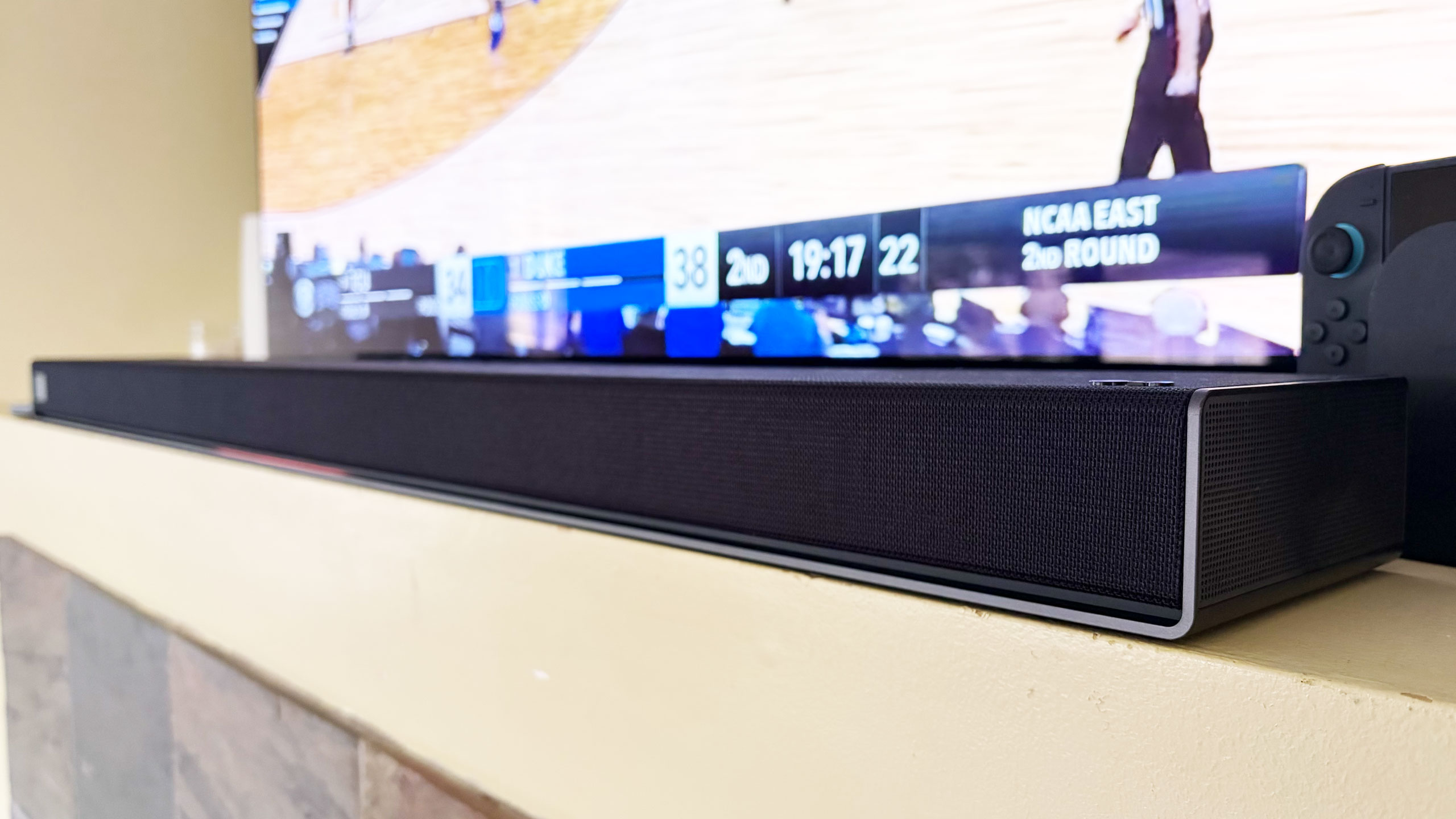
The H7 houses a dozen Peerless drivers comprising front, side and up-firing units. There’s also four woofers and eight passive radiators for bass and low-frequency audio. The soundbar has a pretty basic design, plain enough to sit in front of an LG OLED (or other premium TV) without being a distraction, and short enough not to block it. Both Bluetooth and Wi-Fi are available here, so AirPlay 2, Google Cast, Spotify Connect and Tidal Connect are all supported.
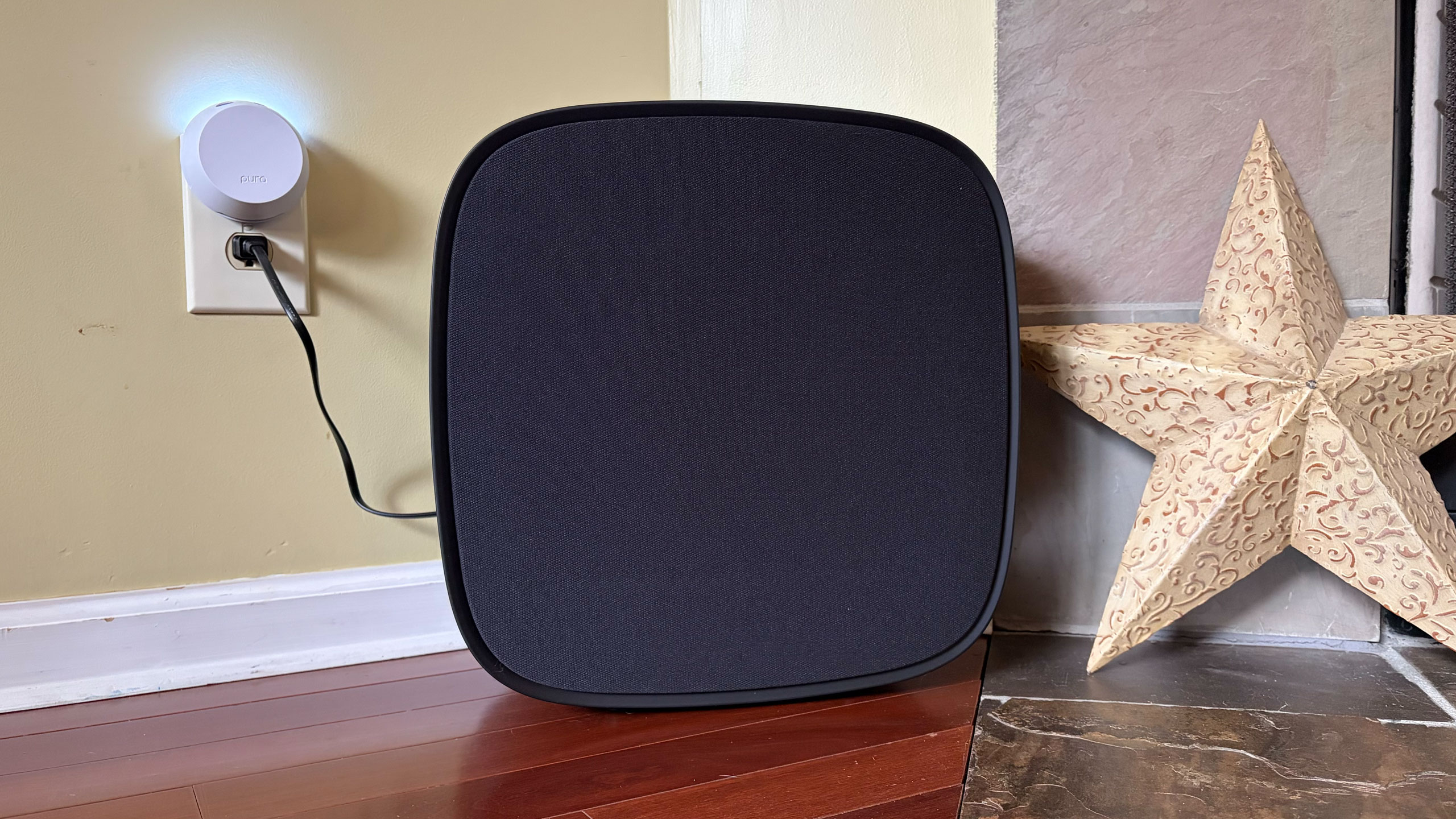
The W7 wireless sub has an 8-inch woofer that gets really boomy at times. It’s quite large at 16.1 x 16.3 x 7.6 inches, but you can use it standing up vertically or laying down horizontally — whichever orientation fits your needs or available space. The M5 and M7 speakers offer basically the same features, including AirPlay and Cast, and can be used either by themselves, as a stereo pair, as a four-speaker array or as rear satellite speakers with the H7 soundbar. The main difference is the M7 has two full-range drivers, one up-firing driver and a woofer while the M5 only has a tweeter, an up-firing driver and a woofer.
What is Dolby Atmos FlexConnect?
FlexConnect is a home theater audio technology that Dolby announced in 2023. It was available on TCL’s Z100 speakers last year, but LG’s Sound Suite marks the first time the feature has been available on a more robust living room product that includes a soundbar. FlexConnect allows you to position speakers anywhere in a room without sacrificing audio performance. The tech uses a TV or soundbar as the lead device to locate speakers so it can tune the sound to match their positioning. The system can also quickly adapt when you move a speaker — maybe for a party or other special occasion.
FlexConnect works as advertised, but there is one caveat that should’ve been obvious, although I didn’t anticipate it. Every time you add or remove speakers from a DAFC group, you’ll need to recalibrate the system, which includes the software playing sounds from the speakers so that the TV or soundbar can locate them and Dolby’s tech adjusts their output. It doesn’t take long, but there is audible noise from each unit in the group, so you’ll want to factor in that time — and potential annoyance for anyone else in the house.
Other Sound Suite features
LG Sound Suite H7 soundbar
Billy Steele for Engadget
Sound Suite offers some of the same features as LG’s other home theater products. Those include Night Mode, Room Calibration Pro, AI Sound Pro+ real-time audio upscaling and Clear Voice Pro+ for enhanced dialogue. For the Sound Suite, LG has also introduced Sound Follow, a feature that allows you to adjust the “sweet spot” for the system based on where you’re sitting.
Once you set your current position with a tap in the ThinQ app, Sound Follow is supposed to change the levels and tuning accordingly. I’m not entirely sure this was working on my system. Unlike my demo at CES, the seating position on the FlexConnect layout in the app was never updated. And while the UI seemed to indicate the change was made when I tapped the buttons, I couldn’t hear any difference in the audio. I asked LG for more information to ensure Sound Follow is functioning properly.
A word about setup
Like most soundbars and speakers these days, you have to use an app to get them all connected and properly set up. And like Samsung, LG makes you do that through the same app that handles all of its connected devices — including appliances. Once you unbox and plug in the Sound Suite speakers, you add them in the ThinQ app as a new home theater arrangement. The software shows you which speakers are available to use and allows you to select which ones you want in the initial Dolby Atmos FlexConnect grouping.
The app will ask you to set the distance between the soundbar and your primary seating area before running the sound optimization (tuning) process. ThinQ will display the speaker layout and you can edit the DAFC group at any time. If you move a speaker though, you’ll need to run the optimization again for the best audio performance. And if you’re using an LG TV as the lead device, all of this is sorted onscreen rather than in the app.
Overall, the process is pretty straightforward, although I encountered some pretty significant connectivity issues that were very frustrating. I review soundbars and speakers regularly, so I’m familiar with the process of using an app to connect devices to my home Wi-Fi in order to get them up and running. With the H7, it took a few days to get it connected, which meant I could only use the soundbar with the audio options available on LG C5’s menu and wasn’t able to set up a larger Sound Suite configuration. After several router and soundbar reboots, I was finally able to get the H7 to connect and become available to finish the install. I’ve never had this problem before, so perhaps LG did something different with the Wi-Fi components here.
LG Sound Suite M7 speakers
Billy Steele for Engadget
When I was adding the M7 speakers to my DAFC setup, I had no issues connecting them to Wi-Fi initially. However, I did have trouble adding them to the FlexConnect group, which required each piece of the Sound Suite playing an audio calibration clip. Repeatedly, the ThinQ app told me there was a connection issue with one of the M7s, although eventually they all somehow got added anyway. I also had trouble removing speakers from the arrangement. Even though the app said sound was only coming from the H7 soundbar, one of the two M7 speakers was still connected and emitting sound when I didn’t want it to. For some reason, this only happened when playing music over AirPlay — TV audio over HDMI eARC always functioned as intended.
If you’re using the TV as the lead device, you do all of the setup on the screen. I found this method to be more straightforward and reliable, although it blasted the calibration sounds at a deafening volume. There is a big issue though: Once connected to the TV as a DAFC setup, the speaker settings weren’t available in either the ThinQ app or on-screen menus. This meant I was stuck in standard mode, with things like AI Sound Pro+ inaccessible. I asked LG for more info on this because it greatly impacts the overall experience.
Which configuration sounds best?
Before I get into describing the various Sound Suite configurations, I need to make an important note about the limitations for the possible setups. LG only allows a maximum of five speakers in any Sound Suite arrangement, but you can mix and match however you want. Just remember if you don’t opt for the H7 soundbar, you’ll need a compatible LG TV as the lead device for FlexConnect to work.
You can also use the M5 and M7 as standalone speakers in another room and swap them in and out of your living room or home theater setup as needed. In the multi-room scenario, Sound Suite speakers function much like a Sonos system would, and the M7 is more than capable of being a standalone music speaker with plenty of detail and decent bass. I wasn’t able to test the M5, so I can’t vouch for that one. Keep in mind that if you opt for the M5 or the M7 for your living room, you’ll need at least two of either one to use FlexConnect with your LG TV.
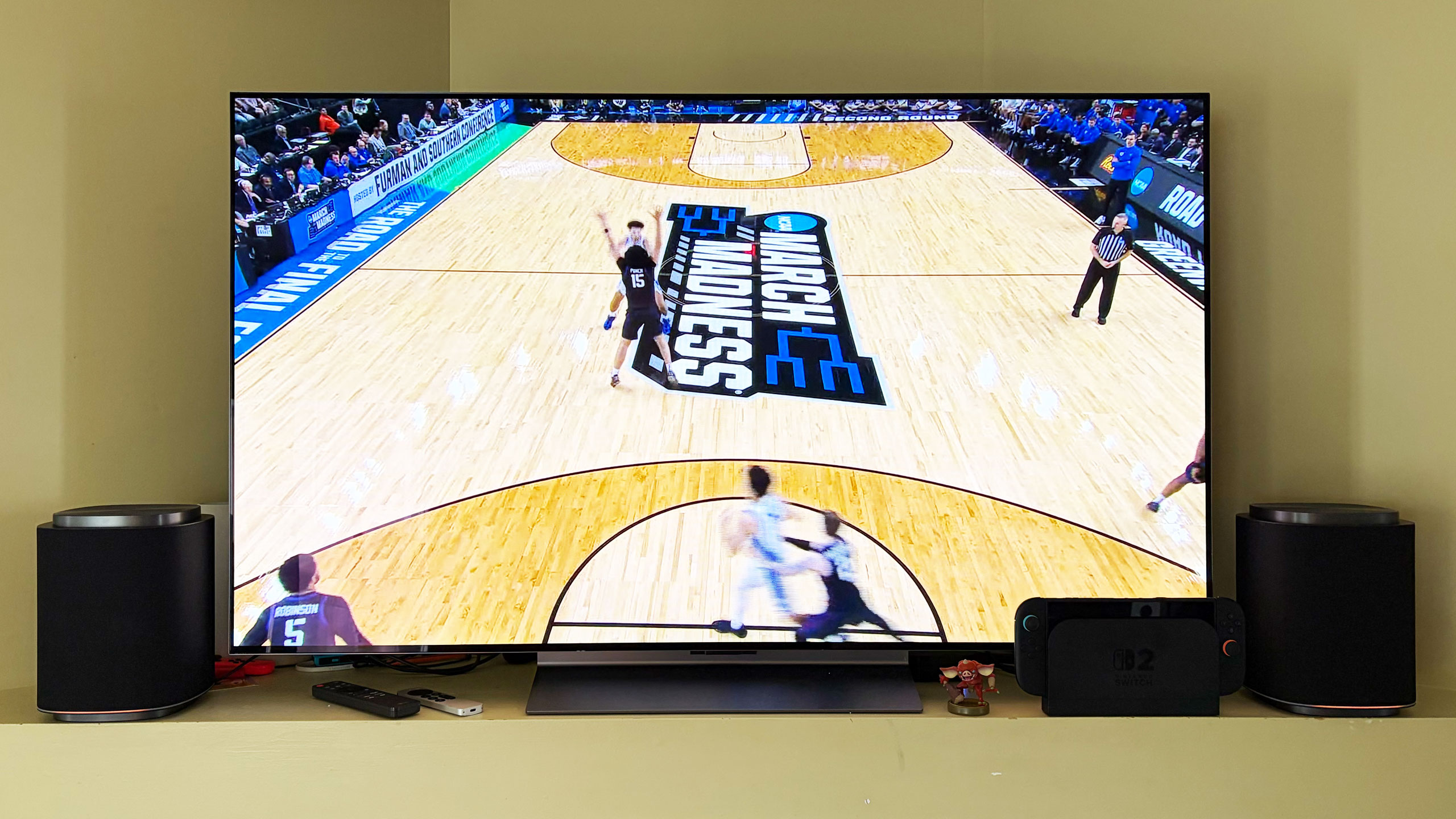
After testing multiple configurations of the Sound Suite, I think the combination of the H7 soundbar, W7 subwoofer and two M7s is the ideal arrangement. I’ll hedge that a bit as I prefer to disable the M7s in the rear of the room when watching live TV — especially sports — as the same audio coming from the soundbar and those speakers didn’t really enhance the experience. Plus, arena noise seemed overly echo-y and off-putting. This setup is well-suited for streaming TV shows and movies, things where Dolby Atmos, or at least LG’s spatial upscaling, is at the height of its powers.
The LG Sound Suite W7 subwoofer is quite large
Billy Steele for Engadget
In this setup with the H7 as the lead, you get Sound Suite in its most immersive form. I always use Netflix’s Drive to Survive as my first test of a new home theater system, and LG’s lineup handled it like a champ. You get excellent directional audio, which makes the cars sound like they’re zooming around your living room. And the in-car shots are so enveloping, it’s like you’re sitting right behind the driver. This configuration also works well for music, though I preferred to use either one of the M7 speakers or the soundbar/sub duo rather than the whole shebang.
My second favorite setup is four M7s. Once again, this configuration requires an LG TV as the lead device, but if you have that, you can definitely save some room in front of your television with separate front speakers. Unfortunately, you can’t use a subwoofer too because if you’re using a TV to power the speakers, you can only add up to four. That’s a real bummer, but the TV speakers will be used as a center channel (dialogue) boost, so it’s not a complete waste. However, this arrangement would benefit from more bass.
The four-speaker setup could be particularly beneficial for people who mount their TVs on the wall and don’t want a soundbar underneath. And, again, FlexConnect allows you to put the speakers anywhere, not necessarily flanking your TV. You also get the option of moving these smaller speakers around when you need to — something you can’t really do with a soundbar. The only sacrifice I noticed audio-wise is that two M7s in the front doesn’t offer the same overhead sensation for Atmos content as the H7’s up-firing drivers.
If you’re just using four M7 speakers for home theater duties, you’ll enjoy the immersive audio these Sound Suite speakers will provide. There’s lots of directional sounds with Atmos content, and there’s plenty of subtle detail that comes through on movies and shows. However, for live sports, this arrangement pulls commentary audio from the TV speakers and puts much of the arena/stadium noise in the rear M7s, which makes it difficult to hear the announcers at times. This is one area where the inability to adjust the audio settings really hampers the experience.
If you’re hoping to invest in something that can pull double duty for music, I prefer one or two M7s for that purpose. And while there’s decent low-end thump, streaming your favorite tunes is where you’ll notice the absence of that W7 subwoofer.
The competition
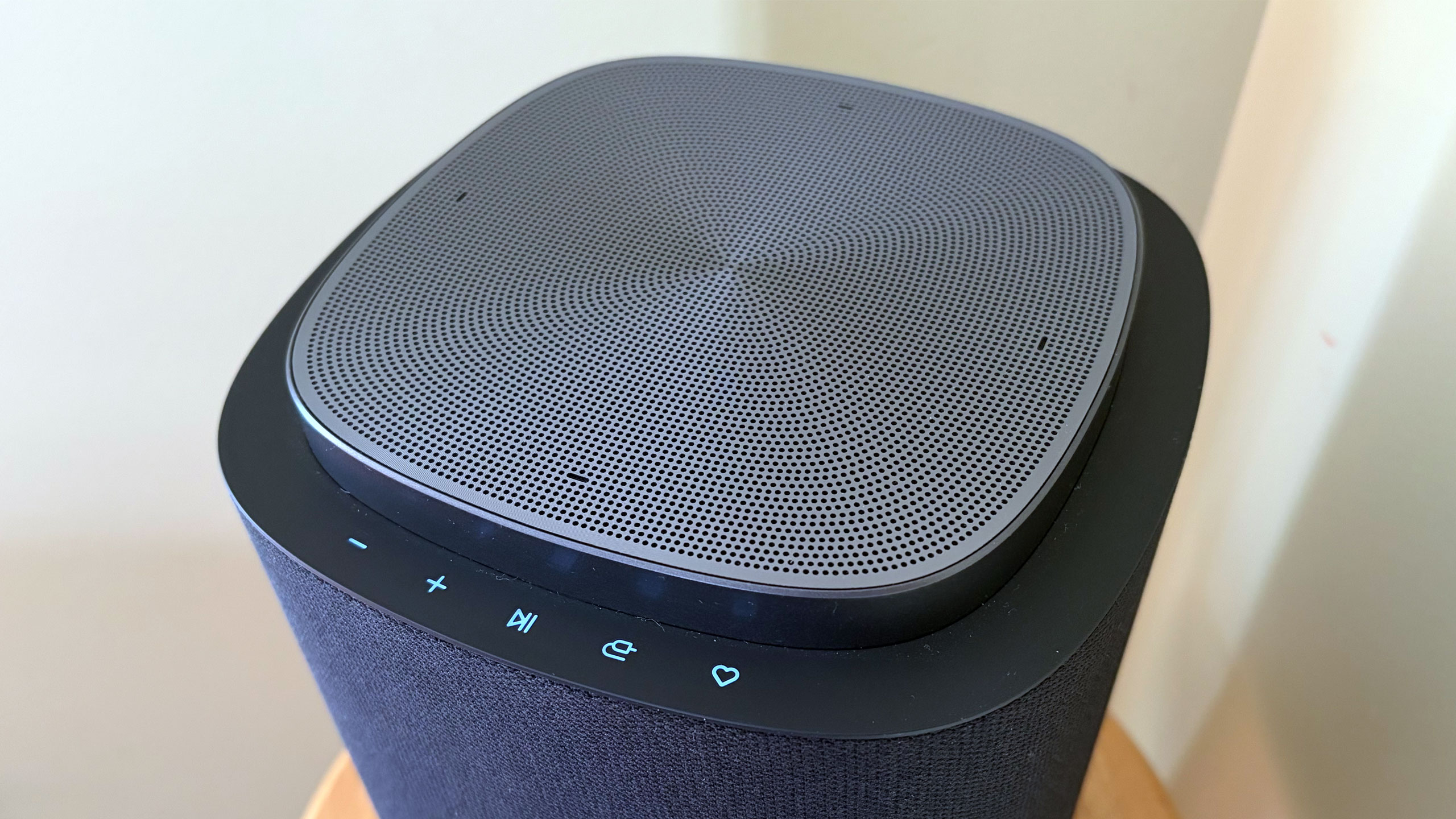
The controls on the LG Sound Suite M7 speaker
Billy Steele for Engadget
If you’re looking for alternatives to LG’s Sound Suite, you have to make some sacrifices. The only other option right now that offers Dolby Atmos FlexConnect is the TCL Z100 speaker. Obviously, you’ll need multiples of this $300 device, and you’ll probably want to add the $350 subwoofer, too. Like the LG M7, you’ll need a compatible TCL TV to serve as the lead device for FlexConnect (a QM6K, QM7K, QM8K, QM9K or X11L model). I haven’t tested these 1.1.1-channel units, so I can’t provide a direct comparison to the Sound Suite’s M5 or M7.
For those who can live without FlexConnect, Samsung’s Q990 series is consistently the best all-in-one setup you can buy. I haven’t reviewed one since 2024 because the company has been keen on shipping new models with minimal updates, which means the hardware and most of the features remain the same. The HW-Q990H will be the latest installment when it arrives later this year, with the biggest differentiator being a new dialogue boost called Sound Elevation.
While the Q990 always comes with rear speakers and a subwoofer alongside a powerful soundbar, some features will only be available if you also have a Samsung TV. One of those is Q-Symphony, which utilizes TV speakers alongside the Q990’s drivers for more detailed and immersive sound. For the entire Q990 package, you’re looking at $2,000 — $100 less than the comparable Sound Suite arrangement of the H7 soundbar, two M5 speakers and a W7 sub.
Wrap-up
There’s no denying that LG has created a powerful and immersive living room experience with its Sound Suite lineup. I also like that the company allows customers to decide what they need without sacrificing the main draw of FlexConnect. While I did experience some setup and software issues, those are things LG can iron out over time — Sound Suite is still brand new, after all. I would like to see the company offer some discounted bundles and continue to add more audio features over time to justify the hefty investment. If you’ve got a couple grand to spend, especially if you have a recent LG TV, Sound Suite will be your best option for building out a home theater setup.
This article originally appeared on Engadget at https://www.engadget.com/audio/speakers/lg-sound-suite-review-dolby-atmos-flexconnect-in-a-powerful-package-160000544.html?src=rss
Microsoft has locked in its second games showcase of the year. A Xbox Partner Preview stream will take place on March 26 at 1PM ET. It'll be available on the Xbox YouTube and Twitch channels. There'll be dedicated Twitch and YouTube streams with ASL interpretation, another featuring British Sign Language and one with audio descriptions in English on the main Xbox YouTube channel.
The YouTube stream will be in 4K at 60fps (other channels are limited to 1080p) and have subtitle support for nearly three dozen languages. The broadcast will be available on regional Xbox channels as well.
This showcase is all about upcoming games from Xbox's third-party partners. It will feature an in-depth look at Ryu Ga Gotoku’s Stranger Than Heaven (formerly known as Project Century), an update on Stalker 2: Heart of Chornobyl and the latest peek at The Expanse: Osiris Reborn. Along with those, expect some world premieres. Of course, many of these projects will be coming to Game Pass.
This article originally appeared on Engadget at https://www.engadget.com/gaming/xbox/xbox-lines-up-a-partner-preview-showcase-for-march-26-140117249.html?src=rss
As Google promised, Apple AirDrop sharing is expanding to more Android devices. Samsung announced today that its Galaxy S26 Series is getting AirDrop support through the Quick Share feature.
Google first introduced the Quick Share feature on its Pixel 10 phones last year and, in February, shared plans to increase the number of devices included. The setting allows Android users to send and receive photos and files from an Apple device, much like two Apple users do with AirDrop. To get media from an iPhone, Android users need to turn visibility settings onto "everyone for 10 minutes."
Starting tomorrow, March 23, Samsung will begin rolling out this AirDrop support in Korea. It should then expand to areas such as North America, Europe, Hong Kong, Japan, and Latin America. Once again, Samsung states that additional devices should be able to get AirDrop compatibility soon.
This article originally appeared on Engadget at https://www.engadget.com/mobile/smartphones/samsungs-galaxy-s26-will-get-apple-airdrop-support-starting-today-110452832.html?src=rss
Elon Musk has announced the Terafab project, a joint venture between Tesla, SpaceX and xAI, to build the "largest chip manufacturing facility ever." In his usual grandiose fashion, Musk claims Terafab is the next step towards harnessing the power of the sun and creating a "galactic civilization."
Musk, CEO of all three companies, announced plans for the Terafab in a livestream on X. As the name implies, the project's ultimate goal is to produce a terawatt of computing power each year so that it can match the companies' growing demand for chips. Musk explained during the livestream that he's grateful to existing supply chain partners like Samsung, TSMC and Micron, but the current capacity of chip manufacturers only adds up to about two percent to what Tesla and SpaceX needs in terms of future computing power needs.
"We either build the Terafab or we don't have the chips," Musk said during the event. "And we need the chips so we're going to build the Terafab."
The Terafab project, estimated to cost at least $20 billion, will start with the Advanced Technology Fab in Austin, Texas, where Tesla is already headquartered. Musk said that the two types of chips will be produced in the Terafab: one for terrestrial purposes, like to power Full Self-Driving or Optimus robots, and another more high-powered, durable chip to be used in space. If you're wondering what Musk has in store for space, the SpaceX CEO filed an application with the Federal Communications Commission to launch a million satellites to create an "orbital data center" earlier this year. As promising as this sounds, it's worth noting that Musk has previously overpromised and underdelivered on other projects, like the Hyperloop, a $40,000 Cybertruck and fully autonomous driving.
This article originally appeared on Engadget at https://www.engadget.com/science/elon-musk-announces-terafab-project-he-claims-will-be-the-largest-chip-manufacturing-facility-ever-171718545.html?src=rss
There could be one more step required before creating an account and posting on Reddit in the future. According to Reddit's CEO, Steve Huffman, the social media platform is exploring different ways to verify a user is human and not a bot. When asked by the TBPN podcast how to confirm that it's a human using Reddit, Huffman responded with several verification methods with varying degrees of heavy-handedness.
RDDT requiring Face ID was not something I had on my bingo card but something has got to be done about all the fake / botted content — I just don't know how to sell face-scanning to redditors or even lurkers. https://t.co/7e7K3Di4ip
"The most lightweight way is with something like Face ID or Touch ID," Huffman said during the interview. "They actually require a human presence, like a human has to touch, or do or look at something, so that actually just proves there's a person there or gets you pretty far."
Besides these passkey methods that use biometrics data, Huffman said there are other options like relying on third-party services that are decentralized or don't require ID. On the other end of the spectrum, Huffman also mentioned more burdensome options, like ID-checking services.
Recent years have brought a rise in bots floodingsocial media platforms including Reddit, where they've even been used to conduct secret experiments. It doesn't sound like Reddit has landed on how to verify its users' human identity yet, but Huffman did emphasize that the platform still wants to prioritize anonymity for its users. However, verifying humanity through identifiable and personal data could end up as a dealbreaker for Reddit users who value the anonymity of the platform.
"Part of our promise for our users is we don't know your name but we do want to know you're a person," Huffman said. "It'll be an evolution for us for a while, and probably every platform to find the right middle ground here."
Reddit co-founder and former executive chair, Alexis Ohanian, said on X that Reddit requiring Face ID wasn't something he expected but agreed that something had to be done about the fake content from bots, adding that, "I just don't know how to sell face-scanning to Redditors or even lurkers." We reached out to Reddit's communications team and will update the story when we hear back.
This article originally appeared on Engadget at https://www.engadget.com/social-media/reddit-is-weighing-identity-verification-methods-to-combat-its-bot-problem-195814671.html?src=rss
A legal feud between the co-founders of Lux Optics, the developer behind the Halide camera app, revealed that Apple was close to acquiring the company. As first reported by The Information, Apple held acquisition talks for Lux Optics, which also developed the Kino, Spectre and Orion apps, in the summer of 2025.
According to The Information, the deal eventually fell through in September of that year, but the potential acquisition could've provided Apple with the third-party software to improve its own built-in camera app. Apple is already rumored to be introducing variable aperture to its upcoming iPhone 18 Pro models, so it's not surprising that the iPhone maker was looking for software with advanced features to match its possibly upgraded camera hardware.
Despite Apple's interest, Lux Optics' co-founders, Ben Sandofsky and Sebastiaan de With concluded that future updates to Halide could increase the company's valuation and ended the acquisition talks. According to the lawsuit between the co-founders, Sandofsky started investigating de With for the alleged misuse of company funds shortly after the talks with Apple ended. Afterwards, de With was fired from Lux Optics and later joined Apple's design team. While Halide may remain third-party software for iPhones and iPads, users can still look forward to some software improvements to the built-in camera app, since that's reportedly one of Apple's priorities.
This article originally appeared on Engadget at https://www.engadget.com/apps/apple-considered-buying-halide-to-upgrade-its-native-camera-app-175139818.html?src=rss
It doesn’t sound like Crimson Desert, the recently released prequel to Black Desert Online, will support Intel Arc GPUs anytime soon, if at all. On the game’s FAQ page, its developer Pearl Abyss advised players expecting Arc support to apply for a refund. “If you purchased the game expecting Intel Arc support, please refer to the refund policy of the platform where the game was purchased for available options,” the company wrote. Apparently, though, it’s not from lack of guidance from Intel. The chipmaker told Wccftech that it reached out to Pearl Abyss “many times” over the past several years.
The Intel spokesperson said that the company has tried to help the developer “test, validate, and optimize support for Intel graphics” for years. Intel also tried to provide the developer “early hardware, drivers, and engineering resources” across several generations of GPUs, “including Alchemist, Battlemage, Meteor Lake, and Lunar Lake.” The chipmaker said it’s “hugely disappointed that players using Intel graphics hardware” can’t play the game, but that it remains “ready to assist Pearl Abyss” however it can. It also advised players to reach out directly to the developer for “details on the choice not to enable Intel support at launch.”
Pearl Abyss, of course, doesn’t have the obligation to tweak the game so that it runs on PCs with Intel Arc GPUs. The good news is that since the title came out just a few days ago, it will still be easy to get a refund. Steam, where Crimson Desert is now one of the top-selling games, issues refunds within two weeks of purchase.
This article originally appeared on Engadget at https://www.engadget.com/gaming/pc/intel-says-crimson-desert-devs-ignored-offers-of-help-to-support-arc-gpus-155514896.html?src=rss
Apple already announced a lot of new devices in 2026 and we’ve been busy reviewing them all. In this installment of our bi-weekly roundup, we revisit the MacBook Neo, iPhone 17e and more, in addition to the “regular” Galaxy S26 and Dell XPS 16. There’s even more than those gadget to catch up on, so sit back, relax and cozy up to some fresh reviews.
Apple MacBook Neo
The main attraction for Apple’s early device deluge was the $599 MacBook Neo. The company is finally giving us something we’ve been begging for: a low-cost Mac laptop that’s good enough for most people. “It's a $599 computer that can handle basic workloads just fine, all the while looking like one of the company's more expensive notebooks,” senior reporter Devindra Hardawar said. “Most importantly, it delivers more speed, a brighter screen and an overall better user experience than any competing $600 Windows PC.”
Apple iPhone 17e
The MacBook Neo wasn’t the only affordable device Apple announced recently. The company also debuted the iPhone 17e, which is also $599 and offers an economical choice for iOS devotees. “The name “iPhone” carries its own premium, and the iPhone 17e is a solid entry-level handset for those who need a basic, no-frills path into the Apple ecosystem,” managing editor Cherlynn Low said.
The rest of the new Apple gear
The remainder of the new Apple devices were primarily chip upgrades. The company added the M4 to the iPad Air, which deputy editor Nathan Ingraham still argues is the best Apple tablet overall. Apple also put the M5 chip inside the MacBook Air and the M5 Pro and M5 Max silicon in the MacBook Pro,. Our staff maintains that those two laptops are among the best choices in their respective categories.
We also tested Apple’s claims on the Studio Display XDR, where we discovered the high price could be worth it for pros who need supreme color accuracy and high brightness.
Samsung Galaxy S26
The Galaxy S26 Ultra may get the bulk of the attention in Samsung’s 2026 lineup thus far, but the “regular” S26 is capable in its own right. However, it’s time for bigger updates on this model. “There's nothing wrong with this safe, solid Android phone, but you could pick up last year's S25 and get an experience that's 99 percent the same for $99 less,” UK bureau chief Mat Smith said.
Dell XPS 16 (2026)
Dell pulled a 180 after nixing its XPS brand last year. Enter the XPS 16. Thankfully, the first devices after the fiasco show an expected return to form, albeit with one issue. “My one complaint is that I wish Dell would bring back the chiclet-style keyboards we got on models from the early 2020s,” senior reporter Sam Rutherford said. “Though as long as the company can release updated software to fix the ghosting issues I've encountered, what's on there now is more than good enough.”
But wait, there’s more
If portable projectors are more your speed, contributing reporter Steve Dent put the Soundcore Nebula P1i through its paces. Mat also spent some time with the Nothing Phone 4a Pro, which is undoubtedly the most uniquely designed handset we’ve tested this year. Lastly, Sam used an upgraded version of Belkin’s Switch 2 charging case to keep his gaming handheld safe and topped up in transit.
This article originally appeared on Engadget at https://www.engadget.com/engadget-review-recap-lots-of-apple-devices-galaxy-s26-dell-xps-16-and-more-120000820.html?src=rss