Lush’s Bath Bot brings the bath bomb to a digital level

Taking a bath is a functional experience that we all have almost every day. There are of course people who get bored when in the shower or in the bath tub so they do something else like singing in the shower, listening to music or podcasts, or even having a mini dance party just to relieve the routine. If you have a bathtub, adding a bath bomb every once in a while can make you feel like you’re at a bubble party. What if you could have all of these experiences using just one device?

Designer: Lush

Lush is a brand that you wouldn’t normally associate with gadgets or devices but it is closely co-related with taking a bath. They are set to release their very own “digital bath bomb” called Bath Bot which will be able to give you a “custom light, sound, and colour experience” whenever you take a bath. Basically it’s the same size and shape of their bath bombs but is actually a water-proof speaker that you can put in the bathtub with you or on the sink near your shower if you don’t have a bathtub.

The Bath Bot will give you a 180-degree sound show so you can play your favorite music or audio book or podcast while enjoying a bath. If you want more of a colorful mode, you can also get full-spectrum multi-directional lights so you can have your very own spa or rave experience, whichever end of the spectrum you want. There are several colors available including lavender, pink, red, green, blue, etc. You can also have tiny bubbles fizzing across the speaker if you want even more of a multi-sensory experience.

The devices themselves are just available in two colorways: white or black. But you have several modes available like Rave Mode, Fun Mode, and Sleepy Mode, all of which you can adjust in the Lush app which also has podcasts and playlists. I don’t get bored when taking a bath but this just take my bathing experience to a whole new level.

The post Lush’s Bath Bot brings the bath bomb to a digital level first appeared on Yanko Design.

Teenage Engineering made a tricorder-like gadget that’s actually a portable synthesizer

Teenage Engineering is best known for audio equipment with unique aesthetics, though it does sometimes put out unrelated products, such as a desktop PC tower, wooden “choir” mini figurines, and a toy car. That last one was its prelude to the real product launch it had planned, a product that seemed to straddle the line between a full-fledged tool and a sophisticated toy. Given its size, design, and pedigree, Teenage Engineering’s shiny new EP-133 K.O. II is something you might find hard to take seriously at first glance. Fortunately, it seems to have just the right knobs and buttons, literally, to make it a real tool for music makers, at least those that will be able to shoulder its price.

Designer: teenage engineering

This new sampler, sequencer, and composer takes its inspiration from the brand’s Pocket Operator PO-33 K.O. I back in 2015. This device’s small, calculator-like design and accessible price point really made it look and feel more like some fun gadget for some whimsical music mixing. In contrast, the EP-133 K.O. II, or just KO II, for short, is way too large to fit in your pocket, which is the price you’ll have to pay for significantly more functionality that makes this portable synthesizer worth its weight in gold.

The aesthetics are also worlds apart as well. While the Pocket Operators really looked more like black Pocket Calculators, the KO II more than doubles the size and injects a mix of grays, whites, and oranges all over the place. The large buttons, tall knobs, and industrial aesthetic might remind some of the props from sci-fi shows during the 60s, specifically those from Star Trek. The rectangular screen’s choice of colors and shapes to display the user interface is also reminiscent of the show’s LCARS user interface. It might even be able to play those tricorder sound effects because, after all, it is a portable synth anyway.

It actually has quite a lot of features for that purpose, including 999 sample slots and a built-in speaker. There’s also a built-in mic to let you record your own samples right then and there, as well as a selection of drums, bass, and keys to help you get started. There’s a 3.5mm headphone jack in case you want to extend the sampler’s features, but do note it only has 64MB of memory, which is probably the biggest deal-breaker for this product. Apparently, the limitation is there to encourage musicians to finish their creations in one go rather than delaying them forever.

Teenage Engineering is slapping a $299 price tag on the EP-133 K.O. II, amusingly just $50 more than its toy Grip Car. It’s still considerably lower than its other synths, enough to entice music makers of all skill levels, but still quite a hefty investment. Then again, it’s a fully functional portable groove box that has quite a distinctive design you can flaunt around, giving you an image of a retro-futuristic music genius controlling the beat with your hi-tech tool.

The post Teenage Engineering made a tricorder-like gadget that’s actually a portable synthesizer first appeared on Yanko Design.

World’s First Programmable Music Box can play anything from Christmas Carols to the Latest Pop Hits

Nostalgia Upgraded – The Muro Box brings a fond childhood music instrument into the future with App Support and MIDI Connectivity

The second you hear a music box, your mind is taken to a fairytale land. Music box sounds have been used in cinemas to transition to dream sequences, showing exactly how rooted the sound of a music box is in childhood nostalgia. In the past, most of these mechanical musical instruments were found inside toys like snowglobes, jack-in-the-boxes, or other wind-up toys. You can still find music boxes today, although most of them just play fixed tunes like your odd nursery rhyme or Happy Birthday (some novelty stores even sell music boxes that play the Harry Potter or the Game of Thrones theme)… but the folks behind the Muro Box are doing something absolutely unusual. The Muro Box is the first customizable music box that can play pretty much any tune you want it to play, thanks to app connectivity and a MIDI interface. You can use Muro Box’s app to either compose your own tracks or browse through a library of pre-composed tracks… or better still, hook it to a MIDI synth and play music directly from your keyboard onto the Muro Box. The result is a charmingly nostalgic rendition of pretty much any song. Whether it’s a Christmas Carol or a Slipknot song, it’s sure to sound positively delightful and just incredibly dreamy!

Designer: Muro Box Global

Click Here to Buy Now: $299 (Ships Before Christmas) Hurry! Only 7 Days Left!

The way most music boxes worked was simple. Each box would come with a rotating cylinder that had studs on it, and a metal comb placed strategically near said cylinder. When the cylinder would rotate, the studs would ‘pluck’ against the comb, creating notes. Based on the cylinder’s pattern, you could play elements of any song. The problem with the music boxes of the past, however, was that A. You couldn’t change the song and B. The drum’s limited circumference meant you could only play a small portion of the song over and over again, which would become a little annoyingly repetitive after the first few times. The Muro Box solves both those problems thanks to a patented dynamic cylinder that can change while it rotates. This game-changing innovation allows the Muro Box to not just play different songs, but also play ENTIRE songs.

While the Muro Box is built to be a treat for one’s ears, its beauty starts with that gorgeously nostalgic design, echoing the steampunk aesthetic of the good old days. The mechanical parts of the box are surrounded by gorgeous brass detailing, sitting on top of a single-piece maple or acacia wood platform. Zinc-alloy components help create a warm, pleasant sound, while the acacia platform comes with an acoustic chamber that amplifies the music box’s sound. A glass enclosure seals the Muro Box’s internal components, preventing dust, dirt, or fidgety children from toying with the box’s delicate assemblies. Quite like the Muro Box’s sound transports you to a simpler time, its design is a hallmark of the simpler years before electronics, circuit boards, and internet connectivity.

That being said, the box itself has some seriously impressive tech underneath its hood. It’s designed to be entirely programmable, which means you can choose what to play, thanks to a variable cylinder design that can pluck on the resonating comb in a variety of ways. The box connects to an app that allows you to either choose from a library of songs, or design your own melodies using a MIDI-style interface (think Guitar Hero, but with more notes). A single-button interface lets you twist to toggle between songs in the app’s playlist (left for previous, right for next), and pressing the button toggles the play/pause feature. If you’re looking to push the Muro Box to its absolute limit, a MIDI port on the back lets you connect your Muro Box to a synth or a laptop running a DAW, so you can play more complex melodies directly off music production software.

Most users will be more than content with running the Muro Box off its app. The vast library contains user-submitted tunes from all around the world, featuring classics, latest hits, and even local/regional tunes. Pick a tune and the box begins emitting a gentle whirr that’s punctuated by the melodious clinks of the cylinder’s studs hitting the resonating comb. The Muro Box’s different variants come with single, double, and quadruple-comb arrangements, allowing you to play simple tunes or even incredibly layered musical compositions.

The Muro Box comes in three variants, ranging from simple to complex. The catalog starts with the N20 Lite, a redesign of the company’s first N20 music box from back in 2020. The N20 Lite comes outfitted with one 20-note music comb, limiting the number of notes you have to play with. Designed to be smaller than its siblings, it also ditches the MIDI feature for app-only control, and comes with a battery-powered design that lets you carry your music box with you, unlike the larger models that are wired.

The next step in the Muro Box journey is the N40 Standard, with two 20-note combs, giving it a total of 40 notes. This allows the N40 to cover more notes and more octaves, allowing you to play more complicated songs with a lower baseline and upper melody. The final music box in the series is the N40 Sublime, a more complex version of its standard sibling with four 20-note combs instead of two. However, instead of offering 80 different notes, it sticks to 40 notes, but has duplicates for each note. This makes each individual note sound richer as it’s played twice, creating more resonance. The phenomenon is called Sublime Harmonizing, and the best way to understand the difference is to think of a solo singer versus a choir.

Both the N40 variants come with a DIN 5 and USB-C MIDI input, and there’s even a 6.5mm (1/4 inch) audio output with a transducer pickup system. The N40 Standard comes with a Maple box, but you can upgrade to the high-quality Acacia for an extra $90. The N40 Sublime, on the other hand, is outfitted with the acacia-wood box and even has a laser-engraved metal plaque that you can customize with a message of your own.

The Muro Box starts at a commendable $299 for the N20 Lite, going up to $996 for the N40 Standard or a hefty $1,826 for the N40 Sublime. It’s difficult to put a price on nostalgia but the Muro Box definitely doesn’t make things cheap! The music boxes are all made in Taiwan, and ship globally as early as December 2023.

Click Here to Buy Now: $299 (Ships Before Christmas) Hurry! Only 7 Days Left!

The post World’s First Programmable Music Box can play anything from Christmas Carols to the Latest Pop Hits first appeared on Yanko Design.

What’s Inside A Fake AirPods Pro? CT Scans Show How Counterfeit Earbuds Are Built

Just go type the word AirPods into Temu or AliExpress and you’re likely to be flooded with results of earphones that look exactly like the AirPods, but most likely are just counterfeits. The AirPods, more than being wireless earphones, are a fashion and social statement. Everyone craves being seen wearing them, and that sort of crowd response doesn’t go noticed by folks sitting in factories in Shenzhen. Counterfeit AirPods can be found across an entire spectrum. Sometimes they’re just shitty $10 earpieces stuffed into an AirPod plastic shell, other times they’re so convincingly good that they even end up fooling Apple devices into pairing with them. The trick to avoiding falling for a fake is to simply ensure you’re either buying your goods directly from Apple, or a certified Apple retailer/reseller… conversely, you could do what Lumafield did by renting incredibly expensive tomography equipment to scan your products.

While I don’t endorse renting an Xray or an industrial scanner to look into your Apple gear, Lumafield’s endeavor has resulted in some wonderful findings. The company looked under the hood of a variety of Apple products, examining the difference between how real and fake ones were made. The findings reveal a lot of interesting trickery. Most of Apple’s products are engineered to perfection, but you won’t be able to say the same for a counterfeit. To cut costs, most counterfeits use unsafe parts, shoddy construction, unreliable circuitry, and even use metal pieces to mimic heaviness. Heck, sometimes they entirely miss components like some AirPods Pro cases not even having wireless charging to begin with. The point of the exercise, more than being an interesting comparison, was to highlight exactly how unsafe using some of these bogus knock-off products can be. A faulty product is the least of your worries when you think of larger implications like health hazards, exploding batteries, and gadgets being ruined by fake chargers.

Image Credits: Lumafield

CT Scans of Fake AirPods Pro: Unsafe Components, Metal Weights for Faux Heaviness

At the heart of AirPods’ convenience lies its battery technology. The authentic AirPods boast meticulously engineered button cell batteries designed for optimal power efficiency within their compact form. Counterfeit AirPods, however, use less sophisticated lithium-ion pouch cell batteries, crammed into spaces they are not designed for, potentially posing safety risks.

The disparity continues with the internal circuitry. Genuine AirPods are a marvel of miniaturization and precision engineering, featuring a combination of rigid and flexible printed circuit boards. The fakes? They’re assembled with much simpler electronics and off-the-shelf components, leading to reduced functionality and compromised sound quality.

The overall build quality also tells a tale of two products: genuine and fake. In some fakes, wireless charging is entirely absent, and others lack the necessary magnets for proper charging. Counterfeit AirPods even use internal weights to mimic the heft of the original, a deceptive tactic compensating for poorer materials and less functionality.

Comparing Real vs. Fake MagSafe 2 Power Adapters for MacBook

The differences aren’t limited to AirPods alone. Lumafield’s CT scans of the MagSafe 2 Power Adapter revealed a sophisticated power management system in the genuine Apple charger, absent in the counterfeit. The fake chargers lack the safety and longevity features of Apple’s design, raising performance and safety concerns.

Moreover, the heat sinks in the chargers differ significantly. Apple’s genuine charger uses a thin, complex heat sink, whereas the counterfeit opts for a heavier but simpler design. This difference could lead to dangerous hot spots in the counterfeit charger.

In the end, it’s a classic case of “you get what you pay for.” Those tempting savings might come at the cost of quality and safety. Opting for a counterfeit product isn’t just about saving costs; it’s about compromising on reliability and peace of mind. So next time you’re tempted by a too-good-to-be-true deal on AirPods, remember: the devil is in the details, and sometimes, those details are hidden deep inside.

The post What’s Inside A Fake AirPods Pro? CT Scans Show How Counterfeit Earbuds Are Built first appeared on Yanko Design.

OnePlus may be hinting at a transparent speaker to be launched soon

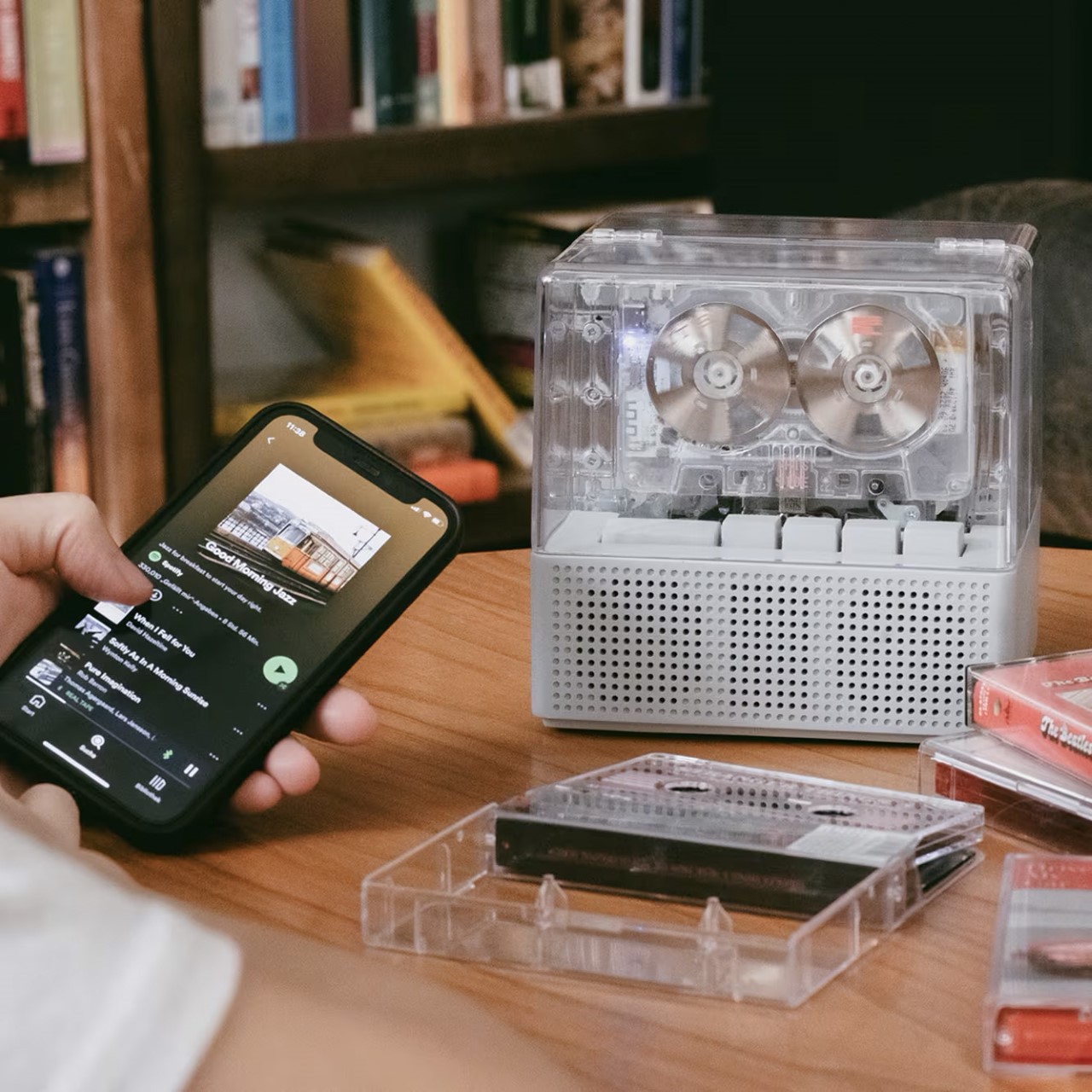
One of the better design trends that have made a comeback lately (and one that I wholeheartedly approve of) is the transparent device. We’re seeing things from phone cases to game controllers and devices to printers to keyboards to smart glasses sport that see-through design that we went crazy for back in the 90s. It’s pretty interesting to see the “inner workings” of these devices or at least pretending to see the insides of the gadgets. Now it looks like Chinese brand OnePlus may come out with their own transparent design device that is not a smartphone.

Designer: OnePlus

OnePlus India recently released a teaser ad that seems to hint at a new device that they will be announcing soon. With the tagline “The wonder of music meets the power of tech”, the teaser ad features what looks like a speaker system with an obviously transparent design. This is an expansion of their current product line which is mostly made up of mobile devices like smartphones, tablets, and wireless earbuds. While having speakers is not really that surprising, what caught people’s attention is the supposed design of the alleged device.

The teaser shows a transparent cube that shows off components that are most likely what you can find inside speakers. Since it’s still just an initial ad and not really the official one, we have no way of knowing what are the specifications of this upcoming product, whether it’s just a portable speaker or a whole speaker system. There is also some speculation that this may be a collaboration with another tech brand, Nothing, which has also been reported to be launching new audio hardware with a transparent design as well.

There is no specific date yet for an official announcement so all we have to go on, for now, is this teaser ad from OnePlus in The Times of India. But based on the image in this ad, it will be a pretty interesting piece of audio hardware if they indeed go with the transparent or see-through design. It will also be interesting to see how the brand (or brands, if the collaboration is true) will fit into the market and go against more established speaker brands.

The post OnePlus may be hinting at a transparent speaker to be launched soon first appeared on Yanko Design.

OnePlus may be hinting at a transparent speaker to be launched soon

One of the better design trends that have made a comeback lately (and one that I wholeheartedly approve of) is the transparent device. We’re seeing things from phone cases to game controllers and devices to printers to keyboards to smart glasses sport that see-through design that we went crazy for back in the 90s. It’s pretty interesting to see the “inner workings” of these devices or at least pretending to see the insides of the gadgets. Now it looks like Chinese brand OnePlus may come out with their own transparent design device that is not a smartphone.

Designer: OnePlus

OnePlus India recently released a teaser ad that seems to hint at a new device that they will be announcing soon. With the tagline “The wonder of music meets the power of tech”, the teaser ad features what looks like a speaker system with an obviously transparent design. This is an expansion of their current product line which is mostly made up of mobile devices like smartphones, tablets, and wireless earbuds. While having speakers is not really that surprising, what caught people’s attention is the supposed design of the alleged device.

The teaser shows a transparent cube that shows off components that are most likely what you can find inside speakers. Since it’s still just an initial ad and not really the official one, we have no way of knowing what are the specifications of this upcoming product, whether it’s just a portable speaker or a whole speaker system. There is also some speculation that this may be a collaboration with another tech brand, Nothing, which has also been reported to be launching new audio hardware with a transparent design as well.

There is no specific date yet for an official announcement so all we have to go on, for now, is this teaser ad from OnePlus in The Times of India. But based on the image in this ad, it will be a pretty interesting piece of audio hardware if they indeed go with the transparent or see-through design. It will also be interesting to see how the brand (or brands, if the collaboration is true) will fit into the market and go against more established speaker brands.

The post OnePlus may be hinting at a transparent speaker to be launched soon first appeared on Yanko Design.

Porsche Design Unveils the PD S20, its First Outdoor Wireless Speaker

Porsche Design, renowned for its sleek, high-performance products, has recently unveiled the PDS20, marking its first foray into the realm of outdoor speakers. This move comes after years of producing other acclaimed audio products, underscoring Porsche Design’s commitment to expanding its portfolio and catering to a wider range of audiophile needs.

Designer: Porsche Design

Porsche Design has always been about blending top-notch design with serious tech and adding a sprinkle of automotive joy; their audio line is no exception. Take the 911 Speaker 2.0 60Y 911 for instance,  a limited-edition speaker modeled on the Porsche 911’s iconic tailpipe, proving Porsche Design knows a thing or two about exclusive, high-end audio gear. And if you’re in the mood to splurge, there’s the 911 Soundbar 2.0 Pro. This baby will set you back a cool $12,000.00, but it quite literally transforms an original exhaust pipe from a Porsche 992 GT3 into a staggering 300W sound system… But here’s where things get interesting with the PDS20. This isn’t just another high-end gadget in Porsche Design’s arsenal. Priced at a respectable $245.00, it’s their first outdoor speaker, and it’s a game-changer. Unlike its predecessors, the PDS20 is built for the great outdoors, with a tough, weather-resistant design and a sound that’s just as impressive in the open air as it is indoors. It’s like Porsche Design decided to take everything they knew about premium sound, throw in a dash of adventure, and voila – the PDS20 was born.

The PDS20 comes crafted from anodized aluminum and gray acoustic fabric, presenting a minimalist and durable design. This cylindrical speaker is equipped with two passive radiators and a 1.75″ woofer, ensuring exceptional sound quality, particularly in the bass department. Its IP67 rating guarantees resilience against dust and water, making it an ideal companion for outdoor activities such as hiking or for enhancing open spaces with premium sound. The PDS20 also boasts a 10-hour battery life and quick USB-C charging, ensuring all-day uninterrupted listening. An integrated microphone facilitates easy interaction with voice assistants for playlist control, call management, and messaging, all controllable via the haptic buttons built into the PD S20’s fabric grill. For an immersive stereo experience, it can easily pair with a second speaker via Bluetooth, perfect for larger gatherings or home entertainment enhancement.

The PD S20’s blend of design styles allows it to easily transition between being a haute home speaker or an outdoor-friendly audio device. That anodized aluminum enclosure is undeniably classy, although it gets a slight hint of rugged when you slide that silicone ring in (which comes in 2 color options that you can alternate between). With its sleek design, robust build, and superior sound quality, this speaker is ready to take on any adventure, be it a backyard barbecue or a hike in the hills. It’s a refreshing addition to the otherwise relatively unattainable Porsche Design lineup (10 grand for a soundbar?!), combining their trademark elegance with outdoor-friendly functionality so you can carry your love for Porsche with you wherever you go. And the best part? You can snag one of these for $245.00. Starting from November 15, 2023, it’s up for grabs at Porsche Design stores, their website, and selected retailers.

The post Porsche Design Unveils the PD S20, its First Outdoor Wireless Speaker first appeared on Yanko Design.

The BEACN Mix Sound Controller Is on Sale at a 33% Discount

The BEACN Mix Sound Controller — a basic hardware mixer which provides convenient control over up to four audio inputs/outputs on a connected PC — showed up in August 2021 to critical streamer and podcaster acclaim alongside its slightly bigger, yet far more advanced sibling, the BEACN Mix Create. MMORPG’s Joseph Bradford noted its ease of use and great-feeling controls, though it’s broadly disagreed upon whether or not the baseline BEACN Mix controller is worth its $149 MSRP when placed so close to the Mix Create (which has a $199 MSRP). Meanwhile, both controllers compete against the Elgato Stream Deck ($199.99) in both functionality and price, albeit with a few key design differences; potentially making the BEACN Mix the better choice for regular use.

And now, for those who’ve remained on the fence about buying one or the other, the tables are turning. Drop is currently offering the BEACN Mix Sound Controller at a 33.5% markdown ($99, down from $149). Of course, there’s also the far more comprehensive Razer Stream Controller, but its $269.99 MSRP pushes it outside of the same ballpark while its $149.99 macro-only counterpart, the Razer Stream Controller X, is in a category of its own. For the limited time this offer is active, the BEACN Mix is one of the best — if not the best — dedicated streaming audio mixers you can buy, and its major design advantages over the premium-priced Elgato Stream Deck are significant where accessibility is concerned.

Designer: BEACN

Buy it now on Drop $99 $149

BEACN’s design features two colorways: Dark Blue and White, and they’re both attractive yet functional thanks to the mixer’s four large (and evidently, quite comfortable) knobs and 5-inch full-color display. These are a departure from the Elgato Stream Deck’s much tinier display, function buttons, and knobs, and that’s all possible due to its larger dimensions. Comparing the two side-by-side, the BEACN Mix Sound Controller measures in at 7.4 x 14.3 x 14.2 inches, whereas the Stream Deck is 4.6 x 3.3 x 0.8 inches. Despite the BEACN’s added comfort making it a shoo-in for someone who needs a bigger display and bigger controls, that size difference may be worth considering when determining whether your desk has enough space to fit it.

Still, it’s a plug-and-play mixer with plenty of portability, using USB-C to connect to the streaming PC via a single connection. Once that’s set up, the software seems equally easy to get rolling. Critics are less in love with the mixer’s lack of sophisticated features, however. For example, it lacks the ability to create and control submixes of similar audio signals. That’s not too important when you need something simple in a pinch, and the BEACN Mix is just that — a simple, yet durable and easy-to-configure solution for podcasting and streaming with limited space resources. If that’s you, you’ll want to grab it at its current price before the deal ends, though it’s unclear when that’ll be. Drop’s estimated ship date is December 29, 2023.

The post The BEACN Mix Sound Controller Is on Sale at a 33% Discount first appeared on Yanko Design.

Master & Dynamic MW09 TWS earbuds take the heavyweights with renewed design, sublime audio and improved ANC

If you are looking for the cream of wireless earbuds then the best bets are Bowers & Wilkins PI7 S2, Master & Dynamic MW08 and Technics EAH-AZ80. You can’t go wrong with either of these, but the PI7 S2 and EAH-AZ80 inch just a bit ahead of the ones by Master & Dynamic.

That however could change with the newly launched Master & Dynamic MW08 wireless earbuds. Just like every other brand’s earbuds, these have incremental upgrades that make them better than their predecessor. They’ve got better overall design, comfort, audio quality and ANC to lure audiophiles who are on the lookout for that ultimate package.

Designer: Master & Dynamic

The New York-based luxury audio brand released the MW08 series in 2021 and this new launch was imminent. The new ones have the design DNA of the predecessor but with a more ergonomic shape and reduced weight. This should make them a great fit for a wider range of ears. The acoustic enclosure has been upgraded and the 11mm beryllium drivers promise the “most expansive sound profile ever” for that sublime audio signature offered by the brand.

Talking of the ANC, the TWS earbuds get updated microphones and sensors aided by the noise-canceling algorithm to block out unwanted ambient noises. The call quality also gets a bump up with the AI-powered high-definition speech software for natural-sounding voice. Multipoint connectivity brings seamless connection to two devices simultaneously which has now become a standard with flagship options. The accompanying app fin tunes things to adjust the equalization levels, ANC settings and the transparency mode to hear important things while listening to music.

The buds come with a choice of foam and silicone eartips which should work for every type of audio lover. Battery life of 12 hours with ANC turned on and 16 hours with it turned off is impressive. Top that off with 32 hours of backup in the charging case and this will be a major selling point for these premium earbuds. The design is also something you‘ll absolutely love or hate. The use of anodized aluminum shells covered in sapphire glass gives off that peculiar industrial look but in a very refined form.

Master & Dynamic MW09 ANC True Wireless earbuds can be preordered from November 14, 2023 in very attractive options – black with black aluminum case, white and silver with silver aluminum case, gold with gold aluminum case, green with Kevlar case, blue with Kevlar case, and gunmetal with Kevlar case. The price tag of $349 matches the industry heavyweights and is head-on in competition with the acclaimed options I mentioned at the start of this piece.

The post Master & Dynamic MW09 TWS earbuds take the heavyweights with renewed design, sublime audio and improved ANC first appeared on Yanko Design.

YouTuber built a Bluetooth Speaker small enough to fit inside a Walnut

I don’t know what it must have cost, but I’m assuming peanuts.

Reporting to you today from the weird part of the internet, we’ve got crazy YouTuber Penguin DIY who decided to take a walnut shell and cram an entire Bluetooth speaker inside it… USB-C port and status LEDs included. The speaker’s audio quality isn’t anything to write home about, but the video above that shows the entire construction process will not (I mean walnut) disappoint.

Designer: Penguin DIY

The speaker itself a miniature little device the size of a… well, walnut. Made from the walnut’s shell, it packs all the necessary components inside, including a mini battery, amp, driver, Bluetooth module, USB-C port, and even buttons and LEDs to control playback or increase/decrease the volume.

The process involved emptying out the contents of the walnut before taking a Dremel to the inside of the walnut shell to make as much space as possible for the components. The components include a 5V power bank module that was stripped for parts because it was too big to fit into the shell. The module (or whatever was left of it) was then connected to the rest of the speaker’s parts, including a 300mAh battery pack and a USB-C port for charging the speaker.

Other components included the actual ‘meat’ of the speaker, including a 2W audio driver, a mini-amp, and a Bluetooth module to allow for wireless connectivity. All the components were rather intricately pieced together and soldered with what I can only describe as incredible dexterity for something that small, and then glued to the shell with silicon glue. This flexible glue would allow the driver’s vibrations to occur without any danger of dislodging parts inside the walnut shell.

Finally, holes were drilled into the top of the walnut to make way for the speaker grill, control buttons, status LEDs, and even a nifty on-off switch. In the interest of repairability, Penguin DIY assembled the two halves of the shell together with screws instead of glues, enabling him to open up and repair or upgrade the speaker whenever he wanted. Let’s face it, if a YouTuber can turn a walnut into a Bluetooth speaker and still make it repairable, Apple can make the AirPods repairable too.

The results are impressive but not for the reasons you’d think. The speaker works flawlessly, with it being detected on a smartphone, getting connected, and even letting you play/pause music just like any regular wireless speaker. Understandably, the sound isn’t particularly great because of driver, amp, and size limitations… but if I had to rate the speaker on a scale of 1-to-10 for sheer ingenuity and for its proof-of-concept, it gets full marks. In fact, forget pumpkin carving skills, Penguin DIY’s walnut carving skills are absolutely on point!

The post YouTuber built a Bluetooth Speaker small enough to fit inside a Walnut first appeared on Yanko Design.