Google says it’s fixed the Gmail issue that led to flooded inboxes and increased spam warnings

Your Gmail inbox should now be back to normal after Saturday’s hiccups. Google said in an update on X on Saturday night that the issue, which affected the automatic filters that keep Gmail users’ inboxes free from the clutter of promotional emails, non-urgent updates and spam, “is now fully resolved for all users.” On its Workspace status dashboard, it added that an investigation is underway, and an analysis will be published once complete.

Gmail users on Saturday reported that their inboxes were flooded with promotional emails that had not been properly sorted out of the main tab, and some said they were seeing notices that emails had not been scanned for spam. On social media and DownDetector, some Gmail users also reported delays in receiving messages, leading to issues with two-factor authentication logins. After confirming the issue, Google noted in an update on its Workspace dashboard that the problem resulted in the "misclassification of emails in their inbox and additional spam warnings," including a banner that says, “Be careful with this message. Gmail hasn't scanned this message for spam, unverified senders, or harmful software.”

In a statement to Engadget, a Google spokesperson echoed the message from its dashboard, saying, "We are actively working to resolve the issue. As always, we encourage users to follow standard best practices when engaging with messages from unknown senders."

Update, January 25 2026, 9:53AM ET: This story has been updated to reflect that the issue has been resolved.


This article originally appeared on Engadget at https://www.engadget.com/apps/google-says-its-working-to-fix-gmail-issue-thats-led-to-flooded-inboxes-and-increased-spam-warnings-183358654.html?src=rss

The plan for a gaming-themed Atari hotel in Las Vegas has reportedly been scrapped

Six years after the announcement of plans to build Atari Hotels in eight cities across the US, including Las Vegas, only one now seems to be moving forward, in Phoenix, Arizona. The Las Vegas deal ultimately "didn't come to fruition," spokesperson Sara Collins told Las Vegas Sun this week, and Atari Hotels is putting its focus into the Phoenix site "for the time being."

Phoenix was always meant to be the first site, followed by other hotels in Austin, Chicago, Denver, Las Vegas, San Francisco, San Jose and Seattle. But Las Vegas is now apparently off the table, and there haven't been any signs of life around the other planned locations. The FAQ on the Atari Hotels website notes, "Additional sites, including Denver, are being explored under separate development and licensing agreements." The Atari Hotel project was announced in 2020 just before the onset of the COVID-19 pandemic and consequently experienced development delays. Construction on the Phoenix hotel, which was supposed to break ground in 2020, is expected to begin late this year, with its opening now planned for 2028. 

But maybe don't hold your breath. According to a December press release, the company is still trying to raise $35 million to $40 million to fund the "playable destination" for gamers in Phoenix.

This article originally appeared on Engadget at https://www.engadget.com/gaming/the-plan-for-a-gaming-themed-atari-hotel-in-las-vegas-has-reportedly-been-scrapped-214212269.html?src=rss

Elon Musk says X’s new algorithm will be made open source next week

X may soon provide more insight into how its algorithm works. On Saturday, Elon Musk posted on the platform to say that the company "will make the new X algorithm, including all code used to determine what organic and advertising posts are recommended to users, open source in 7 days." 

X's recommendation algorithm has been the subject of investigations by France and the European Commission, the latter of which recently extended through 2026 a retention order that it sent to the company at the beginning of last year. And scrutiny into the platform, along with demands for accountability, have only increased after its chatbot, Grok, was caught generating CSAM at users' requests and continues to be used to digitally undress women nonconsensually. 

A screenshot of an X post by Elon Musk that reads, "We will make the new X algorithm, including all code used to determine what organic and advertising posts are recommended to users, open source in 7 days. This will be repeated every 4 weeks, with comprehensive developer notes, to help you understand what changed.
Elon Musk's X post about open-sourcing the algorithm.
Screenshot/X

Musk has been making promises of open-sourcing the algorithm since his takeover of Twitter, and in 2023 published the code for the site's "For You" feed on GitHub. But the code wasn't all that revealing, leaving out key details, according to analyses at the time. And it hasn't been kept up to date. Of the making the new algorithm open source, Musk said in his post, "This will be repeated every 4 weeks, with comprehensive developer notes, to help you understand what changed."

This article originally appeared on Engadget at https://www.engadget.com/big-tech/elon-musk-says-xs-new-algorithm-will-be-made-open-source-next-week-225721656.html?src=rss

Sharpa’s ping-pong playing, blackjack dealing humanoid is working overtime at CES 2026

There were no idle hands at Sharpa's CES booth. The company's humanoid may have been the busiest bot at show, autonomously playing ping-pong, dealing blackjack games and taking selfies with passersby. On display wasn't just the robot and its smarts, but also SharpaWave, a highly dexterous 1:1 scale human hand. 

The hand has 22 active degrees of freedom, according to the company, allowing for precise and intricate finger movements. It mirrored my gestures as I wiggled my hand in front of its camera, getting everything mostly right, which was honestly pretty cool. Each fingertip contains a minicamera and over 1,000 tactile pixels so it can pick up objects with the appropriate amount of delicateness for the task at hand, like plucking a playing card from a deck and placing it gently on the table. 

Sharpa's robot was a pretty good ping-pong player, too. We've seen ping-pong robots plenty of times before, but these typically come in the form of a disembodied robotic arm, not one that's humanoid from the waist up. The company's products are meant to be general-purpose, with the ability to handle a wide range of jobs, and its humanoid wore a lot of hats at CES to drive the point home.  

This article originally appeared on Engadget at https://www.engadget.com/ai/sharpas-ping-pong-playing-blackjack-dealing-humanoid-is-working-overtime-at-ces-2026-150000488.html?src=rss

I can’t get over this goofy, long-necked ‘cyber pet’ robot at CES

Cute, alien-inspired companion robots are a fixture at CES, but have I ever seen one with a furry telescoping neck that's also warm to the touch? No, I can't say I have before this year. OlloBot — which had possibly the cutest booth at CES 2026 — is a home robot and "cyber pet" that looks something like if you put ET's head on a penguin's body, plus a splash of fur and color. 

Its face is essentially a large tablet that displays its expressions, pictures and videos, and allows it to communicate with people in the home. OlloBot speaks its own language, but will put text on the screen when it has a message that's meant to actually be understood. There's also a companion app where family members can message with the robot, see its diary updates and play games. Like other family-oriented robots, OlloBot is designed to capture special moments and "grow" with the people using it.

Based on the interactions, it will over time develop a personality based on the Meyers-Briggs personality types. The robot responds to voice and touch, and can do tasks like make calls and help find lost objects. It will be able to control Matter-compatible smart home devices, too. All data is stored locally in a heart-shaped removable module underneath one of its flapping arms. Not only is that intended to be a privacy move, but if the robot ever breaks, the family's cyber pet (along with its "memories") can be restored by putting the old heart into a new body. 

A hand is seen lifting OlloBot's arm to reveal a red heart underneath, which serves as a removable module that contains its data
OlloBot's heart
Cheyenne MacDonald for Engadget

According to a member of the OlloBot team, a Kickstarter campaign to fund the robot's production is planned for this summer. There will be two versions of OlloBot to choose from: a small one with a fixed, short neck that will cost around $1,000 and a more advanced model that can extend its neck by two feet or so (just eyeballing it) to see from different vantage points, which will run you about $2,000. At the booth, the team also showed off several outfits for OlloBot, including a plush giraffe suit and a sort of cottagecore apple and gingham outfit.

This article originally appeared on Engadget at https://www.engadget.com/home/smart-home/i-cant-get-over-this-goofy-long-necked-cyber-pet-robot-at-ces-175900062.html?src=rss

Niko is a robotic lift for people with limited mobility that doesn’t require a caregiver’s help

A startup called ReviMo has developed a robotic system that provides a way for people with limited mobility to lift and transfer themselves — like from a bed to a wheelchair, or to the toilet — without the assistance of a caregiver. ReviMo's Niko has two sets of arms: one that forms a "scooping seat" that slides underneath the person to lift them up, and the other encircling their torso and providing a backrest. It can be operated both by remote and using the controls on its dashboard. Niko in its current iteration can carry up to 250 pounds, but the team says it's working on a version that can support up to 400 pounds.

In addition to aiding in transfers, Niko can lift the rider to a standing level and offers retractable handlebars for support. It also has the potential to be a big help to caregivers, who in many cases assist with multiple transfers every day. Even in a situation where a person isn't able to operate it by themselves, Niko facilitates a transfer that requires much less physical exertion than today's common methods, like sling-based mechanical lift systems. At CES, founder Aleksandr Malaschenko gave a demonstration of its lifting capabilities, using it to scoop him up from a chair and bring him out into the aisle. 

Niko is designed to work with most wheelchairs and be compact enough to navigate small bathrooms. It can position a person right above a toilet, and there are disposable seat covers. The goal is to help people with limited ability achieve more independence.  

It is the kind of device that, if it delivers on its promises, could be a game-changer for people with limited mobility and paralysis, and their loved ones. My dad was diagnosed with ALS when I was a kid, and I learned how to operate a Hoyer lift by the time I was in middle school. This strikes me as something we would have really appreciated having around. Malaschenko has said the inspiration for the robotic system came from being a caregiver for his grandfather following a stroke. 

Niko will cost about $15,000, though the team said it's working to get it covered by insurance. The company is also offering lower prices for customers who sign up for one of its premium waitlists, and there are options to rent it for those who would only need a lift and transfer system temporarily. 

This article originally appeared on Engadget at https://www.engadget.com/transportation/niko-is-a-robotic-lift-for-people-with-limited-mobility-that-doesnt-require-a-caregivers-help-184500703.html?src=rss

WheelMove gives manual wheelchairs the power and height to handle rough terrain

French startup WheelMove demonstrated a compact motorized wheelchair add-on at CES 2026 that not only acts as a power-assist device, but can also lift up a chair's small front wheels so it can ride over rough terrain. The accessory upgrades a manual wheelchair with a 10-inch extra wheel and a 250W motor that can drive at up to six miles per hour (10 kilometers per hour) and handle slopes up to 10 percent, with a range of 15.5 miles (25km). The battery is swappable, too, so a person could pack an extra for a longer outing to avoid having to stop and recharge. 

As the WheelMove team showed at its booth, the accessory can be attached to a wheelchair in a matter of seconds while seated, and its control panel can be strapped onto an armrest or even a bodypart. There are five speed options, which also work to keep the speed consistent when a person is traveling on a downslope. With the WheelMove attached, its creators say a manual wheelchair user can traverse rough and uneven surfaces — like cobblestones, grass and dirt paths — as well as ramps with far less effort than would normally be required. In some cases, it could open up travel in places that would otherwise be completely inaccessible. 

The startup says it's worked with wheelchair users who have field tested the device for months ahead of its launch. It weighs less than eight kilograms (17.6 lbs) and packs up in a backpack. Pre-orders for the WheelMove have opened for buyers in France, where it's expected to ship later this year before expanding internationally. It costs roughly $6,000. 

This article originally appeared on Engadget at https://www.engadget.com/transportation/wheelmove-gives-manual-wheelchairs-the-power-and-height-to-handle-rough-terrain-143000560.html?src=rss

Razer’s Project Madison concept chair has reactive lighting, immersive audio and multi-zone haptics

Razer is once again thinking big about what a gaming chair can do, and its concept for CES 2026 isn't just a chair but an entire multisensory experience to match whatever's happening on-screen. The concept, called Project Madison, combines reactive lighting, spatial audio and multi-zone haptic feedback to make the player feel more immersed in the in-game environment. We're talking Razer Chroma light strips along the head flaps, THX Spatial Audio for 5.1 or 7.1 surround sound and six haptic motor actuators powered by Razer Sensa HD Haptics to bring the physical sensations of a game to life.

One can only imagine the price tag on such a setup. Actually, I'd rather not. Project Madison isn't a product you can buy right now anyway, but Razer did bring a real — albeit far less flashy — new(ish) gaming chair to CES too. The company has updated its Iskur V2 lineup with the Iskur V2 NewGen, which features the same dynamic lumbar support and dual-density cold-cured foam seat cushion that it's known for, but now wrapped in Razer's Gen-2 EPU Leather with CoolTouch Technology for a long-lasting cooling effect. 

Four Razer gaming chairs — in light gray, black with green trim, black, and light pink — are pictured beside each other spot-lit in a dark room
Razer's Iskur V2 NewGen chair in Light Gray, Black/Green, Black and Quartz.
Razer

Per Razer, "The chair’s material delivers high thermal effusivity, keeping it cool to the touch for hours of play." That CoolTouch faux leather is also coming to the less expensive Iskur V2 X, with the Iskur V2 X NewGen. Pre-orders for both chairs are now open, though the company hasn't yet said when they'll ship. The $650 Razer Iskur V2 NewGen comes in Black/Green, Black, Quartz and Light Gray, while the $350 Iskur V2 X NewGen is available in Black/Green, Black and Quartz.

This article originally appeared on Engadget at https://www.engadget.com/gaming/razers-project-madison-concept-chair-has-reactive-lighting-immersive-audio-and-multi-zone-haptics-140000118.html?src=rss

This tabletop sleep device and sunrise alarm clock aims to help you put your phone away before bed

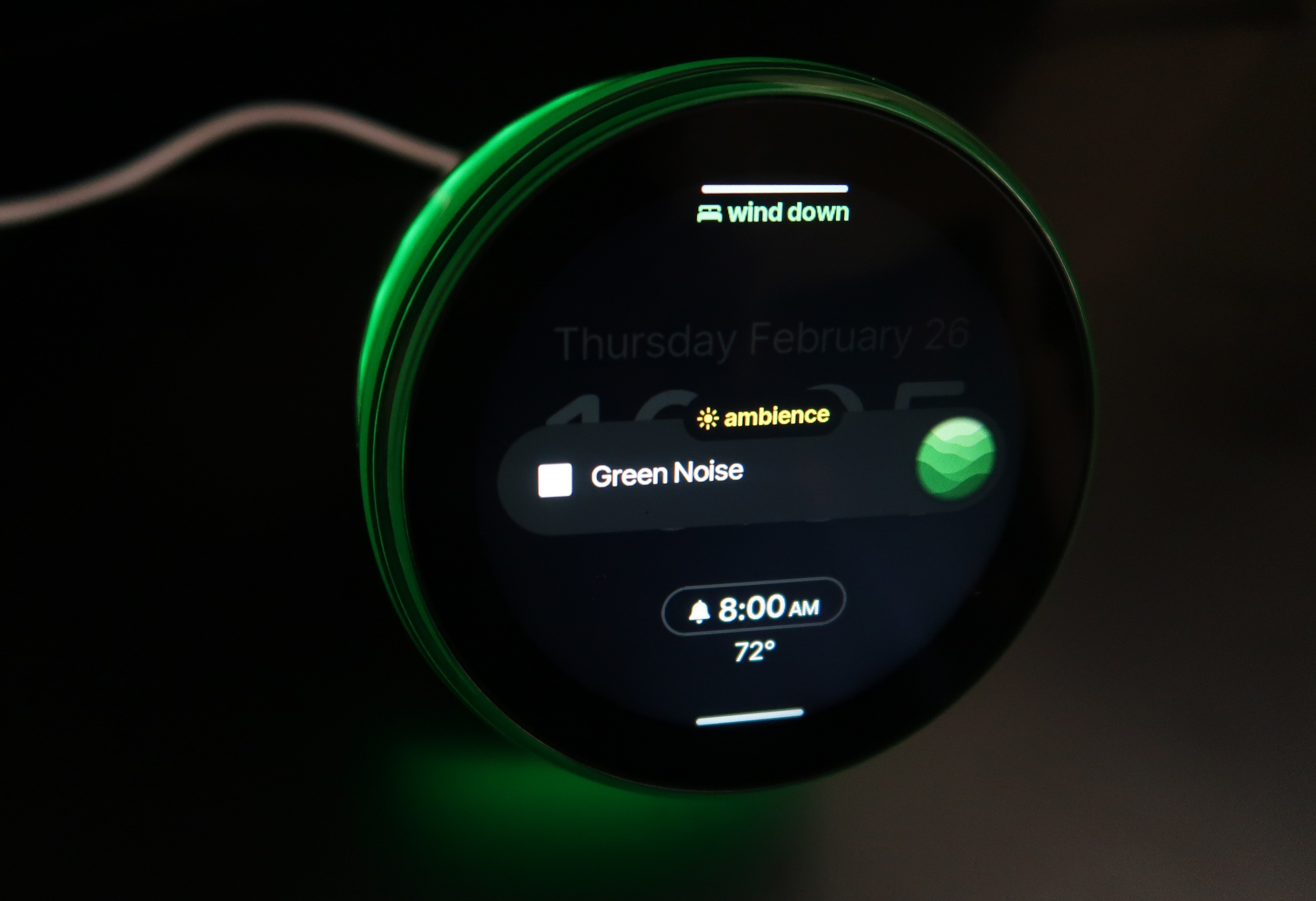
"Relaxing" isn't a word anyone is likely to associate with CES. If anything, it is the antithesis of CES, an exhausting and wildly overstimulating marathon event that takes place in the already exhausting and wildly overstimulating Las Vegas. But a demo of Ambient's bedside device, Dreamie, ahead of its appearance at CES-adjacent Pepcom had me properly lulled and ready to go right back to bed. Dreamie is a smart sunrise alarm clock and nighttime wind-down device that has a built-in podcast player, a catalog of green, pink and brown noise sound masks, guided breathing programs, contactless motion sensors to provide insights into your sleep habits, dynamic lighting with simulated sunrise wake-ups and Bluetooth connectivity for headphones.

But most importantly for anyone trying to avoid using their phone immediately before bed, it's a standalone system in which all controls, features and scheduling options as well as data storage are on-device. And there's no subscription. 

The goal of Dreamie is "to help you separate from your phone while providing a lot of the conveniences that you would normally have," said CEO and co-founder Adrian Canoso. You can set multiple alarms on different schedules, access soothing content to fall asleep to and customize how gradual your sunrise wakeup is. There are environmental sensors to clue you in on the humidity, temperature and lighting conditions over the course of the night, to give you a better idea of how these things may be affecting your sleep. 

Dreamie is a relatively small device compared to other sunrise-style clocks, with a truncated pill-shaped body and a sleek circular touchscreen. Around the display is a hidden dial for volume control, and it feels great to rotate, with just the right amount of resistance. There's also a touch strip on top of the device to easily adjust the dimness of the light by dragging your finger along it. From the display, you can even change the direction the light is pointing so you don't blast yourself (or your partner) with it when your eyes aren't ready, casting the light off to the back instead. 

The Dreamie alarm clock is pictured displaying its brightness controls, and is glowing warm light
Dreamie's brightness controls
Cheyenne MacDonald for Engadget

Its 20-LED array can go from a soft, warm orangey glow to cool and bright blue-white, and certain programs, like the aurora borealis soundscape, will trigger other colors of the rainbow, throwing soothing green, blue and magenta. More impressive is the rich sound that comes from its 50 millimeter speaker. Dreamie has a 360-degree speaker grille on the bottom of the device that sends sound in all directions to create more immersive ambient sound. 

When a speaker is pointing toward you, "it's almost like a laser beam coming at you," which isn't exactly the most relaxing experience, explained Canoso, who previously worked in industrial design and robotics, and before that, as a studio recording engineer. "[Dreamie] projects the sound all the way around… So when you put it next to you on a night table, it sounds more diffused. It's not the loudest speaker out there because we've optimized it for rich sound quality at lower volumes. We don't need it loud. We just need it to sound good." 

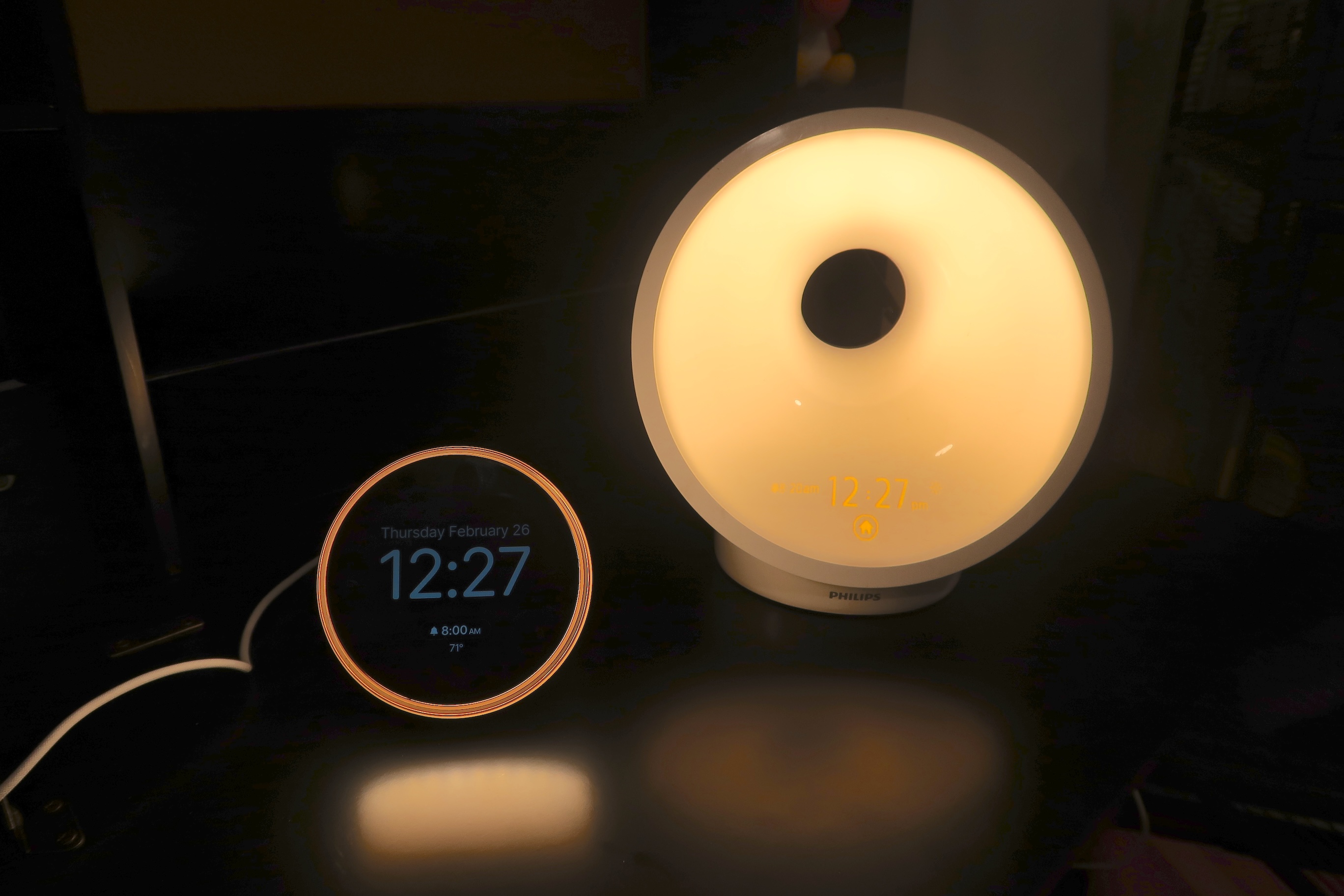
And sound good, it does. It's seriously got me thinking I may finally have found the thing to replace the Philips Wake-Up Light I've been clinging to for close to 10 years now that has decent lighting but absolutely abysmal sound quality.

Dreamie, which costs $250, recently started shipping after a successful crowdfunding campaign, and certain features — including podcasts and sleep insights — haven't launched just yet (though I did get to see the podcast library during the demonstration, so it is a real thing, and it’s expected to roll out later this month). Those and other future features will arrive via free over-the-air updates. 

This article originally appeared on Engadget at https://www.engadget.com/home/smart-home/this-tabletop-sleep-device-and-sunrise-alarm-clock-aims-to-help-you-put-your-phone-away-before-bed-004751464.html?src=rss

This Tamagotchi clone is designed to help you keep your plants alive

Tamagotchi ripoffs are alive and well at CES 2026, and SoildTech's spin on the idea is to stick a virtual pet in the dirt to help you stop killing your plants. Senso combines a plant health sensor and a Tamagotchi-like device, offering insights into the conditions of a houseplant's environment and a gamified way of keeping up with them. 

If a plant is in need of watering or could use some lighting adjustments, little characters will offer you quests to complete those tasks. And by taking care of your plant properly, you'll also be helping those characters' virtual home planet thrive. (A world that, I must point out, looks a whole lot like one I've seen before as a Tamagotchi Paradise owner). The virtual pet component magnetically attaches to a two-pronged probe that's inserted into the pot, so it can be swapped between the sensors in different plants if you have more than one. 

The companion app for the Senso device showing plant data and care tips
SoildTech

In the AI-powered app, where you can add and manage multiple plants, you'll get the full breakdown of each one's data and needs. Soildtech says the app can also identify plants and the diseases they may be afflicted with from a photograph. Senso supports voice interactions so you can turn directly to the device for caretaking advice too. 

It's designed with beginner plant enthusiasts in mind and is, admittedly, super cute, though I can't speak to how well it can actually assess the health of a plant from our brief look at it. Senso comes in multiple colors and will launch on Kickstarter "soon."

This article originally appeared on Engadget at https://www.engadget.com/home/smart-home/this-tamagotchi-clone-is-designed-to-help-you-keep-your-plants-alive-172000982.html?src=rss