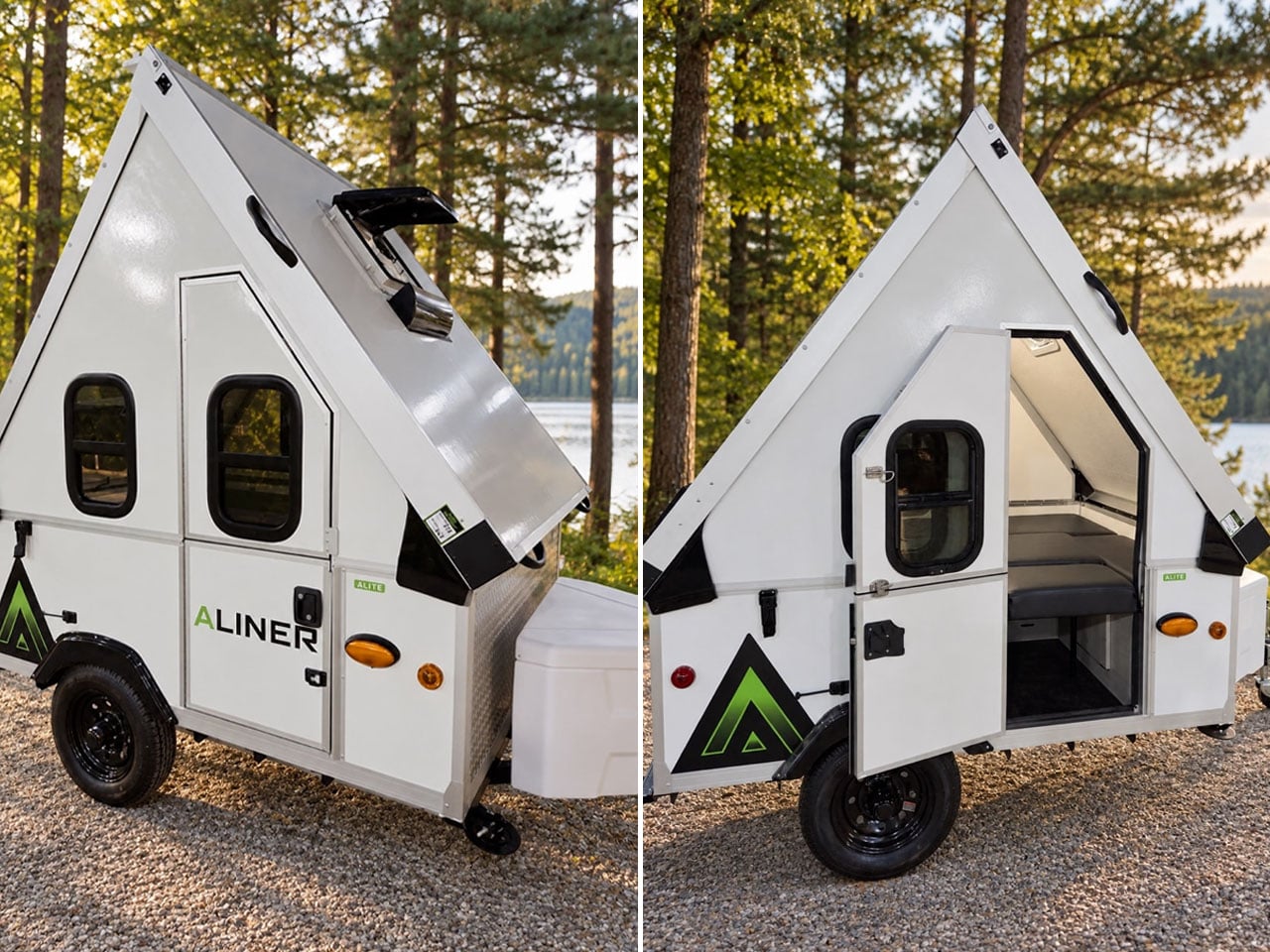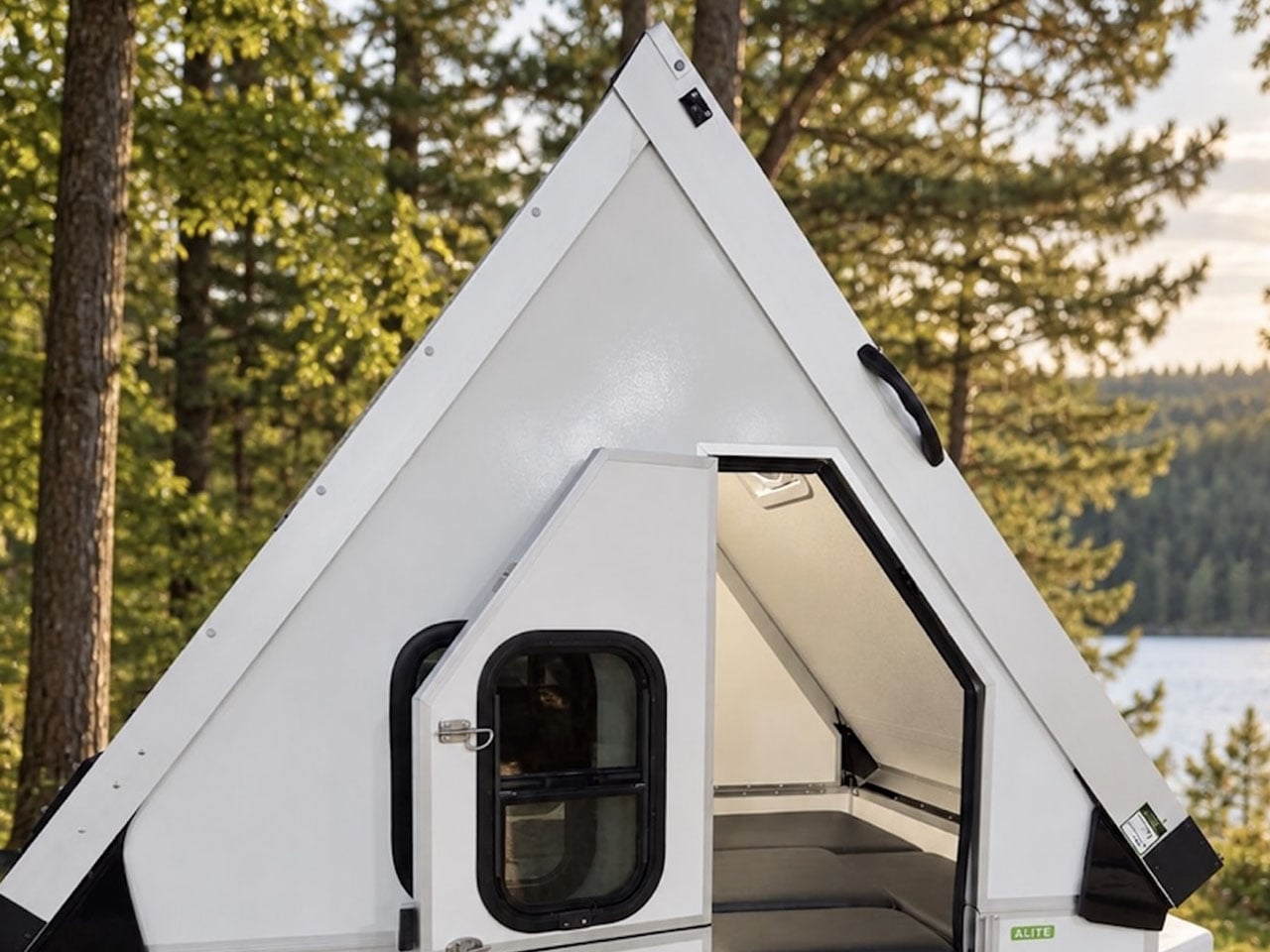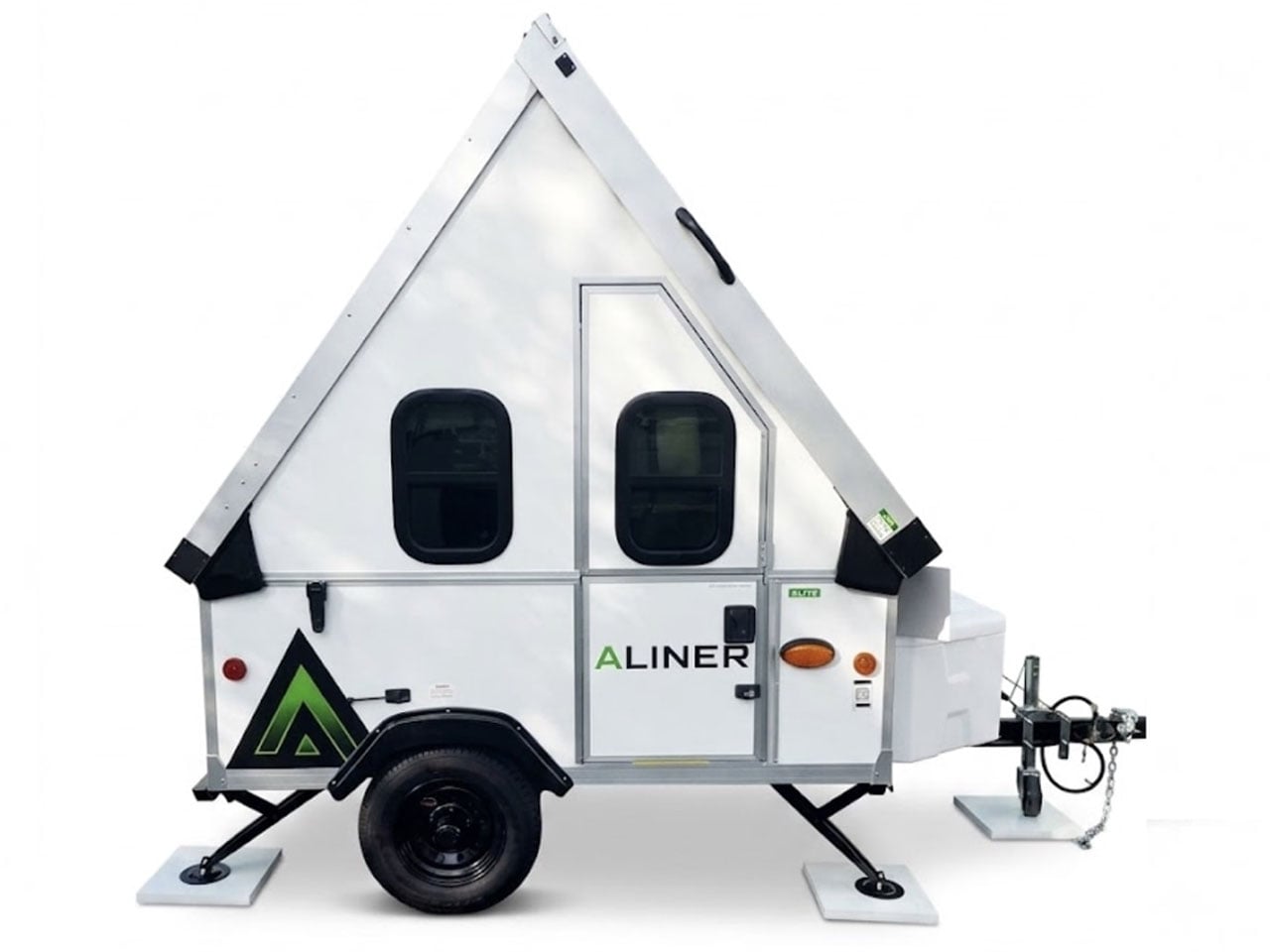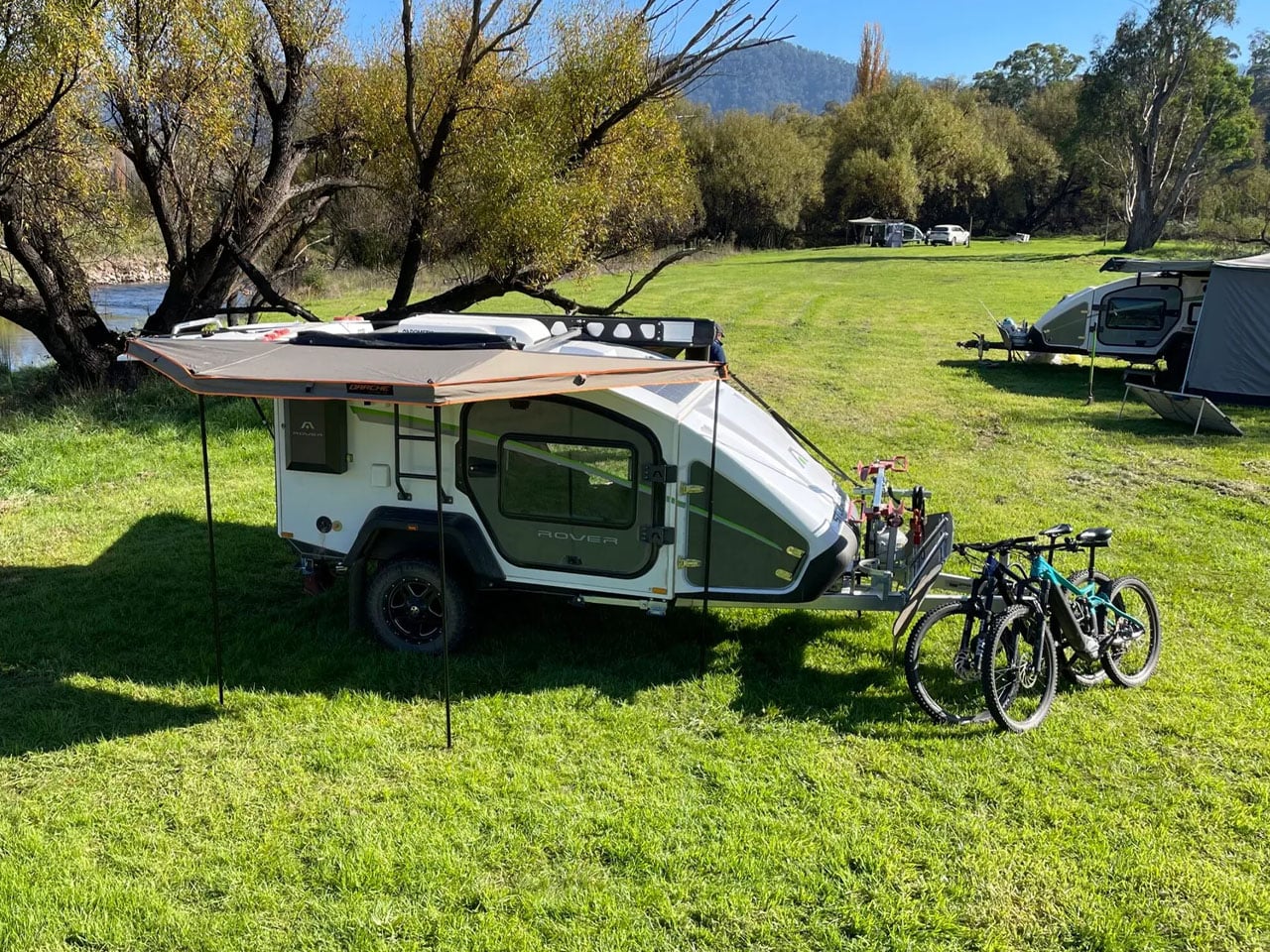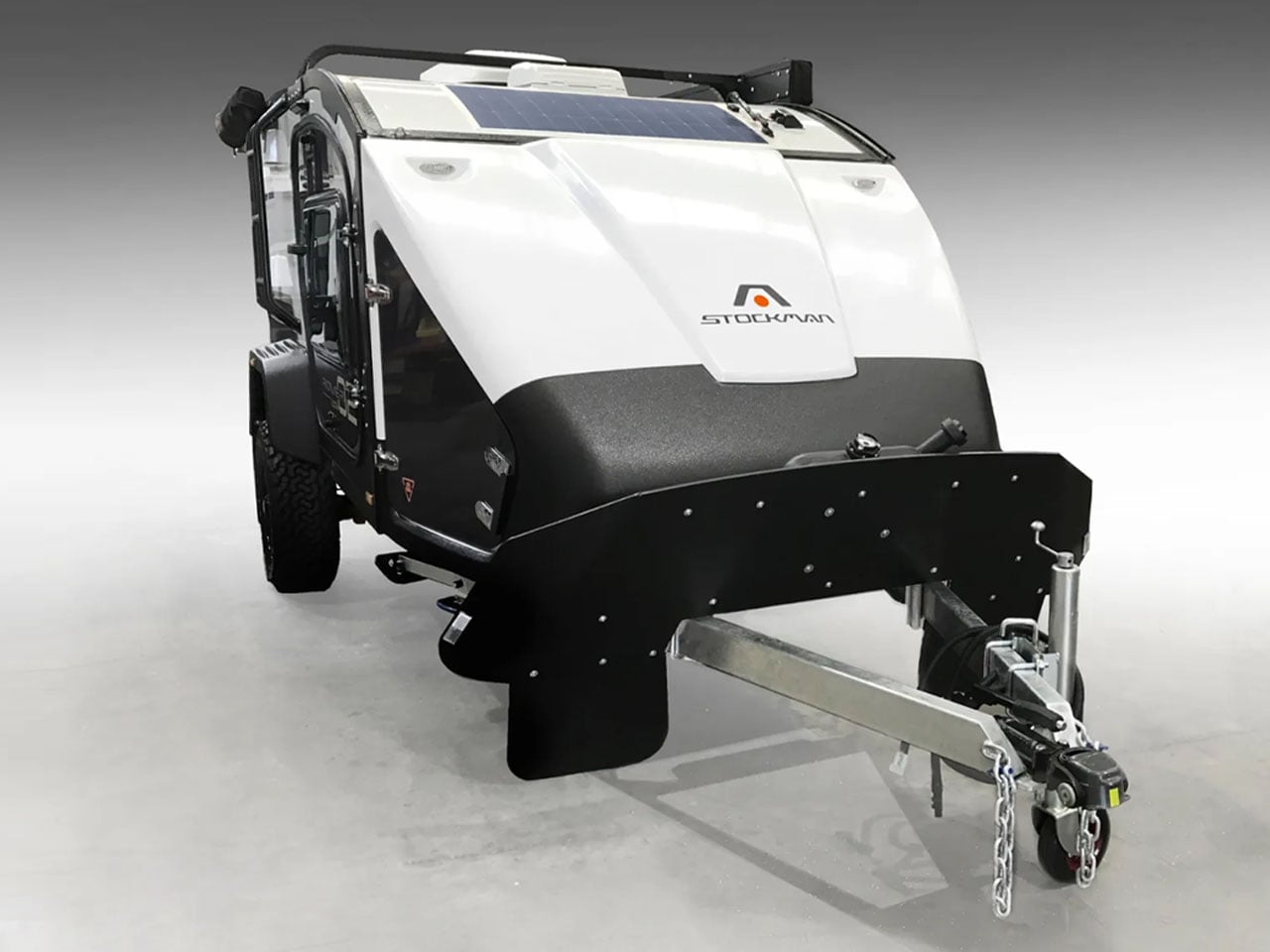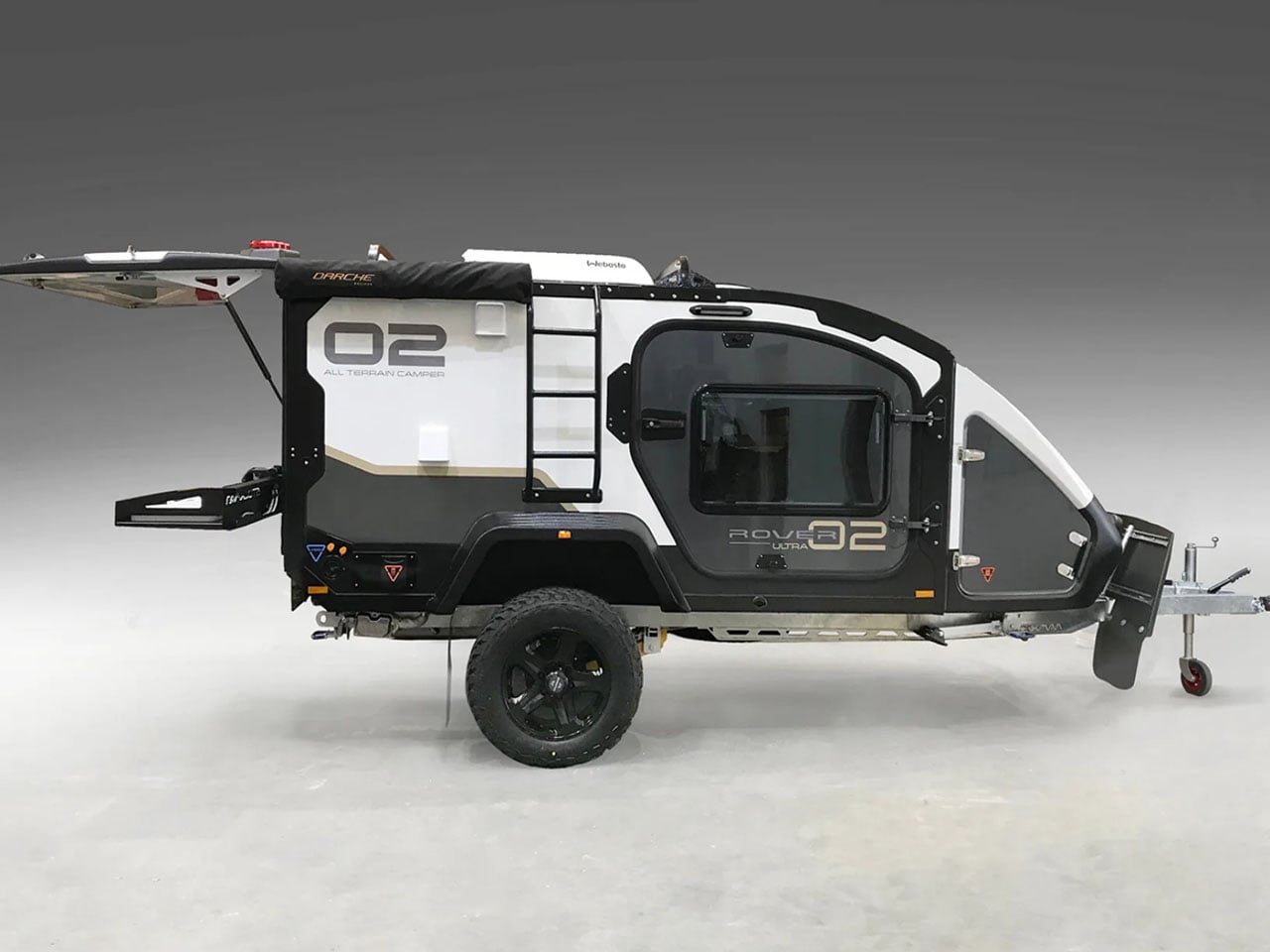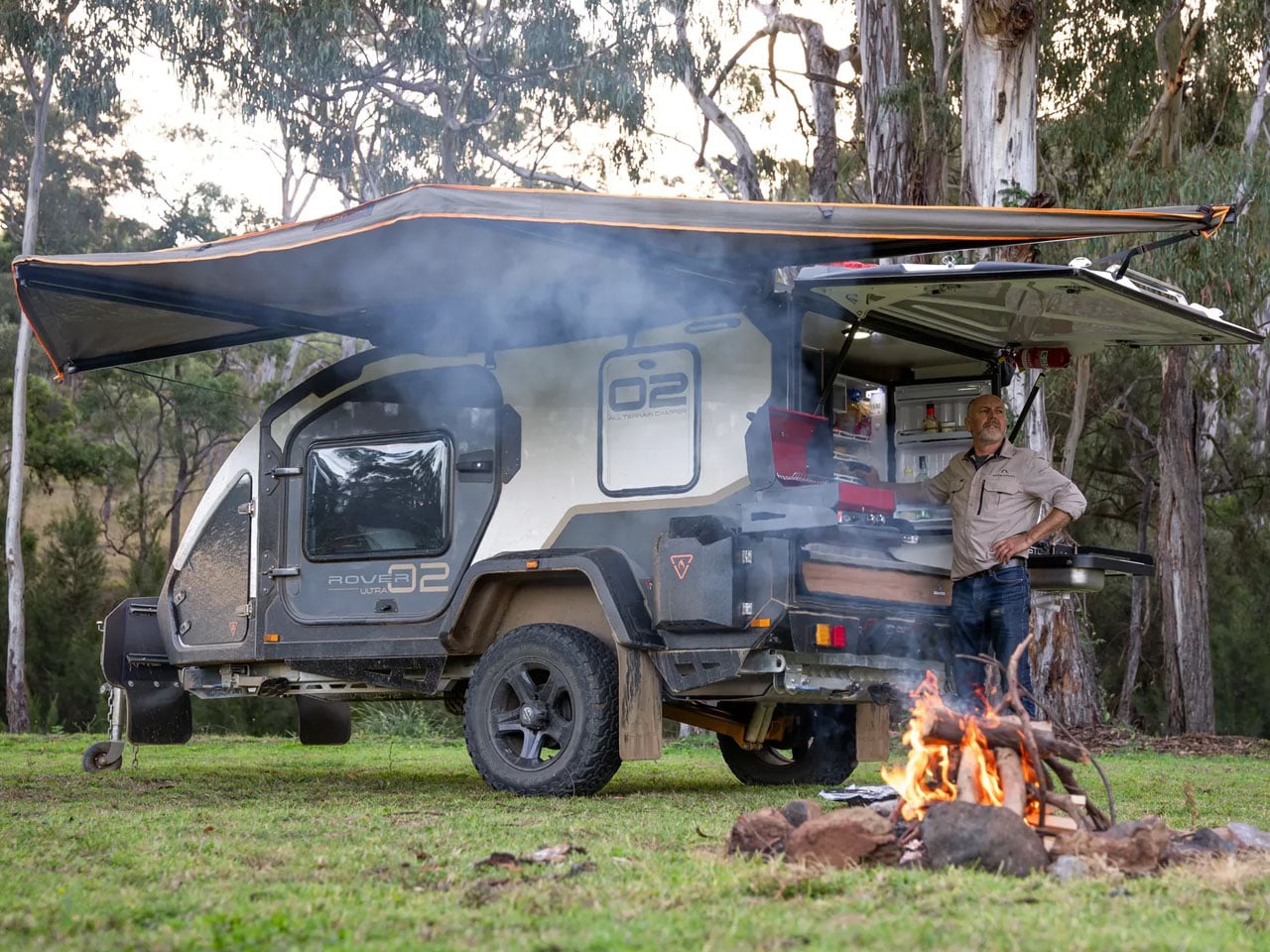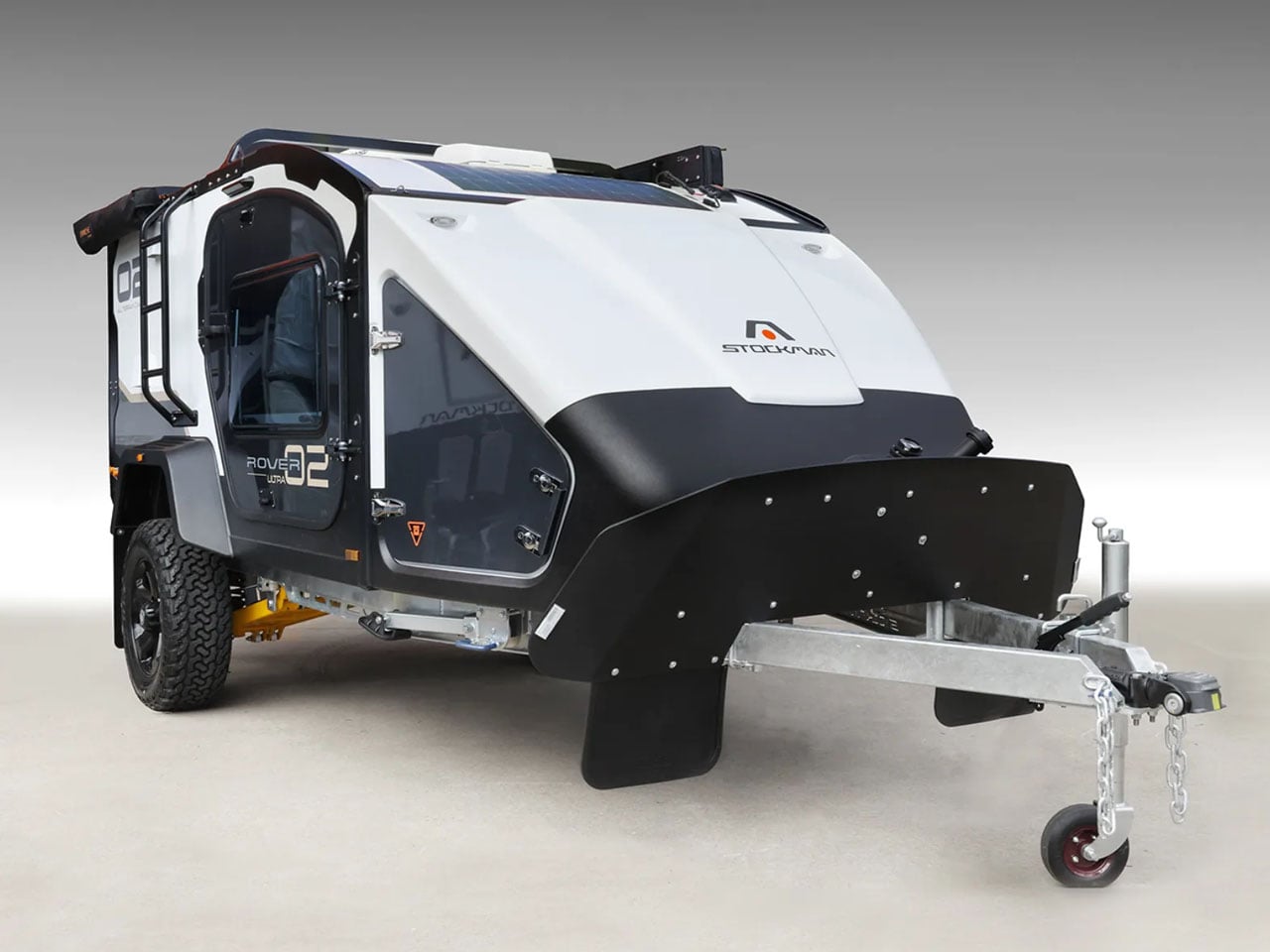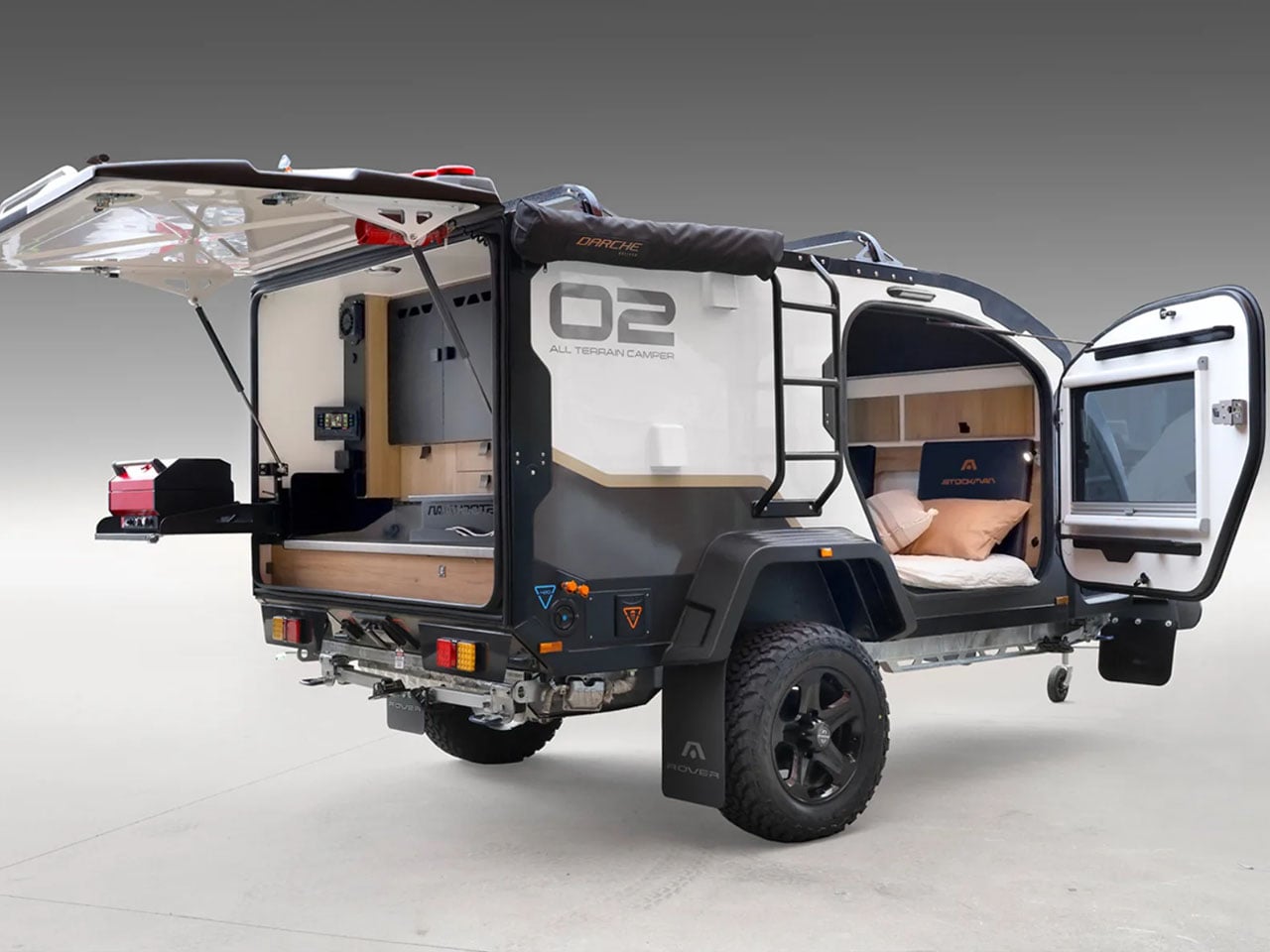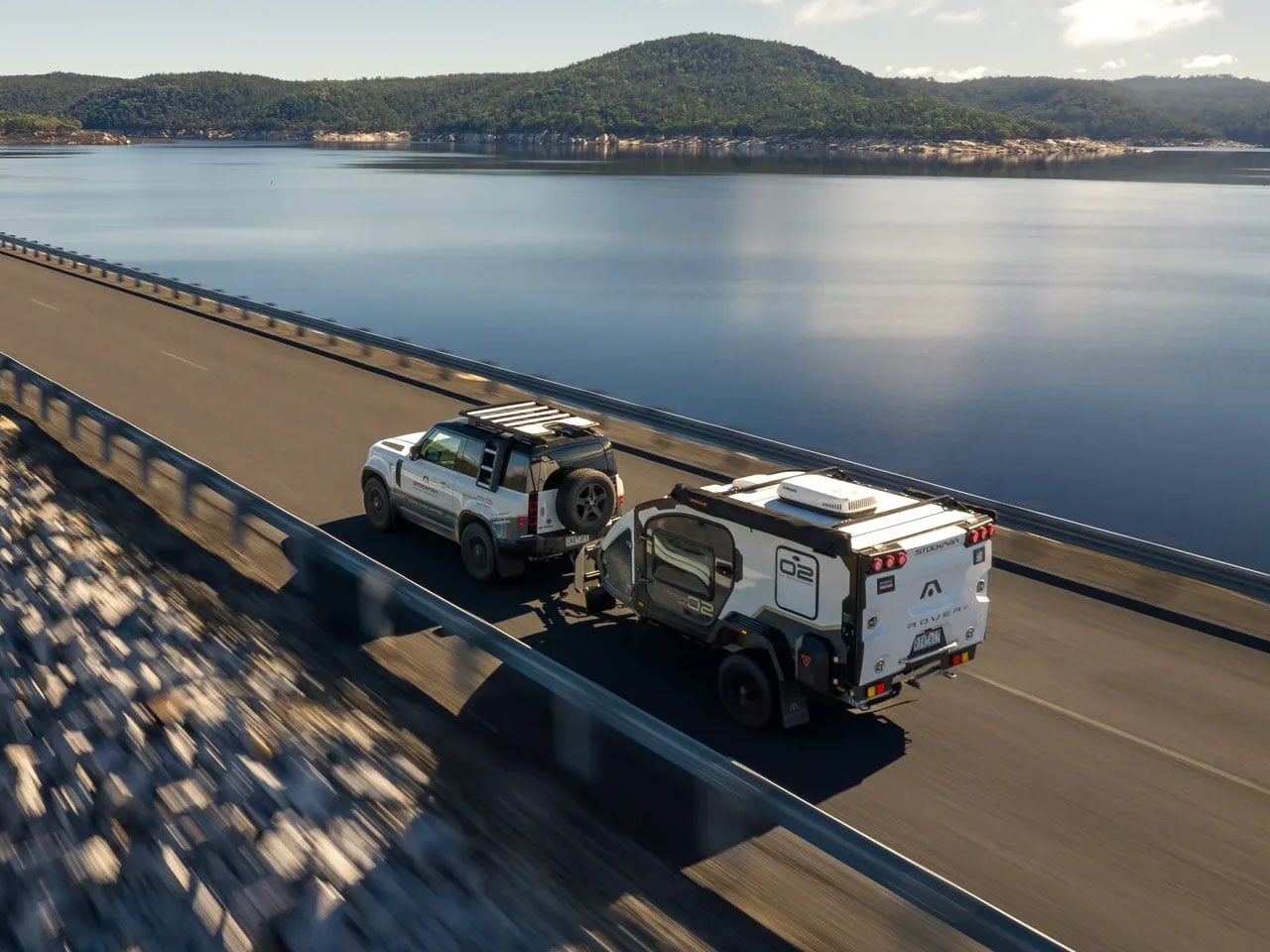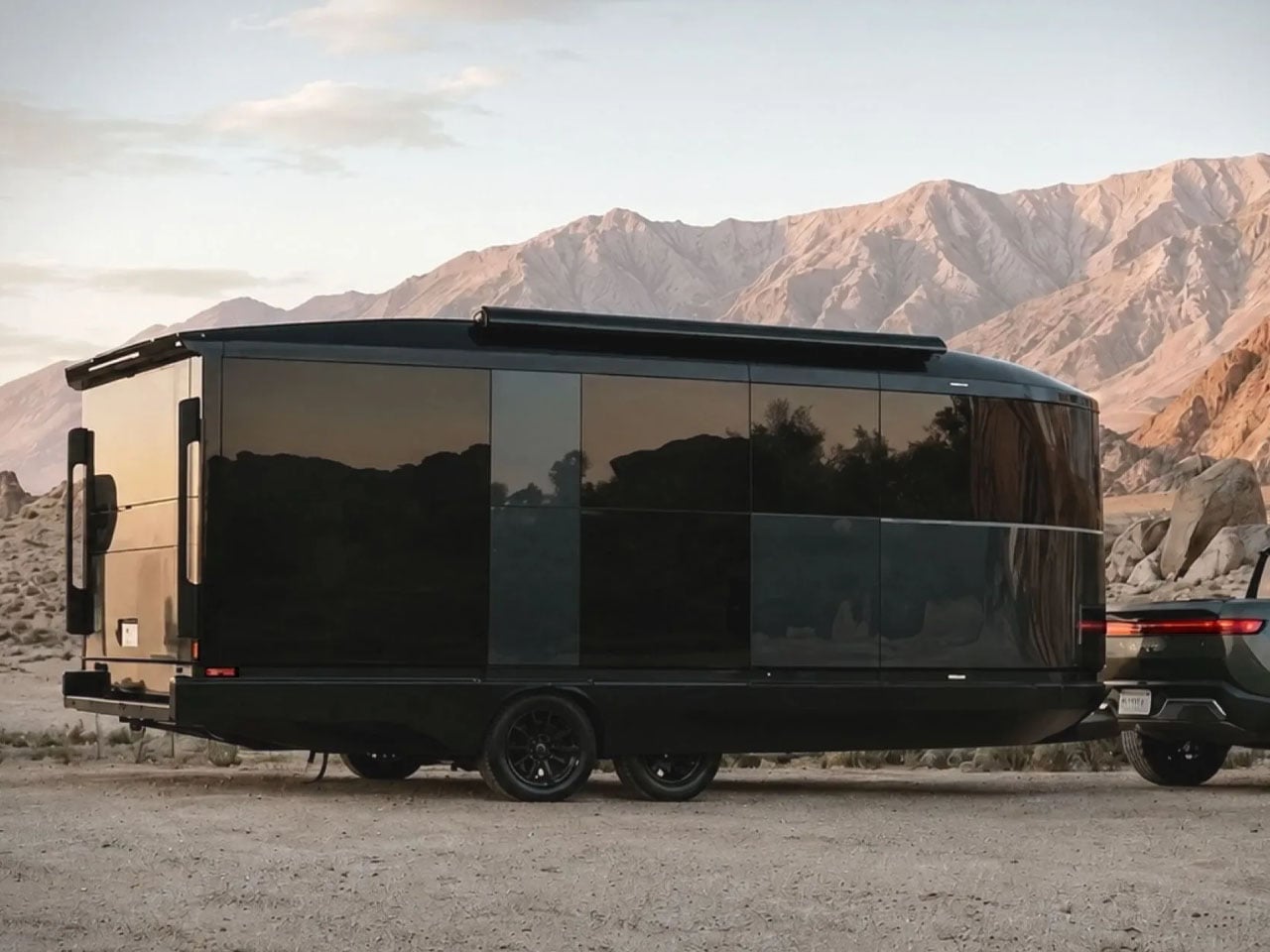
2026 Escape Pod is more powerful, comfortable, and all set for escaping into the wilderness

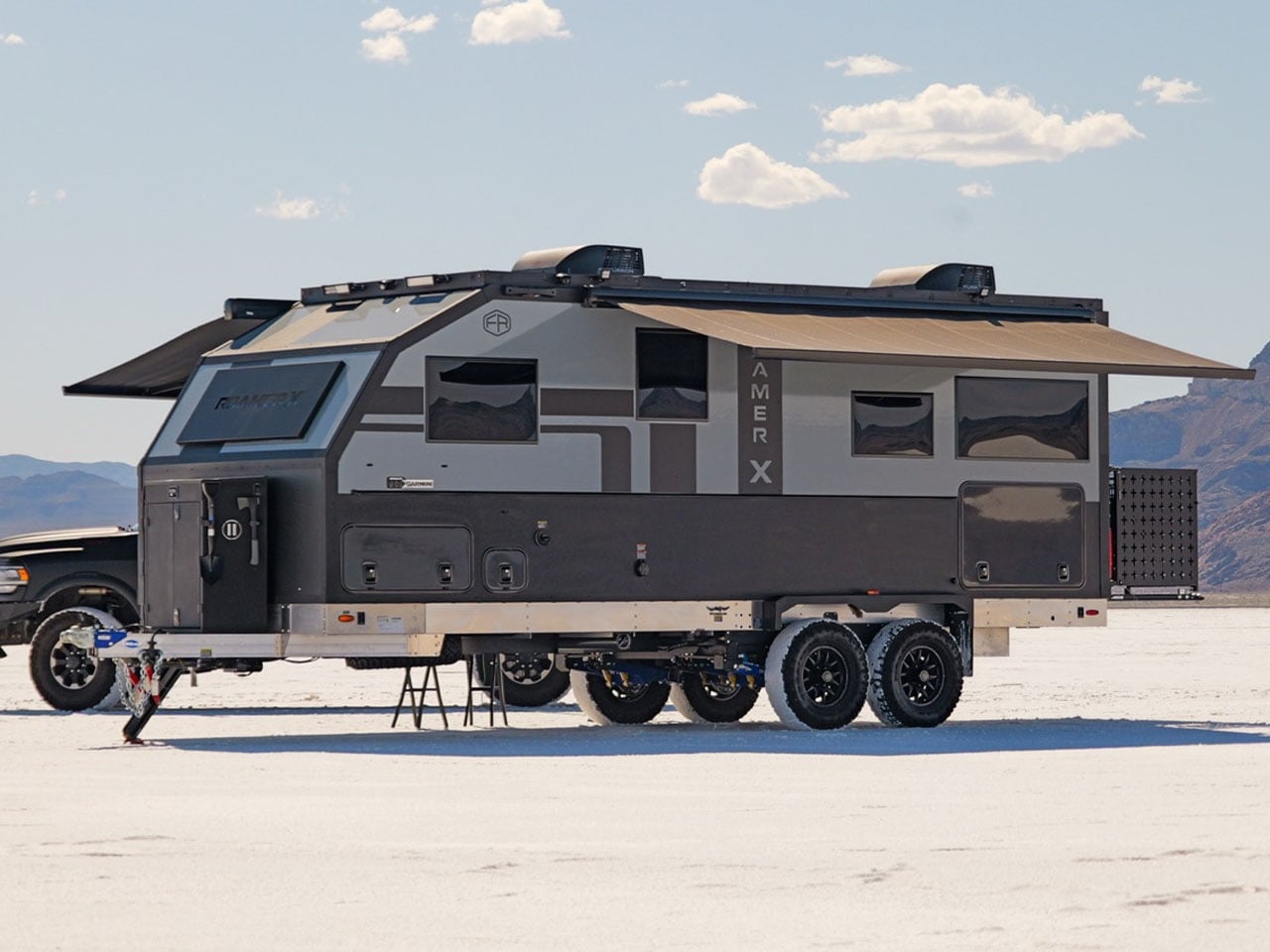
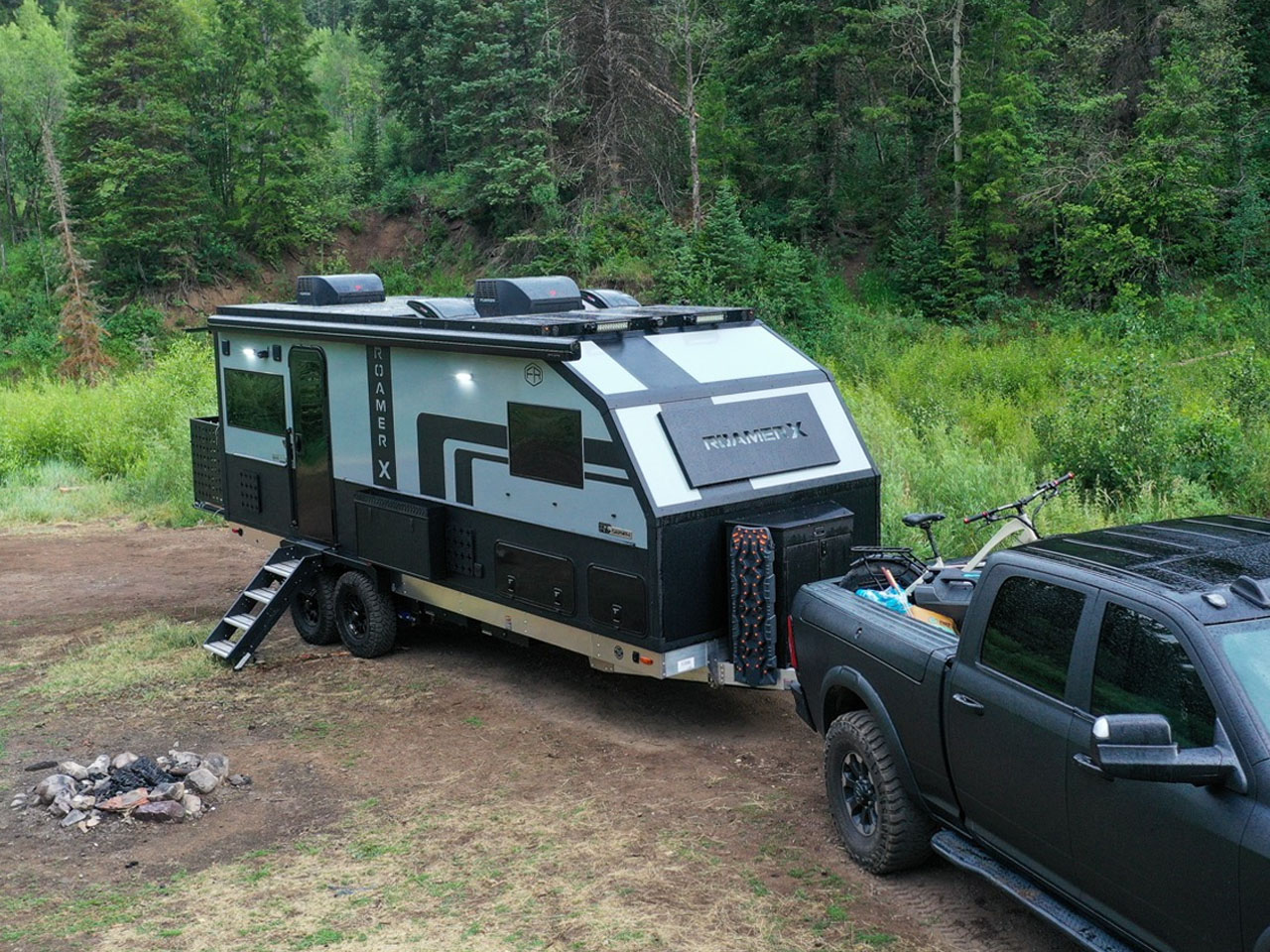
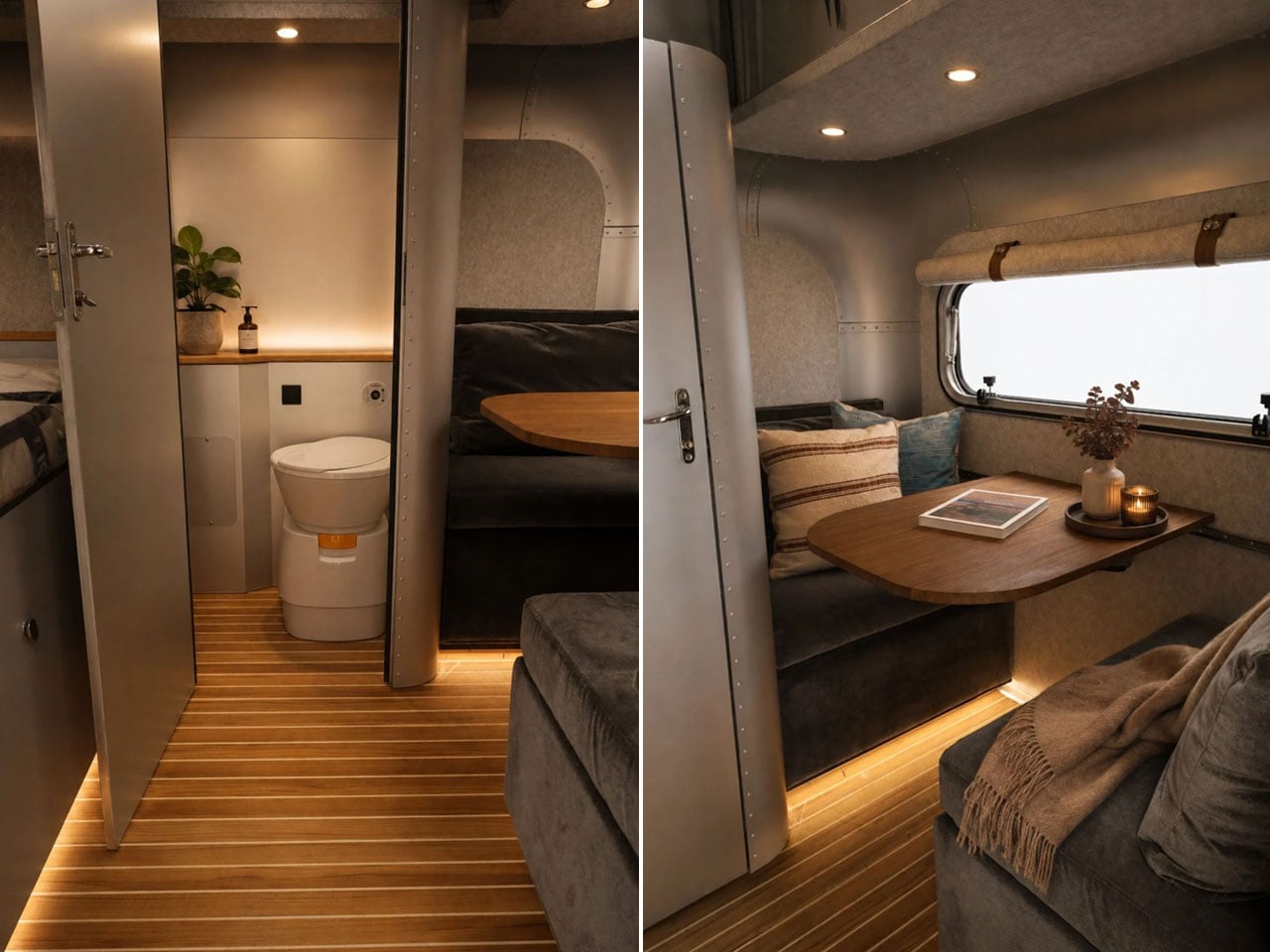
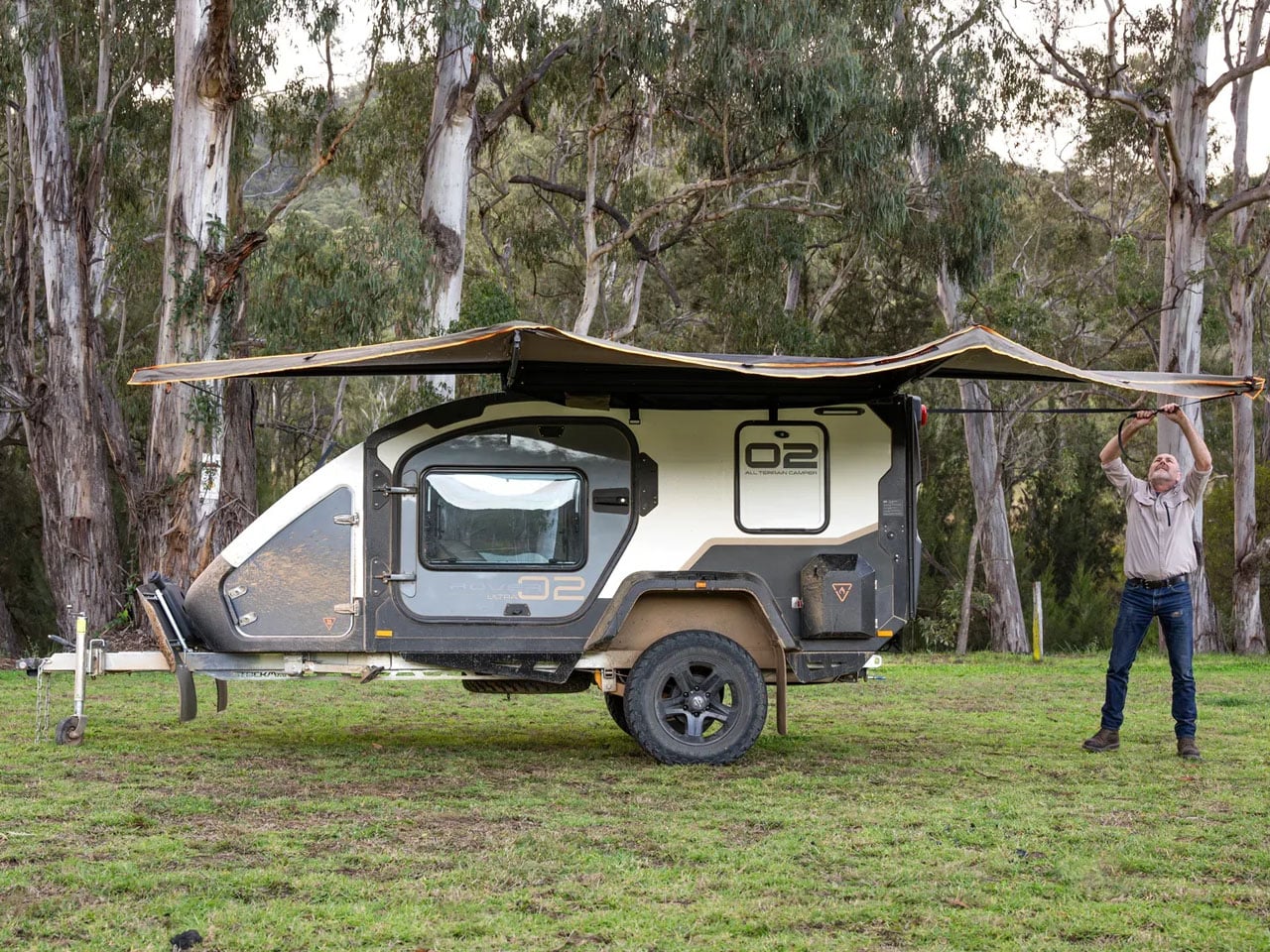
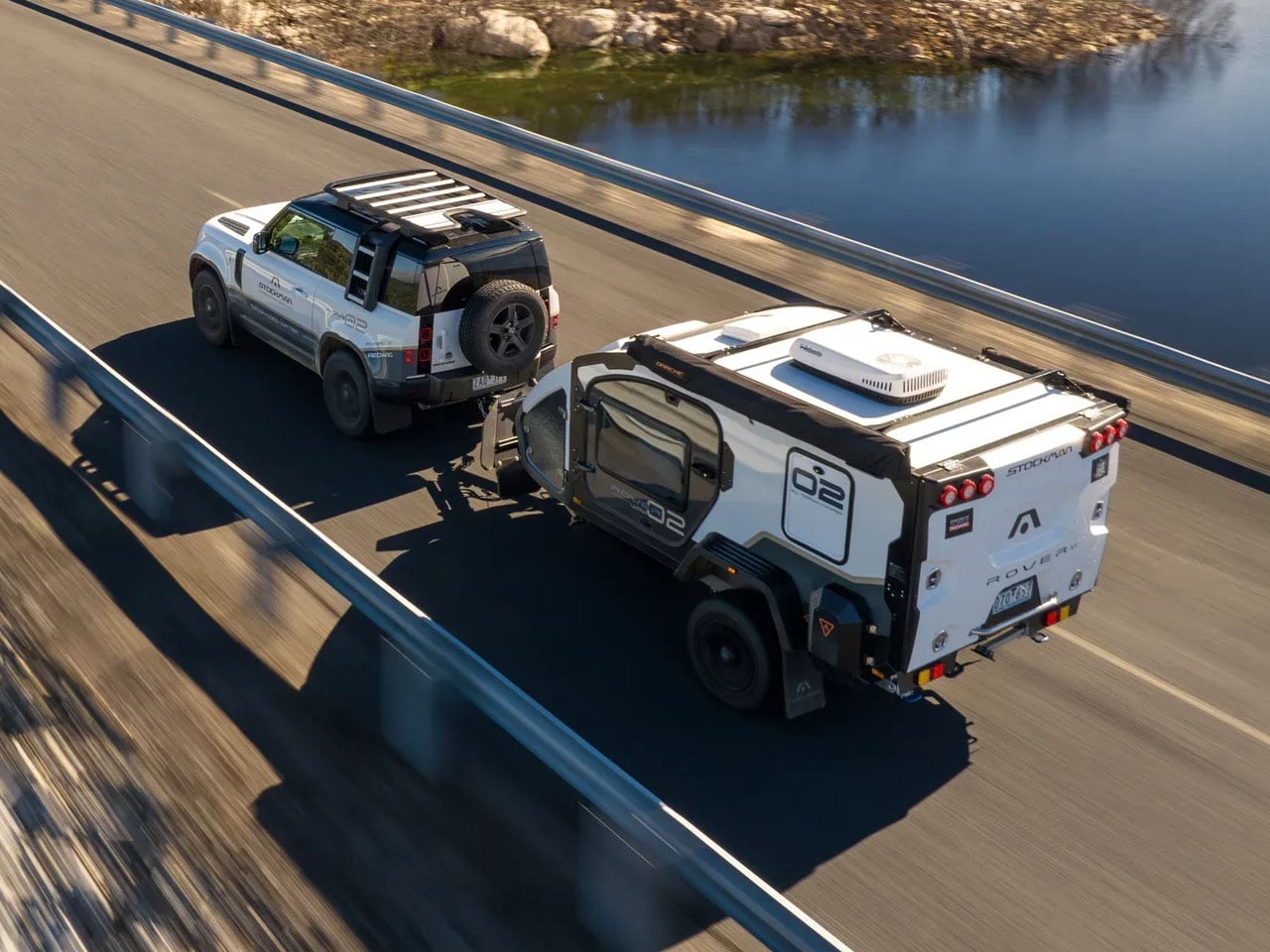
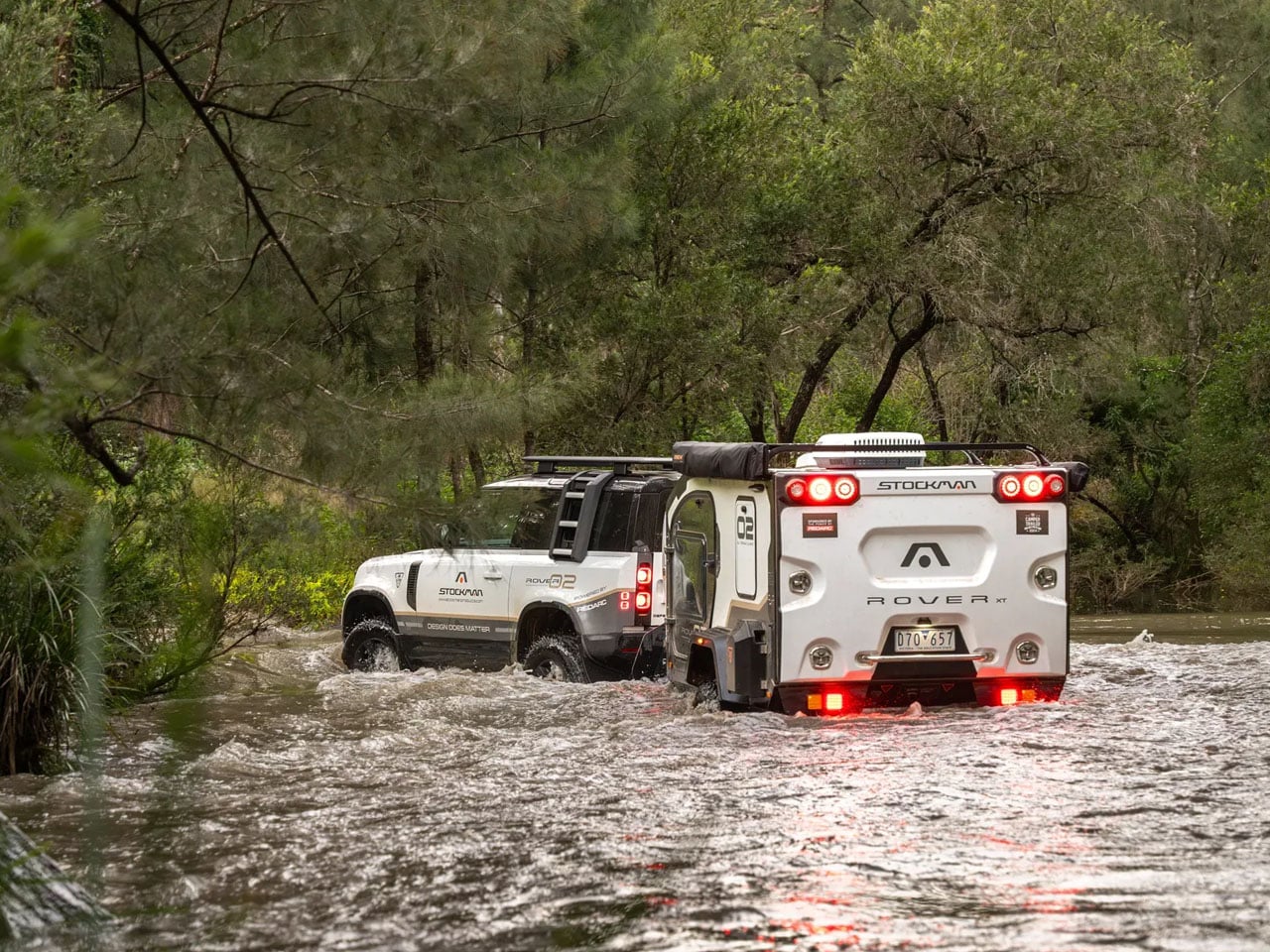
There are a few camping trailers, as apt at exploring the roughest terrains in the remotest parts of Australia as the Escape from Victoria-based Goldfields Campers. The all-new 2026 Escape, designed after the original camper, is no less, in fact, the petite solution, the Escape Pod. Which reimagines the existing model, is “built for those who want to disappear off-grid without giving up comfort.”

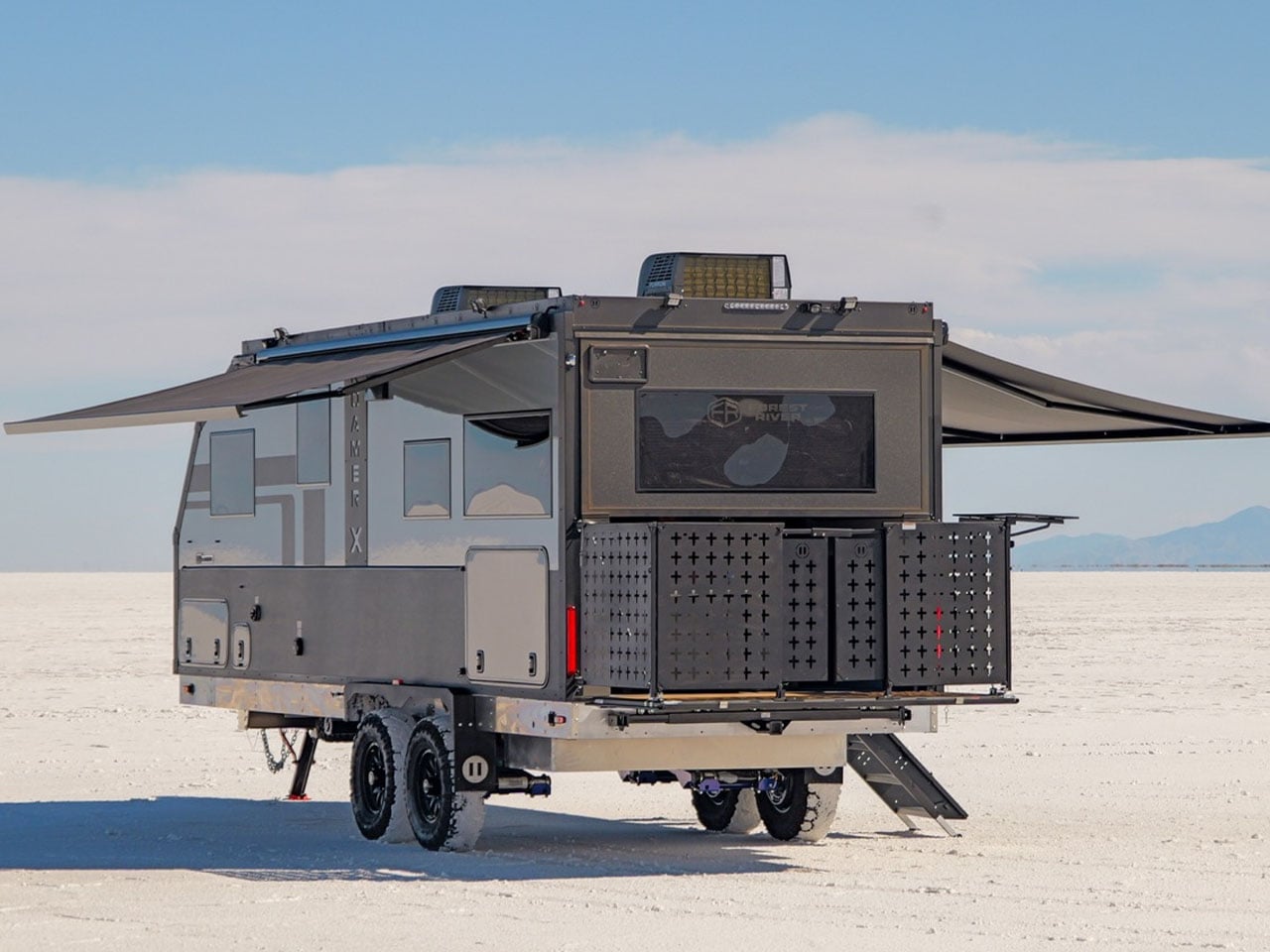
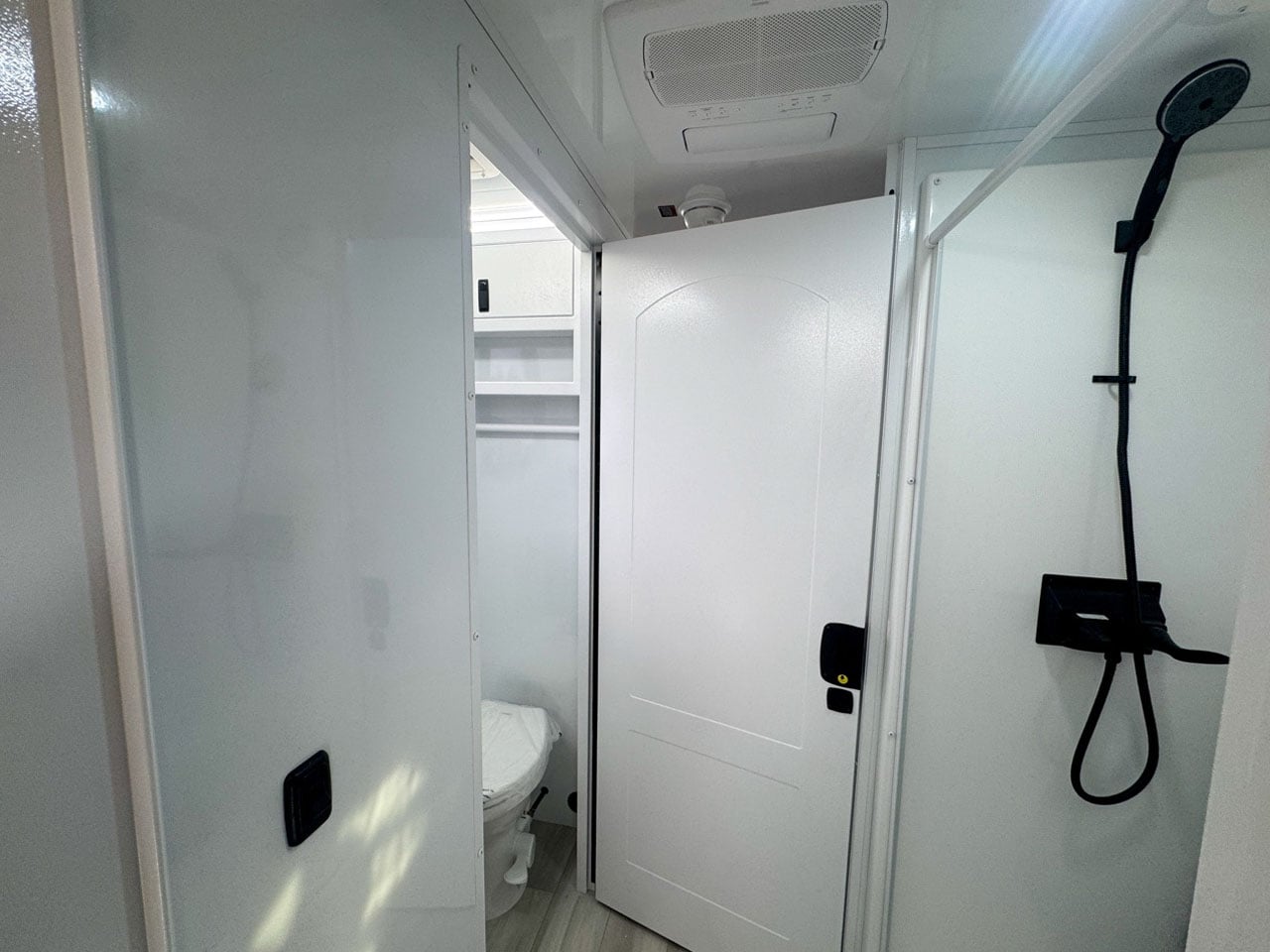
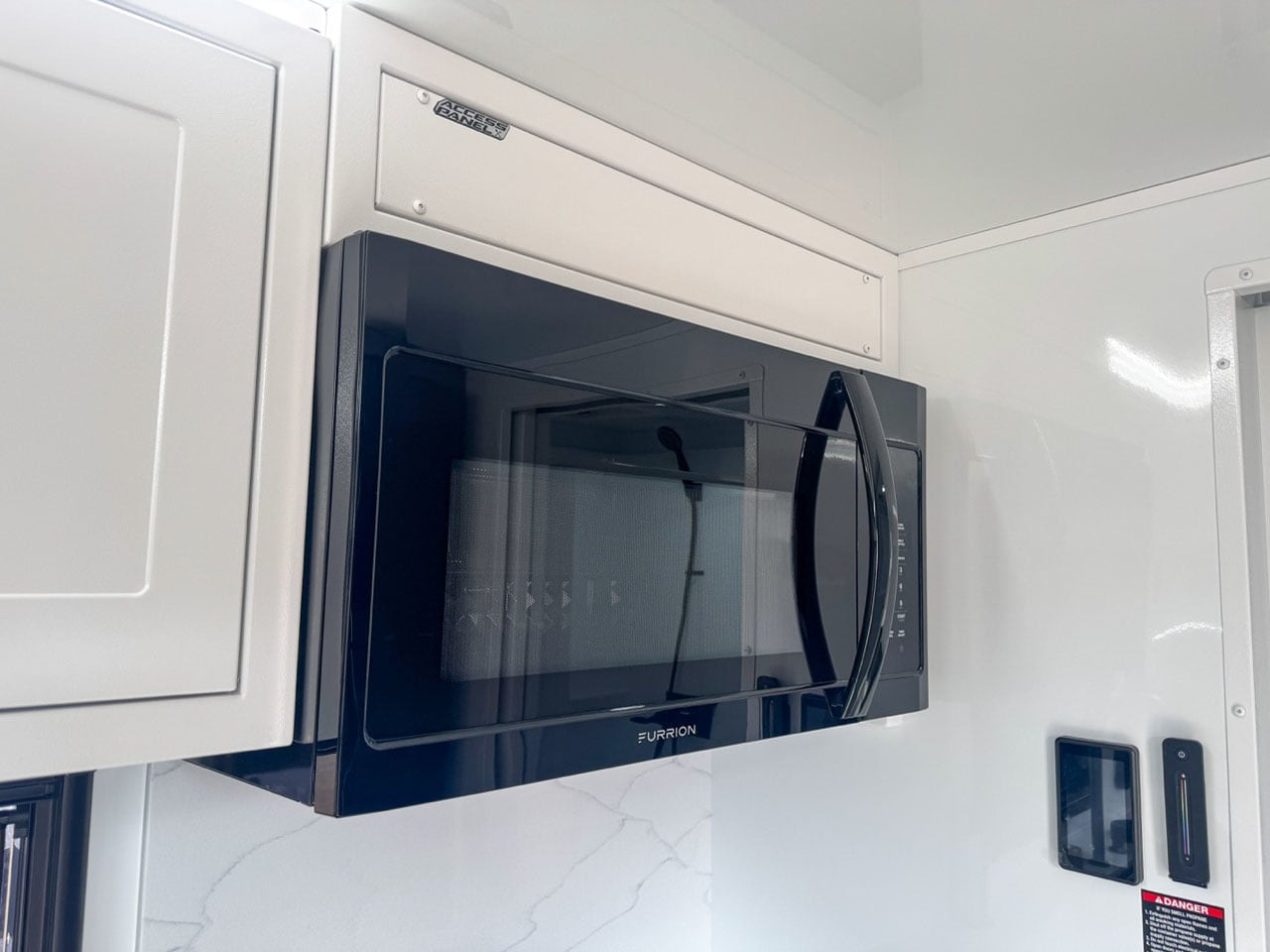
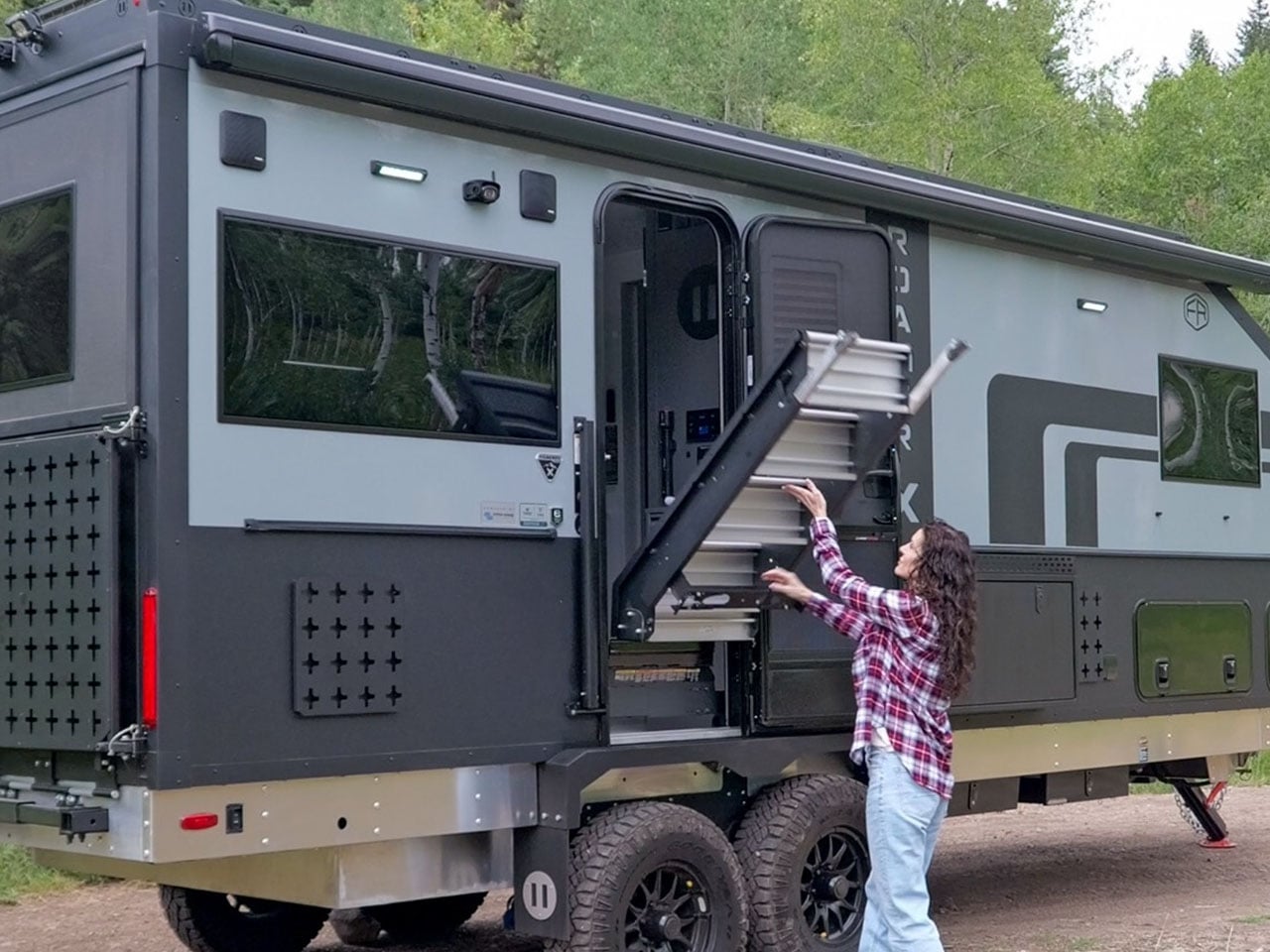
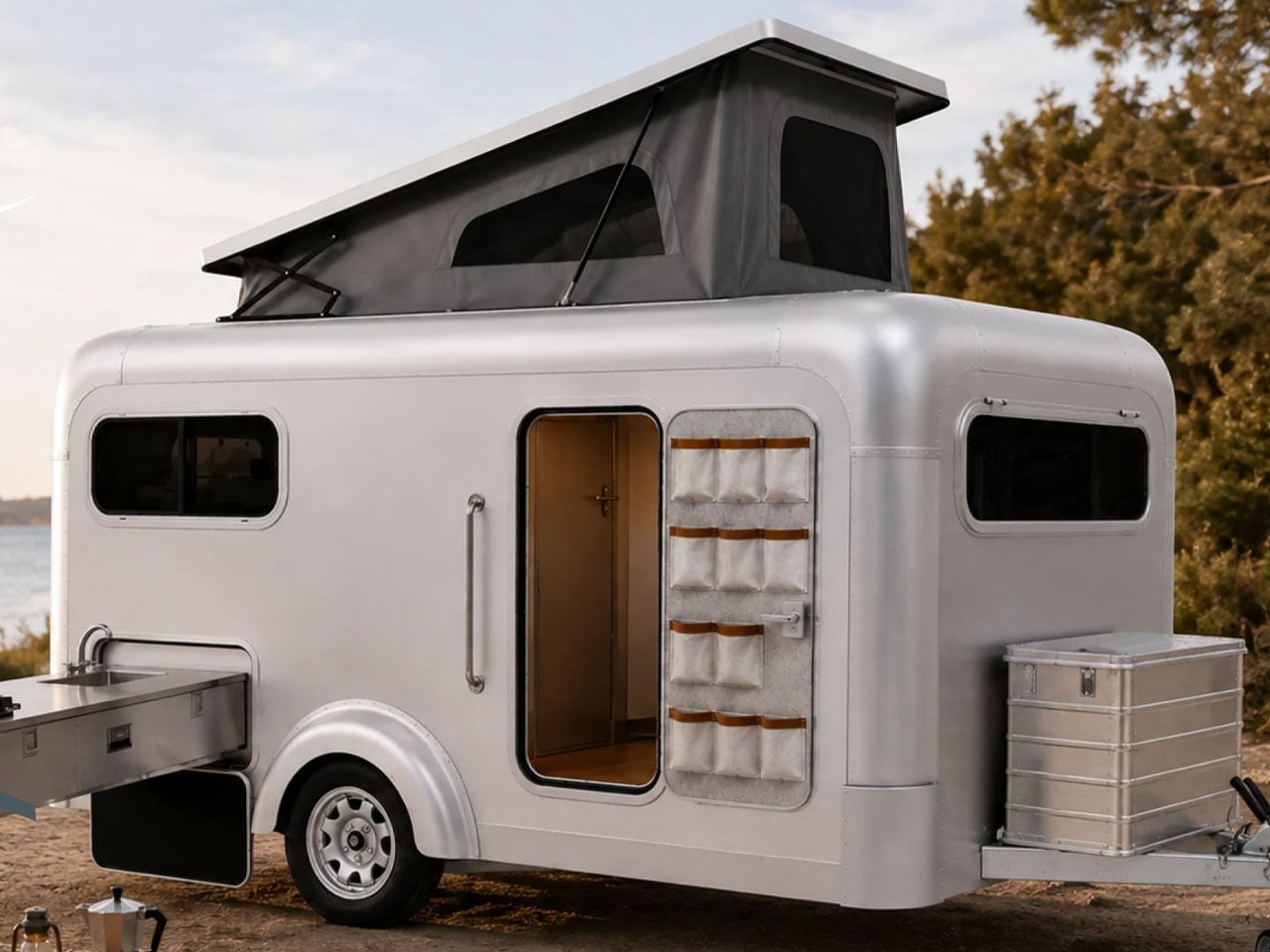
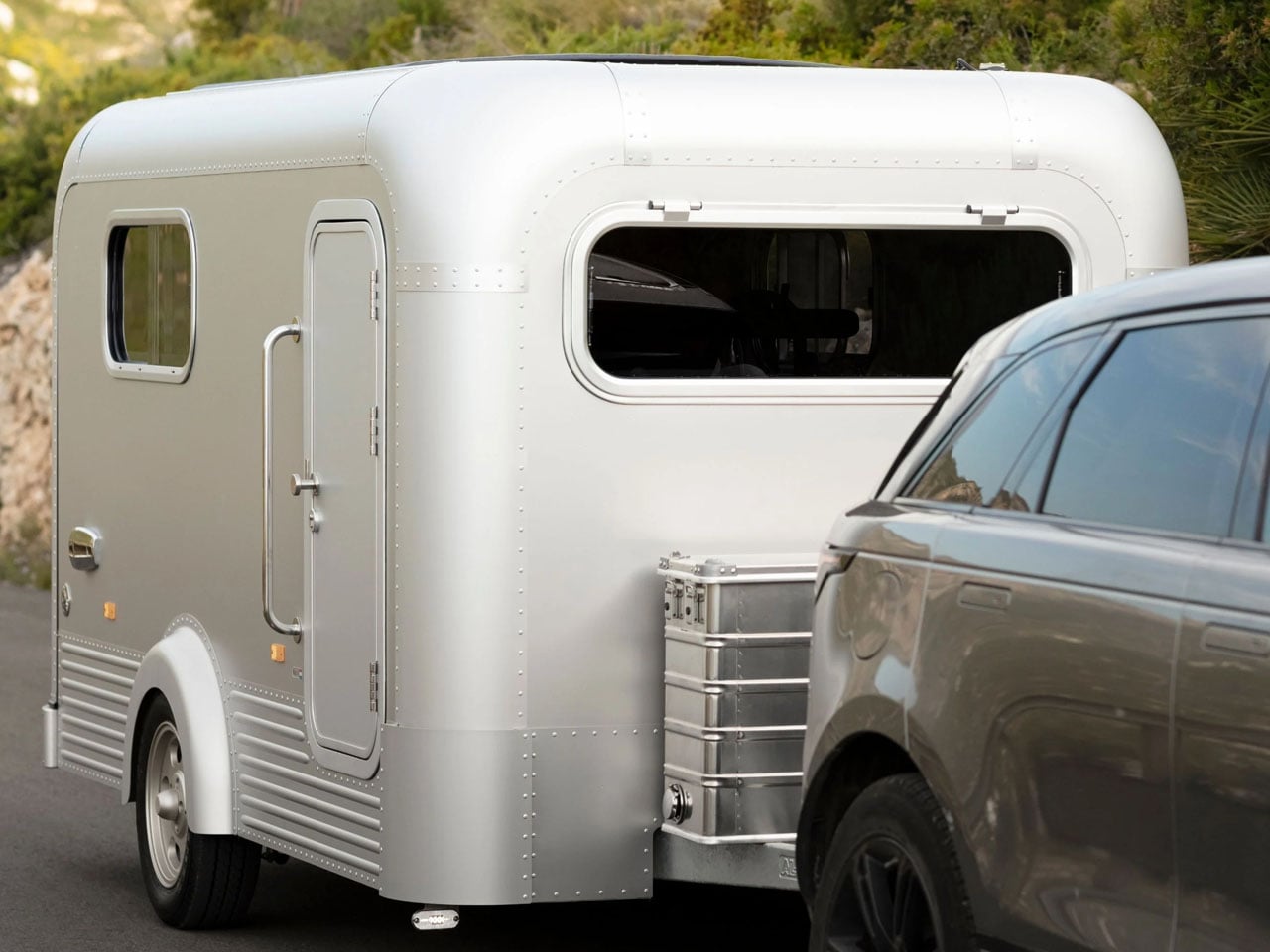
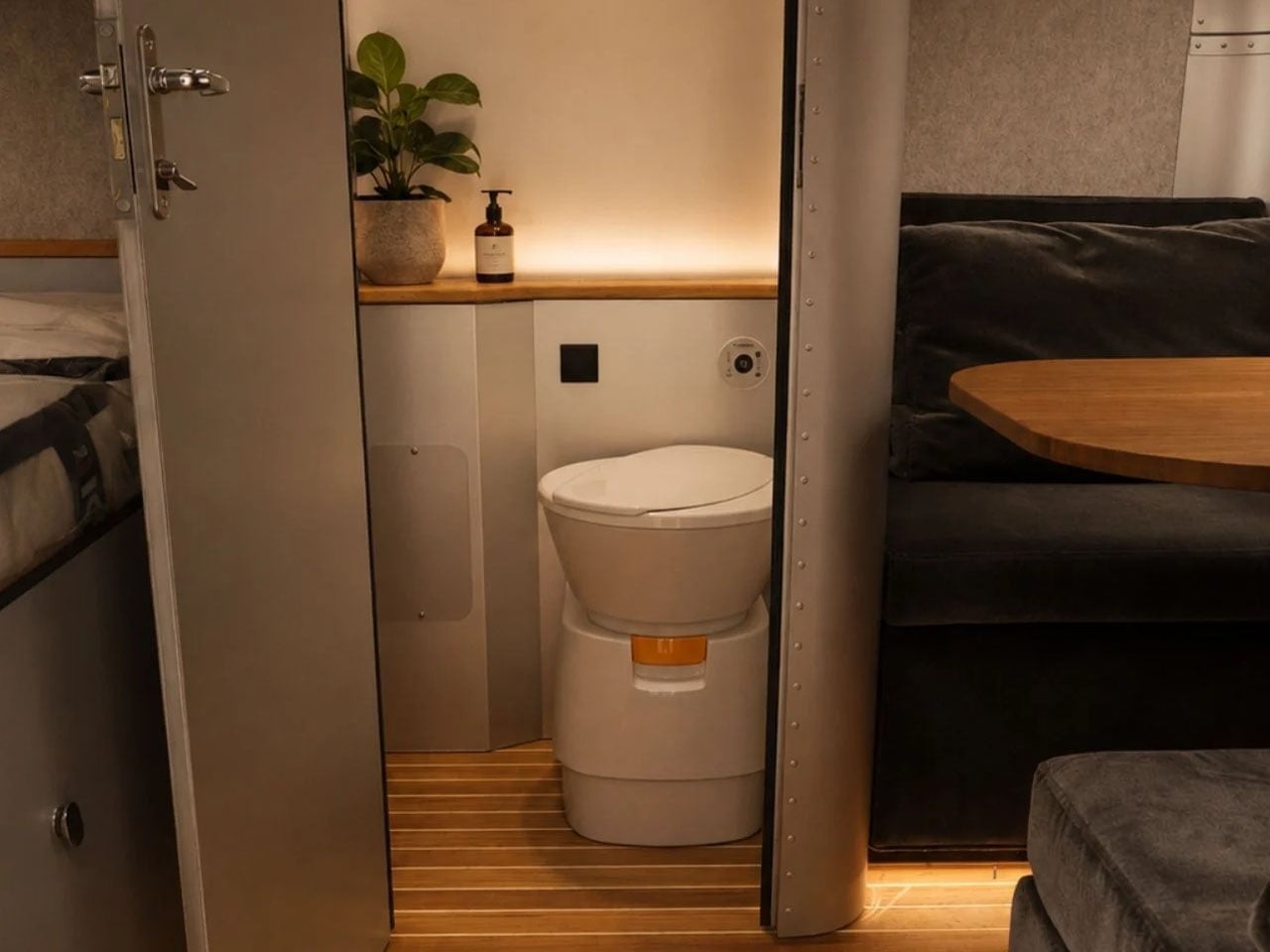
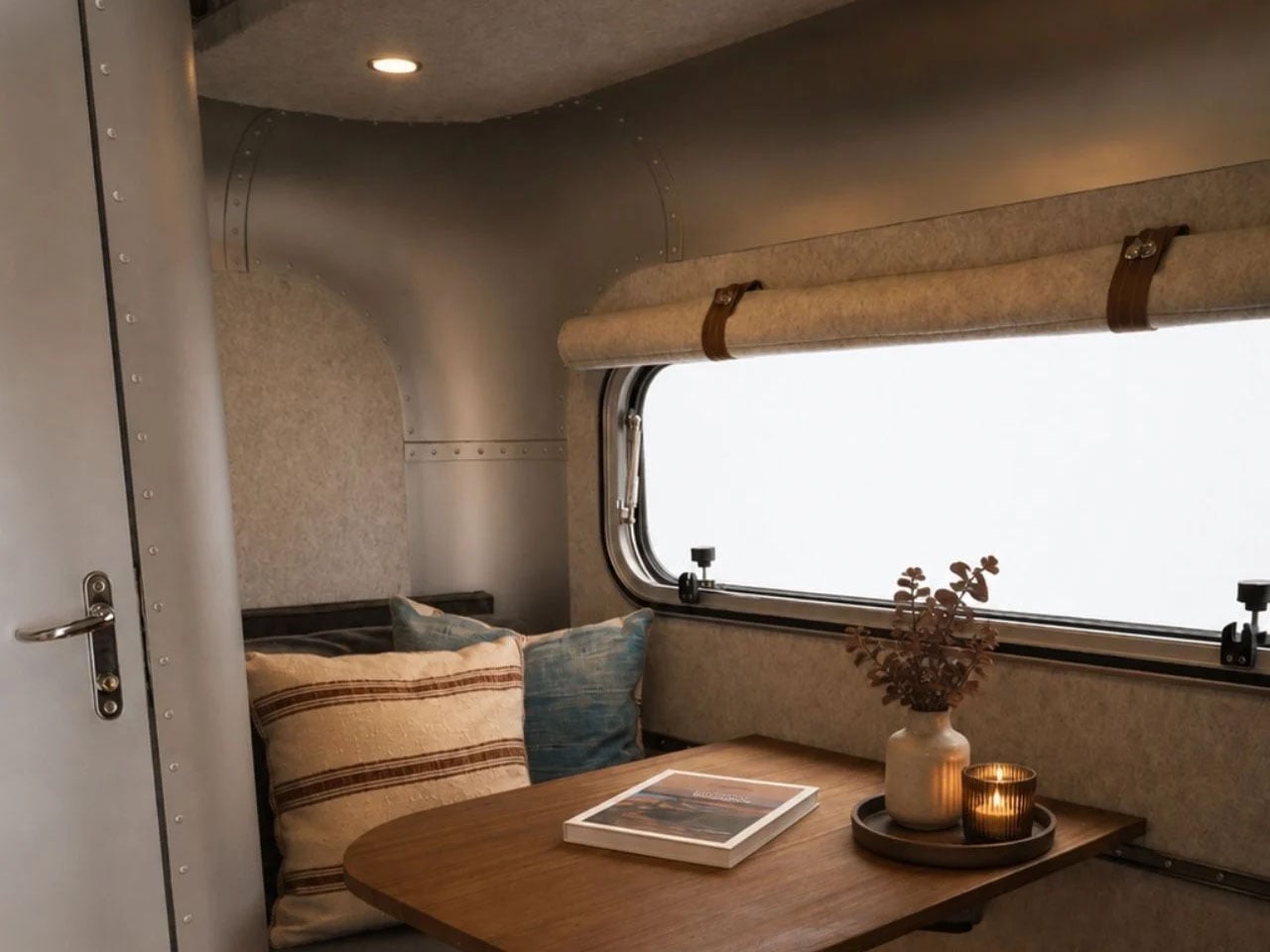
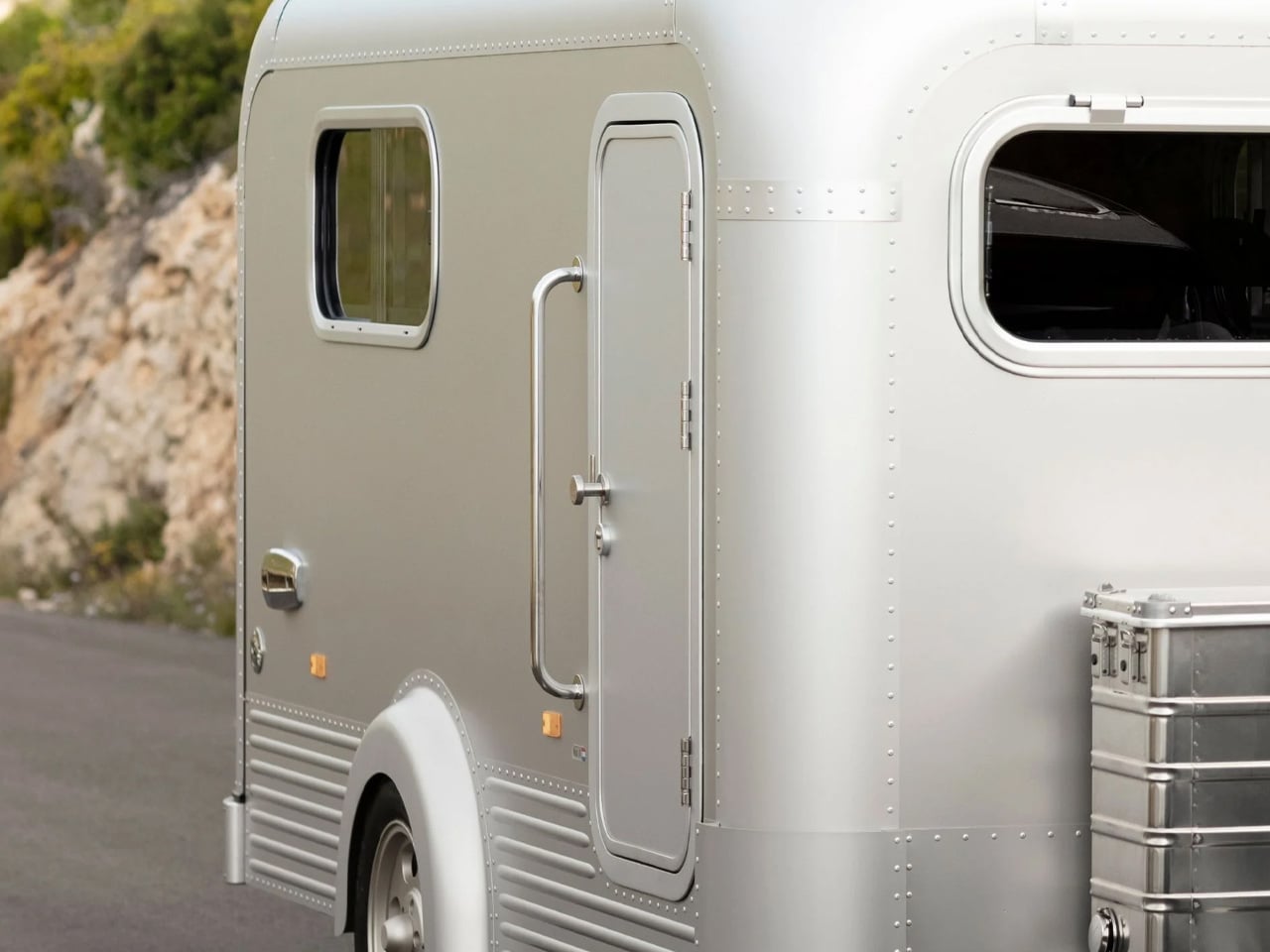
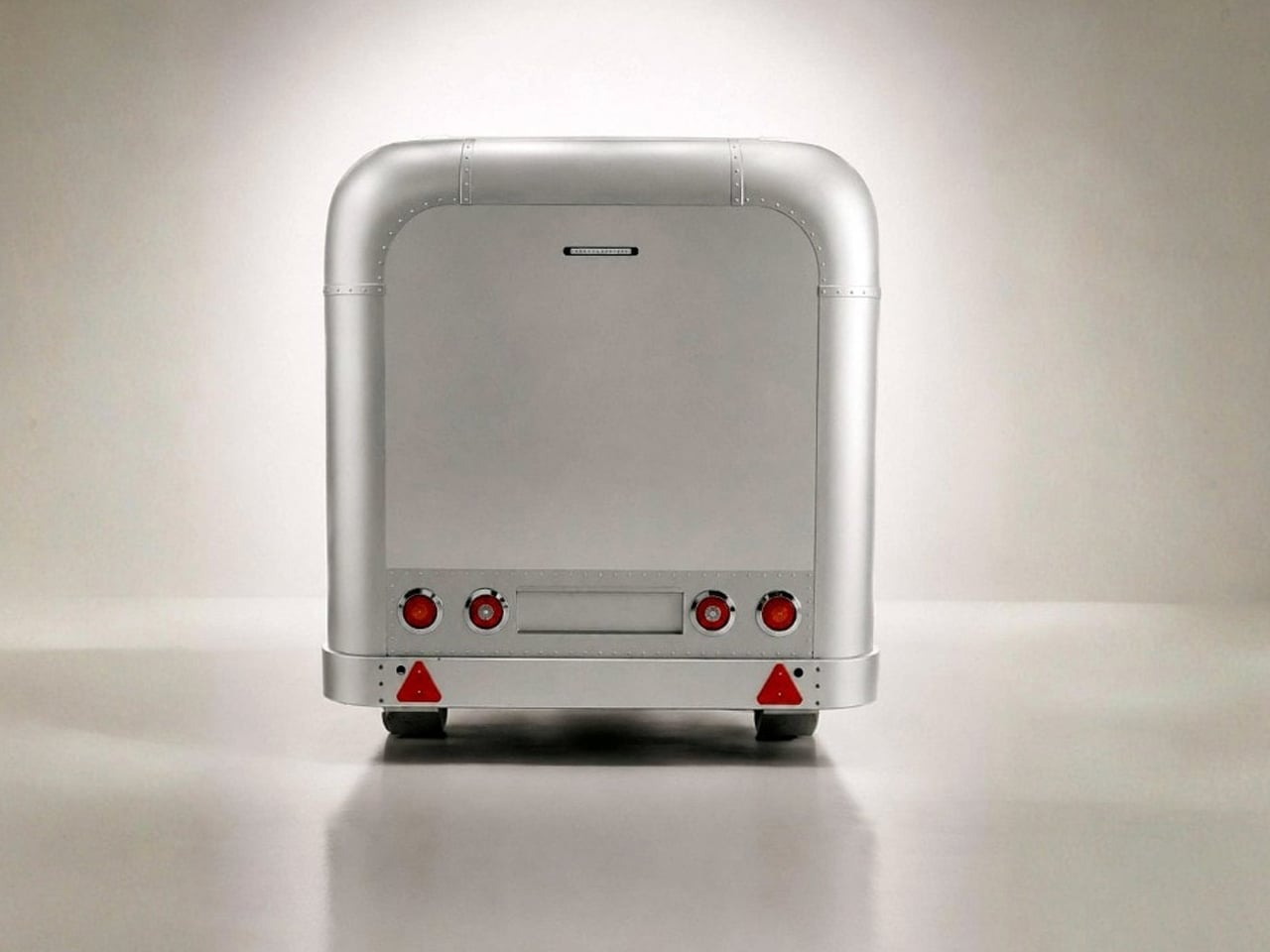
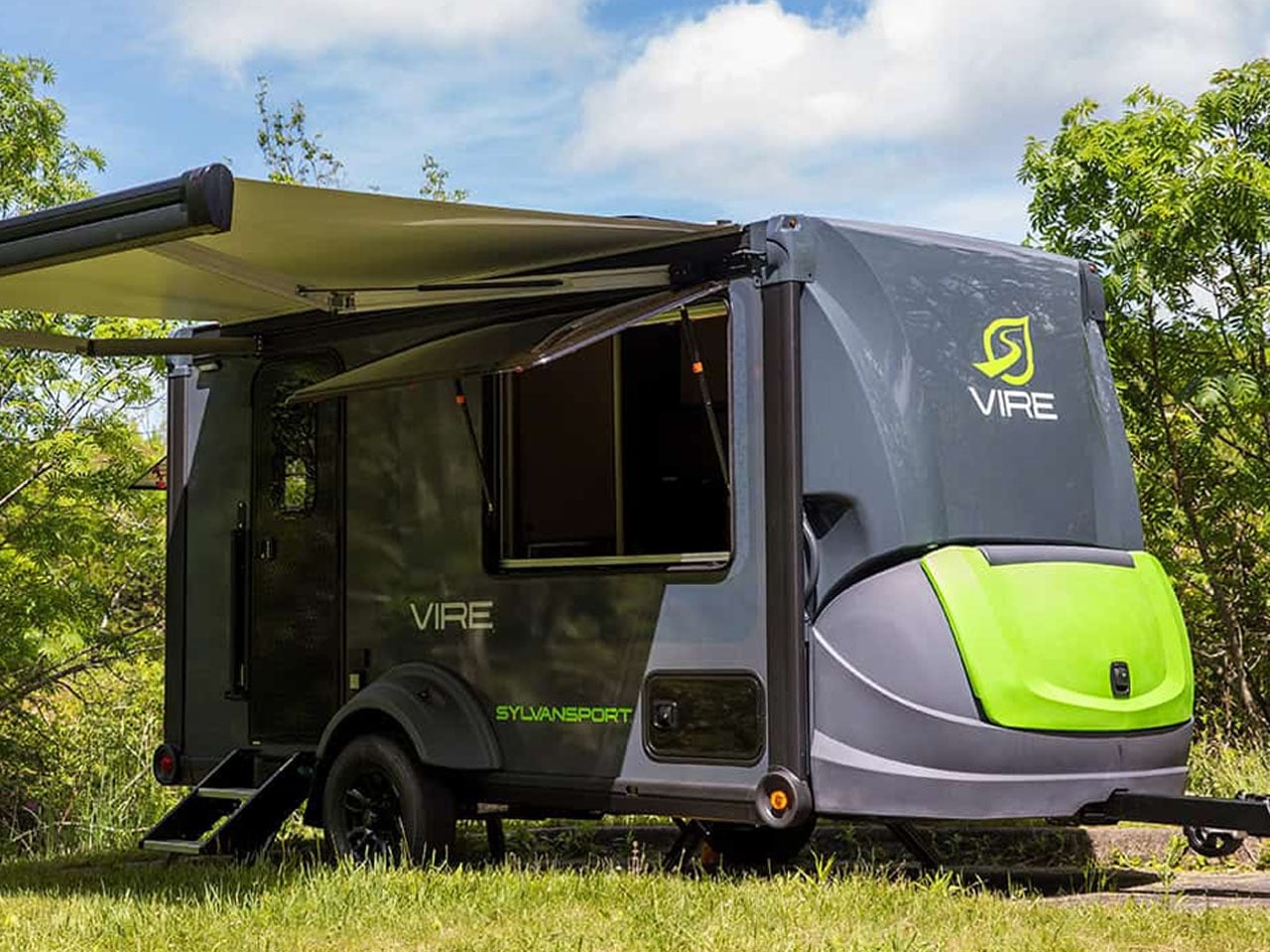
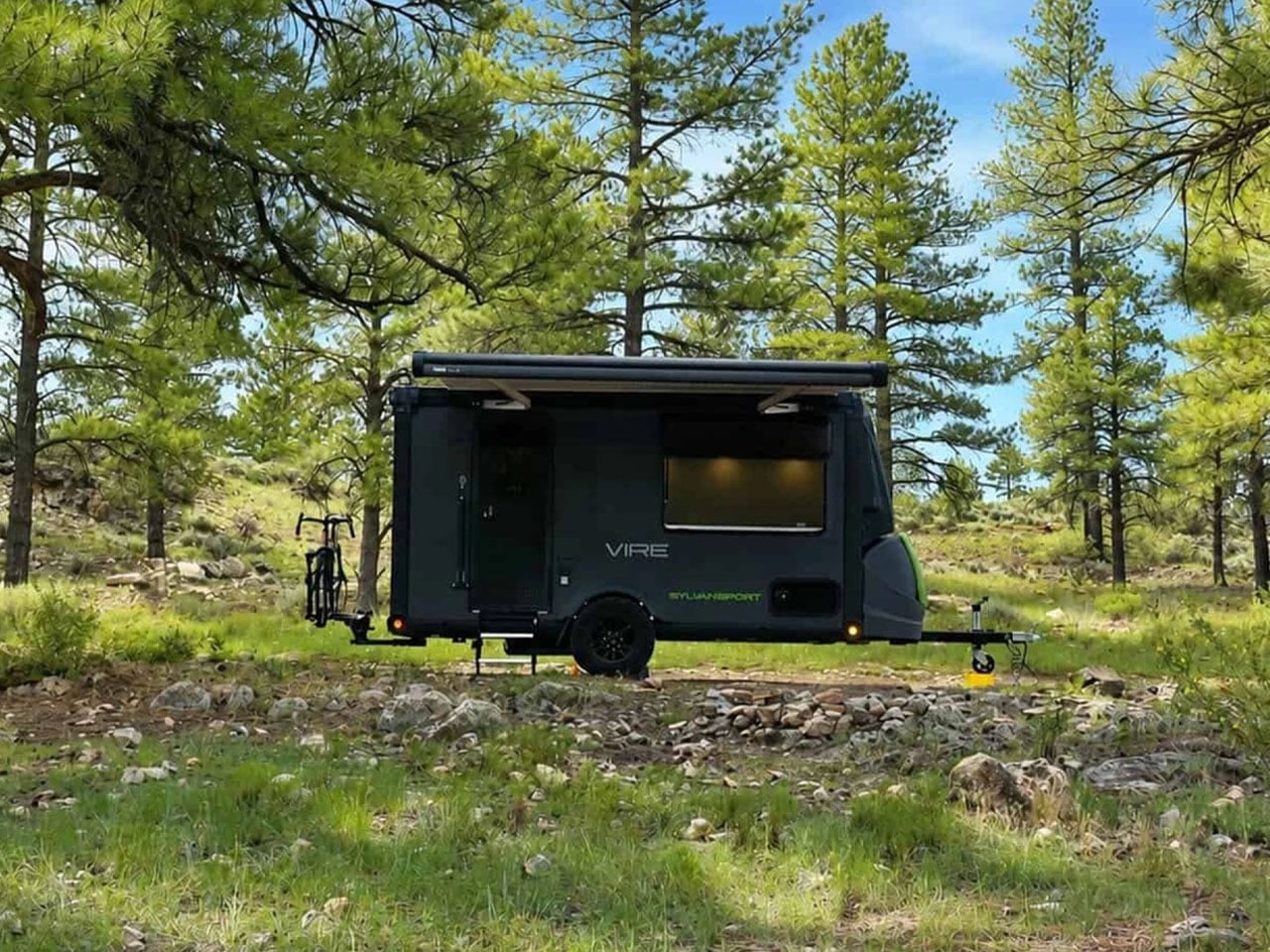
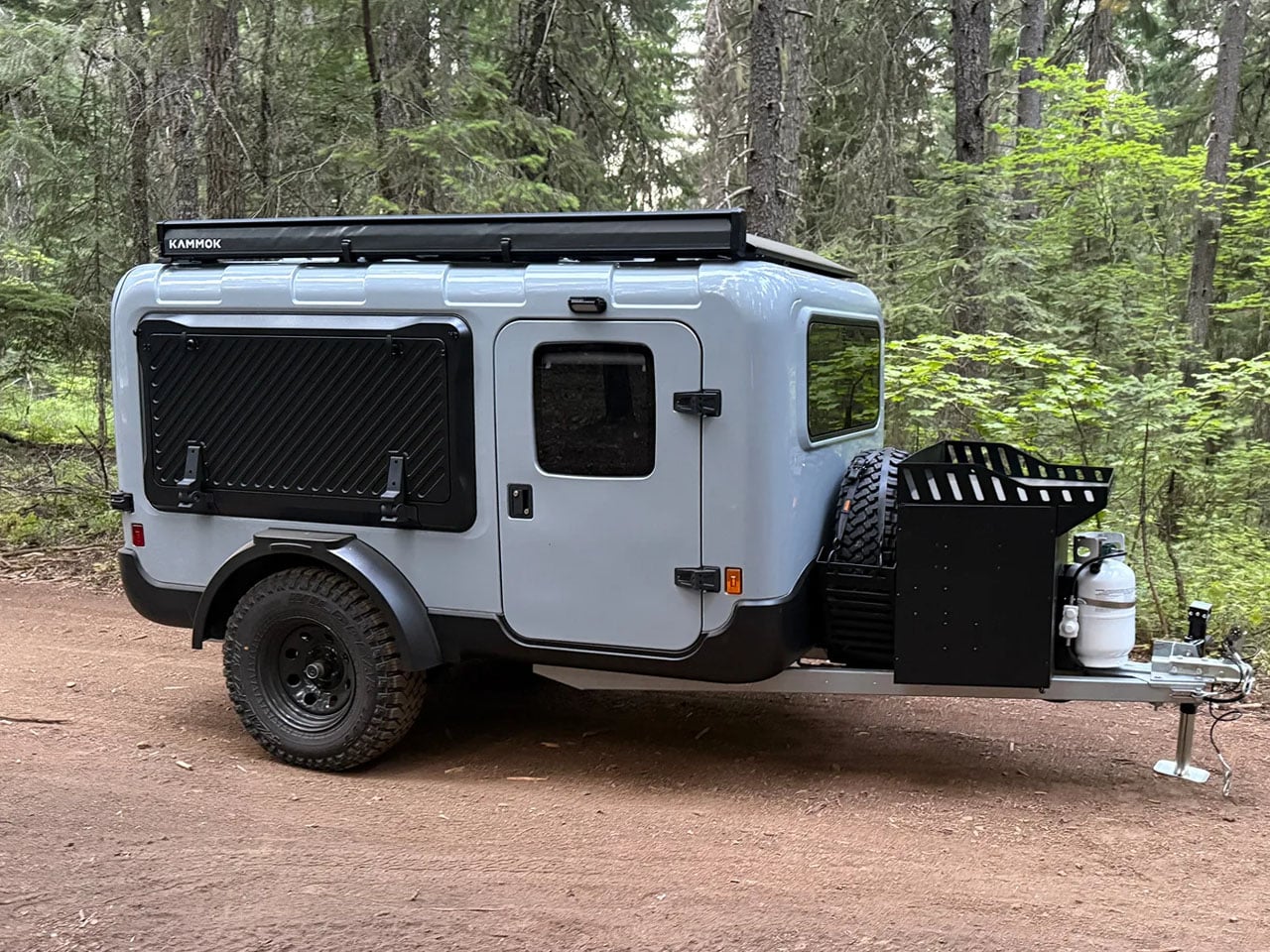
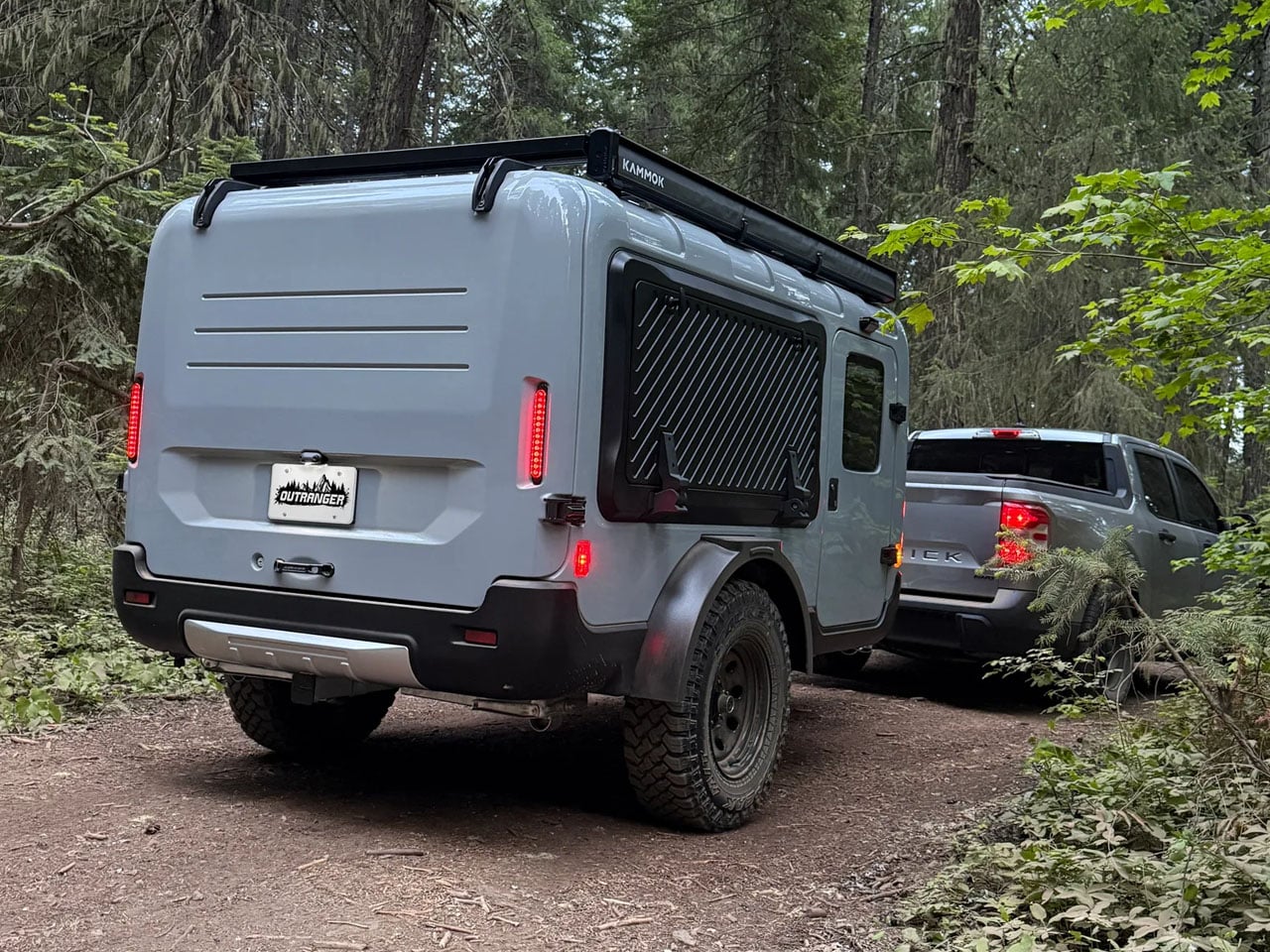
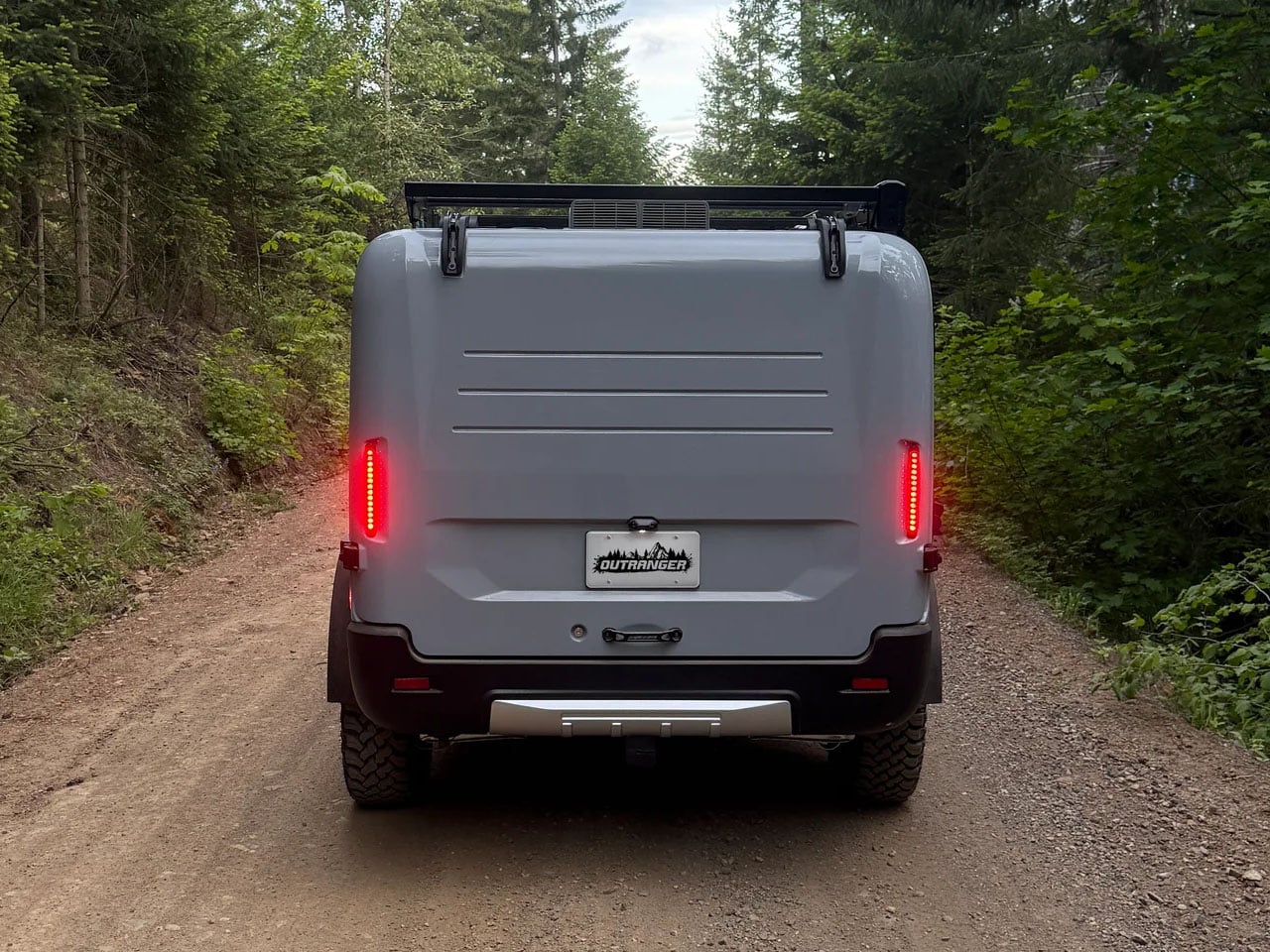
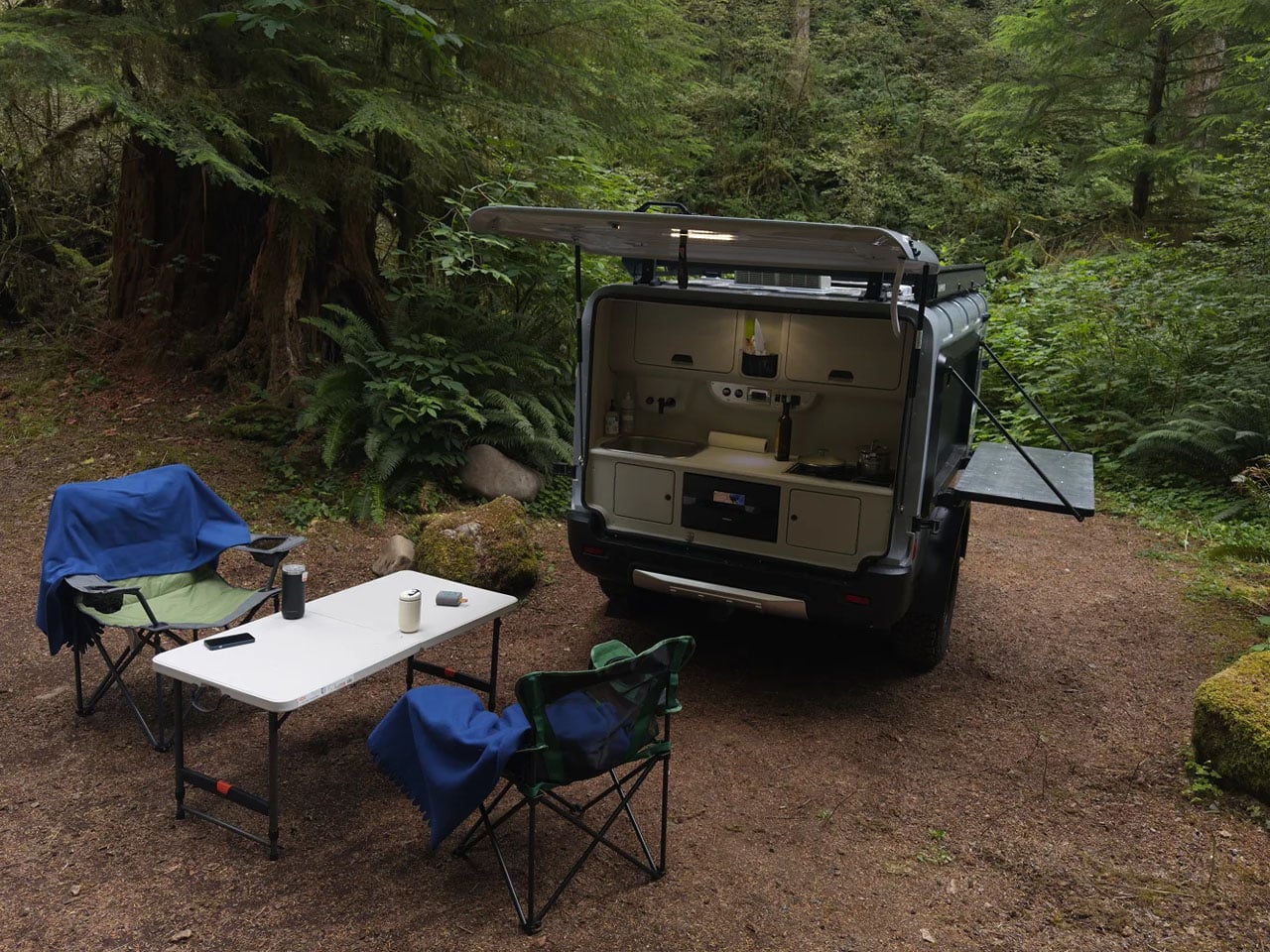
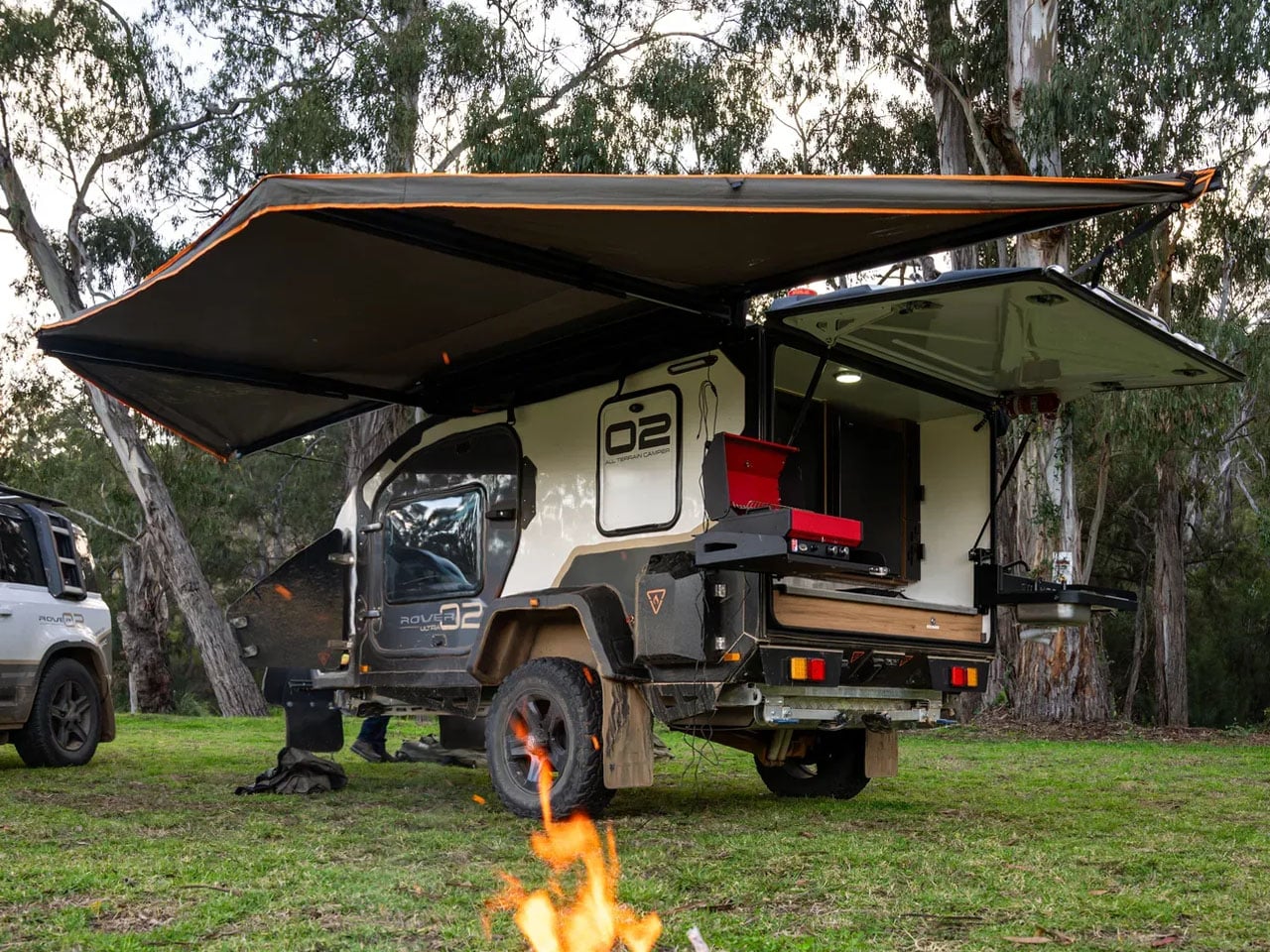
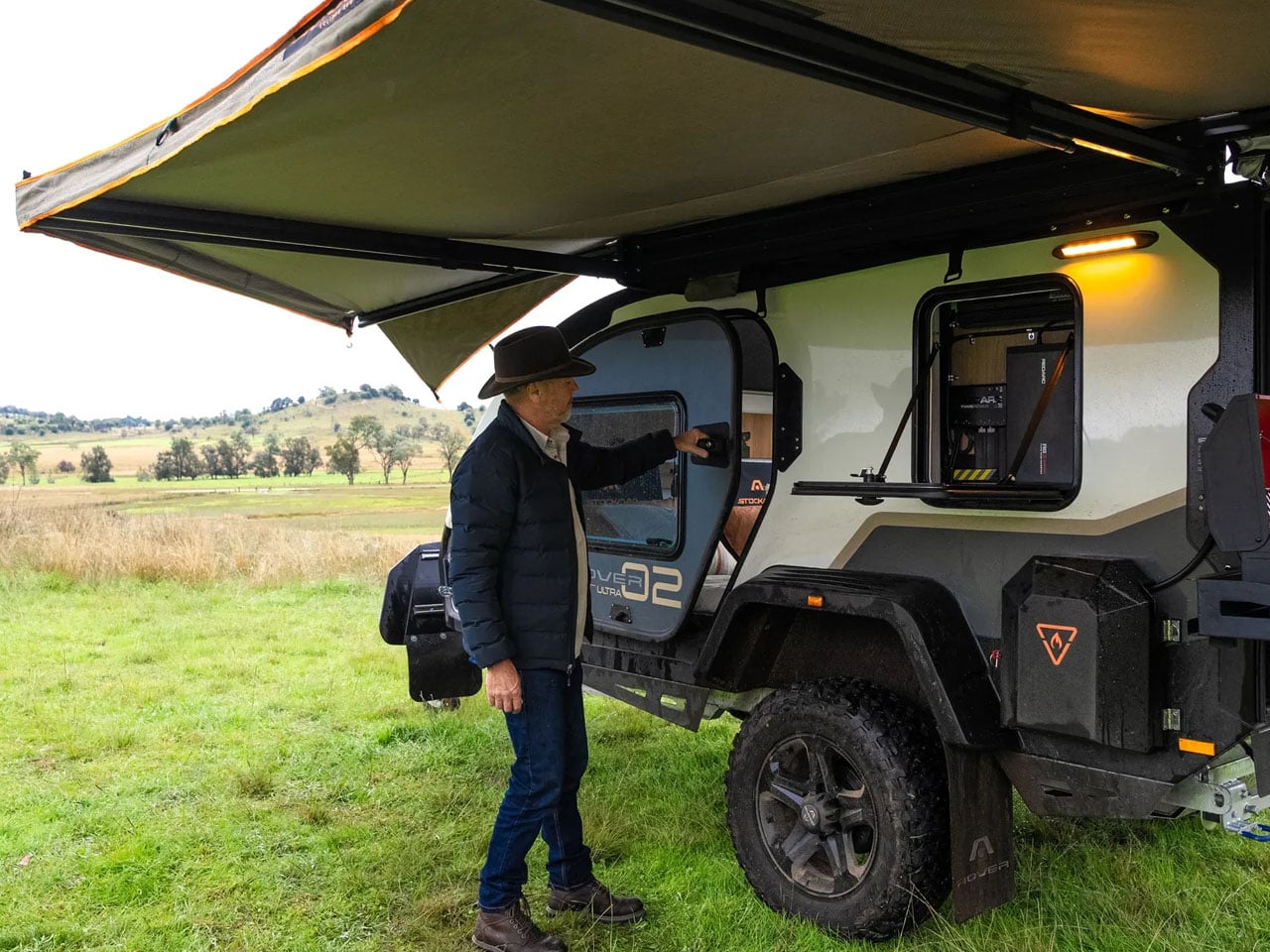
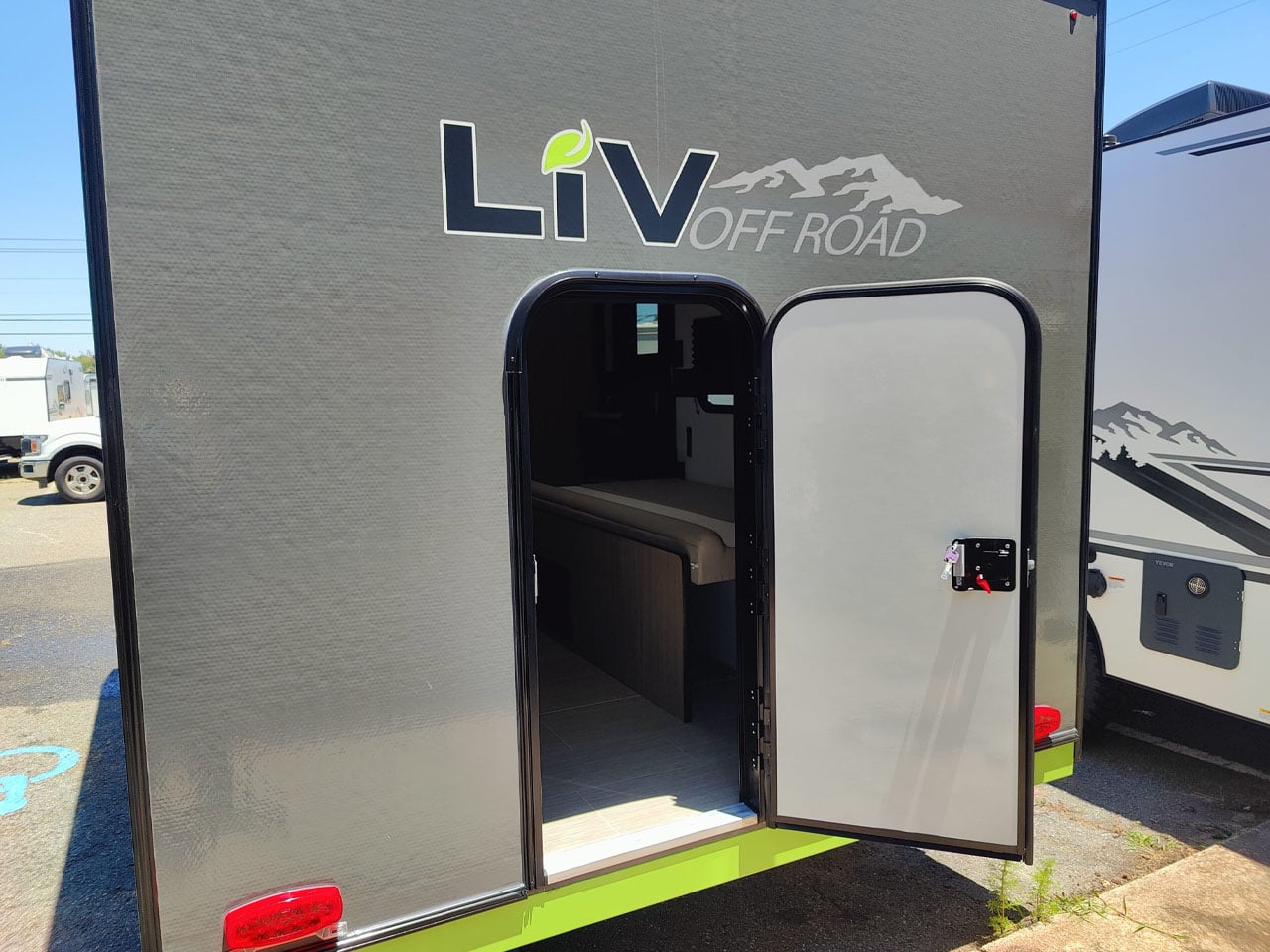
Positioned as being more powerful, more comfortable, and starkly different in appearance, the 2026 Escape Pod is believed to be the most feature-packed camper trailer in its class. It features the same ethos as the OG but comes in a brand-new body comprising aluminum and XPS foam on the outside and fiberglass on the inside. It’s configured to remain livable off-the-grid and stocked up to take you on tours beyond the paved roads.

Designer: Goldfields Campers

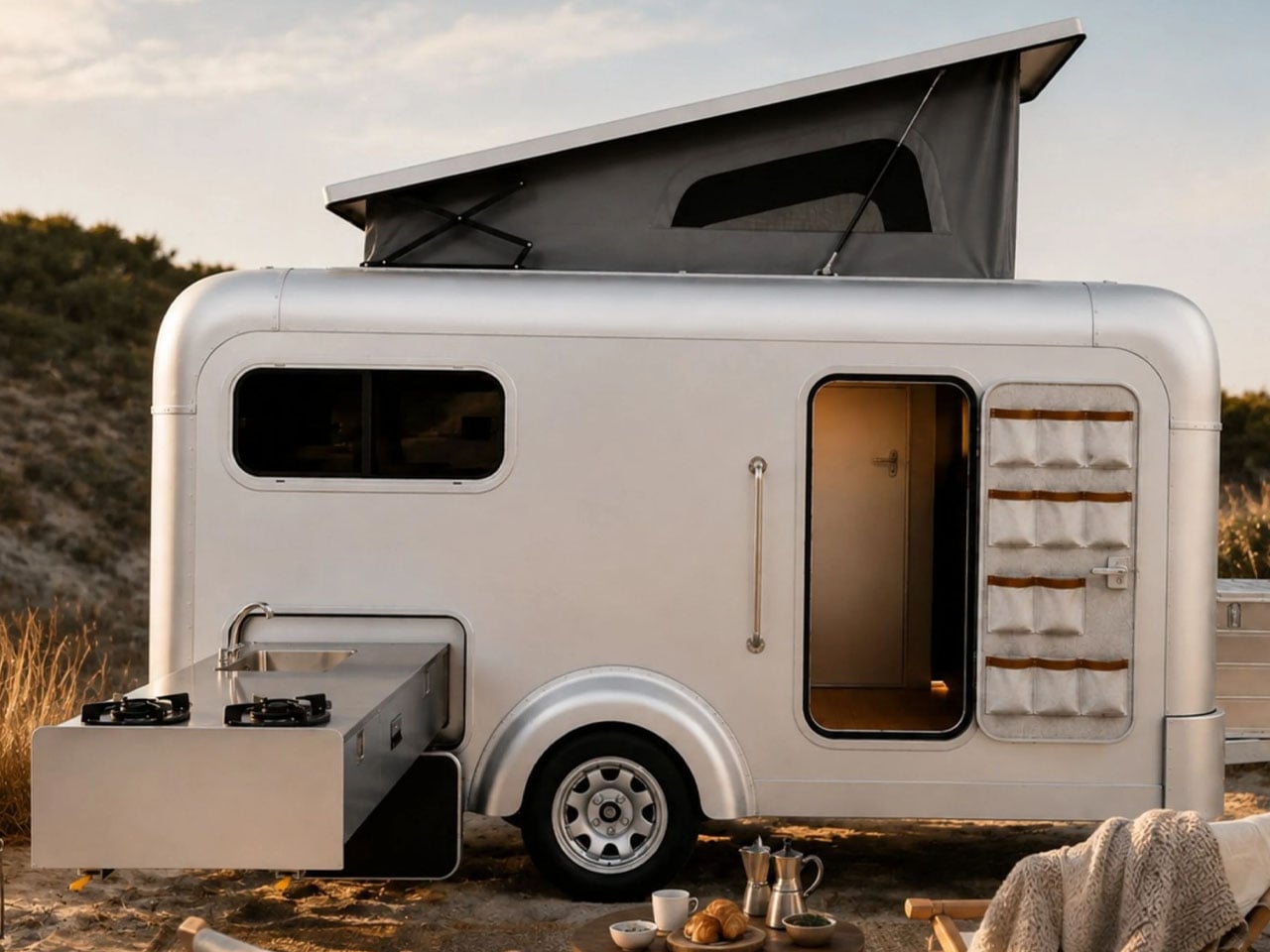
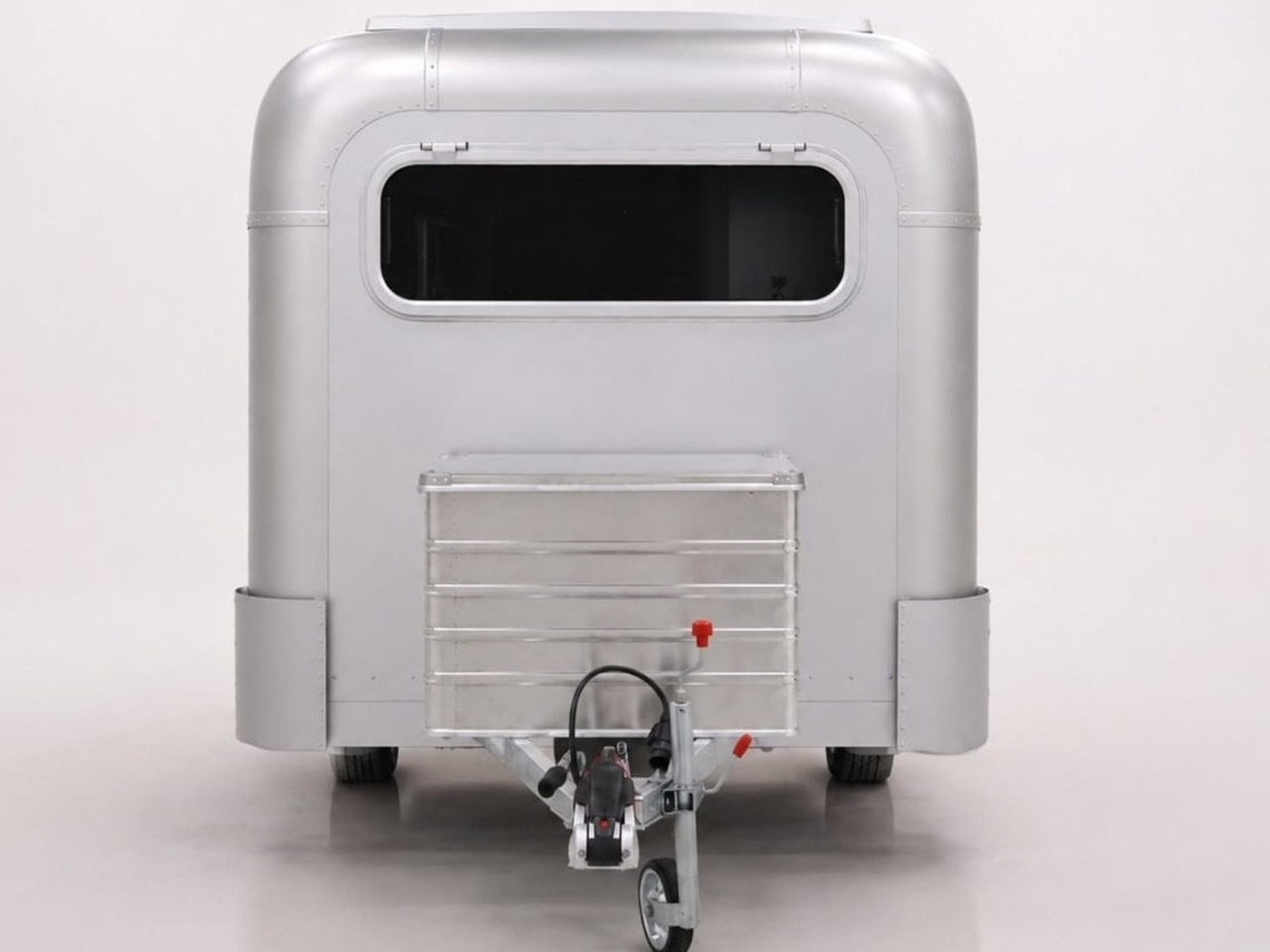
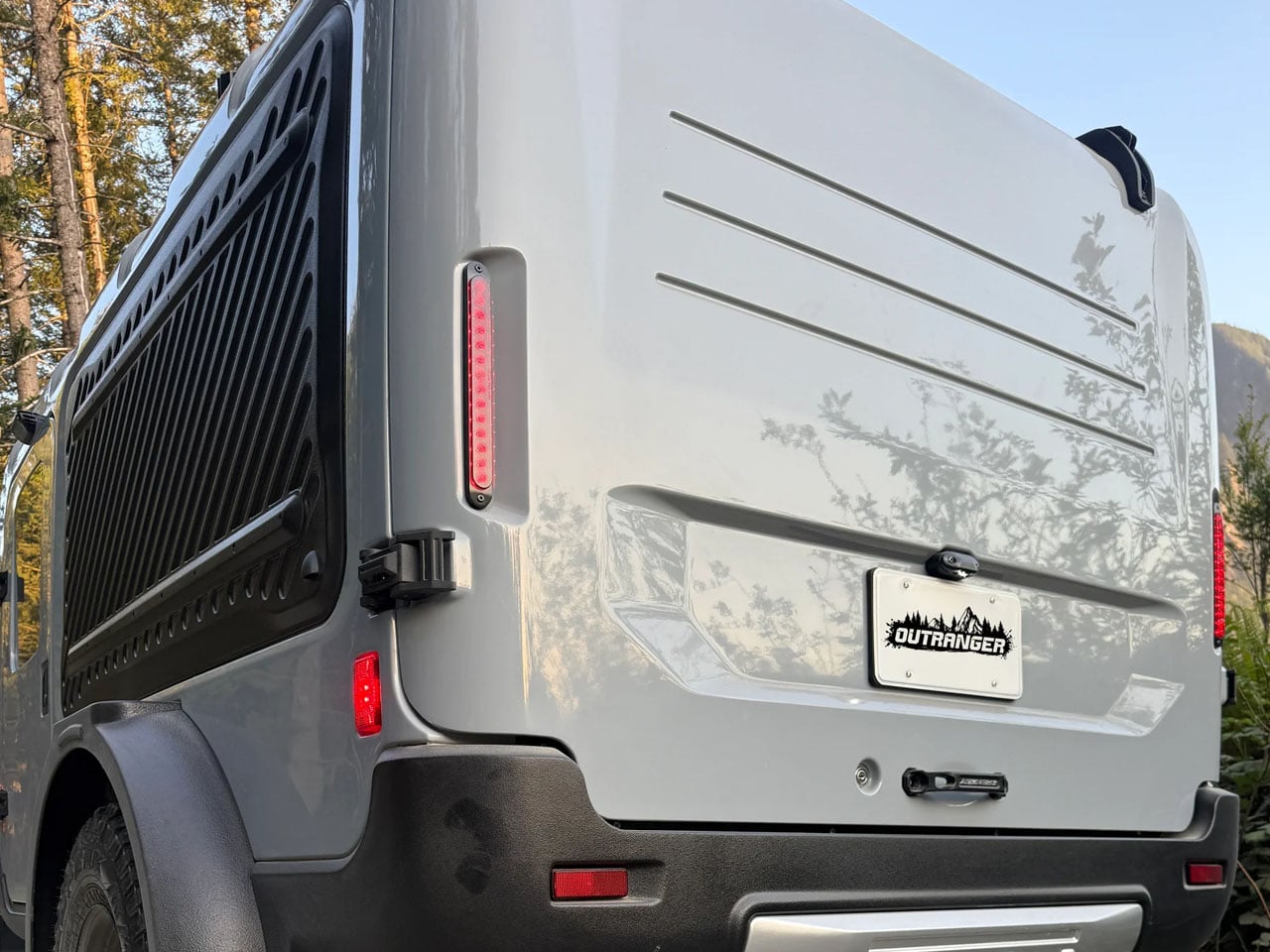
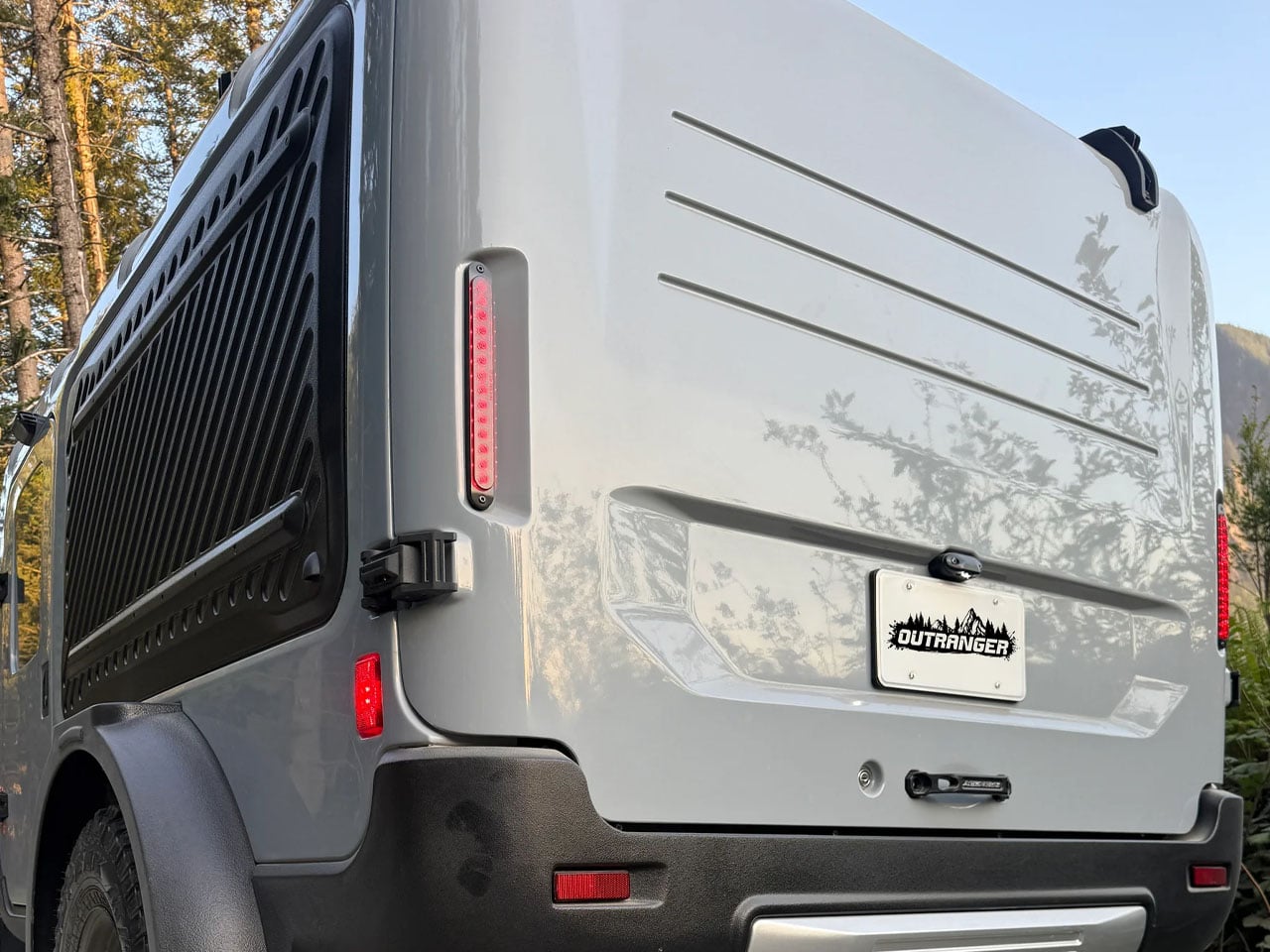
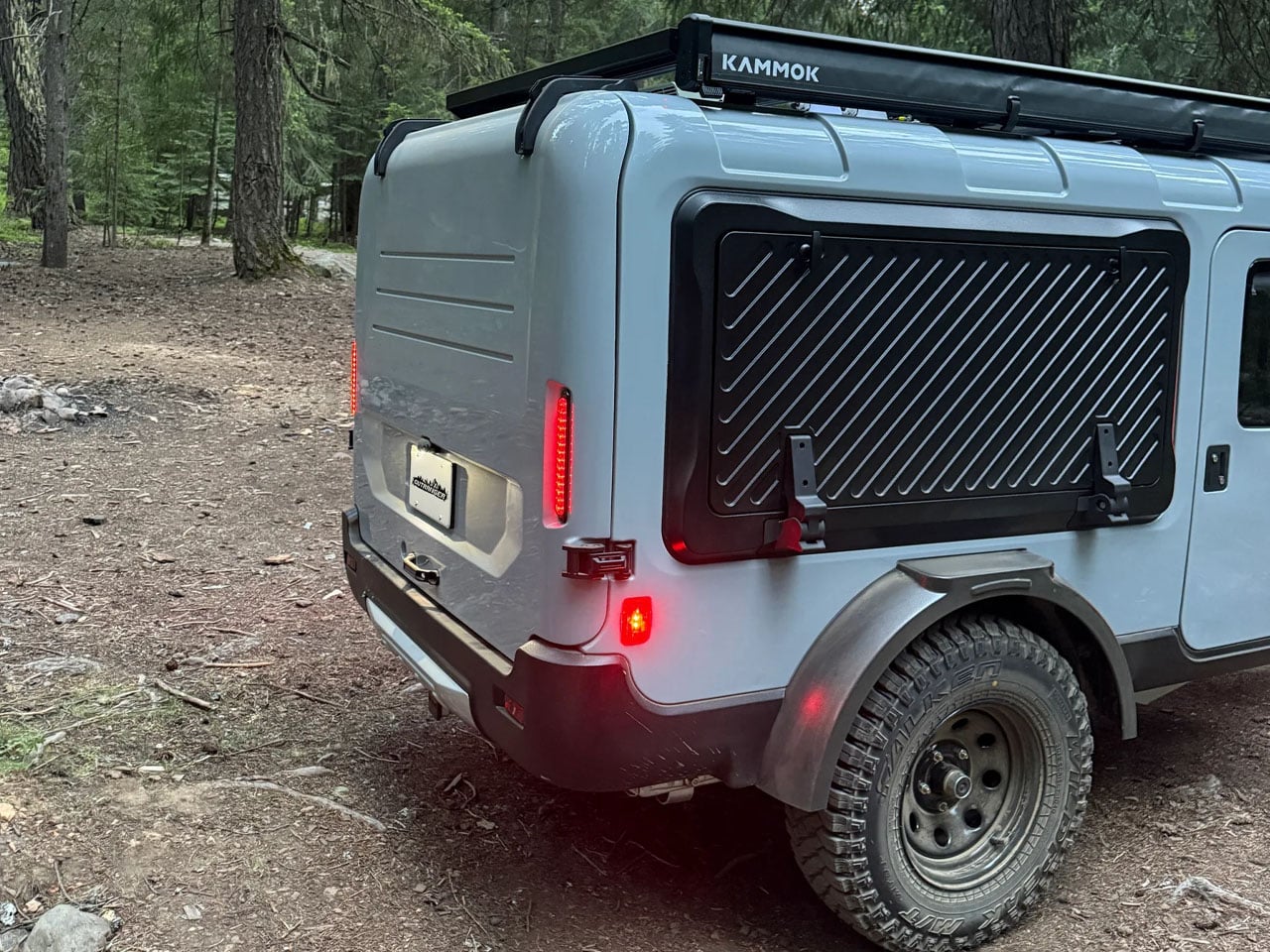
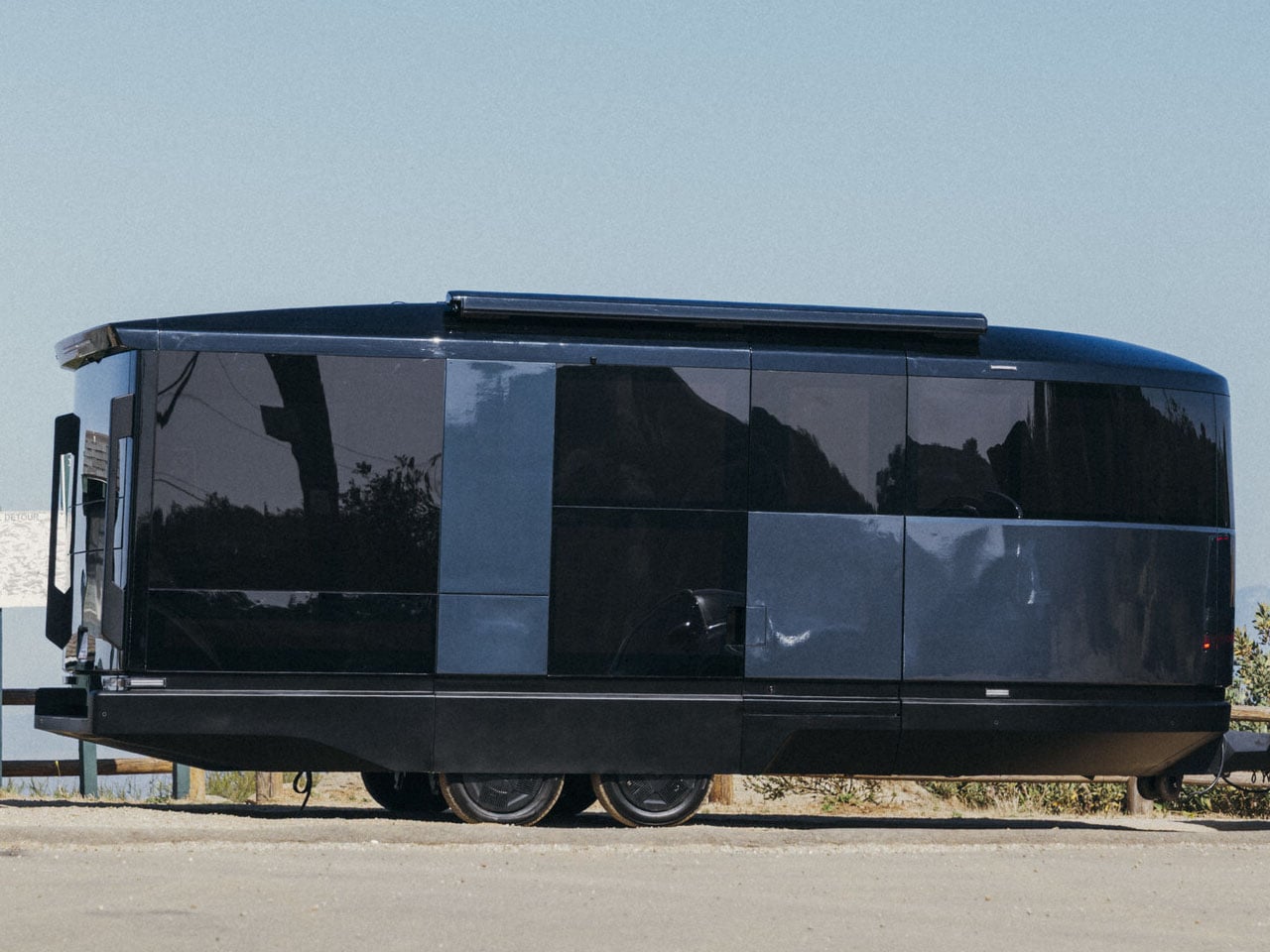
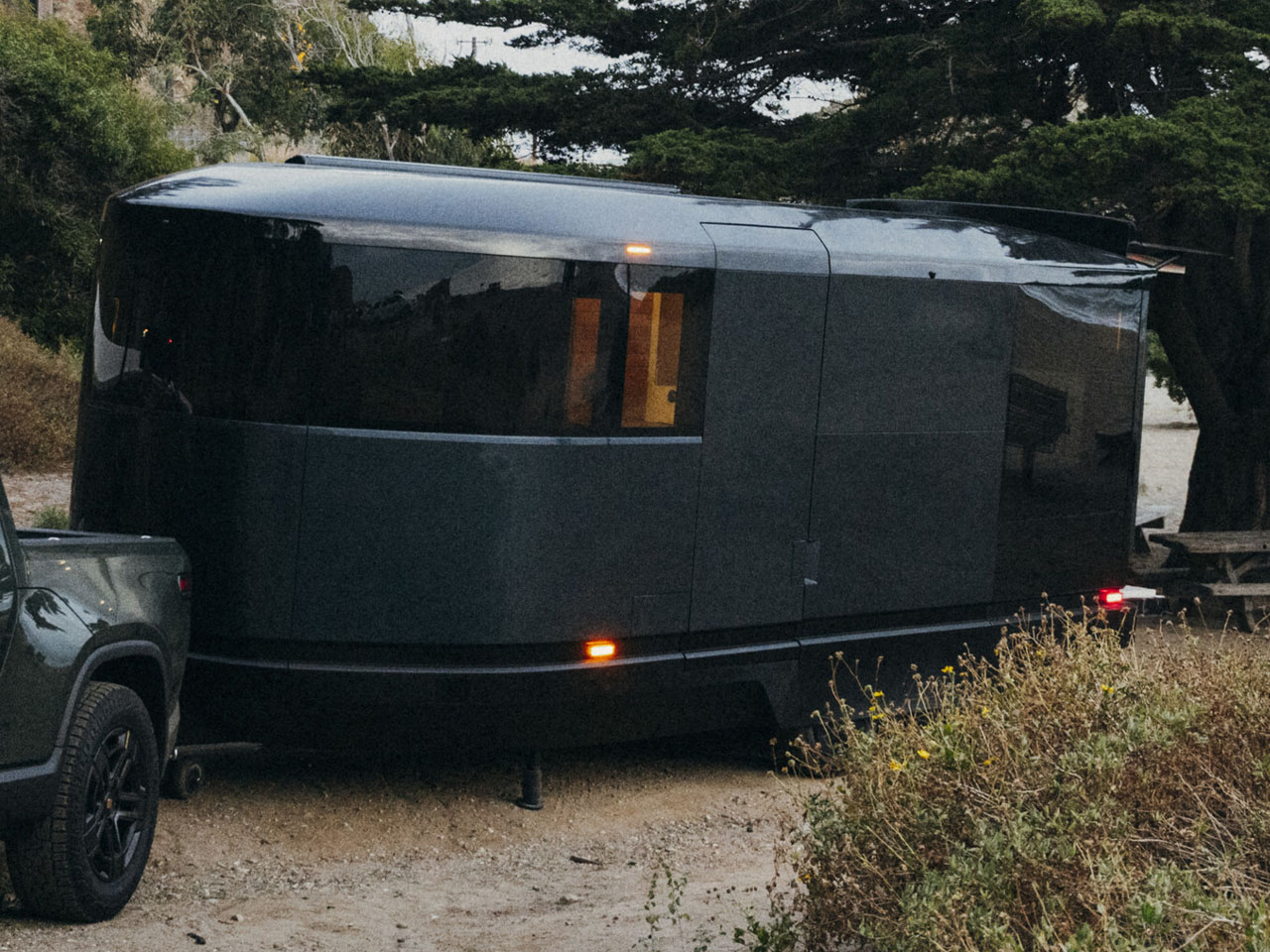
Unlike the bigger models we have seen in the past, the Escape Pod is essentially compact. It comes in a 5.1m long, 2.2m wide, 2.2m high form factor with a tare weight of 1,330 kg (2,932 lb). Ditching the angular-bodied design of the Escape for a more livability-focused form factor, the Escape Pod isn’t just about its improved interior; it’s also about the exterior of this squared-off body.

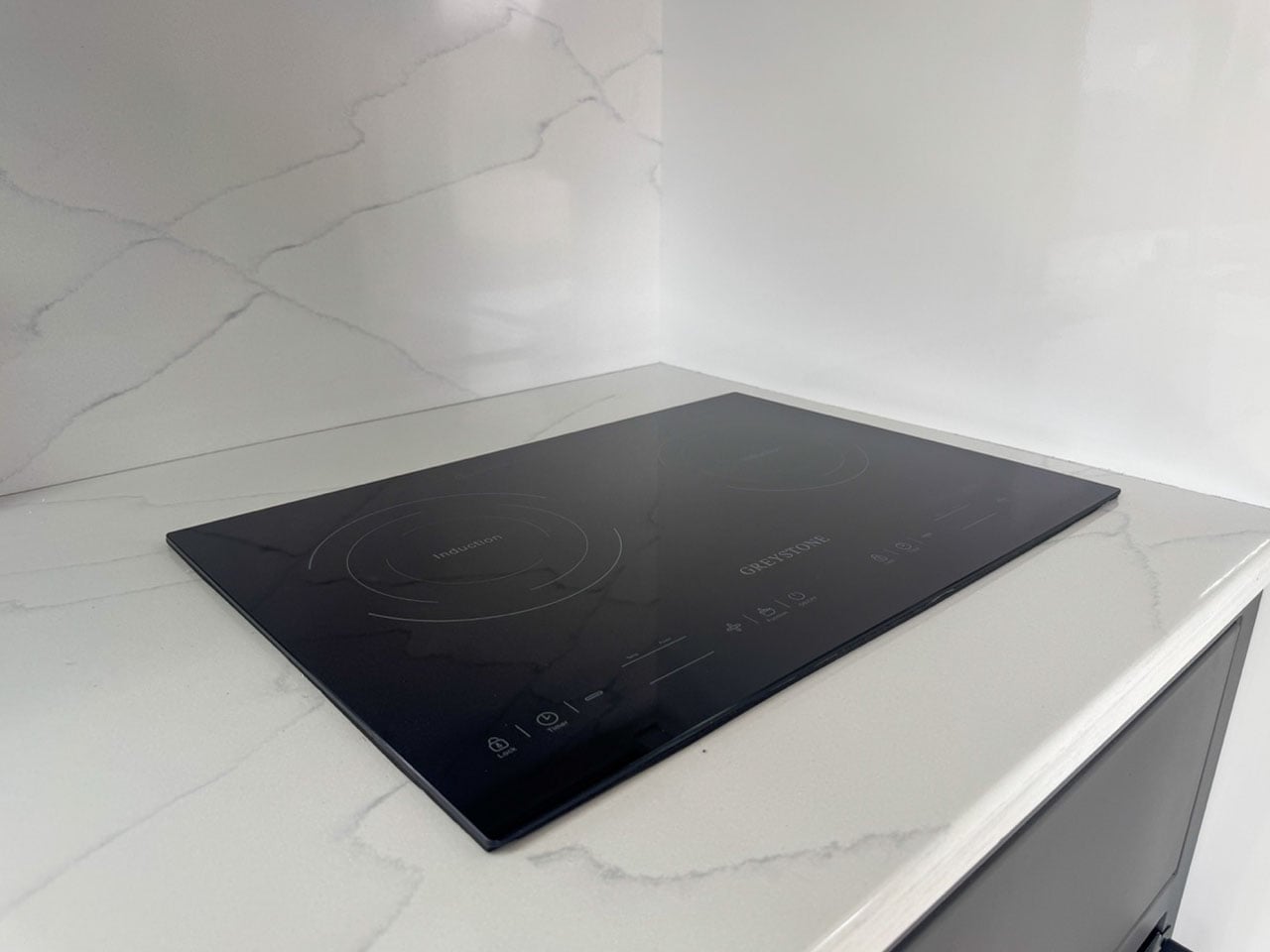
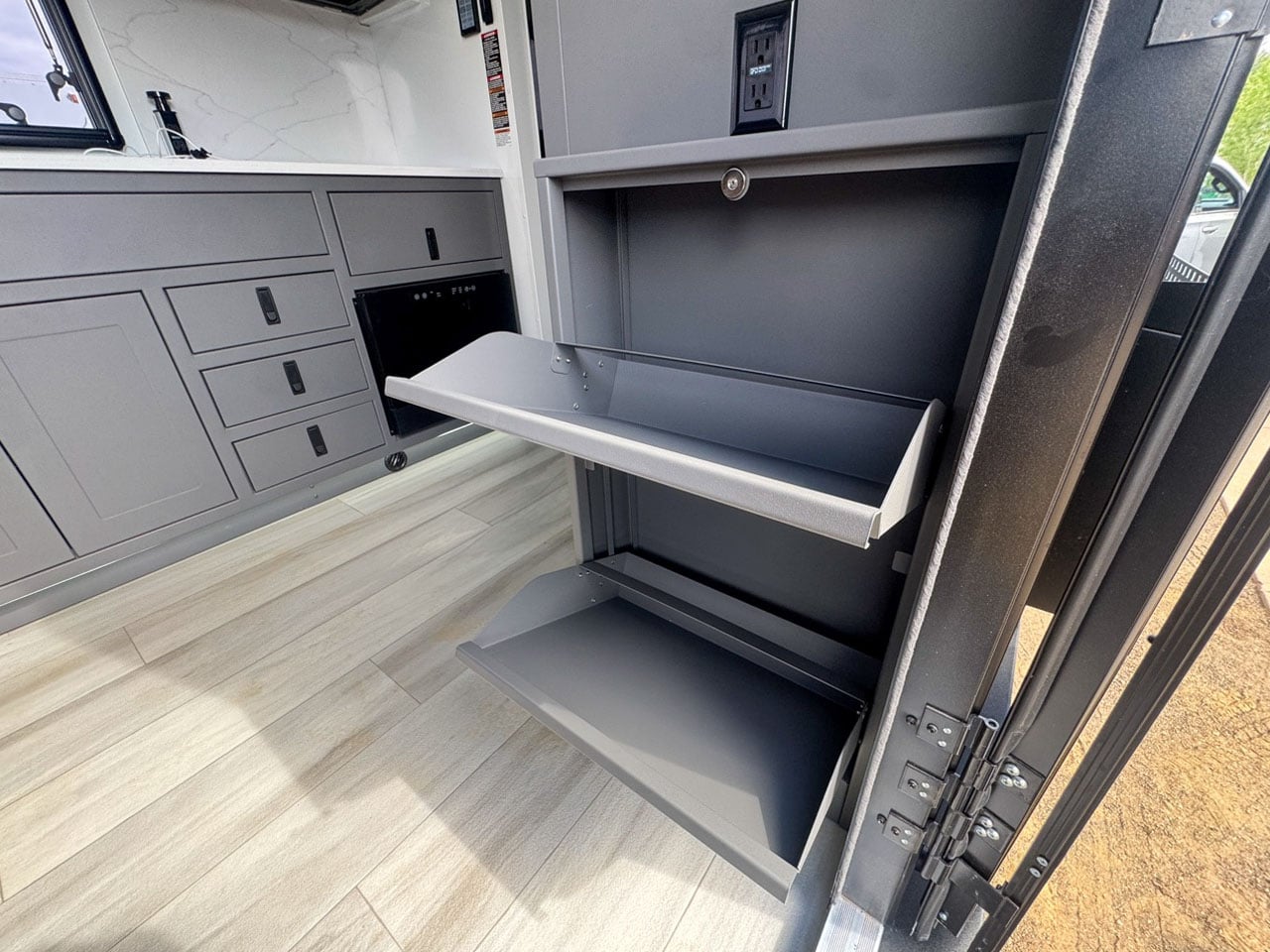
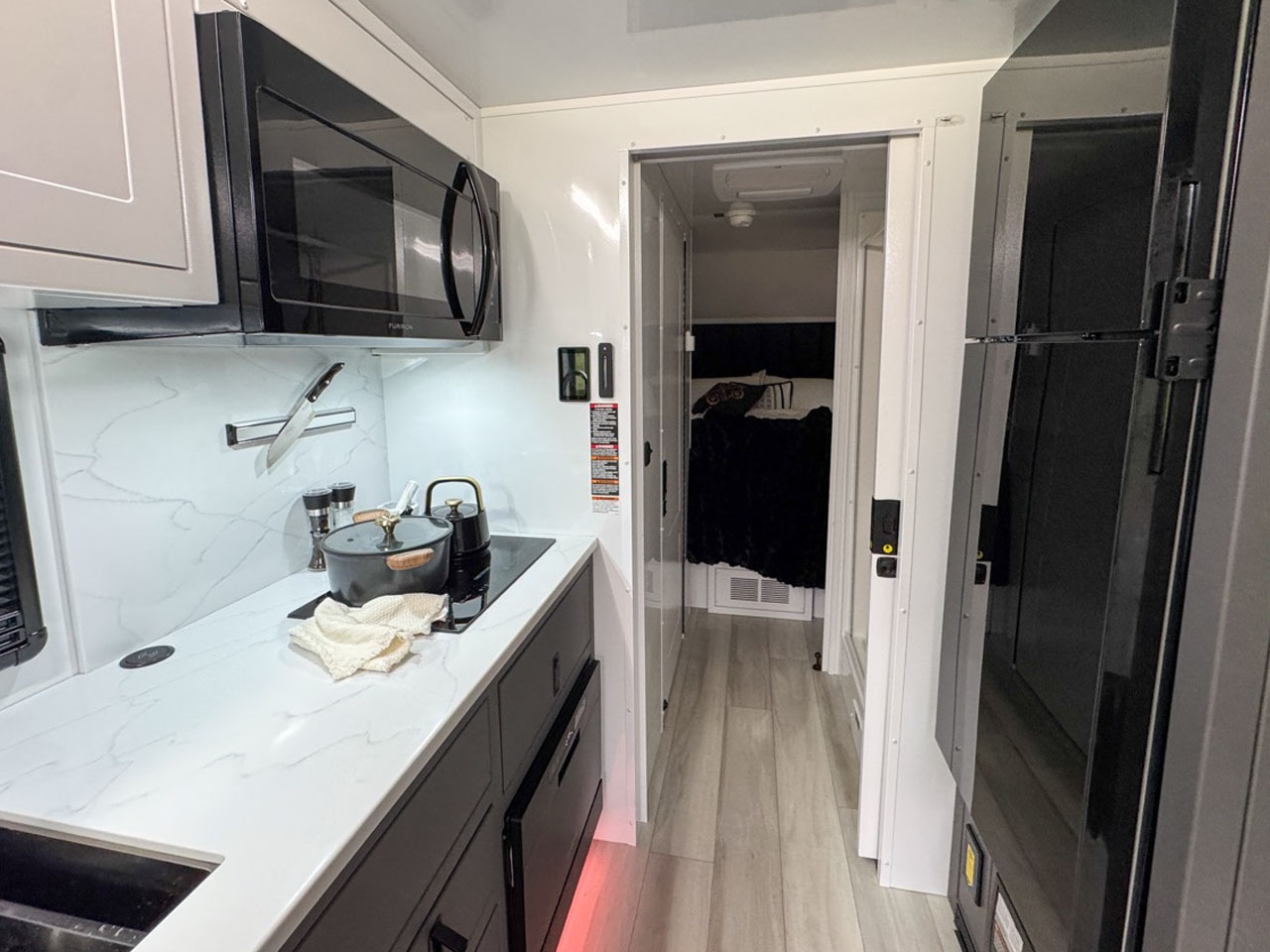
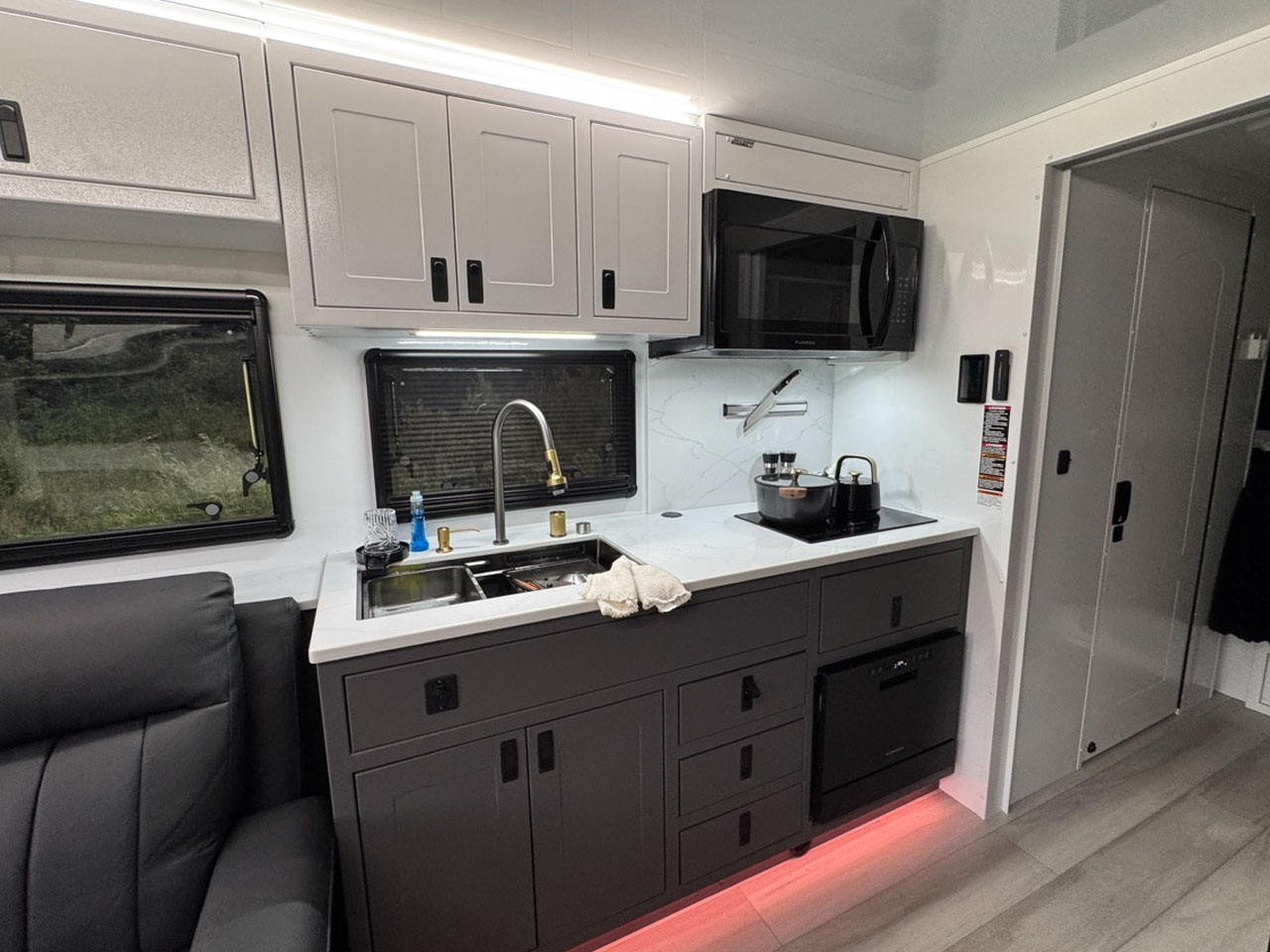
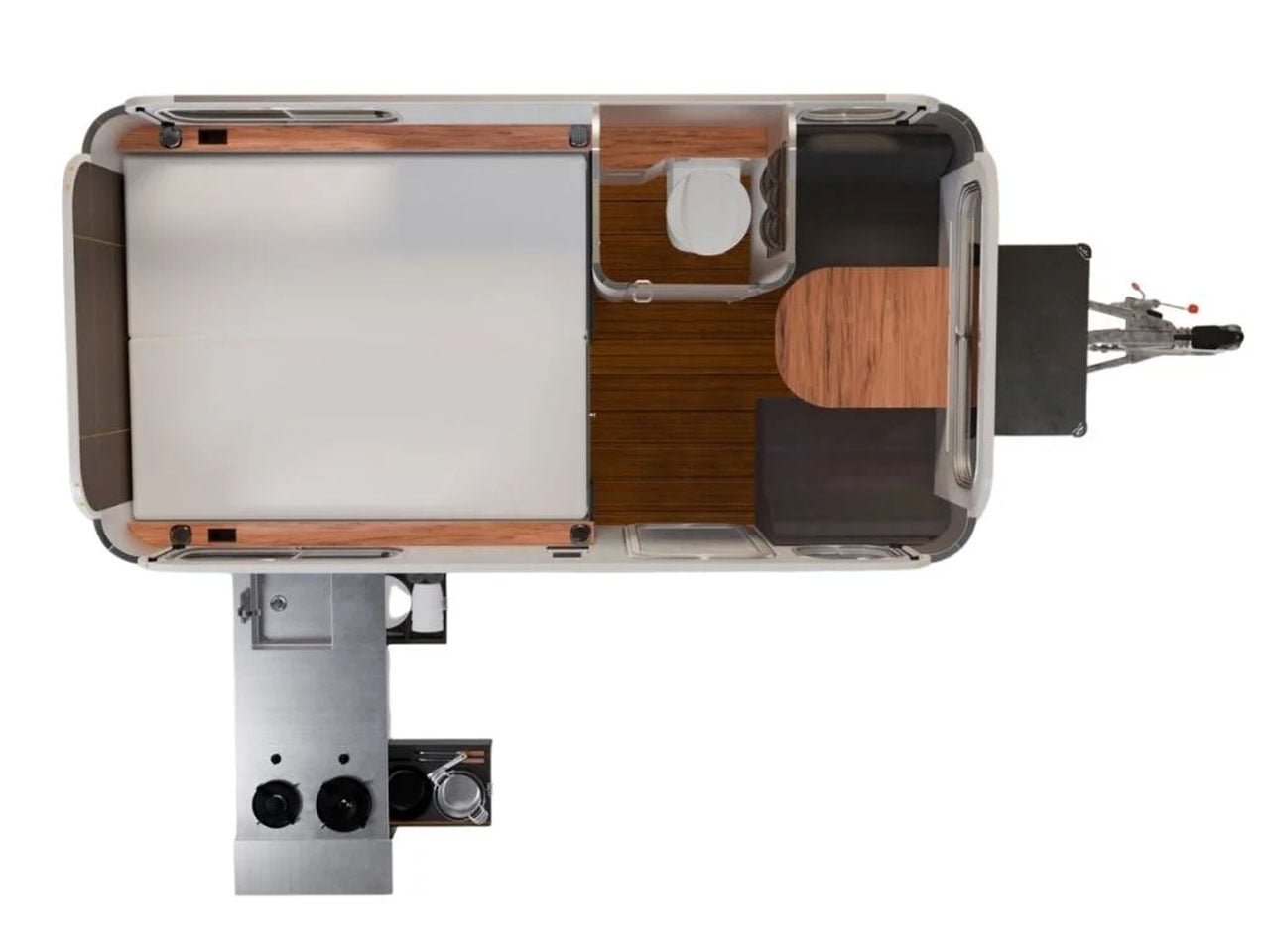
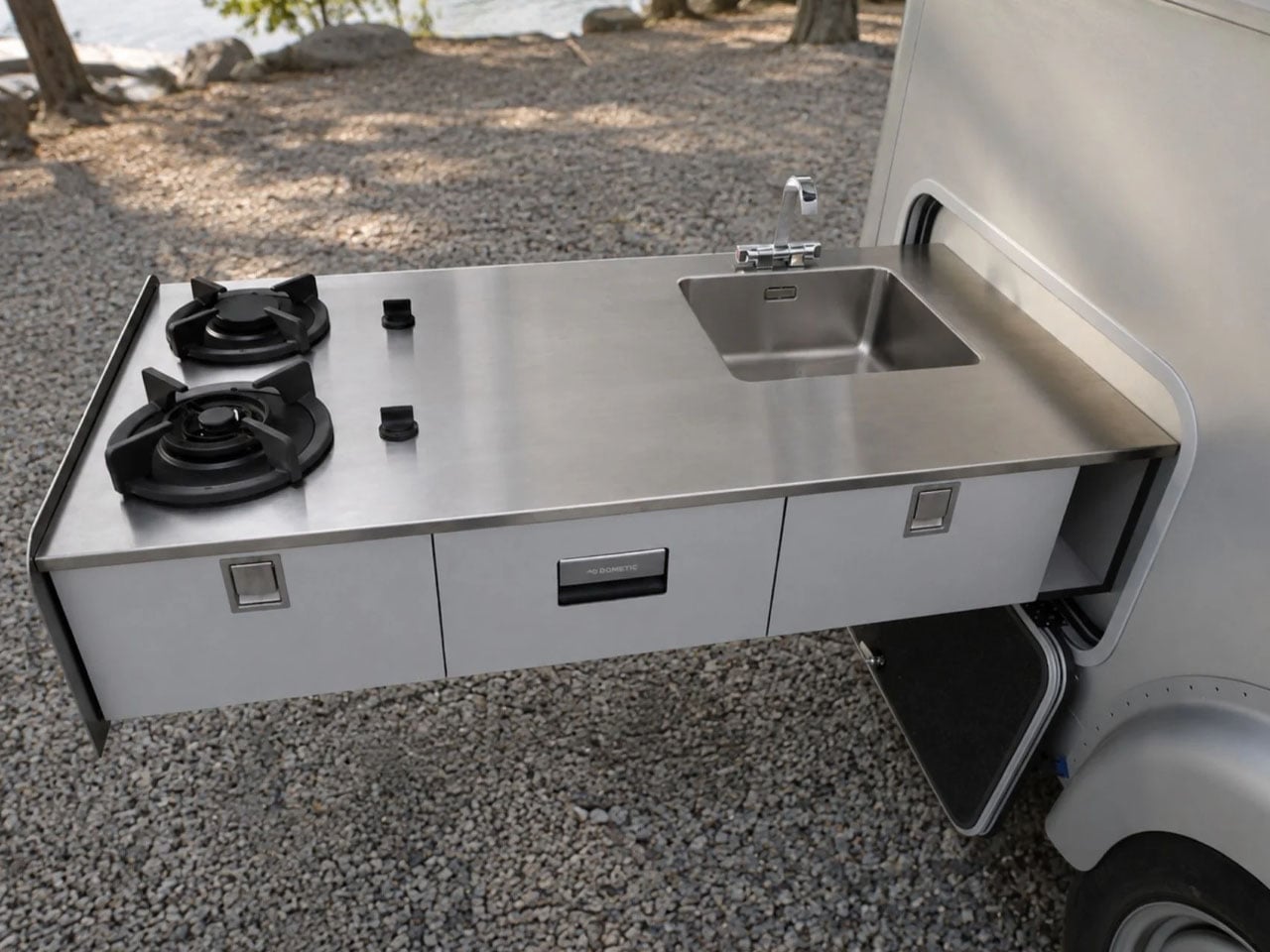
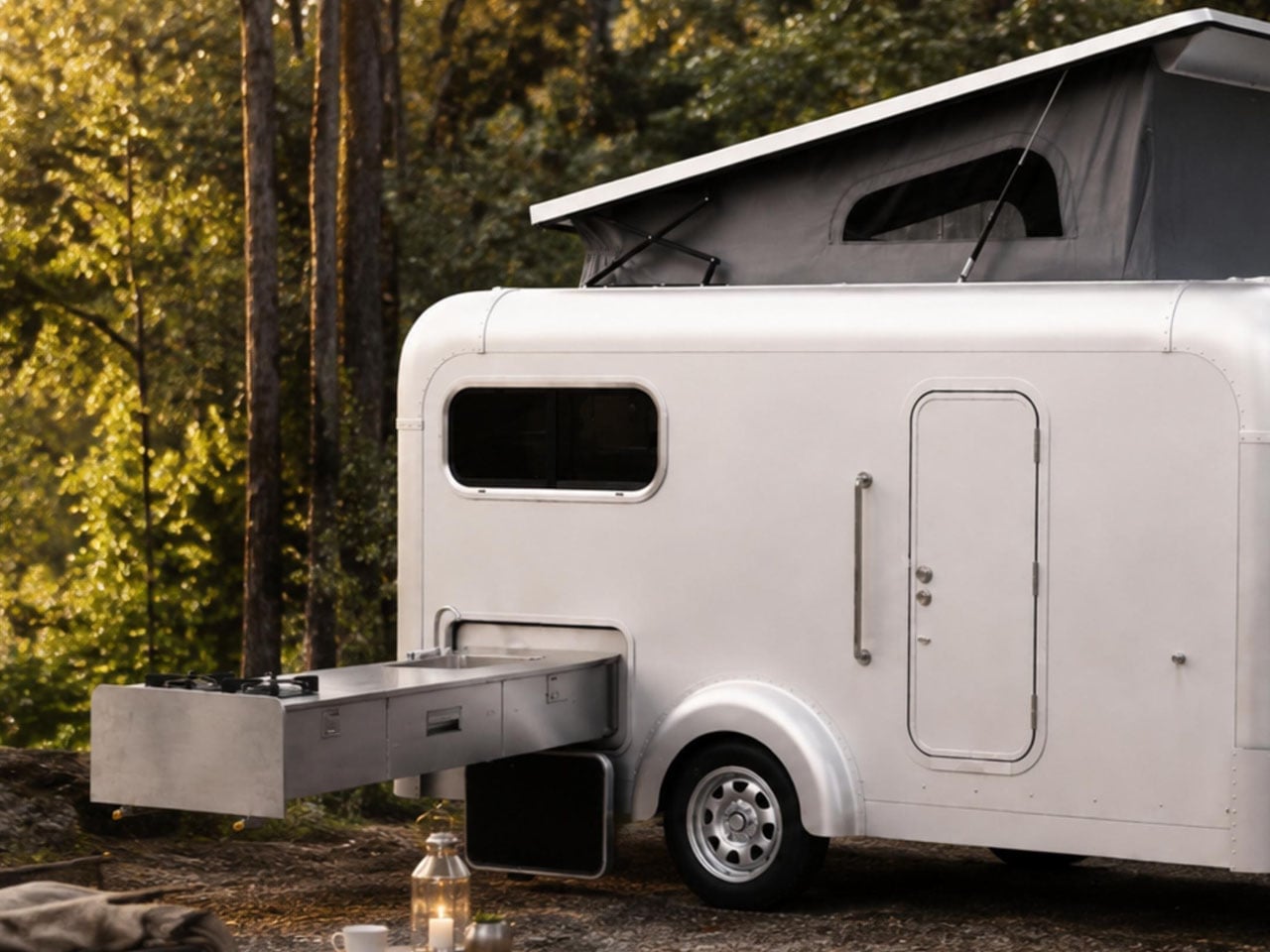
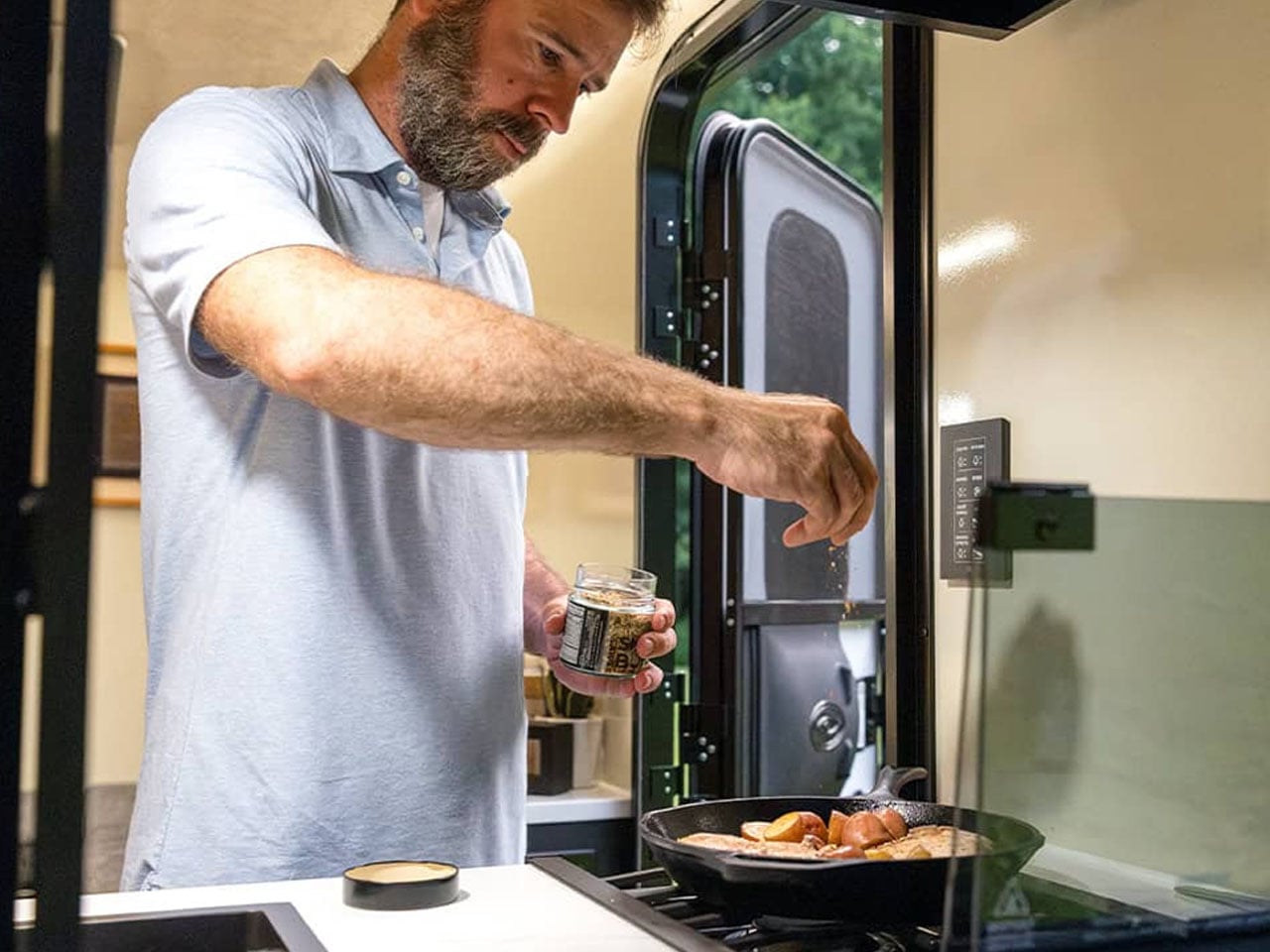
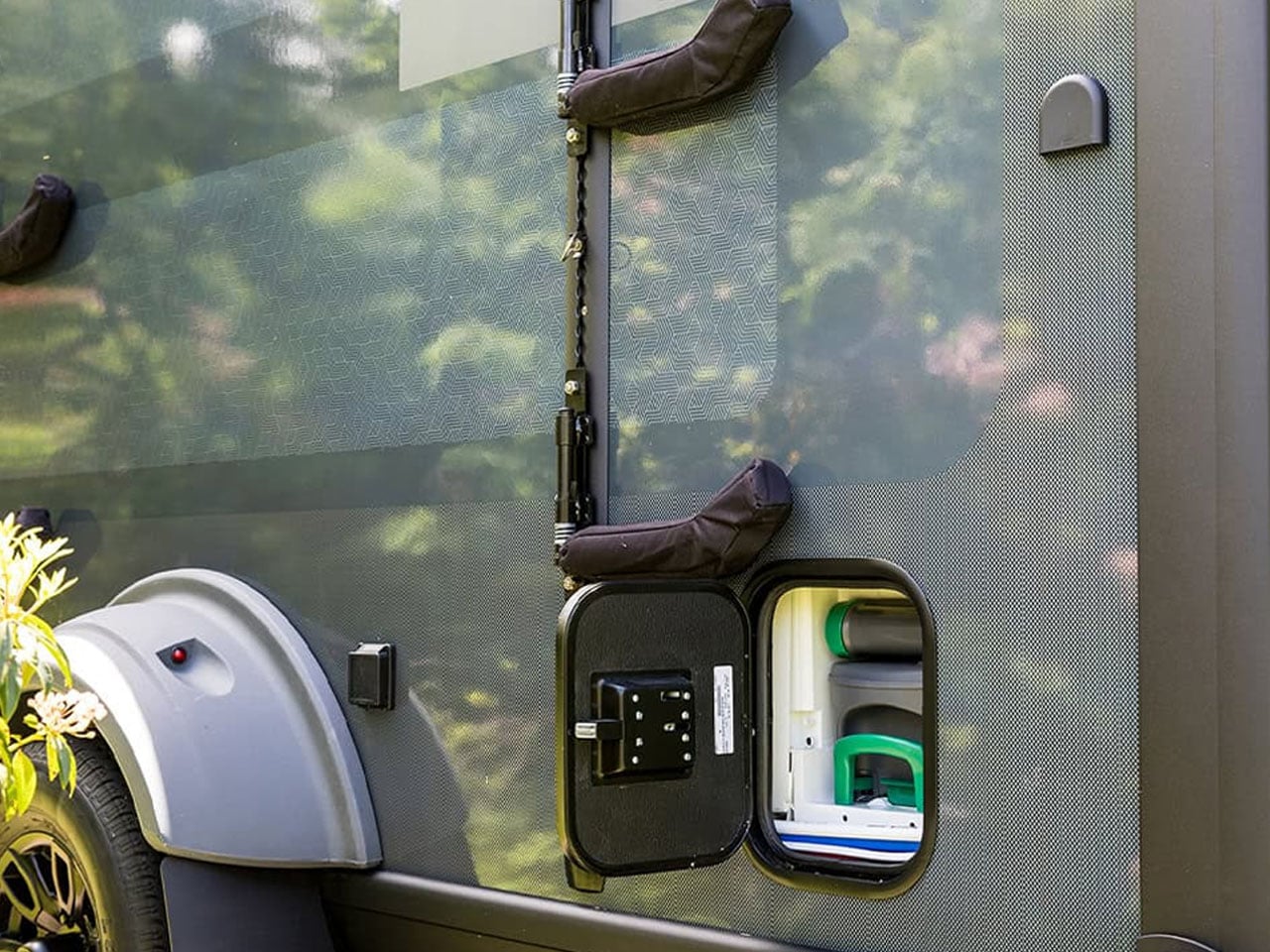
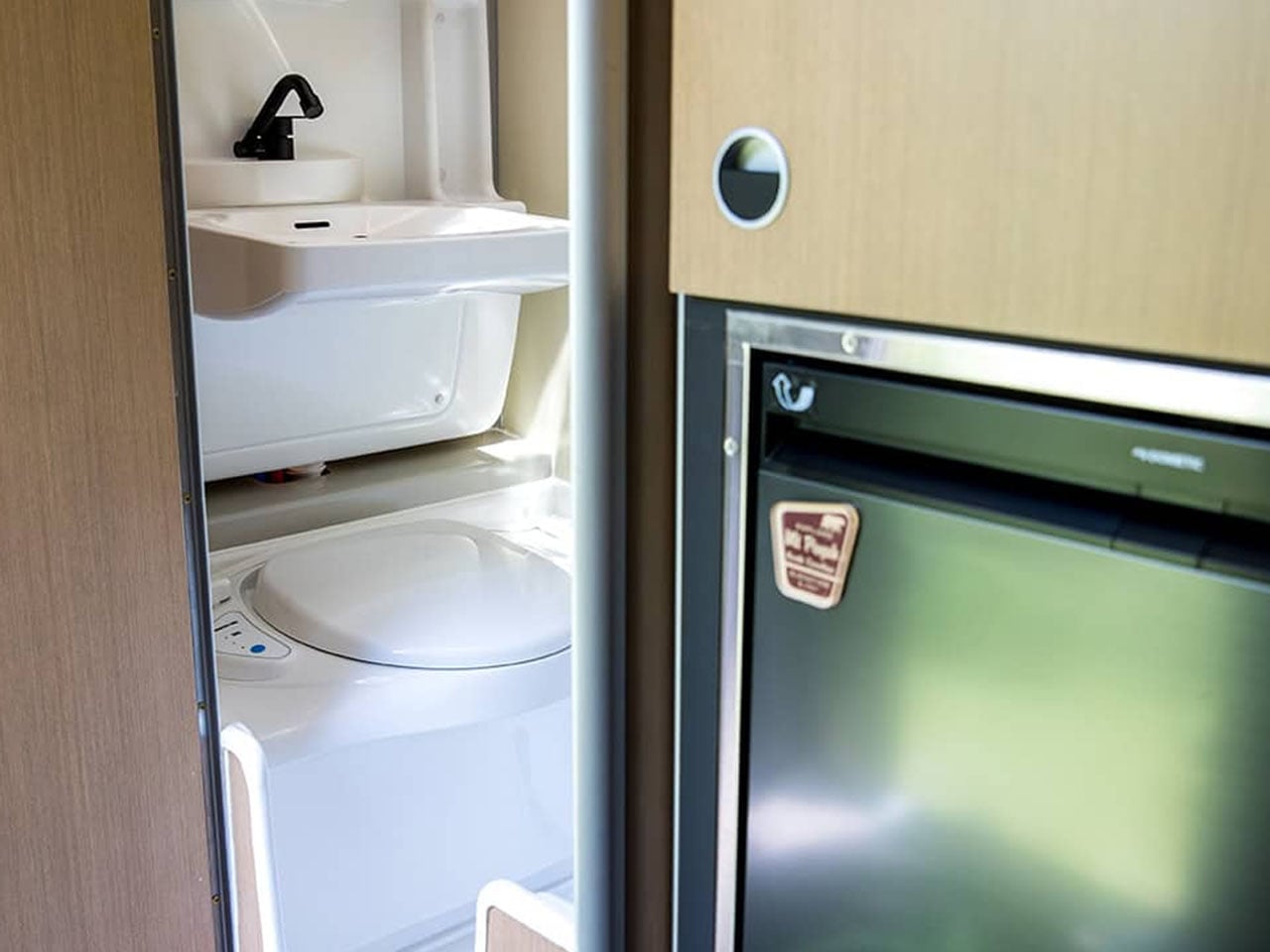
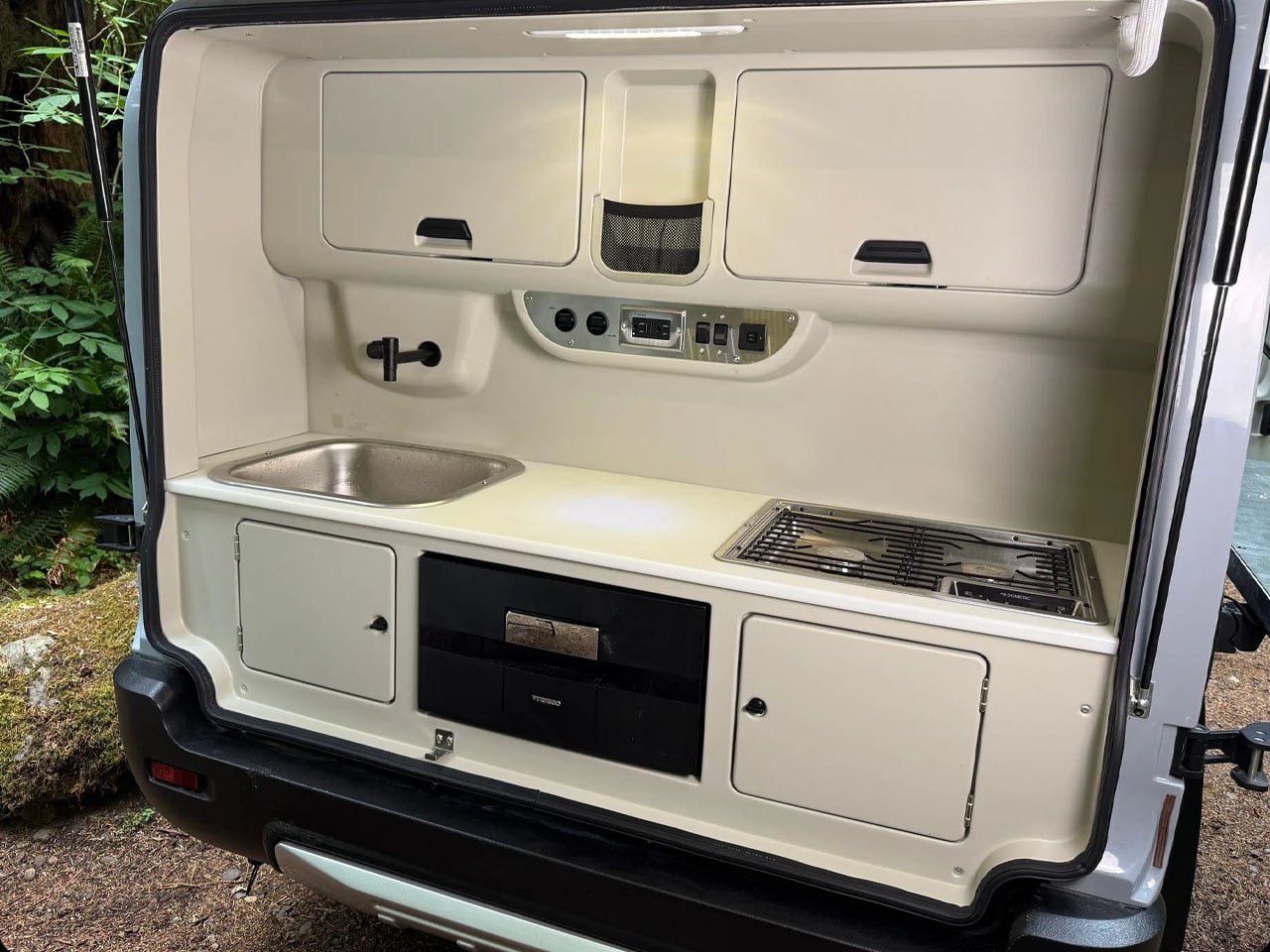
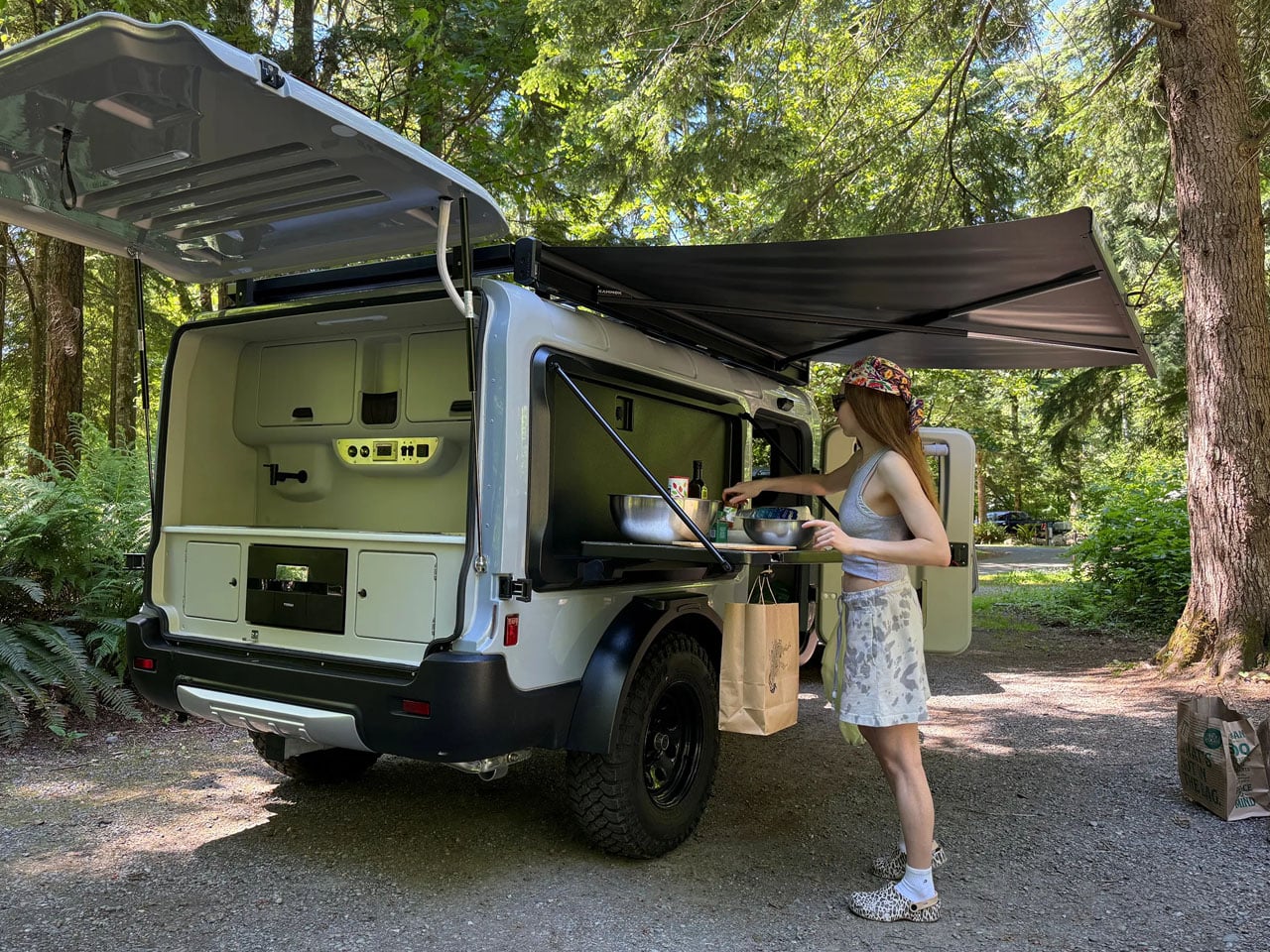
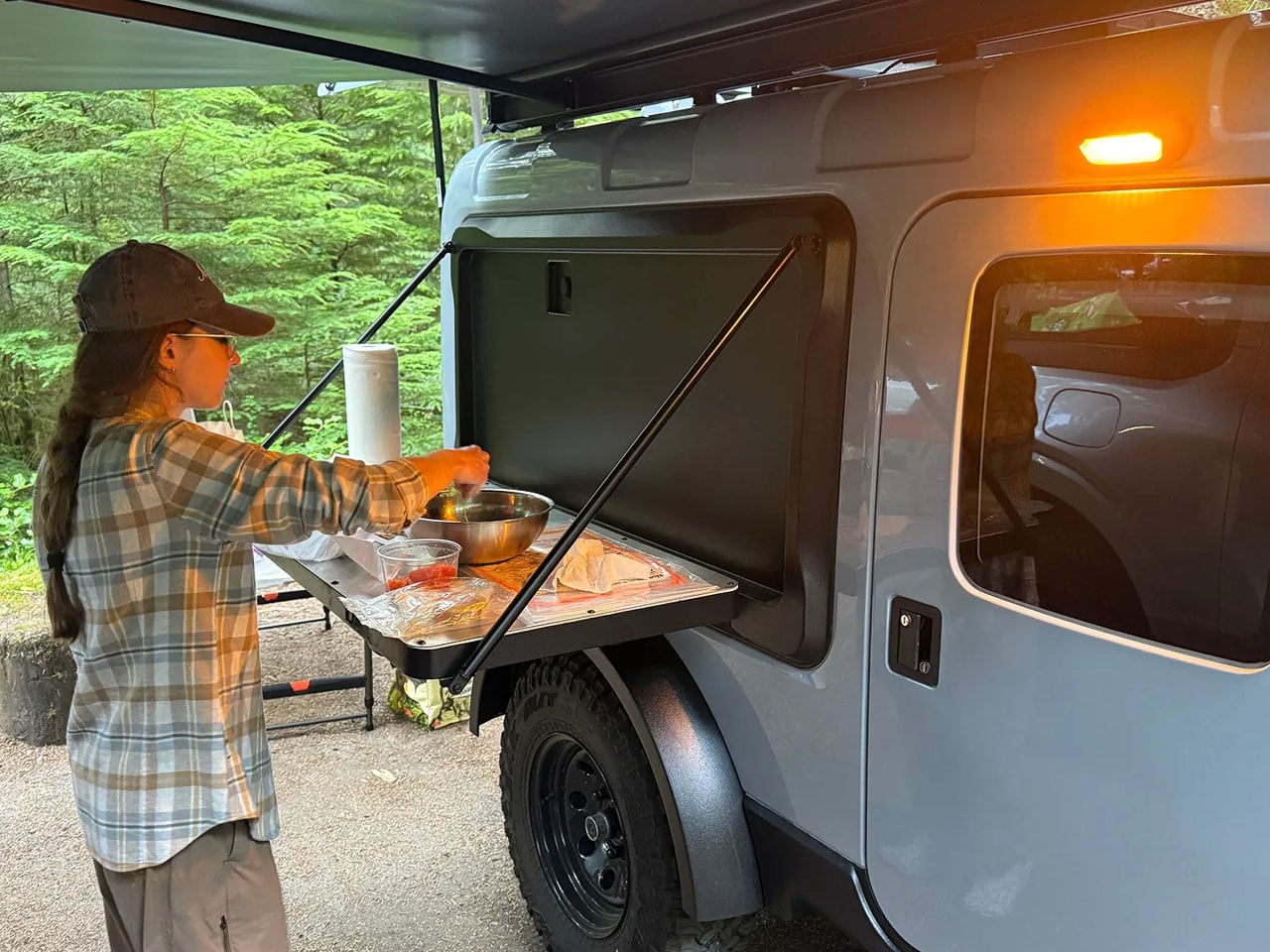
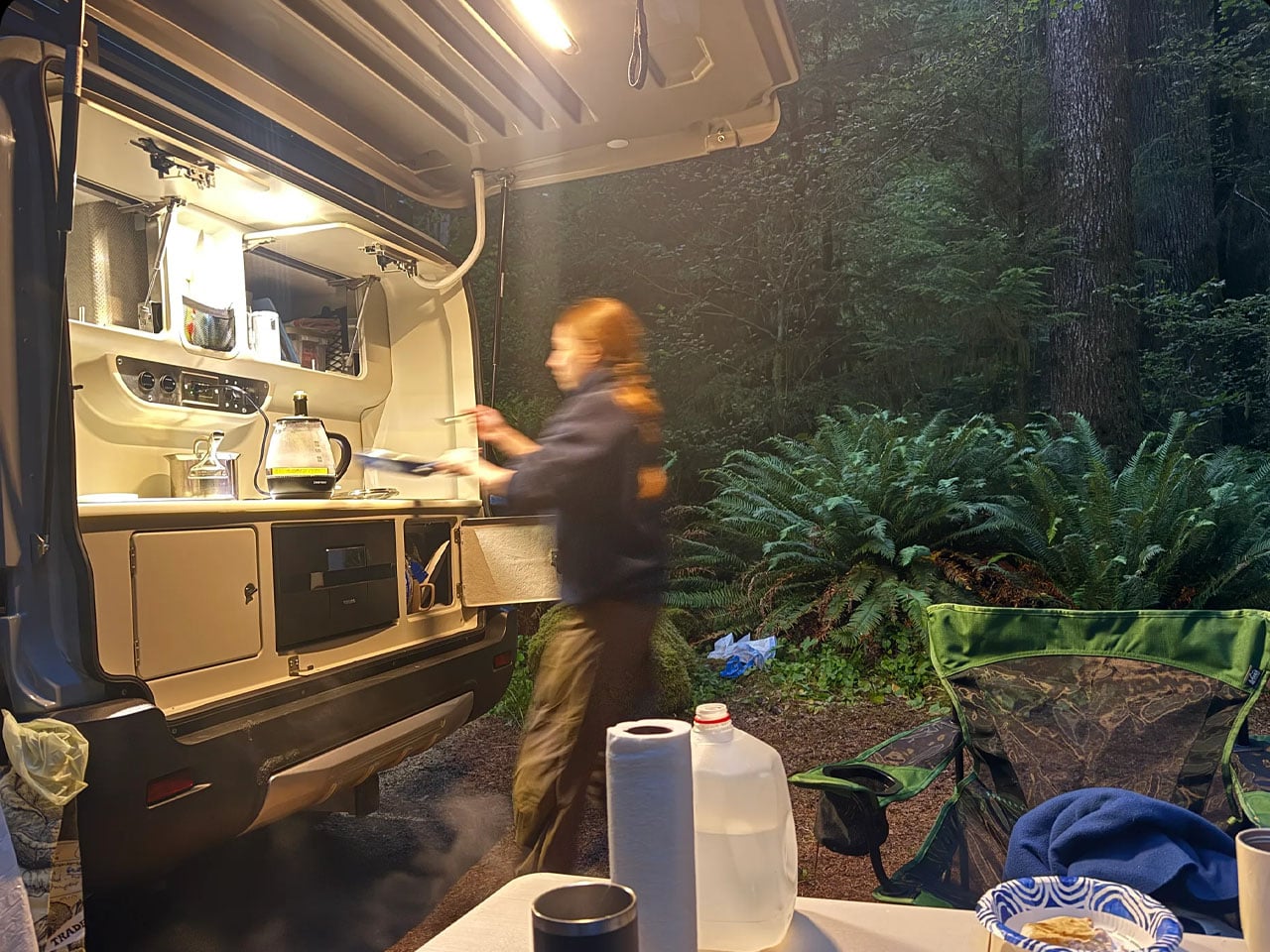
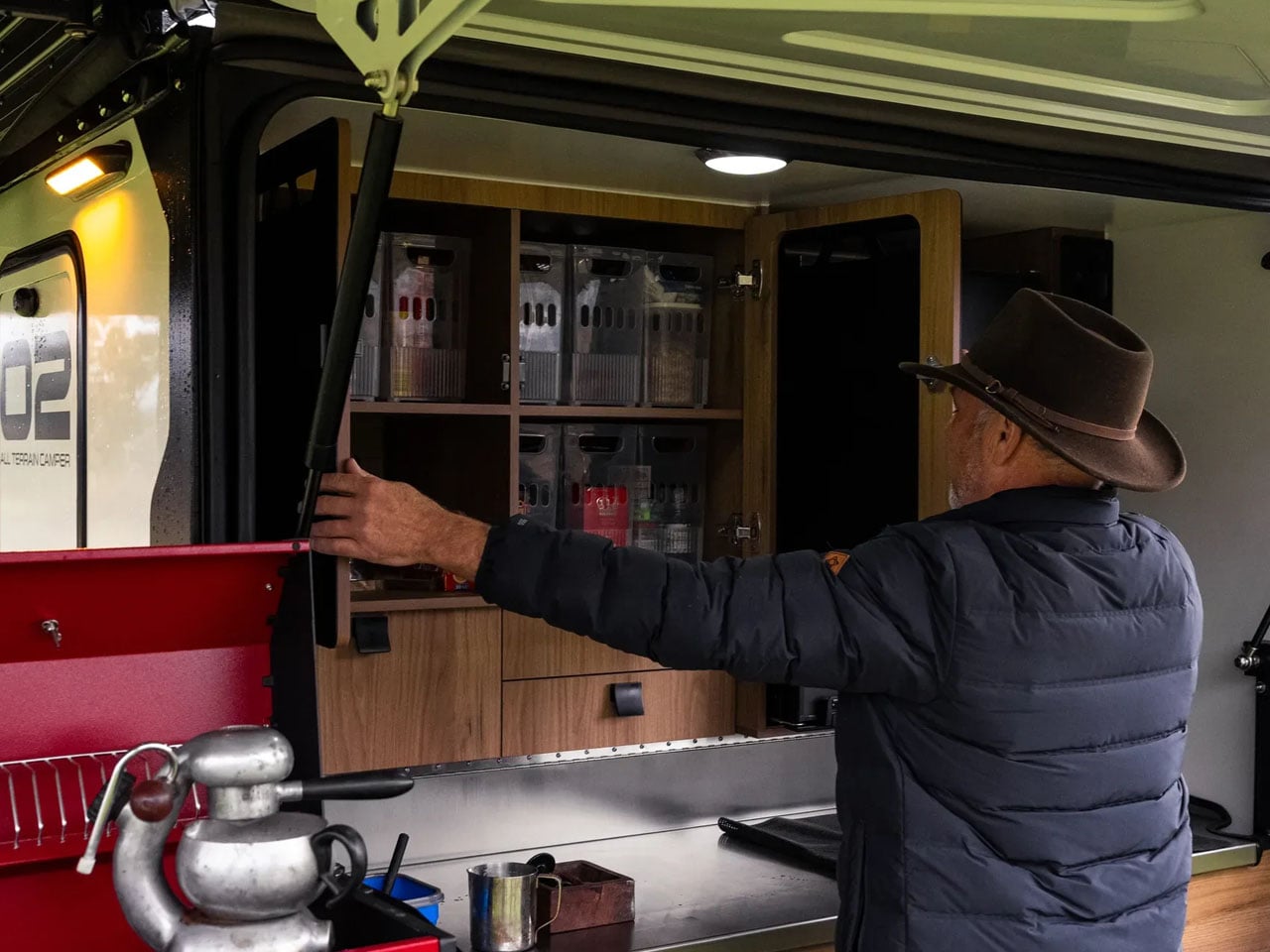
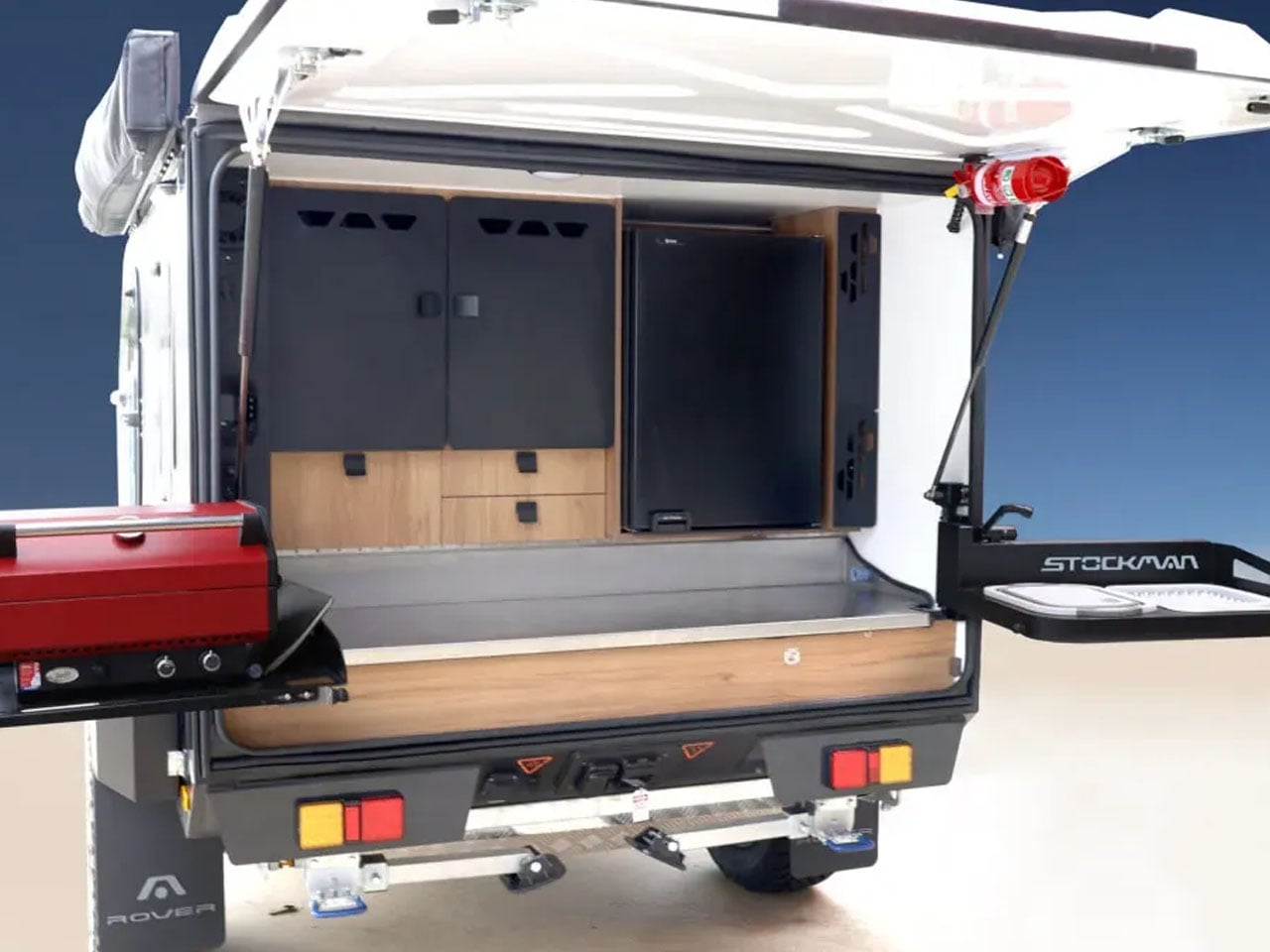
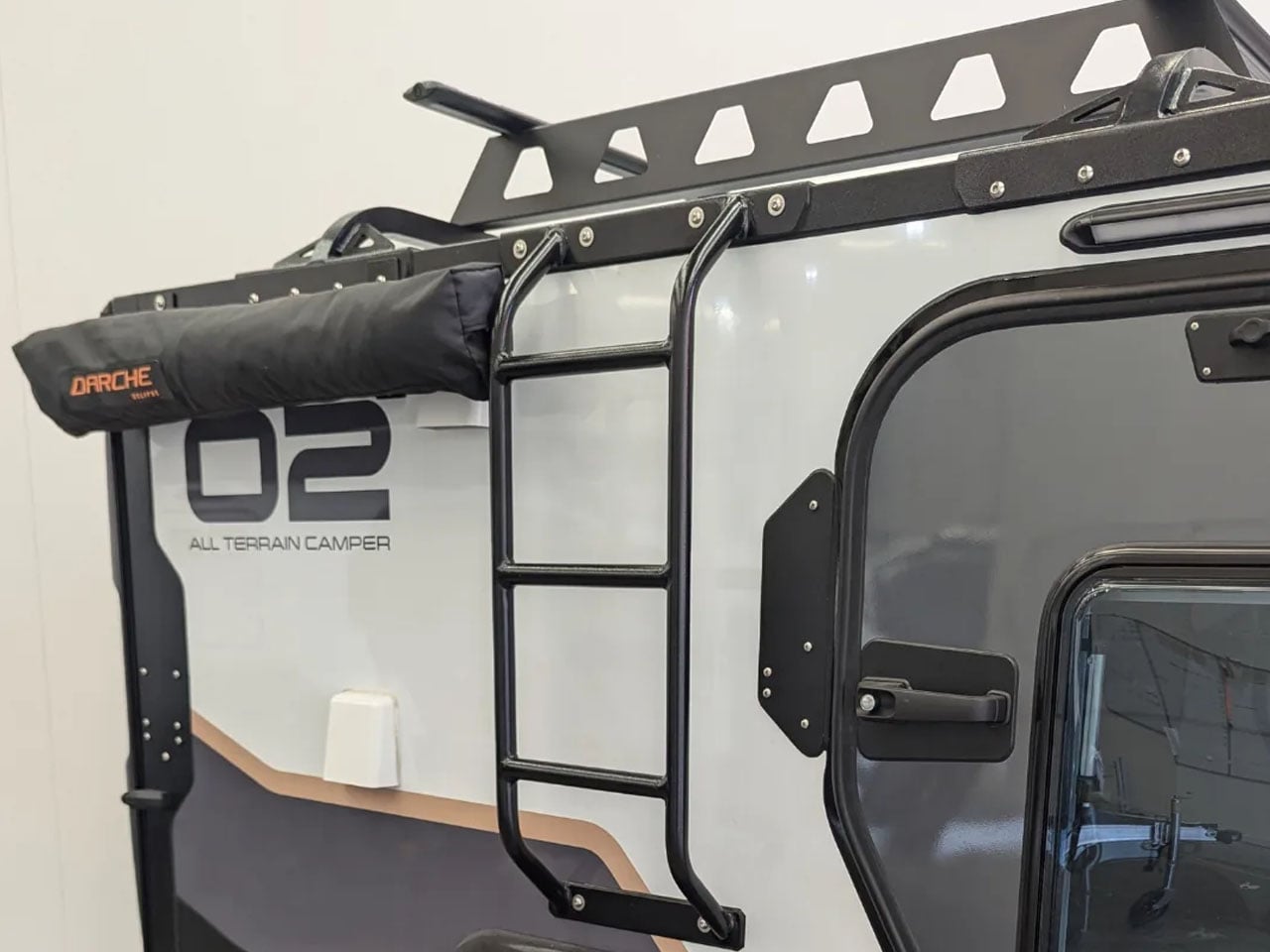
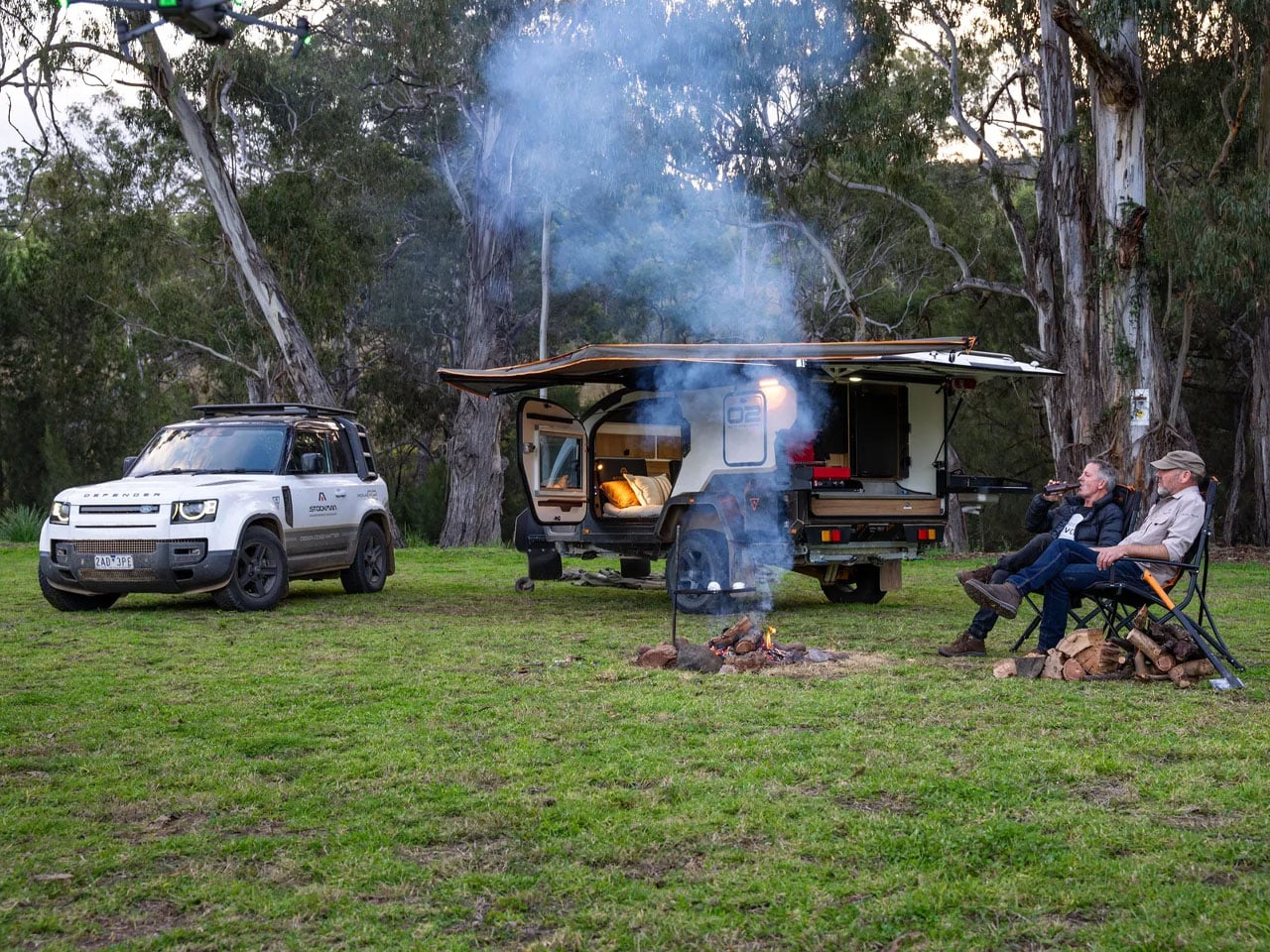
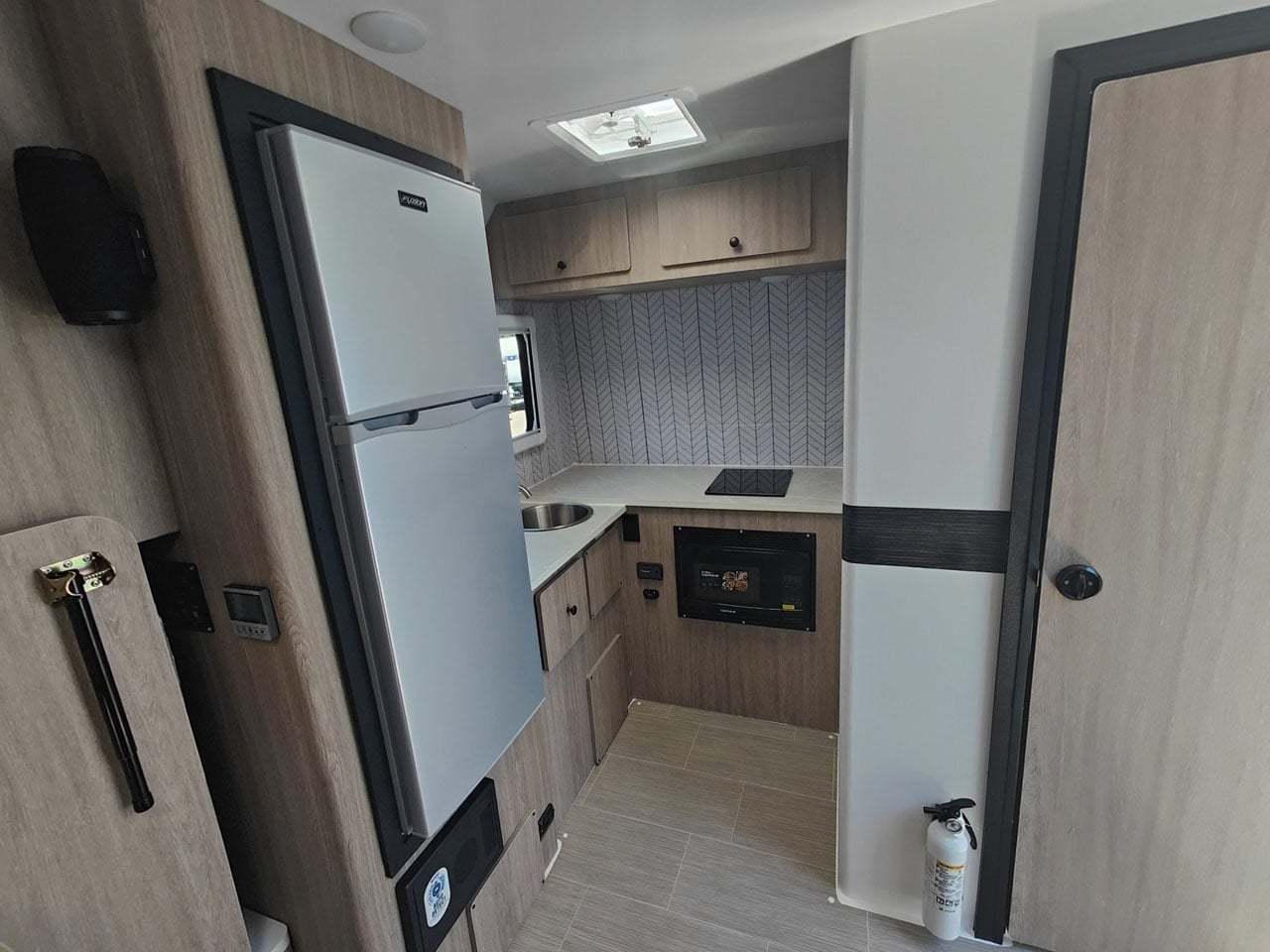
Structured in a way with amenities to multiply its footprint from a compact rig at camp, the Escape Pod comes with a big kitchen layout in the back. It comprises a two-burner stove, a large deep-dish sink, a cutlery tray, a prep bench, and a fold-down bench. Moving onto the side, you get a slide-out fridge tray and a long storage box above the fridge box. It can be topped with roof rails to carry up to two mountain bikes on your adventure. Presumably, the swappable section should be able to allow you to carry other gear as well.

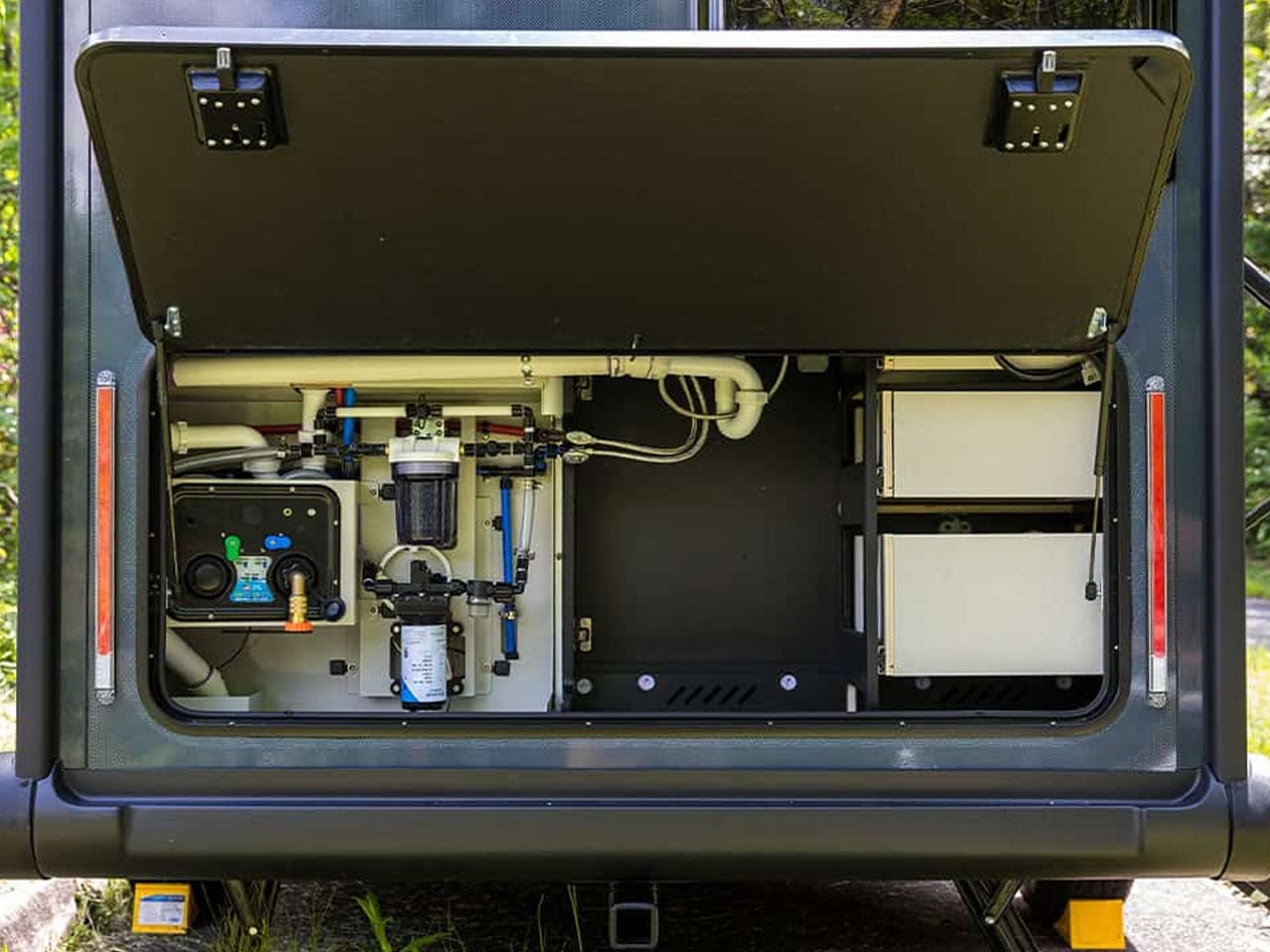
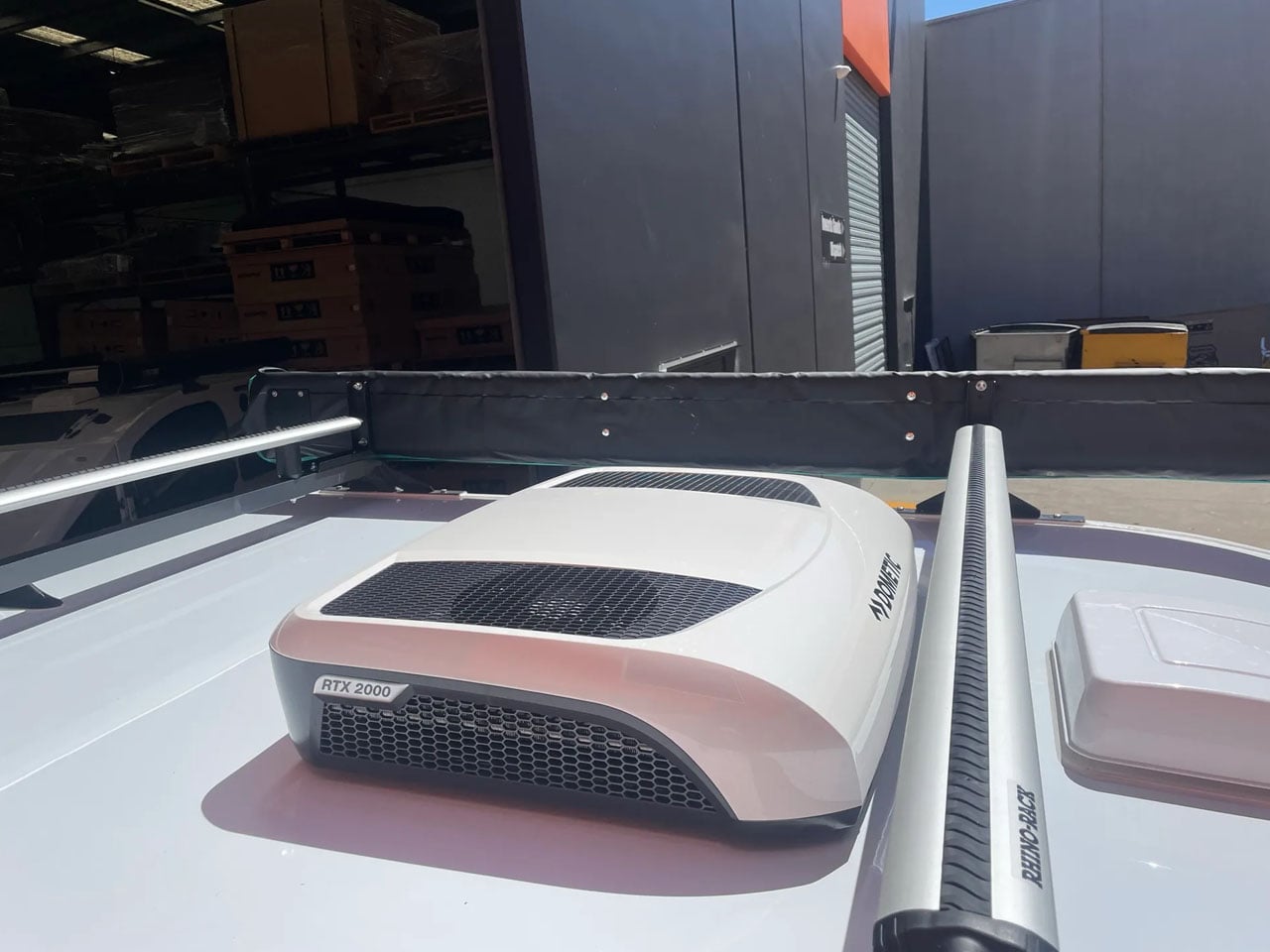
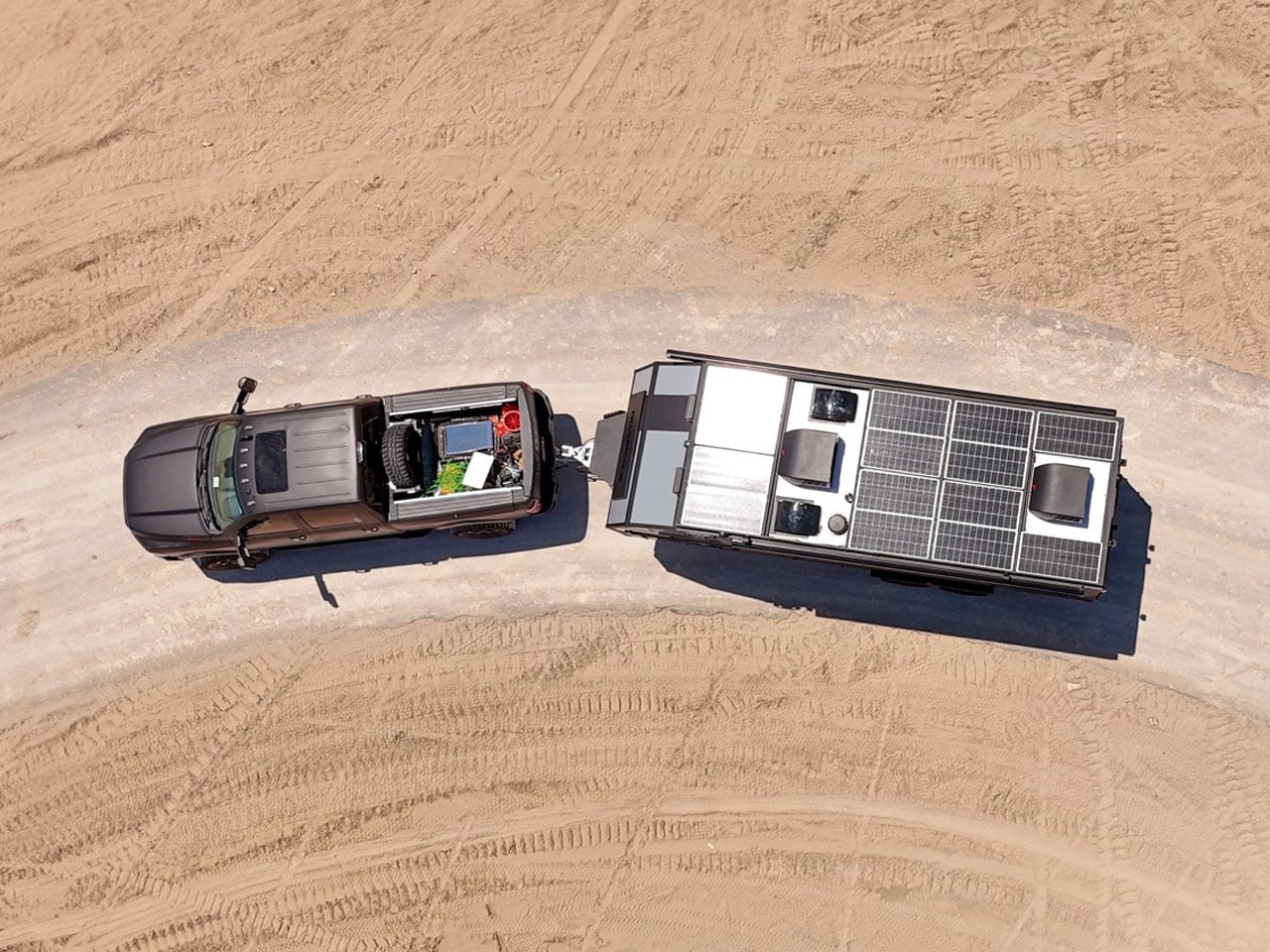
The most interesting and distinguishing aspect of the otherwise square-bodied camper is its slanting front, which comprises the solar panels. Besides, the camper comes onboard with a 300Ah lithium battery and a 2000W inverter. There is provision for a diesel heater to keep warm, and store up to two 20L jerry cans and a pair of 4kg diesel tanks.

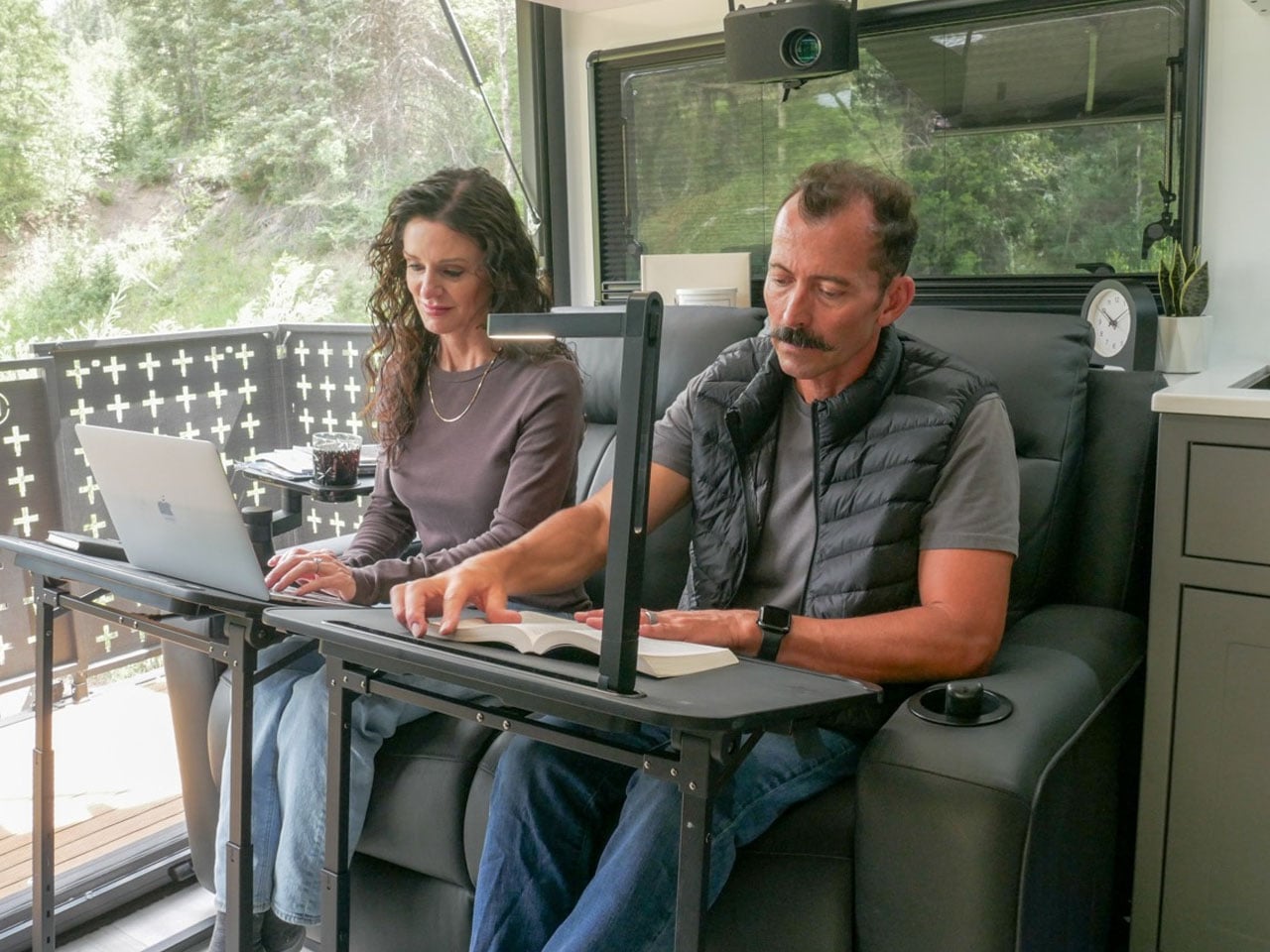
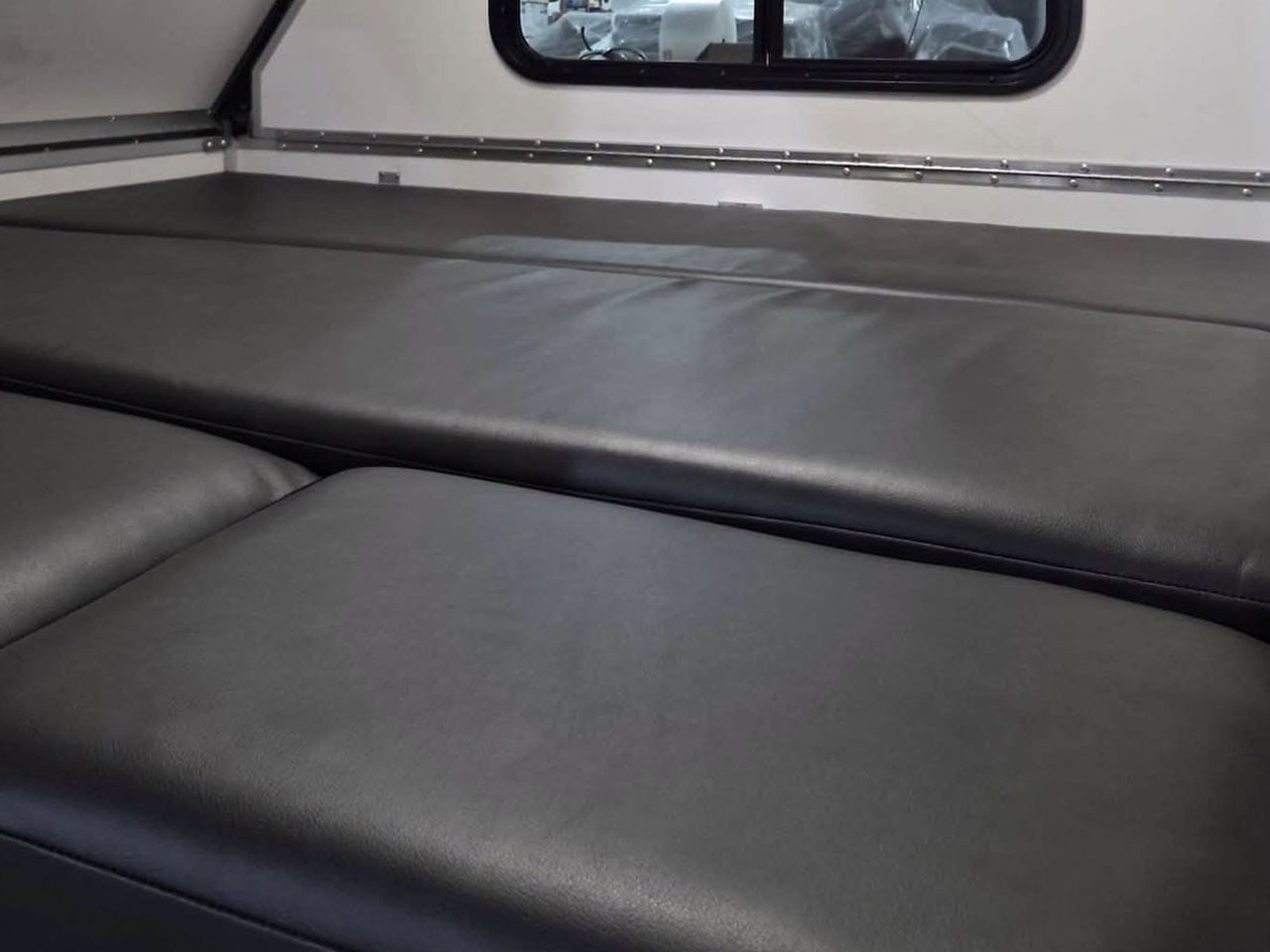
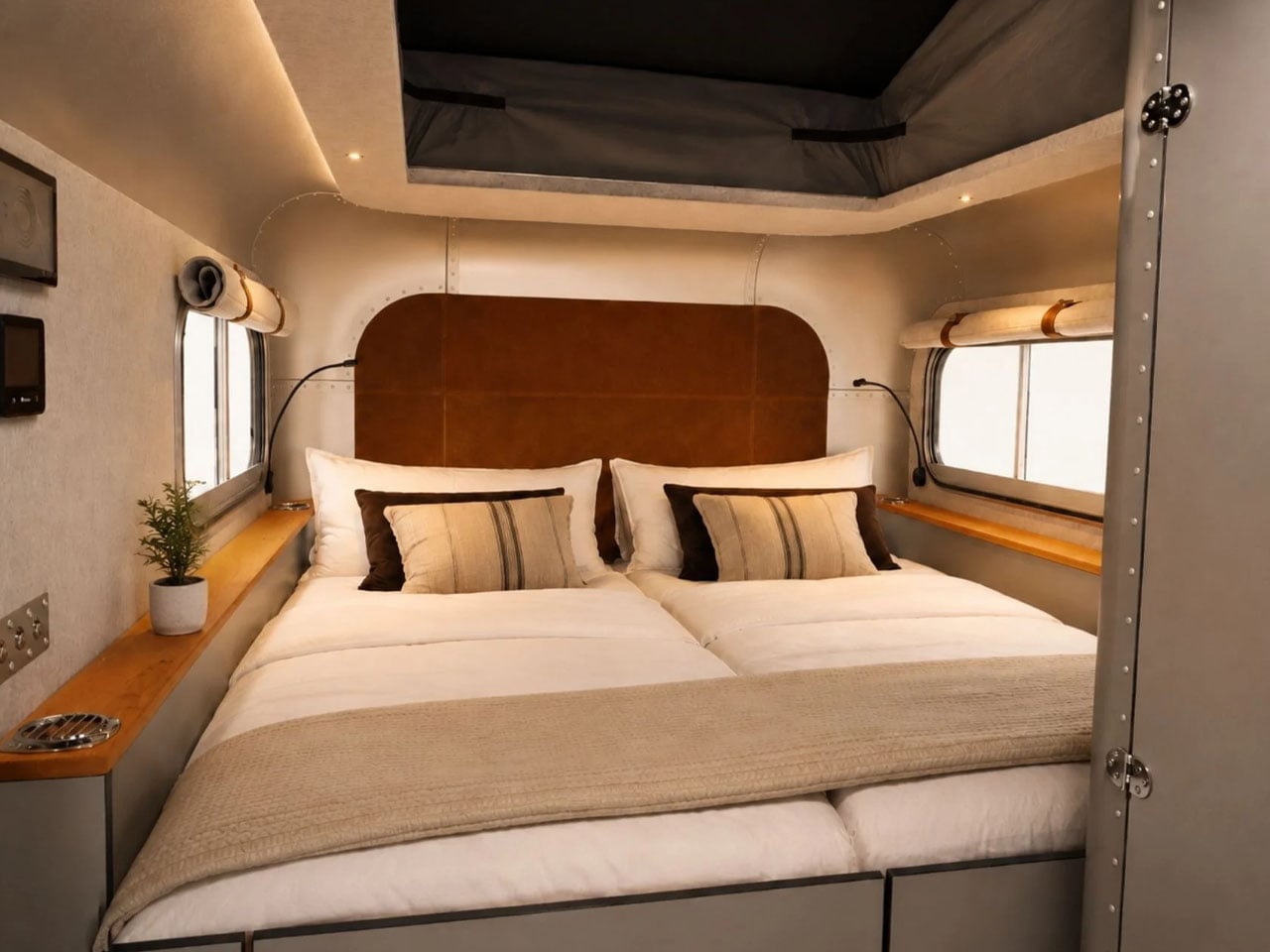
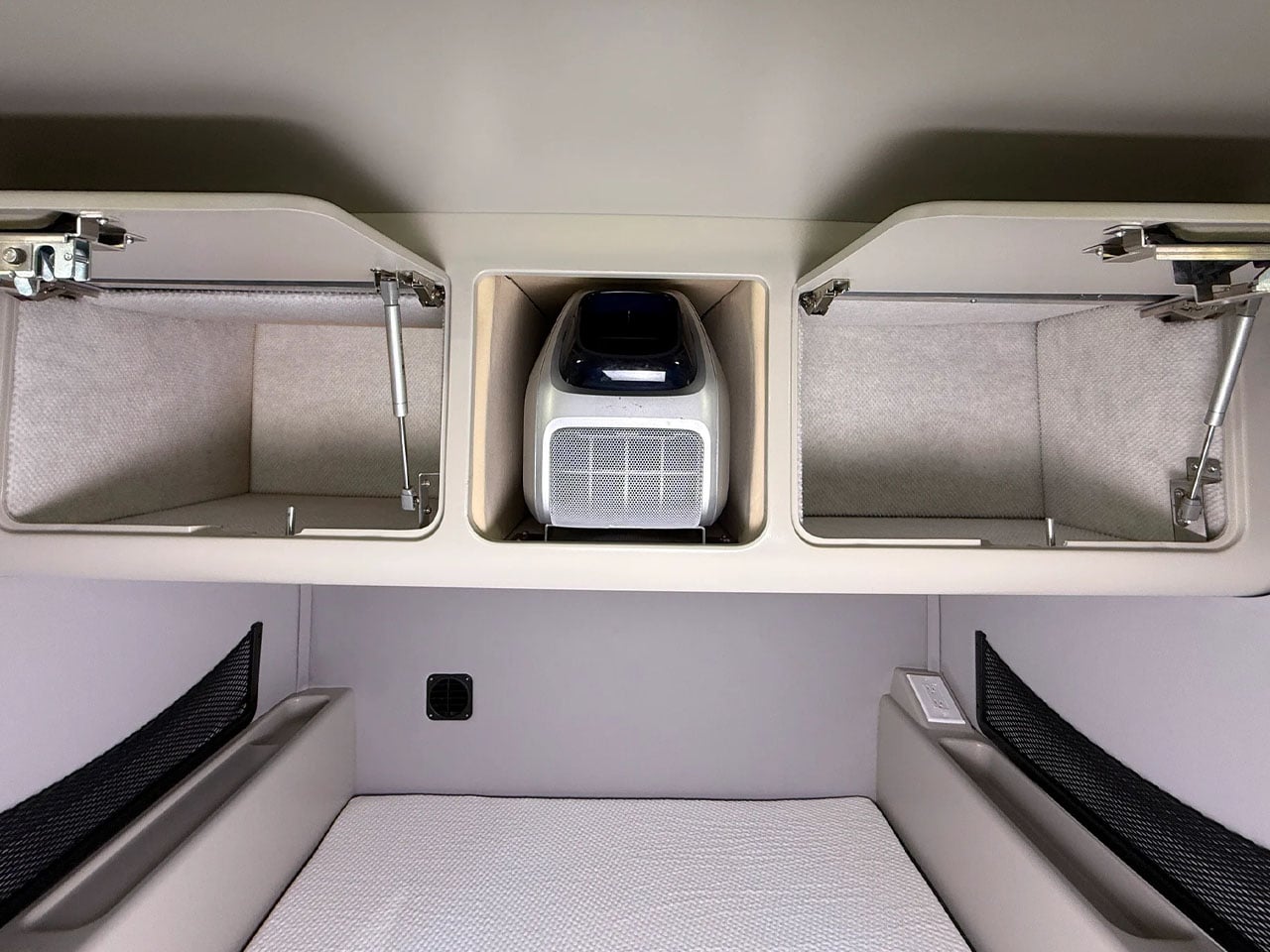
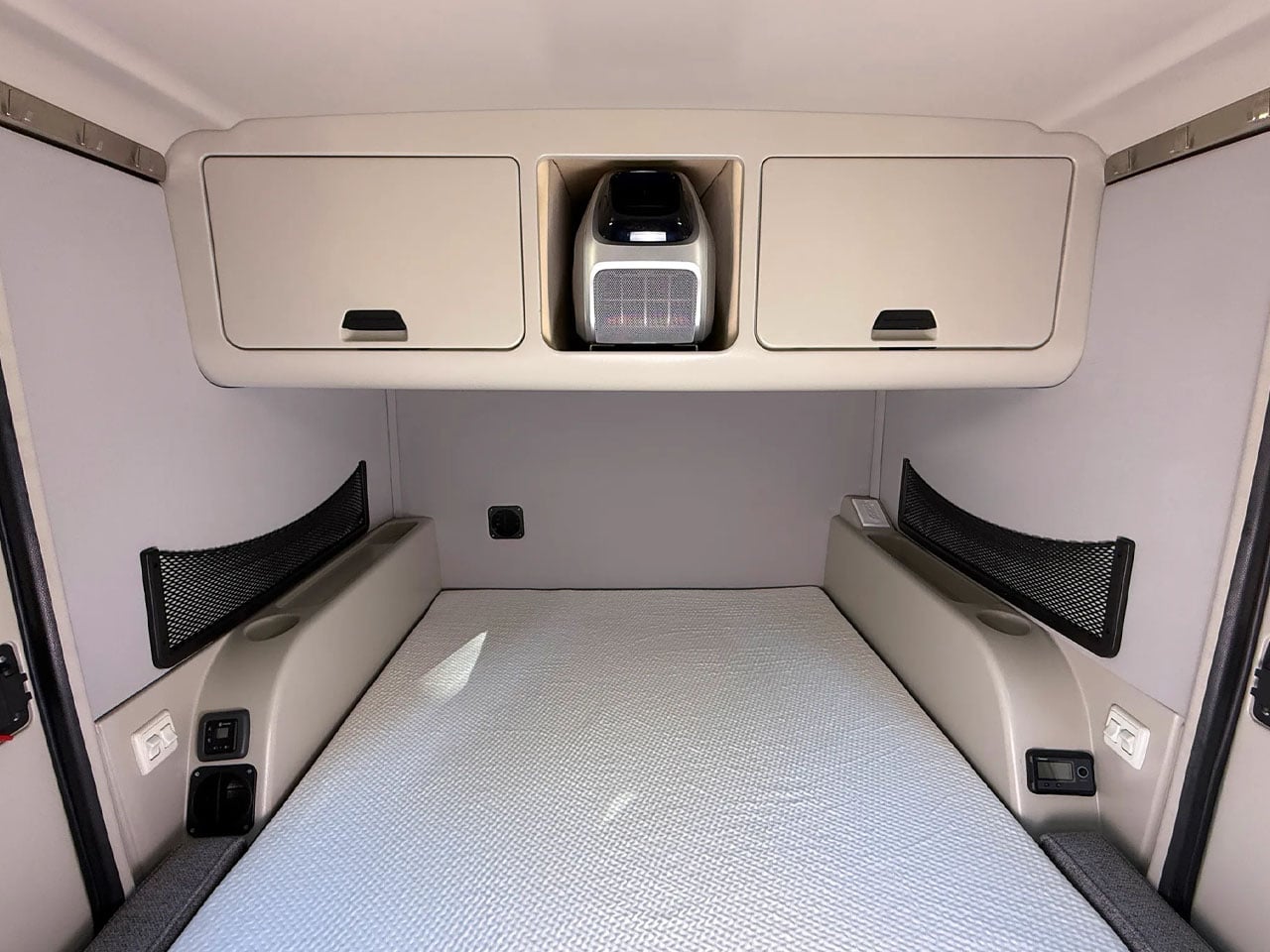
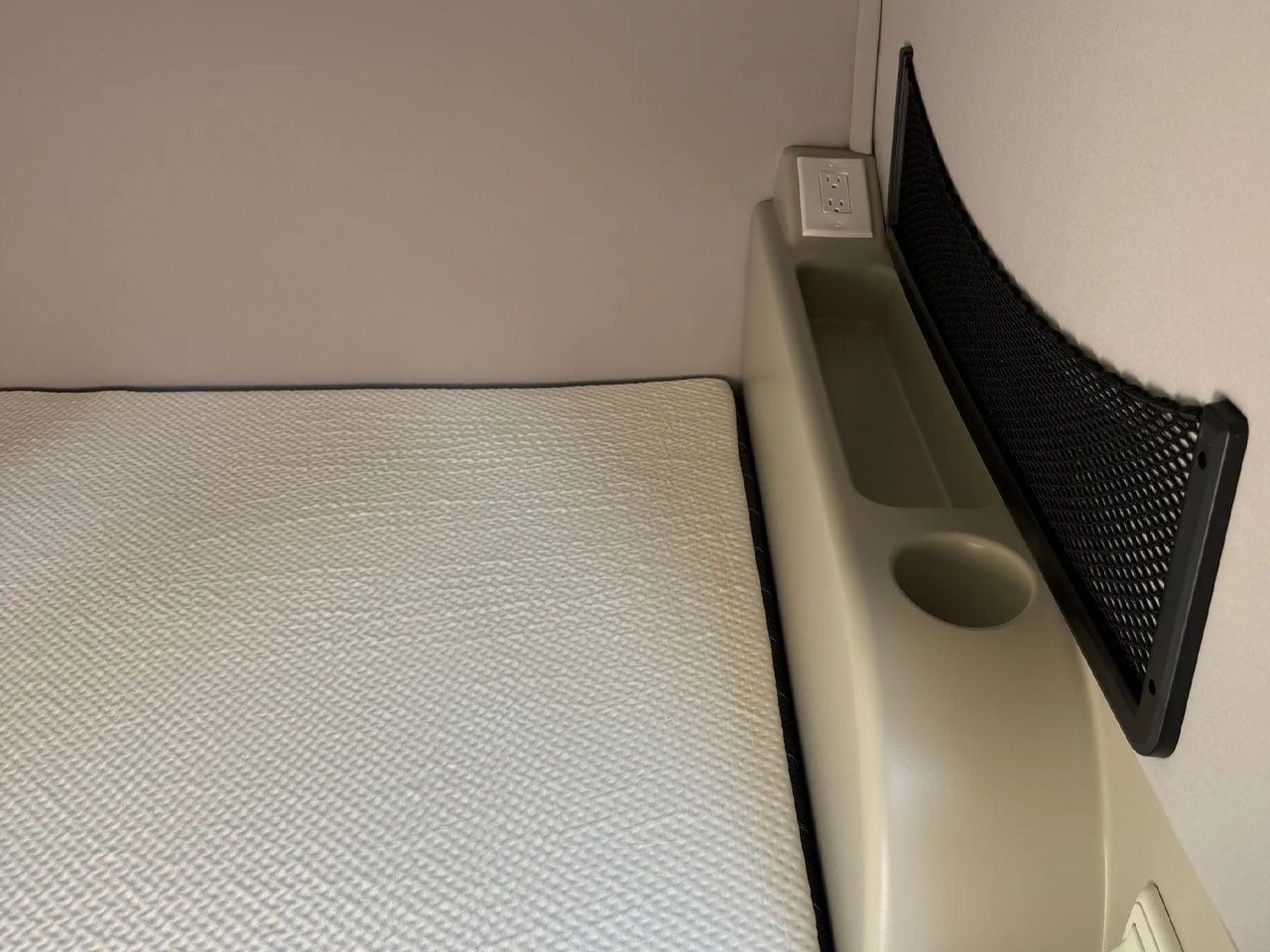
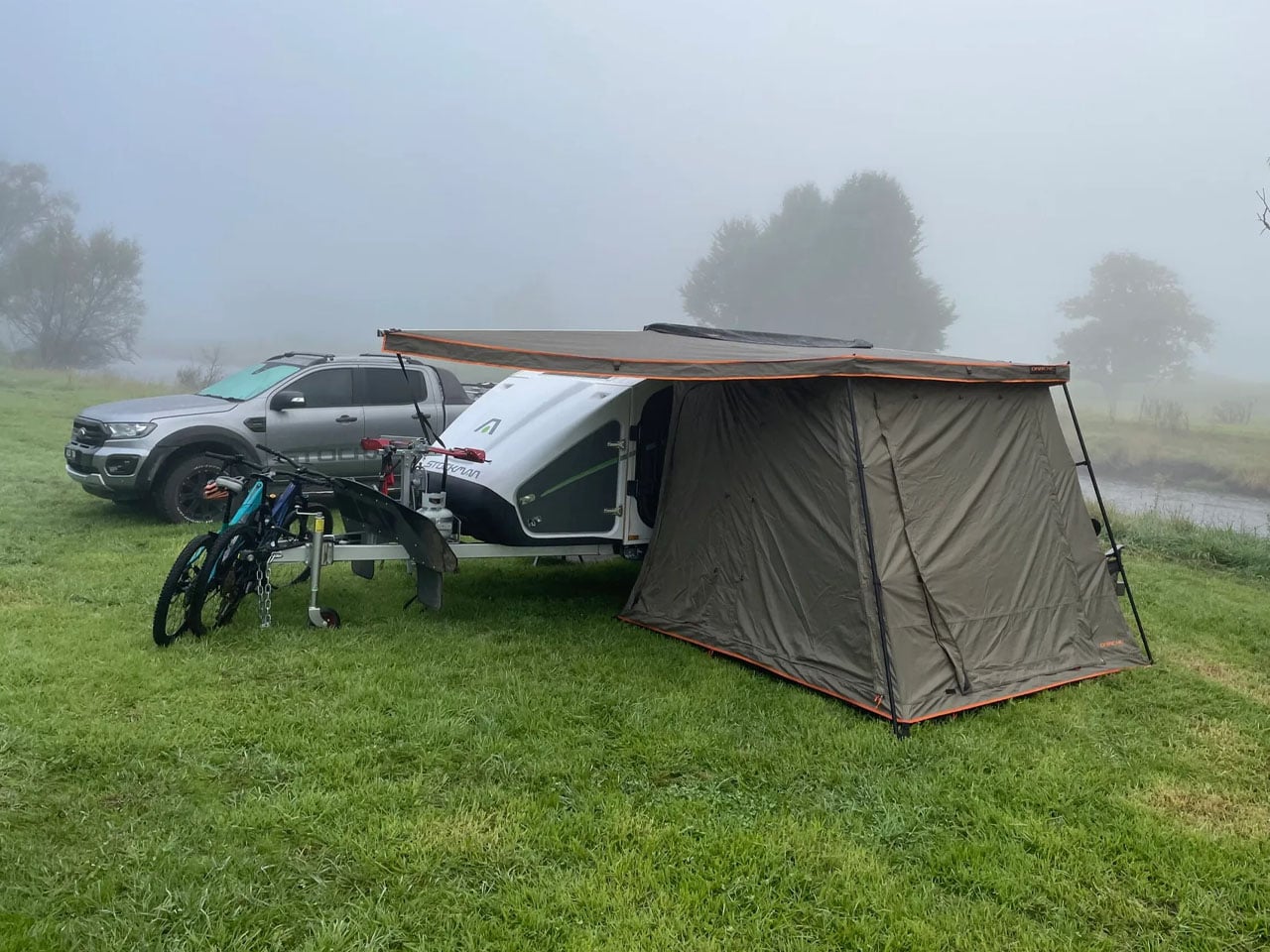
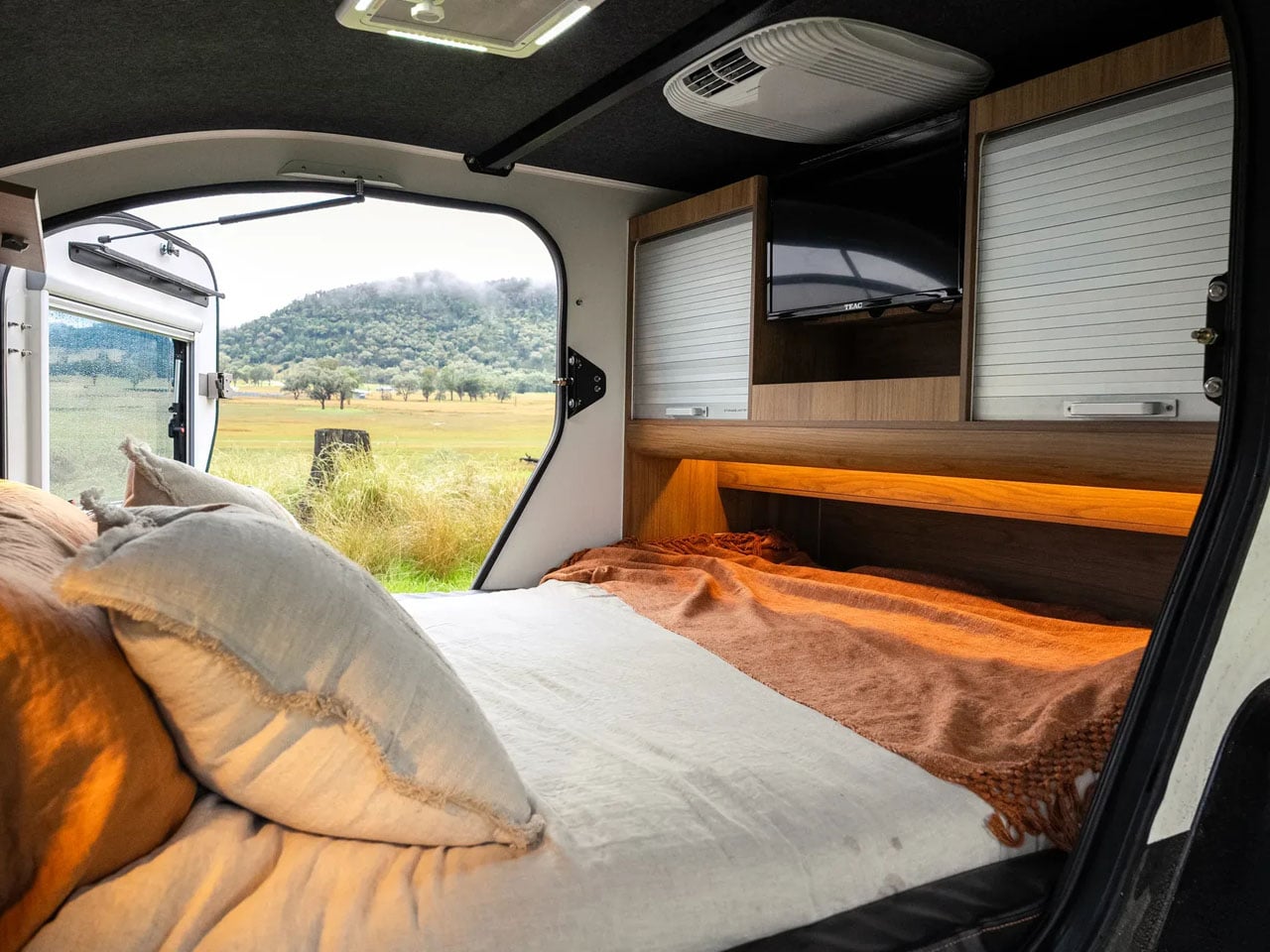
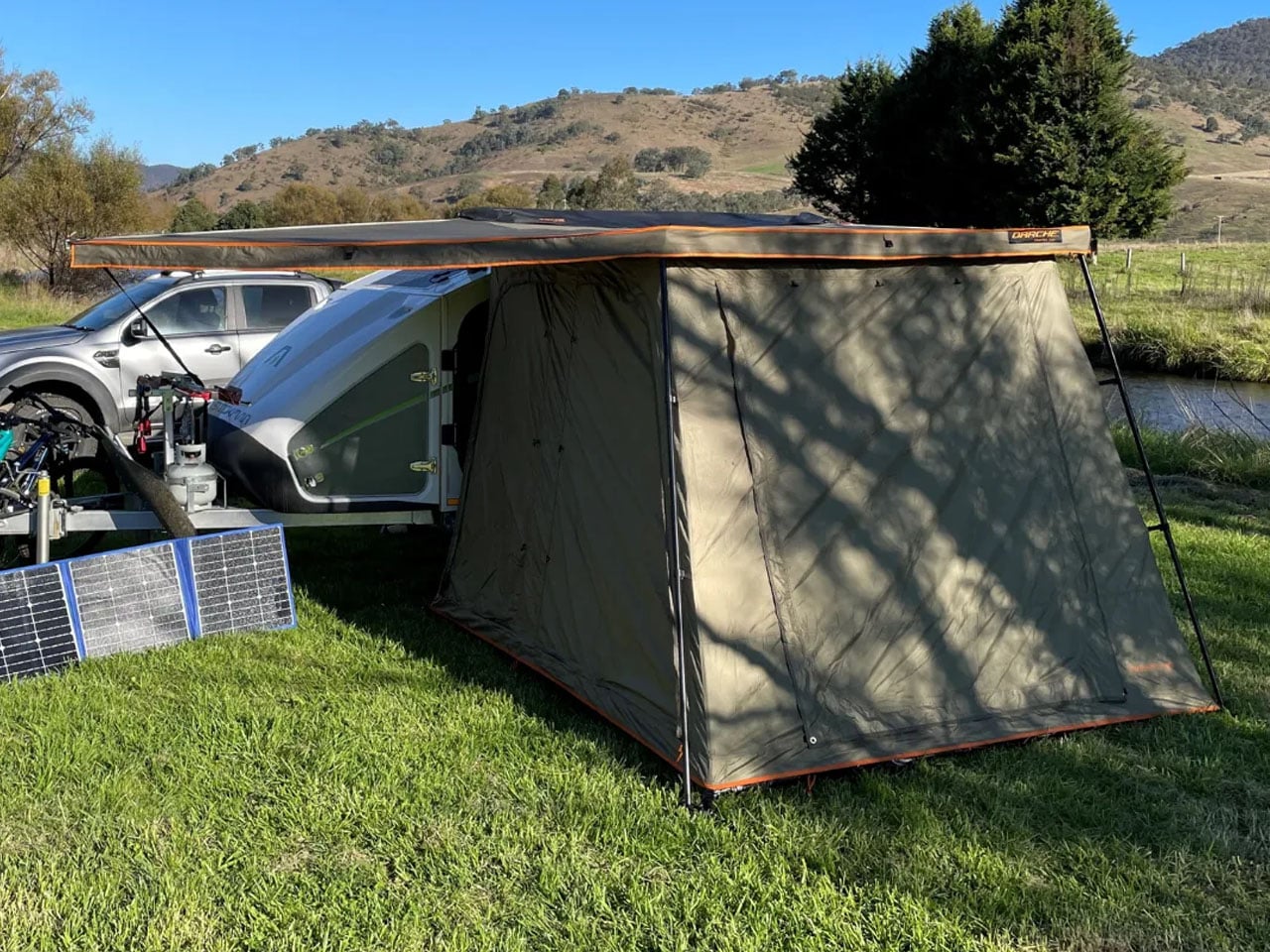
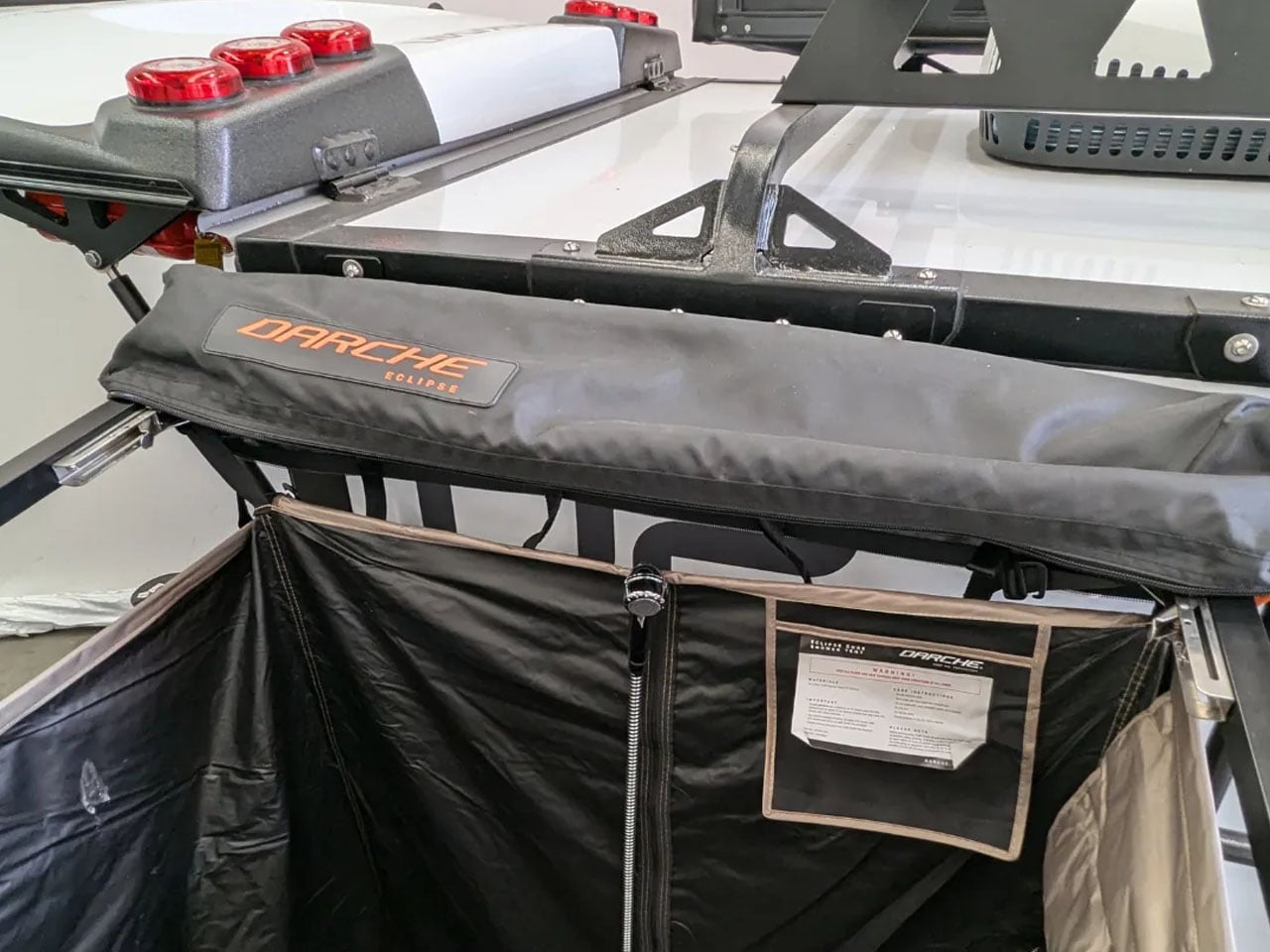
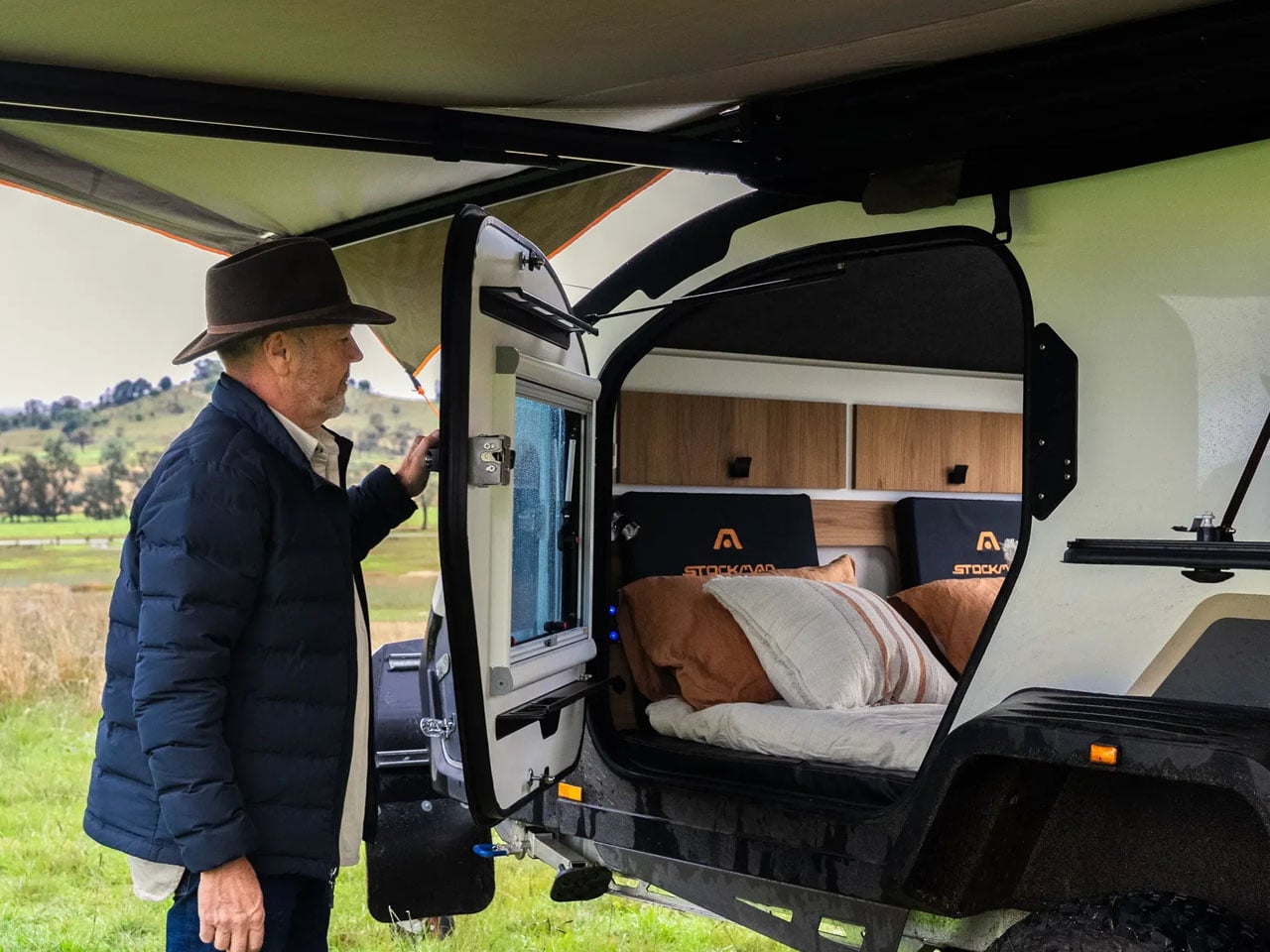
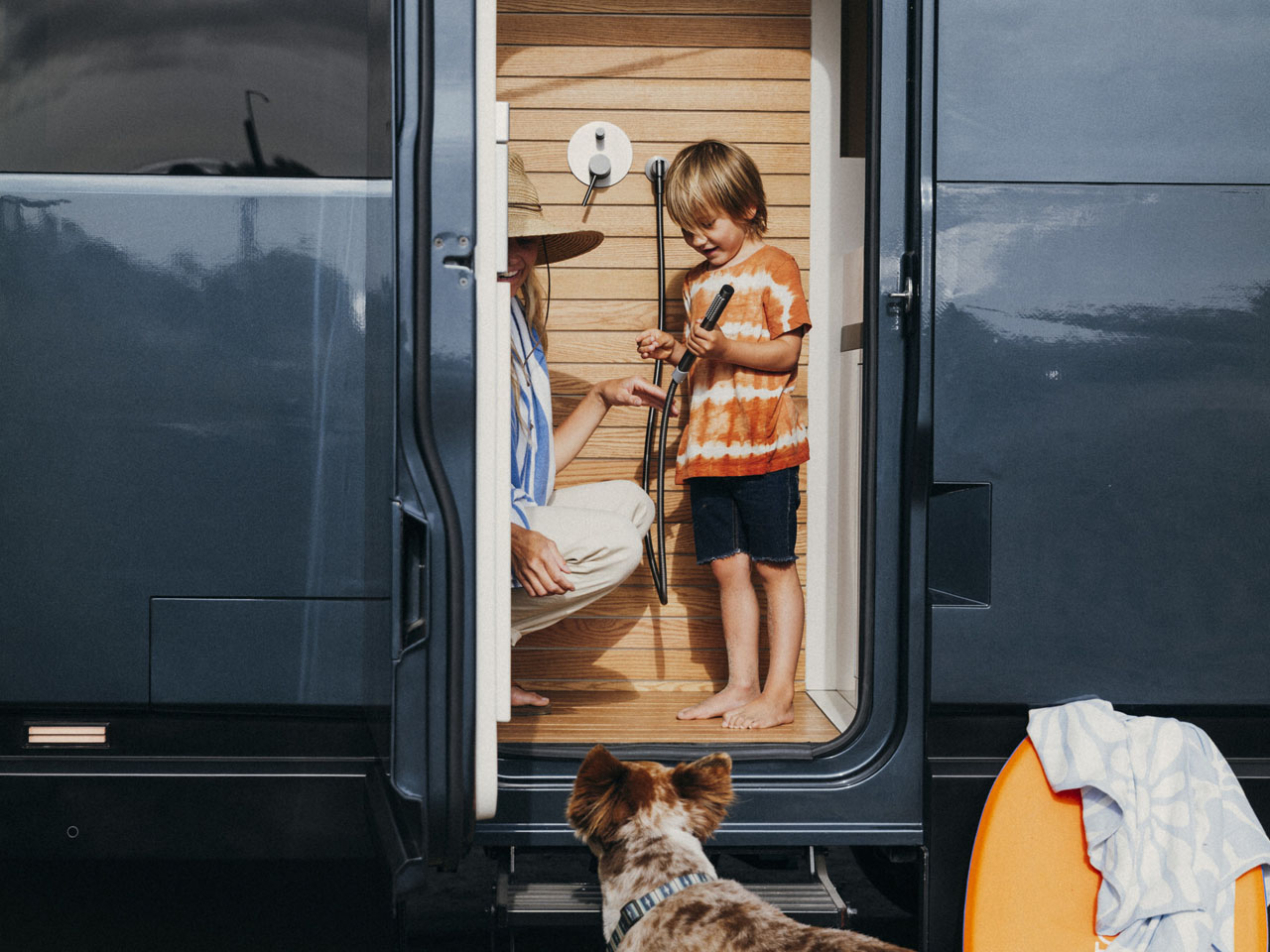
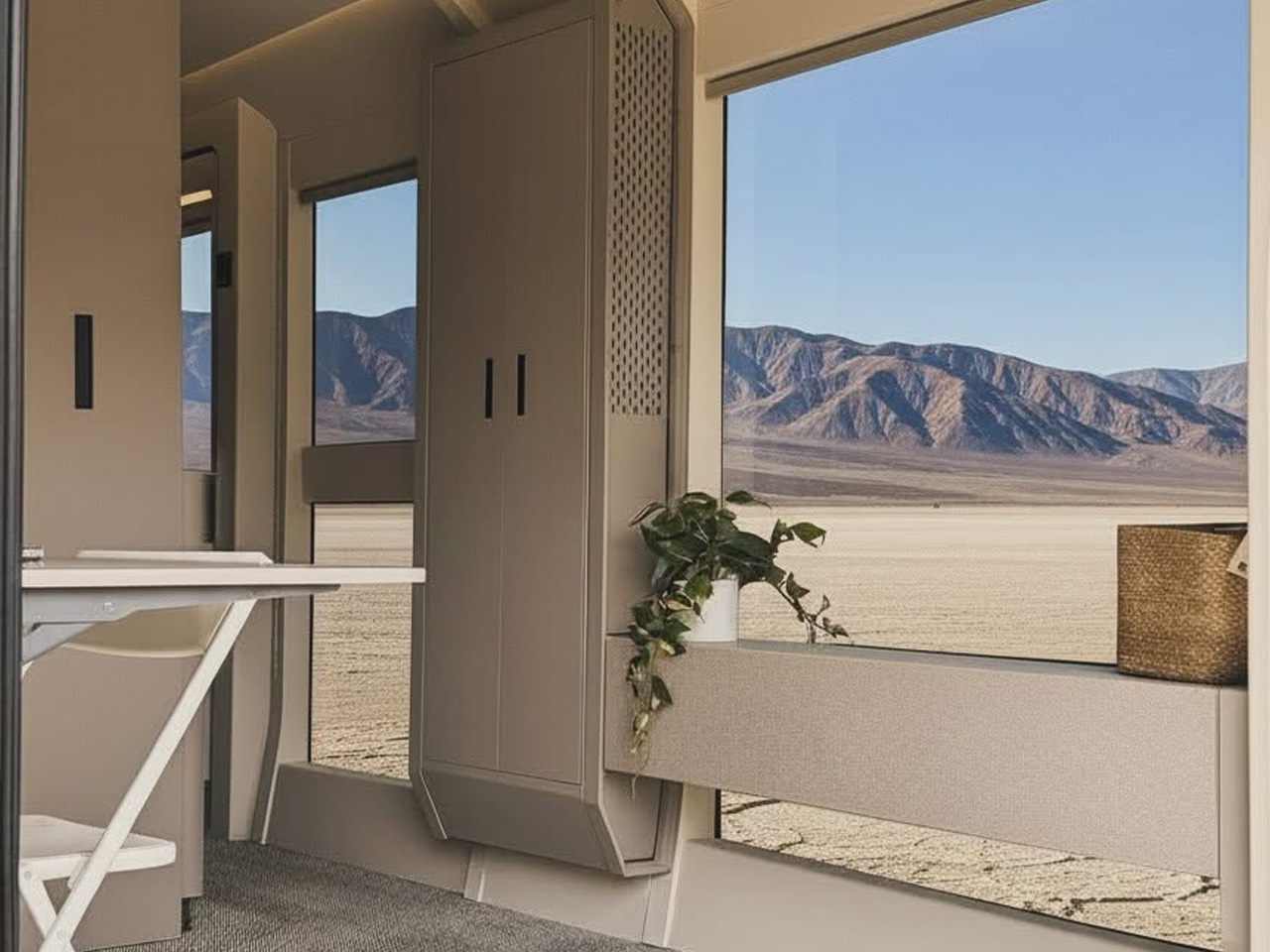
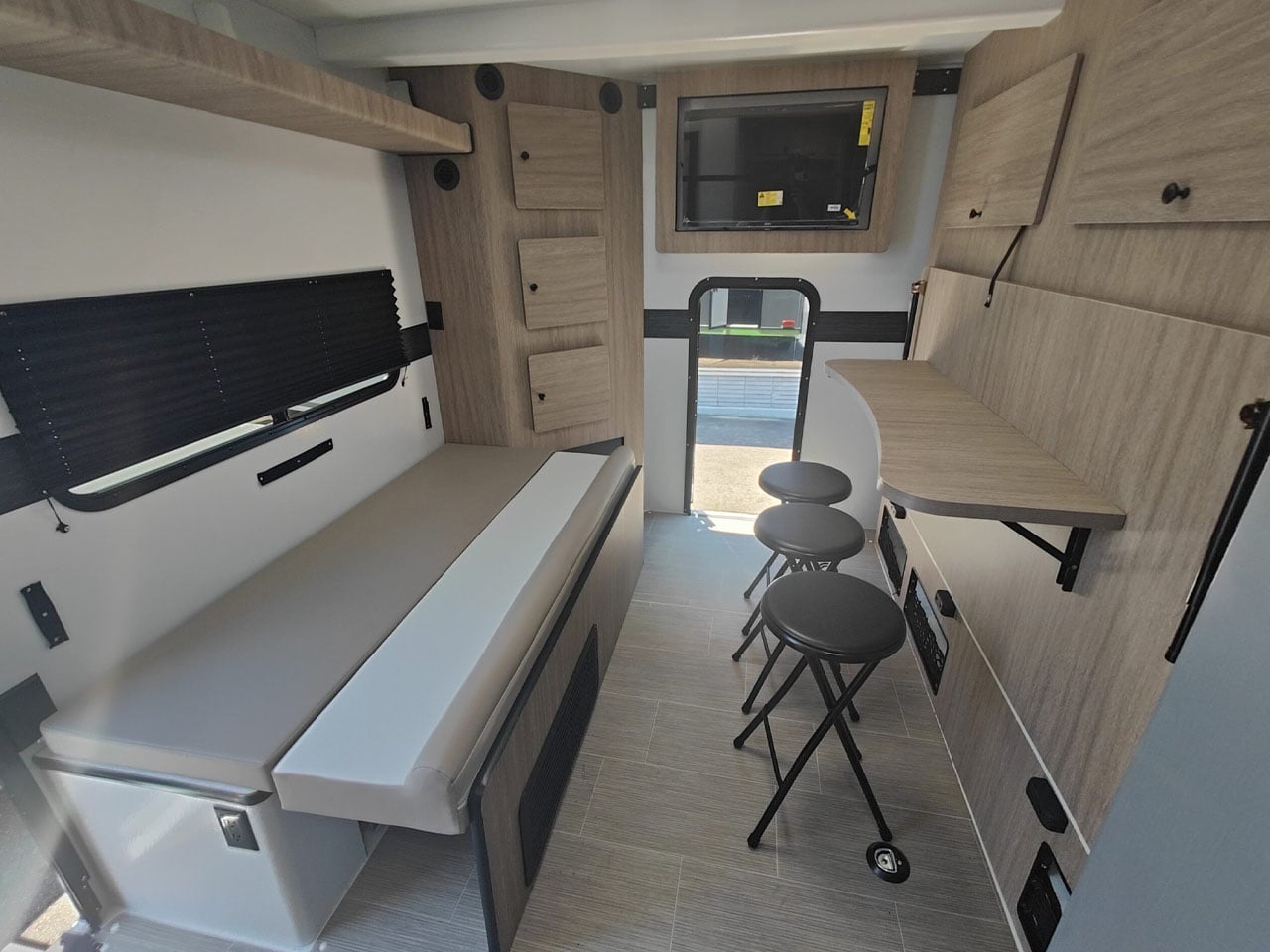
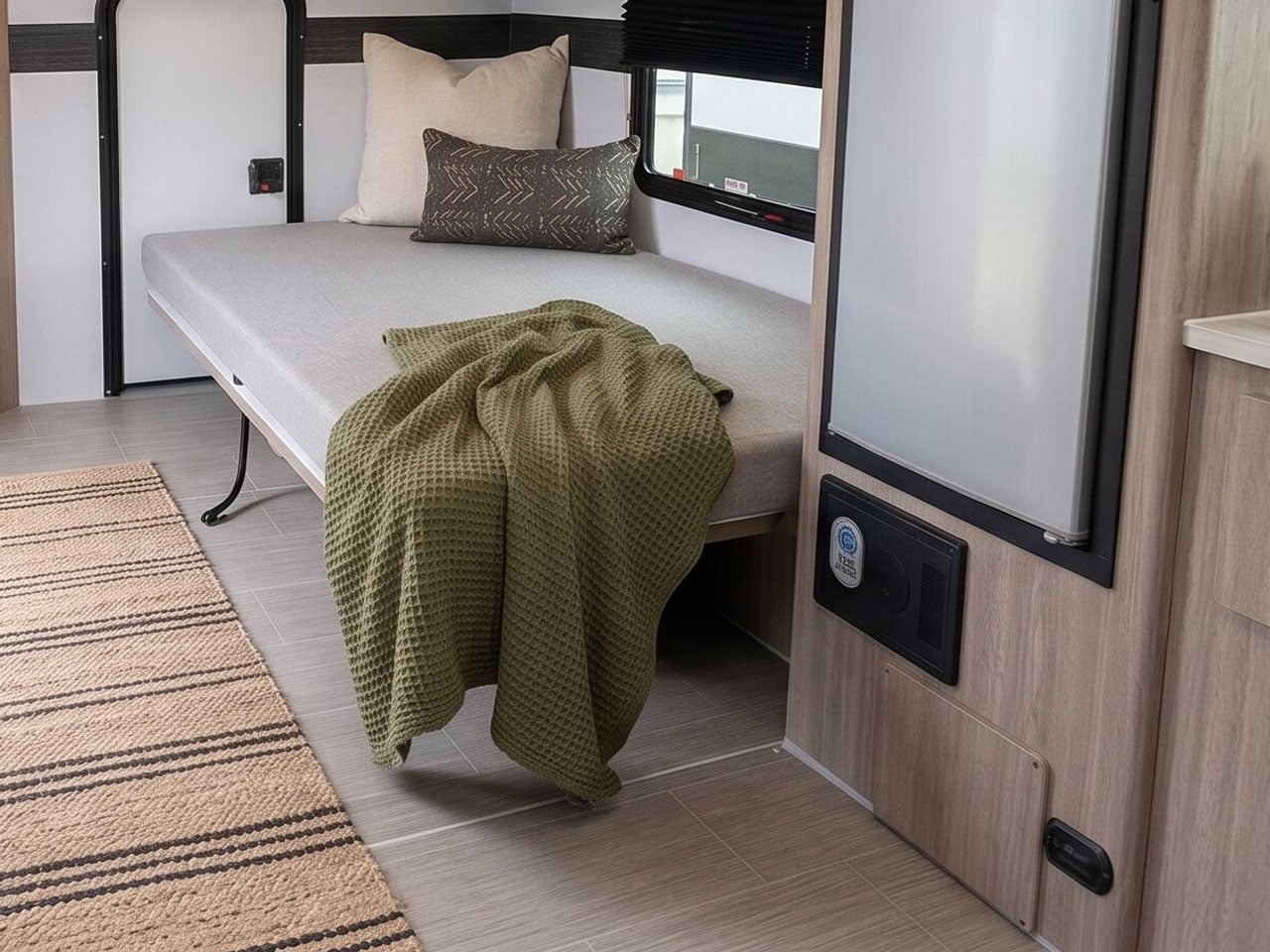
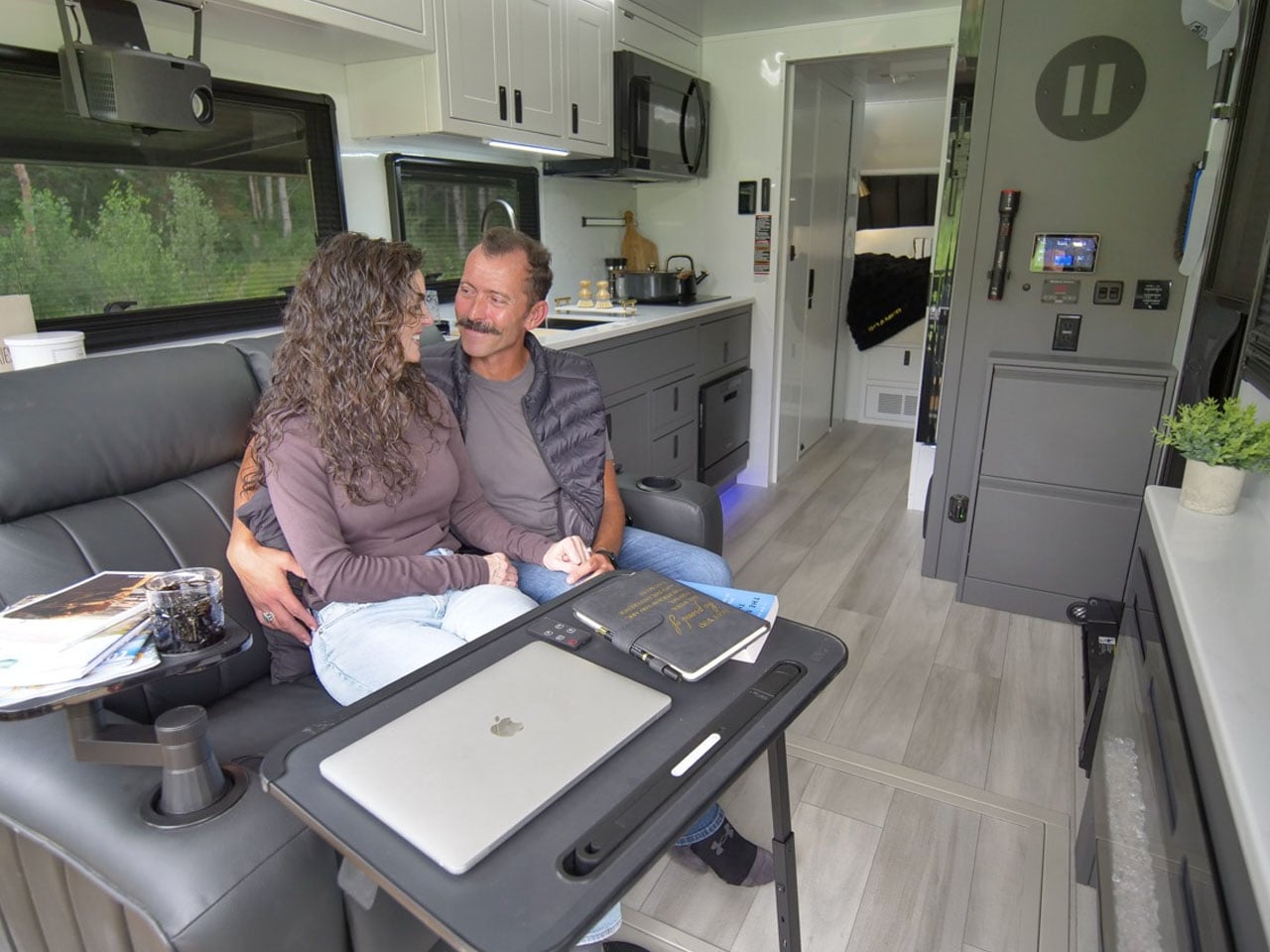
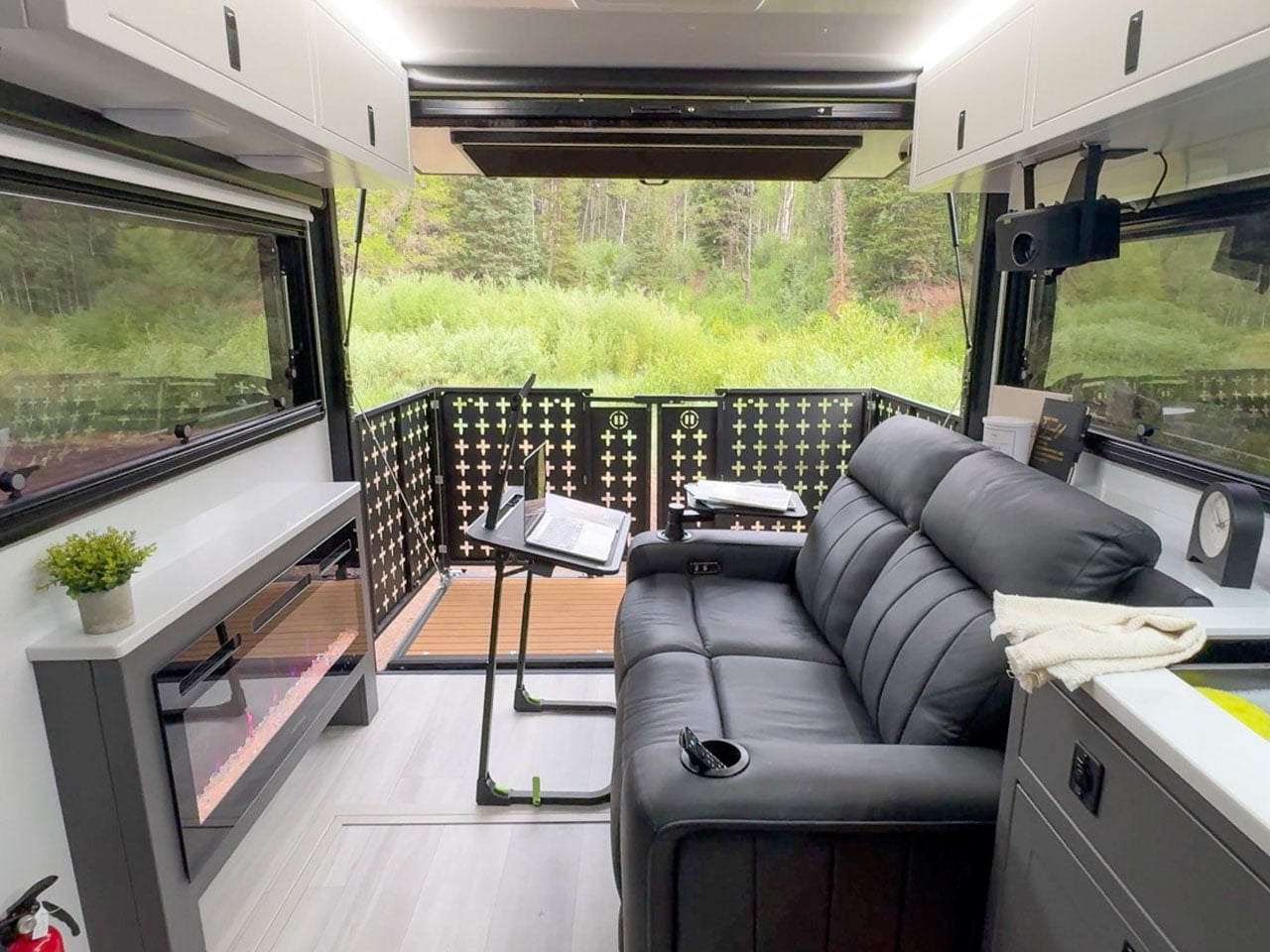
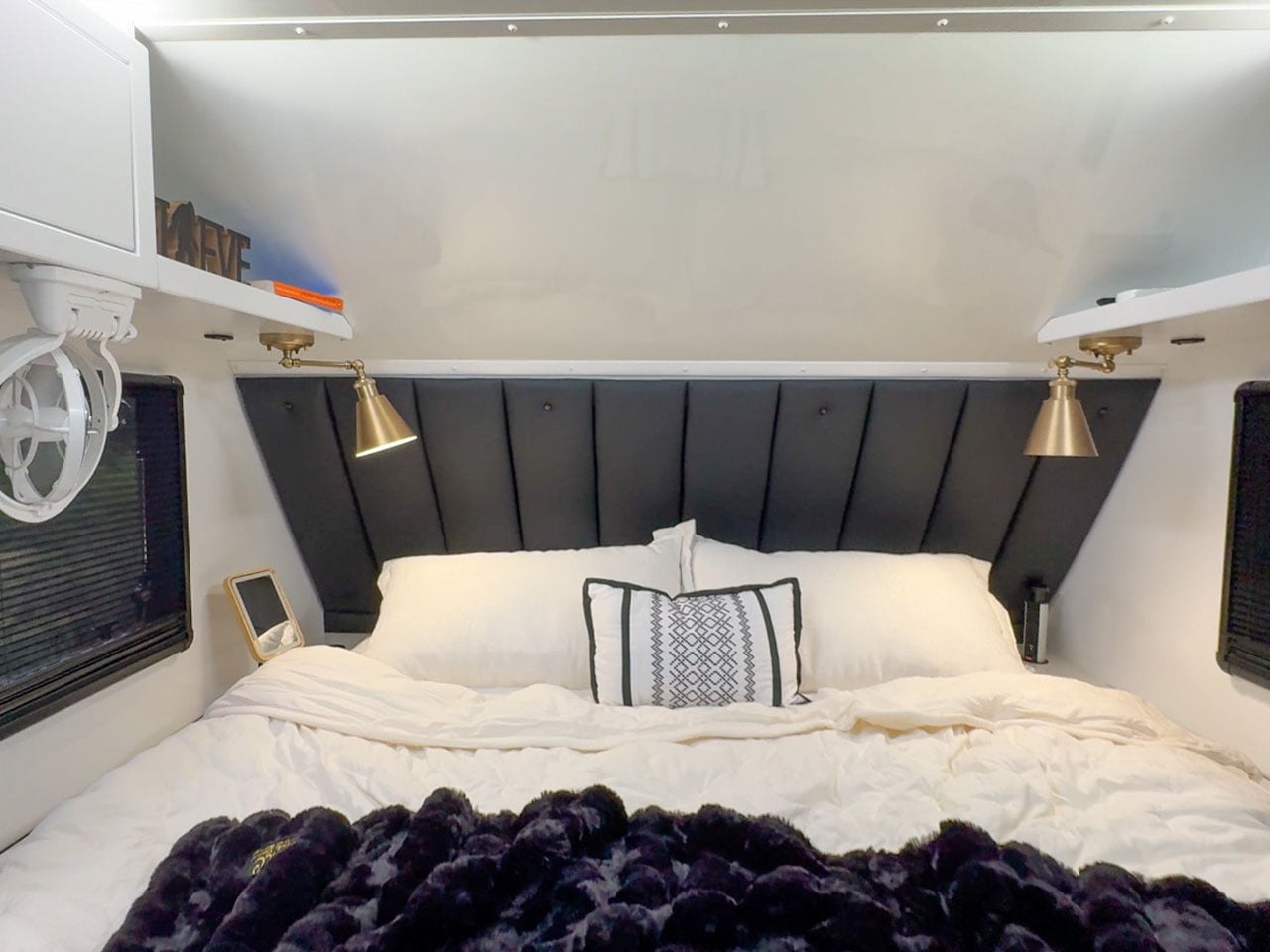
The cabin space, accessed by a side entry, is provided with a queen-size double bed and a complete entertainment system comprising a 21-in smart TV, Bluetooth radio, and stereo speakers. The TV is removable and can be used outside on an integrated mounting bracket. When outside, you can enjoy a shower and spend time under the Darche Gen 3 180-degree awning with lights. With storage for 200L total fresh water, folding tables, and all-terrain tires, the Escape Pod is definitely worth the off-grid adventures. If you’re interested, the camper starts for AUD 38,990 (approximately $27,700).

The post 2026 Escape Pod is more powerful, comfortable, and all set for escaping into the wilderness first appeared on Yanko Design.

Barefoot Caravans goes from petite to pint-sized with the ultra-compact Bothy

If you have been following the industry, it has been raining fiberglass trailers lately. First, we saw the Escape 13, and recently the MorningStar from Awaken RV. Now, while other brands are creating new inroads, Barefoot Caravans is taking a step back and revisiting its aesthetically pleasing Barefoot travel trailer born in the UK.

The caravan, which has also been able to make a mark for itself in the US and Australia, is now being downsized further, from its otherwise petite form factor. The new skimmed-down version of the Barefoot, dubbed the Bothy, is a super-small Barefoot travel trailer without the wet washroom.

Designer: Barefoot Caravans

The original, lightweight Barefoot has already been reckoned as one of the smallest in the market. Now, even smaller Bothy, which debuted at the 2025 NEC Caravan Show recently is much lighter, but this, of course, doesn’t come without some limitations. The most important of it is the absence of a bathroom, as mentioned earlier.

In spite of missing the wet bathroom found at the back of the original Barefoot, the Bothy is an incredible little rig for those who prefer compact trailers at the back of their riding vehicle. Instead of the bathroom, the Barefoot Bathy accommodates a small sofa, which converts into a sleeping arrangement. Just close by is a slide-out Porta-Potty. The interior is finished with overhead and underneath storage, and netted pockets to make space for your supplies and amenities.

A slightly ahead, in the middle of the trailer is the galley, complete with a 2-burner gas cooktop, sink and storage cabinets. There is a dedicated space for a coolbox on the opposite side, while other parts of the trailer, including the U-shaped dinette cum bed in the front of the trailer, remain undisturbed. For the shell, the Bothy is built from a single piece of molded fiberglass and is apt for sleeping up to three people inside its compact belly. The exact size of the Bothy is not confirmed by the company.

As mentioned, most of its design inheritance is influenced by the original model, which includes a gray retro interior with shades of electric blue, wood accents, and interesting interiors. Being compact and trendy, the Barefoot Bothy can be towed behind any size vehicle or an electric vehicle. This is possible because of the trailer’s rounded corners and narrower design than other similar caravans on the market. That said, the trailer weighs only 1,556 kgs (going up to a maximum of 1,874 kgs), and it comes with 16L freshwater and 23L wastewater tanks onboard. Power needs of the Bothy are taken care of by a 110Ah battery, a 120W solar panel, and it starts at just £25,500 (rightly $35,000).

The post Barefoot Caravans goes from petite to pint-sized with the ultra-compact Bothy first appeared on Yanko Design.

Awaken RV’s MorningStar camper blends dual-hull fiberglass design with all-weather durability

Fiberglass makes a camper lightweight and durable, and double-shell fiberglass construction makes it doubly tough, all-weather proof, and sublime to live in. This is the new MorningStar from Awaken RV, a manufacturer in Ohio, that’s changing the image and construction parameters for a traditional travel trailer and giving it a sleeker but tougher makeover, which is surprisingly pleasing to the eye.

This is perhaps because of its curved appearance, which is interestingly achieved by piecing the camper body together with an inner and outer shell of molded fiberglass boosting design, ruggedness, and of course, all-weather insulation. Talking about insulation, Awaken has provided the MorningStar with a bright and airy interior, and filled the split-shell fiberglass body with reflective bubble foil insulation that makes the space cozy for living in all types of weather conditions.

Designer: Awaken RV

Measuring 23.9 foot long, the trailer, owing to its construction, is almost corrosion and rot resistant, and should be able to carry a payload up to 6,235 lbs. The MorningStar itself weighs only 5,320 lbs., and its interior is designed to accommodate a small family on a journey of their lifetime. The smooth exterior with a curvaceous detail is provided with windows on practically all sides, in fact you get a skylight for a captivating view of the starry night, when you’re at your favorite stargazing spot, doing what it demands, practically lying comfortably on the bed with your partner and kids.

The timeless interior of the MorningStar has a full standing height of 6.8 feet and an open living layout that makes space for everything from cooking to dining and from sleeping to washing up. What really comes in handy for the storage inside is the specially designed storage case on the outside, behind the hitch of the trailer. The long kitchen inside features a three-burner glass-top stove, rectangular sink, microwave, and a 212-L dual door refrigerator.

The wraparound sofa on the opposite side faces a dining table comprising two swiveling tables that offer flexibility in their usage – from dining in the day and converting into a flat bed in combination with the sofa. The entertainment suite adjacent comprises a 32-in smart TV and Klipsch Bluetooth speakers, which you can detach and carry outdoors as well. The cabin is provided with cable and Starlink internet for uninterrupted entertainment and work.

The bedroom with a twin (or queen bed, if you choose) has a good view of the TV but is at the far end from the bathroom. The bathroom featuring a fixed porcelain toilet, a vessel sink, and a separate shower compartment is placed on the left of the entrance, so you can also use it to your advantage when you’re getting into the camping trailer after drenching in the rain or with a muddy pair of shoes from a hike.

A trailer these days is incomplete without an off-the-grid support system. Awaken has provided the MorningStar with a 250-Ah lithium battery and 500 watts of solar power for this. The travel trailer also features a 3,000-W inverter and a ducted heating and AC system for your comfortable travel all-year long. With a 147-L fresh water tank, an outdoor shower and other add-ons like a power awning, this fiberglass travel trailer starts at $88,900.

The post Awaken RV’s MorningStar camper blends dual-hull fiberglass design with all-weather durability first appeared on Yanko Design.

Honda enters modular camper market with lightweight, solar-powered trailer

Honda has built capable off-roading and towing vehicles, but the company has not had a trailer to match. The Japanese auto manufacturer is changing that now with its own towable solar-powered trailer. Weighing under 1,500 lbs., the prototype is light enough to be towed by nearly every SUV, crossover, or EV in Honda’s lineup and even outside.

Designed to rattle the ultralight, modular camper market, the Honda trailer is customizable to make family camping more accessible and enjoyable. Dubbed the Honda Base Station, it is built to be spacious, airy and bright with a rear hatch entry, a slide-out side kitchen, and a pop-up roof that increases headroom and also creates space for additional sleeping at the campsite.

Designer: Honda

The primary objective behind designing the Base Station is to bring the camper experience to more families. In order to achieve that, Honda has kept the prototype trailer incredibly light, which means it can be towed by a wider range of vehicles, opening its accessibility to a bigger audience. The zero-emission towable Honda trailer features a fiberglass upper shell, which rests on a full aluminum cage, including the chassis.

Courtesy of the tailgate entry, an optional teardrop-style door on the side, and five huge windows around the trailer, the interior is very bright. The Base Station opens up to become spacious and packs power options to make it a capable off-grid camper. On the outside, it doesn’t have anything distinct to show, except for the color-changing LED light strip installed around the trailer’s perimeter. On the inside, it’s a whole new ballgame.

Upon entry you get a low floor, useable for storage and maybe hauling a bike. The queen-size bed on the far end folds down from a futon position to sleep a couple. Modular features allow people to use the Base Station however they want. For instance, the roof can be popped up to create seven feet of stand-up space, or use it for an optional bunk bed. The five windows on the sides can be left as they are or replaced with optional features like a slide-out kitchen, an air conditioner, or an outdoor shower, all while still keeping the overall size of the camper compact enough to fit in an average garage or parking lot.

With the additional sleeping arrangement, Honda affirms, the Base Station should have enough room for a family of four. It is designed for off-grid living; therefore, the camping trailer comes with a lithium battery installed underneath the convertible futon, an inverter for backup, and solar panels to keep the camper and its towing EV powered at all times. All of it can be managed by the Base Station App or onboard touch display indoors, Honda notes.

As mentioned, the Honda Base Station is still a prototype. There is no word on its price and availability timeline as of now, but there is a strong voice within the company that the camper should hit production in the near future.

The post Honda enters modular camper market with lightweight, solar-powered trailer first appeared on Yanko Design.

This teardrop trailer with fiberglass body tows efficiently behind an electric bike

For me, the ultimate luxury of biking is the combination of self-fitness and environmental friendliness. If there were another dimension to add, it would be the wonder of knowing where to sleep or relax after a tiring day riding up to the favorite spot in the wilderness. This is where the all-new bike camper, from Nirvana Van based in France, pedals in, towing behind a capable e-bike.

The makers argue, it can tow behind a regular bike without much effort on a level path, but that’s not what you want the trailer for. You want the towing residence to go where your electric bike, grit, and adventure take you, and that’s what the bike camper promises to do without a hiccup.

Designer: Nirvana Van

Bike campers like this one have been around for a while. Towable teardrop trailer from ModyPlast is a good example. Such compact teardrop trailers present the eco-conscious camping enthusiasts with an undeniable reason to ride, explore, and live at the place of their choosing. It is, in comparison, a cheaper and more environmentally-friendly way to spend a weekend in a picturesque location, something the regular trailers fail to do. They are luxurious and designed for more than a couple. But if you’re adventuring on a bike, surely you are doing so to go solo, and for that, the compact bike camper is a good choice.

If you remember the SpaceCamperBike, it was an electric bike you can ride, work, sleep, and camp in. The Nirvana Van’s idea of the teardrop trailer is pretty traditional: a trailer to tow behind. The company can customize the trailer hitch to suit a varied choice of electric bikes, making it compatible with whatever brand you own. The bike camper’s efficiency and durability have been put to the test by Raphaël Dakiche of Nirvana Van with over 1200 km journey across France: living out of the trailer riding behind the electric bike.

So, whether you are planning a long-distance adventure or just a short weekend trip, the camper is ready to go where you want it to. The easy-to-tow and set-up trailer, which is proposed to be a reliable and comfortable shelter at every stop, is made available in two variants: 67kg Classic and 57kg Premium. The former is made using a cellular polypropylene shell and a steel chassis, while the latter is a fiberglass shell on an aluminum chassis. These come with optional 250Wh or 850Wh batteries, and the choice of either 105W or 190W roof-mounted solar panels.

Irrespective of the model, the teardrop trailer is provided in a size measuring 6.8 feet long and 3.1 feet wide. The bike camper is made comfortable for year-round camping with 20mm extruded polystyrene (XPS) foam insulation and safety on the road is managed by the lockable door and leg stabilizers. The circular window makes for ventilation inside, where you get a bed and ample storage. The Classic starts at €3,500 ($4,100) and the Premium costs €3,900 ($4,300).

The post This teardrop trailer with fiberglass body tows efficiently behind an electric bike first appeared on Yanko Design.
Tiny Camper Company’s Stubby is $2,900, all-composite slide-in camper built to last

I’m in awe of how quickly the RV industry is transitioning from wood and metal builds to all-composite construction. Following the release of the Unit-1 rugged squaredrop off-roader from California-based Ecno Evil, which was constructed without wood yet designed to tackle untamed roads, another 100 percent wood-free camper makes its presence known. Called the Stubby, it is a bare-bones slide-in camper that starts at just $2,900, making it an accessible entry point for almost any type of adventurer.

Completely wood-free, all-composite construction means this slide-in camper, whether it’s stationed on the pickup truck bed or mounted on a platform, will remain leak-proof and corrosion-free for the lifetime of the vehicle. To stay put where you choose to place it, the camper features a pair of aluminium slides and built-in tie-down points so it’s secure and stable to transport.

Designer: Tiny Camper Company

The Stubby is designed and engineered by the guys at the Tiny Camper Company in Florida, which has been creating affordable and compact RVs and has a decent portfolio to show. The Stubby slide-in can fit right into the back of a medium-sized truck with the help of only two people, who can lift and put it there. The cabin is absolutely lightweight at 280 lbs – largely because it’s only a sturdy and capable skeleton. If you want it out there in the wilderness with you, you will have to furnish it up at least with bedding, cooking, and toilet facilities.

Notably, Stubby makes provision for power with a 110V interior outlet and a Marine-grade exterior power connection, but an alternative power source would be necessary when you want to camp in it. With the optional Zero Breeze Mark 2 air conditioner (that comes for an additional $700) and other addons, the slide-in camper should be apt for off-grid adventures and as a quick sleeping solution when you want to “convert your truck into a resting spot.”

Crafted for utmost durability and maximum utility, the 48 inches wide x 6-foot 5 inches long Stubby may be bare bones on the inside to start with, but on the outside, it’s an impressive cabin. The rear access door, measuring 26 inches x 32 inches, is the only entrance. The periphery of the slide-in camper is marked by a set of 12-inch x 24-inch side windows that are strategically positioned to maximize natural light and ventilation. To ensure passive airflow, the Stubby also gets a half-moon air vent on either side. For an asking price of under $3,000, the Tiny Camper Company’s offering is surely enticing. Also, if you don’t like a lot of weight and side-protruding campers in your truck bed, the compact Stubby is a winner!


The post Tiny Camper Company’s Stubby is $2,900, all-composite slide-in camper built to last first appeared on Yanko Design.
Ecno Evil Unit-1 is rugged, off-road, and wood-free camper you can’t break

If you’re into pomp and show, turn back now. This camping trailer isn’t for you. But if the bare essentials are enough to make your adventures fun, read on. Before that, though, check out the video above. It’s easily the strangest promo I’ve ever seen for a trailer. Cinematically shot 4k videos of full-equipped trailers are impressive, but just wait until you see the Ecno Evil Unit-1 being smashed with wooden planks and sledgehammers. It’s one heck of a demonstration of its structural toughness.

Developed by California-based Ecno Evil, the Unit-1 is a rugged squaredrop off-roader that’s built without wood, yet designed to withstand whatever you may throw at it. The HDPE (High-Density Polyethylene) construction makes the trailer absolutely durable, lightweight, and pretty cost-effective. The cost is also achieved by keeping Unit 1 to its skeleton, with subtle functionality accents only. It avoids the unnecessary camping equipment that the makers believe adventurers already own and should not be burdened further with mandatory gear in their rig.

Designer: Ecno Evil

If you stand by the thought that you should have the choice to furnish a trailer with your own stove, portable toilet, and power backup etc., then the Unit-1 meant to provide a reliable shelter out in the wilderness, should be the trailer you are looking at. Riding behind a capable tow vehicle, it can reach where you want it, providing you with an instant space with basic necessities to live out a few days in nature most conveniently. And more, if you pack it with your cooking and sporting gear.

Of course, the minimalist design and zero-wood construction are the chief highlights of the Unit-1. But you can’t take away the fact that the trailer has an external storage area in the rear, which is detached from the living area inside and makes it a feature to behold, especially for those who fail to keep the clean interior and the soiled gear separate.

The Ecno Evil Unit-1 is not a very compact cabin; it has a 12.4-foot floor space that sits on a custom aluminum tube chassis. The body is a simple, squaredrop box without interior paneling or exterior cladding. It’s just a durable HDPE camper which, without metal or wood inclusion, is completely resistant to mold, rot, or any such durability issue. The trailer is only provided with a single door entry; the hatch is separate and has two storage units. Two windows, one with the door and the other openable just opposite, make provision of the natural lighting inside, while the 6-inch trifold mattress occupies the floor space under a roof fan and open shelves spanning the interior.

Ecno Evil makes provision for lighting both inside and outside, while providing an option 100-W solar panel and an Ecoflow power unit, if required. At its bare best, the Ecno Evil Unit-1 starts at $13,990. This would be a 4 x 8-foot floor plan. Another option is the 5 x 8-foot model, which starts at $16,490.

The post Ecno Evil Unit-1 is rugged, off-road, and wood-free camper you can’t break first appeared on Yanko Design.
Inspired by desert race, ST5 Supertourer Finke Edition pop-up camper is off-roading genius

Most advancements happening in the camper industry, of late – directly or indirectly – hint at pushing the boundaries of off-road and off-grid camping. If it were true for the manufacturers in the US, the idea has touched an Australian builder most fiercely. Perhaps so much so that the Queensland-based Patriot Campers (a recognizable name I’m sure) has designed and developed the ST5 Supertourer Finke Edition pop-up camper that blows the boundaries of off-road camping in desert dust.

Claimed to be the most advanced camper trailer in the world, the special edition ST5 Supertourer Finke is a premium (and feature-rich) variant of the standard version by the manufacturer. Its name is derived from Australia’s iconic Finke Desert Race and the construction is apt to overcome the most challenging terrains.

Designer: Patriot Campers

The special Finke edition doesn’t borrow the name for the heck of it. In fact, the brains behind Patriot Campers have been involved in the namesake off-road racing for over a decade. The new camper is therefore a consortium of their learning from the extensive involvement in off-roading competition and touring expertise. The wholesome rig with all its merits was launched by Patriot Campers at the 2024 SEMA automotive show in Las Vegas.

The ST5 Supertourer Finke Edition camper is a versatile living quarter on the road with robust riding antics and lightweight body parts. The camper is built with a combination of composite and structural aluminum and has a black canvas pop-out roof. The exterior pops with the green and white color scheme, carbon fiber decals, bronze-colored wheels and 35-in mud tires. The sports car-esque interior equipped with black Alcantara and green upholstery strikes plush at first sight. Carbon fiber table and benchtops in the living area, and bronze basin tap in the bathroom complete the look.

With what you get, the ST5 Supertourer Finke Edition is not any ordinary camping trailer. Hybrid by virtue, it complements performance and comfort and is designed thoroughly for off-road adventures with a Trinamic suspension system and 17-in rims featuring Method Wheels’s beadgrip technology for lowering tire pressures while negotiating rough terrains. The exterior of the camper makes more living space with an awning on either side, while a pull-out kitchen facilitates cooking savory meals where your journey takes you.

The post Inspired by desert race, ST5 Supertourer Finke Edition pop-up camper is off-roading genius first appeared on Yanko Design.
Trailer with a fish-inspired aerodynamic design showcases modular living space and inflatable construction

Travel trailers are becoming increasingly popular and the spike in exhibitors at shows like the Caravan Salon Düsseldorf, only substantiates this fact. With the upsurge in electric tow vehicles, the need of the hour are trailers that have sleeker aerodynamics and smaller form factor to minimize drag and increase range.

Of course, by trimming the size and dimensions of the camping trailer, the comfort will be compromised, but Bürstner from Kehl in Germany thinks otherwise. It is thus coming to the abovementioned RV show with the Talis; a trailer designed with marine-inspired aerodynamics, modular living space, and an inflatable rear that expands its compact form factor for user convenience.

Designer: Bürstner

Welcome to the future of trailer camping! Designed in partnership with StudioSyn, the Talis is a futuristic concept that has the potential to be the highlight of Caravan Salon 2024. On the outside, at first glance, there isn’t much difference, but a closer examination shows, as the company confirms, pointed front and the rear of the camper that are “reminiscent of a fish.” The design is a result of multiple run-throughs the virtual wind tunnel software before settling for this shape.

The exterior is pretty compact, yet the interior, featuring slatted wood wall paneling with soundproofing and movable battery-powered lamps, is pretty spacious to accommodate a couple and two children. The spaciousness is possible with the multifunctional Bürstner Air-Xtension System, which allows the rear of the trailer to inflate and permit the fixed rear transverse bed to convert into a 200 x 170cm bed lengthwise. Under the rear transverse bed (without transformation) is the “kids sleeping den.” This child-friendly sleeping space for two kids can double as storage space or garage during the day and can be partitioned off with a curtain.

To enhance the culinary experience onboard is a kitchen module with a double induction hob. This has a portable kitchen, which allows residents to carry its top half outdoors to extend the cooking experience beyond the confines of the four camper walls. Despite the small size, Talis has been provisioned with a twin chamber, a self-sufficient eco-toilet that would function without any chemicals. The bathroom would also have space for a shower and a foldable sink.

The post Trailer with a fish-inspired aerodynamic design showcases modular living space and inflatable construction first appeared on Yanko Design.
Give your VW camper van more portable storage and dining space with the Bbox Bulli in tow

If you’re someone who loves to live in the wilderness in a camper van, you wouldn’t really mind the peace of mind and convenience that a towable little attachment capable of being your cargo hauler, a dining area, a small kitchen or a wardrobe, whatever you may like, can offer.
The Bbox Bulli Edition by mfi camperlife GmbH in Germany is this towable little companion – designed primarily for the Volkswagen camper vans – that will be your ultimate companion at the base camp. Not just for its versatility but also for the compact size in which the Bbox Bulli can store up so much cargo that your van can be cleared up on the inside for comfortable travel on the road.
Designer: Wolf-Box Design

The convenience of a tiny towable behind your Bulli is not an inexpensive deal by any standard. If you have upward of $13,000 (€11,900) to spare for an extension of your van-living quarters, you shouldn’t think the second time. But if you choose to get one, the excitement is not going to stop at the extension itself, you can get mfi to customize the Bbox Bulli Edition to the color and theme of your ride (now maybe the price seems a little fair).

Of course, this contraption is primarily meant to tow behind a Volkswagen camper van, but there seems to be no reason why you cannot have it in tow of any multi-purpose vehicle that you may drive. When in tow, the Bbox Bulli, comprising a fiberglass-sandwich body and weighing 880 lbs, can be used as an outdoor kitchen and dining using a camping stove and fold-out table. There are two side closets with configurable shelves to carry water canisters, coolers and other gear, which otherwise tend to clutter up the camper van space side.

For those who are wondering how much this little guy can carry, the Bbox Bulli Edition, mfi informs, can carry 660 lbs of payload and has integrated lighting for convenience and jazzing up your camp. Measuring 37 inches deep and 87 inches tall, its tow bar stretches forward from the body, doubling the total length to up to 80 inches.

The post Give your VW camper van more portable storage and dining space with the Bbox Bulli in tow first appeared on Yanko Design.