The €499 Ceiling Panel That Shifts Like the Sky From Dawn to Dusk

The way natural light moves through a home is something architects spend considerable effort thinking about and homeowners rarely control. A room that gets good morning light may feel completely flat by afternoon. A basement office might go weeks in dim, color-distorted artificial light that strains your eyes and makes every hour feel identical. The architecture of most homes simply wasn’t designed around the idea that the ceiling could do more than hold a light fixture.

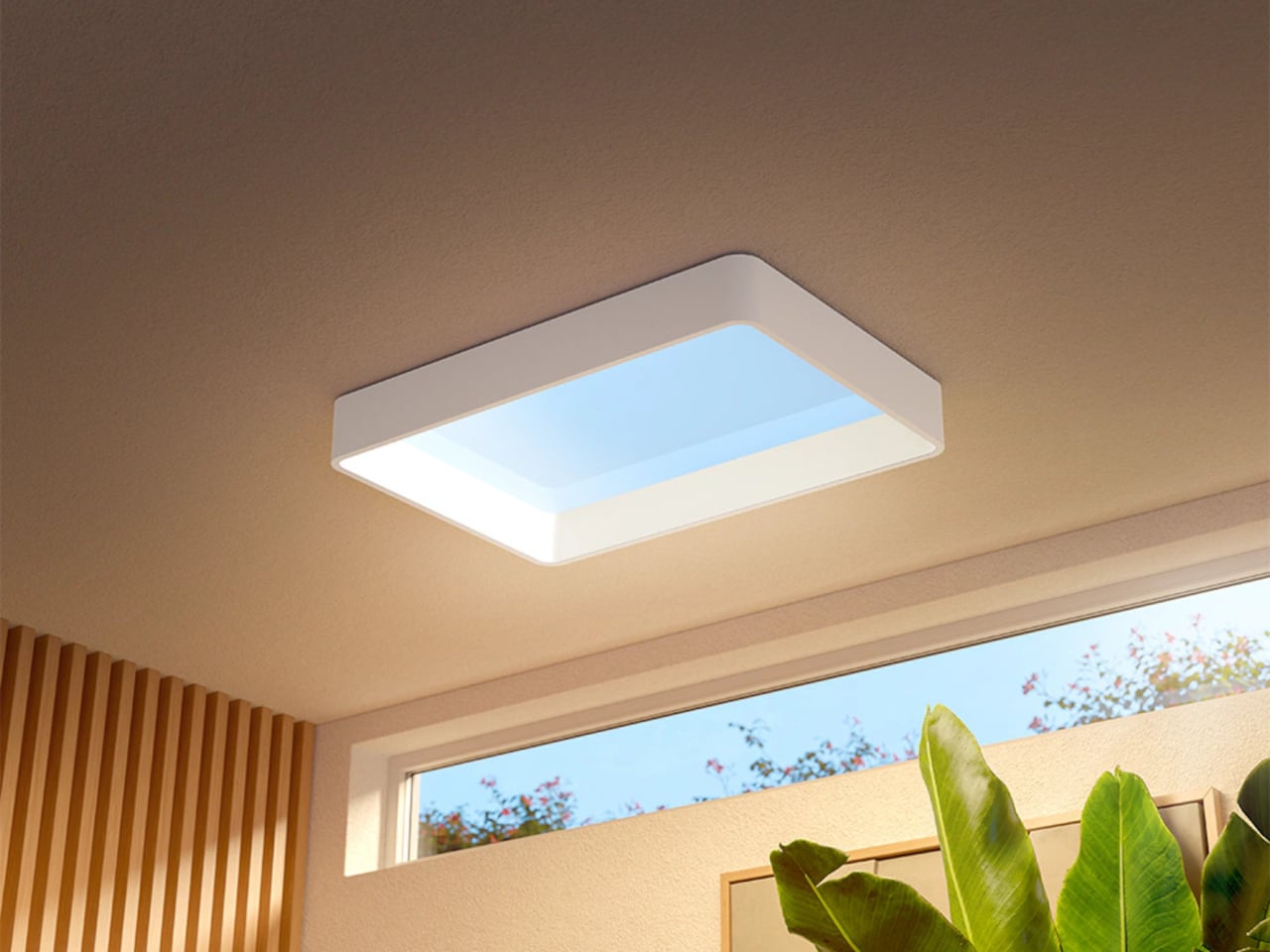
The Philips Skylight is a ceiling panel that started as a professional product, used in offices, lobbies, and medical practices, and has since been adapted for the consumer market. Designed around Signify’s NatureConnect LED technology, it’s built to recreate not just the brightness of daylight but also its depth, color variation, and the way those qualities shift over the course of a day.

Designer: Philips (Signify)
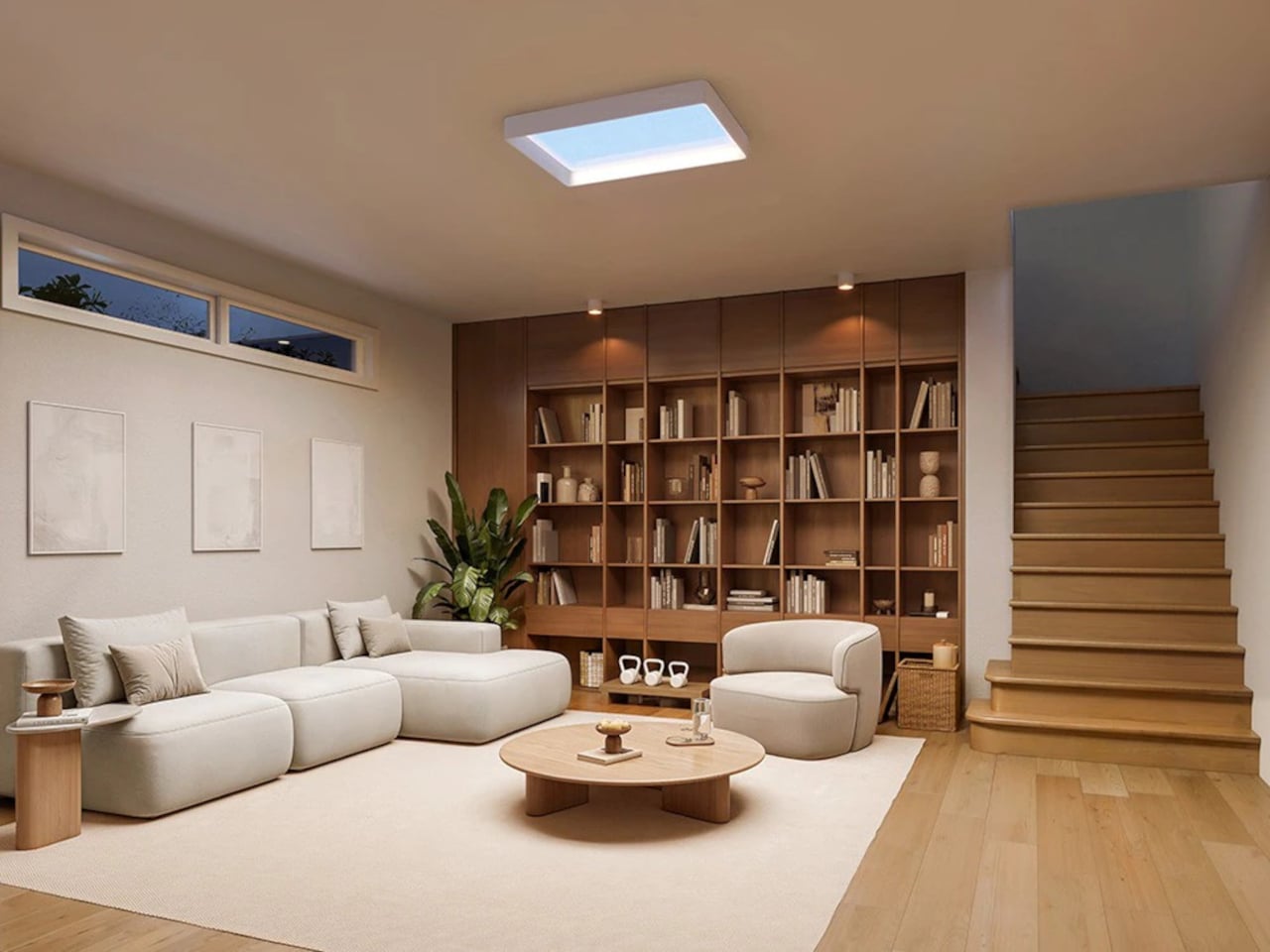
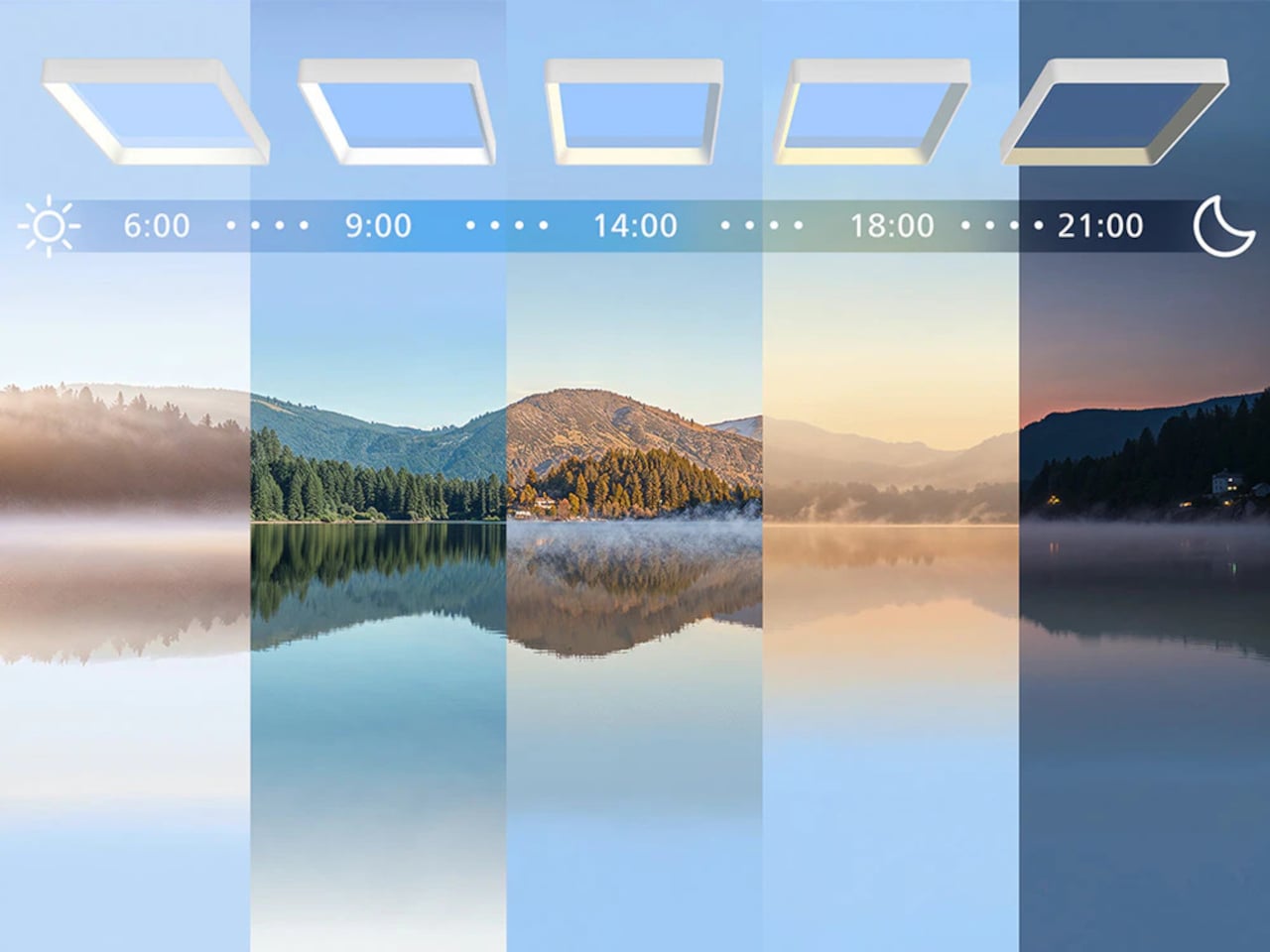
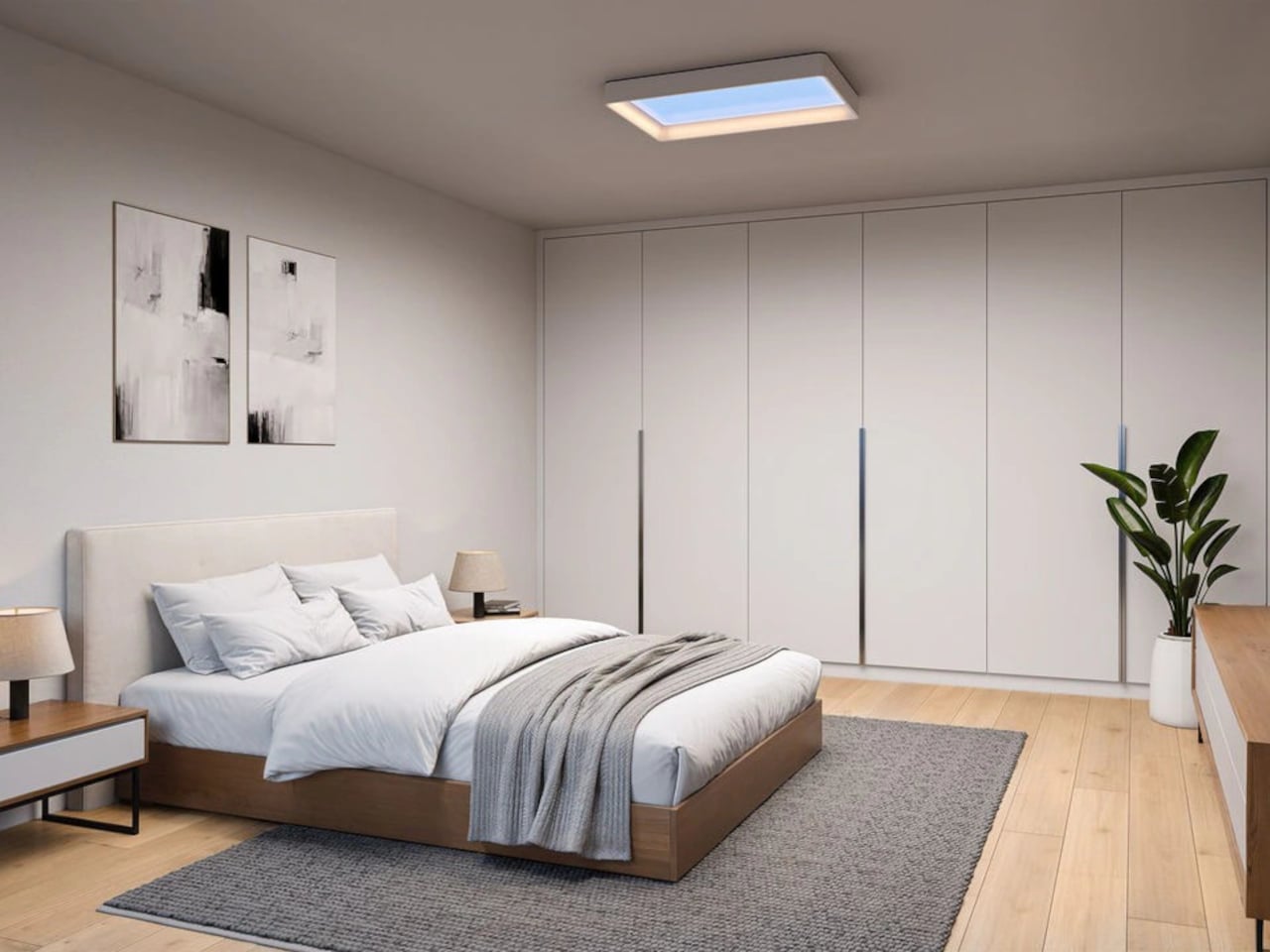
The panel’s visual framing creates a depth effect that reads more like a window to the sky than a flat ceiling-mounted fixture. The light isn’t static: an Auto Day Rhythm feature automatically adjusts brightness and color temperature throughout the day following a fixed schedule. During the day, BioUp LEDs deliver blue-enriched light to support alertness and focus. As evening arrives, the spectrum shifts to warmer, more relaxed tones.
That kind of passive, scheduled behavior is one of the Skylight’s cleaner design decisions. There’s no app to configure, no smart home hub required, and no automation to build. The included remote handles manual control, and five preset lighting scenes cover the range from an energized home office session to something closer to winding down. The absence of smart home integration has drawn some criticism given the price, but for anyone who finds smart home setups a hobby in themselves, the simpler approach may actually be the selling point.
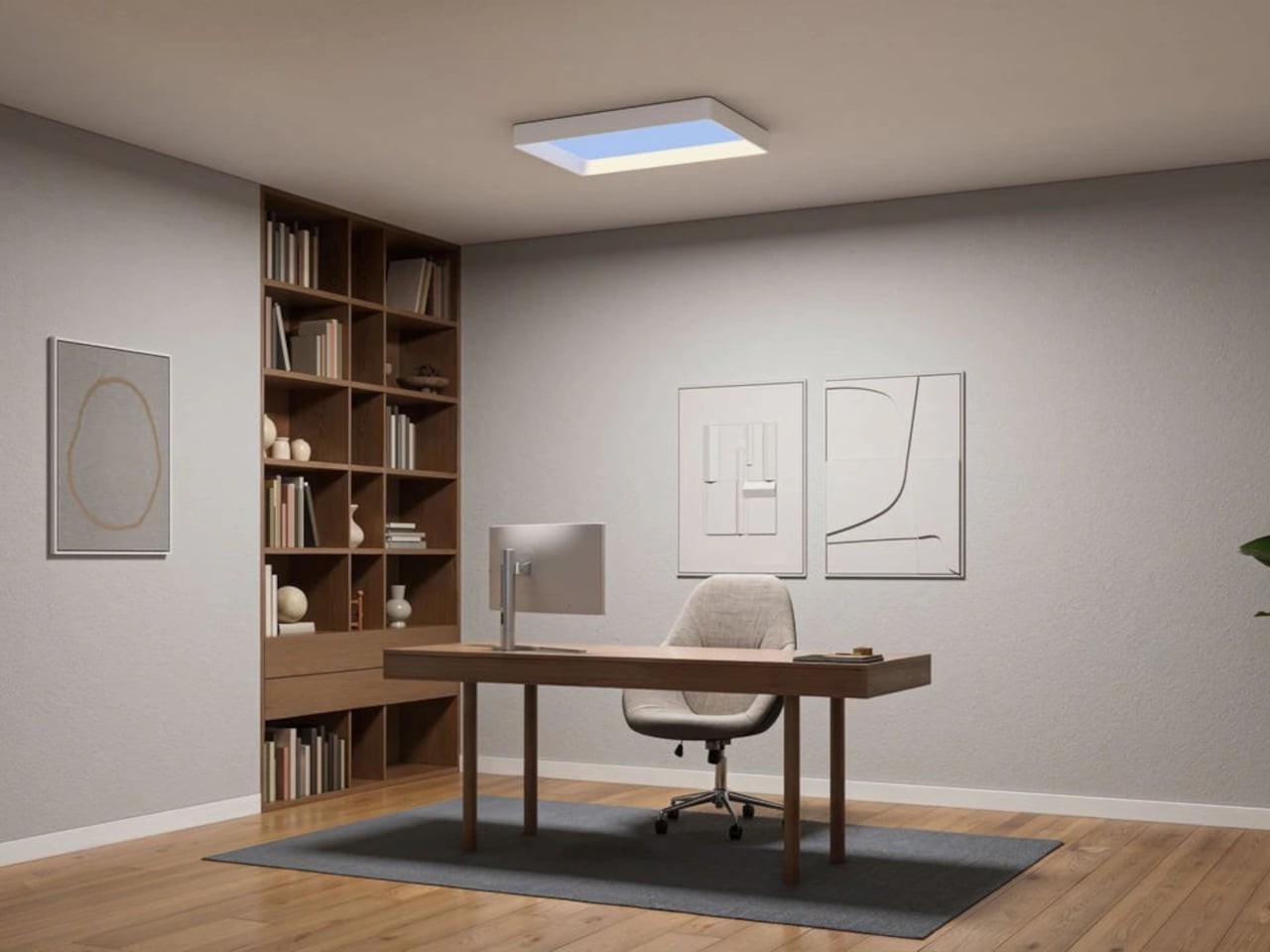
The range comes in four variants: a Philips Skylight Medium, Philips Skylight Large, Philips Skylight VitaUp Medium, and Philips Skylight VitaUp Large. The VitaUp versions include an integrated UV-B module designed to support the body’s natural vitamin D production indoors, with a safety feature that automatically cuts the UV-B output off after eight hours. The product carries a disclaimer that it’s not a medical device and doesn’t replace actual sunlight, which is probably the right framing for something that lives on a ceiling.
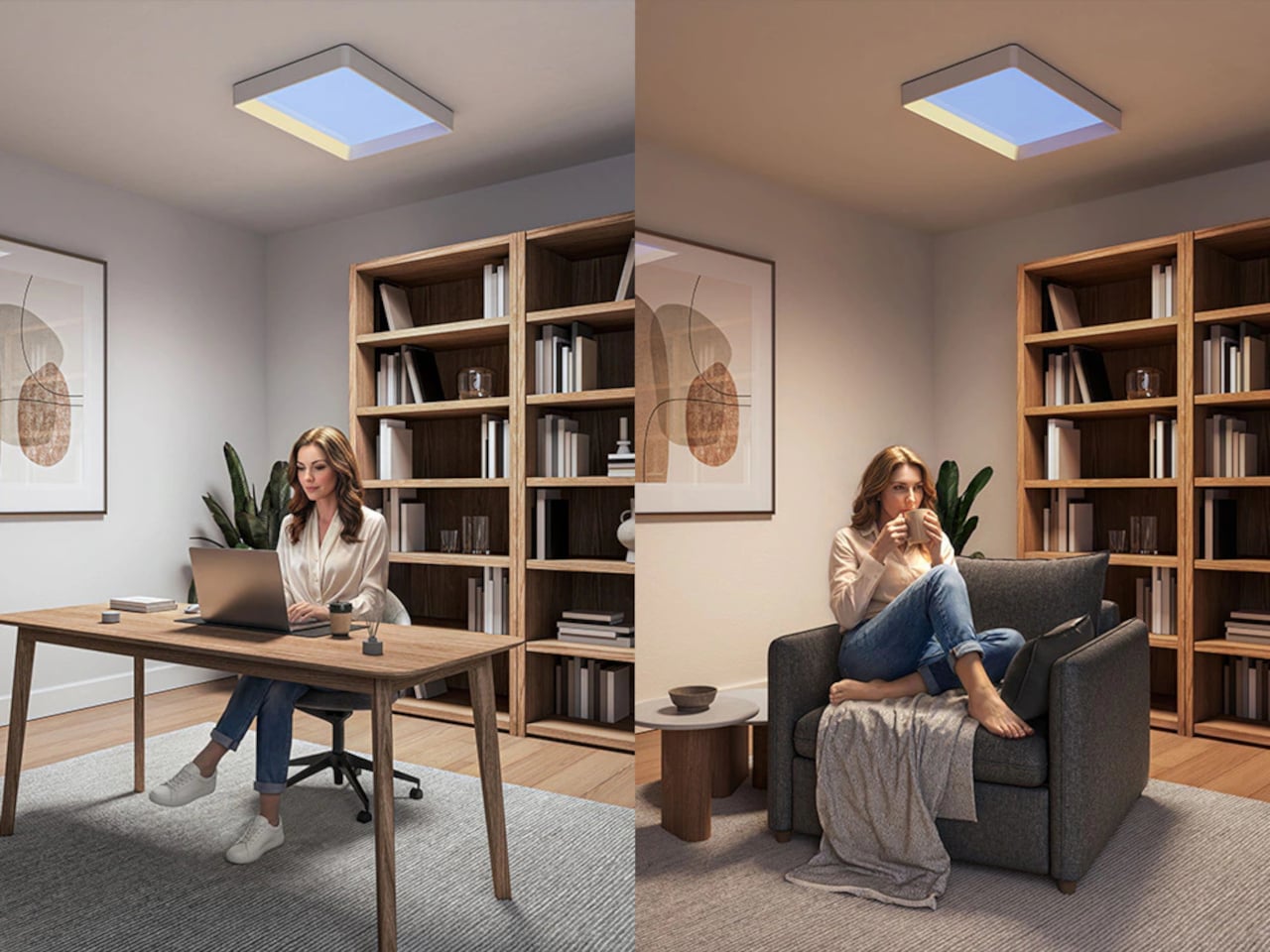
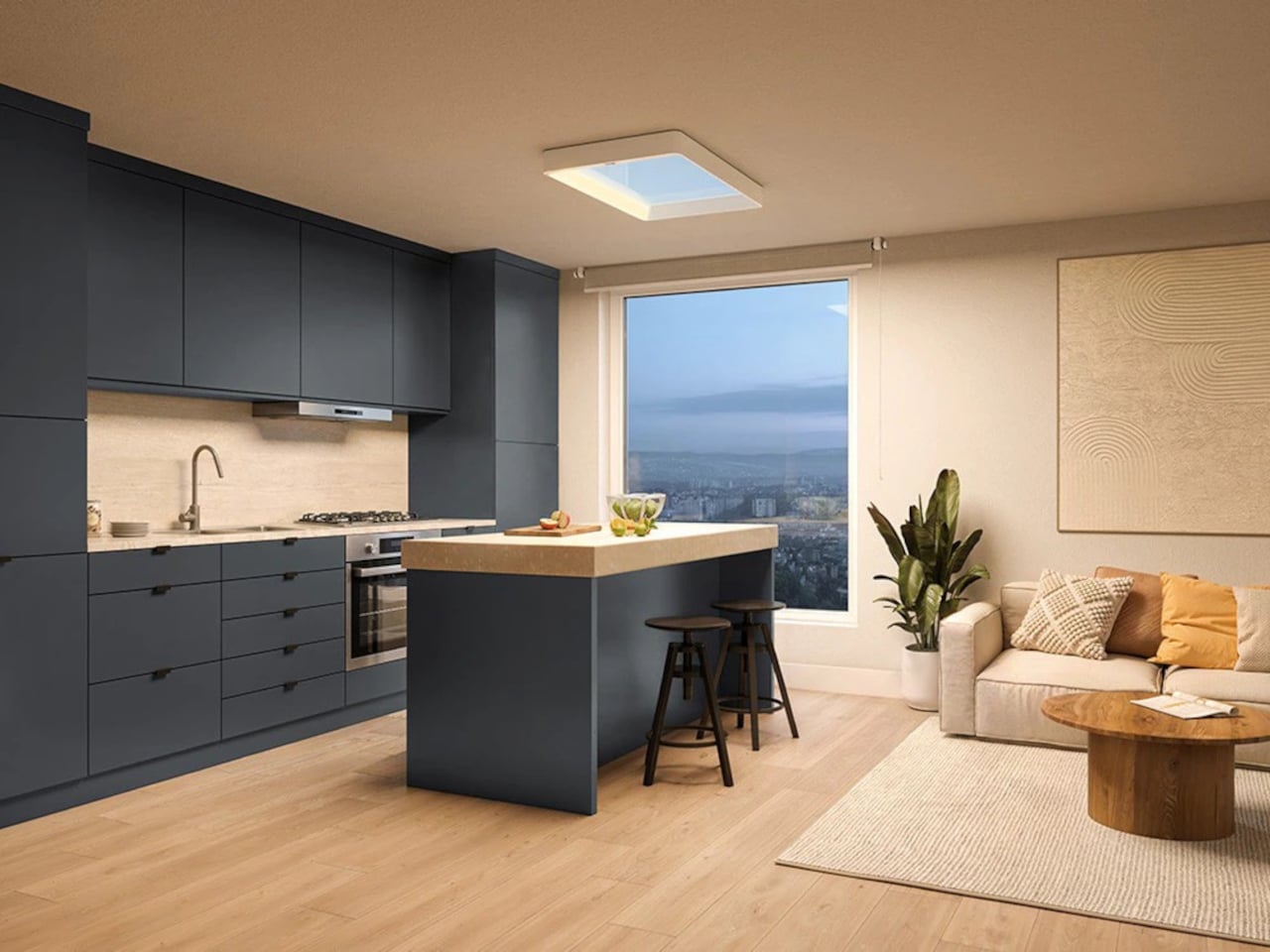
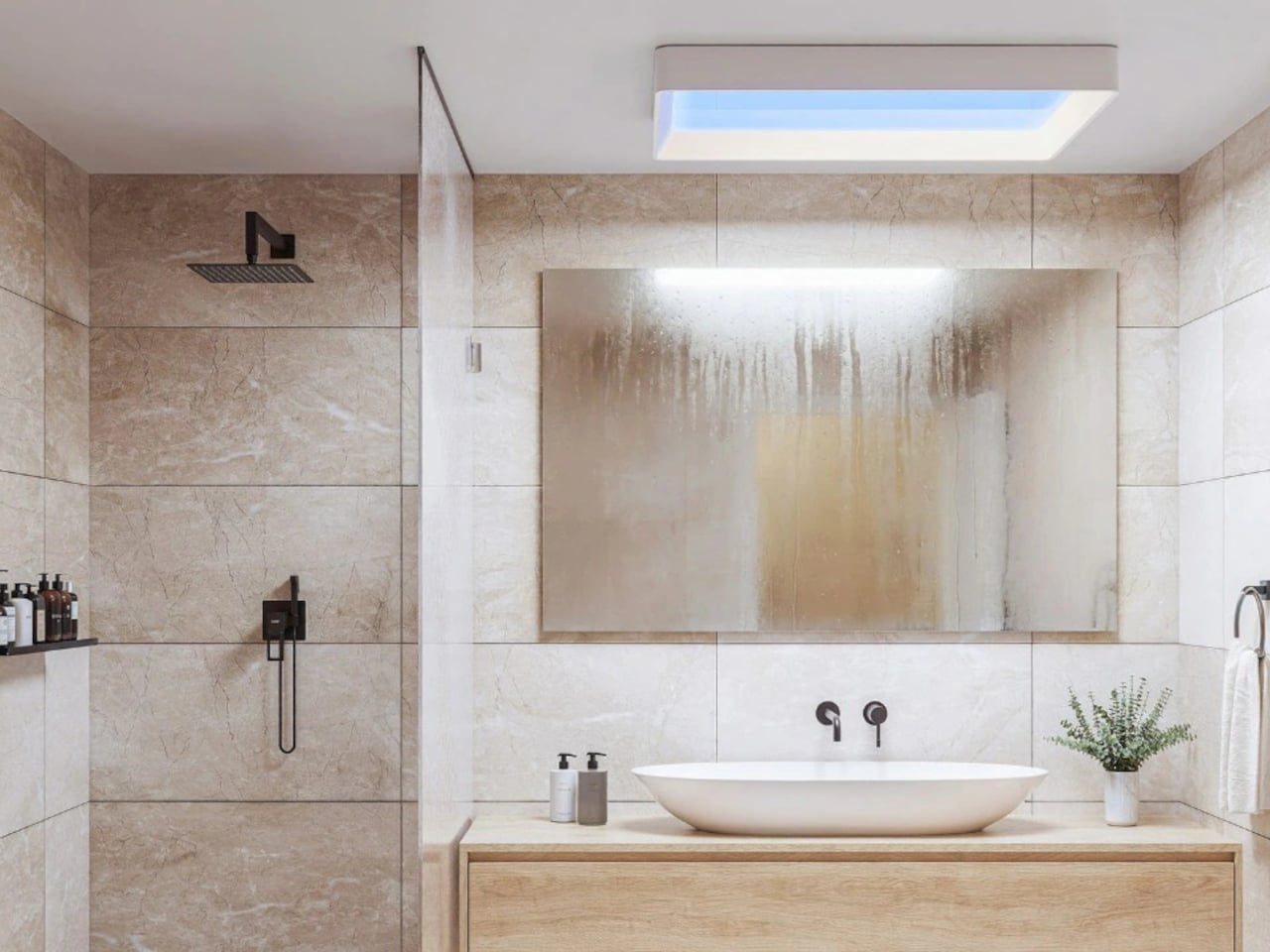
An IP44 rating across the entire range means the Skylight can also be installed in bathrooms and other humid spaces, which changes the calculation considerably. A bathroom that gets no natural light is exactly the kind of room where spending two hours on a winter morning begins to feel like something is actively wrong with the day before it’s even started. Placing a light that actually follows the rhythm of daylight in that space addresses a very specific, rarely solved problem.
European markets have the Skylight from June 2026, starting at €499.99, with US availability expected in September 2026. The technology backing it has already spent time in settings where lighting quality genuinely matters, which gives it a credibility that consumer-only smart bulbs have historically struggled to carry. How well the depth effect translates from professional installation to an ordinary home ceiling is something that hands-on testing will eventually settle.
The post The €499 Ceiling Panel That Shifts Like the Sky From Dawn to Dusk first appeared on Yanko Design.

This Dual-Sided Philips Monitor Lets You Share One Screen With Clients Without Sacrificing Desk Space

The business monitor market rarely sees truly original ideas, but Philips may have found one with the new Philips 24B2D5300. Instead of chasing higher resolutions or curved ultrawide panels, the company has introduced what it calls the world’s first standalone dual-sided monitor, placing two full HD displays back-to-back inside a single chassis. The idea sounds unconventional at first, but its practical applications quickly become obvious in customer-facing environments, collaborative offices, reception counters, healthcare desks, banks, retail spaces, and coworking setups where information needs to be shared across a desk without awkwardly rotating a screen.

The monitor uses two 23.8-inch IPS LCD panels, each with a 1920 x 1080 resolution and a 120Hz refresh rate. Both displays support wide 178-degree viewing angles, ensuring the image remains visible and color accurate from nearly any position. Philips also includes its SoftBlue low-blue-light technology and TÜV Rheinland certification to reduce eye strain during long work sessions. Unlike standard dual-monitor setups that consume more desk space and require additional cabling, the 24B2D5300 integrates everything into one footprint while still offering two independently usable screens.

Designer: Philips

The real innovation lies in how the screens can operate. Philips’ DualView and SmartView software features allow the monitor to either mirror content across both displays or extend the desktop independently. In practice, this means an employee can keep confidential information visible only on their side while showing approved content such as invoices, forms, instructions, transaction details, or queue information to customers on the opposite display. It can also function as a collaborative workstation where two users interact with the same computer from opposite sides of a desk. Philips even claims the monitor can handle up to three simultaneous application windows through its split-screen functionality.

Connectivity is equally business-focused as each side includes its own HDMI and USB-C ports, with the USB-C connections supporting up to 65W power delivery for laptops and notebooks. The monitor can connect to one or multiple devices simultaneously, allowing the screens to function independently if needed. Built-in stereo speakers, USB hub functionality, and synchronized on-screen display controls further simplify workspace management. A 180-degree swivel stand also helps users quickly rotate the display to check the opposite screen without repositioning the entire setup.

While the hardware specifications themselves are relatively modest by gaming or creative-professional standards, the product is clearly aimed at improving workflow efficiency rather than visual performance. The monitor’s compact design could be particularly useful in environments where counter space is limited, but customer interaction is constant. Tech observers have already pointed out that the concept feels surprisingly practical despite its unusual appearance, especially for front-desk staff, service counters, and collaborative workplaces.

The Philips 24B2D5300 is expected to launch in parts of Europe beginning in June 2026, with reported pricing starting around £359.99 (roughly $480). Availability in other markets has not yet been confirmed, though the monitor’s distinctive functionality could easily attract broader global interest if businesses see value in its space-saving and customer-friendly design.

The post This Dual-Sided Philips Monitor Lets You Share One Screen With Clients Without Sacrificing Desk Space first appeared on Yanko Design.
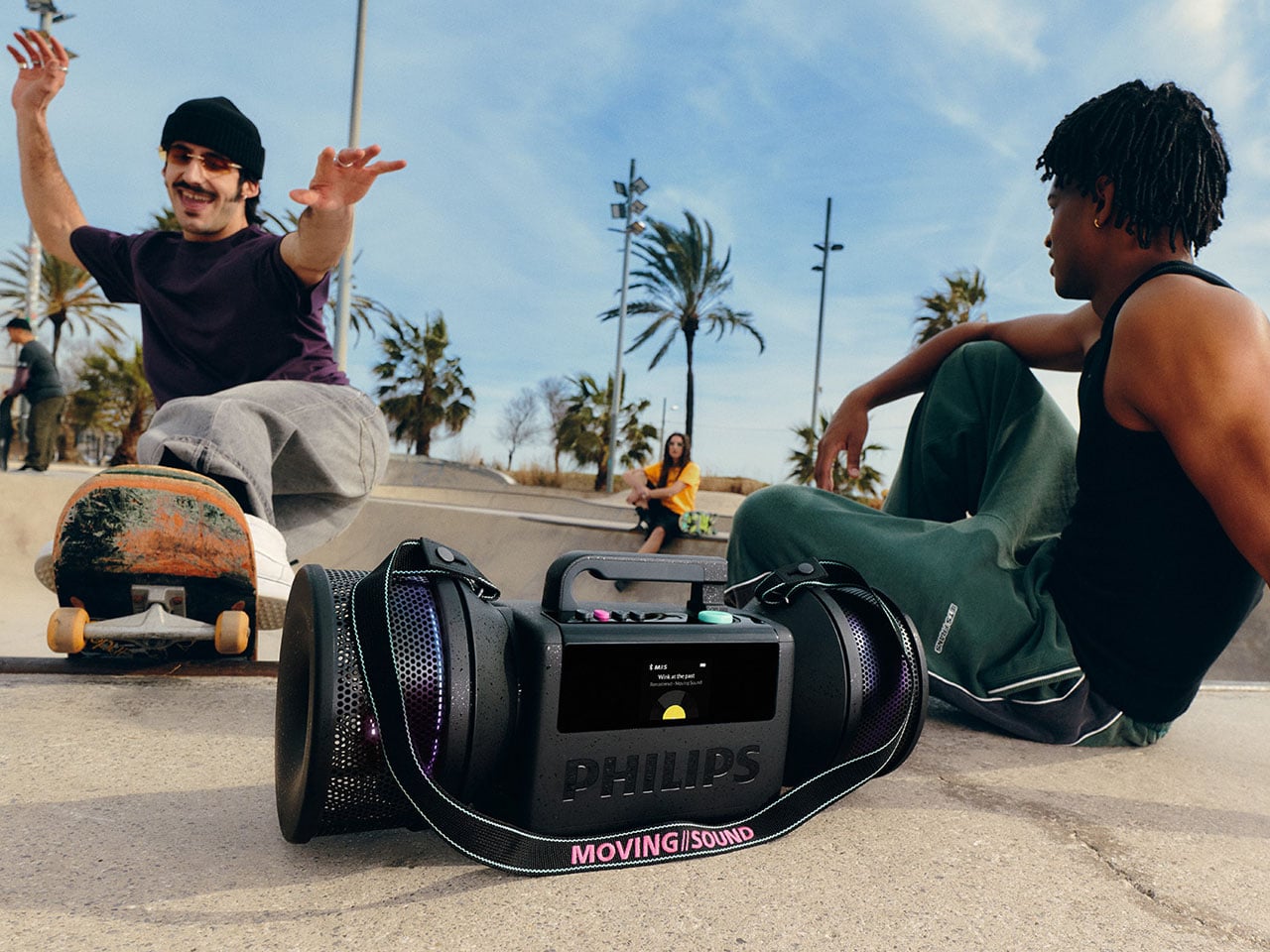
Philips Moving Sound line-up impresses with retro chunky form and peppy colors

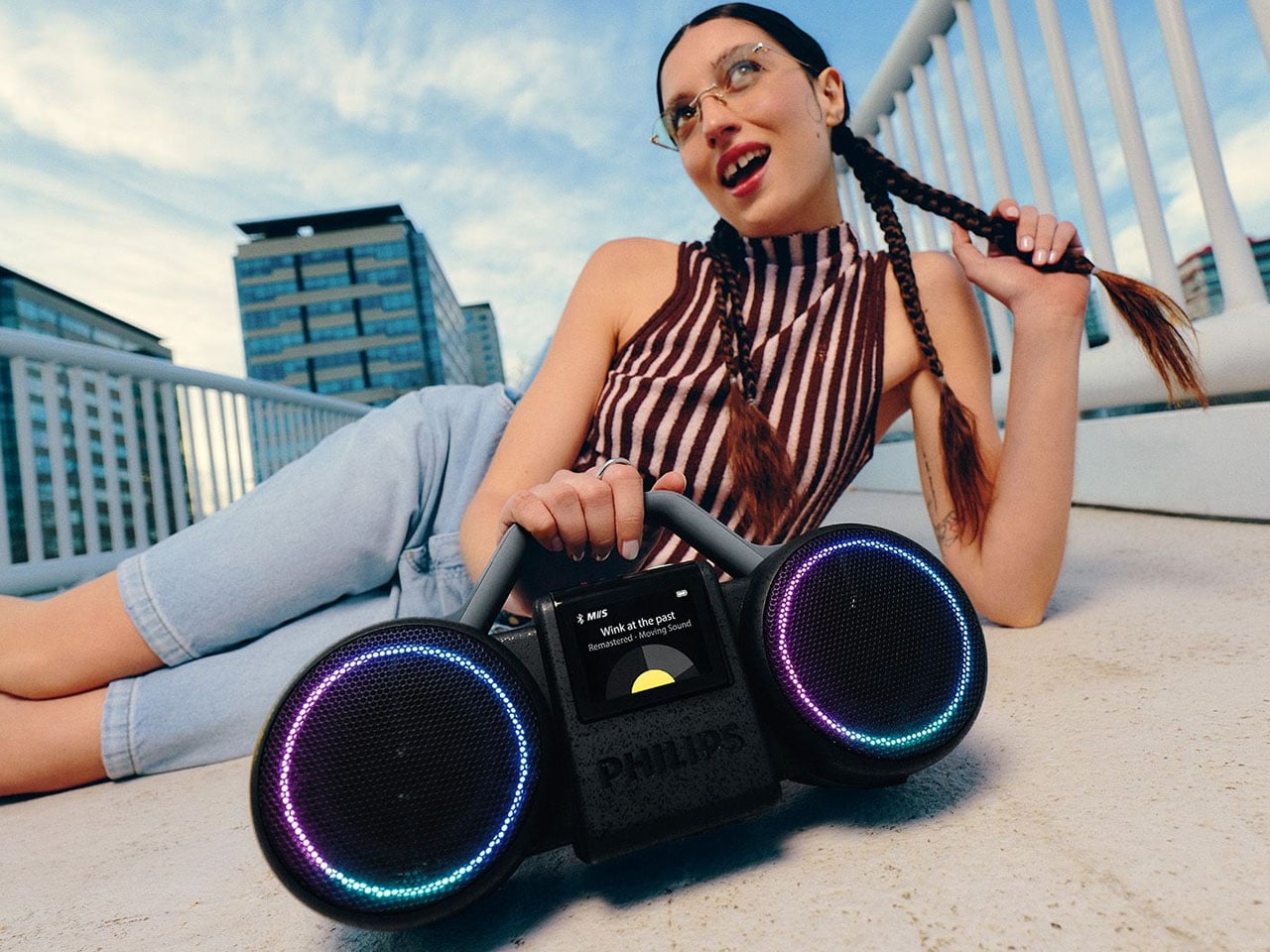
Philips is going all in with the retro vibe of 80s, because why not? The era was signified by bold colors and freedom of expression that somehow got lost in the craving for clean designs. The Dutch multinational wants to bring back that classic feel with its Moving Sound line-up that’ll have you drooling over. That pure magnetism of the retro-futuristic design sense, paired with the bright hues, is enough to get the party started.

The new range is a modern reinterpretation of the 1980’s Philips Moving Sound design, and on the inside, there is technology of modern times. This audio accessory lineup is headed by two portable Bluetooth speakers, a pair of headphones, and cheeky earbuds that are hard to resist. All of them come in attractive color combinations for a nostalgic feel. Most importantly, sustainability is at the core of the range, featuring replaceable batteries, extensive use of RCS-certified plastics, and FSC-certified plastic-free packaging.

Designer: Philips

The Tube (MS80) and The Roller (MS60) Speaker

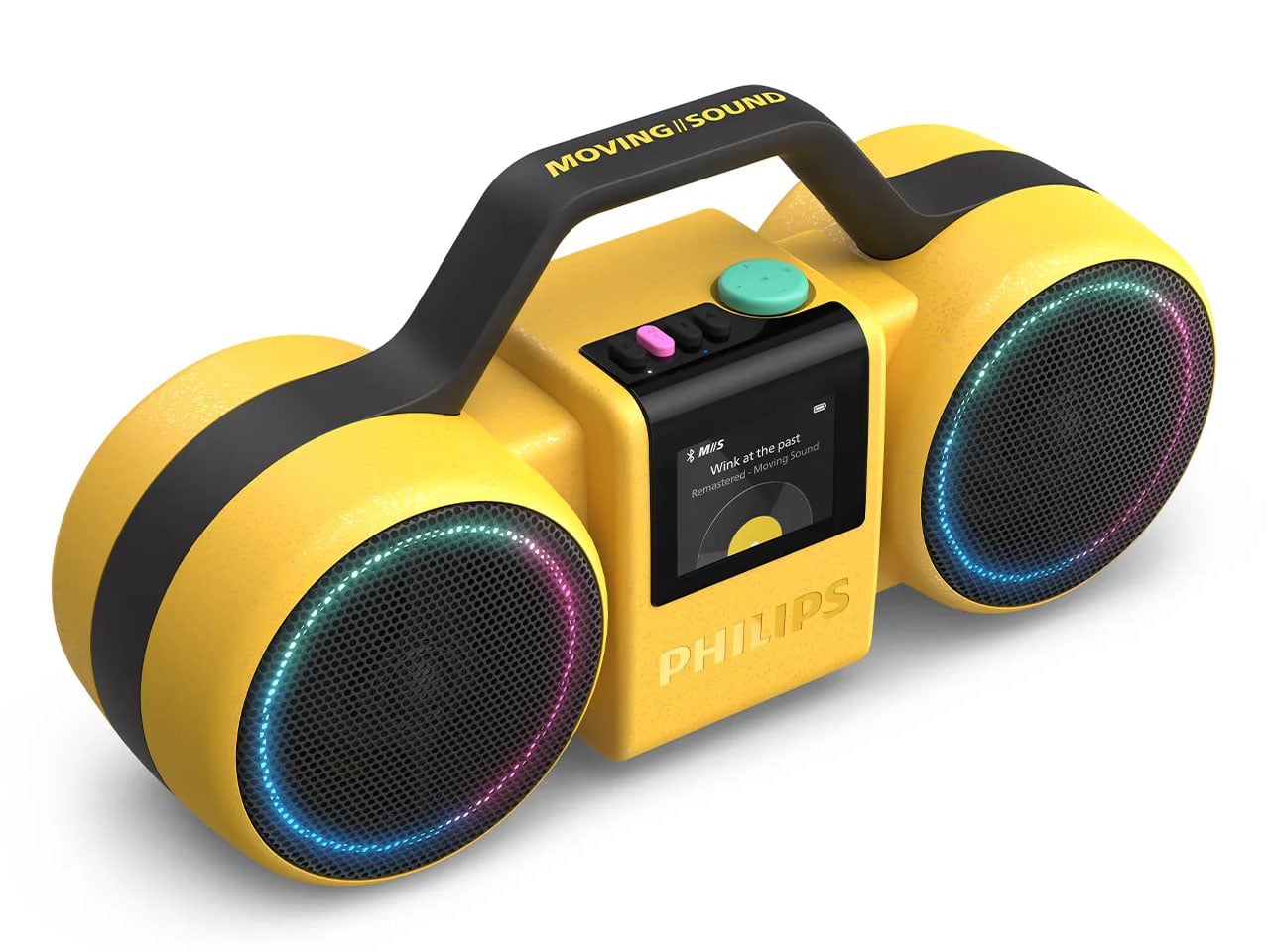
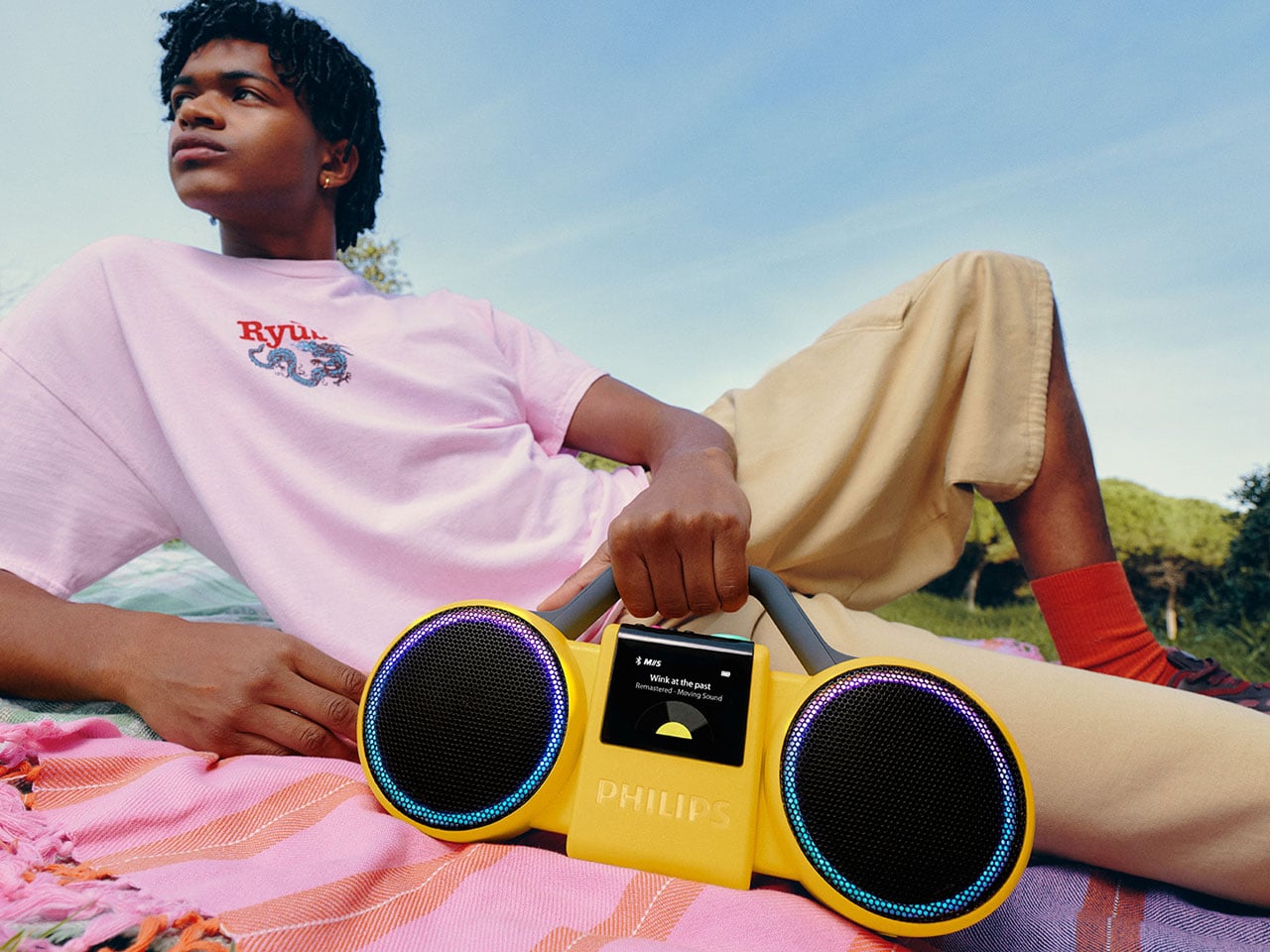
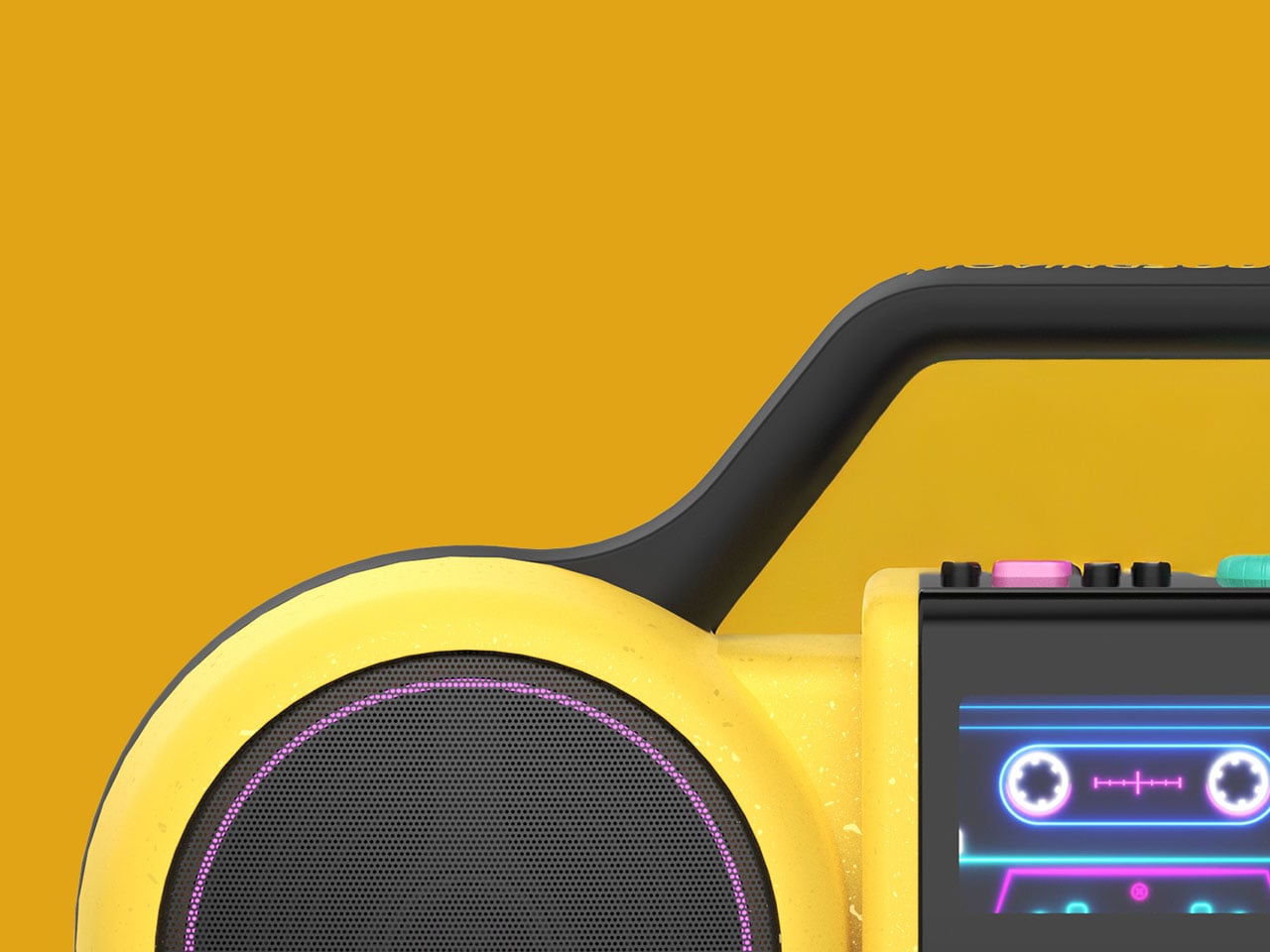
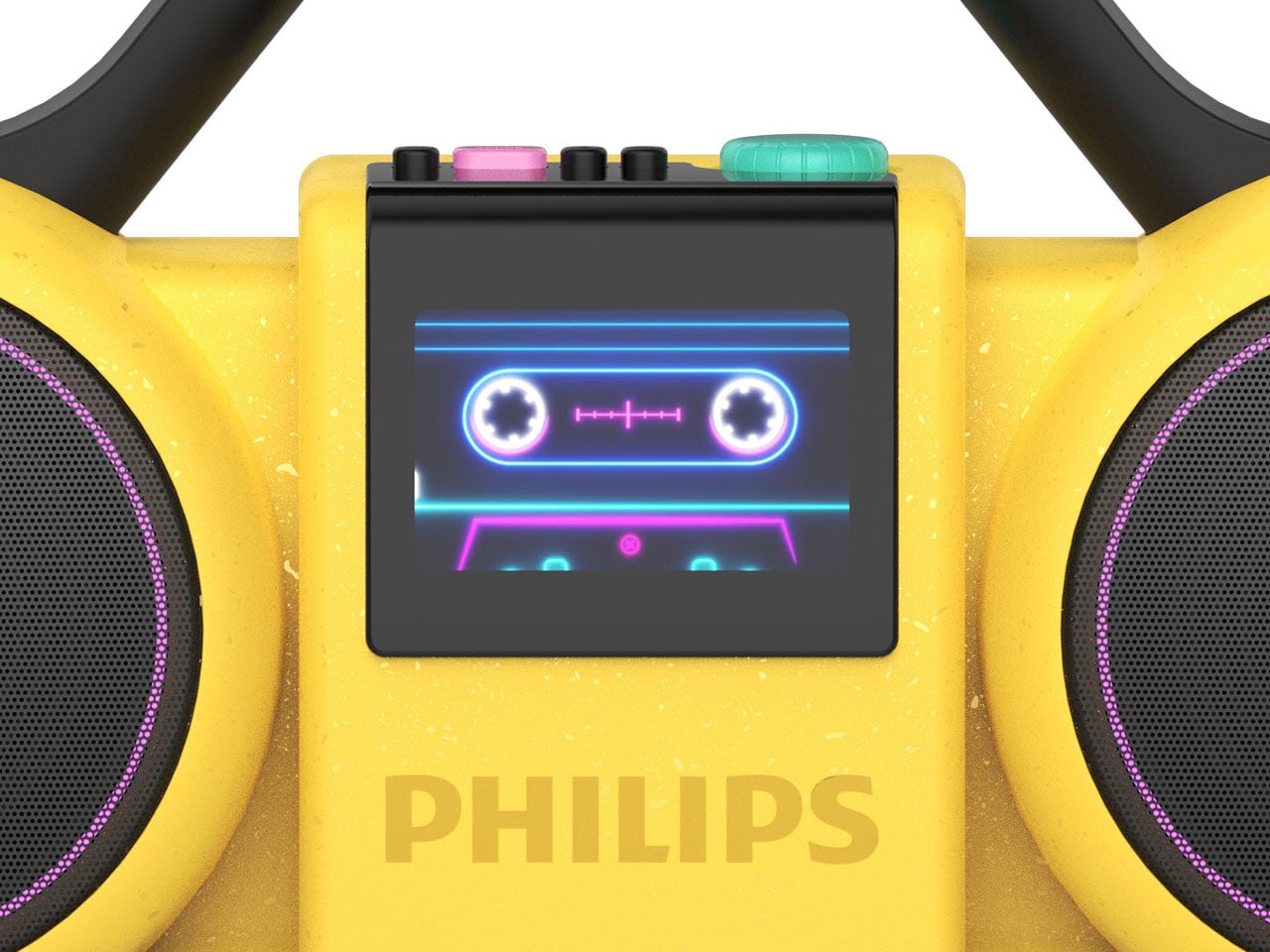
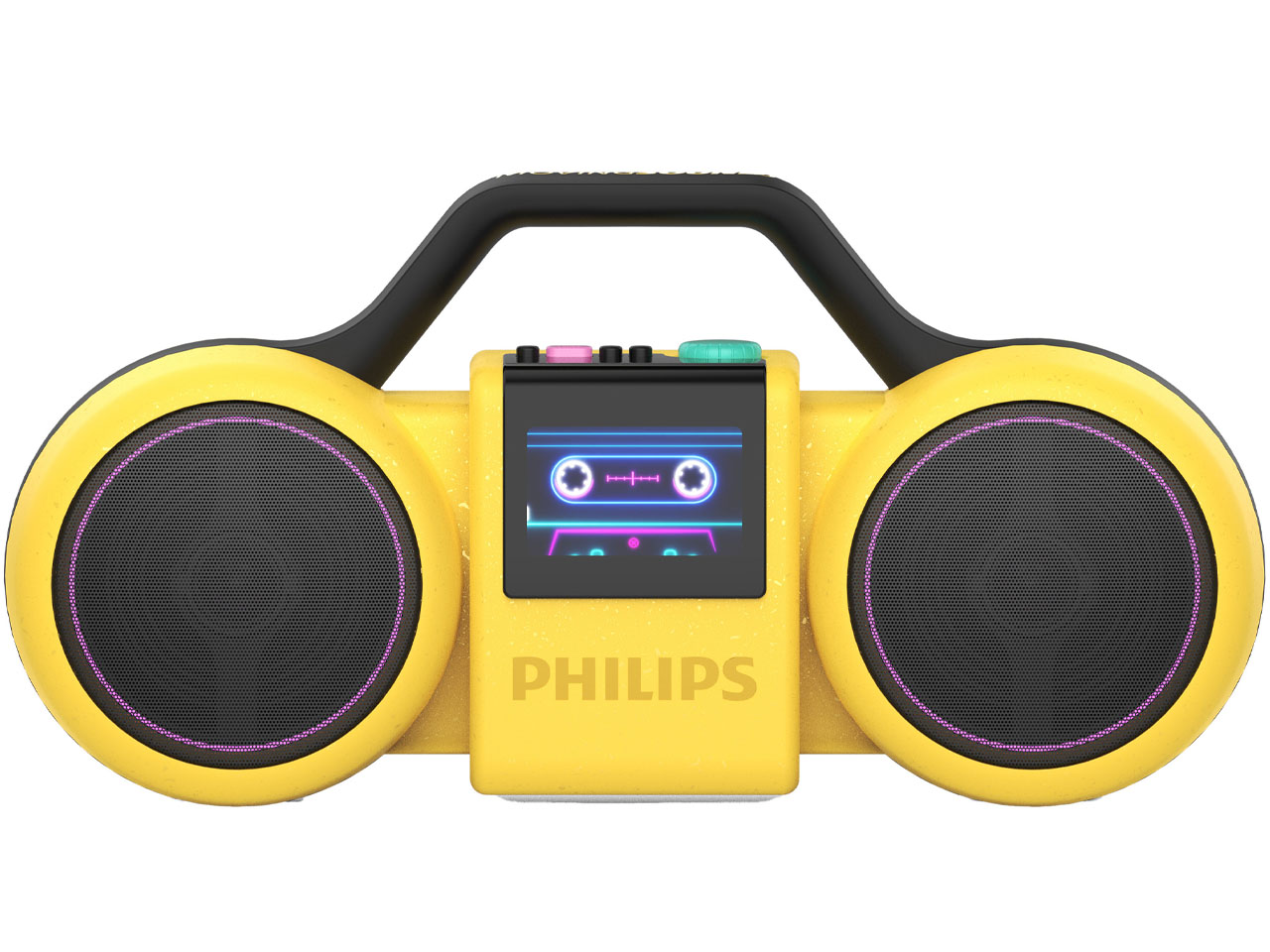
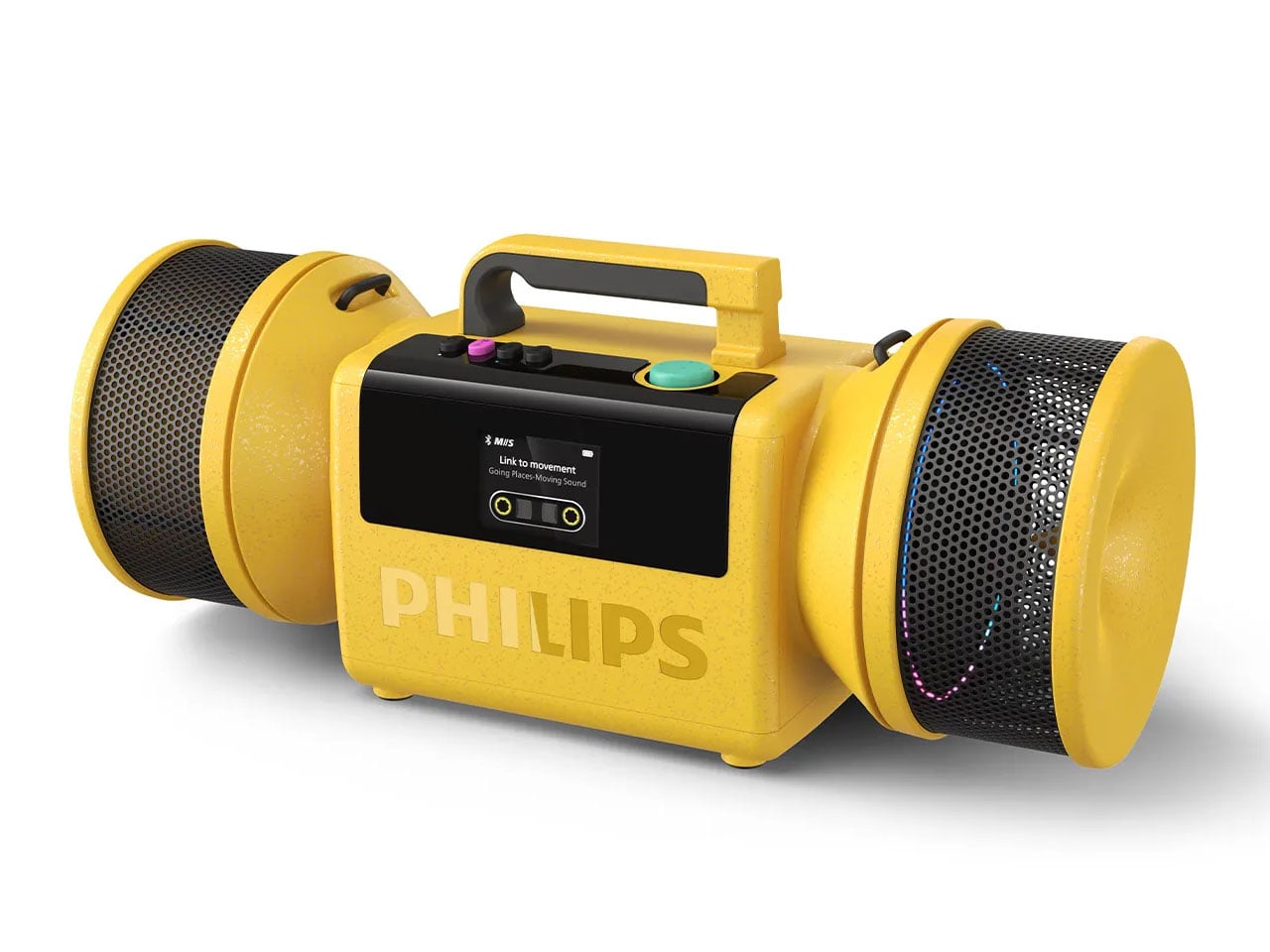
Philips has brought two portable Bluetooth speakers to the fore, which overshadow any other option on the market for their bold retro feel. The €349.99 (approximately $402) Tube (MS80) speaker is a boxy option with the bright yellow hue contrasted well with the matte black and the LED lighting around the speaker ring. It is not all looks as the IP67 rated speaker produces 140W of thumping sound via the two five-inch woofers, two tweeters, and a dual passive radiator setup. The Tube (MS80) retains the nostalgia with a color display showing the looping cassette animation. The speaker has a 24-hour battery life, which will obviously depend on the volume levels at which it is played. Modern connectivity options like Bluetooth 5.5, Auracast, and USB make this a true audio lover’s accessory.

On the other hand, The Roller (MS60), priced at €179.99 (approximately $208), is similar to the Tube (MS80) with a smaller footprint and more contoured look. The stereo layout comprises woofers, tweeters and passive radiators, and for low-end addicts, the bass can be tuned up using the Bass+ feature. The IP67 speaker generates 60W sound and comes with the same modern connectivity options as the big brother. Since it generates less wattage, it is also rated at 24-hour battery life. You can also utilize the speaker as a battery bank for power-hungry gadgets.

The Buds (MS3) Earbuds

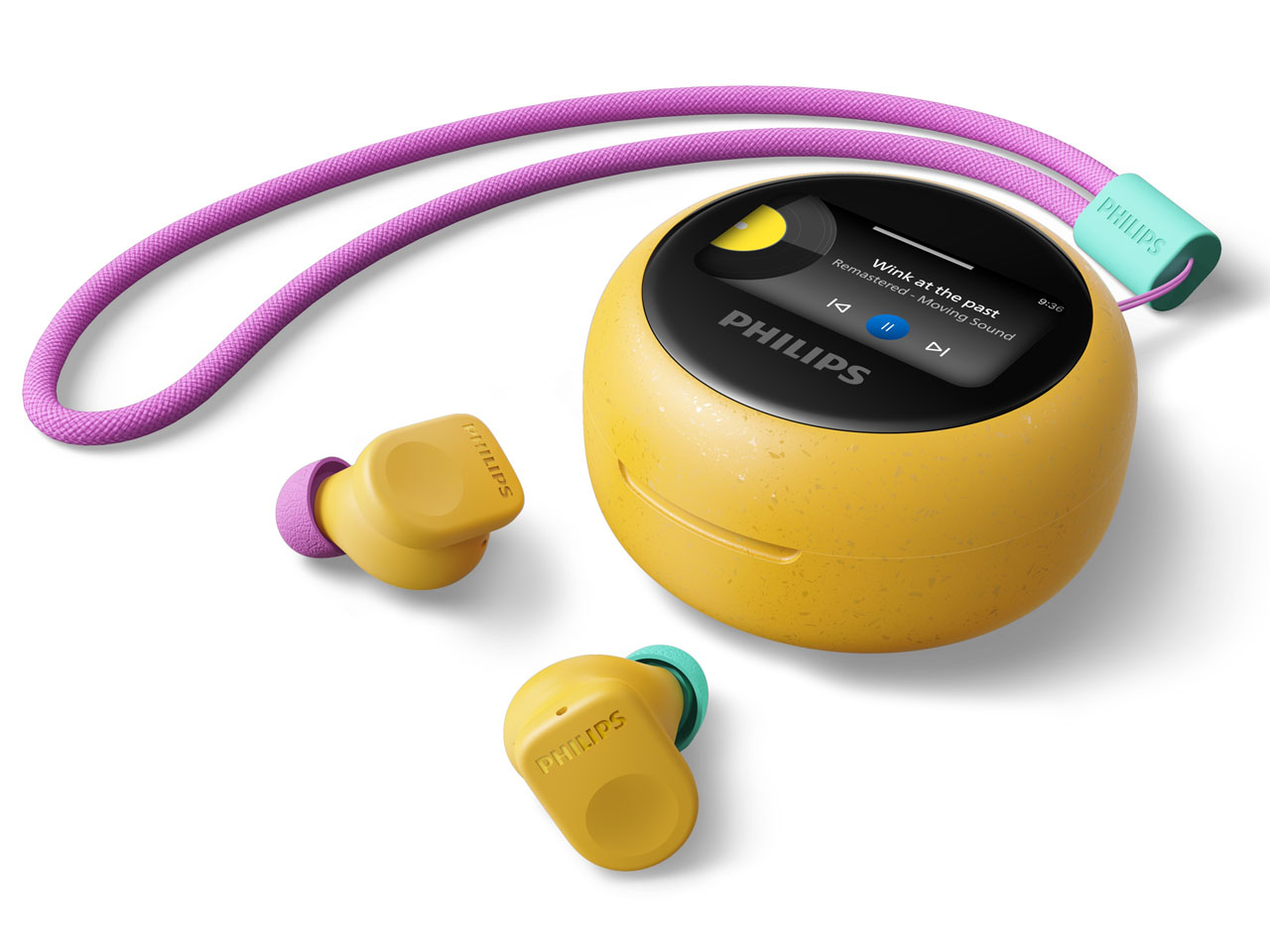
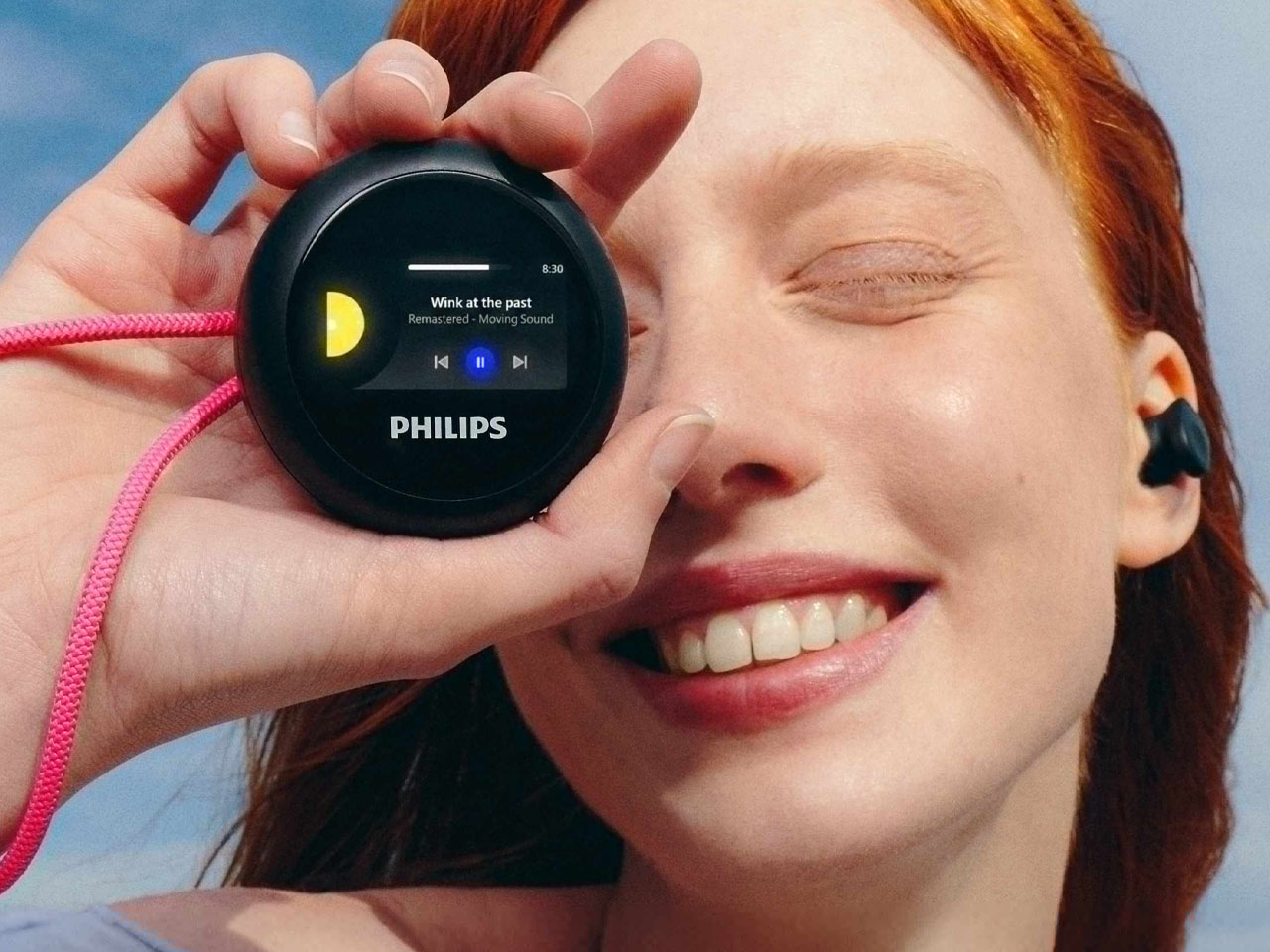
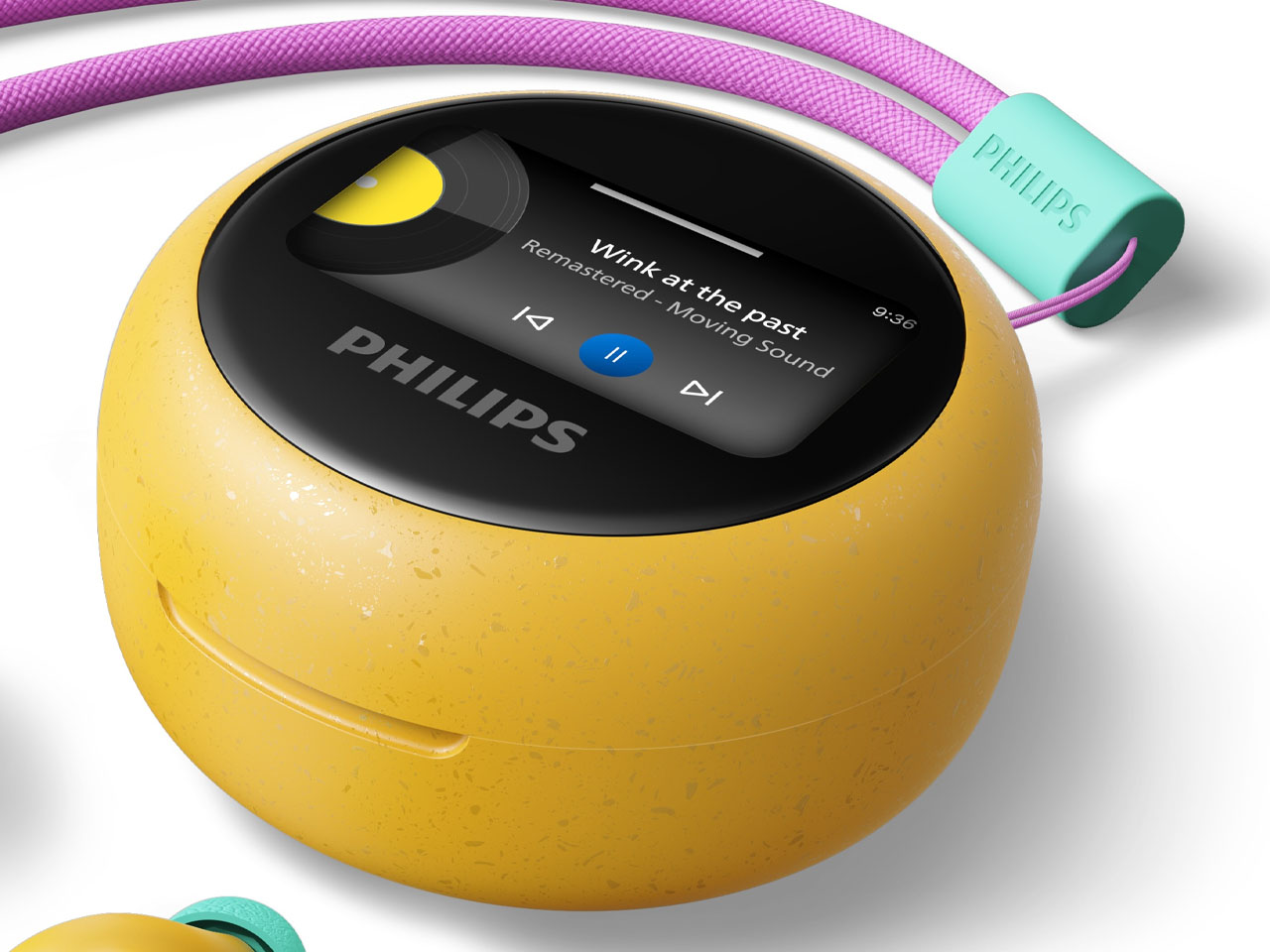
These are one of my favorites in the lineup for their cheesy appeal. The IP54-rated Buds (MS3) wireless earbuds come with a round case that has a touchscreen display on top to show the current playing track and an option to toggle the next or previous tracks. The hues on this are purely magical with the yellow, teal and neon pink splattered in perfect proportions. The buds boast six microphones in total for hybrid ANC, and come with Spatial Audio, multipoint connectivity, Swift Pair support, and Auracast. The promised battery life of 42 hours with ANC off is quite impressive, and a 10-minute quick charge lasts for two hours. For €79.99 (approximately $92) The Buds (MS3) are an absolute steal.

Ringo Duo (MS1) Headphones

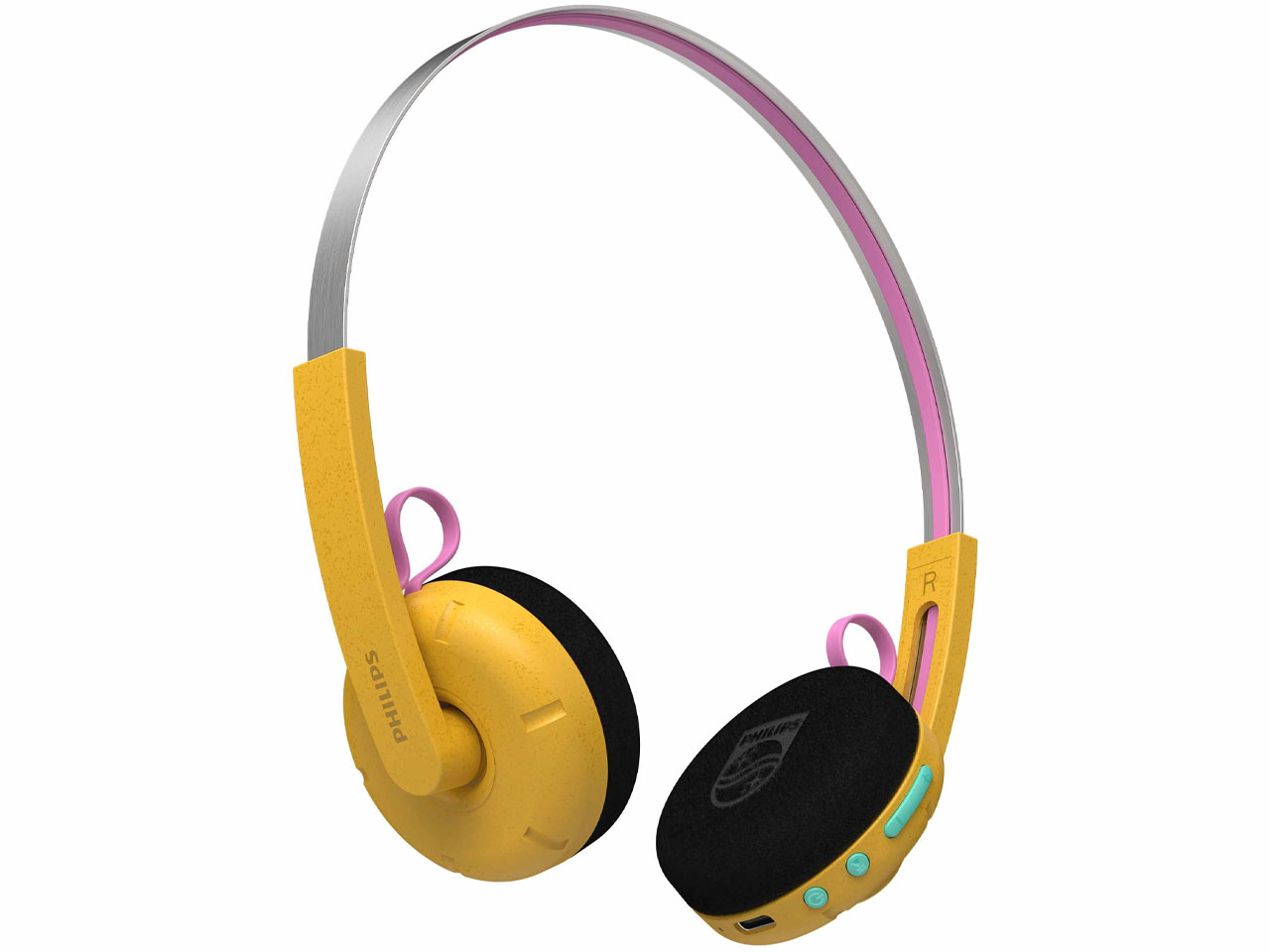
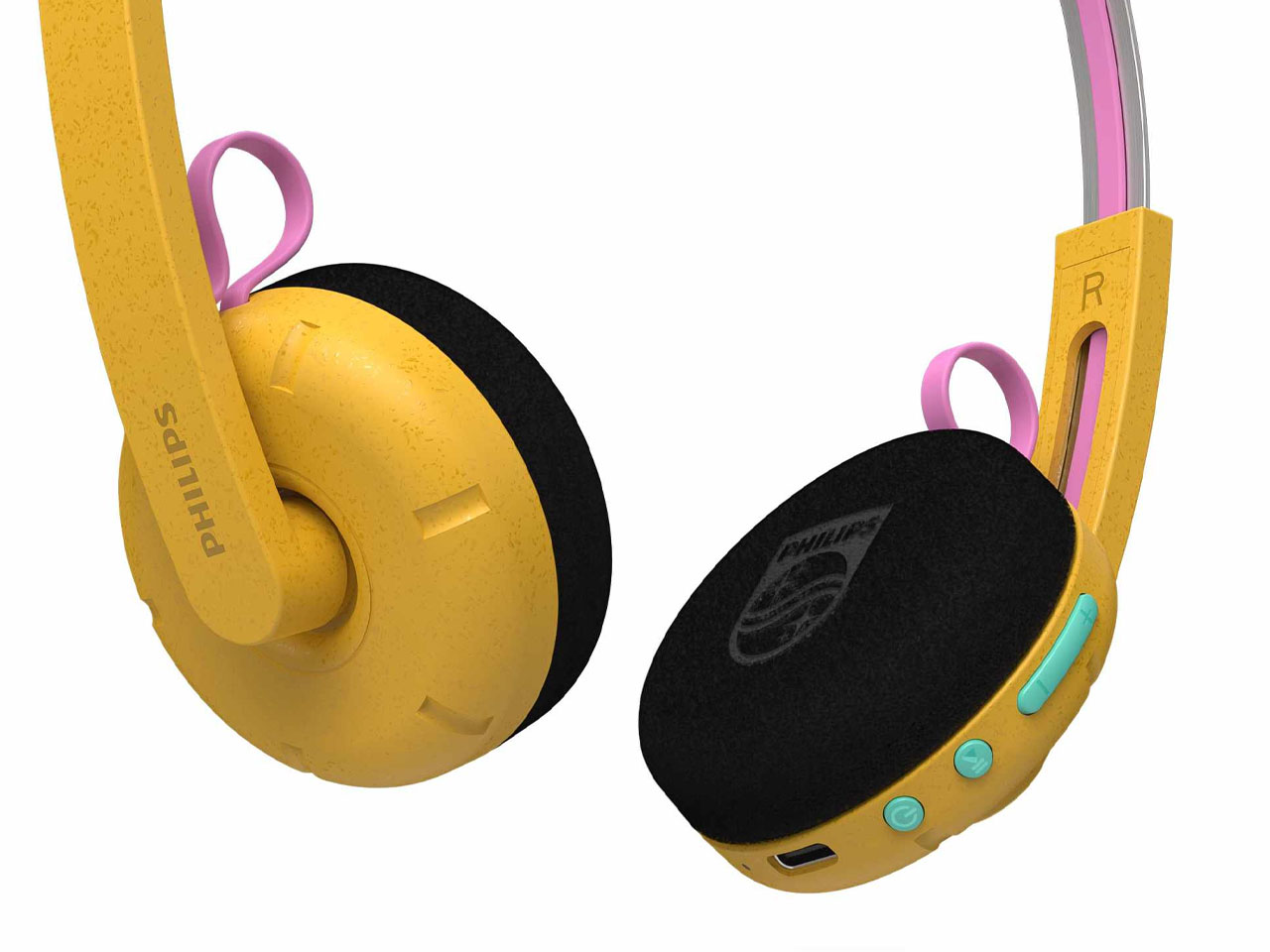
Philips was not going to miss out on the retro feel of on-ear headphones for this line-up. They have the telltale nostalgic look and feel, reminding me of the Back to the Future flick. They are lightweight and will take you back to the golden era if you pair them with music from the 80s. Audio quality from these is impressive courtesy of the 40mm drivers, and the promised 26 hours battery life should last you a couple of days of pure music bliss. You can connect them via Bluetooth or a wired connection, making them well-suited for daily driving. You won’t get anything better than the Ringo Duo (MS1) headphones priced at €34.99 (approximately $40).

The post Philips Moving Sound line-up impresses with retro chunky form and peppy colors first appeared on Yanko Design.
Philips launches Screeneo UL5 Smart, a budget Ultra-short Throw Smart Projector for under $800

Imagine we’ve come so far that we can fit an entire movie theater into a device that’s essentially the same size as a brick. After launching the Screeneo U5 in the end of 2022, Philips is back with its smallest, most advanced UST projector yet. Dubbed the Screeneo UL5 Smart, it builds on the success of Philips’ past projectors, while focusing on being a budget-friendly gadget to help people convert from TVs to something a little more immersive. Measuring just over 8 inches long, 3.7 inches wide, and 3.4 inches tall, the Screeneo UL5 Smart outputs an impressive 100-inch screen when kept just 20 inches away from a wall. The tiny device produces a display that’s rich in color, has a 550 ANSI lumen brightness, and has a Full HD resolution of 1080p. Sure, it’s no 4K projector… but at a sub-$1000 price tag, it’s probably the best ultra-short throw projector you can get your hands on. Oh, it also comes bundled with its own OS that let you run popular streaming services, pitching it well into smart projector territory.

Designer: Philips Projection

Click Here to Buy Now: $789 $1406 (43% off) Hurry! Only 7 days left. Raised over $900,000 USD.

While the UL5 Smart departs from the 4K resolution of its predecessor, the U5 model, it maintains a respectable Full HD 1080p resolution – ideal for enjoying movies, shows, and games in crisp detail. The projector utilizes a DLP chip alongside a triple-laser light source, separating red, blue, and green colors for an exceptionally rich and vibrant visual experience. The impressive 0:23:1 ultra-short throw ratio means you don’t need to keep the device multiple feet away from the projection surface, the way most traditional projectors need to be kept. A simple 20 inches away from a wall or screen gives you a staggering projection that measures 100 inches diagonally. Adjust the distance to adjust the size of the projection – the UL5 Smart can pull off 120 inches with absolutely no discernible drop in brightness or clarity. It also automatically keystones and focuses itself, so you spend less time setting up and more time enjoying content.

The compact form factor allows the Screeneo UL5 Smart to be used as more than just a movie-watching device. Sure, projectors and movies are practically synonymous – and the Screeneo UL5 Smart does come with Philips’ LuminOS, which lets you natively run Netflix, Hulu, Disney+, Apple TV, HBO Max, and a whole slew of other apps – but an abundance of ports lets you use your Screeneo UL5 Smart to do things like extend your laptop/desktop/tablet screen, or directly hook your gaming console to the projector for larger-than-life gameplay.

Rest the UL5 Smart on its back the way it’s designed to be placed and you’ve got a projected image on the wall. Flip the UL5 Smart over and stand it vertically, and it projects a bright 35-inch display onto the floor or a table, letting you watch content on the tabletop like recipe videos, the game, or even project drawings onto a piece of paper and allow you to sketch directly. AI-driven auto-focus and keystone kicks in immediately, fixing the image to make it perfectly focused and rectangular.

Spec-nerds will have little to complain about what the UL5 Smart offers. With a peak of 550 ANSI lumens, the projector is ideally suited for dimly lit or dark environments. However, this is balanced by exceptional color reproduction. The UL5 Smart boasts coverage exceeding 200% of the Rec.709 color gamut, 108% of Rec.2020, and a remarkable 150% of the DCI-P3 color space. Additionally, it supports HDR10, ensuring vibrant visuals with deeper blacks and brighter whites for compatible content.

Running on an Android-based operating system, the UL5 Smart comes pre-loaded with popular streaming apps like Netflix and Youtube, eliminating the need for external devices. Built-in dual-band Wi-Fi and Bluetooth connectivity allow for seamless streaming and connection to external speakers for an even more powerful audio experience. For wired connections, the UL5 Smart offers an HDMI port, a USB Type-A power port, and two USB-C ports for data and video. The projector also features integrated 3-watt Dolby speakers, providing a decent audio solution for casual viewing.

At a price of $789, the Philips Screeneo UL5 Smart is quite the bargain. It’s compact, smart, outputs screen sizes up to 120-inches, and builds on Philips Projection’s UST capabilities. You’ve got an abundance of ports, along with a built-in OS for a whole lot of variety – and the projector even ships with its own remote control, letting you easily browse through content and enjoy movies, sports, and games larger than life. The Screeneo UL5 Smart begins shipping September 2024 for backers on Indiegogo.

Click Here to Buy Now: $789 $1406 (43% off) Hurry! Only 7 days left. Raised over $900,000 USD.

The post Philips launches Screeneo UL5 Smart, a budget Ultra-short Throw Smart Projector for under $800 first appeared on Yanko Design.