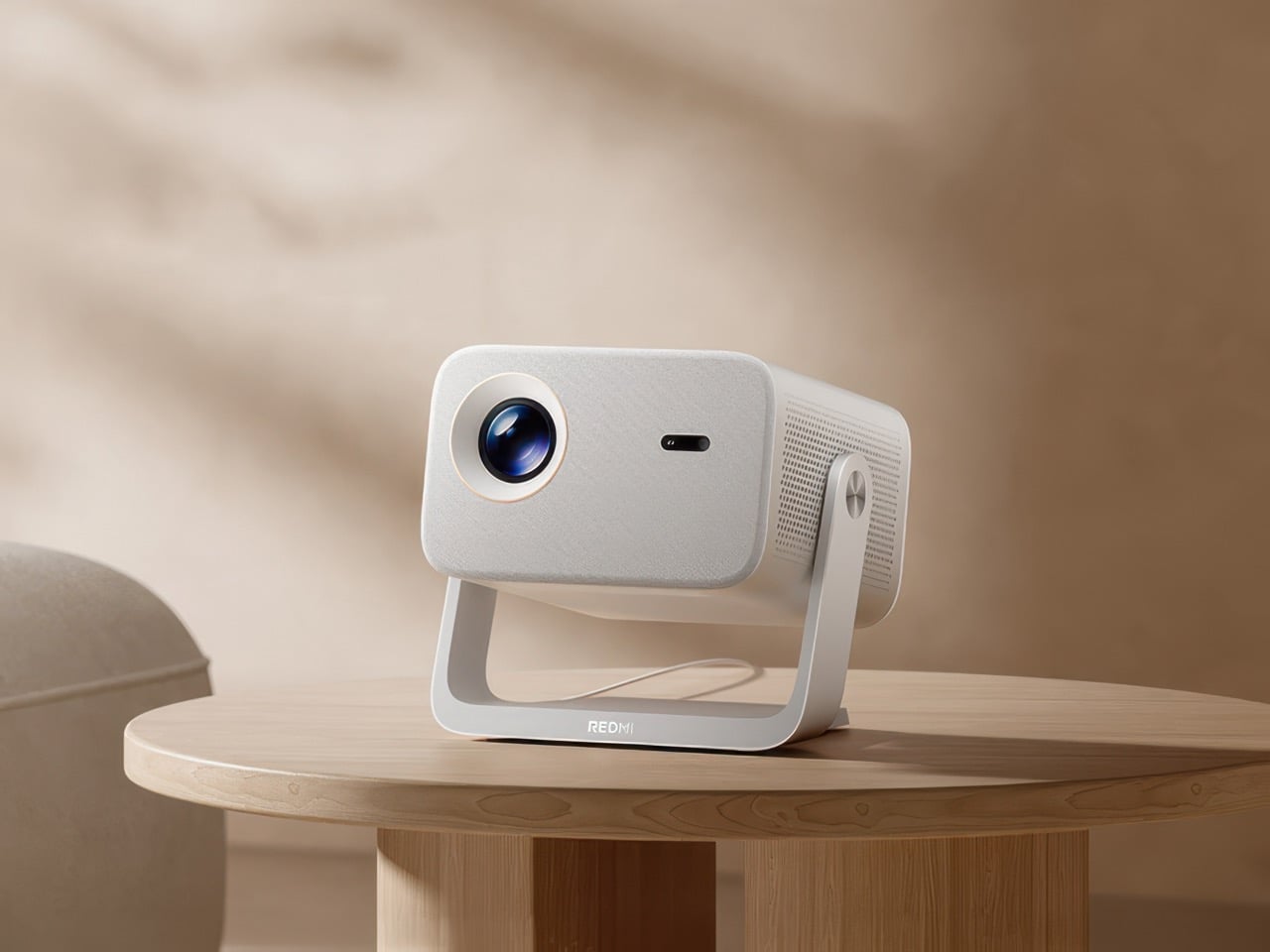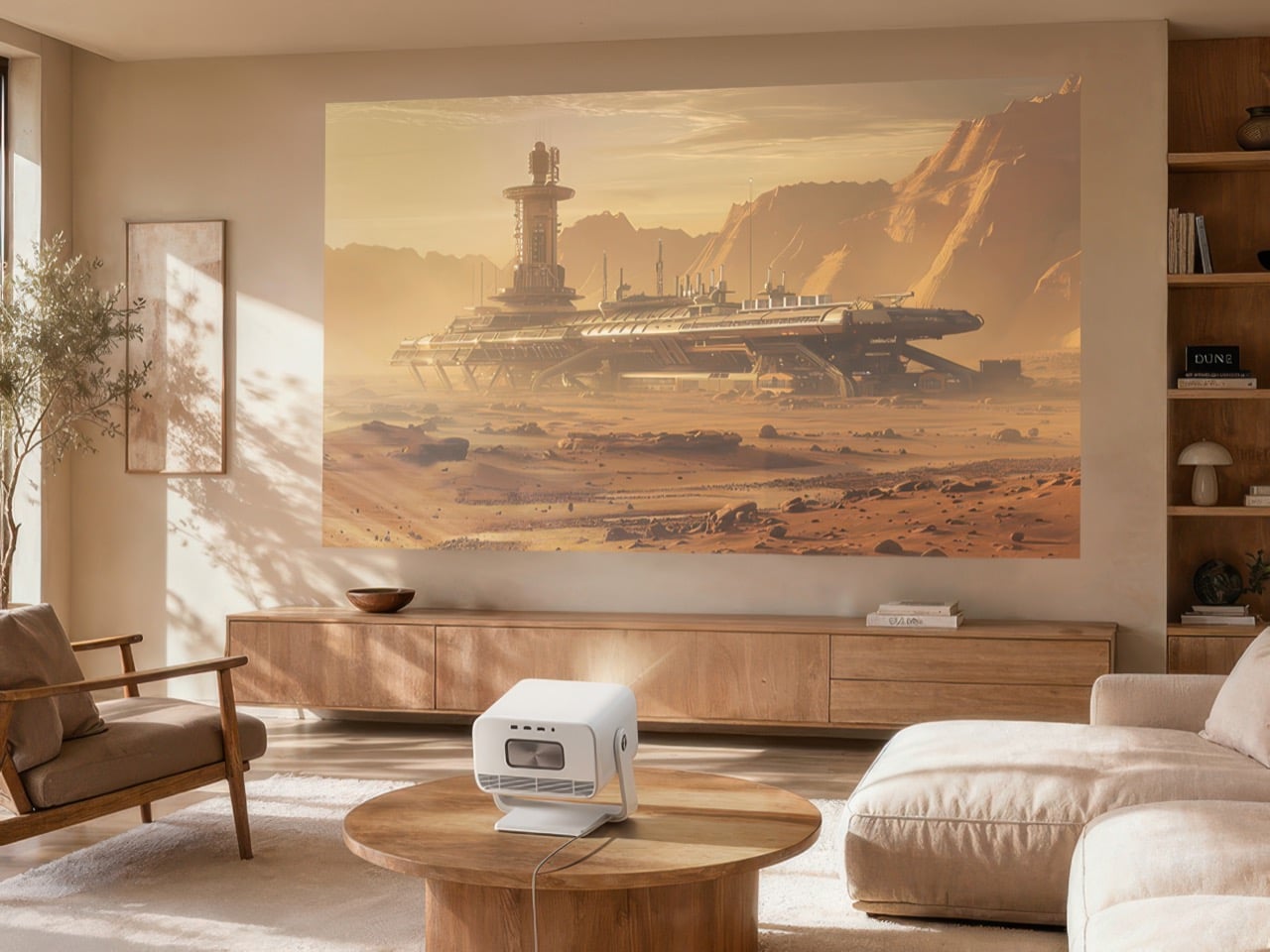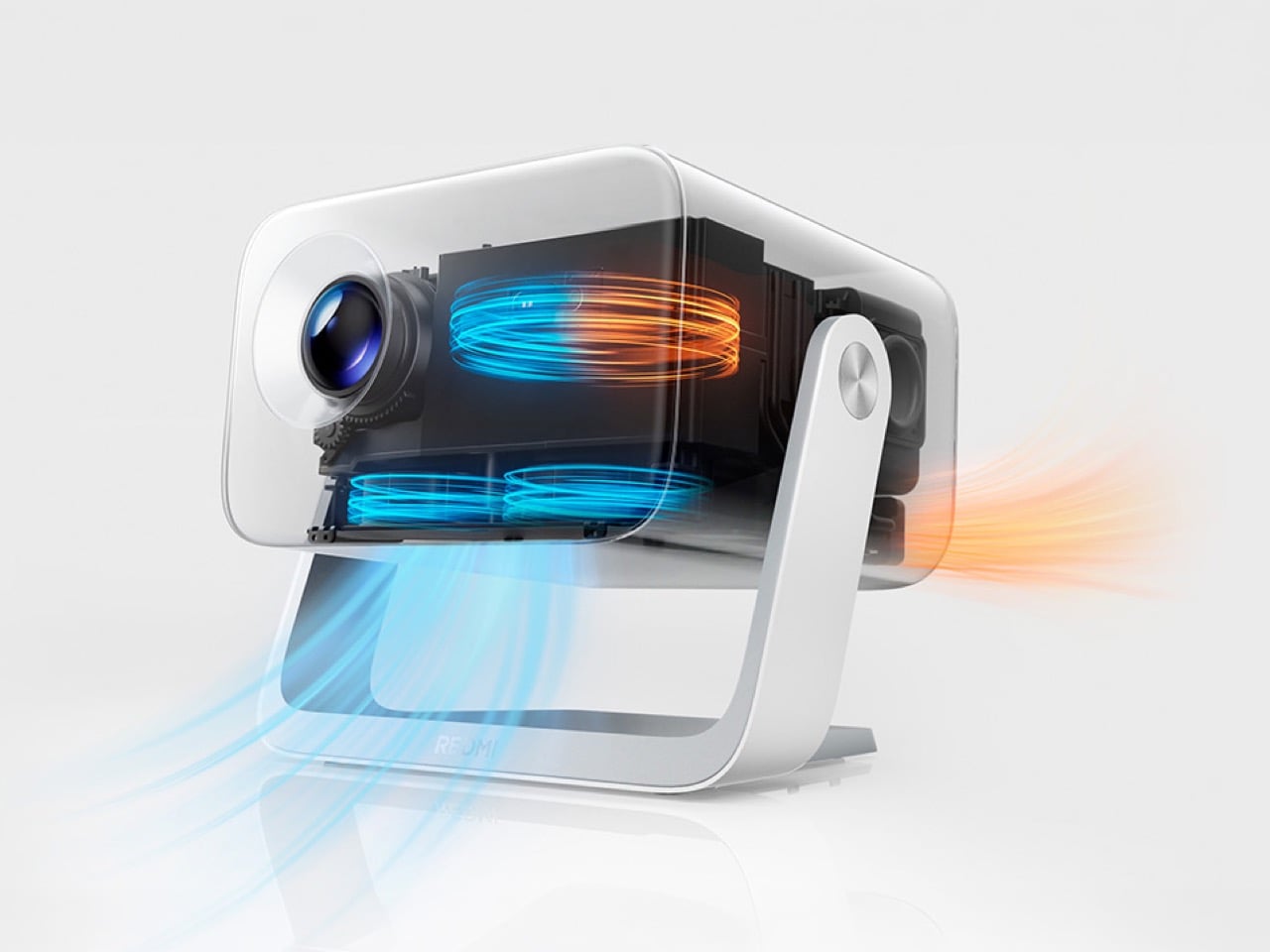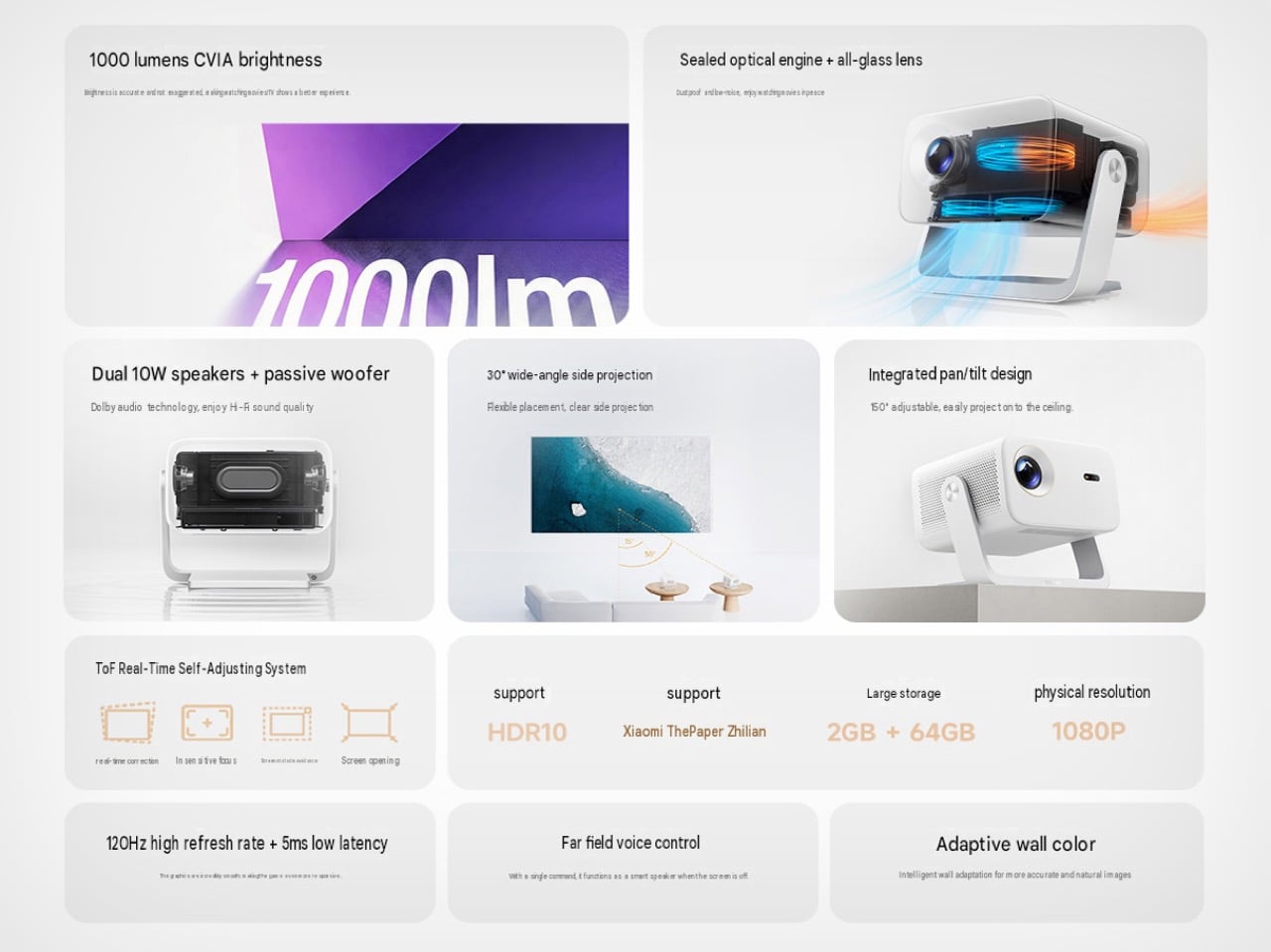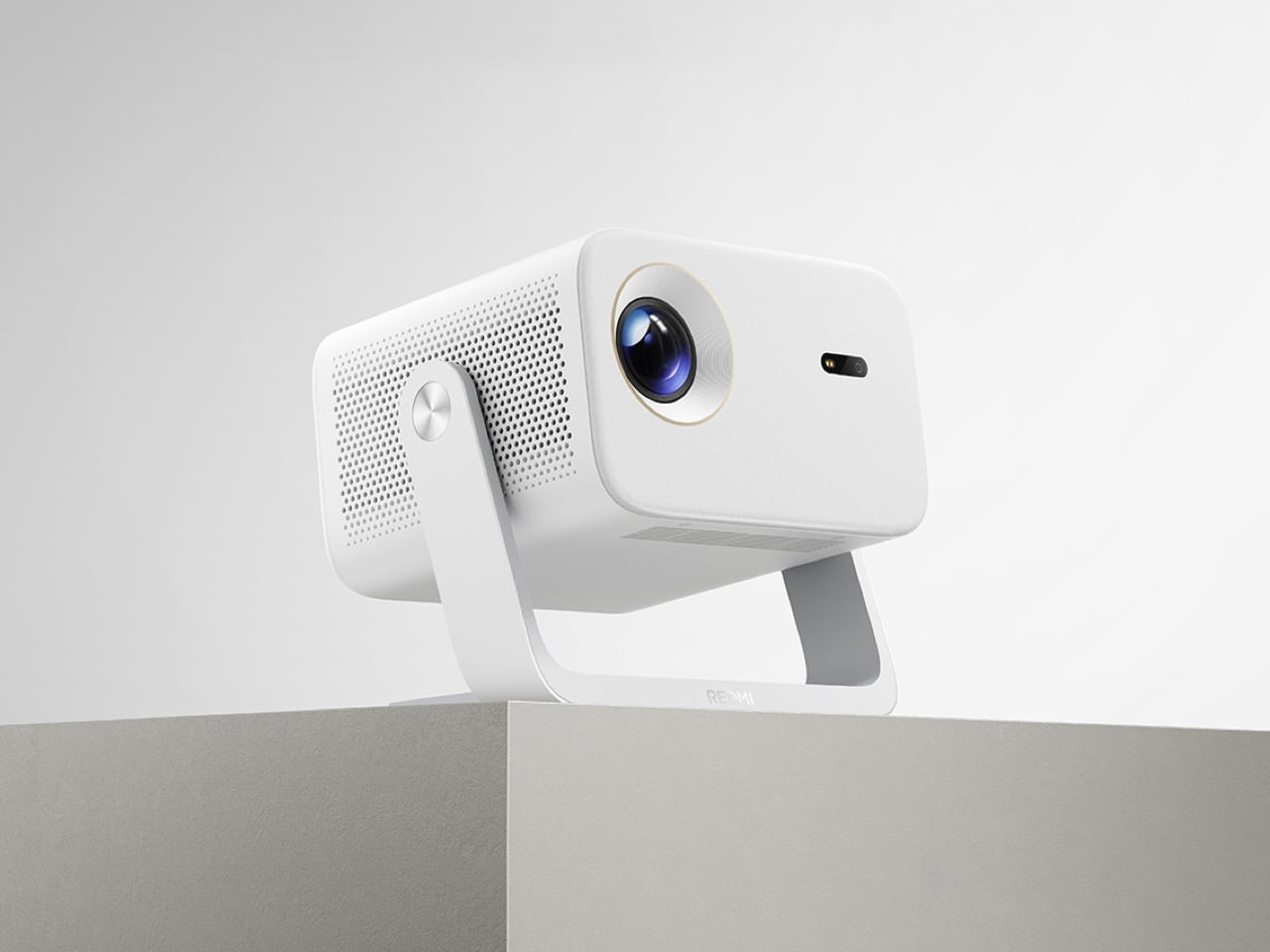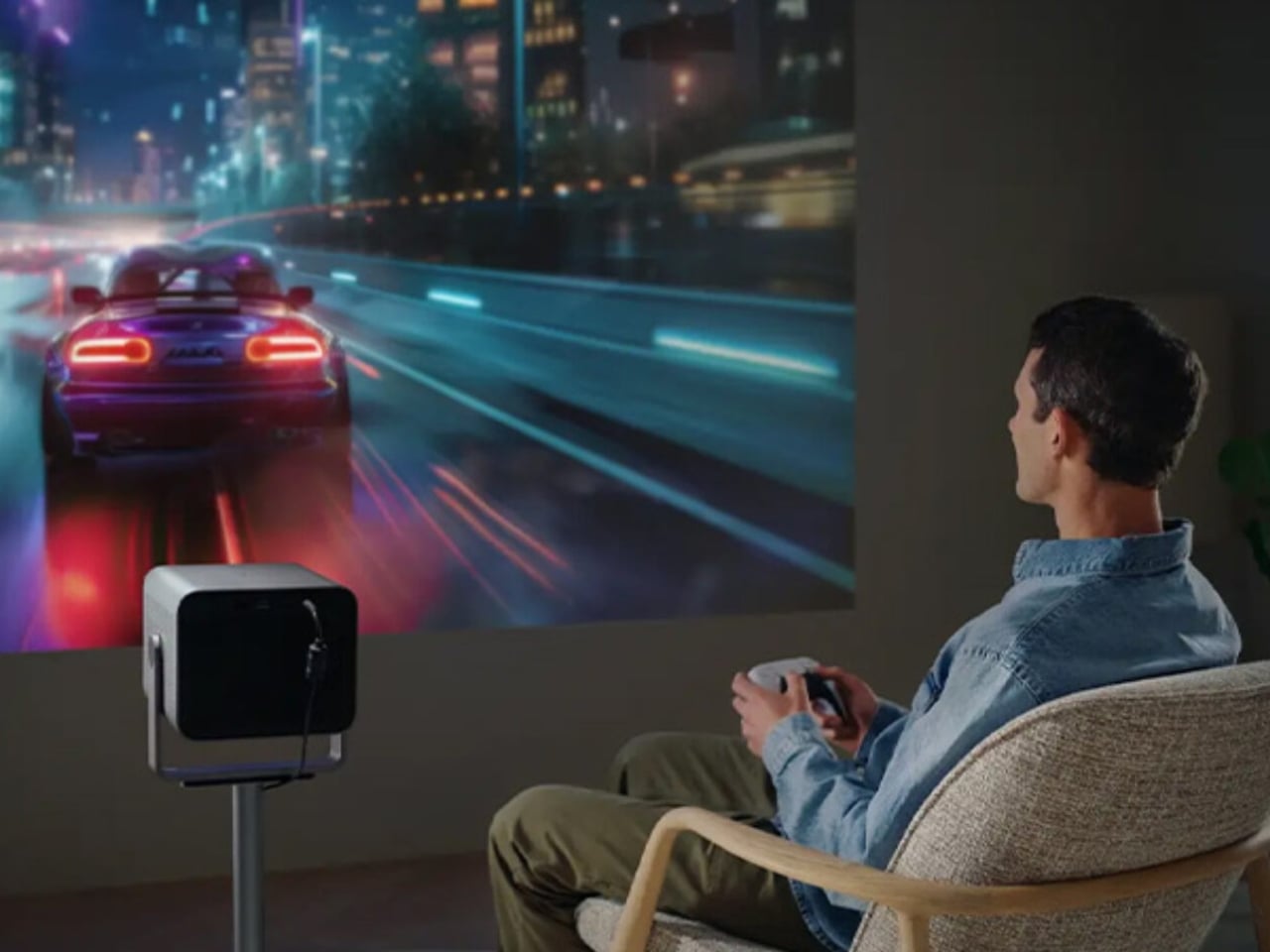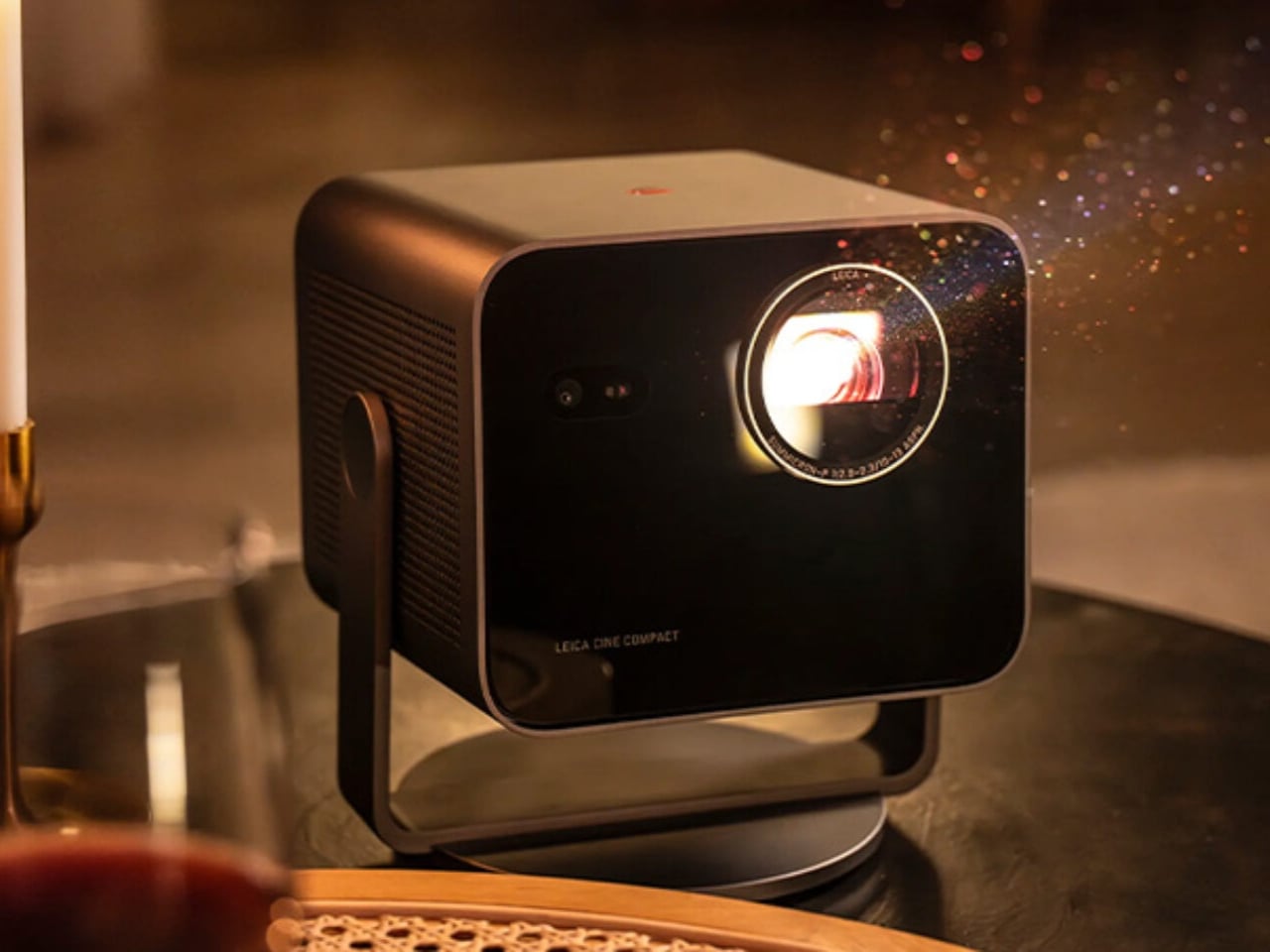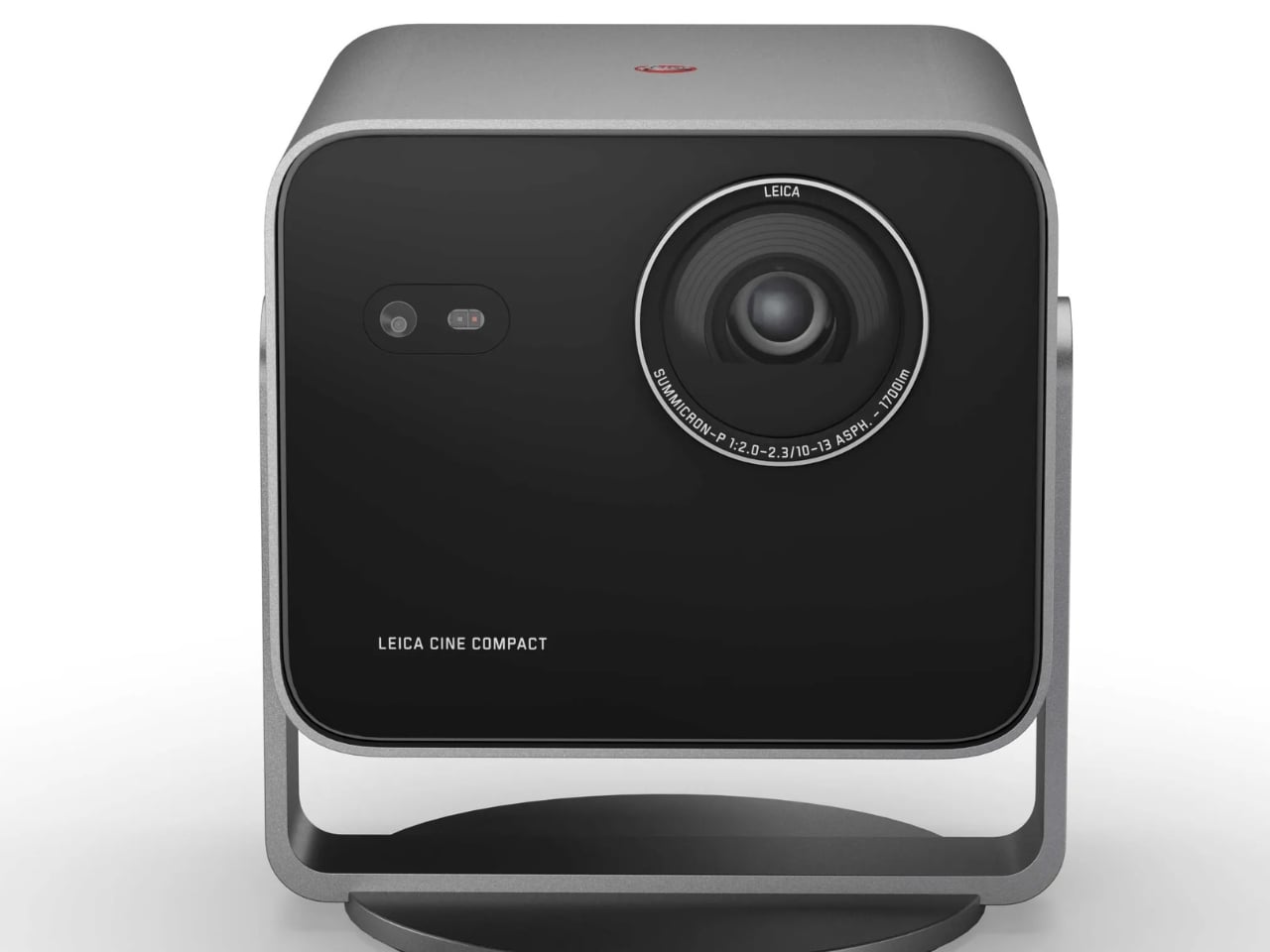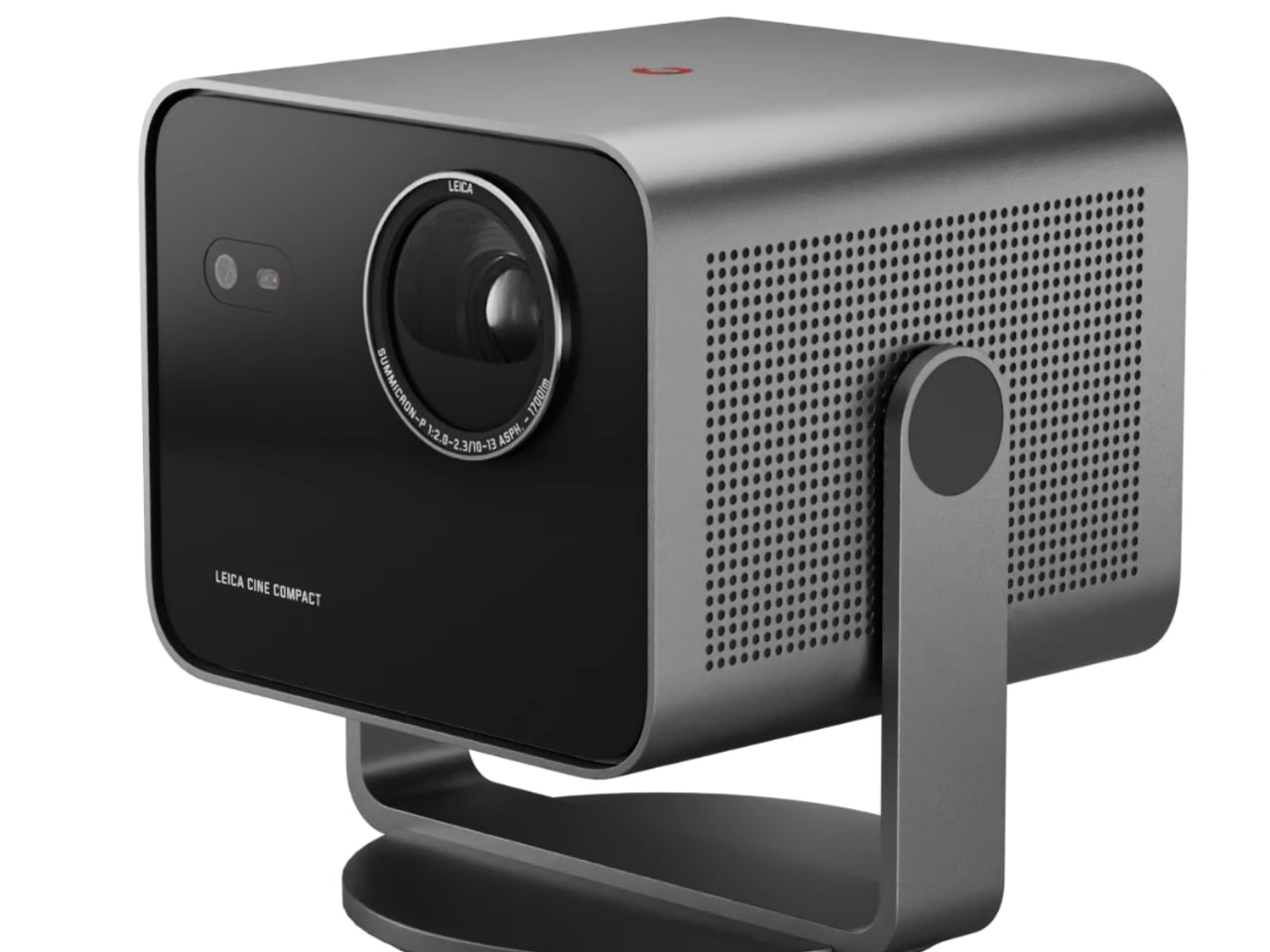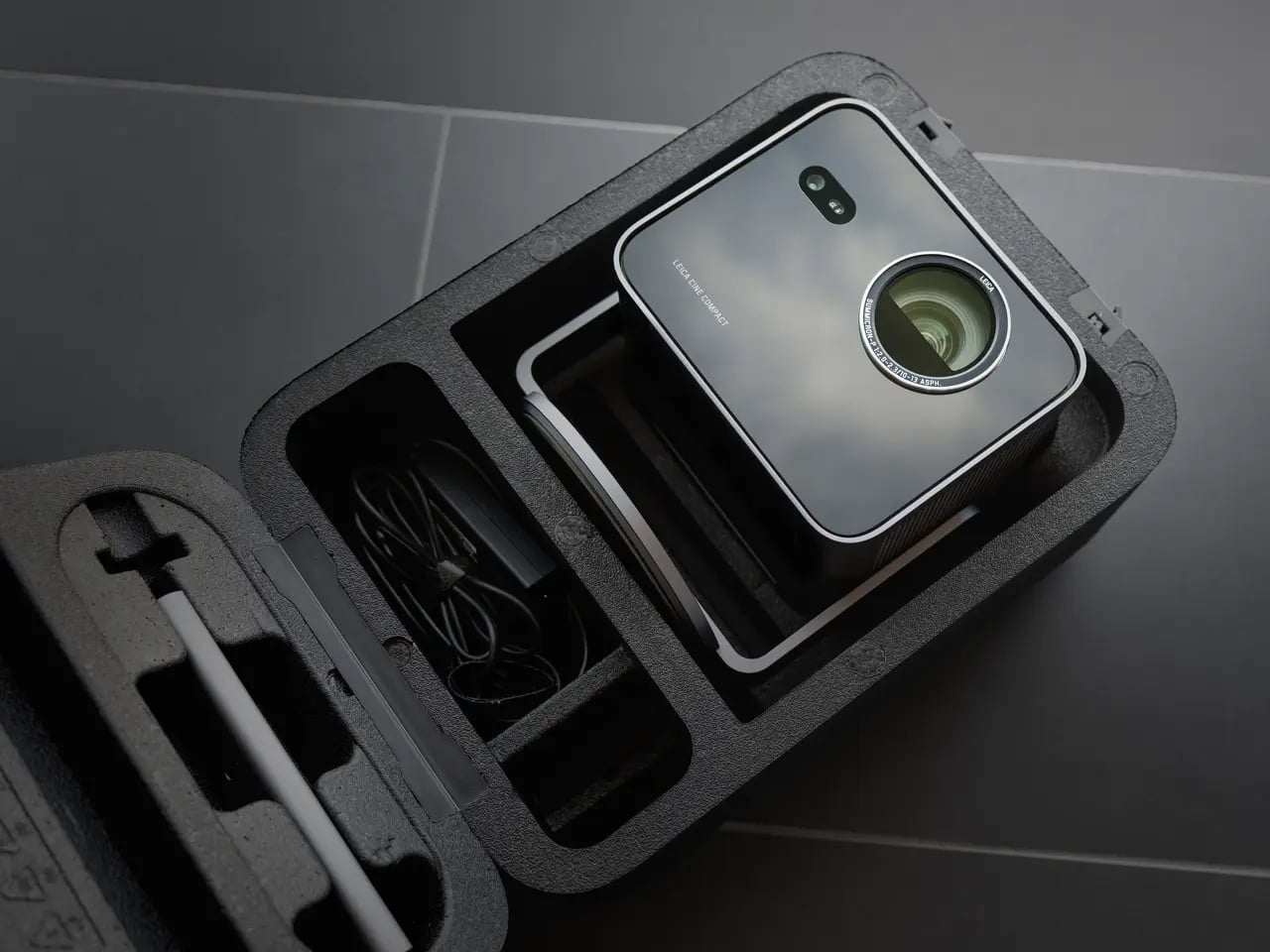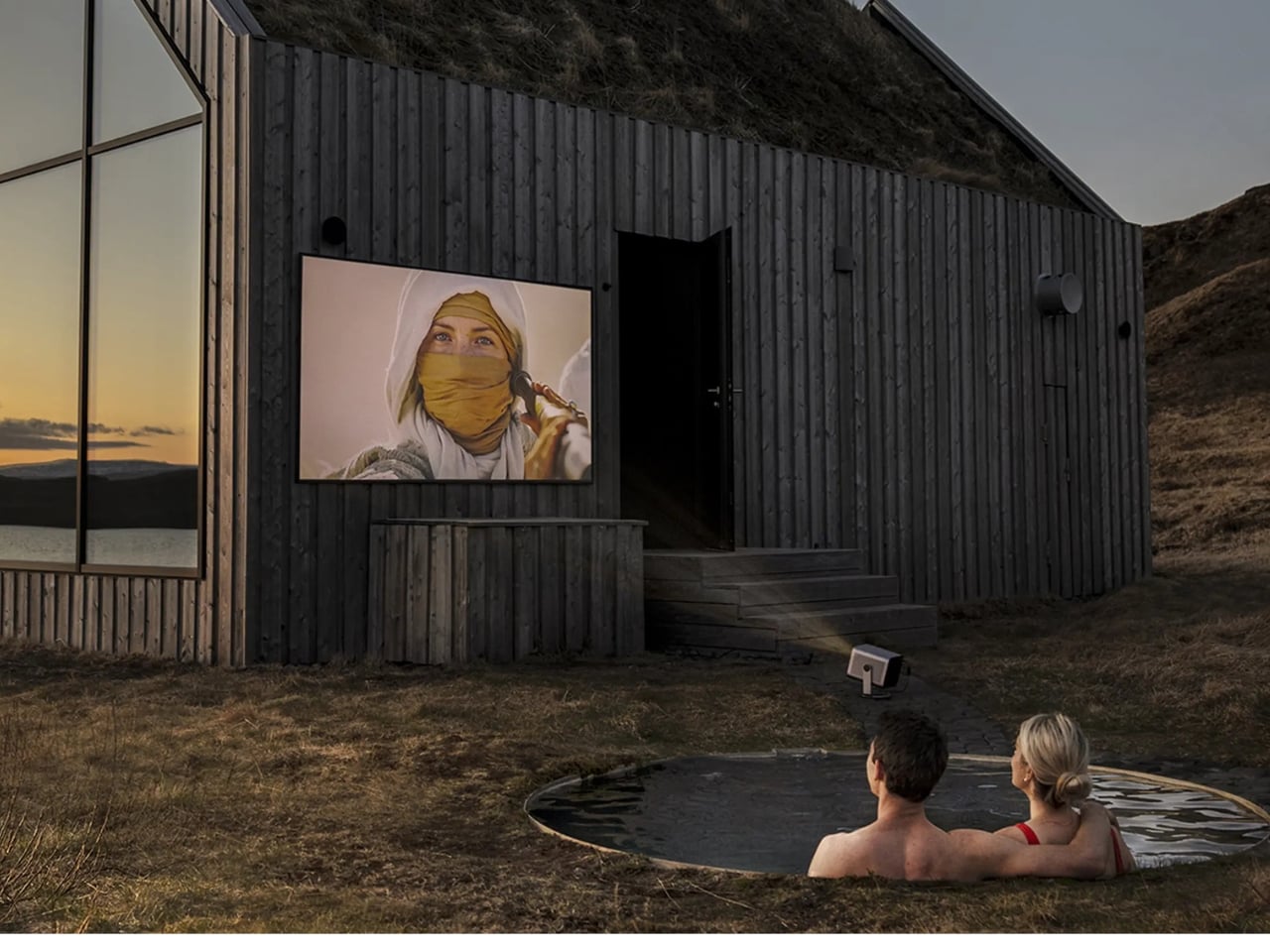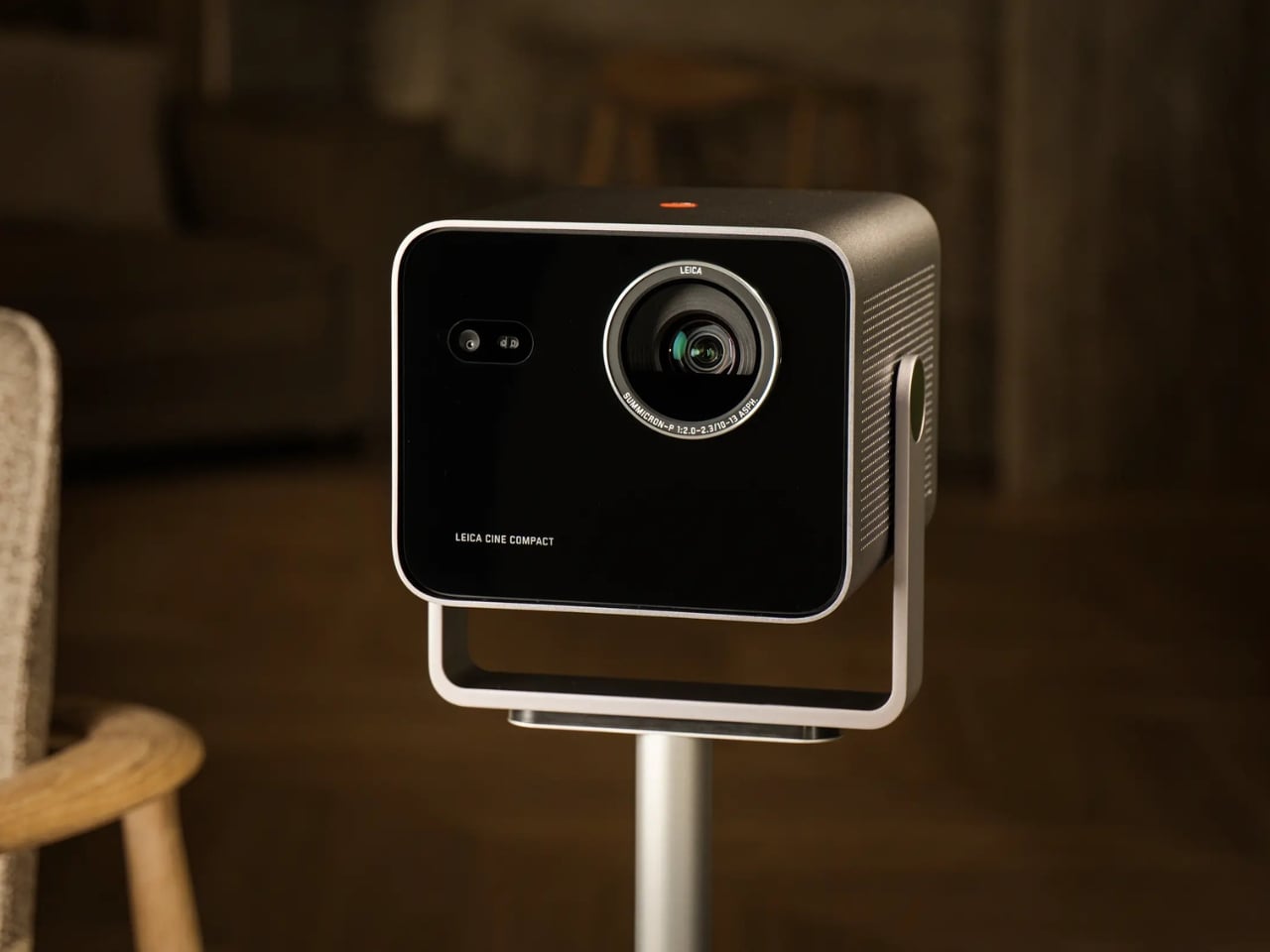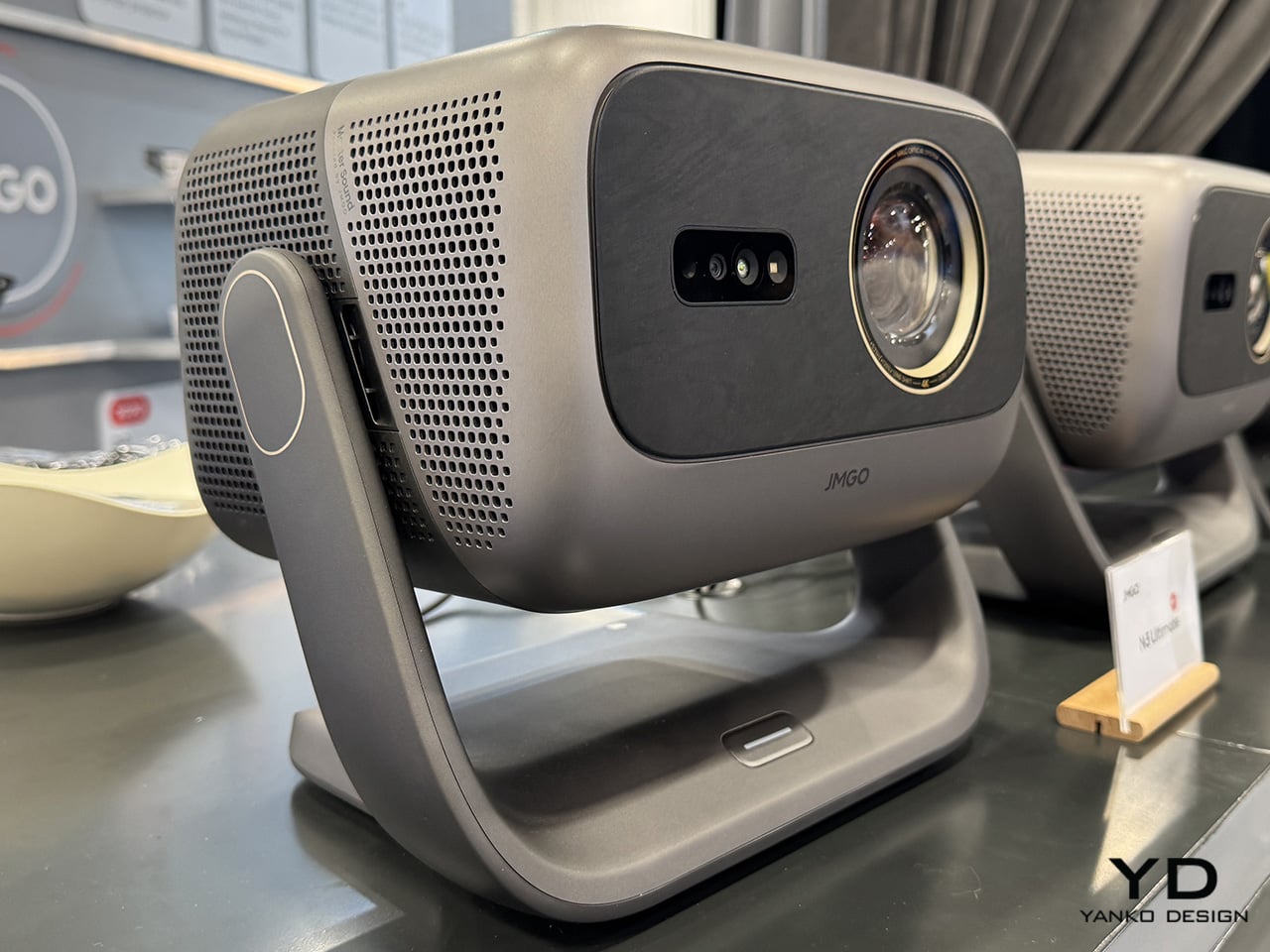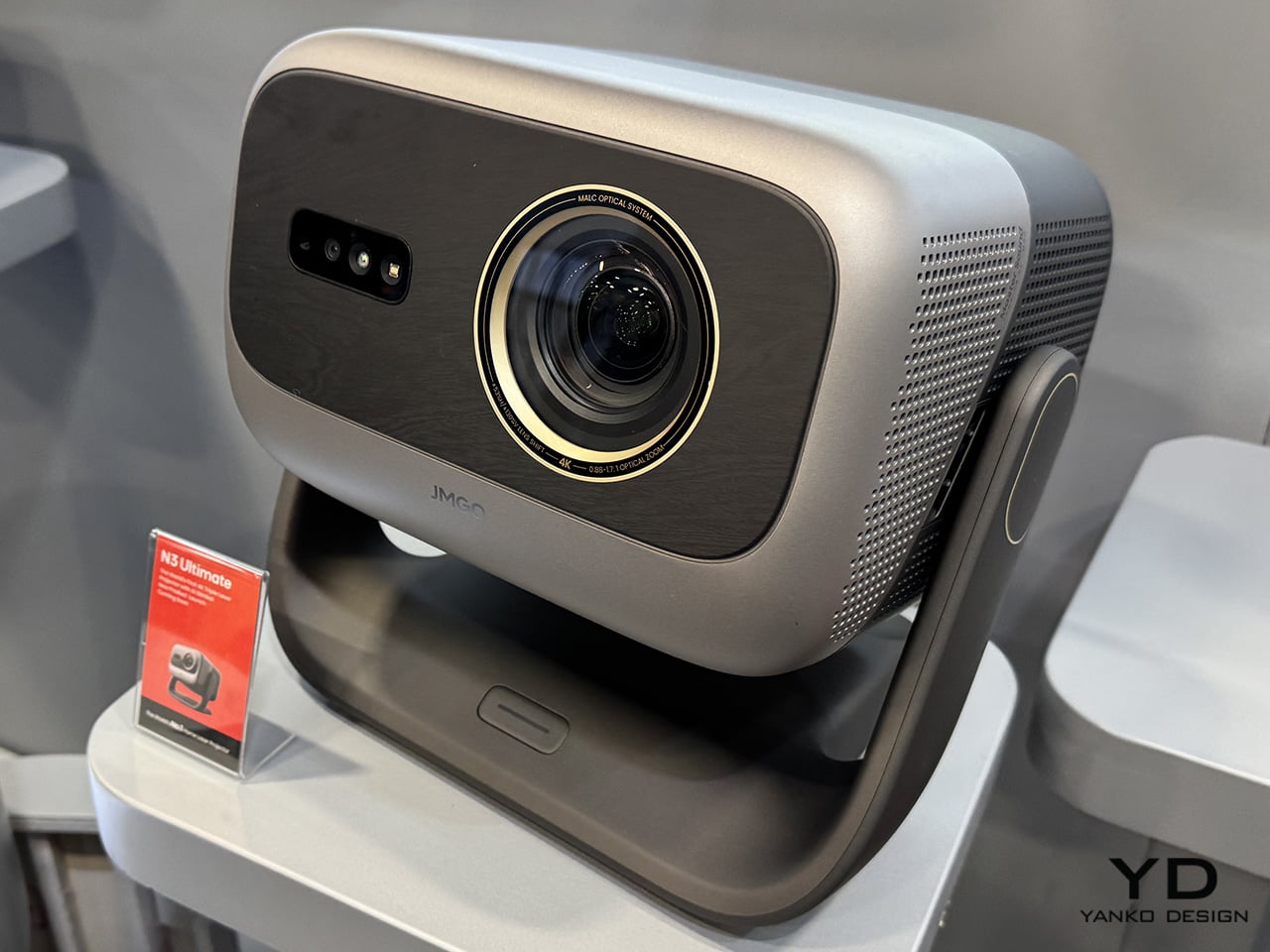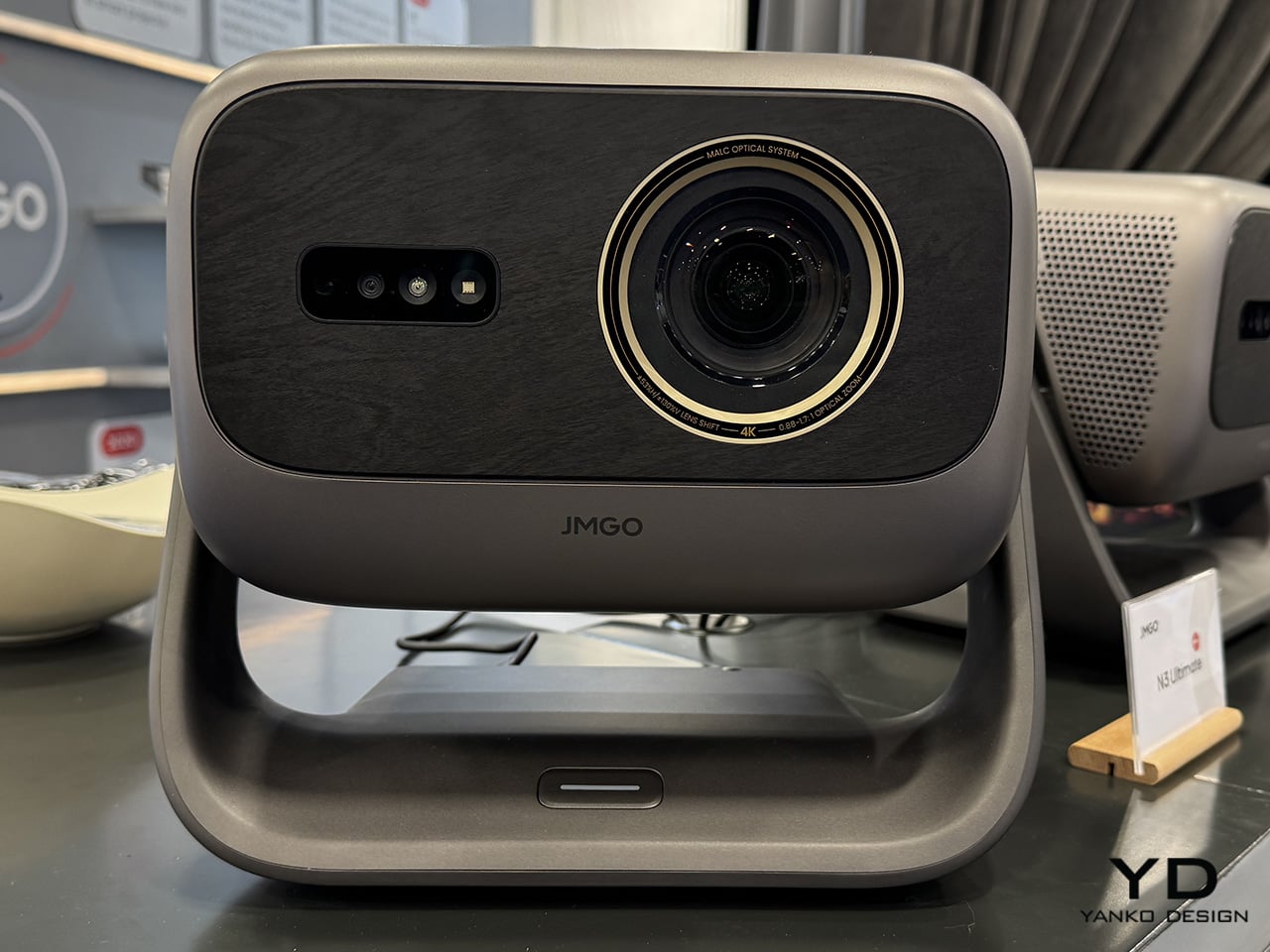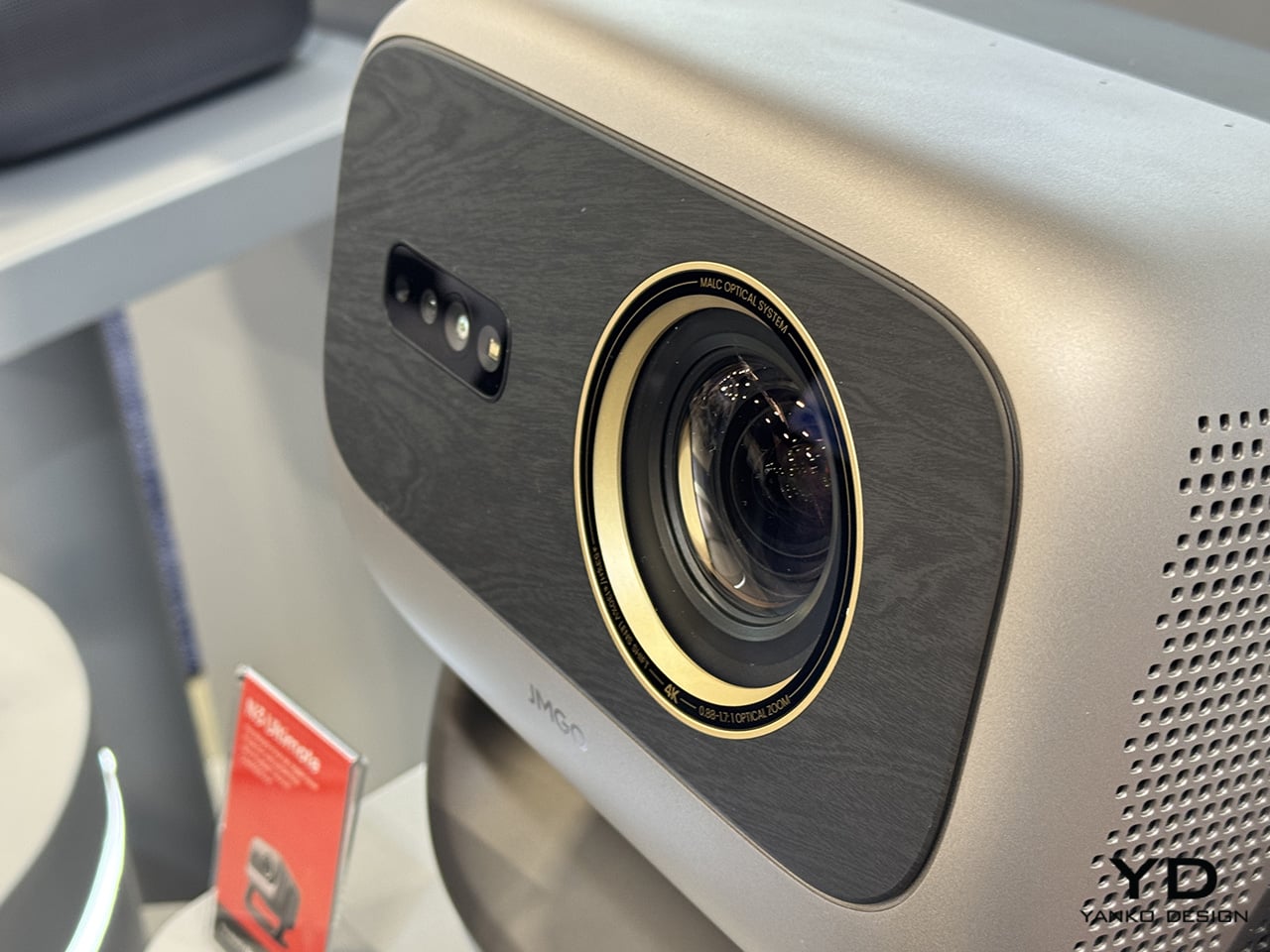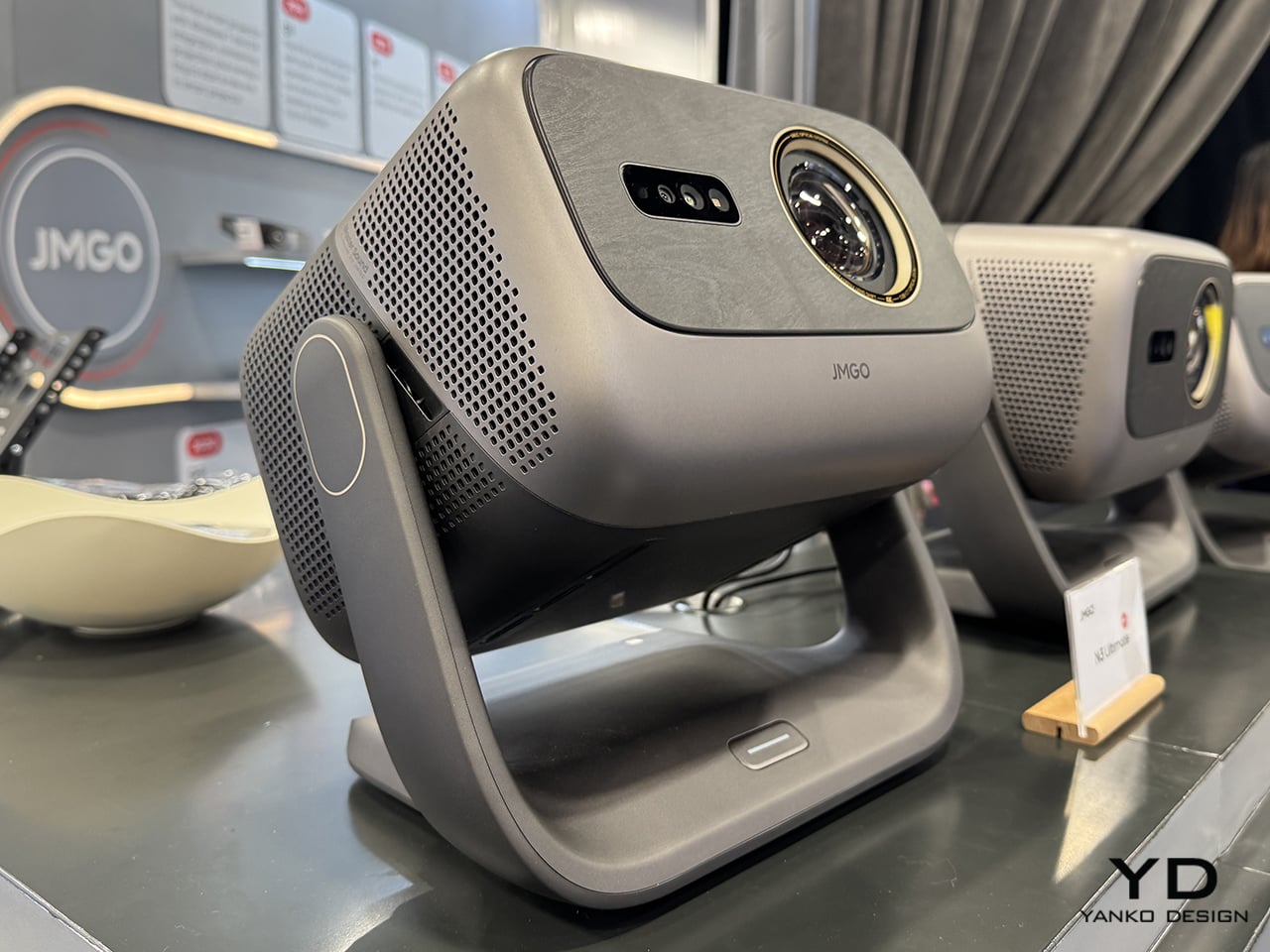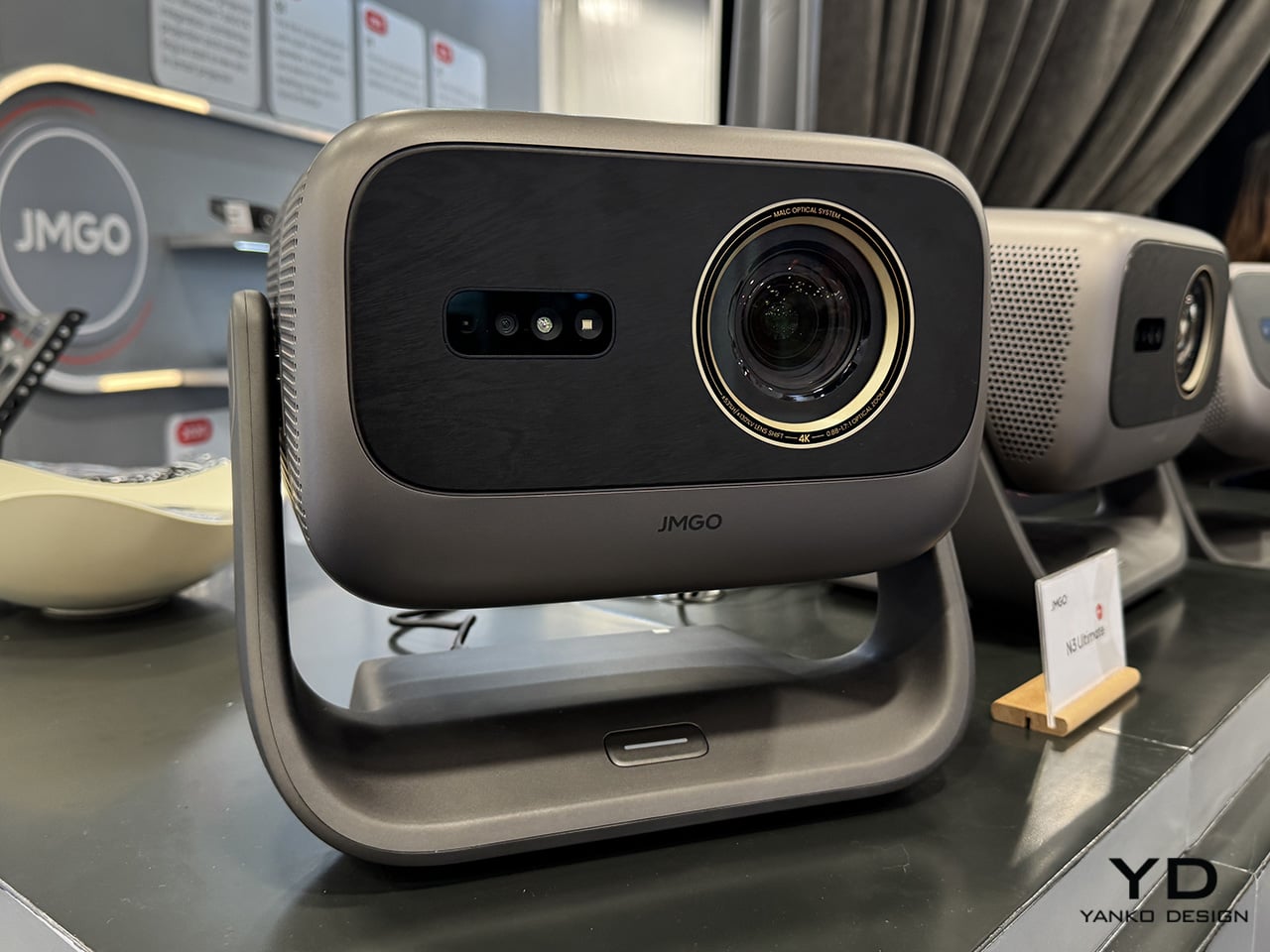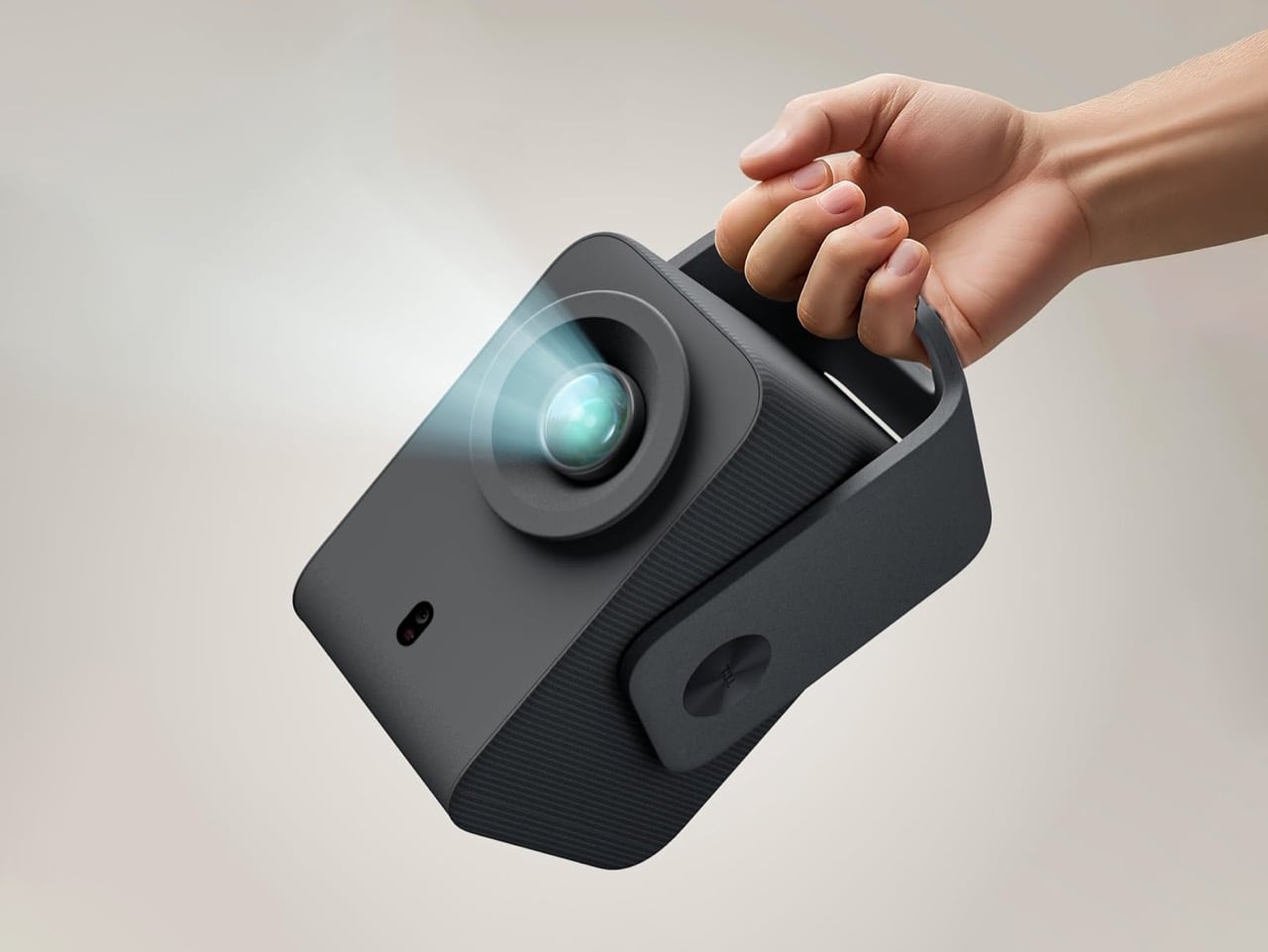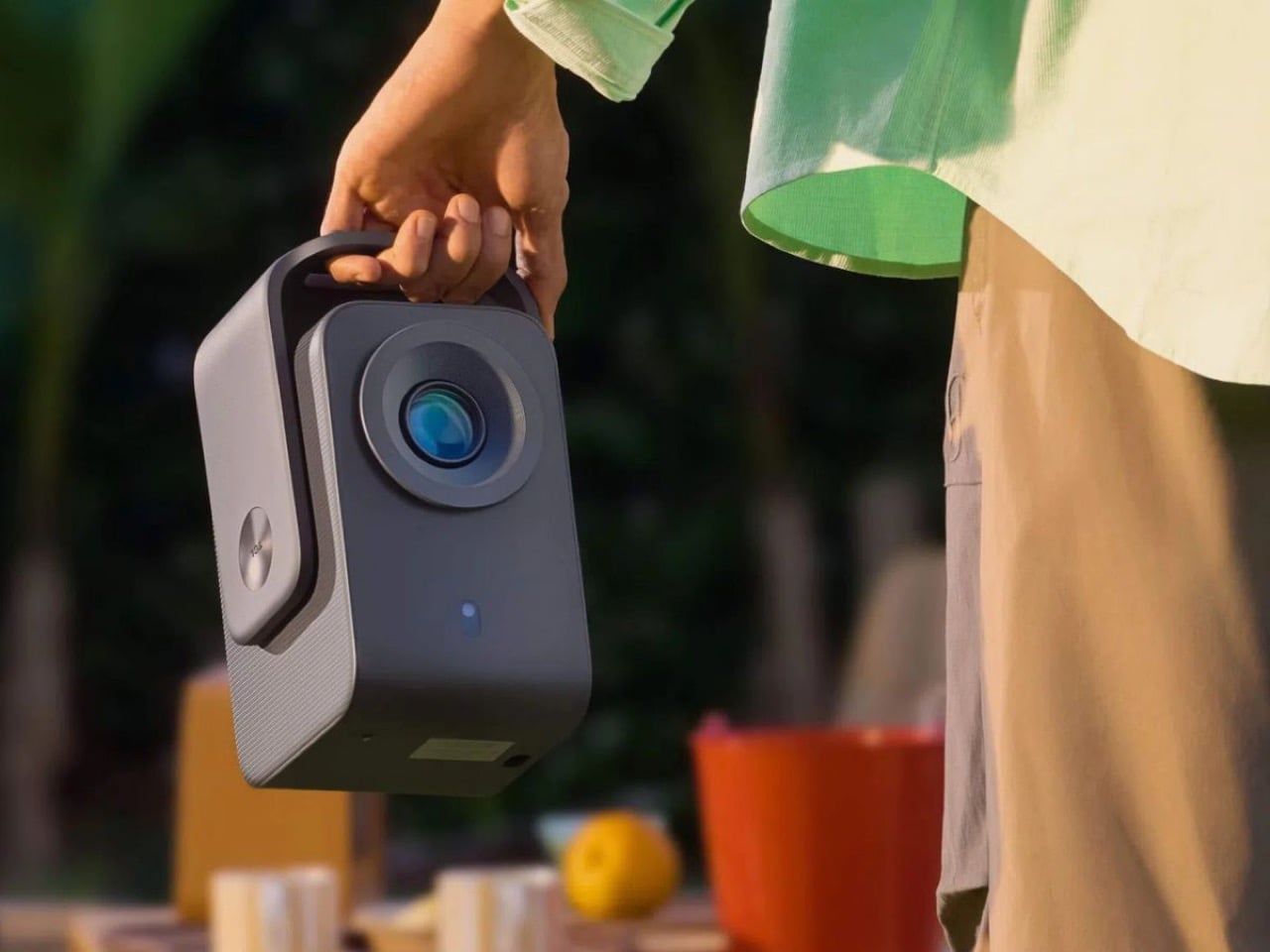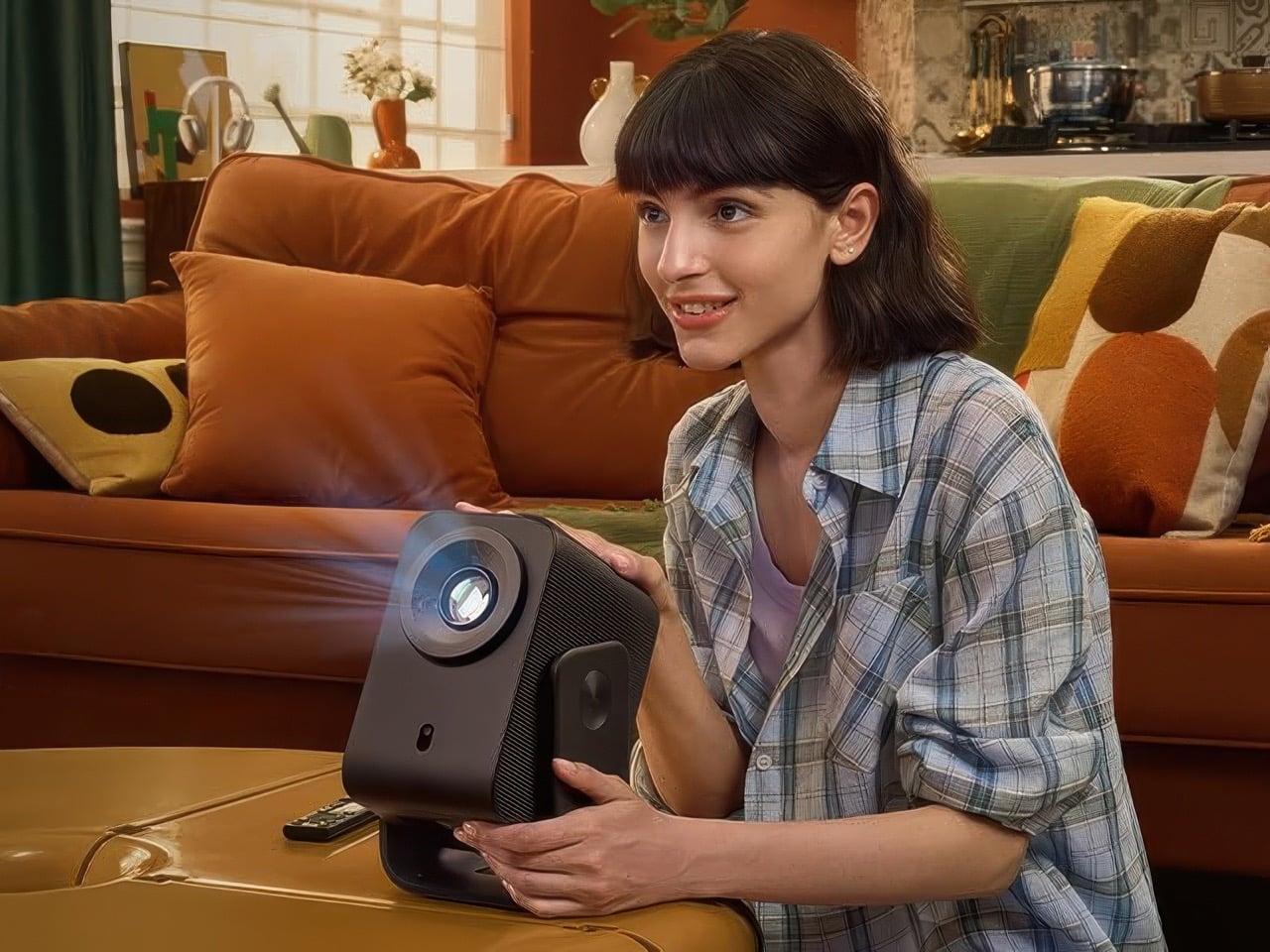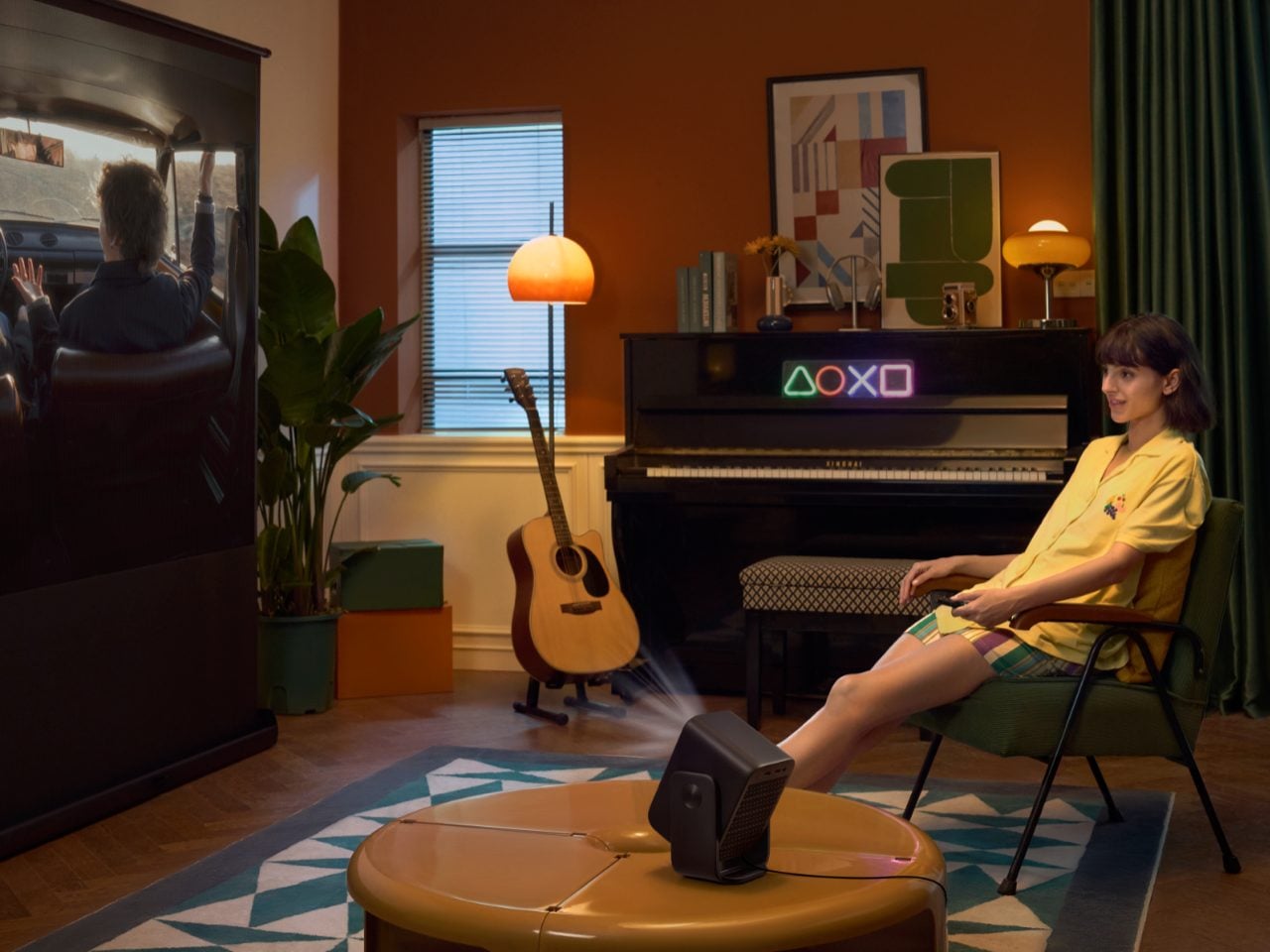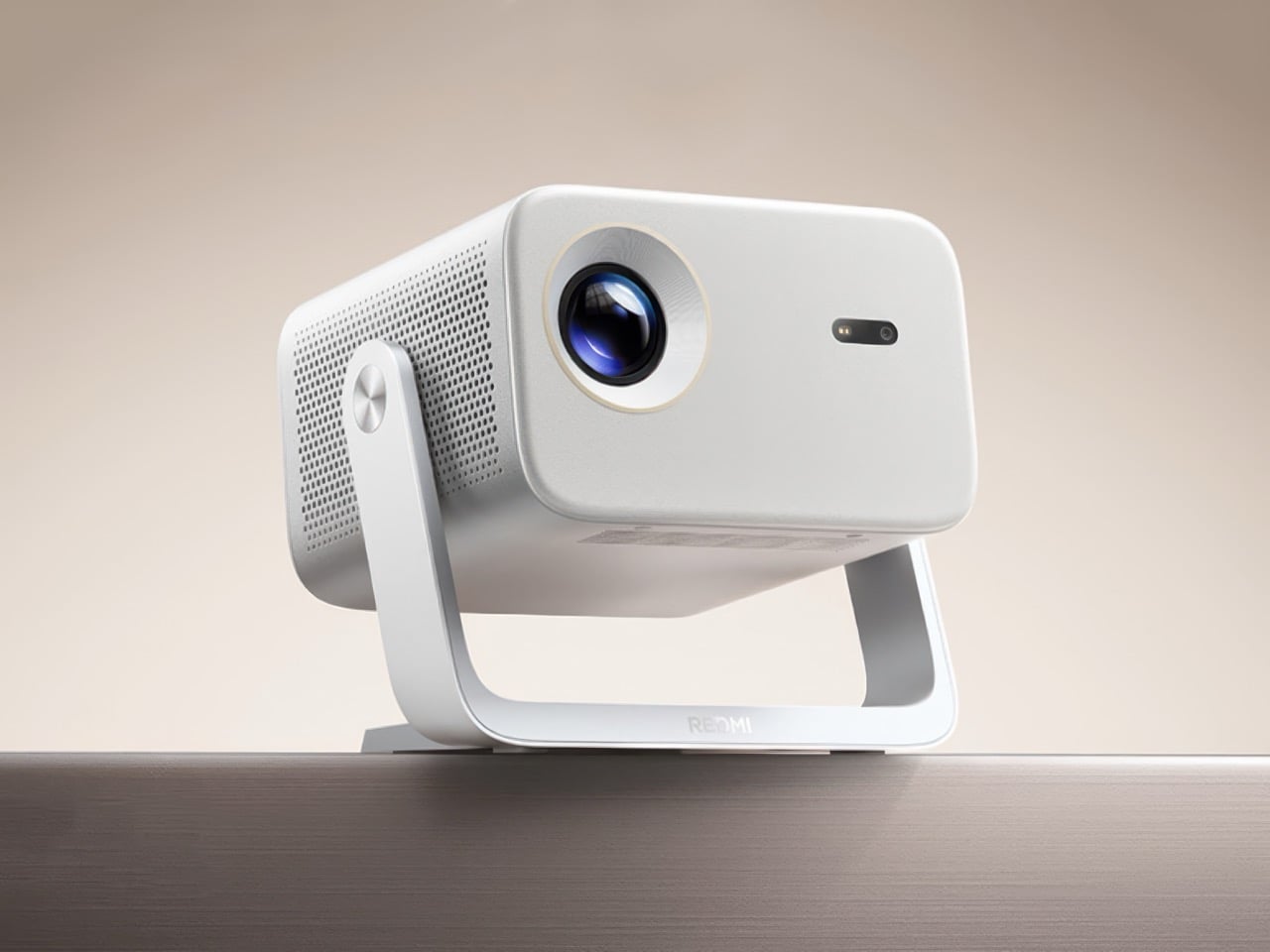
JMGO N3 turns home cinema into a moving target with its 4K triple-laser gimbal design

JMGO has spent years quietly refining the idea that home cinema doesn’t need to be fixed in one place. Much like how thoughtfully designed consumer tech reimagines everyday experiences through flexibility and form, the company’s latest projector leans into motion, adaptability, and visual ambition. The JMGO N3 4K triple-laser gimbal projector builds on that philosophy, presenting a compact, all-in-one cinema solution that feels engineered for modern living spaces rather than dedicated theater rooms.

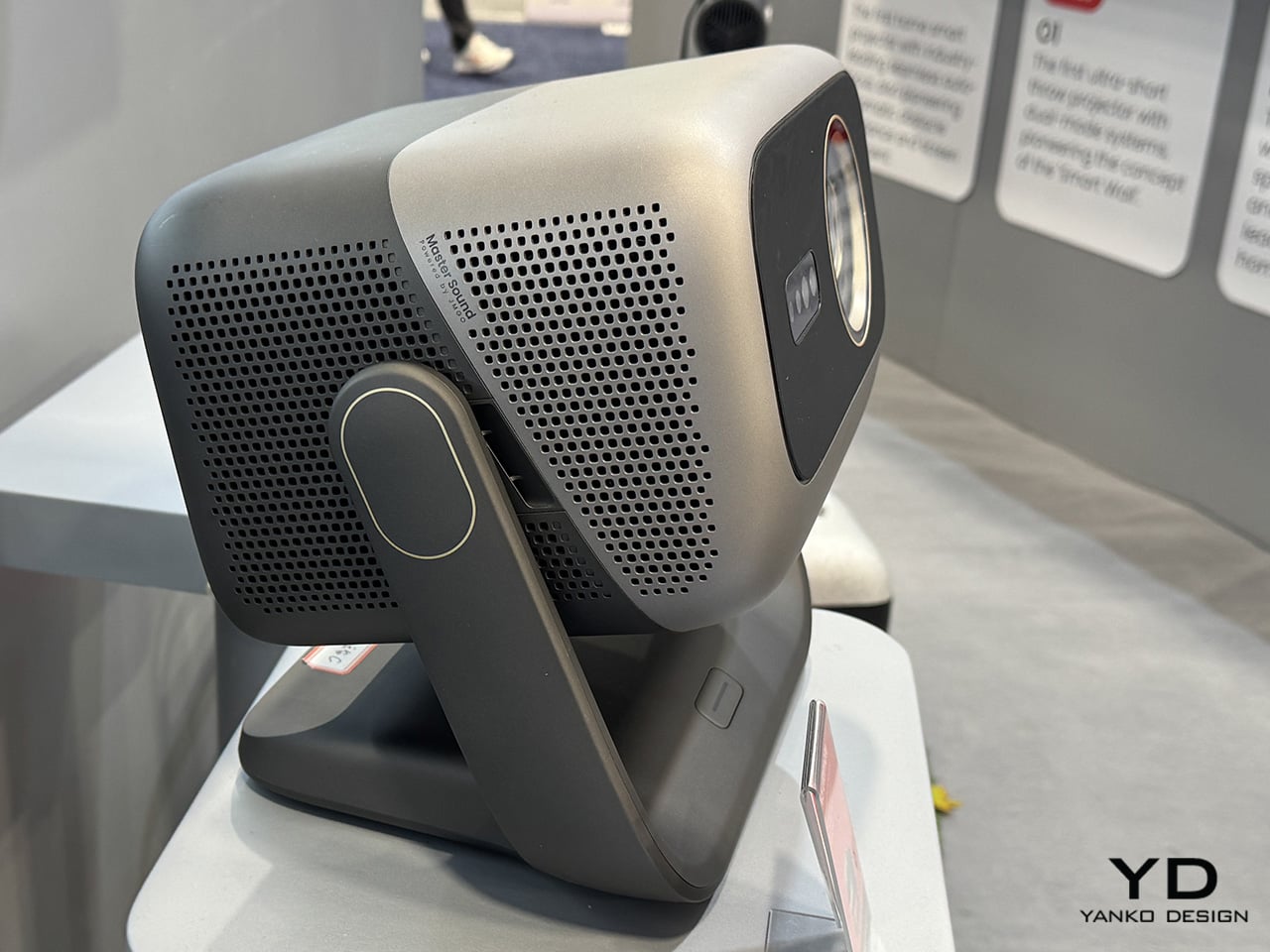
At the heart of the N3 is JMGO’s MALC 3.0 triple-laser light engine, which uses separate red, green, and blue lasers to produce accurate color and consistent brightness. The system outputs up to 1,800 ISO lumens and covers 110 percent of the BT.2020 color gamut, delivering saturated yet controlled visuals that hold up well in both darkened rooms and moderate ambient light. Native 4K resolution at 3840 by 2160 pixels is paired with 10-bit color support and HDR10 compatibility, allowing the projector to render fine detail, smooth gradients, and cinematic contrast across films, games, and streaming content.

Designer: JMGO

What sets the N3 apart visually and mechanically is its motorized gimbal base. The projector can rotate a full 360 degrees horizontally and tilt up to 160 degrees vertically, making it possible to project onto walls, ceilings, or unconventional surfaces without mounts or awkward positioning. This mobility is supported by automatic keystone correction, real-time autofocus, screen alignment, and obstacle avoidance, which together minimize setup time and reduce the trial-and-error often associated with portable or lifestyle projectors.

The optical system offers a throw ratio ranging from 1.0 to 1.3:1 with 1.3× optical zoom, giving users flexibility in room placement while supporting screen sizes of up to 300 inches. Whether used in an apartment living room or a larger open space, the projector adapts easily without demanding architectural changes. Content access is handled through Google TV, which brings native Netflix support, voice search, and a wide library of apps, all backed by Wi-Fi 6 for smoother streaming and faster responsiveness. HDMI inputs provide straightforward connections for consoles and external media devices.

Audio is handled by integrated JMGO Master Sound Hi-Fi speakers with dual 10-watt drivers and support for Dolby Audio and DTS-HD decoding. While external speakers will still appeal to dedicated enthusiasts, the built-in system delivers clear dialogue and balanced sound that feels appropriate for casual movie nights or everyday viewing. Intelligent sensors further enhance usability by adjusting brightness and protecting viewers’ eyes during extended sessions.

Certified for 4K UHD performance and tested for low speckle and minimal chromatic aberration, the JMGO N3 positions itself as a technically credible home cinema tool rather than a novelty device. Priced around $1,099, it lands in a space that makes high-quality laser projection more approachable, blending strong visual performance, thoughtful industrial design, and practical flexibility into a single, modern entertainment centerpiece.


The post JMGO N3 turns home cinema into a moving target with its 4K triple-laser gimbal design first appeared on Yanko Design.
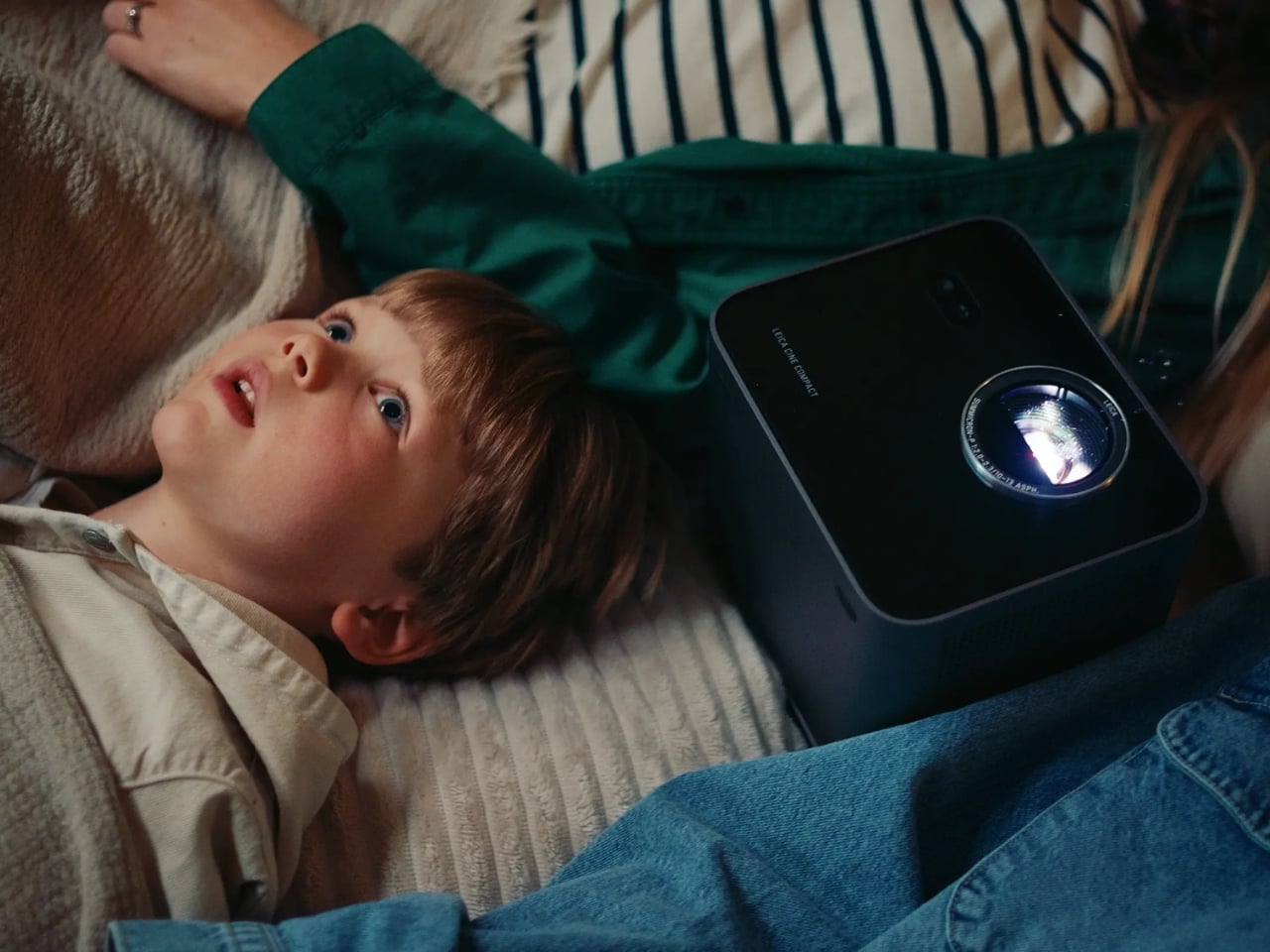
Soundcore at CES 2026 Turns Everyday Spaces into Portable Sound and Cinema

Personal entertainment has drifted out of fixed rooms and into commutes, bedrooms, trails, and backyards. People bounce between earbuds, smart speakers, and projectors, often juggling separate ecosystems that do not feel designed with each other in mind. The friction is no longer just sound quality, but how easily gear fits into those shifting contexts, from the desk where you need awareness, to the pillow where you need silence, to the field where you want a movie under the stars.

Soundcore’s CES 2026 lineup follows that drift. The AeroFit 2 Pro, Sleep A30 Special, Boom Go 3i, Nebula P1i, and Nebula X1 Pro aim to move with you rather than live in one place. The common thread is collapsing trade‑offs, open‑ear comfort and ANC in one pair of buds, tiny speakers with long battery life, and projectors that pack a theater into a handle‑equipped box, each tuned to a different moment when sound or vision matters.

Designer: Soundcore (Anker)

Soundcore AeroFit 2 Pro

AeroFit 2 Pro is built for people whose days swing between needing to hear the world and wanting to block it out. The five‑level ear‑hook can reposition the nozzle so the buds behave as open‑ear hooks during runs or desk work, then slide into a semi‑in‑ear ANC form when focus or isolation is needed, without swapping hardware or carrying two pairs.

The liquid‑silicone hooks and 56 degrees of articulation keep pressure off the canal for all‑day wear in open‑ear mode, while Adaptive ANC 3.0 checks noise up to 380,000 times per second and makes 180 adjustments per minute in ANC mode. The buds include 11.8 mm drivers, spatial audio with head tracking, LDAC support, IP55 rating, and differing battery lives, up to 7 hours and 34 with case in open‑ear, up to 5 hours and 24 with case in ANC.

Soundcore Sleep A30 Special

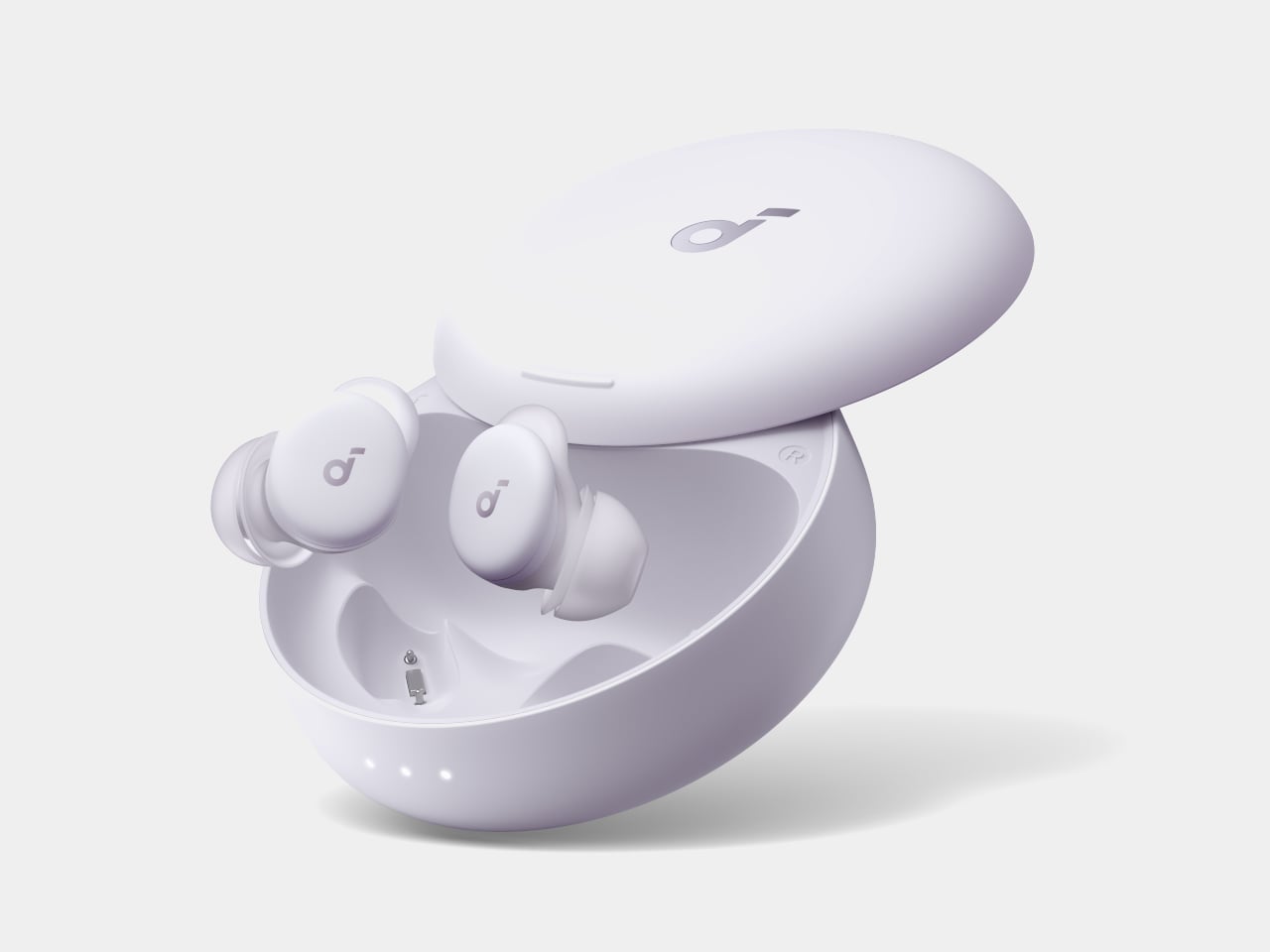
Sleep A30 Special takes over when the day ends and the noise does not. The triple noise reduction system combines active noise cancellation, passive blocking from the low‑profile fit, and adaptive snore masking that targets disruptive frequencies without making the room feel unnaturally silent. The ultra‑compact shape is tuned for side sleepers who usually cannot tolerate bulky earbuds pressing against a pillow overnight.

The earbuds tie into the Soundcore app to deliver Calm Sleep Stories directly, alongside AI brainwave tracks and white noise. The hardware is only half the story; the curated content and extended battery life let people build a consistent wind‑down routine, from reading in bed with subtle noise reduction to drifting off to a story without worrying about wires, over‑ear pressure, or keeping a phone nearby.

Soundcore Boom Go 3i

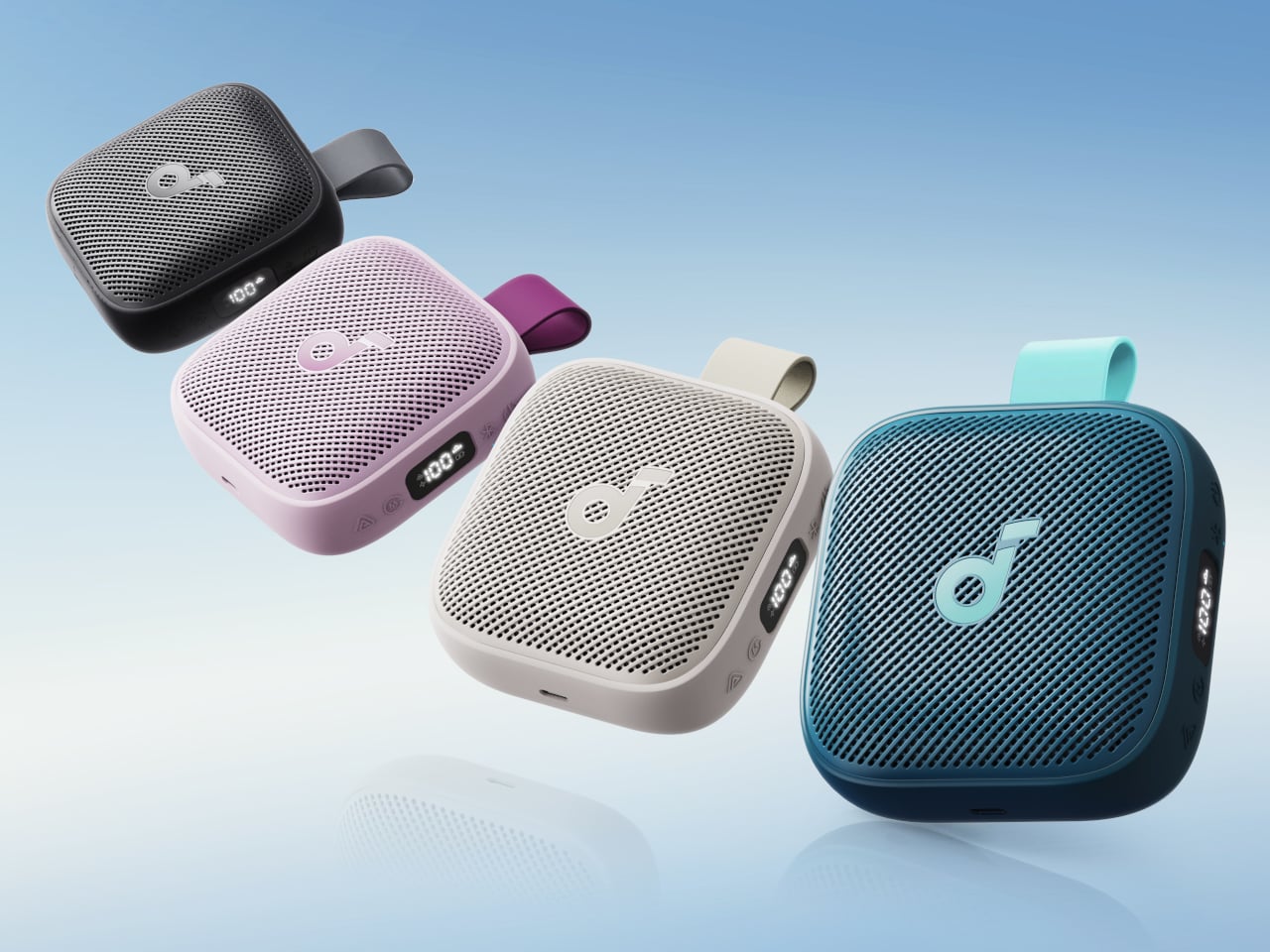
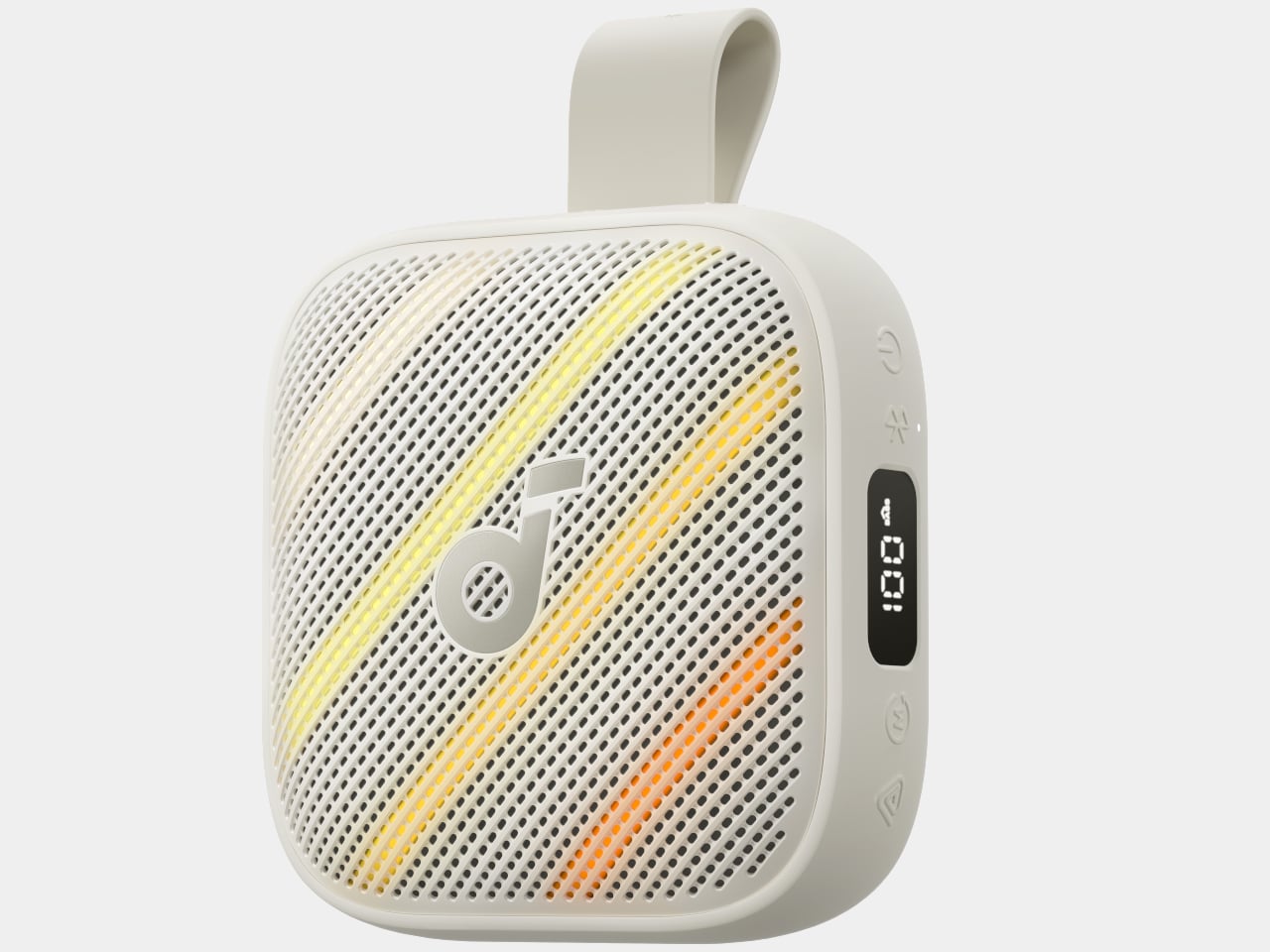
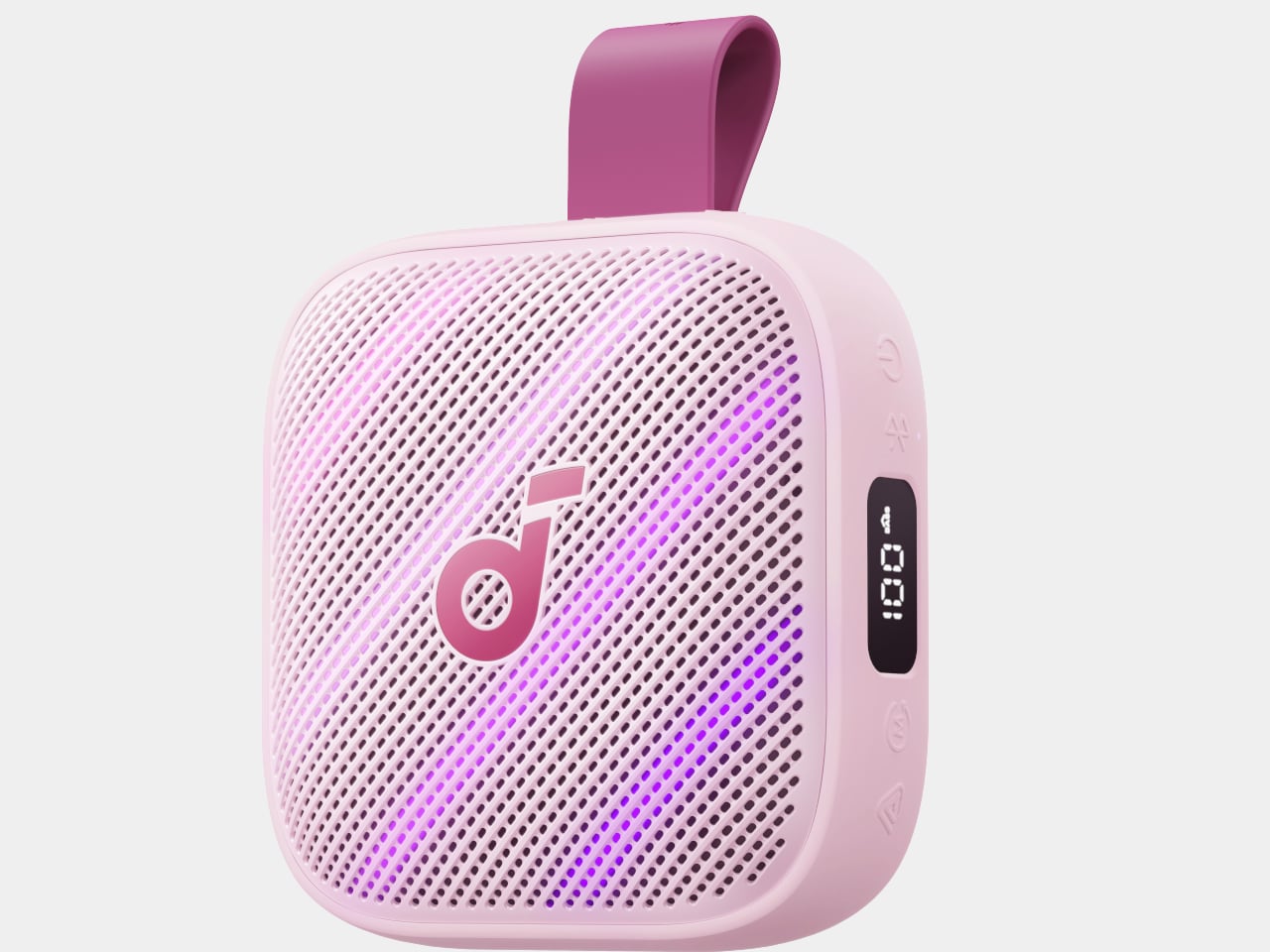
Boom Go 3i is the speaker that lives on a backpack strap rather than a shelf. The palm-sized form and 15 W output make a picnic or campsite feel less quiet without needing a huge cylinder. The 4,800 mAh battery offers up to 22 hours in Eco mode, so it can handle a weekend of light use without visiting a wall outlet, and it can lend some of its charge for emergency phone top‑ups.

The IP68 rating means it can handle dust, sand, and submersion, which is useful when it gets dropped in a stream or buried in a beach bag. The dual‑mode strap mounting system lets it hang or cinch tightly to a pack, bike, or tent pole, and the LED grille with diagonal light patterns makes it easy to spot in a dark campsite or stowed in the bottom of a gear pile.

Soundcore Nebula P1i

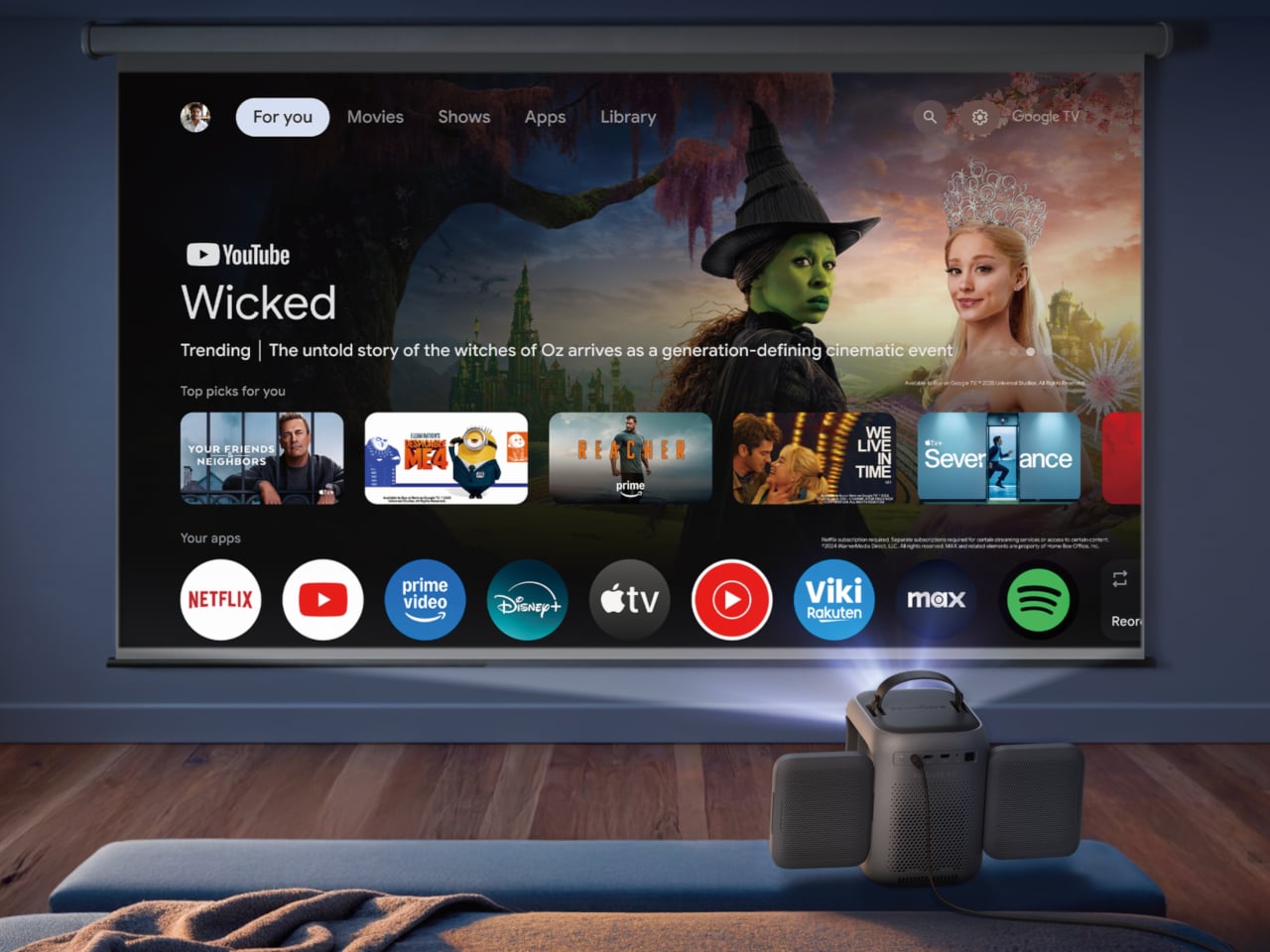
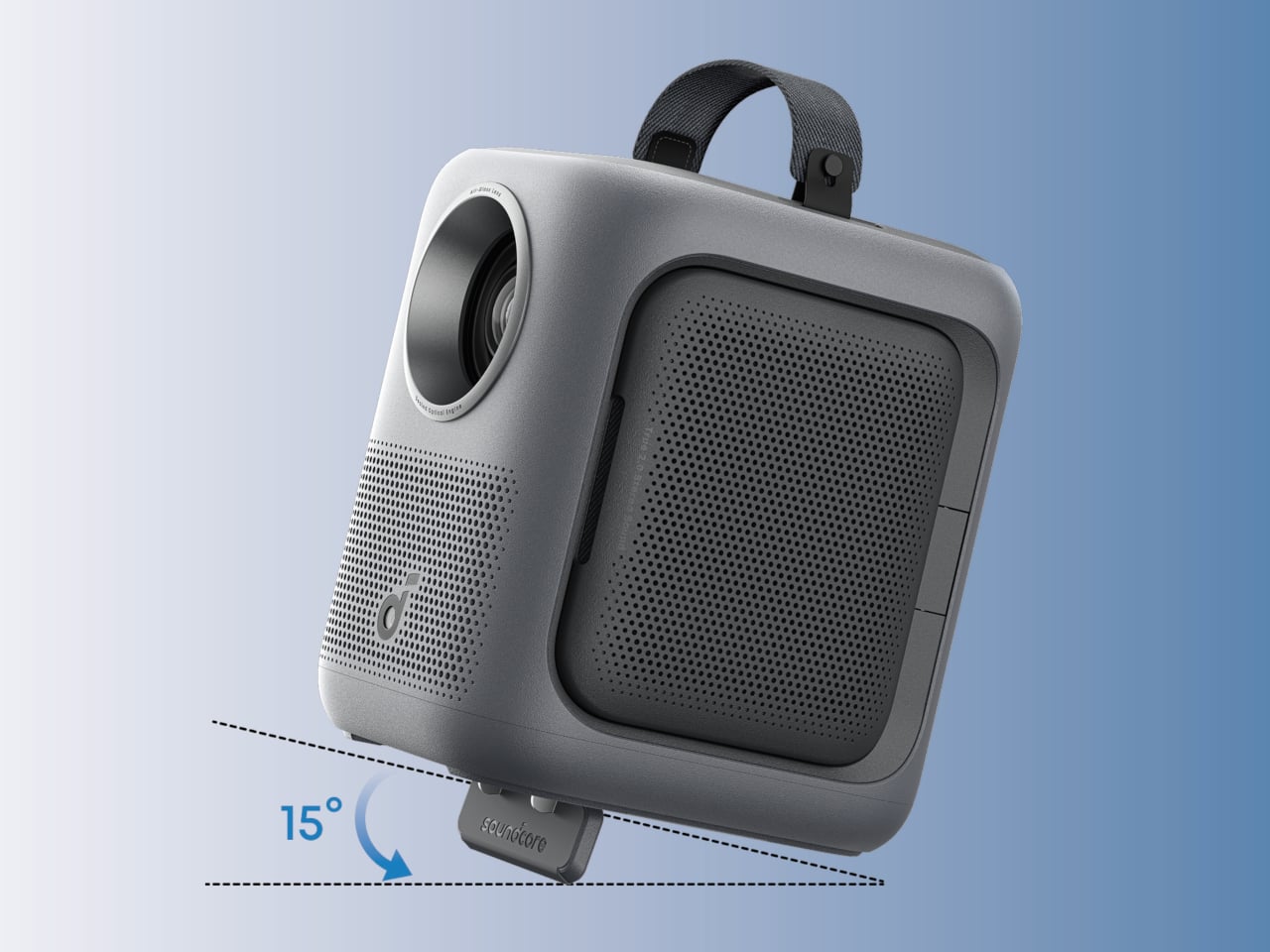
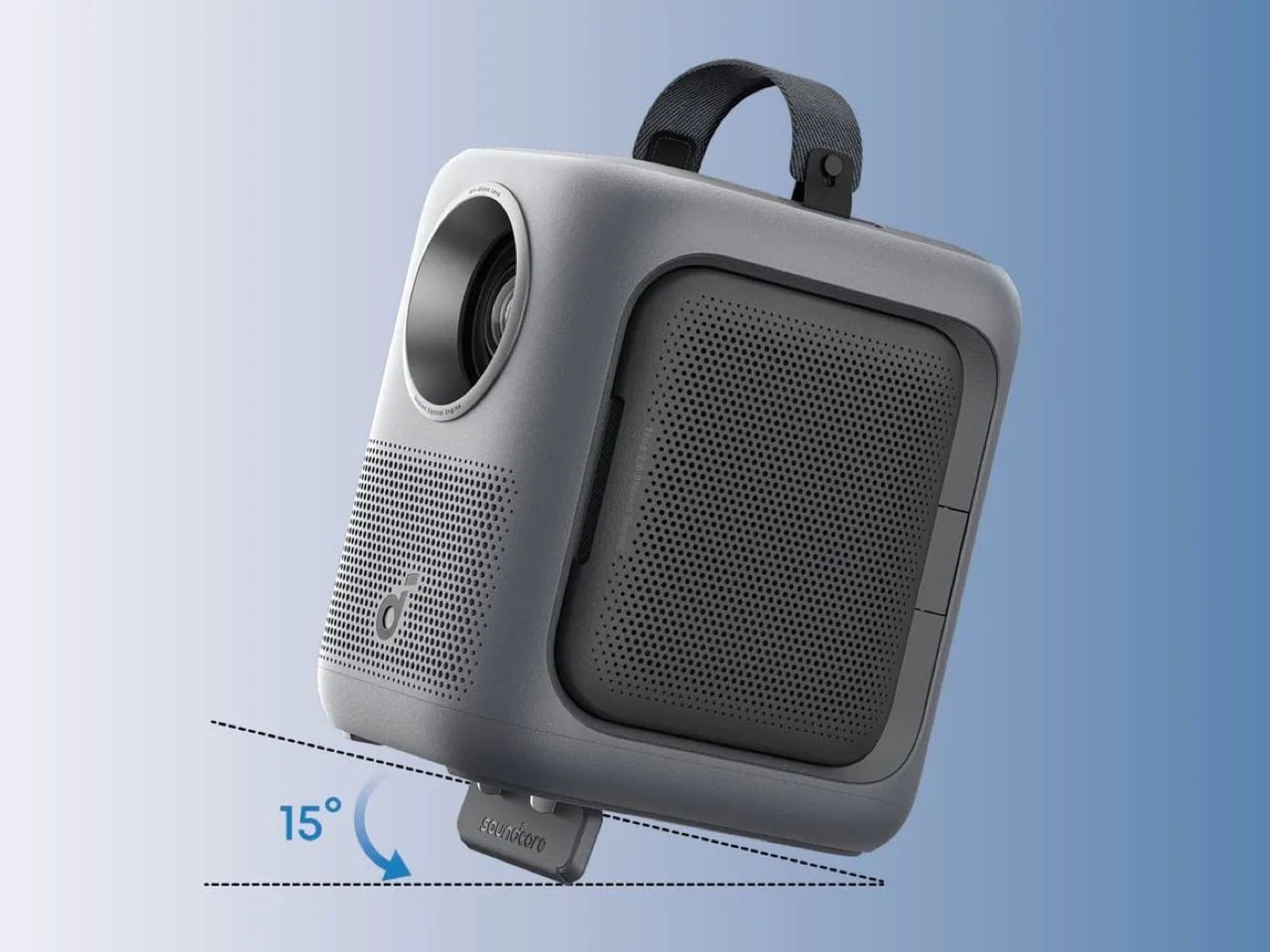
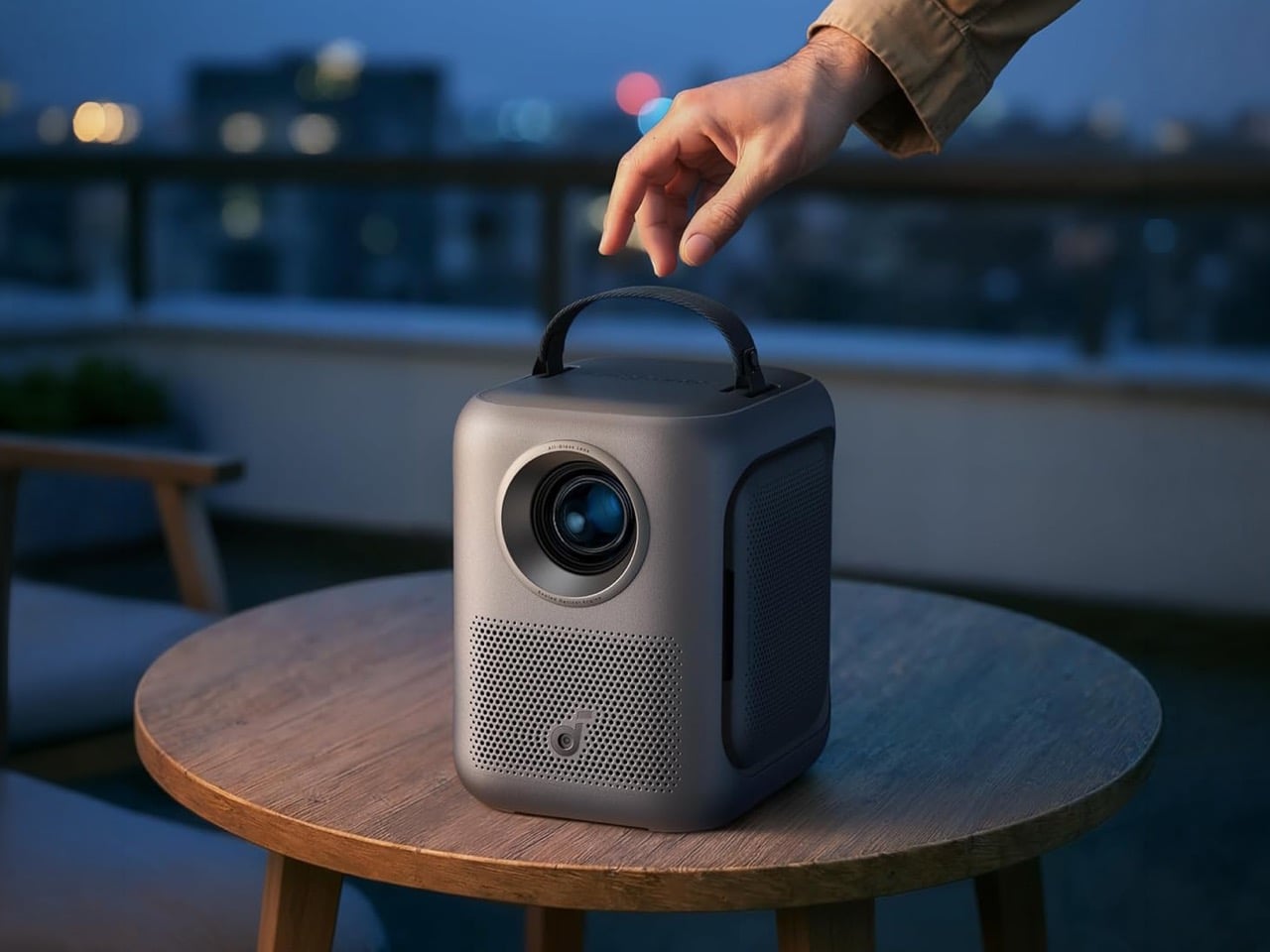
Nebula P1i is the projector for people who want movie‑night flexibility without a permanent ceiling mount. It offers 1080p resolution and 400 ANSI lumens, enough for dim‑room viewing, with a built‑in 0-12 degree tilt stand to aim at walls or screens without stacks of books. Official Netflix and Google TV support mean it behaves like a familiar streaming box, not a bare projector that needs extra hardware.

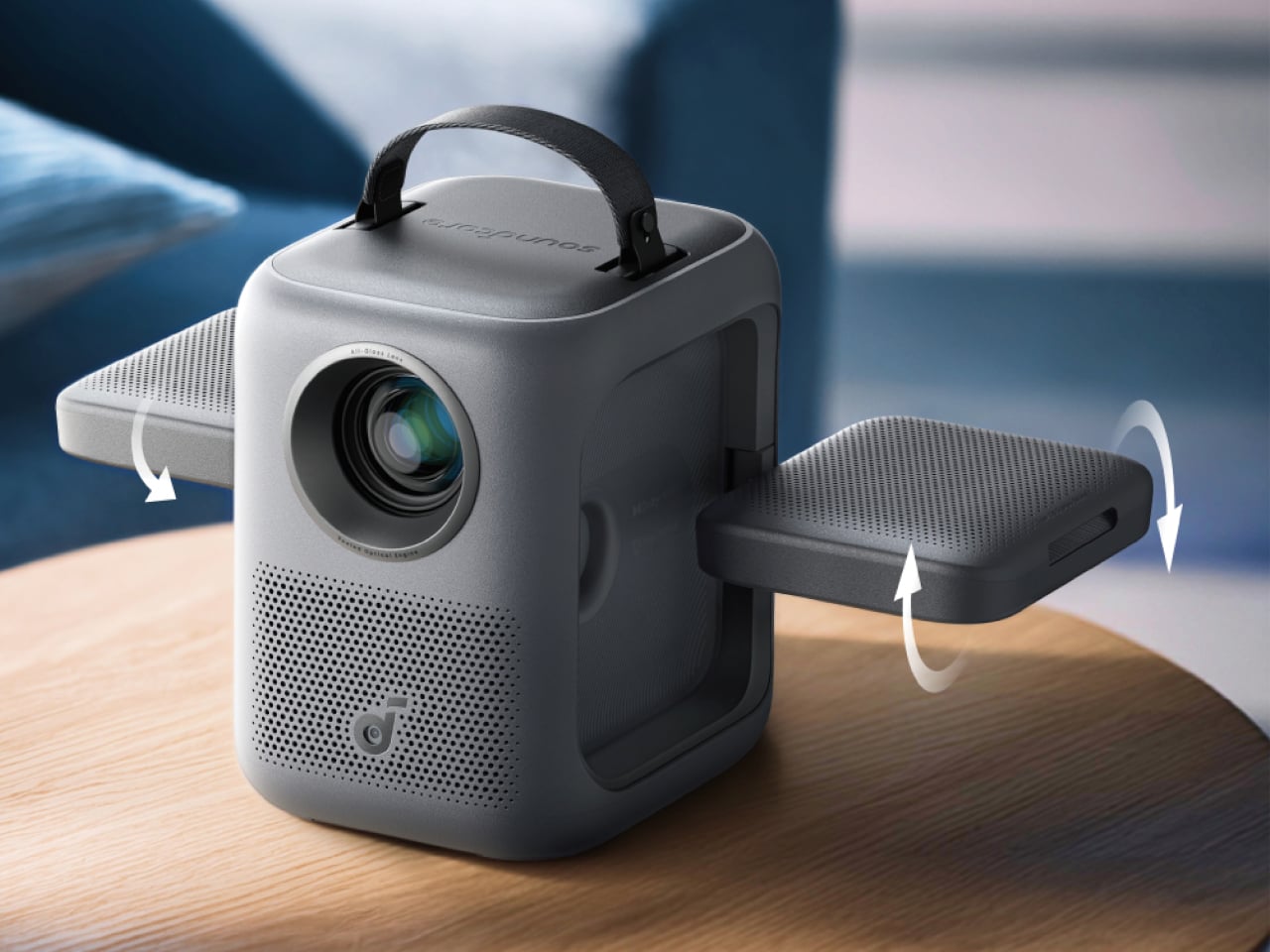
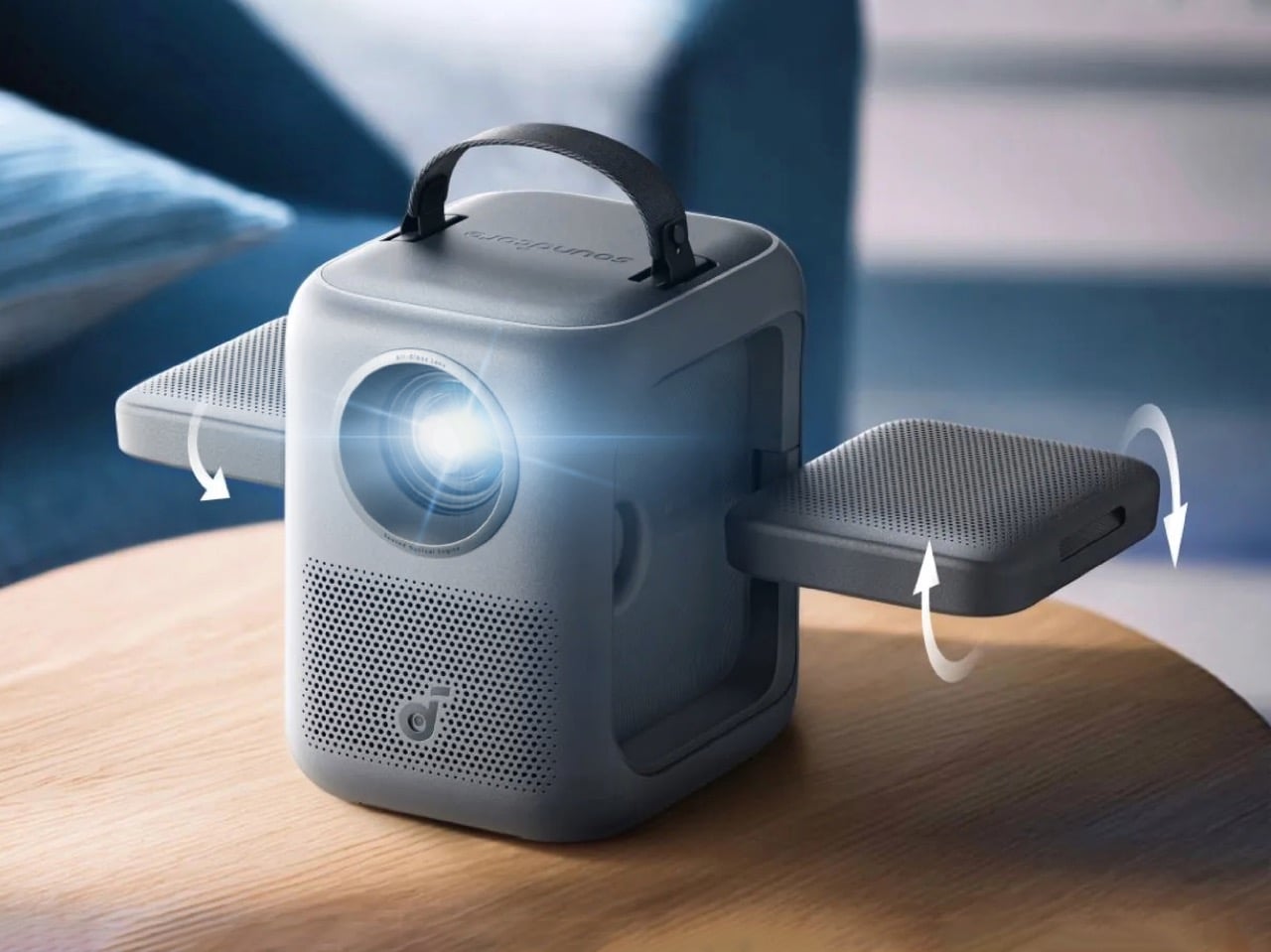
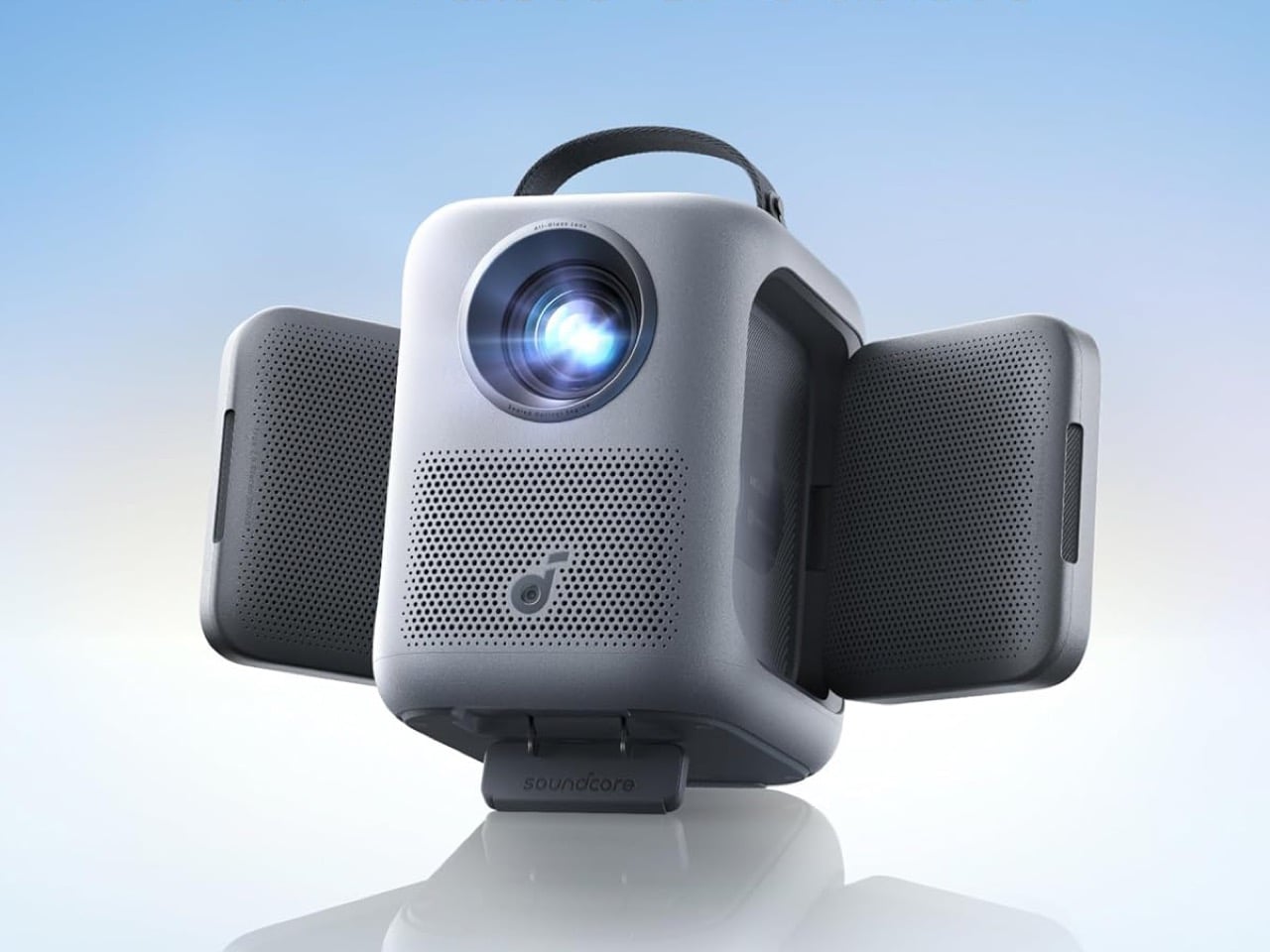
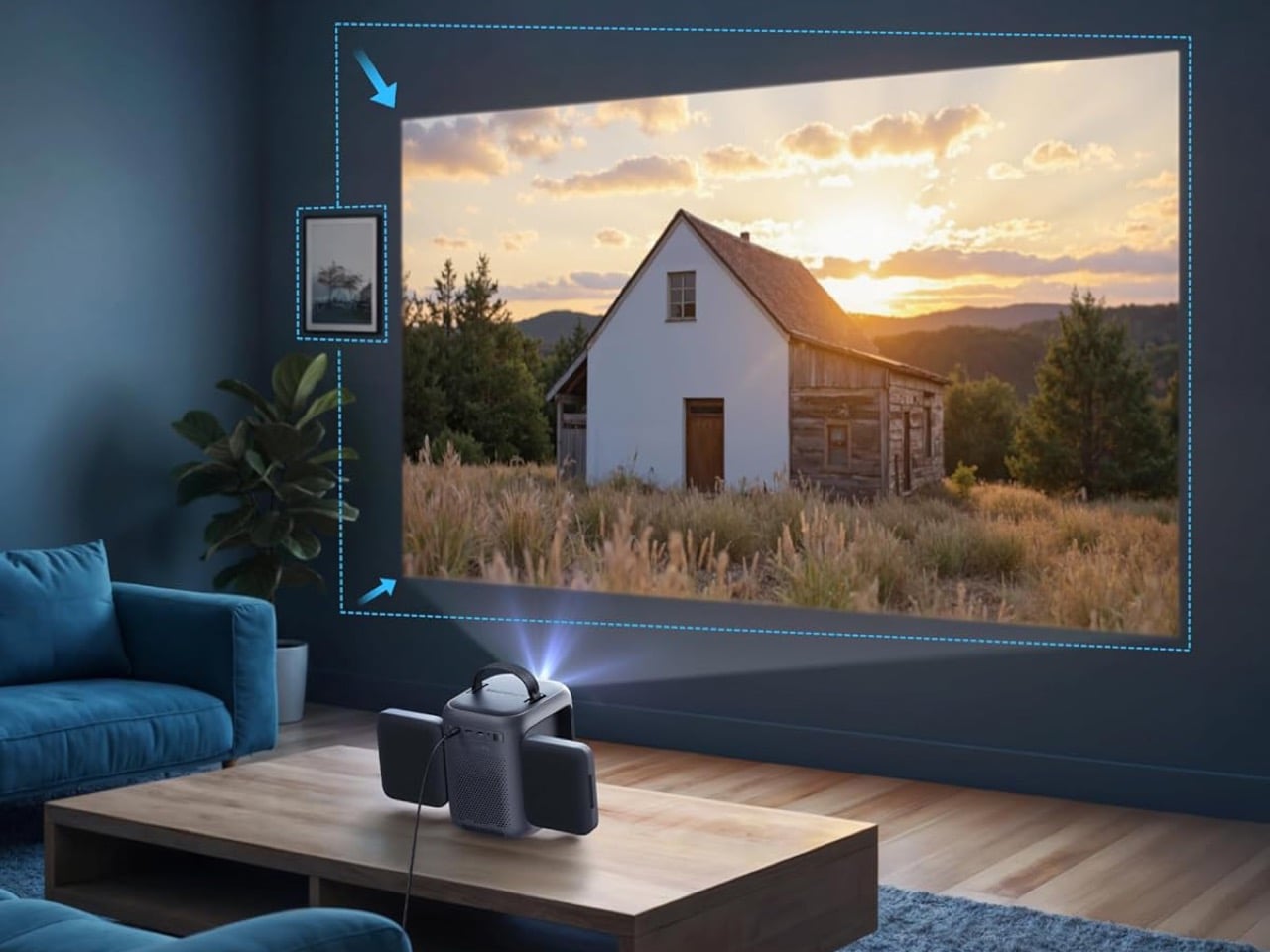
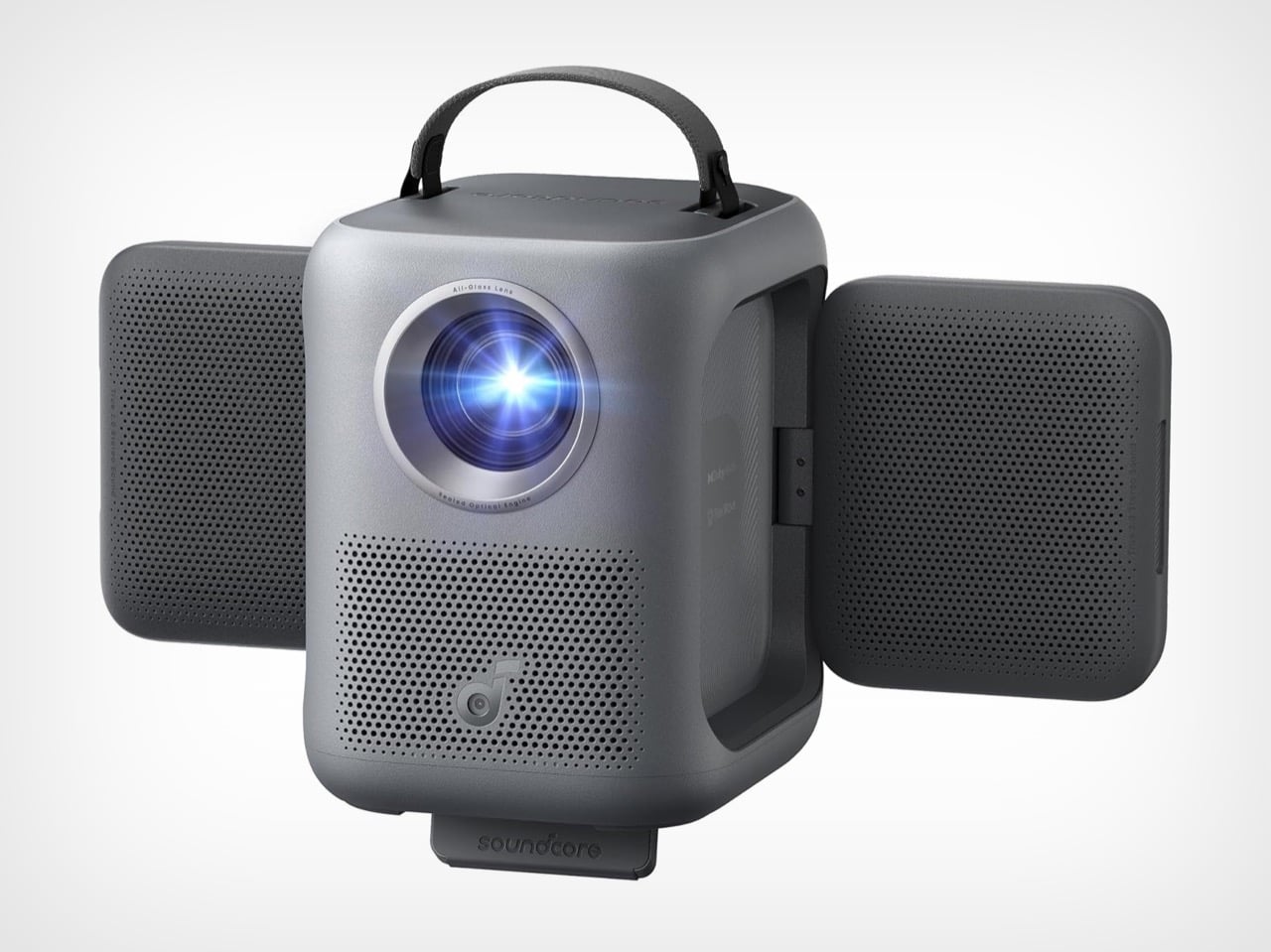
The flip‑open side speakers swing out for better stereo separation, turning a compact cube into a mini theater without extra cables. Intelligent Environment Adaptation 3.0 handles autofocus, keystone, and screen fit, so the projector can quickly lock onto whatever surface is available. It is the kind of device that can live in a closet until a rainy afternoon or impromptu game night makes a big picture suddenly appealing.

Soundcore Nebula X1 Pro

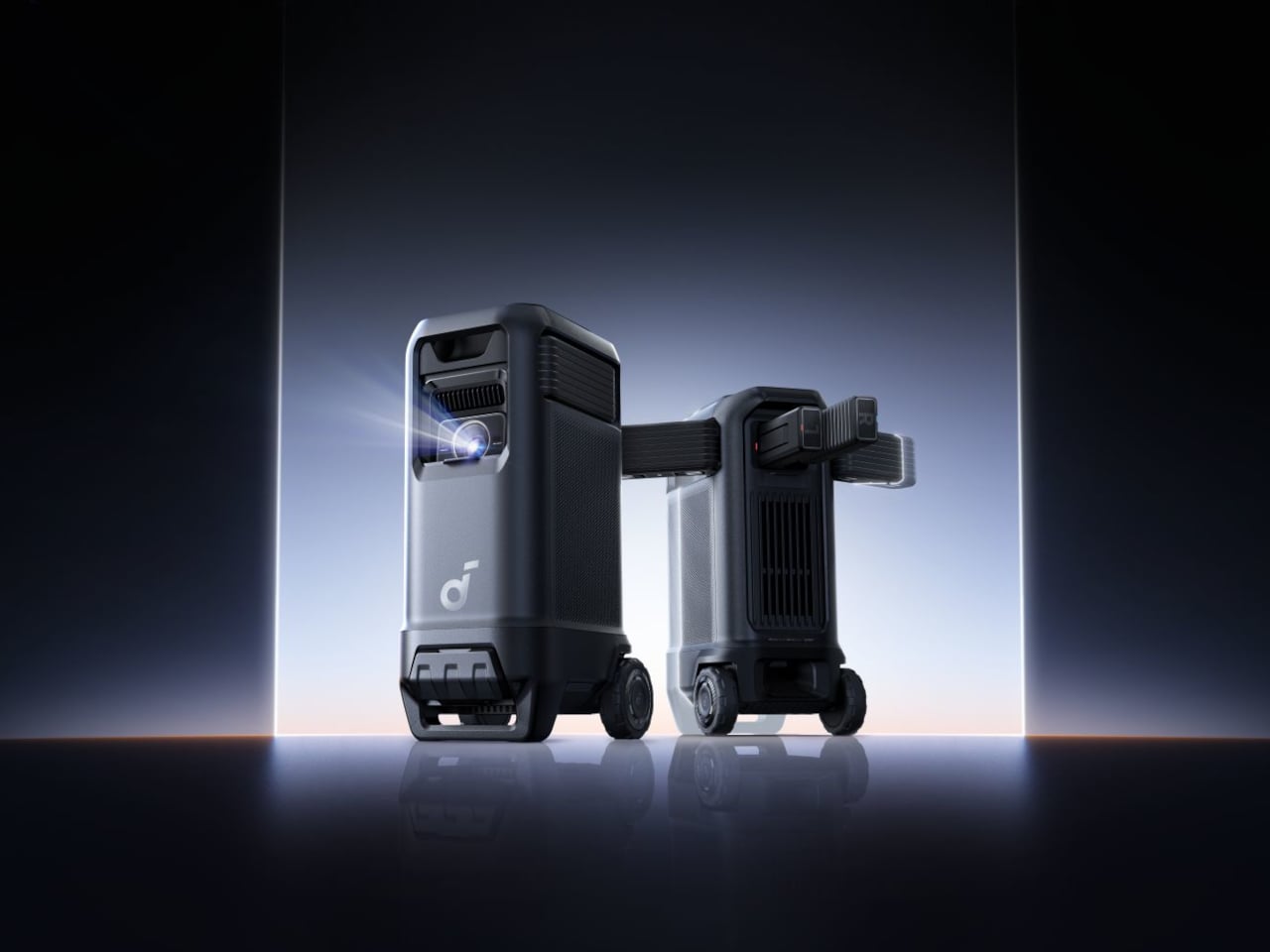
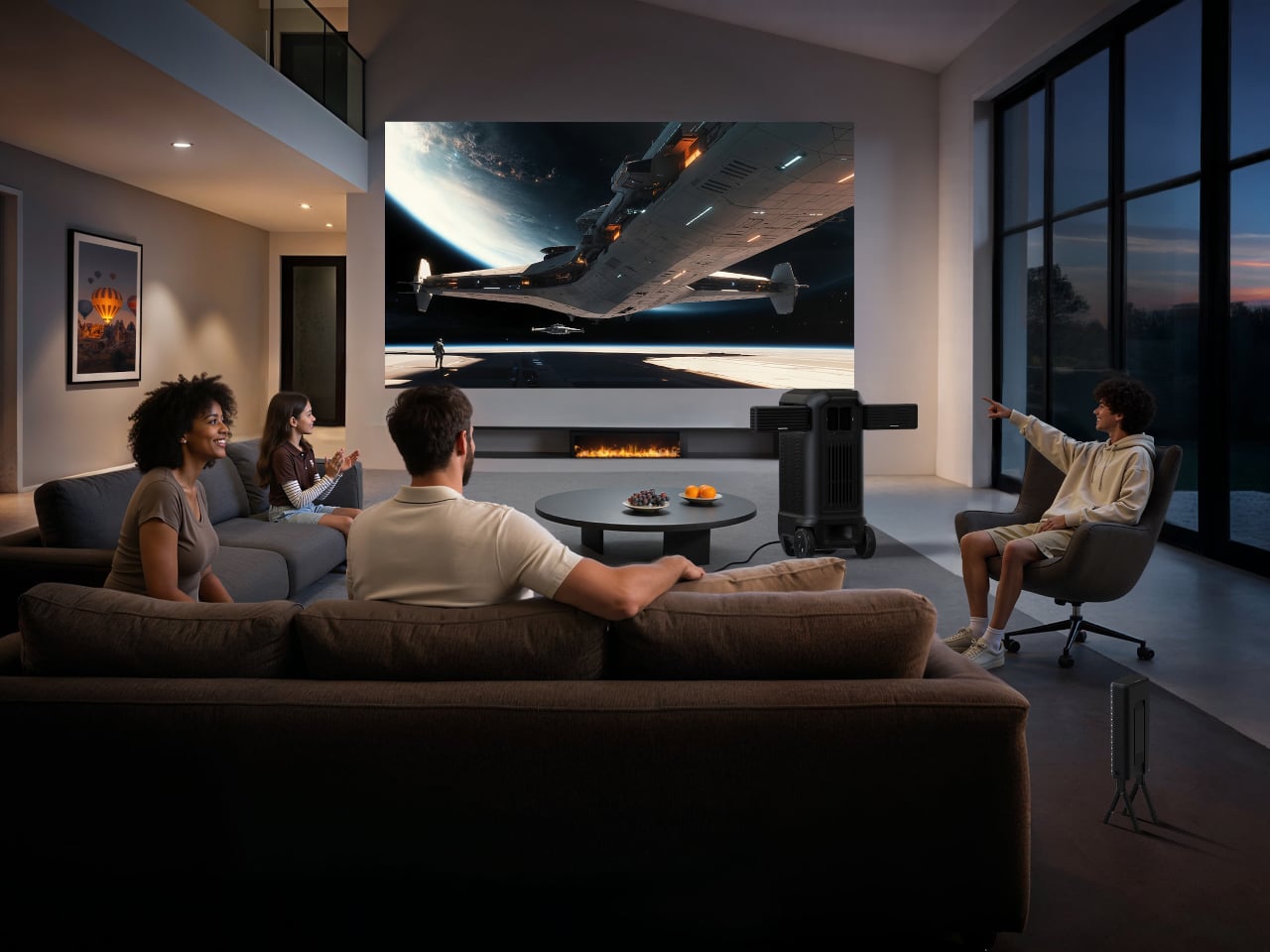
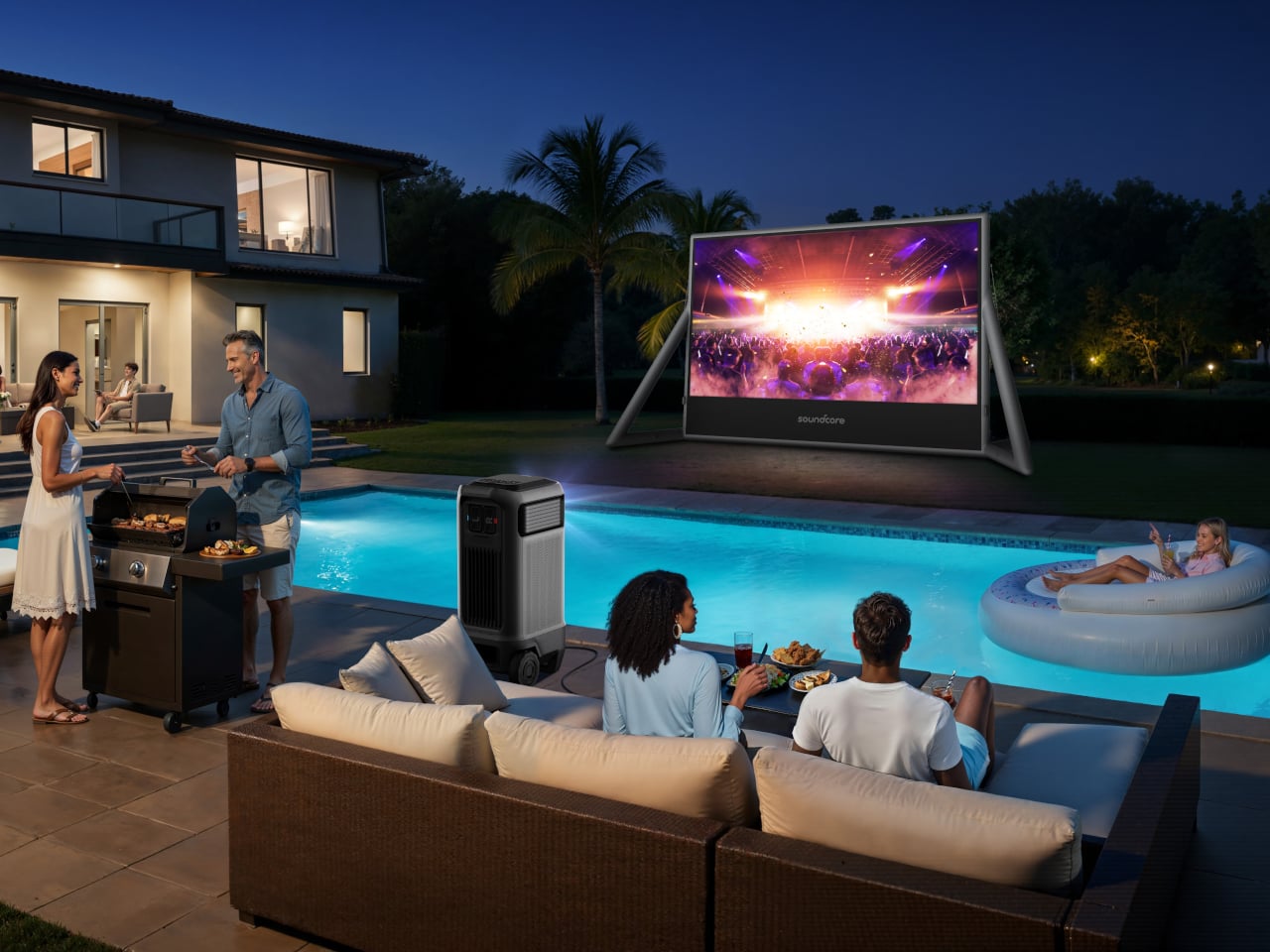
Nebula X1 Pro is the extreme end of the same idea, a mobile theater station on wheels. It uses a 3,500 ANSI‑lumen 4K triple‑laser engine with 110% Rec.2020 color, 5,000:1 native contrast, and 56,000:1 dynamic contrast, bright enough to throw a 200‑inch image outdoors at night. The integrated wireless 7.1.4 sound system, certified for Dolby Atmos, means the audio is as much a part of the experience as the picture.

The planned bundle adds a 200‑inch inflatable screen and a wireless pump that inflates in about five minutes and holds air without a constant blower, keeping the system quiet during viewing. Dual wireless microphones and AI spatial adaptation handle setup, tuning sound and image to the space. Together, the projector and screen turn any patch of ground into a temporary cinema without generators, scaffolding, or separate speakers cluttering the site.

Soundcore at CES 2026: Entertainment That Travels With You

These five products sketch a day‑long arc: AeroFit 2 Pro for the commute and office, Sleep A30 Special for the hours when noise is unwelcome, Boom Go 3i for the trails and parks in between, and Nebula P1i and X1 Pro for turning small rooms and big fields into makeshift theaters. The common thread is not just wattage or resolution, but designs that respect where people actually listen and watch now, moving with them rather than asking them to stay put.

The post Soundcore at CES 2026 Turns Everyday Spaces into Portable Sound and Cinema first appeared on Yanko Design.
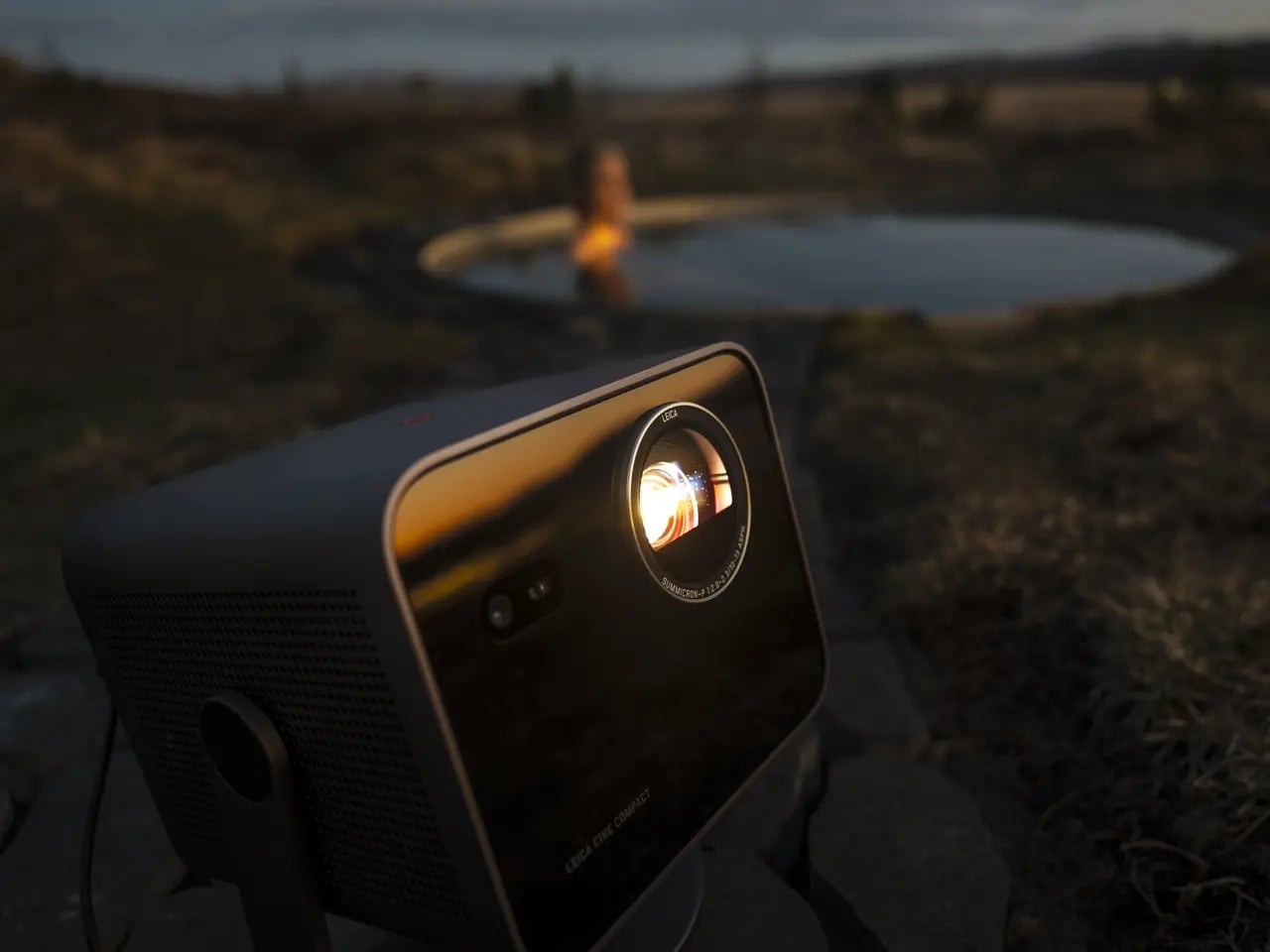
Samsung Freestyle+ Turns a Friendly Cylinder into an AI-Assisted Portable Screen

The first Freestyle tried to make projection feel as casual as dropping a speaker on a table, but still needed some fiddling with focus, keystone, and room darkness. Portable projectors are great in theory, but often fall apart on setup friction, tweaking corners, hunting for the right brightness mode, and dealing with off-color walls. Samsung’s Freestyle+ keeps the same friendly cylinder while letting AI quietly handle the annoying parts, betting that most people would rather point and watch than spend 10 minutes adjusting settings.

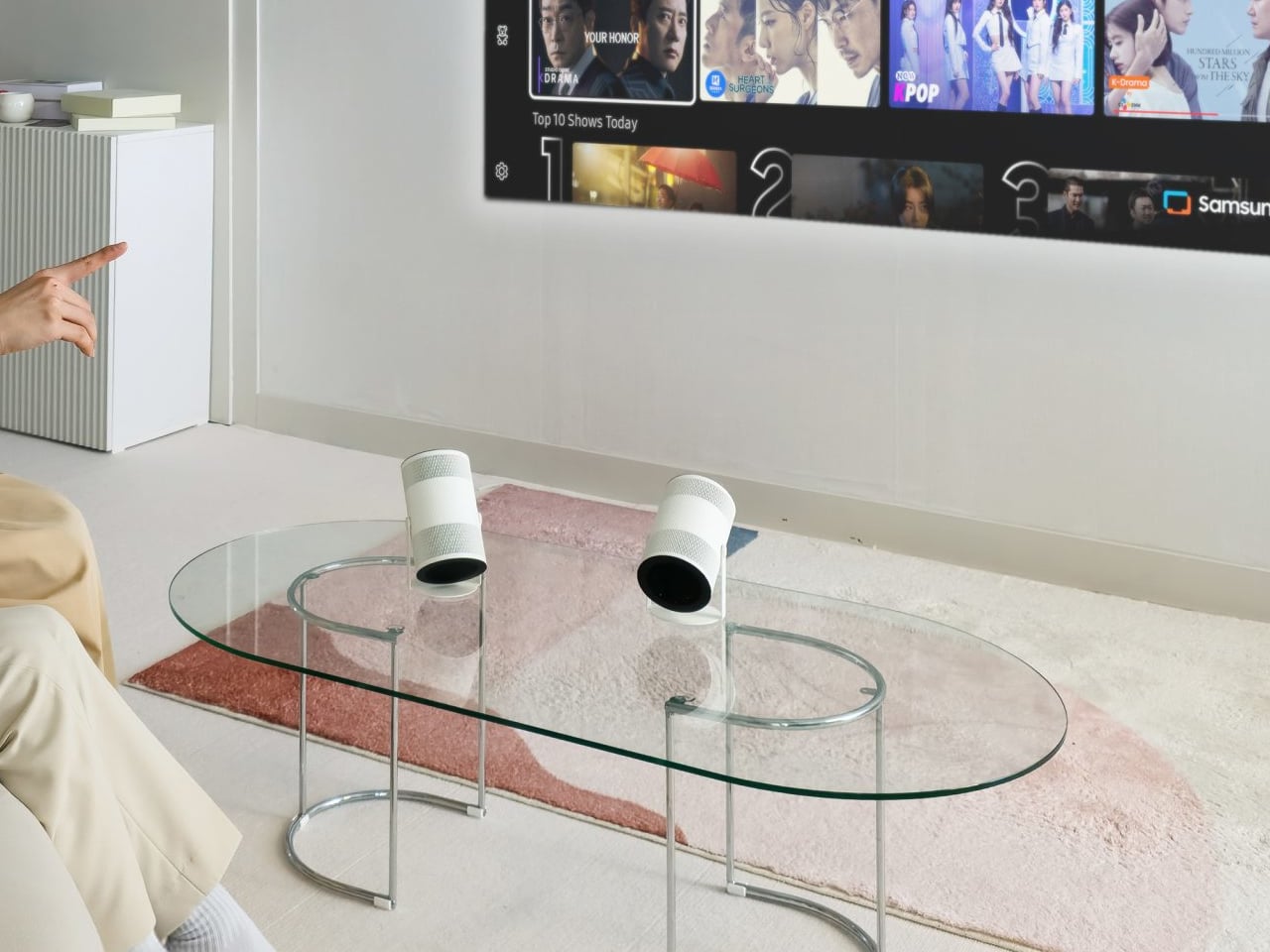
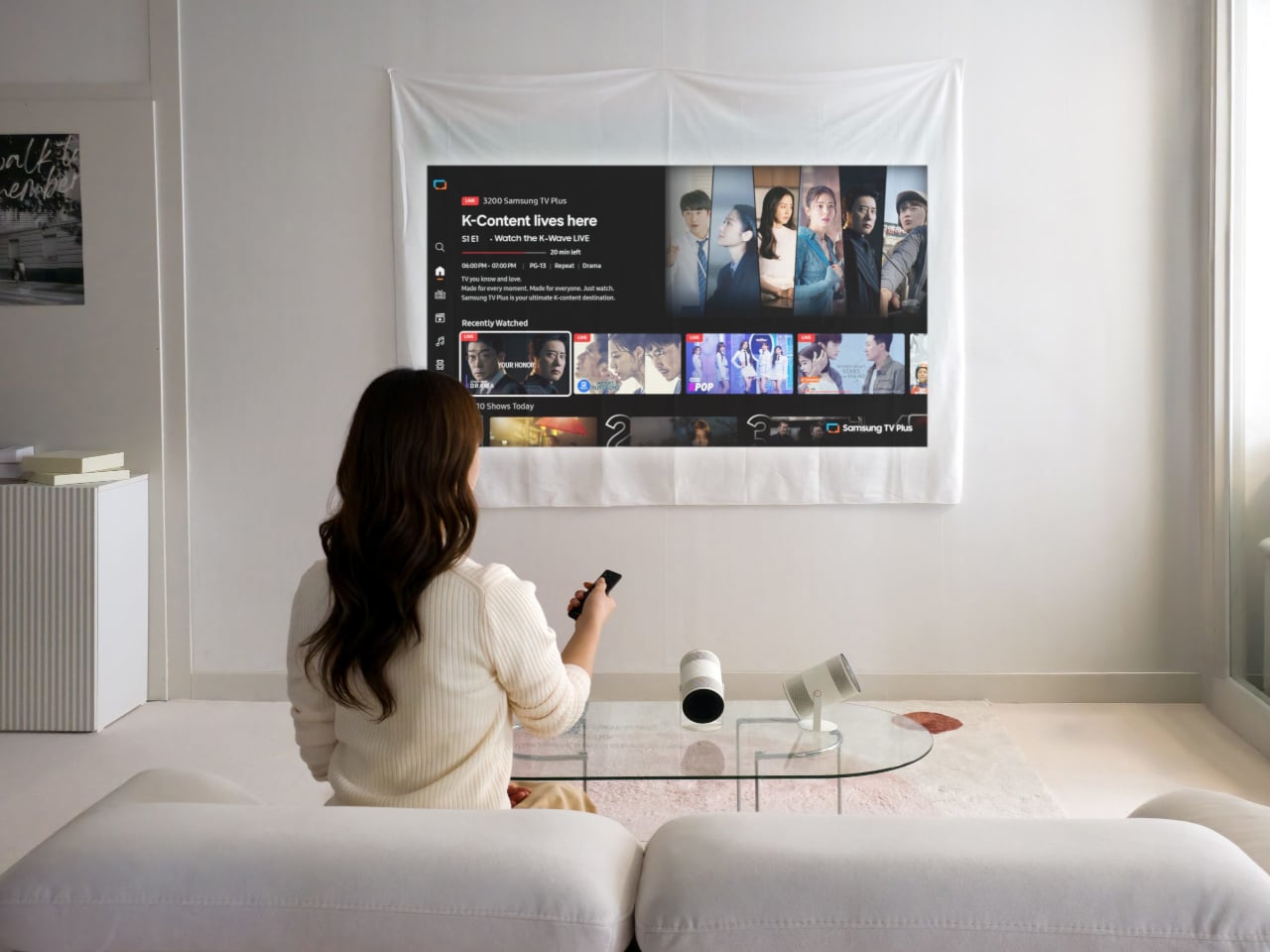
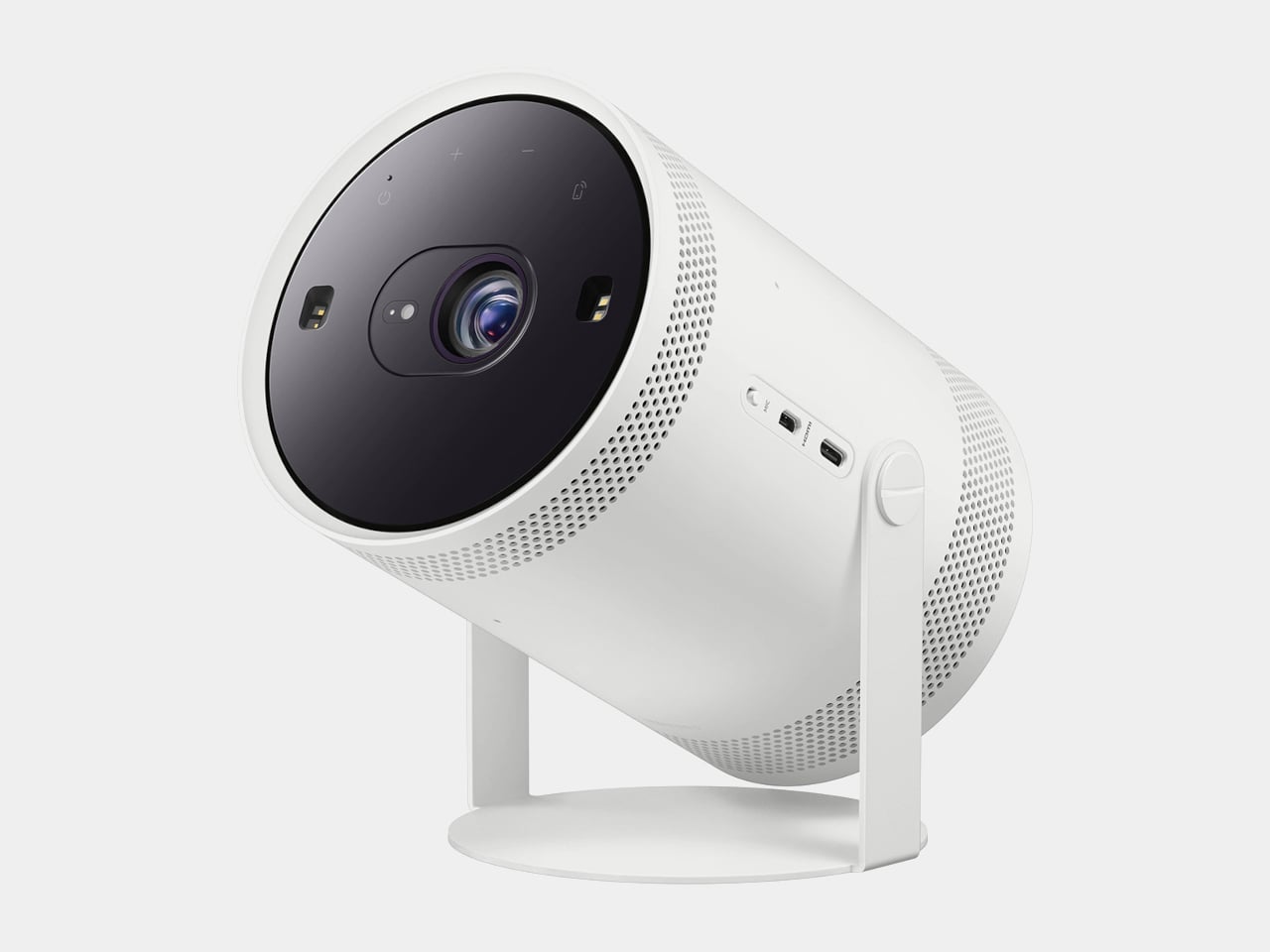
The Samsung Freestyle+ is an AI-powered portable projector that builds on the original’s cylindrical, 180-degree tilting design. The headline change is not a wild new form factor; it is a smarter brain. Freestyle+ is pitched as something you can point at a wall, ceiling, or floor, then trust to optimize the picture for whatever surface you happen to be aiming at, turning “point and play” from a slogan into something closer to reality.

Designer: Samsung

AI OptiScreen is the bundle of features that makes that possible. 3D Auto Keystone straightens the image even on angled or uneven surfaces like curtains or room corners. Real-time Focus keeps things sharp as you nudge or rotate the projector. Screen Fit sizes the picture to a compatible screen if you use one. Finally, Wall Calibration analyzes wall color or patterns to keep content legible instead of tinted or washed out.

Freestyle+ pushes out 430 ISO lumens, nearly twice the previous generation, which matters in real living rooms that are not pitch black. The 180-degree rotating stand still lets you throw an image onto a wall, ceiling, or floor without extra mounts. The idea is that you stop worrying about whether a space is right for projection and just drop the cylinder where it makes sense in the moment, whether that is a coffee table, a kitchen counter, or a nightstand.

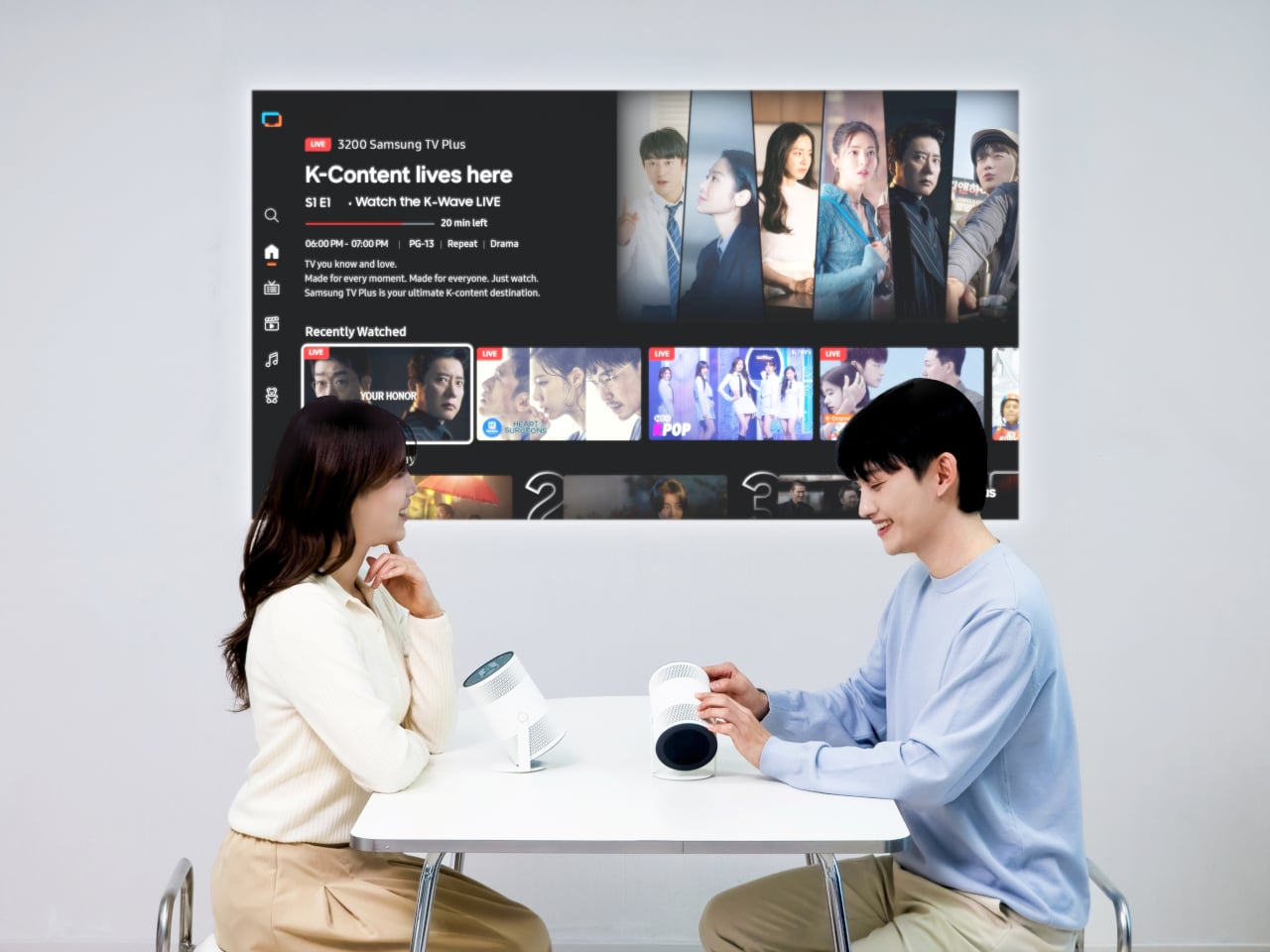
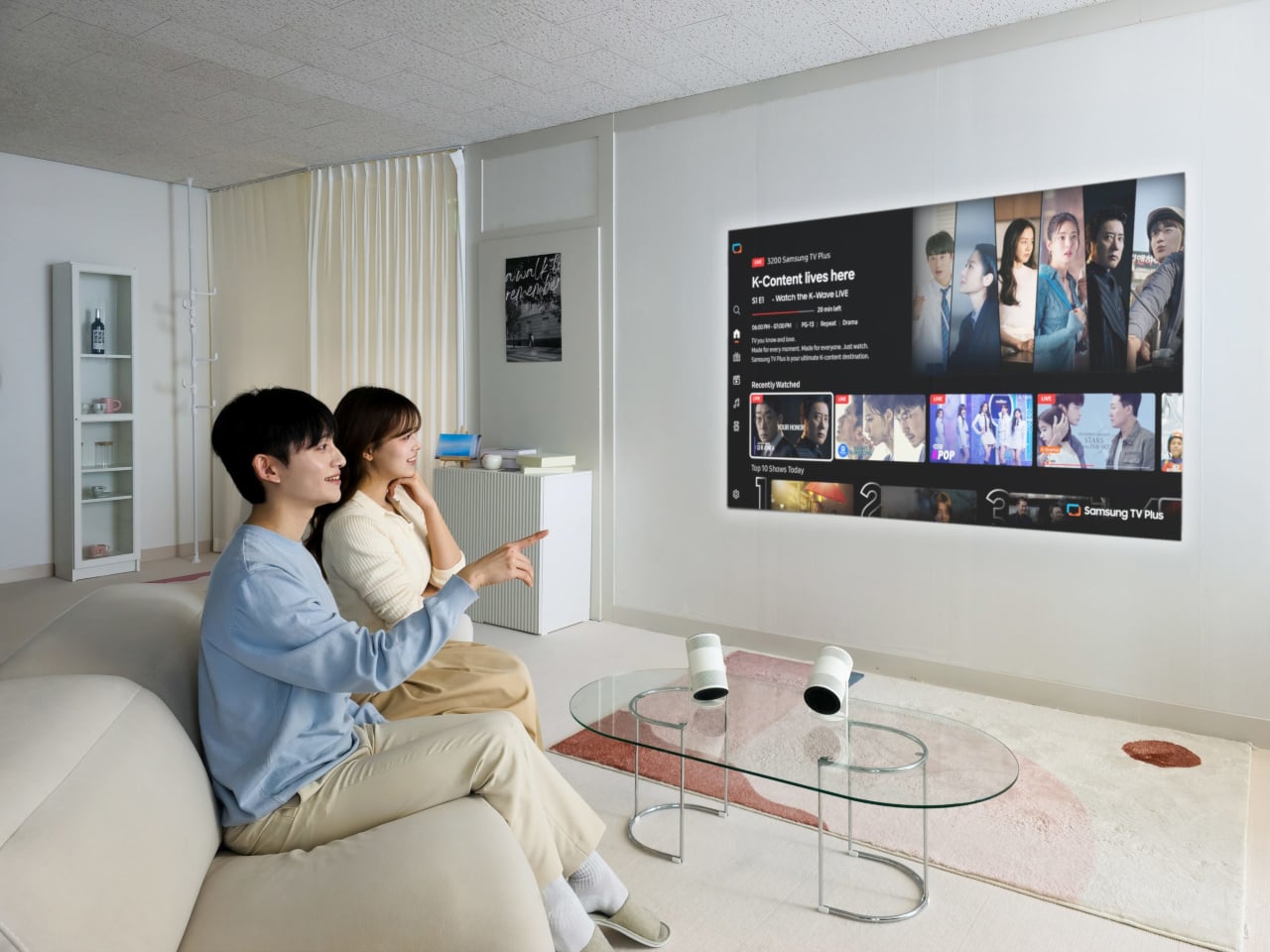
Freestyle+ behaves like a mini Samsung TV, with Samsung TV Plus, major streaming apps, and Samsung Gaming Hub built in. You can stream shows, watch live channels, or fire up cloud games directly from the projector without plugging in a stick or console. For small apartments or casual setups, that means one object can handle movie night and a bit of gaming without a permanent media cabinet cluttering the wall.

Audio comes from a built-in 360-degree speaker tuned for room-filling sound in a compact body. For people already in the Samsung ecosystem, Q-Symphony support lets Freestyle+ sync with compatible Samsung soundbars, layering its own speaker with the bar instead of muting one or the other. That gives you a more cohesive soundstage when you want to treat the projector like a main screen rather than a sidekick.

Freestyle+ makes the most sense as a roaming screen that follows you from bedroom to living room to kitchen, rather than a projector that lives in a dedicated theater. By combining a familiar, speaker-like form with AI setup, brighter output, built-in streaming, and decent sound, it nudges projection closer to the casual, everyday screen Samsung keeps hinting at, instead of something you only use on special occasions when the room is dark enough and the mood feels right for a movie night.

The post Samsung Freestyle+ Turns a Friendly Cylinder into an AI-Assisted Portable Screen first appeared on Yanko Design.
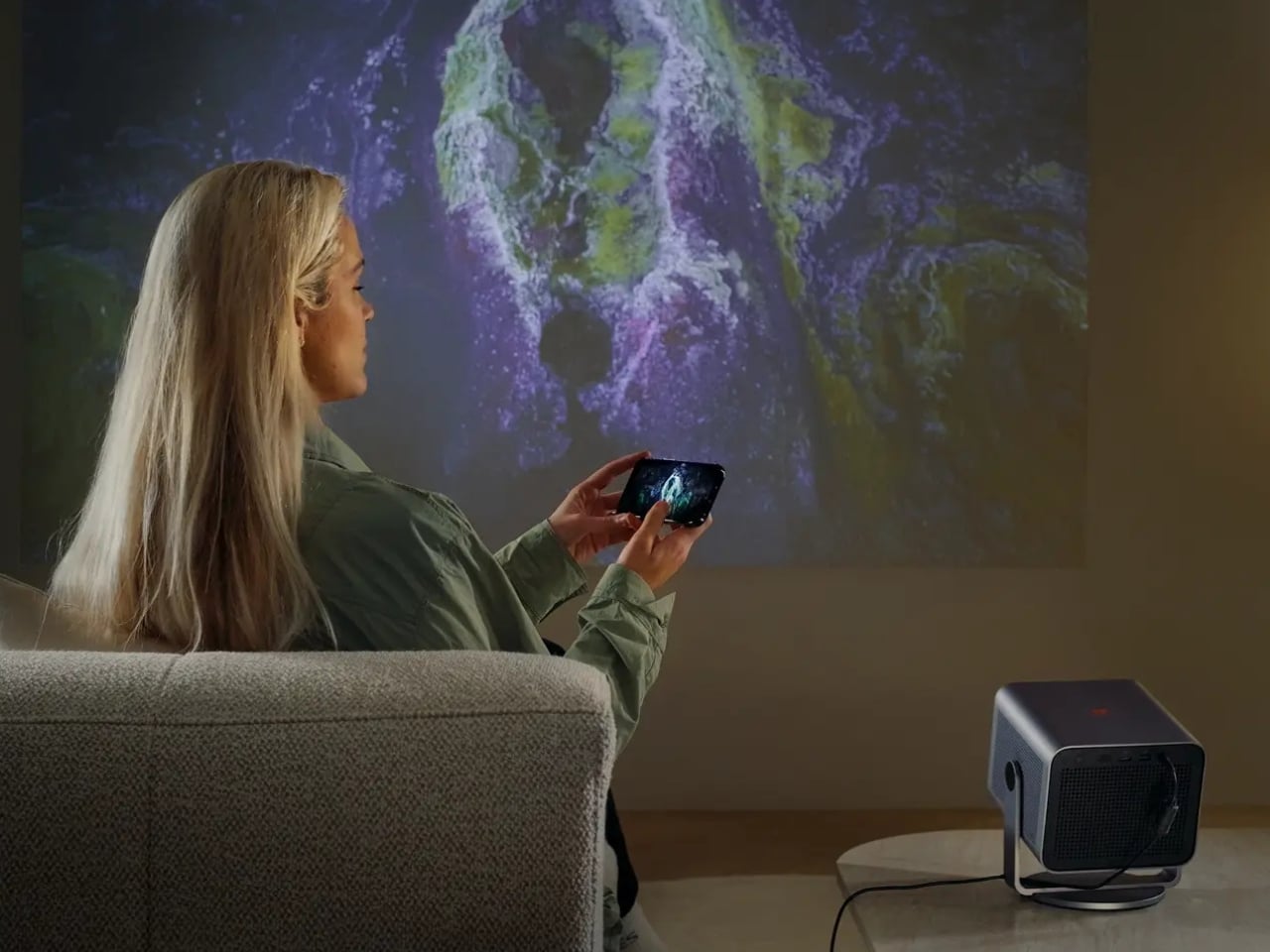
TCL’s $199 Projector Puts a 120-Inch Screen in Any Room (And Costs Less Than AirPods Pro)

Home cinema has never been this affordable. The TCL Projector C1 brings 120-inch screen entertainment to your living room for just $199, making it cheaper than the AirPods Pro, which sounds wild considering one’s a tiny pair of earbuds and the other’s an entire cinema in your house. This isn’t a stripped-down compromise either. The projector packs Google TV, automatic focus, and a built-in battery into a portable package.

What makes this pricing remarkable is the complete feature set TCL has managed to include. Most projectors at this price point require external speakers, lack smart TV capabilities, or need constant manual adjustments. The C1 combines all these essentials in one device. You can set it up anywhere in your home, cast content from your phone, and enjoy Dolby Audio without buying additional equipment. For the cost of a mid-range streaming device, you’re getting an entire home theater system.

Designer: TCL

Click Here to Buy Now

TCL just launched their C1 projector in the UK for £249.99, though Americans get a fairly sizeable price slash of $199. I keep staring at that number trying to figure out where the catch is. You can project a 120-inch image for less than a pair of premium wireless earbuds. A full-size screen that dwarfs even the most absurdly large televisions, available for impulse-purchase money. And there isn’t some limited Black Friday offer anywhere – this is the MSRP on the box.

Obviously they cut corners somewhere. The projector outputs 230 ISO lumens, which isn’t the brightest out there by a fair mile. Yes, you can still watch movies and shows just fine, the only real caveat is that you’ll need absolute darkness – simply drawing one curtain in the afternoon won’t cut it, and watching a game with the lights on may prove to be less than satisfactory – but hey, two hundred bucks. Spend a few more on blackout curtains and you’re good. The LCD panel delivers 1080p natively with 4K support, and you need about 2.5 meters of throw distance to hit that 120-inch maximum.

Google TV comes baked in, which matters more than it should. Most cheap projectors force you to plug in a Chromecast or Fire Stick, adding another $50 and another remote to lose between your couch cushions. Netflix certification means proper app support instead of janky workarounds or browser-based streaming that buffers at the worst possible moments. Auto-focus and keystone correction handle the setup pain points that make most people abandon projectors after one frustrating evening. I’ve spent twenty minutes adjusting focus wheels on projectors that cost ten times this much, so having it happen automatically feels like cheating.

TCL included a 60 Wh battery, which gets you through a two-hour movie without trailing extension cords across your living room. Weighing 1.8 kilograms means you can actually carry this thing around from your living room to your bedroom. The integrated adjustable stand folds into the body instead of requiring a separate tripod purchase, and you can even rotate the C1 to face your ceiling for in-bed entertainment. HDMI and USB-A ports cover the basics, Wi-Fi 5 handles streaming without constant buffering, and Bluetooth 5.1 lets you pair actual speakers because that 8-watt built-in option with Dolby Audio support exists purely for emergencies. Nobody’s watching Dune on an 8-watt speaker and pretending they’re satisfied.

Projectors have always occupied this frustrating middle ground where cheap ones are genuinely terrible and good ones cost mortgage payment money. You either bought a $79 pico-projector that barely functioned or dropped $2,000 on something that required a dedicated room and professional calibration. TCL figured out that most people just want to watch movies on a big screen without taking out a loan or earning an engineering degree. The brightness limitations mean this won’t replace your main TV for daytime viewing, but it turns movie nights into actual events instead of just sitting on your couch scrolling through Netflix for forty minutes. Gaming on a 100-inch screen changes how you experience everything from racing games to sprawling RPGs. Your living room becomes the place where people actually want to gather instead of everyone staring at their phones in different corners.

Two hundred dollars removes most of the decision-making anxiety. You can buy this on a whim and if it doesn’t work out, you’re not crying into your pillow about wasted money. Although, considering TCL’s track record, this one might actually work out to be as good as, if not more reliable than, a 50″ smart TV that may cost 4-5x more.

Click Here to Buy Now

The post TCL’s $199 Projector Puts a 120-Inch Screen in Any Room (And Costs Less Than AirPods Pro) first appeared on Yanko Design.
Honor’s $84 projector supports stylus input and turns any wall into a giant touchscreen

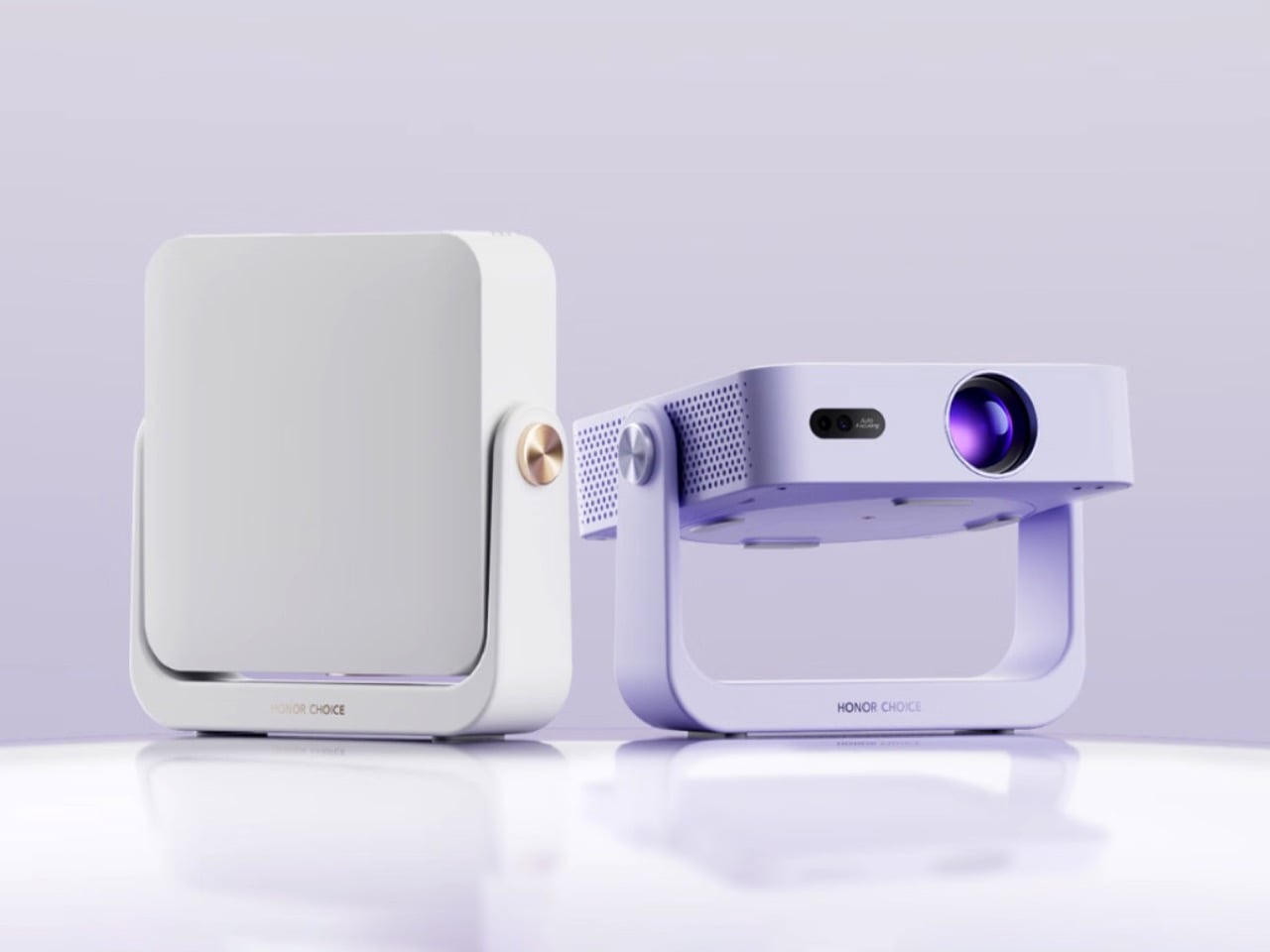
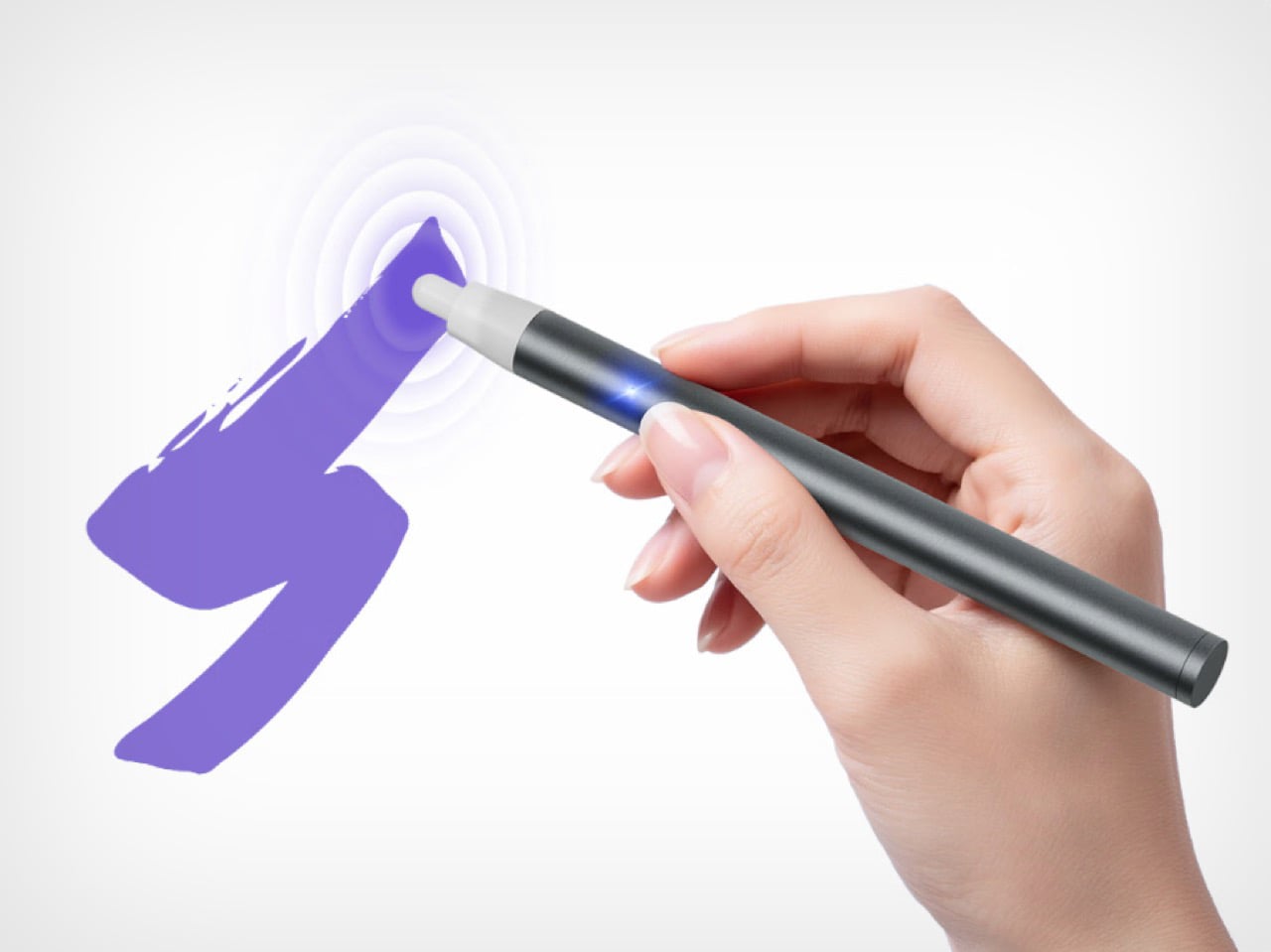
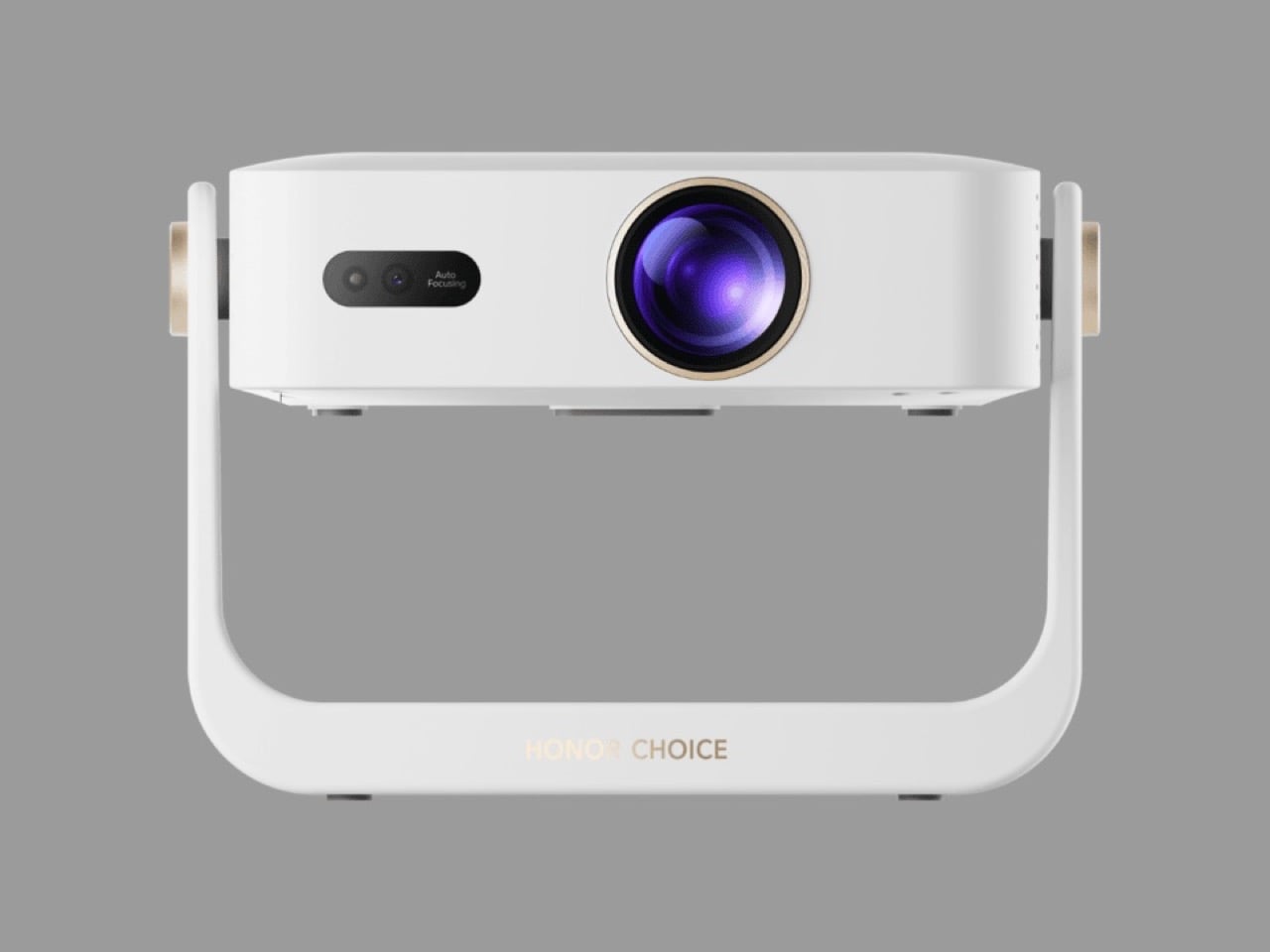
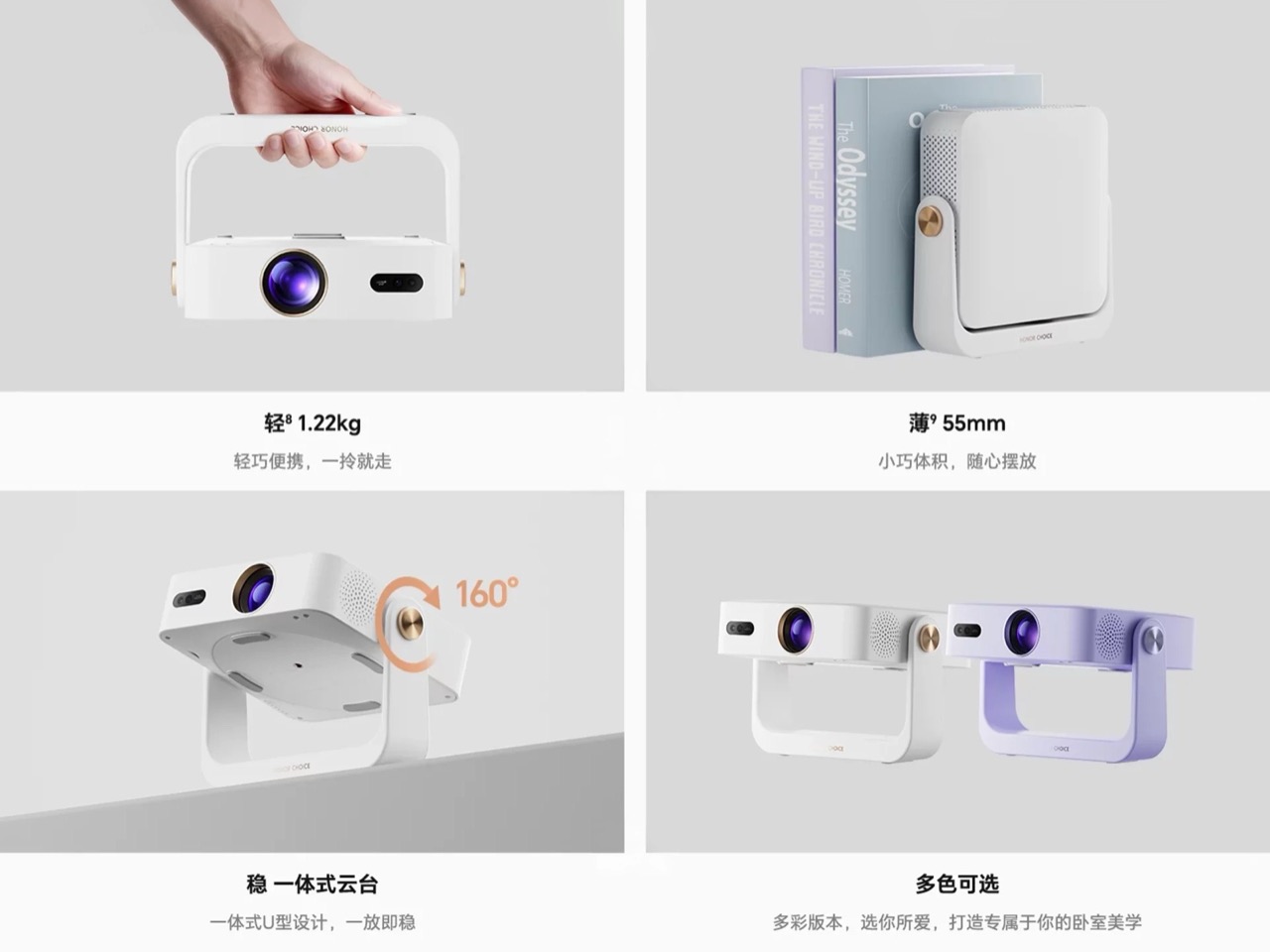
Why sketch on a 15″ tablet when you could draw on a 150″ virtual screen? Honor just announced the Choice AI Projector Air, and it wants to turn your living room wall into the world’s cheapest interactive whiteboard. For 599 yuan (roughly 84 dollars), you get a compact 1080p LCD projector with stylus input, gesture controls, and enough quirks to make it feel less like a home theater device and more like a tablet that escaped its bezels. It ships in China starting December 8 in white and purple, and the spec sheet suggests Honor is betting that interaction matters more than raw brightness at this price.

The basics are straightforward: 1080p resolution, 280 CVIA lumens, Wi-Fi 6, Bluetooth 5.0, HDMI 2.0, and a 5W speaker. The interesting part is what happens when you pair it with the stylus. You can tap UI elements, sketch on the wall, play pen-driven games, or just draw terrible stick figures during game night while your friends yell out Pictionary guesses. The projector also supports gesture controls and can tilt up to 160 degrees, so ceiling projection is on the table. Honor hasn’t said much about tracking accuracy or the software ecosystem yet, but the concept is clear: instead of just throwing pixels at a surface, this thing wants you to interact with them. Whether it pulls that off or just ends up as a novelty feature depends entirely on execution.

Designer: HONOR

This approach is a clever way to sidestep the usual budget projector arms race. Instead of trying to compete in the crowded market of generic streaming boxes that just happen to have a lens, Honor is creating a new niche. The “AI” in the name likely refers to the practical computer vision tasks handled by its Hisilicon chip, powering features like gesture recognition and intelligent image correction for things like obstacle avoidance and keystone adjustments. It is not about generative art, but about making the device smarter and more intuitive to use, which feels like a more honest application of the term in a device this affordable.

Of course, the experience will live or die by its responsiveness. A laggy stylus on a giant screen would be an exercise in frustration, and finicky gesture controls are often more trouble than they are worth. The 280 CVIA lumens rating also means this is strictly a lights-off device, destined for dim bedrooms and movie nights, not sunlit living rooms. But these are acceptable trade-offs for the price. Honor isn’t trying to build a perfect projector; it’s trying to build an interesting one. For about 84 dollars, the company is not just selling a piece of hardware, it is selling a clever, interactive experiment, and that is far more compelling than another anonymous black box.

The post Honor’s $84 projector supports stylus input and turns any wall into a giant touchscreen first appeared on Yanko Design.
World’s First Projection-Based Digital Photo Frame Hits Ceilings

Most of our favorite memories live on tiny screens, buried in albums we never open anymore, or lost in endless camera rolls and grids we rarely revisit. The digital photo frame tried to bring them back into our lives, but always with a border, a size limit, and a sense of separation from the room around it that made memories feel confined and distant rather than integrated.

PixyBeam reimagines what it means to display your moments and the stories they tell about your life and relationships. Instead of a frame that confines images to a fixed size, it uses projection to turn any wall or ceiling into a living gallery, filling your space with the stories, colors, and faces that matter most.

Designer: Innoscend

Click Here to Buy Now: $349 $499 ($150 off). Hurry, only 8/15 left!

Imagine family moments being projected on the ceiling above your child’s bed, family photos drifting across the living room wall during quiet evenings together, or a creative portfolio that turns your studio into a dynamic showcase for clients and collaborators who visit. PixyBeam makes memories part of your everyday environment, blending nostalgia with the present in a way that feels immersive and emotionally present throughout your day.

The device’s minimalist, rounded design with its soft white finish fits anywhere without demanding attention or clashing with your carefully chosen decor and furniture. It sits quietly on a shelf or table until it’s time to bring your space to life. The compact form means you can move it from room to room as your needs change throughout the day or week.

Setting up PixyBeam is as simple as placing it on any flat surface, plugging in USB-C power, and opening the companion app on your phone. Within minutes, your space becomes a living gallery. There’s no need for wall mounts, complicated menus, or learning curves that take hours to master before you can enjoy your first projection. The app lets you upload photos and short clips, organize galleries by mood or event, and invite friends to share moments.

Over 20 animated gallery styles turn slideshows into expressive, moving displays that feel fresh and alive with personality. The app’s dynamic templates let you match the vibe to any occasion, whether it’s a birthday celebration, holiday gathering, or just a quiet evening reflecting on travels and adventures you’ve had. Each style brings personality and movement to your photos rather than simply fading between static images.

With the innovative Guest Share feature, photo sharing becomes an experience, not a chore. A simple scan of a QR code lets friends and family beam their own photos and short clips straight onto your wall, no cables, no accounts to juggle. It’s instant, intuitive, and social: a living gallery that grows with every visit, where everyone contributes to the story unfolding across the room.

PixyBeam’s all-glass short throw lens projects vivid, 1080p images up to 200 inches across, even in small apartments or bedrooms with limited space. The 900 ANSI lumens engine ensures images are bright and clear throughout the day or night, while adaptive color calibration keeps photos looking true-to-life on any wall, whether it’s white, beige, or painted in bold hues you’ve chosen.

Autofocus and keystone correction mean you always get a sharp, perfectly aligned picture with just a tap on the device or through the app without manual fiddling. The 90-degree rotating lens lets you project upward to the ceiling or out across the room without moving the base, adapting to wherever the moment feels right without complicated repositioning or manual adjustments that interrupt the experience.

The magic of PixyBeam is how it dissolves the boundaries between technology and home entirely, making digital memories feel organic and present. A birthday slideshow becomes part of the party atmosphere, vacation photos turn a hallway into a visual travelogue, and creative work finds a new canvas that’s as big as your imagination allows without physical constraints.

PixyBeam’s compact body, soft finish, and zero-hardware setup blend into any decor without permanent installation or visible mounting brackets. The device includes 32GB of internal storage for offline playback, smart home integration via Matter for automation, and intuitive controls that anyone can master immediately. For anyone who wants their home to feel more personal, PixyBeam offers a compelling new way to turn your empty space into a canvas for the moments that matter most.

Click Here to Buy Now: $349 $499 ($150 off). Hurry, only 8/15 left!

The post World’s First Projection-Based Digital Photo Frame Hits Ceilings first appeared on Yanko Design.
Projector and mini-fridge in one concept will solve problems of snackish couch potatoes

If you ask people how they spend their rest days or leisure time, most will probably say go to a mall and shop, meet up with friends, or travel. But there are also homebuddies like me who would say an ideal rest day is consuming media, whether it’s a book, a TV show, a movie, and snacking while doing it. There are products and concepts that will appeal to couch potatoes who love that kind of alone time.

Designer: Changhwi Kim

fits is one such concept that will, well, fit, that kind of lifestyle. Basically it’s a media projector and a refrigerator in one compact device. You will be able to watch whatever your heart desires and if you get snacky (which of course, you will eventually become), then you just have to reach over and get whatever it is you stored in the mini fridge.

The device also has an adjustable height function so whatever position you want to take, you can calibrate it to the perfect position. The product renders show that it looks just like a typical mini fridge but with a projector on top. In theory, you can also connect it to an app that will give you content recommendations and even suggest snacks that will go with it.

While most of the time I will consume media on my phone or tablet while lying in bed, it will of course be more convenient if I had a mini fridge nearby as I’m watching. So this will probably be marketable for people like me.

The post Projector and mini-fridge in one concept will solve problems of snackish couch potatoes first appeared on Yanko Design.
Beam projector concept designed for daddy-kids bonding time

When you look at products in the market that are meant for parent-child bonding, it can be a little skewed towards mothers. But of course most fathers also want to spend quality time with their kids, especially with activities like camping or being in the outdoors. This product concept comes out of that idea for some “emotional” bonding between dads and their kids, but can also be used by any parent, regardless of gender.

Designer: Kim Taeyeon

Key_Story (or Key-Story, which are both indicated in the concept page) is a concept for a beam projector that you can take along to your camping trip or to any outdoor activity. It is meant to foster an emotional, bonding moment between father and children by watching videos projected on a surface. We assume that you need a wall or a cloth to project of course.

The device is designed to look like a robot and has bright colors in order to attract the attention of the kids, especially the younger ones. The top part, which looks like the robot head, is the beam projector and the bottom part is the speaker for “vivid sound”. The package will supposedly come with three Keys that have different content available. You touch the key to the top of the projector to view the videos.

There’s also USB and Bluetooth connectivity in case you have your own video content and you can charge the projector on a C-type port. The two parts have “free movement” because of magnets which should make kids more interested to operate it, but hopefully not break it.

The post Beam projector concept designed for daddy-kids bonding time first appeared on Yanko Design.
Transform Your Home Cinema Experience with Valerion VisionMaster Long-Throw Projectors

Imagine turning your living room into a jaw-dropping cinema or the ultimate gaming arena with just one device. With the game-changing Valerion VisionMaster Series, available in Max and Pro 2 models, that dream is now a reality. These cutting-edge projectors don’t just enhance your entertainment — they revolutionize it. Gone are the days when you had to compromise on quality or size for big-screen experiences at home. Whether you’re hosting a movie night with friends, leveling up in your favorite video game, or binge-watching your latest obsession, the VisionMaster series transforms every moment into an extraordinary event. Offering dazzling visuals, stunning sound, and smart home integration, these projectors are designed to make your home the epicenter of unforgettable entertainment experiences.

Designer: Valerion (sister brand of AWOL Vision)

Click Here to Buy Now: VisionMaster Max at $2199 $3999 (45% off). VisionMaster Pro 2 at $2099 $3499 (40% off). Hurry, deal ends soon! Raised over $1.5 million.

Picture this: Vivid, crystal-clear projections stretching up to an enormous 300 inches, or 25 feet, right in your own home! The Valerion VisionMaster, from the brilliant minds behind AWOL Vision, makes this dream a reality with its dazzling 3,000 ISO lumens triple laser projector technology. As the World’s First Lifestyle Projector armed with a professional OptiFlex lens system, the Valerion VisionMaster Pro 2 boasts a 0.9-1.5 throw ratio and optical zoom adjustment that’s great for both small and large spaces. With Vertical Lens Shift and Dynamic IRIS (only available on the VisionMaster Max), the projector adjusts to your needs, not the other way around. The native 4000:1 contrast is already a cut above the rest in the industry, but thanks to Valerion’s exclusive Enhanced Black Level technology, the VisonMaster series delivers a dynamic contrast ratio of 15000:1 for rich black tones that truly makes the brightest spots even brighter.

The first lifestyle projector to feature a professional-grade OpticFlex lens system, powered by the cutting-edge AI-SoC MT9618.

Armed with an RGB triple laser light source and a brilliant 110% Rec. 2020 wide color gamut, it transforms any room into an immersive, cinema-grade haven. Whether it’s an epic movie night, an intense gaming session, or a weekend of binge-watching your favorite shows, the VisionMaster has you covered.HDR 10+ and Dolby Vision support ensure mind-blowing colors and sharp, vivid detail, while IMAX-Enhanced and Filmmaker Modes bring the magic of the big screen to your home. And the audio? It’s simply out of this world. With dual DTS Virtual:X speakers, the Pro 2 delivers immersive sound packed with deep bass and crystal-clear highs.

Say goodbye to multiple remotes and complicated setups, and control the projector with the power of your voice. The VisionMaster is powered by the innovative AI-SoC MT9618 chipset and seamlessly integrates with smart home systems like Apple HomeKit, Google Home, and Amazon Alexa. Even better, the Valerion VisionMaster is Google TV OS streaming certified, offering wireless access to Netflix, Hulu, HBO, Disney+, and a plethora of other services. You can also easily share fond photos or hilarious videos from your phone or tablet using Apple AirPlay, Miracast, or Chromecast. The VisionMaster Series is also packed with smart features that make it effortless to set up and use, from autofocus to auto keystone correction to automatic obstacle avoidance.

But wait, there’s more! The VisionMaster offers ultra-low 4ms input lag and a blazing-fast 1080p 240Hz rate that will keep gamers on the edge of their seats. High-bandwidth HDMI 2.1 inputs also ensure compatibility with the latest gaming consoles. The VisionMaster is more than just a projector: it’s a full-blown cinematic experience and entertainment hub that hits all the right notes.

All these powerful features are packaged in a design that is sleek, distinguished, and durable. With 14 electroplated metal strips, the VisionMaster can endure up to 100kg of pressure. This structure not only provides superior strength but also gives the projector a distinctive modern aesthetic that will surely capture the attention and envy of everyone. So why settle for the ordinary when you can experience the extraordinary? With the Valerion VisionMaster Pro 2 arriving in December 2024 and the VisionMaster Max coming in May 2025, you can step into a world of entertainment and adventure, day or night, and take your home cinema experience to new heights.

Click Here to Buy Now: VisionMaster Max at $2199 $3999 (45% off). VisionMaster Pro 2 at $2099 $3499 (40% off). Hurry, deal ends soon! Raised over $1.5 million.

The post Transform Your Home Cinema Experience with Valerion VisionMaster Long-Throw Projectors first appeared on Yanko Design.
JMGO’s N1S Ultimate Could Make Your TV Obsolete: The Future of Home Projection at IFA 2024

At IFA 2024, it became clearer than ever: traditional TVs might be yesterday’s news. As home theaters evolve, the focus is shifting from bulky flat screens to sleek, powerful projectors that deliver a true cinematic experience right in your living room. The days of settling for a fixed screen size, limited by where you can hang a TV, are being replaced by projectors that offer flexibility, portability, and, thanks to innovations like 4K laser technology, image quality that rivals—and in some cases surpasses—what any high-end TV can deliver.

Projectors have come a long way from the dim, pixelated displays many still associate with them. Today’s models, especially those from companies like JMGO, are becoming the go-to choice for those looking to upgrade their home entertainment setups. Whether you’re a movie buff, gamer, or just someone who wants a more immersive experience, projectors have quickly gained ground. They offer more screen for your buck, and when it comes to high-definition, they’re not cutting any corners.

That was the vibe at IFA 2024 when JMGO introduced the N1S Ultimate 4K and N1S Pro 4K projectors—both packed with features designed to take advantage of this projector renaissance. Powered by their patented MALC™ 2.0 Triple Laser Optics technology, these devices prove that projectors aren’t just an alternative to TVs anymore—they might just be the future of home entertainment.

Designer: JMGO

A Deep Dive into MALC™ 2.0 Technology

One of the key highlights of the N1S Ultimate is JMGO’s proprietary MALC™ (Multi-Layer Adaptive Laser Control) 2.0 Triple Laser Optics. According to JMGO, the typical trade-off in laser projection—where increasing brightness tends to compromise color accuracy and contrast—has been successfully tackled through MALC 2.0. This system delivers exceptional brightness without sacrificing visual quality, offering users a seamless experience.

The N1S Ultimate 4K projector is capable of producing a whopping 3500 ANSI lumens, which ensures vivid picture quality even in environments with high ambient light. Coupled with a 1600:1 contrast ratio and 110% BT.2020 color coverage, the N1S Ultimate is designed to deliver stunning visuals that don’t lose their luster in less-than-ideal lighting conditions. With an ∆E (Delta E) of less than 1, the color accuracy is spot-on, ensuring faithful reproduction of even the most subtle shades. This combination of brightness, contrast, and color precision makes the N1S Ultimate ideal for both daytime viewing and cinematic experiences.

The JMGO N1S Pro (left) versus JMGO N1S Ultimate (right)

N1S Ultimate vs. N1S Pro: What Sets Them Apart?

While both the N1S Ultimate and N1S Pro share JMGO’s MALC™ 2.0 technology, there are notable differences between the two models that will help users decide which one fits their needs better. The N1S Pro, positioned as a more budget-friendly option, offers 2400 ANSI lumens, compared to the 3500 lumens of the Ultimate. This difference in brightness may be a key factor for users who need a projector for bright rooms or daytime use.

However, both projectors maintain the same level of contrast (1600:1) and color performance, which speaks volumes about JMGO’s commitment to delivering a high-quality experience across their product range. Whether you choose the Pro or the Ultimate, you’ll get stunning visuals with a ∆E of less than 1 and 110% BT.2020 color accuracy, which ensures rich, lifelike images.

Versatility in Every Direction: The Iconic Gimbal

One feature that sets the JMGO N1S series apart is its integrated gimbal design, first introduced in 2022. This allows the projectors to pan 360 degrees and tilt 135 degrees, making it incredibly easy to adjust the projection angle. Whether you want to project on the ceiling for a laid-back movie night or angle it toward a wall to create an impromptu gaming setup, the gimbal provides exceptional flexibility.

This design also adds a futuristic touch to the device, setting it apart from conventional projectors that require cumbersome setups or fixed installations. JMGO’s emphasis on creating a portable and versatile entertainment device shines through in the N1S Ultimate, positioning it as an ideal choice for users who value both style and functionality.

A New Kind of Home Entertainment Ecosystem

Beyond the hardware, JMGO has integrated Google TV into both models, providing access to a wide range of streaming services, including certified options like Netflix. This makes the N1S projectors a true all-in-one entertainment solution—no external streaming devices are needed. Whether you’re watching a movie, streaming a TV series, or projecting a home video, everything is seamlessly managed from the projector itself.

Pricing and Availability

Both the N1S Ultimate and N1S Pro are now available on Amazon in the U.S. and across Europe, including Germany, France, Italy, and Spain. The N1S Ultimate 4K is priced at $2,799 in the U.S. and €2,999 in Europe, while the N1S Pro 4K comes in at $1,999 or €2,299, offering a more affordable option for those who don’t require the full brightness of the Ultimate.
The post JMGO’s N1S Ultimate Could Make Your TV Obsolete: The Future of Home Projection at IFA 2024 first appeared on Yanko Design.