Huawei Finally Fixed the One Flaw That Followed Its Tri-Fold Phone

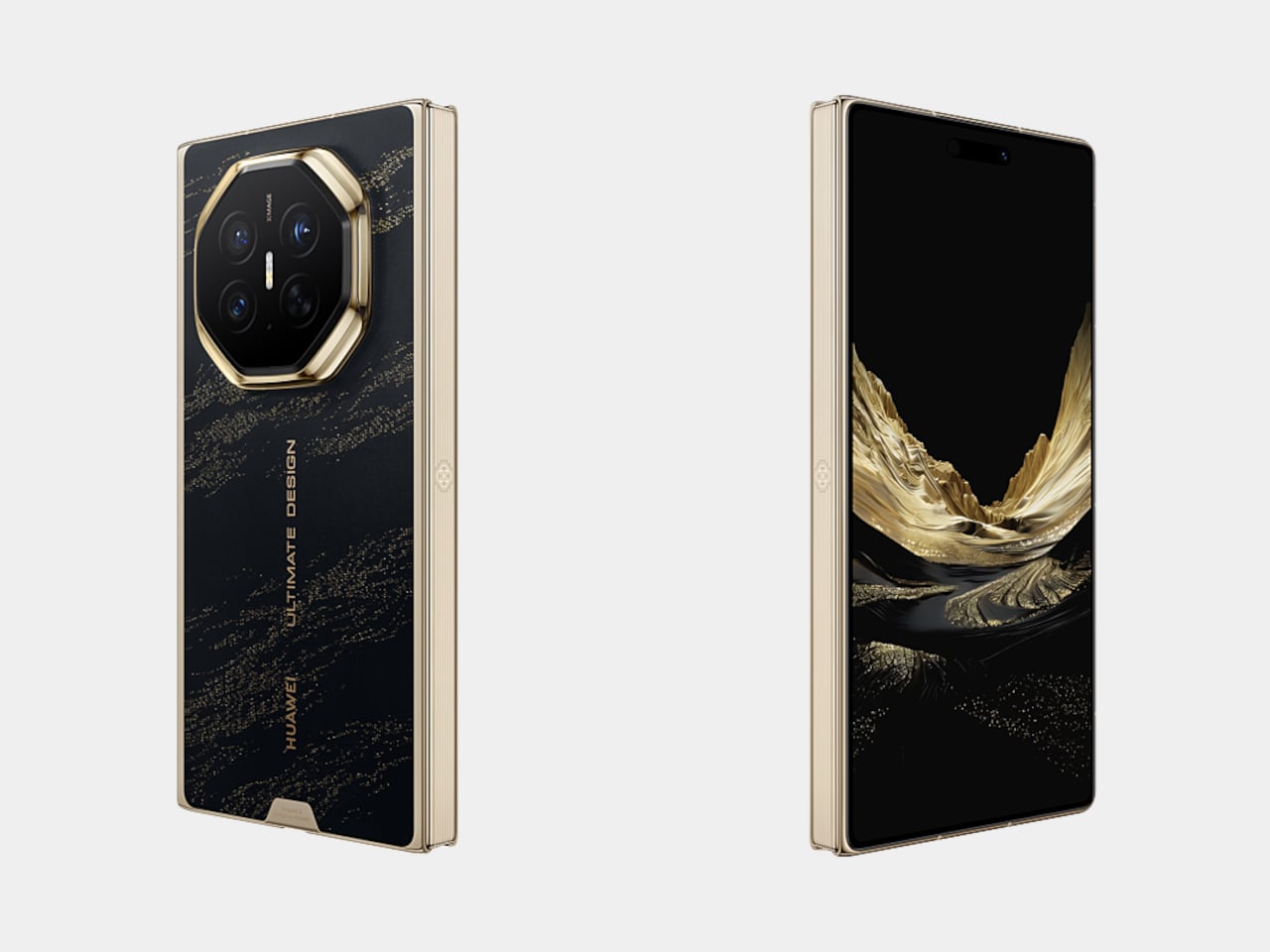
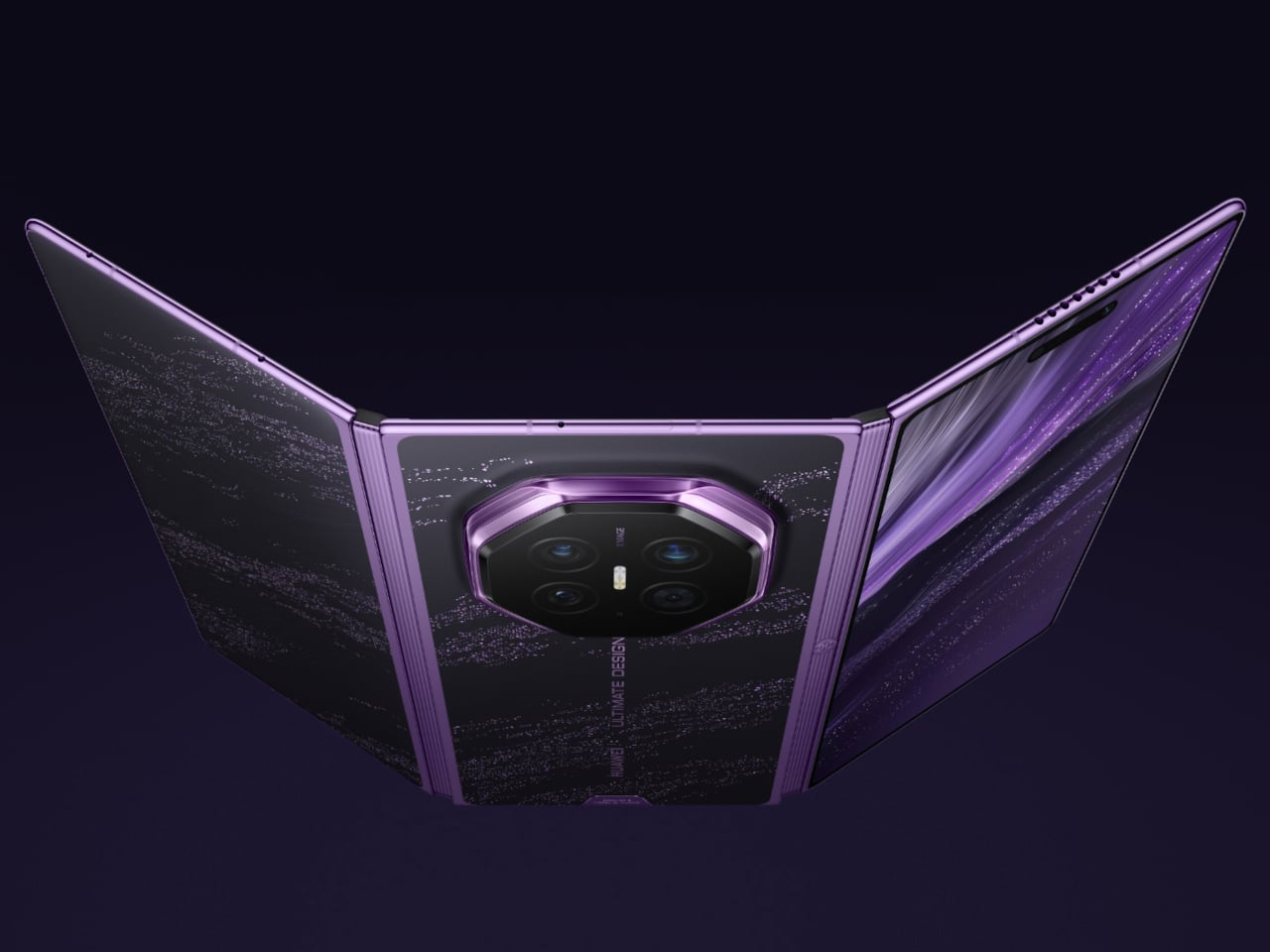
Huawei’s original tri-fold phone made headlines for unfolding into a tablet, but closing it back down left one part of the flexible screen exposed to scratches and pocket grit. The Mate XT 2 Ultimate Design fixes that flaw at the architecture level, not with a case. Instead of the old zigzag fold, a new wing-style hinge tucks both sides of the screen inward, so every part of the display faces itself once it’s closed.

That trick rests on a second-generation hinge system built around a dual-axis wing structure and an industry-first connecting-rod synchronization mechanism, keeping both folding axes moving in perfect step. The load-bearing core uses 2,400 MPa steel arranged in a five-arm arc, an upgrade that pushes overall impact resistance up 100 percent and drop resistance up 90 percent compared to the outgoing model.

Designer: Huawei
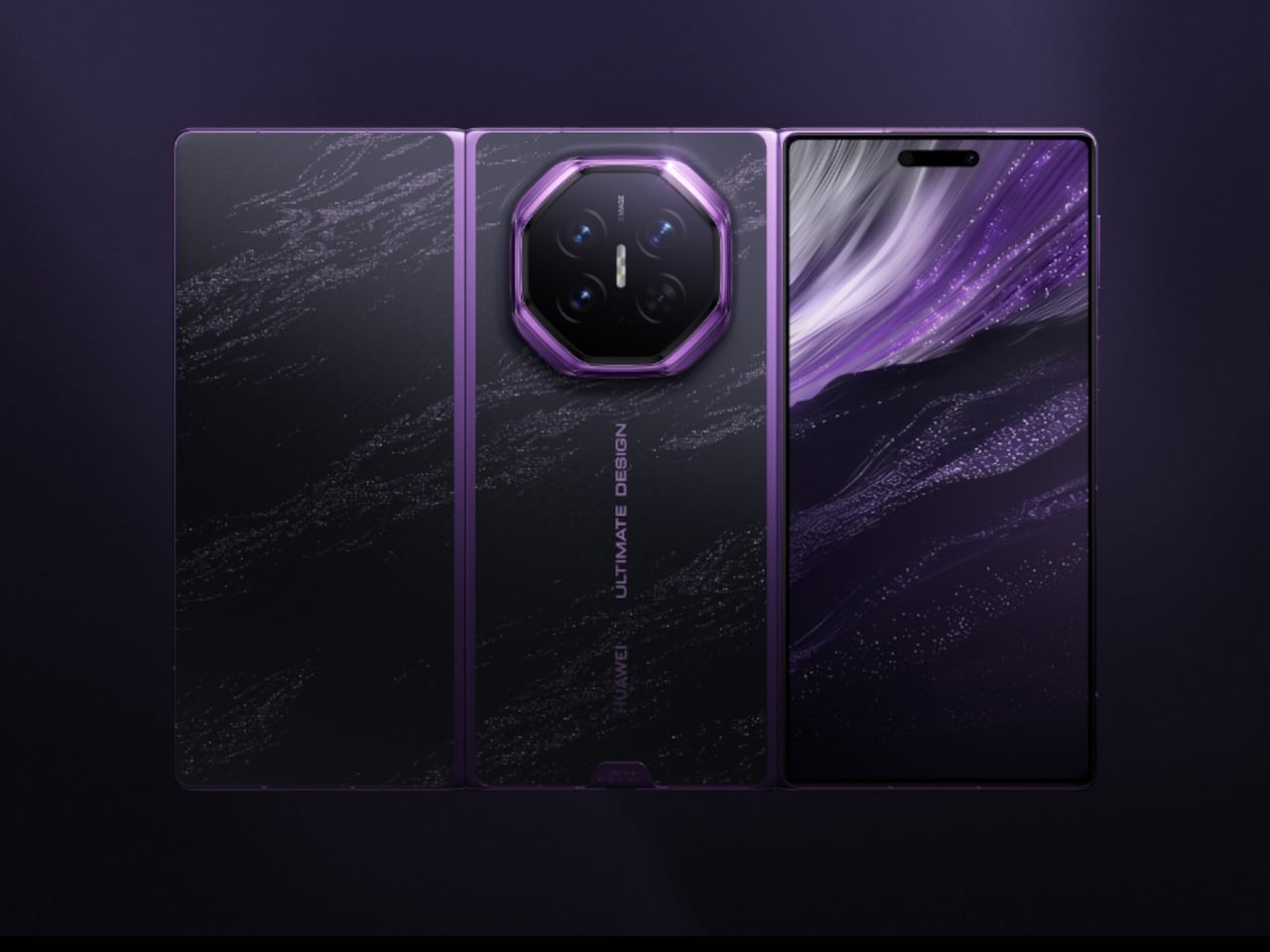
Unfold it fully, and a 10.2-inch 3K OLED panel spreads out at a 90Hz refresh rate, easily the largest screen tri-fold owners have gotten yet. Keep it folded and a 6.5-inch cover display takes over instead, running at 120Hz with peak brightness reaching 6,500 nits. Switching between the two feels less like opening a phone and more like choosing between a notebook and a full tablet.
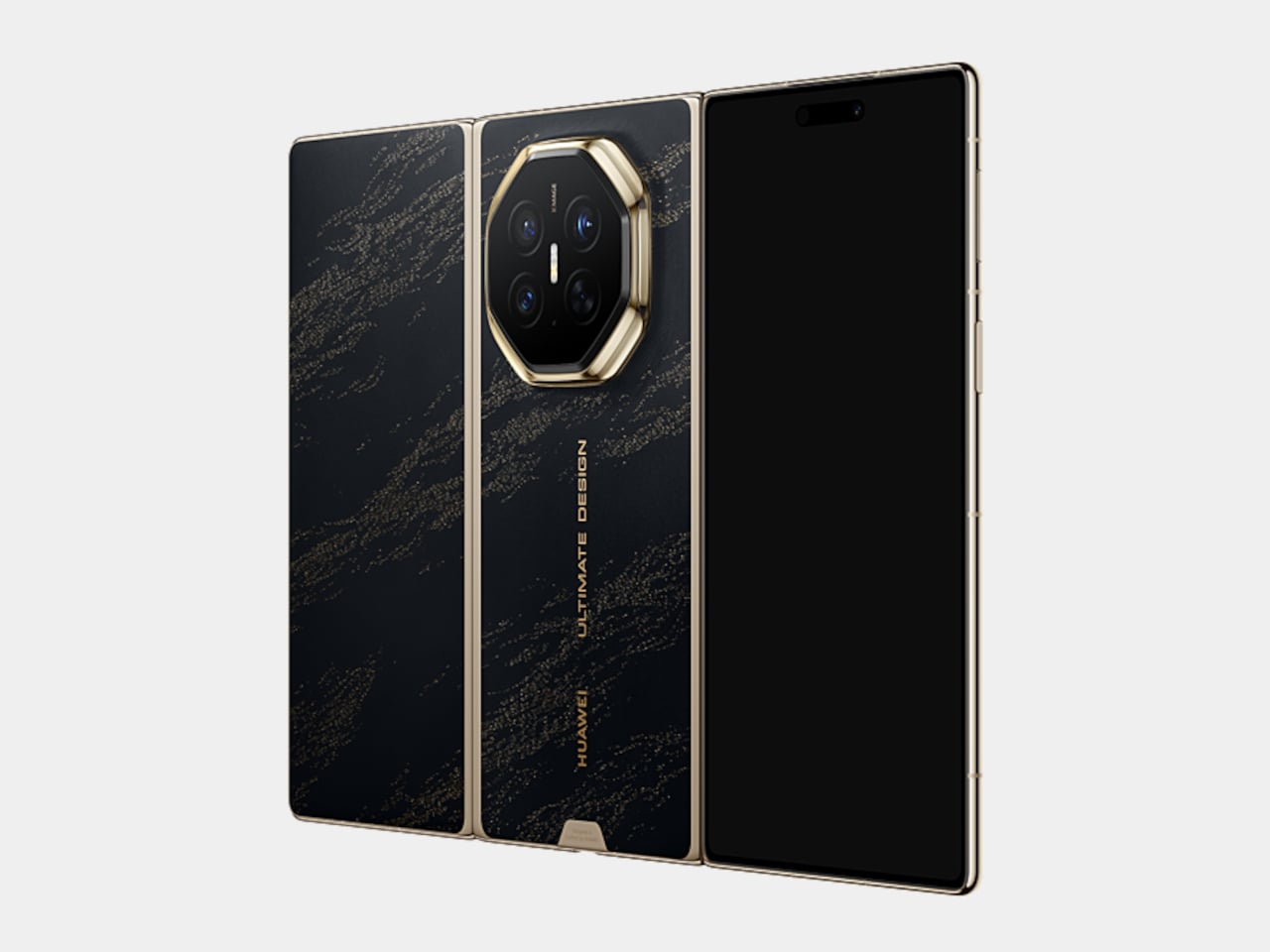
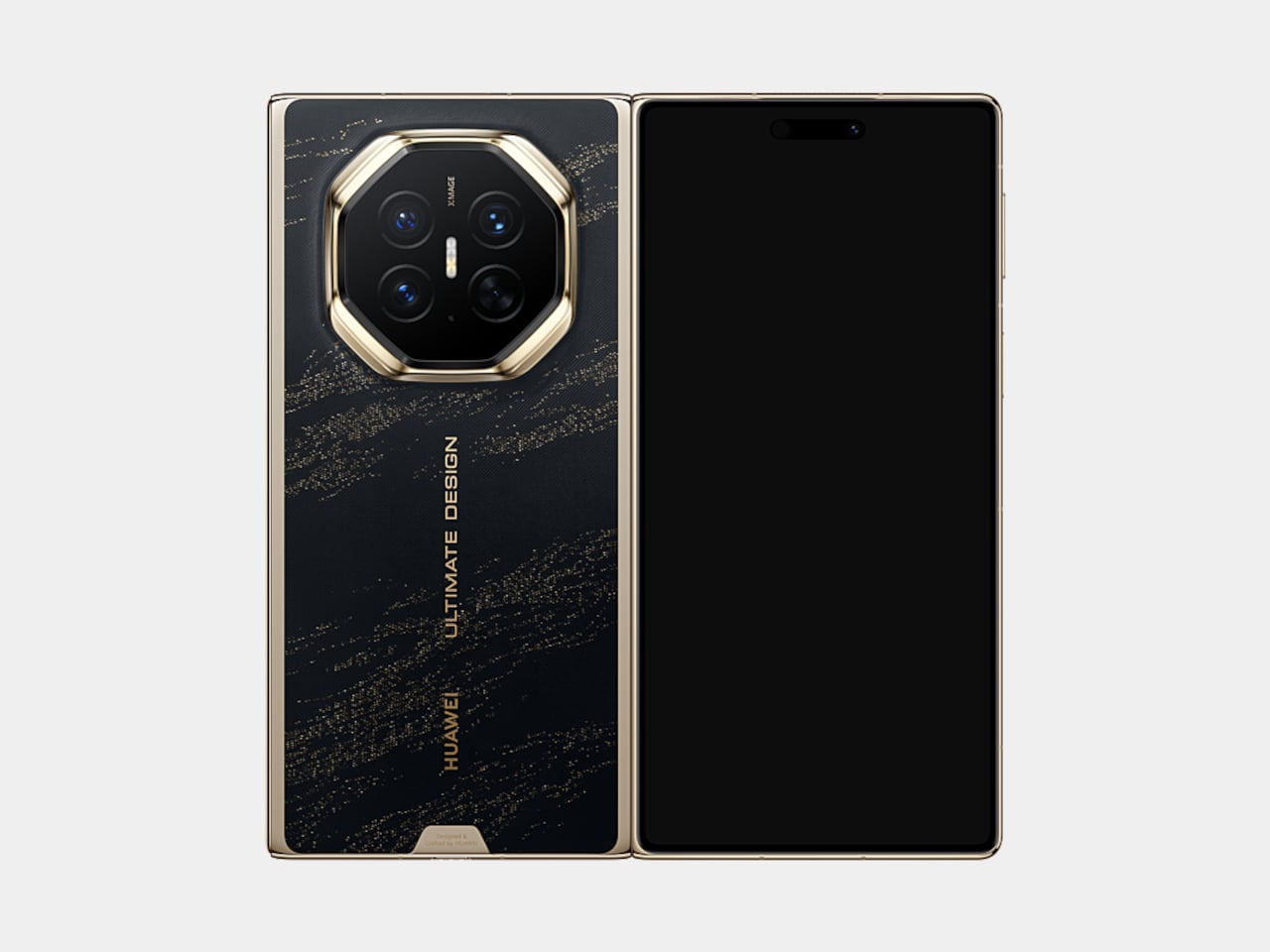
A hardware privacy mode sits at the center of that inner display too, using an independent dual-pixel design that narrows the viewing cone from the sides while keeping the view sharp head-on. A double tap on the cover screen or a dedicated shortcut key switches it on, so a crowded train seat or an open-plan desk doesn’t turn into a screen-sharing session anyone asked for.

Protection extends to the materials themselves. The cover glass gets a Kunlun treatment that survives 30 times more drops and 16 times more scratches than ordinary glass, while the inner screen layers ultra-thin aerospace-grade steel and carbon fiber beneath the display for 200 percent better impact resistance. Over 120 sealing points across the body also make this the first tri-fold rated IP58 and IP59 for dust and water.
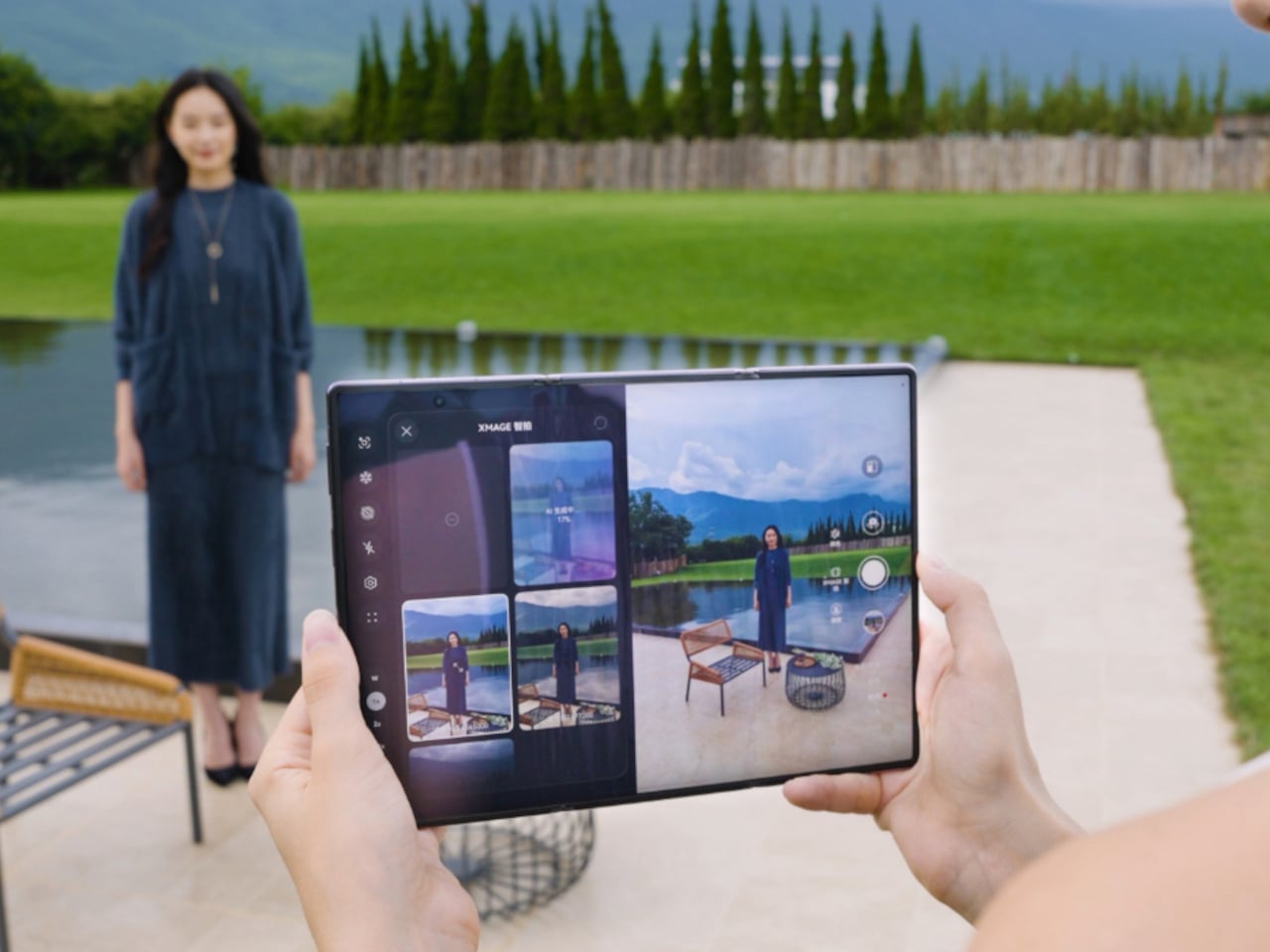
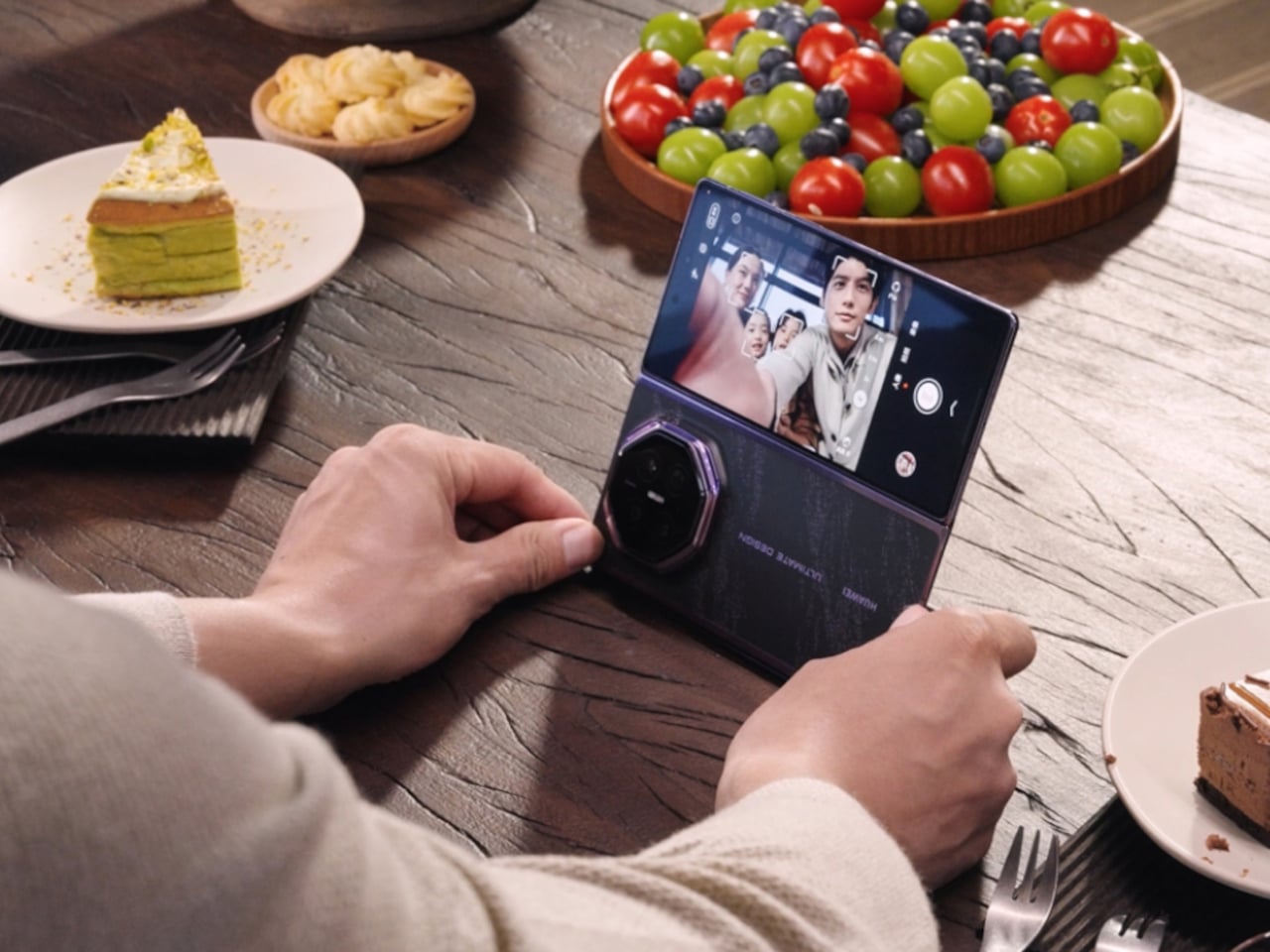
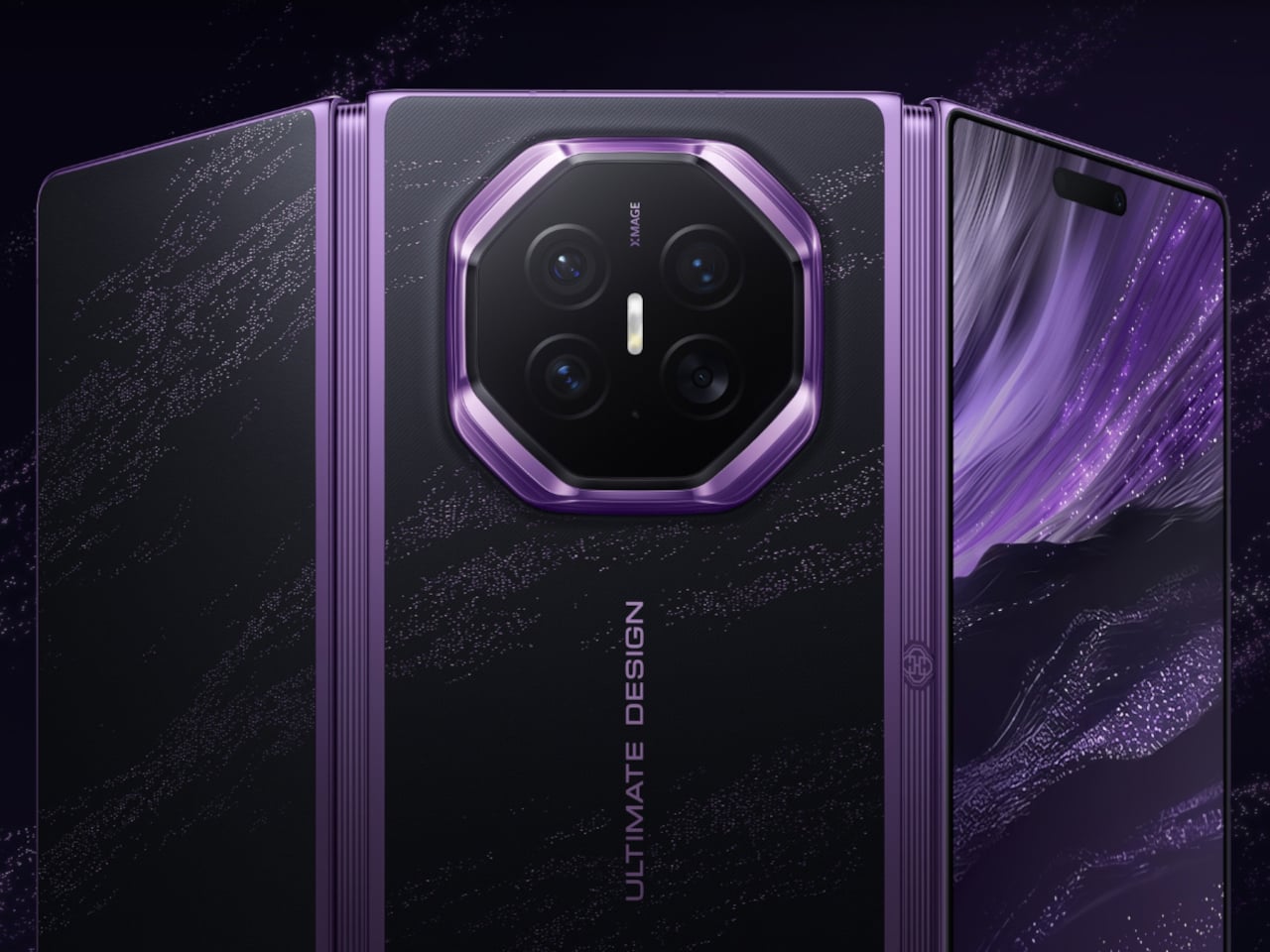
The rear camera module carries the distinctive octagon shape that Huawei’s flagships have been sporting for quite some time now. Underneath sit a 50MP main sensor with a variable aperture, a 40MP ultra-wide lens, and a 50MP periscope telephoto capable of 100x digital zoom. A third-generation color engine tunes the results for tones that hold up without heavy editing.
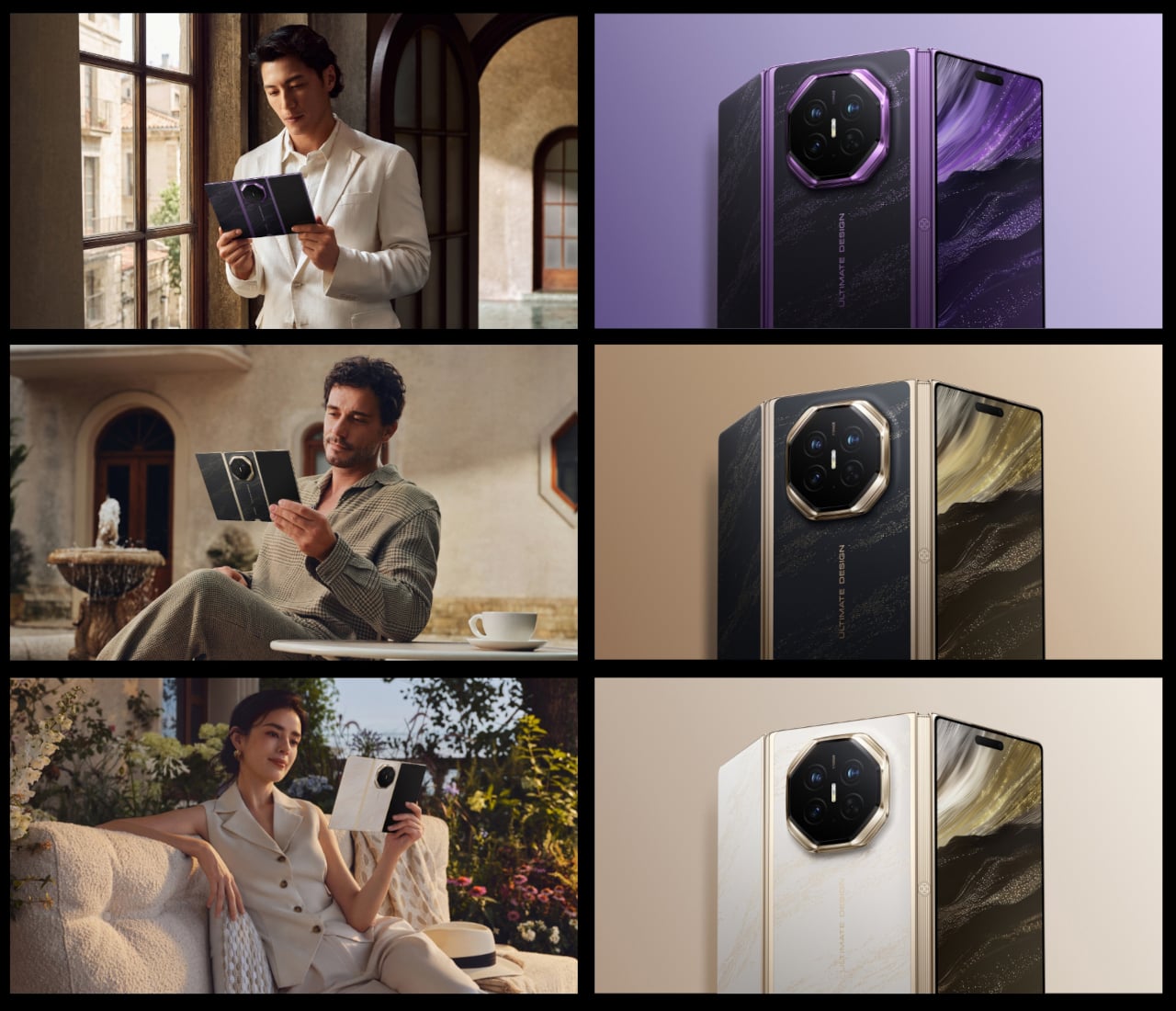
Powering all of it is the Kirin 9050 Pro, built on Huawei’s LogicFolding architecture rather than a conventional layout, which the company says raises transistor density by 53.5 percent and clock speeds by 12.7 percent. HarmonyOS 7 takes advantage of the extra room by running three apps side by side on the unfolded display, treating the tri-fold shape as a genuine workspace instead of a novelty.

None of this bulks up the phone the way its spec sheet suggests. A 5,600mAh battery charges at 66W over a cable or 50W wirelessly, and the whole device still folds down to 12.3mm while weighing 299 grams. Pricing starts at CNY 19,999 (approximately $2,800) in China, climbing to CNY 29,999 (approximately $4,200) for the privacy-screen version bundled with a stylus.
The post Huawei Finally Fixed the One Flaw That Followed Its Tri-Fold Phone first appeared on Yanko Design.

This Paper Pet Made of 400+ Circles Actually Moves When You Touch It

We live in a society where it seems like everything around us has to be functional. Every gadget needs an app, every object needs a purpose, and every purchase has to justify itself with a to-do list. But sometimes, you just need something that’s beautiful, well-made, and yes, still serves a role in your life, no matter how small or simple that role might be. In this case, an item made entirely of paper relieves stress and offers a fun, soothing sense of calm in the middle of a busy day.

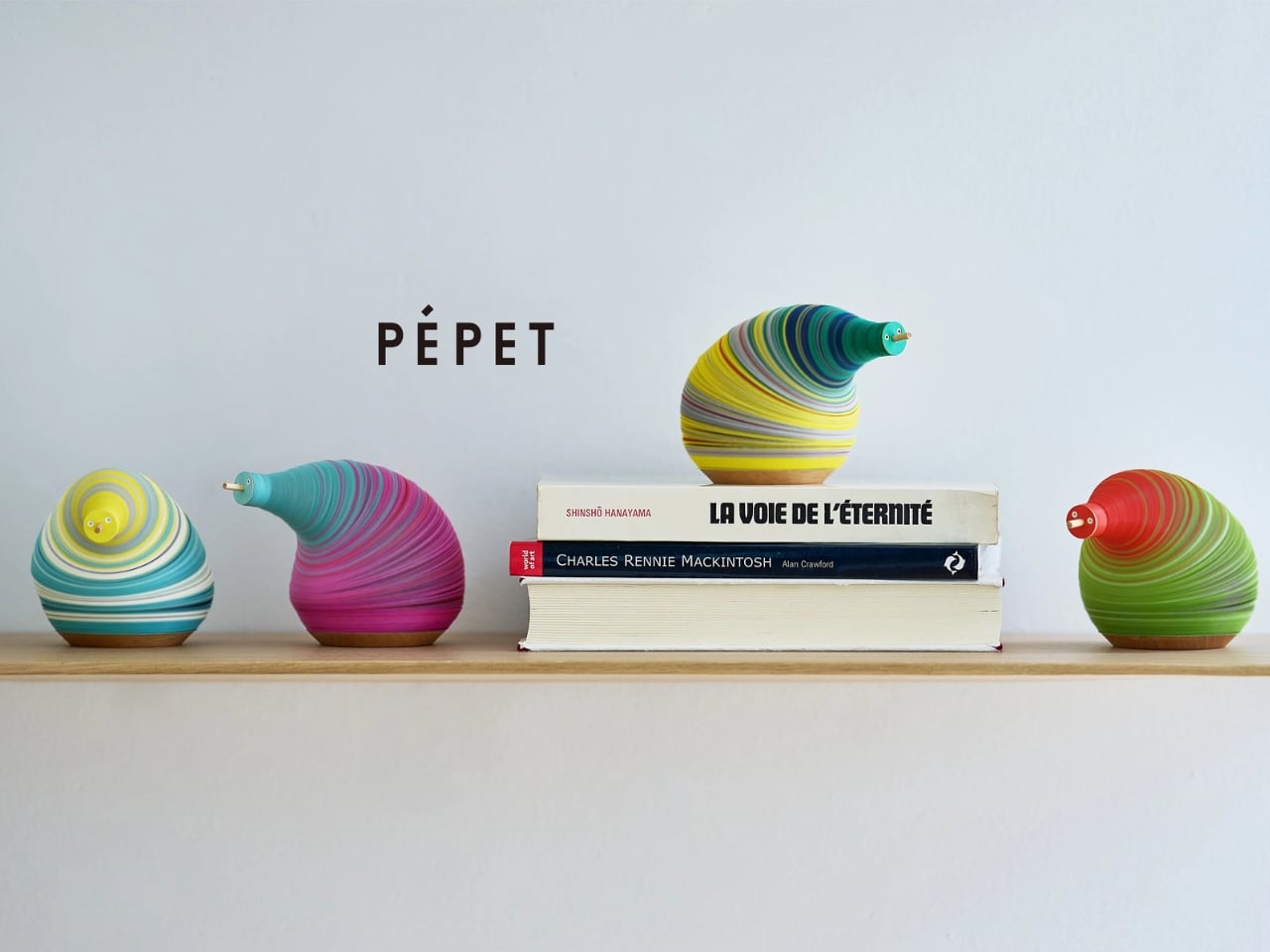
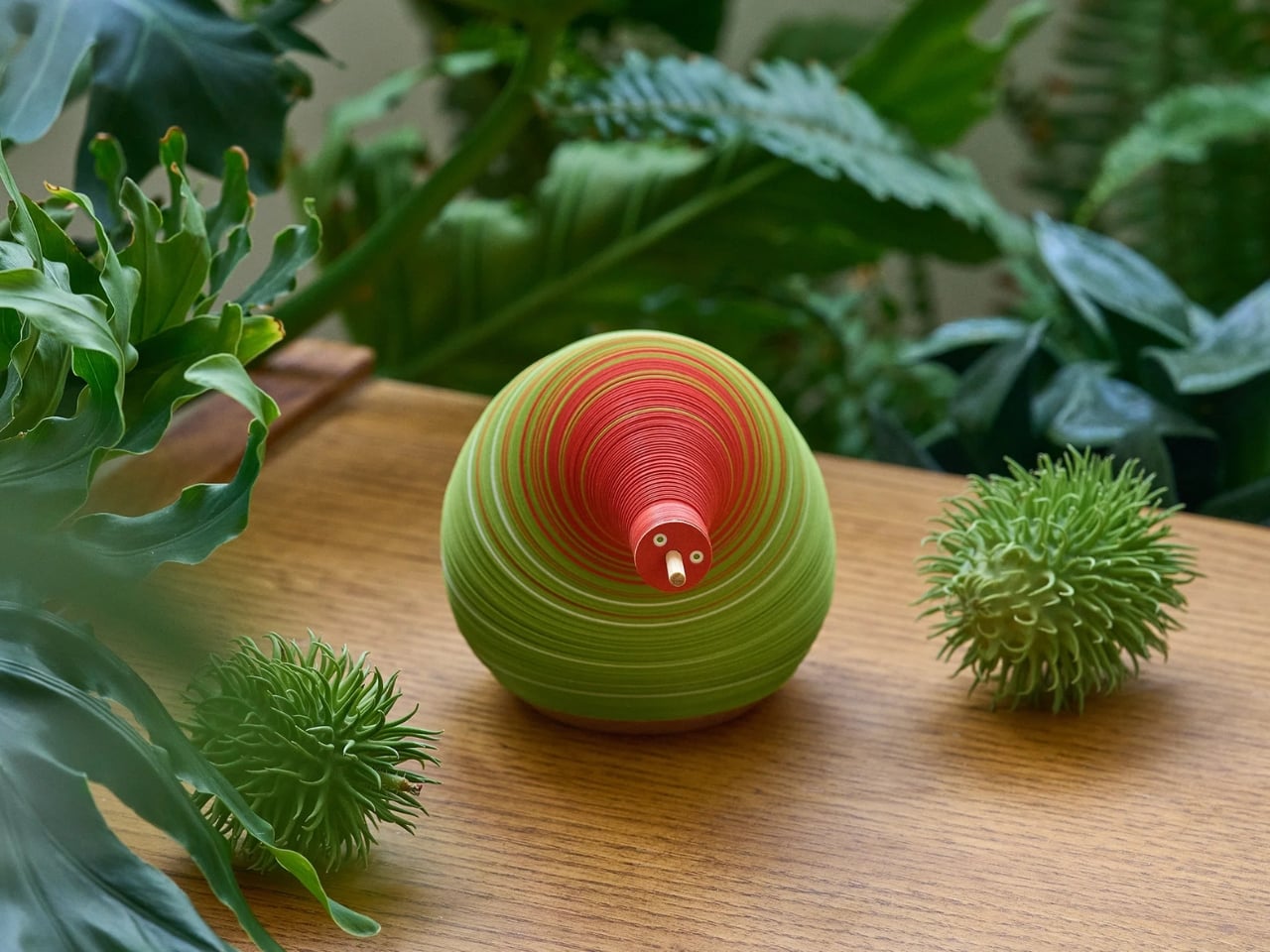
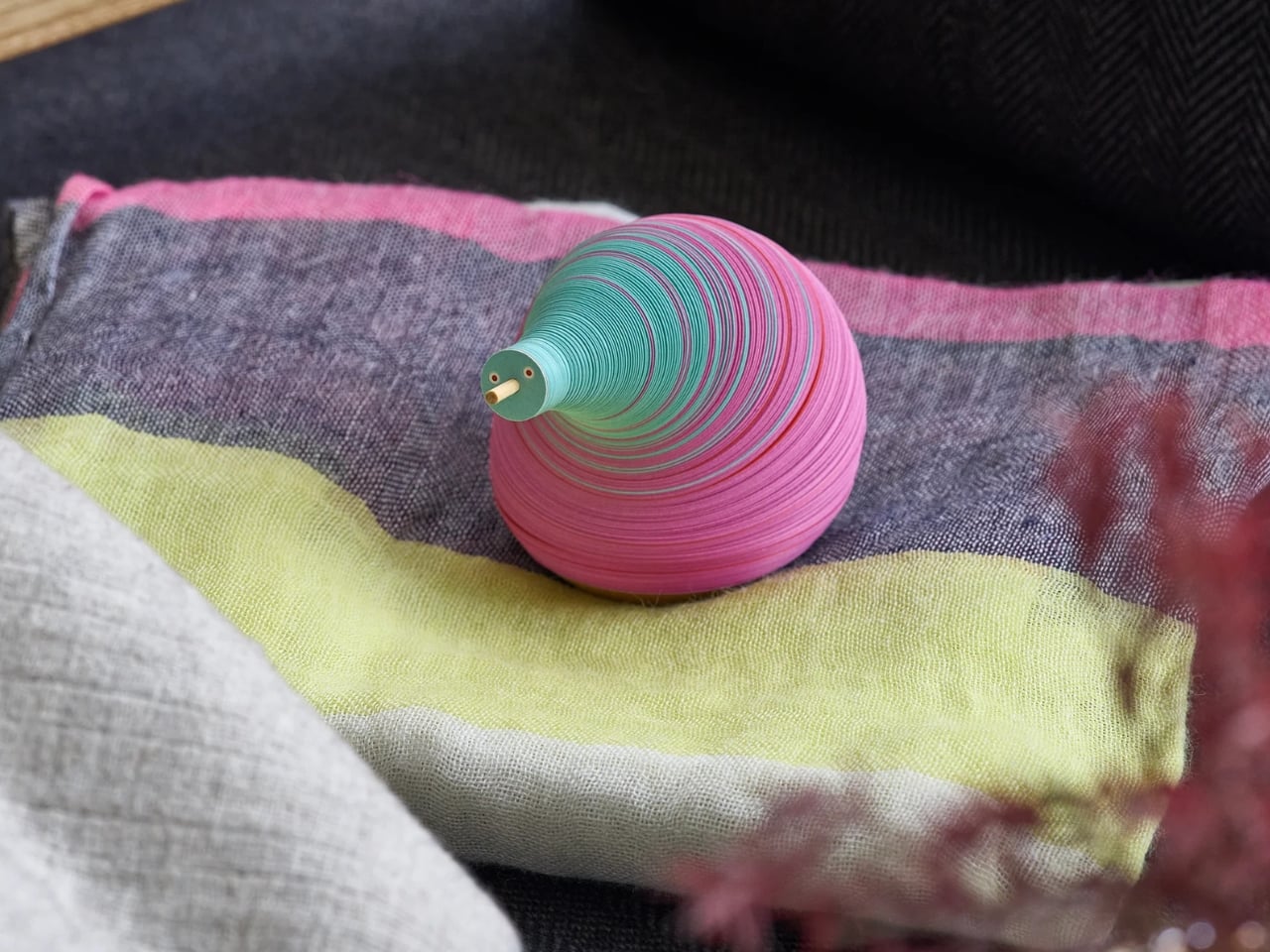
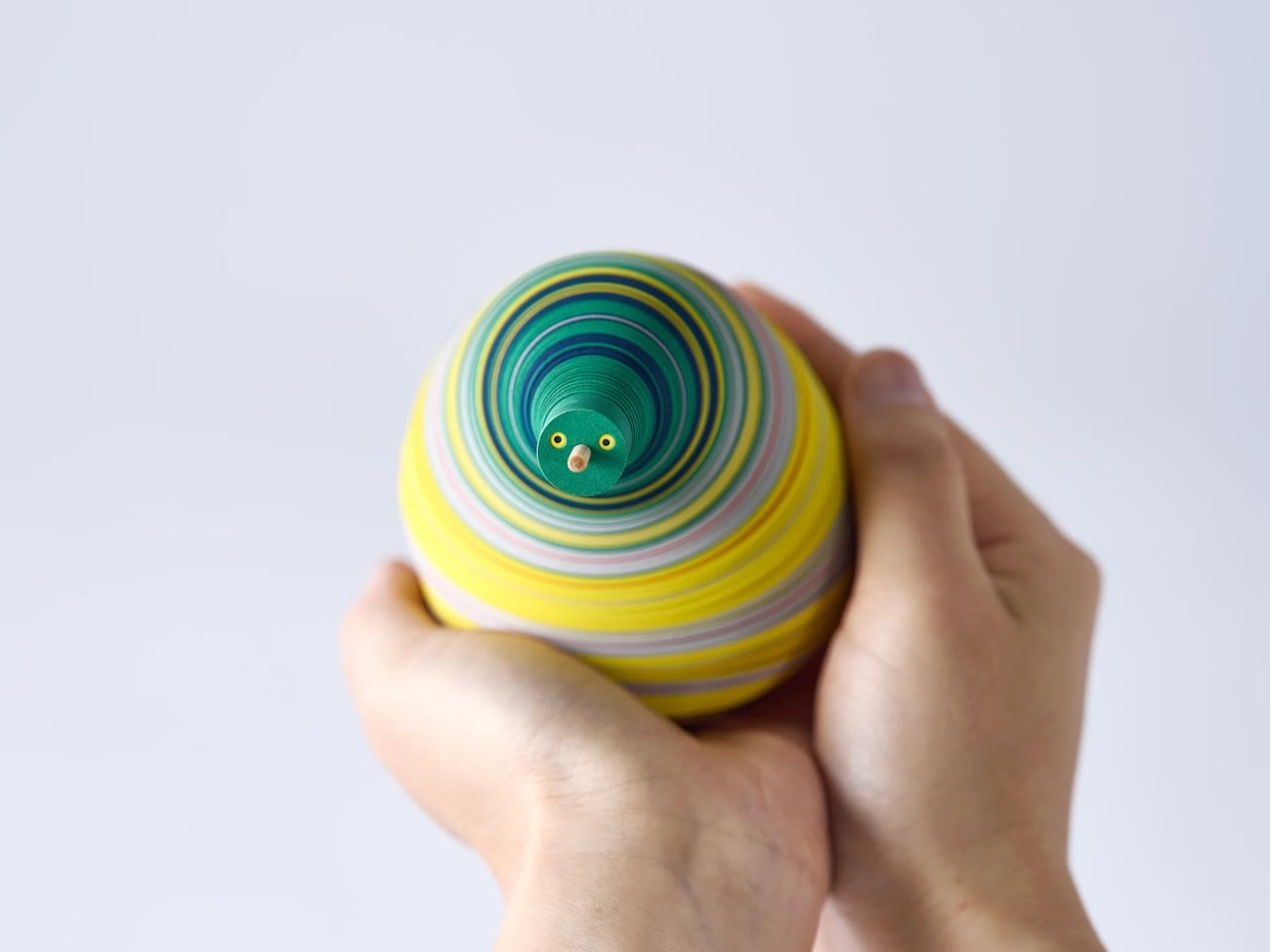
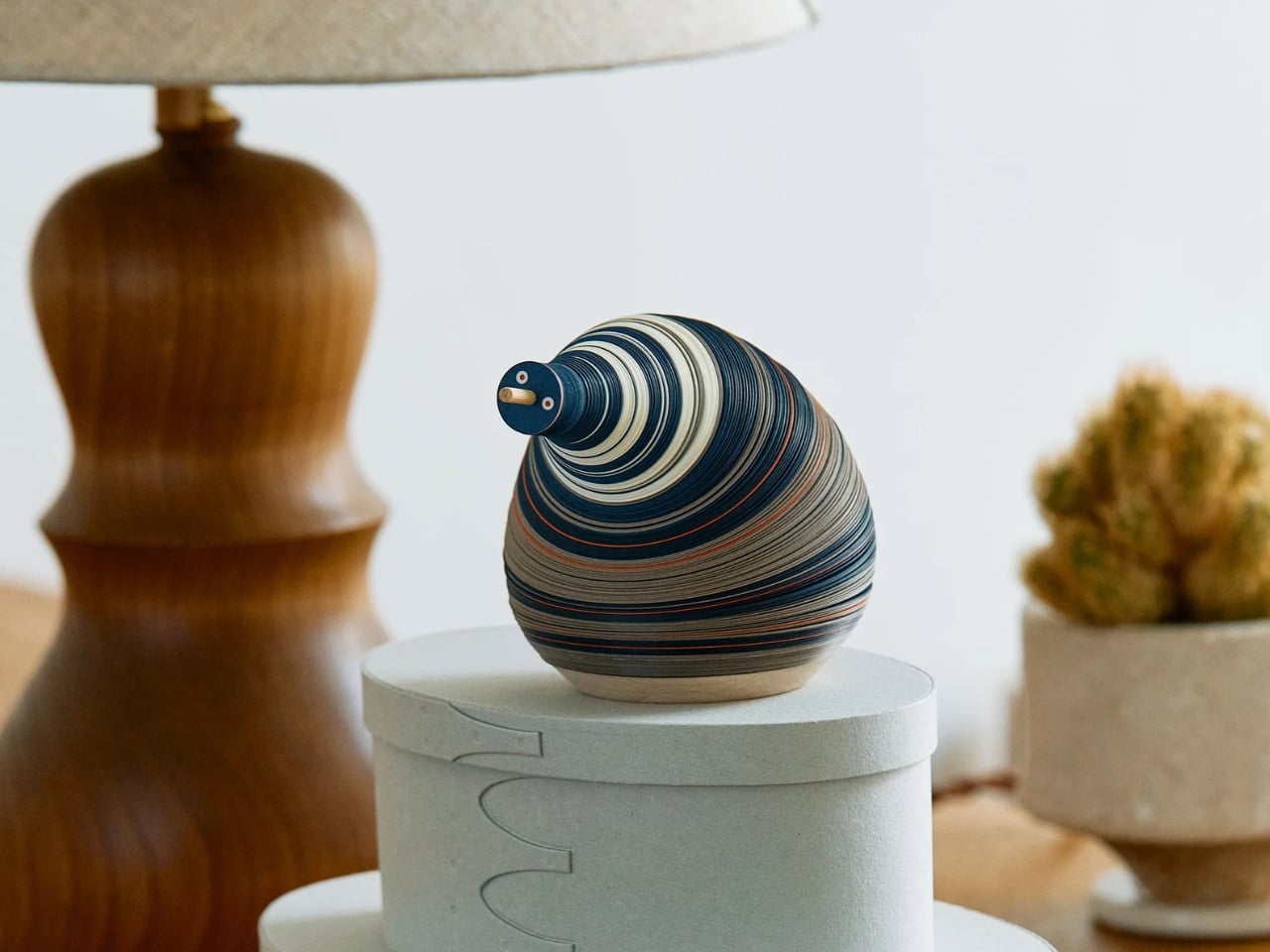
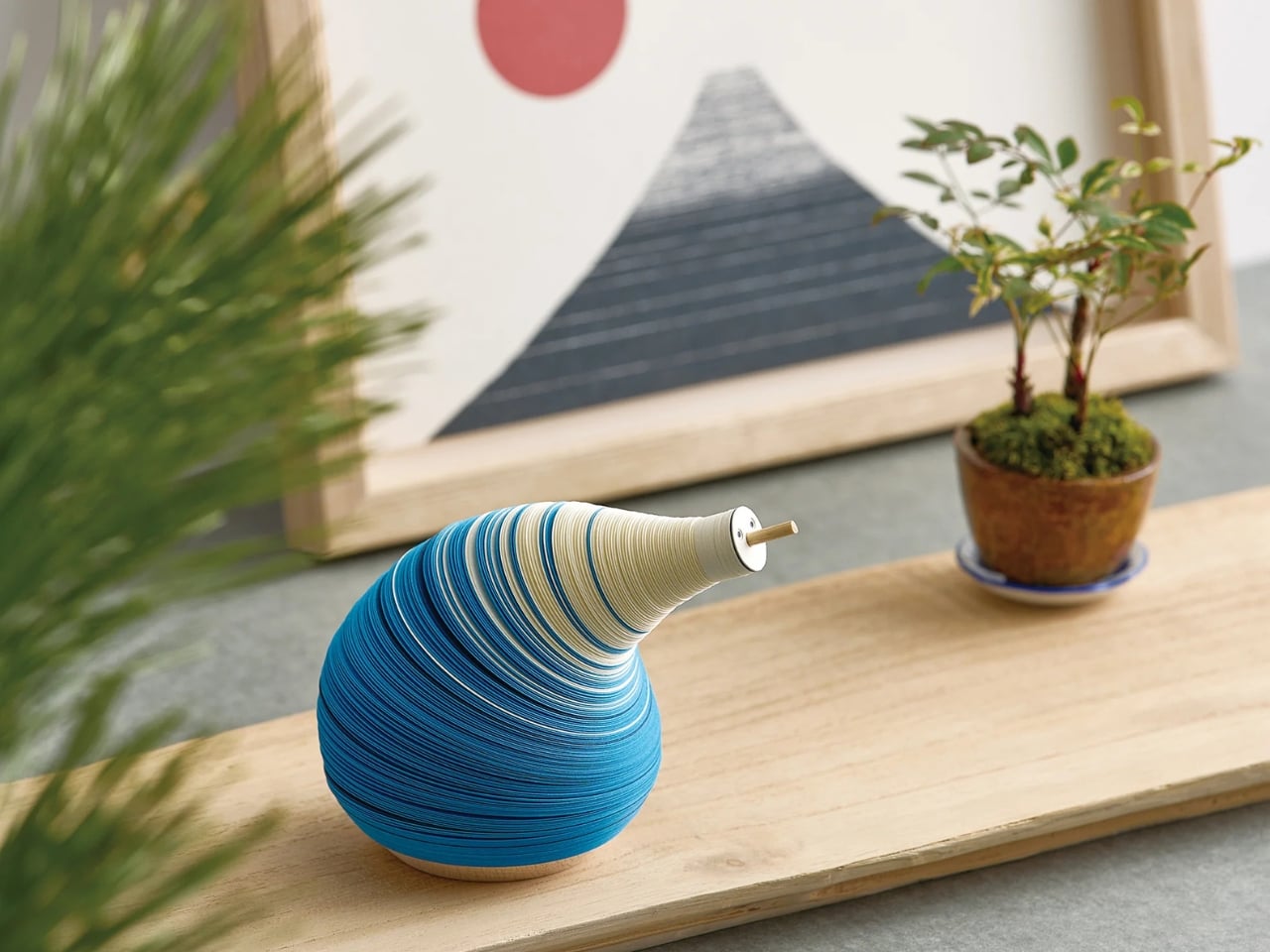
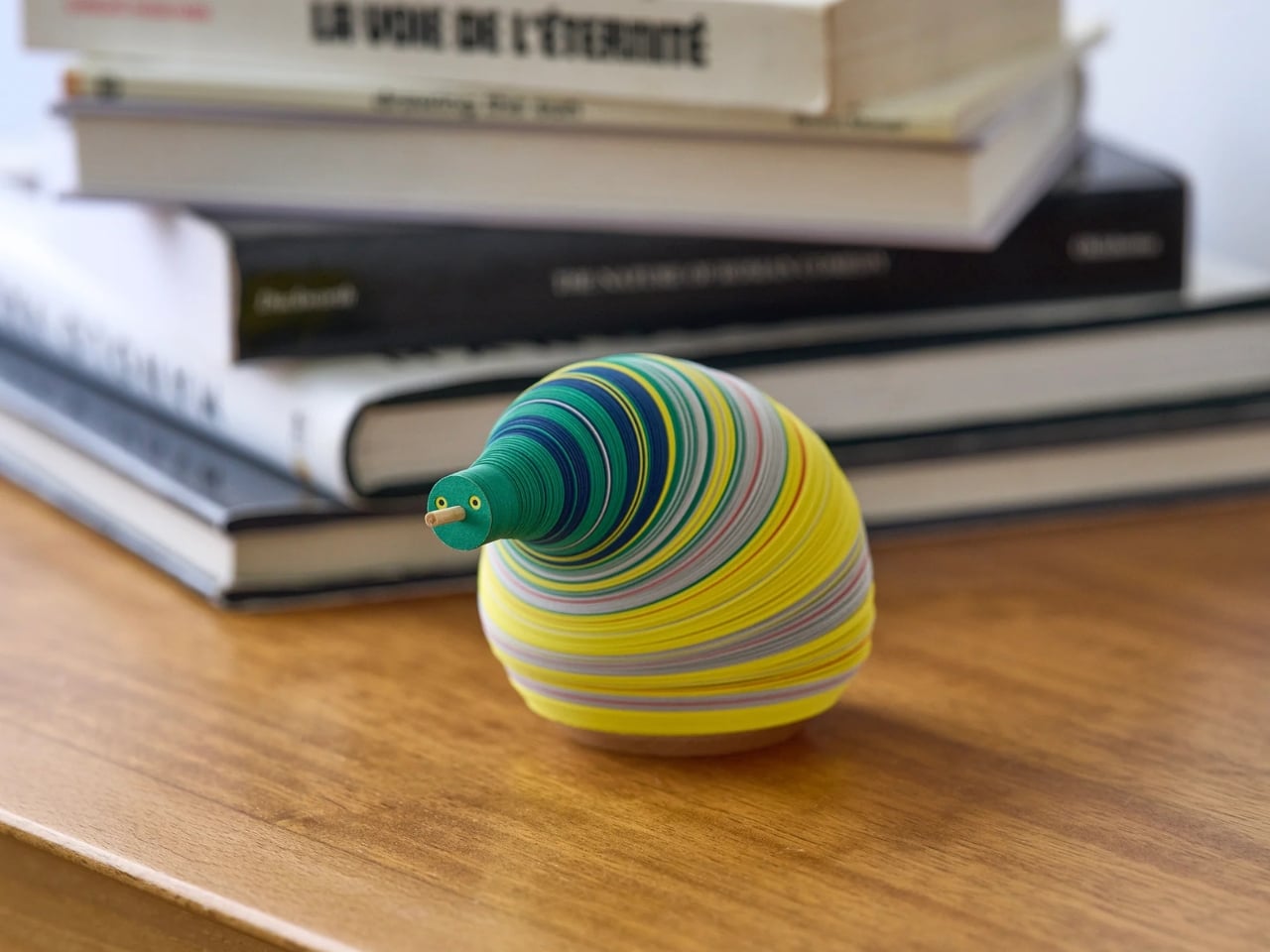
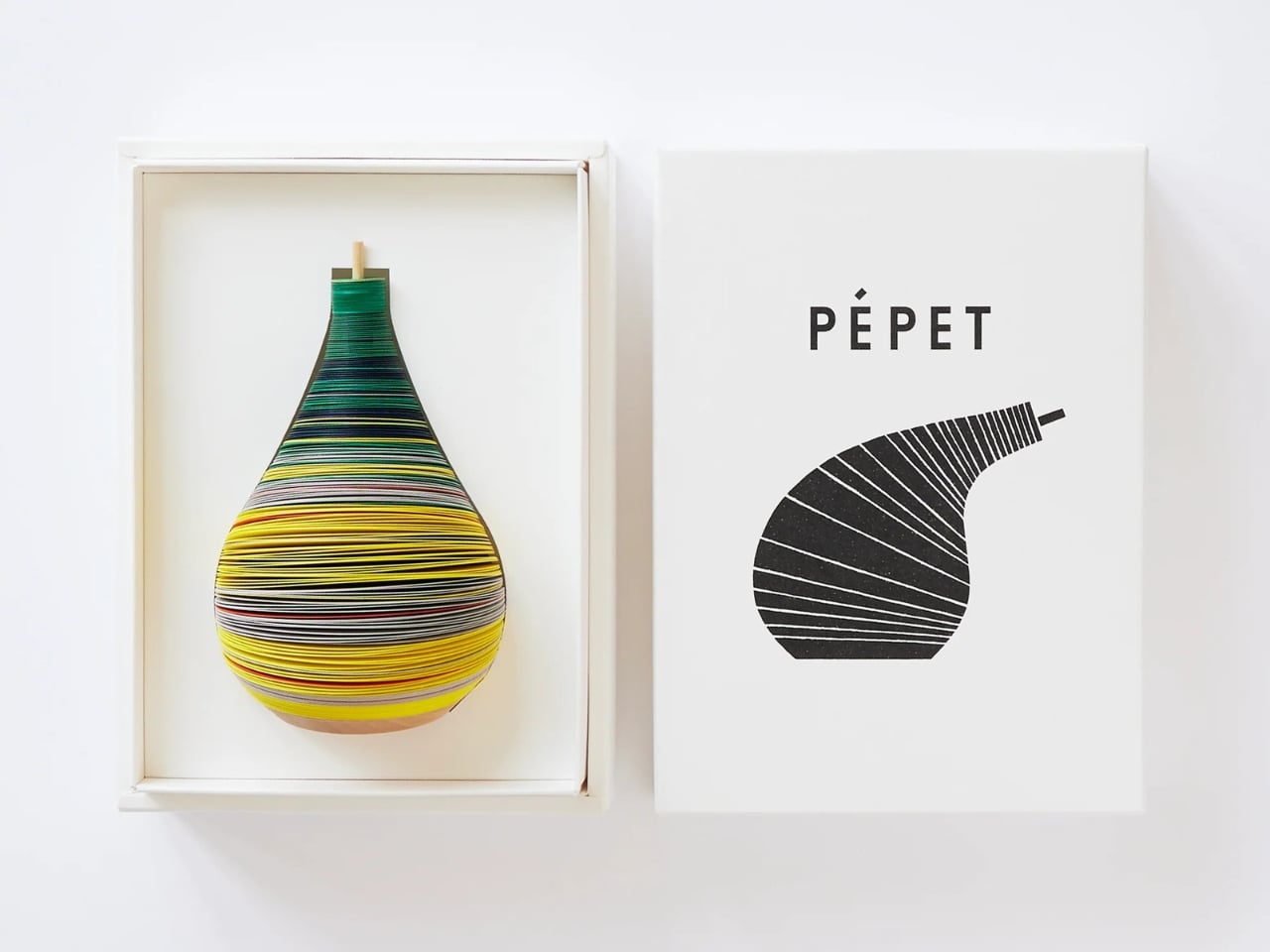
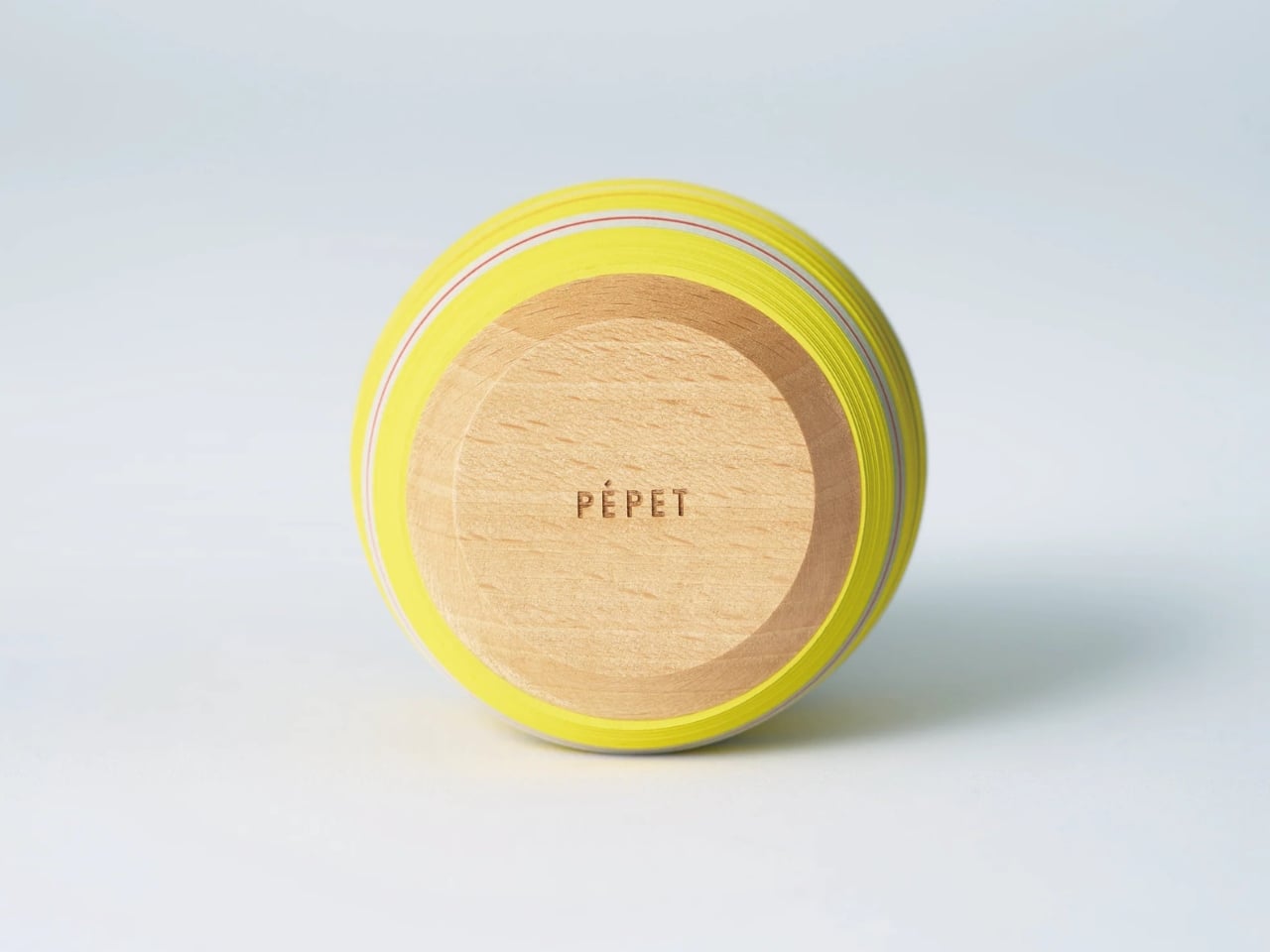
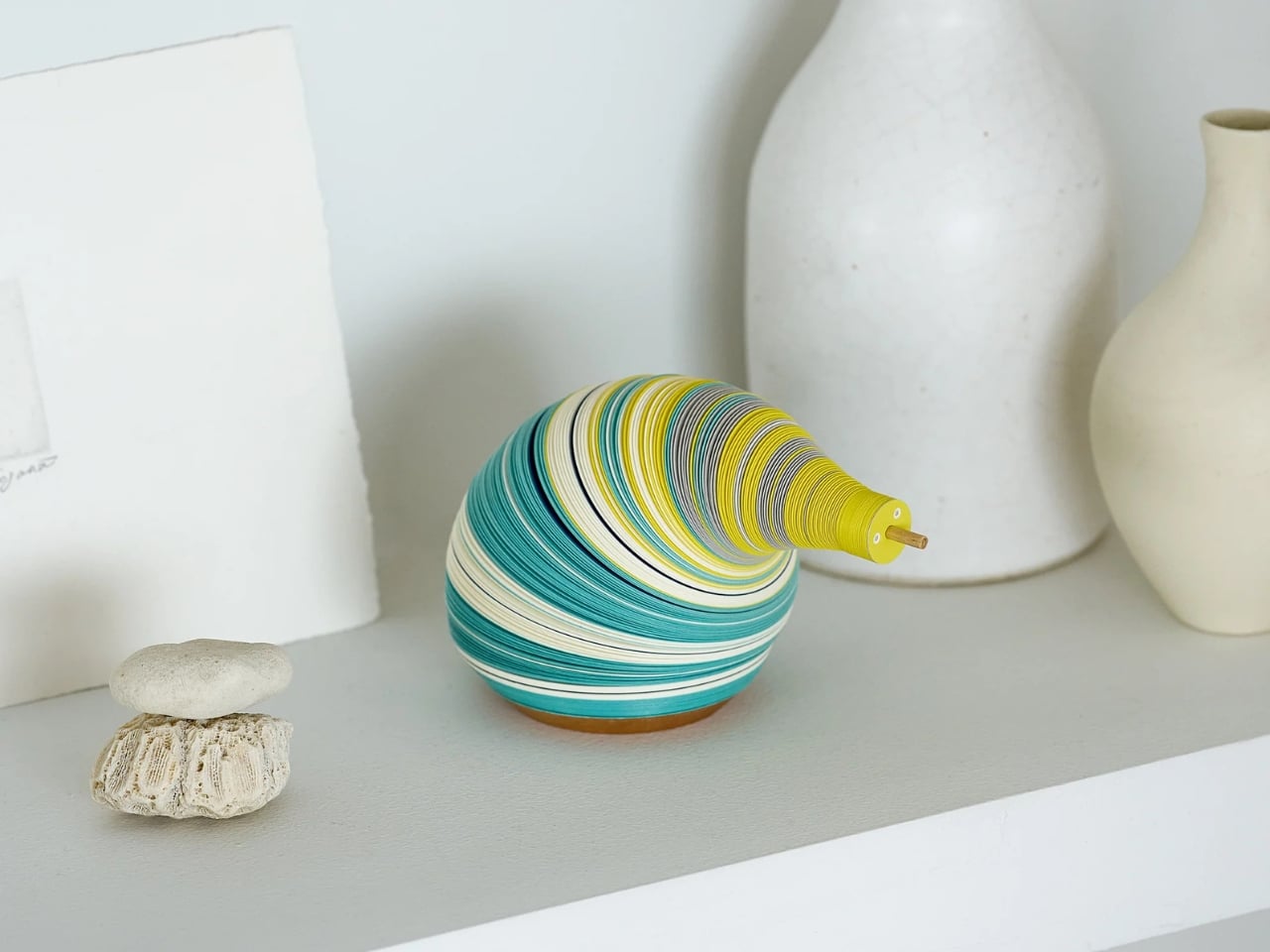
Meet PÉPET (stylized with an accent, pronounced “peh-peh”), a palm-sized, handmade “pet” made completely out of paper. It doesn’t really do anything in the traditional sense; there are no batteries, no electronics, nothing to plug in or charge. What it does instead is quietly upgrade your desk or shelf into something worth looking at twice. And on the days when you need something tactile to relieve stress or help you unwind, it doubles as a strangely comforting, semi-inanimate companion.

Designer: Takeo Paper Products

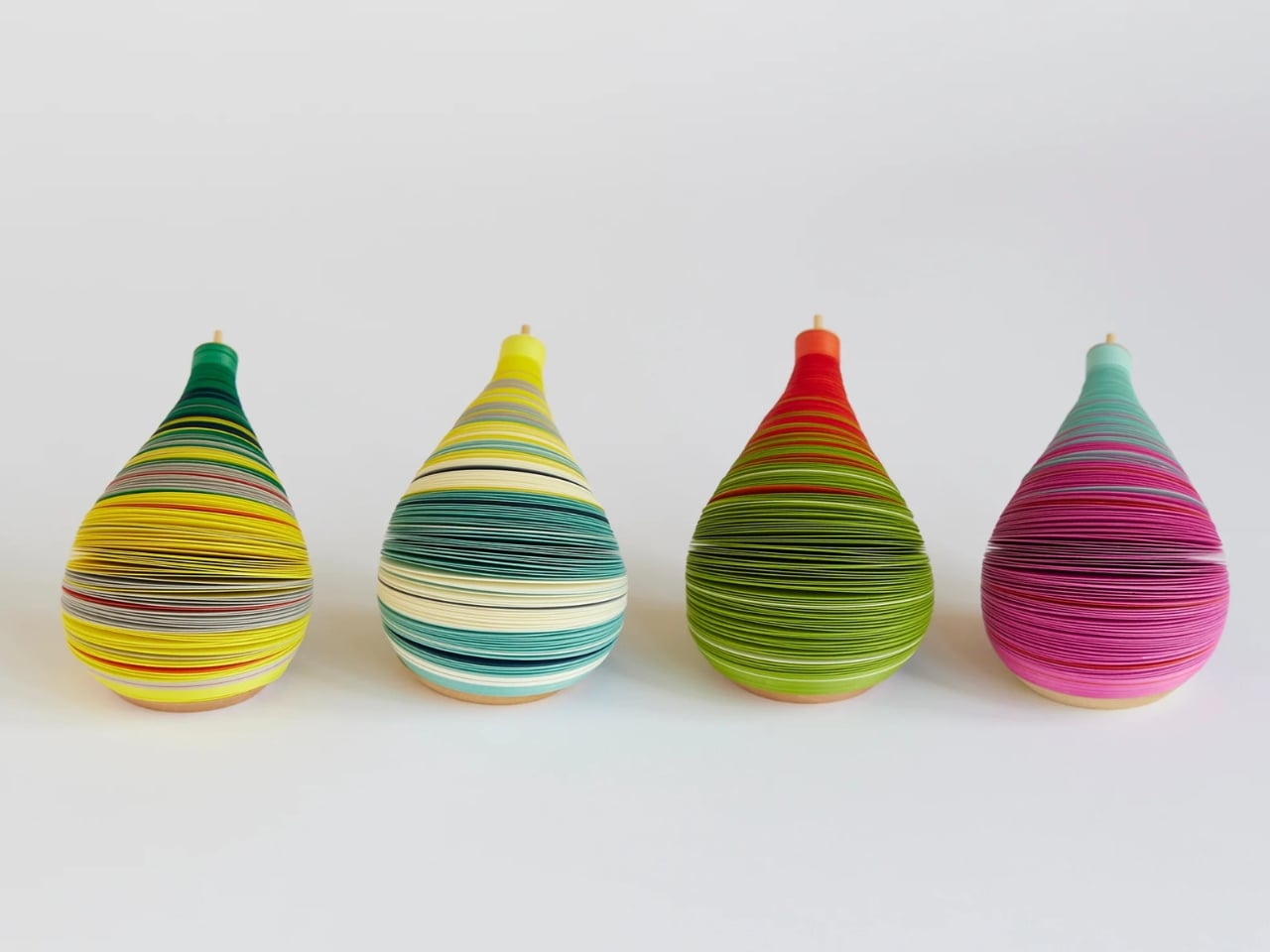
Each PÉPET is built from more than 400 circles of paper, cut into different sizes and stacked in alternating large-small order. The paper itself is called NT Rasha, a fine-touch specialty paper available in 120 colors. That alternating arrangement is the real secret here. It creates tiny air pockets between the layers, and those pockets are what give this “pet” its personality.

I call it semi-inanimate because, even without a single mechanical part, PÉPET wobbles, sways, and shifts when you stroke it in the palm of your hand. The gaps between layers also catch shadow, so the piece seems to shimmer as it moves. It’s almost as if it has a life of its own, and that subtle motion gives it a calming, almost therapeutic quality. Its pear-shaped silhouette isn’t just for looks, either; it’s specifically designed to maximize that jiggly, lifelike movement.

Paper is usually thought of as static and flat, something you write on or fold and then forget. But the way PÉPET is engineered turns that idea on its head, transforming ordinary paper into what feels like a small, breathing creature. Even if you never touch it and simply leave it on display, it’s striking enough to earn a second glance, and then genuinely surprising to whoever discovers it moves when touched. It offers a tiny analog ritual tucked into the space between work and doomscrolling, and unlike almost everything else on your desk, it never needs to be assembled, charged, or updated.

That’s really the charm of PÉPET: it asks nothing of you. In a world where so many objects come with instructions, subscriptions, or maintenance schedules, this is refreshingly low-stakes. You don’t need to feed it, walk it, or worry about it dying on you mid-meeting. All it asks is a few seconds of your attention, and in return, it gives you a small, quiet moment of delight.

It’s also worth noting that PÉPET isn’t just a clever gimmick. It started as an award-winning design concept before Takeo Paper Products turned it into a retail product, which means the craftsmanship behind it is as considered as the whimsy on the surface. That combination of thoughtful engineering and playful personality is exactly what makes it stand out in a market full of screens and buttons.

Ultimately, PÉPET is a reminder that not everything needs a plug to bring you joy. Sometimes the most soothing things are the simplest ones: a scrap of well-made paper, cut into hundreds of tiny circles, that somehow feels alive in your hands. Whether it’s sitting quietly on a shelf as a conversation piece or getting a gentle stroke during a stressful afternoon, PÉPET proves that a little bit of unnecessary beauty is sometimes exactly what we need.

The post This Paper Pet Made of 400+ Circles Actually Moves When You Touch It first appeared on Yanko Design.
Foldable Cubivan Camping System gives your van kitchen, bathroom, and rooftop bedroom

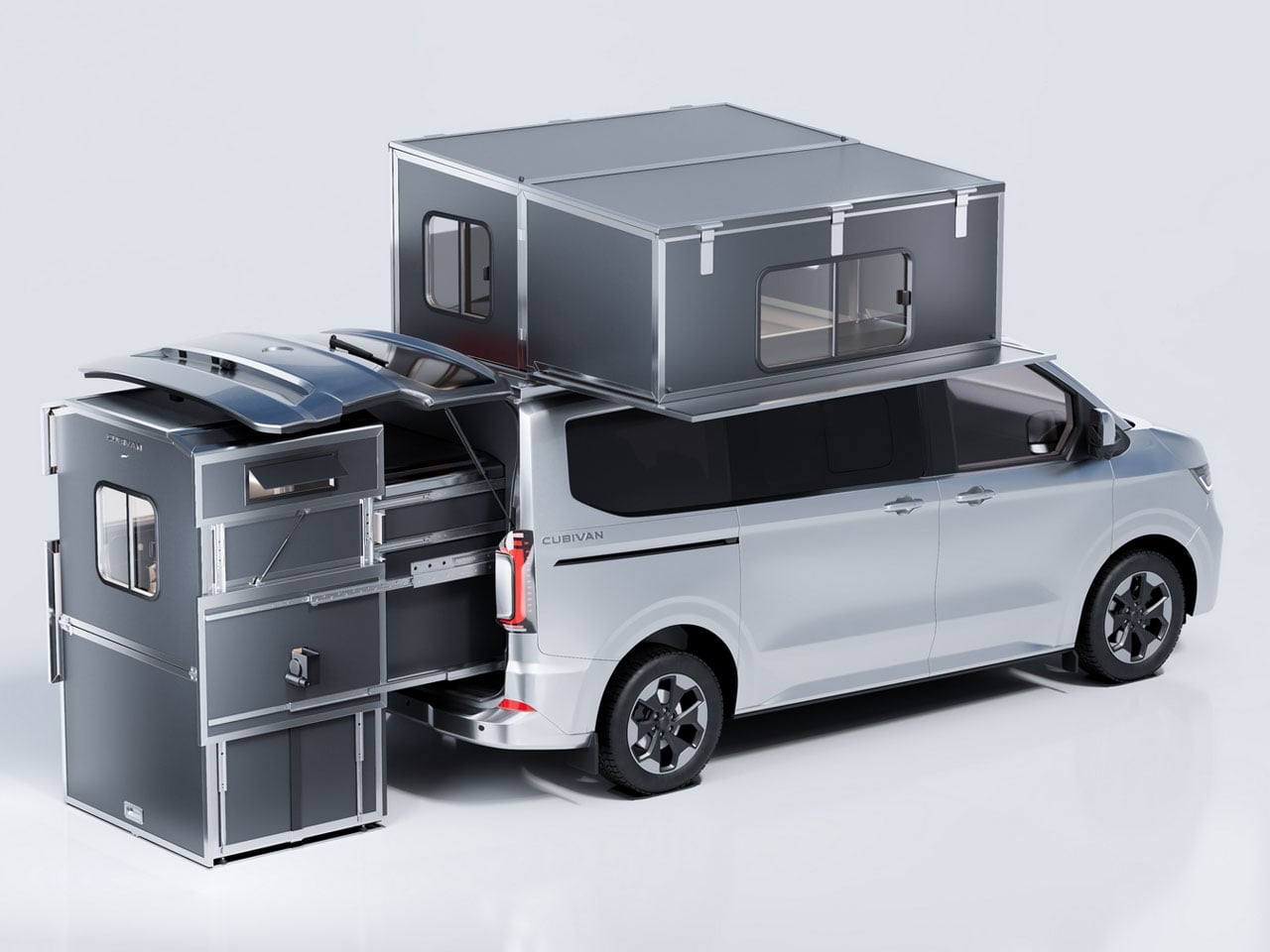
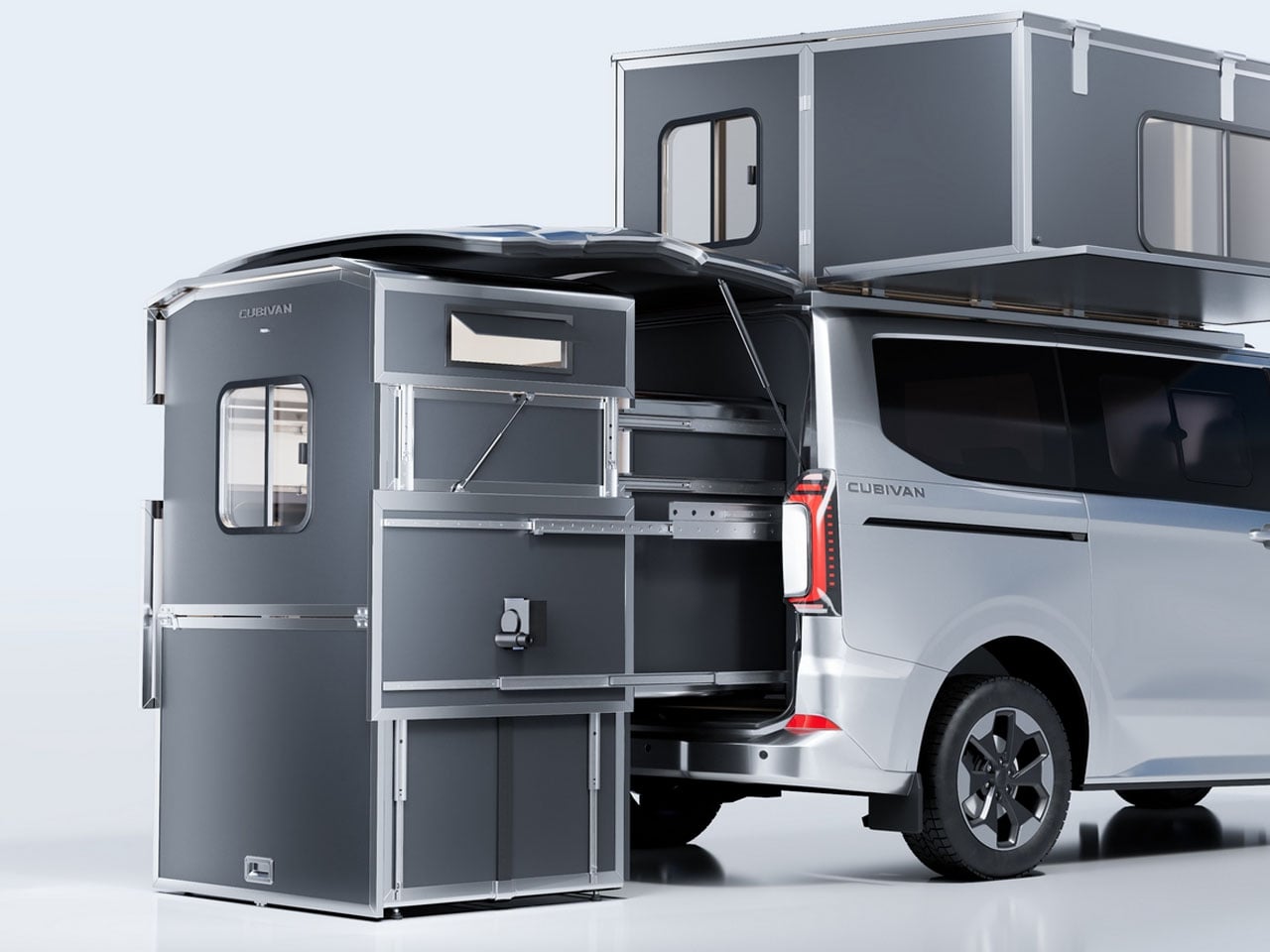
If your camping requirements are different from other adventurers, and your camper van is just not cutting the bill. Yet, you don’t wish to make a van trade-off, the Cubivan Camping System, which recently made its debut at the Düsseldorf Caravan Salon, is what you should be looking to get. With this hard conversion system, you are not getting a modular camper kit that’s flexible and flimsy, you get a hard conversion setup that pulls out of the back of the van and lets you set up a complete camp in a jiffy.

Offering a kitchen, wet bathroom, and a rooftop bedroom, the Cubivan Camping system is above and beyond the competition by a fair margin. Of course, the way the Cubivan system slides out of the back of the van is not much different from any other rear-integrated camper van expansion unit, but it’s what this foldable cube wonder unfolds into that really makes the difference.

Designer: Cubivan

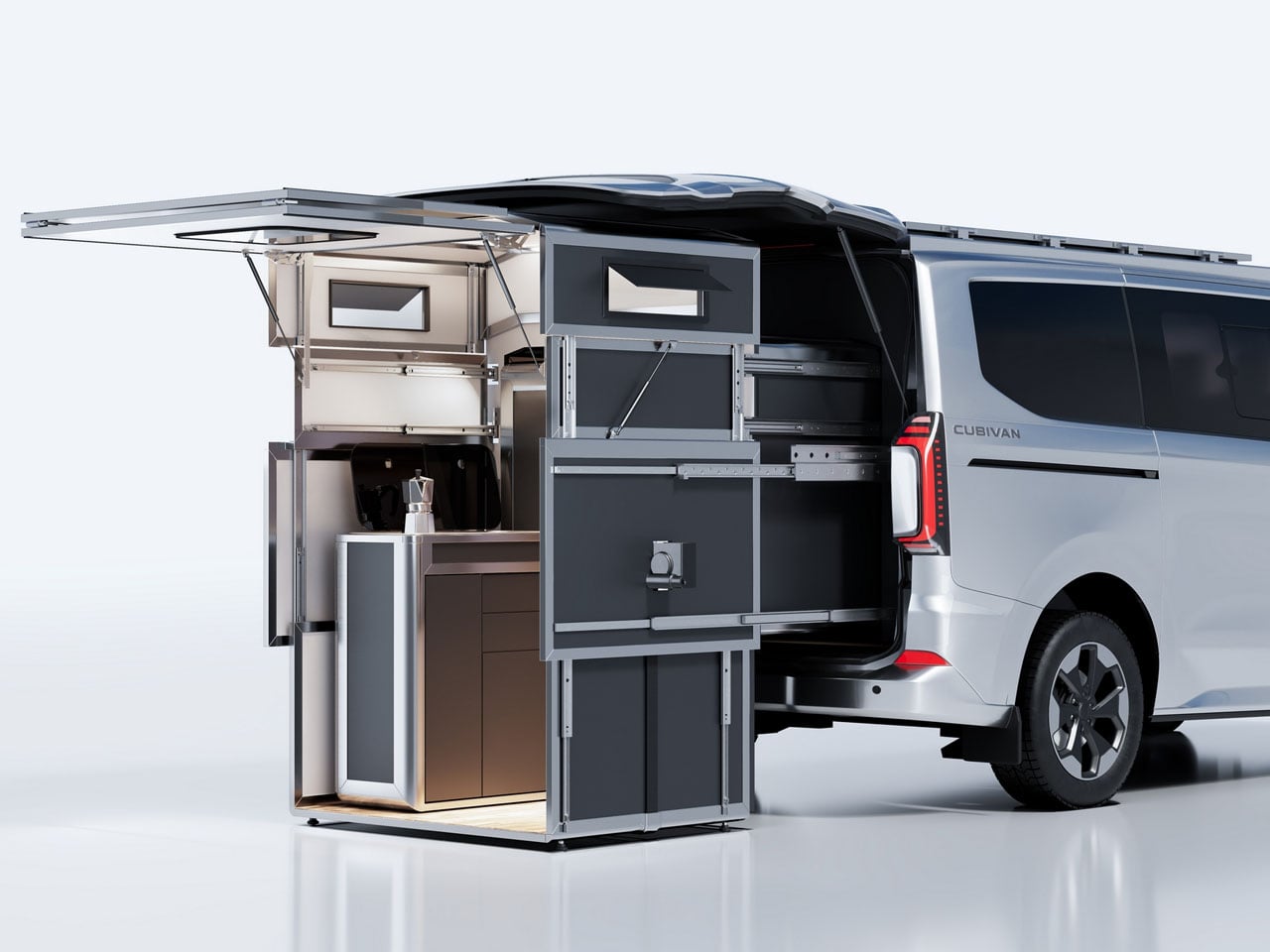
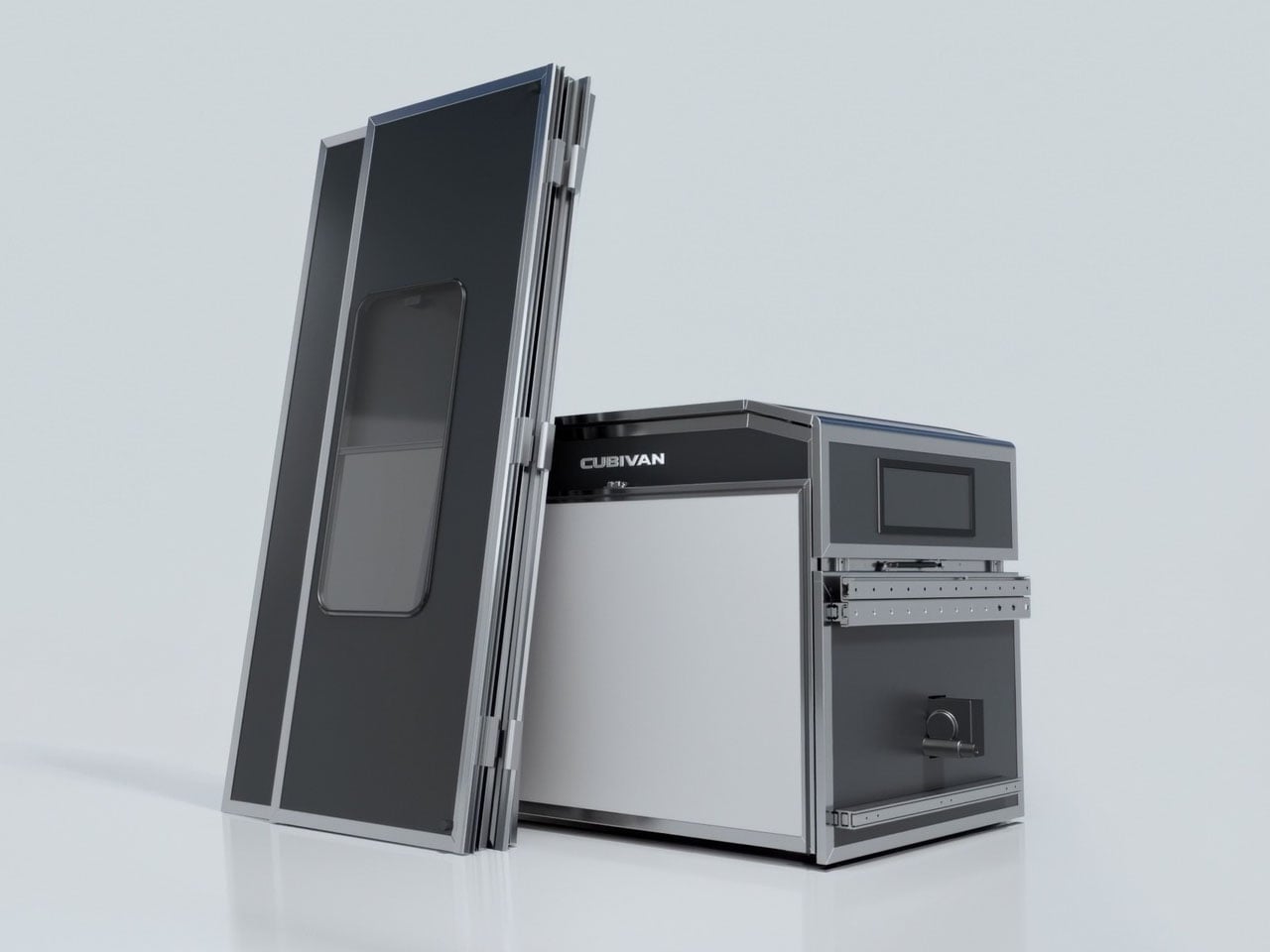
The solid foldable camper box, in addition to sliding out of the back of the van, expands down to the ground to provide a stable system that you can use conveniently from the inside. For this, when the Cubivan Camping system is pulled out completely at the camp, its separate upper and lower modules can be expanded to create a clear standing height of about 6.2 feet. The space opens up to accommodate a kitchen and a wet bathroom and comes with a hard-sided rooftop sleeping area that extends out onto the van roof.

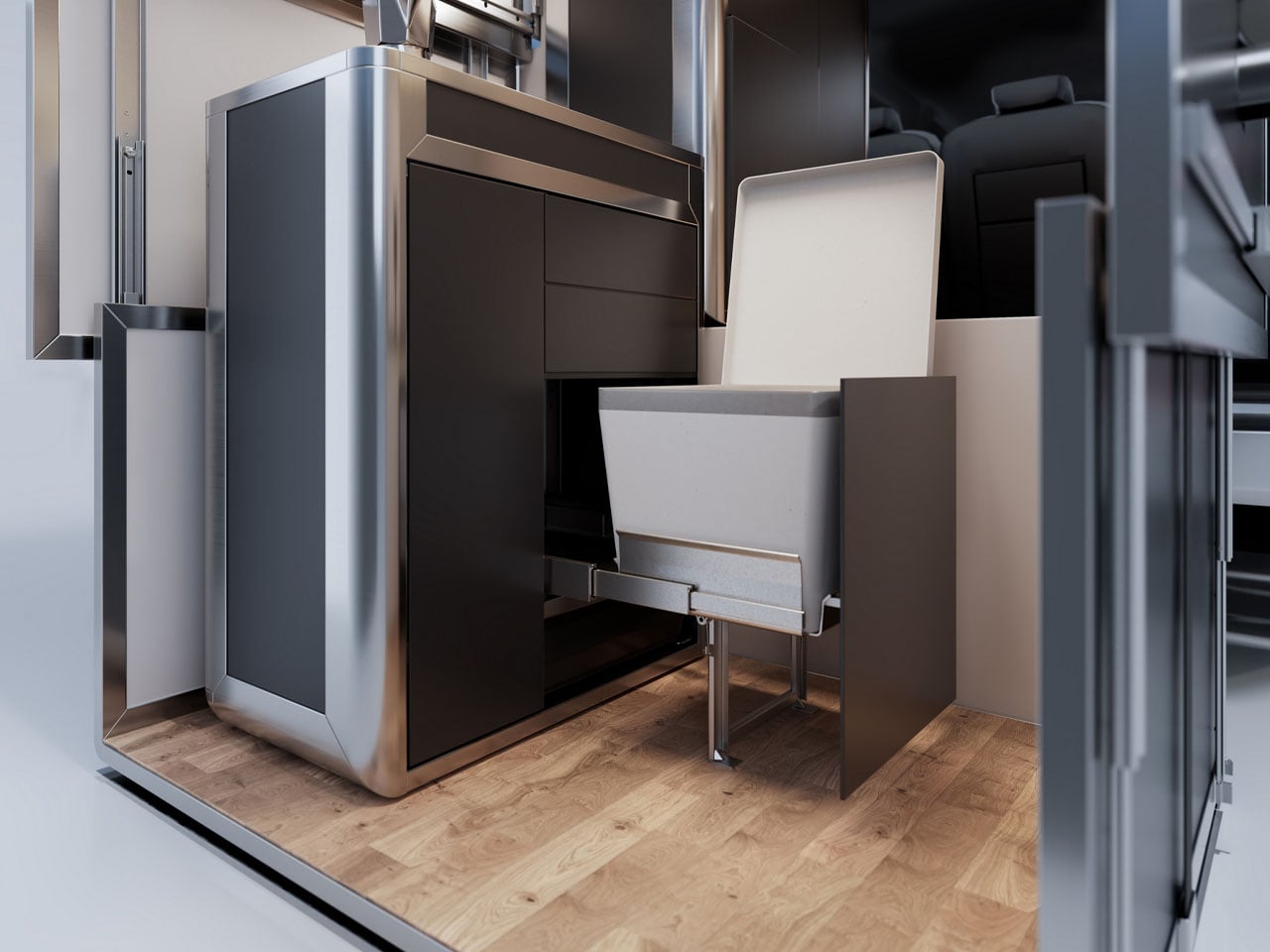
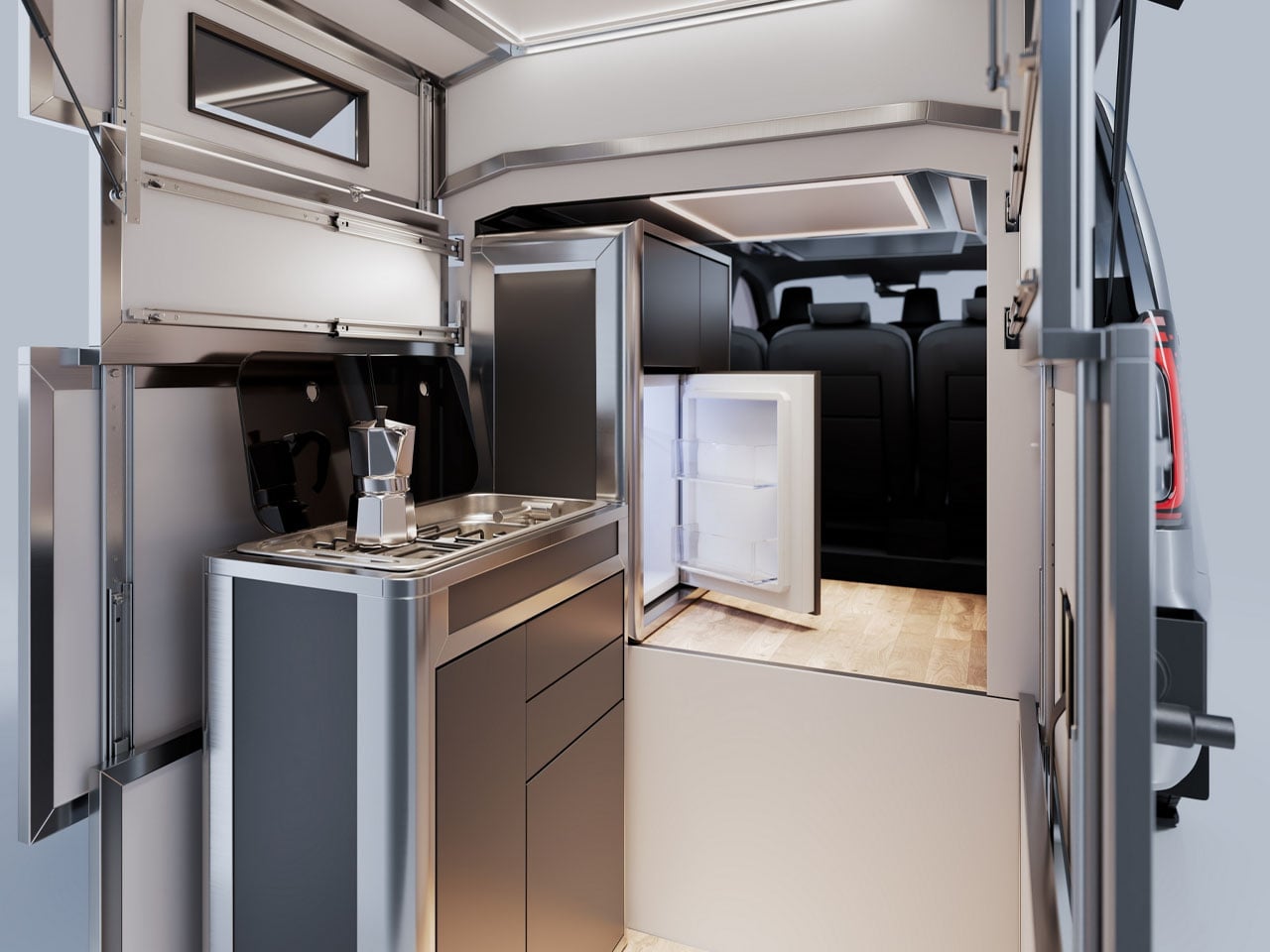
The kitchen falls into place by rotating back inwards to the van cabin and sits flush against the side wall. The slide-out toilet compartment is located in the lower cabinet just alongside. The kitchen comprises a stove, sink, and a fridge in a designated slot situated adjacent to the kitchen. When the kitchen jags pack into the cab next to the fridge, it opens up 35 x 37-in floor space for the portable toilet and the shower.

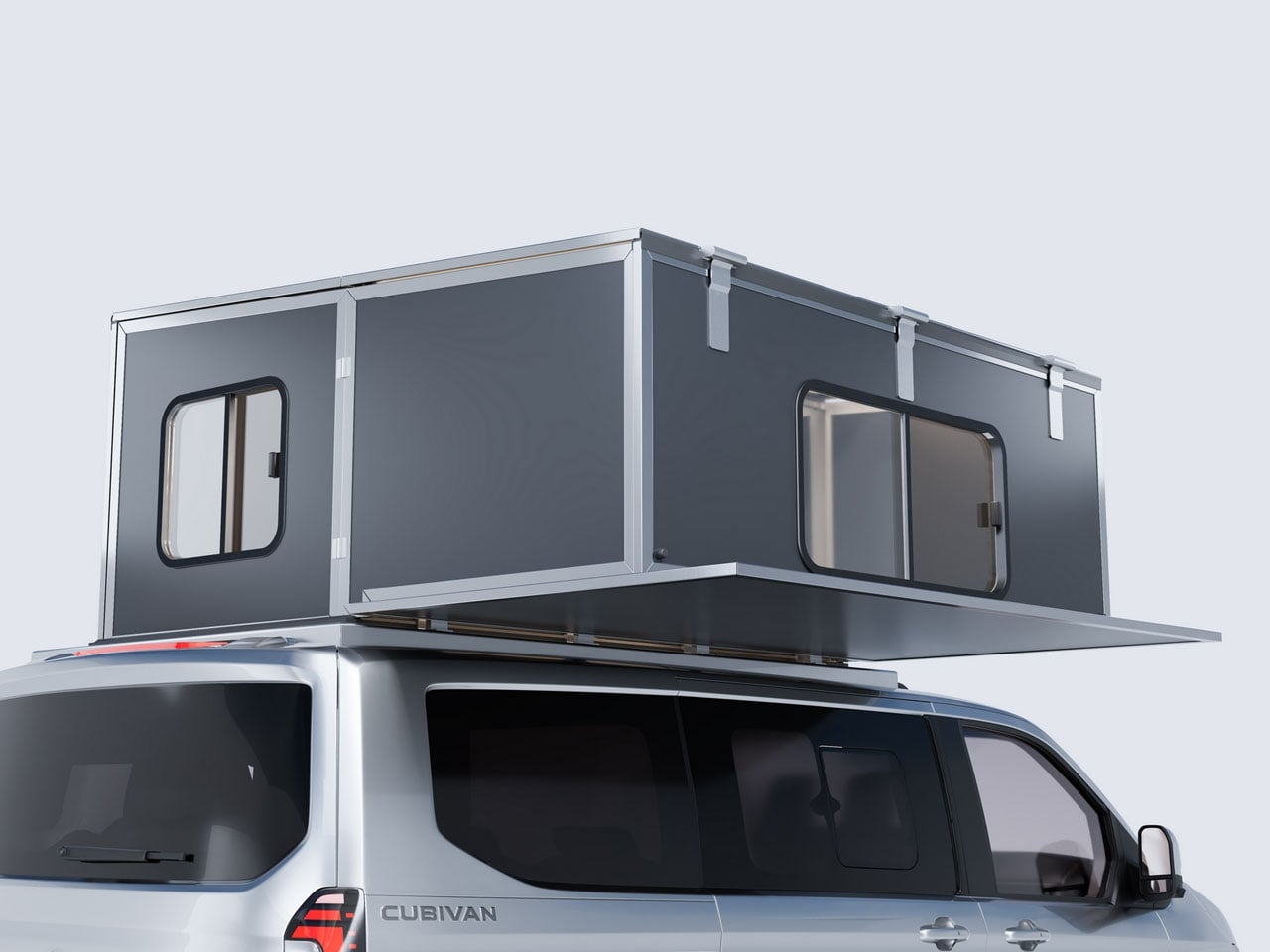
The most interesting aspect of the Cubivan Camping System still is the sleeping accommodations, which are not formed inside the cabin after pulling the slide-out setup, but instead have been moved onto the roof. A separate hard-shell module makes a 79 x 79-inch sleeping space, which when you are back in ride mode, folds flat down within the permissible roof height of the van, since it replaces the stock van roof. When you’re at the camp again, install it and the four-walled sleeping accommodation is ready to cuddle you under the stars.

The interesting hard-sided van conversion setup from Cubivan is made to be compatible with Volkswagen ID. Buzz, Ford Tourneo Custom, Volkswagen Caravelle, and Mercedes Vito. It is likely to launch in 2027 starting at €22,000 (approximately $25,550).

The post Foldable Cubivan Camping System gives your van kitchen, bathroom, and rooftop bedroom first appeared on Yanko Design.