IKEA’s $10 Speaker Is Tiny, But You Can Pair 100 of Them Together

Bluetooth speakers have a curious problem. The ones worth owning tend to cost real money, and the ones that don’t cost much tend to sound exactly like they cost nothing. IKEA’s KALLSUP sits somewhere outside that tired formula entirely, not because it defies audio physics at $9.99, but because it was never really designed around audio physics in the first place.

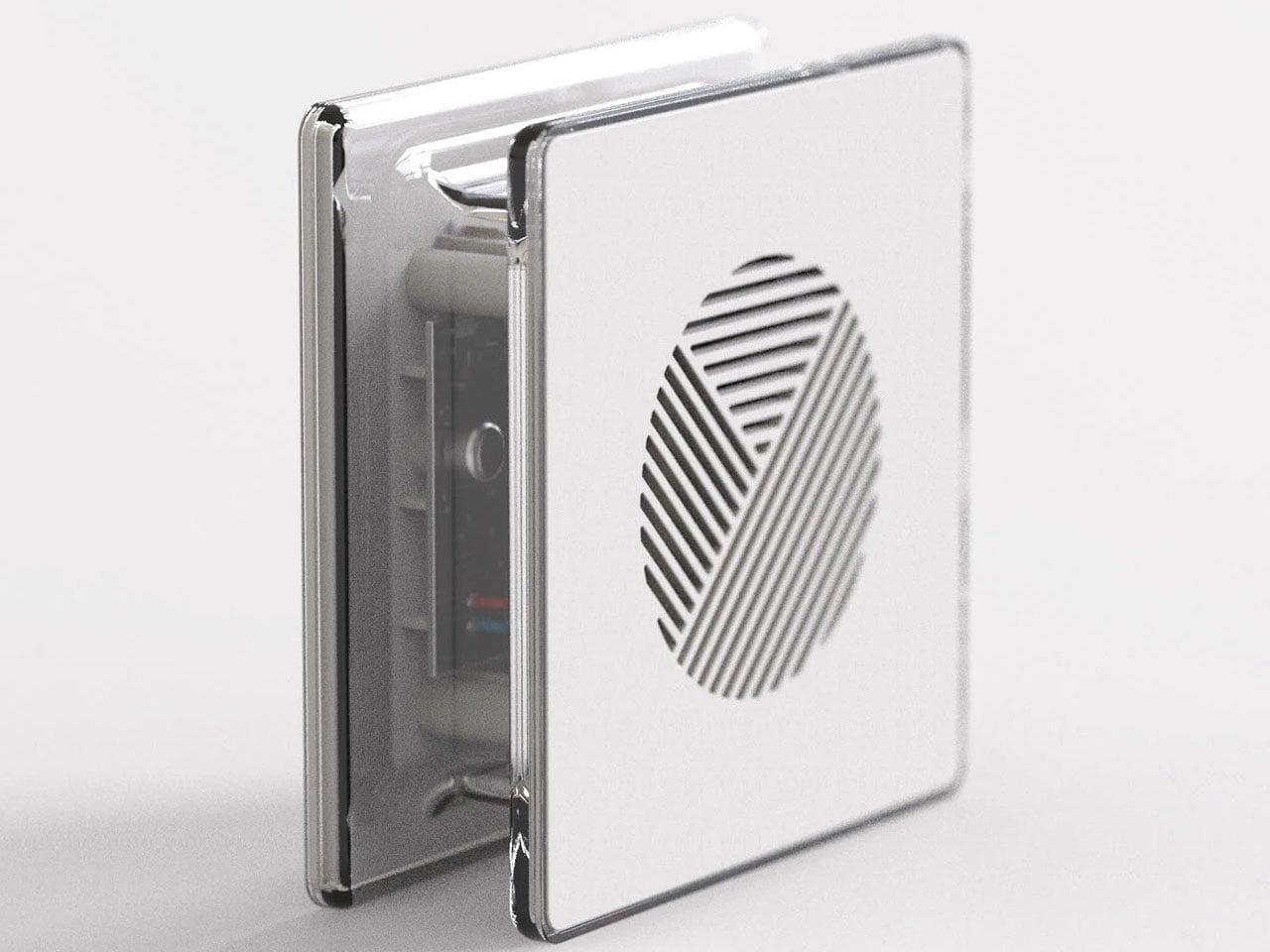
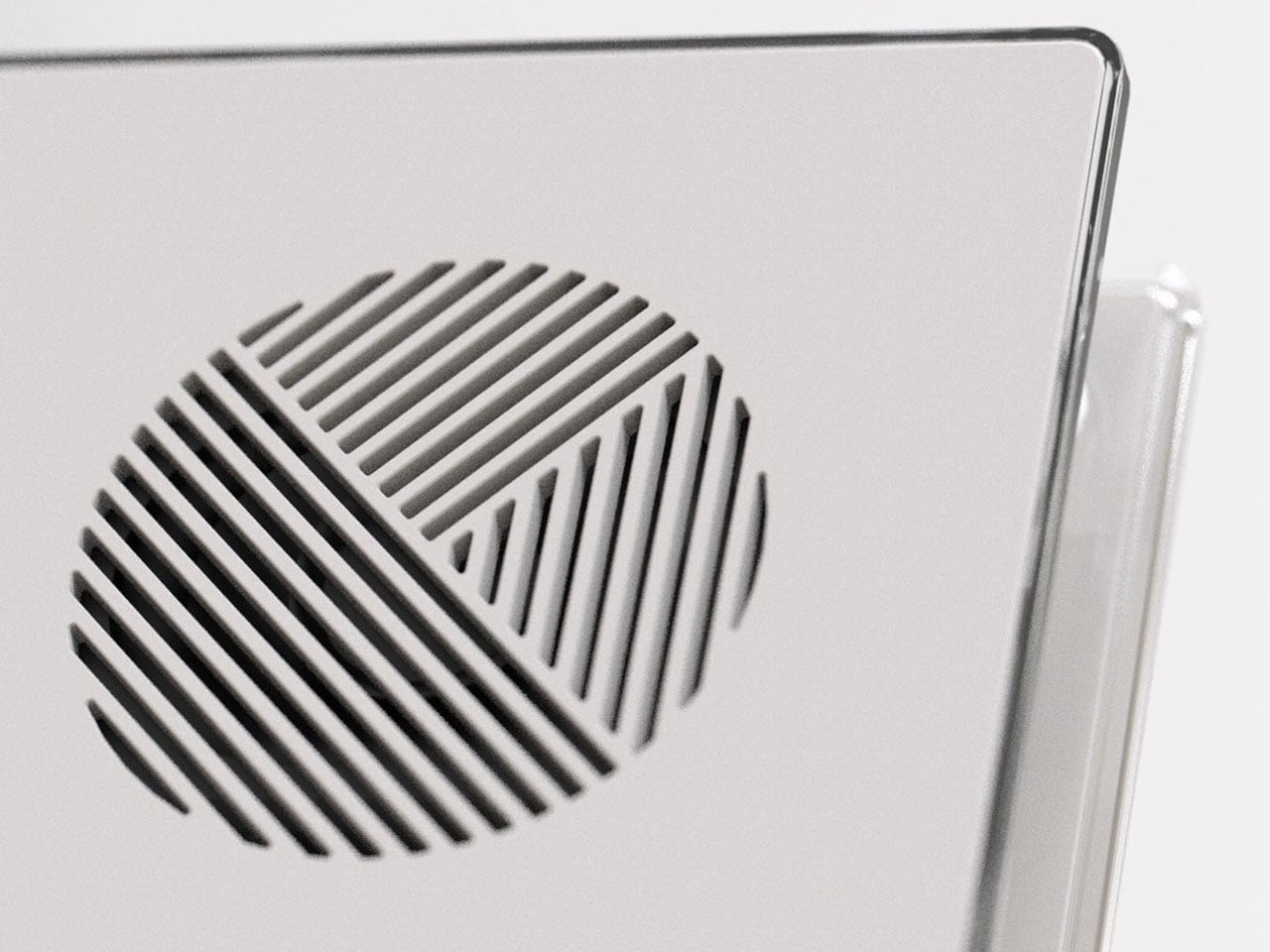
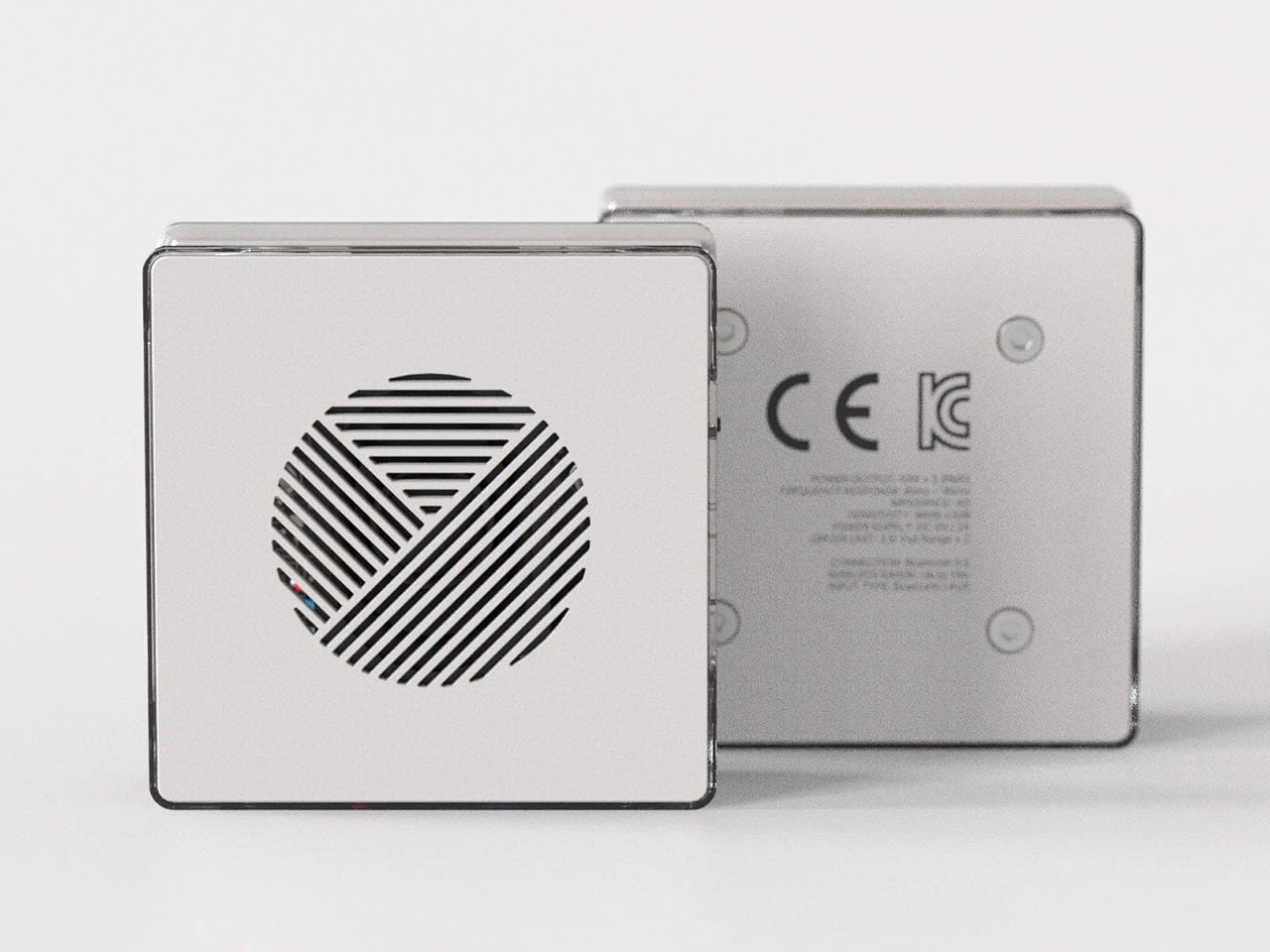
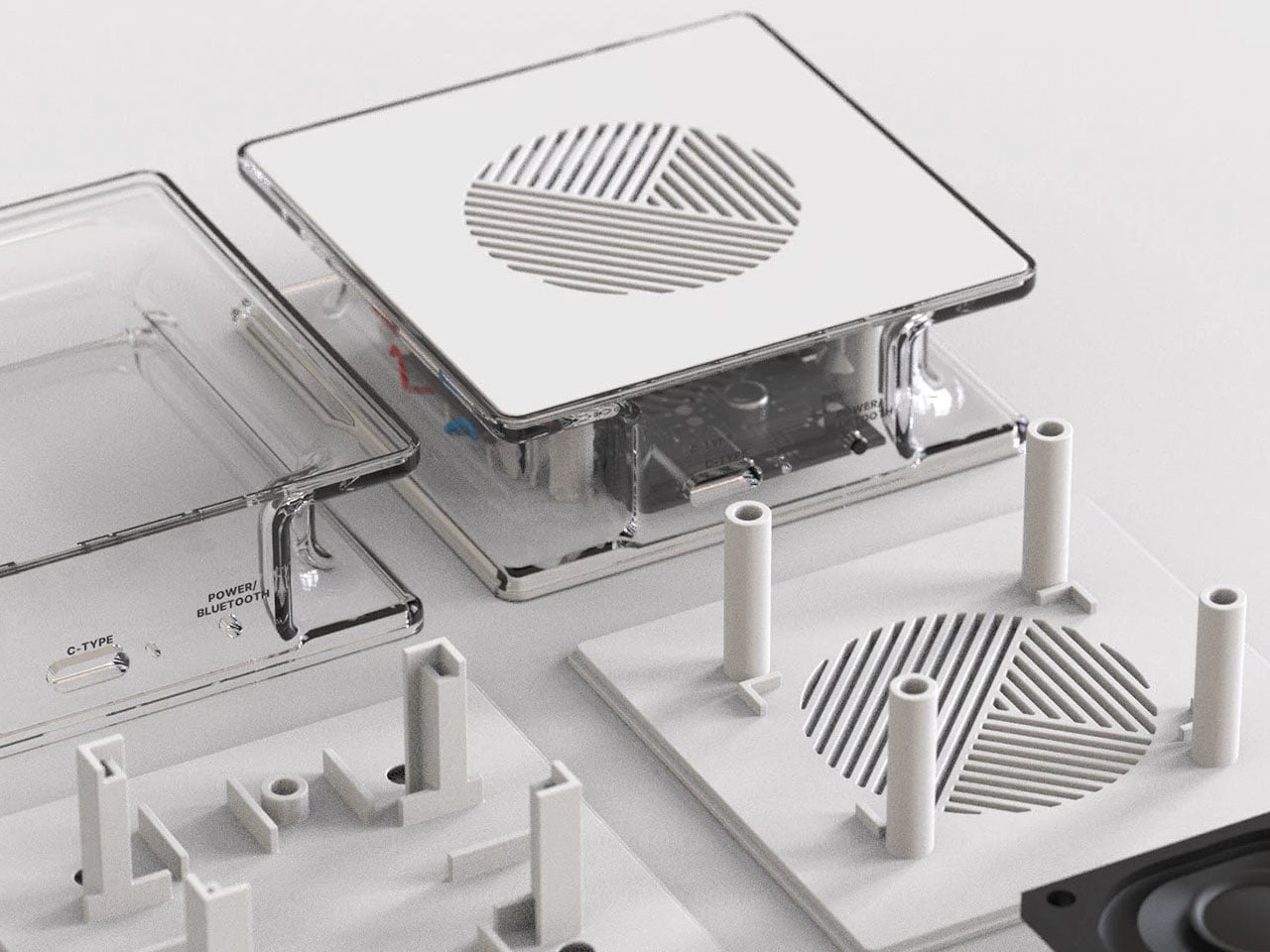
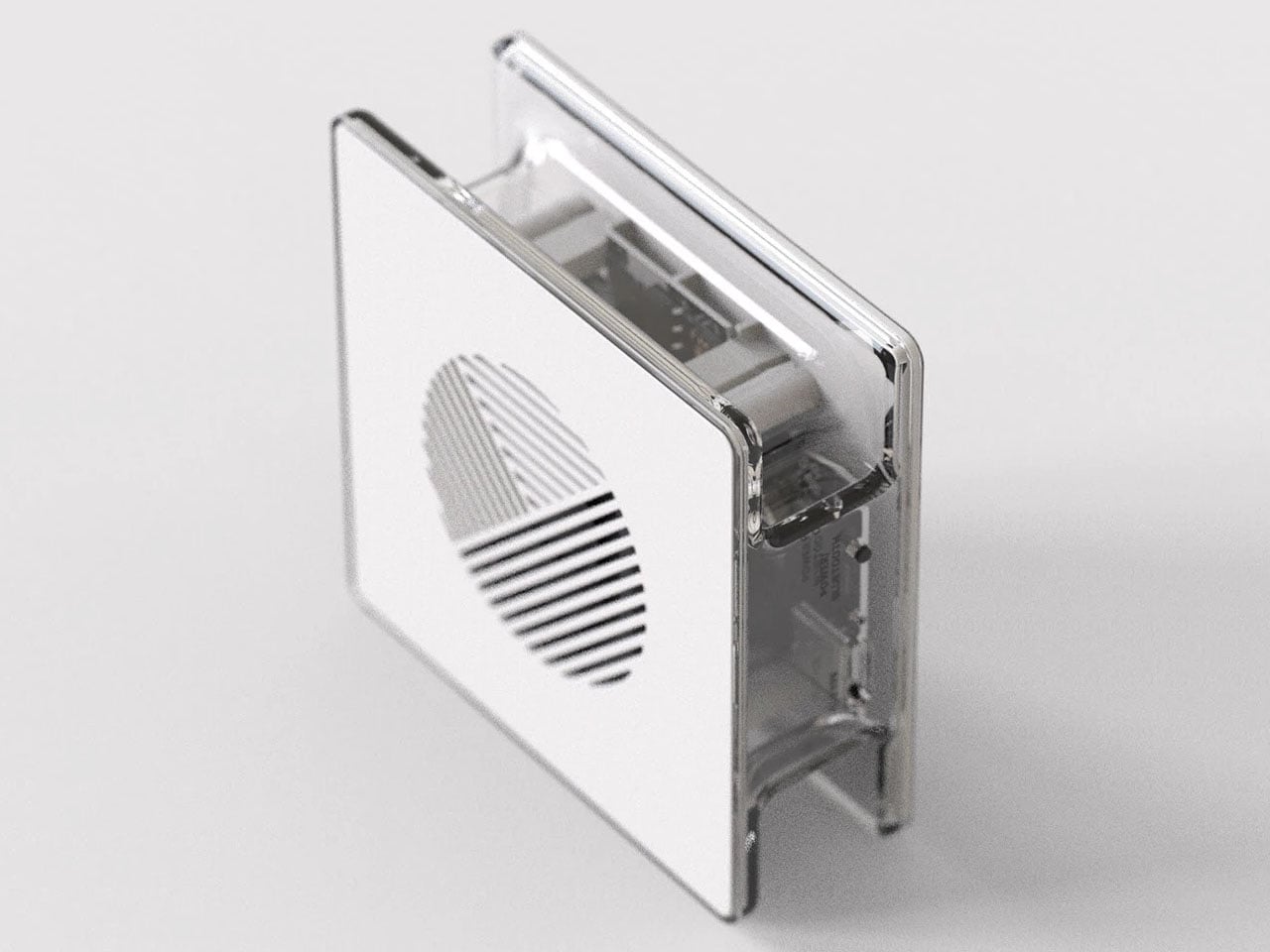
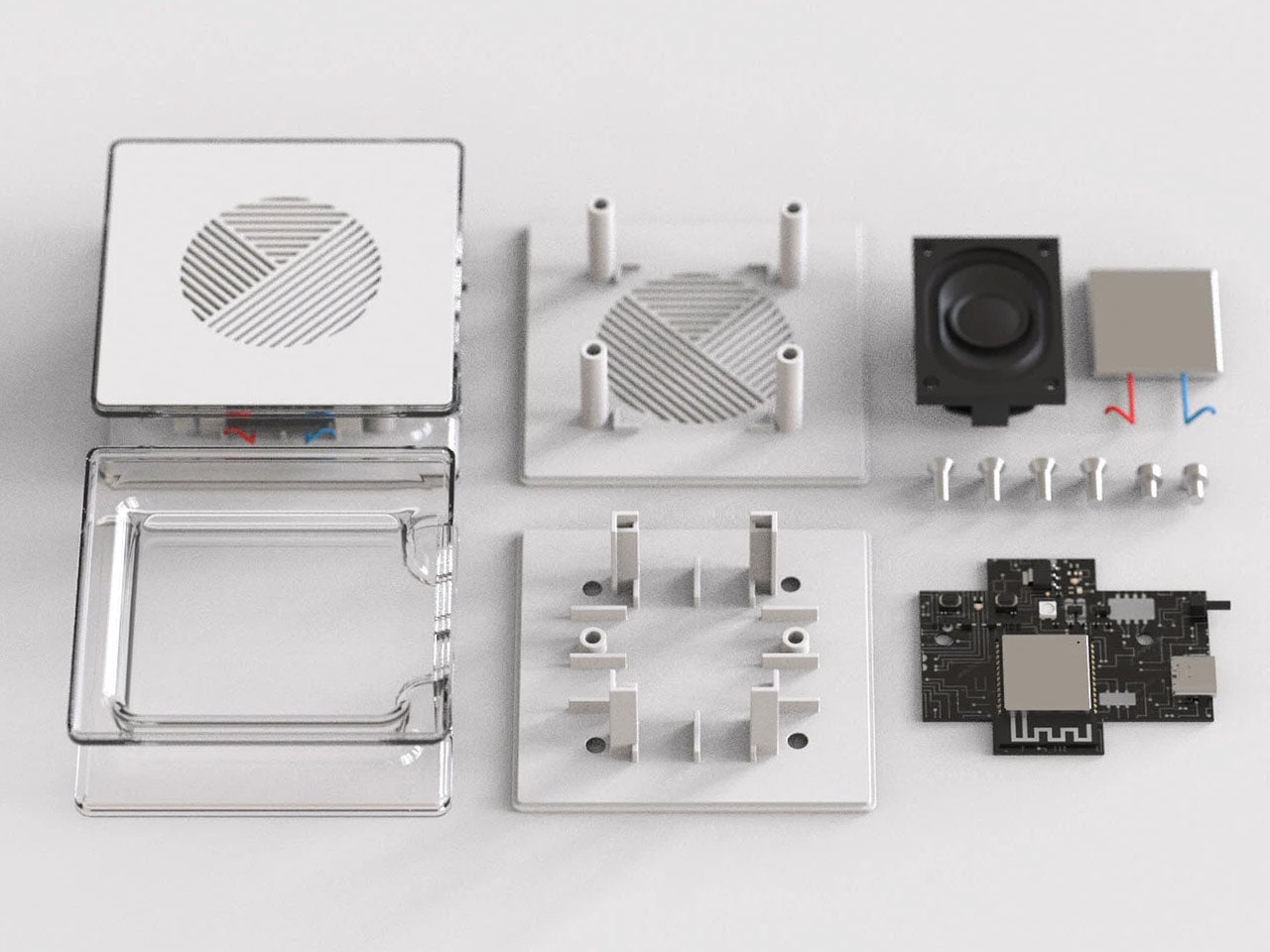
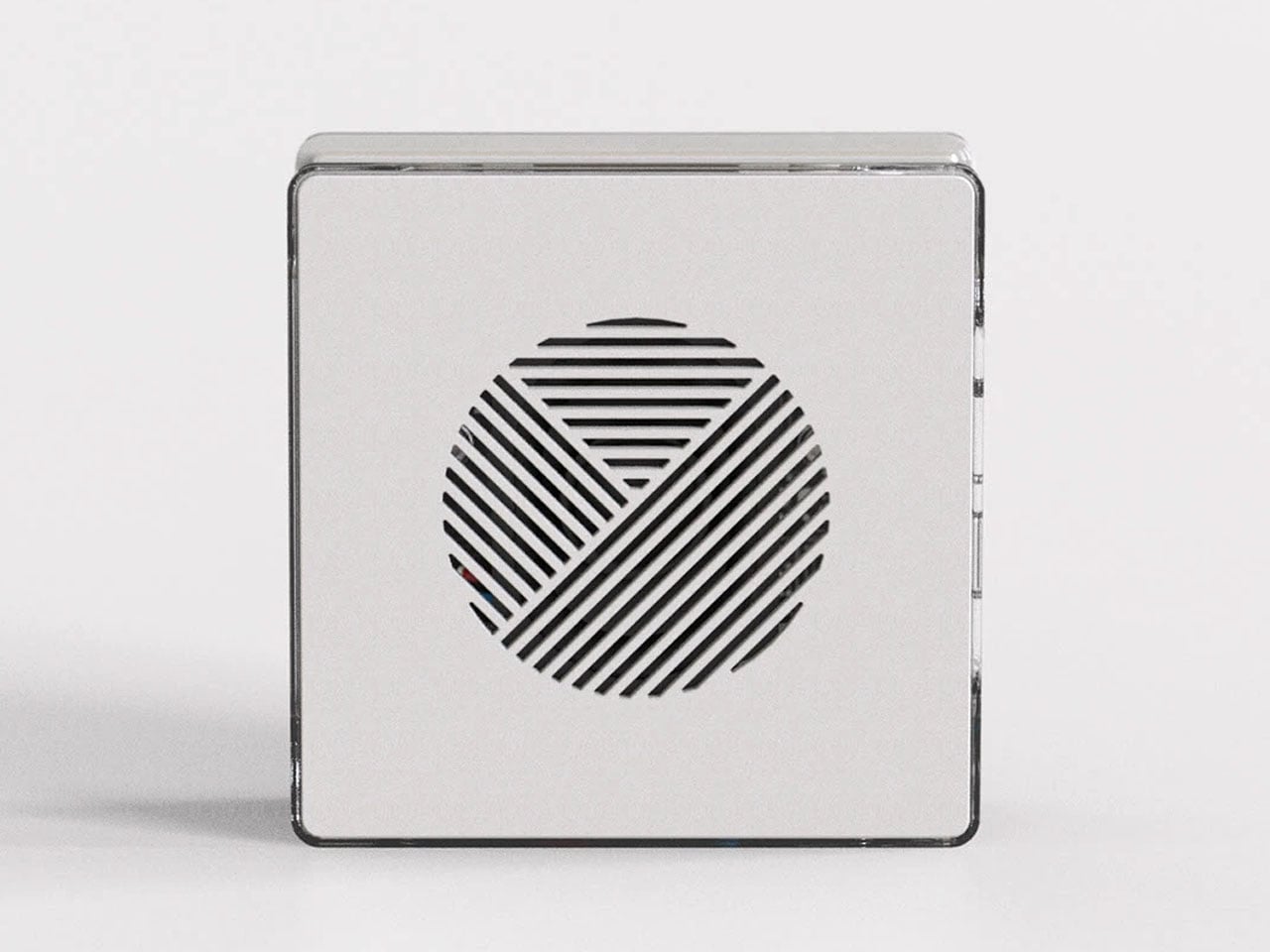
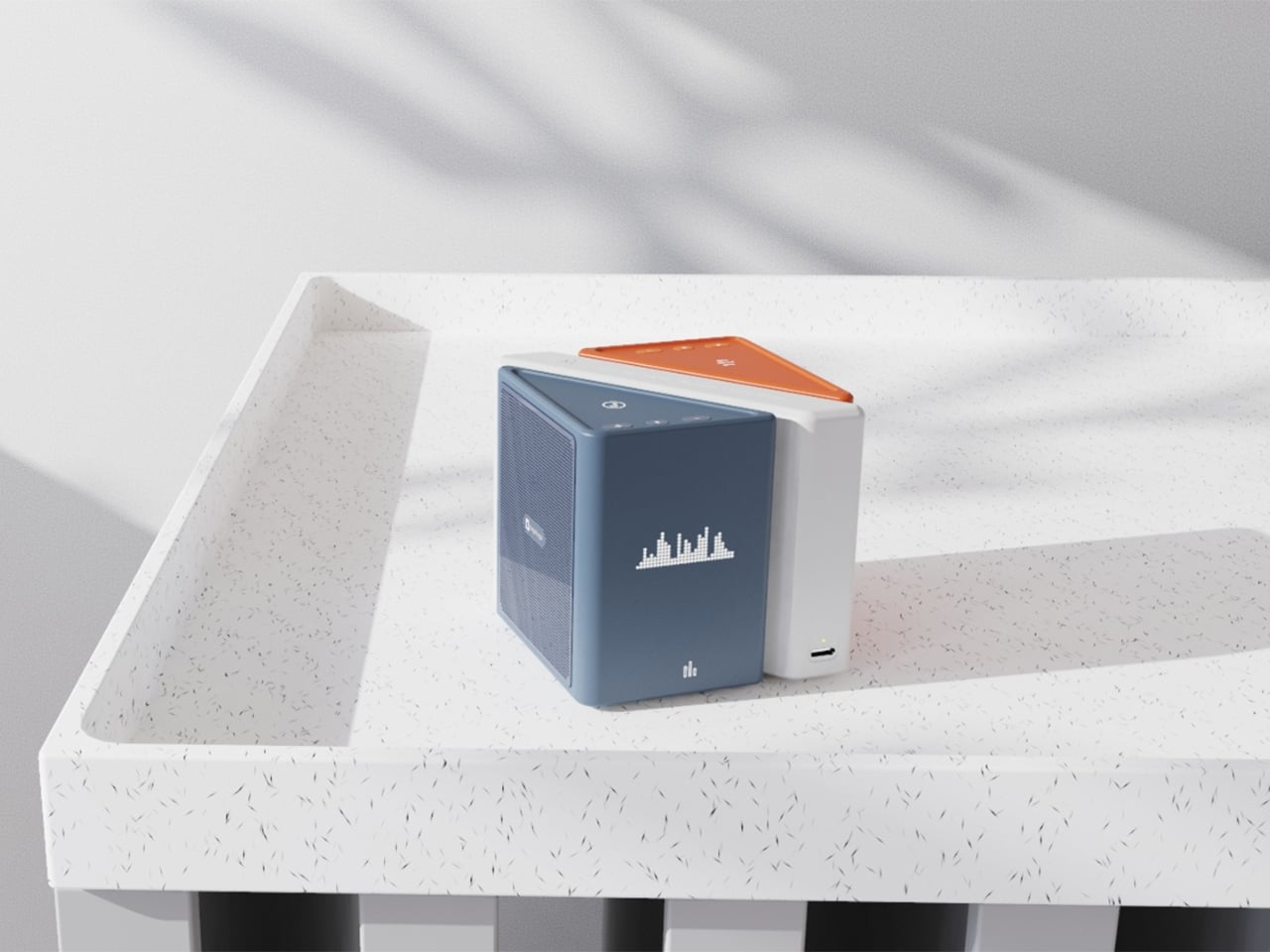
The KALLSUP is a cube, more or less. At 2.75 x 2.75 x 2.88 inches and built from ABS plastic, it has the proportions of a large sugar cube and a silhouette that wouldn’t look out of place on a shelf next to a small succulent. Designer Ola Wihlborg, who wanted the speaker to be “as small and simple as possible,” made something that reads less like audio equipment and more like an object that happens to produce sound when you connect your phone to it.

Designer: Ola Wihlborg (IKEA)

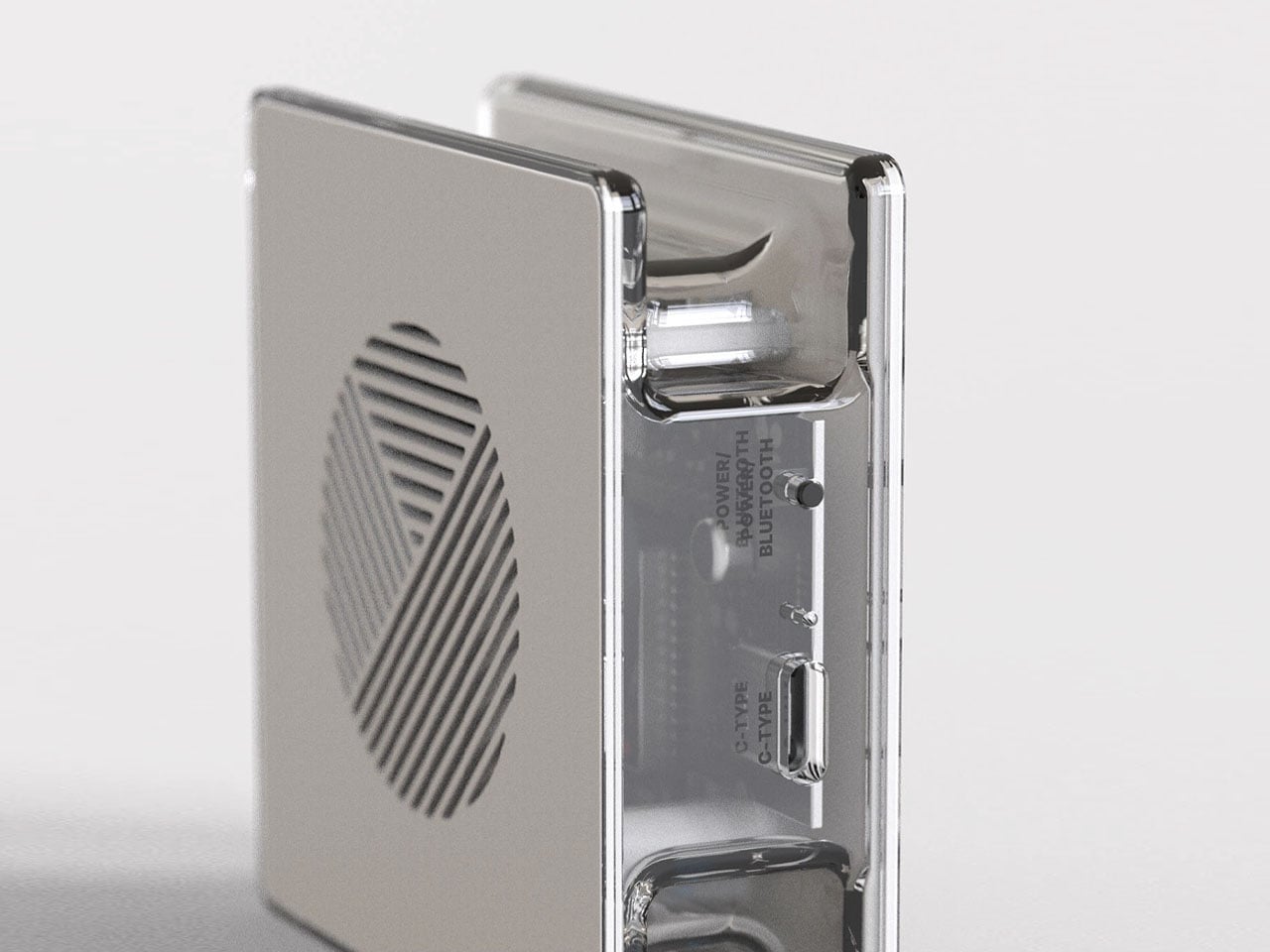
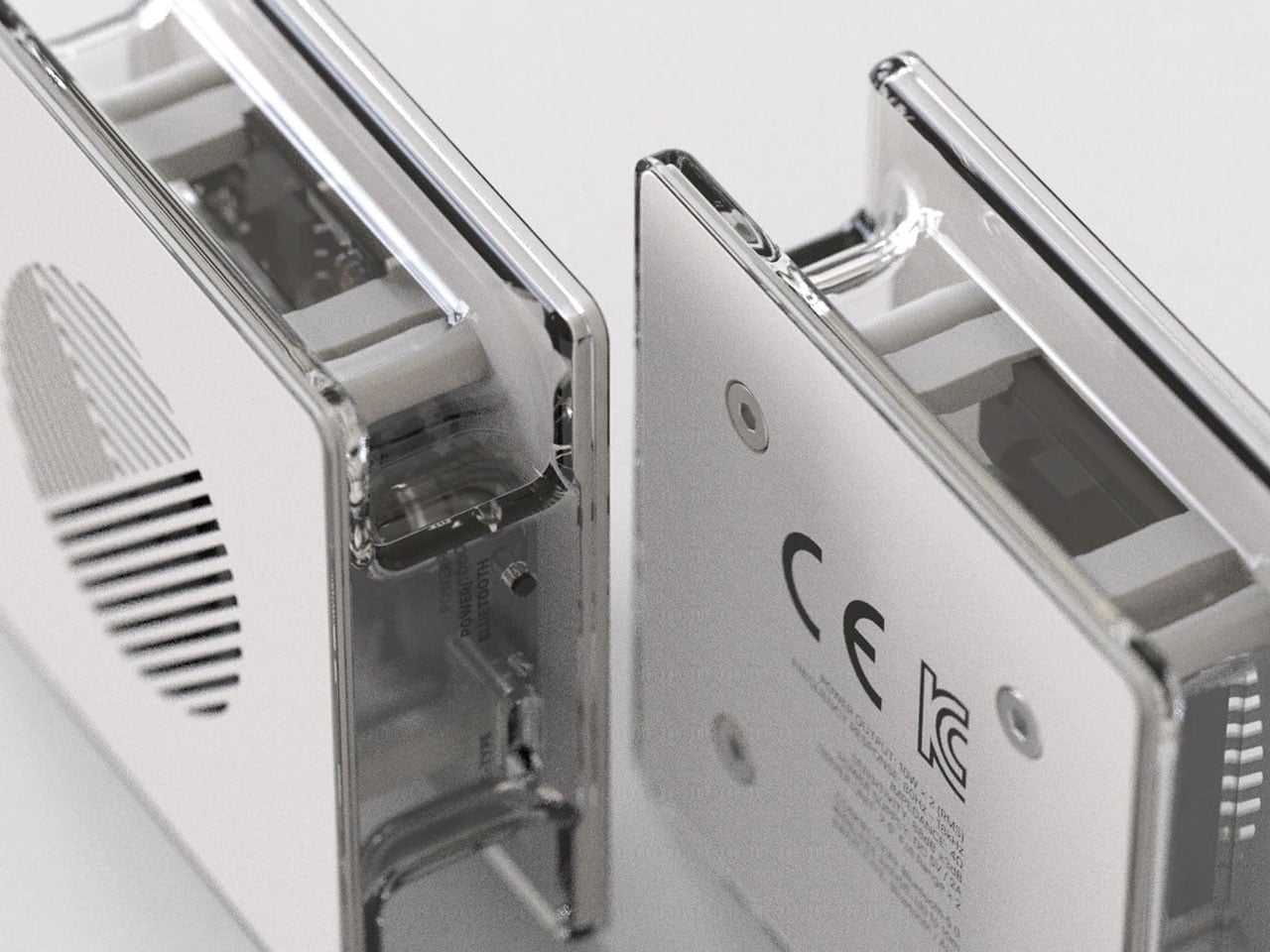
That framing matters. Most portable speakers broadcast what they are through a certain vocabulary: rubberized grilles, cylindrical barrels, carabiner clips, the unspoken suggestion that they’ve survived a kayaking trip. The KALLSUP makes none of those promises. Its face carries a circular grid of perforations, two buttons sit on top flanking a small LED, and the back has a USB-C port for charging. Nothing announces itself as a feature. It just exists, neatly, without fuss.

The minimalism extends to the controls, though that’s where things get slightly puzzling. There are only two buttons: one for Bluetooth and one for playback. No volume control sits on the unit itself, so the connected device handles all level adjustments. Pairing multiple units requires a long press of the play button, not the Bluetooth button, and there’s no manual power-off. These omissions read as deliberate simplicity, but they also feel like the kind of tradeoffs that made a $9.99 price tag achievable.

What the KALLSUP can do is genuinely surprise at this price. The rechargeable battery is advertised to run 9 hours at 50% volume, covering a full workday of background music. Bluetooth 5.3 holds up to 10 meters without interference. The real trick, the one that reframes the product’s logic entirely, is pairing up to 100 units together. One KALLSUP is a desk companion. Four of them, scattered across a room, start to approximate distributed audio.

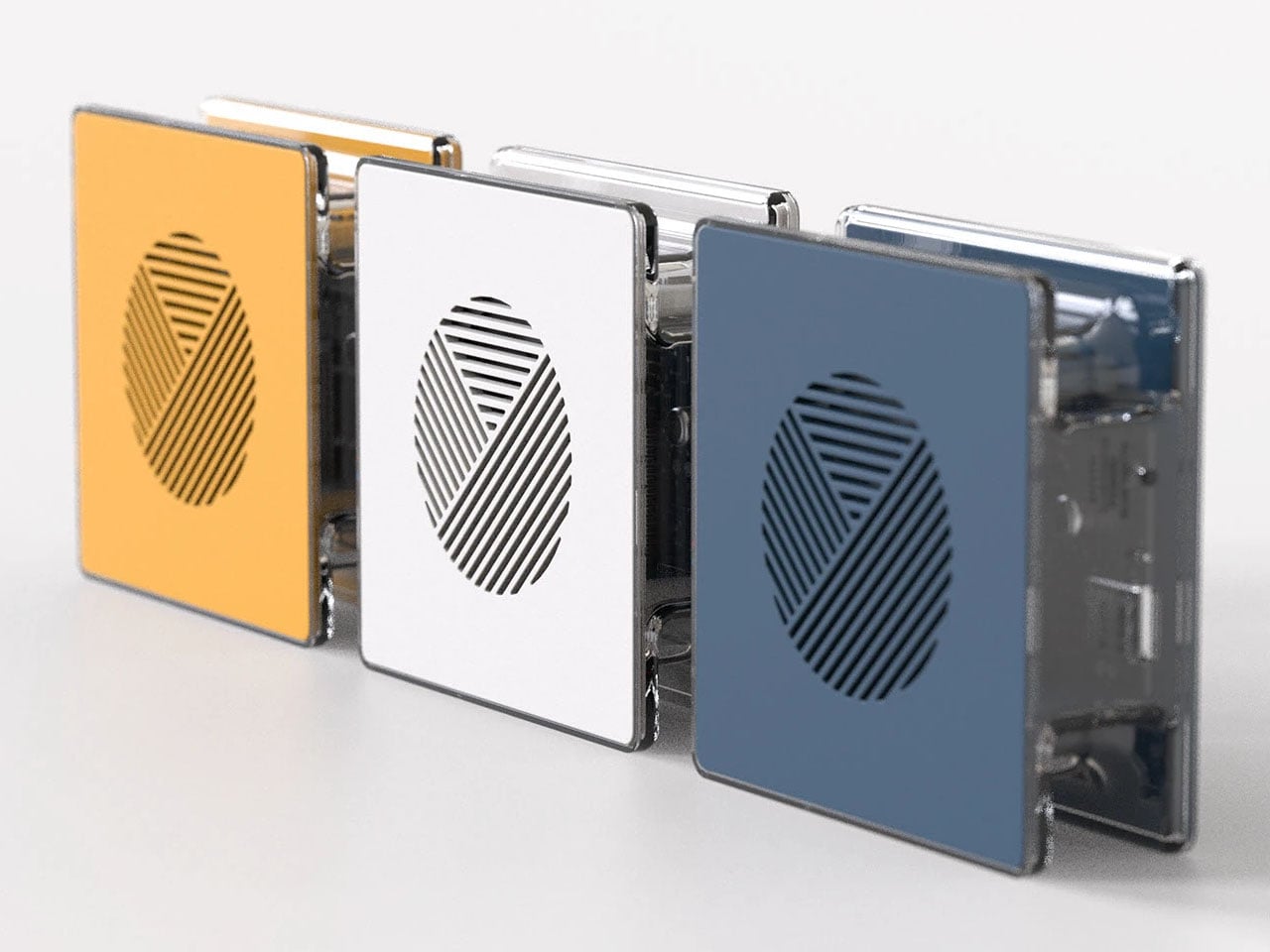
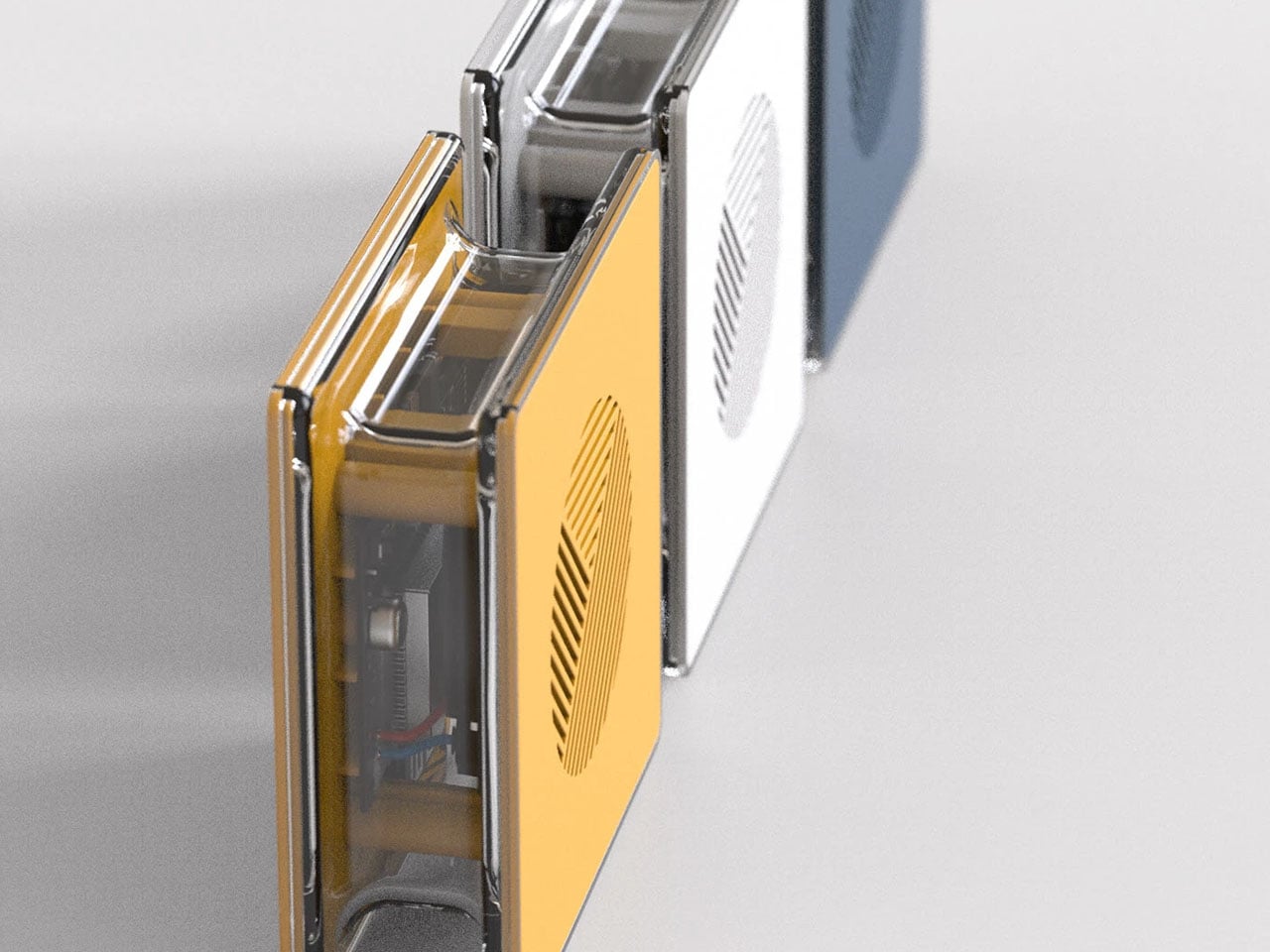
The yellow-green colorway, one of three available alongside white and pink, sits in that particular register of color that’s neither subtle nor aggressive. It’s the kind of green that shows up in membrane keyboards and silicone phone cases aimed at people who want their objects to feel a little more alive.

The post IKEA’s $10 Speaker Is Tiny, But You Can Pair 100 of Them Together first appeared on Yanko Design.

Motorola’s Bose-Tuned Speaker Automatically Follows You Room to Room

Bluetooth speakers have largely solved the portability problem and mostly failed the living room one. They tend to look like gym equipment that wandered indoors, sit awkwardly on a shelf, and demand a ritual of reconnecting whenever you walk back in the door. The moto sound flow, Motorola’s first portable speaker and the newest addition to the moto things lineup, takes a different angle on all three of those frustrations.

The design makes the first impression. Two Pantone-curated colorways, Carbon and Warm Taupe, wrap the cylindrical body in a twill-textured fabric finish that reads more like a decorative object than consumer electronics. It’s the kind of thing you’d leave on the coffee table without thinking twice, which is precisely the point. Motorola calls it “crafted to be seen and tuned to be heard,” and for once, the marketing copy isn’t entirely hollow.

Designer: Motorola

The hardware inside includes a dedicated woofer, tweeter, and dual passive radiators, producing a 30W output tuned through Motorola’s Sound by Bose partnership. That collaboration, which also appears in the razr fold, applies Bose’s EQ expertise for balanced, detailed sound rather than the bass-heavy thump most compact speakers default to. A companion app also lets you adjust the equalizer to your own taste, available on both Android and iOS.

The moto sound flow also distinguishes itself in terms of connectivity. Beyond Wi-Fi, Bluetooth 5, AirPlay, Google Cast, and Spotify Connect, the speaker uses UWB technology to do something more interesting. Walk close to it with a compatible phone, and it picks up your audio automatically, no tapping required. Run two units together, and Room Shift reroutes music to whichever speaker is nearest, while Dynamic Stereo adjusts left and right channels based on where your phone sits between them.

Those UWB features do carry a fine print worth reading. They require a compatible Android 9 or later phone with UWB enabled, so iPhones and older Android devices don’t qualify. The speaker still works over Wi-Fi and Bluetooth for everyone else, but Room Shift and Dynamic Stereo, the parts that make the pitch most compelling, are locked behind a hardware requirement many buyers won’t check before purchase.

The 6,000 mAh battery covers long listening sessions, and the IP67 rating makes outdoor or poolside use fair game. A dock handles charging instead of a cable, which keeps things tidy. Four built-in microphones manage speakerphone calls. Starting at €199, the moto sound flow enters a competitive space where JBL, Sonos, and Bose already have devoted followings, each with years of speaker-only focus behind them.

The post Motorola’s Bose-Tuned Speaker Automatically Follows You Room to Room first appeared on Yanko Design.
This Speaker Turns Sound Waves Into Sculptural Art

There’s something deeply satisfying about a product that looks exactly like what it does. You know the feeling: when form follows function so perfectly that you can’t imagine it any other way. That’s the immediate reaction to Loopen, a sculptural speaker concept from Design by Joffrey that transforms the invisible phenomenon of sound into a striking visual statement.

At first glance, Loopen reads as pure art. Rendered in a bold cobalt blue, the design features concentric circular loops that radiate outward from a central speaker driver, creating a mesmerizing pattern that looks like you’ve frozen sound waves mid-journey through space. But this isn’t just aesthetic cleverness for its own sake. Those loops are the actual framework holding everything together, turning the metaphor into structure.

Designer: Design by Joffrey

The genius here is in the restraint. Design by Joffrey could have gone wild with this concept, adding unnecessary embellishments or overcomplicating the form. Instead, Loopen strips everything back to its essential elements. The circular ripples emerge from an oval base, supported by two slim uprights that keep the whole composition feeling light and airy despite its sculptural presence. Two simple control buttons sit flush on the base alongside the power cable, maintaining the clean lines without disrupting the visual flow.

What makes this design particularly clever is how it plays with our perception of sound itself. We can’t see sound waves, but we’ve all seen the visualizations: those undulating sine waves in audio software, the ripples spreading across water when you drop a stone, the circular patterns speakers create when you place them face-down on a surface covered in sand. Loopen takes that universal visual language and makes it literal, giving physical form to something we usually only experience through our ears.

The color choice deserves attention too. That saturated blue isn’t trying to blend into your minimalist white walls or disappear on a dark shelf. It demands to be noticed, which feels right for a piece that’s as much sculpture as it is functional tech. The matte finish gives it a contemporary, almost toy-like quality that keeps the design from feeling too serious or precious. This is a speaker you could actually live with, not just admire from across the room.

There’s also something refreshing about seeing a concept that doesn’t try to hide its technology. So many modern speakers aim for invisibility, disguising themselves as wooden boxes or fabric cylinders that could be mistaken for home decor. Loopen takes the opposite approach: it celebrates what it is. The speaker driver sits proudly at the center, cradled by those wave-like loops, making no apologies for being a piece of audio equipment.

The compact size suggests this is likely a Bluetooth speaker meant for personal spaces rather than filling an entire room with sound. That feels appropriate. This is the kind of object you’d want on your desk or bedside table, where you can appreciate the form up close. The wired connection visible in the images hints at this being a design concept or prototype, but it’s easy to imagine a production version with wireless charging or a more concealed power solution.

What really stands out about Loopen is how it bridges that often awkward gap between tech and design. Too often, products are either functional but boring, or beautiful but impractical. This manages to be both visually compelling and immediately understandable in its purpose. You don’t need an explanation to know what it does. The form tells you everything. Design by Joffrey has created something that fits perfectly into our current moment, where the boundaries between art, design, and technology keep getting blurrier. We want our objects to be more than just tools. We want them to spark joy, start conversations, and add visual interest to our spaces. Loopen delivers on all fronts.

Whether this remains a concept or eventually makes it to production, Loopen represents the kind of thoughtful, playful design that makes you reconsider what everyday tech products could look like. It’s a reminder that functionality and beauty aren’t opposing forces. Sometimes, when you let the core idea of what something does guide how it looks, you end up with magic. In this case, that magic sounds pretty good too.

The post This Speaker Turns Sound Waves Into Sculptural Art first appeared on Yanko Design.
IKEA Just Made a Mouse-Shaped Speaker That Kids Can Actually Carry

IKEA’s GREJSIMOJS collection started with a dog-shaped lamp that dims when you hold its head for bedtime, turning a light switch into something closer to petting a sleepy puppy. The limited collection is more than just about cute animals, but also about playful behavior baked into everyday objects. That same thinking now shows up in a tiny Bluetooth speaker shaped like a mouse, with four stubby legs and a braided tail that doubles as a carry loop.

The GREJSIMOJS portable Bluetooth speaker is a small, mouse-shaped character IKEA calls a “cute little music friend” for playful people of all ages. It is meant to follow kids from room to room, turning background sound into something they can carry and interact with, while still being a straightforward wireless speaker for parents who just want podcasts in the kitchen or bedtime audiobooks without fumbling with phone speakers.

Designer: Marta Krupińska (IKEA)

Picture a child drawing at a desk, the purple mouse sitting nearby quietly playing an audiobook or favorite songs. Pairing is as simple as connecting a phone over Bluetooth, and the sound is tuned for everyday listening rather than shaking walls. The built-in volume limit protects sensitive ears, so kids can turn it up without parents needing to hover over the controls constantly or worry about hearing damage.

The braided tail makes it easy for small hands to grab and move the speaker from bedroom to living room. Charging happens over USB-C, though the cable and adapter are sold separately, and IKEA says adults should handle that part. The speaker cannot play while charging, which creates a split that lets kids control what they listen to while adults manage batteries and power.

The multi-speaker mode lets the mouse pair with other IKEA Bluetooth speakers supporting the same feature. That means the same music can play from multiple spots, turning a hallway and playroom into one sound zone without complicated app setups. It is an easy way to make dance parties or tidy-up time feel coordinated, even if the tech behind it stays invisible to everyone involved.

The collection’s goal is to inspire play and togetherness across the home, and the mouse fits that mission well. IKEA notes that £1 from every GREJSIMOJS product sold during a set period goes to the Baby Bank Alliance, adding a layer of purposeful giving. More than just decor, the speaker is a small facilitator for shared stories, music, and movement in family spaces without needing complicated setup rituals.

The GREJSIMOJS mouse speaker, like the dog lamp, treats technology as something that should feel approachable and a bit silly rather than cold. Rather than competing with serious audio gear, it is trying to make rooms feel more alive without asking kids to sit still or parents to manage another app. In homes where screens already demand enough attention, a small purple mouse that quietly pipes in sound might be exactly the kind of tech everyone can agree on.

The post IKEA Just Made a Mouse-Shaped Speaker That Kids Can Actually Carry first appeared on Yanko Design.
When Your Speaker Is Also a Statement: The Tresound Mini

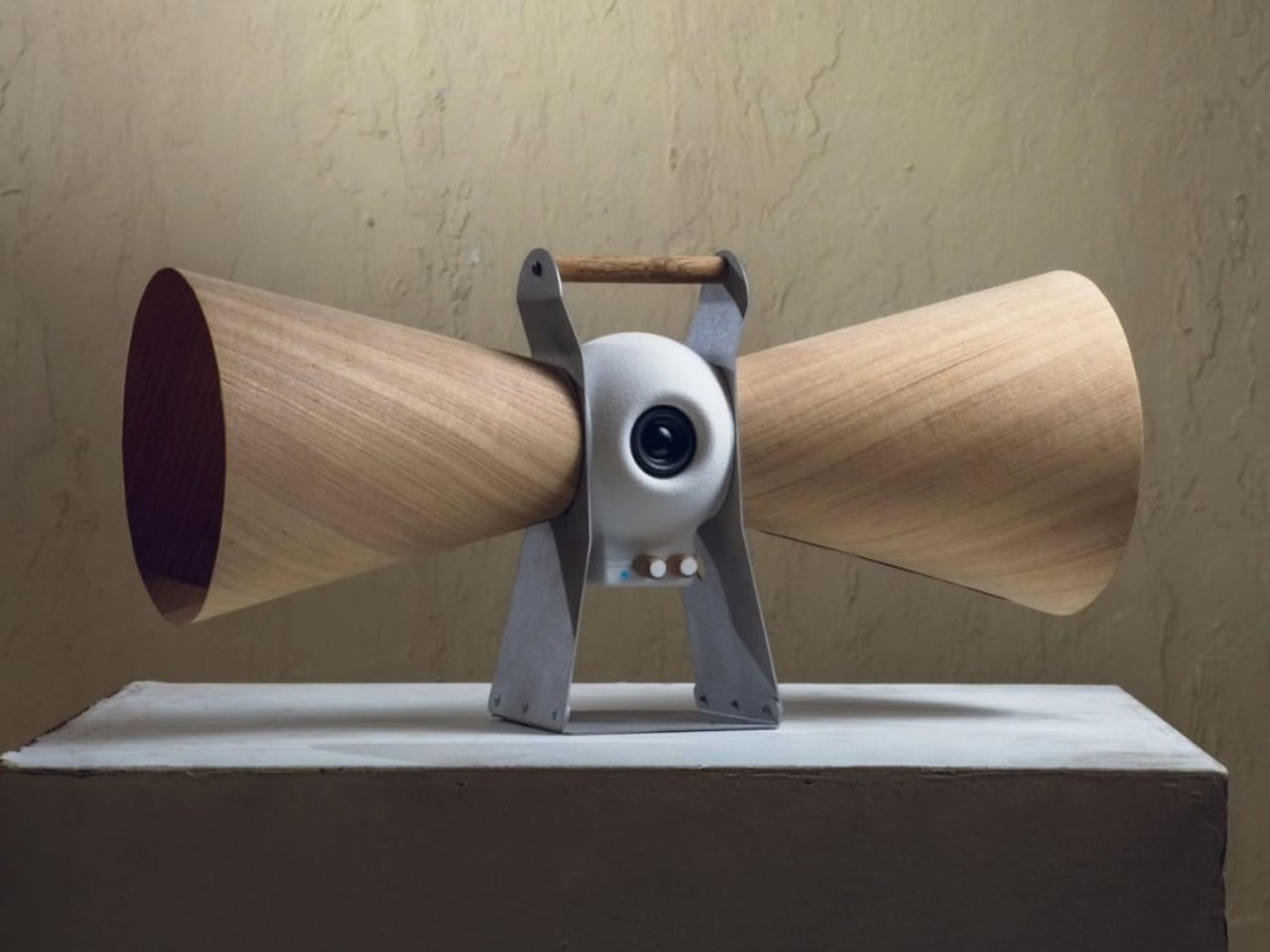
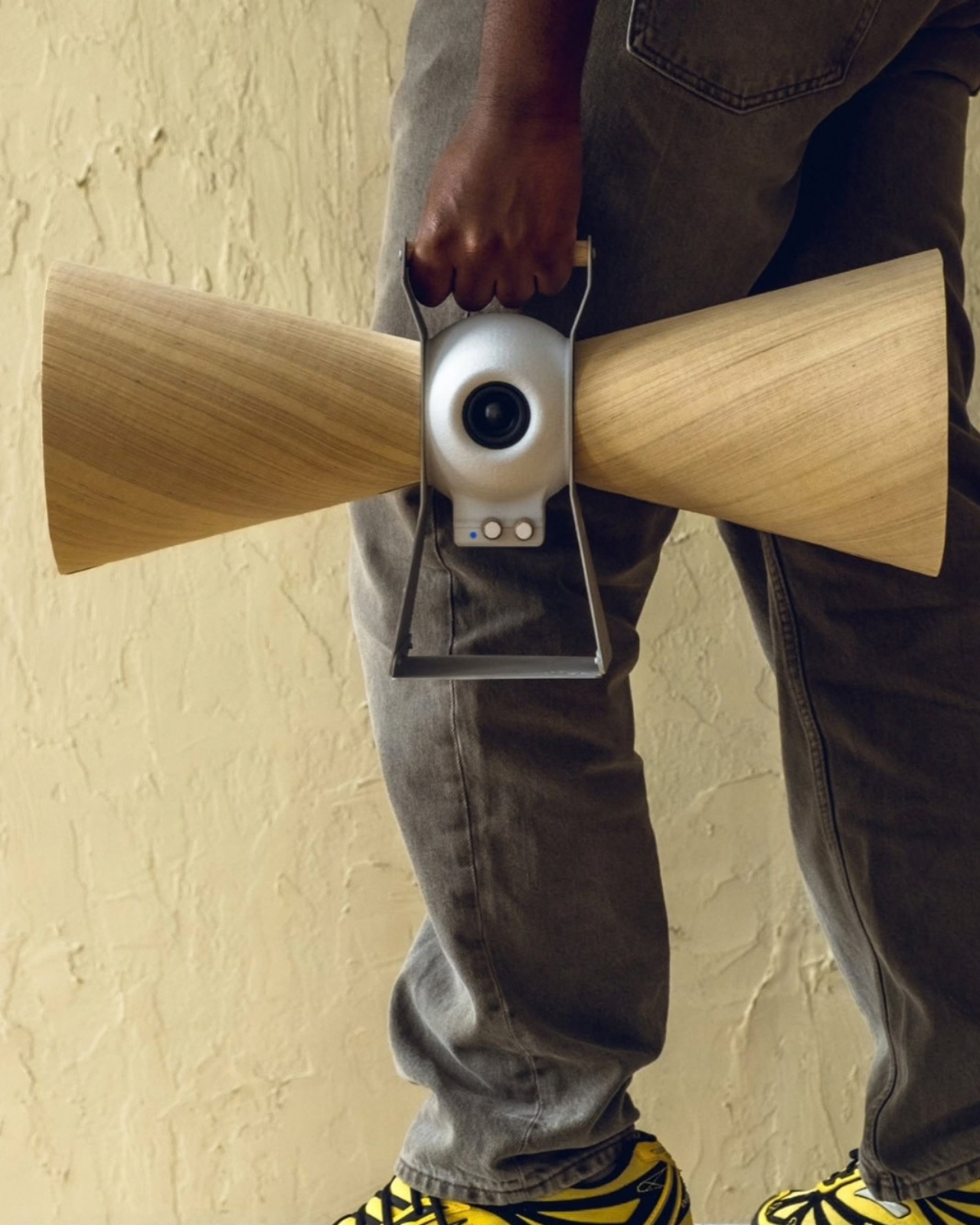
Sometimes the best tech isn’t the loudest. It’s the one that makes you pause and actually look at it before you press play. That’s what designers Yong Cao and Jianfeng Lv have managed to pull off with the Tresound Mini, a desktop Bluetooth speaker that refuses to be just another black box on your desk.

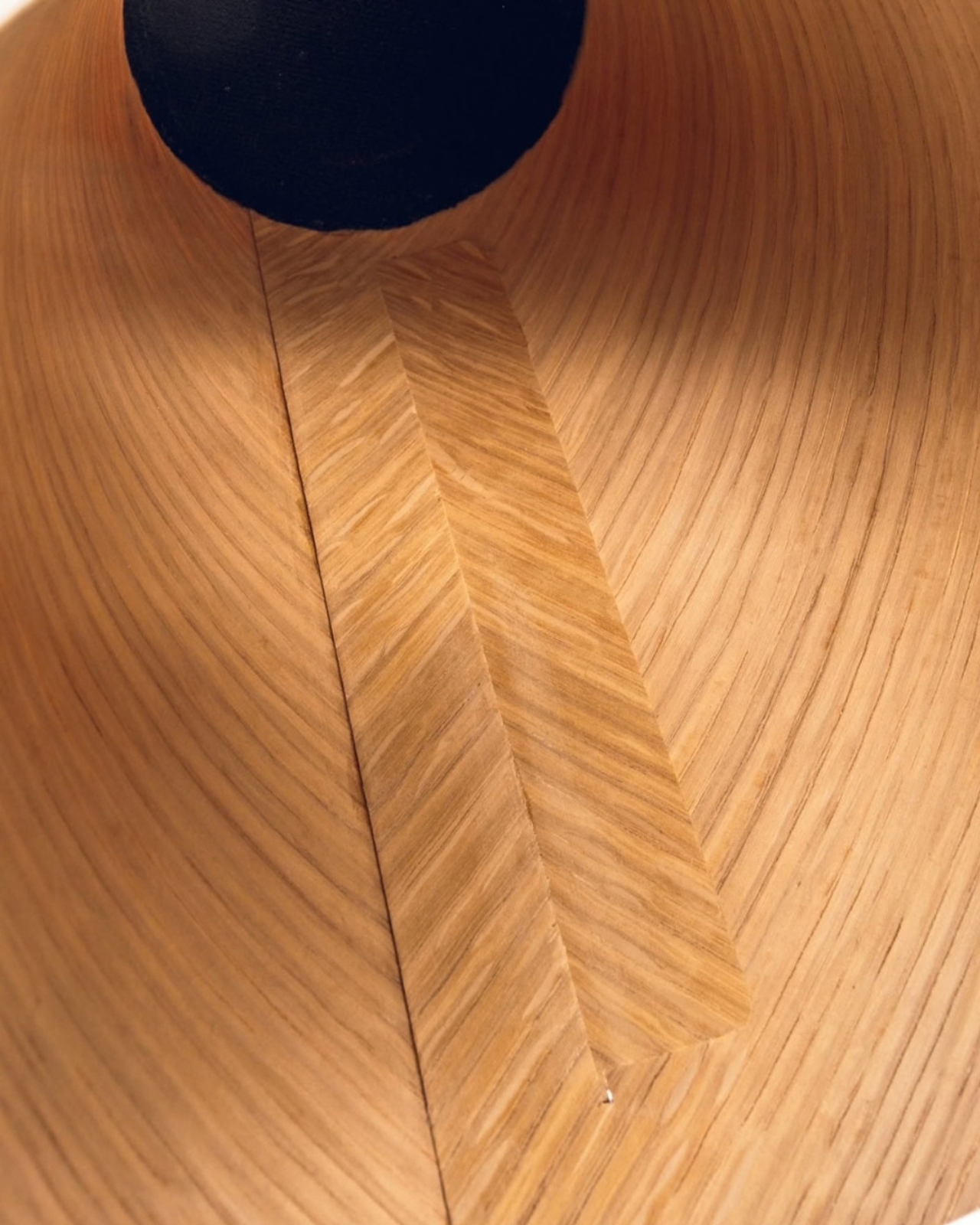
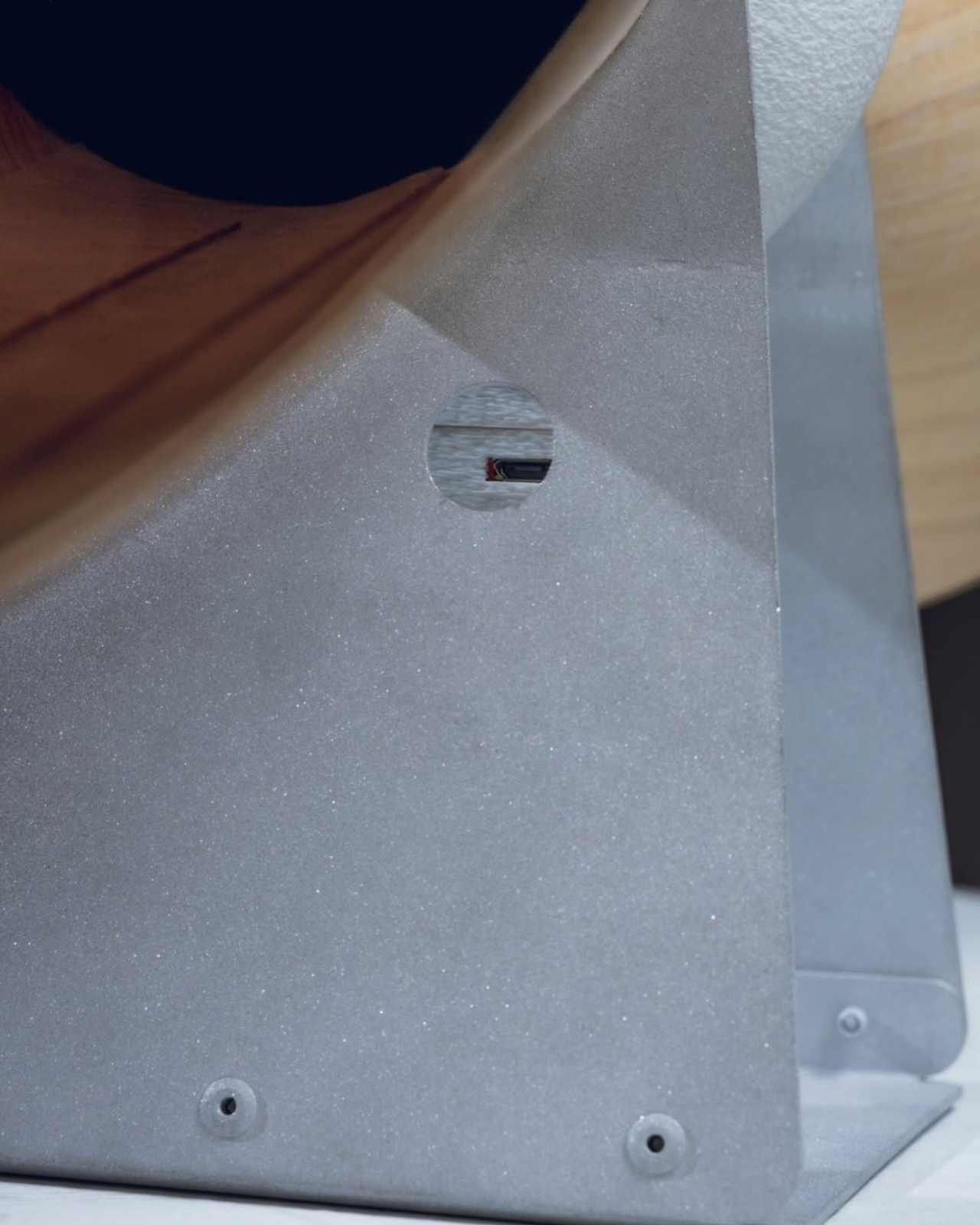
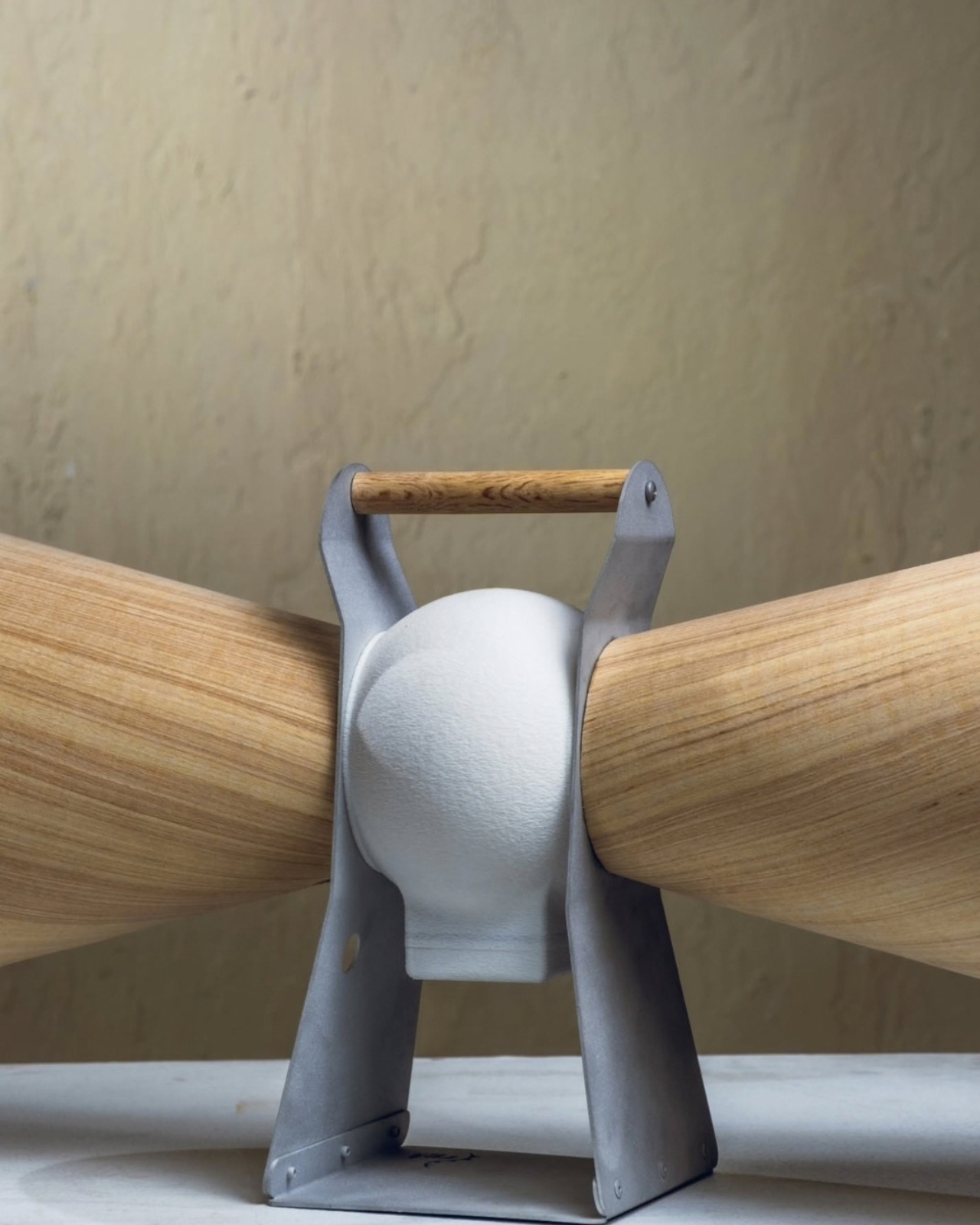
At first glance, this compact speaker looks like it wandered in from a modern art gallery. Its cone-shaped design is clean, almost architectural, with a minimalist aesthetic that feels intentional without being precious about it. The form isn’t just for show, either. TRETTITRE, the emerging HiFi brand behind the speaker, describes itself as bridging traditional audio quality with something more forward-thinking, and you can see that philosophy at work here.

Designers: Yong Cao and Jianfeng Lv

The Tresound Mini recently won the Golden A’ Design Award in the Audio and Sound Equipment Design category, which is one of those achievements that signals serious design cred. But awards aside, what makes this speaker interesting is how it thinks about the desktop experience differently. Instead of trying to dominate your workspace with aggressive angles or flashy lights, it takes a more refined approach. The design integrates seamlessly into your environment, whether that’s a home office setup, a creative studio, or just a corner of your apartment where you actually get things done.

Art Director Yong Cao and Designer Jianfeng Lv, both from China, approached this project with a focus on what they call the “deep integration of brand design and product design”. That sounds like design speak, but what it really means is that every element serves a purpose. The cone shape isn’t arbitrary. It contributes to the audio performance while also giving the speaker a distinctive profile that stands out without screaming for attention. It’s the kind of design that works equally well in a carefully curated Instagram photo or just sitting there doing its job.

Let’s talk about the packaging, because this is where things get genuinely clever. Instead of going with the typical cardboard box and foam inserts, the Tresound Mini comes with a carrying bag that’s wet-pressed from bamboo fiber pulp. This isn’t just packaging in the traditional sense. It’s designed to double as a carrying case, making the speaker genuinely portable. The bamboo fiber approach is both environmentally friendly and cost-effective, reducing packaging waste while providing actual protection for the product. It’s the kind of thoughtful detail that shows someone was actually thinking about the full lifecycle of the product, not just the unboxing moment.

The portability factor is key here. Desktop speakers traditionally live in one spot, tethered to your workspace. But the Tresound Mini was designed with the understanding that people move around now. You might want it on your desk in the morning, out on a balcony in the afternoon, or in your kitchen while you’re cooking dinner. The compact size and that bamboo fiber carrying bag make that kind of flexibility possible.

TRETTITRE positions itself as catering to “the new generation of HiFi enthusiasts”, which is a smart read of where audio culture is heading. There’s a growing audience that cares about sound quality but doesn’t want to sacrifice design or deal with the bulk and complexity of traditional HiFi setups. They want something that sounds good, looks intentional, and fits into spaces that might not have room for a full speaker system. The Tresound Mini seems built specifically for that demographic.

What’s interesting about this design is how it challenges the assumption that good audio equipment needs to look technical or industrial. There’s no display screen, no visible screws, no aggressive branding. Just a clean geometric form that happens to deliver quality sound. It’s the audio equivalent of those minimal tech accessories that proved you don’t need to sacrifice aesthetics for function.

The success of the Tresound Mini might signal a broader shift in how we think about desktop audio. As more people work from home or create hybrid living and working spaces, there’s an appetite for products that perform well without dominating the visual landscape. We want our tech to be good at what it does, but we also want it to feel like it belongs in our actual lives, not in a showroom.

Yong Cao and Jianfeng Lv have created something that manages to be both functional and thoughtful. The Tresound Mini proves that when you approach product design with real consideration for how people actually use things, you can create something that transcends its basic function and becomes worth talking about.

The post When Your Speaker Is Also a Statement: The Tresound Mini first appeared on Yanko Design.
DIY Spotify-to-Cassette Player Adds Analog Warmth to Digital Streaming Audio

Most audio enthusiasts fall into one of two camps: the ones chasing perfect fidelity with lossless files and the ones who swear their vinyl sounds warmer. Julius decided to build a bridge between these worlds, and it looks like something Q would hand to James Bond if the mission involved a particularly groovy villain.

His cassette streaming device takes Bluetooth audio and runs it through an actual tape loop before playback, physically imprinting that analog character onto digital streams. The engineering journey was brutal. Turns out cassette decks from decades past have some deeply weird ideas about electrical grounding, and getting modern Bluetooth hardware to play nice with positive-rail-referenced vintage electronics required DC isolating voltage regulators and more than a few creative workarounds. The payoff is a device that looks incredible and introduces real tape saturation without any digital fakery.

Designer: Julius Makes

The concept is straightforward. Bluetooth audio arrives digitally, converts to analog, mixes from stereo to mono, records onto cassette tape, travels around the loop, hits a playback head, then reaches the speaker. That physical trip through magnetic tape creates the warmth people obsess over. The compression happens because ferric oxide particles on polyester film genuinely can’t capture digital audio’s full range. These are real physical limitations making the sound different, and somehow our ears prefer it that way. Julius made the tape loop visible on purpose, sitting outside the cassette with orange guide brackets so you watch it move while listening.

Getting everything to work required solving problems that shouldn’t exist anymore. Cassette decks connect their chassis to the positive power rail instead of ground. Julius only learned this after bolting his grounded metal case directly to the deck with screws, nearly shorting everything. The audio input shielding also runs to positive, which makes zero sense if you’re used to modern electronics. His Bluetooth module expected normal ground references, creating a fundamental incompatibility. An isolation transformer from AliExpress failed completely. He tried powering the Bluetooth at 12.5 volts while referencing it to 7.5 volts, but that rail wouldn’t sink current. Three months of debugging until DC isolating voltage regulators finally solved it.

The VU meter uses a fluorescent tube that works backward from what you’d expect. Silence keeps it fully lit, loud beats make it dim. Julius inverts the signal on purpose so the tube glows when the device sits idle, which looks better and extends the tube’s life. The circuit gains the audio signal 500 times, clips it hard to isolate peaks, then runs through a diode detector with a capacitor for smoothing. The power amp inverts everything again and boosts another five times to drive the tube. The lag you see in the meter’s response comes from that smoothing capacitor, which is a feature since nobody wants a seizure-inducing flicker.

He built five separate circuit modules. One auto-starts the Bluetooth by faking a long button press with an RC pulse generator. Another converts stereo to mono for the recorder. The playback preamp amplifies the tape signal and applies EQ compensation, splitting output between the speaker and the meter circuits. Everything lives on custom PCBs he designed in KiCad after a month of learning the software. The stainless steel case handles shielding and heat dissipation from the power amp. A laser-cut acrylic panel makes the front transparent. The big orange knob pushes record volume into distortion territory. The small knob controls speaker output. Input and output jacks mean you can use this as a tape delay or saturation processor for other gear, which honestly might be more useful than Bluetooth streaming through cassette tape. But useful was never really the point.

The post DIY Spotify-to-Cassette Player Adds Analog Warmth to Digital Streaming Audio first appeared on Yanko Design.
JBL’s AI Wireless Speakers Can Remove Vocals, Guitars, or Drums From Any Song While You’re Jamming

Walk into any rehearsal space and you will see the usual suspects. A combo amp in the corner, a Bluetooth speaker on a shelf, maybe a looper pedal on the floor. Each tool has a single job. One makes your guitar louder, one plays songs, one repeats whatever you feed it. You juggle them to build something that feels like a band around you.

JBL’s BandBox concept asks a different question. What if one box could understand the music it is playing and reorganize it around you in real time. The Solo and Trio units use AI to separate vocals, guitars, and drums inside finished tracks, so you can mute, isolate, or replace parts on the fly. Suddenly the speaker is not just a playback device. It becomes the drummer who never rushes, the backing guitarist who never complains, and the invisible producer nudging you toward tighter practice.

Designer: JBL

This ability to deconstruct any song streamed via Bluetooth is the core of the BandBox experience. The AI stem processing happens locally, inside the unit, without needing an internet connection or a cloud service. You can pull up a track, instantly mute the original guitar part, and then step in to play it yourself over the remaining bass, drums, and vocals. This is a fundamental shift in how musicians can practice. Instead of fighting for space in a dense mix, you create a pocket for yourself, turning passive listening into an interactive rehearsal.

The whole system is self-contained, designed to work straight out of the box without a pile of extra gear. Both models come equipped with a selection of built-in amplifier models and effects, so you can shape your tone directly on the unit. Essentials like a tuner and a looper are also integrated, which streamlines the creative process. You can lay down a rhythm part, loop it, and then practice soloing over it without ever touching an external pedal. It is this thoughtful integration that makes the BandBox feel less like a speaker and more like a complete, portable music-making environment.

The BandBox Solo is the most focused version of this idea, built for the individual. It is a compact, easily carried device with a single combo input that accepts either a guitar or a microphone. This makes it an obvious choice for singer-songwriters or any musician practicing alone. The form factor is all about convenience, with a solid build and a top-mounted handle. A battery life of around six hours means you could take it to a park for an afternoon busking session or just move it around the house without being tethered to a wall outlet. It is a self-sufficient creative station in a small package.

When practice involves more than one person, the BandBox Trio provides the necessary expansion. It is built on the same AI-powered platform but scales up the hardware for group use. The most significant change is the inclusion of four instrument inputs, which transforms the unit into a miniature, portable PA system. A small band or a duo can plug in multiple guitars, a bass, and a microphone, all running through the same box. This is a clever solution for impromptu jam sessions, stripped-down rehearsals, or music classrooms where setting up a full mixer and multiple amps is too cumbersome.

Both units share a clean, modern design that aligns with JBL’s broader product family. The controls seem to be laid out for quick, intuitive access, a must for musicians who need to make adjustments without interrupting their flow. Connectivity extends beyond just playing music; a USB-C port allows the BandBox to double as an audio interface. You can connect it directly to a computer or tablet to record your sessions or lay down a demo, adding a layer of studio utility that makes the device even more versatile. It is not just for practice, it is for capturing the ideas that come from it.

Of course, none of this would matter if the sound was not up to par. JBL’s reputation in audio engineering creates a high expectation, and the BandBox aims to meet it by delivering a full-range sound that can handle both a dynamic instrument and a complex backing track simultaneously. The goal is to provide a clear, responsive guitar tone that cuts through, while the underlying track remains rich and detailed. This dual-functionality is key, ensuring it performs just as well as a high-quality Bluetooth speaker for casual listening as it does as a dedicated practice amp.

The JBL BandBox series has started its rollout in Southeast Asian markets, with promotions and availability already noted in the Philippines and Malaysia. A wider international release is expected to follow. While pricing will fluctuate by region, the BandBox Solo appears to be positioned competitively against other popular smart amps on the market. The Trio, with its expanded inputs and group-oriented features, will naturally sit at a higher price point, offering a unique proposition as an all-in-one portable rehearsal hub.

The post JBL’s AI Wireless Speakers Can Remove Vocals, Guitars, or Drums From Any Song While You’re Jamming first appeared on Yanko Design.
IKEA and Teklan Turn Tech Into Eye Candy

You know that weird thing we do with tech products? We buy them, we use them every day, but then we kind of hide them. Tuck the speaker behind the plant. Stash the lamp in the corner. As if apologizing for needing functional things in our homes. IKEA’s new collaboration with Swedish designer Tekla Evelina Severin (known as Teklan) is here to flip that script entirely.

The Teklan collection, which launches globally this December, is all about making your speakers and lamps the main character instead of background extras. We’re talking bold patterns, nostalgic color combos, and shapes that look like they wandered out of a really cool vintage store and somehow learned to play your Spotify playlist.

Designer: Teklan for IKEA

At the heart of the collection is the SOLSKYDD family, a trio of round Bluetooth speakers that refuse to be boring. The smallest is an 8-inch portable speaker in orange with a pattern that practically demands attention. The medium version comes in green with brown and beige diagonal stripes that feel very 70s but in the best possible way. And the largest? An 18-inch wall-mounted beast in textured orange that can even connect to a screen. These aren’t speakers that blend in. They’re conversation starters that happen to have excellent acoustics, designed by Ola Wihlborg to balance form with serious sound quality.

Then there’s the KULGLASS lamp speakers, which might be my favorite thing about this entire launch. Teklan designed them to look like soft-serve ice cream, because why shouldn’t your tech look like dessert? They come in mint green and a red-brown with pink combo, and they work as both lamps and Bluetooth speakers. The built-in volume knob is a nice tactile touch in a world where everything is controlled by tapping a screen.

What makes this collaboration feel special isn’t just the aesthetic, though the colors are definitely doing the heavy lifting. It’s the intention behind it. Teklan literally went to her grandparents’ house to match the exact shade of mint green to an old bar of soap from her childhood memories. That level of personal storytelling in product design is rare, especially for mass-market furniture retailers.

“We wanted to bring that softness and friendliness into technology, to help people see home electronics differently and invite more colour into their everyday spaces,” Teklan explained. And honestly, mission accomplished. These products feel warm and approachable in a way that most tech doesn’t. While the insides are packed with all the technical complexity you’d want from quality speakers, the outsides feel almost playful.

The collection also includes a refresh of IKEA’s cult-favorite VAPPEBY speaker, now decked out in Teklan’s signature colors, plus a whole range of braided charging cables called SITTBRUNN, RUNDHULT, and LILLHULT that are inspired by climbing ropes. Even your charging cables get to have personality now.

All the speakers can connect to each other and other compatible IKEA Bluetooth speakers for multi-speaker mode, and they support Spotify Tap, so you can seamlessly continue whatever you were listening to. The SOLSKYDD also comes in a plain white version if you’re not quite ready to commit to orange geometric patterns (though I’d argue that’s missing the point). Price-wise, we’re still solidly in IKEA territory. The portable SOLSKYDD starts at $80, the medium at $100, and the largest at $140. The KULGLASS lamp speakers are $130. Not cheap for IKEA, but reasonable when you consider you’re getting both form and function wrapped in genuinely unique design.

This collaboration represents something bigger than just pretty speakers. It’s part of a shift in how we think about the stuff that makes our homes work. After years of minimalism telling us to hide everything, make it all white, keep it neutral, there’s this growing appetite for objects with personality. Things that reflect who we are, what we love, the colors that make us happy.

IKEA has been experimenting with this more expressive approach since ending its partnership with Sonos earlier this year. The Teklan collection feels like a confident step into that space, proving that affordable design doesn’t have to mean boring design. The collection starts rolling out in December, with specific dates varying by market, so check with your local IKEA for availability. And maybe start thinking about where you want to display, not hide, your next speaker.

The post IKEA and Teklan Turn Tech Into Eye Candy first appeared on Yanko Design.
This Teenage Engineering-inspired Cassette Player even has a “Bluetooth Cassette” for Spotify Playback

Form, function, emotion, the “IT’S REAL” Cassette player has it all. With its retro-meets-new-age charm, this cassette player encases your cassette in a transparent cover, allowing you to see the cassette’s reels rotate as the device plays music. But here’s the kicker – this thing isn’t just a cassette player, it’s a Bluetooth speaker too.

You see, each IT ‘S REAL player comes with its own “Bluetooth Cassette” that lets you connect your phone to the IT’S Real device. Put the Bluetooth cassette in and the appliance lets you effectively play Spotify, YouTube, Apple Music, or any streaming app on your cassette player. The Bluetooth cassette works with other devices too, allowing you to turn your dad’s boombox, or your 30-year-old car’s tape-deck into a Bluetooth-enabled device that supports your phone.

Designer: NINM Labs

Let’s break down the player by talking about its form, function, and emotion. If you were born in the early 90s or before, chances are your vision of a cassette player are a lot different from what the IT’S REAL looks like. Most cassette players had a template design – either they looked like a boombox, with the cassette in the middle and speakers on the side, or they looked like a Walkman, with a compact form factor and an Aux input for headphones. The IT’S REAL looks nothing like either of those.

It encases the cassette in a transparent outer housing, preserving and showcasing it as if it’s some sort of precious relic. This treatment is reserved for precious items, so to see a cassette player do this enhances the cultural and iconic value of the humble cassette. The transparent casing still retains its function, allowing the cassette to play while it’s inside, while front-firing speakers help you listen to the audio.

Put any cassette in and the IT’S REAL plays your old tapes, whether they’re albums or personally made mixtapes that were a standard fixture of music-sharing culture in the 80-90s before discs became a thing. Buttons underneath the transparent hood let you play, pause, rewind, fast-forward, or eject the cassette, following the traditional functionality of cassette players from before… but what really sets the IT’S REAL player apart, is that it comes with a “Bluetooth Cassette”.

While the IT’S REAL device is a purely traditional cassette player, the Bluetooth Cassette that comes along with it turns it into a Bluetooth speaker. Put the cassette in, start the player, and the cassette turns into a Bluetooth transmitting device, allowing you to pair a smartphone. Once paired, the cassette allows you to play music from your phone on the IT’S REAL’s built-in speakers.

Bluetooth 5.0 means the cassette pairs with your phone seamlessly, and here’s the kicker – it can be used with other cassette players too – not necessarily just the IT’S REAL. Pop the Bluetooth cassette into your dad’s boombox, your hipster uncle’s Walkman, or even your grandfather’s car that still has a functional cassette deck built into the car’s dashboard.

A lot of the IT’S REAL’s joy lies in its aesthetic and its retro-revival. The transparent design is beyond gorgeous, allowing you to appreciate the workings of the cassette player quite literally like some Teenage Engineering-like device that isn’t afraid to bare its electronics instead of hiding everything under a plastic facade.

The act of playing a cassette tape may have died 20 years ago, but just like fashion is cyclical, tech trends have a way of making a comeback too – and the IT’S REAL capitalizes on this retro joy beautifully while still being a Bluetooth-enabled future-friendly device that anyone can use and love.

For makers NINM Labs, this is far from their first rodeo. They debuted back in 2018 with the IT’S OK Cassette Player – a Walkman version of this product that did over $80,000 in funding from nearly a thousand backers. Soon after, the IT’S REAL Cassette Player made its Kickstarter debut, smashing past its funding goal by over 500%. The product is now available on the NINM Lab website for $151.86 USD.

The post This Teenage Engineering-inspired Cassette Player even has a “Bluetooth Cassette” for Spotify Playback first appeared on Yanko Design.
Kickback brings transparent, nostalgic CD, cassette players and Bluetooth speaker

Anyone who has ever done spring cleaning knows that you will still find some old compact discs and cassette tapes in your pile of junk. CDs are also still pretty popular now specifically in the K-pop and J-pop industry. The challenge though is to find devices that can still play these “artifacts”. Kickback is a brand that banks on nostalgia with its line up of retro products. Three of the more popular ones are the Discman, Portable Cassette Player, and the Jukebox Mini.

Designer: Kickback

The Discman is inspired by the Sony portable CD player that was very popular back in the days. Aside from being named after it, the design sensibilities is also taken from that particular CD player. What makes this different is that it has a fully transparent exterior so you can see your disc spinning around as you play it. The Bluetooth-enabled device also has a small digital display so you can see what track is playing and some buttons for various controls.

The Portable Cassette Player has a simple name enough so you can understand what it is. Well, that is, if you still know what a cassette tape is. For though of us who know what it is, it is also a portable device with a simple and minimalist design. Just like the Sony Walkman where it draws its design from, it is small enough to fit into your pocket. Well, if you still have cassette tapes of course.
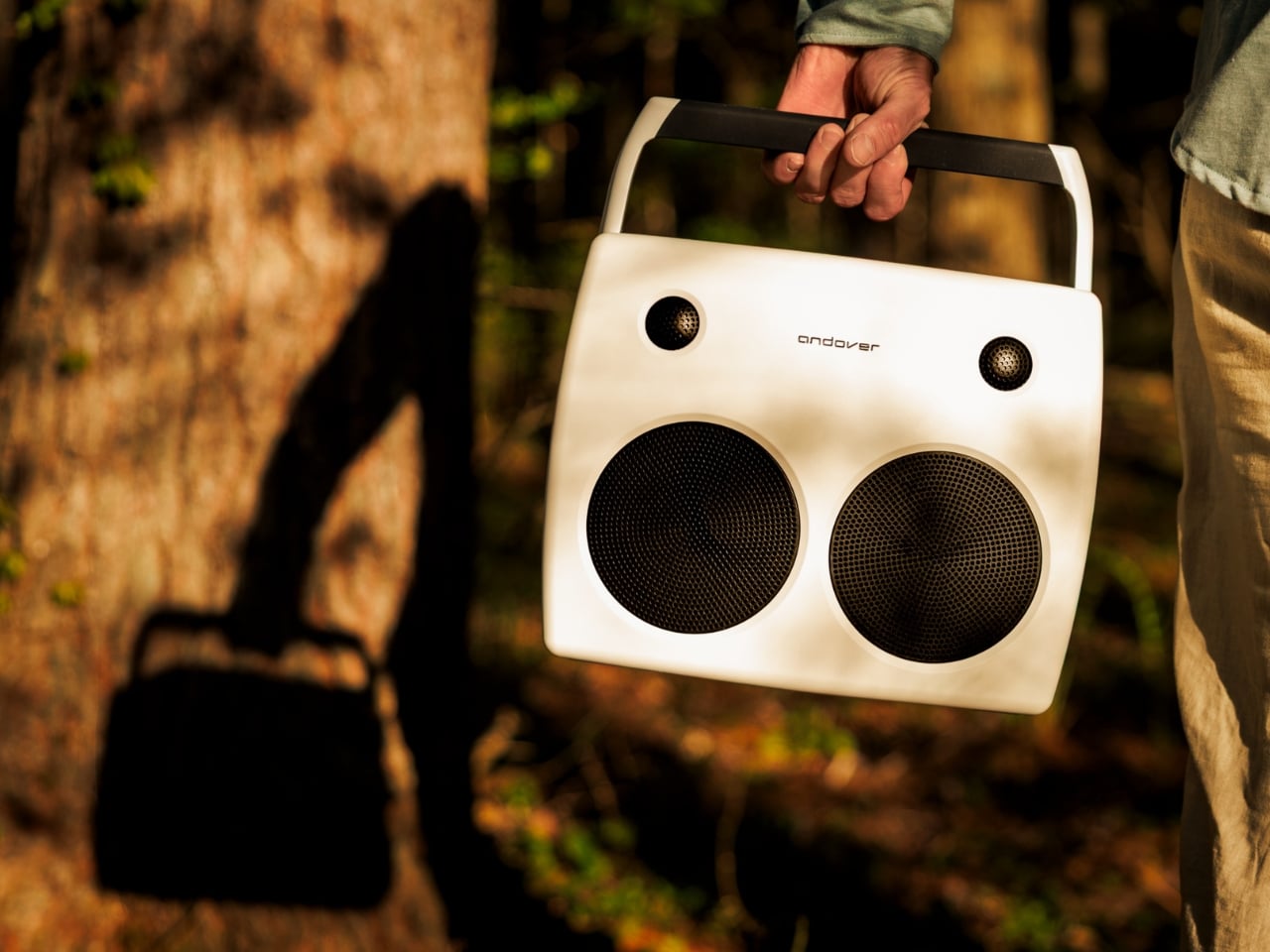
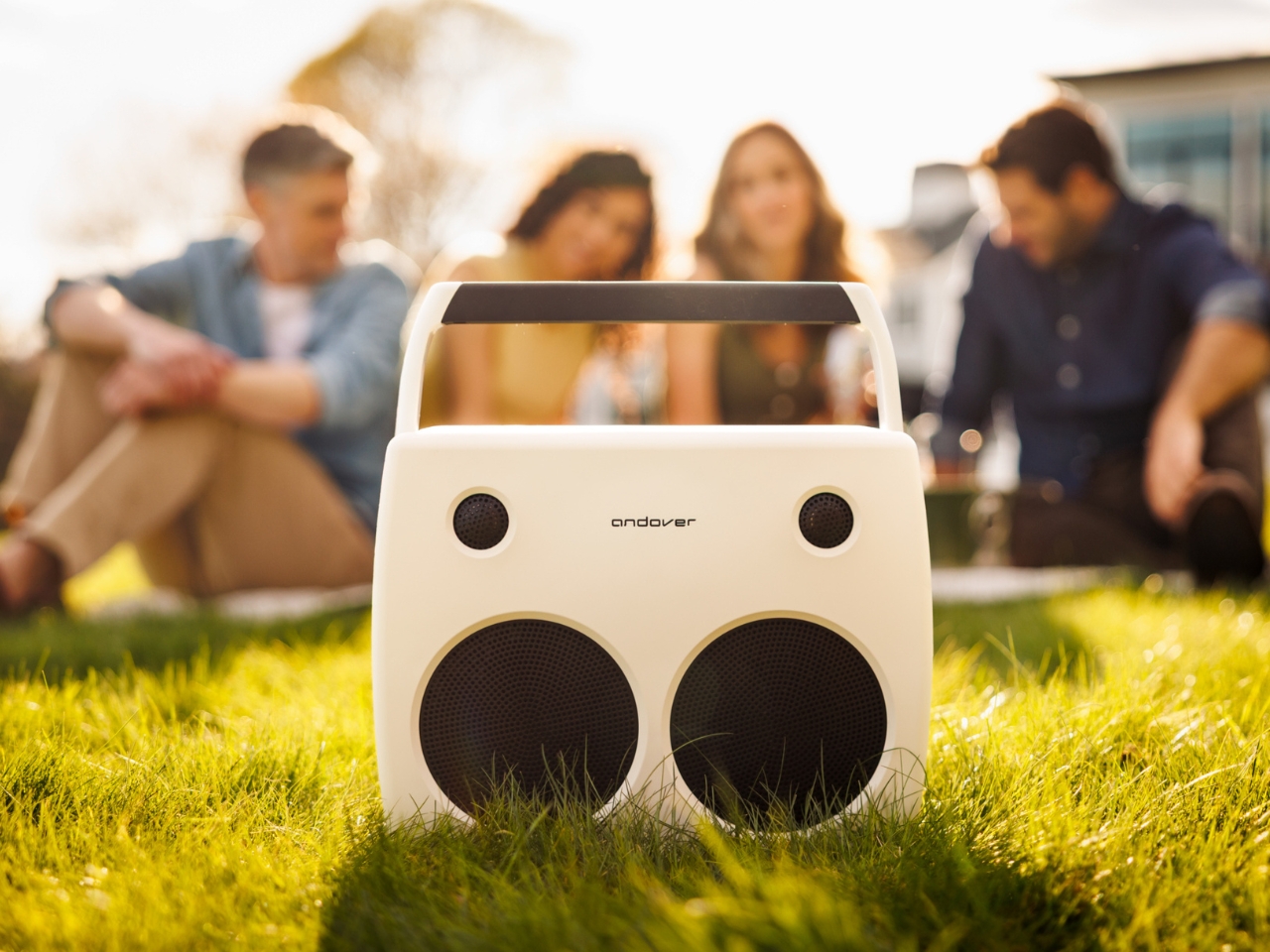
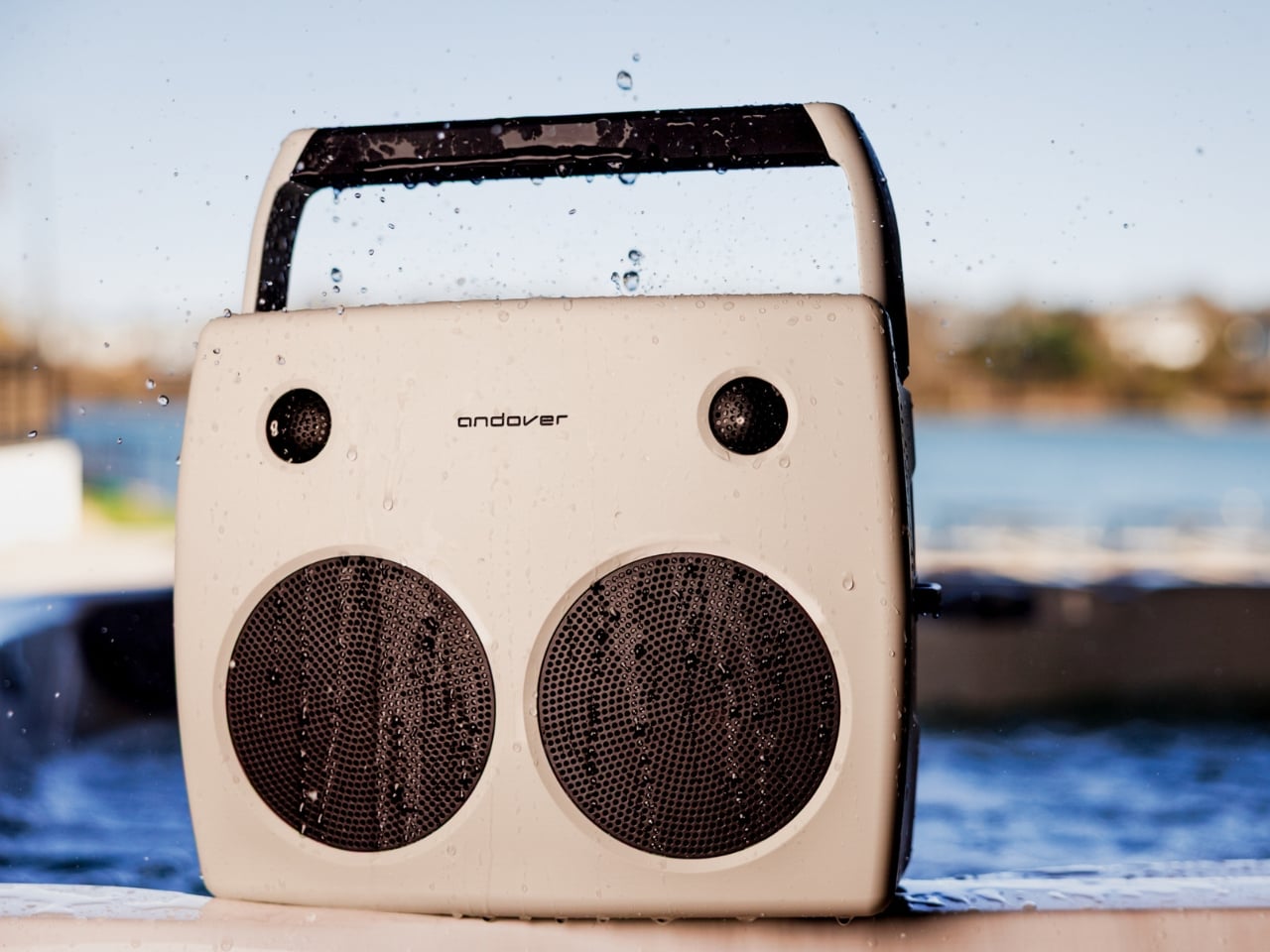
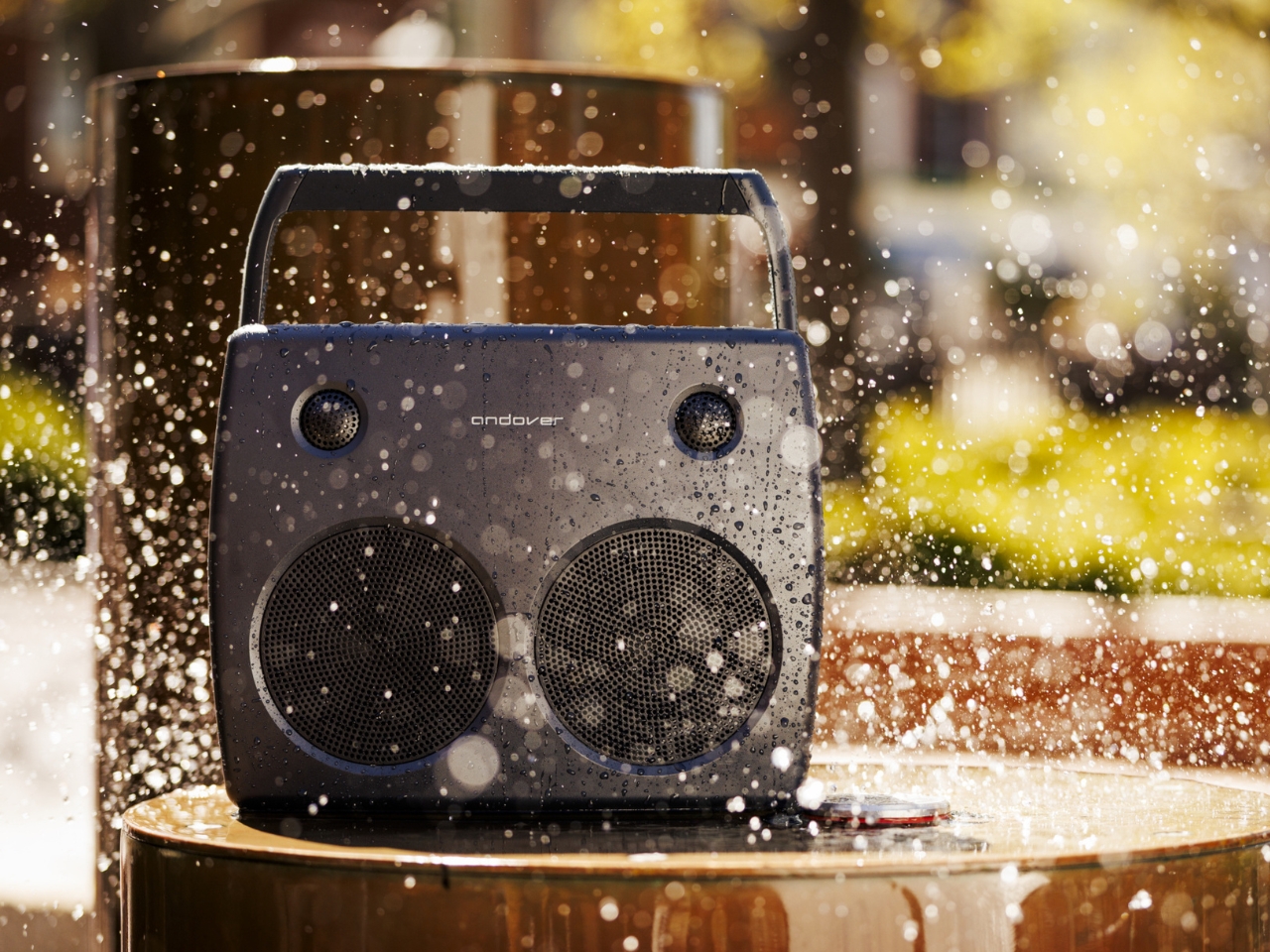
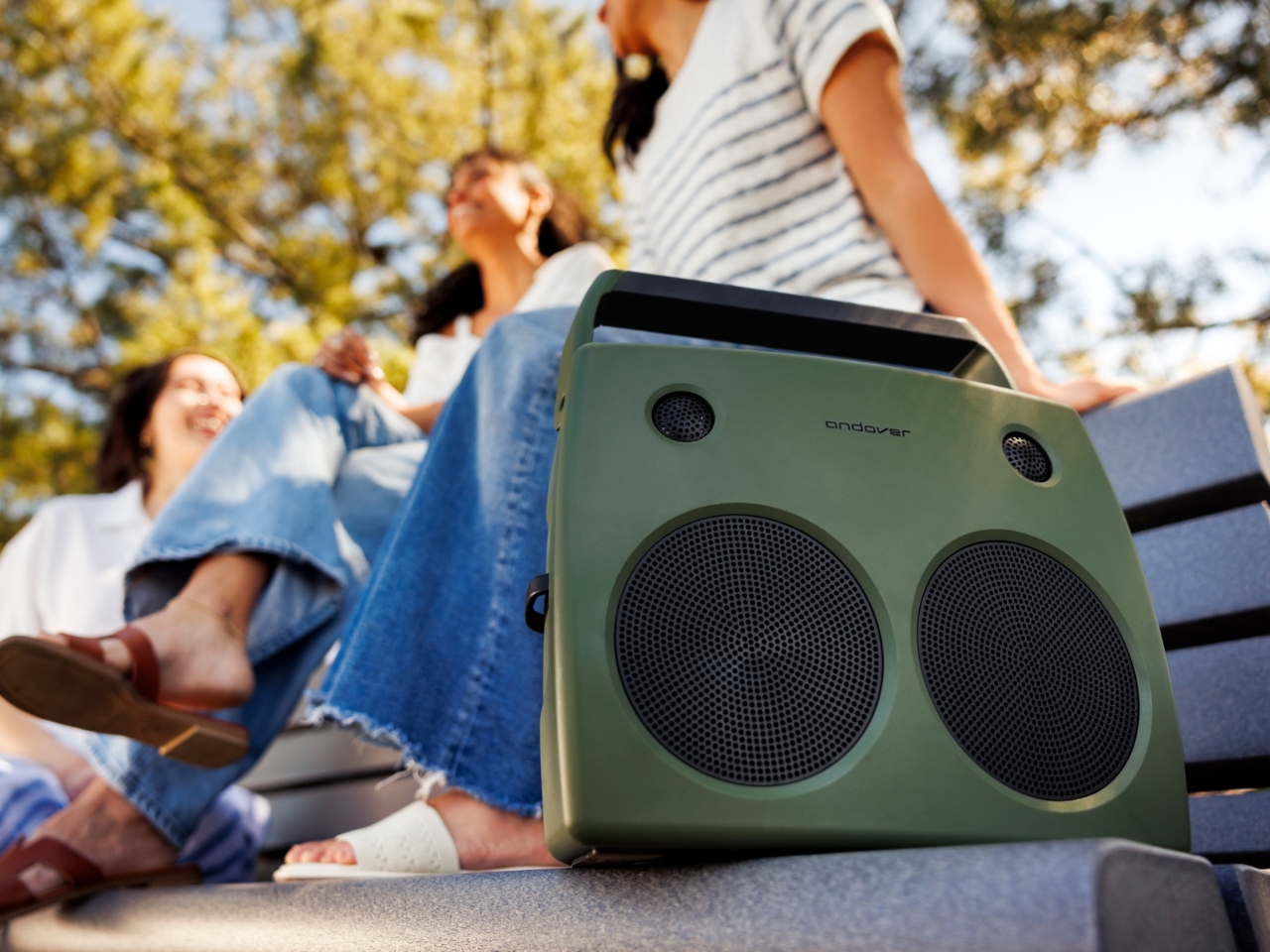
Lastly, we have the Jukebox Mini, which is just semi-nostalgic when it comes to its design. It’s a Bluetooth speaker but with a retro design with two round speakers encased in a rectangular case. It claims that it carries the same quality as speakers from Sonos or Beats Pill. It can be placed on a shelf or desk or mounted on the wall, or you can also carry it around. It comes in cute mint, white, and pink colors.
The post Kickback brings transparent, nostalgic CD, cassette players and Bluetooth speaker first appeared on Yanko Design.