The iPhone 18 Pro Max is poised to set a new standard in smartphone technology, combining advanced engineering with user-focused enhancements. Packed with innovative features and thoughtful design updates, Apple’s latest flagship is designed to deliver a superior experience for users. Below is an in-depth look at the most significant upgrades that make this device […]
OpenClaw is an open source AI agent designed to automate tasks while prioritizing privacy and security. It integrates with advanced models like Claude and GPT and runs on private servers, making sure full control over your data. According to Parker Prompts, OpenClaw’s sub-agents are capable of handling specialized tasks such as coding, research and workflow […]
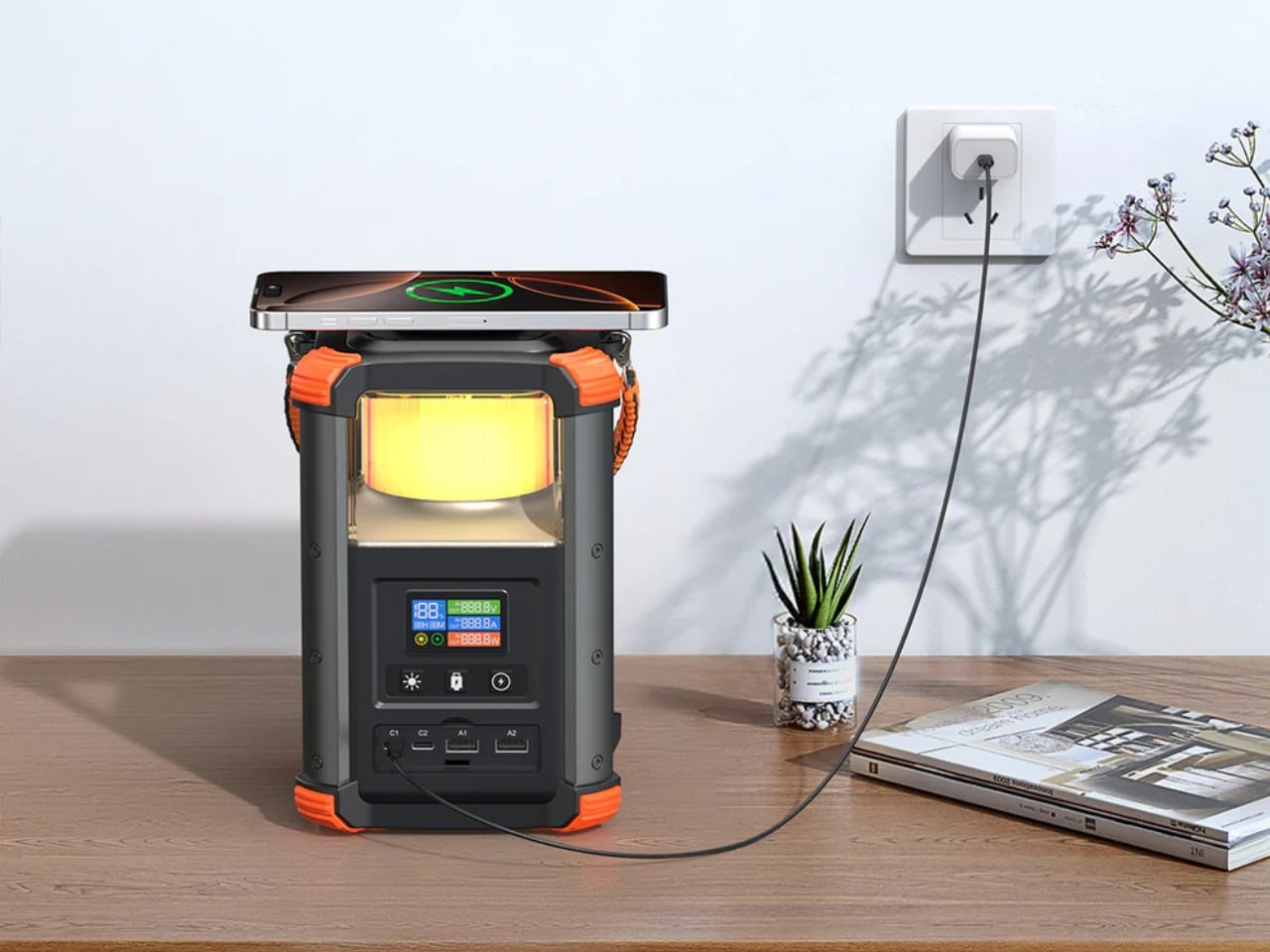
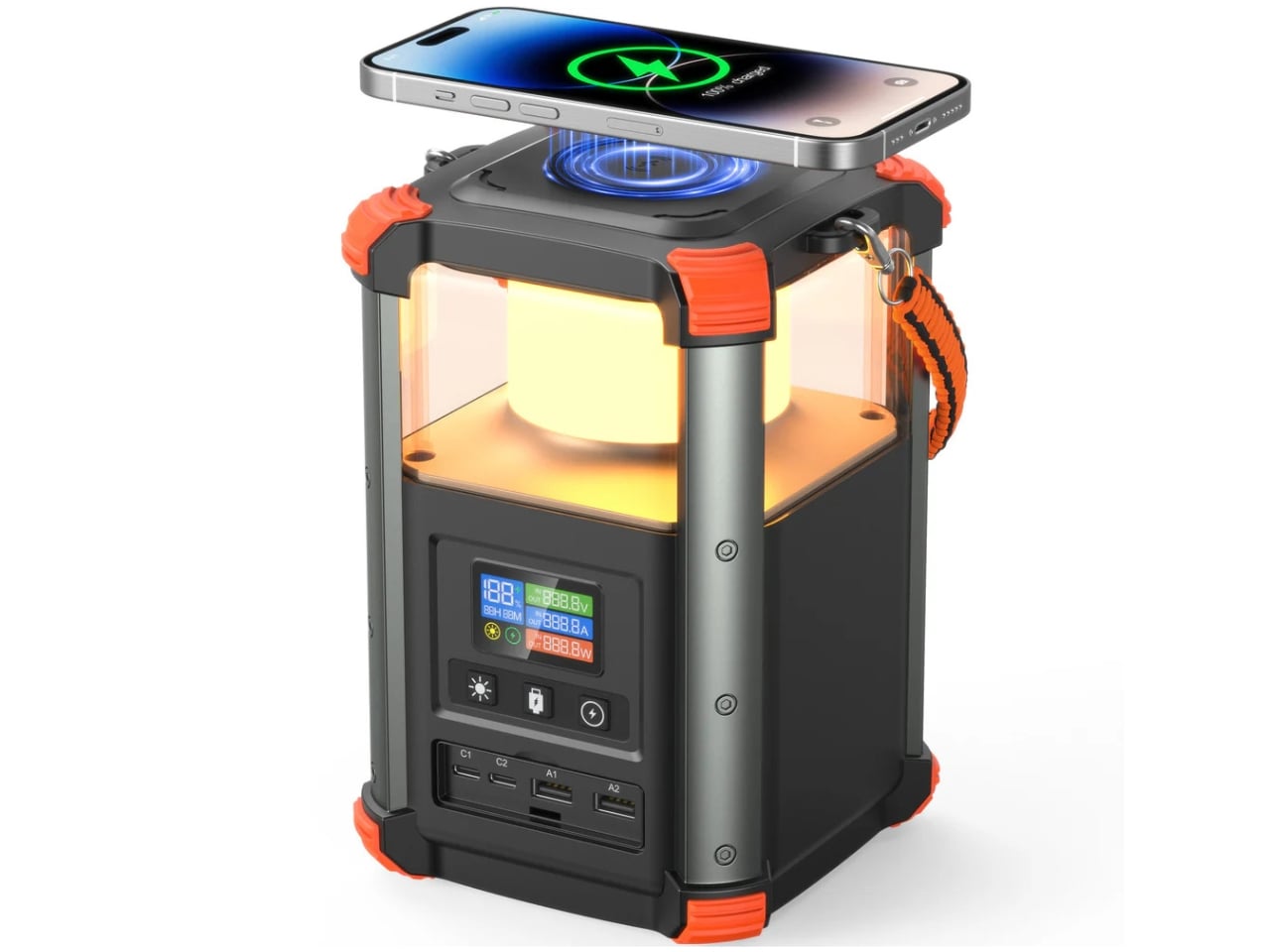
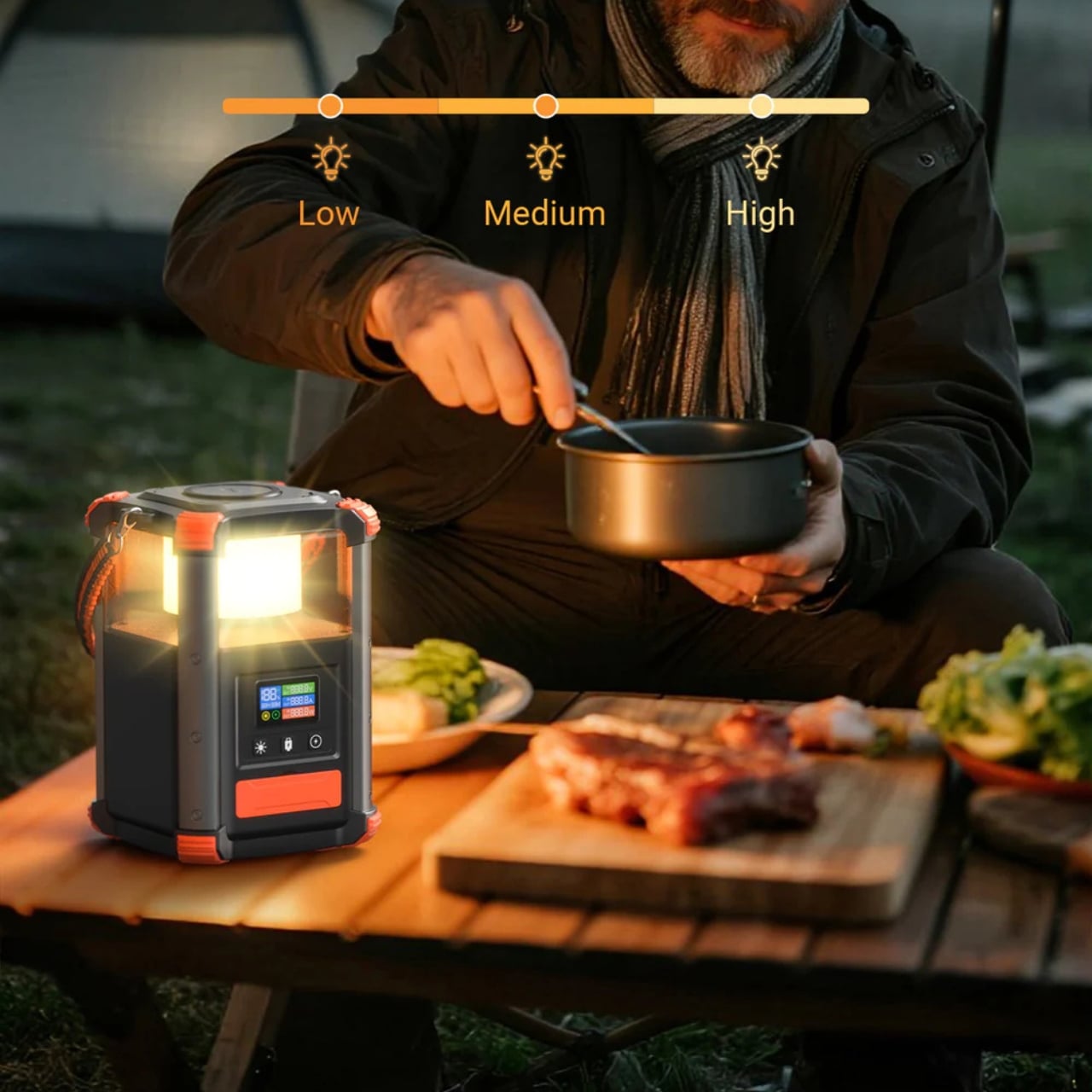
Most portable power stations are boring. Not in a dealbreaker way, but in the way that nearly every product in the category looks the same, functions the same, and markets itself the same. A handle on top, a row of ports in front, and a spec sheet heavy enough to make your eyes glaze over. Blavor’s PN-W43 doesn’t completely break that mold, but it makes a deliberate and interesting choice: it’s also a camping lantern. That single design decision changes quite a lot about how you think about this product and what it’s actually for.
Let me set some context. The portable power station market has grown considerably over the last few years, and with that growth has come a predictable flood of look-alike black rectangles. They’re useful, sure. But they’re mostly garage gear, things you pull out during a power outage or scramble to pack the night before a camping trip. The PN-W43 is still that thing, but by integrating a 4W LED lantern into the top of the unit, Blavor built a device that’s immediately, instinctively useful the moment you take it out of its bag.
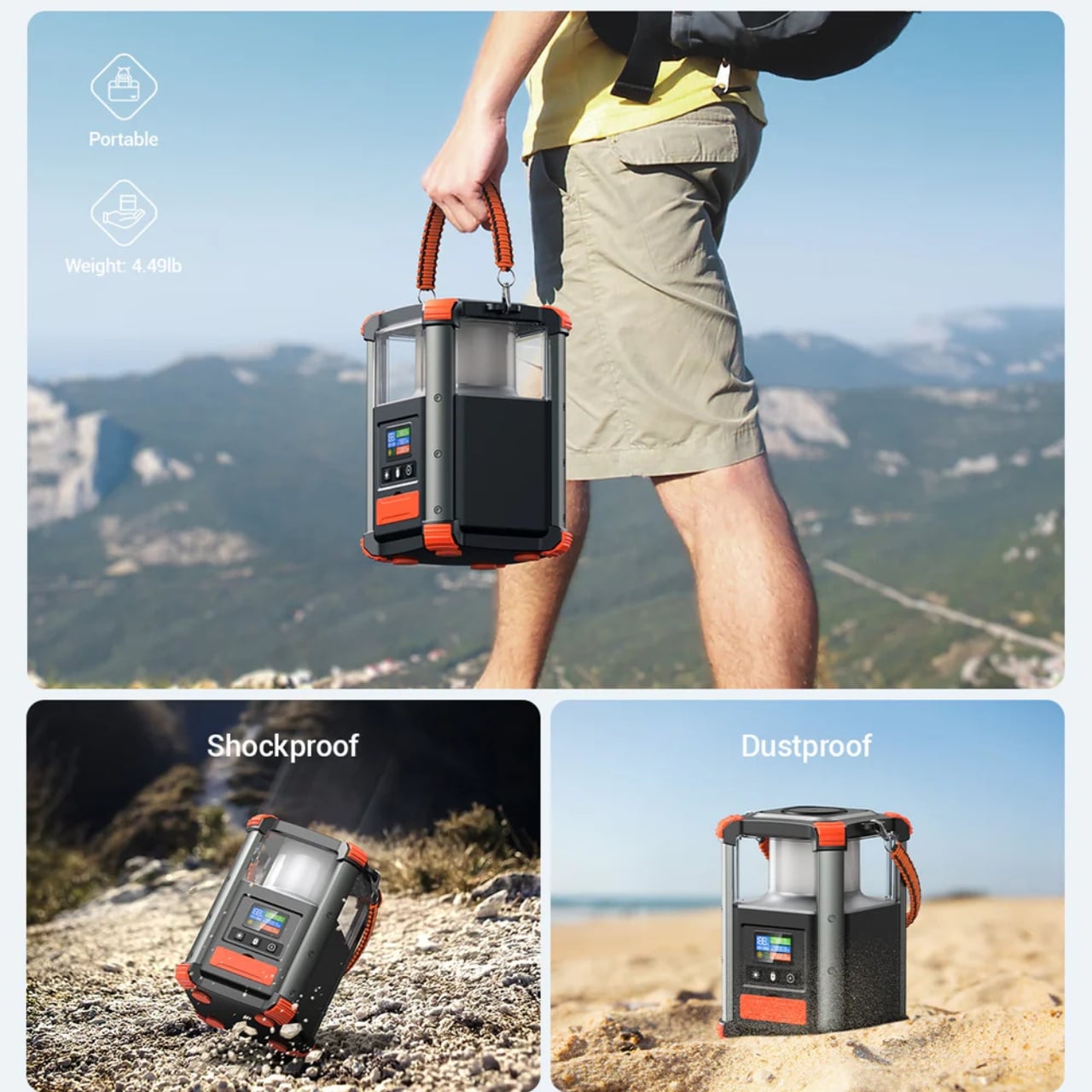
The lantern isn’t decorative. It’s a functional camping light designed for the kinds of situations power stations are already made for: storms, blackouts, nights under canvas, late nights at a tailgate. It comes with a lanyard, which is a small, practical touch that suggests someone at Blavor thought about actual field use rather than just filling out a product page. Whether you’re hanging it from a tent hook or placing it on a picnic table, the light functions as standalone gear on top of being part of a 64,000mAh power station.
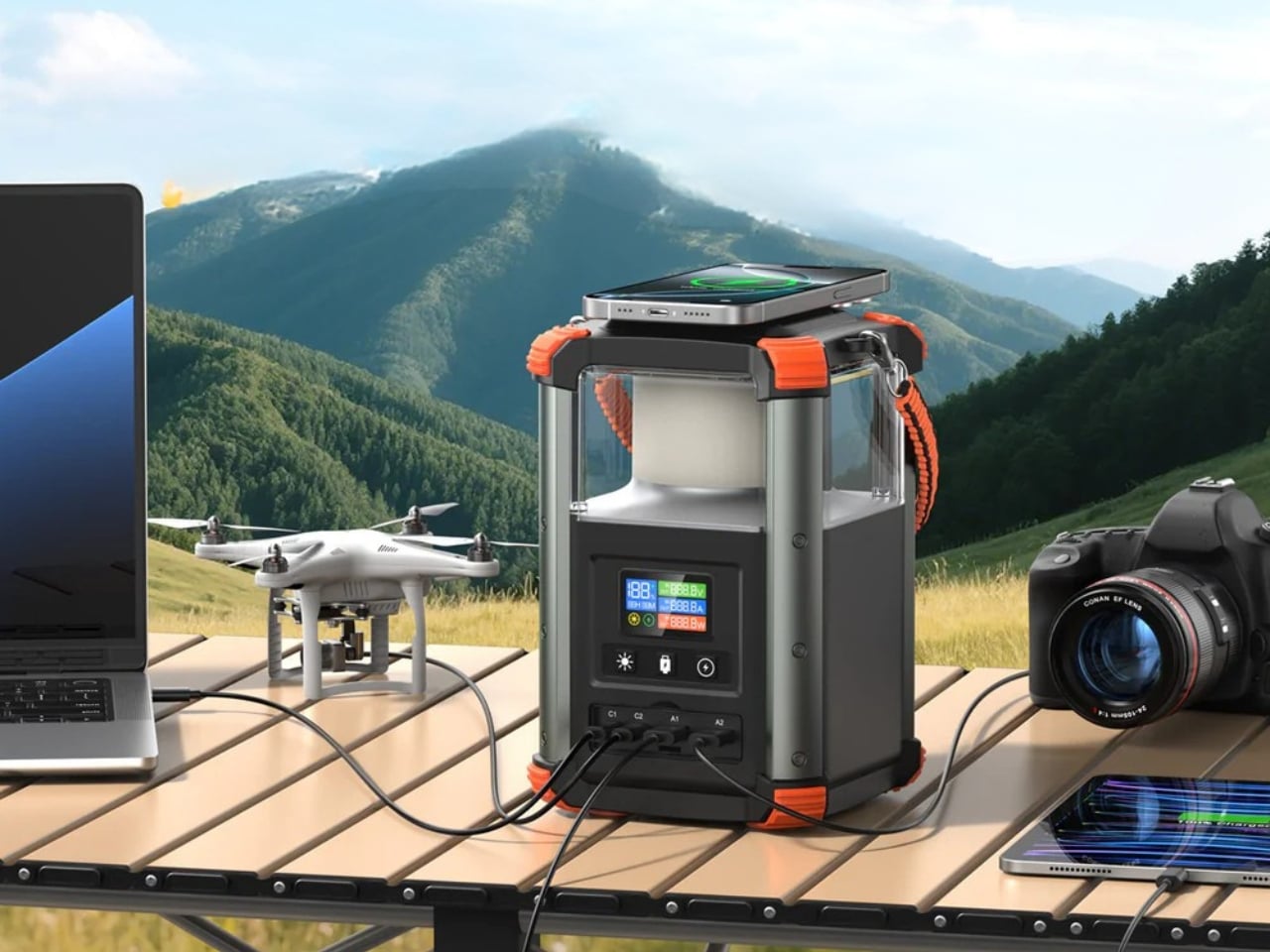
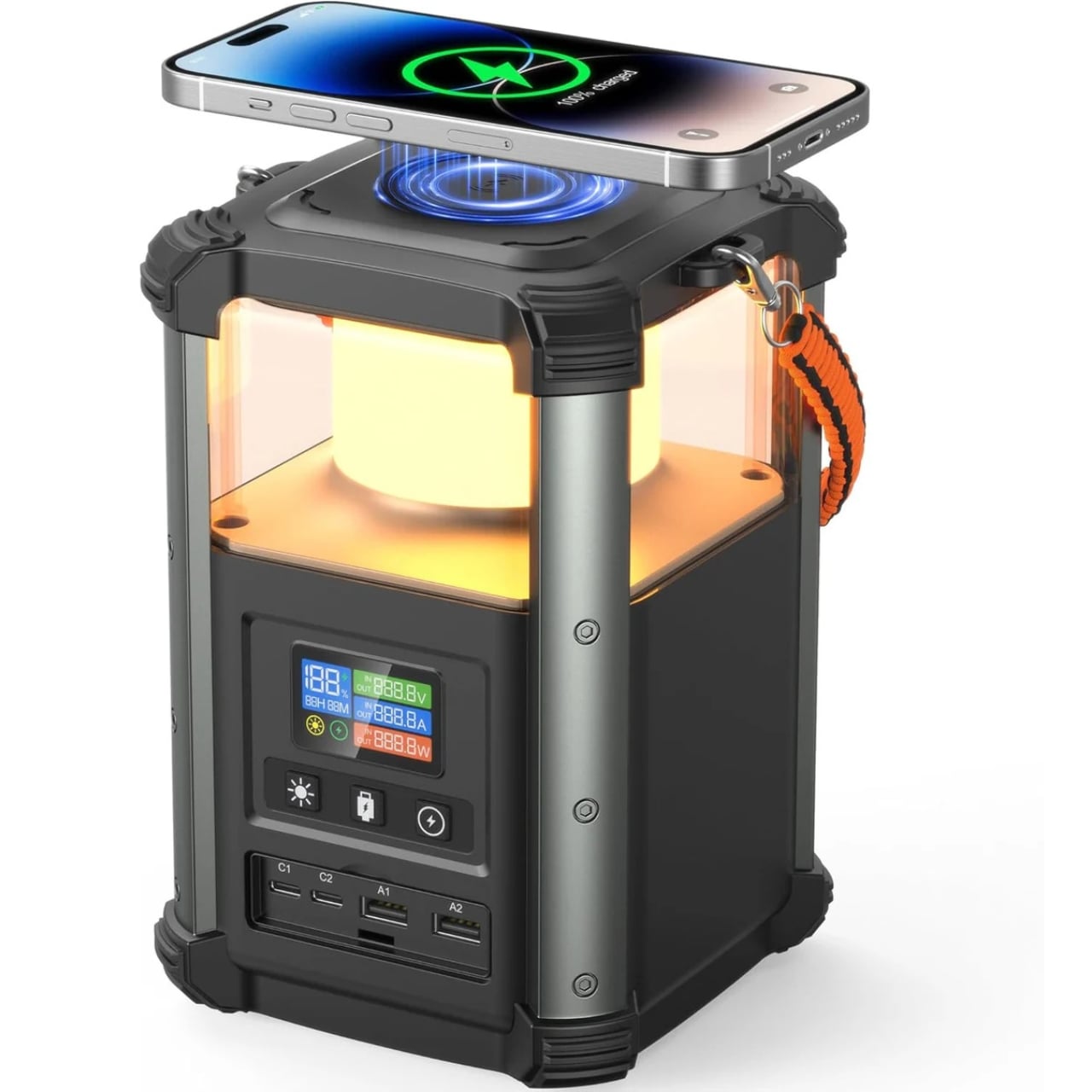
Those specs are genuinely solid for a device this compact. The PN-W43 packs 236.8Wh of capacity into a footprint of roughly 4.72 inches square and just under 8 inches tall. It weighs 4.5 pounds, which you’ll feel on a long hike but is entirely manageable for car camping, van life, or tucking into your trunk for emergencies. The two USB-C ports support bidirectional 100W fast charging, meaning you can charge the station itself at 100W in and push 100W out to a laptop at the same time. That kind of two-way, high-speed transfer still isn’t universal across this category, and it matters more than it might initially sound because it means you’re genuinely flexible with how and when you use the device.
On top of that, there’s 15W wireless charging, two USB-A quick charge outputs, and compatibility with solar panels up to 100W for off-grid recharging. Five total charging pathways in a device barely bigger than a tall water bottle, and a digital display to keep you updated on battery status so you’re not left guessing at the worst possible moment.
The design language is worth a mention. The PN-W43 comes in orange, and I think that’s the right call. Too much gear in this space defaults to a tactical, all-black aesthetic that reads as serious but ends up feeling generic. The orange makes the PN-W43 look like a considered product rather than a commodity. It’s something you’d want to see on a shelf or a workbench. That sounds superficial, but objects you actually like looking at are objects you actually remember to use and maintain.
Is it perfect? Not quite. At 236.8Wh, it sits comfortably in the mid-range of portable power. It’ll keep your phones, laptops, and essential gear running through a rough couple of days, but it isn’t designed to power an entire household during an extended outage. Know what you’re buying and you’ll be more than satisfied. Expect it to be something it’s not, and you’ll be disappointed by a product that otherwise gets a lot of things right.
What the PN-W43 ultimately represents is a power station that thought a little harder about the people who actually use it. The lantern is the proof of that thinking. It’s not a gimmick. It’s the reason this product has a personality, and in a market full of near-identical options, that counts for more than it might seem.
For developers navigating the trade-offs between efficiency and control, Trelis Research introduces a practical approach to using YOLO mode in Claude Code. This feature skips manual step-by-step approvals, allowing faster execution for tasks like minor bug fixes or repetitive operations. While YOLO mode can streamline workflows, it also carries risks, such as accidental file deletions […]
Nothing takes a different tack with its phone series. For the second time in a row, its midrange entry-level A-series smartphones debuted ahead of its next flagship device. The company has even warned that we won’t be getting the Nothing Phone 4 until next year. Until then, the Phone 4a Pro is here to make an impact, with a more restrained design, a less obtrusive camera bump and specs that beat out last year’s Nothing Phone 3 — all for $499. In 2026, Nothing is truly aiming to dethrone the Pixel 10a.
Hardware
Mat Smith for Engadget
It’s a new look. That’s often the case with Nothing’s smartphones as the company typically reimagines or rejigs what you can see through the clear back panel. This year, however, Nothing is making bigger changes: this is its first metal (aluminum) unibody phone.
With a new periscope telephoto camera design, the jarringly thick camera bump of last year’s Phone 3a Pro is thankfully gone, resulting in a slice of smartphone that feels — and to some, looks — more premium and more refined than Nothing’s “flagship” Phone 3.
However, compared to the Nothing phones that came before, it also feels muted, and a little safe. The playfulness of Nothing has been hemmed in a little. You might prefer it, but I’m not sure I do.
Those identifiable Nothing design flourishes — red details, visible screens, lots and lots of circles — are now squeezed into a camera panel. This oblong area with curved corners houses a trio of cameras, a “Now Recording” red light and a tweaked Glyph Matrix, which we last saw on the Nothing Phone 3.
This new Glyph Matrix is bigger and brighter, but at a lower “resolution,” that’s made of 137 mini-LEDs. That’s fewer than the Nothing Phone 3’s 489-strong dot-matrix, but the LEDs here are 100 percent brighter. So bright, in fact, that I had to turn them down to their lowest brightness when I was using them.The 4a Pro, however, lacks the rear button on the Phone 3 that lets you cycle through Glyph functions. Does this mean the company has made it easy to switch between Glyph toys and notifications in the phone’s UI? Sadly not.
You can dip into the Glyph options through the main settings menu, but to change what the Glyph displays is hidden in a sub-tab. I also noticed that the offering of “toys” was limited, with fewer items than even the Nothing Phone 3 had at launch. Hopefully, this will expand once the phone officially launches.
The 4a Pro packs a bigger screen than the company’s flagship, with a 6.83-inch AMOLED screen running at 1.5K resolution. It also has a higher refresh rate than the 6.67-inch Phone 3. And on top of that, the Phone 4a Pro’s display has a peak brightness of 5,000 nits, making it Nothing’s brightest smartphone yet.
I’ve handled so many phones over the last four weeks that it’s often hard to discern the difference between brighter displays. Fortunately, I have the Nothing Phone 3 (and 3a Pro) to compare against the Phone 4a Pro. It’s noticeably brighter, and as we slowly get into sunnier weather, a smartphone that’s easier to read outdoors is always very welcome.
The Phone 4a Pro also has improved IP65 water and dust resistance, while Nothing says it's 42 percent more bend-resistant than the Phone 3a Pro as well. It’s also almost 0.5mm thinner, if you ignore the camera bump for those measurements. Factor that in and the Phone 4a Pro is almost 1.5mm thinner than its predecessor. This design change also makes Nothing’s newest phone feel far less top-heavy than the 3a Pro. Regardless of the aesthetic changes, this is unmistakably refined hardware.
Cameras
Mat Smith for Engadget
Besides the streamlined camera unit, with a new tetraprism periscopic lens that takes up less space, the Phone 4a Pro has improved imaging capabilities (almost) across the board. The new 50-megapixel periscope telephoto lens (which Nothing says also uses less power) has a 3.5x optical zoom, plus computational photography magic that can now crank it up to a (mostly unusable) 140x hybrid zoom.
The main 50MP sensor also features a bigger sensor for improved low-light performance. With an f/1.88 lens though, it doesn’t quite match the Phone 3’s main camera (f/1.68), both on paper and in practice. The array is rounded out with an 8MP ultrawide camera, which sounds like the weakest link, but I rarely use the ultrawide cameras on any phone aside from review testing. Oddly, the selfie camera is a technical downgrade in resolution, with a 32MP sensor on the 4a Pro, down from 50MP on the 3a Pro.
Mat Smith for Engadget
One new addition was co-developed by Google. Ultra XDR blends Android’s native HDR processing with Nothing’s own approach, capturing 13 RAW frames at different exposures and combining them to deliver greater dynamic range and detail. However, as proof of how new they are, your Ultra XDR images can’t be shared as easily. They do work with Google Photos and Instagram, at least. If it’s any consolation, Ultra XDR so far doesn’t seem hugely far away from typical HDR capture. I’ll keep testing the cameras and if I figure out where it really shines, I’ll update this review.
Mat Smith for Engadget
If one thing disappoints on the 4a Pro, it’s recording video. Switching between zoom levels will often completely derail exposure settings. Even if you record on a single camera at the same focal length, exposure levels seem extremely sensitive and struggle to stay locked. Footage is often muddy and low-light performance isn’t great, even if using the Ultra XDR video mode. You aren’t forced to endure this with the Pixel 10a, but then again, there’s no zoom on Google’s mid-range phone — just a lossless crop. In more forgiving lighting, video is adequate, but quality drops off beyond the 3.5x optical zoom. Still, the versatility and quality of the still images from both the main camera and the telephoto lens put it above every other smartphone at this price.
Performance and software
The Phone 4a Pro is now powered by a more capable processor: Qualcomm’s Snapdragon 7 Gen 4. Nothing claims that, in addition to its own on-device optimizations, it improved CPU performance by 27 percent, GPU performance by 30 percent and AI performance by 65 percent compared to the Phone 3a series.
There’s certainly a big difference in performance while gaming. While the 3a series struggled with more complex games, the 4a Pro kept up with Red Dead Redemption and Diablo Immortal. It’s not the most polished interpretation of Decard Cain and the lands of Sanctuary, but it's responsive and playable, even at 60 fps, with only a few frame drops.
The Phone 4a has a 5,080mAh battery, roughly equivalent to its predecessor. It supports up to 50W fast charging, a tad faster than the Pixel 10a, though it lacks wireless charging support, unlike Google’s midranger. It’s one of the few signs that this isn’t Nothing’s “true” flagship, even if it looks the part.
I was pleasantly surprised by the battery life, too. Typically, phones are getting increasingly bigger batteries, but as I mentioned, that’s not the case here.. However, the 4a Pro lasted 24 hours in our battery rundown test, five hours more than last year’s model.
The Phone 4a Pro has all the software features either present or teased in older Nothing Phones. Essential Search is a system-wide search that can find terms in messages, files and the rest of your phone. There’s also a new Breathing Break widget; we definitely need that in 2026.
Essential Memory is Nothing’s name for its background algorithms and analysis, scrutinizing your phone’s contents as well as whatever’s saved in Essential Space. Nothing has added cloud storage for Space, aimed at devoted upgraders, meaning everything you saved on older compatible Nothing phones can be transferred over. Sure, it’s a little niche, but it was an early frustration while testing the Phone 3 after the 3a series. If, for some reason, you have to reset your device, keeping everything in Space backed up elsewhere is a boon.
Mat Smith for Engadget
Also, while it’s technically a hardware tweak, Nothing has also moved the Essential Key to the left edge of the phone, making it far less likely to be triggered when you’re adjusting the volume and more in line with other phones and my own smartphone muscle memory.
One caveat from previous Nothing devices remains. The company says it will deliver three years of Android updates and an additional three years of security patches. Compare that to Samsung’s seven years of Android updates for this year’s S26 series (and Google’s Pixel 10a), and you can see how it falls short.
Wrap-up
The Phone 4a Pro punches well above its $499 price tag. Nothing has successfully refined its hardware into a more premium, all-metal unibody, losing the jarring camera bump of its predecessor in favor of a sleek design that houses a genuinely impressive camera. The improved camera versatility, coupled with its class-leading 24-hour battery life and a more capable processor, makes this a serious threat to the Pixel 10a.
However, some of Nothing's signature playfulness has been dialed back. The Glyph Matrix, while brighter, is lower-resolution and its “toys” are disappointingly limited at launch. The lack of wireless charging is another nod to its midrange status.
Nothing’s Phone 4a Pro is a device with a clear identity, delivering on the essentials for half the price of many rivals.
This article originally appeared on Engadget at https://www.engadget.com/mobile/smartphones/nothing-phone-4a-pro-review-glyph-matrix-130042005.html?src=rss
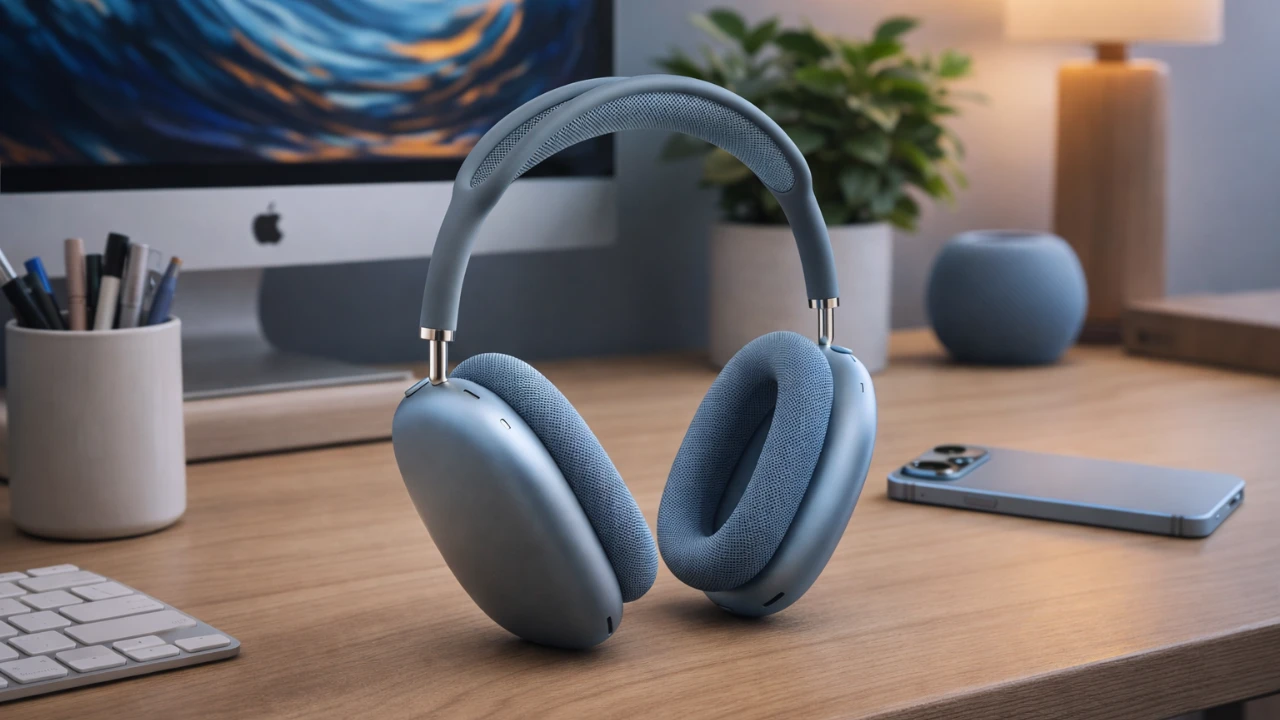
The release of the AirPods Max 2 in 2026 introduces a host of advanced features and technological enhancements that set it apart from its predecessors, the original AirPods Max (2020) and the AirPods Max 1.1 (2024). While the overall design and battery life remain consistent across all three models, the AirPods Max 2 distinguishes itself […]
Office Scripts in Excel offer a structured way to automate repetitive tasks, making it easier to manage large datasets or streamline workflows. Built into the “Automate” tab of Excel’s ribbon, this feature uses a simplified version of TypeScript and the Document Object Model (DOM) to interact with workbooks, worksheets and cells programmatically. For example, you […]
Midjourney 8 introduces a range of updates that refine the experience of AI-driven image generation, blending speed, quality and customization. Future Tech Pilot highlights key advancements, such as the addition of a high-definition (HD) mode for sharper visuals and improved text integration for projects like branding and visual storytelling. However, these enhancements come with certain […]
Apple has officially introduced iOS 26.4 RC (Release Candidate) for developers and public beta testers, addressing critical issues that have impacted iPhone users since the release of iOS 26. This update not only resolves a persistent keyboard accuracy bug but also prepares the platform for the launch of the next-generation AirPods Max. Alongside iOS 26.4 […]
UK’s Ofcom has fined 4chan a total of £520,000 ($690,000) over the website’s failure to comply with the rules of Online Safety Act 2023. The biggest chunk of the amount came from 4chan’s failure to ensure children cannot encounter pornographic content on its website by implementing an effective age check mechanism. For that violation, the website has received a penalty of £450,000 ($598,000) and an order to apply an age check system by April 2. It carries a daily rate penalty of £500 ($664) until the website is compliant or until June 1, whichever comes sooner.
Ofcom also found that 4chan has failed to carry out sufficient illegal content risk assessment on its website and has fined it £50,000 ($66,400) for that violation. 4chan has until April 2 to conduct a risk assessment, or it has to pay an additional £200 ($266) per day. Finally, the regulator has determined that 4chan failed to include provisions in its terms of service that specify how it protects users from illegal content. That carries a fine of £20,000 ($26,600), with a daily rate penalty of £100 ($133) a day from its compliance deadline of April 2 to June 1.
The regulator started investigating 4chan, famous for its anonymous and unmoderated messaging boards, in June 2025 to determine if it was failing to meet its obligations under the law. In October, Ofcom announced its decision for some of the investigations it opened. It slapped 4chan with a £20,000 ($26,700) fine for ignoring its requests for a copy of the website’s illegal harms risk assessment and to provide information about its qualifying worldwide revenue. The regulator has confirmed to Engadget that 4chan has yet to pay that previous fine, which also earned cumulative daily punishment fees for 60 days.
This article originally appeared on Engadget at https://www.engadget.com/social-media/uk-fines-4chan-nearly-700000-for-failing-its-online-safety-act-obligations-115106264.html?src=rss