Roblox’s age verification system is reportedly a trainwreck

Roblox's age-verification system was designed as a response to allegations it has a child predator problem. Less than a week in, how's it going? Well, Wired reported on Tuesday that, in some cases, it's classifying children as adults and adults as children. So, not so great!

Last week, Roblox made age verification mandatory for anyone using the platform's chat feature. That process involves either submitting a facial age estimate via selfie or (optionally for anyone 13 or older) uploading a government ID check. After verifying, you can only chat with groups of players around your age.

The move came after reports grew of predators using the platform to groom young children. That, in turn, led to lawsuits from Louisiana, Texas and Kentucky. Meanwhile, Florida's attorney general has issued criminal subpoenas.

So, it might not be hyperbole to say Roblox's survival could depend on how it handles this problem. It isn't exactly off to a hot start. There are reports of a 23-year-old being misidentified as a 16- to 17-year-old. ("I don't want to be chatting with fucking children," they said.) Another report claimed an 18-year-old was placed in the 13 to 15 range.

But the problem is happening in reverse, too. Online videos show children spoofing the system into believing they were adults by using avatar images. One clever kid drew wrinkles and stubble on his face and was instantly deemed 21+. Another flashed a photo of Kurt Cobain and got an adult classification.

Four phone screens, showing the selfie age verification feature on Roblox
The feature isn't working as planned, to say the least.
Roblox

In addition, Roblox posted last week that some parents were providing age checks on behalf of their children, leading to their children being placed in the 21+ category. The company said it's "working on solutions to address" that particular problem and will share more soon.

Roblox shared the following statement from Matt Kaufman, the company’s Chief Safety Officer:

“To suggest that our age check technology isn't working is a fundamental misunderstanding of what it takes to shift safety at scale. With a global community of over 150 million daily active users, we are pleased with where we are in the roll out process. It’s a process that will take time, you can’t flip a switch while building something that hasn’t existed before. 

Tens of millions of users have already completed the process, proving that the vast majority of our community values a safer, more age-appropriate environment. Expecting the system to be flawless overnight is ignoring the scale of this undertaking. We’ve already shared updates with our creator community to make this a smoother transition. This technology is the foundation of a new gold standard that limits communication between adults and minors by default. 

We are building for the next decade of the internet, not the next news cycle. We will continue to innovate, continue to require age checks, and continue to lead the industry where others have been too hesitant to go.”

Developers with games on Roblox are upset. The platform's dev forum includes thousands of negative comments about the updates, with many of them wanting the entire update reversed. One shared a graph showing that the percentage using the chat feature dropped from around 90 percent to 36.5 percent.

Where does this leave Roblox? Well, with some developers describing games on the platform as feeling "lifeless" or like "a total ghost town," the company has its hands full. It will have to figure out how to balance its priorities of keeping predators out without breaking things for everyone else. The full report from Wired is worth a read.

Update, January 15, 2026, 9:52AM ET: This story has been updated to include a statement from Roblox.

This article originally appeared on Engadget at https://www.engadget.com/gaming/robloxs-age-verification-system-is-reportedly-a-trainwreck-220320016.html?src=rss

EA delays Battlefield 6 Season 2 to February 17

The second season of Battlefield 6 is being pushed back based on “community feedback.” On Tuesday, EA and Battlefield Studios said Season 2 will now arrive on February 17.

Season 2 of Battlefield 6 had previously been scheduled for January 20, so we're looking at a delay of almost a month. As a consolation, the team is extending Season 1 through the start of the next season.

"During our ongoing development, we've continued to review community feedback and, in order to keep our promise, determined that our best path forward is to extend Season 1 and give ourselves extra time to further polish and refine Season 2," EA wrote in a blog post.

The game came out of the gates hot following its October launch, selling over seven million copies over its first three days. But recent Steam reviews provide a glimpse into the "community feedback" that sparked the delay. "The Battle Pass is extremely predatory and very FOMO, while the season itself doesn't give a lot to offer," one review with over 450 “helpful” votes said. They called out the title for having "so much FOMO stuff that it becomes more stressful than fun."

The Season 1 extension will include some bonus content. The Frostfire Bonus Path will give “players the chance to unlock new free and premium customization rewards, including a Weapon Package and a Soldier Skin, as well as XP Boosts, by advancing through the tiers of the Frostfire Bonus Path." The extension update arrives on January 20.

This article originally appeared on Engadget at https://www.engadget.com/gaming/ea-delays-battlefield-6-season-2-to-february-17-180306743.html?src=rss

EA delays Battlefield 6 Season 2 to February 17

The second season of Battlefield 6 is being pushed back based on “community feedback.” On Tuesday, EA and Battlefield Studios said Season 2 will now arrive on February 17.

Season 2 of Battlefield 6 had previously been scheduled for January 20, so we're looking at a delay of almost a month. As a consolation, the team is extending Season 1 through the start of the next season.

"During our ongoing development, we've continued to review community feedback and, in order to keep our promise, determined that our best path forward is to extend Season 1 and give ourselves extra time to further polish and refine Season 2," EA wrote in a blog post.

The game came out of the gates hot following its October launch, selling over seven million copies over its first three days. But recent Steam reviews provide a glimpse into the "community feedback" that sparked the delay. "The Battle Pass is extremely predatory and very FOMO, while the season itself doesn't give a lot to offer," one review with over 450 “helpful” votes said. They called out the title for having "so much FOMO stuff that it becomes more stressful than fun."

The Season 1 extension will include some bonus content. The Frostfire Bonus Path will give “players the chance to unlock new free and premium customization rewards, including a Weapon Package and a Soldier Skin, as well as XP Boosts, by advancing through the tiers of the Frostfire Bonus Path." The extension update arrives on January 20.

This article originally appeared on Engadget at https://www.engadget.com/gaming/ea-delays-battlefield-6-season-2-to-february-17-180306743.html?src=rss

It’s time for Apple to reinstate ICEBlock

In October, Apple caved to pressure from the Trump administration and removed ICEBlock — and similar apps that crowdsourced the location of Immigrations and Customs Enforcement activity — from its App Store. Apple's stated rationale? The apps could "be used to harm law enforcement officers." But armed-to-the-teeth ICE officers don’t need protection from civilians. Apple had that exactly backward.

That became impossible to ignore on Wednesday, when ICE agent Jonathan Ross killed 37-year-old Renee Nicole Good in cold blood. By now, you don't need me to recount her brutal last moments. But the footage (graphic and disturbing as it is) is out there, and we can see the Trump administration's propaganda about the event for what it is.

ICE was a dangerous force long before this week. This was the agency’s ninth shooting since September. 32 people died in ICE custody in 2025. Around a third of those arrested by ICE agents — often masked and refusing to identify themselves — don’t even have criminal records.

What changed this week was, arguably, that the victim wasn’t a brown-skinned person. ICE claimed the life of a white American citizen, one who, according to her wife, was a kind, loving mom and a Christian. Unfortunately, the US has a dark history of shrugging off violence as long as it’s directed towards a marginalized group. That wasn’t possible for mainstream newsreaders here.

LOS ANGELES,  CA  - JANUARY 8, 2026  Dozens, holding photos of Renee Nicole Good, protest her death a day after an ICE agent killed Good in Minneapolis, in front of the Federal Building in downtown Los Angeles on January 8, 2026. The protest was organized by Clergy and Laity United for Economic Justice (CLUE). (Genaro Molina/Los Angeles Times via Getty Images)
LOS ANGELES, CA  - JANUARY 8, 2026 Dozens, holding photos of Renee Nicole Good, protest her death a day after an ICE agent killed Good in Minneapolis, in front of the Federal Building in downtown Los Angeles on January 8, 2026. (Genaro Molina/Los Angeles Times via Getty Images)
Genaro Molina via Getty Images

On Thursday, Vice President JD Vance smeared Good baselessly, insisting the mother was part of a "left-wing network." He also claimed ICE holds "absolute immunity" when it comes to doing things like killing Americans in broad daylight. Meanwhile, White House press secretary Karoline Leavitt framed the deadly incident as the "result of a larger, sinister left-wing movement that has spread across our country." And the FBI has blocked Minnesota's criminal investigation bureau from accessing evidence to complete a thorough examination of the homicide.

In short, an agency with the full backing of the federal government killed an innocent citizen. And while there are tools to inform the public about the likely locations that agency may be acting in, Apple has chosen to keep them from us.

Apple has a history of presenting itself as a safer, socially progressive alternative within Big Tech. Its keynotes are replete with heartfelt testimony about iPhone and Apple Watch features saving lives. It releases Pride-themed accessories to celebrate the LGBTQ+ community, and the company has (so far) resisted government pressure to eliminate its DEI programs. Hell, its modern era was kicked off by the “Here’s to the crazy ones” TV ad, which intercut images of Dr. Martin Luther King Jr., John Lennon and Gandhi — explicitly cloaking its corporate image in civil disobedience and social justice.

A photo of Dr. Martin Luther King Jr. on Apple's homepage (2015)
Apple / The Internet Archive

But the company also wields that progressive image for selfish reasons, wrapping business priorities in the guise of conscientiousness. For example, when government regulations push for openness or interoperability, Apple warns of the security and privacy risks for its users. When Apple tightly controls where you can buy apps, it’s about keeping porn away from the kids. And Apple has decided that the theoretical safety of ICE officers is more valuable than the very real threat they pose to the communities they harass.

ICEBlock's availability on the App Store may not have changed the outcome of Wednesday's events. But it could resume its job as a community informer. It could make it easier to notify the public of where these masked thugs are congregating, perhaps even helping others avoid Good's fate.

Engadget has reached out to Apple for comment on reinstating ICEBlock; we’ll update if we receive a response.

This article originally appeared on Engadget at https://www.engadget.com/big-tech/its-time-for-apple-to-reinstate-iceblock-220802356.html?src=rss

TikTok will broadcast some unknown portion of the 2026 World Cup live

TikTok and FIFA are teaming up for World Cup matches. On Thursday, FIFA said its media partners will be able to broadcast “parts of matches” on the social platform. The “preferred platform” partnership will run through the end of 2026.

How long the live clips will be is anyone’s guess because “parts of matches” is as specific as the announcement got. We emailed TikTok for clarification and will update this story if we learn more.

FIFA said the collaboration is designed to bring fans "closer to the action.” Getting more to the point, TikTok's global head of content said live sports on the platform are shown to transform “fandom into measurable business results for our sports partners, with fans being 42 percent more likely to tune in to live matches after watching sports content on TikTok.”

TikTok’s World Cup content will include filters, stickers and other “gamification” features. FIFA will also give “a select group of global TikTok creators” access to press conferences and training sessions to create content. "As football grows and evolves — uniting an increasing number of people — so should the way it is shared and promoted," FIFA secretary general Mattias Grafstrom wrote in the announcement.

The World Cup runs from June 11 to July 19. It will take place in 16 cities across Canada, the US and Mexico.

This article originally appeared on Engadget at https://www.engadget.com/social-media/tiktok-will-broadcast-some-unknown-portion-of-the-2026-world-cup-live-192035507.html?src=rss

NASA delays spacewalk due to a ‘medical concern’ with a crew member

NASA has postponed an International Space Station (ISS) spacewalk that was scheduled for Thursday. "The agency is monitoring a medical concern with a crew member that arose Wednesday afternoon aboard the orbital complex," the agency wrote. On Thursday, NASA added that ending Crew-11's mission early was on the table.

The unnamed crew member is stable, according to NASA. Space News notes that Kimiya Yui of the Japan Aerospace Exploration Agency (JAXA) was heard on an open comms channel on Wednesday requesting a private medical conference with a flight surgeon. However, those requests are routine on the ISS, so we can’t assume the events were related.

"The matter involved a single crew member who is stable," NASA wrote. "Safely conducting our missions is our highest priority, and we are actively evaluating all options, including the possibility of an earlier end to Crew-11's mission."

NASA astronaut Zena Cardman in her pressurized spacesuit, checking its comms and power systems ahead of the (now postponed) spacewalk
NASA

Crew-11 was scheduled to remain on board the ISS until at least the second half of February. Its replacement, Crew-12, isn't slated to blast off until February 15 at the earliest.

NASA astronauts Mike Fincke and Zena Cardman had planned to exit the airlock on Thursday for the six-and-a-half-hour spacewalk. The short trip’s mission was to install a kit and cables in preparation for a new roll-out solar array that will arrive on a future mission.

The agency said it will provide further updates within 24 hours.

This article originally appeared on Engadget at https://www.engadget.com/science/space/nasa-delays-spacewalk-due-to-a-medical-concern-with-a-crew-member-171900024.html?src=rss

Gmail is getting a Gemini AI overhaul

In a move that should surprise nobody, Google is stuffing more Gemini AI into Gmail. A host of new features, some of which are already familiar to Workspace users, are rolling out today for Gmail users in the US. Some are free, while others require a Google AI Pro or Ultra subscription.

The first premium feature is AI Overviews, the same name as a similar feature in Google Search. Gmail’s version lets you ask questions about your messages in the search bar, using natural language. Google uses the example of, "Who was the plumber that gave me a quote for the bathroom renovation last year?" It’s hard to imagine that saving much time over a basic search for "plumber quote" or “plumbing estimate,” but maybe it could help in some situations.

There's also a free portion of AI Overviews that summarizes mail threads for easy catch-ups. However, the ability to ask your inbox questions requires a subscription.

Meanwhile, Proofread is a subscription-only feature that's essentially Grammarly for Gmail. As you'd guess, it suggests improvements in grammar, word choice, conciseness, voice and sentence structure.

Google marketing image for an AI catch-up feature coming to Gmail.
AI Inbox
Google

Finally, there's the AI Inbox, a feature that "filters out the clutter so you can focus on what's most important." Google says it's like a personal briefing that flags to-dos and catches you up on what it thinks is most important. (It identifies VIPs based on frequent contacts, your contact list, and inferred relationships.) The company claims, without adding further detail, that this all "happens securely with the privacy protections you expect from Google." AI Inbox is another subscription-only feature.

Now onto the free stuff. Help Me Write is a tool for all Gmail users that generates email copy from a prompt. This kind of thing should be well-familiar by now, as Big Tech increasingly encourages users to avoid drafting anything from scratch. And Suggested Replies can draft replies for you that mimic your tone and style. (Google describes it as a next-gen version of Smart Replies.) Help Me Write and Suggested Replies are rolling out to everyone (no subscription required) today.

The new Gemini-powered features begin rolling out to Gmail today. Although they're starting with English speakers in the US, Google says they'll arrive in more languages and regions "in the coming months."

This article originally appeared on Engadget at https://www.engadget.com/ai/gmail-is-getting-a-gemini-ai-overhaul-130000422.html?src=rss

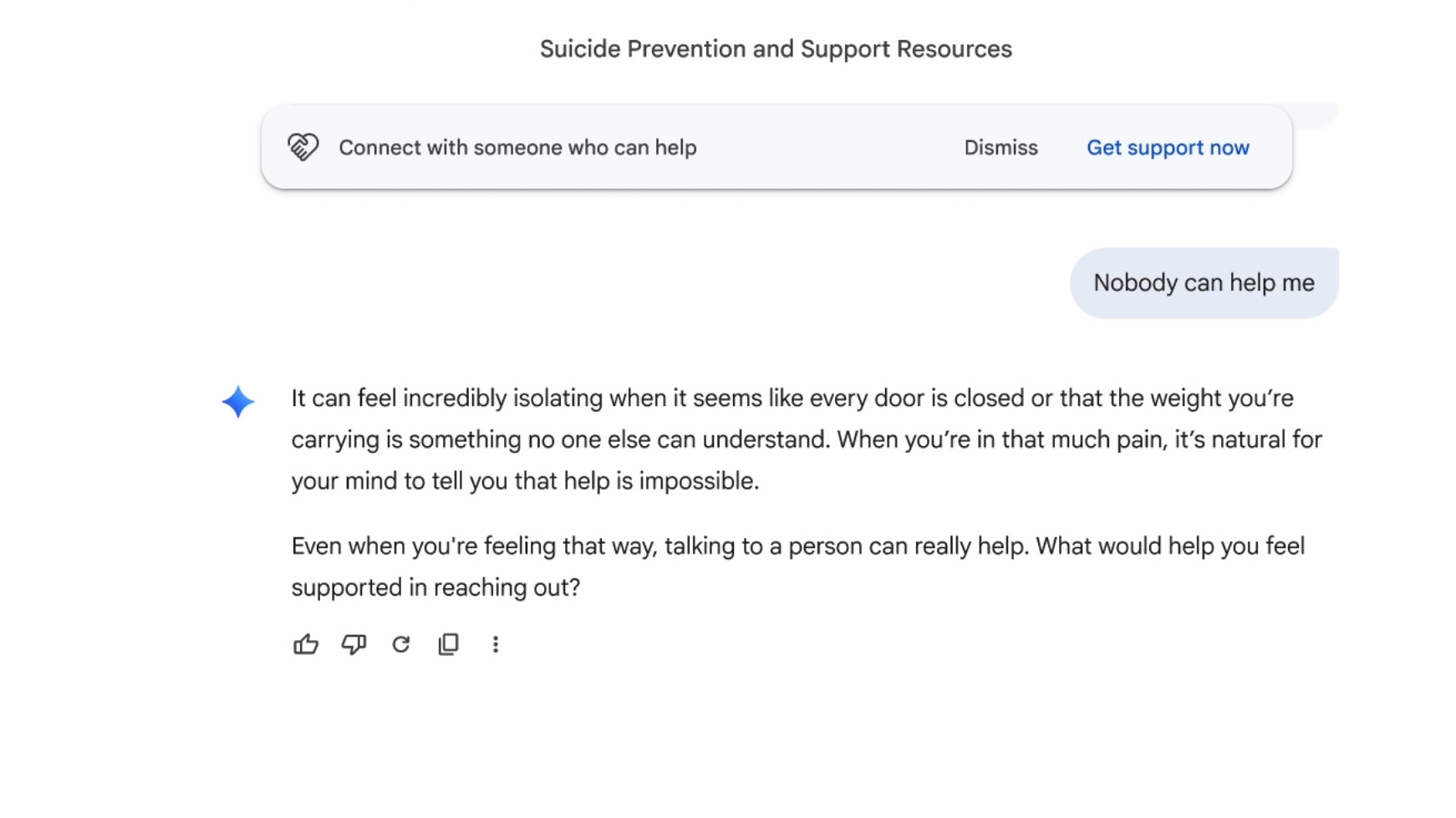
Character.AI and Google settle with families in teen suicide and self-harm lawsuits

Character.AI and Google have reportedly agreed to settle multiple lawsuits regarding teen suicide and self-harm. According to The Wall Street Journal, the victims' families and the companies are working to finalize the settlement terms.

The families of several teens sued the companies in Florida, Colorado, Texas and New York. The Orlando, FL, lawsuit was filed by the mother of 14-year-old Sewell Setzer III, who used a Character.AI chatbot tailored after Game of Thrones' Daenerys Targaryen. The teen reportedly exchanged sexualized messages with the chatbot and occasionally referred to it as "his baby sister." He eventually talked about joining "Daenerys" in a deeper way before taking his own life.

The Texas suit accused a Character.AI model of encouraging a teen to cut his arms. It also allegedly suggested that murdering his parents was a reasonable option. After the lawsuits were filed, the startup changed its policies and banned users under 18.

Character.AI is a role-playing chatbot platform that allows you to create custom characters and share them with other users. Many are based on celebrities or fictional pop culture figures. The company was founded in 2021 by two Google engineers, Noam Shazeer and Daniel de Freitas. In 2024, Google rehired the co-founders and struck a $2.7 billion deal to license the startup's technology.

On one hand, the settlements will likely compensate the victims' families handsomely. On the other hand, not going to trial means key details of the cases may never be made public. It's easy to imagine other AI companies facing similar suits, including OpenAI and Meta, viewing the settlements as a welcome development.

This article originally appeared on Engadget at https://www.engadget.com/ai/characterai-and-google-settle-with-families-in-teen-suicide-and-self-harm-lawsuits-201059912.html?src=rss

Ubisoft is shutting down a studio 16 days after it unionized

Ubisoft is closing a Canadian studio just over two weeks after it unionized. In a dizzying claim, the company told GamesIndustry.biz that the closure of Ubisoft Halifax was part of "company-wide actions to streamline operations" and unrelated to the unionization.

On December 22, Ubisoft Halifax announced that 61 of its workers had joined the Game & Media Workers Guild of Canada. At the time, the studio's lead programmer, Jon Huffman, told CTV News that 73.8 percent of employees voted in favor of unionizing. Ominously in hindsight, he had described the decision as a "huge relief." The studio was working on mobile titles within the Rainbow Six and Assassin's Creed franchises.

Ubisoft's official statement framed the shutdown as part of a broader pattern of financial belt-tightening. "Over the past 24 months, Ubisoft has undertaken company-wide actions to streamline operations, improve efficiency, and reduce costs," the company said. "As part of this, Ubisoft has made the difficult decision to close its Halifax studio. 71 positions will be affected. We are committed to supporting all impacted team members during this transition with resources, including comprehensive severance packages and additional career assistance."

In October, Ubisoft announced that Massive Entertainment, developer of The Division series, Star Wars Outlaws and Avatar: Frontiers of Pandora, was offering buyouts to some employees. The company framed that move as a "voluntary career transition program." Over the past few years, Ubisoft has closed offices and laid off workers in San Francisco, London and Leamington. In 2024, the company's headcount dropped by eight percent.

This article originally appeared on Engadget at https://www.engadget.com/gaming/ubisoft-is-shutting-down-a-studio-16-days-after-it-unionized-183000983.html?src=rss

Samsung says RAM costs will likely lead to price hikes soon

Samsung says AI data center-fueled RAM scarcity could raise the company's prices. Wonjin Lee, Samsung's global marketing leader, sounded the alarm in an interview with Bloomberg on Tuesday at CES 2026. As recently as early December, Samsung told Reuters that it was monitoring the market but wouldn't comment on pricing. So, the change of tune can be seen as a deliberate signal to soften the ground ahead of an official announcement.

"There's going to be issues around semiconductor supplies, and it's going to affect everyone," Samsung’s Lee said. "Prices are going up even as we speak. Obviously, we don't want to convey that burden to the consumers, but we're going to be at a point where we have to actually consider repricing our products."

Marketing image of Samsung HBM RAM against a black background
Samsung appears to be softening the ground ahead of an official announcement.
Samsung

The global RAM shortage is the result of AI data centers gobbling up high-bandwidth memory. Memory manufacturers have shifted their output priorities to meet that demand, leading to a snowball effect where even the low-bandwidth RAM found in automobiles is affected.

"AI workloads are built around memory," Sanchit Vir Gogia, CEO of Greyhound Research, told NPR in late December. "AI has changed the nature of demand itself. Training and inference systems require large, persistent memory footprints, extreme bandwidth, and tight proximity to compute. You cannot dial this down without breaking performance."

It's been more than three years since ChatGPT launched and kicked off the AI craze. During that time, companies have hyped chatbots and other generative AI tools as a technology that will take us to the promised land, making life easier as machine learning automates our daily lives. It isn't yet clear if an AI bubble is set to burst, but some financial forecasters have sounded the alarm. Regardless, it's hard to see how consumers and workers are getting anything but the short end of the stick so far.

This article originally appeared on Engadget at https://www.engadget.com/ai/samsung-says-ram-costs-will-likely-lead-to-price-hikes-soon-170653524.html?src=rss