This inflatable factory for prefab building will reduce project timelines & costs + revolutionize construction

A notable fact about the construction industry is that it’s always been consistent, – consistent with its techniques, technologies, and practices. Consistency can be a good trait to possess in most scenarios, but it doesn’t stand true for this one. In the construction industry, it could be considered a deteriorating one. After all, construction is responsible for 13% of the global economic output but has faced a productivity increase of only 1.0% annually for the past 20 years. But despite these depressing numbers, a revolution has been slowly encroaching on the world of construction, and that is – Prefabrication.

Off-site construction has been proven to reduce cost, time, waste, and risk, and in turn construction professionals are moving towards factory-based construction more and more. After all, according to a survey of over  800 architecture, engineering, and contracting (AEC) pros conducted by the SmartMarket Report from Dodge Data and Analytics – 66% report that prefabrication reduces project schedules, with 35% of them stating reductions of four weeks or more, whereas 65% report a reduction in project budgets, with 41% citing a reduction of 6% or more.  Yes, factory-based construction is revolutionizing the construction industry, but what if we revolutionize the very factories in which we construct prefabricated structures and homes? And, that’s where the construction startup Cuby steps in. 

Designer: Cuby

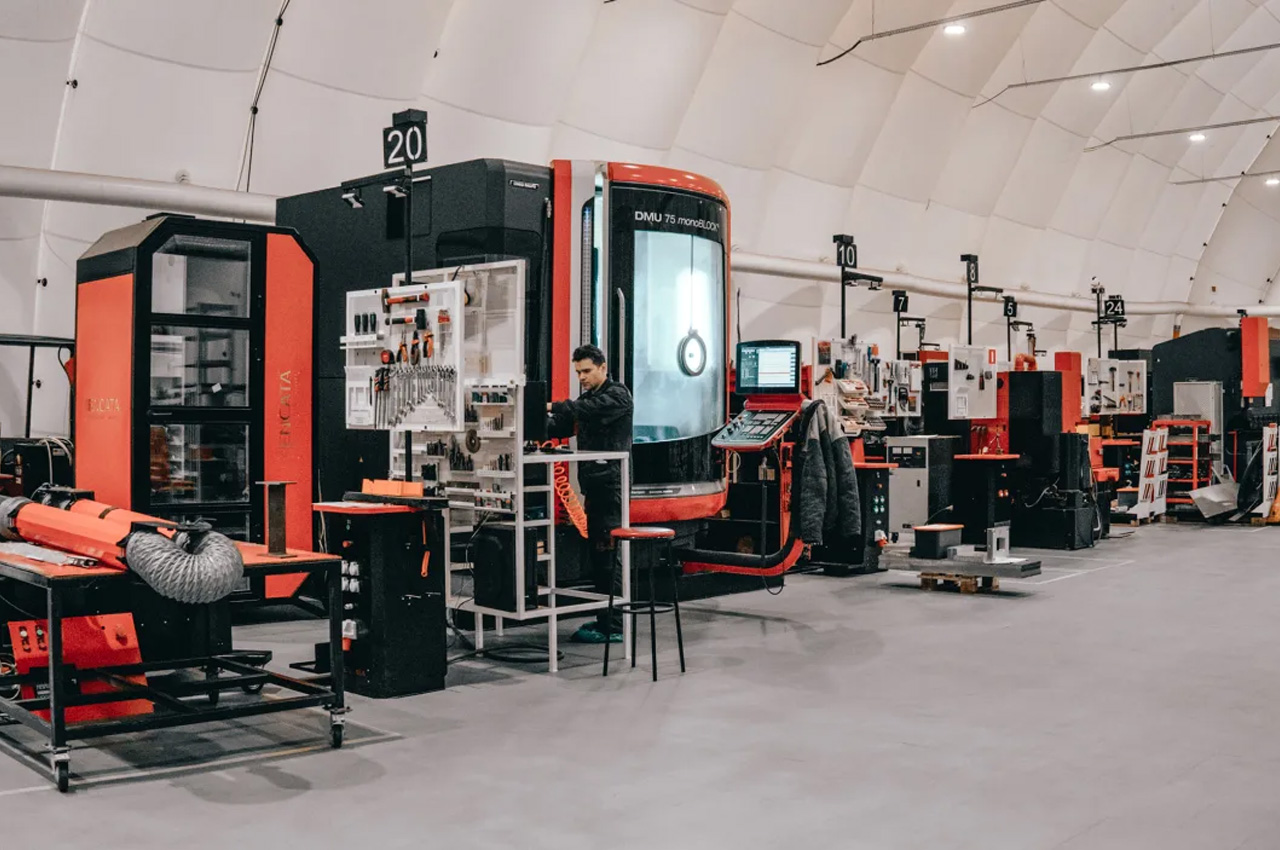
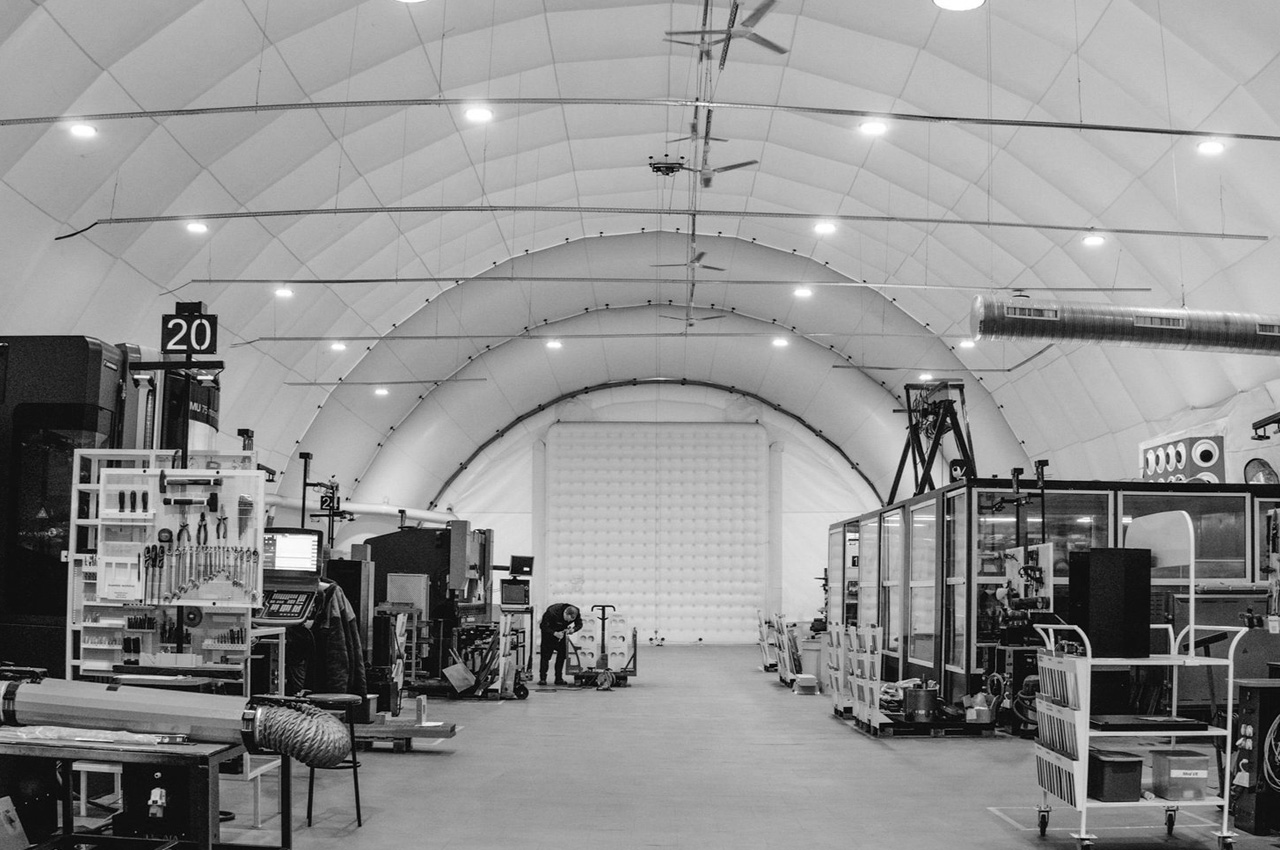
Now, let’s make it clear, what Cuby is actually offering isn’t the prefab buildings that are constructed in factories, but rather the factories themselves. Backed by the climate tech venture capital fund ‘At One Ventures’, Cuby’s vision is simple – inflatable factories. Inflatable architecture seems to be on a rising curve nowadays. We recently saw New York-based startup Automatic Construction invent a new technique called Inflatable Flexible Factory Formwork (IFFF), which utilizes an air pump and processor to construct homes by pumping concrete into an inflatable balloon-like structure. You could say Cuby’s inflatable factories are similar to it, but not quite. Cuby’s aim is to develop and operate turnkey, transportable factories that look like large pop-up huts!  The factory is basically a massive arched plastic shed, with lines of machines, workstations, and robotics arranged within it. The entire inflatable factory can be packed into 20 shipping containers, transferred to a new site, and assembled in a span of days. The plan is to set up these inflatable factories on or close to the construction site, to create a powerhouse that can produce multiple kits of parts to build multiple types of buildings at a high output capacity. What the Cuby intends to do is pick up what would traditionally be built on a construction site, and instead build it within the factories, allowing the construction process to be streamlined, quick, and efficient. Cuby is also building the tools and machines these factories will require for prefabrication and modular building.
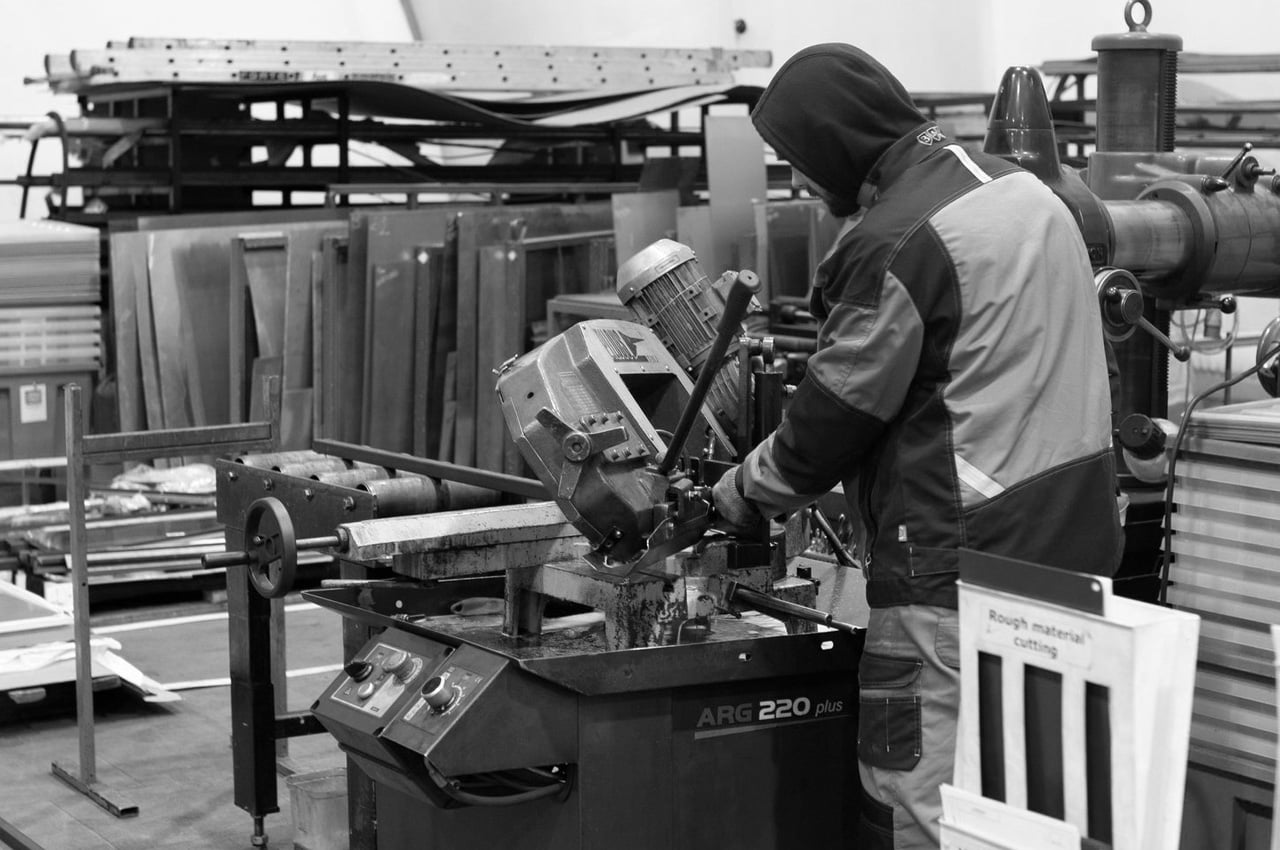
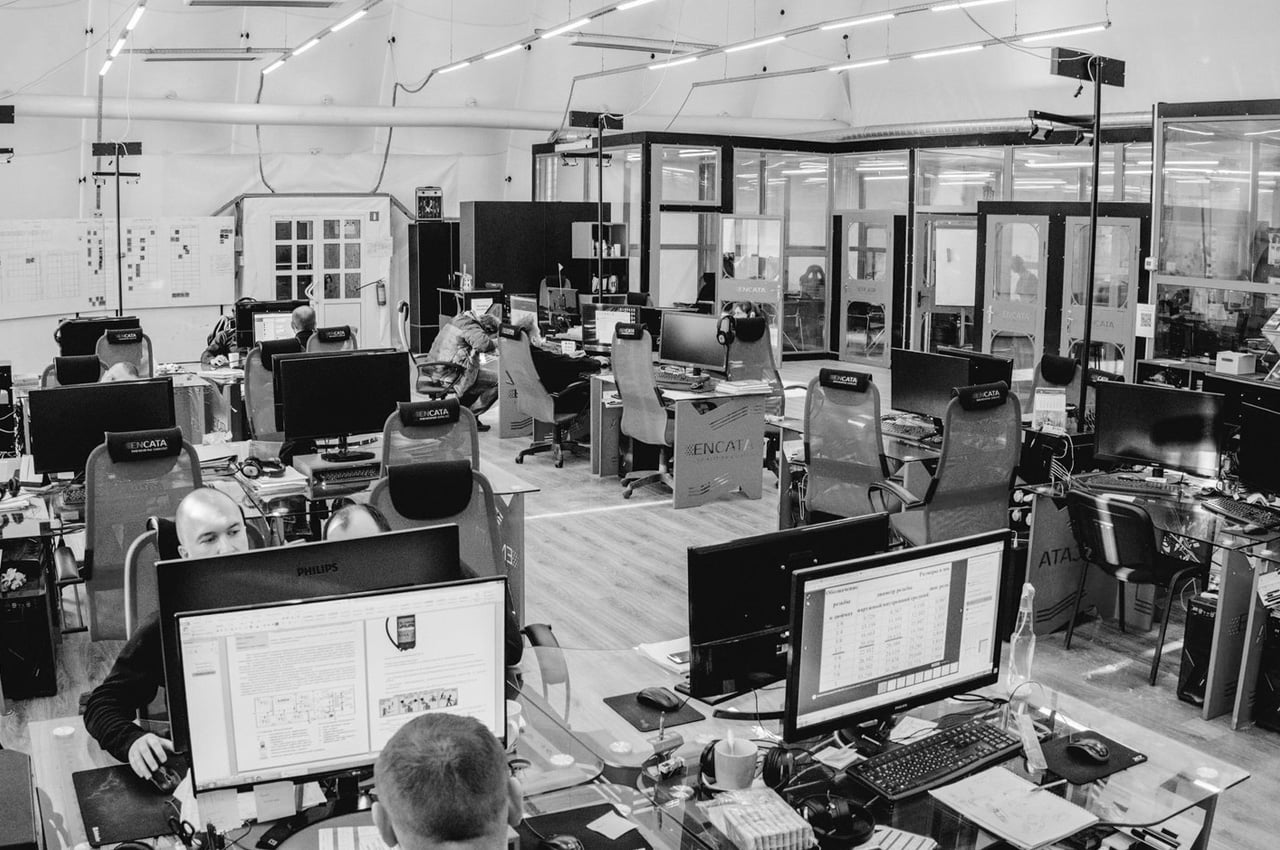
Designed to be transportable and portable, Cuby’s factories will employ lean manufacturing techniques on or near the construction site itself. This innovative methodology will eliminate the risk of human error, reduce project timelines, and completely wipe out the logistical dilemma of shipping building components over vast distances. Cuby claims that the costs will be 30 to 40% less as compared to the conventional construction of a home. The evergrowing issue of the skilled labor shortage we are facing today will be tackled by the Cuby factories as well since they’ve been designed to be operated by relatively unskilled laborers. This basically means, the laborers require a certain level of skill, but they will also be able to operate machinery well above their skill levels. For example – a laborer who would be hitting nails on a conventional construction site can operate a laser cutter in the factory. These are Cuby’s USPs, and what they claim will set them apart from the other factory-based construction startups.

Now how do the inflatable factories actually construct homes? Much like most of the factory-based construction startups in the market, Cuby manufactures building components in the form of a ‘set kit of parts’. The kits include the typical and commonly used building components such as wall panels, and floor slabs. Cuby co-founder Aleks Gampel says that the building elements aren’t really groundbreaking, the kits are what you would usually find on a traditional construction site. But this was intentional on Cuby’s part. It is a commendable effort to streamline production, which in turn will reduce labor and construction costs, as well as project timelines.

Now, what is future plan of action for Cuby’s factories? It’s simple. The startup isn’t planning to compete against any of the construction giants, because that would be a foolish and expensive goal, instead, it will sell its factories to major developers for $5 to 7 million, who will in turn use them for their own big prefabrication projects. It’s a wise POA that will allow the Cuby factories to slowly but surely gain a monopoly in the arena of factory-based construction. The risk is less, the reward is high, and profits are even higher. It’s profitable not only for Cuby, but also for the builders who buy from them, and it will provide end-users with homes that they love, and are delivered excellently to them. Cuby will have its first two factories up and about soon enough. If the factories are a success, we could easily watch them connect together to build streamlined, efficient, dynamic, and precise systems for the construction industry.

The post This inflatable factory for prefab building will reduce project timelines & costs + revolutionize construction first appeared on Yanko Design.

Amazon boosts its satellite internet network with the help of space lasers

Space lasers, once a mere futuristic joke, have become a real tool in building technology up there and making improvements for all of us down here. There's been NASA's use of space lasers to study plankton, plans to blast space junk and, now, a satellite network courtesy of Amazon. The company has announced that its Project Kuiper has built up its optical inter-satellite links (OISLs) capabilities to create a substantial mesh network of high-speed laser cross-links. This technology could result in faster data transmission to even the most remote places back on earth. 

In October, Amazon launched two prototype satellites and reported successful tests one month later, with the pair dispatching and retrieving data at speeds of up to 100 gigabits per second. "These tests demonstrated our ability to establish a single bi-directional link between two satellites, and initial data indicates that our design will be able to maintain cross-links between multiple satellites at once—the critical feature of a next-generation mesh network in space," the company stated. 

To successfully use OISLs, laser links had to maintain contact at a distance up to 1,616 miles while also contending with spacecrafts moving at a speed of 15,534 miles per hour. Plus, Amazon had to minimize light spreading in order to maintain the signal and account for any additional dynamics of all these moving pieces — something it says has been successfully done.

Amazon also claims the mesh network moves data about 30 percent faster than terrestrial fiber optic cables can. "Amazon's optical mesh network will provide multiple paths to route data through space, creating resiliency and redundancy for customers who need to securely transport information around the world," Ricky Freeman, vice president of Kuiper Government Solutions, explained in a statement. "This is especially important for those looking to avoid communications architectures that can be intercepted or jammed, and we look to forward to making these capabilities available to public sector customers looking to move and land data from remote locations to their desired destination." Basically, anyone from a cruise ship passenger to a multi-day hiker should be able to get a connection if this is successful. 

Project Kuiper started in 2019 but has seen a real boost in the last few months. With these successful tests completed, Amazon states that Project Kuiper is starting satellite production, with "full-scale deployment" beginning in the first half of 2024. It also predicts that early customer pilots will begin in the second half of the year. Notably, Amazon signed a deal with SpaceX to launch more Project Kuiper satellites at a faster rate. 

This article originally appeared on Engadget at https://www.engadget.com/amazon-boosts-its-satellite-internet-network-with-the-help-of-space-lasers-123535946.html?src=rss

Mercedes-AMG GT 63 4MATIC+ Coupe starts at £164,765 OTR

Mercedes-AMG GT 63 4MATIC+ Coupe

Mercedes Benz has announced the pricing for their new Mercedes-AMG GT 63 4MATIC+ Coupe in the UK and the car starts at £164,765 on the road in the UK and it comes in a range of trim levels. The trim levels include Premium Plus, Performance, and also Launch Edition and the car is powered by […]

The post Mercedes-AMG GT 63 4MATIC+ Coupe starts at £164,765 OTR appeared first on Geeky Gadgets.

Intel AI Everywhere event full keynote presentation

Intel AI Everywhere event

At the recent Intel AI Everywhere event held in New York City, Intel unveiled an extensive portfolio of products designed to integrate artificial intelligence (AI) across various platforms. The event marked a significant stride in Intel’s mission to bring AI everywhere, underlined by CEO Pat Gelsinger’s emphasis on the company’s commitment to well-engineered platforms, secure […]

The post Intel AI Everywhere event full keynote presentation appeared first on Geeky Gadgets.

The Morning After: Intel unveils its first chips built for AI work

Just a week after AMD revealed its own Ryzen 8040 hardware, Intel has entered its own AI PC era. The company’s new Core Ultra notebook chips, codenamed Meteor Lake, are Intel’s first processors to include an NPU, or neural processing unit, for accelerating AI tasks.

Intel claims the Core Ultra chips use up to 79 percent less power than AMD’s last-gen Ryzen 7840U while idling in Windows, and they’re also up to 11 percent faster than AMD’s hardware for multithreaded tasks. Intel, however, didn’t have the upcoming Ryzen 8040 chips to test against. They use the company’s new Intel 4 (7nm) process and should be “the most efficient x86 processor for ultrathin systems.”

As for AI workloads, Intel says Core Ultra chips can reach up to 34 TeraOPS when combining performance across the NPU, GPU and CPU. The big difference is the NPU: It’ll enable features like Windows 11’s Studio Effects, which can blur backgrounds and improve video lighting without hurting your battery life much. With more creative AI workloads, Intel says the Ultra 7 165H is 70 percent faster than the rival Ryzen 7 7840U in Adobe Premiere Pro.

Check out the rest of the specs and benchmark tests from Intel over here, and expect to hear more “AI PC” bluster in 2024.

Oh, and nothing to do with Intel’s chips, but be ready for everyone to be playing with AI-generated backgrounds on Instagram this week.

— Mat Smith

The biggest stories you might have missed

Twitch clears up its confusing sexual content guidelines

Instagram now offers AI-generated backgrounds on Stories

Time to get miserable about the COP28 declaration

​​You can get these reports delivered daily direct to your inbox. Subscribe right here!

Threads’ new hashless tags are good for pranks

Meta probably should have seen this coming.

TMA
Engadget

Meta finally rolled out searchable tags for all users on Threads, its microblogging Instagram offshoot, and users are taking advantage of a design quirk for a bit of dumb fun. Threads’ “topic tags” are a lot like hashtags, but not entirely the same. For one, there’s no hash (#). It’s pretty basic stuff… which makes the effectiveness of a new prank feel all the more absurd.

Someone can create a Threads post, ideally with a lot of text, then slap a “Show more” tag at the end, seemingly in the middle of a word or sentence. You, the unwitting victim, will then click “Show more” expecting to see the rest of the post, but — surprise! — it’ll direct you to the page for that tag instead.

Ah, pranks. Just in time for Thread’s awaited Europe launch

Continue reading.

Spider-Man 2’s New Game+ mode pushed back to 2024

Other features, such as audio descriptions, are also delayed.

When Insomniac Games launched Spider-Man 2, it didn’t yet have features like New Game+ and audio descriptions. Community and marketing director, James Stevenson, shared that New Game+ “should” arrive before the end of 2023. But Insomniac has now released a statement explaining it’s targeting the next Spider-Man 2 update for early 2024. Insomniac went on to explain it’s adding more “highly requested features” to the game, such as replaying missions and changing the time of day.

Continue reading.

Engadget’s best gaming laptops

These are our favorites.

TMA
Engadget

Gaming laptops have been some of the most intriguing portable PCs for the past few years. They’ve gotten thinner and lighter, but also vastly more powerful and efficient, thanks to advanced CPUs and GPUs. Gaming laptops are where PC makers can get adventurous, with things like rotating hinges and near desktop-like customizability. We lay out the specs that matter, the price you can expect to pay and some of our standout favorites.

Continue reading.

This article originally appeared on Engadget at https://www.engadget.com/the-morning-after-intel-unveils-its-first-chips-built-for-ai-work-121504827.html?src=rss

Apple is adapting the Hugo Award-winning sci-fi book series Murderbot

The Hugo Award-winning The Murderbot Diaries books from Martha Wells are becoming a 10-episode Apple TV+ series starring Alexander Skarsgård, Apple announced. It will follow a self-aware "SecUnit" robot that must hide its free will in order to complete a dangerous assignment and comes from About a Boy creators Chris and Paul Weitz. 

"Murderbot is an action-packed sci-fi series, based on the award-winning books by Wells, about a self-hacking security android who is horrified by human emotion yet drawn to its vulnerable 'clients,'" Apple wrote. "Murderbot must hide its free will and complete a dangerous assignment when all it really wants is to be left alone to watch futuristic soap operas and figure out its place in the universe."

The Weitz brothers will write, direct and produce the series, while Skarsgård will also serve as executive producer. Apple TV+ currently offers other sci-fi series including Silo, For All Mankind, Invasion and others. The streaming service needs to keep the content flowing as it has doubled Apple TV+ prices in just over a year. At the same time, Apple is looking for the right kind of content as it aims to avoid hot-button topics following the cancellation of The Problem with Jon Stewart

Several Murderbot chapters have made Engadget's gift guides and recommended reading lists. We called the Fugitive Telemetry novella a "banger" with "space intrigue and robotic mysteries" and recommended the earlier novella series in our 2019 holiday guide

This article originally appeared on Engadget at https://www.engadget.com/apple-is-adapting-the-hugo-award-winning-sci-fi-book-series-murderbot-115559433.html?src=rss

What is the optimal size for large language models

What is the best large language models size to use

When venturing into the world of language models, it’s tempting to think that the bigger the model, the better it will perform. This notion is rooted in the belief that more data and more parameters mean a model can do more. But the reality is not so straightforward. The ideal size for a language model […]

The post What is the optimal size for large language models appeared first on Geeky Gadgets.

Microsoft AI model-as-a-service available in Azure AI – Phi-2, Orca 2, Llama 2

Microsoft AI model-as-a-service

Microsoft’s enhancement of Azure AI capabilities through its new AI model-as-a-service offering a significant step forward in the world of artificial intelligence. Microsoft has made strides in expanding its AI offerings, including the introduction of Meta’s Llama 2 running in Models as a Service and the preview of GPT-4 Turbo with Vision. This move not […]

The post Microsoft AI model-as-a-service available in Azure AI – Phi-2, Orca 2, Llama 2 appeared first on Geeky Gadgets.

Mercedes Benz to show off latest technology at CES 2024

Mercedes Benz

Mercedes Benz has revealed that it will be showcasing its latest vehicle technology at CES 2024, this will include its AI-powered MBUX Virtual Assistant and a new concept car in the form of the new Concept CLA Class. An extension of you and seamlessly in tune with your needs: This is the way forward for […]

The post Mercedes Benz to show off latest technology at CES 2024 appeared first on Geeky Gadgets.

VelocityOne Flightdeck HOTAS flight simulation control system £380

VelocityOne Flightdeck joystick controls

Turtle Beach has announced the availability to preorder its new VelocityOne Flightdeck offering owners a chance to experience a premium simulation HOTAS system. The VelocityOne Flightdeck is a comprehensive flight control system, compatible with all current major flight simulation titles available on Windows PCs. It stands out with its extensive controls, including 15 axes and […]

The post VelocityOne Flightdeck HOTAS flight simulation control system £380 appeared first on Geeky Gadgets.