After what was apparently a successful testing period, OpenAI has announced that it is rolling out group chats in ChatGPT to "all logged-in users on ChatGPT Free, Go, Plus and Pro plans globally over the coming days." The company first started testing a way to collaborate with peers directly inside ChatGPT around a week ago in Japan, New Zealand, South Korea and Taiwan.
Once you start a chat in ChatGPT you can invite other people to join (up to 20 in a chat), either with their existing ChatGPT account, or one they make after clicking the invite link. Beyond being able to prompt ChatGPT together and react to each other's messages, the features of group chats appear to be deliberately limited. OpenAI says that the content of group chats aren't stored in ChatGPT's memory, and any person can be removed from a chat by any person, save for the creator.
Group chats in ChatGPT are now rolling out globally.
After a successful pilot with early testers, group chats will now be available to all logged-in users on ChatGPT Free, Go, Plus and Pro plans. pic.twitter.com/vOWddj3vGy
OpenAI was reportedly working on its own version of a text-based social media feed in April. That X competitor has yet to materialize, but the company has brushed up against social features in other ways.
For example, the Sora app that OpenAI launched in September competes directly with TikTok in terms of form and its ability to provide passive entertainment. Group chats in ChatGPT might not replace an app like Messenger, but it does offer a similar AI messaging experience to what Meta's been playing with in Instagram, and its using a chatbot the average person likes a lot more.
This article originally appeared on Engadget at https://www.engadget.com/ai/chatgpt-group-chats-roll-out-to-everyone-202038918.html?src=rss
Stop me if you've heard this one before: Meta has been fined for unlawfully processing user data to gain a market advantage. On Thursday, Reutersreported that a Madrid court ordered the company to pay €479 million ($552 million) in damages to 87 Spanish media outlets. The fine stems from the company changing its legal grounds for harvesting personal data after new regulations took effect.
The court found that Meta's data collection practices violated the EU's General Data Protection Regulation (GDPR) — and, by extension, Spanish antitrust law. After the GDPR took effect in 2018, the company changed its legal grounds for collecting data on Facebook and Instagram from user consent to "necessity for the performance of a contract."
Regulators later ruled against that justification, and Meta reverted to user consent as its basis in 2023. But Spanish digital media outlets sued for damages, leading to today's fine. The court ruled that Meta gained a "significant competitive advantage" by processing user data that way. The court calculated the penalty as a percentage of the company's ad revenue over the five years it used the unlawful rationale.
"The illicit treatment of this enormous quantity of personal data meant Meta had an advantage that Spanish online media could not match," the Madrid court wrote in a statement (via The Associated Press). "Meta's actions harmed the online advertising revenues of Spanish digital media outlets."
Meta contested the penalty and says it will appeal. "This is a baseless claim that lacks any evidence of alleged harm and wilfully ignores how the online advertising industry works," the company wrote in a statement to Reuters. "Meta complies with all applicable laws and has provided clear choices, transparent information and given users a range of tools to control their experience on our services."
This article originally appeared on Engadget at https://www.engadget.com/big-tech/meta-ordered-to-pay-%E2%82%AC479-million-to-spanish-media-outlets-201000460.html?src=rss
CloverPit is one of my favorite games of the year so far, and it just arrived on Xbox without prior notice. As revealed during Thursday’s Xbox partner showcase, Panik Arcade’s nightmarish take on the ills of capitalism and gambling is out now on Xbox One and Xbox Series X/S. You can play CloverPit via the cloud or the Xbox PC app too, as it’s on Game Pass Ultimate and Premium as well as PC Game Pass.
On the surface, the game is pretty simple. You’re locked in a rusty room that looks like something out of Silent Hill 2. There are only two ways out: through the door or into a pit. You’ll plummet into the latter if you fail to pay off your rapidly-increasing debt. You’ll be using a slot machine to try to earn enough money to keep your run going.
As you do with poker hands in Balatro, the whole idea is to bend the rules of the slot machine in your favor using an array of totems and other perks (the developers say they don’t actually like gambling). There are more than 150 items to experiment with. As in many roguelites, finding synergy between them is key.
CloverPit is a blast. Figuring out a great combination of items and swapping others in as needed is what the game is really all about. There’s nothing quite like going from getting a few coins on a single spin to millions in no time at all. Panik Arcade nailed the one-more-run feeling that’s core to a good roguelite. It’s not much of a surprise that the studio and publisher Future Friends Games have sold more than a million copies of the game on Steam in just a few months, and now console and cloud players can see what all the fuss is about.
Panik Arcade also took the opportunity to tease a CloverPit expansion, which is coming soon on Xbox and Steam. Matteo Gonano, one of the game’s two developers wrote in an Xbox Wire post that the Unholy Fusion DLC “will let players combine charms in wild, experimental ways to create brand-new synergies and chaotic new combos. It’s both an expansion and an invitation to break the game – all over again!“
I thought I had broken free from this dopamine generator. I thought I’d have a lot more time to check out all of the other games I want to. But as soon as that DLC drops I’ll be diving right back into CloverPit, ready to hear that “let’s go gambling!” voice line many, many more times.
This article originally appeared on Engadget at https://www.engadget.com/gaming/the-engrossing-cloverpit-suddenly-lands-on-xbox-and-game-pass-200500902.html?src=rss
This is an interesting title for a number of reasons. First of all, it's absolutely dripping with style. The art direction seems plucked right out of the Alan Wake universe. It also seems to have something akin to an insanity mechanic, which reminds me of recent games like Dredge and not-so-recent games like Eternal Darkness. It's a survival horror title set in a creepy old fort, so that tracks.
The developer also made Turbo Overkill, which was a well-liked FPS with retro vibes. Total Chaos actually started its life as a Doom II mod, so releasing as a standalone title on gaming consoles is a legit flex. The soundtrack was composed by Akira Yamaoka, who made the music for many of the Silent Hill games. It's likely to include some terrifying bangers.
The game is available on the Xbox Store, the Microsoft Store for PC, PlayStation and Steam. It costs $25, but there are some introductory sales right now. Again, it's also playable on Game Pass.
Update, November 20, 4:20PM ET: This story was updated after publishing to include information on the game’s launch on PS5.
This article originally appeared on Engadget at https://www.engadget.com/gaming/total-chaos-which-started-life-as-a-doom-ii-mod-is-now-out-for-xbox-ps5-and-pc-194508861.html?src=rss
Two years ago, Ooni brought the pizza party indoors with the Volt 12. With that device, the company entered new territory and proved that its brand of outdoor cooking could be transformed for use in home kitchens. That model wasn’t without its flaws though, including its bulky stature and high price. Still, it impressed me enough to earn a spot on our best pizza ovens list.
With the Volt 2 ($699), Ooni completely overhauled its concept of what an electric indoor pizza oven could be. That starts with a more polished design that’s slightly smaller than the first generation. The company also reconfigured the controls, creating a button-based system that’s easier to understand and centers on newly developed Pizza Intelligence technology. Given Ooni’s track record for consistency and performance, it shouldn’t be any surprise that the Volt 2 is another hit for the pizza oven maker.
Design updates
As part of Ooni’s redesign for the Volt 2, the exterior looks completely different, right down to the updated controls and large digital display. This new model has a more refined, more modern aesthetic — one that will certainly fit in amongst today’s small kitchen appliances. The overall design is softer and rounder where the first version was angular and blocky. Plus, Ooni opted for a white version in addition to its standard gray, giving you the ability to choose the one that fits in your kitchen best. There’s also a new orange-ish light that shines down onto the counter, or whatever surface you have the Volt 2 on, which serves as an indicator that the oven is preheating.
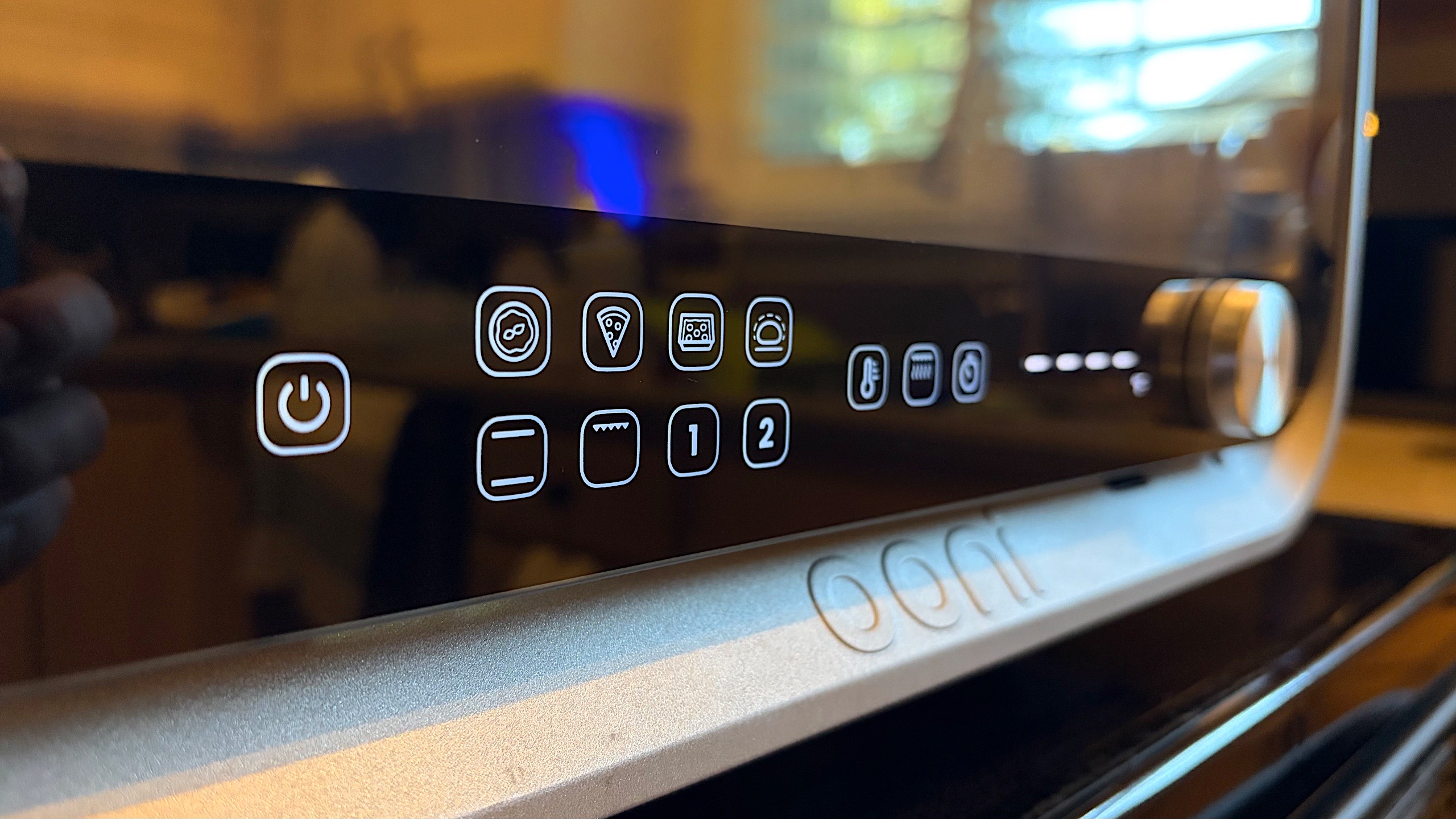
Up front, a collection of buttons have replaced the three control knobs and tiny dials from the Volt 12. There’s one for each of Ooni’s new Pizza Intelligence-powered presets and there are additional options for dough proofing, oven and broil/grill modes. The last two buttons in the main cluster on the left side are for saving custom presets. Closer to the center, there are three buttons for temperature control, crisping intensity and the timer. To set any of those, you’ll use the larger silver knob all the way to the right. This knob also doubles as the boost activation when you need extra power from the top heating element.
Ooni also installed a new digital display on the front, giving you temperature and timer updates at a glance. This is a huge improvement over the dials on the Volt 12, which couldn’t be read from a distance. With the large numbers on the Volt 2, I can just walk to the door of the kitchen and peek in if I want an update on the preheating process.
There are other refinements, like the larger viewing window on the front door, but a major one is the size reduction for the Volt 2. Don’t get me wrong, this is still a large device; it’s about the size of a low-profile microwave. It’s also still quite heavy at nearly 39 pounds. But Ooni did manage to shave a few inches here and there, and when combined with the rounder design cues, this makes the Volt 2 seem like it isn’t as massive or imposing as the Volt 12.
New features
The Volt 2's preset and mode buttons.
Billy Steele for Engadget
Nearly all of the Volt 2’s new features center around what Ooni calls Pizza Intelligence. The technology is an adaptive control system for the oven that uses unique heating elements and internal sensors. The setup can adjust the oven’s temperature in real time “for speed, accuracy and baking consistency,” according to the company. This technology serves as the basis for those style-based presets I already mentioned.
More specifically, the Volt 2’s presets include Neapolitan, Thin & Crispy and Pan Pizza that enable you to start cooking without much thought to time and temperature. All of these can be adjusted as each one has a temperature range for further fine tuning. Each one also has its unique crisping intensity and cook temperature, both of which can also be tweaked as needed.
After using all of the presets during testing, I like that Ooni made its second pizza oven easier to use for beginners. Even though I have some at-home pizza making experience (thanks COVID-19), it was nice to not worry about time and temperature in my research and planning. For more advanced users, the ability to use the presets as a starting point and tweak the parameters ensures that the Volt 2 remains a staple in the kitchen for a long time. Plus, the two slots for completely custom presets means Ooni experts will have space to save their refined, personalized configurations.
Making pizza with the Volt 2
New York-style dough is baking with the Thin & Crispy preset on the Volt 2.
Billy Steele for Engadget
You’re probably wondering how good the pizza is out of this thing, right? After all, the design prowess, features and specs mean nothing if the end result is terrible. That’s not the case here, nor has it been on any Ooni oven I’ve tested. I particularly enjoy baking pizzas with the Volt 2 (and the Volt 12 before) because I can do so in the comfort of my own kitchen. Everything I might need in a pinch is close by and there’s no open flame to maintain or monitor for safety.
First, let’s discuss preheating. Ooni says the Volt 2 can be ready to cook pizza in 12 minutes, and I suppose that’s true if you’re doing a lower-temperature bake. In my tests, the oven took exactly 25 minutes to get to its 850-degree Fahrenheit maximum (ideal for Neapolitan pies) and just over 18 minutes to hit 660 degrees. That latter figure is the target temperature of the Thin & Crispy preset, which was my favorite of the three Pizza Intelligence options. Both of these save time over using your home oven since a lot of recipes tell you to preheat that appliance for an hour.
A major consideration with the Volt 2 is pizza size. The oven’s baking stone can accommodate 12-inch pizzas, which means family pizza night will entail everyone making their own or baking multiple pies at the very least. For my family, I made four during my Neapolitan test, stretching and topping each new pizza after the previous one finished baking. After removing a pizza, the stone temperature drops, but the Volt 2’s Boost feature uses a 45-second burst to help it recover. I found that by the time I carefully stretched and topped the dough, the oven was ready for the next pizza.
Neapolitan-style pizza baked with the Volt 2 preset has ample leoparding.
Billy Steele for Engadget
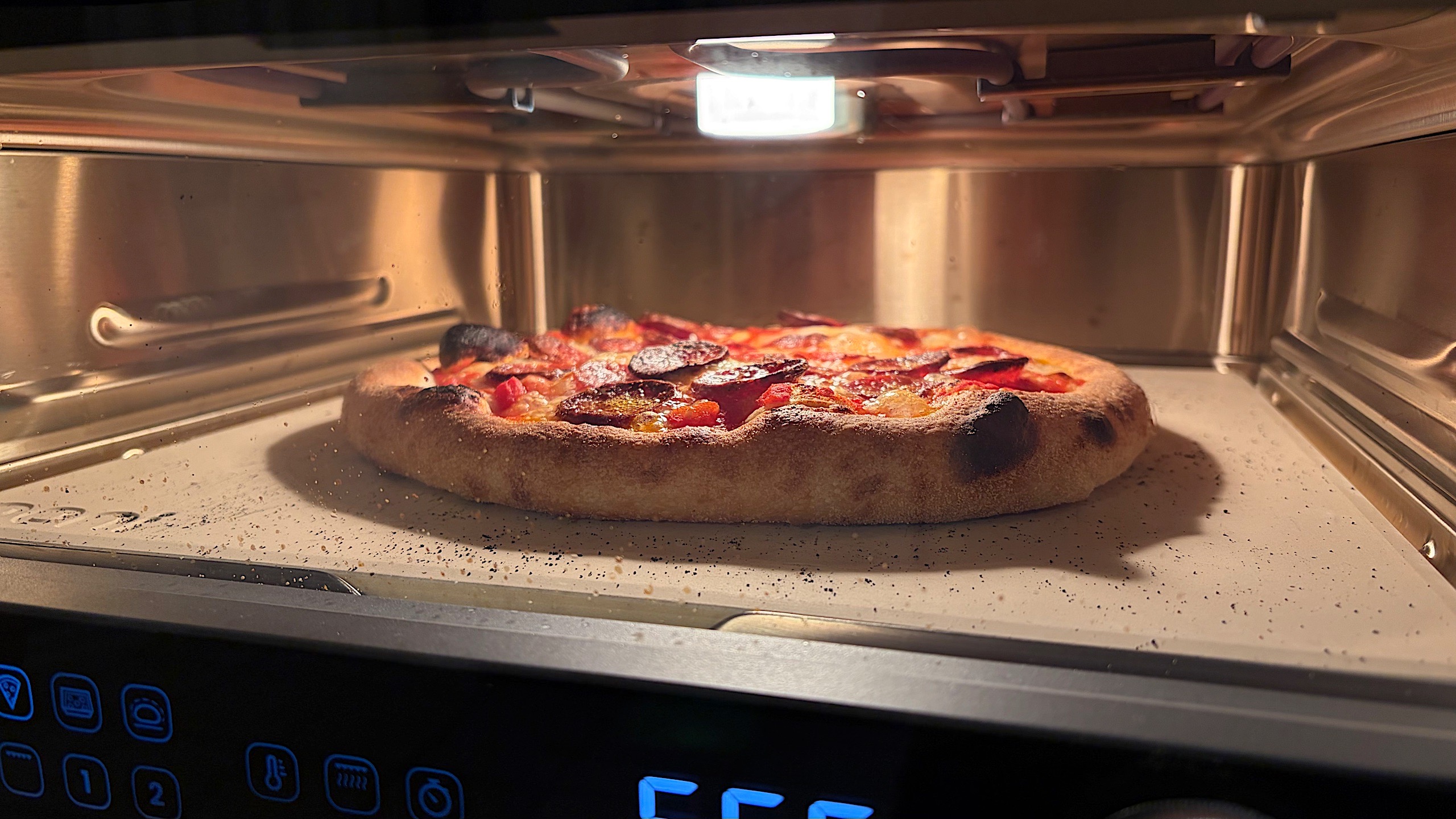
Across Neapolitan, Thin & Crispy and Pan Pizza modes, the Volt 2 produced truly stellar results for each style. I’ll note that I used dough recipes for each style from The Ooni Pizza Project by Scott Deley. I’ve found that his guidance leads to amazing pizzas, even if you’re planning to just use your home oven. Using the Volt 2, Neapolitan pies had ample leoparding and cooked quickly in the high heat. Thinner, New York-style pizza was indeed crispy on the bottom and perfectly browned on top while still having a pleasant chewiness. And my Detroit-style pan tests were crispy on the edges and pillowy soft inside.
There are two important things to note about using the Volt 2. First, the exterior gets hot, especially at 800 degrees and above. For that reason, you’ll want to avoid sitting anything on top of the oven while you’re using it (or very close to it, really). You’ll also need to allow ample time for the outside to cool before storing the Volt 2. The oven runs its own shutdown cycle, but the exterior may still be too warm to put away when that’s complete.
Second, despite a steam and smoke filter, the Volt 2 still expels steam out of the back. I combated this by putting the oven on my flat-top stove under the exhaust fan, but you’ll need to plan accordingly if you don’t want that wafting around your kitchen. I could see this being a problem for small living spaces like apartments.
The competition
If you’re looking for Volt alternatives, there are two main competitors. The long-standing incumbent is Breville’s Pizzaiolo. It too offers easy-to-use presets and features in addition to a degree of manual operation. My main issue with it was the price, which was initially $1,000 but is now $800. That reduced price is still $100 more than the Volt 2. I also had trouble with the confined round baking area and how difficult the oven is to clean since debris could fall down around the bottom heating element.
There’s also the Current Model P. This one wins the price war at under $500 and it too has presets and a max temperature of 850 degrees. Current’s app has a Pizza Build Calculator that assists with time, temperature and ingredients. I haven’t tested this one yet, but it’s on my list for the near future.
Wrap-up
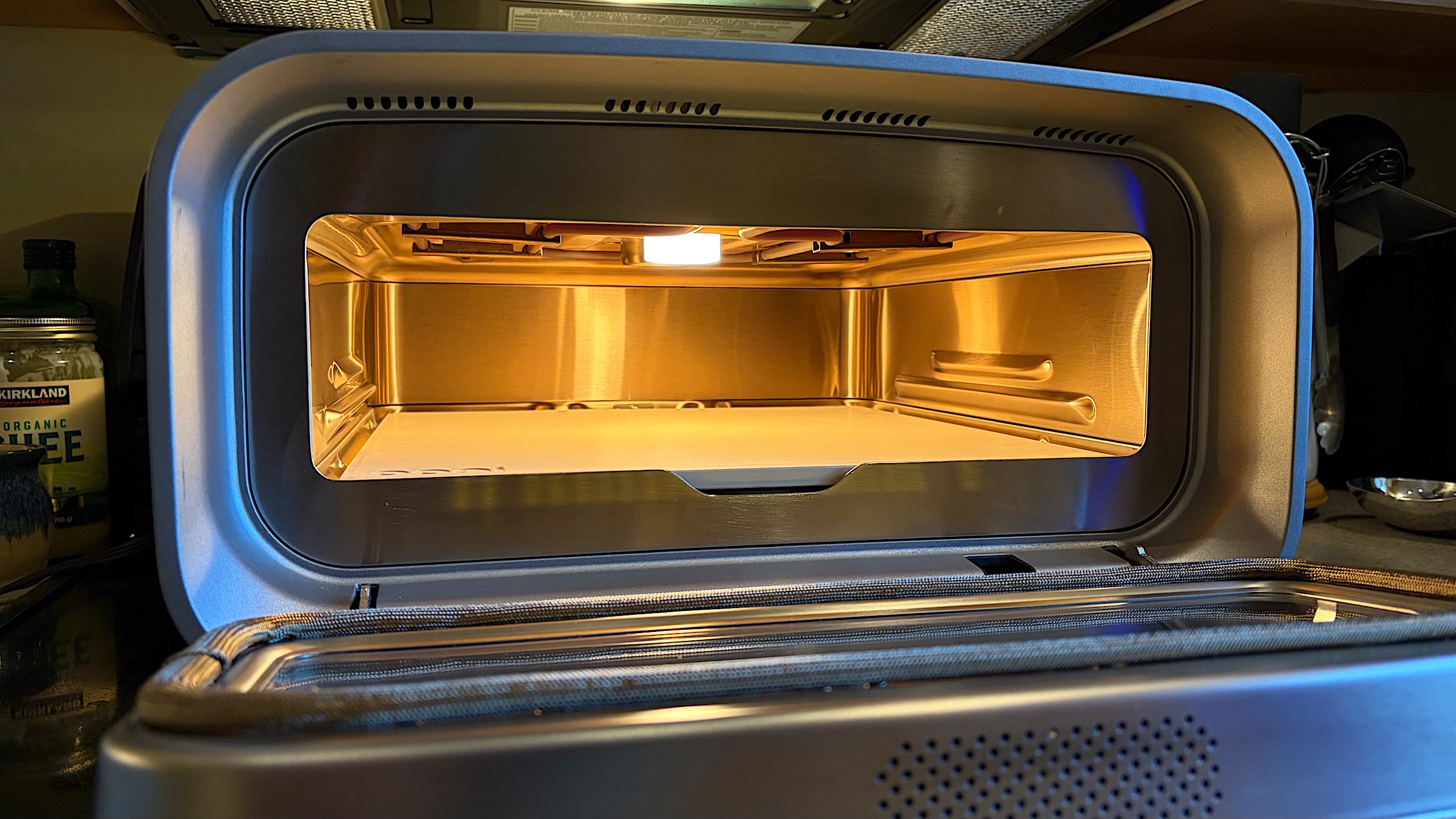
The Volt 2 has a square baking area that can fit 12-inch pizzas.
Billy Steele for Engadget
There’s no sophomore slump here. The Volt 2 is a big upgrade over the original Volt — that much is undeniable. It’s easier to use for all skill levels thanks to its clearer controls and large display. Presets work well, but they can also serve as a starting point for further recipe refinement for experienced users. And the pizza — my goodness, the pizza is consistently restaurant quality (or better) across a range of styles. Combine that performance with a better looking design, slightly smaller footprint and lower starting price and you’ve got a compelling case for a standalone indoor pizza oven.
This article originally appeared on Engadget at https://www.engadget.com/home/kitchen-tech/ooni-volt-2-review-a-strong-case-for-an-indoor-pizza-oven-193000311.html?src=rss
After its most recent successful New Glenn mission, Blue Origin is announcing propulsion upgrades to its star rocket, and plans for a larger "super-heavy class rocket" that puts the company in even closer competition with SpaceX.
Blue Origin says New Glenn will get higher-performing engines at both stages, with the total thrust of the booster engines increasing from 3.9 million lbf to 4.5 million lbf. The total thrust of the upper stage of the rocket, meanwhile, is going from 320,000 lbf to 400,000 lbf. Paired with a new reusable fairing (the cover that goes over the payload of New Glenn) and an "updated lower-cost tank design," Blue Origin claims that the upgraded rocket will benefit customers heading to "low-Earth orbit, the Moon and beyond."
The company also has another rocket on the roadmap, New Glenn 9x4, the bigger sibling of the current New Glenn 7x2. Named for the number of engines it has at each stage (nine on the booster stage, four on the upper stage), New Glenn 9x4 can carry "over 70 metric tons to low-Earth orbit, over 14 metric tons direct to geosynchronous orbit and over 20 metric tons to trans-lunar injection," Blue Origin says. Per an image shared by Blue Origin CEO Dave Limp on X, the rocket is also bigger than the Saturn V rocket that ferried humans to the Moon during NASA's Apollo 11 mission.
That catapults Blue Origin into the same size range as SpaceX's Starship, which successfully deployed its payload for the first time in August, and is now facing retirement as SpaceX develops its next-generation model.
Both Blue Origin and SpaceX are competing to work with NASA on future Moon missions. If Blue Origin's lunar hunger wasn't clear from the prominent framing of the Moon in its New Glenn press images, the company reportedly plans to land its unmanned lunar lander on the Moon in 2026.
This article originally appeared on Engadget at https://www.engadget.com/science/space/blue-origin-announces-new-glenn-rocket-upgrades-fit-for-a-trip-to-the-moon-192500333.html?src=rss
Co-op horror game Reanimal will be released on February 13, 2026. If you simply can't wait until Valentine's Day to have an eerie experience with a fellow horror-loving person, you can check out a demo that dropped today. The announcement was part of the Xbox Partner Preview showcase, but you can also try the demo on PC and PlayStation 5.
We got a first glimpse at the next creepy creation from Tarsier Games, which made the first two installments of the Little Nightmares games, last year during Gamescom Opening Night. With Reanimal, players will need to work together to navigate dangerous terrain and escape a very unpleasant-looking island. This team has a great sense for how to create dread from the clever use of scale and proportion, as the two tiny children try to survive whatever spooky situation they've been pushed into.
This article originally appeared on Engadget at https://www.engadget.com/gaming/reanimal-will-arrive-just-in-time-for-a-spooky-valentines-day-191523944.html?src=rss
Google just unveiled its Nano Banana Pro image generation platform, which is also going by the name Gemini 3 Pro Image. The company promises this is an improvement over previous versions of the software in nearly every way. Google says it will "turn your visions into studio-quality designs with unprecedented control, flawless text rendering and enhanced world knowledge."
The text rendering portion seems to have gotten a big upgrade here, as Nano Banana Pro can create context-rich infographics and diagrams. The software can render legible text on top of a pre-existing image, making it a good option for generating posters and stuff like that. Google says that this feature is available in multiple languages.
Google
Google also says it can blend multiple elements into a single composition, with the ability to use up to 14 images at once. There are plenty of new editing controls. Users can select and edit any part of a created image. This can be used to adjust camera angles, change focus, adjust the color grade and even swap out the lighting from day to night.
Images created with Nano Banana Pro will have C2PA metadata embedded. This should, in time, make it easier to spot generative AI or deepfakes out there in the world. We'll have to see how that plays out. TikTok recently announced it would be using this metadata to better label AI-generated content, of which it currently does a very bad job at.
Nano Banana Pro is actually free to use. Free users are limited to a daily quota of images, with the number expanding for Google AI, Plus, Pro and Ultra subscribers. Just open up the Gemini app and create an image, but be sure to use the "Thinking" model. It's also available in Search and NotebookLM for some subscribers. This is all part of the recently-launched Gemini 3 model.
This article originally appeared on Engadget at https://www.engadget.com/ai/googles-nano-banana-pro-image-generator-leverages-gemini-3-for-improved-visuals-and-text-rendering-185505073.html?src=rss
Perplexity is continuing the rollout of its AI browser to more users. Comet is now available to download for Android mobile devices from the Google Play Store. Comet initially debuted this summer only to Perplexity's high-rolling subscribers on the $200-a-month Pro plan, but it expanded access to all users last month. It's free on Android as it now is on other platforms, and has many of the same features as the desktop version. The mobile option has access to Perplexity's AI assistant, and it can summarize searches or be interacted with by voice.
Perplexity has been forthright about its goals of launching a browser as a way to collect customer data so it can more effectively target ads, and it's not the only artificial intelligence company or tech company trying to integrate AI into the browsing experience. These efforts have already drawn complaints from Amazon, particularly around AI in shopping, but they could yield big paydays for scammers.
This article originally appeared on Engadget at https://www.engadget.com/ai/perplexitys-comet-ai-browser-is-now-on-android-184500885.html?src=rss
Poncle has been pretty darn busy lately. Along with greenlighting a licensed Warhammer take on Vampire Survivors, bringing a VR version of the original game to the world and working on crossover expansions, the studio is making a brand-new game. Vampire Crawlers is a Vampire Survivors spinoff. Rather than running around the map to collect gems to level up and unlock or upgrade auto-firing weapons, Vampire Crawlers has a different format. It’s a dungeon-crawling roguelike deckbuilder.
It’s set in the same world as Vampire Survivors and each of the playable characters is in the original game. You’ll put together decks of attacks and other abilities to help you on your journeys through dungeons. There’s a card customization feature too.
Development of Vampire Crawlers started soon after Vampire Survivors hit early access and blew up in 2021. Poncle founder and CEO Luca Galante told Xbox Wirethat this is hopefully the first in a series of spinoffs in which “the idea is to take some of the core pillars behind the development of VS and to apply them to existing genres.” Galante hinted that a Vampire Survivors sequel is in the works too.
Vampire Crawlers is expected to arrive in 2026. It’ll be available on Steam, Xbox Series X/S, PlayStation 5, Nintendo Switch, Android and iOS. The game will debut on Game Pass Ultimate and PC Game Pass.
This article originally appeared on Engadget at https://www.engadget.com/gaming/xbox/a-vampire-survivors-roguelike-deckbuilder-spinoff-is-coming-in-2026-183841289.html?src=rss