Can you really unlock the full potential of IKEA smart home devices without the Dirigera hub? It’s a question many smart home enthusiasts are asking, especially as IKEA continues to expand its lineup of affordable, reliable devices. A Smarter House walks through how platforms like Homey Pro, Home Assistant, and Apple HomeKit can bypass the […]
Samsung has once again demonstrated its commitment to innovation at CES 2026 by showcasing a revolutionary “creaseless” OLED display technology slated for its upcoming 2026 flagship lineup. While the official consumer launch of the Galaxy Z Fold 8, the Galaxy Z Flip 8, and the rumored Galaxy Z Fold Wide is expected later this […]
What if you could build a fully functional operating system, design intricate 3D models, or even create a playable game, all with just a few prompts? In this breakdown, World of AI walks through how Claude Sonnet 5, the latest AI model from Enthropic, is poised to redefine software development as we know it. With […]
Apple is poised to introduce a fantastic change to its product release strategy in 2026. For the first time, the company plans to stagger its iPhone launches into two distinct phases. High-end models, including the iPhone 18 Pro, iPhone 18 Pro Max, and the highly anticipated foldable iPhone, will debut months ahead of the standard […]
What if the key to staying on top of your work wasn’t about working harder, but about working smarter? Jeff Su breaks down how the Google Productivity System transforms chaotic workflows into streamlined, actionable processes in a recent video that’s gaining attention among productivity enthusiasts. This isn’t just a collection of tips, it’s a structured […]
What’s the best way to tackle your data analysis challenges in Excel? With so many options, formulas, PivotTables, and Power Pivot, it’s easy to feel overwhelmed or unsure which approach will deliver the best results. Excel Off The Grid walks through how each of these methods shines in different scenarios, breaking down their strengths and […]
Apple has officially introduced the iOS 26.3 Release Candidate (RC), marking the final stage before the public rollout. This update brings a variety of enhancements designed to improve functionality, privacy, and personalization. With a focus on cross-platform compatibility and user convenience, the iOS 26.3 RC demonstrates Apple’s commitment to refining its ecosystem. Below, we explore […]
Samsung has initiated the rollout of a new security patch update for its Galaxy Watch series, beginning with the Galaxy Watch 6 Classic. This update is designed to enhance the security and reliability of Samsung’s wearable devices, making sure users can trust their smartwatches to safeguard their data. Over the coming weeks, the update will […]
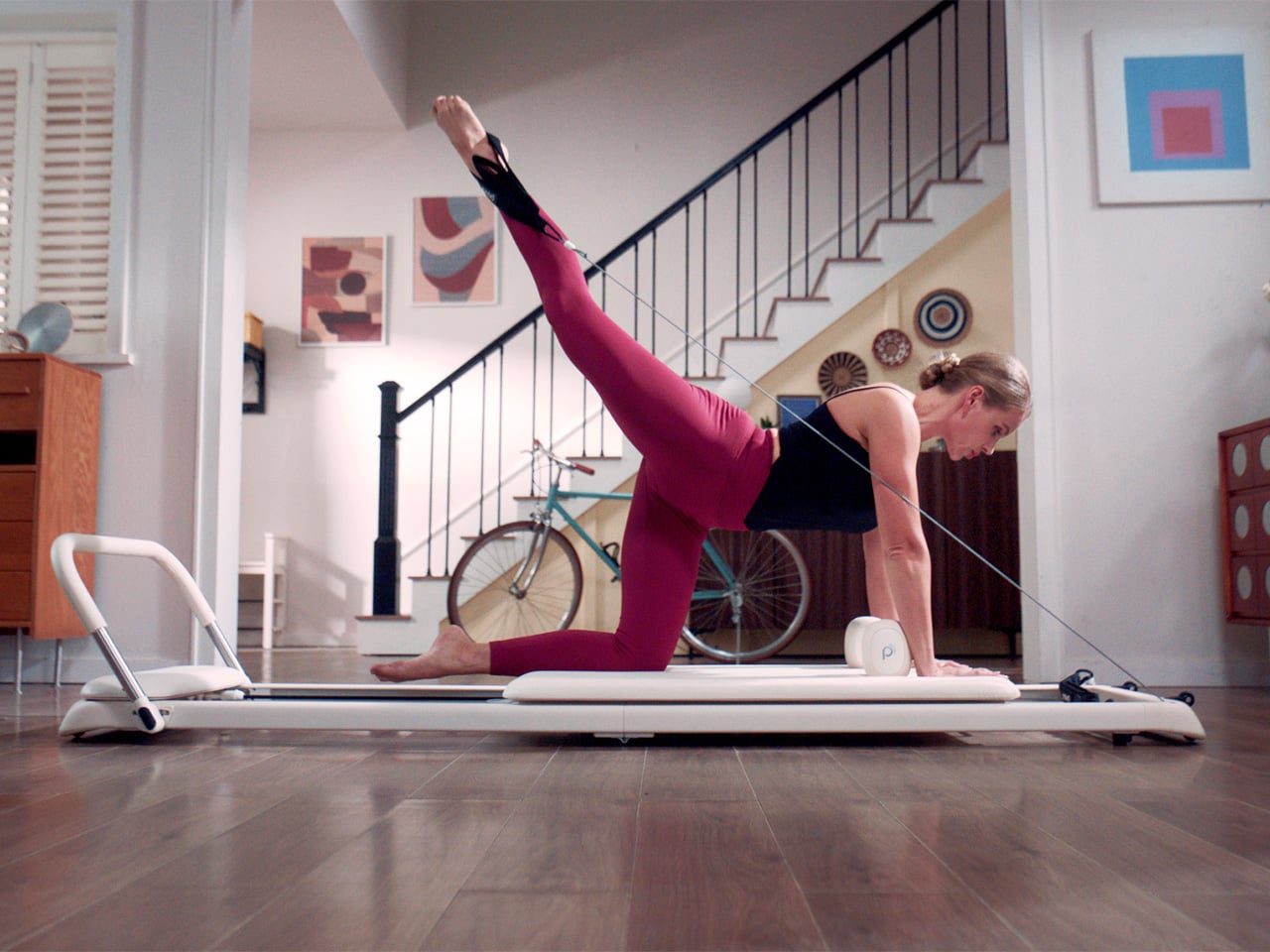
Reformer Pilates studios charge $35 to $60 per class. If you go twice a week, you’re spending roughly $300 to $500 every month. Three months of that schedule costs more than Pavo’s $899 price tag. Six months in, you’ve paid double what the machine costs. And you’re still driving across town to work out on someone else’s schedule. Pavo is a foldable reformer designed to fit under beds or sofas, weighing 66 pounds and measuring just 51 by 26 inches when folded. It sets up in about five seconds by lifting one end with your foot. The aluminum frame supports users up to 220 pounds and includes four adjustable foot bar heights plus six resistance cords across three tension levels.
Pavo’s smart sensors separate it from the budget foldable reformers on Amazon. The system tracks your movements during workouts and syncs data to an app with guided classes sorted by skill level and length. It flags form problems as they happen and charts your progress over time. The reformer handles over 100 exercises and comes with ten permanent free courses. For anyone practicing Pilates multiple times weekly, the math makes sense: the machine pays for itself in saved studio fees while putting workouts entirely on your terms.
While you’ll find flimsy-yet-portable reformer pilates machines for $150-ish bucks online, they don’t have the sensor array that Pavo does. Internal monitors measure carriage velocity, detect platform instability, and identify muscle fatigue through trembling patterns. That last bit is pretty crucial because trembling usually means you’re either pushing too hard or your form collapsed. The system catches it in real time and adjusts the coaching prompts accordingly. Pavo’s sensors analyze movement quality, which is the entire point of Pilates in the first place. You’re not counting how many times the carriage moved, you’re getting feedback on whether you moved it correctly. Think Peloton, but entirely for Pilates.
The aluminum construction uses three different alloys: 3003-H24, 6061-T3, and 6063-T5. Those are aircraft-grade materials chosen for specific properties. 6061-T3 handles structural stress without deforming. 3003-H24 resists corrosion. 6063-T5 keeps weight down while maintaining rigidity. The frame went through over 100,000 stress test cycles on the resistance springs and cables across all tension levels. The rollers use a design that keeps noise below 30 decibels during use, which is quieter than a whisper if you’re being technical about it. The PU leather upholstery resists scratches and wipes clean, which matters when you’re storing this thing under furniture and dragging it out multiple times a week.
Pavo measures 95.2 by 26.4 by 9.9 inches when unfolded, which is nearly eight feet long. That’s full-size reformer territory. When you fold it, the footprint drops to roughly the size of a standing yoga mat. The shoulder rests detach for even tighter storage. You’re fitting genuine reformer dimensions into a package that slides under a standard bed frame. The five-second setup works by lifting one end with your foot so the mechanism glides into position. No screws, no assembly, no wrestling with parts. Most foldable reformers compromise stability to achieve portability. Pavo uses that three-alloy frame and locking carriage to maintain rigidity even at 66 pounds total weight.
Ten permanent courses come free, organized by difficulty and workout length. Additional content sits behind a subscription, which is standard for connected fitness gear at this point. The guided workouts sync with the sensor data, so the instructor prompts adjust based on your actual performance. If you’re lagging behind the pace, the app knows. If your form breaks down mid-exercise, you get corrected before you build bad habits. The progression tracking shows improvement over weeks and months, which turns out to be surprisingly motivating when you can see measurable gains in resistance levels or movement consistency. The gamified workout mode adds challenges that make sessions feel less like obligatory exercise.
Six resistance cords across three tension levels give you enough range to start as a complete beginner and scale up as you get stronger. The adjustable foot bar has four height settings to accommodate different exercises and body proportions. That’s the same functionality you’d find on studio equipment, just packed into a frame that weighs 66 pounds instead of 200-plus. The weight capacity tops out at 220 pounds, and the height limit sits at 6’3″. Those are real constraints worth knowing before you buy. If you’re taller or heavier than those specs, maybe a more substantial home gym might be on your watchlist. However, for the vast majority of people who practice Pilates, Pavo is a perfect investment that pays itself back in no time, and occupies barely any space, whether you’ve got a tiny home or a villament.
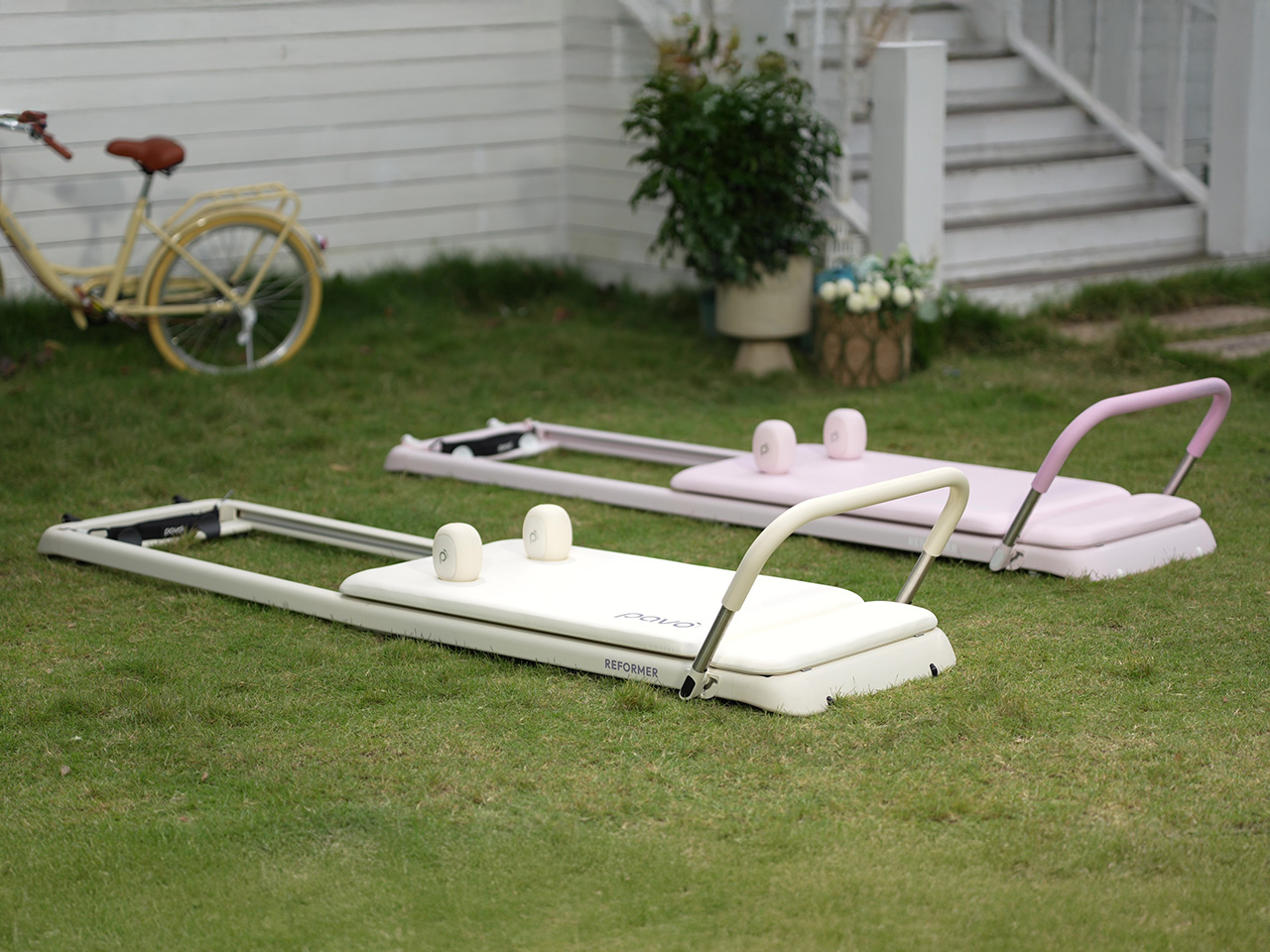
The frame comes in white, black, or pink. The PU leather matches the frame color. There’s no branding screaming at you from every angle. It looks closer to furniture than gym equipment, which matters when you’re storing it in a living space instead of a dedicated workout room. The attention to materials and finish quality shows up in the details: rounded edges, clean welds, smooth transitions where the folding mechanism meets the frame. This is industrial design that considered how the object exists in a home, eliminating ugly weld lines, sharp edges that your pinky toe almost always finds, and parts jutting out from the frame that peek out from under your bed or sofa.
Pavo starts at $899 for the Super Early Bird package, which includes the reformer, straps, shoulder rests, springs, a USB charging cable, and a user guide. The Early Bird Professional Pack adds a sitting box for $950. There are also multi-unit packages for couples or studios buying in quantity. Shipping is estimated for June 2026, with delivery guaranteed according to the campaign terms. The machine comes with a one-year warranty and 10 free starter courses through the companion app.