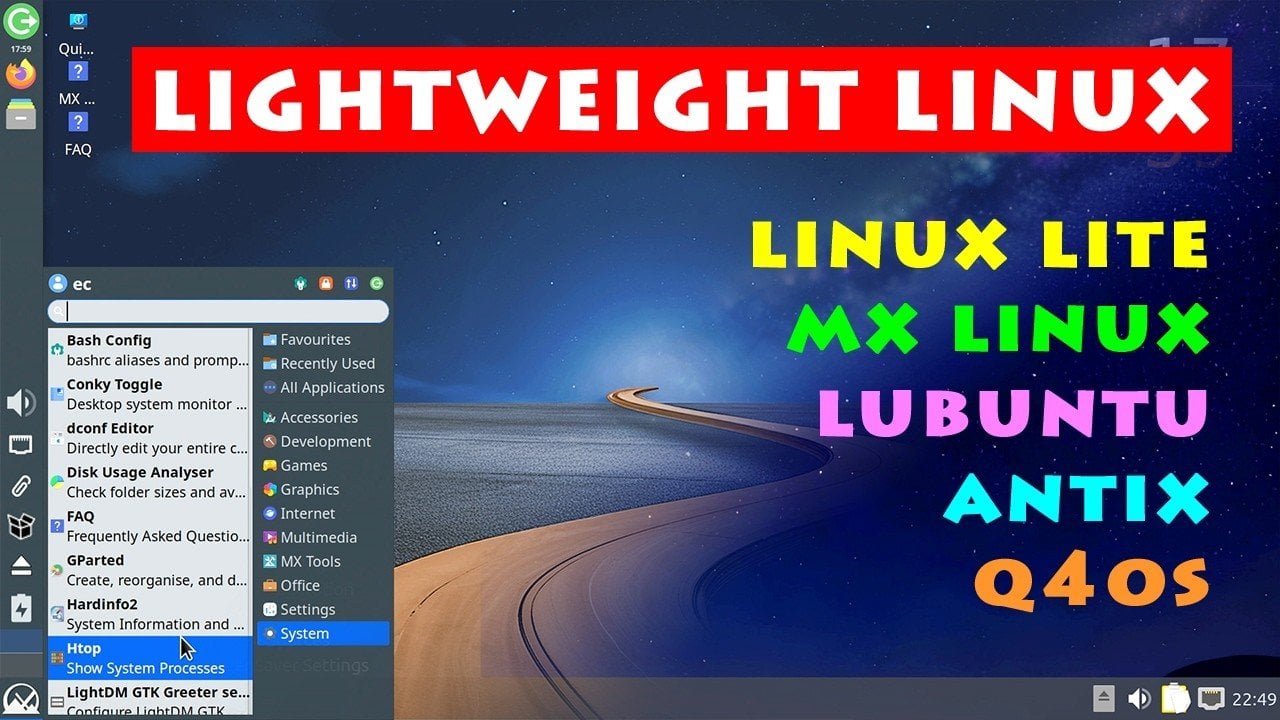
The Best Lightweight Linux Distros to Revive Your Old Hardware

The Best Lightweight Linux Distros to Revive Your Old Hardware Q4OS running the Trinity desktop on a low-RAM computer, with basic apps open and smooth performance.

Lightweight Linux distributions offer an effective way to rejuvenate older computers, allowing them to perform everyday tasks efficiently despite hardware limitations. As highlighted by ExplainingComputers, these distros are designed to minimize resource usage, making them ideal for systems with constrained memory or processing power. For instance, Lubuntu, which runs on as little as 1 GB […]

The post The Best Lightweight Linux Distros to Revive Your Old Hardware appeared first on Geeky Gadgets.

Posted in Uncategorized

5 Best LEGO Builds of April 2026 We Wish Were Already Official Sets (One Takes 90 Trillion Years to Work)

LEGO has always occupied a peculiar space between toy and medium. For most of us, the bricks are nostalgic — associated with childhood bedrooms, pieces stepped on in the dark, and the specific satisfaction of snapping something into place after searching the floor for ten minutes. For a different kind of builder, LEGO is something closer to a precision instrument: a material that responds to spatial thinking with the same seriousness that marble responds to a sculptor’s chisel. April 2026 made a compelling case for the latter.

This month produced five builds that sit comfortably outside any toy aisle — a gear-driven monument to exponential mathematics disguised as abstract art, a 1,106-brick variant of my favorite dessert ever, a retro desk piece hiding a fully functional modern computer, a sharp recreation of the most universally procrastinated game in office history, and a kinetic brick portrait of the greatest basketball player who ever played the game.

1. LEGO Eternal Mosaic — The Gear Train That Outlasts the Universe
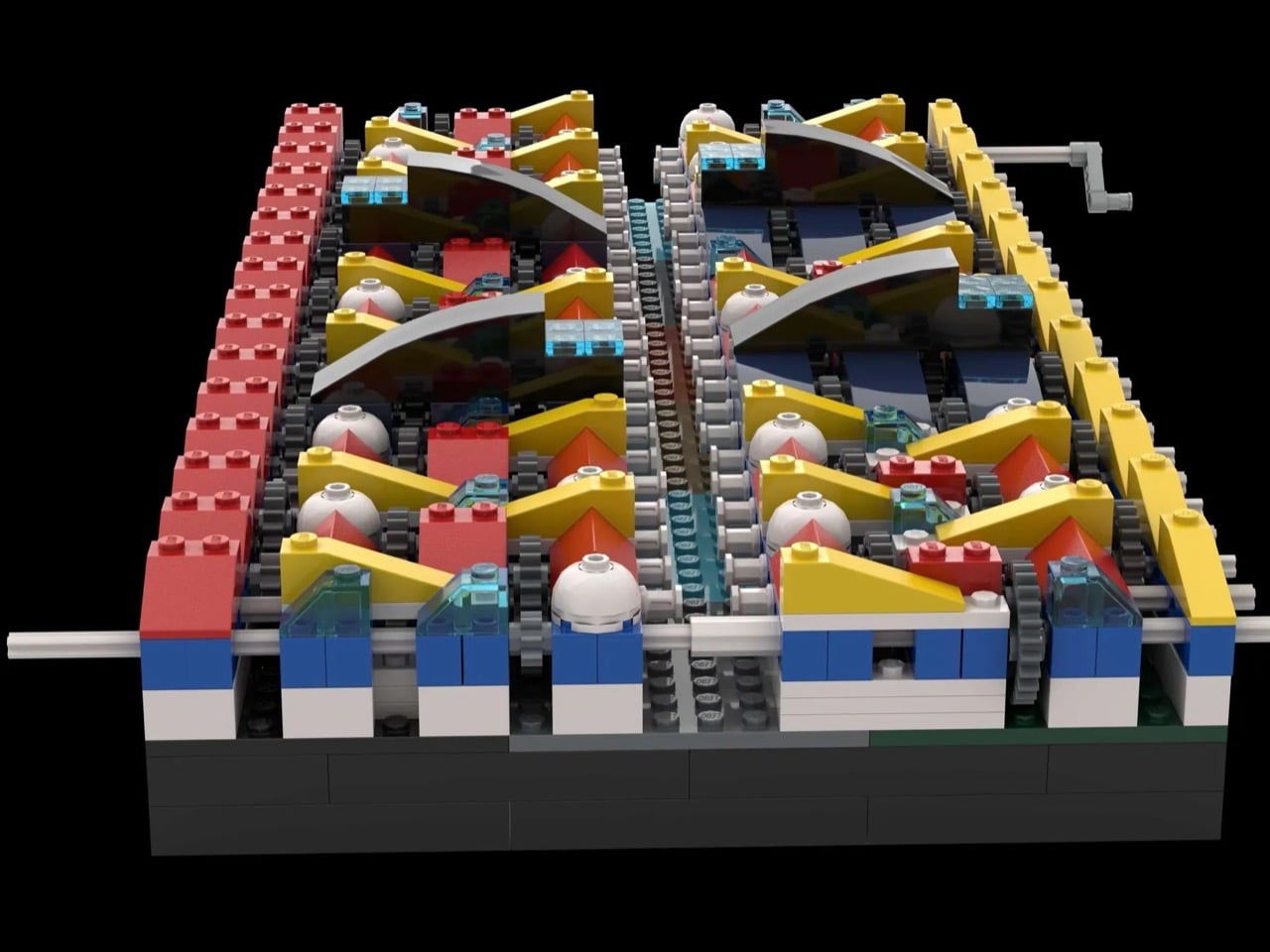
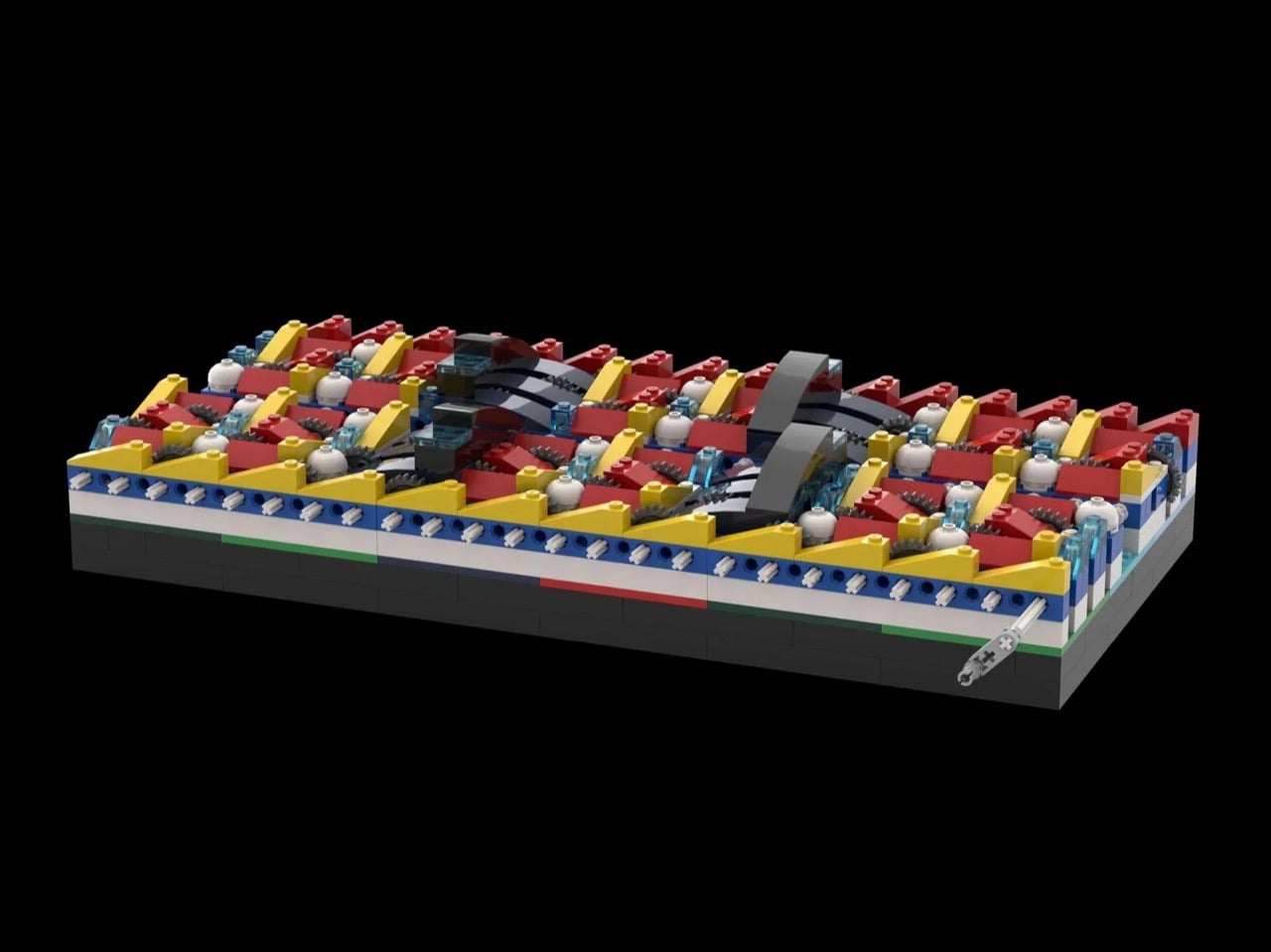
The Eternal Mosaic is a 655-piece LEGO Ideas concept that bridges the visual language of Mondrian’s De Stijl compositions with the mechanical logic of compound gear reduction. The build contains 46 stages of gear reduction using 24-tooth to 8-tooth ratios at every step. Compound that across all 46 stages and you arrive at a total gear reduction of approximately 9 billion trillion to one — a number that stops making intuitive sense almost immediately and doesn’t start again.

At 100 RPM, the first gear completes a rotation every 0.6 seconds. The final gear, embedded in the Mondrian-inspired color panel, will complete its first full rotation in approximately 90 trillion years — the universe is 13.8 billion years old by comparison. The Mondrian connection isn’t cosmetic. The rigid geometry of De Stijl shares an underlying grammar with compound gear logic: both systems operate by fixed, uncompromising rules and produce results that appear arbitrary until the governing principle becomes visible.

2. LEGO Tiramisu — The Food MOC That Makes You Question What You’re Actually Looking At

Tiramisu crossed out of northeastern Italy in the late 1960s and spent the next few decades becoming the world’s most universally loved no-bake dessert. LEGO Ideas creator Micdud has now built one from 1,106 bricks at nearly 1:1 scale — a corner slice served on a decorative round plate, complete with chocolate drizzle, cream dollops, and a fork mid-bite suspended in the air on a transparent support. The result makes you do a genuine double-take.

The cocoa topping is a masterclass in using disparate brown elements to simulate an organic, dusty texture — the kind of surface detail that food MOCs either nail or miss entirely. Micdud hid a raspberry made from a red clown hairpiece and blueberries built from purple astronaut helmets beneath the garnish, which is exactly the lateral thinking that makes a build memorable. Food MOCs live and die by their surface detail, and this one gets every layer right.

3. Michael Jordan LEGO Relief Poster — Air, Rendered in Brick

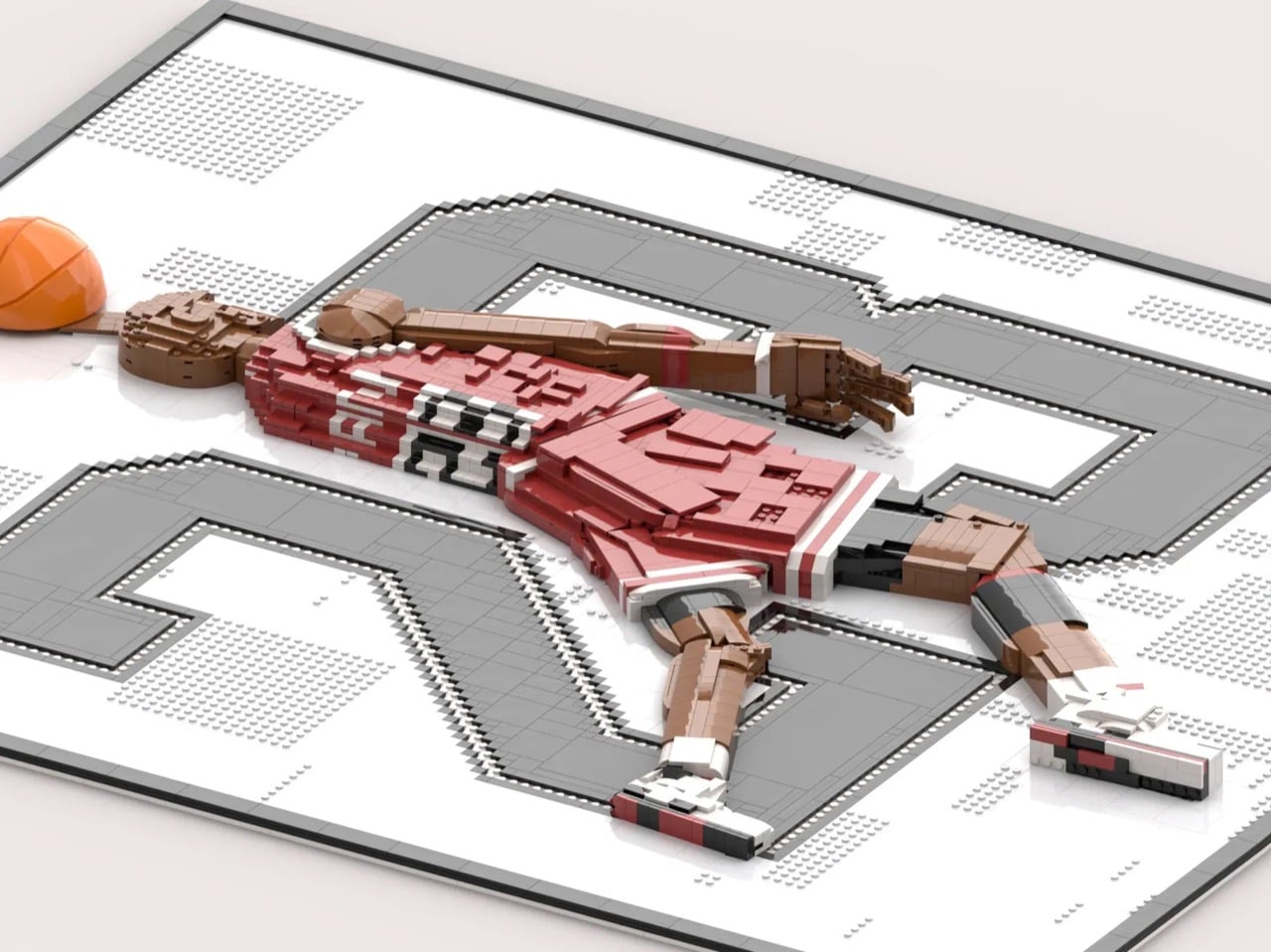
Most LEGO art stays flat. Builder LAFS85 made the harder choice with this 3,424-brick Michael Jordan portrait — a relief sculpture where Jordan’s figure physically protrudes from the background plane through layered brickwork, so the silhouette genuinely leaps toward you. In the front-facing renders, Jordan is mid-flight, ball raised, and the bold pixelated “23” filling the dark grey background amplifies the drama in the way confident typography always does when it knows exactly what it’s doing.

The technical decisions here reward close attention. LAFS85 used SNOT — Studs Not On Top — techniques throughout the figure to capture the flow of jersey fabric and the muscular geometry of Jordan’s legs. Flat tile surfaces read as smooth fabric. Angled plates suggest tension in the limbs. The red and white of the Chicago Bulls uniform pops hard against the dark grey background, and the brick-built recreation of Jordan’s signature in the lower corner is a genuinely considered finishing touch.

4. LEGO Minesweeper — A Functional Tribute to the World’s Most Productive Distraction

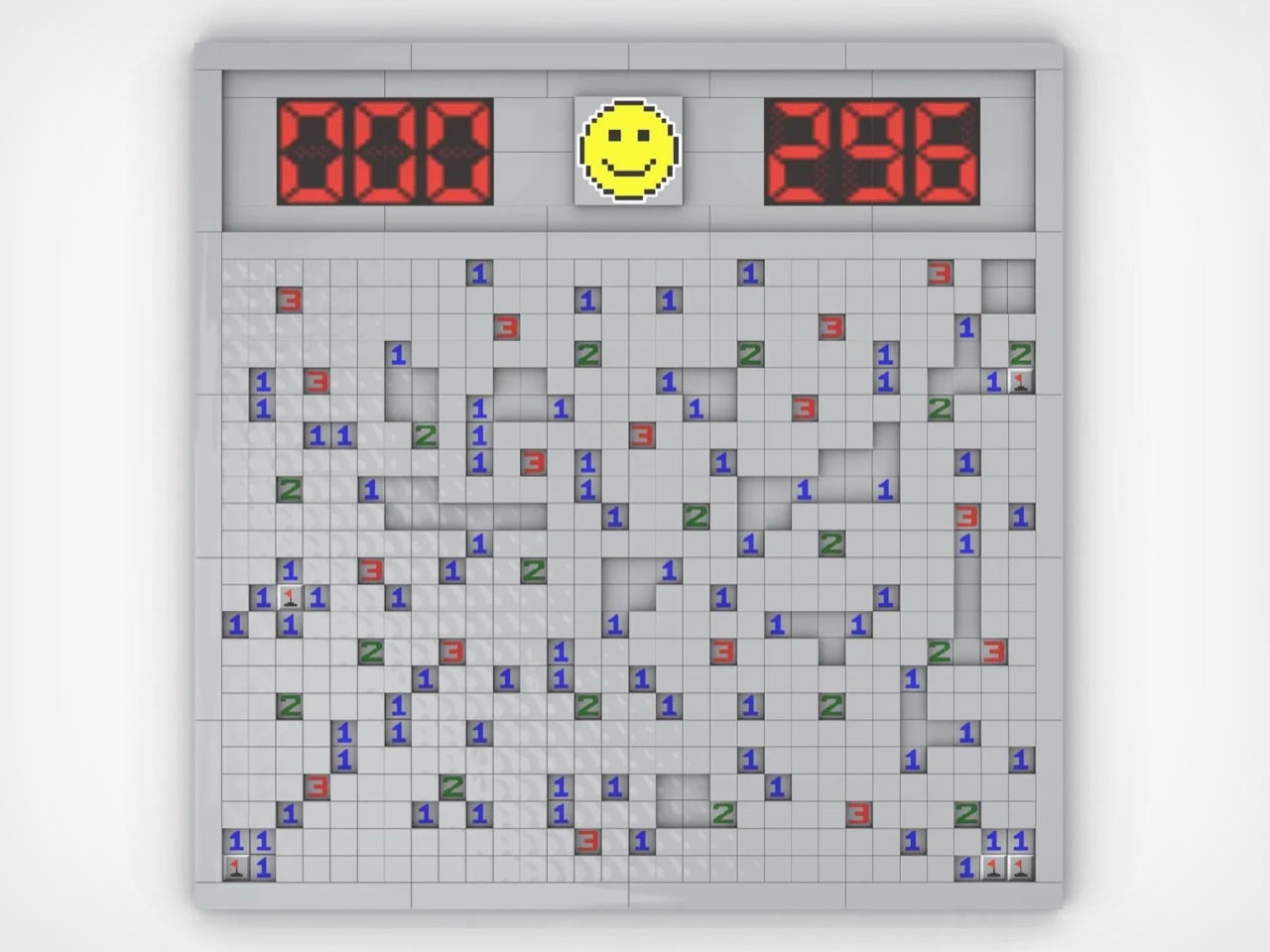
Before social media had the chance to dismantle workplace productivity, Minesweeper was already doing it quietly and for free. Created by Robert Donner and Curt Johnson for Microsoft in 1990, it shipped with every copy of Windows from 1992 onwards and spread through offices with the calm efficiency of something nobody wanted to admit spending time on. Conservative commentators were calling it a genuine threat to American business productivity. The alt-tab reflex became a survival skill.

LEGO builder carlos_silva94 rebuilt that gray grid in brick with more deliberateness than the concept strictly required. The build replicates the Windows 95 interface with real accuracy — raised tile surfaces recreating the three-dimensional texture of unpressed buttons, working seven-segment displays tracking mine counts and elapsed time, and the iconic yellow smiley face watching from above. The textured tiles are the detail that lifts this from casual tribute to considered design object, giving the build physical weight and tactile presence.

5. LEGO M2x2 Workstation — The 1979 LEGO Brick That Actually Runs macOS
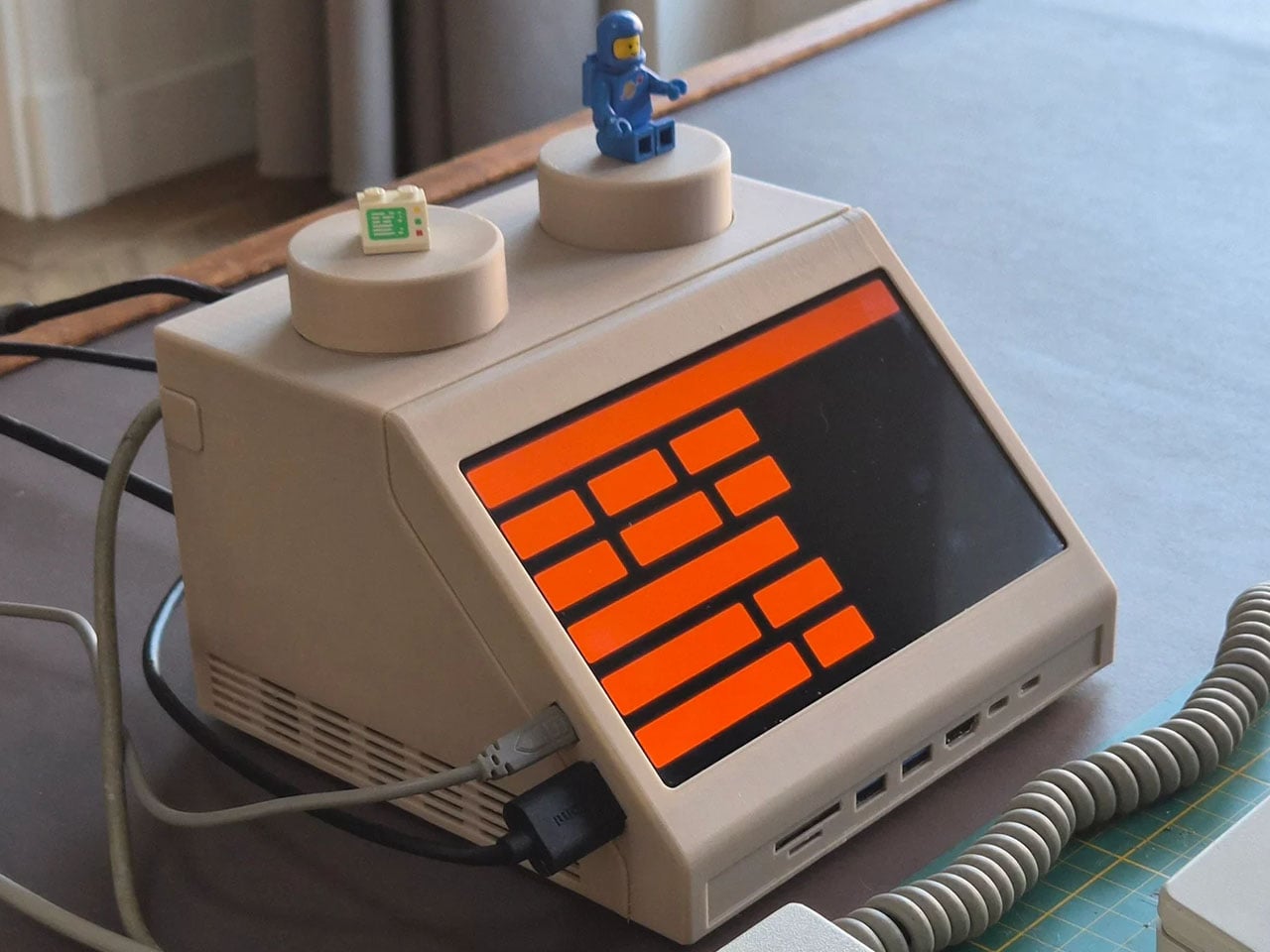
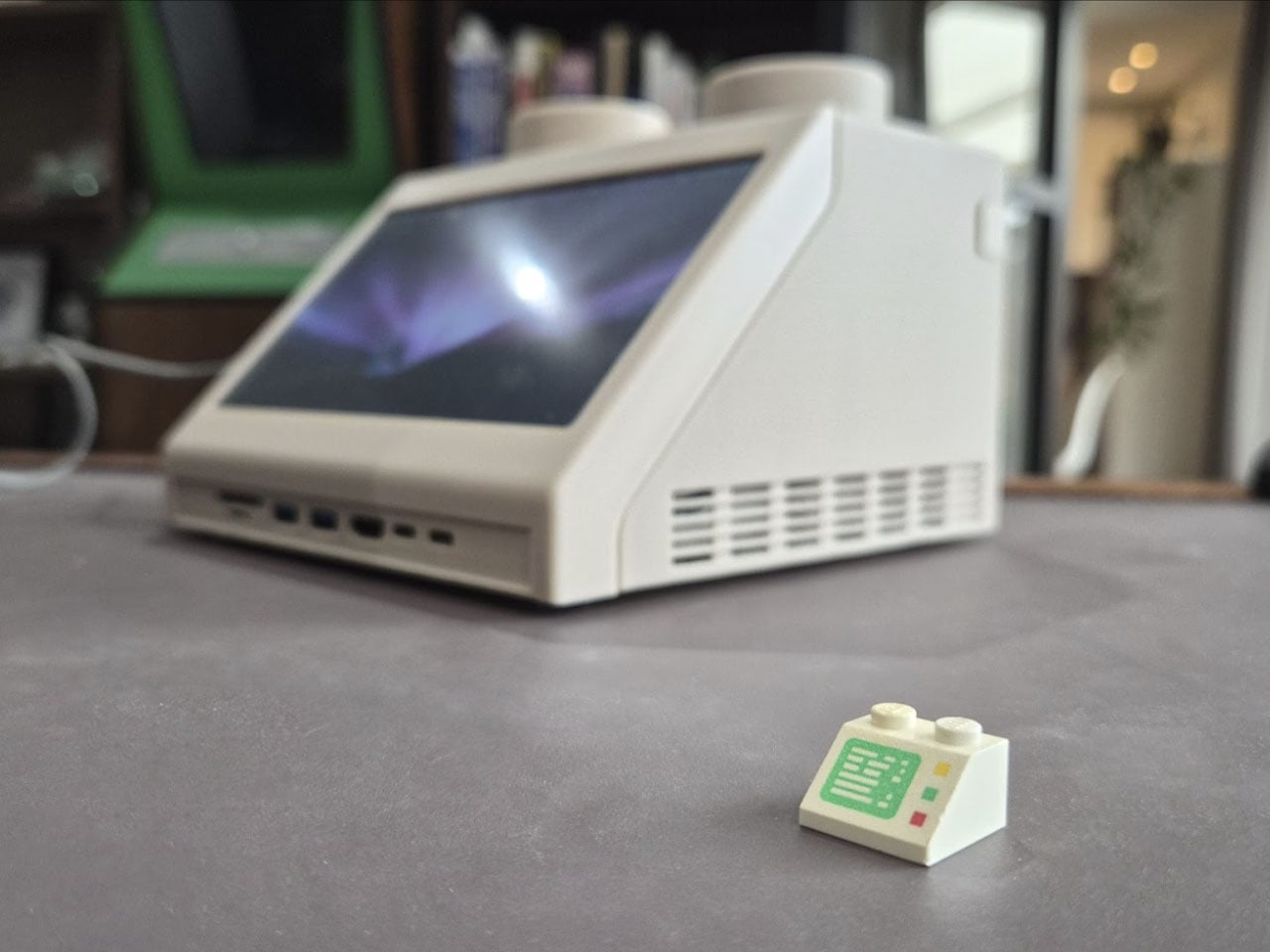
Dutch designer Paul Staal took the iconic LEGO Slope 45 2×2 brick — a wedge-shaped piece introduced in 1979 that appeared in classic space-themed sets as a visual shorthand for spacecraft computer terminals — and scaled it up to roughly ten times its original size. The result is a fully operational desktop computer housing that looks like it was pulled from a vintage LEGO Space playset and placed directly onto a modern desk.

Inside that oversized brick sits an Apple Mac mini equipped with Apple’s M4 chip, transforming a retro toy aesthetic into a capable, fully functional desktop system. What elevates this beyond novelty is the design intelligence underneath. Staal honored the Slope 45’s cultural memory while operating at a completely different scale and purpose. The M2x2 earns the term “conversation piece” without sacrificing utility — quietly asking why computing hardware defaults to featureless black rectangles when it could look like this.

The Month LEGO Stopped Playing Around

April 2026 demonstrated something the LEGO community has always known but rarely gets to show all at once: the brick is not a limitation, it’s a vocabulary. These five builds span engineering, portraiture, product design, retro computing, and food sculpture, and each one executes its concept with a precision that makes the medium feel like the only logical choice. Whether 655 pieces or 1,106, the ambition is entirely consistent.

What ties all five together is the specificity of vision behind them. The Eternal Mosaic is conceptually staggering in a way no other medium could reproduce. The Tiramisu challenges your eyes to accept that plastic bricks can convincingly look edible. The Jordan portrait rewards inspection at every level. The Minesweeper build lands immediately for anyone who worked in an office before 2000. And the M2x2 makes you rethink what computing hardware could look like. That is a strong month by any standard, in any medium.

The post 5 Best LEGO Builds of April 2026 We Wish Were Already Official Sets (One Takes 90 Trillion Years to Work) first appeared on Yanko Design.

Why Advanced AI Models Fail ARC AGI 3 But Humans Easily Score 100%

Why Advanced AI Models Fail ARC AGI 3 But Humans Easily Score 100% Screenshot-style view of ARC AGI 3 interactive puzzle grid with limited turns and no instructions shown.

ARC AGI 3, the latest iteration of the Artificial Reasoning Challenge, introduces a new benchmark for evaluating artificial general intelligence (AGI). This version emphasizes unstructured problem-solving through interactive, game-like tasks that require logical deduction and intuitive reasoning. Unlike traditional AI benchmarks, ARC AGI 3 challenges systems to adapt without explicit instructions, mirroring real-world scenarios where […]

The post Why Advanced AI Models Fail ARC AGI 3 But Humans Easily Score 100% appeared first on Geeky Gadgets.

Posted in Uncategorized

The Dynamic Island is Finally Changing: New iPhone 18 Leak Reveals 35% Smaller Design

The Dynamic Island is Finally Changing: New iPhone 18 Leak Reveals 35% Smaller Design Graphic showing iPhone 18 launch timing rumors, with Pro models in September 2026 and base model in early 2027.

The iPhone 18 is poised to be a pivotal release for Apple, emphasizing internal advancements over a dramatic redesign. Recent leaks suggest a blend of innovative technology and strategic adjustments that could reshape your experience with the next generation of iPhones. While the exterior design may remain familiar, the internal upgrades promise to deliver meaningful […]

The post The Dynamic Island is Finally Changing: New iPhone 18 Leak Reveals 35% Smaller Design appeared first on Geeky Gadgets.

Posted in Uncategorized

Vaultwarden a Free Password Manager Without Monthly Subscription Fees

Vaultwarden a Free Password Manager Without Monthly Subscription Fees Docker Compose file on screen with Vaultwarden container settings and mapped storage volumes for data persistence.

Managing passwords effectively is a challenge, especially when balancing privacy, functionality and cost. In a recent guide by Better Stack, the focus shifts to Vaultwarden, a self-hosted, open source password manager that offers a compelling alternative to subscription-based services like 1Password or Bitwarden Cloud. Vaultwarden stands out for its end-to-end encryption and the ability to […]

The post Vaultwarden a Free Password Manager Without Monthly Subscription Fees appeared first on Geeky Gadgets.

Posted in Uncategorized

Using Google Stitch to Build High-Converting Landing Pages in Minutes

Using Google Stitch to Build High-Converting Landing Pages in Minutes A prompt in Google Stitch generates a landing page layout with colors, fonts, and sections already arranged.

Google Stitch, part of Google’s Vibe Design initiative, is an AI-powered platform that simplifies the process of creating landing pages and other web assets. Unlike traditional design methods that often require significant technical expertise, Stitch enables users to generate layouts, stylesheets and even interactive dashboards through simple prompts. Marketing Against the Grain highlights how this […]

The post Using Google Stitch to Build High-Converting Landing Pages in Minutes appeared first on Geeky Gadgets.

Posted in Uncategorized

The Eames House Was Always Meant to Be Yours

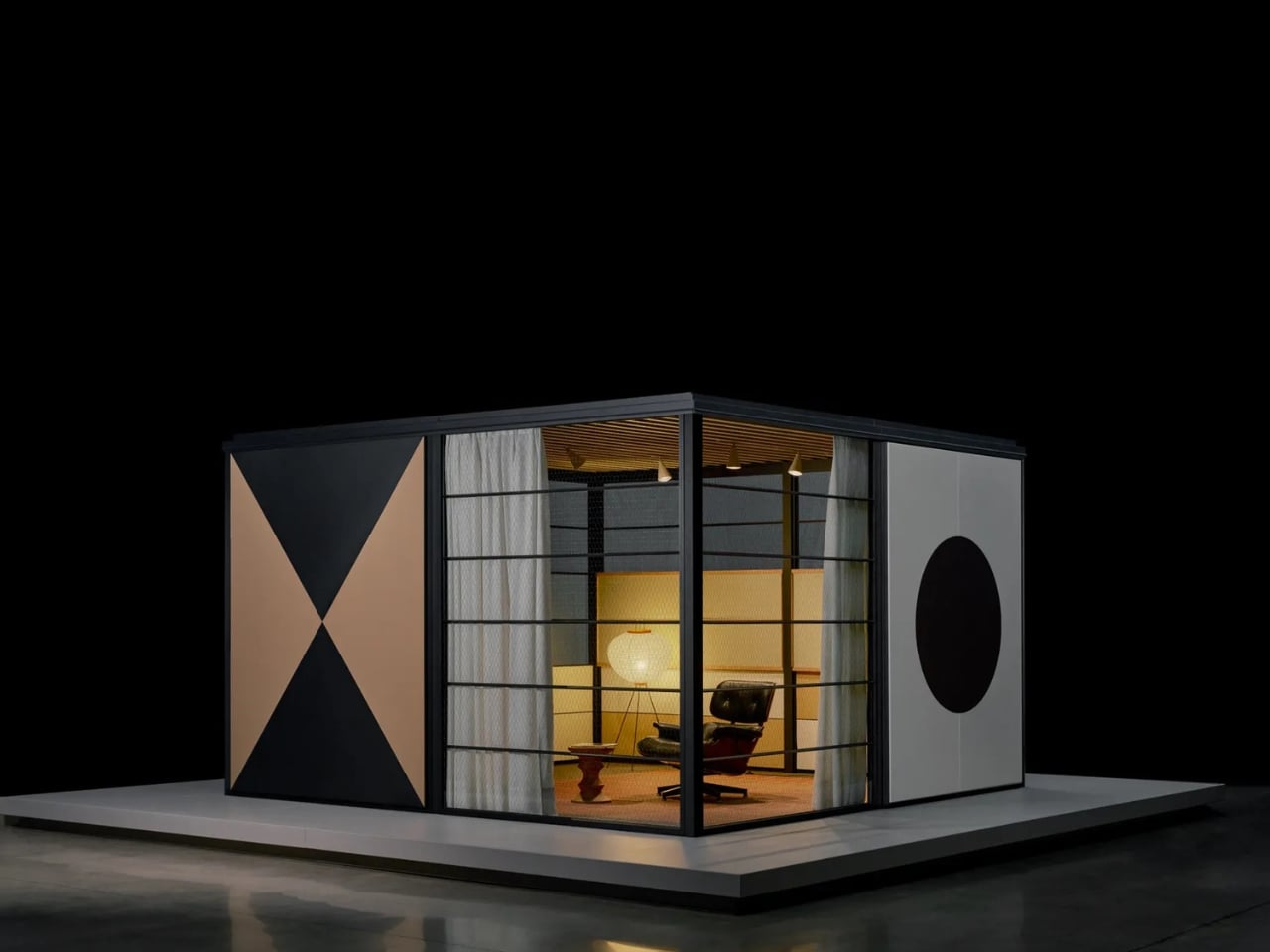
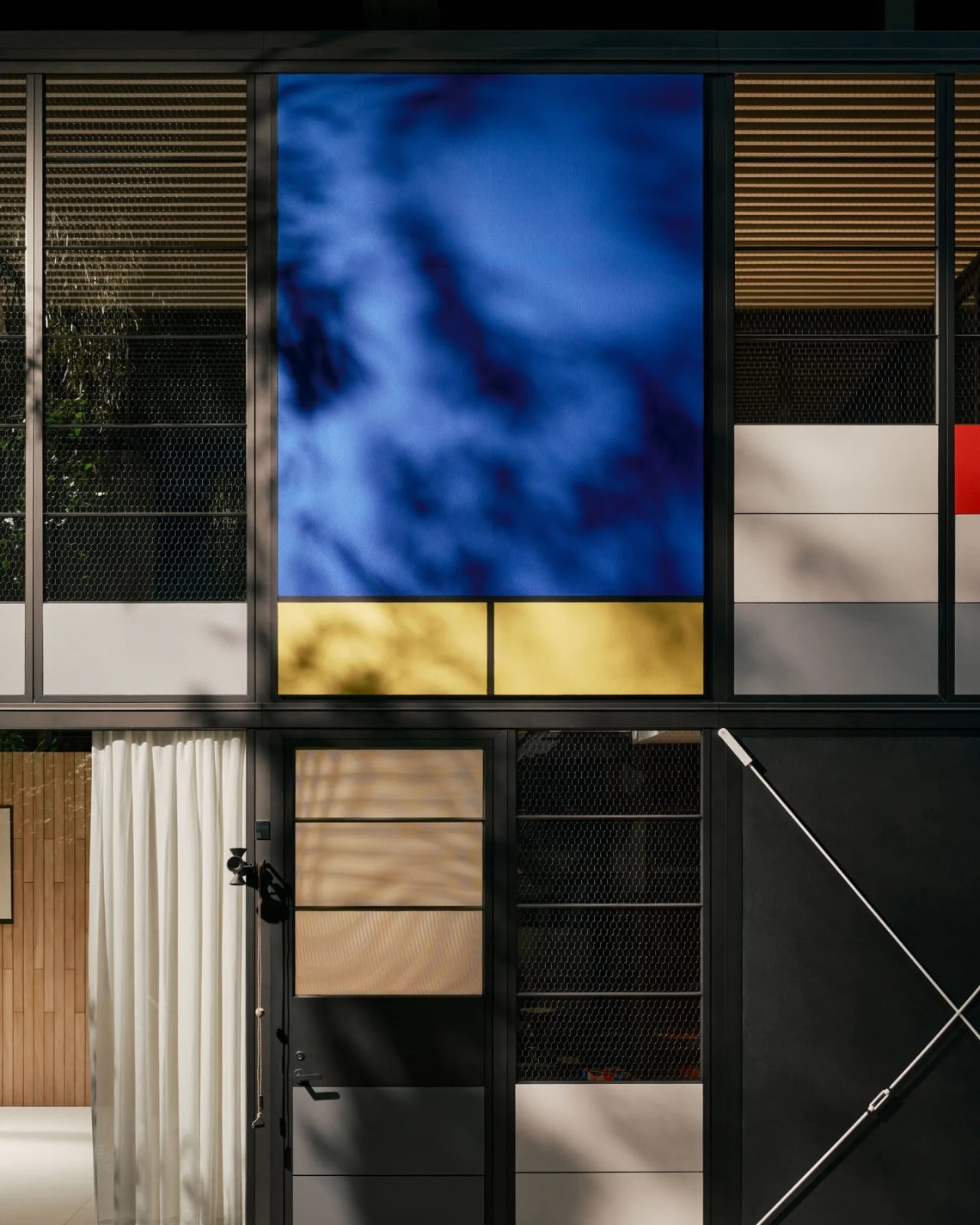
If you’ve ever stood in front of a photograph of the Eames House and felt a quiet longing, you’re not alone. That black steel frame, the jewel-toned panels, the floor-to-ceiling glass looking out onto a California meadow. It’s one of those images that lodges itself somewhere deep in your design-brain and refuses to leave. Most of us just assumed it would stay a photograph. Turns out, Charles and Ray Eames had other plans all along.

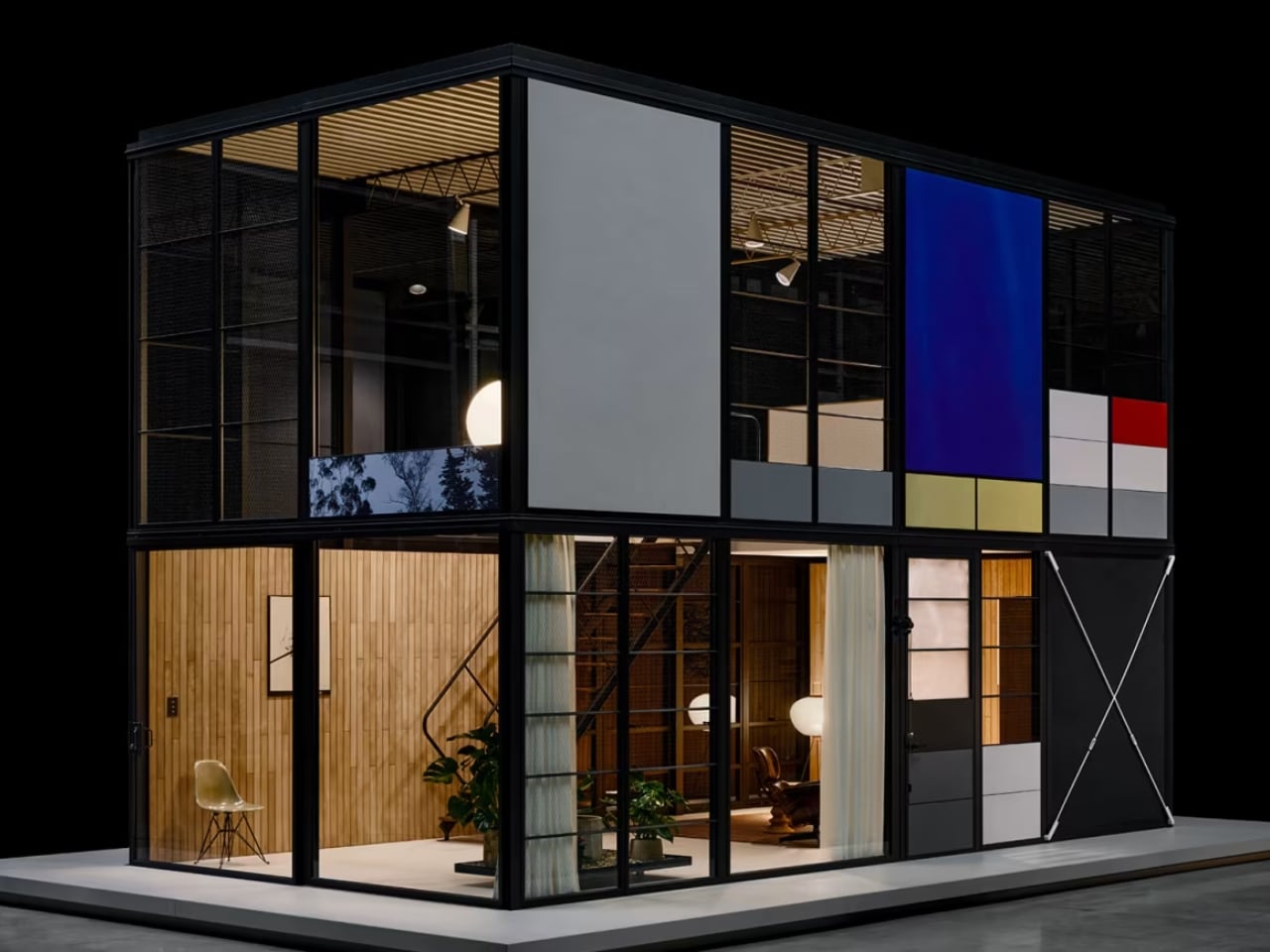
The Eames House, or Case Study House #8, was completed in 1949 in Pacific Palisades, California. It was built as part of Arts & Architecture magazine’s Case Study House program, which challenged architects to design homes using post-war industrial materials and techniques. Charles and Ray made something so effortlessly beautiful that it became one of the most photographed residences of the 20th century. But here’s the part most people miss: they always saw it as a starting point, not a masterpiece. Their real goal was a universal architectural system, one accessible to almost anyone and deployable almost anywhere. They never got there. That dream stayed tucked in archives, in sketches, in proposals that never left the studio. There was even a flat-pack modular concept the couple researched independently, informally called the “Supermarket House.” That name alone tells you exactly what they were going for.

Designer: Kettal

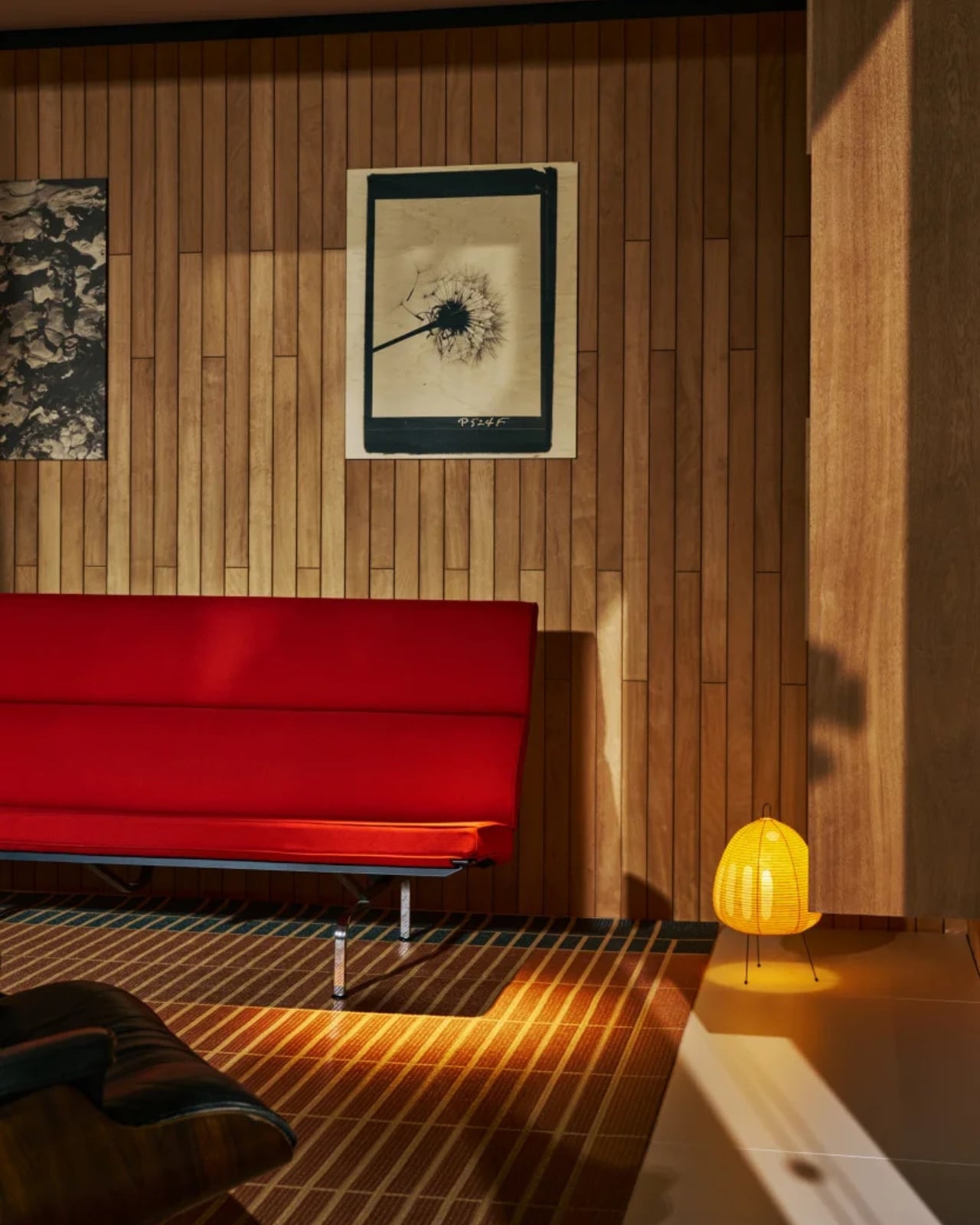
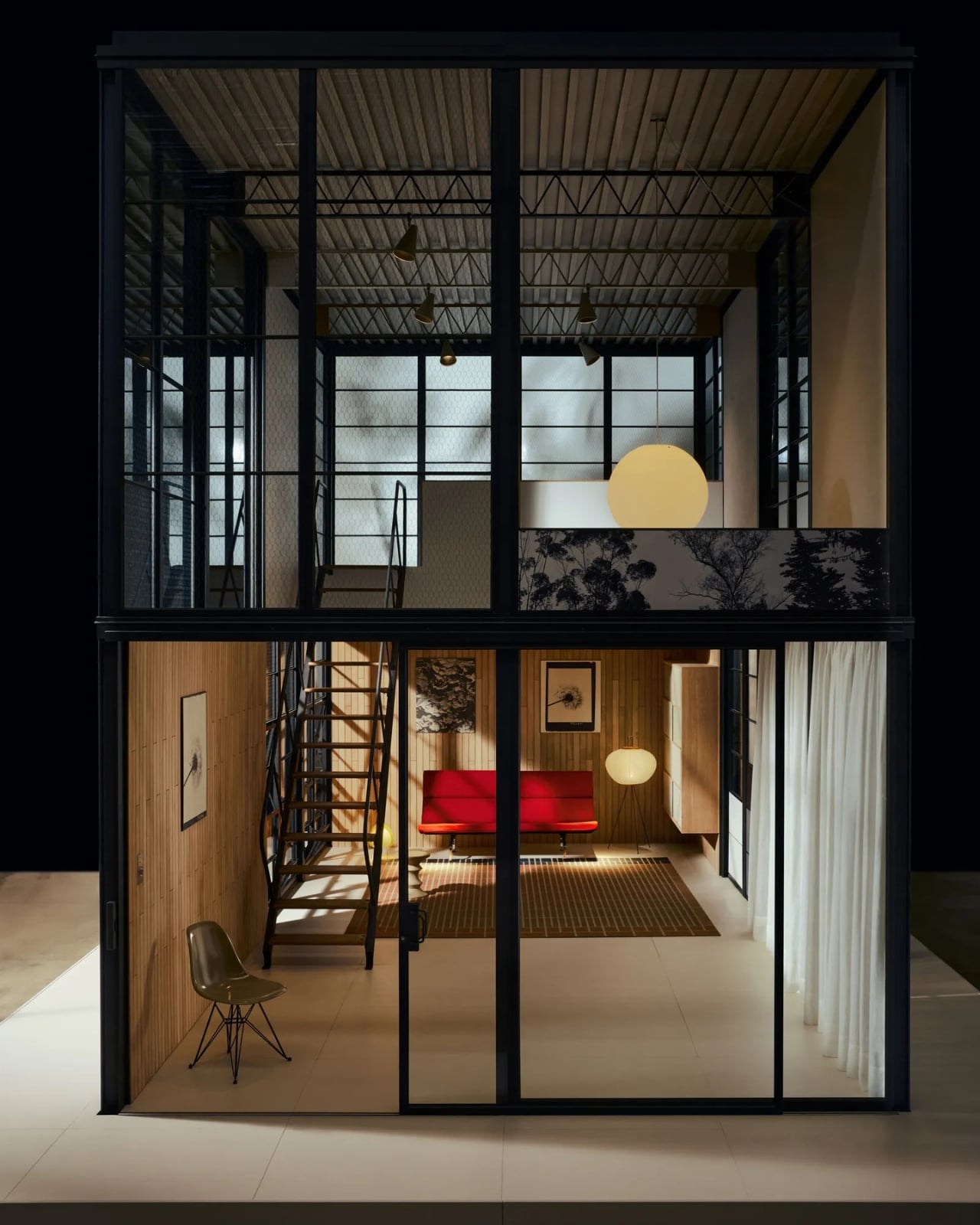
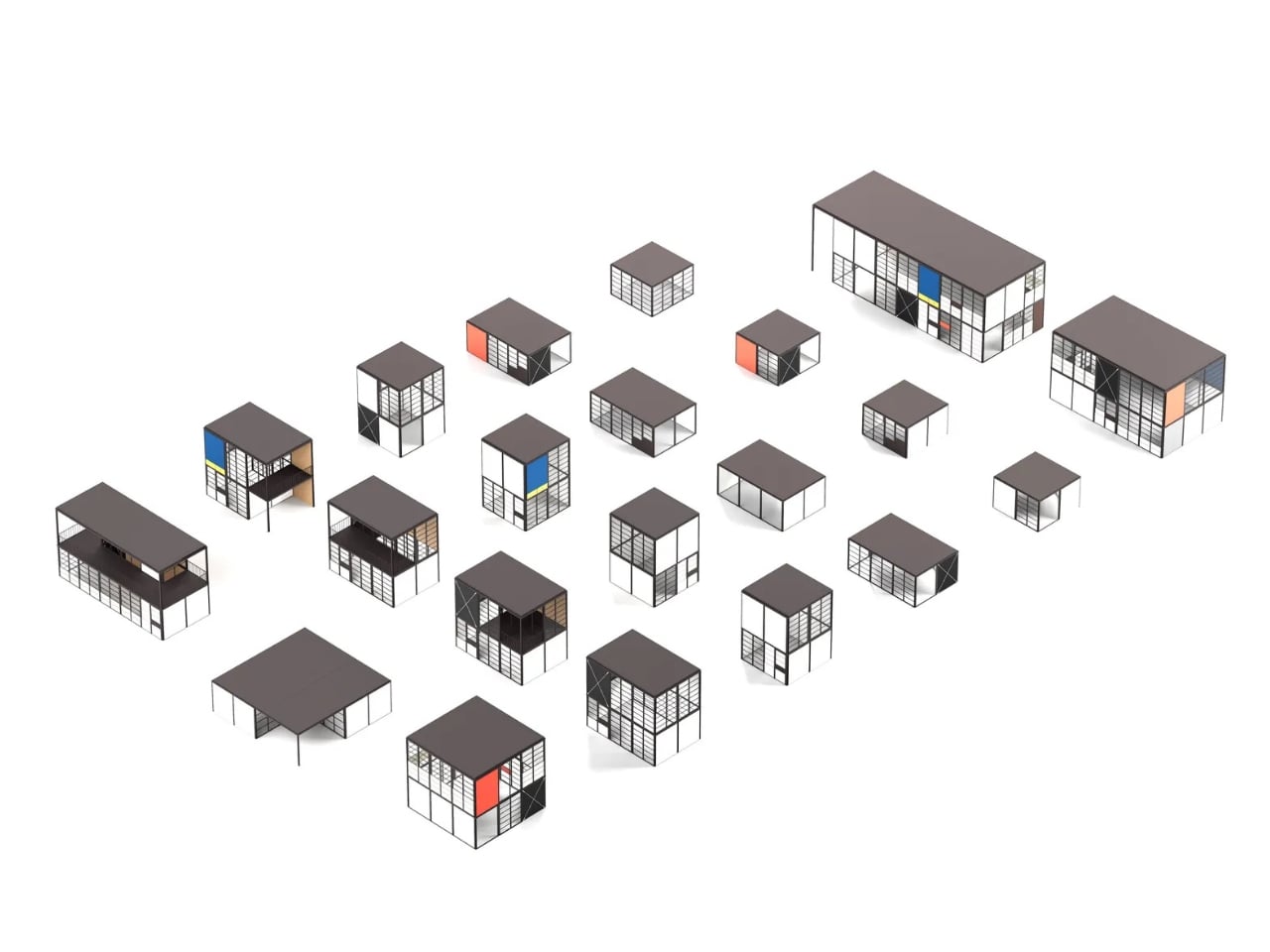
Nearly 80 years later, the Eames Office and Spanish manufacturer Kettal are finally making it happen. The Eames Pavilion System is a modular building kit that draws directly from those decades of unpublished drawings and ideas. Eckart Maise, former chief design officer at Vitra, spent three years digging through the Eames archives to surface material that had largely never been seen, including an unrealized California dome home and those flat-pack housing studies. What emerged is not a replica of Case Study #8, but something more faithful to its spirit: a system built on the same principles of efficiency, flexibility, and honest materiality.

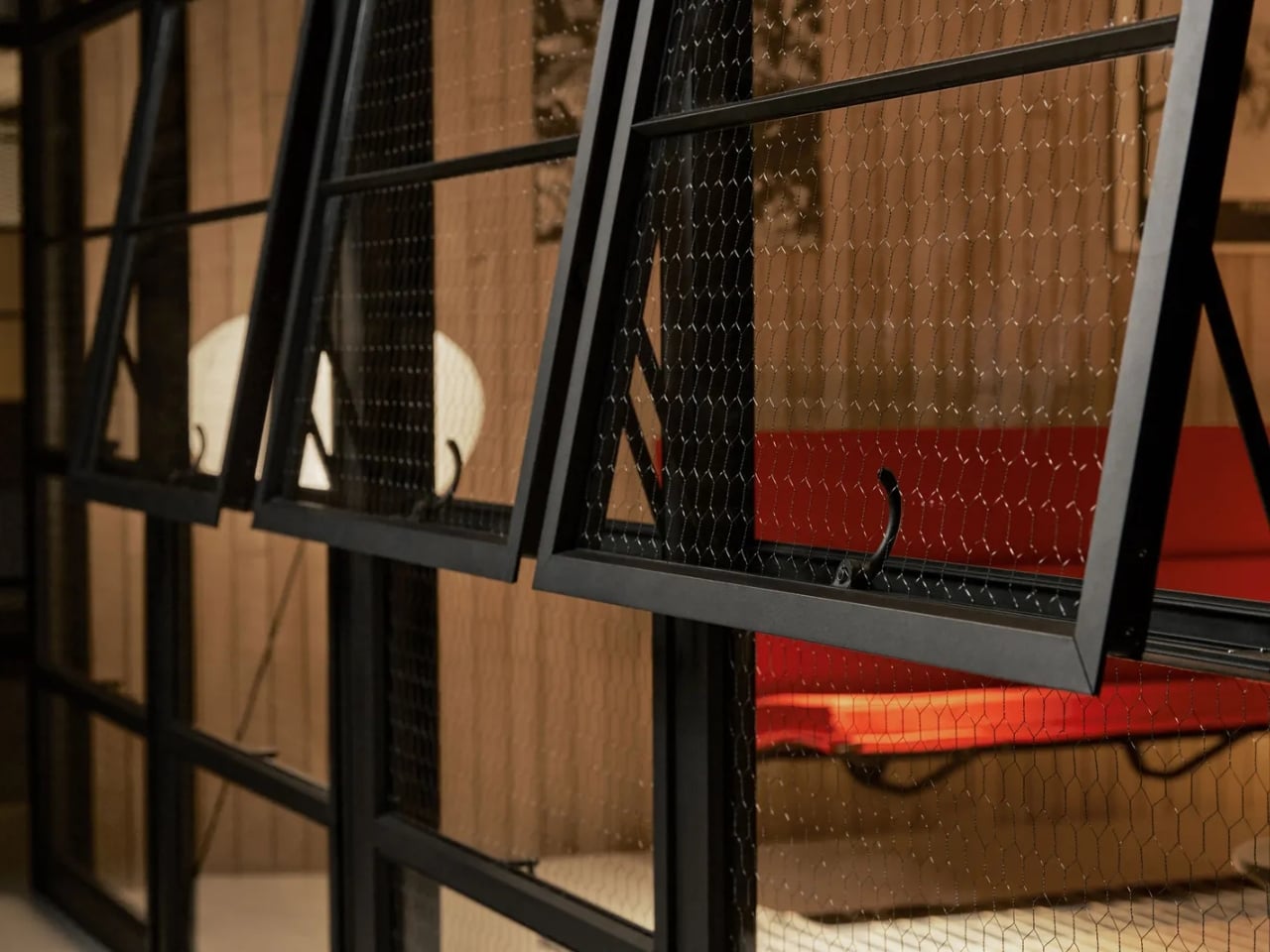
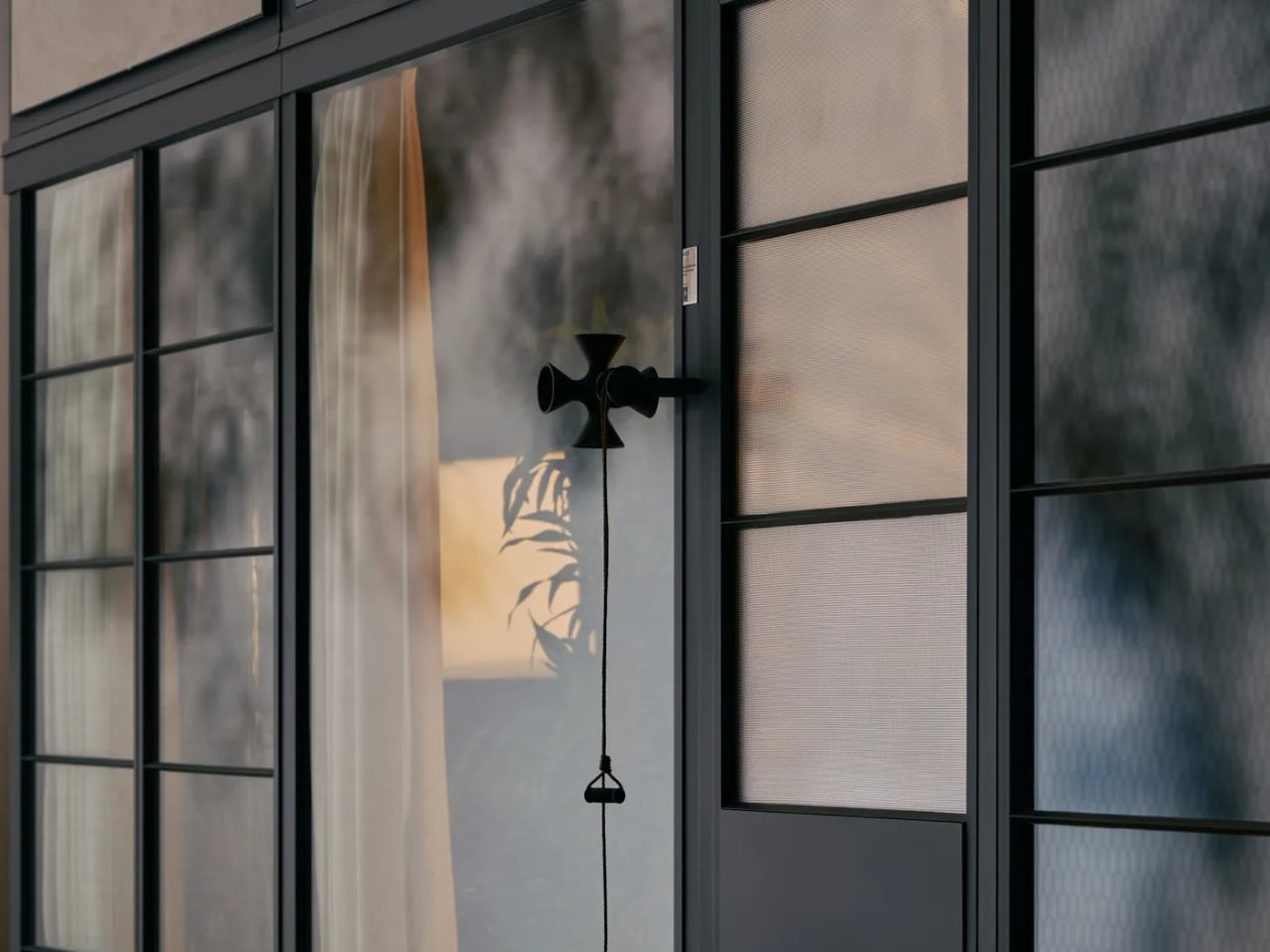
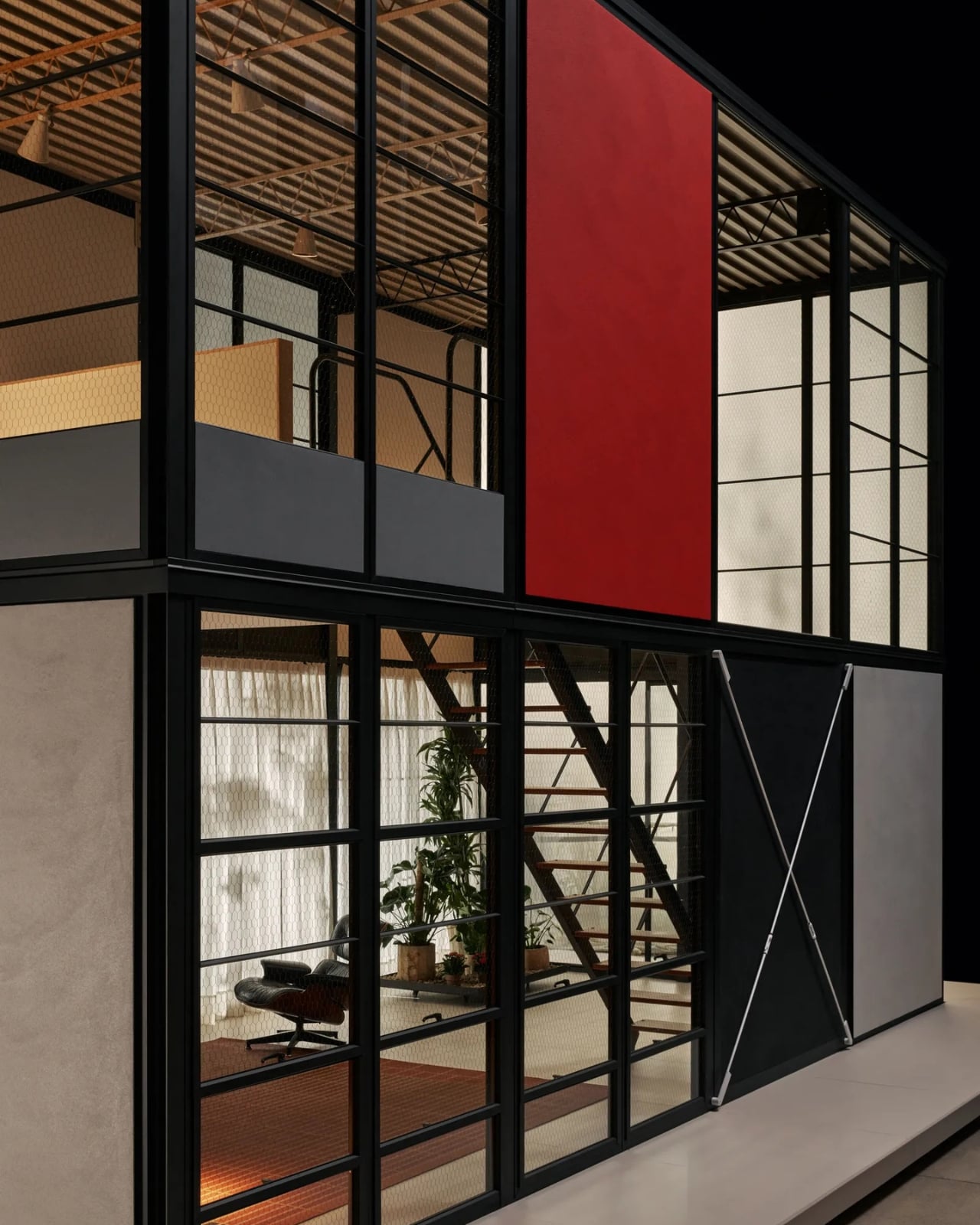
The structure is made from aluminum throughout, a significant upgrade from the original steel and considerably more weather-resistant. You get interchangeable roof types, triple-glazed windows, and wall panels that echo the bold primary colors Ray loved. The visual DNA is unmistakable. Zig-zag trusses, black-painted frame, chicken wire-reinforced glass. It is recognizably Eames without pretending to be a museum piece.

Pricing starts at around $325 per square foot. A 4-by-4-meter indoor pavilion begins at roughly €45,000 (about $52,000), and an outdoor version of the same size starts at €60,000. The double-height configuration that most closely resembles Case Study #8 comes in at €145,000. For a lot of people, that’s still a stretch. But compare it to what custom architecture typically costs, and it starts to read more like a genuine offer than a luxury souvenir.

The use cases are broad by design. A home recording studio, a backyard office, a guest pavilion, a poolside retreat. With enough modules assembled and stacked, a full two-story house is achievable. Kettal also factors in the support of a trained advisor, someone who makes sure the configuration you choose actually works for your specific site and climate conditions. The indoor version hits the market at the end of 2026, with the outdoor version following in 2027.

The Eames Pavilion System is making its debut at Milan Design Week 2026, as part of a Triennale di Milano exhibition called “The Eames Houses,” opening in April. Seeing it presented there feels appropriate. The Triennale has always been a place where design gets to ask bigger questions than just whether something looks good. The question this project raises is genuinely worth sitting with: what does it mean to actually democratize an icon, and not just sell the idea of one?

I think Charles and Ray would have approved of the answer Kettal and the Eames Office arrived at. Not a knockoff. Not a nostalgia play. A real building system, rooted in the same rigorous thinking that produced the original house, finally getting the chance to do what it was always supposed to do: show up wherever someone needs it.

The post The Eames House Was Always Meant to Be Yours first appeared on Yanko Design.
Apple M4 Ipad Air at $600 Targets Hybrid Use with 12GB Memory

Apple M4 Ipad Air at $600 Targets Hybrid Use with 12GB Memory Rear view of the aluminum M4 iPad Air highlighting camera placement and available color finishes.

The M4 iPad Air establishes itself as a benchmark in the mid-tier tablet category, offering a compelling mix of performance, affordability and versatility. Powered by the advanced M4 chip and equipped with 12GB of memory, it delivers a substantial performance upgrade over its predecessor, the M3 iPad Air. Designed as a hybrid device, it bridges […]

The post Apple M4 Ipad Air at $600 Targets Hybrid Use with 12GB Memory appeared first on Geeky Gadgets.

Posted in Uncategorized

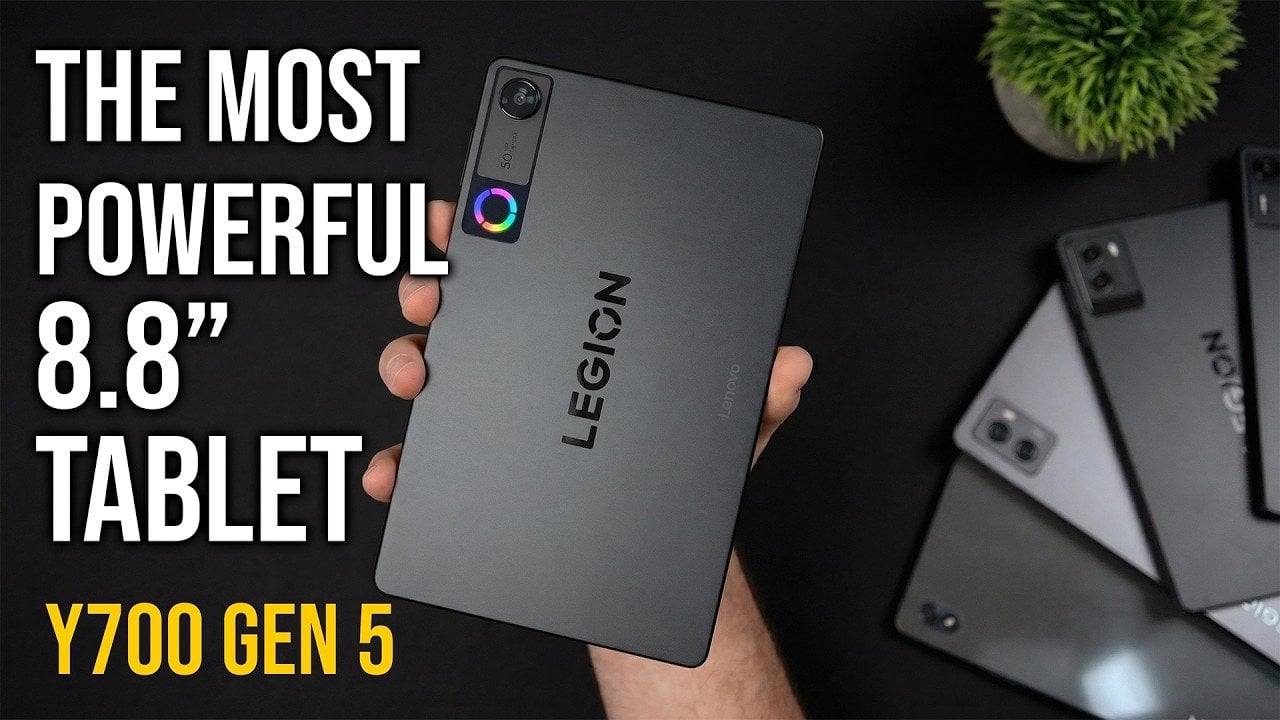
Why Lenovo’s 8.8-Inch Tablet is Secretly a Portable PC Gaming Rig

Why Lenovo’s 8.8-Inch Tablet is Secretly a Portable PC Gaming Rig Game Assistant panel on Legion Y700 Gen 5 with FPS counter, key mapping, and performance modes.

The Lenovo Legion Y700 Gen 5 is an 8.8-inch Android tablet designed with both performance and versatility in mind. According to ETA Prime, it features the Snapdragon 8 Elite Gen 5 processor, which delivers efficient multitasking and reliable performance for demanding applications. The tablet’s display includes a 165Hz refresh rate, Dolby Vision support and a […]

The post Why Lenovo’s 8.8-Inch Tablet is Secretly a Portable PC Gaming Rig appeared first on Geeky Gadgets.

Posted in Uncategorized

Apple’s 8GB Mystery: What’s Really Inside the iOS 26.5 Beta 1?

Apple’s 8GB Mystery: What’s Really Inside the iOS 26.5 Beta 1? Featured image for iOS 26.5 - This is it !

Apple has officially launched the first beta of iOS 26.5, marking the final significant update to iOS 26 before the highly anticipated release of iOS 27. While this update does not introduce dramatic overhauls, it focuses on incremental improvements that enhance usability, refine existing features, and prepare users for the next generation of Apple’s mobile […]

The post Apple’s 8GB Mystery: What’s Really Inside the iOS 26.5 Beta 1? appeared first on Geeky Gadgets.

Posted in Uncategorized