A Backyard Greenhouse That Moonlights as an Outdoor Living Room

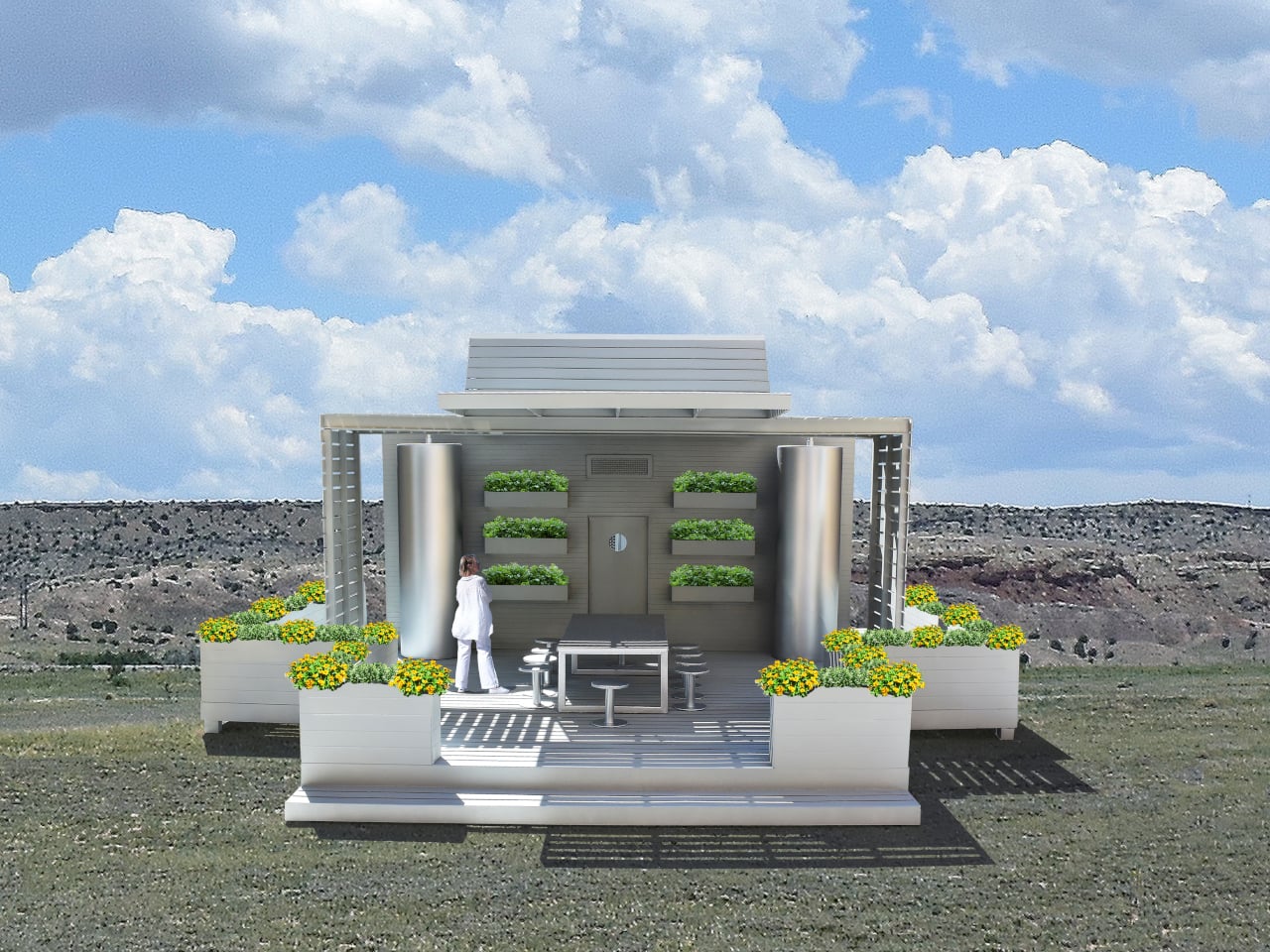
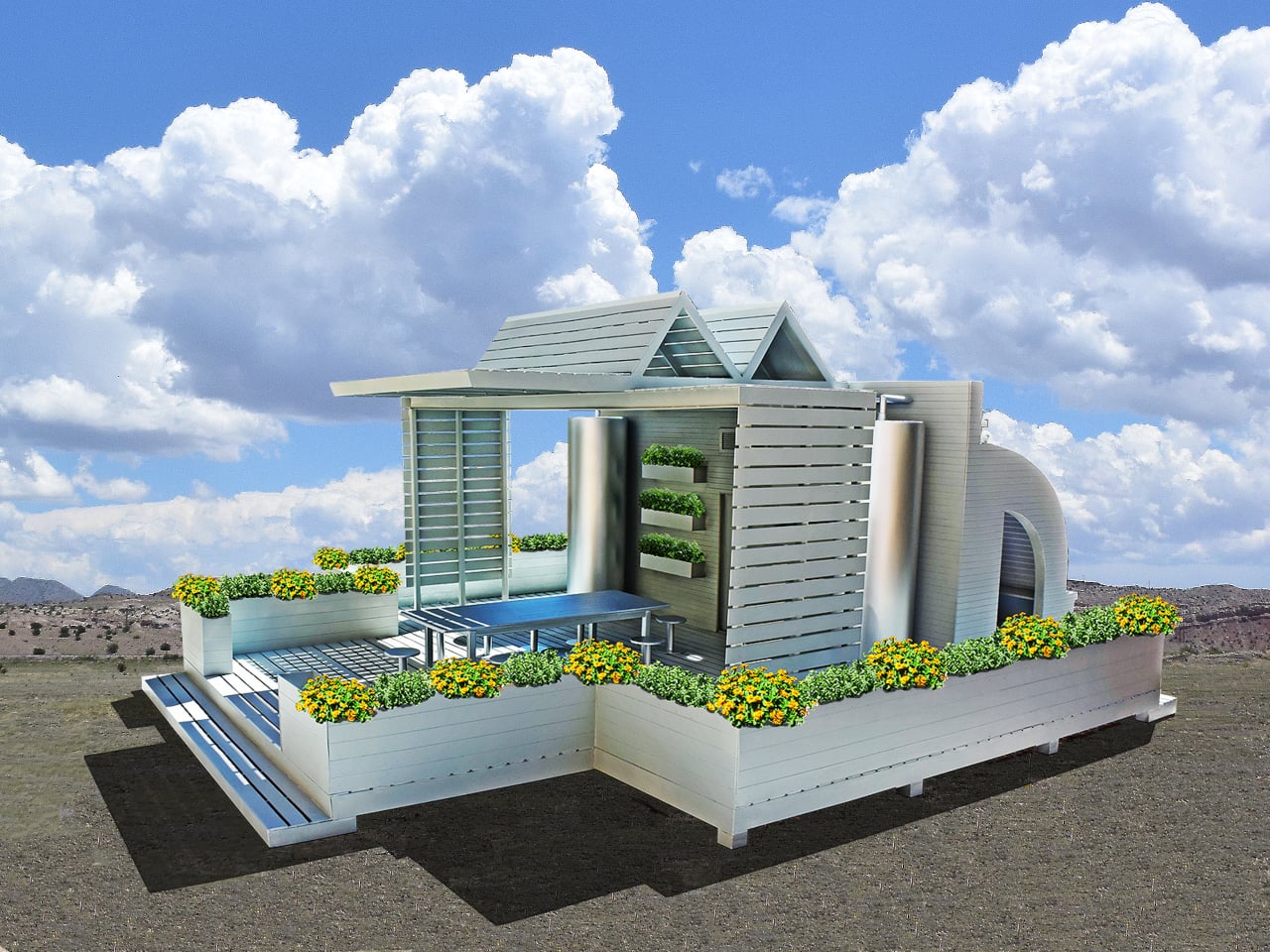
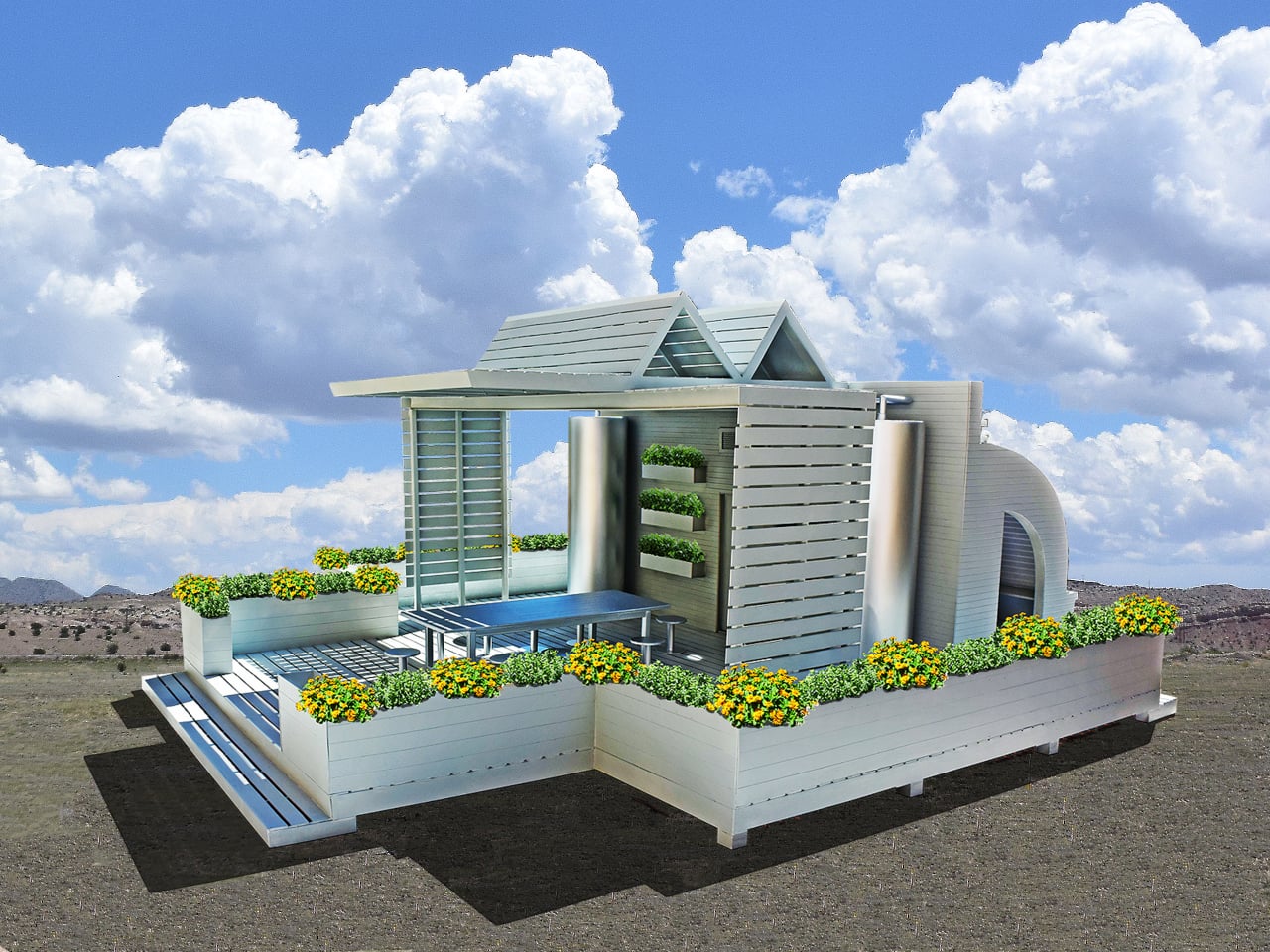
Most backyard greenhouses ask you to choose a side. Either you’re hunched over seedlings in a cramped glass box, or you’re lounging on a deck somewhere else entirely, disconnected from whatever you just planted. The Eco-Oasis Pavilion concept refuses that split. It’s a prefabricated wood structure meant to sit near the main house, pairing a working greenhouse with a shaded deck built right alongside it, so growing food and doing nothing at all finally share the same address.

The tunnel-shaped greenhouse sits at the center of the design, built from curved sliding panels that swing open like ribs along its length. Clear glazed sections let sunlight flood the plants inside, while a second layer of shading panels slides over the same tracks whenever the sun turns hostile. Both layers tuck away into storage bays on either side when not needed, keeping the structure’s profile clean rather than cluttered with hardware.

Designer: Michael Jantzen
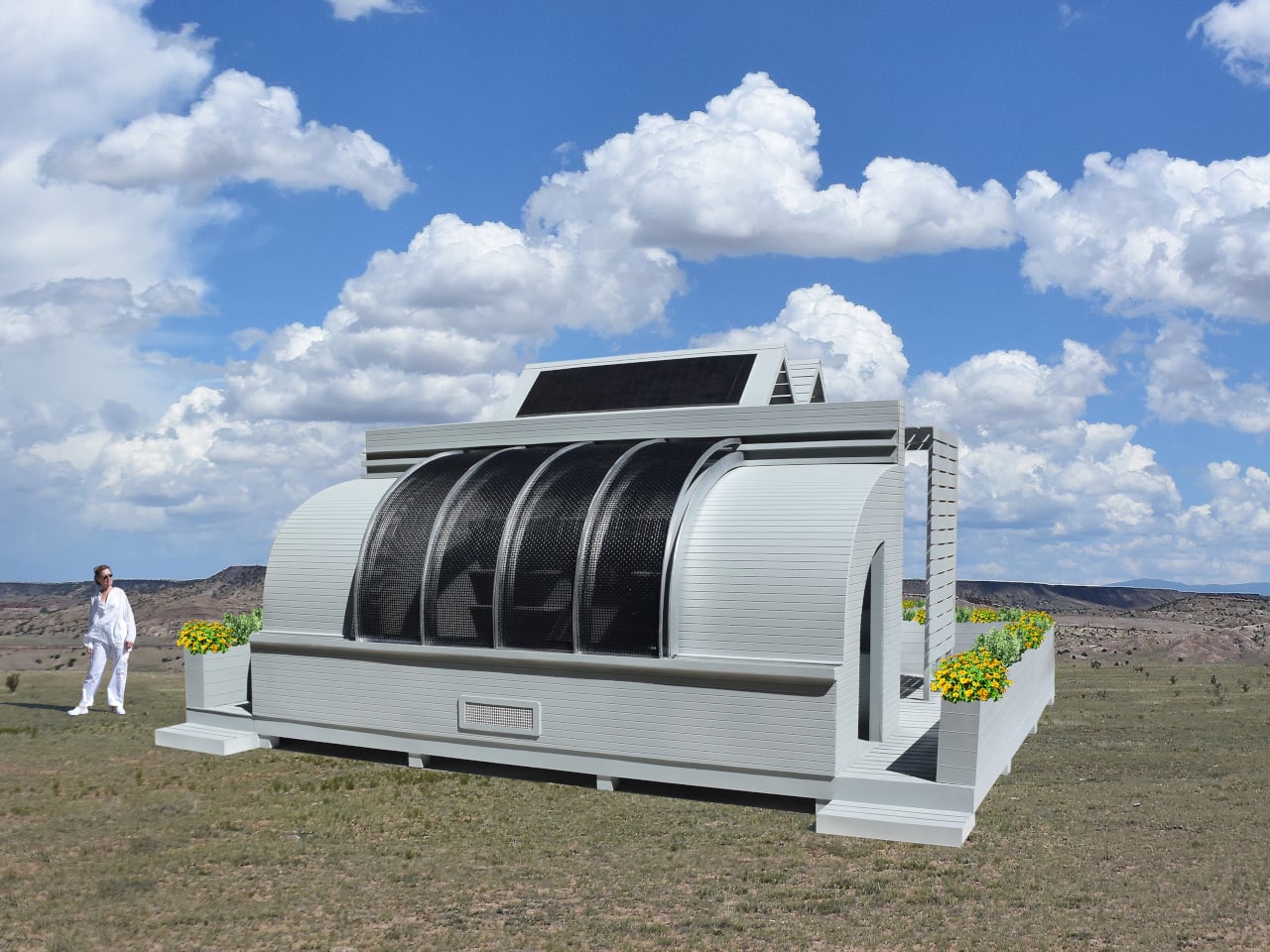
Growing food outdoors in variable weather has always meant chasing the right amount of light without cooking whatever you planted. This design solves that with mirrored interior walls on the east and west sides, bouncing low-angle morning and evening sun deeper into the greenhouse instead of letting it slip past the crop shelves. Water-filled tubes lining the north wall store solar heat during the day and release it after dark, so the greenhouse never fully goes cold overnight.
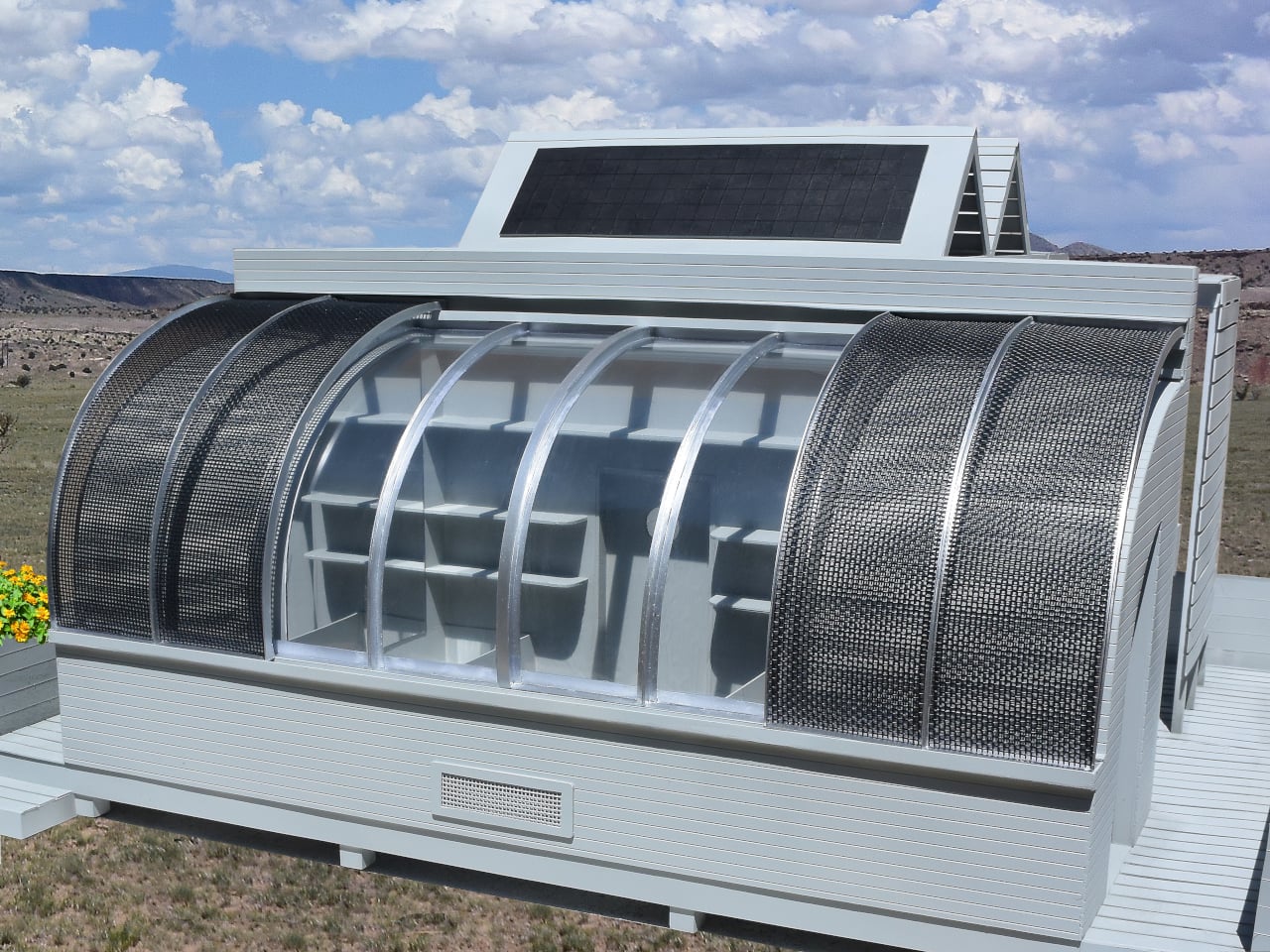
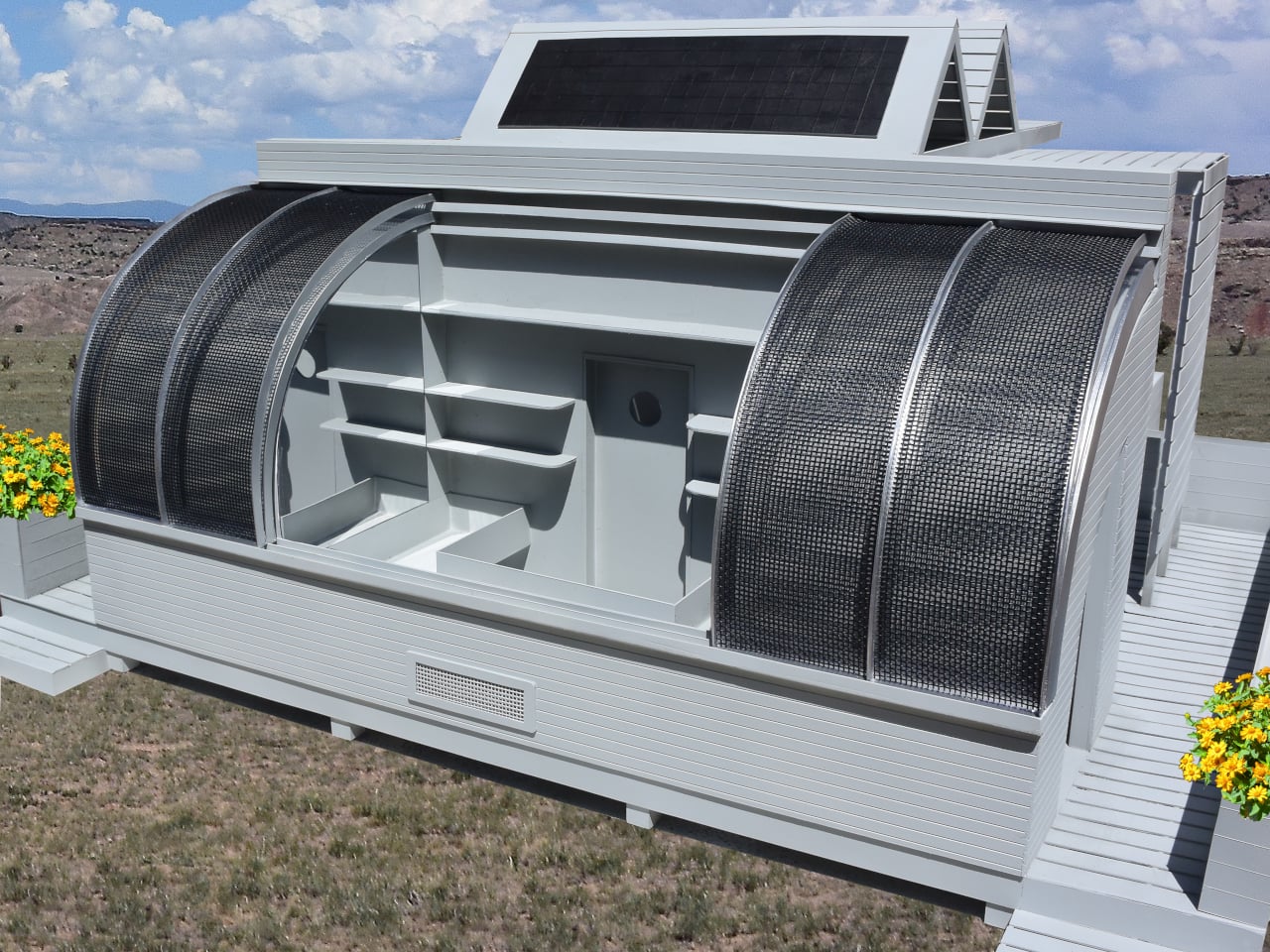
Ventilation follows the same passive logic. Sliding glazed panels, a north-facing entry door, and built-in exhaust vents work together to keep air moving through the greenhouse without a single fan running. On a hot afternoon, opening a few panels does the job that mechanical cooling handles in most other backyard structures, cutting the energy bill down to whatever the rooftop solar panel already covers.
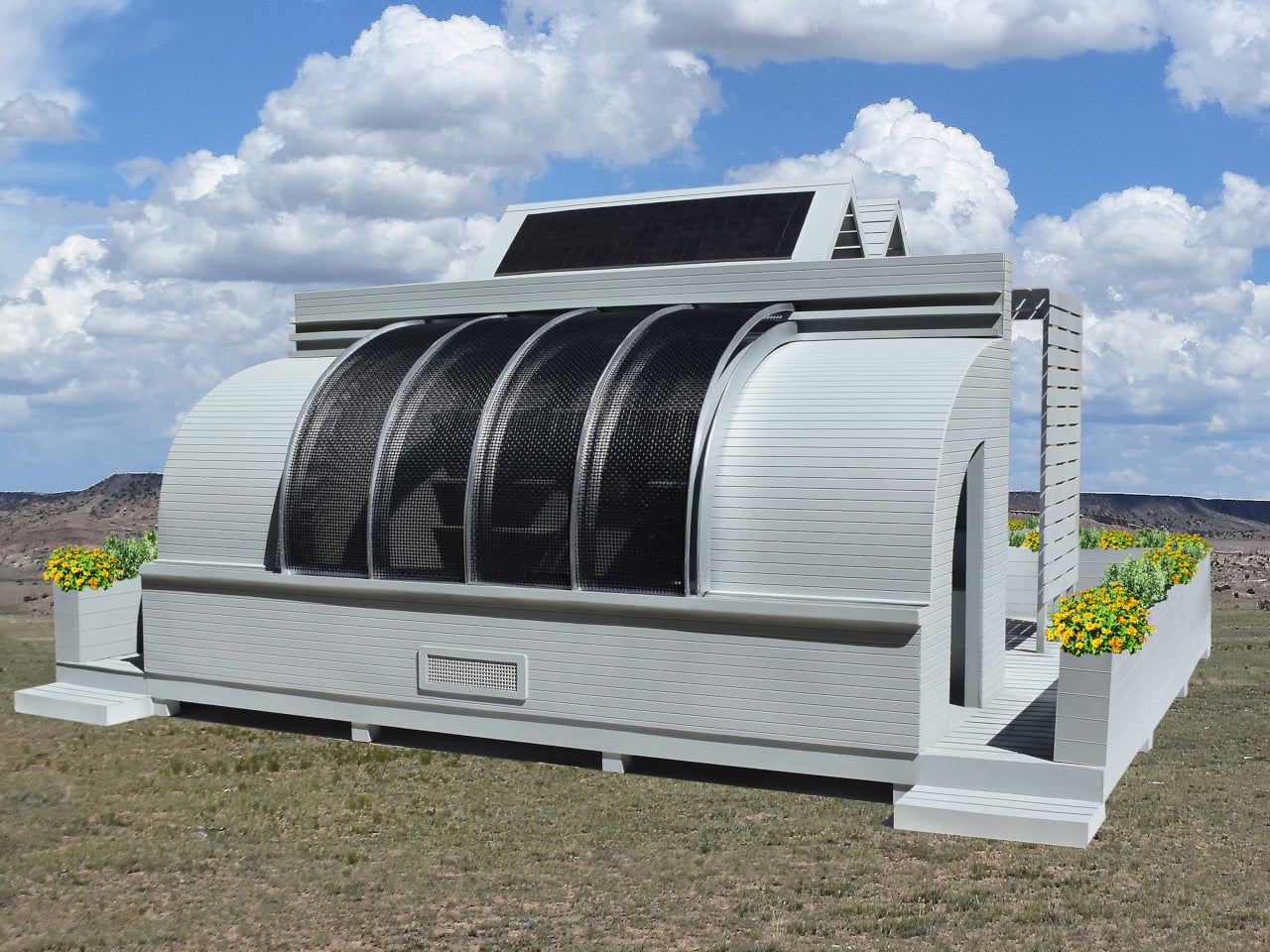
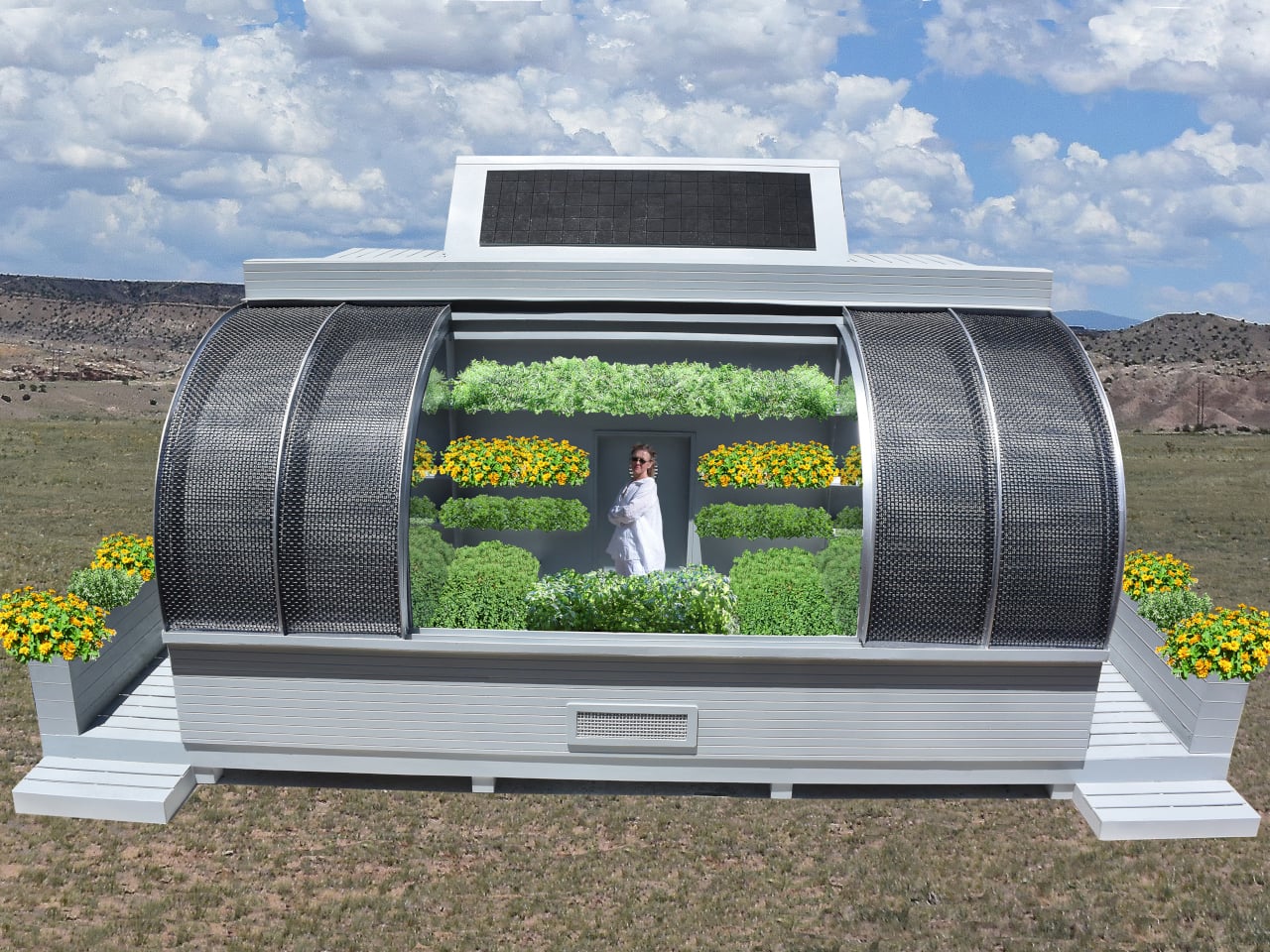
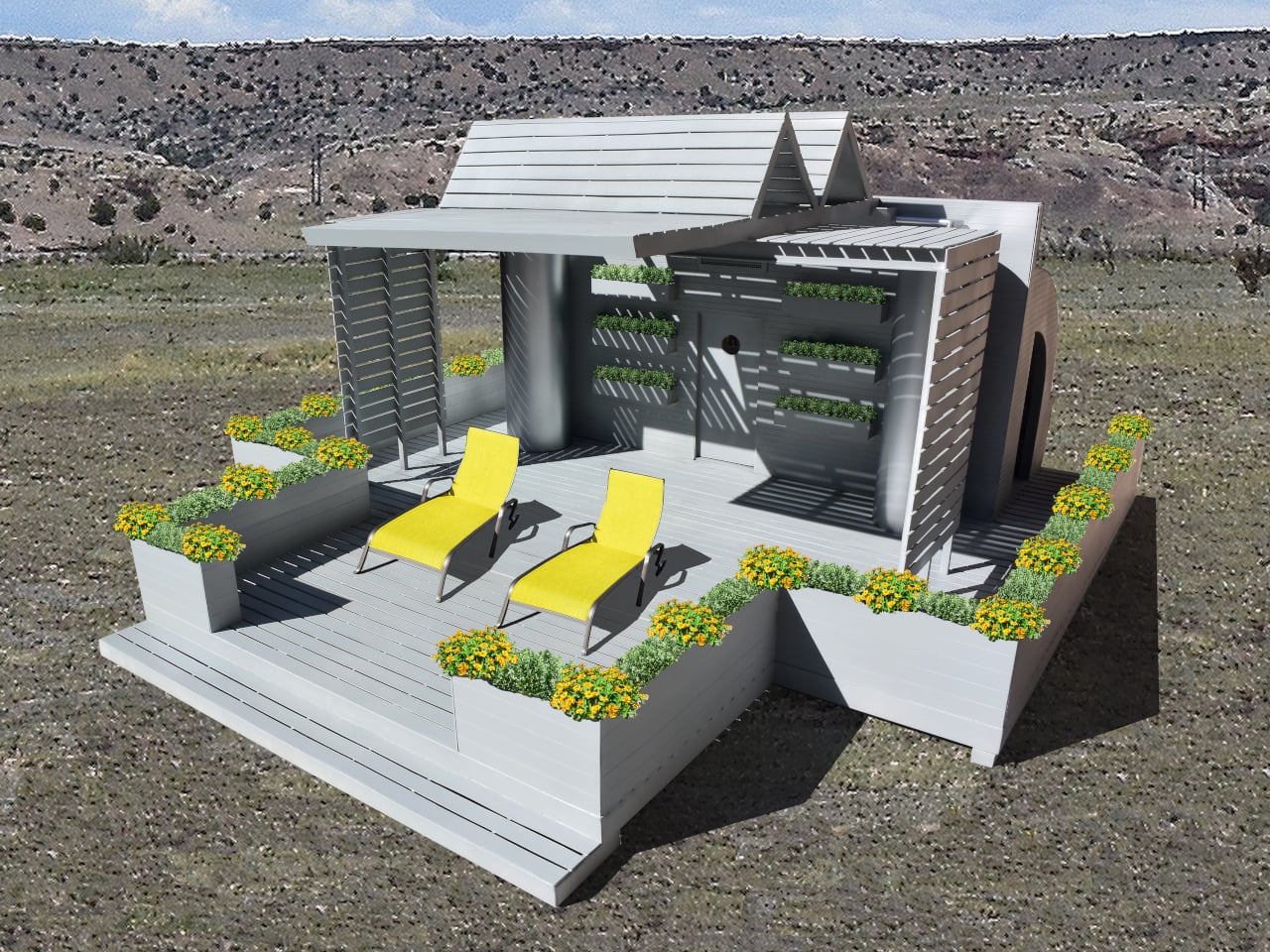
That solar panel does double duty on the roof, generating electricity for the pavilion while its angled surface also funnels rainwater into two steel tanks mounted on the deck. Instead of running a hose out to water the garden, the structure quietly stockpiles its own supply overhead every time it rains. Planting containers wrap around the greenhouse’s north wall and trace the pavilion’s perimeter, turning what would be empty siding into more growing space.
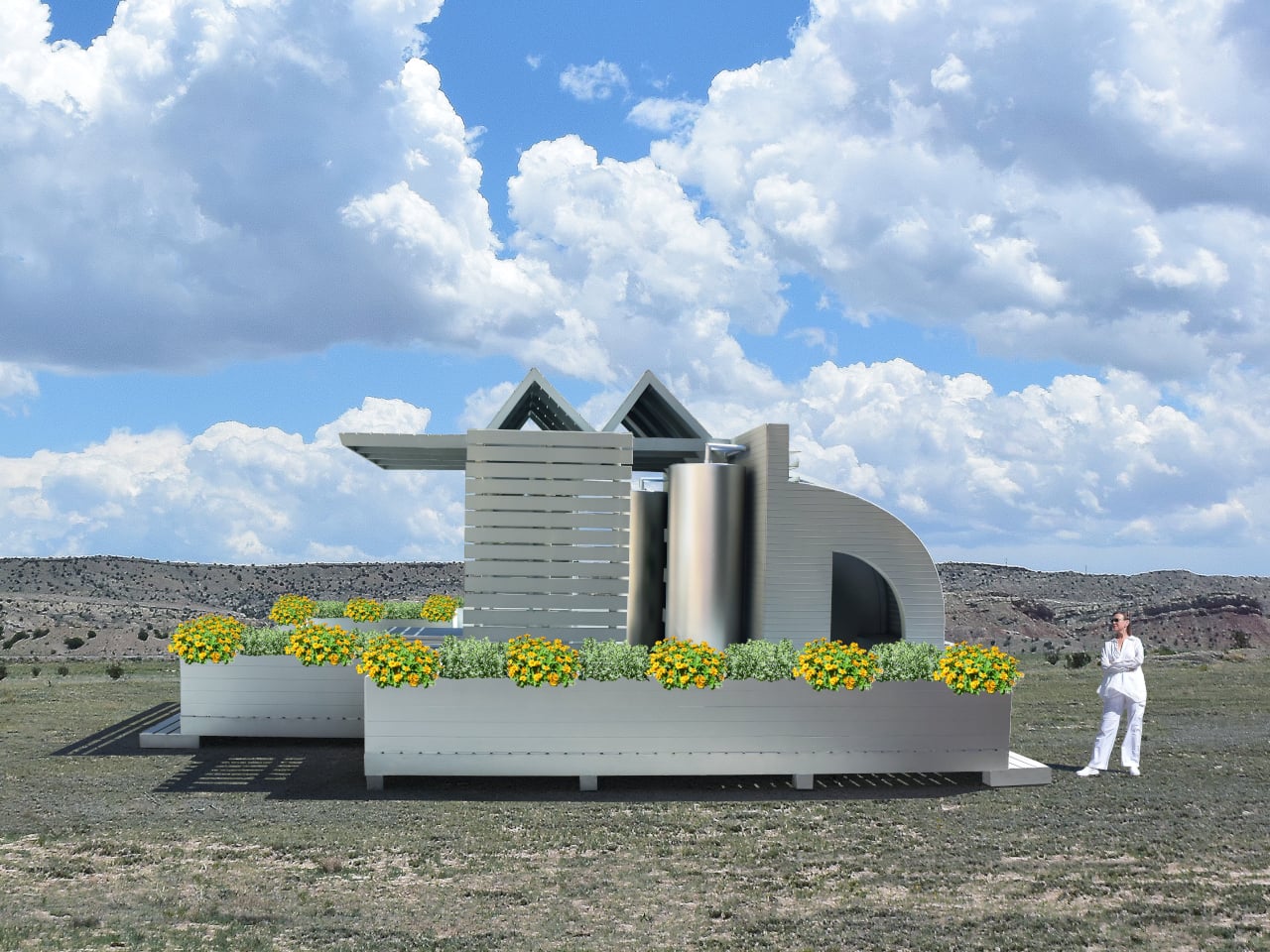
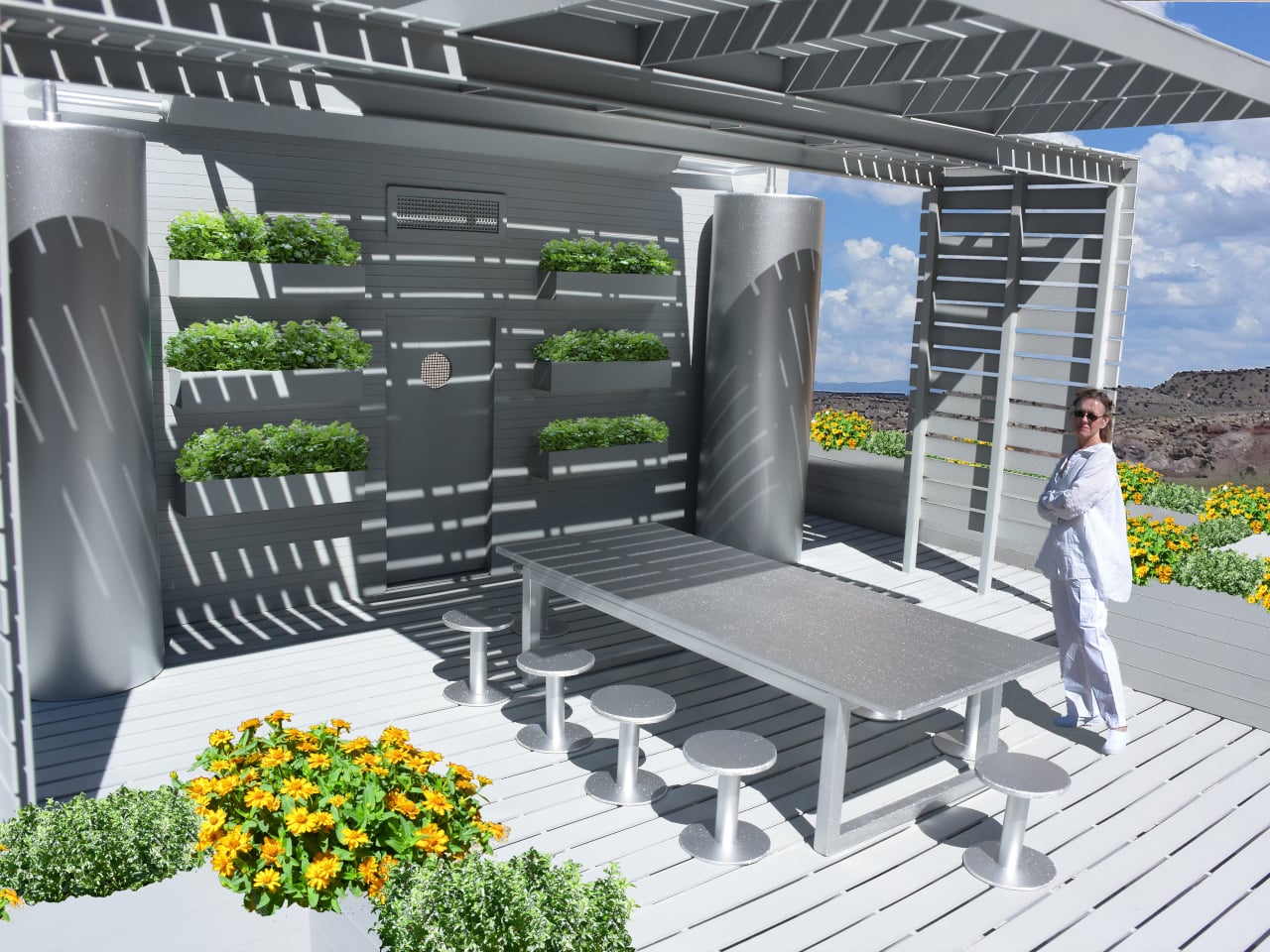
Step outside the glazing and the deck takes over as the payoff for all that food production. A long table, a set of seats, and a couple of lounge chairs give the space a reason to linger, not just pass through on the way to check on tomatoes. Flowering planters line the deck’s edges, blurring the line between the ornamental garden and the food-growing structure a few feet away.
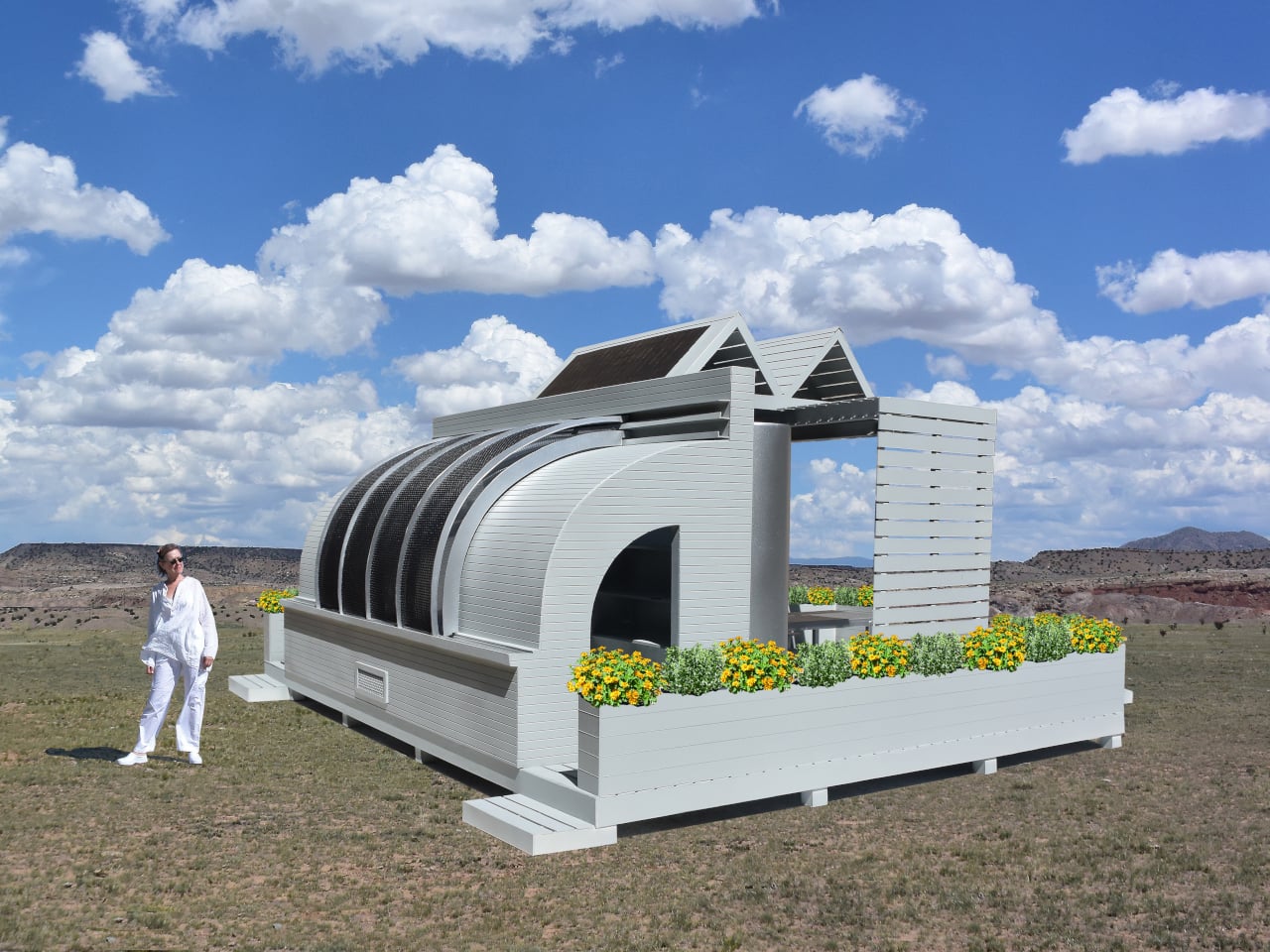
What makes this concept worth paying attention to is how little it separates function from comfort. The greenhouse isn’t hidden behind a fence, and the deck isn’t disconnected from the plants that make it worth sitting there in the first place. Everything runs on sunlight and rainwater already falling on the roof, proving a backyard structure can feed a household and still look like somewhere you’d actually want to spend an evening.
The post A Backyard Greenhouse That Moonlights as an Outdoor Living Room first appeared on Yanko Design.


HKC debuts a 48.3-inch 4K curved monitor that splits into two or three sections for power users

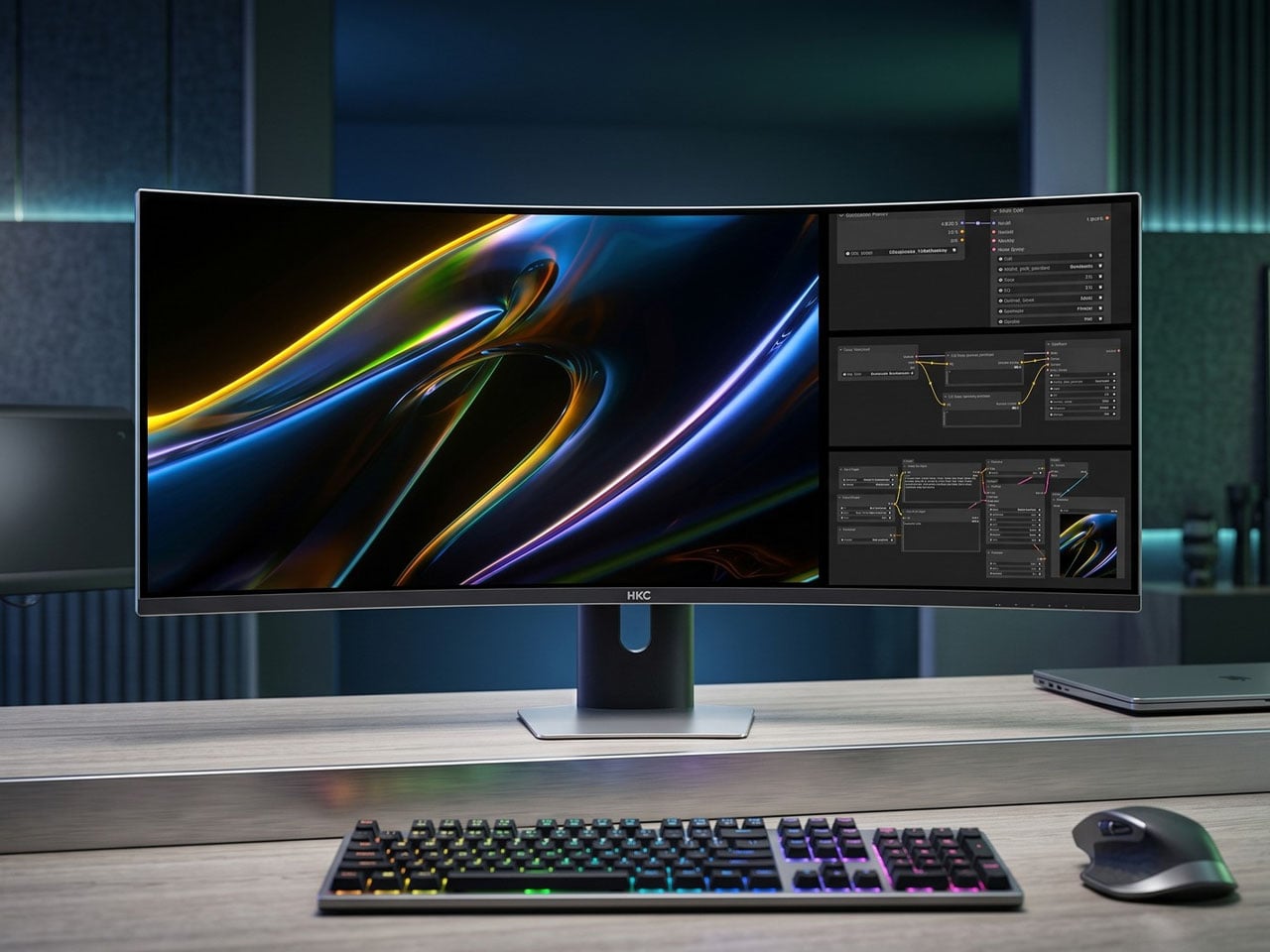
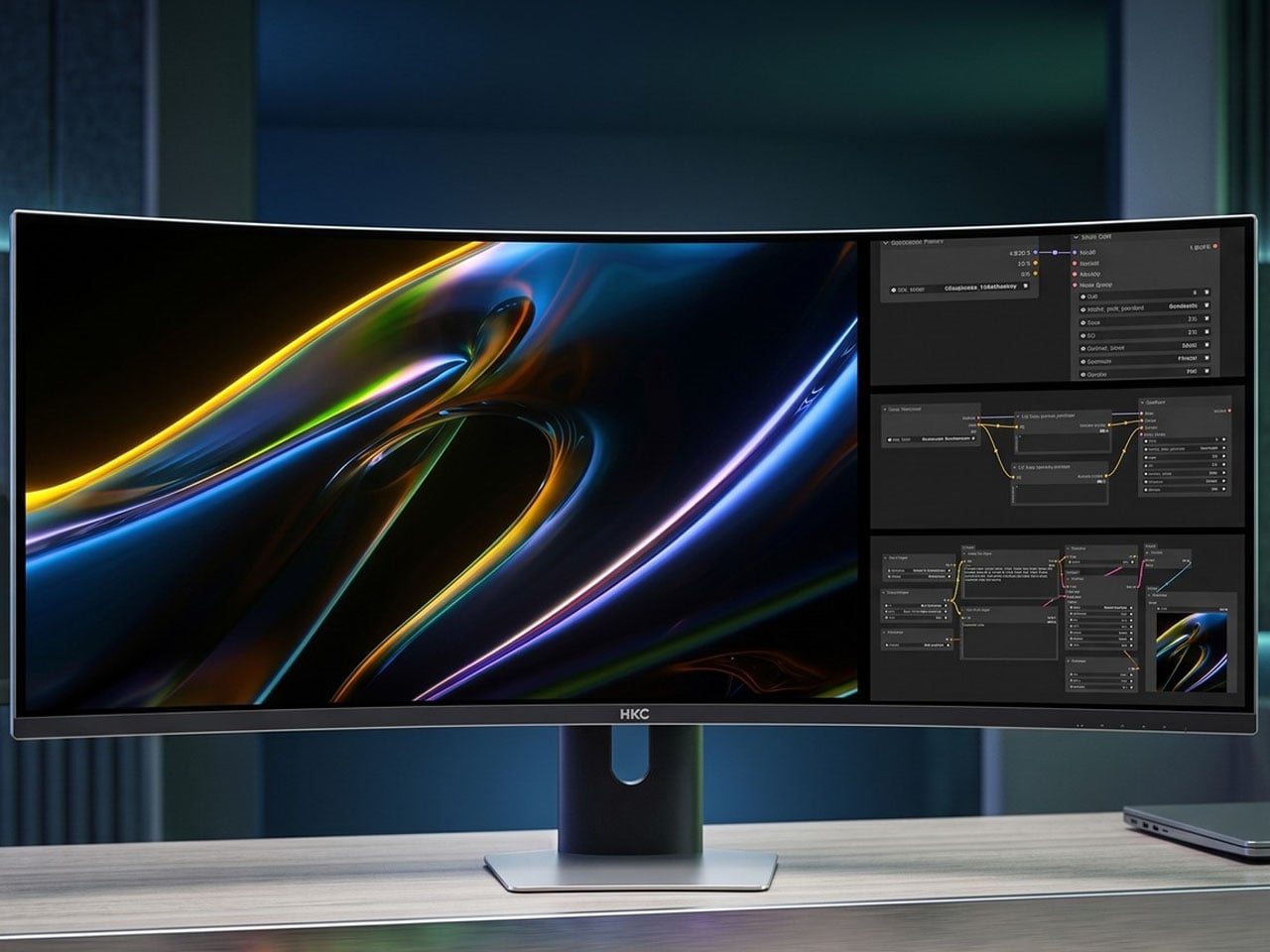
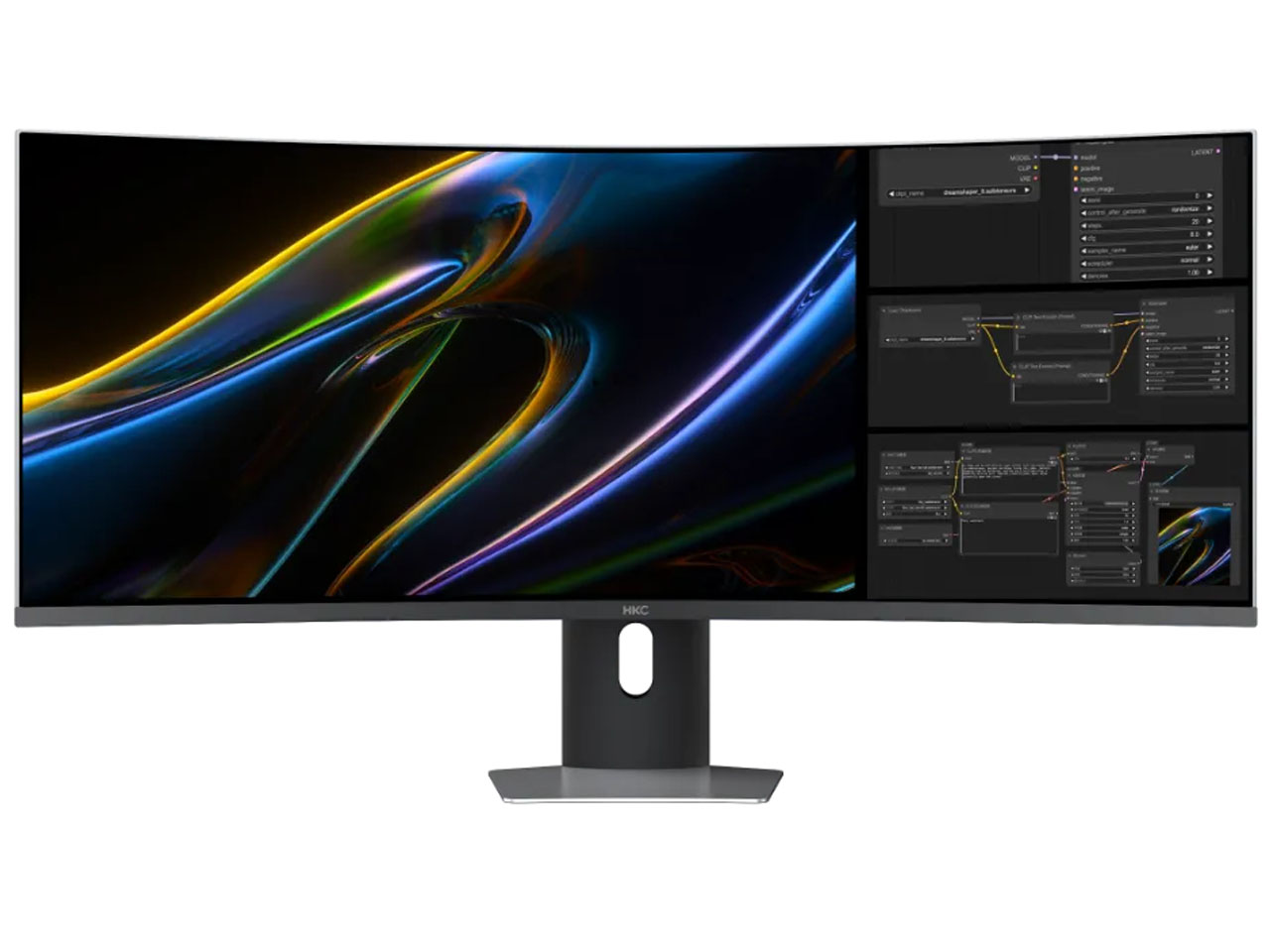
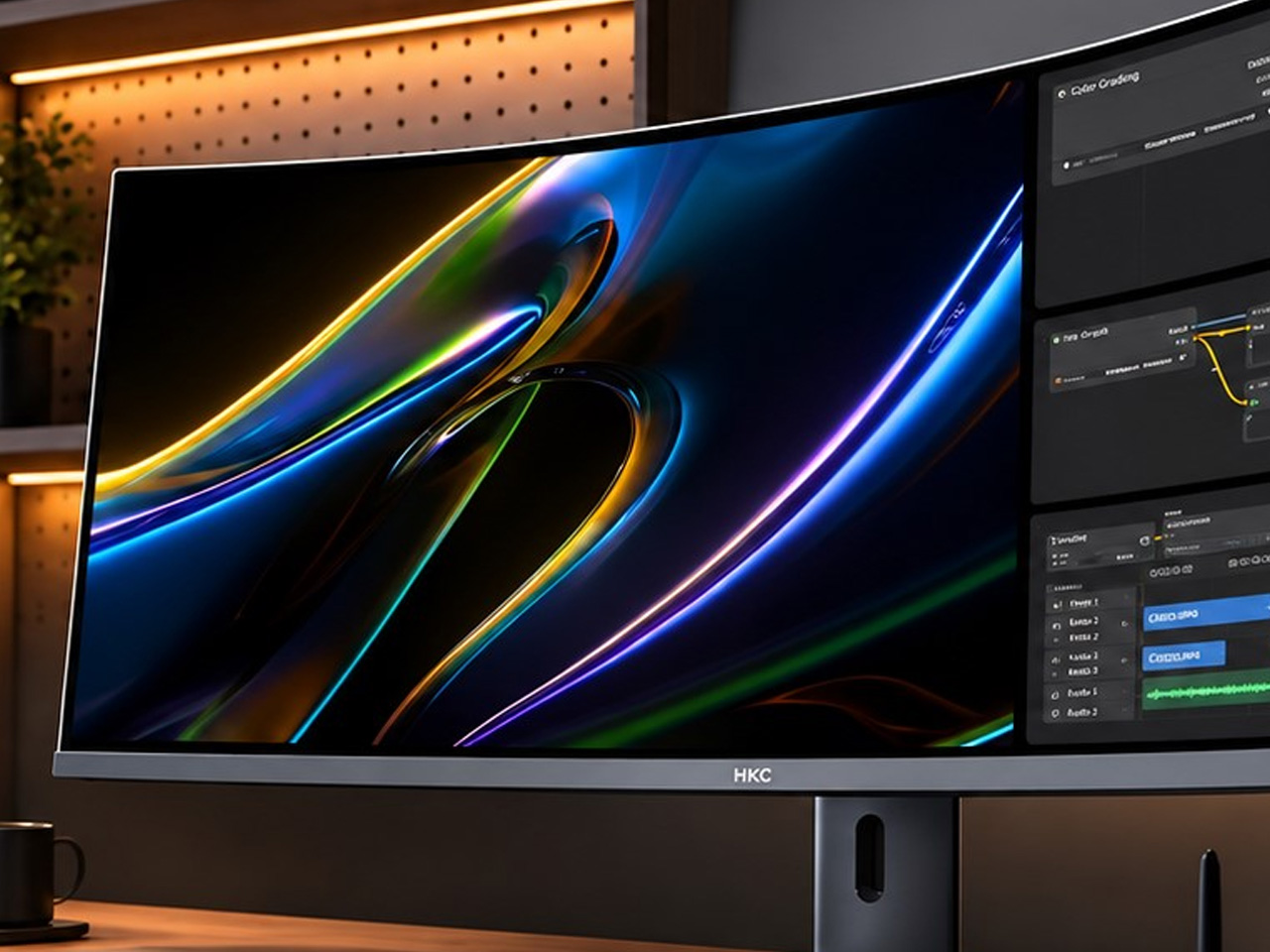
There are no limits as to how wide you can go with a desktop monitor, especially for power users and pro gamers. You can have a 21:9 aspect ratio screen or even a crazy 32:9 setup. HKC wants to push the aspect ratio wide, but between these two extremes, at precisely 24:9. They’ve just revealed the Tianqi 43H180C ultra-wide curved display, primarily targeted at gamers, with a 180 Hz peak refresh rate.

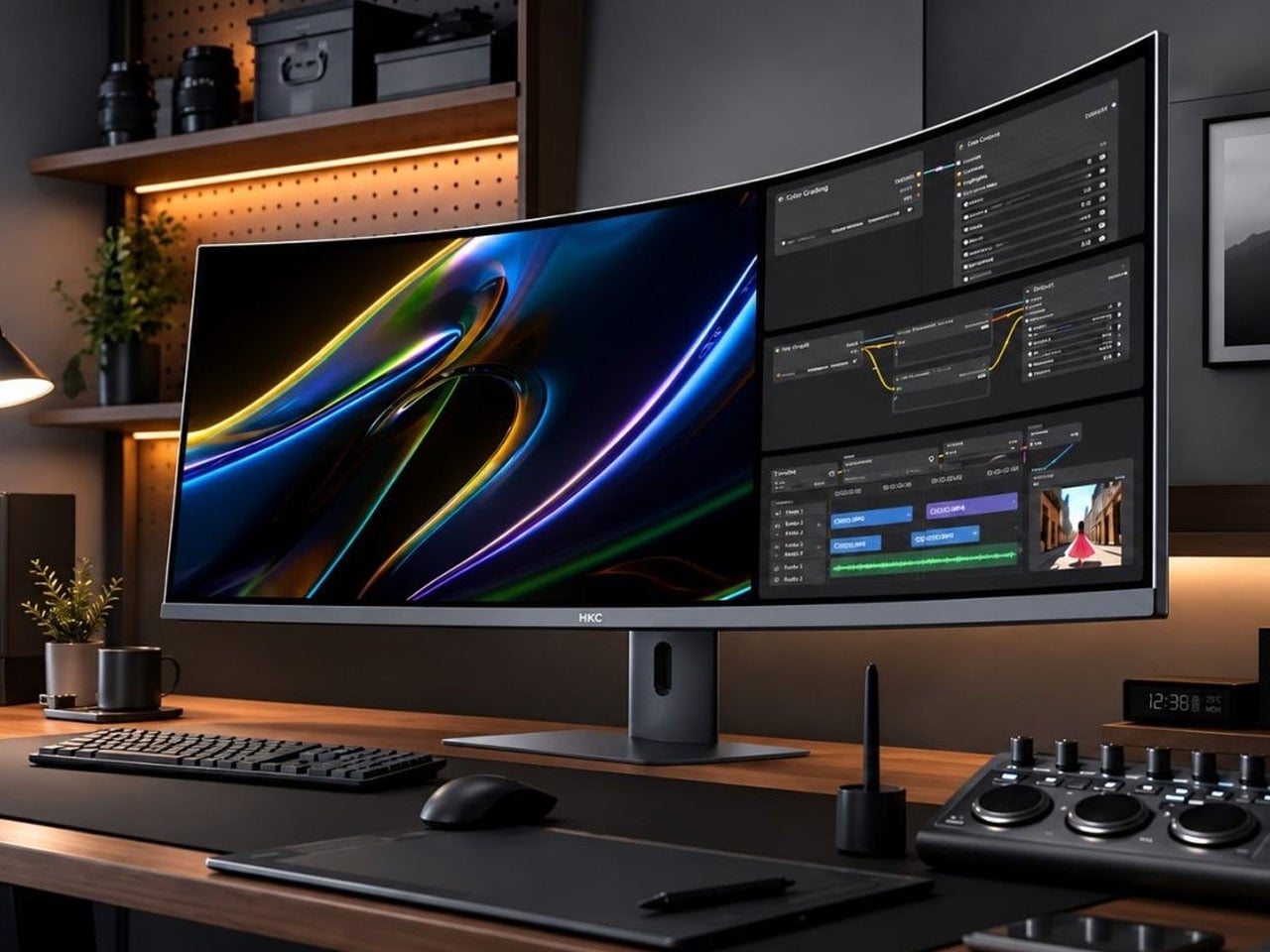
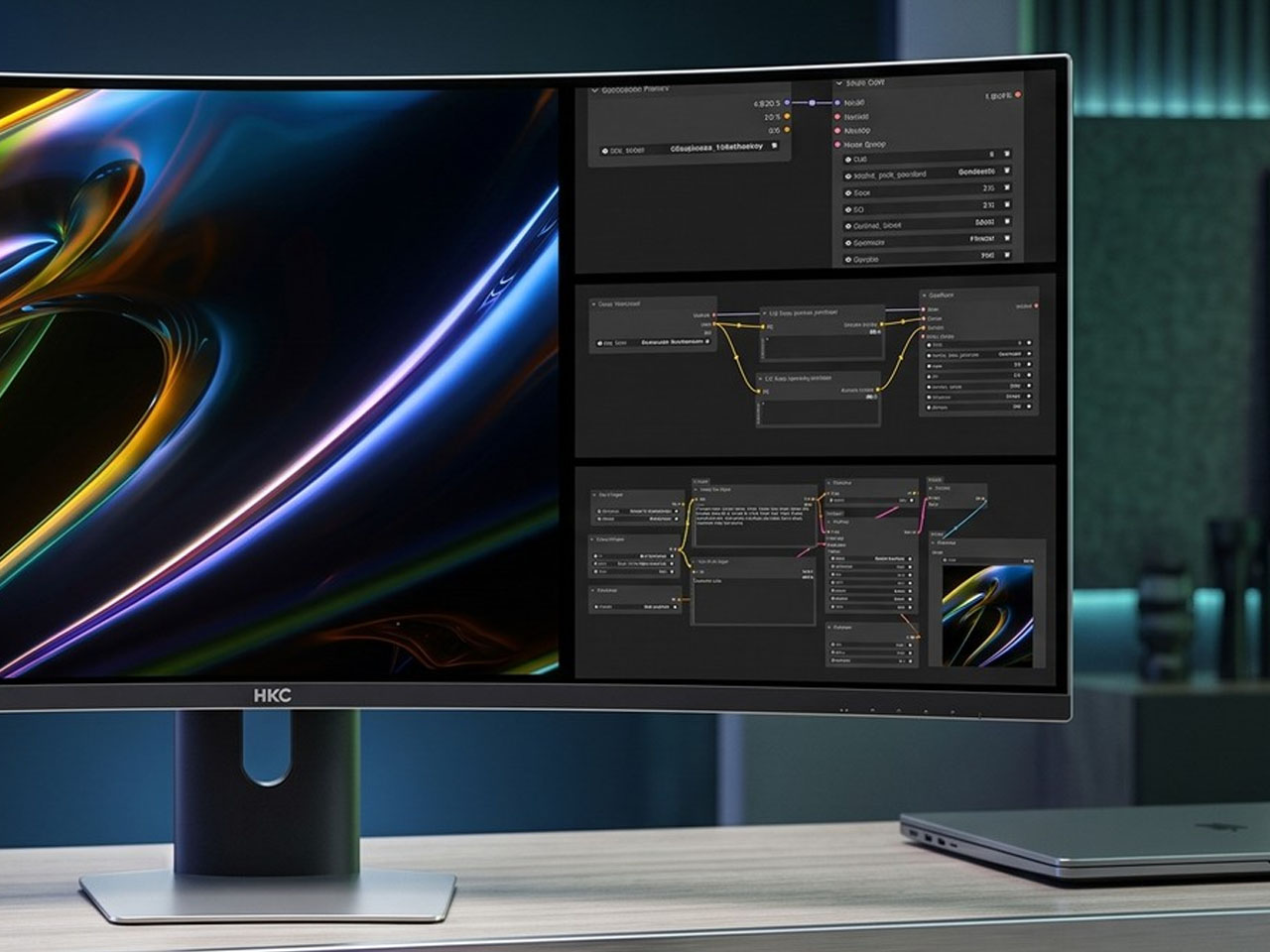
The panel is 43.8 inches, and with that aspect ratio, it is equivalent to a 4K monitor with the 5,760 x 2,160 resolution. Even better, the big canvas can be split into a 4K zone with 3840×2160 resolution and a 1920×2160 area. This gives power users the freedom to use the latter for multitasking needs and displaying code, timelines, chat windows, or gameplay vitals. Even with this split area, the main area is still wide enough for most tasks.

Designer: HKC

The Chinese company is not new to designing such crazy monitors, as they showcased an 83.4-inch curved 12K Shield at Computex 2026. That one, however, is only for a handful of crazy content creators. For most, the Titaqi ultra-wide monitor will be more than enough screen space. For times when you don’t need such a wide screen setup, the monitor can be split into three 1920×2160 zones, virtually giving you a three-screen setup in one. If you are using a laptop alongside, make that four.

Compared to other 48.3-inch monitors by Dell, Acer, Sceptre, or INNOCN, this one has a far superior resolution in single-use mode. That makes it a one-of-a-kind desktop monitor. All said, the mega resolution should bring every detail to life, no matter if you are a content creator, gamer, or simply want to enjoy your movie nights. This panel uses Mini LED backlighting technology with 99 percent DCI-P3 color region coverage. Noticeably, the monitor’s 180 refresh rate capability should be a handful for even the most powerful CPUs, rendering the details in 4K resolution. Natively rendering games at even 100 FPS at 4K resolution puts a lot of load on the innards, so this will require a crazy CPU to run at full steam for a length of time.

On the connectivity front, the ultra-wide monitor comes with a DP 2.1 interface, a 96W USB Type-C PD port, and KVM multi-device control. For now, other details about the monitor are still in the shadows, but we should have more sooner rather than later. The pricing and availability are also shrouded in mystery for now, so we’ll keep a close eye on the developments as they happen.

The post HKC debuts a 48.3-inch 4K curved monitor that splits into two or three sections for power users first appeared on Yanko Design.
The Traffic Cone Charger That Actually Keeps You Off Your Phone

Whenever I need to charge my smartphone, I still can’t resist using it, even though I know it will juice up faster if I just leave it alone. Charging time should also be the perfect excuse to stay away from my screen, but since my phone is still sitting right there, easily within reach, I end up answering messages, checking emails, or doom-scrolling through social media anyway. So what if my phone’s charger were the very tool that not only charged it up, but also nudged me to detox from my device and the digital world altogether?

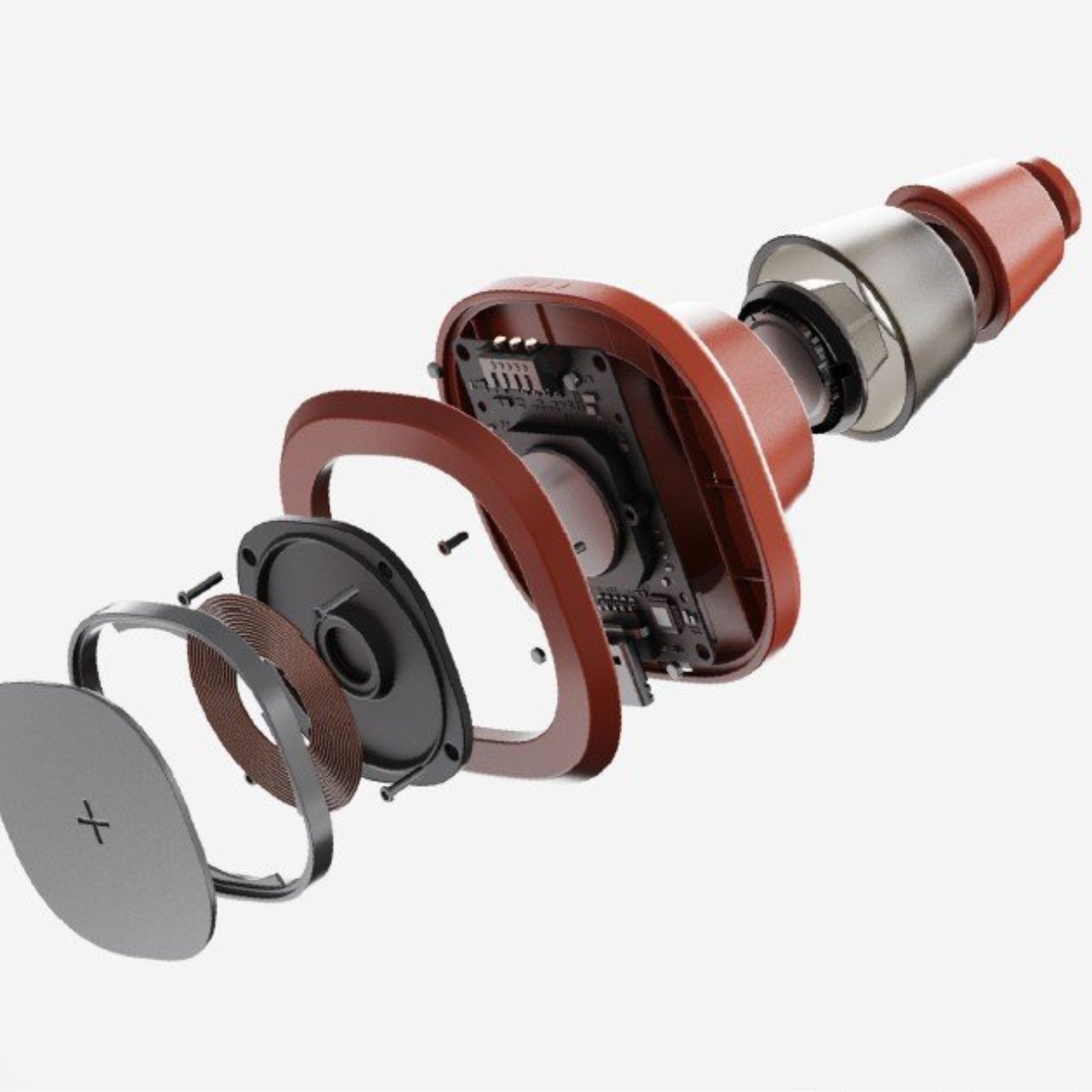
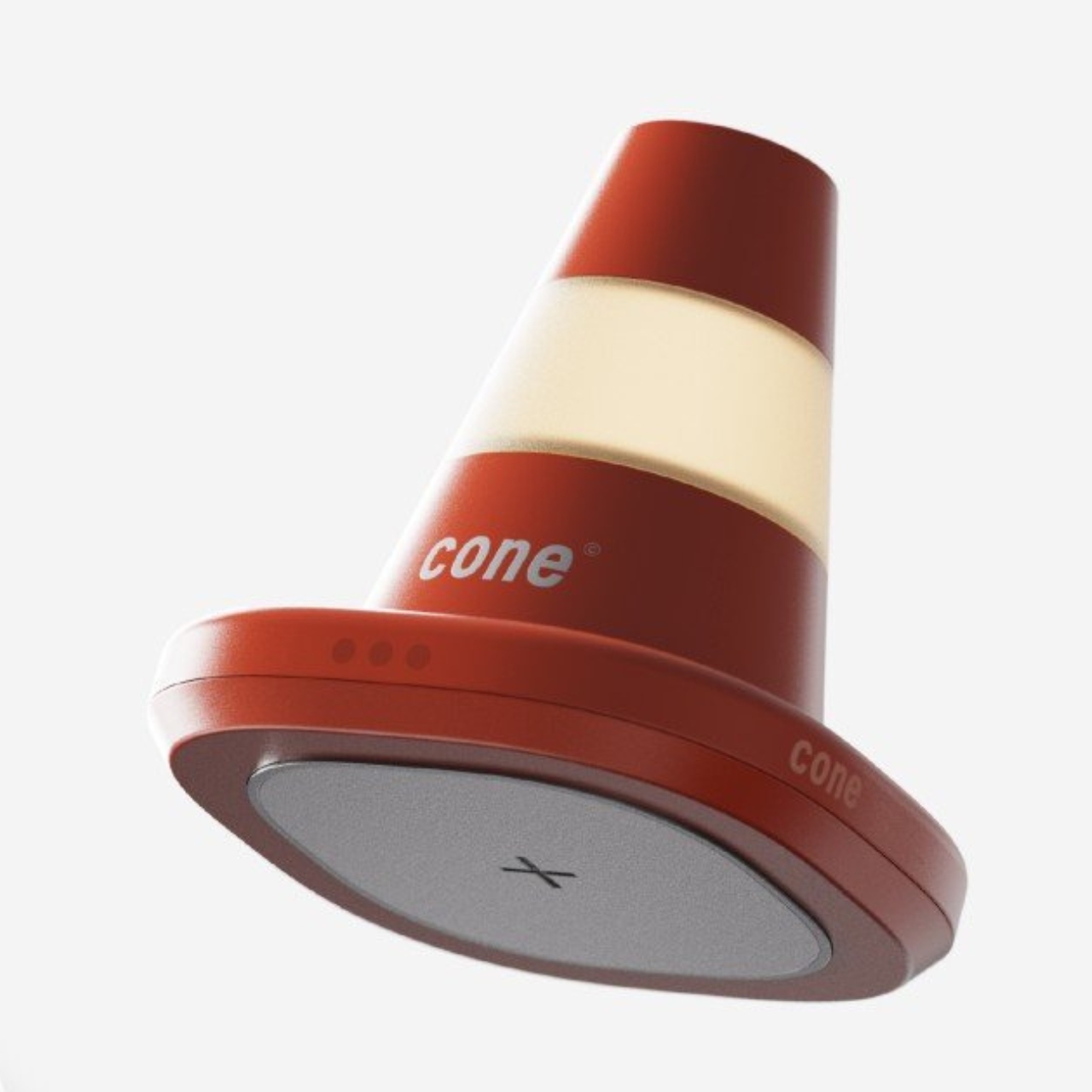
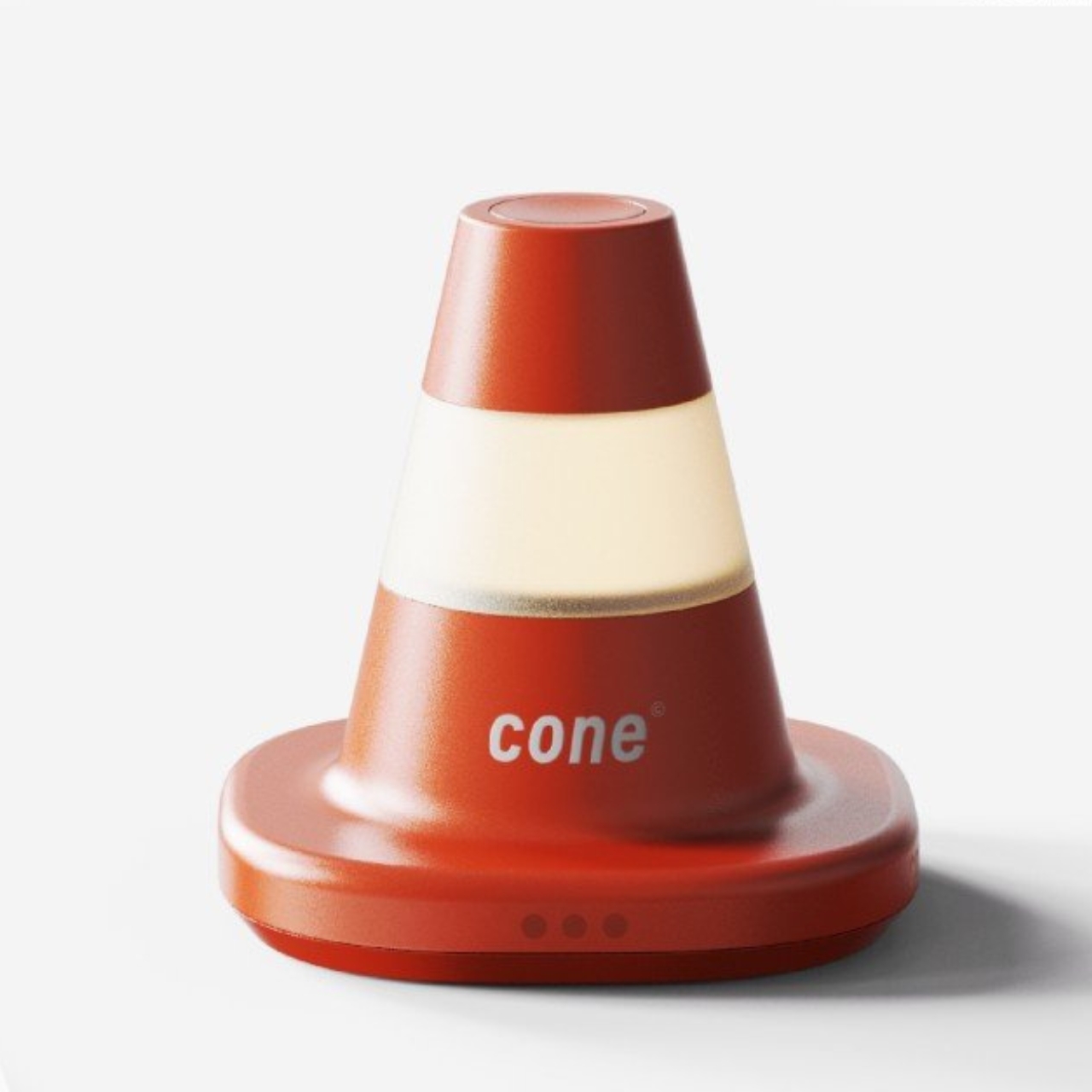
That’s the idea behind the Cone Wireless Charger and Digital Detox, a product concept by South Korean designer Minseo Jung. It’s literally shaped like the orange traffic cone we associate with “no access” or “do not use.” When you charge your phone using this small device, you also stop yourself from reaching for it, thanks to both the way it’s positioned and the actual shape of the charger itself.

Designer: Minseo Jung

The way the Cone charger works is refreshingly simple. You place your phone face-down on the table, then set the charger on top of it. It charges your device wirelessly the entire time it’s covered. The combination of your phone’s hidden screen and the cone’s unmistakable “stay away” silhouette work together to override that automatic reflex to reach for your device and check whatever it is we usually check.

When it’s not busy charging your phone, the Cone can also double as a mini ambient light that blends nicely into a nightstand or desk setup. That dual purpose makes it more than just another single-task gadget cluttering up your already (probably) messy nightstand. It’s a charger and a lamp that happens to also curb your phone habit, not a wellness device you’re forced to make room for.

So how does the Cone stack up against the wireless chargers already crowding the market? Big names like Anker, Belkin, and Apple’s own MagSafe line are all designed with one goal in mind, which is to charge your phone as quickly, securely, and conveniently as possible. Anker’s MagGo and Belkin’s BoostCharge series, for instance, are built around fast charging speeds, magnetic alignment, and multi-device support for phones, earbuds, and smartwatches all at once. They’re excellent at what they do, but none of them are designed to change your relationship with your phone. If anything, most of these designs keep your screen facing up and glowing, practically inviting you to check it mid-charge.

The Cone takes the opposite approach. It doesn’t try to out-charge the competition with extra wattage or a longer feature list. Instead, it solves a completely different problem, which is our compulsive need to check our phones even when we know we shouldn’t. Digital wellness apps like Freedom or Forest attempt to tackle this same issue through software, locking you out of certain apps or gamifying your focus time, but they still require you to open your phone and dig through settings just to activate them. The Cone doesn’t ask you to lift a finger. Its entire strategy is physical and psychological, not digital, making it a rare case of a tech accessory that works precisely because it doesn’t add more screen time to your life.

At the end of the day, the Cone Wireless Charger and Digital Detox is a reminder that not every solution to our smartphone problem needs to be smarter, faster, or more high-tech. Sometimes, the best fix is refreshingly low-tech: a simple shape, a familiar warning sign, and a little bit of psychology working quietly in the background. Whether or not the Cone ever makes it to store shelves, it’s a clever piece of design thinking that tackles a very modern problem most of us silently struggle with every day. And honestly, in a world where our phones already run so much of our lives, having one object that gently tells us “not right now” might be exactly the kind of digital detox we didn’t know we needed.

The post The Traffic Cone Charger That Actually Keeps You Off Your Phone first appeared on Yanko Design.