Dyson x Porter OnTrac Limited Edition Redefines the Commuter Kit as a Unified Design System

The Dyson x Porter OnTrac Limited Edition collaboration arrives as a pointed departure from typical brand partnerships. Rather than applying co-branded graphics to existing products, this project positions two objects as components of a single system built around commuter behavior. The headphones and bag share materials, color logic, and ergonomic intent. They function as a kit, not a bundle. The production run is limited to 380 individually numbered sets distributed through select retail locations in Japan and China, plus official online channels.

Designer: Dyson x Porter

Porter, the accessories division of Yoshida & Co., approaches its 90th anniversary with a history rooted in textile construction and hardware refinement. Dyson enters audio as an engineering house known for motors, airflow systems, and computational design. The collaboration required both parties to subordinate individual brand language to a shared design constraint. The scarcity is intentional. This is not a mass market recommendation. It is a design artifact that demonstrates what becomes possible when two craft traditions converge on a single behavioral problem.

Collaboration Context

Porter operates under Yoshida & Co., a Japanese company founded in 1935. The brand built its reputation on hand construction, obsessive material selection, and a visual language drawn from military surplus, particularly the MA 1 flight jacket. Porter bags are assembled by hand in Japan, often incorporating dozens of discrete components into a single product. The 90th anniversary celebration, designated Project 006, called for a collaboration that would extend Porter’s construction philosophy into new territory.

Dyson’s audio division emerged more recently with the Zone headphones in 2022, combining noise cancellation with air purification in an ambitious but polarizing form factor. OnTrac followed as a more focused over-ear design, retaining Dyson’s emphasis on driver quality, noise isolation, and extended battery performance. Jake Dyson, chief engineer and son of founder James Dyson, supervised the Porter collaboration.

Both companies ceded ground to produce objects that read as parts of a single system rather than co-branded accessories. Porter’s expertise in understanding how objects move with the body informed Dyson’s thinking about where headphones rest when not in use.

Headphones as Object One

The OnTrac headphones in this collaboration begin with Dyson’s existing flagship architecture. The cups use angled geometry that exposes machined aluminum surfaces and microfiber cushions. What distinguishes this edition is the outer cap treatment. Custom panels carry the Porter logo, and the color blocking shifts to navy, green, and orange, tones drawn directly from the MA 1 flight jacket vocabulary that has defined Porter’s aesthetic for decades. The palette establishes visual continuity with the bag.

The driver assembly uses 40 millimeter neodymium transducers with 16 ohm impedance, spanning a frequency response from 6 Hz to 21 kHz. Eight microphones power the active noise cancellation system, capable of reducing ambient sound by up to 40 dB. Battery life extends to 55 hours with ANC engaged. USB-C fast charging restores usable runtime quickly. Bluetooth 5.0 handles connectivity, and the MyDyson app provides listening mode control and voice assistant integration. These specifications remain unchanged from the standard OnTrac.

The weight sits at approximately 0.45 kg, a figure that exceeds many competitors as a consequence of Dyson’s aluminum construction and driver housing decisions. The cushion geometry distributes pressure across a wider contact area, and the microfiber surface reduces heat buildup during extended sessions. The comfort profile favors long commutes over lightweight portability. The headphones are designed to be worn for hours, not minutes.

The industrial aesthetic leans toward precision equipment rather than consumer electronics. Exposed metal, visible fasteners, and functional geometry communicate that these headphones prioritize engineering integrity over lifestyle signaling. The joystick controls on the right cup allow volume adjustment, track navigation, and mode switching without reaching for a phone.

Technical Specification Snapshot

Specification Value
Driver configuration 40 mm neodymium transducers, 16 ohm impedance
Frequency response 6 Hz to 21 kHz
Active noise cancellation Up to 40 dB reduction via 8 microphones
Battery endurance Up to 55 hours with ANC active
Charging interface USB-C with fast charge capability
Total weight Approximately 0.45 kg
Wireless protocol Bluetooth 5.0, MyDyson app integration
Construction materials Aluminum body, microfiber cushions, CNC machined outer caps

Bag as Object Two

Porter’s contribution is a shoulder bag engineered specifically around headphone storage and deployment. The design is not a general purpose satchel with a headphone pocket added as an afterthought. The entire geometry responds to a single question: how does a commuter remove, wear, and store over-ear audio equipment with minimal friction? The construction involves 77 discrete components, each cut and stitched by hand in Japan.

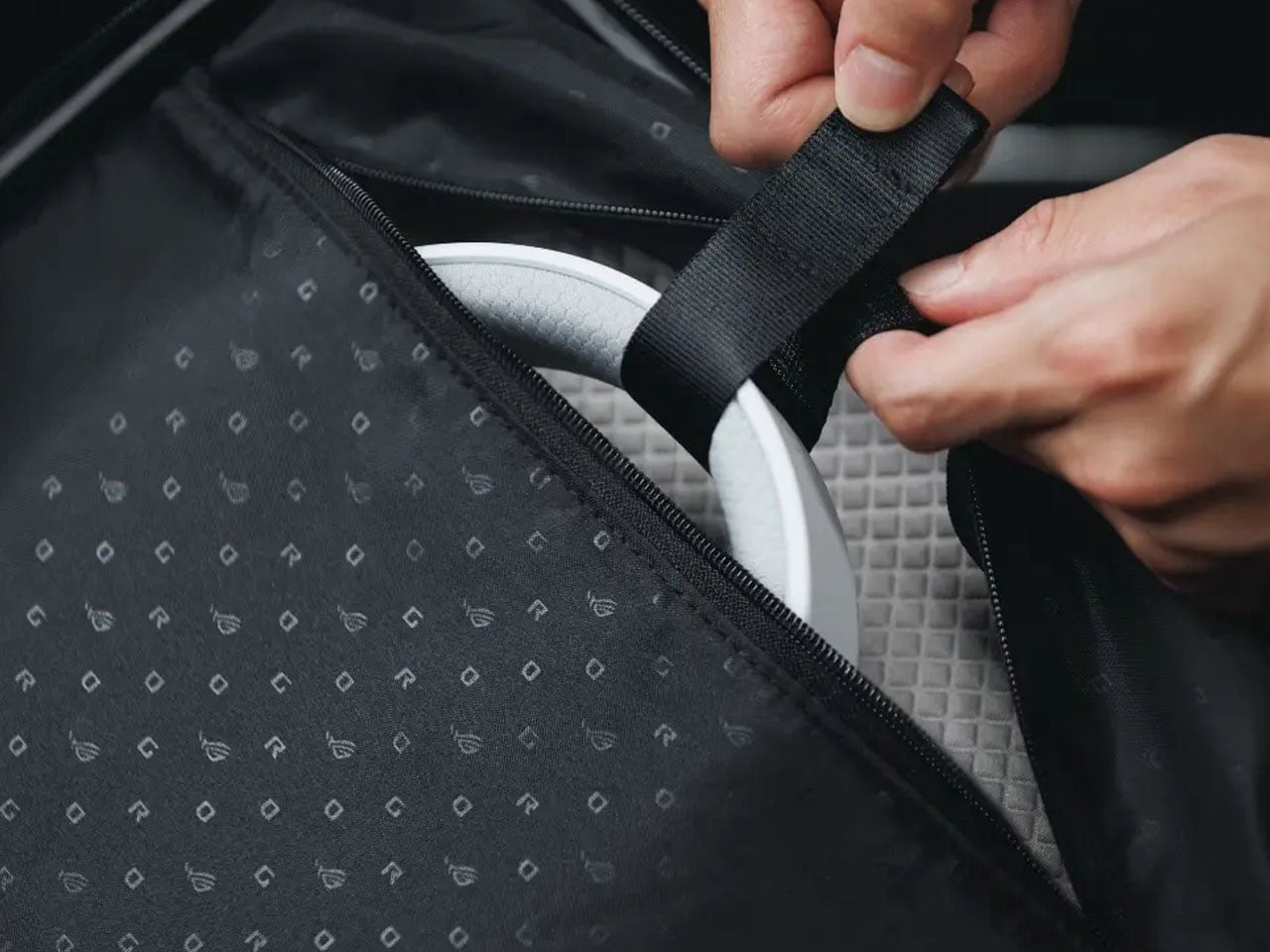
The outer shell uses water-repellent nylon with abrasion-resistant weave, a material choice that protects against rain, scuffs, and the wear patterns of daily transit. Interior compartments accommodate the standard commuter loadout: phone, wallet, tablet, small camera, cables. Pockets are sized and positioned to prevent shifting during movement. The signature detail is the dedicated headphone loop integrated into the shoulder strap. When the headphones are not in use, they hang from this loop in a stable, accessible position at chest height. The strap itself employs Porter’s Carrying Equipment Strap mechanism, allowing one-handed length adjustment through a quick-pull system. This ergonomic decision accommodates different body types and carry positions without requiring two-handed manipulation.

Color story extends throughout the bag. The body is navy. The zipper tape is bright orange. Interior lining and webbing introduce green and khaki accents.

Every material surface echoes the headphone palette, creating a unified visual identity even when the two objects are separated. The bag was designed with the headphones’ 0.45 kg mass already calculated into its geometry, ensuring weight distribution remains balanced during movement.

System Integration

The value of this collaboration lies in the integrated ritual it enables. A commuter leaves home with headphones docked on the shoulder strap loop. The loop holds them securely against the bag body, eliminating swing and bounce during movement. On the platform, a single motion lifts the headphones from the loop to the ears and activates ANC. At the destination, the headphones return to the loop without opening the bag or searching for a case.

The strap adjustment system allows the bag to shift position for crowded trains or escalator navigation. The Porter logo on the headphone caps and the Dyson branding on the bag interior reinforce system identity through consistent placement and scale.

Design System Comparison

Design Element OnTrac Headphones Porter Shoulder Bag
Primary function High-fidelity audio with active noise cancellation optimized for commuting Compact daily carry satchel engineered around headphone storage and quick access
Material construction Aluminum frame, microfiber cushions, precision machined caps Water-repellent nylon, 77 hand-assembled components, reinforced stitching
Color language Navy headband and shells, green cushions, orange accent stitching Navy exterior, orange zipper tape, green webbing accents, khaki interior
Heritage reference MA 1 flight jacket palette adapted to audio hardware MA 1 flight jacket palette extended to bag construction
Signature feature Porter branded outer caps with co-branded engraving Integrated headphone loop on shoulder strap, one-pull length adjustment
System role Audio delivery and noise isolation during transit Storage, transport, and quick-access docking for headphones and daily essentials

Limited Edition Context

Production caps at 380 individually numbered sets. Each unit ships with a tech slice: a resin block containing frozen development components suspended like specimens. A steel aircraft-wire loop attaches this artifact to the bag. The tech slice serves no functional purpose. Its presence signals that this collaboration values process documentation as much as finished product. Pricing varies by region, with Japanese retail at ¥118,690, UK pricing at £649.99, and North American pricing in the $700 to $1,000 range depending on import and distribution variables.

This represents a significant premium over the standard OnTrac, which retails around $500. The delta purchases the Porter bag, the limited numbering, the tech slice, and the scarcity itself. Distribution is restricted to select Dyson and Porter retail locations in Japan and China, plus official online stores. The 380-unit cap ensures that most interested buyers will not acquire a set.

The collaboration positions itself as a design artifact rather than a mass-market commuter recommendation. This distinction matters. The limited production run is not a marketing tactic to generate urgency. It reflects the reality that hand-built Porter bags cannot scale beyond a certain output without compromising construction quality. The collaboration accepts that constraint rather than working around it.

The numbered tag and tech slice transform the set into a collector’s object, extending both companies’ internal prototype cultures outward to buyers.

Design Value and Trade-Offs

The integrated carry solves a genuine friction point in commuter life. Over-ear headphones are awkward to store and deploy in transit. The strap loop addresses this problem directly. Material quality on both objects meets expectations for premium products. The Porter bag’s hand construction and weather resistance exceed typical EDC pricing tiers. The 55-hour battery life and 40 dB ANC represent genuine engineering performance.

The trade-offs are equally visible. The headphones are heavy at 0.45 kg, heavier than many competing over-ears. This is a consequence of Dyson’s aluminum construction decisions. The premium pricing places this set beyond casual consideration. The 380-unit production run means that for most readers, this is an object to understand rather than acquire. Within the broader context of tech and fashion collaborations, this project signals a shift in approach. Most brand partnerships treat collaboration as a reskinning exercise: new colors, co-branded packaging, a press cycle. The Dyson and Porter set attempts something more structural. The bag exists because of the headphones. The strap loop exists because of the bag. The color palette exists because both objects needed to read as one. This is system design applied to the commute, not merchandise.

Closing Insight

Carrying sound functions as a design position in this collaboration, not as marketing language. Porter and Dyson asked a specific question: what would it mean to design a bag around the act of listening rather than the act of storing? The answer required rethinking strap ergonomics, loop placement, and access geometry. It required unifying two production cultures under a shared color language. It required limiting production to maintain the artifact status that justifies the premium.

Most products designed for commuting solve individual problems: block noise, carry belongings, protect against weather. This collaboration solves them together, as a system, with a coherence that most tech and fashion partnerships never attempt.

The project suggests a future where commuter accessories behave as a cohesive ecosystem, designed from the outset to interact seamlessly rather than coexist by accident. For the 380 people who acquire a set, the daily commute operates through a unified design language. For everyone else, the project demonstrates what becomes possible when two craft-driven houses apply system-level rigor to carrying sound.

The post Dyson x Porter OnTrac Limited Edition Redefines the Commuter Kit as a Unified Design System first appeared on Yanko Design.
Columbia’s Endor Collection Brings Star Wars Style to Real Life

If you’ve ever wanted to dress like a Rebel Alliance soldier without looking like you just walked out of a cosplay convention, Columbia Sportswear has you covered. Their new Star Wars Endor Collection, dropping December 11th, is their most ambitious collaboration yet, and honestly, it’s pretty spectacular.

This isn’t just another brand slapping a logo on a hoodie and calling it a collaboration. Columbia has been partnering with Star Wars since 2016, releasing annual holiday collections that go deep into the details. But this 20-piece Endor Collection takes things to another level entirely. The designers actually visited Skywalker Ranch to see the original spray-painted camo costumes from Return of the Jedi in person. That hands-on research shows in every piece.

Designer: Columbia

The collection reimagines some of the most iconic looks from the Battle of Endor: Han Solo’s camouflage trench coat, those memorable ponchos Luke and Leia wore, and the Rebel troop uniforms. But here’s what makes it special. These aren’t costume replicas. They’re actual functional outdoor gear that happens to be inspired by a galaxy far, far away. Columbia took their signature performance technology and merged it seamlessly with authentic Star Wars design elements.

Take the Endor Issue Ponchos, for example. They recreate the iconic look from the film, but they’re made with Omni-Tech waterproof fabric and feature bungee-adjustable arms. You could actually wear these hiking in the Pacific Northwest (which, let’s be honest, looks a lot like Endor anyway). The General Han Solo Trench is even more impressive because it separates into three individually wearable pieces, each packed with Star Wars Easter eggs for fans to discover.

The boots deserve special mention too. The Endor Issue Boots combine technical features like Omni-MAX cushioning, an Omni-Grip outsole, and a TechLite midsole, making them genuinely trail-ready. Following last year’s footwear debut in the collaboration, Columbia clearly learned what works for fans who want both authenticity and actual performance from their gear.

The attention to detail is where this collection really shines. Throughout the pieces, you’ll find carefully placed Rebel Alliance logos, coordinates, and messages written in Aurebesh (the Star Wars alphabet) for fans to decode. The blanket features original concept art, there are Ewok fleece patches, Bright Tree Village references, and even the actual map of the filming location tucked inside the shoebox and printed on long-sleeve tees. It’s like a treasure hunt for Star Wars enthusiasts.

What’s particularly clever is how Columbia captured that organic, hand-sprayed technique used on the original costumes. The designers worked to ensure their versions maintained that same imperfect, authentic look while still being performance-driven outdoor apparel. Balancing costume accuracy with real-world functionality took considerable time and effort, but the result is pieces that feel genuinely inspired rather than gimmicky. The color palette pulls directly from Endor’s forest moon aesthetic: earthy browns, mossy greens, and woodland camouflage patterns that feel both fantastical and wearable in everyday life.

The collection includes everything from the standout trench coat and ponchos to more practical pieces like the Endor Issue Pants (Columbia’s first-ever Star Wars-inspired pants), cargo jackets, reversible jackets, cargo vests, and various pullovers and half-zips. There’s also an Endor Issue Cargo Backpack for carrying your gear, water bottles with themed designs, multiple hat styles including a ball cap and wider-brimmed options, and even a quilted blanket perfect for outdoor adventures or cozy movie marathons watching the original trilogy.

Columbia enlisted Billie Lourd for the campaign, which feels particularly meaningful. Lourd, who played Lieutenant Connix in the sequel trilogy and is the daughter of the legendary Carrie Fisher, was photographed among towering California redwoods with her children wearing Ewok-inspired fleece pieces. It’s a beautiful tribute that connects the collection to Star Wars legacy while showcasing how these pieces work for real families having real outdoor adventures.

The collection launches December 11th at 10 AM EST on Columbia’s website, with early access for members of their free Greater Rewards program starting 30 minutes earlier. It’s the kind of collaboration that shows what happens when a brand genuinely respects both the source material and their customers. You get functional outdoor gear that happens to make you feel like you’re part of the Rebellion, without sacrificing style or performance. And in a world full of half-hearted pop culture collaborations, that’s definitely worth celebrating.

The post Columbia’s Endor Collection Brings Star Wars Style to Real Life first appeared on Yanko Design.

Parsel EVA Tote: Rigid Shell and Soft Liner You Can Reconfigure

Most bags are single-purpose objects. A tote for groceries, a weekender for travel, a backpack for everything else. Parsel’s EVA East West Tote System treats a bag more like a modular platform, where a rigid shell, soft liner, and strap can be reconfigured for different uses. It’s less about one perfect tote and more about a carry architecture you can tune as your day changes.

The EVA East West Tote System is a high-density EVA tote available in small and extra-large sizes. Each Unit is an injection-molded shell with integrated handles, paired with a removable roll-top nylon liner and an engineered knit strap. All the hardware is machined from aircraft-grade aluminum, giving the whole thing a gear-like feel rather than a fashion accessory vibe that falls apart after a season.

Designer: Nur Abbas (PARSEL)

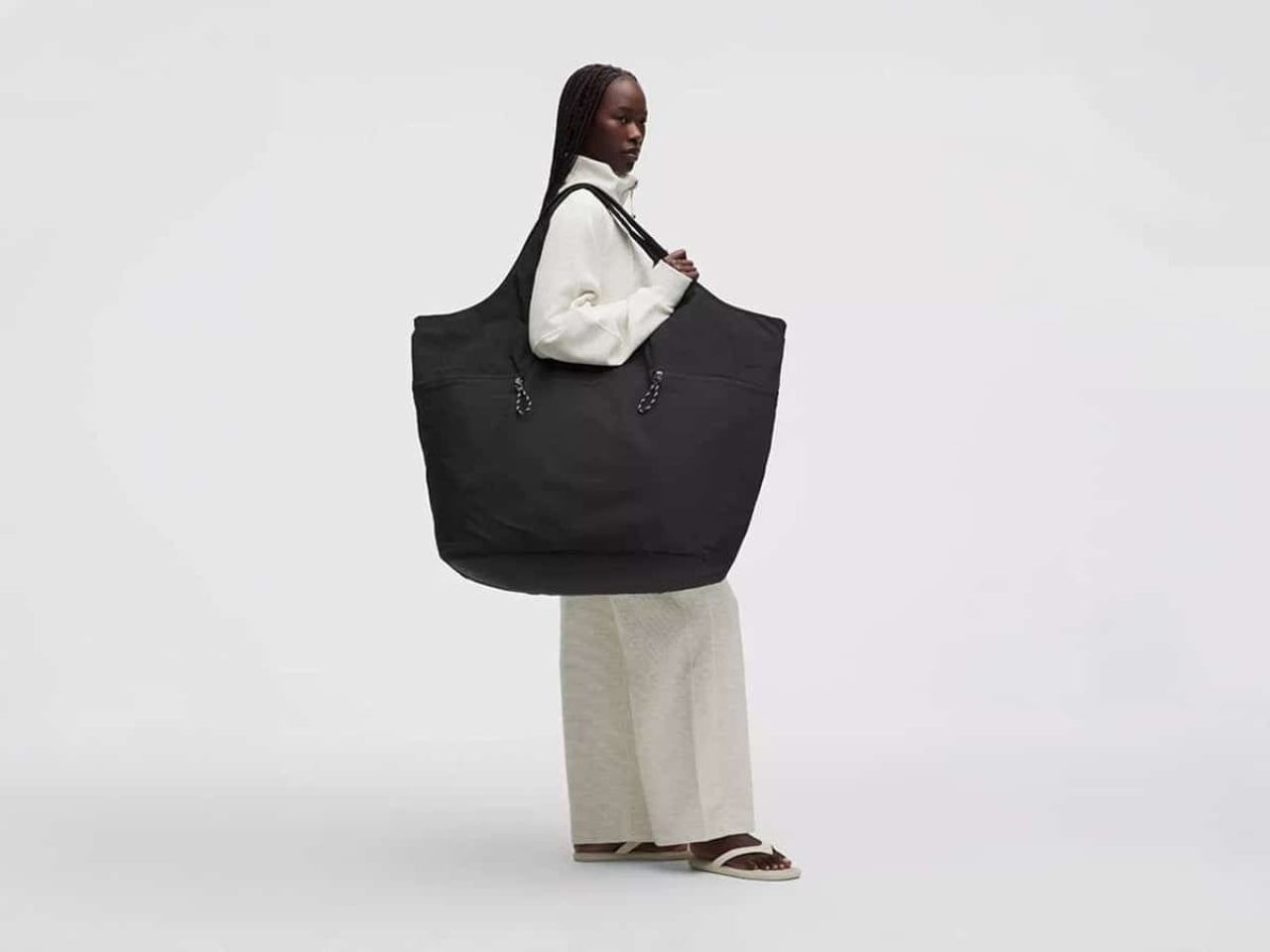
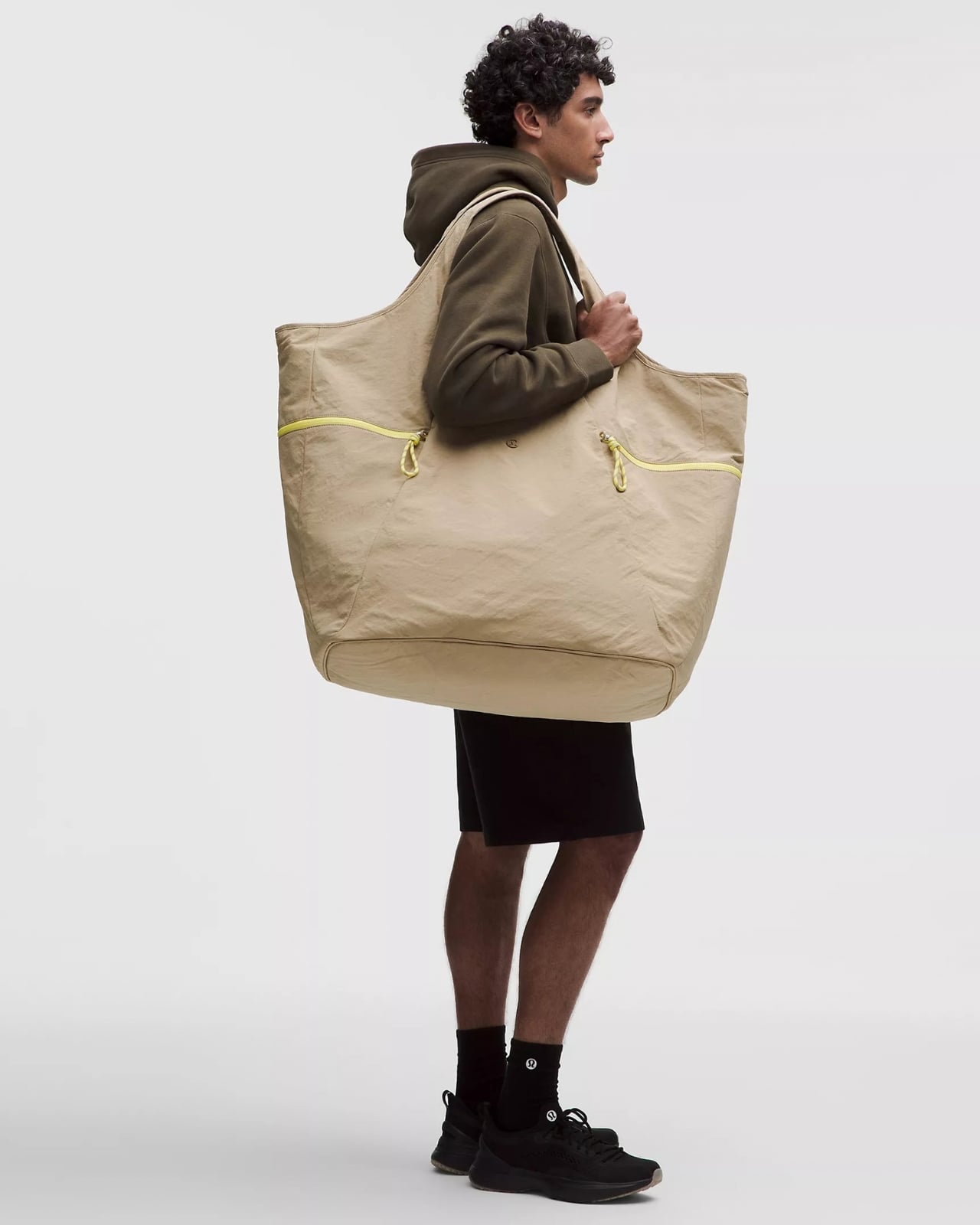
The Unit is a monolithic box with soft radii and an oval handle cutout, rigid enough to protect contents but flexible enough to absorb impact. In its small size, it reads like a compact utility caddy. In the extra large, it becomes a trunk-like tote that can swallow groceries, tools, or sports gear. The clean surfaces and embossed Parsel logo keep it visually quiet and precise.

The removable nylon liner has a roll-top with a magnetic closure and can live inside the Unit or be used on its own. The adjustable knit strap stretches slightly for comfort and threads through Parsel’s signature Button, a ribbed aluminum connector that links everything together. That Button is the universal joint of the system, letting the strap move between the shell and liner without extra clips or buckles cluttering the sides.

In classic tote mode, the strap attaches to the EVA Unit with the liner inside. For a lighter carry, the liner can be used alone with the strap as a soft shoulder bag. In the extra-large size, the liner can even be worn as a backpack by rethreading the strap through the Buttons. Parsel literally labels this “Play with the system,” inviting users to treat carry as something adjustable.

The aluminum handle insert is etched with Parsel Systems Intl around its oval perimeter, while the Button hardware carries the brand name in clean engraving. These details feel more like precision components from outdoor gear than fashion hardware. Colorways like Optic white, Deep black, and Priority orange let the bags shift toward either minimal or high-visibility use, comfortably filled with screws, firewood, fish, or flowers in both workshop and city.

The EVA East West Tote System is a thoughtful attempt to make one bag work across many lives. By separating structure, volume, and carry into distinct parts, Parsel lets you tune how rigid, soft, or hands-free the bag needs to be on a given day. For anyone who likes their everyday carry to feel more like a system than a single fixed object, this EVA tote is worth considering.

The post Parsel EVA Tote: Rigid Shell and Soft Liner You Can Reconfigure first appeared on Yanko Design.
The Best Travel Bags Under $100 Are Made From Recycled Materials

For decades, the gospel of good design was chanted in a simple two-part harmony: form and function. An object had to look good, and it had to work well. But a third, more urgent verse has been added to the chorus in recent years: impact. Today, truly exceptional design must also be responsible design. It has to account for its lifecycle, its materiality, and its effect on the world it inhabits. This evolution in thinking is a necessary one, pushing creatives to solve for more than just aesthetics and ergonomics. It demands a deeper consideration of the entire ecosystem a product touches, from its origin as raw material to its eventual end of life.

This very philosophy is captured with pointed clarity by the mantra behind Uniq’s new Arden line: “Carry Light, Tread Lighter.” The phrase itself serves as a new mission statement for the gear we integrate into our lives. “Carry Light” speaks to the classic tenets of user-centric functionality and minimalist appeal, the tangible feeling of a well-balanced, unobtrusive tool. “Tread Lighter,” however, addresses the critical demand for sustainability, framing each bag not merely as an accessory, but as an artifact of a more conscious era in product design. It’s a compelling narrative that warrants a closer look at the hardware itself to see if the promise holds up.

Designer: Gladys Phan

Click here to Buy Now: 10% off. Use coupon code “YANKOxUNIQ10”. Hurry, deal ends in 48-hours!

Arden Backpack

First in the lineup is the Arden Backpack, an 18-liter pack aimed squarely at the urban professional who rejects the bulky, over-engineered look. It presents a slim, almost architectural profile that hides its generous capacity well. The material story here is central; the entire shell is crafted from a water-resistant rPET ripstop fabric. This means recycled plastic bottles are woven into a durable material with a grid pattern that prevents small tears from becoming catastrophic failures. Inside, the organization is logical, not excessive. A deep, padded sleeve secures a 15-inch laptop, while a few hidden pockets and a magnetic key tether handle the small essentials without demanding you memorize a complex schematic of compartments.

This is a bag that understands its context. A luggage pass-through strap is a non-negotiable feature for anyone who travels, and its inclusion here signals an awareness of the modern workflow, which often blurs the line between the daily commute and a cross-country flight. The backpack’s design feels intentional, a direct counterpoint to bags that scream for attention with countless molle straps and attachment points. Instead, the Arden focuses on quiet competence. It’s for the person who values a clean aesthetic and wants their gear to be a silent partner, reliably performing its function while carrying a lighter environmental weight. It’s a thoughtful execution that respects both the user’s needs and their principles.

Arden Sling Bag

Not every day calls for a full pack. For essentials-only missions, the collection scales down its thinking into a much smaller, nimbler form factor: the Arden Sling Bag. At a compact 2-liter capacity, this is a piece designed for maximum mobility. It’s large enough to accommodate an iPad Mini, a wallet, and a phone, making it a perfect companion for navigating crowded city streets, running quick errands, or traveling where you want your valuables secured to your front. The same durable and eco-conscious rPET ripstop material makes a return, offering protection from an unexpected drizzle.

The sling’s cleverness is in its details. An anti-theft zipper provides a subtle but welcome layer of security, while a quick-release magnetic buckle makes for a satisfyingly fluid on-and-off experience. What really elevates its utility is the detachable strap, allowing the bag to convert from a crossbody sling into a tech pouch you can toss into a larger piece of luggage. This duality transforms it from a single-purpose bag into a versatile component of a larger travel system. It’s a smartly designed piece for the minimalist who has their everyday carry dialed in, proving that a smaller footprint can apply to both physical size and ecological impact.

Arden Tote

Rounding out the collection is the Arden Tote, a 16-liter bag that tackles one of the most persistent frustrations with the classic tote design. Finally, here is a tote that does not immediately collapse into a puddle of fabric the moment you set it down. Its structured walls give it the ability to stand on its own, making it far easier to load, unload, and access its contents. This simple structural integrity completely changes the user experience, turning a notoriously chaotic bag into an organized and dependable carry-all. It’s a prime example of how a small design intervention can solve a huge usability problem that most other brands simply ignore.

Inside, the tote subverts the “bottomless pit” stereotype with seven distinct compartments, including a padded sleeve for a 15-inch laptop. The magnetic key tether, a signature of the Arden line, ensures your keys are always within reach. Crafted from the same recycled ripstop material, the tote is both resilient and water-resistant, ready to handle everything from a day at the office to a trip to the farmer’s market. It’s built for the person who needs the open-top accessibility of a tote but demands the intelligent organization of a proper work bag, embodying a solution that is both practical and philosophically sound.

The Arden collection successfully translates its core mantra into three distinct, high-performing pieces. They are available now across the full lineup, each in multiple colorways that cover a broad spectrum from understated neutrals to subtle pops of color. The Backpack comes in Nocturne Blue, Driftwood Beige, and Black, offered in both 18L ($89.90) and 24L ($99.90) sizes. The Sling Bag, priced at $45.90, is available in Midnight Black, Driftwood Beige, Nocturne Blue, and Blush Coral (sometimes listed as Pink). The Tote Bag rounds out the series at $65.90 with its 16L capacity in Driftwood Beige, Black, and Blush Coral. All three bags ship with a one-year limited warranty that covers defects in materials and workmanship, with the option to extend to two years when you register the product using its serial number through Uniq’s official site.

Click here to Buy Now: 10% off. Use coupon code “YANKOxUNIQ10”. Hurry, deal ends in 48-hours!

The post The Best Travel Bags Under $100 Are Made From Recycled Materials first appeared on Yanko Design.

Odd backpack is designed for carrying spare bicycle tires and large objects

It’s pretty amazing how much stuff we can cram into our backpacks, from laptops to 2-liter water bottles to a bundle of chargers and cables. Of course, these are objects that were designed to be small enough to fit in bags in the first place, so that’s not exactly out of the ordinary. Unfortunately, we sometimes need to carry things larger than the largest backpacks in the market.

This bag might be designed for bicycle racing, but it can definitely do more than just carry spare wheels for an emergency. Its literally open design actually offers a bit more wiggle room that will let you carry large or odd-shaped items without breaking a sweat. Unless, of course, they’re actually too heavy to carry on your back.

Designer: Fernando A. Robert

We often think of bags as enclosed containers with a single opening, but there really isn’t a formal definition of a bag’s design. This “Bike Backpack” might look like a regular backpack from the front, but its open sides definitely break the stereotype. Then again, the idea of carrying a bicycle wheel or a large box is itself already unconventional.

The Sherman Bike Backpack has a tri-fold design that opens vertically like a flap. The idea is that you stuff things that are too large or too wide for regular bags in between the flaps, letting the sides extend beyond the bag’s confines. Alternatively, you can also hang something outside and secure it with straps.

This is how you can carry one or two bicycle wheels that are thin and light enough to put on your back while cycling or racing. Of course, boxes, drawing boards, blueprint tubes, and other large objects are also fair game, as long as you secure them properly with straps. It definitely makes for an odd sight, but your comfort and convenience definitely outweigh any awkwardness.

The backpack also has compartments for carrying regular stuff, and you might be able to use it for carrying laptops, tools, or even clothes. That said, it isn’t the ideal backpack for all weather conditions, since the open sides make it very vulnerable to water, snow, and even dust.

The post Odd backpack is designed for carrying spare bicycle tires and large objects first appeared on Yanko Design.
Handmade Samurai-inspired randoseru backpack looks pretty but heavy

There is a certain fascination that people have with the Japanese art of the samurai, whether it’s through movies, books, anime, and even just the accessories in general. Combining it with other Japanese cultural things will appeal to a certain market, even if those things may just be decorative and not totally functional.

Designer: Noriki Okada

Randoseru are leather backpacks used by Japanese school children that are made to last for years. But this particular version of the backpack is probably not something you’d let your kid use or even you yourself would use. It is hand-crafted and intricately designed, inspired by the samurai tradition. The yellow, black, and red backpack would have looked right at home in the 11th century, if there were expensive, leather bags back then.

Leather craftsman Noriki Okada created this bag from scrap pieces from other bags and have some accents like small leather plates and brass rivets. There are even faces of oni demons on the sides to add to the samurai theme. The manufacturer, Murase Kabanko, says that they are recommending that you just use this for “decorative purposes” although you can of course use it if you don’t mind carrying something that looks heavy and ornate.

Each bag that they are selling is handmade so you would have to wait around 6 months for it to get to you. And of course it’s expensive given all that. If you have around $3,300 and are a collector of samurai inspired things, go for it.

The post Handmade Samurai-inspired randoseru backpack looks pretty but heavy first appeared on Yanko Design.
Pack Smarter, Travel Easier with the Ultimate Modular Luggage Solution

Traveling light is often not as easy as it sounds. Navigating a narrow aisle on a regional jet or waiting on the tarmac in a snowstorm for your gate-checked bag can make even the simplest of trips cumbersome. That’s the challenge that led to the creation of Onli Travel and the Trilogy Modular Travel System—born from a firsthand experience with air travel frustrations and a powerful question: Why couldn’t luggage adapt to these challenges?

Designer: Dave Logan

Click Here to Buy Now: $299 $399 ($100 off). Hurry, only 4/21 left! Raised over $88,000.

Onli Travel’s latest release, the Trilogy Modular Travel System, is built on versatility, adaptability, and convenience. It’s not just another travel bag; it’s a modular luggage system designed to adapt to meet the needs of a wide range of travelers, from weekenders to globetrotters. Built from years of iteration and user feedback, the Trilogy represents Onli Travel’s quest for a better way to carry what matters.

This system gives you three different bags that come together—or apart—as needed. Unlike traditional luggage that must be either fully checked or fully carried, the Trilogy breaks down into separate components that fit under airplane seats or in crowded compartments, avoiding gate checks and streamlining your travel experience. It’s three bags in one: a compact, expandable tote, a spinner that fits under an airplane seat, and a larger, expandable rear backpack unit.

The Expandable Tote Pack front unit features a redesigned strapping system that lets you carry it as a backpack, shoulder bag, or tote. The middle unit, an expandable spinner, is stronger and more stable and designed to support smaller bags on top without toppling over. The rear unit has also been redesigned with accessibility in mind—a larger panel allows access even when combined with the middle section, and a hidden pocket provides secure storage.

Onli Travel’s Penta 5-in-1 Packable Duffel, a related modular new product, enhances the Trilogy system. The Penta Duffel supports those unexpected needs—a market run, a last-minute detour, or just a day out. It functions as a duffel, backpack, shoulder bag, belt bag, or crossbody, adding lightweight capacity right when needed.

The Trilogy aims to eliminate the need to check a bag. Each piece is designed to be stowed under a seat or into a tight overhead compartment, making gate-checking as obsolete as possible. Since Onli Travel’s inception, this concept has been tested and refined across dozens of flights, leading to over 20 engineering and design improvements. The Expandable Tote, Spinner, and Weekender Daypack are easy to open—clamshell-style for organized packing or top-loading for casual trips.

Over the past two years, Onli Travel has worked with real travelers, sending beta testers across Japan, Spain, Poland, and Ukraine, among other places, to test the Trilogy. This field testing validated the design and guided many changes. Travelers asked, and Onli listened—redesigning everything from the strapping system to reinforcements for stability, making this the most advanced modular spinner the company has produced.

Onli Travel understands that travel means freedom—freedom to move smoothly from a business meeting to an adventure without swapping bags. The Trilogy offers that freedom, making travel a seamless experience. Each detail has been refined to serve a purpose—even the packing cubes, designed to fit the bags perfectly, help reduce stress, and keep everything organized.

The purpose is clear—to take the hassle out of travel and replace it with flexibility. Fitting your bag into a tight cabin or walking hands-free through crowded streets, the Trilogy has you covered. With its versatile, expandable components and thoughtful features, the Trilogy redefines traveling light, traveling smart, and traveling with peace of mind. After all, travel should focus on what you’re seeing and doing—not worrying about your luggage.

With the Trilogy Modular System, Onli Travel has created something beyond just luggage—they’ve created a travel companion. One that adjusts to your needs, grows when you need extra space, and simplifies the entire traveling experience. And that’s something every traveler could use.

Click Here to Buy Now: $299 $399 ($100 off). Hurry, only 4/21 left! Raised over $88,000.

The post Pack Smarter, Travel Easier with the Ultimate Modular Luggage Solution first appeared on Yanko Design.
LEGO Meets Luggage – Onli Travel’s Trilogy Bags Snap Together to become the Ultimate All-in-one Bag

Five years ago Dave Logan designed what we called the ‘only bag you’ll ever need’… now he’s back with an even better redesign.

Logan’s bags (designed under the moniker Onli Travel) had one uniting design detail that made them spectacular – they were like the Power Rangers, independently capable, but also had the ability to unite and become better than the sum of their parts. Onli Travel’s latest design, dubbed the Trilogy, builds on that concept. Made of three distinct parts – a spinner (or a trolley bag), a tote, and a daypack – the Trilogy can be used independently as regular pieces of luggage, paired with one another to create unique combinations based on your need, or all joined together like a club-sandwich that lets you practically carry your life with you in one single cohesive unit.

Designer: Dave Logan

Click Here to Buy Now: $269 $399 ($130 off). Hurry, only 5/65 left! Raised over $59,000.

Ask anyone who travels a lot what their secret to effectively carrying stuff is, and they’ll answer – modularity. It’s simple – one size never fits all, and if your bag is a standard bag that’s rigid in its offerings, it won’t help you. Different people have different needs, and sometimes those needs also change based on mood, scenario, and time of the day. A modular carrying solution is the best way give people what they want, sort of like having a smartphone where people can install the apps they need and not be stuck with the apps you want them to have. Logan’s Trilogy series tries to do that. The three bags are vastly different, made for different scenarios – but they come together when you need them to. Strutting across an airport with your luggage, the bags attach together so you can wheel them as one unit. Scared your laptop bag might get stolen? Zip it off and carry it on your back. Want to unfold everything for the TSA during a security check? The bags are easy to disassemble and lay flat. Boarded your plane late and now don’t have enough space in the stowaway area for your bag? Split them apart so they can jigsaw-piece their way into the overhead storage space. Want to work or watch a movie while flying, one of the bags can literally strap to the back of the seat in front of you, turning into a work-table or entertainment center. All this happens while the Trilogy keeps all your belongings safe, secure, and segregated. Every part of the Onli Travel Trilogy has purpose, and is designed flawlessly to fulfill that purpose… I can’t say that about many other carrying solutions.

Each of the Trilogy’s individual parts is in itself, a complete bag. The spinner, or the trolley case, is perfectly cabin-bag sized, but is spacious enough to carry your luggage comfortably. It’s designed to be expandable, should you need to carry more, and has a mild wedge-shaped profile that allows it to easily tuck under seats of airplanes, just in case the overhead cabins are full. The spinner comes with a fabric construction, but boasts a reinforced top so you can rest a backpack on it while walking through the airport, as well as reinforced sides so the spinner holds its shape remarkably well. On the inside, you have ample space for your stuff, and Onli Travels even has a compatible modular cube packing system for seamless organizing. There are pouches/pockets on the outside too, for storing easy-access belongings like important documents, an umbrella, or a bottle of water. To make carrying the spinner easy, it comes with handles on three sides… and if the spinner’s storage isn’t enough, let’s not forget that it lets you snap two extra bags to it – the daypack, and the tote.

The Expandable Tote and the Weekender Daypack are similar in format – but are designed for different purposes. The Daypack, as its name suggests, is for day-trips, while the tote is the perfect bag to have on yourself for work, commutes, or even stepping out to hit a cafe. The tote is styled to be carried on one shoulder, but can be worn as a backpack too. It’s big enough to comfortably fit a 17” laptop, has pockets on the front and side for storing multiple belongings, and has an expandable design that accommodates more just in case the existing storage isn’t enough. While traveling, the tote can be attached to a seat in front of you using a set of straps, and a zip-down shelf on the top gives you a small yet convenient tabletop surface that fits an iPad or a small tiffin box perfectly. Overall, the tote’s designed with waterproof fabric, has lockable zippers, and even boasts RFID protection against digital theft.

The Weekender Daypack is just as efficient as the Tote, but think of it as your bag for out-of-city trips. It comes with shoulder as well as sternum straps, has ample storage, boasts an expandable design, and even has underpack storage for items like a rolled-up sleeping bag, yoga mat, etc. The bag’s clamshell zippers allow it to open absolutely flat (perfect for TSA inspection), revealing the inner storage compartment that is big enough to house a 17” laptop comfortably, along with an iPad or tablet. The daypack also comes with its fair share of pockets for storing all your belongings, making it just the right bag for a quick getaway or day trip.

The beauty of these bags, regardless of their shape/size/ability, is that they can either work independently, or unite to create ‘super’ bags. Each bag can be attached to the other – so your day-pack can be zipped to your tote for a large shoulder-worn backpack, or to your spinner for a bulky carry-on that can easily be wheeled around everywhere. The tote can fasten to the spinner too, and if you want to join all three together, it’s entirely possible. That particular arrangement is ideal for making sure all your bags are together at all times, but when the going gets tough, each of the bag can separate out, giving you individual compact pieces of luggage that are a little more convenient to manage and access.

The Trilogy set comes in a choice between 3 colors – Black, Blue-Wing Teal, and a Rust-like Zinfandel. The ballistic nylon fabric used on the bags is tough, water-resistant, and can easily endure regular commutes or even rough airport handling. Onli even makes a Trilogy 8-piece packing cube set as an add-on which pairs perfectly with your 3 bags. These packing cubes are perfect for clothes, toiletries, shoes, dirty laundry, precious items, and even your tech gear like chargers, cables, etc. And if you’ve bought Onli Travel’s Revolution bags from its previous campaign, the packing cubes AND the Trilogy bags are backward compatible, allowing you to mix and match to create your perfect piece of luggage. The Trilogy Modular System ships globally starting in late November, so if you grab yours now, you might just have your bags arrive just before you go on holiday!

Click Here to Buy Now: $269 $399 ($130 off). Hurry, only 5/65 left! Raised over $59,000.

The post LEGO Meets Luggage – Onli Travel’s Trilogy Bags Snap Together to become the Ultimate All-in-one Bag first appeared on Yanko Design.
Laptop briefcase concept transforms into a desk and laptop stand

We might call them laptops, but these portable desktops are not really great for being used on your lap. Never mind the heat that will cook your thighs and other body parts, it leaves you in a painful posture that might leave your neck and wrists cursing you. That said, sometimes we can’t exactly choose the location where we need to open up a laptop to get something done quickly, and there may or may not be a table available to set it down. This briefcase-like concept tries to alleviate some of that discomfort by providing not just a home for the laptop but also a slightly more ergonomic height even when you use it on a table.

Designer: Shivaprasad Vijayan

Laptops are convenient and powerful when you need a computer on the go, but their very design wasn’t exactly made with ergonomics in mind. You crane your neck and hold your hands at an unnatural angle, and that’s when you have it on a desk without any other accessories. And while laptops are portable in a sense, the need for a large power brick, a mouse, and any other peripherals means you’ll need to carry more than just the laptop itself.

LAPCASE is a concept that tries to resolve all the issues attached to a laptop’s usability when on the go, at least to some extent. It’s a laptop bag, technically more like a briefcase, that has room not just for the laptop but for all accessories you might need to bring along with it. It doesn’t just have pockets but actual dividers that organize those peripherals while also keeping them from getting tangled and protecting them against bumps and shocks.

The most important part, of course, is the laptop compartment at the top which is covered by a two-fold magnetic flap. This cover is set to an angle so that the laptop’s back is raised slightly when placed on it. The idea is to rest the laptop on top of the bag when using it, which raises it higher when placed on your lap or raises the screen to a slightly ergonomic height when on a table.

The concept definitely has merit, but there are a few drawbacks to the execution. For one, you will require an external keyboard whenever you use it on a table, as the laptop’s own keyboard will be too high for comfortable typing. And then there’s the issue of the case itself being too bulky, especially at a time when people are trying to actually carry smaller laptop bags. Then again, you are practically carrying a mobile office, so it might be a trade-off worth paying for the convenience of bringing everything you need whenever you leave the office.

The post Laptop briefcase concept transforms into a desk and laptop stand first appeared on Yanko Design.
Balenciaga’s Chips Bag and Trash Pouch: Fashion for Fools or Just Wealthy Nonsense?

Balenciaga’s bold and cheeky approach to luxury fashion brings us two accessories that turn the mundane into high-fashion absurdity: the Chips Bag and the Trash Pouch. These items exemplify creative director Demna’s knack for turning everyday objects into expensive statements, making us question our perceptions of value and style. But let’s raise the question: is it real talent to copy the design of a bag of chips or a trash bag, or is it just pure stupidity? You be the judge. And another thought—could this be a way for the rich to say, “I have money to throw away,” without actually saying it? Is flaunting a trash bag purse the new subtle brag, or just a hilarious fashion faux pas?

Designer: Balenciaga

The Chips Bag is a whimsical creation that mixes humor with high craftsmanship. Made from glossy calfskin, it resembles a crumpled, nearly empty snack bag, complete with intricate chip artwork printed on both the front and back. It comes in three “flavors”: yellow for cheese and onion, red for spicy chili, and blue for salt and vinegar. Each variant features aged-silver hardware and zipped closure, ensuring the bag is as practical as it is eye-catching. The playful design and detailed execution make the Chips Bag a standout accessory in any fashion-forward wardrobe. At $1,850, it’s an extravagant take on a common item, perfect for those who appreciate a bit of humor in their style.

On the flip side, the Trash Pouch takes its inspiration from the unglamorous garbage bag. Priced at $1,790, this accessory is made from calfskin leather and features drawstring ties, mimicking the look of a typical kitchen garbage bag. Available in black, white, yellow, and blue, the Trash Pouch pushes the envelope by turning an object associated with waste into a high-end fashion item. But seriously—who in their right mind would own this? It’s almost as if they raided a toddler’s toy chest and decided that dragging around a trash bag full of plush toys was the height of chic. Its minimalist design and luxurious material create a striking contrast that makes you laugh and shake your head at the absurdity of high fashion. The Trash Pouch’s subtle logo and high-quality craftsmanship might make it a unique addition to any collection, but it also makes you seriously question what on earth we consider fashionable these days.


Let’s be honest—the Chips Bag and the Trash Pouch both make bold statements about luxury fashion, statements that might be best accompanied by a smirk and an eye roll. The Chips Bag offers a playful commentary on consumer culture, transforming a familiar, everyday item into a high-fashion accessory. It’s a conversation starter and perfect for those who enjoy a mix of humor and style. The Trash Pouch, however, reimagines an item typically associated with disposability and waste, challenging our perceptions of luxury. This provocative piece questions the very essence of what makes an item fashionable, poking fun at the idea of paying top dollar for something that looks like it belongs under your sink.
So, which would you prefer to carry: the cheeky Chips Bag that adds a humorous twist to your outfit, or the Trash Pouch, a bold statement piece that questions the very essence of luxury? With prices being equal, the choice ultimately depends on your style and sense of humor. Balenciaga’s designs make bold statements in the fashion world, reminding us that sometimes, fashion is about having a good laugh at its own expense. Whether you choose the snack-inspired whimsy of the Chips Bag or the provocative commentary of the Trash Pouch, one thing is certain: Balenciaga continues to push the boundaries of what we consider stylish and valuable, all while giving us a wink and a nudge.

The post Balenciaga’s Chips Bag and Trash Pouch: Fashion for Fools or Just Wealthy Nonsense? first appeared on Yanko Design.