Motorola Edge (2026) Review: Beautiful, Brilliant, and an Acquired Taste

PROS:


  • Excellent compact form factor

  • Stylish and calm design

  • Sharp, vibrant 120Hz display

CONS:


  • 128Gb storage feels limiting

  • Software support is shorter than many rivals

RATINGS:

AESTHETICS
ERGONOMICS
PERFORMANCE
SUSTAINABILITY / REPAIRABILITY
VALUE FOR MONEY

EDITOR'S QUOTE:

The Motorola Edge 2026's compact size, clean software, and thoughtful design give it a charm that many rivals simply do not have, though it might not be the right fit for everyone.

Motorola’s comeback story is about more than nostalgia. The brand may still benefit from a familiar name and a long history in mobile, but its recent momentum has not come from recognition alone. Rather than simply trading on memory, Motorola has been building devices that feel stylish, approachable, and increasingly self-assured in a market that rarely makes room for second chances.

The Edge 2026 reflects that progress, even if it does not fully embody it. This is a phone with a clear sense of what it wants to prioritize, namely comfort, portability, and day-to-day ease, but it enters a crowded midrange field where those strengths have to work harder to justify the price. That makes the Edge 2026 easy to appreciate in some ways, but harder to justify in others. The real question is whether Motorola’s priorities here line up with what buyers at this price actually want.

Designer: Motorola

Aesthetics

There is something very Motorola about the way this device presents itself. The brand has become increasingly confident with phones that blend fashion-minded styling and mainstream usability, and the Edge 2026 continues that direction with ease. It looks premium without trying too hard, which is often one of the most difficult tricks to pull off in this category.

That confidence comes through clearly in the details. The back panel uses a twill-inspired finish in Pantone Martini Olive, and it gives the phone a softer, more composed visual character than the usual glossy midrange formula. Paired with the brushed gold camera bump, the centered Motorola logo, and the brushed finish frame, the whole design has a calm, almost zen-like quality. It feels restrained, but not plain, and that balance works in its favor.

It also looks strikingly close to Motorola’s flagship Signature, which is not currently available in the U.S. That resemblance gives the Edge 2026 a more elevated presence than its price might suggest, even if it also makes the phone feel a touch less distinctive on its own terms. Unlike the Signature, which comes in both Pantone Carbon and Pantone Martini Olive, the Edge 2026 is limited to just this one color option, though some buyers may wish Motorola had offered a bit more variety.

Ergonomics

This is one of the most defining parts of the Edge 2026 experience. Motorola shrank the Edge from 6.7 inches to 6.3 inches, and that change has a bigger impact than it might seem on paper. With its more compact body, the phone feels noticeably easier to manage than many of the larger devices around it in this price range. The difference may sound small in theory, but in daily use, it changes a lot.

The Edge 2026 is genuinely pleasant to hold. It is easier to grip, easier to reach across, and easier to use one-handed without constantly adjusting your hold. In fact, it is one of the most pleasant phones I have tested in a very long time. The finish also helps in everyday use, because it does a good job resisting fingerprint smudges and light scratches, which makes the phone easier to keep looking clean over time.

Personally, I do not mind a bulkier phone if that extra size delivers the best possible experience. I know not everyone feels the same way, though, and that is exactly why a phone like the Edge 2026 makes sense. What we want from smartphones is different, and for people who care more about getting the basics right in a device that feels super portable and genuinely comfortable in the hand, this one feels very well judged.

The one clear ergonomic drawback is the fingerprint scanner placement. It sits a little too close to the bottom edge, which can make it feel slightly awkward to reach at first. It is not a major flaw, and it becomes easier to adapt to over time, but it does stand out on a phone that otherwise feels so carefully shaped.

Performance

On paper, the Motorola Edge 2026 does not sound especially aggressive for the money. It runs on the MediaTek Dimensity 7450 chipset with 8GB of RAM and 128GB of storage in the U.S. model. While the chip is a modest upgrade over the previous generation, the drop from 256GB to 128GB feels less welcome.

In daily use, performance is solid without being especially impressive. Apps open quickly enough, scrolling feels smooth, and everyday tasks rarely cause much friction. For lighter users, 128GB should still be manageable, but anyone who takes lots of photos and videos, plays large games, or downloads media may run into storage limits sooner than expected.

Motorola’s software remains one of the phone’s more appealing strengths. The interface feels clean, light, and relatively uncluttered, and it was refreshing to use a phone that does not come buried under bloatware. I also liked Motorola’s added gestures and shortcuts, especially the double chop to turn the torch on and off, the double twist to quickly open the camera, and the option to flip the phone over to enable Do Not Disturb.

The company’s added features feel more useful than intrusive, which makes the software easy to settle into from the start. That said, I do wish Motorola included its own gallery app with built-in editing tools instead of relying entirely on Google Photos. Google Photos works well enough, but it does not feel as tailored or as seamless as a dedicated first-party gallery experience.

The 6.3-inch display is a big part of what makes the Edge 2026 feel great to use. With a resolution of 1216 x 2640 and a 120Hz refresh rate, the panel looks sharp, vibrant, and smooth, while the smaller size helps the phone feel more manageable without making the screen feel cramped. It also supports 1 billion colors and HDR10+, which gives content a richer and more lively look.

Colors have plenty of punch, and the display is enjoyable for everything from reading to streaming video. Audio is surprisingly rich and loud for such a compact phone, which adds to the overall media experience. Together, the screen and speakers make the Edge 2026 feel more immersive than its size might suggest.

Main Camera, 1x

The camera setup seems largely unchanged from its predecessor. The main camera uses a 50MP 1/1.56 inch Sony LYT 710 sensor with an f/1.8 aperture and OIS, while the 10MP telephoto camera offers 3x optical zoom with an f/2.0 aperture and OIS. The LYT 710 should bring modest improvements in light sensitivity and noise reduction over the sensor used in the previous model.

Main Camera, 1x

Main Camera, 2x

Main Camera, 3x

There is also a 50MP ultra-wide camera with a 122-degree field of view and an f/2.0 aperture, and it doubles as the macro camera. On the front, Motorola includes a 50MP selfie camera with an f/1.95 aperture. All cameras can record video at up to 4K at 30fps.

Ultra-wide

It is a well-rounded setup overall, and I was pleasantly surprised by it. It is not on the same level as a true flagship camera system, of course, but I found the color tuning more pleasing in some situations. The main camera handles dynamic range well enough to feel reliable for everyday use.

Main Camera, Portrait Mode (24mm)

Main Camera, Portrait Mode (35mm)

Telephoto Camera, Portrait Mode

The telephoto camera adds some welcome flexibility, even if its limitations become more obvious once you push beyond 3x. The phone automatically switches between the main and telephoto lenses depending on the scene, and while the telephoto camera is not especially detailed, it tends to get exposure right even in difficult lighting. Low light performance is solid too, though the shutter speed can be frustratingly slow even outside of Night mode, which makes it easier to end up with blur if your subject moves or your hand is not perfectly steady.

Telephoto Camera, 3x

Telephoto Camera, 3x

Main Camera, 6x

The battery has been reduced from 5200mAh on the previous model to 5000mAh, which is not especially exciting on paper. Even so, the phone remains efficient enough to last a full day comfortably, and light users may even be able to stretch it into a second day. That fits well with the Edge 2026’s broader focus on comfort and everyday ease.

Charging is solid, too. The 68W wired charging is quick enough to feel genuinely convenient, and 15W wireless charging adds a welcome bit of flexibility. Neither feature is especially headline-grabbing, but together they make the phone easy to live with.

Sustainability

The Motorola Edge 2026 makes a solid case for itself on durability. It is rated IP68 and IP69, uses Corning Gorilla Glass 7i, and also meets MIL-STD-810H standards. Motorola says it is designed to survive drops from up to 1.22 meters and handle extreme temperatures and high humidity.

That toughness helps its long-term appeal. The software support, however, is less impressive. Motorola promises two major OS upgrades and three years of security updates, which falls short of what many rivals now offer at this price.

Value

At $599.99, the Motorola Edge 2026 sits in a competitive part of the market, but its value becomes easier to understand once you look beyond the spec sheet. This feels like a phone aimed more at lighter users, especially with 128GB of storage, and its compact form factor is a big part of the appeal. The size, comfort, and ease of use give it an everyday charm that many rivals simply do not have.

That said, value is also shaped by how long a phone is likely to feel current. Motorola only promises two major OS upgrades and three years of security updates, which is not especially generous at this price. If you tend to keep your phone for many years, that shorter support window may matter more, even if the hardware itself feels pleasant and durable enough to last.

Verdict

The Motorola Edge 2026 knows exactly what it wants to be. It prioritizes comfort, portability, and everyday ease, and that gives it a clearer identity than many midrange phones. Its compact form factor is easily one of its best qualities, and for people who want a phone that simply feels great in the hand, it is a strong contender.

That said, it is not without compromise. The 128GB storage feels limiting, the software support is shorter than some rivals, and the performance is solid rather than standout. Still, for the right user, especially someone who values portability and comfort above all else, the Edge 2026 remains an appealing option.

The post Motorola Edge (2026) Review: Beautiful, Brilliant, and an Acquired Taste first appeared on Yanko Design.

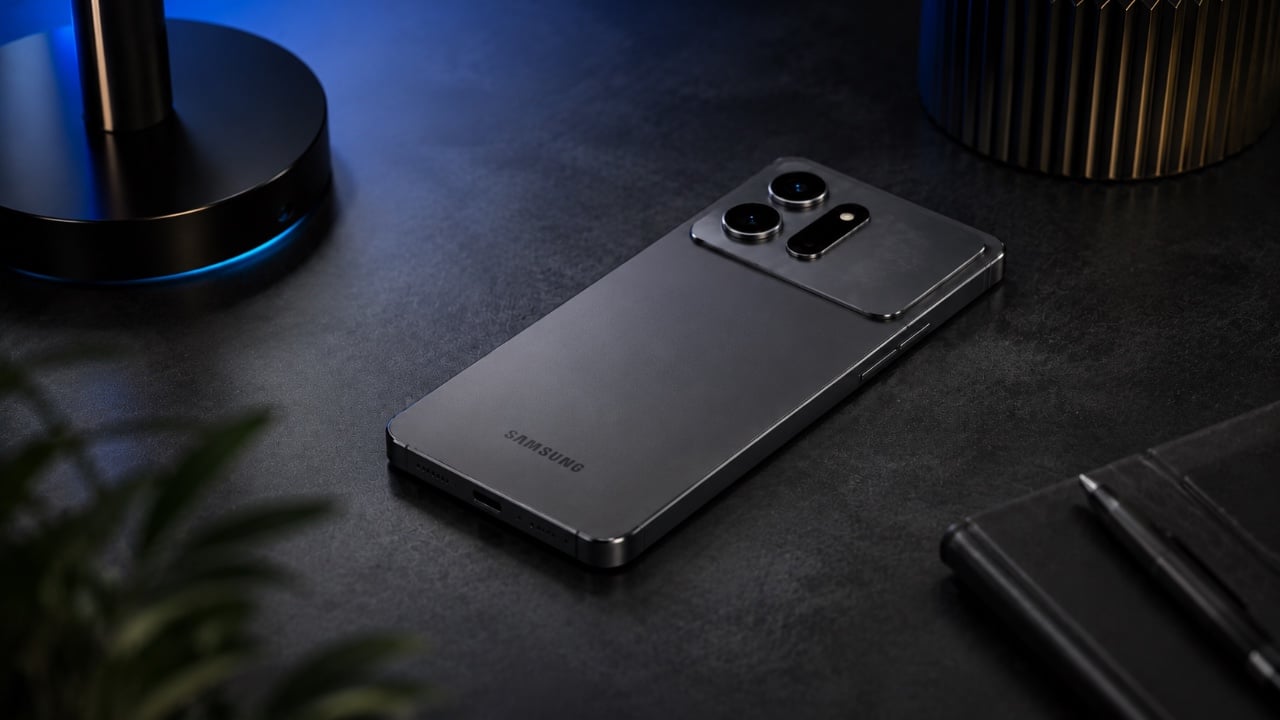
Samsung Galaxy S27 Ultra Leak Reveals a Shocking Rear Design and Camera Change

Samsung Galaxy S27 Ultra Leak Reveals a Shocking Rear Design and Camera Change Leaked horizontal camera layout on the back of the Samsung Galaxy S27 Ultra

The Samsung Galaxy S27 series represents a calculated blend of familiar design elements and meaningful innovation, with the Ultra model taking center stage. While the base model emphasizes affordability and practicality, the Ultra variant introduces notable advancements in camera technology, battery performance, and overall design. These enhancements reflect Samsung’s commitment to refining its flagship lineup […]

The post Samsung Galaxy S27 Ultra Leak Reveals a Shocking Rear Design and Camera Change appeared first on Geeky Gadgets.

Posted in Uncategorized

Are You Only Using 10% of Claude Code’s True Capabilities?

Are You Only Using 10% of Claude Code’s True Capabilities? The Auto Mode toggle and goal command interface in Claude Code

Many users of Claude Code may not realize they are only scratching the surface of its capabilities. As Simon Scrapes highlights, the platform offers far more than basic automation, with features like autonomous workflows and advanced context management designed to handle both repetitive and complex tasks. For instance, activating “Auto Mode” and using commands such […]

The post Are You Only Using 10% of Claude Code’s True Capabilities? appeared first on Geeky Gadgets.

Posted in Uncategorized

XiaoBu Wants to Be the Most Personal Thing on Your Desk

We’ve reached a point where our desks have become a form of personal expression. The plant you chose, the pen holder you 3D-printed, the specific coffee mug that only leaves when it’s being washed – these things say something about who you are. XiaoBu, a desktop companion robot concept by Handsome Chen, is betting that your next statement piece might just say “hello” back.

XiaoBu is not a smart speaker with a face. It’s not a Tamagotchi with an engineering degree. It’s a desktop robot that pulls together three things that usually live separately: audio function, emotional interaction, and replaceable fabric skins. The combination is what makes it feel genuinely interesting rather than like another product designed to solve a problem no one actually had. Sit with the concept for a moment, though, and the sum starts to feel quite different from its parts.

Designer: Handsome Chen

The fabric skins are the detail that stopped me mid-scroll. Most companion robots lean hard into hard plastic shells – which makes sense from a durability standpoint, but creates a certain coldness that works against the whole “companion” pitch. XiaoBu takes the opposite direction. By making the outer layer soft and swappable, it invites you to treat it less like a gadget and more like a small, quietly present roommate you can dress according to your mood. That shift in material logic carries a real design philosophy behind it: the idea that emotional connection often starts with touch, texture, and familiarity. It’s the difference between something you pick up because you need it and something you keep because it just feels right having it nearby.

The trend toward desktop companion robots has been building steadily for some time. Products like EMO and Eilik have already carved out a niche for people who want their desk to feel a little more alive – but those largely stick to the personality-through-expression model, where a tiny LED screen becomes the entire emotional vocabulary of the machine. XiaoBu’s approach is quieter and, I’d argue, more considered. It’s not performing for you. It’s designed to live alongside you, and the form reflects that distinction deliberately.

Handsome Chen, the Xi’an-based designer behind the concept, describes XiaoBu as breaking the “static limitations” of traditional desktop objects. It’s a deceptively simple framing, but it gets at something real. Most things on your desk are passive. They sit. They wait. They do nothing unless you reach for them. A companion robot, by design, has to earn its place differently – not just by being useful, but by being present in a way that feels intentional rather than intrusive.

I’ll be upfront: I’m a little skeptical of the word “companion” being attached to consumer tech. It’s an easy word to deploy and a hard promise to keep. But XiaoBu’s design, at least conceptually, seems to understand that emotional resonance can’t be engineered through features alone. It has to be built into the form, the texture, the way the object occupies space. The replaceable skins aren’t just a customization feature – they’re an acknowledgment that the relationship between a person and their space is fluid and always evolving, and the things they keep close should be allowed to evolve too.

What makes XiaoBu feel genuinely fresh in this growing category is that it doesn’t try to impress you with complexity. It doesn’t seem to be chasing a checklist of AI capabilities or competing on specs. The design conversation starts with softness, with audio warmth, with the kind of small, considered decisions that make an object feel like it belongs to you rather than to a product category.

Whether XiaoBu ever moves past concept into production is a separate question, and one I genuinely hope gets answered. Right now it lives on Behance, accumulating thousands of appreciations from people who clearly recognize the same thing I did: that sometimes the most interesting design isn’t the one with the most features. It’s the one that makes you feel like someone actually thought about what it means to share space with you.

The post XiaoBu Wants to Be the Most Personal Thing on Your Desk first appeared on Yanko Design.

Why iOS 27 is a Game Changer for iPhone Battery Life

Why iOS 27 is a Game Changer for iPhone Battery Life Illustration of battery life related to the article topic.

Apple’s iOS 27 brings a highly anticipated update, focusing on enhancing battery life, optimizing performance, and introducing practical features to improve usability. With the first beta already available, this release is designed to refine the iPhone experience for users worldwide. Here’s an in-depth look at the key advancements in iOS 27 and why it’s a […]

The post Why iOS 27 is a Game Changer for iPhone Battery Life appeared first on Geeky Gadgets.
Posted in Uncategorized