NVMe vs. SATA SSD: What’s the difference between the two drive types?
An SSD is a huge upgrade over an HDD, but SATA and NVMe SSDs offer major differences in their performance.
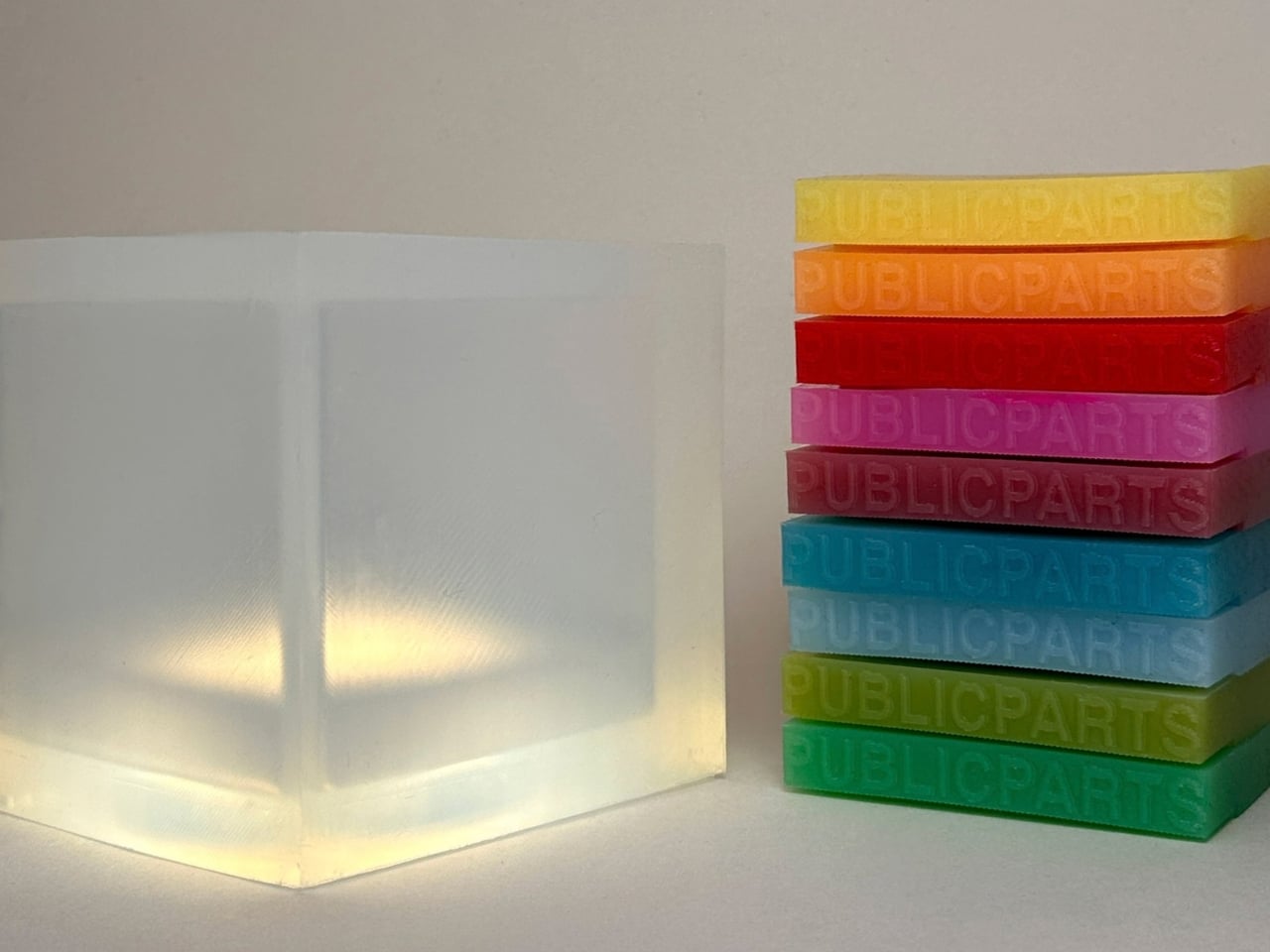
One of the things I distinctly remember from my cinematography class back in university is how changing the color gels on a light stand completely transforms how a scene is lit. I never ended up pursuing a career in the industry, but it’s a lesson that stuck with me. To this day, I pay close attention to lighting whenever I watch a theater performance, sit in on a photo shoot, or attend an event. Lighting is everything in those industries, and now, that same idea is making its way into home decor.
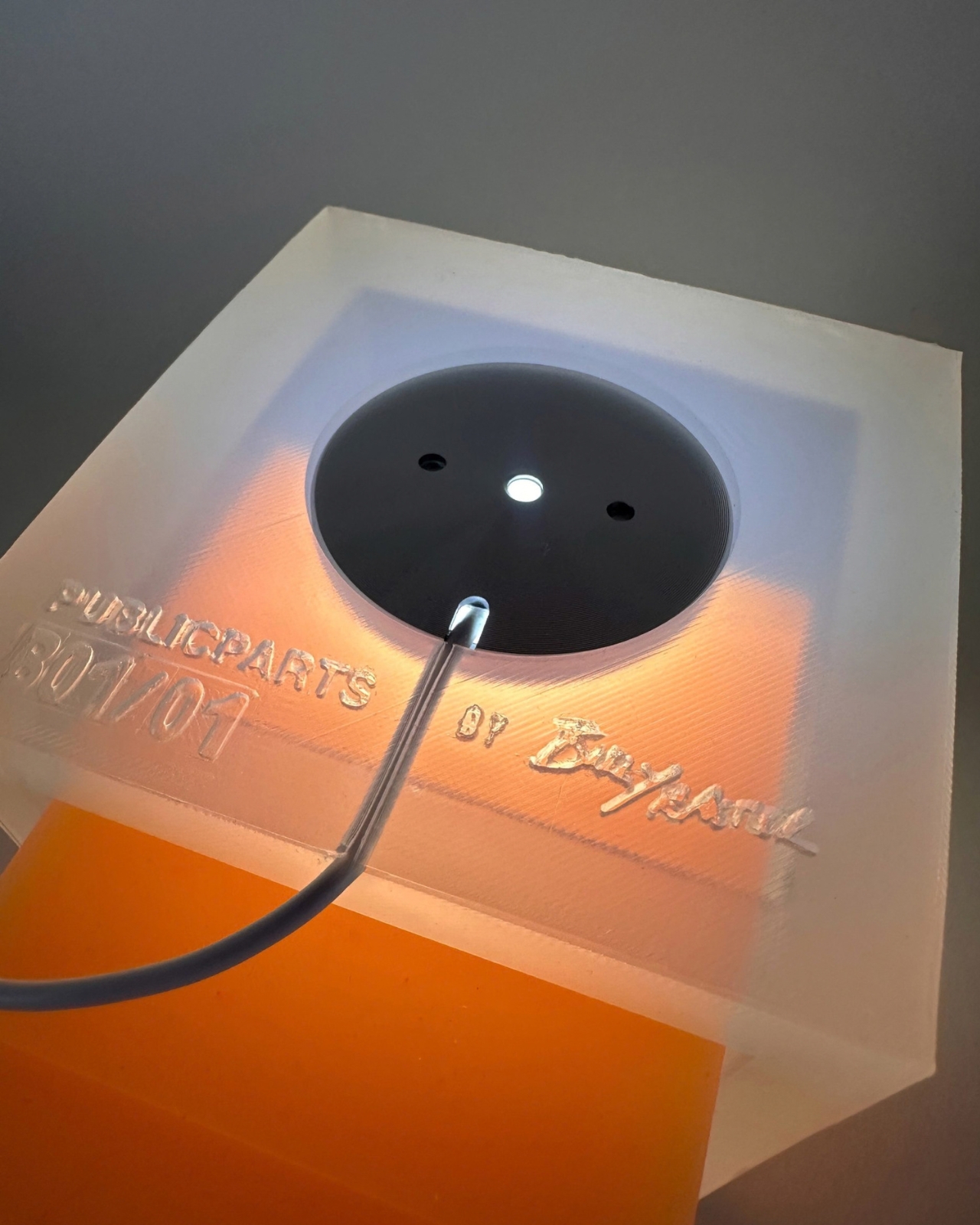
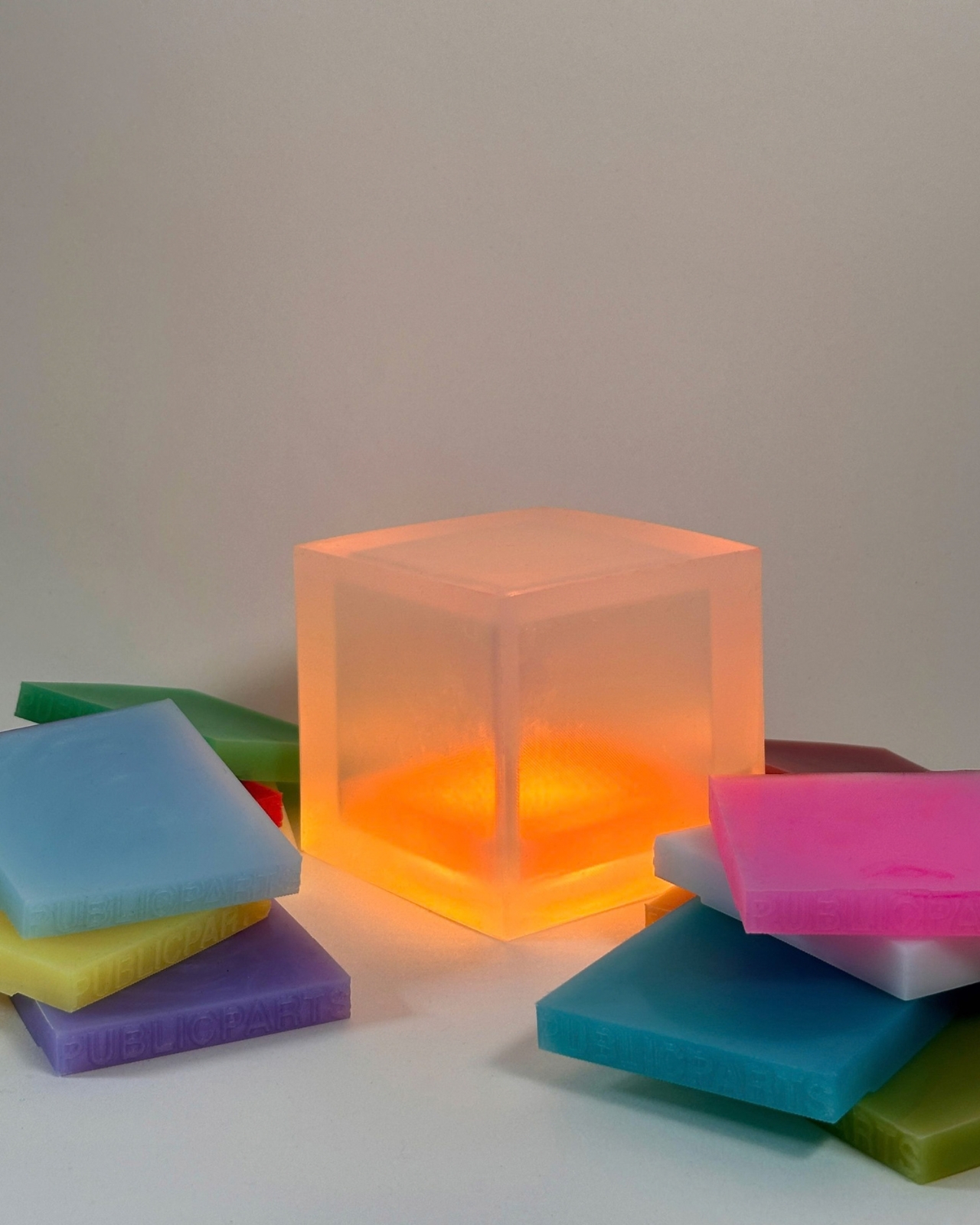
Enter the Gel Lamp, designed by London-based designer Billy Easter through his studio, Public Parts. It’s a cube-shaped table lamp made from hand-cast silicone that borrows this exact concept from professional lighting design. But instead of swapping out an entire bulb, you change a slim, translucent silicone slide, called a “gel,” that slots into a narrow opening near the base of the lamp, right where the dimmable LED sits.
Designer: Billy Easter
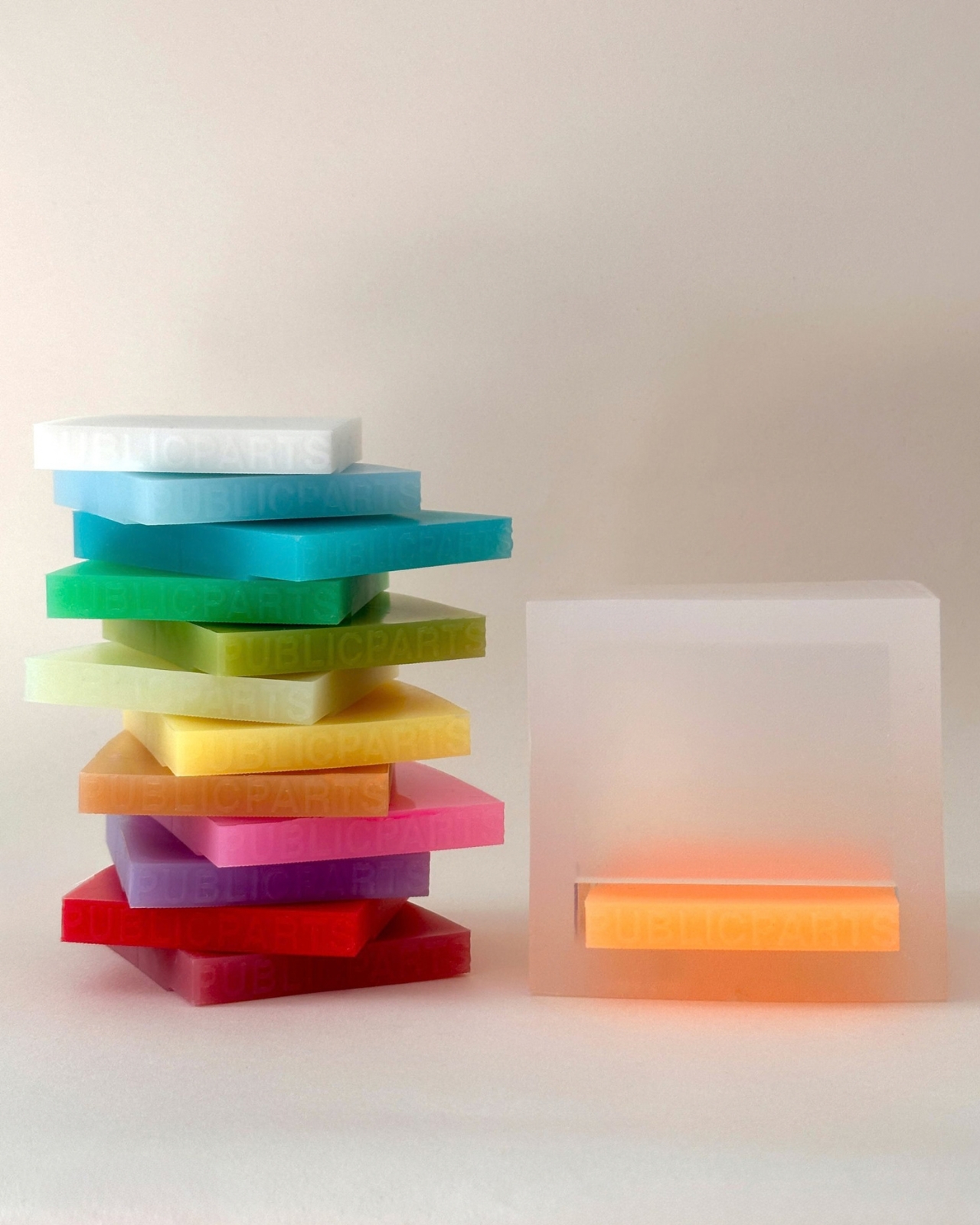
The lamp itself measures roughly 11.5 by 11.5 by 11.5 centimeters, a compact hollow cube that hides more craftsmanship than its simple geometric shape suggests. Slide in a different colored gel, and the light filtering through the cube shifts instantly. No new lamp required, no bulb to hunt down and replace.
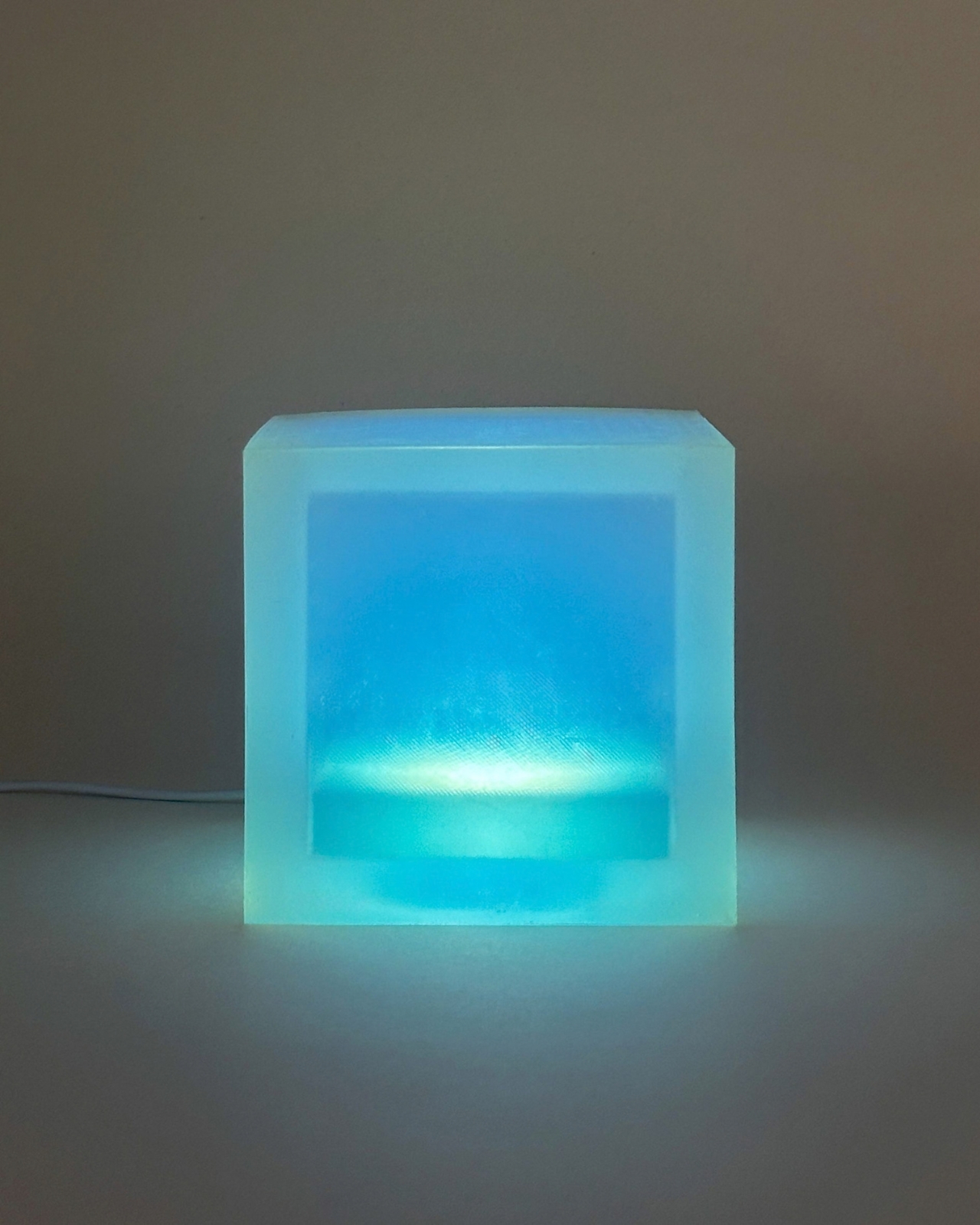
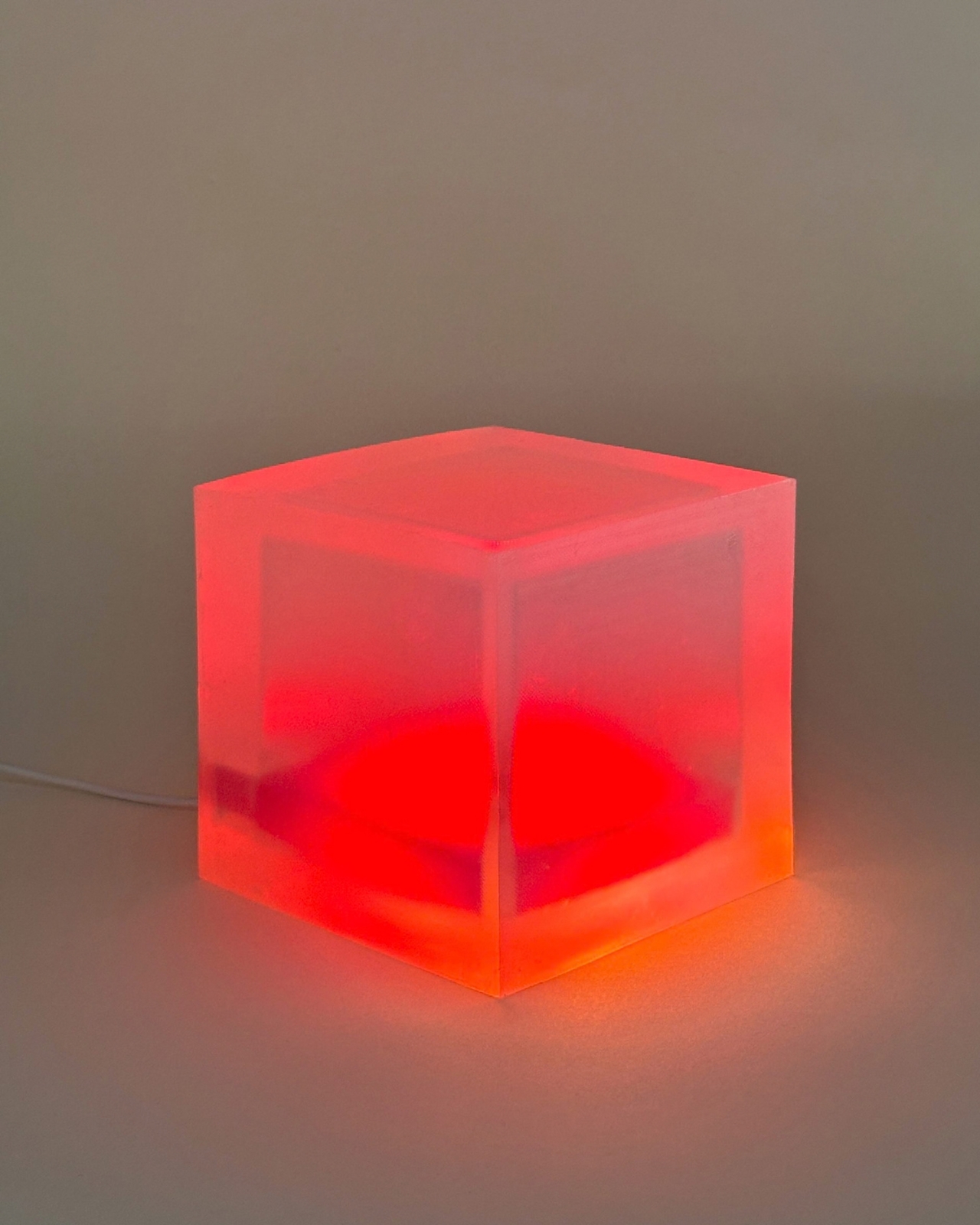
The idea behind the Gel Lamp is refreshingly simple: you don’t need five different lamps to switch up the mood lighting in your space. Swapping one gel for another does the job, not unlike flipping to a different vinyl record or changing your outfit when you need a different vibe for the night. It turns something as mundane as adjusting a lamp into a small creative ritual, a low-effort, high-impact way to personalize your space on any given day.
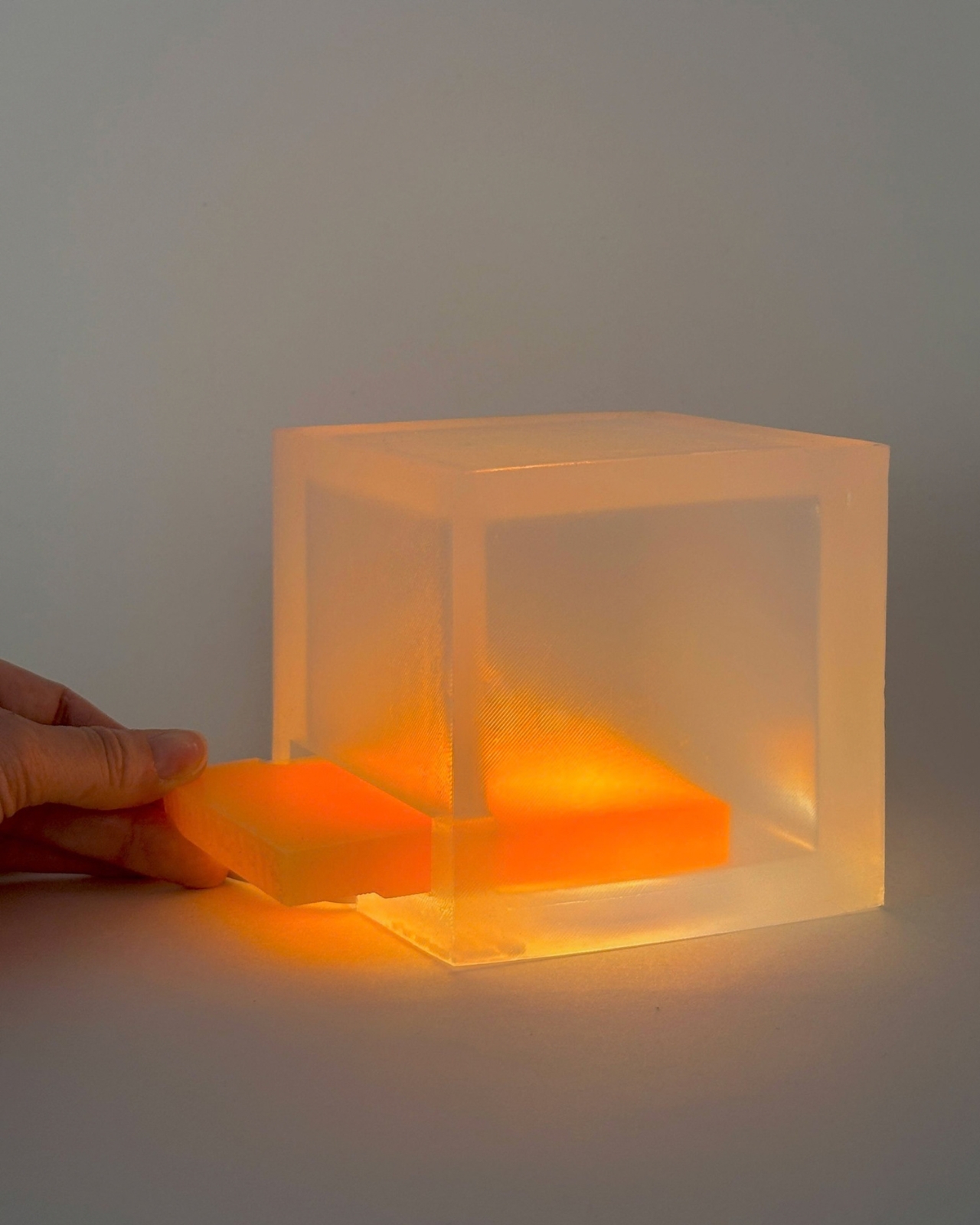
If you’re the type who appreciates when materials feel “coherent,” this lamp will scratch that itch. The entire object, from the outer shell to the interchangeable gels themselves, is made from silicone. That single-material approach gives the lamp a soft, tactile feel in your hands, while still holding its structural shape on a shelf or nightstand. It’s the kind of object that looks minimal and geometric from across the room, but surprises you the moment you actually touch it.
Compare it to something like a Philips Hue smart bulb, which is arguably the biggest name in mood lighting right now. Hue bulbs let you change color through an app, complete with presets, schedules, and voice control through Alexa or Google Assistant. It’s convenient, sure, but it’s also entirely digital: you’re tapping a screen, not touching anything real. The Gel Lamp takes the opposite approach. There’s no app, no Bluetooth pairing, no software update required. You physically pick up a gel, slide it in, and watch the light change right in front of you. For anyone who’s grown a little tired of “smart” everything, that tactile, hands-on simplicity is the whole appeal. It also sidesteps the disposable feel of cheap color-changing LED strips you’d find at a big-box store; this is a small-batch, hand-cast object meant to be kept, not tossed after the novelty wears off.
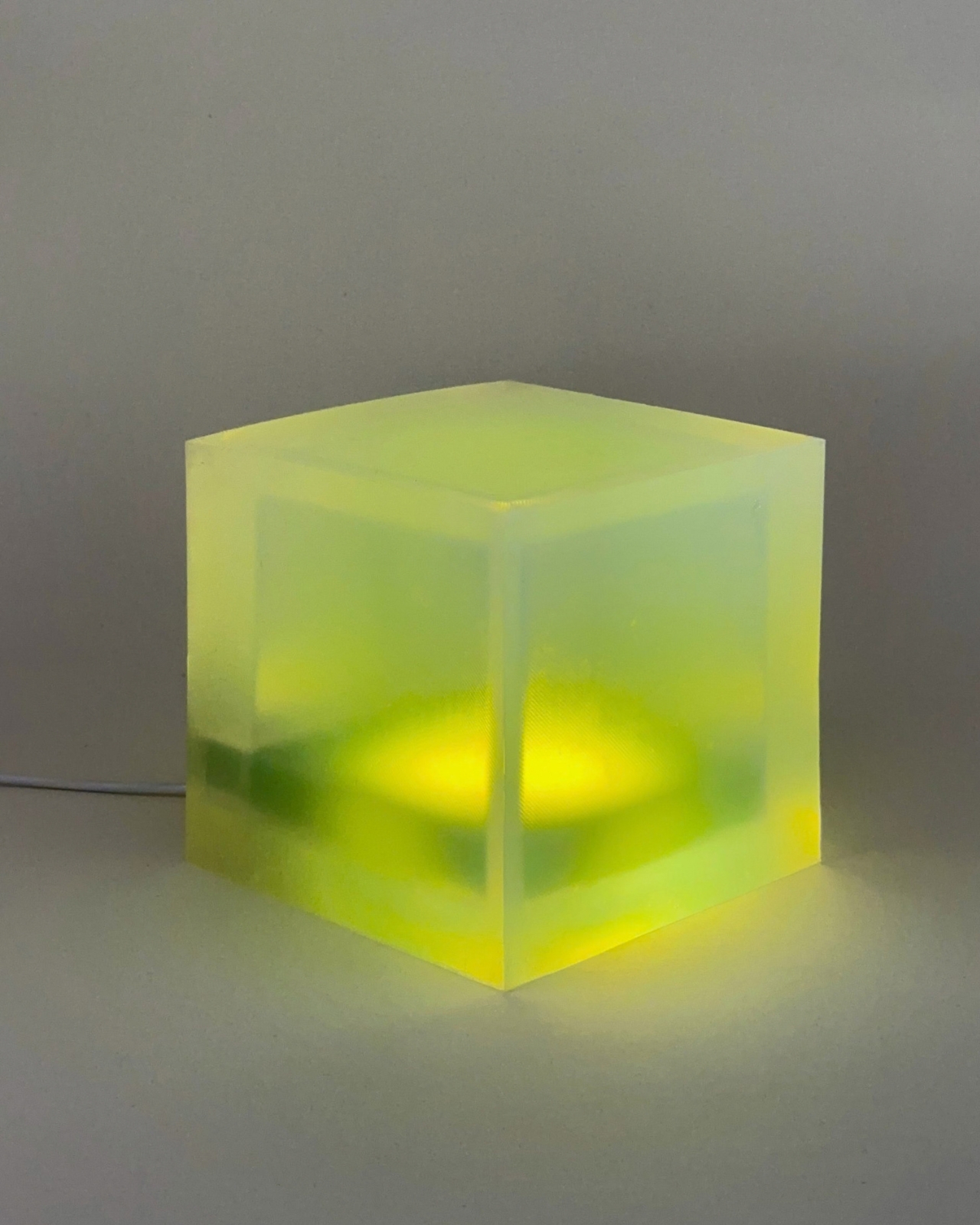
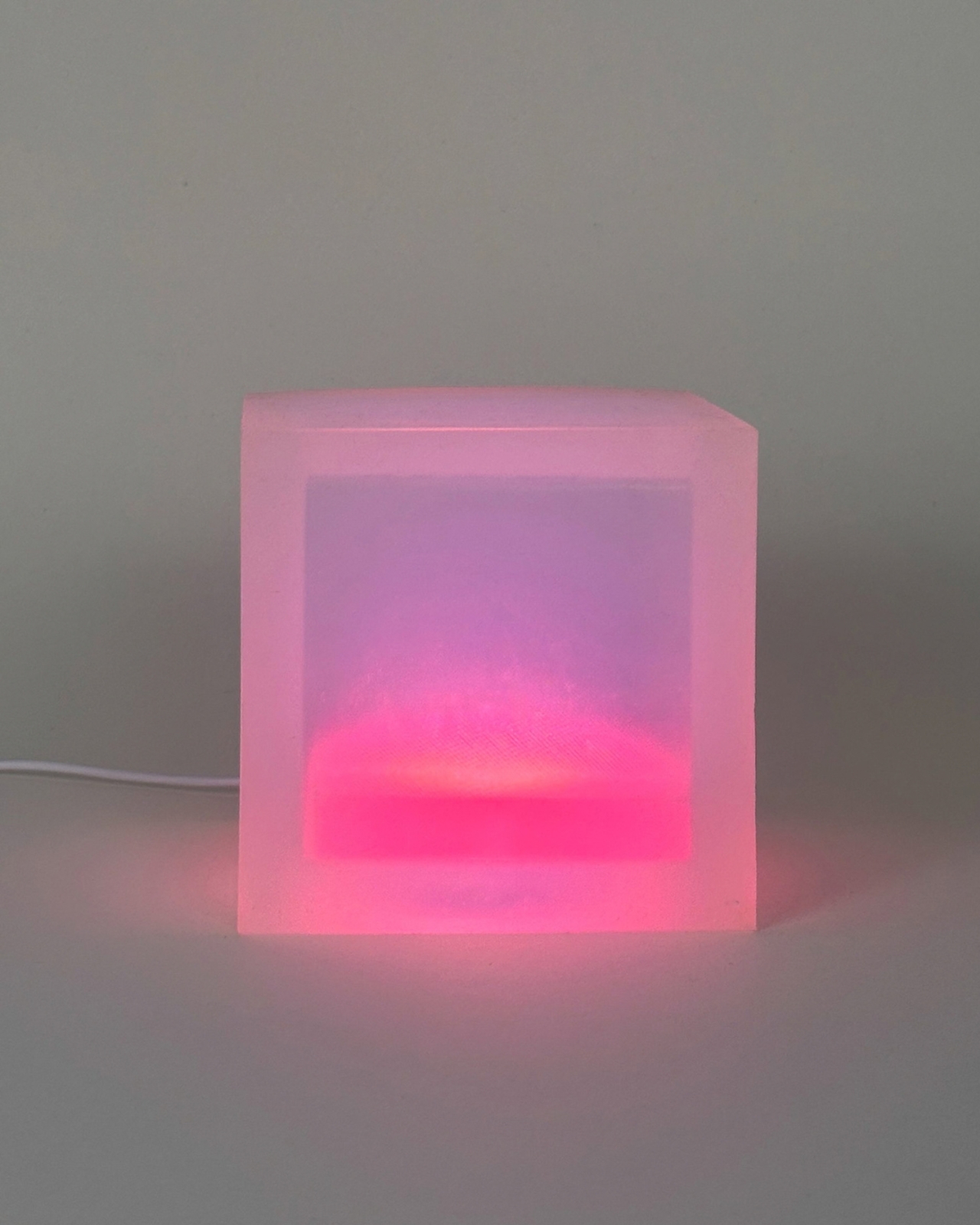
That said, the Gel Lamp isn’t trying to compete on features. It won’t sync to your smart home or dim itself on a schedule. What it offers instead is something a little more personal: a genuine physical interaction with light and color, the same interaction I first fell in love with in that cinematography classroom years ago. It’s a reminder that changing the atmosphere of a room doesn’t need to be automated to feel meaningful. Sometimes it just needs a good gel and a steady hand.
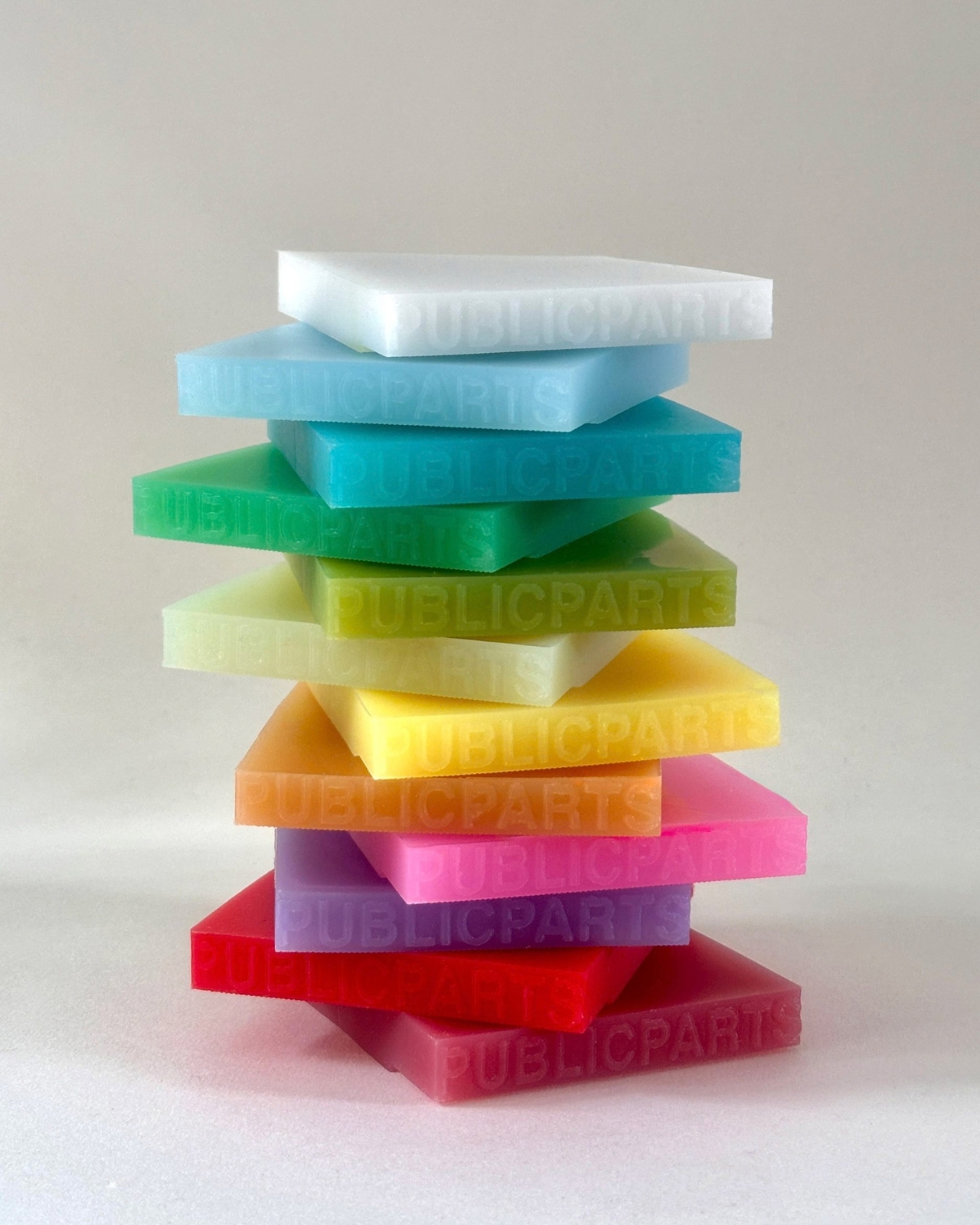
Whether you’re drawn to it for the craftsmanship, the tactile silicone, or simply the nostalgia of manually adjusting light like a set designer would, the Gel Lamp proves that mood lighting doesn’t have to come from an app. Sometimes, the most satisfying upgrade to your space is the one you can hold in your hand.
The post Mood Lighting Without the App, the Bulb, or the Smart Home first appeared on Yanko Design.

Apple’s highly anticipated entry into the foldable phone market with the iPhone Duo has intensified the competition with Samsung’s Galaxy Z Fold series. As a pioneer in foldable technology, Samsung has maintained a dominant position for years. However, Apple’s fresh perspective has brought attention to areas where the Galaxy Z Fold 9 could evolve. From […]
The post Samsung Galaxy Z Fold 9: Major Upgrades Leaked appeared first on Geeky Gadgets.





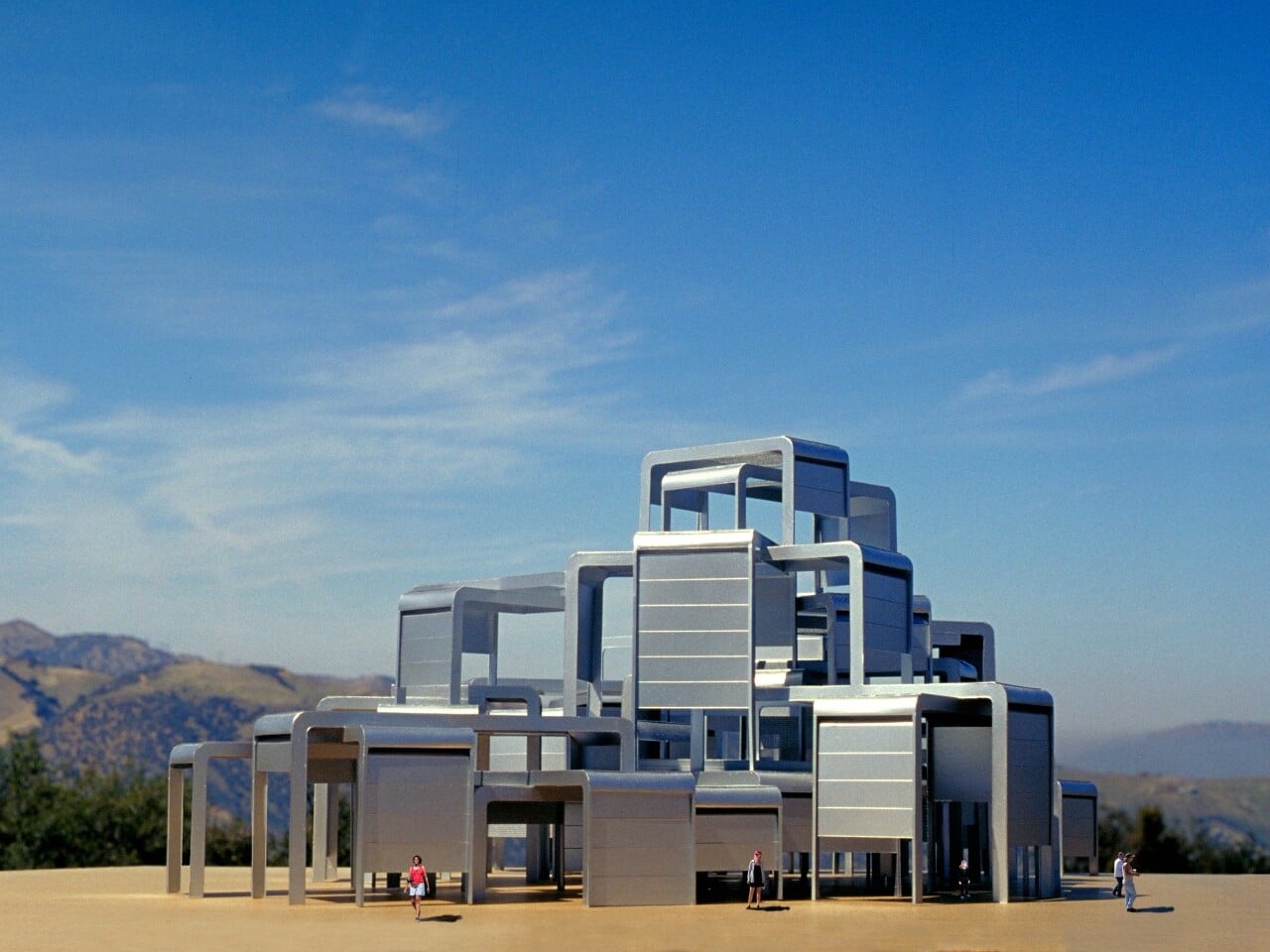
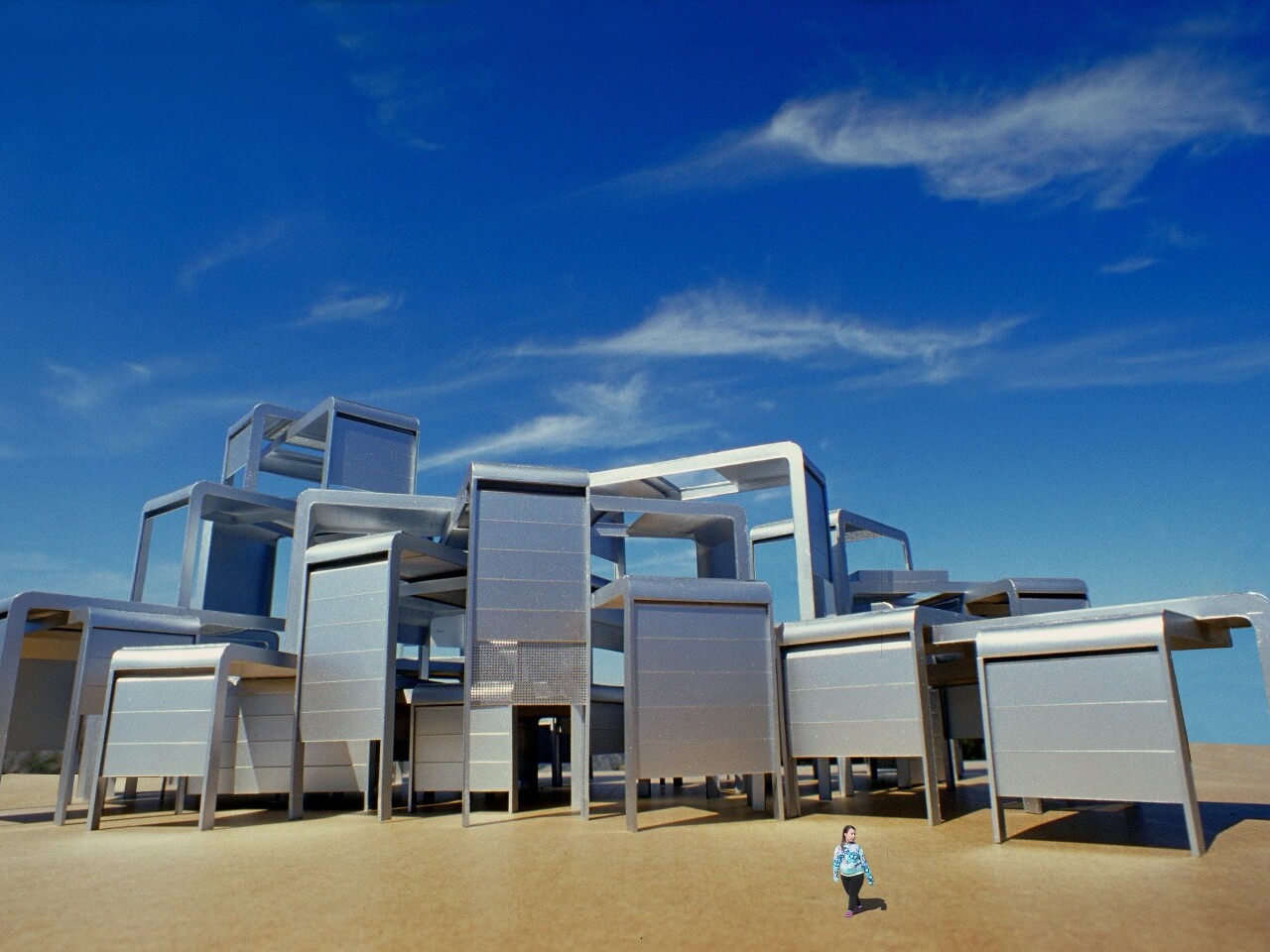
Every garage door opener sitting in a car visor does one boring job: raising and lowering a single panel between a car and the weather. The Garage Door Pavilion takes that same reliable, forgettable mechanism and multiplies it across dozens of steel panels woven into a public structure, letting anyone walking by reshape an entire building with the press of a button they’ve used a thousand times before.
Each door in the cluster gets its own dedicated opener mounted just in front of it, so a visitor doesn’t need any special instruction to participate. Pressing a button raises or lowers that single panel to any position between fully open and fully closed, turning a solid wall into a shaded opening or a covered passage into open sky within seconds, entirely on the visitor’s own terms.
Designer: Michael Jantzen
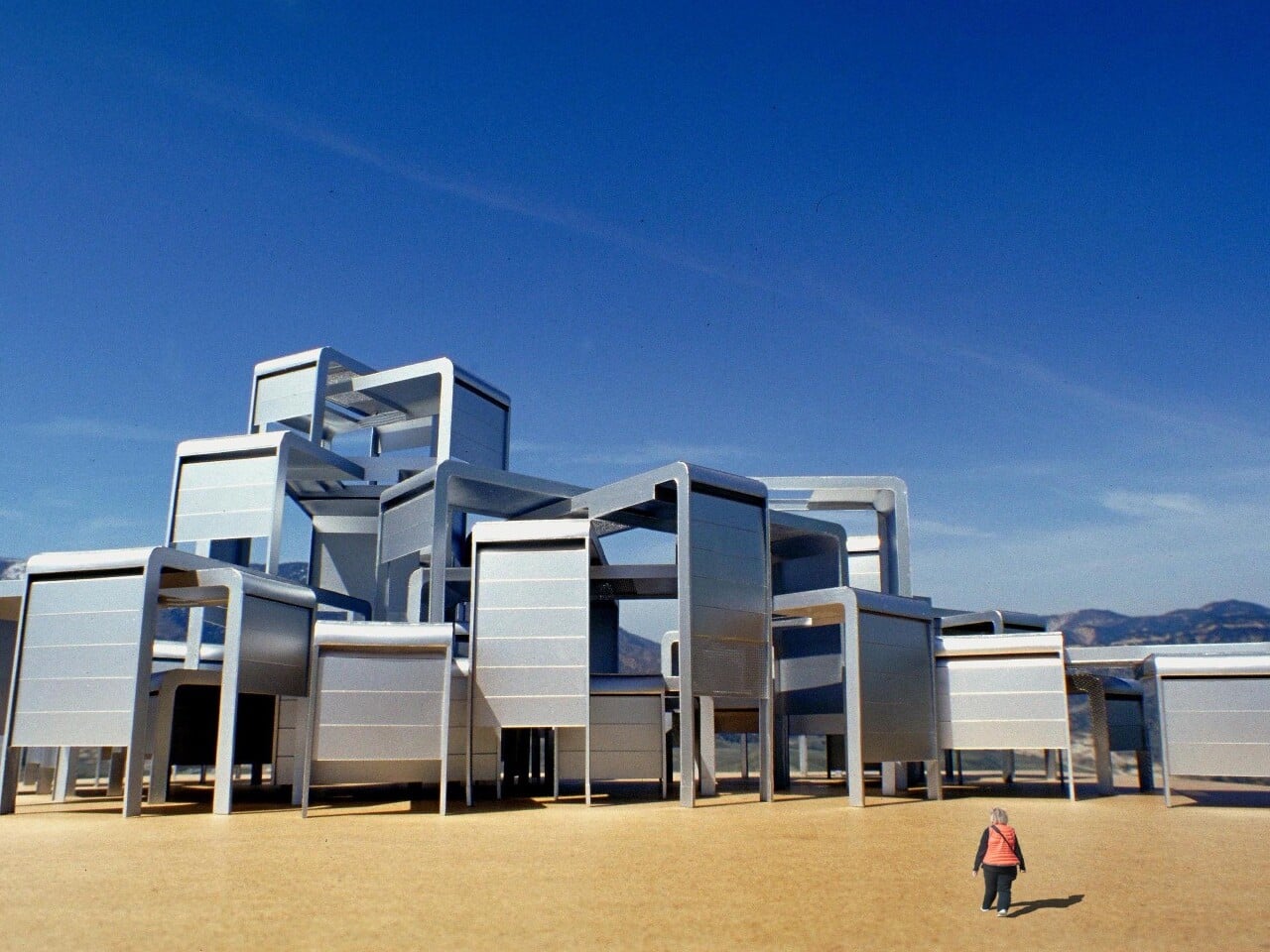
Most of those panels are solid, painted steel, borrowed straight from standard garage door manufacturing rather than custom fabricated for a one-off art piece. Others swap in perforated metal instead, letting light and air filter through even when fully shut. Mixing solid and perforated surfaces across the same structure means no two configurations look or feel quite the same, depending on which doors a visitor chooses to move.
Structurally, the whole assembly relies on a series of support frames sharing the same width but varying in height, woven together at different orientations rather than stacked in a predictable grid. That irregular weaving is what gives the pavilion its dense, clustered silhouette, closer to a jumble of oversized shipping containers caught mid-shuffle than any conventional roofline a visitor might expect walking up from a distance.
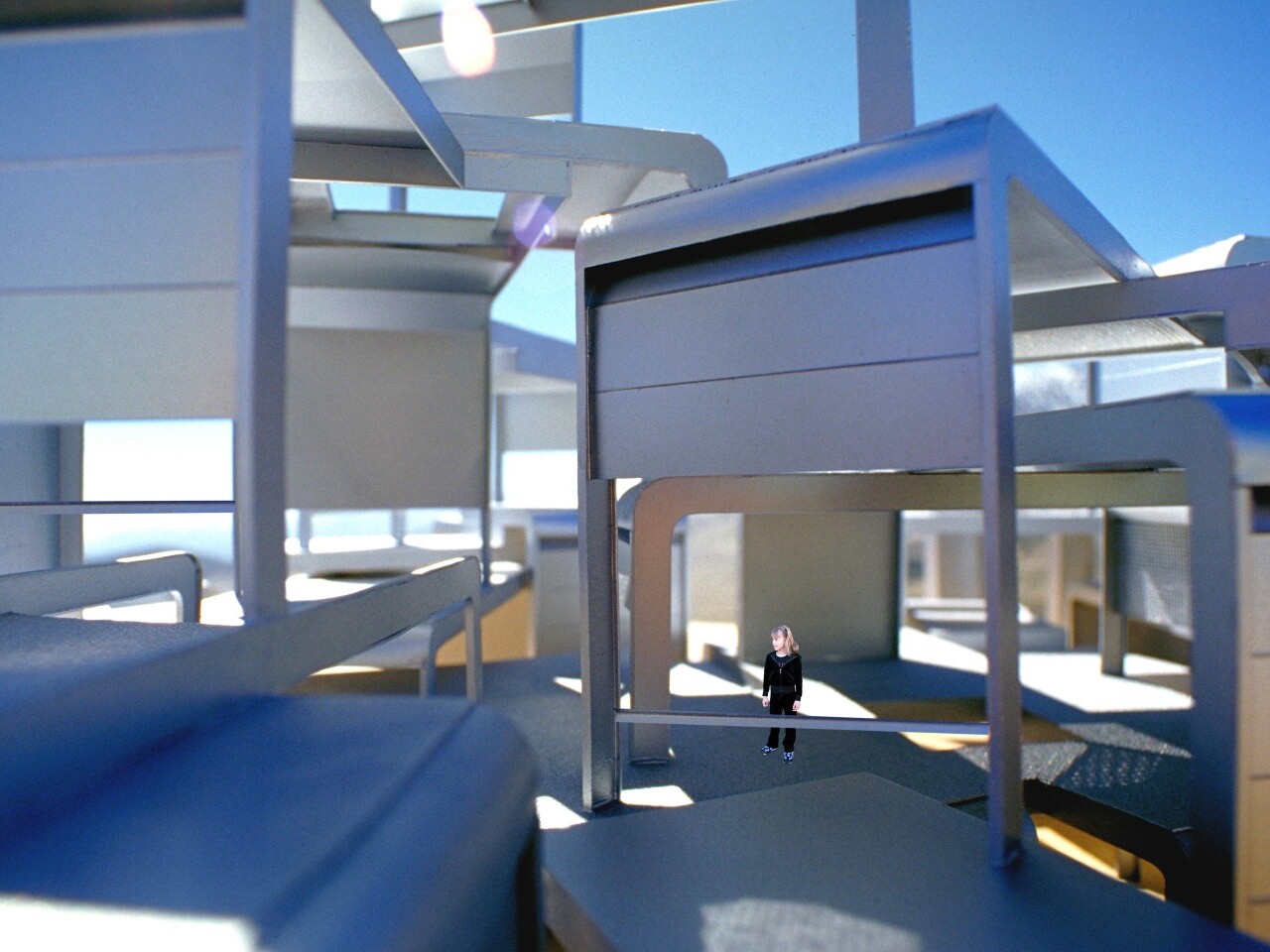
Walk underneath once a few doors lift overhead, and covered passageways start to appear between the raised panels, offering shade in an otherwise open desert setting. Close a few doors nearby instead, and those same passageways seal into private, boxed-in rooms. The structure never settles into one fixed identity, since every visitor’s button presses leave it slightly different from how they found it.
That instability is deliberate rather than an engineering compromise. Treating a public structure as something visitors actively reshape, rather than a fixed backdrop, reframes what adaptability actually means in architecture. A door lifted for shade at noon can drop shut by evening, all without a maintenance crew or a redesign, just the same mechanical reliability people already trust in their own homes.
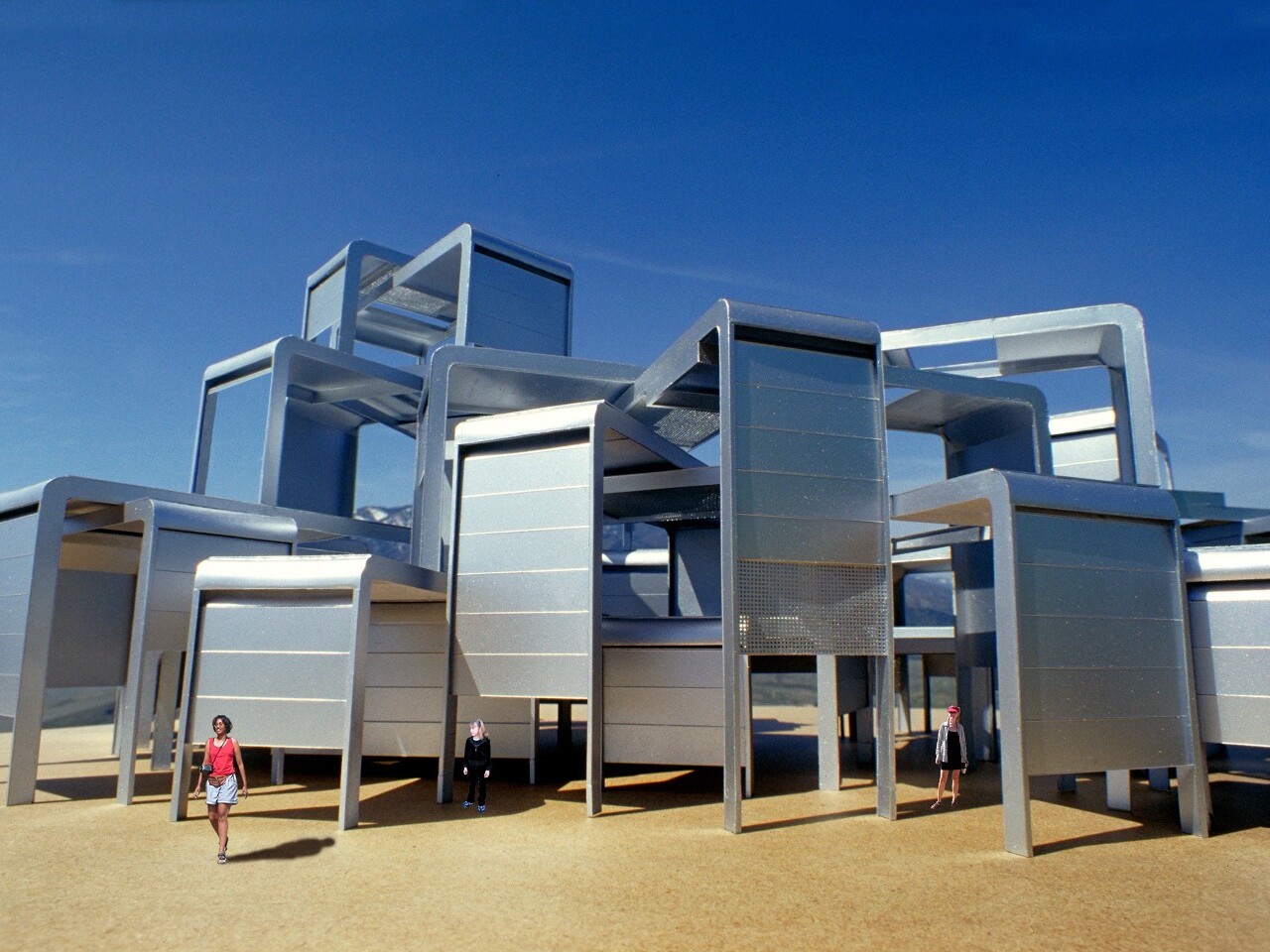
The project ties this physical flexibility to a larger argument about what buildings owe the people using them. A pavilion that can’t be adjusted asks everyone to accept its default state, whatever the weather or crowd size happens to be that day. One built from reconfigurable panels instead treats a changing climate and shifting social needs as ordinary conditions to design around, not exceptions worth ignoring.
Placing that logic in an exposed desert landscape only sharpens the point. Conditions shift dramatically between morning shade and afternoon heat, and a structure that can’t respond to that shift in real time asks visitors to simply endure it instead. The Garage Door Pavilion answers with something closer to a responsive shell, changing shape at the same speed a driveway door already does every single day.
The post This Pavilion Works Like Giant Venetian Blinds That Anyone Can Adjust first appeared on Yanko Design.