Samsung’s Rumored Galaxy Z Roll 5G Could End the Foldable Crease Era for Good

Samsung’s Rumored Galaxy Z Roll 5G Could End the Foldable Crease Era for Good Holographic 3D display technology projecting from the smartphone screen

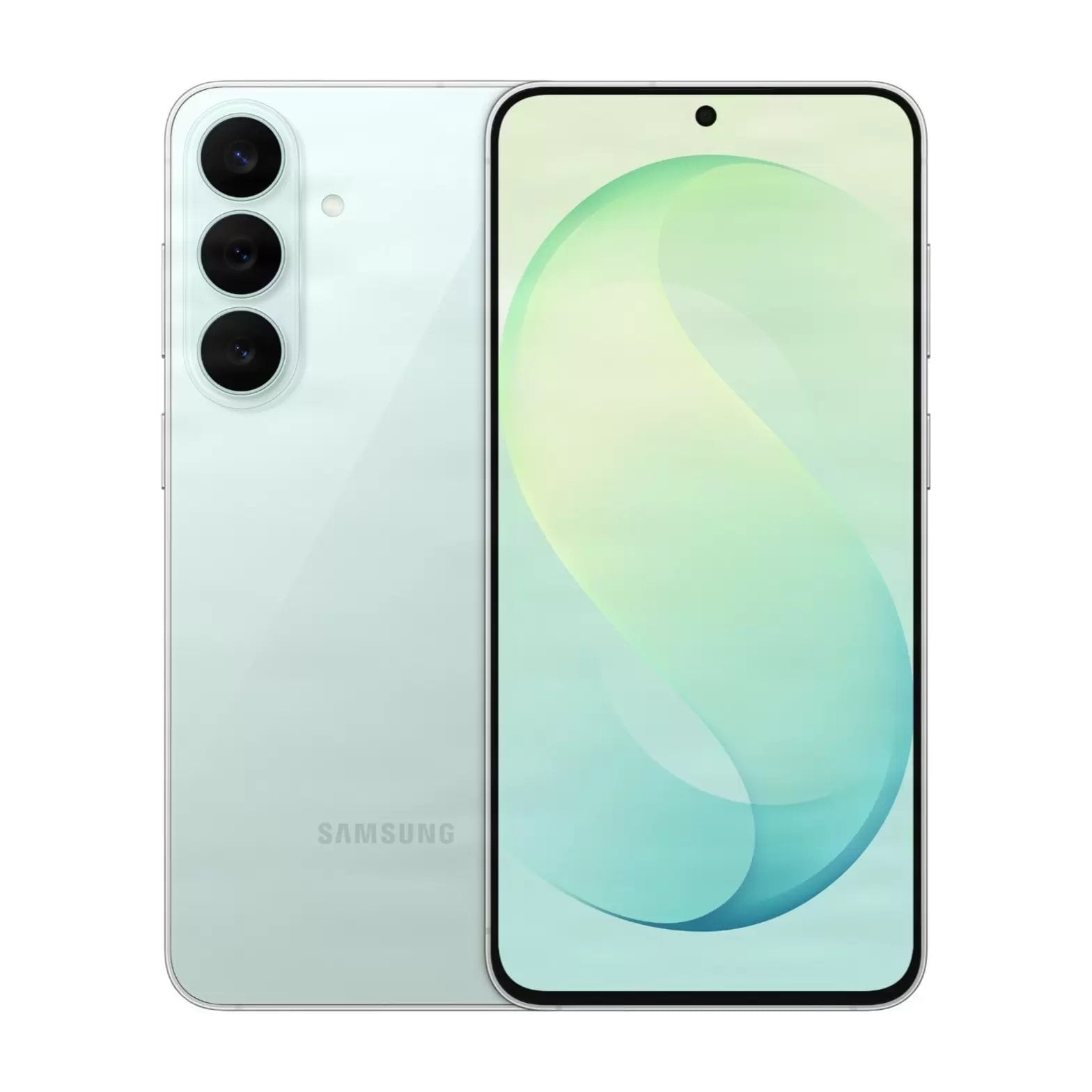
The Samsung Galaxy Z Roll 5G represents a bold step forward in the evolution of smartphones, blending innovative features with practical functionality. With its innovative rollable display, integrated health monitoring, immersive holographic visuals, and advanced air quality sensor, this device sets a new benchmark for what a smartphone can achieve. Designed to adapt seamlessly to […]

The post Samsung’s Rumored Galaxy Z Roll 5G Could End the Foldable Crease Era for Good appeared first on Geeky Gadgets.

Posted in Uncategorized

Google and XREAL Project Aura AR Glasses Feature Fully Tested

Google and XREAL Project Aura AR Glasses Feature Fully Tested User interacting with five floating screens using Android XR

Google and XREAL’s Project Aura introduces a lightweight AR glasses system designed to balance comfort, functionality and advanced features. At just 95 grams, the glasses achieve their ergonomic design by offloading processing and battery components to a separate power puck, which supports up to four hours of use. Steven Sullivan explores how this hardware setup, […]

The post Google and XREAL Project Aura AR Glasses Feature Fully Tested appeared first on Geeky Gadgets.

Posted in Uncategorized

iPhone Ultra vs. Galaxy Z Fold 8 Wide: How the New 4:3 Display Layouts Compare

iPhone Ultra vs. Galaxy Z Fold 8 Wide: How the New 4:3 Display Layouts Compare Side by side comparison of the iPhone Ultra and Galaxy Z Fold 8

The iPhone Ultra and Samsung Galaxy Z Fold 8 are redefining the foldable smartphone landscape with their innovative designs and advanced features. Apple’s entry into the foldable market with the iPhone Ultra marks a significant milestone, directly challenging Samsung’s well-established Galaxy Z Fold series. These devices cater to the evolving demands of modern users, yet […]

The post iPhone Ultra vs. Galaxy Z Fold 8 Wide: How the New 4:3 Display Layouts Compare appeared first on Geeky Gadgets.

Posted in Uncategorized

How to Use ChatGPT for Beginners : Writing, File Analysis, Plans and More

How to Use ChatGPT for Beginners : Writing, File Analysis, Plans and More ChatGPT connected to external workspace apps via Zapier.

ChatGPT can be a valuable resource for anyone looking to streamline their work processes, but getting started with it may feel overwhelming. In this step-by-step guide, Kevin Stratvert walks you through the essentials of using ChatGPT effectively, from navigating its interface to using its advanced features. For example, he explains how to use the prompt […]

The post How to Use ChatGPT for Beginners : Writing, File Analysis, Plans and More appeared first on Geeky Gadgets.

Posted in Uncategorized

6 Massive Upgrades Coming to Apple Notes in the iOS 27 Beta

6 Massive Upgrades Coming to Apple Notes in the iOS 27 Beta The new extra-large Apple Notes widget on the iOS 27 home screen

Apple Notes has introduced several updates with iOS 27, currently in beta for developers, that refine how users manage and organize their notes. Dan Rodriguez highlights the addition of note linking, which enables users to create hyperlinks between notes, making it easier to connect related information. This feature is particularly helpful for tasks like organizing […]

The post 6 Massive Upgrades Coming to Apple Notes in the iOS 27 Beta appeared first on Geeky Gadgets.

Posted in Uncategorized

How to Reset an Apple Watch When You Forget the Passcode

How to Reset an Apple Watch When You Forget the Passcode Pressing the digital crown to access the erase menu

Forgetting your Apple Watch passcode can be inconvenient, but regaining access is a manageable process. This guide provides a clear, step-by-step approach to resetting your device, restoring your data, and setting up a new passcode. Whether you own a Standard, SE, or Ultra model, these instructions apply universally. However, your Apple Watch must be linked […]

The post How to Reset an Apple Watch When You Forget the Passcode appeared first on Geeky Gadgets.

Posted in Uncategorized

How to Prepare Your iPhone for the Upcoming iOS 26.6 Update

How to Prepare Your iPhone for the Upcoming iOS 26.6 Update Illustration of beta users related to the article topic.

The release of iOS 26.6 represents the final major update in the iOS 26 series, delivering a range of enhancements designed to improve performance, security, and overall functionality. This update also serves as a bridge to the highly anticipated iOS 27, laying the groundwork for future advancements. If you’re currently using iOS 26, here’s a […]

The post How to Prepare Your iPhone for the Upcoming iOS 26.6 Update appeared first on Geeky Gadgets.

Posted in Uncategorized

Laser Engravers Need a Workshop, This One Fits in a Backpack

Laser engravers have always come with a catch. Getting one typically means dedicating a chunk of workspace to it, running a cable to the nearest outlet, and putting on protective goggles before pressing start. For makers who don’t have a proper workshop, that’s a lot of overhead just to personalize a wooden keychain or stamp a logo onto a leather patch.

The Hanboost T1 is designed with exactly that frustration in mind. It’s a fully enclosed mini laser engraver measuring 115mm x 115mm x 115mm, weighing roughly 400g, and running off a standard USB-C connection, so a power bank is all you need to get it going. The idea is simple: a capable, portable engraver that fits into a backpack and doesn’t demand a dedicated room.

Designer: Hanboost

Click Here to Buy Now: $99 $149 ($50 off). Hurry, only a few left! Raised over $378,000.

The T1 has a clean cube silhouette that doesn’t look out of place next to a laptop or a set of studio monitors. Its dark body, vented side panels, and tinted front window give it the feel of a precision instrument rather than a hobbyist gadget. The viewing cover is swappable, available in red, orange, or green, with custom-pattern options for anyone who wants to personalize the unit itself.

Close to the weight of a full can of soda, the T1 is light enough that you’d barely notice it in a bag. Because it draws power from any USB-C source, including the power banks most people already carry, you can set it up on a kitchen table, a café counter, or a folding table at a craft fair without worrying about finding a wall outlet nearby.

The T1’s engraving area measures 60mm x 40mm, which keeps things focused on smaller objects: gift tags, leather patches, wood coasters, cork pieces, cardstock, and phone cases. The standard 500 mW version handles wood, leather, fabric, and kraft paper well, while the 1.6 W Pro module, available as an upgrade, opens things up to bamboo, painted metal, and dark acrylic without needing a special coating.

The T1 uses a blue diode laser rather than the red diode type found in many entry-level machines. The distinction matters because blue diode lasers absorb more deeply into organic materials, producing sharper contrast and cleaner lines. Pair that with a 0.05mm engraving accuracy, and the results are detailed enough to render fine botanical illustrations or small portrait engravings you’d normally expect from something considerably larger.

The fully enclosed body is one of the T1’s more thoughtful design choices. The observation window carries an OD4+ rating, so you can watch the engraving process without protective eyewear. A built-in tilt sensor cuts the laser automatically if the machine tips beyond 15 degrees, and an active cooling fan keeps temperatures stable during longer sessions, which matters outside of a ventilated workshop.

On the software side, the T1 works with LightBurn and LaserGRBL, which are already the go-to platforms for most experienced makers. It also connects wirelessly to the MKSLaser mobile app for those who prefer controlling things from their phone on Android. File format support covers PNG, SVG, DXF, PDF, and G-code, among others, and getting started through the app takes just three steps.

There’s also an optional height extension stand for working on taller objects like wooden boxes and small frames, which rounds out a product that’s been thought through beyond the basics. The T1 isn’t built for cutting thick timber or marking deep into metal, and it doesn’t pretend to be. For makers who’ve wanted laser engraving to fit into an everyday creative routine, that honesty is refreshing.

What’s perhaps most telling about the T1 is where it ends up living. Not tucked away in a storage bin between projects, but sitting on a desk next to a sketchbook, ready whenever an idea shows up. That kind of casual accessibility is harder to engineer than it sounds, and it tends to be the difference between a creative tool that actually gets used and one that doesn’t.

Click Here to Buy Now: $99 $149 ($50 off). Hurry, only a few left! Raised over $378,000.

The post Laser Engravers Need a Workshop, This One Fits in a Backpack first appeared on Yanko Design.
Busan’s Tram Concept Ditches Overhead Wires to Become Korea’s First Catenary-Free Public Transit System

Look up at any tram line in the world and you will see the same thing, a cobweb of overhead catenary wires strung between poles, humming with 750 volts and cluttering the sky above every historic square and modern plaza the tram passes through. Bordeaux famously buried its wires underground in 2003 with Alstom’s APS ground-level power system, and cities like Nice, Dubai, Doha, and a handful of Chinese ART deployments have followed with their own variations. Seoul has stayed conspicuously absent from that list, and so has Busan, until now. Citrus Design’s Busan Oryukdo Tram concept is the visible face of Korea’s first commercial catenary-free system, a piece of urban infrastructure that gets to be seen as a sculptural object because nothing is tethering it to the sky. The engineering decision came first, and the design language followed.

The tram wears a jet-canopy front end, with wraparound black panoramic glass sunk into a silvered metallic body and the ORYUKDO wordmark sitting centered on the nose. The body is fully low-floor, multi-articulated across three sections joined by bellows, and finished in a mirror silver meant to catch and throw back the Busan skyline as it moves. Citrus Design has clearly spent multiple design cycles on the surfacing, because the resolution is at a level trams almost never receive in commercial deployment. The whole package is framed under a city-branding brief titled “Eco-Friendly Future City Busan,” which sounds like typical municipal boilerplate until you realize Busan is actively positioning itself as a design-forward global city in Seoul’s shadow. The Oryukdo becomes rolling infrastructure that carries that argument.

Designer: Citrus Design

The canopy rakes back at an angle that has zero aerodynamic justification for a vehicle that peaks around 70 km/h, borrowing its geometry directly from fighter aircraft that need to punch through supersonic air. It looks incredible anyway, because the black-glass-in-silver-body graphic reads at pedestrian scale in a way most trams cannot manage. Citrus Design has treated the exterior surfacing as a continuous flow between sections, with the bellows connections deliberately quiet so the tram reads as one long articulated silver form rather than three carriages stuck together. Thin LED headlight strips flank the canopy in uninterrupted lines that echo the ORYUKDO wordmark centered above them. The mirror finish itself becomes a design element, turning every glass tower Busan puts on its skyline into part of the vehicle’s graphic identity.

Inside, the cabin drops the industrial-transit atmosphere most trams carry by default and swaps in something closer to a modern airport lounge. A white and light-neutral base color, red graphic accents on grab points and wayfinding, and blue seat surfaces make the interior read as intentionally styled rather than functionally endured. Floor-to-ceiling glazing runs the full length of the body, giving passengers the same panoramic character the driver gets from the canopy up front. Overhead digital displays handle wayfinding and journey information, and the low-floor layout accommodates wheelchair users and strollers without the awkward step-up ramps that plague older tram systems. The three articulated sections are joined by wide bellows connections that passengers can walk through mid-journey, turning the interior into one continuous space rather than compartmentalized carriages.

Catenary-free tram systems remain rare enough that Korea joining the club is a genuine transit-infrastructure story, and Busan doing it before Seoul is a subtle but pointed piece of civic one-upmanship. The city has spent years positioning itself as a global player, from its hard-fought and painful 2030 Expo bid to its film festival and port investments, and rolling infrastructure that looks this considered fits that campaign well. Trams almost never receive this level of design attention in the international press, which is strange considering they are among the most visible vehicles in any city that operates them. Citrus Design has treated the Busan Oryukdo Tram as a proper industrial-design commission with a clear brief, a considered CMF strategy, and a design language that will age gracefully. Busan gets a rolling ambassador, and everyone else gets a template for what a modern city tram should actually look like.

The post Busan’s Tram Concept Ditches Overhead Wires to Become Korea’s First Catenary-Free Public Transit System first appeared on Yanko Design.