Summer changes the rules of your pockets before you notice. The jacket disappears, the inner pockets disappear with it, and what remains is two shallow denim slots that max out at a phone and a handful of keys. Most people respond by carrying less. A better response is carrying smarter, choosing tools that earn every millimeter of that space by doing more, weighing almost nothing, and demanding zero ceremony to use.
The three below aren’t trying to cover every contingency. A titanium scythe-bladed knife for clean cuts on the move, a Japanese-designed can opener that turns a cold drink into a considered experience, and a clip light that replaces five tools in a single dial rotation. Three objects, three distinct registers of what summer carry looks like when the thinking behind it is more deliberate than the pocket it fits in.
1. ScytheBlade
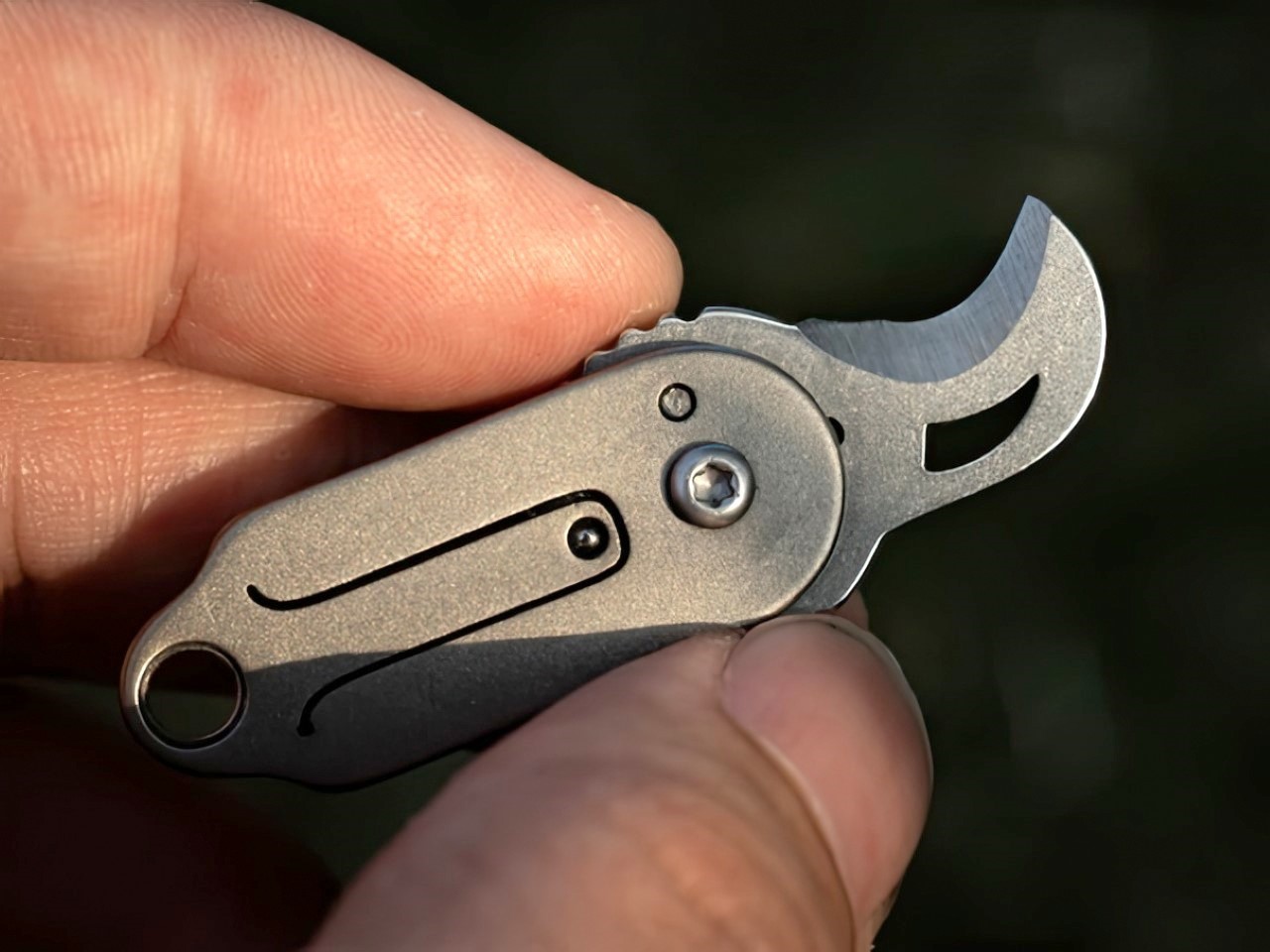
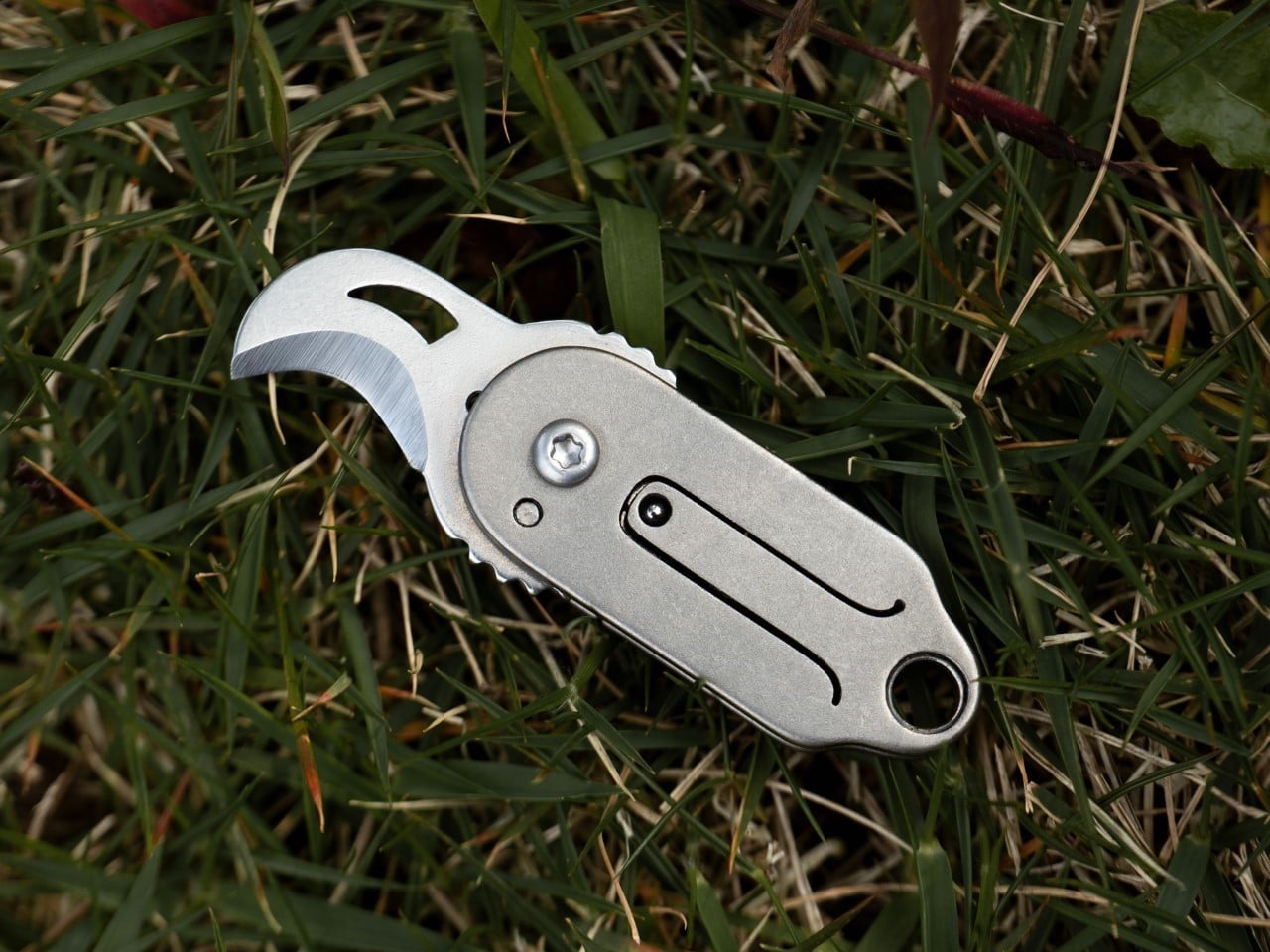
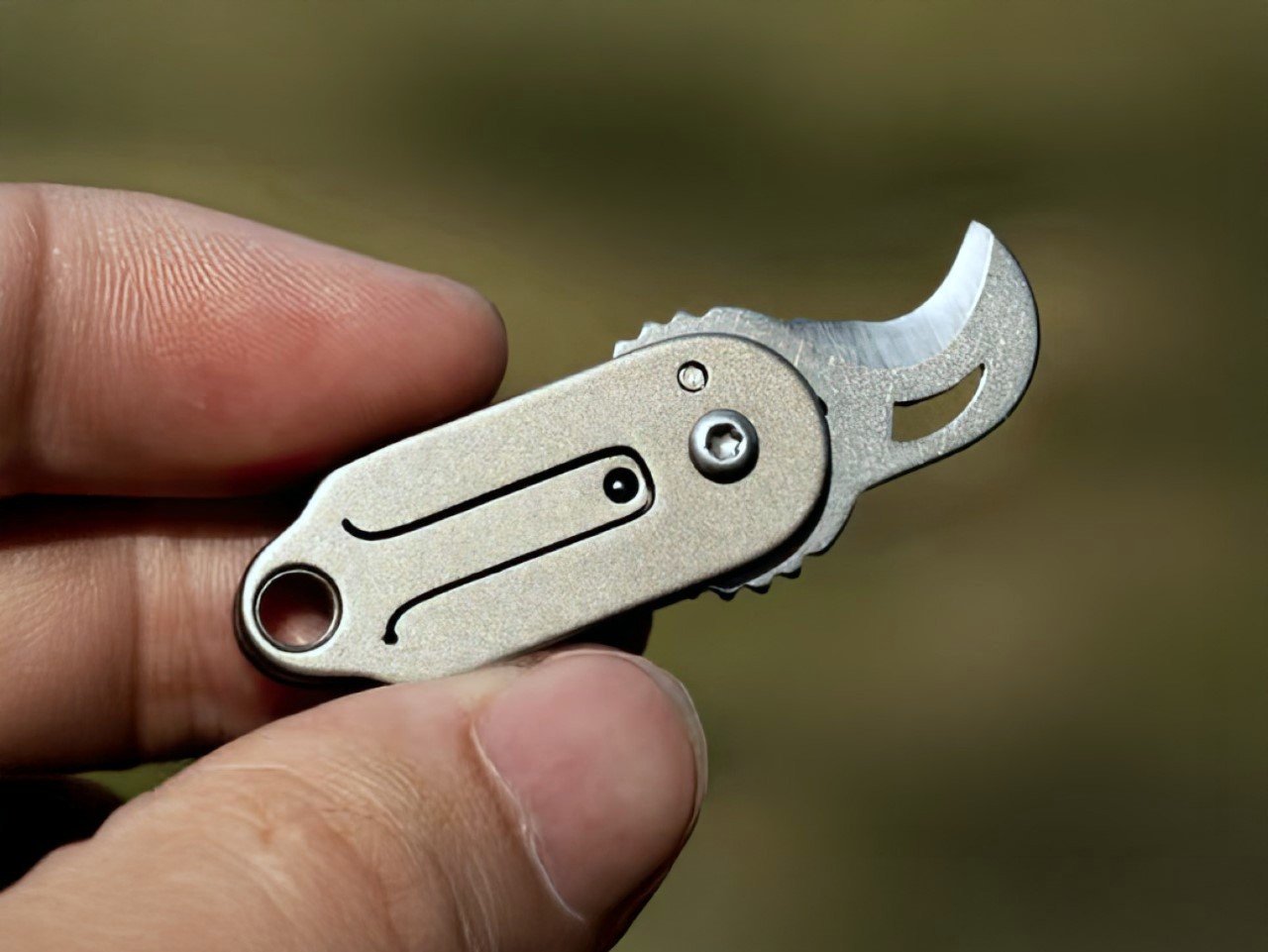
The ScytheBlade is a 46mm folding knife that builds its entire design around a sickle-shaped blade profile, and the logic is simpler than the silhouette suggests. The curve isn’t aesthetic posturing. It’s how agricultural and combat blades have cut for centuries, pulling material toward the sharpest point of the edge rather than relying on straight-line pressure. At 8 grams, the titanium body disappears on a keychain, and the result is a knife that makes an immediate case without saying much about itself.
In practice, the blade geometry delivers exactly what the shape promises. Box tape, zip ties, twine, cord, produce at a market stall: the hooked tip catches and pulls rather than pushes through, giving each cut a control that straight-edge EDC knives of this size rarely match. The frame lock clicks with enough authority that you don’t second-guess it. At $33, it is the kind of object that settles into a keychain and stops being noticed until the moment it is actually needed.
What We Like
- The sickle blade geometry genuinely improves cutting control for pulling cuts — this isn’t ornamental design. It is mechanical logic that works demonstrably better than a straight edge for the tasks EDC knives actually perform most often.
- At 8 grams on a keychain, it is the kind of weight you stop tracking after the first day. It earns its place without announcing it.
What We Dislike
- One-handed deployment takes practice. This is not a knife you will open quickly under pressure without putting in time first, which matters if speed is part of your use case.
- The 7Cr steel blade holds a decent edge but will need more frequent sharpening than premium steel alternatives at this price point. Plan for that maintenance if you’re cutting regularly.
2. DraftPro Top Can Opener
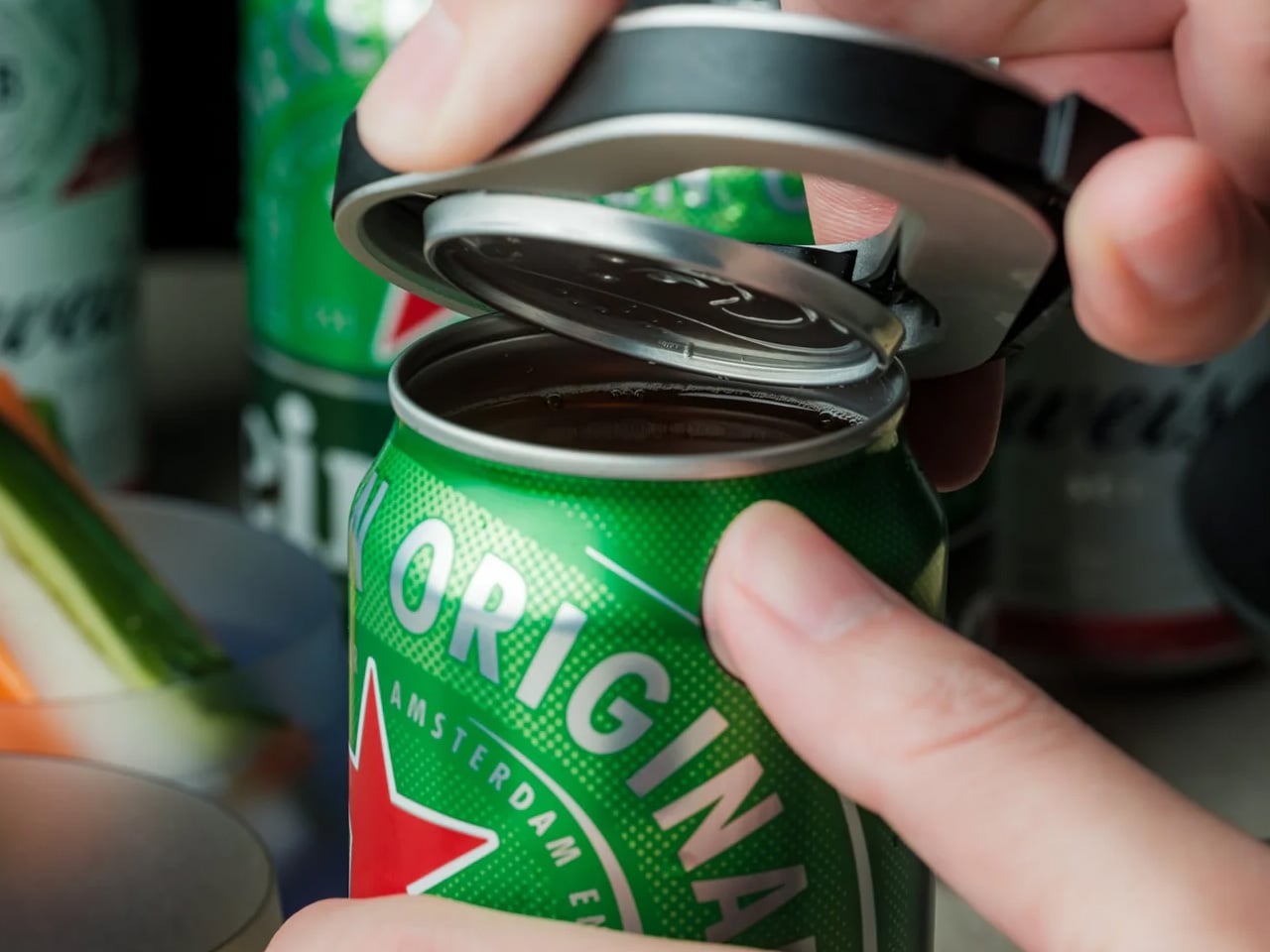
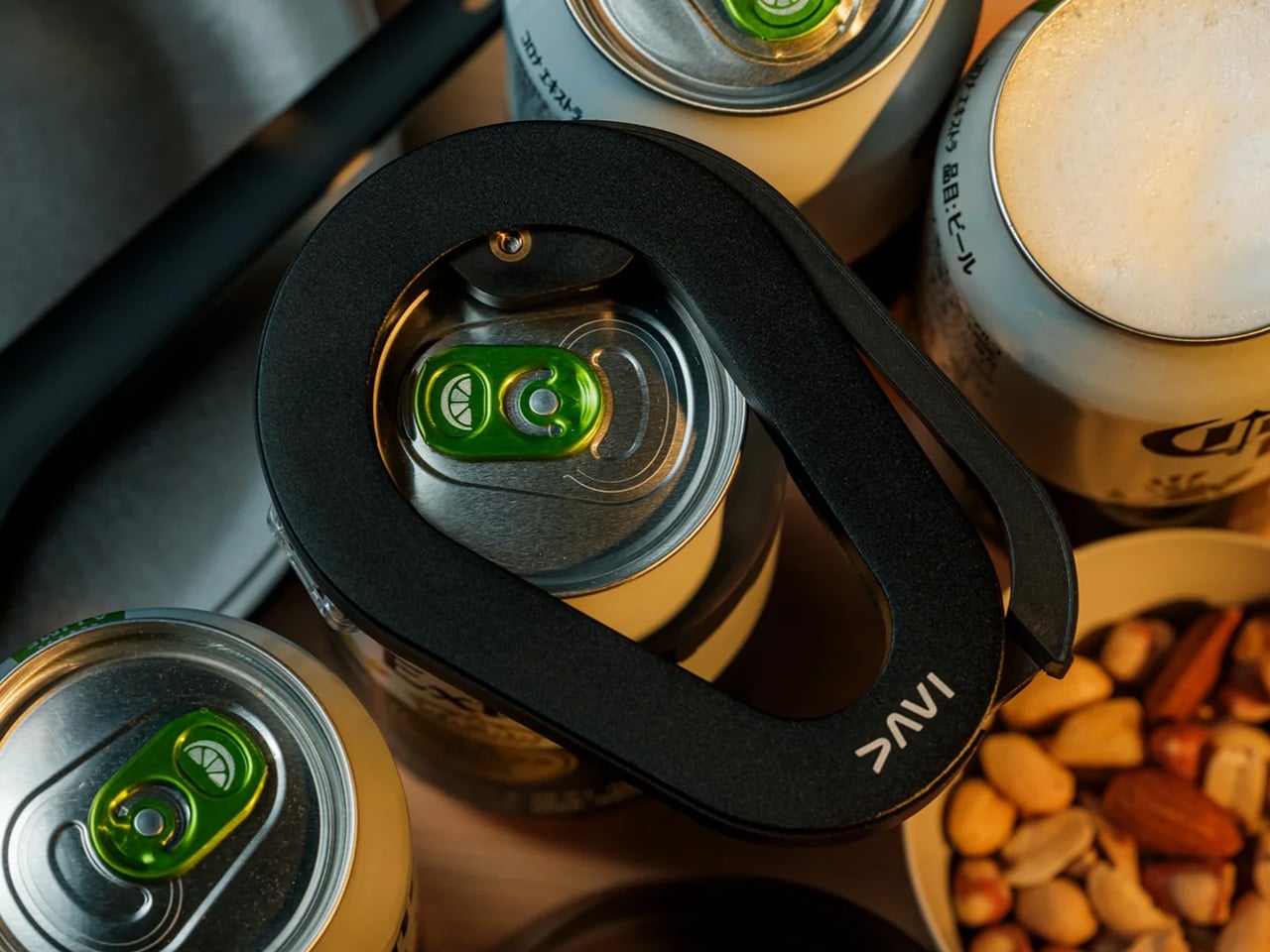
Shu Kanno is an award-winning Japanese designer, and the DraftPro Top Can Opener carries that pedigree in its opening motion before it carries it in its appearance. Built in Japan, the opener removes the entire lid of a can cleanly: smooth edge, no sharp remnants, and a wide mouth that turns whatever you’re drinking into something noticeably different from thirty seconds prior. The aroma arrives first. Then the flavor, broader and less constricted than a standard can opening allows.
The summer logic is straightforward. You’re drinking outside, likely without a glass, possibly without a flat surface. The DraftPro opens the can fully, lets you drop ice directly into it, add a lime or a sprig of mint, and drink from the source without the usual apology outdoor drinking tends to require. It weighs almost nothing. It fits any pocket. At $60, it is the kind of object you bring everywhere and notice immediately the one time you leave it behind.
What We Like
- The clean-edge lid removal transforms any can into a wide-mouth glass, which makes a genuine difference to both aroma and taste. This is the kind of change that sounds incremental and feels significant the first time you experience it.
- Compatible with domestic and international cans, so it earns its pocket space in any context and travels without requiring any research about whether it will work.
What We Dislike
- At $60, the price asks you to commit before you have experienced the effect it has on a drink. There is no middle-ground entry point, which makes it harder to recommend to someone who prefers to try before deciding.
- Stock is limited at the time of writing, which narrows access for anyone who takes their time making a purchase decision. Check availability before planning around it.
3. Olight OClip Pro S
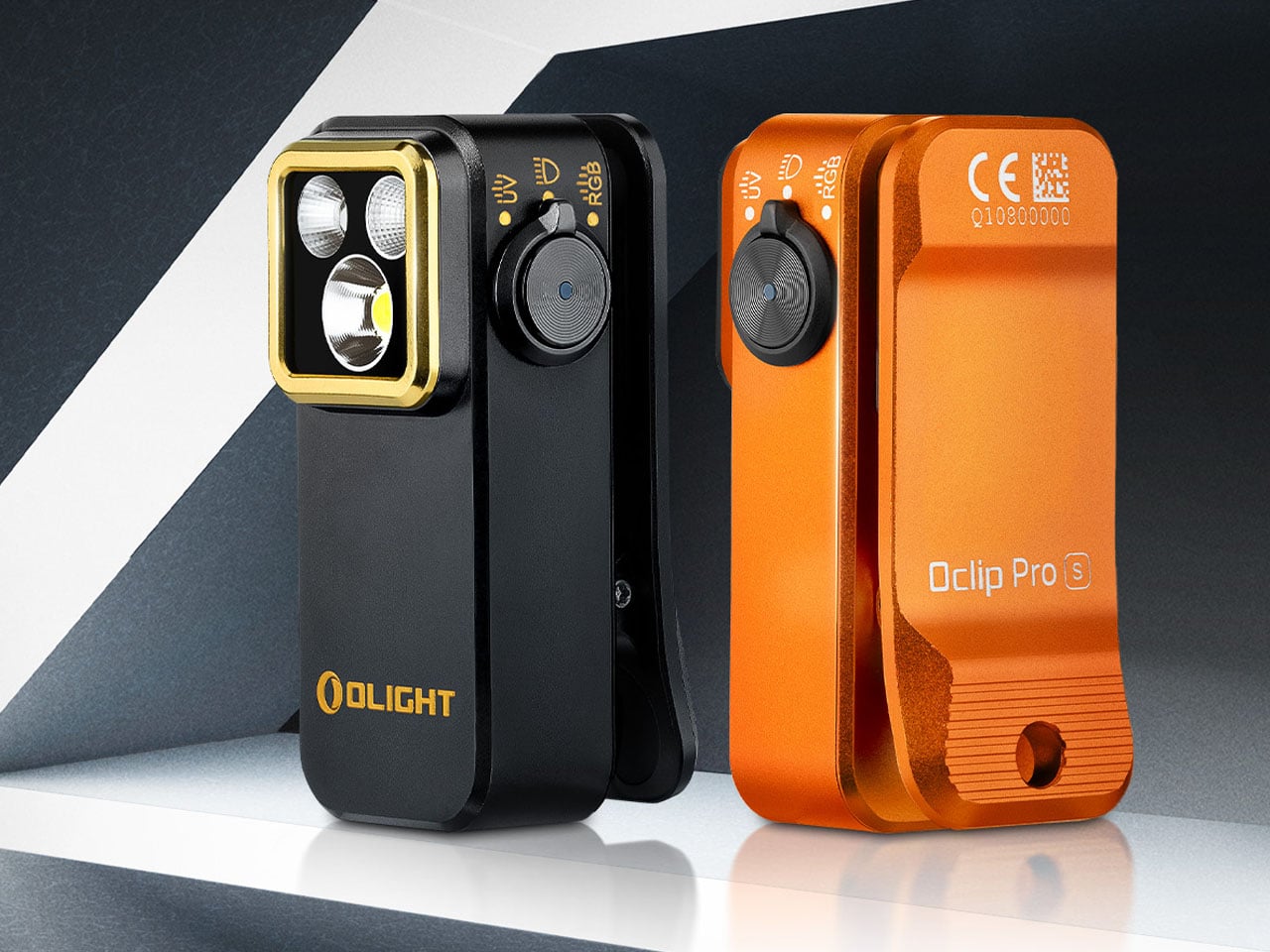
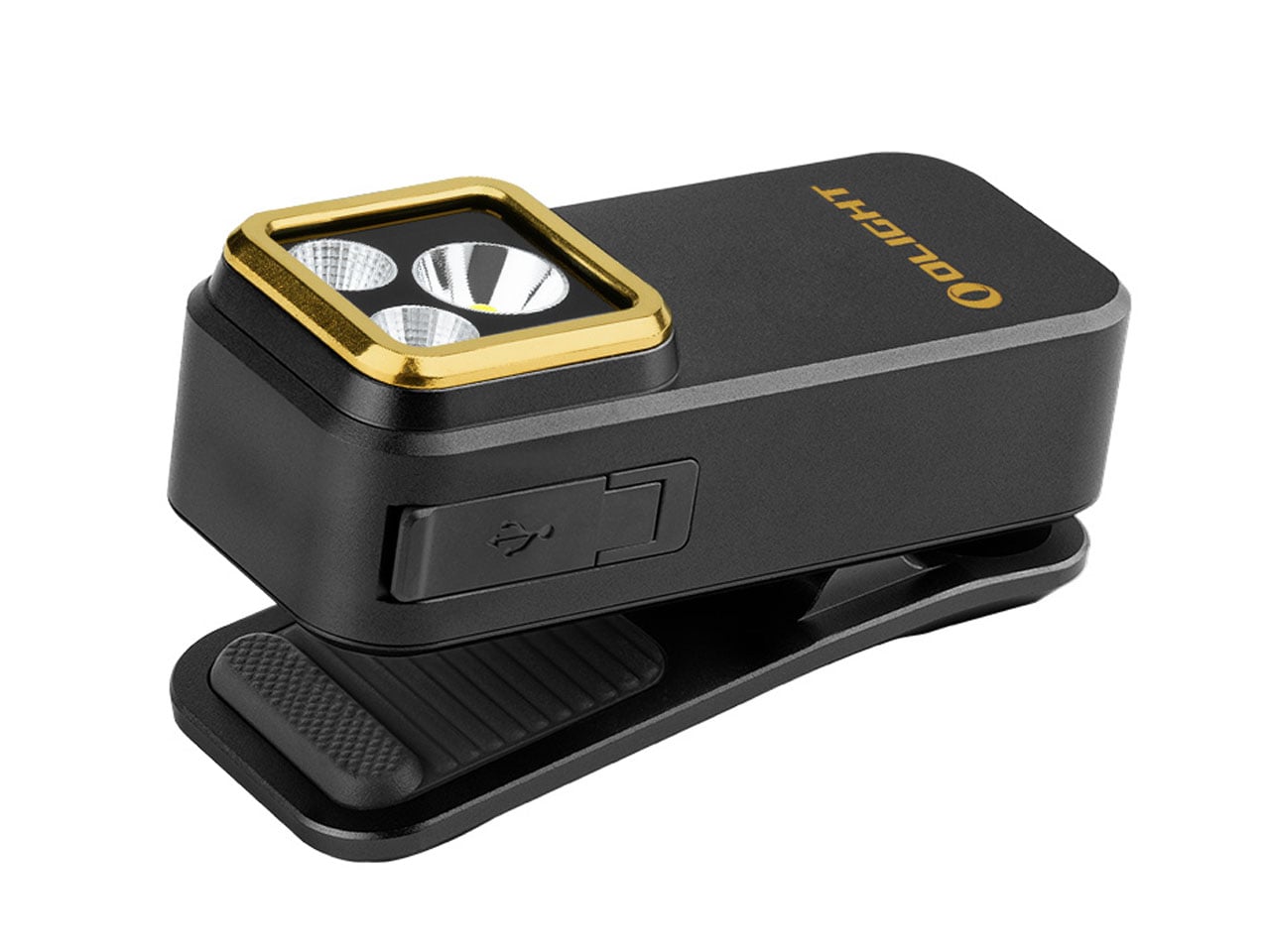
The Olight OClip Pro S measures 57 × 28 × 27 mm and weighs 53 grams. What the dimensions don’t communicate is how well the integrated clip disguises the object’s actual ambition. This is not a pocket flashlight. It is a five-mode lighting system designed to attach to a cap brim, a shirt collar, a bag strap, or the flat of a palm without registering as a burden in any of those positions, which is a harder design problem than it looks.
Those five modes cover the full range of what a summer EDC light actually needs to do. Six hundred lumens of white flood or focused spotlight, red and green for signaling, and a 365nm UV light for everything from inspecting gear to reading a label in low light. The side dial lets you switch modes without looking down. USB-C charging puts it on the same cable as everything else in your pocket. At around $40, it is noticeably overbuilt for its price.
What We Like
- Five distinct lighting modes in a 53-gram body that clips anywhere means this replaces multiple single-purpose tools without asking for any extra carry space. That math works well regardless of the season.
- USB-C charging and up to 144 hours of runtime on the lowest setting make it dependable across multi-day trips without requiring a dedicated cable or any particular planning around battery life.
What We Dislike
- 53 grams is light by flashlight standards, but heavier than a minimal summer pocket kit ideally wants from a single item, especially when jacket weight is no longer there to absorb it.
- The five-mode range is a strength, but the side dial requires a short learning curve. Reaching the right mode quickly under pressure takes practice, which is worth knowing before you rely on it.
Carry With Conviction
Three objects, three price points, three entirely different functions, and none of them ask for special treatment. The ScytheBlade lives on a keychain. The DraftPro sits in a front pocket without a second thought. The OClip Pro S clips wherever it is needed and stays there. What connects them is a refusal to make summer carry feel like a compromise. Each does exactly what it was designed to do and nothing it wasn’t.
The pockets got smaller. The standards don’t have to. When the tools are right, summer carry stops being a problem to manage and becomes a quiet argument for the idea that less, chosen with intention, routinely outperforms more, chosen out of habit. Start with whichever of the three your current setup is missing most. It won’t take long before the other two start to make sense as well.
The post The 3 Best Summer EDC Essentials for When Your Pockets Get Smaller first appeared on Yanko Design.