Your Tactical Role-Playing Game Setup deserves a better Command Deck. Meet the ONE BOX 4.0

Board game nights typically end the same way: scattered tokens, bent cards sliding across the table, dice that have rolled onto the floor for the third time. The chaos becomes part of the experience, tolerated because storage solutions only address what happens after everyone goes home. ONE BOX 4.0 takes a different approach by treating organization as something that belongs inside the game itself, using modular wooden compartments that stay open and active throughout play. The whole thing behaves less like a box and more like a portable command deck that happens to collapse into something the size of a pencil case. You unfold it, and the table suddenly has lanes, stages, and zones instead of a single flat battlefield where everything fights for the same square inches.

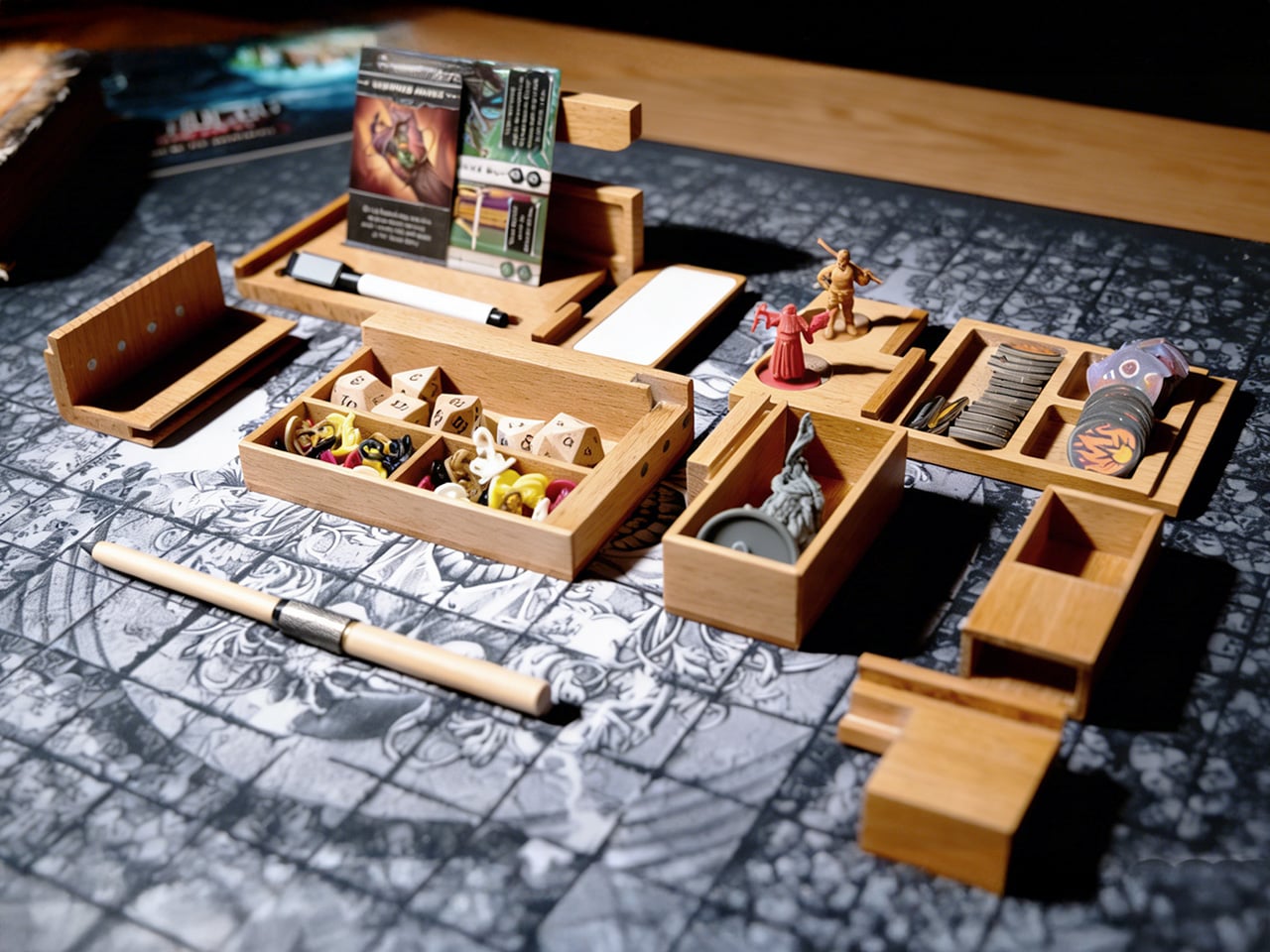
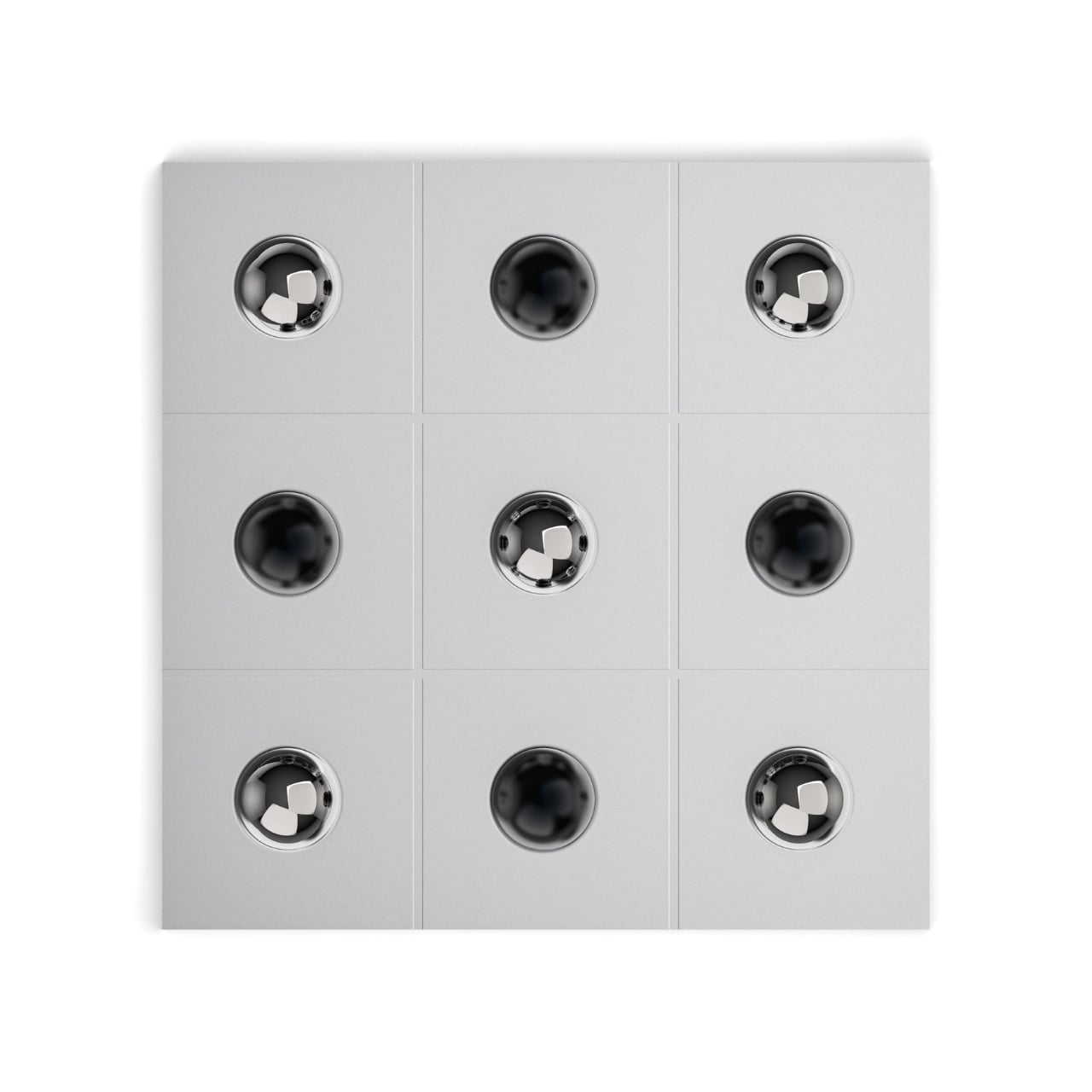
CHENGSHE.design built the system from mortise and tenon joinery, the kind of traditional woodworking that holds furniture together without screws or glue. Each unit comes in beech, teak, or black walnut, and the natural grain variations mean no two boxes look identical. The modules include card display stands, contained dice rolling areas, and phone holders that keep digital rulebooks accessible without crowding the play surface. The parts interlock into a single carryable brick, then fan out into a full tabletop system in a couple of moves. It feels like someone took the logic of a good travel tool roll, mixed it with a GM screen, and then asked an architect to make it beautiful without turning it into furniture cosplay.

Designer: ONE BOX 4.0

Click Here to Buy Now: $59 $119 (59% off). Hurry, only a few left!

The design addresses three distinct phases of a session: setup, active play, and teardown. Before play, the modules unfold from a single case into multiple zones in a matter of seconds, with dividers and trays already proportioned for cards, dice, tokens, and reference materials. During play, cards sit upright in angled stands, which keeps information visible and reduces edge wear from constant handling. Dice move through a contained rolling lane that prevents table escapes and limits collisions with card stacks or miniatures. After the session, components return to defined compartments, which then recombine into a unified case for transport and shelf storage.

Underneath the pretty wood, the logic is very modular and very modern. One set of modules can handle a deck-heavy Euro game one night and a crunchy TRPG session the next, simply by rearranging dividers and stands. The dividers are adjustable, so you can create narrow lanes for standard 63.5 by 88 mm cards or open wider slots for tarot or oversized character sheets. A lot of “board game accessories” assume a single flagship game and then become useless when your group rotates titles. ONE BOX 4.0 behaves more like a system-level accessory, closer to a camera cage or modular tool chest that expects you to change the loadout constantly. The fact that this is the fourth generation shows in that ecosystem thinking.

The mortise and tenon construction is not a decorative flex either. That joint style is pretty resilient when you are opening and closing something hundreds of times, applying torsion in slightly different directions every session. Screws back out, cheap hinges loosen, glued butt joints fail at the worst moment. Properly cut mortise and tenon joints share load across surfaces and age with the wood rather than against it. Combined with hardwoods like teak and black walnut, you get a product that can take the mild abuse of transport and table slams without turning into a rattling box of regret.

The other design decision that lands beautifully is backward compatibility. If you bought ONE BOX 3.0, you do not have to retire it to adopt 4.0. The new modules plug into the old ecosystem, which is the kind of long horizon thinking you usually only see in camera mounts, bike standards, or pro audio racks. That matters because people build habits around their table setups. If you already have a certain arrangement for card lanes and dice trays, you can add a new TRPG-focused module or that OB Infinite Pen without rethinking everything. This is how you build a niche platform instead of a series of isolated products that age out every two years.

The OB Infinite Pen and erasable whiteboard module signal a clear orientation toward TRPG and scenario driven gameplay. By dedicating space to writing tools and a reusable surface, the system supports initiative tracking, hit points, quick maps, and ad hoc notes without adding disposable paper clutter. The pen shares the same wood material language as the box, which unifies the visual identity and reinforces the idea that note taking is an integrated part of the experience. For groups that run mixed digital and analog setups, the phone and tablet holder aligns with this approach, parking screens at the edge of the system instead of scattering them across the main play field.

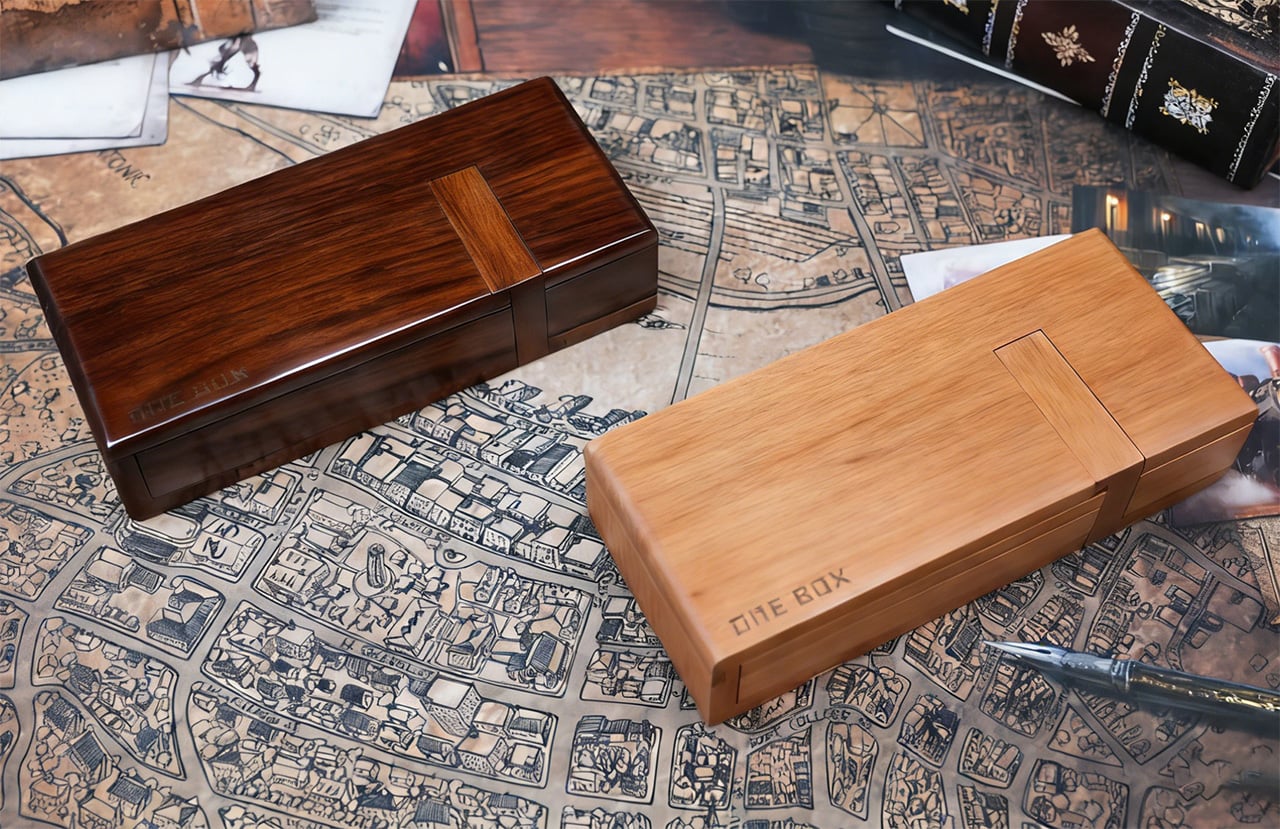
Visually, this is the opposite of RGB acrylic chaos. Natural wood, clean chamfers, visible grain, and a restrained color palette of light beech, warm teak, and dark walnut. On a table, it reads more like a compact piece of joinery than a toy, which is exactly what you want if your “game table” is also your work desk or dining surface. There is a subtle psychological trick here: when the tools of play look like serious objects, people tend to treat the whole session with a bit more focus. You are less likely to fling dice across a carefully built wooden lane than across a bare laminate tabletop.

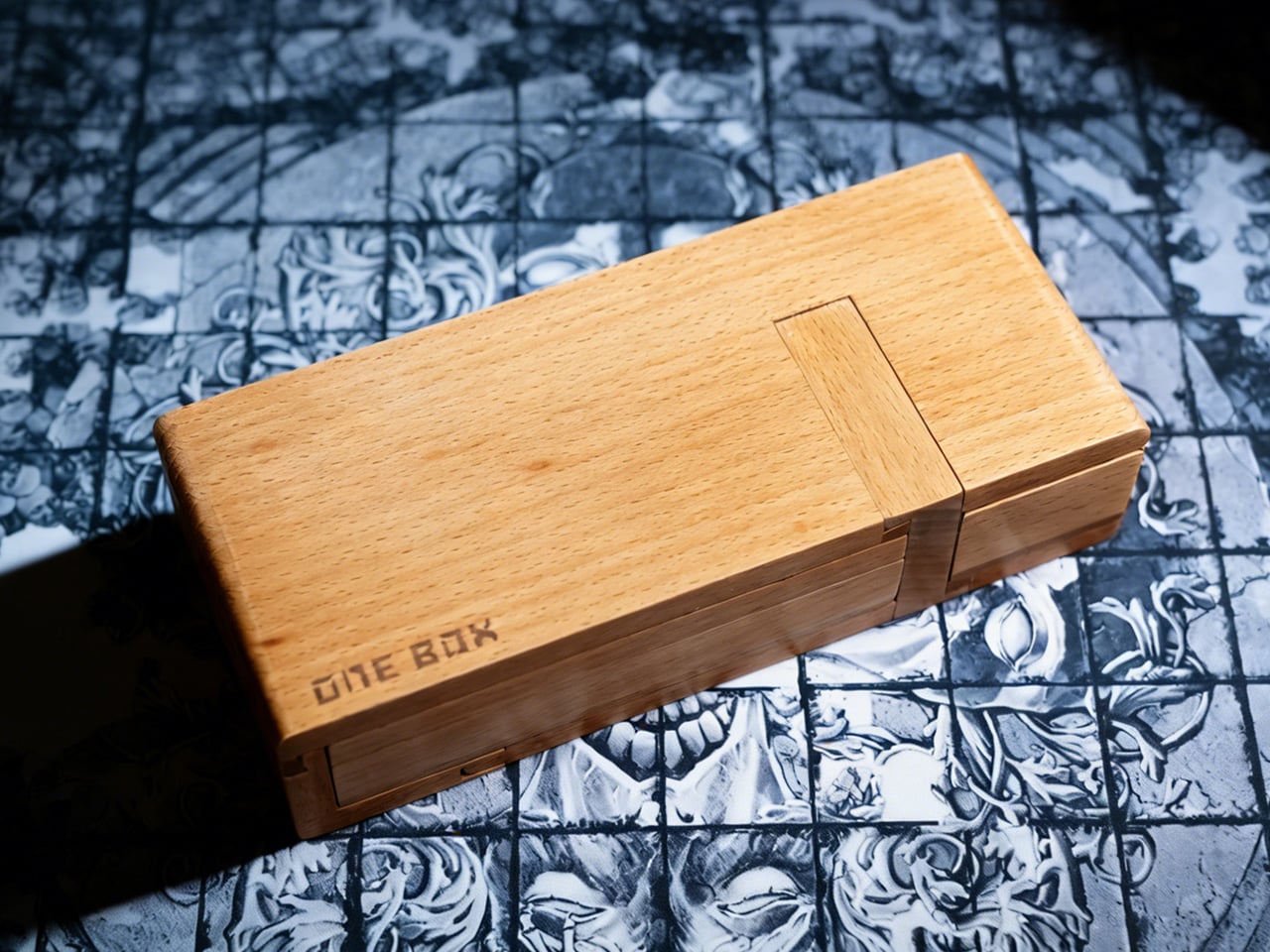
Folded shut, the core ONE BOX 4.0 package is roughly pencil box sized, which means it goes into a backpack alongside a laptop and a rulebook without much negotiation. Unfolded, it spreads to cover a player station or GM area without requiring a dedicated gaming table. That portability is what separates this from the beautiful but immovable wooden tables that dominate the aspirational side of tabletop culture. You can take this to a cafe, a friend’s apartment, or a convention hall, and your setup logic travels with you instead of being rebuilt from scratch every time.

The ONE BOX 4.0 comes in three primary wood options: beech for a pale, almost Scandinavian tone, teak for a warmer mid tone, and black walnut for a darker, more saturated look. Configurations range from a single core box setup to multi box “command station” style bundles that add dedicated dice rollers, erasable whiteboard modules, storage bags, and the OB Infinite Pen in matching wood. Up to 50 early backers can grab the beech variant for as low as $59, while the next tier for all wood versions sits at $79 (which includes the ‘recording kit’ featuring the OB Infinite Pen and erasable whiteboard modules). Throw in an extra twenty, and the $99 tier also gets you a dice roller. The ONE BOX 4.0 is open for preorder and ships globally starting May 2026.

Click Here to Buy Now: $59 $119 (59% off). Hurry, only a few left!

The post Your Tactical Role-Playing Game Setup deserves a better Command Deck. Meet the ONE BOX 4.0 first appeared on Yanko Design.
This $600 Tic Tac Toe Set Wants You to Slow Down

You know that feeling when you see something so beautiful and unnecessary that you immediately want it? That’s exactly what happened when I discovered Bionic’s Tic Tac Toe set. And before you ask, yes, it costs $600. Yes, it’s just Tic Tac Toe. And yes, I’m completely obsessed with it.

Paris-based design studio Bionic just dropped this made-to-order piece, and it’s causing quite the stir in design circles. Not because it reinvents the wheel or solves some massive problem, but because it does the opposite. It exists purely to make you pause, sit down, and actually be present for a moment. In a world where everything screams productivity and optimization, here’s a luxury object that says “hey, maybe just play a simple game for three minutes.”

Designer: Bionic

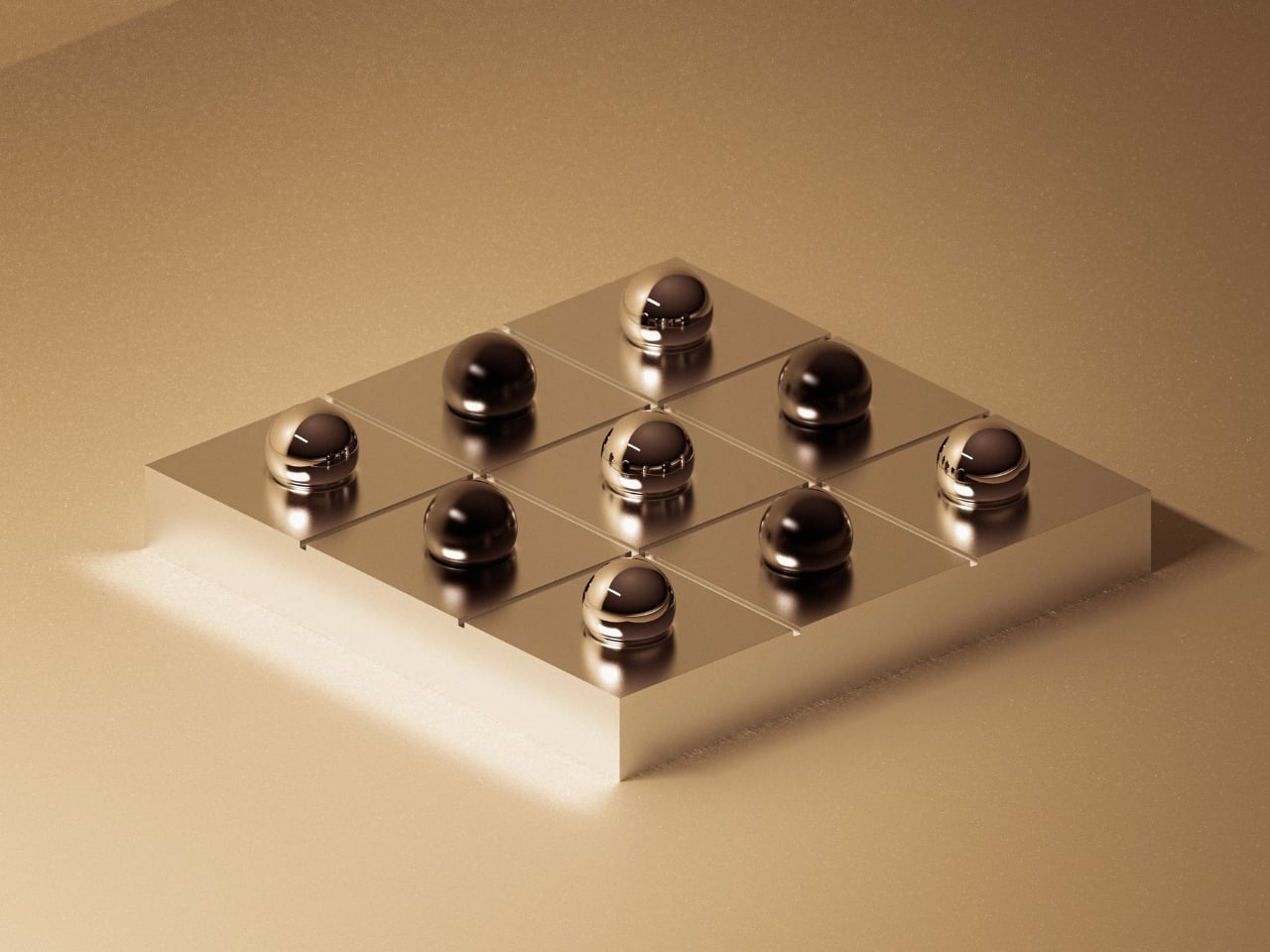
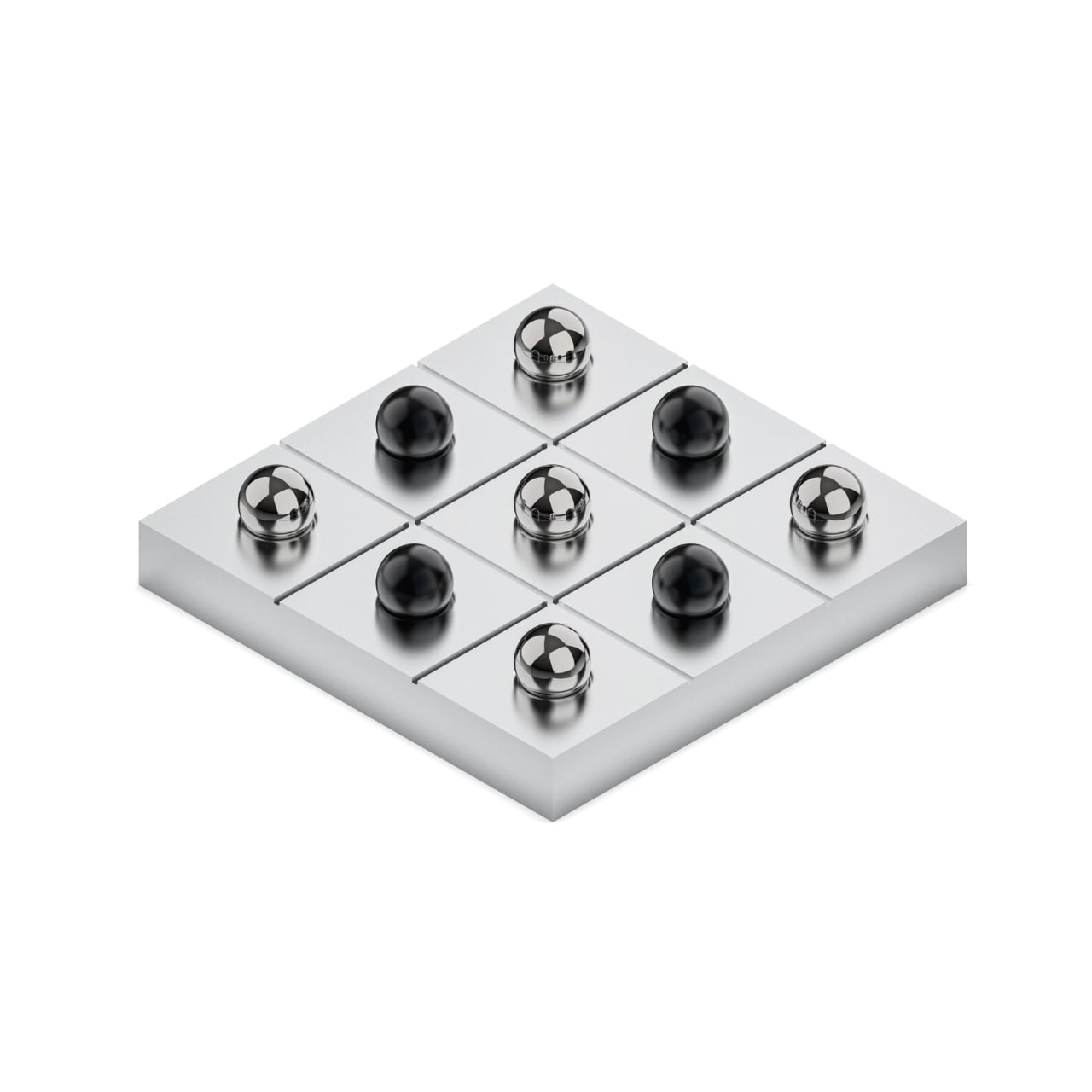
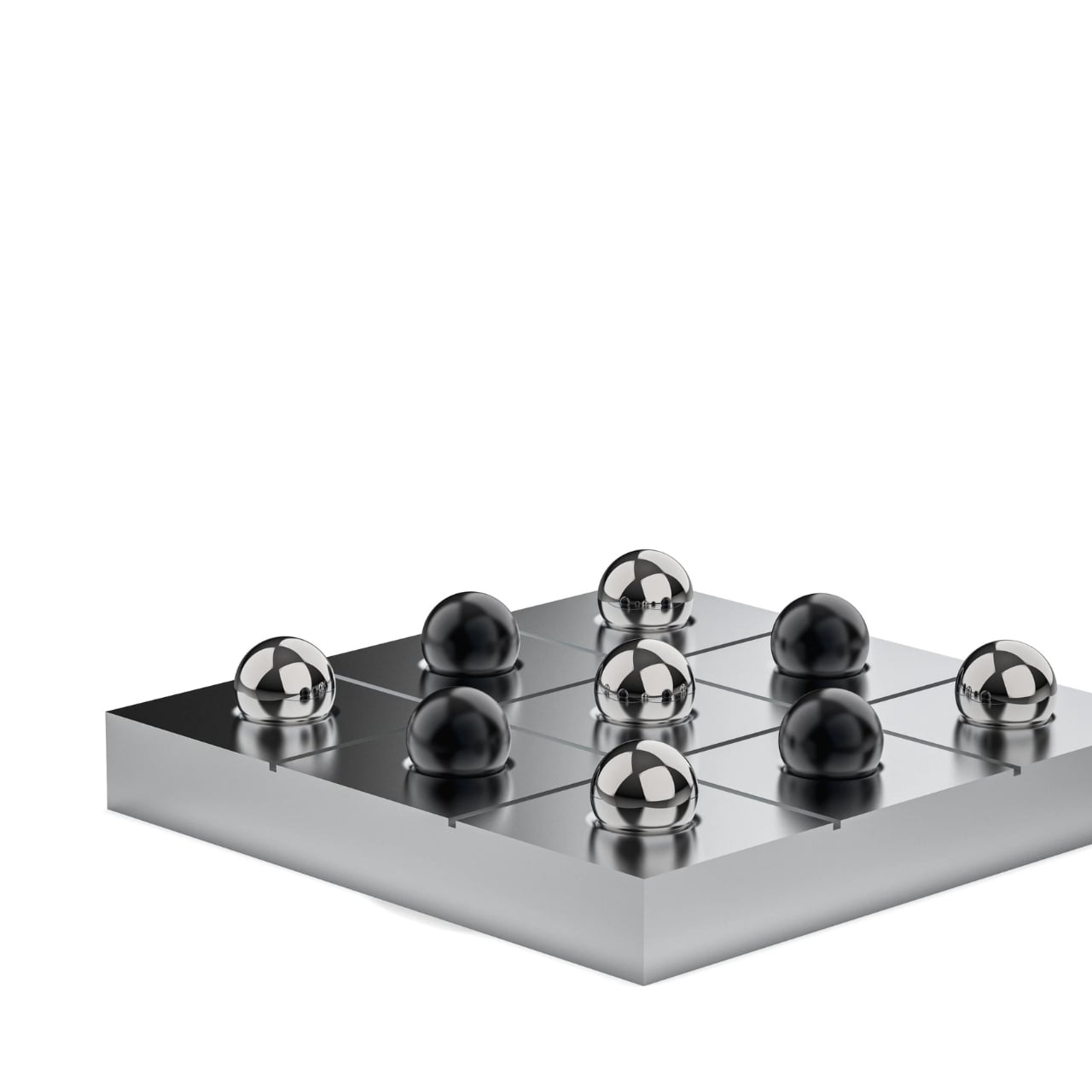
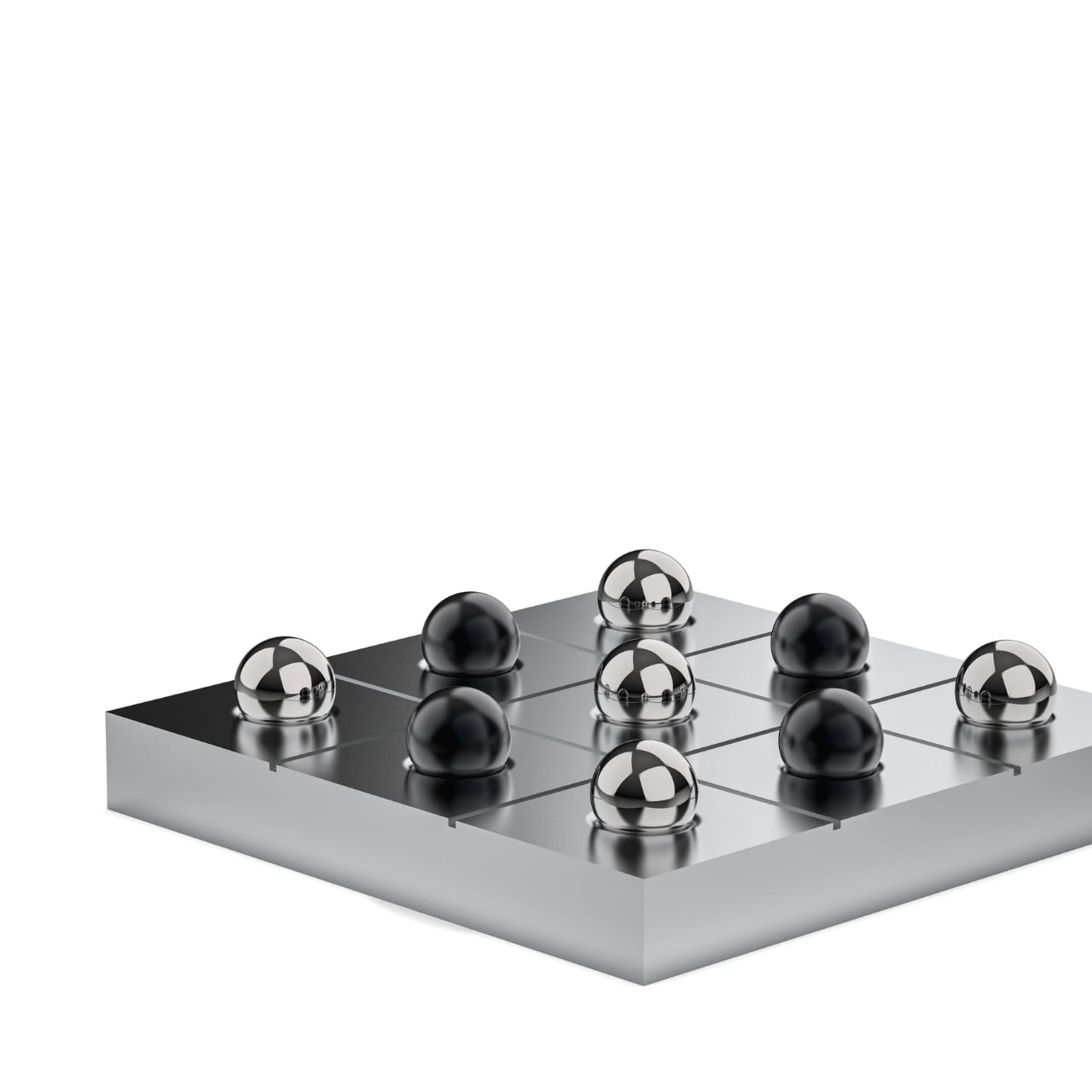
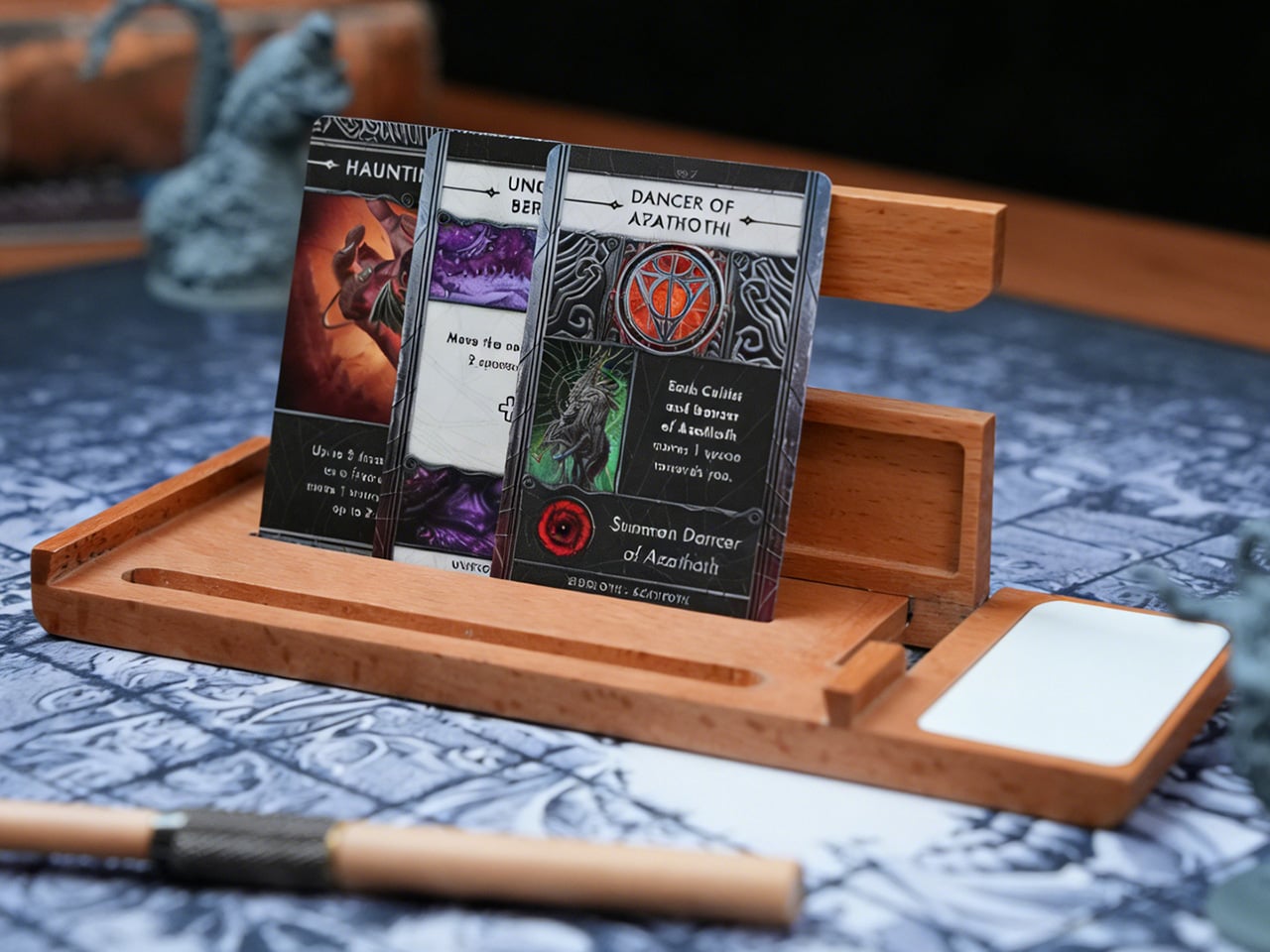
The base is machined from a single solid block of aluminum, which immediately tells you this isn’t your childhood travel game. It’s heavy, grounded, and precise in a way that makes you want to run your fingers along its edges. The grid isn’t painted or etched on after the fact. It’s formed through machining alone, no decorations, no unnecessary flourishes. Just clean lines and intention.

Then there are the playing pieces, and this is where things get really interesting. The O’s are five mirror-polished stainless steel pawns that catch the light beautifully. The X’s are five black anodized aluminum pawns, each individually CNC machined and finished. Bionic specifically designed them to feel distinct in your hand, because this isn’t about rushing through a game. It’s about the tactile experience, the weight of each piece, the contrast between materials.

I’ll be honest, when I first saw the price tag, I laughed. Six hundred dollars for Tic Tac Toe? But then I started thinking about what we’re actually willing to spend money on. We drop thousands on desks and chairs for productivity. We buy standing desks and ergonomic everything because we’re optimizing our workspace for maximum output. But what about objects that exist purely to give us a break from all that?

Bionic wrote something in their product description that really stuck with me: “Some objects exist to help us work faster. Others exist to give us a moment away from that rhythm.” This Tic Tac Toe set is firmly in the second category. It’s designed to live on your desk or coffee table as a reminder that not everything needs to justify itself through efficiency. And honestly? That feels kind of revolutionary right now. We’re so addicted to hustle culture and productivity hacks that an object designed specifically for pausing feels almost subversive. It’s a sculpture you can interact with, a conversation starter that actually starts conversations instead of just sitting there looking pretty.

The made-to-order aspect adds another layer. This isn’t mass-produced. You’re not going to see these everywhere. It’s exclusive in the truest sense, crafted specifically after you order it. For collectors and design enthusiasts, that matters. It’s the difference between owning furniture and owning a piece. Is it practical? Absolutely not. You could play Tic Tac Toe with literally anything. Pen and paper works just fine. But that’s missing the entire point. This is about elevating something simple and familiar into an experience. It’s about materials, craft, and intention. It’s about having an object in your space that exists purely because it’s beautiful and makes you smile.

Bionic specializes in precision-machined aluminum accessories and workspace tools, all crafted in Paris with that distinctly European sensibility where form and function aren’t at odds. Their whole philosophy is about creating beautiful, thoughtfully designed products that are tools for daily life. This Tic Tac Toe set might be their most purely playful creation yet. So will I spend $600 on this? Maybe not today. But I love that it exists. I love that someone looked at Tic Tac Toe and thought, “what if we made this as beautiful as humanly possible?”

The post This $600 Tic Tac Toe Set Wants You to Slow Down first appeared on Yanko Design.