Self-Watering Origami Pot Expands With Your Plant So You Never Have to Repot in Panic Again

Nature never repots anything. A tree does not pause its growth every eighteen months so someone can slide it out of its current location, dust off the roots, and drop it into a bigger hole. Growth just happens, slowly and continuously, in whatever direction the soil and light and water allow. The concept of a container that limits that process and then demands human correction is, at its core, a workaround for a problem that outdoor plants never encounter. It is a constraint that indoor gardeners have simply accepted as part of the deal.

The Helix from POTR makes a case for reconsidering that acceptance. The pot uses a folding origami structure that can be expanded over time as the plant develops, growing from seed-stage dimensions into a full 2-liter planter. A built-in self-watering system handles moisture through capillary action, pulling from a reservoir in the base and letting the plant regulate its own intake. Paired with modular accessories for germination, propagation, and climbing support, it functions as a complete growing system inside a single sculptural object.

Designer: POTR

Click Here to Buy Now: $29 $39 (27% off). Hurry, only a few left! Raised over $96,000.

If you have ever delayed repotting because the plant looked too young, too fragile, too dramatic, or simply too likely to collapse in your hands, Helix gets the appeal immediately. Repotting has always felt like one of those chores that is somehow both necessary and vaguely violent. You are trying to help, but the process involves uprooting the plant, disturbing the soil, exposing the roots, and hoping your sapling interprets the whole ordeal as an act of love. Helix sidesteps that ritual by keeping the plant in the same home from the beginning, with a pot that can be manually expanded as needed instead of uprooting and forcing a move into a larger container.
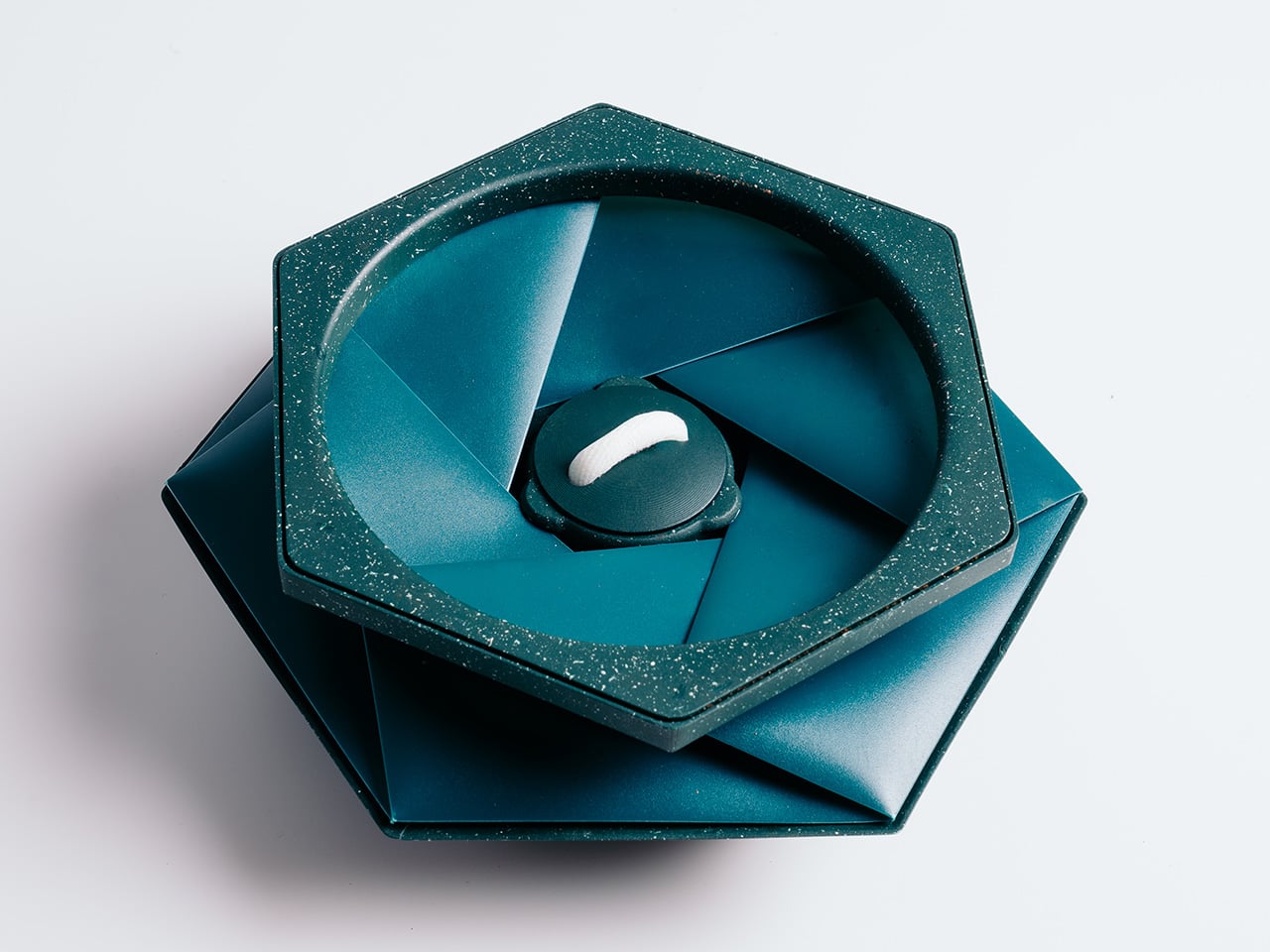
The structural mechanism draws on what engineers call Kresling-style origami geometry, a folding pattern that has found applications in aerospace and medical devices before making its way into a planter. The faceted walls gently expand away from the root ball as the user twists the pot open, increasing the volume up to eightfold from seed starter to 2-liter pot. That gives growers room to top up with fresh soil while allowing the plant to continue growing in the same container. The process is far less disruptive than traditional repotting, since the roots stay in place and the pot opens around them rather than requiring a full transplant. That same folding geometry gives the Helix its distinctive sculptural appearance, a faceted form that looks considered rather than utilitarian, even while housing herbs on a kitchen shelf. The flat-pack format also keeps shipping significantly more compact compared to conventional moulded planters.
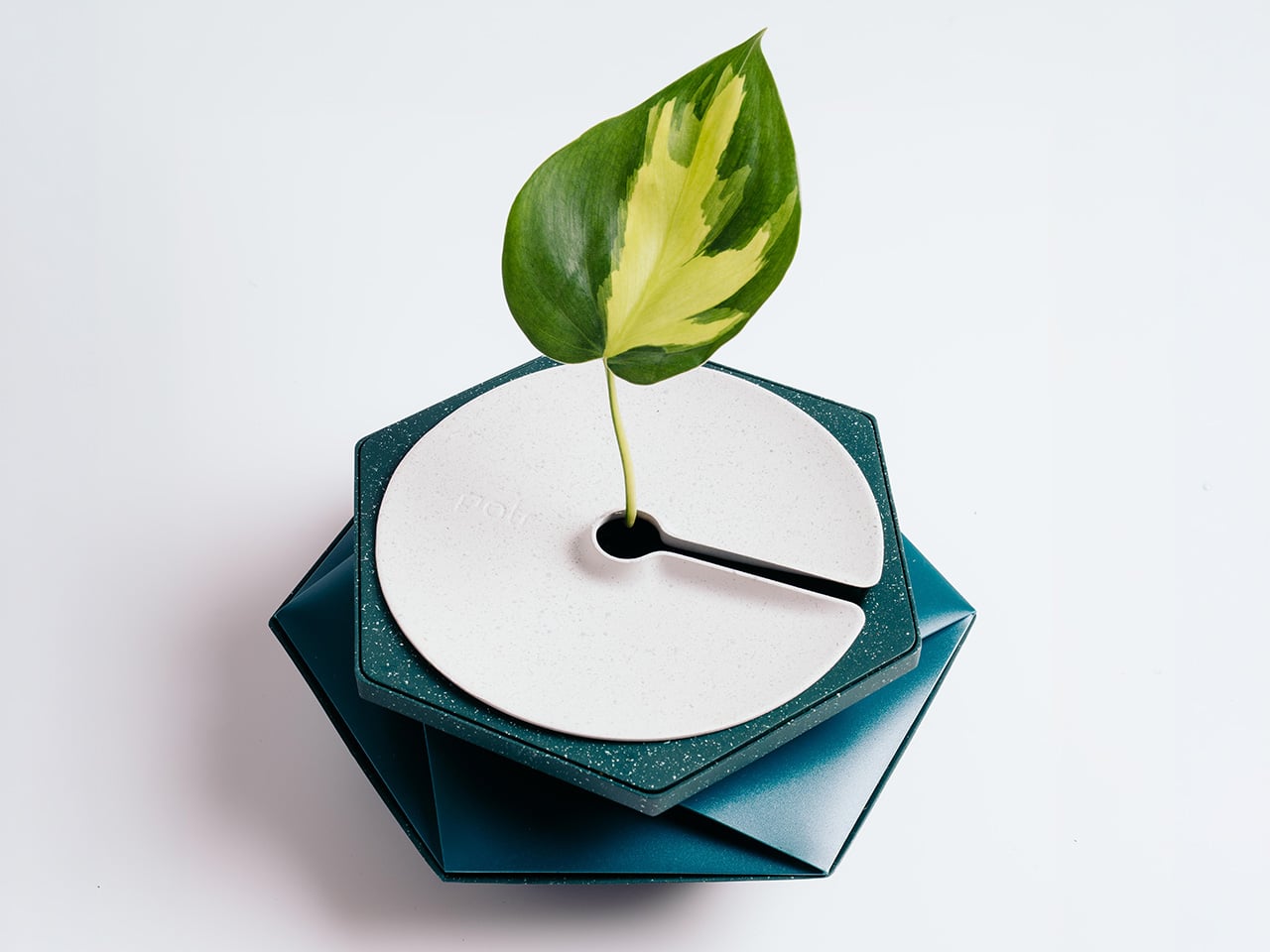

The self-watering system adds a second layer of relief. Helix uses a discreet capillary wick to draw water from a reservoir in the base into the surrounding soil, giving the plant access to moisture as needed for up to two weeks. In other words, it helps smooth out the very human habit of either forgetting to water entirely or overcompensating with a dramatic soak the second a leaf starts drooping. Twist the base, fill the reservoir, twist it shut, and the planter handles the rest with far more consistency than most of us manage on our own.

POTR has also designed Helix as a system rather than a single object. The Sprout Plate turns the pot into a seed-starting setup, so herbs and seedlings can begin life in the same place they continue growing. The Sprig Plate supports cuttings while they root, transforming the planter into a propagation station. Then there is the Trellis, which gives climbing plants a flexible support structure that can gain height in stages. Seen together, the accessories make a strong case for Helix as a 4-in-1 growing system, covering seed germination, cutting propagation, self-watering care, and expandable support for climbers, all linked by the same grows-with-your-plant concept.

Thanks to the tessellating geometry of the planter, multiple Helix units can be grouped together to create a compact indoor herb garden or small edible growing setup at home. That makes the ecosystem feel bigger than a single pot plus accessories. Users can start with one unit for a few herbs or a first houseplant, then add more as their confidence grows, building out a modular growing arrangement that stays visually cohesive on a windowsill or kitchen counter. For anyone interested in growing their own food at home, that flexibility feels especially useful. Start with basil, mint, or microgreens in one Helix, then gradually turn the collection into a small personal garden without changing the overall system.

That long-term thinking extends to the materials and logistics too. Helix is made from recycled polypropylene, with recycled nylon used for the wick, and the folding structure means it ships flat-pack instead of occupying the bulky footprint of a traditional planter. POTR says the design was developed with sustainability in mind, both in terms of recycled content and reduced shipping volume. It also helps that the object looks good enough to leave out in the open, because plant care products tend to work best when they do not need to be hidden the second guests arrive.

POTR, based in Glasgow, was founded in 2019 by Andrew Flynn and Eilidh Cunningham and has already sold more than 100,000 units of its earlier self-watering origami planter. The studio’s first Kickstarter campaign ended 4,252% funded, and Helix has already crossed its goal many times over, with more than $86,000 pledged from over 900 backers at the time of writing. The design was also named a finalist for Sustainable Product of the Year at the RHS Chelsea Flower Show 2026, which gives the project a little more weight than the average beautiful thing on crowdfunding.

The Helix Standalone covers the expanding self-watering pot on its own, while the Helix Complete brings in the full growing system. The Standalone is available at an early bird price of $29 against a retail MSRP of $40. The Complete bundle, covering the pot plus the Sprout Plate, Sprig Plate, and Trellis, is currently $55 at the best early bird tier and $75 at standard Kickstarter pricing, against a full MSRP of $100. Two-unit bundles are available for $129. The pot ships in three colorways, selected via post-campaign survey, and works equally well as a standalone kitchen planter or as part of a larger indoor growing setup. Global shipping is expected to begin in September 2026, with UK domestic shipping starting from £4.

Click Here to Buy Now: $29 $39 (27% off). Hurry, only a few left! Raised over $96,000.

The post Self-Watering Origami Pot Expands With Your Plant So You Never Have to Repot in Panic Again first appeared on Yanko Design.


Your Dish Rack Stays Home When You Go Camping. This $75 One Doesn’t.

Ask anyone who camps regularly about washing dishes at camp and you will get the same answer: a damp tea towel laid flat on a folding table, bowls and mugs stacked on top of it, drying at whatever pace the outdoor air allows. It works. It has always worked. And until now, it was the only option – because dish racks are kitchen objects, fixed in place, belonging to a counter they never leave.

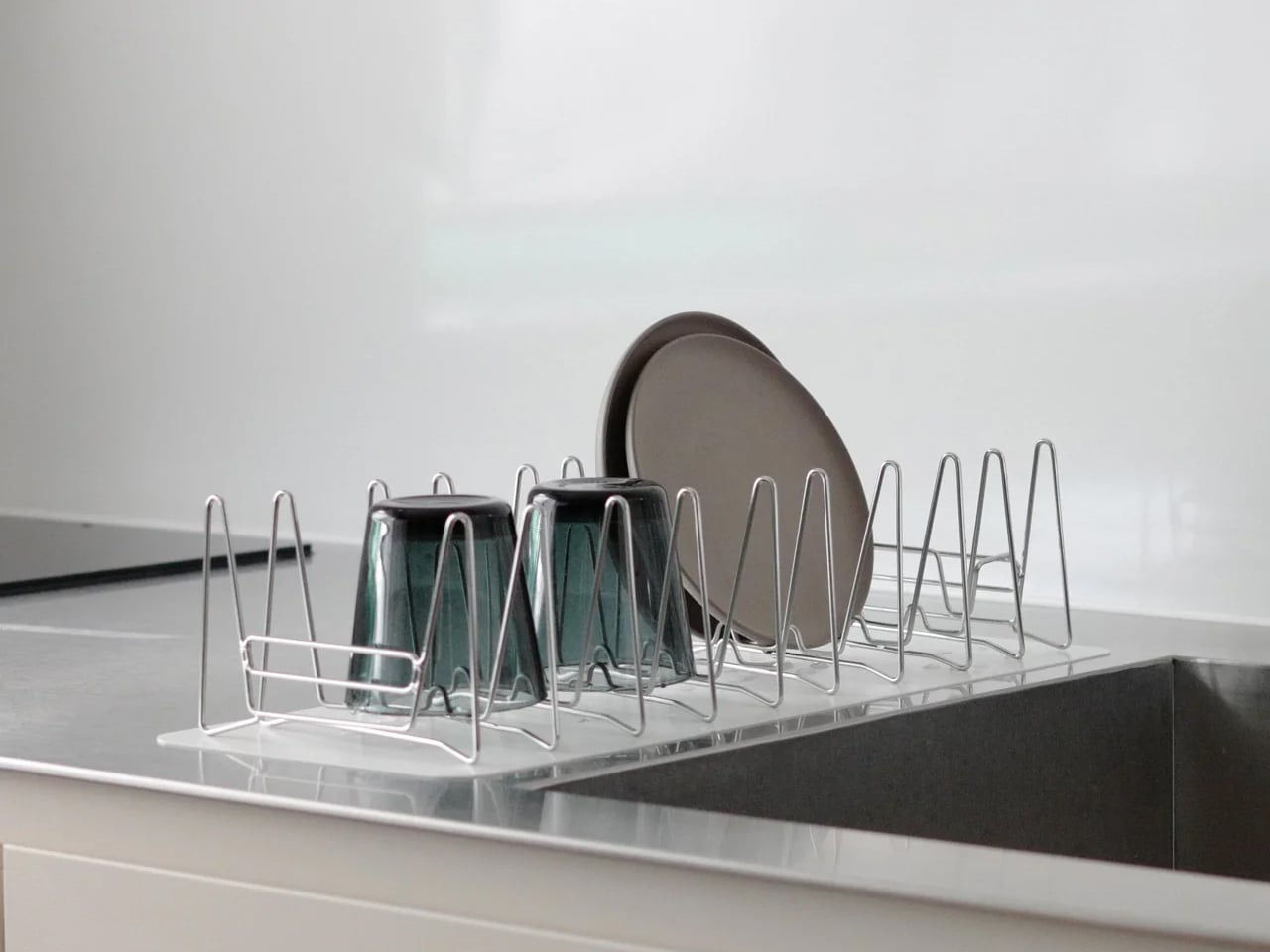
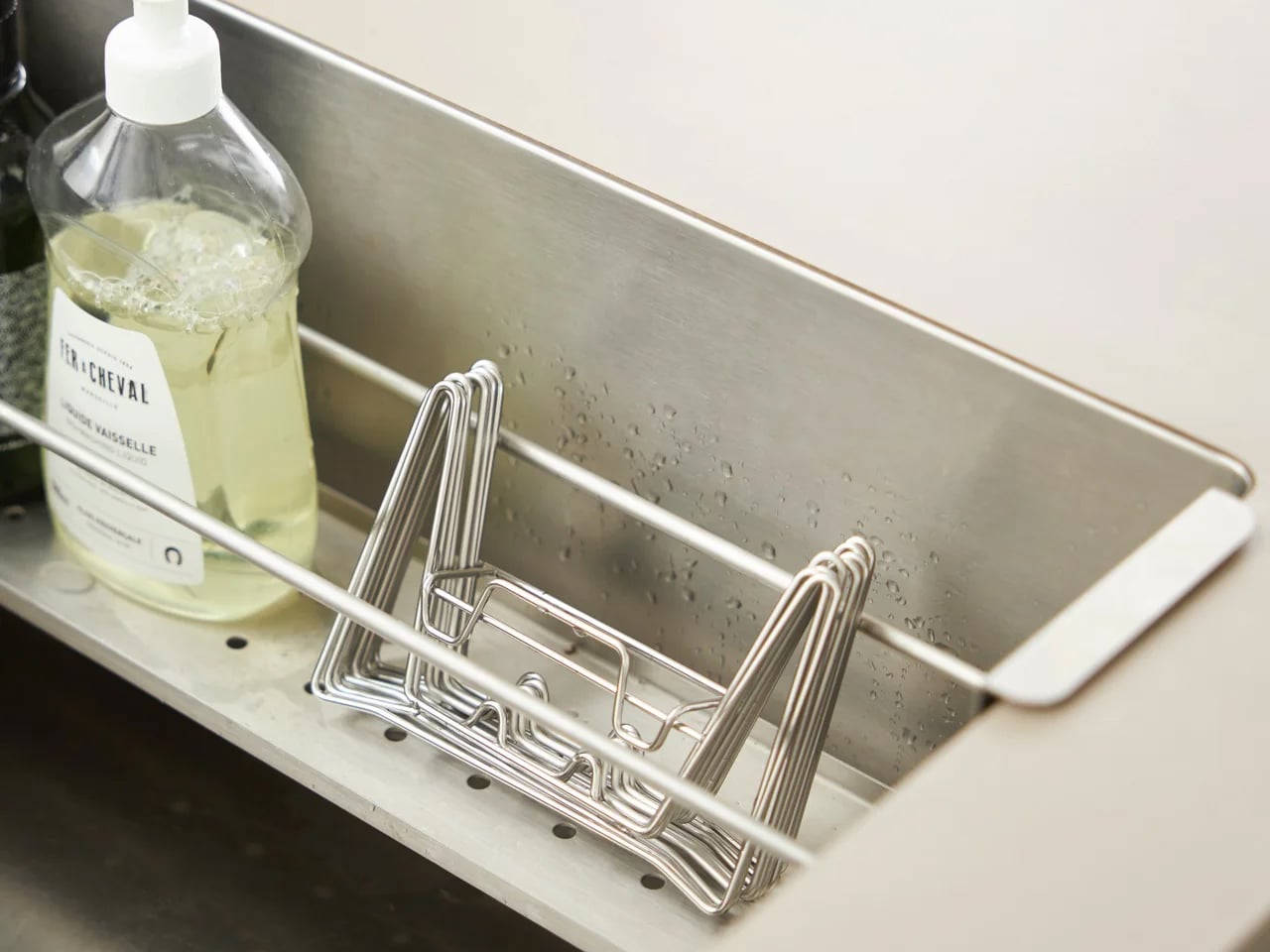
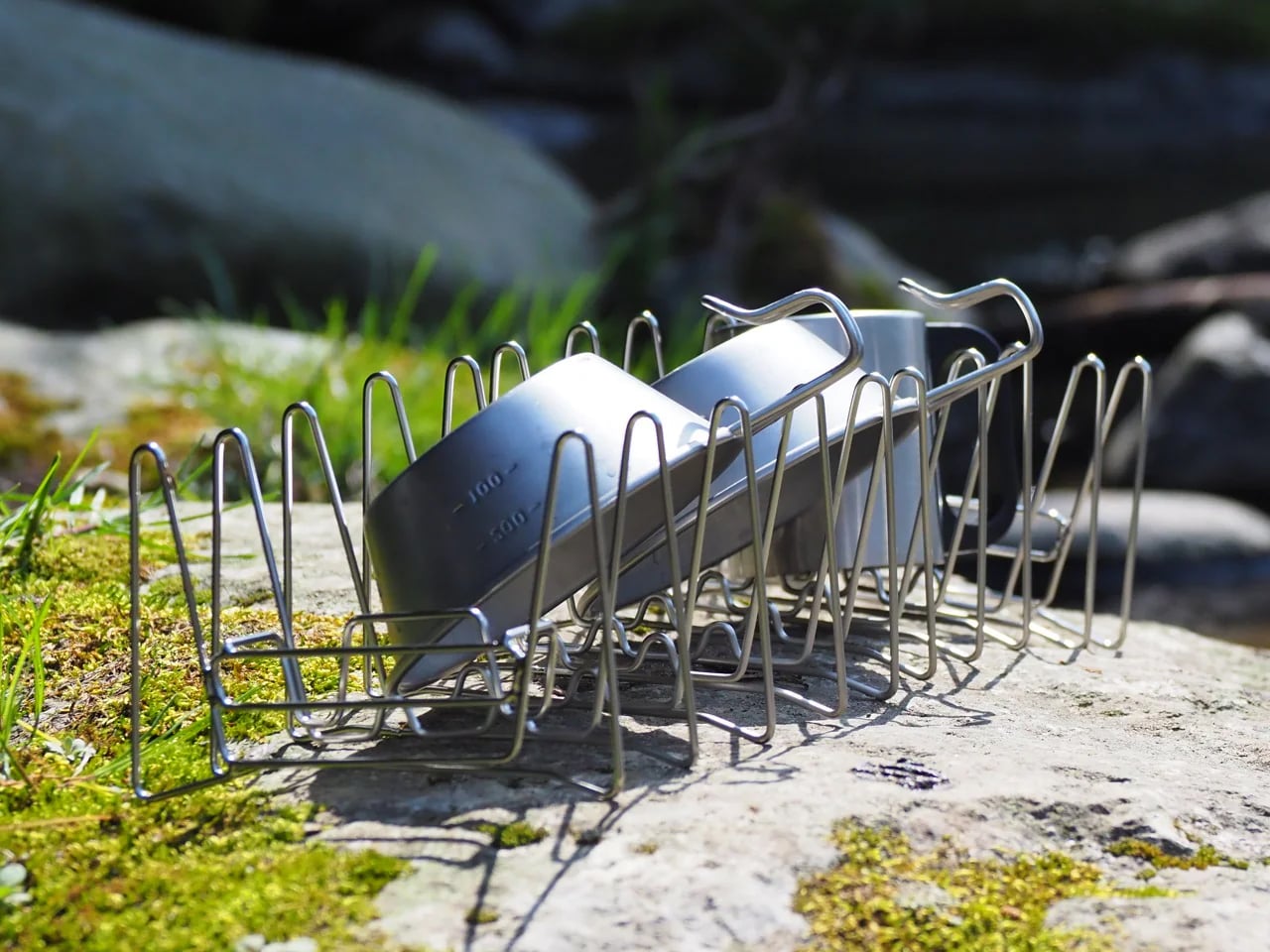
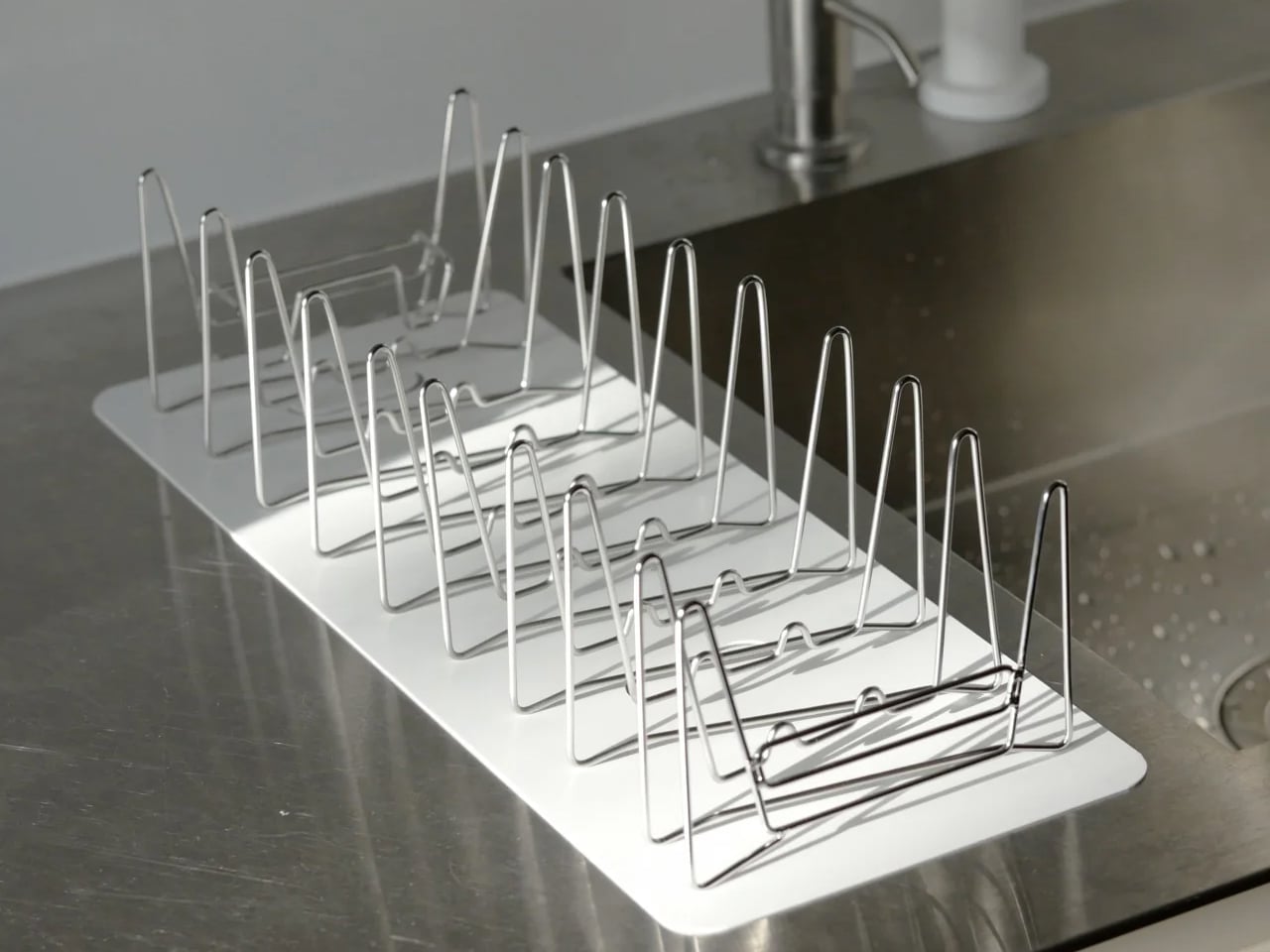
The Slim Fold Dish Rack is the first dish rack that was designed to go where the meal goes. With a patent-pending spring mechanism that collapses the full 14-inch (36cm) drying surface to 1.2 inches (3cm) flat in under a second, it packs alongside tent poles and sleeping bags without complaint, opens at the campsite in one motion, and handles a full post-dinner load of dishes before folding back down to nothing. At $75 without a carrying case and $90 with one, it is an answer to a problem every camper has solved with a tea towel for their entire life.

Click Here to Buy Now: $75.00

The Slim Fold Dish Rack collapses from 14 inches of full drying surface to 1.2 inches flat in under a second and the carrying case means your camp kitchen finally has the one thing it’s always been missing.

One Second Flat, One Motion Open

The 1.2-inch figure is the number that earns the trust. Not folded-smaller. Not collapsed-to-a-reduced-profile. One point two inches – thinner than most paperback novels, thin enough to slide into a camping bag between a rain jacket and a cutting board, thin enough that it takes up less space in a car boot than the wet towel it replaces. That is what the patent-pending spring mechanism delivers: a 14-inch dish rack that becomes a 1.2-inch object in under a second, and snaps back to full drying surface with the same speed in reverse.

We ran the rack through a week of use – counter, campsite, and cabin – and the spring action is more satisfying than any mechanism this utilitarian has any right to be. It snaps open with authority. It folds shut with the quiet certainty of something engineered to repeat this motion a thousand times without softening. There are no hinges to align, no prongs to press down individually, no two-handed wrestling match that most folding racks silently require. One motion open. One motion flat. The whole operation takes less time than shaking out a tea towel.

The 14-inch surface, once open, handles a full camp dinner’s worth of dishes, including the plates, mugs, bowls, the cooking pot you rinsed, without asking you to queue anything or balance a bowl at a precarious angle on a folding table. It works on any flat surface. Picnic table, tailgate, kitchen counter, cabin sideboard – the rack makes no distinction. It simply opens, does its job, and folds away when the job is done.

Built for the Kitchen That Goes With You

The carrying case option is the detail that separates this from every other space-saving dish rack on the market. A dish rack that folds flat is a home upgrade. A dish rack that folds flat and comes with a carrying case is a piece of camp kit – and at $90 for the case option, it is the most considered piece of camp kitchen equipment most people have never thought to own.

This is the rack for the campsite where everyone eats well but nobody thought to bring anything to dry on. For the cabin weekend where the kitchen is functional but the counter is already full. For the Airbnb where the host’s fixed rack is occupied and the tea towel is the backup plan. For anyone who has driven four hours to a national park, cooked a proper meal at the campsite, and then stared at a pile of wet dishes with nowhere to put them.

At $75 for the base model and $90 with the case, the Slim Fold sits above the budget collapsible rack market – where $15 buys a plastic accordion that folds halfway and still takes up counter space – and below the premium European designs. Only five units remain in current stock, which is not an artificial scarcity note. It is a factual one. If it is available when you are reading this, that is the signal.

What We Like

  • Folds from 14 inches to 1.2 inches (3cm) in under a second via patent-pending spring mechanism – not a partial collapse, a genuine flat profile thin enough to pack in a camping bag alongside kit that has never shared space with a dish rack before
  • Opens to a full 14-inch (36cm) drying surface with the same single motion in reverse, handling a complete camp dinner’s worth of dishes on any flat outdoor surface without compromise
  • Optional carrying case at $90 makes this the only dish rack in the comparable price range with a credible outdoor and travel use case – campsite, cabin, Airbnb, van, tailgate
  • Works indoors and outdoors equally – the spring mechanism performs the same on a picnic table at altitude as it does on a kitchen counter in a New York apartment
  • Spring action is consistent and repeatable – not the flimsy fold of budget plastic collapsibles, but a mechanism engineered to load and release with the same clean resistance across hundreds of cycles

What We Dislike

  • The base $75 model ships without the carrying case, which is the feature that makes helps the outdoor use case become a complete package
  • Folded dimensions are confirmed at 1.2 inches but full packed dimensions (length and width when flat) are not published, which makes it harder to confirm specific bag or drawer fit before purchasing

The Dish Rack That Finally Goes Where You Go

The Slim Fold Dish Rack does not fix a problem most campers knew they had. It reveals one. Once you have dried a full camp dinner’s worth of dishes on a 14-inch rack that then disappears into 1.2 inches of flat profile and slides into your bag, the damp tea towel on the folding table feels exactly like what it is – a workaround you were never given a reason to stop using.

For the camp kitchen-minded, it is the one piece of kit that serious outdoor cooks somehow overlooked, designed with a spring mechanism precise enough to earn a patent and a form factor disciplined enough to go anywhere. For everyone else, the Slim Fold Dish Rack is a $75 object that earns its place in the camping bag all summer and earns it again on the kitchen counter every other month of the year.

Either way, once it comes on one trip, it does not stay home again.

The post Your Dish Rack Stays Home When You Go Camping. This $75 One Doesn’t. first appeared on Yanko Design.
9 Best Travel Gadgets for Summer 2026 That Survive Both Airport Security and Instagram

The bag at the gate tells you everything about the trip someone is about to take. Most carry-ons bear the evidence of decisions made at midnight before an early flight: a tangle of cables, three chargers each handling one job, headphones shoved in without a case. This list is an argument for doing it differently. Nine products, each designed with enough care that the airport is just the first room you move through.

The criteria here are stricter than a standard gear roundup. Every product had to pass through security without a conversation, photograph well enough to earn the second look it deserves, and be genuinely useful before you reached your seat. Beautiful objects that fail to travel are half-finished ideas. The nine below have no such problem. They were built to move, and the summer gives them every reason to.

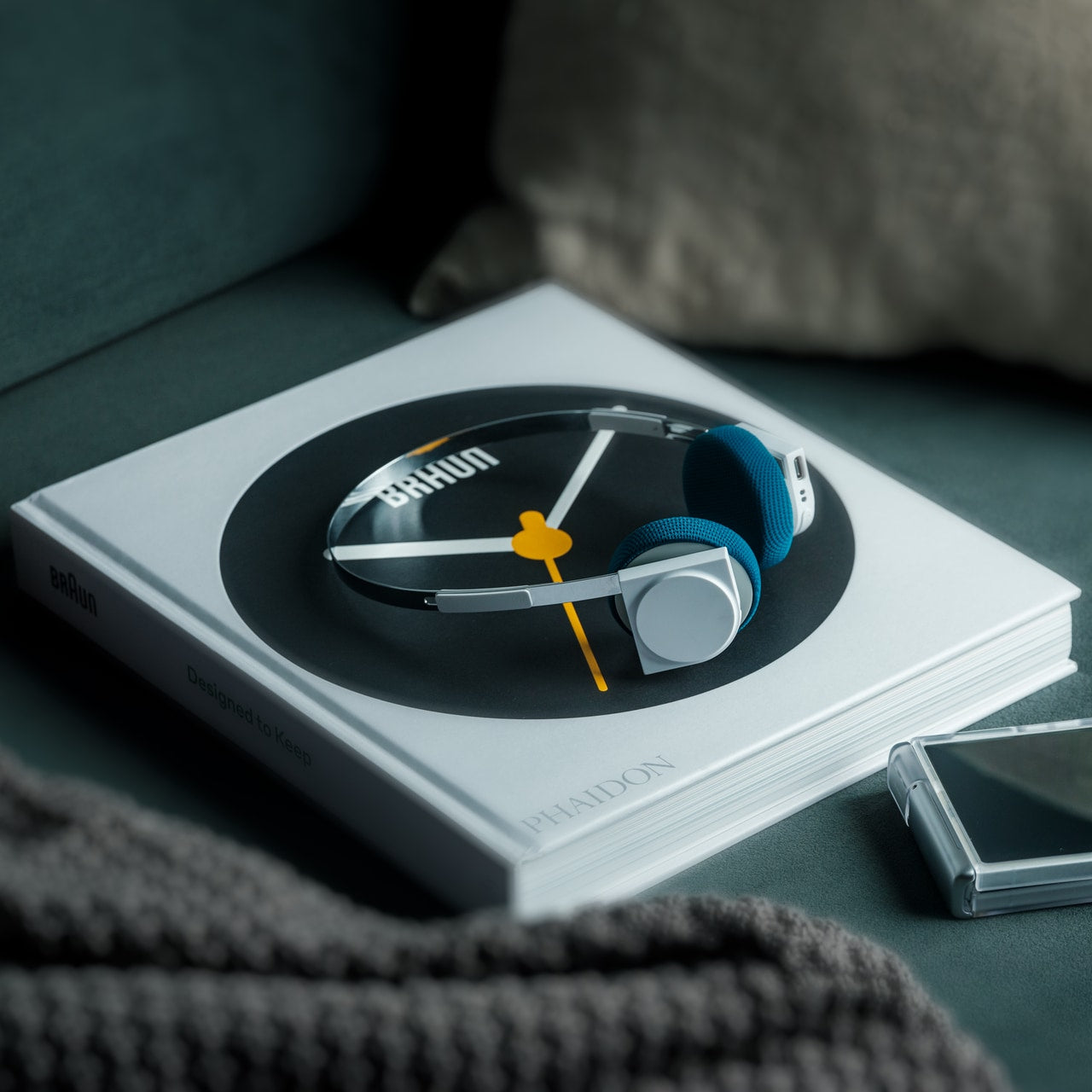
1. Stillframe Headphones

There is a particular moment on a long flight when you adjust your headphones for the fourth time and understand that the pair was never really designed for more than an hour of wear. The Stillframe headphones start from a different premise entirely. The design language reads functional first: no exaggerated cups, no status-signaling color range, no materials that prioritize the unboxing over the sixth hour in the air. These were made for the kind of listening that actually happens in transit, across a full day of movement.

At $245, they sit in the territory where the decision stops being casual. What earns the price is the coherence of the object itself. This is not a pair of headphones that optimizes for one feature and hopes the rest resolves itself. The sustained-wear focus addresses the gap between audio gear that performs on a spec sheet and gear you actually want to wear at every leg of a journey. A gate, a connection, a hotel room where you need to reset before morning: the Stillframe was designed for all three.

Click Here to Buy Now: $245.00

What We Like

  • The design aesthetic lands outside both the clinical slab and the fashion piece extremes that dominate the travel headphones market, which is a more specific achievement than it sounds at this price point
  • The sustained-wear focus addresses the one problem every other headphone in this category manages to avoid mentioning entirely, which makes it the most useful differentiation on offer

What We Dislike

  • A complete published spec sheet would allow for direct performance comparison at $245, and its absence asks for a degree of trust that some buyers will find reasonable and others will not
  • The price point makes this a deliberate purchase rather than an opportunistic upgrade, which narrows the audience without diminishing the object for those who meet it on its own terms

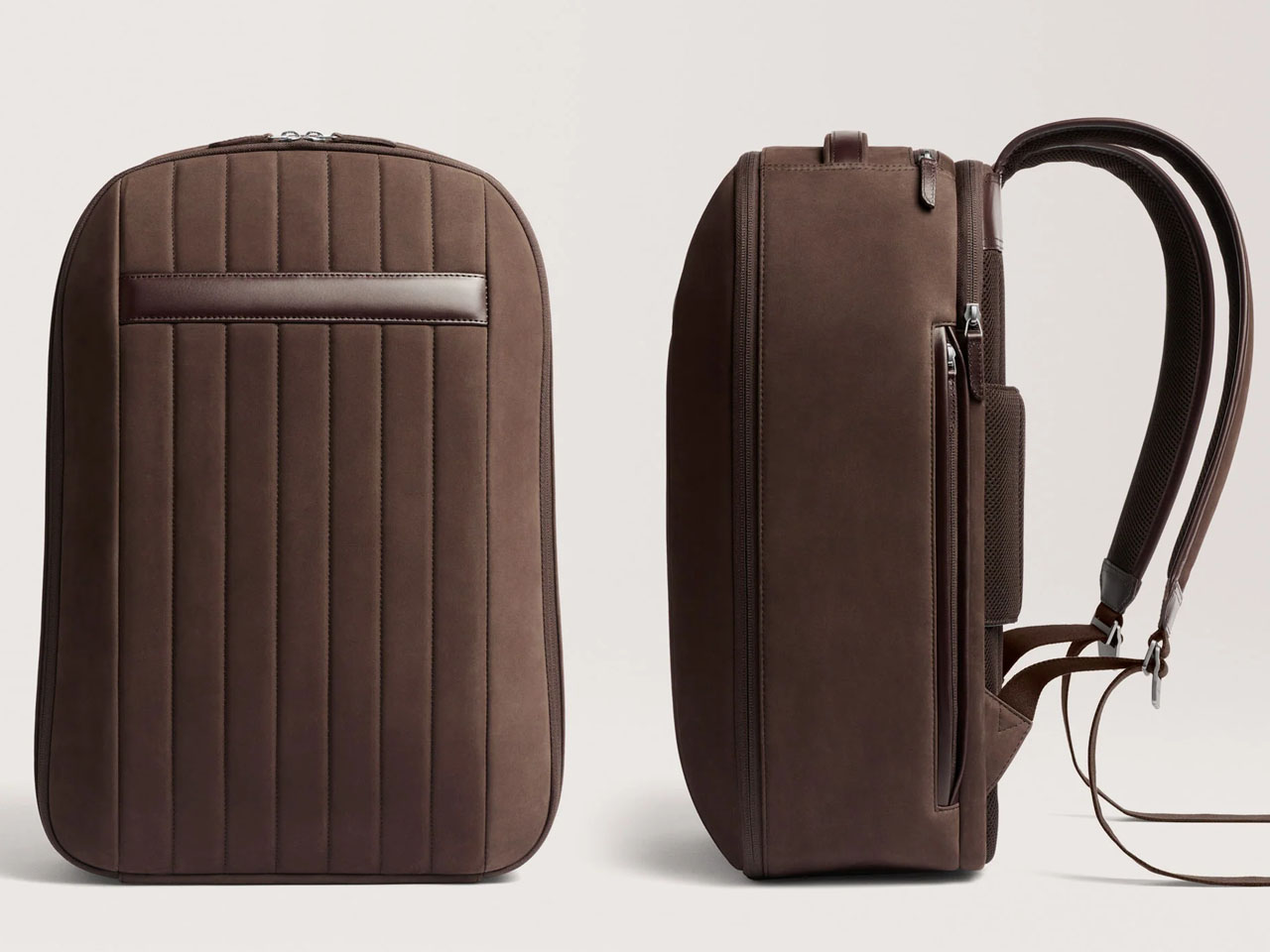
2. Carl Friedrik 72-Hour Backpack

Most travel bags solve the wrong problem. They maximize capacity, add organizational pockets until the zipper count exceeds any practical utility, and end up shaped for the product page rather than the airport floor. The Carl Friedrik 72-Hour Backpack starts from a different question: what does three days of real movement actually require? The answer is a clamshell bag that opens flat, shows everything at once, and closes without the repacking ritual that top-load alternatives demand at security checkpoints.

The 72-hour designation is the most honest thing about this bag, and that specificity is exactly how you know it was properly thought through. It holds a laptop, a change of clothes, chargers, and documents without expanding beyond what carry-on overhead bins tolerate. The premium materials age into something that looks better used than new, which is the long-term argument for spending more on a travel bag than instinct usually recommends. For a summer of early connections and improvised schedules, the bag you stop thinking about entirely is the right one.

What We Like

  • The clamshell opening is a genuinely practical design decision that solves a real airport friction point rather than a feature added to fill a spec sheet with something differentiating
  • Carl Friedrik’s material quality produces a bag that improves with accumulated use rather than deteriorating under it, which is a claim most bag manufacturers are not willing to make and mean simultaneously

What We Dislike

  • The premium positioning places this well above impulse territory, making it an investment purchase that requires deliberate evaluation rather than a seasonal refresh to a cheaper alternative
  • The honest 72-hour limit means anything beyond a long weekend requires supplementary luggage, which is useful information upfront but still a real constraint to plan around

3. Nimble WALLY Pro Wireless

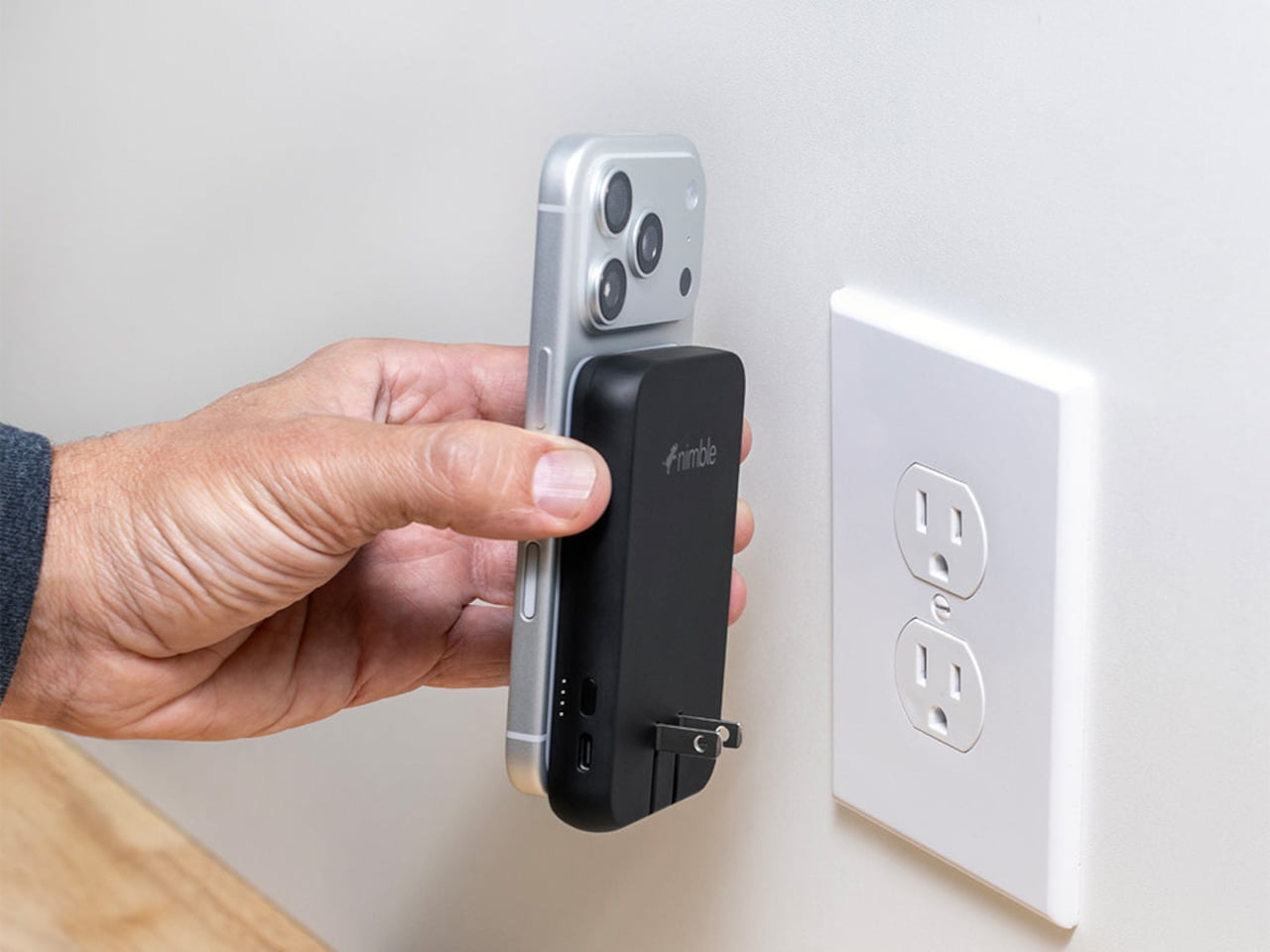
Most people travel with three charging accessories and use each one just enough to feel justified bringing all three. A wall charger takes one outlet. The power bank takes bag space. The wireless pad needs its own cable. Nimble’s WALLY Pro Wireless is a single device, 0.61 inches thick when not plugged in, that handles all three at once. Plug it into the wall, and it charges the internal 5,000mAh battery and your phone simultaneously. Pull it off, and it switches to bank mode without pause.

TSA-approved, ETL-certified, and built to run on 100 to 240 volts without a separate adapter, this is the charging solution that works before you leave the country and keeps working after you land. Qi2 wireless output runs at up to 15W, the USB-C port at up to 20W, and four LED indicators along the side give a clear battery readout before you leave the room. The housing is 100 percent post-consumer recycled plastic with a carbon-neutral designation. At $49.95, it quietly removes three items from the packing list without replacing them with anything.

What We Like

  • Three charging functions in a 0.61-inch-thick profile with universal voltage input means the adapter collection stays home and this comes instead, which is the clearest possible value proposition
  • TSA approval and ETL certification resolve the travel safety conversation before it starts, which is the best possible outcome for a power device in carry-on luggage

What We Dislike

  • The 5,000mAh capacity is sufficient for one full phone charge but will not sustain a multi-device day without access to a wall outlet for a periodic refill somewhere along the route
  • Qi2 wireless speed applies fully to iPhone 12 or later and compatible Android hardware; older devices will see reduced output regardless of what the charger itself is capable of delivering

4. Xiaomi UltraThin Magnetic Power Bank 5000

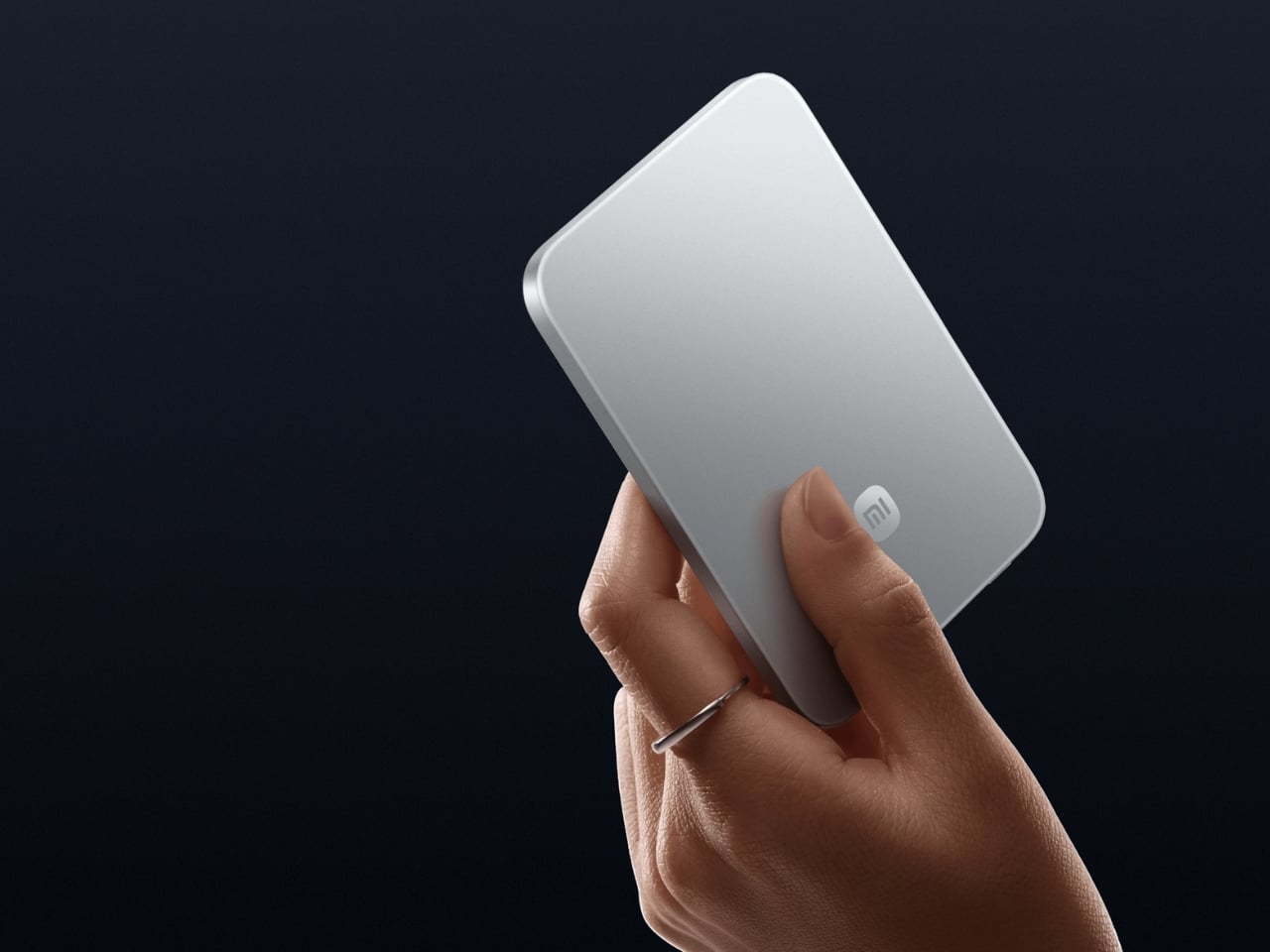
A 6mm power bank sounds like a specification claim until you hold one and register that it is thinner than the phone it is about to charge. Xiaomi’s UltraThin Magnetic Power Bank weighs 98 grams and delivers 5,000mAh through silicon-carbon battery chemistry at 16 percent silicon content, which is the engineering that makes the profile possible without sacrificing capacity. The aluminum alloy shell carries a photolithographically etched logo, the kind of finishing detail that signals someone cared about making the object rather than just shipping it. It was showcased at MWC 2026 in Barcelona.

Snap it magnetically to the back of your phone and forget it is there. Xiaomi 17 series users get up to 15W wireless output; iPhones land at 7.5W due to Apple’s own MagSafe ceiling rather than anything specific to this product. A USB-C port handles 22.5W wired, and the bank charges two devices simultaneously when needed. Ten layers of protection and a 4,369mm² graphite sheet for thermal management complete the picture. The power bank category spent years making capacity the headline. Xiaomi made the story the object itself.

What We Like

  • At 6mm and 98 grams, this is genuinely the thinnest available power bank at this capacity, which makes it the one you carry every day rather than the one you remember to pack for certain trips
  • Silicon-carbon battery chemistry achieves 5,000mAh at a profile that makes the physics feel like a design decision, which it is

What We Dislike

  • iPhone MagSafe compatibility is capped at 7.5W by Apple’s own ecosystem ceiling, not by anything Xiaomi controls, though the limitation is real for iPhone users regardless of where the responsibility sits
  • 5,000mAh will not take most current flagship smartphones from empty to full in a single pass, so this works best as a top-up companion throughout the day rather than a primary overnight charging solution

5. Kinto Travel Tumbler

KINTO has been making drinkware in Japan since 1972, and the Travel Tumbler is the product that explains why the brand has a following among people who pay attention to objects. Matte stainless steel, a one-handed screw lid with a silicone seal, and an opening wide enough to drink from without tipping your head back. No rubber gasket on the exterior. No branding beyond a debossed stamp. It disappears into your morning routine and becomes the object that is genuinely difficult to travel without after the first time you do.

The 500ml capacity is where the most precise design thinking lands. Large enough for a real drink, small enough to fit the outer pocket of most travel bags without negotiation. It keeps liquids at temperature for six hours in either direction. For a summer of early trains and long afternoons in cities you are still learning, this is the thing you reach for more consistently than anything else in the bag. The Kinto tumbler does not perform its quality. It simply is quality, in a form refined enough to earn daily use across every kind of travel day.

What We Like

  • The matte stainless exterior and restrained detailing place it closer to Japanese tableware than outdoor gear, which is a genuine category distinction that also photographs accordingly without any arrangement required
  • The 500ml capacity sits at the exact middle ground between espresso-sized and inconveniently large, reflecting the kind of design thinking that comes from actual use rather than defaulting to a standard size

What We Dislike

  • The screw lid takes slightly longer to open than a flip-top, a difference that becomes noticeable when you are holding a boarding pass and a bag strap simultaneously and need both hands for neither task
  • The matte finish picks up fingerprints faster in warmer climates and requires more frequent wiping than a polished surface, which is a minor but consistent maintenance consideration for a summer carry

6. CW&T Pen Type-C Ultra — gnuhr Edition

CW&T is a small New York studio that produces objects in limited runs for people who pay close attention to manufacturing. The Pen Type-C Ultra gnuhr Edition is Grade 5 titanium, hollowed and precision-milled to a skeletal profile that removes every gram that does not need to exist. It weighs almost nothing, looks like it belongs in a design archive next to aerospace hardware, and takes a standard ballpoint refill. There is no performance compromise to accept in exchange for the material or the form.

Traveling with this pen converts the act of writing into something you notice. Filling in a form at a hotel desk, signing a receipt, sketching a street corner while your coffee cools: these are the moments when an object of this quality distinguishes itself from everything else in your pocket. It fits on a keychain or in the spine of a notebook, both of which are positions where nothing else this well-made would reasonably fit. For a summer of movement, something is clarifying about carrying a pen built to outlast every passport you will ever own.

What We Like

  • Grade 5 titanium and skeletal precision milling place this in a different category from every other writing instrument at any price point, which is an accurate description rather than marketing language applied to a standard product
  • Standard ballpoint refill compatibility means the most beautifully made pen you own is also the easiest to maintain anywhere in the world, without a specialty refill search in an unfamiliar city

What We Dislike

  • The skeletal body offers minimal grip surface, which becomes a real consideration during longer writing sessions on bumpy transport rather than the hypothetical one it might seem when you first hold it
  • CW&T produces in limited runs with unpredictable restock timelines, meaning the right purchasing window is when you find it rather than when you decide you want it

7. Traveler’s Notebook

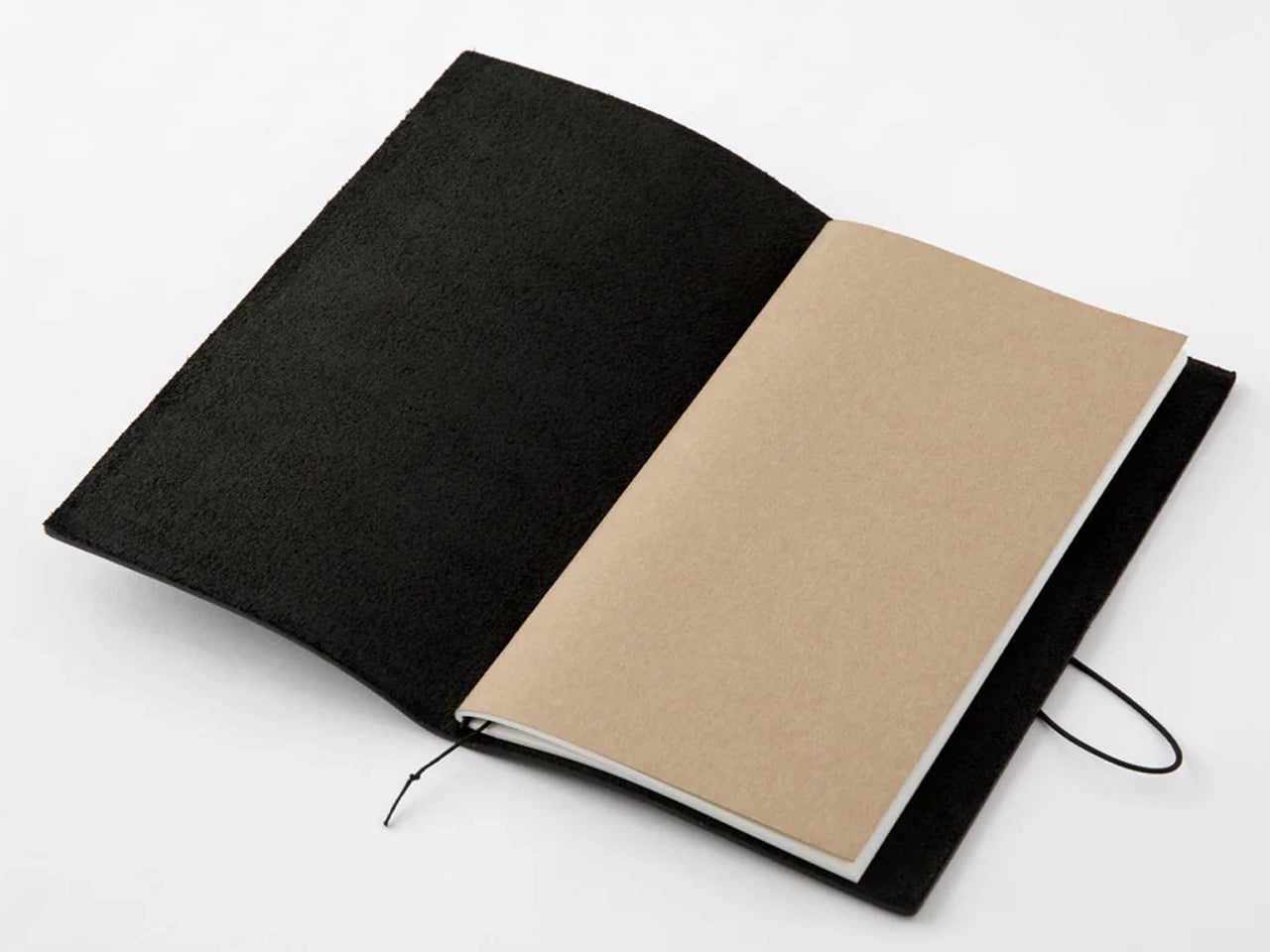
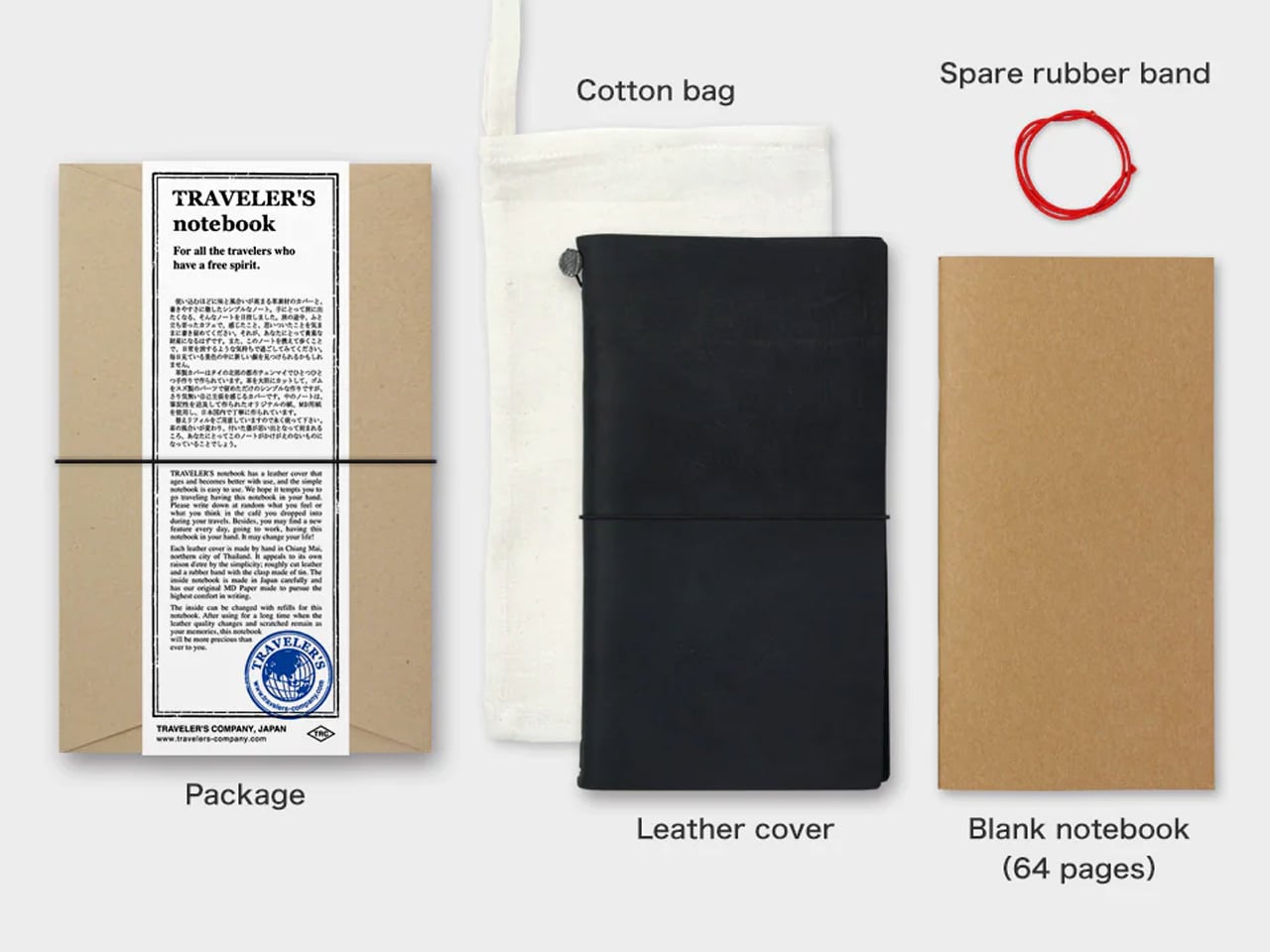
The Traveler’s Notebook has been in continuous production since 2006 and has changed almost nothing about itself, which is one of the more credible endorsements any product can carry. The black edition is oiled buffalo leather over a brass clip and elastic cord that ages into something genuinely lived-in after a single trip. The passport size fits a shirt pocket. The cream-colored MD paper inside is fountain-pen-friendly stock that resists bleed-through quietly and without making a feature of it, which is exactly the right approach.

In a list that sits mostly on the technology end of the travel object spectrum, this earns its place by doing nothing digital. It captures the parts of a trip that photographs miss: the quality of light at seven in the morning on an unfamiliar street, the menu item worth remembering, the address someone wrote down for you on a napkin now tucked into the inner fold. The refillable insert system means the leather accumulates character across years while the interior renews for each new destination. Handwritten travel, in a book that costs less than a dinner, has a relationship to memory that nothing else has yet replaced.

What We Like

  • Oiled buffalo leather, brass clip, and continuous production since 2006 produce an object that will outlast every phone, charger, and piece of luggage in the bag by a margin that is not a close call
  • The refillable insert system means the notebook’s physical character builds across years while the interior refreshes for each trip, which is a genuinely useful design decision that also happens to be a sentimental one

What We Dislike

  • The elastic cord binding requires a brief loosening period before inserts sit fully flat, which new users consistently find frustrating during the first week before it settles into daily use and stops being noticeable
  • The passport format can feel constrained for wider handwriting styles and left-handed writers working on moving transport, where the narrow page and cord binding combine into a real ergonomic consideration

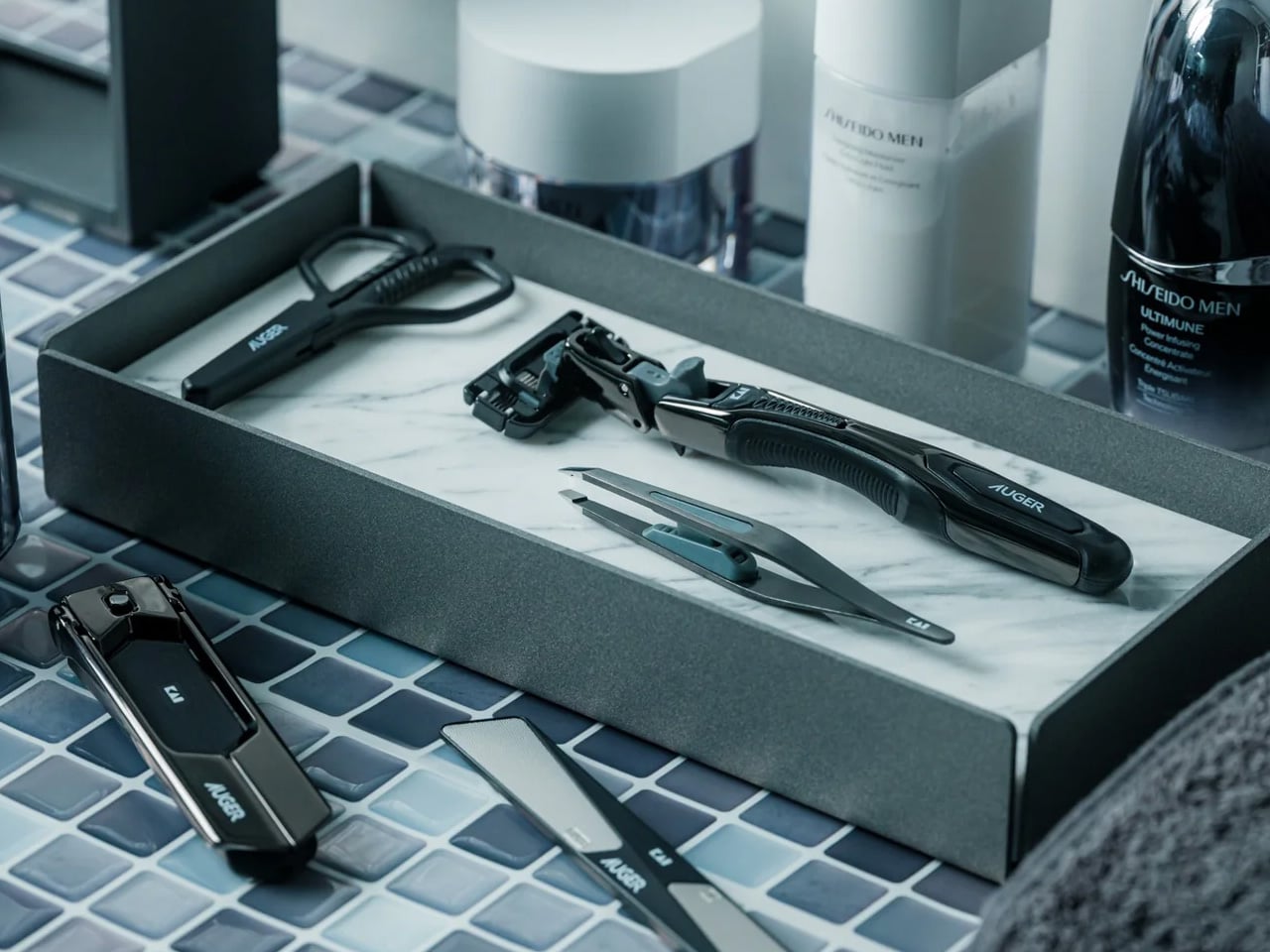
8. Auger PrecisionMaster Grooming Set

A grooming kit earns its place in a travel bag by doing two things at once: packing small and performing properly. Most travel grooming sets manage one or the other. The ones that pack small feel like toy versions of real tools. The ones that perform well require a hard case that adds more weight than it saves. The Auger PrecisionMaster Grooming Set approaches both as a single design problem rather than a trade-off between them, built around precision as the organizing principle rather than portability treated as an afterthought.

At $150, this is not a stripped-down version of a better kit scaled for a carry-on. It is the kit you actually want to use, built to the same performance standard whether you are at home or checking in somewhere new for the third week running. For anyone who travels frequently enough that grooming across time zones and hotel mirrors is a real logistical consideration, having tools that perform consistently rather than adapting to whatever the bathroom provides is a meaningful daily quality-of-life upgrade. The PrecisionMaster travels with you rather than waiting for you to return.

Click Here to Buy Now: $150.00

What We Like

  • Precision and completeness as the organizing design brief produces a significantly better result than the size-everything-down approach that most portable grooming kits default to, and the difference is immediate in use
  • Built to full-performance standards rather than travel-size ones, which means tool quality does not change when the context does, and that consistency compounds across a long summer of consecutive trips

What We Dislike

  • Grooming kits are personal in ways that curated sets cannot fully predict, and a fixed selection always carries some risk of leaving out something specific to your own routine that no roundup can account for
  • At $150, this sits in investment territory for a category most travelers undervalue until they have spent enough trips making do with what was available rather than what they would have chosen

9. DraftPro Top Can Opener

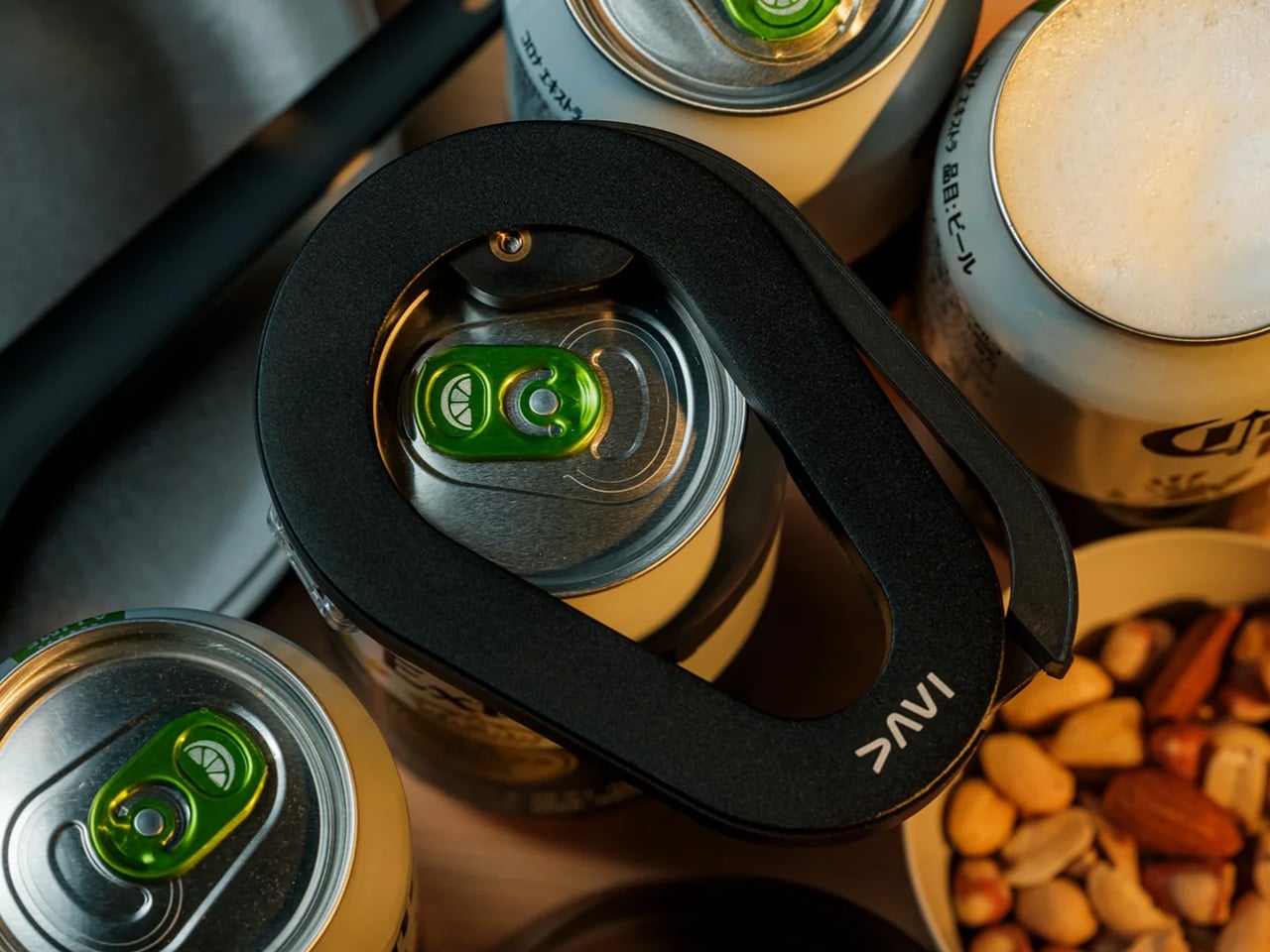
The traveler who stays in apartments and rented kitchens rather than hotels quickly discovers which tools the average rental does not stock. A can opener is at the top of that list with remarkable consistency, and the one left behind by a previous guest is consistently not the one you would choose. The DraftPro Top Can Opener addresses the problem from a design standpoint: a compact, considered tool built around clean removal and a form that earns its place in a travel kit rather than just excusing itself there on grounds of utility alone.

Top can openers remove the full lid rather than cutting the inner edge, which eliminates the sharp rim that traditional openers leave behind. The result is a lid you can replace as a cover, a can you can eat directly from without concern, and a tool you can rinse and pack without a second thought. For the kind of summer travel that involves self-catering, weekly rentals, and cooking wherever the accommodation allows, this is the object that makes the kitchen feel like yours from the first evening rather than the third day after you have figured out what is missing from every drawer.

Click Here to Buy Now: $60.00

What We Like

  • Full-lid removal means no sharp edges on either the can or the lid, which is the single most practical improvement over the traditional side-cutting opener design and the one most worth having on the road
  • The compact profile fits in a travel toiletries bag, a day pack side pocket, or a rental kitchen drawer without requiring deliberate accommodation of the kind that full-size tools demand

What We Dislike

  • Top-opening mechanics require a brief learning curve for anyone switching from a traditional side-cutting opener, particularly when working quickly in an unfamiliar kitchen where the usual instincts do not quite apply
  • The design serves apartment and self-catering travel specifically, which makes it a less obvious addition to a kit built around hotel-only itineraries where the kitchen consideration never comes up

Nine Objects That Earn the Trip

The best version of a travel kit is the one you stop thinking about. Every item does its job quietly enough that attention goes to the trip itself rather than to the logistics of surviving it. These nine products reach that standard in different ways: some through comfort, some through visual coherence, some through the small rituals that make a long transit day feel like something worth doing rather than something to get through before the trip begins.

Summer is the hardest test for any piece of gear. The heat, the packed transit, the compressed schedules, the improvised plans: they all expose the difference between objects designed for how travel actually works and objects designed for how it looks in a product shot. Everything here holds up under that pressure. Pack them well, move through security without a second thought, and pay attention once you arrive. That is the whole brief.

The post 9 Best Travel Gadgets for Summer 2026 That Survive Both Airport Security and Instagram first appeared on Yanko Design.

What If Your Earbuds Could Help You Sleep After They Played Music And Podcasts All Day?

After roughly 14 years at Samsung and then more than 20 years engineering Bluetooth audio, much of it developing products for and alongside Samsung’s ecosystem, Juwon Heo began asking a new kind of question. He had dedicated his career to making earphones sound clearer and connect more reliably. He helped perfect the technology that allows people to fill their world with music and podcasts. He then wondered if that same small device could do something more, something to help people quiet their inner world, too.

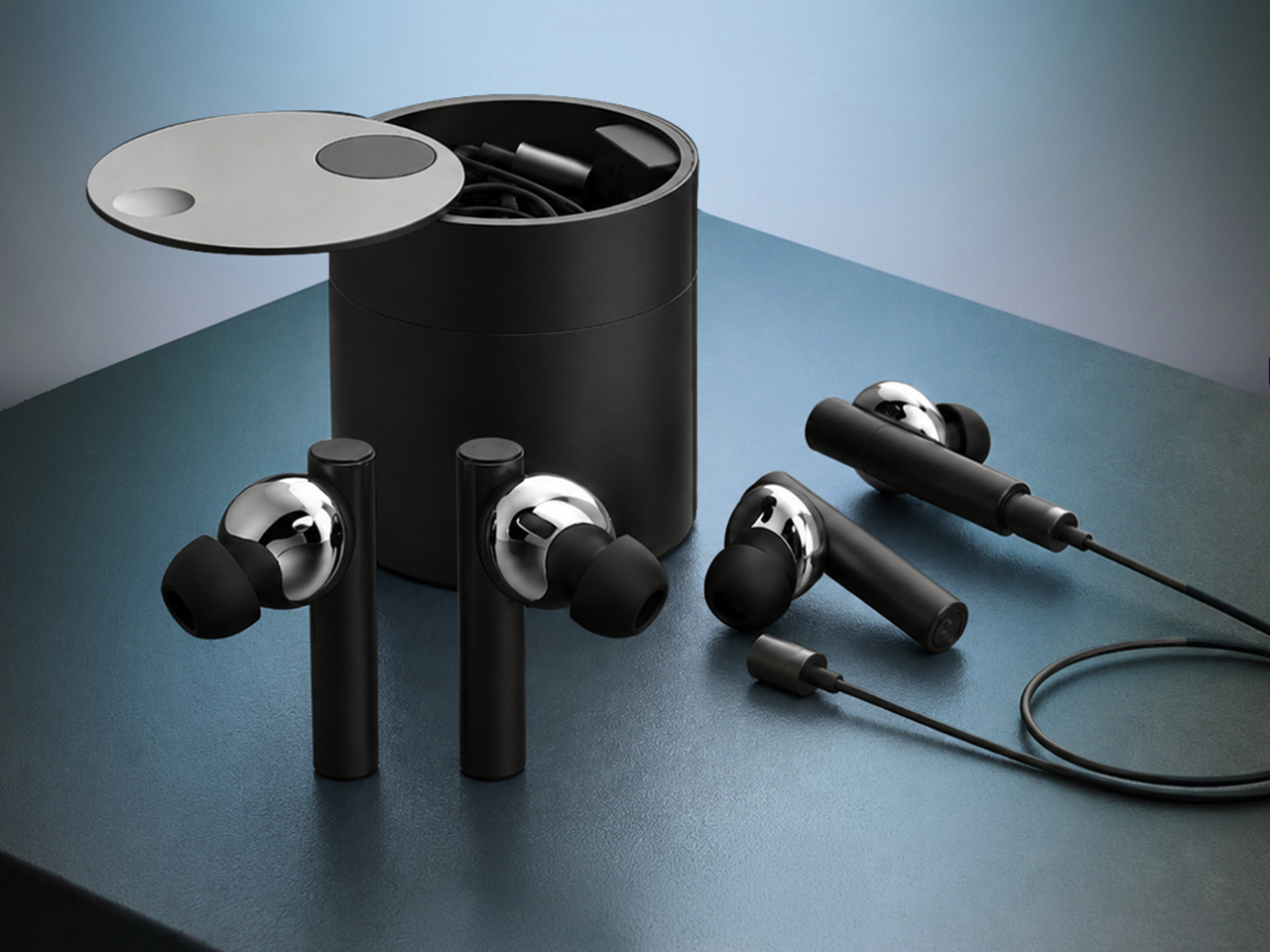
The result of that inquiry is the HealingFit TWS, a product that reflects its creator’s deep background in audio hardware. Heo’s company, MobiFren, developed a unique system in which premium true wireless earbuds transform, through a single magnetic link-cable connection, into a wellness device for better sleep, stress relief, and improved focus and memory, whenever the user needs it. It represents a seasoned engineer’s attempt to evolve the earbud’s purpose, from a simple listening tool into a versatile daily companion.

Designer: Juwon Heo, Founder & CEO, MobiFren

Click Here to Buy Now: $169 $300 (44% off). Hurry, only 15/210 left! Raised over $51,700.

The core innovation lies in the product’s dual-mode architecture. HealingFit TWS operates as fully independent wireless earbuds most of the time, handling calls, music streaming, and podcast listening without any cable or physical link. The moment a user wants to engage the wellness features, they snap on the Magnetic TES Link™, a slender cable that magnetically attaches to both earbuds. During a session, it provides the pathway for the TES microcurrent signal between the two earbuds. If you detach the cable or remove the earbuds from your ears, the microcurrent is immediately cut off, just like turning off a light switch. This connection enables bilateral TES (Transcranial Electrical Stimulation) microcurrent delivery paired with binaural soundscapes. The design allows the product to preserve the freedom of true wireless audio while activating a wellness mode only when deliberately chosen. The architecture has received a U.S. patent application allowance and is proceeding to registration, signaling that the concept offers technical novelty beyond typical wellness add-ons.

Personal audio has followed a clear trajectory over the past two decades. Wired earphones removed the need for bulky speakers but kept listeners tethered to their devices. The first wireless models cut the cord, but still linked the two earbuds together with a neck cable. True wireless earbuds eliminated that last physical connection, turning a pair of earphones into two independent modules that communicate through Bluetooth alone. Each leap reduced constraints and simplified the user experience. Heo views HealingFit TWS as the next logical step in that evolution, a category he refers to as TES wellness earbuds. The product builds on the independence of TWS but reintroduces connectivity selectively, for a functional purpose rather than a technical limitation.

MobiFren began in 2002 as a contract-development business working on feature phones for Samsung Electronics. Around 2005, while continuing that Samsung feature-phone development work, the company moved into Bluetooth audio development in parallel. By 2006, it brought its first Bluetooth earphones to market. That two-decade stretch gave Heo and his team fluency in hardware miniaturization, acoustic tuning, and wireless protocol integration. HealingFit TWS draws on that accumulated expertise, especially in balancing audio fidelity with the demands of compact electronics.

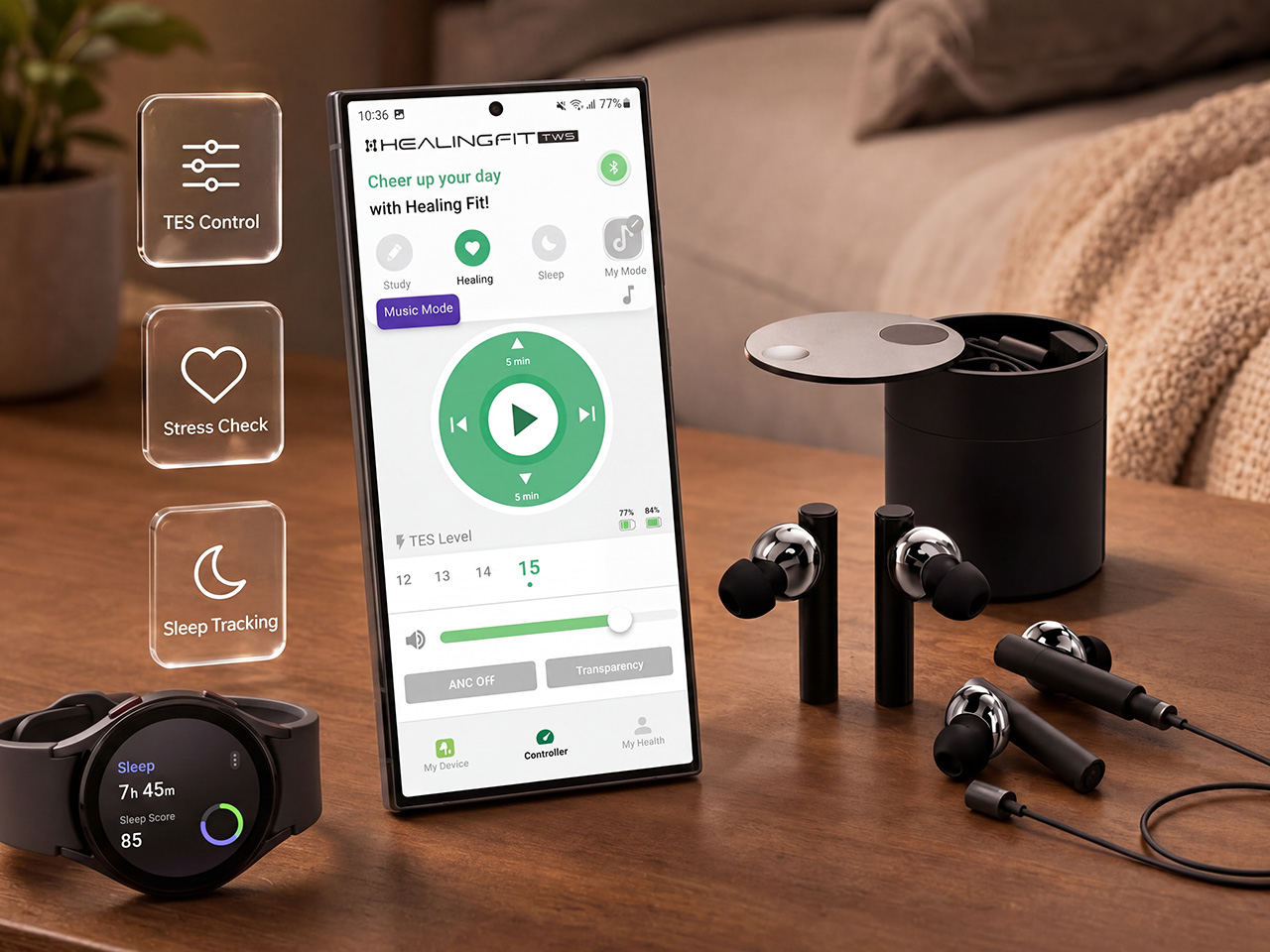
The earbuds use the MobiFren Sound Tuning System (MSTS™), a proprietary approach to acoustic profiling. Everyone hears differently, so the My HealingFit app provides five fully tuned MSTS™ sound modes, like five great earphones in one pair. MobiFren Mode delivers clean, natural, and balanced sound. BassBoost Mode offers richer low-end energy. Enhance Mode adds clarity for vocals, podcasts, and acoustic detail. Tender Mode provides soft, gentle sound for calm listening. Space Mode creates a wider, more immersive soundstage. Rather than forcing one fixed sound on everyone, Heo built the equivalent of five separate high-end, high-fidelity earphones into a single device, so each listener can choose the one that matches their taste. At CES 2015, in a blind listening comparison against Westone’s W60, more than 92% of listeners preferred MobiFren’s tuning. Sound tuning is the founder’s life’s work, and this audio foundation is what the entire product is built on.

The physical design is built around everyday portability and comfort. The earbuds feature an anodized aluminum body with an in-ear fit, a form factor intended to remain stable during commutes, calls, and general daily wear. The charging case uses a cylindrical design with a magnetic docking mechanism, sized to fit comfortably in a pocket or bag. The TES Link cable stores inside the case alongside the earbuds, avoiding the need for separate accessories or additional carrying solutions. The entire system is engineered to minimize friction in both modes, whether the user is moving through the day untethered or settling in for a focused wellness session at night.

HealingFit TWS recently passed another technical milestone. The device has received FCC certification, a regulatory requirement that confirms compliance with electromagnetic interference and radio frequency standards in the United States. This approval follows the U.S. patent application allowance and a CES 2026 Innovation Awards Honoree designation in the Headphones & Personal Audio category. These markers suggest that the product has moved well beyond concept-stage validation and into formal manufacturing readiness. For a crowdfunding campaign, these certifications provide a measure of reassurance that the hardware is real, tested, and legally cleared for production distribution.

The wellness component of the system centers on user control and choice. The app, My HealingFit, offers three routine modes: Sleep, Healing, and Study. Each mode delivers a combination of gentle microcurrent and binaural audio designed to support a specific mental state. Users can adjust the TES intensity across 15 levels, tailoring the experience to their own comfort threshold. The device is designed as a wellness tool, explicitly disclaiming any medical diagnosis or treatment function. That distinction is important. It positions HealingFit TWS as a personal relaxation and focus aid, not a therapeutic device subject to medical regulatory oversight.

Heo’s question from the beginning was simple. Could earbuds designed for the noise and motion of the day also serve the stillness and quiet that follows? HealingFit TWS is his answer, a product that tries to bridge those two states without forcing the user to own two separate devices. Earbuds have already become an everyday essential of the smartphone era, worn for hours at a time by millions. What Heo proposes is that they are evolving from a device we listen with into a device we also heal with. Whether that vision takes hold will depend on how users experience the transition between modes, and whether the wellness routines prove meaningful enough to justify the added capability. For now, HealingFit TWS stands as a milestone in that shift, a thoughtful industrial design experiment from a team that understands audio hardware deeply and believes the next chapter of personal audio is about versatility across the full rhythm of modern life.

Click Here to Buy Now: $169 $300 (44% off). Hurry, only 15/210 left! Raised over $51,700.

The post What If Your Earbuds Could Help You Sleep After They Played Music And Podcasts All Day? first appeared on Yanko Design.

If Le Creuset and Instant Pot Had a Baby, It Would Look Exactly Like This $199 Pressure Cooker

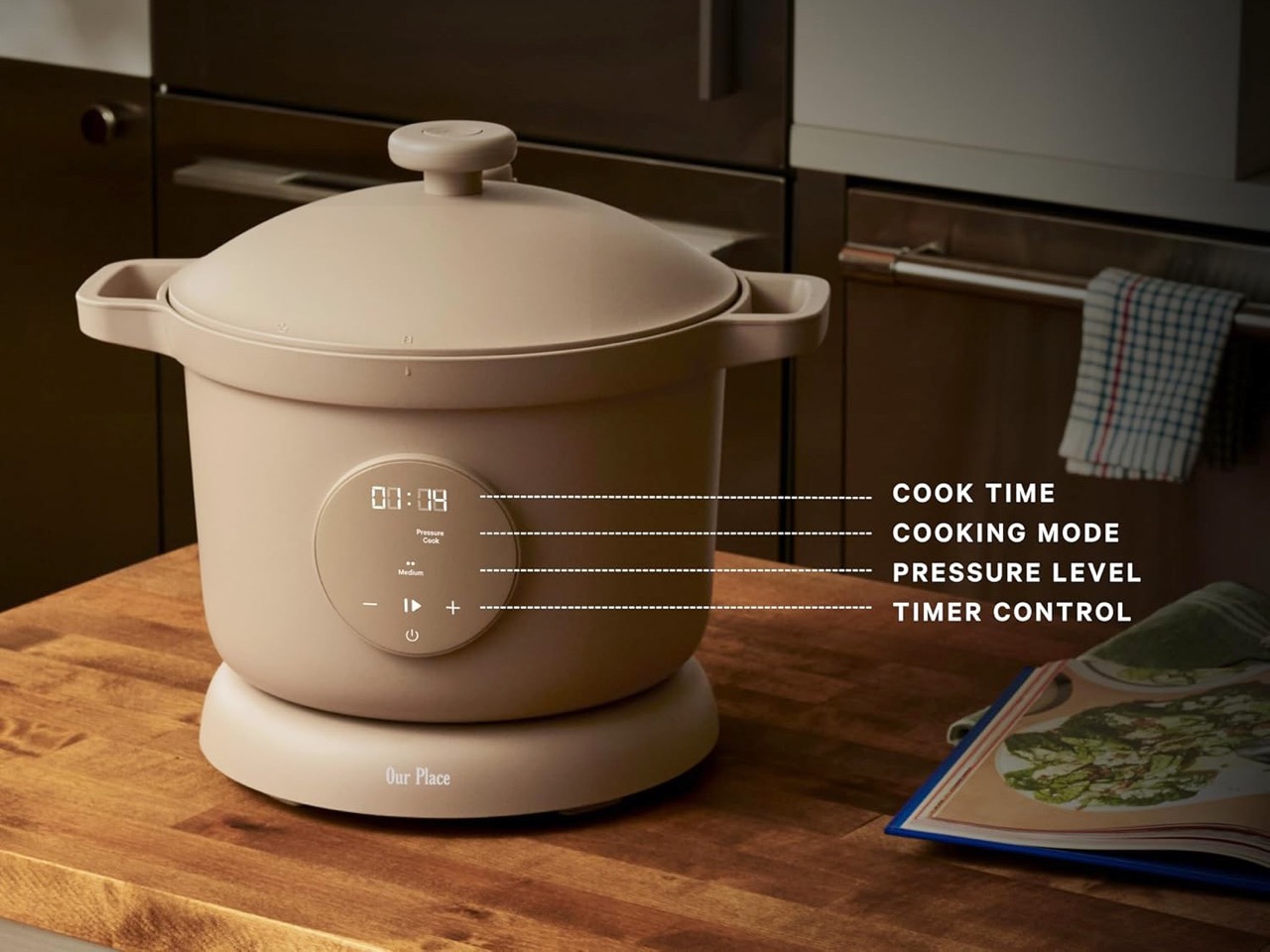
Le Creuset built its legacy on color and craftsmanship. Instant Pot built its empire on speed and convenience. Our Place just tried to merge both into a single six quart pot, and the result is the Dream Cooker, a pressure cooker that takes its name seriously, because I’d definitely have it as the centerpiece of my dream kitchen, right beside this SMEG x Porsche coffee machine.

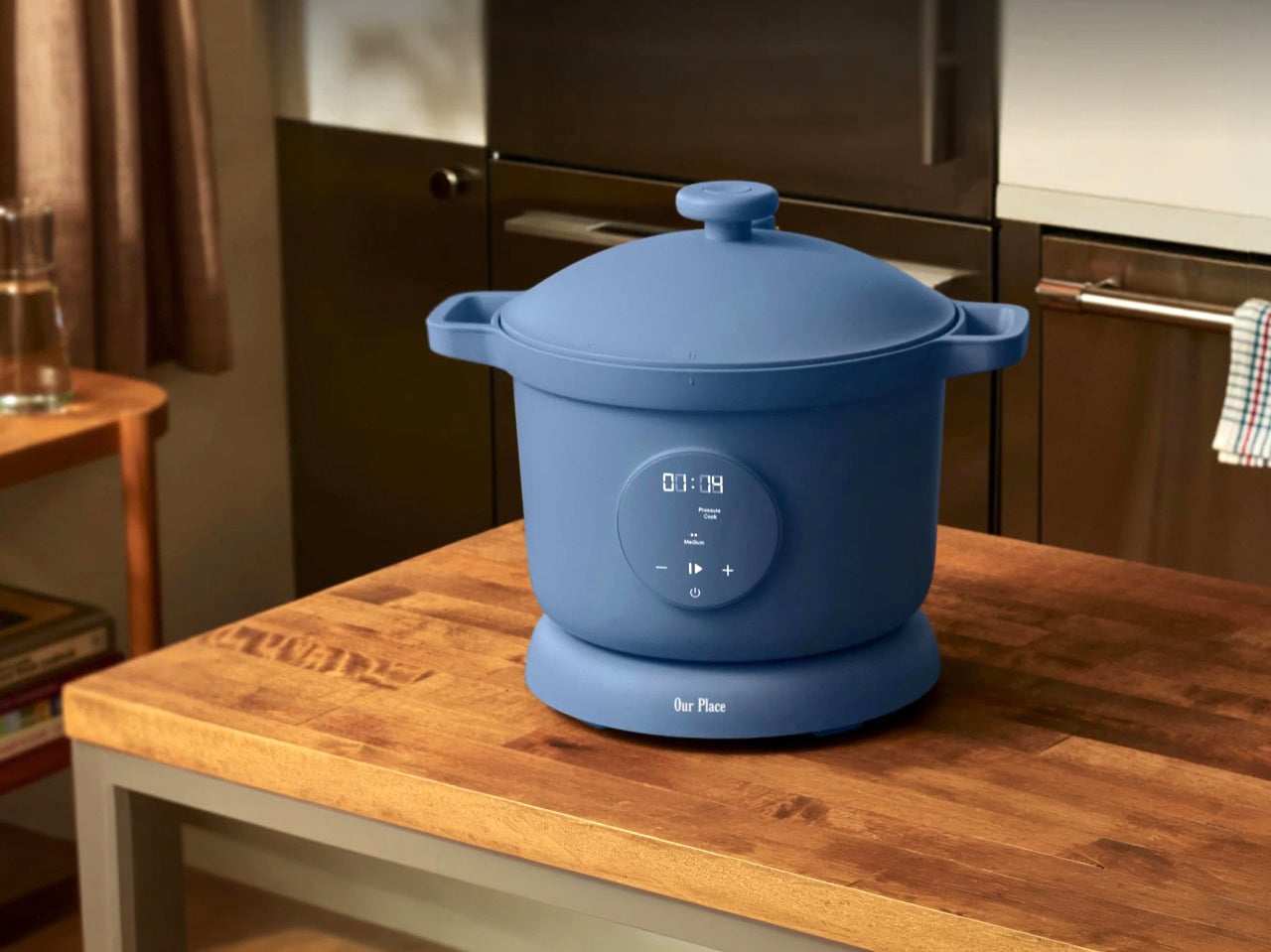
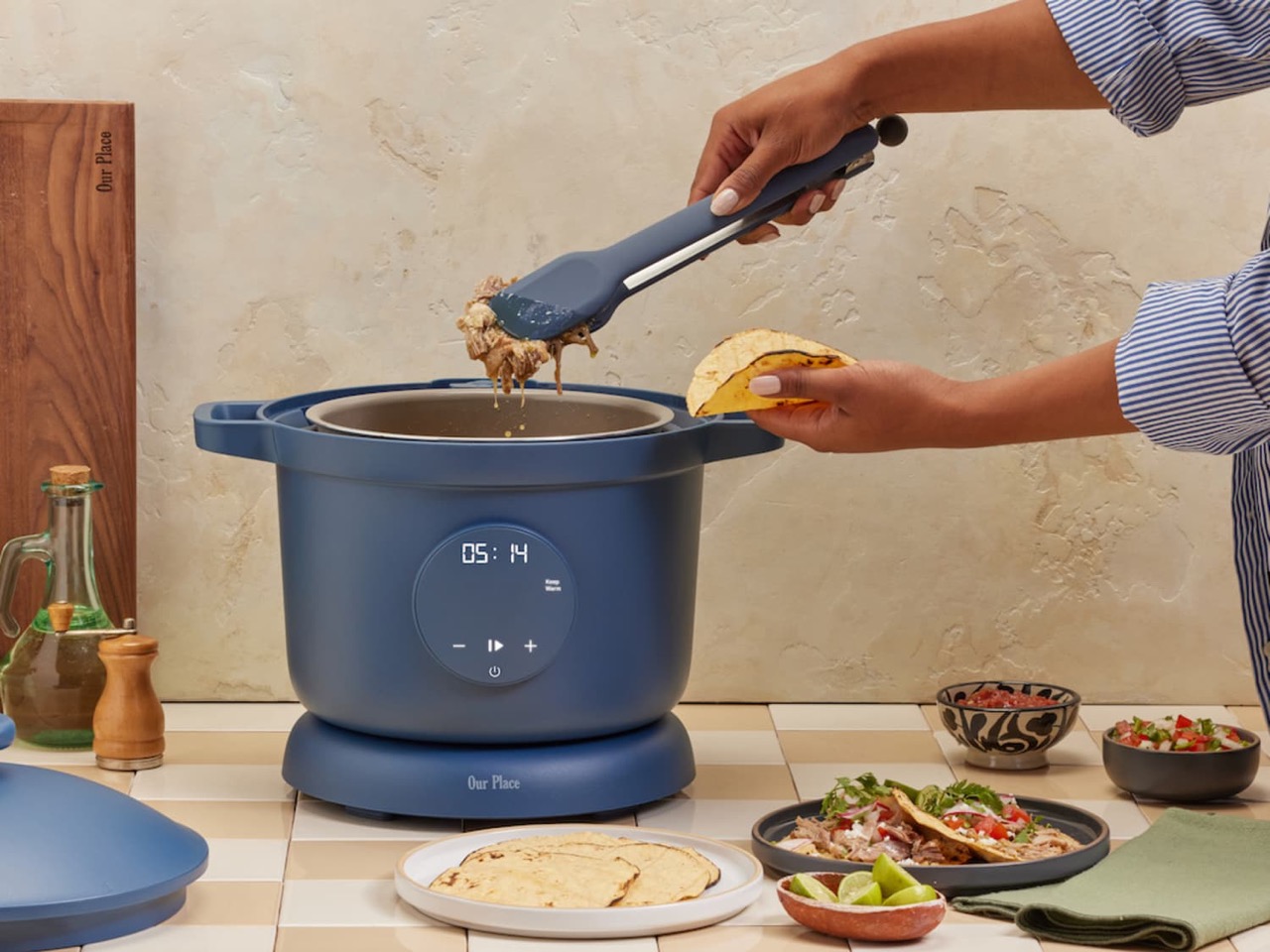
The dome lid, the matte pastel finish, the wooden style knob on top all borrow directly from heritage cookware. But underneath that soft exterior sits a digital control panel offering pressure cooking, slow cooking, searing, sauteing, and keep warm modes, making it one of the more versatile entries in Our Place’s growing appliance lineup. The result is literally the best of both worlds – the aesthetic beauty of a wonderfully enameled Dutch oven, along with the precise cooking ability of an electric pressure cooker.

Designer: Our Place

Click Here to Buy Now

I have owned an Instant Pot for six years and I still keep it in the cabinet under the counter, next to the waffle iron I use twice a year. It is a genuinely great appliance but I have never once wanted to look at it beyond the digital screen. That is the entire problem Our Place is trying to solve here, and honestly, it is the same problem they solved with the Always Pan back in 2019, when they figured out that people would happily pay a premium for cookware they were proud to leave sitting out. The Dream Cooker takes that exact playbook, the one that turned a nonstick pan into a genuine internet phenomenon, and points it at one of the least glamorous corners of the kitchen. Pressure cookers have never needed to be beautiful because nobody buys one for the way it looks. Our Place clearly thinks that is a market failure waiting to be corrected.

You can see the strategy in every curve of this thing. The dome lid sits high and rounded, closer to a French cocotte than anything with a locking pressure valve, and the little knob on top looks like someone turned it on a lathe rather than injection molded it in a factory in Shenzhen. The handles are chunky and soft edged, built more for the aesthetic of a farmhouse kitchen than the ergonomics of hauling a hot pot across a countertop, though they do that job fine too. None of it screams appliance, and that is precisely the point. Sit this next to an actual Dutch oven and the family resemblance is not subtle. Our Place is not hinting at heritage cookware here. They are co-opting it.

Our Place offers the Dream Cooker in 4 pastel shades – a subtle cobalt-y ‘blue salt’, a soft terracotta shade named ‘spice’, an anthracite grey/black called ‘char’, and a sandy neutral tone called ‘steam’, all finished in that chalky matte texture the brand has used since the Wonder Oven launched. Stainless steel pressure cookers disappear into a kitchen because they are trying to be invisible. These colors do the opposite. They behave like ceramic, like something a potter glazed rather than something an engineer specced, and lined up together in the marketing shots they look like a paint swatch card for a boutique hotel. Whether you find that charming or not probably depends on how many other Our Place products are already sitting on your shelves… or whether you’re hovering close to that ‘Add to Cart’ button.

Look beyond the gorgeous shell and you’ve got a six quart nonstick pot, and four modes covering pressure cooking, slow cooking, searing and sauteing, and keep warm, all controlled through a single dial instead of the twelve button command center most multicookers ship with. Our Place claims pressure mode cooks up to eighty percent faster than a stovetop, which if true puts it in the same conversation as the appliance it is clearly gunning for.

Here is my actual question, though. Instant Pot won by being the appliance nobody thought about twice, a workhorse that came, conquered, and retired back to its cabinet. Our Place is betting that a chunk of that audience actually wanted the opposite the whole time, an appliance they would leave out, photograph, maybe even feel a little smug about. That is a more interesting wager than another multicooker chasing one more preset button, and if the sear function sears the way it should and the pressure release feels as considered as the knob on top, Our Place will have done something most kitchen tech never bothers attempting. It will have given the pressure cooker a cultural makeover… here’s hoping Our Place does the Air Fryer next!

Click Here to Buy Now

The post If Le Creuset and Instant Pot Had a Baby, It Would Look Exactly Like This $199 Pressure Cooker first appeared on Yanko Design.
5 Best Home Gadgets & Accessories Worth Every Penny in July 2026

Most things that cost more justify it by doing more. The best ones justify it by doing something so well that the problem stops feeling like a problem. That’s the standard every product on this list is held to — not feature counts, not brand reputation, not spec sheets. Each entry earns its place by changing something about daily life in a way that a cheaper version simply cannot replicate, and that gap is specific enough to explain.

Five picks, spanning pool care, home cleaning, ambient lighting, kitchen tools, and atmosphere. The price range runs from $165 to $3,999, which is a deliberate spread — the argument for spending more looks different at every tier, and each one here makes it convincingly. Here’s the case for each.

1. 3-in-1 Luminous Mirror Diffuser

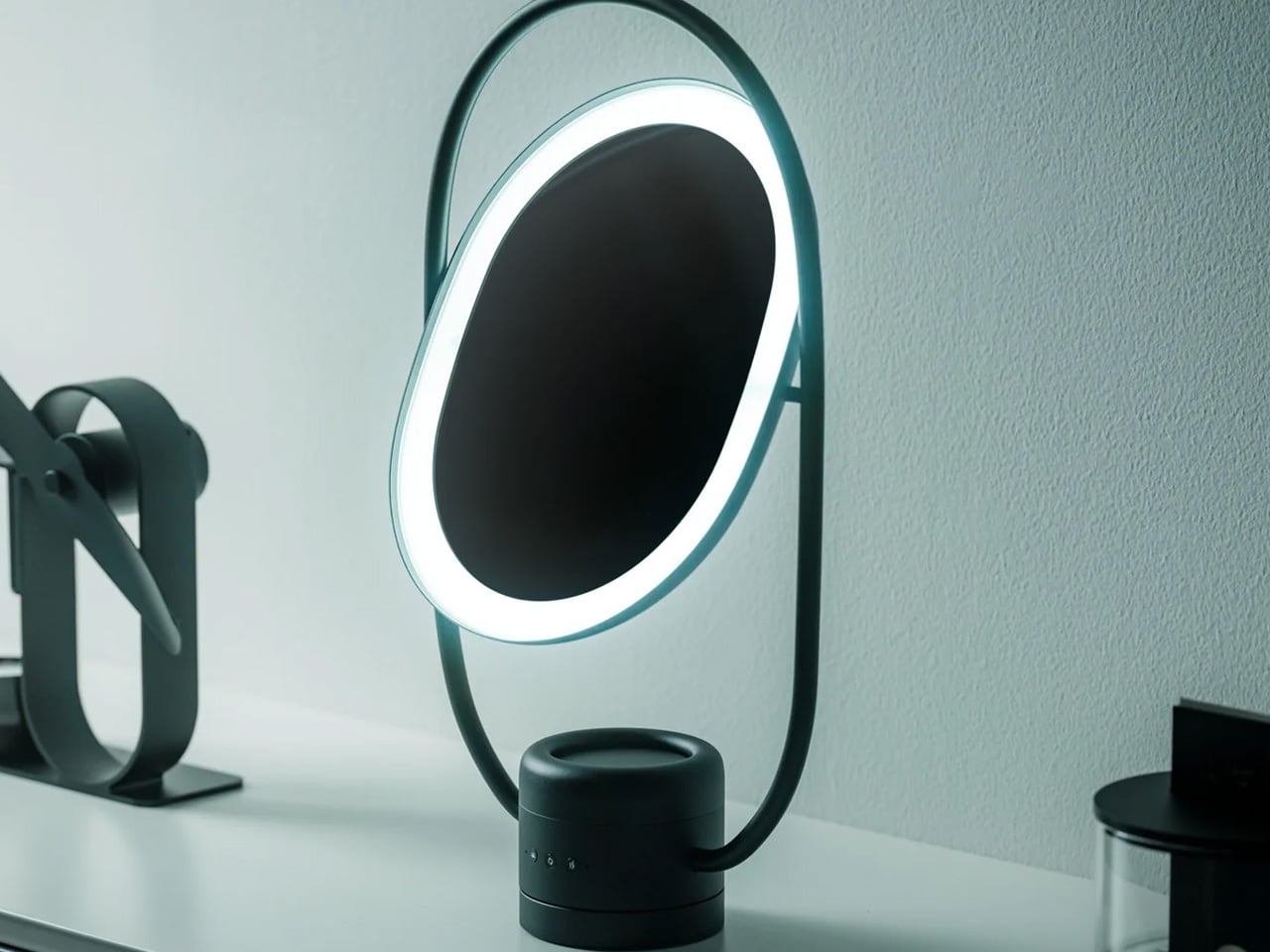
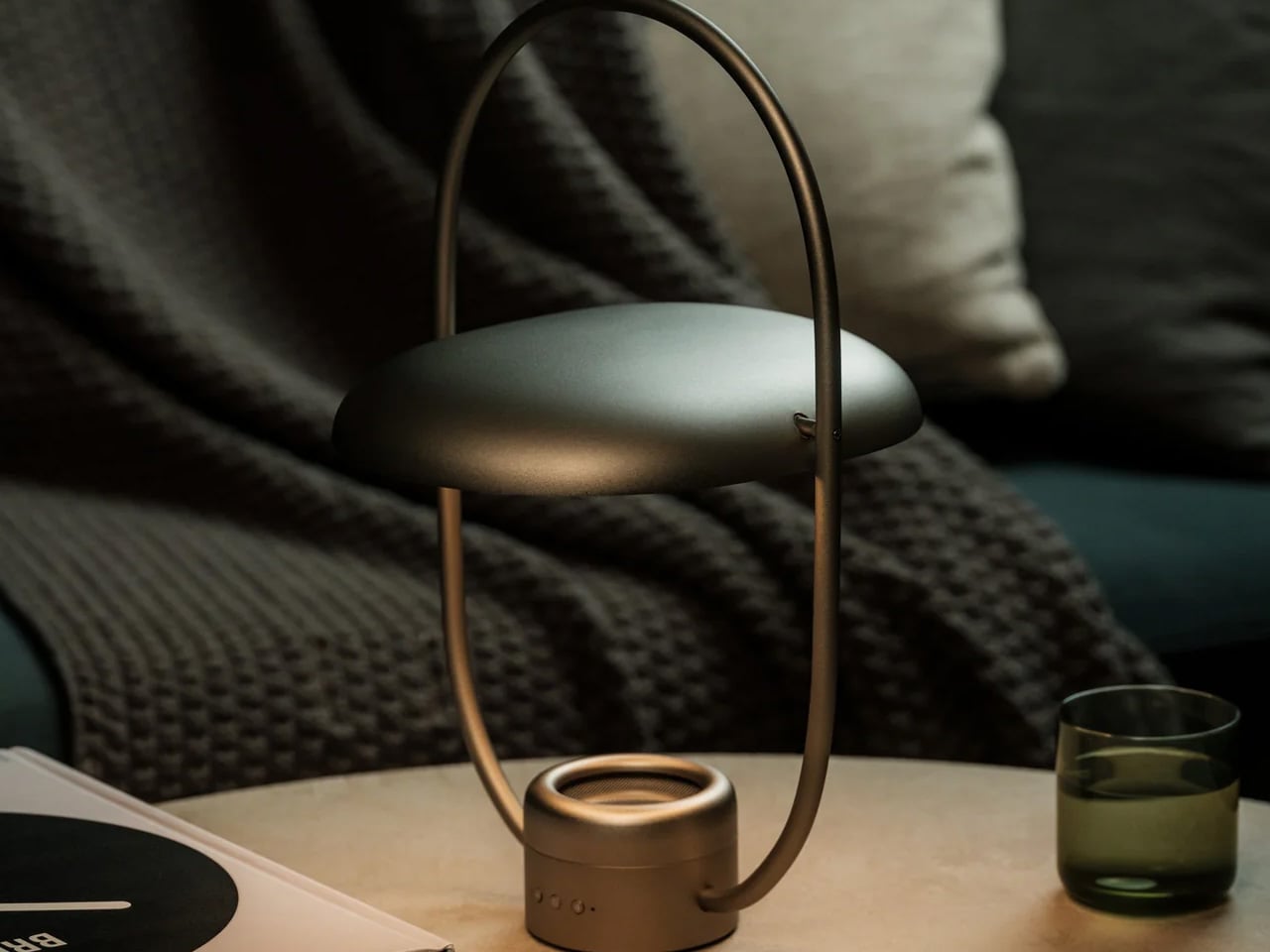
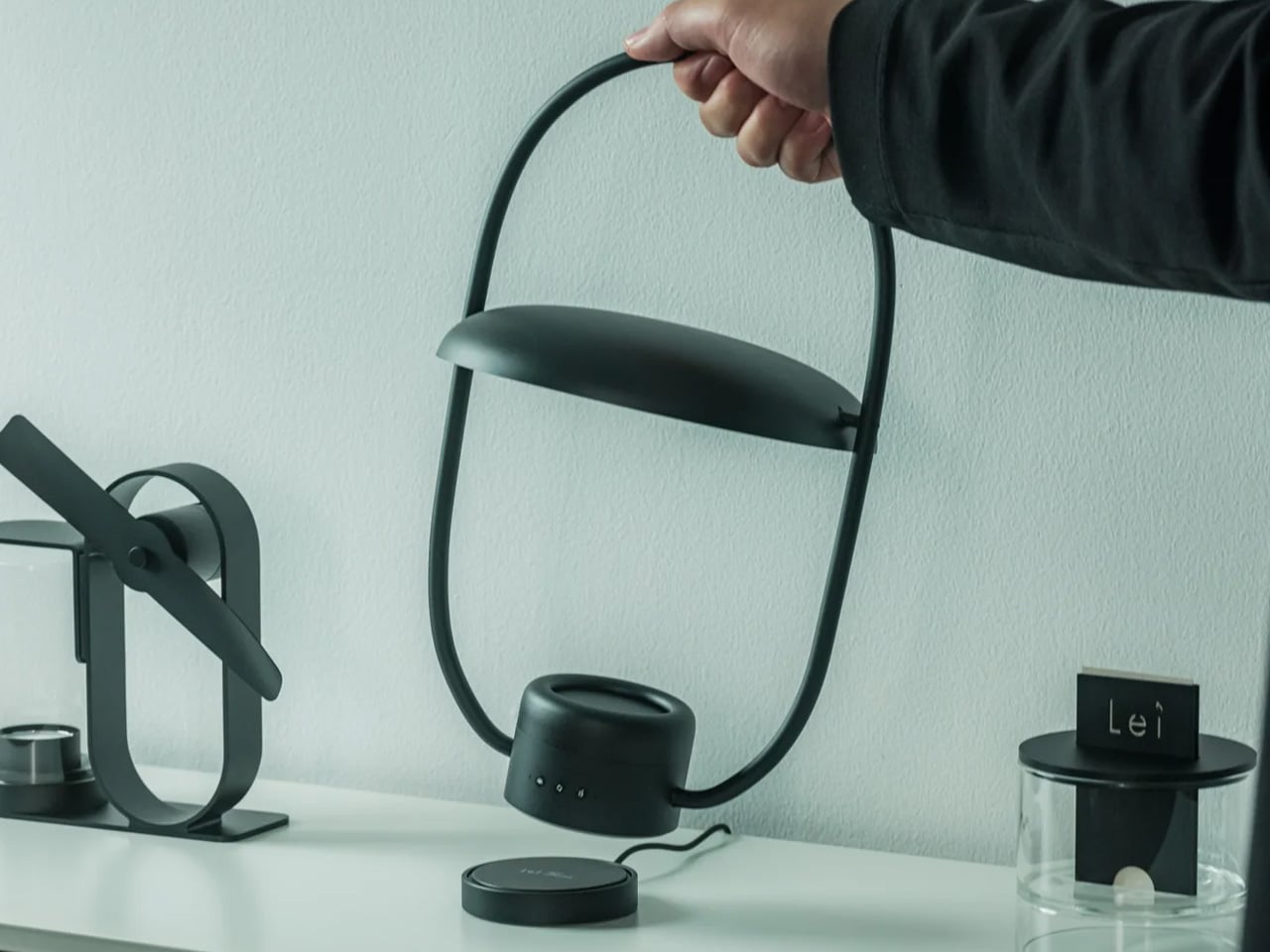
Most bedside setups are a quiet negotiation. The lamp is tolerable but too directional. The mirror is functional but positioned wrong. The diffuser is somewhere on a shelf, half-forgotten after the first week. The Luminous Mirror Diffuser collapses all three into a single oval object crafted from anodized aluminum, and the result looks better than any of the items it replaces. The 360-degree rotatable mirror pairs with shadow-free reflected light technology, so illumination reaches everywhere it needs to without the harsh contrast a single light source creates. It is, in the most literal sense, one object doing the work of three — and doing it more elegantly than any of them managed alone.

Three color temperatures anchor the lighting system. The 2400K warm setting creates the kind of low, amber glow that most lamps can’t reach without a separate bulb swap. A mid-range neutral handles focused tasks without visual fatigue. The 6000K daylight setting delivers precision clarity for grooming or makeup where color accuracy matters. Four adjustable brightness levels sit beneath each temperature, which means the same object serves a 6 am routine and an evening wind-down without compromise. The patented aroma plate uses an aluminum matrix to diffuse fragrance gently from a few drops of essential oil, & charges wirelessly.

Click Here to Buy Now: $800.00

What We Like

  • The 2400K warm mode creates a genuinely different atmosphere than a standard lamp, worth having for evenings alone
  • Anodized aluminum with a matte scratch-resistant finish feels premium at every point of contact

What We Dislike

  • At $800, this is a considered purchase — it rewards people who use all three functions regularly and will underserve those who don’t
  • A dedicated studio mirror or a standalone high-end diffuser will outperform it in those individual categories

2. Beatbot AquaSense X

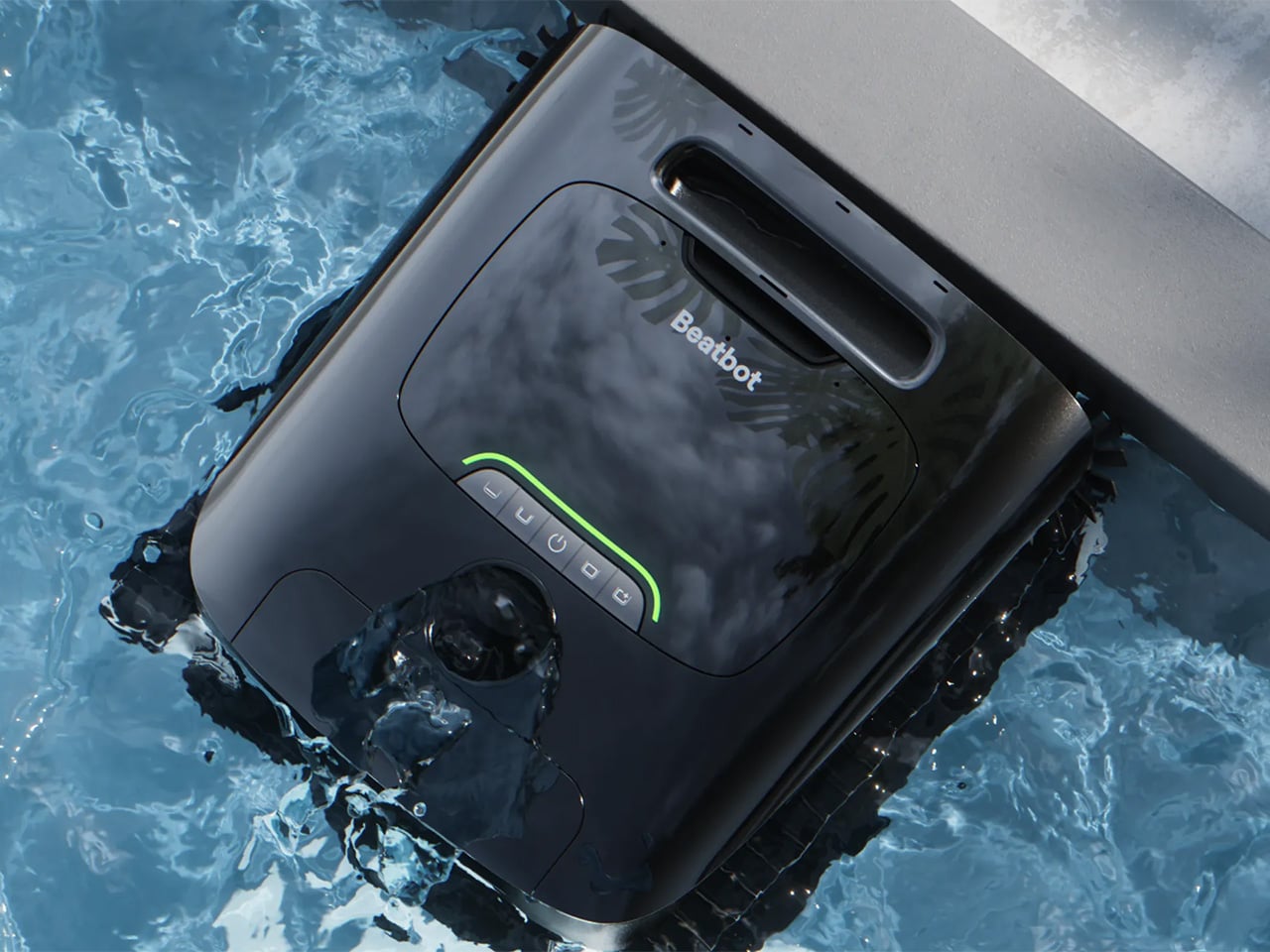
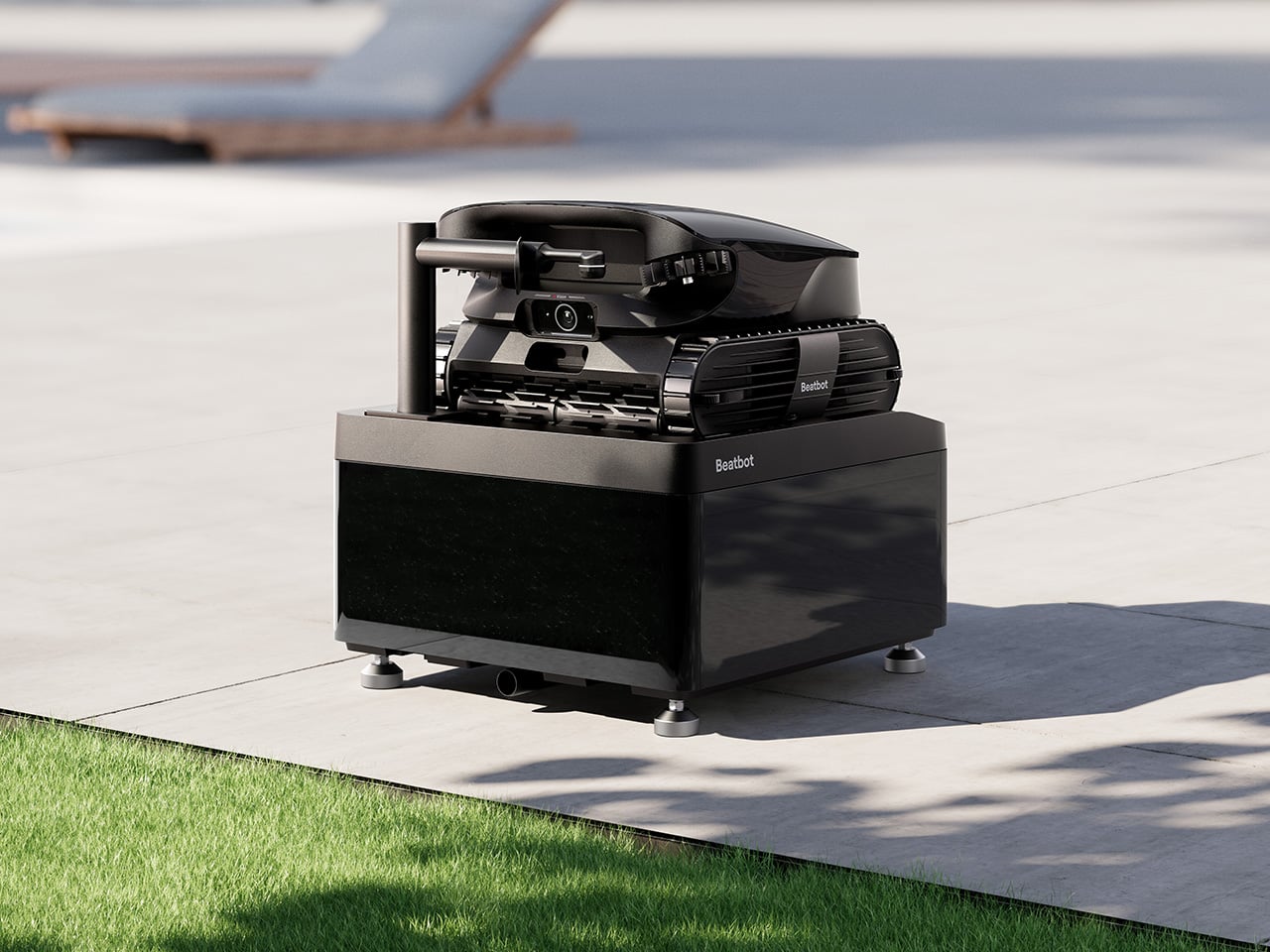
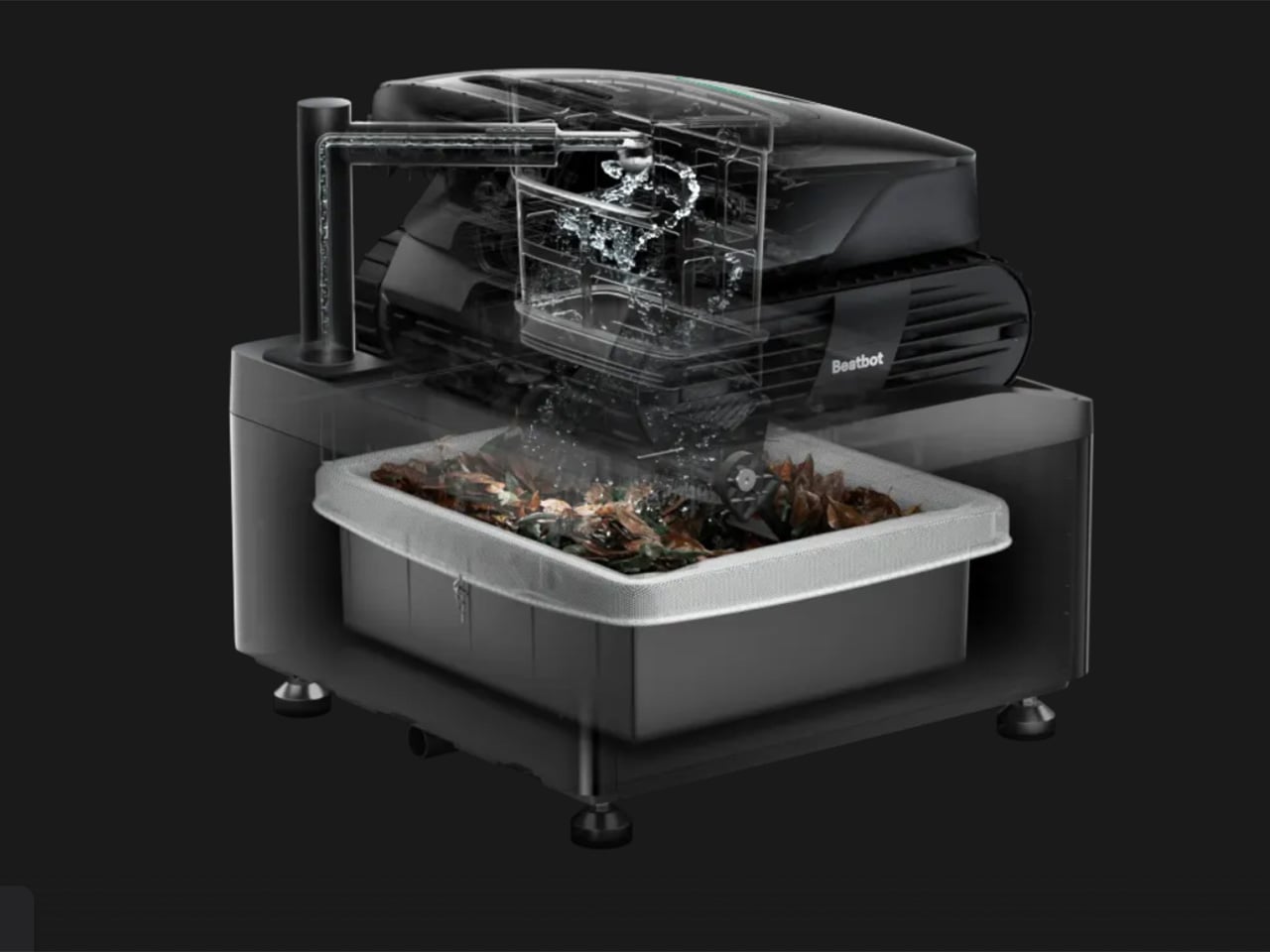
The standing criticism of pool robots is that they automate the cleaning but leave the cleanup to you — filter basket to empty, machine to rinse, ready for next time only if you remember. Beatbot designed the AquaSense X around that exact gap. The robot cleans the pool. The AstroRinse docking station cleans the robot. Once the machine docks, a high-pressure rotating nozzle enters the filter basket, backflushes trapped debris into the station’s sealed 22-liter bin, and initiates charging automatically. The filter basket opens from the bottom to make sure nothing gets stranded. The whole cycle takes about three minutes. You do not touch anything.

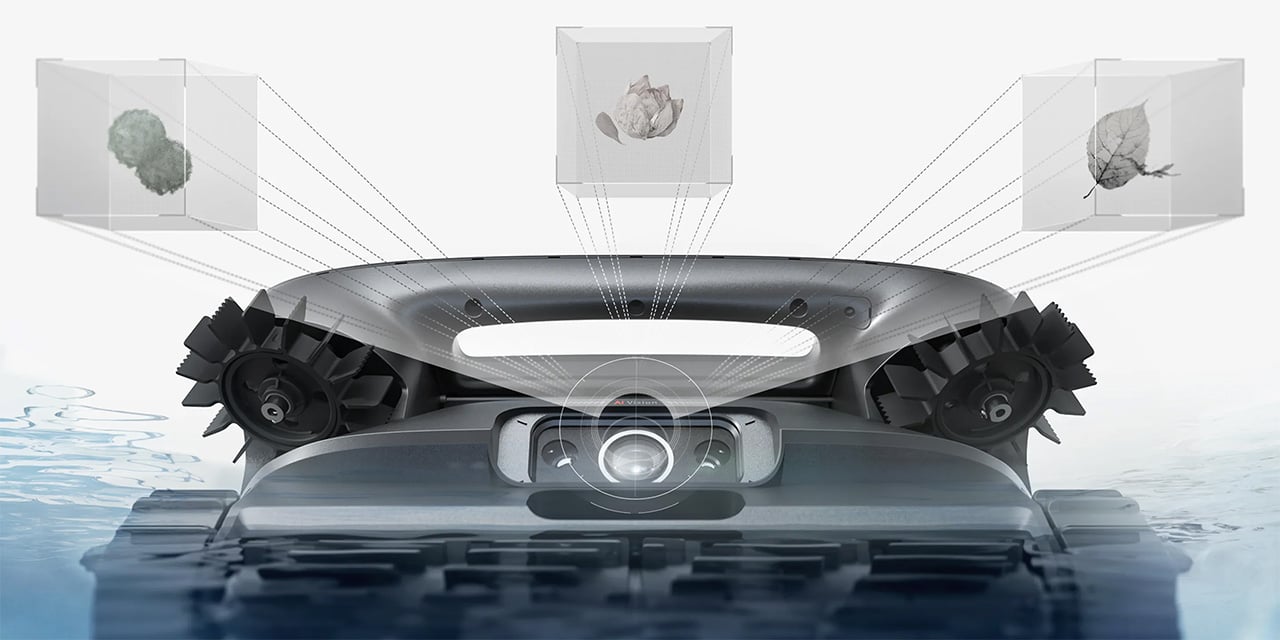
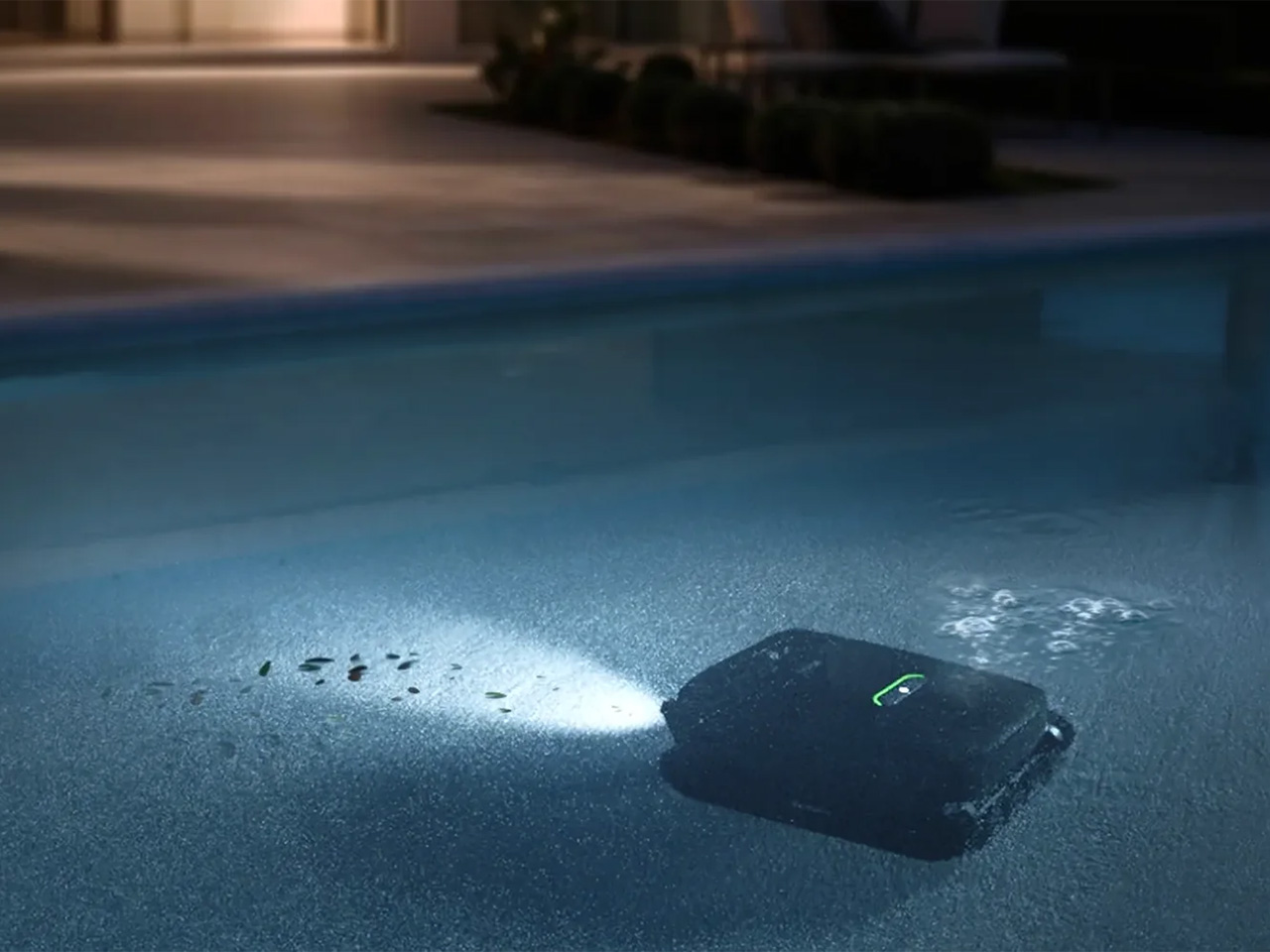
HybridSense AI Vision combines an onboard camera with infrared and ultrasonic sensing to identify 40 debris types, extending detection to the water surface as well as the pool floor. Eleven motors drive a submarine-style propulsion system that transitions between floating and diving to cover floors, walls, the waterline, and elevated surfaces like tanning ledges and shallow entry steps. As it cleans, it auto-dispenses AquaRefine clarifying agent — a formula derived from recycled crab shells — directly into the water. One 300mL kit treats up to 99,000 gallons. Voice control through Alexa, Google, and Siri handles scheduling and status from outside the pool. The 22-liter debris bin holds roughly two months of standard use before it needs emptying. Pool maintenance becomes, for most practical purposes, something that happens without you.

Click Here to Buy Now: $3999 $4250 ($251 off). Hurry, deal ends in 48-hours!

What We Like

  • The AstroRinse station is the genuine innovation — it’s the first pool cleaning system to close the loop on the maintenance the cleaning itself creates
  • Two months between bin empties means this goes from a weekly chore to a seasonal one

What We Dislike

  • At $3,999, the value equation only works for pools that are used regularly enough to justify the investment over a standard pool service
  • App-dependent scheduling means a connectivity issue or software update can disrupt an otherwise hands-off routine

3. Samsung Bespoke AI Jet Ultra

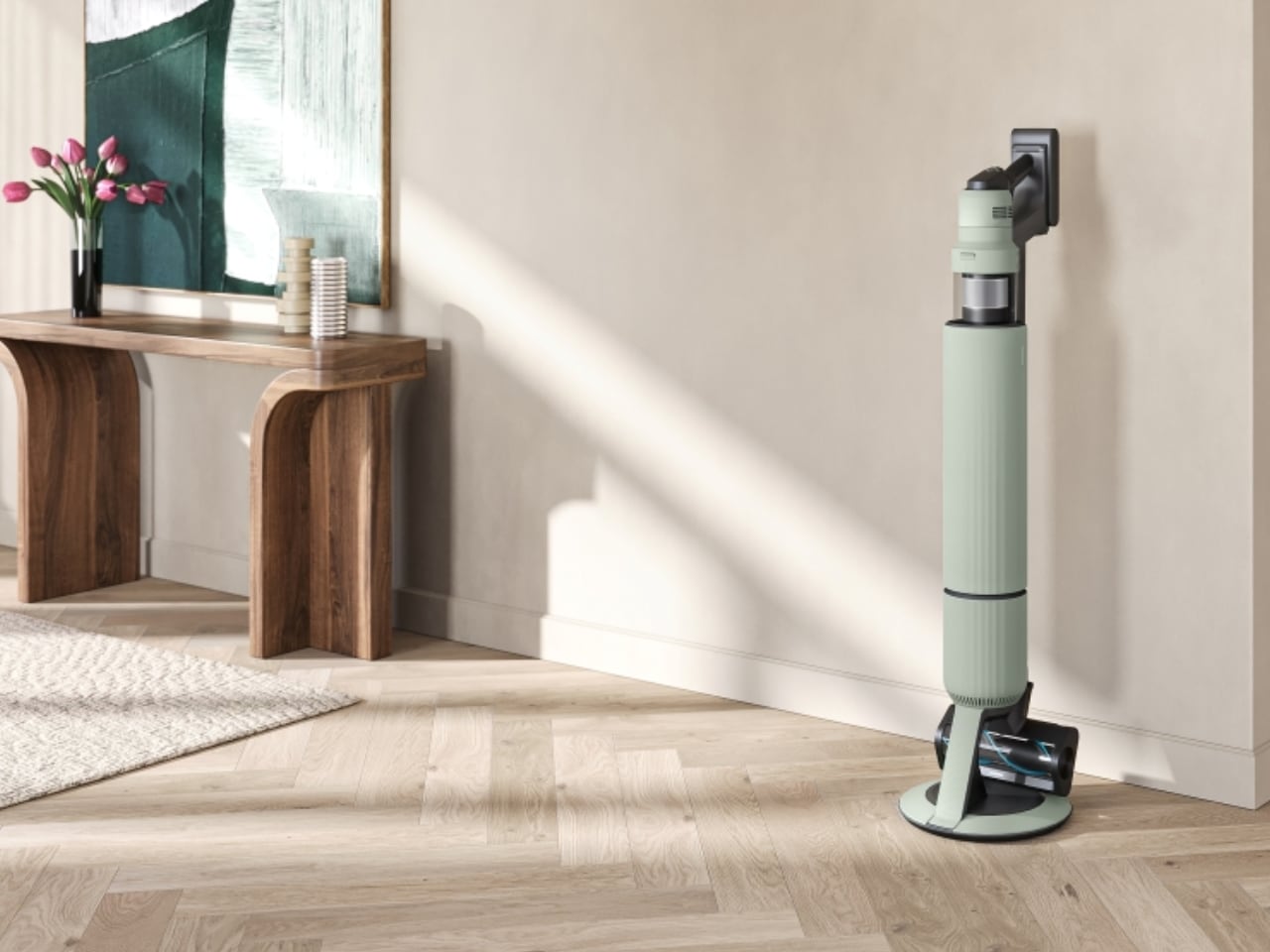
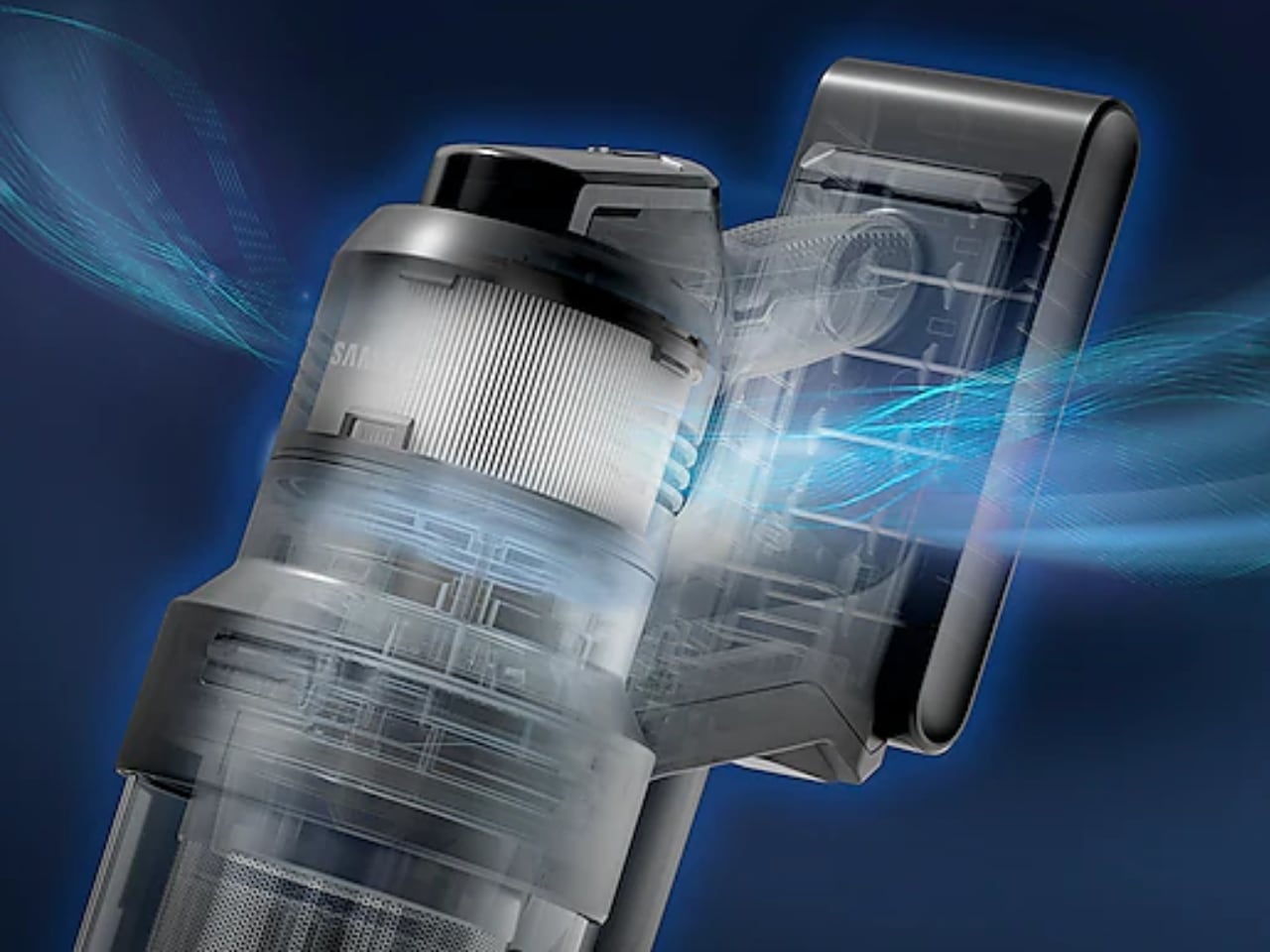
The cordless vacuum market has spent years iterating around a ceiling nobody wanted to admit existed — battery constraints kept power modest, and modest power meant cleaning that required faith rather than evidence. Samsung’s Bespoke AI Jet Ultra dismantles that ceiling with a HexaJet Motor producing 400W of suction, a figure that lands well beyond what the premium cordless category has previously managed. Two batteries ship in the box: a 100-minute large-capacity unit and a 60-minute lightweight alternative, combining for 160 minutes of runtime that makes a full home clean in a single session a realistic expectation rather than a careful calculation. The multi-layered HEPA system captures 99.999% of particles down to 0.3 microns, which matters in a way that lower-grade filtration quietly doesn’t.

What separates it from a high-powered machine that simply runs harder is AI Cleaning Mode 2.0. Brush load and air pressure sensors detect six distinct cleaning environments in real time — including carpet type variations and corner conditions — and adjust suction power and brush speed accordingly without any manual input. That intelligence reduces battery consumption by 21%, which is why the runtime figures hold up across different surface types rather than dropping the moment carpet enters the picture. A hands-off cleaning station handles dust collection after each session, an Active Dual Brush manages deep carpet cleaning, and a Slim LED Brush reaches the corners most heads ignore.

What We Like

  • 160 minutes of combined battery runtime is a genuine category leap — enough to clean a large home without recharging mid-session
  • AI Cleaning Mode 2.0 adjusts in real time to surface conditions rather than applying uniform suction that wastes power on easy floors

What We Dislike

  • At $1,099, it sits at the upper end of the cordless market and demands consistent, high-frequency use to justify the cost over capable alternatives
  • Samsung’s smart home ecosystem integration adds value only for households already running SmartThings — for everyone else, it’s unused overhead

4. Fellow Stagg EKG Pro

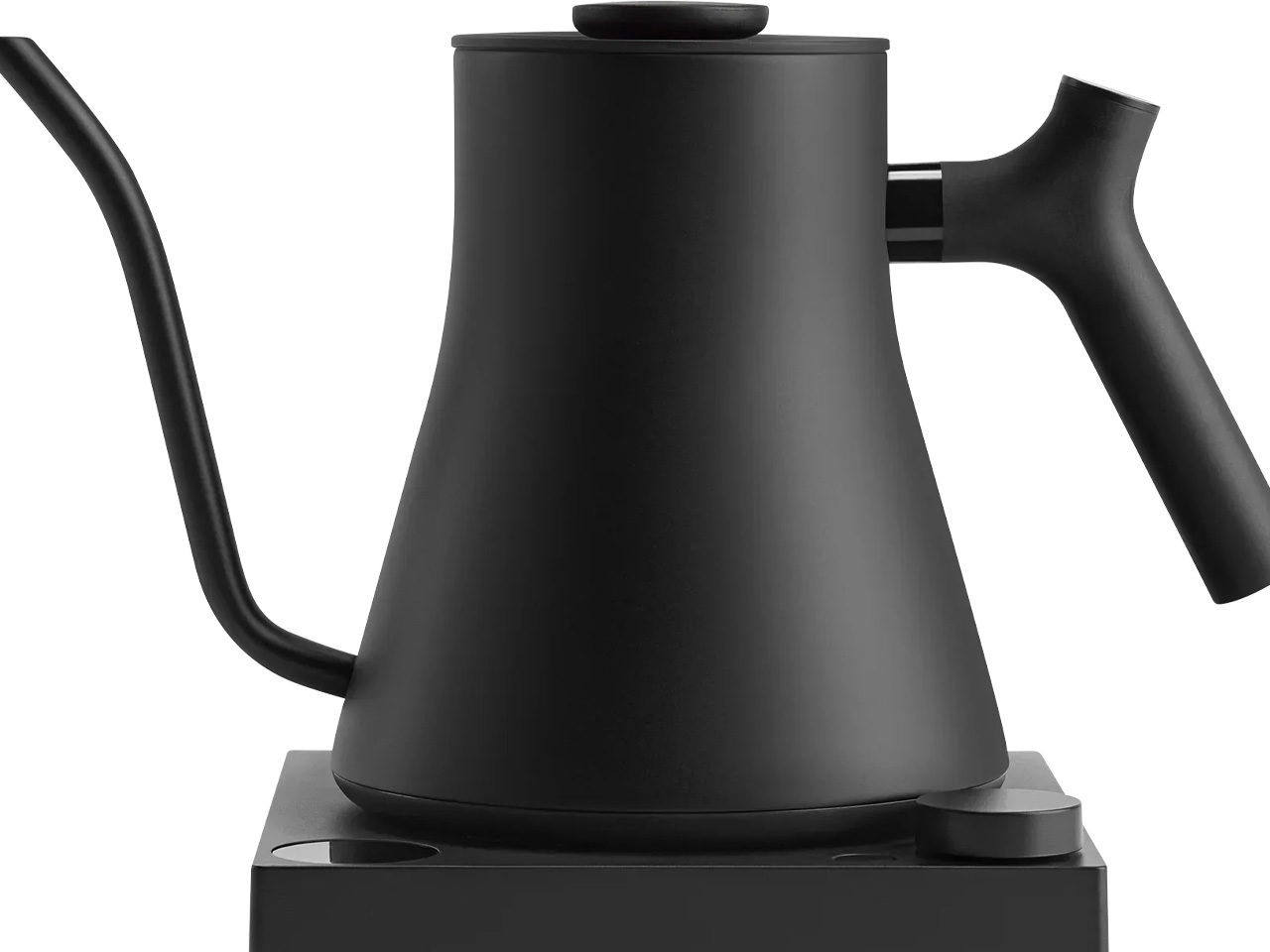
The Fellow Stagg EKG Pro is what happens when a category gets redesigned from first principles rather than iterated on incrementally. A kettle is among the most-used objects in any kitchen and almost universally treated as a commodity. Fellow disagreed. The counterbalanced handle changes the feel of a slow pour from effortful to precise. The gooseneck spout narrows flow to a steady, controlled stream that a standard kettle spout cannot match. Variable temperature control accurate to one degree serves pour-over coffee and temperature-sensitive teas where a few degrees in either direction changes the result. The matte finish and minimal base make it the first kettle worth leaving on the counter rather than hiding in a cabinet.

The hold function maintains the target temperature for up to 60 minutes, which matters between pours when cooling water would otherwise alter the brew. Bluetooth connectivity links to the Fellow app for programmable presets, and a memory feature recalls the last-used temperature at startup. Neither of those features changes the daily ritual in a dramatic way — but the sum of the details does. Objects used every morning have a cumulative effect on how a kitchen feels, and the Stagg EKG Pro is the version of a kettle that earns its place on the counter through precision that everything else in the category quietly lacks.

What We Like

  • Variable temperature to one degree is useful rather than theoretical — it produces a measurably different result for specialty coffee and delicate teas
  • The counterbalanced handle makes slow, precise pouring feel natural rather than controlled

What We Dislike

  • The 0.9L capacity is limiting for households that regularly need to boil larger quantities in a single fill
  • Bluetooth and app connectivity are secondary to the hardware quality — most users will never set them up

5. Harmony Flame Fireplace Lamp

Some rooms need a fireplace and cannot have one. Apartments, rental spaces, rooms where the architecture simply doesn’t allow for installation — most living situations quietly rule it out before the question is properly asked. The Harmony Flame is the answer to that problem, and it works because it doesn’t try to replicate a fireplace exactly. It leans into atmosphere: the quality of light a flame produces, the way movement at the center of a room changes how it feels, the particular kind of calm that comes from something glowing at a low, steady intensity. That quality of atmosphere is the design brief, and at $240, it delivers on it.

That price places it in a category where the object begins to justify itself beyond pure function. A candle creates atmosphere but demands attention and burns out. A projector creates color but not warmth. The Harmony Flame sits in the space between those options — persistent, low-maintenance, and designed with enough visual intention to work in rooms where aesthetics matter. It is the kind of product that solves a problem most people have stopped thinking about solving, which is often the clearest sign that a design is working as intended. It closes this list as the smallest argument — $240 for a room that feels better — and that argument requires very little further explanation.

Click Here to Buy Now: $240.00

What We Like

  • Creates genuine ambiance in spaces where a real fireplace isn’t possible — the answer renters and apartment dwellers have been looking for
  • At $240, it is the most accessible product on this list and the one with the lowest barrier to an immediate change in a room’s atmosphere

What We Dislike

  • The effect reads best in low-light conditions — in a well-lit room, the visual impact is significantly reduced
  • The flame effect produces no radiant heat, so buyers expecting warmth alongside atmosphere will need to manage that expectation

The Difference Is Always Specific

There is a version of spending more that is simply spending more. And there is a version where the extra cost corresponds to a specific, identifiable gap between the cheaper option and the one that actually solves the problem. Every product on this list belongs to the second category. The Luminous Mirror Diffuser replaces three compromises with one resolved object. AquaSense X finishes the job every other pool robot leaves half-done. The Samsung Bespoke AI Jet Ultra applies intelligence to a problem raw power alone never solved. The Stagg EKG Pro turns the most routine kitchen task into something precise.

The Harmony Flame closes the list at the accessible end — $240 for atmosphere in rooms that go without it. That is the simplest version of worth every penny. The best-designed products change how a space feels without asking for much in return, and you tend to notice them only when they’re gone. These five are the ones worth making room for.

The post 5 Best Home Gadgets & Accessories Worth Every Penny in July 2026 first appeared on Yanko Design.
Bug Saber Turned Lightsaber Fantasy Into a 4,000V Bug Zapper

Bug zappers haven’t had a design moment yet. They’ve existed in more or less the same form for decades, somewhere between forgettable and mildly unpleasant to look at. Most of them get tucked into corners or mounted out of sight, which is exactly where most people prefer them. They do the job, roughly speaking, but nobody’s ever been genuinely excited to reach for one.

Brightbeam Solutions seems to have taken that as a challenge. Bug Saber is the brand’s attempt at rethinking what a bug zapper can feel like, not just what it can do. The concept is simple enough: take pest control, which has always been a thankless task, and design it to be something you’d actually want to pick up. Nobody in the category had really tried.

Designer: Jonathan Barraclough

Click Here to Buy Now: $24. Hurry, only a few left!

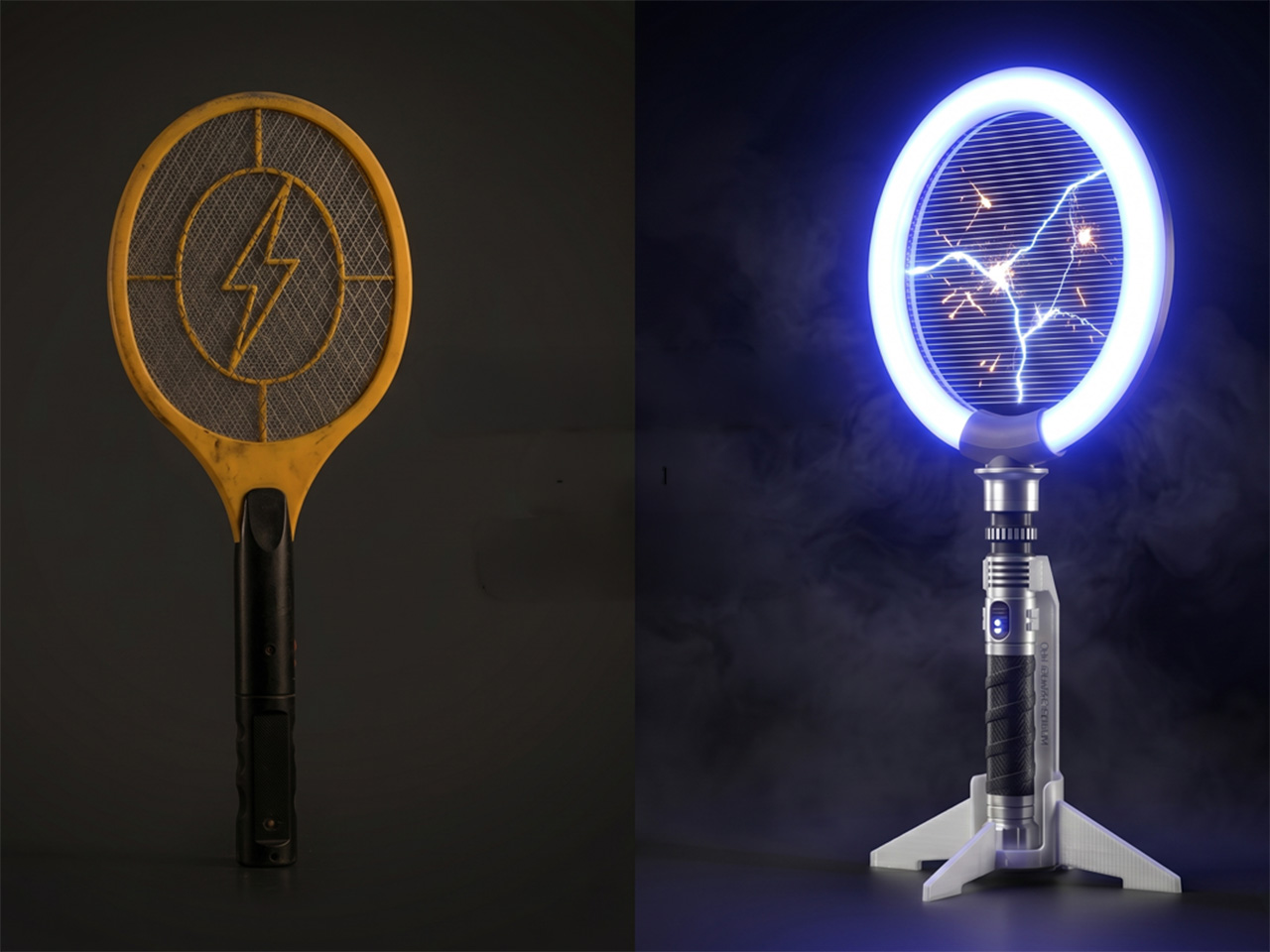
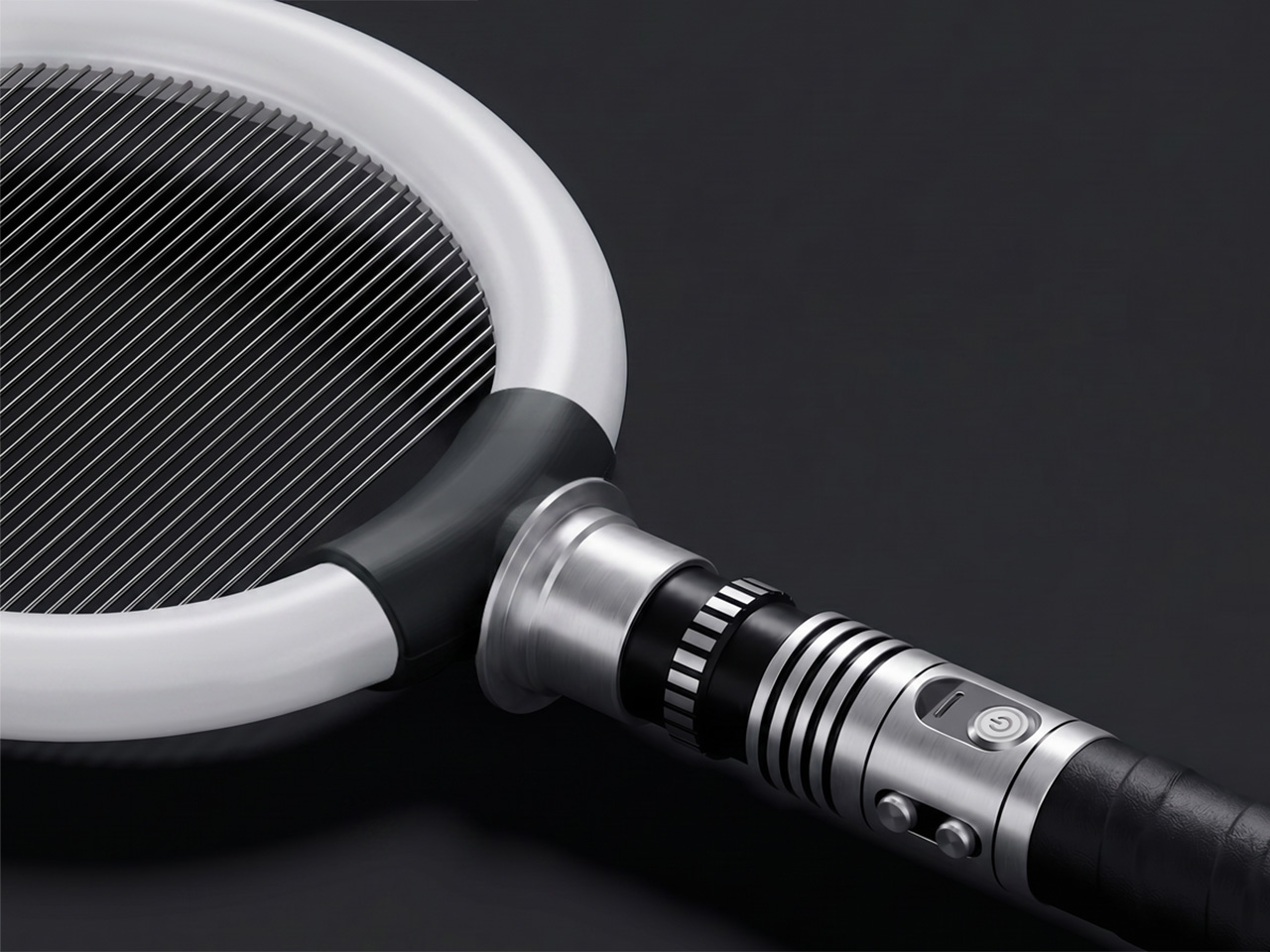
The design makes that clear immediately. Bug Saber is built around a high-voltage zapping grid framed by a glowing LED ring, mounted on a lightsaber-style hilt with a distinctly mechanical character. It doesn’t look like anything from a hardware store, and that’s entirely the point. The aesthetic borrows from sci-fi gadget culture rather than home appliance conventions, and it’s surprisingly hard to ignore when it’s nearby.

Switch it on, and everything shifts. The LED ring glows, saber-style sound effects kick in, and insects are naturally drawn toward the light. When one gets close enough, the 4,000V high-voltage grid takes care of it instantly, with no waiting and no cleanup. The entire sequence takes only seconds, and the combination of light, sound, and immediate result makes each instance feel surprisingly satisfying.

That satisfaction makes sense in practice. Picture a summer evening on the back porch, a fly that’s made itself at home, and the usual frustration of swatting blindly at the air. With Bug Saber in hand, you’re in control rather than reacting. The act feels deliberate in a way that pest control rarely does, which is a strange thing to say and yet completely accurate.

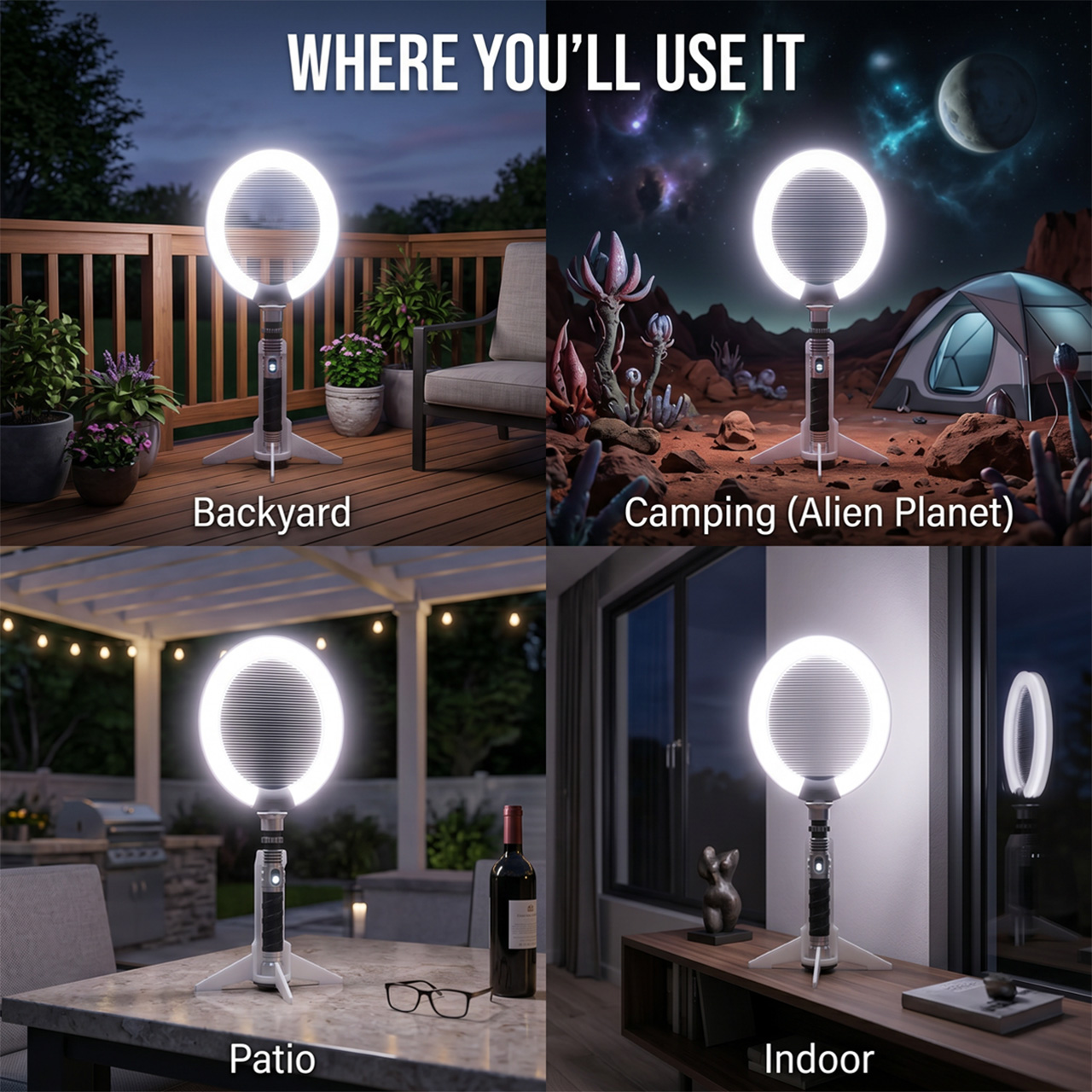
Not every situation calls for hands-on use, though. Bug Saber can sit on its vertical stand with the illuminated ring running on its own, drawing in insects without you having to do anything. This works especially well at night, when flying pests are most active, and you’d rather not be involved. It handles things quietly in the background, whether you’re inside or out on the patio.

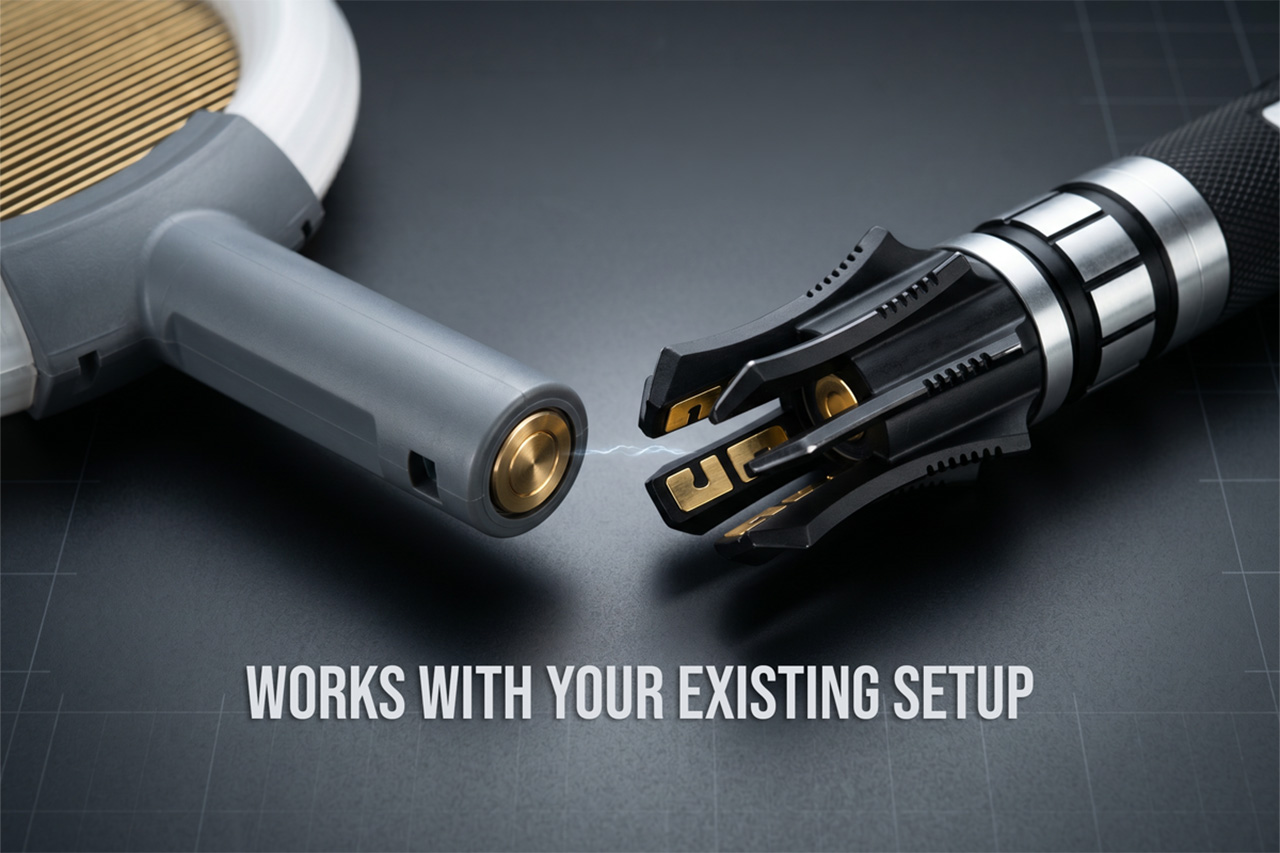
Bug Saber is built around three core components: the Bug Saber Head, which houses the ring and zapping grid; an entry-level hilt for those starting fresh; and the vertical stand. People who already own a compatible saber-style hilt, the kind used in cosplay or collecting communities, can swap in the head directly, converting their existing setup into a functional bug-control device without needing anything else.

What makes Bug Saber work so well is how the experience reinforces itself over time. The glow, the sound, and the instant result work together to create something that feels rewarding rather than routine. You pick it up the first time because there’s a fly in the room. The second time, you reach for it a little more quickly than strictly necessary.

There’s a broader shift in product design, one where objects that used to be purely functional are being reconsidered as things worth looking at. Routers, speakers, and kitchen appliances have all gone through some version of this. Bug Saber brings that same sensibility to a category that’s rarely had it, which on paper sounds like a stretch and in practice feels entirely overdue.

The strangest thing about Bug Saber might also be the most telling. A bug zapper with a sci-fi hilt, a glowing LED ring, and sound effects that respond to movement really shouldn’t feel like a natural addition to a patio or living room shelf, and yet here we are, genuinely glad that someone decided this particular category was finally worth a proper redesign.

Click Here to Buy Now: $24. Hurry, only a few left!

The post Bug Saber Turned Lightsaber Fantasy Into a 4,000V Bug Zapper first appeared on Yanko Design.

Beatbot’s AquaSense X Proves the Best Technology Goes Unnoticed

Smart home products have a funny habit of promising to simplify your life while quietly adding to your list of things to manage. Pool cleaning robots are a sharp example. They roam the floor, collect debris, and surface when finished, but someone still has to rinse the filter, empty the basket, and reset the machine before the next cycle. The automation, it seems, doesn’t quite finish what it starts.

Beatbot seems to have noticed this gap and designed AquaSense X around a different question altogether. Rather than asking how to make pool cleaning more autonomous, it asks how to make the whole experience, cleaning and cleanup both, feel like it barely happened. That sounds like a marketing promise until you start looking at how the system actually works, at which point it becomes something closer to a design thesis.

Designer: Beatbot

Click Here to Buy Now: $3999 $4250 ($251 off). Hurry, deal ends in 48-hours!

AquaSense X isn’t sold as a single robot but as an ecosystem, and that distinction matters. The system pairs the AI robotic pool cleaner with the AstroRinse cleaning station, and the pairing is the point. The robot cleans the pool. The station cleans the robot. That self-sustaining cycle sets AquaSense X apart from every other autonomous pool cleaner on the market, which still leaves the messy part to you.

After each cleaning cycle, docking the robot is all that’s required. Once it’s seated in the station, a high-pressure rotating nozzle enters the filter basket, backflushes the trapped debris, and transfers everything directly into the station’s sealed bin. The filter basket opens from the bottom to make sure nothing gets left behind. The whole process takes about three minutes, and you don’t touch a thing.

When the filter is clean, charging starts automatically, and the robot is ready for its next run without any intervention from you. The station’s debris bin holds 22 liters, which under typical conditions translates to roughly two months of operation before it needs emptying. That’s not a small number. It means pool maintenance stops being something on your weekly checklist and becomes something you handle a few times a season.

What makes the robot itself worth talking about is that its intelligence is tied to genuine utility. HybridSense AI Vision, which combines an AI camera with infrared and ultrasonic sensing, recognizes 40 debris types, twice what the previous generation could identify, and extends that detection to the water surface, not just the pool floor. That broader scope means fewer spots get overlooked after the robot surfaces and calls the job finished.

Coverage also runs deeper than detection. A single AquaSense X handles the water surface, the floor, the walls, the waterline, and elevated platforms like shallow entry steps and tanning ledges, all without swapping attachments. Using 11 motors and a submarine-style propulsion system, the robot transitions between floating and diving seamlessly, while dual downward-facing ultrasonic sensors detect edges on raised platforms so it never tumbles off one.

Then there’s the water clarification piece, which is perhaps the most invisible feature in the entire system. As the robot cleans, it automatically dispenses Beatbot’s AquaRefine 3-in-1 Clarifying Agent, a formula made from recycled crab shells that removes fine particles, oils, and residue without any mixing or measuring on your part. One 300mL kit treats up to 99,000 gallons, so it’s not something you’ll be restocking constantly.

Voice control through Google Home, Amazon Alexa, and Apple Siri adds another layer to the hands-off experience. From outside the pool, you can start or stop a cleaning cycle, check battery status, enable the child lock, or get an alert when the session wraps up. The Beatbot app handles scheduling, pool mapping, cleaning mode selection, and over-the-air software updates, so the system keeps improving without asking for much in return.

Beatbot describes its mission as making technology disappear into the background, giving users back their time without demanding constant attention. AquaSense X makes that feel tangible rather than aspirational. The robot cleans, the station resets, and the pool stays clear, and the most you’ll probably do is glance at an app notification. That’s the kind of ownership that feels less like managing a device and more like just having one.

Click Here to Buy Now: $3999 $4250 ($251 off). Hurry, deal ends in 48-hours!

The post Beatbot’s AquaSense X Proves the Best Technology Goes Unnoticed first appeared on Yanko Design.
This Japanese Key Ring Has One Press, No Coil, And Zero Need For Your Thumbnail

The EDC community has, over the past decade, upgraded nearly everything it carries. Wallets went from leather bricks to carbon fiber cardholders. Pens became precision instruments. Knives became an art form. Notebooks became rituals. The one item nobody touched was the key ring – because most key rings are inherited, not chosen. They arrive with a car purchase, a spare apartment key, or a hotel checkout, and they stay for years without ever being questioned. In fact, the maximum you change is the decoration on the keychain, and break a nail in the process. The Painless Key Ring from Yanko Design is built specifically for that oversight.

It uses a wave spring mechanism instead of the double-coiled split ring that has dominated keychains for over 130 years. Press the release, the ring opens. Let go, it closes. No gap to find, no coil to fight, no thumbnail to sacrifice. At $29, it is the last piece of a considered carry that most people still have not upgraded.

Click Here to Buy Now: $29.00

The Painless Key Ring replaces a mechanism that has not meaningfully changed in over 130 years – and the moment you press it open, you will understand why that matters.

One Press, A Different Keychain

The wave spring is the engineering story at the center of this ring. Where a traditional split ring requires you to find the gap in the coil, work a fingernail or coin underneath it, and pry it open one agonizing millimeter at a time, the Painless Key Ring opens the moment you press the release point. Let go, and it closes with the same clean tension that holds your keys secure throughout the day. There is no gap to find, no coil to fight, and no nail to sacrifice. The motion is immediate, deliberate, and completely controlled.

The result is not just faster – it is fundamentally different. Keys slide on and off cleanly, without resistance, without the micro-damage that repeated split-ring prying inflicts on key stems over time. For anyone who swaps keys regularly – between an office badge, a rental car, a gym locker, or a new apartment – the difference in daily time alone justifies the switch.

Built for the Pocket That Has Everything Else Figured Out

The Painless Key Ring is slim, lightweight, and flat enough to disappear into a pocket without announcing itself through the fabric. It comes in Silver and Black, and each set at $29 includes one large ring and three smaller ones for modular grouping, with configuration options available up to $65. Nothing about the form overreaches. The profile is restrained in the way considered EDC hardware tends to be – present only in the hand, invisible everywhere else.

The build matches the premise. Wave spring construction handles the daily abuse a keychain absorbs – pockets, concrete drops, car ignitions, repeated pressings – without compromising the release action over time. This is not a piece of hardware designed to photograph well and degrade in six months. It is designed to outlast the question of whether you should have bought it.

What We Like

  • Wave spring opens on a single press point – no gap to find, no coil to pry, no coin or tool required; keys on and off in under two seconds, every time, without exception
  • Modular set design includes one large and three smaller rings, allowing keys to be grouped logically and swapped between rings without any additional hardware or effort
  • Slim, flat profile sits against the pocket without bulk, jangle, or the key-cluster silhouette that announces itself through light fabric
  • Build quality that outlasts the question of whether you should have bought it – wave spring construction holds its action through the friction, drops, and repeated pressings that daily carry demands
  • US availability with sets starting at $29 – the right price point for the last EDC upgrade most people have not made yet, with Silver and Black finishes that hold alongside a considered kit

What We Dislike

  • Only a few units currently available, which makes this a limited purchase rather than a reliably restocked item
  • Individual rings cannot be purchased separately, which means replacing a single ring from the set requires buying a new set entirely rather than sourcing the one piece you need

The Key Ring That Fixes What You Stopped Noticing

The Painless Key Ring does not fix a problem most people knew they had. It reveals one. Once you press open a wave spring ring and feel a key slide on in under two seconds, the split coil that has been in your pocket for years – possibly decades – feels exactly like what it is: a 130-year-old mechanism you were never given a reason to question until now.

For the EDC-minded, it is the final overlooked piece of a considered carry, finally resolved. For everyone else, the Painless Key Ring is a $29 correction to a daily friction point so familiar it stopped registering as friction at all. Either way, once it earns its place on your keychain, the old ring is not going back.

The post This Japanese Key Ring Has One Press, No Coil, And Zero Need For Your Thumbnail first appeared on Yanko Design.
The 8 Best Tech Gadgets of July 2026

July 2026 is shaping up to be a rich month for design-forward tech. From a power bank that rewrites what thin means to a speaker that turns a living room into a visual concert experience, the products landing this month share a common thread: they all challenge a category assumption. This roundup brings together eight picks that earned their place not on spec sheets alone, but on how well they’re thought through from the outside in.

Whether you’re a daily commuter who needs a mouse that disappears into a bag, a field worker who can’t afford a dead tablet, or someone who just wants a smartwatch that looks right on a dressed-up wrist, there’s something here for you. These are gadgets that earn attention through design intelligence first and capability second. In that order, they’re worth your time.

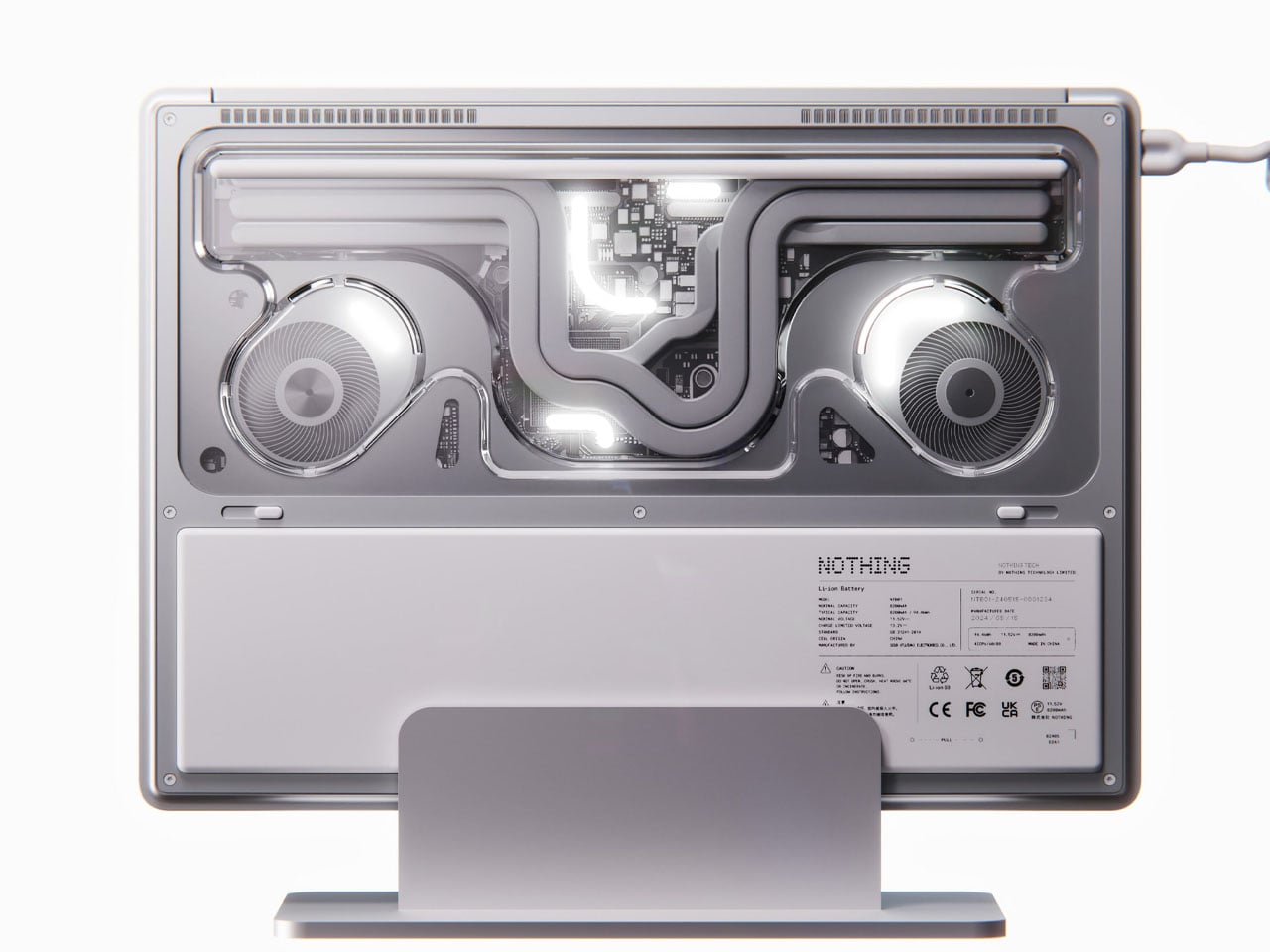
1. Nothing 4a Pro with an E-Ink Display Concept

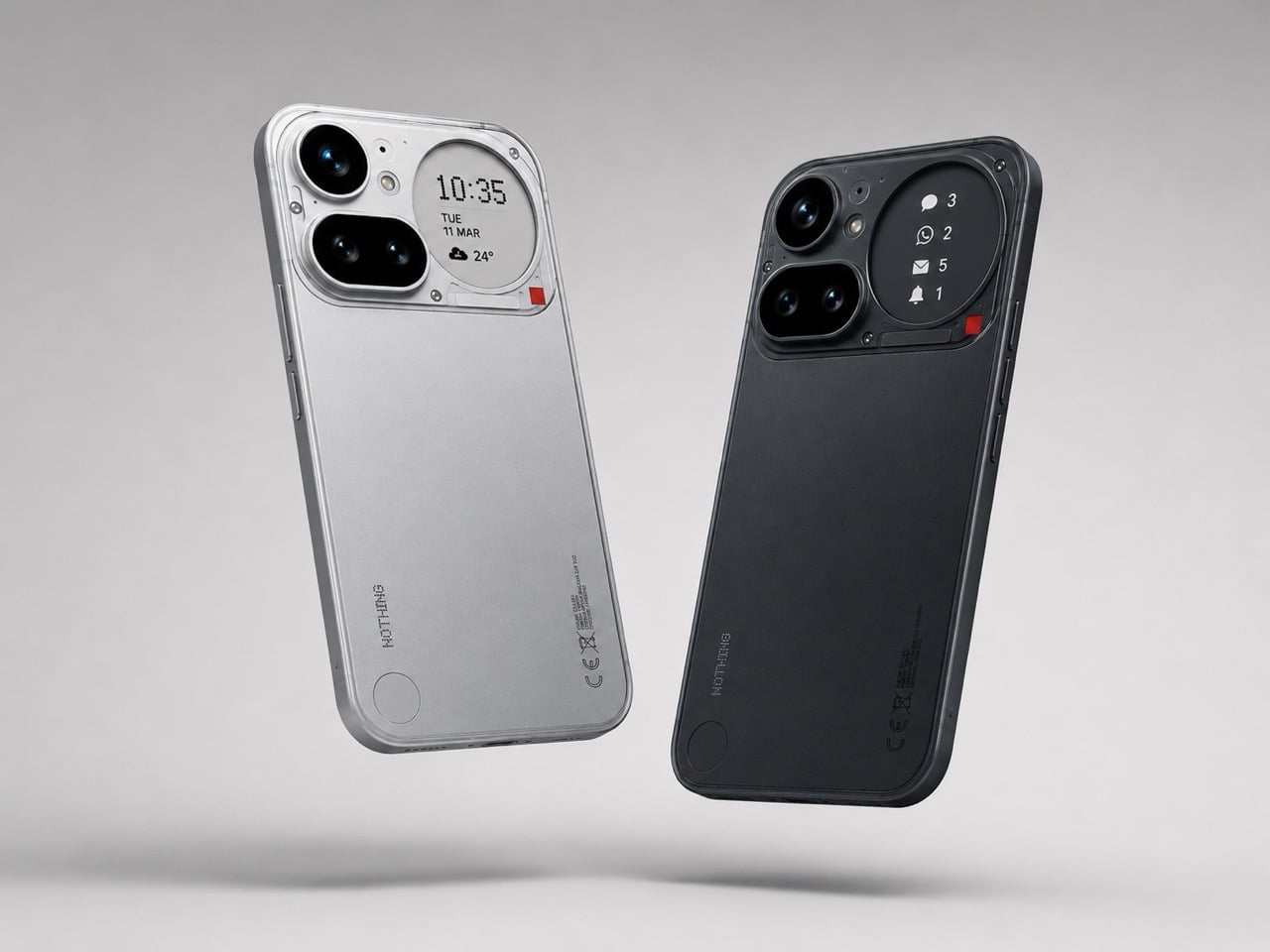
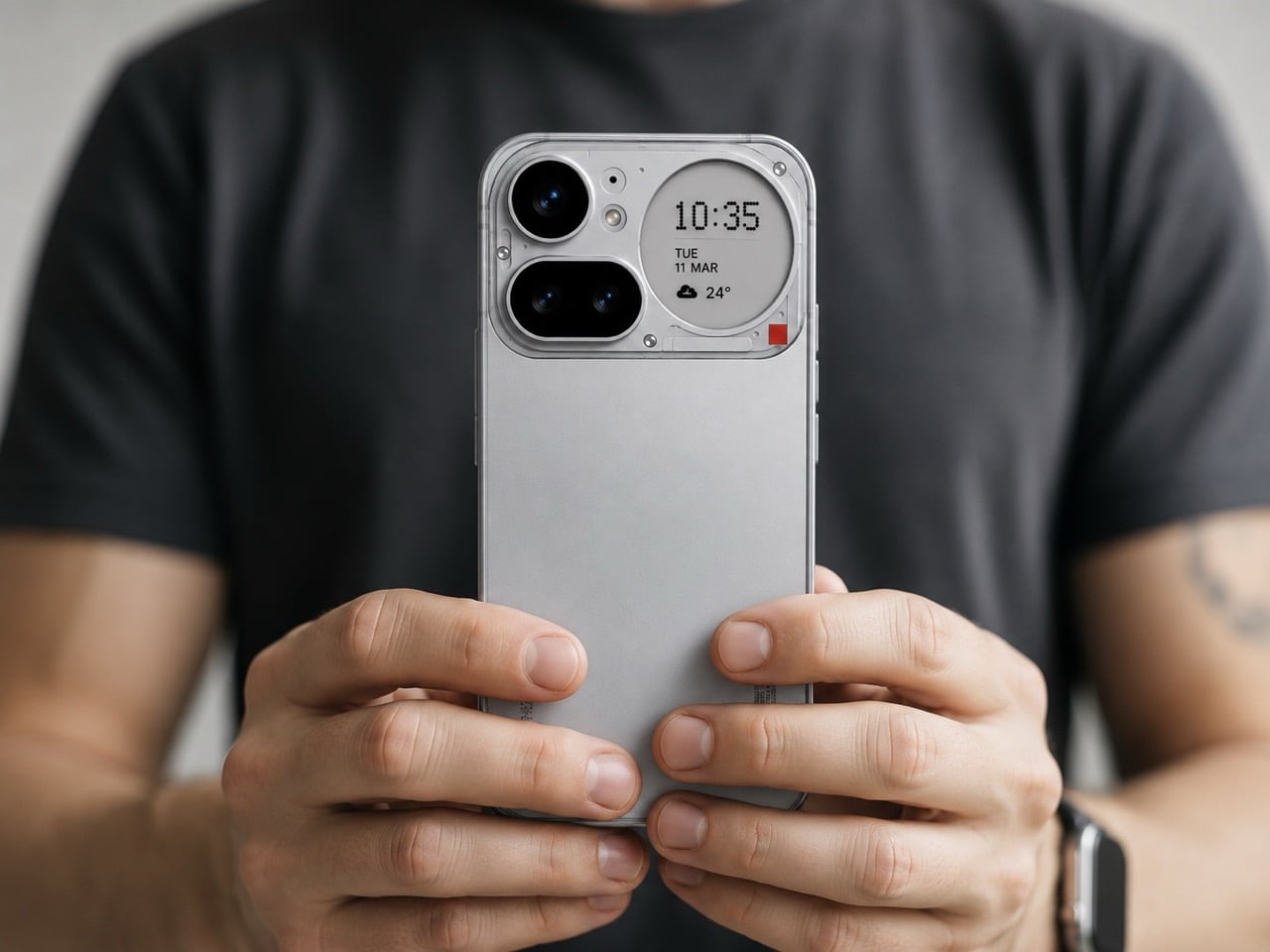
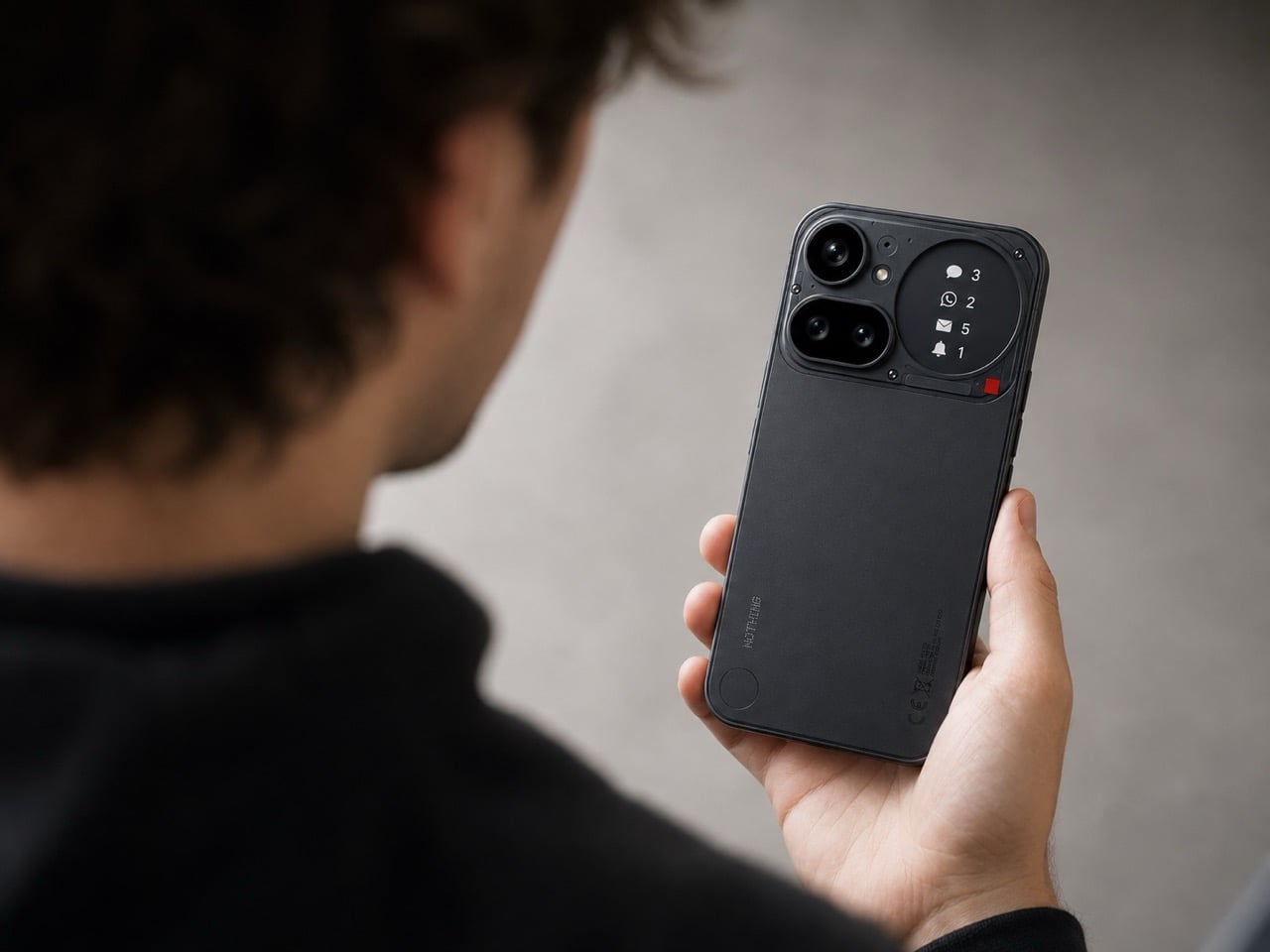
The Nothing 4a Pro already has its fans, but a Redditor named Taweros made a compelling argument for what it could have been. This concept swaps the Glyph Matrix for a full e-ink display on the back of the phone, and the result feels genuinely more useful. Rather than light patterns that impress for about thirty seconds, you get an always-on second surface that can show weather alerts, caller information, or a QR code at a networking event, all without changing a single thing about the internals.

The hardware underneath stays intact: Snapdragon 7 Gen 4 processor, triple camera setup, and the same display up front. The addition is purely on the rear panel, and it’s a quiet, considered one. E-ink only draws power when the image changes, which means the display stays active all day without meaningfully affecting battery life. It’s less TikTok and more LinkedIn than Nothing’s usual brand register, but the argument for using the phone’s real estate more thoughtfully is hard to dismiss. Here’s hoping the Nothing 5 takes notes.

What we like

  • Always-on e-ink rear display works with almost no battery drain
  • Turns decorative real estate into a functional ambient information layer

What we dislike

  • This is a fan concept, not a confirmed product from Nothing
  • Ditching the Glyph Matrix removes the brand’s most recognizable design signature

2. OrigamiSwift Mouse

The OrigamiSwift is what happens when a designer takes the brief “travel mouse” seriously rather than just shrinking an existing one. Designed by Horace Lam, it folds flat to 0.18 inches thick and weighs just 40 grams, but unfolds into a full-sized working mouse in under half a second. The origami-inspired triangular structure gives it a rigidity that flat folding designs often sacrifice, and the result is a mouse that holds its shape through real work sessions, not just on a demo table.

The Bluetooth 5.2 connection pairs across Mac, Windows, Android, and iPadOS, with a wireless range of 32.8 feet in open environments. A 4,000 CPI HD infrared sensor tracks at up to 4,000 frames per second, a genuinely capable spec for a device this light. USB-C charging delivers up to three months of use on a single charge, and the soft-click buttons keep things quiet in shared spaces. At $85, the OrigamiSwift is a thoughtful tool for anyone who works on the move and is tired of compromising.

Click Here to Buy Now: $85.00

What we like

  • Folds to 0.18 inches thick and weighs only 40 grams
  • Three months of battery life on a single USB-C charge

What we dislike

  • Stock is very limited at the time of writing, with only a few units available
  • A 4,000 CPI ceiling may not satisfy precision-heavy creative workflows

3. MorningBlues SonicGlass A1 Transparent Speaker

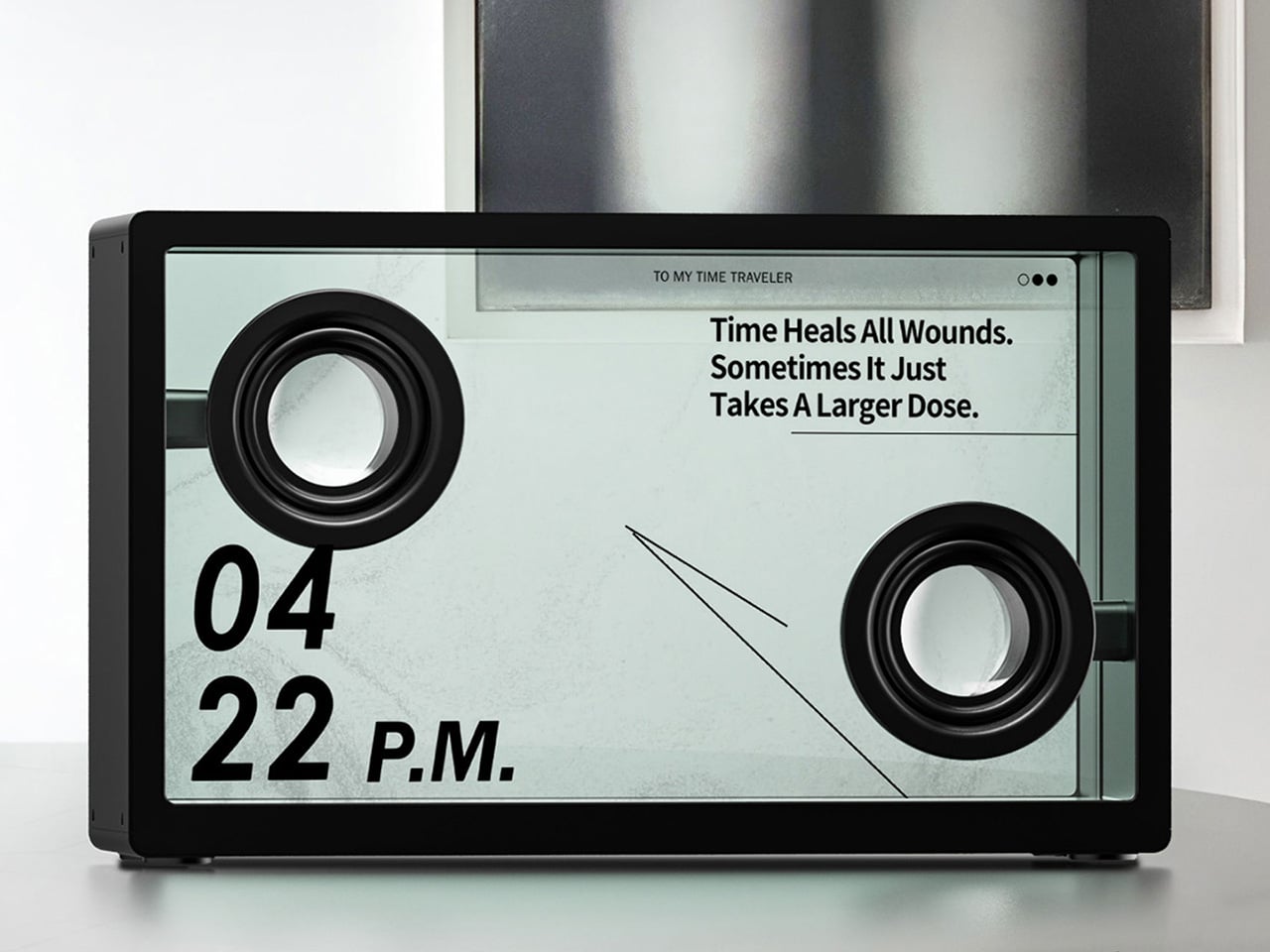
Most home speakers are designed to disappear. The MorningBlues SonicGlass A1 was designed to do the opposite. Its front face is a 21.5-inch TFT panel with over 90% light transmission, framed in black with a transparent driver sitting behind it, fully visible. When a song plays, lyrics appear across the glass in motion styles tied to the track’s rhythm and emotional character. MorningBlues calls this MoodLyric, built on data from hundreds of millions of playbacks, with all lyrics licensed through LyricFind to properly credit the artists whose words it borrows.

A feature called SceneSync layers AI-generated visuals tuned to music genres in real time: pop, hip-hop, R&B, and rock each trigger different visual aesthetics on screen. When the music stops, the AI stays on as a room display with ambient backgrounds, dynamic clock faces, and an ASMR sleep mode for winding down. Pair it with a microphone, and it becomes a full karaoke setup with lyrics scrolling live. The MorningBlues Music Hub 1 controller manages playback without involving your phone.

What we like

  • Transparent driver and 21.5-inch display make it function as room art between listening sessions
  • MoodLyric and SceneSync create a visually synced experience native to each genre

What we dislike

  • $646 is a significant entry price for a product still in the crowdfunding phase

4. Lenovo ThinkTab X11 Rugged Tablet

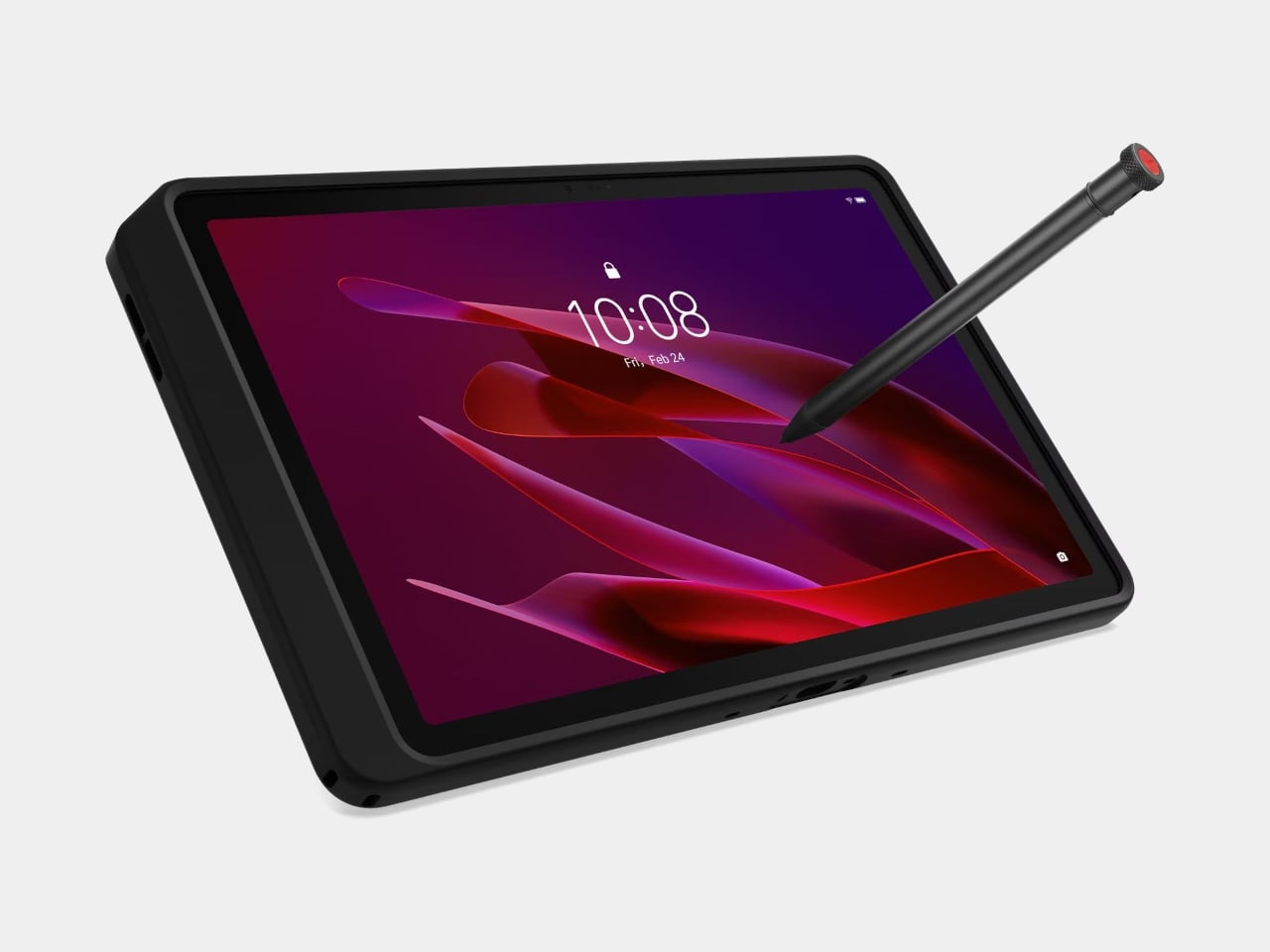
Rugged tablets have historically lived in an awkward pricing tier: too expensive for teams with tight budgets, too limited for anyone expecting a consumer-grade finish. The Lenovo ThinkTab X11, the first device to carry the ThinkTab name, targets frontline workers in logistics, construction, manufacturing, and transportation starting at $499. The 10.95-inch display runs at 90 Hz with 800 nits of peak brightness and Gorilla Glass protection, and the touch layer is calibrated to respond to gloved hands and wet fingers, which matters on a loading dock far more than any raw spec comparison.

The standout feature is a 10,200 mAh battery that swaps without tools through a screwless mechanism, letting workers keep moving mid-shift without losing the device entirely. It also runs directly from DC power with no battery installed at all for fixed vehicle or workstation deployments, reducing heat and removing the cell’s natural degradation from the equation. MIL-STD-810H and IP68 ratings round out the durability credentials. It ships with Android 16, guaranteed to reach Android 18, and four years of security patches. The 256 GB model is available at $579.

What we like

  • Screwless hot-swappable battery makes it genuinely practical for multi-shift field use
  • Battery-less DC operating mode extends device lifespan in fixed deployments

What we dislike

  • $499 still sits above the average consumer tablet price point
  • Enterprise-facing software and setup may feel less intuitive for individual buyers

5. Xiaomi Watch S5 46mm

The Xiaomi Watch S5 46mm looks less like a gadget trying to pass as a watch and more like a watch that happens to be smart. The 1.48-inch AMOLED display runs at 2,500 nits peak brightness with a 2.6mm bezel that’s 40% narrower than the previous generation. The forged stainless steel frame comes in four distinct styles, including a Ceramic Blue version with a zirconia ceramic bezel and leather strap, and a Jungle Green with a forged carbon bezel and hybrid band that leans sportier. Each variant has a clear identity rather than reading as a simple color refresh.

The 815mAh battery delivers up to 21 days under light use, a 68% improvement over the Watch S4. In real-world testing with Always On Display and full health tracking running, expect around six days before a charge. Five-system GNSS, 5ATM water resistance, 150 sports modes, and an updated four-LED heart-rate sensor built on the same hardware platform as the flagship Xiaomi Watch 5 round out the specs. At £149.99 for standard models and £169.99 for the Blue and Green colorways, the Watch S5 offers a lot of watch per pound.

What we like

  • 2,500-nit AMOLED display stays sharp and readable in direct sunlight
  • Up to 21 days of battery life on a single charge

What we dislike

  • HyperOS 3’s app ecosystem is noticeably limited compared to Wear OS
  • Sleep tracking still misses short naps in regular use

6. Nothing Book Laptop

Nothing has built its identity on see-through design, and Nikita Bukoros has taken that logic as far as it goes. The Nothing Book is a concept laptop that lays the machine’s internals bare through transparent panels, revealing the inner architecture, cooling boards, and components in a layered composition the designer describes as industrial art. The secondary screen on the lid is the standout feature: a slender external display that shows messages, symbols, emojis, or custom text in the classic Nothing font, giving the machine a personality that no other laptop on the market currently attempts.

When docked in its accompanying charging cradle, the secondary lid display runs a charging animation. The concept comes in hot red, cool green, subtle pink, and magnetic teal, which is a bold departure from Nothing’s usual monochrome palette. Port options include HDMI, USB-C, USB, and wired charging. Whether Nothing ever produces this is an open question, but Nikita’s concept makes a clear case that the laptop category is overdue for a brand willing to treat the machine as something genuinely worth looking at, not just opening.

What we like

  • Secondary lid screen is a genuinely useful extension of the Nothing design language
  • Transparent chassis turns working components into deliberate visual design elements

What we dislike

  • Remains a concept with no confirmed production timeline from Nothing
  • Colorways depart from Nothing’s established monochrome aesthetic, which may divide the existing fanbase

7. Battery-Free Amplifying iSpeakers

In a world where most audio accessories arrive loaded with chips, apps, and charging cycles, the Battery-Free Amplifying iSpeakers take a different position entirely. These passive acoustic speakers work without any power source, relying on physical design principles to amplify sound naturally. That means no charging routine, no Bluetooth pairing, and no setup ritual. For smaller living spaces, a tiny home, or a desk that doesn’t need another cable cluttering it, the appeal is immediate, and the logic is completely sound.

Sitting in the Yanko Design tiny homes collection at $179, the iSpeakers are designed for people who think carefully about what earns a place in their space. The absence of a battery means the device has no defined end of life in the way most gadgets do. You’re not buying a product with a two-year replacement cycle quietly built in. You’re buying an object made to stay, which feels increasingly rare and worth paying attention to in a product category that tends to treat longevity as an afterthought.

Click Here to Buy Now: $179.00

What we like

  • Zero power requirement means no charging, no battery degradation, and no added cables
  • Designed for genuine longevity with no electronic components to degrade over time

What we dislike

  • Limited product detail available makes it difficult to compare against powered alternatives
  • $179 is a premium ask without detailed specification transparency on the product page

8. Xiaomi UltraThin Magnetic Power Bank 5000 15W

At 6mm thick and 98 grams, the Xiaomi UltraThin Magnetic Power Bank makes every other power bank in your bag feel like a failure of imagination. The 5,000 mAh capacity is made possible by a silicon-carbon battery with 16% silicon content, a chemistry that delivers higher energy density than conventional lithium cells in a dramatically slimmer form. The aluminum alloy shell carries a photolithographically etched logo on the back, and the phone-facing surface uses fire-resistant fiberglass with an excimer coating for heat management. It was officially showcased at MWC 2026 in Barcelona and has since launched across Europe, Australia, Singapore, and South Korea.

Wireless charging tops out at 15W when paired with the Xiaomi 17 series and 7.5W for iPhones via MagSafe. The USB-C port pushes up to 22.5W wired, and the bank charges two devices simultaneously. Ten layers of protection cover overvoltage, overcurrent, overheating, and short circuits, with dual NTC temperature sensors running constantly in the background. Priced at €60 in Glacier Silver and Graphite Black, with a Radiant Orange option at €65, it’s one of the cleanest arguments for restraint in recent consumer electronics memory.

What we like

  • 6mm thickness is thinner than any current smartphone on the market
  • Silicon-carbon battery chemistry packs 5,000 mAh into an almost impossibly slim profile

What we dislike

  • iPhone charging is capped at 7.5W due to Apple’s MagSafe restrictions
  • 5,000 mAh won’t fully recharge most modern flagship phones from zero

The Best Tech This Month Isn’t Doing More – It’s Doing Less

What ties this month’s best together is a shared commitment to solving the right problem. The Xiaomi power bank doesn’t chase the biggest number; it chases the best shape. The Lenovo ThinkTab doesn’t pile on features; it removes friction from a real working environment. The SonicGlass A1 doesn’t compete on specs alone; it rethinks what a speaker is allowed to look like while it works. Each of these products decided what mattered most, and then built toward it.

Great design in July 2026 isn’t about doing more. It’s about knowing exactly what the object is for and building toward that with enough conviction to leave everything else out. From a 6mm power bank to a see-through laptop concept, from a foldable mouse to a watch that holds its own against something far more expensive, the best tech this month is defined by how precisely it makes its case. These eight make theirs well.

The post The 8 Best Tech Gadgets of July 2026 first appeared on Yanko Design.