This AI Bathtub Concept Figures Out Your Tension Points, Then Runs Itself

The bathroom is probably the last space in the home where smart technology has made any real dent. AI assistants have crept into living rooms, connected appliances have taken over kitchens, and yet the bathtub, one of the few places people genuinely go to decompress, has been left largely untouched. For anyone who’s had to get up and adjust the water temperature mid-soak, that feels like a missed opportunity.

That’s the gap that AquaIntelli is trying to close, a smart bathtub concept that doesn’t just run hot water and wait for you to climb in. Instead, it’s built around an AI-powered system that learns your bathing habits over time and then quietly handles everything on your behalf.

Designers: Yeongkyu Yoo (cloudandco studio), Soomin Oh, Sebin Oh

The core idea is personalization through repetition. Each time you use the AquaIntelli, its AI builds a more precise picture of your preferences, directing the jet massage toward the zones where you carry the most tension. If your lower back is always the problem, the system figures that out without you having to press anything. The more you use it, the better it gets at its job.

That same intelligence applies to the basics. The AquaIntelli can handle water temperature, depth, and massage strength entirely on its own, so by the time you actually step in, everything is already dialed in to your preferences. There’s no hovering over the tub as it fills, or dipping your hand in every few minutes to check whether it’s run too hot or too cool.

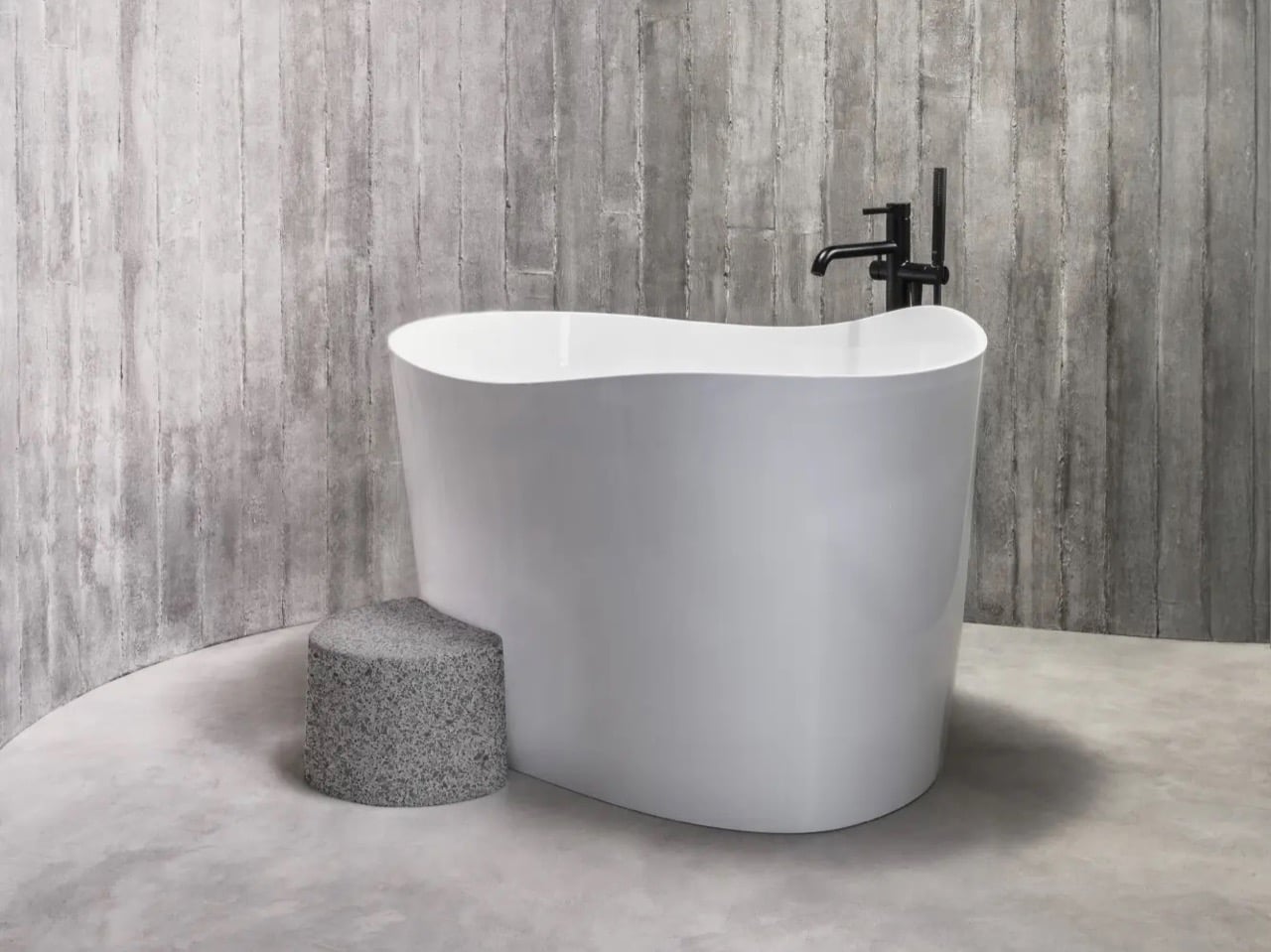
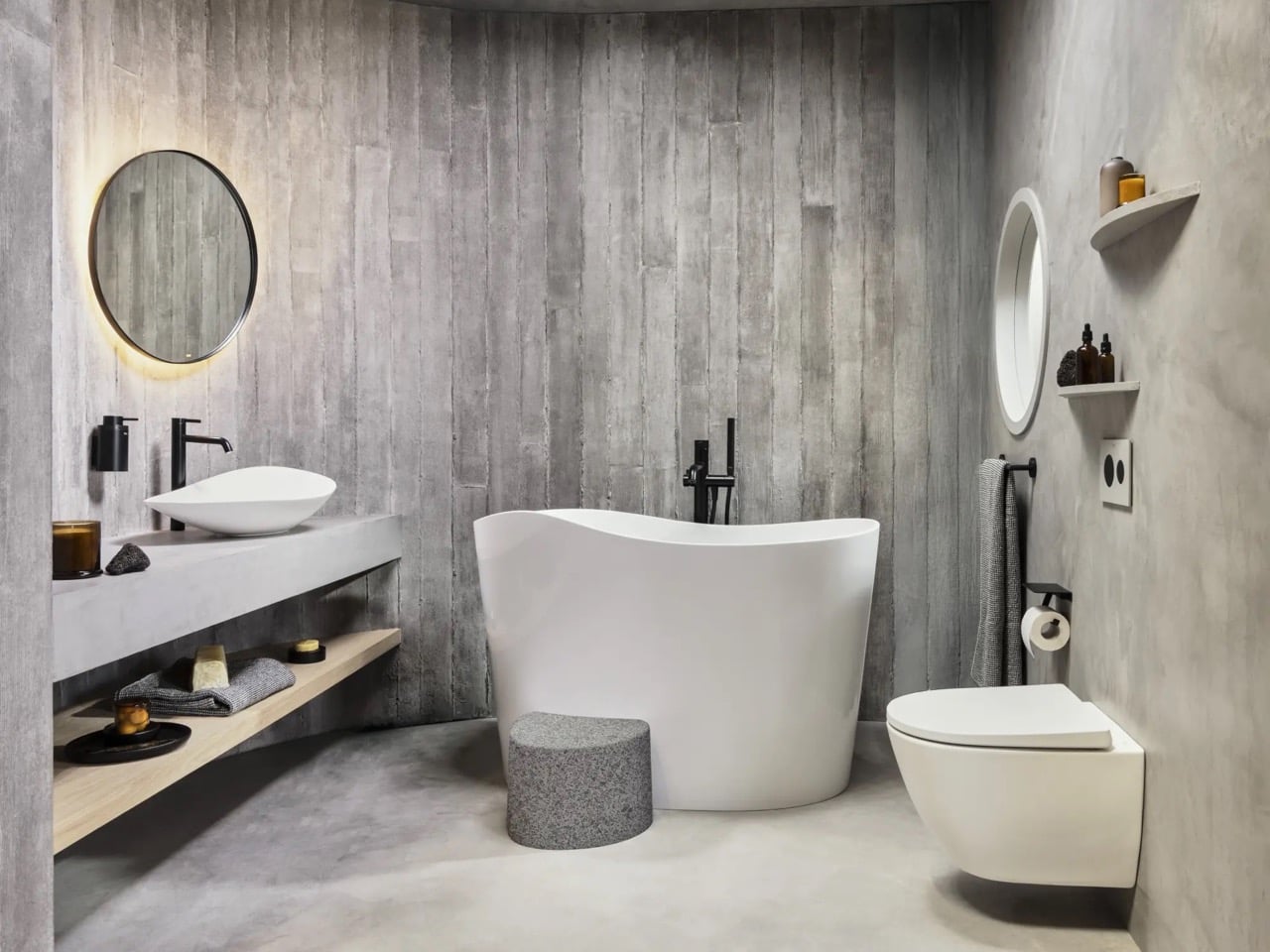
The designers clearly didn’t want the technology to clash with the form. The AquaIntelli takes the shape of a softly rounded, freestanding tub with no visible jets or hardware cluttering the surface. The air jets are hidden within the tub itself, keeping the interior clean and uninterrupted. It’s the kind of design where the functional details only reveal themselves once you’re already in the water.

The controls follow the same logic. A touch dial sits on the tub’s rim, its face displaying the current water temperature in large, easy-to-read digits, with a flush-mounted push button beside it for toggling the spa functions on or off. For those who’d rather not wait until they’re in the bathroom, a companion app lets you set the temperature and run the tub remotely from your phone.

The AquaIntelli is still a concept, which means it could be a while before anything like it shows up in an actual bathroom. But the ideas behind it are genuinely compelling. A bathtub that takes care of the tedious setup, remembers what you need after a rough day, and gets more useful the longer you own it is a surprisingly straightforward pitch for something the category has never really had.

The post This AI Bathtub Concept Figures Out Your Tension Points, Then Runs Itself first appeared on Yanko Design.
QPearl Just Replaced Your Shampoo Bottle With One Pearl

When a product wins a design award, the first instinct is to assume it looks incredible. That’s usually the point: sleek lines, a bold color story, a form factor that photographs well. QPearl does look beautiful, but what makes it genuinely worth paying attention to isn’t the way it sits on a shelf. It’s the audacity of what it’s replacing.

Designed by Severin Andrei under CAHM Europe, a Romania-based company, QPearl took home the Top Design honor in the ECO DESIGN/Sustainable: Packaging Design Products category at the European Product Design Award 2025. That’s a mouthful of a category name, but the product itself is almost impossibly simple: a small, luminous pearl that is your shampoo and body wash. No bottle. No pump. No cap you lose in the first week of owning it.

Designer: Severin Andrei

Here’s where it gets interesting. Each QPearl holds a 95.7% water-free concentrated body wash formula, encapsulated in a patented Smart BioMaterial that dissolves under warm running water. The outer layer is made from a chain of proteins derived from sources like maize, milk, or fish — no synthetic polymers, no plastic, nothing that’s going to sit in a landfill for the next four hundred years. The whole thing is double-patented and reportedly reduces CO₂ emissions by approximately 99% per pearl compared to conventional liquid bath products. Per pearl. That number is hard to absorb at first.

I’ll admit, the first time I came across this, I was skeptical. We’ve seen a wave of “sustainable” beauty products over the past few years that are more marketing than material innovation. Shampoo bars with palm oil in the ingredients list. Refillable bottles that require you to drive to a specialty store. Concentrated tablets that clump before you ever get to use them. The bar for what counts as sustainable has been so muddied that any new claim in that space feels suspicious.

But QPearl seems to be doing something structurally different. The design isn’t asking consumers to change their behavior in inconvenient ways. You still shower. You still hold something in your hand. The ritual is familiar; only the waste is removed. That’s a kind of design thinking that’s genuinely hard to execute, because it means working backward from how people actually live instead of forward from how we wish they would.

The product comes in a QPearl box, and there is also a tray holder and a hotel dispenser version, which points to an interesting commercial direction. Hotels are one of the biggest contributors to single-use toiletry waste globally, so the dispenser angle feels less like an afterthought and more like a strategic bet on where the real volume opportunity lives. If the hospitality industry moves on this, the impact scales quickly.

What I keep coming back to is how the form mirrors the concept. The pearl shape isn’t random. It’s the kind of design choice that communicates purity and precision without saying a word. You hold it in your hand and you immediately understand that it’s not a pill, not a tablet, not a capsule in the pharmaceutical sense. It’s something closer to a ritual object, and I think that distinction matters. Beauty has always been partly ceremonial, and QPearl leans into that instead of fighting it.

Whether QPearl becomes a mass market staple or remains a design darling is still an open question. It’s currently in the process of obtaining formal plastic-free certification, and sample ordering is available through the website, which suggests it’s still in a relatively early commercial stage. But the design recognition from a serious European awards platform signals that the industry is watching.

Good design doesn’t always mean the prettiest object in the room. Sometimes it means asking the most uncomfortable question about the object that’s already there. In this case, that question is: why are we still shipping water in plastic bottles? QPearl doesn’t just ask it. It dissolves the premise entirely.

The post QPearl Just Replaced Your Shampoo Bottle With One Pearl first appeared on Yanko Design.
This Blue Light Toothbrush Whitens Teeth 2.7x Brighter in 14 Days

Most bathroom counters tell a story of good intentions. There’s the electric toothbrush, the whitening strips half-squeezed out of their foil, maybe a tray or a pen that got used twice before disappearing behind the moisturizer. Whitening has always been a separate ritual, something you commit to on top of brushing, which is exactly why most people don’t stick with it. The Bixdo W60 is built around a simpler idea: that the best whitening routine is the one you’re already doing.

The W60 is a sonic electric toothbrush with a built-in 460 nm blue-light whitening system, designed to whiten and clean in a single three-minute session. No trays, no strips, no extra step to talk yourself out of skipping. It’s the kind of consolidation that sounds obvious once someone makes it, but actually took real engineering to pull off.

Designer: Bixdo

Getting stable light output from a toothbrush handle all the way to a tooth surface is not straightforward. Bixdo solved it with a patented energy-delivery system paired with Perlon® filaments, a fiber type chosen for how well it transmits light. These route the 460nm output directly where it needs to go, while separate Tynex® filaments handle the cleaning. One brush head, two jobs running at the same time.

The whitening agent is PAP, or phthalimidoperoxycaproic acid, a peroxide-free compound that breaks down stain molecules without the free radicals that cause sensitivity. It’s gentle enough for daily use, which matters because the whole point is building it into a habit rather than rationing it out once a week. The 460nm blue light activates the PAP in Bixdo’s Active Oxygen Whitening Toothpaste directly at the enamel surface, with the two working together to speed up stain breakdown. Third-party testing across 32 participants found up to 2.7 times brighter-looking teeth in 14 days using the brush with Bixdo’s Active Oxygen Whitening Toothpaste.

The rest of the package is well put together. Four brushing modes cover most situations: WHITEN+ for the full session, FAST for a quick two-minute morning clean, DEEP for a thorough three-minute scrub, and SOFT for sensitive days. A handle display gives real-time brushing guidance, and the base flashes orange if you’re moving too quickly between quadrants. Battery life is up to 180 days on a single charge, which is a pleasant surprise for this category, and a one-touch travel lock stops it from switching on inside a bag.

The W60’s real argument is a behavioral one. Whitening works when it happens consistently, and consistency is much easier when it’s attached to something you’re already doing every day. Brushing is the existing habit, and the W60 is designed to fold into it rather than sit beside it as another thing to remember. The blue light, the PAP chemistry, the smart brushing feedback, none of it requires a separate session, a separate product, or a separate place on the bathroom counter. They all just come along for the ride.

The post This Blue Light Toothbrush Whitens Teeth 2.7x Brighter in 14 Days first appeared on Yanko Design.
Dinoosh Dispenses Dino Paw Print Soap, Changes Color When Done

Kids explore everything with their hands, but rarely wash them long enough, even when adults remind them. The recommended 20 seconds feels like forever to a child staring at a sink, which is why so many just rinse and run. Dinoosh is a concept that tries to solve this not with more nagging or countdown posters, but with a small dinosaur-themed object that makes the whole routine feel like a game.

Dinoosh is a palm-sized, dinosaur-inspired handwashing tool that combines a soap dispenser, scrubber, and color-changing timer. It looks like a soft, rounded dino paw with three spikes on top and a loop so kids can clip it to backpacks or bathroom hooks. The idea is to give children a friendly companion that turns washing away germs into something they actually want to do on their own.

Designers: Aarya Ghule, Tejas Vashishtha

Kids flip open a small lid at the bottom and squeeze Dinoosh, which dispenses thick soap gel in the shape of tiny dinosaur paw prints onto their hands. That simple detail turns soap into a character moment, giving a clear visual dose and an instant reason to look and laugh. It invites kids to start rubbing and playing instead of rushing straight to the rinse and calling it done.

Dinoosh stays involved once the soap is out. The back of the device has soft ridges that act like a gentle scrubber when kids rub their hands over it. The spikes on top help get between fingers, and the rounded body is easy to grip with wet hands. Instead of just lathering and standing there, children are encouraged to keep moving, squeezing, and scrubbing as part of the play.

The body is made from thermochromic plastic that slowly shifts color with warmth and friction. As kids scrub their hands and run warm water, they see the dinosaur paw gradually change hue. That becomes a built-in timer: they know they’re done when Dinoosh has fully changed color, which roughly matches the recommended 20 seconds without needing to count or sing a whole song.

A small loop at the top lets Dinoosh hang from backpacks, bathroom hooks, or stroller handles, keeping it in sight and within reach. Bright colorways like Sweet Sprout green, Coral Pop, and Soft Comet lavender make it feel collectible and personal. By living in kids’ everyday environments, it nudges them toward washing not just at home but at school and on the go.

Dinoosh shows how product design can tackle hygiene through play rather than guilt. By combining characterful form, tactile engagement, and a built-in color timer, it turns a forgettable chore into a small daily ritual kids can own. Whether or not this exact concept hits the market, the idea of a dinosaur paw that tells you when your hands are clean feels like a story most kids would happily wash along with.

The post Dinoosh Dispenses Dino Paw Print Soap, Changes Color When Done first appeared on Yanko Design.
LuneUp Ceramic Basins Can Double as Barbecue Grills

Italian bathroom brand Terzofoco has launched LuneUp, a versatile system of hand-thrown ceramic pedestals that challenges conventional thinking about bathroom design. Created by designer Emanuel Gargano, this modular collection transforms ceramic from a simple finishing material into a central living element that works both indoors and outdoors. The LuneUp concept centers on customization, allowing users to select from interchangeable elements, including washbasins, planters, and even barbecues, all supported by sculptural ceramic pedestals.

This total-living system approach means the same foundational pieces that hold a washbasin in your bathroom can support outdoor cooking equipment on your terrace. The design deliberately blurs the line between functional bathroom fixture and lifestyle furniture. Gargano’s vision extends beyond traditional bathroom boundaries, with ceramic elements serving as supports for various configurations. Each piece is handcrafted using traditional throwing techniques, ensuring an artisanal quality that brings organic variation to every installation. The system includes various heights and formats, from freestanding basins to console configurations, offering remarkable possibilities for contemporary spaces.

Designer: Emanuel Gargano for Terzofoco

The LuneUp Bench composition features an aluminum top that doubles as both a surface and a seat, bringing unexpected versatility to what might otherwise be purely utilitarian pieces. Available finishes include Terra rossa, Raku clay, and Terra nera, each bringing distinct character while maintaining the system’s cohesive visual language. The LuneUp Pouf adds another dimension, functioning as both a ceramic laundry container and a stool. The minimalist aesthetic enables these pieces to stand alone or be combined into more intricate arrangements, adapting to various spatial needs and personal preferences. The modular system is so versatile that its offering ranges from a single wash basin to more complex combinations that serve multiple functions simultaneously.

What makes LuneUp particularly compelling is its rejection of bathroom design conventions. Rather than treating ceramic as decorative tile or simple basin material, Gargano positions it as structural and sculptural. The hand-thrown quality brings organic variation to each piece, ensuring no two installations look identical. This artisanal approach aligns with growing interest in craft-based design within the luxury bathroom sector, where consumers increasingly value pieces that showcase maker’s marks and individual character over mass-produced uniformity.

Terzofoco presented the collection at Milan Design Week in April 2025, where it attracted significant attention for its innovative approach to modular bathroom systems. The industry took notice earlier when the LUNE vanity unit earned recognition as one of the top 10 products at the Salone Internazionale del Bagno in June 2024. This acknowledgment from one of the bathroom industry’s most prestigious events validated Gargano’s unconventional thinking and confirmed that the market was ready for designs that transcend traditional category boundaries.

The system’s indoor-outdoor flexibility addresses contemporary living patterns where boundaries between interior and exterior spaces continue to dissolve. A ceramic pedestal holding a washbasin inside can support a planter outside, creating visual continuity across different zones. The barbecue option takes this further, suggesting that design languages typically confined to bathrooms can migrate to entertaining spaces. Photography by Gian Domenico Troiano captures the system’s sculptural qualities, emphasizing how light plays across the ceramic surfaces and aluminum accents. The images show LuneUp pieces in various settings, from traditional bathroom contexts to outdoor terraces, illustrating the system’s adaptability. Communication design by Simone Scimmi Design Studio presents the collection with clarity that matches its minimalist aesthetic, allowing the ceramic work itself to take center stage.

The post LuneUp Ceramic Basins Can Double as Barbecue Grills first appeared on Yanko Design.
This 15-Minute Human Washing Machine Finally Solved Shower Time

Remember when the future promised us flying cars and automated everything? Well, Japan just delivered on part of that promise with something wonderfully bizarre: a human washing machine. And honestly, after hearing about it, I kind of want one.

At Expo 2025 Osaka, Science Corporation unveiled the Future Human Washing Machine, and it’s exactly what it sounds like. You climb into a sleek capsule, sit down, and let the machine do its thing. Water splashes around you, micro- and ultrafine bubbles get to work cleaning your body, and then air blasts you dry. The whole experience takes about 15 minutes, which might actually be faster than your current shower routine if you’re anything like me.

Designer: Science Corporation

But this isn’t just some random quirky invention that popped out of nowhere. The concept actually has roots dating back to 1970, when Sanyo exhibited an Ultrasonic Bath at the original Osaka Expo. That version used pulsing jets, ultrasonic mist, and rubber massage balls to create what was essentially a human car wash. It was spectacular, photogenic, and totally impractical. The costs were so prohibitive that it never moved beyond being a futuristic showpiece.

Fast forward 55 years, and Science Corporation’s chairman Yasuaki Aoyama decided to resurrect the concept, but with a 2025 upgrade. The new version ditches the gimmicky bruteness of its predecessor for something more refined and genuinely useful. We’re talking about biometric sensors that monitor your vital signs and stress levels, AI that adjusts water temperature and pressure based on what your body needs, and even a display that shows calming or positive images if the sensors detect you’re tired or stressed.

The technology behind it is genuinely impressive. Those ultrafine bubbles aren’t just for show. They’re designed to cleanse more effectively than regular water alone, blending traditional Japanese bathing culture with cutting-edge innovation. And unlike the 1970 version that was pure spectacle, this one has a clear practical application in mind.

Science Corporation isn’t just building this for tech enthusiasts to marvel at during expo season. They’re actually targeting nursing care facilities, where something like this could be genuinely transformative. Think about it: for elderly individuals or people with mobility issues, the simple act of bathing can be challenging, uncomfortable, or even unsafe. An automated system that can clean and dry someone comfortably while monitoring their health status? That’s not just clever engineering. That’s solving a real problem.

During the expo, which ran from April through October, visitors got to experience the machine firsthand. The process is surprisingly straightforward. You step in, sit down in the transparent capsule, and the system takes over. Water fills the chamber with those special bubbles doing their cleaning magic. Meanwhile, sensors are constantly checking in on you, and if you’re looking tense, the screen adjusts to show you something more soothing. Once the wash cycle finishes, the water drains automatically and the drying process begins with air circulating around your body.

What strikes me most about this project is how it represents a shift in how we think about automation. We’ve gotten used to robots handling manufacturing and algorithms managing data, but automating something as personal and intimate as bathing feels different. It requires a level of trust and sophistication that goes beyond just mechanical efficiency. The machine needs to understand human comfort, adapt to individual needs, and create an experience that feels safe and relaxing rather than clinical and weird.

There’s no word yet on commercial availability for regular consumers, and honestly, I’m not sure how many people would rush out to buy one even if it hit the market tomorrow. The concept might still feel too futuristic, too impersonal, or just plain too strange for mainstream adoption. But for specific use cases, particularly in healthcare settings, the potential is undeniable.

Whether the Future Human Washing Machine becomes a common sight in homes or remains a specialized tool for care facilities, it’s a fascinating glimpse into how technology continues to reimagine even our most basic daily routines. And who knows? Maybe in another 55 years, we’ll look back at our manual showers the same way we now view hand-washing clothes in a river. Sometimes the future arrives in the strangest packages.

The post This 15-Minute Human Washing Machine Finally Solved Shower Time first appeared on Yanko Design.
This innovative 2-in-1 faucet system simplifies showering while enhancing your bathroom’s style

‘Omnibath,’ a combination of “Omni” and “bath,” represents a groundbreaking 2-in-1 faucet system that redefines the bathroom experience. The word “Omni” implies all-encompassing, without limits, while “bath” reflects the cleansing process. Together, Omnibath is designed to be an inclusive, accessible solution for people of all ages and abilities. This innovative product not only addresses common issues with conventional faucets but also offers a more intuitive and efficient bathing experience. With Omnibath, the complexity of managing water flow is replaced by simplicity, comfort, and reliability.

Designer: Jeongwoo SEO

The motivation behind Omnibath stems from persistent issues that plague traditional faucets. One of the key problems is the high risk of malfunction, particularly with complex levers that often fail at inconvenient times. In humid, slippery bathroom environments, operating these levers becomes difficult and frustrating. Furthermore, the design of standard faucets is not user-friendly for those with mobility issues, making simple tasks like turning on the water or adjusting the temperature unnecessarily challenging. Omnibath was created to directly address these challenges, providing a faucet system that eliminates these frustrations and is suitable for a wide range of users.

One of Omnibath’s standout features is its intuitive design, making it incredibly user-friendly for everyone. The operation process is streamlined into three easy steps: first, users turn on the water with a simple motion, making it ideal for those who may have difficulty with standard faucets. Next, the pull-and-use mechanism allows users to easily switch between the faucet and shower functions, enhancing convenience. Finally, the jog dial enables precise temperature control, with the temperature visibly displayed for added safety. This design ensures that Omnibath is accessible to people of all abilities, from young children to the elderly.

In terms of aesthetics, Omnibath is as much about visual appeal as it is about functionality. The faucet is crafted with a sandblasted metal finish, providing a soft texture that is comfortable to grip even in wet conditions. Its cool gray color is a timeless and versatile choice, easily fitting into most bathroom decor schemes. The faucet’s shape is also thoughtfully designed, with soft, flowing lines that enhance its modern aesthetic while avoiding harsh edges. This creates a sleek, elegant look that complements its user-friendly features.

Even the packaging of Omnibath reflects its focus on practicality and ease of use. Inspired by the utility of a toolbox, the packaging is equipped with a hook on top that doubles as a handle, making it easy to carry. This clever design ensures that from the moment of purchase, users are met with convenience and functionality. The packaging not only protects the faucet but also serves as a nod to the product’s blend of form and function.

Omnibath is designed for effortless installation. It adheres to the standard dimensions for one-hole sinks, meaning it can easily replace existing faucets without the need for extensive modifications. The handle is easy to operate, further enhancing its accessibility for those with limited mobility or strength. This combination of thoughtful design and straightforward installation makes Omnibath an attractive option for homeowners looking to upgrade their bathroom fixtures with minimal hassle.

Safety is another core feature of Omnibath. The faucet is equipped with a visible water temperature indicator, reducing the risk of scalding and ensuring a safer bathing experience for all users, particularly children and the elderly. This added layer of protection gives users peace of mind, knowing that they can control and monitor the water temperature with precision.

Omnibath is a cutting-edge faucet system that merges style, functionality, and safety. By addressing the flaws of traditional designs, it offers a more intuitive, accessible, and reliable bathing solution. Whether you’re looking to enhance the aesthetic of your bathroom or need a faucet that’s easier and safer to use, Omnibath delivers on all fronts. Its sleek design, user-friendly features, and thoughtful packaging make it a must-have for any modern home.

The post This innovative 2-in-1 faucet system simplifies showering while enhancing your bathroom’s style first appeared on Yanko Design.
Bathtope lets you set up a removable bathtub in your bathroom

One of my favorite parts about hotel stays is if there is a bathtub. I put in my favorite soaks and just while my worries away if only for a few minutes and if only for a day. My bathroom in my apartment does not have a space for it of course, so it is a luxury I can afford on staycations. It would be nice to have a removable bathtub that I can use every once in a while of course.

Designer: LIXIL Corporation

To celebrate their 100th anniversary, Japanese plumbing and tile company LIXIL Corporation is launching Bathtope, a bathroom space with a removable bathtub. Basically it’s a fabric that you can fill up with hot or cold (or lukewarm) water and it will serve as your bathtub. When you’re done using it, you can fold it up and hang it and that space becomes your shower area.

Bathtope is made from a single sheet of fabric and the design is inspired by both kimono and origami. They used just one cut to lessen the possibility of water leaks. To set up the fabric baththub, you need to attach hooks on the walls with which to suspend the cloth from. It is able to adjust its zie and form to the space that you decide to set it up in.

Thus unique bathroom space will be available for consumers by November this year but it will be on display at DesignArt Tokyo 2024 this month. Even though I still don’t have space in my current bathroom, it’s an interesting option for those who want to have their own bathtub without going through the hassles of installing one.

The post Bathtope lets you set up a removable bathtub in your bathroom first appeared on Yanko Design.
Smart shower system stores hot water to stop wastage

Taking showers with heaters is always a hit and miss for me, sometimes learning my lesson the hard way. There have been several times that a cold blast hit me so I’ve learned to not go under yet and wait for the water to turn hot. However, that also means that we’re wasting a lot of water if that happens every day. Apparently, an average person wastes 4000 liters and 110 kilowatt-hours of energy every year, according to startup Heau.

Designer: Heau

The patented Heau system says they’re the world’s first shower with instant hot water. This way it helps you save on the water that’s wasted as you wait for it to heat up while still enjoying the comfort of hot water instantly as soon as you turn on the shower. Most people wait for around 1 minute after they turn on the shower since that’s when the water becomes comfortably hot. What they came up with is a two-compartment system that is able to store the heat from your previous shower so it’s already hot when you turn on your current shower.

The hot water from the end of a shower is stored in a vacuum chamber and keeps it hot up to three days because of a special insulation. When you take your next shower, the system detects the cold water and sends it to the left compartment which then applies pressure through a flexible membrane. It is sent to the mixing valve so you get your instant hot water. When the water in the pipes is already hot, the system is able to shut off the hot water inlet and can recharge it since it sends the water to the right hand compartment.

The installation of the system is similar to the water storage for hanging toilets and it can work with any type of shower. Heau is still currently in the startup stage but they’re targeting the shower system to be available by 2025.

The post Smart shower system stores hot water to stop wastage first appeared on Yanko Design.
Upgrade your Regular Bamboo Toothbrush to an Electric Toothbrush with this clever attachment

This might be the most sensible idea of the decade. Instead of buying electric toothbrushes, what if there was an attachment that made regular toothbrushes vibrate the way electric ones do? That’s what the Motomoto tries to do. A simple silicone sleeve that attaches onto a standard bamboo toothbrush, the Motomoto ‘electrifies’ your brushing routine, adding ultrasonic vibrations while you clean your teeth. This helps dislodge food particles, clean plaque, and keep your mouth cleaner than just using regular hand motions. The toothbrush itself is made from bamboo and is designed to be replaceable, while the Motomoto itself stays constant. Genius.

Designer: Frederick Yap

Click Here to Buy Now: $18 $21 (14% off). Hurry, very few left!

An electric toothbrush, simply put, is just a motor attached to a bunch of bristles using an ergonomic handle. That’s all an electric toothbrush really is – and it’s honestly disappointing that companies have somehow corrupted that idea into a capitalist nightmare. Oral-B’s bristles don’t fit on a Colgate toothbrush and vice versa. Companies have colored bristles that fade with time when you need to change them, and just the brush head (the replaceable part on a toothbrush) comes in expensive single packs or cheaper economy packs. Not to mention they’re ALL made out of plastic, so throwing bristles away is tantamount to polluting. It’s the same with printers, and with shaving razors… and Frederick Yap wanted nothing to do with that model. So he designed the Motomoto – an electric handle that attaches to a regular toothbrush. The handle stays, and the biodegradable toothbrush gets replaced… and if you want to brush manually without the motor, that’s absolutely fine too.

The Motomoto itself looks like a simple handle without the bristles. A hole on the top lets you slide your bamboo toothbrush in, effectively turning the brush into an electric one. The brush features a bamboo body, with a choice between 4 bristles – regular flat bristles, charcoal-infused tapered bristles, bamboo tapered bristles, and ultra-fine nano bristles for sensitive gums. Each Motomoto comes with the assorted 4 brushes, and you choose the one that suits you the best. The other brushes can be used by other members of your family, and at the end of their cycle, the brushes can safely be discarded or composted, allowing them to return to nature with minimal waste created in the process.

The handle is where the magic unfolds. Slide the brush in before using, hit the button, and brush like you normally would. The vibrations from the Motomoto enhance the efficiency of your brushing by 50%, adding more bristle movement while you brush so that it scrapes off plaque and food debris faster. The gentle vibrations get the job done so you don’t need to brush as hard, which can sometimes cause your gums to bleed.

Each Motomoto comes along with a 4-pack of assorted brushes, and a holder that lets you vertically dock your Motomoto when you’re not using it. The Motomoto also runs on a rechargeable Li-ion battery, which means you can plug a USB-C charger in to juice your electric toothbrush. There are 4 Motomoto colors you can choose from – Nude Brown, Forest Green, Cream White, and Ash Grey, and the entire kit starts at just $18, with an extra 4-pack of brushes costing $9.

Click Here to Buy Now: $18 $21 (14% off). Hurry, very few left!

The post Upgrade your Regular Bamboo Toothbrush to an Electric Toothbrush with this clever attachment first appeared on Yanko Design.