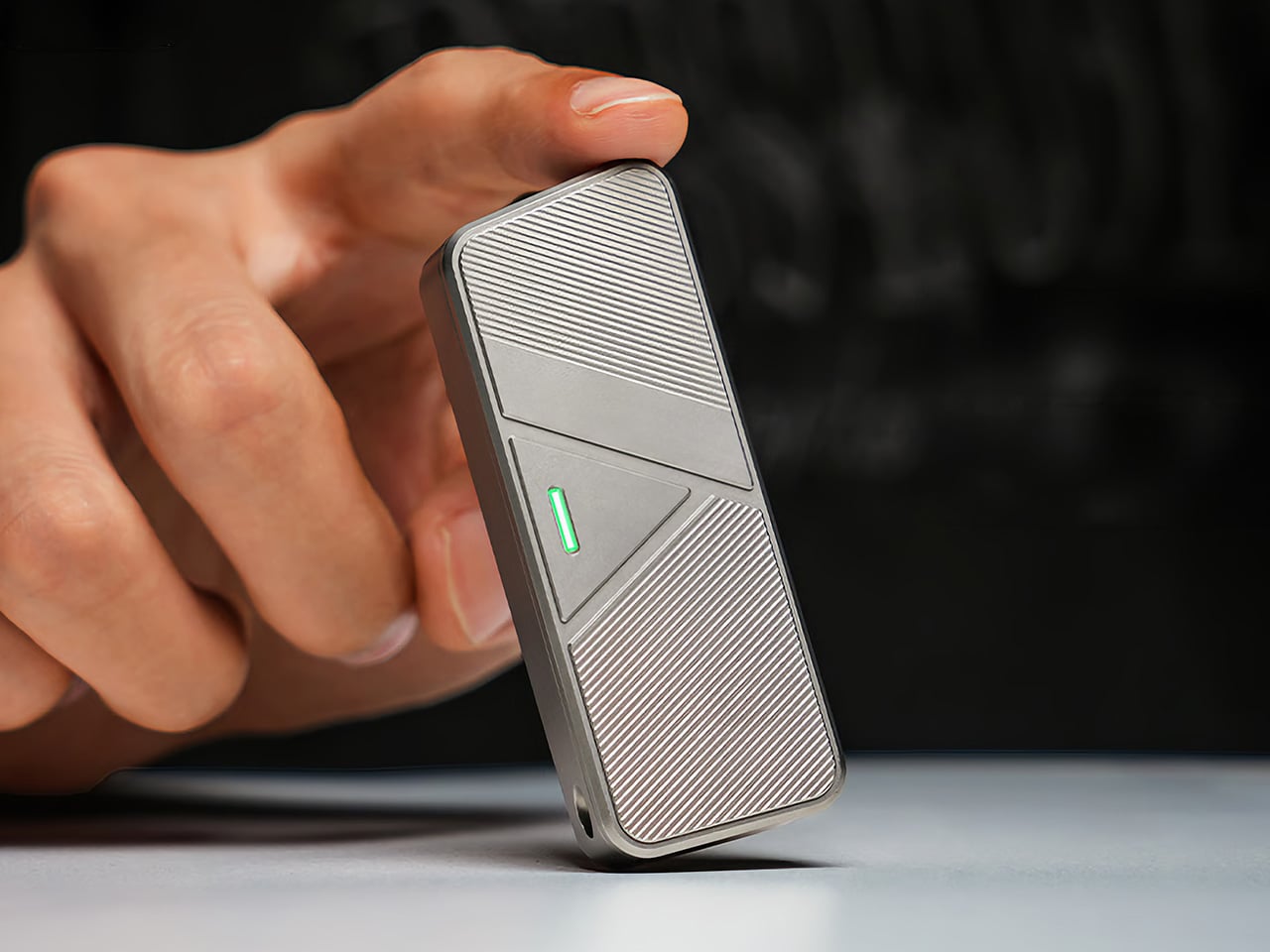
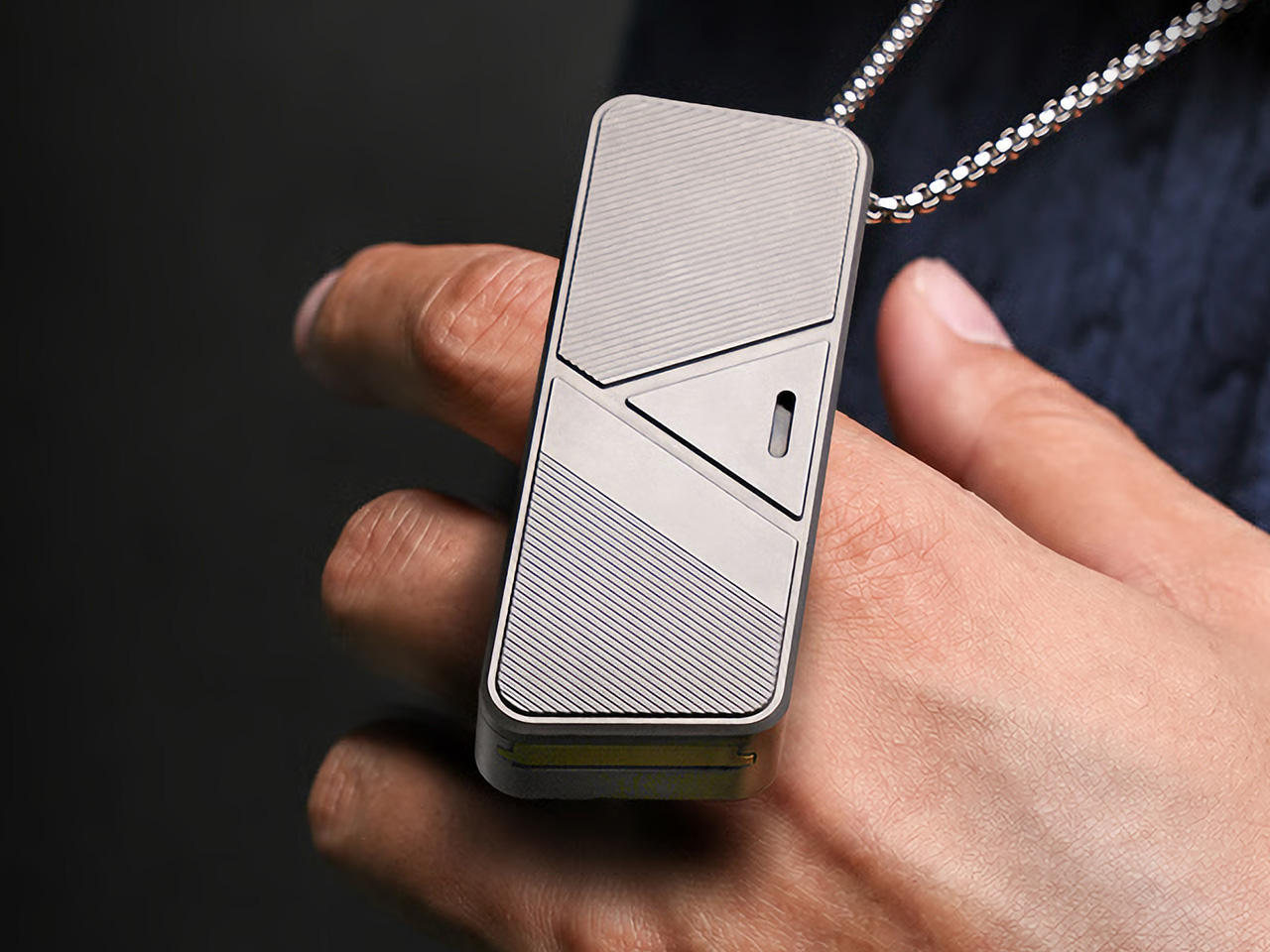
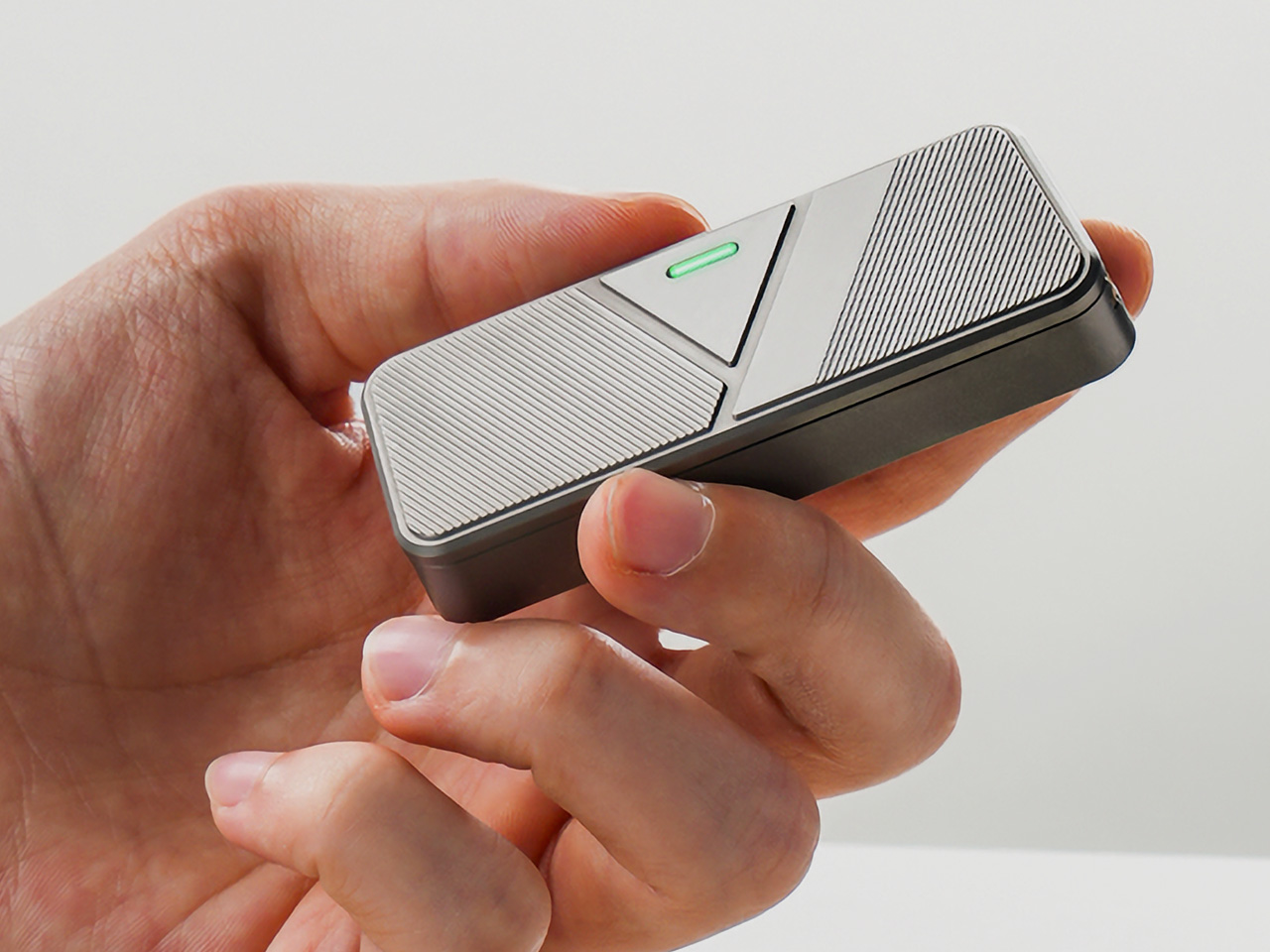
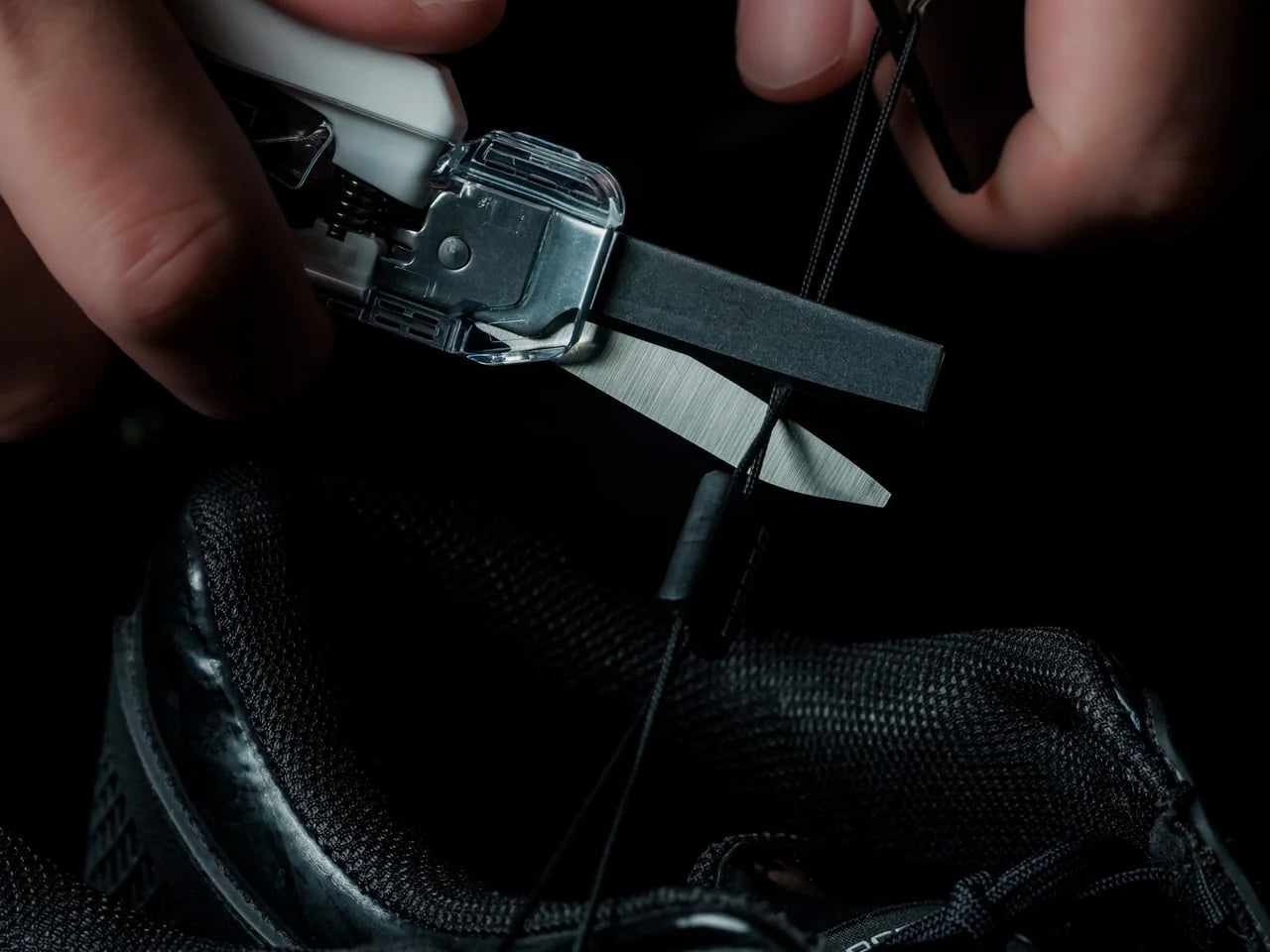
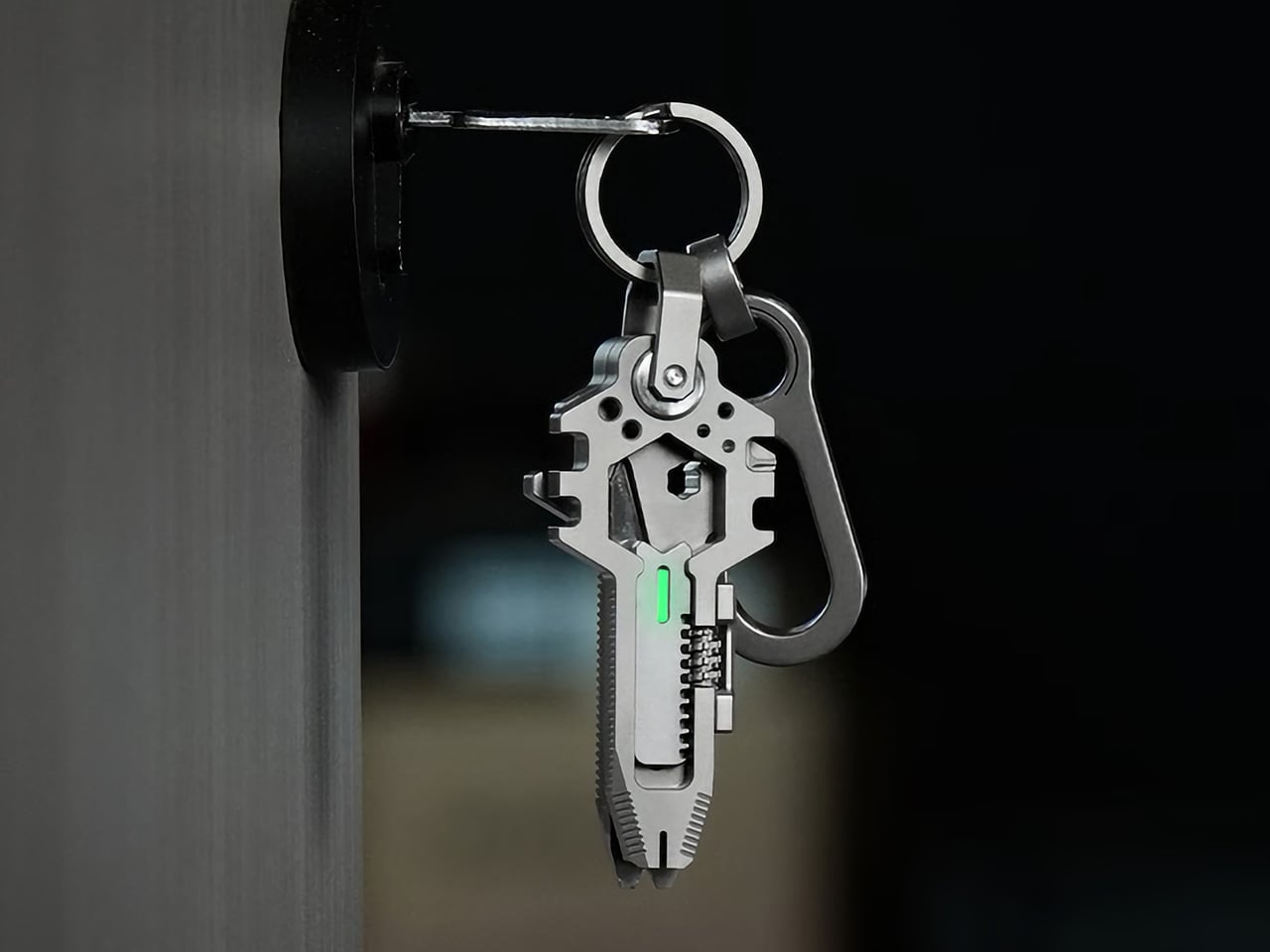
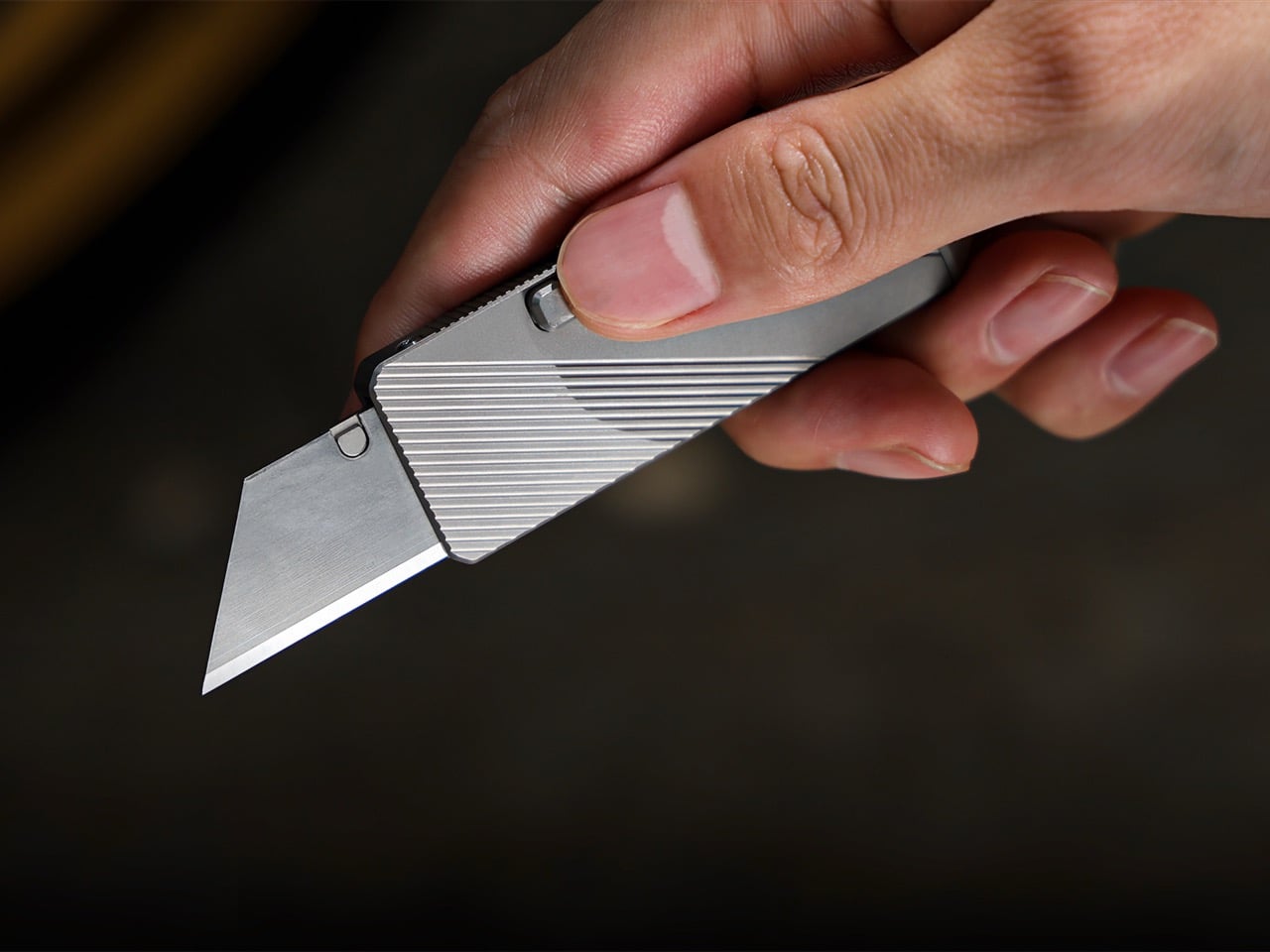
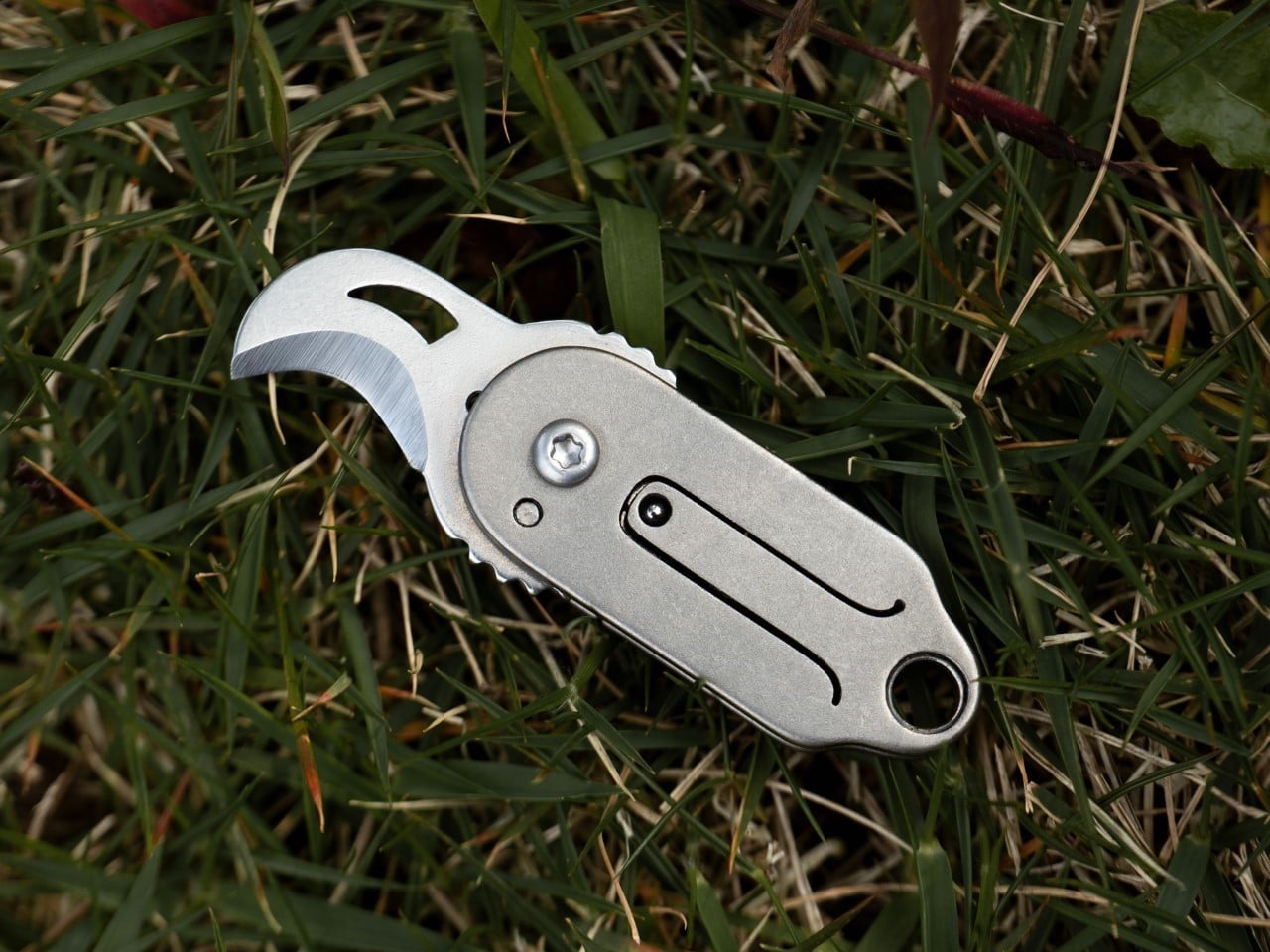
Most utility knives are tools you forget about until you need one. The DeckShiv Neo is the one you reach for when you don’t. Rather than just existing purely to get a job done, like slicing open a box or trimming a stray thread, the DeckShiv Neo has a purpose long after you finish the task at hand. It’s a compact utility knife built around the moments when there’s nothing to cut at all, just a satisfying magnetic slide that clicks home every time you push it.
That feeling comes from a three-part motion the brand calls the Push: travel, resistance, and return. Slide it forward, feel resistance build under your thumb, then let it snap cleanly back. The DeckShiv Neo adds 0.26 inches of extra travel over the original, just enough room for that resistance to develop without turning the motion into work. It’s a tiny change, but it’s the whole point.
Underneath that motion sits a reworked internal system built from four N52 magnets, two tucked inside the body and two more inside the slider cover. They add resistance as you push, then guide the slider back once you let go. A solid, CNC-machined brass rail also replaces the thin shim used before, giving the mechanism a guided path instead of loose surface contact.
There’s also a Pin and Stop Pin system tucked inside, which sounds technical but solves a simple problem: knowing exactly when the slide is finished moving. Push it all the way, and it stops firmly, with no mushy give or extra wiggle room. That crisp finish is part of why the motion feels complete every time, not just smooth in the middle.
The DeckShiv Neo’s surface plays a role, too. A fine, bidirectional texture is machined into the body so your thumb finds grip whether you’re pushing forward or letting it slide back, and it works the same whether you’re left- or right-handed. Every corner is chamfered, and every transition smoothed over, so the knife stays comfortable to hold no matter how many times you’ve already picked it up.
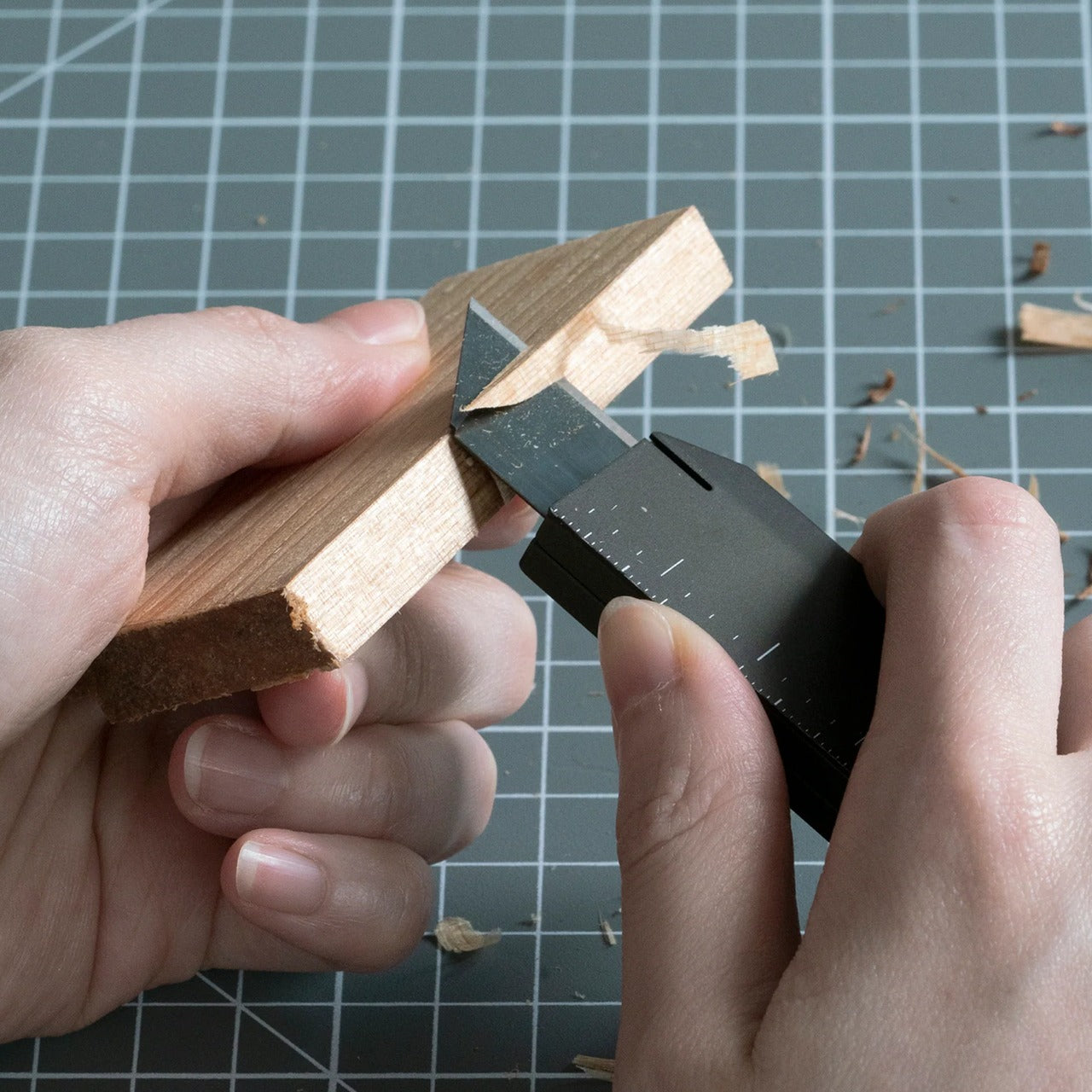
When there’s actually something to cut, whether it’s a stubborn shipping box, packing tape, or a swatch of leather, the Neo handles it with a 15-degree asymmetric blade opening that exposes about 0.95 inches of edge, roughly 26% more than before. That extra visibility keeps the cutting line in clear view, letting you guide the blade with more precision instead of guessing where it actually is.
The blade itself is a standard SK5 utility blade, the same kind you’d find at any hardware store, not some proprietary cartridge that locks you into overpriced refills. Two N52 magnets hold it firmly in place, backed by a mechanical stop that keeps it from shifting in use. Once it dulls, swapping in a fresh one takes seconds and barely costs anything.
The DeckShiv Neo is also about 20% thinner than its predecessor, measuring roughly 2.9 by 2.7 by 0.51 inches, small enough to disappear into a pocket without printing through your jeans. A one-piece deep-carry clip keeps it riding low and steady, and it comes off entirely if you’d rather clip it elsewhere or thread it through the built-in lanyard point instead, whichever suits how you carry things.
The body comes in Grade 5 titanium, aluminum, or PEI, and the choice changes more than the color. Titanium feels dense and grounded, giving each push a deliberate, mechanical quality. Aluminum feels crisper and lighter, quicker to respond under your thumb. PEI runs warmer to the touch, with a softer, more playful character. Same mechanism inside, three distinct personalities depending on what your hand prefers.
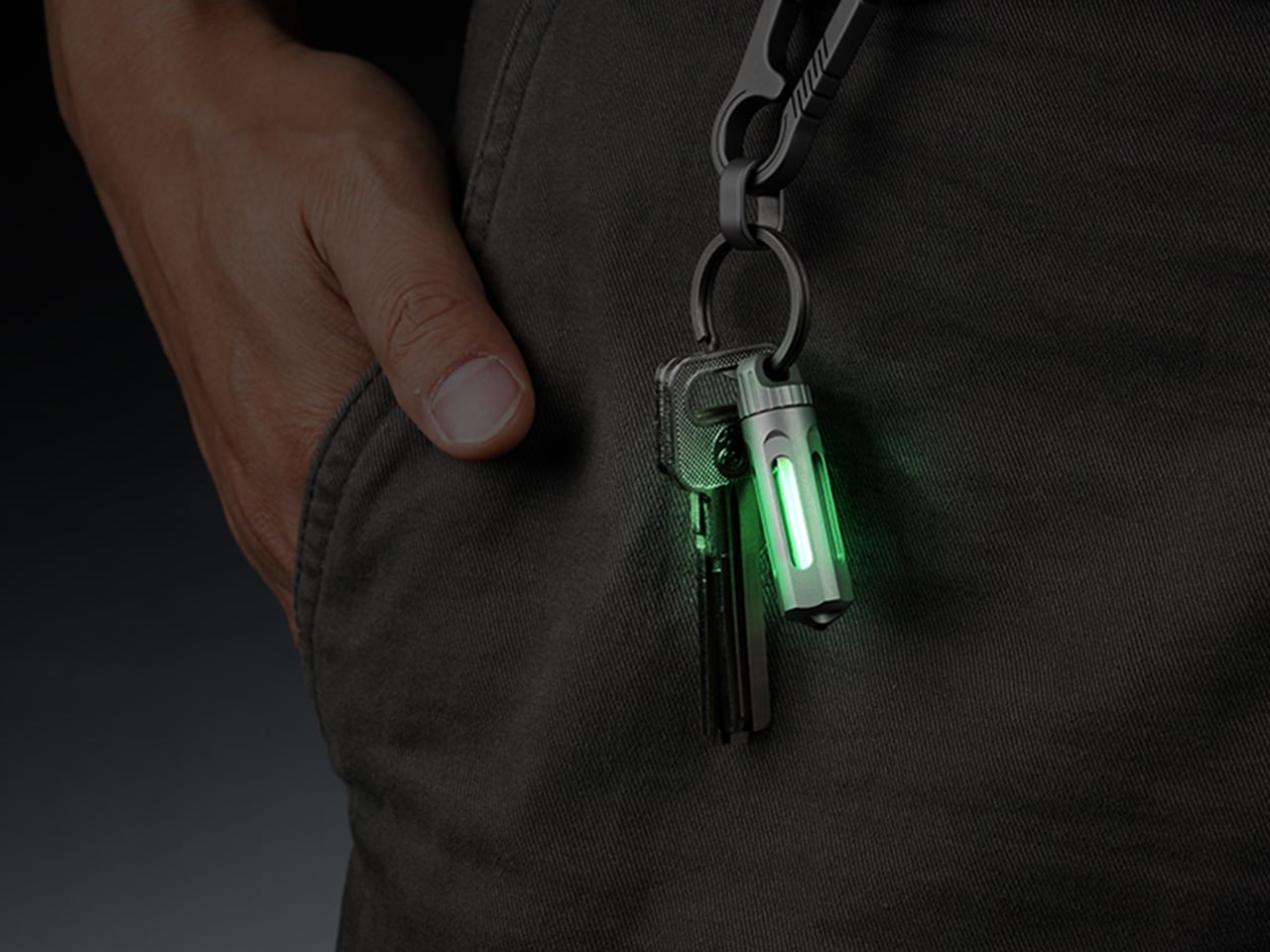
There’s one more quiet touch worth mentioning: an optional tritium vial slot that glows on its own for up to 25 years, with no batteries or charging involved. It’s a small, personal detail rather than a flashy one, fitting for a compact companion you’ll reach for out of habit, whether or not you need to cut much of anything that day.
What makes Neo different isn’t the titanium or the magnets. It’s the fact that you’ll push it for no reason at all, and that’s exactly the point. It’s a tool that cuts when you need it, but you’ll reach for it long after the boxes are opened. You’ll buy it for the cut. You’ll keep it for the click.
Move into a dorm room, and the first thing you learn is that space decides everything. Drawers fill fast, surfaces disappear under notebooks and cables, and whatever doesn’t earn its spot in the first month ends up in a box under the bed. Everyday carry gear gets judged harder here than anywhere else, because there is no junk drawer to hide in and no car trunk to quietly store the things that didn’t make the cut.
The five picks below passed that test. Each one solves a specific friction point that shows up constantly once the semester starts, whether that is a package piling up at a dorm door, a dark campus path at midnight, a desk that swallows small objects whole, furniture that wobbles on move-in day, or a box that needs opening without scissors nobody can find. Form that earns its place through use, not novelty.
1. Olight Baton 4 Flashlight
A phone flashlight is a dead end. It drains the battery you need for everything else and delivers a washed-out circle of light that barely reaches ten feet. The Olight Baton 4 solves that with 1,300 lumens in a body that measures 2.48 inches long and weighs 1.85 ounces, small enough to pocket next to a chapstick. A 170-meter throw covers a dark campus path, a parking lot, or a hallway that lost power during a finals week study session.
Five modes handle the full range of real use cases, from the 0.5-lumen moonlight setting that reads battery level without waking a sleeping roommate, all the way up to the turbo burst for actual emergencies. A magnetic base lets it stand upright on a metal desk surface and double as a hands-free lantern, and the two-way clip keeps it on a bag strap without adding meaningful bulk. Charging runs through a proprietary magnetic cable that snaps into position flush with the body, leaving no exposed port to collect dust or wear out.
What We Like
1,300 lumens in a sub-3-inch, 1.85-ounce body means it genuinely replaces a larger light without compromise on output or carry weight
The magnetic base converts it from a directional flashlight into a standing lantern, covering two distinct use cases with one object
What We Dislike
The proprietary magnetic charging cable means a lost cable is a real problem, with no USB-C fallback to borrow from a classmate
Turbo mode steps down automatically after a short burst to manage heat, so sustained maximum brightness requires cycling back up manually
2. CraftMaster EDC Utility Knife
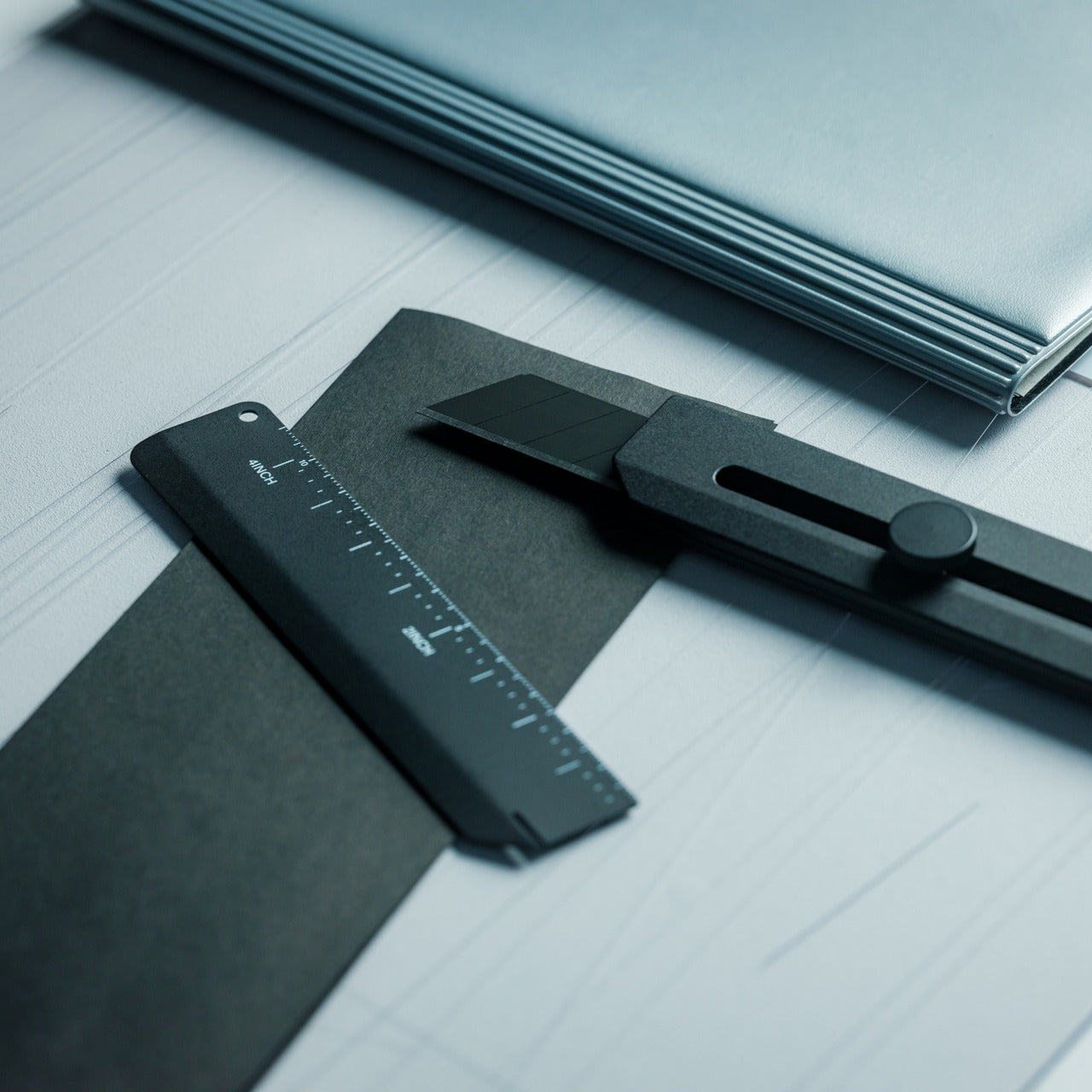
Most utility knives are an afterthought, a plastic slider from a hardware store that lives forgotten in a junk drawer until the blade rusts shut. The CraftMaster treats the utility knife as a precision instrument. At 4.72 inches long and just 8mm thick, it carries like a pen and sits on a desk without looking out of place beside a laptop. The rotating knob that deploys the OLFA blade adds a deliberateness that a standard slider simply never delivers.
The magnetic back docks a companion metal scale, turning a single object into a two-piece system with a built-in blade-breaker for snapping off dull edges without hunting for a separate tool. A 15-degree curvature on the ruler protects fingers during cuts, and the 45-degree inclination geometry handles box opening without risk to whatever is packed inside. OLFA blade compatibility keeps replacement costs low and means refills are available at any hardware store, with no proprietary cartridge system to track down mid-semester.
The magnetic scale dock creates a two-piece cutting system without requiring a separate case, sleeve, or additional carry weight
OLFA blade compatibility keeps long-term costs minimal and replacements universally available without planning around a proprietary format
What We Dislike
The utility blade format limits versatility outside of cutting and scoring tasks compared to a folding knife with a more general-purpose tip geometry
The 8mm profile, while genuinely slim for a utility knife category, still feels rigid compared to a traditional folding knife for one-handed carry
3. Orbitkey Grid Organizer
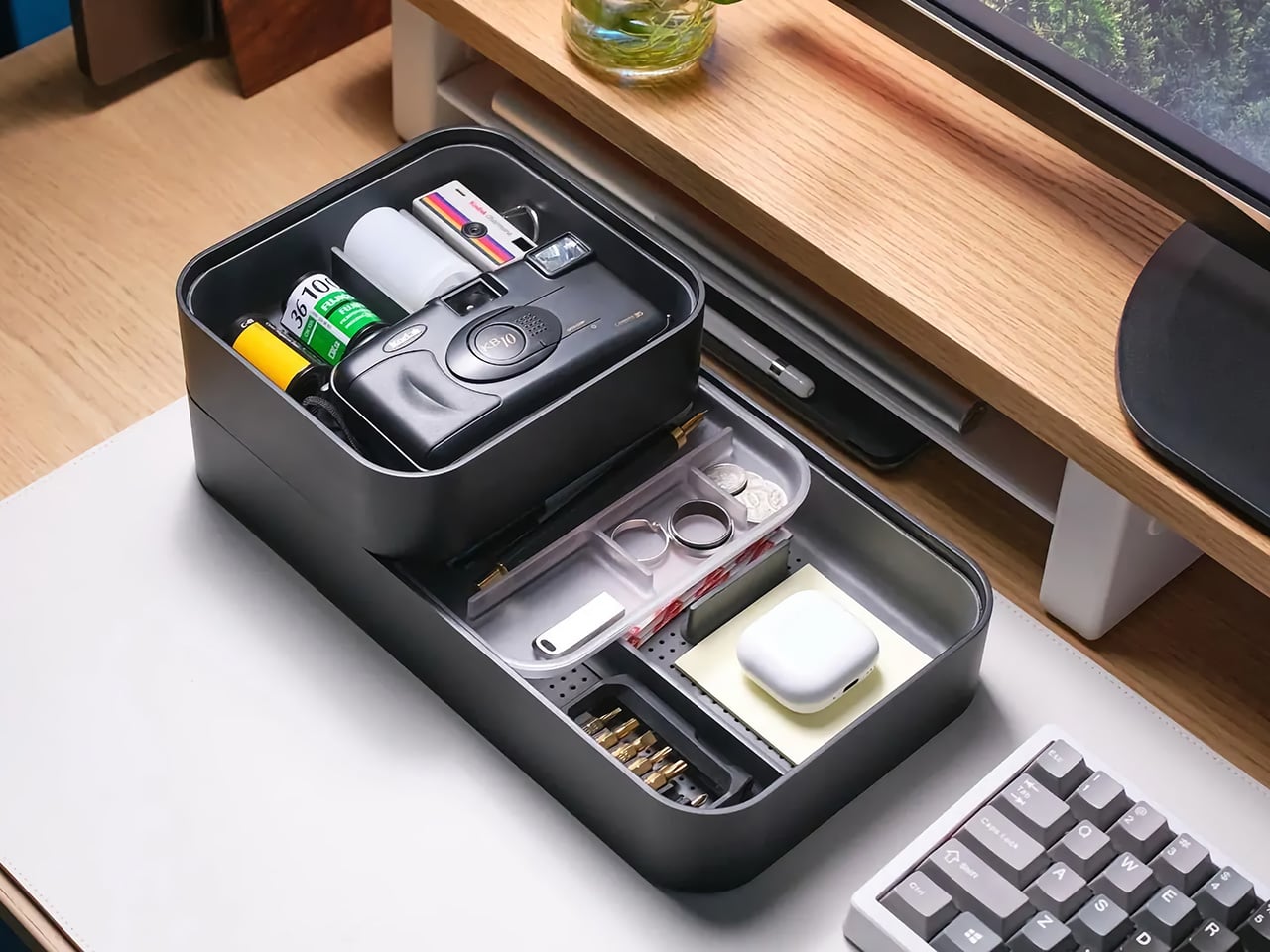
Every dorm desk looks the same by the second week of classes: a charging cable coiled around a pen, loose change mixed with an SD card, and two pens that stopped working sometime during the first lecture. The Orbitkey Grid Organizer is a modular tray built around that exact situation, with a customizable divider layout that separates small objects by category rather than letting everything pool into an indistinguishable pile at the corner of a desk that doubles as a living space.
Orbitkey spent years refining the idea of contained carry, beginning with its key organizer and continuing through the Nest desktop tray. The Grid Organizer applies the same logic to desk surfaces rather than pockets, with soft tactile materials and a compact footprint that fits even the smallest dormitory desk without eating the working area under a laptop. The understated color palette reads as intentional rather than as office supply clutter, which matters considerably when a desk is simultaneously a workspace, a dining surface, and the only flat space in the room.
What We Like
The modular grid layout adapts to what you actually own rather than forcing a fixed compartment system onto objects that don’t fit neatly
The compact footprint fits a dorm desk without consuming the working area directly under a laptop or monitor
What We Dislike
Dividers follow a fixed grid pattern rather than a fully freeform arrangement, so oddly shaped items still end up wedged at uncomfortable angles
It solves desktop organization at home base but contributes nothing once you step out the door, which limits its usefulness to a single context
4. ClearSlide Box Opener
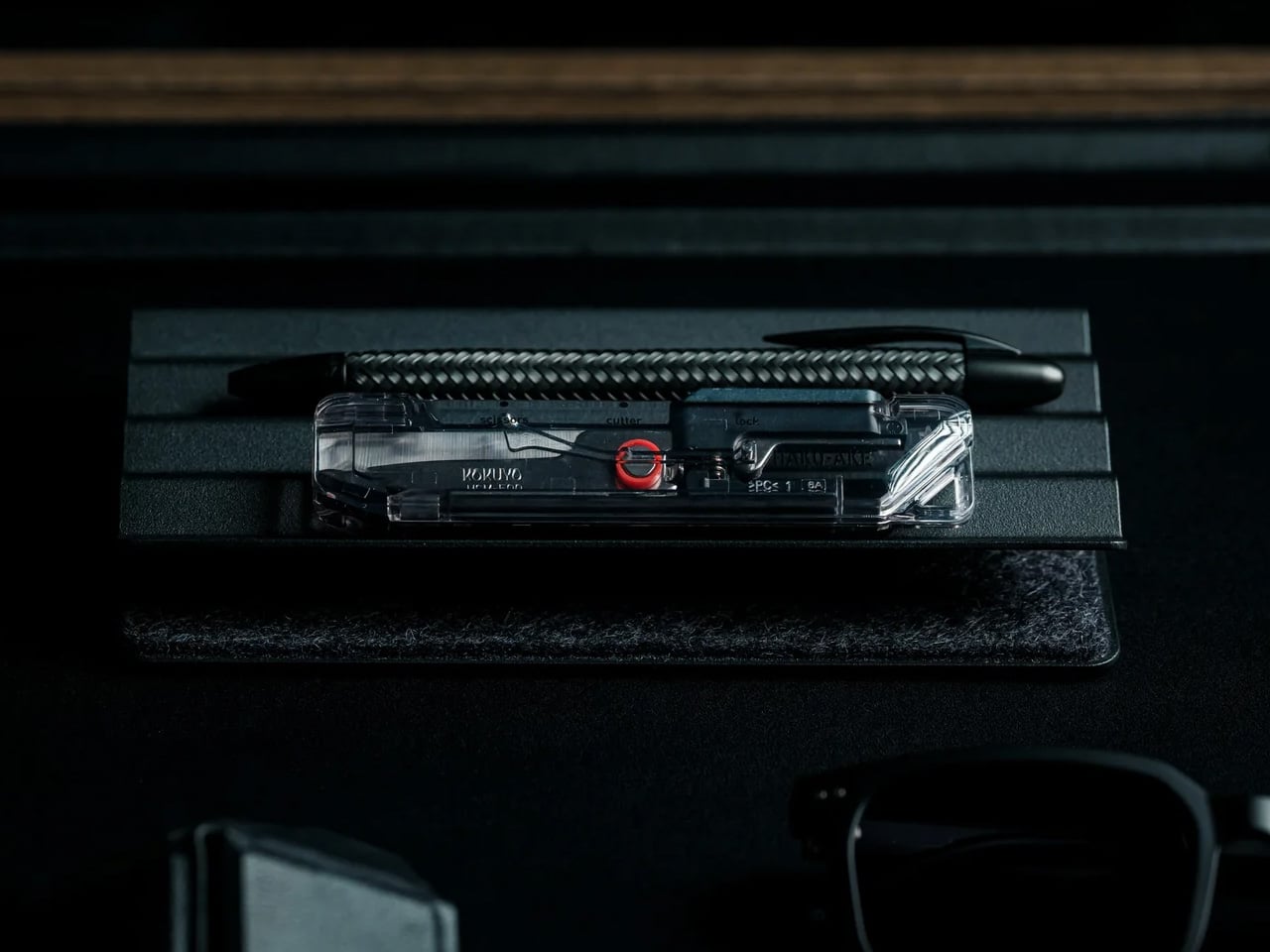
Every semester opens with the same ritual: a stack of deliveries outside a dorm door, a search for scissors, then a search for a box cutter, then giving up and tearing tape by hand. The ClearSlide exists specifically for that recurring problem. A transparent polycarbonate body lets you watch the internal mechanism shift between lock, cutter, and scissors modes with a single thumb motion, and each position locks in with a distinct click before the blade engages. Nothing is guessed at or fumbled.
The blade extends only 0.12 inches, deep enough to slice through packing tape without threatening whatever is packed inside, and a strap hole at the base means it clips to a backpack rather than disappearing into a drawer until the next delivery arrives. The transparent shell is the detail that separates it from every other box opener in this category. Watching the mechanism move is genuinely satisfying in a way that makes it the tool you actually reach for, rather than the one you remember only after the package is already open.
The transparent polycarbonate shell reveals the internal mechanism shifting in real time, making a mundane daily task feel considered and deliberate
The 0.12-inch blade depth protects package contents during cuts without requiring a guard, a cover, or any extra step before use
What We Dislike
The shallow blade depth requires two or three passes on thick double-taped moving boxes rather than delivering one clean, single-motion slice
The strap hole keeps it accessible, but there is no integrated pocket clip, so keeping it truly on-person requires a carabiner or lanyard to make it work
5. CRKT Septimo Multi-Tool
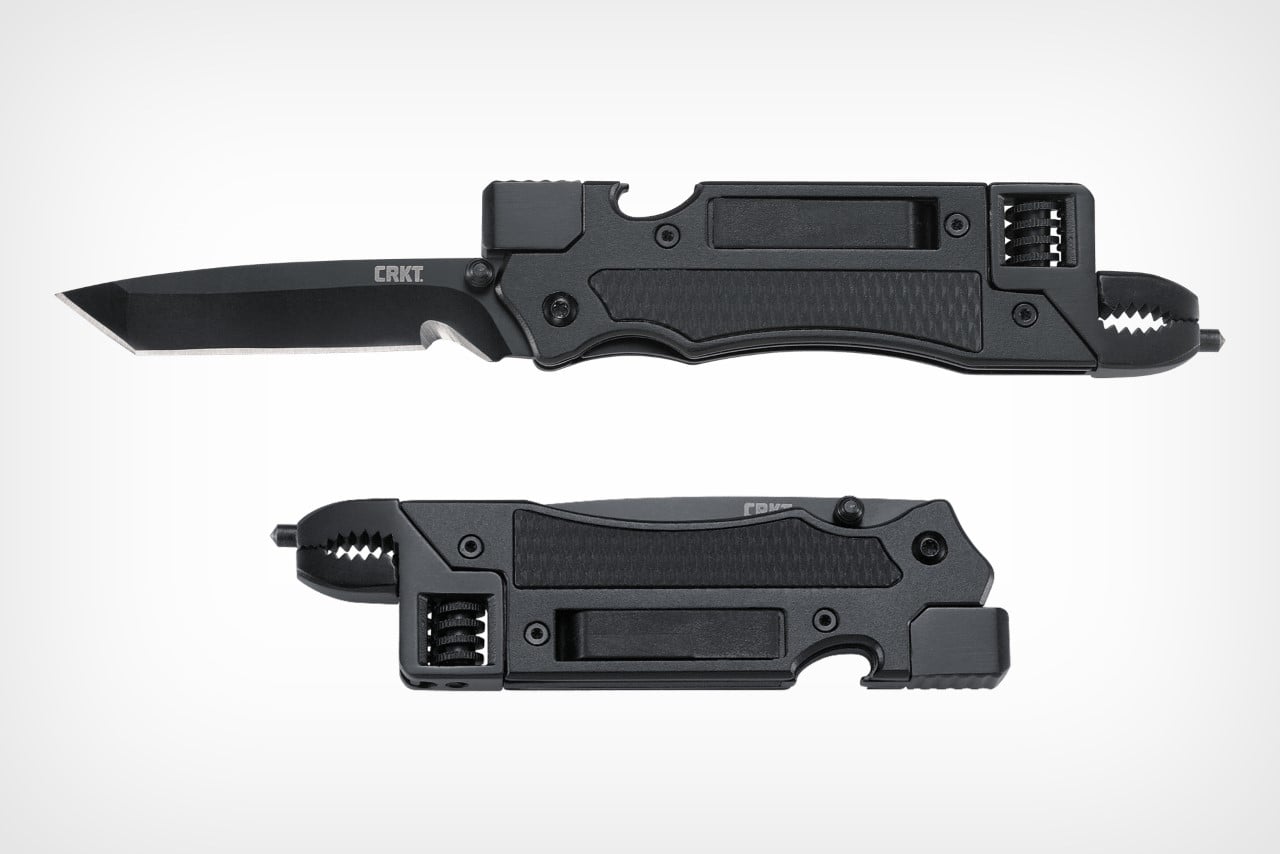
Dorm furniture wobbles. Bottles need opening. Something always requires a screwdriver that nobody in the building seems to own. The CRKT Septimo was designed by Jeremy Valdez, a veteran of the 7th Special Forces Group, around the premise that a folding knife alone cannot cover the situations a student actually encounters week to week. Fold it open, and a bottle opener, a flathead and Phillips screwdriver, and an adjustable wrench are all present in a single body that fits in a jeans pocket.
The 2.86-inch American Tanto blade uses a liner lock and Veff serrations for cutting tasks from trimming cord to opening shipping tape, while a glass breaker tip and black oxide finish give it the durability that a cheap multi-tool never manages past the first semester. At 4.4 ounces with a pocket clip, it carries without becoming dead weight in a bag side pouch, and the adjustable wrench alone covers the kind of furniture fixes and move-in assembly tasks that a standard pocket knife is simply not built to handle.
What We Like
A real adjustable wrench folded into a knife-sized body covers furniture repairs and hardware tasks that a standard pocket knife ignores entirely
The liner lock and Veff serrations add genuine cutting utility without inflating the overall profile or carry weight
What We Dislike
The screwdriver covers only one Phillips size and a small flathead, which limits usefulness for anything requiring a larger or more specific bit
The Tanto tip excels at piercing and cord cutting but handles general everyday slicing tasks less elegantly than a drop point or clip point geometry would
The Gear That Actually Stays
None of these five objects is designed to impress at first glance. A flashlight, a utility knife, a desk tray, a multi-tool, and a box opener do not photograph like a product launch, and that is the point. They photograph like what they are: tools that solve specific, recurring problems without asking you to think about them. That kind of restraint is genuinely harder to design than it looks, and considerably more valuable in a dorm room than gear that costs twice as much.
What ties them together is the same quality that makes good everyday carry work in a small shared space: each one earns its place through repeated use rather than novelty, and none of them needs a junk drawer to disappear into. They stay out on the desk or clipped to the bag because they get reached for often enough to justify it. That is the real standard for EDC, and it is harder for most products to meet than their marketing ever admits.
Most keychains carry dead weight. A rubber tag from a hotel you forgot, a bottle opener you have used twice, a fob that only unlocks a car you no longer own. Meanwhile, the one piece of real estate you touch dozens of times a day sits completely underused, when it could be doing actual work.
The five gadgets below all fit that same small footprint but solve real problems, from finding your keys in the dark to surviving the emergency that pepper spray and good intentions cannot fix alone. Every pick here is either shipping through a verified campaign or purchasable directly, and every spec below comes straight from the maker.
1. NoxTi
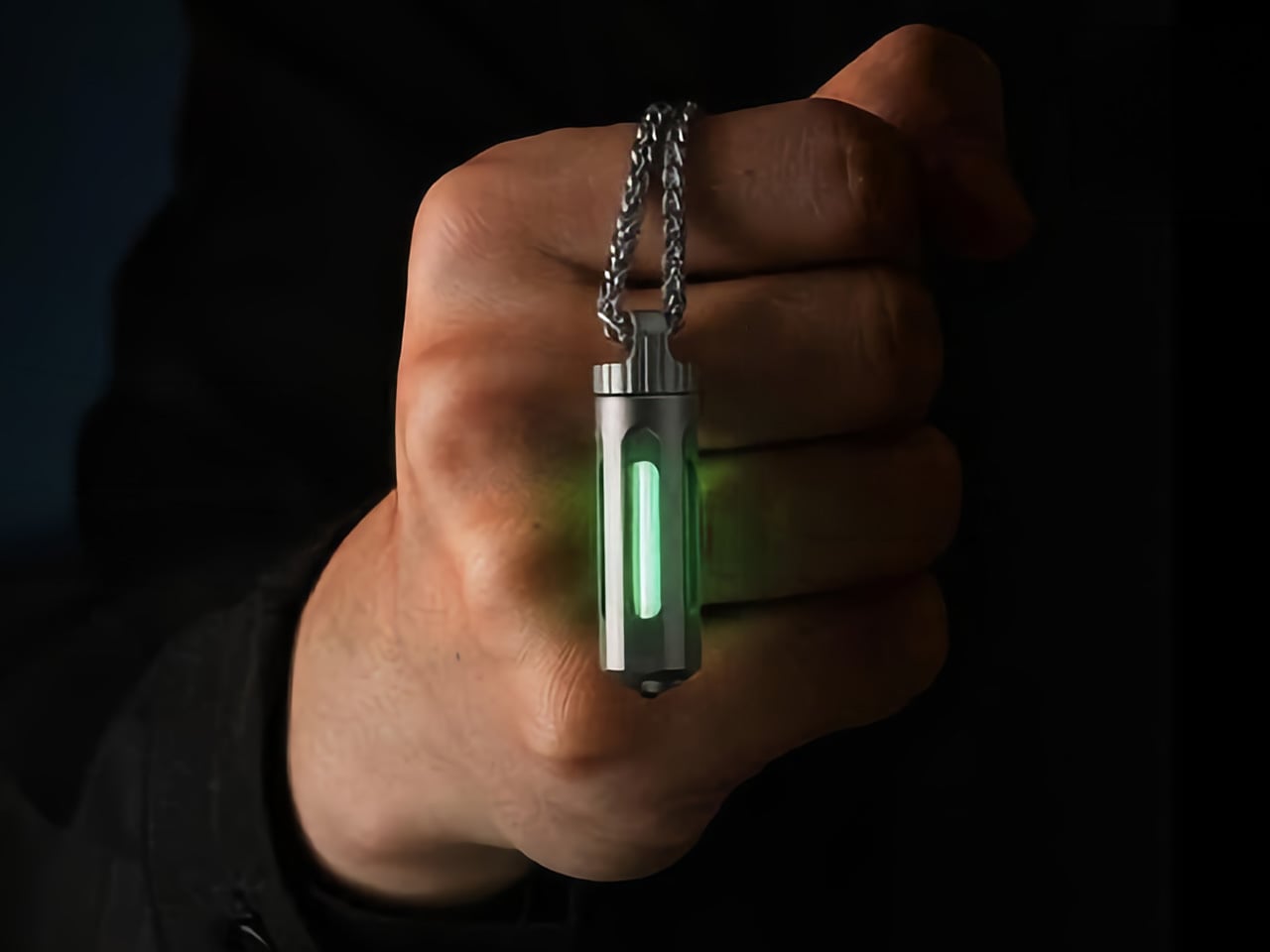
Tritium is a hydrogen isotope with a 12.3-year half-life, and as it decays, beta particles strike a phosphor coating to produce light with no electricity and no chemical reaction involved. It is the same physics behind emergency exit signs, military watches, and aviation instruments, chosen for one reason: nothing else in consumer lighting can promise 25 years of steady glow with zero maintenance. Xedge packaged that science into a 45mm titanium cylinder built specifically for keychain carry.
The tritium vial sits inside a precision quartz tube with 92 percent light transmission, wrapped in a CNC-machined Gr5 titanium body weighing just 10.7 grams. The whole thing is serviceable, so when brightness fades after two decades, you simply push the old tube out and slide a new one in. A ceramic-tipped glass breaker sits at one end for real emergencies, and the floating core glows visibly from every angle.
What we like:
Twenty-five years of glow powered entirely by material physics, with no battery to ever die on you
The tube is user-serviceable, meaning the titanium body outlives the glow and can be refreshed indefinitely
What we dislike:
The glow is genuinely faint next to an LED, which is the tradeoff for zero power draw
2. Analog Capsule Camera
Pick up the Analog Capsule, and it looks exactly like a roll of 35mm film, right down to the box it ships in, except every part of that illusion hides a fully functional digital camera. Instead of chasing the technical perfection modern sensors are obsessed with, it leans into grain, softness, and blown highlights as features rather than flaws, giving every photo the unmistakable texture of something shot decades ago rather than seconds ago.
Its 1-megapixel CMOS sensor keeps the experience intentionally lo-fi, while built-in digital playback lets you review a shot the moment you take it. USB-C connectivity and microSD storage handle the archiving without ceremony. At just 25 grams and small enough to hang from a bag on its included strap, it is less a camera you pack and more a charm you happen to shoot with, priced at $55.
The film-canister disguise makes it a genuine conversation piece before a single photo is taken
USB-C and microSD mean getting photos off the device is instant, unlike actual film
What we dislike:
A 1-megapixel sensor is a deliberate creative constraint, not a specs win for anyone wanting sharp images
Only four units were listed as available at last check, so stock moves fast
3. KeyMaster 3.0
Keys are the one object nearly everyone carries with total consistency, which is exactly why EDC Monster built a multi-tool shaped like one. The original KeyMaster launched in 2023 as a 14-in-1 titanium tool; version two expanded the function count, and three years later, KeyMaster 3.0 rebuilds the concept around real adaptability rather than just adding more blades to a crowded body.
At 74.5mm and 53.7 grams of Grade 5 titanium, it sits flat on a keyring next to a car fob without adding bulk. The headline upgrade is an adjustable spanner covering 0 to 16mm, replacing six fixed wrenches with one that actually fits the bolt in front of you, paired with a magnetic bit driver that locks bits without slippage. A pry bar, screwdrivers, a mini saw, and a spoke wrench round out the twenty-plus tools.
What we like:
The adjustable 0 to 16mm spanner solves the actual failure point of every fixed-wrench multi-tool
Magnetic bit retention means real torque without the wobble that plagues smaller tools
What we dislike:
Twenty-plus tools on a keychain-sized body means most people will only ever reach for a handful of them
Kickstarter shipping is estimated for August 2026, so this is a preorder commitment, not instant gratification
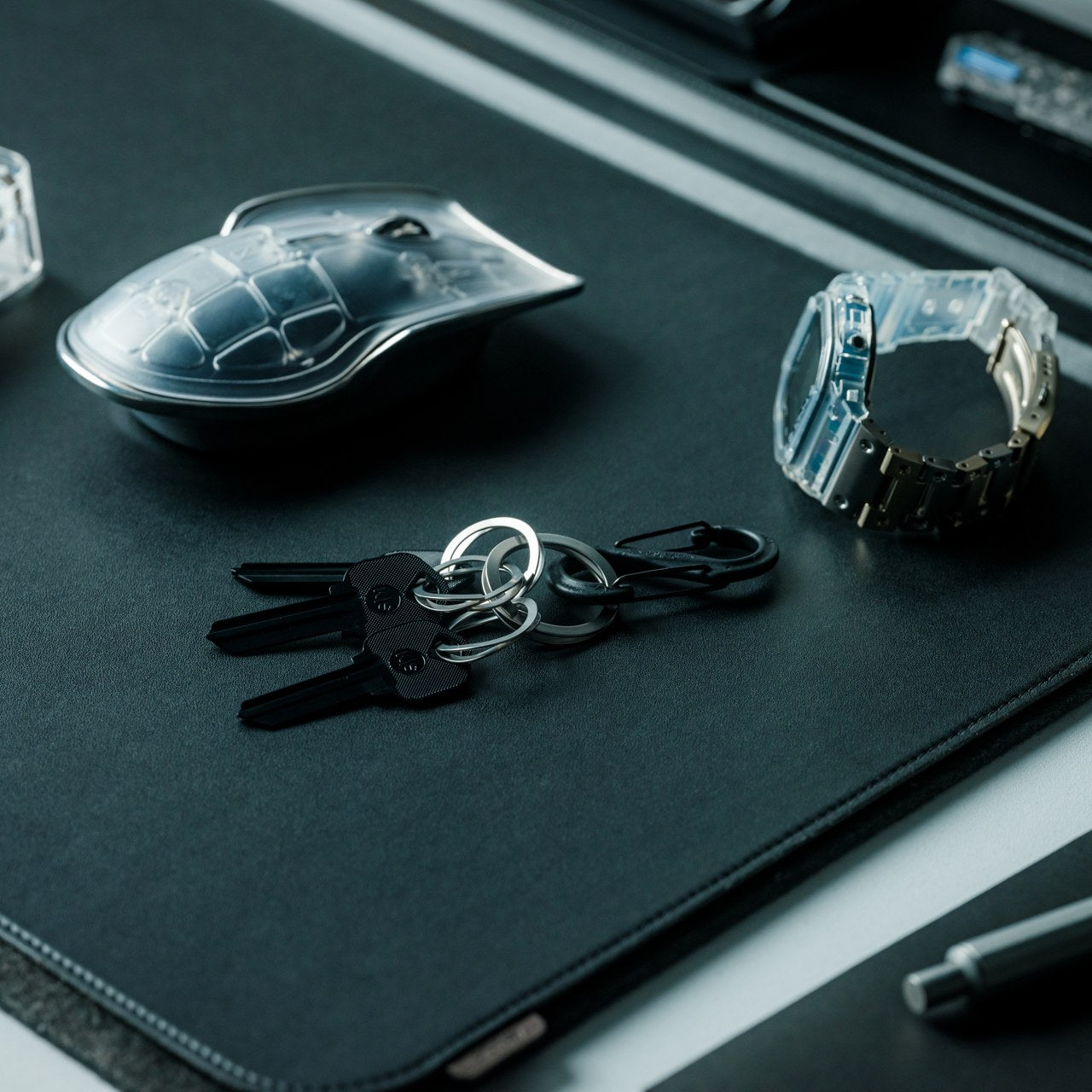
4. Painless Key Ring
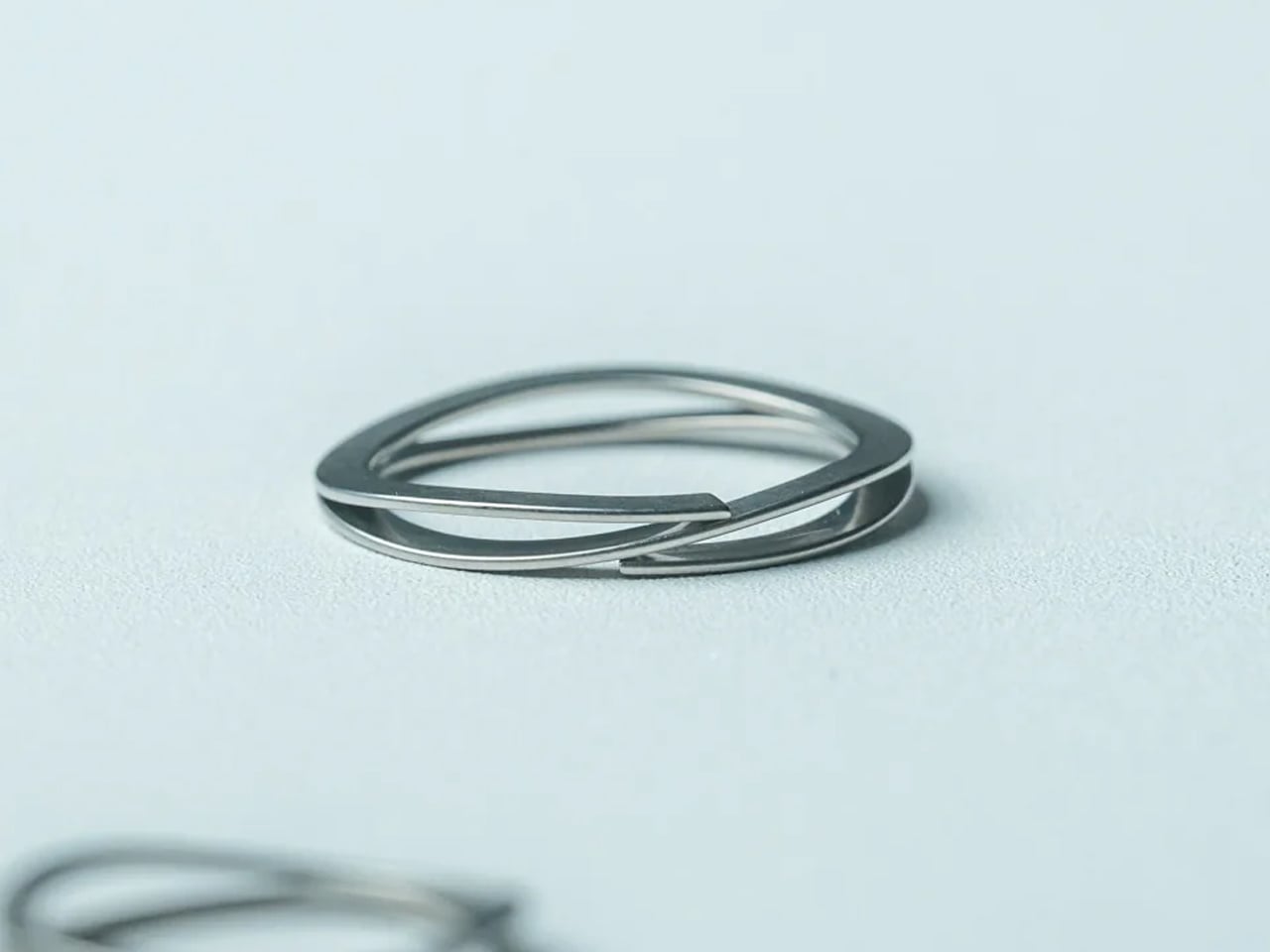
Putting a key onto a standard split ring means prying apart two tightly sprung layers with a fingernail, a tiny frustration repeated so often it barely registers anymore. Painless Key Ring exists because someone finally decided that reaction was unnecessary, changing the geometry itself so a continuous wave shape gives keys an easier point of entry, letting you slide one on without forcing anything.
The wave design was pulled from coiled wave springs used in aerospace and high-speed rail, applied here to one of the most mundane objects anyone owns. At just 3.0 grams, it weighs roughly half of a conventional ring, and its high-tension stainless spring steel carries a tensile strength of 1,750 MPa against roughly 800 MPa for a standard ring. It flexes to fit thicker keys, then snaps back to shape instead of staying stretched.
The wave geometry genuinely removes the fingernail-prying step that every split ring demands
A 1,750 MPa tensile strength means it flexes for thick keys without permanently deforming
What we dislike:
It is a single component upgrade, so it will not organize a bulky keyring the way a full holder would
Stock was listed at only five units available at last check
5. Pebblebee Halo
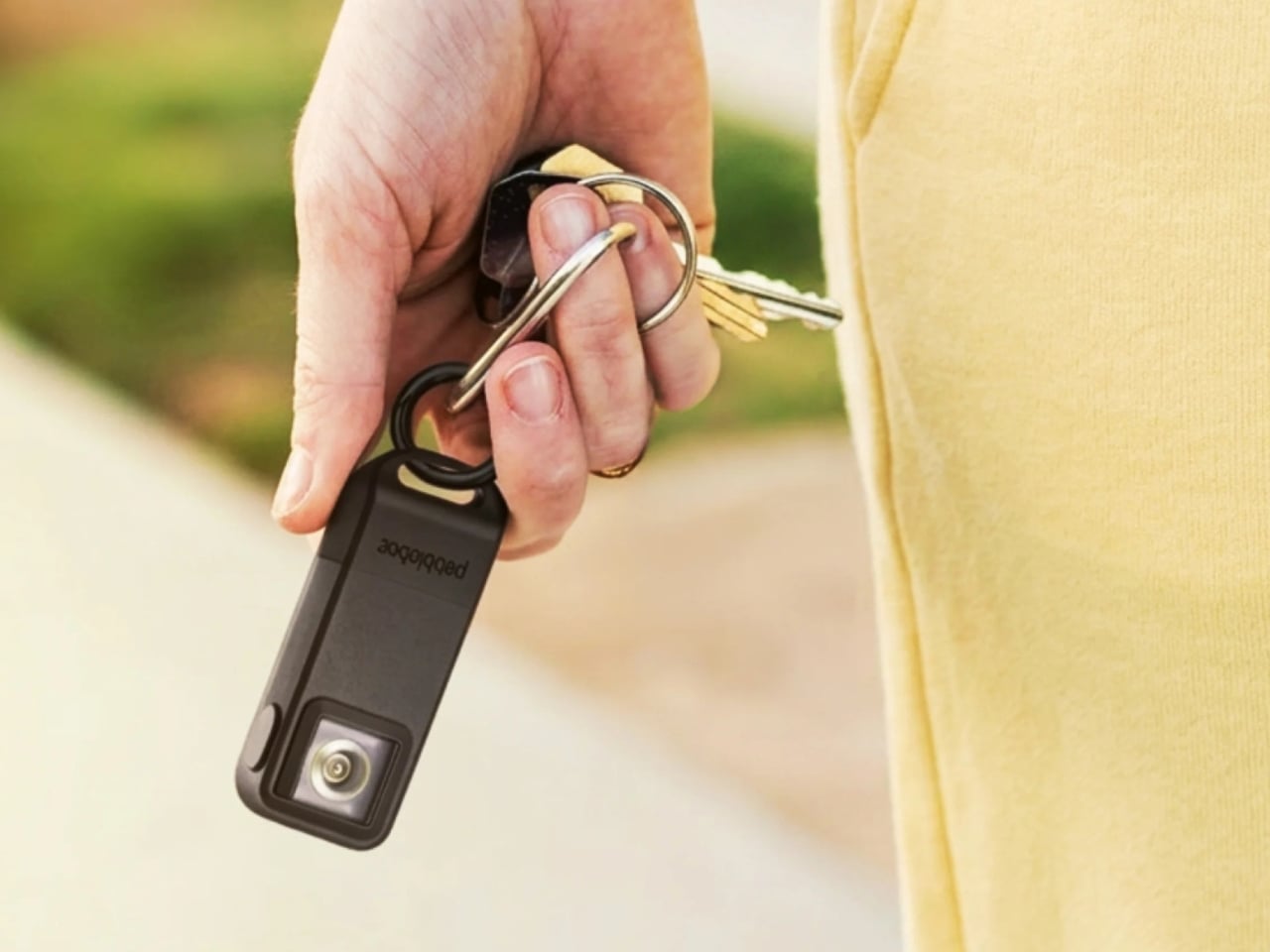
Most people run through the same mental checklist before leaving the house: phone, wallet, keys. Pebblebee is making the case for adding a fourth item, a keychain-sized device called the Halo that tracks lost items, lights up a dark parking lot, and screams at 130 decibels if something actually goes wrong. That last function is the one that separates it from the standalone alarm keychains that came before it.
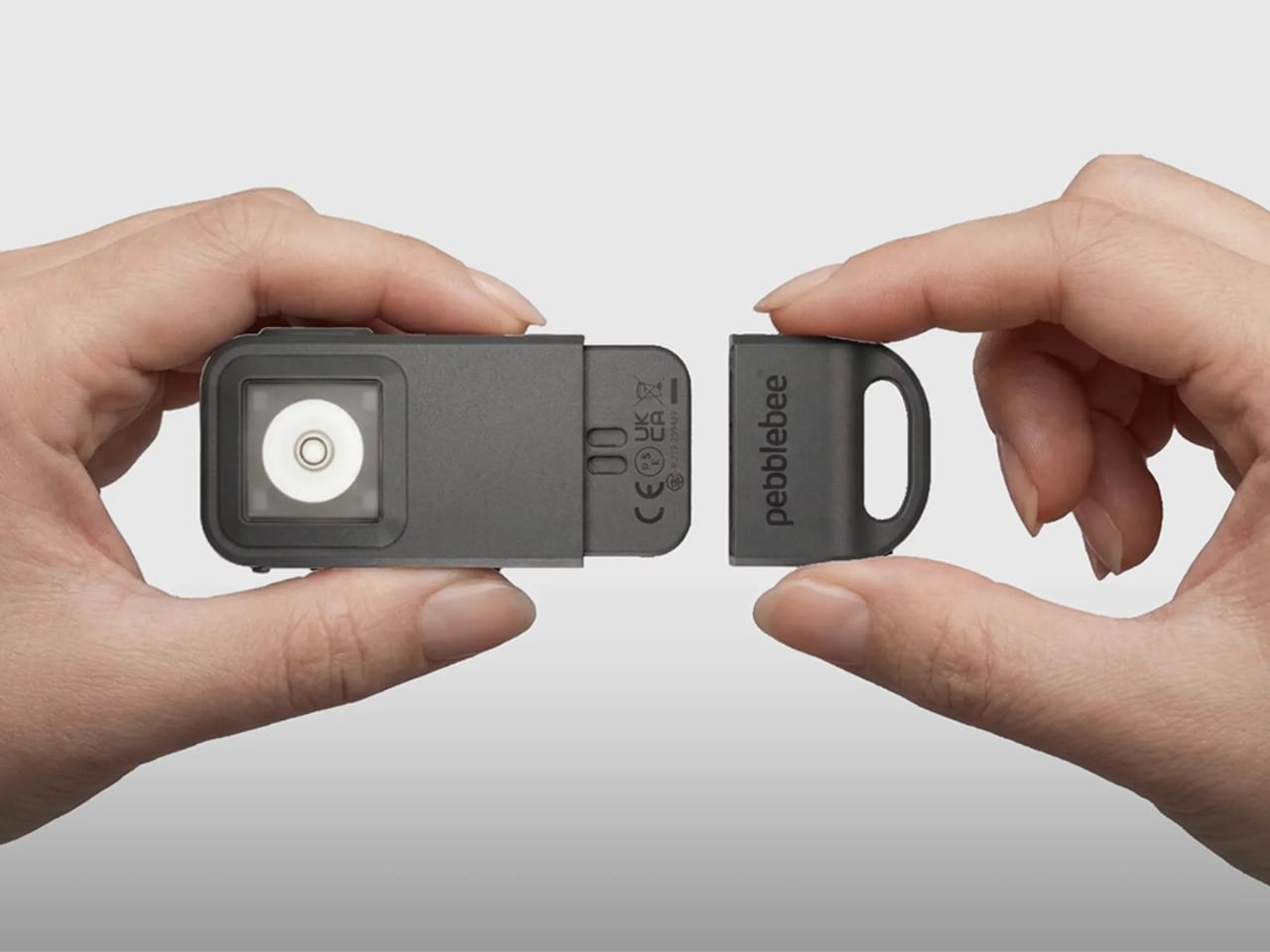
Pulling the device apart triggers a 130dB siren, a 150-lumen strobe, and real-time location sharing with up to five contacts in what Pebblebee calls a Safety Circle, all through one instinctive motion rather than an app you have to fumble with mid-emergency. Rapid presses of the side button send a silent alert instead, for situations that call for discretion over noise.
What we like:
The pull-apart trigger activates the siren, strobe, and location sharing simultaneously, with no app fumbling required
A silent alert option exists for situations where drawing attention would make things worse, not better
What we dislike:
Live location sharing requires the Alert Live subscription to continue past the included first year
At one ounce, it is light, but it is still one more object competing for space on a crowded ring
Your Keychain Was Never The Limit
None of these gadgets ask you to overhaul how you carry your keys; they simply ask your keychain to start pulling its weight. A glow tube that never needs charging, a camera disguised as film, a tool shaped like the key beside it, a ring that stops fighting your fingernails, and an alarm that activates faster than you can think. Each one replaces a specific moment of friction with something quietly better.
The real test for any of these is whether you would still reach for them a year from now, past the initial novelty of owning something small and clever. Every pick here earns its spot by solving a problem you already have rather than inventing one you did not, which is the only standard that actually matters for something destined to live in your pocket every single day.
Your regular carry works fine at a desk, as it should. But it falls apart at a tailgate, where the lot is loud, the light is going, and someone just handed you a warm can with nothing to open it. The gear sitting in your drawer was designed for a controlled environment, and surprisingly, a parking lot in early September is not that. These five products fix the gap before it has a chance to ruin your afternoon.
This list is not for gear collectors or EDC forum regulars. It is for the person who wants to show up to a game-day tailgate with five things in their bag that actually earn their spot. A blade, a light, a radio, a screwdriver, and a can opener. Each one handles a specific moment that goes sideways without the right tool. Read this before Saturday, and you will be the person other people walk over to ask for help.
1. The Cubik
The most embarrassing tailgate moment nobody talks about is trying to open a bag of chips with a car key because your knife is buried somewhere in a bag. The Cubik removes that problem with a deployment mechanism you genuinely have not seen on a folding knife before. You tilt it, and gravity swings the blade out. No two-handed fumbling, no thumb stud digging into your nail, no moment of frustration while your other hand is already full.
At a tailgate, you are almost always holding something. A drink, a plate, your phone. The Cubik is built for exactly that situation. The blade deploys fast, locks securely, and the whole package stays compact enough to live in a front pocket without printing through your jeans. The gravity mechanism is clever design, not a gimmick, and IF has the industrial design credentials to back it up. This is the knife you reach for when the moment already counts.
What we like:
One-handed gravity deployment is faster and more natural than any thumb stud
The minimal form means you will actually carry it instead of leaving it in the bag
What we dislike:
Keep the lock engaged in a coat pocket. The same gravity activation that works for you will work against you if the knife is loose around other gear
2. Clip&Go Radio
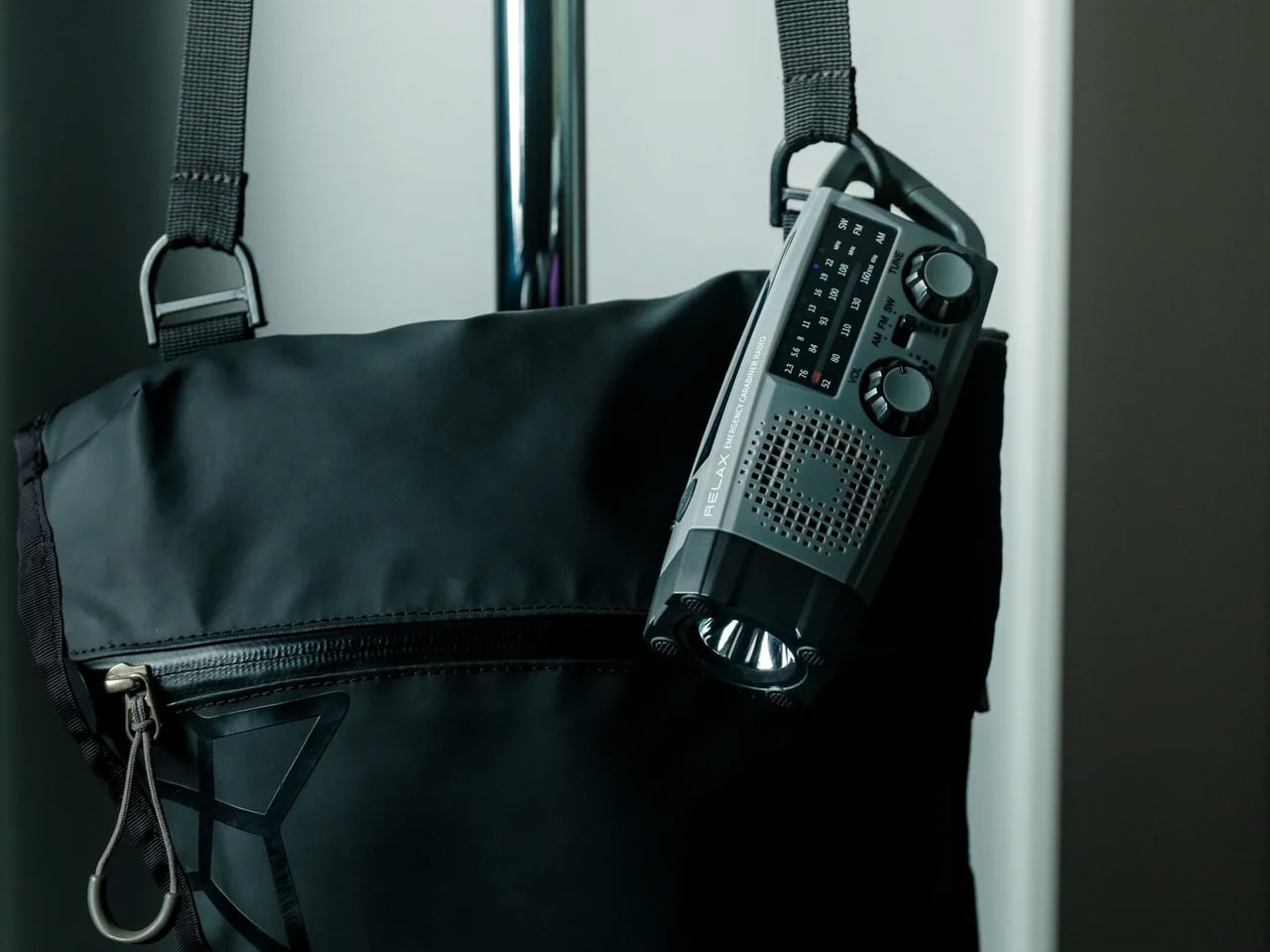
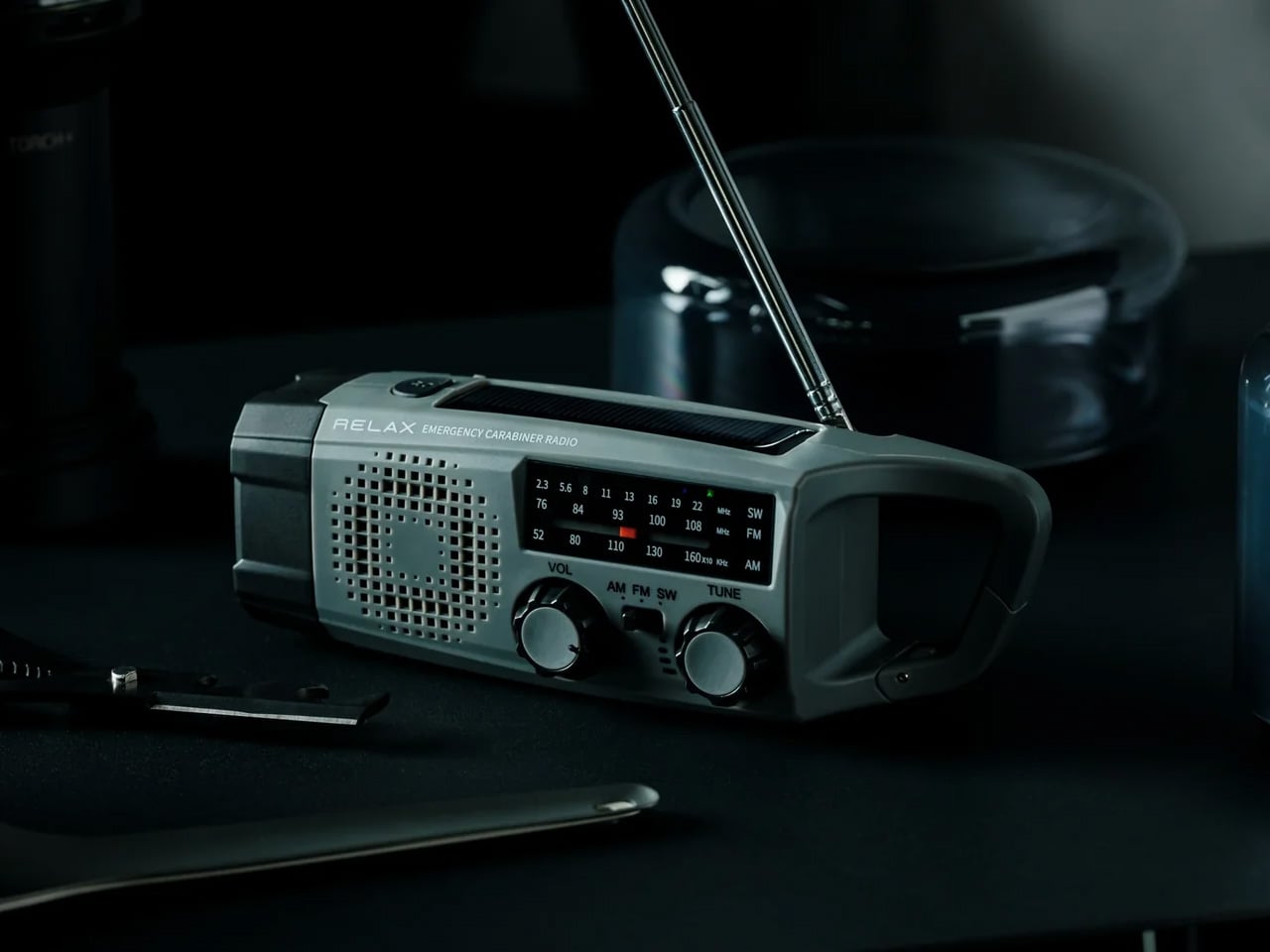
You have been to a tailgate where someone’s Bluetooth speaker died two hours before kickoff and took the whole energy of the group with it. The Clip&Go Radio is the fix that costs you nothing in phone battery. It clips to a bag strap, a belt loop, or a cooler handle, pulls in an FM signal, and runs on its own. No pairing, no app, no connection to babysit.
At a tailgate, radio matters in a way it does not anywhere else. You want the pregame show in the background while the playlist stays on the speaker. The Clip&Go lets you run both at once. It clips where you put it and stays there while you move around the lot. The form factor is the whole point here. It has no right to be this portable. It is the item on this list that the people around you will notice and immediately ask about.
The clip mount keeps it on your person hands-free with nothing to set up
What we dislike:
FM signal depends entirely on your location. Dense urban lots with a lot of concrete and steel can break up reception
3. Titanium Multifunctional Magnetic Screwdriver
Nobody brings a screwdriver to a tailgate, and everybody eventually needs one. The folding table wobbles, the chair arm is loose, the grill leg will not sit flat on the asphalt. The Titanium Multifunctional Magnetic Screwdriver lives in your pocket like it is not there until exactly that moment arrives. Titanium keeps the weight down to the point where you forget you are carrying a screwdriver at all. The magnetic bit retention means a dropped bit stays findable rather than disappearing into the grass.
The multifunctional build covers the range of small fixes that come up in any outdoor group setting. You are not pulling out a toolkit. You are pulling out something that fits next to your keys and handles the job cleanly. Titanium construction is not marketing language here. It genuinely changes the weight-to-durability ratio in a way that makes you stop thinking of this as optional carry. That is the whole game with EDC tools. The best ones disappear until they matter.
What we like:
Titanium keeps it genuinely light in the pocket, not just marketed as slim
Magnetic bit retention eliminates a real frustration every time you use it outdoors
What we dislike:
The bit selection covers most standard fasteners but probably not every specialty head on older folding furniture
4. DraftPro Top Can Opener
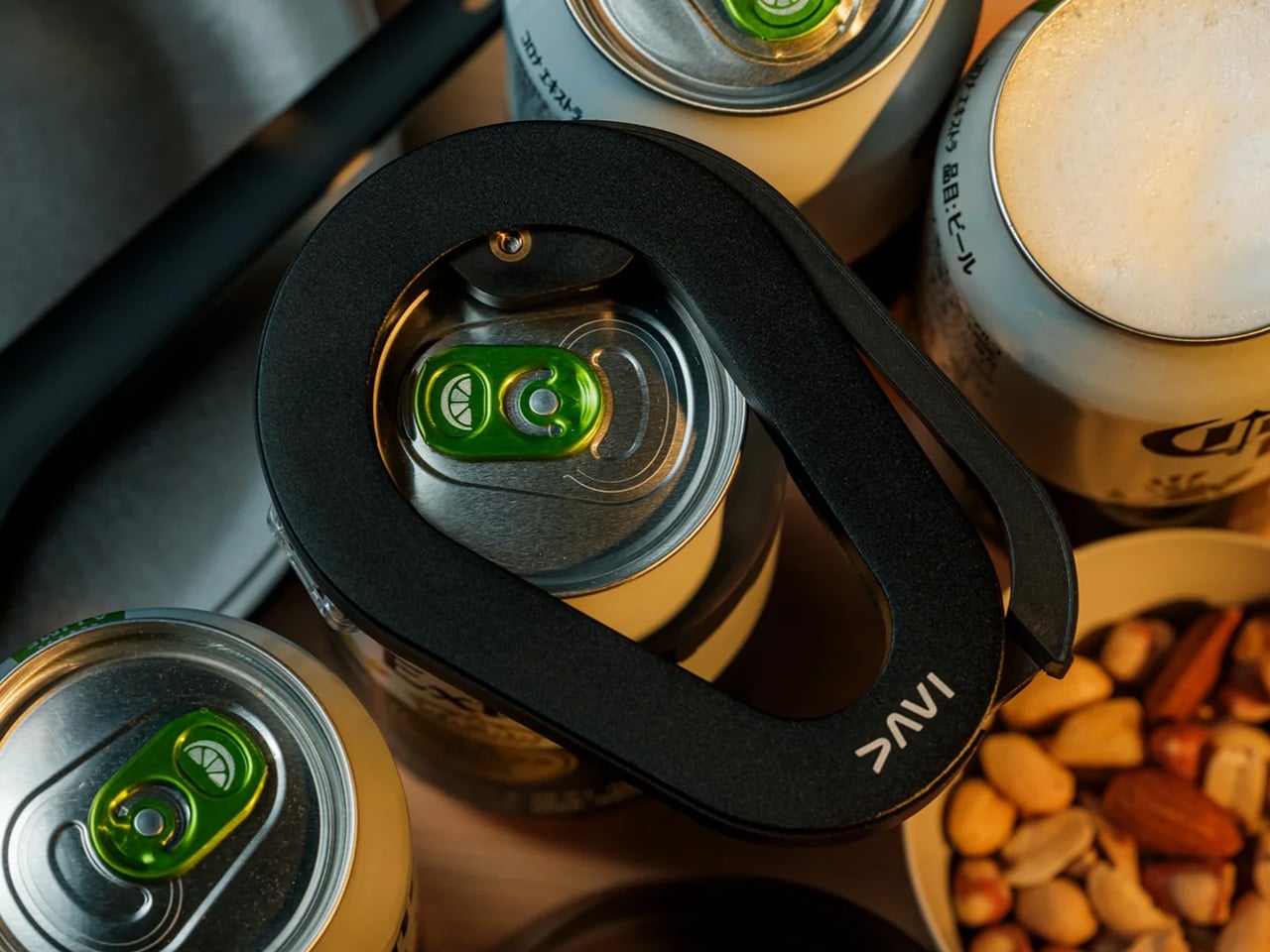
You are standing in a parking lot with a can of beans, a can of corn, or a can of anything, and the pull tab just snapped flush with the lid. The DraftPro Top Can Opener was built for exactly this situation. The top-opening mechanism keeps the lid controlled rather than dropping it into your food, and it was designed for outdoor use from the start rather than borrowed from someone’s kitchen drawer. That difference shows up every single time you use it.
The DraftPro is small enough to sit in a bag pocket without taking up real estate, and it performs the same way on the tenth can as it did on the first. At a tailgate where you are opening multiple cans across an afternoon, that consistency matters more than you would expect. You do not muscle it through. The mechanism does the work. It is a single-function tool, and it does not pretend otherwise, which is a kind of honesty you appreciate when you are standing outside and just need the can open.
The top-opening design keeps the lid contained and your food clean
Built specifically for outdoor use, and that intentionality shows in how reliably it performs
What we dislike:
It opens cans and nothing else. That is the right call, but know it earns exactly one slot in your kit
5. Nitecore EDC37
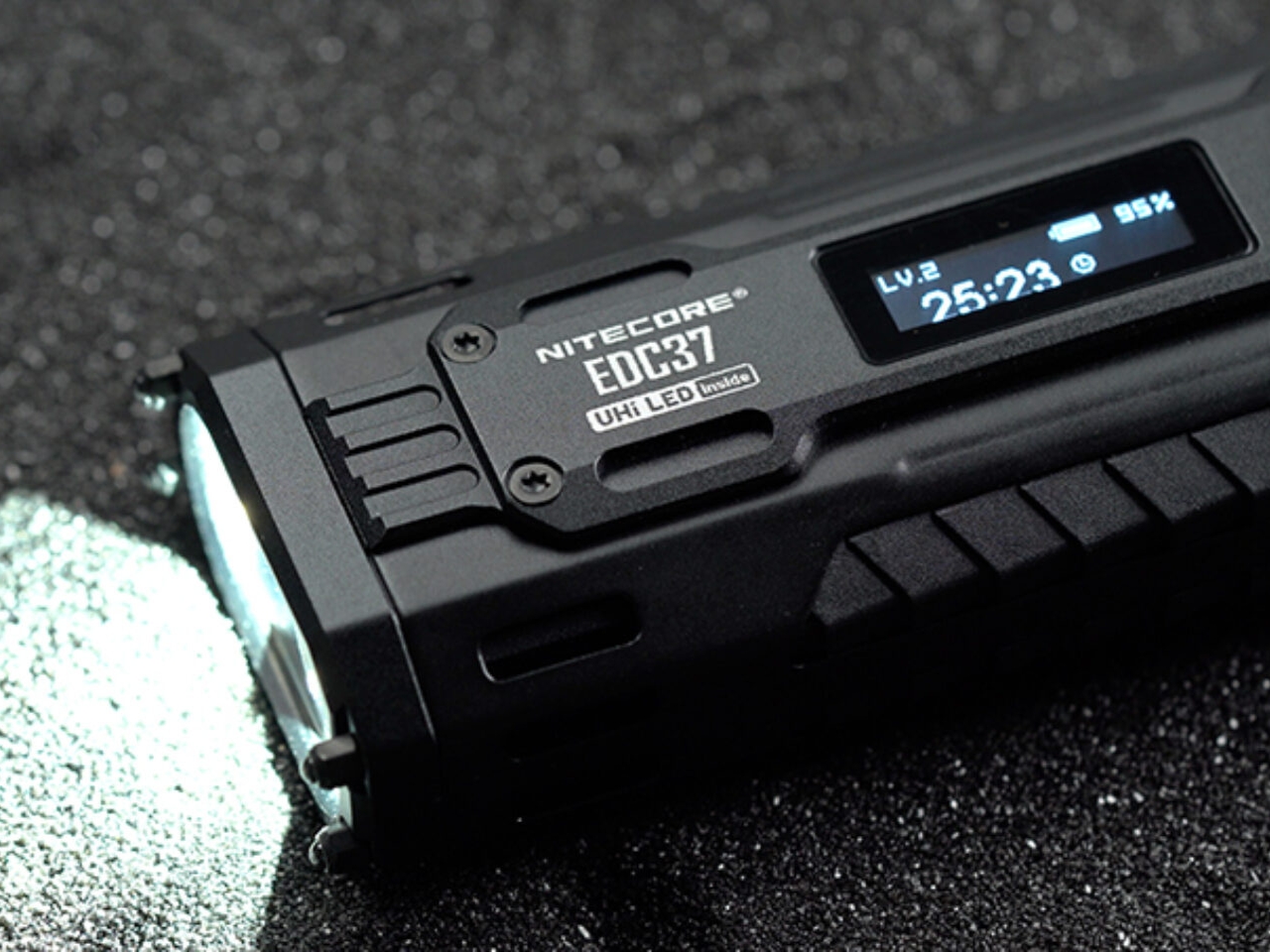
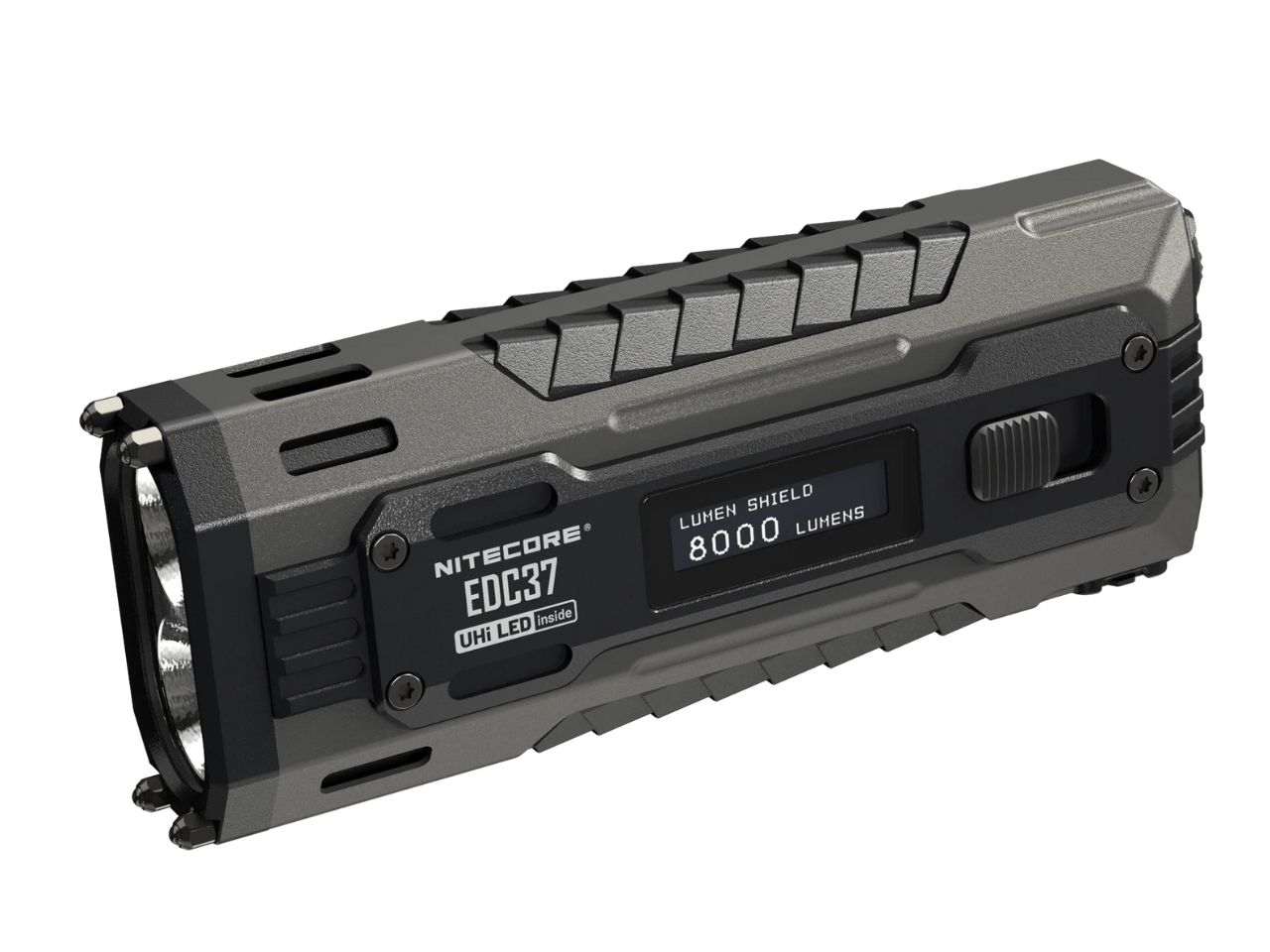
The moment a tailgate becomes a night tailgate, your phone flashlight reveals exactly what it is: a screen that pretends to be a light. The Nitecore EDC37 is an actual flashlight. It outputs 8,000 lumens from a body that fits in a jacket pocket and charges via USB-C, which means you top it up in the car on the way to the stadium. That combination makes it the right choice for a season that starts in daylight and ends in the dark parking lot an hour later.
You do not need 8,000 lumens to find something in a cooler. That is the point. The EDC37 runs on lower modes through most of the afternoon without touching the battery, and when the sun goes down, you dial it up. Signaling to your group across a dark lot, finding a dropped key in the grass, lighting up the tailgate table during setup. USB-C charging removes the last reasonable objection to carrying a real flashlight. At this point, you are out of excuses.
What we like:
8,000 lumens in a genuinely pocket-sized body is a real achievement
USB-C charging means no proprietary cables to hunt down before the season opens
What we dislike:
Max brightness burns through the battery fast. Use the lower modes for most of the evening and save the top end for when it counts
Build Your Carry Before You Hit the Lot
These five products solve the specific problems that show up the moment you leave a controlled environment and spend an afternoon outside with a group. None of them need a special occasion to earn their spot in your bag. A blade, a light, a radio, a screwdriver, and a can opener. Five covered gaps, five fewer moments where you are the person asking around for something basic.
The DraftPro Top Can Opener is my personal favorite on this list because it solves the problem nobody plans for and solves it more cleanly than anything else in its category. The rest of the kit holds up across the board. Build your carry around what your tailgate actually demands, start before Saturday, and show up ready before kickoff.
The flashlight you grabbed at checkout has let you down in front of people. Maybe it was the beam that dissolved at twenty feet when you needed forty. Maybe it was the switch that required two hands in the parking garage. Maybe it was the plastic clip that snapped off in January, and you replaced it with nothing, so now the light just rolls around in your bag until you need it. You know exactly which moment it was.
What separates a good EDC flashlight from a drawer light is the same thing that separates a good pen from a hotel pen: the object rewards the moment you reach for it. The clip seats right. The switch clicks with clear intention. The output matches the situation without you cycling through seven modes to find it. Every light on this list was chosen because it gets those three things right before it gets anything else right. No gimmicks, no filler, no lights that need a paragraph of context before they make sense in your pocket.
1. Olight Baton 4 Pro
The Baton 4 Pro is what happens when a flashlight company stops treating carry as an afterthought. Olight built this one around a cylindrical body that disappears into a pocket, with no sharp edges, no extraneous texture, no clip that gouges your hand when you reach for your keys. The side switch sits exactly where your thumb lands naturally, and magnetic charging means the cable finds the light without looking. Every small thing about this light has clearly been thought through.
Output-wise, the Baton 4 Pro covers the full range of what daily life actually demands: enough low-mode runtime to use it regularly without battery anxiety, and enough high-mode brightness to make it genuinely useful rather than merely present. The anodized aluminum body handles pocket carry without developing the micro-scratches that make cheaper lights look worn after a month. This is the light that makes every other flashlight in your drawer feel like the draft it probably was.
What We Like
Magnetic charging is genuinely convenient rather than a spec-sheet feature, especially when you are tired and not looking at it
Compact cylindrical form disappears in a pocket without the clip becoming a nuisance throughout the day
What We Dislike
Limited editions and popular colorways sell out fast, and restocking timelines are unpredictable
High-mode runtime is short; turbo is best treated as a burst, not a sustained setting
2. Blackoutbeam Tactical Flashlight
The Blackoutbeam is built for the moments when you need the light immediately and without negotiation. Its tactical design prioritizes direct activation, the kind of response time that matters when you are checking a noise outside or navigating a power outage with your hands already full. The body sits slim enough for a jacket pocket without printing, but the grip texture and bezel geometry make it clear this is not a light designed to look decorative on anyone’s desk.
What earns it a place alongside more design-forward picks on this list is the output-to-size ratio. The Blackoutbeam throws a tight, long-range beam that outperforms flashlights with significantly larger bodies, and the build quality is consistent enough that you will not find yourself wondering whether it will actually turn on when it needs to. If the Baton 4 Pro is the light you carry every day, the Blackoutbeam is the one you want available when every day suddenly becomes a bad night.
Fast, reliable activation that does not require cycling through modes to reach useful output
Beam throw punches well above the physical size of the body
What We Dislike
Tactical aesthetic will not suit every carry context; it reads as a utility tool rather than a refined everyday object
Less versatile for low-light close-up tasks where a wider flood beam would serve better
3. Wuben X1 Pro
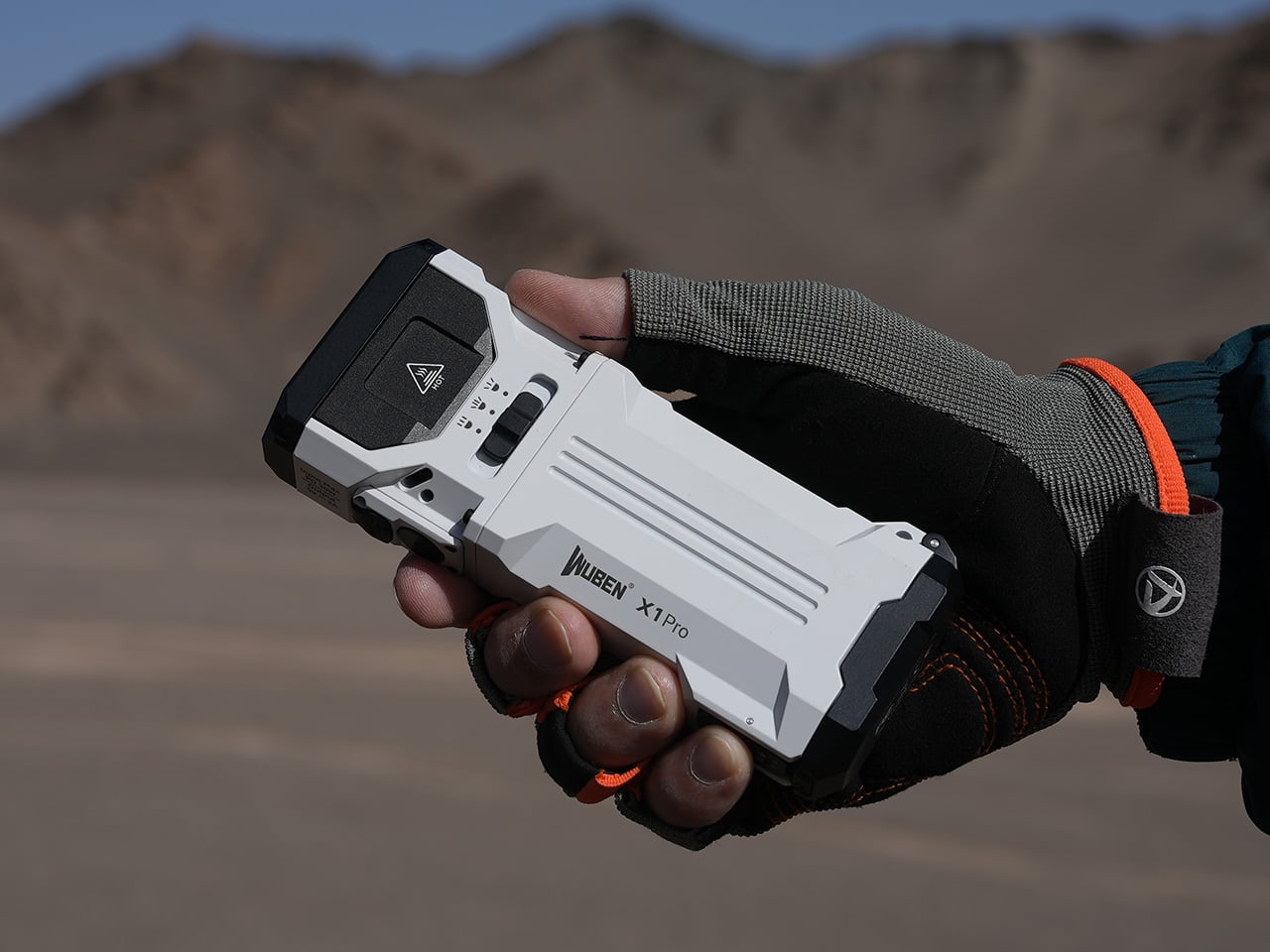
There are flashlights, and then there are flashlights that require an explanation. The Wuben X1 Pro pushes 12,300 lumens across five Cree XHP50.3 emitters — a number that sounds like a misprint until you see it run — and manages that output through an active cooling system with a modular waterproof fan that sustains 3,000 lumens for 1.8 hours. Most non-cooled EDC lights hit their advertised peak for roughly 90 seconds before thermal management forces a stepdown. The X1 Pro simply keeps going.
The dual-beam system is the engineering decision that elevates this light from impressive to genuinely useful. A physical three-position slider toggles between a single Cree HI emitter for spot throw at 410 meters, four Cree HD emitters for flood coverage, or both channels firing simultaneously for peak output. You are not cycling through brightness modes on a single beam; you are running two purpose-built optical systems at once. The $139.99 price earns its keep the first time you need more than one type of light at the same time.
What We Like
Active cooling sustains output at levels passive thermal management physically cannot match in this size class
Independent spot and flood controls behave like two flashlights sharing one body, which they essentially are
What We Dislike
At 383 grams, daily pocket carry is a commitment; this sits more naturally in a bag or jacket than a jeans pocket
The modular fan is an extra component that needs to stay clean and correctly seated to function as designed
4. Loop Gear SK05 Pro
The SK05 Pro’s most important feature is not its 4,360 lumens. It is the rotating bezel that cycles between spotlight, floodlight, sidelight, and power bank modes with a single thumb movement. That one design decision turns what could have been a flashlight with a feature list into a genuinely modular tool that adapts to the task without making you dig through menus in the dark. The flat form factor, measuring 0.88 by 1.89 by 4.17 inches, fits the palm the way a phone does, which is not a coincidence.
The built-in 8,000mAh power bank, fed by dual user-replaceable 18650 cells, is the detail that moves the SK05 Pro from useful to indispensable. When your phone is at six percent, and your charging cable is in the bag you left at the office, this light covers the gap. USB-C 20W fast charging works in both directions, meaning the light recharges on your existing cable and charges your devices at rates comparable to a wall adapter. Loop Gear priced it at $111.99, which starts to look reasonable once you factor in the power bank you no longer need to carry.
What We Like
Rotating bezel interface is genuinely intuitive to operate without looking at the light, even with gloves on
Power bank function works simultaneously with lighting, with no trade-off between the two
What We Dislike
Turbo mode drains the dual 18650 cells faster than the power bank capacity can comfortably offset on a long day
The rotating bezel mechanism benefits from a clean pocket; debris over time can affect the smoothness of the action
5. Casabeam Everyday Flashlight
Not every flashlight needs to do twelve things. The Casabeam was designed around a specific premise: a daily carry light should feel like a natural extension of what you already keep in your pocket, not a piece of equipment you have to justify bringing. The form factor is deliberate without being precious, and the output range covers everything a typical day actually asks of a pocket light, from a dark parking garage to the power strip behind the desk you were not planning to crawl under.
The Casabeam’s real value is in its consistency. It turns on the same way every time, clips in the same position, and never asks you to engage with it more than the situation requires. For a category where features pile on at the expense of daily usability, that restraint is a genuine design achievement. This is the light that stays in your pocket because you stop noticing it is there, right up until the moment you need it and reach for it without thinking.
Understated form factor carries without drawing attention or adding unnecessary bulk throughout the day
Intuitive, repeatable operation that does not require relearning after a few days away from it
What We Dislike
Output ceiling will not satisfy users coming from higher-lumen carry lights who have adjusted their expectations upward
Built for everyday scenarios; not the right call for extended outdoor use or situations that demand serious throw distance
The Best EDC Flashlight Is the One You Actually Carry
These five lights make trade-offs too, because every designed object does. But they make them deliberately, in ways that only surface when you push past what you would normally ask of a pocket light. Pick the one that fits where you are right now.
My personal favorite is the Olight Baton 4 Pro. Not because it has the longest runtime or the farthest throw on this list. Because it is the light you stop thinking about after the first week and start reaching for automatically. That is the highest thing you can say about a pocket tool.
Something happens in September that carries habits nobody quite plans for. The lighter pockets of summer, built around a phone, a card, and a key, suddenly feel under-equipped for the longer evenings, the heavier jackets, and the seasonal shift from outdoor spontaneity to structured routine. Fall is when everyday carry earns its name. The tools you reach for in August are no longer the same tools that September asks for.
These five picks address that transition directly. Each one is featured for a strong reason, and each one fits the fall brief: dark materials, tighter tolerances, and a function-to-footprint ratio that earns a permanent pocket slot rather than cycling in and out of a bag. Fall is a wardrobe edit. It should also be a carry edit.
1. Olight Baton 4 Premium Edition
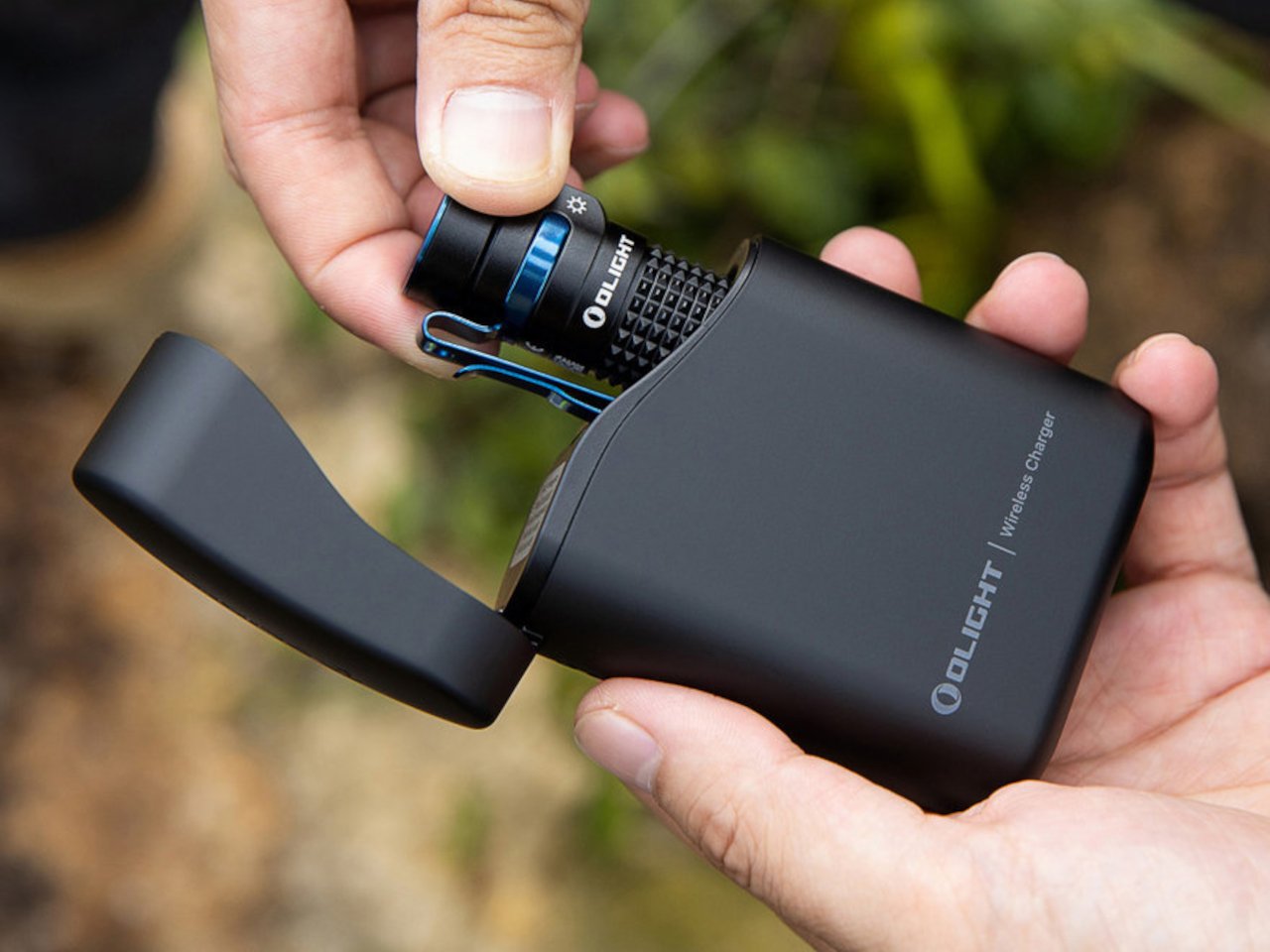
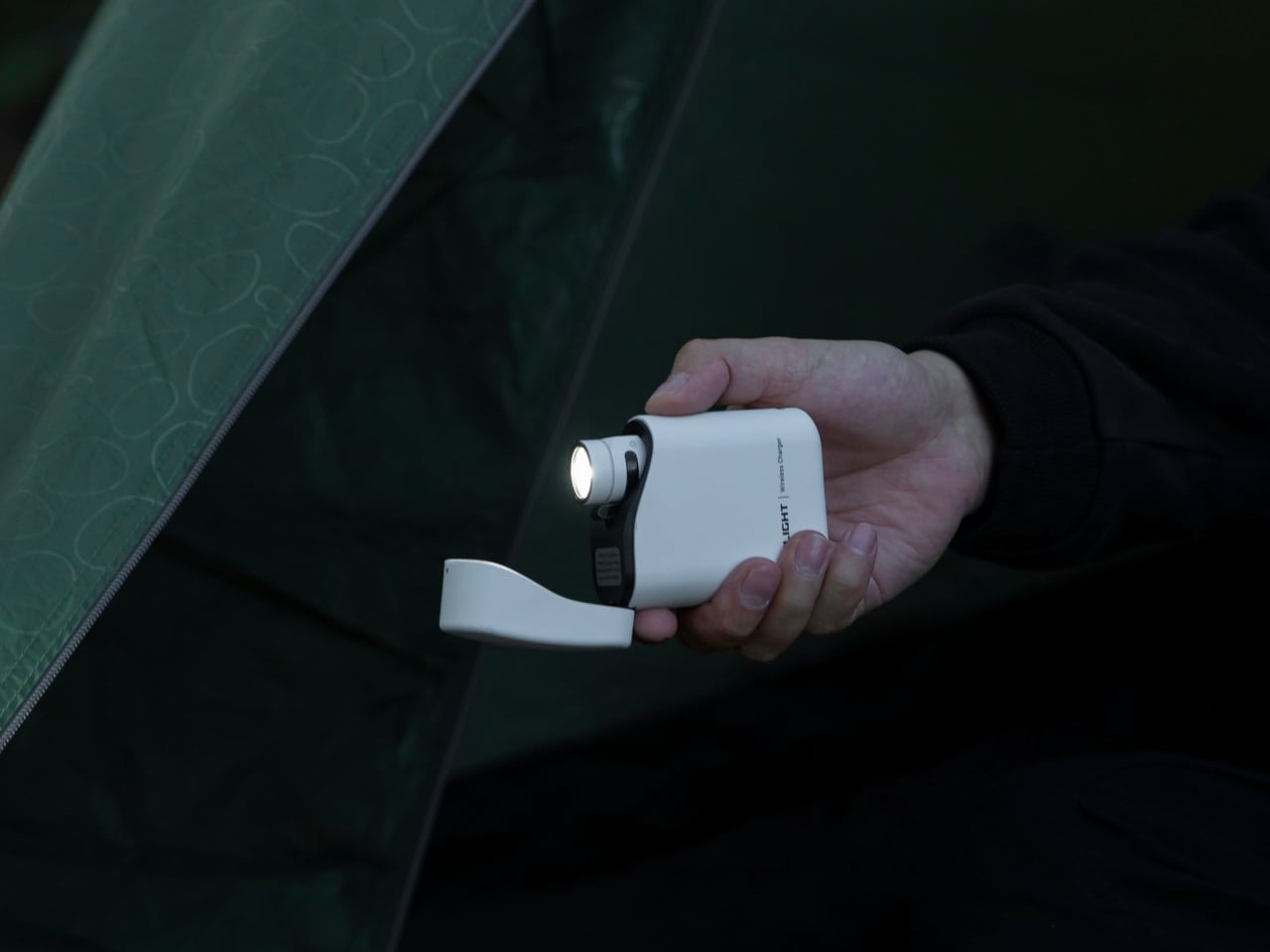
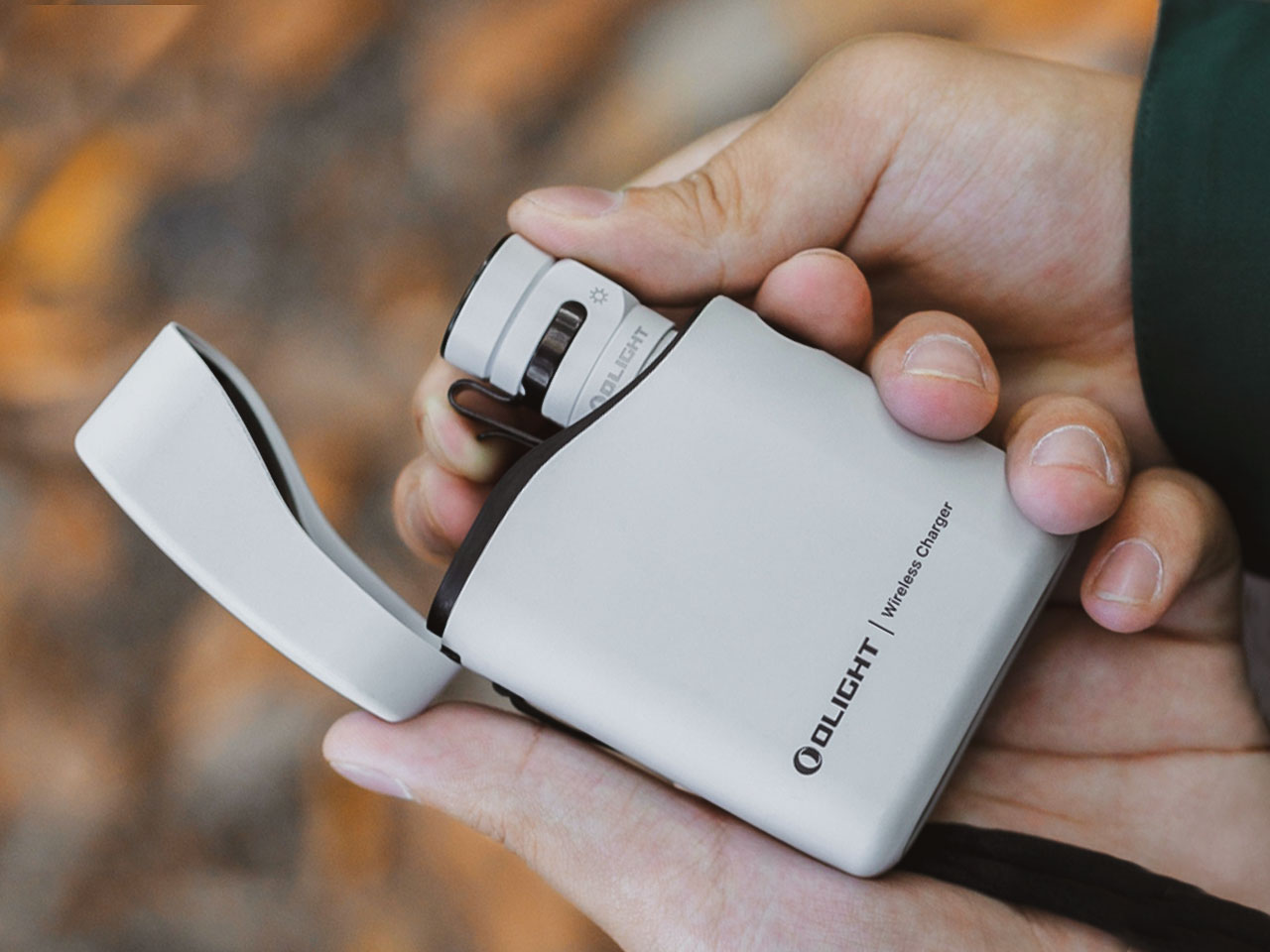
Most compact flashlights solve half the problem. They produce light, and then they ask you to carry a separate charging solution for them. The Olight Baton 4 Premium Edition takes a cue from the wireless earbud category and ships the flashlight inside a 5,000mAh case that charges the light, charges a phone as a power bank, and doubles as an operational housing — flip the lid and press the side button, and the Baton 4 fires without ever leaving the case.
The flashlight itself reaches 1,300 lumens with a 170-meter throw distance, with LED indicators for brightness level and remaining battery charge. None of that is the story. The story is a single object that consolidates a flashlight, its charger, and a phone power bank into one pocket-sized unit, which removes three separate things from the bag before fall even starts. For longer evenings that arrive earlier than expected, the case-as-charger logic stops being a clever feature and starts being the only sensible way to carry a light.
What we like
The 5,000mAh case charges both the flashlight and a phone, removing the need for a separate power bank and flashlight charger from the carry kit entirely
The flip-top lid allows the Baton 4 to be used while still seated in the case, which removes the fumbling that makes most compact flashlights slower to deploy than they should be
What we dislike
The case adds meaningful bulk compared to carrying the flashlight alone, which makes the tradeoff most worthwhile for those who genuinely need the power bank function regularly
Compatibility for the case-on functionality is limited to Olight’s own Baton 3 and Baton 4, so the ecosystem lock-in is real if you carry lights from other brands
2. Gerber Shard
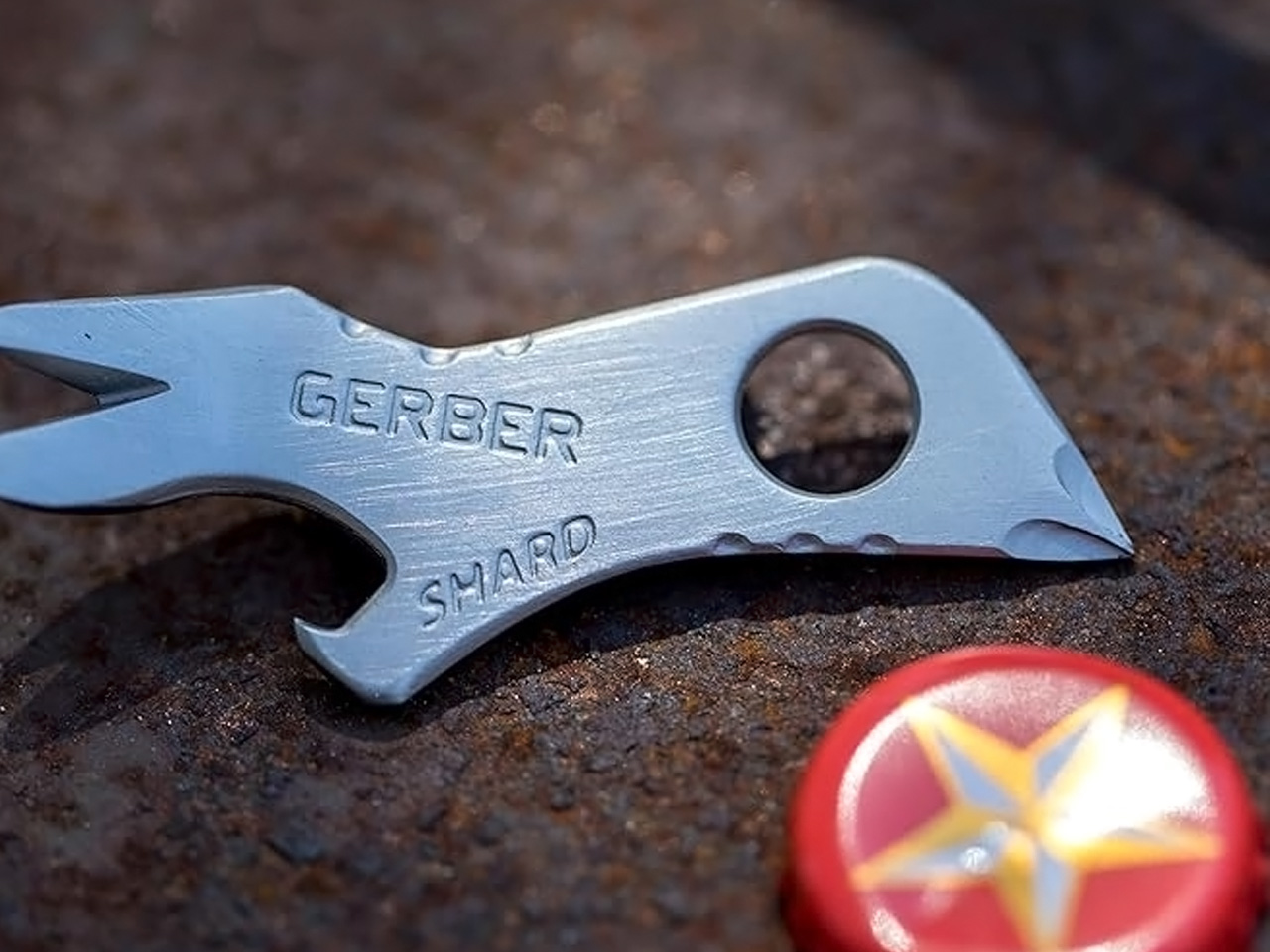
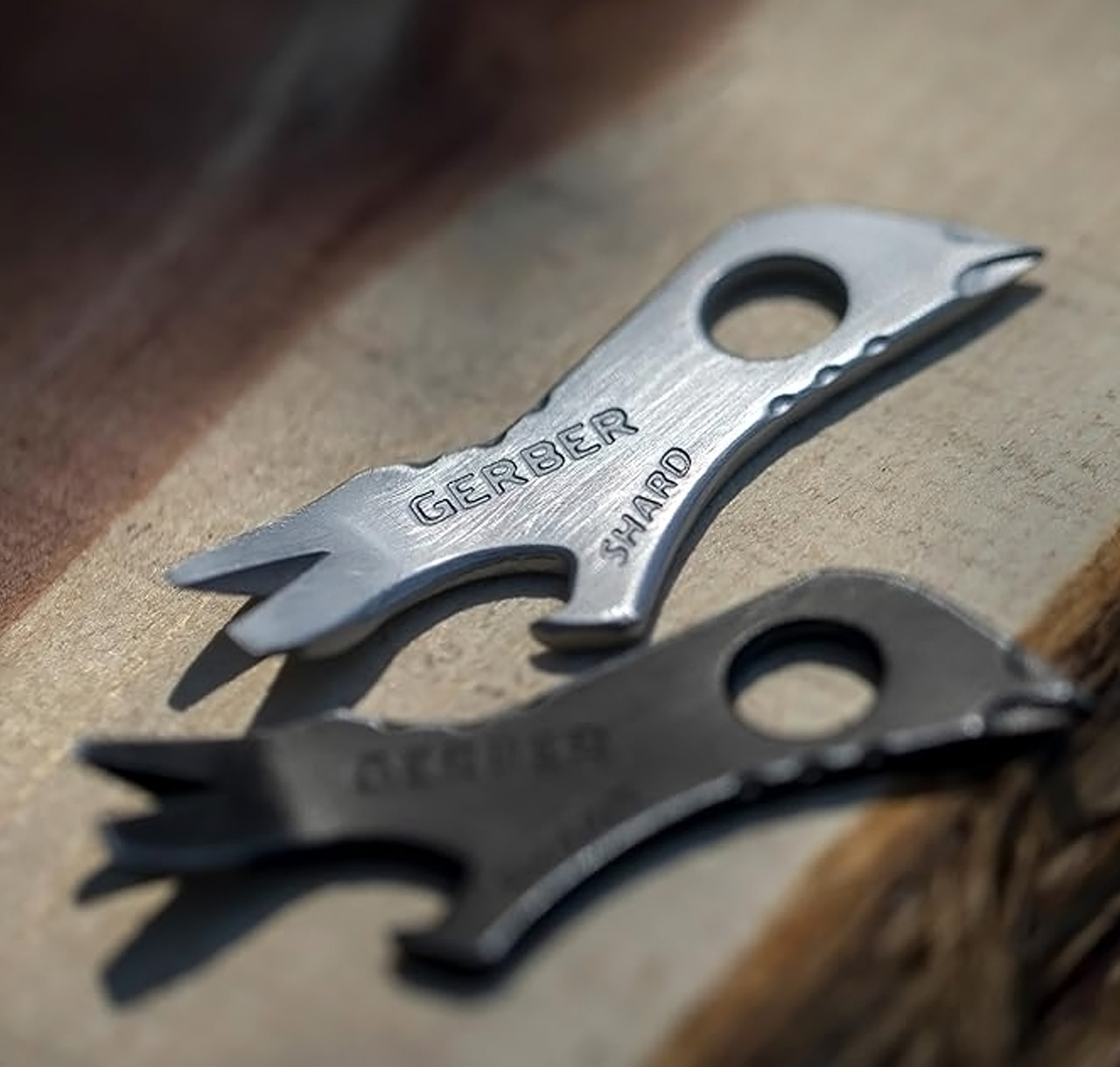
Start here if you have quietly accepted that your keychain is useless. The Gerber Shard is a single piece of stamped steel with no hinges, no springs, and no moving parts, which means nothing in it can jam, seize, or fail on a Tuesday evening when you actually need it. Six functions live in that flat body: a pry bar, bottle opener, small flathead slot, cross-driver tip, O2 tank wrench, and wire stripper. All of it weighs under ten grams.
What makes the Shard worth including alongside tools that cost ten times more is its clarity of purpose. It does not try to be everything. It identifies the handful of tasks a keychain tool is realistically asked to handle and solves those alone. At $13, it passes through airport security without any conversation about blade classifications. Clip it alongside whatever else you carry, and it will earn at least three genuine interactions a week before winter arrives.
What we like
No moving parts means the Shard is the one carry tool that cannot fail mechanically at the wrong moment, regardless of how long it sits on the keychain unused
TSA compliance and a sub-10-gram weight remove every excuse not to carry it, which is the most useful thing any $13 object can do
What we dislike
Single-material stamped construction limits what it can handle, and tasks requiring real leverage or grip pressure fall outside its honest capability
The utilitarian aesthetic reads as practical rather than designed, which will not satisfy anyone who treats their carry as a considered, visually coherent set
3. Fantom X Wallet
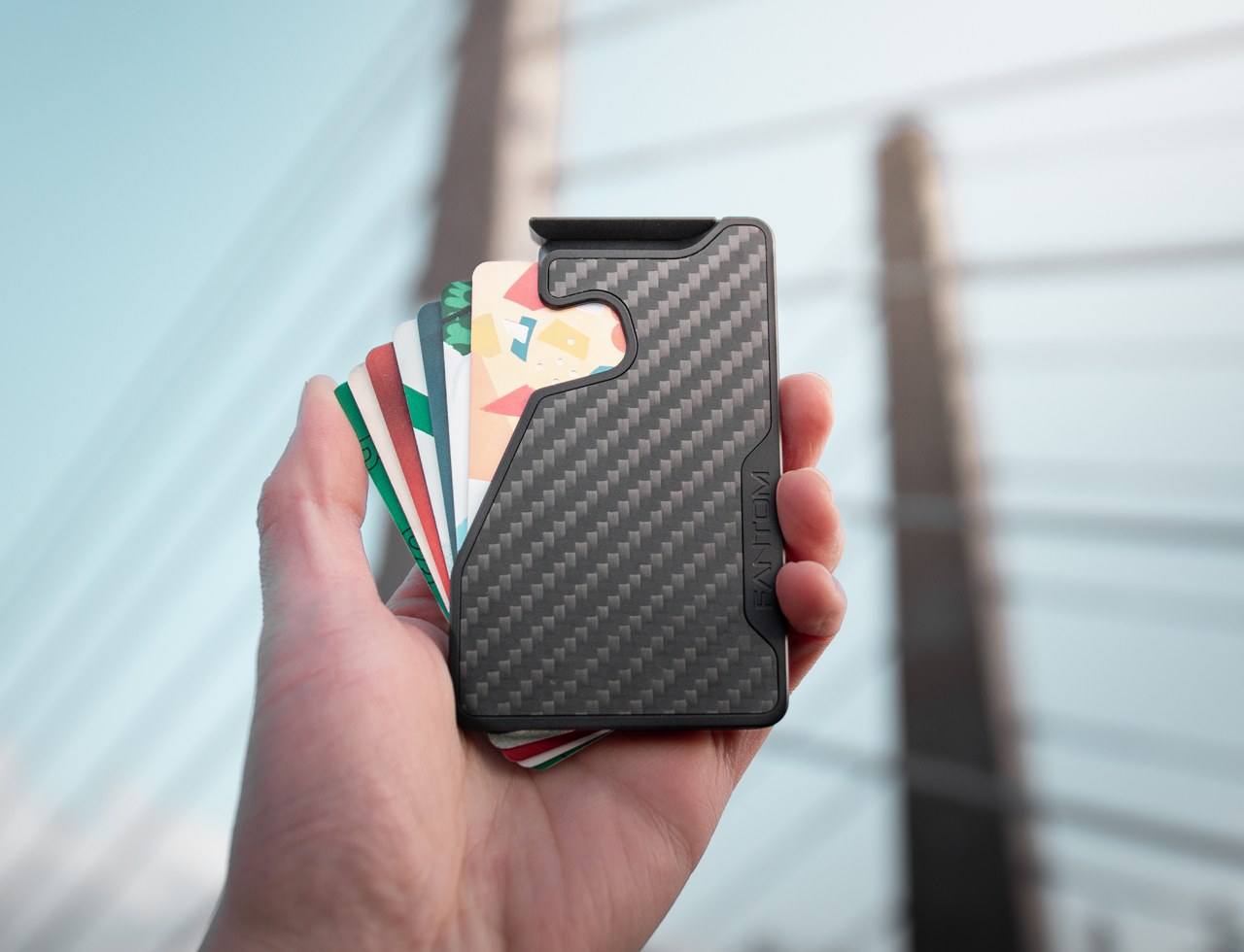
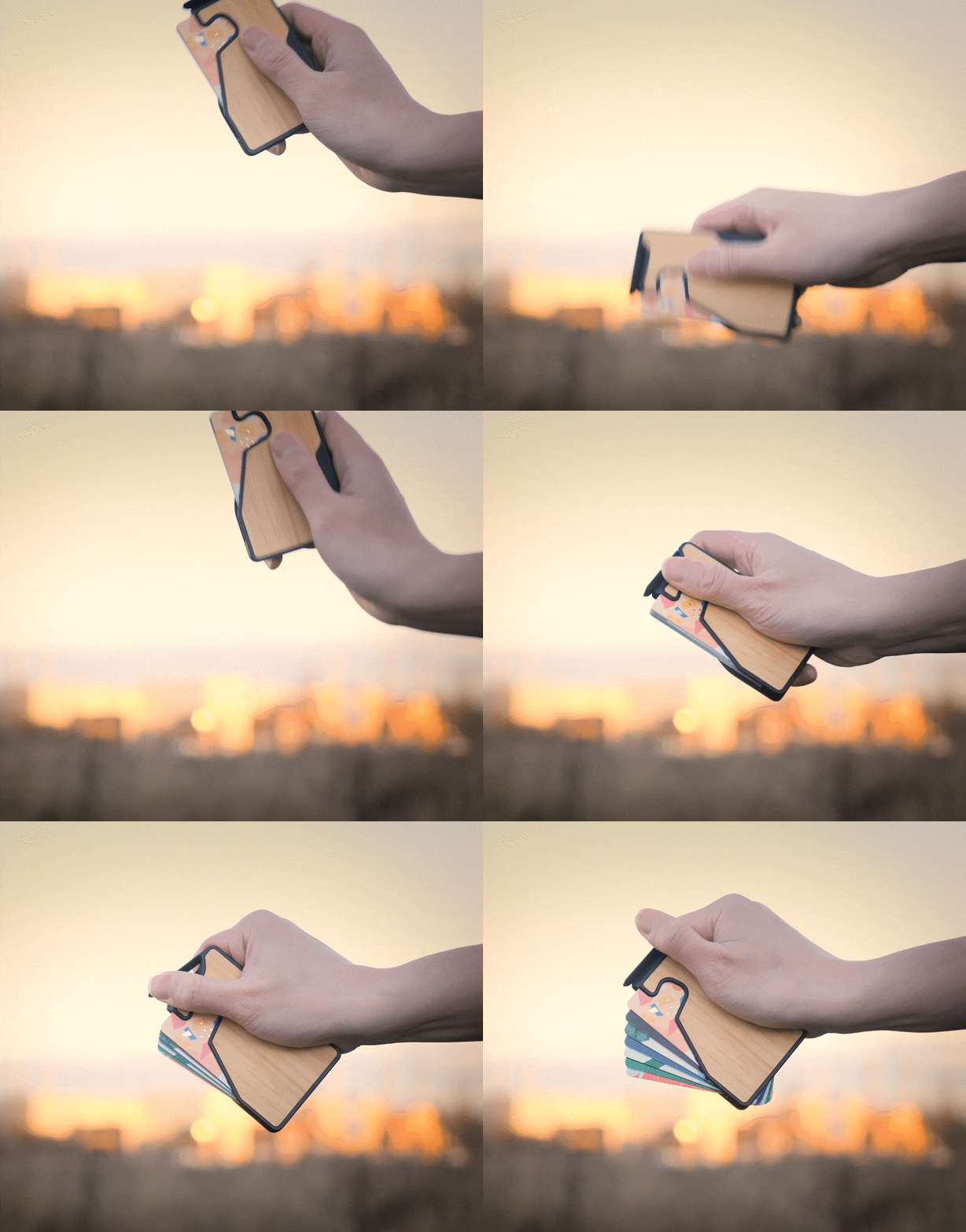
The wallet is the most frequently underestimated carry upgrade, partly because most people tolerate the one they have until it structurally fails rather than reconsidering it deliberately. The Fantom X builds the wallet chassis from machined aluminum, introducing zero soft materials into the construction. Nothing here stretches, cracks, or absorbs the contents of a jacket pocket across six months of daily carry. A spring-loaded ejection system fans cards in sequence at the press of a button, organized by frequency of use.
Fall is when wallets start competing with a heavier jacket for pocket real estate, and the Fantom X wins that negotiation by holding its slim dimensions through any season. The bead-blasted aluminum finish handles daily contact without developing the surface texture that leather wallets acquire by November. Switching from a bifold introduces a one-week adjustment period while the ejection sequence settles into your actual card hierarchy. After that week, the old wallet does not come back out.
What we like
Machined aluminum construction makes the wallet immune to the slow structural failure that defines the lifespan of every leather alternative, regardless of what the leather costs
The spring-loaded card ejection removes fumbling entirely, which becomes specifically useful in cold weather when dexterity drops alongside the temperature
What we dislike
The rigid form does not adapt as card count changes, which creates real friction once a work badge or additional card pushes the configuration past its ideal capacity
Cash carry is minimal depending on the setup, which still matters in environments where notes are the expected currency at a market or small café
4. Pininfarina Aero Ethergraf
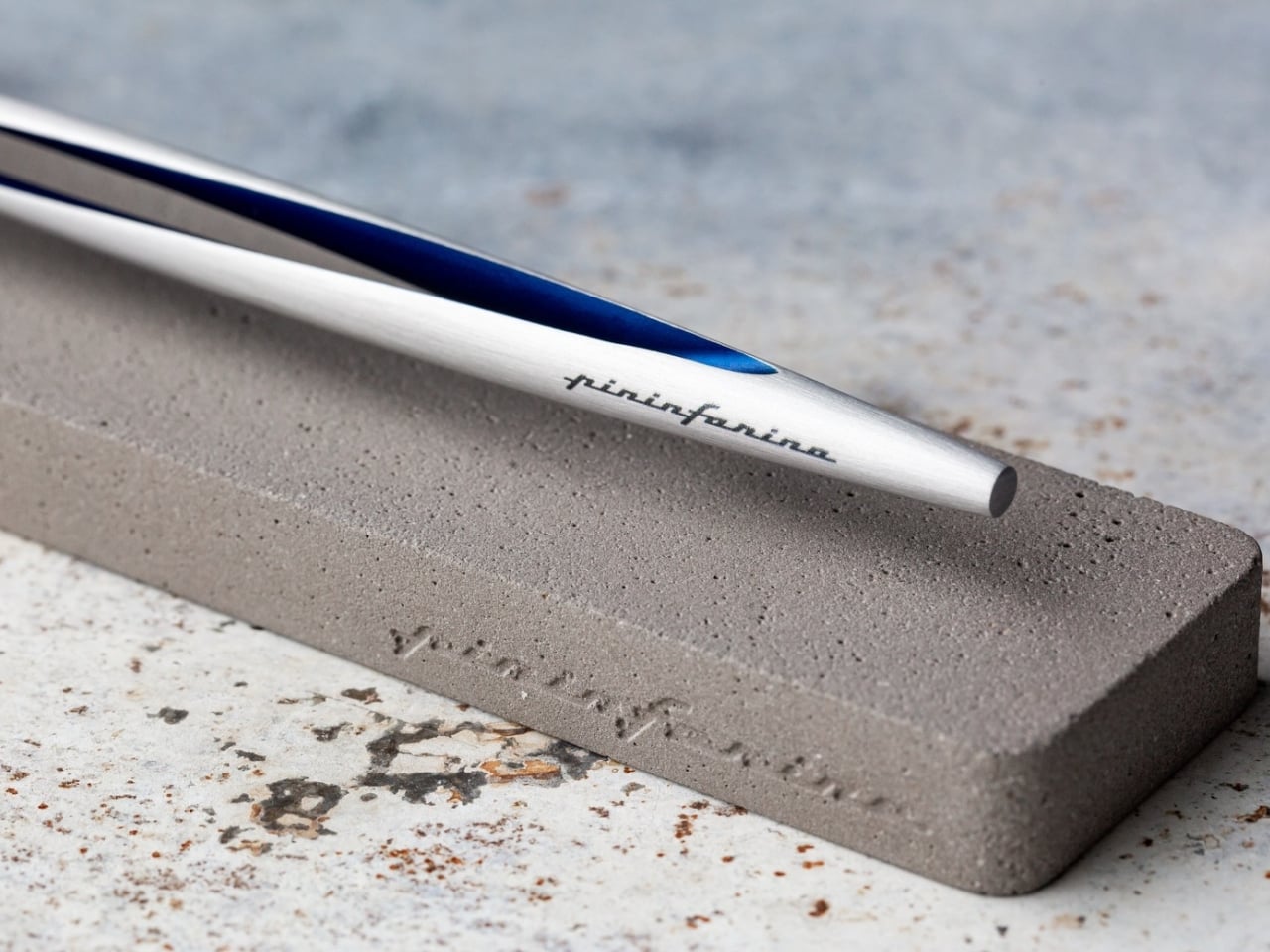
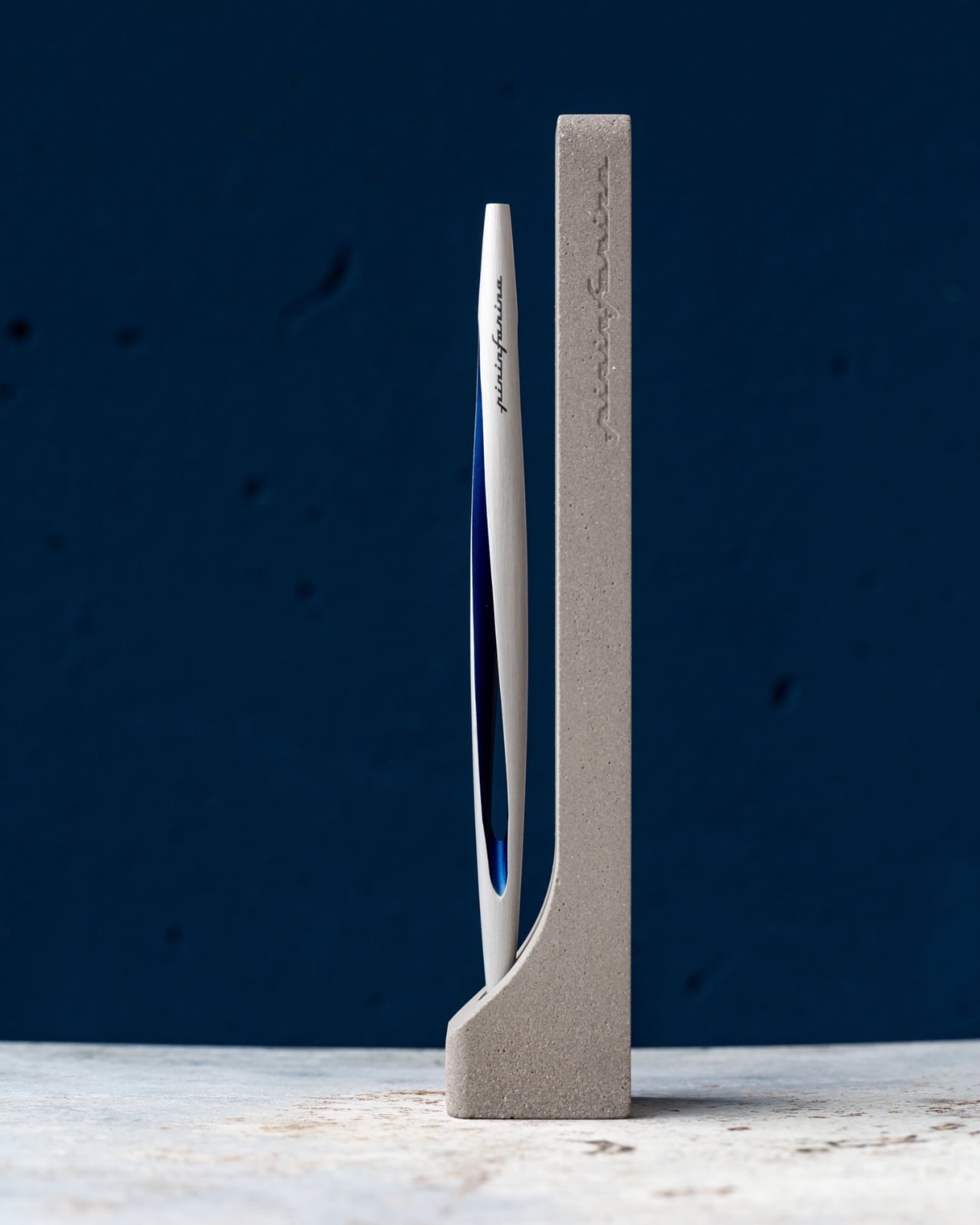
The ink pen is a carry category with a built-in expiration date, which most people accept as simply the nature of the tool. Pininfarina disagreed. The Aero Ethergraf writes through an Ethergraf metal alloy tip that leaves a permanent, graphite-like mark on paper via oxidation rather than ink transfer. There is no refill, no cartridge, and no dry-out. The tip writes identically on day one and three years later, producing a line that does not smudge and does not bleed through paper.
The pen is aerospace-grade aluminum, 17 grams, and 160mm long. Pininfarina, the Italian studio responsible for Ferrari and Maserati bodywork, applied that same economy of means: a single confident form, a blue accent visible from the right angle, and nothing present that serves no purpose. It ships with a raw concrete desk cradle. Switching a carry pen from refillable to the Aero reads less as an upgrade and more as a correction to something that should have been addressed earlier.
What we like
No ink or refill means this pen performs identically at the start and end of a season, removing the replacement cycle that every other pen eventually demands at the least convenient time
The aerospace aluminum body and Italian design pedigree give it the presence of a considered object that earns a permanent desk position, not just a pocket slot
What we dislike
The Ethergraf line is lighter than ballpoint output and requires slightly more deliberate pressure on thinner paper stocks to produce consistently confident marks
The metal tip performs best on standard paper and produces inconsistent results on coated or glossy surfaces, which limits its range on certain materials
5. Streamlight Wedge SL
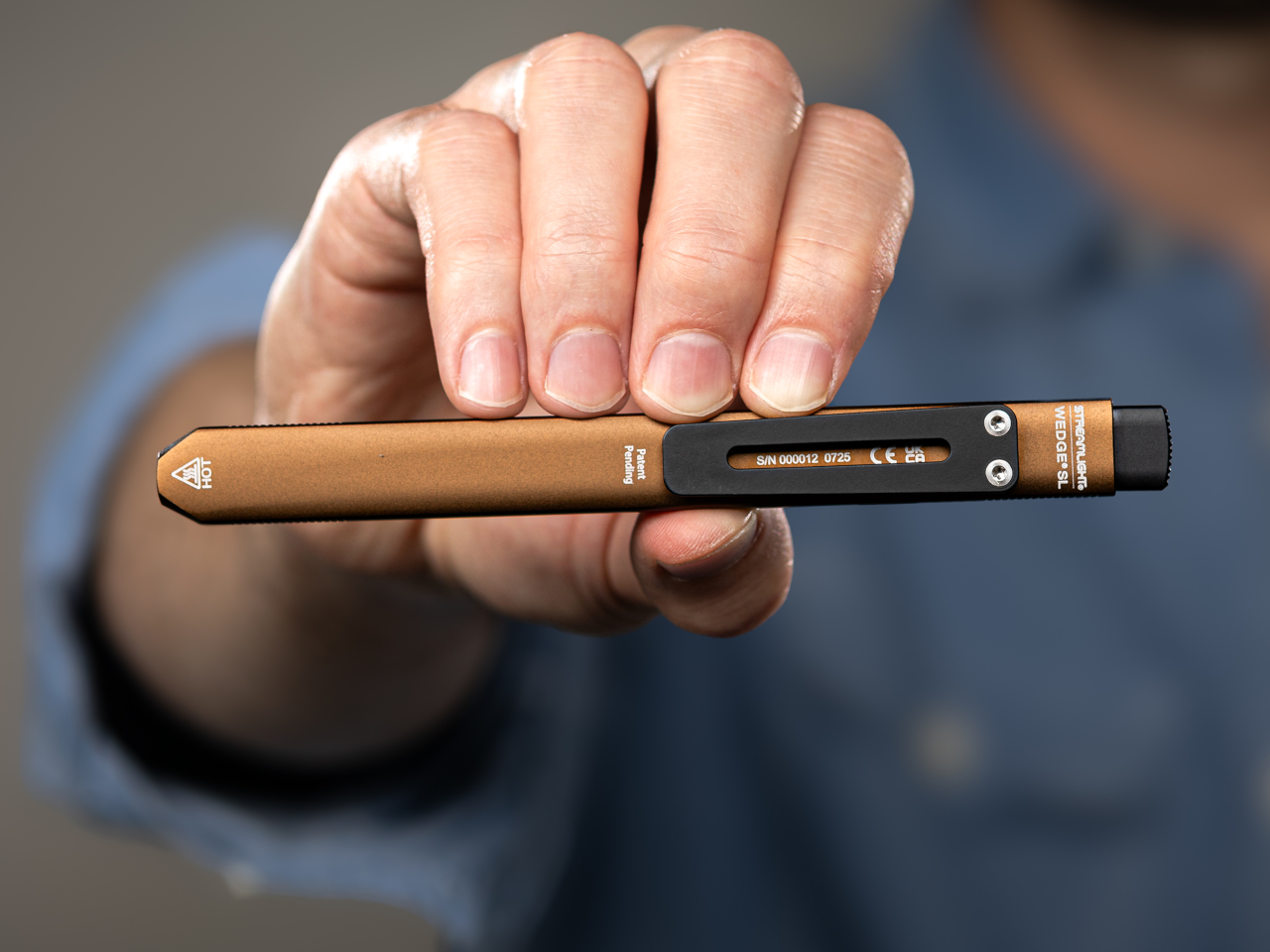
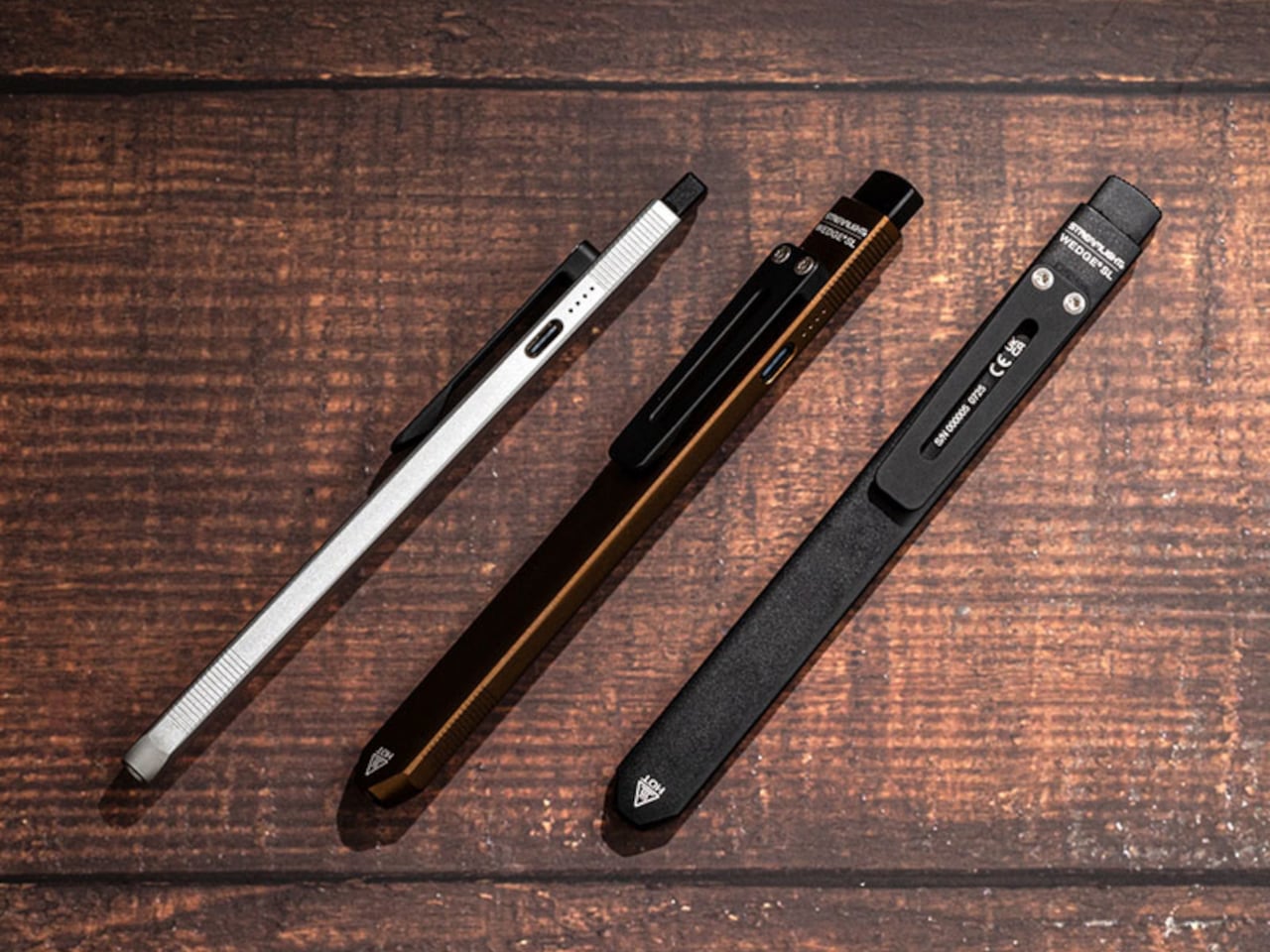
Most people leave a flashlight at home because it is too large to carry comfortably and too rarely needed to justify the space. The Streamlight Wedge SL removes that reasoning by measuring 5.65 inches long, 0.28 inches thick, and 1.14 ounces. That profile fits alongside a phone without competing for space, and the stainless steel clip secures it to a shirt pocket or tool pouch without adjustment. Fall means the sun sets earlier than anyone is quite prepared for, and the tool that solves that problem needs to actually be in the pocket.
Three output modes cover the realistic range of carry use. Constant-on High runs 100 lumens for 1.75 hours. Low delivers 50 lumens for 3.5 hours. THRO mode produces 500 lumens at an 80-meter beam on a three-second press, fast enough for genuine emergencies without being easy to trigger accidentally. The USB-C lithium polymer cell charges in four hours and is field-serviceable and user-replaceable. Type II MIL-Spec anodized aluminum and IPX4 water resistance mean fall weather is not a relevant variable.
What we like
At 0.28 inches thick, it carries without compromising any pocket it shares space with, which directly solves the reason most flashlights get left on a bench at home
THRO mode reaches 500 lumens without any mode cycling, making maximum output accessible the moment the situation asks for it rather than three button presses later
What we dislike
Output is calibrated for inspection and everyday carry use rather than long-distance throw, so it will not work for anyone whose primary need is maximum beam distance
At four hours for a full charge, it is slower than some current competitors in a category where charging speed has become a meaningful differentiator
The Only EDC Rule That Actually Matters: Carry What You’ll Use
The five tools above do not ask for a lifestyle adjustment. They drop into a pocket, clip to a keychain, or live on a desk without demanding explanation or a dedicated bag compartment. What each one requires is a single deliberate decision at the point of acquisition: that the things you carry every day are worth choosing carefully rather than defaulting to whatever has been there since last winter.
Start with one. The Olight Baton 4 consolidates a flashlight and a power bank into a single case that makes carrying both easier than carrying either separately. The Gerber Shard costs $13 and will change what you notice about the physical world around you. The Fantom X removes a daily friction you have probably stopped registering because you have lived with it long enough that it feels normal. Any one of these improves the carry. All eight make pockets the most useful part of the outfit before the season ends.
Summer changes the rules of your pockets before you notice. The jacket disappears, the inner pockets disappear with it, and what remains is two shallow denim slots that max out at a phone and a handful of keys. Most people respond by carrying less. A better response is carrying smarter, choosing tools that earn every millimeter of that space by doing more, weighing almost nothing, and demanding zero ceremony to use.
The three below aren’t trying to cover every contingency. A titanium scythe-bladed knife for clean cuts on the move, a Japanese-designed can opener that turns a cold drink into a considered experience, and a clip light that replaces five tools in a single dial rotation. Three objects, three distinct registers of what summer carry looks like when the thinking behind it is more deliberate than the pocket it fits in.
1. ScytheBlade
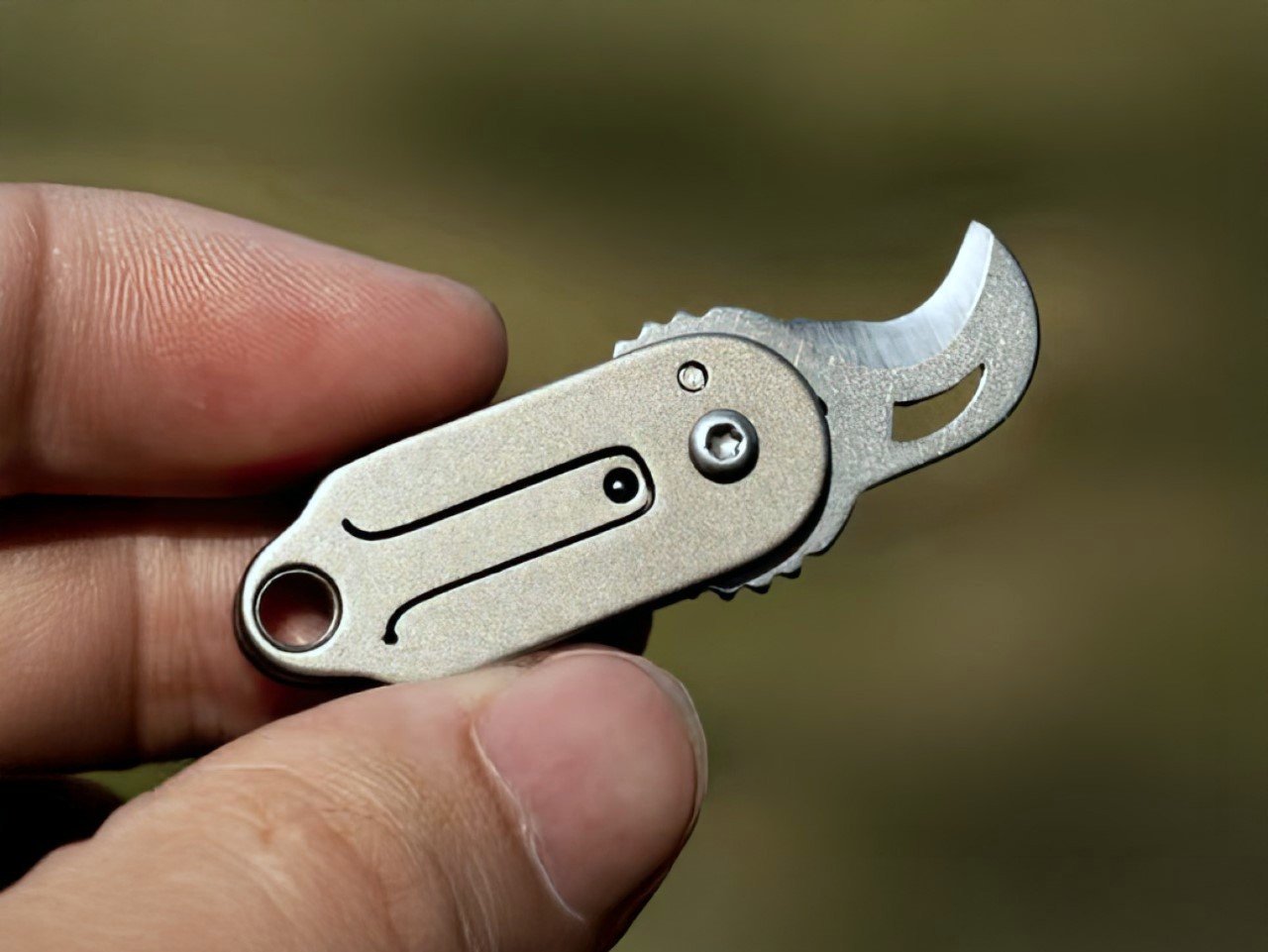
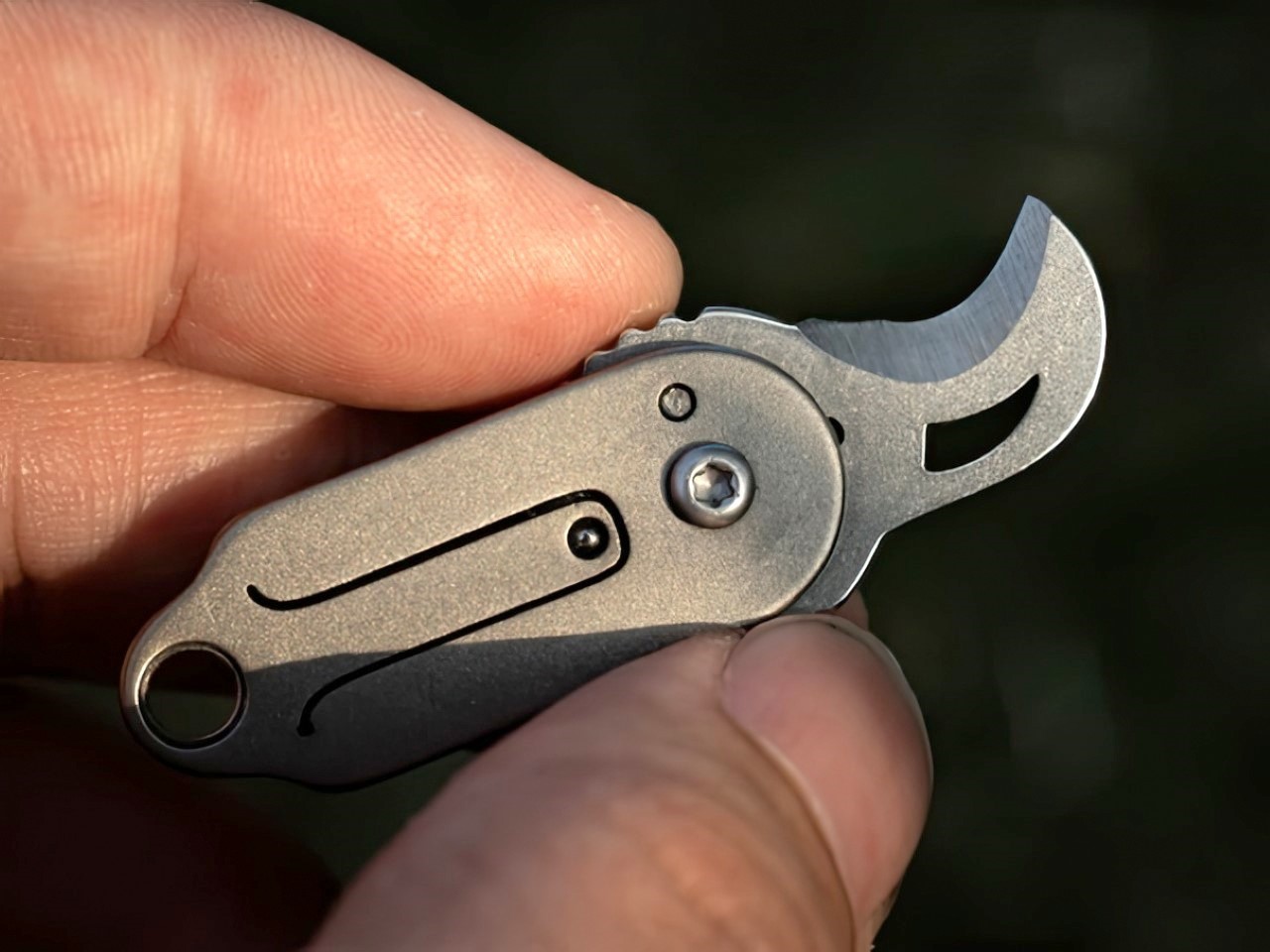
The ScytheBlade is a 46mm folding knife that builds its entire design around a sickle-shaped blade profile, and the logic is simpler than the silhouette suggests. The curve isn’t aesthetic posturing. It’s how agricultural and combat blades have cut for centuries, pulling material toward the sharpest point of the edge rather than relying on straight-line pressure. At 8 grams, the titanium body disappears on a keychain, and the result is a knife that makes an immediate case without saying much about itself.
In practice, the blade geometry delivers exactly what the shape promises. Box tape, zip ties, twine, cord, produce at a market stall: the hooked tip catches and pulls rather than pushes through, giving each cut a control that straight-edge EDC knives of this size rarely match. The frame lock clicks with enough authority that you don’t second-guess it. At $33, it is the kind of object that settles into a keychain and stops being noticed until the moment it is actually needed.
What We Like
The sickle blade geometry genuinely improves cutting control for pulling cuts — this isn’t ornamental design. It is mechanical logic that works demonstrably better than a straight edge for the tasks EDC knives actually perform most often.
At 8 grams on a keychain, it is the kind of weight you stop tracking after the first day. It earns its place without announcing it.
What We Dislike
One-handed deployment takes practice. This is not a knife you will open quickly under pressure without putting in time first, which matters if speed is part of your use case.
The 7Cr steel blade holds a decent edge but will need more frequent sharpening than premium steel alternatives at this price point. Plan for that maintenance if you’re cutting regularly.
2. DraftPro Top Can Opener
Shu Kanno is an award-winning Japanese designer, and the DraftPro Top Can Opener carries that pedigree in its opening motion before it carries it in its appearance. Built in Japan, the opener removes the entire lid of a can cleanly: smooth edge, no sharp remnants, and a wide mouth that turns whatever you’re drinking into something noticeably different from thirty seconds prior. The aroma arrives first. Then the flavor, broader and less constricted than a standard can opening allows.
The summer logic is straightforward. You’re drinking outside, likely without a glass, possibly without a flat surface. The DraftPro opens the can fully, lets you drop ice directly into it, add a lime or a sprig of mint, and drink from the source without the usual apology outdoor drinking tends to require. It weighs almost nothing. It fits any pocket. At $60, it is the kind of object you bring everywhere and notice immediately the one time you leave it behind.
The clean-edge lid removal transforms any can into a wide-mouth glass, which makes a genuine difference to both aroma and taste. This is the kind of change that sounds incremental and feels significant the first time you experience it.
Compatible with domestic and international cans, so it earns its pocket space in any context and travels without requiring any research about whether it will work.
What We Dislike
At $60, the price asks you to commit before you have experienced the effect it has on a drink. There is no middle-ground entry point, which makes it harder to recommend to someone who prefers to try before deciding.
Stock is limited at the time of writing, which narrows access for anyone who takes their time making a purchase decision. Check availability before planning around it.
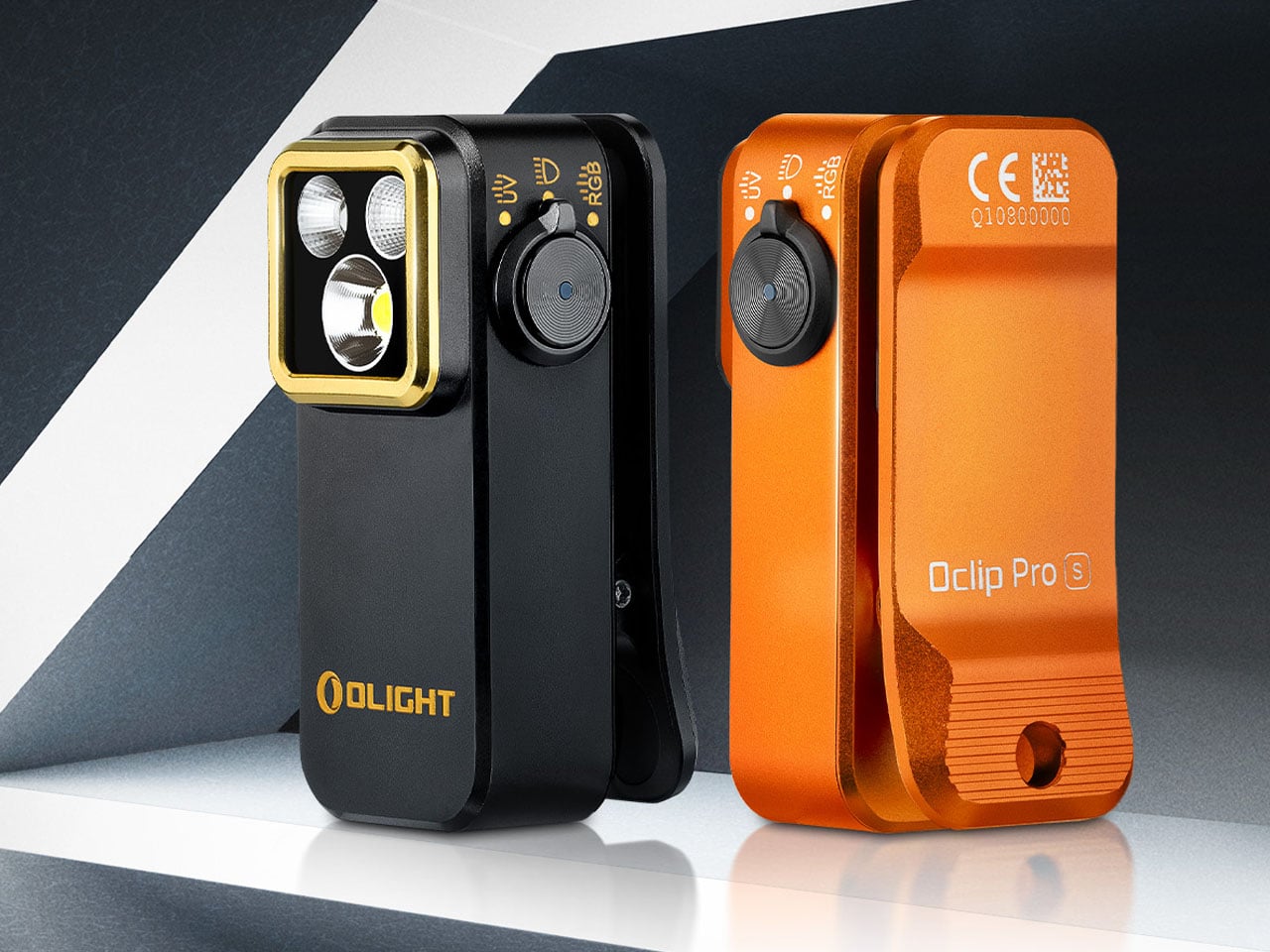
3. Olight OClip Pro S
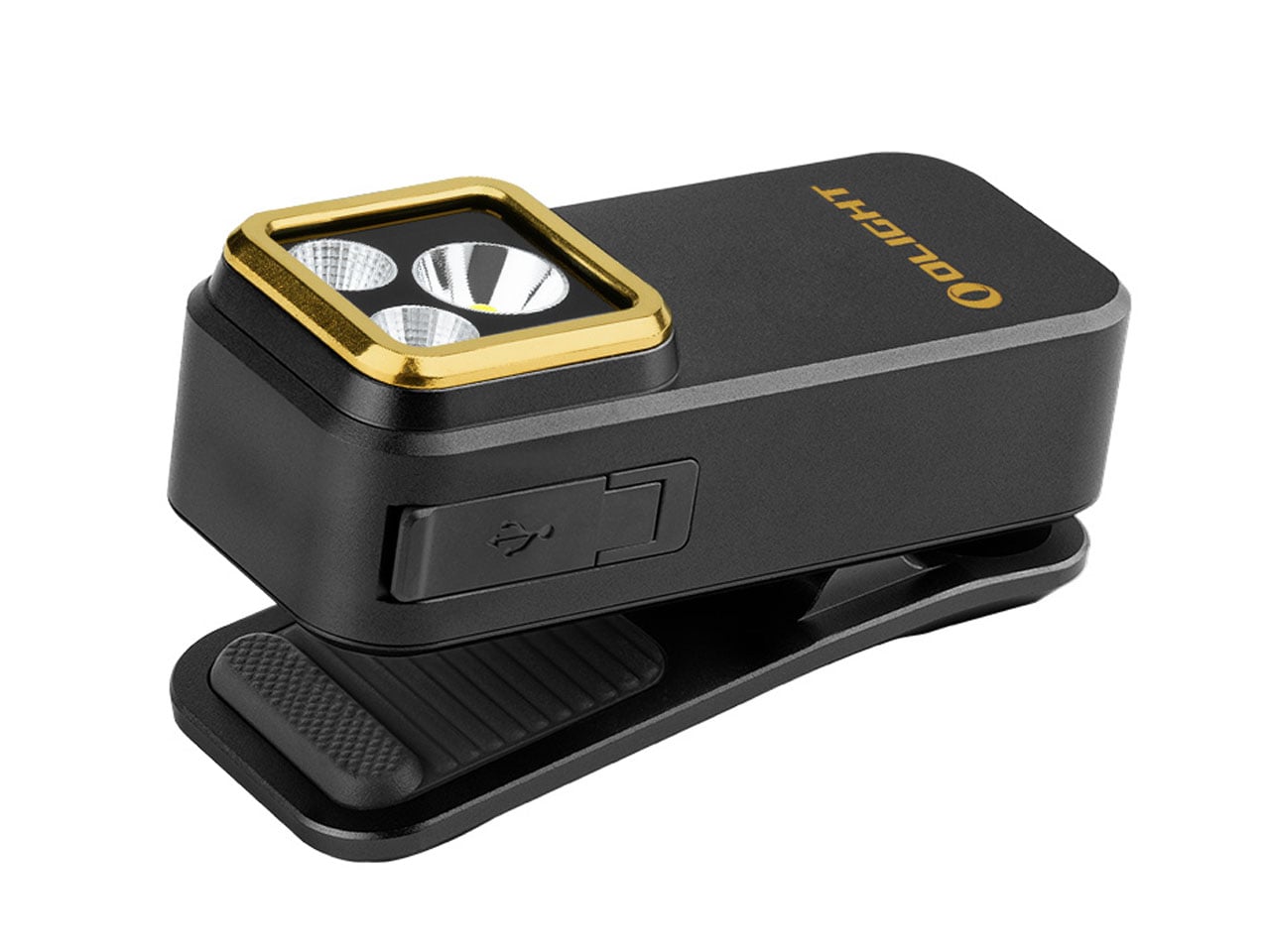
The Olight OClip Pro S measures 57 × 28 × 27 mm and weighs 53 grams. What the dimensions don’t communicate is how well the integrated clip disguises the object’s actual ambition. This is not a pocket flashlight. It is a five-mode lighting system designed to attach to a cap brim, a shirt collar, a bag strap, or the flat of a palm without registering as a burden in any of those positions, which is a harder design problem than it looks.
Those five modes cover the full range of what a summer EDC light actually needs to do. Six hundred lumens of white flood or focused spotlight, red and green for signaling, and a 365nm UV light for everything from inspecting gear to reading a label in low light. The side dial lets you switch modes without looking down. USB-C charging puts it on the same cable as everything else in your pocket. At around $40, it is noticeably overbuilt for its price.
What We Like
Five distinct lighting modes in a 53-gram body that clips anywhere means this replaces multiple single-purpose tools without asking for any extra carry space. That math works well regardless of the season.
USB-C charging and up to 144 hours of runtime on the lowest setting make it dependable across multi-day trips without requiring a dedicated cable or any particular planning around battery life.
What We Dislike
53 grams is light by flashlight standards, but heavier than a minimal summer pocket kit ideally wants from a single item, especially when jacket weight is no longer there to absorb it.
The five-mode range is a strength, but the side dial requires a short learning curve. Reaching the right mode quickly under pressure takes practice, which is worth knowing before you rely on it.
Carry With Conviction
Three objects, three price points, three entirely different functions, and none of them ask for special treatment. The ScytheBlade lives on a keychain. The DraftPro sits in a front pocket without a second thought. The OClip Pro S clips wherever it is needed and stays there. What connects them is a refusal to make summer carry feel like a compromise. Each does exactly what it was designed to do and nothing it wasn’t.
The pockets got smaller. The standards don’t have to. When the tools are right, summer carry stops being a problem to manage and becomes a quiet argument for the idea that less, chosen with intention, routinely outperforms more, chosen out of habit. Start with whichever of the three your current setup is missing most. It won’t take long before the other two start to make sense as well.
Labor Day is the last real weekend of summer. It’s the one where grills come out, plans stay loose, and someone always shows up with something worth talking about. For the person who carries their gear with intention, who thinks twice about what goes in their pocket before walking out the door, a thoughtful EDC gift lands differently than anything from a generic list. These five picks earn their place.
Each was chosen for a reason that goes beyond utility. The Cubik opens with gravity and no springs, which is more satisfying than it sounds. The Oblica sits in a breast pocket like it was tailored there. The NoxTi glows for twenty-five years without a single charge. The CasaBeam floods a campsite or a hallway with equal confidence. The Loki-Nav navigates, magnifies, and helps you start a fire. Here they are.
1. Cubik Knife
The Cubik is a Grade 5 titanium EDC pocket knife that weighs 1.65 ounces and opens in a way no other knife on this list manages: with gravity. A button flick releases the blade, which can also deploy with a wrist tilt alone, no springs involved. That mechanism is the first thing people ask about when they see it. The second is the blade system: the Cubik uses replaceable trapezoid utility blades built to tackle the majority of daily cutting tasks cleanly.
What that system means in practice is that you never send the knife out for sharpening. When a blade dulls, you swap it and move on. A glass breaker is built into the body, which extends its usefulness well past the kitchen and the weekend campsite. The slim profile disappears into a front pocket without creating a visible outline. This is a knife that operates like a precision instrument and tends to get treated like one by the person carrying it.
What we like
The gravity-drop deployment is mechanically distinct from anything else in the pocket knife category right now
Replaceable utility blades eliminate the sharpening requirement entirely
What we dislike
The trapezoid utility blade format will not satisfy collectors who prefer a traditional blade geometry and grind
It ships through a crowdfunding campaign, which means delivery timelines depend on production runs
2. Oblica Card Holder
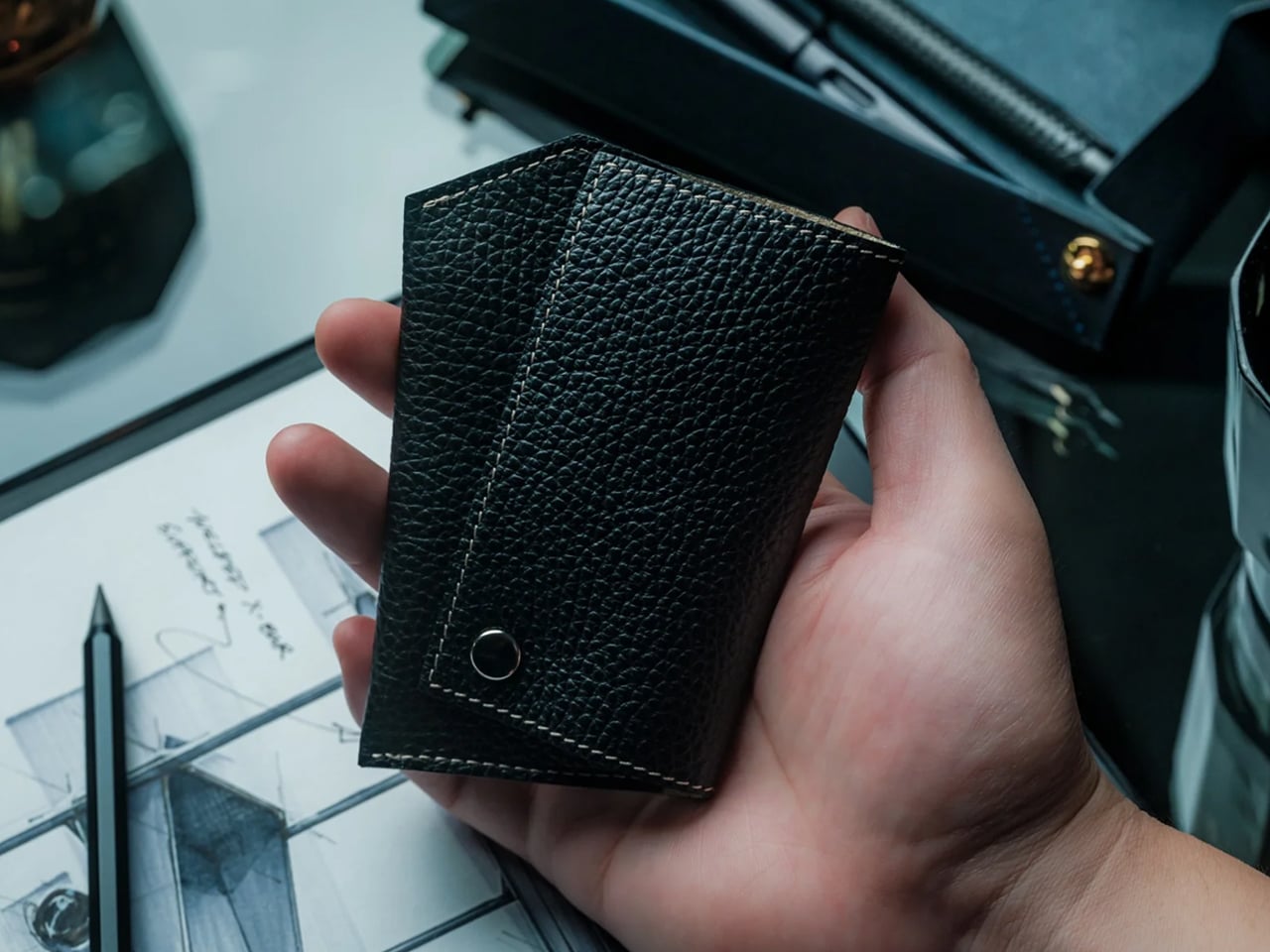
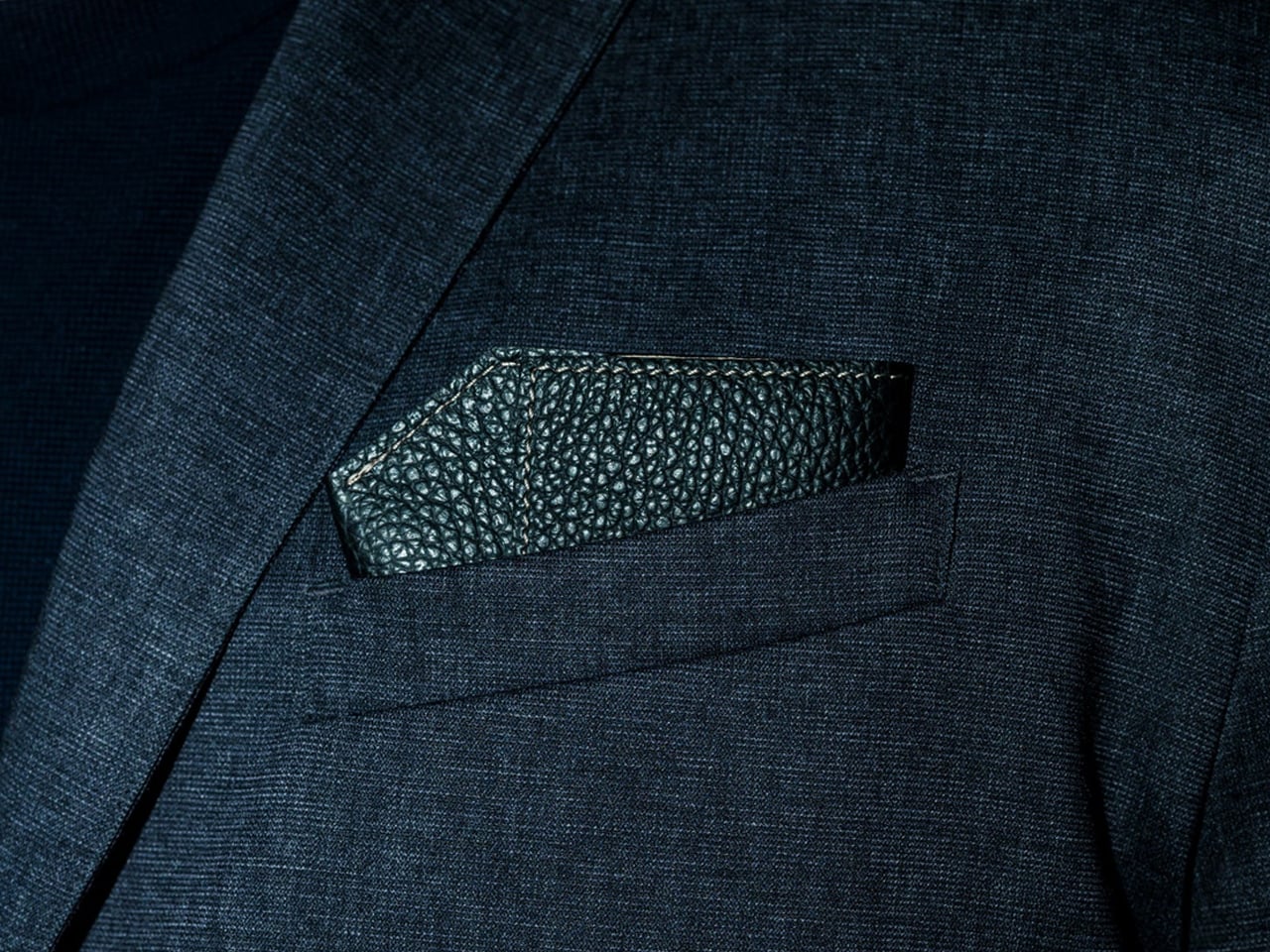
The Oblica was designed for one specific location: the breast pocket of a blazer. Not the back pocket, not a bag. The breast pocket, where it sits upright and visible at 9.5 by 13 centimeters and 0.5 centimeters thick. That positioning is the premise the whole product is built around. Most card holders are designed to disappear. The Oblica is designed to be seen, to identify a person who thinks about the objects they carry.
At $160, it costs real money for something this spare. That is the right kind of tension in a gift. It comes in five colors: Taupe, Black, Orange, Emerald, and Cerulean. Those are specific enough to read as design decisions rather than standard colorway options, which is exactly how the best accessories are made. For someone who wears a blazer with any regularity, the Oblica earns its place faster than most things at that price point.
The breast-pocket orientation is a genuine design principle, not a retrofitted marketing feature
The color range is specific and confident enough to feel like a personal, considered choice
What we dislike
At $160, it requires a consistent blazer habit to justify its purpose
It was designed for one location, which limits everyday versatility for those who carry differently
3. NoxTi Tritium Keychain
The NoxTi is a 45mm keychain by Xedge that glows for 25 years without a battery, without a charge, and without any maintenance at all. The light comes from a tritium vial sealed inside a Grade 5 titanium body, protected by a quartz window. It weighs 10.7 grams, which is negligible on a key ring. At that scale, every material choice becomes a visible decision: the quality of the CNC machining, the thread tolerance on the cap, the interchangeable vial system that allows you to change the glow color.
At around $30, it belongs to the category of gifts that genuinely surprise someone with what is achievable at a given price and size. A glass breaker tip is built into the body, adding emergency function to what could have remained a purely aesthetic object. The vials are swappable, which means the color of the glow is not a permanent commitment. It sits quietly on your keys and illuminates a dark pocket for the next quarter-century without asking for anything.
What we like
Twenty-five years of passive glow from material physics alone, with zero upkeep required
Interchangeable vials mean you can update the glow color without replacing the tool
What we dislike
Tritium is a radioactive isotope, which requires a level of comfort not every buyer will have
At 45mm, it sits on the larger side for a keychain piece if a minimal setup is the goal
4. CasaBeam Everyday Flashlight
The CasaBeam Everyday Flashlight puts out 1,000 lumens and ships with a stand that converts it from a handheld torch to a freestanding lantern. Both modes work well enough that neither reads as an afterthought. The zoom function shifts the beam from a focused throw to a wide flood, which covers the practical difference between lighting a trail ahead of you and illuminating a full campsite. Those are genuinely different lighting needs, and it handles both from a single tool at $50.
Five modes cycle from one button, which keeps the operation clean and intuitive in the dark. The charging port stays hidden behind a cover when not in use, a detail that matters more than it sounds because most flashlights at this price leave the port exposed and collect pocket lint. The CasaBeam ends up in a kitchen drawer, a glove compartment, or a day pack and gets reached for in all three locations. It is the kind of light that earns its place through consistent use.
The included stand converts it from a hand-held flashlight to a freestanding lantern with nothing extra required
The hidden charging port is a cleaner design decision than the exposed ports standard at this price
What we dislike
The form is functional rather than sculptural, placing it below the other picks in terms of visual presence on a desk or shelf
Published battery runtime figures are not specific, making it difficult to calibrate expectations before you need it in the field
5. Loki-Nav Compass
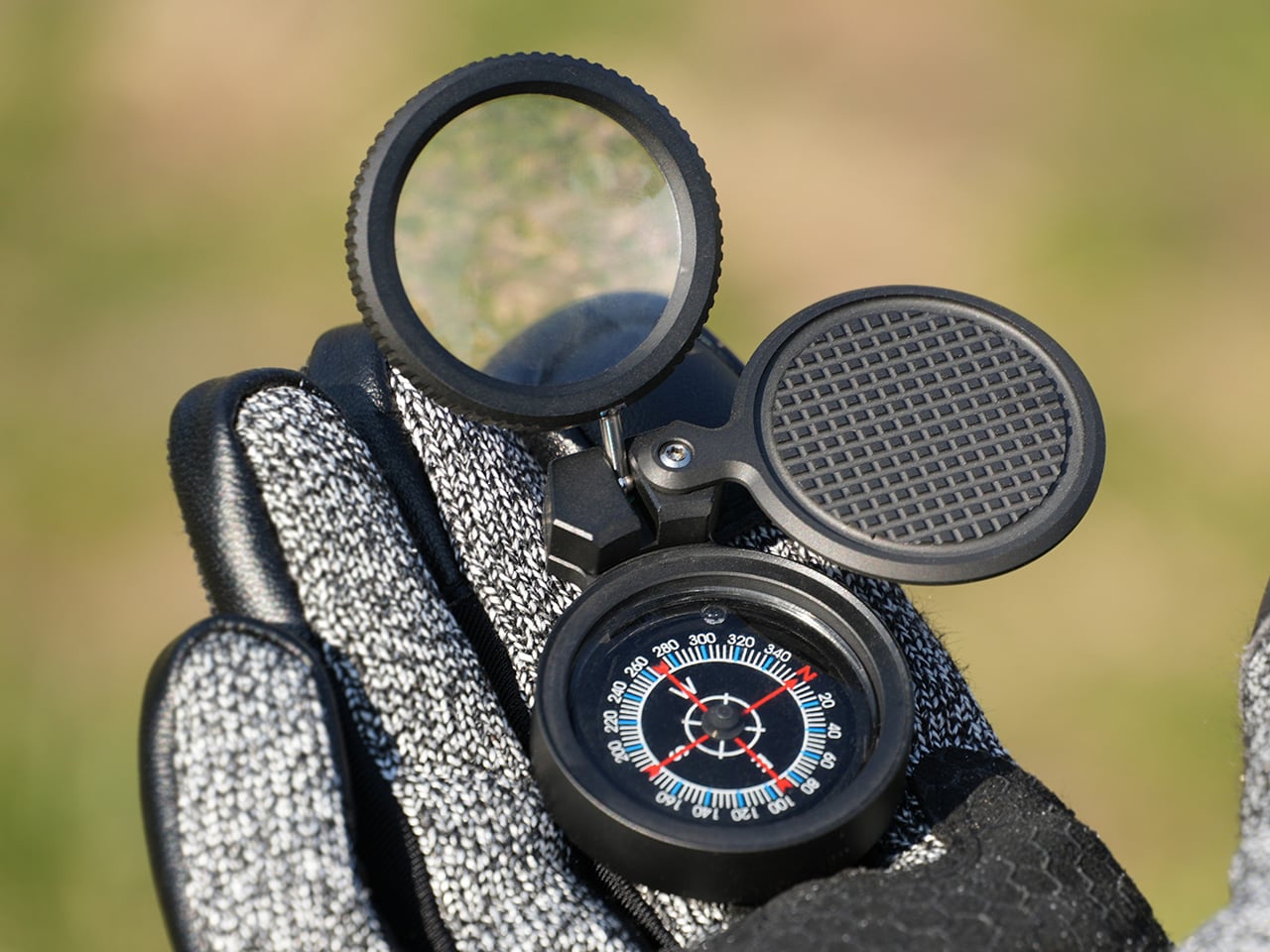
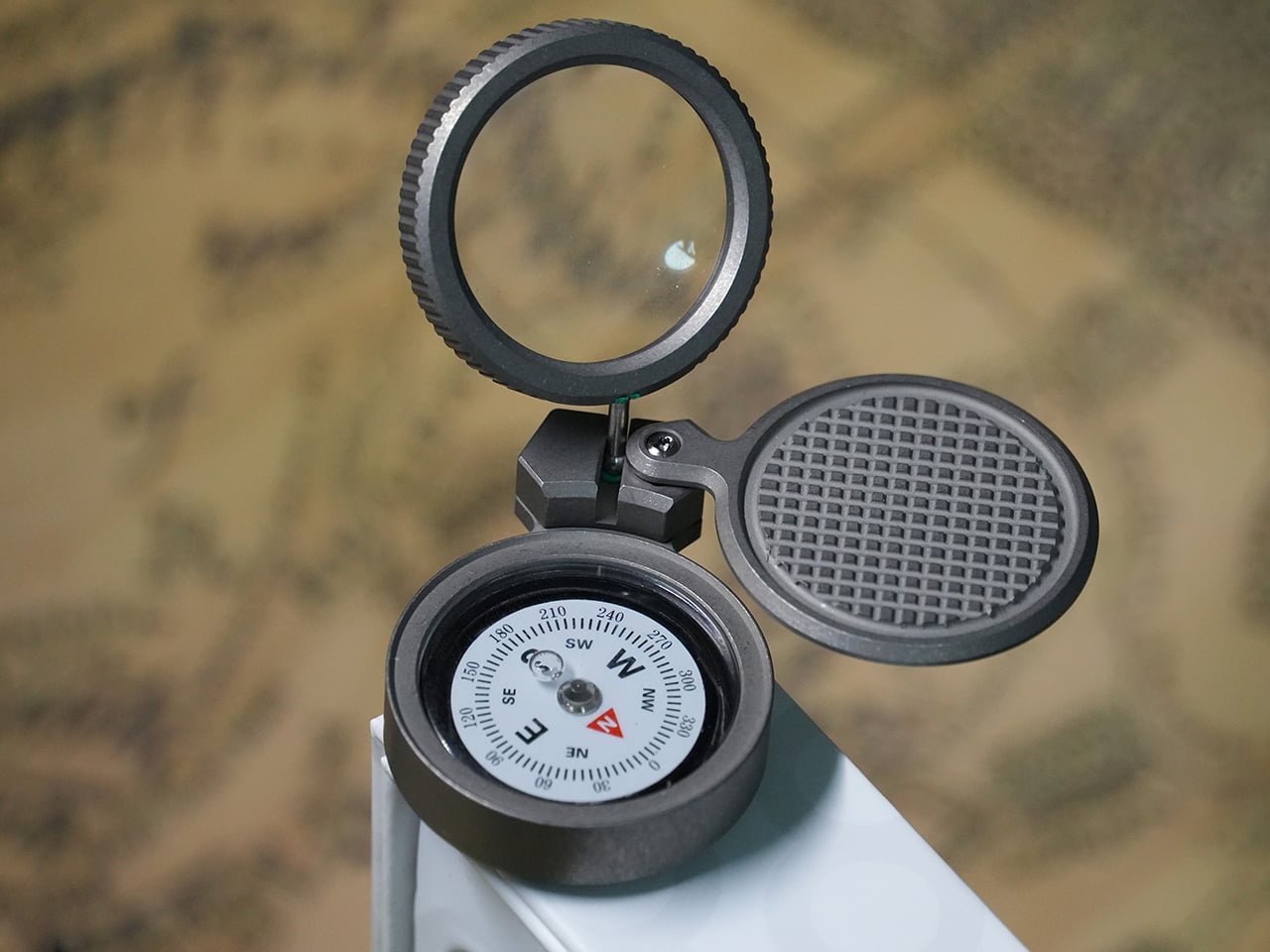
The Loki-Nav by EckDesign is a compact navigation tool built in Grade 5 titanium or aluminum, designed for people who understand that a phone in the backcountry is a plan B. The oil-filled compass core delivers precise needle movement in cold temperatures and is rated IPX8 waterproof. The core is replaceable, a design decision that reflects an assumption of long-term ownership rather than eventual disposal. A 12x magnifying loupe folds out from the body and rotates to aim without requiring you to adjust your grip on the tool.
The 3-in-1 cap carries a built-in emergency mirror and a wood file for tinder preparation. They fit the object’s intended environment without adding meaningful bulk. The aluminum version starts at $39, and the Grade 5 titanium build starts at $89. With a rating of 4.6 out of 5 across 42 verified reviews, the gap between what is described and what is delivered appears to be a small one.
What we like
The replaceable compass core means the tool outlasts the component most likely to drift or degrade over time
IPX8 waterproofing makes it trustworthy in exactly the conditions where a compass actually matters
What we dislike
The 12x loupe requires decent ambient light to produce a useful image in field conditions
The upper end of the titanium price range ($89 and above) invites comparison with more specialized dedicated navigation tools
The Best Gift Is One That Comes With a Story
These five things share something a longer list would dilute: each was made with a point of view. The Cubik uses a deployment mechanism no other knife uses. The Oblica was designed for one pocket. The NoxTi carries 25 years of light in a 10-gram cylinder. The CasaBeam converts cleanly between two modes that both work. The Loki-Nav treats redundancy as engineering, not marketing. That is the difference between gear and gifts.
Labor Day is the kind of weekend that disappears fast. One of these lands better than anything off a generic wish list, because each carries a story about why it was made the way it was. That story is what the person receiving it will repeat. Not the specs, not the price, not the brand. The idea behind it. Pick the one that fits their pocket.
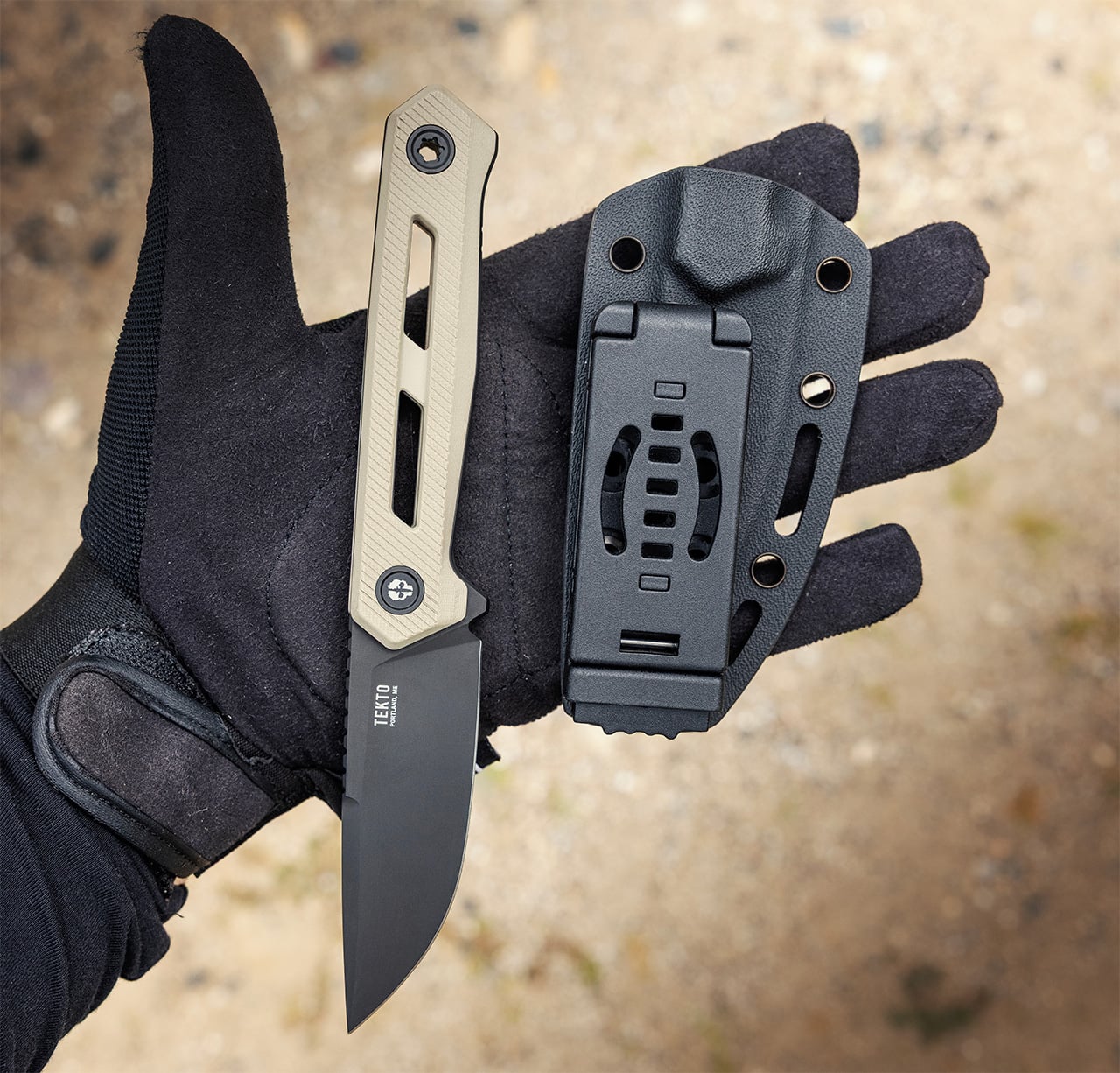
TEKTO built its entire reputation on blades that fold, flip, and fire out the front. The Maine-based brand spent nearly a decade getting serious about automatic and folding knives, quietly becoming a go-to for people who want an OTF that actually holds up. Their design playbook was consistent: lean into a tactical DNA, use premium materials that punch above their weight, and build everything with a certain rugged honesty. It was a solid formula that earned them a loyal following. So when TEKTO dropped the X1 ATLAS, their first fixed blade ever, it felt less like a new product and more like a declaration. Ten years in, they stepped out of the OTF lane entirely and planted a flag in fixed blade territory.
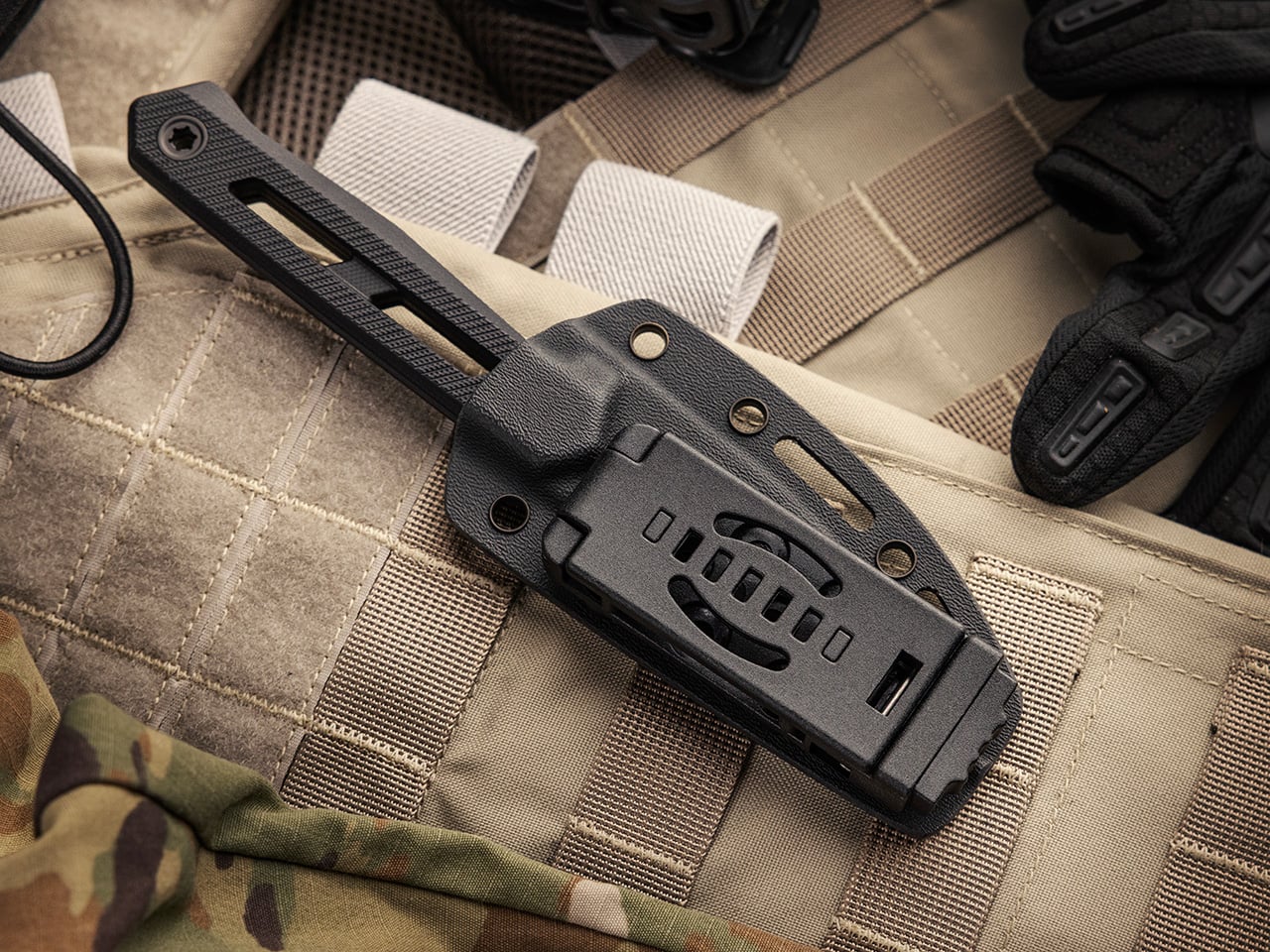
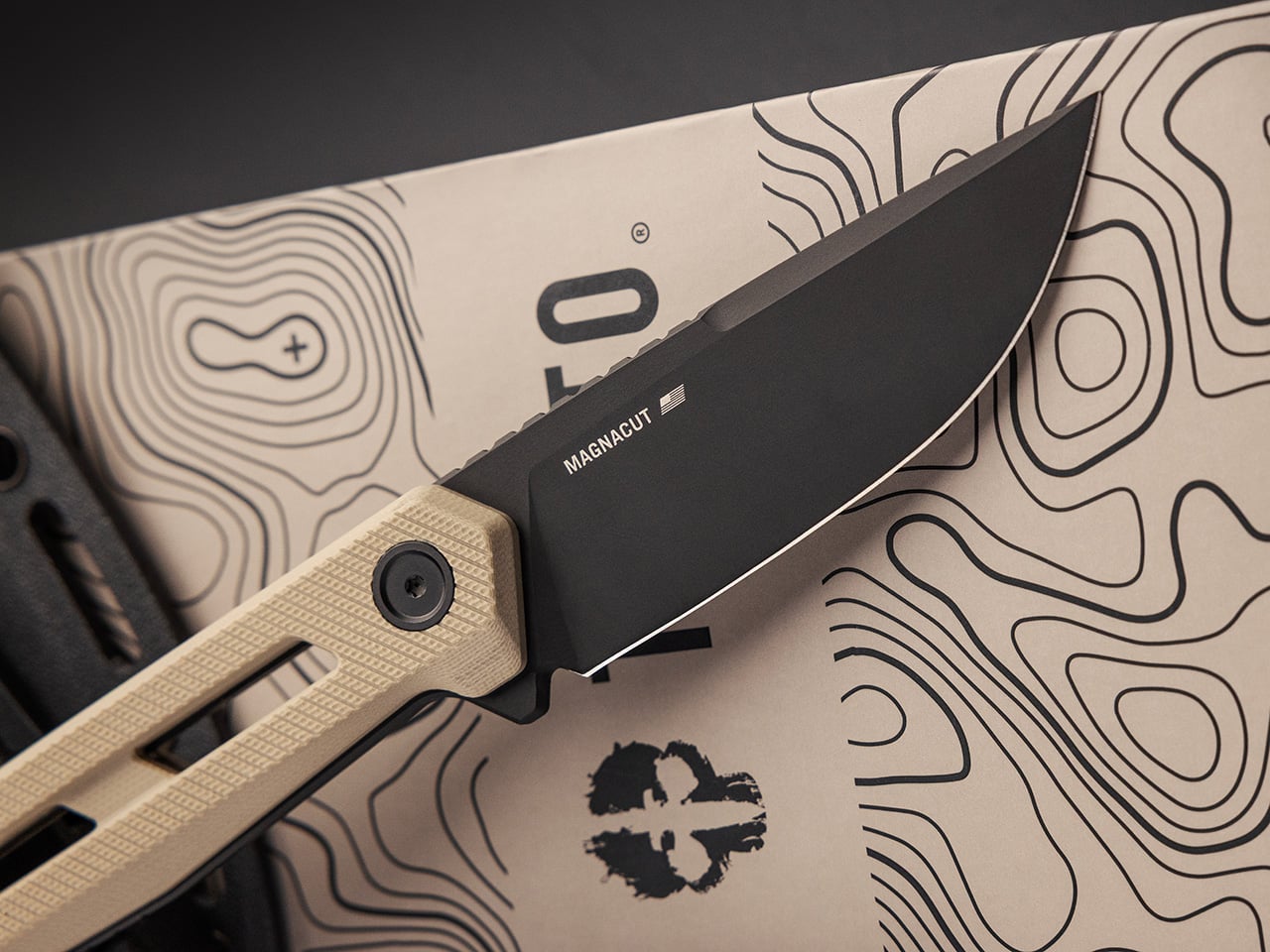
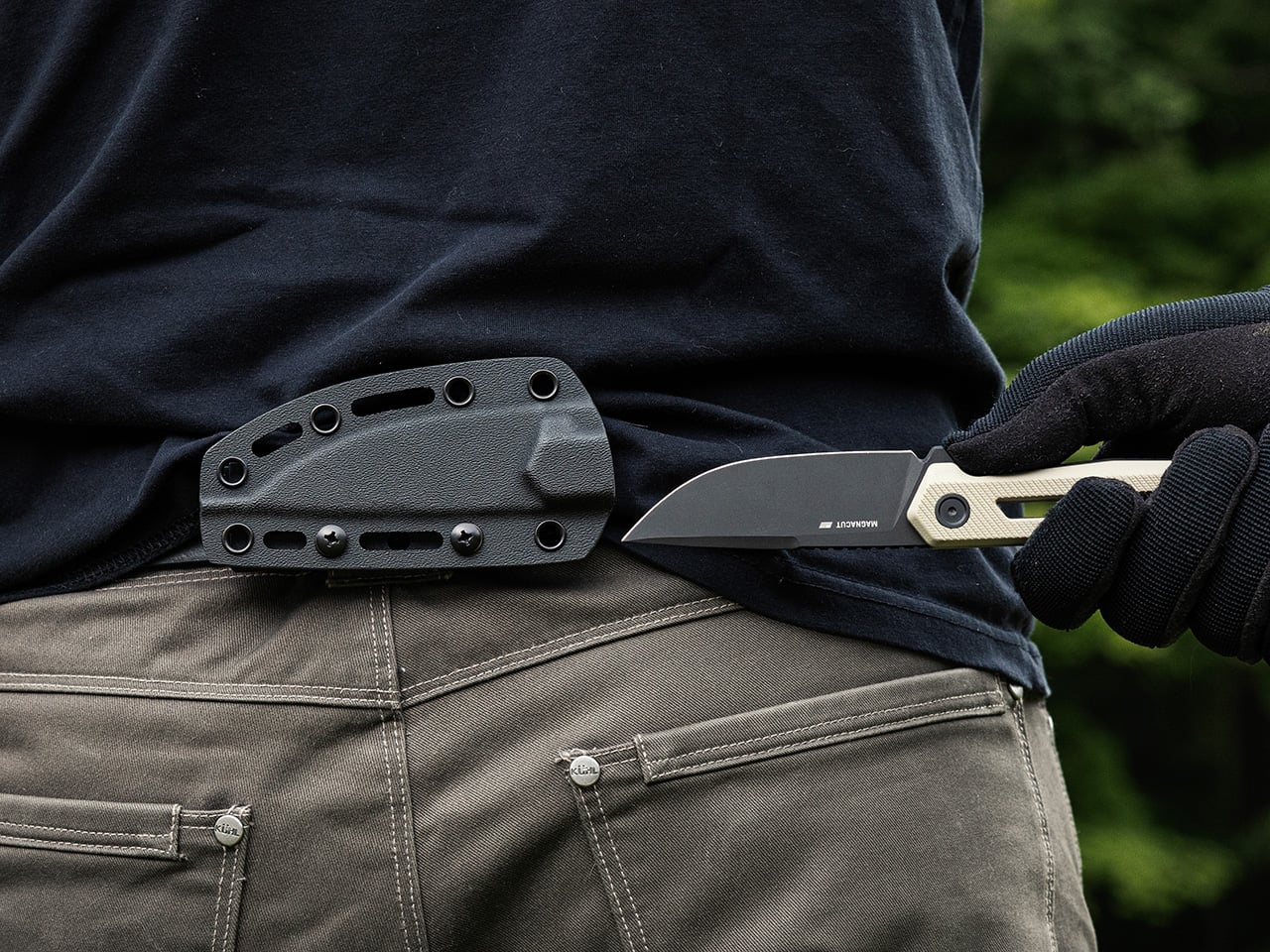
The ATLAS is a 7.70-inch fixed blade with a 3.30-inch drop point ground from CPM MagnaCut, the steel that has dominated knife talk for years for good reason. Its handle is skeletonized G10 on a full-tang frame, a clever move that keeps the whole knife down to a featherlight 3.88 ounces. A Kydex sheath with an adjustable belt clip comes standard, ready for vertical or horizontal carry right out of the box. TEKTO even offers custom blade engraving for ten bucks, a nice touch on a tool designed for hard use. The ATLAS is made in the USA and priced at $249.99, positioning it as the flagship of a new fixed blade line for a brand confidently stepping into a new arena.
CPM MagnaCut, developed by metallurgist Dr. Larrin Thomas at Crucible Industries, did something the knife world had been waiting for: it solved the toughness-corrosion trade-off. Most premium steels forced a choice between the two. High corrosion resistance, think M390, meant giving up toughness. High toughness, think S35VN, meant accepting some rust risk. Thomas eliminated chromium carbides from the microstructure, freeing chromium to stay in solution and fight corrosion without touching hardness or edge retention. For a brand debuting their first fixed blade ever, choosing MagnaCut over something more conservative is a signal I like. TEKTO hardened the ATLAS blade to 60-62 HRC, the sweet spot for the steel’s properties to fully express themselves.
The ATLAS runs a drop point profile, the blade geometry that wins the “which shape do you actually want in the field” argument most of the time. The spine slopes gradually from handle to tip, creating a robust, centered point and a long useful belly that handles slicing and fine work without compromise. That shape resists tip damage under lateral loads, which matters once the ATLAS gets handed something harder than kitchen cardboard. Running steel continuously through the full 4.40-inch handle as a full tang eliminates the structural weak point at the blade-handle junction, the exact place a partial tang fails under hard chopping or batoning. The 3.30-inch blade length keeps the ATLAS legal in most carry situations while still being genuinely useful.
Skeletonized G10 is what makes 3.88 ounces possible on a full-tang fixed blade with this much handle real estate. G10 is a fiberglass and epoxy resin composite, laminated and cured under high pressure, producing a material that resists impact, moisture, and chemicals without adding unnecessary weight. Skeletonizing means CNC milling away material from non-load-bearing sections of the handle scales, cutting mass without compromising structural integrity. The resulting surface is textured, grippy, and stable across temperature extremes, which matters for a brand literally founded on the frustration of knives that quit in cold Maine winters. The one early reviewer on TEKTO’s site noted the handle felt grippy and surprisingly light, which is exactly the combination a full-tang fixed blade needs to pull off.
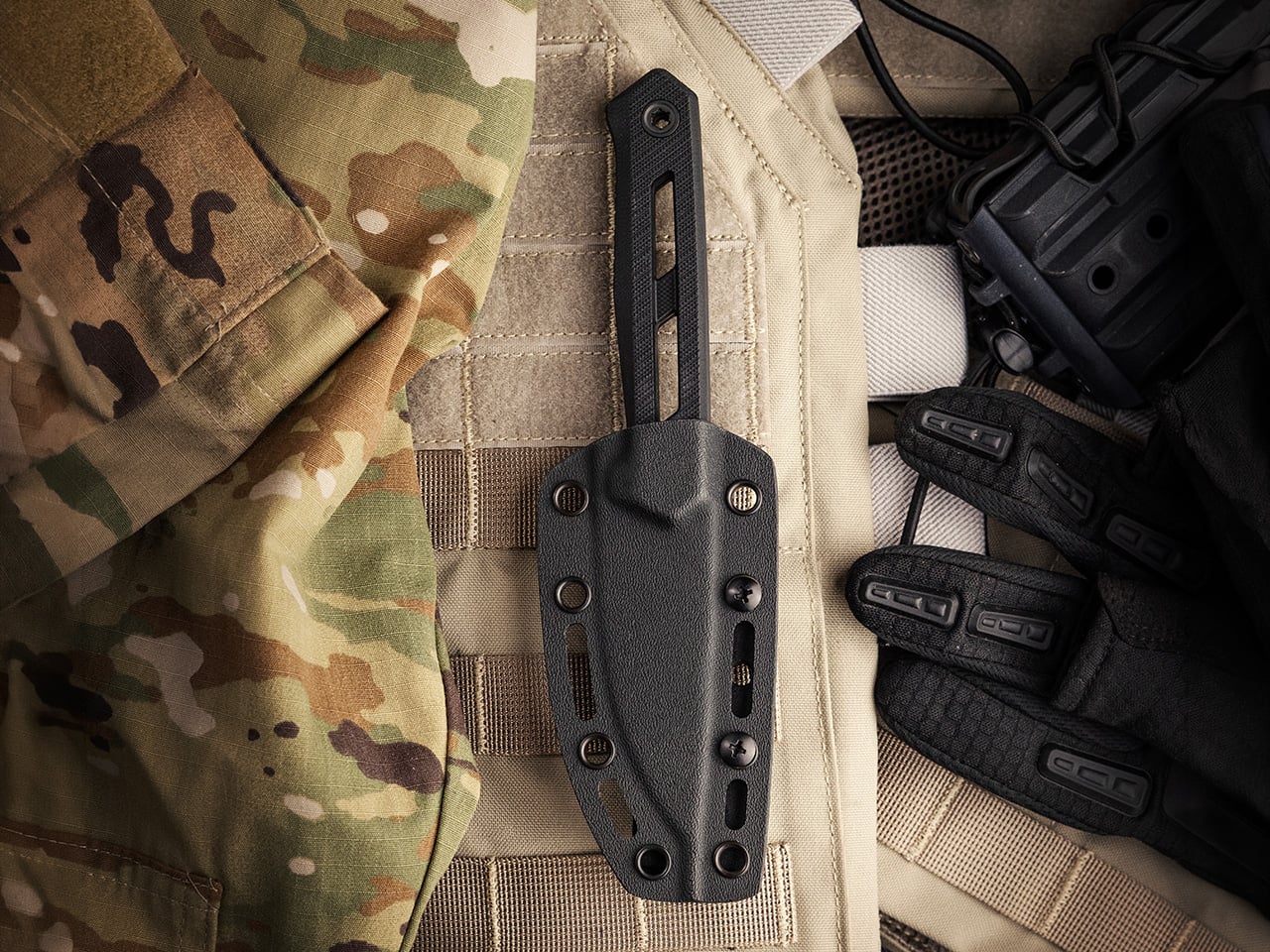
The Kydex sheath that ships with the ATLAS is purpose-molded to the knife, meaning retention is consistent from the first draw rather than requiring break-in time. Kydex is a thermoplastic material that holds its shape, shrugs off moisture and sweat, and skips the periodic conditioning that leather demands. The adjustable belt clip configures for vertical or horizontal carry, a practical detail for users whose setup changes between contexts, say a belt rig in the field versus a horizontal setup at a work site. A lanyard hole at the butt of the handle adds the option for wrist tethering or utility cord attachment. The sheath ships ready to use, no aftermarket upgrades required to make the carry system work.
The X1 ATLAS retails for $249.99 and is currently available in Black G10 directly through TEKTO’s website, with free US shipping and returns included. TEKTO backs it with a limited lifetime warranty covering defects in materials and workmanship, so if the knife ever fails because of the knife rather than the user, they will repair or replace it at no charge. Custom blade engraving is available as a $9.99 add-on at checkout. At this price, the ATLAS shares shelf space with USA-made fixed blades like the Benchmade Puukko, but the MagnaCut specification pushes it into a stronger materials conversation. For a brand making its very first fixed blade, this is an unusually confident place to start.
While I have a lot of keychains, from pop culture to K-pop to travel-themed, I am truly annoyed with keyrings. To be honest, I don’t have any ability to open and close them, so I have to wait for my brother or a friend to attach my keychain of choice. It’s something we use every single day, yet there hasn’t been any improvement to them for the past hundred years or so, and they cause annoyance and sometimes even pain. That oversight, I think, is finally getting corrected.
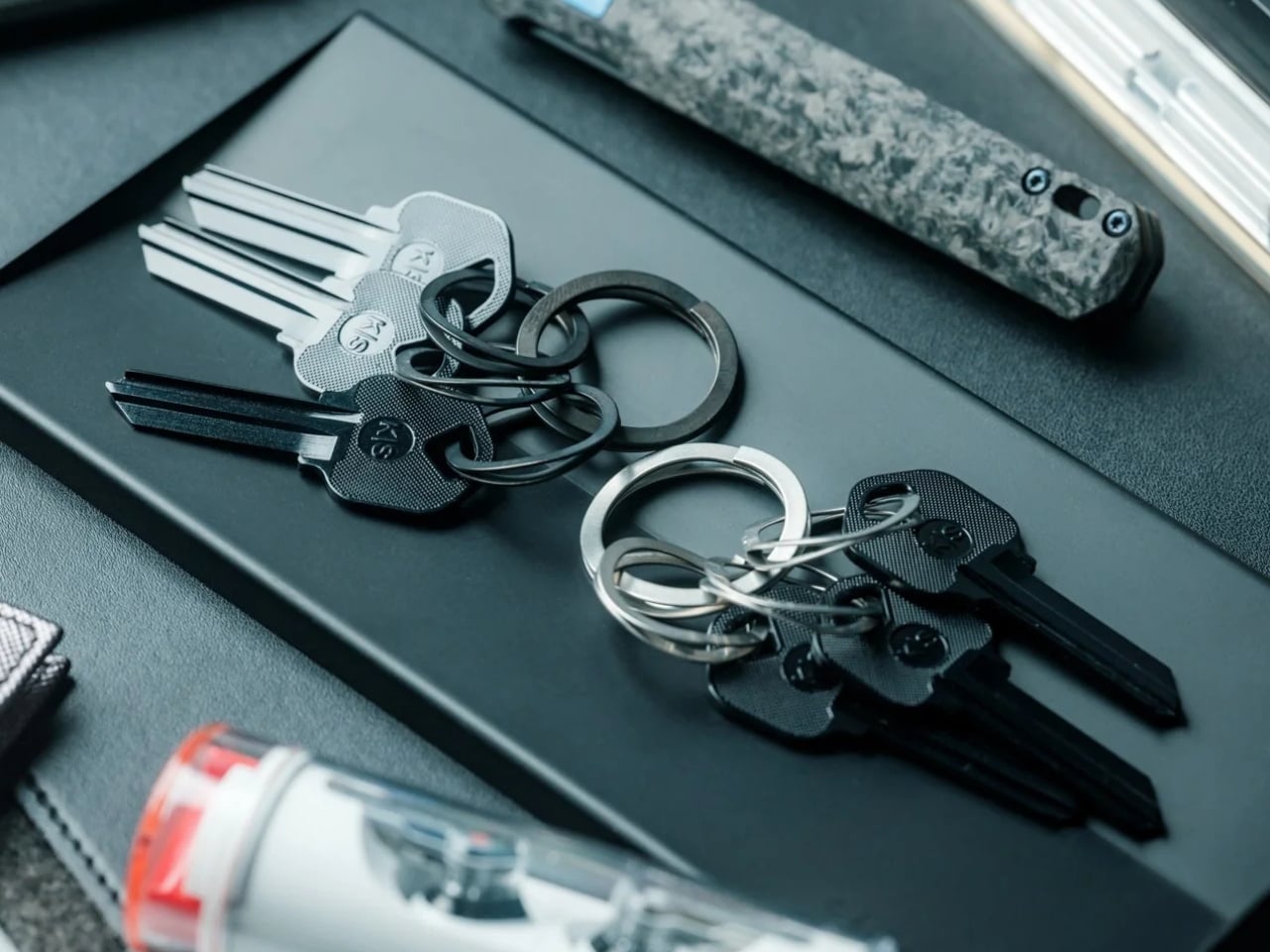
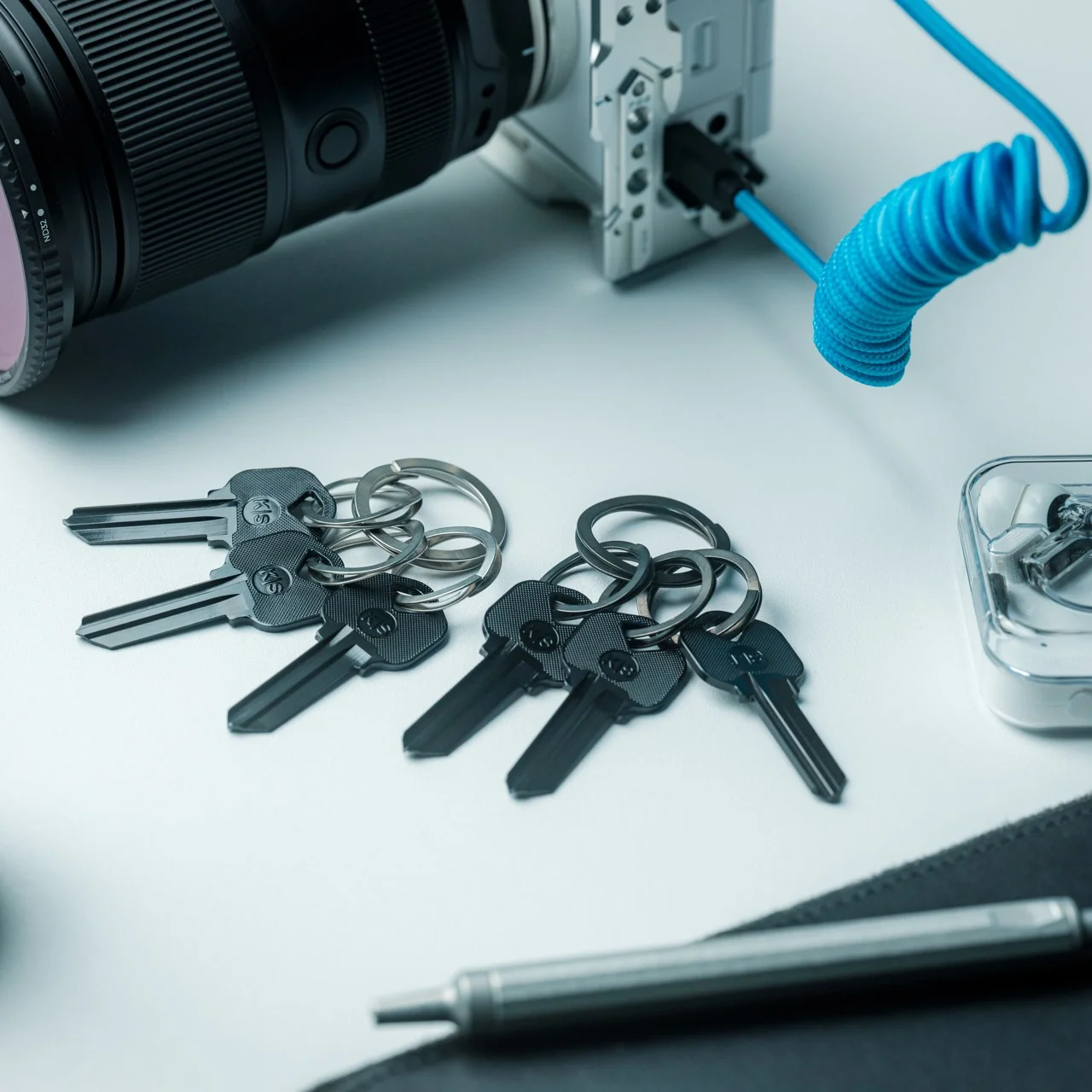
The Painless Key Ring is exactly what its name promises, which is both its greatest strength and possibly why it is not getting the attention it deserves. It sounds almost too simple. A key ring without the pain. But when you consider that the double-coiled split ring design has not meaningfully changed in over 130 years, a product that actually reimagines it from the inside out starts to feel less like a novelty and more like something that was long overdue.
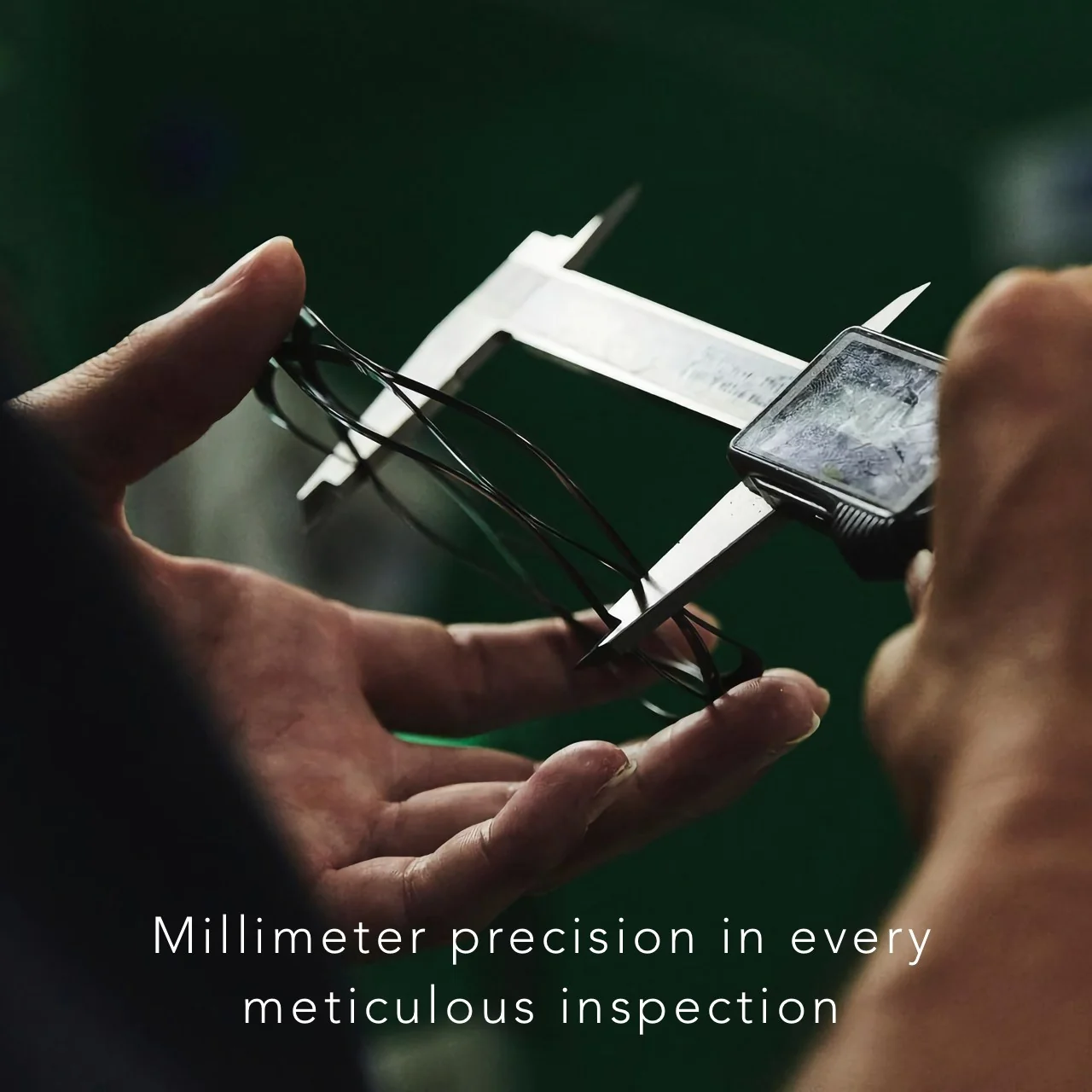
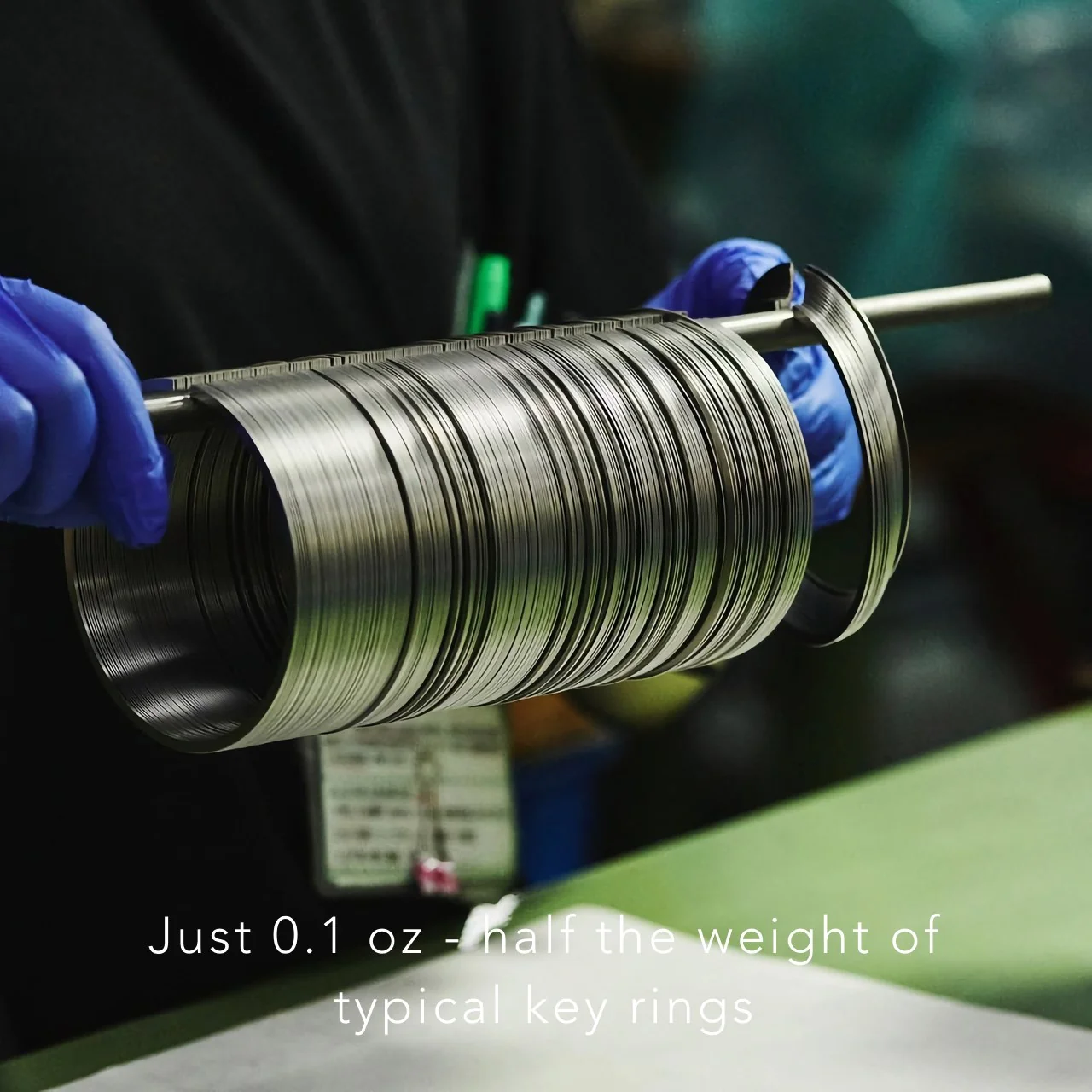
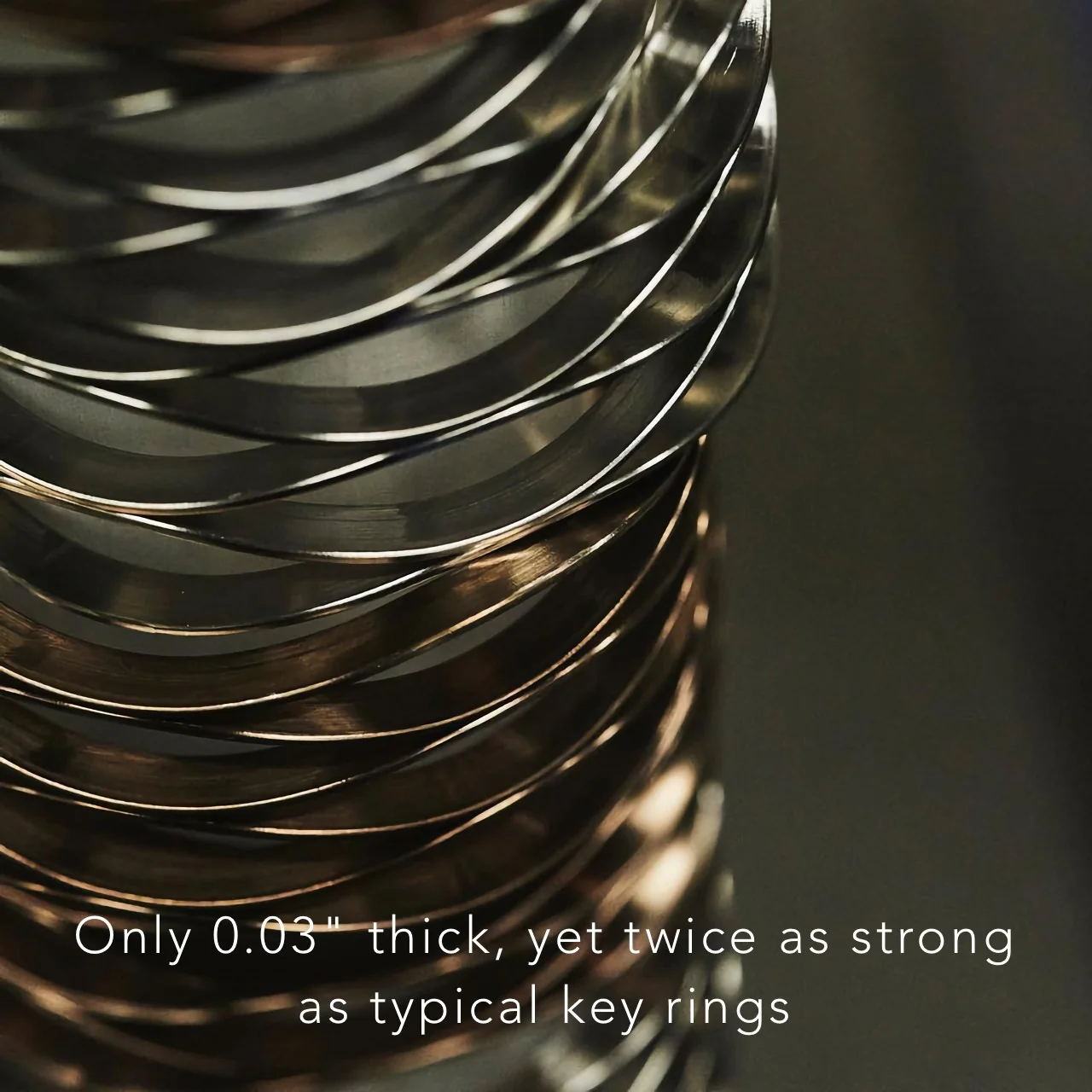
The engineering behind it borrows from places you would not typically associate with your front door key. The coiled wave spring technology used in this ring is the same mechanism found in aerospace equipment and bullet train systems. Japan, where the ring is made, is not exactly known for cutting corners on precision, and that pedigree shows in the numbers. At just 0.1 oz for the large version, it is half the weight of a standard key ring. At 0.03 inches thick, it is noticeably slimmer. And despite being lighter and thinner, it is twice as strong as a conventional ring, thanks to the high-tensile steel used in its construction.
The functional difference comes down to one motion. A traditional split ring makes you hunt for the gap in the coil, wedge a fingernail underneath, and pry it open millimeter by millimeter while the metal digs into your skin. The Painless Key Ring opens when you press the release point. Let go, and it closes. That is the entire operation. No gap hunting, no skin damage, no compromised manicure. The wave spring structure creates what you could describe as a “pre-warped” design, where the natural flex of the ring accommodates keys of any size without warping under stress or losing its shape over time.
It comes as a set of one large ring and three smaller rings, available in silver and black. The black version is dyed rather than painted, which makes it more resistant to wear and scratches, not just aesthetically different. Both finishes hold up well against the daily context of being thrown into a bag, clipped to a carabiner, or dropped on a desk, which is most of our actual key ring experience.
At $29 for a set, the price sits in a range that feels proportionate to what you are getting. It is not an impulse buy, but it is also not a hard sell when you consider that most people spend more on a single decent pen without much deliberation. The comparison that keeps coming to mind is the razor that replaced the old disposable, or the notebook that made you stop picking up freebies at conferences. Once you use something engineered to actually work, the previous version becomes very difficult to go back to.
The design community talks a lot about objects that deserve more attention than they receive, and the key ring is probably the most obvious example of that gap. We carry our keys every day without any particular feeling about them, which is fine until you realize that feeling nothing about a daily object usually means it is only doing the minimum. The Painless Key Ring sets a different bar, one that takes the smallest, most neglected piece of your everyday carry and applies genuine engineering logic to it. Whether you are someone who obsesses over EDC setups or someone who just wants to stop destroying their nails every time you need a spare key, the upgrade reads the same either way.