This Compact Grill Plate Cooks a Perfect Steak Over Any Heat Source & Packs Flat When You’re Done

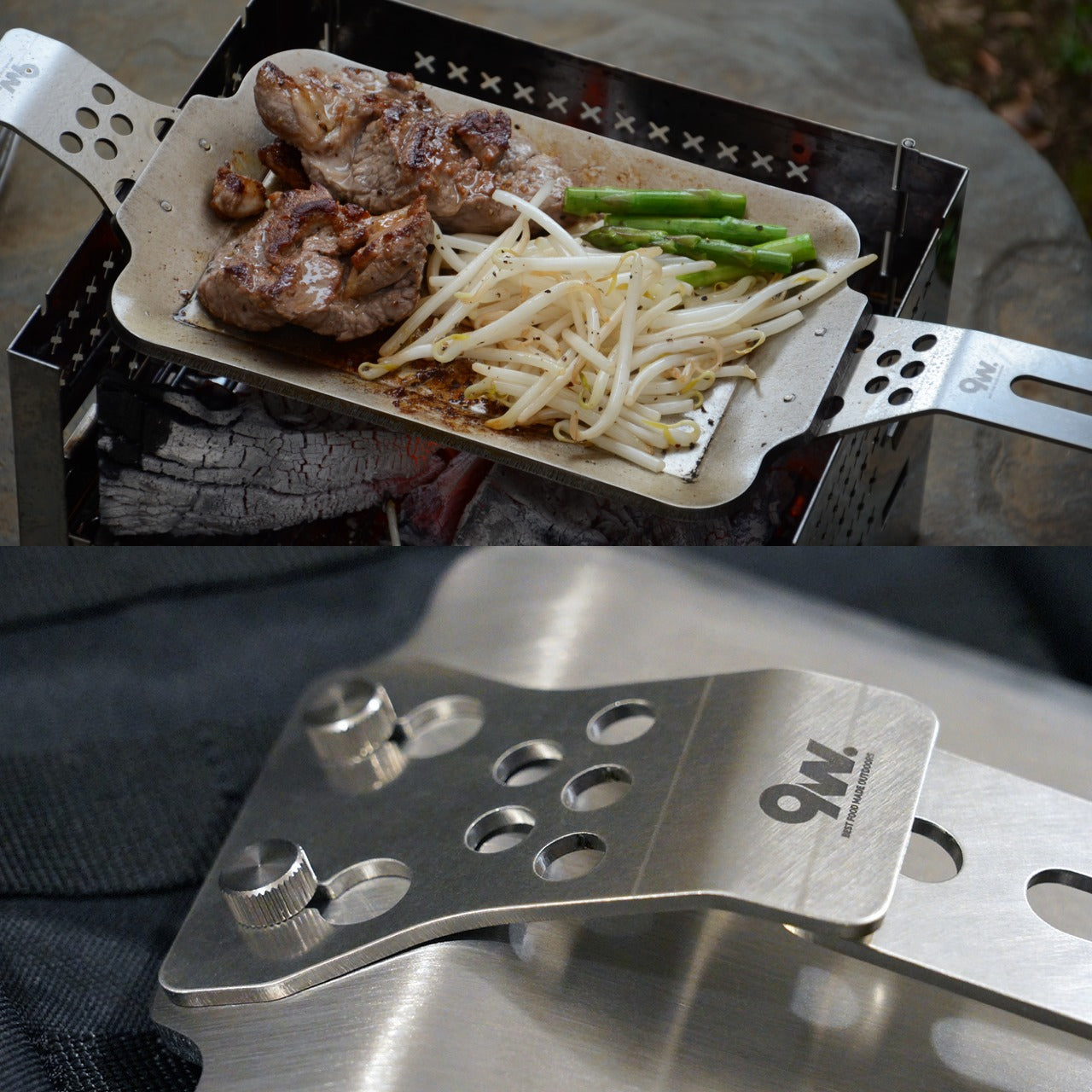
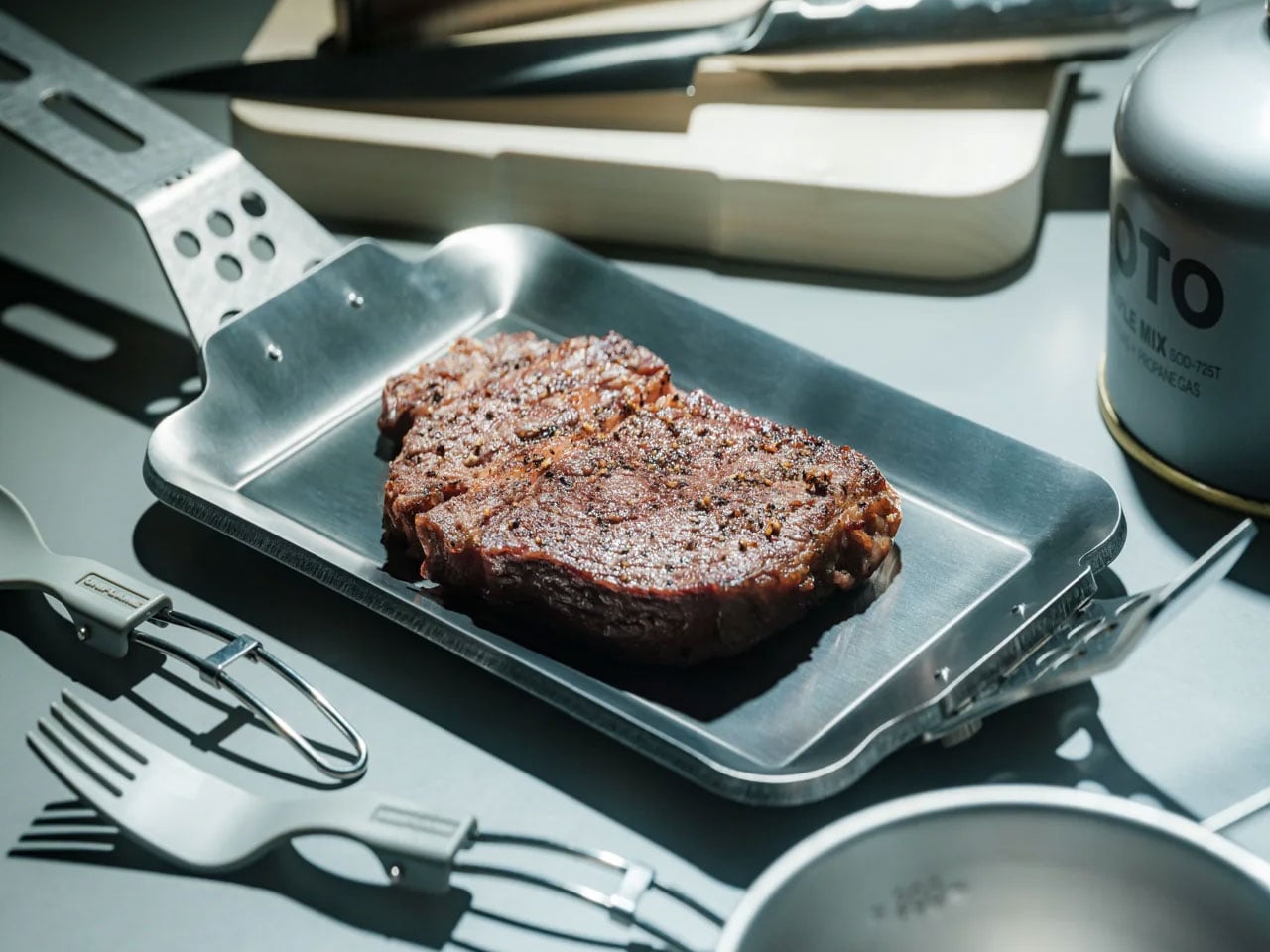
Some grill pans spend their days at the back of a cabinet, too heavy to bother with and too uneven to trust. Then there are the ones that earn a place on the stove every single time. The Compact Modular Grill Plate belongs to the second category. Built with a three-layer steel construction that spreads heat evenly across its entire surface, it closes the gap between a proper kitchen sear and a campfire meal, without making you choose between the two.

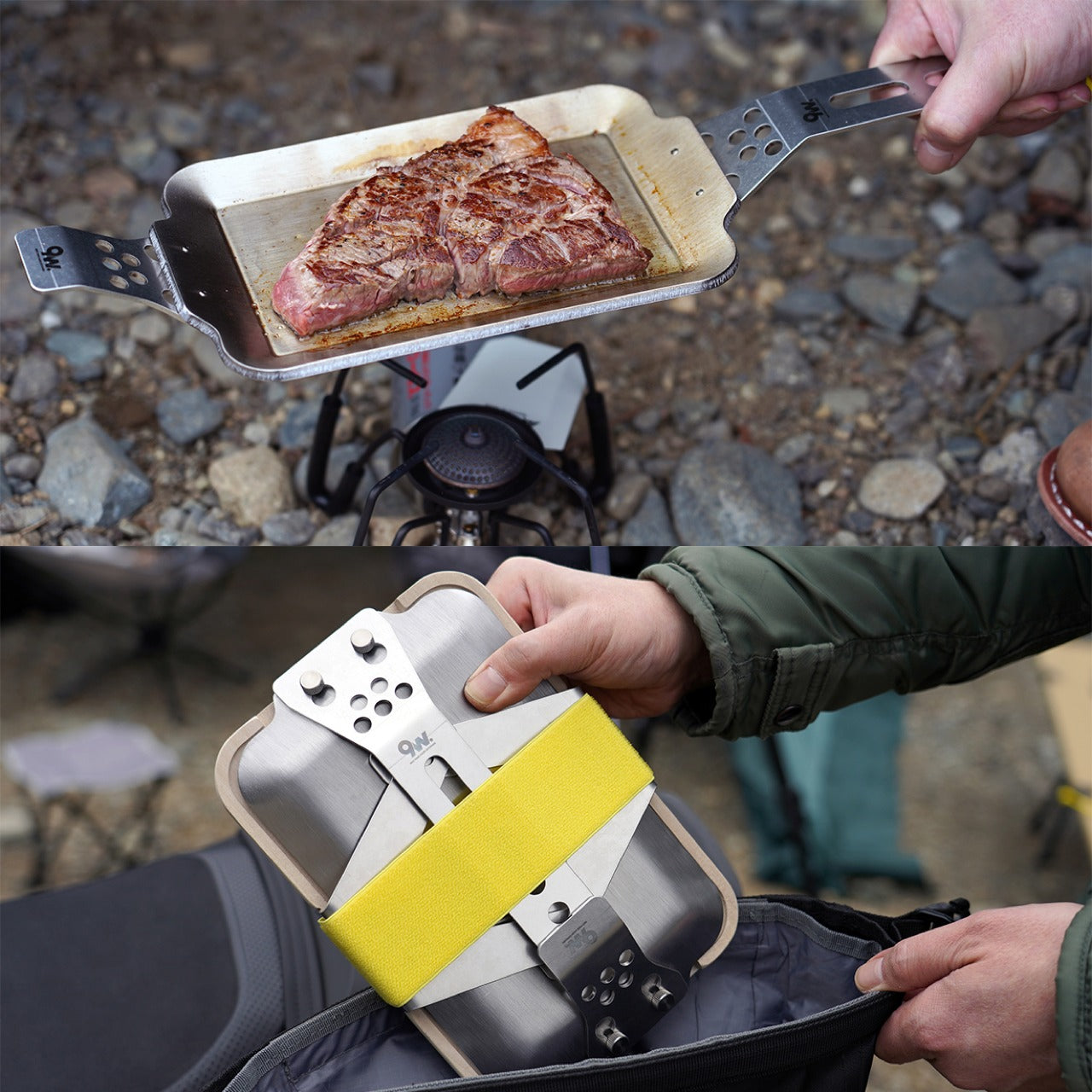
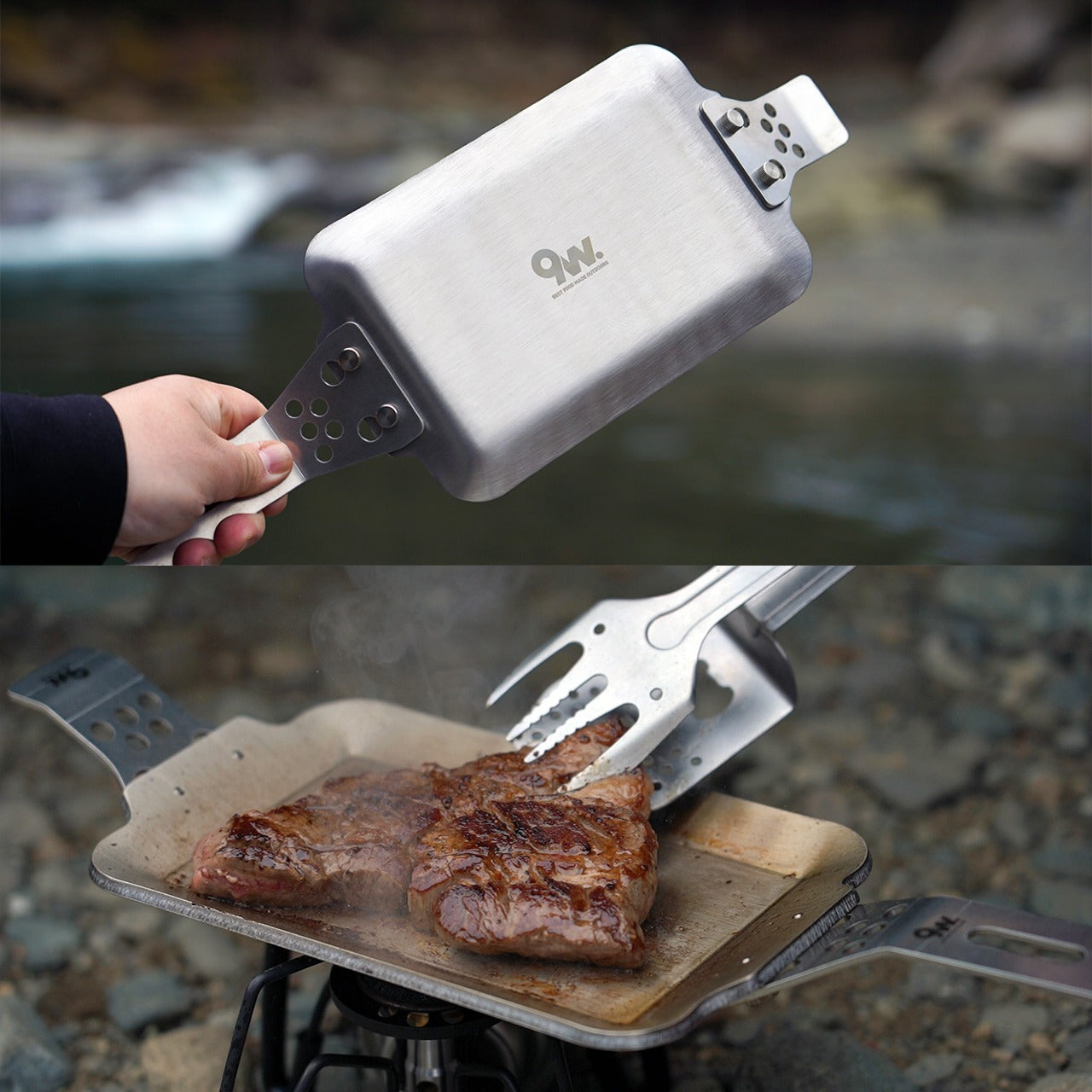
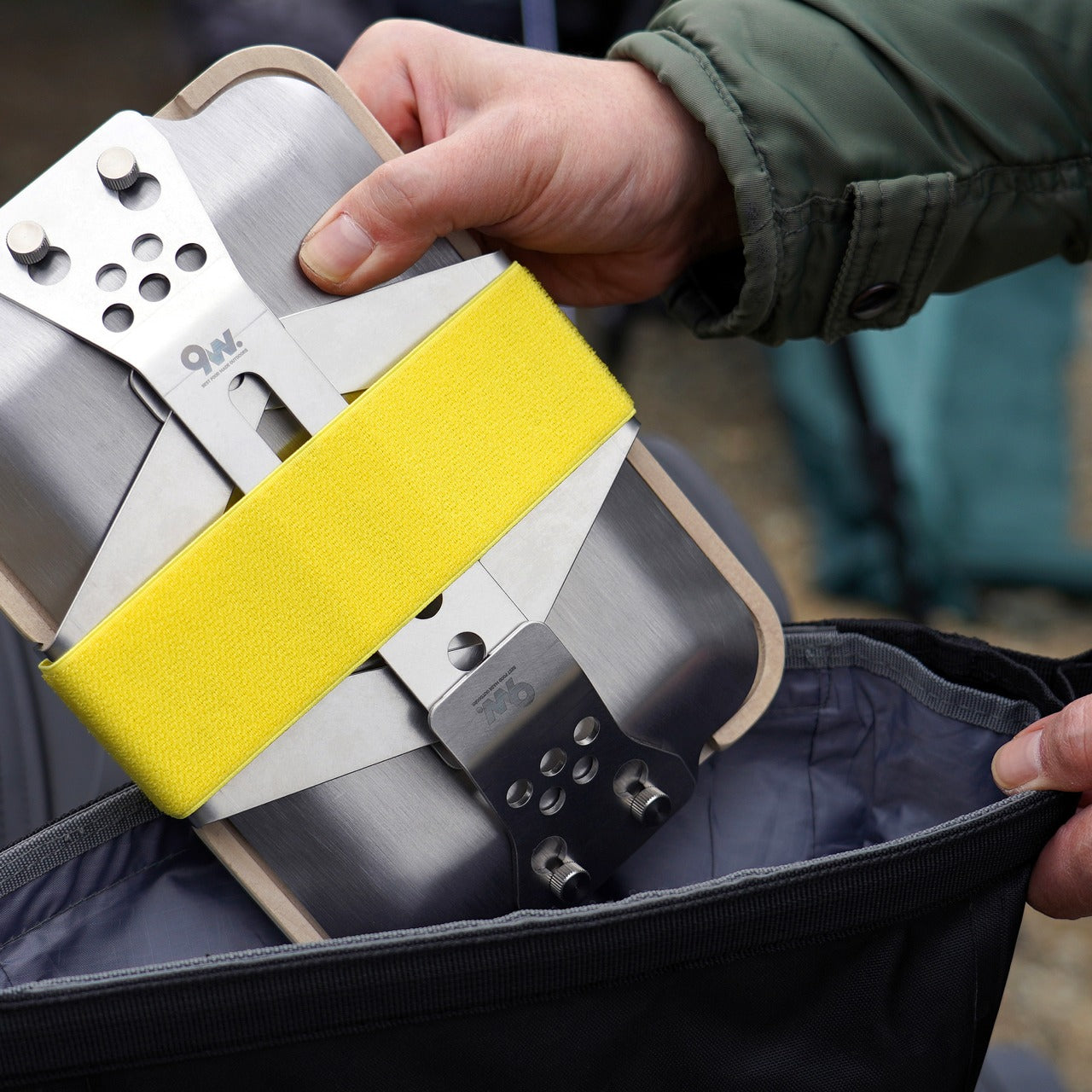
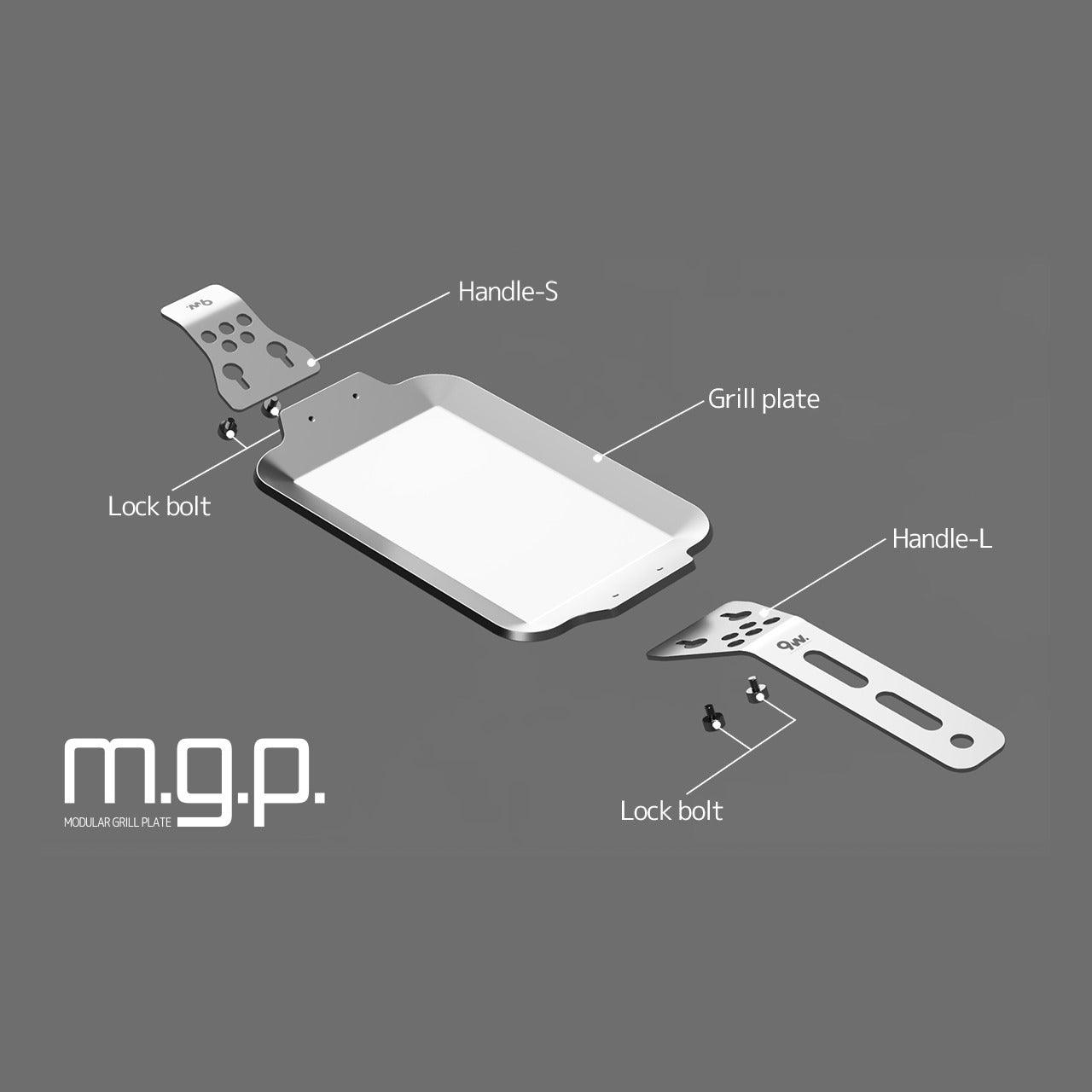
What makes it worth owning is the adaptability. Handles swap out depending on the situation. The plate runs on campfires, gas burners, and induction stoves without modification. When cooking is done, the whole setup packs flat, small enough to fit in a bag without reorganizing everything around it. That level of flexibility does not happen by accident. It is the result of a design that actually solves the problem rather than merely describing it.

Click Here to Buy Now: $100.00

Even Heat, Everywhere

The three-layer steel plate is where the performance begins. Single-layer pans burn where the flame sits and fade everywhere else, which is how a good cut of meat ends up patchy and dry in the wrong places. The layered construction here distributes heat uniformly from the edge to the center, keeping the temperature consistent across the entire cooking surface. The result is a better sear, better moisture retention, and food that actually tastes the way it should. Compatible with campfires, gas burners, and induction stoves, it performs just as well in a small apartment kitchen as it does over an open fire on uneven ground.

Modular, Compact, Actually Practical

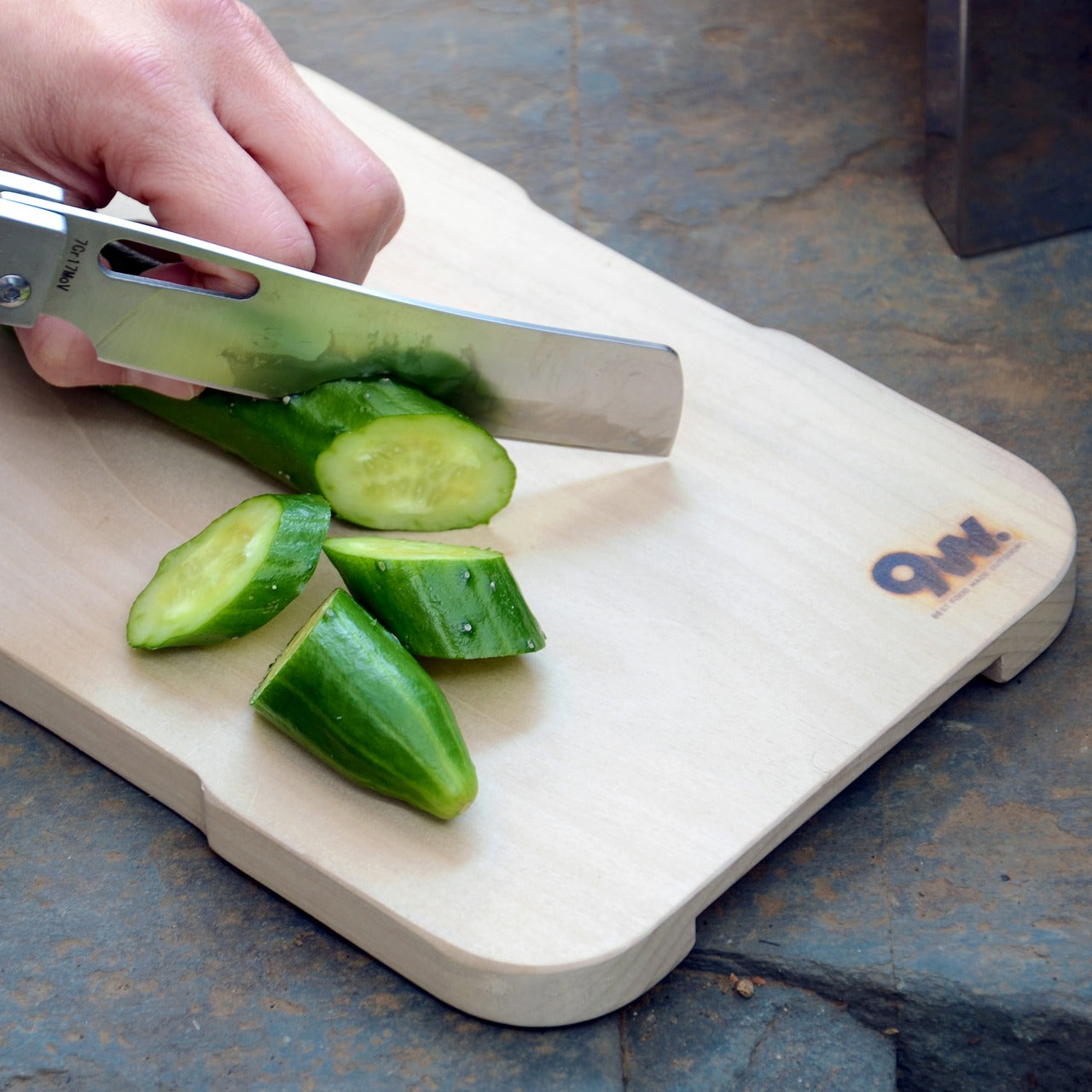
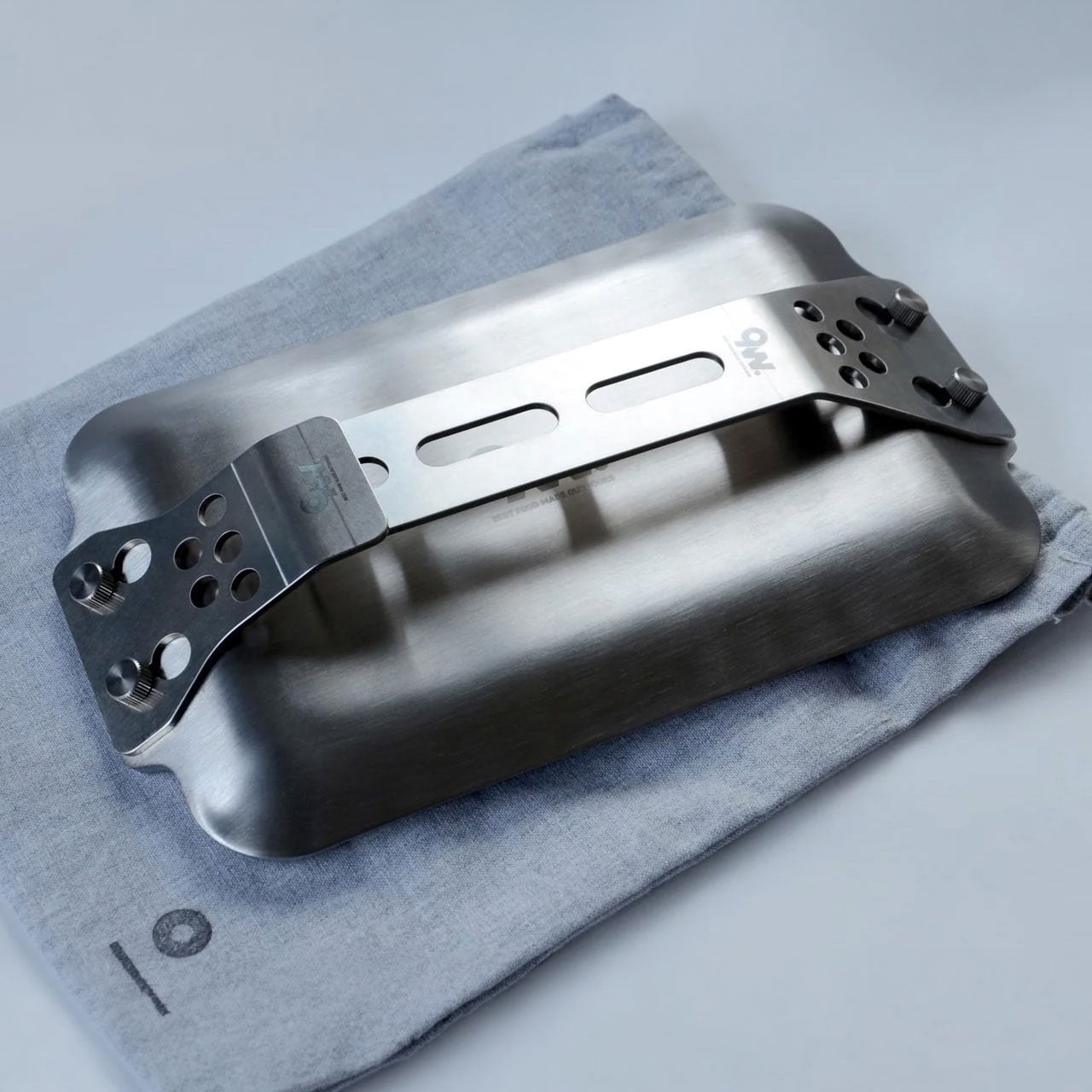
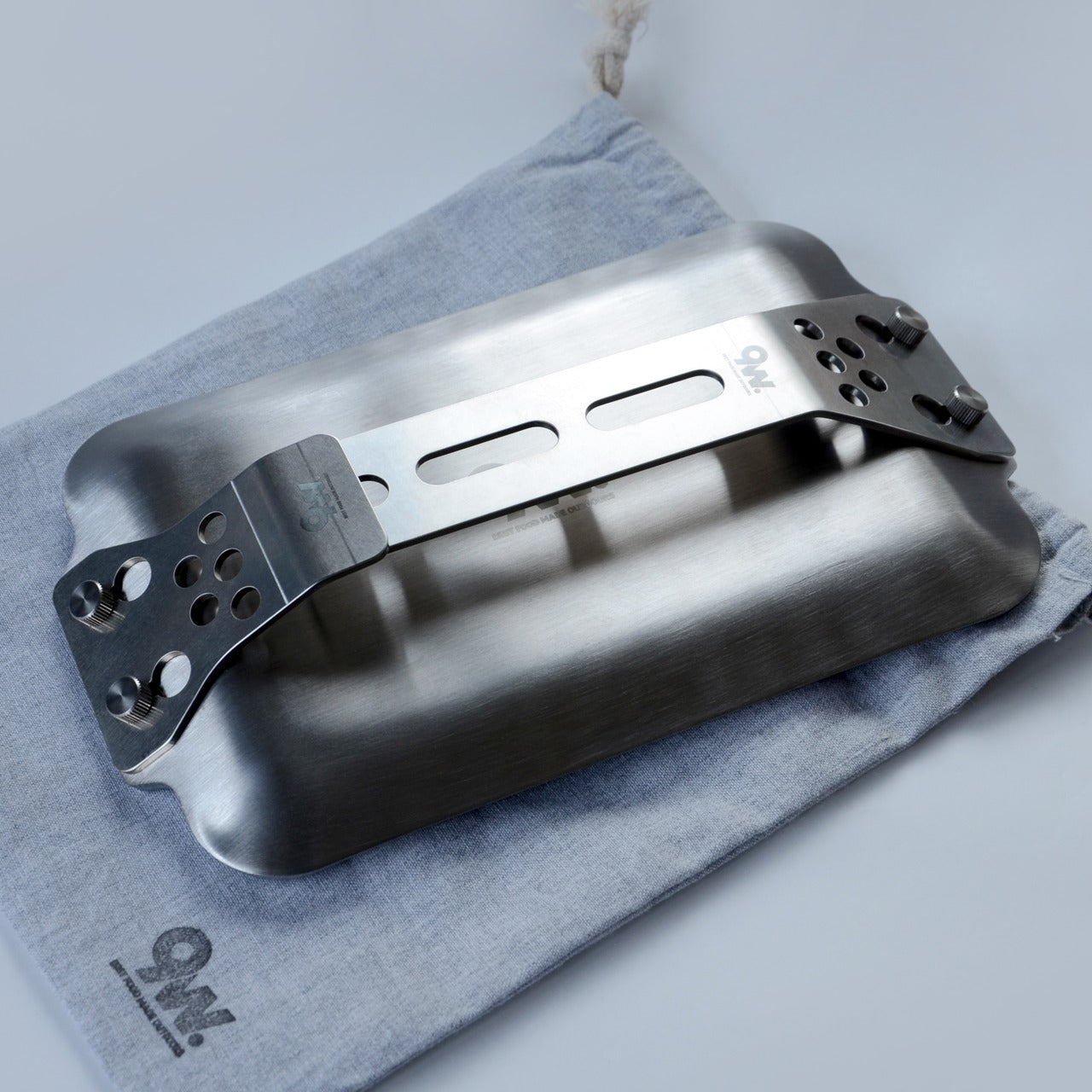
Most portable cookware treats portability as a footnote. The Compact Modular Grill Plate starts there. The handle system swaps out depending on the setting, so the plate adjusts to whatever the cook needs rather than the other way around. Remove the handles for cleaning, and pack everything flat for travel. There is a specific kind of satisfaction in gear designed to disappear when you are done with it, and this plate earns that cleanly. It comes in a Basic set and a Special set for those who want more to work with from the start.

What We Like

  • Three-layer heat distribution: a properly engineered cooking surface that keeps temperature uniform for consistent sears and better moisture retention from edge to center
  • Multiple heat source compatibility: campfire, gas, and induction in one plate with no adapters and no compromise between settings
  • Swappable handle design: takes seconds to change and genuinely adapts the plate to whatever situation the cook is working in
  • Compact pack-down: flat storage with handles removed; the kind of practical detail that determines whether gear actually makes the trip

What We Dislike

  • No surface treatment specified: the product does not clarify whether the cooking surface has a non-stick finish, which matters for cooking delicate proteins and for cleanup expectations
  • Limited set configuration: Basic and Special cover the range well, but there is no option to add a single accessory without committing to a full set upgrade

The Cookware That Goes Where You Go

The Compact Modular Grill Plate was built for cooking that happens outside the ideal. An unpredictable campfire. A countertop induction burner in a small space. A situation where the cookware needs to adapt before you do. It handles all three without changing what it is, which is a rarer quality in portable cookware than it should be.

If what you are currently cooking with makes the meal harder than it needs to be, this is the straightforward fix. Pick up the Basic or Special set and take the guesswork out of the next meal.

The post This Compact Grill Plate Cooks a Perfect Steak Over Any Heat Source & Packs Flat When You’re Done first appeared on Yanko Design.

5 Portable Bluetooth Speakers for Summer 2026 That Sound as Good Outside as They Look

Most portable speakers resolve the outdoor brief in one of two ways. They build something tough enough to survive whatever summer throws at it, then let design take care of itself. Or they craft something that looks considered and hope it never meets moisture. These five refuse that tradeoff. Each earns its place outdoors on visual merit alone, a bar that very few speakers in this category have the confidence to clear.

The selection spans passive acoustic amplification to hard-anodized Danish aluminum, retro broadcast aesthetics to science fiction metalwork, and an outdoor warrior that floats face-up in a swimming pool. What ties them together is a conviction that a portable speaker should be worth looking at when the music stops. Whether you pack one for the long weekend or set one up on the rooftop, these speakers make the setup look considered before anyone hits play.

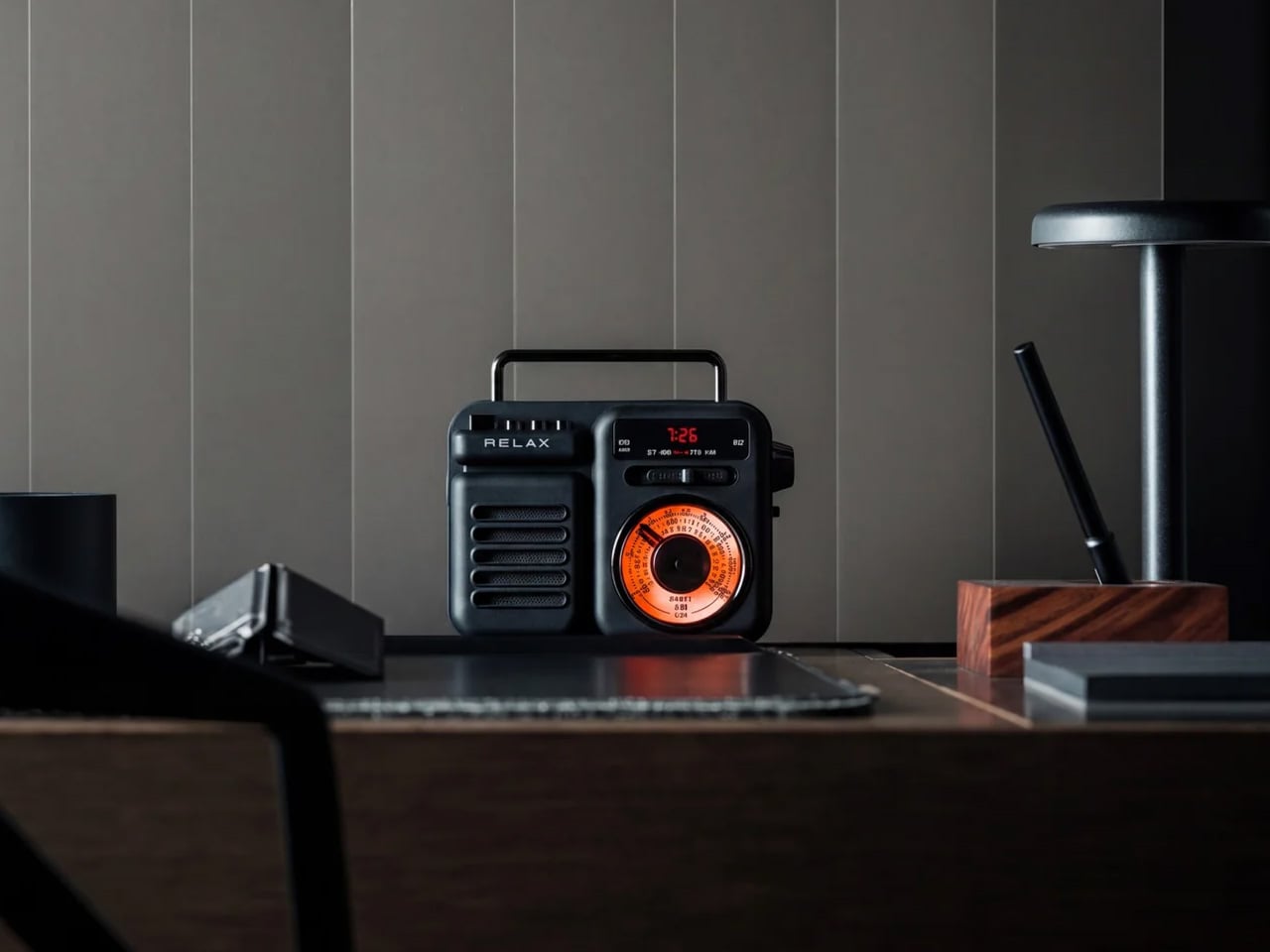
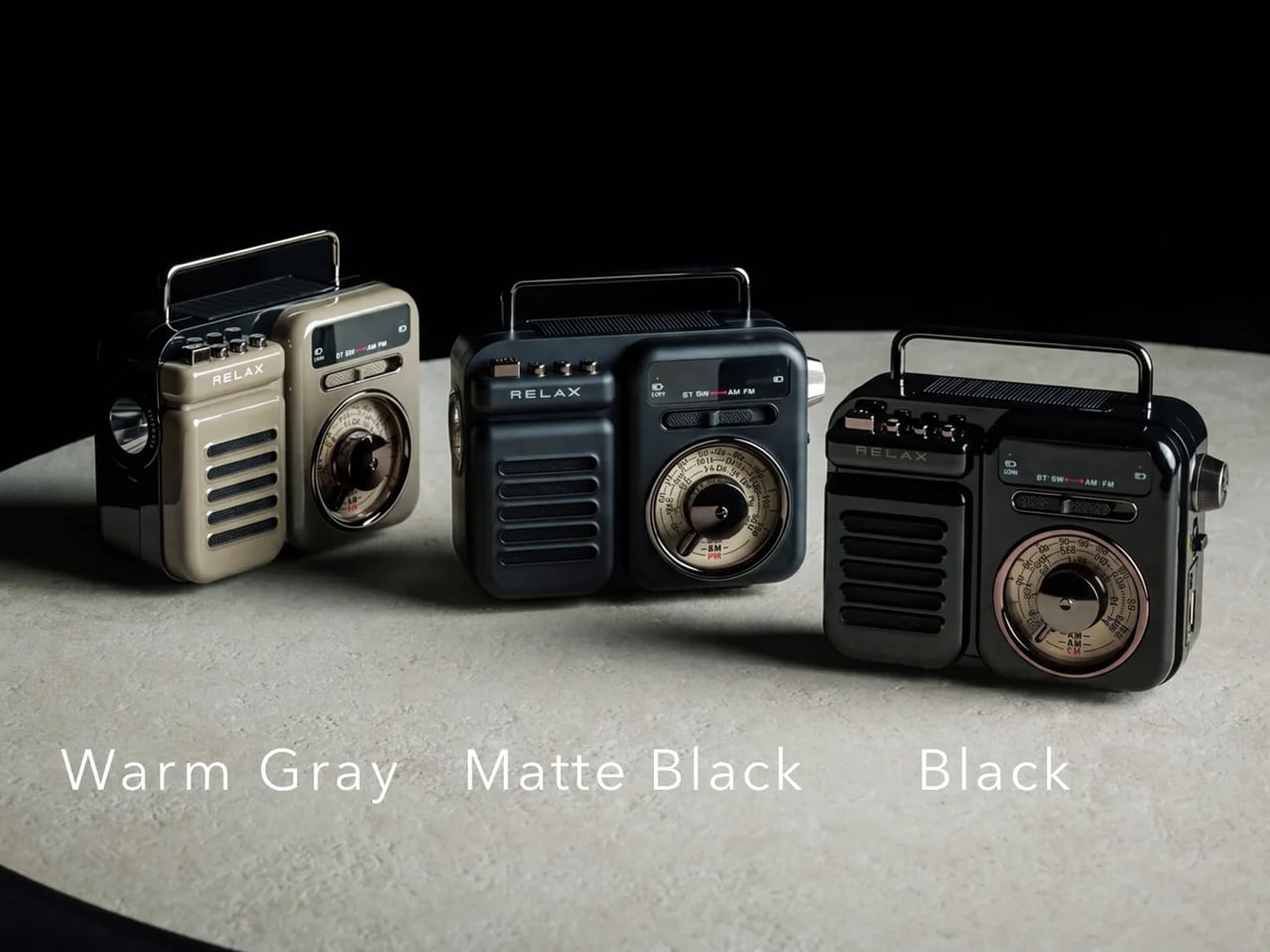
1. Retrowave Radio

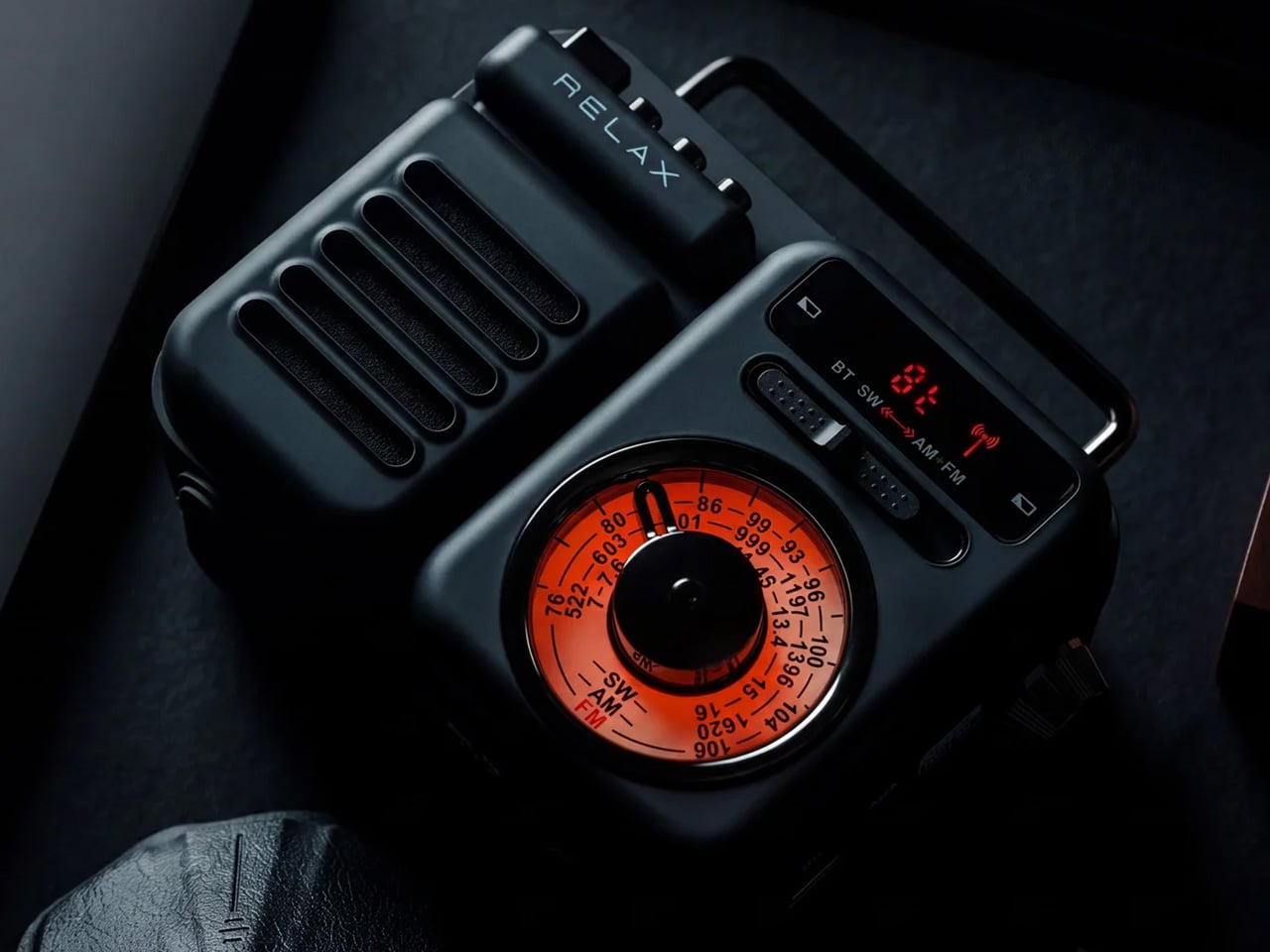
There is a specific pleasure in a speaker that looks like it predates Bluetooth by thirty years. The Retrowave Radio brings that cabinet sensibility into a summer that runs on playlists and wireless connectivity, giving you the best of both. Its proportions and analog-styled face sit more comfortably on a picnic blanket or campsite ledge than most modern speakers manage, which tend to read as tech accessories rather than objects genuinely worth looking at.

The FM tuner adds a layer the streaming era forgot. Scanning local frequencies somewhere without a strong data signal is its own kind of discovery, the kind no algorithm delivers. Bluetooth connectivity keeps it relevant to every device you already own, so the retro shell is not a compromise so much as a philosophy about what listening outdoors should feel like. It is the speaker most likely to draw a question from whoever walks past, which is the highest compliment any piece of audio design can receive.

Click Here to Buy Now: $89.00

What We Like

  • The retro cabinet reads as a considered aesthetic statement rather than a novelty gimmick, and holds its own in any outdoor setting
  • Dual functionality as a Bluetooth speaker and FM radio opens it up to genuine off-grid situations where streaming is not an option

What We Dislike

  • The analog-inspired styling may not suit those who prefer a contemporary minimal look in their audio gear
  • FM reception quality depends entirely on local signal strength, which varies considerably depending on where summer takes you

2. Anker Soundcore Boom 3i

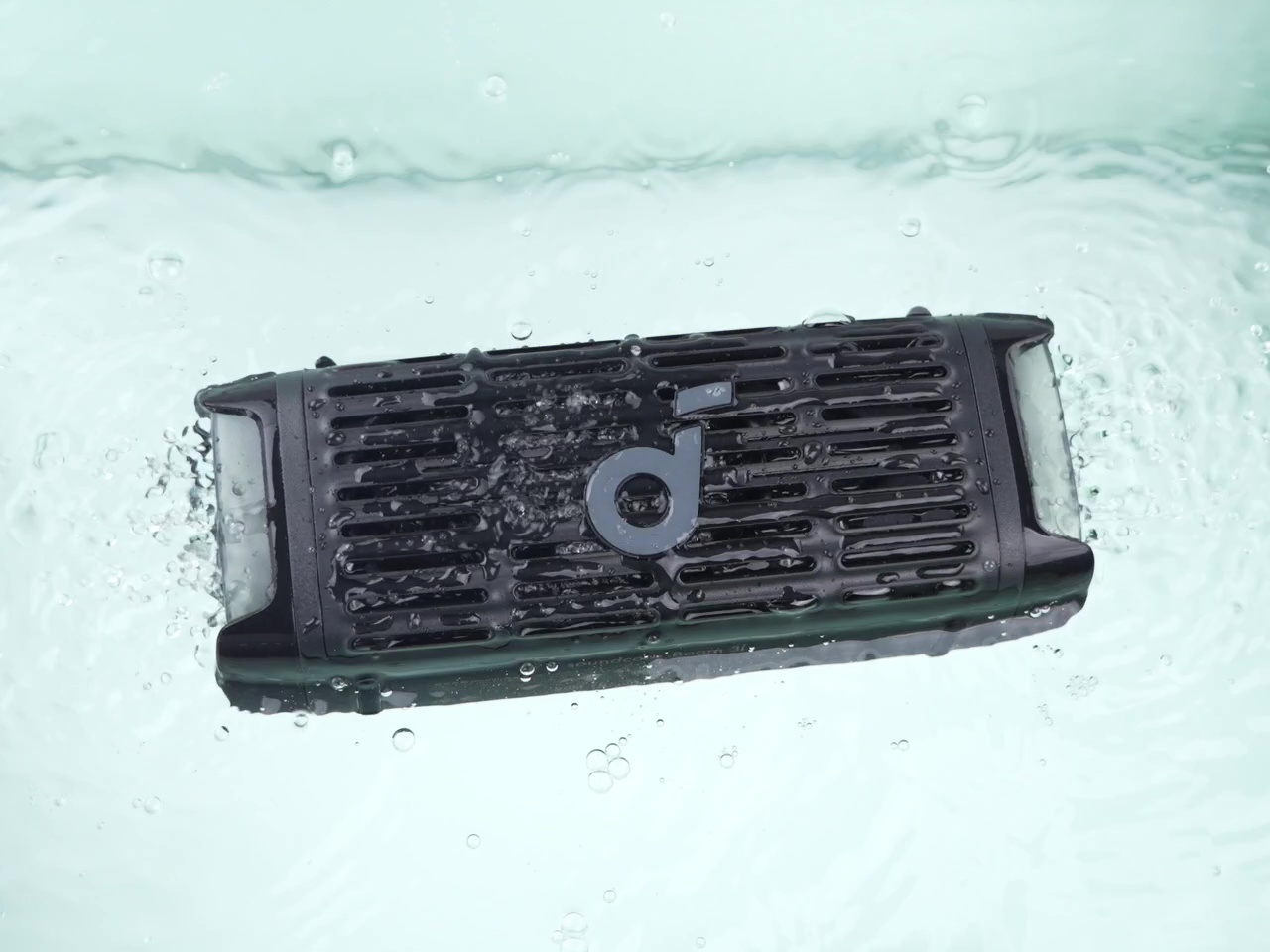
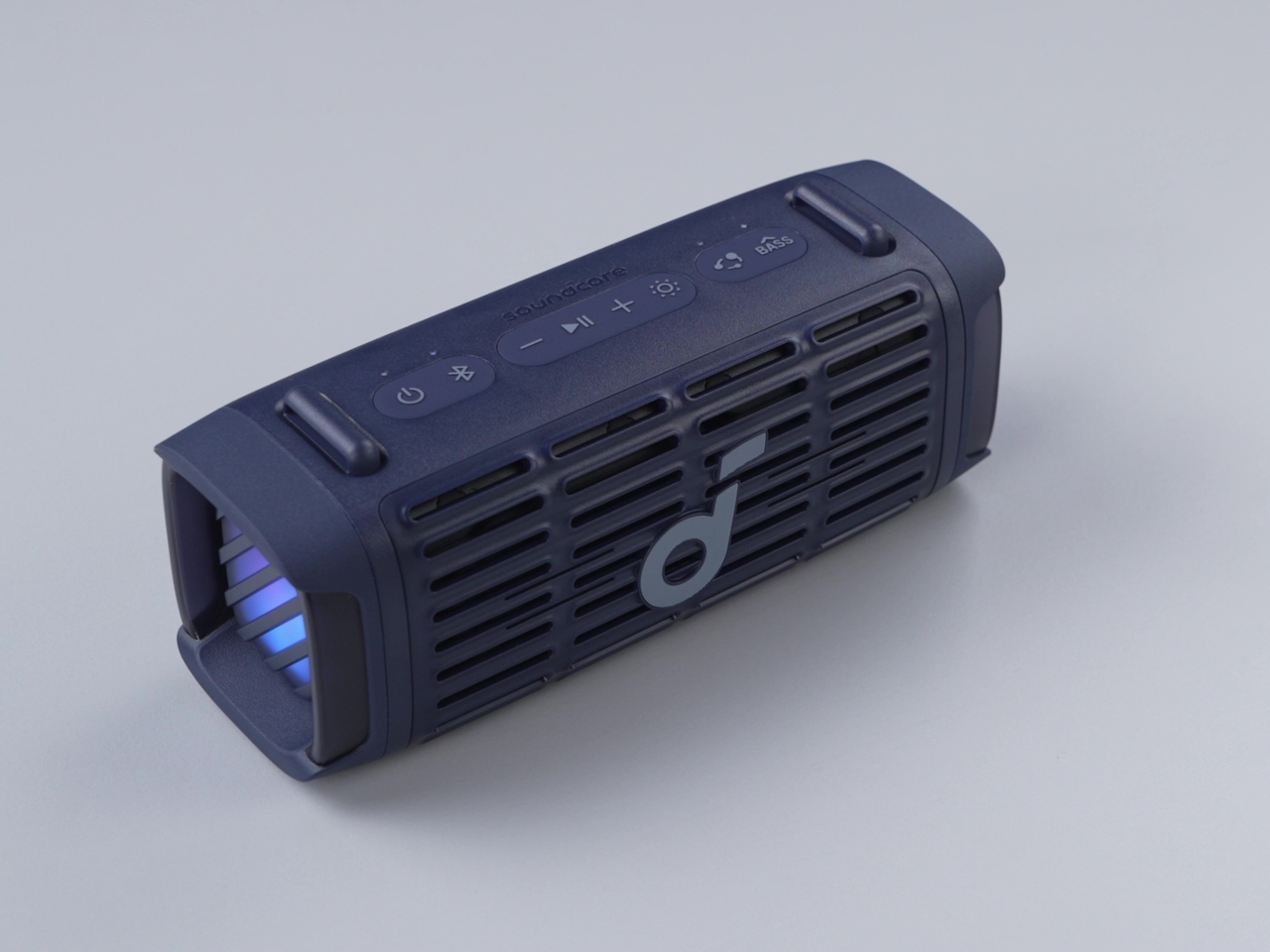
The Soundcore Boom 3i solves a problem most outdoor speakers refuse to acknowledge. Pools, lakes, and beaches are exactly where you want music most and also the worst possible environments for most electronics. Anker’s answer is a speaker that floats and self-orients so the audio always faces upward, keeping sound clear whether it was placed there deliberately or went in during a particularly competitive game of volleyball. That kind of design honesty about actual use is rare.

Beyond the floating, it includes Buzz Clean, a feature where the speaker vibrates on command to shake sand and debris out of the grille. It is a small addition that solves a genuine frustration without tools or disassembly. Sixteen hours of battery life and LED lighting that pulses with your music make it a speaker clearly built by a team that has spent time at actual beaches, not imagined them from an office.

What We Like

  • The self-orienting float design solves a real outdoor audio problem rather than just marketing waterproofing that most owners never actually test
  • Buzz Clean is genuinely useful in sandy environments and requires no tools, disassembly, or anything beyond pressing a button

What We Dislike

  • The LED lighting, while effective at night, adds visual busyness that may not appeal to those who prefer their gear to sit quietly in the background
  • Its larger footprint makes it less suited to compact bags or minimalist packing situations where every cubic inch matters

3. Bang & Olufsen Beosound Explore

Bang & Olufsen built the Beosound Explore from hard-anodized aluminum, and that material choice explains everything else about it. Reaching for aluminum where every competitor defaults to polycarbonate communicates a specific set of values about longevity, texture, and what outdoor gear can look like when it is not trying to appear durable but simply is. At 631 grams with a rubberized base and carabiner strap, it travels without ceremony and arrives looking like it belongs wherever you set it down.

The True360 sound from dual full-range drivers means there is no bad angle at a campsite or on a rooftop, and 27 hours of battery life removes the anxiety that shadows every other portable speaker on a long weekend. IP67 water resistance covers submersion up to one meter for thirty minutes, which handles every realistic outdoor scenario. Designed in Denmark and built to outlast seasons rather than one summer, the Beosound Explore is the speaker you eventually stop having to replace.

What We Like

  • Hard-anodized aluminum construction gives it a material quality and cool-to-the-touch feel that no polycarbonate competitor comes close to matching
  • 27-hour battery life is genuinely class-leading at this form factor, removing charging from the weekend equation entirely

What We Dislike

  • The price sits at the premium end of the portable speaker category, which may not align with every budget on this list
  • The compact driver configuration prioritizes audio fidelity over sheer volume ceiling, so those expecting a party speaker may find it more refined than powerful

4. Battery-Free Amplifying iSpeakers

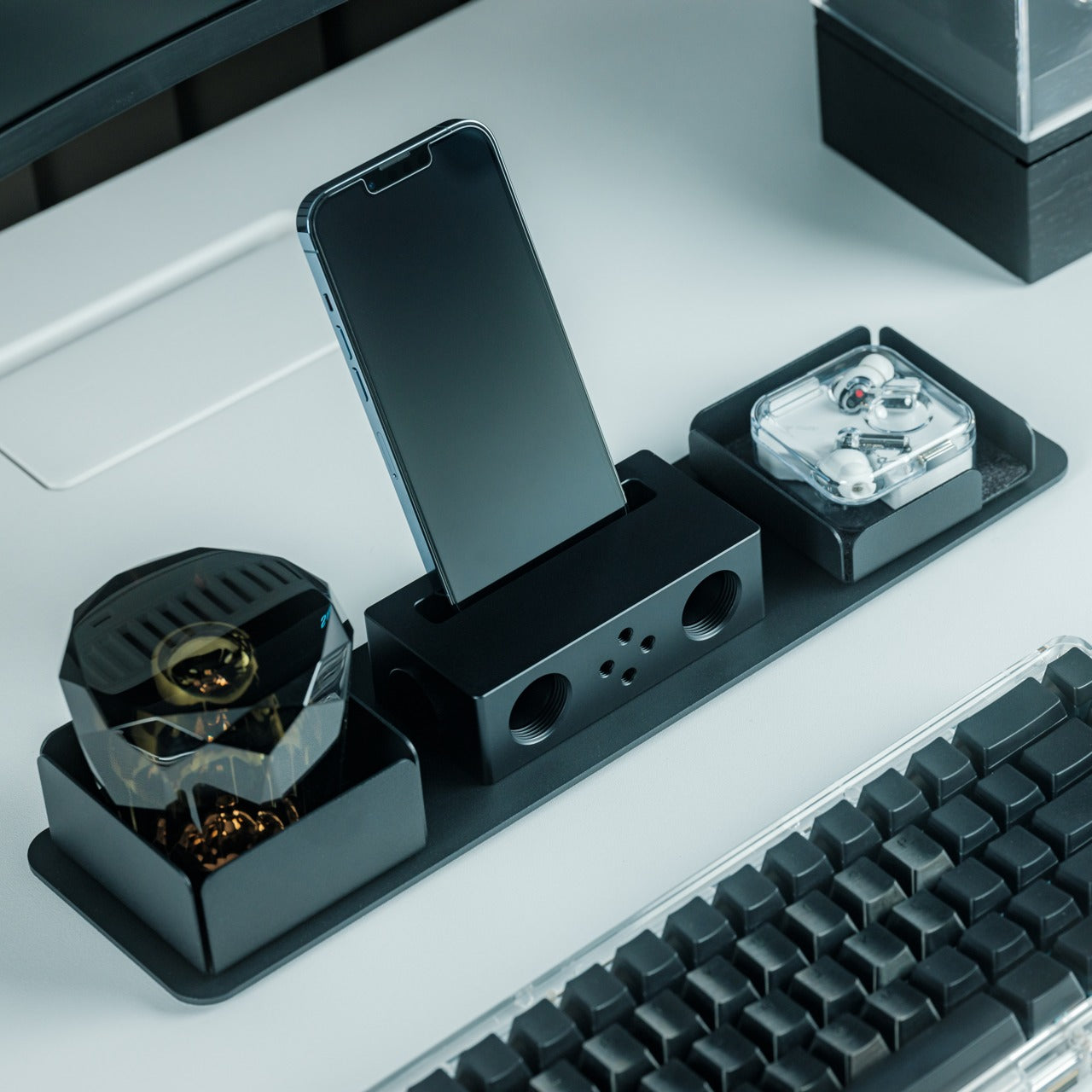
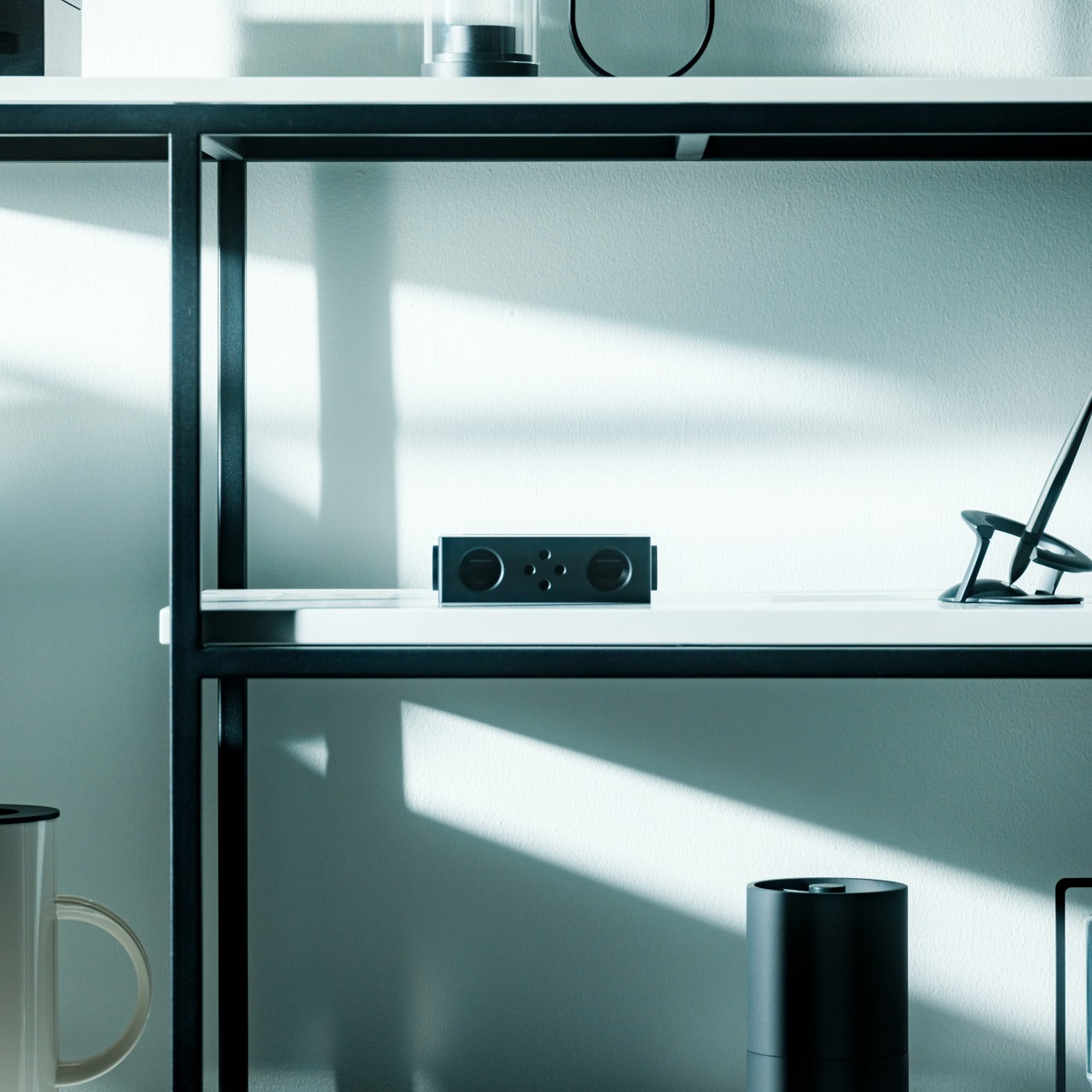
The Battery-Free Amplifying Speaker starts from the most honest premise in portable audio: what if the speaker needed nothing from you except the sound you already had? Using passive acoustic amplification, it channels audio from your device through a shaped resonance chamber without a Bluetooth receiver, a charging cable, or a battery to manage. The result is a speaker that is always ready because there is genuinely nothing about it that can run out.

Its design logic sits closer to a musical instrument than a consumer gadget. Every curve and internal chamber proportion is there to do acoustic work, which means every formal decision has a functional one sitting behind it. For a long morning on the balcony or an afternoon at the beach where you forgot to charge everything, it removes the one variable that always causes friction. You set it down, rest your phone inside, and the sound arrives without a single button pressed.

Click Here to Buy Now: $179.00

What We Like

  • Zero dependency on charging makes it genuinely grab-and-go in a way no battery-powered speaker on this list can claim
  • Passive acoustic construction makes it one of the most durable options here by virtue of having no electronics to fail

What We Dislike

  • Volume ceiling is naturally limited compared to powered speakers, making it less suited to larger outdoor gatherings where you are competing with ambient noise
  • Performance is tied directly to the speaker quality of the host device, which varies considerably from one phone to the next

5. GravaStar Mars Pro

The GravaStar Mars Pro does not attempt to blend in, and it is entirely correct not to try. Its zinc alloy body, war-damaged finish options, tripod legs, and exposed mechanical detailing sit somewhere between industrial design and a film prop, which is precisely what makes it worth owning. Most portable speakers are designed to disappear into their surroundings. The Mars Pro is designed to become the focal point of wherever it is placed, and its 20W dual speaker system backs that visual confidence with real audio substance.

A full-range driver paired with a passive bass radiator gives the Mars Pro low-end presence that its dimensions should not produce. The RGB lighting system runs through six dynamic modes, pulsing with your music and making it a natural fit for evening rooftops and outdoor gatherings. At 5.5 pounds, it is the heaviest option here, which places it at the center of a setup rather than inside a bag. That is exactly where it wants to be.

What We Like

  • The zinc alloy construction and sculpted mech aesthetic make it one of the most visually distinctive portable speakers available at any price point
  • 20W dual speaker output delivers bass presence well beyond what the physical size suggests is acoustically possible

What We Dislike

  • At 5.5 pounds, it is not a speaker you carry around a site; it is the one you set up and gather around, which limits where it fits on a summer itinerary
  • The dramatic visual language is polarizing and will not appeal to anyone who wants their audio gear to sit quietly in the background

The Best Summer Speaker Is the One Worth Looking At When the Music Stops

A portable speaker is one of the few objects that has to perform twice over. It has to sound right and look right in the same moment and the same light. The five here clear that bar without any of them feeling like a compromise in either direction. Summer is short enough that whatever you bring outdoors should be worth the trip, and each of these makes that case without any difficulty.

Whether you reach for the passive simplicity of the battery-free amplifier, the engineered restraint of the Beosound Explore, or the unapologetic presence of the Mars Pro, the underlying conviction is the same. Good design does not ask you to choose between form and function. These speakers already made that decision, and it shows from the moment you set them down somewhere they have no business looking this good.

The post 5 Portable Bluetooth Speakers for Summer 2026 That Sound as Good Outside as They Look first appeared on Yanko Design.

This Portable Self-Ironing Gadget Is Designed for People Who Hate Ironing

Our homes are filled with appliances that have become smaller, smarter, and more independent over time. Vacuums now navigate rooms on their own, and countertop ovens can execute complex recipes with minimal input. Yet the world of garment care has remained stubbornly analog and labor-intensive, still revolving around large tumble dryers and the manual work of an iron. The category has been waiting for a device that truly understands the constraints of modern living, particularly for those in small apartments or constantly on the move. That wait may be ending.

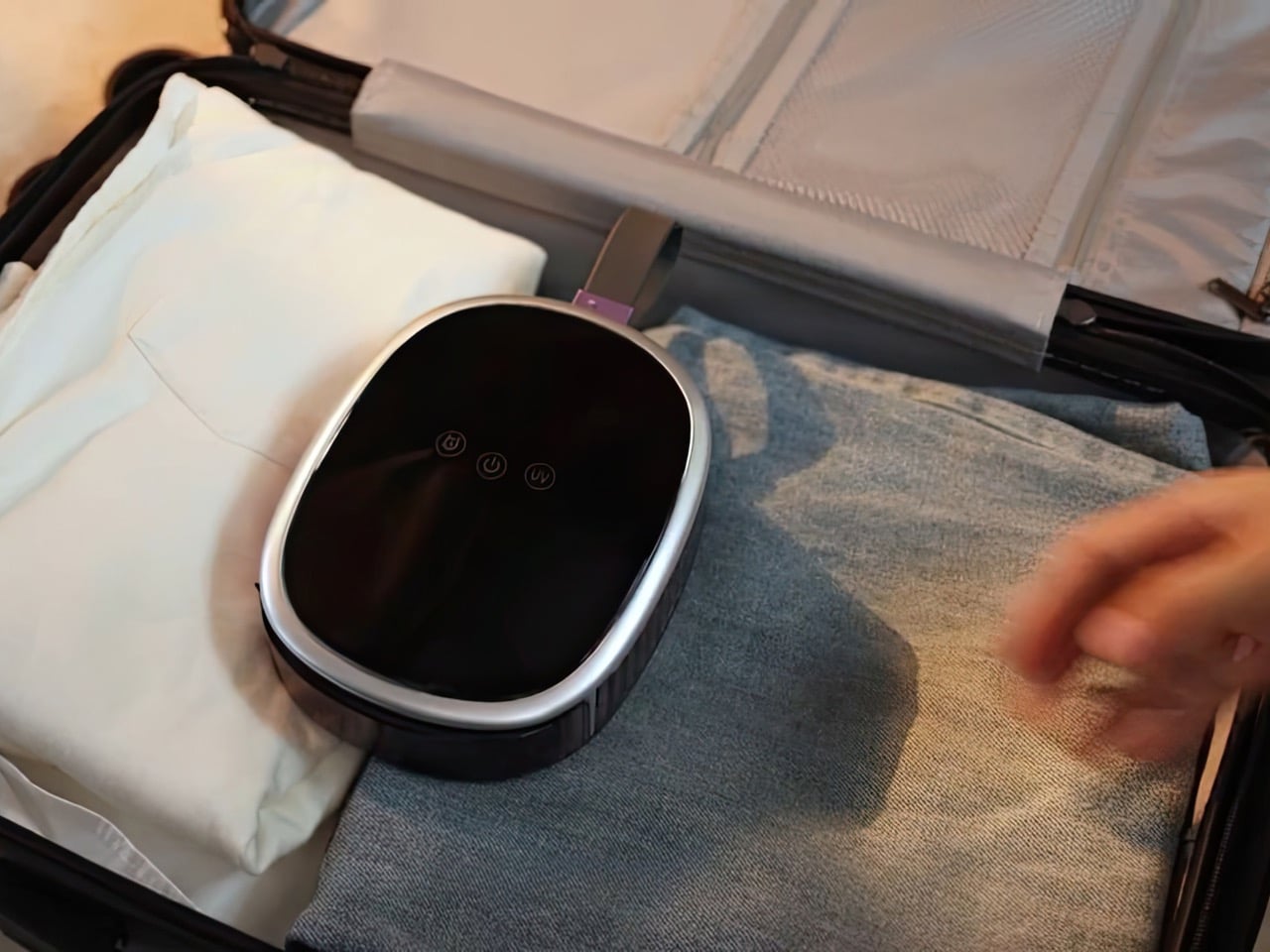
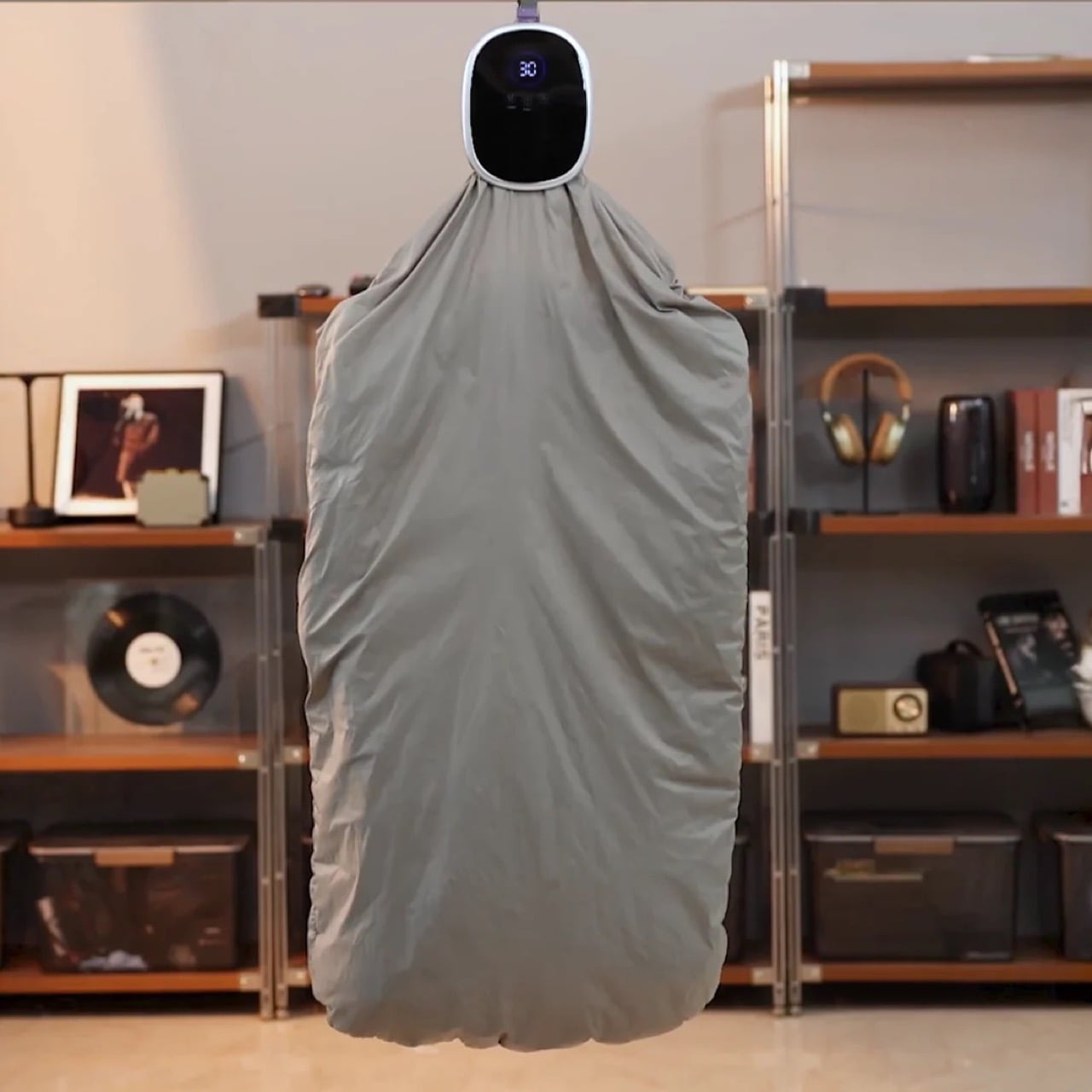
Foldryn presents a compelling vision for what the evolution of this category could look like. It is a portable self-ironing device that collapses the functions of a dryer, an iron, and a clothes steamer into one compact, travel-friendly unit. The core innovation is its use of inflatable forms that hold clothes in their intended shape while circulating hot air, effectively removing wrinkles as the fabric dries. This approach shifts garment care from a dedicated, multi-step task to a single, automated action you can initiate from a hanger anywhere you have a power outlet. The whole system is compact enough to live permanently in a carry-on bag.

Designer: Foldryn

Click Here to Buy Now: $89 $149 (40% off) Hurry! Only 23 of 120 units left.

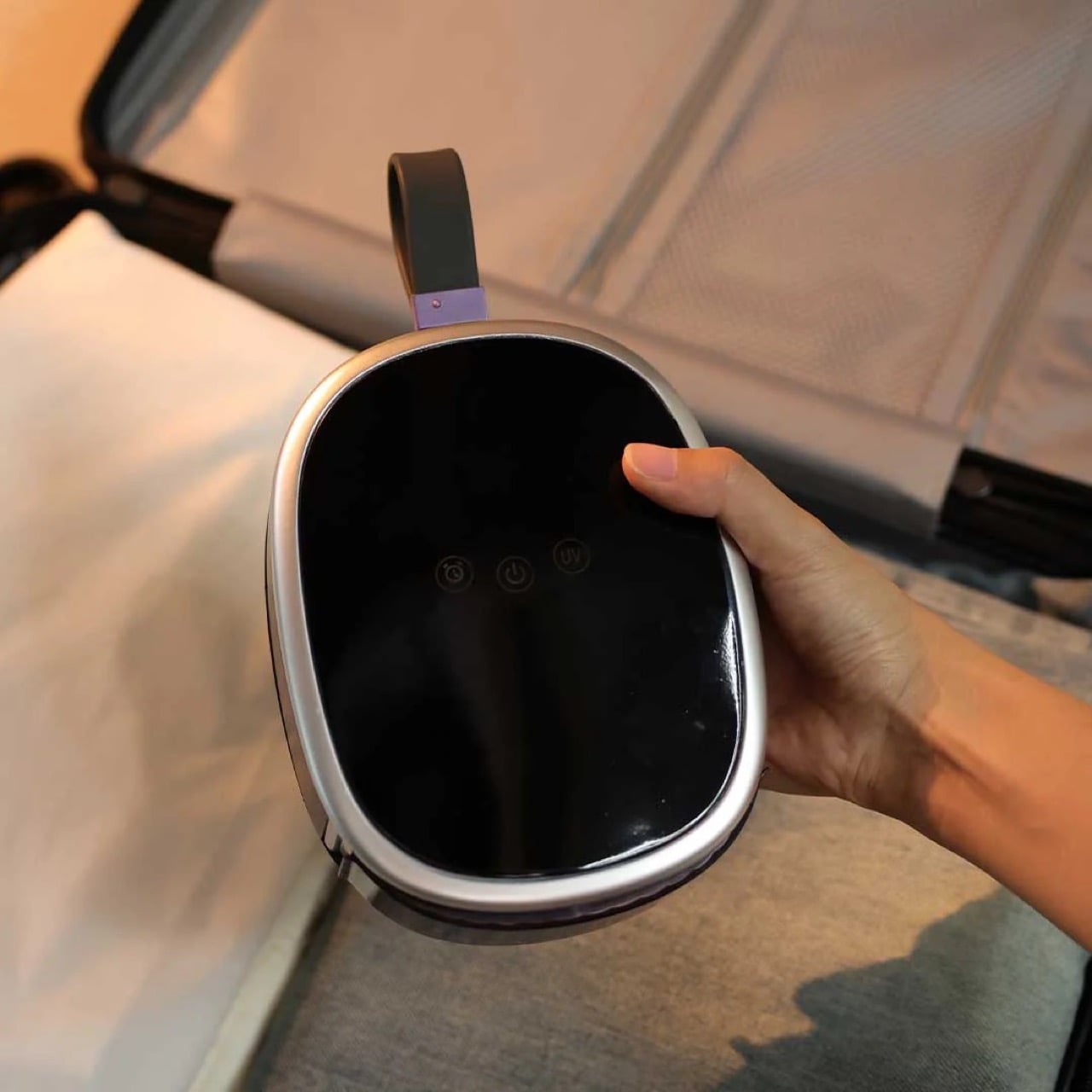
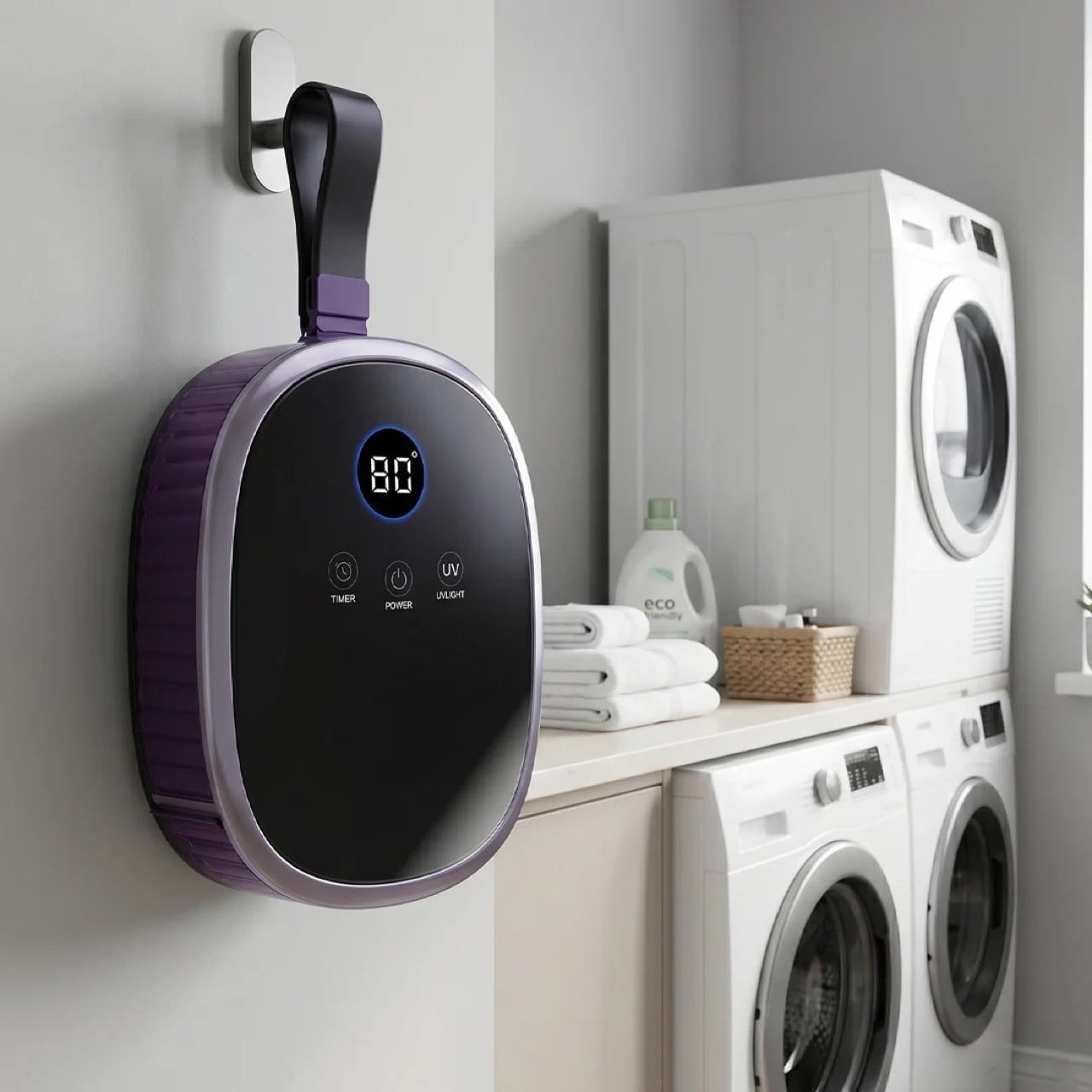
At 170 x 132 x 48mm and 565 grams, Foldryn has the aesthetic language of a personal tech device rather than a laundry appliance. Its glossy PC+ABS body, digital temperature display, and rounded profile place it closer to a portable smart speaker than anything you would find near a washing machine. Every visual reference to traditional garment care, irons, boards, steamers, has been designed out of the object entirely. It looks like something you would pack alongside your laptop charger, which is entirely deliberate. This aesthetic de-domestication is what allows the product to feel genuinely new rather than a shrunken version of an existing tool.

Dual high-speed motors pair with graphene heating technology to reach 80 degrees Celsius within one second, with a thermal accuracy of plus or minus one degree. A humidity sensor chip reads the environment continuously, and an AI thermal control chip adjusts heat and airflow in real time. Two modes give users a choice between Fast at 80 degrees for quick turnarounds and Normal at 65 degrees for delicate fabrics like silk and wool. Drying a standard T-shirt in around 25 minutes while simultaneously smoothing wrinkles follows directly from keeping that airflow stable and contained inside the garment cover. Stable heat that circulates rather than lingers is the engineering principle the device is built on.

Rather than applying heat to loosely hung fabric, Foldryn inflates shaped bags that hold each garment in its natural silhouette throughout the cycle, continuously infusing a unique hot airflow into a specially designed drying bag that also releases excess heat, making it suitable for all fabric types without causing damage. A large drying bag accommodates five to six garments at once. Dedicated torso and pants airbags hold individual pieces in their proper form for faster, more targeted results. The torso airbag handles hoodies, jackets, and sweaters, while the pants airbag manages trousers, jeans, and shorts. Giving the garment a form to press against the airflow is what separates this from the generic portable dryers that have populated travel accessory markets for years.

UV-C sterilization runs during the Normal mode cycle, adding a hygiene dimension most compact travel dryers skip entirely, ensuring you always have clean garments ready for any environment. At a noise level of just 40 decibels at full capacity, the device operates quietly enough for hotel rooms, tents, and shared living spaces. The 100-240V wide voltage input and power cords compatible with various international plugs mean it works out of the box in any country, removing the adapter friction that plagues most travel appliances. For frequent travelers who pack light, those three attributes make a stronger cumulative case than any single headline feature. Near-silence, universal compatibility, and built-in sanitization are the quiet specs that matter most when you are far from home.

Packing fewer clothes becomes a genuinely viable travel strategy when a single device can refresh, dry, and smooth a garment on demand in under 25 minutes. For anyone who has hunted down a hotel iron five minutes before a meeting, the appeal is immediate. At 170 x 132 x 48mm, Foldryn fits cleanly inside most hard-shell carry-on cases alongside a laptop and a charger. Its presence makes packing duplicate garments as wrinkle insurance an unnecessary habit. The device is designed to replace the ironing board, and leaves everything else in your routine untouched.

The Foldryn Standard Kit, which includes the dryer unit, a drying bag, and a hanger, carries an MSRP of $149. The Ultimate Kit adds the torso airbag, pants airbag, and a dedicated storage bag for $199. Individual airbag attachments are available separately at $19 MSRP each. Both kits ship with power cords matched to the buyer’s regional plug standard, and the device is rated for 100-240V input, making it globally compatible. Shipping is anticipated for July 2026, with more information available on the Foldryn campaign page.

Click Here to Buy Now: $89 $149 (40% off) Hurry! Only 23 of 120 units left.

The post This Portable Self-Ironing Gadget Is Designed for People Who Hate Ironing first appeared on Yanko Design.

5 Best Travel Accessories Every Man Needs to Pack for Summer 2026 — None From an Airport

The airport shop is a tax on poor planning. Everything in it exists to solve a problem you should have solved at home, at a price that reflects the fact that you have no other option. The five products here are the ones you pack deliberately, not desperately. Each one earns its place through considered design, genuine function, and the kind of quality that makes the airport version of the same thing look like a last resort.

The selection covers everything a considered travel kit needs: audio that travels without apology, power that performs at wall adapter speed, a passport holder that knows where it is, grooming that does not give up precision for portability, and a lock that reports back. None of these products compromised on design to get the job done. That discipline is exactly why they belong in the bag and not on the shelf at Departures.

1. StillFrame Headphones

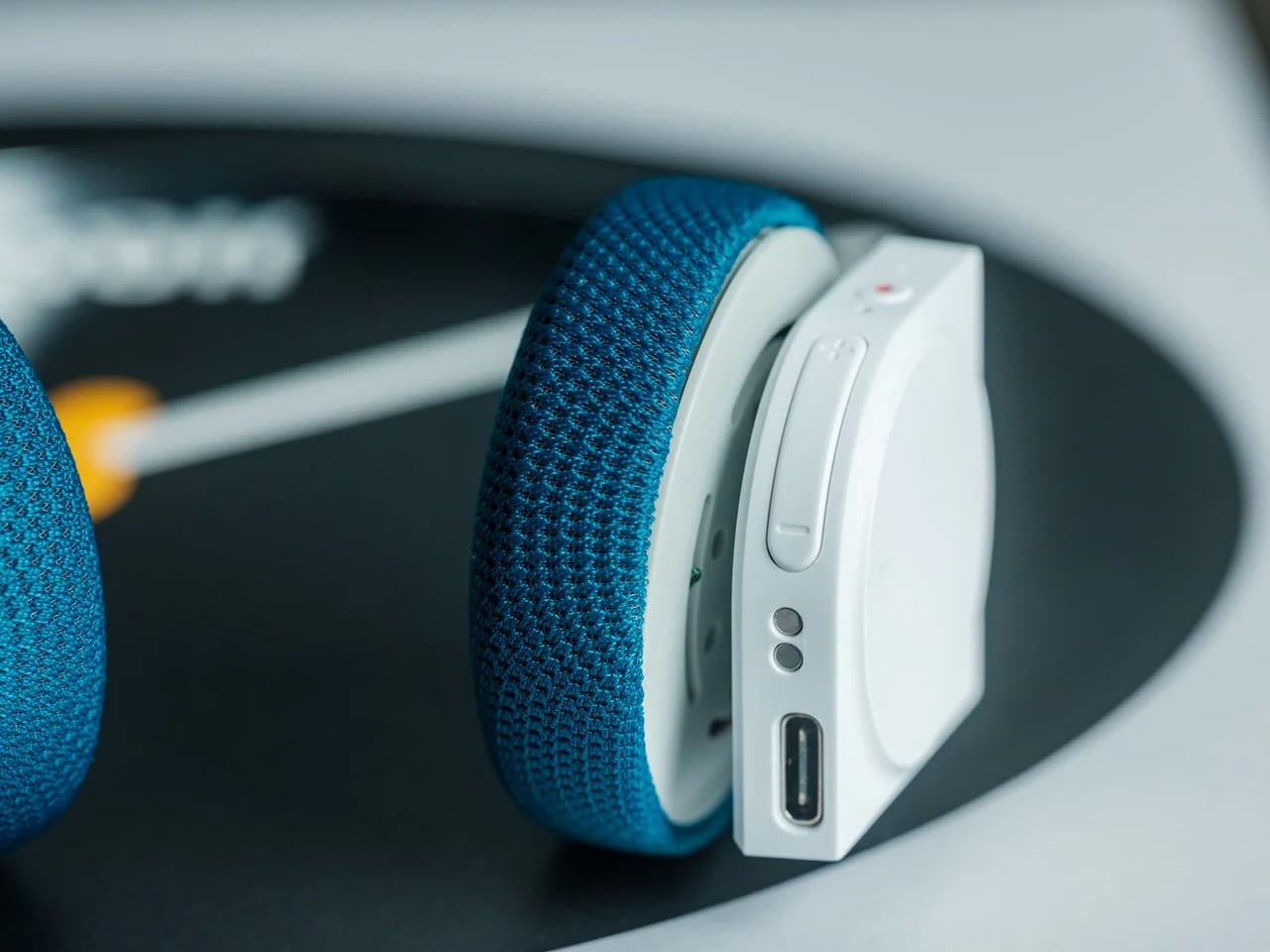
Travel headphones occupy a strange middle ground in most product ranges. They are either serious audio equipment that was never meant to leave the studio, or they are designed for portability at the direct expense of everything that makes headphones worth wearing. The StillFrame headphones resolve that tension with a form that travels without folding into an awkward configuration and audio that does not require an apology when someone asks what you are listening through. They make the journey part of the experience rather than something to endure.

The design reads as confident without being loud, which is exactly the register a pair of headphones should occupy when you are moving through airports, hotels, and meeting rooms in the same day. Noise performance keeps the outside world at a suitable distance without the artificial pressure that makes some active noise cancellation tiring over long flights. The StillFrame headphones are the kind of product that makes you realize how much you were tolerating from whatever you were using before.

Click Here to Buy Now: $245.00

What We Like

  • The form does not compromise on aesthetics to achieve portability, which is rarer in this category than it should be
  • Audio performance holds up across the variety of environments that a travel day actually produces

What We Dislike

  • Headphones at this design level carry a price that reflects the intention behind them, which may exceed what some are willing to spend on travel audio
  • The considered aesthetic means they draw attention in a way that more anonymous options do not

2. INIU SnapGo Air MagSafe Power Bank

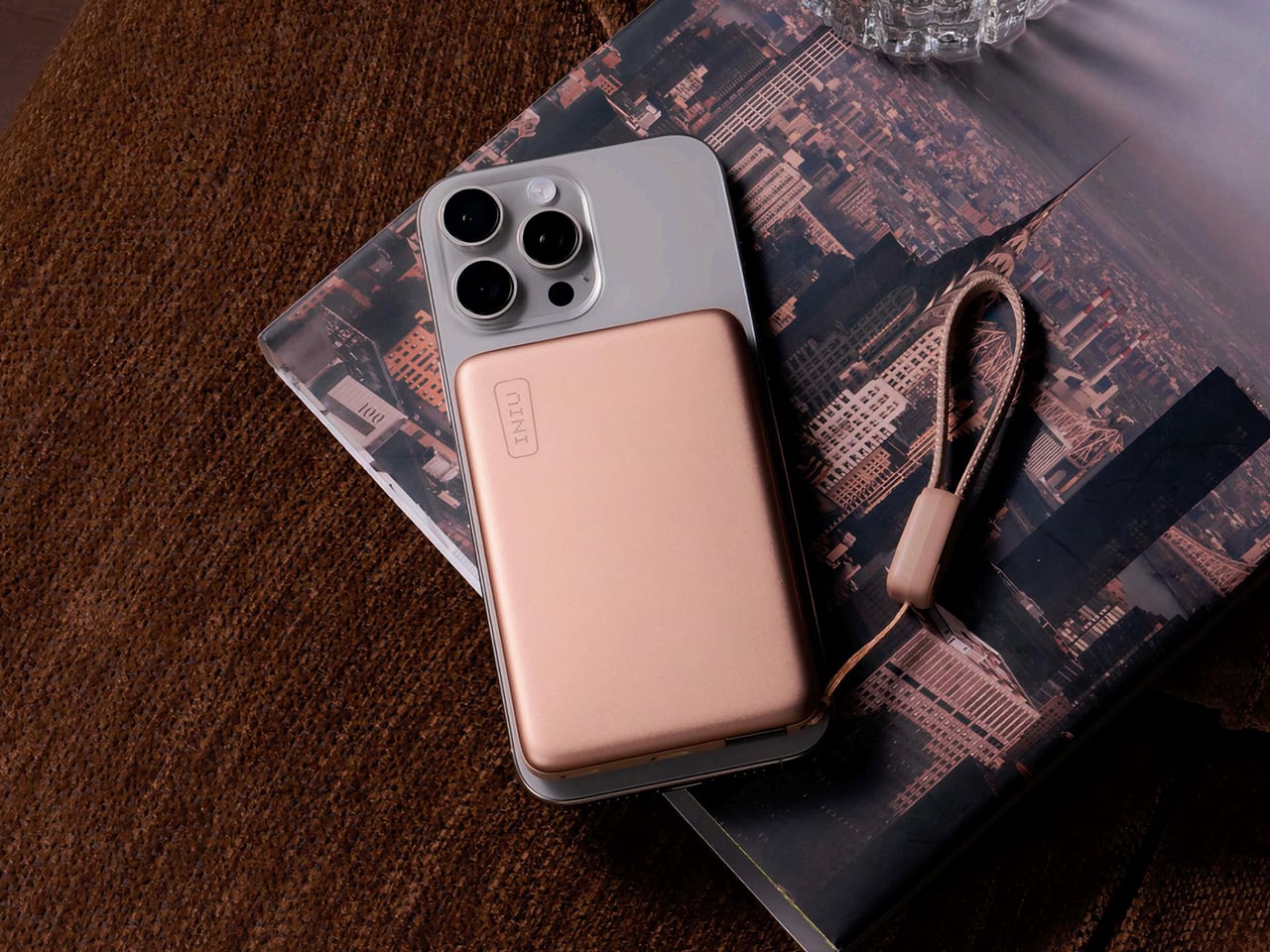
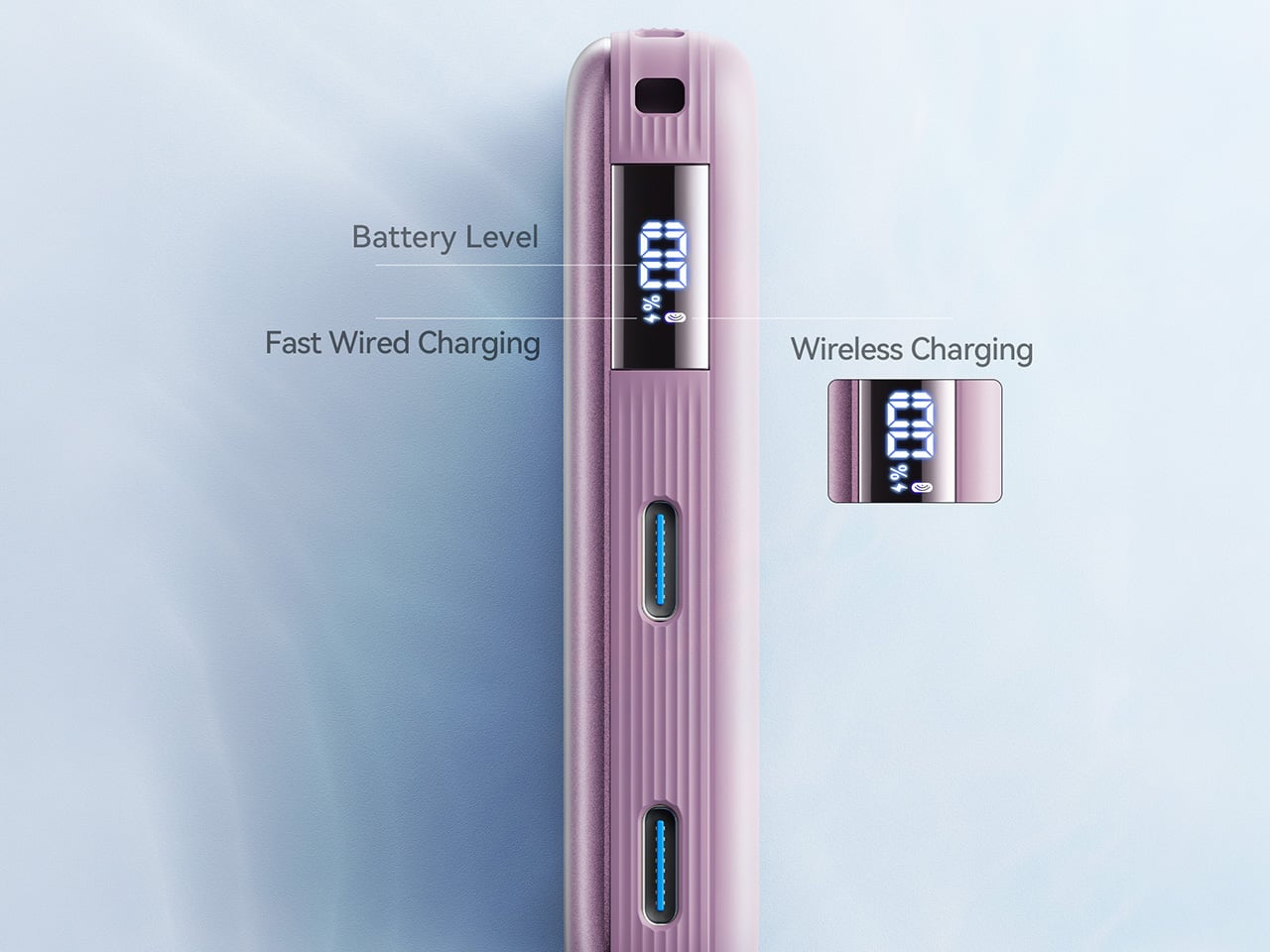
The problem with most power banks is not the capacity. It is the experience of using them: the cables that go somewhere, the bulk that announces itself in a jacket pocket, and the heat that builds up when wireless charging is pushed past its natural ceiling. The INIU SnapGo Air addresses all three. At half an inch thick and finished in anodized aluminum, it sits flush against the back of a phone without the visual chaos that makes most battery packs feel like a concession.

The GoCord, a built-in USB-C cable that sits color-matched in a recessed channel along the body, means there is no separate cable to locate when you need wired charging at 45 watts. Wireless output runs at 25 watts via Qi2.2, fast enough to get a phone to usable capacity in the time it takes to clear customs. Temp Guard 3.0 monitors internal temperature 9,000 times per second and keeps the surface under 104 degrees Fahrenheit during use. At $54.99, it sets a new expectation for what a power bank should be.

What We Like

  • The GoCord cable sits flush and color-matched, removing the loose cable from the carry equation entirely
  • 25W wireless and 45W wired output means it performs at wall adapter speed in a half-inch profile

What We Dislike

  • The 10,000mAh capacity covers phones and earbuds comfortably but falls short for anyone who also needs to top up a tablet or laptop
  • The premium finish makes this a product worth protecting, which adds a small layer of care to how you pack it

3. Satechi FindAll™ Passport Cover

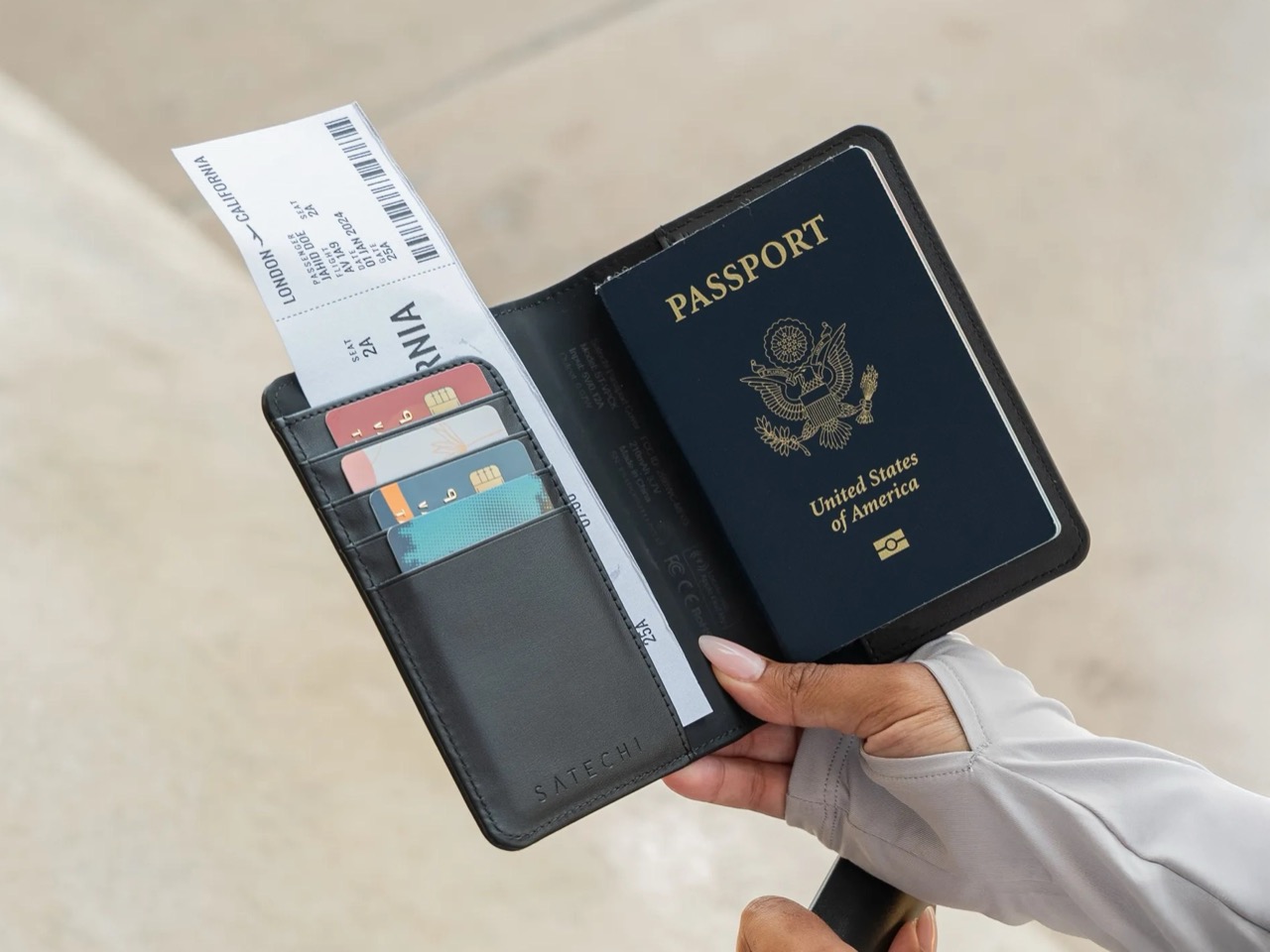
Losing a passport is not a travel inconvenience. It is a trip-ending event that takes days and a great deal of bureaucratic patience to resolve. The Satechi FindAll Passport Cover approaches that anxiety with a straightforward solution: vegan leather organization paired with Apple Find My tracking via Bluetooth 5.2, a 90-decibel alarm you trigger from your phone, and RFID blocking that keeps chip data inside the cover rather than available to anyone standing close enough with the right equipment.

The 150mAh battery charges wirelessly on any Qi, Qi2, or MagSafe surface, lasts up to five months between charges, and adds just 3.7 ounces to a jacket pocket. The bifold holds your passport, boarding pass, and four cards in a format that removes the fumbling from every airport security interaction. For a product that handles your most critical travel document, the combination of location tracking, audible alerts, and electronic theft protection represents a level of thinking that no standard passport wallet comes close to.

What We Like

  • Apple Find My integration with a 90-decibel alarm turns a passive document holder into an active security system
  • Wireless charging and five months of battery life mean the tracking runs silently in the background without any maintenance required

What We Dislike

  • The Find My network works best where Apple devices are dense enough to relay the signal accurately, which covers most major airports but thins out in remote destinations
  • Vegan leather, while well executed here, will show wear differently than full-grain alternatives over years of daily use

4. Auger PrecisionMaster Grooming Set

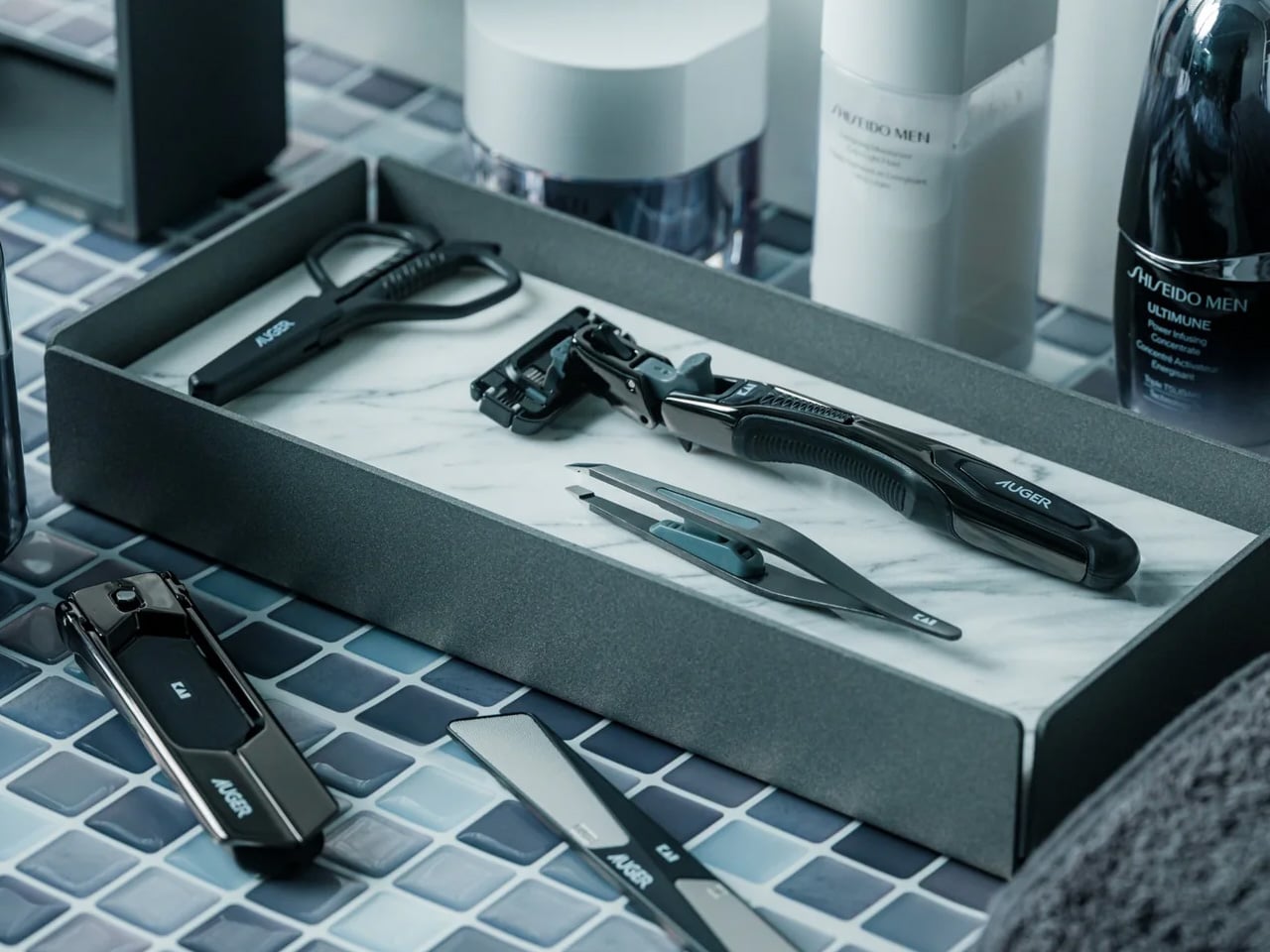
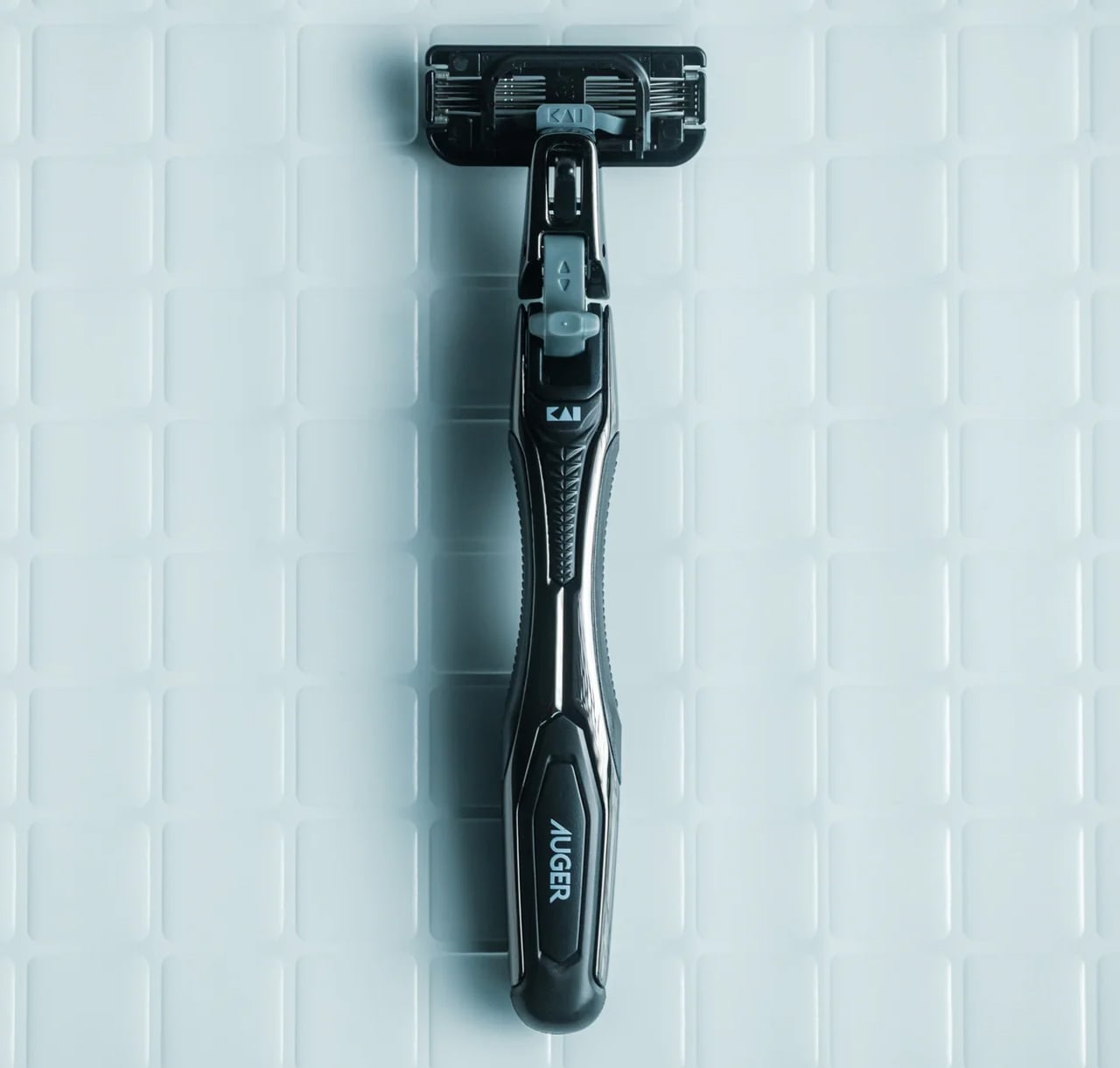
Most grooming kits designed for travel treat portability as the only brief. The result is a set that technically fits in a toiletry bag but produces results you would rather not be judged by. The Auger PrecisionMaster starts from the precision end of the argument and works toward a form factor that travels well, built around the idea that a grooming set should perform the same way regardless of whether you are at home or checking into a hotel at midnight.

The design carries the kind of restraint that makes a product feel like it was made for an adult. No unnecessary features, no parts that feel included to justify a higher price point. What you get is a focused set of tools that do exactly what they promise, finished to a standard that reads as intentional rather than incidental. For anyone who treats their grooming routine as part of how they show up, this kit travels without asking you to downgrade.

Click Here to Buy Now: $150.00

What We Like

  • The precision-first approach means the results do not change when you travel, only the location does
  • The design restraint communicates quality without requiring the product to announce itself

What We Dislike

  • A focused kit by definition is not for anyone who needs a wide variety of attachments in a single case
  • The quality finish requires some care in packing to keep it looking as considered as it arrives

5. KeySmart SmartLock

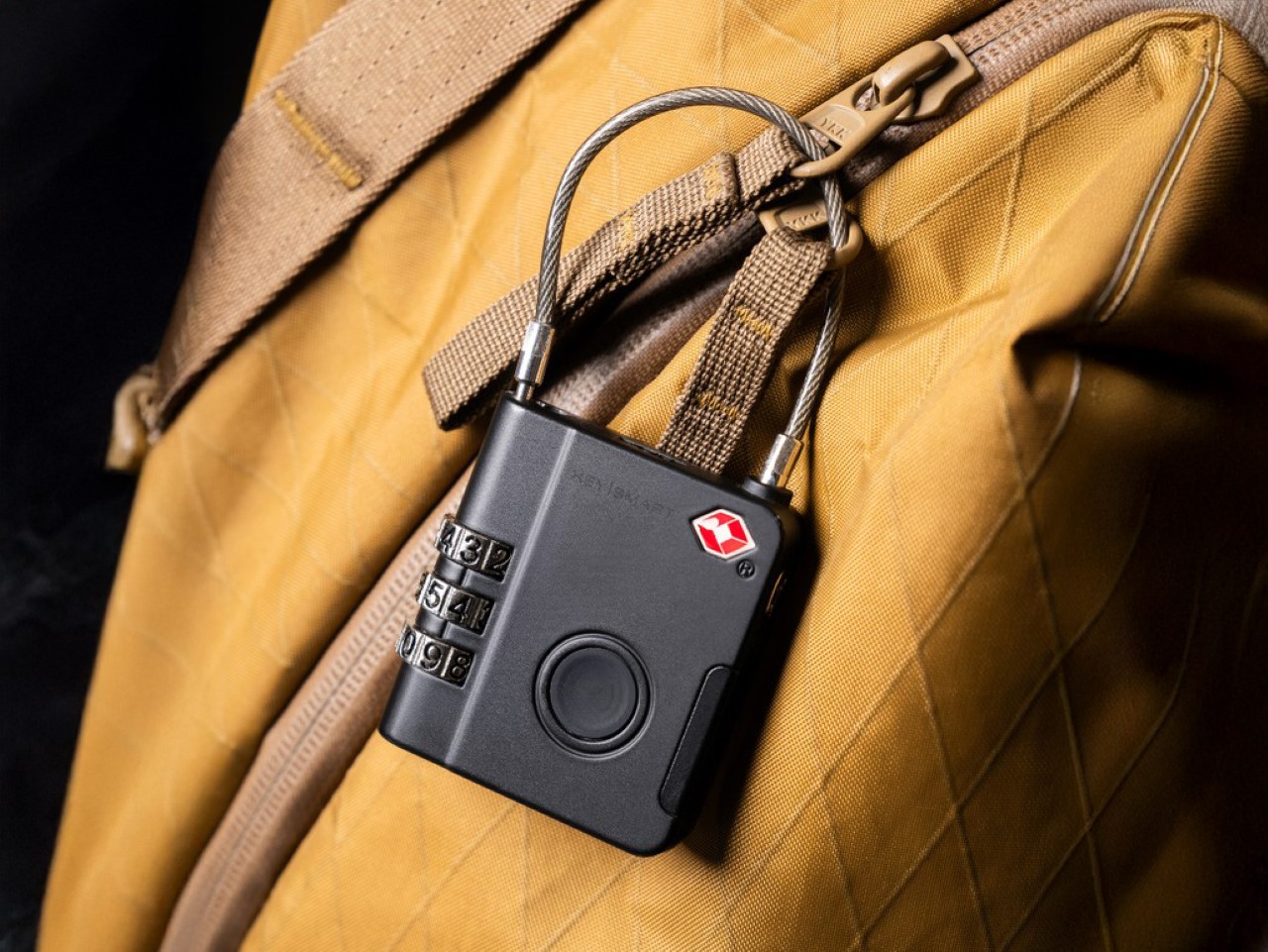
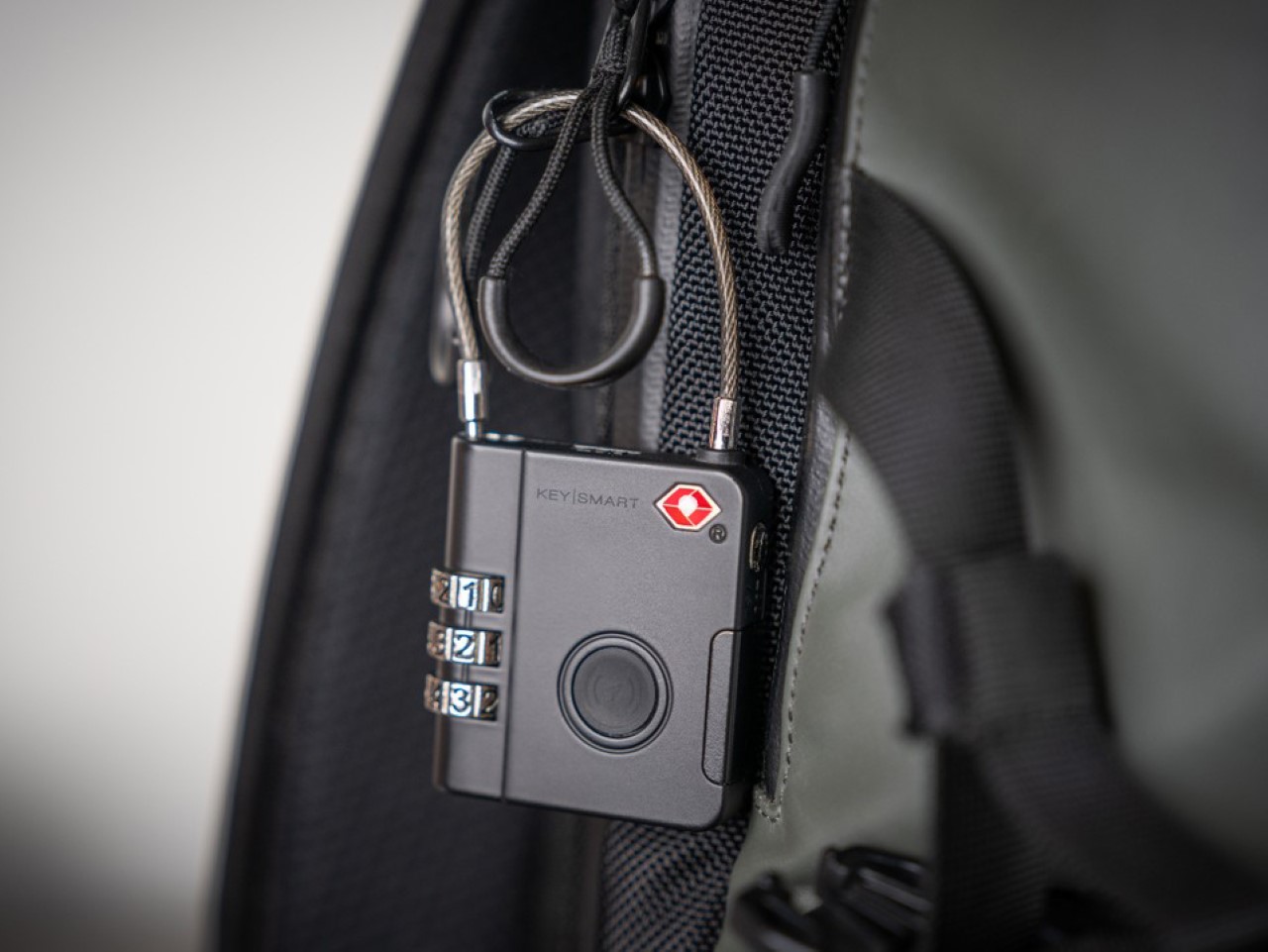
Airlines mishandle bags at a rate that frequent travelers take as a given. A traditional luggage lock addresses theft but does nothing about the more common problem: a bag that is somewhere in the system and not where it should be. The KeySmart SmartLock carries a TSA-compliant three-digit combination on the outside, and Apple Find My tracking on the inside. From the moment it clicks onto a zipper, you can see exactly where your bag is through the Find My app.

The 76-decibel alarm triggers remotely, which makes identifying your bag on a crowded carousel faster than waiting for the right shape to come around again. A CR1632 battery runs for up to four months, and the lock functions manually even when depleted, so you are never locked out of your own bag because the tech layer ran dry. The ruggedized construction handles baggage handling without showing it. For a product that costs a fraction of what a lost bag claim resolves to, the argument for carrying one makes itself.

What We Like

  • TSA compliance and Find My tracking solve two separate problems in a single lock with no additional bulk
  • The manual fallback when the battery dies means the security function is never compromised by the tech sitting on top of it

What We Dislike

  • The Find My network becomes less reliable in remote destinations where Apple devices are too sparse to relay the signal
  • The ruggedized plastic finish is functional rather than premium, placing it at a different material register than the other products in this selection

The Best Packed Bag Is the One Where Every Object Earned Its Place

The best travel kit is not the one with the most in it. It is the one where every object earned its place through a decision rather than a habit. Headphones that make the flight worth having. A power bank that performs at wall adapter speed. A passport holder that knows where it is. A grooming set that does not ask you to downgrade your routine. A lock that reports back when your bag does not arrive where you did.

None of these products solved their problem by doing the minimum. Each one set a higher bar for what an everyday travel object is supposed to accomplish, and then cleared it. That is a rarer quality in this category than it sounds. Pack accordingly.

The post 5 Best Travel Accessories Every Man Needs to Pack for Summer 2026 — None From an Airport first appeared on Yanko Design.

Dreame’s autonomous Lawn Mower packs more self-driving tech than most cars

When a company known for vacuums and hair dryers unveils a concept car at CES, as Dreame did this year, the initial reaction is usually a cynical eye-roll. It feels like a marketing stunt, a desperate grab for headlines in a crowded hall. But sometimes, these seemingly absurd concepts are a window into a company’s soul, a statement about what they believe their core business truly is. Dreame does not think it is in the appliance business; it believes it is in the high-performance robotics and mobility business. The car was not a product pitch, it was a mission statement.

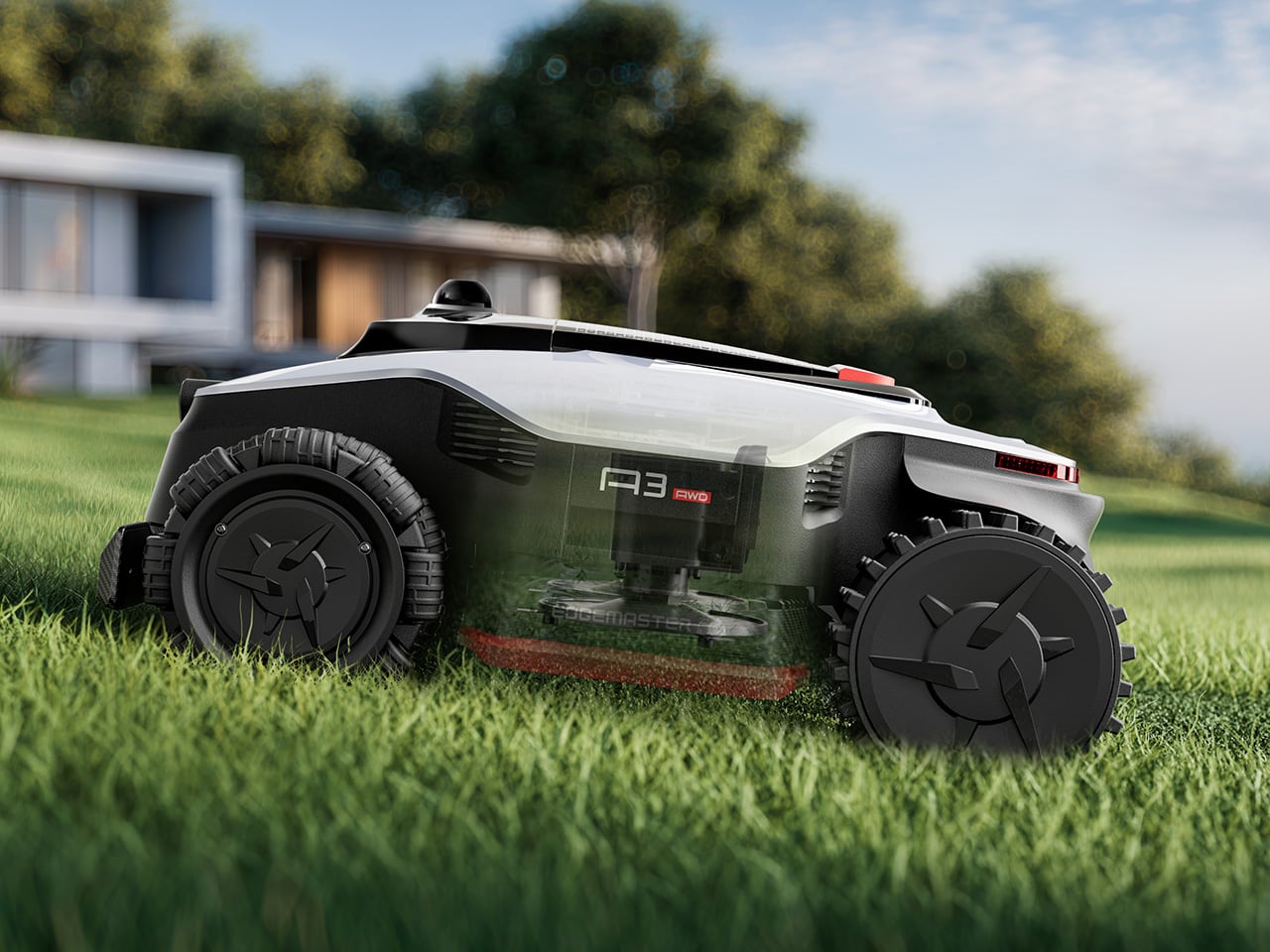
Viewed through that lens, the A3 AWD Pro robot mower suddenly makes perfect sense as both a product and a proof of concept. Dreame’s latest autonomous outdoor machine is a rolling showcase of their accumulated expertise in navigation, sensor fusion, and all-terrain electric drivetrains. Building four-wheel-drive robotics with sophisticated spatial awareness requires the same fundamental engineering whether the machine is designed for a garden or a highway. The A3 AWD Pro bridges that gap deliberately, connecting Dreame’s domestic robotics heritage to the far more audacious mobility ambitions they planted a flag on in Las Vegas. Priced at $2,599.99 and available in four coverage variants spanning from 1,000 to 5,000 square meters, this mower asks you to buy into the same philosophy the Nebula 1 concept was selling, just with a far more immediate payoff.

Designer: Dreame Technology

Click Here to Buy Now: $2099.99 $3099.99 ($1000 off). Hurry, deal ends soon!

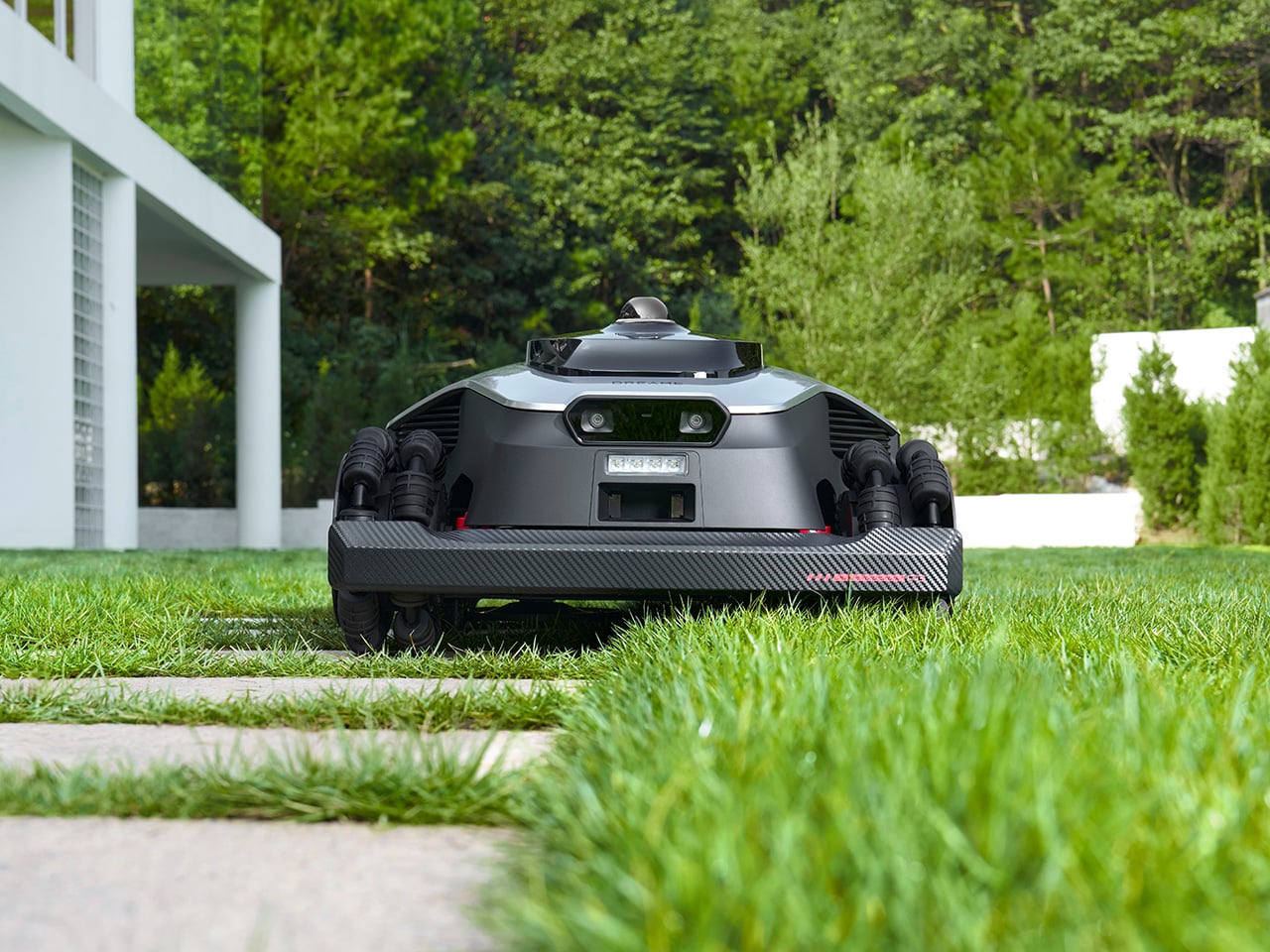
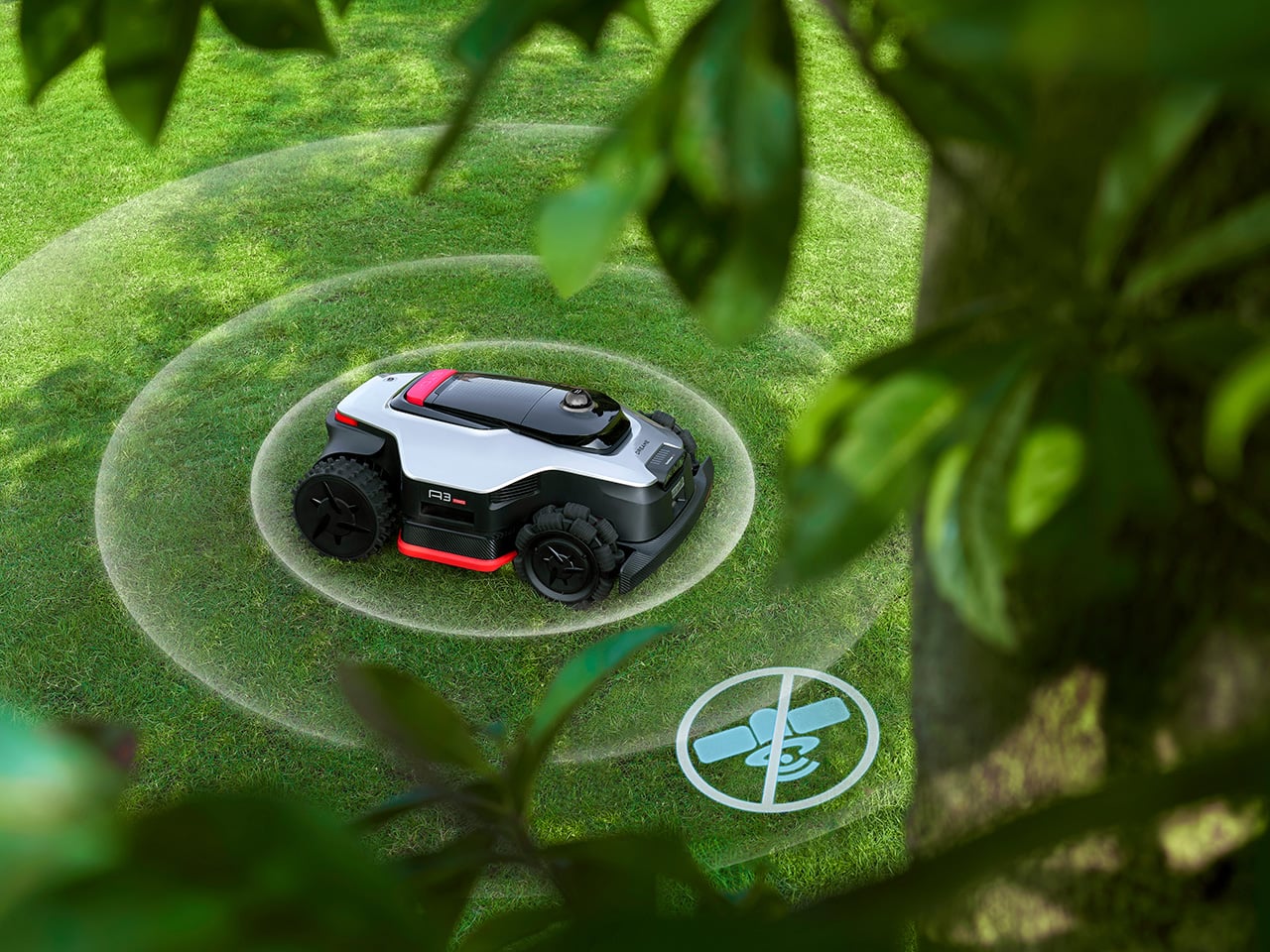
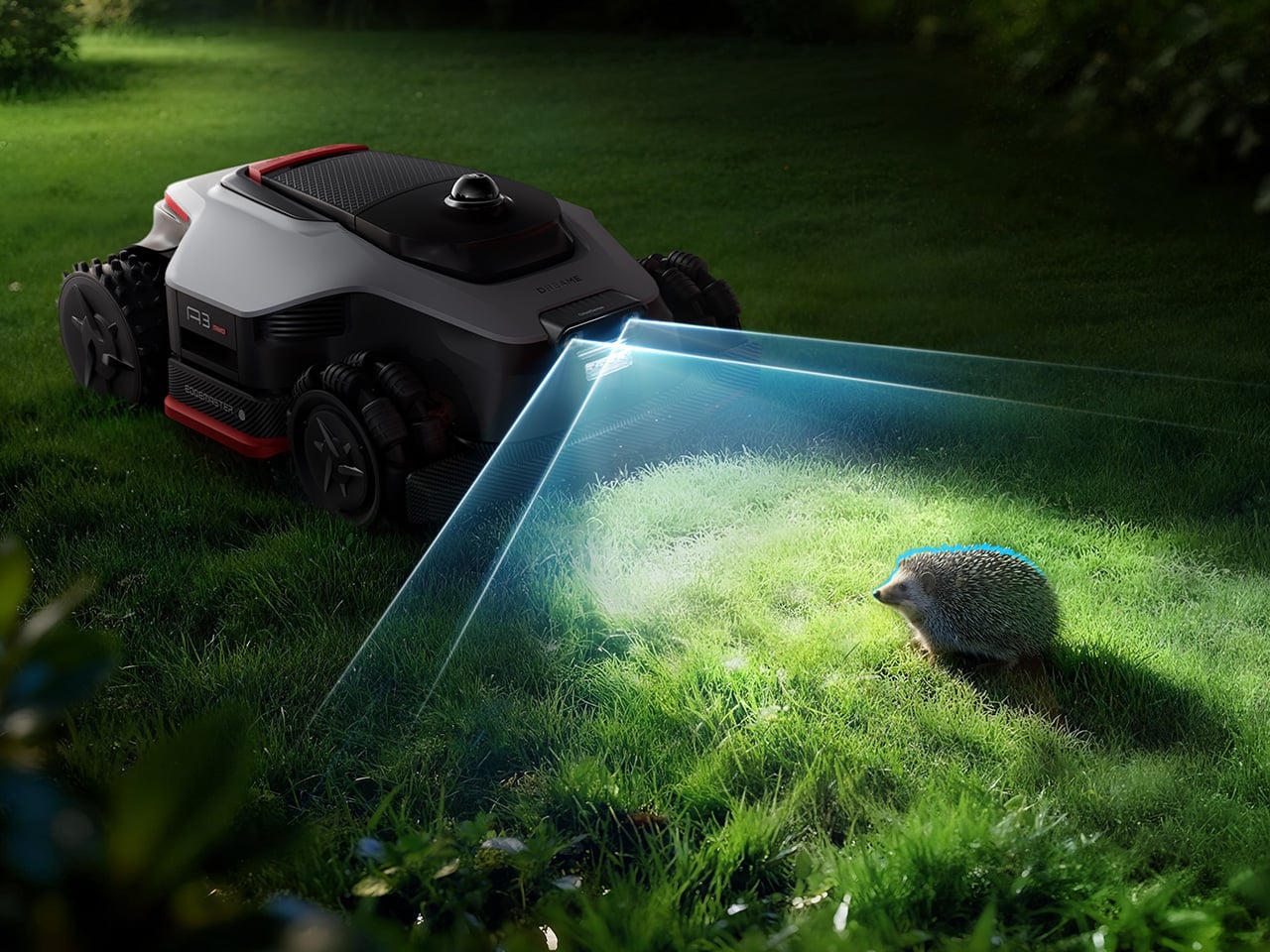
The Nebula 1 was the conversation starter, and the A3 AWD Pro is the proof. Buried perimeter wire, RTK antenna poles, and scattered signal beacons have been the unglamorous setup tax of robot lawn mower ownership for years, and Dreame has engineered all three out of the equation entirely. A 360-degree 3D LiDAR unit sits atop the machine like a compact sensor turret, paired with a binocular AI vision system capable of identifying and classifying more than 300 distinct obstacle types. Those two systems work together to let the mower build a complete spatial model of your yard on its first pass, without requiring you to instrument the property beforehand. Even strong competitors in this space were still requiring separate RTK antennas in some configurations as recently as this year, which makes Dreame’s wire-free approach feel like a genuine generational step rather than incremental refinement.

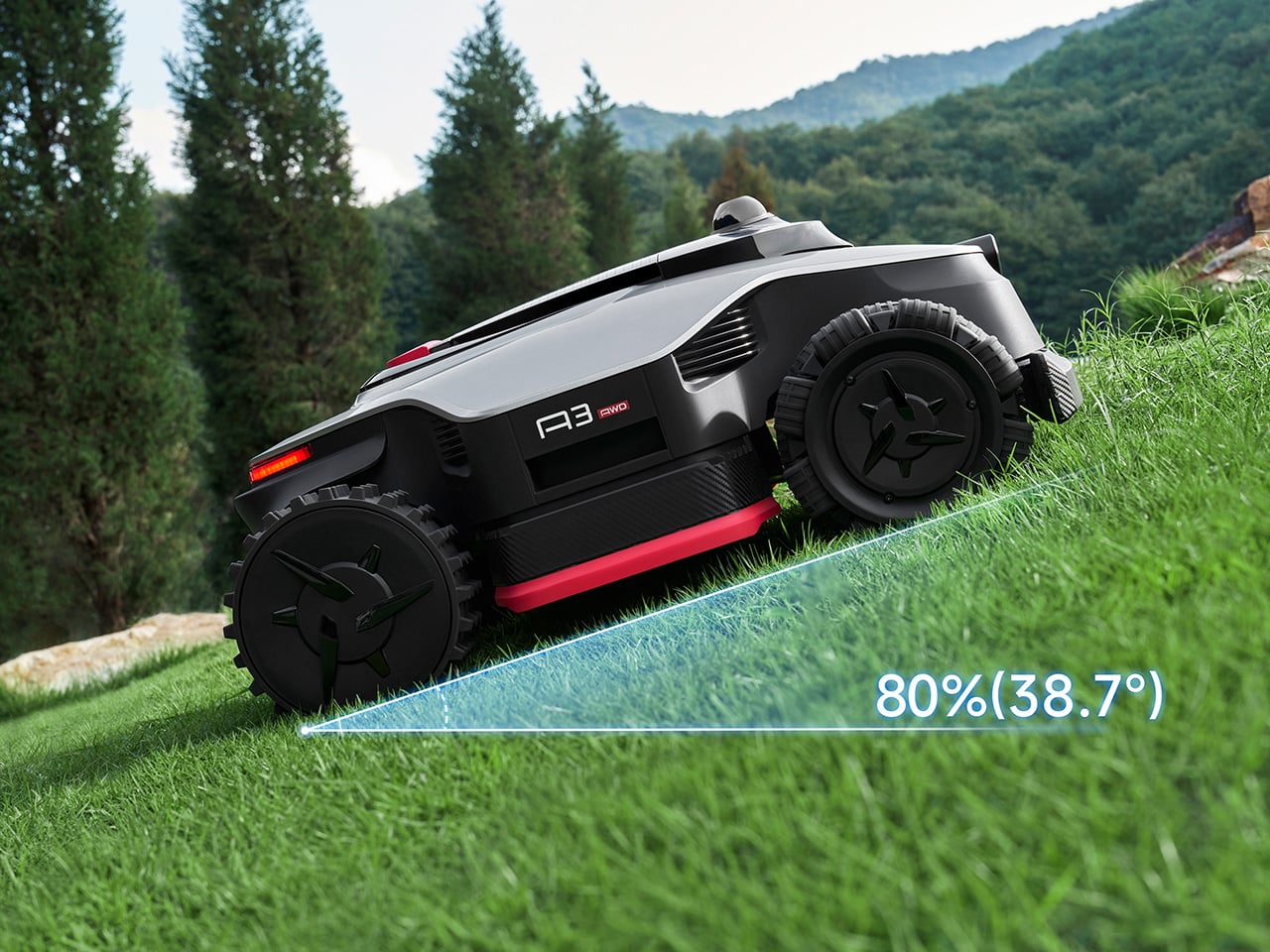
Four hub motors drive each wheel independently, the same fundamental powertrain topology that underpins the kind of performance EVs the Nebula 1 concept was gesturing toward. On the A3 AWD Pro, that architecture solves a very practical outdoor problem, because real lawns are rarely flat. The machine climbs slopes of up to 80 percent, roughly 38.6 degrees, putting it well beyond the capability of most two-wheel-drive robot mowers on the market. Dreame also chose a mixed wheel configuration, combining Mecanum wheels with conventional off-road tires, which gives the machine a zero-turn movement style that keeps coverage tight and eliminates the missed strips that plague simpler mowers. It can also climb over vertical obstacles up to 5.5 centimeters high, which means a garden edging border or a raised path junction is handled without breaking stride.

A 40-centimeter dual-disc cutting deck handles the grass-cutting, and the discs float independently to follow ground contours as the terrain rises and dips beneath the mower. That floating behavior matters on any lawn with even mild undulations, because it keeps the cut height consistent rather than scalping on peaks or leaving long grass in dips. Dreame calls its edge-cutting system EdgeMaster 2.0, extending the cutting reach close enough to borders, walls, and fences to meaningfully reduce the manual trimming needed afterward. Cutting height is adjustable between 3 and 10 centimeters through the app, and the machine supports multiple mowing patterns including straight lines, diagonal passes, and a checkerboard configuration for people who take their lawn aesthetics seriously. At 65 decibels, it is also quiet enough to run on a weekday morning without immediately becoming a neighborhood grievance, which is a real-world usability detail that spec sheets routinely undervalue.

Lifting the A3 AWD Pro off the ground triggers an immediate alarm and simultaneously pushes a notification to your phone, a deterrent that stays active whether you are inside making coffee or three time zones away. Dreame ships the machine with 4G connectivity built in and one year of service included in the purchase price, providing real-time location tracking that works independently of your home Wi-Fi network. There is also a dedicated physical slot for an Apple AirTag if you want a second independent tracking layer on top of the cellular connection. A PIN code is required to operate the machine after any tilt or lift event, adding deliberate friction for anyone who tries to walk off with it. For a machine that operates unsupervised in an accessible outdoor space, that layered approach to security makes the investment considerably easier to justify.

The intelligence does not stop at the boundary of a single lawn. Dreame built dual-map support into the A3 AWD Pro, allowing the machine to hold two independent maps simultaneously, a practical feature for any property with a disconnected front and back yard. Each map carries its own mowing plan, schedule, and pattern preferences, so the machine does not treat a split property as an edge case but as a fully supported configuration. The app also allows zone-based scheduling, meaning you can run the back garden at dawn and the front strip mid-morning without any manual intervention in between. It is the kind of software depth that reflects years of Dreame refining companion app logic across its vacuum lineup, applied now to a problem that is geometrically messier and environmentally far less forgiving.

The $2,599.99 starting price reflects a machine built with the kind of sensor redundancy and mechanical sophistication that, until very recently, existed only in professional-grade equipment at several times the cost. What Dreame has done is compress that capability into a consumer package without compromising the engineering integrity that makes it actually perform on difficult terrain. The A3 AWD Pro is available now across four coverage tiers on Dreame’s website, and the machine ships ready to run with a year of 4G service and a set of spare blades already in the box. If the Nebula 1 told you who Dreame wants to be, the A3 AWD Pro is where they start making good on it.

Click Here to Buy Now: $2099.99 $3099.99 ($1000 off). Hurry, deal ends soon!

The post Dreame’s autonomous Lawn Mower packs more self-driving tech than most cars first appeared on Yanko Design.

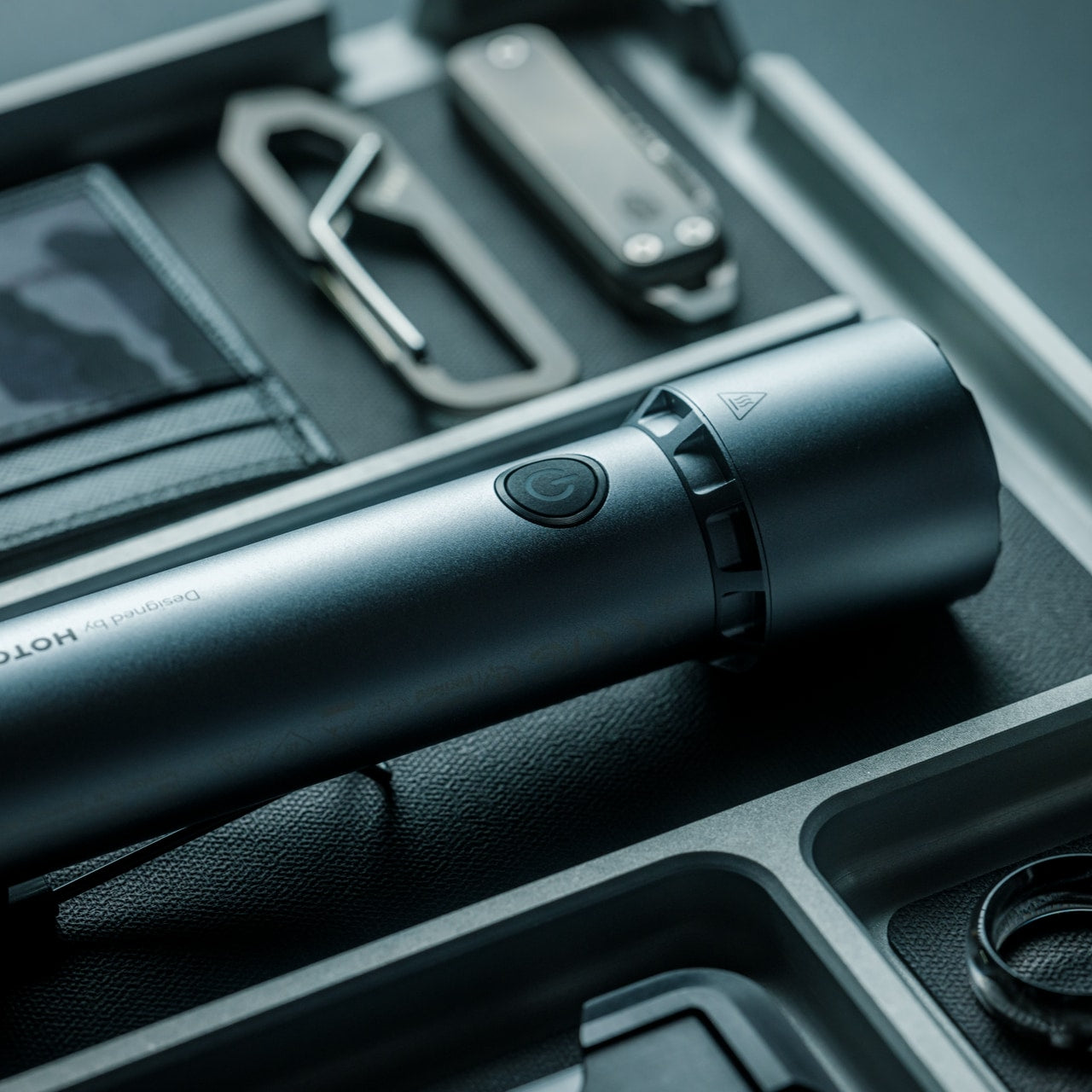
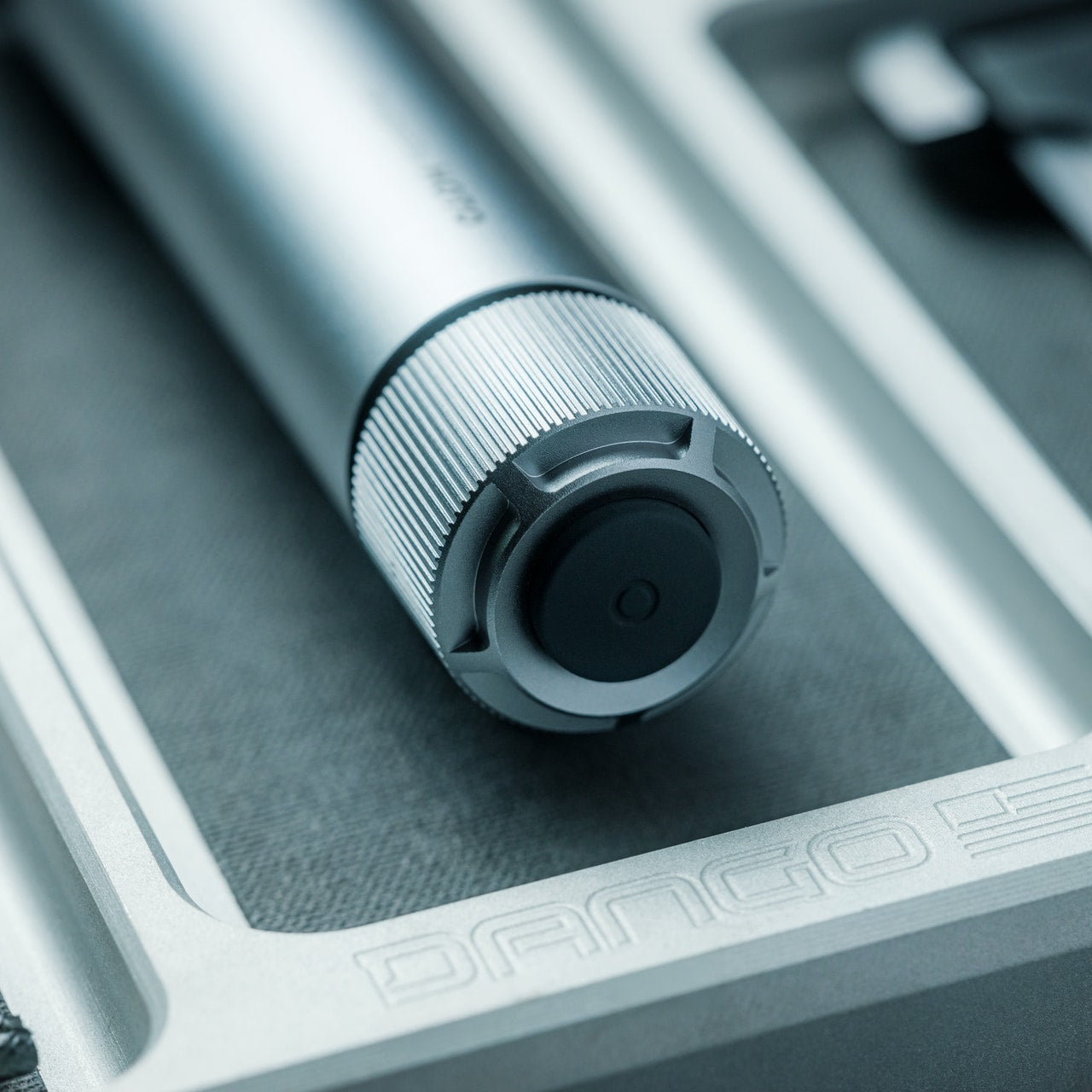
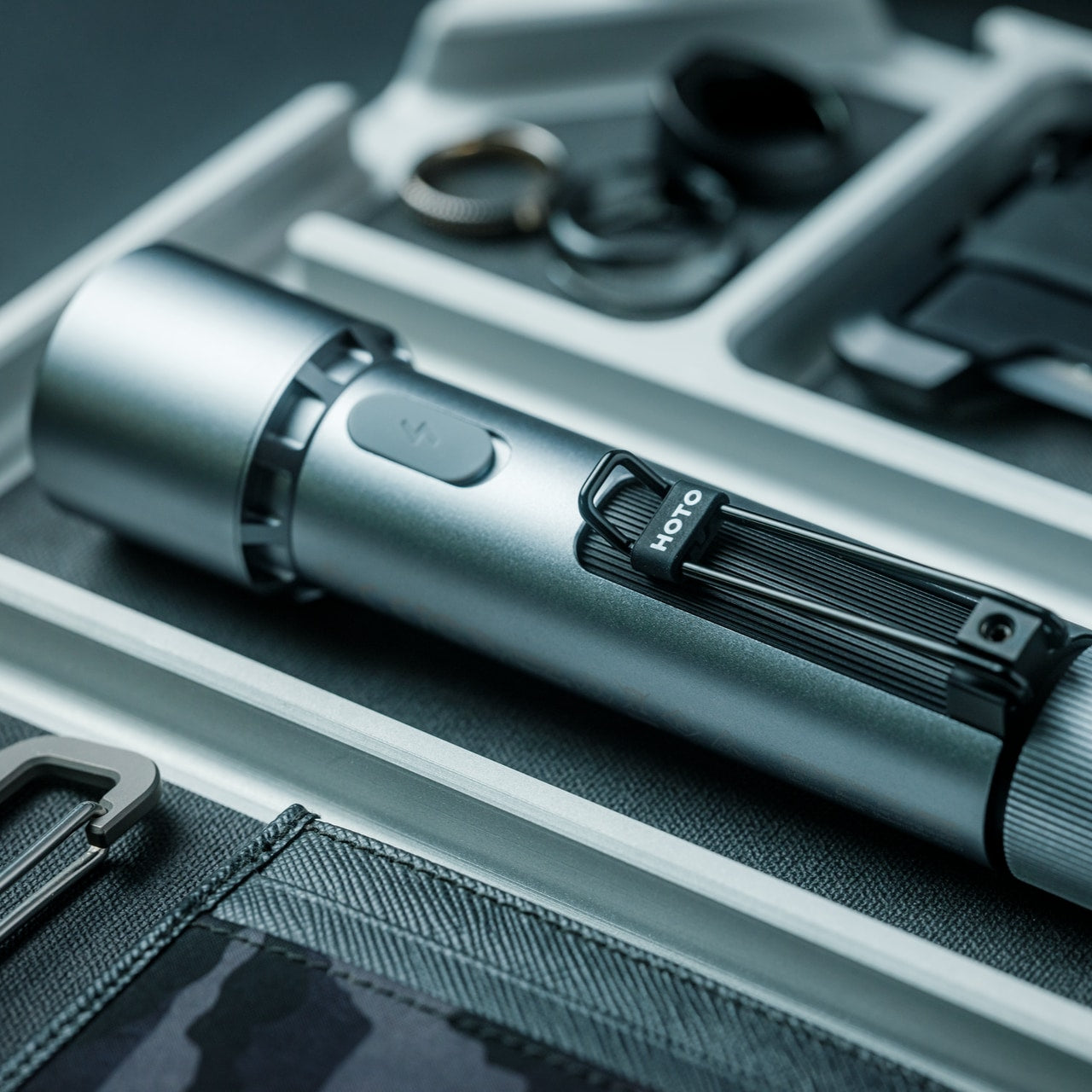
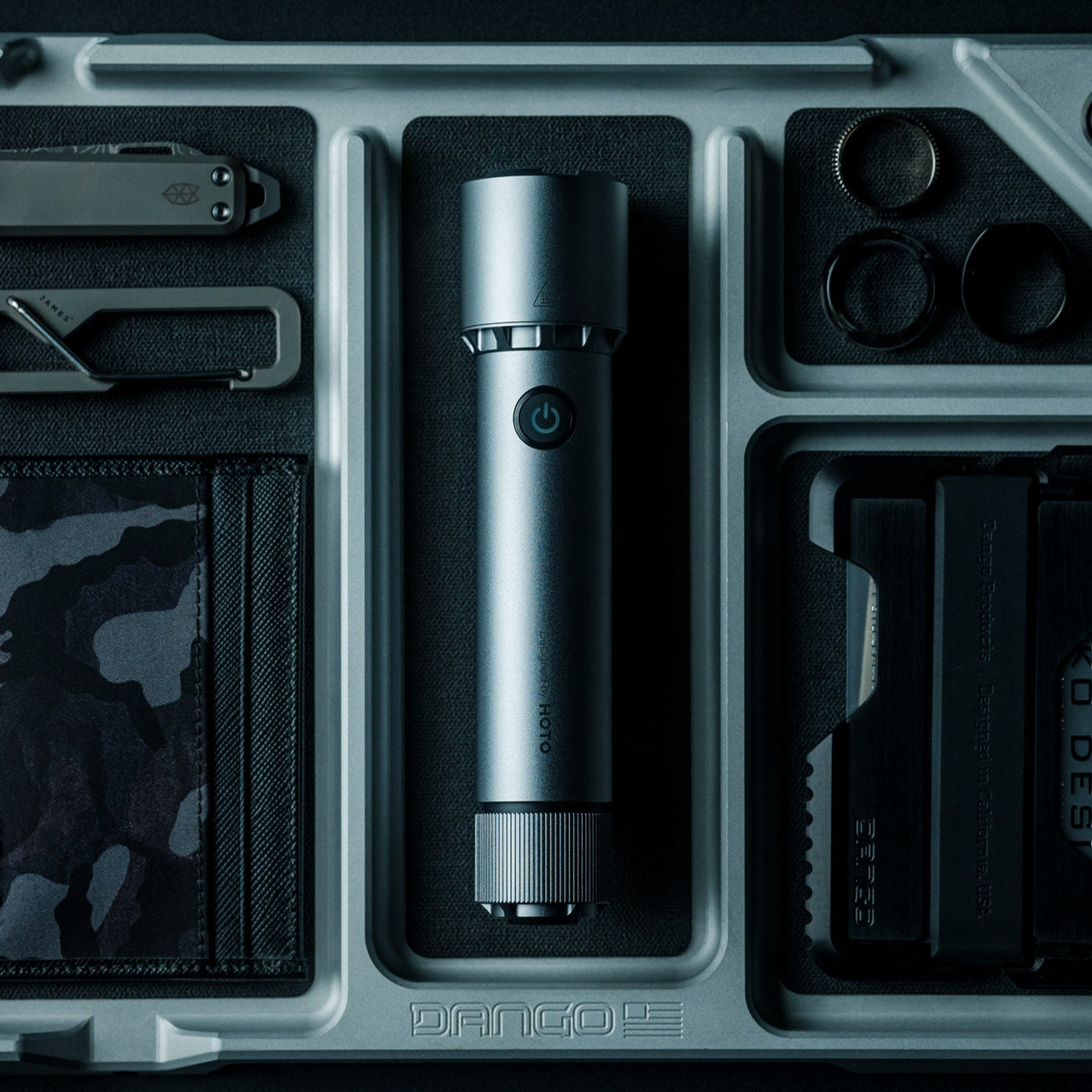
This 2300-Lumen Tactical Flashlight Activates in 0.2 Seconds and Looks Too Good for a Junk Drawer

Some flashlights live at the back of a junk drawer, half-dead batteries and all, and then some tools earn permanent nightstand status. The BlackoutBeam Tactical Flashlight belongs in the second category. With 2300 lumens and a 300-meter throw, it outperforms gear twice its size, and it does it inside a body slim enough to slide into a jacket pocket without a second thought.

What makes it worth talking about is not just the output. It is the combination of IP68-rated aluminum construction, a 0.2-second activation time, and a 6500K daylight beam that together closes the gap between tactical hardware and everyday carry. This is not a flashlight you grab when nothing else is available. It is the one you reach for first, every time, because it was built to perform before you even think about it.

Click Here to Buy Now: $90.00

Built for the Moment Everything Goes Wrong

What separates BlackoutBeam from the crowded EDC flashlight market is the combination of brutal output and surgical design. Three brightness levels cover everything from close-up task lighting to long-range situational awareness. A strobe mode and a focused pinpoint beam add tactical flexibility that most everyday carry flashlights simply do not offer. The 6500K color temperature mimics natural daylight, which matters when you need to read a situation quickly rather than fumble through warm, orange-tinted light.

The one-handed design works in gloves, which tells you everything about the intended use case. This is a flashlight engineered for genuine emergencies, not the kind you imagine while browsing gear forums. A storm takes out the power. Your car stops on an unlit road. Something moves in the yard at 2 a.m. BlackoutBeam activates in the time it takes to blink, and it does not stall when you need it most.

Dual Power, No Dead Ends

Power management is handled with the same care as everything else. A 3100mAh lithium-ion battery recharges via USB, folding into the same charging routine as your phone and laptop. When the grid goes down entirely, two CR123A backup batteries ensure the flashlight is never stranded. That dual-power system is rare at this price point. Most lights at $90 force a choice between one option or the other.

At $90, BlackoutBeam sits at the crossroads of EDC practicality and award-winning industrial design, a combination that rarely arrives in the same package. Slim enough to slide into a go-bag, refined enough for a nightstand, and powerful enough to change the outcome of a real emergency. Most flashlights cover one of those bases. This one covers all three without a single compromise.

What We Like

  • 2300 lumens with a 300-meter throw: the output is genuinely serious for a flashlight this slim, covering everything from a dark room to a wide outdoor perimeter without switching tools
  • 0.2-second activation: no warm-up, no delay; it works at the exact speed an emergency demands
  • IP68 waterproof and dustproof aluminum build: not just splash-resistant, but rated for full submersion, which puts it well above most EDC flashlights at this price
  • Dual power system: USB recharging for daily life, CR123A battery backup for when the grid is gone; genuine redundancy rather than a marketing afterthought

What We Dislike

  • Stock is critically limited: the product page lists only one unit available, which means this is essentially a last-chance purchase rather than a reliable restocking situation
  • No published runtime figures: the page details brightness levels and battery specs but never states how long the 3100mAh cell actually lasts at full 2300-lumen output, which is information any serious buyer needs before committing at $90

Buy It Once, Carry It Forever

The BlackoutBeam was designed for the moments when everything else falls short. That is not marketing language. It is a design brief backed by 100 international awards and a track record that earns its reputation. If you have been carrying a flashlight bought out of convenience rather than confidence, this is the upgrade worth making. The difference between the right tool and a forgotten one matters more than most people realize until it is too late.

Pick up the BlackoutBeam Tactical Flashlight while stock lasts. With only one unit currently available, this is not a purchase to schedule for later. The flashlight you carry in an emergency is not the place for compromise, and BlackoutBeam is proof that the right tool never has to sacrifice how it looks to deliver exactly what it promises when the moment arrives.

The post This 2300-Lumen Tactical Flashlight Activates in 0.2 Seconds and Looks Too Good for a Junk Drawer first appeared on Yanko Design.

7 EDC Gifts for the 4th of July That Are Way More Useful Than Fireworks

The 4th of July has a way of surfacing the gear you wish you already owned. The flashlight nobody can find. The pocket tool left at home. The radio that needs Wi-Fi to work. This year, instead of defaulting to another box of sparklers, consider something that earns a permanent spot in someone’s daily carry. These seven picks are design-forward, genuinely useful, and built for long days outdoors.

The range runs from ten dollars to under a hundred, spans keychain carry to campsite audio, and skews toward objects that solve problems the recipient didn’t know they had. A 4th of July gift isn’t really about the holiday — it’s about summer. Long evenings, unfamiliar parks, parking lots that feel like a mile from the fireworks. The best EDC is already in your pocket before you realize you needed it.

1. NoxTi Titanium Glow Keychain

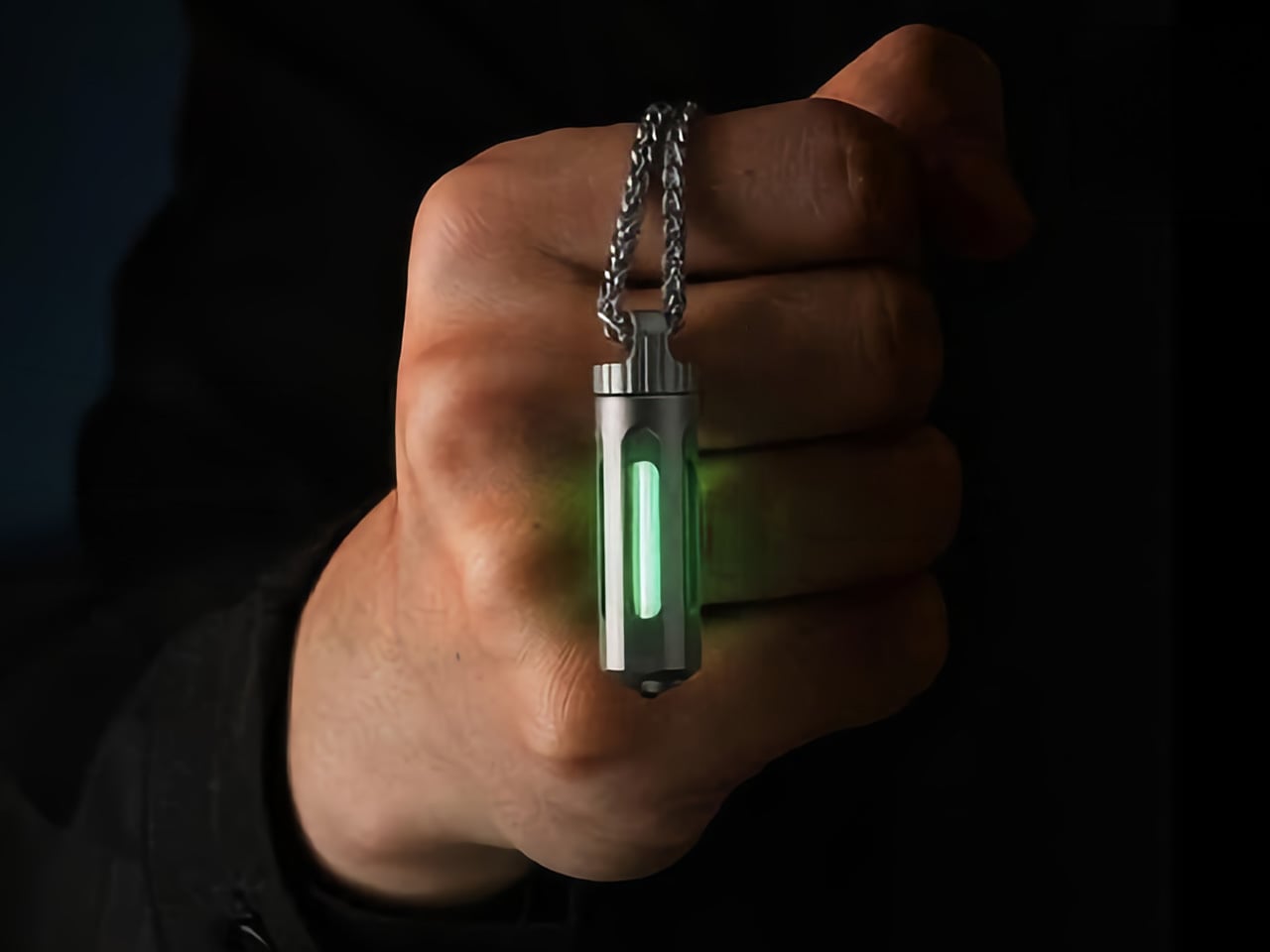
Most keychain tools solve for function and ignore everything else. The NoxTi starts from a different premise entirely. Inside a 45mm Gr5 titanium body machined to aerospace tolerances lives a tritium vial — a hydrogen isotope that releases beta particles, which strike a phosphor coating and produce light. No batteries. No charging. No switch to press. The physics simply runs, continuously and silently, for 25 years. Six color options span Apple Green, the brightest to the human eye, through Ice Blue, Red, Sunset Orange, Violet, and Ocean Blue.

At 10.7 grams, roughly two US pennies, the NoxTi disappears on a keychain until darkness falls and it becomes the most visible thing in your pocket. The quartz tube transmits 92% of available light and will still be optically clear in 2050. A ceramic-tipped glass breaker sits at the tail end for emergencies. When the tritium dims after two decades, you press the old vial out and slide a new one in. The titanium body is designed to outlast every other item in your carry, twice over.

What we like

  • Tritium glow requires no battery, no charging, and no activation — just physics running without interruption for 25 years
  • User-serviceable vial replacement means the titanium body becomes a permanent carry piece that improves rather than degrades over time

What we dislike

  • The glow is intentionally faint — this is a locator light, not a work light, and that distinction matters when gifting
  • The tritium version costs nearly double the luminescent model; the difference only reveals itself in complete darkness

2. CasaBeam Everyday Flashlight
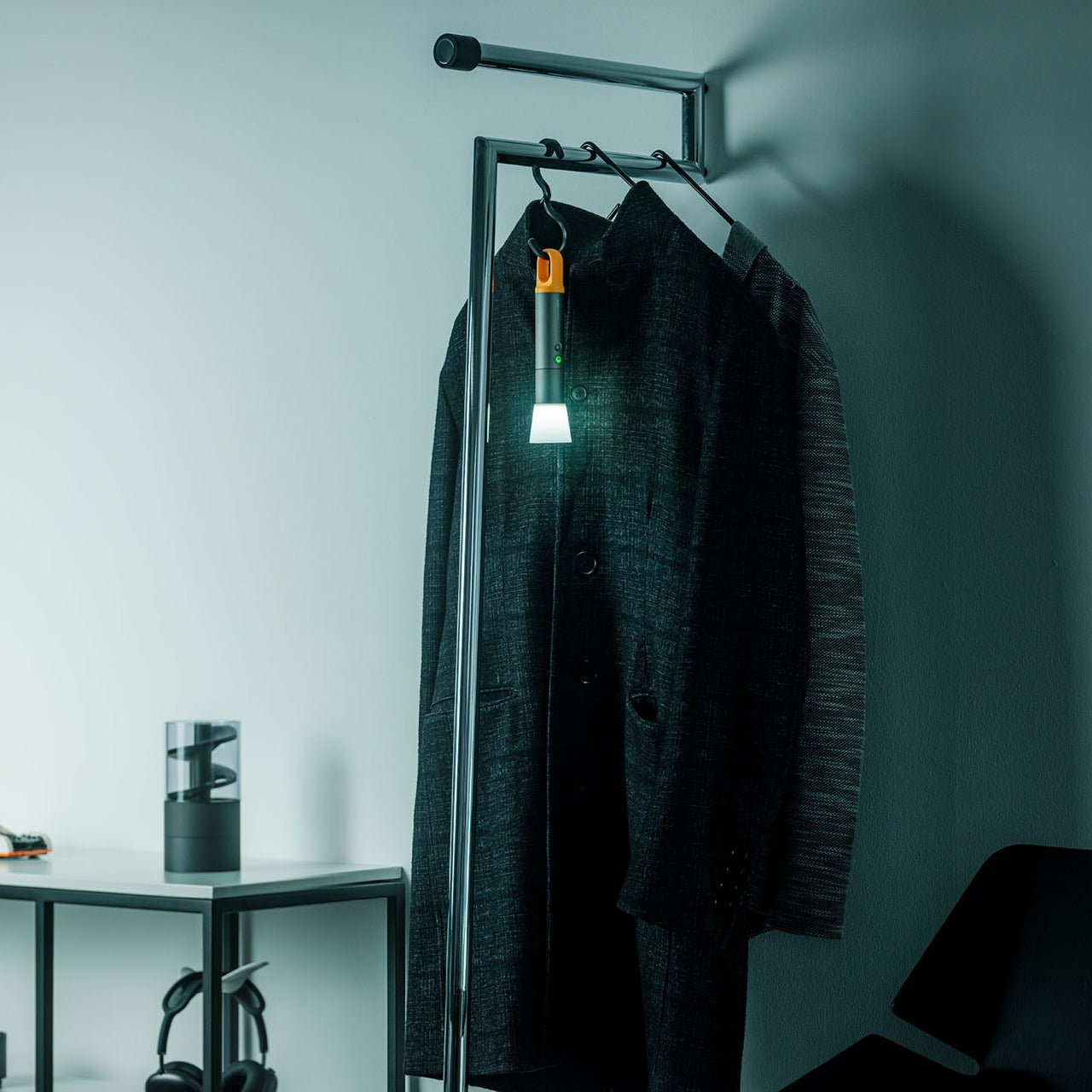
A 1,000-lumen output with a 200-meter throw sounds like overkill for a walk to the fireworks lot. It isn’t. The CasaBeam’s core trick is what happens when you stand it upright: it becomes a lantern, casting ambient light across a blanket, a tailgate, or a campsite without requiring a second device. Twist the front to shift between focused spotlight and wide floodlight. Five lighting modes handle everything from reading fine print on a map to signaling across a dark field.

The form factor is the story. Cylindrical, compact, no exposed bezels or tactical knurling — it reads as a designed object rather than a piece of survival gear. That matters when the gift lives on a kitchen counter for 50 weeks a year and earns its place the other two. The dual-mode beam and standing lantern configuration solve two distinct problems with a single product and no attachments required. Most flashlights beg to be put away. This one earns a shelf spot.

Click Here to Buy Now: $50.00

What we like

  • 1,000 lumens and an upright lantern mode solve two distinct lighting problems within a single compact form
  • Clean cylindrical profile reads as a designed object rather than tactical gear, earning permanent display rather than a drawer

What we dislike

  • Battery life at maximum output isn’t specified, which becomes a real concern during extended outdoor use
  • No integrated power bank function means a phone running low still needs a separate solution

3. Cubik

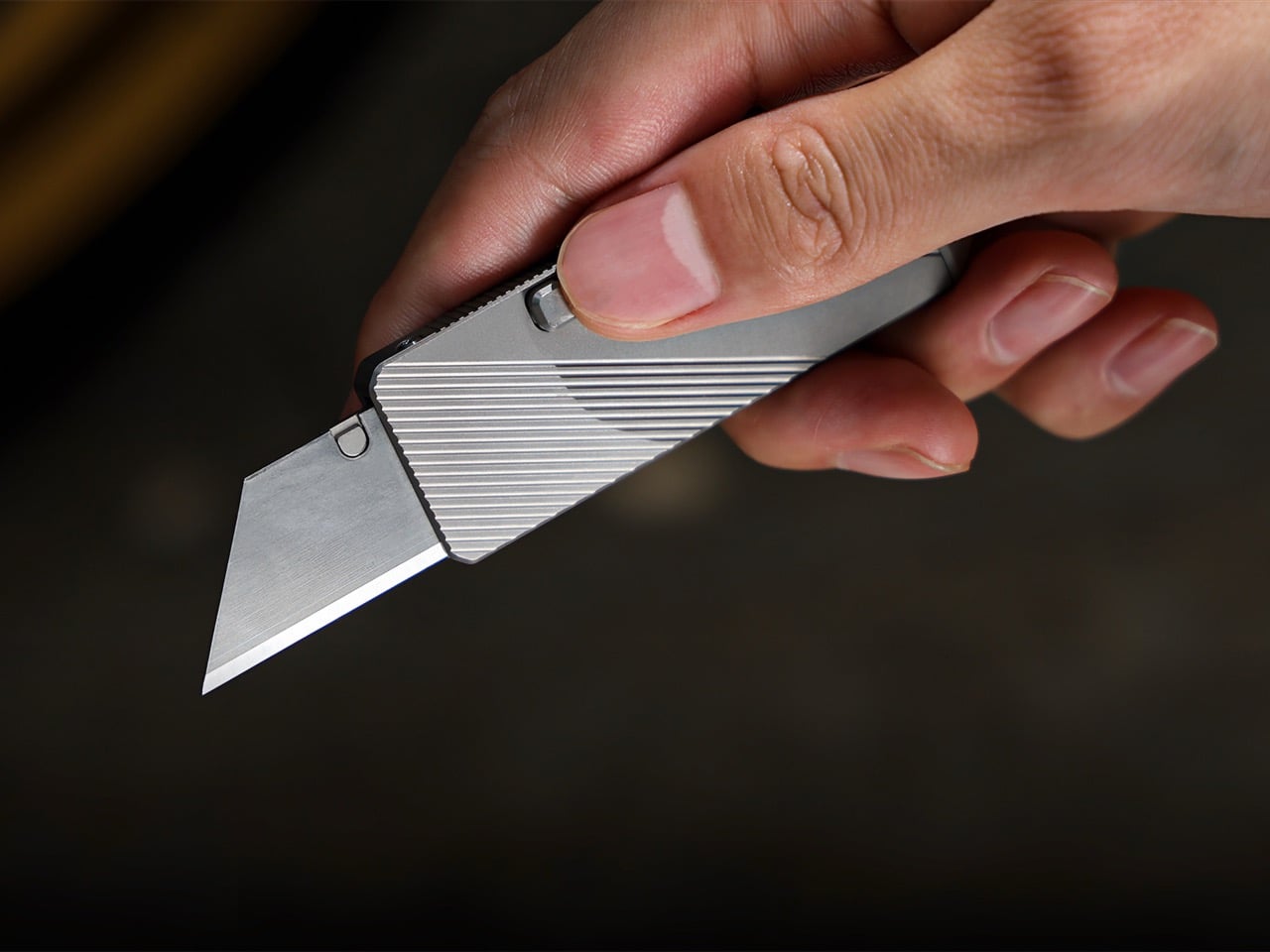
Knife design has explored most of its available territory. Springs, flippers, bearings, assisted openers — the variations are incremental. The Cubik does something genuinely different. Press the trigger, tip the handle down, and the SK5 trapezoid blade drops into place using nothing but gravity. Release and it locks. No spring to rust, no bearing to fail, no mechanism that requires maintenance over years of carry. The outer body is fully machined titanium at 1.65 ounces, measuring 2.6 inches long and 0.2 inches thin.

The swappable blade design turns a potential limitation into a genuine advantage. When an edge dulls, you replace it rather than resharpening. Five blades come included, and the trapezoid format is dual-ended — when one tip wears, flip it. Remove the blade entirely, and the handle clears TSA checkpoints. Tritium slots on both sides accept glow vials for low-light visibility. A tungsten carbide glass breaker sits at the rear end, and a pocket clip handles daily carry. The Cubik removes friction from every step except the cut.

What we like

  • Gravity deployment eliminates springs and bearings, making the mechanism nearly impervious to the wear that compromises most folding knives over time
  • TSA-friendly with blade removed, making it genuinely packable for any travel scenario without sacrificing the handle as a daily tool

What we dislike

  • Gravity deployment requires a deliberate wrist motion that takes practice — less intuitive than a flipper under real pressure
  • SK5 is functional blade steel but won’t match the edge retention of higher-alloy alternatives at this price

4. Gerber Shard
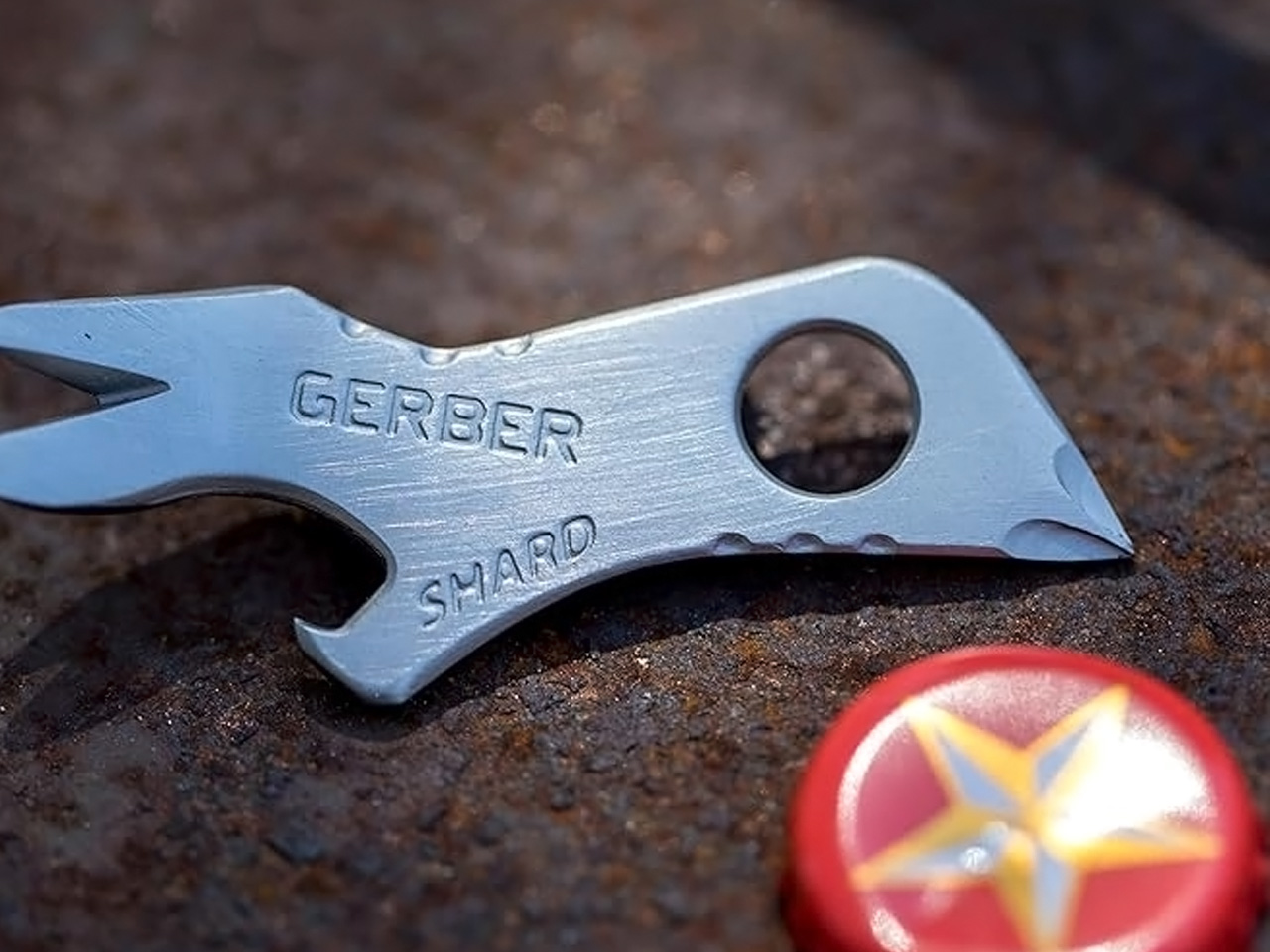
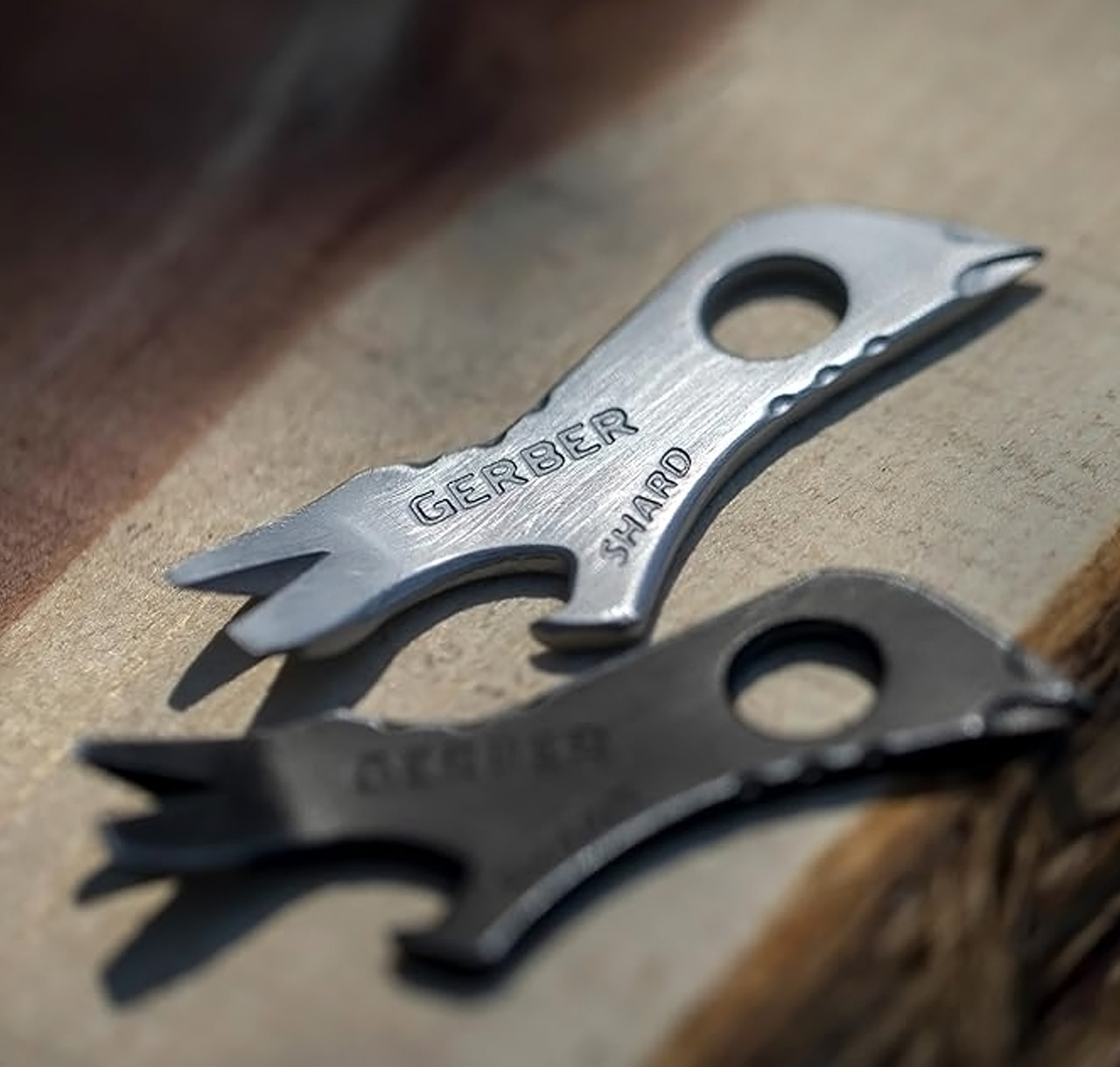
There is a specific kind of gift that costs almost nothing and immediately becomes indispensable. The Gerber Shard is exactly that. Seven functions in a 2.75-inch titanium nitride-coated steel body: small flathead, medium flathead, cross driver, pry bar, wire stripper, lanyard hole, and bottle opener. The coating handles sweat, saltwater, and general outdoor abuse without corrosion or tarnish. Gerber backs it with a limited lifetime warranty. At roughly ten dollars, the case against it is genuinely difficult to construct.

The airline-safe design is the detail that separates the Shard from every competitor at this price point. No blade means it travels in carry-on luggage, clears international security, and stays in a bag that never gets checked. Most multitools get confiscated at security checkpoints or packed reluctantly into checked bags. This one goes everywhere without a second thought. Clip it to a keychain, a zipper pull, or a lanyard and forget it exists until someone nearby needs exactly what it offers.

What we like

  • Airline-safe and TSA-compliant, seven functions that travel literally anywhere without planning around security
  • A limited lifetime warranty from an established brand at a price that removes any justification for not owning one

What we dislike

  • Seven functions cover the daily basics but won’t satisfy carry needs that demand pliers or a dedicated blade
  • Small size reduces leverage on stubborn fasteners — torque-heavy tasks require a full-sized tool regardless

5. RetroWave 7-in-1 Radio
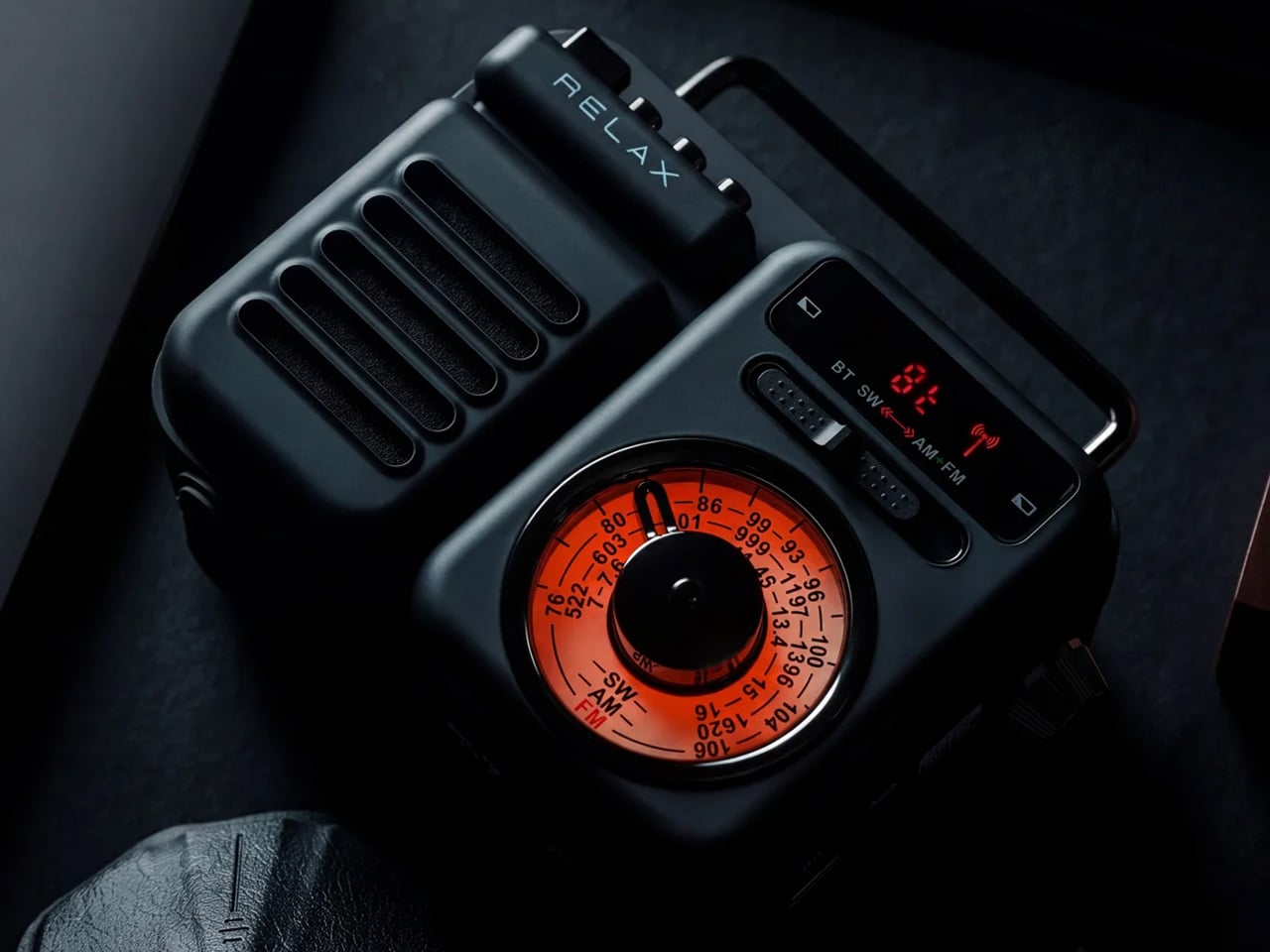
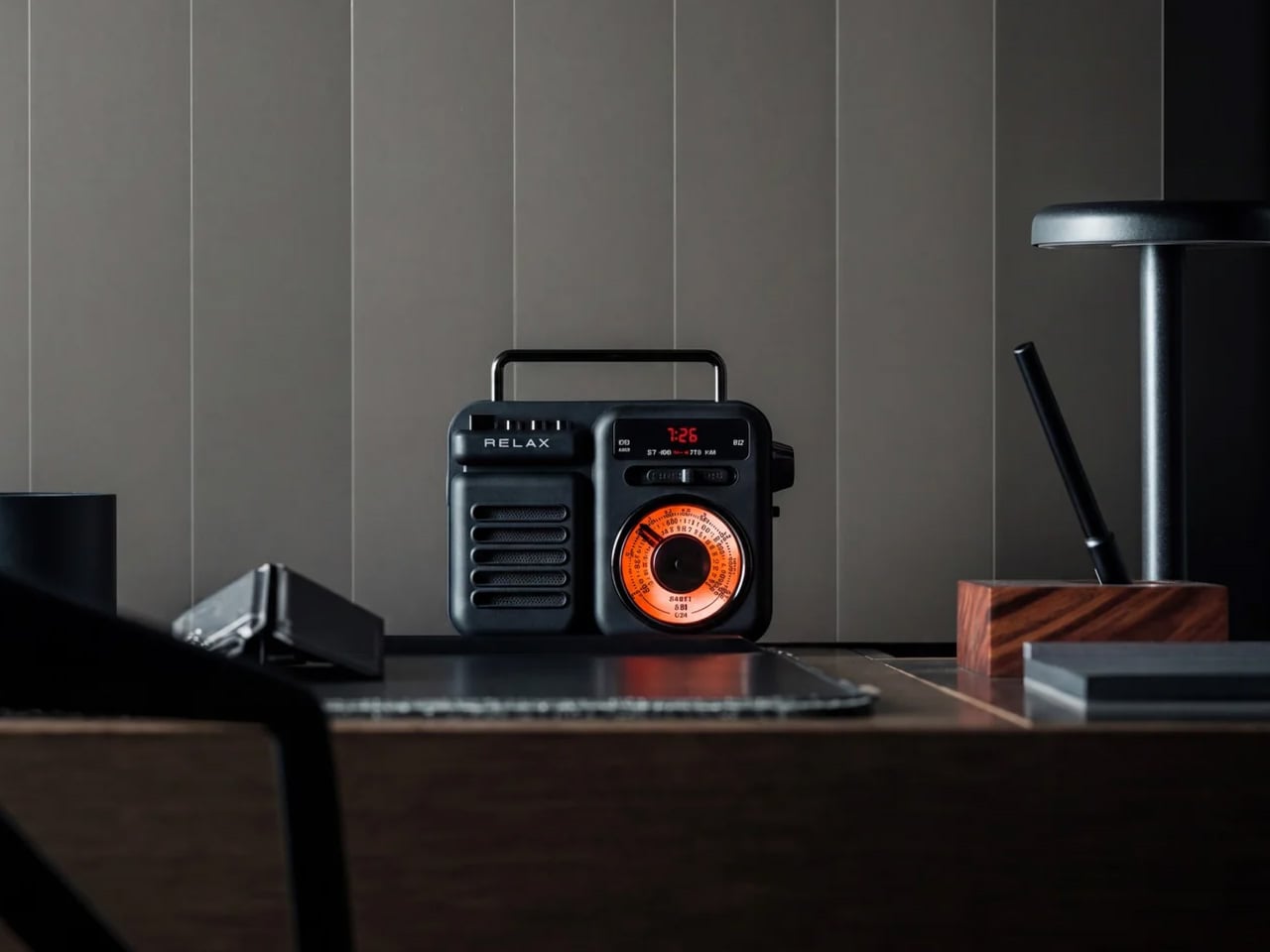
Smart speakers go quiet when the Wi-Fi drops. Phones drain exactly when you need them. The RetroWave Radio is built for the moments modern devices quietly fail. FM, AM, and shortwave radio run analog without internet. Bluetooth and microSD handle streaming and offline playback. A 2000mAh battery charges your phone when outlets aren’t available. A hand crank and solar panel keep the radio running when neither power source is reachable. An SOS alarm stays ready in the background, doing nothing until it’s the only thing needed.

The design earns its shelf space long before the power cuts. The retro Japanese-inspired silhouette has genuine tactile weight — a tuning dial with real feedback, proportions that feel resolved rather than nostalgic for effect. On a picnic blanket with fireworks building overhead, it handles audio without pulling anyone’s phone from their pocket. During a summer storm a week later, it handles the emergency without requiring a different device. Up to 20 hours of radio playback, six hours of emergency lighting, and one object that earns its place every day between holidays.

Click Here to Buy Now: $89.00

What we like

  • Hand crank and solar charging mean the radio keeps working when power and signal both fail — a genuinely rare capability at this price
  • The retro Japanese silhouette earns its shelf presence on design alone, before any function is considered

What we dislike

  • 2000mAh power bank capacity is modest — enough for an emergency top-up, not a full phone charge from zero
  • Shortwave reception quality depends on antenna position and local interference, requiring some adjustment in new environments

6. Loki Nav Compass
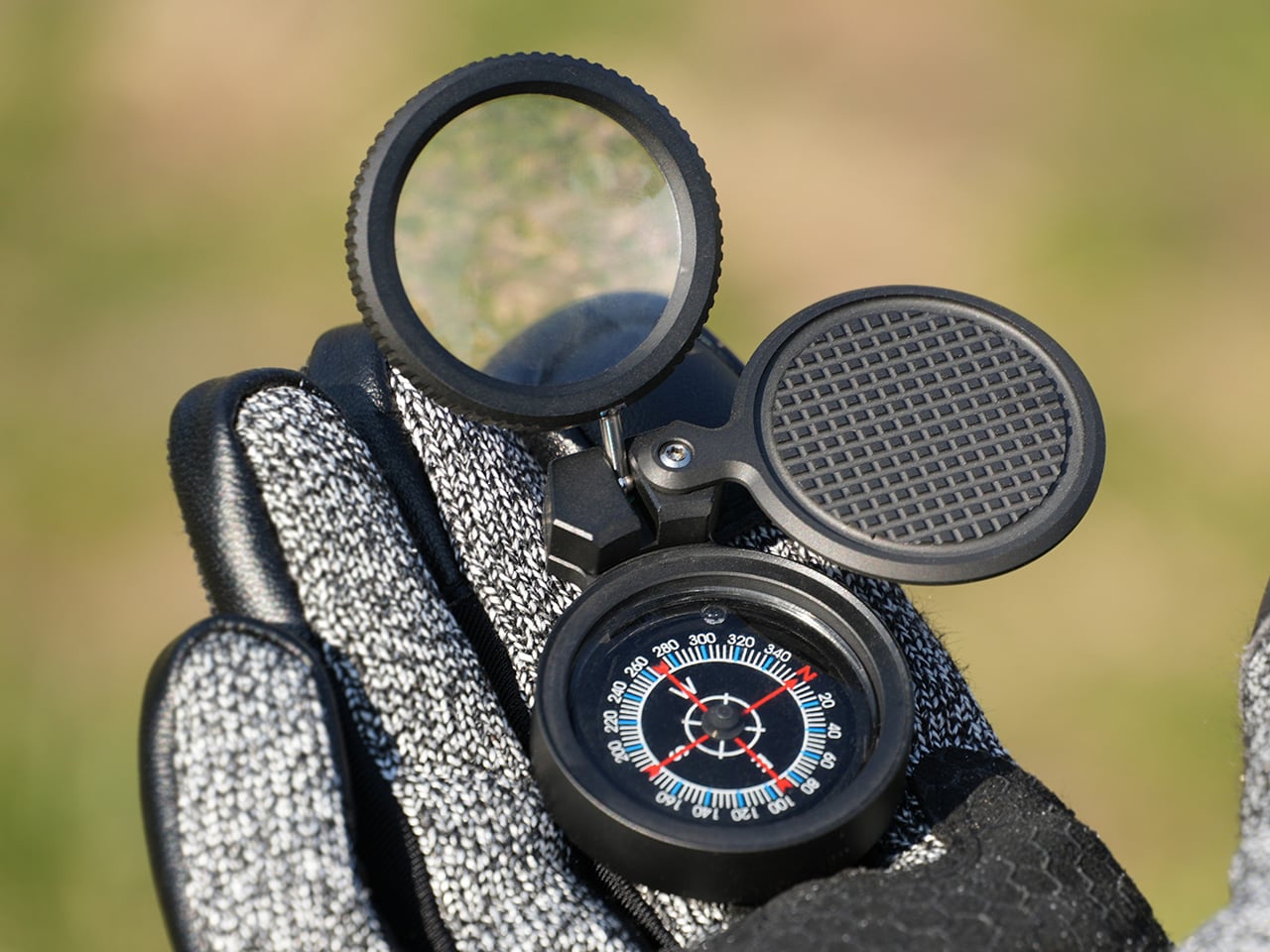
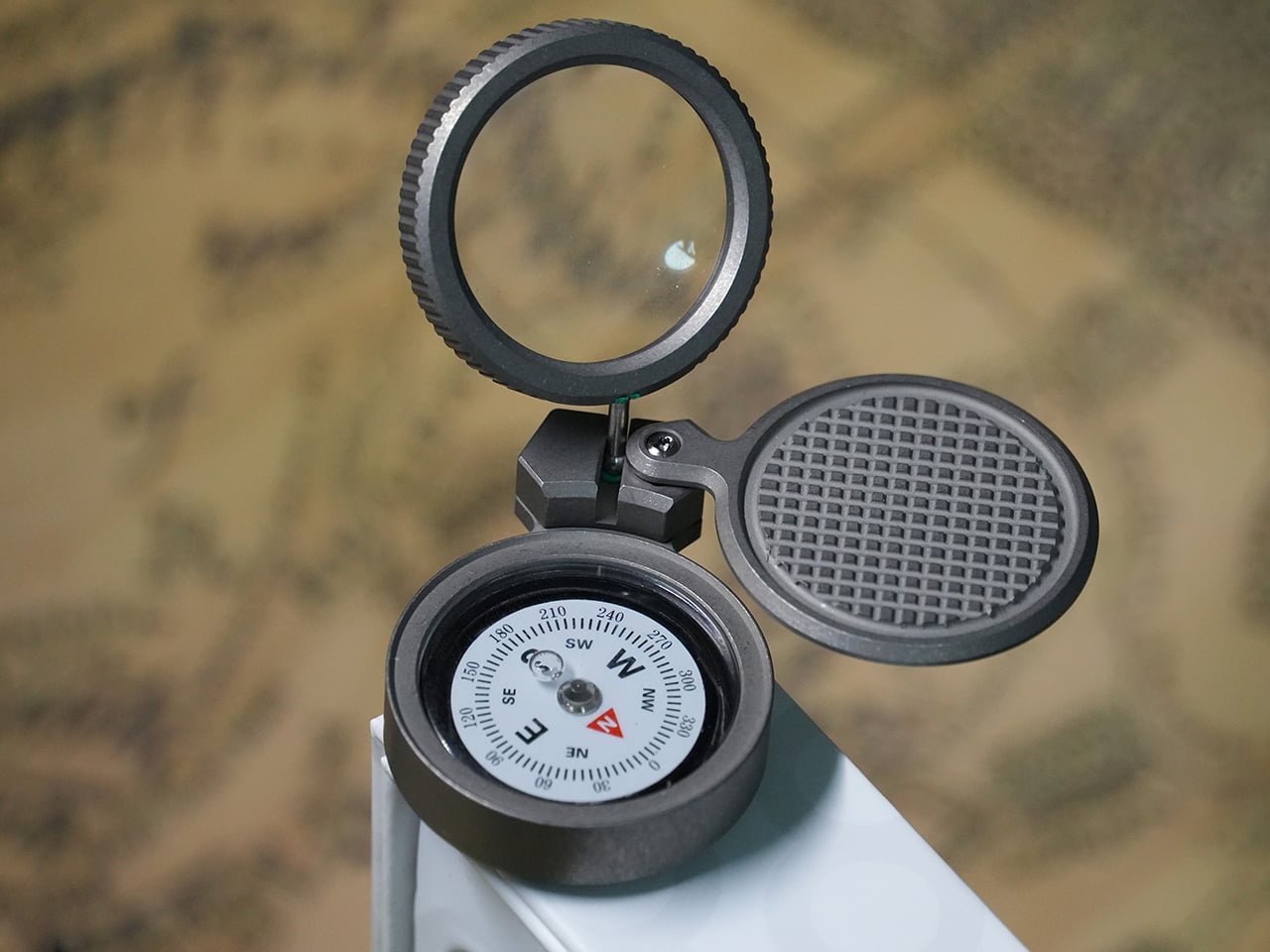
Grade 5 titanium, 48 grams, IPX8 waterproof to one meter for thirty minutes. The Loki Nav by EckDesign compresses a serious navigation system into a 46.5mm body you forget is in your pocket until the phone battery dies on a trail with no cell signal. Three interchangeable oil-filled compass modules create built-in redundancy where most compasses offer only one. The cap houses a 12x magnifying loupe, an emergency signal mirror, and a wood file for making fire-starting tinder from available material.

The design logic rewards attention. Every component earns its inclusion. The loupe rotates to protect its lens between uses. The mirror deploys without disassembly. Compass modules swap through a base hole using a toothpick — no tools, field-serviceable in seconds. For a day that starts in a park and ends on a hiking trail, or begins with fireworks and continues into unfamiliar terrain after dark, analog navigation that requires no signal and no battery is a quiet, specific kind of reassurance that no smart device can replicate.

What we like

  • Three interchangeable compass modules create a navigation system with real redundancy — reliability treated as a first principle, not a feature mention
  • IPX8 waterproofing and Grade 5 titanium construction match the durability demands of any outdoor carry without adding weight that defeats the purpose

What we dislike

  • At 48 grams in titanium, noticeably heavier than a basic compass — the weight is justified, but worth factoring into ultralight setups
  • Compass module swapping via toothpick requires some practice to execute cleanly under field conditions

7. Orbitkey Key Organiser
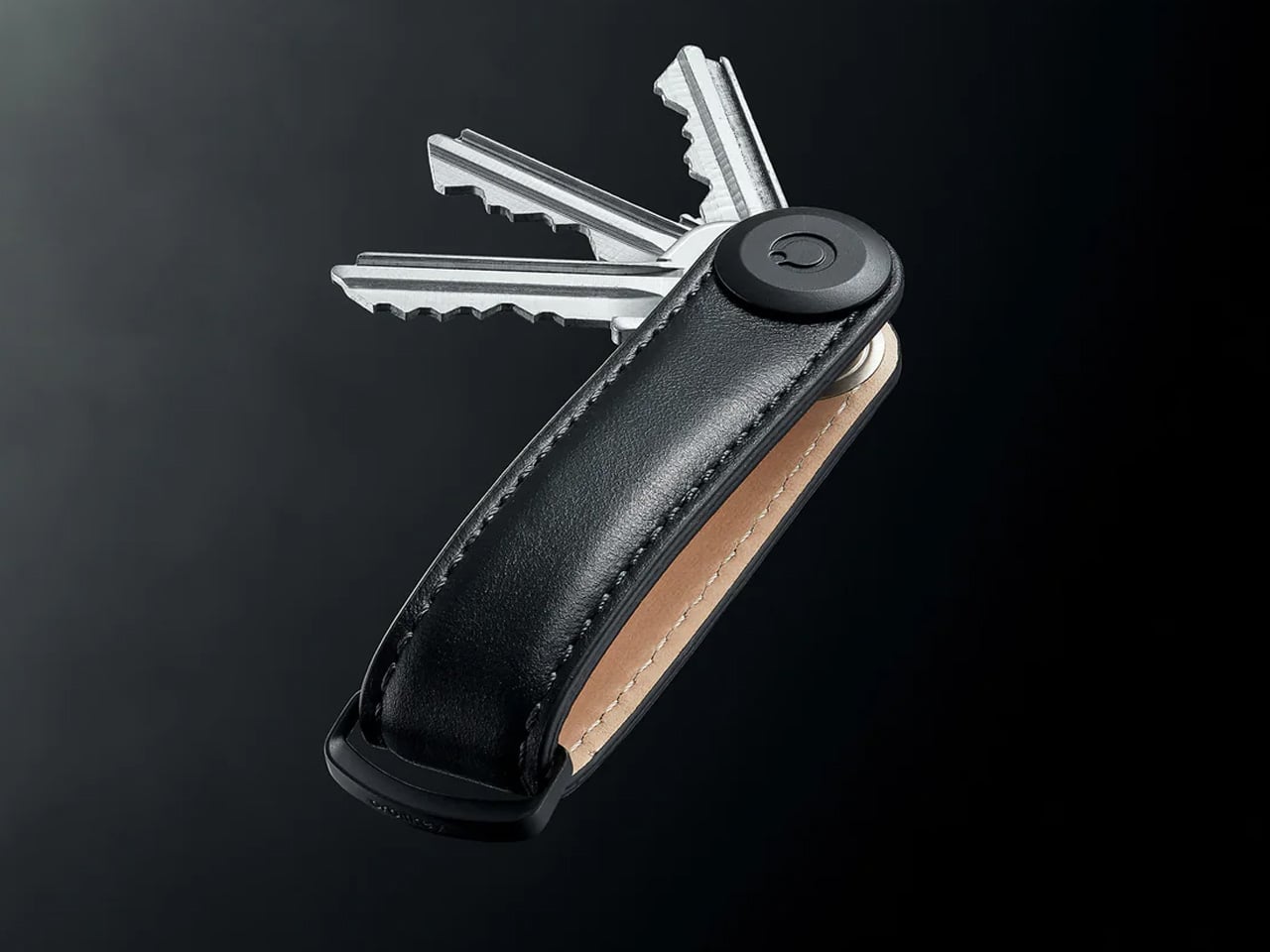
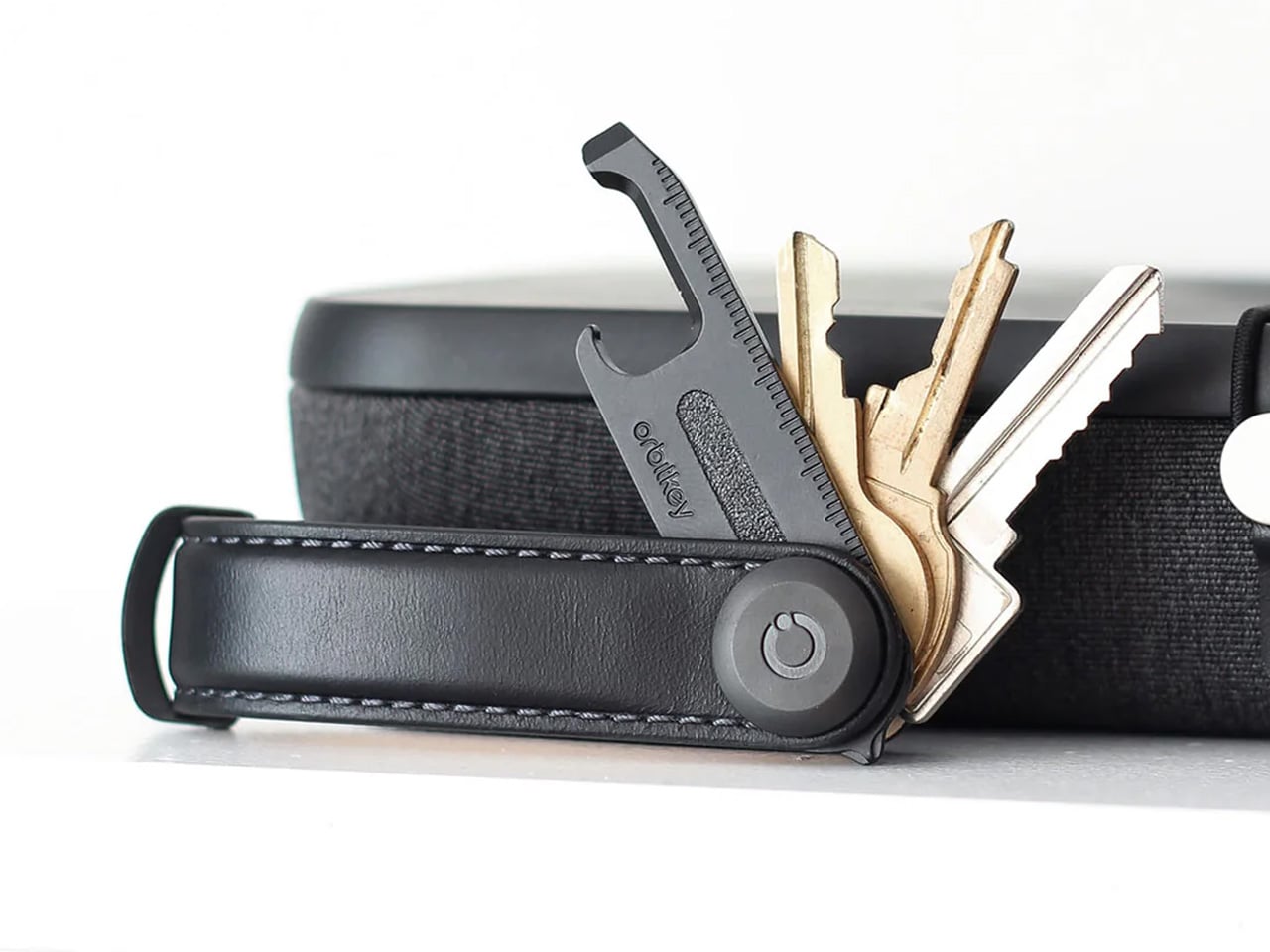
Standard key rings solve the wrong problem. They keep keys together while ensuring they jingle constantly, press metal ridges into pockets all day, and resist every attempt to add or remove a key without a fight. The Orbitkey stacks two to seven keys flat inside a full-grain leather spine with stainless steel hardware, held under tension. Closed, it sits flat and produces no sound. In a pocket, it disappears. Five colorways run from black dress leather to warm cognac.

The gift case for the Orbitkey is strong because the problem it solves is one most people have accepted rather than noticed. Hand one to someone who has carried a key ring for years and watch the change happen within a week. The full-grain leather develops its own wear pattern over years of daily carry — a position on longevity that most keychain products decline to take. One week in, returning to a standard key ring feels genuinely regressive. That’s the kind of product worth giving.

What we like

  • Tension stacking eliminates key jingle — a quality-of-life improvement that compounds quietly across every single day of carry
  • Full-grain leather construction ages into character rather than showing damage, signaling a product designed to outlast the trend cycle

What we dislike

  • Initial key installation requires a screwdriver and careful threading — not difficult, but not intuitive on the first attempt
  • Oversized or irregularly shaped keys may not stack cleanly within the system’s flat geometry, worth checking before purchase

The Best Gifts Are the Ones That Outlast the Holiday

The best 4th of July gifts aren’t themed — they’re useful in ways that outlast the holiday by years. Every product here earns a permanent spot in daily carry rather than a drawer by August. The NoxTi glows on a keychain for 25 years. The Orbitkey replaces a friction point people had quietly accepted. The Loki Nav works when every other tool has gone silent. That’s the standard worth giving.

Spending a long day outdoors with people you like is a design problem, and the solution is reducing friction. Less searching for the flashlight. Less draining someone’s phone for music. Less fumbling with a key ring in a dark parking lot after the show. These seven objects do exactly that — each one eliminating a small problem before it becomes one. That’s the kind of gift that doesn’t get returned, explained, or forgotten.

The post 7 EDC Gifts for the 4th of July That Are Way More Useful Than Fireworks first appeared on Yanko Design.
The 21.5-Inch Transparent Speaker That Animates Lyrics to Match Your Music

Most home speakers today have settled into a comfortable invisibility. Whether they’re slim soundbars pushed against a wall or cylindrical mesh towers parked on a bookshelf, the design goal is essentially the same: stay out of the way. They’re meant to be heard and rarely looked at, and even the ones that look interesting rarely offer much to see once the music starts.

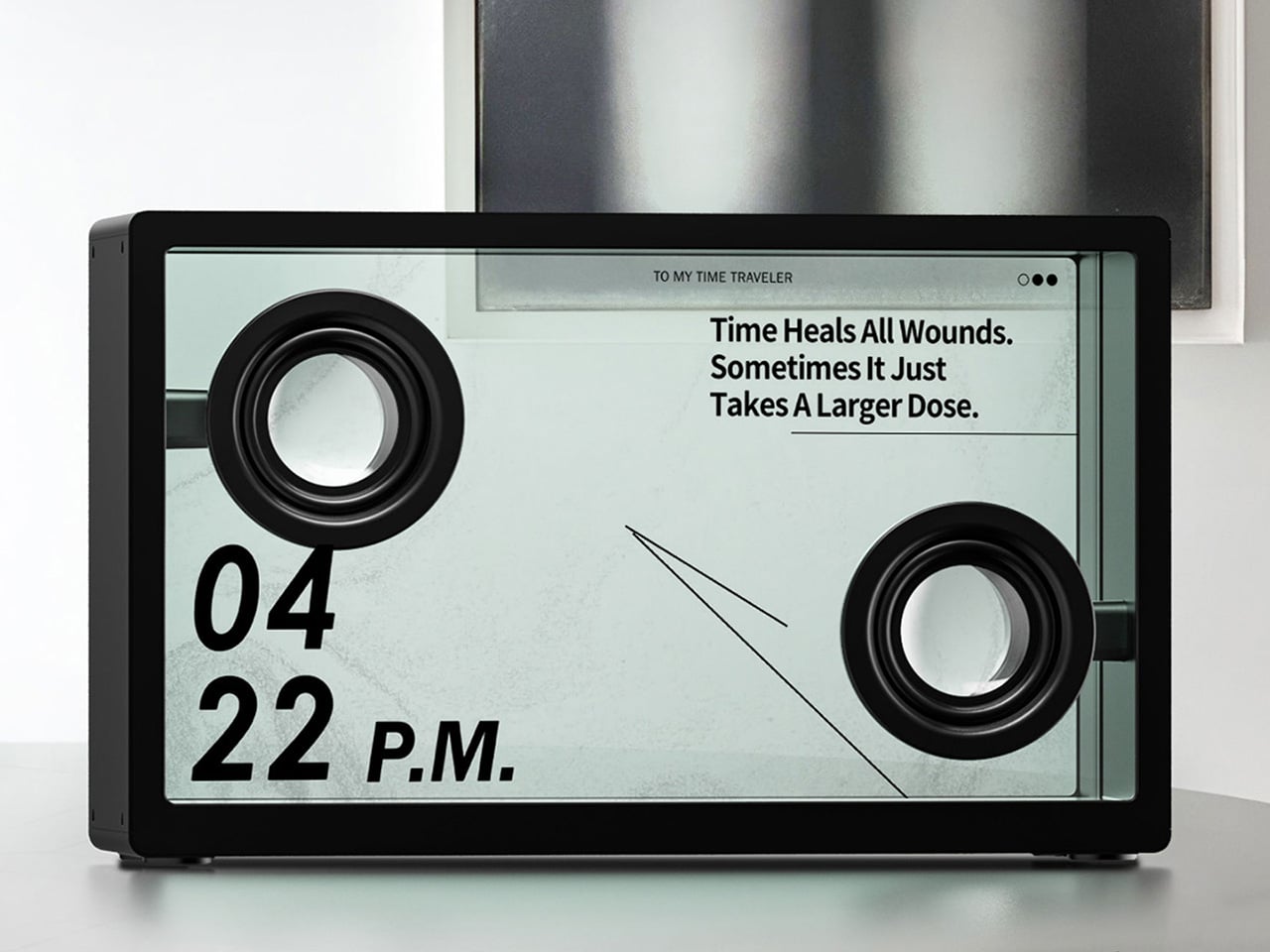
MorningBlues has a clear thesis about music, and it has a lot to do with how the things we listen to can also be things worth looking at. Its SonicGlass A1 is a hi-fi speaker built around a transparent glass driver that lets you watch sound in motion as music plays. It’s the kind of object that sits on a shelf the way art does, with intention, and with something to say even before you press play.

Designer: MorningBlues

Click Here to Buy Now: $646 $999 (35% off). Hurry, only 16/205 left! Raised over $360,000.

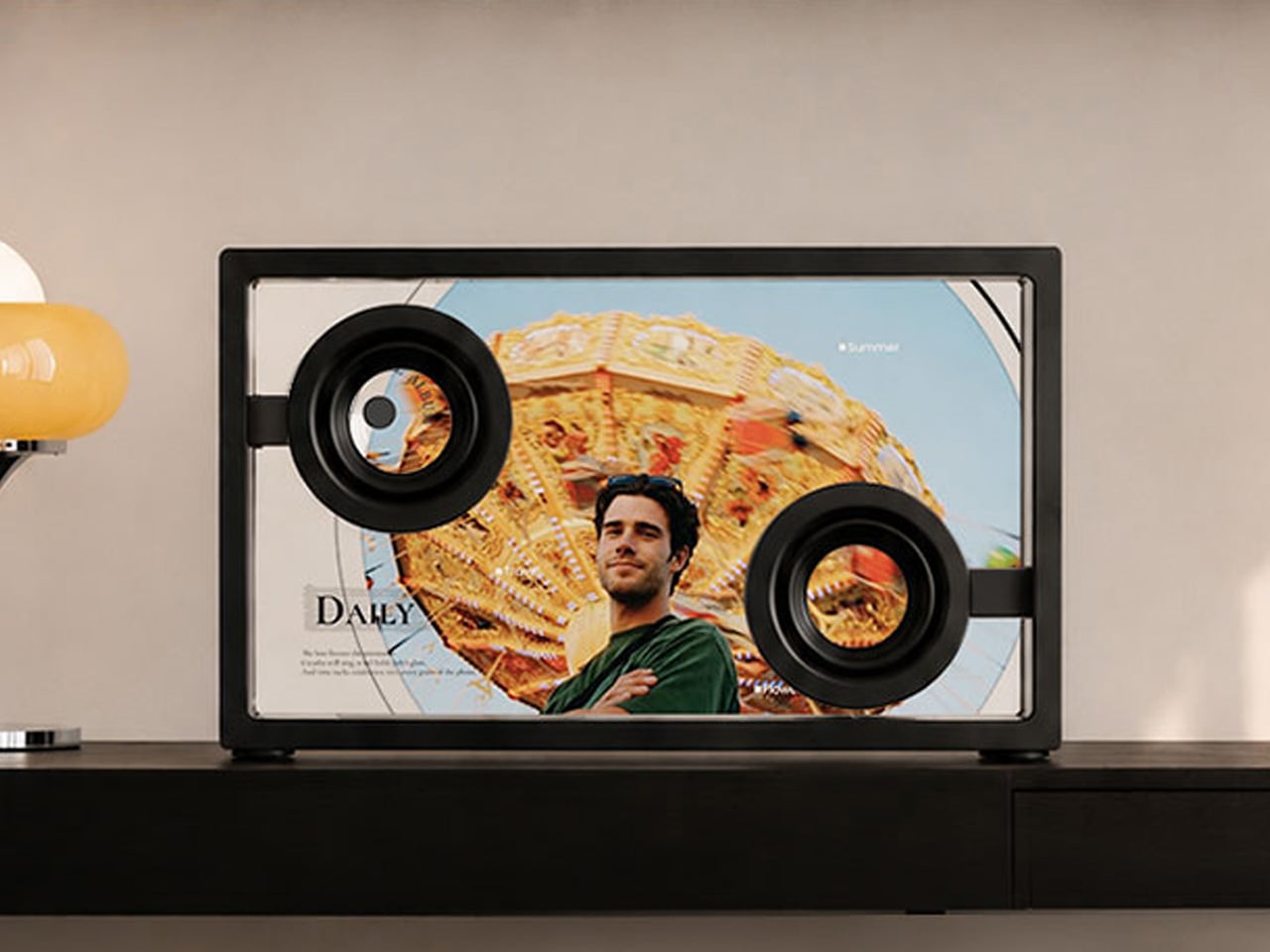
The SonicGlass A1’s front face is a 21.5-inch TFT panel with high-transparency tempered glass, framed in black with over 90% light transmission. The transparent driver sits behind it, fully visible, which is both an acoustic feature and a design statement. There’s no grille hiding anything, no fabric obscuring the view. What you see is the working interior of the speaker, presented like an exhibit rather than concealed like a component.

When a song plays, lyrics appear across the glass surface in motion styles drawn from the track’s rhythm, pace, and emotional character. MorningBlues calls this MoodLyric, built on data from hundreds of millions of playbacks to animate text in ways that feel tied to what the song is actually doing. All lyrics are licensed through LyricFind, meaning the display does right by the artists whose words it borrows.

Beyond the lyrics, a feature called SceneSync adds a visual layer that responds to music genres. Pop, hip-hop, R&B, and rock each trigger different visual aesthetics on screen, generated in real time by AI. The idea is that the speaker shouldn’t just play a song; it should match the world the song is coming from. It’s a more cinematic take on the standard music visualizer.

The MorningBlues app lets you upload a personal photo that AI uses to place your face inside a genre-matched music video, displayed on the speaker’s screen. It’s the kind of feature that’s genuinely fun at a gathering, or just for yourself on a slow afternoon. You can also load the speaker with your own photos and videos to use as background content, turning it into a personal display.

When the music stops, the SonicGlass A1 doesn’t go blank. It has ambient display settings that keep it working as a room fixture, with options like ambient backgrounds, dynamic clock faces, and an ASMR sleep mode for winding down at night. That always-on character makes the speaker feel less like a device you switch off and more like something that already belongs in the room.

Pair the A1 with a microphone, and it becomes a home karaoke setup with licensed lyrics scrolling on screen in sync as you sing. The MorningBlues Music Hub 1, a dedicated controller for phone-free playback, rounds out the experience by letting you manage everything from a single tactile device, so your phone doesn’t need to be part of the evening at all. The large glass screen handles the rest.

The SonicGlass A1 isn’t angling to be the most powerful speaker in the room or the one with the most impressive spec sheet. It’s made for people who think about music the way they think about other things they choose to live with, considering both what those things do and how they look doing it. MorningBlues is asking a direct question: what if your speaker was worth watching?

Click Here to Buy Now: $646 $999 (35% off). Hurry, only 16/205 left! Raised over $360,000.

The post The 21.5-Inch Transparent Speaker That Animates Lyrics to Match Your Music first appeared on Yanko Design.
Your Tent Folds, Your Outdoor Chair Packs Flat, Your Solar Charger Should Too

Portability is the invisible hero of outdoor design. It’s why a multitool can replace a drawer full of hardware, why a folding chair feels like a luxury earned through engineering, and why a tent can create a private room from a bundle of fabric and poles. The outdoors asks every object the same blunt question: how much can you do without becoming a burden? The products that answer well become staples. The ones that don’t stay home.

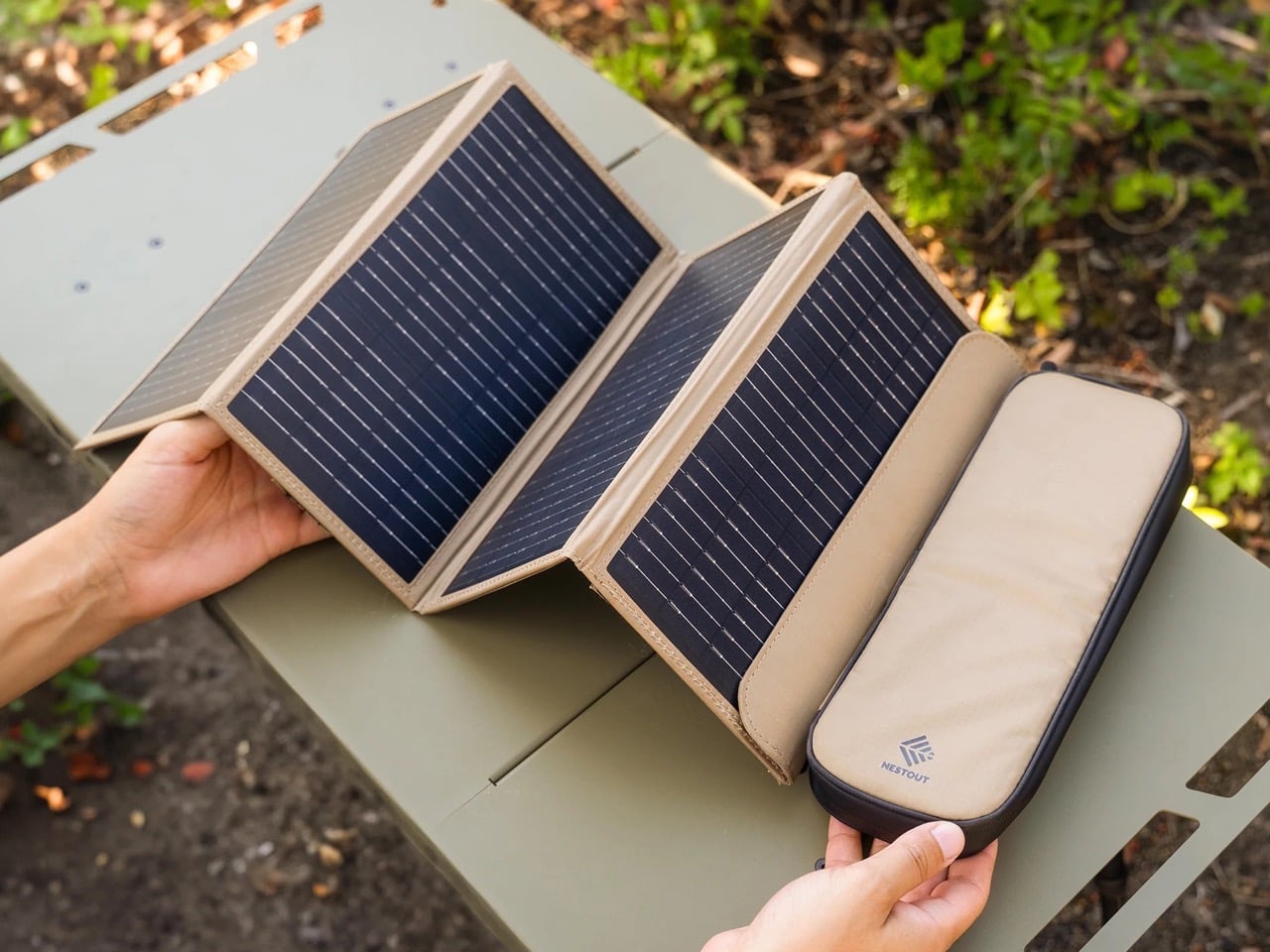
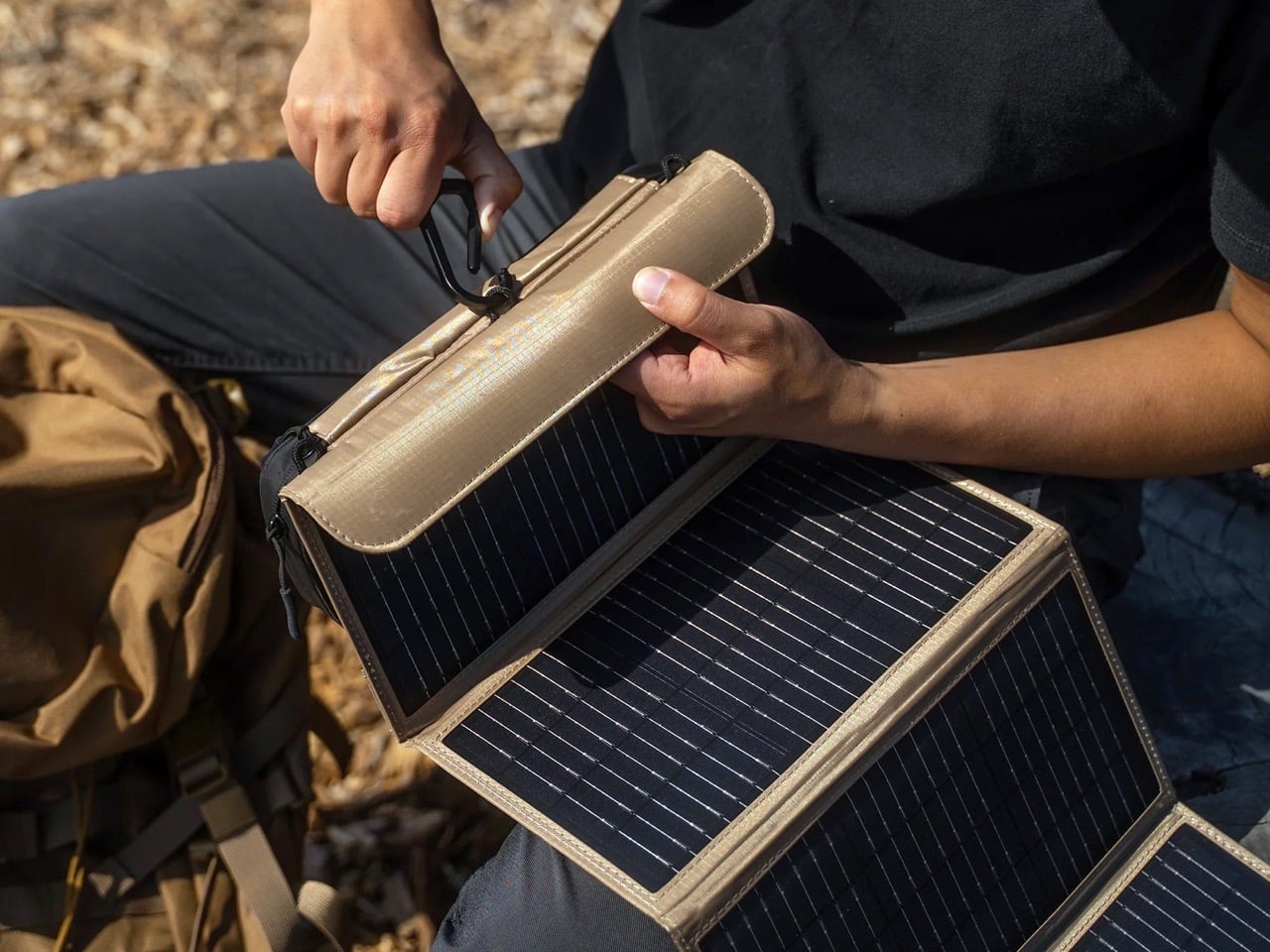
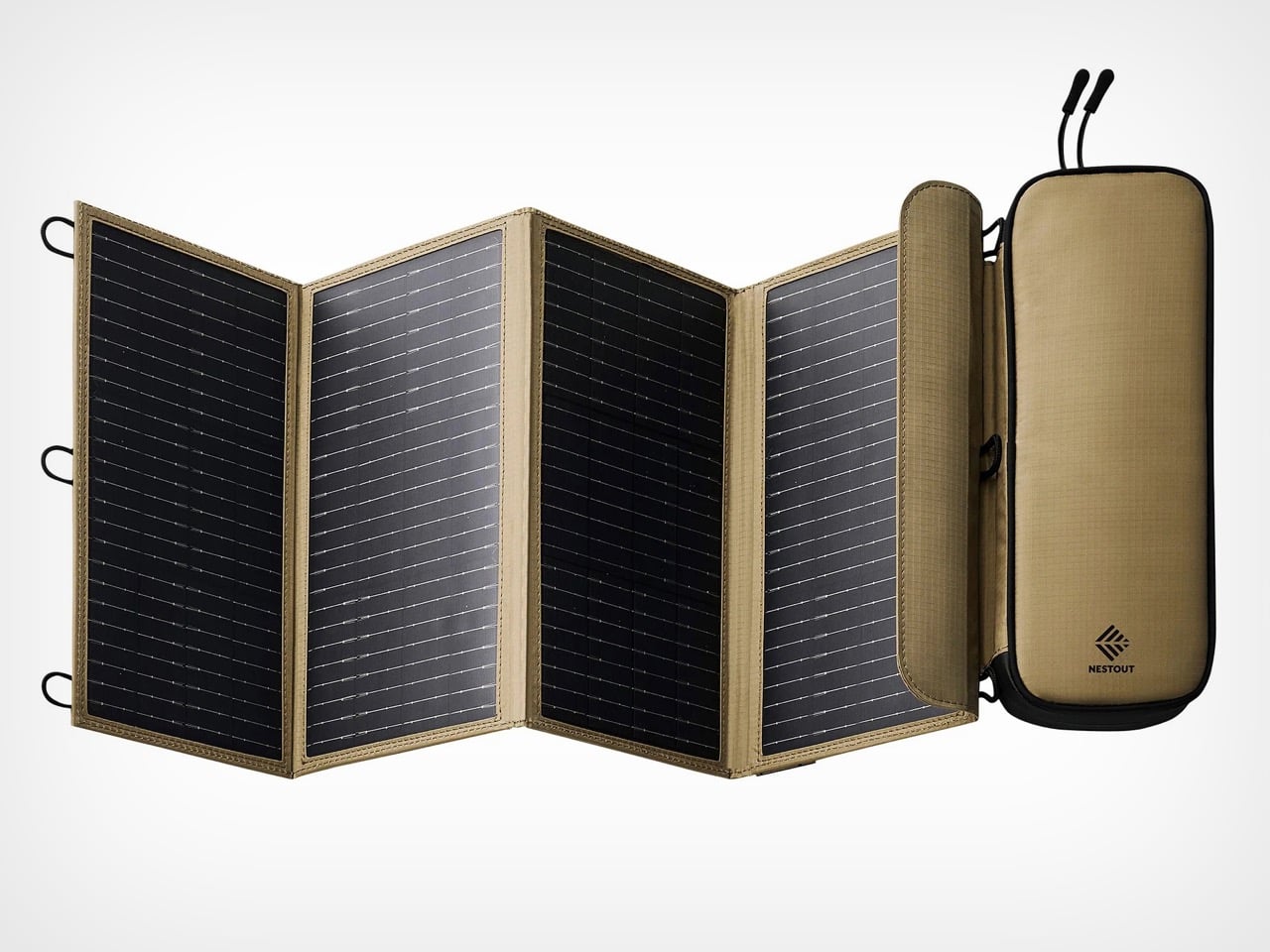
A folding solar panel answers that question in a very modern way. The NESTOUT 4-Panel Solar Charger takes a function that used to feel bulky and specialized and reshapes it into something that behaves like everyday camp gear. It folds into a compact carry format, keeps its system organized, and opens into a usable power solution wherever daylight is available. In the same way your stove, seat, and shelter have learned to collapse for the journey, this charger brings portable energy into the same neatly packed ecosystem.

Designer: Nestout

Click Here to Buy Now

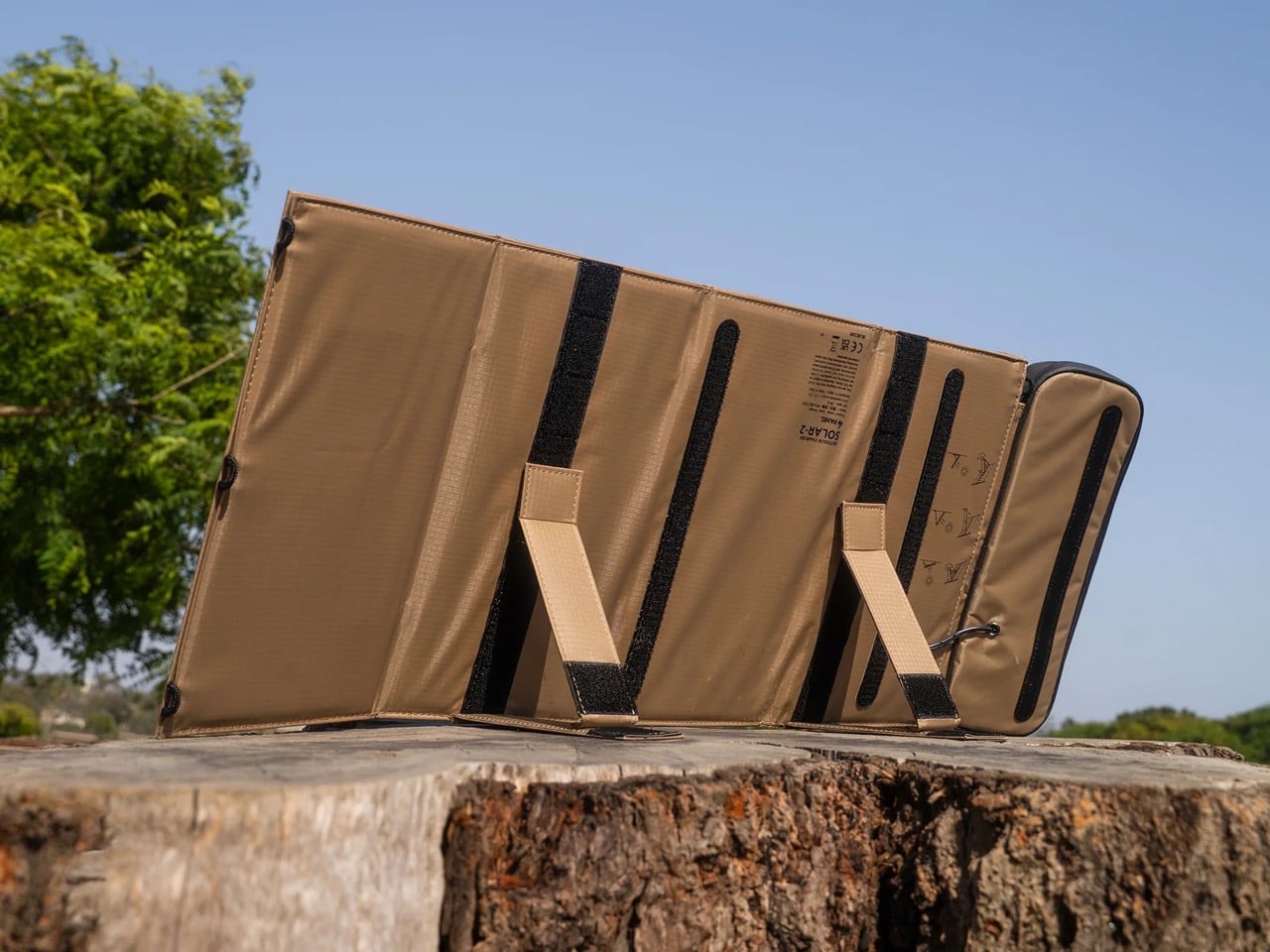
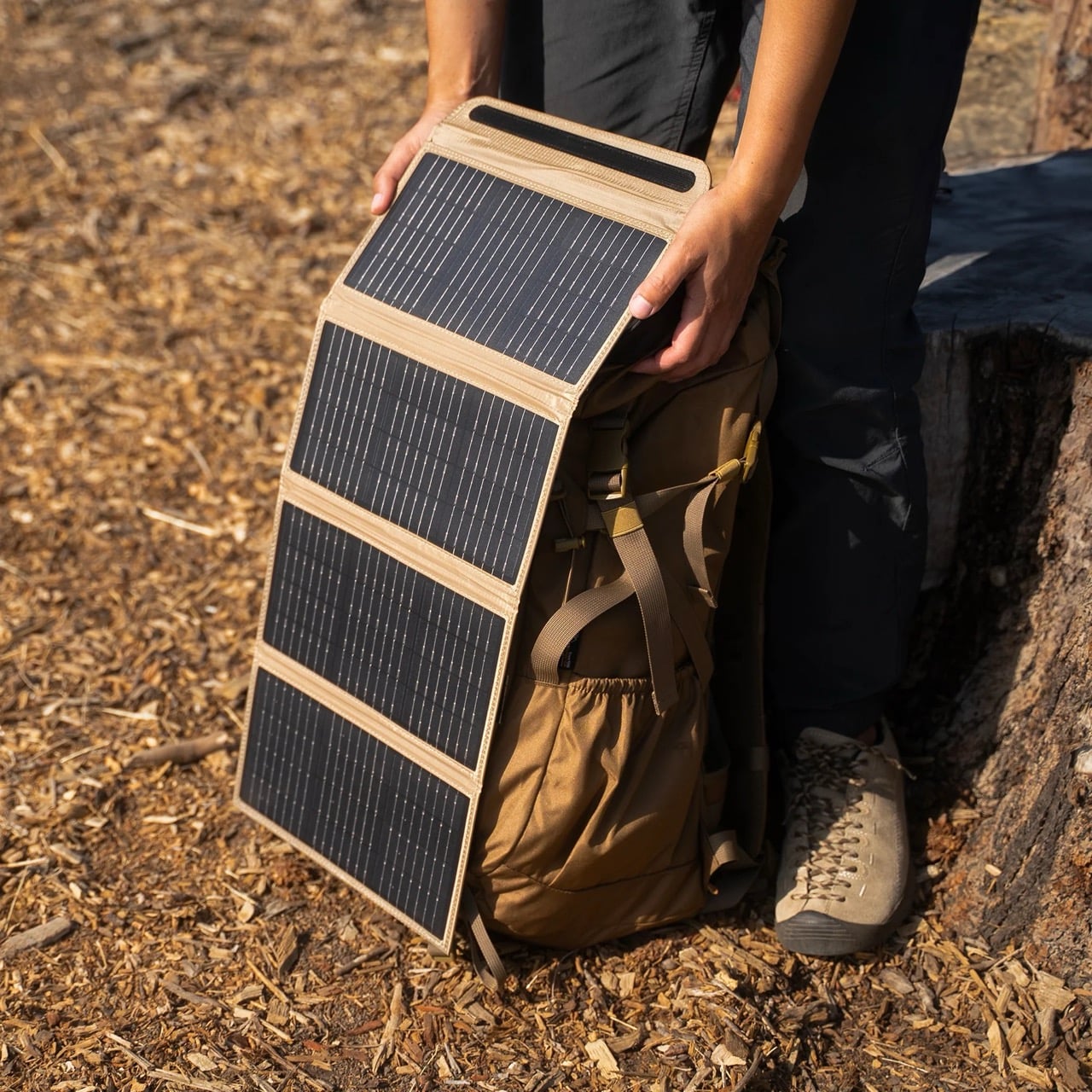
Its ripstop-style tan fabric border and backing speak a design dialect already fluent to anyone who has handled quality outdoor soft goods. It has more in common visually with a waxed canvas field kit or a durable tactical organizer than with the consumer electronics aisle, and that distance is clearly intentional. This is a Japanese product from Elecom’s NESTOUT sub-brand, and Japanese outdoor brands tend to understand that gear which looks like it belongs outdoors actually gets taken outdoors. The color palette, earthy, warm, and cohesive across every component, tells you that someone made a deliberate choice to prioritize belonging over visibility. A solar charger in generic black with off-the-shelf webbing would disappear into a pile of tech accessories; this one looks at home leaning against a pack on a sun-baked trail.

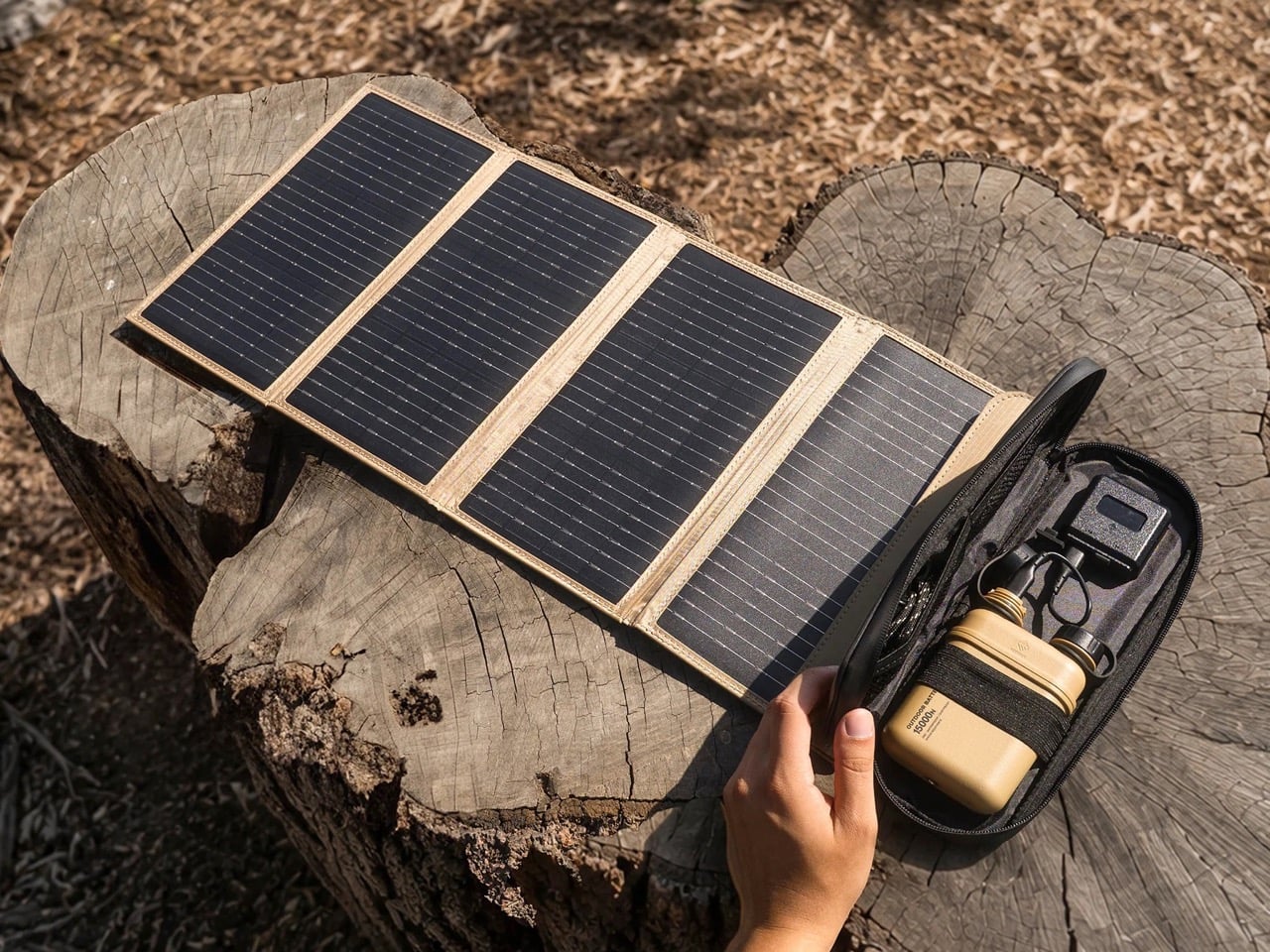
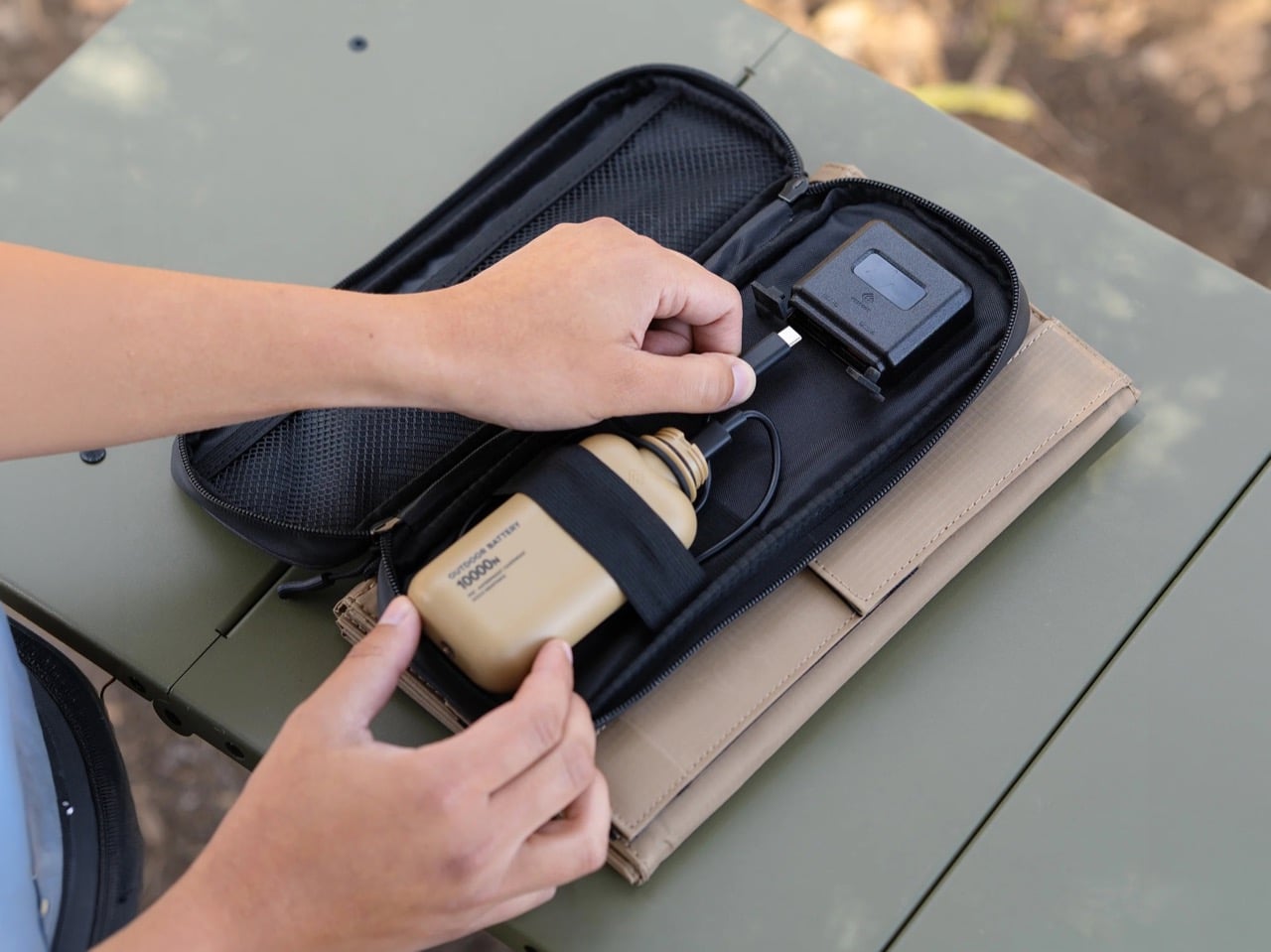
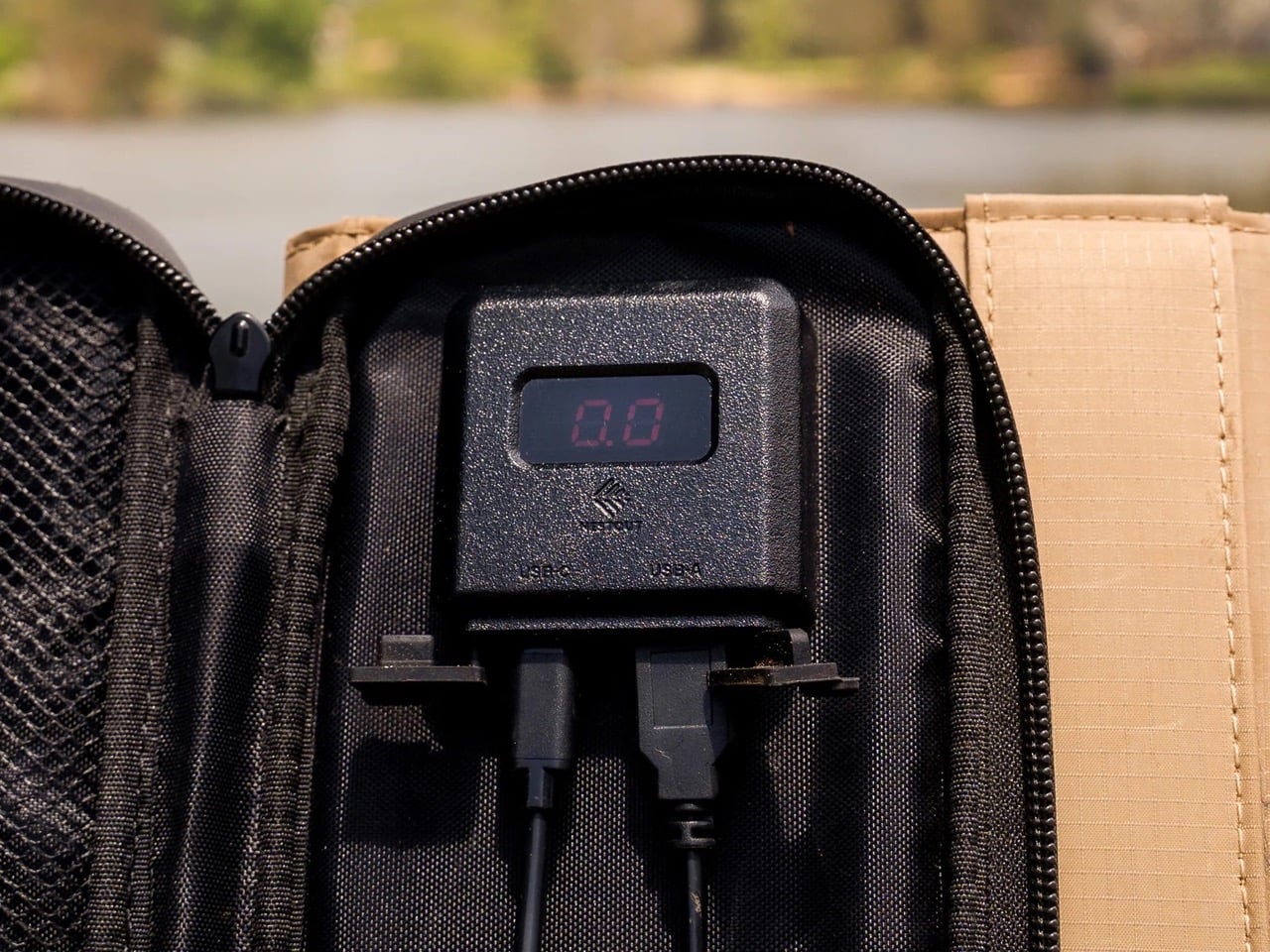
Every portable solar panel generates a secondary problem: what do you do with the regulator, the cables, and the battery bank that actually make the thing useful? Most competing products leave you to solve that on your own, resulting in the cable chaos that haunts every outdoor kit. NESTOUT builds the answer in. The semi-rigid zip pouch folded into the charger’s right side houses a solar regulator with an LED display showing real-time wattage output, cables nested in a mesh pocket, and enough room for the brand’s own 10,000 or 15,000 mAh battery banks. That integration transforms a panel-plus-accessories situation into a single self-contained unit, and it’s the kind of design decision that makes the difference between gear you manage and gear you simply use.

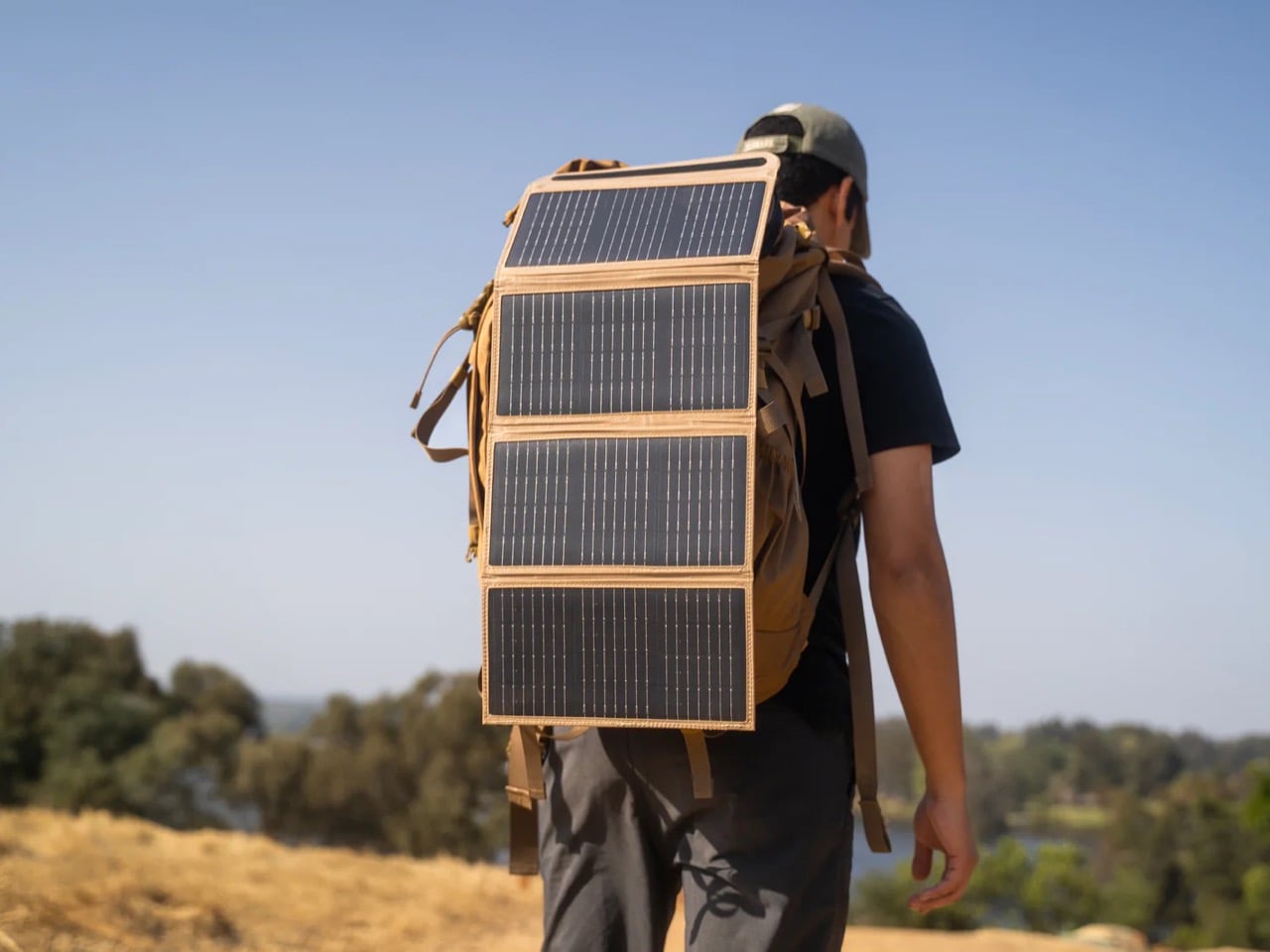
Unfolded, the four panels arrange themselves in an accordion geometry that has a quietly architectural quality. Each panel is roughly the same width, and the tan fabric hinges between them maintain even spacing, giving the whole surface a composed, deliberate rhythm rather than an improvised sprawl. Corner grommets and a carabiner loop at the top offer multiple deployment options: lean it against a pack, hang it from a branch or tent line, stake it toward the sun, or lay it flat across a warm rock. That variety acknowledges a fundamental truth about portable solar, namely that sunlight is directional, inconsistent, and rarely cooperative with a fixed setup.

Under the ETFE-coated glass panels sit Maxeon solar cells, widely regarded as among the most efficient technology available in portable solar applications. The 4-panel configuration generates up to 28 watts total, with each panel contributing roughly 7 watts under ideal conditions. Real-world output will be lower depending on angle, cloud cover, and ambient temperature, which is the honest reality of any portable solar product, but 28W is a genuinely useful ceiling for keeping phones, GPS units, and headlamps topped up through a full day outside. NESTOUT positions the charger as part of a broader outdoor charging ecosystem alongside its own rugged power banks, and the built-in regulator and storage pouch clearly reward buying into that system. It is an ecosystem product in the best sense: capable enough to work with anything that has a USB port, and cohesive enough to function beautifully alongside a NESTOUT battery bank.

For the people this charger is actually built for, the appeal is pretty straightforward. Outdoor gear has spent years learning how to fold, compress, and multitask, turning shelter, seating, cooking, and storage into portable systems that travel lightly and set up fast. Power has lagged behind that curve for a while, often split between oversized stations for parked setups and forgettable accessories for everyone else. The NESTOUT 4-Panel Solar Charger makes a strong case for a middle path. At $134.99, it brings solar charging into the same design language as the rest of your kit, compact when packed, useful when deployed, and easy to live with. That is why it makes sense for backpackers, tailgaters, anglers, hikers, and anyone whose outdoor setup depends on mobility. In a world where every essential has learned to collapse into a smarter, smaller format, portable power finally feels like it got the memo too.

Click Here to Buy Now

The post Your Tent Folds, Your Outdoor Chair Packs Flat, Your Solar Charger Should Too first appeared on Yanko Design.
5 Best Remote Work Desk Gadgets Under $200 That Made Us Rethink the Whole Setup

The desk you work at shapes how the work itself feels. Most people know this in theory and ignore it in practice, assembling setups gradually — a keyboard from one order, a charger that just sort of ended up there, a clock that came with the apartment. Over time the surface accumulates rather than improves. The products on this list are different. Each one solved a specific problem clearly enough to make everything around it look like it needed reconsidering.

None of them cost more than $200. The constraint is intentional — this is not a list built around aspirational hardware, but around objects that earn their footprint through daily use rather than shelf presence. A folding mouse that ended the trade-off between portability and performance. A silent recorder that made an entire category of software feel unnecessary. A desk surface that finally stayed organized. Five products, one desk, a noticeably better setup.

1. Inseparable Notebook Pen

There is a specific frustration that comes with reaching for a pen and finding it has migrated. Not lost, just elsewhere — on the wrong side of the keyboard, inside a drawer that was never meant for it, somewhere between the last meeting and this one. The Inseparable Notebook Pen treats that as a design problem worth solving rather than a personal failing. A magnetic clip attaches the pen directly to the notebook cover so the two move as a single unit, staying together on the desk the same way they travel together in a bag.

What makes it worth noting alongside hardware that costs multiples of its $19.95 price is the standard it holds itself to. The gel ink flows smoothly, and the clip mechanism is solid, but the detail that earns it a place on a considered desk is the built-in silencer — a small component that softens the attach-and-detach motion into something quiet and deliberate. That level of finish on a $20 object is not accidental. It is the difference between a pen that gets used and one that gets replaced.

Click Here to Buy Now: $19.00

What we like:

  • The magnetic clip keeps pen and notebook permanently paired, removing the low-grade friction of a misplaced writing tool from the daily routine entirely
  • A built-in silencer turns the attach-and-detach motion into a quiet, considered interaction — the kind of detail that signals a product was designed rather than just manufactured

What we dislike:

  • Works best as a system with its intended notebook, making it a less convincing standalone pen for anyone who writes across multiple formats or prefers a different paper weight
  • Gel ink cartridge replacement options are limited compared to more established pen systems, which matters once the initial ink runs out

2. HiDock H1 Lite

The AI meeting bot problem has a particular texture. It announces itself in the first thirty seconds of every call, dropping a notification into the chat that tells the room someone has outsourced their attention. The HiDock H1 Lite solves this without fanfare — a USB-C desktop audio controller and local recorder that captures meetings completely, both sides of the call, without adding a bot to the session, without cloud permissions, and without telling anyone it is running. You press record. The meeting continues. No announcement, no awkward acknowledgment, no subtext.

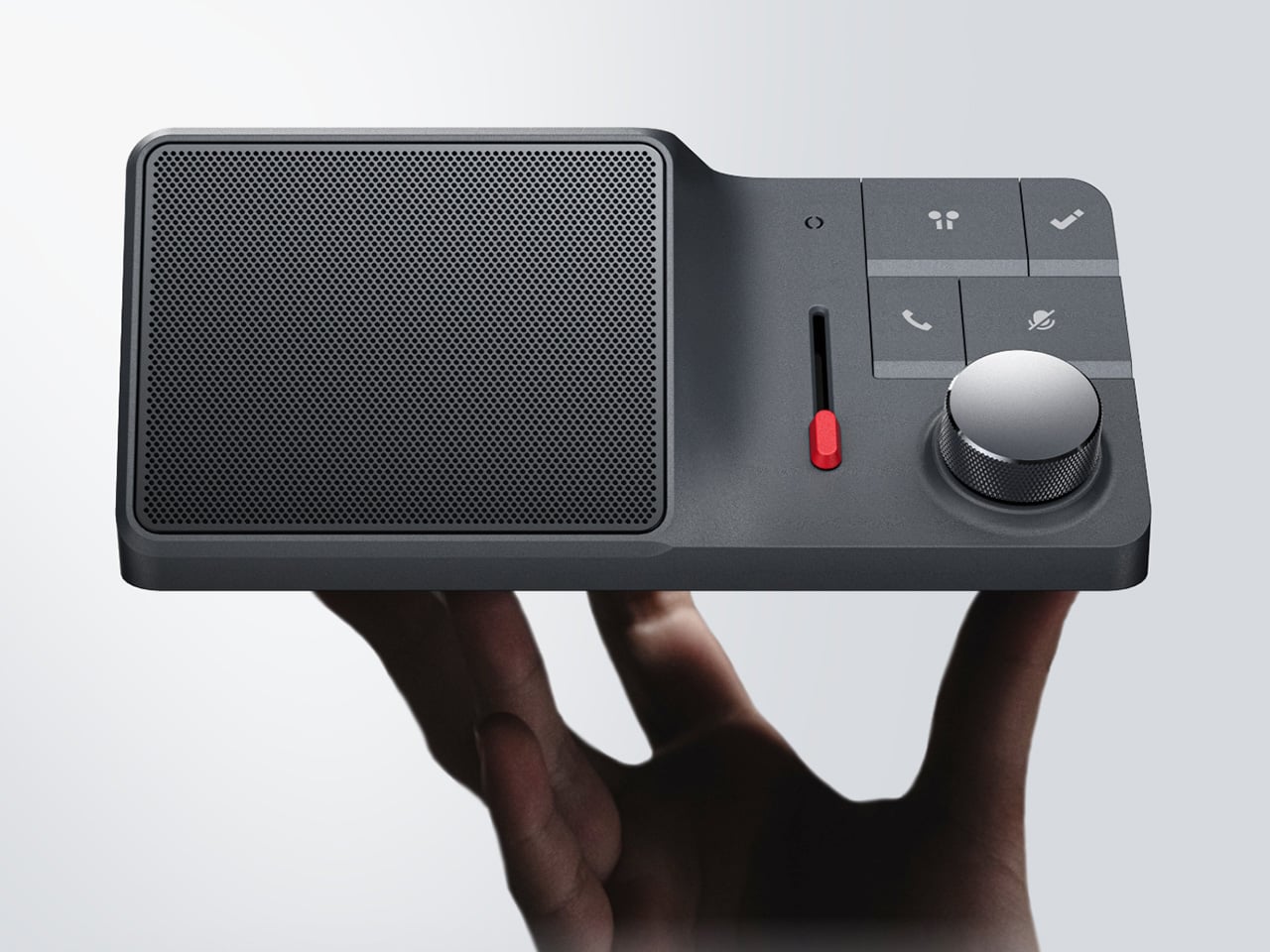
The feature that separates it from every other desk recorder is BlueCatch, which intercepts the two-way audio path from Bluetooth earphones so the full conversation is captured rather than just what the microphone picks up. Physical controls — a knob, a slider, a speaker — keep the interaction on the desk rather than inside another browser tab. It transcribes in multiple languages, runs a Call Mode for virtual meetings and a Room Mode for in-person sessions, and at $189 replaces a recurring software subscription with hardware that simply does the job and stays out of the way.

Click Here to Buy Now: $170.1 $189 (10% off, use code “YANKO10”). Hurry, deal ends soon!

What we like:

  • BlueCatch captures both sides of a Bluetooth earbud call locally, producing a full two-way transcript without a bot in the meeting or any platform permission being requested
  • Physical controls return a tactile dimension to meeting management that software tools have spent years trying and failing to replicate

What we dislike:

  • USB-C only makes it desk-bound, which limits its usefulness for anyone who moves between locations or works primarily from a laptop bag throughout the day
  • The AI transcription layer works well once configured, but reaching that point requires a setup investment before language preferences and summary formats feel fully dialed in

3. Satechi 3-in-1 Foldable Wireless Charging Stand with Qi2 25W

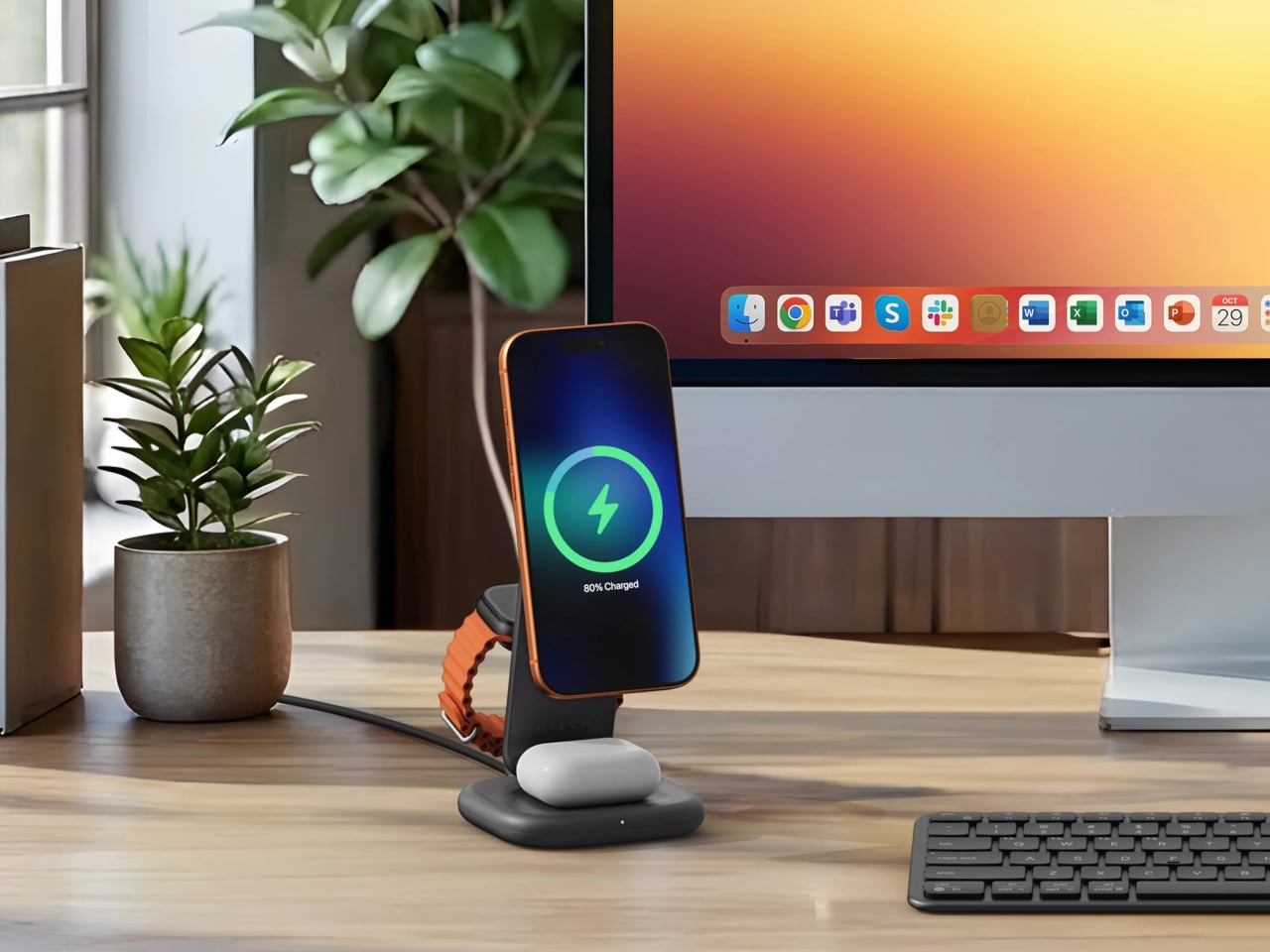
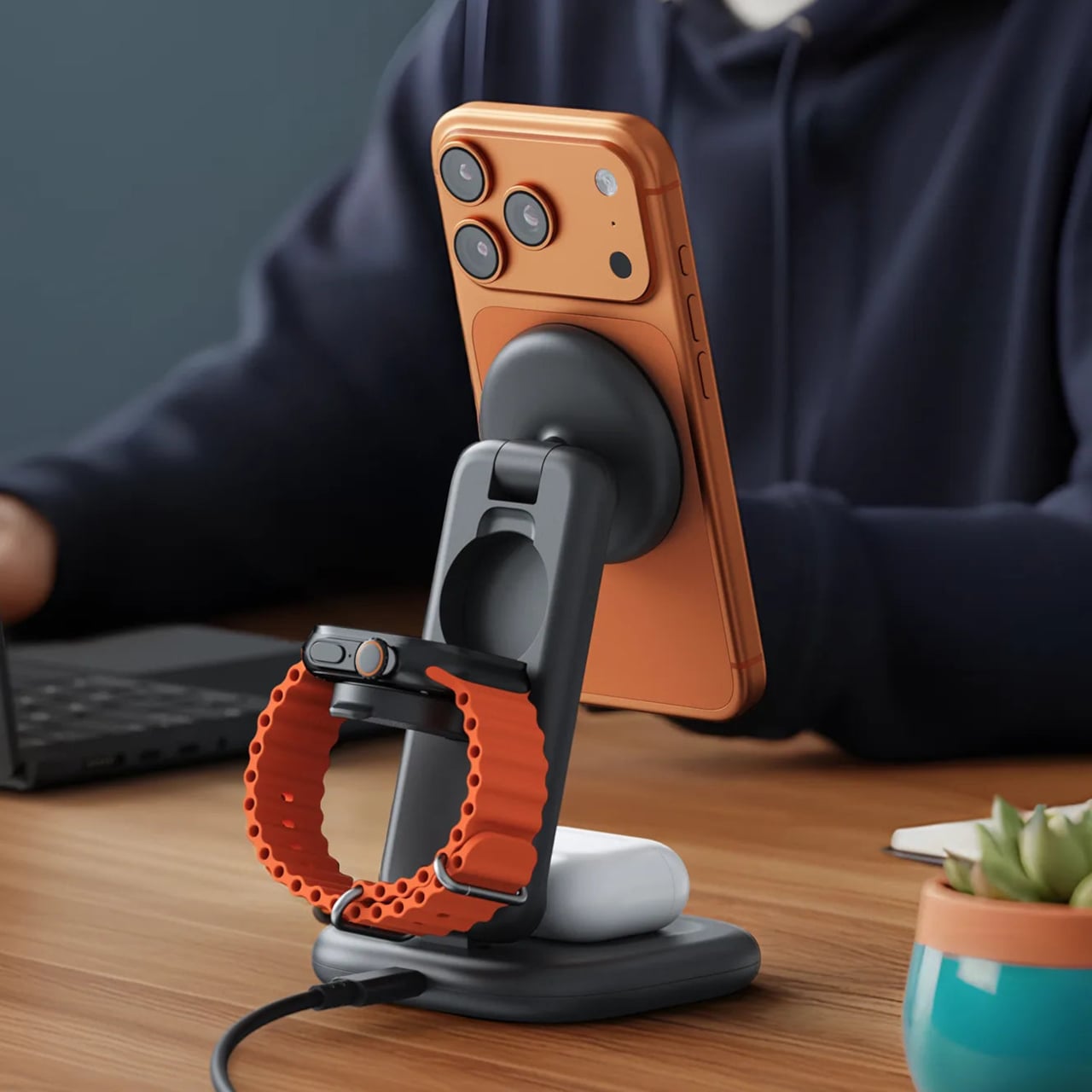
Wireless charging solved one problem and quietly created another. The iPhone pad, the Apple Watch puck, the AirPods tray — each device that joined the ecosystem added something to the nightstand or desk corner, until the cable-free promise was buried under a new kind of clutter. Satechi’s 3-in-1 Foldable Wireless Charging Stand with Qi2 25W clears all of it in one object. iPhone, Apple Watch (Series 7 and later, including Ultra and SE), and AirPods charge simultaneously from a single wall cable, with Qi2 magnetic alignment snapping the phone into position so off-center placement and lost wattage are no longer part of the routine.

The 25W ceiling is a genuine upgrade over the 15W limit that most MagSafe-compatible pads have been stuck at, and the Apple Watch arm carries MFi certification for fast charging. A 45W USB-C adapter ships in the box with US, EU, and UK plug heads — a small detail that matters significantly the first time you unpack in a different country without hunting for a separate travel adapter. At $129.99 in Space Black, the case rests on consolidation: three separate chargers replaced by one that folds flat for a carry-on and behaves identically away from home.


What we like:

  • Qi2 alignment combined with a 25W output for compatible iPhones represents the fastest wireless option available in the Apple accessory space at this price point
  • The foldable form and included multi-region adapter make the home desk setup and the hotel room setup identical, removing any need to pack or buy a separate charging solution

What we dislike:

  • Apple Watch fast charging is limited to Series 7 and newer, so users on older hardware will get standard charge speeds rather than the fast-charge performance the arm is capable of
  • The value proposition is strongest when all three devices are in use simultaneously — iPhone-only users will find more efficient options at a lower price

4. OrigamiSwift Folding Mouse

The folding mouse has been a category of compromise for years — compact in the bag, frustrating in use. The OrigamiSwift ends that exchange by treating the fold as a serious engineering challenge rather than a marketing hook. At 40 grams, it collapses to 4.5mm flat, thin enough to slip between the pages of a notebook without leaving a visible bump. On the desk, it unfolds in under half a second into a full-sized ergonomic shape that sits naturally in the hand, with tracking precision that has nothing to do with its size.

What earns it a top position here is the way it reframes the conversation around portability entirely. Portable does not have to mean diminished. The OrigamiSwift is as capable on a permanent desk as it is in a carry-on, which is rare in hardware built around constraints. The Bluetooth connection is reliable, the fold mechanism feels deliberately satisfying to complete, and at $85 it asks very little relative to what it returns. Some mice cost three times as much and offer less reason to reach for them.

Click Here to Buy Now: $85.00

What we like:

  • Folds flat to 4.5mm, thin enough to travel between notebook pages, yet opens into a full-sized ergonomic form that never asks you to adapt your grip
  • The sub-half-second flip transforms the mouse from travel object to working tool in a single motion that still feels considered after weeks of daily use

What we dislike:

  • At 40 grams, the weight will feel unfamiliar to anyone coming from a heavier desktop mouse, and the adjustment takes a few days before it stops registering
  • Bluetooth-only connectivity rules out a wired fallback for tasks where even brief latency becomes friction

5. Orbitkey Desk Mat

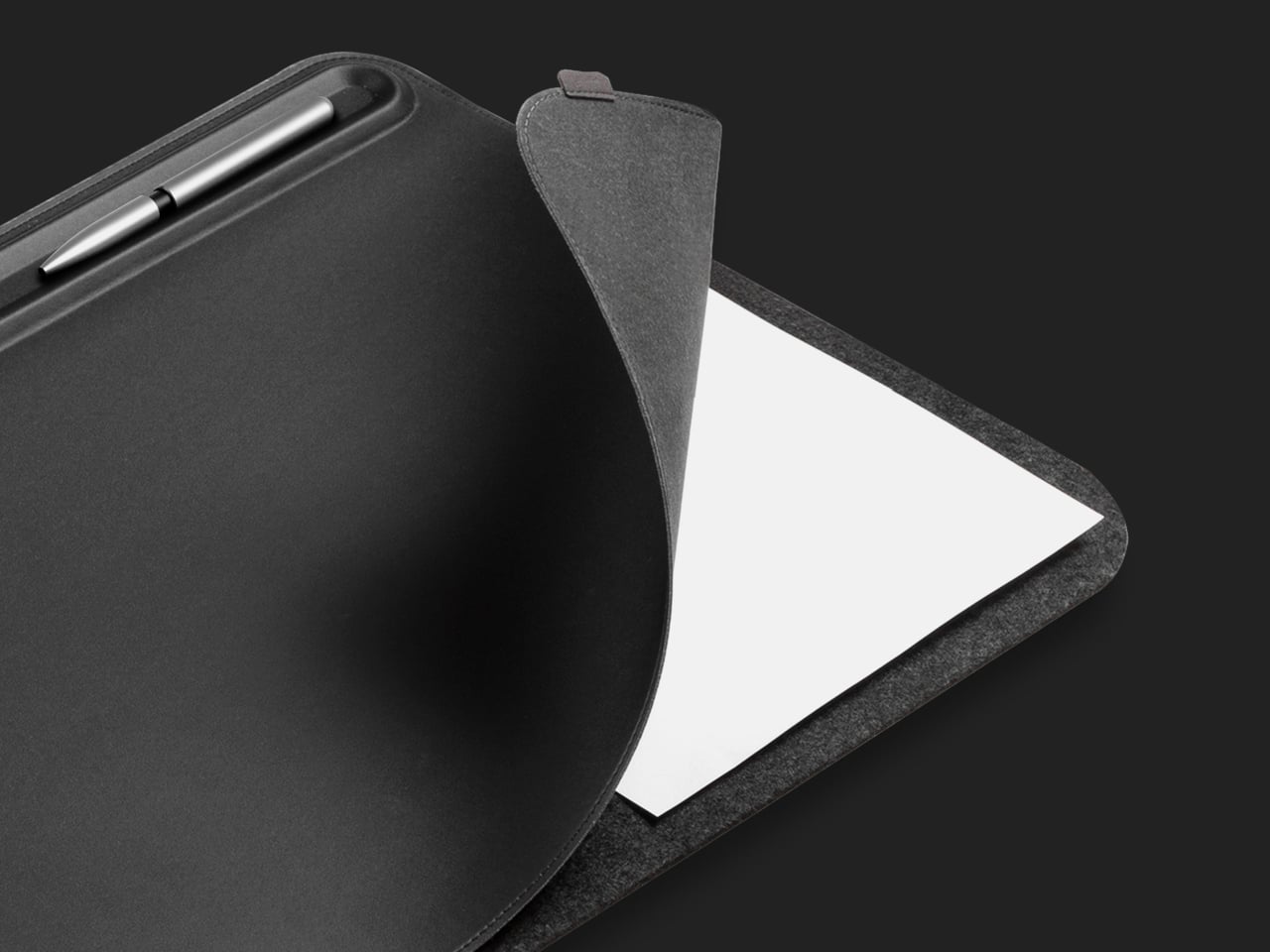
The desk mat is usually the last thing people buy and the first thing that changes how a setup feels. Orbitkey’s version is built on a premise most mats ignore: the surface does not just need better material; it needs a better system. Made from premium vegan leather over 100% recycled PET felt, available in Medium (686 x 373mm) and Large (896 x 423mm), it is water-repellent and wipes clean — the practical baseline. A quick-access toolbar along one edge gives pens, a stylus, and small accessories a fixed address without adding height or vertical clutter to the surface.

The detail that tips it from covering the desk to organizing it is the document hideaway, a sleeve beneath the top layer that keeps loose papers and sticky notes flat and within reach without leaving them visible. One edge pull, and they are back. A magnetic cable holder clips anywhere along the toolbar and adjusts as port locations change across different setups, keeping the charging lead from drifting toward the floor. It ships with a two-year warranty and a 30-day return window, which is the kind of confidence in materials that most desk accessories do not bother extending.

What we like:

  • The document hideaway removes paper clutter from the surface without removing papers from the desk, which turns out to be a more useful distinction than it sounds across a full working week
  • The magnetic cable holder moves freely along the toolbar, adapting to cable lengths and port positions rather than committing to one fixed anchor point

What we dislike:

  • The mat arrives rolled and takes a few days to lie completely flat — reverse-rolling handles most of it, but patience is part of the initial setup
  • The Medium size works well for compact single-monitor desks but may feel narrow for anyone running a wider multi-display configuration

Five Products, One Decision

A desk that works is not about spending more. It is about choosing things that each solve one real problem rather than approximate several. The Inseparable Notebook Pen keeps the one analog tool you still reach for exactly where it belongs. The OrigamiSwift removes the penalty from portability. The HiDock takes meeting capture back from the software layer. The Satechi ends the three-device charger pile. The Orbitkey gives the surface a structure it was always missing.

None of these objects ask for attention. They do their jobs and stay out of the way until needed, which is the version of design intelligence that actually holds up across a full working week. Five products, each under $200, that together produce a setup that feels chosen rather than assembled. That shift is the one worth paying for.

The post 5 Best Remote Work Desk Gadgets Under $200 That Made Us Rethink the Whole Setup first appeared on Yanko Design.