The first wave of magnetic power banks taught us to appreciate convenience. They were clever, handy, and perfect for a little extra power without thinking about cables. But for serious charging, we still reached for a wall adapter. That era is officially closing. The conversation has shifted from simple convenience to genuine performance, with a new generation of devices promising the speed and reliability we once sacrificed for portability. These accessories are built to be daily drivers, not just emergency backups.
INIU’s SnapGo Air is a direct reflection of this new standard. It arrives with a spec sheet that reads less like a compact battery and more like a dedicated charging hub. With 10,000mAh of capacity, it delivers a full 25W of power wirelessly via the new Qi2.2 standard and an impressive 45W through its integrated USB-C GoCord. This device is engineered around the idea that your portable charger should be just as capable as the one you leave at home, finally aligning the promise of magnetic charging with the power that modern devices demand.
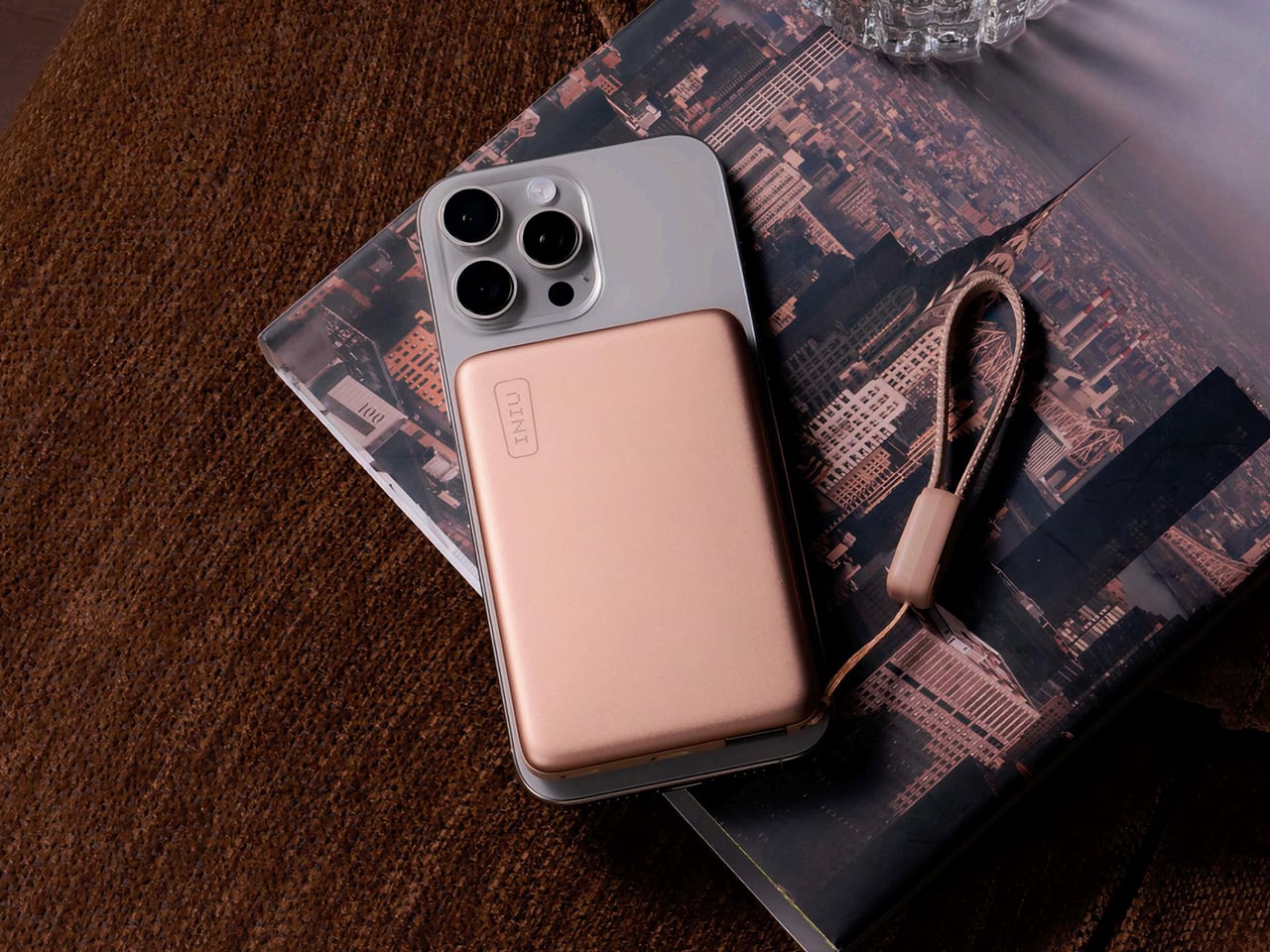
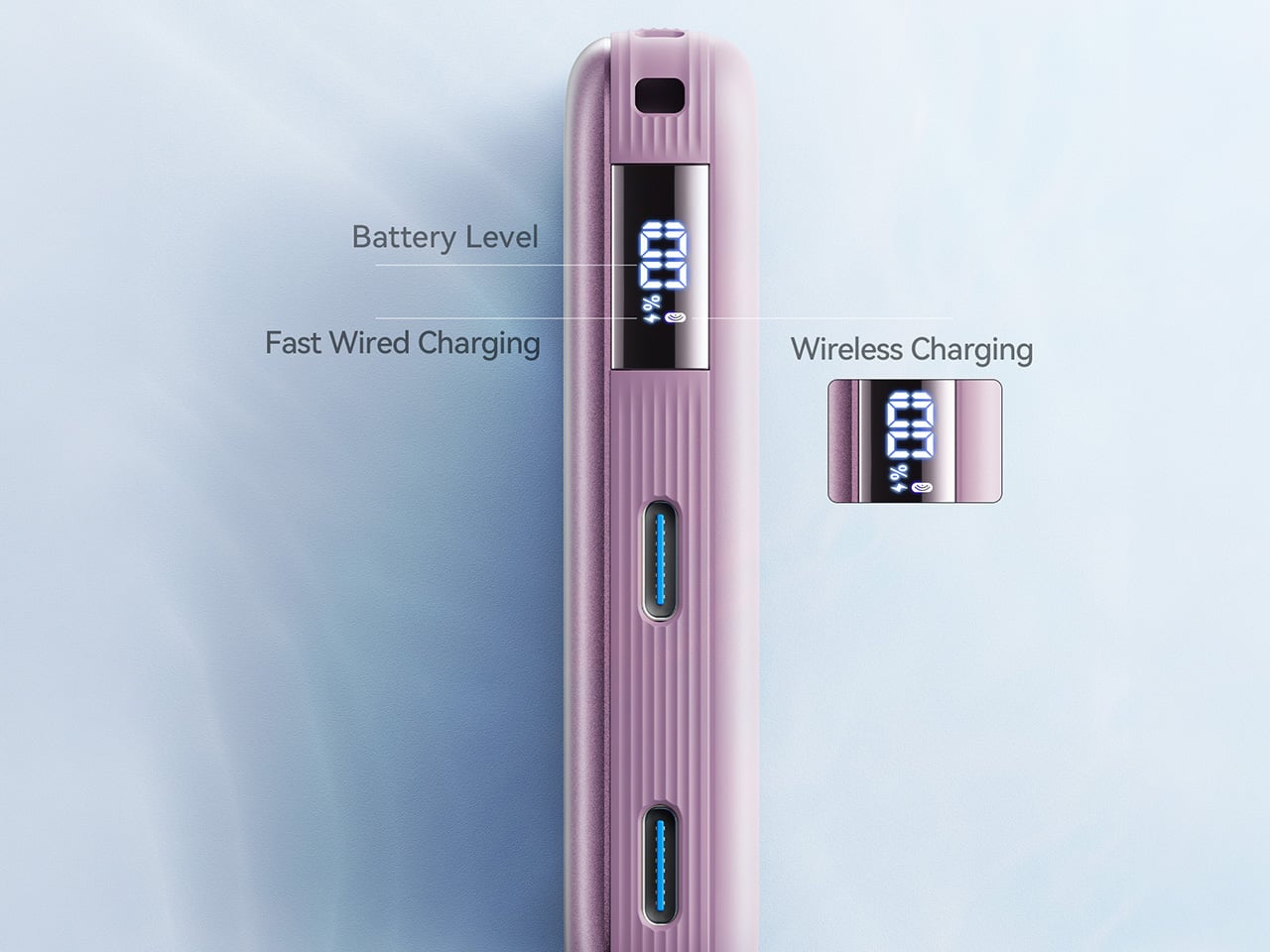
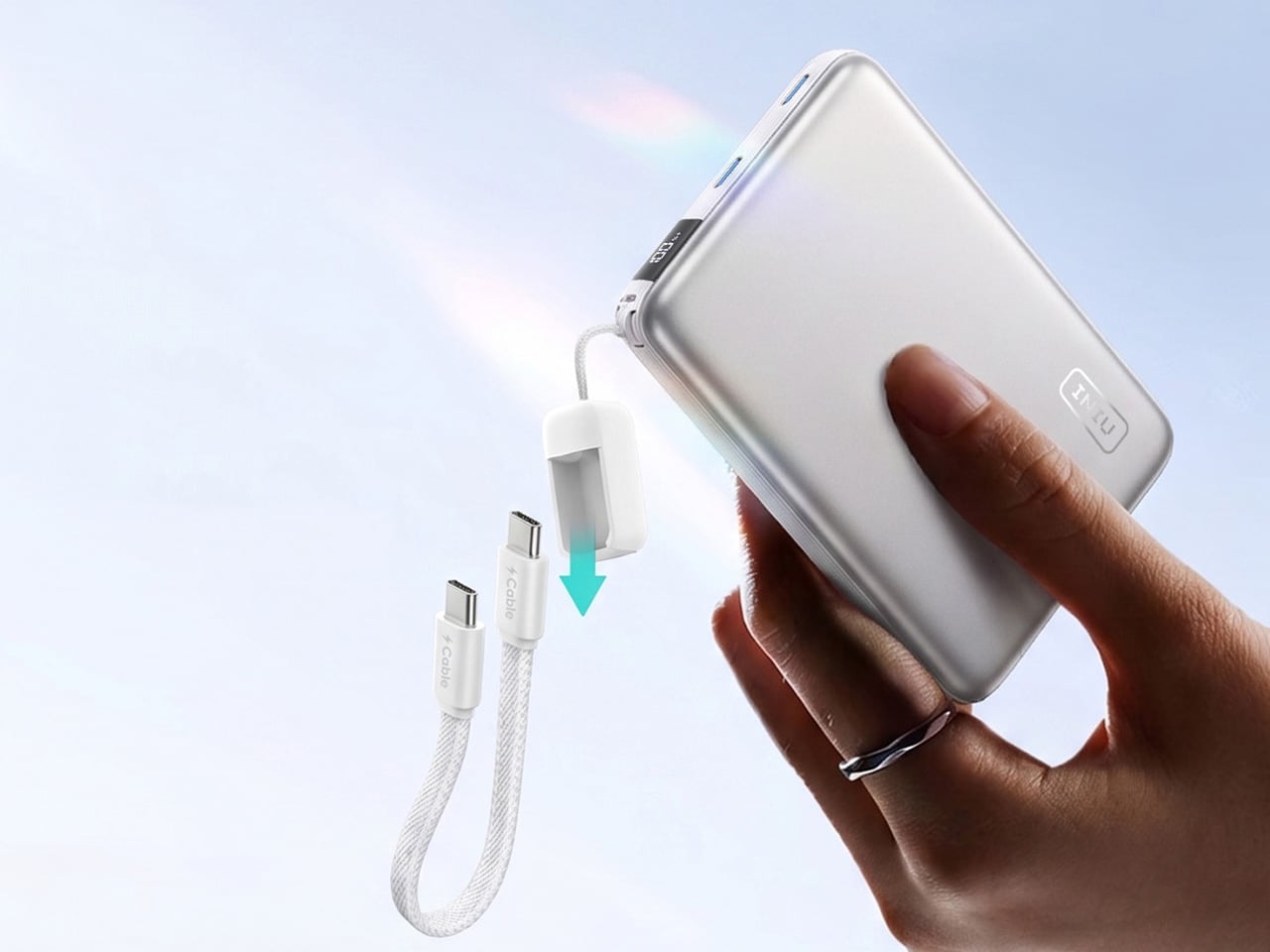
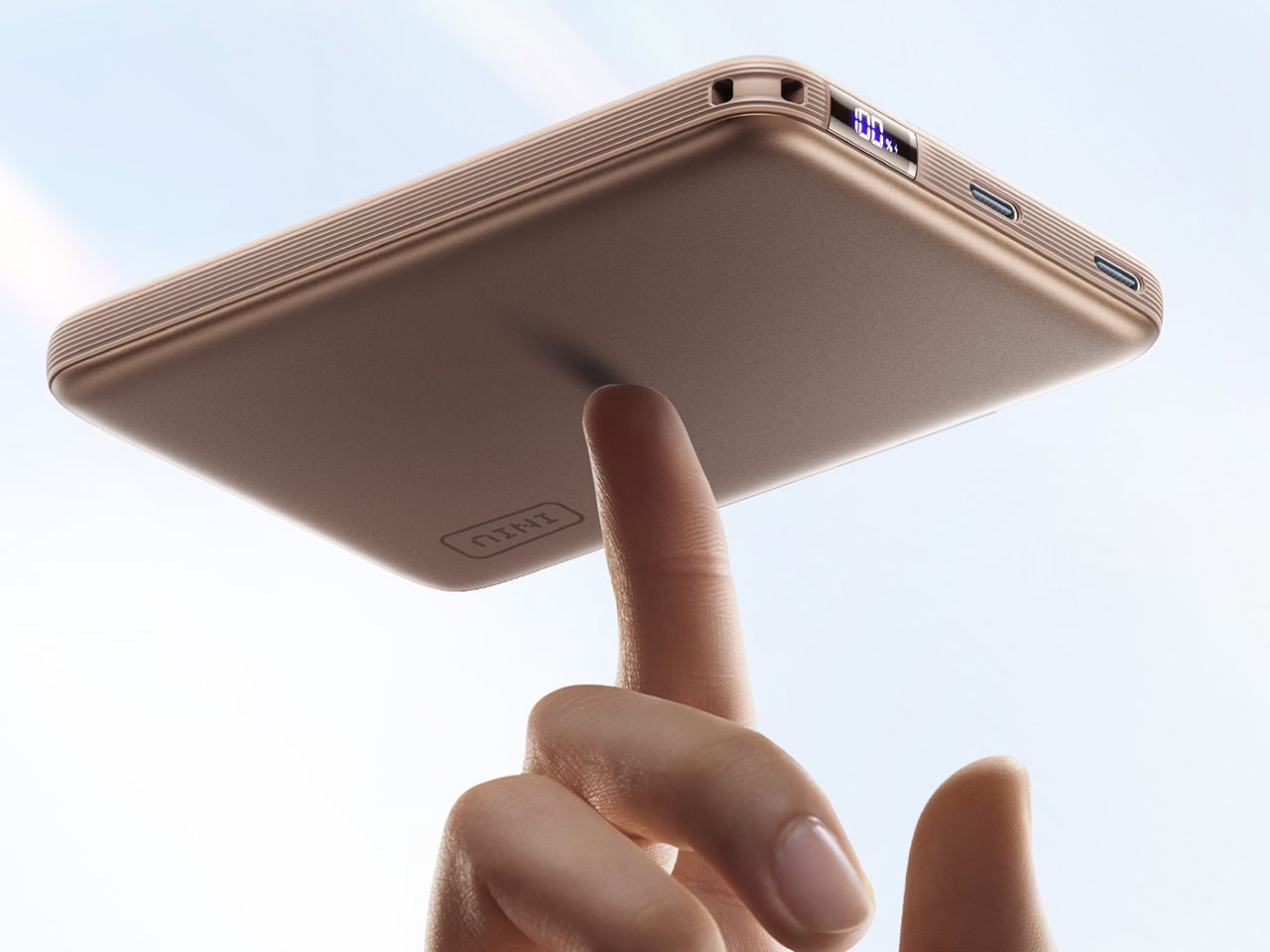
The SnapGo Air is unapologetically design-led, which makes sense for a product that spends most of its life attached to the back of your phone. INIU crafted the body from anodized aluminum with a soft-touch finish, and the result feels premium in a way that most power banks never bother to be. At just 0.5 inches thick and weighing about 195 grams, it maintains a profile slim enough to slip into a jacket pocket or a small bag without any bulk anxiety. The integrated GoCord is color-matched to the body and tucks neatly into a recessed channel, so there are no dangling cables or awkward clips. You get the utility of a built-in cable without the visual mess that usually comes with it. A minimalist LCD display on the side shows battery level and charging status without cluttering the overall aesthetic. The whole package comes in a range of finishes including Metallic Mocha, Soft Lilac, Sunset Orange, and Midnight Navy, giving it the feel of a fashion accessory instead of a generic gadget.
The real engineering here is actually thermal control (which is increasingly becoming a concern given airline and travel regulations). Wireless charging at higher speeds has always come with a heat penalty, and that heat becomes a problem when you’re holding a phone with a battery pack magnetically clamped to the back. INIU addresses this with its Temp Guard 3.0 system, which monitors the internal temperature 9,000 times per second and keeps the surface under 104 degrees Fahrenheit during use. The company claims this is about 14 degrees cooler than typical industry performance, and while I can’t verify those lab numbers without independent testing, the underlying point is valid. If you want people to use wireless charging as their primary method, you have to solve the heat problem first. The SnapGo Air also carries UL certification and INIU’s 18-layer SmartProtect system, which covers everything from overvoltage protection to foreign object detection. In a category where fly-by-night products are common, that level of certification matters.
That being said, the design and engineering doesn’t ignore actual practicality or functionality. The 25W wireless output means you can get an iPhone 17 Pro to 50 percent in around half an hour, which is genuinely fast enough to be useful in real-world situations. The 45W wired output via the GoCord is even faster, and it also means you can charge a wider range of devices including tablets and even some lightweight laptops. The power bank can charge three devices simultaneously, one wirelessly and two through its dual USB-C ports, which is genuinely handy when you’re traveling or working from a coffee shop. A full recharge of the bank itself takes about 1.8 hours, so it cycles back into usable condition quickly.
The INIU SnapGo Air is priced at $54.99 in the US, with regional pricing set at £49.99 in the UK, €54.99 in the EU, and A$69.99 in Australia. Sure, that positions it in the mid-premium end of the magnetic power bank category, but I dare you to find me a power bank that looks good, feels invisible, and performs so well you might just choose it over a wall charger.
The first wave of magnetic power banks taught us to appreciate convenience. They were clever, handy, and perfect for a little extra power without thinking about cables. But for serious charging, we still reached for a wall adapter. That era is officially closing. The conversation has shifted from simple convenience to genuine performance, with a new generation of devices promising the speed and reliability we once sacrificed for portability. These accessories are built to be daily drivers, not just emergency backups.
INIU’s SnapGo Air is a direct reflection of this new standard. It arrives with a spec sheet that reads less like a compact battery and more like a dedicated charging hub. With 10,000mAh of capacity, it delivers a full 25W of power wirelessly via the new Qi2.2 standard and an impressive 45W through its integrated USB-C GoCord. This device is engineered around the idea that your portable charger should be just as capable as the one you leave at home, finally aligning the promise of magnetic charging with the power that modern devices demand.
The SnapGo Air is unapologetically design-led, which makes sense for a product that spends most of its life attached to the back of your phone. INIU crafted the body from anodized aluminum with a soft-touch finish, and the result feels premium in a way that most power banks never bother to be. At just 0.5 inches thick and weighing about 195 grams, it maintains a profile slim enough to slip into a jacket pocket or a small bag without any bulk anxiety. The integrated GoCord is color-matched to the body and tucks neatly into a recessed channel, so there are no dangling cables or awkward clips. You get the utility of a built-in cable without the visual mess that usually comes with it. A minimalist LCD display on the side shows battery level and charging status without cluttering the overall aesthetic. The whole package comes in a range of finishes including Metallic Mocha, Soft Lilac, Sunset Orange, and Midnight Navy, giving it the feel of a fashion accessory instead of a generic gadget.
The real engineering here is actually thermal control (which is increasingly becoming a concern given airline and travel regulations). Wireless charging at higher speeds has always come with a heat penalty, and that heat becomes a problem when you’re holding a phone with a battery pack magnetically clamped to the back. INIU addresses this with its Temp Guard 3.0 system, which monitors the internal temperature 9,000 times per second and keeps the surface under 104 degrees Fahrenheit during use. The company claims this is about 14 degrees cooler than typical industry performance, and while I can’t verify those lab numbers without independent testing, the underlying point is valid. If you want people to use wireless charging as their primary method, you have to solve the heat problem first. The SnapGo Air also carries UL certification and INIU’s 18-layer SmartProtect system, which covers everything from overvoltage protection to foreign object detection. In a category where fly-by-night products are common, that level of certification matters.
That being said, the design and engineering doesn’t ignore actual practicality or functionality. The 25W wireless output means you can get an iPhone 17 Pro to 50 percent in around half an hour, which is genuinely fast enough to be useful in real-world situations. The 45W wired output via the GoCord is even faster, and it also means you can charge a wider range of devices including tablets and even some lightweight laptops. The power bank can charge three devices simultaneously, one wirelessly and two through its dual USB-C ports, which is genuinely handy when you’re traveling or working from a coffee shop. A full recharge of the bank itself takes about 1.8 hours, so it cycles back into usable condition quickly.
The INIU SnapGo Air is priced at $54.99 in the US, with regional pricing set at £49.99 in the UK, €54.99 in the EU, and A$69.99 in Australia. Sure, that positions it in the mid-premium end of the magnetic power bank category, but I dare you to find me a power bank that looks good, feels invisible, and performs so well you might just choose it over a wall charger.
The first wave of magnetic power banks taught us to appreciate convenience. They were clever, handy, and perfect for a little extra power without thinking about cables. But for serious charging, we still reached for a wall adapter. That era is officially closing. The conversation has shifted from simple convenience to genuine performance, with a new generation of devices promising the speed and reliability we once sacrificed for portability. These accessories are built to be daily drivers, not just emergency backups.
INIU’s SnapGo Air is a direct reflection of this new standard. It arrives with a spec sheet that reads less like a compact battery and more like a dedicated charging hub. With 10,000mAh of capacity, it delivers a full 25W of power wirelessly via the new Qi2.2 standard and an impressive 45W through its integrated USB-C GoCord. This device is engineered around the idea that your portable charger should be just as capable as the one you leave at home, finally aligning the promise of magnetic charging with the power that modern devices demand.
The SnapGo Air is unapologetically design-led, which makes sense for a product that spends most of its life attached to the back of your phone. INIU crafted the body from anodized aluminum with a soft-touch finish, and the result feels premium in a way that most power banks never bother to be. At just 0.5 inches thick and weighing about 195 grams, it maintains a profile slim enough to slip into a jacket pocket or a small bag without any bulk anxiety. The integrated GoCord is color-matched to the body and tucks neatly into a recessed channel, so there are no dangling cables or awkward clips. You get the utility of a built-in cable without the visual mess that usually comes with it. A minimalist LCD display on the side shows battery level and charging status without cluttering the overall aesthetic. The whole package comes in a range of finishes including Metallic Mocha, Soft Lilac, Sunset Orange, and Midnight Navy, giving it the feel of a fashion accessory instead of a generic gadget.
The real engineering here is actually thermal control (which is increasingly becoming a concern given airline and travel regulations). Wireless charging at higher speeds has always come with a heat penalty, and that heat becomes a problem when you’re holding a phone with a battery pack magnetically clamped to the back. INIU addresses this with its Temp Guard 3.0 system, which monitors the internal temperature 9,000 times per second and keeps the surface under 104 degrees Fahrenheit during use. The company claims this is about 14 degrees cooler than typical industry performance, and while I can’t verify those lab numbers without independent testing, the underlying point is valid. If you want people to use wireless charging as their primary method, you have to solve the heat problem first. The SnapGo Air also carries UL certification and INIU’s 18-layer SmartProtect system, which covers everything from overvoltage protection to foreign object detection. In a category where fly-by-night products are common, that level of certification matters.
That being said, the design and engineering doesn’t ignore actual practicality or functionality. The 25W wireless output means you can get an iPhone 17 Pro to 50 percent in around half an hour, which is genuinely fast enough to be useful in real-world situations. The 45W wired output via the GoCord is even faster, and it also means you can charge a wider range of devices including tablets and even some lightweight laptops. The power bank can charge three devices simultaneously, one wirelessly and two through its dual USB-C ports, which is genuinely handy when you’re traveling or working from a coffee shop. A full recharge of the bank itself takes about 1.8 hours, so it cycles back into usable condition quickly.
The INIU SnapGo Air is priced at $54.99 in the US, with regional pricing set at £49.99 in the UK, €54.99 in the EU, and A$69.99 in Australia. Sure, that positions it in the mid-premium end of the magnetic power bank category, but I dare you to find me a power bank that looks good, feels invisible, and performs so well you might just choose it over a wall charger.
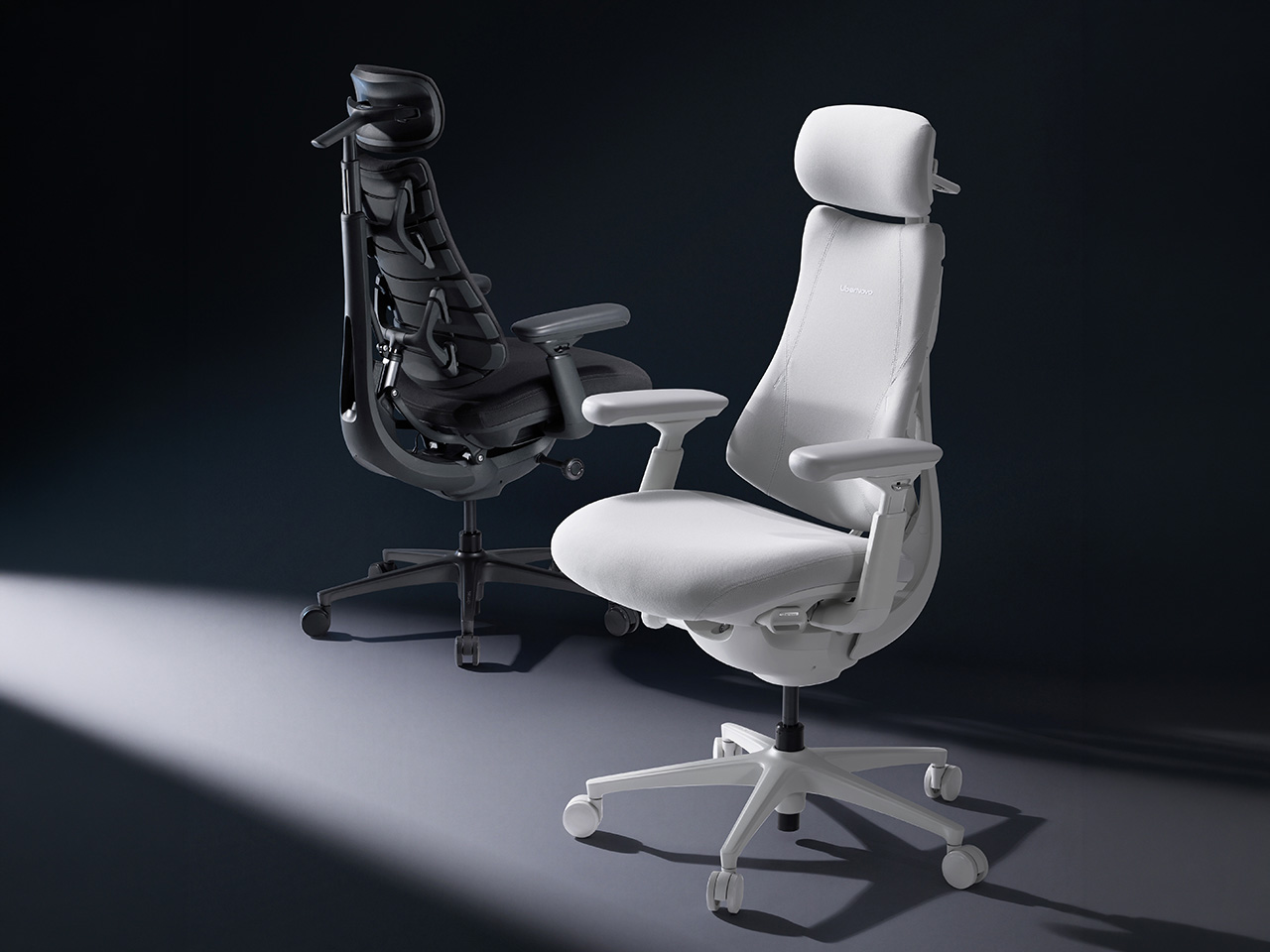
The ergonomic chair market has grown into a fairly crowded space, with brands competing on lumbar support, adjustability ranges, and premium materials. For most people, the options are plentiful. What hasn’t changed much, though, is the underlying assumption that comfort is something you configure once and hold. Set the lumbar height, dial in the recline tension, and somehow maintain that position for the next eight hours.
LiberNovo builds its chairs around the belief that support should adapt to movement rather than resist it. The brand’s focus on long-term spinal health through dynamic ergonomics has earned recognition from prestigious publications and awards bodies. With the LiberNovo Prime Sale now underway, its lineup is available at some of the steepest discounts the brand has offered.
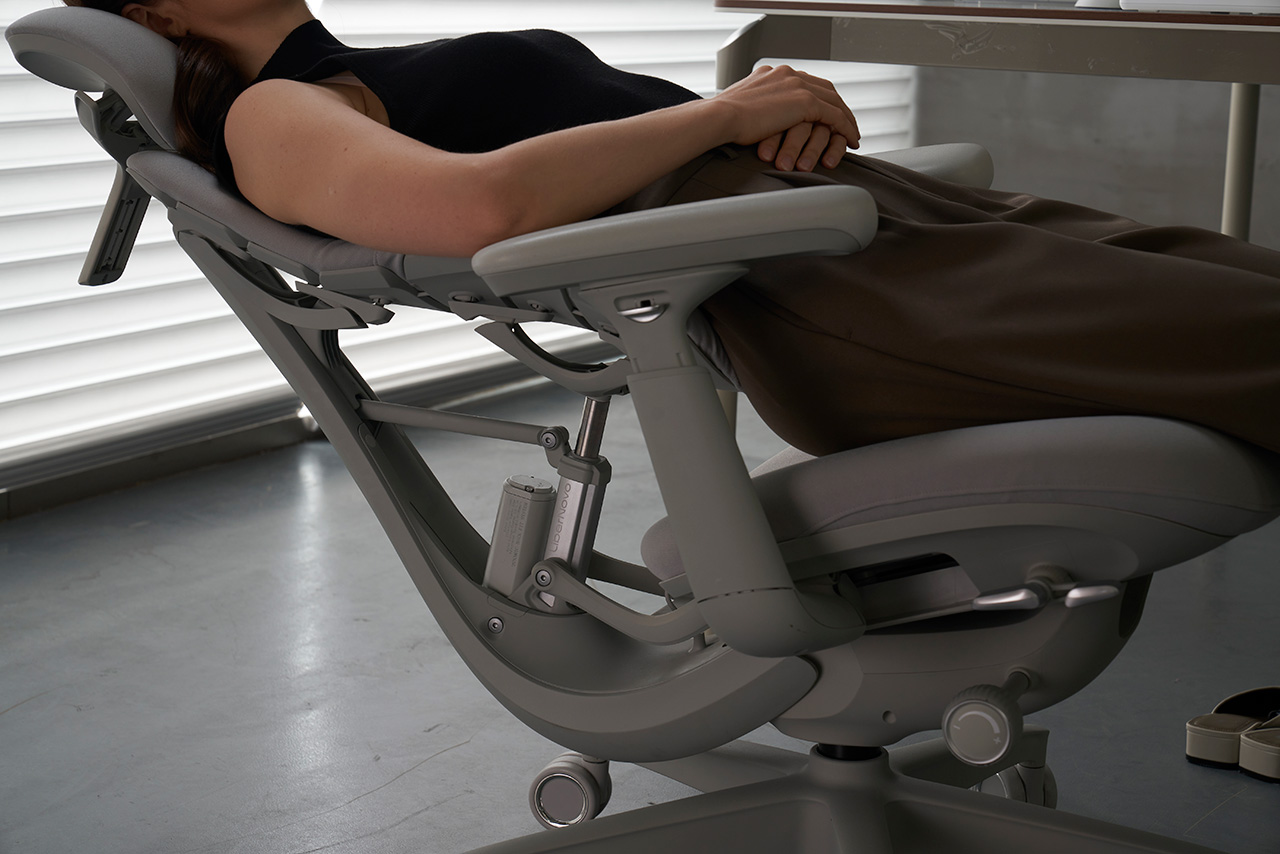
The problem with static chairs becomes clearer when you look at how people actually sit. Research shows the average person shifts posture about 13 times per hour, totaling over 127 unconscious adjustments in a 9.8-hour workday. Conventional chairs treat every shift as a problem. The Omni treats them as input, with 60 precision joints and four synchronized mechanisms continuously responding to keep the back, neck, hips, and arms supported.
LiberNovo Maxis
The backrest is where this becomes most tangible. The Bionic FlexFit system uses eight flexible panels, 14 dual-link points, and 16 ball joints, letting the back support flex and contour rather than press back with a rigid frame. The ErgoPulse motor sculpts the lumbar curve to maintain spinal alignment as the user moves, so whether leaning back to think or shifting forward to focus, the support follows without manual input.
LiberNovo Omni
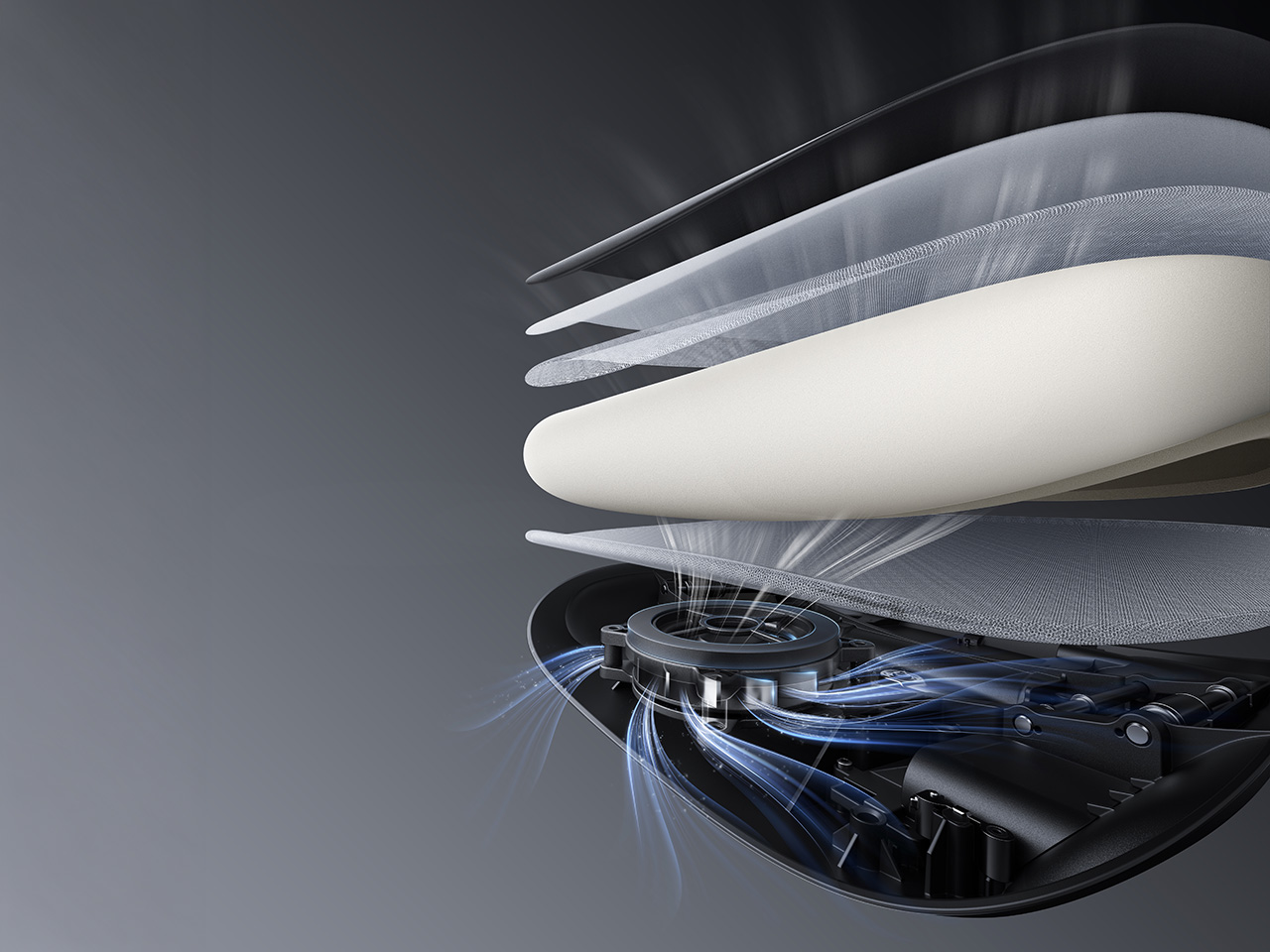
Two features push the Omni into less familiar ergonomic territory. OmniStretch is a five-minute motorized spinal decompression cycle built directly into the chair, guiding the backrest through a gentle stretch sequence to release tension and restore alignment mid-session. Active AirFlow Seat Ventilation draws cool air through a five-layer breathable seat structure using a quiet centrifugal fan, with built-in sensors that pause the airflow automatically whenever you leave the seat.
LiberNovo Omni SE
The standard Omni is the balanced choice, pairing electric lumbar control, OmniStretch, and the Dynamic Support System in one cohesive package. The Prime Sale includes flash deals on selected Omni bundles from June 18 to July 11, and the full campaign launches June 23. The US Premium Bundle, including the Omni chair, Footrest Stepsync, and battery, is priced at $829 against an MSRP of $1,449, a 43% discount. EU buyers get the steepest cut, with the bundle at €939 versus an MSRP of €1,826, a 49% savings.
Not everyone needs the full stack, though. The Omni SE is the most accessible, with manual lumbar support and the same core ergonomic architecture, but without OmniStretch or a built-in battery. The Omni Pro is the fully featured version, adding Active AirFlow Seat Ventilation, a high-grade aluminum alloy base, and Danish Gabriel Atlantic Fabric. The brand new Maxis Series rebuilds the platform for users between 5’10” and 6’7″. In the US, Super Early Bird pricing for these runs through July 31, with discounts of up to 44% off. The Omni SE starts from $569, with the Omni Pro starting at $909, and the Maxis from $809.
The sale adds a few extras worth noting. Qualifying purchases above regional thresholds are eligible for Lucky Spin Rewards, including a chance at a free chair or footrest. All purchases during the Prime Sale will earn triple rewards points for future orders. Additionally, Omni orders over $850 qualify for an exclusive complimentary gift bundle. It’s a straightforward set of incentives attached to a lineup that was already worth paying attention to before the discounts.
There was a time when the desk was just a surface. One more flat space to pile things on – a laptop, a charger, a cold coffee, a tangle of cables you stopped seeing years ago. No system. No intention. Just the low hum of “good enough.”
But as more of us rethink the spaces we work in this year – decluttering our setups, upgrading what we touch every day, and trading disposable gadgets for objects built to last – something has quietly shifted. Mechanical keyboards are surging again. Design-led desk pieces sell out faster than they restock. And the desk, of all things, has become the one place we’re finally willing to treat with a little care.
It isn’t about productivity hacks or another ergonomic chair. It’s about presence. The handful of objects you reach for, look at, and live beside during the hours you’re most focused. Here are seven that understand the assignment. Build it slowly, piece by piece.
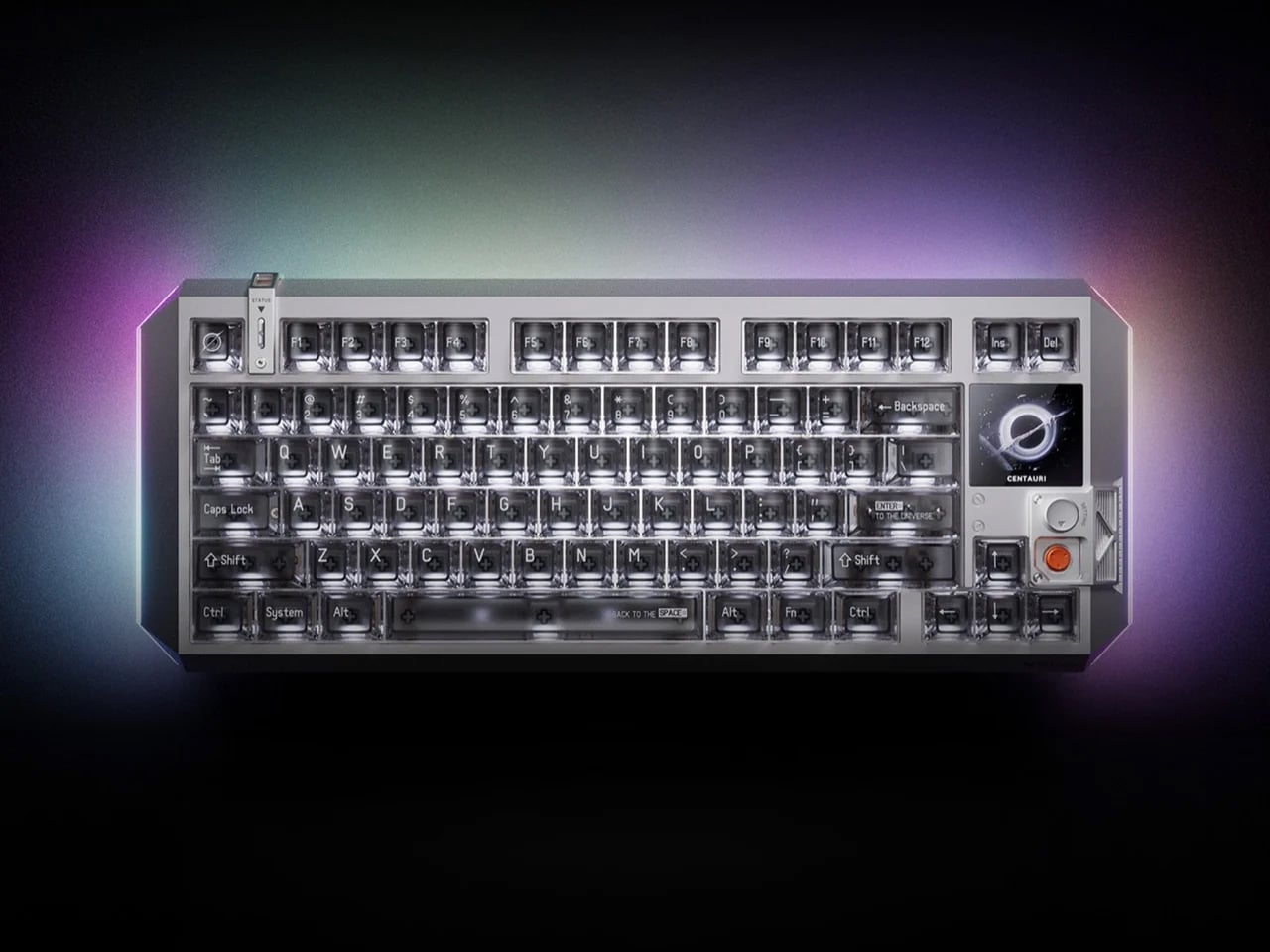
1. MelGeek Centauri80 – the keyboard that grew up
Best for the centerpiece of a serious setup.
For fifty years, the keyboard kept the same quiet contract. Switches under keycaps, keycaps under fingers. Functional. Forgettable. Then MelGeek asked a different question – what if the thing you touch most all day could also be the thing you most want to look at?
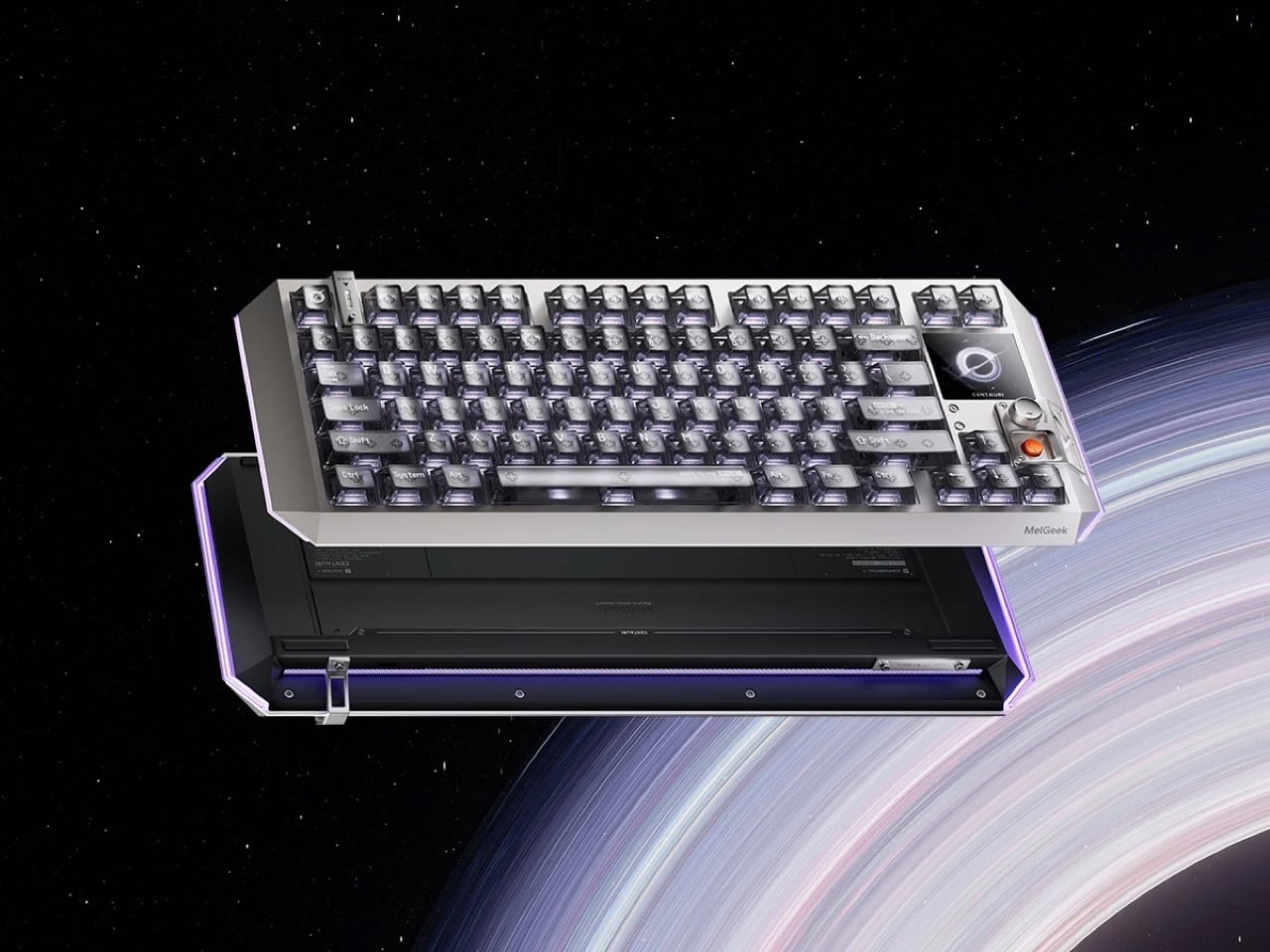
The MelGeek Centauri80 is the answer. It’s an 80% Hall Effect board with a tiny 1.78-inch OLED set into one corner, sharp as an Apple Watch face, and a rotary dial called the Super Dock beside it. Swap a wallpaper. Toggle a macro. Dial in the light. All without ever leaving your work. Underneath, a suspended aluminum body and a five-layer gasket mount turn every keystroke into a deep, controlled thud – the sound keyboard people chase for years.
It isn’t cheap at $299. But this was never about typing faster. It’s about a tool that finally feels like it belongs on a desk you actually care about.
Why it earns desk space:
This keyboard sits next to a budget keyboard the way a machined mechanical watch sits next to a Casio – both keep time, but only one is also a statement about what an object is allowed to be.
2. Everlasting All-Metal Pencil – the last pencil you’ll buy
Best for the daily tool you’ll actually reach for.
The premise sounds too good to be true, so here it is straight: a pencil that never needs sharpening and never runs out.
It writes with a special alloy core in an aluminum body, leaving a faint, graphite-like line as you go – an estimated ten miles of writing before the tip shows real wear. No lead to snap. No sharpener to hunt for. No sad little stub at the end. And yes, it erases like an ordinary pencil.
It’s the cheapest thing on this list, and somehow the one you’ll reach for most. Balanced, matte, quietly heavier than it looks – the all-metal cousin of an Apple Pencil, for twenty dollars.
It replaces the thing you constantly replace with something you never have to replace again. That’s the whole brief, delivered completely.
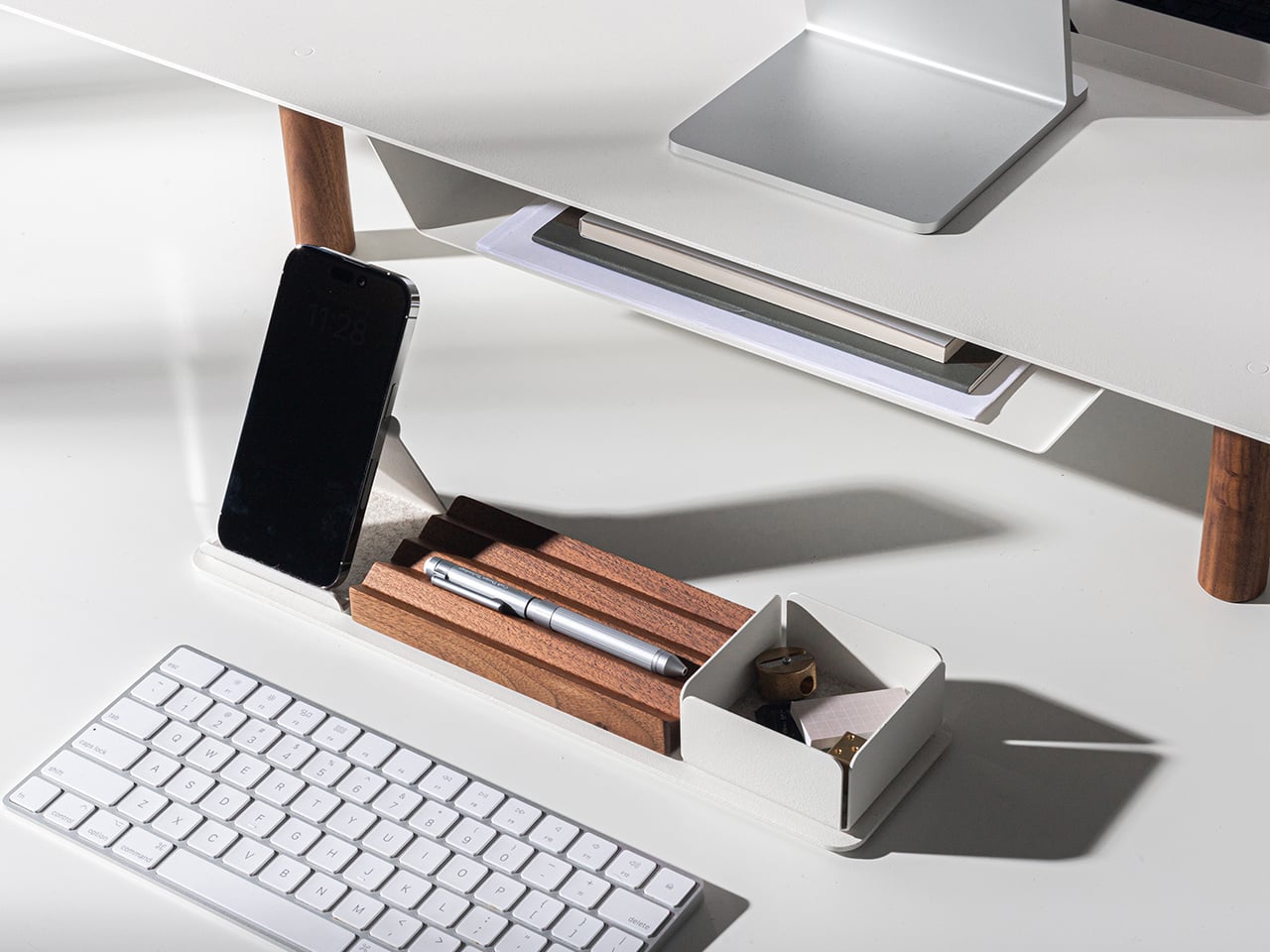
3. Gather by Ugmonk – organize your desk the way a designer would
Best for the foundation everything else sits on.
Most desk organizers are built around storage. Gather is built around use – and that one difference changes everything.
Designer Jeff Sheldon made it in powder-coated steel and solid walnut, by hand, in Pennsylvania. Every tray and stand clicks onto a magnetic base, so you can rearrange the whole thing in seconds and nothing ever slides out of place. No branding. No noise. Just the essentials, finally given a home.
Buy the pieces you need now. Add more when your days change. It’s the rare accessory you set up once and never think about replacing.
Why it earns desk space:
It’s not a storage solution. It’s a workflow solution that happens to look exactly the way a well-edited desk should.
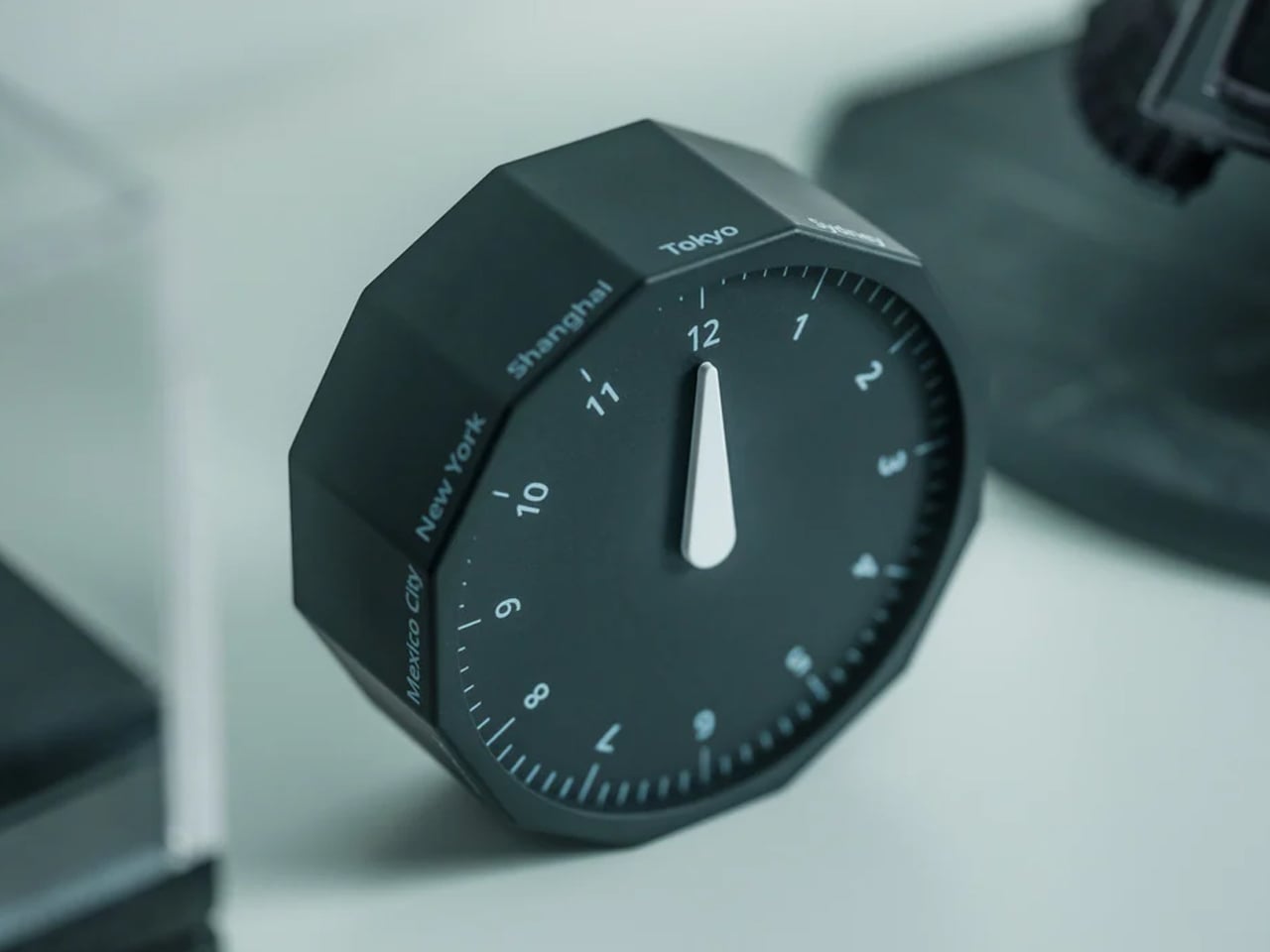
4. Rolling World Clock – time zones made tactile
Best for anyone working across cities.
If you work with people in other cities, you’ve built some private system for the time-zone math. It works. It just isn’t beautiful.
The Rolling World Clock replaces it with a single, satisfying motion. Twelve faces, each one a major city – London, Tokyo, New York, Sydney. Roll the one you want face-up, and a single hand tells you the hour there. No screen. No app. No menu buried three taps deep.
Designed by Masafumi Ishikawa and made in Japan, it’s about the size of a hockey puck and quiet enough to leave out between glances. A small thing that turns a tedious habit into something you reach for on purpose.
It turns a slightly tedious daily need – knowing what time it is on the other side of the world – into something you actually want to pick up and use.
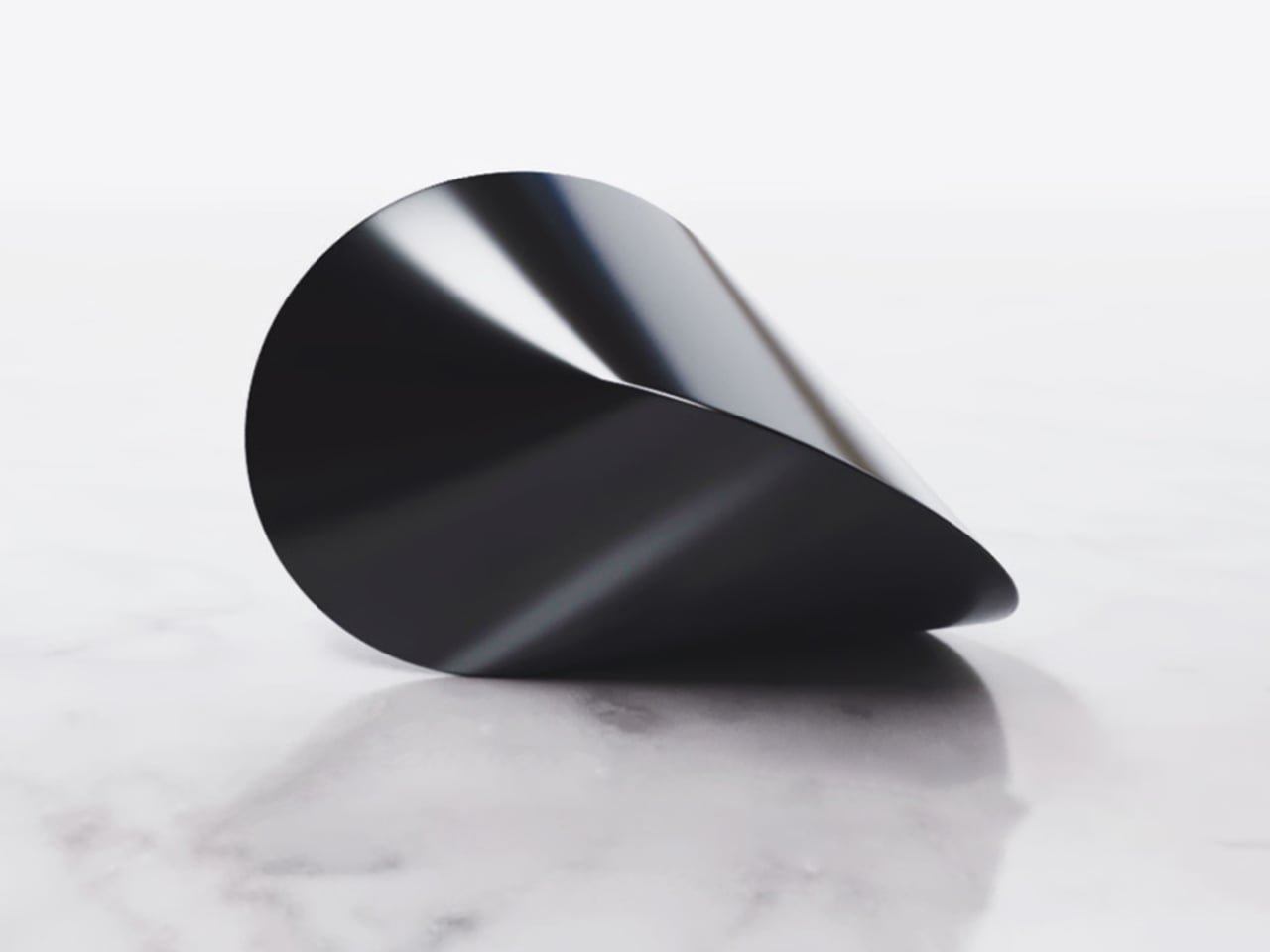
5. The Oloid – a mathematical sculpture that makes thinking visible
Best for the finishing flourish and is cast in stainless steel, brass, or copper.
The one object nobody can walk past without picking up.
The Oloid is a piece of geometry first described by German mathematician Paul Schatz in 1929. It isn’t round – and yet it rolls, in a straight, hypnotic line, touching every point on its surface as it moves. No motor. No battery. Just math made solid, cast in mirror-polished stainless steel, brass, or copper.
It does nothing, and that’s the point. You reach for it when you’re stuck, turn it over while you think, and slowly it becomes the quiet center of the desk. Presence, in the palm of your hand.
Why it earns desk space:
It turns the act of thinking – which is invisible – into something you can hold in your hand.
6. Heritage Craft Unboxing Knife – the detail that changes the ritual
Best for the WFH delivery pile.
Every remote worker opens packages all day. Most of us reach for scissors, a key, a thumbnail – and leave the box looking like it lost a fight.
The Heritage Craft Unboxing Knife treats that small moment as something worth doing well. It’s milled from a single block of aluminum into a circular form shaped after a Paleolithic hand axe, sized to settle into your palm. The wave-like ridges aren’t decoration; they’re grip. The blade is angled to glide through tape without ever reaching what’s inside.
On the desk, it reads as a sculpture. In the hand, it reminds you that even the most ordinary ritual can be done with a little more care.
It’s the most frequently used object here that most people haven’t thought to upgrade yet – which is exactly why it makes such an immediate impression once they do.
7. Author Clock – the clock that tells time through literature
Best for the literature lover’s desk statement piece.
Most clocks tell you the time. This one tells you the time and hands you a sentence worth reading.
Instead of digits, the Author Clock shows a hand-picked literary line with the current hour woven into it – a fresh passage every minute, pulled from more than 13,000 lines across centuries of books. Glance over near eleven at night and you might catch something from Mrs Dalloway. The housing is solid white oak with a brass dial on the side; the e-paper screen is paper-white and never glares.
It pulled in more than $1.3 million from over 8,000 backers, which tells you something. Checking the time stops being a reflex. It becomes a pause.
Why it earns desk space:
It makes the most unremarkable moment of a workday, checking the time, worth noticing.
Your desk is a design statement whether you mean it to be or not
A desk quietly communicates how seriously you take your work, your space, and your time – whether you’ve thought about it or not.
These seven products aren’t a formula for the “perfect” setup. They’re a starting point for thinking about the objects you surround yourself with during the hours you’re most focused and most present. Some solve practical problems beautifully. Some are just worth having nearby while you think. All of them treat the desk as more than a surface.
Start with the foundation, add the daily tools, then let the statement pieces earn their spots over time. That’s the whole point of a design moment: it isn’t about buying more. It’s about choosing better.
The problem with buying tech for someone who follows tech is that he’s usually already seen it. His desk is deliberate. His bag is considered. His tech doesn’t accumulate — it earns a place and stays there. Shopping for him isn’t hard because he’s difficult. It’s hard because he’s usually right, and anything that doesn’t clear his bar comes back with a polite explanation.
The ten things on this list are the ones he hasn’t gotten to yet. Some of them are brand new. A few are still taking shape as concepts or patent filings worth tracking closely. None of them are the safe, obvious choice you grab when you’re not sure. Safe choices are what you give someone you don’t actually know that well, and the guy who has everything will see right through them.
1. Google Home Speaker
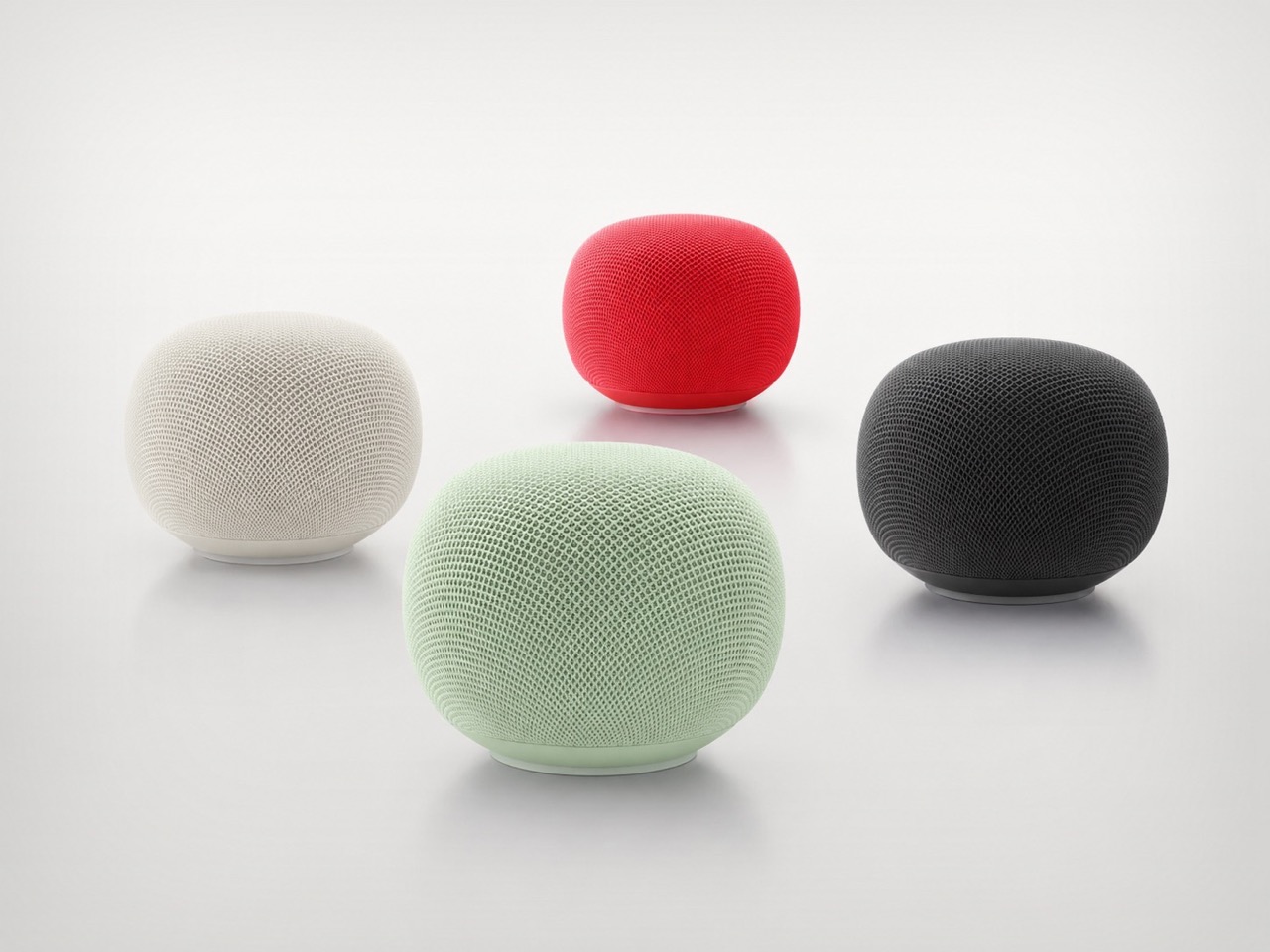
Google’s first new standalone smart speaker in nearly six years arrived in June 2026, and the gap is written into everything about it. The Nest Audio it replaces launched when people were buying anything that made a room feel less empty. The Google Home Speaker is a more considered object: small and rounded, available in colors the hardware team has always gotten right — the kind that make a shelf look slightly more curated without announcing a brand — with 360-degree audio and a light ring that tells you when Gemini is listening, thinking, or ready to respond.
The Gemini integration is the actual reason this speaker exists. Every Google product with enough surface area has been rewired into the AI model since 2025, and the kitchen turned out to be the most underserved room in the portfolio. What that means in practice is a speaker that answers hands-free cooking questions, manages a calendar, controls the broader smart home, and holds a conversation more fluently than any Nest device before it. Whether Google maintains attention on the category this time around is the only question worth watching.
What We Like
Gemini integration makes ambient AI genuinely useful in a room that needed it most
Soft, rounded form and considered color options read as a design object rather than tech hardware
What We Dislike
A six-year product gap makes long-term hardware commitment harder to trust
Full Gemini functionality requires staying inside the Google ecosystem to get the most out of it
2. OrigamiSwift Folding Mouse
Most travel mice solve the portability problem by building a smaller, worse mouse. The OrigamiSwift, designed by Horace Lam, takes a different approach entirely. It folds completely flat to 0.18 inches thick, slips into a pocket, and unfolds into a full-sized ergonomic form in under half a second. The triangular structure that makes the fold work comes directly from origami geometry, which gives the collapsed state enough rigidity to survive a bag without a case, and the open position enough stability for accurate, comfortable tracking on almost any surface you set it on.
At 40 grams, you stop noticing it in your bag within the first day of carrying it, which is exactly the point. A 4,000 CPI infrared sensor handles tracking, Bluetooth 5.2 keeps the connection fast and reliable, and a single USB-C charge on the built-in lithium polymer battery lasts up to three months. The soft-click buttons are quiet enough for a shared workspace without drawing any attention. For anyone who has carried a full-sized mouse in their bag out of sheer stubbornness about ergonomics, the OrigamiSwift is the design that finally makes the case for stopping.
Opens from flat to full-sized ergonomic form in under 0.5 seconds with no mechanical fuss
Three months of battery life per USB-C charge removes recharging from the equation entirely
What We Dislike
The slim profile and 40-gram weight take adjustment for anyone used to heavier, more substantial mice
Stock is very limited — only a handful of units remain in the shop
3. Volla Plinius
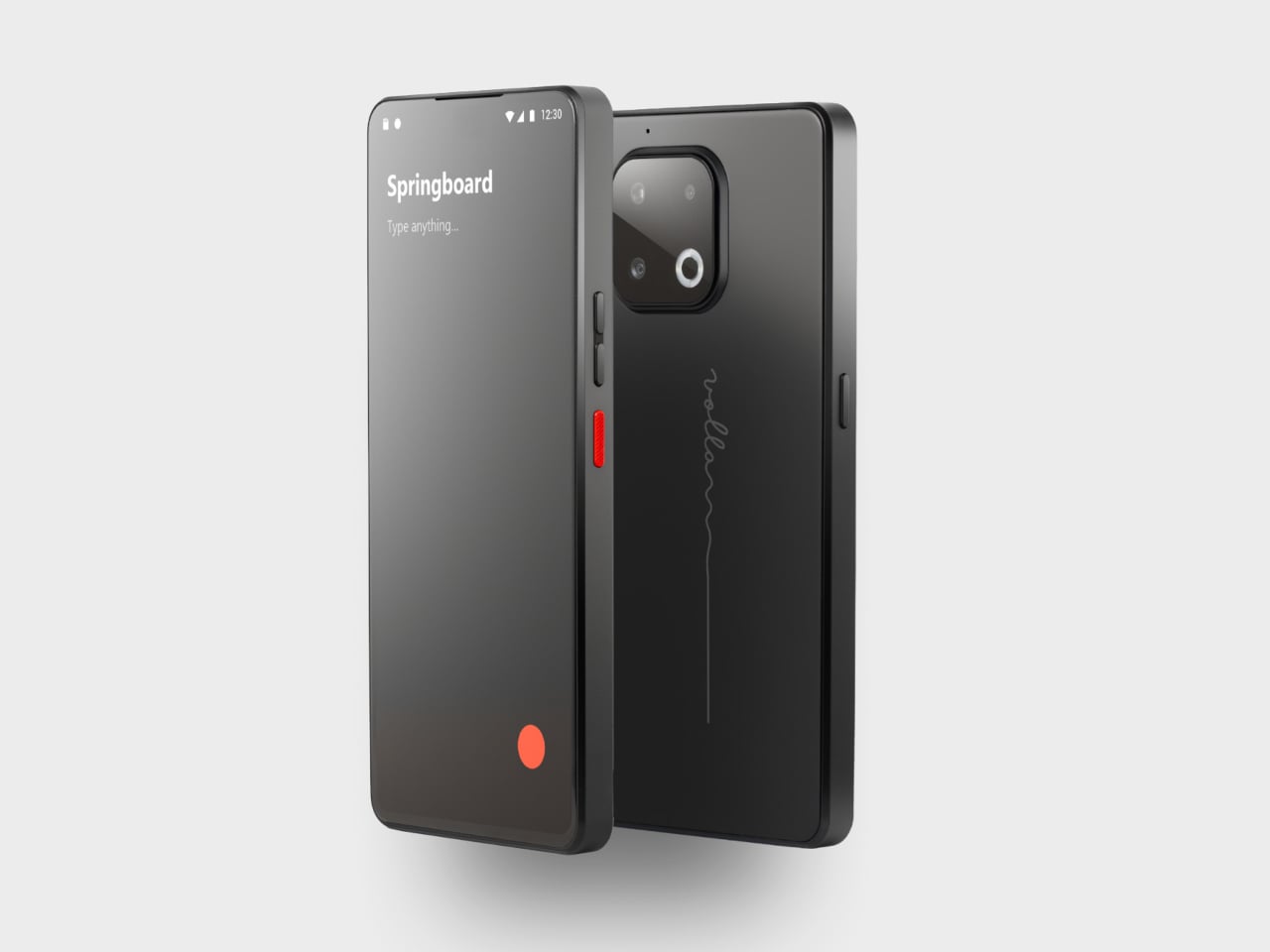
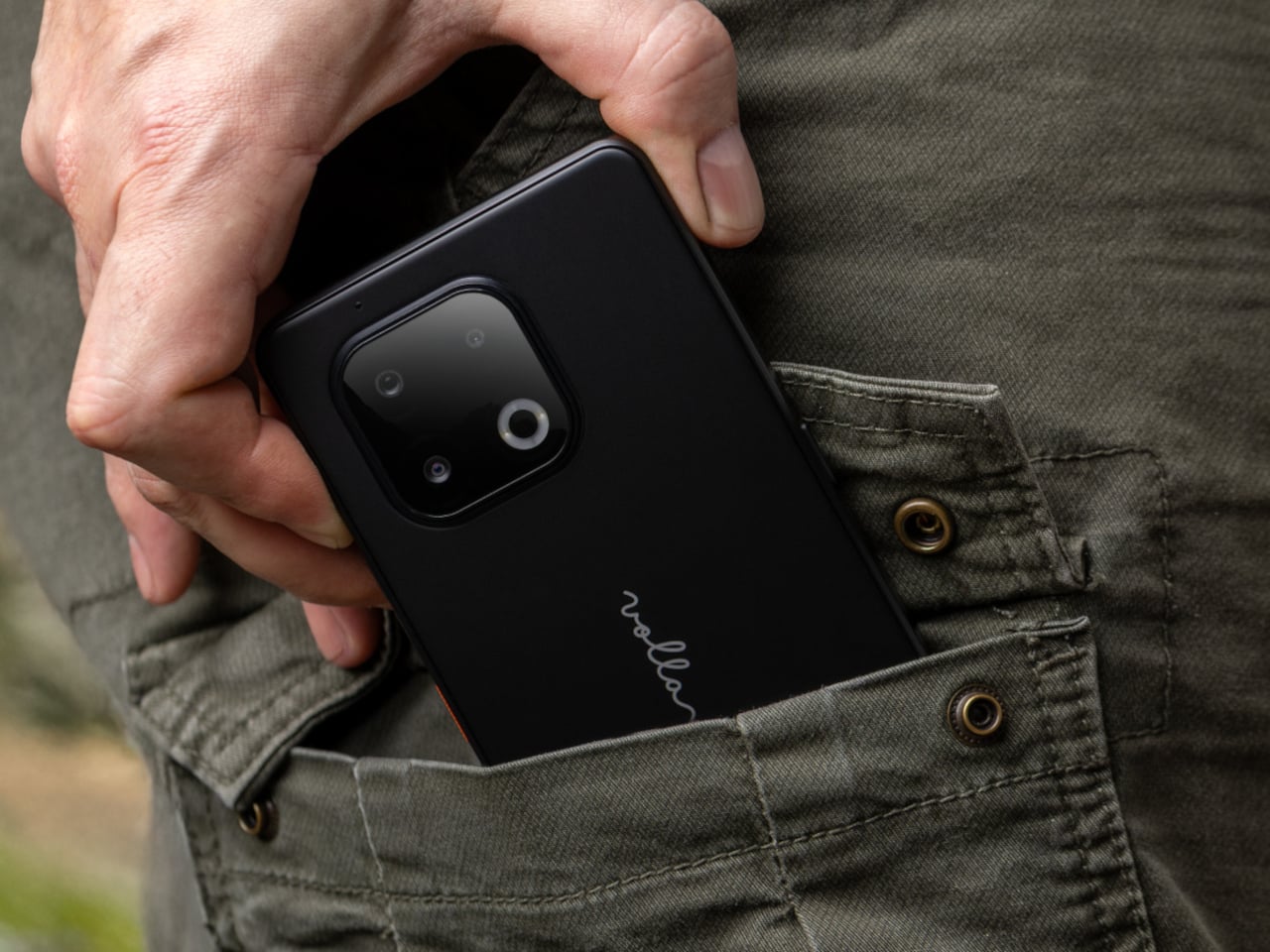
The Volla Plinius is named after Pliny the Elder, which is the kind of product name that tells you something about the people who built it. It’s a Google-free Android phone with an IP68 dust and water rating, a 6.67-inch FHD+ OLED display running at up to 120Hz, a 64MP main camera with phase-detection autofocus, an 8MP ultra-wide, and a 2MP macro, with 5G and a MediaTek Dimensity 7300 processor underneath. Out of the box, it runs Volla OS, a Google-free Android build with a clean, text-based interface and a Security Mode that governs which apps communicate with the outside world.
The detail that separates the Plinius from every other privacy phone is a user-replaceable battery you can swap with a standard screwdriver, even with the IP68 waterproofing intact. The 5,300mAh cell handles a full day comfortably, with 30W fast charging and 15W wireless charging both covered. Ubuntu Touch is available as a fully Linux-based OS from the UBports Foundation that doubles as a desktop environment when connected to a monitor. The standard Plinius starts at €598, with the Plus model adding 12GB of RAM, 256GB of storage, and a Pogo PIN connector for magnetic accessories at €698.
What We Like
User-replaceable battery with a standard screwdriver is a genuinely rare feature at any price, let alone with IP68 in place
Dual OS support means you can run Volla OS or full Ubuntu Touch on the same hardware
What We Dislike
The Pogo PIN modular accessory system is still early in its development
4. piBrick Pocket-CM5
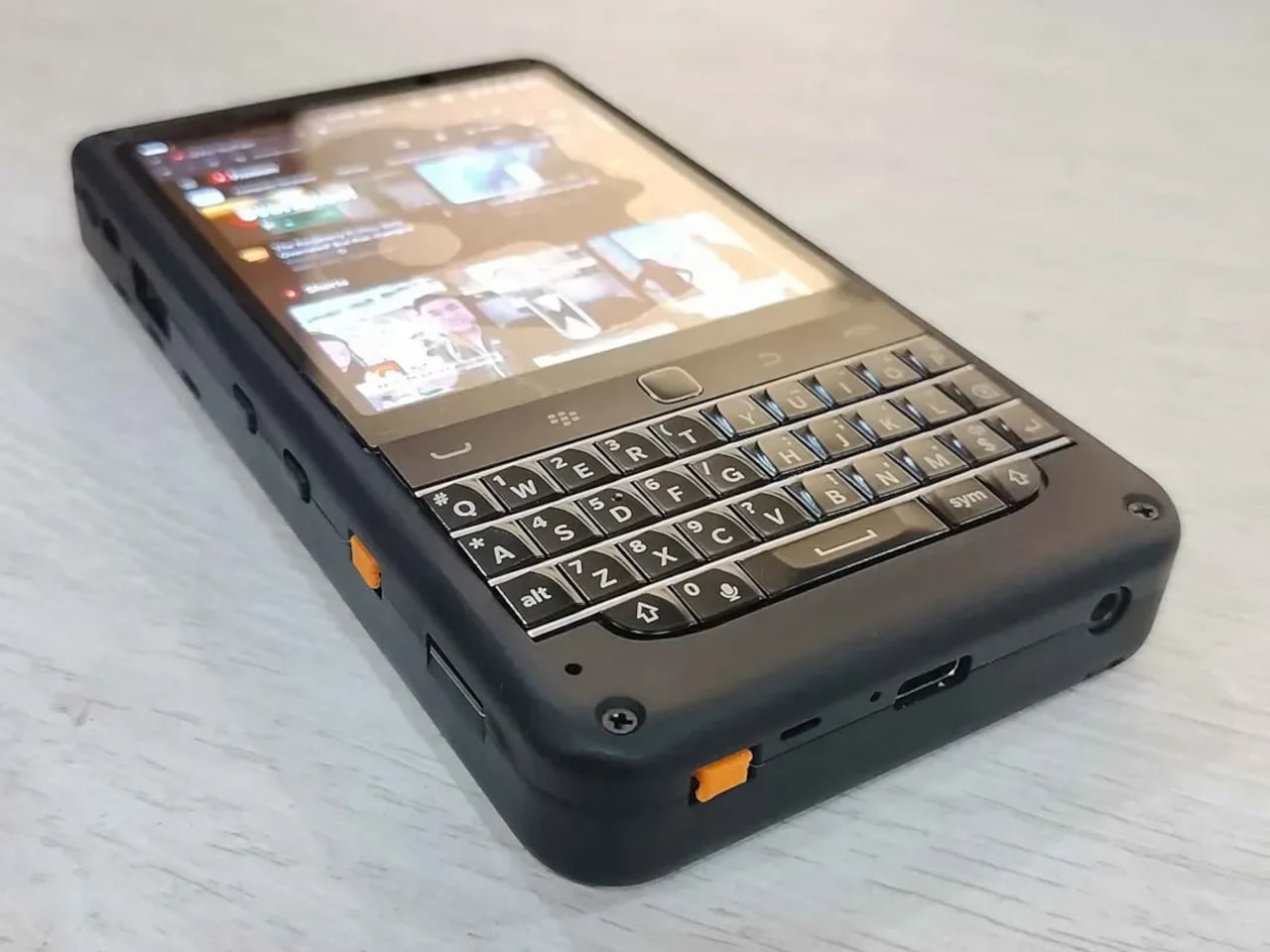
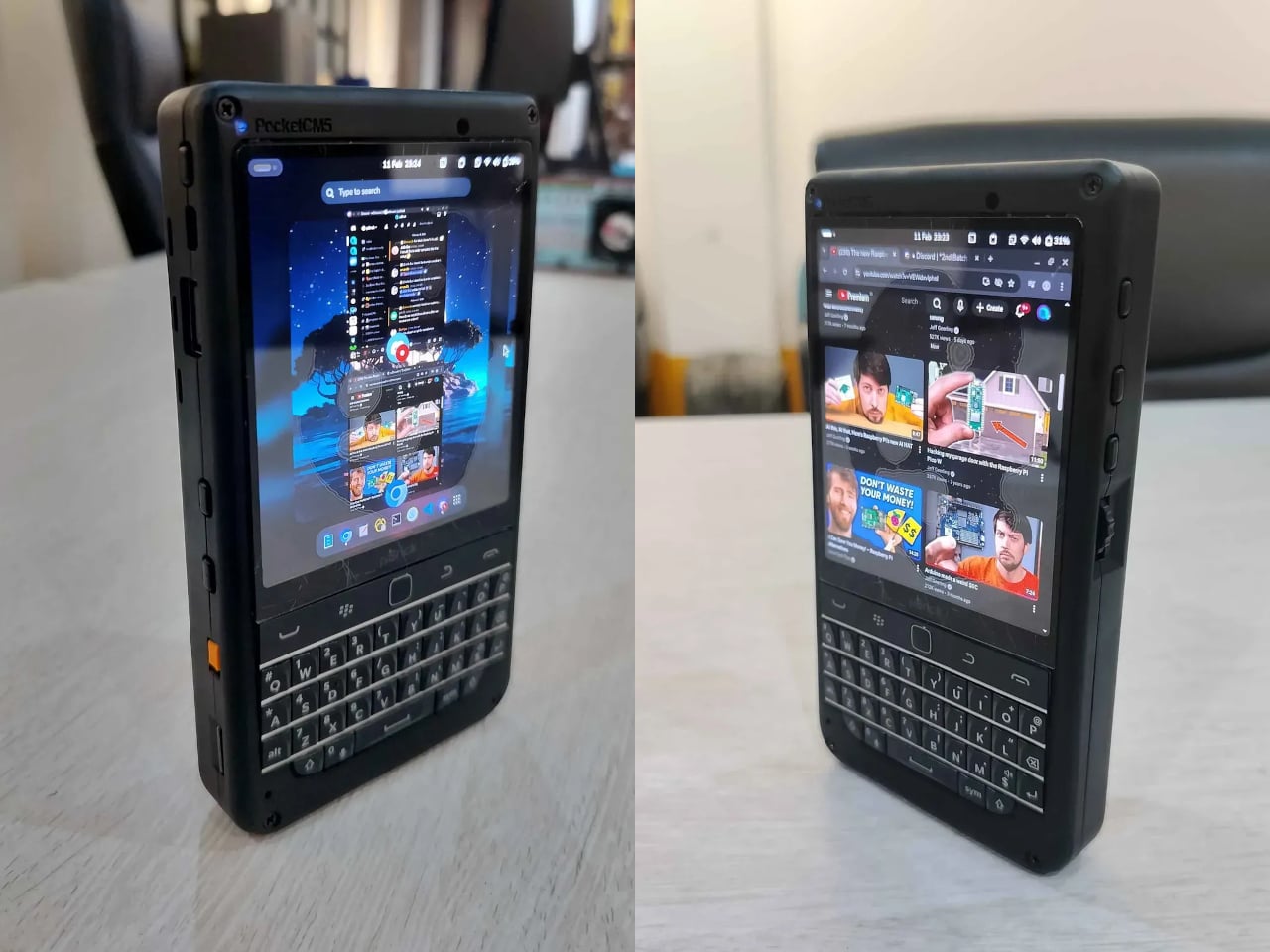
The piBrick Pocket-CM5 is an open-source handheld computer built around the Raspberry Pi Compute Module 5, a custom PCB designed for manufacturing at JLCPCB, and a 3D-printed shell. The whole parts list totals around $172, and what that buys is a device at smartphone proportions — 80mm × 145mm × 19.6mm — with a 3.92-inch AMOLED display at 1080 × 1240 pixels and 90Hz, a 5,000mAh battery, a compact QWERTY keyboard derived from the BlackBerry layout with an integrated trackpad, side rotary encoders, and five user-programmable buttons that give it a tactile depth no touchscreen-only device can replicate.
The feature that elevates the piBrick from impressive project to genuinely useful tool is USB-HID mode. Plug it into any external computer or server, and the keyboard and trackpad operate as a fully functional USB input device, independent of the Raspberry Pi running inside it. A sysadmin arriving at a server rack without a spare keyboard doesn’t need to find one. Full-size and micro-HDMI outputs allow the same device to drive an external display. NVMe SSD support in 2230 or 2242 formats adds storage beyond the SD card. The schematics, PCB files, and build instructions are open-source, making $172 the floor rather than the price.
What We Like
USB-HID mode turns it into a functioning keyboard and trackpad for any external computer or server
Full open-source hardware means the design belongs to anyone who wants to build on or modify it
What We Dislike
Requires hands-on assembly from a parts list rather than arriving as a finished, ready-to-use consumer device
The 3D-printed shell is functional but lacks the material quality of commercial hardware at this price level
5. StillFrame Headphones
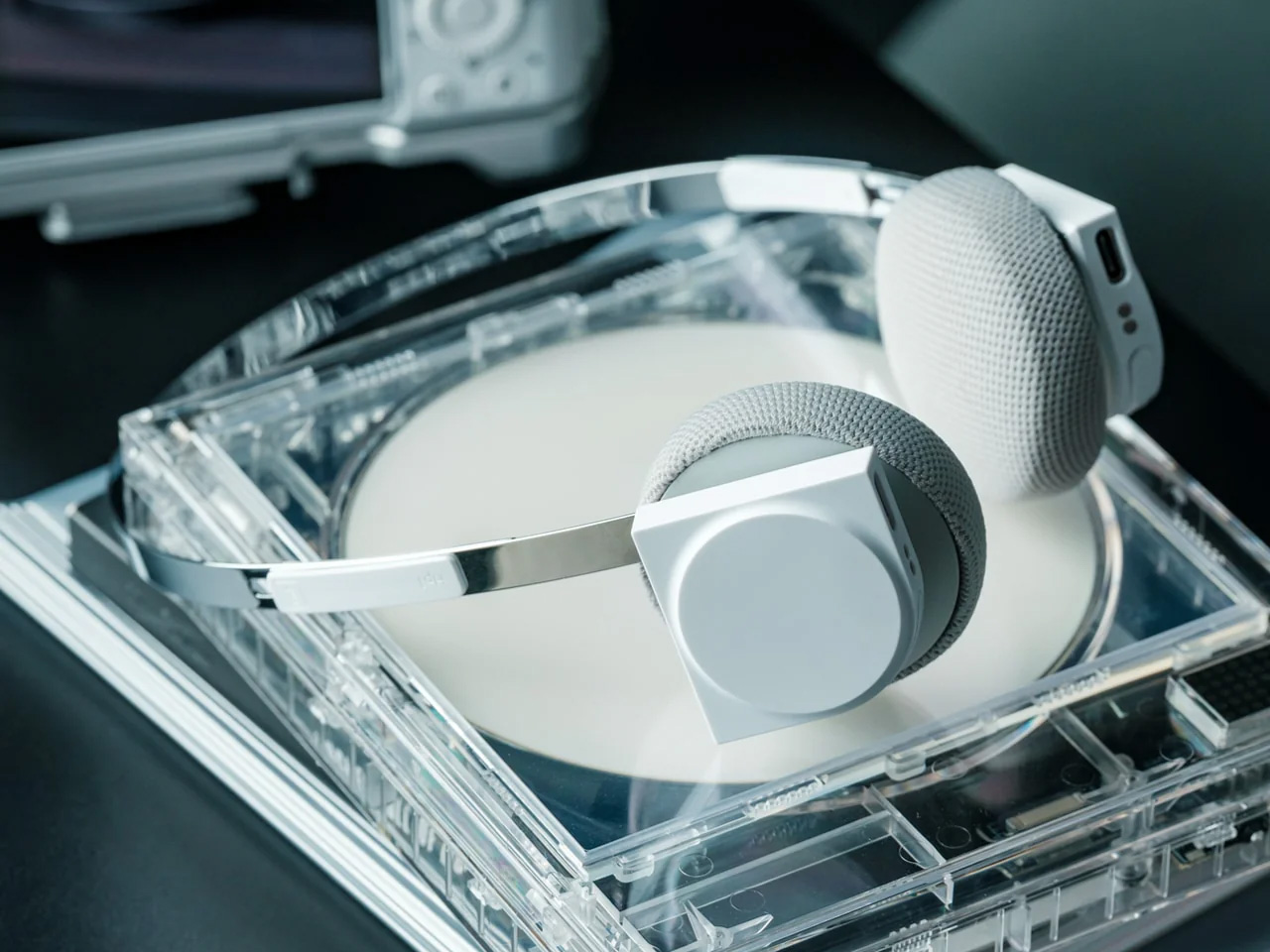
The StillFrame headphones are designed by Tatsufumi Funayama and weigh 103 grams, which is light enough that you genuinely stop noticing them across a full workday. The 40mm drivers produce a wide, open soundstage tuned for music that rewards real listening rather than functioning as background wallpaper. A stainless steel headband holds the structure with the right balance of strength and flex, and the fabric ear cushions attach magnetically, making swaps between the included colorways quick and satisfying in the way that small, well-engineered interactions tend to be. The form takes its reference from the quiet geometry of CD players from the 1980s and 1990s, and the connection is immediate once you see it.
At $245, the StillFrame competes on philosophy as much as on specification. Active noise cancellation and Transparency Mode are both on board, Bluetooth 5.4 handles wireless streaming, and a USB-C cable supports high-resolution wired playback for when the signal matters more than the convenience. Battery life runs to 24 hours. The internal circuit board is deliberately exposed within the housing, treated as part of the visual experience rather than something to hide behind plastic. The White model ships with Light Gray and Turquoise cushions included — two moods for the same object, quietly expressive without trying to be.
103g and an open soundstage make these the kind of headphones you wear for hours without wanting to take them off
The exposed circuit board and magnetic cushion system give the object a physical personality that most headphones flatten out entirely
What We Dislike
Only 4 units remain in the shop, which makes these effectively a limited run at this point
The on-ear design sits between over-ear and in-ear, and the level of passive isolation won’t suit everyone
6. Oppo Bubble
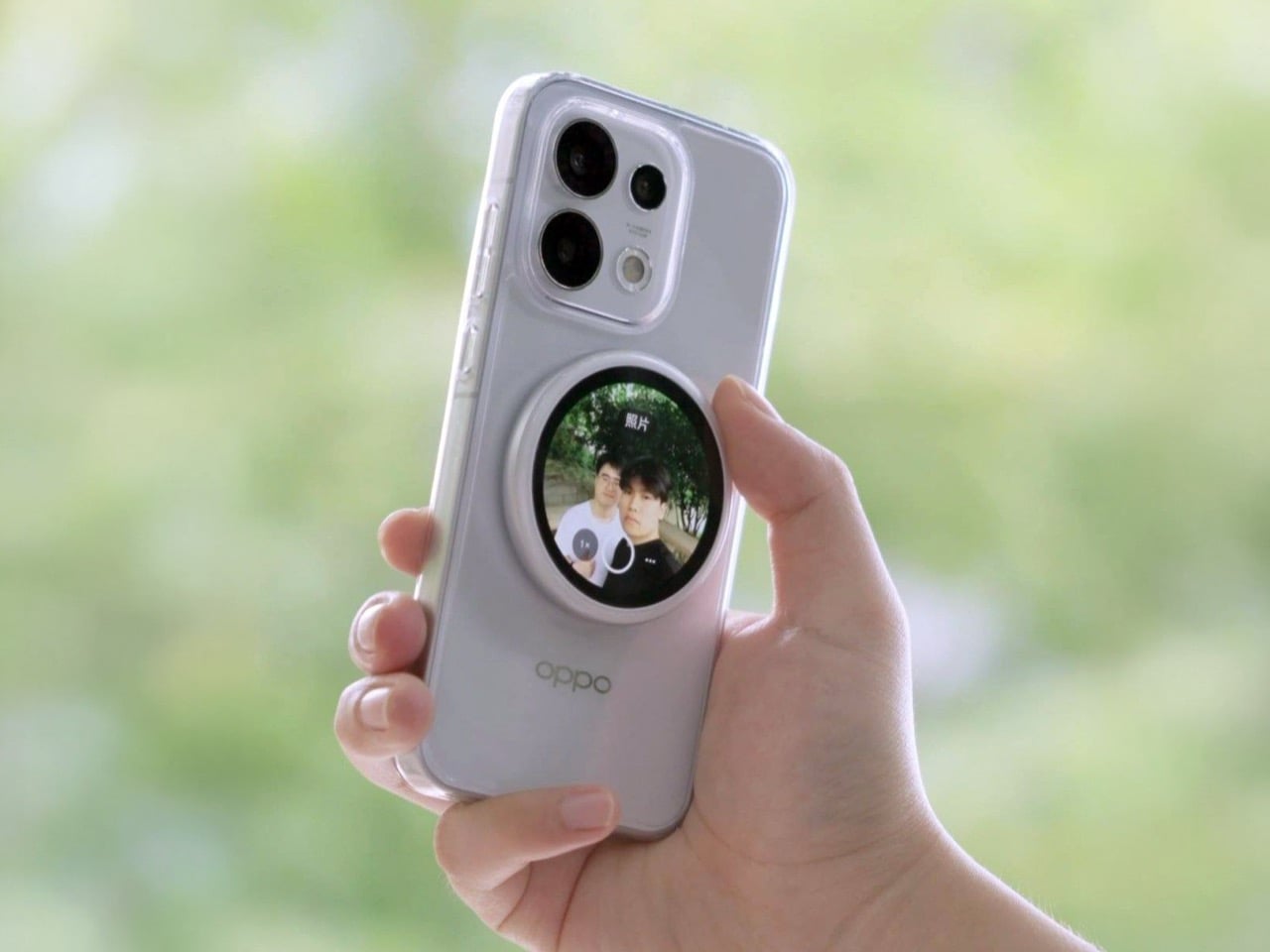
The rear camera has been the better camera for over a decade. Every benchmark, every low-light comparison, every zoom test confirms it, and yet selfie culture built itself entirely around the front-facing lens because there was no practical way to see what the good camera was capturing while it was pointed away from you. The Oppo Bubble is a small circular AMOLED touchscreen that attaches magnetically to the back of a phone and mirrors the rear camera’s live feed wirelessly, up to 10 meters away. It launched in China on May 25, 2026, alongside select Oppo Reno 16 devices, and includes a built-in remote shutter trigger. Apple has had the magnetic infrastructure for something like this since 2020. Oppo just claimed the screen real estate it left empty.
The circular AMOLED display is what makes the Bubble credible rather than merely clever. A low-resolution preview would sink the concept at its most basic job, so Oppo putting a proper screen in here is the detail that earns the price. A 550mAh battery keeps it running independently, and when the camera is off, the Bubble displays custom wallpapers, live photos, videos, and animated themes. Ten meters of wireless range repositions it from selfie mirror to legitimate remote shooting monitor — the kind of tool that used to require a separate Bluetooth trigger and a lot of hoping for the best.
What We Like
Ten meters of wireless range turns it from a selfie mirror into a proper remote monitor for tripod-mounted shooting
The circular AMOLED form gives it enough design personality to work as an accessory rather than just a functional attachment
What We Dislike
Live camera preview only works with select Reno 16 series Oppo devices at launch, which is a real limitation right now
No confirmed international release outside China as of June 2026
7. Lenovo ThinkTab X11
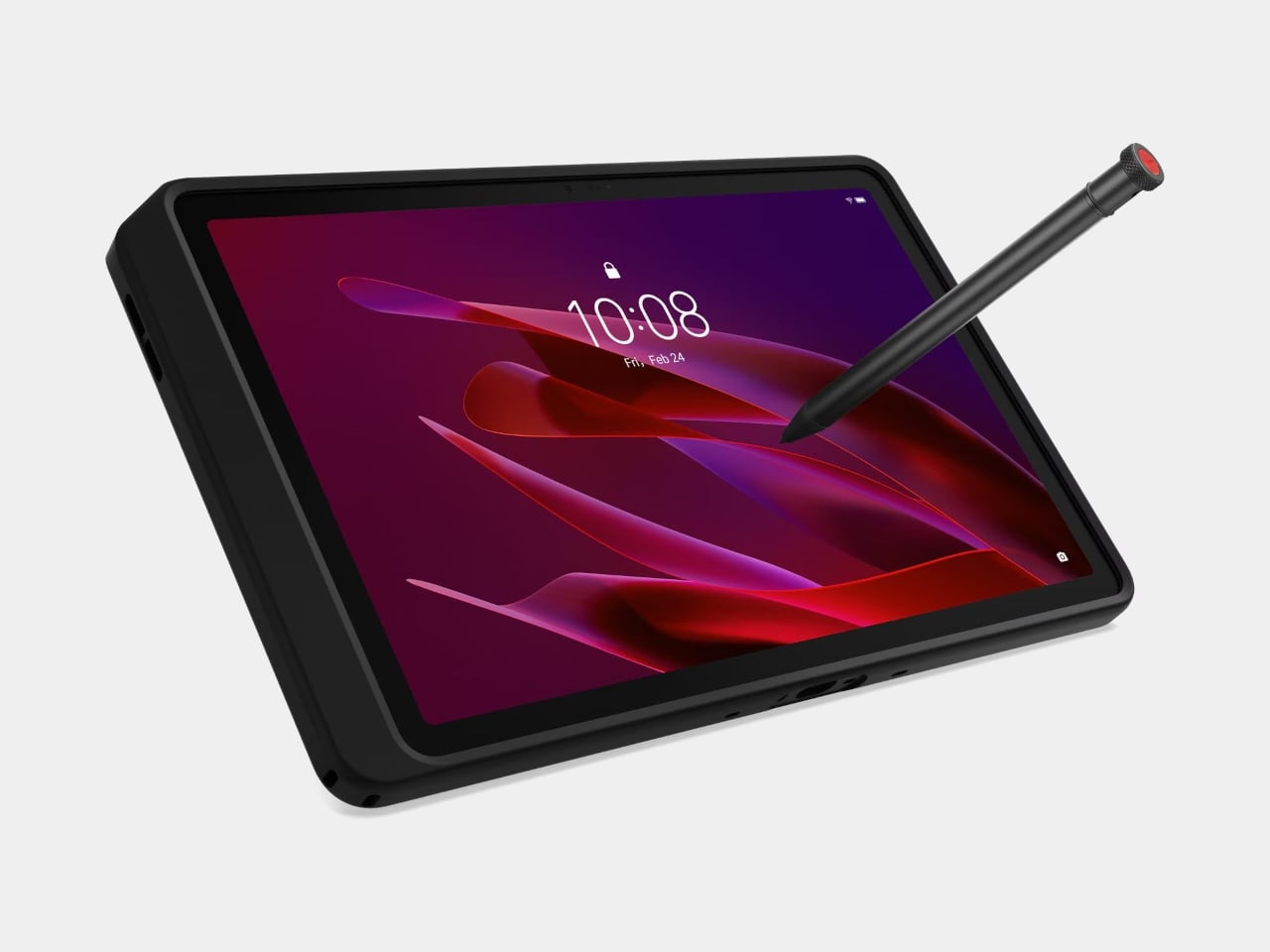
Rugged tablets have almost always meant choosing between enterprise-grade hardware at enterprise-grade prices, or pressing a consumer device into field conditions it was never designed to handle. The Lenovo ThinkTab X11 is an attempt to close that gap at $499, bringing it into reach for the people who actually use tablets in logistics, construction, transportation, manufacturing, and energy. The 10.95-inch display runs at 90Hz, reaches 800 nits under high brightness mode, and handles gloved hands and wet fingers without issue — the Snapdragon 7s Gen 3 runs the processing, with up to 12GB of RAM and 512GB of UFS 3.1 storage configurable depending on the deployment.
The battery design is what makes this genuinely interesting. The 10,200mAh cell removes on a screwless mechanism, so a worker can swap a depleted pack for a fresh one mid-shift without stopping to find a power outlet. In vehicle or fixed workstation deployments, the ThinkTab can run directly from DC power with no battery installed at all, eliminating heat buildup from continuous charging and removing long-term degradation from the equation entirely. The included case carries MIL-STD-810H certification, the device itself carries IP68, and the whole package ships with Android 16 alongside four years of security patches and two guaranteed major OS upgrades.
What We Like
Screwless hot-swap battery means mid-shift power changes are a practical workflow option, not a maintenance event
Battery-less DC operating mode for fixed deployments removes heat and degradation entirely from continuous-use scenarios
What We Dislike
At $499, it sits above consumer tablets doing lighter work, though well below comparable enterprise-only hardware
The Snapdragon 7s Gen 3 is a capable rather than cutting-edge processor for the price bracket
8. Nothing Book
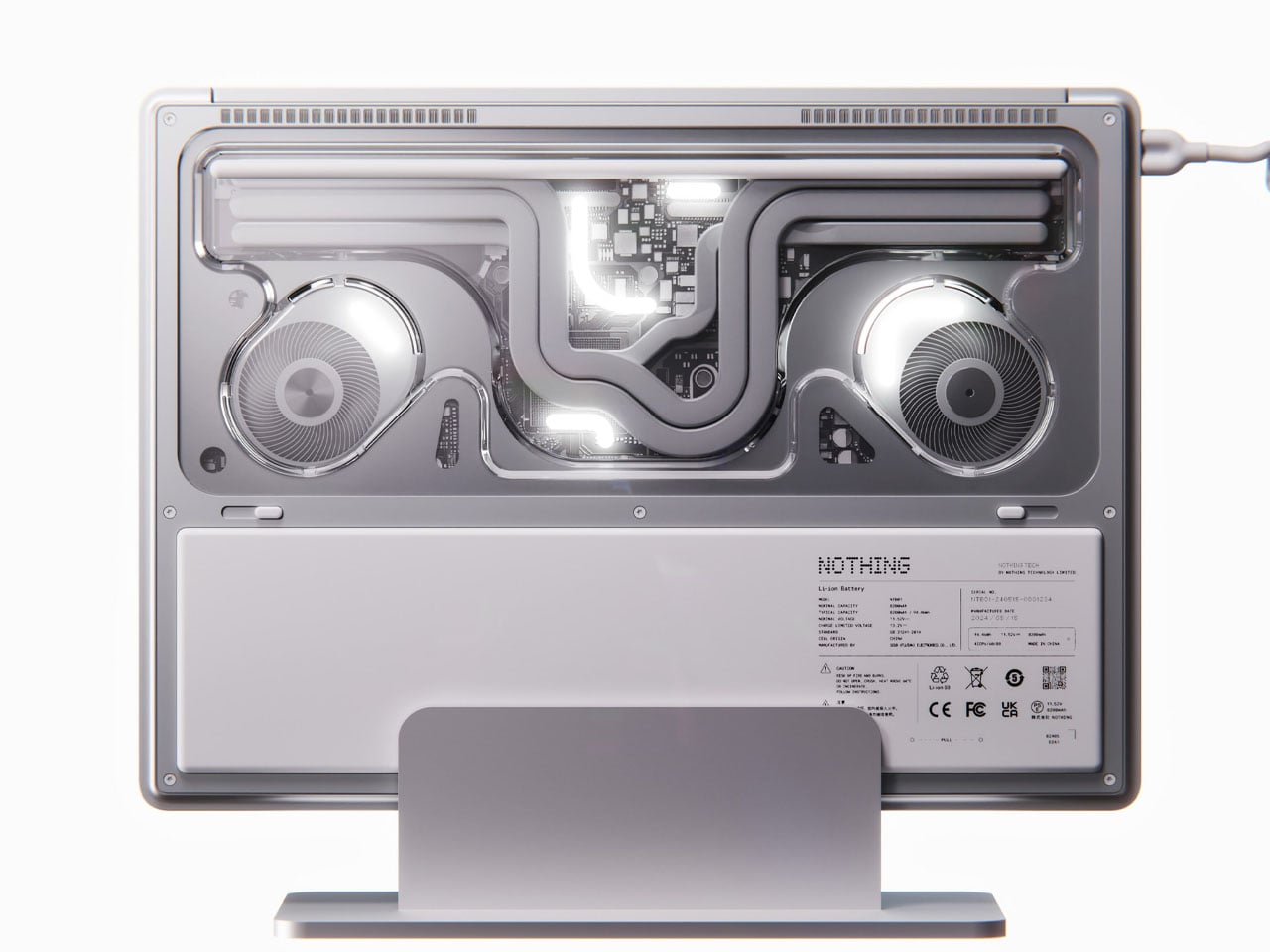
This is a concept, and it’s worth saying that plainly before anything else. The Nothing Book is a design exploration by Nikita Bukoros that takes the brand’s philosophy to its logical conclusion: a performance laptop that treats its internal architecture as the visual statement rather than hiding it. The see-through body layers the cooling system, circuit boards, and internal components into a composition that Bukoros describes as industrial art as much as consumer electronics. The see-through aesthetic Nothing built its identity around, originally inspired by the translucent polycarbonate designs of the late 1990s, reaches its most ambitious expression here.
The secondary screen mounted on the lid is the detail that makes the concept worth following. It is a slim external display that breaks the closed-laptop monotony entirely — you can push messages, symbols, emojis, or anything else in the classic Nothing font to whoever is looking at the back of your machine in a meeting or a cafe. Nikita moves beyond Nothing’s usual monochrome palette and offers the concept in hot red, cool green, subtle pink, and magnetic teal. A purpose-built charging dock triggers a cooling animation on the secondary display when the laptop is docked, which is the kind of considered detail that separates a design worth remembering from one worth scrolling past.
What We Like
The secondary lid screen is a genuinely original idea that gives the closed laptop a visual identity and purpose
See-through architecture makes the internal engineering part of the aesthetic rather than something to conceal behind a plain surface
What We Dislike
This is a concept, not a product — Nothing has confirmed a laptop is in development
The exposed internals aesthetic would face real structural and thermal engineering challenges in a shipping device
9. Canon Pocket Gimbal Camera
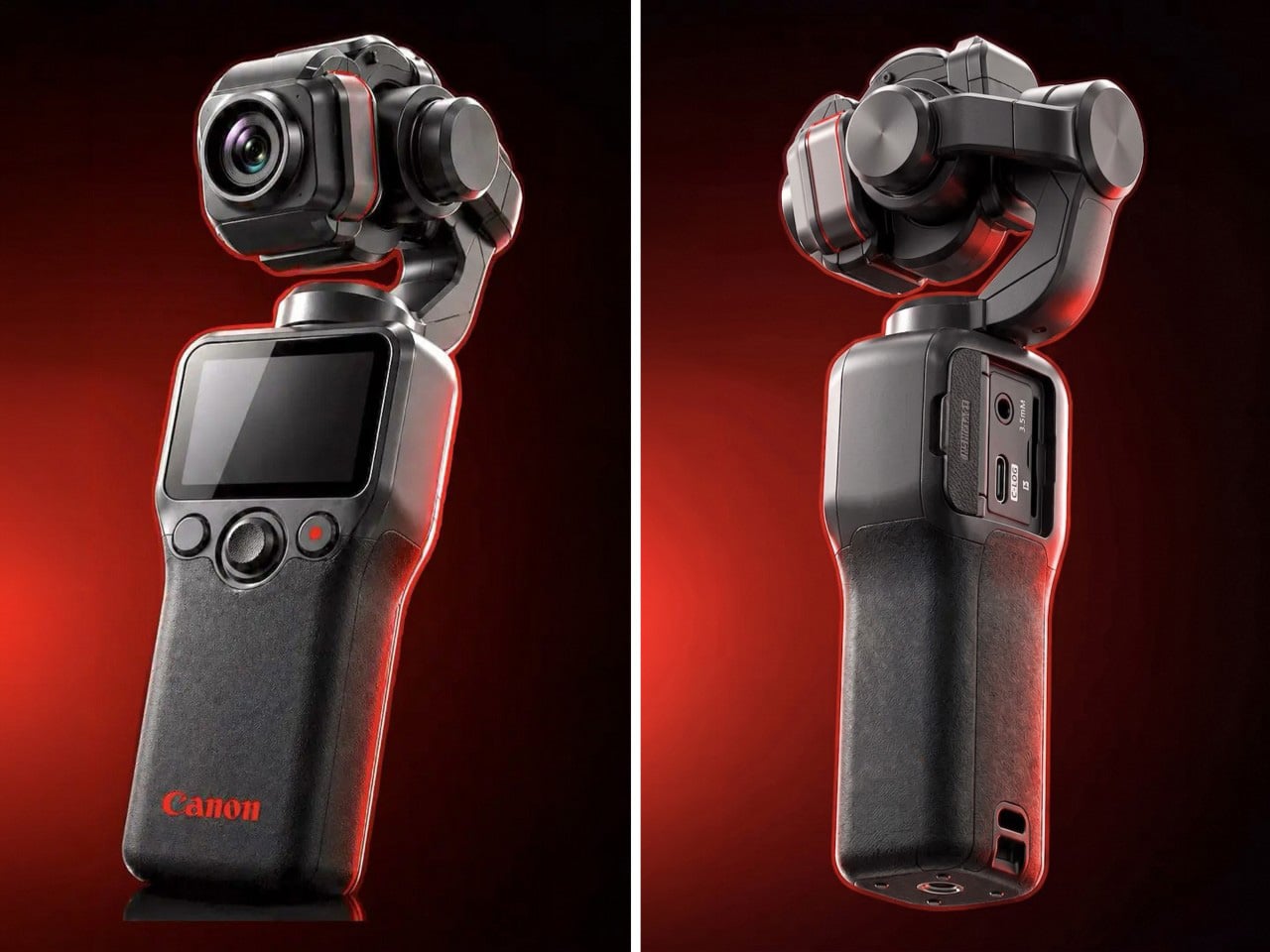
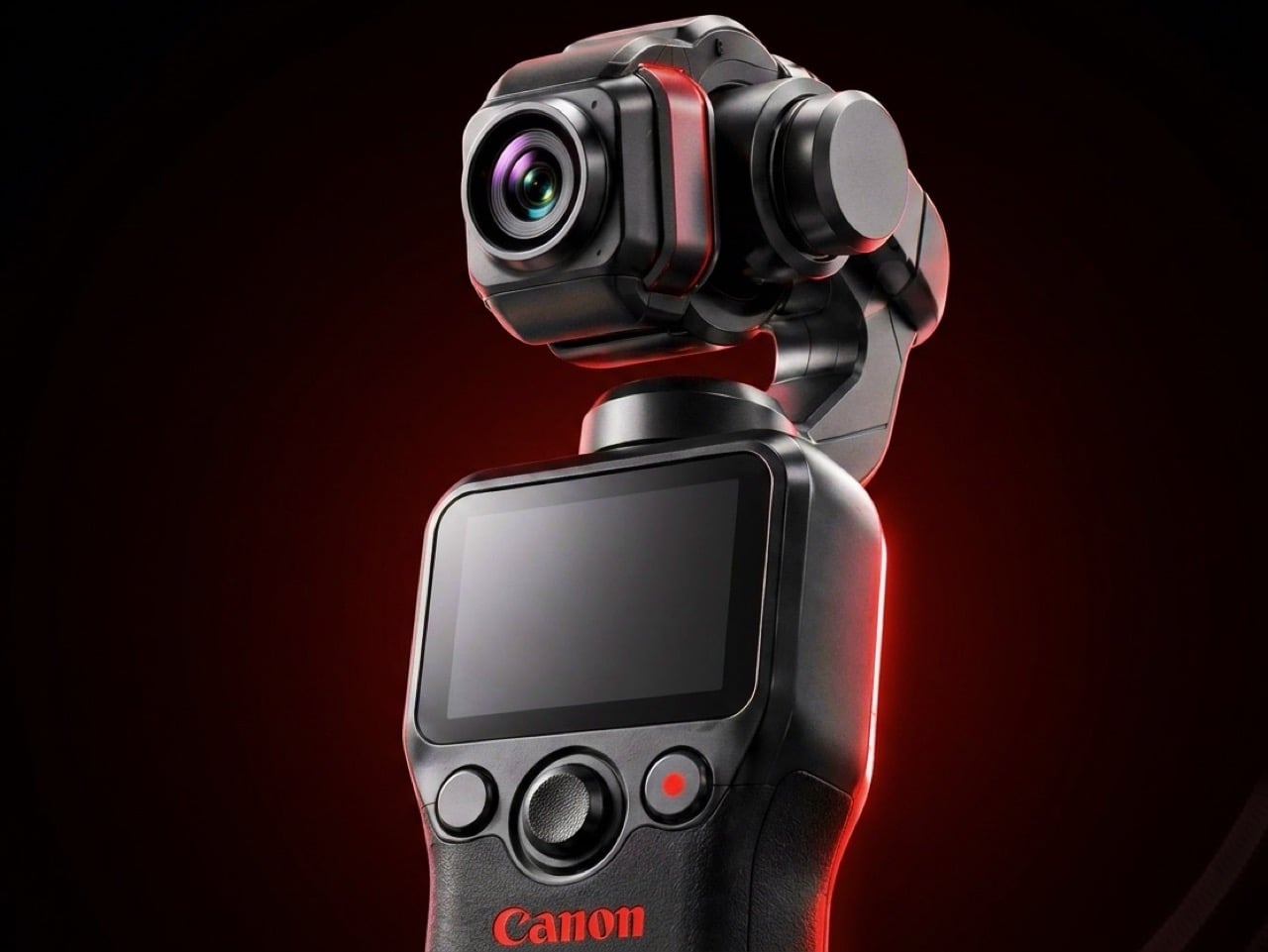
Canon filed a patent in April 2026 for a compact handheld camera with a fully integrated three-axis gimbal, a fixed lens, a grip with a screen, and a folding mechanism that protects the stabilizer head during storage. It is the most refined and product-ready of three gimbal-related patents Canon has filed since 2021, and the one that reads most like a brief handed to an engineering team rather than a thought experiment. The key detail is a smart shutdown sequence that uses magnetic sensors and image analysis to guide the gimbal safely into a folded position before cutting motor power, addressing a mechanical wear issue that has quietly frustrated gimbal camera owners for years.
The competitive timing is pointed. DJI’s drone business has faced regulatory scrutiny in the United States, and Canon has been tracking the pocket gimbal category across three progressive patent filings over five years — moving from cinema-level ambition in 2021, to an auto-flipping mechanism in 2025, to this fixed-lens, behavior-smart design in 2026. Canon’s color rendering, the warm, accurate output that photographers have built careers around, is a form of credibility no spec sheet can manufacture quickly. Whether this patent becomes a product remains unconfirmed, but the arc from moonshot to practical brief is the clearest signal yet that Canon intends to ship something.
What We Like
Smart shutdown using magnetic sensors and image analysis is a specific, practical engineering improvement, not a theoretical feature
Three filings over five years show a product being genuinely refined rather than filed and forgotten
What We Dislike
This is a patent, not an announcement — Canon’s 2021 interchangeable-lens gimbal concept never shipped
Fixed lens removes the ambition of the earlier patents, which some creators will register as a step back
10. Battery-Free Amplifying iSpeakers
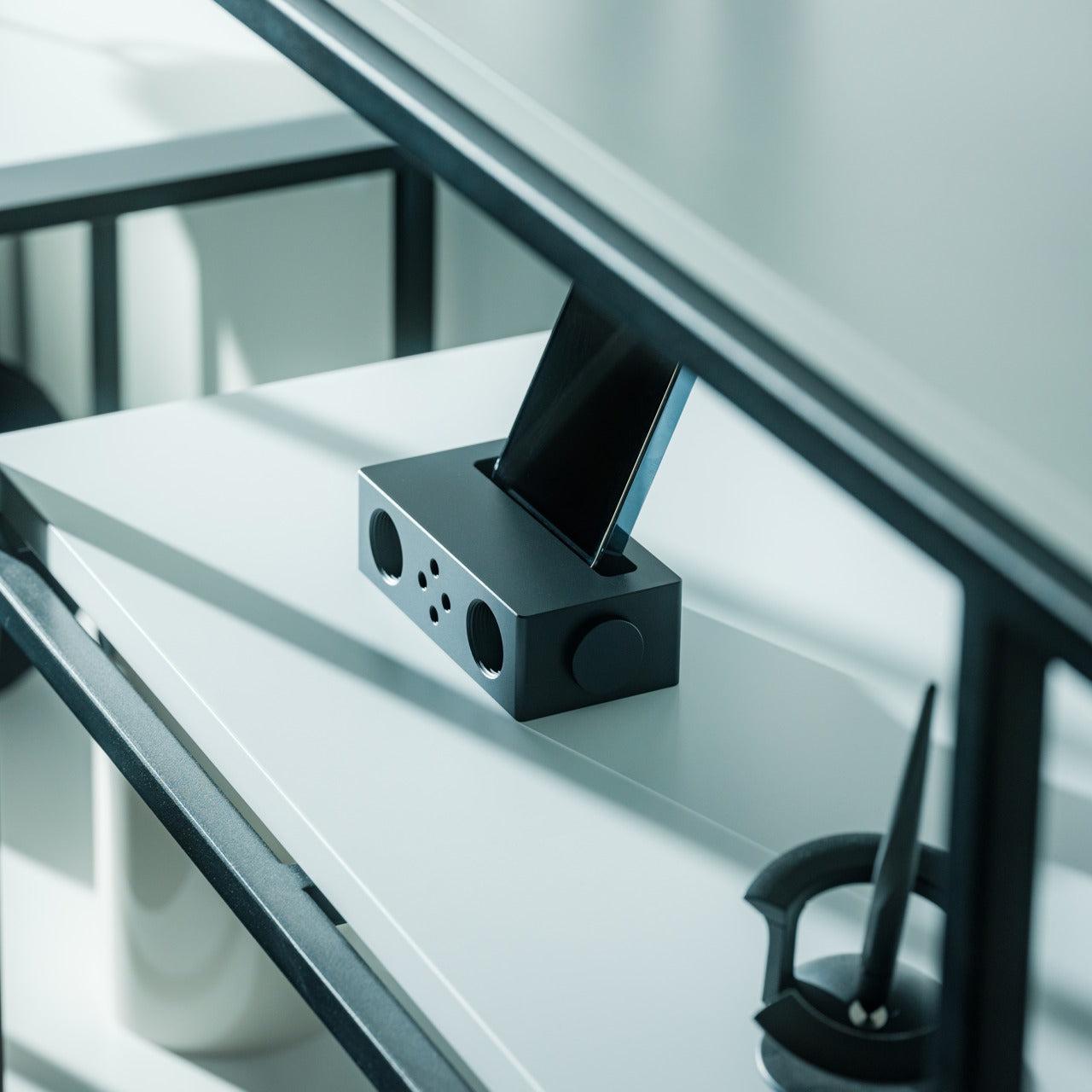
The premise behind the Battery-Free Amplifying iSpeakers is simple enough to say in one sentence: they amplify your iPhone’s audio through acoustic design alone, with no power source, no Bluetooth pairing, and no charging cycle to manage. At $179, they sit on a counter as a sculptural object even when the phone is nowhere near them, which is the standard any speaker worth keeping should meet before it earns a permanent place in the room. The best design objects don’t ask anything of you when they’re not being used. They just sit there, doing the room a favor.
For the guy who has accumulated Bluetooth speakers, wireless earbuds, a smart speaker with a subscription, and a desk speaker that needs a firmware update, a passive amplifier is the unexpected move. There is nothing to configure, nothing to pair, nothing to update, and nothing that goes wrong. You set the phone in, the sound fills the room, and that is the complete interaction.
Requires no power, no pairing, and no maintenance — the interaction is entirely physical
Functions as a display object on the counter whether a phone is in it or not
What We Dislike
Passive amplification has natural limits on output volume compared to any powered speaker
Works best in quiet rooms rather than competing with ambient noise
The Things He Didn’t Know He Was Missing
The man who already has everything doesn’t need more things. He needs the specific thing he hasn’t encountered yet — the speaker that finally has a brain worth talking to, the mouse that folds flat without a compromise on feel, the phone that keeps its data to itself, the handheld computer that doubles as a keyboard for any machine it’s plugged into. These aren’t impulse picks. Each one is here because it does something the obvious alternatives don’t, and because the guy you’re shopping for will notice the difference within the first ten minutes.
A few of these are still taking shape — a concept waiting on a decision, a patent waiting on a factory floor. That’s worth saying plainly, but it’s not a reason to dismiss them. The guy who has everything is usually the first to know what’s coming, and the first to make up his mind about it. A list that only includes what you can buy today isn’t a list for him. It’s a list for someone else entirely.
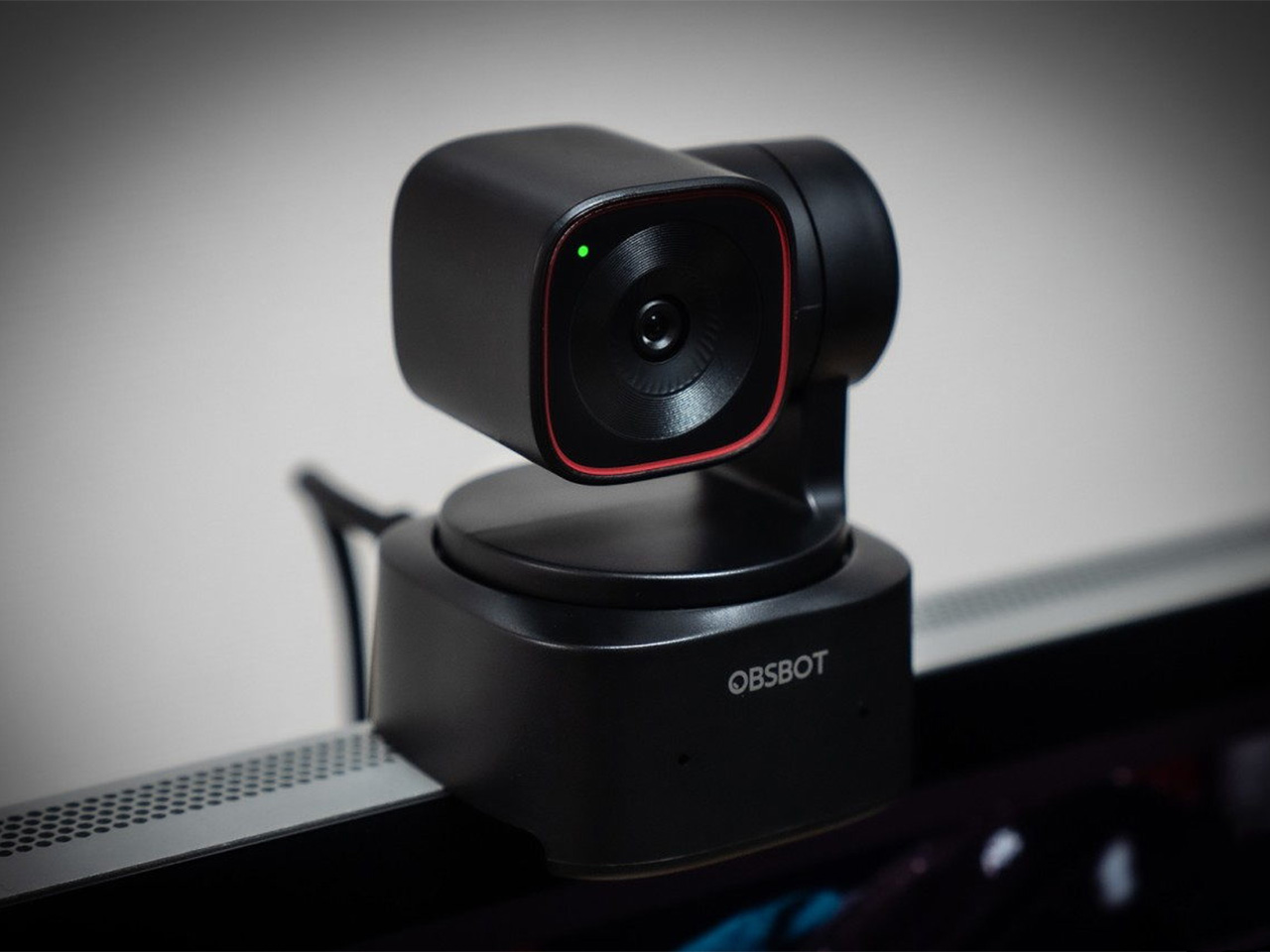
There is a camera brand that has shown up at International Broadcasting Conference, partnered with the Esports World Cup as an official camera provider, earned Editor’s Choice awards from music and DJ publications, and landed in the desk setups of remote workers, streamers, worship AV teams, and solo creators, all while keeping a relatively low profile compared to the legacy names in the category. OBSBOT, founded in 2016, has built its reputation the way durable hardware brands tend to: by making things that keep working, and keep getting better. Reviewers have consistently noted that firmware updates meaningfully improve OBSBOT cameras after purchase, which is a rarer quality in hardware than it should be.
Prime Day 2026 will put seven OBSBOT cameras on sale simultaneously, running through June 29 across Amazon and the OBSBOT official store. The lineup covers three distinct use cases: the Meet series for plug-and-play video calls and casual streaming, the Tiny series for creators and hybrid workers who want PTZ tracking at their desk, and the Tail 2 for anyone running a live production setup that used to require a full crew. The discounts range from around 15% on the newer Tiny 3 series to over 30% on the Tiny 2, which arrives at a price point that has not been seen before. Discounts hit on June 23rd – here is the full breakdown.
OBSBOT Tail 2 ($1088) – The AI Camera That Puts a Production Crew on Your Tripod
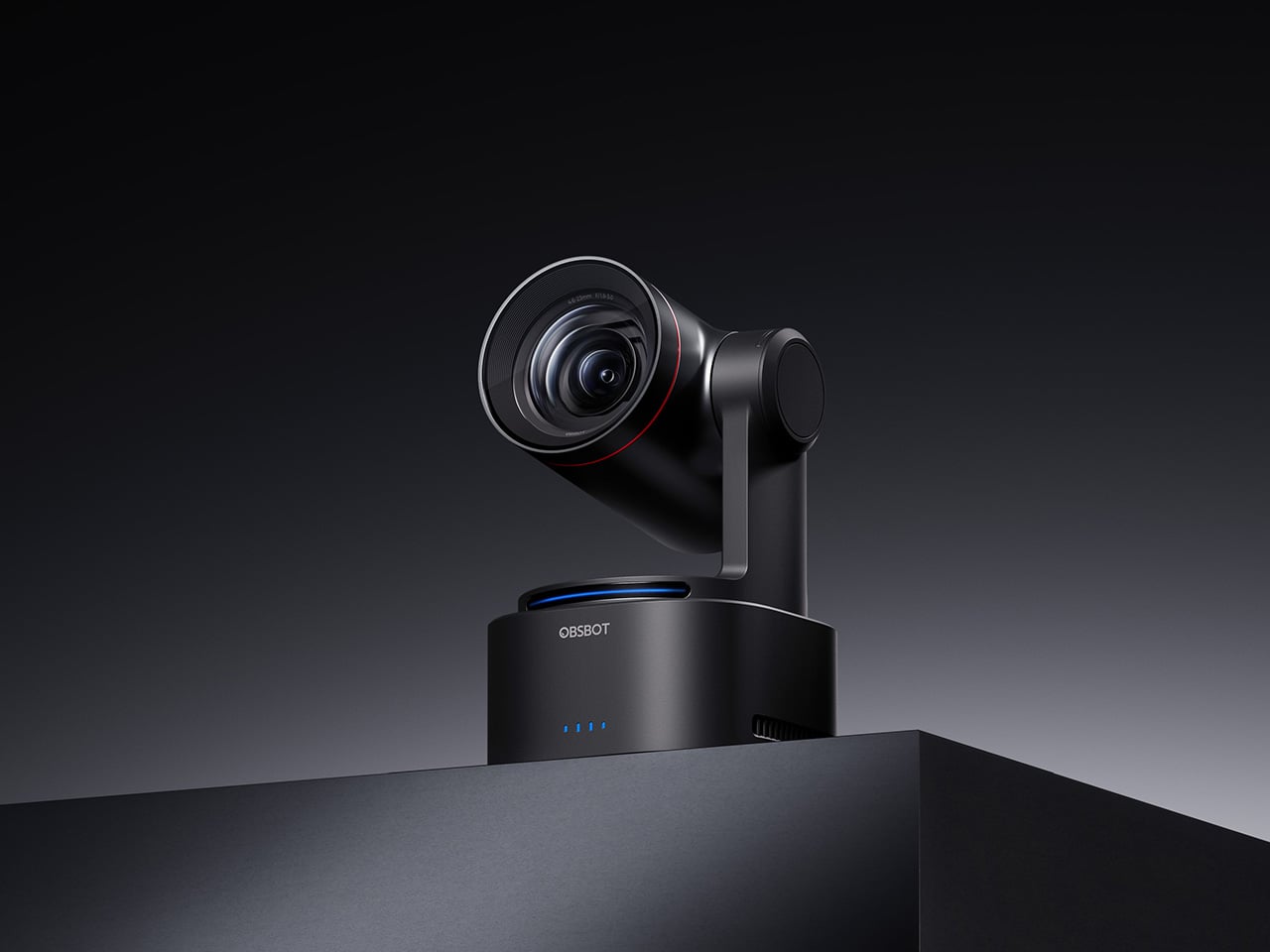
The OBSBOT Tail 2 is what happens when a camera is designed to solve the most persistent problem in solo and small-team video production: the need for a human operator. This is the company’s flagship live production camera, built around an advanced AI tracking system and a three-axis gimbal that does more than just pan and tilt. It is the world’s first PTZR (Pan-Tilt-Zoom-Roll) camera, with the Roll being a new game-changing feature that allows the entire lens and sensor assembly to rotate 90 degrees. This delivers true, uncropped vertical video, a clever piece of engineering that makes it immediately relevant for anyone creating content for mobile-first platforms. It pairs that mechanical intelligence with serious imaging hardware, including a large 1/1.5-inch CMOS sensor, a 5x optical zoom, and the ability to capture sharp 4K footage at a fluid 60 frames per second.
What separates the Tail 2 from a high-end webcam is how it fits into a professional workflow. It comes equipped with a full suite of broadcast-standard ports, including NDI, SDI, HDMI, and Ethernet, allowing it to integrate directly with live switching hardware and streaming software with minimal latency. For solo operators, the system works with gesture controls for hands-free adjustments, and a dedicated app provides granular remote control over framing and movement. This combination of broadcast-grade connectivity and intelligent automation is what makes the Tail 2 so versatile. It is equally at home as the primary camera for a DJ’s live stream, a dynamic tracking camera for a church service, or part of a multi-camera setup for a corporate event.
Why We Recommend
At its core, the Tail 2 is an investment in workflow efficiency. Tech reviewers have consistently framed it as a tool that can pay for itself, replacing the cost and complexity of hiring a camera operator for recurring shoots. The Prime Day discount reinforces that value proposition, knocking $200 off the price and bringing the non-NDI version down to $999. Breaking the thousand-dollar barrier is significant, shifting the Tail 2 from a niche professional tool to a much more accessible option for serious creators, small businesses, and organizations looking to upgrade their production quality. For anyone who needs cinematic, automated camera movement without a dedicated crew, this is the camera to get.
OBSBOT Tiny 3 ($296) – A Palm-Sized PTZ Camera with Full-Sized Ambition
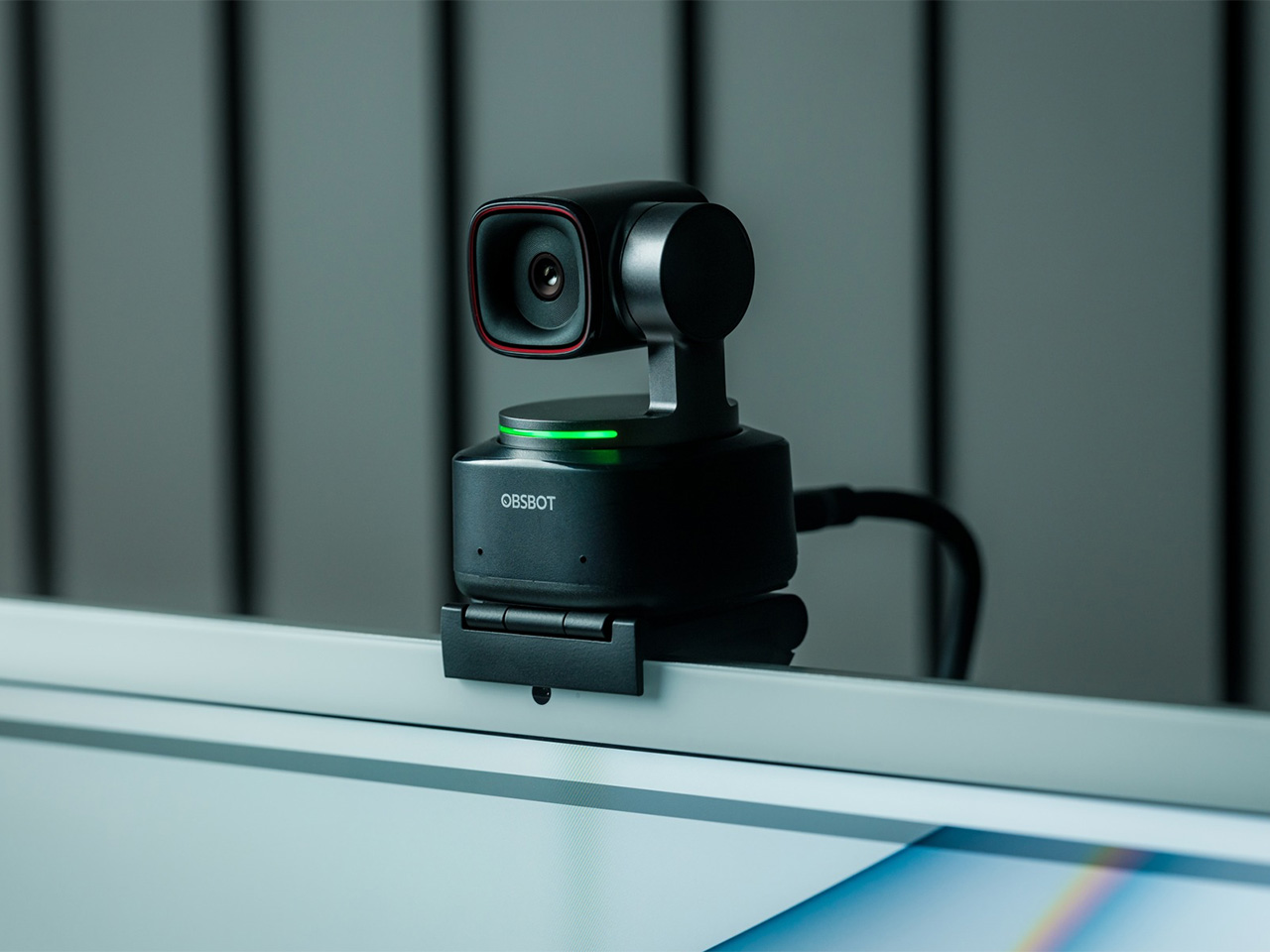
The OBSBOT Tiny 3 is the company’s answer to a simple question: how much professional-grade technology can you fit into a webcam that is smaller than a cup of coffee? The answer, it turns out, is quite a lot. This is the flagship of the Tiny series, designed for creators and hybrid workers who want the absolute best imaging and tracking performance in a desk-friendly format. It starts with a massive 1/1.28-inch CMOS sensor, which is exceptionally large for a webcam and allows it to capture more light for a cleaner, more detailed 4K image. That sensor is paired with a pan-tilt-zoom system that moves with near-silent precision, keeping the subject perfectly framed.
Where the Tiny 3 really shows its intelligence is in the software and processing that drive its hardware. It inherits the refined AI Tracking 2.0 from the larger Tail 2, making its auto-framing and subject tracking remarkably smooth and reliable. It also features Gesture Control 2.0, allowing users to manage zoom and tracking with simple hand signals, a feature that feels genuinely useful in practice. For streamers and power users, the native integration with Elgato’s Stream Deck is a critical addition, bringing PTZ controls directly into their existing workflow. OBSBOT even added creative tools like virtual avatars and improved the audio with a five-mode stereo microphone system, rounding out a feature set that feels both powerful and polished.
Why We Recommend
The Tiny 3 is the pick for anyone who prioritizes having the latest and most refined technology on their desk. While other models in the lineup offer steeper discounts, the Prime Day price drop brings this premium, current-generation flagship under the $300 mark. This is the camera for the user who wants the best sensor, the most advanced AI tracking, and the tightest software integration OBSBOT offers in a webcam. It represents the peak of the Tiny series, and this is the most affordable it has been since its launch.
OBSBOT Tiny 3 Lite ($169) – The Same Intelligence with a Focus on Value
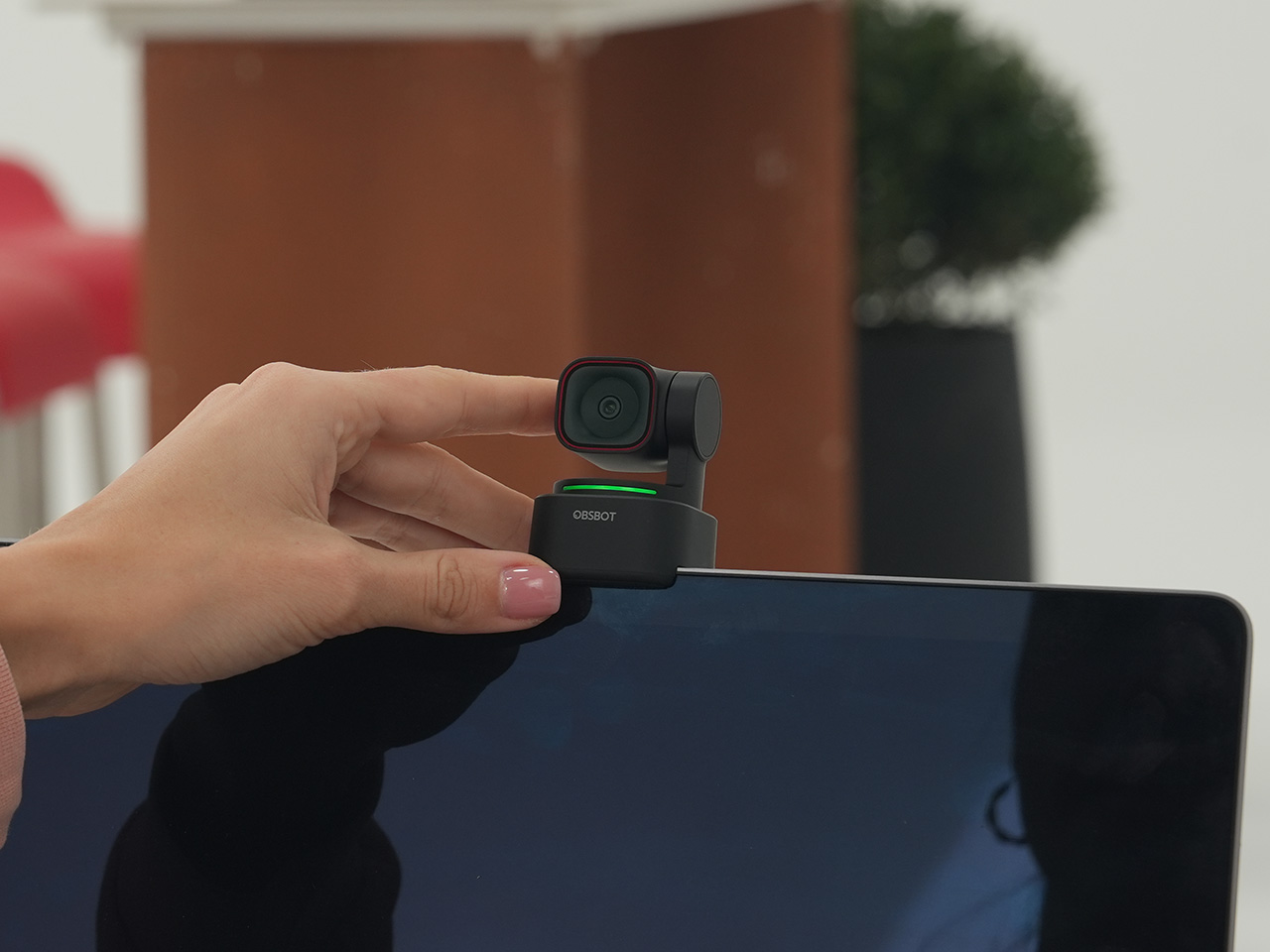
For many users, the appeal of the flagship Tiny 3 lies in its advanced AI brain, not necessarily its top-of-the-line sensor. OBSBOT created the Tiny 3 Lite for exactly that audience. This camera is built on the same intelligent foundation as its more expensive sibling, delivering the same seamless AI Tracking 2.0, responsive Gesture Control 2.0, and sharp 4K resolution. It is, for all practical purposes, the same smart user experience. The key difference, and the reason for its more accessible price, is the move to a slightly smaller 1/2-inch CMOS sensor. This strategic trade-off makes the Tiny 3 Lite an incredibly compelling option for anyone who works in a space with reasonably good lighting.
In practice, the Tiny 3 Lite feels nearly identical to the flagship during everyday use. It keeps you perfectly in frame during video calls, responds to hand gestures to zoom in on a whiteboard, and integrates with the same powerful OBSBOT software suite, including Stream Deck support. It also features a slightly different physical design with an integrated stand, making it incredibly simple to set up on any monitor or desk. By preserving the core software and AI features that define the Tiny 3 experience, OBSBOT has distilled the product down to its most important essentials, creating a camera that performs well above its price point.
Why We Recommend
The Tiny 3 Lite is the pragmatic choice in the Tiny 3 series. It offers access to OBSBOT’s latest-generation AI tracking and software ecosystem for a fraction of the flagship’s cost. The Prime Day deal, which brings the price down to $169, makes it one of the best values in the entire lineup for a current-generation product. If you want the smartest PTZ webcam on the market but do not need the absolute best low-light performance that the Tiny 3’s larger sensor provides, the Lite version is the smarter purchase. It delivers the features that matter most without the premium price tag.
OBSBOT Tiny 2 ($229) – The Champion Webcam Now Available at Under $250
Before the Tiny 3 arrived, the Tiny 2 was OBSBOT’s undisputed flagship desk camera, and it remains a formidable piece of hardware. This is the camera that set the standard for what a premium AI webcam could be, pairing a huge 1/1.5-inch CMOS sensor with exceptionally fast autofocus and reliable AI tracking. That large sensor is a critical detail, as it gives the Tiny 2 excellent low-light capabilities and a natural depth of field that rivals even some of the newer models in the lineup. It established the features that now define the Tiny series, including effective auto-zoom, dynamic gesture controls, and even voice commands for a completely hands-free experience.
The Tiny 2 is a proven workhorse. It has benefited from years of firmware updates that have refined its performance, making it a stable and dependable choice for streamers, content creators, and professionals who need consistently great video. While it may not have every single new software feature from the Tiny 3 series, its core performance remains top-tier. The image quality from its large sensor and premium lens system is still a benchmark for the category, delivering a crisp, professional look that cheaper webcams simply cannot match. For many users, this level of raw performance is far more important than the latest software gimmicks.
Why We Recommend
This is arguably the single best deal of the entire Prime Day event. The Tiny 2 is seeing a massive price drop of $100, bringing it down to just $229, a discount of over 30% and its lowest price ever. This is a rare opportunity to get a former flagship product with a best-in-class sensor for the price of a mid-range webcam. For anyone prioritizing pure image quality over having the absolute newest model, the Tiny 2 offers a value proposition that is impossible to ignore. It is the smartest purchase for the performance-focused buyer.
OBSBOT Tiny 2 Lite ($129) – The Smartest Way to Get into AI-Powered PTZ
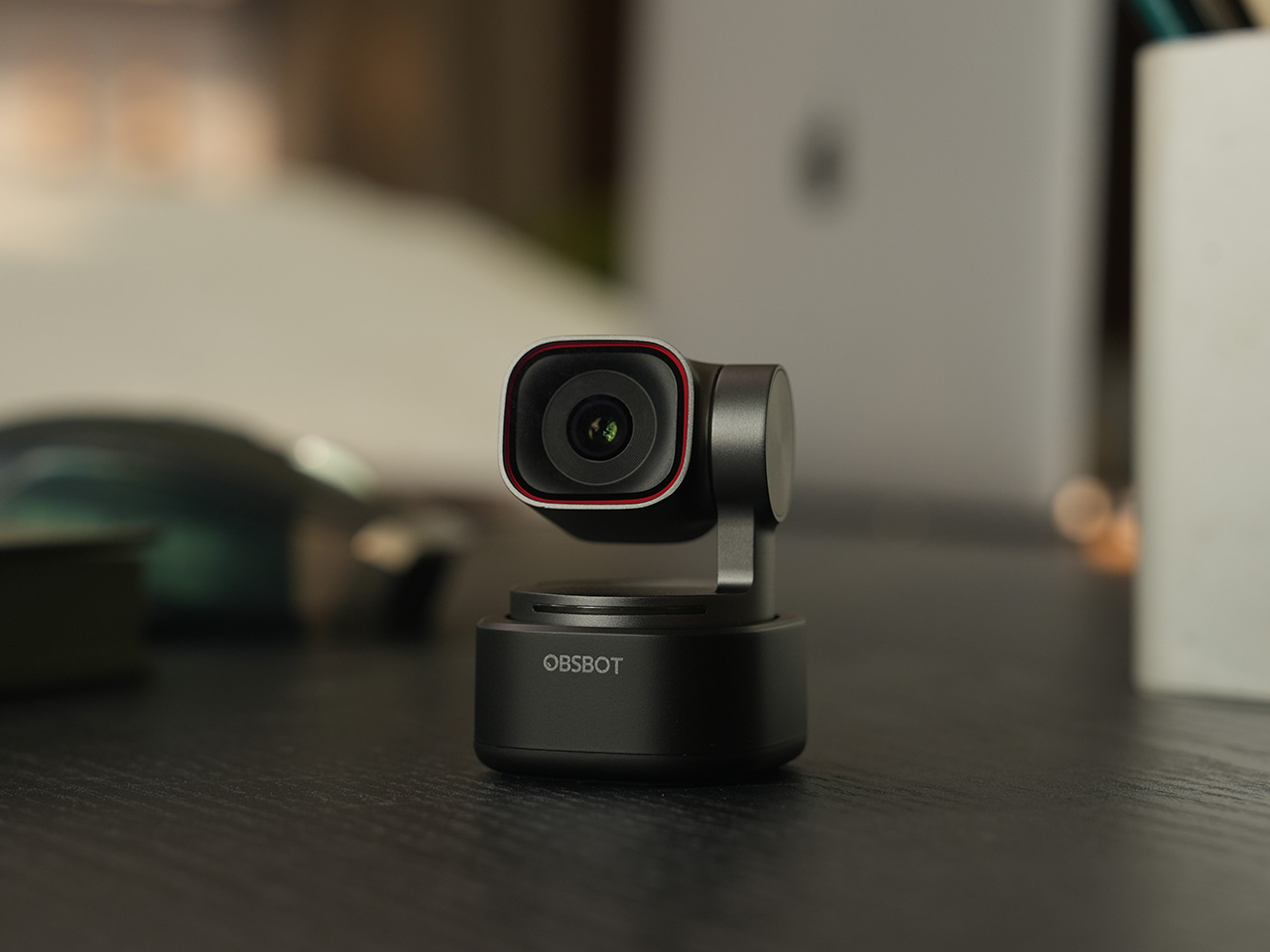
The OBSBOT Tiny 2 Lite takes the intelligent core of the celebrated Tiny 2 and packages it into an even more accessible and affordable design. This camera is built for the user who wants to step up from a static webcam to the world of AI-powered pan, tilt, and zoom without paying a premium. It delivers the essential features that made its bigger brother a success, including reliable AI tracking with auto-zoom, crisp 4K resolution, and multipurpose tracking modes that can follow a subject’s whole body or focus just on their head and shoulders. It is a streamlined experience focused entirely on delivering smart, automated framing.
While it does not have the same massive sensor as the standard Tiny 2, the Tiny 2 Lite still produces a clean, professional image that is a significant upgrade over nearly any built-in laptop camera or budget webcam. The real magic, however, is in the motion. For presenters, educators, or streamers who move around, the camera’s ability to smoothly follow them is a game-changer. It also includes useful features like preset PTZ positions, allowing users to instantly switch between a tight shot and a wide view with the press of a button, a function typically found on much more expensive hardware.
Why We Recommend
This is the ultimate entry point into intelligent webcams. With the Prime Day discount bringing its price down to just $129, the Tiny 2 Lite is in a class of its own. At that price, it competes with high-end static webcams while offering a full suite of AI and PTZ features that its rivals lack. For anyone who has been frustrated by fixed-frame cameras but felt priced out of the AI tracking market, this deal removes that barrier. It offers the most important features of the Tiny 2 generation at a cost that makes it an easy and obvious upgrade.
OBSBOT Meet 2 ($99) – The 4K Webcam That Makes Every Meeting Smarter
The OBSBOT Meet 2 is designed to solve a very specific, modern problem: making you look and sound as professional as possible on a video call with the least amount of effort. This is not a complex PTZ camera for creators; it is a sleek, intelligent webcam for the hybrid worker, the remote professional, and anyone who spends their day in virtual meetings. It delivers a sharp, vibrant 4K image at 30 frames per second, providing a significant leap in clarity over standard-issue laptop cameras. Its compact and lightweight design allows it to sit discreetly atop any monitor or laptop, instantly elevating the look of a desk setup.
The real intelligence of the Meet 2 lies in its automation. It features fast, reliable AI-powered auto-framing that keeps you perfectly centered in the shot, even if you shift or lean. It can also widen its frame to include a second person, making it ideal for small group meetings in a huddle room. This is paired with a fast autofocus system that keeps the image sharp and professional. The setup is pure plug-and-play; you connect it via USB, and it works seamlessly with Zoom, Microsoft Teams, Google Meet, and other major platforms without requiring any complicated software or drivers. It is designed to be an invisible upgrade that simply makes you look better.
Why We Recommend
The Meet 2 hits the sweet spot between performance and simplicity. It offers two of the most important features from high-end cameras, 4K resolution and AI auto-framing, in an accessible, user-friendly package. The Prime Day deal makes its value proposition even stronger, dropping the price to just $99. For under a hundred dollars, it provides a massive upgrade in video quality and intelligence for any professional. This is the ideal camera for anyone who wants to improve their virtual presence without adding the complexity of a PTZ system.
OBSBOT Meet SE ($58) – The Easiest and Most Affordable Upgrade for Any Setup
Sometimes, the best upgrade is the one you do not have to think about. The OBSBOT Meet SE is built on that principle. It takes the single most useful intelligent feature from its more expensive siblings, AI-powered auto-framing, and delivers it in a simple, incredibly affordable package. This camera is designed for anyone and everyone who is still using a basic, fixed-frame webcam and wants a better experience without any complexity. It captures clean, clear 1080p video and uses its AI brain to make sure you are always centered in the frame, looking professional and engaged.
The Meet SE is a masterclass in thoughtful, essentialist design. It is a true plug-and-play device that works the moment you connect it, with no drivers to install or complicated settings to configure. It even includes a physical privacy cover, a simple but crucial feature that provides peace of mind for remote workers and students. While its primary focus is on effortless video calls, OBSBOT also included a surprisingly capable 1/2.8-inch stacked CMOS sensor, which gives it better-than-expected image quality and even allows for high frame rate capture for smooth slow-motion effects, a rare bonus in a webcam at this price.
Why We Recommend
This is the definitive “no-brainer” upgrade. With its Prime Day price of just $58, the OBSBOT Meet SE is likely cheaper than the keyboard on your desk, yet it delivers a feature that was, until recently, reserved for premium cameras. It completely eliminates the problem of awkward, off-center framing on video calls for less than the cost of a nice dinner out. For students, remote workers, or anyone who simply wants to look better in their daily meetings without spending a lot of money or time, there is no better value to be found in this entire sale.
Most travel gear exists in one of two categories. It either works beautifully and looks like it was designed for a logistics warehouse, or it looks great sitting on a shelf and becomes a liability the moment you actually need it. The list below doesn’t belong to either. These are products built around a deceptively simple idea: that good design should travel as well as you do, and that the objects you carry should earn their place in your bag every single time.
We pulled this list together with one criterion in mind beyond the obvious. Each product had to make the experience of traveling feel more deliberate, more considered, and genuinely more enjoyable — not just less inconvenient. Plenty of things solve a problem. Very few solve it in a way that makes you reach for them every time you leave the house. These eight do.
1. Oppo and Vivo Gimbal Cameras
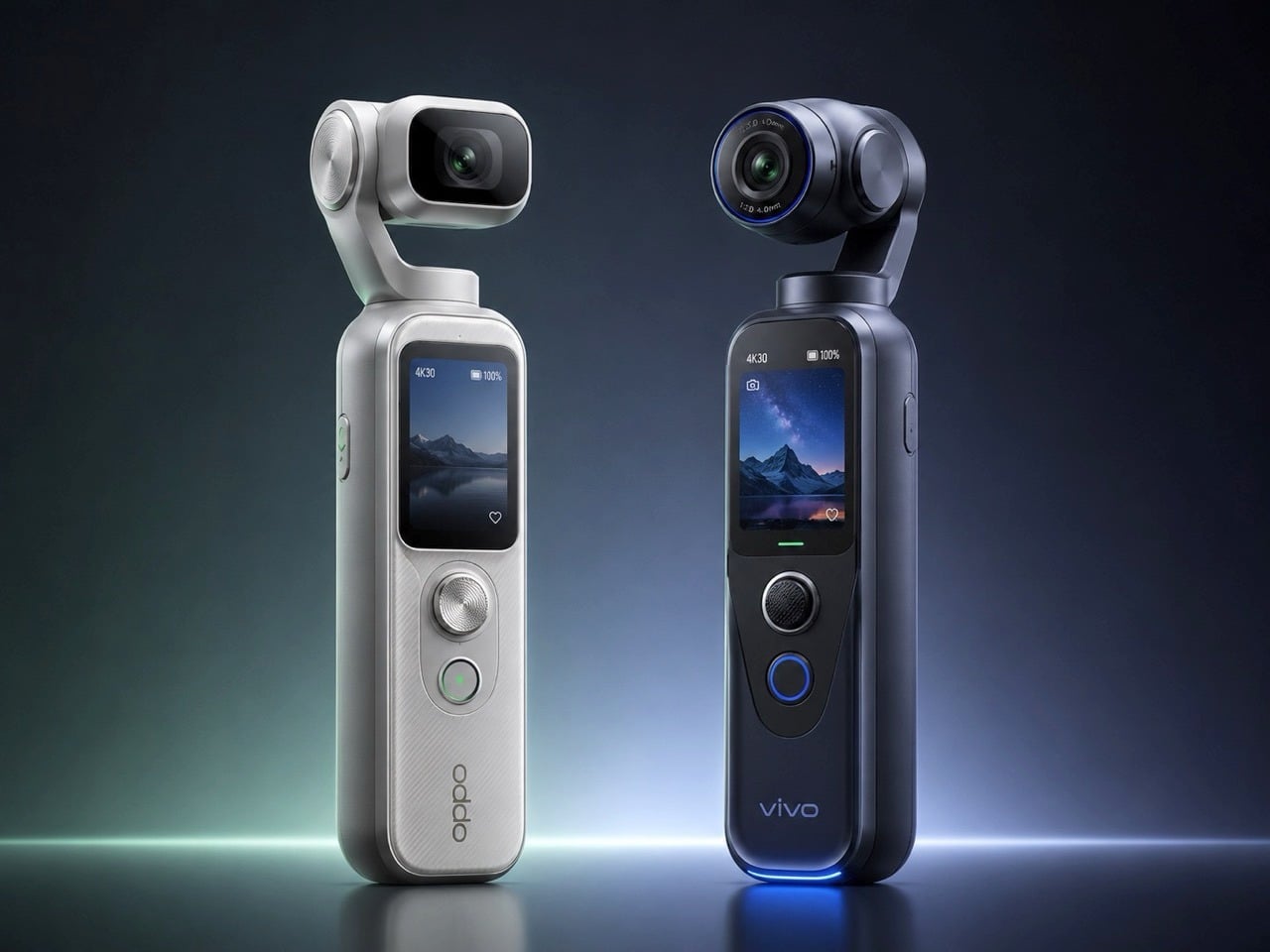
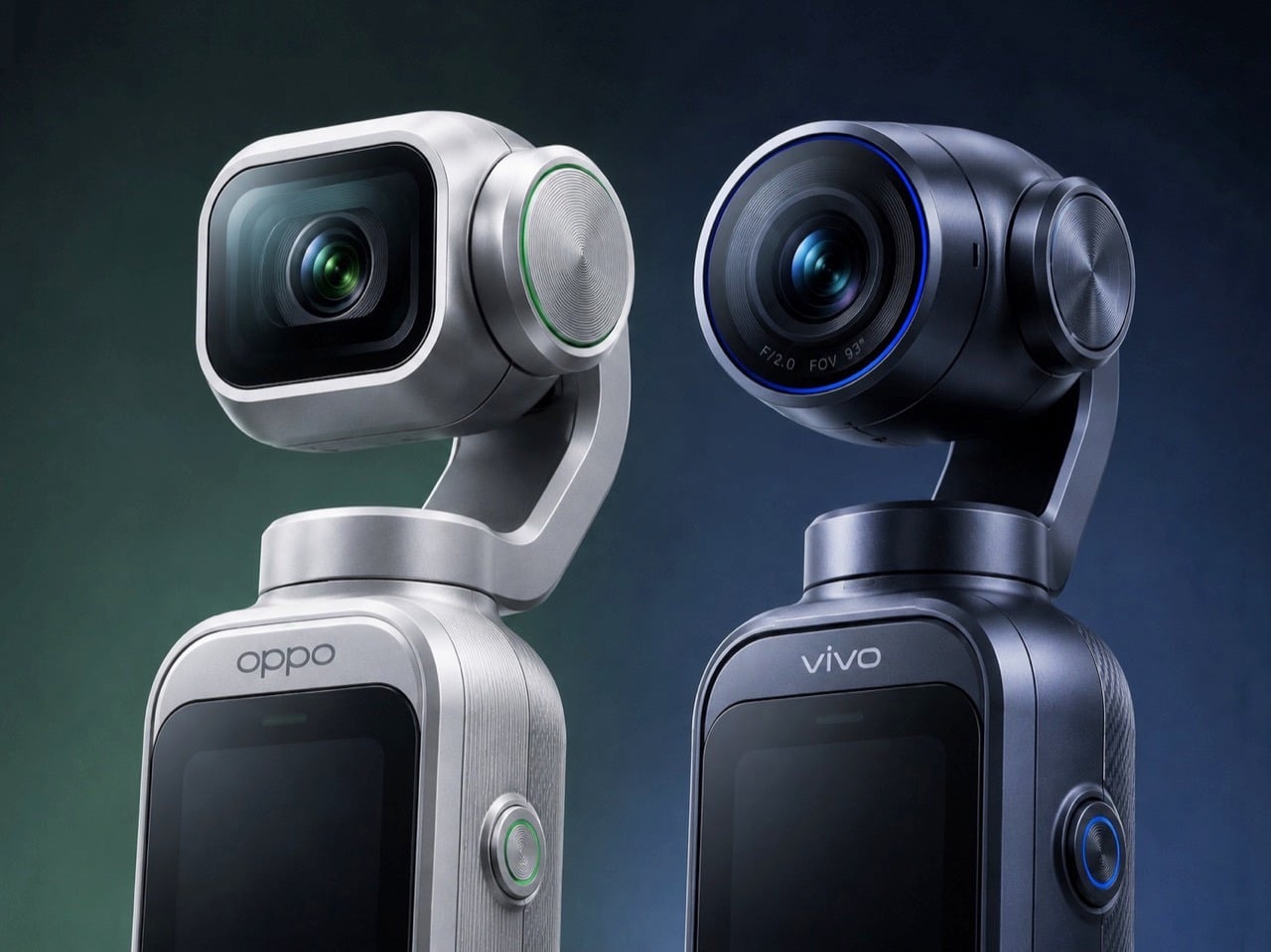
The smartphone camera arms race has been running for years, but both Oppo and Vivo have now made a move that changes the conversation entirely. Rather than competing purely on sensor size or software processing, both brands are building dedicated gimbal cameras designed to take on DJI’s Osmo Pocket series directly. The proposition is a compact, stabilized camera device that draws on each brand’s decade of computational photography experience, now applied to a device that exists solely to capture great video and stills without the phone attached.
What makes this worth paying attention to from a design standpoint is the form factor decision. Dedicated cameras have largely defaulted to either the bulky end or the toy end, with very little in between that feels genuinely pocketable without compromise. The Osmo Pocket carved out that middle ground almost by accident. Oppo and Vivo entering this space with the full weight of their camera research behind them means this category is about to get far more competitive. If you shoot travel content and find your phone getting in the way of how you actually want to move, this is the category to watch before your next trip.
What we like:
Two major smartphone camera brands entering the dedicated gimbal space means the Osmo Pocket’s design monopoly on this category is finally under real pressure
The crossover between smartphone computational photography and dedicated hardware suggests these will handle low light and stabilization in ways previous pocket gimbals have only approximated
What we dislike:
Both cameras are still in the announcement phase, meaning there is no confirmed release date or pricing to plan around right now
The category still requires carrying an additional device, which is the exact friction point a better smartphone camera was supposed to eliminate
2. Stillframe Headphones
There is a category of travel headphones that exists somewhere between the clinical noise-cancelling slabs most airlines push on you and the fashion pieces that fall apart the first time you stuff them into a bag. The design language reads as functional first — the kind of headphones you would wear through a six-hour flight without adjusting every twenty minutes, and still feel like putting on when you land and need to think.
For travel specifically, the value of a pair of headphones you actually want to wear compounds across every leg of a journey. The airport gate, the connection, the hotel room where you are trying to reset before a meeting the next morning — audio quality matters at all of those moments, but so does how the object feels in your hands and on your head. The Stillframe headphones are designed with that sustained-wear reality in mind, which makes them a different kind of travel companion from the options that optimize for a single use case and assume everything else works itself out.
The design aesthetic lands outside the clinical or fashion-forward extremes that dominate the travel headphones market, which is a rarer quality than it sounds
What we dislike:
Without a full published spec sheet, audio performance is still something you would want to verify against your own listening habits before committing
3. Carl Friedrik 72-Hour Backpack
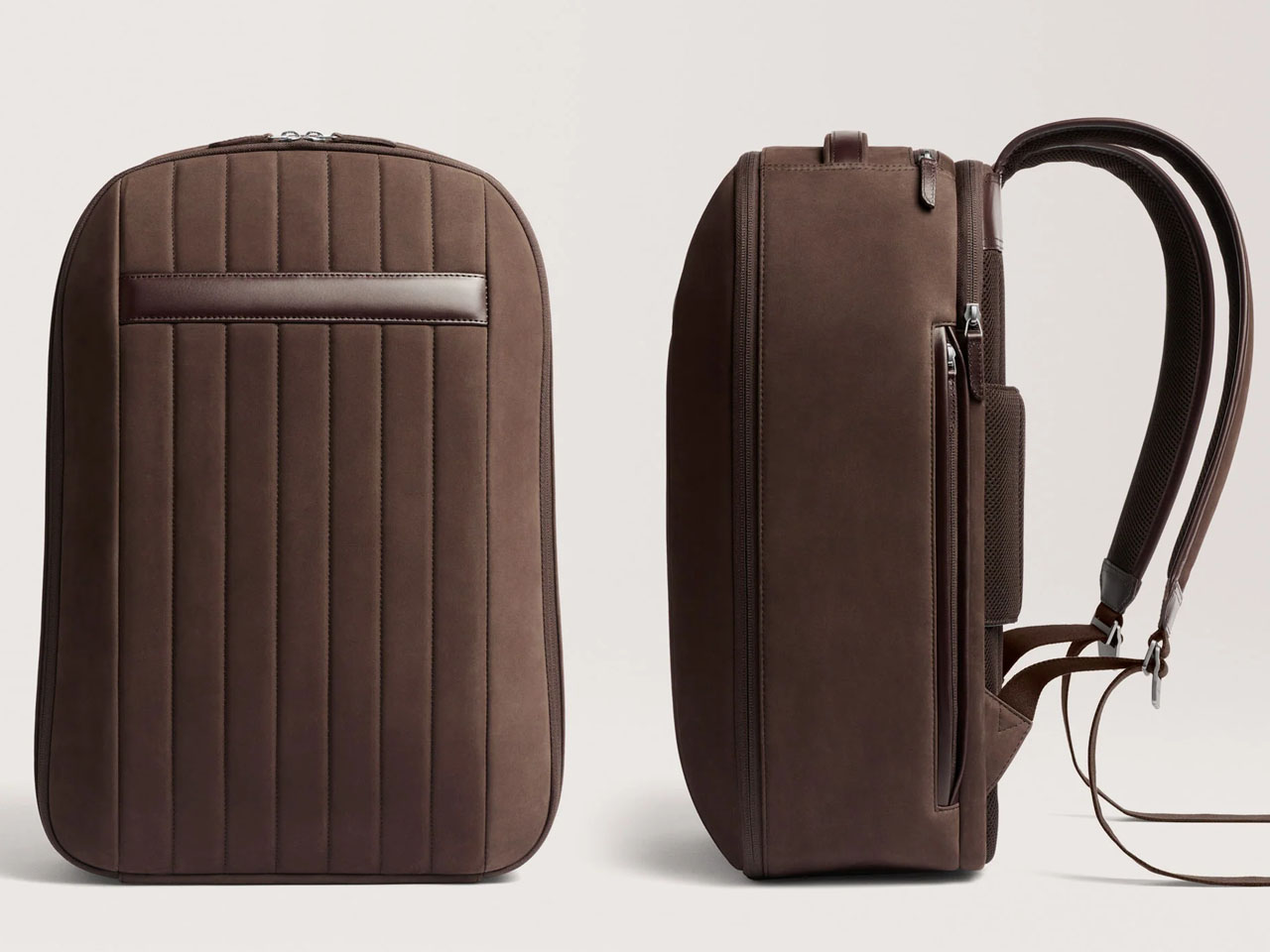
Carl Friedrik has been making the case for premium materials in everyday carry for years, and the 72-Hour Backpack is the clearest articulation of what that means in practice. The design skips the traditional top-load configuration in favor of a clamshell opening, which sounds like a small decision until you have stood at airport security with a laptop in hand, trying to repack a top-load bag while the line behind you moves. The clamshell opens flat, keeps everything visible at once, and closes back up without requiring any particular thought or repacking ritual.
The 72-hour designation is specific because it is honest. This is not a weekend bag pretending to be a carry-on, and it is not a carry-on pretending it can do more than it should. It holds what you need for three days of real travel — laptop, change of clothes, chargers, documents — without expanding into a shape that defeats the purpose of traveling light in the first place. The material quality is the kind that ages well rather than looking worse after six months of regular use, which is the long-term argument for spending more on a travel bag than instinct usually says you should.
What we like:
The clamshell opening is a genuinely useful design decision that solves a real airport friction point rather than being a feature added for a spec sheet
Carl Friedrik’s material standards produce a bag that improves with use rather than deteriorating under the accumulated wear of frequent travel
What we dislike:
The premium positioning comes with a premium price, which makes it a travel investment rather than a travel purchase for most people
The 72-hour sweet spot means it deliberately undershoots for longer trips, so you would need a separate solution for anything beyond a long weekend
4. Tetra
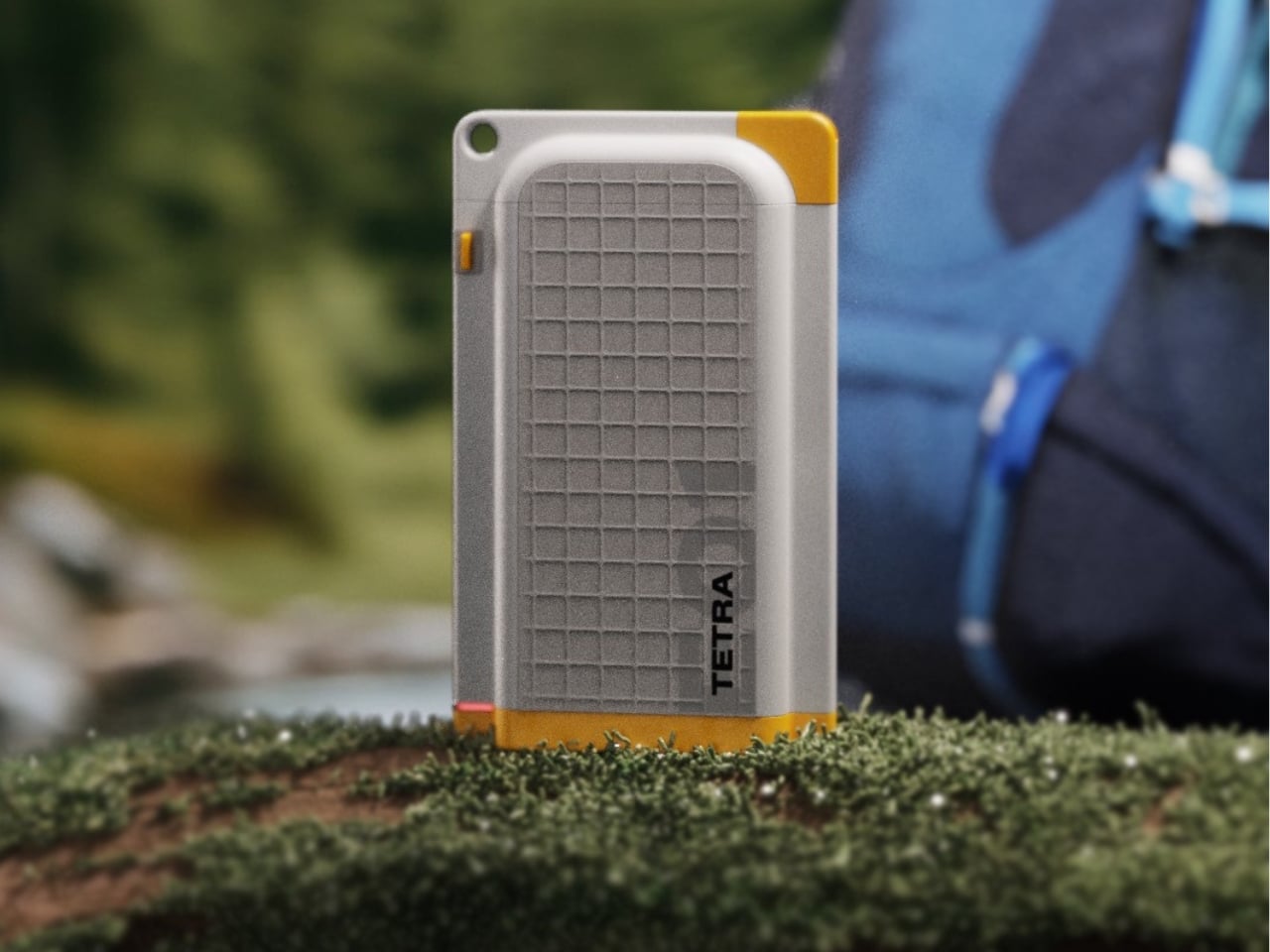
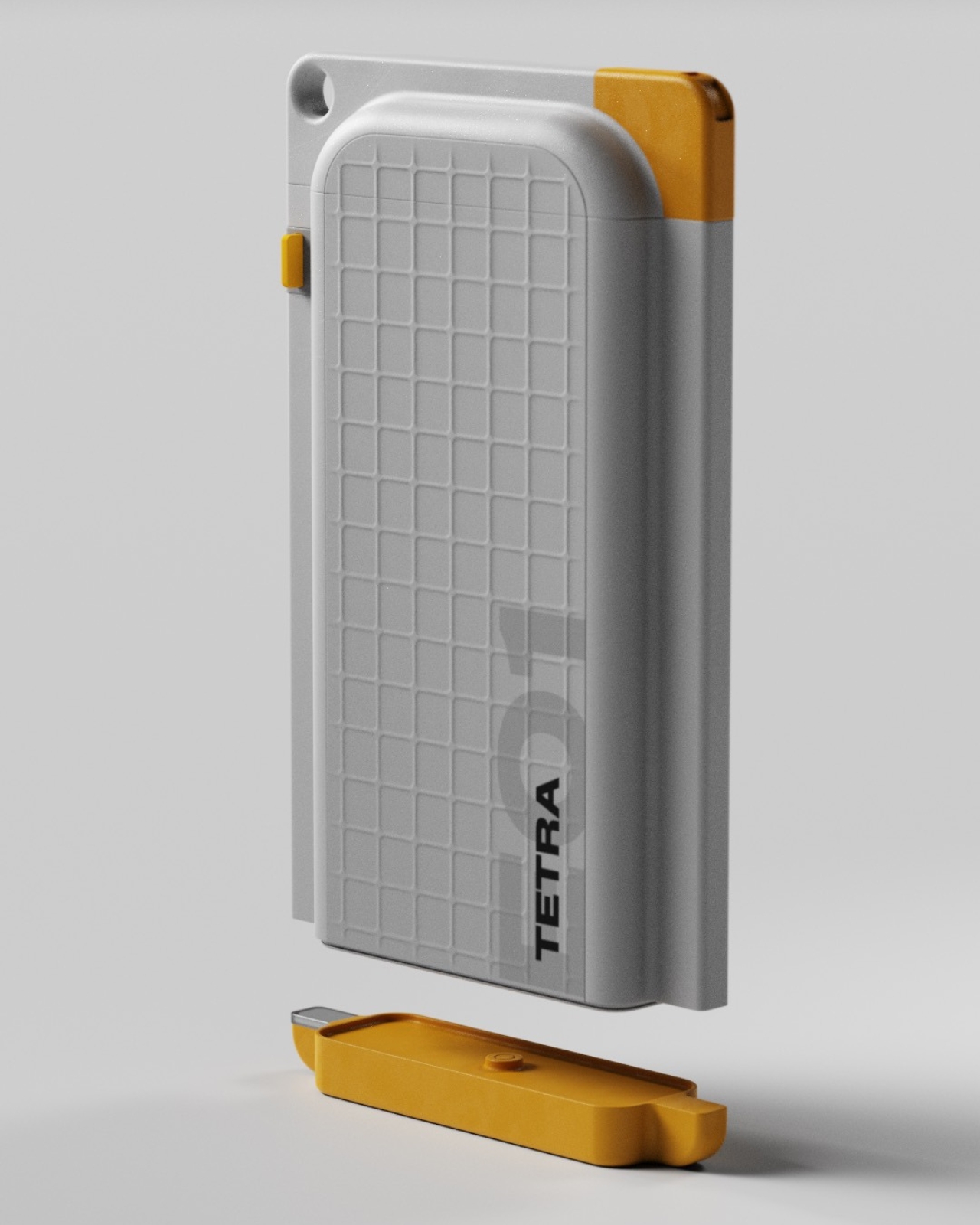
The flat bottle that becomes a kettle solves a problem you might not know you have until you have spent a week in hotels where the in-room kettle is either missing or something you would rather not look at too closely. At its flattest, this bottle sits at roughly A5 notebook size — the kind of footprint that genuinely fits in the outer pocket of whatever bag you are already carrying, not in the way that manufacturers describe as fitting but that actually requires rearranging everything else. When you need it, it expands into a functional travel kettle, handling the one hot-drink moment that hotel rooms handle poorly and camping trips require consistently.
What makes this worth noting as a design object rather than just a useful product is the honesty of its form. It does not try to look like a conventional bottle at its compact size. It looks like what it is — a flat, engineered thing that knows exactly what it is doing. That kind of specificity in product design is rarer than it should be. For travel specifically, the ability to make your own tea or coffee in a hotel room without relying on the in-room setup is a small quality-of-life detail that becomes a non-negotiable habit once you have experienced it even once.
What we like:
The A5 flat profile is a genuinely honest claim about packability, not a marketing approximation for a product that still takes up a third of your bag
Dual functionality as both bottle and kettle without the usual performance compromise at either end of the use case
What we dislike:
The expanding mechanism is the most interesting part of the design, which also makes it the part most likely to show wear under heavy, frequent use
5. AirPods / AirPods Pro Neck Strap
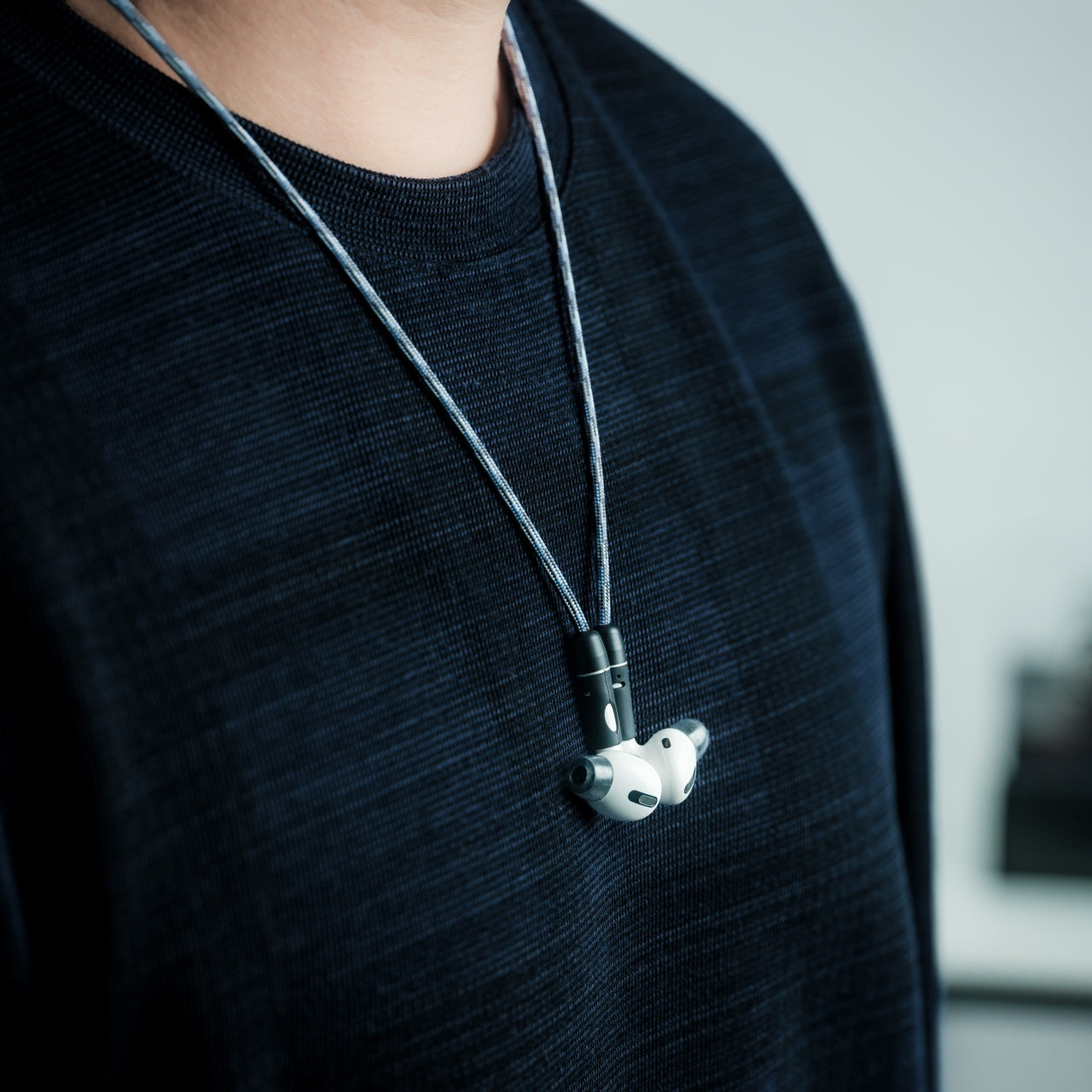
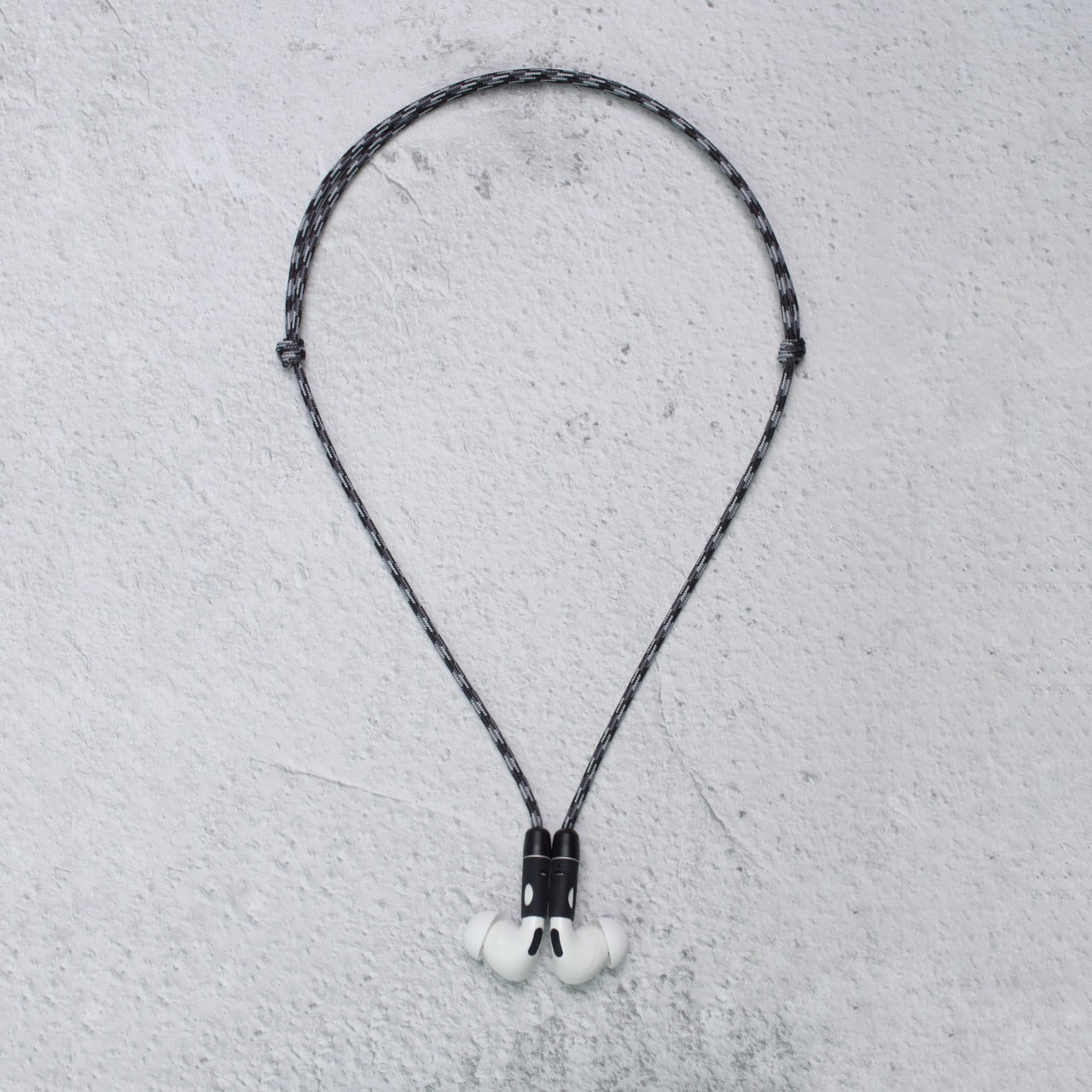
The AirPods case is arguably the most dropped object in modern travel. It lives in pockets, gets pulled out alongside boarding passes and coffee, and ends up on the floor of more transit systems than anyone is tracking. A neck strap solves this with a directness that feels almost embarrassing in hindsight — the case stays on your body, accessible without rummaging, and the cord becomes a visual anchor that tells you at a glance exactly where your earbuds are. It is a small solution to a problem that compounds in proportion to how busy your travel day actually gets.
The design choice here is about reducing the cognitive tax of managing small objects across long days. You do not notice how much attention you spend keeping track of your earbuds until you stop spending it. The neck strap converts the AirPods case from something you lose to something you wear, and that shift in relationship to the object changes how you interact with your audio for the rest of the day. It works with both standard AirPods and AirPods Pro cases, making it a clean pick regardless of which generation you are traveling with.
Converts a frequently misplaced item into something worn, which is the simplest possible solution to a genuinely irritating travel friction point
Compatible across both AirPods and AirPods Pro generations, so it survives an upgrade without becoming redundant
What we dislike:
The neck strap format is not for everyone — wearing your AirPods case as a visible accessory requires a certain confidence in the aesthetic choice
6. RedMagic Deuterium Power Bank
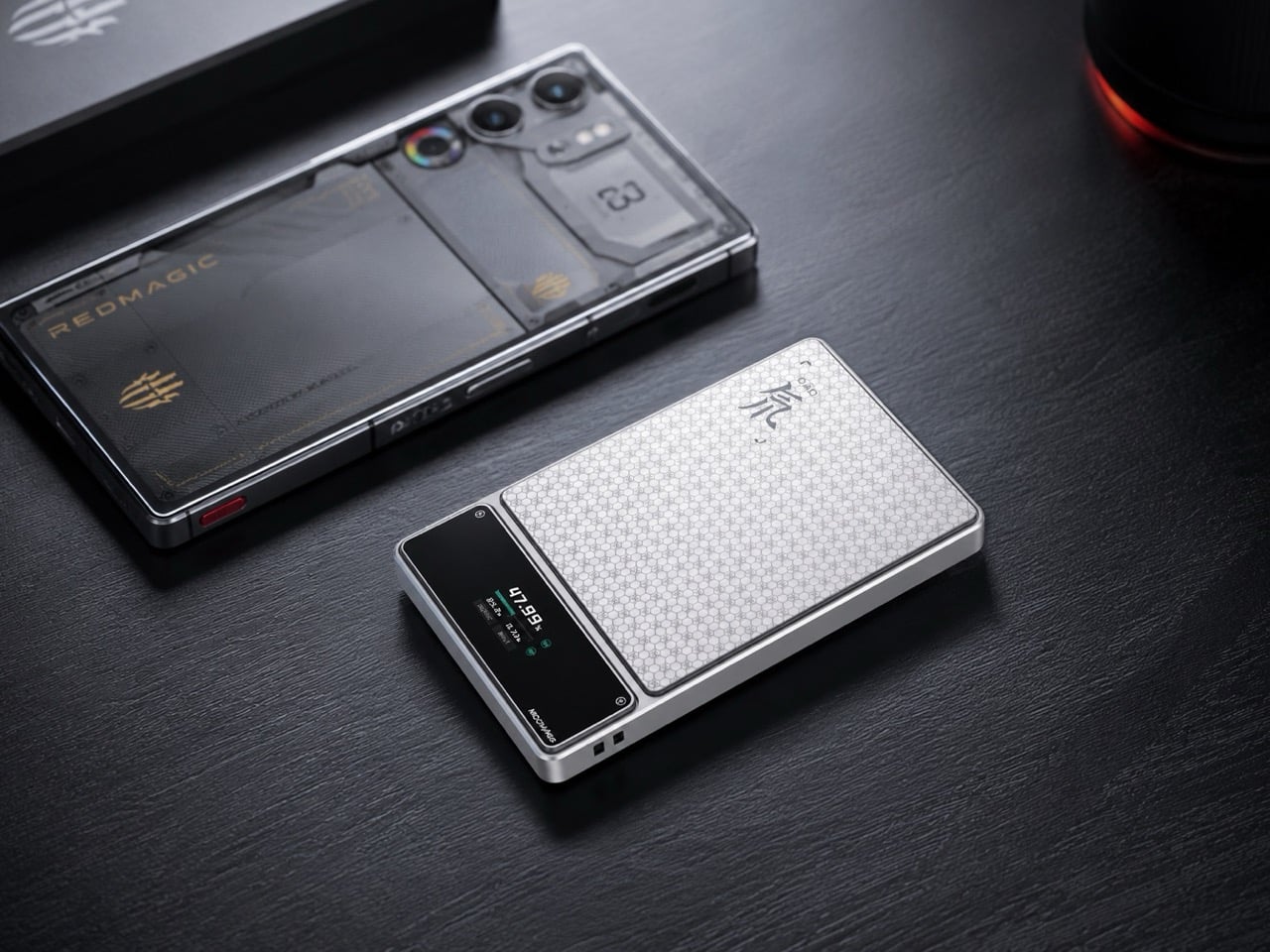
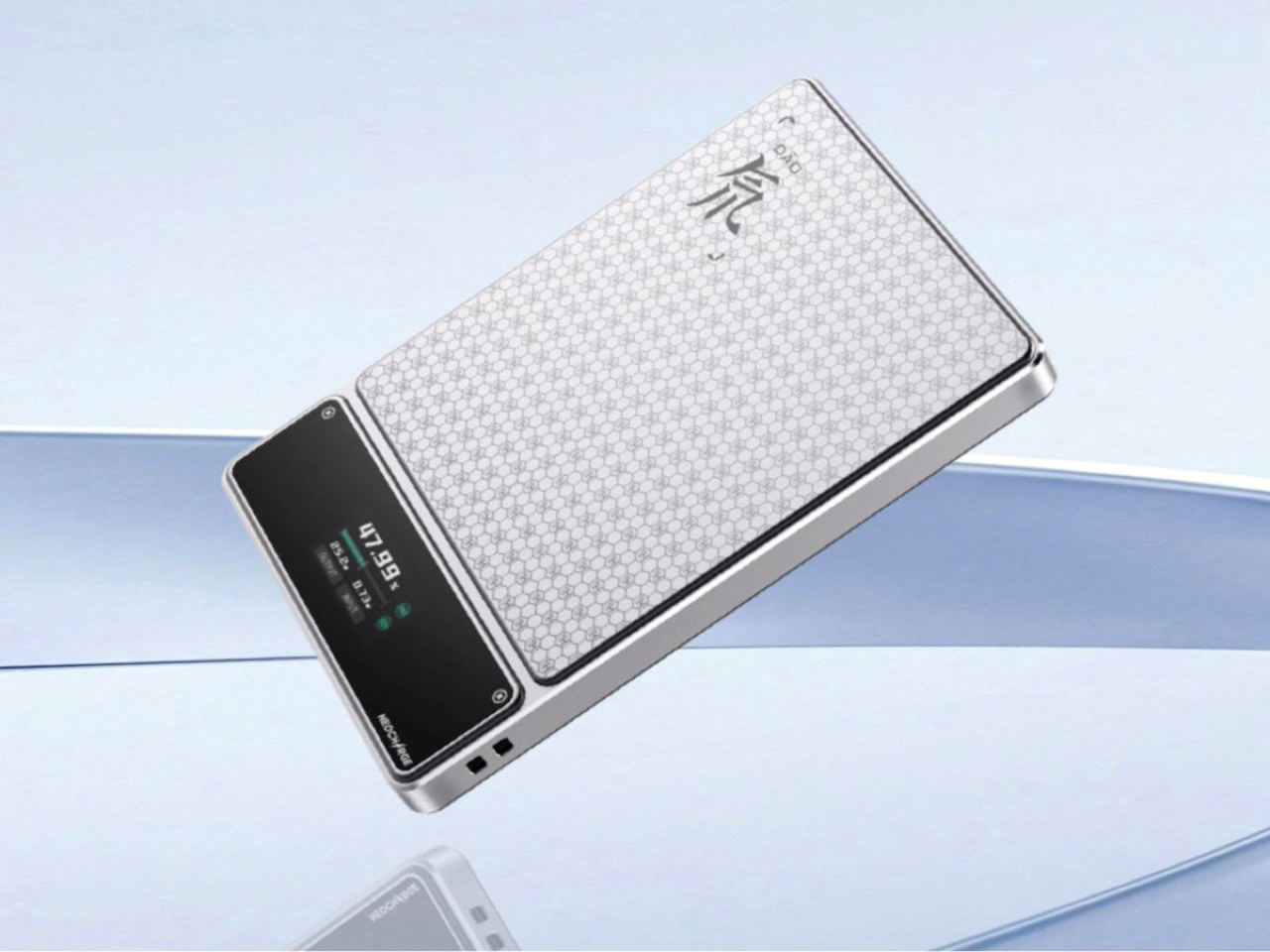
RedMagic built its reputation in gaming hardware, which means its approach to a power bank looks and feels different from the utilitarian brick that most people travel with out of resignation. The Deuterium Power Bank carries the brand’s design sensibility into a category that largely stopped trying to look interesting, and the result is a device that charges your gear just as efficiently as anything else in its class while looking like something you would keep visible on a café table rather than buried at the bottom of your bag next to a receipt from three trips ago.
The travel case for carrying a power bank this summer is straightforward: the Stillframe headphones, the AirPods neck strap, the gimbal camera, and the phone itself all have batteries that need managing across a full day. A power bank you do not mind carrying is one you are more likely to have with you when you actually need it, which is the underrated functional argument for design quality in a category where most people default to whatever is cheapest. RedMagic’s gaming background also suggests the Deuterium is built for high-draw output rather than the slow trickle that most compact power banks deliver when you are in a hurry.
What we like:
RedMagic’s gaming hardware background produces a design approach that stands out in a category that stopped caring about aesthetics several product generations ago
Built for high-draw output scenarios, which matches the multi-device charging reality of a full travel day rather than optimizing for a single slow charge overnight
What we dislike:
The gaming aesthetic does not read as neutral for every traveler — the design language is confident in a way that will not suit every travel kit or personal style
RedMagic’s primary market is gaming, which can mean after-sales support is less straightforward for buyers outside that specific ecosystem
7. Shark ChillPill
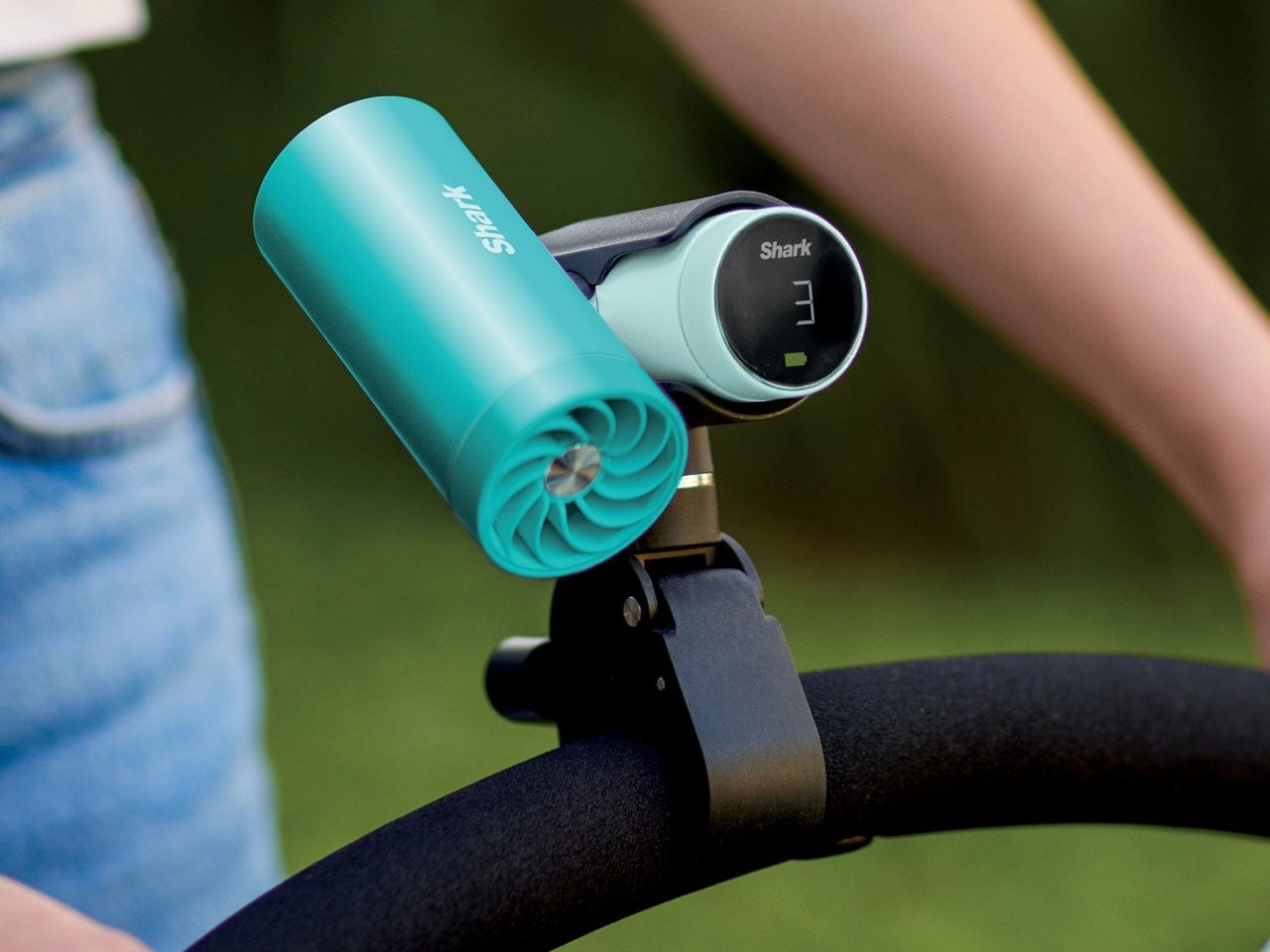
The Shark ChillPill is the only product on this list that exists specifically because of the season, and that specificity is entirely the point. At $149.99 and available in seven colorways including Glacier, Matcha, and Rose Gold, this is a personal cooling device built for the particular discomfort of summer travel — the airport with broken air conditioning, the overnight train running two hours late, the hotel room that is either stifling or freezing with nothing in between. It is designed to sit on a desk, a bedside table, or next to you on public transport and make a meaningful difference to your immediate environment without requiring installation or setup.
Shark as a brand has earned a level of trust in the home appliance space that most travel gadget companies have not, which matters here because a personal cooling device is only as useful as your confidence that it will actually perform when you need it most. The ChillPill’s design is compact enough to pack without negotiation. The colorway range — particularly Glacier and Matcha — suggests Shark designed it to be seen rather than hidden, which puts it in the same category as every other product on this list: objects worth choosing, not just owning.
What we like:
Shark’s established appliance reputation gives this more credibility at the point of purchase than a startup cooling device at the same price point would reasonably carry
The colorway range reflects genuine design attention — options that are worth choosing between rather than a default black with a single token alternative
What we dislike:
At $149.99 for a single-season use case, the value calculation is more personal than it is for the other products on this list
Personal cooling devices perform best in contained spaces — open-air situations and outdoor travel significantly reduce how much work they can actually do
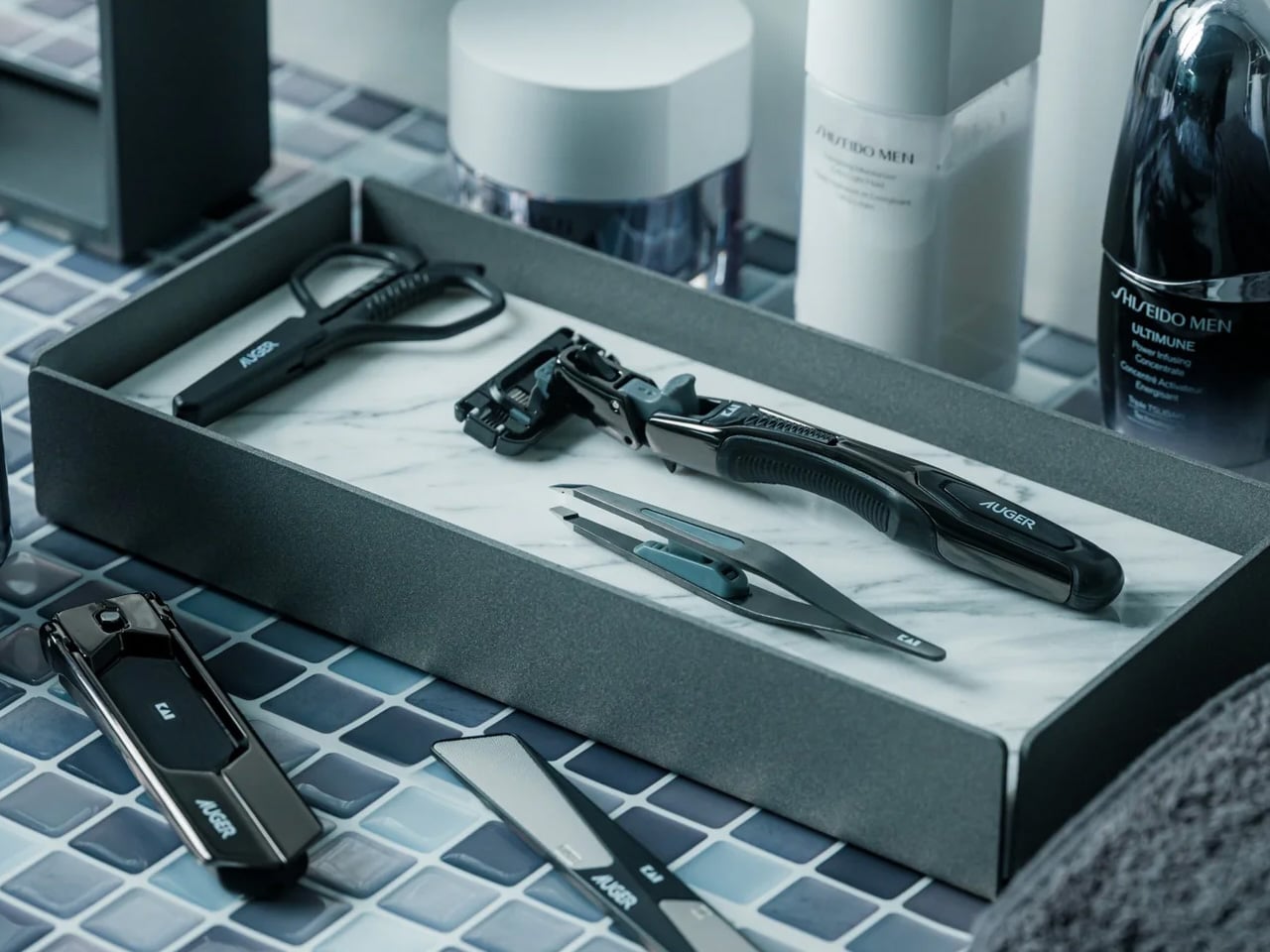
8. Auger PrecisionMaster Grooming Set
A grooming kit earns its place in a travel bag by doing two things simultaneously: packing small and performing well. Most travel grooming sets do one or the other. The ones that pack small feel like toy versions of proper tools, and the ones that perform well require a checked bag or a dedicated hard case that adds more weight than it saves.
For anyone who travels frequently enough that personal grooming across multiple time zones and hotel mirrors is a real logistical consideration, having a set that travels with you rather than forcing you to adapt to whatever the hotel provides is a meaningful quality-of-life upgrade. The PrecisionMaster format suggests a complete set built around specificity — the right tools for the tasks you actually need, rather than a catch-all kit that handles everything at a mediocre level. That philosophy, applied to travel, is exactly the kind of considered product design that makes a long trip feel controlled rather than improvised.
Built around precision and completeness rather than the travel-size-everything compromise that makes most portable grooming kits feel like a step backwards
What we dislike:
Grooming kits are personal in ways that cut lists cannot fully account for — a curated set always carries the risk of leaving out something specific to your own routine
Final Word
Summer travel is the stress test for every product category. The heat, the packed transit, the improvised schedules — they all expose the difference between gear designed for how travel actually works and gear designed for how brands wish it worked. Everything on this list was chosen because it holds up under that pressure, not just because it looks good in a photograph or reads well on a spec sheet.
The best version of a travel kit is the one you stop thinking about entirely — because every item does its job quietly enough that your attention goes to the trip itself rather than the logistics of getting through it. These eight products get close to that standard in different ways. Some are about capture, some about comfort, some about the small rituals that make a long day in transit feel less like transit. Taken together, they make a compelling case for packing with more intention and arriving with less regret.
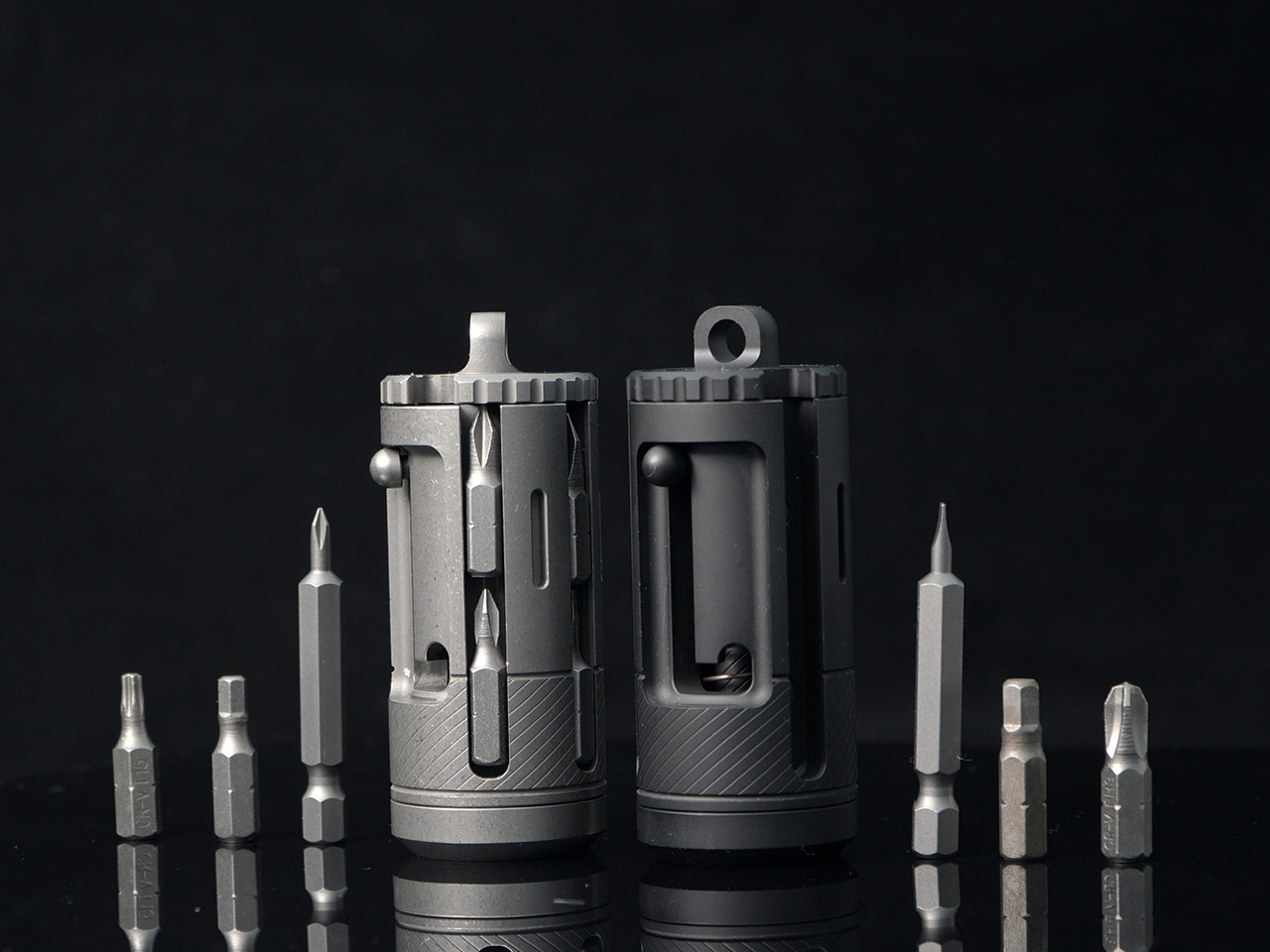
When Eck Studio launched the FixBoy in 2025, it found a dedicated audience that loved its compact form and clever revolver-style bit holder. The tool was small, fidget-friendly, and perfect for light-duty tasks. Community feedback, however, pointed toward a clear desire for something more. Users wanted the same smart design principles applied to a tool built for bigger jobs, something with more leverage, more strength, and the professional capability to become a primary driver rather than a backup. It was a call for an evolution, asking for a tool that could graduate from a pocket novelty to a serious piece of hardware.
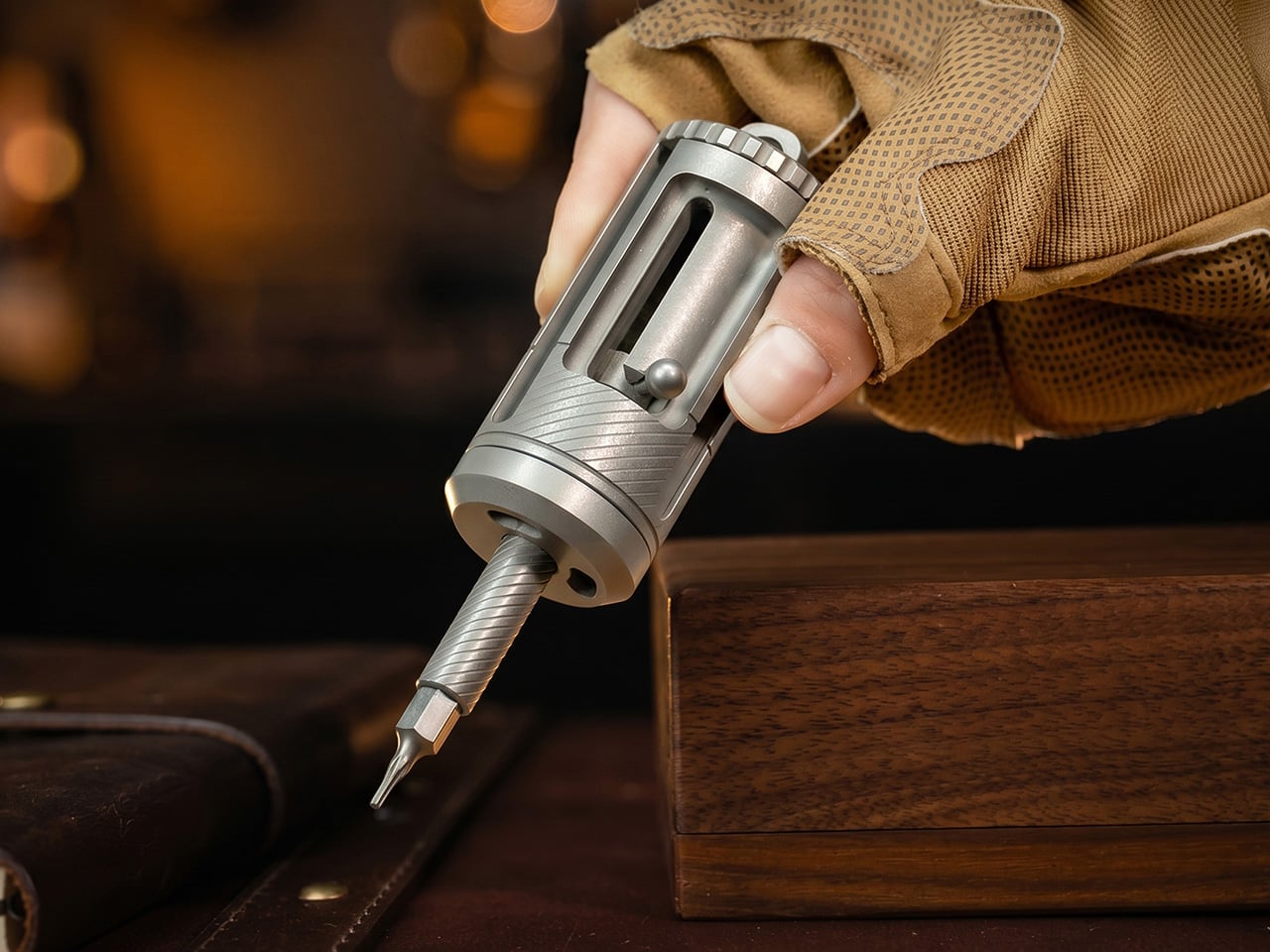
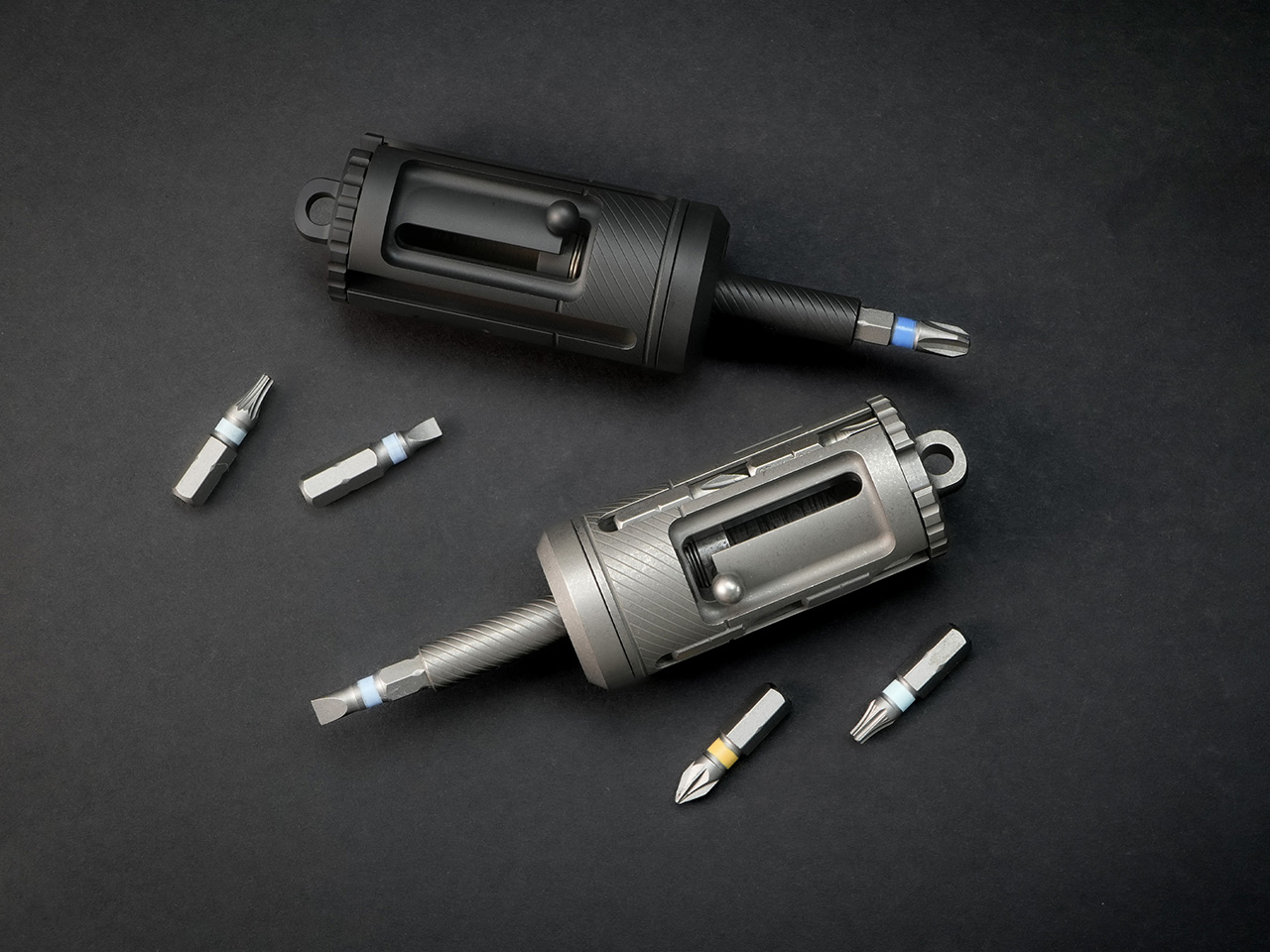
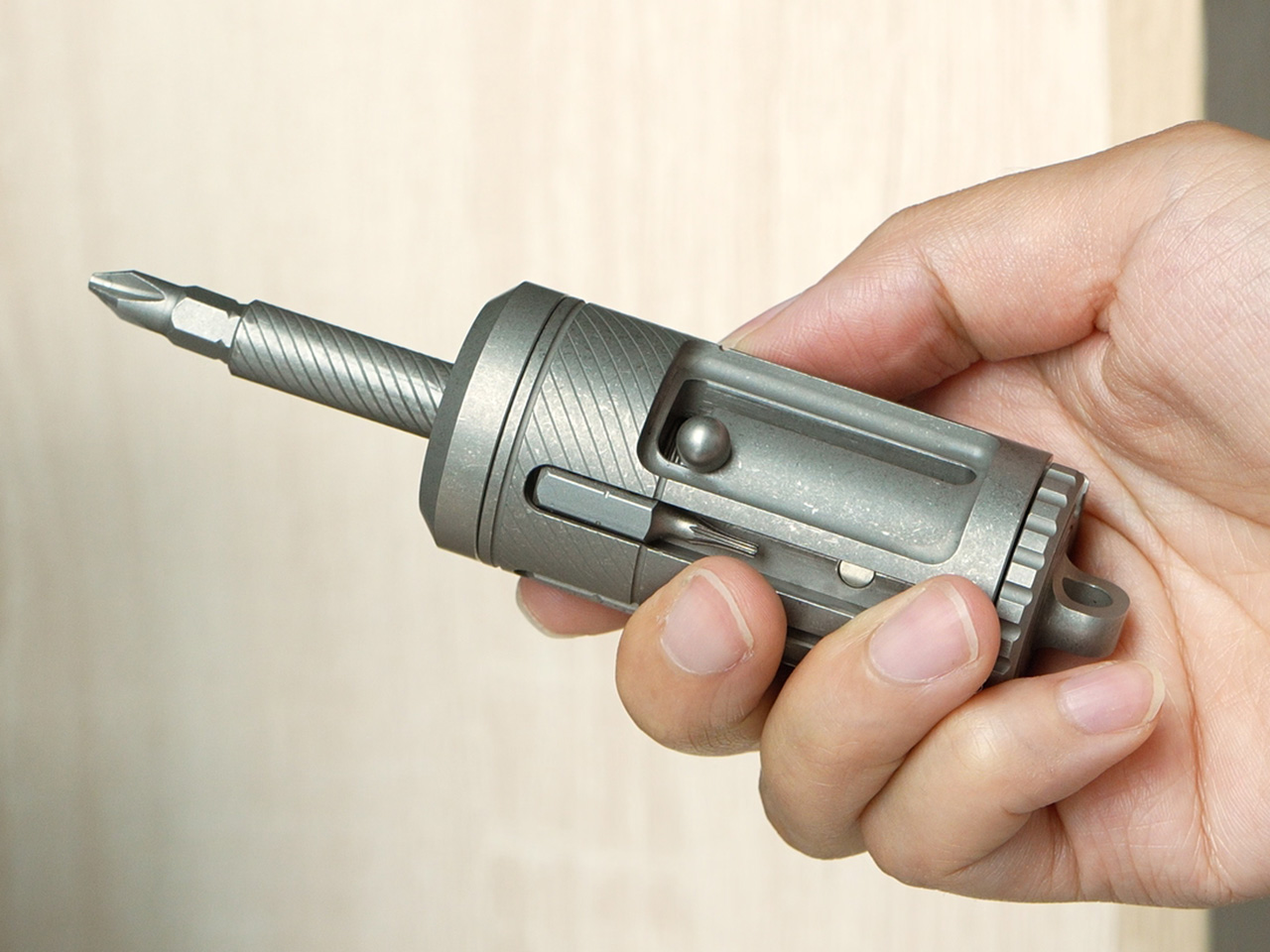
The FixMan is the answer to that call. It represents a complete redesign from the ground up, scaling the original concept into a more powerful and refined tool. While it keeps the iconic revolver bit chamber and bolt-action extension, the FixMan is a larger, more robust instrument built from Grade 5 titanium. It accommodates standard 1/4-inch bits, integrates a three-mode ratchet system, and delivers the torque needed for actual repairs, from assembling furniture to adjusting gear in the field. It’s what happens when a good idea is given the space to become a great one.
The ratchet mechanism is the functional heart of the FixMan, and its execution reveals a deliberate approach to both utility and aesthetics. Most ratchet screwdrivers on the market rely on off-the-shelf steel ratchet components, with manufacturers focusing customization efforts on the outer shell while leaving the core mechanism standard and exposed. Over time, those steel internals are prone to rust, the mode switching can feel clunky or inconvenient, and the bulky ratchet head remains visible, compromising the tool’s profile. Eck Studio took a different path. The ratchet structure in the FixMan was developed entirely in-house, allowing the team to engineer a hidden ratchet system that sits cleanly inside the titanium body. Even the internal ratchet components are CNC-machined from titanium, creating a mechanism that resists corrosion, maintains tighter tolerances, and delivers stronger torque capability compared to typical steel assemblies. The result is a more durable, more refined, and longer-lasting system that operates smoothly and feels premium in hand.
The system operates in three distinct modes: tighten, loosen, and locked. Tighten mode enables continuous forward driving with smooth, controlled ratcheting that eliminates the need for constant repositioning. Loosen mode reverses the action for clean screw removal, while locked mode disables the ratchet entirely, providing full manual control for precision tasks where feel and feedback matter more than speed. Switching between these modes takes seconds and can be done one-handed, a design detail that becomes especially useful when working in awkward positions or tight spaces. Each position locks firmly into place with a satisfying mechanical click. Eck Studio precision-machined every component of the ratchet assembly, avoiding injection-molded or stamped parts in favor of individual CNC-machined pieces. The knurling on the grip is also CNC-cut rather than pressed, creating grooves that provide secure purchase without being abrasive during extended use. Titanium, brass, and ceramic bearings work together to deliver smooth operation, strong torque transfer, and zero wobble under load. The entire assembly is built for longevity, designed to get smoother and more familiar with use rather than looser or less precise.
Reaching screws in deep or narrow spaces is where most compact drivers fall short, and the FixMan solves this with its bolt-action hidden extension. A spring-loaded slide mechanism deploys an additional 26 millimeters of reach with a single push, transforming the driver from a compact 77.5-millimeter tool into a 103.5-millimeter extender. The extension snaps out smoothly and locks securely, providing stable support even when working at awkward angles or applying significant torque. When the extra reach is no longer needed, the mechanism retracts just as cleanly, collapsing back into the main body without requiring any disassembly or bit removal. The bolt-action design is fast, intuitive, and deeply satisfying to operate, turning a practical feature into a kinetic experience. When you factor in the length of the bits stored inside the revolver chamber, the FixMan can reach approximately 75 millimeters into deep or narrow spaces, making it capable of accessing screws that would be completely out of reach for standard compact drivers.
The revolver-style bit chamber is the visual and mechanical signature of the FixMan, borrowing directly from its predecessor. The chamber stores up to ten standard 1/4-inch bits, with each slot capable of fitting bits up to 53 millimeters long. Each bit is held securely in its own magnetic slot, and a rotating selector lets you dial through the chamber to find the bit you need. Each position clicks firmly into place as the mechanism indexes, providing clear tactile feedback. The chamber eliminates the need for a separate bit case or loose bits rattling around in a pocket, consolidating everything into a single, self-contained tool. The included bits cover the most common fastener types: PH1, PH2, PH3, SL4, SL6, H3, H4, H5, T20, and T25. Once selected, a bit snaps into the magnetic holder with a clean, secure fit that keeps it firmly locked during use while remaining easy to swap out when the job changes.
The FixMan’s compatibility with the standard 1/4-inch ecosystem gives it flexibility beyond the included bits. Any standard bit, socket, or extension designed for the 1/4-inch interface will work seamlessly with the driver, opening up a wide range of possibilities for specialized tasks. The magnetic bit holder pulls bits into place instantly, providing dependable retention without requiring excessive force to remove them. This universal compatibility means the FixMan can grow with your needs, adapting to new tasks without being locked into a proprietary system. You can use the bits that came with it, or reach for the specialty drivers and sockets you already trust.
Grade 5 titanium forms the structural foundation of the FixMan, offering an ideal balance of strength, weight, and corrosion resistance. At 144 grams, the driver has enough mass to feel substantial in hand without becoming a burden in a pocket or bag. Titanium’s resistance to rust and corrosion means the tool can handle exposure to moisture, sweat, and outdoor conditions without requiring constant maintenance or protective coatings. The stonewashed finish gives the surface a matte, tactile texture that looks refined and hides the inevitable wear that comes from daily carry. Over time, the finish develops a patina that reflects use without looking worn out, aging gracefully rather than appearing damaged or neglected.
The FixMan is built for people who want a capable, professional-grade screwdriver that fits into an everyday carry rotation. It’s suited to those who assemble, adjust, repair, and tinker regularly, whether that means maintaining camera gear, building custom keyboards, adjusting bikes, assembling furniture, or handling the kinds of small mechanical tasks that show up unexpectedly throughout the week. The tool’s compact dimensions and integrated storage make it practical for pocket or bag carry, while its ratchet system and extendable reach give it the performance needed for real work. The fidget-friendly mechanisms, from the spinning chamber to the bolt-action slide, make it a tool you’ll want to pick up and interact with, not one that sits forgotten in a drawer.
Eck Studio offers the FixMan in two finishes: a stonewashed titanium version and a black PVD option for those who prefer a darker, more subdued aesthetic. Custom engraving is available for personalization, and a handmade leather sheath provides additional protection and easier carry for those who prefer belt or bag mounting over direct pocket storage. For those who want low-light visibility, the driver features four enlarged tritium slots designed to accommodate 2 x 12 millimeter tritium tubes, which provide up to 20 years of self-powered glow without batteries or charging. Chosen tritium tubes are installed before shipping, making the tool ready to use straight out of the box.
The FixMan is priced at $158 for the stonewashed version and $168 for the black PVD finish. The tool is currently available through its campaign, with deliveries expected to begin in October 2026.
Packing for a camping trip is really just a series of small arguments with yourself about what’s worth the weight. June 2026 has produced a strong batch of designs that tend to win those arguments. Across five very different product categories, the same principle quietly surfaces: the best outdoor gear doesn’t add complexity to your trip. It takes it away.
From a hammock tent that rethinks how you sleep off the ground, to a radio that earns its keep long before conditions turn difficult, the designs ahead share something most camping gear doesn’t: a point of view. Each one started from a genuine problem and arrived at something you’d actually want to carry. These are the five that stood out this month.
1. RetroWave 7-in-1 Radio
The RetroWave looks like a deliberate throwback to classic Japanese radio design — a tactile tuning dial, compact body, warm aesthetics that earn a shelf rather than beg for a drawer. But the retro form is doing something more purposeful than nostalgia: it frames a genuinely self-sufficient piece of kit that works when conditions aren’t perfect and removes the decision fatigue of choosing every piece of music you play. AM, FM, and shortwave for signal without an app. Bluetooth streaming when connectivity holds. A hand-crank and supplemental solar panel for when it doesn’t. SOS alarm and built-in flashlight, quietly tucked in.
What the RetroWave actually solves is the fragility of modern audio. Smart speakers go silent when the Wi-Fi drops. Earbuds die at the wrong moment. Phones drain precisely when you need them most. The RetroWave doesn’t ping you with reminders or demand perfect conditions. It simply plays, charges, and illuminates across seven functions. For campers who want fewer devices in the pack and more reliability in the field, it does the work of four separate items without asking for four separate charging cables. That’s a trade worth making before any trip where things might not go smoothly.
Seven functions in a single body significantly reduce the number of individual items you need to carry and manage
Solar and hand-crank charging keep it functional entirely off-grid with no outlets and no power bank required
What We Dislike
The retro aesthetic, appealing as it is, may read as decorative novelty to buyers who haven’t yet used it in an actual off-grid context
Shortwave reception quality can vary noticeably depending on geographic location and surrounding terrain
2. Haven Spectre Ultralight Hammock Tent
The Haven Spectre solves the problem every experienced hammock camper knows but rarely admits out loud: traditional hammocks fold your body into a shape that doesn’t encourage real sleep. The Spectre counters this with a flat-lay design that keeps your spine aligned and your night predictable. For backpackers who have tried and quietly abandoned hammock camping after a single rough night, this is the iteration worth revisiting. It’s featherlight without feeling compromised, built from years of field-tested feedback, and light enough to disappear into a pack you’re already carrying.
What separates the Spectre from its predecessors isn’t just weight reduction — it’s the thinking behind how a person actually sleeps in the field. The integrated structure holds its form without demanding constant re-adjustment mid-night. You string it up, get in, and it works. For long-distance hikers and weekend backpackers alike, that reliability reduces the cognitive load of a night outdoors. Less time fussing with rigging means more energy for the trail ahead, which is exactly the kind of trade-off a well-designed piece of kit should make for you.
What We Like
Flat-lay sleeping position solves the banana-curve problem that makes traditional hammocks genuinely uncomfortable for full nights
Years of customer-driven refinement make this Haven’s most advanced and polished iteration to date
What We Dislike
Requires trees at the right spacing and height, which limits viable campsite choices in open terrain
Premium price point puts it out of reach for casual or occasional campers who might only use it a handful of times a year
3. Blavor Power Station + Camping Lantern
Most portable power stations look like they were designed by someone who has never spent a night outdoors. The Blavor sidesteps that problem entirely by building a camping lantern into the form factor from the start. The result is a device barely bigger than a tall water bottle that functions as both a light source and a five-pathway charging hub, covering solar, AC, car adapter, USB-C, and micro USB — with a digital display that keeps you updated on battery status without any guesswork. It’s the kind of consolidation that makes you rethink everything else in your kit.
The real value here is how naturally the two functions coexist. When the lantern is on, the power bank is right there. When you’re charging your phone overnight, the ambient glow does quiet work inside the tent without needing a separate light source. It doesn’t ask you to choose between illuminating your site and keeping your devices alive — it simply does both. For campers who’ve always carried a separate lantern and a separate battery pack, the consolidation alone is worth the price. This earns its spot in the pack before the first trip is even planned.
What We Like
Five charging pathways give it a flexibility that most single-use power banks simply can’t match across different environments
Lantern and power station coexist without compromising each other — the dual function feels designed in, not bolted on
What We Dislike
Battery capacity, while solid for a weekend, may leave multi-day off-grid users reaching for supplemental charging sooner than expected
The cylindrical form factor, while compact, can be slightly awkward to pack flush alongside flat gear in a structured bag
4. Chopsticks Maker
The Chopsticks Maker by Shanghai-based designer Mario Tsai is a direct reinterpretation of the pencil sharpener — same rotational mechanics, different raw material. Feed a thin foraged branch through the tool, and it carves a clean, usable chopstick in seconds. It’s a clever design move because it borrows its logic from an object whose function is already completely understood. The result is an outdoor tool with zero learning curve, an intuitive interaction, and a form compact enough to disappear into any kit without taking up meaningful space or weight.
Beyond cutlery, the same shaving mechanics produce fine wood shavings suitable for fire-starting, which quietly expands the tool’s usefulness without a single redesign. For campers who prioritize carrying less and sourcing more from the environment around them, the Chopsticks Maker represents a genuine shift in how outdoor utensils are framed as a category. It’s not about carrying better tools — it’s about carrying a tool that makes what you need from what’s already there. That’s a different design ambition entirely, and one that makes this concept one of the most interesting camping objects to emerge this year.
What We Like
Dual function as both a cutlery maker and a fire-starting aid significantly increases utility beyond its primary purpose
The foraged-material approach removes the need to carry disposable utensils or heavier stainless alternatives altogether
What We Dislike
Relies on finding suitable wood nearby, which is not guaranteed across all camping environments or terrain types
Currently a design concept, meaning production details, materials, and final pricing remain unconfirmed at time of publishing
5. TriBeam Camplight
The TriBeam Camplight fits in a jacket pocket without negotiation — 12.8 centimeters, 135 grams, three distinct lighting modes. The ambient setting runs at 5 lumens, enough to navigate a darkened tent or campsite without destroying your night vision. The diffused camping mode spreads light evenly across shared spaces. The focused flashlight pushes 180 lumens for anything that demands real visibility. What makes it compelling isn’t any single mode in isolation, but the fact that all three feel genuinely purposeful rather than checkbox features added to pad a spec sheet.
A 50-hour battery life is the detail that tips this into essential territory. For most camping trips, a single charge carries you through the full weekend with meaningful margin to spare. The detachable magnetic lampshade shifts the light quality without adding friction — snap it on, snap it off. The hidden handle tucks away cleanly until you need to hang it from a ridgeline, a tent loop, or a bag strap. The TriBeam is the kind of gear that earns a permanent place in the kit long after the trip it was first bought for.
50-hour battery life is generous enough for multi-night trips without requiring a recharge in the field
Three genuinely distinct modes that adapt to different environments without overlap or redundancy
What We Dislike
180-lumen maximum output is well-suited to camp-scale use but falls short for longer-distance signaling or search scenarios
The magnetic lampshade, while elegant, could detach unintentionally inside a packed bag during transit
The Best Camping Gear Thinks Before It Packs
What these five designs share isn’t a price point or a product category — it’s the sense that someone thought carefully about what a camper actually needs, rather than what the outdoor market has assumed they want. The Haven Spectre rethinks sleep. The TriBeam and Blavor rethink lighting and power. The RetroWave rethinks connectivity. The Chopsticks Maker rethinks what you need to bring at all. Each one narrows the gap between what’s in the pack and what actually gets used on the ground.
June 2026 didn’t produce the loudest season of outdoor gear. It produced one of the more considered ones. The standout designs this month are quieter than their competitors and more purposeful for it. If the trend holds, the next generation of camping gear will continue moving in this direction — fewer features performed well rather than many features performed adequately. For anyone who has ever come home from a trip with half their kit untouched, that’s a welcome shift in the right direction.