5 Best Beach Gadgets That Don’t Look Like They Were Designed by a Sunscreen Brand

The beach has a design problem. Everything made for it arrives wrapped in the same visual language: neon plastic, logos scaled for visibility from twenty feet away, and product names in fonts that suggest the designer’s reference material was a county fair booth. Coolers, chairs, speakers, sunscreen dispensers. The category has collectively decided that beach gear should look exactly like beach gear, and nobody seems to have questioned whether that was actually a good idea.

These five objects have a different point of view. None of them look like they were produced for a promotional photograph on a pier. Each one earns its place through a specific design decision that makes a full day at the beach easier, quieter, or a little more considered.

1. Battery-Free Amplifying Speakers

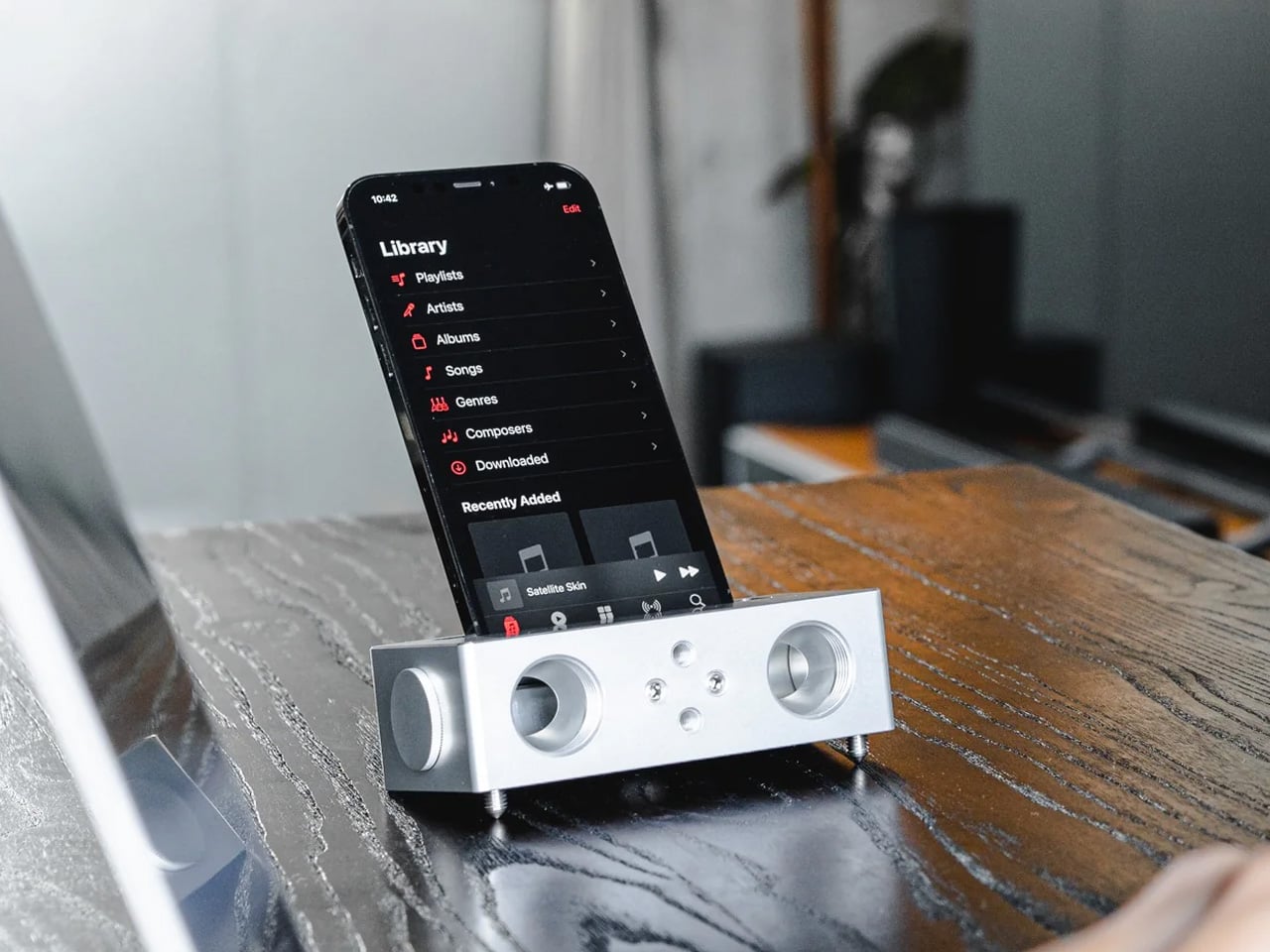
Every Bluetooth speaker brought to the beach eventually dies. The battery gives out at exactly the moment someone finds the right track, and the rest of the afternoon becomes a negotiation about whether to go back to the car. The Battery-Free Amplifying Speakers remove that problem entirely by having no battery to run out. Sound from a phone travels into the chamber and is amplified through acoustic geometry rather than electronics, with no pairing, no charging, and no indicator light to watch nervously.

The principle is the same one behind a gramophone horn or a hand cupped around a speaker: redirect sound and it gets louder. What lifts these above cheaper versions of the same idea is the internal chamber design, which reinforces rather than merely surrounds the sound. The result is noticeably fuller than the phone alone, and at the beach, where wind and open space work against you constantly, that gain matters more than a battery percentage reading or a firmware update ever could.

Click Here to Buy Now: $179

What We Like

  • No charging means no dead speaker, no cables on the sand, and no quiet dread about how much afternoon remains before the battery is gone
  • Passive amplification means the sound scales with your phone’s own speaker rather than introducing a separate and competing audio character on top of it

What We Dislike

  • The volume ceiling is lower than any powered speaker, so this works for a group around a table rather than a group spread across a wide stretch of beach
  • Performance is tied to the quality of the phone speaker placed inside, which varies considerably from one device to another and is entirely outside the product’s control

2. Camp Snap 2
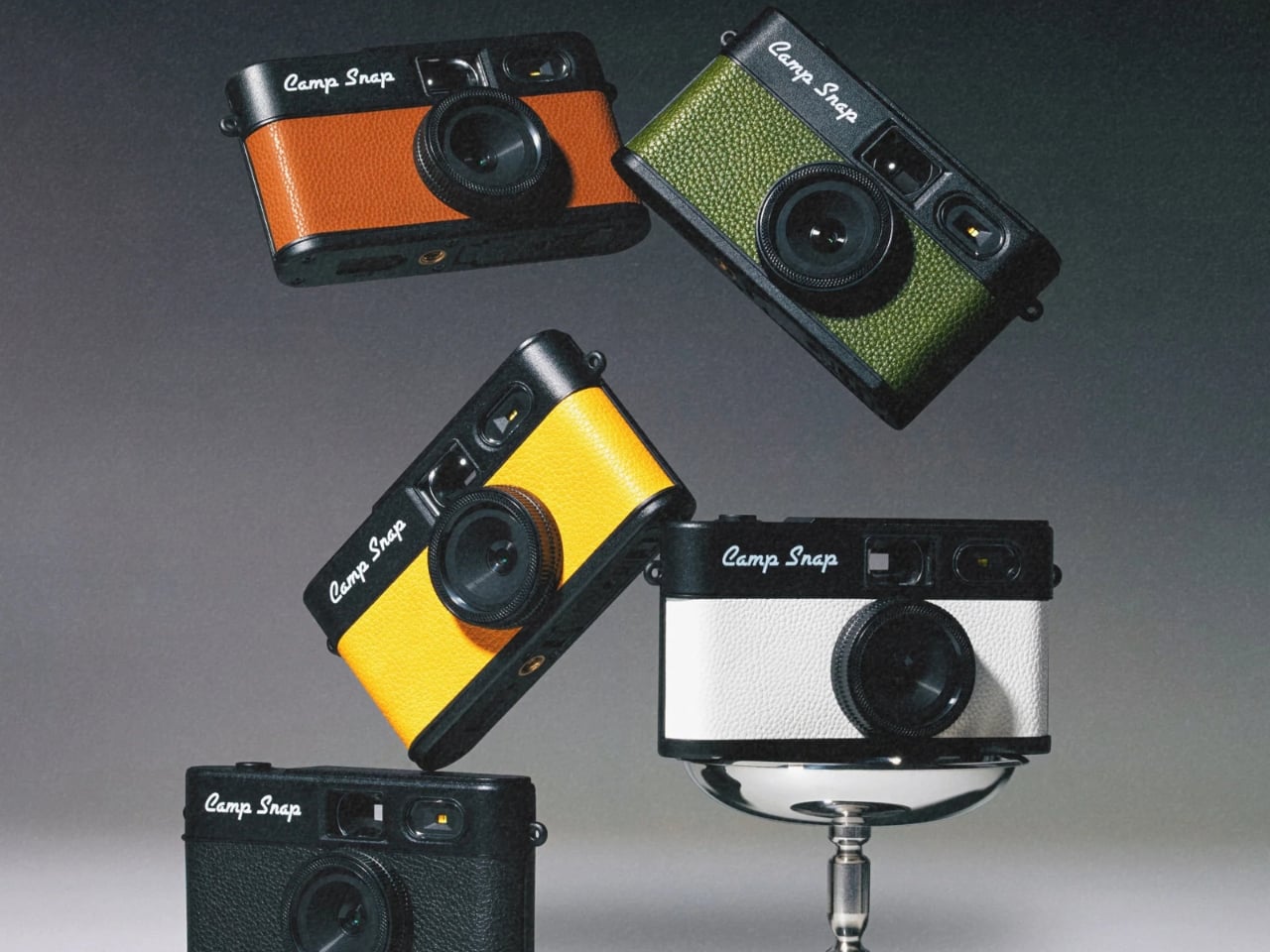
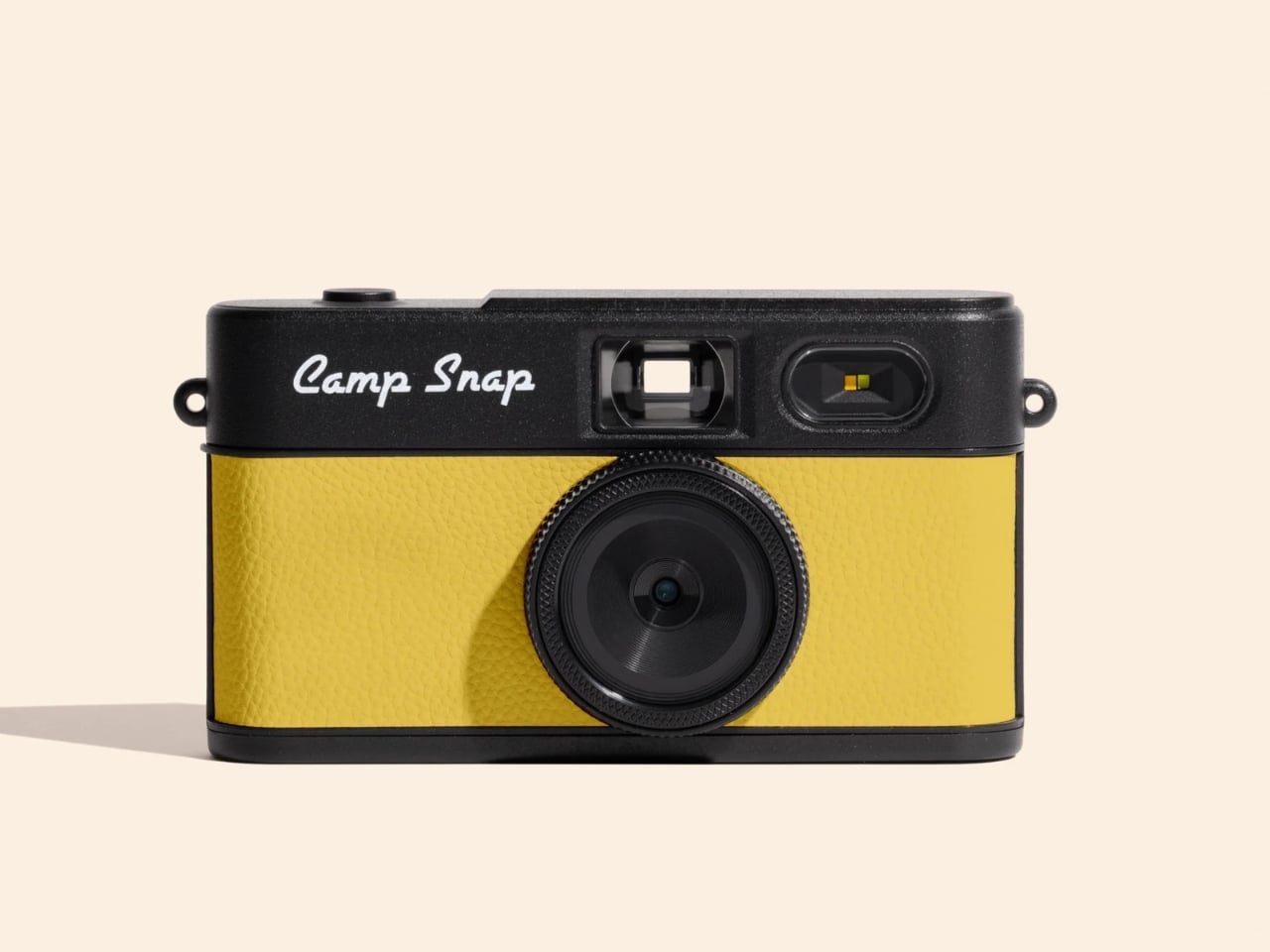
The Camp Snap 2 is a point-and-shoot with no rear screen, no Wi-Fi, and no ability to see the photograph you just took. You shoot, you download later. What sounds like a limitation turns out to be a relief. Every photograph at the beach currently involves a review session: retakes, angles held for too long, filters applied in real time while the moment moves on without you. A camera that simply takes the picture and closes the subject is a very different tool to spend a day with.

It is 15 percent slimmer than its predecessor, runs an 8-megapixel sensor, and offers six built-in looks through a physical button on the back: Standard, Vintage 1 through 3, Analog, and Black and White. It comes in nine colorways, including several translucent jelly-plastic finishes in Sunbeam Yellow, Tangerine Drift, and Strawberry Splash. It supports 30.5mm screw-in filters for anyone inclined to go further.

What We Like

  • The screenless design removes the retake cycle entirely, which turns out to be the most genuinely useful design feature a beach camera can offer
  • Six filter modes accessed through a single physical button is exactly the right level of creative control for a camera built around the idea of not overthinking things

What We Dislike

  • No rear screen means no way to check framing or whether someone blinked, which requires a real shift in how you think about taking a photograph in the first place
  • The 8-megapixel sensor produces images that are warm and characterful rather than sharp and clinical, which is either the point or the dealbreaker depending entirely on who is asking

3. DraftPro Top Can Opener

The problem with canned drinks at the beach has never been opening them. The pull tab handles that adequately. The problem is everything after: a small hole that warms the drink faster than it should, attracts every insect within range, and forces you to drink in a way that a can was never designed for. The DraftPro removes the entire top of the can in a single motion, leaving no sharp edges and turning any standard drink can into an open vessel with full and immediate access.

It locks onto the rim, cuts around the perimeter, and the lid comes away clean. What you are left with is essentially a metal cup, which changes the drinking experience from a can more than you might expect. A cold brew tastes different when you can actually smell it. A beer drinks the way a beer is supposed to drink. Canned wine, which has always suffered from its own opening, finally gets the same treatment a glass would give it.

Click Here to Buy Now: $59.00

What We Like

  • The DraftPro removes the full lid in one clean motion with no sharp edges remaining on the rim, which is the design outcome every can opener should be working toward
  • Turning any standard can into an open cup changes how canned drinks taste and how you experience them, which is a significant return for something that fits in a pocket

What We Dislike

  • It works on standard-diameter cans only, so anything outside that size needs a different tool, which is worth knowing before the cooler is already packed
  • The removed lid needs somewhere to go, which is a small but real consideration when you are trying to keep a bag organised on a beach with nowhere flat to set things down

4. Wuben G5
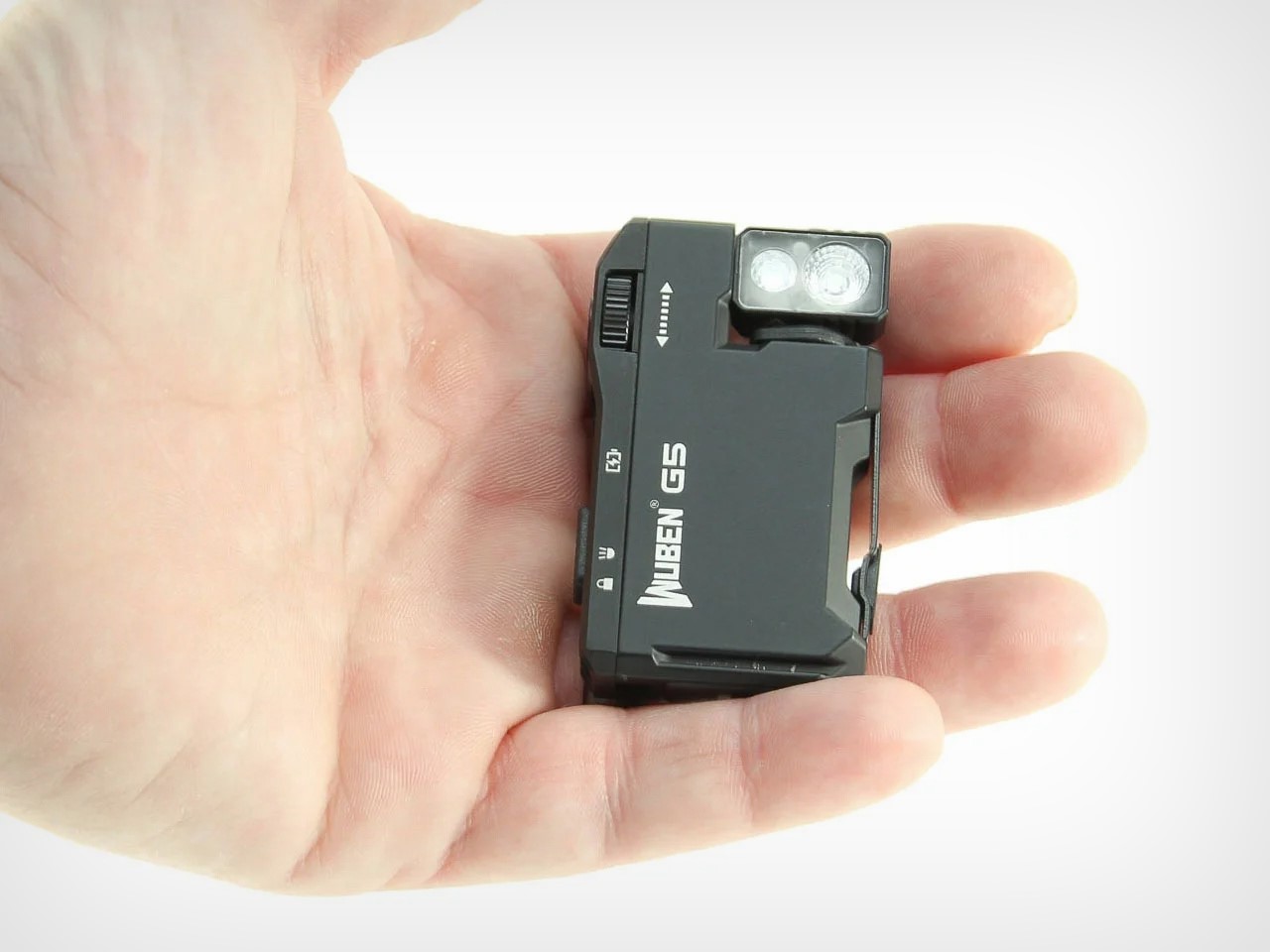
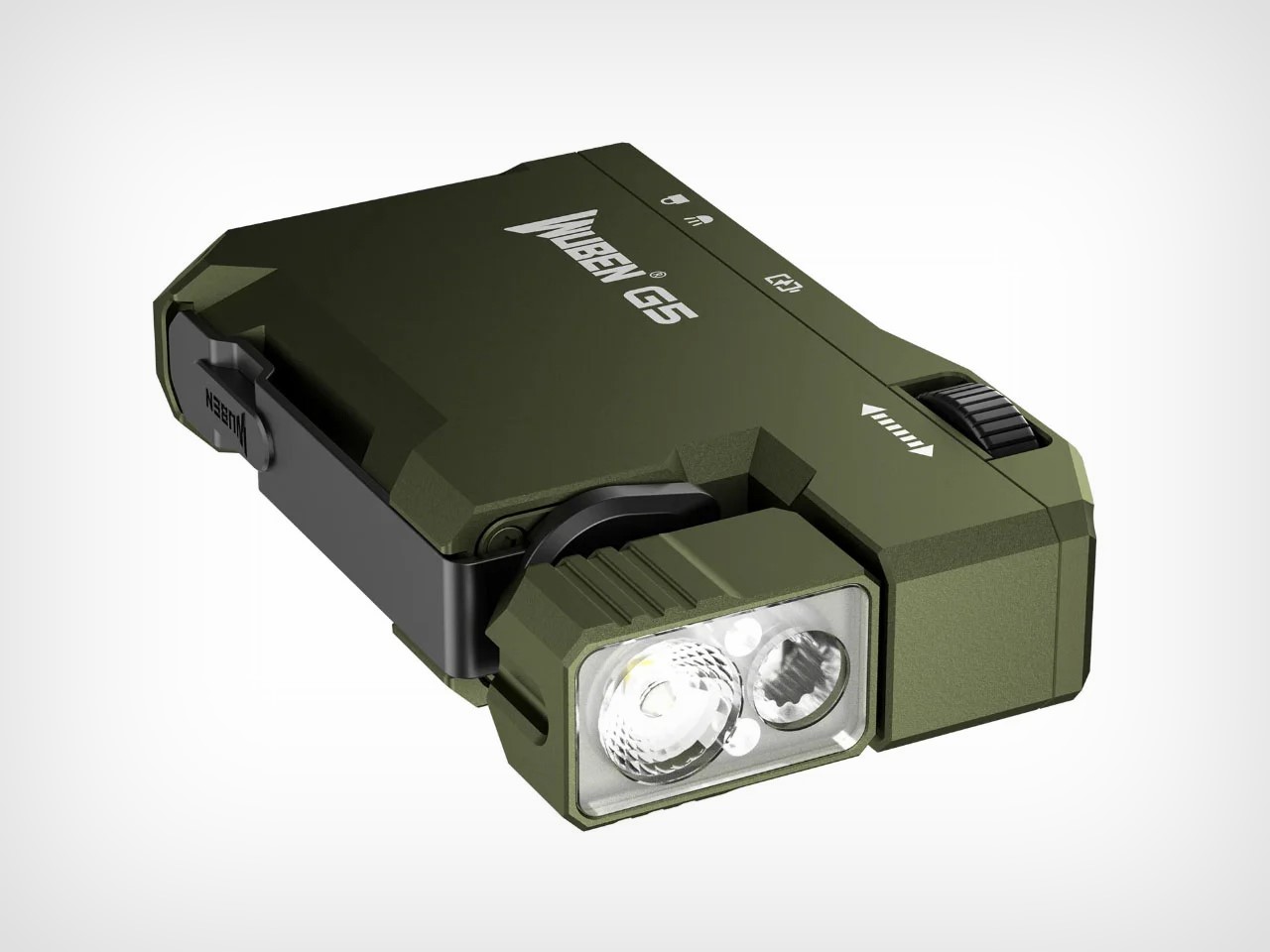
Most flashlights are too large to bother carrying and too dim to justify the space they take up when you do. The Wuben G5 is shaped and sized like a lighter, weighs 52 grams, and carries an IP68 waterproof rating down to two metres. It reaches 400 lumens across an 82-metre beam and rotates 180 degrees at the head so the light goes where it needs to go without repositioning the hand. A spring-tensioned clip grips fabric and straps. A magnetic base holds it to any metal surface without additional accessories.

At the beach, the use cases arrive the moment the sun drops: tide pool walks after golden hour, finding something in a dark bag, navigating a car park at the end of a long day, keeping a fire going in the right direction. USB-C charging is hidden behind the rotary tactile switch, a small detail that makes the whole object feel genuinely resolved. At $25, it sits in a price bracket where most comparable flashlights are forced to choose between bright and portable. The G5 does not choose.

What We Like

  • The lighter-sized form factor and spring-tensioned clip mean it lives in a pocket and actually gets used, rather than sitting uncharged at the bottom of a drawer between trips
  • IP68 waterproofing, a magnetic base, and USB-C charging at $25 is a combination that flashlights costing three times as much regularly fail to match

What We Dislike

  • Battery runtime at full 400-lumen output sits around 50 to 60 minutes, which requires some forward planning on a long evening outing if you need consistent brightness throughout
  • The blue-and-red emergency beacon is a feature worth having and absolutely worth leaving alone unless the situation genuinely calls for it

5. Hibear All-Day Adventure Flask

The Hibear All-Day Adventure Flask won a Red Dot Design Award in 2020, carries a five-year warranty, and performs six separate functions inside a single 32-ounce insulated stainless body. The interior is lined with non-breakable glass, which keeps flavours neutral regardless of what goes in. Split the body at its midpoint, invert the top section over a filter, and you have a pour-over coffee kit. The same configuration aerates wine properly rather than asking it to breathe through a small opening in a can lid.

A mesh insert brews tea, infuses water, or cold-brews coffee depending on how long you leave it. A slatted lid converts the flask into a cocktail shaker. A thermal core chills drinks without ice and without diluting them. The silicone tumbler built into the base pops out as a cup and absorbs the impact when the flask gets dropped, which it will. Hibear contributes to 1% for the Planet on every sale. For a beach day that starts before sunrise and ends after dark, this covers all of it.

What We Like

  • The non-breakable glass interior keeps every drink tasting like the drink rather than the vessel, which is the detail that separates this from every other insulated flask currently available
  • One object handling six functions means one fewer item to pack, which is the most honest possible argument any piece of design can make for its own existence

What We Dislike

  • The full modular system involves multiple components that need tracking, cleaning, and reassembling, which adds genuine friction on days when simplicity is the only real priority
  • Most users will settle into two or three functions regularly and barely reach for the rest, which is worth sitting with before committing to the price

The Best Beach Gear Is the Gear That Disappears

None of these five objects look like they were made for a promotional shoot. They were made to do something specific well enough that you reach for them without thinking about it. The amplifying speaker has no battery to watch. The DraftPro changes how a can of beer opens. The Wuben G5 weighs 52 grams and costs $25. The Hibear covers a full day at the beach without asking you to pack anything else around it.

The Camp Snap 2 asks you to look at the beach rather than reviewing photographs of it. That is the through-line: five objects that remove a specific frustration rather than introducing a new feature. The beach already has enough going on. The best gear for it stays out of the way and earns its place by being genuinely hard to leave behind.


The post 5 Best Beach Gadgets That Don’t Look Like They Were Designed by a Sunscreen Brand first appeared on Yanko Design.
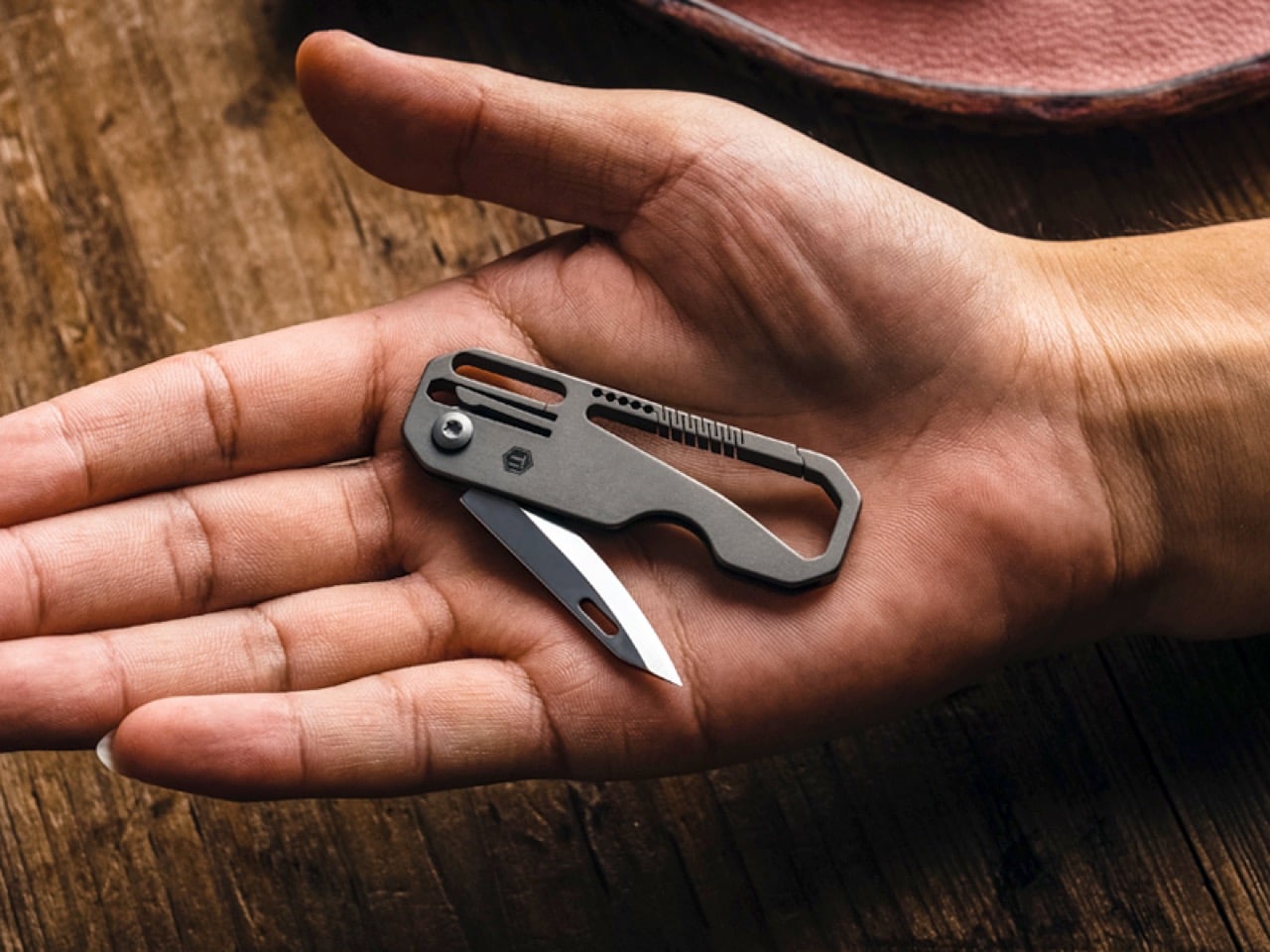
This $23 Titanium Carabiner Hides a Secret EDC Knife Inside It And Weighs Next To Nothing

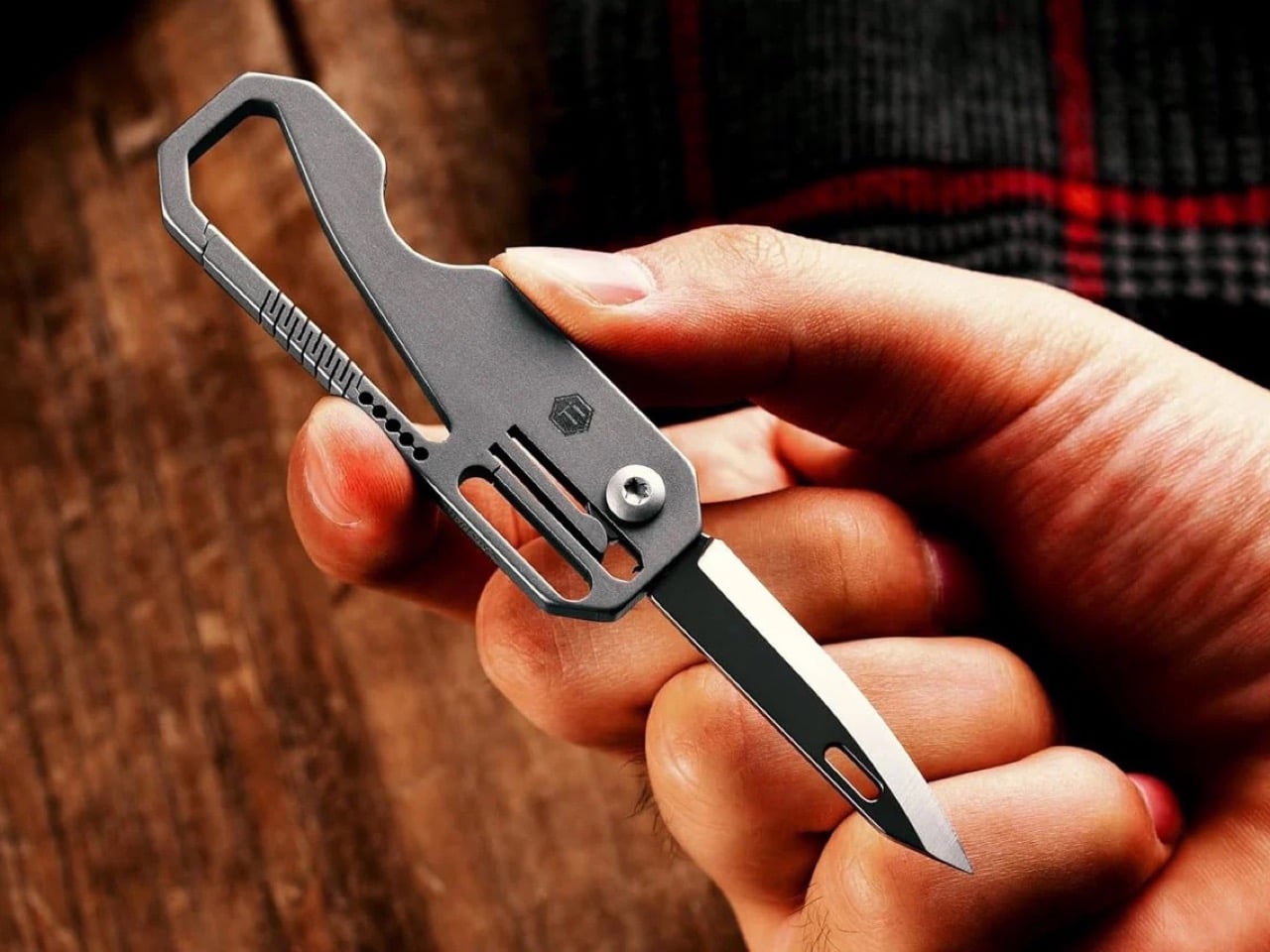
I don’t sing enough praise of titanium as a material. It’s the strongest metal known to humankind, but at the same time, it’s also anti-corrosive, rust-resistant, and biocompatible (the body doesn’t reject it when used internally for implants/supports in surgery). It’s found in abundance on the moon, it self-heals (forms an oxidized layer if scratched), and is the only element that burns in nitrogen (every other element burns in oxygen). Titanium, aside from being such a weirdly wonderful element, is also a preferred alloy in EDC… and while most makers use titanium for a handle and call it a day, the folks at KeyUnity machined it in a way to give Titanium properties of a carabiner.

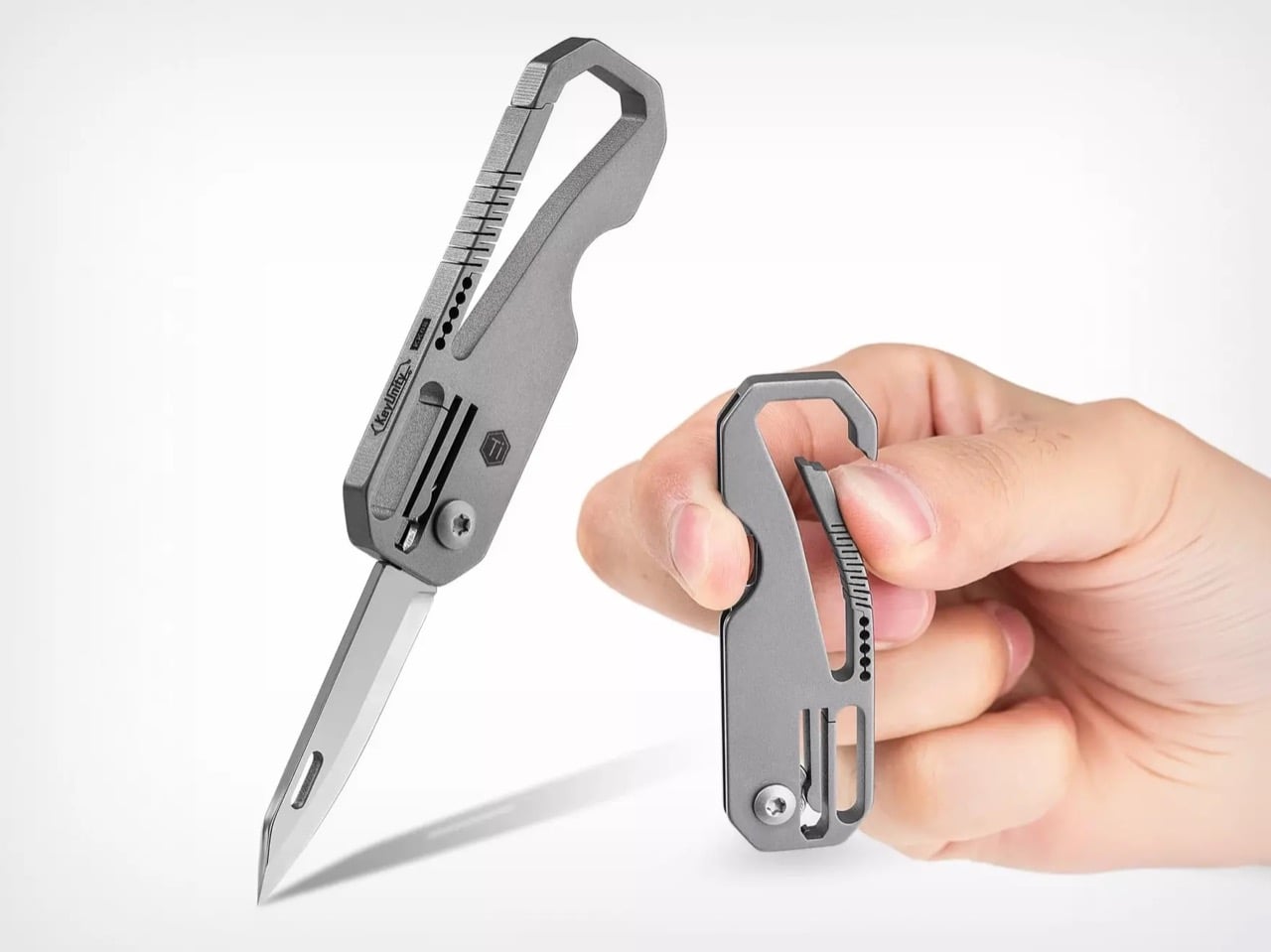
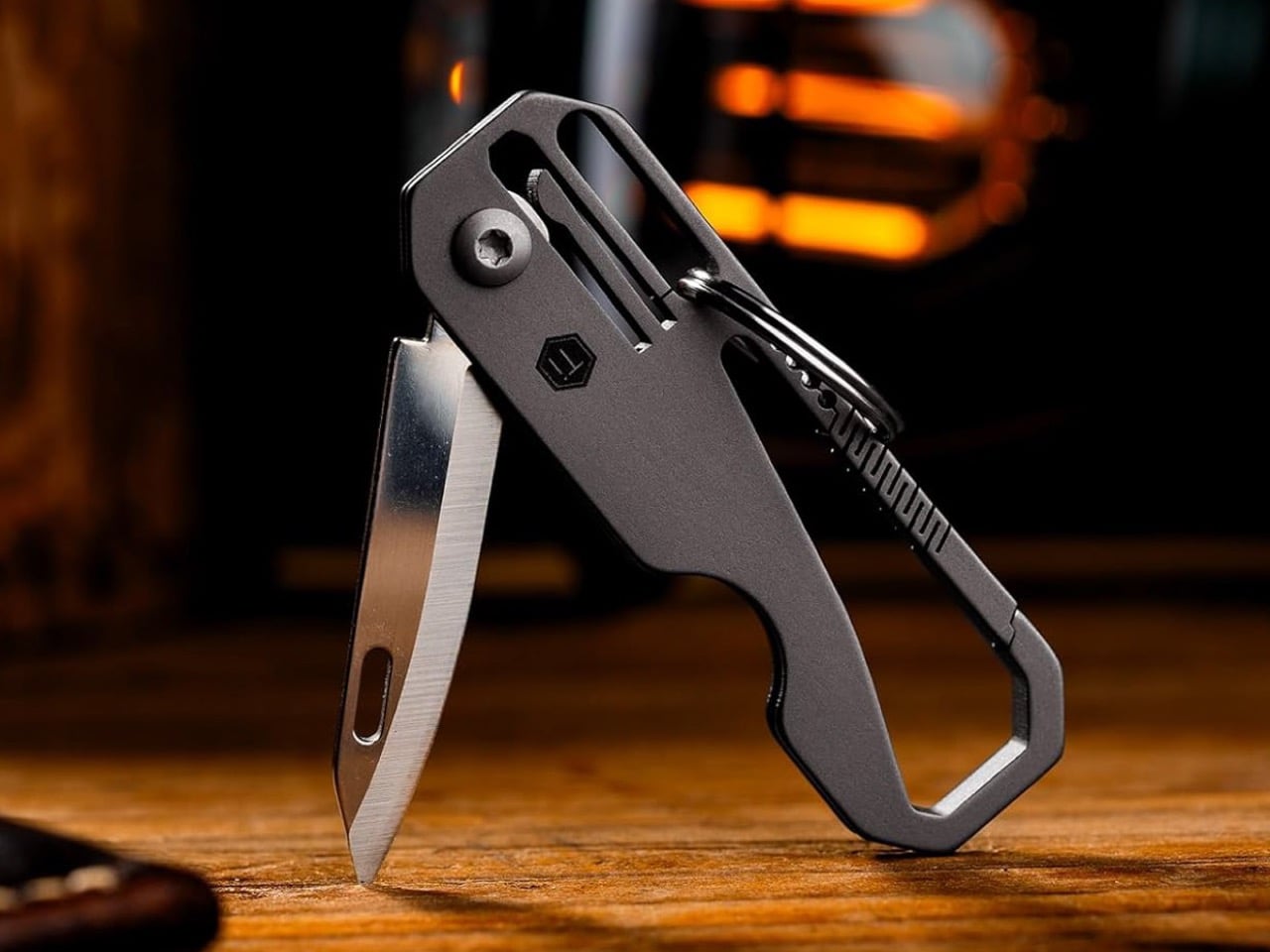
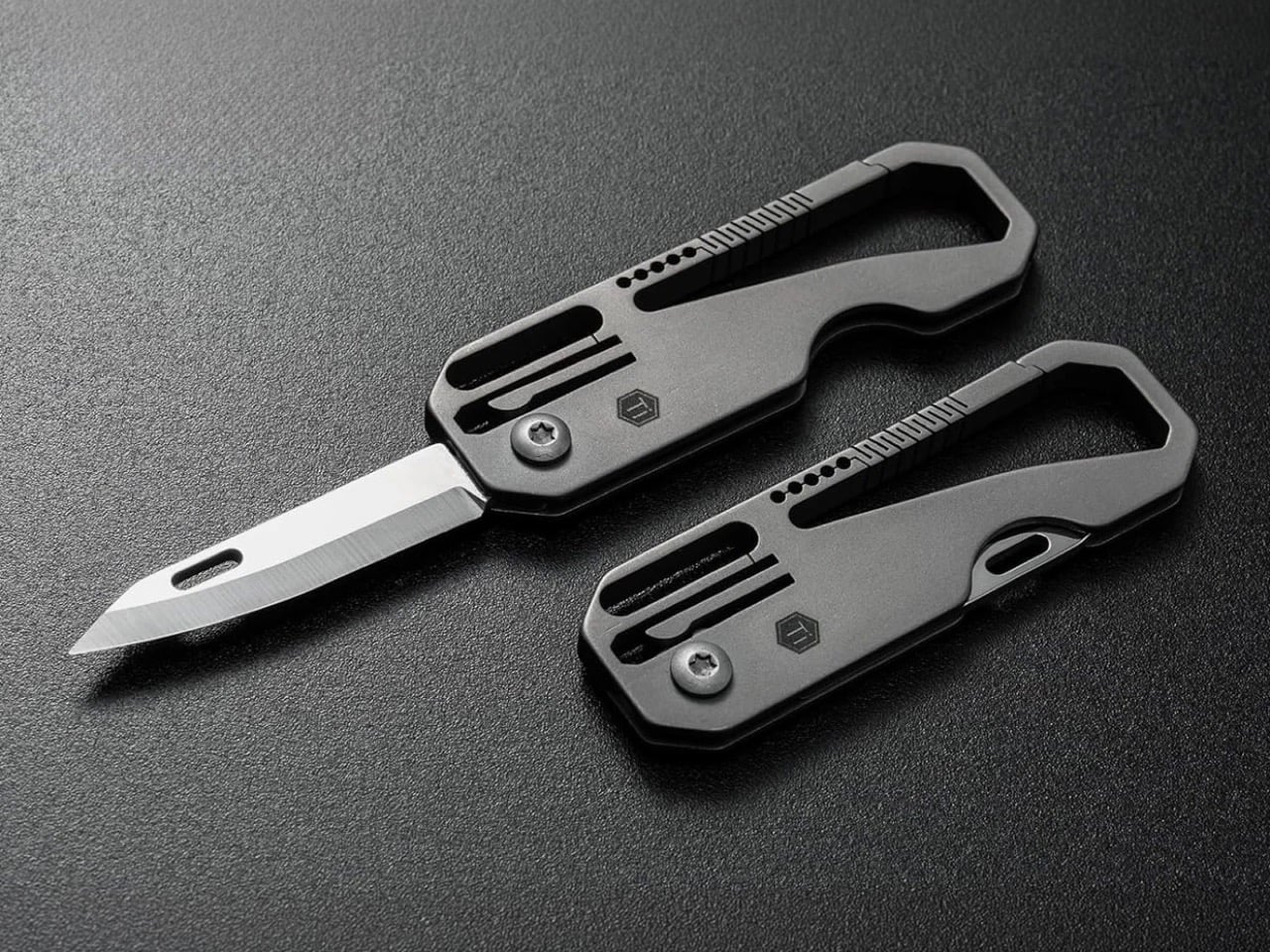
The KK08 carabiner from KeyUnity uses a single-piece titanium handle, which houses a 7Cr17Mov steel blade inside it. The handle is carabiner-shaped for a reason – it has this brilliantly machined detail that allows the carabiner arm to spring and bend without using a spring. Relying entirely on Titanium’s own properties, the zigzag machined pattern lets the carabiner work immaculately, providing spring as well as being durable enough to never break. The rest of the handle? Well, it’s cleverly designed to house the knife when not in use, sheathing the blade within its slim but incredibly cool design.

Designer: KeyUnity

Click Here to Buy Now

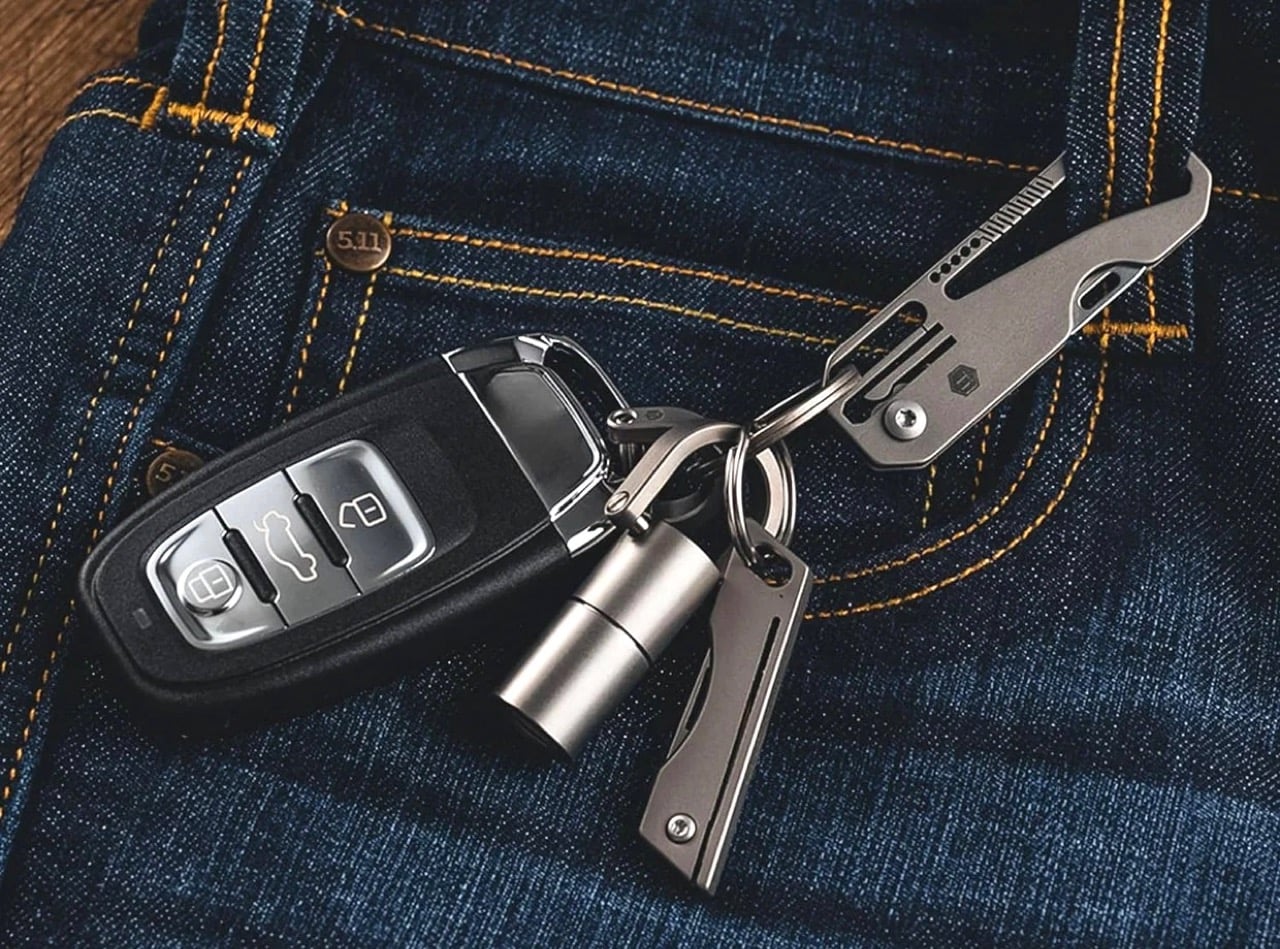
At 2.56″ when closed, this is your average-sized carabiner. It’s compact, weighs a paltry 16 grams, and can punch well above its weight. Titanium’s incredible strength-to-weight ratio means this carabiner can lift keys but even be used to do things like secure your water bottle to your backpack or even your backpack to a railing/fence. The cleverly machined detail on the carabiner arm allows the titanium to flex just like the spring-loaded arm on a regular carabiner. Meanwhile, the KK08 also hides a nifty blade inside it, for when you need a pocket knife.

The hidden blade folds out, revealing a 1.6″ cutting edge which might be on the smaller side, but it certainly gets the job done. The 7Cr17Mov steel build is brilliant on a budget, with high chromium for shine, and vanadium for strength and resilience. The drop-point profile makes it a great knife for all sorts of activities, from benign stuff like opening envelopes and packages, to more rugged activities like sharpening pencils, cutting branches, slicing through fruit/vegetables, or even self defense if push comes to shove.

Given its small size (and its fairly budget $23 price tag), the KK08 integrates everything into a minimal footprint, using a simple pivot for the knife to fold in and out. A frame lock is built into the titanium handle, allowing the blade to click into place while open, holding its position even while you’re working with tough materials like wood. KeyUnity mentions that the KK08 is the perfect hiking companion, although we see it as a brilliant EDC tool that you can carry anywhere – just not an airport or places where knives are considered taboo!

The KK08 comes in two colors – the plain titanium, as well as an anodized space grey finish. It honestly doesn’t need any color or pattern – the simple design language works wonderfully for this form factor, allowing it to also integrate seamlessly into your other EDC (especially your keychain). Both variants cost $23, and KeyUnity provides a 15 day exchange window upon damage or defect, along with a 1-year free maintenance period if your carabiner experiences regular wear and tear. There’s a lifetime warranty available too, although KeyUnity offers it at an added cost. Knowing their track record as well as how robust and durable titanium is, you’ll probably never need it.

Click Here to Buy Now

The post This $23 Titanium Carabiner Hides a Secret EDC Knife Inside It And Weighs Next To Nothing first appeared on Yanko Design.
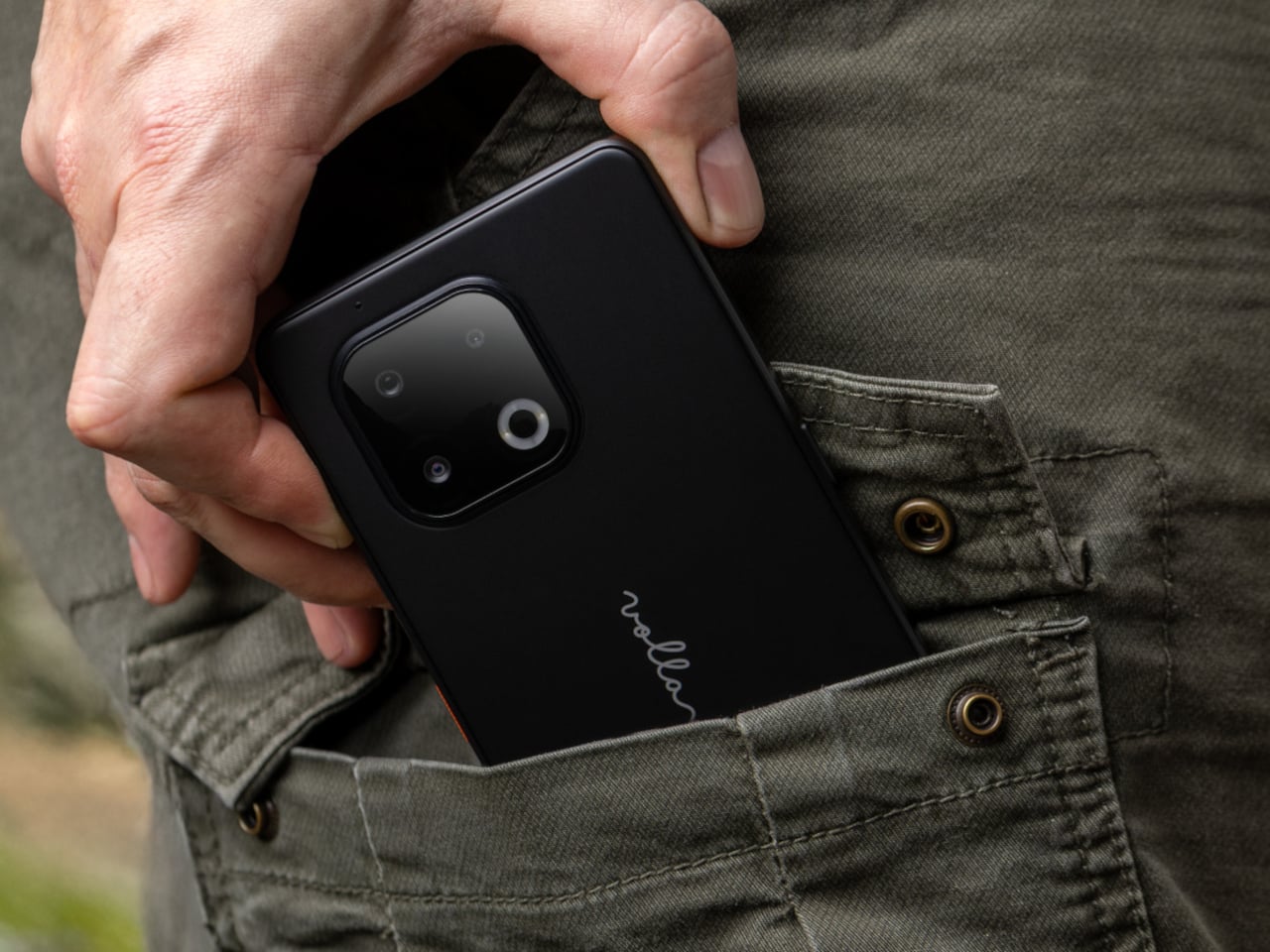
The 5 Best Tech Gadgets of June 2026

June has arrived with a lineup that doesn’t bother hedging. Each gadget on this list makes a clear and distinct point: about privacy, portability, or what it actually means to build something for the person using it rather than around them. These aren’t incremental updates dressed up in a press release. They’re objects with real design thinking behind them, built to do something specific and do it uncommonly well.

What ties them together is a certain kind of intent. The best tech this month isn’t chasing trends; it’s reacting against them: against surveillance defaults baked into operating systems, against album art buried in streaming queues, against mice that collapse your wrist by noon. Whether you carry your work in a laptop bag or your music in a record sleeve, there’s something specific on this list that deserves a closer look.

1. Volla Plinius

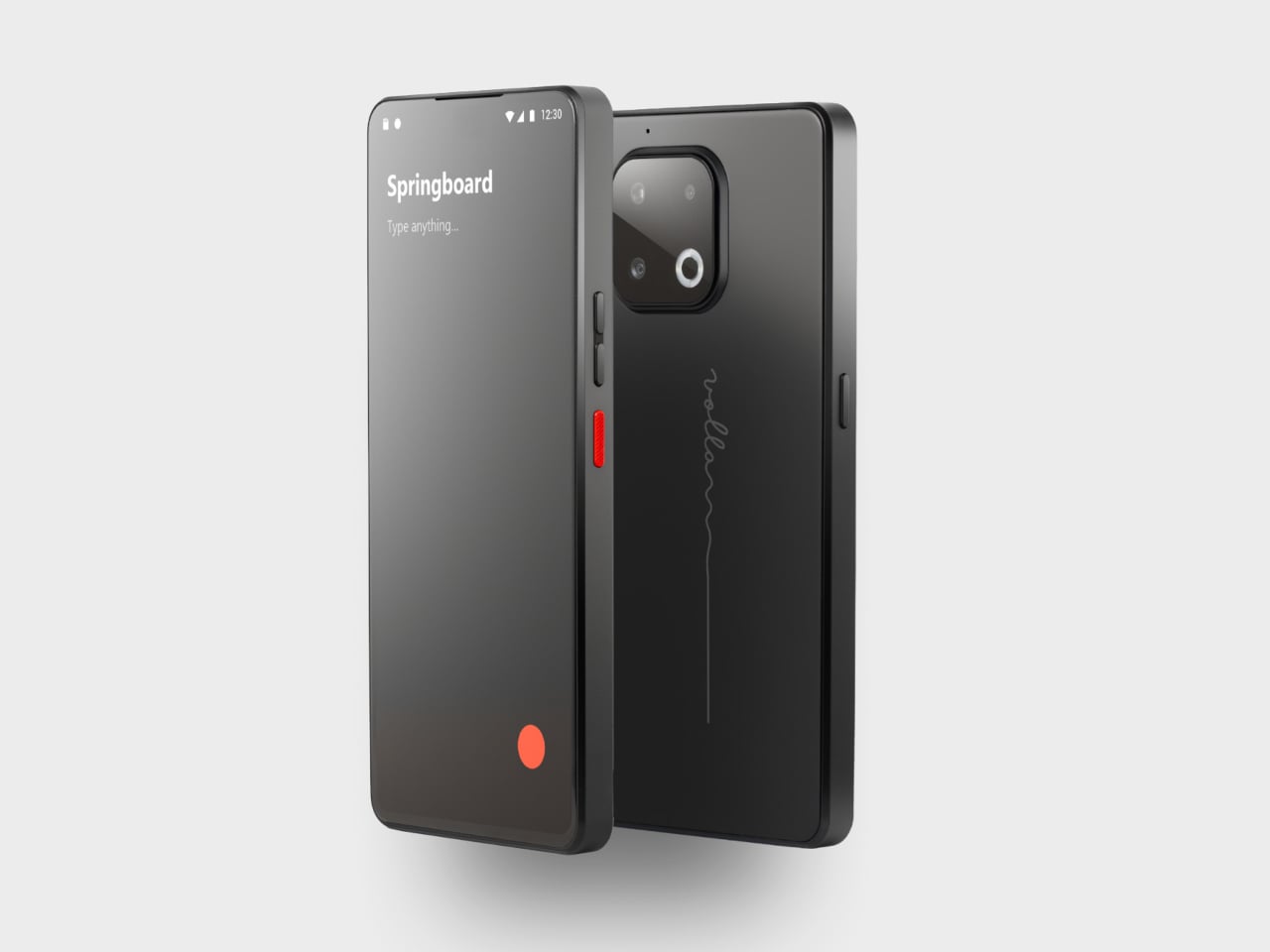
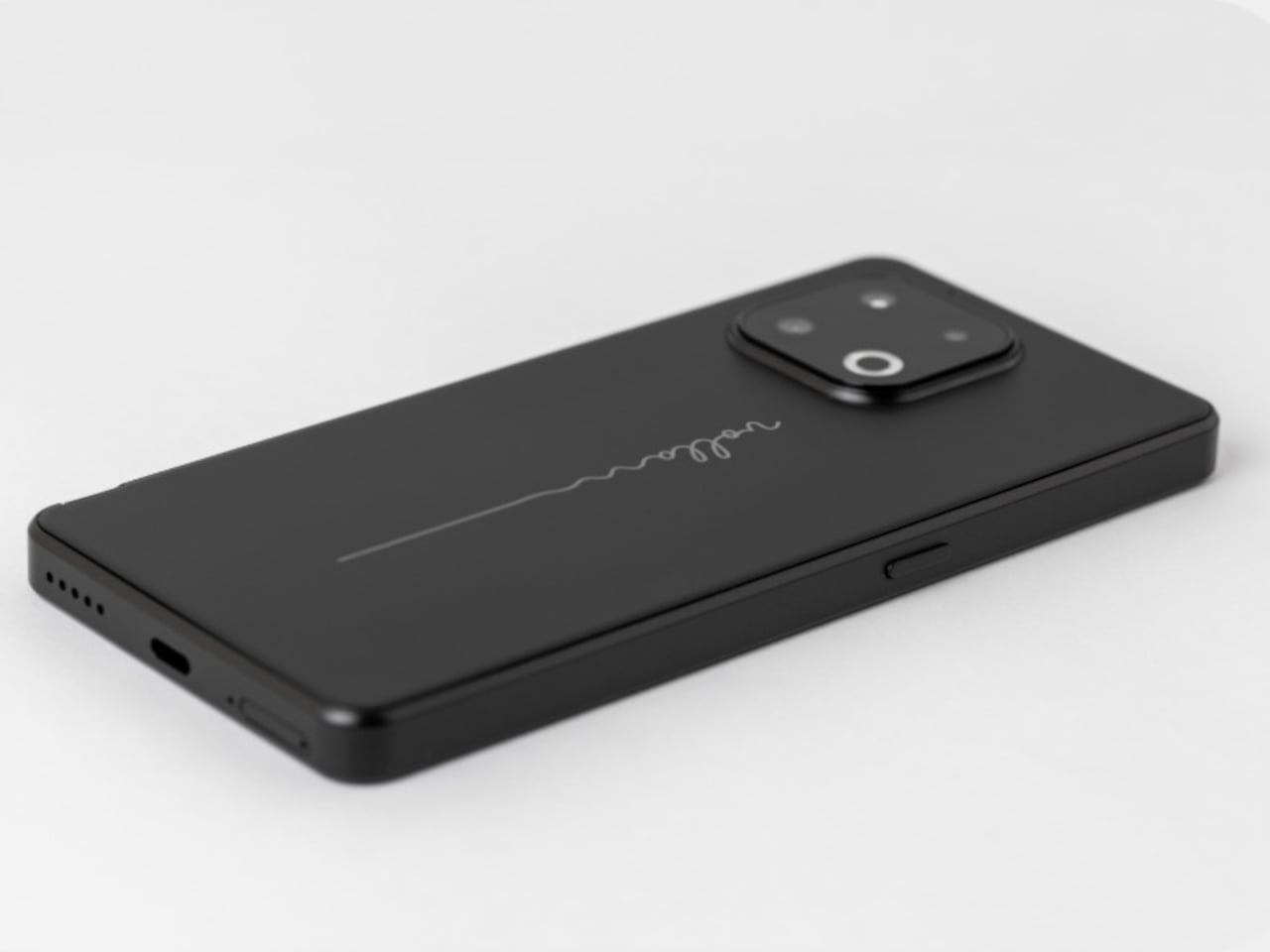
Most smartphones arrive with an assumption baked in: that your data routes through Google’s servers, its apps occupy your home screen, and the battery is sealed inside with no user path to replacement. The Volla Plinius pushes back on all three. It runs privacy-first software, ships with a physically swappable battery, and pairs those principles with IP68 waterproofing. It doesn’t ask you to choose between holding your ground and surviving the rain.

The hardware holds its end of the argument. A 5,300 mAh battery supports both 30W wired fast charging and 15W wireless charging, handling most daily scenarios without demanding much thought. For anyone caught between wanting a cleaner digital life and needing a phone that can handle the physical demands of actually living one, the Plinius is the clearest answer the market has offered in a long time.

What we like

  • A replaceable battery on a device that doesn’t sacrifice IP68 build quality to offer it
  • Privacy-first software paired with genuine ruggedness, without the usual compromise on real-world performance

What we dislike

  • Living Google-free requires a genuine commitment to alternative app ecosystems that not every user is prepared for
  • 30W charging is functional but trails the fast-charging benchmarks set by competing flagship devices

2. Portable CD Cover Player

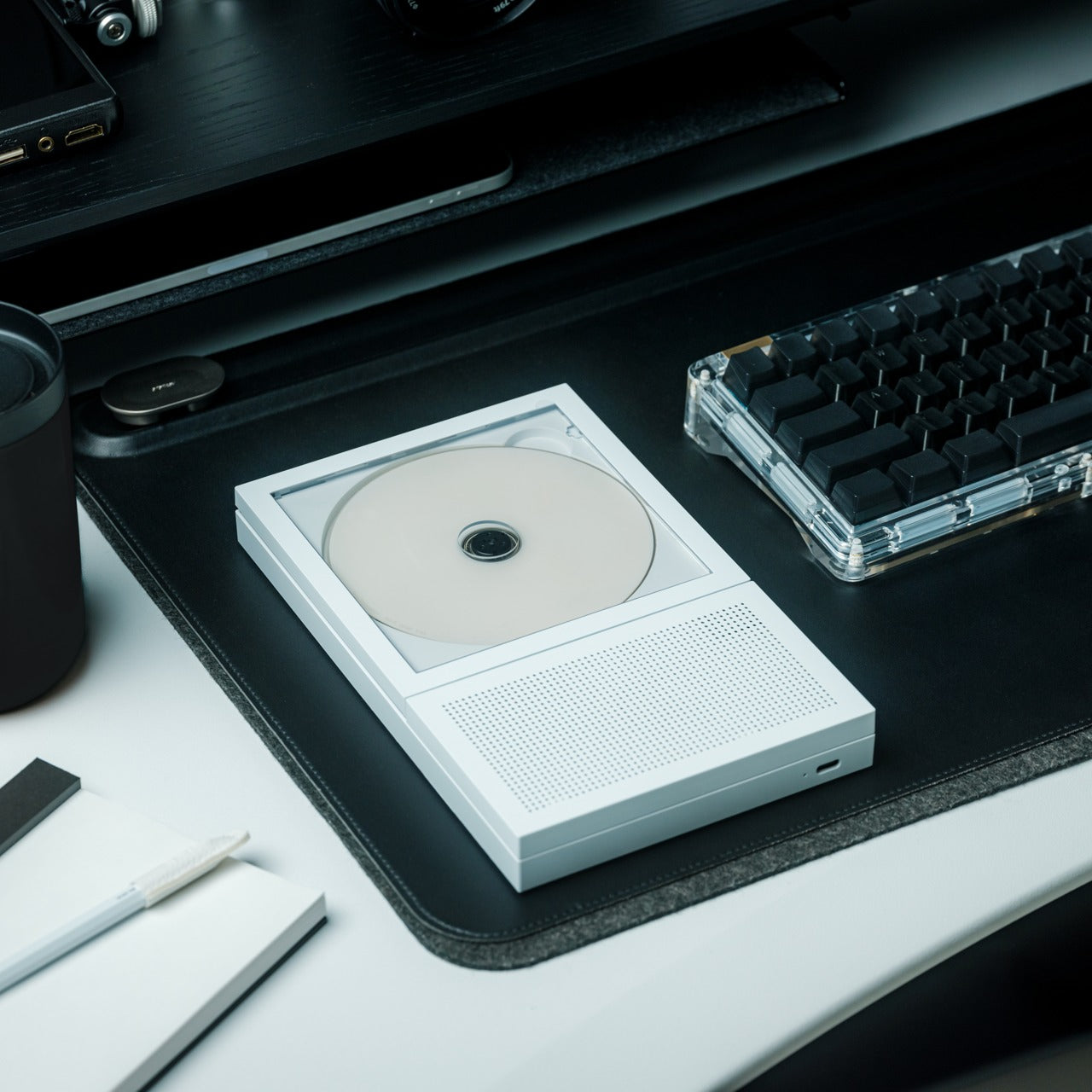
The album cover was never just packaging. For an entire generation of listeners, it was the first thing you saw before the music started, and it became inseparable from the sound itself. The Portable CD Cover Player understands that. It displays the jacket of whichever disc is loaded as part of the listening experience, giving forgotten CDs a place back on your desk and giving the art around them a reason to exist again.

Built-in speakers and a rechargeable battery mean it functions as a standalone piece rather than a peripheral waiting for something else to do the heavy lifting. A wall-mount bracket option takes it further, turning the player into a room feature rather than just a desk object. Starting from $199, it operates in the space where audio hardware and interior design genuinely intersect: for anyone who grew up measuring their taste by what lived on their shelves, this is the right address.

Click Here to Buy Now: $209.00

What we like

  • Album art becomes part of the room rather than a two-inch thumbnail buried on a phone screen
  • Wall-mount capability turns it from a CD player into a considered piece of interior design

What we dislike

  • The $199 starting price is a real commitment for a device competing against streaming software that costs nothing
  • Bluetooth convenience is central to the pitch, but audio purists may want more control over output quality

3. Canon Pocket Gimbal Camera

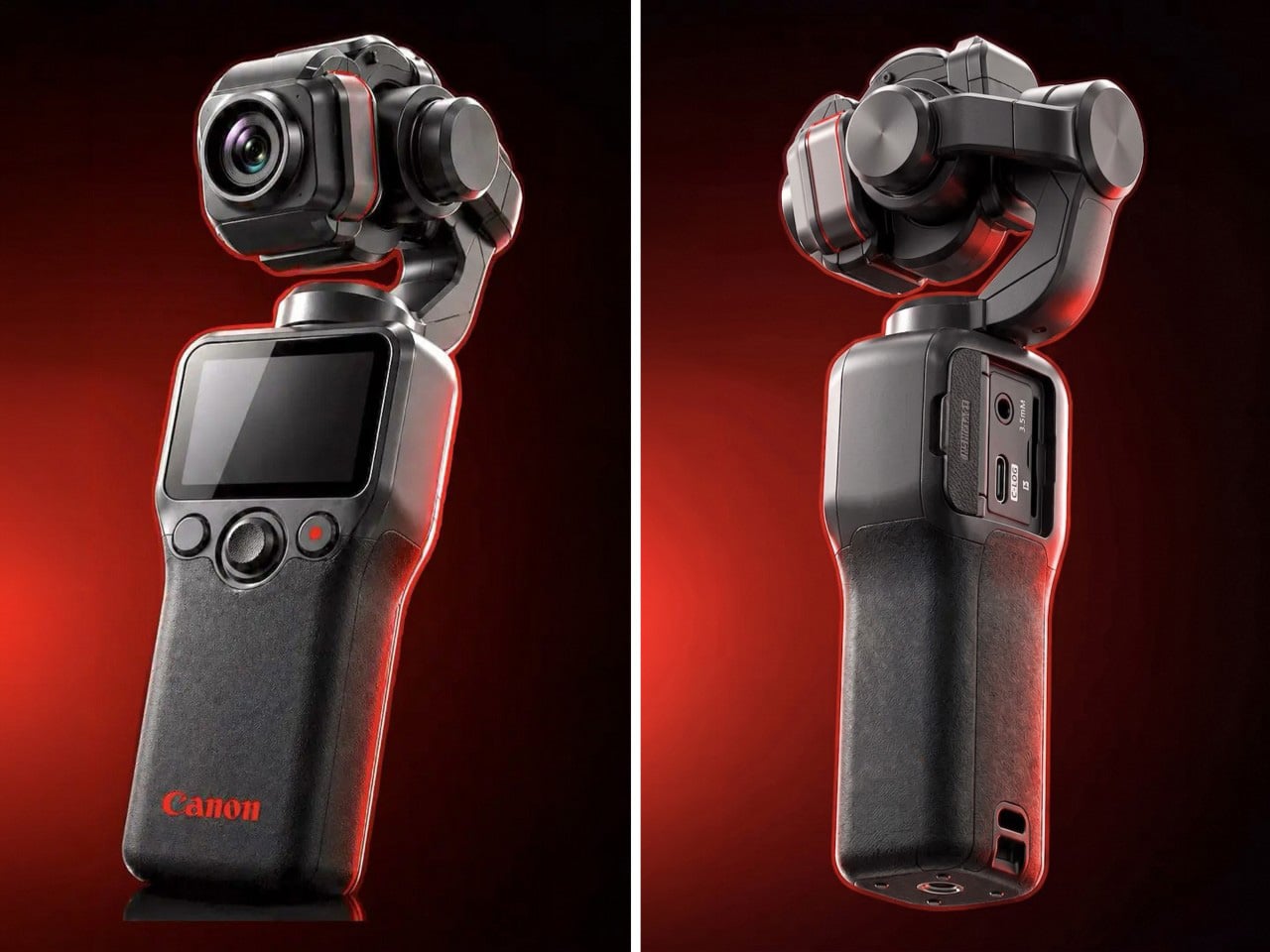
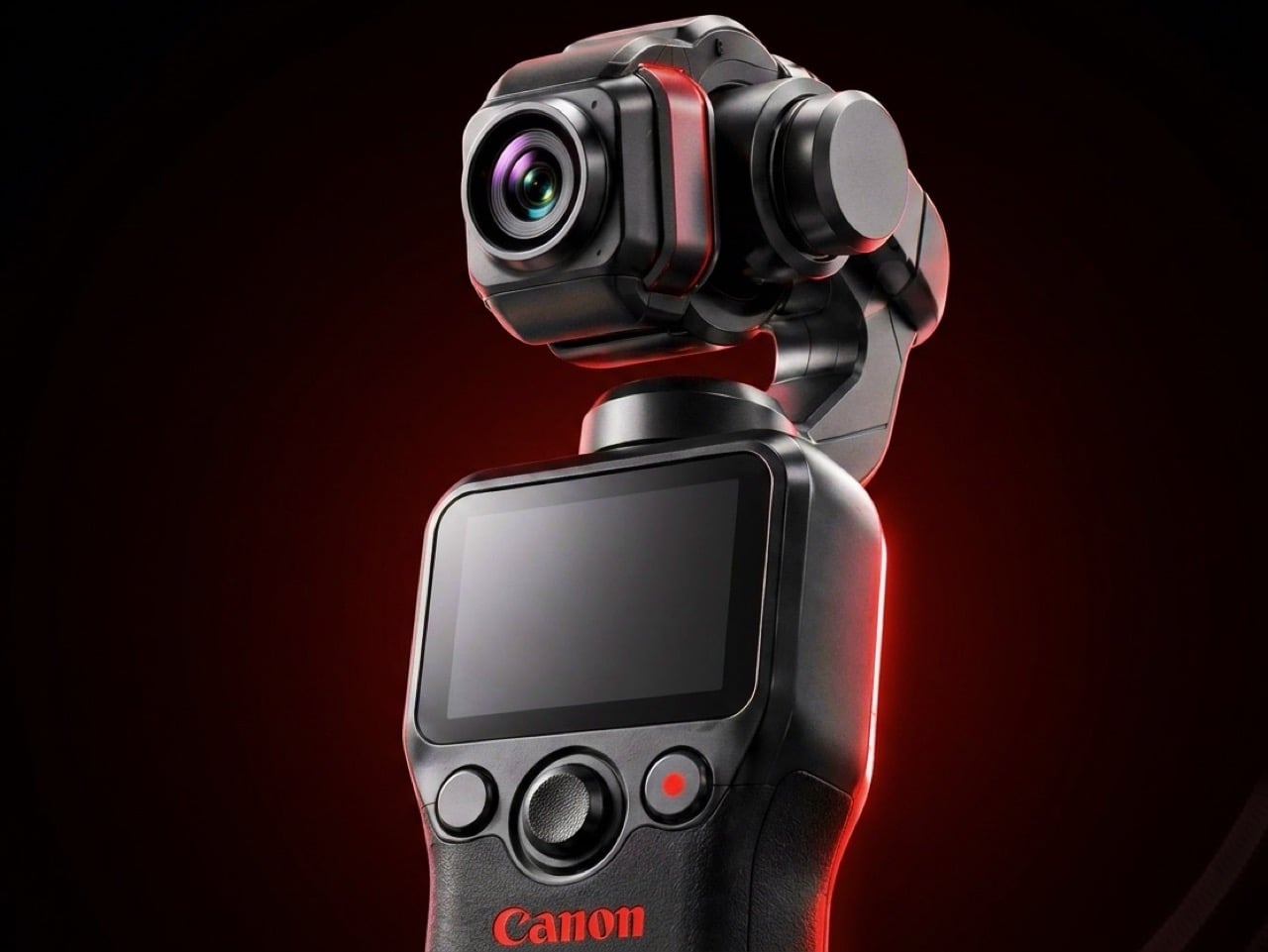
DJI built the pocket gimbal camera market almost entirely by itself, and for years nobody credible showed up to challenge it. The Osmo Pocket became the default recommendation for vloggers and travel creators wanting stabilized footage without strapping a full rig to their wrist, and DJI knew exactly where that left everyone else. Canon’s newly confirmed pocket gimbal, a compact three-axis setup with a fixed lens and an auto-folding mechanism, signals the company is finally ready to contest that space.

The design addresses portability in a way that feels considered rather than reactive. The auto-folding structure keeps the camera compact enough for a jacket pocket, while three-axis stabilization handles the walking and handheld movement that makes most phone footage feel unsteady. Canon’s optical legacy gives it a genuine argument the moment it ships. DJI has held this category comfortably for years, but a well-executed Canon entry would give content creators a real choice the market hasn’t genuinely offered before.

What we like

  • The auto-folding mechanism takes pocket portability seriously without compromising the stabilization hardware beneath it
  • Canon’s lens engineering brings an optical credibility that drone-first brands can’t claim by default

What we dislike

  • A fixed lens limits creative flexibility for anyone shooting beyond the standard focal length
  • The design is patent-confirmed rather than shipping, so real-world performance still needs to be seen

4. OrigamiSwift Folding Mouse

The problem with most travel mice is that they ask you to shrink your hand into the device rather than the other way around. The OrigamiSwift, designed by Horace Lam, flips that logic. Inspired by origami, it folds to an ultra-thin profile for transit and opens into a full-sized ergonomic mouse in under half a second. At just 40 grams, it’s the kind of object that stops feeling like a compromise the moment you pick it up.

The Bluetooth connection supports the kind of mobile workflow it was built for: a café table, a flight tray, a co-working space with limited surface area. What separates it from other folding peripherals is the discipline in the design. The open position feels like a real mouse, not a travel mouse trying to pass as one. That distinction matters at a proper desk, and it matters even more when you’re trying to get serious work done somewhere that isn’t one.

Click Here to Buy Now: $85.00

What we like

  • At 40 grams with a sub-0.5-second deployment, portability and usability genuinely stop being a trade-off
  • Full-sized ergonomics in the open position means no physical compromise in the actual working configuration

What we dislike

  • Bluetooth-only connectivity may be a limiting factor for users in precision-sensitive or low-latency workflows
  • The folding mechanism, elegant as it is, introduces a hinge point that any road warrior will want to stress-test over time

5. MelGeek Centauri80

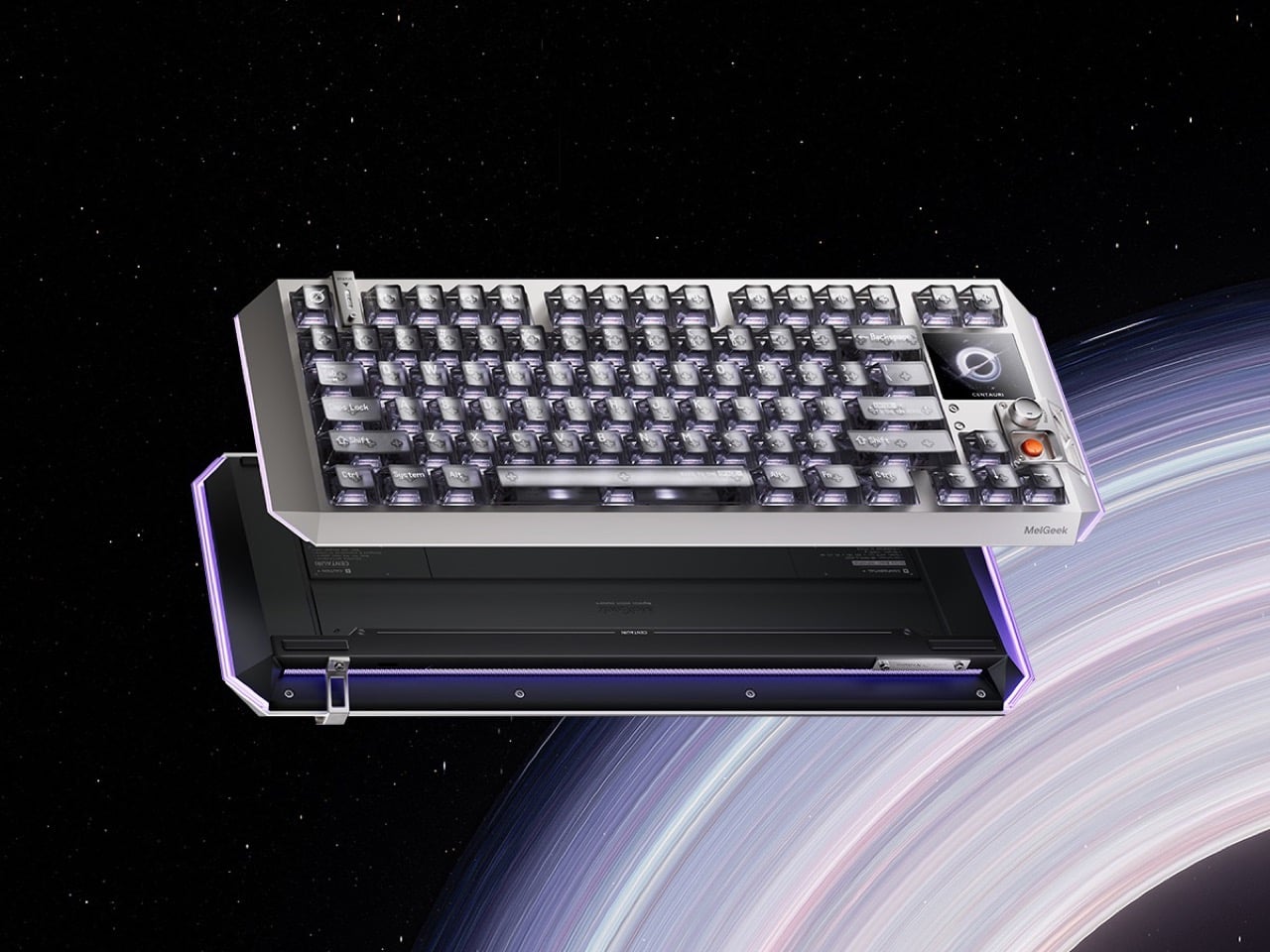
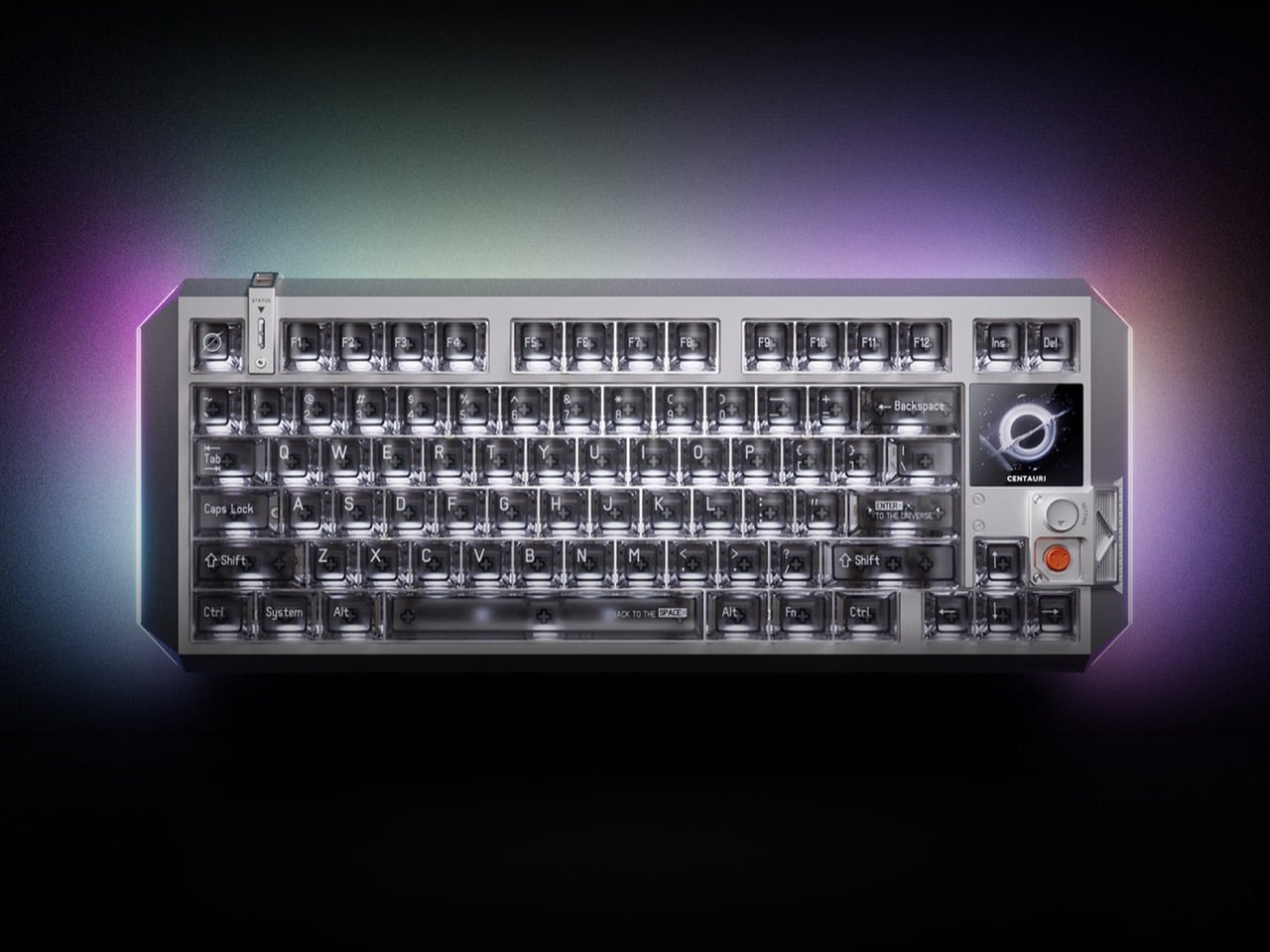
The mechanical keyboard market has spent years dividing the people who care about feel from those who care about performance, as though those are mutually exclusive categories. The MelGeek Centauri80 refuses that split. Under its suspended aluminum alloy unibody, which floats within the outer frame to reduce vibration transfer, sits a distributed architecture of six microcontroller chips driving TTC Flip King magnetic switches to 0.125ms latency at an 8000Hz polling rate.

The five-layer gasket-mounted acoustic structure means the sound engineering is as deliberate as the hardware specification. Every keystroke travels through dampening foam and a silicone layer, giving the typing experience a control you don’t often find at this price point. At $299, it positions itself directly against the Wooting 60HE and the rest of the Hall Effect field. For anyone who wanted a keyboard that takes acoustics and responsiveness with equal seriousness, the Centauri80 makes that case without needing to announce it.

What we like

  • 0.125ms latency at 8000Hz polling is a genuine competitive specification, not a marketing talking point
  • The floating aluminum unibody and five-layer gasket mount make acoustic performance a first-class design feature

What we dislike

  • $299 is a meaningful investment in a Hall Effect market with capable alternatives sitting below that price
  • An 80% layout means function row users will need time to adjust before the board starts feeling natural

The Best Tech Isn’t the Loudest. It’s the Most Decided.

The tech that earns its place this month isn’t defined by specs alone; it’s defined by what those specs are actually solving for. A replaceable battery on a privacy-first phone. An album player that gives cover art back its proper place in a room. A keyboard that treats acoustics as a discipline rather than a footnote. Each product here is built around a clear decision about what actually matters, and that intentionality is what separates a useful gadget from a forgettable one.

Design is the most honest form of opinion. The Volla Plinius says your data belongs to you. The Centauri80 says typing should feel as precise as it sounds. The OrigamiSwift says portability and performance don’t have to be negotiated away. The products that make it onto lists like this aren’t the loudest or the most heavily marketed. They’re the ones that arrive with a clear point of view and the engineering to back it up.

The post The 5 Best Tech Gadgets of June 2026 first appeared on Yanko Design.
A Designer Spent Ten Years Perfecting the Most Beautiful Pill Organizer You’ll Ever See

About ten years ago, designer Adam C Miller made a pillbox for a close friend living with an invisible illness. The standard option available to her was the familiar hard plastic pharmacy organizer, practical enough, but hardly something anyone would want to carry proudly or leave out in the open. Miller decided she deserved better. Starting with a block of maple, paper templates, a few screws, and a lot of sandpaper, he built a pillbox she would actually want to keep nearby. That first handmade object became the beginning of Helia.

The project stayed with him for years. Miller kept refining the idea, and when he began taking a daily regimen himself, the design took on even more personal weight. About a year ago, he revisited the category and found plenty of pill cases that handled the basics, but very few that felt genuinely beautiful, portable, and display-worthy at the same time. Helia became the answer to that gap, shaped by a decade of iteration and by the simple belief that an object tied to daily care can carry warmth, beauty, and intention.

Designer: Adam C Miller (IDMill)

Click Here to Buy Now: $40 $60 (33% off) Hurry! Only 14 of 100 left.

That mindset allowed Miller to look at Helia and pillboxes very differently. We already reserve beautiful containers for the things we value most. Watches arrive in fitted cases, jewelry rests in lined boxes, and keepsakes are stored in objects designed to honor their presence. Helia brings that same level of consideration to a weekly pill organizer. It treats a daily medical routine as something worth leaving out where you can see it –
personal and dignified instead of something to hide in a drawer.

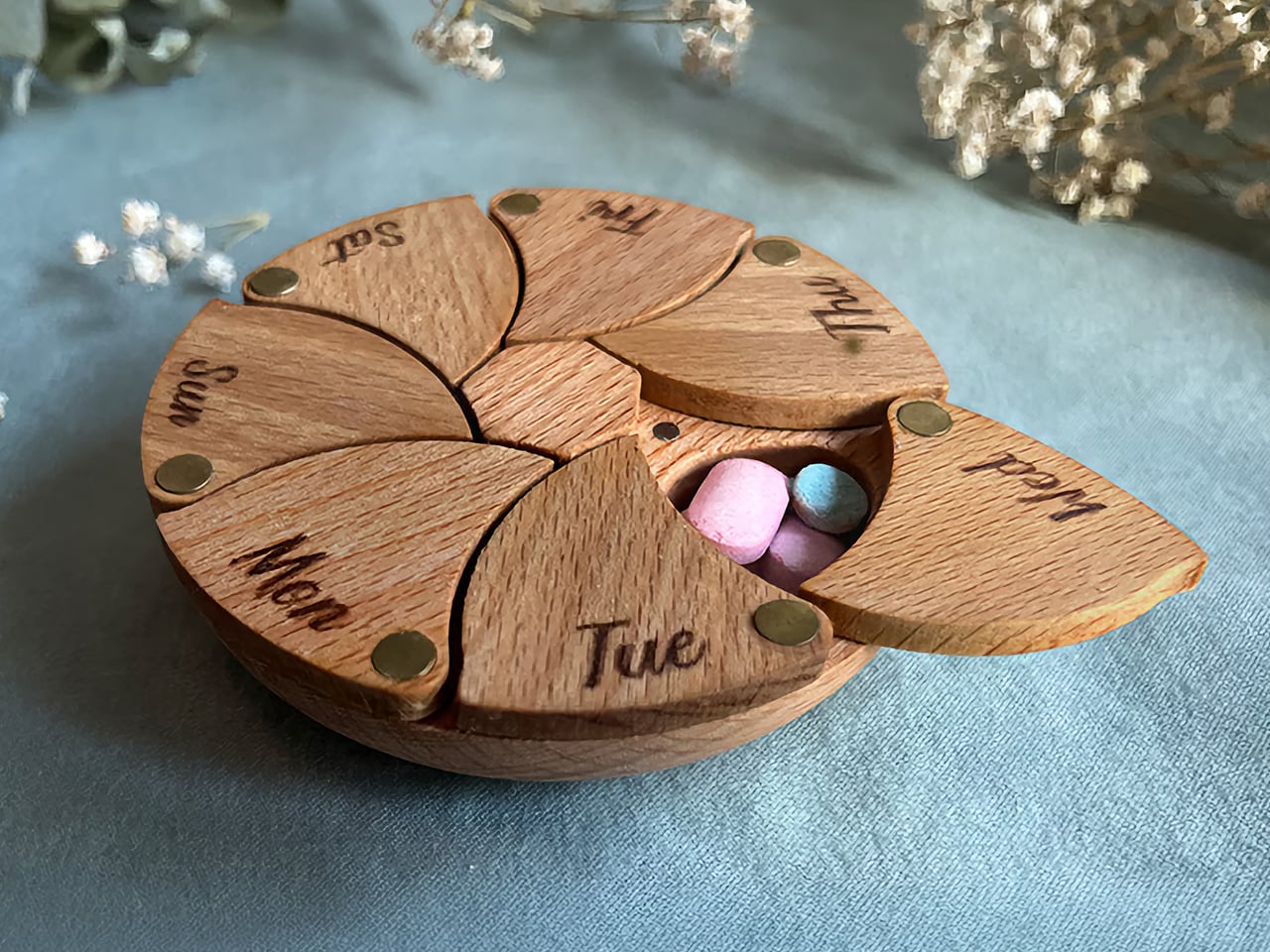
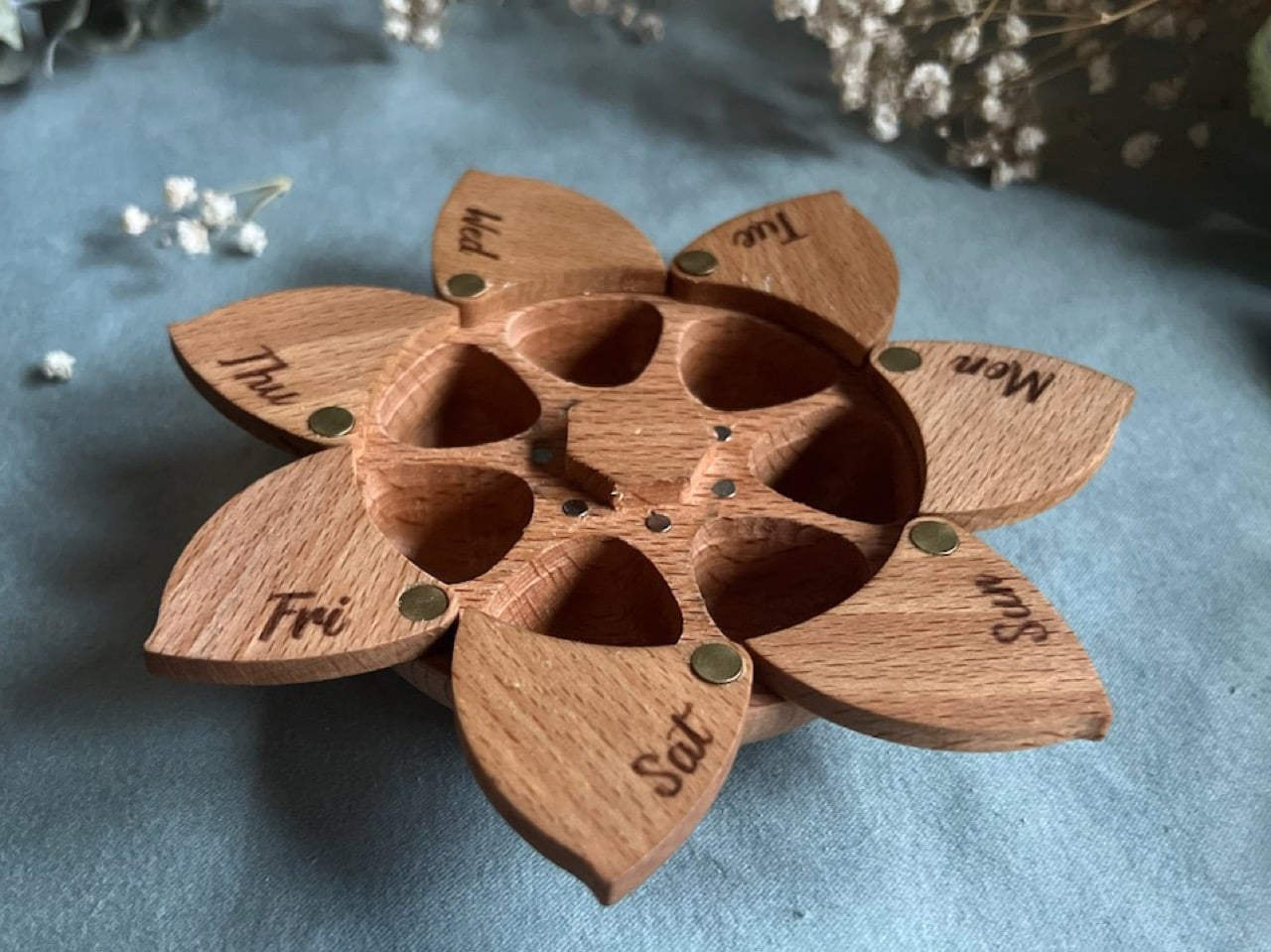
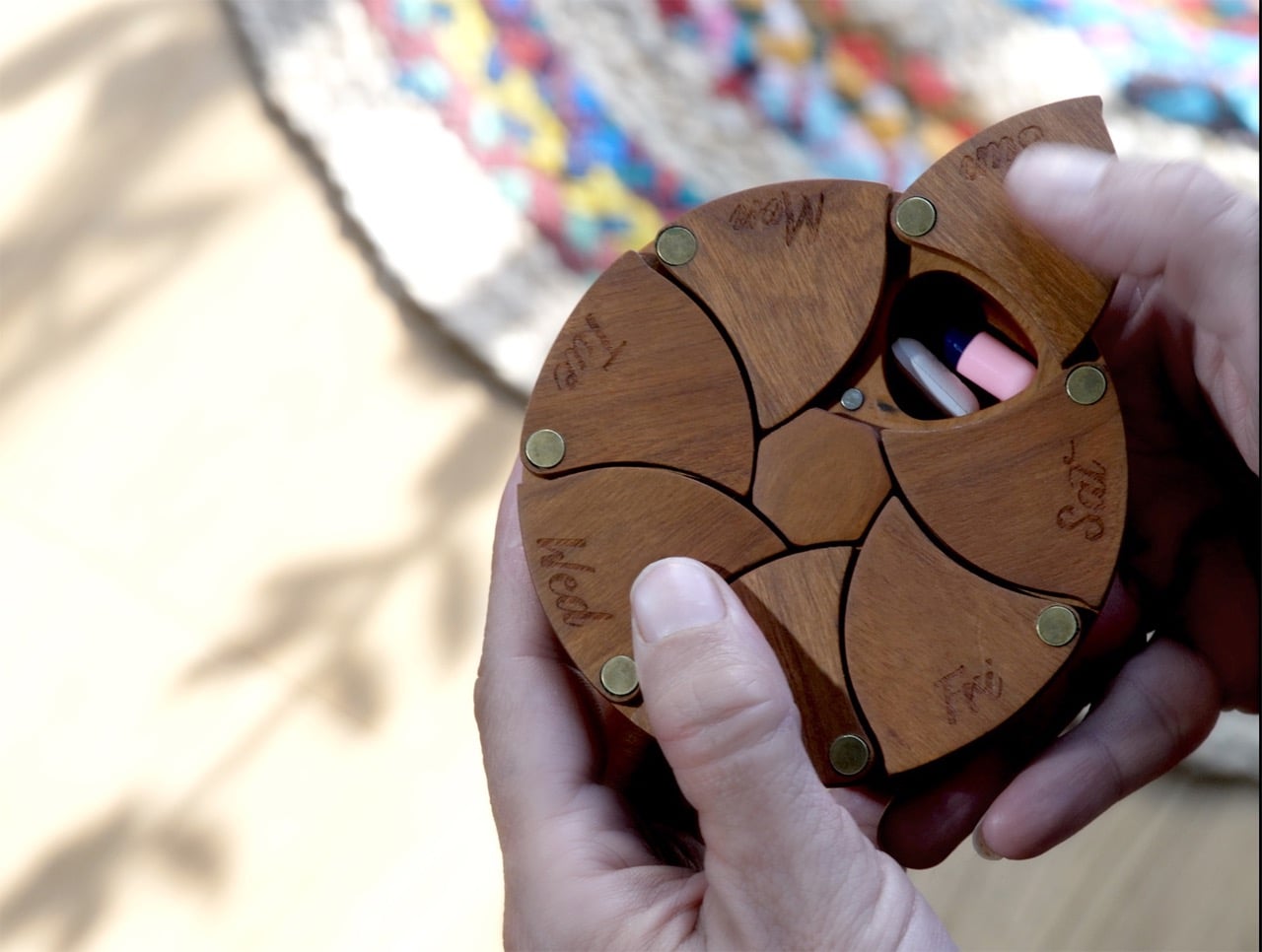
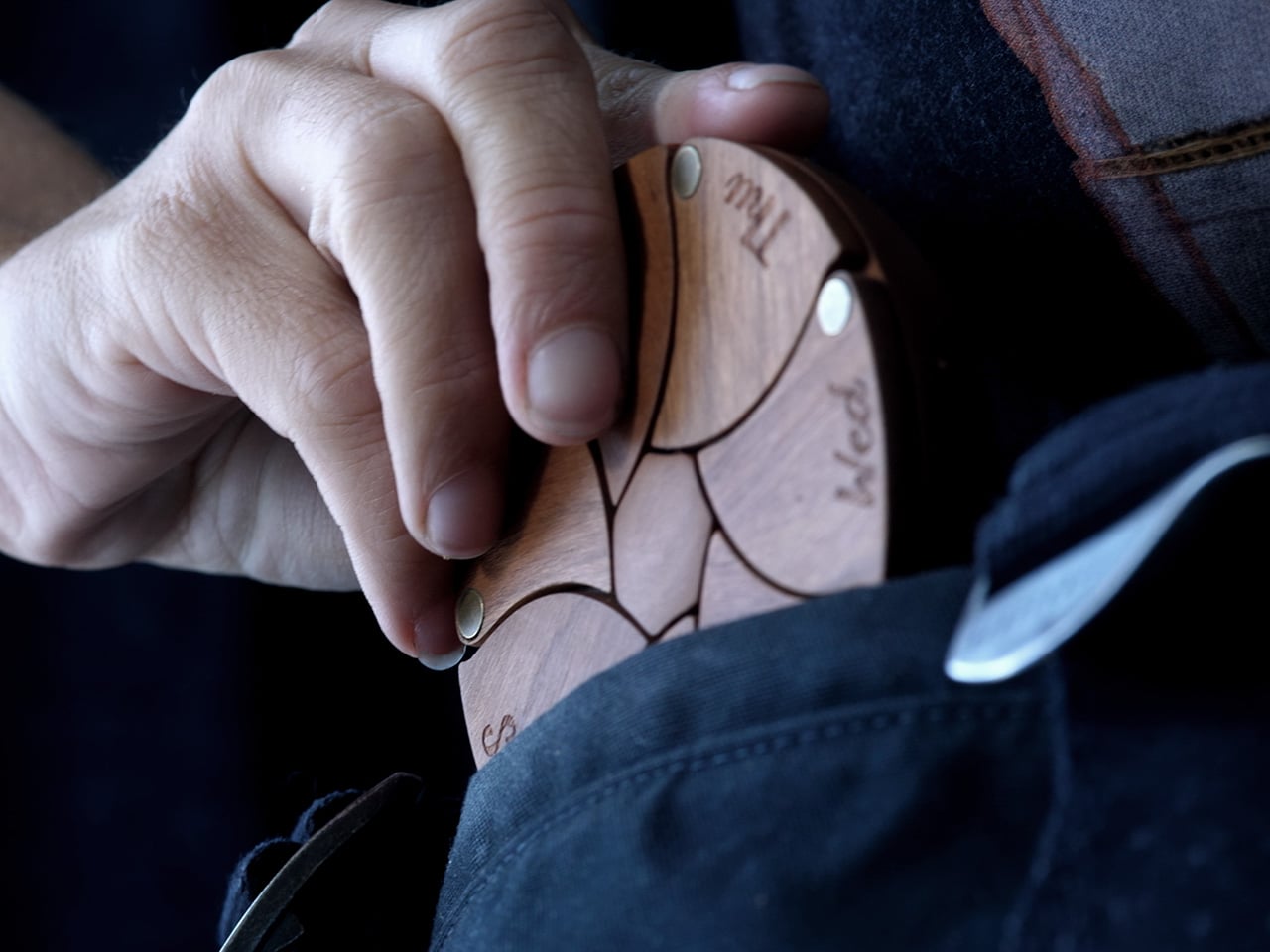
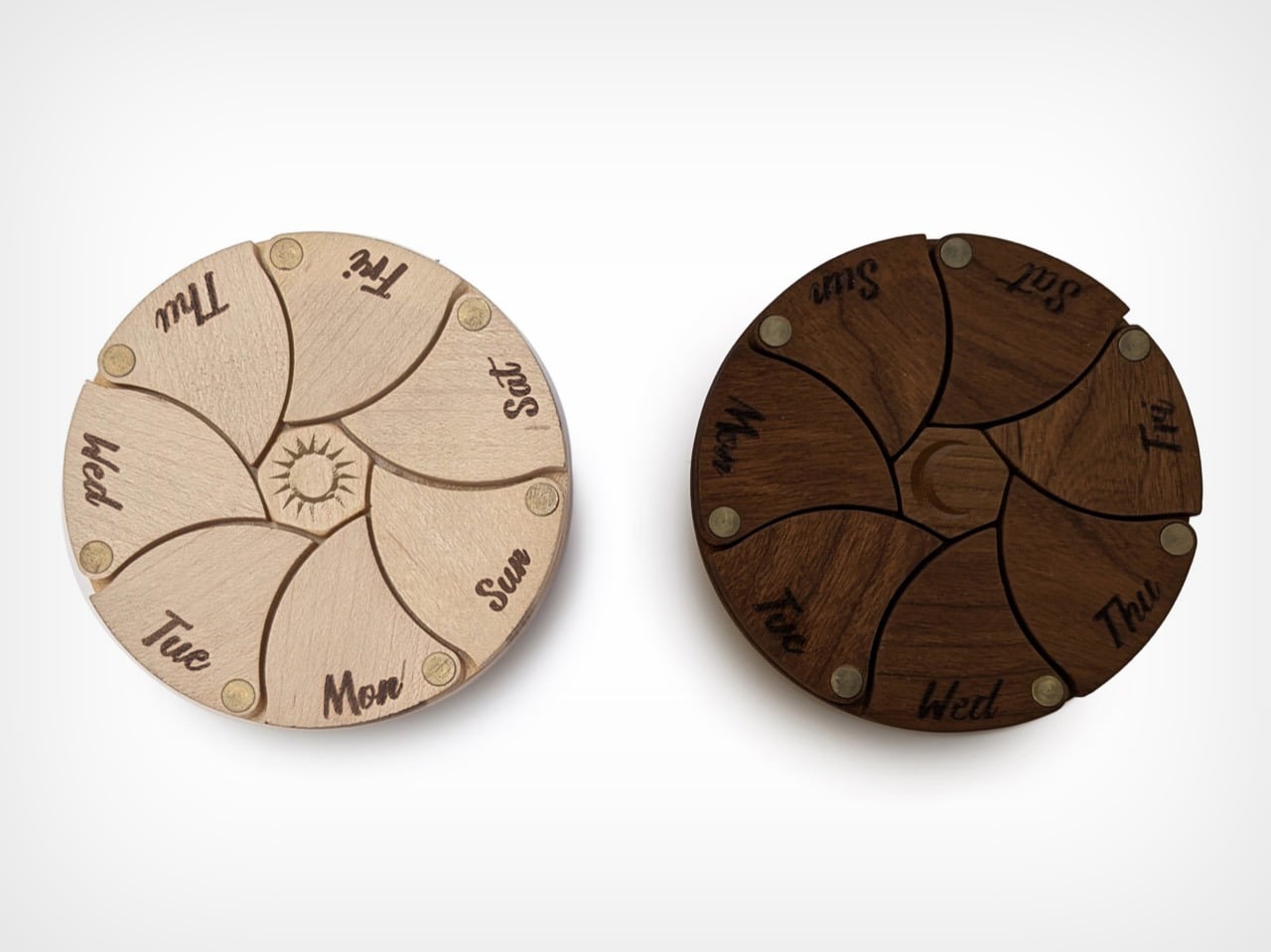
Seven petal-like compartments radiate from a central axis, forming a circular disc that reads closer to a crafted artifact than a storage device. With beautiful hardwood construction and seven magnetic doors, it is confidence-inspiring and satisfying to use. The primary material is FSC-certified cherry wood, finished with a food-safe, water-resistant mineral oil that brings out the warm reddish tones the species is known for. The wood species were tested one by one until cherry emerged as the clear choice after the finish was applied. Each compartment door turns on solid brass rivets and closes with strong neodymium magnets, adding a material contrast that lifts the object’s visual weight considerably, and the combination of wood, brass, and organic petal geometry gives Helia a design language the category has simply never used.

Each of the seven doors snaps open and closed with a satisfying click, held in place by four magnets each. They hold open while you load your medicine for the week, and when they snap closed, they hold your medication safe and secure. The door mechanism alone went through half a dozen iterations before it felt exactly right. Each daily pocket is about 0.9 inches across and roughly 0.5 inches deep, with room for a realistic daily mix, such as one large pill, three medium ones, and four small ones in a single compartment. It holds a week’s worth of medicine, while being compact enough to slip into a bag, and beautiful enough to leave on your counter.

Through his consulting firm IDMill, Miller has developed products spanning consumer electronics, furniture, RC vehicles, home goods, and tattoo machines, from initial sketch to production, for organizations ranging from thirty to thirty thousand employees. Within that range, his design work received a 2025 Silver A’Design Award for accessible design. He is also not new to Kickstarter, having co-founded the successfully funded ChargeCard and Snactiv campaigns before arriving at Helia.

The pharmacy pillbox has remained essentially unchanged for decades, and we are all familiar with the utilitarian rectangular plastic pill cases. These medicine organizers are designed to be used, then forgotten, out of sight in a drawer or buried in a bag. Everything about them reads clinical. Helia borrows from the same design playbook that transformed reading glasses into eyewear, orthopedic footwear into lifestyle sneakers, and fitness trackers into jewelry-grade wearables. In each of those cases, the category shifted when designers gave as much thought to the person using the object as to the function it performed. Helia frames itself as the shift from “clinical medicating” to “a daily ritual of taking care of you,” drawing on how spectacles evolved into eyewear and elevating the feeling of self-care through an object with genuine warmth, presence, and polish.

Helia is live on Kickstarter, where the standard cherry wood version starts at $40 for the early bird tier, limited to 100 pieces, before moving to a $45 campaign price, with retail planned at $60. The campaign also includes a Day and Night set that pairs a light maple Helia with a dark walnut one, engraved with a sun and moon respectively, along with personalized options, downloadable DIY files, and other extras worth exploring on the project page linked below. Shipping is expected in late 2026.

Click Here to Buy Now: $40 $60 (33% off) Hurry! Only 14 of 100 left.

The post A Designer Spent Ten Years Perfecting the Most Beautiful Pill Organizer You’ll Ever See first appeared on Yanko Design.
8 Last-Minute Father’s Day Gifts So Good He’ll Think You’ve Been Planning for Months

Father’s Day is the holiday most people intend to prepare for and don’t. June arrives, the week narrows, and suddenly you’re looking at a browser tab full of gift sets that say nothing specific about the person you’re buying for. The window hasn’t closed. Every product on this list ships fast, buys in minutes, and arrives looking like the result of careful thought rather than a Sunday evening scramble.

The eight picks below share one quality: they belong to the category of things men genuinely want but rarely buy for themselves. That gap between wanting and buying is exactly where a great gift lives. From a speaker shaped like a mixtape to a pen that writes without ink, each one communicates something specific about the person giving it: you noticed what he actually likes, and you found it.

1. Side A Cassette Speaker

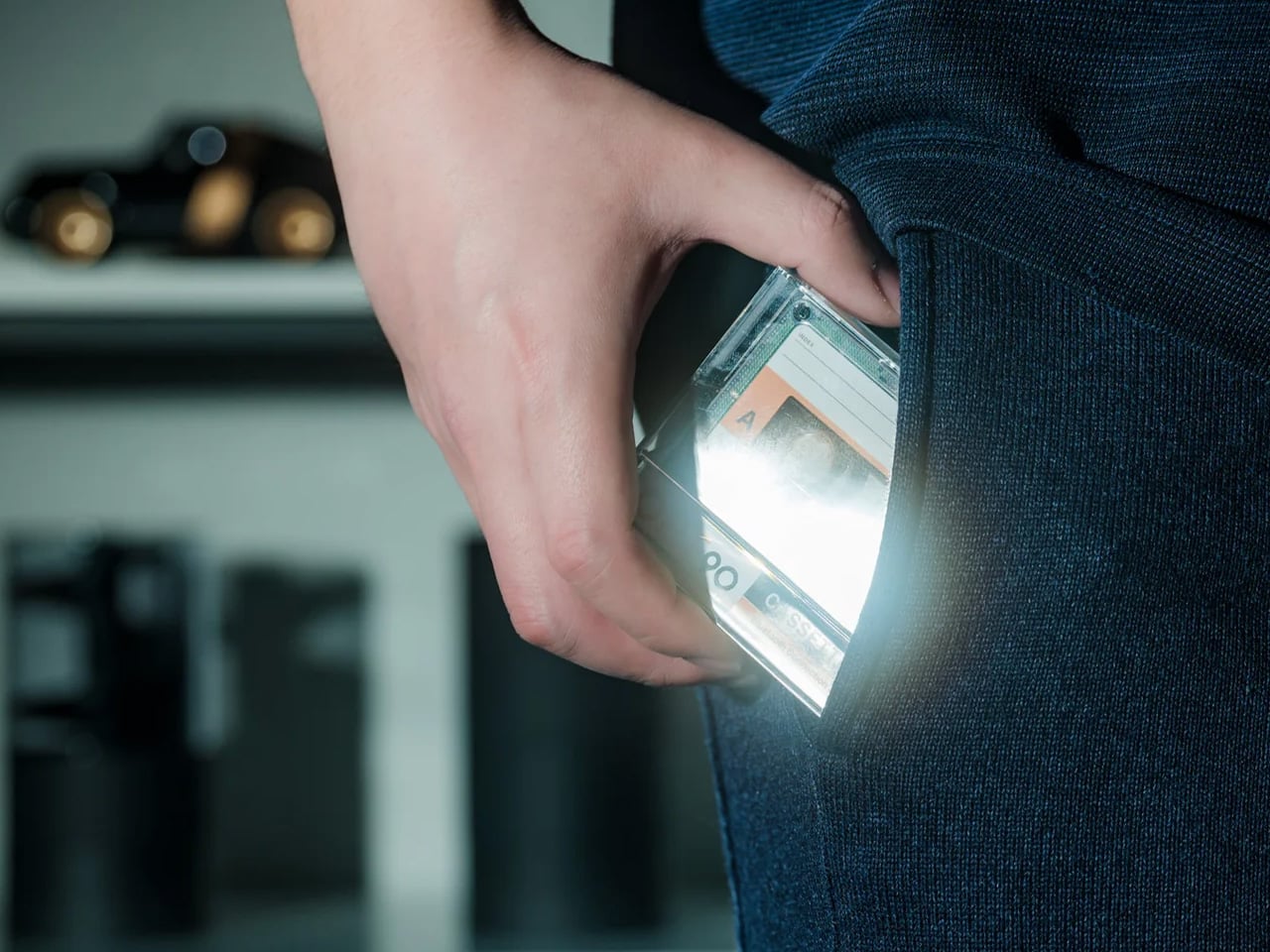
The Side A Cassette Speaker is built to look like a real mixtape. The transparent shell, the Side A label, the overall profile — it’s faithful enough to prompt a genuine double-take from anyone who spent their formative years recording songs off the radio. At 80 grams and arriving with a clear case that doubles as a display stand, it takes up almost no space on a shelf but immediately defines wherever it sits. For a dad who remembers making mixtapes, this does the emotional work before it plays a single note.

Bluetooth 5.3 handles wireless connection from any phone, tablet, or laptop. A microSD card slot adds offline MP3 playback for anyone who still curates music rather than surrendering it to an algorithm, and battery life runs to six hours with a two-hour USB-C recharge. The sound is tuned for warmth rather than clinical accuracy, which is exactly the right call for an object built around analog feeling.

Click Here to Buy Now: $49.00

What We Like

  • Cassette form is executed faithfully enough to spark a real conversation, not just a polite smile before the object gets set aside
  • MicroSD offline playback is a thoughtful addition for any dad who believes a carefully chosen playlist says more than a shuffle queue ever could

What We Dislike

  • Six hours of battery life is modest — the trade-off makes sense at this size, but worth knowing before the gift gets unwrapped
  • Sound leans toward warmth and character rather than reference performance, so temper expectations accordingly

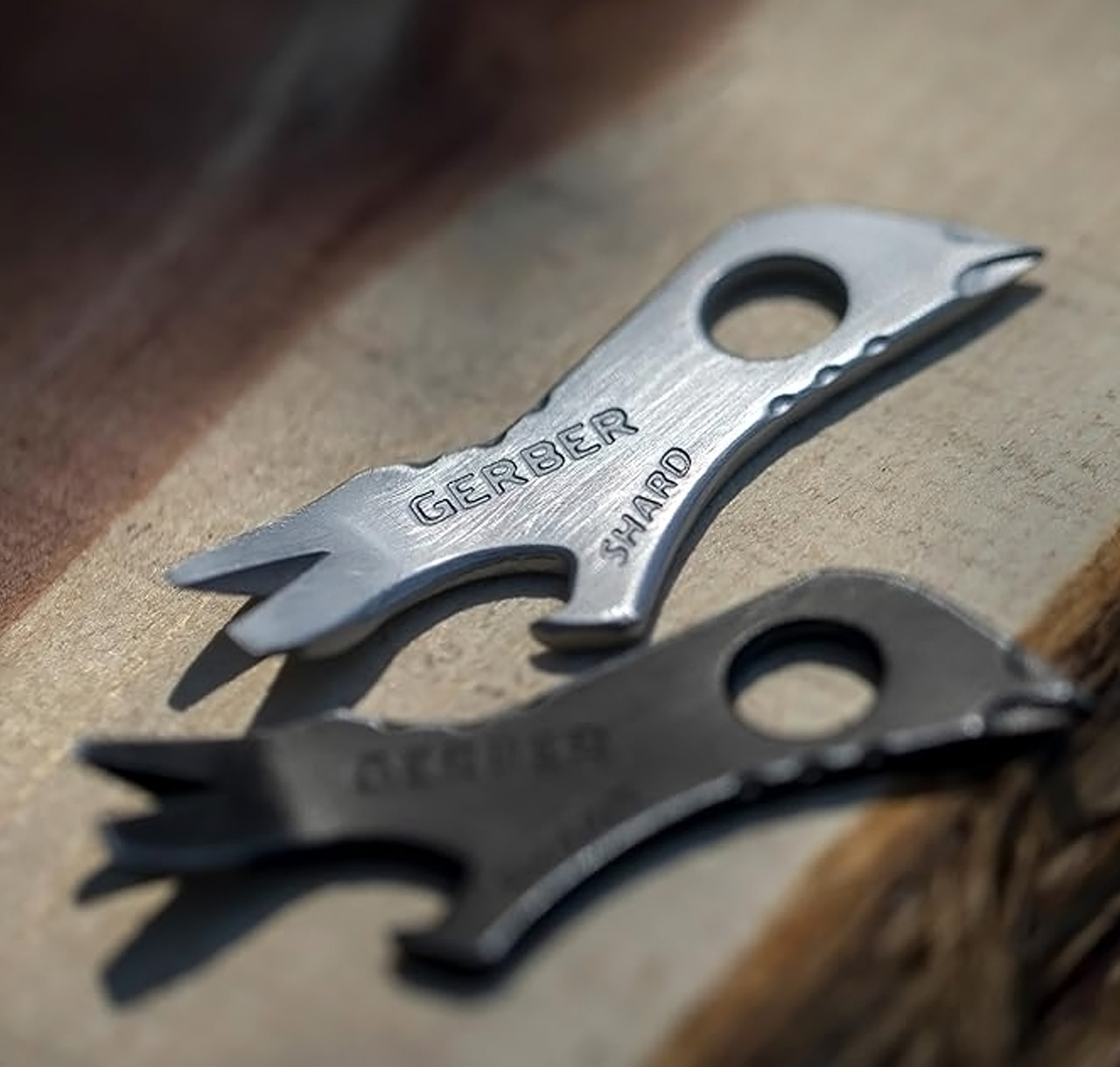
2. Gerber Shard Keychain Tool

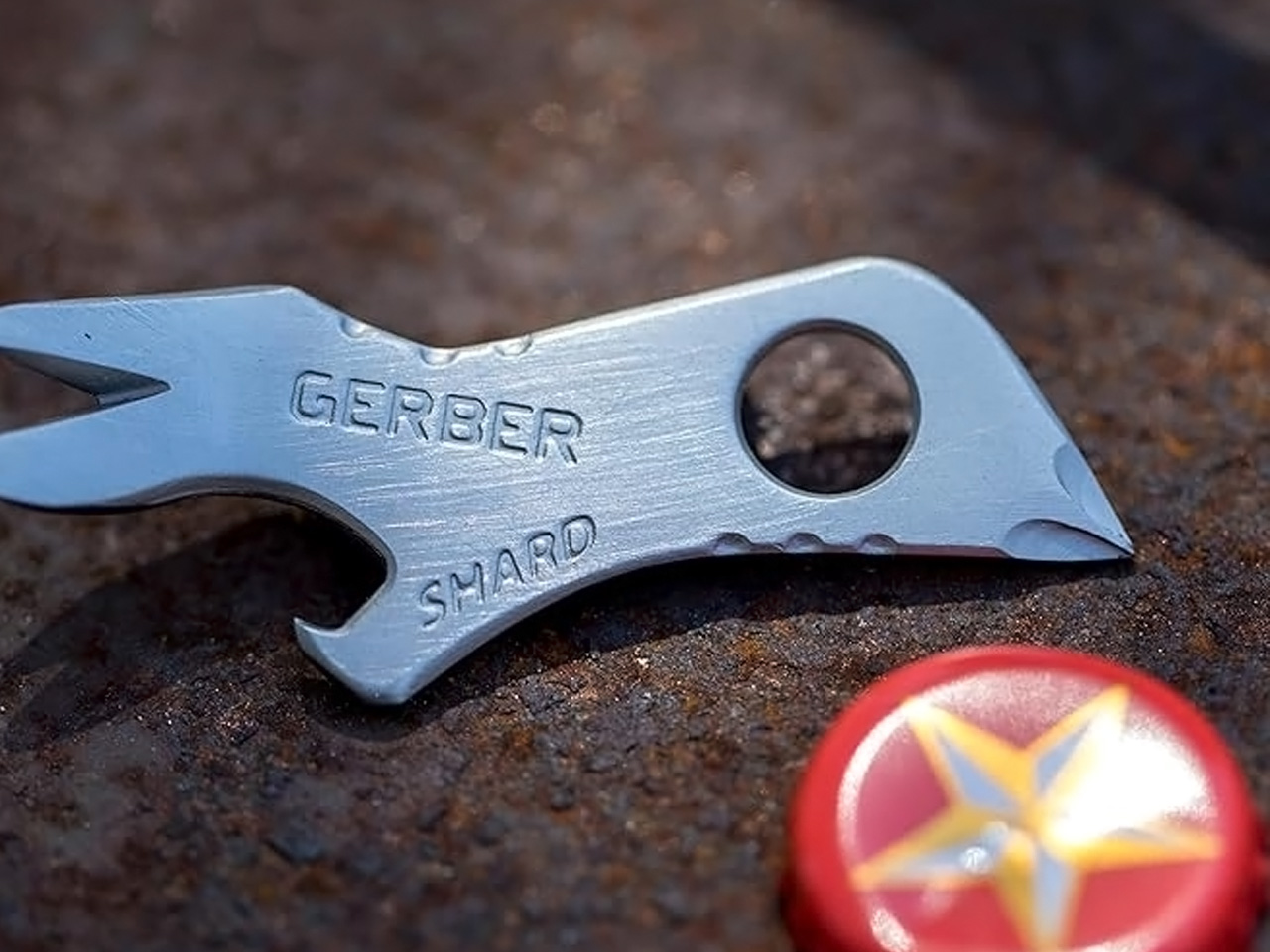
The Gerber Shard takes about four seconds to explain and about four days to fully appreciate. A single piece of titanium, pressed flat, with a pry bar, bottle opener, flathead driver, wire stripper, and lanyard hole all living in the same compact profile. It slips onto any keyring without adding meaningful weight or bulk.

What makes the Shard worth gifting rather than simply keeping is its TSA compliance. The blade-free construction means it clears airport security without a conversation, which makes it genuinely useful for any dad who travels regularly. It solves the small daily frictions — a stuck lid, a screw that needs turning, a bottle that needs opening — without asking him to adjust what he already carries. Something this useful and this affordable rarely looks this considered, and that gap is exactly where the gift lands.

What We Like

  • TSA-compliant titanium construction means it travels everywhere — no conversations at security, no confiscations
  • At $10, the value is genuinely hard to argue with — most multitools at five times the price solve fewer daily problems

What We Dislike

  • Function set is intentionally narrow — anyone expecting Leatherman-level capability will need to look elsewhere
  • The flathead driver won’t accommodate Phillips heads, which limits its usefulness for anything beyond basic fastener work

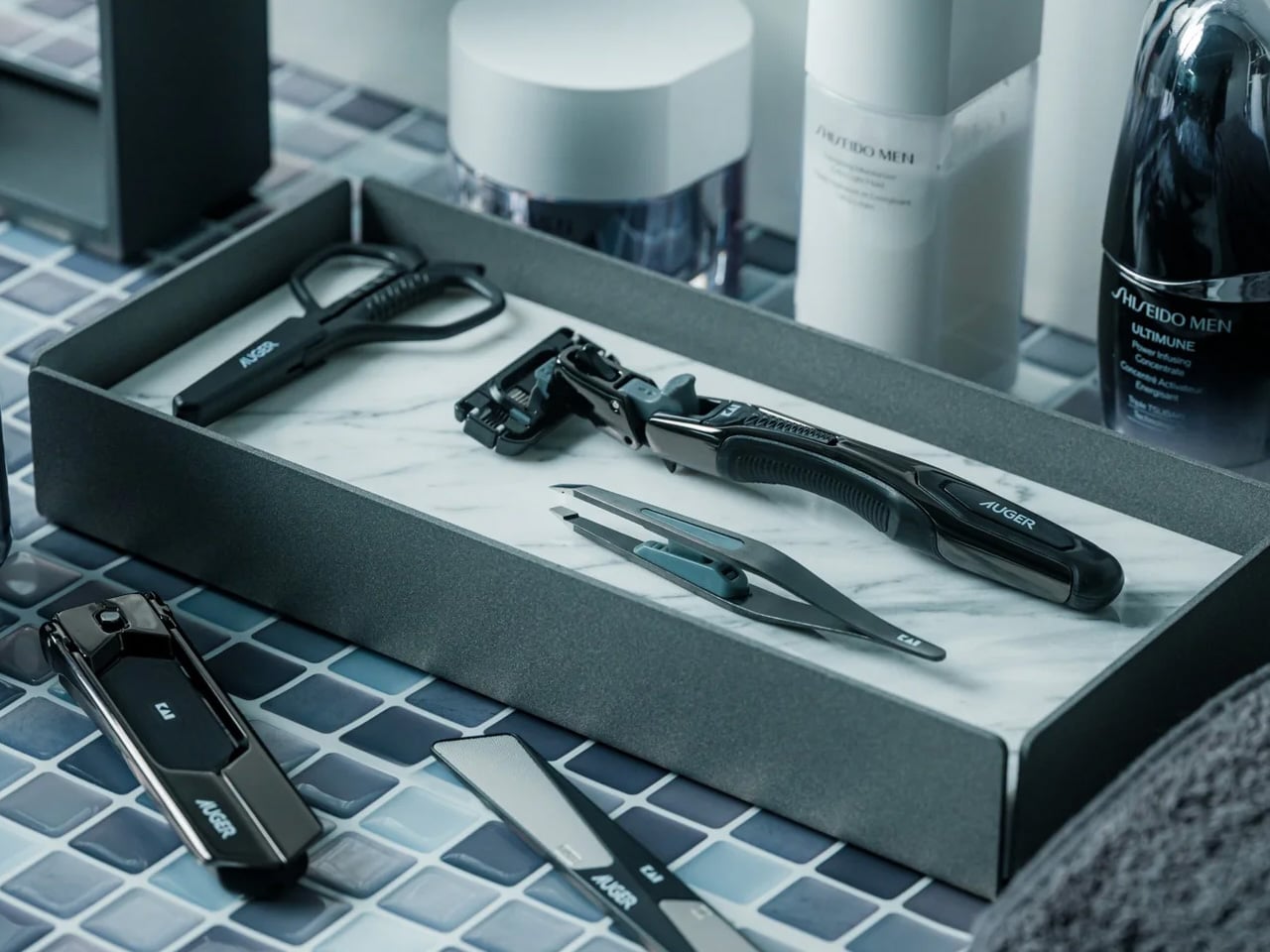
3. Auger PrecisionMaster Grooming Set

Grooming sets tend to fall into one of two categories: the kind bought without much thought, and the kind that reflect a genuine understanding of what precision looks like in a daily routine. The Auger Precision Mastergrooming Set belongs firmly in the second group. Designed with the same intention that good EDC tools bring to carry gear, it applies that same thinking to the objects a man reaches for every morning.

What separates a well-made grooming kit from a forgettable one is how it feels in hand and what it asks of the person using it. The Auger set is built for the dad who treats his routine like craft rather than obligation, who notices the difference between a tool designed with care and one that simply fulfills its function. For Father’s Day, that specificity matters. This is the upgrade he hasn’t bought himself yet, and it arrives looking nothing like the last-minute decision it technically was.

Click Here to Buy Now: $149.00

What We Like

  • Brings the precision-first philosophy of good EDC design to a category that rarely receives that level of editorial attention
  • Works as both a daily-use kit and a display-worthy object — the standard any well-made grooming set should be held to

What We Dislike

  • A dad who keeps his routine deliberately minimal may find the full kit more than his mornings require
  • The value concentrates for someone who’ll actually use it daily — as a display piece alone, the case becomes harder to make

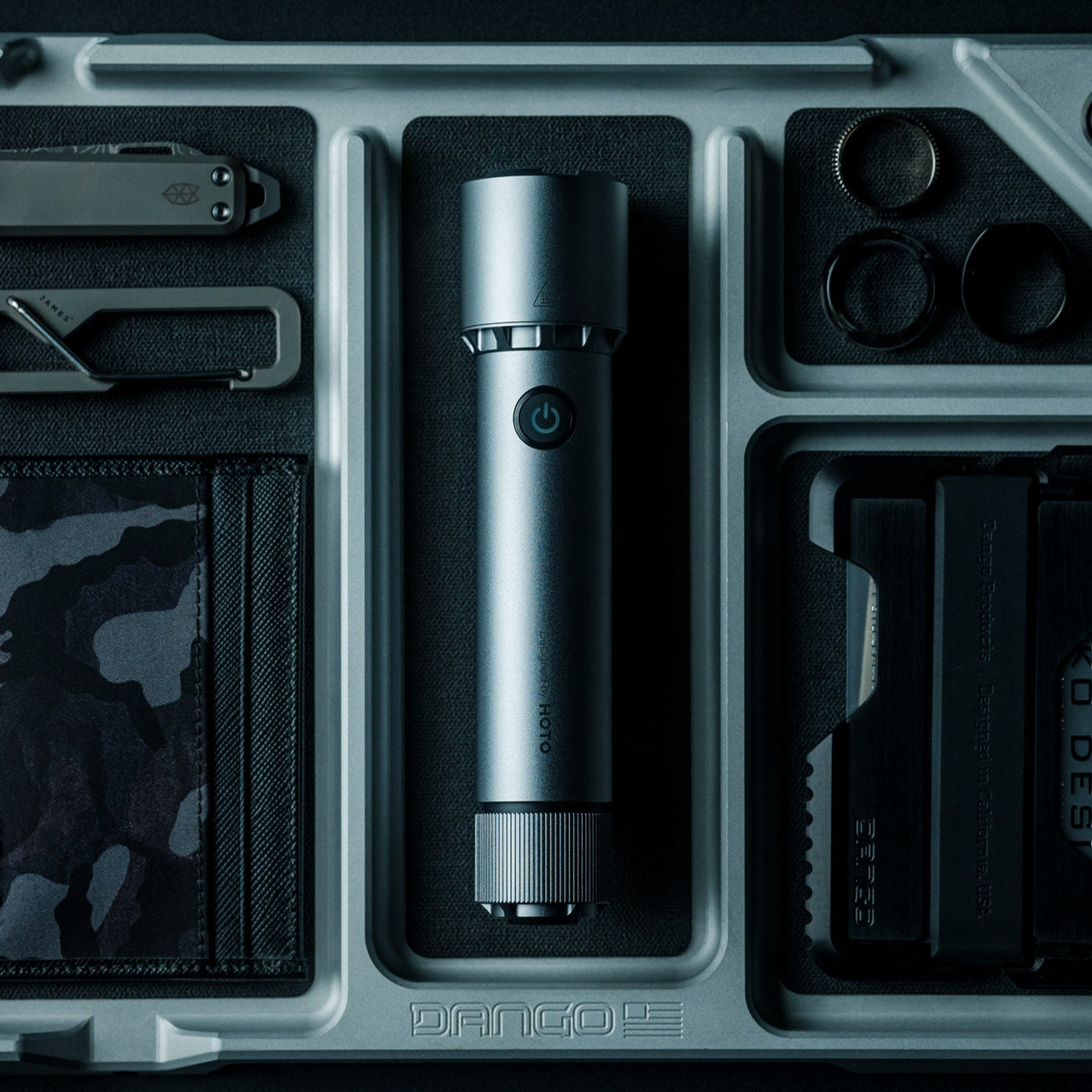
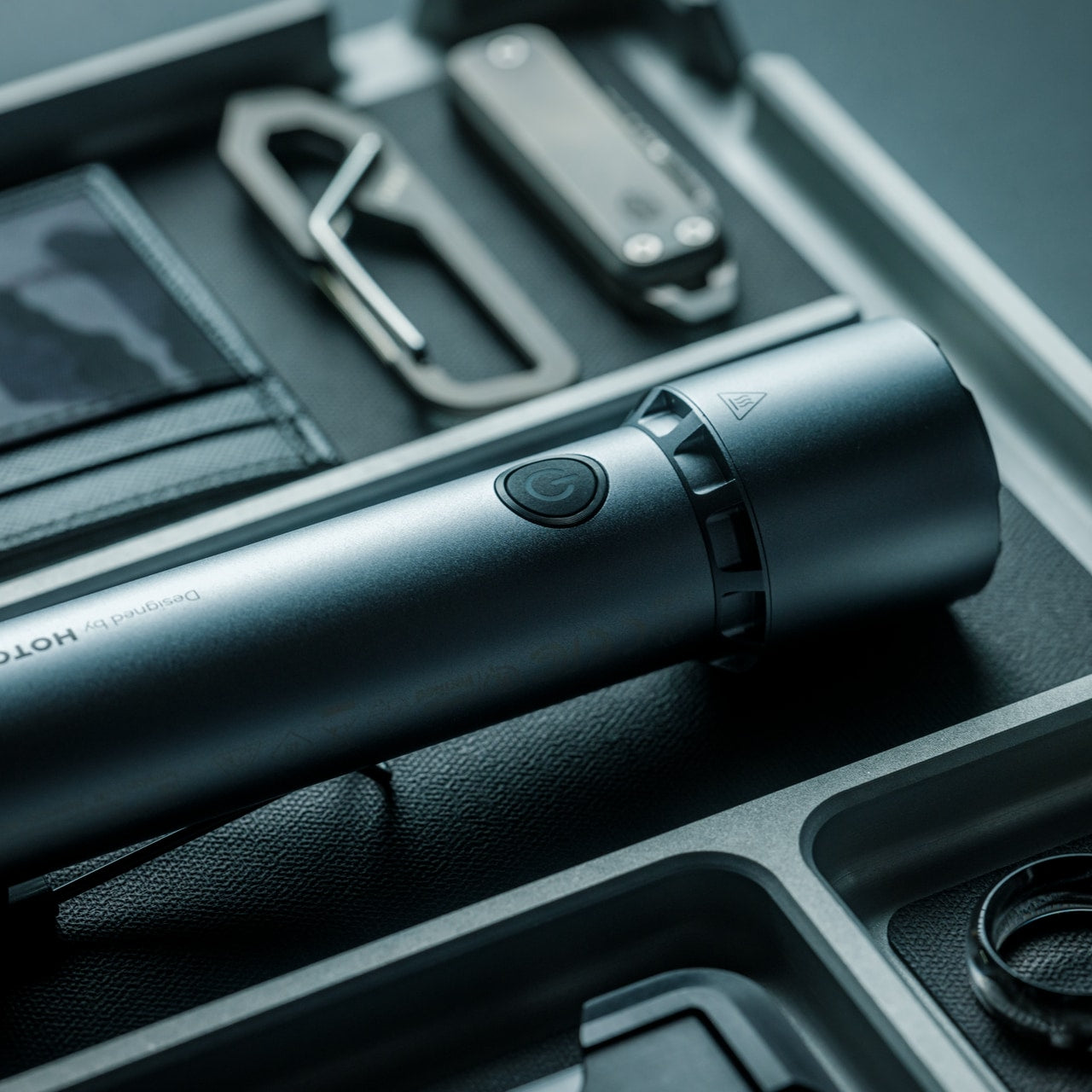
4. Blackout Beam Tactical Flashlight

There’s a version of a tactical flashlight that lives in a gear bag for years without ever earning its place there. The Blackout Beam is a different argument. For a dad who keeps a light in the car, the workshop, or the camping kit, this replaces whatever he currently has with something worth holding onto.

The tactical category tends to suffer from overclaiming: knurling that exists for the photograph, modes that exist for the spec sheet, and output numbers that bear little resemblance to everyday use. What the Blackout Beam does is deliver build quality and output that make sense of the description.

Click Here to Buy Now: $89.00

What We Like

  • Build quality and output hold up to the description — a rarity in a category prone to overclaiming

What We Dislike

  • A dad who primarily needs a simple everyday light may find the tactical category more than his routine calls for
  • The tactical aesthetic won’t suit every sensibility — know your dad’s taste before committing

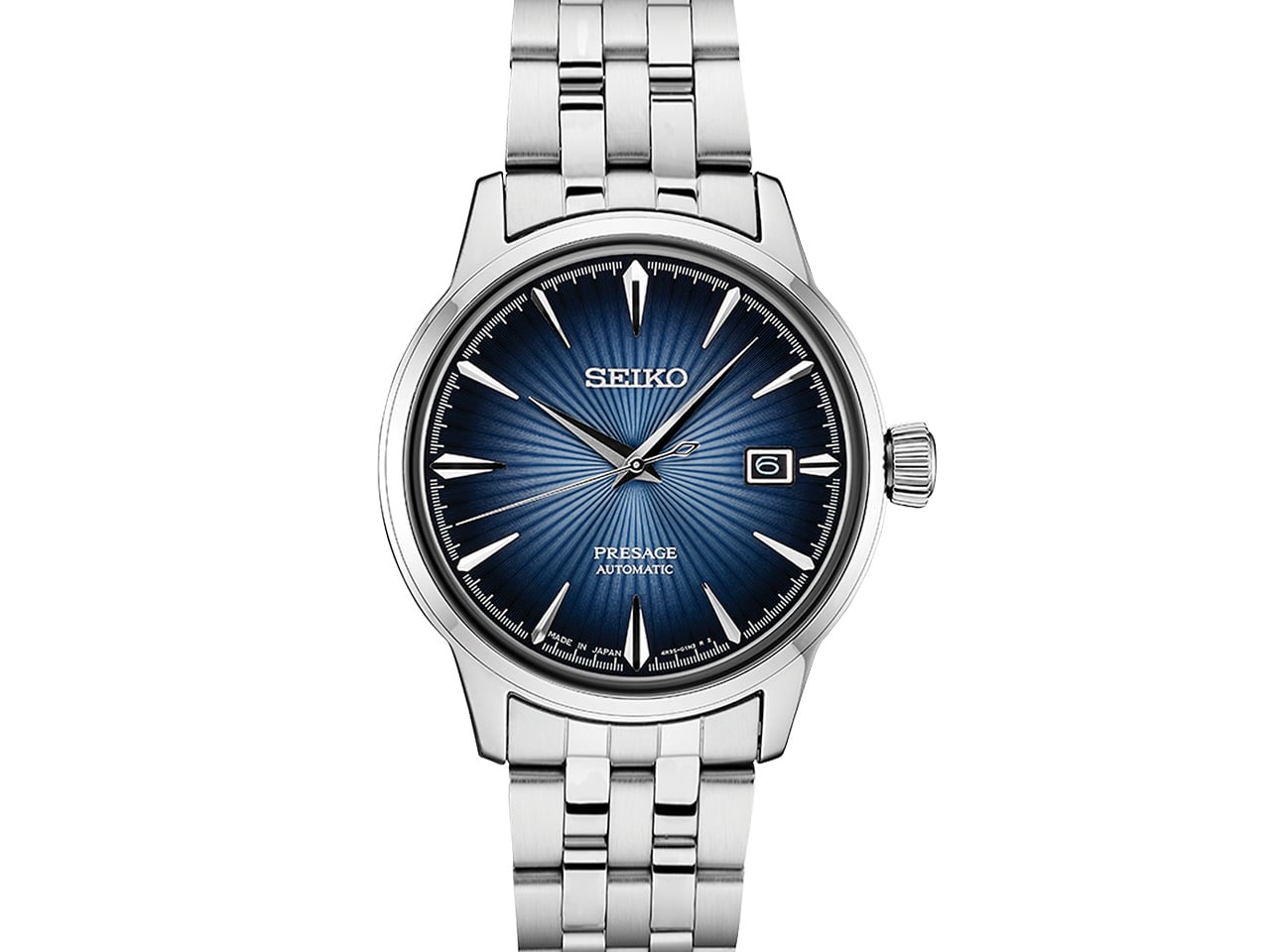
5. Seiko Presage Cocktail Time SRPB41

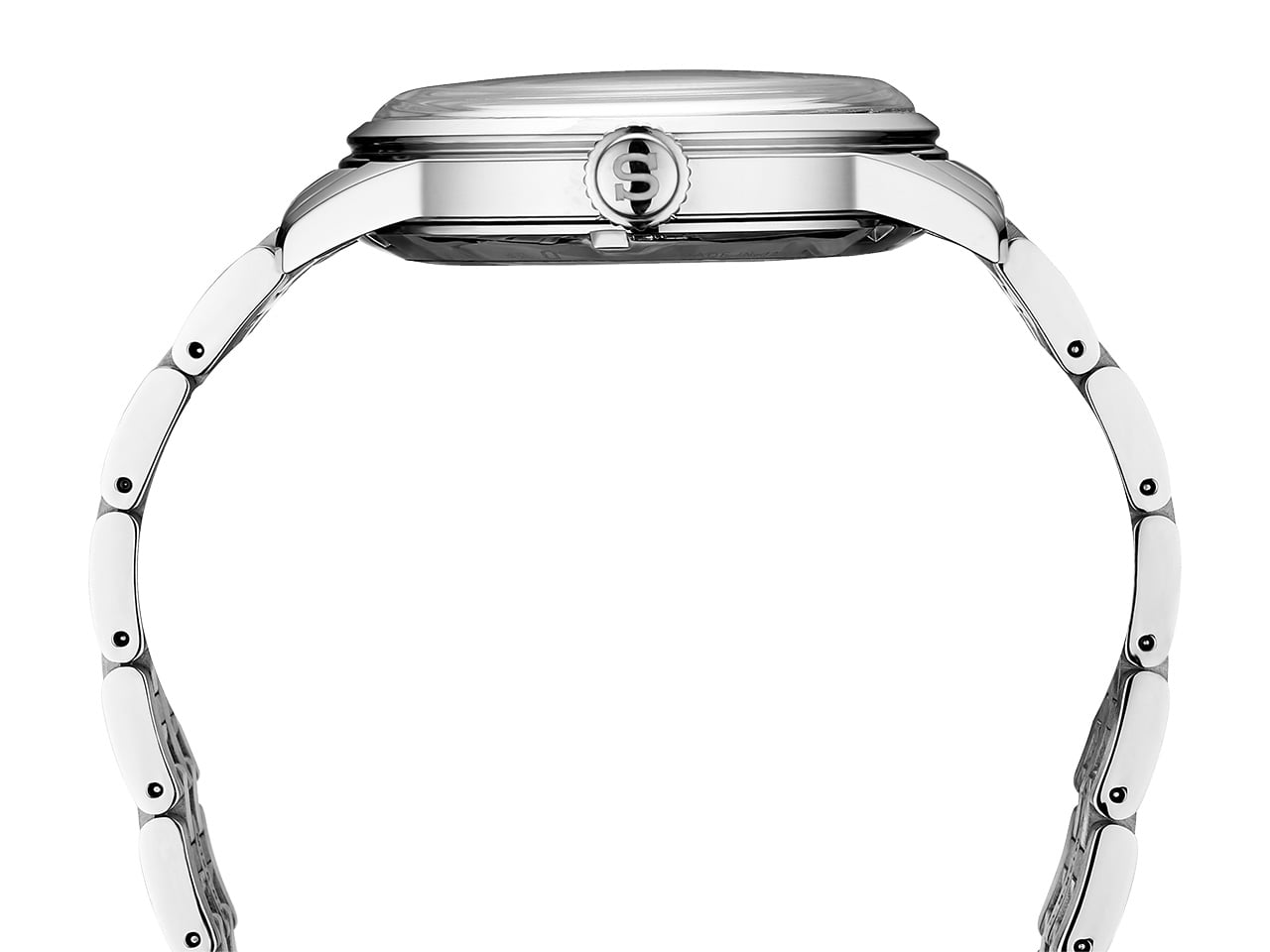
The SRPB41 is inspired by the Old Fashioned. Its sunburst enamel dial catches light the way a well-made drink does at the right angle, and the blue hands sweep across it with a precision no quartz movement can replicate. Seiko’s in-house automatic caliber winds itself from wrist movement, with the mechanism visible through the exhibition caseback. At 40.5mm and water-resistant to 100 metres, it wears formally without demanding it. No batteries. No quarterly trips to a jeweller. Nothing to maintain but the wearing of it.

What makes the SRPB41 the right last-minute gift isn’t just that it ships in days from Amazon, JomaShop, or SeikoUSA — it’s that it arrives looking like a decision made months ago. There’s a long tradition of Seiko producing watches that outperform their price point, and the Presage Cocktail Time series is where that tradition is most legible. It earns a second look across the dinner table and holds up under closer inspection every time. For a dad who appreciates when an object is exactly what it claims to be, this is the one.

What We Like

  • An in-house automatic movement at this price point remains one of the great bargains in contemporary watchmaking — the quality is audibly and visibly present
  • The cocktail-dial concept gives it a specific identity that generic dress watches at twice the price rarely manage to establish

What We Dislike

  • The formal aesthetic suits some lifestyles better than others — a dad who lives outdoors may find it less natural as a daily wear
  • It’s a dress watch first; anyone hoping it doubles as a field or sport watch will need to look at a different Seiko family entirely

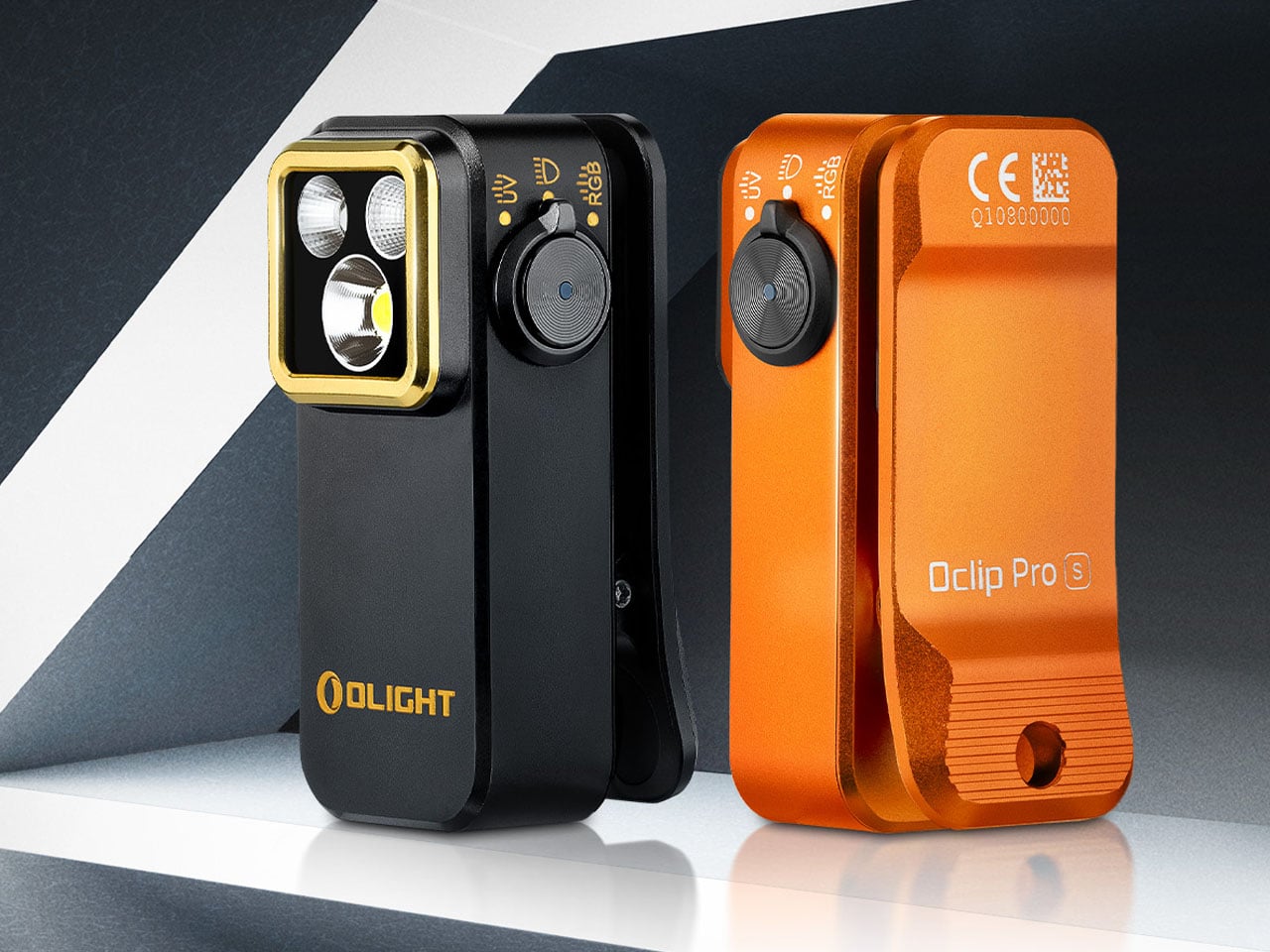
6. Olight Oclip Pro S

Most EDC flashlights ask you to hold them. The Olight Oclip Pro S clips to a pocket, bag strap, jacket, or gear loop and stays there until it’s needed, which is an entirely different carry proposition. At 53 grams and measuring 57 by 28 by 27mm, it disappears into whatever it’s attached to until it becomes the most useful object in the room. For a dad who prefers hands-free solutions over dedicated carry, this is the light that answers that preference with minimum fuss and maximum practical intelligence.

The 5-in-1 lighting system covers white spotlight at up to 600 lumens with an 80-metre beam, white flood mode, red, green, and blue signal options, and a 365nm UV light — all controlled by a side dial that works intuitively on first contact. Battery life reaches 144 hours on low mode with USB-C charging throughout. At around $59.95, the Oclip Pro S replaces multiple single-purpose tools in a single clip-on body. For a dad who carries thoughtfully, it adds genuine capability without adding meaningful weight.

What We Like

  • Five distinct lighting modes — including UV — at 53 grams is a genuine engineering achievement in a form factor this compact
  • USB-C charging and clip-on carry integrate seamlessly into any existing kit without introducing new habits or new accessories

What We Dislike

  • Maximum brightness triggers thermal management on extended runtime — a fair trade-off, but worth understanding before relying on it in demanding conditions
  • A dad who primarily needs a reliable everyday light may never explore the full five-mode system; the value concentrates for those who will

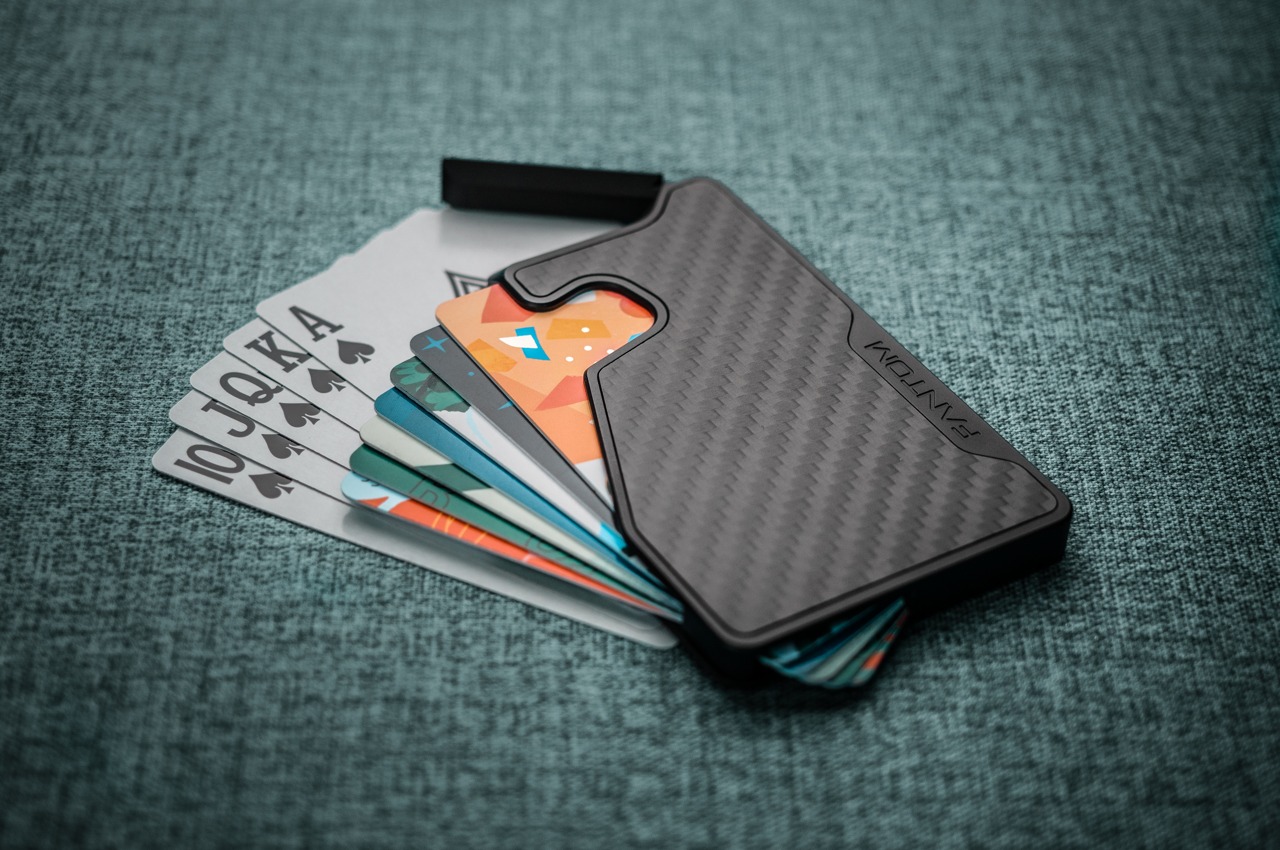
7. Fantom X Wallet

The Fantom X is the wallet you give the person still carrying a stuffed bifold like it’s a different decade. Machined from a single sheet of aluminum and finished in Cerakote for scratch and corrosion resistance, it holds between seven and thirteen cards depending on the size — all deployed with one thumb press on the side lever. Cards fan out individually, making each one visible at once. The wallet itself is three millimetres thicker than the cards it carries. That’s the entire margin between this and everything else in the category.

Made in Canada by Ansix Designs, the Fantom X comes RFID-blocked and backed by a lifetime warranty. Three size options mean the gift calibrates to how your dad actually carries rather than asking him to rebuild his wallet life around the product’s capacity. The lever mechanism has been tested to over half a million fanning cycles.

What We Like

  • The fan-out card mechanism makes accessing a specific card faster than any bifold — once you’ve used it this way, the standard wallet starts to feel like a design problem nobody bothered to solve
  • Three size options mean the wallet fits your dad’s carry habits rather than demanding he change them

What We Dislike

  • Card-first by design — regular cash carriers will find the experience less seamless without a dedicated money clip alongside it
  • The minimalist philosophy requires editing down from a stuffed wallet, which can feel like a bigger ask than the product deserves

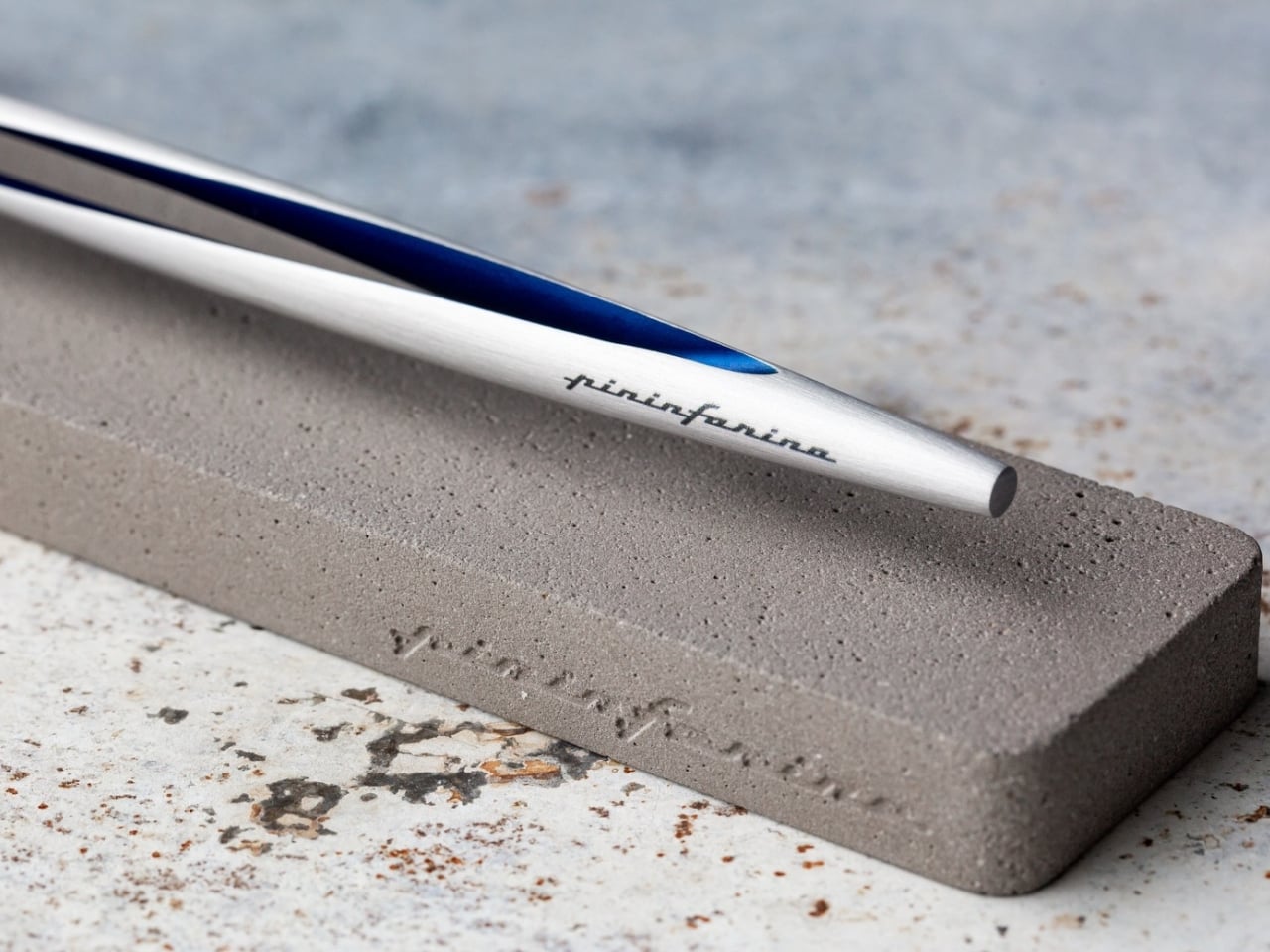
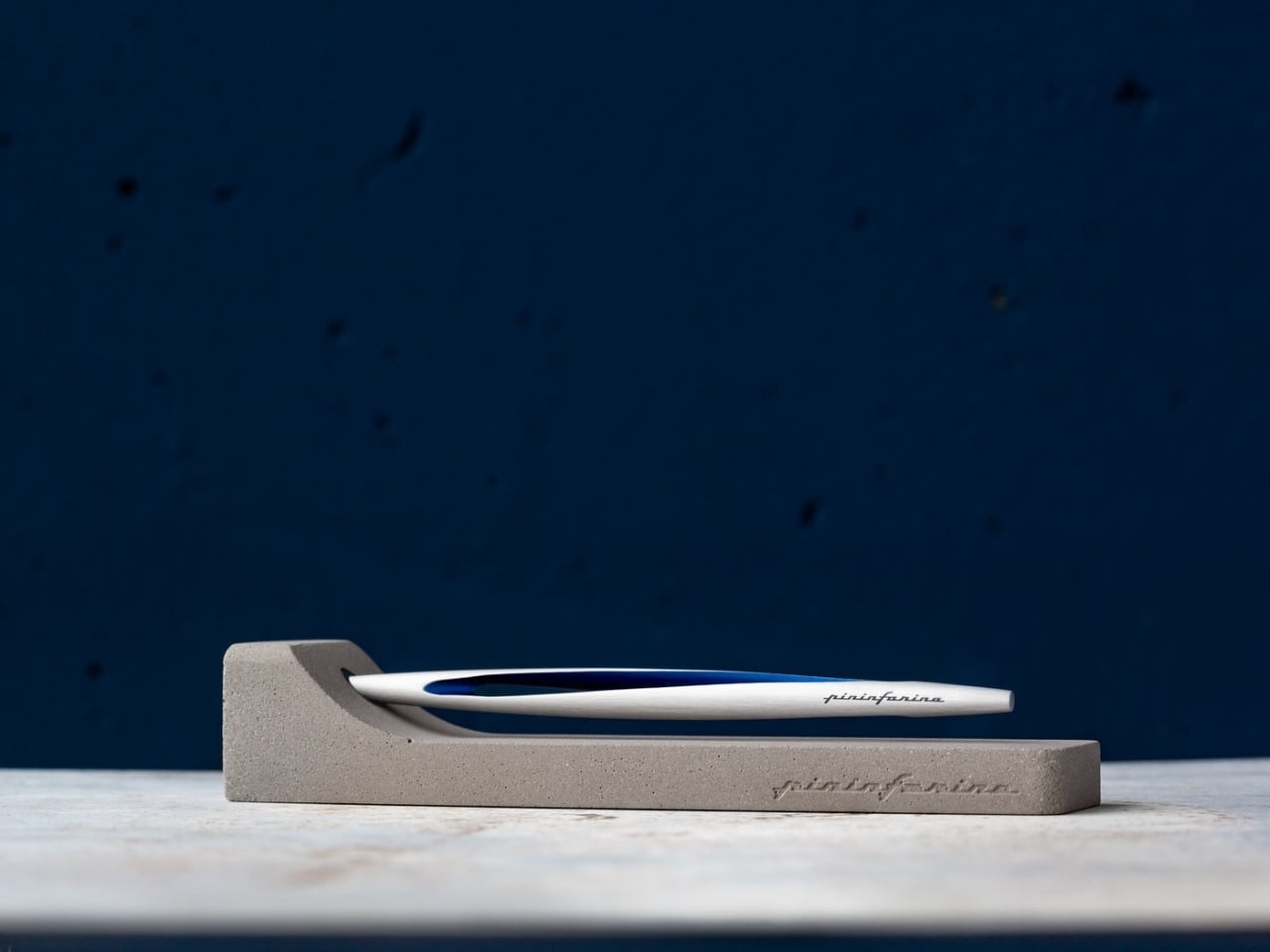
8. Pininfarina Aero Ethergraf — The Forever Pen

Pininfarina built its reputation on automotive silhouettes — Ferrari bodies, Maserati shapes, forms that held their beauty across decades. The Aero Ethergraf brings that same design philosophy down to the scale of a writing instrument. Machined from aerospace-grade aluminum, weighing 17 grams and measuring 160mm, it arrives paired with a raw concrete desk stand that reads less like packaging and more like a considered still-life. Made in Italy. No ink. No cartridges. No cap to misplace. Built to last without ever needing to be maintained.

The Ethergraf metal alloy tip writes through oxidation, leaving a graphite-like mark on paper that is precise, smudge-resistant, and permanent without relying on ink. The pen never dries out. It never runs out. For someone who has spent years managing fountain pen cartridges or replacing rollerball inserts, this inverts the entire expectation of what a writing tool asks of you. For a dad who notices objects and holds onto them, the Aero Ethergraf becomes the pen on his desk that earns a question from every person who picks it up.

What We Like

  • No ink, no refills, no maintenance — ever; the Ethergraf tip writes through oxidation, making the pen’s relationship with its owner permanent rather than consumable
  • Pininfarina’s automotive design lineage reads clearly in the body: aerodynamic, precise, and confident without announcing any of that on the surface

What We Dislike

  • The oxidation-based line runs lighter than a standard ballpoint — won’t suit every writing style or paper weight
  • The concrete stand is genuinely beautiful but adds volume to the package, a consideration for any desk already working at full capacity

The Best Last-Minute Gift Is One That Doesn’t Look Like It

The best Father’s Day gift is the one that looks like it came from somewhere thoughtful rather than somewhere fast. Every product on this list is available now and ships before June 21. The range runs from $10 to $350, which means there’s an entry point for every budget and a version of this list that works regardless of how late the decision hit. Good design doesn’t keep a delivery schedule. It just has to land well.

What these eight objects share is a quality the gift category rarely gets credit for: each one communicates something specific about the person giving it. A speaker shaped like a mixtape says you remember what he loved. A pen that lasts forever says you chose something built to last. Father’s Day doesn’t need to be a grand gesture. It just needs to be honest, considered, and there before Sunday.

The post 8 Last-Minute Father’s Day Gifts So Good He’ll Think You’ve Been Planning for Months first appeared on Yanko Design.

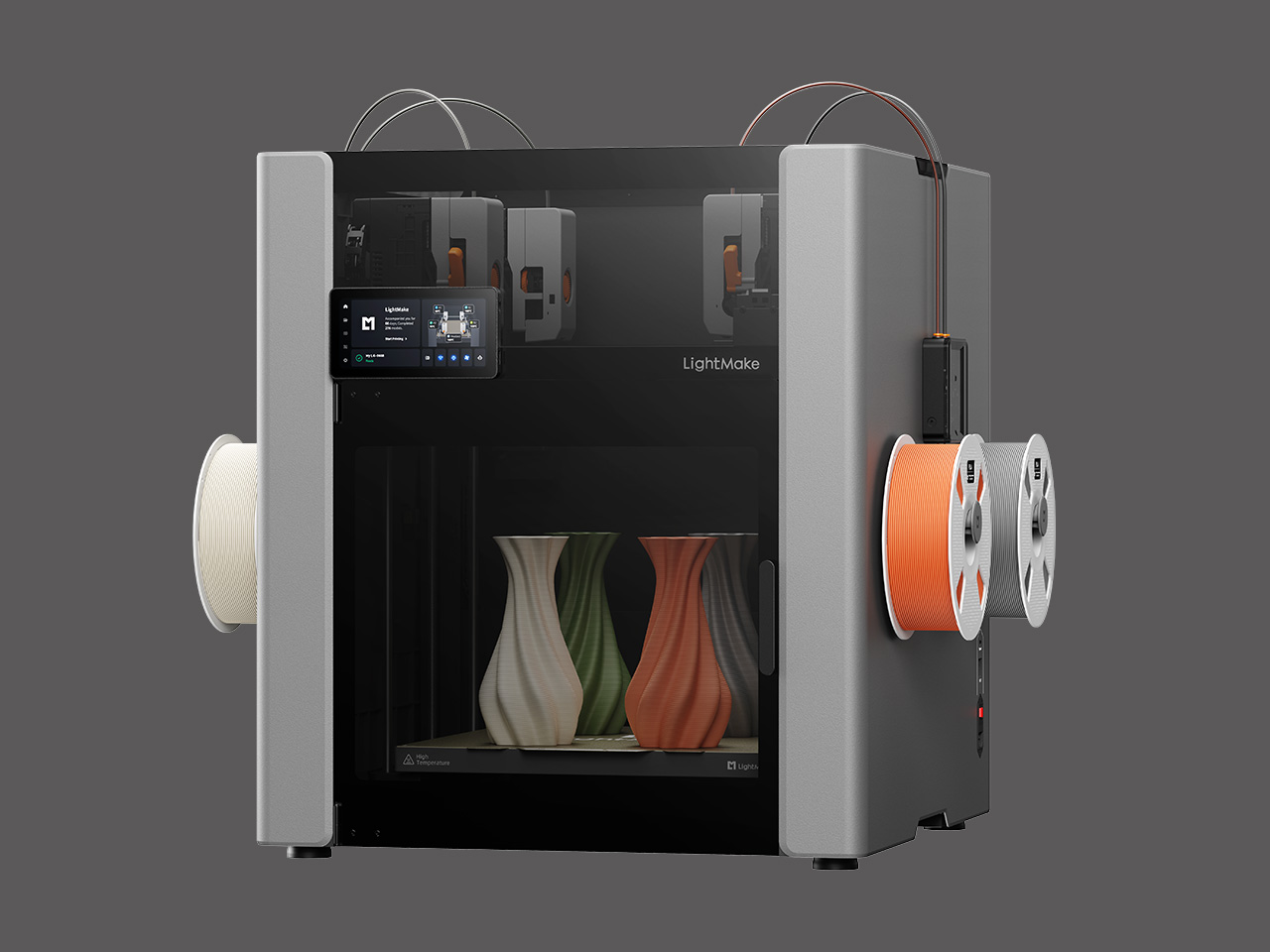
Four Print Heads, One Machine, No Belts. The LightMake L4 is your Desktop 3D Printer on Steroids

For years, one of the biggest tradeoffs in desktop 3D printing has been clear. You could chase larger builds, faster motion, or multi-color capability, but combining all three in a way that also supports smoother workflow has remained a tougher challenge. As more creators use 3D printers for batch production, prototyping, and short-run manufacturing, the machines drawing attention are the ones rethinking the print head itself.

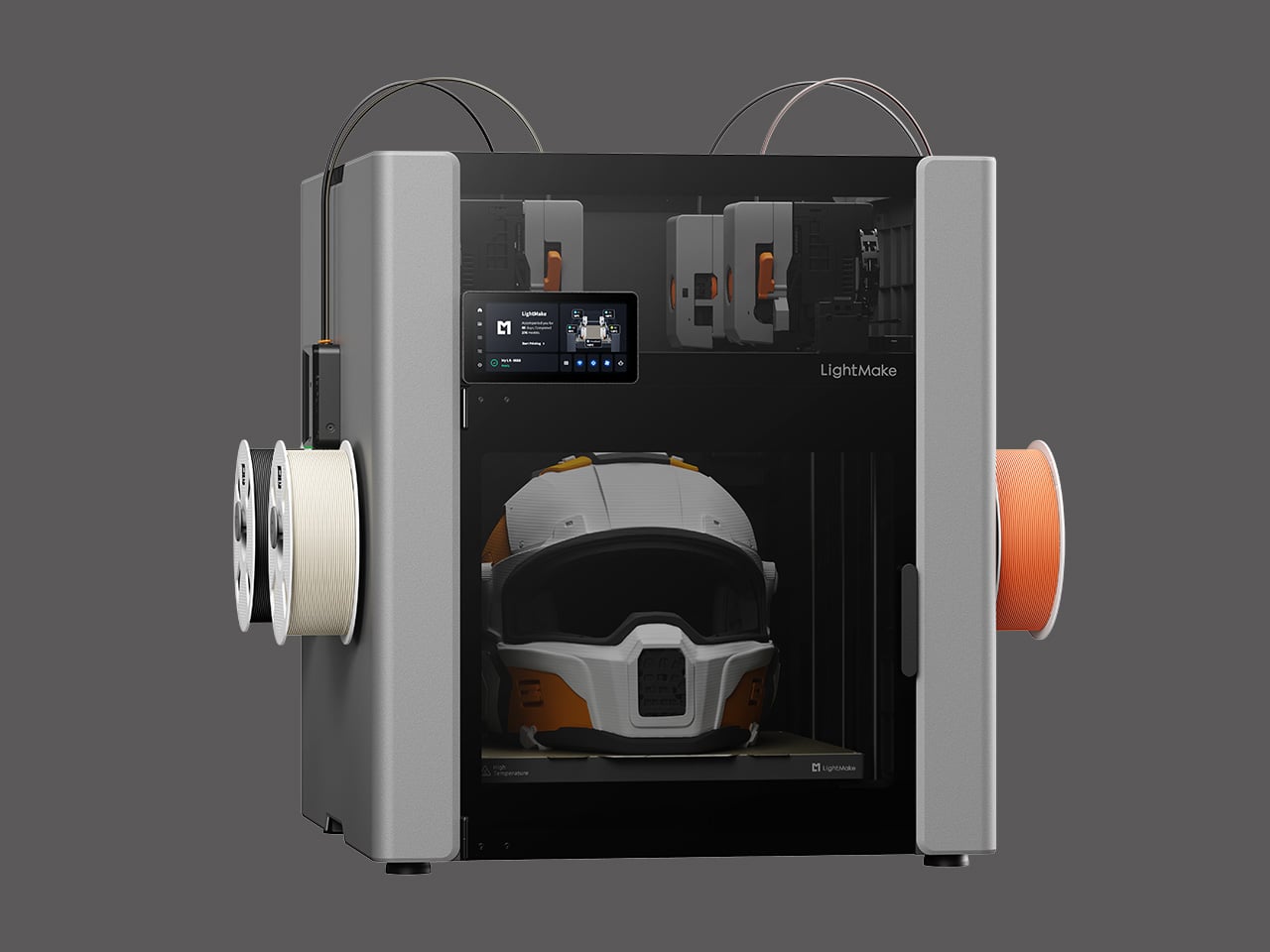
LightMake is preparing to enter that conversation with the LightMake L4. Set for a Kickstarter debut, the machine centers on an independent 4-head architecture designed to deliver 4X productivity by printing four identical models simultaneously, while enabling seamless multi-color/material printing on a single object. All while its beltless linear motor system targets ±1μm closed-loop motion precision and 50,000-plus hours of stable operation (for the linear motors). Taken together, those details position the L4 as a highly ambitious new entry in the premium desktop 3D printing space.

Designer: LightMake

Click Here to Sign Up for Early Access

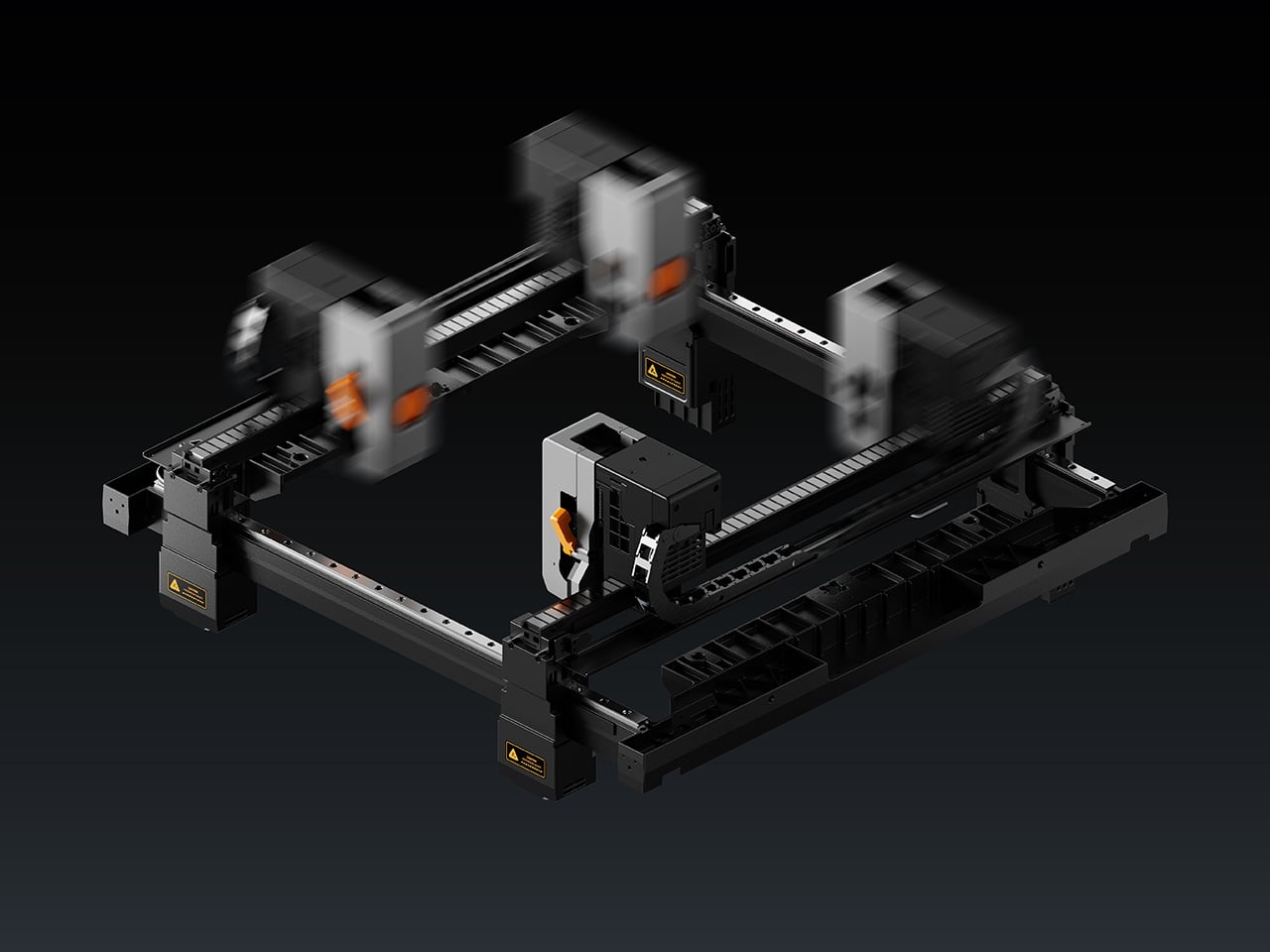
The L4’s most defining characteristic is its independent 4-head system, which allows four separate print heads to operate simultaneously within a single build volume. The four heads can print identical or mirrored models simultaneously, or all four can contribute materials or colors to a single complex print without the purge waste typical of single-nozzle multi-material systems. LightMake claims this architecture delivers a 4x efficiency increase when printing four identical single-color models at once, turning one machine into the functional equivalent of four printing machines. The system also supports mixing up to four materials in a single print, enabling multi-material assemblies that would otherwise require post-print bonding or fastening. For studios running repeat batches or prototyping multiple variants at once, that kind of parallel throughput changes the math around machine utilization and turnaround time.

The machine’s motion system abandons belts entirely in favor of linear motors, a shift that brings both precision and longevity benefits. Linear motors use electromagnetic force to drive motion directly, eliminating the wear, stretch, and maintenance associated with tensioned belts. LightMake reports that the L4 achieves ±1μm closed-loop precision, a figure that places it well into the territory of machines designed for repeatable, high-tolerance work. The contactless driving mechanism also contributes to the company’s claim of 50,000-plus hours of stable printing, a lifespan target that suggests the L4 is being designed with print farm durability in mind. Travel speed is rated at up to 1,000 mm per second, and the system’s rigidity comes from a one-piece die-cast metal frame paired with a vibration cancellation algorithm that mirrors toolhead movement to reduce print artifacts during high-speed operation.

Toolhead changing happens in one second, a spec that directly addresses one of the most time-consuming aspects of multi-material or multi-color printing. Conventional systems that feed multiple filaments through a single nozzle spend significant time purging old material, which slows down the job and generates waste. By swapping between independent heads almost instantly, the L4 cuts that delay to nearly nothing. LightMake is designed to significantly reduce operational costs and maximize efficiency for professional studios, achieved through its independent 4-head system and minimized material waste. The four toolheads are also described as independently liftable, with 5mm of height adjustment to improve first-layer adhesion success rates and reduce early-stage print failures.

The L4’s build volume measures 354 x 370 x 386mm for single-color prints and 354 x 350 x 386mm for multi-color work, placing it in the large-format desktop category. The machine includes dual HD cameras, a 6.5-inch touchscreen, and RFID material recognition. It supports PLA, ABS, PETG, TPU, ASA, PVA, PET, and carbon-fiber composites, with a maximum nozzle temperature of 320°C. Software features include fleet management tools that LightMake says can dispatch tasks to over 1,000 machines simultaneously, as well as an AutoQueue system that analyzes real-time printer status to allocate the right number of machines for each order deadline.

LightMake will debut the L4 on Kickstarter. With its combination of independent multi-head architecture, linear motor precision, and print farm automation features, the L4 represents a clear bet that the next wave of desktop 3D printing will be defined by batch manufacturing efficiency as much as by speed or build size alone.

Click Here to Sign Up for Early Access

The post Four Print Heads, One Machine, No Belts. The LightMake L4 is your Desktop 3D Printer on Steroids first appeared on Yanko Design.
The Ugliest Thing in Your EDC Kit is your AirTag. This Japanese Carabiner Finally Fixes That

There is a specific kind of frustration that comes with building a carry kit piece by piece over months, selecting each object for a reason, and then clipping on an AirTag that looks like it came in a party favor bag. The titanium pen, the slim card wallet, the knife with the stonewashed blade that earns its spot every single day – and then that silicone loop. The coherence collapses, and we know it the moment it happens.

In 2026, the AirTag accessory market has split at a visible fault line. On one side: the standard silicone loop Apple sells for $29, the Spigen Rugged Armor case, and a range of injection-molded plastic clips that treat the tracker as a packaging problem rather than a design opportunity. On the other: a smaller group of manufacturers asking what kind of object an AirTag deserves to travel inside. That question is driving a genuine shift in carry culture right now, separating the kits assembled with intention from the ones that stopped one decision short.

After handling and carrying all three material variants across several weeks of daily use – commute conditions, trail carry, and air travel – the AirTag Carabiner is the most considered tracker carrier we have tested in this category.

Three Materials, Three Different Arguments

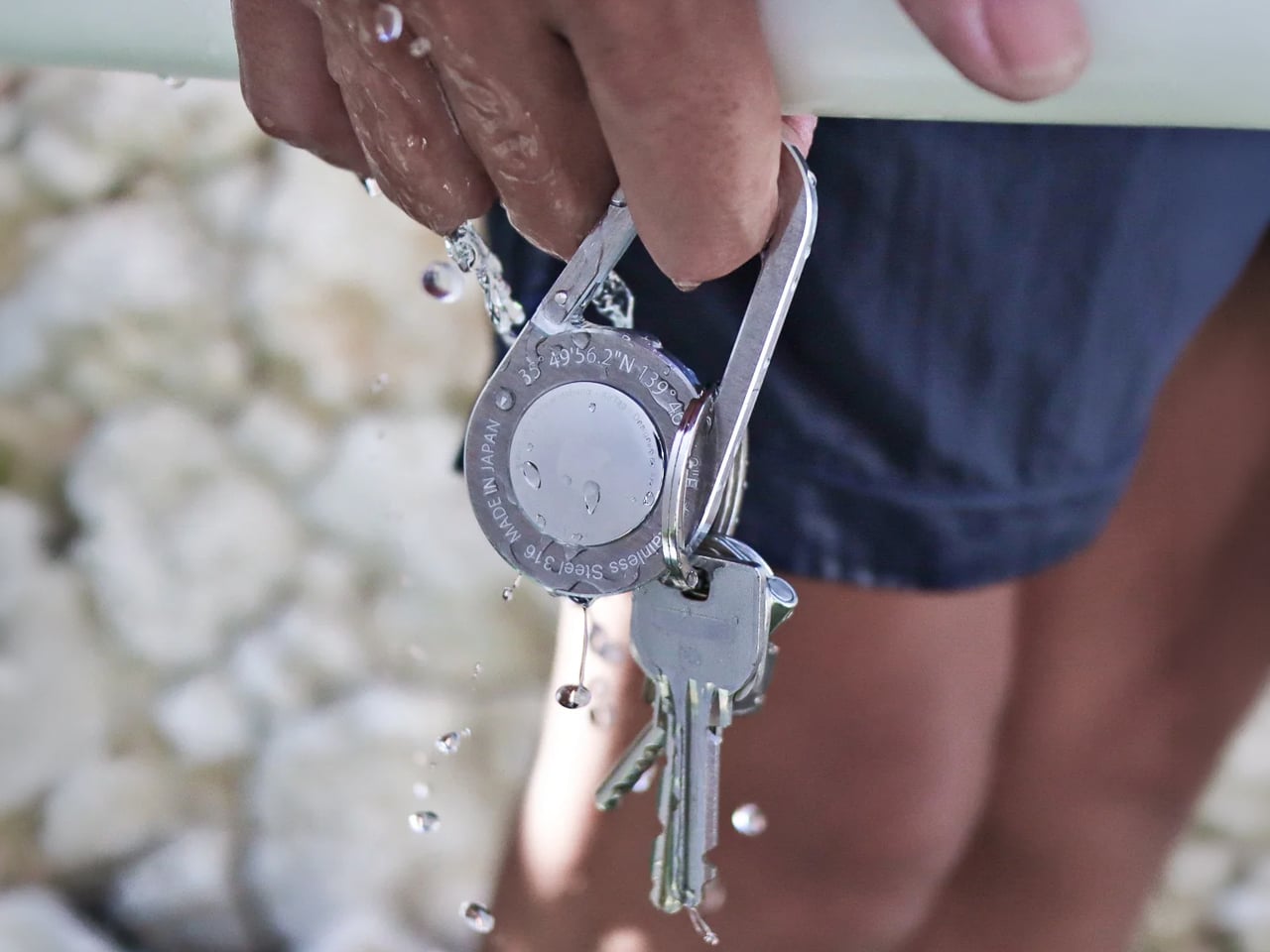
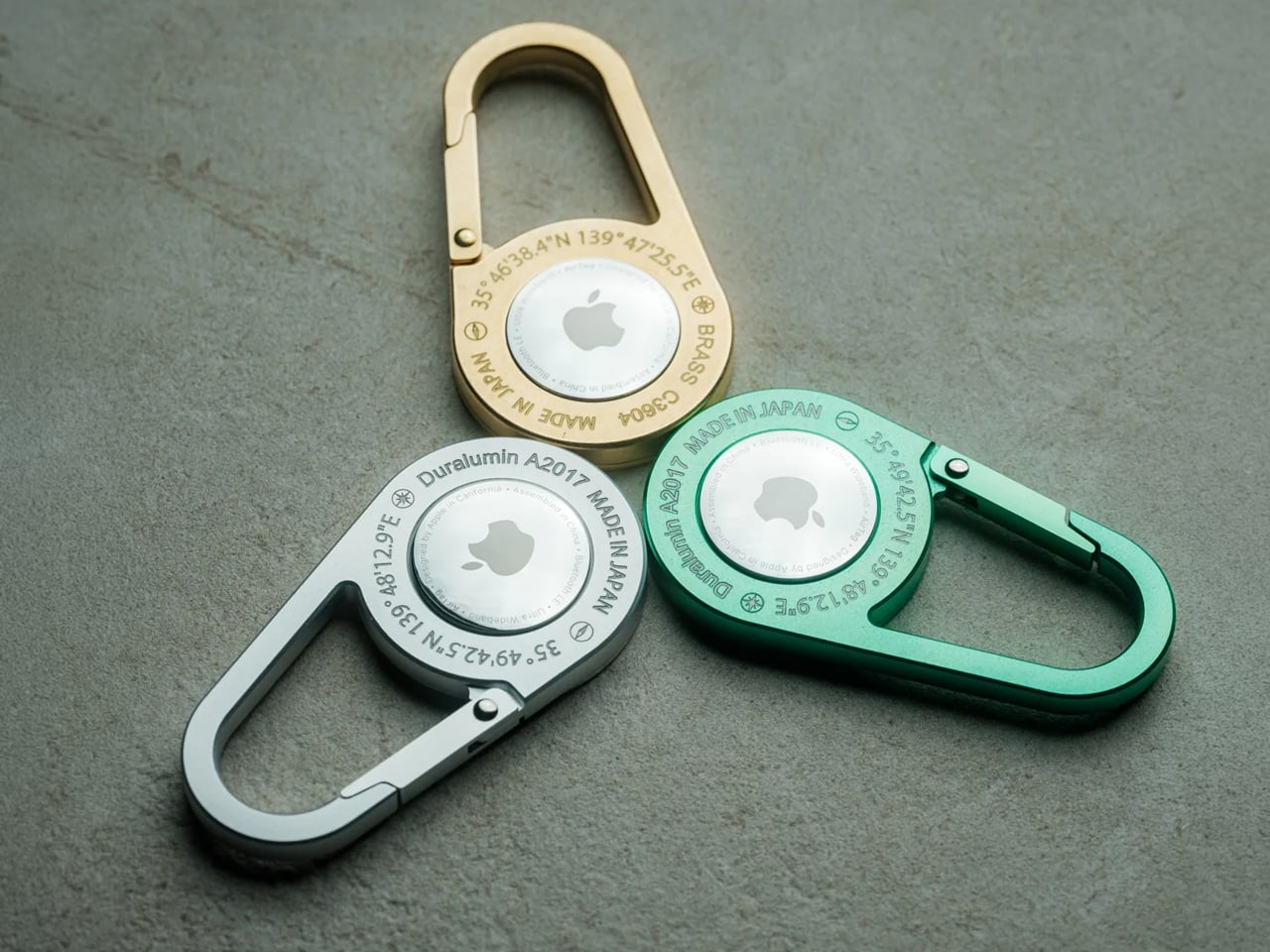
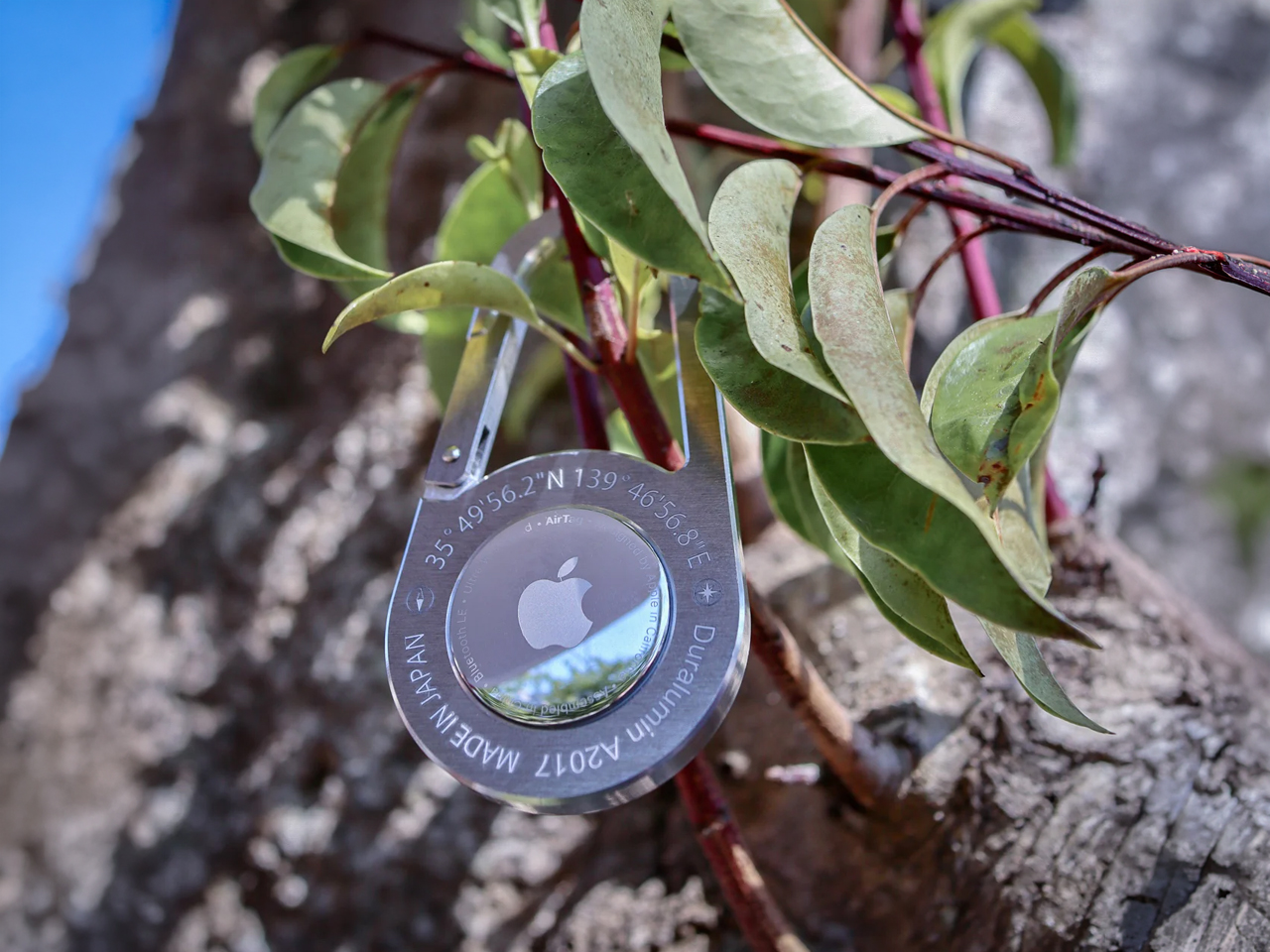
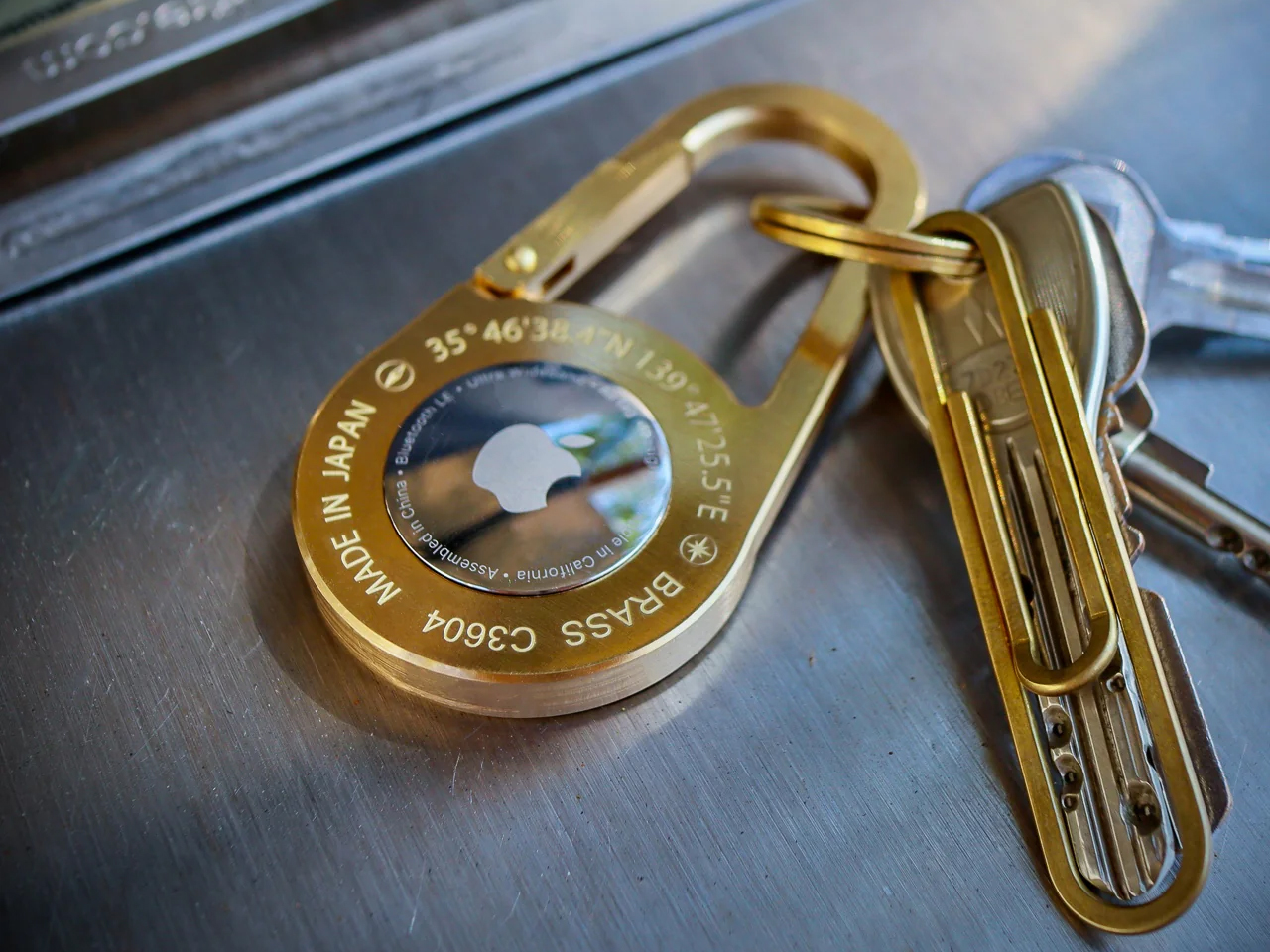
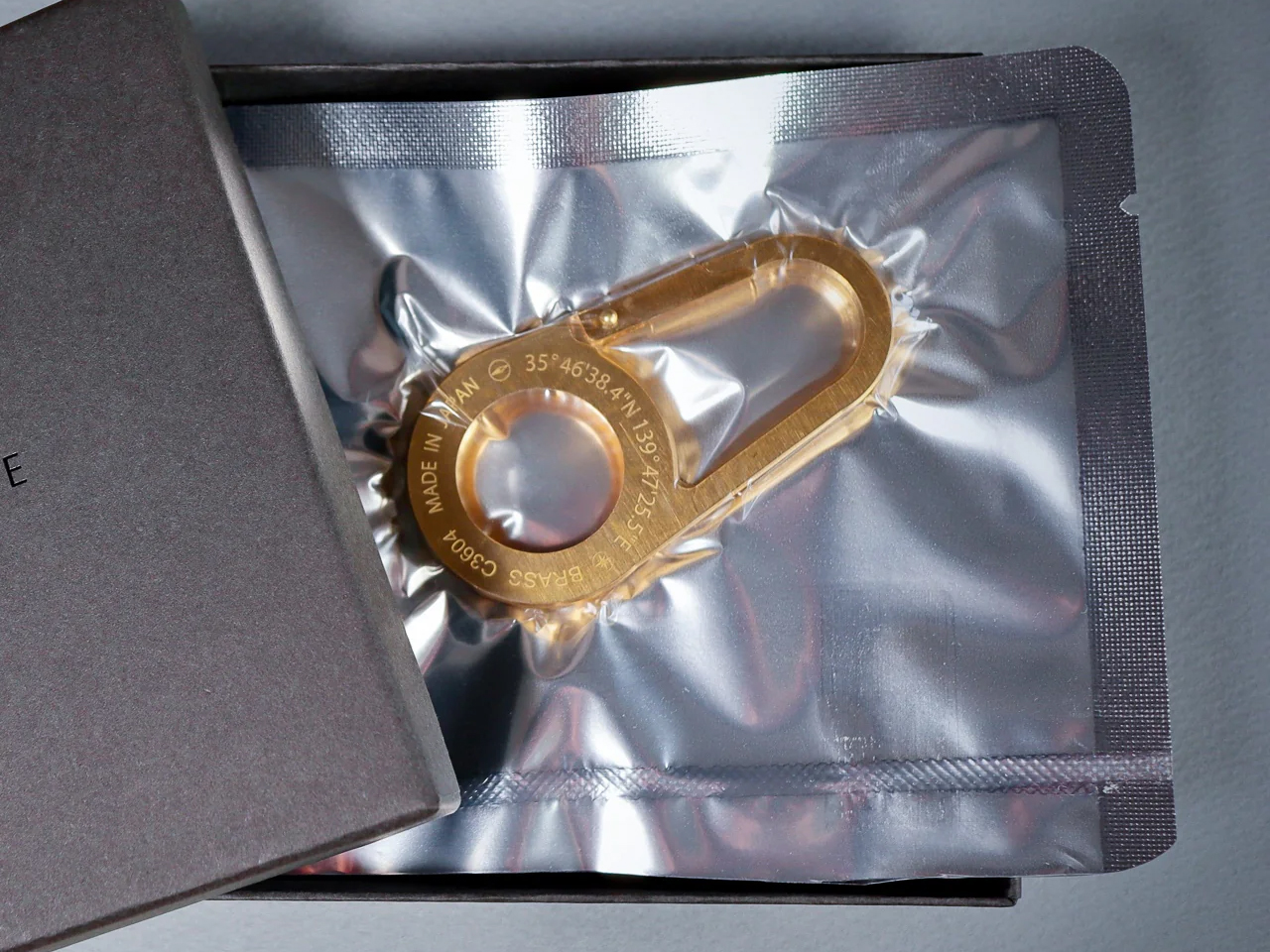
The AirTag Carabiner is made in Japan and individually hand-crafted. It comes in three materials: Duralumin composite alloy, untreated Brass, and Stainless Steel, and each variant makes a different argument for itself.

  • The Duralumin at 0.59 ounces – roughly the weight of a standard coin – is for those who account for every gram in a cycling kit or trail pack. It is, practically speaking, weightless in use.
  • The Brass at 1.7 ounces develops surface character over time that neither alternative will.
  • The Stainless Steel at 2 ounces carries its weight as a tactile signal of permanence.

The Brass variant arrives with a warm matte surface that shifts toward a richer patina at contact points within the first few weeks of carry. The Stainless Steel reads as deliberately neutral – a finish that recedes into a bag’s existing hardware rather than competing with it. The Duralumin sits between them: a cool, slightly satin surface that holds its character rather than developing one. Each variant is visually distinct enough that the choice of material is also a choice about what the rest of the kit communicates.

Sized for Motion, Not the Display Case

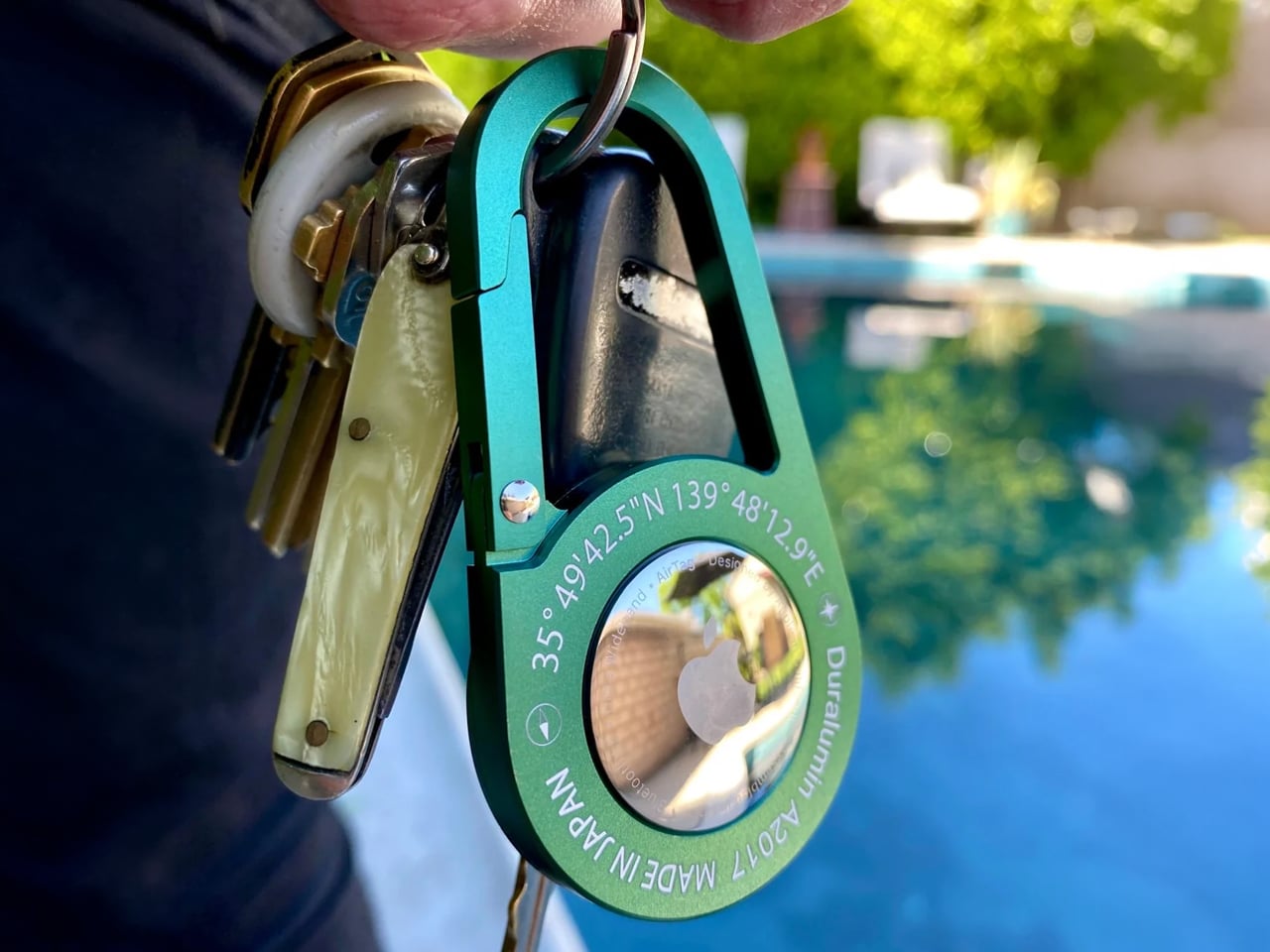
At 3.1 inches by 1.6 inches, the carabiner is sized for function without excess. The 0.2-inch profile means it sits flat against a zipper pull or bag strap rather than protruding outward to snag on jacket fabric, handlebar bags, or adjacent gear in a pack. For cyclists on a commute or a weekend ride, that profile matters in motion.

For travelers moving through terminals with carry-on luggage, it is one fewer point of friction in a sequence of movements that accumulates quickly across a long travel day.

Why the Alloy Choice Actually Matters

The Duralumin alloy deserves specific attention because it is not a decorative material reference. It belongs to the same alloy class used in aircraft, spacecraft, and marine applications – a pairing of low mass and high tensile strength that explains why the carabiner weighs 0.59 ounces without sacrificing structural integrity.

Applied here, it produces a carrier suited for the conditions an active kit already operates in: salt air, rain, altitude, and the sustained mechanical stress of a clip opened and closed hundreds of times a year. This is not a material chosen for its name. It is a material chosen because its properties match the job.

What Hand Production Means at This Scale

Hand production in Japan means finishing tolerances are set by a maker, not a mold. Carrying the AirTag Carabiner’s Duralumin variant daily for three weeks made that difference concrete: the gate action is consistent across hundreds of openings, the edge quality where the alloy meets at its joins has no rough transition point, and the surface shows none of the micro-scoring that injection-molded carriers typically develop within the first month of use.

These are details that do not appear in a spec sheet and do not become visible in product photography. They register in the hand, and they compound over time. At six months of daily carry, an object built to a specification and one built to a price have separated completely.

Where It Delivers

For the weight-optimized active carry: At 0.59oz – roughly a coin’s worth of mass – the Duralumin variant adds nothing measurable to a cycling pack, trail kit, or camera bag. It is the only tracker carrier in this category that does not undo the weight discipline a considered kit has already established.

For outdoor and travel conditions: The alloy’s documented suitability for water and high-altitude environments means this carabiner performs alongside the gear it clips onto – from a salt-air coastal commute to a pressurized cabin – without corrosion or gate fatigue.

For carry coherence: The hand-finished construction and material quality place this carabiner alongside machined pens and precision wallets without asking the rest of the kit to lower its standard.

What to Factor In

The Apple AirTag is not included. At $119 starting for the AirTag Carabiner alone, the full system investment clears $150 once the tracker is added. That is the honest cost of entry and should be weighed against a kit where every other object has been selected at a comparable standard.

The weight spread across variants is significant: 0.59oz for Duralumin versus 2oz for Stainless Steel – a 3.4x difference across identical dimensions. Users attaching this to a keychain or wrist lanyard will feel that gap in daily carry and should choose their variant before ordering rather than after.

The standard for AirTag carry has been a $29 silicone loop. The AirTag Carabiner sets a different standard: machined-quality construction, aircraft-grade material, and hand finishing that holds up to daily inspection after a year of use. Whether that standard becomes the category norm depends on whether the rest of the market decides the AirTag deserves to be treated as a permanent part of the kit rather than a temporary addition to it.

The AirTag Carabiner is available now starting from $119 at Yanko Design.

The post The Ugliest Thing in Your EDC Kit is your AirTag. This Japanese Carabiner Finally Fixes That first appeared on Yanko Design.
7 Best Japanese Kitchen Gadgets That Make Summer Cooking Actually Worth Getting Off the Couch

Summer cooking sits at a particular crossroads. The produce is at its best without much intervention, the kitchen gets warm, and the gap between wanting a good meal and actually making one widens every afternoon. Japanese kitchen design has always understood how to close that gap — not by making cooking faster or simpler in a gimmicky sense, but by making the process feel like something worth choosing. These seven tools operate on that principle.

Each one was selected because it shifts how cooking feels, not just what it produces. Some anchor a weekday morning and make the first meal of the day worth setting time aside for. Others make a Saturday evening in the kitchen feel like the destination rather than a precondition. All of them bring a quality of craft to the work that most kitchen drawers simply cannot match, and that quality is exactly what summer cooking needs most.

1. Iron Frying Plate

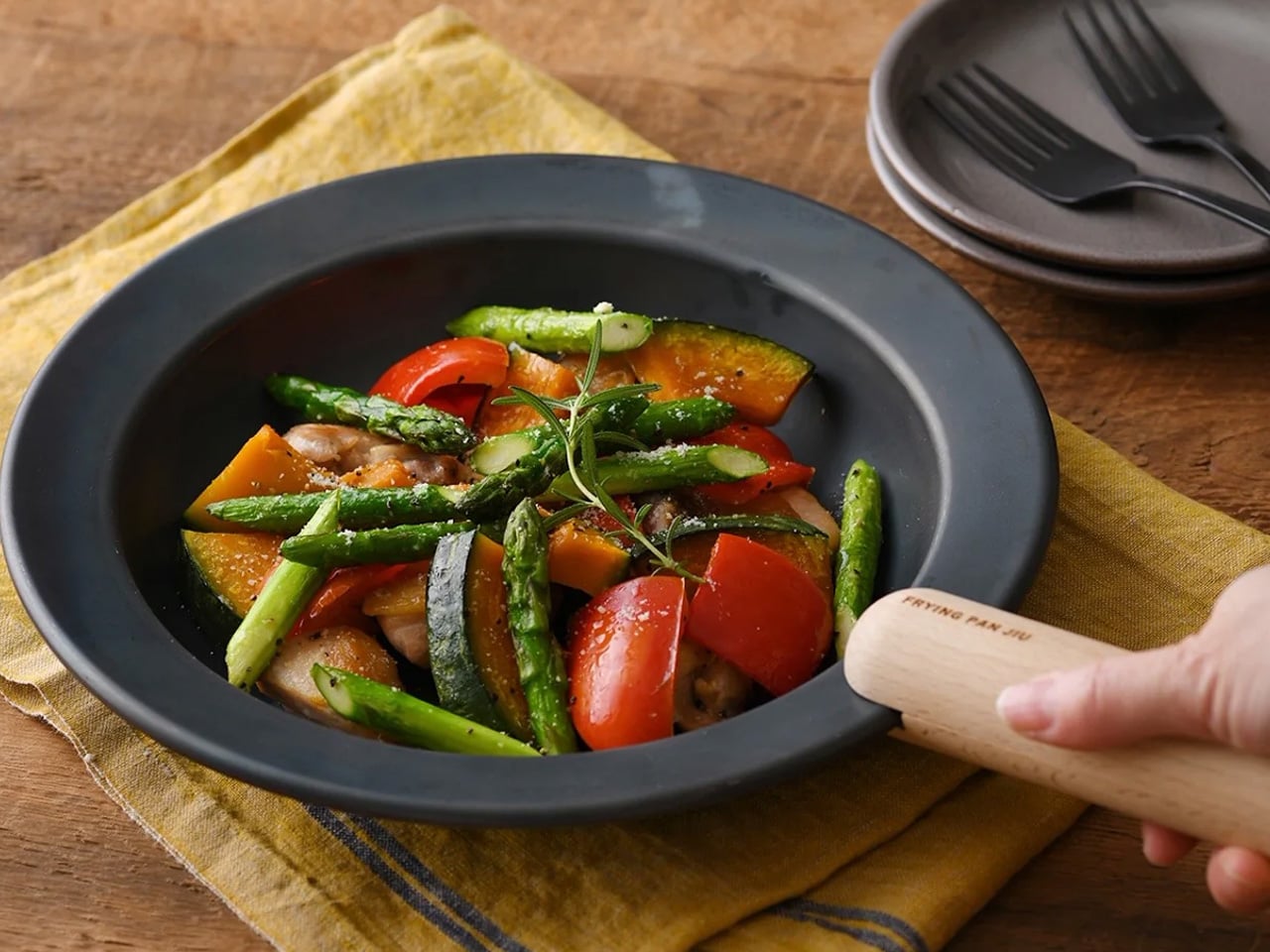
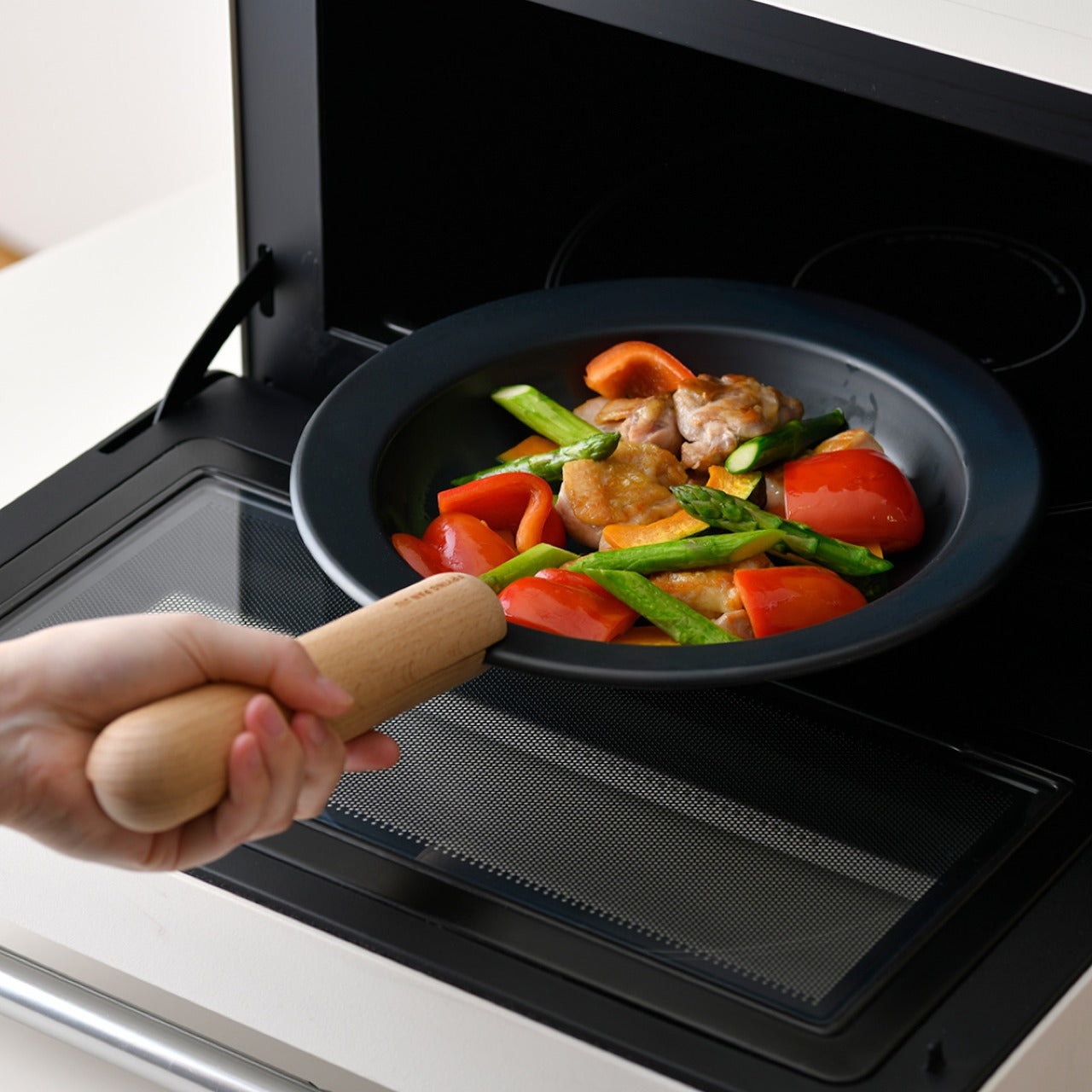
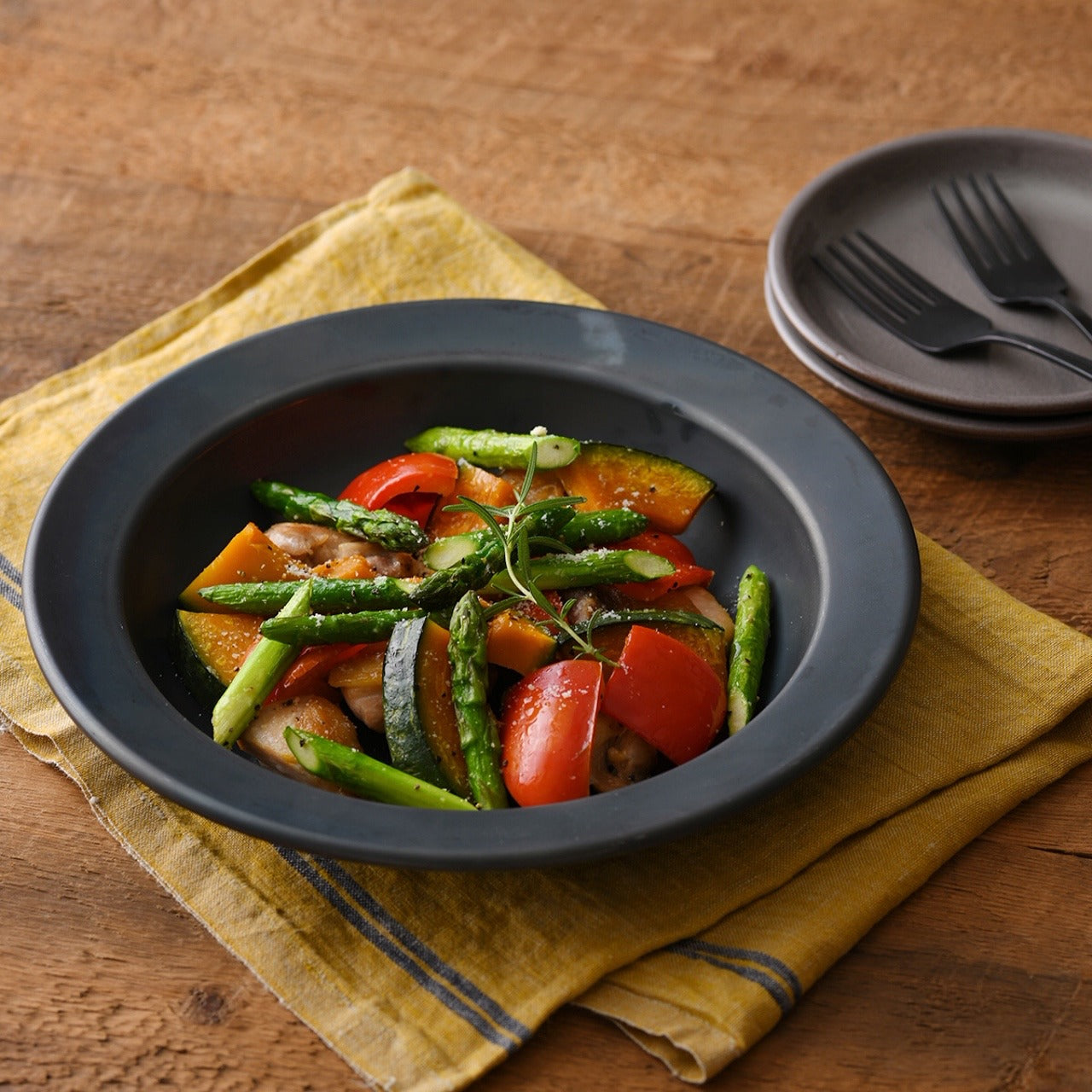
The Iron Frying Plate removes the step between cooking and serving. Crafted from 1.6mm thick mill scale steel with a detachable wooden handle, it moves from stove to table without a transfer in between. Eggs arrive still sizzling. Fish comes off the heat in the same vessel you cooked it in, retaining the temperature and texture that plating onto a cold ceramic plate quietly destroys. The cook-and-serve design changes how a meal begins and ends, and the pace of eating reflects that shift immediately.

The uncoated surface requires no seasoning before first use and develops natural non-stick properties through regular cooking. The detachable wooden handle attaches and releases with one hand, making the move from burner to table completely fluid. You stop rushing through dinner because the plate is still doing its job while you are still deciding what to eat first. Retained heat changes the pace of a meal in ways that are difficult to explain until you’ve eaten a few of them this way.

Click Here to Buy Now: $69.00

What we like

  • The cook-and-serve design preserves the temperature and texture that get lost in any transfer to a separate plate
  • The uncoated mill-scale steel develops natural non-stick properties through use, requiring no seasoning and no chemical coatings

What we dislike

  • The iron surface stays hot long after cooking ends, requiring careful handling and surface awareness at the table
  • One plate handles one serving at a time, so a group meal requires multiple units to work at scale

2. Yoshihiro VG-10 16-Layer Hammered Damascus Nakiri

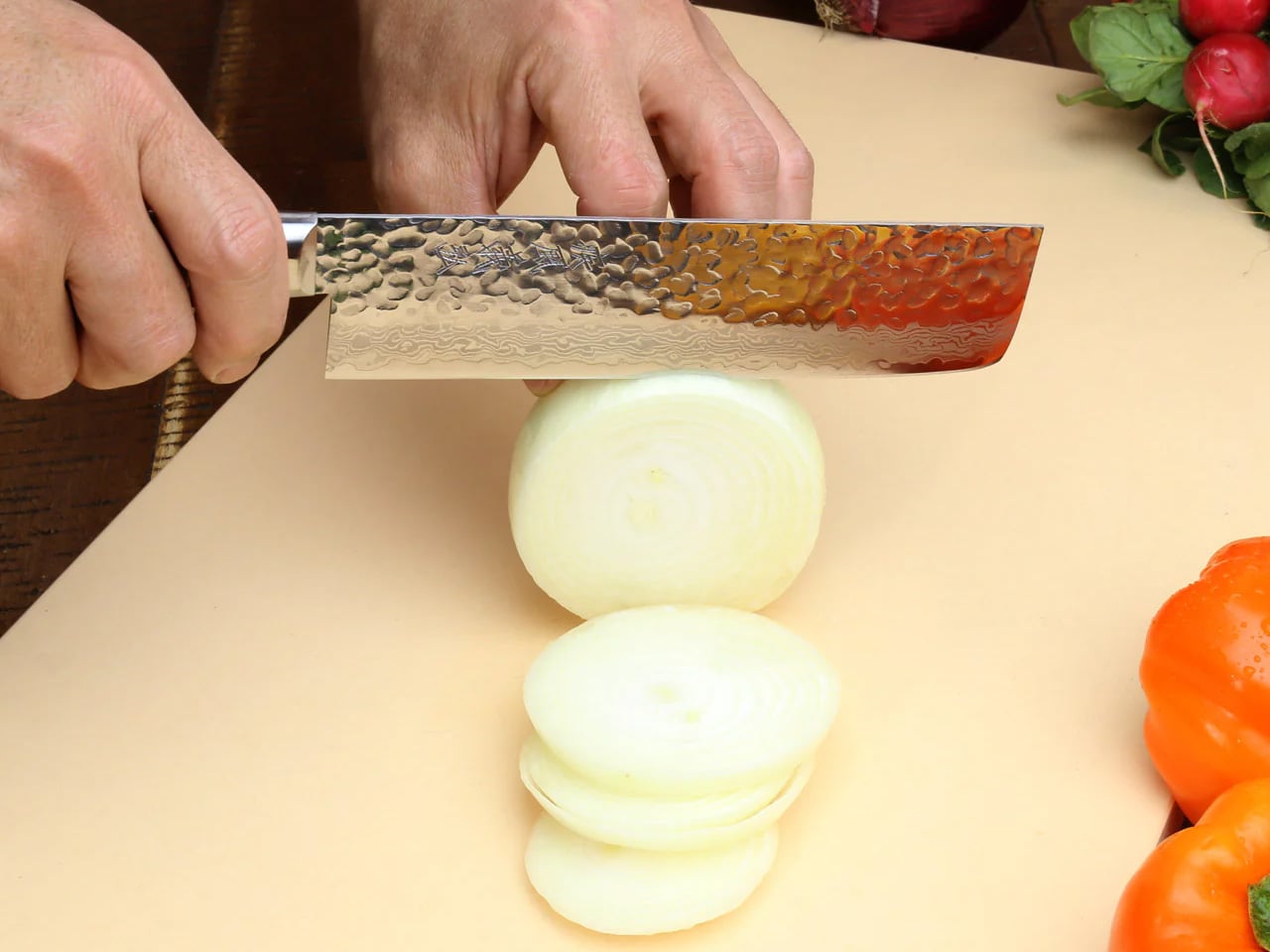
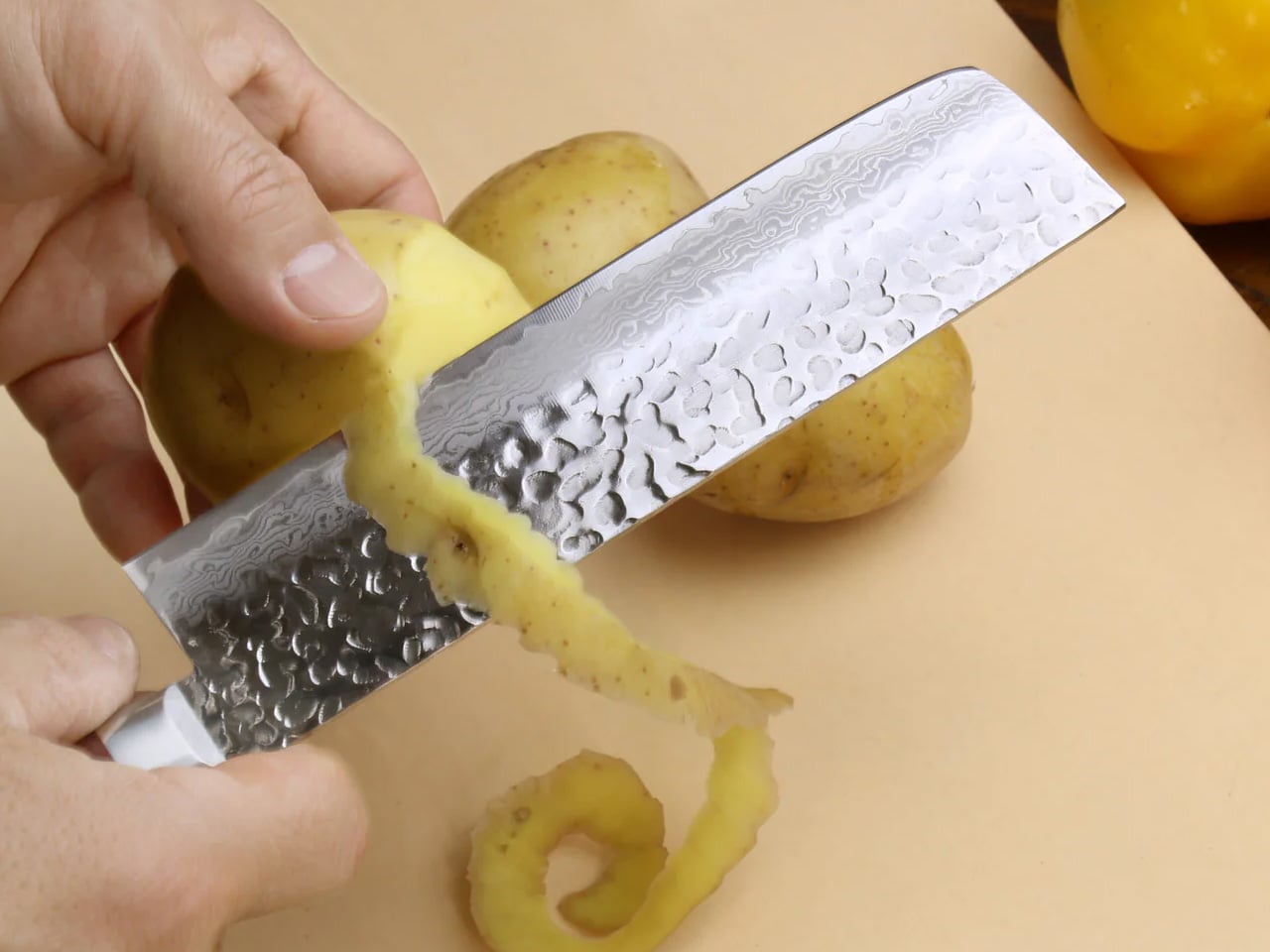
The nakiri is designed exclusively for vegetables, and that singular focus is what makes it work for summer cooking in a way a standard chef’s knife doesn’t. The flat edge makes full contact with the cutting board on every stroke without the tip-lift of a curved blade, producing a clean, complete cut through cucumber, eggplant, and ripe tomato without the drag most home cooks have accepted as normal. The VG-10 core wrapped in sixteen layers of hammered Damascus steel reduces friction through each cut, so nothing sticks or skids.

The full-tang mahogany handle distributes weight evenly from tip to heel, and after fifteen minutes of prep, you feel that balance in a way that poorly weighted knives never let you forget themselves. Summer produce means a lot of repetitive slicing through high-moisture vegetables, and this knife is built for exactly that kind of sustained work. The hammered Damascus pattern is unique to your specific blade, handcrafted by master artisans and certified for commercial kitchen use. The edge holds far longer than most knives in this category.

What we like

  • The flat edge makes full contact with the board on every stroke, producing complete cuts that a curved blade with tip-lift cannot replicate with the same consistency
  • The hammered Damascus surface reduces drag through each cut and produces a pattern that is unique to every individual blade

What we dislike

  • The nakiri is a specialist vegetable knife and is not designed for meat, fish, or anything with bones
  • The Damascus finish requires careful dry storage and periodic maintenance to preserve the layered surface over time

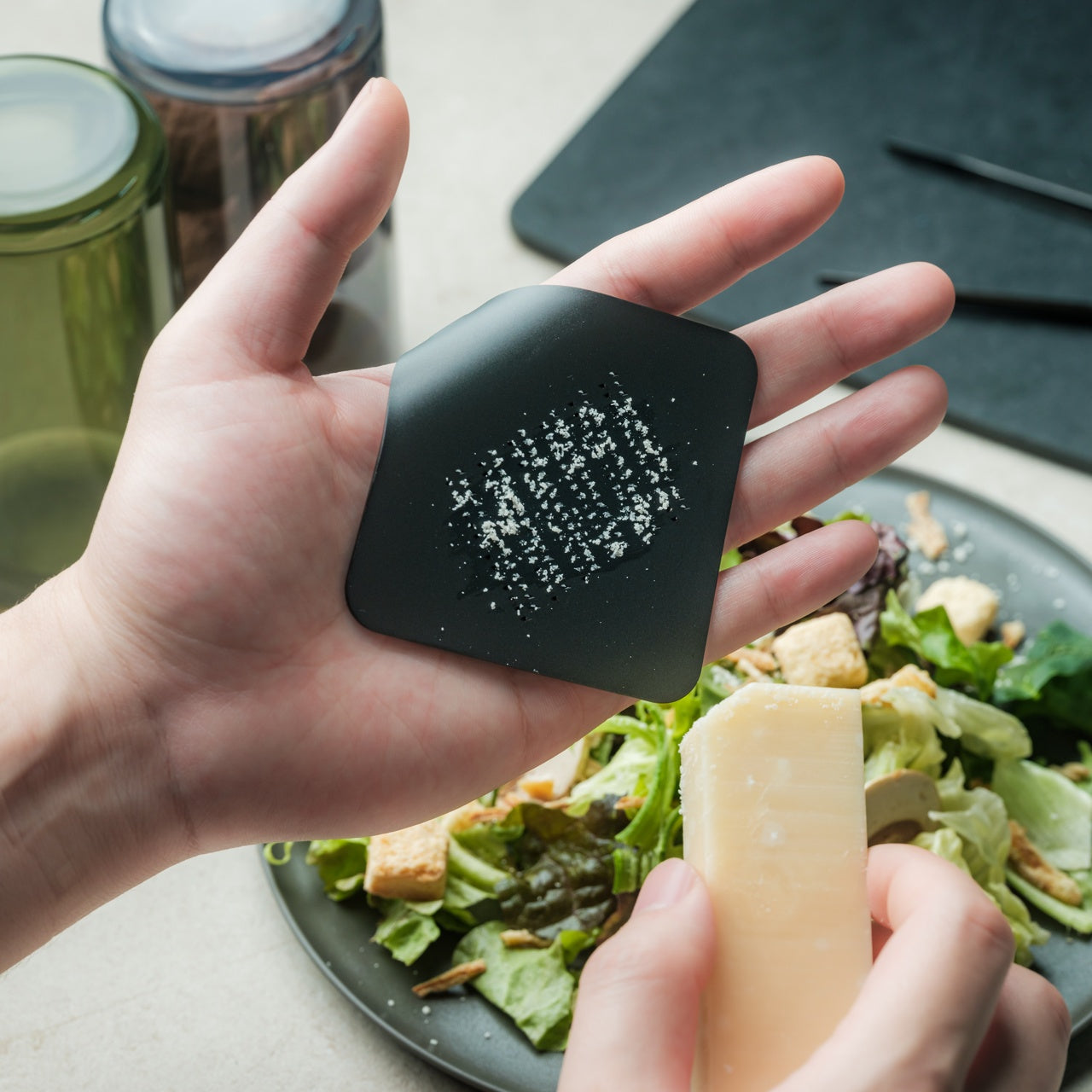
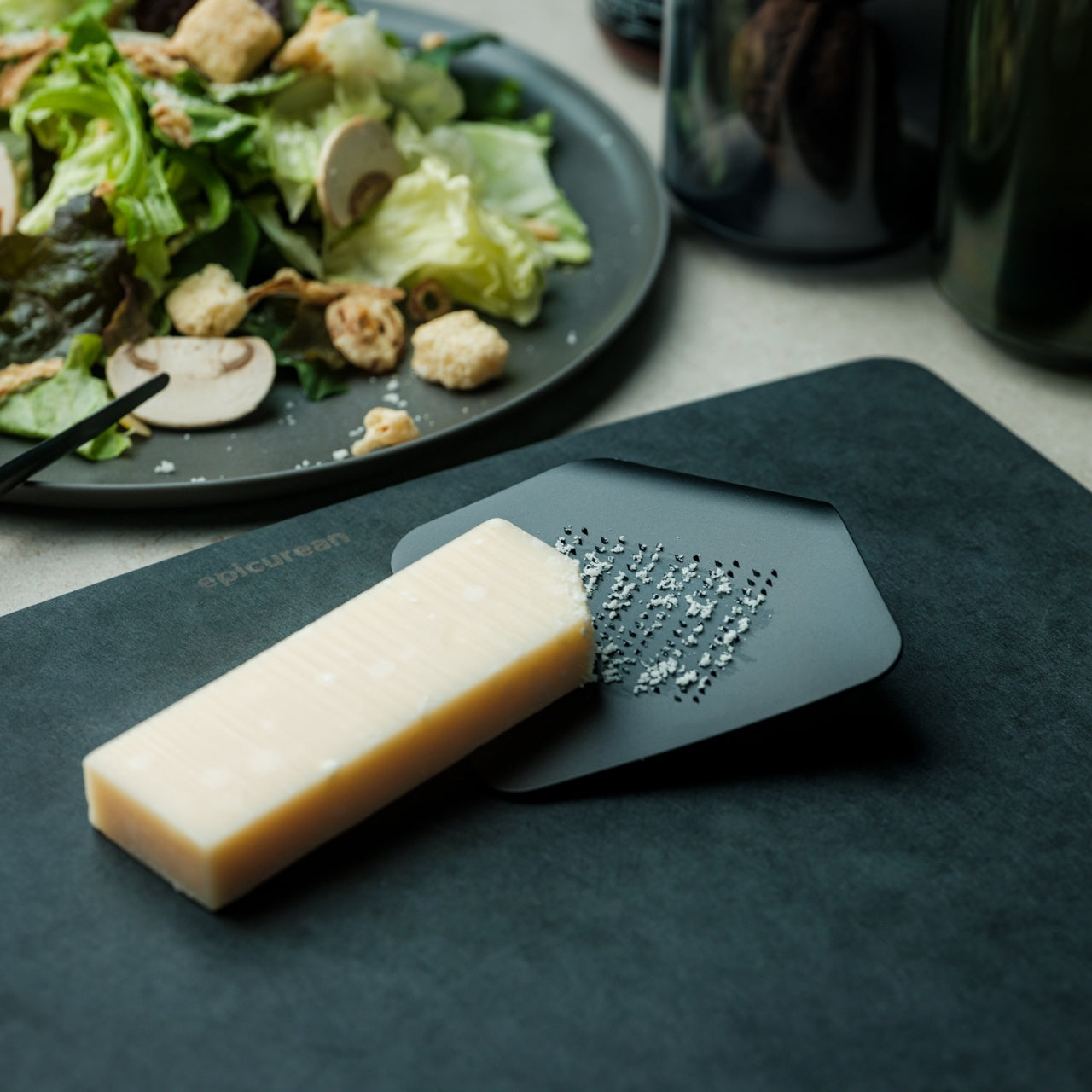
3. Playful Palm Grater

The Playful Palm Grater is shaped like a curled piece of paper and crafted from a single plate of aluminum alloy. It fits in your palm the way you’d hold a stone, close and naturally, rather than the way you hold a box grater, which always feels slightly too large for what it’s doing. That physical closeness changes where your attention goes. You focus on the ingredient and the motion rather than managing an implement that creates more distance from the task than the task actually needs.

For summer cooking, tableside grating transforms garnish preparation from something done in advance and forgotten into something that happens at the table as part of the meal itself. Fresh ginger over cold soba, a small amount of something sharp to cut through a rich sauce, daikon alongside grilled fish. The ergonomic design keeps hands clean and safe from the grater’s surface during use. Compact enough to disappear into any drawer, it adds almost nothing to the counter and changes the experience of finishing a dish.

Click Here to Buy Now: $25.00

What we like

  • The palm-sized form changes how grating feels physically, making tableside preparation natural rather than effortful or awkward
  • Crafted from a single plate of aluminum alloy, the lightweight construction adds virtually no weight or bulk to your kitchen setup

What we dislike

  • The compact size means slower processing for any quantity beyond a tableside garnish amount
  • Not suited for large-volume grating or ingredients that require significant pressure to break down

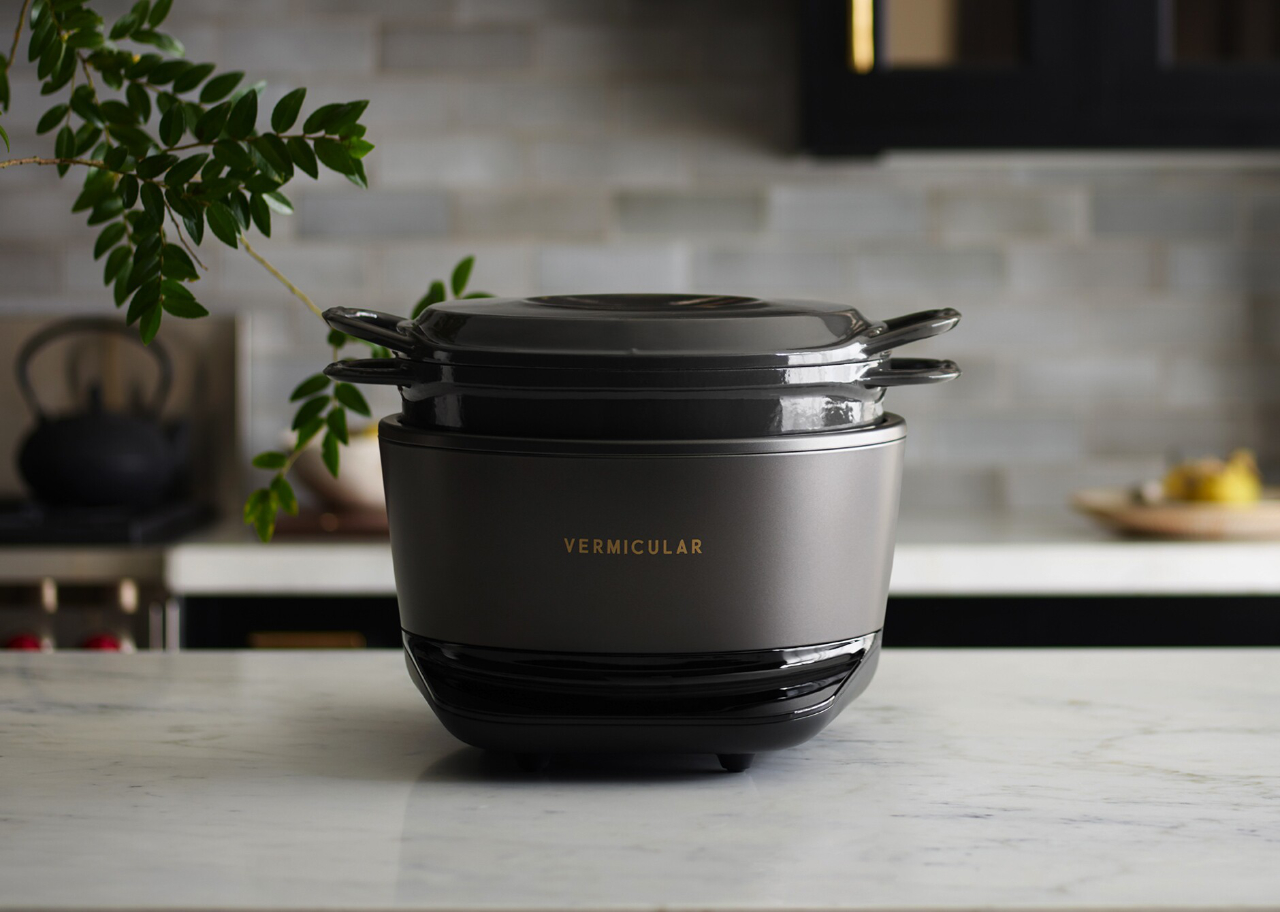
4. Vermicular Musui-Kamado Rice Cooker

The Vermicular Musui-Kamado pairs precise induction heating with a cast iron pot, and the result is rice with a texture and aroma that standard electric cookers consistently fail to produce. The glossy, aromatic quality is something you notice immediately, something guests will notice before you explain it, and something you stop being able to accept mediocre versions of once you’ve eaten it regularly. For summer cooking, this matters across the full range of meals built around a bowl of rice done properly.

The cold rice bowl, the foundation of a casual sushi spread, the side dish anchoring grilled fish: the rice at the center of those meals either earns everything else on the plate or quietly lets it down. The minimalist design and intuitive controls mean the cooker handles the process in the background without demanding your attention or dominating the counter. This is a daily-use investment that improves a broader range of meals than almost any other single kitchen tool.

What we like

  • Precise induction heating combined with a cast iron pot produces rice with a consistency and quality that standard electric cookers cannot replicate
  • The minimalist design integrates into any kitchen counter without demanding visual attention or commanding the whole surface

What we dislike

  • The cast iron pot is heavier than standard cooker inserts and requires careful hand washing and thorough drying after each use
  • The premium construction comes at a premium price, making this a considered investment rather than an impulse buy

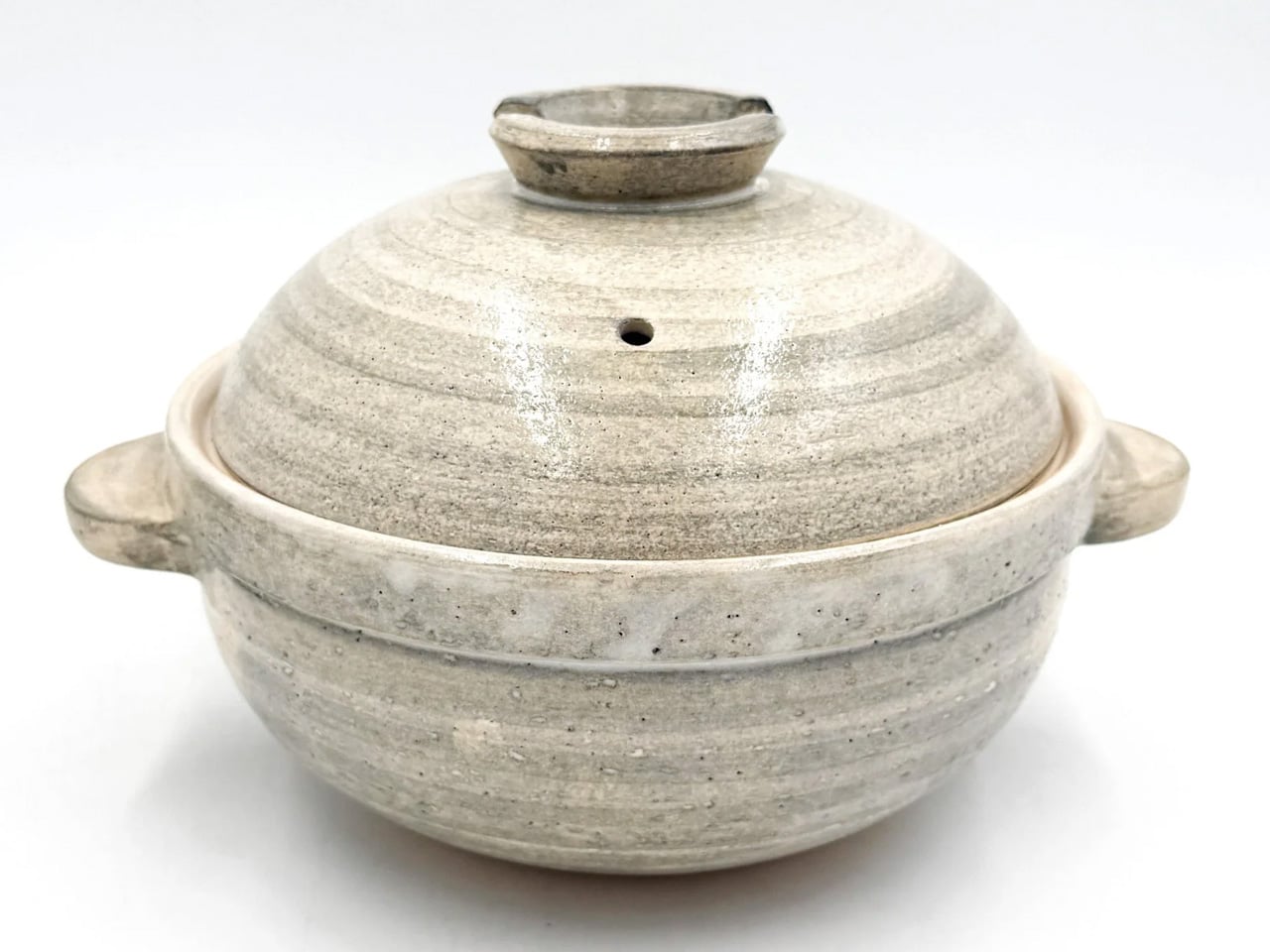
5. Iga-yaki Donabe Clay Pot

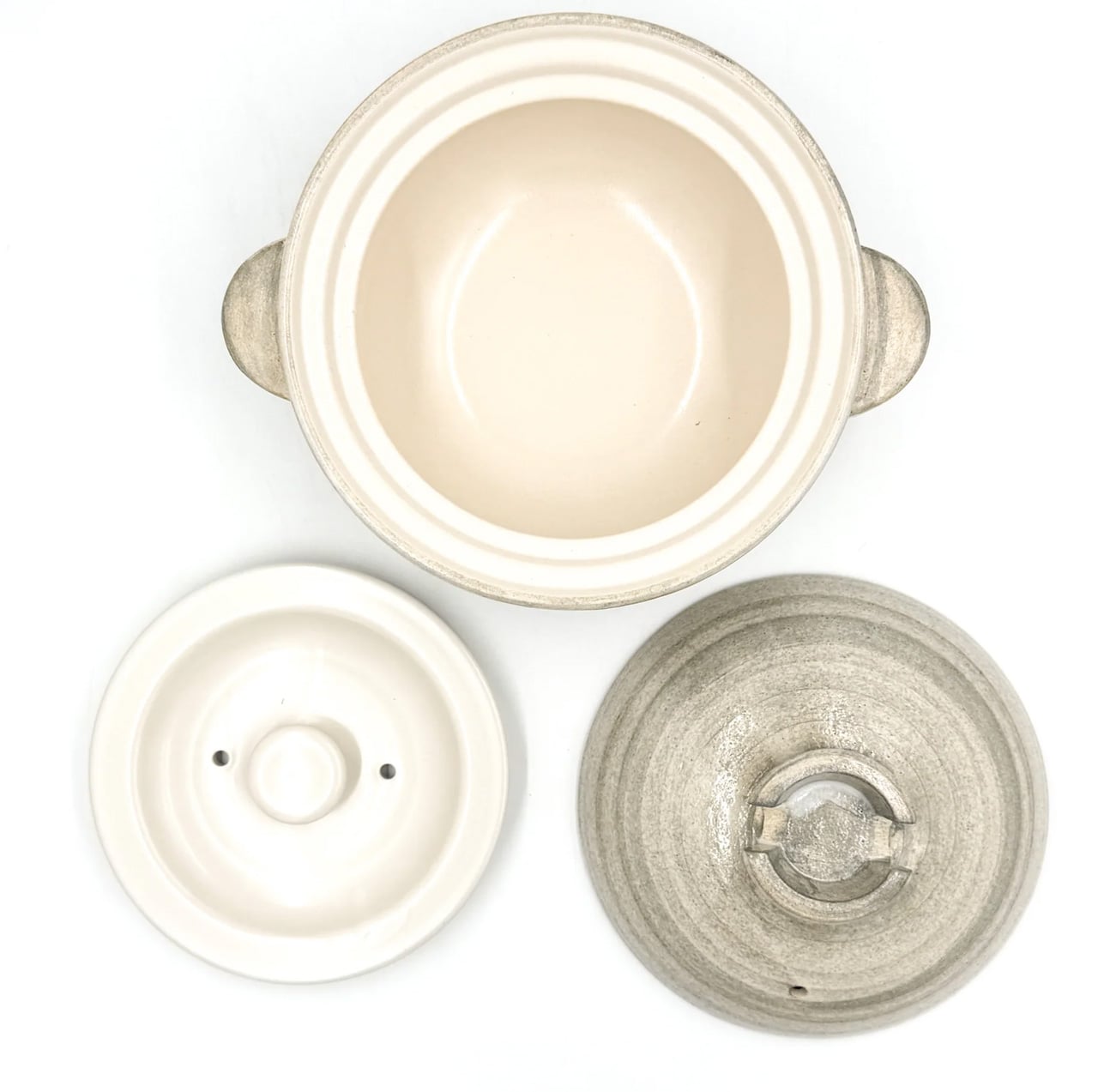
Iga-yaki clay comes from Mie Prefecture in Japan, where local earth has been worked into ceramics for centuries. The porous structure absorbs heat slowly and releases it evenly, which creates a cooking environment that metal pots simply cannot replicate. Rice cooked in a donabe tastes different: sweeter, more aromatic, each grain fully cooked and intact. Broth deepens over a lower flame. The exterior stays rough and textured while the interior is glazed smooth, each surface doing exactly what it needs to and nothing more.

For summer cooking, the donabe covers more ground than most tools twice its size. It steams fish with the lid on, makes hot pot for a warm evening on the patio, braises chicken in dashi while you handle everything else, and holds rice at temperature through a long, unhurried meal. The Kamado-san Simply Donabe edition from TOIRO Kitchen is available in several sizes, all made in Japan from Iga clay. This is the vessel most likely to become the one you reach for first, regardless of what you’re making.

What we like

  • Iga-yaki clay retains heat well past the point of turning off the flame, keeping food at temperature through an unhurried meal at the table
  • Versatile across rice, hot pot, steaming, and slow braise — one vessel that covers the full range without compromise

What we dislike

  • Clay donabe requires seasoning before first use by simmering rice water inside, a step that isn’t always clear from the packaging
  • The porous body can absorb strong cooking odors over time and needs to be stored with the lid off after washing to stay fresh

6. All-in-One Grill

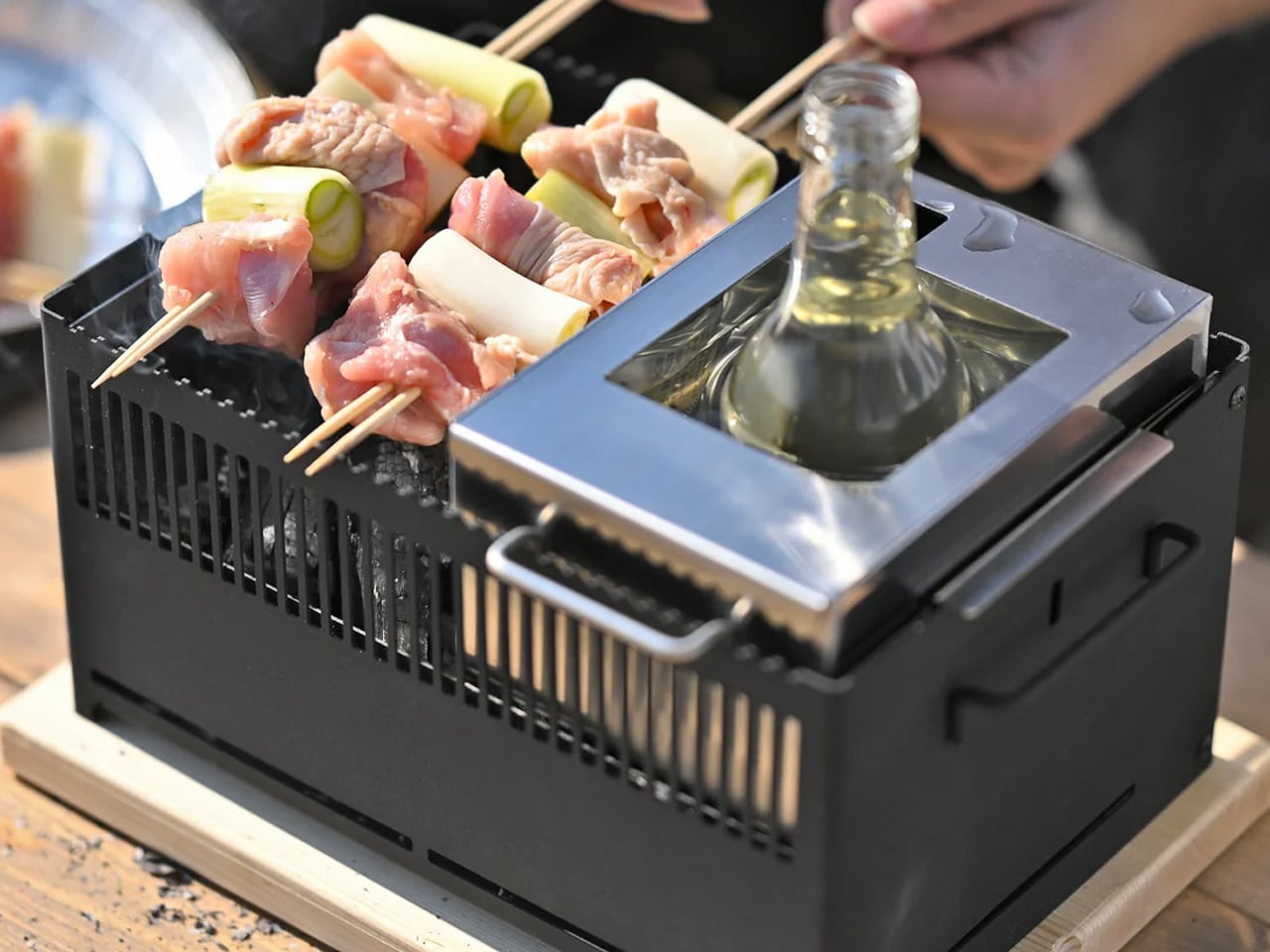
Skewers of meat and green onions grilling on a small portable charcoal grill with a metal insert holding a glass bottle.

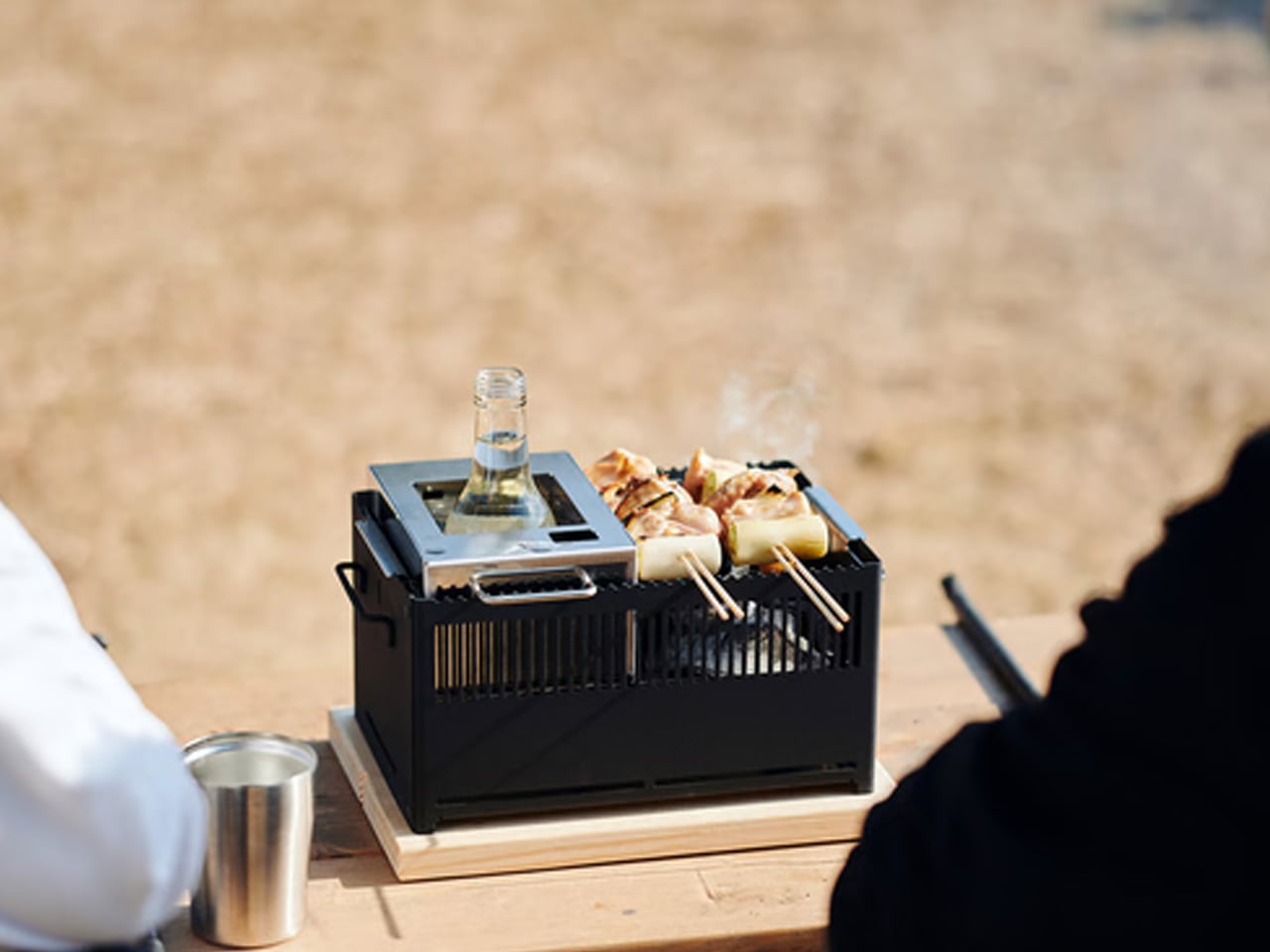
The All-in-One Modular Grill handles barbecuing, frying, grilling, steaming, smoking, and bottle warming through a system of modules that snap in and out without tools or complicated reassembly between uses. You can move from grilling skewers to steaming dumplings without changing stations or rethinking the setup mid-meal. That flexibility changes how you approach outdoor cooking entirely. You stop planning around the limitations of a single-purpose grill and start cooking whatever you actually want to make, which is how outdoor cooking should feel in the first place.

The portability is real and not aspirational. Every module is engineered to fit together compactly, making it practical to carry to a rooftop, campsite, or garden without second-guessing the decision to bring it along. Each part disassembles quickly for washing when the evening is over, which matters more than it sounds after a long outdoor meal without a kitchen nearby. Available from the YD shop at $449, this is the anchor of a summer cooking setup worth taking seriously. The other tools on this list inform the meal. This is where it actually happens.

Click Here to Buy Now: $449

What we like

  • Multiple interchangeable modules let you move through entirely different cooking methods without leaving the station or swapping out equipment mid-cook
  • The system disassembles quickly after use, making cleanup manageable even in outdoor settings far from a kitchen

What we dislike

  • The full grill with all modules is heavier than single-purpose outdoor cookware, which matters if you’re carrying it any real distance on foot
  • The modular system takes some initial orientation for anyone accustomed to simpler, single-function grills

7. Yoshikawa Polished Bamboo Makisu

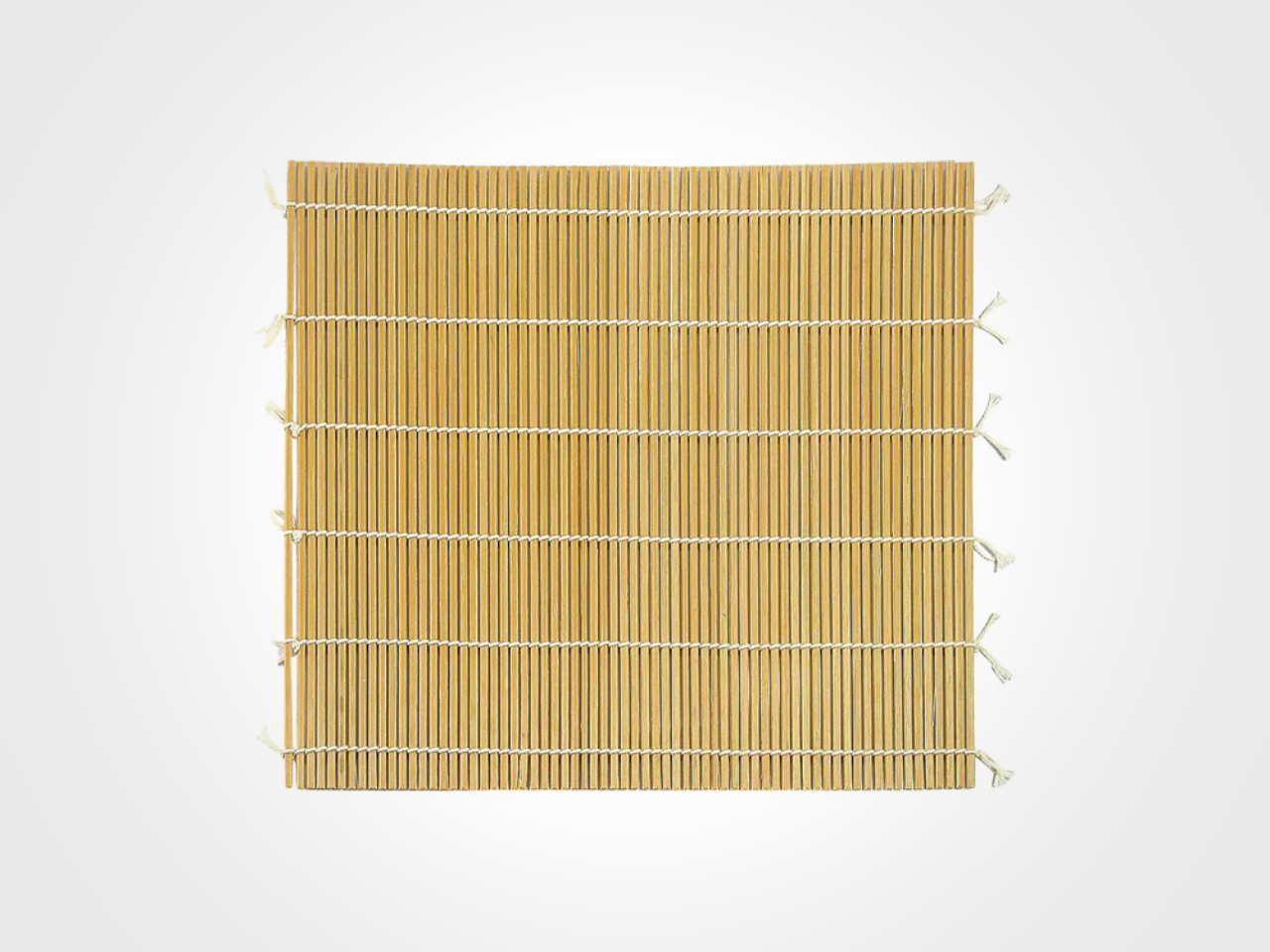
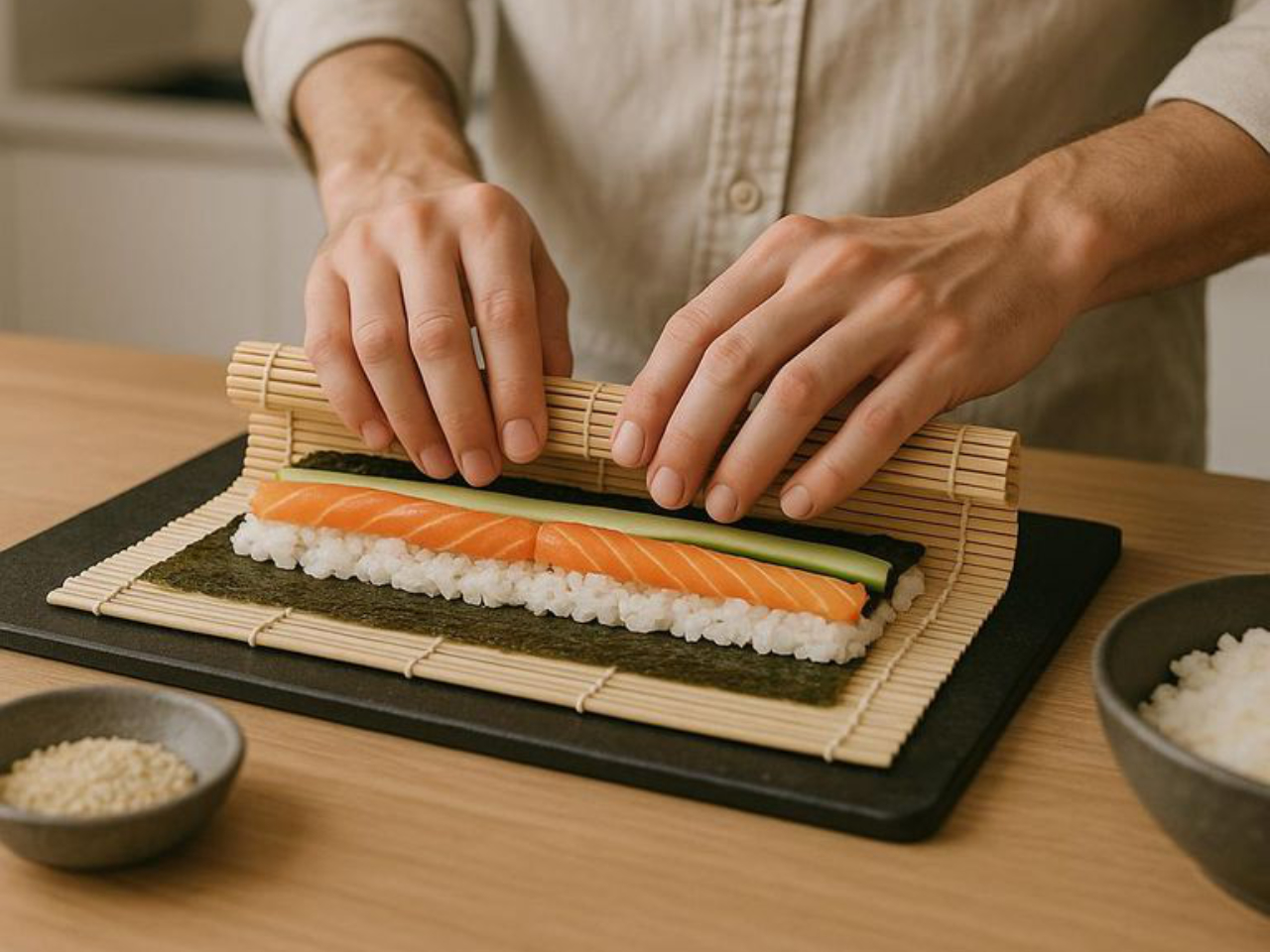
Most bamboo sushi mats are made from standard green bamboo and fade as they age, gradually becoming something you stop noticing rather than something you reach for with intention. The Yoshikawa Polished Bamboo Makisu works differently. Made from bamboo that has had its outer skin removed and its surface hand-finished, it starts with a warmth and smoothness that typical mats don’t carry and develops a rich amber tone with every use. It becomes more itself the more you cook with it, which is a quality worth paying attention to.

The smooth surface feels different in your hands during the rolling process, and that tactile quality is not incidental. When the tool itself feels considered, the task feels considered too, and the sushi you make reflects that shift in attention. Summer sushi nights stop feeling like a project and start feeling like a practice worth returning to. Available through Yoshikawa’s Japanese store, this is a small investment in a kind of cooking that becomes more enjoyable every time you do it, which is the best argument any kitchen tool can make for itself.

What we like

  • The polished bamboo surface develops a beautiful amber tone and individual character that deepens with every use, unlike standard mats that only fade over time
  • The hand-finished surface creates a tactile quality during rolling that changes the attention you bring to the task

What we dislike

  • Not dishwasher safe and requires more attentive drying and storage than synthetic mat alternatives to stay in good condition
  • More delicate than standard green bamboo mats if handled carelessly during washing or storage

The Best Kitchen Tools Don’t Make Cooking Easier — They Make It Worth Doing

The best argument for any of these tools is the same: they make summer cooking feel like a choice rather than a negotiation. The nakiri makes you want to stay at the cutting board. The donabe makes you want to wait for the steam. The grill makes you want to be outside with something good happening on the surface in front of you. These seven tools don’t just produce better food. They produce the desire to cook at all, which is the harder thing to manufacture.

Japanese kitchen design built its reputation on exactly this idea — that the right object doesn’t just solve a problem but changes your relationship to the task it belongs to. None of these tools will feel like a novelty in six months. They will feel like the obvious choice, the one you reach for first, the one you genuinely miss when you cook somewhere that doesn’t have it. Summer is the right time to find out which one that is for you.

The post 7 Best Japanese Kitchen Gadgets That Make Summer Cooking Actually Worth Getting Off the Couch first appeared on Yanko Design.

7 Best Japanese Kitchen Gadgets That Make Summer Cooking Actually Worth Getting Off the Couch

Summer cooking sits at a particular crossroads. The produce is at its best without much intervention, the kitchen gets warm, and the gap between wanting a good meal and actually making one widens every afternoon. Japanese kitchen design has always understood how to close that gap — not by making cooking faster or simpler in a gimmicky sense, but by making the process feel like something worth choosing. These seven tools operate on that principle.

Each one was selected because it shifts how cooking feels, not just what it produces. Some anchor a weekday morning and make the first meal of the day worth setting time aside for. Others make a Saturday evening in the kitchen feel like the destination rather than a precondition. All of them bring a quality of craft to the work that most kitchen drawers simply cannot match, and that quality is exactly what summer cooking needs most.

1. Iron Frying Plate

The Iron Frying Plate removes the step between cooking and serving. Crafted from 1.6mm thick mill scale steel with a detachable wooden handle, it moves from stove to table without a transfer in between. Eggs arrive still sizzling. Fish comes off the heat in the same vessel you cooked it in, retaining the temperature and texture that plating onto a cold ceramic plate quietly destroys. The cook-and-serve design changes how a meal begins and ends, and the pace of eating reflects that shift immediately.

The uncoated surface requires no seasoning before first use and develops natural non-stick properties through regular cooking. The detachable wooden handle attaches and releases with one hand, making the move from burner to table completely fluid. You stop rushing through dinner because the plate is still doing its job while you are still deciding what to eat first. Retained heat changes the pace of a meal in ways that are difficult to explain until you’ve eaten a few of them this way.

Click Here to Buy Now: $69.00

What we like

  • The cook-and-serve design preserves the temperature and texture that get lost in any transfer to a separate plate
  • The uncoated mill-scale steel develops natural non-stick properties through use, requiring no seasoning and no chemical coatings

What we dislike

  • The iron surface stays hot long after cooking ends, requiring careful handling and surface awareness at the table
  • One plate handles one serving at a time, so a group meal requires multiple units to work at scale

2. Yoshihiro VG-10 16-Layer Hammered Damascus Nakiri

The nakiri is designed exclusively for vegetables, and that singular focus is what makes it work for summer cooking in a way a standard chef’s knife doesn’t. The flat edge makes full contact with the cutting board on every stroke without the tip-lift of a curved blade, producing a clean, complete cut through cucumber, eggplant, and ripe tomato without the drag most home cooks have accepted as normal. The VG-10 core wrapped in sixteen layers of hammered Damascus steel reduces friction through each cut, so nothing sticks or skids.

The full-tang mahogany handle distributes weight evenly from tip to heel, and after fifteen minutes of prep, you feel that balance in a way that poorly weighted knives never let you forget themselves. Summer produce means a lot of repetitive slicing through high-moisture vegetables, and this knife is built for exactly that kind of sustained work. The hammered Damascus pattern is unique to your specific blade, handcrafted by master artisans and certified for commercial kitchen use. The edge holds far longer than most knives in this category.

What we like

  • The flat edge makes full contact with the board on every stroke, producing complete cuts that a curved blade with tip-lift cannot replicate with the same consistency
  • The hammered Damascus surface reduces drag through each cut and produces a pattern that is unique to every individual blade

What we dislike

  • The nakiri is a specialist vegetable knife and is not designed for meat, fish, or anything with bones
  • The Damascus finish requires careful dry storage and periodic maintenance to preserve the layered surface over time

3. Playful Palm Grater

The Playful Palm Grater is shaped like a curled piece of paper and crafted from a single plate of aluminum alloy. It fits in your palm the way you’d hold a stone, close and naturally, rather than the way you hold a box grater, which always feels slightly too large for what it’s doing. That physical closeness changes where your attention goes. You focus on the ingredient and the motion rather than managing an implement that creates more distance from the task than the task actually needs.

For summer cooking, tableside grating transforms garnish preparation from something done in advance and forgotten into something that happens at the table as part of the meal itself. Fresh ginger over cold soba, a small amount of something sharp to cut through a rich sauce, daikon alongside grilled fish. The ergonomic design keeps hands clean and safe from the grater’s surface during use. Compact enough to disappear into any drawer, it adds almost nothing to the counter and changes the experience of finishing a dish.

Click Here to Buy Now: $25.00

What we like

  • The palm-sized form changes how grating feels physically, making tableside preparation natural rather than effortful or awkward
  • Crafted from a single plate of aluminum alloy, the lightweight construction adds virtually no weight or bulk to your kitchen setup

What we dislike

  • The compact size means slower processing for any quantity beyond a tableside garnish amount
  • Not suited for large-volume grating or ingredients that require significant pressure to break down

4. Vermicular Musui-Kamado Rice Cooker

The Vermicular Musui-Kamado pairs precise induction heating with a cast iron pot, and the result is rice with a texture and aroma that standard electric cookers consistently fail to produce. The glossy, aromatic quality is something you notice immediately, something guests will notice before you explain it, and something you stop being able to accept mediocre versions of once you’ve eaten it regularly. For summer cooking, this matters across the full range of meals built around a bowl of rice done properly.

The cold rice bowl, the foundation of a casual sushi spread, the side dish anchoring grilled fish: the rice at the center of those meals either earns everything else on the plate or quietly lets it down. The minimalist design and intuitive controls mean the cooker handles the process in the background without demanding your attention or dominating the counter. This is a daily-use investment that improves a broader range of meals than almost any other single kitchen tool.

What we like

  • Precise induction heating combined with a cast iron pot produces rice with a consistency and quality that standard electric cookers cannot replicate
  • The minimalist design integrates into any kitchen counter without demanding visual attention or commanding the whole surface

What we dislike

  • The cast iron pot is heavier than standard cooker inserts and requires careful hand washing and thorough drying after each use
  • The premium construction comes at a premium price, making this a considered investment rather than an impulse buy

5. Iga-yaki Donabe Clay Pot

Iga-yaki clay comes from Mie Prefecture in Japan, where local earth has been worked into ceramics for centuries. The porous structure absorbs heat slowly and releases it evenly, which creates a cooking environment that metal pots simply cannot replicate. Rice cooked in a donabe tastes different: sweeter, more aromatic, each grain fully cooked and intact. Broth deepens over a lower flame. The exterior stays rough and textured while the interior is glazed smooth, each surface doing exactly what it needs to and nothing more.

For summer cooking, the donabe covers more ground than most tools twice its size. It steams fish with the lid on, makes hot pot for a warm evening on the patio, braises chicken in dashi while you handle everything else, and holds rice at temperature through a long, unhurried meal. The Kamado-san Simply Donabe edition from TOIRO Kitchen is available in several sizes, all made in Japan from Iga clay. This is the vessel most likely to become the one you reach for first, regardless of what you’re making.

What we like

  • Iga-yaki clay retains heat well past the point of turning off the flame, keeping food at temperature through an unhurried meal at the table
  • Versatile across rice, hot pot, steaming, and slow braise — one vessel that covers the full range without compromise

What we dislike

  • Clay donabe requires seasoning before first use by simmering rice water inside, a step that isn’t always clear from the packaging
  • The porous body can absorb strong cooking odors over time and needs to be stored with the lid off after washing to stay fresh

6. All-in-One Grill

Skewers of meat and green onions grilling on a small portable charcoal grill with a metal insert holding a glass bottle.

The All-in-One Modular Grill handles barbecuing, frying, grilling, steaming, smoking, and bottle warming through a system of modules that snap in and out without tools or complicated reassembly between uses. You can move from grilling skewers to steaming dumplings without changing stations or rethinking the setup mid-meal. That flexibility changes how you approach outdoor cooking entirely. You stop planning around the limitations of a single-purpose grill and start cooking whatever you actually want to make, which is how outdoor cooking should feel in the first place.

The portability is real and not aspirational. Every module is engineered to fit together compactly, making it practical to carry to a rooftop, campsite, or garden without second-guessing the decision to bring it along. Each part disassembles quickly for washing when the evening is over, which matters more than it sounds after a long outdoor meal without a kitchen nearby. Available from the YD shop at $449, this is the anchor of a summer cooking setup worth taking seriously. The other tools on this list inform the meal. This is where it actually happens.

Click Here to Buy Now: $449

What we like

  • Multiple interchangeable modules let you move through entirely different cooking methods without leaving the station or swapping out equipment mid-cook
  • The system disassembles quickly after use, making cleanup manageable even in outdoor settings far from a kitchen

What we dislike

  • The full grill with all modules is heavier than single-purpose outdoor cookware, which matters if you’re carrying it any real distance on foot
  • The modular system takes some initial orientation for anyone accustomed to simpler, single-function grills

7. Yoshikawa Polished Bamboo Makisu

Most bamboo sushi mats are made from standard green bamboo and fade as they age, gradually becoming something you stop noticing rather than something you reach for with intention. The Yoshikawa Polished Bamboo Makisu works differently. Made from bamboo that has had its outer skin removed and its surface hand-finished, it starts with a warmth and smoothness that typical mats don’t carry and develops a rich amber tone with every use. It becomes more itself the more you cook with it, which is a quality worth paying attention to.

The smooth surface feels different in your hands during the rolling process, and that tactile quality is not incidental. When the tool itself feels considered, the task feels considered too, and the sushi you make reflects that shift in attention. Summer sushi nights stop feeling like a project and start feeling like a practice worth returning to. Available through Yoshikawa’s Japanese store, this is a small investment in a kind of cooking that becomes more enjoyable every time you do it, which is the best argument any kitchen tool can make for itself.

What we like

  • The polished bamboo surface develops a beautiful amber tone and individual character that deepens with every use, unlike standard mats that only fade over time
  • The hand-finished surface creates a tactile quality during rolling that changes the attention you bring to the task

What we dislike

  • Not dishwasher safe and requires more attentive drying and storage than synthetic mat alternatives to stay in good condition
  • More delicate than standard green bamboo mats if handled carelessly during washing or storage

The Best Kitchen Tools Don’t Make Cooking Easier — They Make It Worth Doing

The best argument for any of these tools is the same: they make summer cooking feel like a choice rather than a negotiation. The nakiri makes you want to stay at the cutting board. The donabe makes you want to wait for the steam. The grill makes you want to be outside with something good happening on the surface in front of you. These seven tools don’t just produce better food. They produce the desire to cook at all, which is the harder thing to manufacture.

Japanese kitchen design built its reputation on exactly this idea — that the right object doesn’t just solve a problem but changes your relationship to the task it belongs to. None of these tools will feel like a novelty in six months. They will feel like the obvious choice, the one you reach for first, the one you genuinely miss when you cook somewhere that doesn’t have it. Summer is the right time to find out which one that is for you.

The post 7 Best Japanese Kitchen Gadgets That Make Summer Cooking Actually Worth Getting Off the Couch first appeared on Yanko Design.
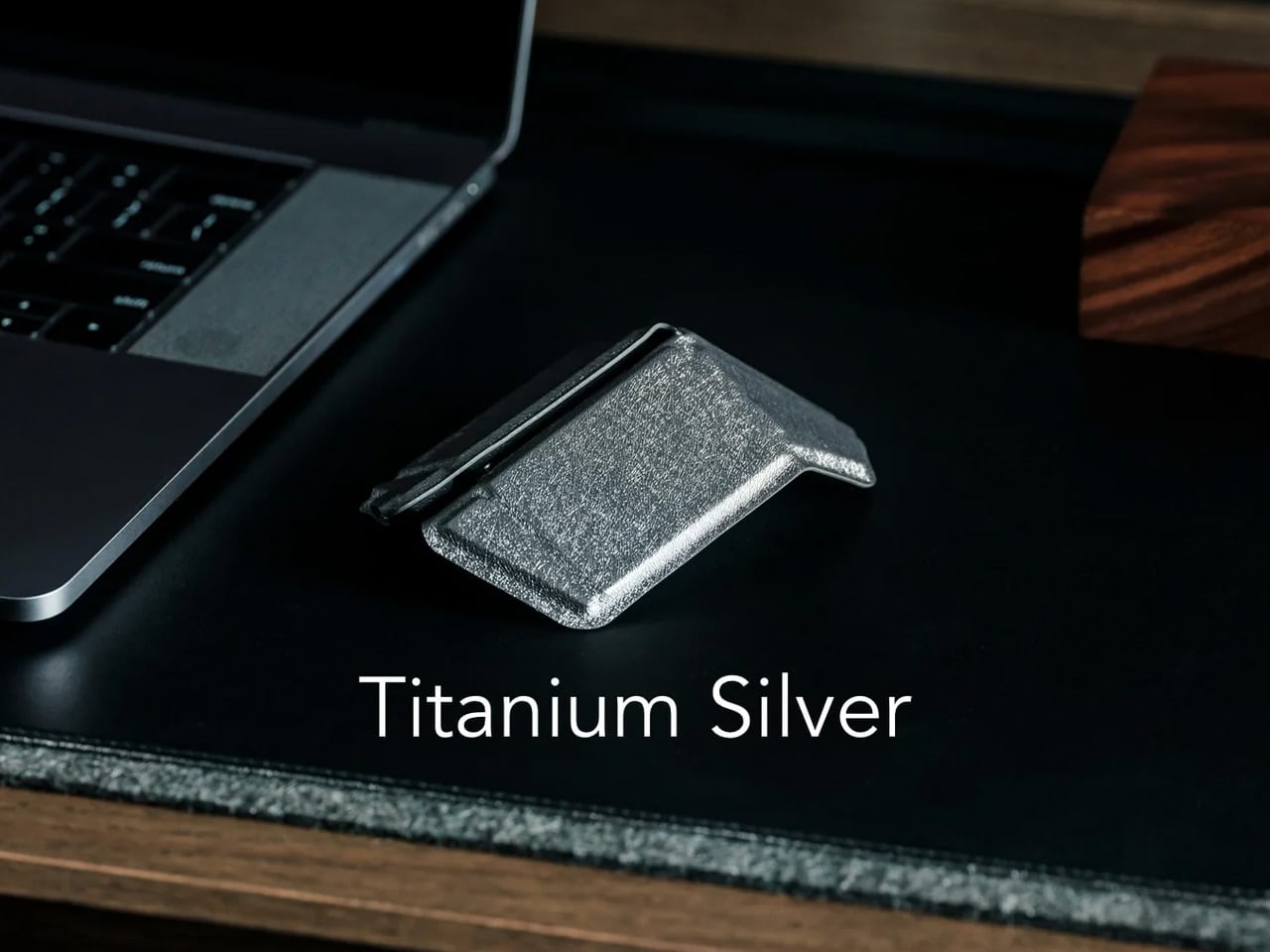
LiberNovo Maxis Gives Bigger Builds the Chair They Actually Deserve

The ergonomic chair market has grown considerably over the past decade, with brands competing on lumbar support, adjustability, and build quality. For most people, the options are plentiful. For taller and broader users, though, the experience often tells the same uncomfortable story: seats that run out before the knee, backrests that stop short of the shoulders, and headrests that hover just out of reach.

LiberNovo’s answer to that gap is the Maxis, a chair that doesn’t try to stretch an existing design to fit bigger frames. It’s been built from the ground up with larger bodies in mind, carrying the slogan “Built for Bigger Builds” with some conviction. Everything from the seat platform to the backrest geometry has been re-engineered around what someone between 5’10” and 6’7″ needs from a chair.
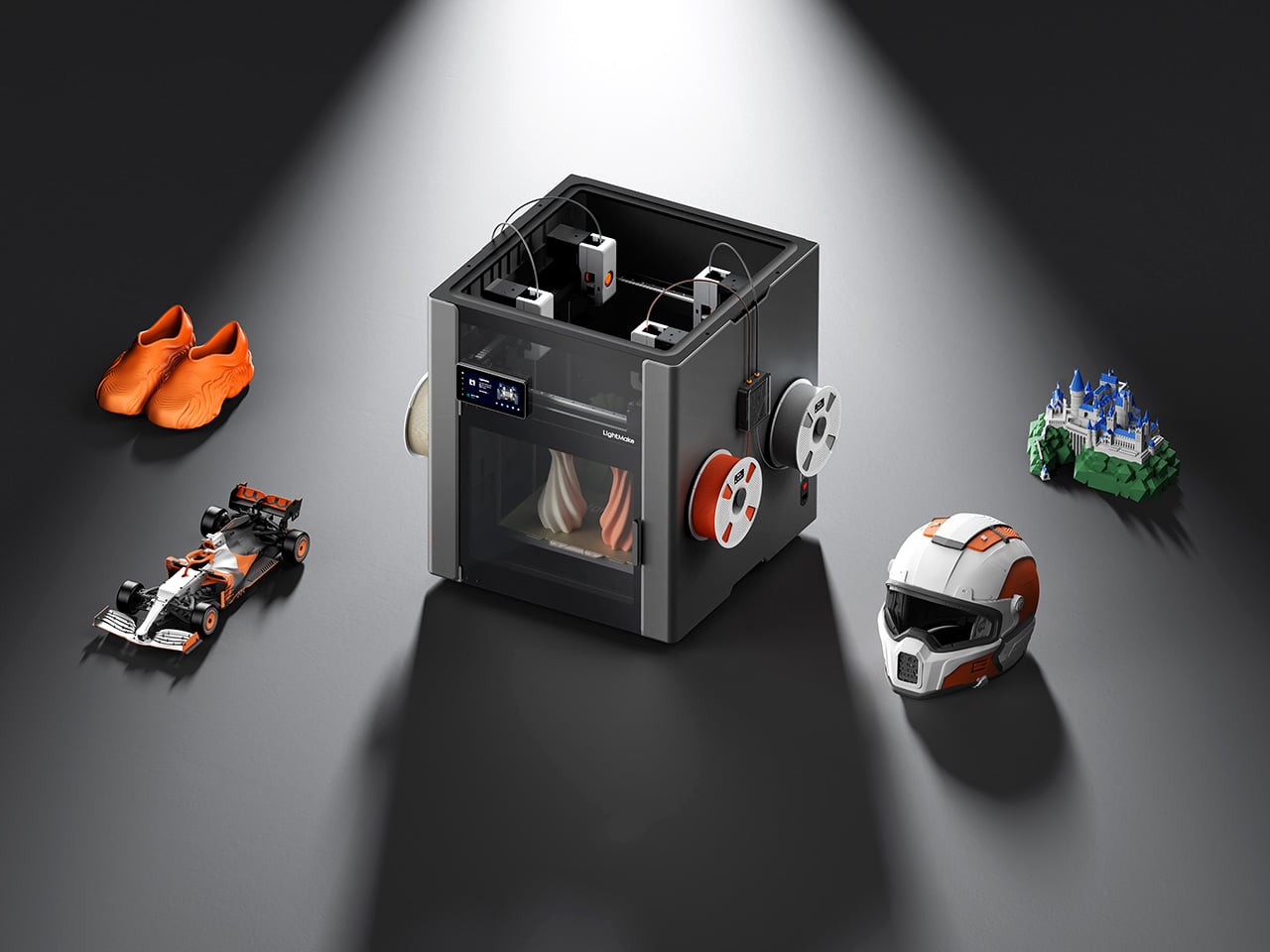
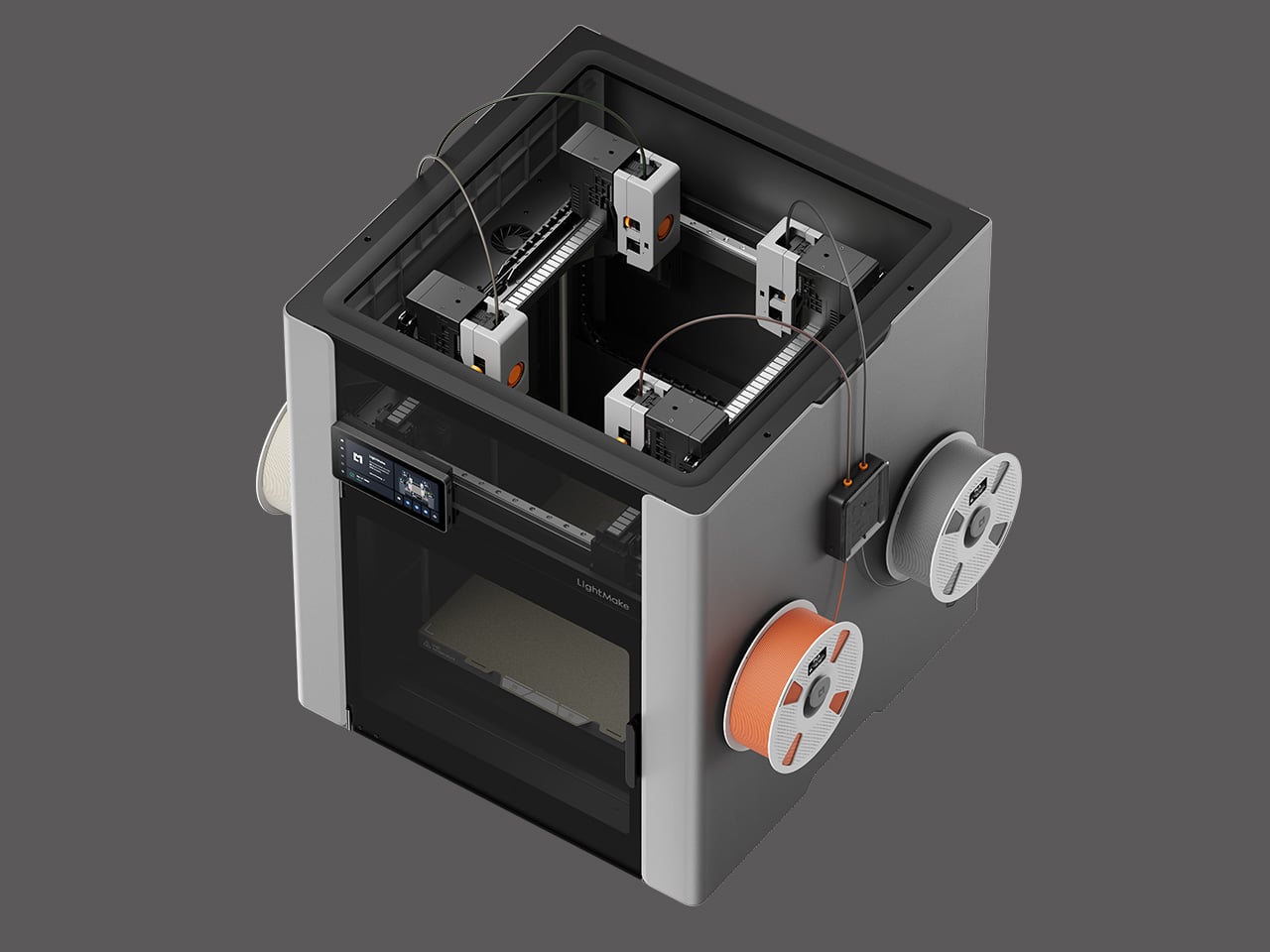
Designer: LiberNovo

Click Here to Preorder Now: $10 deposit unlocks $30 discount on balance payment. Hurry, deal ends on 16th June.

The most immediate difference is the seat itself. At 52cm deep, it supports the full length of the thigh rather than cutting off too soon. That might seem like a minor detail, but anyone who’s worked long hours on a seat that runs out before it should know exactly how quickly that discomfort compounds. The reinforced frame also supports up to 399lbs.

The fit story continues further up. The neck support covers a wider vertical and horizontal adjustment range, so it can actually reach where taller users need it rather than floating somewhere above. The armrests are custom-sized with more span and travel than standard chairs allow. Their slightly curved shape also helps prevent the waist compression that straight-edged rests tend to cause for bigger frames.

This becomes more concrete in the upper half of the chair. LiberNovo says the Maxis back frame expands to a 430 mm shoulder span and a 520 mm waist width, giving bigger builds fuller contact instead of leaving pressure concentrated in narrower zones. The headrest is just as deliberate, with 140 mm of vertical travel and 120 mm of horizontal adjustment, plus a U-shaped design intended to support the neck more naturally.

What keeps the Maxis from feeling like a bigger version of an ordinary chair is how the backrest actually behaves. The Bionic FlexFit Backrest is designed to move with the body as posture shifts, rather than holding rigidly to one position. That’s the core idea behind LiberNovo’s Dynamic Support System, which maintains alignment through movement without needing constant manual readjustment.

The recline system follows a similar logic. The Maxis locks into five preset positions, from 105 degrees for focused, upright work up to 160 degrees for near-flat recovery. The stops in between cover the varied moments a long day actually involves: a video call, a longer solo session, a quick pause. Having distinct positions makes switching between them quick and intentional rather than endlessly fiddling with them.

The Maxis comes in three versions built on the same reinforced frame. The Manual keeps things simple with a physical dial for lumbar adjustment. The Electric adds motorized lumbar control alongside OmniStretch, a stretch-and-release cycle designed to relieve spinal compression after prolonged sitting. The Airflow builds on that with active seat ventilation, using a centrifugal fan embedded in the cushion to keep things cool and dry.

LiberNovo Omni Pro

OmniStretch and the Airflow ventilation both address the fatigue that builds gradually over long sessions. OmniStretch extends the lumbar support upward and gently releases it, creating a stretch-and-release motion intended to help relieve compression from prolonged seating. The ventilation system addresses heat accumulation in the seat cushion, helping the chair stay more comfortable through longer sessions. Both features treat comfort as something that has to hold up across a full day.

The Maxis launches alongside two new additions to the broader LiberNovo lineup. The Omni Pro brings motorized lumbar support, OmniStretch, and active seat ventilation to the standard-size Omni platform, making it the performance-oriented choice for users who don’t need the larger Maxis frame. The Omni SE takes a more stripped-back approach, pairing the same ergonomic architecture with a manual lumbar mechanism for a simpler, set-and-forget setup.

LiberNovo OmniStretch

LiberNovo opened the Maxis pre-order period in the US on May 12 at 7:00 PM PDT, with the official launch set for June 16 at 9:00 AM PDT and the first release window running through July 31 at 9:00 AM PDT. During that pre-sale stretch, orders qualify for super early bird pricing, with discounts reaching up to 44% in the US. A $10 deposit also unlocks a $30 discount on orders of $1,000 or more, along with a free 1-year extended frame warranty and access to a three-tier premium gift package for qualifying purchases.

What the LiberNovo Maxis gets right is treating a larger body as the actual design brief, rather than an afterthought dealt with by scaling up existing dimensions. Every adjustment range, support angle, and contact point has been calibrated around that focus. For taller and broader professionals who’ve spent years on chairs that never quite fit, that’s a meaningfully different sitting experience.

Click Here to Preorder Now: $10 deposit unlocks $30 discount on balance payment. Hurry, deal ends on 16th June.

The post LiberNovo Maxis Gives Bigger Builds the Chair They Actually Deserve first appeared on Yanko Design.