The 2024 iPhone SE could get a Big Redesign with a Camera Notch, FaceID, and USB-C

It’s been nearly 2 years since Apple refreshed their budget iPhone SE and analysts are predicting that the company will launch a completely refreshed 4th Gen iPhone SE in the year 2024. The budget iPhone SE hasn’t just been a hot favorite for people looking for affordable iPhones for themselves or their children (it makes a great first phone), it’s been incredibly beneficial for Apple too, as the company has used this opportunity to flex its recycling chops, using chassis elements, components, and hardware from previous iPhones to build new low-end models. Up until now, the iPhone SE has still rocked some of Apple’s older design elements, like the curved edges, thick bezels, and even the archaic TouchID fingerprint reader that disappeared entirely in 2018. Designer 4RMD believes, however, that the upcoming iPhone SE will finally see a design upgrade in the form of a flat-edge form factor, a camera notch with FaceID, an action button (instead of the mute slider), and who knows… maybe even MagSafe! Rumored for a 2024 reveal, the 4th Gen iPhone SE could also be Apple’s first ‘Carbon Neutral‘ smartphone.

Designer: 4RMD
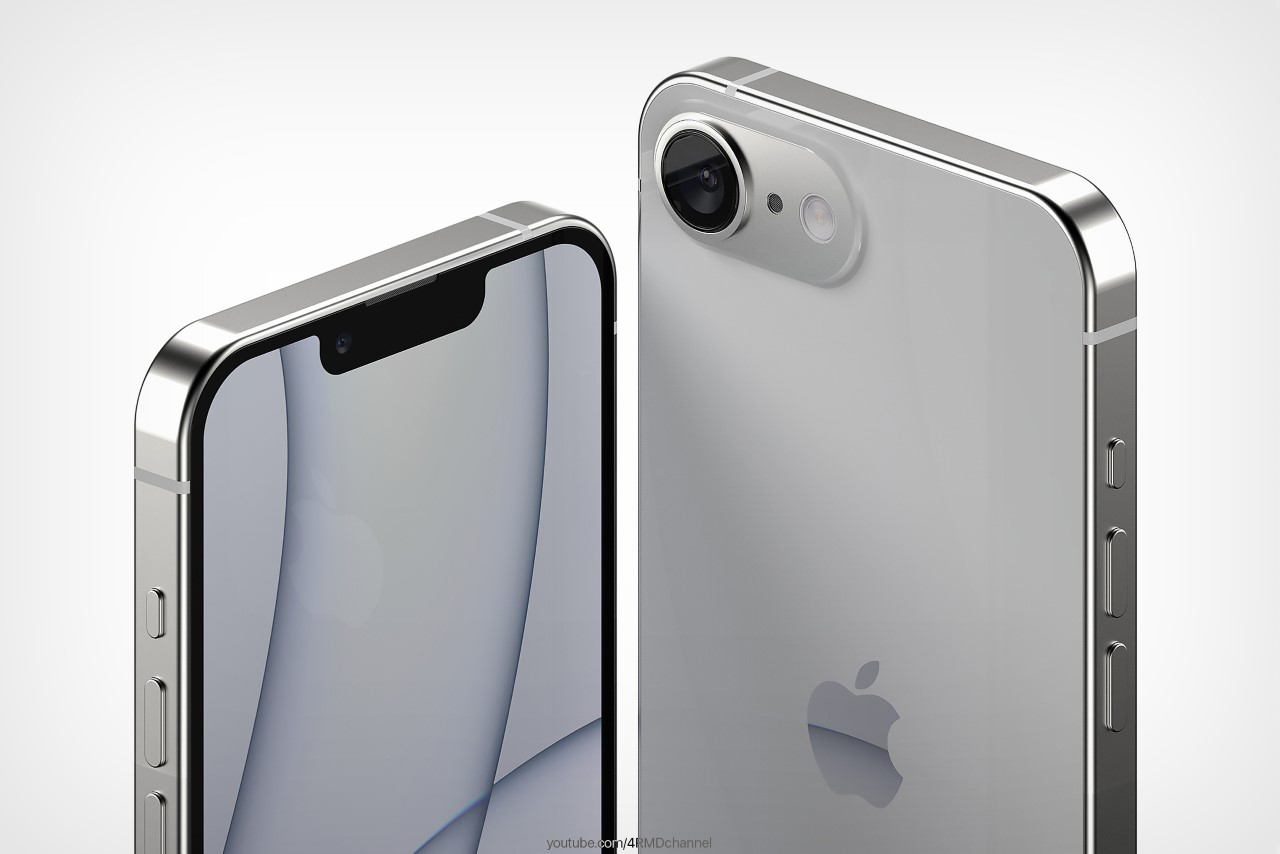
According to 4RMD’s renders (and that gorgeous Apple-inspired trailer video above), the 2024 iPhone SE will finally merge seamlessly into Apple’s product offering by looking like a part of their cutting-edge phone lineup. This means a bigger, more responsive 6.1-inch OLED display (with a FaceID camera notch on the front) covered by Apple’s Ceramic Shield glass. The phone’s showcased in 3 classic colors – black, white, and Product RED.

The phone is also powered by Apple’s A16 Bionic Chip, which was debuted just months ago inside the iPhone 15 series. It seems like processor overkill given the budget-status of the phone, but then again, the A16 is great at hardware rendering, which would make the 2024 iPhone SE a stellar gaming phone and a perfect pick for parents looking to gift their kids a low-cost iPhone. The presence of the A16 chip would pretty much gut Apple’s iPhone 13 and 14 sales, though.

Given its budget status, it still comes with a single-shooter primary camera that’s been upgraded to 48MP. The ultrawide lens also shoots Macro, supports Night Mode, and is even capable of capturing Cinematic videos.

However, 4RMD’s concept iPhone SE does tend to shoot for optimism with a few specs and details that strike one as ambitious. For starters, he touts an Action Button, which I doubt Apple would carry over to the budget iPhone this quickly. There’s even a mention of transitioning to USB-C, which I don’t see Apple doing this year for their budget phones (Apple could just restrict sales in the EU regarding lightning port concerns, given that the SE range isn’t their money-maker).

What the video doesn’t highlight is any of Apple’s safety features like car crash detection, or even the presence of wireless charging and MagSafe. If the past is any indication, this phone won’t come with a charger in the box, so having wireless charging capabilities will still be a heaven-sent for most buyers. The 4th Gen iPhone SE is due to drop in 2024, although whether it launches with Apple’s refreshed iPads in March, or with the iPhone 16 in October is anybody’s guess.

The post The 2024 iPhone SE could get a Big Redesign with a Camera Notch, FaceID, and USB-C first appeared on Yanko Design.
What’s Inside A Fake AirPods Pro? CT Scans Show How Counterfeit Earbuds Are Built

Just go type the word AirPods into Temu or AliExpress and you’re likely to be flooded with results of earphones that look exactly like the AirPods, but most likely are just counterfeits. The AirPods, more than being wireless earphones, are a fashion and social statement. Everyone craves being seen wearing them, and that sort of crowd response doesn’t go noticed by folks sitting in factories in Shenzhen. Counterfeit AirPods can be found across an entire spectrum. Sometimes they’re just shitty $10 earpieces stuffed into an AirPod plastic shell, other times they’re so convincingly good that they even end up fooling Apple devices into pairing with them. The trick to avoiding falling for a fake is to simply ensure you’re either buying your goods directly from Apple, or a certified Apple retailer/reseller… conversely, you could do what Lumafield did by renting incredibly expensive tomography equipment to scan your products.

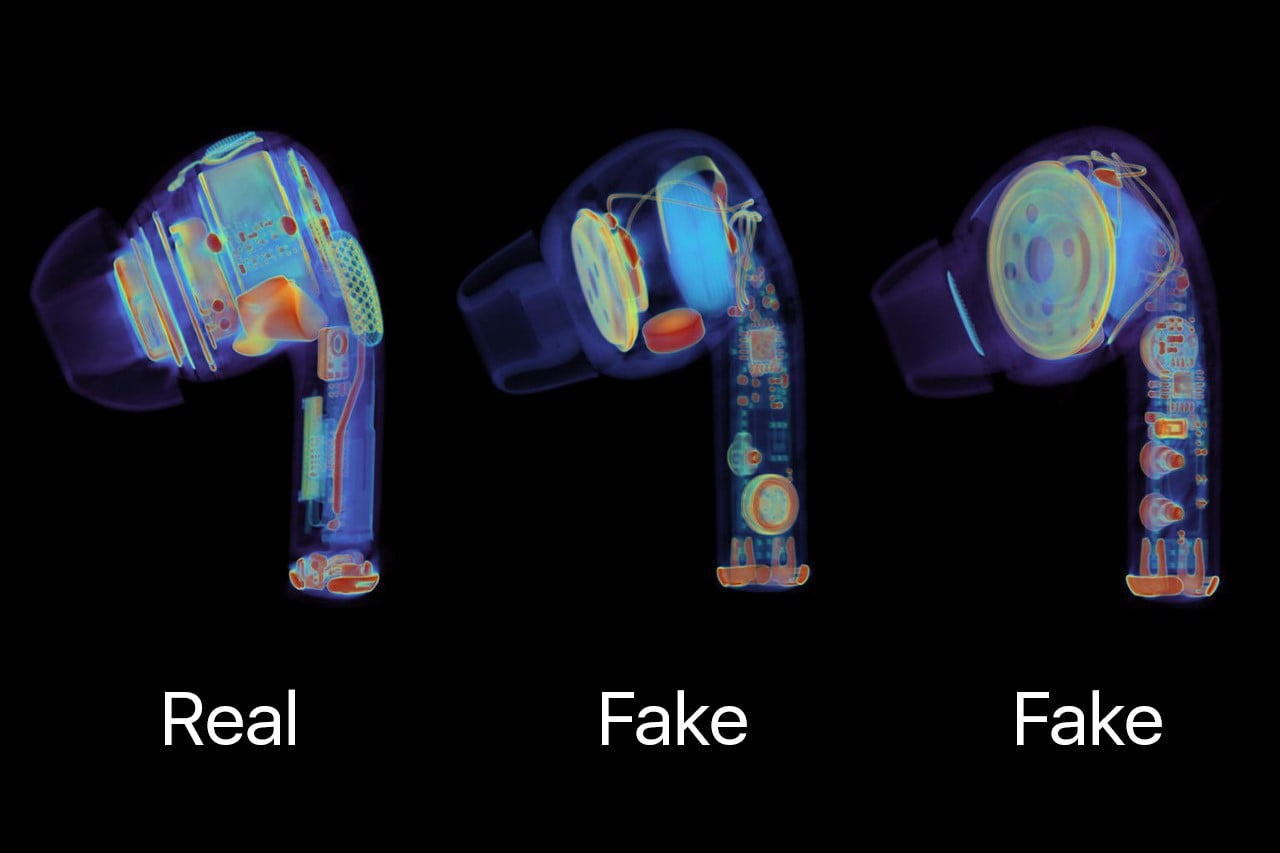
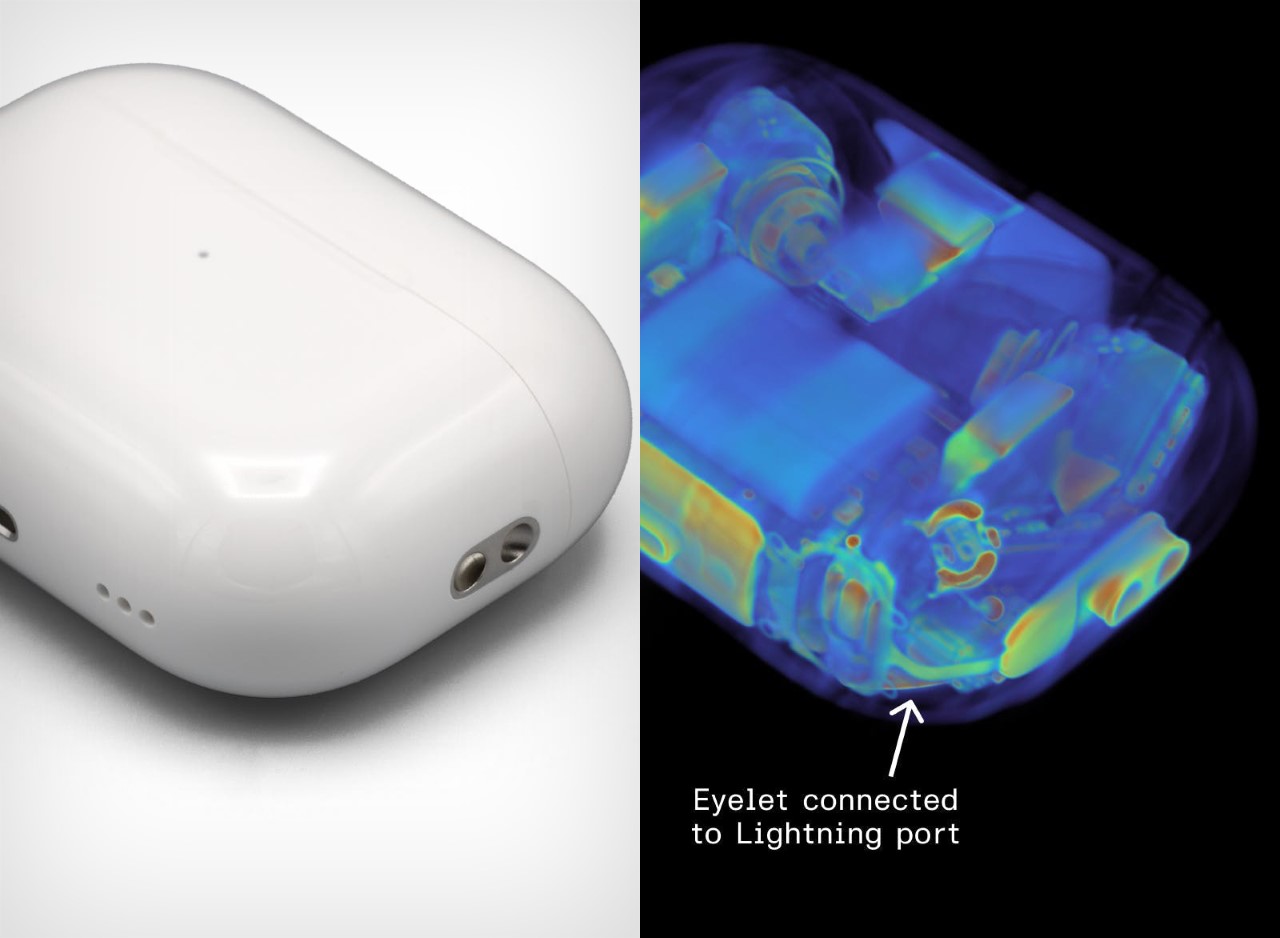
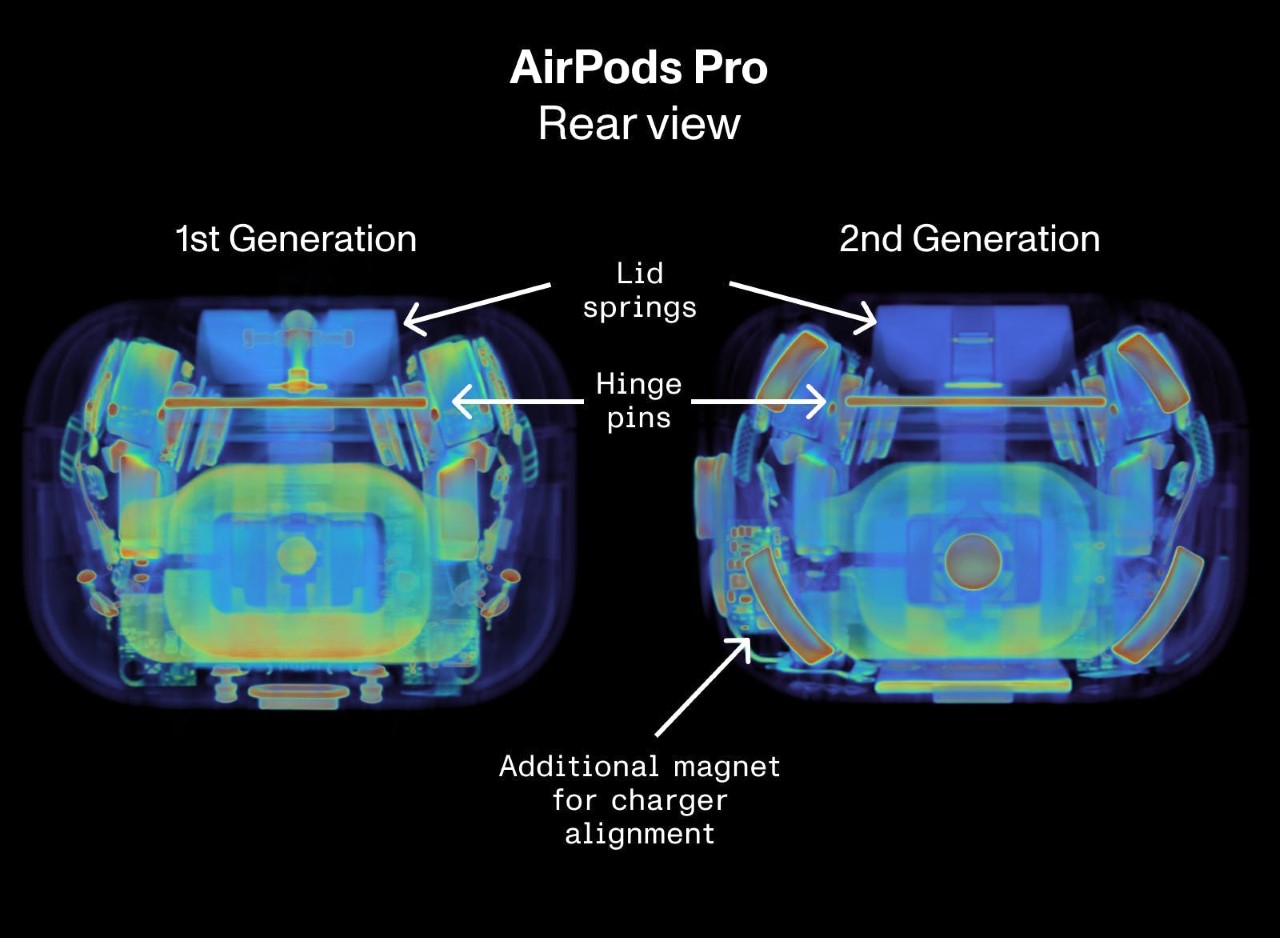
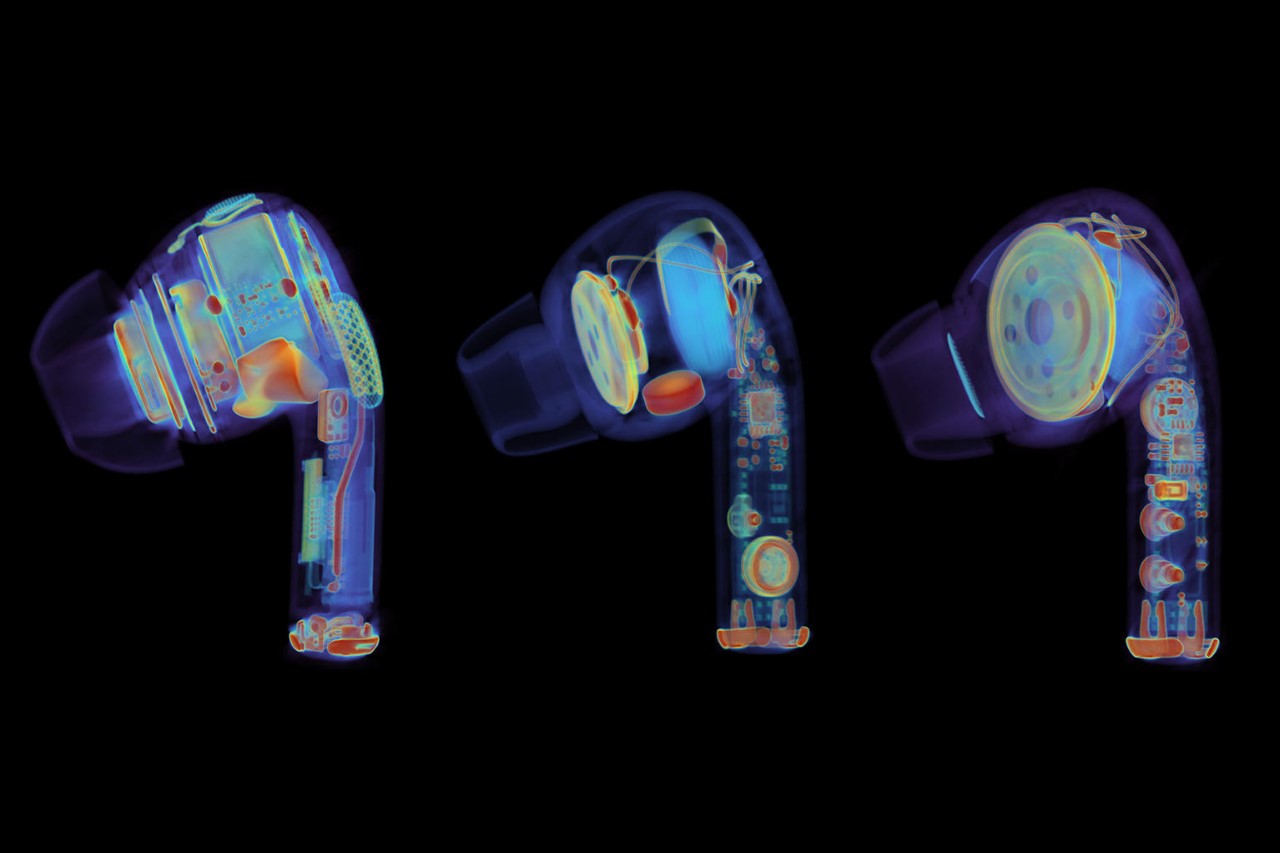
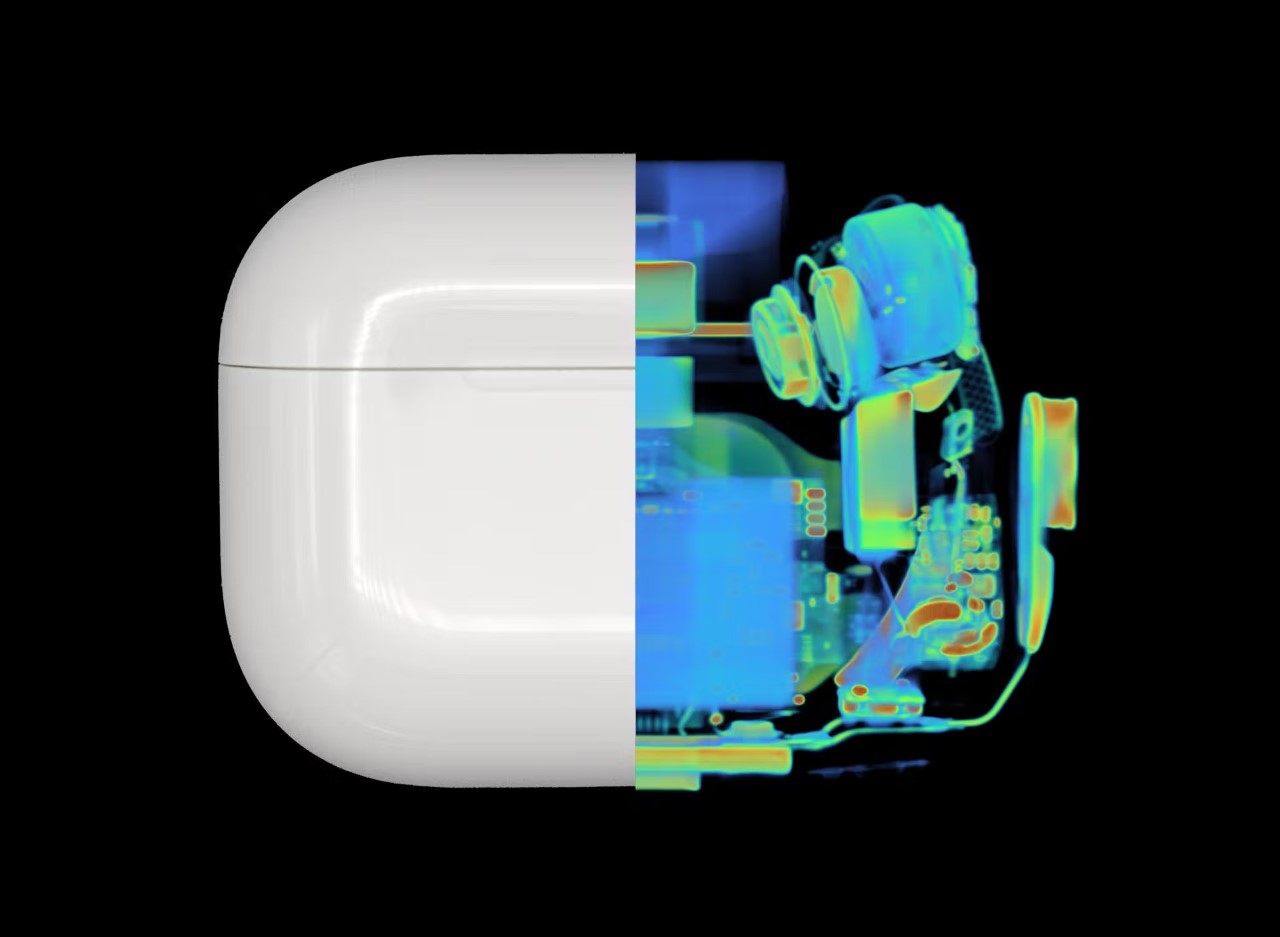
While I don’t endorse renting an Xray or an industrial scanner to look into your Apple gear, Lumafield’s endeavor has resulted in some wonderful findings. The company looked under the hood of a variety of Apple products, examining the difference between how real and fake ones were made. The findings reveal a lot of interesting trickery. Most of Apple’s products are engineered to perfection, but you won’t be able to say the same for a counterfeit. To cut costs, most counterfeits use unsafe parts, shoddy construction, unreliable circuitry, and even use metal pieces to mimic heaviness. Heck, sometimes they entirely miss components like some AirPods Pro cases not even having wireless charging to begin with. The point of the exercise, more than being an interesting comparison, was to highlight exactly how unsafe using some of these bogus knock-off products can be. A faulty product is the least of your worries when you think of larger implications like health hazards, exploding batteries, and gadgets being ruined by fake chargers.

Image Credits: Lumafield

CT Scans of Fake AirPods Pro: Unsafe Components, Metal Weights for Faux Heaviness

At the heart of AirPods’ convenience lies its battery technology. The authentic AirPods boast meticulously engineered button cell batteries designed for optimal power efficiency within their compact form. Counterfeit AirPods, however, use less sophisticated lithium-ion pouch cell batteries, crammed into spaces they are not designed for, potentially posing safety risks.

The disparity continues with the internal circuitry. Genuine AirPods are a marvel of miniaturization and precision engineering, featuring a combination of rigid and flexible printed circuit boards. The fakes? They’re assembled with much simpler electronics and off-the-shelf components, leading to reduced functionality and compromised sound quality.

The overall build quality also tells a tale of two products: genuine and fake. In some fakes, wireless charging is entirely absent, and others lack the necessary magnets for proper charging. Counterfeit AirPods even use internal weights to mimic the heft of the original, a deceptive tactic compensating for poorer materials and less functionality.

Comparing Real vs. Fake MagSafe 2 Power Adapters for MacBook

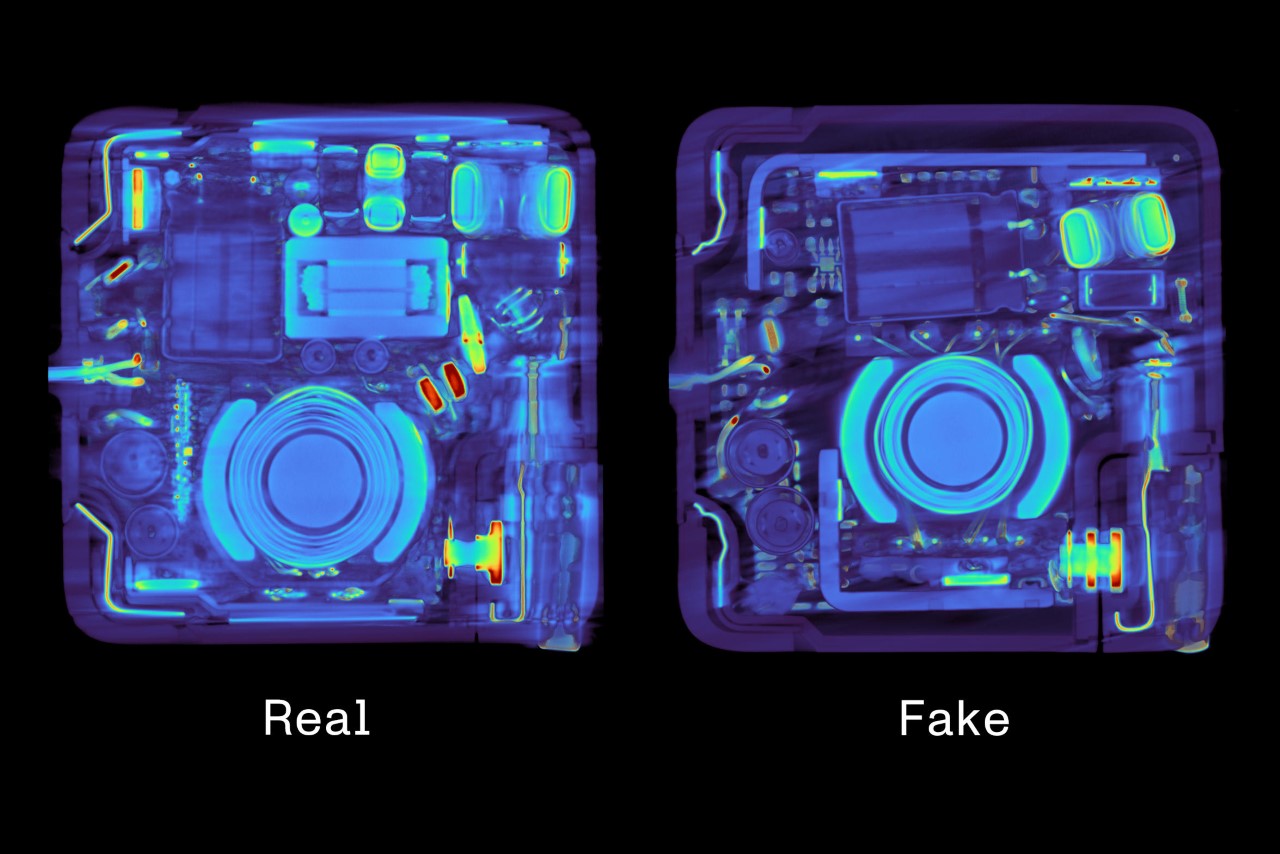
The differences aren’t limited to AirPods alone. Lumafield’s CT scans of the MagSafe 2 Power Adapter revealed a sophisticated power management system in the genuine Apple charger, absent in the counterfeit. The fake chargers lack the safety and longevity features of Apple’s design, raising performance and safety concerns.

Moreover, the heat sinks in the chargers differ significantly. Apple’s genuine charger uses a thin, complex heat sink, whereas the counterfeit opts for a heavier but simpler design. This difference could lead to dangerous hot spots in the counterfeit charger.

In the end, it’s a classic case of “you get what you pay for.” Those tempting savings might come at the cost of quality and safety. Opting for a counterfeit product isn’t just about saving costs; it’s about compromising on reliability and peace of mind. So next time you’re tempted by a too-good-to-be-true deal on AirPods, remember: the devil is in the details, and sometimes, those details are hidden deep inside.

The post What’s Inside A Fake AirPods Pro? CT Scans Show How Counterfeit Earbuds Are Built first appeared on Yanko Design.