Chess Hasn’t Looked Like This in a Thousand Years

Chess has been redesigned hundreds of times. Most attempts stay within the same visual vocabulary: carved figures, medieval references, stylized horses and crowns. The king still wears his crown, even when the designer strips everything else away. That iconography is stubborn. It follows the game everywhere it goes. Seoul-based designer Lee Jinwook decided not to follow it.

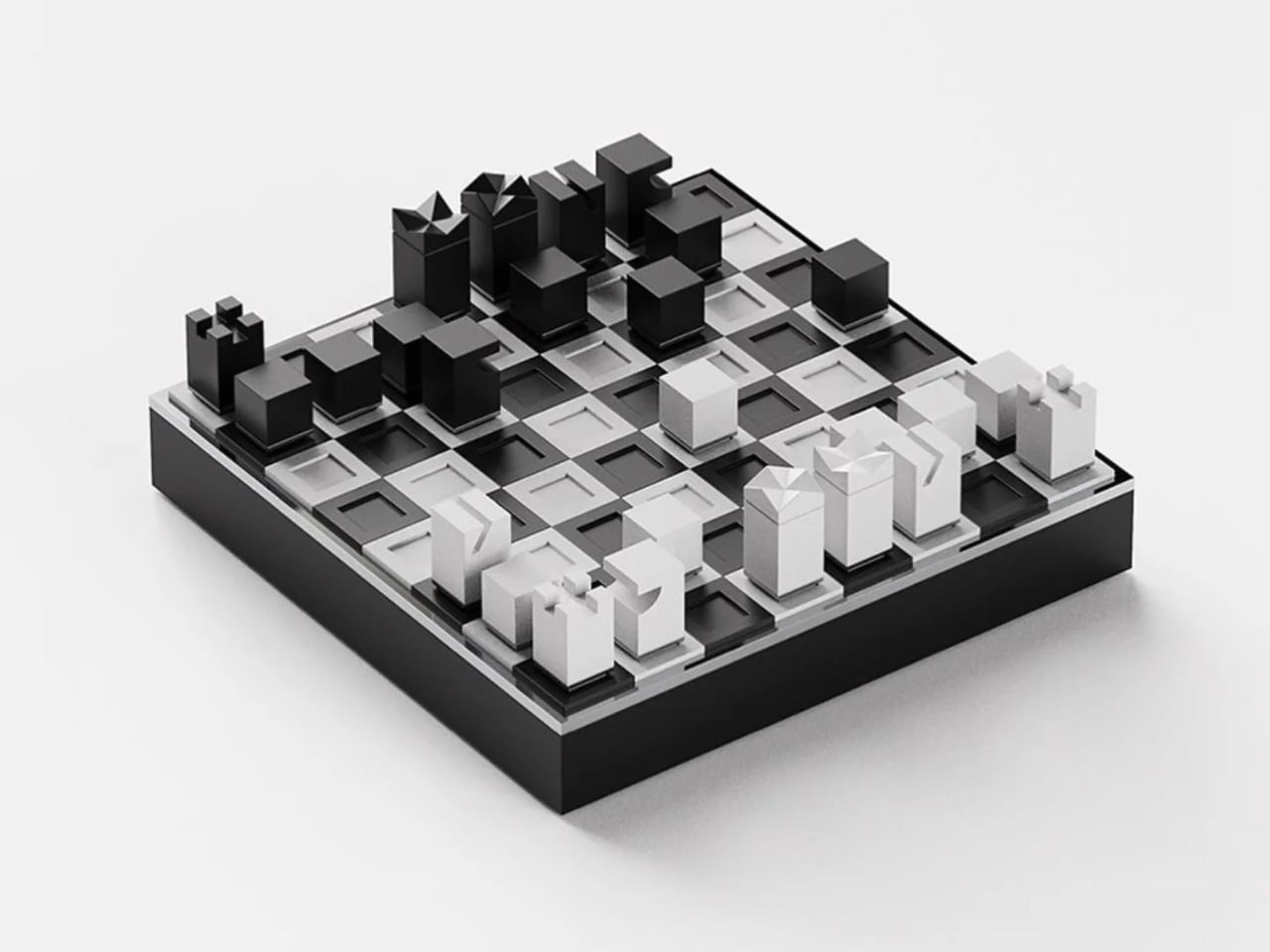
His Chess Matt Edition doesn’t borrow from that history. It doesn’t nod to it, deconstruct it, or pay ironic homage to it. Each piece is reduced to its essential geometric form, differentiated only by the minimal cuts and angles that distinguish one from another. The king wears a notched crown-like geometry, but it reads more like a Brutalist building than a monarch. The bishop has a diagonal slice through its block. The knight, traditionally the most ornamental piece on any board, is just a rectangle with a curved indent. You’d know each piece by its shape, and you’d know each shape by nothing but itself.

Designer: Lee Jinwook
That restraint is genuinely hard to achieve, and it’s rarer than it looks. Plenty of minimal chess sets still carry the weight of nostalgia by leaning on proportions that echo traditional forms. Lee’s approach feels more rigorous, like the design equivalent of starting with a blank document and refusing to import anything from a previous draft.

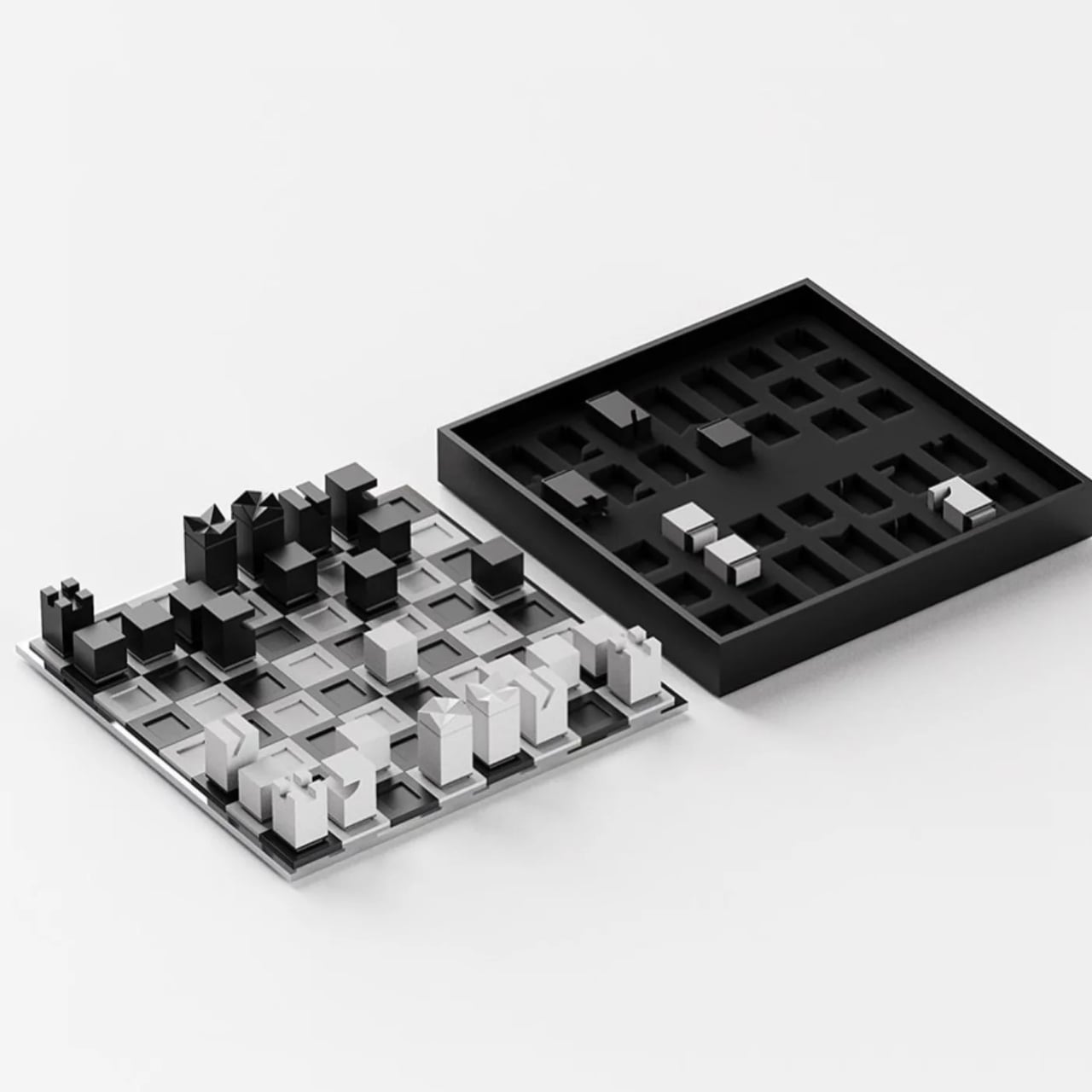
The Matt Edition is part of a series, each version produced in a different material. This one uses powder-coated pieces with brushed metal accents along the base. The contrast between the matte surface and the slim metallic band at the bottom of each piece is subtle, but it matters. It gives the set a quiet luxury without announcing it. The board itself doubles as the case cover when flipped, and the entire set packs down into a 115mm cube. That last detail sounds like a footnote but it’s actually the whole point. It means you can take it somewhere. It means the design serves life, not the other way around.

When the pieces are set up and no one is playing, the board looks like a miniature city. A grid of black and white geometric forms at different heights, each one casting its own small shadow. The intention was for the set to read as sculpture between moves, and it absolutely does. The photograph of it mid-game is more compelling than most things sold specifically as decorative objects.

I’ll admit I’m skeptical of design objects that prioritize aesthetics at the cost of function. A beautiful chair that isn’t comfortable is just a sculpture with pretensions. But this set doesn’t ask you to choose. The geometric forms are readable. The scale feels right for actual play. The packaging is considered down to the way the board flips over. The aesthetics and the utility are working in the same direction, which is what good design is supposed to do, and which a lot of objects in this category fail to deliver.
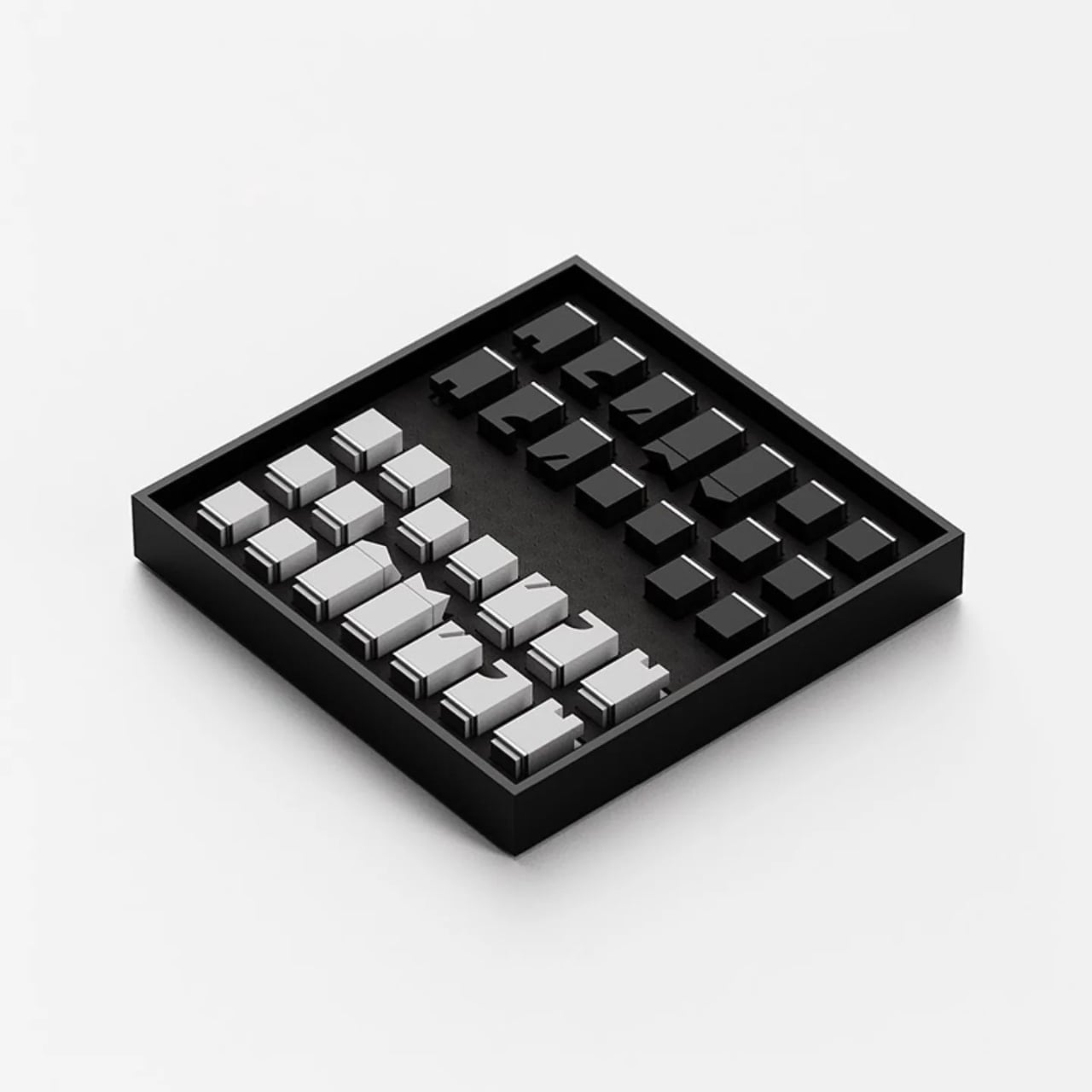
What Lee has also built, whether intentionally or not, is a quiet argument about chess itself. The game doesn’t need its medieval costume to function. Strip away the kings and queens and rooks and what remains is a grid, a set of movement rules, and the cognitive pleasure of solving something in real time. The Chess Matt Edition reminds you of that. It separates the game from its accumulated mythology and puts the focus back on the act of playing.

That’s worth paying attention to right now. The design world is saturated with products that perform a cultural identity rather than express one. This chess set doesn’t perform anything. It just is what it is: precise, considered, and fully confident in its own logic. When you see it sitting on a shelf, black pieces against a white board, matte surface catching a little natural light, it earns the space it occupies. Everything fits into a 115mm cube. The whole set sits in your hand. Not everything that fits in your hand deserves to be considered art, but this one comes close.

The post Chess Hasn’t Looked Like This in a Thousand Years first appeared on Yanko Design.
Amazon launches one- and three-hour delivery options in the US

Amazon just launched one-hour and three-hour delivery options in many cities and towns throughout the US. As a matter of fact, the company says three-hour delivery windows are already available in over 2,000 locations, while one-hour windows have launched in "hundreds" of cities. You can check to see if your area is covered by clicking right here.

Just like same-day and next-day delivery, this doesn't cover every available item. Amazon boasts that over 90,000 products are ready for "fast, reliable delivery in just a few clicks." There has been a priority placed on the kinds of items typically needed within 60 to 180 minutes. Users can order "everyday essentials like pantry items, cleaning supplies, health and beauty items and over-the-counter medications."

The new delivery options also cover some fun, but perhaps not essential, items like electronics, toys and clothing. Hey, a Nintendo Switch 2 to play Pokopia could be considered essential to many.

A phone app.
Amazon

These high-octane delivery methods don't come cheap, even for Prime members. One-hour deliveries cost $10 and three-hour deliveries cost $5. Customers without a Prime membership pay $20 for one-hour deliveries and $10 for three-hour deliveries. The same-day delivery option remains free for Prime members.

This isn't Amazon's first foray into ultra-quick delivery windows. The company has been experimenting with this kind of thing for years. It started a program called Amazon Now in the 2010s that handled that sort of thing, which eventually changed to Prime Now. It was sunsetted in 2021.

This article originally appeared on Engadget at https://www.engadget.com/apps/amazon-launches-one--and-three-hour-delivery-options-in-the-us-151536118.html?src=rss

Gamers are right to be disgusted by NVIDIA’s DLSS 5

You can sum up the gamer response to NVIDIA's DLSS 5 announcement with the ever-relevant Fallout 4 meme: "Everyone disliked that." Across social media and Reddit last night, I couldn't find anyone who's genuinely positive about the potential for DLSS 5, which uses AI to add "photorealistic" lighting and materials to in-game models and environments. Instead, it's mostly complaints about the feature being another avenue for AI slop. And you know what? I agree.

It's not unusual to see gamers being reflexively angry about new technology on the internet, especially when it's being pitched by NVIDIA as the “biggest breakthrough in computer graphics” since its RTX 20-series GPUs arrived in 2018 with real-time ray tracing. There was plenty of suspicion around DLSS's original AI upscaling model, as well as the "fake" frames generated by later iterations. But the few demos we've seen of DLSS 5 basically look like "yassified" AI filters for popular games.

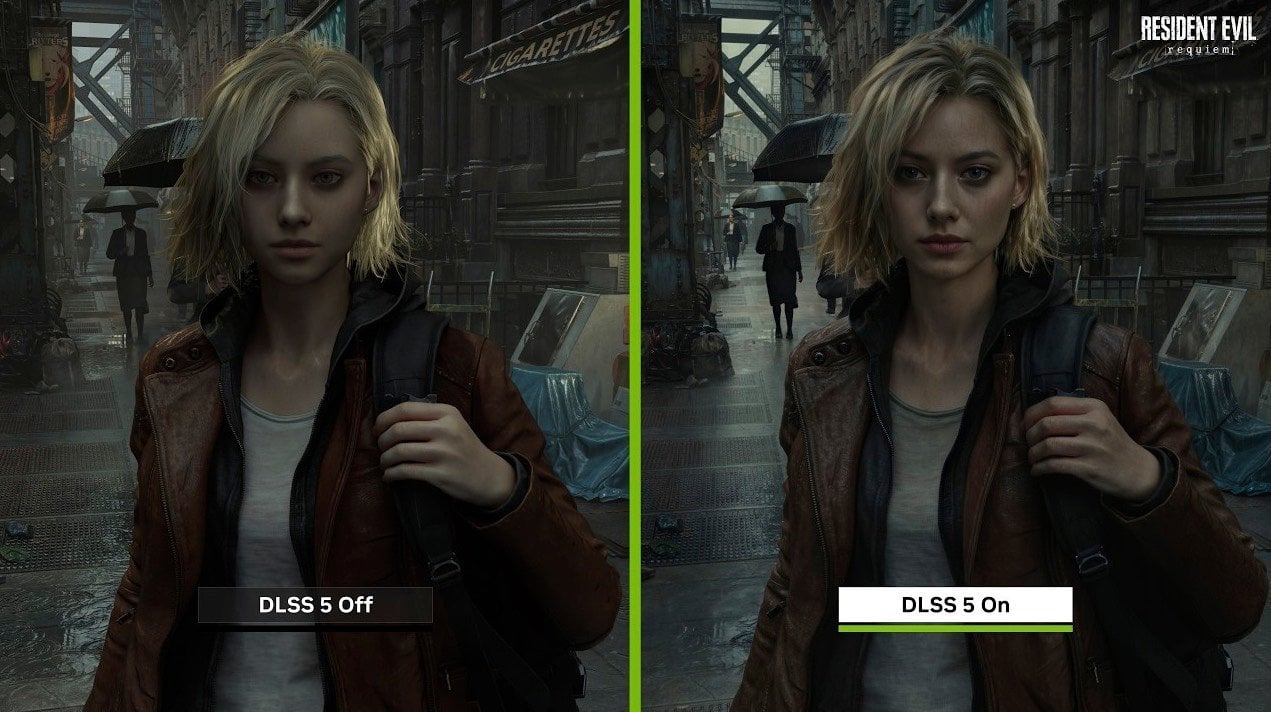
Leon and Grace from Resident Evil: Requiem have more distinct facial and hair detail, but they look a bit too slick. There are more wrinkles on an old woman in Hogwarts Legacy. And the face, hair and clothing from a Starfield character gain an uncanny sheen.

None of the demos have the immediate impact of the Star Wars real-time ray tracing short ILMxLab produced with NVIDIA seven years ago. That demonstration showed us glorious reflections and lighting effects we'd never seen before in real-time. The DLSS 5 demos, on the other hand, don't look much different from the AI filters that make you look more presentable for Zoom calls. There's no genuine excitement for DLSS 5, just NVIDIA telling us that it's groundbreaking.

There's also plenty of concern about DLSS 5 straying from an artist's original intent, as well as a potential homogenization of game visuals if every developer starts using the feature. NVIDIA claims developers will have "detailed controls for intensity, color grading and masking," which will help DLSS 5 stay in line with a game's aesthetic. But we don't have any direct developer experience with the feature yet — some artists may want far more control than NVIDIA wants to give.

The difference between DLSS 5 and earlier versions NVIDIA's upscaling is like the difference between generative AI and more traditional machine learning models. NVIDIA relied on the latter to make low-resolution textures and models appear sharper, and later to insert generated frames to smooth out gameplay and raise your fps count. As Wirecutter and former Polygon editor Arthur Gies points out, you could argue those features were in service of delivering what developers originally intended. But DLSS 5's neural model applies its concept of "photorealism" on top of what games are rendering -- it's like watching a Pixar movie that let OpenAI's Sora do a final visual pass.

Part of the negative response towards DLSS 5 may stem from a widespread anti-gen AI sentiment, but that doesn’t devalue the criticisms either. Similar to AI generated text, images and video, there’s a dehumanizing aspect about DLSS 5. It can erase the work of human artists (despite how much control NVIDIA claims they have), and it also feels like a calculated attempt to appeal to gamers who just want shinier graphics. NVIDIA showed off how generative AI could be used to create dialog and voices for NPCs last year at CES, but that was also widely disliked (and I called it a genuine nightmare).

Of course, I can’t fully judge DLSS 5 until I see it in action beyond a short demo. But I think the visceral disgust is an important indicator that many gamers aren’t onboard with the AI-powered future NVIDIA is trying to sell us. And perhaps the idea of chasing “photorealism” may be a bit of a fool’s errand. It may be appropriate for some games, but as Nintendo and indie PC devs have shown, you can also make some of the best games of all time without striving for realism. Tears of the Kingdom could use a better framerate and higher resolution textures, but it certainly doesn’t need DLSS 5.

This article originally appeared on Engadget at https://www.engadget.com/gaming/pc/gamers-are-right-to-be-disgusted-by-nvidias-dlss-5-151105593.html?src=rss

Samsung’s Masterpiece: Why the Galaxy S27 Ultra is Worth the Wait

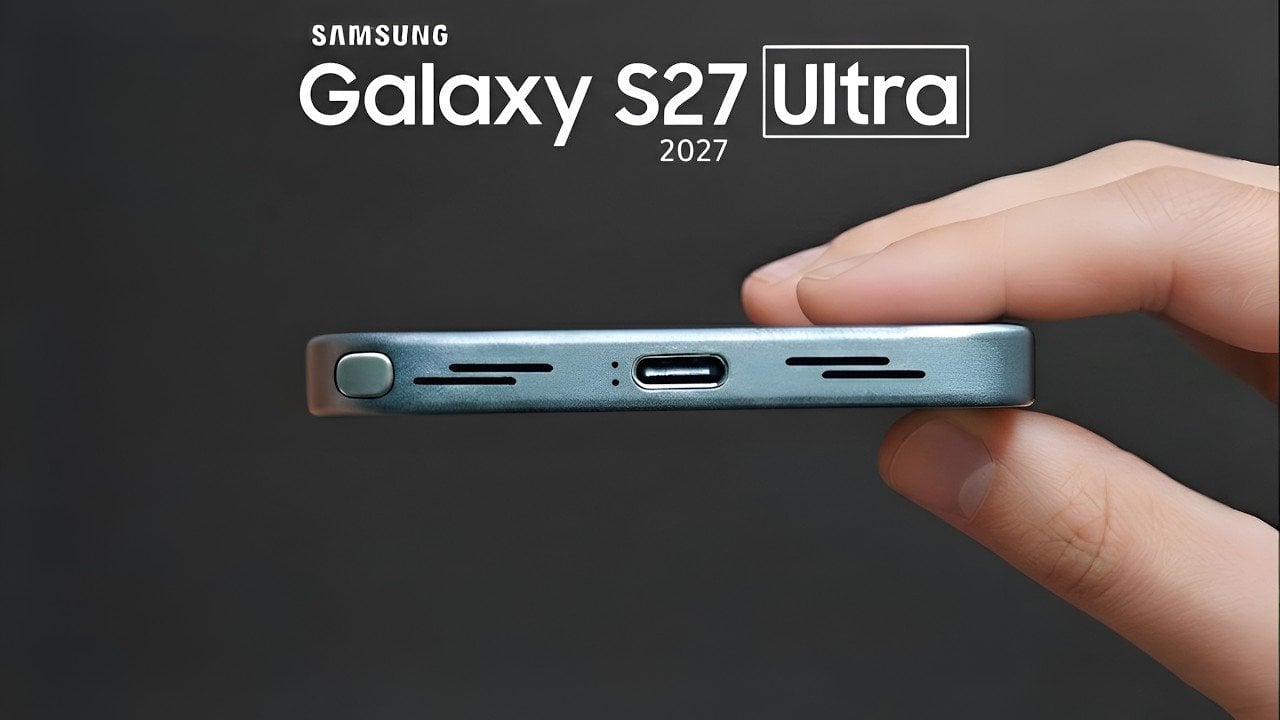
Samsung’s Masterpiece: Why the Galaxy S27 Ultra is Worth the Wait Render-style view of Galaxy S27 Ultra showing a rumored triple rear camera arrangement and simplified lens spacing.

The Samsung Galaxy S27 Ultra, anticipated for release in 2027, is poised to represent a significant shift in the evolution of flagship smartphones. Early leaks and industry speculation suggest that Samsung may pivot from a hardware-centric approach to a focus on meaningful innovations that enhance the overall user experience. This potential transformation could reshape the […]

The post Samsung’s Masterpiece: Why the Galaxy S27 Ultra is Worth the Wait appeared first on Geeky Gadgets.

Posted in Uncategorized

A PlayStation Portal update is adding a 1080p High Quality mode

Sony is rolling out a firmware update for its PlayStation Portal handheld that introduces a new quality option for both Remote Play and Cloud Streaming. Choosing the 1080p High Quality mode means that you’ll be able to stream games at a higher bitrate compared with the 1080p Standard option. 

You can switch to this mode by going to Quick Menu > Max Resolution and picking 1080p High Quality while you’re playing a game. You’ll need to restart your game session for the change to take effect. Naturally, 1080p High Quality will use more data than the other resolution options.

Sony says that more than half of all Portal users are now PlayStation Plus Premium subscribers, meaning they can use the Cloud Streaming option on the device. With that in mind, the company is making some Cloud Streaming changes as part of this firmware update. 

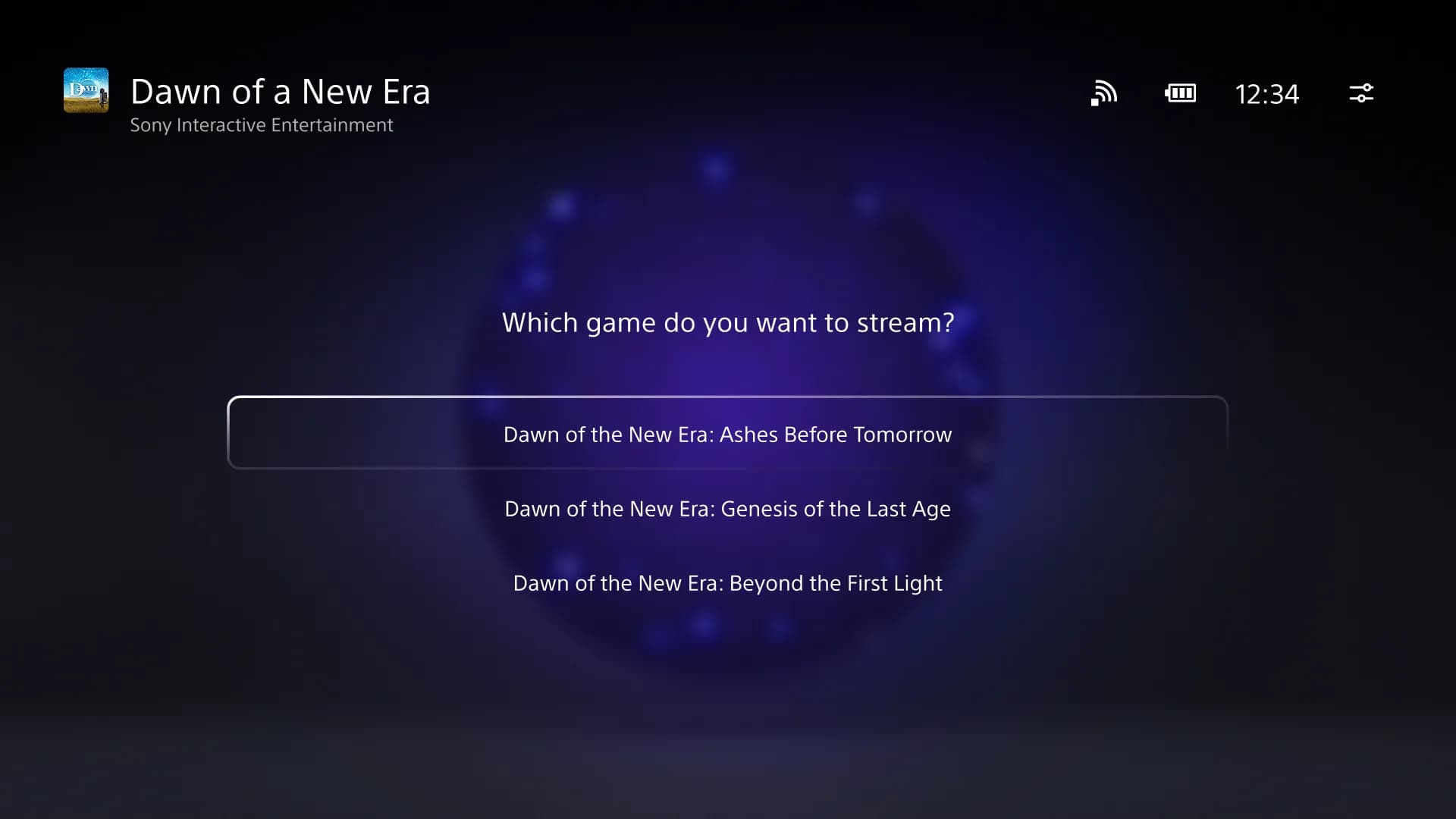
The company says it has refined the search screen — from now on, whenever you open this up, the on screen keyboard will pop up immediately. That’s a nice little quality-of-life update that streamlines things a bit. When you pick the “stream" option on pages for game bundles (i.e. for any title that includes multiple games), you’ll be able to select a specific game to jump into. 

Choosing a specific game from a bundle on the Cloud Streaming option on PlayStation Portal.
Sony Interactive Entertainment

There are notification changes too. If you receive a game invite while playing a supported title, you’ll now see a clear notification on your screen. Trophy notifications should now display properly too, with the trophy name and image showing up. Unlocking a platinum trophy will cause an animated notification to appear. 

There’s one more tweak to the system with this Portal update as Sony attempts to make the onboarding experience a bit smoother. Those who pick up a Portal but don’t already have a PlayStation account will be able to create one and then sign in on the handheld by scanning a QR code on their mobile device. Such folks will still need to have access to a PS5 or sign up for PS Plus Premium to actually get any use out of the Portal, of course.

This article originally appeared on Engadget at https://www.engadget.com/gaming/a-playstation-portal-update-is-adding-a-1080p-high-quality-mode-142216189.html?src=rss

Chinese AI Labs Fall Behind as NVIDIA Compute Access Gap Widens

Chinese AI Labs Fall Behind as NVIDIA Compute Access Gap Widens Illustration of AI market consolidation showing a few dominant labs gaining share as compute grows scarce.

Chinese AI development is facing significant hurdles, particularly in comparison to advancements in the United States. According to Caleb Writes Code, one major factor contributing to this disparity is the limited access Chinese labs have to state-of-the-art computing hardware, such as NVIDIA’s Gro 3 LPU and VR Rubin NVL72 modules. These systems are critical for […]

The post Chinese AI Labs Fall Behind as NVIDIA Compute Access Gap Widens appeared first on Geeky Gadgets.

Posted in Uncategorized

Samsung Galaxy Wide Fold 8: The Secret flagship that’s outshining the standard Fold

Samsung Galaxy Wide Fold 8: The Secret flagship that’s outshining the standard Fold Wide Fold 8

The Samsung Galaxy Wide Fold 8 is set to establish a new standard in the foldable smartphone market. With its innovative trifolding design, wider displays, and advanced hardware, this flagship device is engineered to compete directly with high-end alternatives like Apple’s rumored iPhone Fold Ultra. As part of Samsung’s eighth generation of foldable devices, the […]

The post Samsung Galaxy Wide Fold 8: The Secret flagship that’s outshining the standard Fold appeared first on Geeky Gadgets.

Posted in Uncategorized

Apple and Nike team up for a new Powerbeats Pro 2 colorway

Apple and Nike are at it again. But this time, their collaboration doesn't involve Apple Watch bands or a shoe-tracking iPod. Instead, the companies are launching a new color option for Beats' fitness-focused earphones. Meet the Powerbeats Pro 2 - Nike Special Edition.

"This isn't just a new colorway," Beats CMI Chris Thorne wrote in a press release. "It's a collision of two brands that define performance, culture and sports — the attributes of today's athlete."

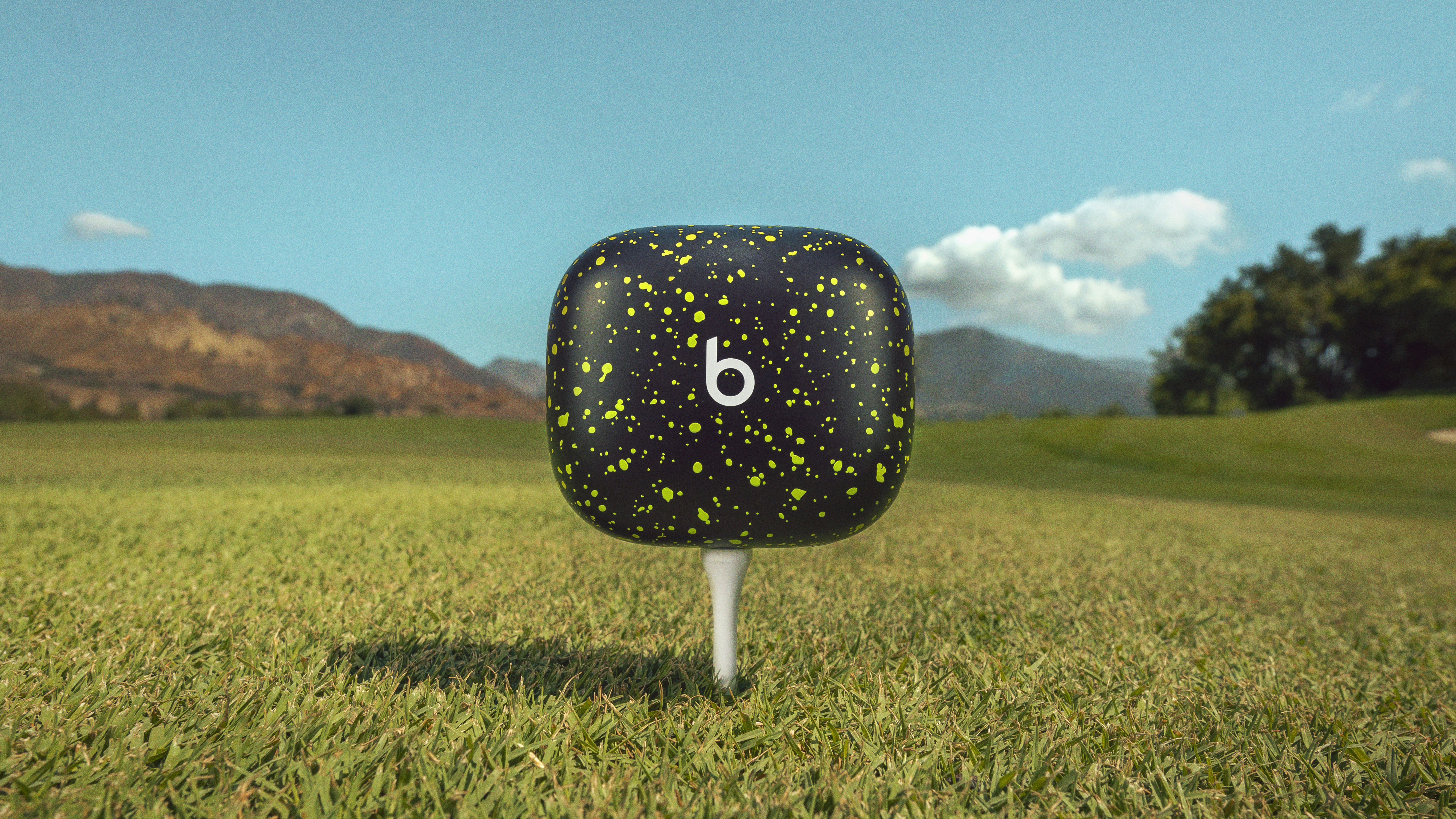
Okay, cool, but marketing-speak aside, this is, in fact, just a new colorway. However, depending on your taste, it might be one you're into. Nike's "Volt" palette takes center stage, with its love-it-or-hate-it electric yellow-green motif. The two companies share logo duties, with the Beats "b" on the left bud and Nike's swoosh on the right. Meanwhile, the charging case takes you to Speckle City, looking like something Jackson Pollock flung a can of leftover shoe paint onto.

Powerbeats Pro 2 - Nike Special Edition
Apple / Nike

Otherwise, these are the same Powerbeats Pro 2 earphones that launched last year. You get heart-rate tracking, decent ANC and Spatial Audio. You can revisit Billy Steele's review for more details on the earphones.

To help move the product, Beats and Nike called upon an athlete they both sponsor: a little-known hooper named LeBron James. The Lakers vet stars in a new ad, where he uses the Nike Powerbeats to tune out the noise with a little help from Lionel Ritchie.

You can watch the commercial below — and order the new colorway from Apple’s and Nike's respective websites on March 20. The Nike Special Edition Powerbeats Pro costs the same $250 as the standard version. However, this is a limited-edition variant, so there's no guarantee it will be around for long.

This article originally appeared on Engadget at https://www.engadget.com/audio/headphones/apple-and-nike-team-up-for-a-new-powerbeats-pro-2-colorway-140000882.html?src=rss

NVIDIA DLSS 5 Adds Real-Time Neural Lighting to Games Raising New Questions

NVIDIA DLSS 5 Adds Real-Time Neural Lighting to Games Raising New Questions Diagram showing NVIDIA DLSS 5 neural rendering steps using color and motion vectors to add lighting in real time.

Nvidia’s DLSS 5 represents a significant advancement in gaming graphics, combining real-time neural rendering with artificial intelligence to enhance visual quality. According to Daniel Owen, the system processes motion vectors and color data to generate realistic textures, dynamic lighting and lifelike materials. However, these improvements come with challenges, such as high hardware requirements and concerns […]

The post NVIDIA DLSS 5 Adds Real-Time Neural Lighting to Games Raising New Questions appeared first on Geeky Gadgets.

Posted in Uncategorized

Beginner Guide to Microsoft Lists 2026 : Templates, Columns, Views, Alerts & More

Beginner Guide to Microsoft Lists 2026 : Templates, Columns, Views, Alerts & More Sharing a Microsoft List with teammates, showing email invites and permission options for viewing or editing.

Microsoft Lists is part of the Microsoft 365 suite, designed for organizing and managing structured information in a clear and accessible way. It supports tasks like tracking project progress, managing event details, or maintaining inventories. As outlined by Manizha & Ryan, the platform includes features such as pre-designed templates and customizable views, allowing users to […]

The post Beginner Guide to Microsoft Lists 2026 : Templates, Columns, Views, Alerts & More appeared first on Geeky Gadgets.

Posted in Uncategorized