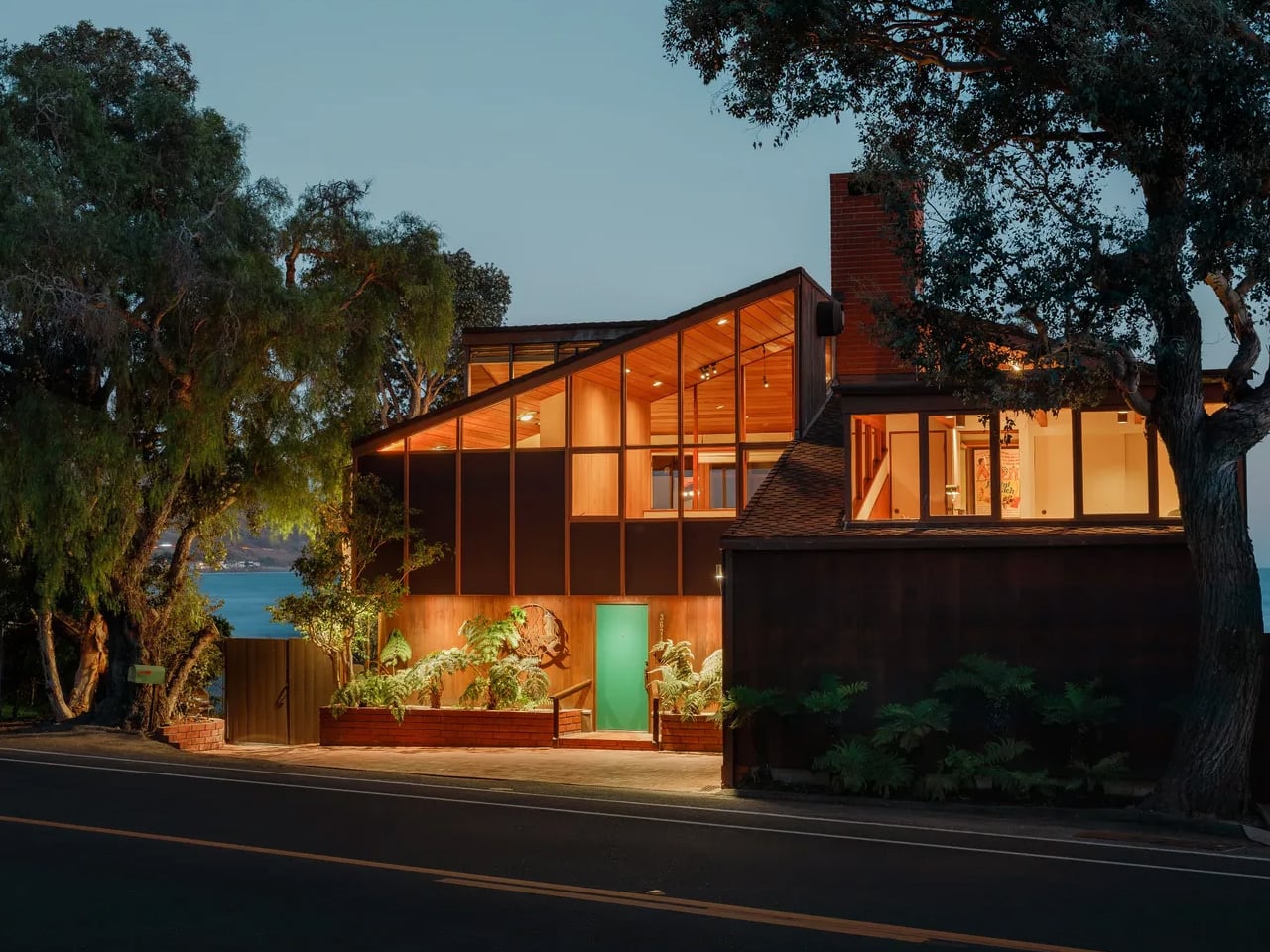
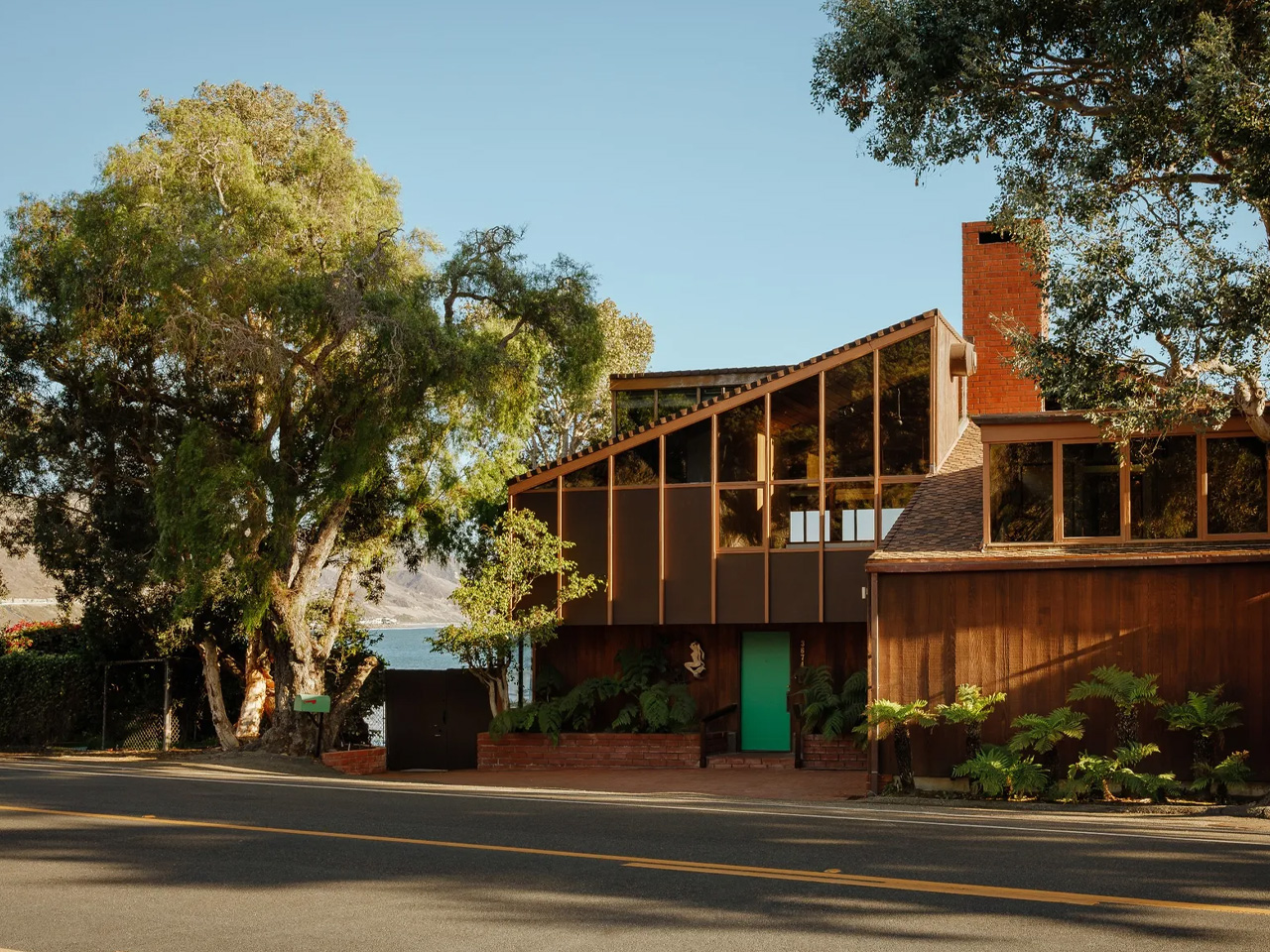
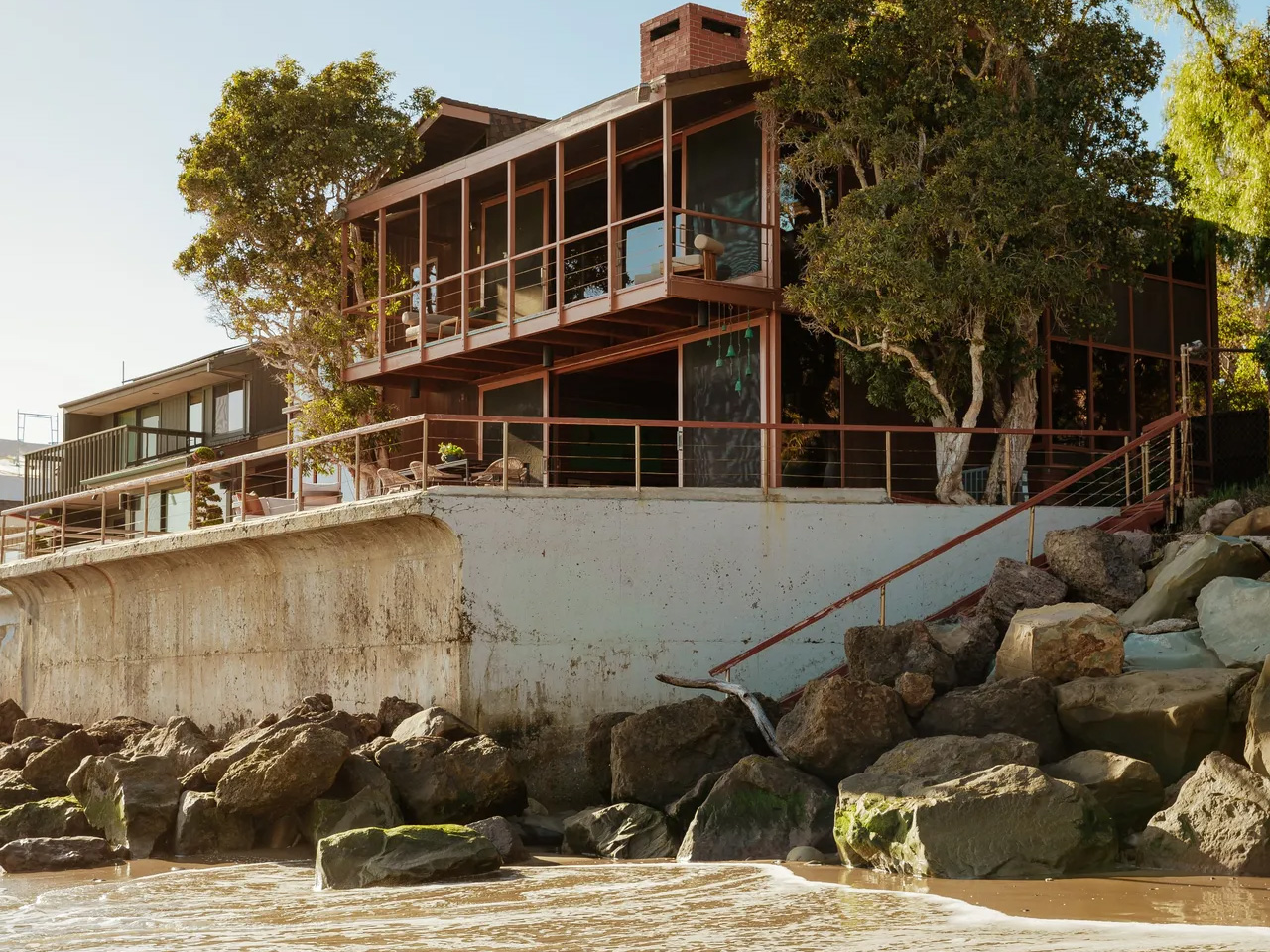
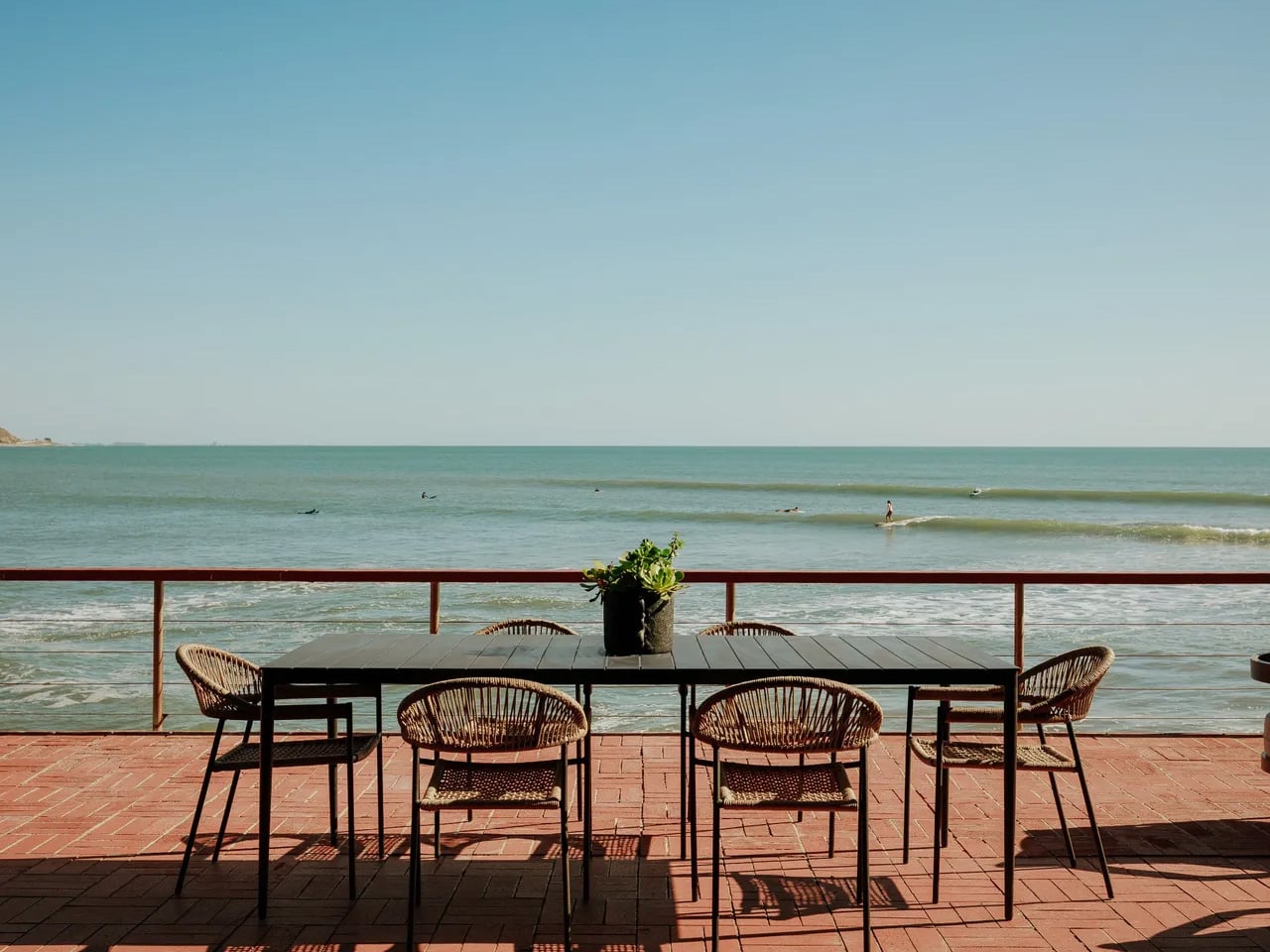
A substantial brick chimney rises through the center of Carl Maston’s Ventura beach house, giving the oceanfront home a surprisingly grounded heart. Completed in 1984, the Susman House sits above a sandy cove at Faria Beach, with views toward the Channel Islands. Its original brief was appealingly specific: preserve the spirit of a traditional California cabin within a contemporary home.
That request came from Tracy “Babs” Susman, who commissioned the house with her partner on land previously owned by her sister and brother-in-law. Maston answered with cedar siding, brick floors, generous glazing, and a roofline that creates a distinctive silhouette. The materials carry the cabin connection without making the house feel like an exercise in rustic nostalgia.
Design: Carl Maston
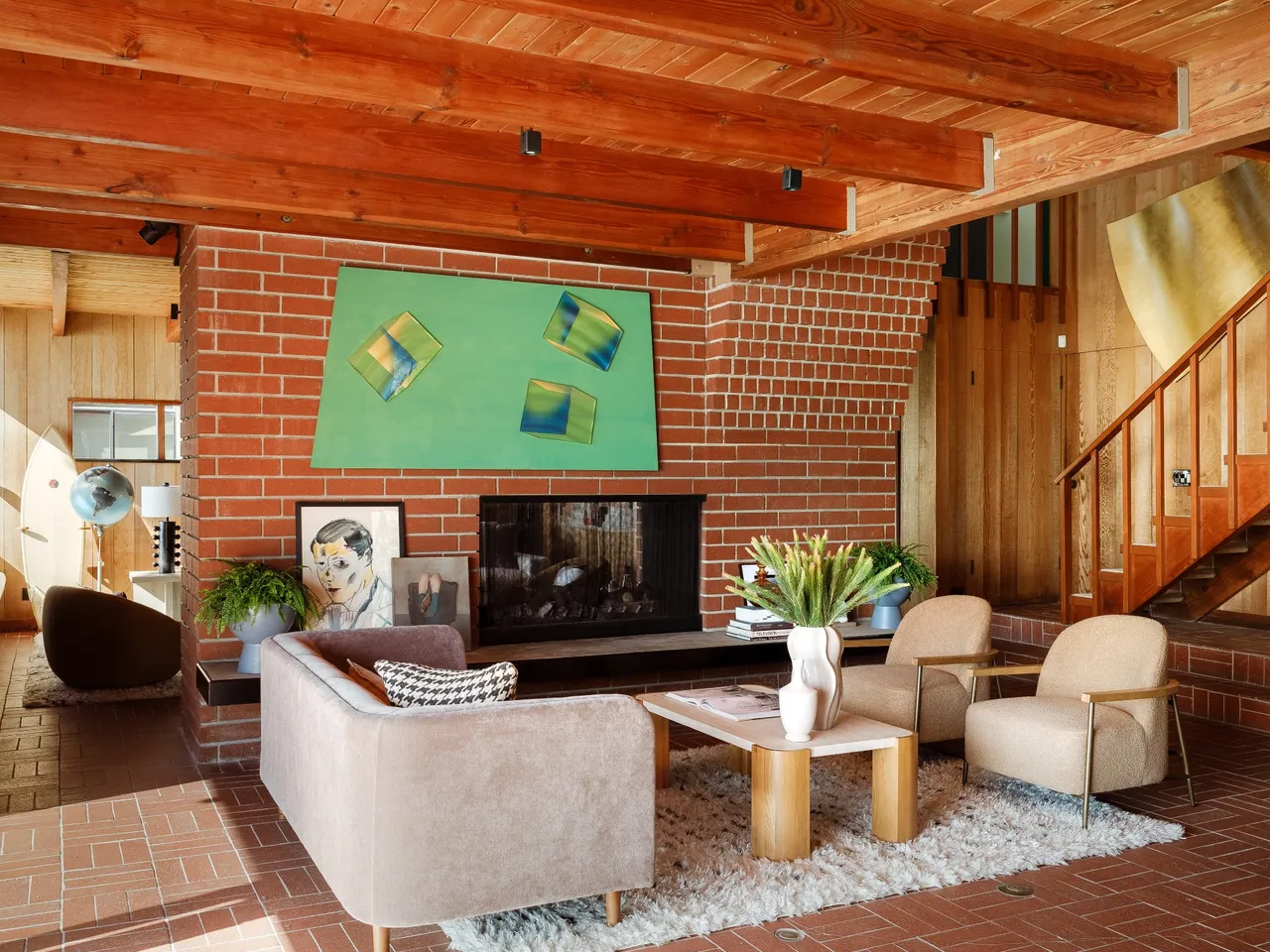
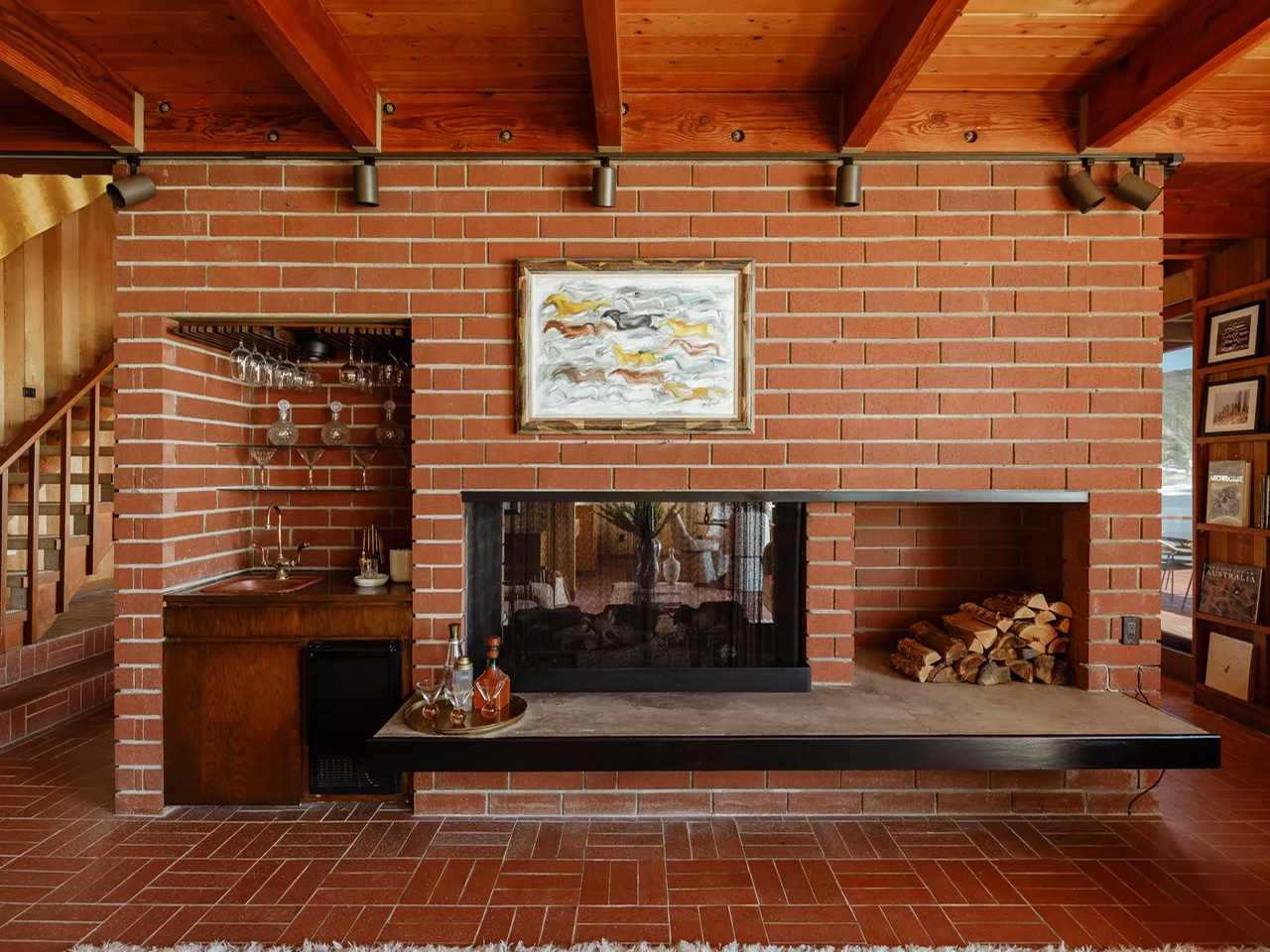
Across 2,640 square feet, the layout gives shared spaces a clear relationship to both the fireplace and the coastline. An informal lounge connects with the dining area and kitchen, while a double-sided fireplace also serves a den. A full bathroom sits behind a cedar wall. These divisions give the lower floor distinct places to settle without separating every activity into an enclosed room.
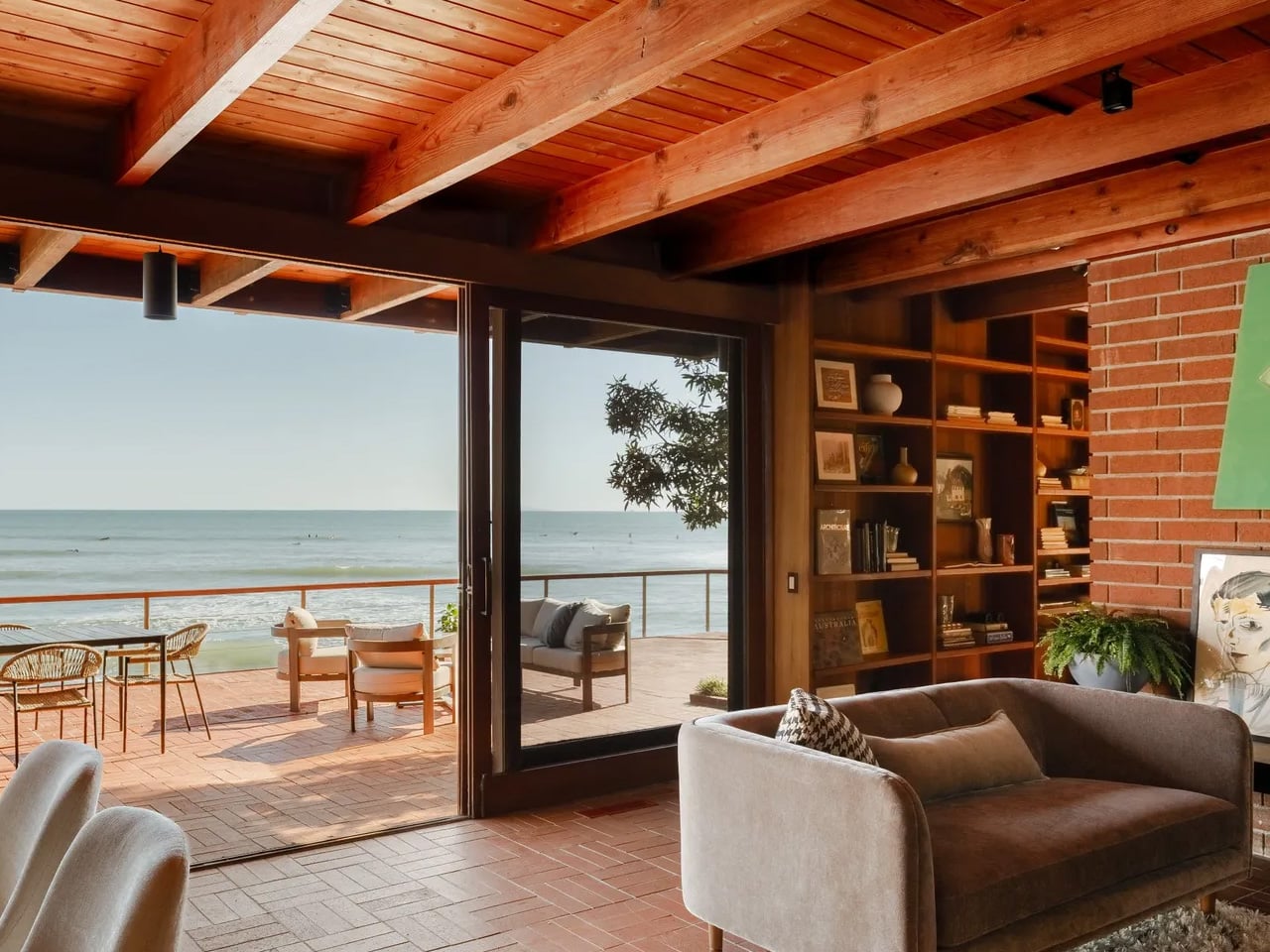
The living-room photographs reveal how much work the material palette does. Exposed timber beams establish a steady rhythm overhead, while brick flooring extends around the broad hearth. Wood paneling and shelving reinforce the sense of enclosure. Against that textured interior, the glazed openings become especially legible: they frame the coast while leaving plenty of solid, tactile surfaces around the seating area.
Floor-to-ceiling sliding doors open toward the ocean, and the brick paving continues onto the patio. Carrying the floor material outside gives the terrace a direct visual relationship with the rooms behind it. The kitchen keeps its own character through an original wood-slat ceiling, with a view of the bay available from the sink. Even the more ordinary household tasks have a place along the waterfront.
Upstairs, three bedrooms and a separate sitting area occupy the spaces beneath the sloping roof. A central atrium and landing wrap around the brick chimney, with internal glazing allowing light to reach deeper into the house. Rather than treating circulation as leftover space, Maston makes the route between rooms part of the architectural experience, linking the upper level visually with the living area below.
Photographs show timber-framed internal windows beside the chimney, their angular tops following the roof. That arrangement makes the building’s geometry readable from within. The house is currently listed for $5.1 million, and its selling appeal extends beyond the waterfront address. Maston gave the interior enough substance to hold attention even when the ocean is outside the frame.
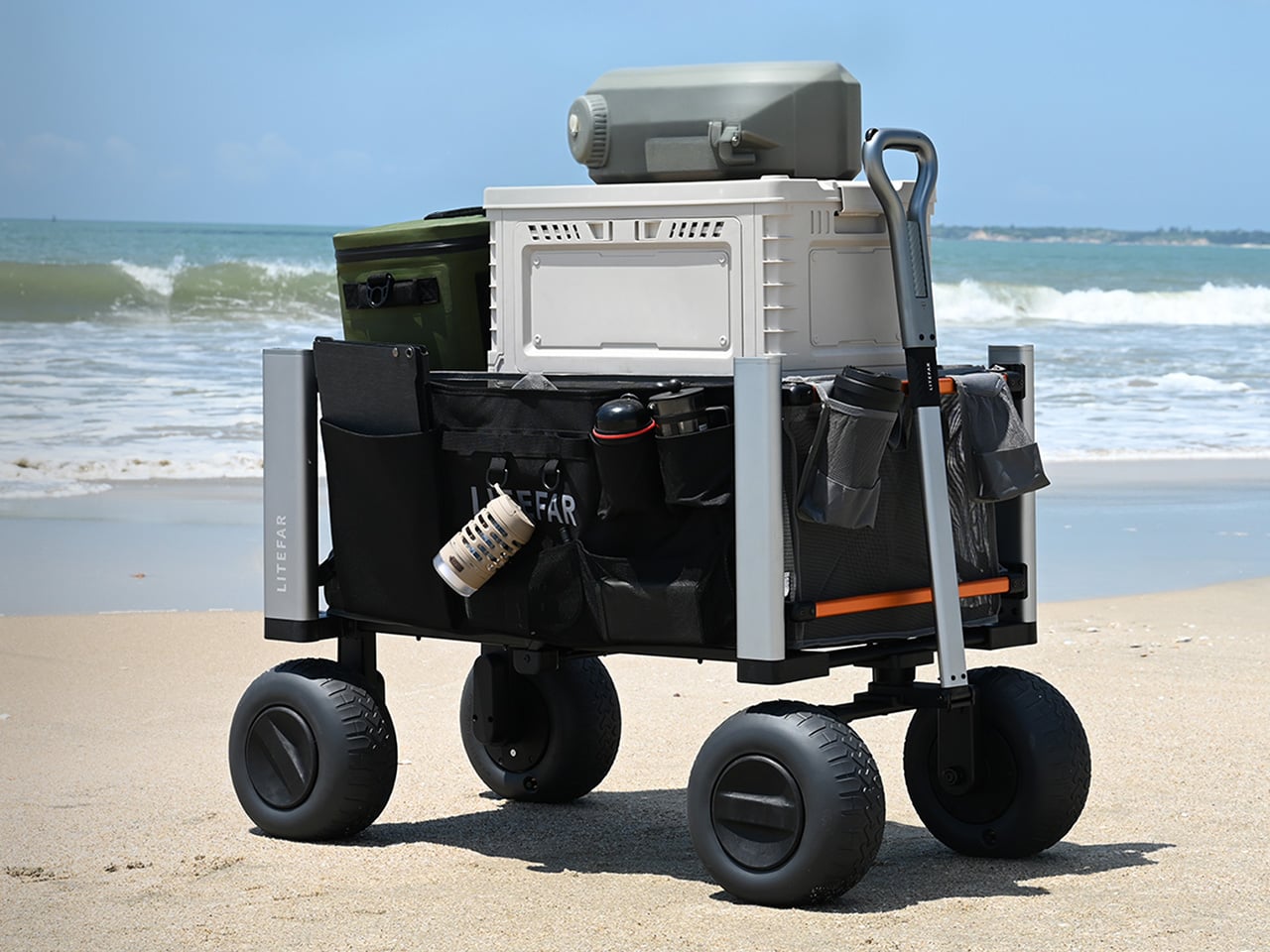
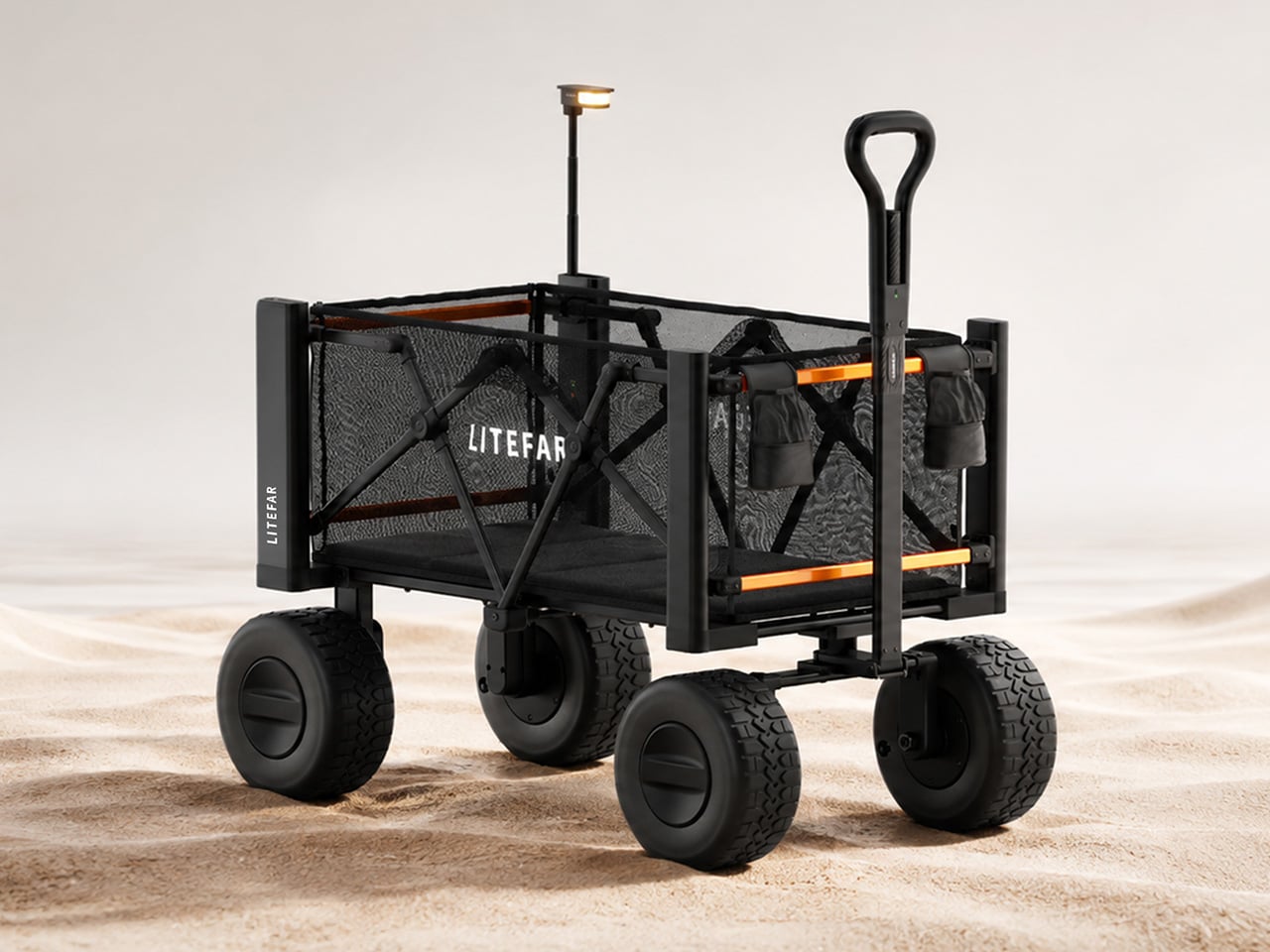
The walk from the car to the shoreline is, depending on your beach setup, a mild inconvenience or an actual workout. You’ve got the cooler, the chairs, the umbrella, the bags, the kids, more bags, a fishing rod you almost forgot, and at least one child who stopped walking because they spotted a crab. Standard wagons help, up until the pavement runs out and soft sand begins, at which point the wagon becomes dead weight with wheels. The sand wins every time. LITEFAR’s B1 Beach Edition is a direct answer to that exact moment, a foldable electric wagon built specifically for the terrain where ordinary carts tap out.
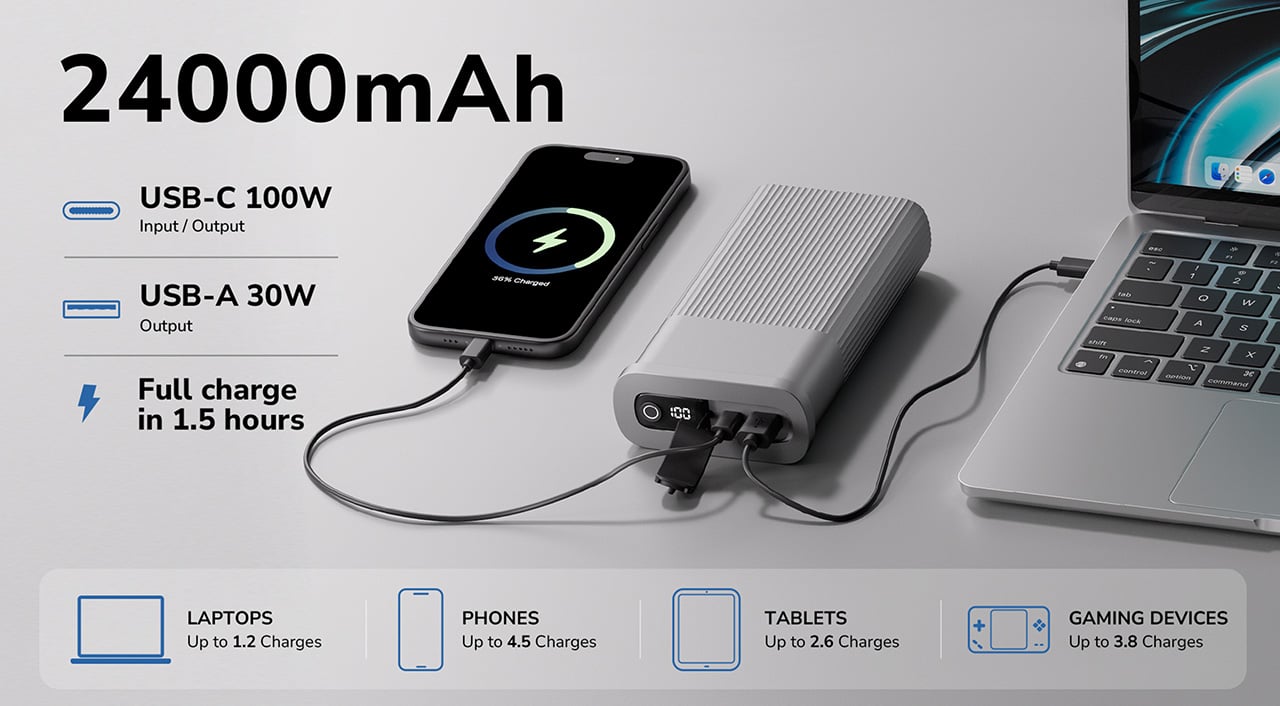
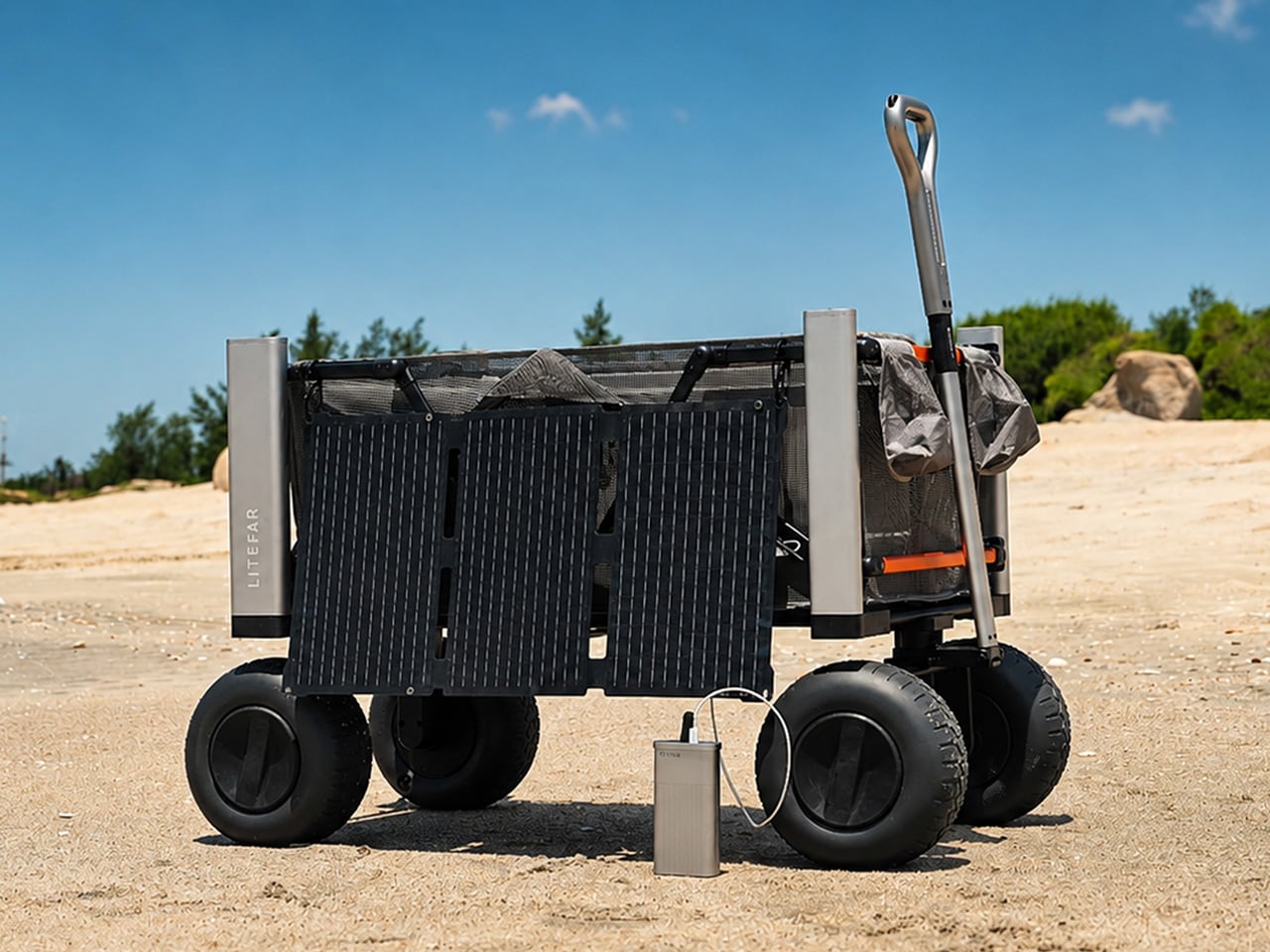
LITEFAR has been building smart electric wagons for a few years now, starting with the remote-controlled Orion and the handle-assisted H1, and the B1 is the most beach-specific product the brand has made. Dual 600W brushless hub motors sit inside the rear wheels, wide 10-inch low-pressure balloon tires keep the load from sinking into soft sand, and the cargo bed handles up to 220 lbs across 150 liters of space. The removable 24,000mAh A24 battery powers the drive system and doubles as a 100W USB-C power bank for phones, cameras, and laptops. A modular accessory system, a telescopic light, three control modes, and a swappable wheel system for off-beach terrain round out the package. It starts at $599, with global shipping expected between October and November 2026.
The design intelligence starts with weight distribution, not wattage. Narrow wheels concentrate load into a small contact patch, sand gives way, and traction disappears. B1’s 10-inch low-pressure balloon tires spread the load across a wider footprint, keeping the wagon on top rather than cutting through. The dual 600W brushless hub motors are mounted directly inside the rear wheels, with no exposed drivetrain or chain for sand to clog, and push forward with up to 36 N·m of torque once the tires have already won the flotation battle. It’s a tidy design sequence: solve the physics problem first, then add power.
B1 runs on three control modes. The smart handle responds to your movement and applies motor assist as you walk, preserving the feel of guiding a wagon while removing most of the effort. Cruise control lets you set a steady speed and keep moving without constant pulling, useful for longer beach walks with a full load. The LITEFAR app handles settings, battery status, and OTA firmware updates remotely. Cruise control is the sleeper feature here, the kind of thing that sounds minor until you’ve dragged 150 lbs of gear across 400 feet of loose sand and your arms give up before the water is even visible.
An optional remote controller takes things one step further, and on a wide-open beach with few obstacles, it is genuinely a little ridiculous how easy the whole operation becomes. Send the loaded wagon ahead of you, guide it alongside while you carry the board, or just let it roll while you keep both hands free for literally anything else. There is no wrestling with the handle, no leaning forward into the weight, just a loaded cart moving across soft sand while you walk next to it unbothered. Adults will appreciate the practicality of it pretty quickly. Kids will see it and immediately want a turn, which is either a bonus or a problem depending on how protective you are about your cargo.
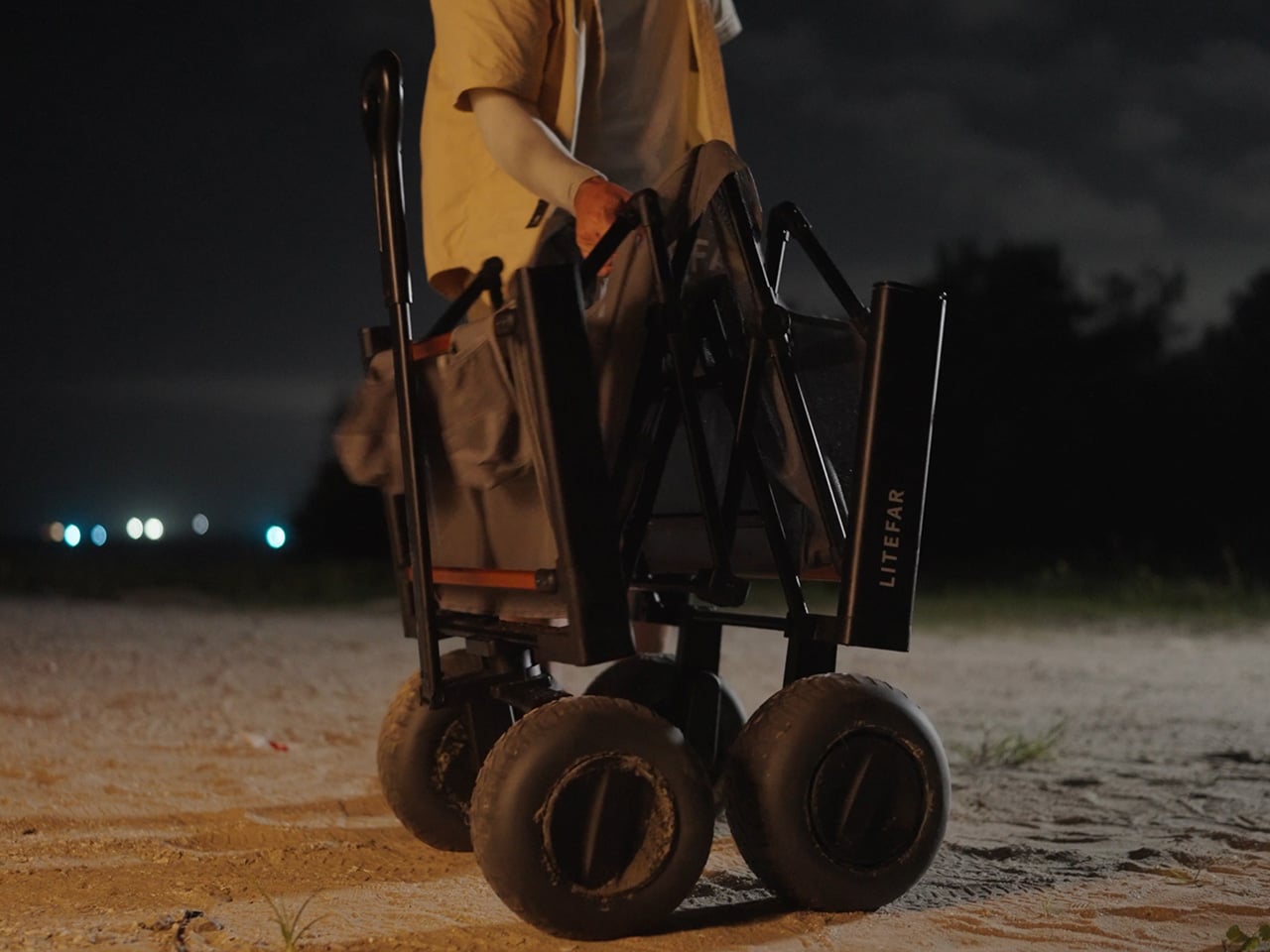
The 6063 aluminum frame folds flat into pickups and larger SUVs without needing a trailer or roof rack. Unfolded, it delivers 150 liters of cargo volume and a dynamic load capacity of 220 lbs, with a static capacity of 440 lbs as a stationary platform. Teslin mesh fabric lines the bed, tough and easy to rinse down after a day in the sand. The rear section opens outward for longer items that don’t fit in a conventional cargo area, folded canopies, fishing rods, mats, and oversized gear. At 53 lbs and 40 by 24 by 21 inches folded, it’s real-world manageable.
Once B1 arrives at the shoreline, it transitions from hauler to base camp. The modular accessory system supports a tabletop for food and drinks, rod holders for surf fishing, a portable folding seat, umbrella support, and additional storage add-ons. Depending on who you are and what you brought, this becomes either a family beach station, a camera gear organizer, a fishing platform, or a powered outdoor workspace. Most motorized wagons stop being useful the moment they stop moving. This one keeps working after the walk is done, which is the design detail that genuinely sticks with me.
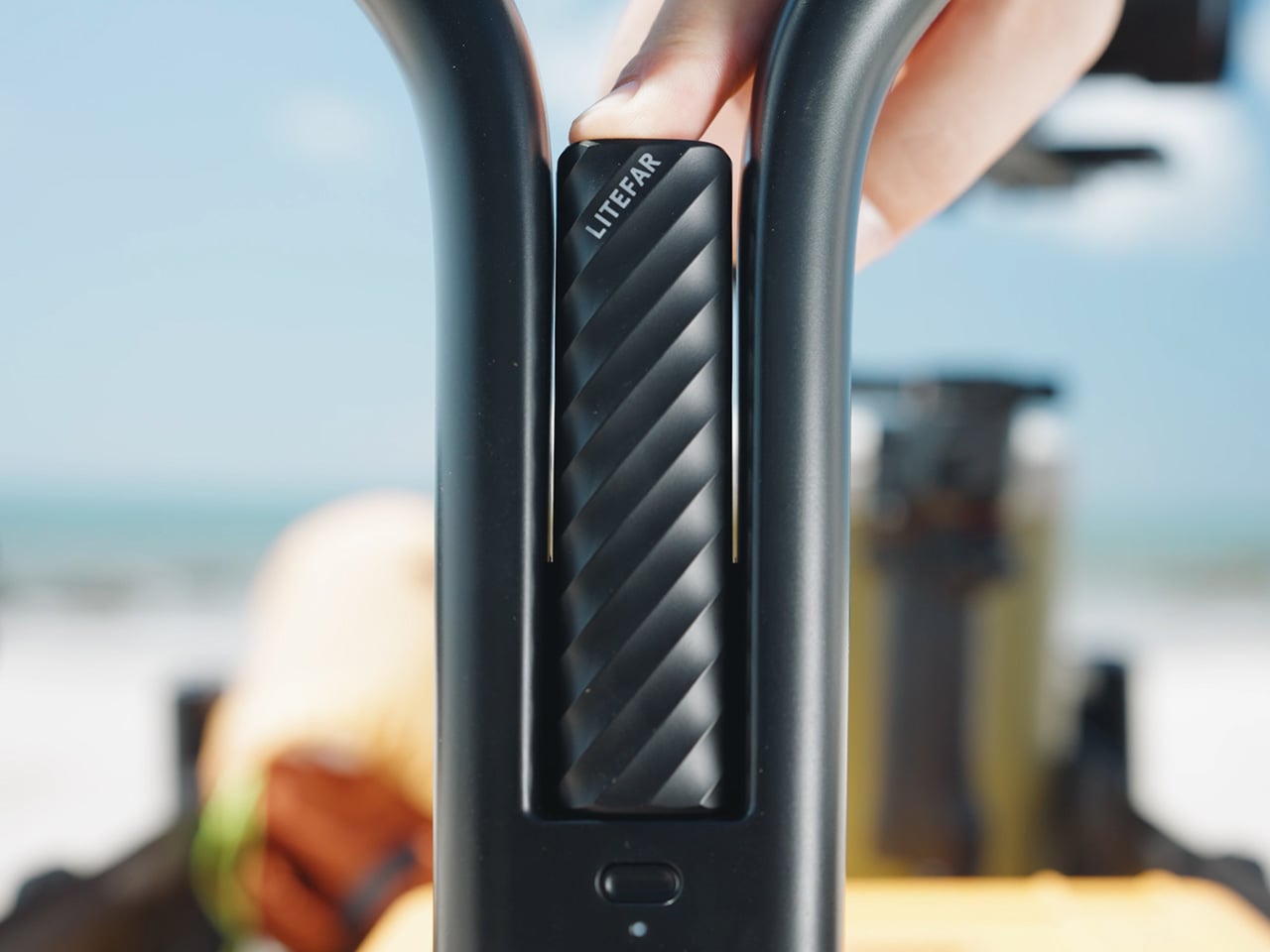
The 24,000mAh A24 battery is removable and does double duty. Pull it from the wagon at the beach and it functions as a standalone power bank, with a 100W USB-C input/output port and 30W USB-A output covering phones, laptops, cameras, and drone controllers. It fully recharges in 1.5 hours and is swappable in seconds if you bring a spare. An optional 50W solar panel adds off-grid flexibility for camping and fishing trips. B1 also includes a telescopic light that rises above the wagon frame, useful for sunset fishing setups and the walk back when the beach day runs longer than expected.
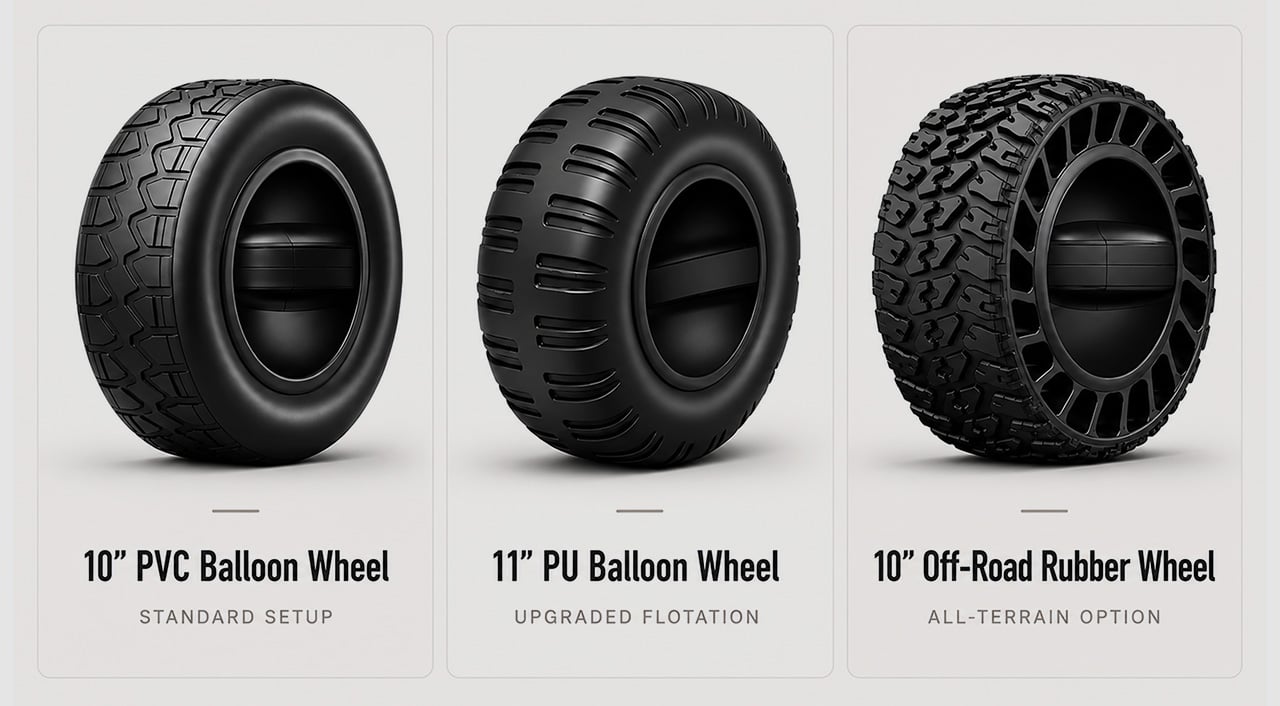
The standard 10-inch PVC balloon tires cover soft sand, but the wheel system is removable and upgradeable. Optional 11.5-inch PU balloon tires offer more cushioned flotation for heavy beach days, while 10-inch airless honeycomb rubber tires handle off-road trails, gravel, and campsites where puncture resistance matters more than flotation. All three share the same hub interface for fast, tool-free swaps, making B1 genuinely multi-season rather than a summer-only commitment. The LITEFAR B1 Beach Edition starts at $599 against an MSRP of $999, with wheel upgrades, the optional 50W solar panel, and modular accessories available separately. A non-motored version is available for $299 too. Global shipping is scheduled for November 2026.
The beach has a design problem. Everything made for it arrives wrapped in the same visual language: neon plastic, logos scaled for visibility from twenty feet away, and product names in fonts that suggest the designer’s reference material was a county fair booth. Coolers, chairs, speakers, sunscreen dispensers. The category has collectively decided that beach gear should look exactly like beach gear, and nobody seems to have questioned whether that was actually a good idea.
These five objects have a different point of view. None of them look like they were produced for a promotional photograph on a pier. Each one earns its place through a specific design decision that makes a full day at the beach easier, quieter, or a little more considered.
1. Battery-Free Amplifying Speakers
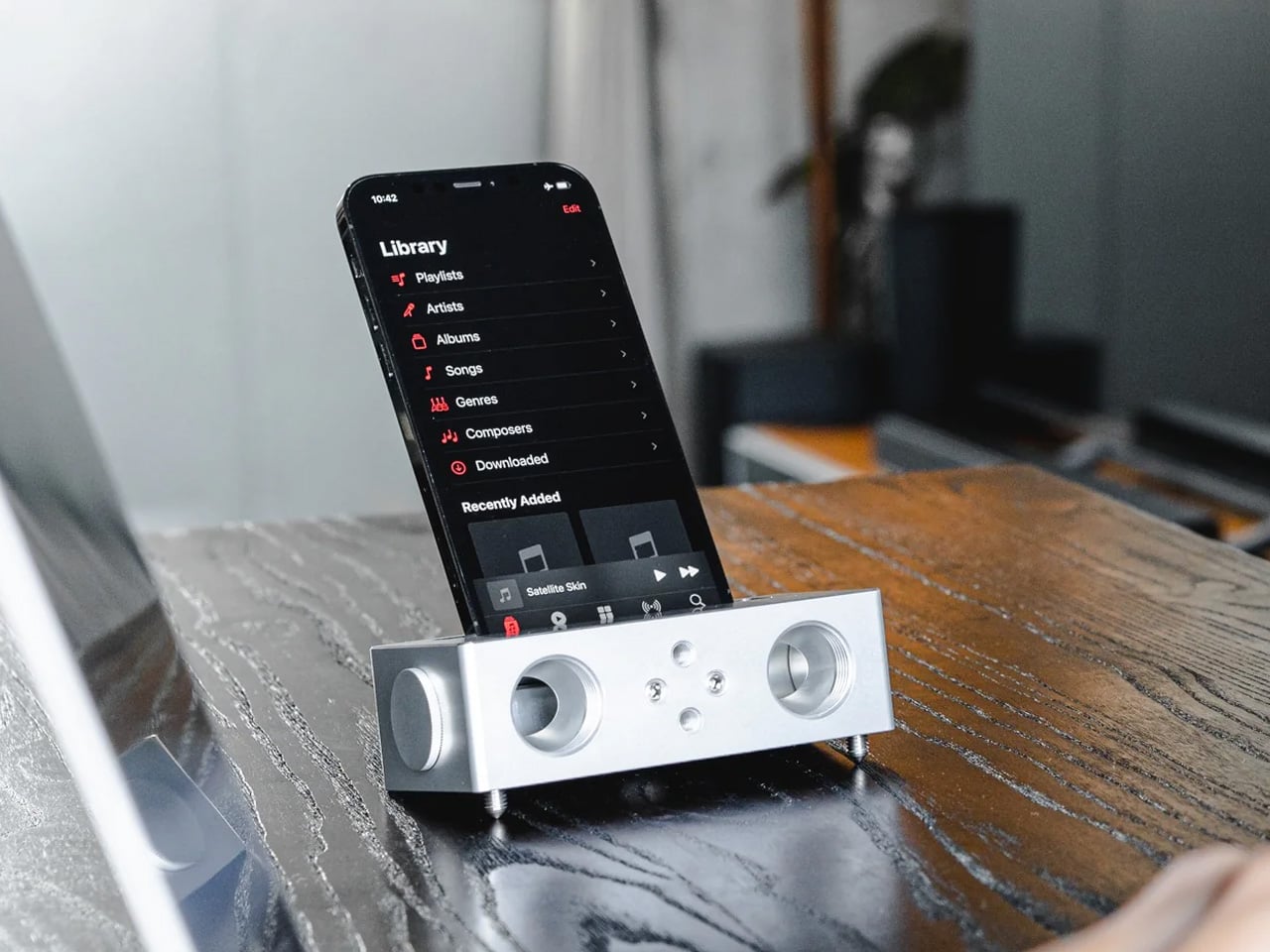
Every Bluetooth speaker brought to the beach eventually dies. The battery gives out at exactly the moment someone finds the right track, and the rest of the afternoon becomes a negotiation about whether to go back to the car. The Battery-Free Amplifying Speakers remove that problem entirely by having no battery to run out. Sound from a phone travels into the chamber and is amplified through acoustic geometry rather than electronics, with no pairing, no charging, and no indicator light to watch nervously.
The principle is the same one behind a gramophone horn or a hand cupped around a speaker: redirect sound and it gets louder. What lifts these above cheaper versions of the same idea is the internal chamber design, which reinforces rather than merely surrounds the sound. The result is noticeably fuller than the phone alone, and at the beach, where wind and open space work against you constantly, that gain matters more than a battery percentage reading or a firmware update ever could.
No charging means no dead speaker, no cables on the sand, and no quiet dread about how much afternoon remains before the battery is gone
Passive amplification means the sound scales with your phone’s own speaker rather than introducing a separate and competing audio character on top of it
What We Dislike
The volume ceiling is lower than any powered speaker, so this works for a group around a table rather than a group spread across a wide stretch of beach
Performance is tied to the quality of the phone speaker placed inside, which varies considerably from one device to another and is entirely outside the product’s control
2. Camp Snap 2
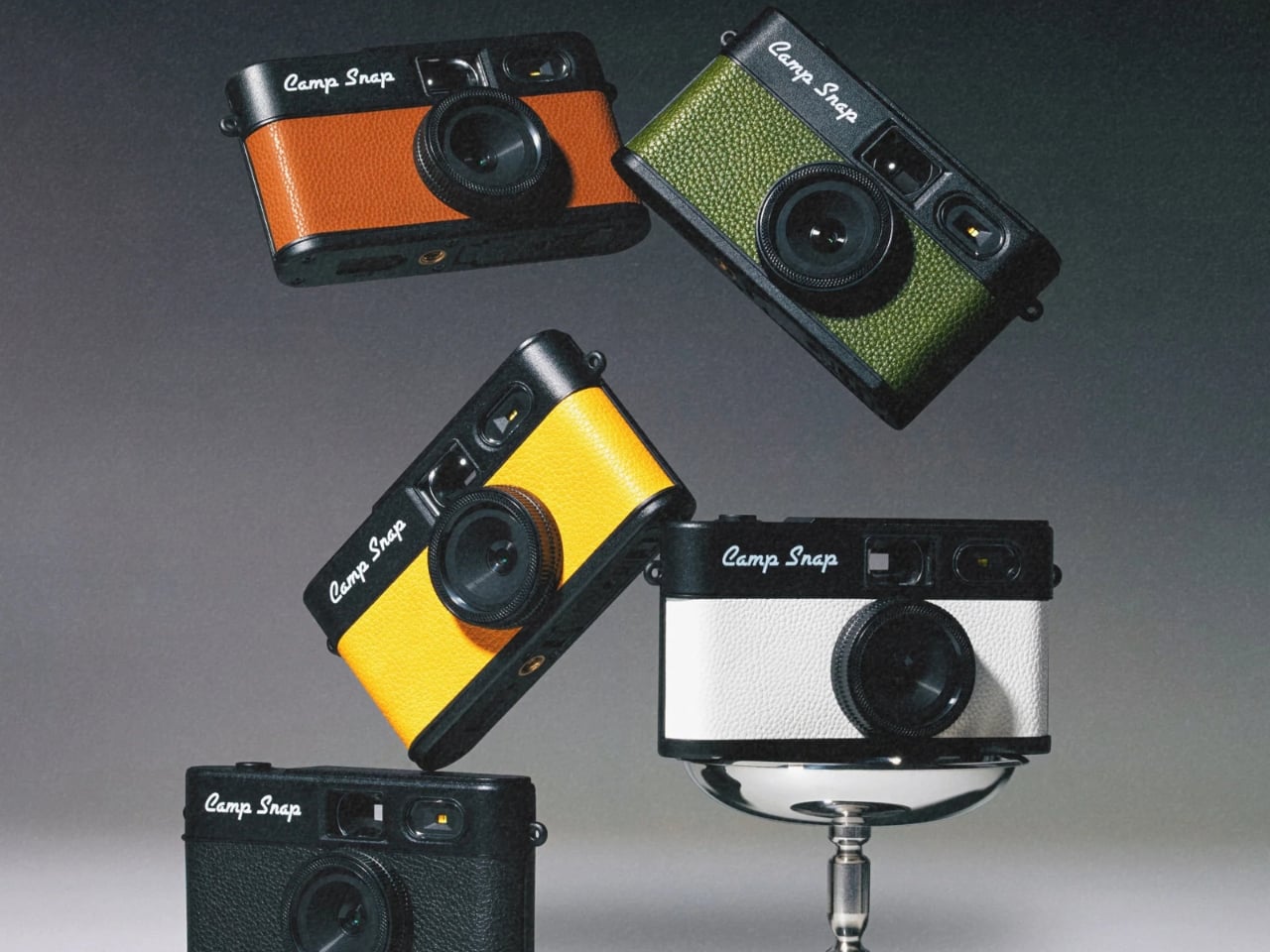
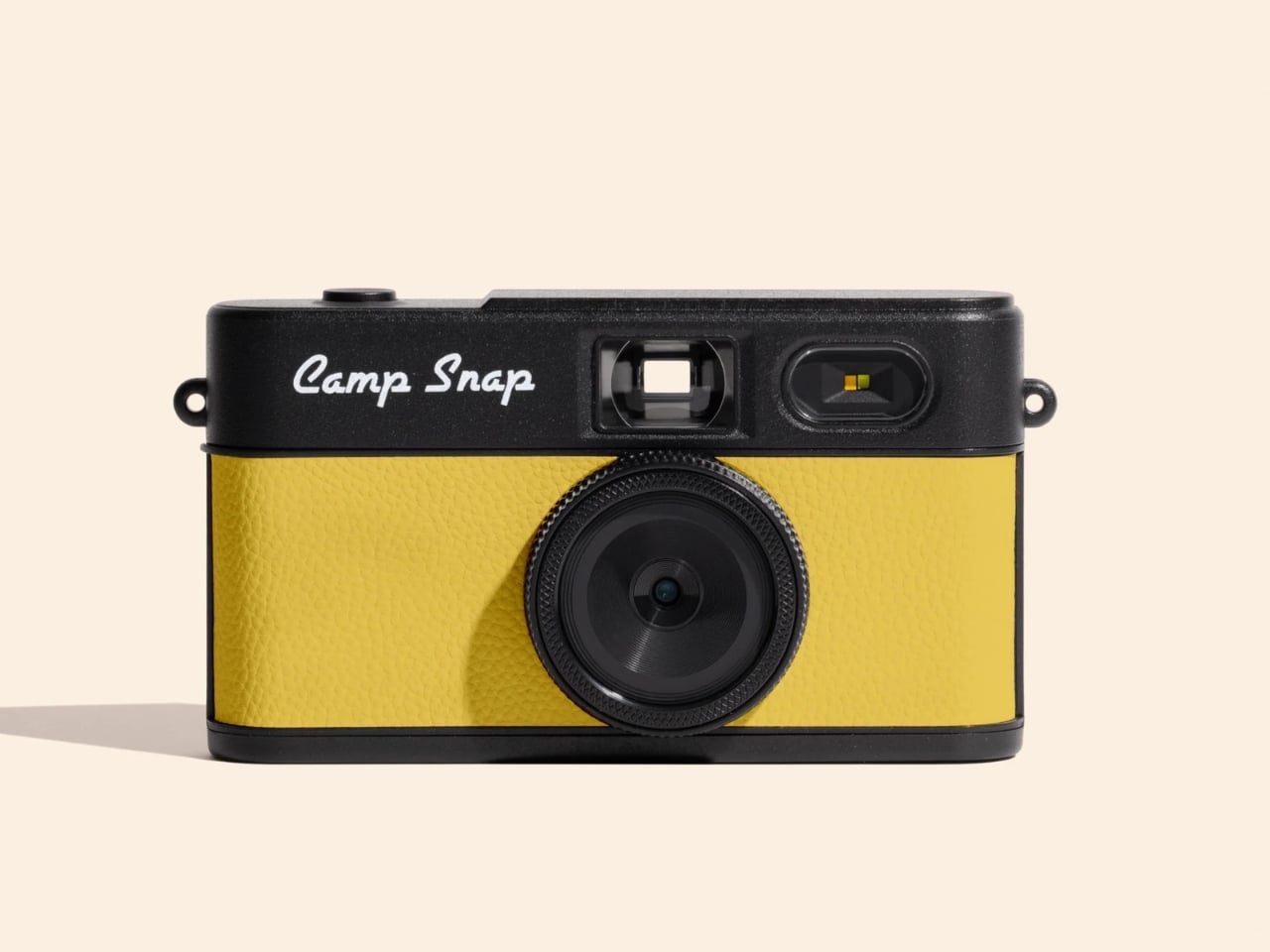
The Camp Snap 2 is a point-and-shoot with no rear screen, no Wi-Fi, and no ability to see the photograph you just took. You shoot, you download later. What sounds like a limitation turns out to be a relief. Every photograph at the beach currently involves a review session: retakes, angles held for too long, filters applied in real time while the moment moves on without you. A camera that simply takes the picture and closes the subject is a very different tool to spend a day with.
It is 15 percent slimmer than its predecessor, runs an 8-megapixel sensor, and offers six built-in looks through a physical button on the back: Standard, Vintage 1 through 3, Analog, and Black and White. It comes in nine colorways, including several translucent jelly-plastic finishes in Sunbeam Yellow, Tangerine Drift, and Strawberry Splash. It supports 30.5mm screw-in filters for anyone inclined to go further.
What We Like
The screenless design removes the retake cycle entirely, which turns out to be the most genuinely useful design feature a beach camera can offer
Six filter modes accessed through a single physical button is exactly the right level of creative control for a camera built around the idea of not overthinking things
What We Dislike
No rear screen means no way to check framing or whether someone blinked, which requires a real shift in how you think about taking a photograph in the first place
The 8-megapixel sensor produces images that are warm and characterful rather than sharp and clinical, which is either the point or the dealbreaker depending entirely on who is asking
3. DraftPro Top Can Opener
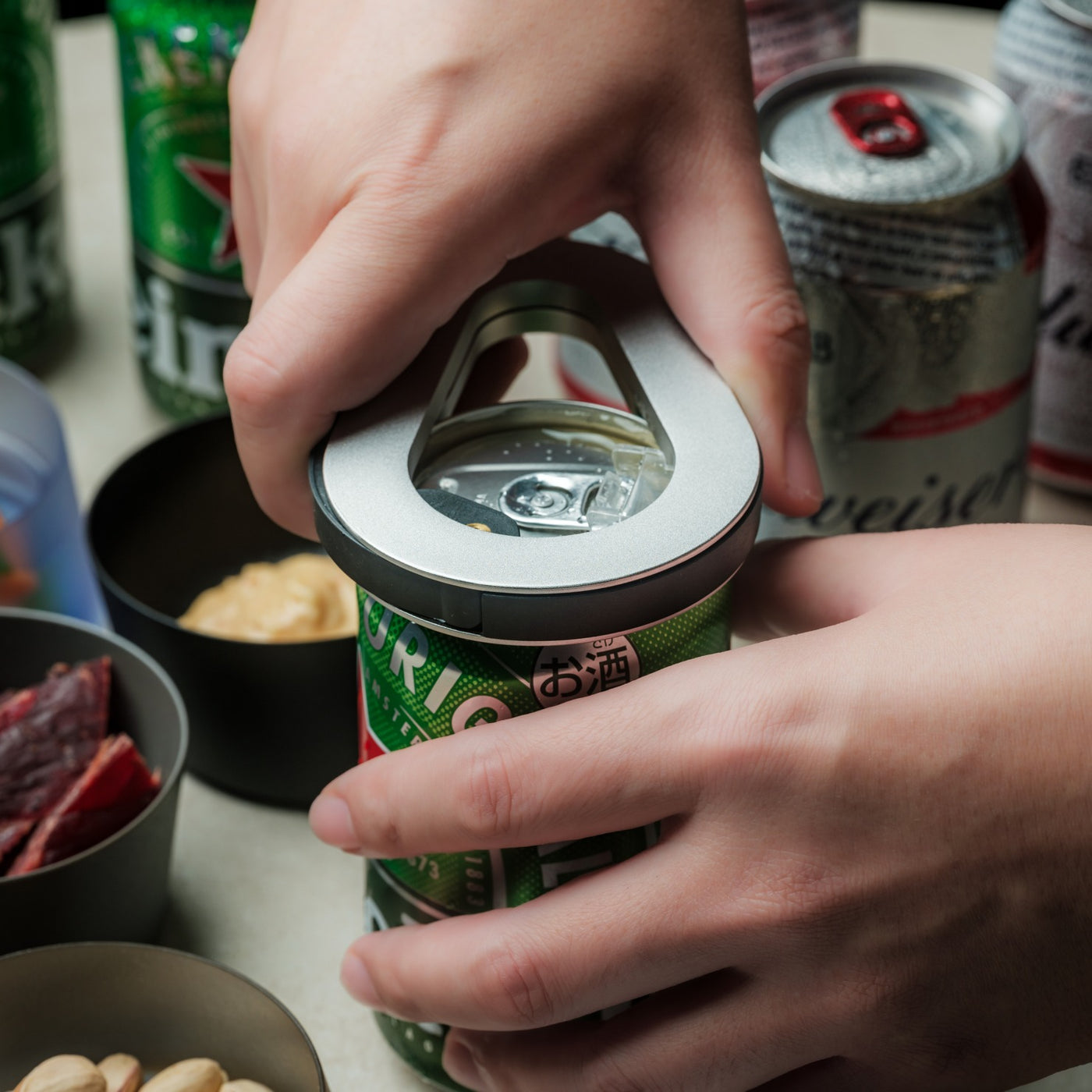
The problem with canned drinks at the beach has never been opening them. The pull tab handles that adequately. The problem is everything after: a small hole that warms the drink faster than it should, attracts every insect within range, and forces you to drink in a way that a can was never designed for. The DraftPro removes the entire top of the can in a single motion, leaving no sharp edges and turning any standard drink can into an open vessel with full and immediate access.
It locks onto the rim, cuts around the perimeter, and the lid comes away clean. What you are left with is essentially a metal cup, which changes the drinking experience from a can more than you might expect. A cold brew tastes different when you can actually smell it. A beer drinks the way a beer is supposed to drink. Canned wine, which has always suffered from its own opening, finally gets the same treatment a glass would give it.
The DraftPro removes the full lid in one clean motion with no sharp edges remaining on the rim, which is the design outcome every can opener should be working toward
Turning any standard can into an open cup changes how canned drinks taste and how you experience them, which is a significant return for something that fits in a pocket
What We Dislike
It works on standard-diameter cans only, so anything outside that size needs a different tool, which is worth knowing before the cooler is already packed
The removed lid needs somewhere to go, which is a small but real consideration when you are trying to keep a bag organised on a beach with nowhere flat to set things down
4. Wuben G5
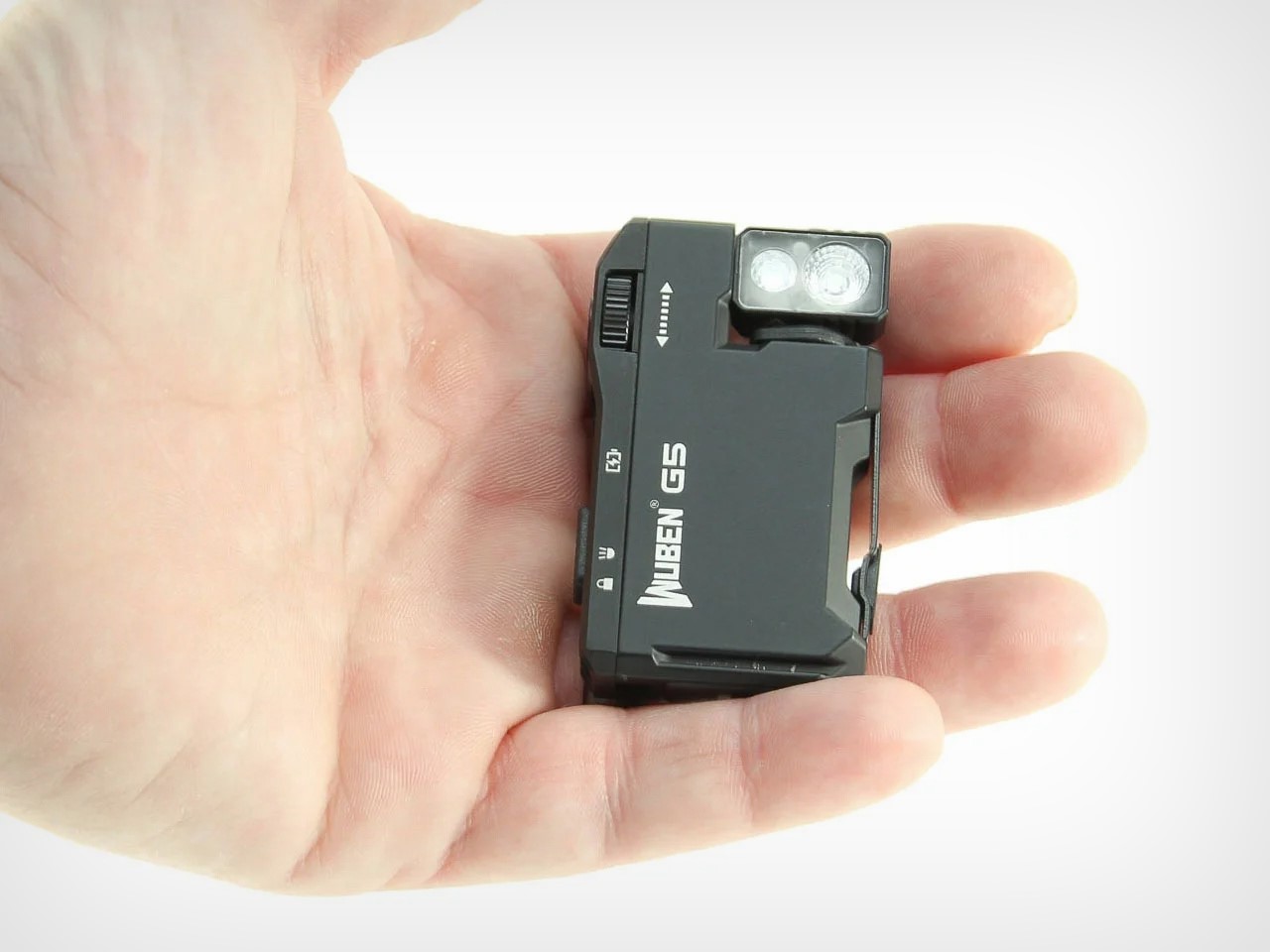
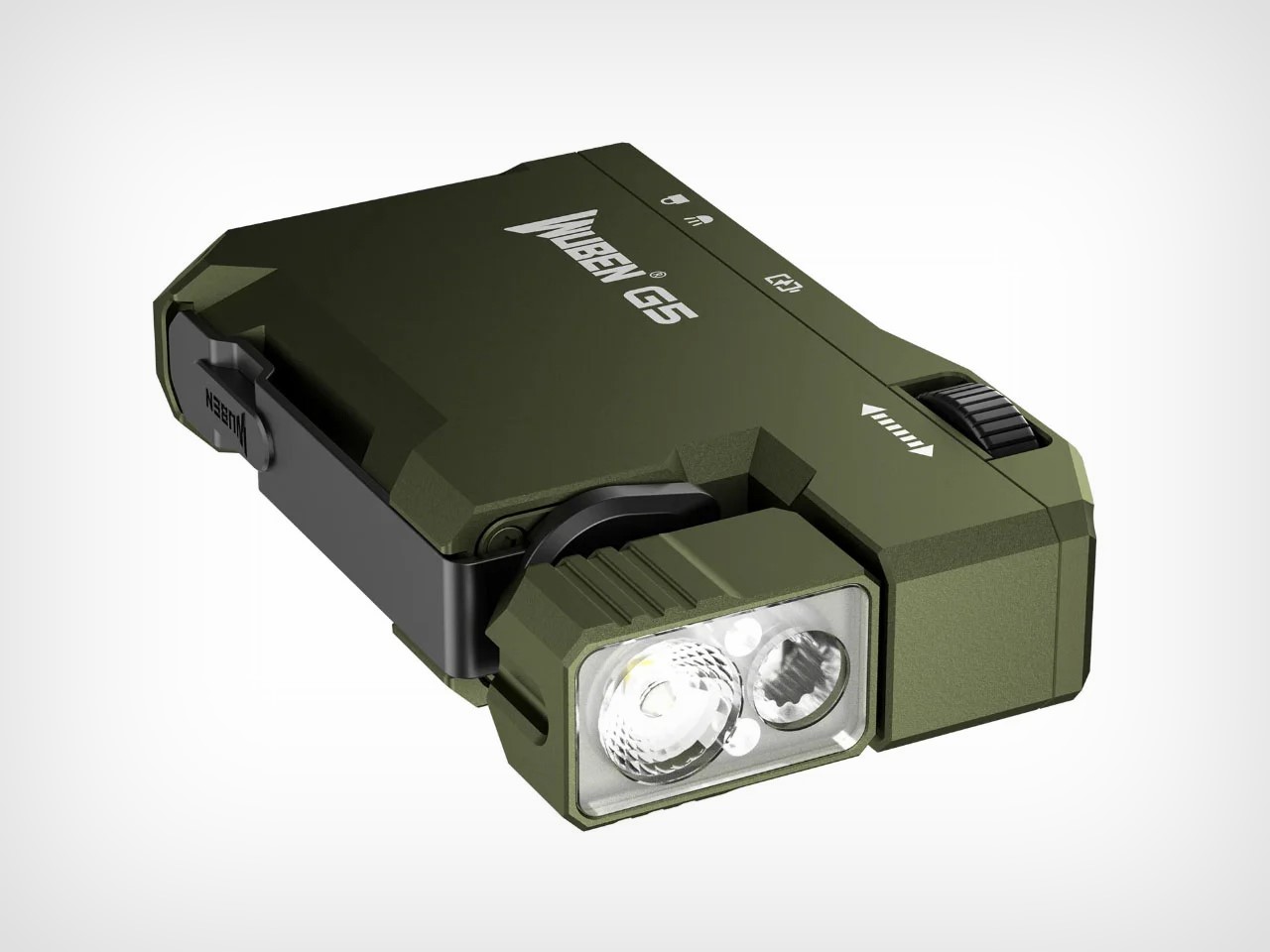
Most flashlights are too large to bother carrying and too dim to justify the space they take up when you do. The Wuben G5 is shaped and sized like a lighter, weighs 52 grams, and carries an IP68 waterproof rating down to two metres. It reaches 400 lumens across an 82-metre beam and rotates 180 degrees at the head so the light goes where it needs to go without repositioning the hand. A spring-tensioned clip grips fabric and straps. A magnetic base holds it to any metal surface without additional accessories.
At the beach, the use cases arrive the moment the sun drops: tide pool walks after golden hour, finding something in a dark bag, navigating a car park at the end of a long day, keeping a fire going in the right direction. USB-C charging is hidden behind the rotary tactile switch, a small detail that makes the whole object feel genuinely resolved. At $25, it sits in a price bracket where most comparable flashlights are forced to choose between bright and portable. The G5 does not choose.
What We Like
The lighter-sized form factor and spring-tensioned clip mean it lives in a pocket and actually gets used, rather than sitting uncharged at the bottom of a drawer between trips
IP68 waterproofing, a magnetic base, and USB-C charging at $25 is a combination that flashlights costing three times as much regularly fail to match
What We Dislike
Battery runtime at full 400-lumen output sits around 50 to 60 minutes, which requires some forward planning on a long evening outing if you need consistent brightness throughout
The blue-and-red emergency beacon is a feature worth having and absolutely worth leaving alone unless the situation genuinely calls for it
5. Hibear All-Day Adventure Flask
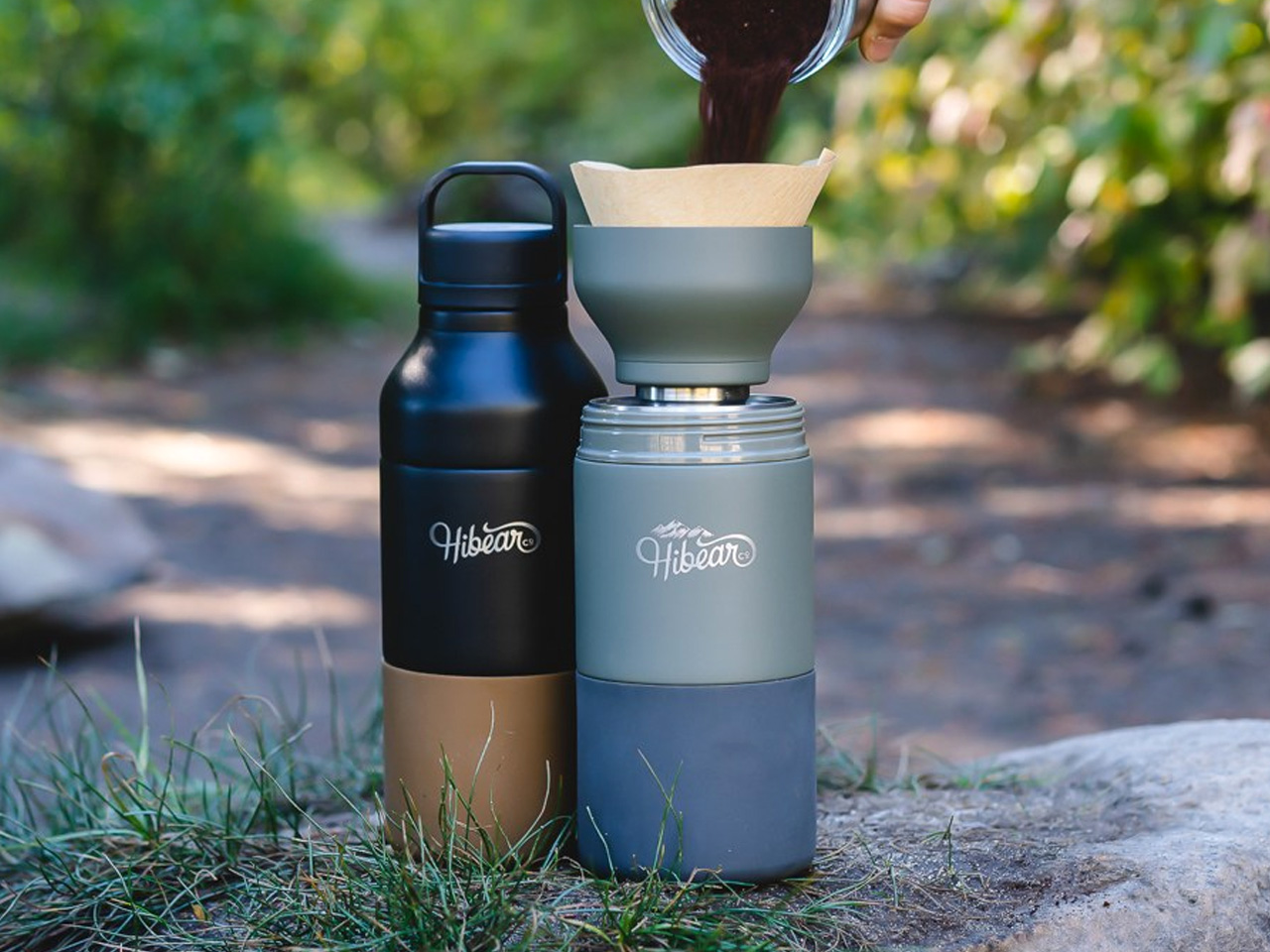
The Hibear All-Day Adventure Flask won a Red Dot Design Award in 2020, carries a five-year warranty, and performs six separate functions inside a single 32-ounce insulated stainless body. The interior is lined with non-breakable glass, which keeps flavours neutral regardless of what goes in. Split the body at its midpoint, invert the top section over a filter, and you have a pour-over coffee kit. The same configuration aerates wine properly rather than asking it to breathe through a small opening in a can lid.
A mesh insert brews tea, infuses water, or cold-brews coffee depending on how long you leave it. A slatted lid converts the flask into a cocktail shaker. A thermal core chills drinks without ice and without diluting them. The silicone tumbler built into the base pops out as a cup and absorbs the impact when the flask gets dropped, which it will. Hibear contributes to 1% for the Planet on every sale. For a beach day that starts before sunrise and ends after dark, this covers all of it.
What We Like
The non-breakable glass interior keeps every drink tasting like the drink rather than the vessel, which is the detail that separates this from every other insulated flask currently available
One object handling six functions means one fewer item to pack, which is the most honest possible argument any piece of design can make for its own existence
What We Dislike
The full modular system involves multiple components that need tracking, cleaning, and reassembling, which adds genuine friction on days when simplicity is the only real priority
Most users will settle into two or three functions regularly and barely reach for the rest, which is worth sitting with before committing to the price
The Best Beach Gear Is the Gear That Disappears
None of these five objects look like they were made for a promotional shoot. They were made to do something specific well enough that you reach for them without thinking about it. The amplifying speaker has no battery to watch. The DraftPro changes how a can of beer opens. The Wuben G5 weighs 52 grams and costs $25. The Hibear covers a full day at the beach without asking you to pack anything else around it.
The Camp Snap 2 asks you to look at the beach rather than reviewing photographs of it. That is the through-line: five objects that remove a specific frustration rather than introducing a new feature. The beach already has enough going on. The best gear for it stays out of the way and earns its place by being genuinely hard to leave behind.
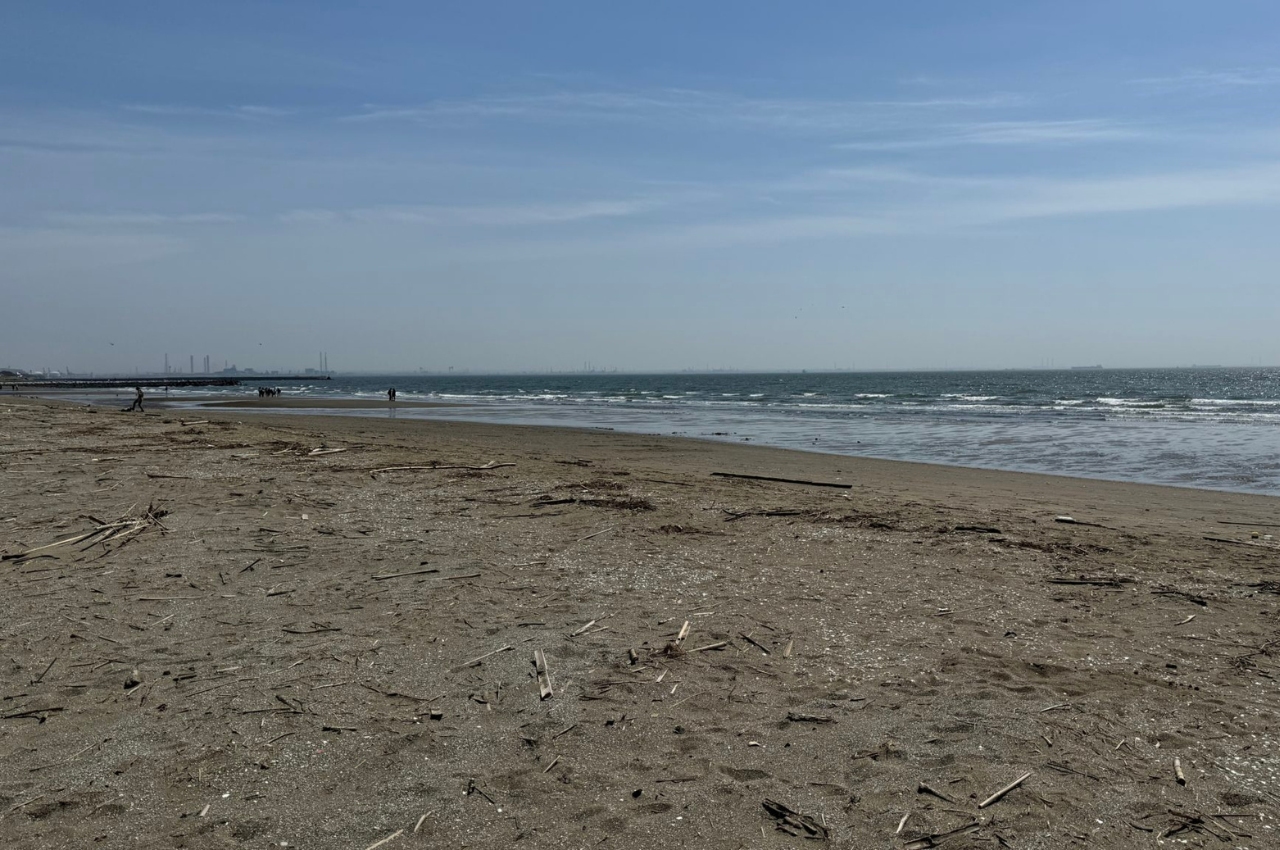
One of my plans in life when I eventually retire is to live somewhere near the beach and just have a daily walk along the shore. Aside from nature and people watching, another thing that I enjoy is to look at some of the things that people leave, intentionally or unintentionally, by the shore and in the water and wonder what’s the story behind it. Of course it’s not a good thing that these trash are left there so it will also be part of my routine to clean this up and think of ways to encourage people not to litter on the beach.
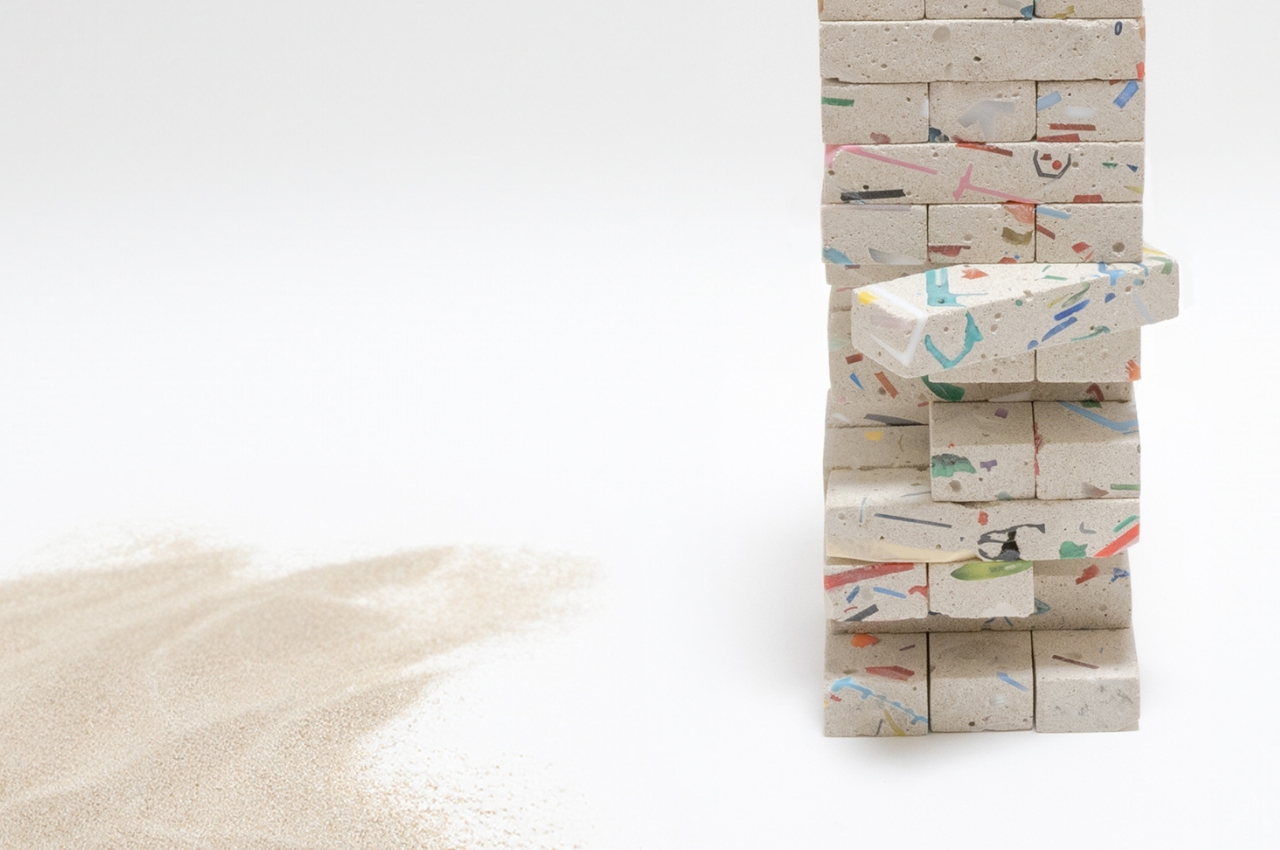
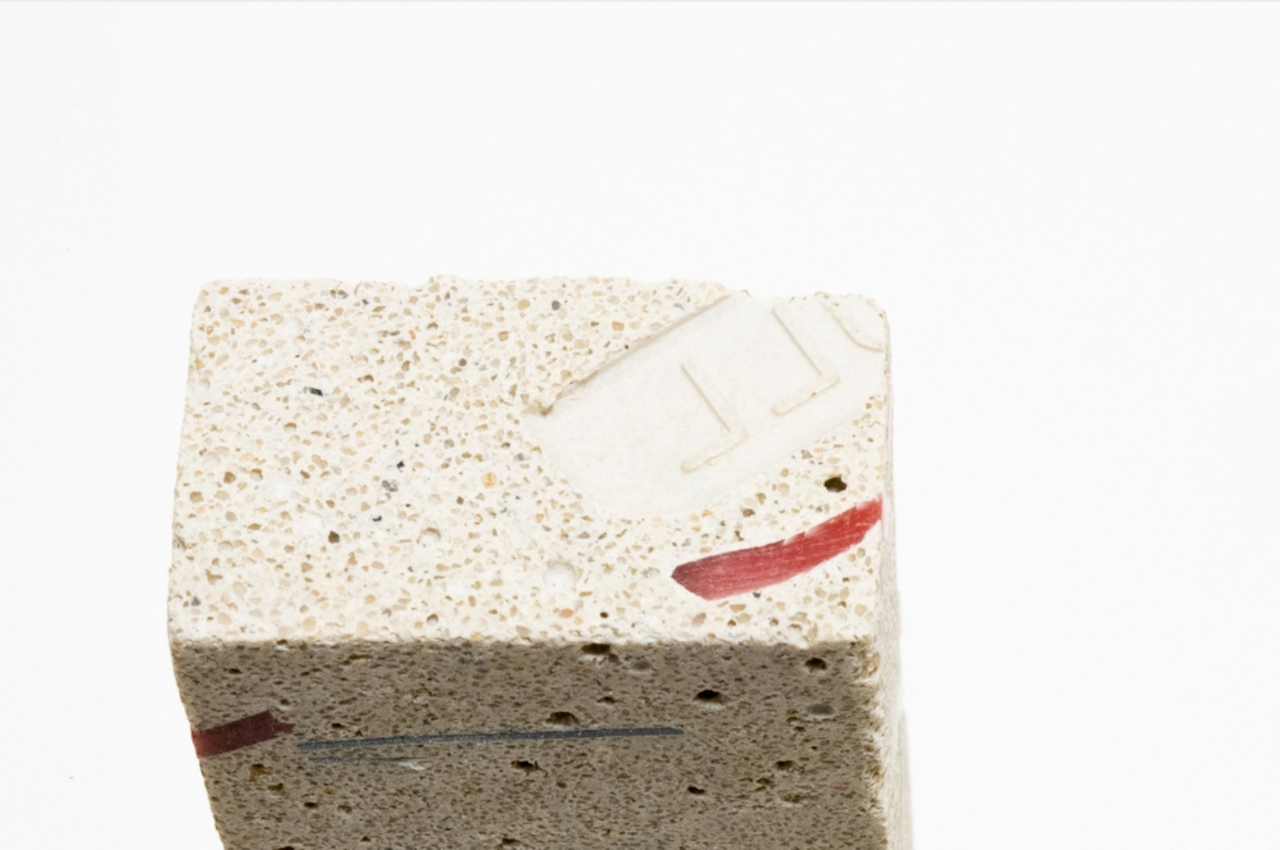
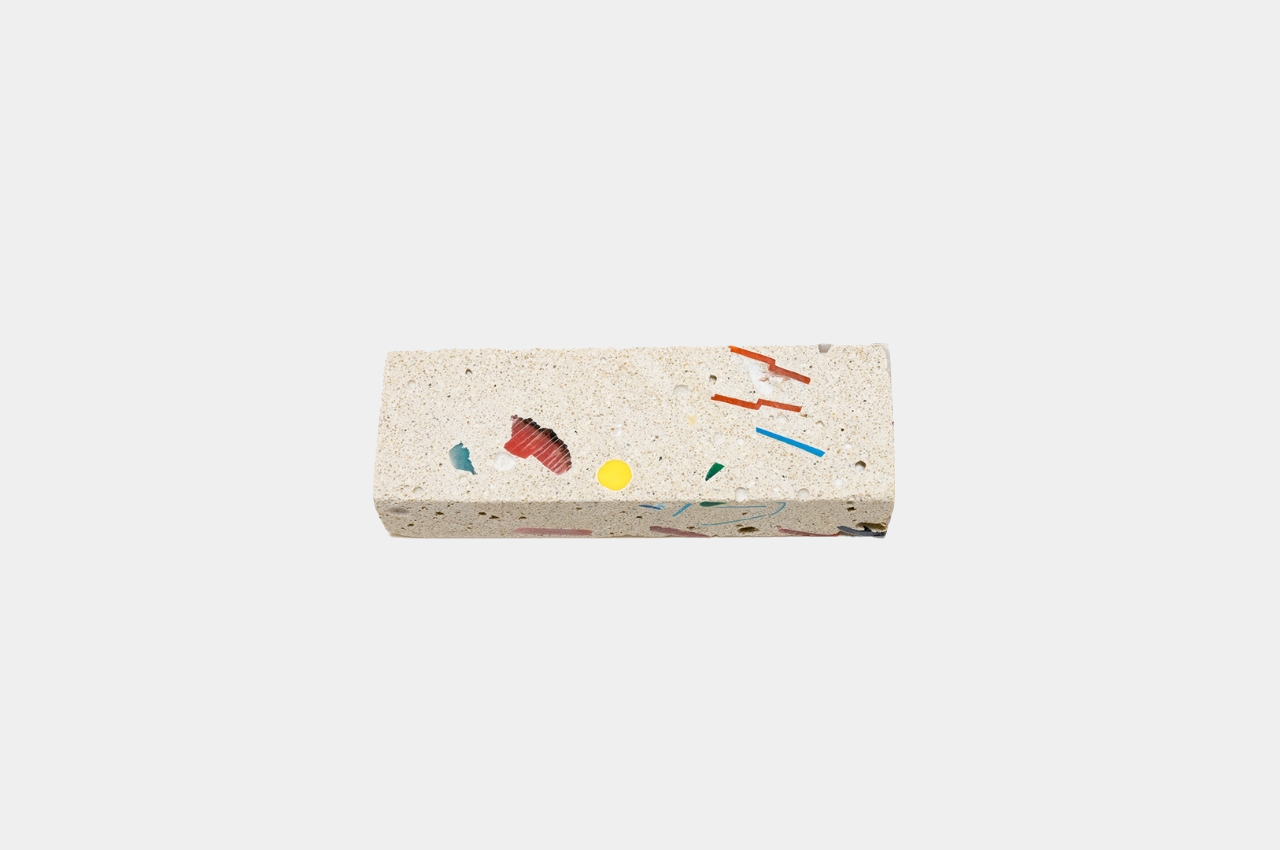
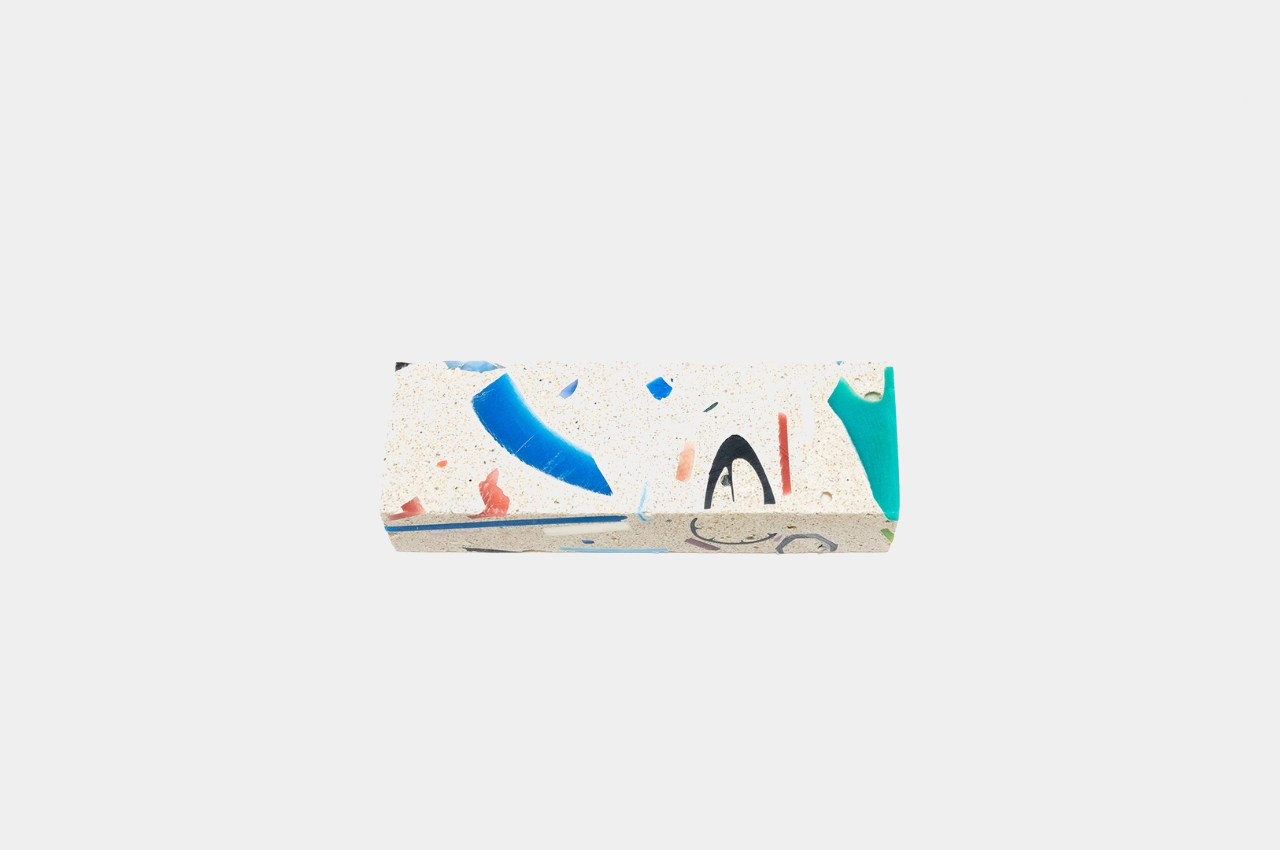
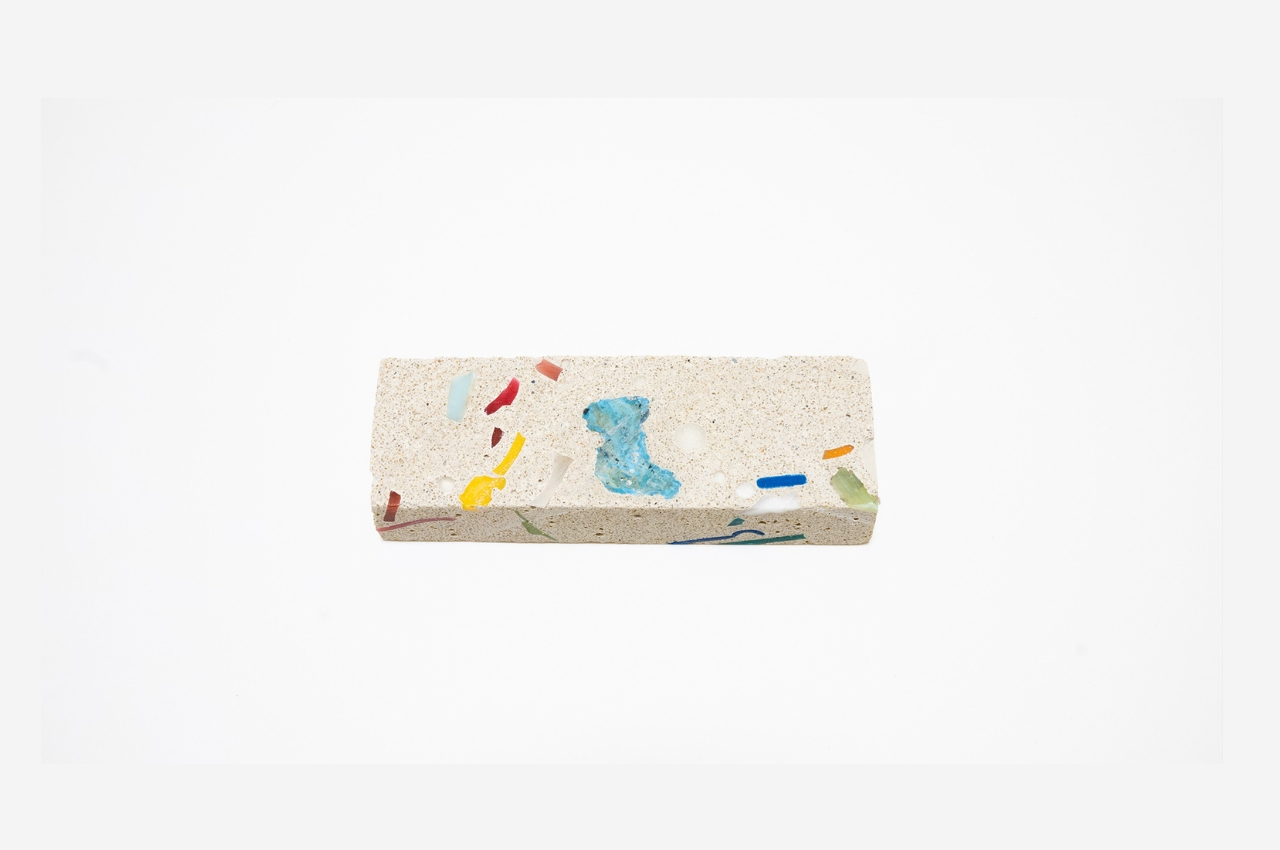
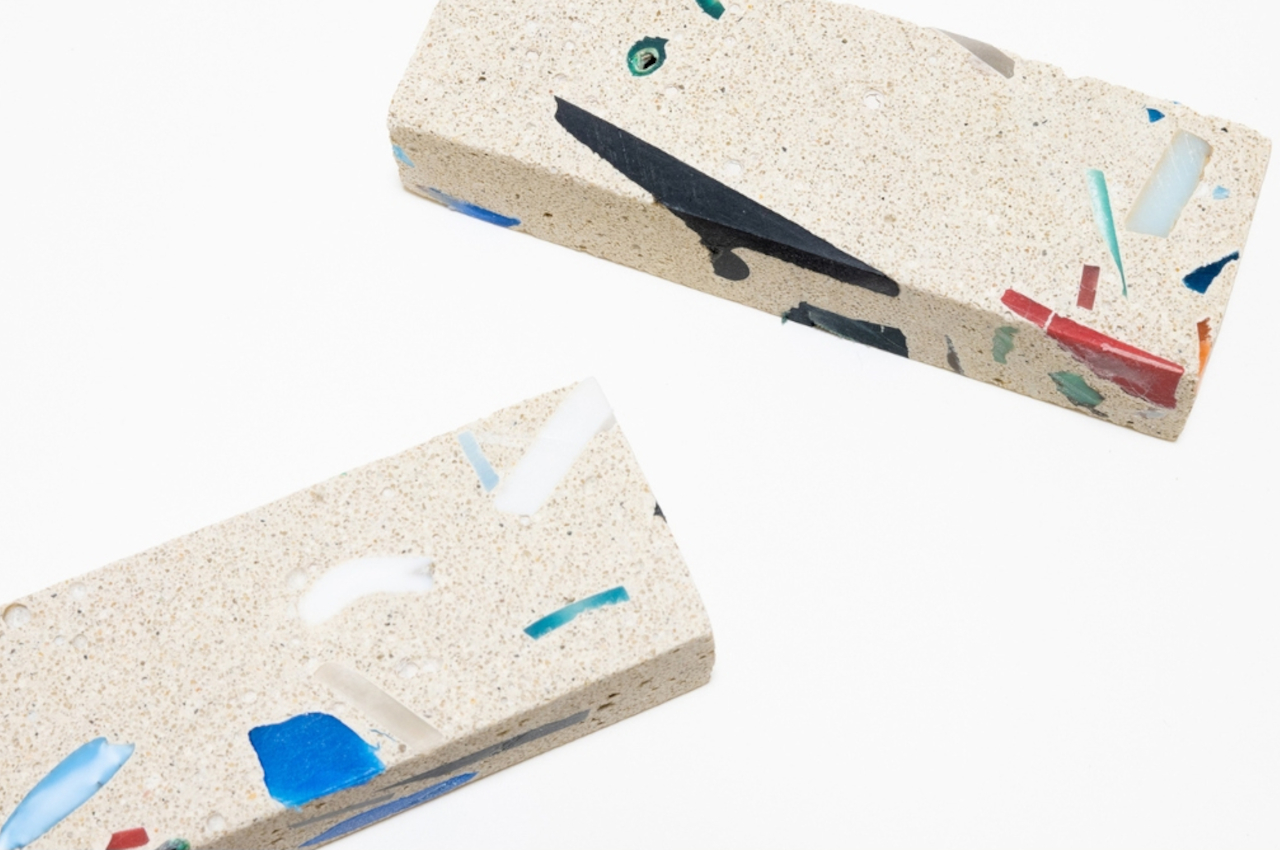
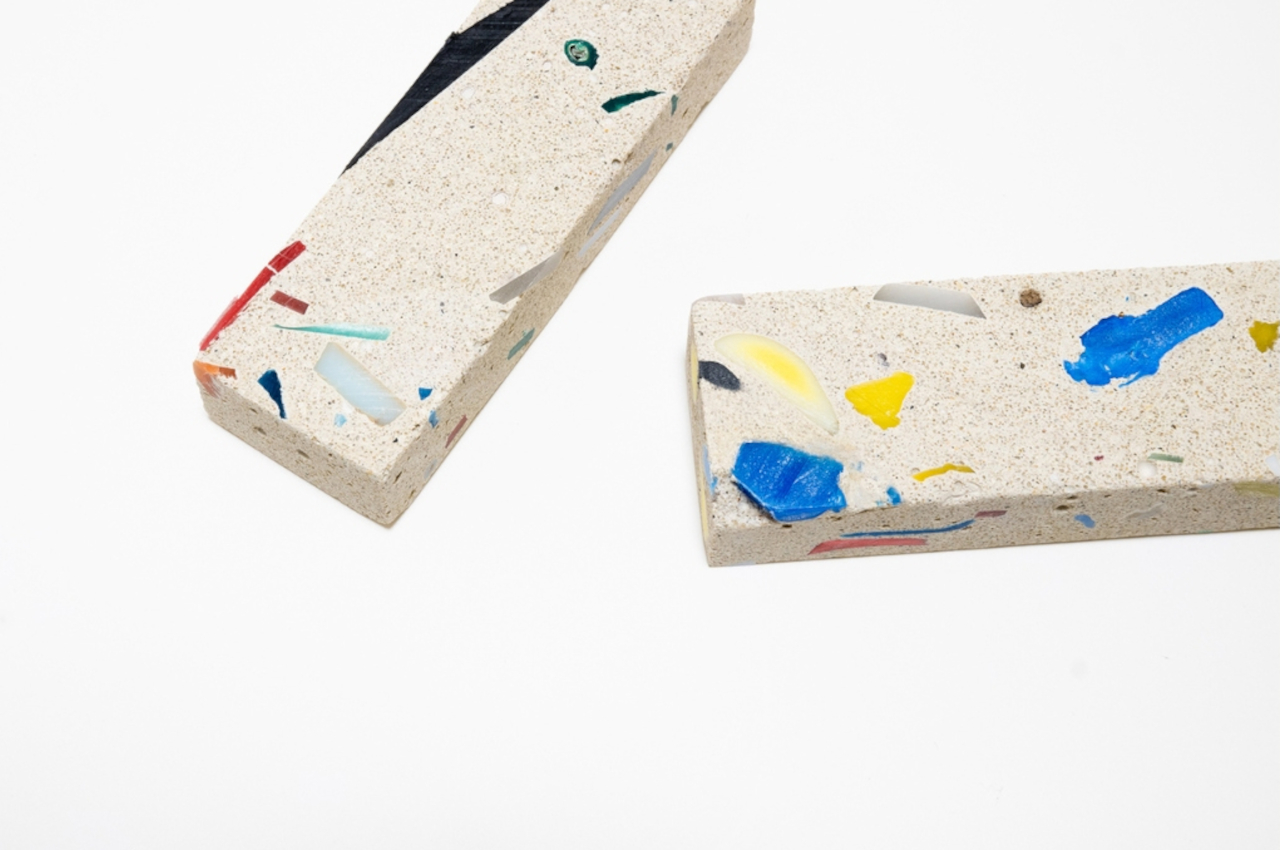
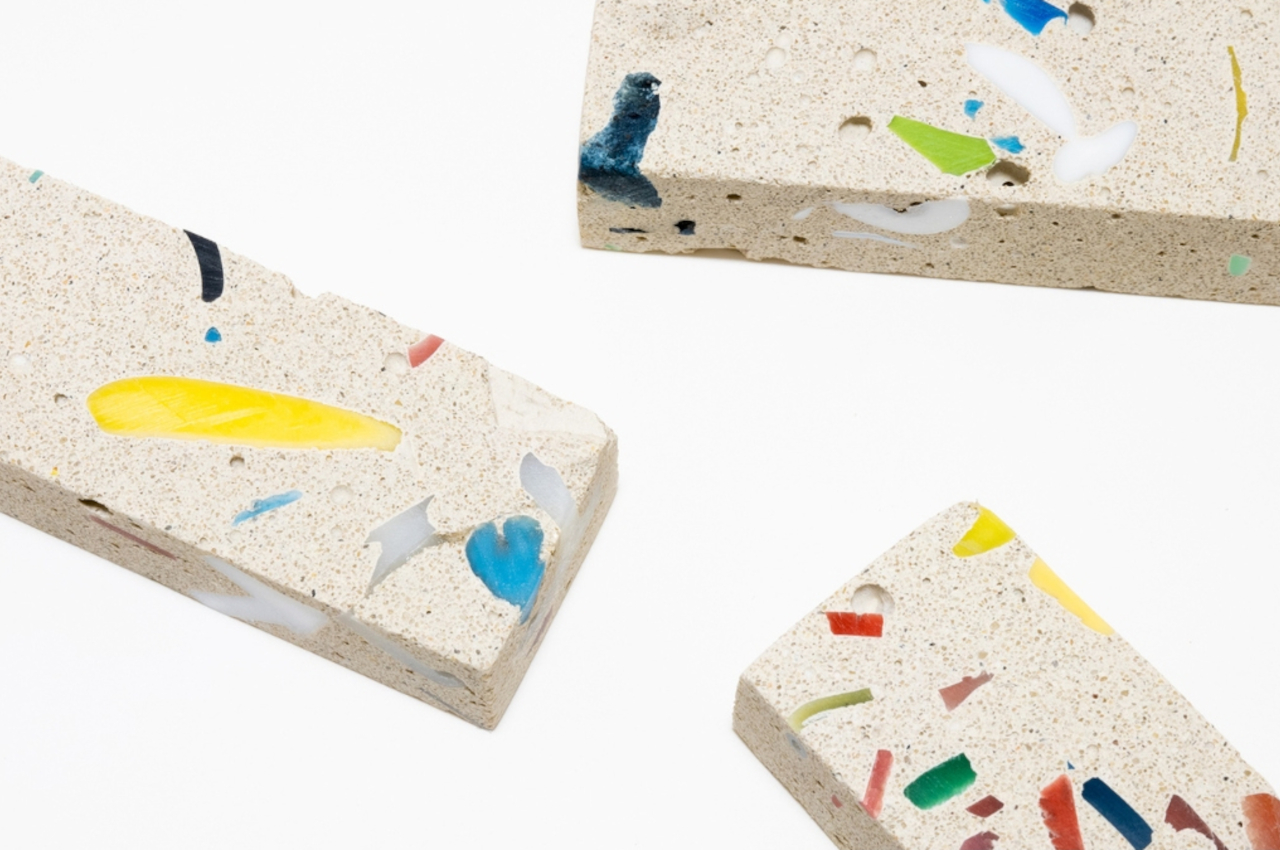
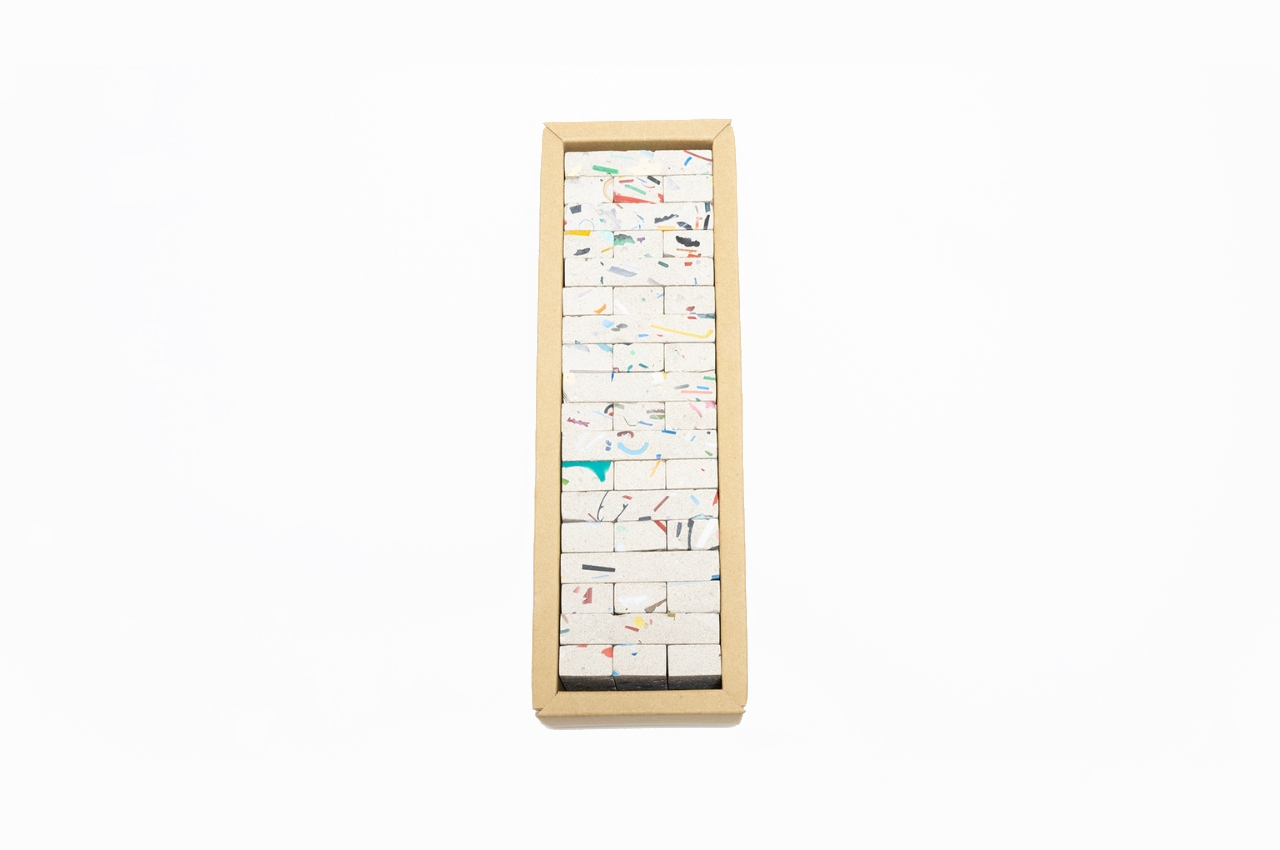
One idea that came from someone who has been seeing all these tiny pieces of trash left on the Makuhari Beach in Chiba City is to create a game out of them. Debris is a tower-stacking game similar to Jenga and Uno Stacko but is made from the marine plastic collected from the area. The tiles have different color patterns based on the season and the collection site where these microplastics came from. It uses VOC-free (no volatile organic compounds) and water-based acrylic resin as a binding agent.
While you’ll have fun playing the game (if this is your thing), the designer also wants to make Debris a way for consumers to engage with environmental issues. Regular beach clean ups do help keep the shore and water clean but there are also those tiny pieces that remain buried and erode into invisible microplastics. They have an effect on the marine environment that sometimes may not be so visible or obvious to us. Having a game made from these pieces can help us think about our effect on our environment.
It can also be interesting to think about what these colors and shapes were in their previous life as trash. But the important thing is that the materials and process in creating Debris is fully sustainable and it can be disposed of properly when you no longer need it. And hopefully, you get to think about what you’re doing to help preserve marine life and keep places like beaches a safe haven for all.
Tiny homes are one of the most popular home styles in 2023, and I’m pretty sure they’re going to make their way well into 2024. They had started off as a fun and cute trend, but now they’re a space-saving and environment-conscious housing option that is economical as well. They reduce the load on Mother Earth and are a simple and minimal alternative to the imposing and materialistic homes that are not preferred by everyone. And an excellent tiny home that I recently uncovered is the Beach by Raglan Tiny Homes
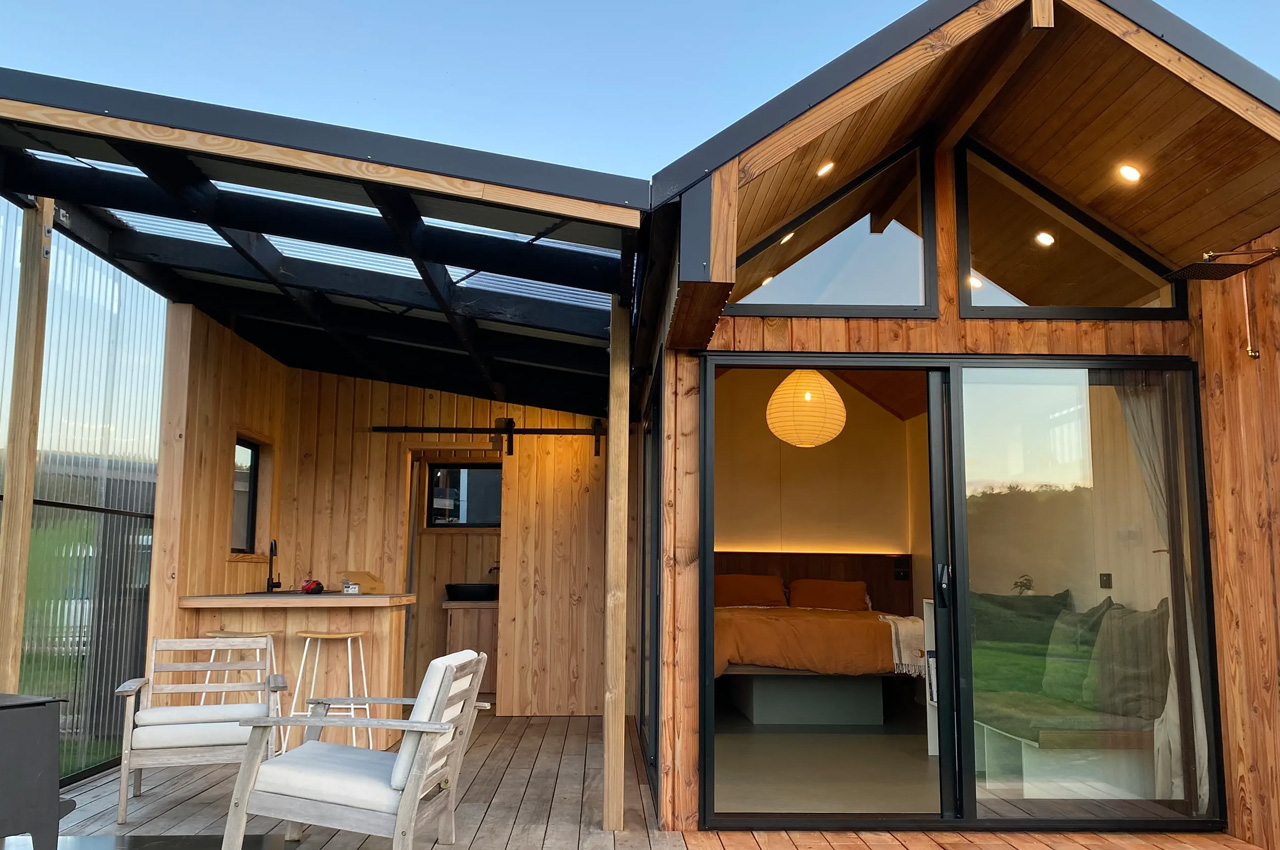
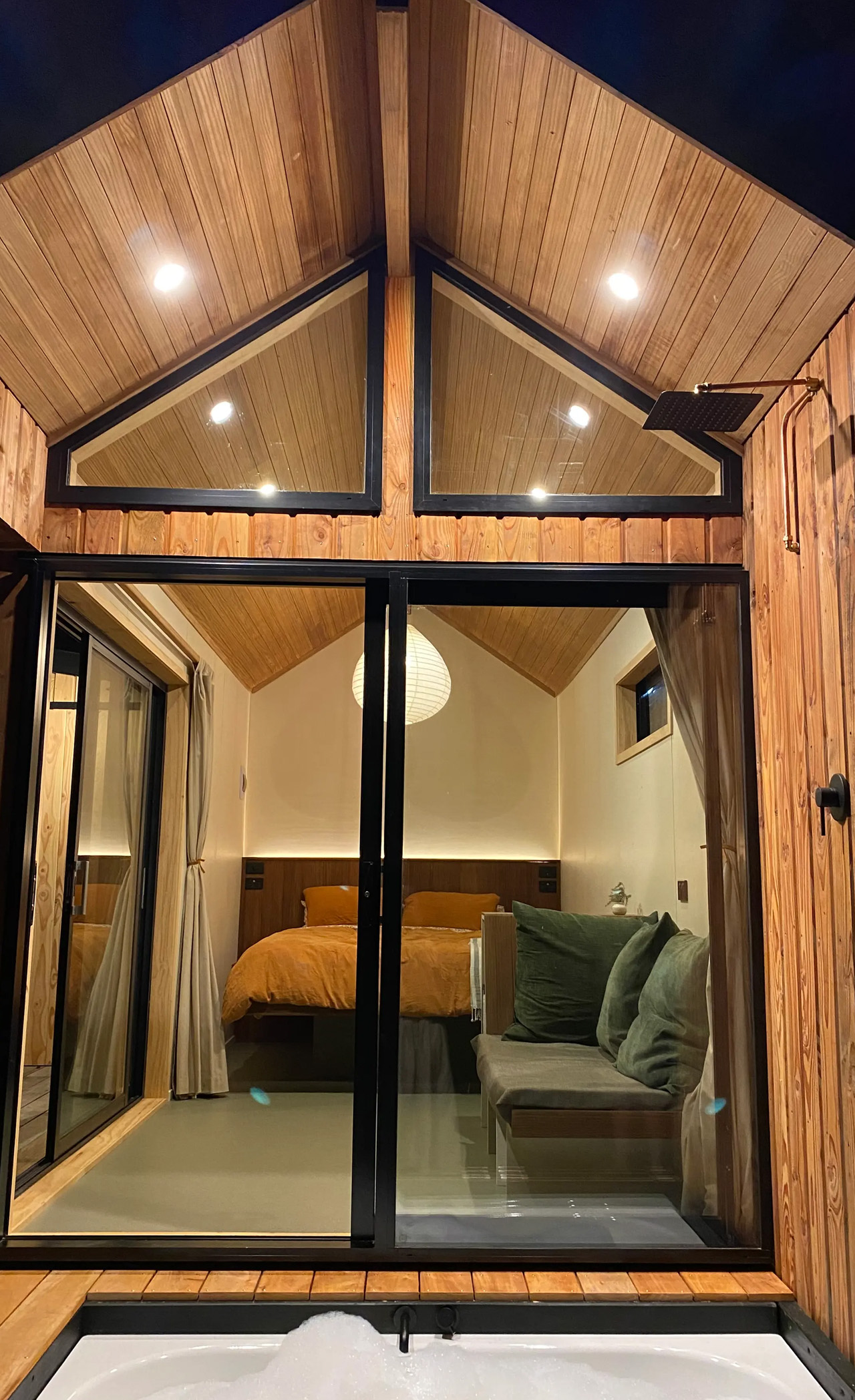
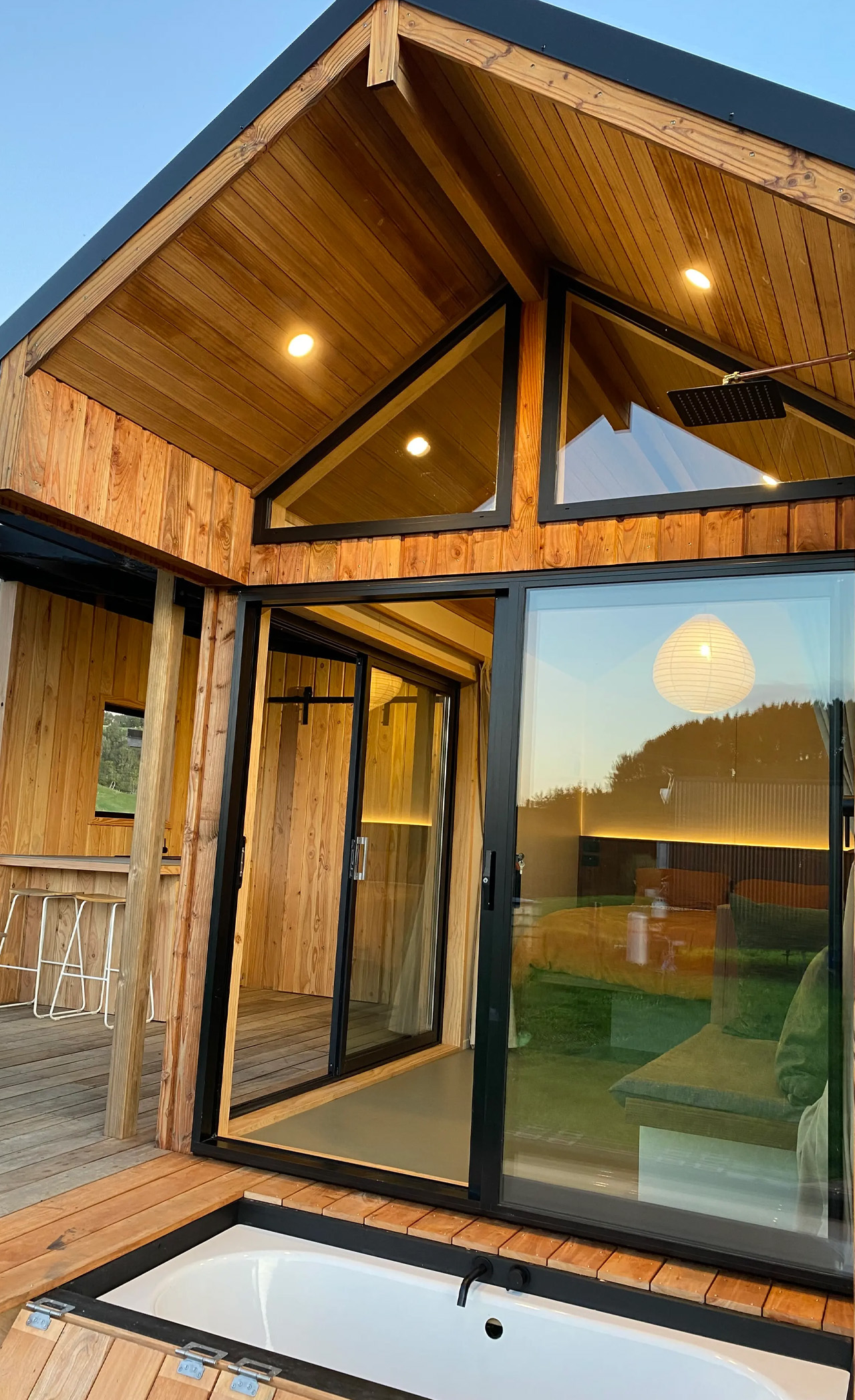
Designed by New Zealand’s Raglan Tiny Homes, the recently completed Beach tiny home features a compact and cozy interior that instantly welcomes you in. The tiny house is non-towable and equipped with a welcoming indoor-outdoor lifestyle and aesthetic, which is accentuated by a part-enclosed deck area. The main section of the home has a width of 2.5m, with the covered deck adding another 2.9m, which covers a total width of 5.4m. The length of the home is 6m.
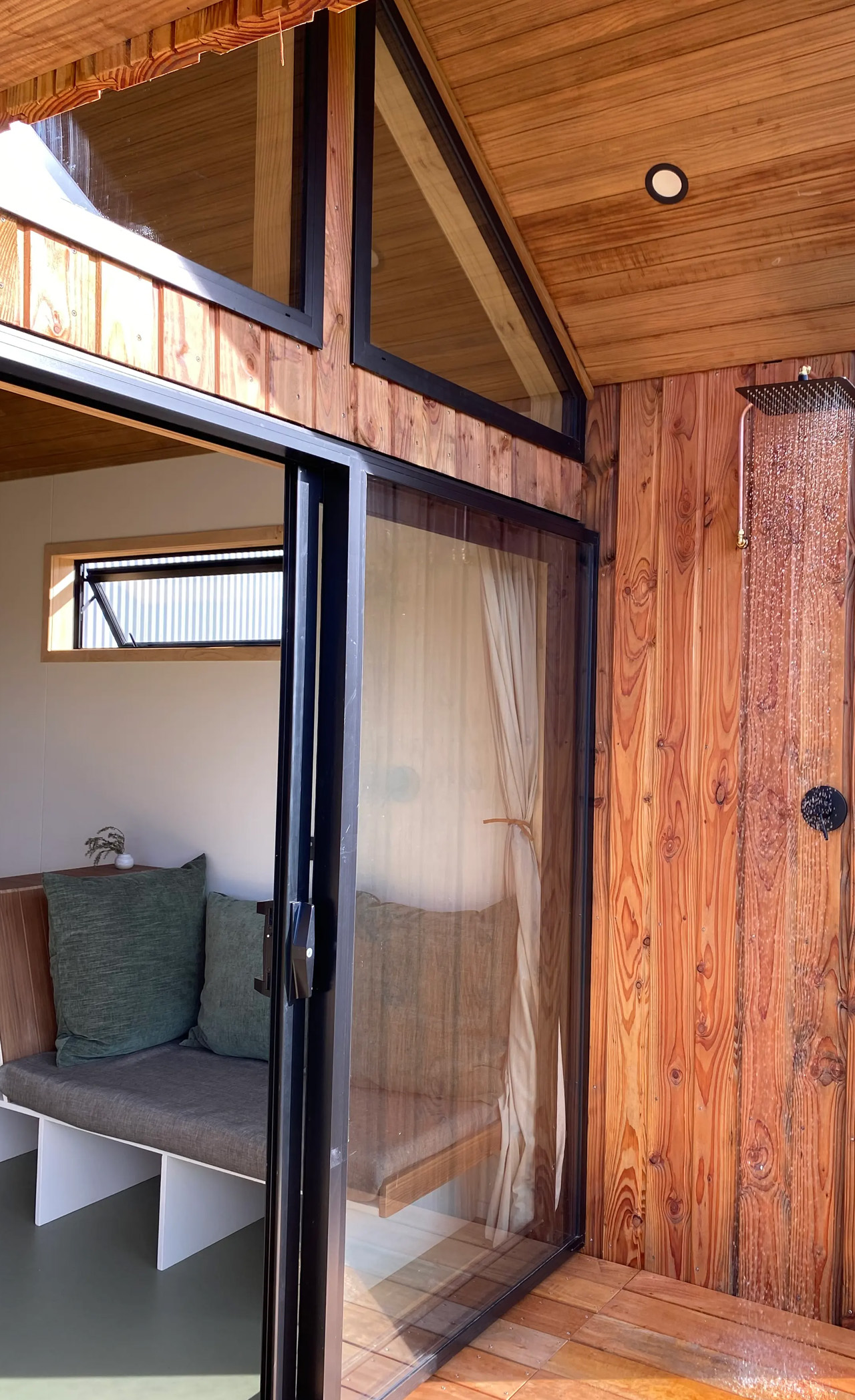
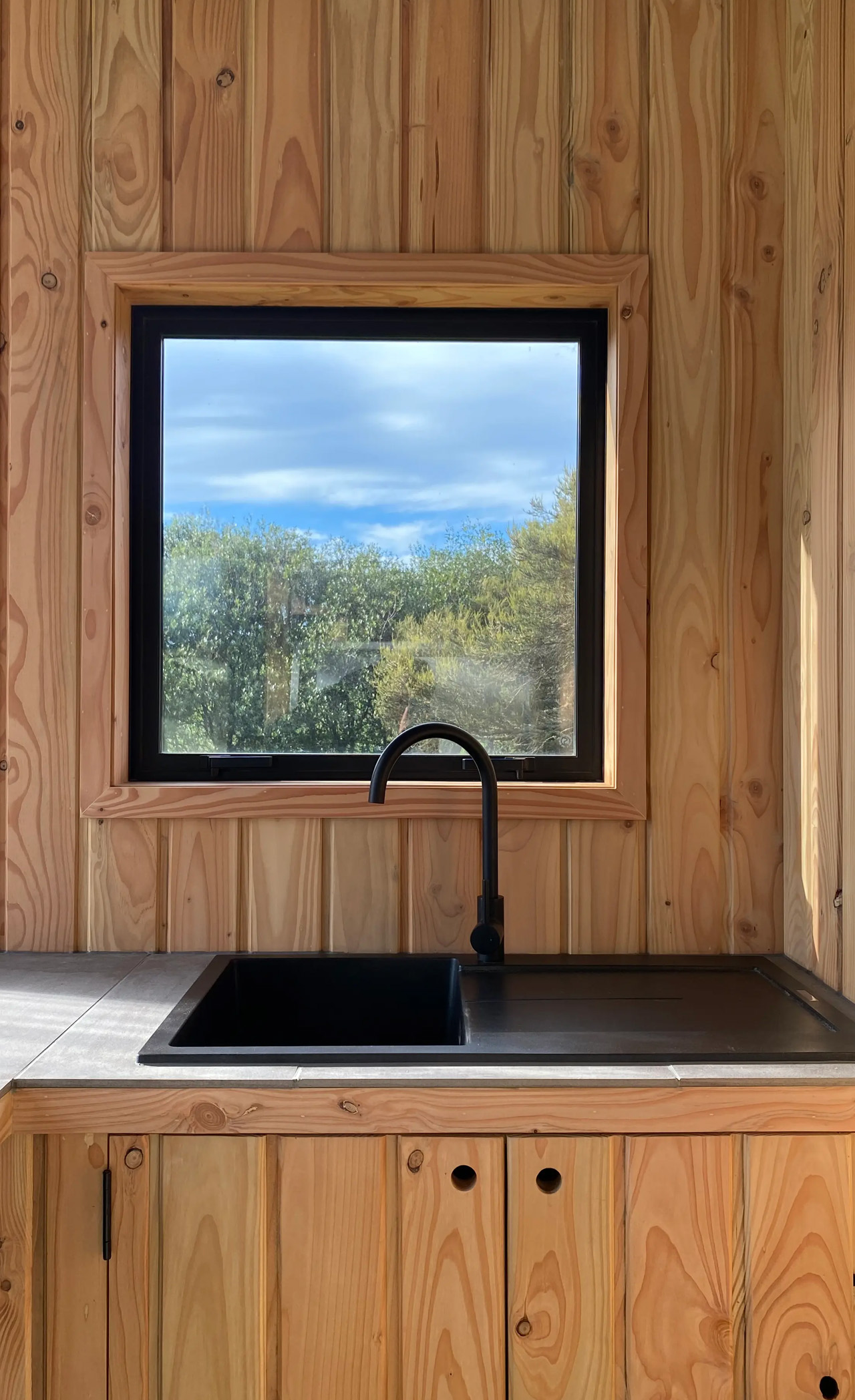
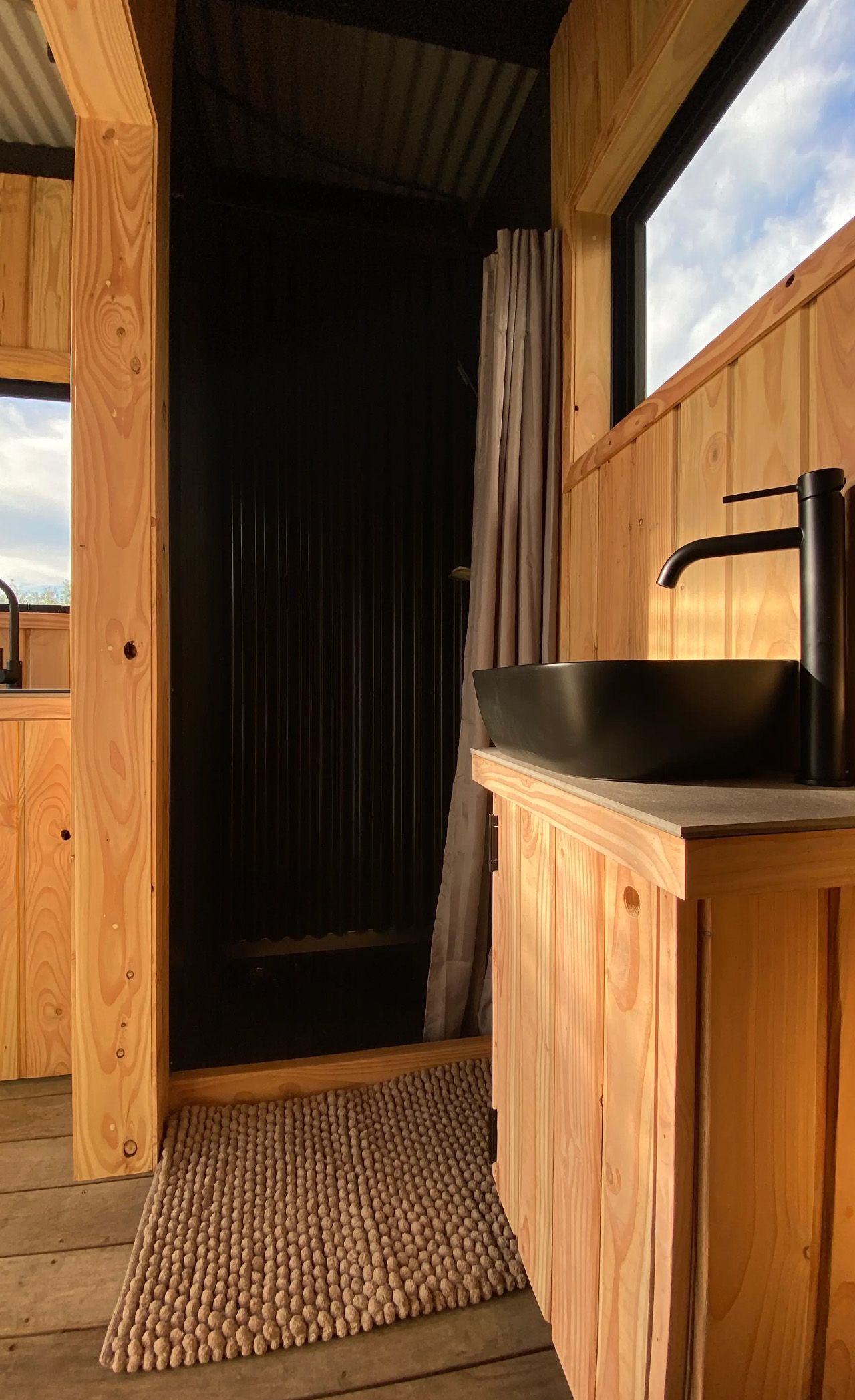
The exterior of the home is finished in Douglas fir, giving it a warm and minimal aesthetic. Although the layout of the home isn’t very typical and seems more like a beachfront getaway villa, it is in fact intended to be used as a full-time dwelling. An outdoor shower has been outfitted ahead of the entrance, which is teamed up with a small outdoor bathtub, that is concealed under a hatch in the floor. This functions as a quaint outdoor bath for some much-needed pampering sessions.
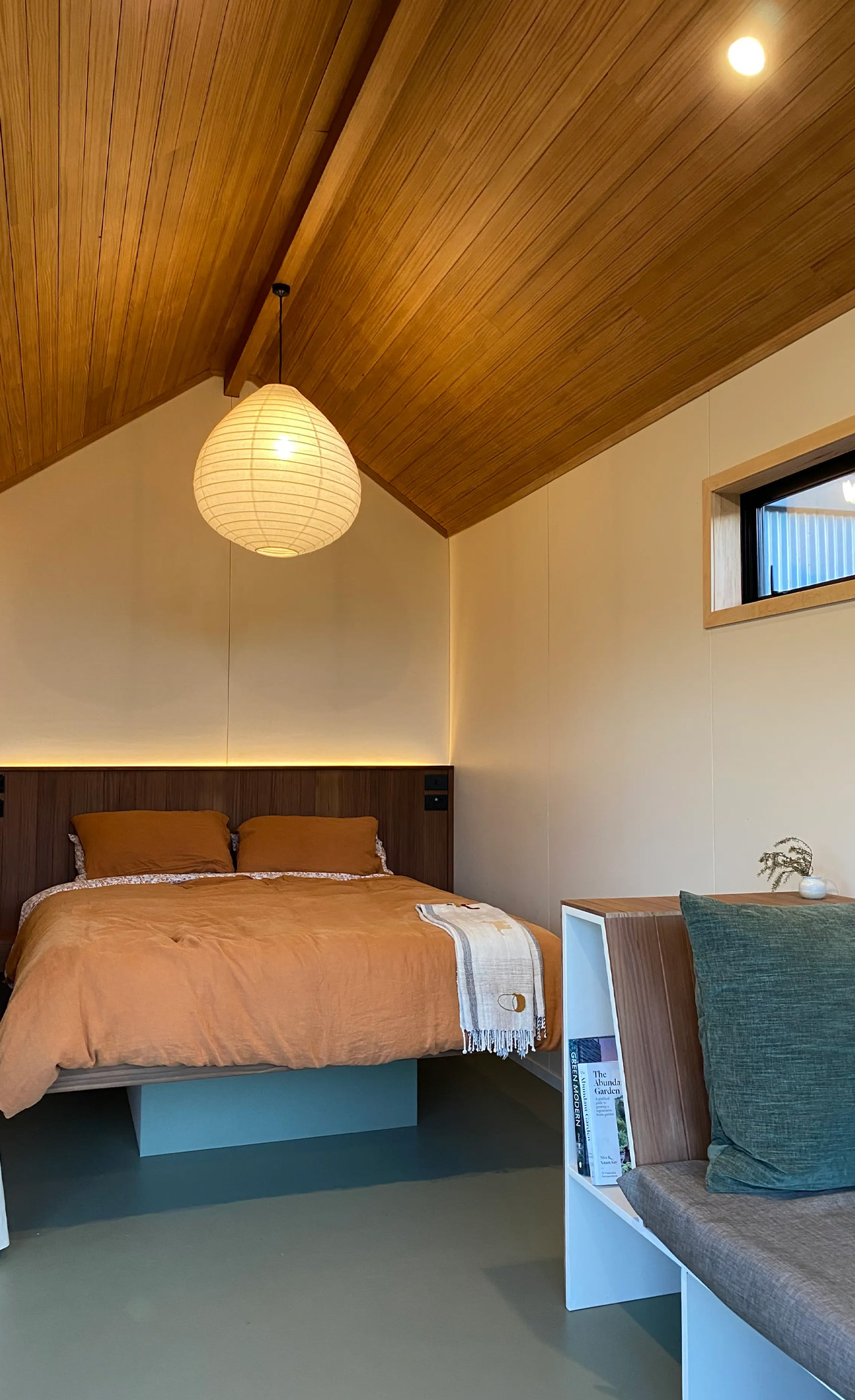
As you enter the Beach via sliding glass doors, you are welcomed by a combined living room/bedroom space that is equipped with a sofa, and a bed, as well as some storage store. However, this is the only space in the home, there are no other rooms or even a loft, which can be a bit limiting. The tiny home is equipped with a wood-burning stove, shelving, a diesel-powered heating system, and an off-the-grid solar panel setup. You can add an additional studio area if needed.