This $99 Water Jet Remotely Cleans Your Car’s Backup Camera Without You Leaving Your Seat

Reverse driving accounts for just 1% of all driving time, yet it’s responsible for roughly 25% of all accidents. A dirty backup camera in winter, mud season, or on dusty country roads is not a hypothetical inconvenience but a genuine safety liability, one that most drivers have resigned themselves to either living with or solving by stepping out of the car every time. Mike Klein, a Vermont-based tinkerer with a characteristically no-nonsense approach to annoying problems, got fed up enough to build a solution in his garage. What started as a Ziploc-bag-and-zip-tie prototype strapped to his license plate has turned into the Lens Lizard, a compact, self-contained, remote-controlled backup camera washer that just hit Kickstarter and has absolutely run away with its funding goal.

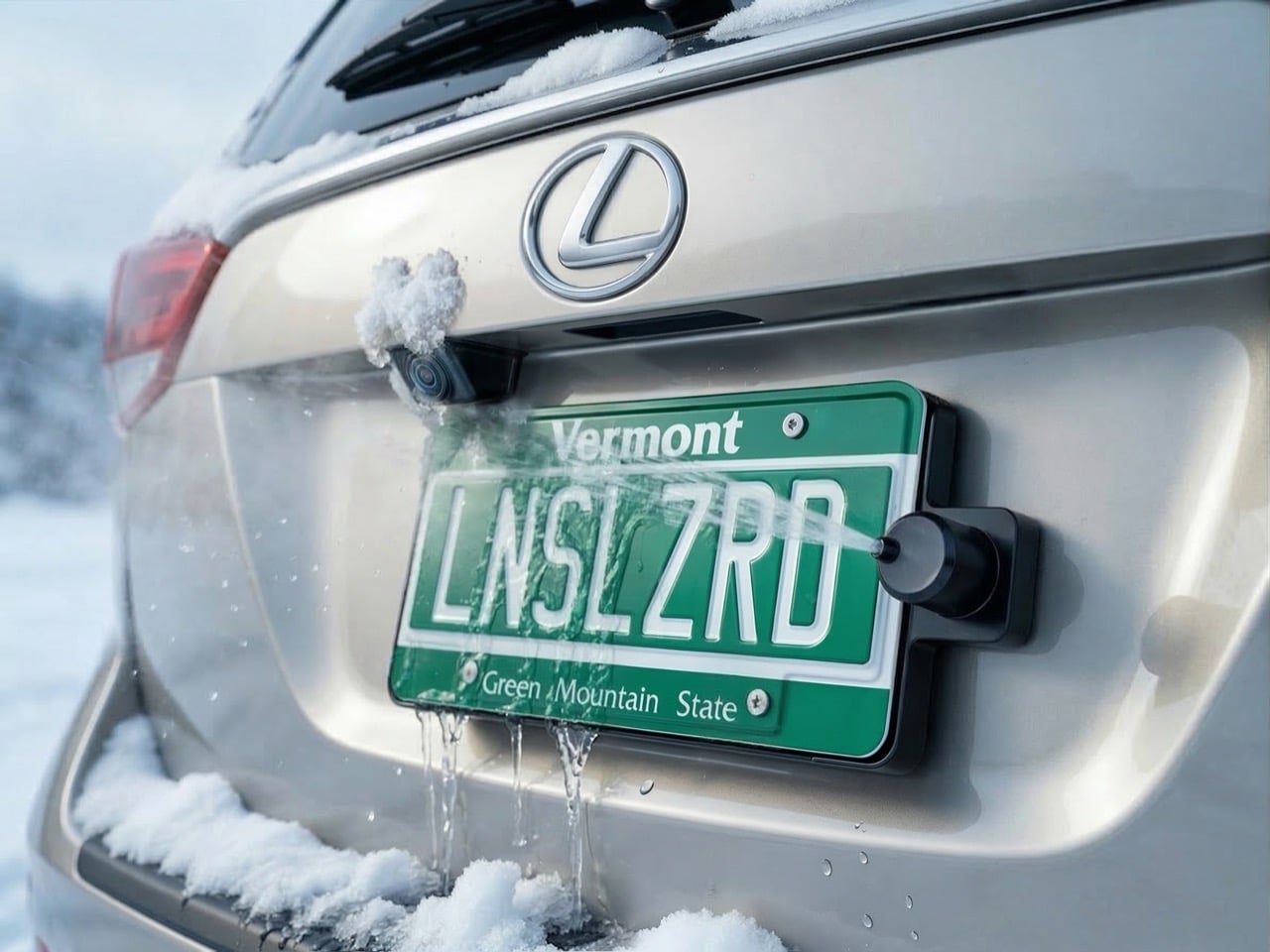
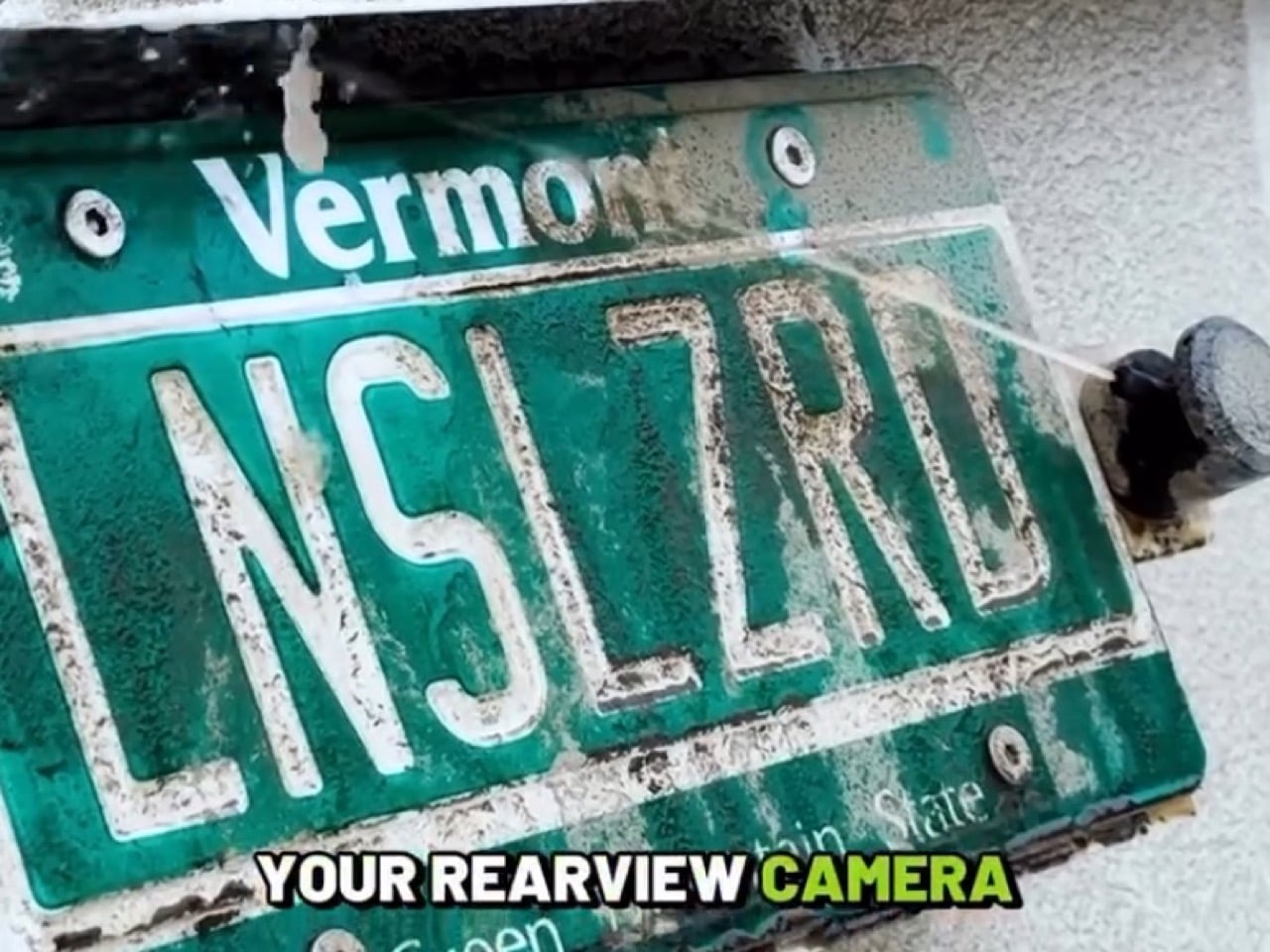
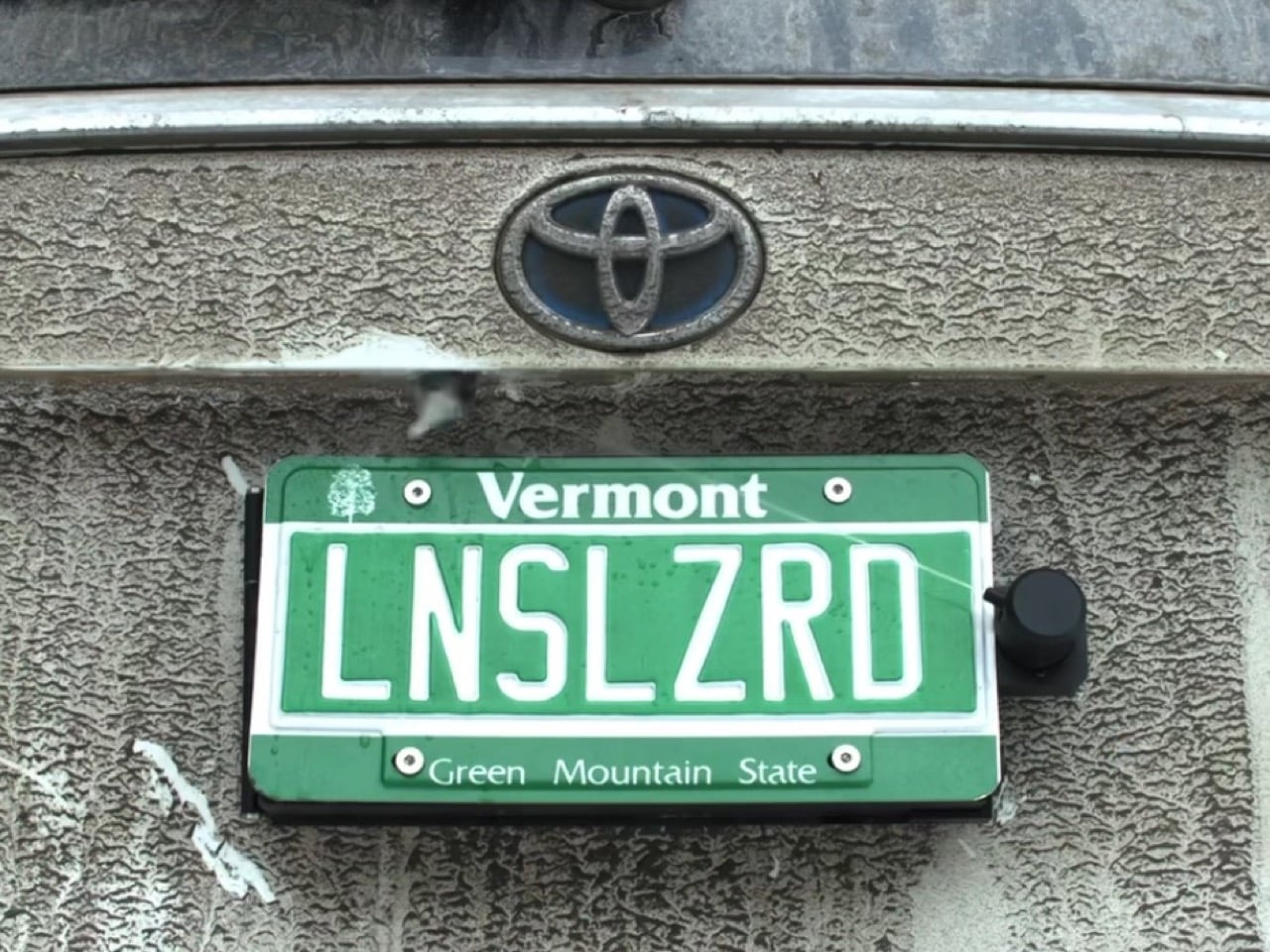
The concept is beautifully blunt. Lens Lizard mounts behind your license plate, sandwiched discreetly between the plate and the bumper using your car’s existing screw holes. No drilling, no wiring, no running tubing through door gaps or under trim panels. The whole install takes under five minutes with a standard screwdriver, and once it’s on, it’s invisible. The unit itself houses a fluid reservoir, a battery pack, and a high-pressure nozzle that you aim at your camera once during setup and then never have to touch again. When your backup camera gets caked in snow/ice or road salt on a grey January morning, or buried under a slush splatter from the truck overtaking you on a Vermont highway, you press a wireless remote button from inside the car and a jet of washer fluid blasts the lens clean. Sort of like a lizard or a chameleon striking its prey with a sharp, swift flick of its tongue. Except this time, it’s a concentrated jet of soapy water. Maybe a Pokémon reference would work better but I don’t want Nintendo’s lawyers sending me a cease and desist.

Designer: Mike Klein

Click Here to Buy Now: $99 $149.99 ($50.99 off) Hurry! Only 5 days left.

The engineering philosophy here is aggressively practical. Klein explicitly designed the Lens Lizard for Vermont winters, which means sub-zero temperatures, aggressive road salting, heavy snow, and the kind of freeze-thaw cycling that destroys lesser materials. The housing is sealed and built from automotive-grade materials, and the battery and fluid reservoir are sized to last four-plus months between refills and recharges, meaning you top everything up roughly once per season.

Maintenance is a non-event: open the latch, refill with washer fluid, charge via USB-C, close it back up. Klein’s origin story is worth noting too, because it gives the product a satisfying internal logic. He tried hydrophobic lens covers (they peeled), ceramic coatings (they did essentially nothing), and eventually decided to just build a scaled-down windshield washer system for his license plate. The first prototype was, by his own admission, ridiculous. But it worked, and that was enough to tell him the idea had legs.

Lens Lizard works with any vehicle where the backup camera sits above the license plate, which covers 99% of cars on the road, pickup trucks very much included. The product ships with assorted license plate screws to handle different fastener sizes, and the adjustable nozzle lets you dial in the spray angle for your specific camera position during initial setup. After that, the unit lives its entire life tucked behind the plate, completely out of sight. The wireless remote is puck-shaped and lives wherever you keep it in the cabin, a glove box, a cupholder, the center console.

The Lens Lizard starts at just $99 for the entire kit as an early bird discount off its $149 price tag. A dual bundle costs $189 if you’ve got two cars, and all bundles include the Lens Lizard unit, a wireless remote, a battery pack, and an assortment of screws to help you install the gizmo on your car. Given its specific design (and that every nation has a different license plate), the Lens Lizard only ships to the US and Canada for now, although I’m sure a more universal version is in the works. Production is slated to begin in April 2026, with shipping to backers planned for May. For drivers in cold-weather states, high-dust regions, or anywhere that sees serious road grime, it’s a hard value proposition to argue with. Certain premium vehicles have had integrated camera washers for years, quietly tucked into the bumper plumbing. Klein has simply figured out how to give everyone else the same result for under a hundred bucks, no dealer visit required.

Click Here to Buy Now: $99 $149.99 ($50.99 off) Hurry! Only 5 days left.

The post This $99 Water Jet Remotely Cleans Your Car’s Backup Camera Without You Leaving Your Seat first appeared on Yanko Design.

This Bright Green Fountain Just Made London’s New District Unmissable

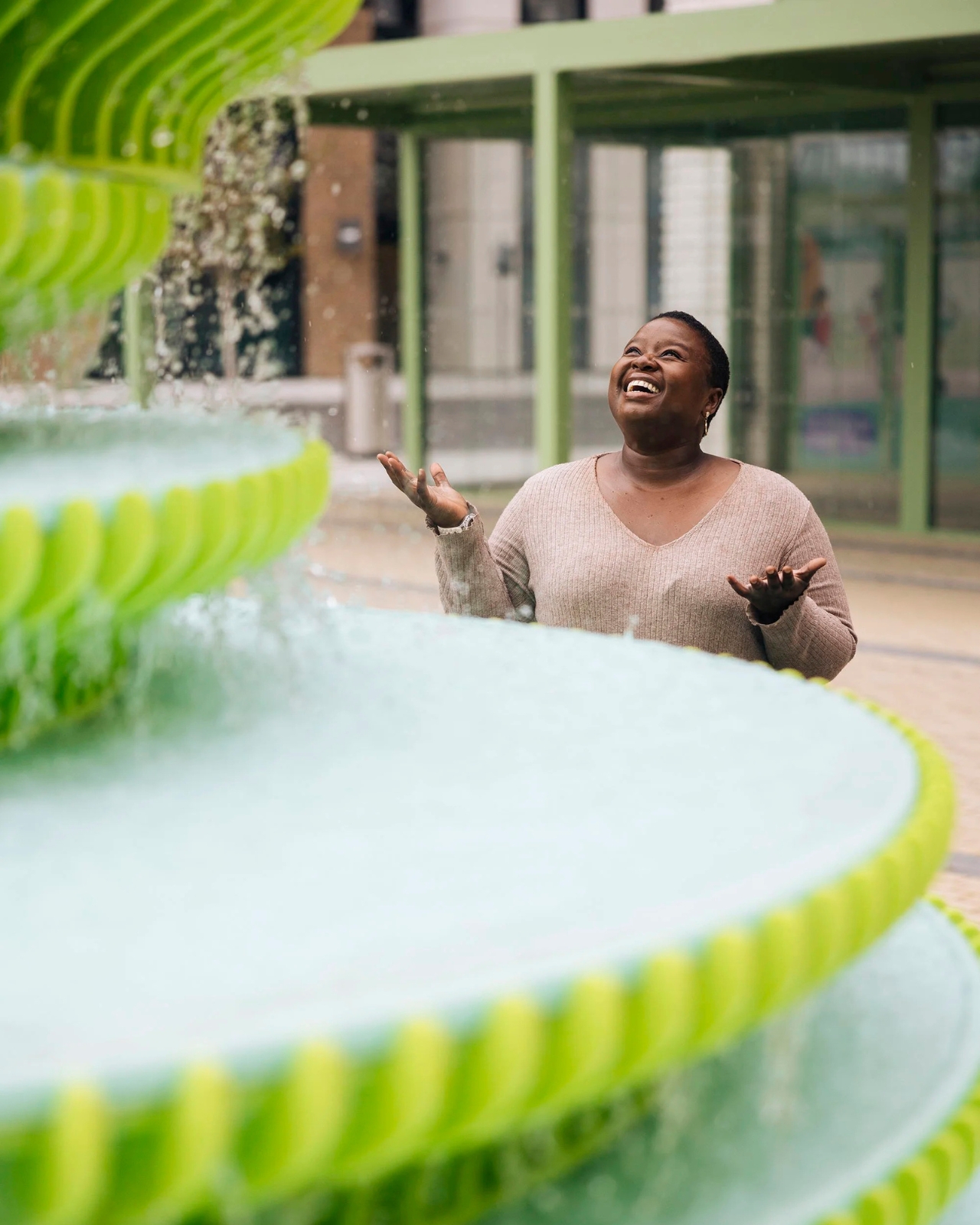
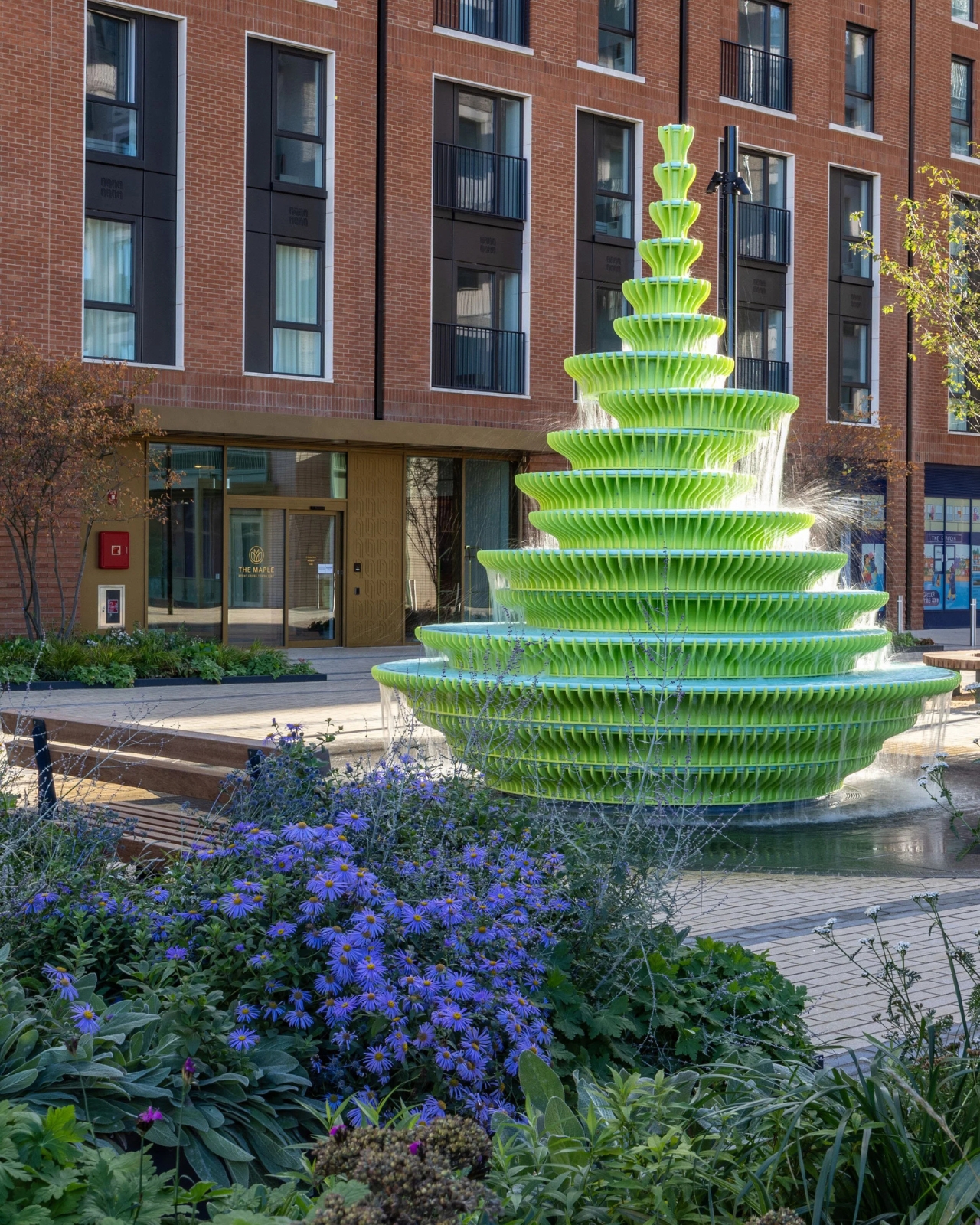
There’s something delightfully unexpected about stumbling upon a fountain that looks like it might start dancing at any moment. That’s exactly what design studio Neon has created for Brent Cross Town in London, and honestly, it’s the kind of public art that makes you stop scrolling through your phone and actually look up.

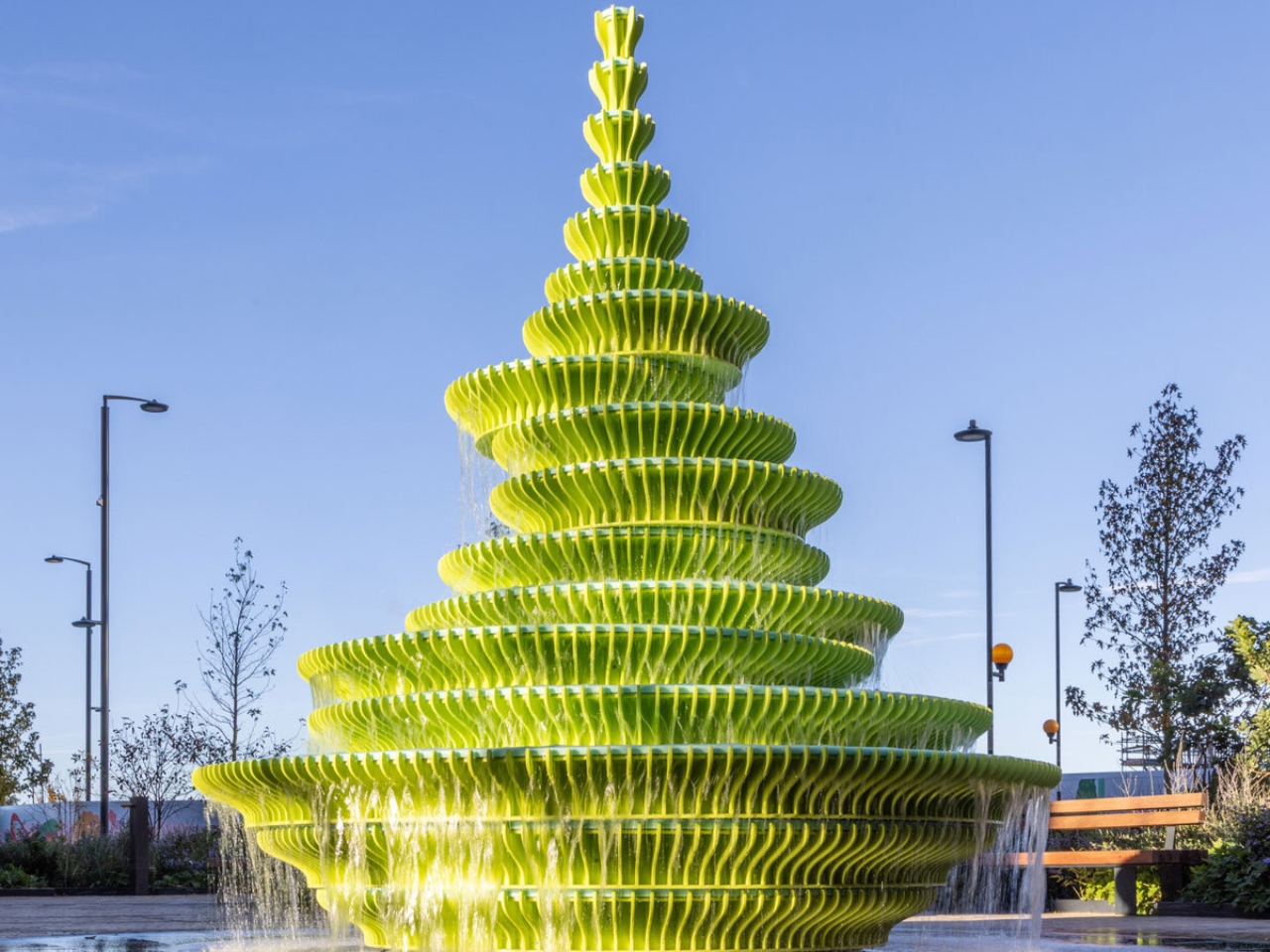
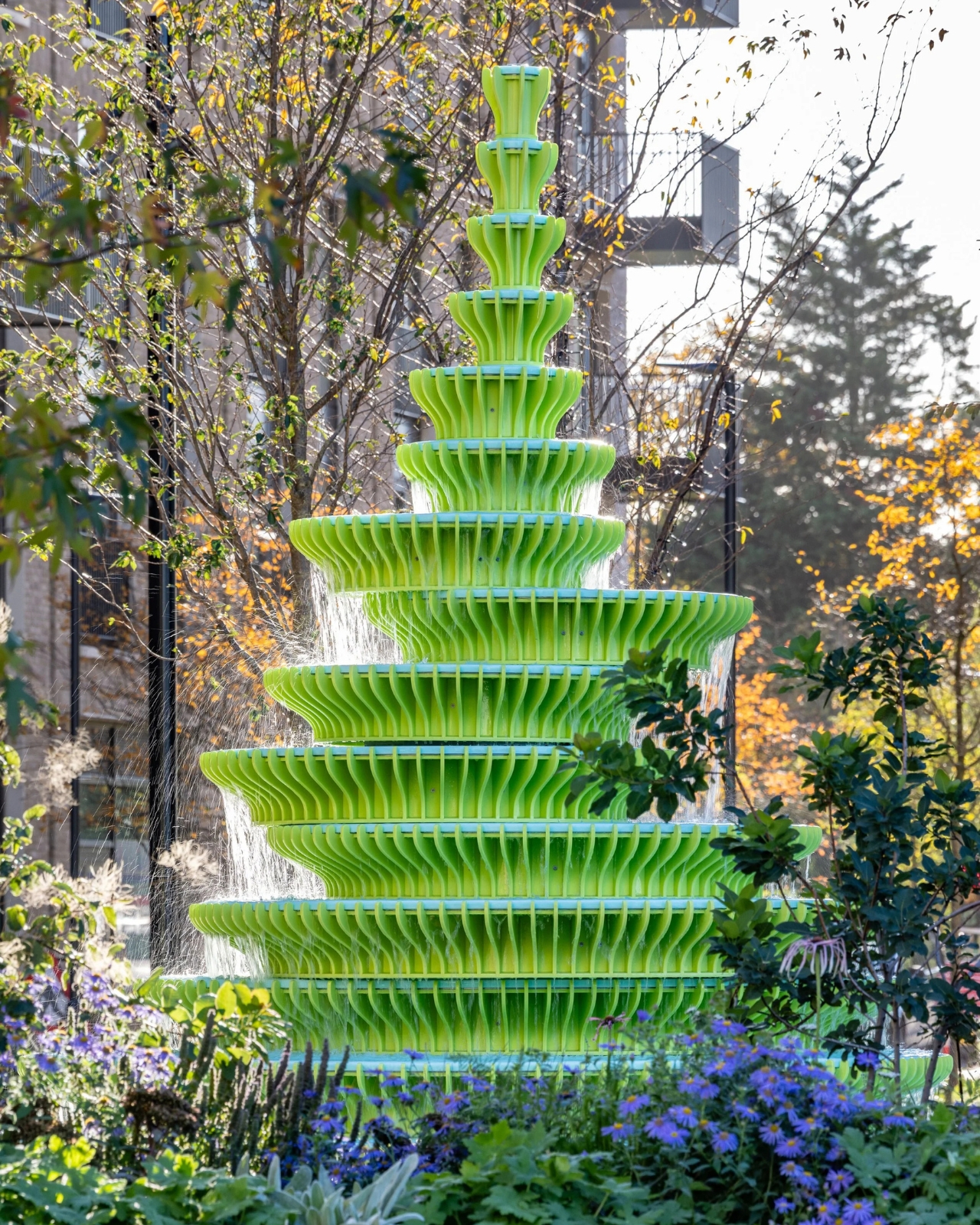
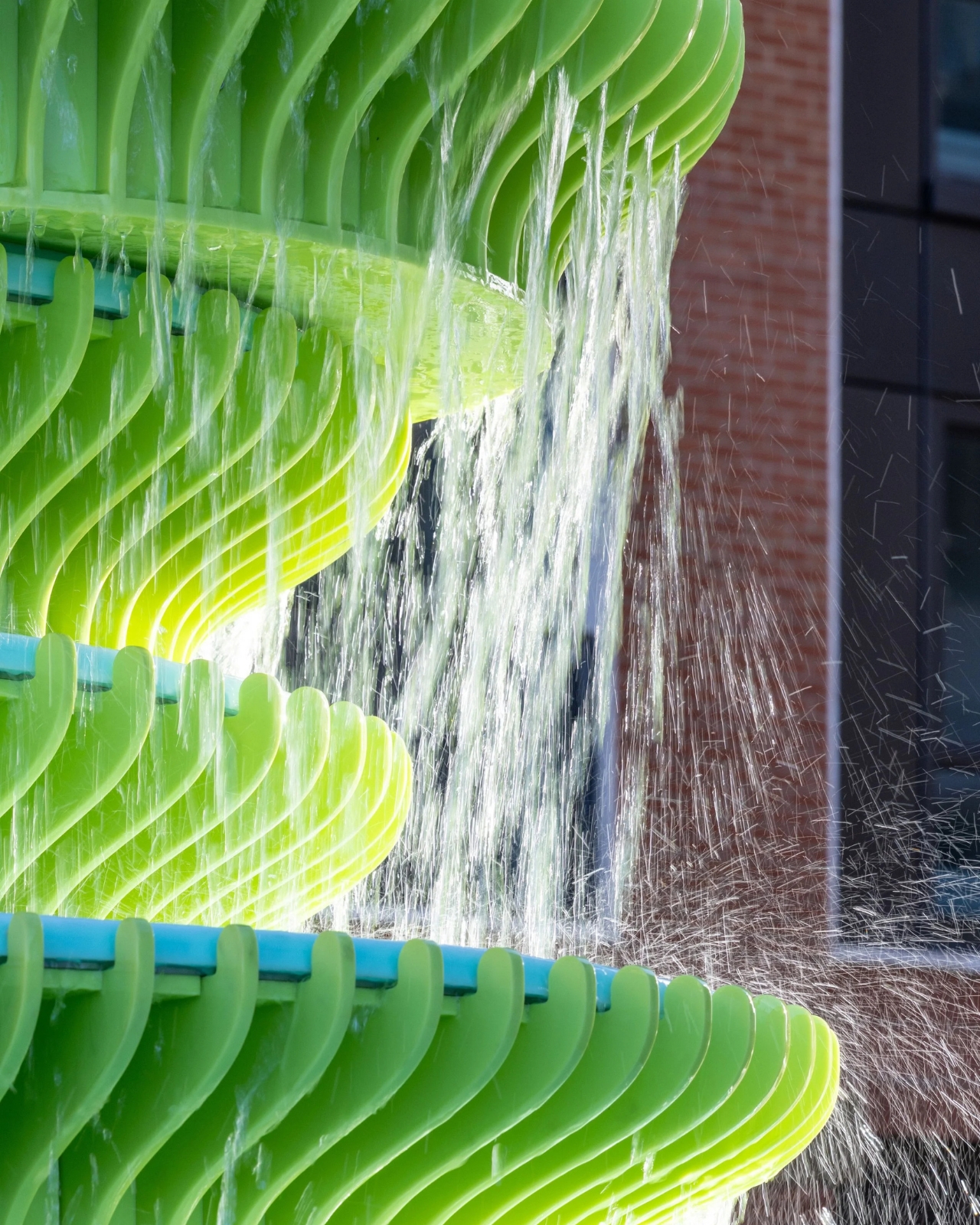
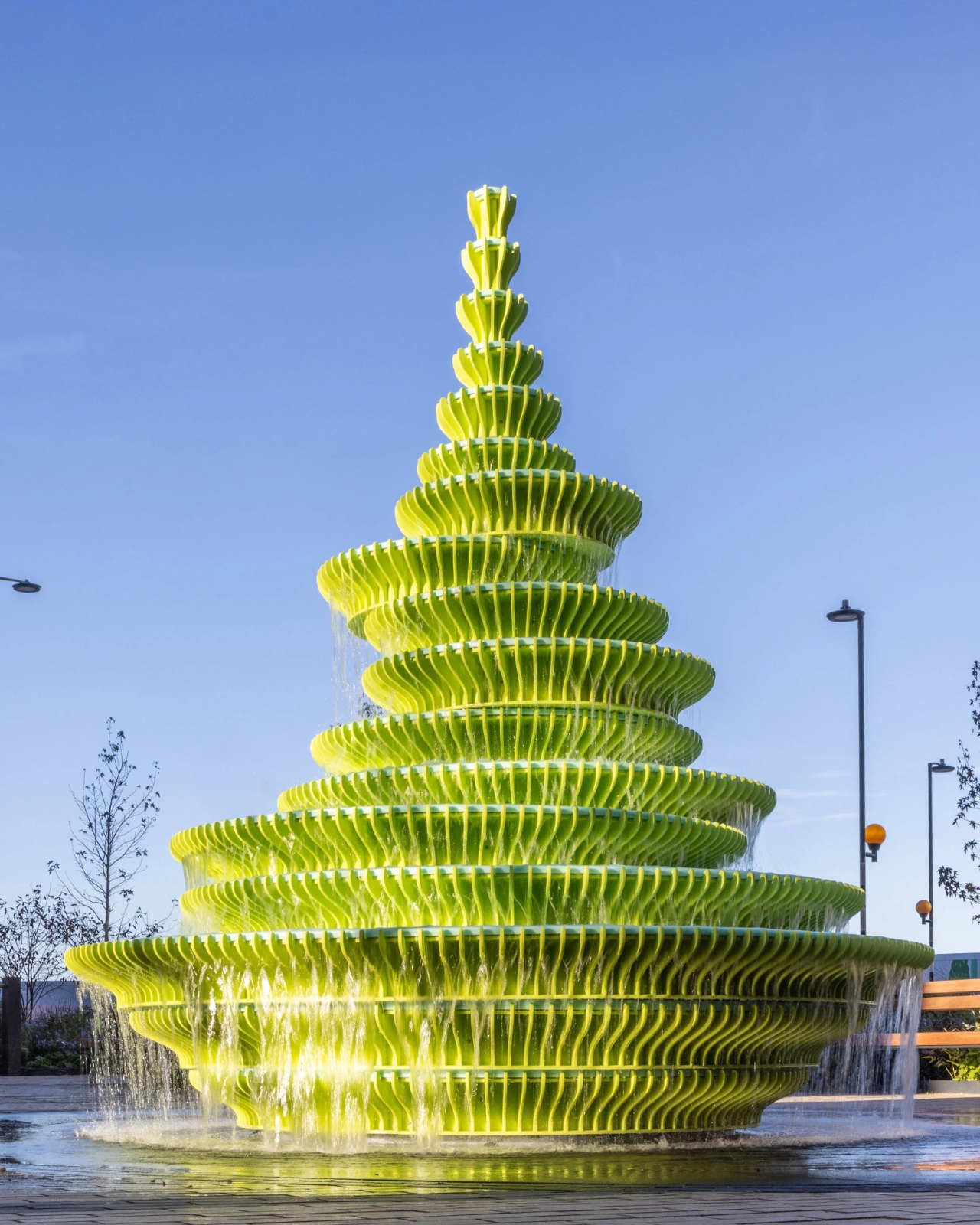
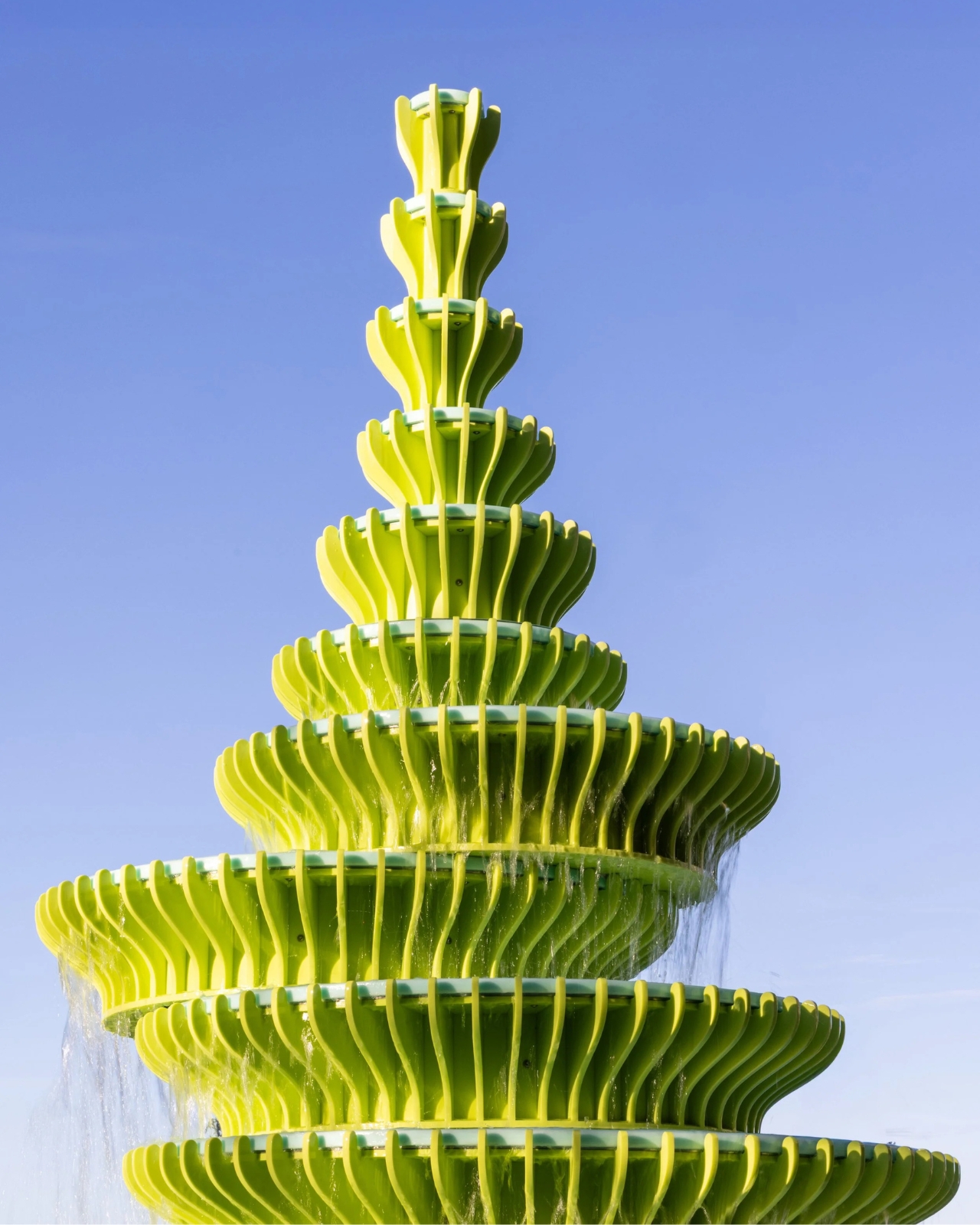
The Fountain isn’t your grandmother’s classical water feature with cherubs and symmetrical tiers. Instead, imagine a stack of bright green sculptural plates that seem to defy gravity and good manners. They’re asymmetrical, angular, and unapologetically bold. It’s like someone took the idea of what a fountain should be, tossed it in the air, and let it land however it wanted.

Designer: Neon

What makes this installation particularly clever is how it plays with our expectations. We’re so conditioned to see fountains as these elegant, balanced structures centered in plazas and parks. But Neon flipped that script entirely. The green isn’t a subtle sage or muted mint. It’s vibrant, almost electric, demanding attention in the best possible way. It’s the color of highlighters and neon signs, which feels perfectly appropriate for a studio literally named Neon.

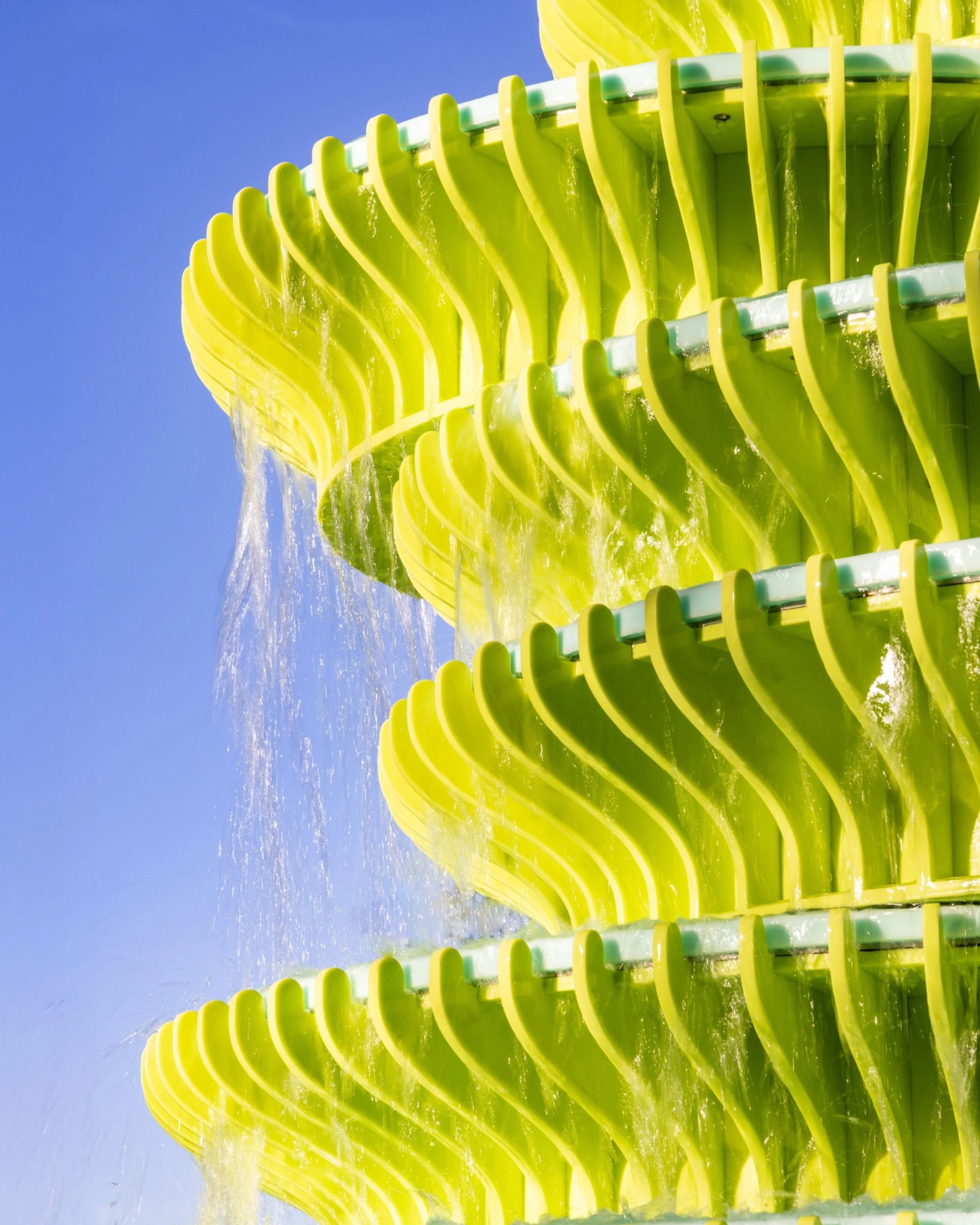
The sculptural plates themselves look like they’re caught mid-motion, as if they’re perpetually tumbling through space but somehow frozen at the perfect moment. There’s a playfulness to the design that feels refreshing in the world of public installations, where things can sometimes skew too serious or too safe. This piece doesn’t apologize for taking up space or being seen. It wants to be noticed, and it succeeds.

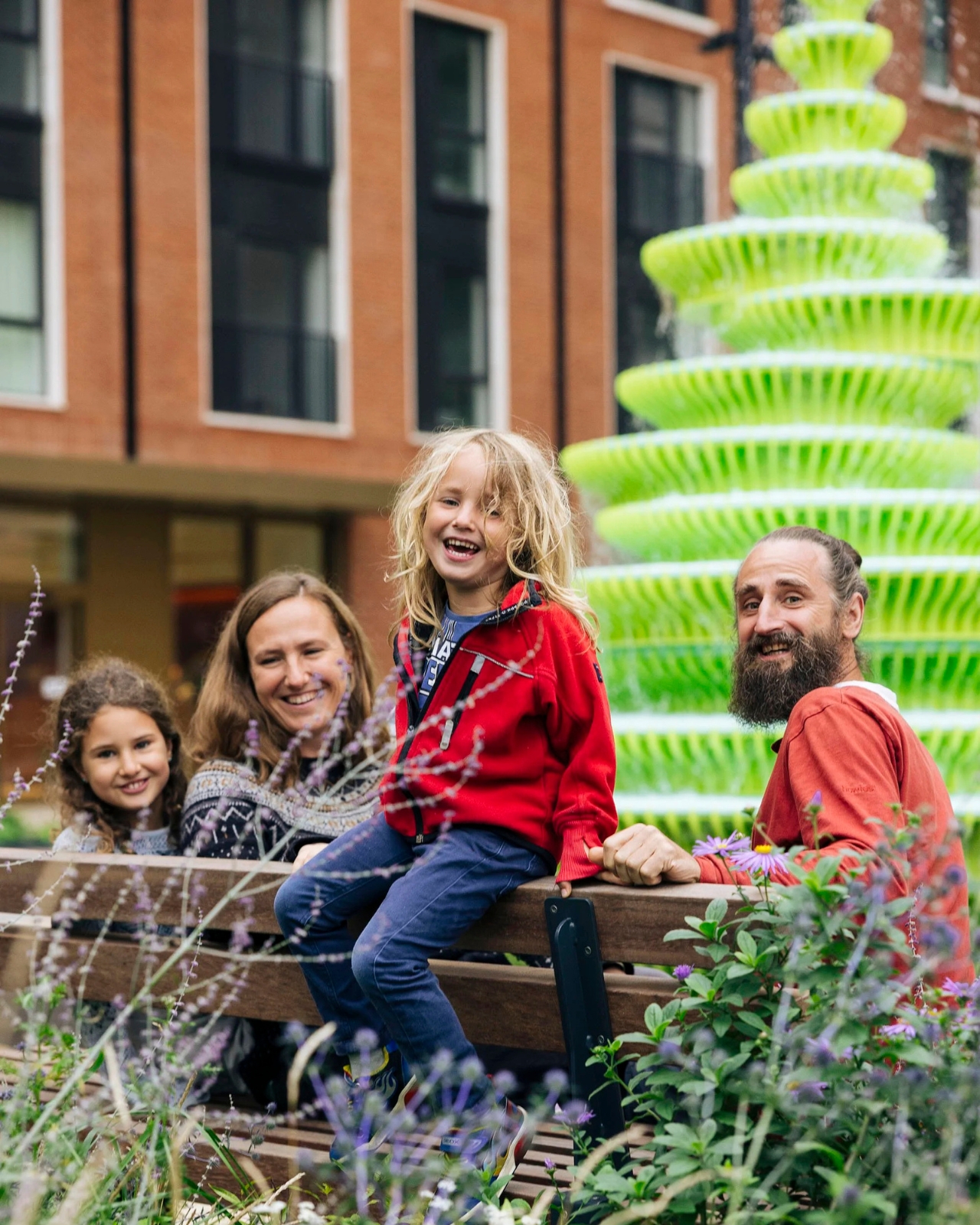
Located in Brent Cross Town, the fountain sits in a developing area of London that’s been transforming from a shopping center hub into a mixed-use neighborhood. Public art like this becomes crucial in those transitional spaces. It gives people something to gather around, something to use as a meeting point, and most importantly, something that adds character and identity to a place still finding its voice.

What’s particularly interesting about The Fountain is how it bridges multiple design philosophies. There’s definitely a contemporary art sensibility with the abstract forms and bold color choice. But there’s also a functional design element since it’s still, at its core, a working fountain. Water presumably flows through or around these sculptural elements, adding movement and sound to the visual spectacle. That combination of form and function, especially when executed this dramatically, is what separates memorable public installations from forgettable ones.

Neon, the studio behind this work, has built a reputation for creating experiential designs that engage people in unexpected ways. They’re not interested in background pieces that politely fade into their surroundings. Their portfolio demonstrates a consistent commitment to work that provokes reaction, whether that’s delight, curiosity, or even a bit of bewilderment. The Fountain fits perfectly into that philosophy.

There’s also something to be said about using such a saturated color in a public space. Green is often associated with nature, growth, and renewal, but this particular shade pushes past those gentle associations into something more energetic and urban. It’s a green that belongs to street art and graphic design rather than pastoral landscapes. That choice feels intentional for a location that’s urban and forward-looking.

The asymmetry deserves special attention too. In an era where Instagram-perfect symmetry dominates so much of our visual culture, there’s something rebellious about embracing imbalance. The plates appear to stack and tilt at odd angles, creating different silhouettes depending on where you’re standing. That means the fountain isn’t just one experience but multiple ones, changing as you move around it.

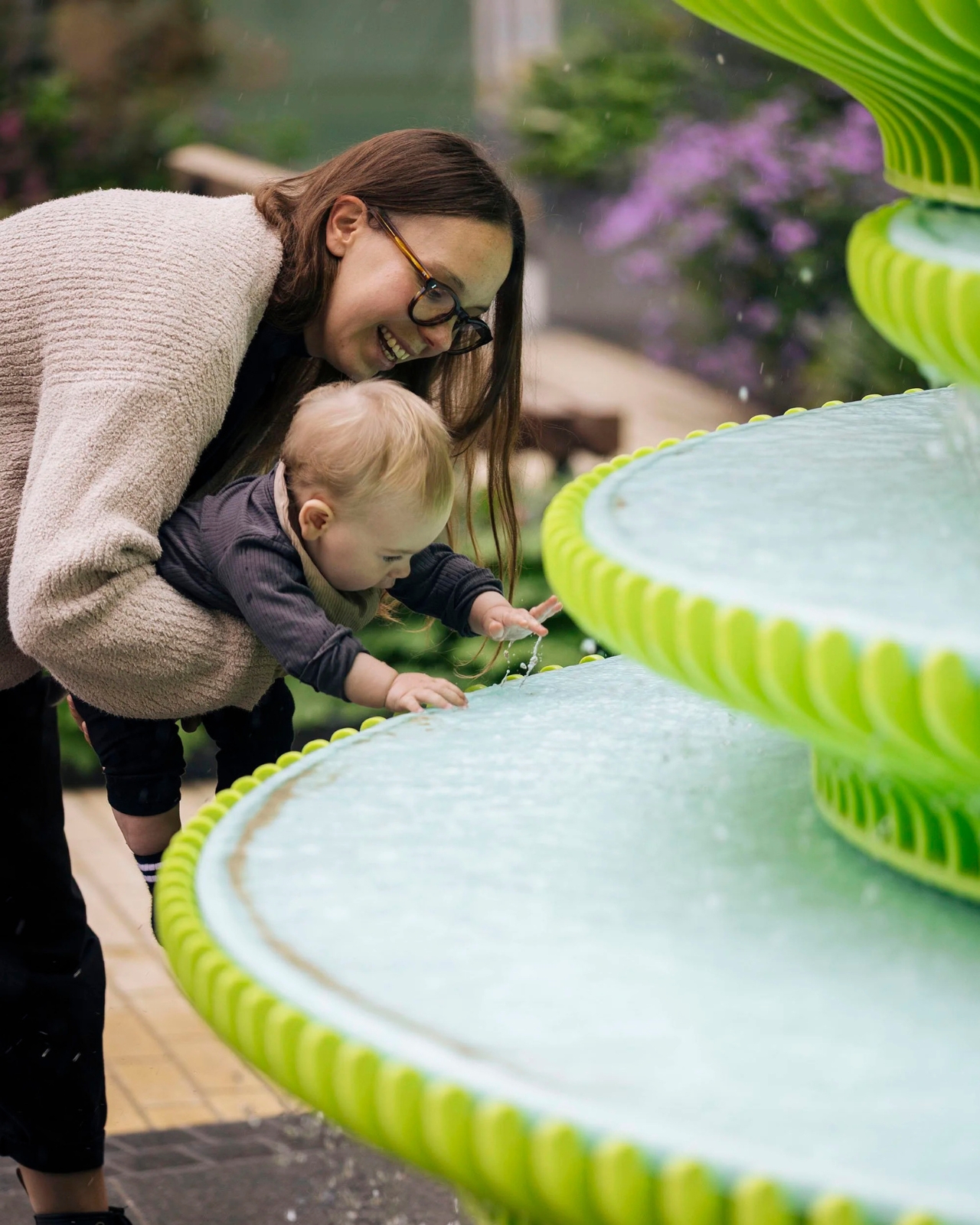
Public art should do more than just occupy space. It should create conversation, add joy, and give people a reason to engage with their environment differently. The Fountain manages all three. It’s weird enough to be memorable but accessible enough that you don’t need an art degree to appreciate it. You just need to be willing to accept that fountains can be bright green, delightfully lopsided, and a little bit rebellious. And honestly, couldn’t we all use a bit more of that energy in our public spaces?

The post This Bright Green Fountain Just Made London’s New District Unmissable first appeared on Yanko Design.