Urwerk Built a Hand-Carved Pocket Watch That Tracks Time for 1,000 Years

Florian Güllert spends most of his working life engraving shotguns. His bench sits in Klagenfurt, in Carinthia, an Austrian province with zero watchmaking history and a four-century run of decorating hunting weapons. Urwerk handed him a raw titanium blank and asked him to bury the most sci-fi pocket watch ever built under Baroque ornament. He said yes, spent roughly 500 hours over three months, and produced the UR-1001 Amadeus, a piece unique that looks like a cathedral swallowed a computer. Gun engraving exists because a tool meant to outlive its owner gets decorated, which turns out to be this watch’s entire argument.

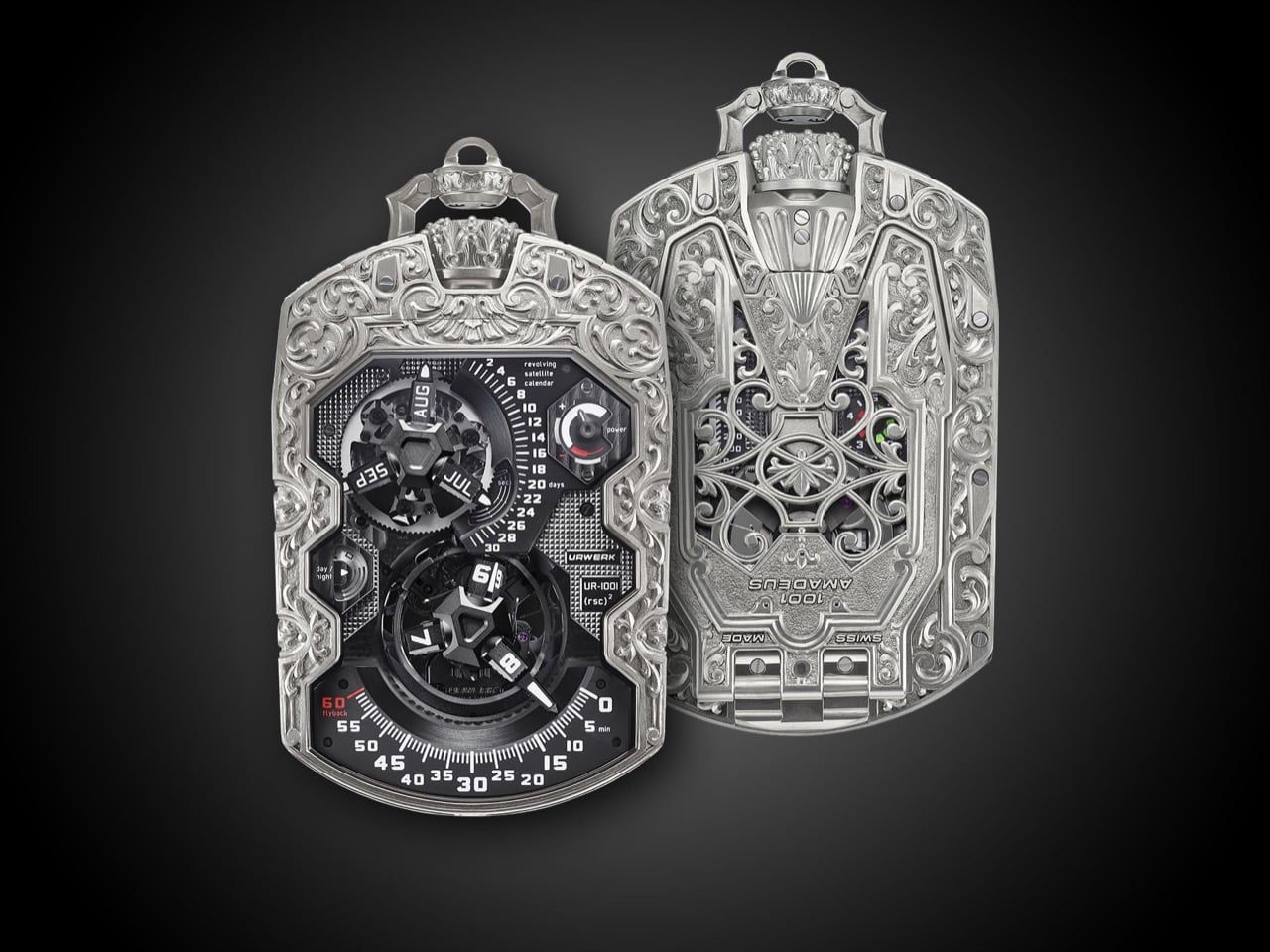
The Amadeus measures 106 by 62 by 23mm and shows satellite hours, retrograde minutes, an annual calendar, day and night, and a 39-hour power reserve on the front. The hinged caseback adds an oil-change indicator that turns red through years four and five, a counter tracking 100 years of running time, and a linear scale that climbs to 1,000. Güllert laser-cut the contours before touching it by hand, since titanium galls and work-hardens under a graver in ways precious metal does not. Every engraved surface stops at the sapphire. Inside, Urwerk’s matte black instrument panel carries on as though the ornament never happened.

Designers: Martin Frei and Florian Güllert for Urwerk
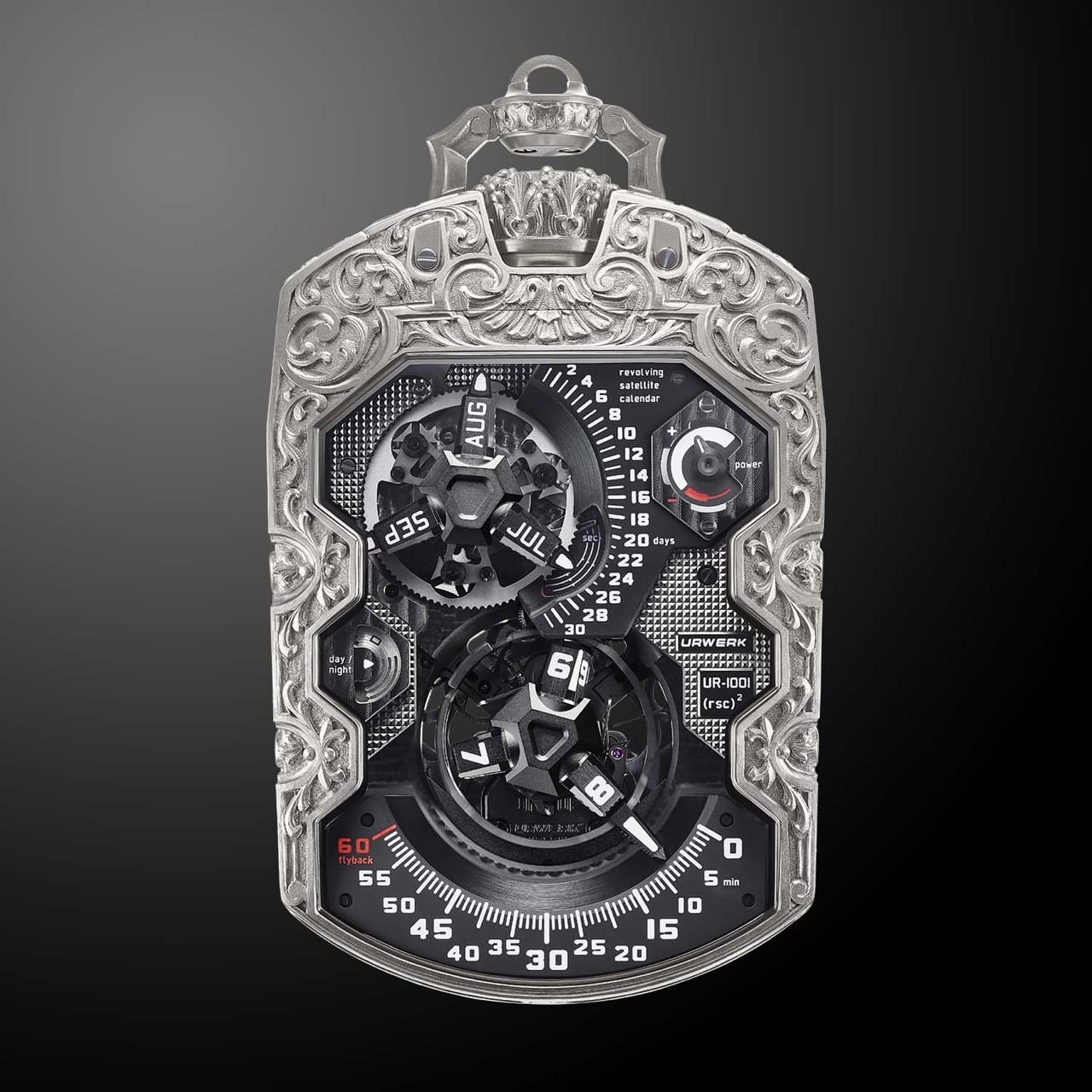
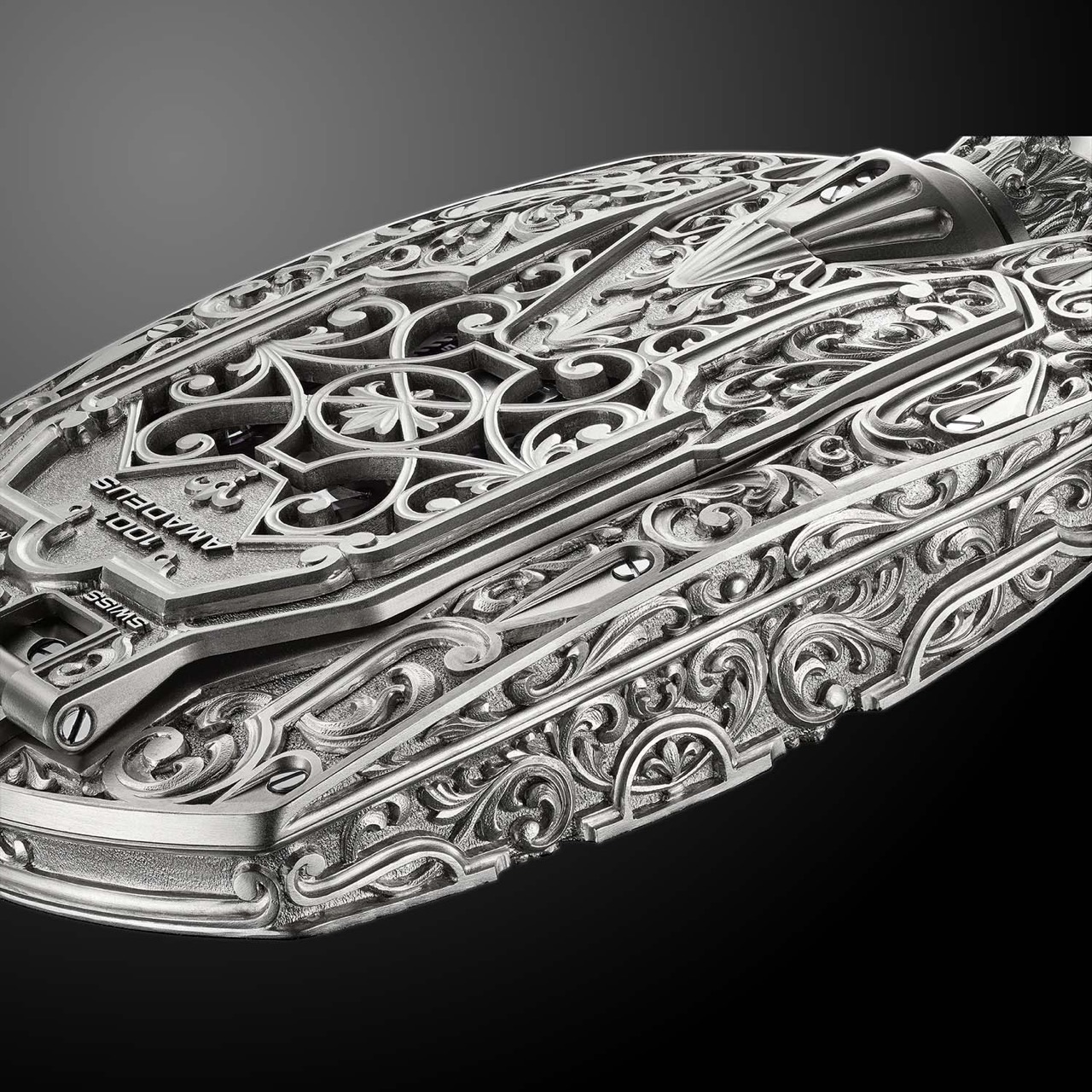
Titanium punishes a graver the way a stubborn hinge punishes a screwdriver, so Güllert’s first move was unfamiliar territory for a man used to steel. He rough-cut the relief with a laser, then went back in by hand with pneumatic chisels and files, balancing thick strokes against thin ones until the pattern read as depth rather than line. Backgrounds got textured, dotted, satin-brushed, or left matte depending on how he wanted light to catch each panel. Every edge was filed and rebalanced until the boundary between case and decoration effectively disappeared. That is a genuinely different skill set than cutting a scroll into a shotgun receiver, and it shows in how uneven the difficulty was across the piece.
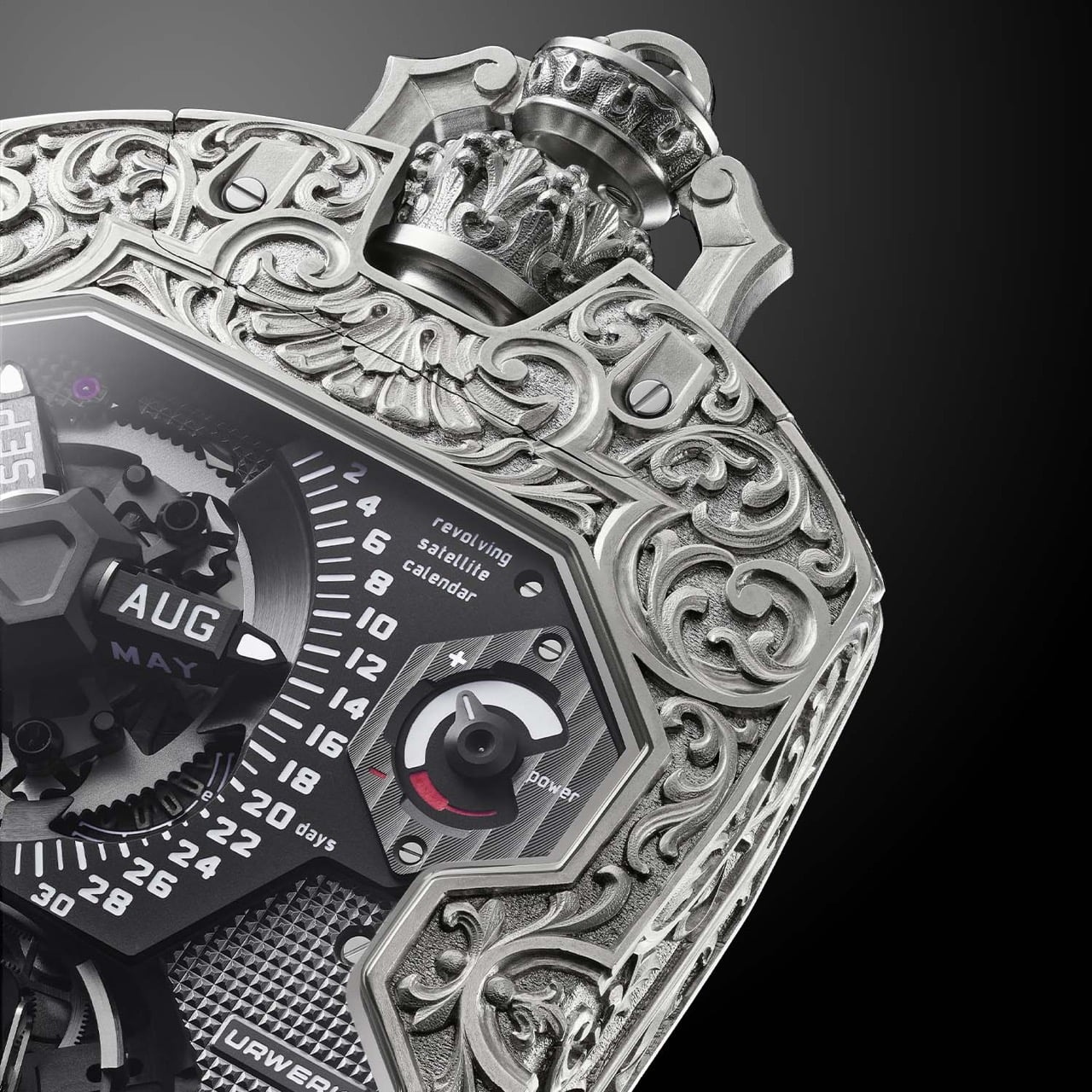
The flanks and bezel run pure Baroque, scrolling acanthus leaves that could sit on an 18th century snuffbox. The caseback centerpiece is something else entirely, a quatrefoil rose-window panel with cusped Gothic arches framing the movement aperture, and the winding crown at 12 has been carved into an actual fluted coronet. Baroque excess on the outside, ecclesiastical stonework on the back, industrial sans-serif labeling the instruments inside. Three separate design languages sharing one case, none of them arguing with the others.

Three-armed satellite hours hand off to a retrograde minute display, three running-seconds hands split a minute into 20-second stretches, and a satellite annual calendar runs on three Maltese crosses riding a 93-tooth date wheel. Flip the watch over and the oil-change dial, calibrated for five-year service intervals, feeds a counter that advances in five-year steps toward a full century. Every hundred years, that counter sends a pulse to a linear scale on the caseback graduated all the way to 1,000. Yes, this pocket watch has a mechanical millennium indicator, and yes, it is exactly as absurd and wonderful as it sounds.
The UR-1001 has been Urwerk’s flagship strange object since 2011, when eight AlTiN-cased examples sold out at CHF 340,000 each, a number early buyers reportedly called cheap for what it did. We covered Urwerk’s other engraved oddities before, including the UR-210 Amadeus that first paired Güllert with the brand back in 2017, and the ambition here is visibly larger. Urwerk has not disclosed a price for this one, which tracks for a commissioned piece unique. Felix Baumgartner named it for Mozart, calling the composer a brilliant madman, and says he wanted a case as daring as the mechanics inside it.

Here is the part nobody selling this watch will say out loud. The 100-year and 1,000-year counters only advance while the movement is actually running, and a piece unique this expensive tends to spend its life in a safe rather than a pocket. Baumgartner’s own language calls the eventual buyer a custodian rather than an owner, which is a lovely way of admitting the millennium scale may never move past zero. A gunsmith spent 500 hours making sure it would look magnificent the whole time it doesn’t.

The post Urwerk Built a Hand-Carved Pocket Watch That Tracks Time for 1,000 Years first appeared on Yanko Design.
Urwerk Built a Hand-Carved Pocket Watch That Tracks Time for 1,000 Years

Florian Güllert spends most of his working life engraving shotguns. His bench sits in Klagenfurt, in Carinthia, an Austrian province with zero watchmaking history and a four-century run of decorating hunting weapons. Urwerk handed him a raw titanium blank and asked him to bury the most sci-fi pocket watch ever built under Baroque ornament. He said yes, spent roughly 500 hours over three months, and produced the UR-1001 Amadeus, a piece unique that looks like a cathedral swallowed a computer. Gun engraving exists because a tool meant to outlive its owner gets decorated, which turns out to be this watch’s entire argument.

The Amadeus measures 106 by 62 by 23mm and shows satellite hours, retrograde minutes, an annual calendar, day and night, and a 39-hour power reserve on the front. The hinged caseback adds an oil-change indicator that turns red through years four and five, a counter tracking 100 years of running time, and a linear scale that climbs to 1,000. Güllert laser-cut the contours before touching it by hand, since titanium galls and work-hardens under a graver in ways precious metal does not. Every engraved surface stops at the sapphire. Inside, Urwerk’s matte black instrument panel carries on as though the ornament never happened.

Designers: Martin Frei and Florian Güllert for Urwerk

Titanium punishes a graver the way a stubborn hinge punishes a screwdriver, so Güllert’s first move was unfamiliar territory for a man used to steel. He rough-cut the relief with a laser, then went back in by hand with pneumatic chisels and files, balancing thick strokes against thin ones until the pattern read as depth rather than line. Backgrounds got textured, dotted, satin-brushed, or left matte depending on how he wanted light to catch each panel. Every edge was filed and rebalanced until the boundary between case and decoration effectively disappeared. That is a genuinely different skill set than cutting a scroll into a shotgun receiver, and it shows in how uneven the difficulty was across the piece.

The flanks and bezel run pure Baroque, scrolling acanthus leaves that could sit on an 18th century snuffbox. The caseback centerpiece is something else entirely, a quatrefoil rose-window panel with cusped Gothic arches framing the movement aperture, and the winding crown at 12 has been carved into an actual fluted coronet. Baroque excess on the outside, ecclesiastical stonework on the back, industrial sans-serif labeling the instruments inside. Three separate design languages sharing one case, none of them arguing with the others.

Three-armed satellite hours hand off to a retrograde minute display, three running-seconds hands split a minute into 20-second stretches, and a satellite annual calendar runs on three Maltese crosses riding a 93-tooth date wheel. Flip the watch over and the oil-change dial, calibrated for five-year service intervals, feeds a counter that advances in five-year steps toward a full century. Every hundred years, that counter sends a pulse to a linear scale on the caseback graduated all the way to 1,000. Yes, this pocket watch has a mechanical millennium indicator, and yes, it is exactly as absurd and wonderful as it sounds.

The UR-1001 has been Urwerk’s flagship strange object since 2011, when eight AlTiN-cased examples sold out at CHF 340,000 each, a number early buyers reportedly called cheap for what it did. We covered Urwerk’s other engraved oddities before, including the UR-210 Amadeus that first paired Güllert with the brand back in 2017, and the ambition here is visibly larger. Urwerk has not disclosed a price for this one, which tracks for a commissioned piece unique. Felix Baumgartner named it for Mozart, calling the composer a brilliant madman, and says he wanted a case as daring as the mechanics inside it.

Here is the part nobody selling this watch will say out loud. The 100-year and 1,000-year counters only advance while the movement is actually running, and a piece unique this expensive tends to spend its life in a safe rather than a pocket. Baumgartner’s own language calls the eventual buyer a custodian rather than an owner, which is a lovely way of admitting the millennium scale may never move past zero. A gunsmith spent 500 hours making sure it would look magnificent the whole time it doesn’t.

The post Urwerk Built a Hand-Carved Pocket Watch That Tracks Time for 1,000 Years first appeared on Yanko Design.

This Tactical Outdoor Pocket Watch Can Start a Fire – And That’s Just the Beginning

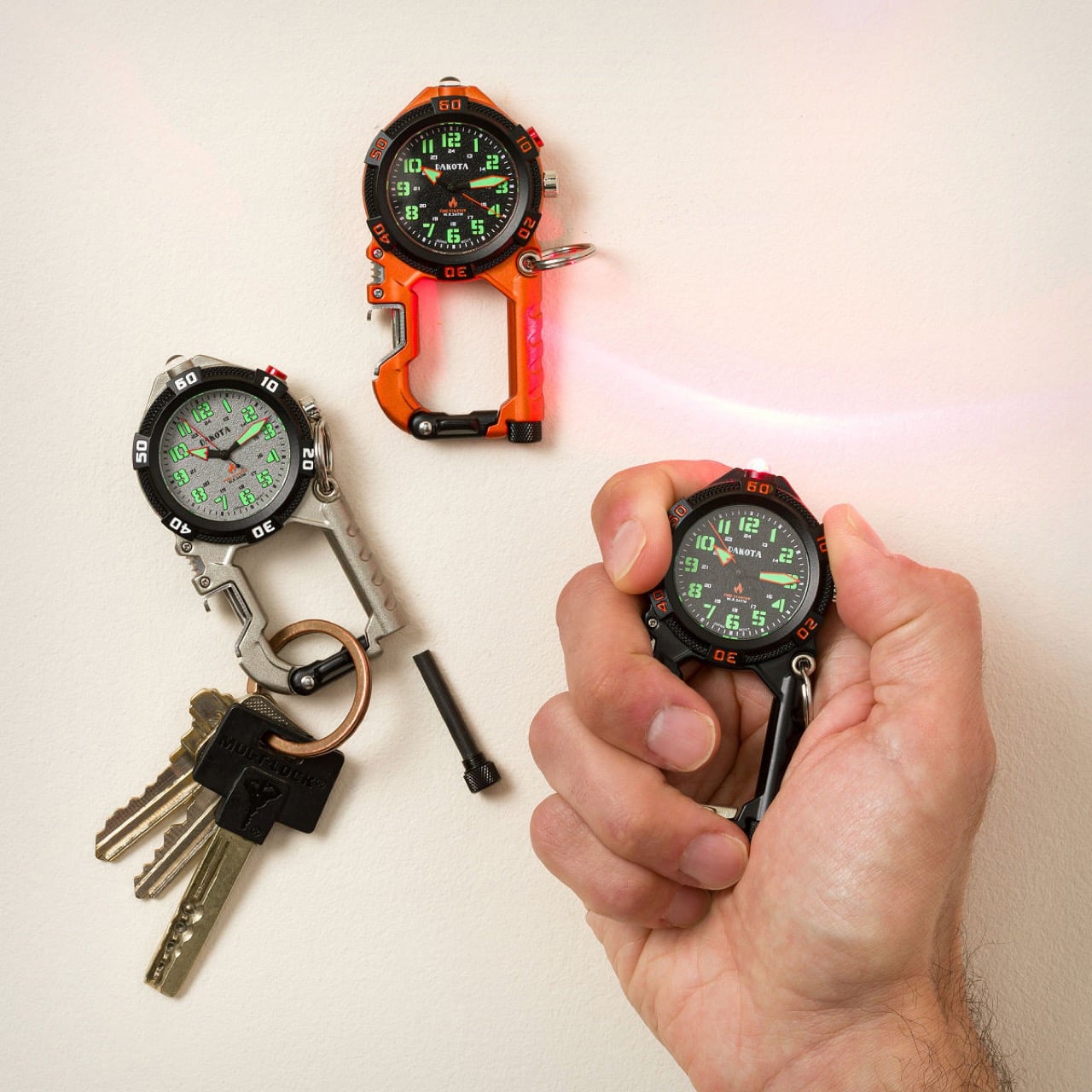
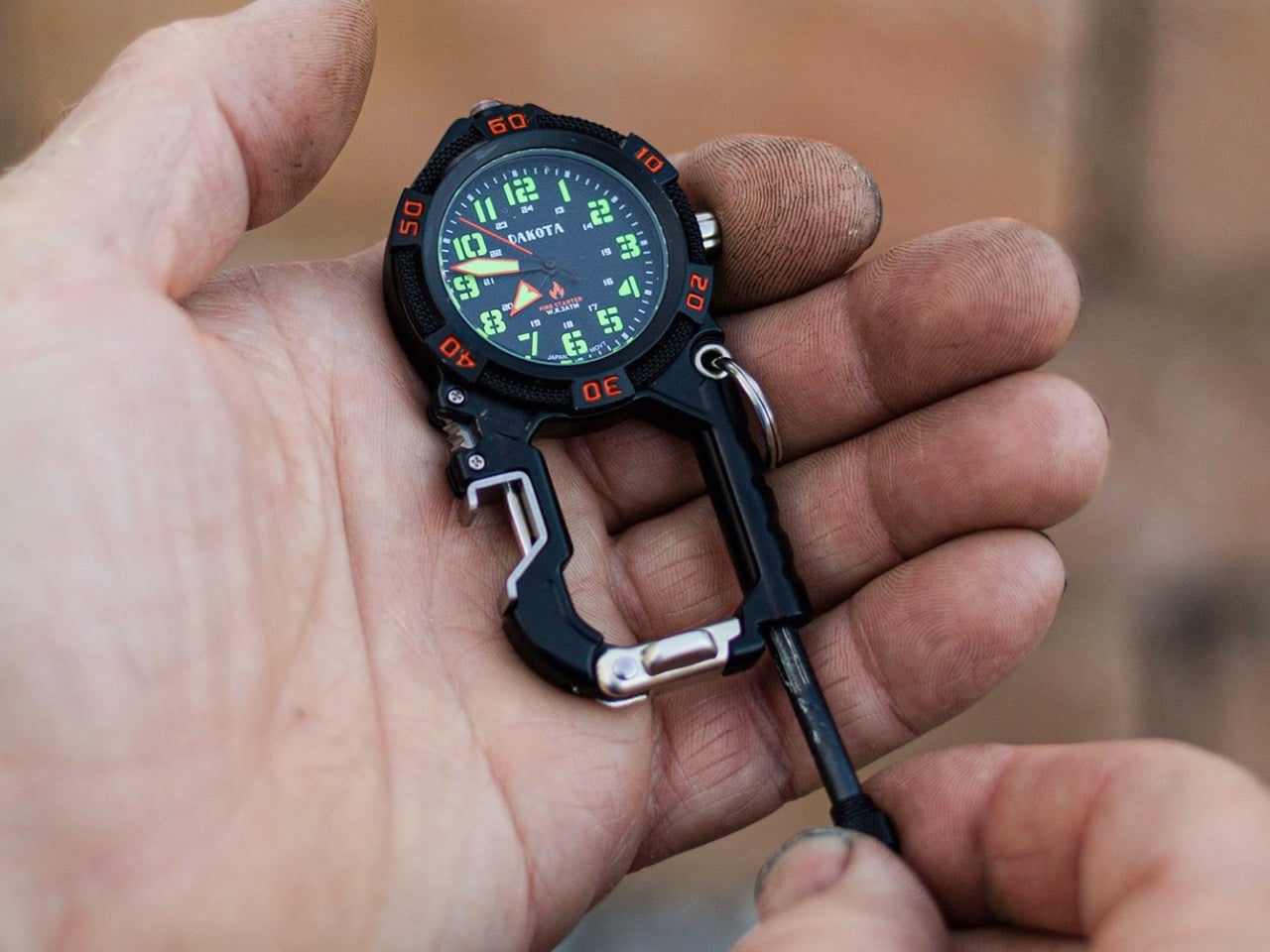
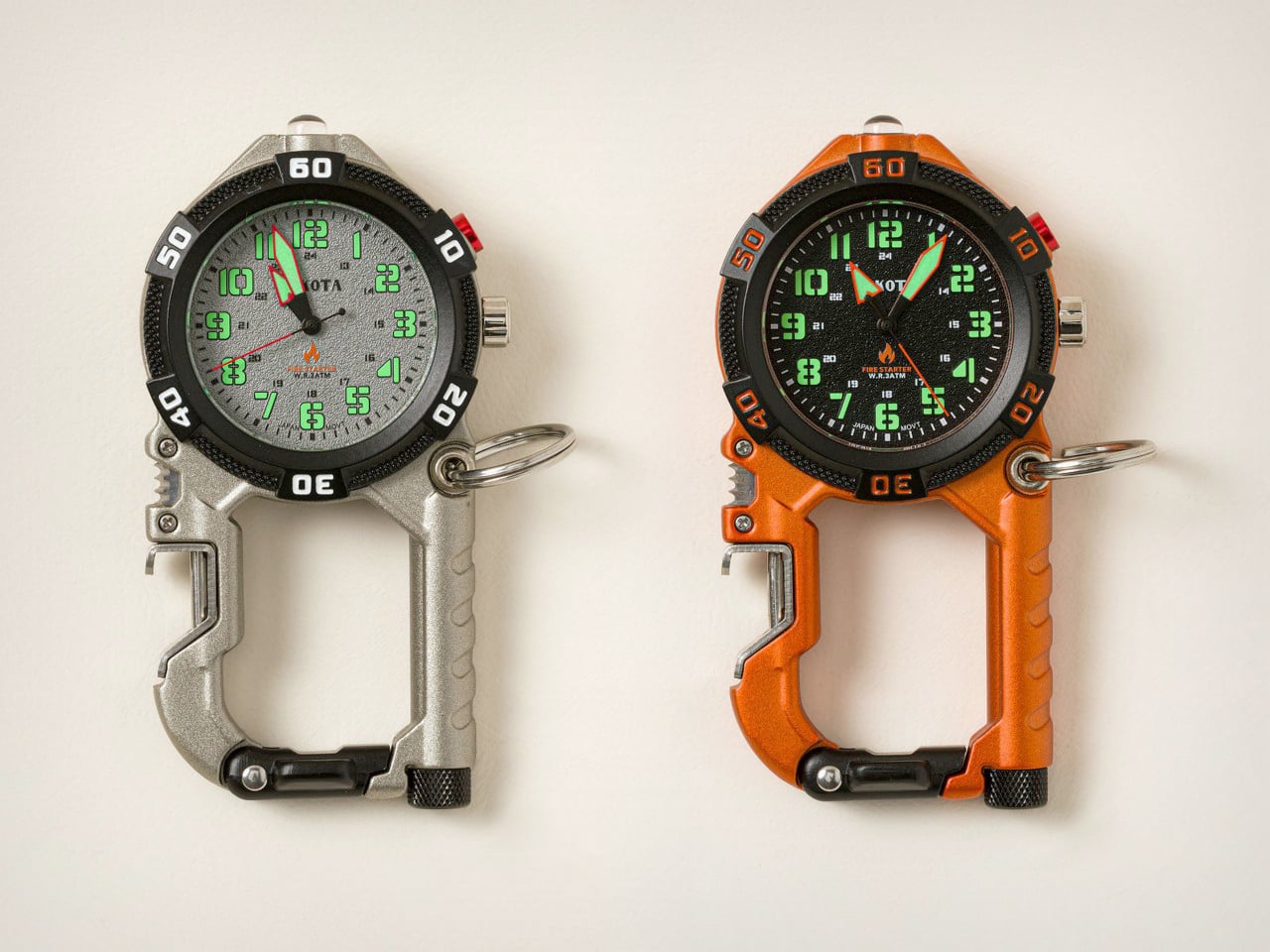
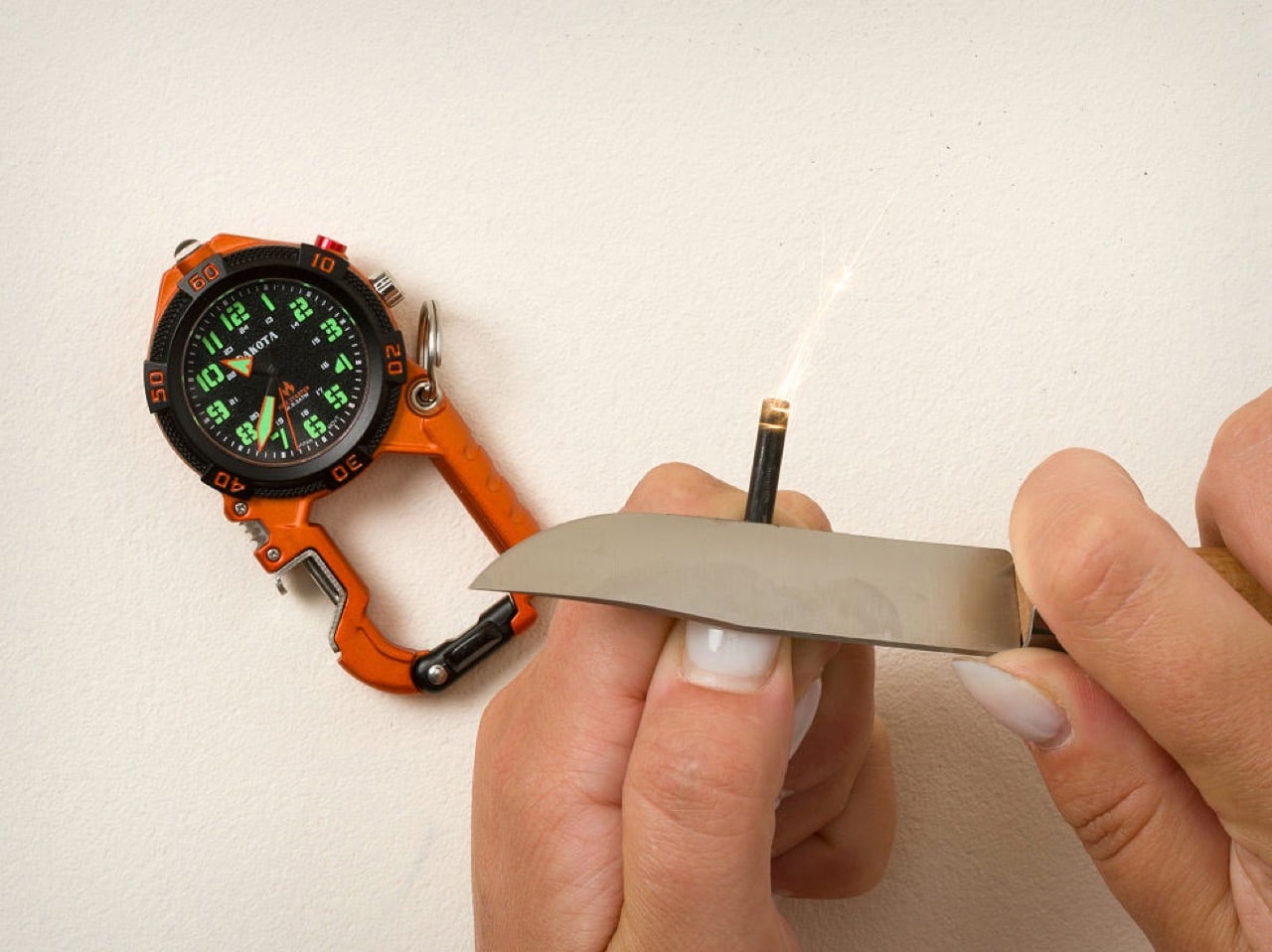
Funnily enough, this isn’t a fairly new product. Dakota Watch Company’s sort of pioneered this category of outdoor-ready carabiner pocket-watches… with the Flint being just one of multiple in the set. However, each individual watch has its own unique selling point – and for the Flint (as its name rightfully suggests), it’s the waterproof flint-rod that’s integrated into the watch’s body. Unscrew it when you want to start a fire, scrape on the rod using a pocket knife, and sparks immediately shoot off, igniting any form of tinder, creating a tiny fire that can then be harnessed to light a campfire, an old-fashioned torch, or an emergency signal in a time of distress.

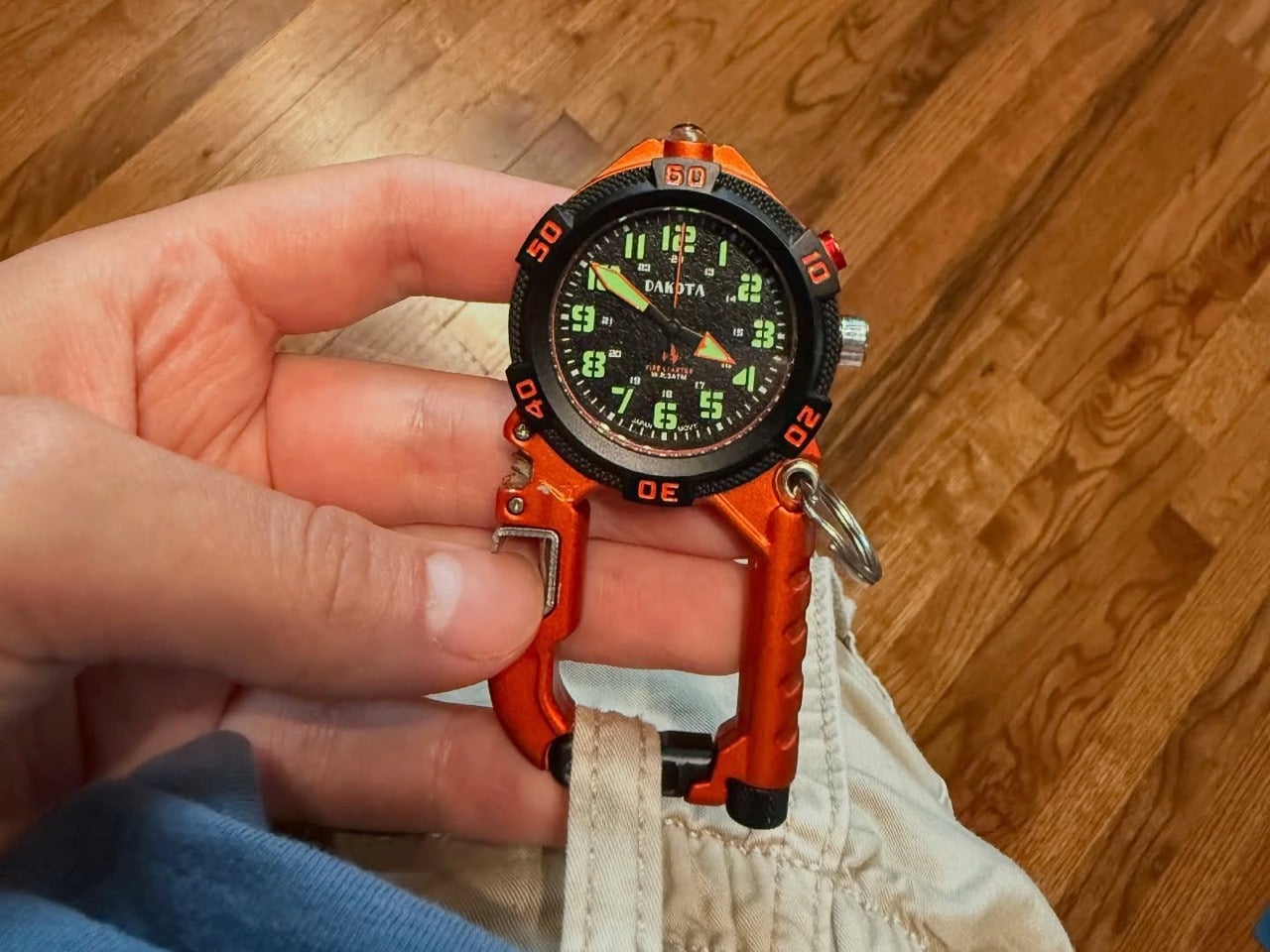
Before we talk about the watch itself, Dakota Watch Company used this particular elevated-carabiner format to pack even more tools, making the pocket watch something that goes beyond just keeping you punctual. A built-in bottle opener lets you crack open a brew when you’re in the great outdoors, and it could be used to pry open lids too (not to be mistaken with a can opener). A slight serrated corner above the bottle opener doesn’t outline a specific purpose, but it looks sharp enough to cut through rope with a little vigorous action. You could use it to scrape against the flint-rod too, lighting that campfire to go perfectly with the chilled beer you just cracked to get the evening started.

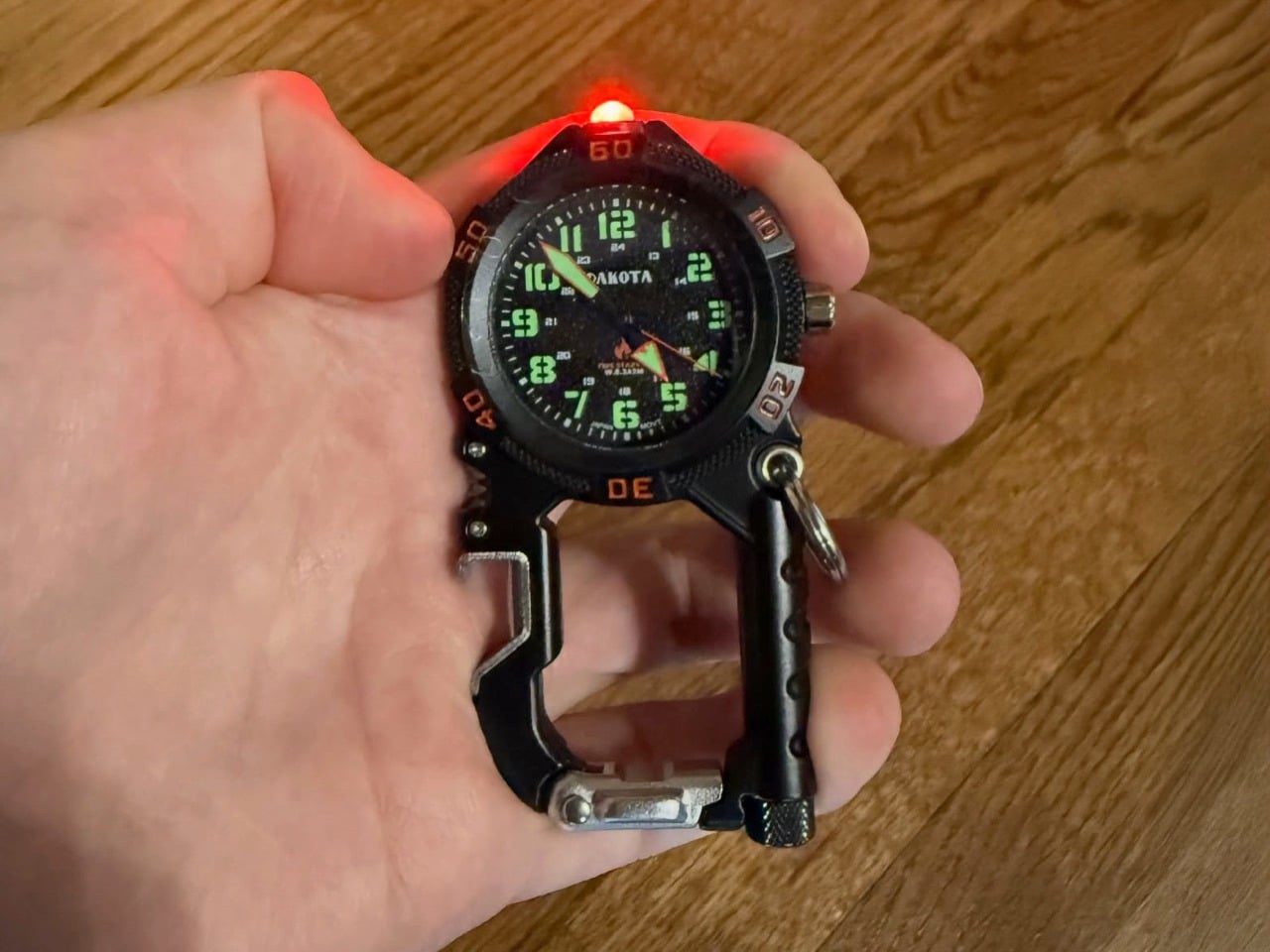
Build almost exclusively for the outdoors, the Flint Clip Carabiner Watch also packs a discreet red LED microlight, used for illuminating the way in stealth scenarios where bright lights could give away your position. The red light (activated using a button at the 2 o’clock position) provides the right amount of visibility without necessarily blowing your cover or obscuring your low-light vision in the dark. This means you can see with the light, but continue to do so even after the light’s shut (unlike most flashlights that leave you blinded in the pitch dark once the light’s turned off).

The watch itself is as outdoor-ready as it gets. The body is crafted from stainless steel (carabiner included), with a mineral glass cover on the top. Numbers on the dial are thick and easy to read without straining your eyes, and luminous coatings on both the numbers as well as the hands means reading the time flawlessly in the dark. The watches are built to be water-resistant up to 100 feet, which means you could go boating or wading through a stream with the Flint attached to you and you’d have nothing to worry about.

The Flint Clip Carabiner comes in 3 distinct colors – a silver, with a light-colored watch-face to match, a black, with a dark watch-face, and perhaps my favorite, an eye-catching orange that also sports the same dark-colored watch face. All three watches have a Japanese Quartz movement on the inside, which isn’t anything to write home about if you’re a watch aficionado, but the movement, like every other part of the watch, screams reliability, so you know you’ve got an EDC you can trust, whether it’s to tell you the time, or be your ultimate outdoor adventure sidekick.

Click Here to Buy Now

The post This Tactical Outdoor Pocket Watch Can Start a Fire – And That’s Just the Beginning first appeared on Yanko Design.

Daniel Arsham and Hublot Reinvent the Pocket Watch with the Arsham Droplet

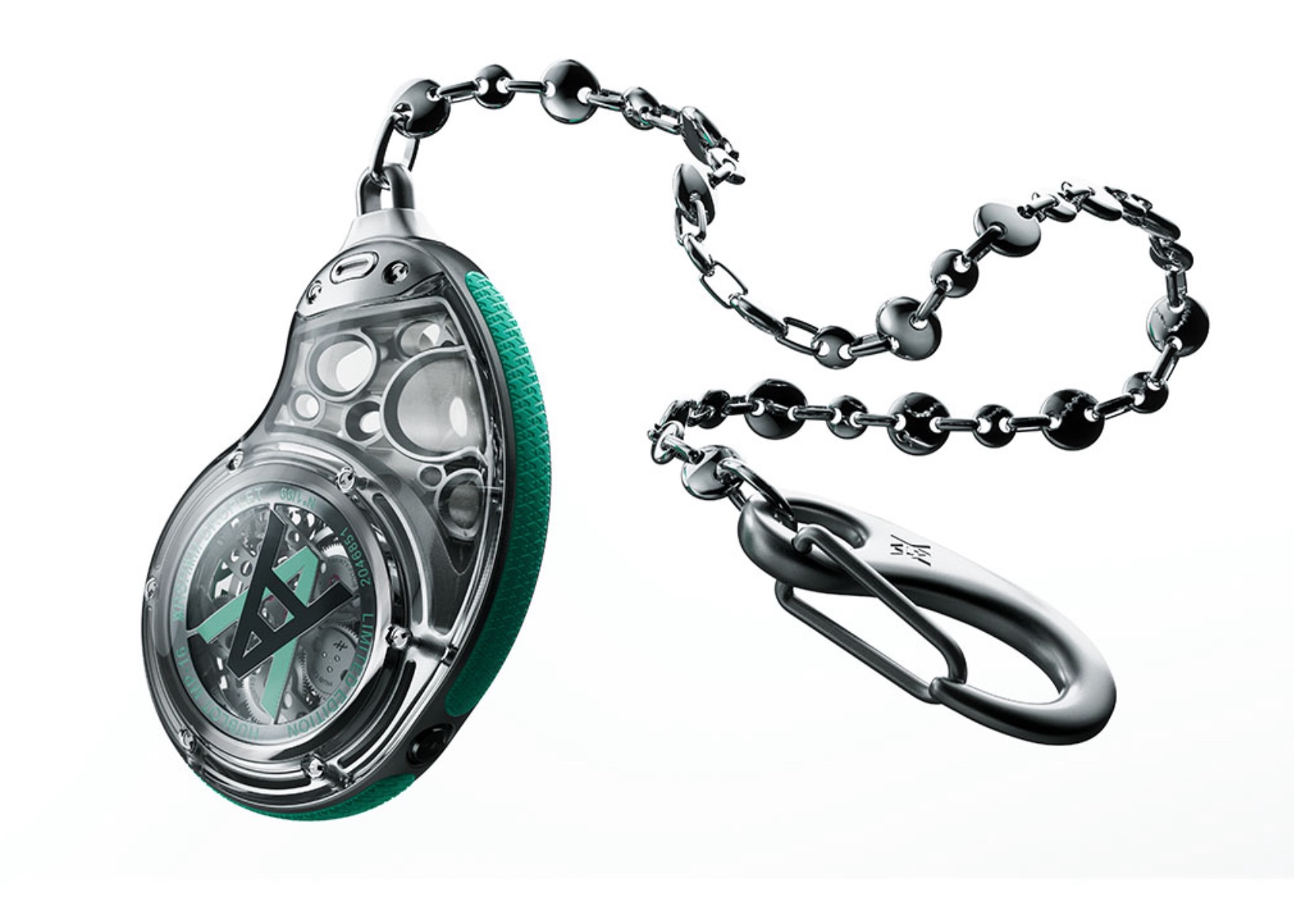
In a bold departure from traditional watch design, Daniel Arsham and Hublot have collaborated to create a timepiece that is as much a piece of art as it is a functional object. The Arsham Droplet, a pocket watch that defies convention, pushes the boundaries of horological innovation. This creation captures the convergence of past, present, and future, encapsulated in a form inspired by the fluidity of water and the precision of modern engineering.

Designer: Arsham Droplet +

Daniel Arsham

From the first glance, the Arsham Droplet captivates with its organic, droplet shape, setting the stage for a tactile and visual experience that is unique and mesmerizing. The watch’s sapphire crystal body showcases material innovation, providing a window into the intricate mechanics within. Unlike the solid, opaque cases of traditional pocket watches, this transparency invites the wearer to engage with the movement of time on a deeper level.

The vibrant Arsham Green accents break the monochrome norm, adding a splash of color that is both striking and playful. This bold choice enhances the aesthetic appeal and underscores the watch’s modern, innovative identity. The incorporation of titanium and rubber elements further distinguishes the Arsham Droplet from its predecessors, emphasizing durability and contemporary design sensibilities.

This limited-edition masterpiece, restricted to just 99 pieces, is a collector’s dream. The collaboration between Daniel Arsham and Hublot challenges the status quo, presenting a pocket watch that is anything but ordinary. It is a daring exploration of form, function, and artistry, set to redefine the future of watchmaking.

Design, Craftsmanship, and Functionality

The Arsham Droplet diverges from traditional pocket watches with its unique drop shape, reminiscent of fluid droplets. This form is not only visually striking but also ergonomic, ensuring a comfortable fit in the hand. The design reflects Daniel Arsham’s fascination with organic, fluid forms found in nature, creating a seamless blend between natural aesthetics and technological precision.

The use of sapphire crystal as the primary material enhances the tactile and visual appeal. It offers exceptional clarity and durability, allowing an unobstructed view of the intricate mechanics within. This choice of material ensures that the watch maintains its pristine appearance over time, resisting scratches and wear. The sapphire crystal’s transparency also highlights the inner workings of the watch, making the movement a central visual element. Traditional pocket watches often utilize materials such as gold, silver, or stainless steel, which, while luxurious and durable, do not offer the same level of transparency or modern aesthetic as sapphire crystal.

Titanium is used for the case and chains, lending the watch a modern, industrial aesthetic. Its lightweight yet strong properties enhance the overall durability of the watch, ensuring it can withstand daily use. The addition of Arsham Green rubber bumpers adds a contemporary touch, providing extra protection against impacts and a striking visual contrast. The vibrant green color pops against the metallic and clear elements, drawing the eye and adding a playful element to the design. In contrast, traditional pocket watches typically use more classic materials like leather for the chain or fob, which offers a different, more vintage aesthetic.

The craftsmanship involved in creating the Arsham Droplet is meticulous. The open-worked titanium case resembles delicate lace, showcasing Hublot’s expertise in detailed metalwork. This intricate design is not only a realization of technical skill but also of artistic vision. The delicate, almost skeletal structure of the case allows light to pass through, creating dynamic shadows and reflections that change with movement. Traditional pocket watches tend to have solid cases with engraved or polished surfaces, offering a more static visual appeal.

Arsham Droplet on a stand

The watch can be worn in three different variations: as a pocket watch, a pendant, or an eye-catching table clock. This versatility allows users to adapt the timepiece to various settings and personal styles. The titanium chains and decorative stand provide additional options for display and wear, emphasizing the watch’s multifunctionality. The stand itself is a work of art, complementing the watch with its smooth curves and reflective surfaces. Traditional pocket watches are primarily designed for pocket wear and occasionally come with chains or fobs but rarely offer the same level of versatility in wear and display.

Technical Specifications, Artistic Vision, and Collaboration

Measuring 73.2 mm by 52.6 mm by 22.5 mm, the Arsham Droplet is substantial yet manageable in size. The ergonomic design ensures it fits comfortably in the hand, while the smooth, rounded edges enhance its tactile appeal. At its heart lies Hublot’s Meca-10 manufacture movement, which boasts a 10-day power reserve. This enhances the user’s connection with the timepiece, offering a prolonged period of uninterrupted use. The exposed gears and mechanical components are functional and add to the watch’s aesthetic allure, showcasing the complexity and precision of its inner workings. Traditional pocket watches often feature mechanical movements as well, but the extended power reserve and visible mechanics of the Arsham Droplet provide a more interactive and engaging experience.

The double-sealing system and 30-meter water resistance ensure the watch is durable and capable of withstanding everyday wear. These features make the Arsham Droplet both a beautiful object and practical, suitable for various environments and activities. In contrast, many traditional pocket watches lack significant water resistance, making them more susceptible to damage from moisture.

Arsham is celebrated for transforming everyday objects into “future relics.” The Arsham Droplet reflects this vision, blending the past, present, and future in a captivating and unexpected way. As Arsham notes, “The Arsham Droplet is a true realization of the power of collaboration. By combining Hublot’s technical expertise with my own artistic vision, we have created a timepiece that transcends the traditional pocket watch.” This collaboration is a fusion of art and horology, pushing the boundaries of what a timepiece can be. Traditional designs tend to adhere to more established aesthetic and functional norms, focusing on heritage and classical elegance.

Hublot’s commitment to innovation and material mastery is evident in this collaboration. The seamless integration of advanced materials and technical precision showcases Hublot’s dedication to pushing the boundaries of horology. Their expertise in crafting complex, high-performance watches is perfectly matched with Arsham’s creative vision, resulting in a product that is both a functional timepiece and a piece of art.

Limited Edition and Collectibility, Visual and Aesthetic Details

Limited to just 99 pieces, the Arsham Droplet is a true collector’s item. Its distinctive design and exclusive production run make it highly desirable among watch enthusiasts and art collectors alike. Ricardo Guadalupe, Hublot CEO, emphasizes the unique nature of this collaboration: “Together with Arsham, we made the impossible possible! The Arsham Droplet is a realization of Hublot’s unwavering dedication to pushing the boundaries of both form and function.”

The Arsham Droplet’s color scheme features a harmonious blend of clear sapphire crystal and Arsham Green accents. The open-worked titanium case and custom rubber bumpers add visual interest, while the artist’s monogram is a subtle nod to Arsham’s signature style. The green accents are strategically placed to highlight key design elements, such as the edges of the case and the tips of the hands, ensuring they stand out against the more muted metallic tones.

The overall aesthetic is both futuristic and timeless, challenging conventional notions of pocket watches. The combination of transparent, reflective, and matte surfaces creates a dynamic visual experience, with each angle revealing new details and interactions between light and shadow. The design invites viewers to explore it from multiple perspectives, appreciating the interplay of form, color, and material.

By integrating advanced materials, meticulous craftsmanship, and a visionary artistic approach, the Arsham Droplet redefines the boundaries of watchmaking. This limited-edition pocket watch stands as a realization of the power of collaboration and the endless possibilities of horological design.

The post Daniel Arsham and Hublot Reinvent the Pocket Watch with the Arsham Droplet first appeared on Yanko Design.