The much-anticipated launch of the iPhone 17e is set for this week, and it promises to bring a blend of familiar design elements and meaningful upgrades. Positioned as an affordable entry point into Apple’s ecosystem, the iPhone 17e retains the core functionality of its predecessor, the iPhone 16e, while introducing enhancements that cater to modern […]
The global RAM shortage is creating ripple effects across the tech industry, with high-bandwidth memory (HBM) at the center of the crisis. As ColdFusion explains, the surging demand for AI data centers, driven by their reliance on HBM to train and operate advanced machine learning models, has left other sectors scrambling to secure adequate supply. […]
Apple’s 2026 iPad lineup introduces three new models, each designed to cater to specific user needs while maintaining the company’s signature design philosophy. These devices bring notable internal upgrades, including improved processors, enhanced displays, and seamless compatibility with existing accessories. By balancing innovation with practicality, Apple continues to deliver products that appeal to a wide […]
AI agent design patterns provide a structured approach to building intelligent systems that address diverse challenges in automation and workflow optimization. As highlighted by Google Cloud Tech, these patterns, such as the single, sequential and parallel agent frameworks, offer distinct advantages depending on the complexity of the task. For instance, the single agent pattern excels […]
The Samsung Galaxy S26 Ultra and iPhone 17 Pro Max are the pinnacle of smartphone innovation in 2026, representing the latest advancements in mobile technology. Both devices cater to distinct user preferences, offering unique features that align with their respective ecosystems. This detailed comparison explores their differences in display technology, performance, cameras, battery life, and […]
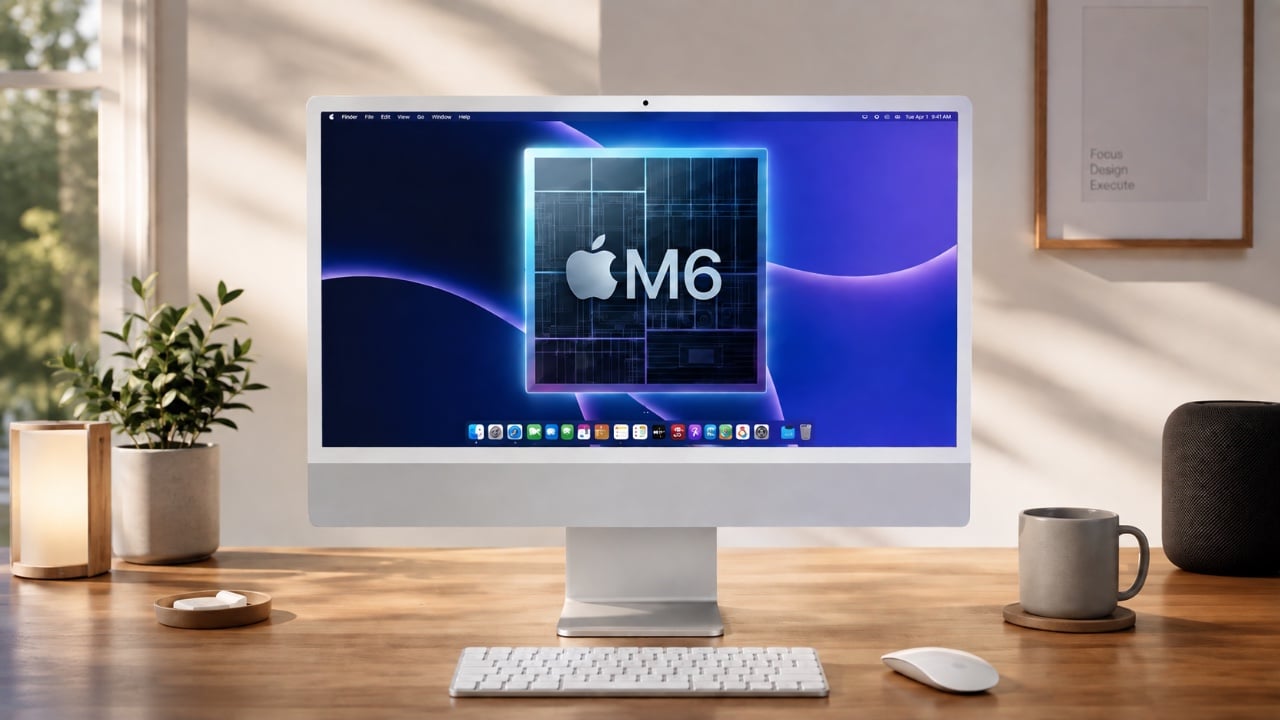
Apple has officially confirmed a series of highly anticipated product launches, starting today and culminating in a hands-on event midweek. The lineup promises updates across several key product categories, including MacBooks, iPads, iPhones, and external displays. These releases aim to cater to a wide range of users, from budget-conscious consumers to professionals requiring advanced performance. […]
Apple is reportedly preparing to launch a new 12-inch MacBook this week, which could become the most affordable option in its lineup. Designed with budget-conscious users and students in mind, this entry-level device aims to combine performance, design, and affordability. With confirmed features such as the powerful A18 Pro chip and a premium aluminum build, […]
Apple’s 2026 iPhone lineup represents a bold step forward in mobile technology, introducing a foldable iPhone alongside updates to the Pro, Air, and entry-level models. With a focus on innovation, performance, and user-centric design, this lineup is tailored to meet the diverse needs of modern users. From innovative features to practical enhancements, Apple continues to […]
Apple’s upcoming MacBook Pro refresh is set to deliver a significant leap in performance, driven by the new M5 Pro and M5 Max chipsets. At the same time, the external design of the 14-inch and 16-inch models remains consistent with the 2021 versions, and the internal upgrades promise to redefine expectations for both CPU and […]
After briefly announcing its new foldable at CES, Motorola is now ready to debut its first book-style foldable in full at MWC 2026. There are several features we already knew, including support for Motorola’s new Pen Ultra stylus and no fewer than five cameras. However, many specs were still unknown. There are some pleasant surprises.
Motorola decided to make both screens brighter than any of its rivals by quite a margin. The main 8.1-inch foldable display of the Razr Fold has a peak brightness of 6200 nits, while the external screen almost matches it with 6000 nits. For comparison, both screens on the Pixel 10 Fold Pro have a peak brightness of 3000 nits and other foldables’ internal screens typically have substantially lower brightness levels. Inside Motorola's demo room, filled with windows and Barcelona sun, I had no trouble reading either screen.
The main display is a 2K (2,484 x 2,232) LTPO display that can reach a peak refresh rate of 120Hz, while the external display has a 2,520 x 1,080 resolution and peaks at 165Hz. Both screens also support Dolby Vision.
Image by Mat Smith for Engadget
With those high-brightness levels, Motorola has opted for a silicon-carbon 6,000mAh battery, another leading specification among foldables at the time of writing. It’ll be interesting to see how battery life fares, powering those big, bright screens. The Razr Fold also supports fast charging at up to 80W with the company’s own (sold separately) TurboPower charger and up to 50W wireless charging.
With a silicon-carbon battery that offers higher energy density, Motorola’s biggest foldable yet remains surprisingly svelte, despite its huge battery. The Razr Fold is 4.6mm (0.181 inches) thin when open and 9.9mm (0.39 inches) when closed. Yes, Samsung’s latest Z Fold is thinner (4.2 mm; 8.9 mm), but it has a substantially smaller 4,400mAh battery.
Image by Mat Smith for Engadget
The Razr Fold’s hardware continues with many of the design touches found on recent Razr phones. I spent most of my time with the Blackened Blue iteration of the Razr Fold, with a woven piqué design that felt both easy to hold and didn’t seem to hold onto fingerprints. There will also be a Lily White color that doesn’t have the piqué design, but a more satin finish.
The Razr Fold has a Snapdragon 8 Gen 5 processor, the de facto flagship Android processor at this point. The foldable also has its own liquid-cooling system to maintain consistent performance during tougher tasks and gaming sessions.
The Razr Fold’s cameras will have to do more than what we’re used to seeing on the flip-style Razr smartphones, which have underwhelmed in the past. Fortunately, it looks like it could be a very capable smartphone camera. The main 50-megapixel sensor has a f/1.6 lens and 3.5 degrees of optical image stabilization. It’ll also work alongside a multi-spectral 3-in-1 light sensor to improve color accuracy. The Razr Fold’s ultrawide camera has a 50MP sensor, a 122-degree field of view, and support for macro photography. The 50MP periscope telephoto camera can reach up to 3x optical zoom and 100x SuperZoom, through image cropping and AI-boosted image processing. And finally, there are two selfie cameras: a 32MP internal camera that can record up to 4K video and a 20MP external selfie cam, both with a f/2.4 lens.
Image by Mat Smith for Engadget
Motorola is already claiming this is the best camera on a foldable smartphone, with the highest DXOMARK score among foldables. If you haven’t heard of DXOMARK before, it’s a benchmarking website and lab in France that offers professional image quality testing for smartphones, camera lenses and cameras. It also offers a consultancy service to help manufacturers improve their devices’ camera performance.
It’s too early to tell whether this is objectively a better cameraphone than Samsung’s Z Fold 7, but I was particularly impressed by the Razr Fold’s telephoto camera results. Similarly, I’m intrigued by Motorola’s decision to support its newest stylus, the Moto Pen Ultra. It warrants further testing when the foldable lands for review.
Motorola hasn’t announced pricing and availability for the Razr Fold. It’ll be coming to North America “in the coming months.”
This article originally appeared on Engadget at https://www.engadget.com/mobile/smartphones/motorola-razr-fold-hands-on-mwc-2026-050027092.html?src=rss