Since last spring, OpenAI has offered Codex. What started life as the company's response to Claude Code is becoming something more sophisticated with the release of a new dedicated macOS app. At its most basic form, Codex is a programming agent capable of writing code for users, but now it can also manage multiple AI assistants that can work together to complete more complex tasks.
OpenAI gives an example of how this could work in practice. The company used Codex to create a Mario Kart-like racing game, complete with a selection of different playable cars, eight tracks and a collection of powerups players can use against the competition. For a single AI agent, generating a game from scratch, with all the needed visual assets, would be a tough ask, but Codex was able to complete the task because it could delegate the work of making the game to different models with complementary capabilities.
For example, it turned to GPT Image for the visual assets, while a separate model simultaneously coded the web game. "It took on the roles of designer, game developer and QA tester to validate its work by actually playing the game," OpenAI says of the process.
If that sounds complicated, OpenAI has tried to make it more approachable with a section of the app titled Skills. The feature bundles “instructions, resources, and scripts so Codex can reliably connect to tools, run workflows, and complete tasks according to your team’s preferences," the company explains. "The Codex app includes a dedicated interface to create and manage skills. You can explicitly ask Codex to use specific skills, or let it automatically use them based on the task at hand."
As you might imagine, Codex can also automate repetitive tasks. A dedicated Automations section of the app allows you to schedule tasks, which the software will complete in the background. "At OpenAI, we’ve been using Automations to handle the repetitive but important tasks, like daily issue triage, finding and summarizing CI failures, generating daily release briefs, checking for bugs, and more," the company said.
The release of the Codex macOS app comes as AI startups explore what a group of AI agents working in parallel can accomplish. At the start of the year, Anysphere, the company behind Cursor, found it was possible to build a working web browser from scratch using such an approach, though it did encounter problems along the way.
For a limited time, OpenAI is making Codex available to ChatGPT Free and Go users so they can see what's possible with this new software. At the same time, the company is doubling rates for Plus and Pro subscribers.
This article originally appeared on Engadget at https://www.engadget.com/ai/openai-brings-its-codex-coding-app-to-mac-with-new-multi-agent-abilities-included-183103262.html?src=rss
Since 2021, NASA's Perseverance rover has achieved a number of historic milestones, including sending back the first audio recordings from Mars. Now, nearly five years after landing on the Red Planet, it just achieved another feat. This past December, Perseverance successfully completed a route through a section of the Jezero crater plotted by Anthropic's Claude chatbot, marking the first time NASA has used a large language model to pilot the car-sized robot.
Between December 8 and 10, Perseverance drove approximately 400 meters (about 437 yards) through a field of rocks on the Martian surface mapped out by Claude. As you might imagine, using an AI model to plot a course for Perseverance wasn't as simple as inputting a single prompt.
As NASA explains, routing Perseverance is no easy task, even for a human. "Every rover drive needs to be carefully planned, lest the machine slide, tip, spin its wheels, or get beached," NASA said. "So ever since the rover landed, its human operators have painstakingly laid out waypoints — they call it a 'breadcrumb trail' — for it to follow, using a combination of images taken from space and the rover’s onboard cameras."
To get Claude to complete the task, NASA had to first provide Claude Code, Anthropic's programming agent, with the "years" of contextual data from the rover before the model could begin writing a route for Perseverance. Claude then went about the mapping process methodically, stringing together waypoints from ten-meter segments it would later critique and iterate on.
This being NASA we're talking about, engineers from the agency's Jet Propulsion Laboratory (JPL) made sure to double check the model's work before sending it to Perseverance. The JPL team ran Claude's waypoints through a simulation they use every day to confirm the accuracy of commands sent to the rover. In the end, NASA says it only had to make "minor changes" to Claude's route, with one tweak coming as a result of the fact the team had access to ground-level images Claude hadn't seen in its planning process.
"The engineers estimate that using Claude in this way will cut the route-planning time in half, and make the journeys more consistent," NASA said. "Less time spent doing tedious manual planning — and less time spent training — allows the rover’s operators to fit in even more drives, collect even more scientific data, and do even more analysis. It means, in short, that we’ll learn much more about Mars."
While the productivity gains offered by AI are often overstated, in the case of NASA, any tool that could allow its scientists to be more efficient is sure to be welcome. Over the summer, the agency lost about 4,000 employees – accounting for about 20 percent of its workforce – due to Trump administration cuts. Going into 2026, the president had proposed gutting the agency's science budget by nearly half before Congress ultimately rejected that plan in early January. Still, even with its funding preserved just below 2025 levels, the agency has a tough road ahead. It's being asked to return to the Moon with less than half the workforce it had during the height of the Apollo program.
For Anthropic, meanwhile, this is a major feat. You may recall last spring Claude couldn't even beat Pokémon Red. In less than a year, the company's models have gone from struggling to navigate a simple 8-bit Game Boy game to successfully plotting a course for a rover on a distant planet. NASA is excited about the possibility of future collaborations, saying "autonomous AI systems could help probes explore ever more distant parts of the solar system."
This article originally appeared on Engadget at https://www.engadget.com/ai/nasa-used-claude-to-plot-a-route-for-its-perseverance-rover-on-mars-203150701.html?src=rss
This past summer, Google DeepMind debuted Genie 3. It’s what’s known as a world world, an AI system capable of generating images and reacting as the user moves through the environment the software is simulating. At the time, DeepMind positioned Genie 3 as a tool for training AI agents. Now, it’s making the model available to people outside of Google to try with Project Genie.
To start, you’ll need Google’s $250 per month AI Ultra plan to check out Project Genie. You’ll also need to live in the US and be 18 years or older. At launch, Project Genie offers three different modes of interaction: World Sketching, exploration and remixing. The first sees Google’s Nano Banana Pro model generating the source image Genie 3 will use to create the world you will later explore. At this stage, you can describe your character, define the camera perspective — be it first-person, third-person or isometric — and how you want to explore the world Genie 3 is about to generate. Before you can jump into the model’s creation, Nano Banana Pro will “sketch” what you’re about to see so you can make tweaks. It’s also possible to write your own prompts for worlds others have used Genie to generate.
One thing to keep in mind is that Genie 3 is not a game engine. While its outputs can look game-like, and it can simulate physical interactions, there aren’t traditional game mechanics here. Generations are also limited to 60 seconds, as is the presentation, which is capped at 24 frames per second and 720p. Still, if you’re an AI Ultra subscriber, this is a cool opportunity to see the bleeding edge of what DeepMind has been working over the past couple of years.
This article originally appeared on Engadget at https://www.engadget.com/ai/googles-project-genie-lets-you-create-your-own-3d-interactive-worlds-183646428.html?src=rss
The first of the new features is a sidebar. Available to all Gemini in Chrome users, the interface allows you to chat with Gemini and keep a conversation going across multiple tabs. Google suggests the sidebar is useful for multitaskers. "Our testers have been using it for all sorts of things: comparing options across too-many-tabs, summarizing product reviews across different sites, and helping find time for events in even the most chaotic of calendars," the company writes.
Now you can access Nano Banana, Google's in-house image generator, directly from Chrome. No need to go to the Gemini app.
Google
The sidebar is also where you access the second new feature Google is adding to Chrome. Following its successful rollout within the Gemini app, Nano Banana, Google's in-house image generator, is available directly inside of the browser. With the addition, you won't need to open a new tab when you want Gemini to make you an AI image. You also won't need to download and upload a file when you want Gemini to edit an existing image for you. Instead, you can complete both of those tasks from any of your open tabs, thanks to the new sidebar.
Looking forward, Google plans to bring Personal Intelligence, which debuted inside of the Gemini app at the start of January, to Chrome in the coming months. Once the feature arrives, it will allow the browser to remember past conversations you've had with Gemini. In turn, Google says this will lead to a more personalized Chrome. "Personal Intelligence in Chrome transforms the browsing experience from a general purpose tool into a trusted partner that understands you and provides relevant, proactive, and context-aware assistance," the company said.
In the meantime, Gemini in Chrome already supports Google's Connected Apps feature, which allows the assistant to pull information from the company's other services, including Gmail and Calendar. During a press briefing, a Google employee demoed this feature by asking Gemini to pull up the dates of when their children would be on March break. Without telling the assistant where to look, Gemini sourced the correct time frame from the employee's email inbox.
A new sidebar interface allows Chrome users to access Gemini from any of their open tabs.
Google
Last but not least, Google is previewing a new auto browse feature inside of Chrome. In the demo the company showed, an employee asked Gemini to find and buy them the same winter jacket they bought a few seasons ago. The assistant first drafted a plan outlining how best to tackle the request. It reasoned the best place to start was with a search of the employee's email inbox to determine the correct model and size of jacket. It then went shopping.
While Gemini was working on this task, the employee was free to continue browsing in Chrome. At several points in the process, the assistant would stop before continuing to obtain the employee's permission to move forward. For instance, it paused when it needed login credentials, and again when it needed a credit card number to complete the purchase.
Judging from the demo, it will probably take you less time to do your online shopping and other browser tasks on your own. Google suggests the feature will appeal to those who are creatures of habit. Say you often order the same produce from a grocery delivery service every week, Gemini can automate the ordering. Plus, the feature is in preview, so early testers probably won't be too put off by Gemini's slow pace. In any case, Google AI Pro and Ultra subscribers in the US can try auto browse starting today.
This article originally appeared on Engadget at https://www.engadget.com/ai/google-brings-its-nano-banana-image-generator-to-chrome-180000104.html?src=rss
OpenAI is releasing a new app called Prism today, and it hopes it does for science what coding agents like Claude Code and its own Codex platform have done for programming.
Prism builds on Crixet, a cloud-based LaTeX platform the company is announcing it acquired today. For the uninitiated, LaTeX is a typesetting system for formatting scientific documents and journals. Nearly the entire scientific community relies on LaTeX, but it can make some tasks, such as drawing diagrams through TikZ commands, time-consuming to do. Beyond that, LaTeX is just one of the software tools a scientist might turn to when preparing to publish their research.
That's where Prism comes into the picture. Like Crixet before it, the app offers robust LaTeX editing and a built-in AI assistant. Where previously it was Crixet's own Chirp agent, now it's GPT-5.2 Thinking. OpenAI's model can help with more than just formatting journals — in a press demo, an OpenAI employee used it to find and incorporate scientific literature that was relevant to the paper they were working on, with GPT-5.2 automating the process of writing the bibliography.
"None of this absolves the scientist of the responsibility to verify that their references are correct, but it can certainly speed up the process," said Kevin Weil, vice president of science for OpenAI, when asked during the demo the possibility of ChatGPT generating fake citations.
"We're conscious that, as AI becomes more capable, there are concerns around volume, quality and trust in the scientific community," he later added. "Our view is that the right response is not to keep AI at arm's length or let it operate invisibly in the background; it's to integrate it directly into scientific workflows in ways that preserve accountability and keep researchers in control."
Later in the same demo, the OpenAI employee used Prism to generate a lesson plan for a graduate course on general relativity, as well as a set of problems for students to solve. OpenAI envisions these features helping scientists and professors spend less time on the more tedious tasks in their professions.
Prism is available to anyone with a personal ChatGPT account. It includes support for unlimited projects and collaborators. OpenAI plans to bring the software to organizations on ChatGPT Business, Team, Enterprise and Education plans soon. Crixet won’t be offered separately.
This article originally appeared on Engadget at https://www.engadget.com/ai/openai-releases-prism-a-claude-code-like-app-for-scientific-research-180000454.html?src=rss
Google has begun rolling out two upgrades for Search. Starting today, Gemini 3 is the default model powering AI Overviews. When the company debuted its new family of AI systems last November, it first deployed Gemini 3 in AI Overviews through a router that was programmed to direct the most difficult questions to the new system. Now Google is making Gemini 3 the standard for all users globally. In practice, Gemini 3 should prove better at generating more credible and relevant summaries.
As for that second upgrade, now you can jump into AI Mode conversation directly from an AI Overview. Google first previewed this feature late last year.
"In our testing, we’ve found that people prefer an experience that flows naturally into a conversation — and that asking follow-up questions while keeping the context from AI Overviews makes Search more helpful," said Robby Stein, vice president of product for Google Search. "It’s one fluid experience with prominent links to continue exploring: a quick snapshot when you need it, and deeper conversation when you want it."
If you're using Google Search on a mobile device, you can jump directly into an AI Mode conversation from an AI Overview starting today.
This article originally appeared on Engadget at https://www.engadget.com/ai/gemini-3-is-now-googles-default-model-for-ai-overviews-170000302.html?src=rss
Anthropic has been building out support for third-party apps inside of Claude. As of today, the chatbot can now connect to platforms like Slack and Canva, fetching up files from inside those apps or performing tasks within them on a user's behalf.
For instance, when connected to Box, Claude can now search for files, preview documents inline and answer questions about the content in front of you. Meanwhile, with a connection to Asana, it can now turn chats into projects, tasks and timelines your co-workers can then find and interact with on the project management app.
Box and Asana are just two of the platforms adding deeper integrations with Claude today. In total, there are nine launch partners, with some of the more notable ones including Canva, Figma and Slack.
As with Anthropic's past integrations, the new functionality is powered by Model Context Protocol (MCP) servers. MCP is a technology Anthropic released in fall 2024 to make it easier for third-party platforms to connect their systems to Claude. Since then, the protocol has become an industry standard. OpenAI, for instance, adopted MCP last year, and has been building additional support since then. At the end of last year, Anthropic donated the protocol to the Linux Foundation. The company says AI platforms will be able to bring similar integrations to their own products since they're built on a new open extension designed by Anthropic.
This article originally appeared on Engadget at https://www.engadget.com/ai/claude-now-offers-deeper-integrations-with-apps-like-canva-and-slack-180000604.html?src=rss
After half a decade of waiting, Microsoft finally offered an extended preview of its long-awaited reboot of the beloved Fable RPG franchise on Thursday. During the company’s recent Developer Direct showcase, Playground Games, best known for its works on the Forza Horizonseries, shared nearly 11 minutes of gameplay footage and commentary related to the upcoming title. The new game will feature a fully open world for players to explore, with locations from previous Fable games like Bowerstone making a return.
Playground didn’t say exactly where the new game takes place in the Fable timeline. If you played 2010’s Fable 3, you may recall there was a time gap between each of the original games, with the final Lionhead entry giving players the chance to explore a version of Albion that’s been thrown into the tumult of an industrial revolution. This new game appears to offer a more traditional Medieval fantasy setting.
From what little Playground shared of the story, the player character is the first hero born in Albion in a generation. Like previous Fable games, their story will begin when they’re a child. They’ll leave their home of Briar Hill after a “mysterious stranger” turns all the inhabitants into stone. Before you set off on your adventure, you’ll be able to decide what your hero looks like, with customization including options for different skin tones, head shapes, tattoos and scars.
All pretty standard stuff, and combat doesn’t look groundbreaking. Your character can use a combination of melee and ranged weapons, alongside magic, to defeat their foes. In addition to a health bar, enemies appear to have a posture meter players can break through both light and heavy attacks, before carrying out “stylish” finishers. Judging from the footage Playground shared, combat doesn’t quite have the kinetic feel of say a FromSoftware title.
Thankfully, there’s more to the game than just fighting monsters. Like past Fable games, players can ask villagers out on dates, before eventually marrying them and having children, and you’re not limited to a monogamous relationship. It looks like Playground built a modern polycule simulator. Beyond that, you can also purchase every house and business in Albion. The game’s NPCs will develop an opinion of your hero and their actions. Say you evict an artist that lived in one of the houses you bought, you can later meet them on the street and they’ll tell you to your face that you’re awful. Wonderful stuff.
From a technical perspective, the footage Playground showed off looked on the rough side. The game’s frame rate and frame pacing wasn’t smooth, and I’m pretty sure I saw ghosting in some of the animations. Hopefully the studio has enough time between now and when the game is finally released sometime this autumn to polish the presentation. When the game does arrive, it will be available on Xbox Series X/S, PC via Xbox and Steam, PlayStation 5 and Game Pass Ultimate.
This article originally appeared on Engadget at https://www.engadget.com/gaming/fable-will-let-you-be-a-heartless-landlord-this-fall-200409310.html?src=rss
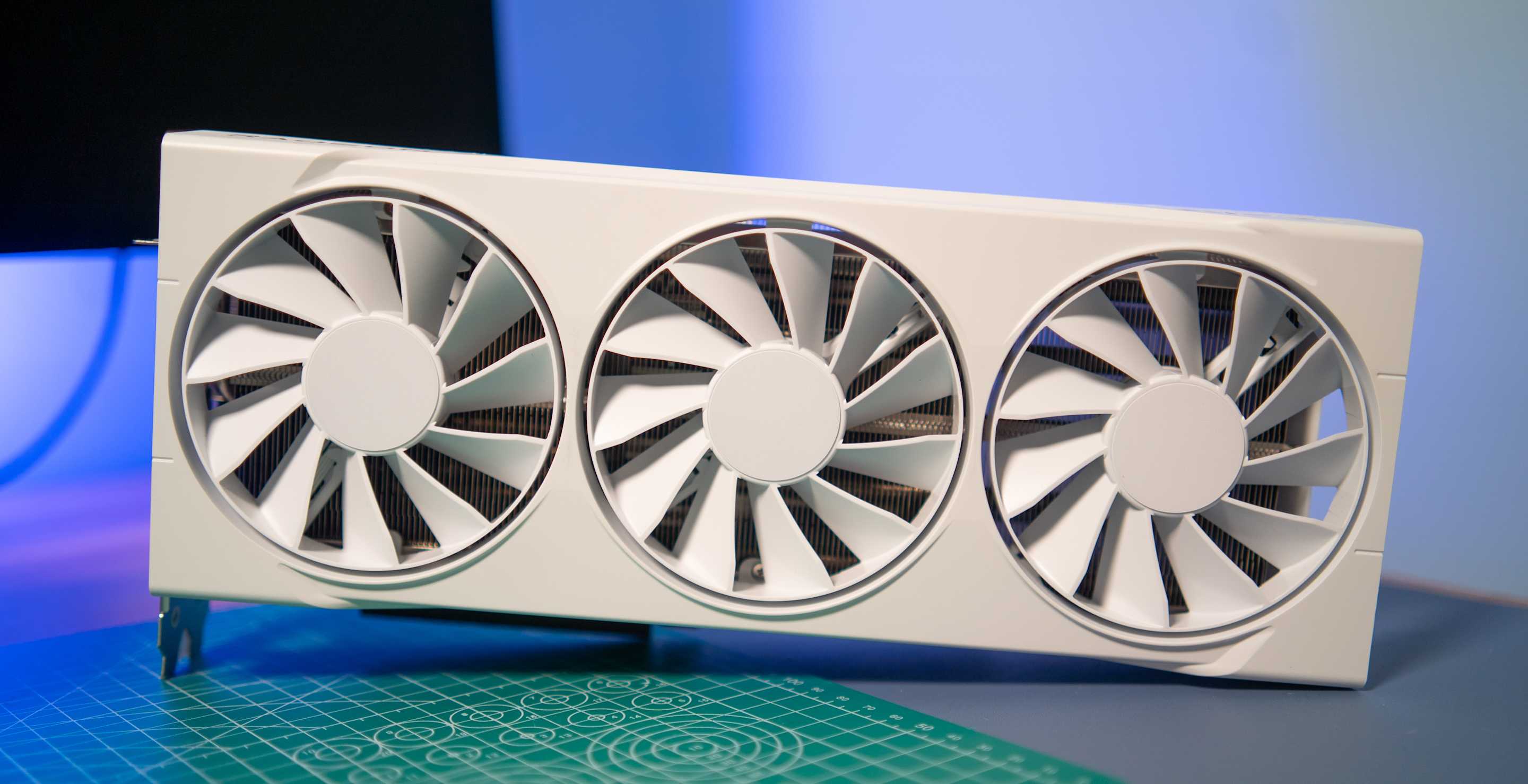
If you're thinking about upgrading to a new graphics card this year, your window for doing so at MSRP has closed. When I first reported on this at the start of December, things were looking bleak but you could still find GPUs from both AMD and NVIDIA at close to their recommended prices. That changed last week when YouTube channel Hardware Unboxed reported that ASUS had stopped producing the RTX 5070 Ti and 5060 Ti 16GB due to ongoing memory shortages.
After Engadget published the news, NVIDIA disputed the report. “Demand for GeForce RTX GPUs is strong, and memory supply is constrained. We continue to ship all GeForce SKUs and are working closely with our suppliers to maximize memory availability,” a company spokesperson told us.
The next day, ASUS walked back its previous statements. After “explicitly” telling Hardware Unboxed it had placed the 5060 Ti 16GB and 5070 Ti into "end-of-life status," the company said "certain media may have received incomplete information from an ASUS PR representative regarding these products," adding it had "no plans to stop selling these models."
Whether or not the 5060 Ti 16GB and 5070 Ti remain in production, one thing is certain: the AI boom has created a great deal of uncertainty in the GPU market. After the news, panic buying sent the price of the 5070 Ti through the roof. Right now, it's impossible to find that model priced at its MSRP of $749. As of the writing of this article, the most affordable version of the 5070 Ti I could find on Newegg was $1,199.
The bigger problem is that the 5070 Ti isn't the only GPU selling for far more than MSRP. Tom's Hardwarehas been tracking GPU prices for months, and there's not a single model you can buy at either AMD or NVIDIA's recommended price. That puts PC builders in a tough spot. What do you do if you want to upgrade to a new graphics card this year?
If you're sitting on an older GPU, the best advice I can give is to stick with your current hardware. If you're fine with the performance of your video card right now, it's best to wait a year or two for the market to settle down.
On the other hand, if your current GPU is not up to the task of running the games you want to play, try to buy a card with at least 12GB of VRAM — preferably 16GB if your budget allows for it. Unless you plan to play mostly older games on a 1080p monitor, it's not worth considering a model with 8GB of VRAM — it won't last you long enough to warrant the purchase price.
For the most part, the recommendations in Engadget's recent GPU guide are still as relevant today as they were a few months ago. The recommendations I provide here are pulled from that guide and are grouped from most affordable to most expensive. Where possible, I've tried to find options from both Newegg and Amazon. As you go about looking for a new GPU, your best friend is a website like PCPartPicker where you can track pricing across multiple retailers.
Recommendations
AMD Radeon RX 9060 XT 16GB
The Radeon RX 9060 XT 16GB is the best mainstream option right now.
Devindra Hardawar for Engadget
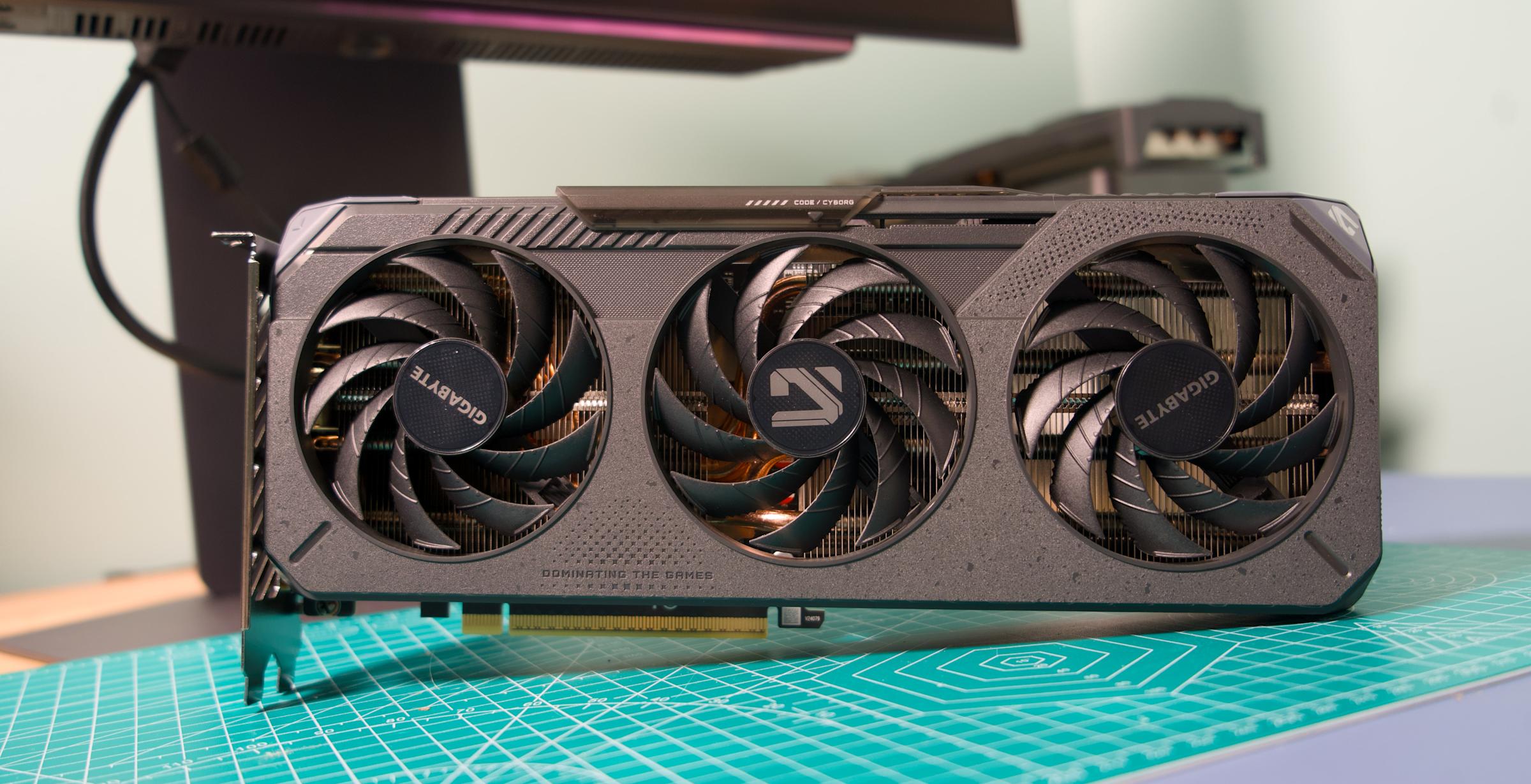
Unfortunately if you're on a tight budget, there aren't many great options under $400. For that reason, I would steer you to the Radeon RX 9060 XT as the best "entry-level" option. AMD offers two different versions of this GPU: one with 8GB of VRAM and the other with 16GB. Of the two, the latter is the better purchase, but if it's outside your budget, the more affordable model is probably the best 8GB GPU on the market right now.
While I couldn't find the 16GB variant at its recommended price of $350, I did find a few models that weren't far off. Newegg has options from ASRock and Sapphire priced at $400 and $450. At Amazon, meanwhile, you can find models from PowerColor for $400 and $430.
NVIDIA GeForce RTX 5070
A Founders Edition NVIDIA RTX 5080 sits on a wood desk.
Devindra Hardawar for Engadget
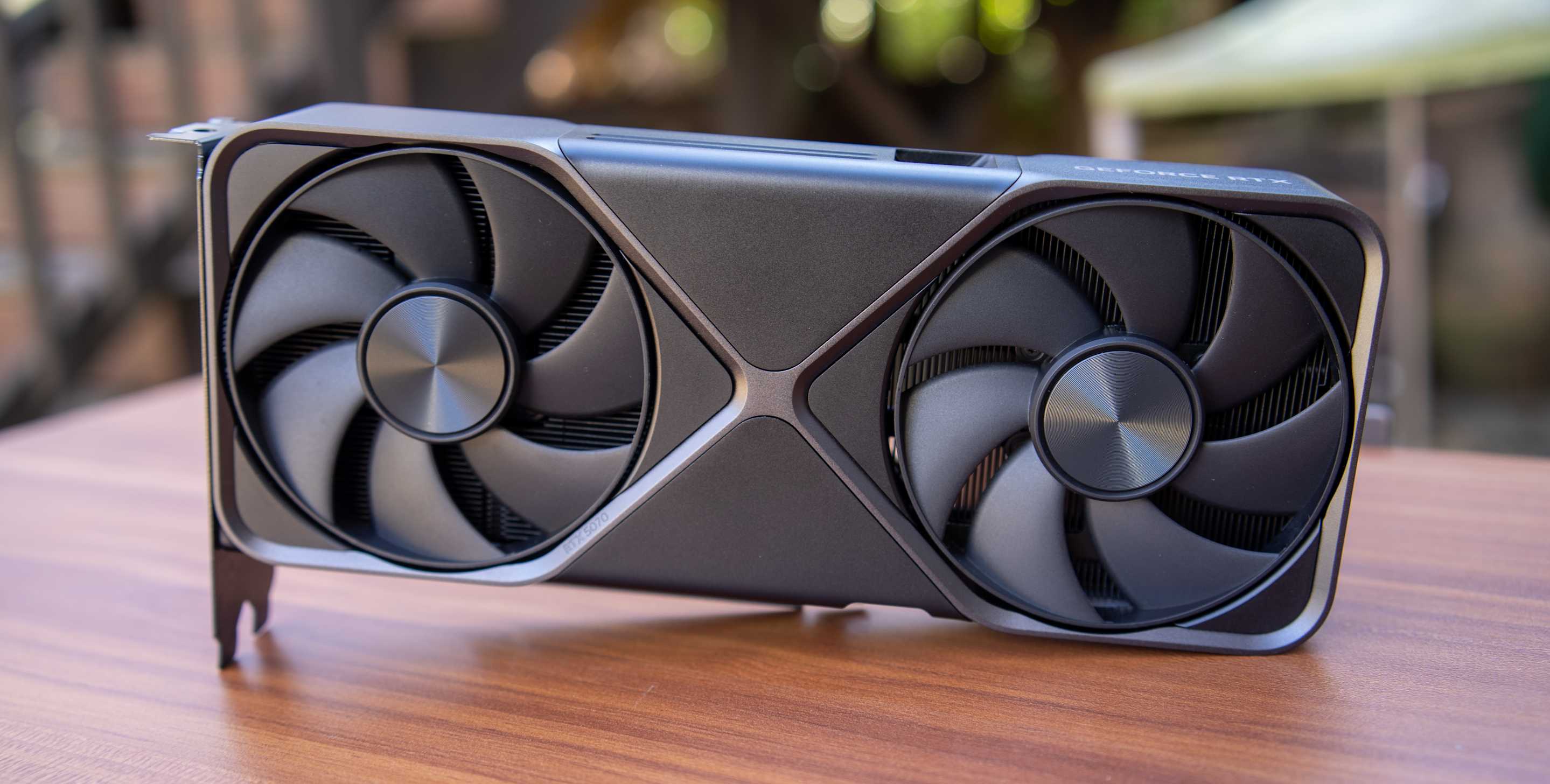
I'm somewhat hesitant to recommend the RTX 5070. Don't get me wrong, it's a decent enough card, but with only 12GB of VRAM, you may end up replacing it sooner than you think. That said, it's one of the few NVIDIA GPUs that hasn't shot up massively in price, and I suspect that's because people have been passing it over in favor of other 50-series models. If you value NVIDIA's feature set over raw frames, then the 5070 is about the only GPU that makes sense to buy from the company right now.
On Newegg, I found a 5070 model from Gigabyte for $650. The retailer also has a handfulofdifferent MSI variants priced at $630. Amazon has fewer options, but it does have one 5070 from Gigabyte for $585, which is the closest to the card's $549 MSRP.
AMD Radeon RX 9070
If you're a fan of Team Red, the Radeon RX 9070 and 9070 XT are among the best cards of this generation.
Devindra Hardawar for Engadget
For a card that offers better price-to-performance than the 5070, the Radeon RX 9070 is your best bet. AMD's take on NVIDIA features like DLSS aren't as polished, but the RX 9070 offers more VRAM and excellent performance across the latest AAA games.
It's unlikely you'll find one at its MSRP of $550, which was always more of an aspirational price, but I found a few models priced between $590 and $640. Both Newegg and Amazon have a PowerColor model for $590. The two also have a Gigabyte model priced at $600 after $40 rebate with coupon.
AMD Radeon RX 9070XT
For those with more to spend, the RX 9070 XT is probably where I would cap things. Beyond that, you're looking at GPUs like the 5080 that cost far more than MSRP. On Newegg, I found a model from ASRock selling for $730. Amazon, meanwhile, has options from Gigabyte and ASUS for $720. None of those are great deals, but that's to be expected with a card that's at the top of the stack.
This article originally appeared on Engadget at https://www.engadget.com/gaming/pc/how-to-find-an-affordable-gpu-during-the-great-ramageddon-of-2026-130000654.html?src=rss
Back in August, Adobe debuted Acrobat Studio. The new service saw Adobe bring the humble PDF into the 21st century with support for a handful of new genAI features, including PDF Spaces, a hub where you can upload up to 100 documents and have AI summarize them. Now the company is enhancing the capabilities of those hubs with the introduction of four new genAI features inside of Adobe Acrobat, Acrobat Studio and Adobe Express.
The next time you add documents and files to a PDF Space, you can prompt Adobe's built-in AI assistant to generate a presentation from those materials. The software will first create an outline. From there, you can select from a handful of "professional" designs to build the presentation around, and then make tweaks. Adobe says the majority of changes, including copy edits and image swaps, can be made without the need to generate entirely new slides. Once you're happy with the results, you can share the presentation with your co-workers for further editing. Adobe has also made it easier to collaborate inside of PDF Spaces. With this latest update, you can invite others to add files and leave notes.
On the subject of editing, you can now carry out a dozen different tweaks using natural-language prompts. That includes adding text, comments, images and e-signatures. If you're old-fashioned like me, Adobe has also reworked the Help section to offer step-by-step instructions on how to complete most tasks.
Last but not least, Adobe is borrowing a page from NotebookLM by adding a feature that allows users to generate podcasts from a PDF Space. This works much like it does in Google's app. Acrobat will default to centering the generated podcast around two hosts having a conversation about the material you want summarized.
Adobe says Acrobat's AI features have been highly popular, in part because users are finding those tools are saving them time. As you might expect, the company reports students have had a particularly strong response to its efforts to add AI inside of Acrobat, seeing as the app can generate summaries of course material while providing citations for fact checking.
This article originally appeared on Engadget at https://www.engadget.com/ai/adobe-acrobat-can-now-generate-presentations-and-audio-podcasts-from-your-documents-140000146.html?src=rss