Plaud is back with another conversation-recording AI wearable. This one, the NotePin S, is only a minor iteration on the original NotePin. This model adds… a button.
The recessed recording button replaces the squeeze-to-record mechanism on the 2024 original. A single long press starts recording. It also adds a new "press to highlight" feature. The idea is to flag what's most important in a conversation, helping the AI learn what to emphasize in its summary.
Otherwise, you're getting the same package as in the first NotePin. The capsule-sized "S" model still has two microphones, weighs 0.6 ounces and has an advertised reliable recording range of 9.8 feet. (Students may want to keep that last point in mind before considering one for classes in lecture halls.) It includes hardware to set it up as a pin / lapel, lanyard, wristband or clip.
The NotePin S is available today for $179. You can order it from Plaud's website and Amazon. Just be sure to look out for your fellow humans and get their consent before recording them, okay?
This article originally appeared on Engadget at https://www.engadget.com/ai/plauds-latest-ai-wearable-has-a-button-for-flagging-key-moments-170000172.html?src=rss
Govee, which makes some of the more unique and interesting smart lighting products, has a new batch at CES 2026. That includes two ceiling lights (one of which simulates a skylight) and a floor lamp that supports trillions of colors.
Govee describes the new Ceiling Light Ultra as "the industry's first ceiling light designed as a true creative canvas." It uses 616 individually controlled LEDs (the highest in its class, according to Govee) to provide that level of detail. Using the Govee app, you can design visuals for it "with up to eight distinct layers of motion, color and shapes."
Govee Ceiling Light Ultra
Govee
The product will support an upcoming AI Lighting Bot 2.0 update. The new version of the scene creation chatbot lets other compatible lights (including the Gaming Pixel Light) "generate dynamic GIF animations."
If your ceiling lamp needs are as simple as “look like a skylight, please,” there's the Govee Ceiling Light with Blue Sky Effect. The company says it emulates natural skylights "with high accuracy." (However, it's also less flexible than the Ultra, with far fewer individually controlled LEDs.) You can also use it as a more traditional white-light fixture, and Govee says it's good for spaces are large as 300 square feet.
Govee Floor Lamp 3
Govee
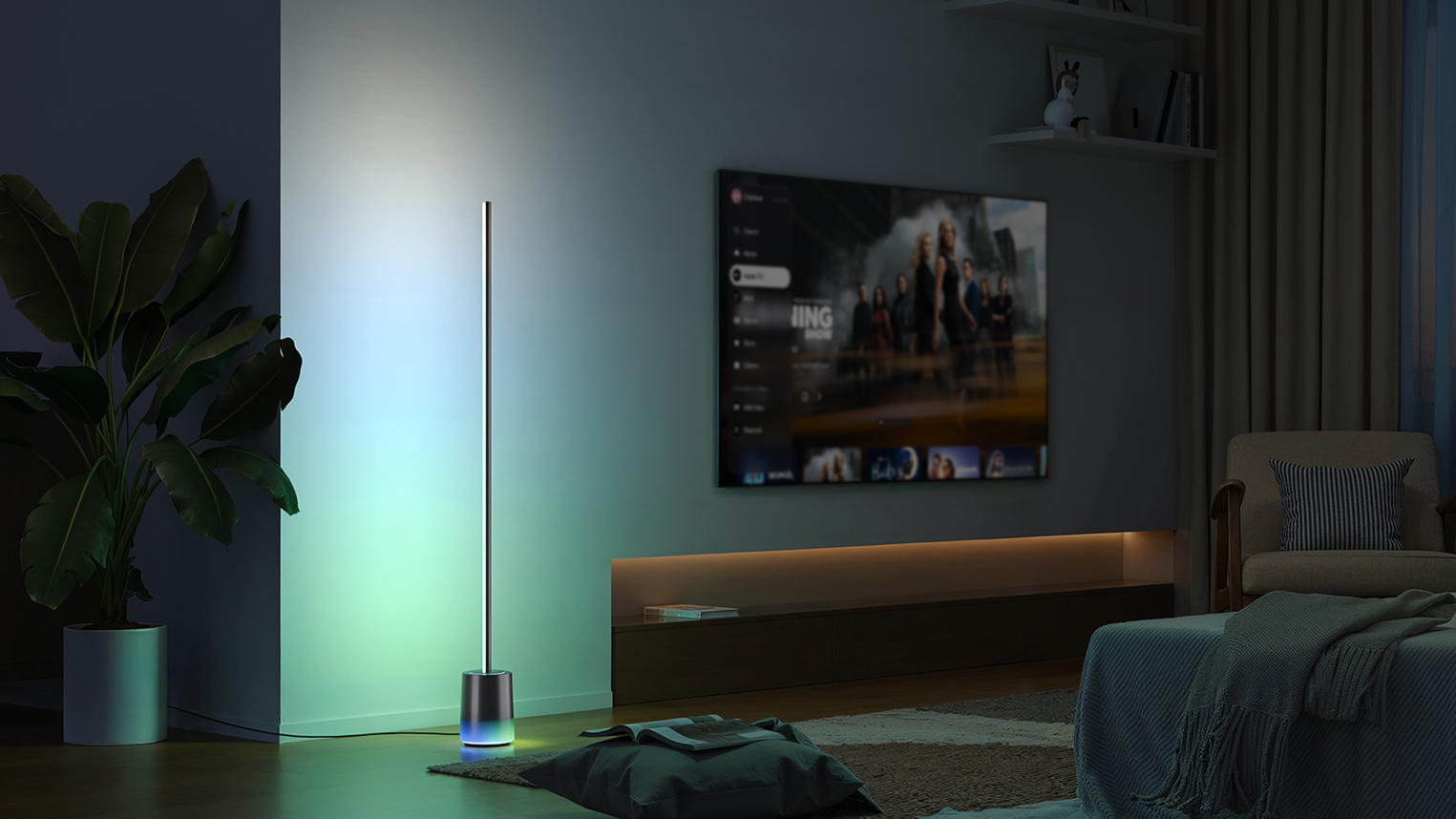
Finally, there's the Govee Floor Lamp 3. The sleek light's 16-bit RGBIC array allows it to reproduce over 281 trillion colors. Its white lighting capabilities range from 1000K to 10000K. It also supports a new DaySync system that can adjust lighting effects to match the time of day.
Unfortunately, we don't yet know precisely when any of the new lights will be available — or how much they'll cost. But we did learn that Govee lights will now work with Samsung SmartThings, joining their existing support for Matter, Alexa and Google Assistant.
This article originally appeared on Engadget at https://www.engadget.com/home/smart-home/govees-ces-lineup-includes-a-ceiling-lamp-that-simulates-skylights-130000611.html?src=rss
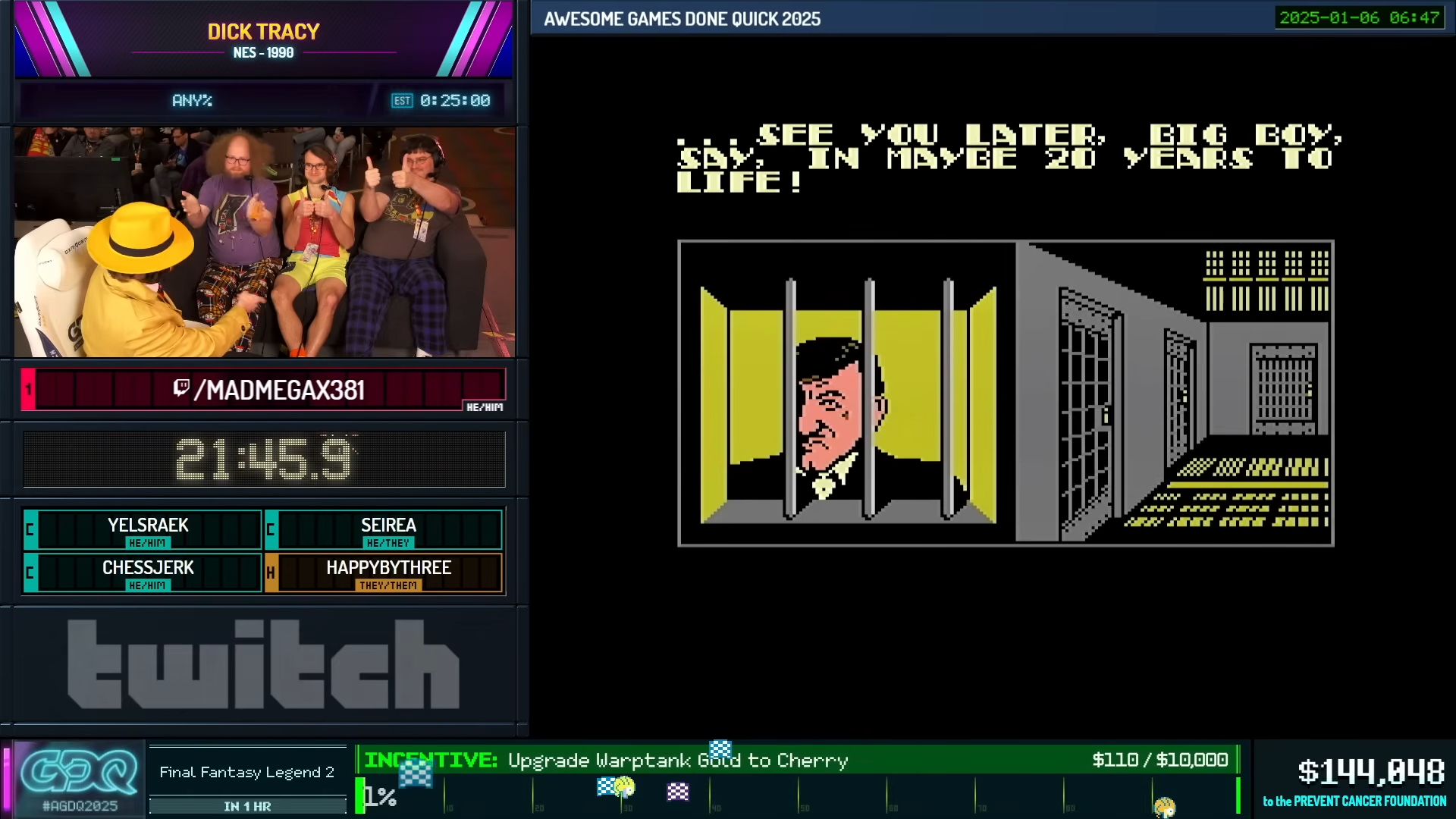
It's time for more speedrunning (and other shenanigans) with the Games Done Quick (GDQ) crew. The first event of the year, Awesome Games Done Quick (AGDQ), kicks off on Sunday, January 4, with Super Mario Sunshine. Donations for this year's shindig will benefit the Prevent Cancer Foundation.
AGDQ 2026 has a whole week of 24/7 speedruns on tap. You'll see slots for some of 2025's biggest games: Clair Obscur: Expedition 33,Hollow Knight: Silksong and Hades II are part of the festivities. Metal Gear Solid Delta: Snake Eater gets both a standard run and a "versus" showdown. There's also plenty of classic Nintendo fare, including (among others) Super Smash Bros. Brawl, Mario Kart World, The Legend of Zelda: Twilight Princess HD and Super Mario 64.
A snippet of last year's festivities
GDQ
If you like weird, there’s plenty of that to chew on, too. The GDQ team is fond of dusting off forgotten, uh, "gems" for some entertaining playthroughs. Who can forget 1996's Bill Nye: The Science Guy - Stop the Rock! or 1994's Adventures of Yogi Bear? And although it's a 2022 game, children of the '80s can revisit the gross-out trading cards of their youth, in Garbage Pail Kids: Mad Mike and the Quest for Stale Gum.
The Swiss minimal phone pioneer Punkt is back with another model, the MC03. The new handset continues Punkt's focus on privacy, security and digital minimalism.
If you've never seen Punkt's MP01 and MP02, the company's gorgeously minimal dumb phone line, they're something to behold. (The MP01 is quite literally a museum piece, in New York’s Museum of Modern Art.) Meanwhile, this new MC03 is the company's second stab at a more practical touchscreen smartphone, following 2023’s MC02. What you lose in physical beauty and tactile buttons, you gain in flexibility.
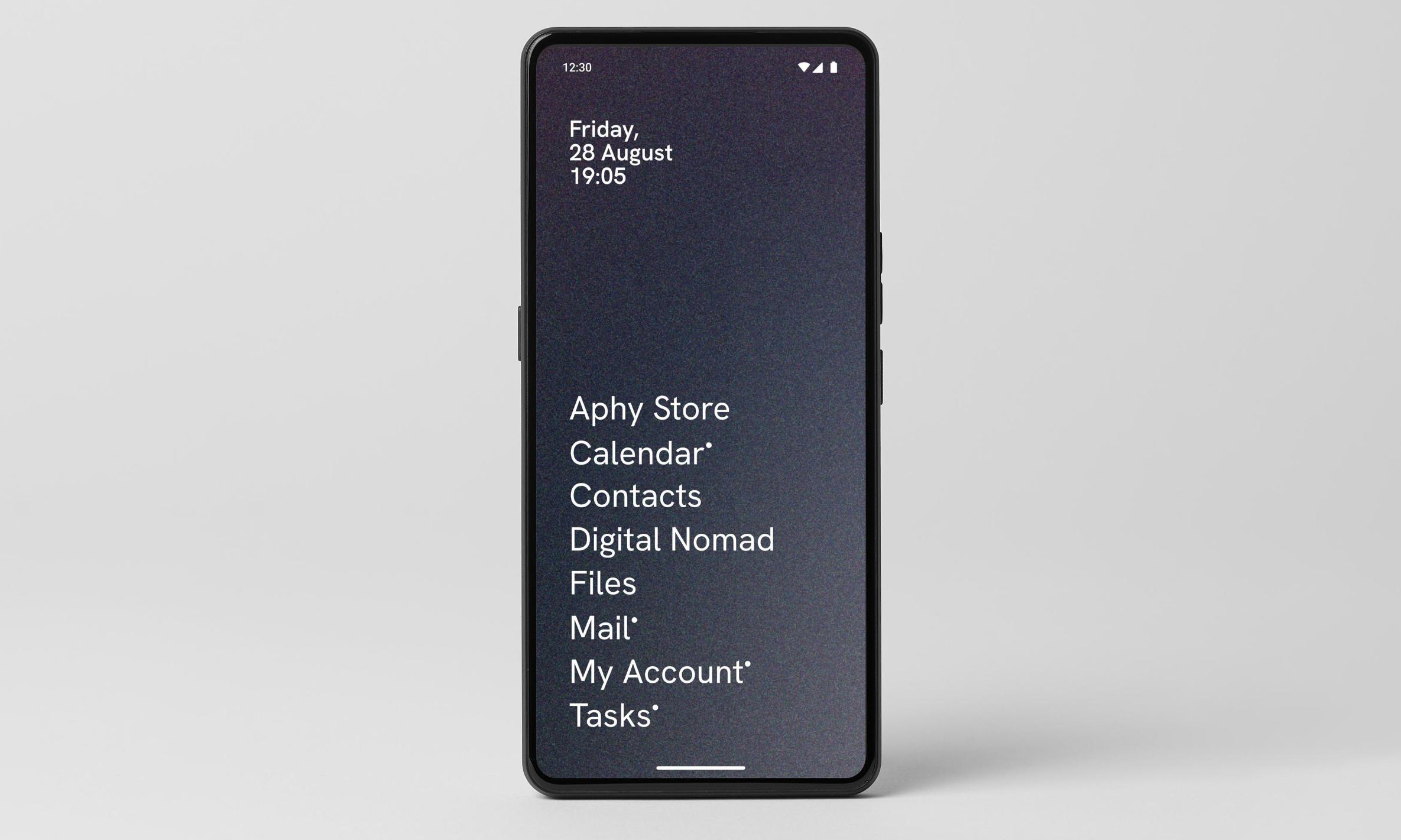
As before, the smartphone runs the privacy- and security-focused AphyOS, based on the Android Open Source Project (AOSP). The fork on the MC03 appears to borrow a page from the Light Phone line. Its UI includes a Light Phone-adjacent row of text for the most common shortcuts, like mail, contacts and calendar.
Punkt MC03
Punkt
The MC03 splits data into two sections. There's The Vault, a secure enclave for apps Punkt has vetted for privacy and security. The second, Wild Web, gives you the freedom to install any Android app. To protect you while using that section, there's Ledger, which Punkt describes as "strict, visible safeguards that allow easy privacy controls." Much like Android's Permission Manager, Ledger lets you define which data, sensors and background resources each app can access. In exchange for the tediousness of approving and denying permissions, you get more gradual control over your data.
All the apps from another Swiss company, Proton, are available in The Vault. (That includes Proton Mail, Proton Calendar, Proton Drive, Proton VPN, and Proton Pass.) Proton founder and CEO Andy Yen said he hopes the collaboration can "inject a little more choice into the marketplace, giving users more ways to take control of their data and regain their privacy."
Folks buying the MC03 aren't doing so to get cutting-edge hardware. The phone has an OLED display with a high (120Hz) frame rate, great for showing off that clean, black UI. The MC03 has a removable 5,200mAh battery and a 64MP camera. The device is rated IP68 for water and dust resistance.
Shipments for the Punkt MC03 begin this month in the European market. The phone costs €699 / CHF699 / £610. As with its previous models, the MC03 requires a subscription. (Punkt frames this as paying to retain your data, rather than paying with your data.) One year of the subscription is included with your purchase. After that, you'll have to pay €9.99 / CHF9.99 / £8.99 monthly. However, paying ahead for a long-term subscription lets you save up to 60 percent. You can learn more on the company’s website.
This article originally appeared on Engadget at https://www.engadget.com/mobile/smartphones/minimal-phone-pioneer-punkt-is-back-with-a-new-privacy-focused-model-at-ces-110000705.html?src=rss
OneXPlayer is quickly establishing itself as a company that isn't afraid to get weird as hell. (Take, for example, its transforming dual-screen gaming portable.) Its latest venture is another retro gaming handheld that, at first glance, looks like a standard dual-screen model. But the Android-powered OneXSugar Wallet uses a single foldable screen instead.
The device was teased via a 54-second video on the Chinese video-sharing platform Bilibili. Retro Handheldsreports that the Wallet uses an 8.01-inch OLED with a 2,480 x 1,860 resolution. (That's a 4:3 aspect ratio when unfolded.) The video also shows an asymmetrical analog stick layout with a D-pad and four action buttons.
OneXSugar Fold
OneXPlayer / Bilibi
Given foldable phones’ long-term durability concerns, we aren't necessarily betting on the OneXSugar Wallet being a wise purchase. We also don't know how much it will cost. (The aforementioned weird dual-screen device retails for a whopping $799.) But at the very least, don't be shocked if the novel form factor ends up sparking a few copycats in the competitive retro gaming industry.
This article originally appeared on Engadget at https://www.engadget.com/gaming/the-onexsugar-wallet-is-an-upcoming-retro-handheld-with-a-43-foldable-screen-215528433.html?src=rss
A Google support page in Hindi says the ability to change your Gmail address is on the way. The feature would allow you to replace your current @gmail.com address with another. Your old address would remain active as an alias on the account, and all your data would stick around, unaffected.
The support page (translated) says that "the ability to change your Google Account email address is gradually rolling out to all users." The change was first spotted on a Google Pixel forum on Telegram and was first reported in the press by 9to5Google.
Google hasn't made a formal announcement about the change. The English version of the support page still says you usually can't change your @gmail.com address. Up to this point, Google has only allowed address changes for non-gmail.com addresses.
Engadget reached out to Google for confirmation. We'll update this story if we hear back.
When the feature (presumably) rolls out broadly, you'll change it through your account settings. Sign in to your Google account, then go to Manage your Google account > Personal info > Google Account email. If you don't see the option to change it, then you'll have to wait.
This article originally appeared on Engadget at https://www.engadget.com/computing/you-may-soon-be-able-to-change-your-gmail-address-165633905.html?src=rss
It looks like the holidays aren't a bad time to shop for a VPN subscription. ExpressVPN, Engadget's pick for the best premium provider, currently has a less premium price. This deal gives you two years of the Advanced plan (with a bonus of four free months) for only $101. When it isn't on sale, the same subscription would cost $392.
Engadget's VPN guru, Sam Chapman, praised ExpressVPN's service. He described it as "high-performing" and having "very few flaws." The service received high marks for its speeds, easy-to-use interface and global network availability. The only significant mark against it was its relatively high standard pricing. But with this holiday sale, that criticism is (temporarily) null and void.
ExpressVPN recently switched to a multi-tier pricing structure. (That previously mentioned Advanced plan is the mid-range one.) There's a cheaper Basic plan that allows 10 simultaneous devices (compared to the Advanced plan's 12) and doesn't include perks like a password manager. You can also choose the highest-priced Pro plan. It allows for 14 simultaneous devices and adds several extras. You can compare plans on ExpressVPN's website.
When buying a two-year plan, the Basic tier is available for $2.79 per month (78 percent off). The Advanced plan is $3.59 per month (74 percent off). And the Pro plan is $5.99 per month (70 percent off). All three include the bonus of four additional months, giving you 28 total.
This article originally appeared on Engadget at https://www.engadget.com/deals/get-up-to-78-percent-off-expressvpn-two-year-plans-for-the-holidays-194912043.html?src=rss
Behold Mark Zuckerberg: man of principle. Witness the Meta CEO's dedication to the most high-minded of causes: "currying favor with whoever's in charge." In 2013, when Barack Obama was president, Zuckerberg co-founded FWD.us, a pro-immigration advocacy group. For years, he vocally supported providing paths to citizenship for "the most talented and hardest-working people, no matter where they were born." Now, in 2025, with Donald Trump back in power and pushing draconian immigration policies, Zuckerberg's philanthropy organization has officially cut ties with the group. Who says Big Tech executives don't stand for anything?
On Friday, Bloombergreported on the Chan Zuckerberg Initiative (CZI) severing its ties with FWD.us. Zuckerberg's group provided no funding to the advocacy group for the first time this year. Up to that point, over half of the roughly $400 million donated to the nonprofit since 2013 had come from CZI.
In addition, CZI's chief of staff, Jordan Fox, resigned from the FWD.us board. No one else at CZI will fill the vacant slot, another first for the pro-immigration and justice reform advocacy group.
In a statement to Engadget, a spokesperson for CZI said the change had been in the works for several years. “Nearly five years ago, we shared that we were focusing on our core work in science, education, and supporting our local communities,” the spokesperson said. “As part of that transition, we committed foundational funding to FWD.us to continue their bipartisan work. We have fulfilled that financial commitment and wound down our social advocacy funding.” She added that the couple’s Biohub initiative is currently their “primary philanthropy.”
Mark Zuckerberg listens attentively to Stephen Miller at Trump's January inauguration
BRENDAN SMIALOWSKI via Getty Images
In late 2024, Zuckerberg met with Trump adviser Stephen Miller, who reacts to brown-skinned humans being sent to foreign gulags the way my dog responds to a juicy steak. Among other topics during the exchange, Miller reportedly questioned Zuckerberg's ties to FWD.us.
Apparently, his words resonated with Zuckerberg’s principles. In January, before Trump was sworn in for his second term, Meta unleashed an overhaul that reads like a Miller wishlist. The company ended its diversity, equity and inclusion (DEI) programs. That same month, it ditched third-party fact-checkers, calling them "too politically biased." It also changed its policies to allow for "insulting language" on topics of immigration and LGBTQ+ issues. The company even added Trump backer Dana White to its board.
"We're in the middle of a pretty rapidly changing policy and regulatory landscape that views any policy that might advantage any one group of people over another as something that is unlawful," Zuckerberg told the New York Times in January. "Because of that, we and every other institution out there are going to need to adjust."
"We now have a US administration that is proud of our leading companies, prioritizes American technology winning and that will defend our values and interests abroad," Zuckerberg said in a January investor call. "I am optimistic about the progress and innovation that this can unlock, so this is going to be a big year."
US Chief Border Patrol Agent, Gregory Bovino and masked ICE agents in New Orleans
Ryan Murphy via Getty Images
Now witness the contrasting words of one of Zuckerberg's chief rivals in Silicon Valley. "When you meet these [immigrant] children who are really talented, and they've grown up in America, and they really don't know any other country besides that, but they don't have the opportunities that we all enjoy, it's really heartbreaking, right?" the tech executive said. "That seems like it's one of the biggest civil rights issues of our time."
Despite the funding setback, thanks to our principled hero, FWD.us will press forward. "We're thankful to our donors, past and present, and so grateful to the many new donors who have stepped up in the past few years — and particularly the influx of new supporters we have seen this year," FWD.us President Todd Schulte said in a statement. "This allows us to fight for immigrants under attack today and to build a better approach to immigration and criminal justice reform for many, many years to come."
Update, December 19, 2025, 1:19PM PT: This story was updated to include a statement from a spokesperson for the Chan Zuckerberg Initiative.
This article originally appeared on Engadget at https://www.engadget.com/big-tech/mark-zuckerbergs-nonprofit-cuts-ties-with-the-immigration-advocacy-group-he-co-founded-183447900.html?src=rss
The ripples of the auto industry's chip shortage are still being felt, as evidenced by Honda. Bloombergreported on Wednesday that the automaker will suspend production in Japan on January 5 and 6. (Honda didn't specify the affected factories.) In addition, all three of the automaker's Guangqi Honda Automobile plants in China will shut down from December 29 to January 2.
The halt is an outgrowth of a chip shortage stemming from a recent geopolitical proxy war in the Netherlands, of all places. In October, the Dutch government, bowing to pressure from the Trump administration, seized control of the Chinese-owned chipmaker Nexperia. The company, which operates in the Netherlands, makes low-end chips that power automobiles, appliances and other tech.
The Dutch government's official explanation for the seizure was that Nexperia had "serious governance shortcomings." It cited a concern that Nexperia's Chinese majority owner, Wingtech, would move key technology out of Europe. However, the New York Times later reported that the Dutch government had known about those plans since 2019.
Regardless, China retaliated by blocking exports of Nexperia-made chips. The Netherlands eventually suspended its intervention, following "constructive talks." China then relaxed (but did not entirely remove) its restrictions through exemptions to export controls. The uneasy resolution hasn’t been enough to help supply chains fully recover.
Honda initially anticipated that production would return to normal starting in late November. So much for that. "No one [in the auto industry] prepared for geopolitical disruption," automaker consultant Ambrose Conroy, CEO of Seraph Consulting, toldReuters in November. "And they're still not prepared."
This article originally appeared on Engadget at https://www.engadget.com/transportation/auto-chip-shortage-honda-will-pause-production-in-japan-and-china-200857591.html?src=rss
You can add Japan to the list of regions where Apple has been forced to do something it would rather not: open up the App Store. On Thursday, the company announced changes to iOS in Japan to comply with the nation's Mobile Software Competition Act (MSCA). The tighter regulations for Apple and Google, which overlap with Europe's, took effect today. Users in the US and elsewhere won't see any of these changes.
Apple's changes in iOS 26.2 in Japan revolve around alternative app stores, payments outside the App Store and browser choice. The company worked with Japanese regulators on new protections for increased security risks.
The company calls this set of safeguards Notarization. It involves an authorization process for alternative app stores and child-safety protocols. Third-party marketplaces will need to undergo a baseline security review. This uses a combination of human and automated checks to block malware and other threats.
Naturally, Apple cautions that Notarization is less comprehensive than the App Store's reviews. "The App Store — where every app is reviewed to meet the App Store's high bar for privacy and security — remains the best place for iOS users in Japan to discover and download the apps they love," the company wrote.
To state the obvious, the App Store is a booming business for the iPhone maker. In 2024, it generated $1.3 trillion in total sales. Opening it up poses a threat to one of the company's most reliable revenue streams. Big Tech seems to talk a lot about fewer rewards and more penalties for users when their own money trees are at risk.
Apple CEO Tim Cook in Tokyo in October 2025
ANDREW CABALLERO-REYNOLDS via Getty Images
iOS 26.2 in Japan also introduces new payment options. Developers can now use non-Apple payment processors within their apps or link to external websites for purchases. (Children's content is exempt from this.) Here, Apple again warns the user about the penalties for doing something that will hurt its bottom line. "For apps that use alternative payment processing or link users to the web for transactions, Apple will not be able to issue refunds and will have less ability to support customers encountering issues, scams or fraud," the company cautioned.
The last big change involves picking defaults within the operating system. Users in Japan will see new browser and search engine choice screens. They'll also find default controls for navigation apps and app stores. Finally, developers can now offer browsers that use alternative engines other than Apple's WebKit.
Apple's announcement comes a day after Google detailed its compliance with the MSCA. Since Android is more open than iOS, Google's changes in response to the regulations are a bit less pronounced. Android users will find new browser / search choice screens, expanded billing options and side-by-side comparisons of external vs. Play Store payment options.
This article originally appeared on Engadget at https://www.engadget.com/mobile/apple-opens-up-ios-in-japan-in-response-to-new-regulations-174854950.html?src=rss