The Steam Deck OLED isn't the only new handheld gaming variant you can snap up this week. The Analogue Pocket will soon be available in eight fresh colorways. Analogue says they're color matched and manufactured in eight classic Game Boy Pocket and Game Boy Advance colors: blue, green, indigo, spice orange, pink, red, silver and yellow. They all look just lovely.
Pre-orders will open up on November 17 at 11AM ET on Analogue's website. The company will start shipping these models on November 20. So, if you want to gift one of these versions to a (very special) someone this holiday season, it should arrive with plenty of time to spare.
However, you'll surely need to act fast if you want one of these Classic Limited Editions. As with other special-edition Pockets, these will probably all be snapped up quickly. The Glow in the Dark model sold out in just two minutes. Even so, the limited-edition models may be your best chance of getting an Analogue Pocket anytime soon. The standard version is rarely in stock, and even when it is, it often takes quite some time to ship.
This article originally appeared on Engadget at https://www.engadget.com/the-analogue-pocket-will-soon-come-in-eight-game-boy-pocketadvance-colors-160009109.html?src=rss
Researchers at the Zurich-based ETH public university, along with a US-based startup called Inkbit, have done the impossible. They’ve printed a robot hand complete with bones, ligaments and tendons for the very first time, representing a major leap forward in 3D printing technology. It’s worth noting that the various parts of the hand were printed simultaneously, and not cobbled together after the fact, as indicated in a research journal published in Nature.
Each of the robotic hand’s various parts were made from different polymers of varying softness and rigidity, using a new laser-scanning technique that lets 3D printers create “special plastics with elastic qualities” all in one go. This obviously opens up new possibilities in the fast-moving field of prosthetics, but also in any field that requires the production of soft robotic structures.
Basically, the researchers at Inkbit developed a method to 3D print slow-curing plastics, whereas the technology was previously reserved for fast-curing plastics. This hybrid printing method presents all kinds of advantages when compared to standard fast-cure projects, such as increased durability and enhanced elastic properties. The tech also allows us to mimic nature more accurately, as seen in the aforementioned robotic hand.
“Robots made of soft materials, such as the hand we developed, have advantages over conventional robots made of metal. Because they’re soft, there is less risk of injury when they work with humans, and they are better suited to handling fragile goods,” ETH Zurich robotics professor Robert Katzschmann writes in the study.
ETH Zurich/Thomas Buchner
This advancement still prints layer-by-layer, but an integrated scanner constantly checks the surface for irregularities before telling the system to move onto the next material type. Additionally, the extruder and scraper have been updated to allow for the use of slow-curing polymers. The stiffness can be fine-tuned for creating unique objects that suit various industries. Making human-like appendages is one use case scenario, but so is manufacturing objects that soak up noise and vibrations.
MIT-affiliated startup Inkbit helped develop this technology and has already begun thinking about how to make money off of it. The company will soon start to sell these newly-made printers to manufacturers but will also sell complex 3D-printed objects that make use of the technology to smaller entities.
This article originally appeared on Engadget at https://www.engadget.com/researchers-printed-a-robotic-hand-with-bones-ligaments-and-tendons-for-the-first-time-160005103.html?src=rss
Apple’s latest and greatest iPad Air tablet is on sale via Amazon for $500 as part of an early Black Friday deal. The MSRP is $600, so this represents a savings of $100 for the fifth-gen device. The record-low deal applies to every available color, from purple to space gray, but some hues require you clip an affiliated coupon on the side of the page. You know the drill.
This deal is for the M1-equipped iPad Air, so it’ll be fast enough for just about anything you throw at it. It's the 64GB version, though the 256GB models are also on sale for $650 instead of $750. Additionally, there’s a similar discount for the 5G cellular models that shaves off $100 from that sticker price.
The fifth-gen iPad Air is generally considered to be the best all-purpose tablet that Apple makes. There’s a reason, after all, why it sits atop our list of the best iPads. We gave it high marks in our official review, calling out the sheer power of the M1 chip and the excellent battery life, which lasts around 12 hours per charge. We also admired the much-improved front camera, the optional 5G and, of course, the top-notch design and build.
On the downside, the storage options are a bit stingy, as is typical with Apple. The 64GB model will fill up fast, particularly if you are downloading apps and games at a rapid pace. This model also lacks Face ID, if that’s a dealbreaker for you. Finally, like all Apple tablets, the official pencil and keyboard accessories are on the expensive side. Despite these caveats, though, this was the best Apple tablet you could buy at $600, so that certainly holds true at $500.
This article originally appeared on Engadget at https://www.engadget.com/apples-ipad-air-m1-drops-to-a-record-low-500-in-an-amazon-black-friday-deal-155933724.html?src=rss
The Bloodhound computing solution for IoT and Edge needs by Simply NUC is a breakthrough in the world of compact and powerful computing. This powerful Intel mini PC, aptly named the Bloodhound, is a robust, all-in-one computing solution that packs a heavy punch in a small package. It is designed to meet the demanding needs […]
Volkswagen has announced that the updated ID.4 and ID.5 are now available in the UK and the cars come with increased ranges of up to 339 miles, and pricing for the ID.4 starts at £46,035 on the road. Pricing for the new Volkswagen ID.5 starts at £50,940 on the road and the top model in […]
VR headsets are impressive gadgets on their own, but the right accessories can significantly improve comfort, usability and immersion. From controller grips that offer better handling to upgraded head straps that balance weight and extend battery life, these add-ons can make long sessions more enjoyable and less fatiguing. Some accessories focus on convenience, like charging docks and storage stands, while others enhance how virtual experiences feel through haptic feedback or more secure fits.
As VR continues to expand beyond gaming into fitness, productivity and mixed reality experiences, accessories are starting to serve a wider range of functions. Whether you’re looking to fine-tune comfort, improve tracking or add realism to your virtual world, these are the VR accessories worth considering in 2026.
Best VR accessories: Controllers
Best VR accessories: Headsets
Best VR accessories: Fitness
Best VR accessories: Cables, chargers and batteries
VR accessories FAQs
What equipment do you need for VR?
What you need depends on the VR headset you buy. Some devices, like the Meta Quest 3, are entirely standalone, which means you don't need anything but the headset itself to use it. Other VR headsets need to be connected to a system from which it can draw power and run software. Some systems, like the HP Reverb G2, must connect to a PC, while others like the PS VR2 can connect to gaming consoles like the PS5. Most VR headsets come with the basic controllers you'll need to control actions and movement in virtual worlds.
What's the difference between PC VR, Smartphone VR and Gaming Console VR?
The main difference between those three VR systems is the main machine that allows the VR headset to run. PC VR headsets require a PC, like a gaming laptop or desktop, to run, while smartphone and gaming console VR systems require smartphones and gaming consoles, respectively, to work.
Do all VR headsets need a phone?
No, not all VR headsets need a phone to work. Many VR headsets have build in displays that sit in front of your eyes and basically act as your window into the virtual world.
This article originally appeared on Engadget at https://www.engadget.com/ar-vr/best-vr-accessories-150021126.html?src=rss
Virtual reality has come a long, long way since the days of Nintendo’s doomed Virtual Boy. The Meta Quest 3 just came out, Sony continues to offer support for the PS VR2 and there are a number of PC-connected headsets from HP, HTC, Vive and others. If you or someone you love has just dove head-first into the virtual world by buying one of these devices, the right accessories can make the experience even better than they thought it could be. But like any growing industry, there’s a growing number of virtual reality accessories out there and figuring out which are actually worth buying can be confusing. That’s where we come in: here are the best VR accessories for folks tired of boring-old actual reality.
We tried to keep these picks as universal as possible, to suit the various VR ecosystems out there. However, some of the best VR accessories only work on certain platforms and we’ll note this stuff as we go. We also stayed away from experimental and expensive add-ons, like treadmills and force feedback clothing, to keep you from bankruptcy.
Best VR controller accessories
DeadEyeVR DriVR Golf Club Handle
AMVR Fishing Rod
Best VR headset upgrades
Meta Quest 3 Elite Strap with Battery
SteelSeries Arctis Nova 4
Best VR fitness accessories
Ringside Weighted Exercise Gloves
Skywin VR Mat
Best VR cables, chargers and batteries
Casematix Hard Case
Meta Link Cable
Kiwi Design 10,000 mAh Battery Pack
AMVR Headset Holder
NexiGo VR Cable Management System
FAQs
What equipment do you need for VR?
What you need depends on the VR headset you buy. Some devices, like the Meta Quest 3, are entirely standalone, which means you don't need anything but the headset itself to use it. Other VR headsets need to be connected to a system from which it can draw power and run software. Some systems, like the HP Reverb G2, must connect to a PC, while others like the PS VR2 can connect to gaming consoles like the PS5. Most VR headsets come with the basic controllers you'll need to control actions and movement in virtual worlds.
What's the difference between PC VR, Smartphone VR and Gaming Console VR?
The main difference between those three VR systems is the main machine that allows the VR headset to run. PC VR headsets require a PC, like a gaming laptop or desktop, to run, while smartphone and gaming console VR systems require smartphones and gaming consoles, respectively, to work.
Do all VR headsets need a phone?
No, not all VR headsets need a phone to work. Many VR headsets have build in displays that sit in front of your eyes and basically act as your window into the virtual world.
This article originally appeared on Engadget at https://www.engadget.com/best-vr-accessories-150021126.html?src=rss
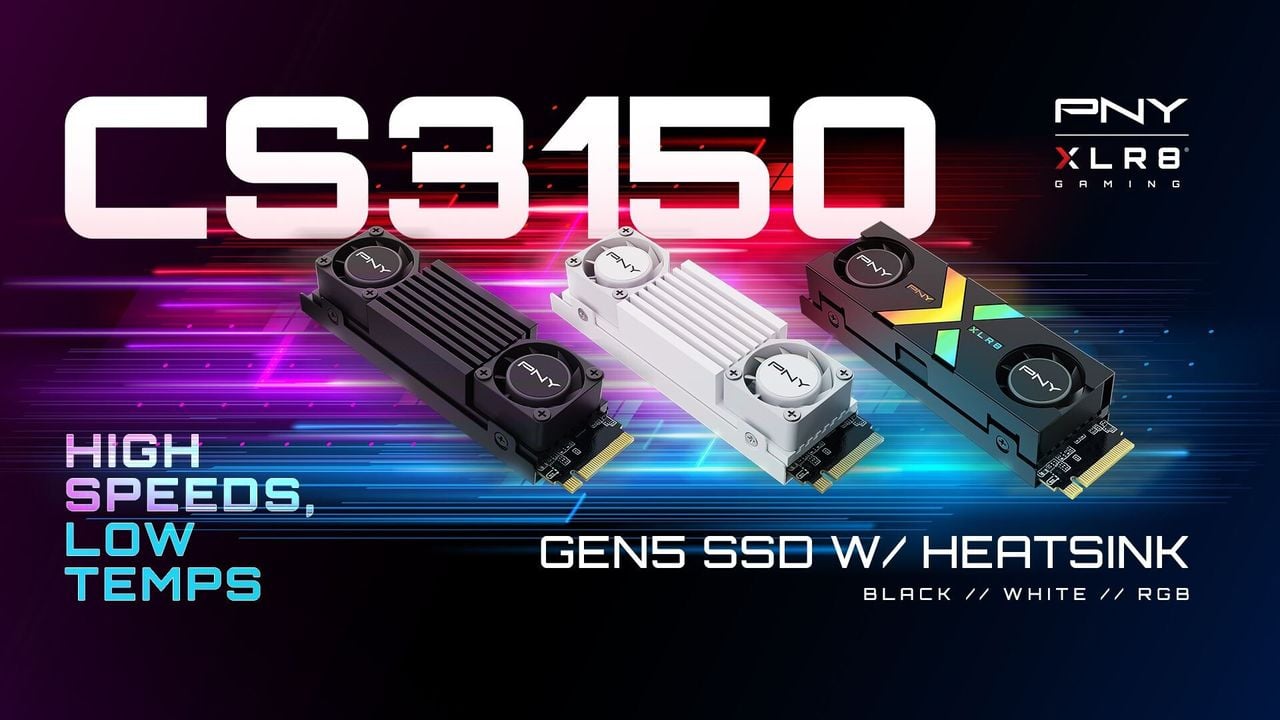
PNY Technologies has unveiled its latest addition to its range of solid-state drives (SSDs), the CS3150 M.2 NVMe PCIe Gen 5 x4 SSD. The new SSD is designed to deliver high-speed data transfers, thanks to its NVMe PCIe Gen 5 x4 interface. The CS3150 SSD aims to meet the growing demand for faster, more efficient […]
In an era where high-speed data transfer and efficient connectivity are paramount, OCuLink emerges as a fantastic technology for connectivity. Its growing presence in both server and consumer devices marks a significant shift in how we approach external data transfer and peripheral connectivity. This guide will provide more information on its benefits, costs applications and […]
It’s been a couple of years since Amazon first showed off Astro, its Alexa-equipped home robot with an extendable camera. Now the company is announcing Astro for Business which will let small and medium-size businesses use Astro as a security guard. Amazon thinks it’s here they’ll get the most use from the platform, keeping watch over business sites no larger than 5,000 square feet.
It’s $2,350 for a unit, and the buying company will get four months free access to both Ring Protect Pro ($20 a month) and Astro Security ($60 a month). The former lets you hook up to an existing Ring setup, while the latter lets you set up specific patrol routes and alerts. Users that pay for both will also get the chance to upgrade to Virtual Security Guard for $99, which routes the feed to a local monitoring company when it detects something is awry.
Astro has been kinda/sorta available to consumers for a while now, but only part as a limited, invite-only system. Amazon has been testing it in business contexts for the better part of a year and this is likely the first time it’ll be available to buy without any sort of barriers to entry. Although even if you had missed out so far, the prohibitive pricing might dissuade you from taking advantage.
This article originally appeared on Engadget at https://www.engadget.com/amazons-dinky-astro-robot-is-now-available-as-a-security-guard-143027983.html?src=rss