The Amazon Big Spring Sale is here, and though not exclusive to its products, some of its devices are touting great discounts. Take Amazon's Echo Dot, which is 30 percent off, dropping to $35 from $50. The fifth-generation device is one of our picks for the best smart speakers of 2024, and the more affordable price makes it all the more tempting.
The fifth-gen Echo Dot came out in 2022 but is still Amazon's latest edition in the series. It has similar capabilities to other smart speakers but at a fraction of the cost. It's a small but mighty device, with excellent sound and clarity for the price point. It utilizes Alexa for most actions but has physical buttons for adjusting the volume and muting the mic.
Amazon's Echo Dot with a clock is also on sale, with a 17 percent discount dropping its price to $50 from $60. If you're looking for a slightly more advanced option, then check out Amazon's fourth-generation Echo. The device is down to $65 from its usual $100. It offers additional features like Dolby audio and a built-in camera shutter.
This article originally appeared on Engadget at https://www.engadget.com/pick-up-an-echo-dot-for-only-35-during-the-amazon-big-spring-sale-150712728.html?src=rss
In this guide, we will show you how to use ChatGPT to create Notion templates., In today’s fast-paced digital landscape, productivity and creativity tools have become indispensable, particularly for those managing personal businesses like fitness coaching. Notion, with its flexible platform, combined with the AI capabilities of ChatGPT, presents a powerful duo to enhance […]
Your keys (bags, jackets, purses) may soon become easier to find, thanks to the Big Spring Sale at Amazon. Right now a four pack of Tile Pro Bluetooth trackers are down to $80 instead of the $100 full price for the pack. The deal looks even better when you consider a single Tile Pro goes for $35. That's not quite an all-time low, as we saw the set drop to around $70 for the shopping holidays in 2022 and again last year. Still a decent savings over buying our favorite trackers for Android phones separately and at full price.
The Tile Pro lets you swap out the battery, unlike other Tile models where you need to replace the whole unit. It's also louder than other Tile trackers and Apple's AirTag. While Tile trackers will work with Apple and Android phones, we found the connectivity to be much more reliable with an Android device. Like AirTags, the tags rely on the millions of other Tile users to anonymously ping your lost items when they're out in the world. At home, you can make them ring using the app to help you figure out which couch cushion your keys have fallen between. One caveat is that some features, like the alerts that let you know when you've left your items behind, are only available with a monthly subscription.
Other Tile trackers are on sale as well, including the smaller Tile Mate and the Mate paired up with a Tile Slim, our pick for the best wallet tracker. If you're interested in our top overall Bluetooth tracker, it's worth noting that the Chipolo One is on sale for $60 for a four-pack. It was the loudest tracker and the quickest at letting you know when you were leaving the house (or restaurant, coffee shop, grandma's house) without your things. Though it's wider finding community is nowhere near as vast as Apple's or even Tile's.
This article originally appeared on Engadget at https://www.engadget.com/a-four-pack-of-tile-pro-bluetooth-trackers-is-on-sale-for-80-in-the-amazon-big-spring-sale-150033881.html?src=rss
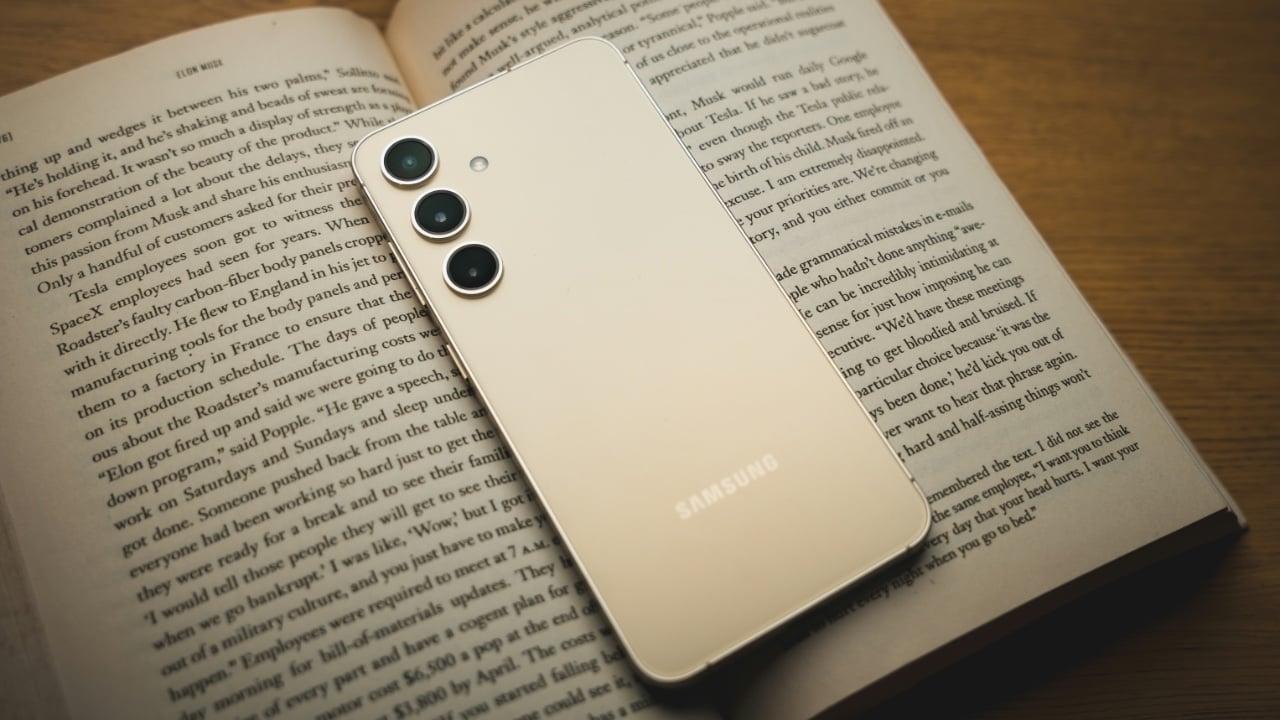
Samsung makes some of the best Android phones you can get right now and the latest models have dropped to all-time-low prices. If you've been waiting for a good deal on the high-end Samsung Galaxy S24 Ultra, you're in luck — the handset with 256GB of storage is $150 off and down to $1,150. The Galaxy S24+ is also on sale for $850 right now.
We gave the Galaxy S24 Ultra a score of 89 in our review. We found it to be very expensive (this discount helps mitigate that!) and the design and lack of Qi 2 support were drawbacks. However, we appreciated the camera upgrades and felt the S24 Ultra delivered great performance and offered terrific battery life. It often had a 50 percent charge remaining after 24 hours of regular use, thanks to the large battery and power efficiency gains afforded by the new processor.
One other major thing the Snapdragon 8 Gen 3 chipset powers is a host of on-device generative AI (GAI) features, the big selling point for the Galaxy lineup this year as Samsung tries to compete with Google Pixel devices on that front. An interpreter mode can translate languages during calls, while the Chat Assist tool can check the grammar, spelling and tone of your messages before sending them. There are also AI-powered options for image editing and search. While the AI tools more or less work as expected, we felt that they're not quite as polished as Google's versions. Nevertheless, the Galaxy S24 Ultra is our pick for the best premium Android phone.
The Galaxy S24+ also has a $150 discount right now. That too marks a record low for a version with 256GB of storage — the handset currently costs $850. Like its smaller sibling, the S24, the S24+ earned a score of 87 in our review. We appreciated the battery life and (for the most part) the GAI tools, though we felt that low-light photography performance was somewhat lacking. Those who prefer foldables may be more interested in the Galaxy Z Flip 5. Again, that's $150 off at $850 for 256GB of storage. However, it's $50 more than the lowest price we've seen for the handset thus far.
This article originally appeared on Engadget at https://www.engadget.com/samsung-galaxy-s24-phones-are-on-sale-for-record-low-prices-at-amazon-144742331.html?src=rss
Polar has launched its latest smartwatch, the Polar Grit X2 Pro, and the device will come in a choice of colors including Night Black or Stone-Gray which will retail for $749.90 and Titan in Autumn Leather and Black Silicone for $869,90. The Polar Grit X2 Pro, meeting military 810H standards, ensures exceptional durability against extreme […]
Netgear’s latest offering, the WBE750, a cutting-edge tri-band WiFi 7 access point that’s been crafted to cater to the ever-growing demands for high-speed wireless connectivity in the modern workplace. You might be wondering what makes the WBE750 so special. Well, it’s not just any WiFi access point; it’s a compact powerhouse that can support a […]
Spring is officially here and if you've been itching to get back outside for a run, or you want to start a new workout regimen, the Amazon Big Spring Sale might have just what you need to upgrade the music portion of your routine. A number of Jabra earbuds have been discounted for the sale, including a couple of our top picks for the best headphones for running. Key among them is the Jabra Elite 8 Active, which is on sale for $160 — only $10 more than its record-low price. The same sale price can be found direct at Jabra as well.
These nearly bested the Beats Fit Pro for the top spot in our guide. Not only are the Elite 8 Active buds comfortable and secure when doing any kind of workout, but they're also IP68-rated for dust and water resistance. Jabra also put these earbuds through military-grade testing to protect them from extreme humidity, high temperature, rain and altitude, so it's fair to say these buds can take a beating (probably way more than what you'd put them through even during your sweatiest runs).
The Elite 8 Active have solid sound quality and ANC out of the box, but you can customize EQ settings using its companion mobile app. If you prefer bassy sounds to get you in the zone before a workout session, you can change the sound profile to accommodate that. They also support spatial sound with Dolby Audio, which is a great perk to have and it will make the Elite 8 Active an even better option for those who want just one pair of buds to use all day, every day, not only during workouts. Jabra's HearThrough transparency mode is also handy, especially for runners who often train outside, since it lets some sound in so you can stay more aware of your surroundings.
Our biggest gripe with the Elite 8 Active buds is that HearThrough doesn't sound quite as natural as the transparency mode on our top pick, the Beats Fit Pro. Otherwise, they're a fantastic option for runners or anyone else who wants a solid pair of wireless earbuds that provide a complete package when it comes to sound quality, ANC and protection against sweat and the elements.
If you're looking to spend even less, it's hard to find a better value in Jabra's lineup than the Elite 4 Active earbuds. Those are on sale for $90 right now — not a record low, but close to it. They're our budget pick in the same guide thanks to their comfy, IP57-rated design, good sound quality and ANC, solid battery life and support for multipoint connectivity. And even though you don't get spatial audio on the Elite 4 Active, they do support custom EQ with the Jabra mobile app.
This article originally appeared on Engadget at https://www.engadget.com/one-of-our-favorite-headphones-for-running-is-20-percent-off-in-the-amazon-big-spring-sale-141545370.html?src=rss
The OCTO MAX is a multifunctional carabiner designed for individuals who appreciate outdoor adventures and handyman tasks. It incorporates over 20 features into a single CNC-cut titanium body, offering a range of tools for everyday use. At the forefront of the OCTO MAX’s features is a high-carbon stainless steel knife. This blade is made from […]
In this guide, we look at how you can extend your Android battery life on your smartphone. In today’s era, smartphones have evolved into indispensable tools, packed with a plethora of remarkable features designed to cater to our every need – from seamless communication and high-quality photography to advanced navigation and entertainment options. However, this […]
A lot of EVs aren’t that fun to drive, built as they are to glide around a highway like a swan on a river. Sure, like the swan’s manic paddling, there’s a lot of hardware and software sweating in the background to maintain that serenity. But the feeling can be so soporific that you wind up lusting for the day full autonomy comes and puts us out of our misery.
Except, of course, if you’re driving a new Lotus.
You see, when you’re driving an electric Lotus, there’s a sense of cognitive whiplash you don’t often get these days. EVs are quick and have plenty of torque thanks to their electric motors but they rarely have anything close to a personality. But even when you’re driving its new two-plus ton SUV, you’re capable of zooming around a race track as if you were driving a go-kart. It’s this unity of electric smarts and old-school drivability that Lotus hopes will return the perpetually beleaguered manufacturer to its former glory.
Lotus
Lotus Cars
If you’re not a car person, I wouldn’t blame you for not knowing Lotus was a big name in manufacturing and F1 – emphasis on was – responsible for many innovations that shaped how we build, drive and race cars today. “We talk about [having] this pioneering and rebellious spirit,” says Mike Johnstone, Lotus’ new VP of Commercial Operations. For the last 75 years, Lotus has been a left-field car manufacturer, with customers who want something that is “not necessarily part of the status quo.”
Lotus is a company defined by, and proud of, its idiosyncrasies. It’s idiosyncratically based in rural Norfolk, a hundred miles or more from the rest of the UK’s automotive industry. It’s idiosyncratic co-founder Colin Chapman (pictured, above), whose famous mantra was “simplify, then add lightness.” It’s idiosyncratic technical innovations, like monocoque bodies, ground-effect aerodynamics and the early use of carbon fiber. Its cars' idiosyncratic obsession with perfect handling and speed rather than creature comforts.
It was this idiosyncratic reputation that made it a draw for pop culture figures who wanted to stand out from the crowd. Patrick McGoohan chose a Lotus Seven to be The Prisoner’s car in 1996 because it showed a “touch of the rebel.” The Avengers’ Mrs. Peel drove a Lotus Elan, while James Bond drove a Lotus Esprit underwater in The Spy Who Loved Me and a Turbo Esprit in For Your Eyes Only. And Richard Gere drove a Lotus Esprit in Pretty Woman because Porsche and Ferrari, who were asked first, objected to the film’s subject matter. I doubt Lotus has ever uttered the phrase “brand safety” with a sincere face.
Since Chapman’s death in the early ‘80s, Lotus has become a byword for stagnation, passed from one corporate parent to another. Its model line suffered: It sold the Elise from 1996 until 2021, while the Exige was in production from 2000 to 2021. Its newest car pre-Geely was the Evora, and its 12-year lifespan made it the youngest and freshest ride in the range. All three were discontinued in 2021 when the Emira made its debut as the company’s last gas-powered car.
Lotus remained alive because of its small but passionate fanbase, which happened to include a number of automotive executives. But while demand for its own cars waned, the rest of the industry continued to rely on its expertise in making cars drive well. Lotus’ fingerprints are visible in so many high-profile cars, from the DeLorean DMC12, Aston Martin DB9 and even Sinclair’s C5. More importantly, the first Tesla roadster was developed on Lotus’ platform, with the first run of cars built at its Hethel, England base.
In 2017, Geely — the Chinese EV giant that owns Volvo and Polestar — bought a 51 percent stake in the company. It’s spent the last few years and a considerable amount of cash to push the company into the 21st century. The existing gas-powered product line was cleared out, the HQ revamped and a new electric-only facility built in China. I was able to visit the company’s Hethel plant to see the fruits of this investment, and also to try all of the new vehicles. The headline-grabbing model, of course, is the Evija, the company’s $3 million all-electric hypercar.
The Evija
Lotus Cars
Emeya, Eletre, Emira, Evija, Evora, Exige, Elise, Elan, Esprit: It’s tradition, or something, that all Lotuses have incomprehensible faux-Latin names beginning with an E. The Evija will, hopefully, lodge itself in your memory as the company’s hypercar, of which only 130 will be built. One of the first is owned by former Formula One world champion Jenson Button with a Brawn GP paint job in honor of his 2009 win.
Lotus opted to put a lot of hardware in the middle of the car behind the two seats to retain that mid-engined weight distribution. The body is a single piece of carbon fiber, and it’s obvious to all that this is a race car first, with Lamborghini-esque styling. To save weight, there’s little sound dampening, so you can hear the roar of the gear, and the road, as you slice through the air. Put your foot down and you’ll hear the power unit spin up to push juice to those four wheel-mounted 500W motors.
What comes out the other side is eye-bleeding acceleration and enough g-force that you feel your lunch shift from one side of your stomach to the other. Yes, other EVs can go quickly, and some accelerate ludicrously fast, but the Evija is playing in different water. For car people, Lotus has always been synonymous with fast-twitch driving dynamics and slightly lackluster reliability. But the Evija feels mature, solid, stable and able to harness all of the pure grunt that only an electric motor can provide.
I’d go further and say that the Evija is terrifying, especially when Karl Eaton, one of the minds behind the vehicle, took me around the track in one. He waited until the car reached 201 miles per hour to start explaining all of the smart choices embodied in its design. I didn’t recall much of what he said at the time since I was trying to keep all the fluids in my body.
The Eletre and Emeya
Lotus Cars
Of course, the Evija is the standard bearer for Lotus as a luxury EV maker that stands out from the crowd. It’s not likely you’ll have a few million lying around, but its existence will make you aware of the relatively more reasonably-priced options in its lineup. The Eletre is the first real Lotus EV, priced around $100,000 and again, something of a departure from the norm. Whereas Lotus prides itself on making zippy, mid-engined sports cars, this is a two-and-change ton SUV that just happens to be as capable on a race track as its E-named predecessors.
On my first few laps around the track, I drove the Eletre like a high-sided SUV, which is to say, gently. After all, I didn’t want to flip this thing over when I’d need to save three years worth of paychecks just for a chance to look at the sales brochure. My co-pilot kept urging me to go harder, and eventually I did, realizing that Lotus has done something amazing. It’s a car that you can fling around a track and feel like you’re Lewis Hamilton, and then drive it home without missing a beat.
Lotus Cars
The Eletre is already on sale, but we won’t need to wait a decade to see what follow-up Lotus has planned. Next on the docket is the Emeya, a luxury hyper-grand tourer based on the same platform as the Eletre. You can see the shared design language and the emphasis on active aerodynamics in the body to help the cars zoom around the corners. There are gaps and vents all around the body to help push air past the cabin and keep all four wheels planted on the road.
As for the interiors, Lotus is a company that has traditionally avoided fripperies like comfort and ease of use. These, after all, aren’t conducive to Chapman’s mantra of simplifying and adding lightness. But the Eletre and Emeya have gloriously un-Chapmanesque cabins full of luxurious materials and physical dials and switches more reminiscent of a high-end camera. When you look at the price and see that the luxurious excesses of this cost the same as a Tesla Model X, you feel as though the incumbents need to get a lot better quickly.
The Spirit of Lotus
Lotus Cars
You could argue that Lotus is just a badge under which Geely can slap components it’s using elsewhere. But Mike Johnstone said the parent company has no interest in diluting what makes Lotus Lotus. “More than 99 percent of all of our development is done ourselves,” said Johnstone, “where we benefit [from being owned by Geely] is access to a supply chain.”
Much has been made about what Lotus’ role in the automotive firmament should be in the new world of electric vehicles. Colin Chapman’s famous principles were to simplify and add lightness so aren’t bulky EVs, shorn of their gas-powered engines, an insult to his memory? Thankfully, I only needed to cross the road that runs alongside Lotus’ Hethel HQ to ask an expert: Chapman’s son, Clive (pictured, left). Clive is the head of Classic Team Lotus, a heritage brand that keeps the company’s former gas-powered F1 cars working. Despite the shared name and proximity, there’s no financial relationship between Lotus and the Classic Team.
Clive showed me around the facility, which maintains those classic F1 cars and races them at heritage events, like the Historic Grand Prix at Monaco. If you’re a one-percenter with an old Lotus, you can also send it here to be restored by specialists. On the upper floor, there’s a collection of classic Lotuses of every stripe. It’s a rare and beautiful sight to see. I asked Clive how his father would feel about the shift to electric. “Dad was never sentimental,” said the younger Chapman, and directed me to a pristine Lotus 56 in the collection. He explained that his father was never wedded to one technology or philosophy, despite what some Lotus fans may claim. The Lotus 56, after all, was equipped with a gas turbine engine more commonly seen in aircraft than vehicles, but Colin Chapman was very interested in the speed advantage it could have offered.
It seems that what mattered to Colin Chapman then is the same as what matters to Lotus now: Pushing automotive design forward, no matter how unusual the method. Before I tried any of Lotus’ EVs on its test track, I tried the (gas-powered) Emira and used that as my benchmark. My expectation was that the subsequent cars would all pale somehow in comparison to the last “true” Lotus to be made at Hethel. And yet, the new cars, despite their batteries and electric motors, are just as lithe and energetic as ever. This, I suspect, is why Lotus has a good chance of making a mark in the new world, because it remains enough of that uncompromising spirit to stand out from the crowd and make sure that, for those who need it, you can still feel connected to your car.
This article originally appeared on Engadget at https://www.engadget.com/lotus-secret-weapon-is-evs-with-personality-140013839.html?src=rss