A 400-Year-Old Japanese Candleholder, Upgraded Again

There’s something quietly satisfying about a design that doesn’t try to reinvent the wheel. Dai Furuwatari’s Pendulum Candleholder isn’t trying to be radical. It’s not minimalist for minimalism’s sake, and it doesn’t come loaded with a big brand story about disruption. It’s just a very thoughtful update to something that was already good, and that, to me, is the most interesting kind of design work there is.

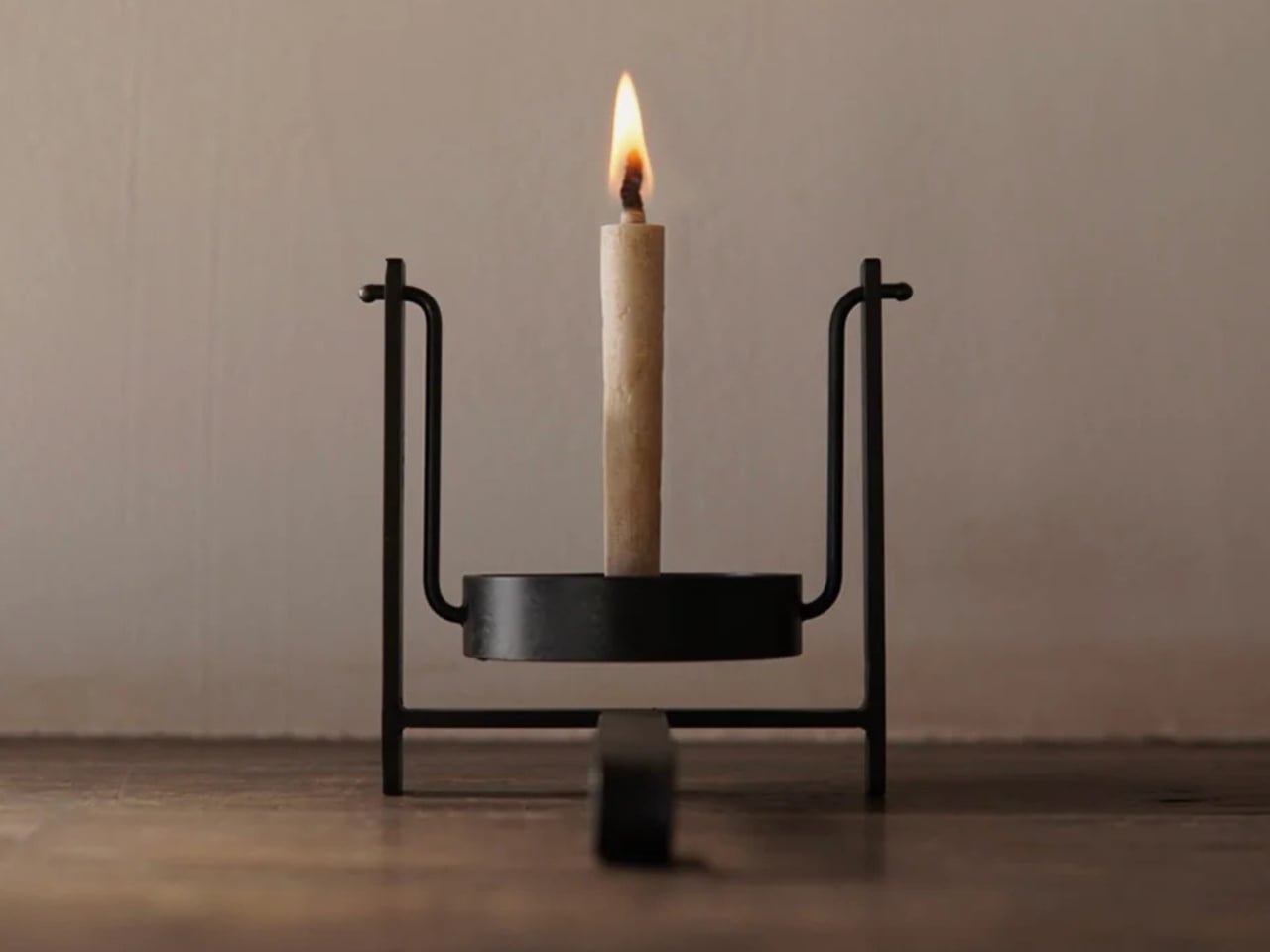
The backstory matters here. The piece is rooted in a traditional Japanese portable candleholder called a teshoku. Back in the 1600s, the teshoku was a luxury item, the kind of thing you’d find in the homes of the wealthy or inside temple halls. Candles were expensive, and the ability to carry light from room to room was a privilege. At some point, an unknown craftsman solved a simple but obvious problem: the teshoku got a long, horizontal leg that doubled as a handle, making it easier to pick up and carry without getting too close to the flame. It was a small addition that changed the whole experience of using it.

Designer: Dai Furuwatari
By the 1800s, paraffin candles made the whole thing more affordable, and the teshoku eventually found its way into everyday life. The design stayed more or less the same for centuries, which says something, because designs that stick around that long usually earn it.

Furuwatari, a product designer who transitioned into ironwork, picked up the teshoku and asked what could still be better. His answer came in the form of two specific, considered improvements that feel less like features and more like realizations.
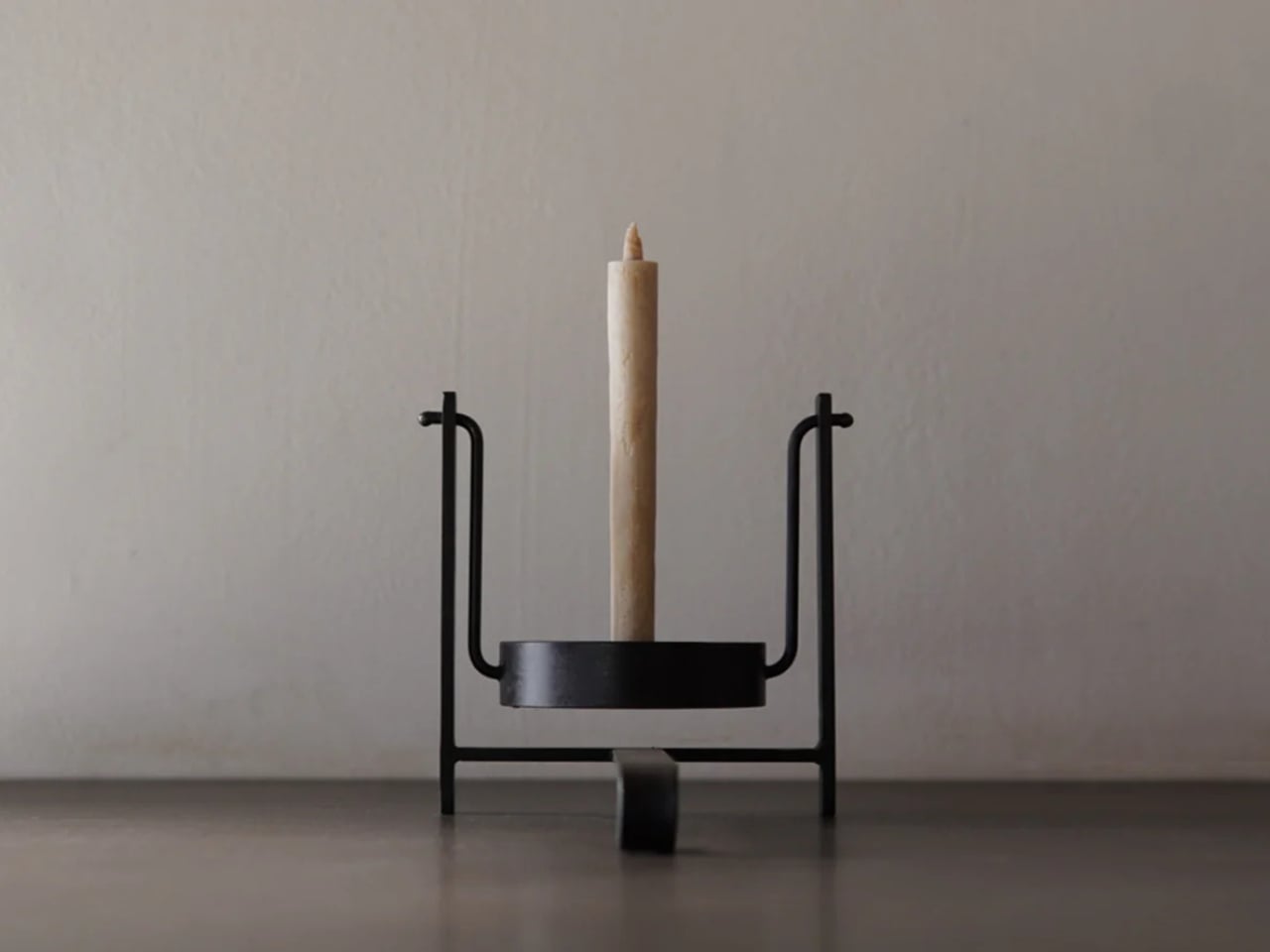
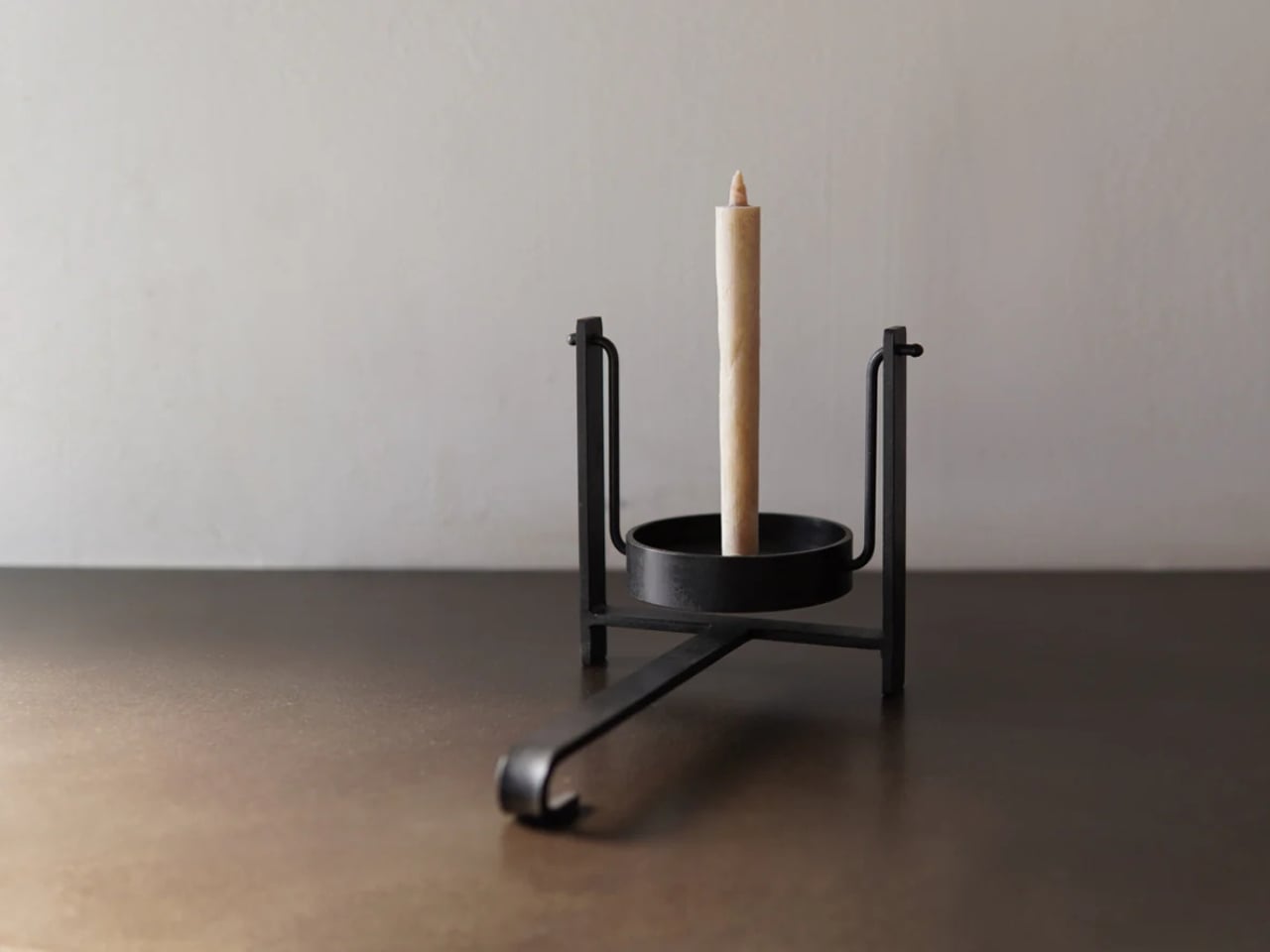
The first is that the long horizontal leg, that original carrying handle, now doubles as a hanging hook. It’s such an obvious extension of what was already there that you almost wonder why no one thought of it sooner. Being able to mount the candleholder on a wall opens up a completely different use case. Suddenly it’s not just portable, it’s also fixed lighting when you want it to be, which makes it far more versatile in how and where it can live.
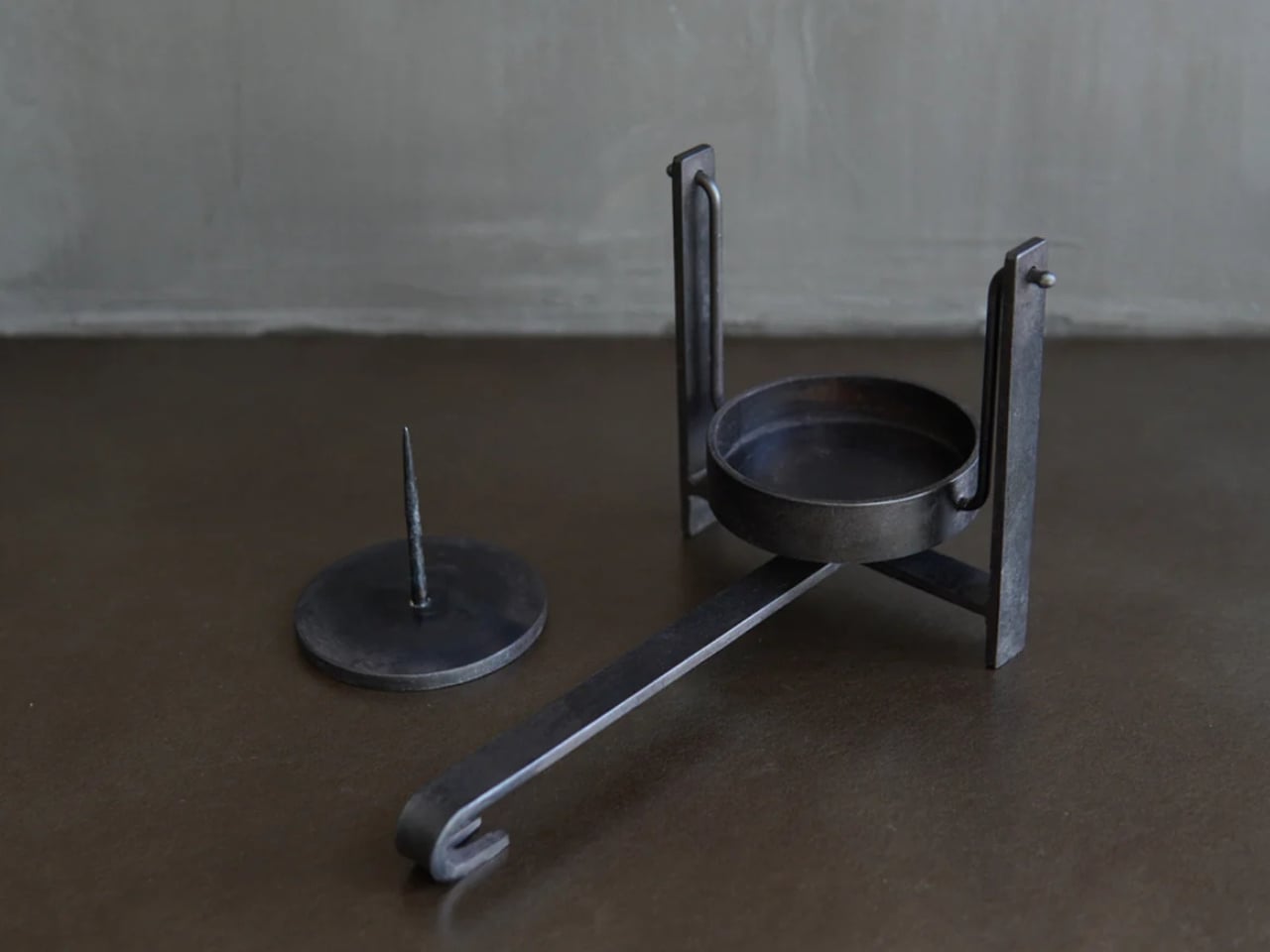
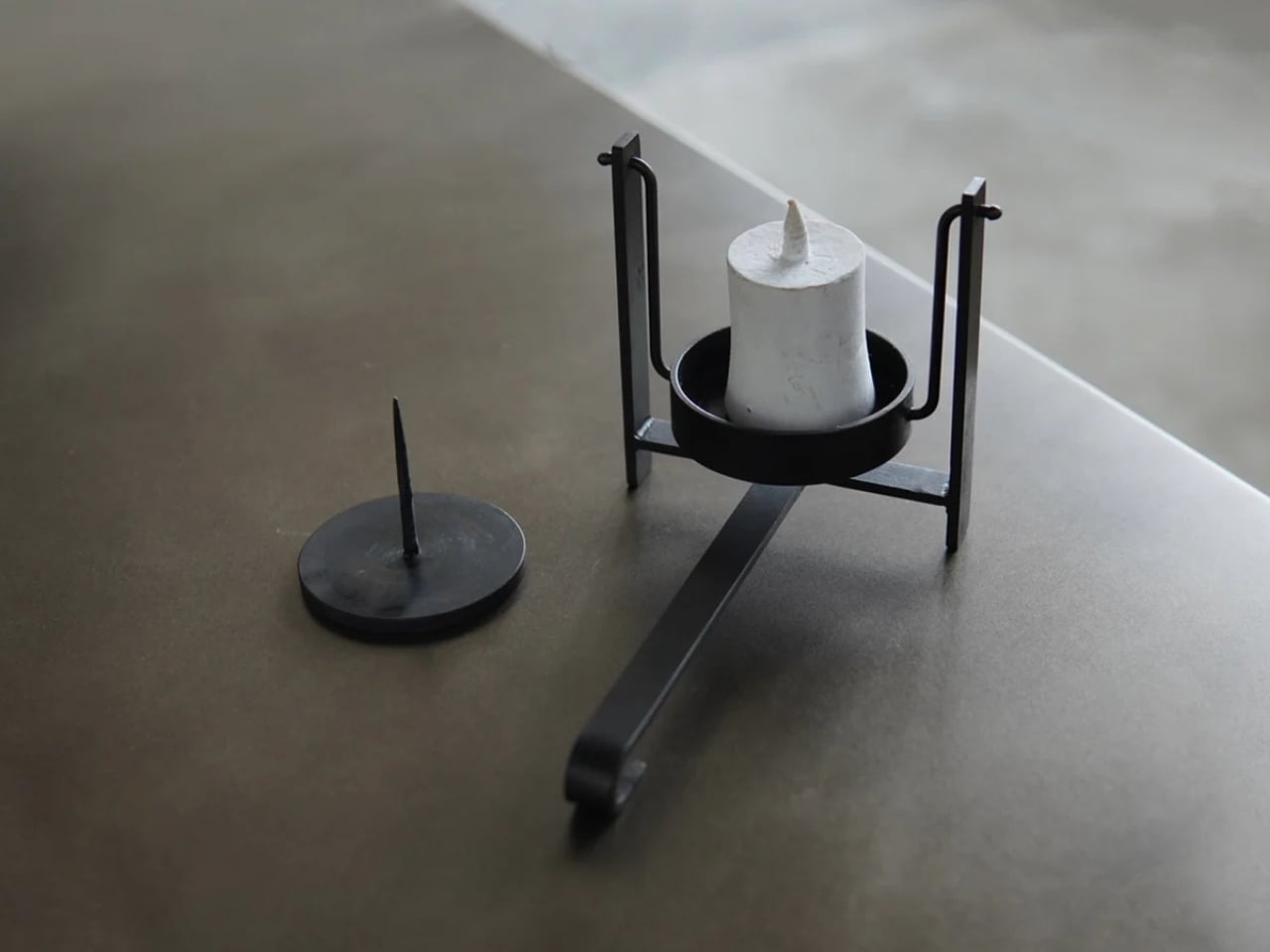
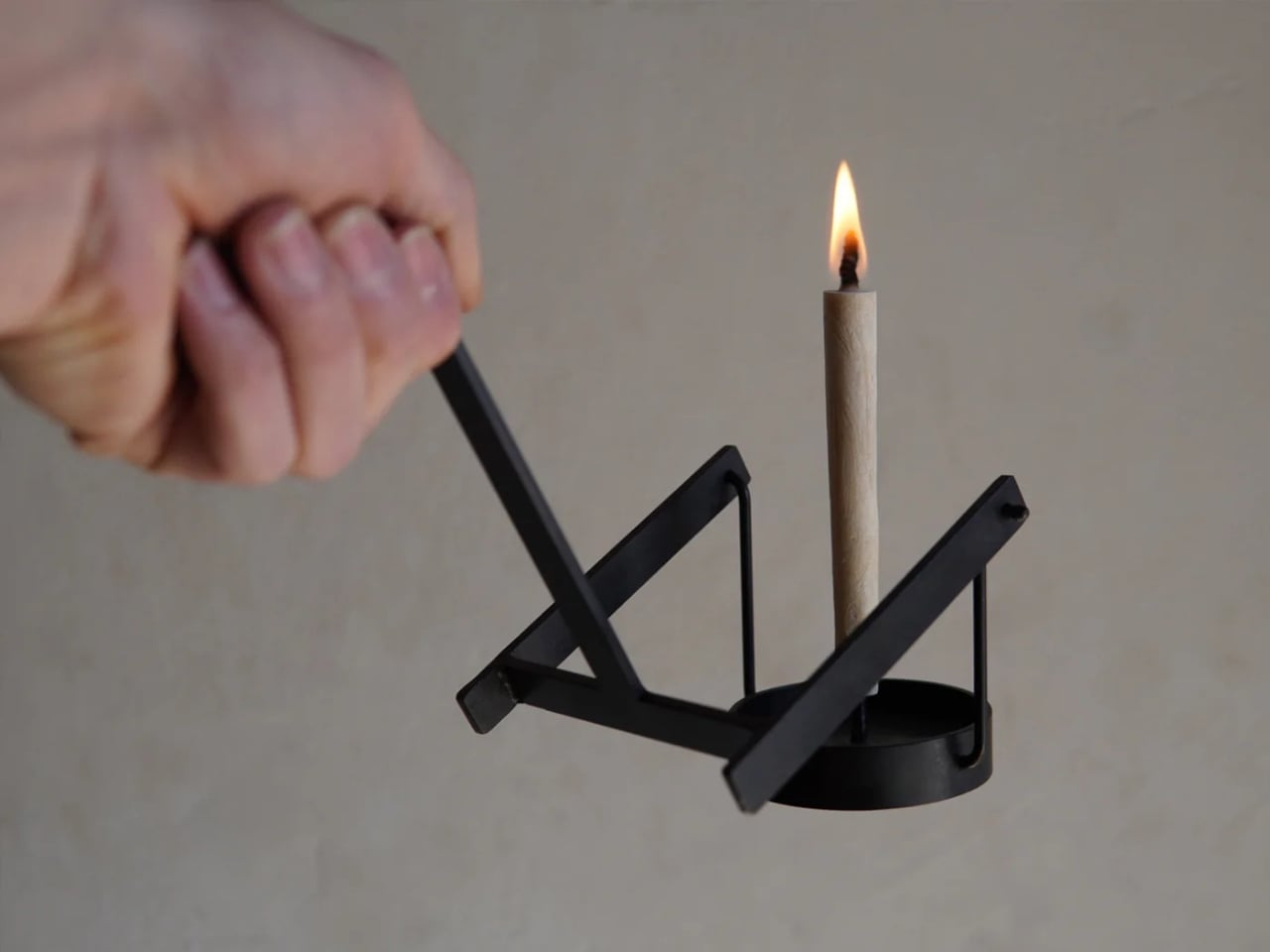
The second improvement is a pivot mechanism built into the piece. This allows the candle mount to be held at different angles depending on how you’re carrying it, which is genuinely useful. Carrying a lit candle without wax dripping everywhere is its own small skill, and a pivot that lets you adjust the angle takes a lot of the anxiety out of it. The candle mount is also removable, which makes cleaning it much easier.
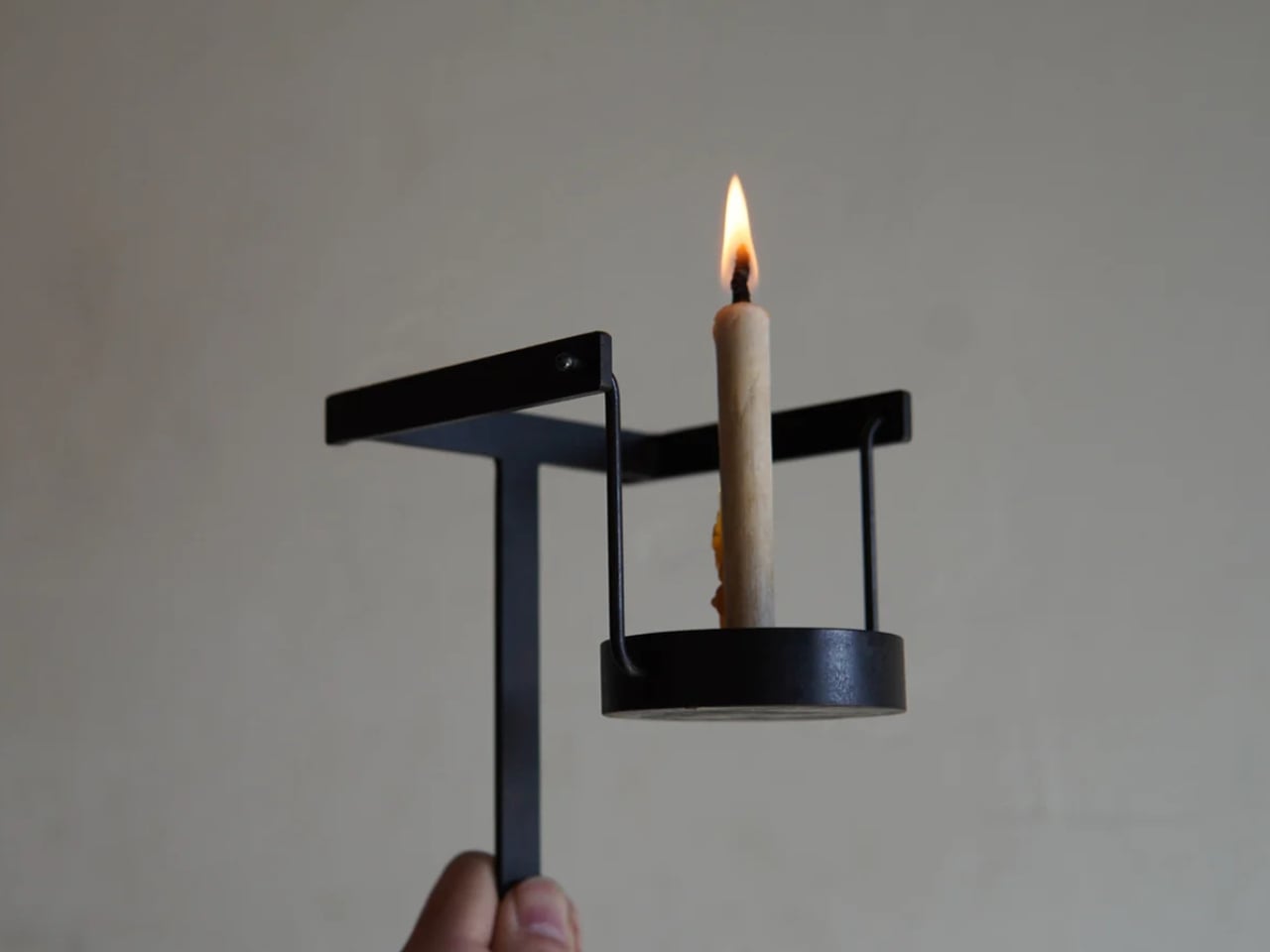
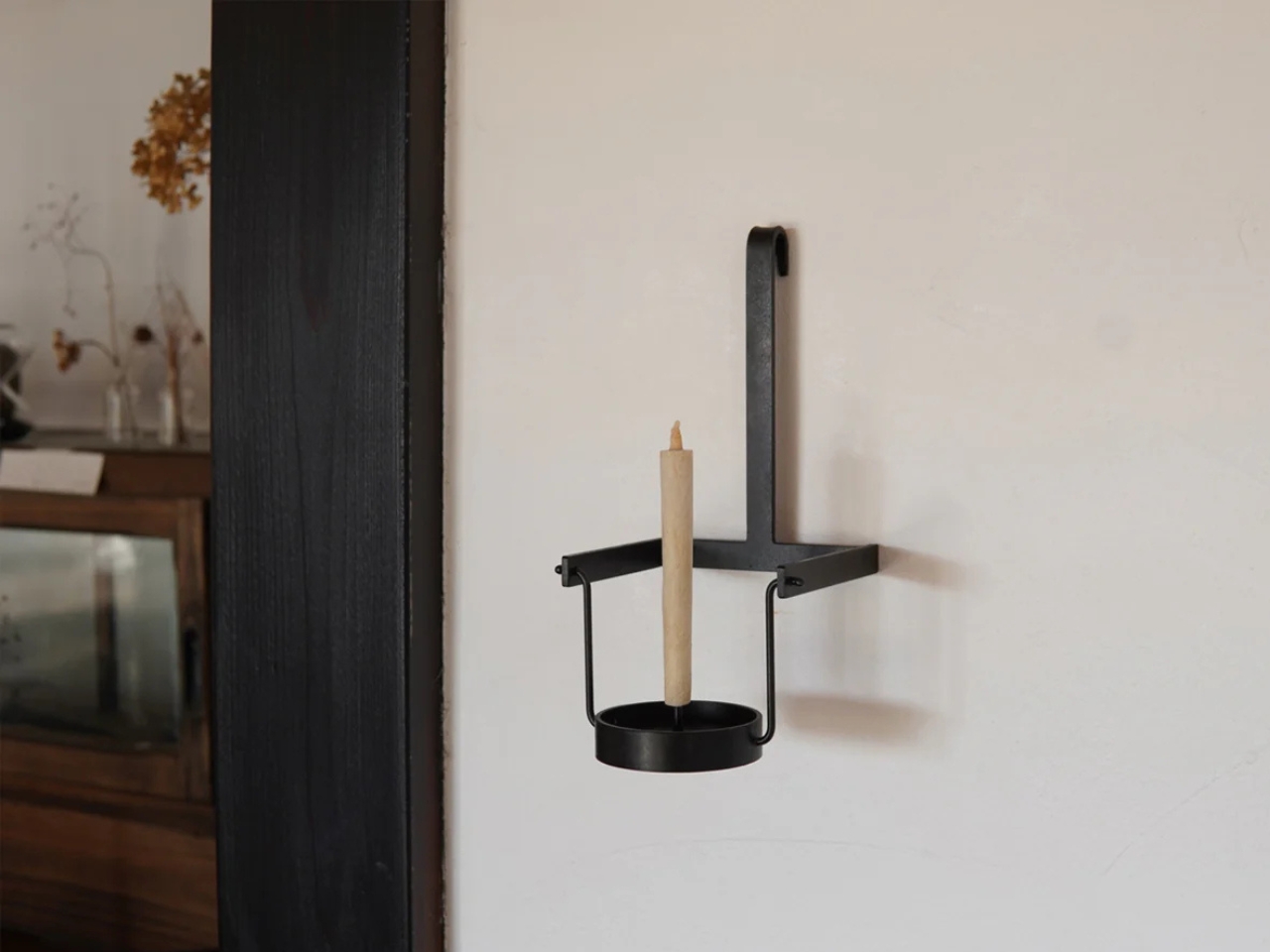
What I appreciate most about this piece is that both changes are extensions of the original logic of the teshoku. They don’t override the design or force it to become something it isn’t. They follow the same thinking that shaped the object centuries ago: what is this person actually doing with this thing, and how can we make that experience a little less complicated? That’s user experience design at its most sincere, and it shows up in objects just as much as in apps or interfaces.
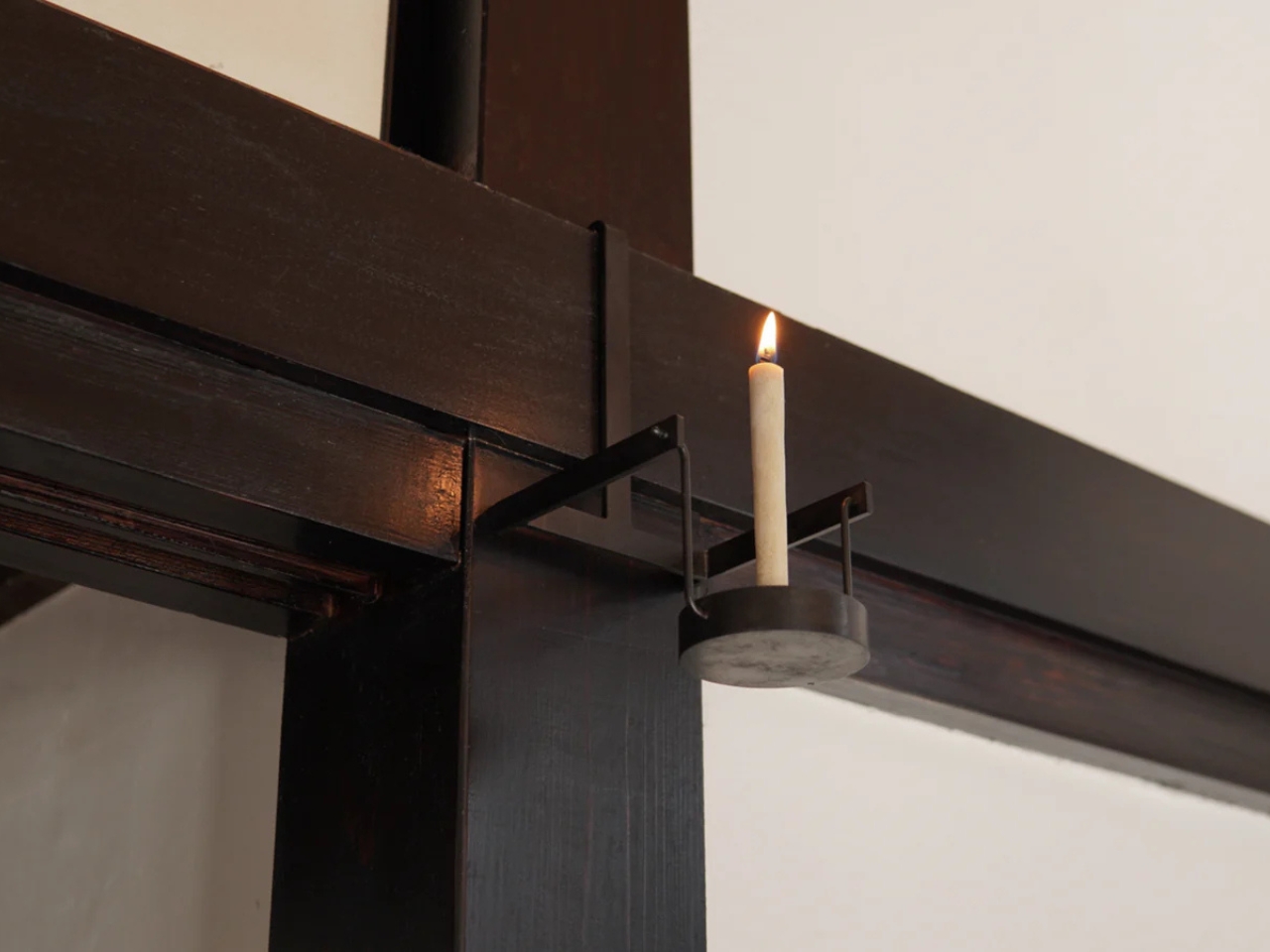
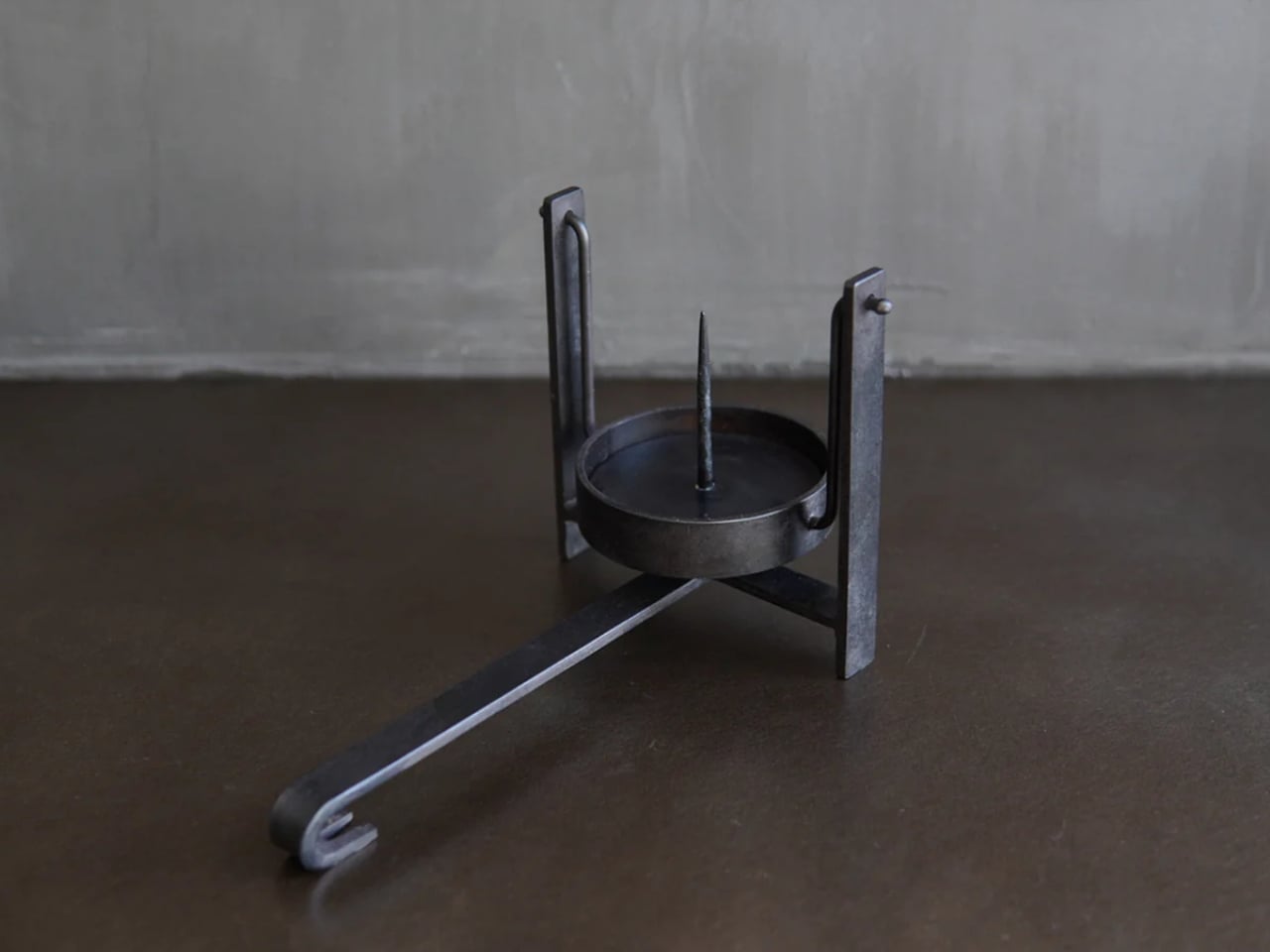
The Pendulum Candleholder is made to order by Furuwatari’s iron products company, To-Tetsu, and retails for $158. Each piece is handmade by a craftsman, which means delivery can take one to two months depending on order status. Iron is the material, and it will develop rust over time, which can be maintained and even enriched with periodic applications of linseed oil or beeswax. That aging process is part of the appeal if you’re into objects that change with use.
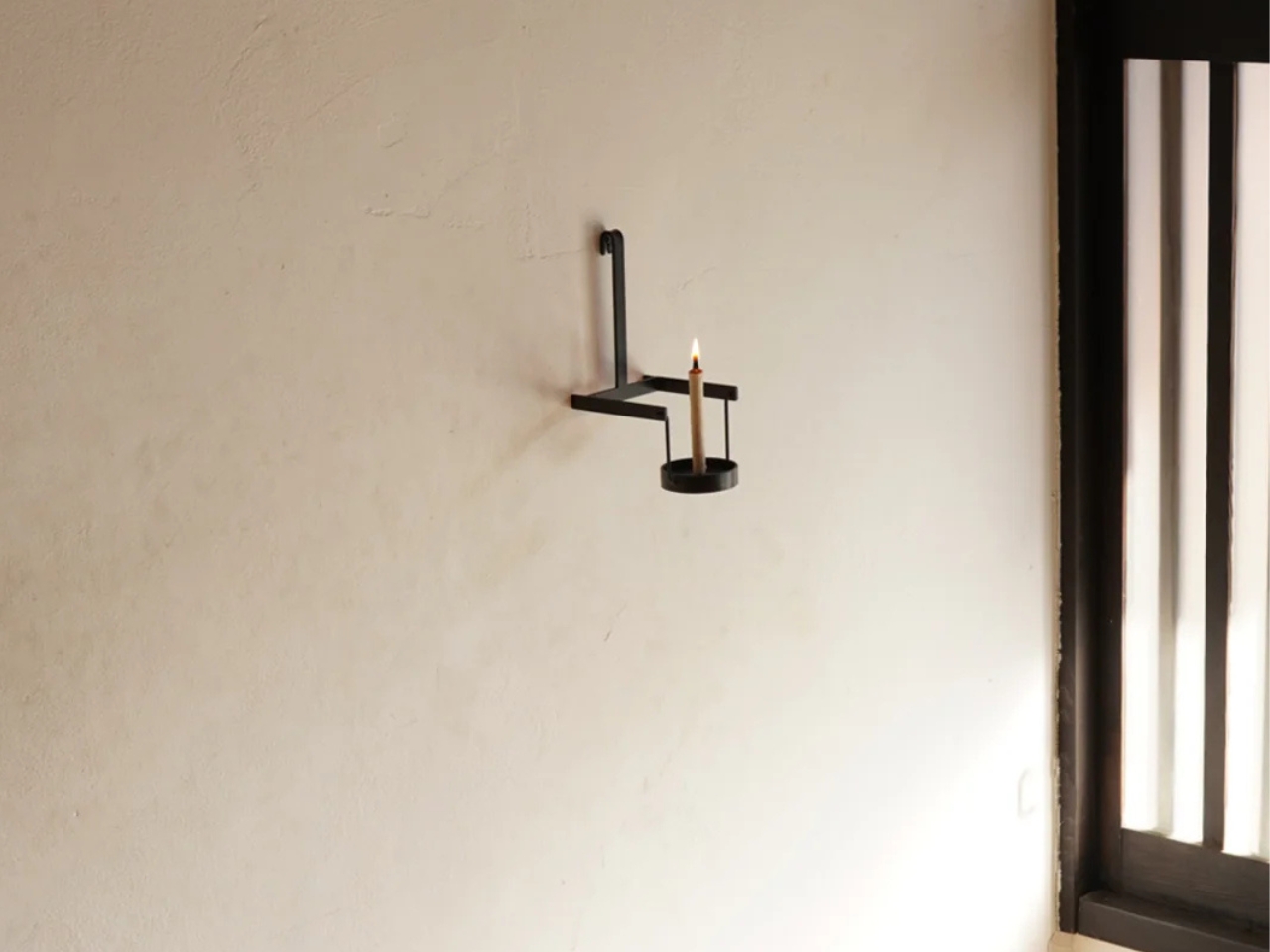
Is it practical in 2026? Not in the way a smart lamp is practical. But there’s a different kind of value in objects that connect you to a longer timeline of human ingenuity. Lighting a candle and carrying it across a room is a small act that people have been doing for centuries. Furuwatari’s version just makes it a little more graceful, and a little more considered, which is more than enough.

The post A 400-Year-Old Japanese Candleholder, Upgraded Again first appeared on Yanko Design.

Mercury 2 : World’s Fastest Reasoning AI Model Built for Production Applications

Mercury 2 : World’s Fastest Reasoning AI Model Built for Production Applications Price table listing Mercury 2 costs: $0.25 per million input tokens and $0.75 per million output tokens.

Mercury 2, the first diffusion-based reasoning large language model, introduces a new approach to token generation by refining multiple tokens in parallel rather than sequentially. This shift enables Mercury 2 to achieve speeds of up to 1,000 tokens per second, making it five times faster than models like Haiku. According to Skill Leap AI, this […]

The post Mercury 2 : World’s Fastest Reasoning AI Model Built for Production Applications appeared first on Geeky Gadgets.

Posted in Uncategorized

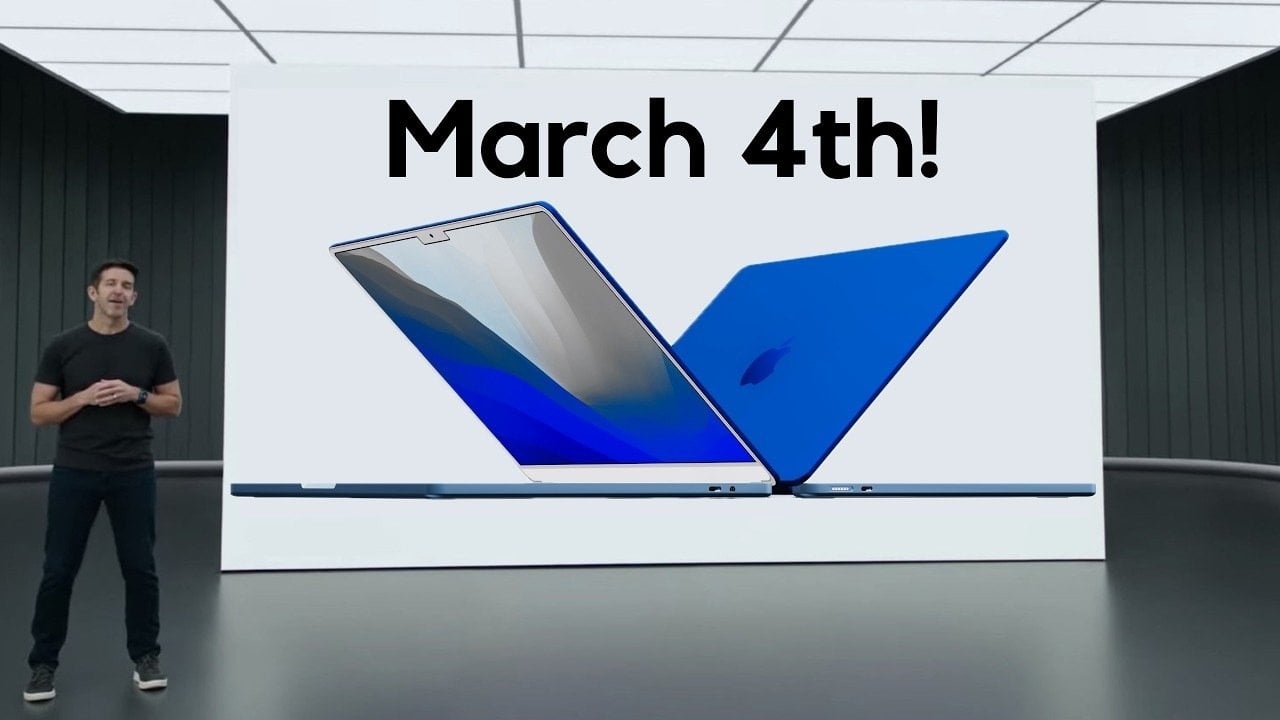
Apple’s $599 MacBook is Real: The A18 Pro ‘Surprise’ Coming March 4

Apple’s $599 MacBook is Real: The A18 Pro ‘Surprise’ Coming March 4 Apple’s $599 MacBook with A18 Pro chipset and premium design

Apple is set to make waves in the entry-level laptop market with its anticipated $599 MacBook, powered by the A18 Pro chipset. This device is designed to strike a balance between affordability, performance, and premium design, targeting a wide range of users, including students, educators, and businesses. At the same time, it may not include […]

The post Apple’s $599 MacBook is Real: The A18 Pro ‘Surprise’ Coming March 4 appeared first on Geeky Gadgets.

Posted in Uncategorized

Amazon introduces three personality styles for Alexa+

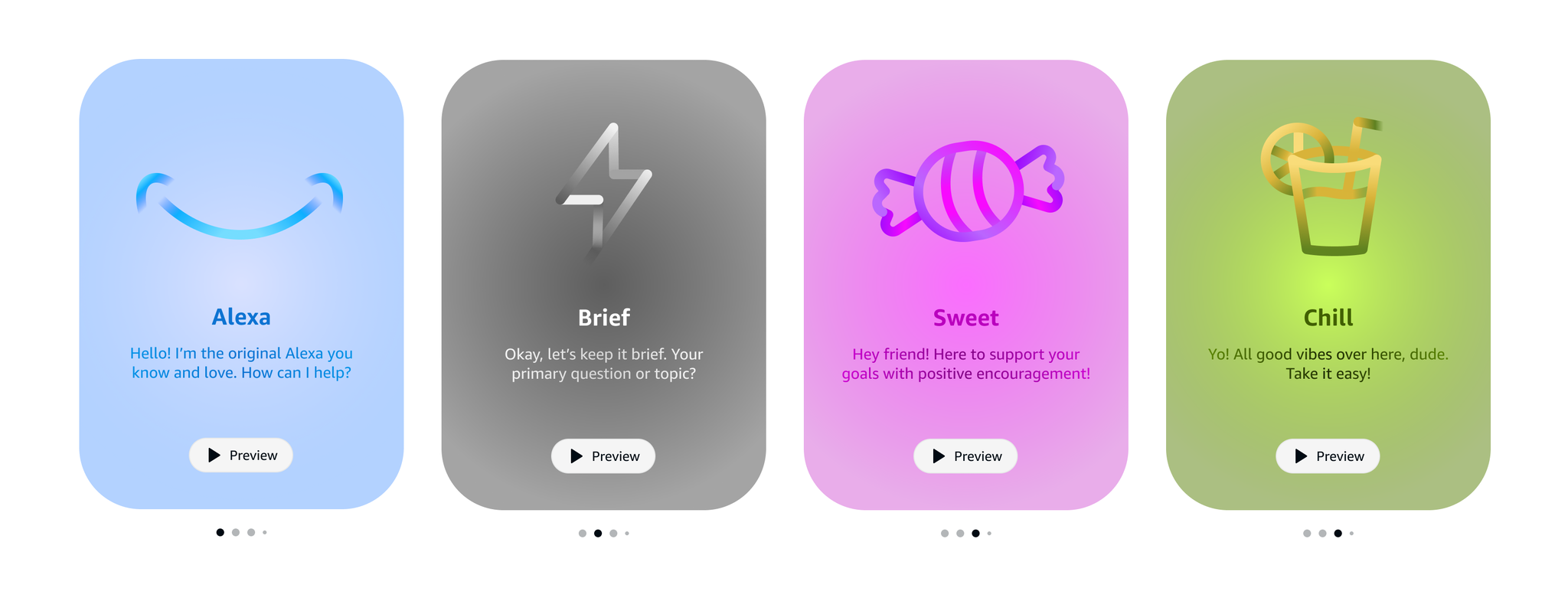
Amazon is offering a new way for Alexa+ users to customize the AI assistant's communication style. The company has introduced three personalities for Alexa+, so the assistant can adopt an attitude that is Brief, Chill or Sweet. 

The Brief style will be exactly that: no small talk and no extra conversation. Chill is easygoing and seems to be inspired by caricatures of the surfer/stoner type, while the Sweet mode is almost aggressively perky and chipper. In the audio sample provided, when a user asks "Alexa, how's it going?" the Chill voice responds, "Life’s treating me well – all systems are Zen and the digital universe is spinning in harmony." In contrast, the Sweet one replies, "Absolutely fantastic! I’m radiating pure joy and ready to make your day incredibly amazing!"

Illustration explaining the three different personality styles users can apply to the Alexa+ assistant.
The three new personality styles will set alongside the standard Alexa.
Amazon

Amazon explained that the three personality styles are based on five metrics: expressiveness, emotional openness, formality, directness and humor. The company may release additional options with different combinations of those sliding scale traits in the future.

For now, users can swap the assistant's vibe from the Alexa app or with the spoken command, "Alexa, change your personality style." Both approaches can also be used to swap back to the classic Alexa voice. All three personalities are available now for all Alexa+ customers.

This article originally appeared on Engadget at https://www.engadget.com/ai/amazon-introduces-three-personality-styles-for-alexa-140000602.html?src=rss

Spotify can reorder your playlists by BPM and key

Spotify is rolling out a new feature that’s meant to make transitions in between tracks even smoother. If you’ll recall, the streaming service released the ability to create customized transitions within playlists in August last year. It gave people a way to create uninterrupted progressions and eliminate awkward silences between songs. Now, Premium users will be able to make sure the songs in their playlists flow seamlessly even further by reordering tracks based on their keys and BPM or beats per minute.

The new feature can rearrange playlists with one tap. All paying users have to do is tap Mix on one of their playlists and then tap the Edit button. From there, they can scroll down to find the Smart Reorder option. Tapping Smart Reorder will automatically rearrange songs according to their keys and BPM without users having to do anything else. They just have to click Save so that the change to their playlist takes effect.

Spotify says users have streamed over 220 hours of their mixed playlists since it introduced custom transitions last year. It also listed some of the most popular ones on the platform, including The Weeknd’s Wake Me Up transitioning into After Hours and Flo Rida’s Low into Rihann’s S&M.

This article originally appeared on Engadget at https://www.engadget.com/entertainment/music/spotify-can-reorder-your-playlists-by-bpm-and-key-140000101.html?src=rss

NotebookLM Adds Prompt Slide Editing & Full PPTX Export for Editable Decks

NotebookLM Adds Prompt Slide Editing & Full PPTX Export for Editable Decks Student presentation draft generated from a research paper in NotebookLM, with citations and slide sections.

Google’s latest NotebookLM update introduces two new features aimed at enhancing presentation workflows. As explained by Julian Goldie, users can now use AI-powered prompt-based slide editing to make targeted changes through simple text commands. For instance, you can direct the system to “add relevant visuals” or “apply a minimalist design,” and the AI will implement […]

The post NotebookLM Adds Prompt Slide Editing & Full PPTX Export for Editable Decks appeared first on Geeky Gadgets.

Posted in Uncategorized

Android Auto Hidden Features Nobody Talks About (2026)

Android Auto Hidden Features Nobody Talks About (2026) Android Auto

  Android Auto has significantly enhanced the driving experience by seamlessly integrating your smartphone with your vehicle’s infotainment system. While its core functionalities like navigation and media playback are widely recognized, many of its most valuable features remain underutilized. The video below from HotshotTek explores Android Auto’s hidden capabilities, offering practical tips and customization options […]

The post Android Auto Hidden Features Nobody Talks About (2026) appeared first on Geeky Gadgets.

Posted in Uncategorized

Headless Mac Mini Setup Guide : Control macOS Systems Using an iPad Remotely

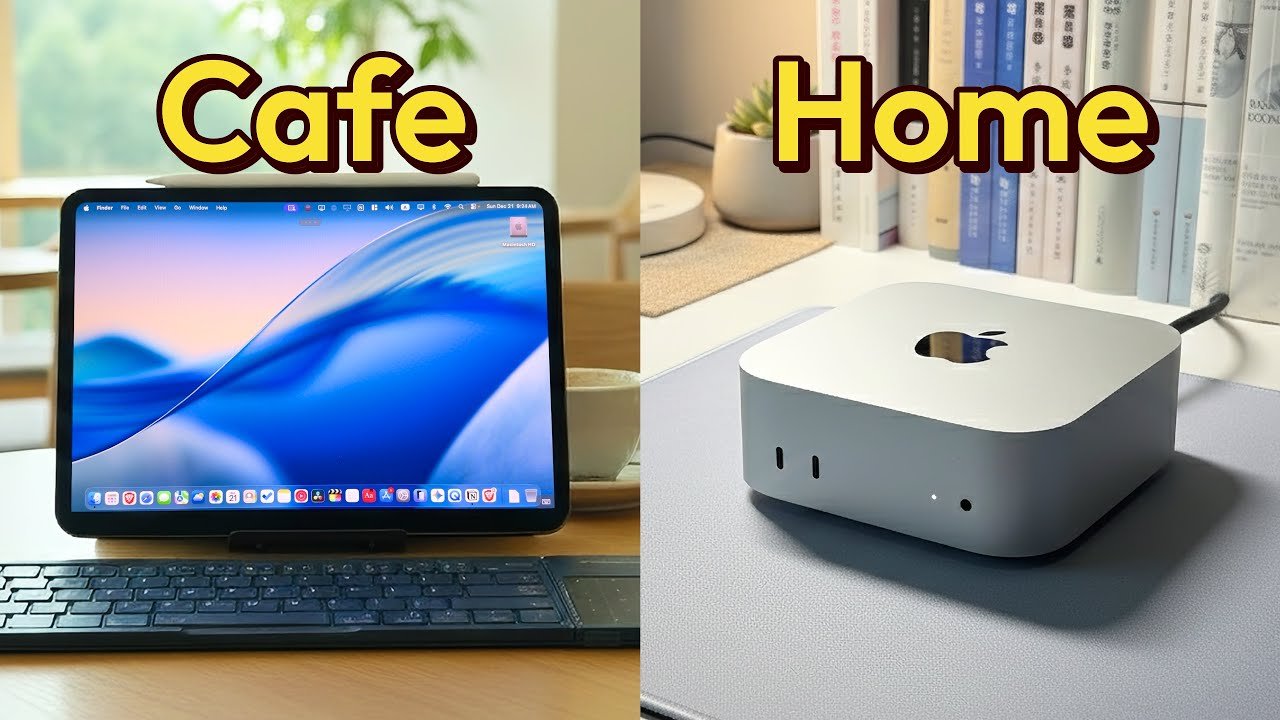
Headless Mac Mini Setup Guide : Control macOS Systems Using an iPad Remotely Jump Desktop settings screen highlighting virtual display options used when the Mac mini has no monitor attached.

Setting up a headless Mac Mini for use with an iPad enables you to run macOS without a dedicated monitor, making it a versatile option for compact workspaces. Below Leo Ouyang, explains one way to do it with Jump Desktop which allows you to remotely control the Mac Mini directly from your iPad. However, the […]

The post Headless Mac Mini Setup Guide : Control macOS Systems Using an iPad Remotely appeared first on Geeky Gadgets.

Posted in Uncategorized

iPhone 18 Pro Max: The Battery Upgrade We’ve Waited For

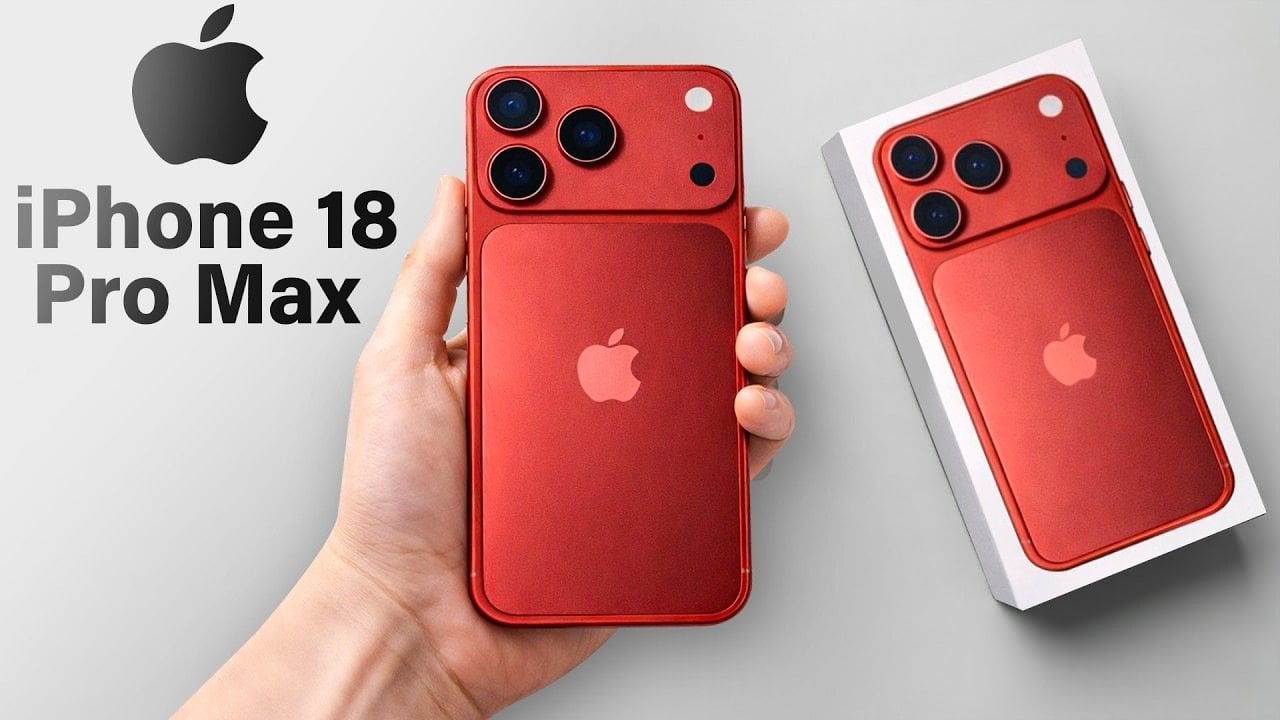
iPhone 18 Pro Max: The Battery Upgrade We’ve Waited For iPhone 18 Pro Max with upgraded 5100mAh battery for extended performance

The iPhone 18 Pro Max is poised to set a new benchmark in smartphone technology. With a focus on addressing user demands, Apple has integrated significant upgrades in battery capacity, processing power, connectivity, and camera functionality. This flagship device is expected to redefine user expectations and deliver a premium experience. Below is a detailed look […]

The post iPhone 18 Pro Max: The Battery Upgrade We’ve Waited For appeared first on Geeky Gadgets.

Posted in Uncategorized

Uber previews its Dubai air taxi service

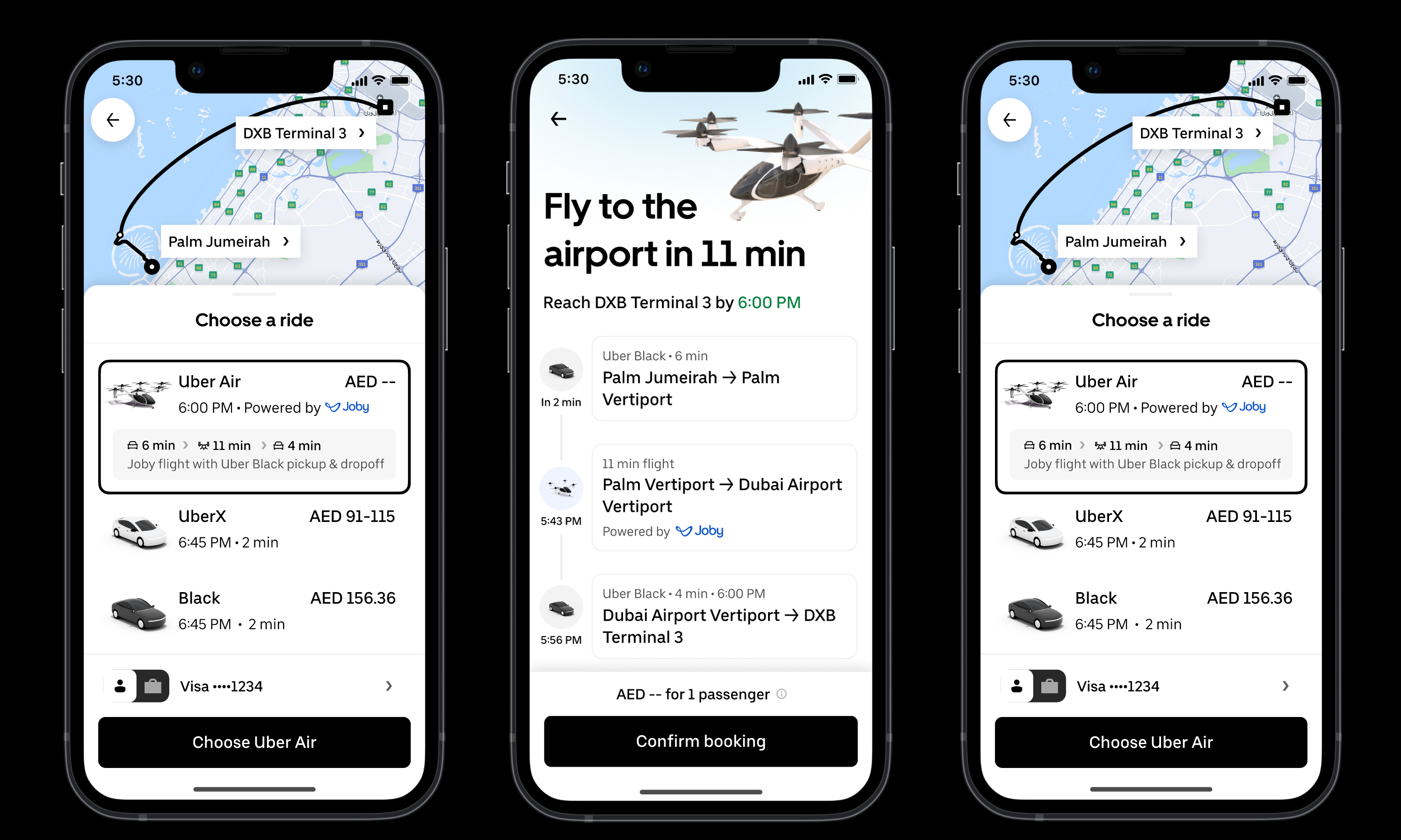
Uber is one step closer to going airborne. On Wednesday, the company previewed its air taxi booking service ahead of an expected launch in Dubai later this year. The inaugural Uber Air program will let travelers book Joby Aviation's electric air taxis through a familiar process in the Uber app.

The experience of booking an air taxi will be much like reserving a four-wheeled Uber. In the app, after entering your destination, Uber Air will appear as an option for eligible routes. The Uber app will book a flight and an Uber Black to pick you up and drop you off at a Joby "vertiport."

Three phone screens, showing the process of booking an air taxi in the Uber app
The process of booking a flying taxi will be instantly familiar.
Uber

Joby's air taxis, built exclusively for city travel, can accommodate up to four passengers and luggage. (Uber says size and weight guidelines will be announced closer to launch.) The interior is about the size of an SUV and has "comfortable seating" with panoramic windows. They can travel up to 200 mph and have a range of up to 100 miles. Four battery packs and a triple-redundant flight computer are onboard for safety purposes.

The air taxis aren't (yet) autonomous and will each have a human pilot onboard. That would at least suggest high prices. After all, pilots aren't nearly as cheap as Uber's legion of independent-contractor drivers. But the company insists its air taxi rides will somehow be around as expensive as an Uber Black trip.

A person looks out the window of an air taxi, viewing the city below.
Joby's air taxis have "panoramic" windows with a view of the city below.
Joby

Dubai is only the beginning of the companies’ plans. The US-based Joby says it's in the final stage of FAA type certification and hopes to launch service in New York and Los Angeles. Globally, it's targeting the UK and Japan as well.

As for how realistic a US launch is anytime soon, well, that's up for debate. On one hand, President Trump signed executive orders last year that would create a pilot program to test such aircraft. But safety and cost considerations may require a grounding of expectations.

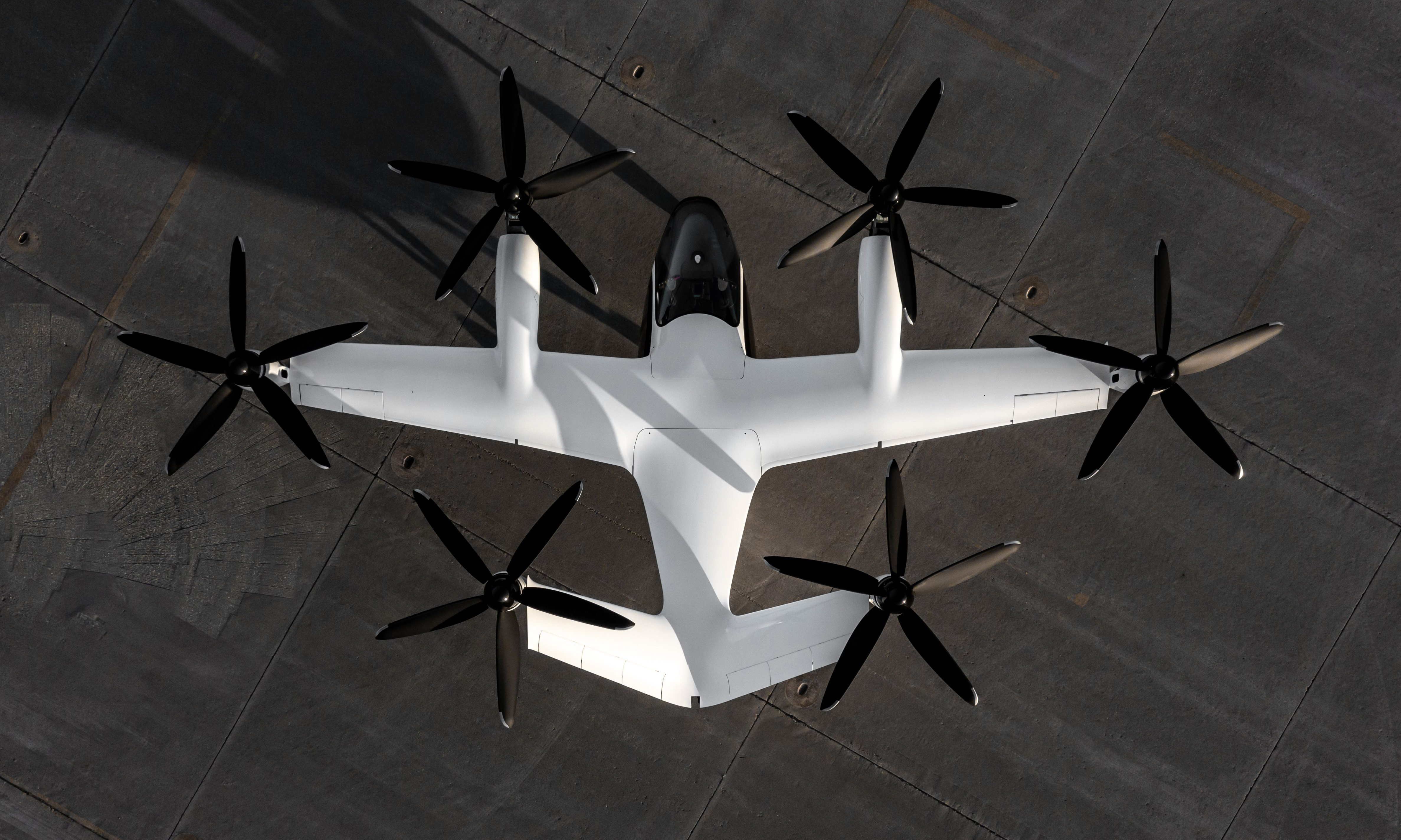
View from above of a Joby air taxi sitting on the ground
The aircraft requires a human pilot, at least in these early stages.
Joby

In November, Robert Ditchey, a Los Angeles-based aviation expert and test pilot, told NBC News that he didn't think air taxi service "was ever going to happen" in American cities. "They're dangerous," he warned. "We have had helicopters fail and crash on top of buildings in Los Angeles. We've had helicopters fail at takeoff and landing in airports. They're dangerous not from a fire point of view but in terms of landing on top of people and buildings." In addition, he warned that air taxis can't be developed in sufficient numbers to make them economically viable "unless they are subsidized by a government."

Uber and Joby have partnered since 2019. In 2021, Joby bought the Uber Elevate ride-hailing division, which essentially integrated the companies’ services. Last year, Joby acquired Blade Air Mobility's passenger business, which could open the door to eventually electrifying Blade's routes.

The video below shows one of Joby’s air taxis taking a test flight in Dubai.

This article originally appeared on Engadget at https://www.engadget.com/transportation/uber-previews-its-dubai-air-taxi-service-130000603.html?src=rss