Fake Galaxy S26 Ultra is Uncomfortably Convincing: Signs You’re Being Scammed

Fake Galaxy S26 Ultra is Uncomfortably Convincing: Signs You’re Being Scammed Side-by-side teardown view comparing fake S26 Ultra and fake S25 Ultra battery and motherboard layouts.

At first glance, the fake Galaxy S26 Ultra might appear to be a convincing replica of Samsung’s flagship device. However, upon closer inspection, its numerous flaws become evident. From its inaccurate design to its outdated hardware, this counterfeit device falls short of even the most basic expectations. If you are considering purchasing this imitation, it […]

The post Fake Galaxy S26 Ultra is Uncomfortably Convincing: Signs You’re Being Scammed appeared first on Geeky Gadgets.

Posted in Uncategorized

Fake Galaxy S26 Ultra is Uncomfortably Convincing: Signs You’re Being Scammed

Fake Galaxy S26 Ultra is Uncomfortably Convincing: Signs You’re Being Scammed Side-by-side teardown view comparing fake S26 Ultra and fake S25 Ultra battery and motherboard layouts.

At first glance, the fake Galaxy S26 Ultra might appear to be a convincing replica of Samsung’s flagship device. However, upon closer inspection, its numerous flaws become evident. From its inaccurate design to its outdated hardware, this counterfeit device falls short of even the most basic expectations. If you are considering purchasing this imitation, it […]

The post Fake Galaxy S26 Ultra is Uncomfortably Convincing: Signs You’re Being Scammed appeared first on Geeky Gadgets.

Posted in Uncategorized

Musk pledges to fix 2019-2023 Teslas that can’t fully self drive

Tesla still doesn’t have a solid pathway for how to give Hardware 3 cars Full Self-Driving (FSD) capabilities, based on what Elon Musk said during the company’s latest earnings call. The automaker has known for quite a while that its vehicles equipped with Hardware 3 aren’t capable of unsupervised FSD, even though the company built the system specifically to give its cars the ability. Tesla used Hardware 3 on cars manufactured from 2019 until early 2023 before Hardware 4 shipped.

During an earlier earnings call back in January 2025, Musk admitted that the company was “going to have to upgrade people’s Hardware 3 computer for those that have bought Full Self-Driving.” At Tesla’s latest earnings call, Musk said that Hardware 3 “simply does not have the capability to achieve unsupervised FSD.” Tesla thought it would be able to at one point, but Hardware 3 apparently has 1/8th the memory bandwidth of Hardware 4. Musk explained that memory bandwidth is “one of the key elements” needed for unsupervised FSD.

Tesla will be offering to upgrade and replace the computers and cameras on older vehicles, but it doesn’t have a concrete plan in place yet. “I do think over time it’s going to make sense for us to convert all Hardware 3 cars to Hardware 4,” he said. To do so at service centers would be extremely slow, Musk has admitted. Around 4 million cars or so have Hardware 3, though not everyone has paid for FSD. Still, to be able to replace its vehicles’ hardware efficiently, Musk said Tesla is going to have to set up “microfactories or small factories in major metropolitan areas.” He didn’t give any indication that Tesla has already started building those microfactories, though, or even that construction is already scheduled to begin. He did say that in the meantime, the company is going to be releasing FSD version 14 for Hardware 3 around the end of June.

Musk also said during the same earnings call that Tesla’s Fremont factory will start manufacturing the company’s humanoid Optimus robots in late July or August. The Tesla CEO is known for announcing highly optimistic and aggressive timelines. Tesla made the decision to kill off its Model X and S cars earlier this year, so that it can convert its Fremont facility into an Optimus factory. The last Model S and X vehicles will be rolling off the production line in May, which gives the company just a few months to dismantle the facility’s current equipment and put new ones in place.

This article originally appeared on Engadget at https://www.engadget.com/transportation/evs/musk-pledges-to-fix-2019-2023-teslas-that-cant-fully-self-drive-095002120.html?src=rss

Kimi K2.6 Breakdown: the Open-Source AI That Beats GPT-5.4 at Coding

Kimi K2.6 Breakdown: the Open-Source AI That Beats GPT-5.4 at Coding Diagram of Moonshot AI Kimi K2.6 coordinating 300 sub-agents for complex coding tasks.

Moonshot AI’s latest release, Kimi K2.6, has emerged as a standout in the competitive world of AI-driven coding solutions. According to Universe of AI, this open source model has achieved remarkable results, including a 58.6% score on the Software Engineering Bench Pro, outperforming proprietary systems like GPT-5.4 and Gemini 3.1 Pro. With its advanced Agent […]

The post Kimi K2.6 Breakdown: the Open-Source AI That Beats GPT-5.4 at Coding appeared first on Geeky Gadgets.

Posted in Uncategorized

Kimi K2.6 Breakdown: the Open-Source AI That Beats GPT-5.4 at Coding

Kimi K2.6 Breakdown: the Open-Source AI That Beats GPT-5.4 at Coding Diagram of Moonshot AI Kimi K2.6 coordinating 300 sub-agents for complex coding tasks.

Moonshot AI’s latest release, Kimi K2.6, has emerged as a standout in the competitive world of AI-driven coding solutions. According to Universe of AI, this open source model has achieved remarkable results, including a 58.6% score on the Software Engineering Bench Pro, outperforming proprietary systems like GPT-5.4 and Gemini 3.1 Pro. With its advanced Agent […]

The post Kimi K2.6 Breakdown: the Open-Source AI That Beats GPT-5.4 at Coding appeared first on Geeky Gadgets.

Posted in Uncategorized

M1 Max vs M5 Max MacBook Pro: Is a 200% Graphics Boost Enough to Finally Upgrade?

M1 Max vs M5 Max MacBook Pro: Is a 200% Graphics Boost Enough to Finally Upgrade? Two MacBook Pro models compared, showing Apple M1 Max and M5 Max performance differences over about five years.

Apple’s M1 Max and M5 Max processors mark two pivotal moments in the evolution of high-performance computing. Released five years apart, these chips embody Apple’s commitment to innovation while adhering to a consistent design philosophy. But how substantial are the advancements between these two processors? The video below from Matt Talks Tech provides more insights […]

The post M1 Max vs M5 Max MacBook Pro: Is a 200% Graphics Boost Enough to Finally Upgrade? appeared first on Geeky Gadgets.

Posted in Uncategorized

M1 Max vs M5 Max MacBook Pro: Is a 200% Graphics Boost Enough to Finally Upgrade?

M1 Max vs M5 Max MacBook Pro: Is a 200% Graphics Boost Enough to Finally Upgrade? Two MacBook Pro models compared, showing Apple M1 Max and M5 Max performance differences over about five years.

Apple’s M1 Max and M5 Max processors mark two pivotal moments in the evolution of high-performance computing. Released five years apart, these chips embody Apple’s commitment to innovation while adhering to a consistent design philosophy. But how substantial are the advancements between these two processors? The video below from Matt Talks Tech provides more insights […]

The post M1 Max vs M5 Max MacBook Pro: Is a 200% Graphics Boost Enough to Finally Upgrade? appeared first on Geeky Gadgets.

Posted in Uncategorized

Why Filmmakers Are Rushing to Pre-Order GoPro’s 8K Mission 1 Pro

Why Filmmakers Are Rushing to Pre-Order GoPro’s 8K Mission 1 Pro Vlogger holding the GoPro Mission 1 Creator Edition with Volta 2 battery grip

GoPro’s latest Mission lineup introduces a range of cameras and bundles tailored to meet the varied needs of content creators, from casual users to seasoned professionals. As highlighted by TechAvid, the Mission 1 Pro ILS stands out with its Micro 4/3 interchangeable lens system, offering advanced cinematic capabilities for filmmakers who demand flexibility and precision. […]

The post Why Filmmakers Are Rushing to Pre-Order GoPro’s 8K Mission 1 Pro appeared first on Geeky Gadgets.

Posted in Uncategorized

The OnePlus Ace 6 Ultra Finally Fixes the Thumbs-on-Screen Problem

Mobile gaming has come a long way from simple puzzle games and endless runners. Today’s smartphones can run graphically demanding titles at high frame rates, rivaling dedicated gaming hardware in raw power. But the way we actually control these games hasn’t kept pace. Playing shooters on a touchscreen has always meant thumbs blocking the very action they’re trying to aim at.

Gaming phones like the OnePlus Ace series have tried to bridge that gap with cutting-edge chips, cooling systems, and specialized gaming software. These upgrades help, but they don’t solve the fundamental issue of using glass as a controller. The Ace 6 Ultra changes that approach entirely by pairing with a snap-on accessory called the Gun God Game Controller, designed specifically for competitive shooter titles.

Designer: OnePlus
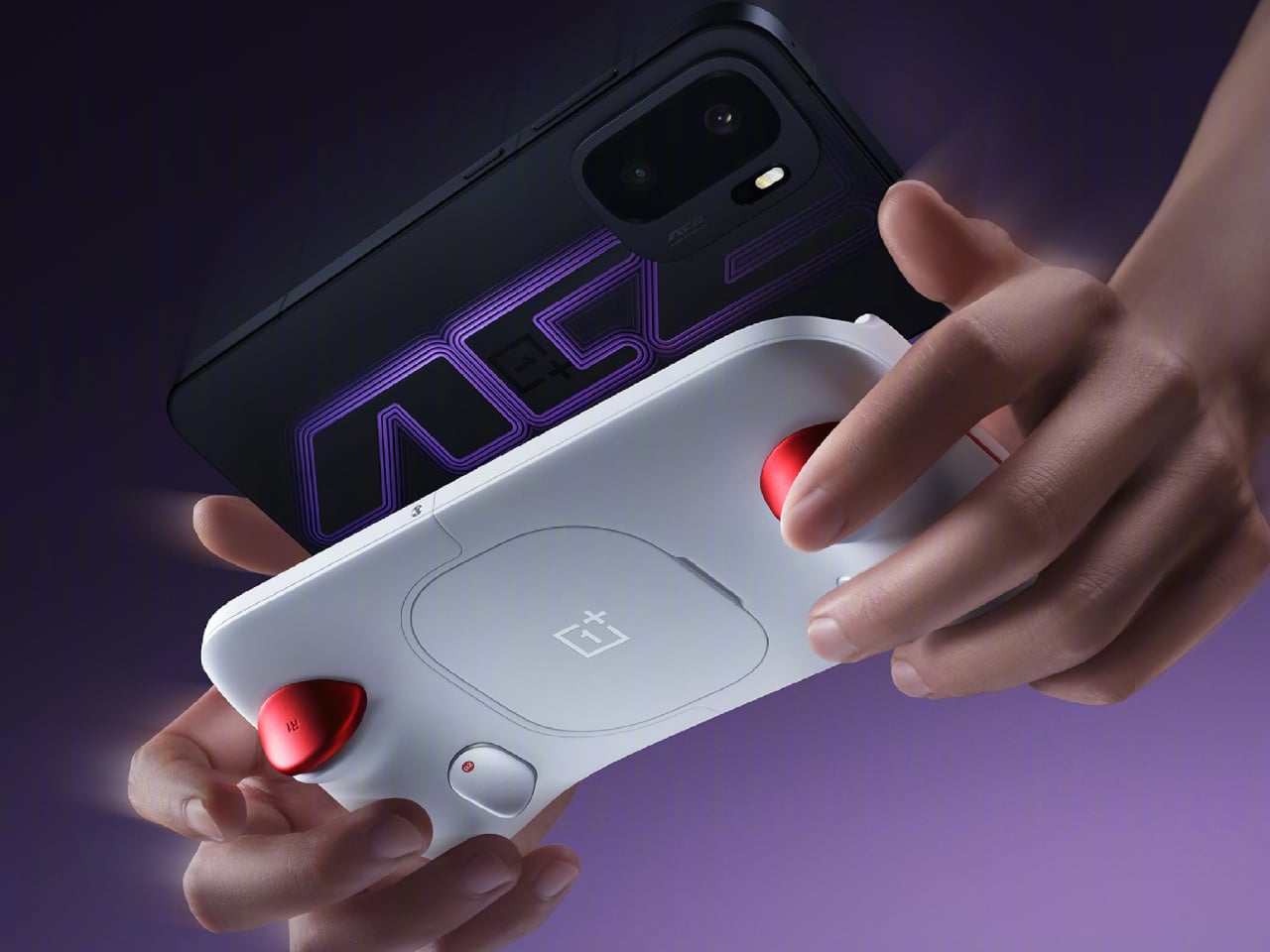
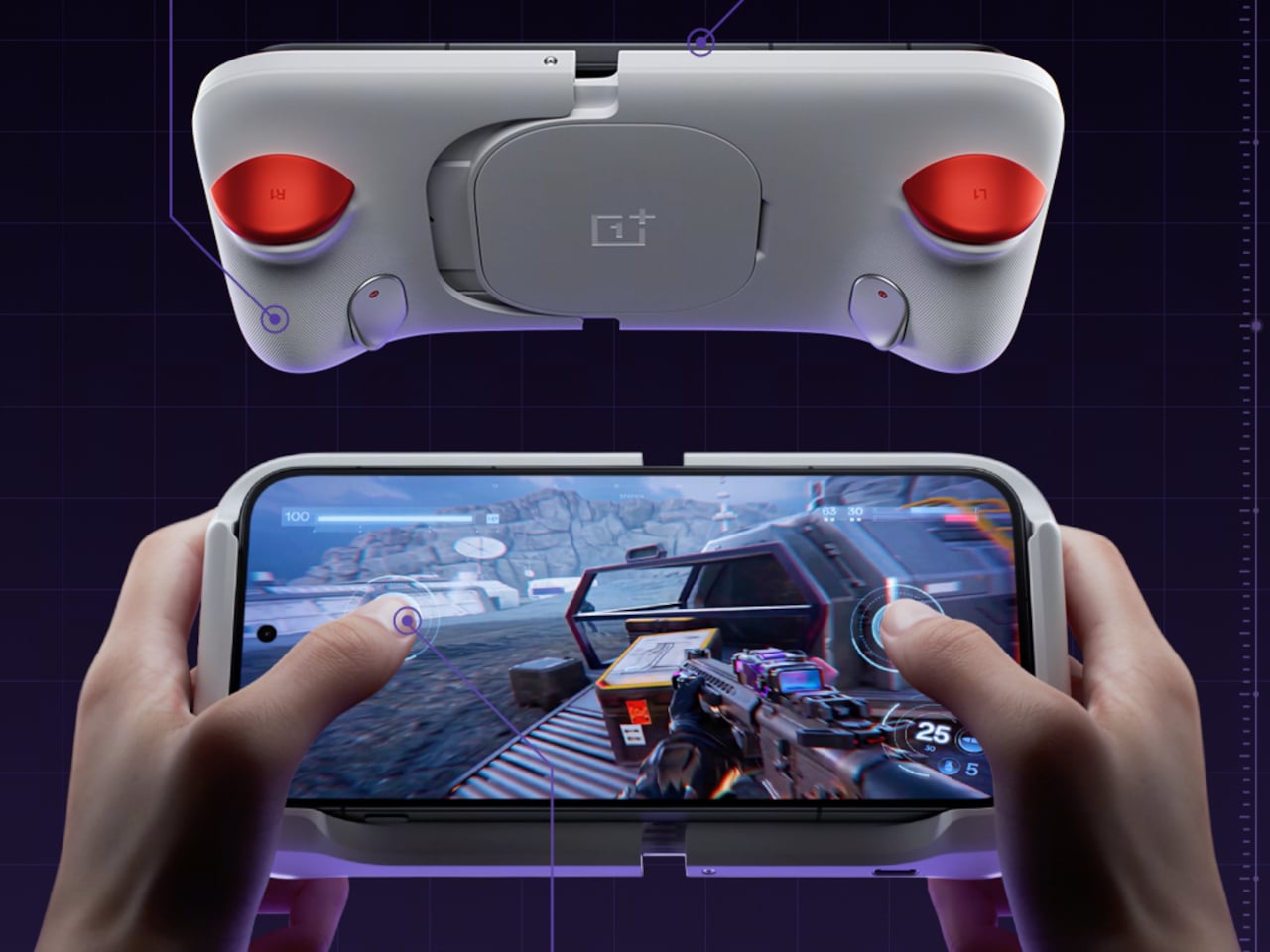
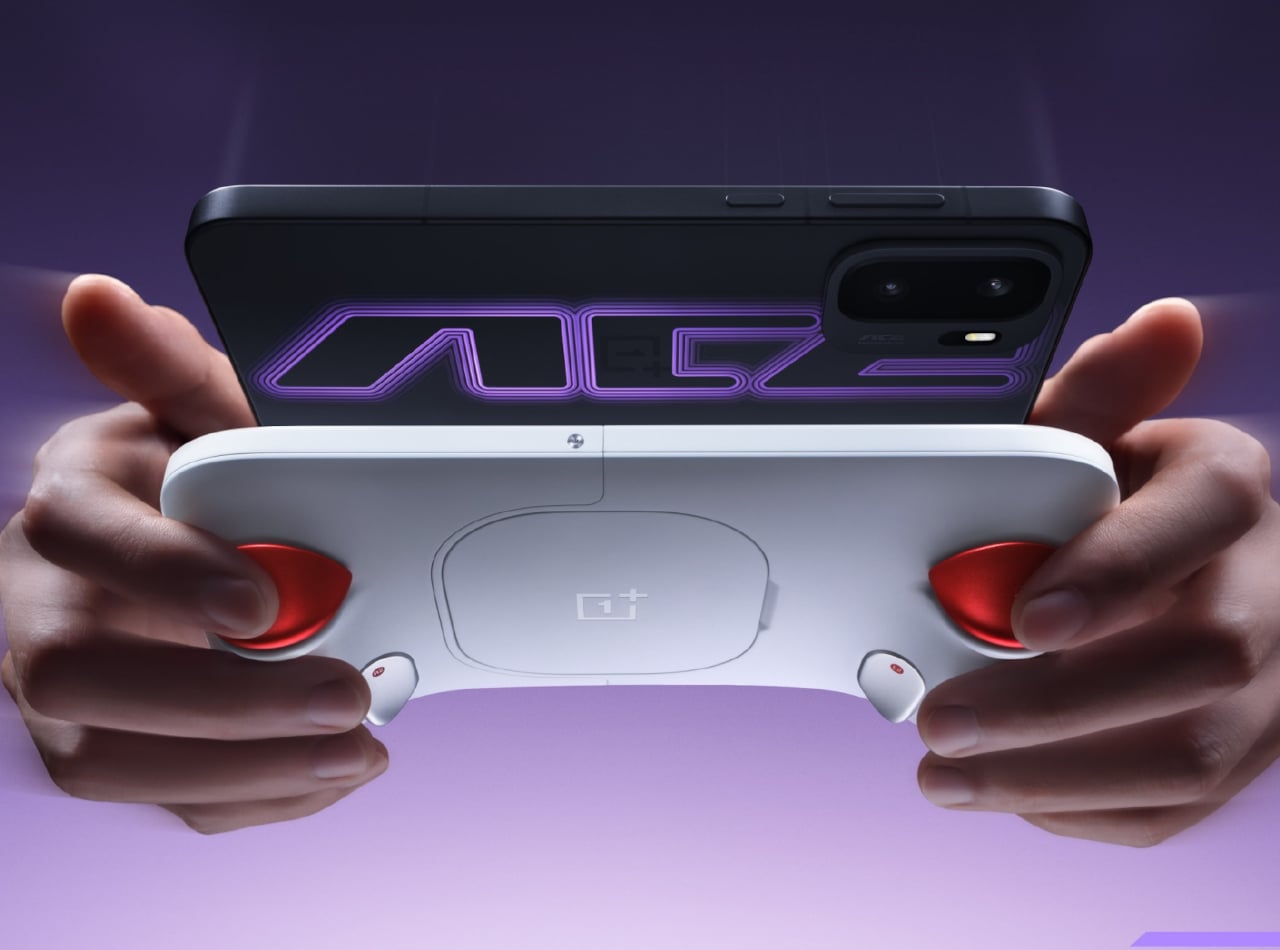
OnePlus calls the combined setup the “Gun God Handheld,” a new category somewhere between a smartphone and a portable gaming console. The controller is a lightweight shell that the phone snaps into, giving the whole rig a contoured, comfortable grip built for extended sessions. The multi-finger controls relocate to the back, clearing the screen and keeping the player’s field of view unobstructed.
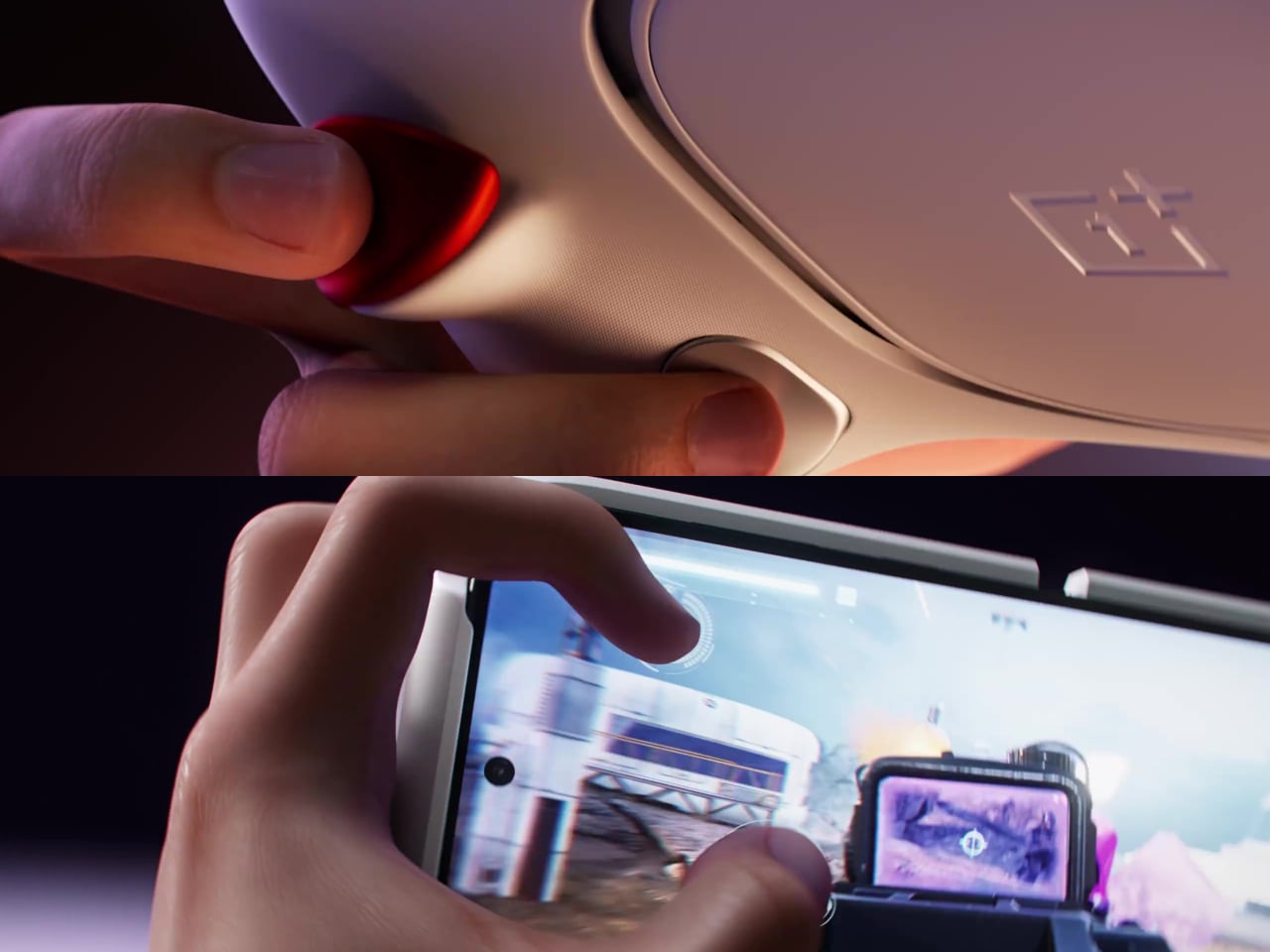

That involves four physical back buttons: two bumpers (L1 and R1) and two triggers (L2 and R2). The thumbs stay on the screen for movement and aiming, while extra fingers take over shooting and special moves. All four are fully customizable, and OnePlus describes this as a “Touch × Button Fusion” that preserves the game’s native touchscreen logic while layering physical input on top.
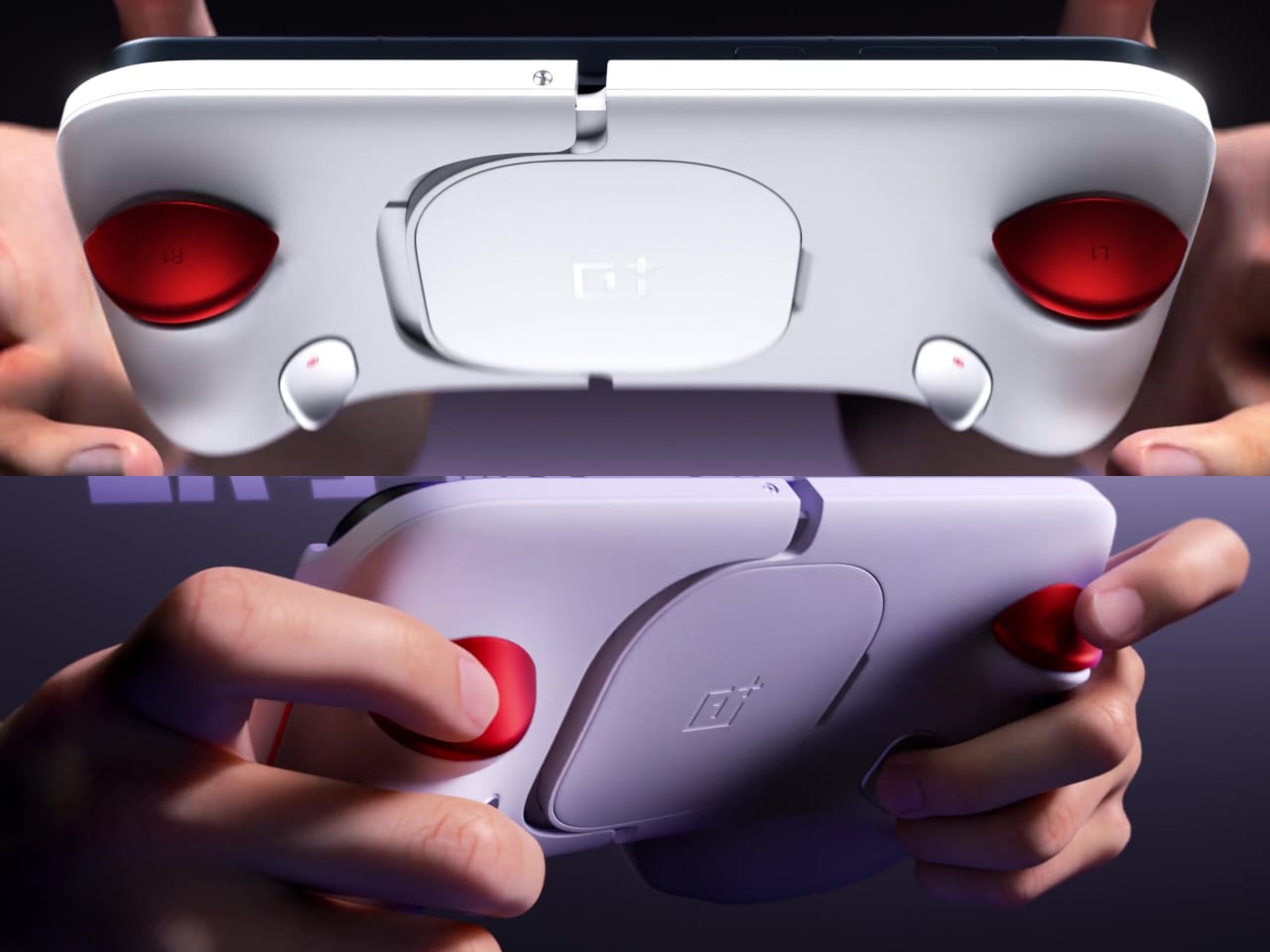
What sets those buttons apart is what’s inside them. The micro-mechanical switches have a 1,000Hz polling rate and a 1.8ms response time, which means the gap between pressing a trigger and registering the action is almost imperceptible. A built-in esports antenna helps maintain a stable signal during play, which matters when a moment of lost connection is enough to throw off a well-timed shot.
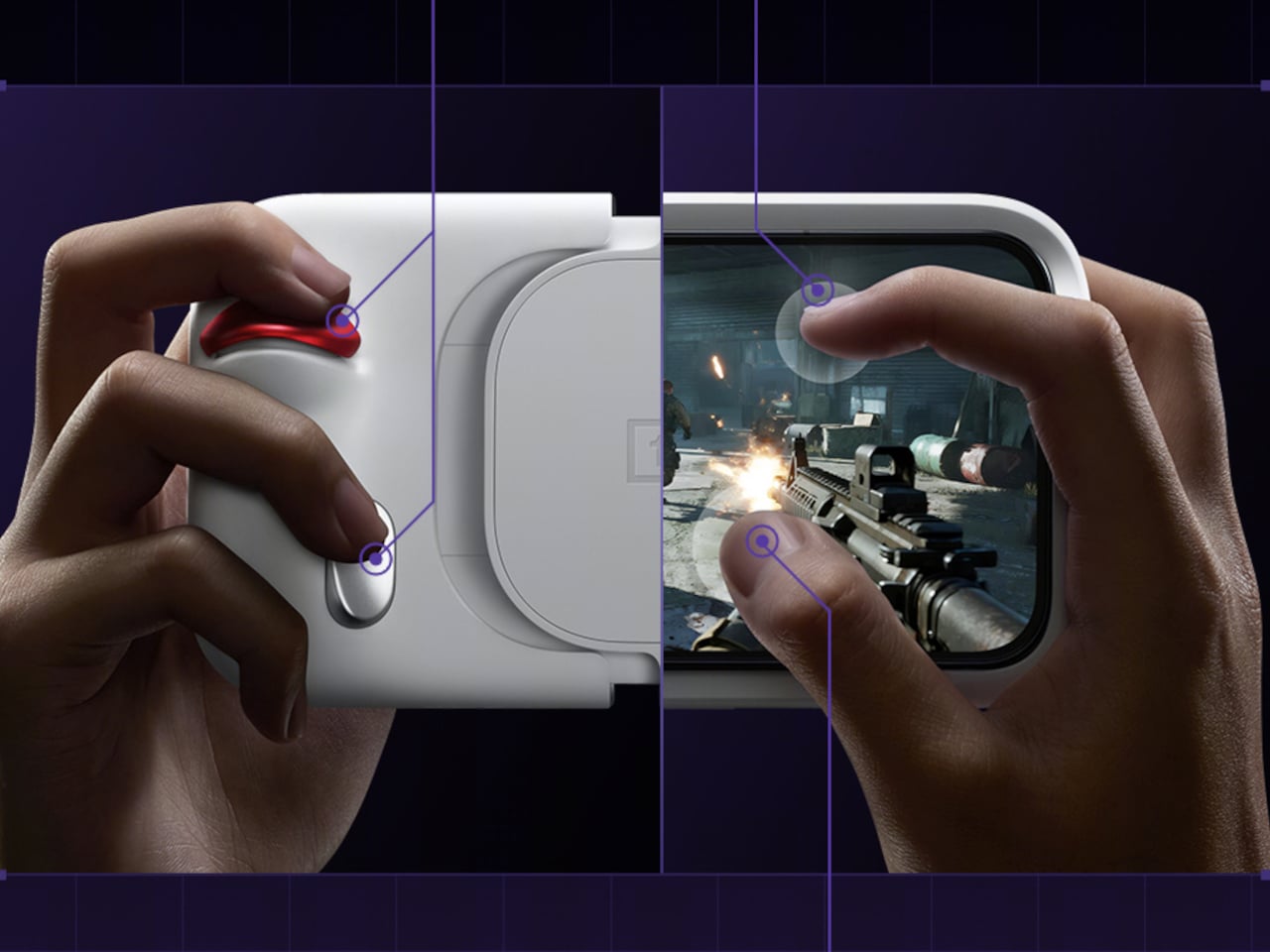
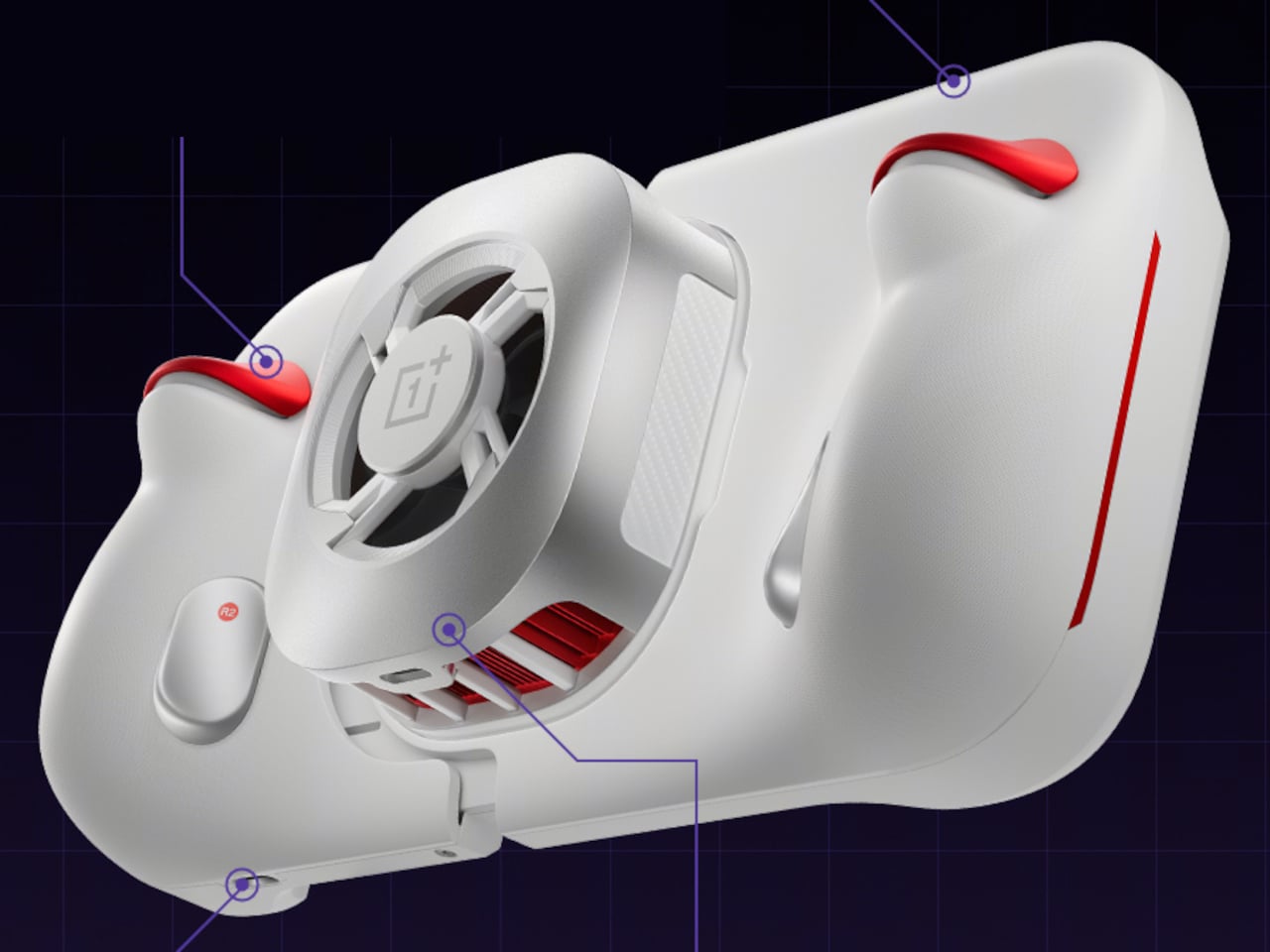
Long gaming sessions bring heat, and the controller doesn’t ignore that. It includes a built-in heat spreader along with a magnetic suction cooling fan for sustained thermal performance. A USB-C port along the bottom keeps charging available while playing, so the battery isn’t a concern mid-session. Together, these let you push through long sessions without the heat-related slowdowns that typically creep in on demanding mobile titles.
Backing all of this is the OnePlus Ace 6 Ultra itself, which runs on a MediaTek Dimensity 9500 chipset. Its GPU is 33% faster than the previous generation, with 120 FPS gameplay support and ray tracing for a more visually immersive experience. An 8,600mAh battery with 120W fast charging handles the power demands, ensuring the phone itself keeps up with the hardware strapped to its back.
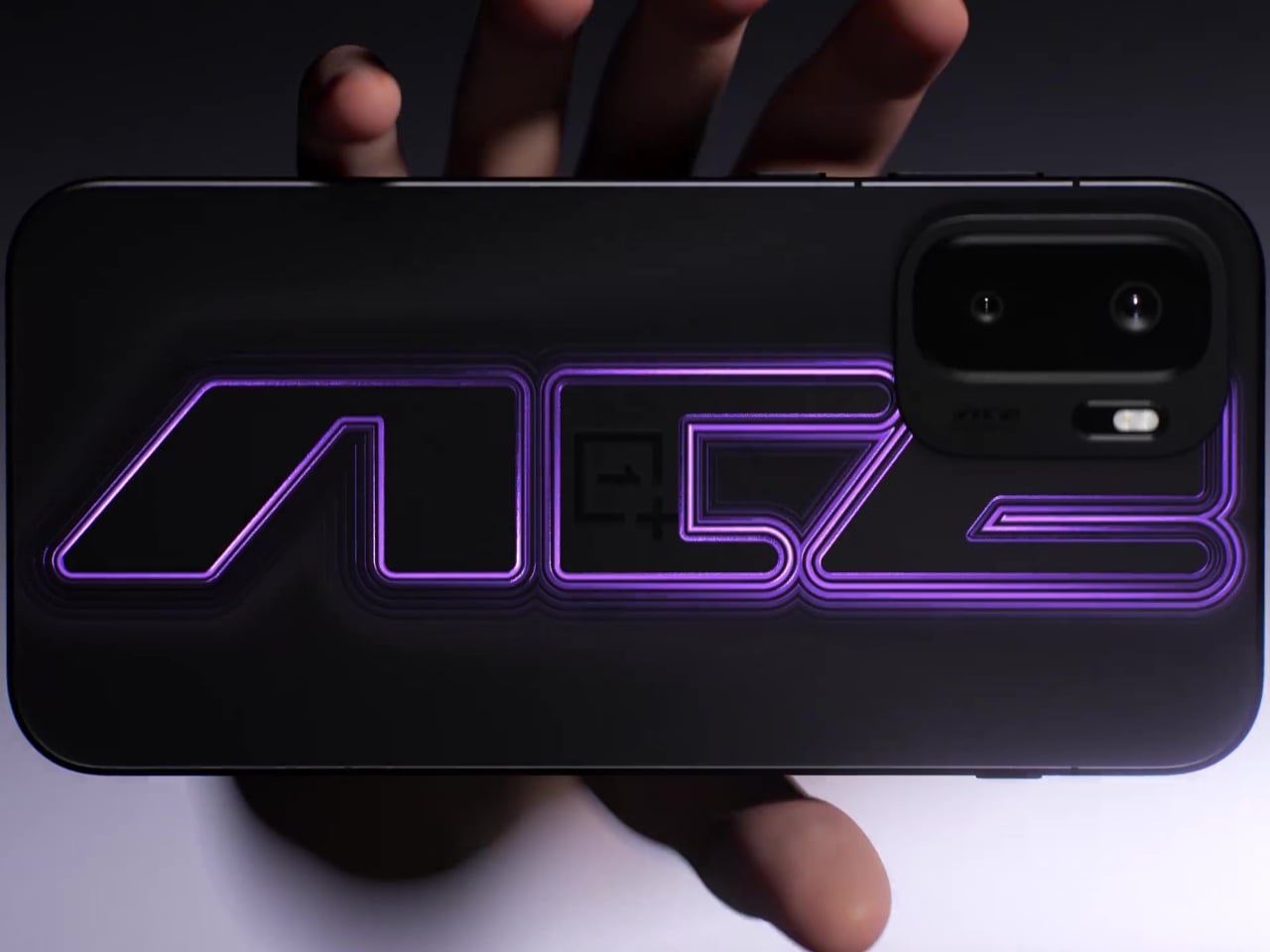
The Gun God Controller and Ace 6 Ultra launch together in China on April 28, with no confirmed global release date. For mobile gamers who’ve long wished their phone felt more like a proper handheld, this combo is a genuinely interesting answer. It’s still a phone when you need it to be, and something far more deliberate when the game demands it.

The post The OnePlus Ace 6 Ultra Finally Fixes the Thumbs-on-Screen Problem first appeared on Yanko Design.

10 Ways to Use ChatGPT Image 2 for Amazing Visuals

10 Ways to Use ChatGPT Image 2 for Amazing Visuals Before and after of a scanned handwritten note restored by CatchBT Images 2.0.

OpenAI’s ChatGPT Image 2 enables the creation of detailed visuals while integrating precise text elements into designs. According to Nate Herk, one standout application is in professional-grade product packaging, where the model’s ability to render realistic textures and align text accurately ensures high-quality outcomes. With a cost of $0.06 per image, it offers a practical […]

The post 10 Ways to Use ChatGPT Image 2 for Amazing Visuals appeared first on Geeky Gadgets.

Posted in Uncategorized