The Mandalorian and Grogu director used Apple Vision Pro to preview the film in IMAX

Director Jon Favreau (Iron Man, The Jungle Book) hasn't been shy about embracing new technology for filmmaking. While producing The Mandalorian for Disney+, he was one of the first filmmakers to use ILM's massive LED screens, AKA "The Volume," to produce more realistic lighting and backgrounds on studio sets. For the feature film The Mandalorian and Grogu, which hits theaters May 22, Favreau recently revealed that he had Disney build an Apple Vision Pro app to preview its full IMAX scope during filming.

"So I'm making an IMAX movie, and I'm looking at a TV screen, and no matter how big your TV screen is it's not an IMAX screen," Favreau said in a recent episode of The Town podcast. "We built software so that I can pop on my Apple Vision Pro and be sitting in an IMAX movie theater and see the full aspect ratio when we're lining a shot up. And I can watch that take and see what people will see."

Favreau isn't the first director to use the Apple Vision Pro — Wicked filmmaker Jon Chu also used it to handle post-production work — but he's the first to specifically mention using the headset for IMAX production. That's still a relatively limited use case for the Apple Vision Pro, but it's one that could be useful to future filmmakers. With its large field of view and sharp micro-OLED screens, the Apple Vision Pro is one of the only ways to replicate the experience of watching a large IMAX screen at home. (The Meta Quest 3 comes in as a close second.)

In general, Favreau says he's more excited about using existing consumer technology in the filmmaking process than AI. He mentions using the Unreal Engine to previsualize special effects on The Mandalorian and his previous films, and he believes the quality from game engines could be good enough to make it into final productions down the line.

"This is what the animation industry has understood from the beginning," he said. "Get it right before you ever paint a cel."

This article originally appeared on Engadget at https://www.engadget.com/entertainment/tv-movies/the-mandalorian-and-grogu-director-used-apple-vision-pro-to-preview-the-film-in-imax-140331311.html?src=rss

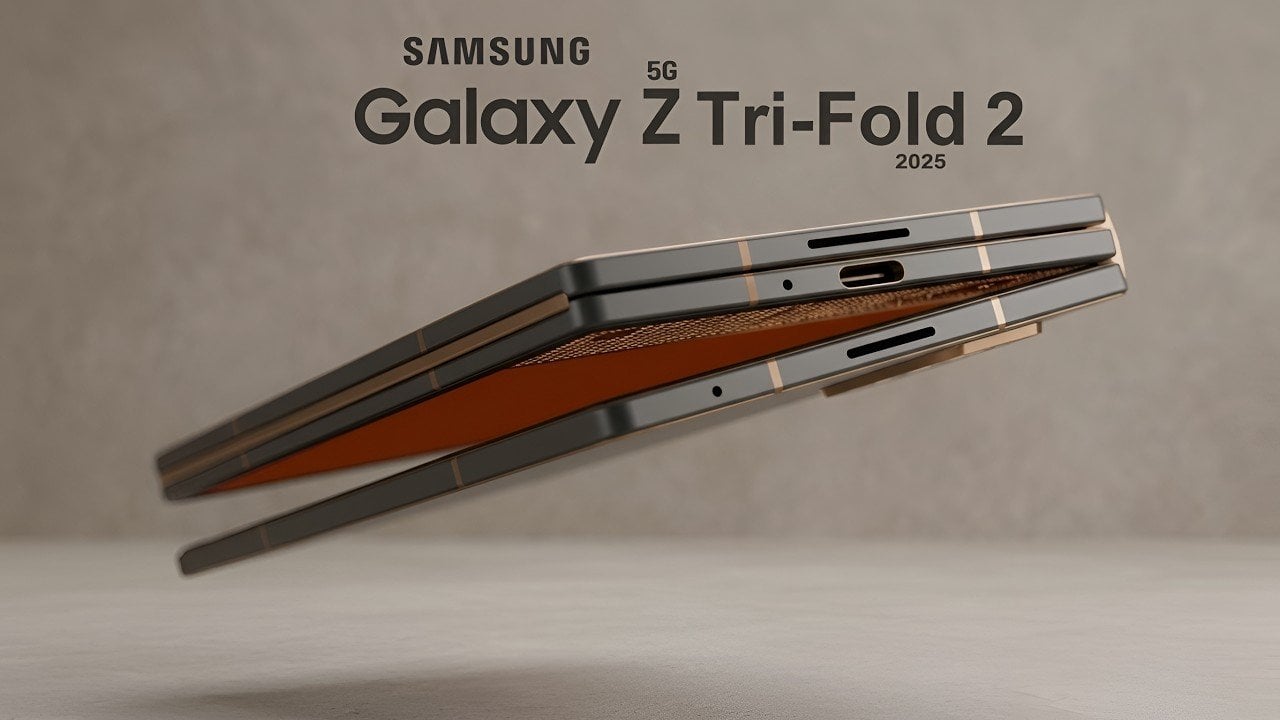
Samsung Galaxy Z TriFold 2 Specs Leak: Snapdragon 8 Elite Gen 2 and a 10-Inch OLED Beast

Samsung Galaxy Z TriFold 2 Specs Leak: Snapdragon 8 Elite Gen 2 and a 10-Inch OLED Beast Chart summarizing the first Galaxy Z TriFold weight at 309 g and expected reductions in the next model.

Samsung is reportedly advancing its efforts in the foldable smartphone market with the development of the Galaxy Z TriFold 2. This second-generation device seeks to refine the bold yet imperfect design of its predecessor. The original Galaxy Z TriFold introduced a unique triple-folding mechanism that captured attention but fell short in areas such as bulkiness, […]

The post Samsung Galaxy Z TriFold 2 Specs Leak: Snapdragon 8 Elite Gen 2 and a 10-Inch OLED Beast appeared first on Geeky Gadgets.

Posted in Uncategorized

A Designer Just Fixed Foundation’s Biggest Waste Problem

Most sustainable beauty products come with a visual apology. You know the look: matte recycled paper, utilitarian shapes, a general aesthetic that signals good intentions while quietly penalizing you for having taste. Designer Sanya Jain’s unsolicited concept for a Tata Harper foundation system refuses that trade-off entirely, and the result is one of those rare design exercises that feels more polished than half the things sitting on Sephora shelves right now.

Tata Harper, for anyone who hasn’t fallen into that particular rabbit hole, is the brand that built its entire identity on the idea that luxury and purity don’t have to be in conflict. Founded in 2010 and formulated on an organic farm in Vermont, the brand made its name in skincare with 100% natural, high-performance formulas free of synthetic chemicals, toxins, and fillers. It’s a rigorous philosophy, and one that its existing packaging already respects to a degree. But the color cosmetics side of things has always felt like an unfilled gap. Jain spotted that gap independently, and used it as the brief for something worth paying attention to.

Designer: Sanya Jain

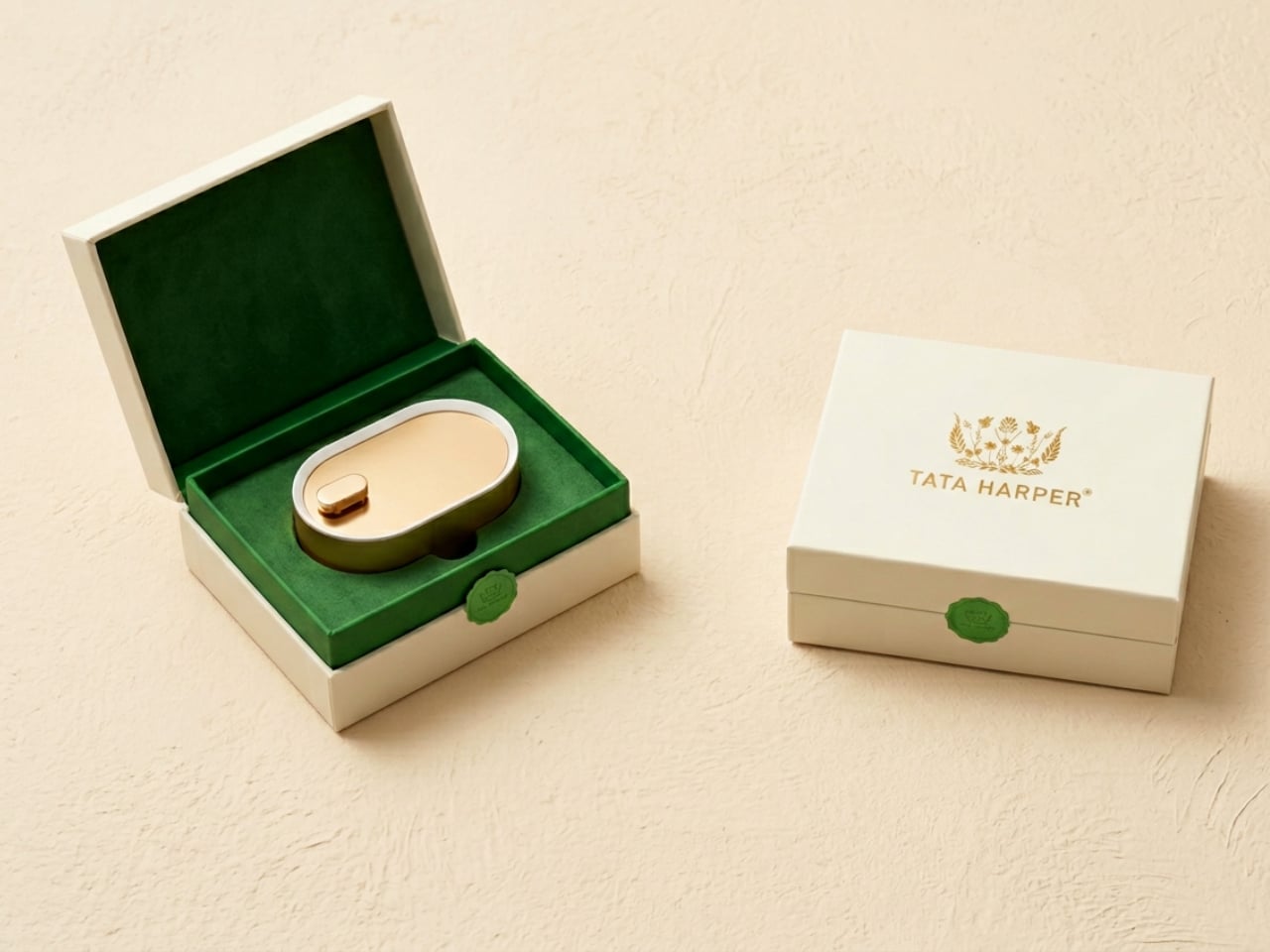
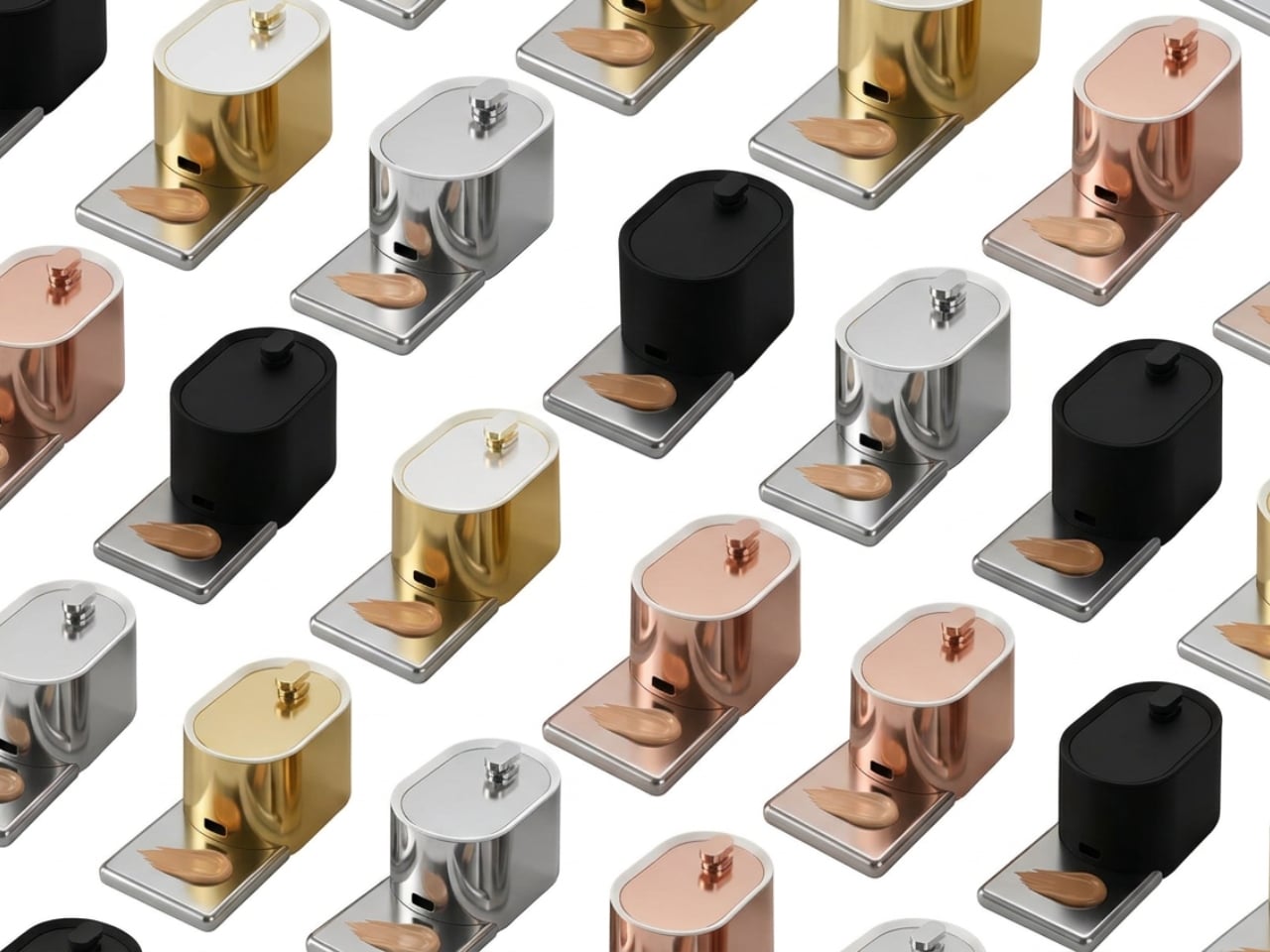
The concept, which she calls PureDose Foundation, centers on a refillable, modular system. The product lives inside a Viomer pod, a material valued for being lightweight, durable, and designed for circular reuse. That pod slots cleanly into a polished, gold-toned dispenser that looks less like something from a drugstore and more like a small piece of modernist sculpture you’d display on purpose. Press the top button once, and the foundation dispenses in a controlled drop directly onto a detachable metal slate positioned at the base. You load your brush from there and go. No squeezing, no guesswork, no wasted product sitting in the cap.
That last part matters more than it sounds. Foundation is one of the more quietly wasteful categories in makeup. Products get dispensed in excess, oxidize before you can blend them, or sit in bottles that are technically not empty but practically impossible to finish. The PureDose concept sidesteps most of that friction by making the application point clean, controlled, and hygienic. The metal slate rinses under the tap. The pod refills. The dispenser stays on your vanity indefinitely. It’s a smarter loop, and the fact that it manages to look this refined while doing it is not accidental.

Jain pulled from biomimicry and clean geometry throughout the design. The rounded, organic silhouettes of both the pod and the dispenser echo the natural world that Tata Harper draws from as a brand, and that kind of visual consistency is harder to achieve than it appears. The colorway options, gold, rose gold, silver, and matte black, give the system range without diluting the identity. And the unboxing experience is worth noting: a velvet-lined jewelry box for the dispenser and a kraft-paper octagonal carton for refill pods. It’s one of the more layered packaging stories I’ve come across in concept work. It understands that luxury is at least partly emotional, and that the ritual of opening something should feel like it belongs to the rest of the experience.

What makes this project compelling beyond the aesthetics is how faithfully it mirrors the brand’s existing values without any official mandate to do so. Tata Harper already commits to FSC-certified paper, transparent ingredient sourcing, and eco-conscious material choices. Jain’s concept simply asks the next question: what would a color cosmetics line look like if it operated with the same level of rigor? The answer is something that sits on your vanity like a design object, performs with precision, and leaves significantly less behind when it’s done.

Concept work in industrial design usually lands in one of two places. It either solves a real problem with no aesthetic investment, or it produces something visually stunning that would fall apart after a week of actual use. This one manages to hold both ends of that tension together, which is the harder achievement. Jain didn’t find a way to make sustainability bearable. She found a way to make it worth wanting. Whether or not Tata Harper ever sees this, the question it raises is one the beauty industry should be sitting with.
The post A Designer Just Fixed Foundation’s Biggest Waste Problem first appeared on Yanko Design.
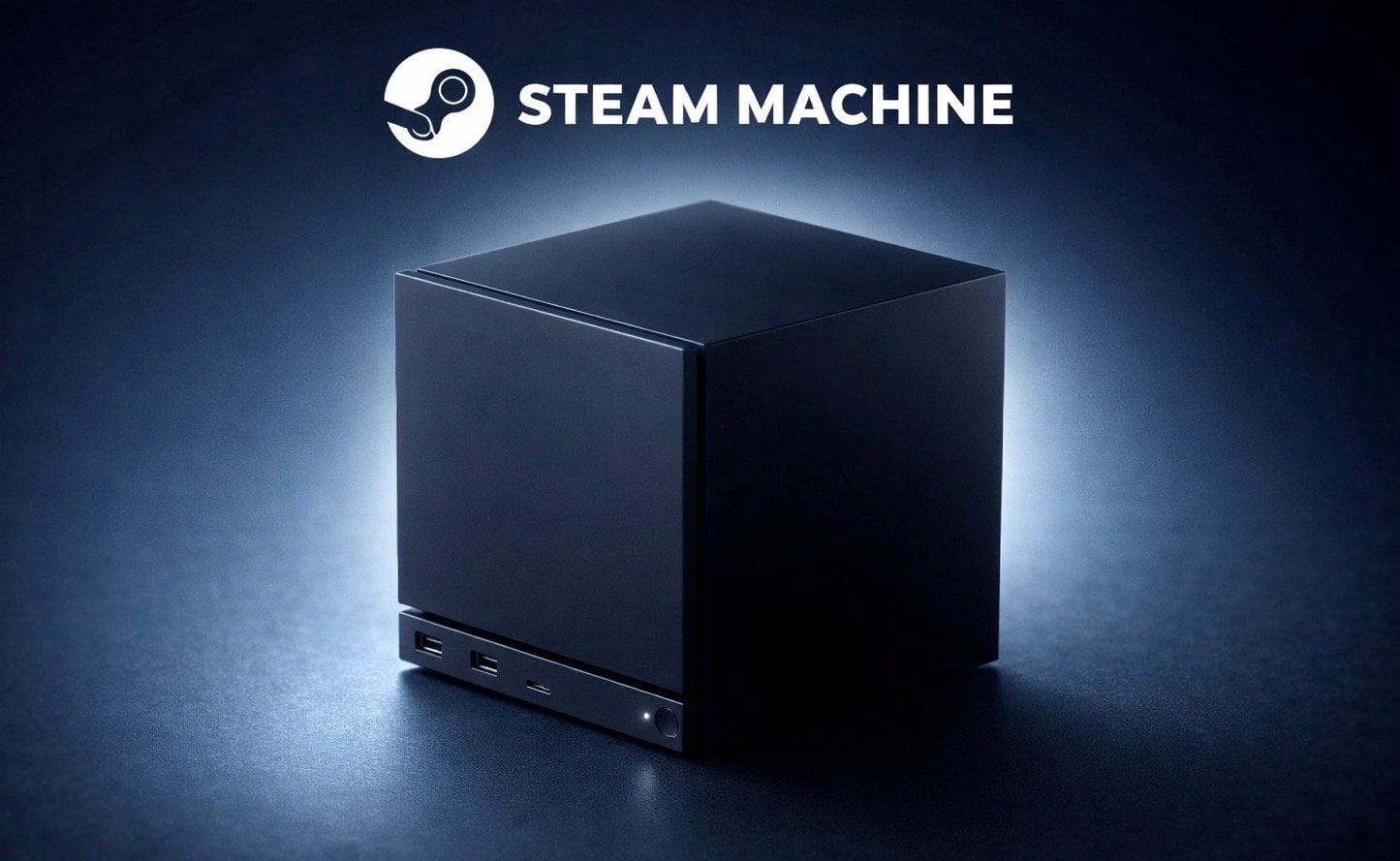
How Valve Finally Solved the Steam Machine’s Biggest Performance Bottleneck

How Valve Finally Solved the Steam Machine’s Biggest Performance Bottleneck Steam Machine console demonstrating improved VRAM allocation and frame pacing.

Valve has made significant strides in resolving the longstanding performance issues tied to the Steam Machine, particularly for systems constrained by limited VRAM. As highlighted by Deck Ready, the company’s latest update focuses on optimizing VRAM allocation, a critical step in reducing stuttering and improving frame pacing. By introducing kernel-level changes to the Linux operating […]

The post How Valve Finally Solved the Steam Machine’s Biggest Performance Bottleneck appeared first on Geeky Gadgets.

Posted in Uncategorized

GoPro’s Mission 1 camera series will start at $600

We heard all about GoPro's new action camera series last week, but the company is now unveiling the pricing across its Mission 1, Mission 1 Pro and Mission 1 Pro ILS cameras. The entry-level Mission 1 ($600) features GoPro's new 50-megapixel 1-inch sensor, which the company says will offer a major leap in image quality and low-light performance over the Hero 13 line. While largely looking the same as the Hero series (and still waterproof), the Mission 1 can record 8K video at 30fps and 4K at 120fps. It lacks the higher frame rates of the other Mission 1 cameras, but supports 10-bit GP-Log2 color and 32-bit float audio.

The Mission 1 Pro ($700) is the flagship fixed-lens model this year, aimed at the professional (or semi-pro) videographer. It has upgraded frame-rate capture to 8K at 60 fps and 4K at 240 fps, along with an extreme "burst" slow-motion mode that hits 960 fps at 1080p. It also captures 4:3 "Open Gate" recordings at 8K/30fps and 4K/120fps, covering the entire sensor area, enabling more versatile editing and cropping across different screen sizes, including vertical video.

GoPro Mission 1 camera series
Steve Dent for Engadget

Then there's the beastly Mission 1 Pro ILS (Interchangeable Lens System). It swaps the standard GoPro lens for a Micro Four Thirds (MFT) mount lens. It otherwise shares the same 1-inch sensor and high-speed 8K/60fps video specs as the Pro model. It also matches the Pro model's $700 price, with an additional $100 discount for GoPro subscribers. However, it won't be launching until Q3 2026.

All of the Mission 1 Series accessories will be available on a rolling basis beginning May 28, with GoPro's own wireless mic system (take note, Rode and DJI) priced at $160. If you preorder a Mission 1 or Mission 1 Pro directly from GoPro now, you'll get the point-and-shoot grip bundled for free. The company still doesn't have an official release date for the cameras.

This article originally appeared on Engadget at https://www.engadget.com/cameras/gopros-mission-1-camera-series-will-start-at-600-130044898.html?src=rss

M5 Mac Mini Leak: Why RAM Shortages Point to a June Launch

M5 Mac Mini Leak: Why RAM Shortages Point to a June Launch Apple Mac mini order page showing longer delivery dates for higher-RAM M4 configurations while base models ship sooner.

The highly anticipated M5 Mac Mini is generating excitement, with multiple signs pointing to its imminent release. Extended shipping delays for high-end configurations of the current M4 Mac Mini, combined with Apple’s historical production strategies, suggest the company is preparing for a significant transition. With the promise of enhanced performance, innovative architecture, and upgraded configurations, […]

The post M5 Mac Mini Leak: Why RAM Shortages Point to a June Launch appeared first on Geeky Gadgets.

Posted in Uncategorized

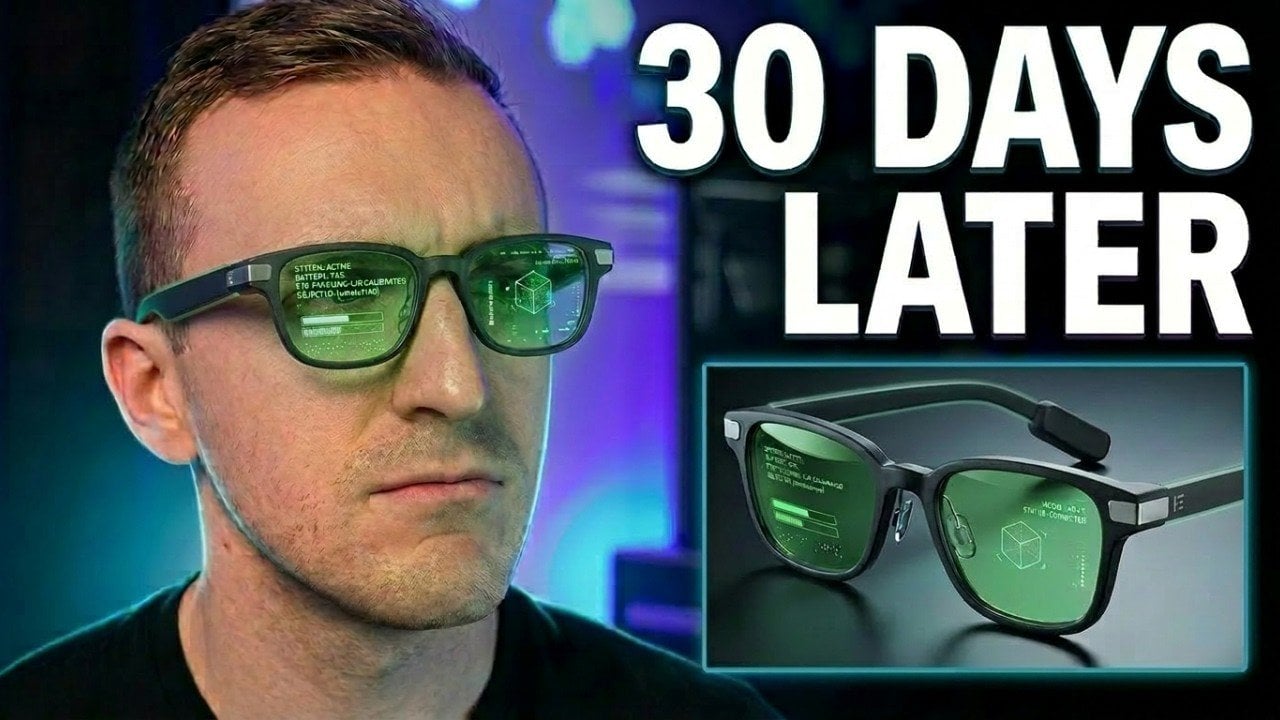
Even G2 Smart Glasses One Month Later : Notifications, Translation and Battery Life

Even G2 Smart Glasses One Month Later : Notifications, Translation and Battery Life Simulated view of the Even G2 teleprompter feature displaying text on the lens

Smart glasses are often associated with bold designs and immersive augmented reality, but the Even G2 takes a different approach. As reviewed by Tech with Spencer after a full month of use, these glasses focus on subtlety and practicality, making them a lightweight companion for everyday tasks. With features like discreet notifications and basic translation […]

The post Even G2 Smart Glasses One Month Later : Notifications, Translation and Battery Life appeared first on Geeky Gadgets.

Posted in Uncategorized

Ultra Plan vs Superpowers : the Clear Winner for Claude Code Users

Ultra Plan vs Superpowers : the Clear Winner for Claude Code Users Developer using Claude Ultra Plan on a tablet and Superpowers on a desktop monitor

When evaluating planning frameworks for developers working with Claude Code, Ultra Plan and Superpowers represent two distinct approaches. Ultra Plan prioritizes cloud-based integration, allowing developers to work seamlessly across devices and connect with GitHub-hosted repositories. In contrast, Superpowers emphasizes local-first precision, generating detailed plans directly from the local codebase. According to Better Stack, a key […]

The post Ultra Plan vs Superpowers : the Clear Winner for Claude Code Users appeared first on Geeky Gadgets.

Posted in Uncategorized

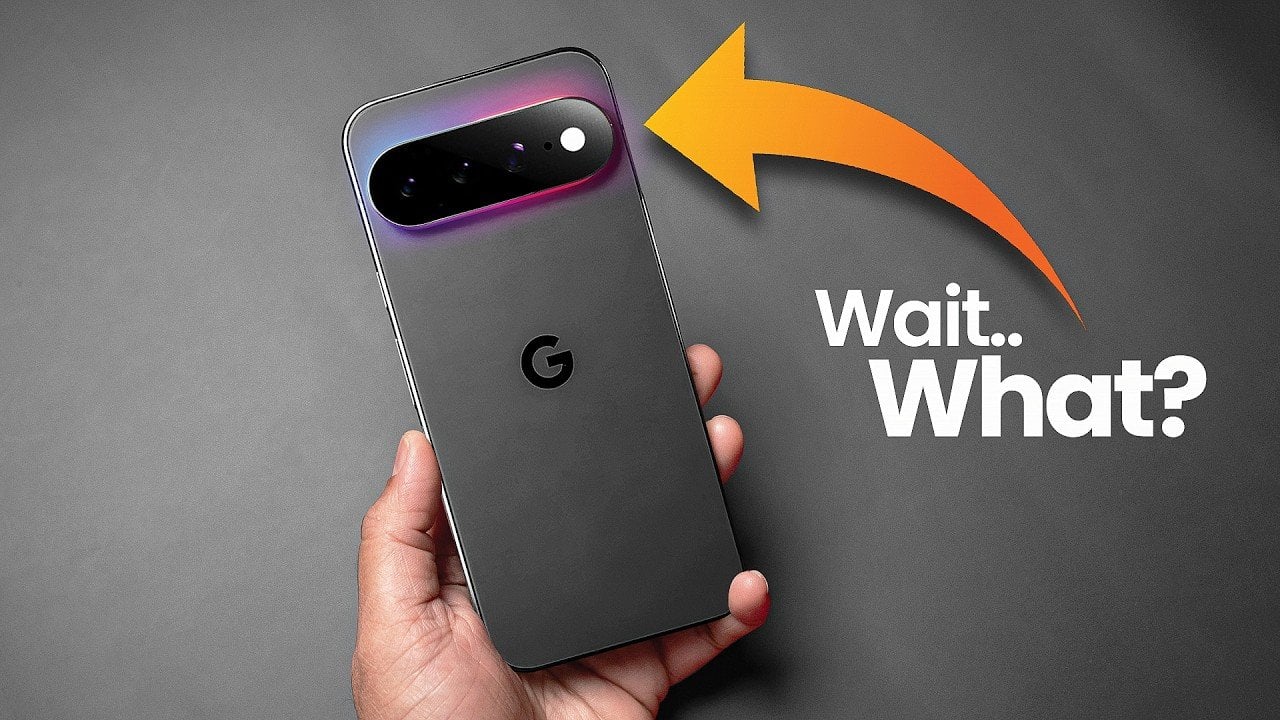
Google’s Secret Pixel 11 Pro XL Details Just Leaked—And It Changes Everything

Google’s Secret Pixel 11 Pro XL Details Just Leaked—And It Changes Everything Close-up of an OLED screen labeled M16, highlighting brighter outdoor visibility on a Pixel-style phone.

The Google Pixel 11 Pro XL is shaping up to be a smartphone that emphasizes refinement over radical reinvention. With rumors pointing to a new notification system, advanced display technology, and subtle design updates, this device could represent a significant step forward in Google’s hardware evolution. By focusing on targeted improvements, Google appears to be […]

The post Google’s Secret Pixel 11 Pro XL Details Just Leaked—And It Changes Everything appeared first on Geeky Gadgets.

Posted in Uncategorized

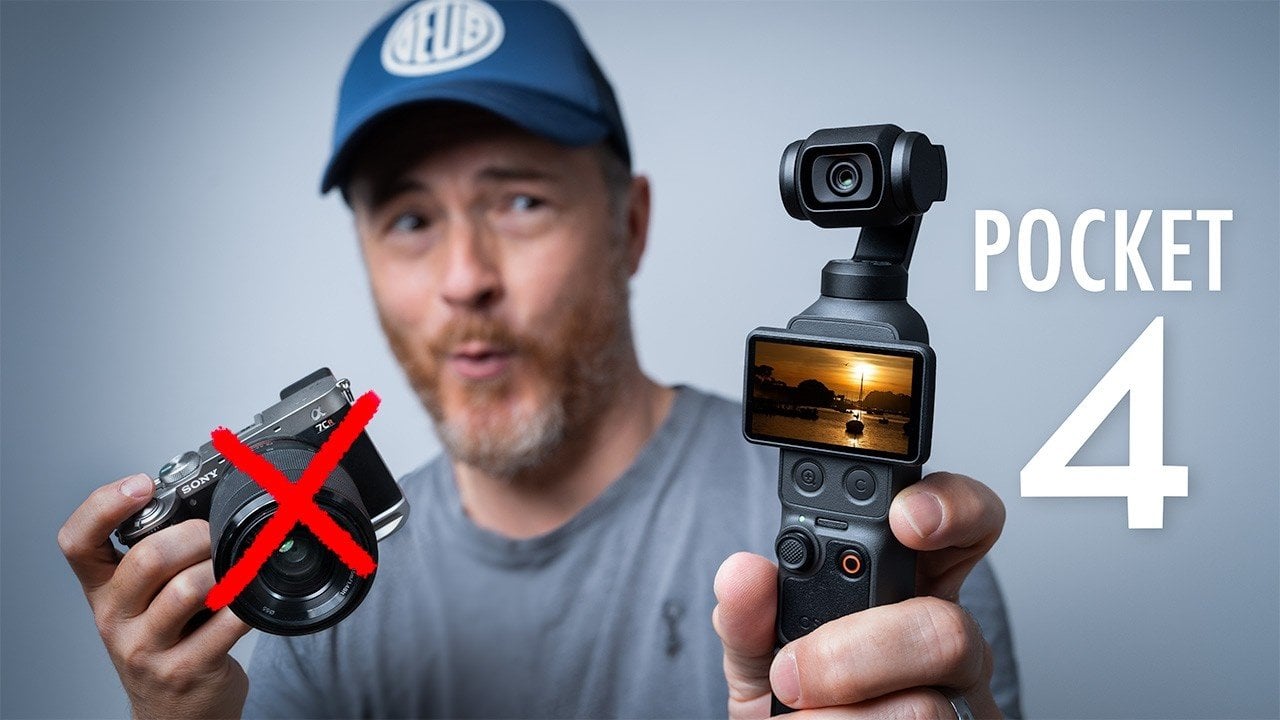
Why the DJI Pocket 4’S 1-Inch Sensor Rivals Full-Frame Cameras

Why the DJI Pocket 4’S 1-Inch Sensor Rivals Full-Frame Cameras Size comparison between DJI Pocket 4 and Sony A7CR full-frame camera

The DJI Pocket 4 introduces a compact yet highly capable option for creators who prioritize both portability and performance. With its 1-inch CMOS sensor delivering 14 stops of dynamic range, this device ensures vibrant, detailed imagery that rivals larger cameras like the Sony A7CR. Below Mark McGee highlights how the new DJI Pocket 4 excels […]

The post Why the DJI Pocket 4’S 1-Inch Sensor Rivals Full-Frame Cameras appeared first on Geeky Gadgets.

Posted in Uncategorized